EP2853078B1 - Verfahren und system zur anpassung unbekannter softwarekomponenten an bekannte softwarekomponenten - Google Patents
Verfahren und system zur anpassung unbekannter softwarekomponenten an bekannte softwarekomponenten Download PDFInfo
- Publication number
- EP2853078B1 EP2853078B1 EP13793818.9A EP13793818A EP2853078B1 EP 2853078 B1 EP2853078 B1 EP 2853078B1 EP 13793818 A EP13793818 A EP 13793818A EP 2853078 B1 EP2853078 B1 EP 2853078B1
- Authority
- EP
- European Patent Office
- Prior art keywords
- component
- java
- unknown
- fingerprints
- components
- Prior art date
- Legal status (The legal status is an assumption and is not a legal conclusion. Google has not performed a legal analysis and makes no representation as to the accuracy of the status listed.)
- Active
Links
Images




Classifications
-
- G—PHYSICS
- G06—COMPUTING OR CALCULATING; COUNTING
- G06F—ELECTRIC DIGITAL DATA PROCESSING
- G06F16/00—Information retrieval; Database structures therefor; File system structures therefor
- G06F16/90—Details of database functions independent of the retrieved data types
- G06F16/907—Retrieval characterised by using metadata, e.g. metadata not derived from the content or metadata generated manually
-
- G—PHYSICS
- G06—COMPUTING OR CALCULATING; COUNTING
- G06F—ELECTRIC DIGITAL DATA PROCESSING
- G06F16/00—Information retrieval; Database structures therefor; File system structures therefor
- G06F16/40—Information retrieval; Database structures therefor; File system structures therefor of multimedia data, e.g. slideshows comprising image and additional audio data
-
- G—PHYSICS
- G06—COMPUTING OR CALCULATING; COUNTING
- G06F—ELECTRIC DIGITAL DATA PROCESSING
- G06F16/00—Information retrieval; Database structures therefor; File system structures therefor
- G06F16/90—Details of database functions independent of the retrieved data types
- G06F16/95—Retrieval from the web
- G06F16/951—Indexing; Web crawling techniques
-
- G—PHYSICS
- G06—COMPUTING OR CALCULATING; COUNTING
- G06F—ELECTRIC DIGITAL DATA PROCESSING
- G06F21/00—Security arrangements for protecting computers, components thereof, programs or data against unauthorised activity
- G06F21/10—Protecting distributed programs or content, e.g. vending or licensing of copyrighted material ; Digital rights management [DRM]
- G06F21/16—Program or content traceability, e.g. by watermarking
-
- G—PHYSICS
- G06—COMPUTING OR CALCULATING; COUNTING
- G06F—ELECTRIC DIGITAL DATA PROCESSING
- G06F8/00—Arrangements for software engineering
- G06F8/70—Software maintenance or management
- G06F8/71—Version control; Configuration management
Definitions
- the technical field relates in general to software development, and more specifically to providing information about software components used in software development.
- Identifying components that are incorporated into software applications can be problematic. Typically applications today are built using various components and are not written from scratch. All software developers, in whatever language and platform, whatever methodology, will realize that there is some software that they do not want to write and that already exists. What frequently happens is that software developers will use software components directly, e.g., from a repository. Identifying the unknown component that was used as-is directly from a repository is very easy because the entire file can be fingerprinted (such as by hashing) and if the hashes are the same then it is known that the entire file is the same.
- CHILOWICZ ET AL. "Syntax tree fingerprinting: a foundation for source code similarity detection", 29 September 2011 , provides an example how software plagiarism can be detected.
- the computer system includes a component fingerprint storage configured to memorize known fingerprints of known components; and a processor cooperatively operable with the component fingerprint storage.
- the processor is configured for generating a fingerprint for an unknown component and fingerprints for all components included in the unknown component.
- the processor is also configured for determining whether any of the fingerprints generated for the unknown component and for the components included in the unknown component match any of the known fingerprints of known components.
- An embodiment further generates the known fingerprints of known components and then storing the known fingerprints in the component fingerprint storage.
- the fingerprints are hash values.
- Yet another embodiment normalizes the unknown component and all of the components included in the unknown component, before generating the fingerprints for the unknown component and the components included in the unknown component.
- a type of the component and a normalization process associated with the type of the component are determined.
- the component is normalized according to the normalization process determined to be associated with the type of the component.
- the normalization process for a component which is determined to be a Java type performs the following: set class version to 0, reset synthetic class access flags, set outer class name to null, set constant pool and inner class list in alphabetical order, reset final access flag of Java enumerations #values method, remove all synthetic member fields and Java methods, and remove all package names.
- Another embodiment includes preparing a matching confidence value based on matching of the unknown component and all of the components included in the unknown component to any of the known fingerprints, wherein the matching confidence value expresses a level of confidence that the unknown component and a known component which is associated with a matched one of the known fingerprints are the same.
- a further embodiment is a computer-implemented method for identifying a component, according to one or more of the above embodiments.
- Still another embodiment is a non-transitory computer-readable medium comprising instructions for execution by a computer, the instructions including a computer-implemented method for providing a method for identifying a component, the instructions for implementing the method in a processor.
- Yet another embodiment is a system, computer-readable storage medium, or a computer-implemented method for generating a universal fingerprint for a Java component. The following are performed, in this order: (1) for a Java component, in a processor, normalizing the Java component according to a Java normalization process to provide a normalized Java component; and (2) generating, in the processor, the fingerprint for the normalized Java component, as a universal fingerprint.
- the fingerprint is a hash value.
- the Java normalization process performs the following on the Java component: setting class version to 0, resetting synthetic class access flags, setting outer class name to null, setting constant pool and inner class list in alphabetical order, resetting final access flag of Java enumerations #values method, removing all synthetic member fields and Java methods, and removing all package names.
- the present disclosure concerns software development, in which software code building blocks, sometimes referred to as binary or source code, or generally software “components”, which are stand-alone pre-determined self-contained pieces of code, can be used as one of plural building blocks in a complete piece of software, which itself may be a "component".
- software component might be changed during the process of developing a piece of software, when it is included as part of a complete piece of software it may be desirable to identify the components within the complete piece of software as being essentially the same as a known component.
- inventive concepts and principles are embodied in systems, devices, and methods therein for evaluating a software component, and components within the software component, to determine whether it matches an already known component.
- relational terms such as first and second, and the like, if any, are used solely to distinguish one from another entity, item, or action without necessarily requiring or implying any actual such relationship or order between such entities, items or actions. It is noted that some embodiments may include a plurality of processes or steps, which can be performed in any order, unless expressly and necessarily limited to a particular order; i.e., processes or steps that are not so limited may be performed in any order.
- component used herein is defined to be a specific version of pre-existing executable software, or a reusable pre-existing self-contained software code building block which is not a complete stand-alone finished product ready for use and which is binary or source code.
- a component is the subject of a license or a target of a security vulnerability.
- a component which is part of a stand-alone product can be understood to be a self-contained bit of code which a developer does not wish to write himself/herself as part of the stand-alone product, and so the developer uses a previously existing component for which the functionality likely was previously vetted as a part of another stand-alone product.
- computer system or "computer” used herein denotes a device sometimes referred to as a computer, laptop, personal computer, personal digital assistant, notebook computer, personal assignment pad, server, client, mainframe computer, or evolutions and equivalents thereof.
- Open source software is defined herein to be source code that allows distribution as source code as well as compiled form, with a well-publicized and indexed means of obtaining the source, optionally with a license that allows modifications and derived works.
- Open Source Definition is used herein to mean the Open Source Definition available from the Open Source Initiative, variations and evolutions thereof.
- repository or "software repository” used herein are defined to mean an electronic storage system that stores software build components (sometimes referred to as an "artifact") and dependencies for later retrieval, to which artifacts are published in accordance with procedures which are well known to those in the field, so that artifacts made by one software developer are published to be available for further use by other software developers, to be incorporated as building blocks to build software products which can be executed;
- a repository can include a computer server by which the stored electronic copies of artifacts are made available for use by software developers to be incorporated as building blocks to build software products which can be executed; the repository typically has a unique identifier that indicates the software developer (an individual or a group) that contributed the artifact.
- a repository can be remote or local.
- software build used herein specifically is defined to mean a process as predefined in an executable build program of converting a plurality of components (sometimes obtained from a repository) and combining the results into an executable stand-alone computer program or a software component for use in a further software build, including at least compiling components and linking compiled components and possibly binary components (which can be from the repository), in a pre-determined order as defined in the build program.
- compiler is used herein specifically to mean a computer program(s) that transforms source code written in a programming language into a target language that is readable by a computer, often in the form of binary code or bytecode, so as to create an executable program.
- the inventors faced the problem of finding a way to determine whether the contents of the components are the same or almost the same as another known component, so as to be able to report to a user (1) that this known component is being used, and/or (2) that this component has certain license obligations and/or potential security vulnerabilities, or other associated metadata.
- the fact that the component has been modified does not change the fact that it is subject to a copyleft license or that it has known security vulnerabilities. It is still relevant even through the components are not identical, they are effectively the same.
- a solution is to identify the component at a more granular level than just at the file level.
- domain-specific logic can be applied to the contents of the file, so that the system can understand the semantic meaning of the file, so even though the file being evaluated may be slightly different and have a different hash, a user can know that the file is essentially the same.
- the system looks inside the file. For example, if the file is an archive, the system can look inside the archive and look at each of the archive entries. Furthermore, again depending on the type of the component, the system can apply additional domain logic that is applicable to that particular file type. For Java, the system applies certain pre-determined bytecode normalizations so as to be able to identify files that semantically are identical. By way of explanation, it can be noted that actual bytecode instructions can be slightly different depending on factors involved in how the files were compiled, how they were post-processed by certain tools, or similar. Normalizing individual components to account for, e.g., compiler and/or build "noise" can allow the system to tell that non-identical files are actually the same or came from the same source or are very close to being the same source.
- unknown component is used to refer to a component which is to be evaluated (as disclosed herein) to determine whether it appears in the library of known component fingerprints.
- known component is used to refer to a component which was previously evaluated and for which a fingerprint is stored in the library.
- one or more embodiments can normalize the file to be evaluated (referred to as the "unknown component"), which can include determining how to normalize the unknown component based on the type of the file and doing the same for every component included in the file down to the innermost component, then producing the fingerprints for the file and its components; and comparing the fingerprints from the file against the known set of fingerprints. Then, a confidence value can be determined which indicates how confident the system is that the file (including its internal components) and the known components are the same.
- the unknown component can include determining how to normalize the unknown component based on the type of the file and doing the same for every component included in the file down to the innermost component, then producing the fingerprints for the file and its components; and comparing the fingerprints from the file against the known set of fingerprints. Then, a confidence value can be determined which indicates how confident the system is that the file (including its internal components) and the known components are the same.
- inventive principles and combinations thereof are advantageously employed to evaluate and identify components such as third party code included in a software application.
- the components such as third party code can come from public software component repositories, like The Central Repository (from Sonatype), or elsewhere, from which a library of known component fingerprints can be generated.
- the library of known component fingerprints can be searched for a match of the fingerprint of the unknown component.
- a software application can be viewed as a collection of files.
- Files can include other files, as is the case with ZIP archives.
- Files can have subelements, for example, a Java class file can be viewed as a collection of member fields and functions.
- the system can calculate a SHA1 hash of the file contents and, depending on the file type, a number of SHA1 hashes of normalized file contents.
- Each hash function can be assigned a match confidence level, e.g., a number between 0 and 100.
- a match confidence level e.g., a number between 0 and 100.
- an SHA1 of the entire file contents can be considered to have confidence of 100, while additional hashes can have lower confidence depending on the level of normalization performed on the component or subcomponent before hashing.
- the system can calculate SHA1 hashes of the normalized subelement contents.
- File content normalization processes can be performed which is specified to the different types of components (files and subelements) before calculating the hash of the file.
- file normalization processes can be performed which is specified to the different types of components (files and subelements) before calculating the hash of the file.
- a database of known hashes can be calculated from components such as customer application files located by crawling public software component repositories, like The Central Repository.
- Hashes of customer application files can be calculated and matched against the database of known software hashes. Each application file is matched individually first, starting with matching individual file subelements, where applicable. If a match is found, it is assigned a score based on match confidence of the hash function used to calculate the hash. Matching score of archive files is calculated based of matching score of individual files included in the archive.
- Scores above a certain threshold indicate that customer application likely includes the matching known software component.
- FIG. 1 and FIG. 2 are both data flow diagrams.
- FIG. 1 illustrates a data flow for evaluating and attempting to identify a component using a fingerprint of the component
- FIG. 2 illustrates a data flow for storing information in the library of known fingerprints.
- FIG. 1 a data flow diagram illustrating evaluating an unknown component for a match will be discussed and described.
- the data flow generally provides normalizing and generating a fingerprint 101, 103, 105 for each part of an unknown component 113 which is to be evaluated; and then finding a match for the fingerprint 107.
- the data flow related to each component is illustrated by respective vertical lines, the top of which is connected to the component to which it pertains.
- a matching confidence value is scored 109.
- the unknown component 113 which is to be evaluated happens to be an executable software application.
- the unknown component includes a variety of other components which were incorporated by the software developers, perhaps open source files, class files, libraries, executable code that was recompiled, code that was patched, OSGI framework elements, archive files that contain other components, and perhaps original elements as well, and the like.
- these are components represented by component A, recompiled component B, component C, component F, components P-R, component X and component Y 119, 121, 123, 125, 127, 129, 131, 133, 135.
- a component can be included within another component, in this illustration, components X and Y are inside component F 131, 133, 135; component R is inside component Q (and thus is inside component A) 119, 123, 125; components P and Q are inside component A 119, 121, 123; and all of these components are inside the unknown component 113.
- components X and Y are inside component F 131, 133, 135; component R is inside component Q (and thus is inside component A) 119, 123, 125; components P and Q are inside component A 119, 121, 123; and all of these components are inside the unknown component 113.
- the illustration shows that, for each component, its type is determined and the normalization process 115 associated with that type is determined 101.
- Each component is individually evaluated, because they may each have a different type.
- component A may be a ZIP file
- recompiled component B may be a Java file.
- files which contain other files e.g., a ZIP file
- each component is normalized 103 by the associated normalization process 115, which results in normalized components.
- the normalization process is intended to remove information that may be added during software development that does not materially affect the semantics of the file, or may otherwise obscure the file contents or file data.
- a variety of normalization processes 115 can be provided, with one or more for each different type of file that is expected to be evaluated.
- there is generated a normalized component corresponding to each component illustrated by the vertical dotted line: the unknown component, component A, recompiled component B, component C, component F, components P-R, component X and component Y 113, 119, 121, 123, 125, 127, 129, 131, 133, 135.
- a fingerprint is generated for each normalized component based on the normalized contents 105.
- each there is a fingerprint generated for each normalized component represented by the vertical double line: the unknown component.
- a match is attempted to be located 107 in the library 117 of fingerprints of known components. Either the fingerprint will match one of the known components, or it won't.
- the components with fingerprints that are matching in the library 117 correspond to those known components that were listed in the library. Having identified these components as the same, these components will have the same issues, such as license, support, security, and the like. This means also that the unknown component will have those same issues.
- the normalization process for the recompiled component B 127 in this example removed any data introduced by the recompilation, since the fingerprint of normalized recompiled component B was located in the fingerprint library 117.
- the fingerprint of normalized component A 119 was not located in the fingerprint library 117, likely because component A 119 includes component P 121 which also did not match any fingerprint in the fingerprint library. If component A had previously been encountered, all of its internal components would also have been recorded in the library.
- the fingerprint of component F 131 was not located in the library 117, despite all of its internal components, here represented by components X and Y 133, 135, having fingerprints that are matched in the library 117. Perhaps component F 131 was patched or was changed to a different framework than its original.
- a matching confidence value can be prepared 109 based on the fingerprints of the normalized that matched fingerprints in the fingerprints library 117. Based on the normalization technique that was used, the confidence value can be enhanced (for example, where the entire file was hashed) or penalized (for example, where merely the file signature was hashed).
- the matching confidence value can consider whether the component contains fingerprints that match a known component that contains the same fingerprints. For example, component F 131 contains matched fingerprints for component X and component Y; thus component F might match (with a lower matching confidence value) a known component that also contains component X and component Y (illustrated as component D2 31 in FIG. 2 ). Similarly, unknown component 113 might be considered to be approximately matched to the known component 213 of FIG. 2 because some of the internal fingerprints are matched; the score for the matching confidence value can reflect the number of matched fingerprints and unmatched fingerprints, and optionally the normalization processes that were used.
- component A 119 is simply an archive, it will not match because one of its internal components does not match (here, component P 121). If component A is simply an archive, its failure to match should not affect the matching confidence value because that would amount to double-counting the failure to match component P.
- the matching confidence value 111 for the unknown component can be provided.
- information regarding the matches for the internal components can be provided as well.
- the system is able to look further inside files.
- the system can look at individual members of the class and again apply the same approach discussed herein.
- the file is normalized and hashes of individual members inside the file are calculated, and those hashes can be compared to the database of known member hashes that were previously collected.
- hash function technique Any hash function technique can be used.
- Well known hash techniques include SHA-1, MD5, and many others that will map an input data set of variable length and output a small data set, sometimes referred to as a hash value, hash code, hash sum, check sum, or hash.
- the hash function is not important as long as the same technique is used to hash the file being evaluated and the known file to which it is compared.
- the file that is input to the hash function is normalized so that the input is the same despite differences, some of which are subtle, that are injected as part of the process of developing code.
- the system can be useful with compiled files.
- some normalization can be done to identify, e.g., end-of-line characters that may be different (depending on the editor implementation) in the bit file that will be hashed but do not affect the semantics of the file contents.
- normalization is applied to adjust for characters and/or white space nodes. It is expected that files which are reviewed are most often compiled applications. In a compiled application that is being evaluated, the system is trying to compare two components which have been modified by, e.g., a compiler and trace them back to determine that these two apparently different components likely originated from the same source code.
- running a compiler at a different time or with a slightly different set of parameters or running a different compiler or a compiler with a different set of parameters, on the same source code can yield a slightly different set of bytecode.
- the compiled code might include a portion of bytecode that is random and essentially different every time the code is compiled.
- a compiler is obliged to generate exactly the same code for the same input, but even different versions of the same compiler can generate slightly different code for identical input.
- Two components can be different while being the same semantically, for example, the same source has been through different compiler versions or the same compiler with different options. That two components are "semantically" the same means that the bytecodes, although different, were compiled from exactly the same source or using same compiler or with different options, or different versions of the same compiler, and/or using the same or different build tools. To this point, the mere fact of re-compiling changes an outer archive's hash due to the changed time stamp. One question to be answered in the matching is whether the two components being compared are different compiles of the same source. The normalizing process is intended to mitigate such differences which are created as a by-product of the usual course of implementing software.
- One or more normalization techniques can look for cases where the individual class files and contents themselves are slightly altered, and/or where the bulk of the archive itself is the same with some subtle changes such as when a file was patched or a manifest is added. As discussed below, the system can say with some confidence that these different outer files are the same, when every other component in the respective files is identical.
- the system further can associate the normalization process with a confidence value, so that the system can rank the quality of the match developed from the normalization process.
- the normalization process which is selected and performed can be dependent on the detected content of the file, and there are a set of normalization algorithms which can be done. For example, to normalizes text files, the system can remove the white space, line endings, etc. For Java files, a number of specialized things are done to normalize the bytecode. The system can normalize other types of components, e.g., .net components. The approach can be similar, i.e., to ascertain and remove information added by the .NET compilers to the semantically functional parts of the code.
- a variation is to compile known source code to provide compiled source code, and then compare the resulting output of the known compiled source code to the unknown compiled component.
- the system can determine which kind of normalization to do based on the file type (e.g., the file extension as confirmed by the file contents) of the subcomponent.
- the file type e.g., the file extension as confirmed by the file contents
- a first step is identifying the type of file and a next step can be to normalize the file.
- the system knows what types of components represent archives. If a component is determined to be an archive, then it contains other components; the component that is an archive is opened up and the process is performed on the components contained in the archive. If the component is a Java class file, a bytecode normalization for Java or for a Java class file is applied. If the component is a text file, the system performs a text file normalization. The system walks down the tree until it has files which are not archive files and then the system handles the individual files.
- An "Archive file” is defined herein as a file type that is known to contain other files. Examples of an "Archive file” are a zip file, a JAR file, and the like.
- One or more normalization processes can be used on a component, to generate respective one or more hashes for a single component.
- a hash function is performed on each normalized component, including the file to be evaluated as a whole, each component within the file to be evaluated, each component within one of the components, and so on (each, a "subcomponent").
- the hash function generates fingerprints.
- the system can check whether there is an exact match between fingerprint of any known component and the fingerprint of the unknown component (or subcomponent). Even if the unknown component as a whole has a matching fingerprint, the system still evaluates the interior components of the unknown component for matching fingerprints. There is a small possibility of a false positive match of just the unknown component as a whole, and moreover there may be security or license implications of the internal component that may not have been noted with respect to, e.g., the executable component package.
- a known component can have a provenance because it may have been retrieved from source, such as a software repository, for example, The Central Repository, or other structured storage that associates the component with its license(s), build settings and environment, contributor, and/or which may be able to associate the component with vulnerabilities, security updates and the like.
- source such as a software repository, for example, The Central Repository, or other structured storage that associates the component with its license(s), build settings and environment, contributor, and/or which may be able to associate the component with vulnerabilities, security updates and the like.
- Any known or to-be-developed techniques can be used for comparing hash values and attempting to locate a matching hashed value.
- the system can look at the unknown component as a hierarchy, and the system can drill inside the unknown component and evaluate the individual JAR files (more generically, archive files) or components within the distribution.
- JAR files more generically, archive files
- the system can drill down to look at individual entries within the component, so as to evaluate the individual sub-elements of those entries.
- the system can calculate the hashes and can compare those hashes to the database library of known hashes.
- Certain normalizations lose more information about the input component than the others.
- one normalization process for Java class files is to remove all bytecode from the component and only keep information about method names and their parameters, that is, just the file signature.
- the hash that is calculated when this normalized component is used is based on a reduced amount of information; this can have a lower match confidence than a hash that was calculated based on more information (even if normalized) or based on the entire non-normalized component.
- the system can weight the score based on the type of the normalization function that was used, with those normalization process that lose more information about the input component being weighted lower than the other normalization process that do not lose more information.
- the system can use the inner most elements. For example, for Java classes, the system can look at, e.g., individual methods and can calculate matched confidence at that level. Then, for each individual Java method the system can have a number of hashes calculated, so the system can find the matched hash with the highest confidence. The system can aggregate this information up at the class file level (which is a collection of methods and members and member fields). There, the system can calculate total confidence of all the elements and weight this by the number of elements. Then, this is aggregated up to the level of individual application archive files (or JAR files).
- the system can look at, e.g., individual methods and can calculate matched confidence at that level. Then, for each individual Java method the system can have a number of hashes calculated, so the system can find the matched hash with the highest confidence.
- the system can aggregate this information up at the class file level (which is a collection of methods and members and member fields). There, the system can calculate total confidence of all the elements and weight this by the number of
- the system can consider both sides to this comparison. That is, the scoring can consider how many matched components are in the known archive vs. in the unknown archive.
- An unknown archive in which 99% of its components match a known archive is more likely to match the known archive, with perhaps a minor variation such as caused by a patch to one element.
- the system can use a text file that is a subcomponent of the unknown component, to boost the overall matching score when the fingerprint of the text file component is matched.
- the system can provide one or more potential matches and associated confidence values for the unknown component.
- the system can provide the potential match(es) and confidence values for components inside the unknown component.
- the potential matches can be limited to those with a confidence value over a predetermined threshold value.
- FIG. 2 a data flow diagram illustrating adding a fingerprint of a known component to a dataset of known fingerprints will be discussed and described.
- the data flow generally provides for obtaining a known component 213, normalizing and generating a fingerprint 201, 203, 205, 207 for each part of the known component 211; and then storing 209 the fingerprint into the library of fingerprints of known components 217.
- the data flow related to each component is illustrated by respective vertical lines, the top of which is connected to the component to which it pertains. These are discussed in more detail below.
- the known component 213 which is to be evaluated also happens to be an executable software application, and a variety of other components which were incorporated by the software developers, as discussed above.
- these are components represented by components A-D, components Q-S, component X and component Y 219, 221, 223, 225, 227, 229, 231, 233, 235.
- Components X and Y are inside component D 231, 233, 235;
- component R is inside component Q (and thus is inside component A) 219, 223, 225;
- components S and Q are inside component A 219, 221, 223; and all of these components are inside the known component 213.
- each of the components can be normalized 205 by the one (or more) of the normalization processes for the type of the component, to generate normalized components. This can be the same as described in connection with FIG. 1 .
- a fingerprint is generated 207 for each of the normalized components. This also can be the same as described in connection with FIG. 1 .
- the generated fingerprints of the normalized components can be stored 209 in the library 217 of fingerprints of known components, optionally together with information so that the original of the known component can be located.
- the source of known components can be, e.g., anywhere on the internet, or software repository, or internal commercial artifacts, or open source, or proprietary (such as intranet), a database, web crawling, or anywhere.
- the Central Repository is a convenient example of a repository of known components, which are Open Source and are specifically intended to be reused by software developers.
- the known components can be obtained from anywhere.
- the known components can provide master components from which a dataset of known fingerprints is developed, to which the fingerprints of unknown components are compared.
- the library/data set of known fingerprints of known components uses the same normalization and fingerprinting process described above. Consequently, the same file being input as an unknown component will result in a matching fingerprint.
- the library/data set of known fingerprints of known components can be stored using conventional techniques, such as in a database which is local, remote and/or distributed.
- the fingerprints/hashes stored therein can be search using known techniques.
- the known fingerprints stored in the dataset of known fingerprints can include an indication (such as a pointer or address) of the provenance of the component that resulted in the known fingerprint.
- a known fingerprint that originated in an open source repository can include sufficient information to locate that particular version of the component in the open source repository, together with any build, license and/or security information that is provided in the open source repository.
- the unmatched unknown component may be a copy of something that was distributed in another mechanism that was not used in creating the library.
- a fingerprint for an unknown component that does not match anything in the storage can be added to the storage for future matching against new unknown components (since the unknown component has already been encountered). For example, if a web crawler is used to develop the dataset of known component fingerprints, it is possible that something is first encountered as an unknown component prior to being added to the library from the web crawler. A fingerprint for an unmatched unknown component can be used to supplement the library.
- the computer 301 may include one or more controllers 303, a processor 305, a network interface 309 for communication with a network 307, a memory 311, a display 315 (optional), and/or a user input device such as a keyboard 317.
- a user input device may comprise one or more of various known input devices, such as a keypad, a computer mouse, a touchpad, a touch screen, a trackball, and/or a keyboard.
- the display 315 may present information to the user by way of a conventional liquid crystal display (LCD) or other visual display, and/or by way of a conventional audible device (e.g., a speaker) for playing out audible messages.
- a conventional liquid crystal display LCD
- audible device e.g., a speaker
- the processor 305 may comprise one or more microprocessors and/or one or more digital signal processors.
- the memory 311 may be coupled to the processor 305 and may comprise a read-only memory (ROM), a random-access memory (RAM), a programmable ROM (PROM), and/or an electrically erasable read-only memory (EEPROM).
- ROM read-only memory
- RAM random-access memory
- PROM programmable ROM
- EEPROM electrically erasable read-only memory
- the memory 311 may include multiple memory locations for storing, among other things, an operating system, data and variables 333 for programs executed by the processor 305; computer programs for causing the processor to operate in connection with various functions such as to determine 335 the internal components within the unknown component and generate fingerprints for each unknown and internal component, determine 337 whether the fingerprints of the unknown and internal component matches a known fingerprints, determine 339 a type of the component, determine 341 a normalization process associated with the type of the component, prepare 343 an overall matching confidence value for the unknown component, search 345 the fingerprint library for a match, get 347 a known component and add its fingerprint to the library; a temporary work space 349 for the unknown component and its internal components; a temporary memory 351 for storing fingerprints; and a database 347 for other information and/or instructions used by the processor 305.
- the computer programs may be stored, for example, in ROM or PROM and may direct the processor 305 in controlling the operation of the computer 301. Each of these functions is considered in more detail herein, to
- the user may invoke functions accessible through the user input device such as the keyboard 317.
- the user input device may comprise one or more of various known input devices, such as a keyboard (317, illustrated) and/or a pointing device, such as a mouse; the keyboard 317 may be supplemented or replaced with a scanner, card reader, or other data input device; and the pointing device may be a mouse, touch pad control device, track ball device, or any other type of pointing device.
- the display 315 is representative of a display that may present information to the user by way of a conventional liquid crystal display (LCD) or other visual display, and/or by way of a conventional audible device for playing out audible messages.
- LCD liquid crystal display
- audible device for playing out audible messages.
- the processor 305 may direct the execution of the stored programs.
- the computer 301 can access a software repository 367 on which is stored one or more components, here represented by component(s) 369, which is representative of one or more masters for preparing the library 319 of fingerprints of known components; and the computer 301 can access an unknown component 363, illustrated here as being located in database 361 accessed over the network 307.
- component(s) 369 which is representative of one or more masters for preparing the library 319 of fingerprints of known components
- the computer 301 can access an unknown component 363, illustrated here as being located in database 361 accessed over the network 307.
- the components and unknown component 363, 369 are illustrated as accessed over the network 307, the components and/or unknown component 363, 369 may be remotely and/or locally accessible from the computer 301, over a wired and/or wireless connection; the components and unknown component 363, 369 do not need to be limited to a database or a software repository.
- An example of the software repository 367 is The Central Repository, available at Sonatype. Techniques are known for accessing components
- the processor 305 may be programmed to determine 335 the internal components within the unknown component and generate fingerprints for each unknown and internal component.
- a file can be determined to be an "archive file", i.e., composed of one or more files and metadata that can indicate file directory structure among other things.
- the designation "archive file” indicates archive files that may (or may not) include compression, be used for software packaging and distribution, and document packaging and distribution.
- a non-exhaustive list of extensions for archive files includes .zip, .cfs, .rar, , .sitx, .7z, .tar, .jar, .war, .pkg, .deb, .msi, and the like.
- the internal components of a component that is an archive file can be determined using known techniques, such as the file directory indicated in the archive file. Each of the internal components from an archive file can itself be examined to determine whether there is another layer of internal components. Once the archive file directories and internal components have been exhaustively examined, all of the internal components within the unknown component are located.
- the computer 301 can provide a temporary work space 351 for the unknown component and respective internal components. A fingerprint can be generated for the unknown component and for each of its internal components, and internal components of its internal components.
- the processor 305 may be programmed to determine 337 whether any of the fingerprints of the unknown and/or internal components matches a known fingerprint in the library of fingerprints of known components 319 (sometimes referred to as the "known fingerprint library). Conventional techniques can be used to compare the fingerprints and attempt to locate a matched fingerprint in the known fingerprint library 319.
- the processor 305 may be programmed to determine 339 a type of the component. When provided a component, this function can determined its type using known techniques. For example, the file extension may indicate the file type, and the file contents will confirm the file type when the file contents are appropriate for the file type.
- the processor 305 may be programmed to determine 341 a normalization process associated with the type of the component. Different normalization processes 321 can be stored separately, if desired. The one or more normalization processes associated with the file type are used on the component to generate a normalized component. Normalization is discussed elsewhere in more detail.
- the processor 305 may be programmed to prepare 343 an overall matching confidence value for the unknown component, based on the matching and not matching of the unknown component and its internal components with respect to the known fingerprints. The scoring of the confidence value is discussed elsewhere in this document in more detail.
- the processor 305 may be programmed to search 345 the fingerprint library for a match. That is, given a fingerprint for the unknown component or its internal components, the known fingerprint library 319 can be searched using conventional techniques to determine which, if any, of the known fingerprints stored in the fingerprint library 319 is a match. If the fingerprints match, then the known and unknown components that were input to the hash were the same.
- the processor 305 may be programmed to get 347 a known component and add its fingerprint to the library.
- the processor 305 for example can crawl the web for repositories that include components, and normalize those components, prepare hashes of those components, and store those hashes into the known fingerprint library 319 together with identifying information that indicates the source of the known component (such as a UID or a component ID from a MAVEN source repository, or similar). It is anticipated that large numbers of components will have their fingerprints added to the known fingerprint library 319.
- the processor 305 may include a temporary memory 351 for storing fingerprints that are being worked on, such as fingerprints of the unknown component 363 and its internal components.
- the memory 311 can include other miscellaneous information in a misc. database 347, along with the usual temporary storage and other instructions for other programs not considered herein.
- the computer 301 can accommodate one or more disk drives or removable storage (not illustrated). Typically, these might be one or more of the following: a flash memory, a floppy disk drive, a hard disk drive, a CD ROM, a digital video disk, an optical disk, and/or a removable storage device such as a USB memory stick, variations and evolutions thereof.
- the number and type of drives and removable storage may vary, typically with different computer configurations. Disk drives may be options, and for space considerations, may be omitted from the computer system used in conjunction with the processes described herein.
- the computer may also include a CD ROM reader and CD recorder, which are interconnected by a bus along with other peripheral devices supported by the bus structure and protocol (not illustrated).
- the bus can serves as the main information highway interconnecting other components of the computer, and can be connected via an interface to the computer.
- a disk controller (not illustrated) can interface disk drives to the system bus. These may be internal or external.
- the processor 305, memory 311, a disk drive and/or removable storage medium are referred to as "computer-readable storage media" and provide non-transitory storage of computer programs and data.
- FIG. 3 is described in connection with logical groupings of functions or resources.
- One or more of these logical groupings may be omitted from one or more embodiments, for example, the functionality preparing the fingerprints library by getting 347 a known component, preparing the hash, and adding to known fingerprints can be omitted and/or performed on a different processor.
- functions may be grouped differently, combined, or augmented without parting from the scope.
- present description may describe various databases or collections of data and information.
- One or more groupings of the data or information may be omitted, distributed, combined, or augmented, or provided locally and/or remotely without departing from the scope.
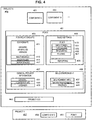
- FIG. 4 discloses a project object model ("POM").
- the project e.g., project X 455 includes one or more components (here represented by Components A and B 451, 453), the project log 443 for Project X, and metadata for the project X (here represented by POM X 401) that identifies project information such as contributors 433 and licenses 435.
- the illustrated example is a known Maven software (currently available at Apache) project object model, which provides a highly structured handling of projects and components, sometimes referred to therein as "artifacts”.
- Maven is a build management tool that comprises a project object model ("POM”), a set of standards, a project lifecycle, a dependency management system, and logic for executing plugin goals at defined phases in a lifecycle.
- POM project object model
- a "Project Object Model” e.g., POM X 401 is a file provided for a project 455 that describes, configures and customizes an application and is associated with one or more components by being included in the same directory as one or more components.
- the POM 401 is a file included in a project, e.g., project X 455, which includes one or more components (represented by component A and component B 451, 453); the POM can be a file with a pre-determined name: a Maven pom.xml file, a GNU Makefile, or an Ant build.xml file.
- the POM file is typically targeted to Java applications, building JAR components, C# sources, or the like.
- a software component can be associated with a POM in alternative ways, for example, by including a link or identification of the associated POM.
- the POM 401 can contain description data and configuration data: POM relationships 403, build setting 405, general project information 407, and build environment 409.
- General project information 407 includes general data 431 (project's name, the URL for a project, the sponsoring organization), a list of developers and contributors 433, and/or the license (or identifiers of licenses) for the project 455.
- the build settings 405 for the project 455 can customize the behavior of a build 419 by specifying location of directories 421, extensions 423, resources 425 and plugins 427. Also, the build settings 405 can specify reporting 429 to be used for the POM 401.
- the build environment 409 can include settings and profiles that can be activated when the software comprising the components 451 is built for use in different environments. For example, during development the built software is deployed to a development server, whereas in production developers the built software is deployed to a production server.
- This example provides build environment information 437, Maven environment information 439, and profiles 441 to be used in different builds. Techniques for executing a build of software are known.
- the POM relationships 403 include POM coordinates 411 that specify a group ID, an artifact ID, and a version number for the project 455 and for the POM 401.
- group ID, artifact ID and version (GAV) uniquely identify each component.
- the group ID is meant to identify the individual or organization that published the component.
- the artifact ID uniquely identifies a component for the Group, and in accordance with known techniques indicates what functionality the component is addressed to; artifact IDs need not be unique for different groups.
- the version is the temporal axis for how a component changes in accordance with known techniques, e.g., Version 1.0 is least mature, and Version 8.2.3 is more mature.
- GAV group ID, artifact ID and version number
- GAV coordinate group ID, artifact ID and version number
- a project, e.g., project X 455 can have a parent, e.g., project Y 457.
- Project Y 457 is illustrated to include representative component C 459 and a POM Y 461.
- Values which are not specified in the POM in a child project can inherit values from the POM of a parent project, e.g., when general project information 407 is not specified in the POM X 401 of Project X 455, the project X 455 can inherit the general project information specified in the POM Y 461 of the parent project Y 457.
- the project log 443 can perform known functions, such as recording source code check-in, check-out, update of a component, download of a component from the project, bugs and related fixes specifying, and similar.
- a different project e.g., project Y 457 includes other components (here represented by Component C 459), the project log (not illustrated) for Project Y, and metadata for the project Y (here represented by POM Y 461) that identifies project information such as contributors and licenses.
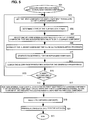
- FIG. 5 , FIG. 6 and FIG. 7 are flow charts illustrating various procedures related to the above. Any or all of the illustrated procedures can advantageously be implemented on, for example, a processor of a controller, described in connection with FIG. 3 or other apparatus appropriately arranged.
- the procedure 501 includes to get the next component 503 as the "current component", to determine 505 a type of the current component, to select 507 a normalization process for the type of the current component, to normalize 509 the current component per the normalization process that was selected, to generate 511 a fingerprint for the normalized component, to search 513 the known fingerprints for a match. This can be repeated until all of the components in the unknown component 515 are processed.
- the procedure 501 can search 517 for a known fingerprint that has a combination of internal fingerprints which is similar to the combination of internal fingerprints of the unknown component.
- the procedure 501 can indicate 519 the matching components.
- the procedure 501 can prepare 521 a confidence value for one or more of the matching components, which indicates the confidence that the unknown component (or its internal components) matches the known component(s).
- the process can finish 523 when evaluation of the unknown component is complete.
- the order indicated is not so important, provided that a component is normalized before its fingerprint is generated, and the fingerprint is generated before it is matched.
- the procedure 601 includes to obtain 603 a component from which to prepare a known fingerprint to add to the library of known fingerprints, to determine a type of the current component, to select one or more normalization processes for the component that are associated with the current component's type, to normalize 609 the component per the selected normalization process(es), to generate 611 the fingerprint(s) for the normalized component, to add 613 the generated fingerprint(s) to the library of known fingerprints (if not already present) together with identification information regard the known component's origin.
- the procedure 601 can include information indicating the known components and their inner components.
- the procedure 601 can add the fingerprint(s) of the component as an inner component to its outer component, if any.
- the procedure can be repeated 619 for the inner component of the current component until all of the inner components have been fingerprinted and stored. The process can return when done 621.
- FIG. 7 a flow chart illustrating a procedure to normalize a Java component will be discussed and described. This is an example of a normalization process, which is performed when a component is determined to be a Java file.
- the procedure 701 obtains 703 a Java component to be normalized.
- the Java component can be the outer component, or it can be one of the inner components. The following can be performed on the component, in any order.
- the procedure 701 can set 703 the class version to 0.
- the procedure 701 can reset 707 the synthetic class access flags.
- the procedure 701 can set 709 the outer class name to null.
- the procedure 701 can set 711 the constant pool and inner class list in alphabetic order.
- the procedure 710 can reset 713 the "final" access flag of the Java enumerations #values method.
- the procedure 701 can remove 715 the synthetic member fields and methods.
- the procedure 701 can remove 717 package names from the component. Then, the normalization procedure can end 719.
- the data mentioned in the previous paragraph are known Java data fields.
- the pack200/unpack200 tools are known.
- the above normalization procedure for the Java component can generate a universal fingerprint for a Java component.
- universal it is intended to indicate that any data introduced into the Java component by software programmers while the semantic functional is retained, have been reduced by the normalization process, so that two Java components with the same provenance will match, regardless of subsequent compiles, packaging, etc..
- one or more embodiments provides, for a Java component, normalizing the Java component according to a Java normalization process to provide a normalized Java component; and generating, in the processor, the fingerprint for the normalized Java component, as a universal fingerprint.
- the fingerprint is a hash value; and the Java normalization process performs the following on the Java component: setting class version to 0, resetting synthetic class access flags, setting outer class name to null, setting constant pool and inner class list in alphabetical order, resetting final access flag of Java enumerations #values method, removing all synthetic member fields and Java methods, and removing all package names.
- a computer system comprises a normalization process for a component which is determined to be a Java type performs the following: set class version to 0, reset synthetic class access flags, set outer class name to null, set constant pool and inner class list in alphabetical order, reset final access flag of Java enumerations #values method, remove all synthetic member fields and Java methods, and remove all package names.
- a computer-implemented method in which the fingerprints are hash values. The computer-implemented method further comprises for each of the components in the unknown component, before normalizing the component, determining a type of the component and determining a normalization process associated with the type of the component, wherein the component is normalized according to the normalization process determined to be associated with the type of the component.
- the method comprises a normalization process for a component which is determined to be a Java type, the method performing the following: setting class version to 0, resetting synthetic class access flags, setting outer class name to null, setting constant pool and inner class list in alphabetical order, resetting final access flag of Java enumerations #values method, removing all synthetic member fields and Java methods, and removing all package names.
- a non-transitory computer-readable medium comprises for each of the components in the unknown component, before normalizing the component, determining a type of the component and determining a normalization process associated with the type of the component, wherein the component is normalized according to the normalization process determined to be associated with the type of the component.
- the non-transitory computer-readable medium comprises the normalization process for a component which is determined to be a Java type, the normalization process performing the following: setting class version to 0, resetting synthetic class access flags, setting outer class name to null, setting constant pool and inner class list in alphabetical order, resetting final access flag of Java enumerations #values method, removing all synthetic member fields and Java methods, and removing all package names.
- a computer-implemented method for generating a universal fingerprint for a Java component comprises, in this order: for a Java component, in a processor, normalizing the Java component according to a Java normalization process to provide a normalized Java component; and generating, in the processor, the fingerprint for the normalized Java component, as a universal fingerprint, wherein the fingerprint is a hash value, and the Java normalization process performs the following on the Java component: setting class version to 0, resetting synthetic class access flags, setting outer class name to null, setting constant pool and inner class list in alphabetical order, resetting final access flag of Java enumerations #values method, removing all synthetic member fields and Java methods, and removing all package names.
- Example 1 Java Class Match Confidence Score
- the following provides an example of scoring a matching confidence value for a Java class.
- the following hashes are calculated for this class.
- NOPKG_* hashes are calculated from input that has most fully-qualified Java class name references replaced with corresponding simple class name. For example, all references to "org.myproject.MyClass” are replaced with “MyClass”. References to Java.* and Javax.* classes are preserved. This normalization can be performed in addition to other normalizations mentioned above.
- a Java class with one field and one method can have 12 hashes calculated for it:
- the Java class match score can be calculated using the following rules.
- match score is Score(BYTECODE).
- match score is calculated using the following formula and similar formula using corresponding NOPKG_ hashes (not shown) and the highest of the two scores is used M TYPE + M FIELD + M METHODSIGNATURE 1 + C FIELD + C METHODSIGNATURE Score SIGNATURE + M METHOD C METHOD Score BYTECODE ⁇ SIGNATURE where M(type) is the number of matching hashes of given type, C(type) is the total number of hashes of given type in unknown class U and Score(type) is match score of the given hash type.
- Example 2 Simple Example:
- an unknown component has subcomponents A, B and C; and a known component has subcomponents B and C which are in the library of fingerprints for known components.
- the system generates a fingerprint for A, fingerprint for B, fingerprint for C, and fingerprint for unknown component (in addition to determining what kind of a file it is, and normalizing as discussed above).
- the system checks the library of known fingerprints for any match to fingerprint A, fingerprint B, fingerprint C, and/or component level fingerprint. In this example, subcomponent A was completely original and hence there is no matching fingerprint in the library. The system will determine that there is a match for fingerprint B and fingerprint C, but no match for fingerprint A and component level fingerprint.
- the system assigns a confidence to the match; the confidence level of A, B and C (lowest level) is higher than the confidence level for the overall match (to avoid double-counting the lack of match for A).
- the confidence level of e.g., 66%, indicates the confidence for unknown component matching the known component.
- the confidence level can also indicate the matching of subelements B and C. This will be useful for, for example, security vulnerabilities.
- a second example is the same as the first example except that subcomponent A was known and previously fingerprinted, and the system found that 90 out of 100 files inside A match those files in component F.
- the system can indicate that subcomponent A potentially is component F, with the licensing and security implications of component F, because most of the things inside subcomponent A match component F.
- normalization processes can be provided for files.
- normalization processes can be provided for other file types besides Java, to be used for normalizing components of other files types.
- the techniques used to produce the normalizing processes for Java can be extrapolated to other languages.
- a similar approach can be developed to omit from a component, information which is not semantically important. For example, by looking at the binary output for .NET components and observing which types of things within a .NET component change based on the compiler or the time, this information can be factored out to produce a fingerprint that is still unique if those things are taken out.
- the specific normalizations can be applied to other languages and other types of files.
- developing the normalization for the other file type one can look at the binary files and understand what they are built out of, what the sections are, and can identify certain sections as not contributing to the uniqueness of the file but which change every time (e.g., the time). In effect, this omits the "noise".
- the system can remove this information from that file and other files of the same type. This is why different normalizations that are applied have different confidence levels.
- the format of a file can allow for expressing the same thing. For example, there are certain data structures inside a Java class file that do not require a particular order of elements, so it doesn't matter what order the elements are present. As far as execution of the file, it will be exactly the same. Different compilers have these structures in a different order. This would be noise.
- the system can change the order of elements when it is known that the order is insignificant or less significant.
- elements are discarded. When the order is changed, some information is lost but not much. When elements are discarded, more information is lost. As information is lost through normalization, the confidence of the match can decrease.
- the file can be broken down into structures and then it can be determined which of the structures do not contribute meaningfully to the match and other parts of the structure do.
- the structures that do contribute meaningfully to the match can be retained in the normalized file.
- a class file the things that define the variables and the execution matter, whereas the order of some of the other things in the class file does not matter, so that the initial structure does not matter.
- pieces of the file that are random, e.g., based on how or when it was compiled do not contribute in a meaningful way to the component or the match.
- Multiple fingerprints can be generated for the same component, using different normalization processes because the different normalization processes omit different, potentially useful information.
- the different normalization techniques that are applied can have different confidence levels.
- a file type which can be used to determine the appropriate normalization process, can be determined from the file extension (which is a quick determination) and/or the file content (to make sure the file corresponds to the expected file type). For example, the file type can be determined from the file extension as confirmed by the file content.
- An "UberJar” is a single component into which the contents of many components have been unpacked and then reassembled.
- An example of an UberJar is two JAR files which are unzipped, and then rezipped into a new zipped file which is the UberJar.
- UberJars that are present in source repositories of known components that the system is scanning (e.g., for developing the data set), and also in applications themselves that are being evaluated for a match might include an UberJar.
- an UberJar can be punished when scored so the UberJar is scored lower in the confidence calculation, than the original components they were created from.
- a known UberJar plug-in can package components and their dependencies into a single JAR file, add bootstrap code to enable a main class to be invoked, load dependencies, execute a main method, enable dependent JARs to be inserted into the classpath, and locate the JARs, all within the UberJar.
- a software developer can take components A and B that might not be related and package them into an UberJar.
- UberJar typically represents an arbitrary software developer convenience, and not a construct related to the actual product, there is no reason to increase the confidence level already provided by its contents matching, when UberJar hashes match.
- the Mitre CVE Common Vulnerabilities and Exposures
- NIST NVD National Vulnerability Database
- CVE list and NVD database indicate commercial software application names and versions or version ranges which may or may not readily map to software components.
- CVE and NVD rating of vulnerabilities is based on the seriousness of the vulnerability.
- Licenses are referred to herein.
- Well known in the open source field is that a license can be associated with a component.
- the method or system can collect the identity of the license or the content of the license, which is listed for example in the project such as in the POM associated with the component.
- the license further can indicate permitted and prohibited activities. (There are a several pre-determined open-source licenses in common use as well as variations thereof, as well as some customized licenses.)
- an embodiment has been discussed in certain examples as if it is made available by a provider to a single customer with a single site.
- An embodiment may be used by numerous users, if preferred, and the users can be at one or more sites.
- the system used in connection herewith may rely on the integration of various components including, as appropriate and/or if desired, hardware and software servers, applications software, database engines, server area networks, firewall and SSL security, production back-up systems, and/or applications interface software.
- a procedure is generally conceived to be a self-consistent sequence of steps leading to a desired result. These steps are those requiring physical manipulations of physical quantities. Usually, though not necessarily, these quantities take the form of electrical or magnetic signals capable of being stored on non-transitory computer-readable media, transferred, combined, compared and otherwise manipulated. It proves convenient at times, principally for reasons of common usage, to refer to these signals as bits, values, elements, symbols, characters, terms, numbers, or the like. It should be noted, however, that all of these and similar terms are to be associated with the appropriate physical quantities and are merely convenient labels applied to these quantities.
- the communication networks of interest for communicating between computers onto which some embodiments may be distributed include those that transmit information in packets, for example, those known as packet switching networks that transmit data in the form of packets, where messages can be divided into packets before transmission, the packets are transmitted, and the packets are routed over network infrastructure devices to a destination where the packets are recompiled into the message.
- packet switching networks that transmit data in the form of packets
- Such networks include, by way of example, the Internet, intranets, local area networks (LAN), wireless LANs (WLAN), wide area networks (WAN), and others.
- Protocols supporting communication networks that utilize packets include one or more of various networking protocols, such as TCP/IP (Transmission Control Protocol/Internet Protocol), Ethernet, X.25, Frame Relay, ATM (Asynchronous Transfer Mode), IEEE 802.11, UDP/UP (Universal Datagram Protocol/Universal Protocol), IPX/SPX (Inter-Packet Exchange/Sequential Packet Exchange), Net BIOS (Network Basic Input Output System), GPRS (general packet radio service), I-mode and other wireless application protocols, and/or other protocol structures, and variants and evolutions thereof.
- TCP/IP Transmission Control Protocol/Internet Protocol
- Ethernet X.25, Frame Relay
- ATM Asynchronous Transfer Mode
- IEEE 802.11 Universal Datagram Protocol/Universal Protocol
- IPX/SPX Inter-Packet Exchange/Sequential Packet Exchange
- Net BIOS Network Basic Input Output System
- GPRS General packet radio service
- I-mode and other wireless application protocols and/or other protocol structures, and variants and evolutions thereof.
- Such networks
Landscapes
- Engineering & Computer Science (AREA)
- Theoretical Computer Science (AREA)
- General Engineering & Computer Science (AREA)
- Physics & Mathematics (AREA)
- General Physics & Mathematics (AREA)
- Databases & Information Systems (AREA)
- Software Systems (AREA)
- Data Mining & Analysis (AREA)
- Multimedia (AREA)
- Computer Security & Cryptography (AREA)
- Technology Law (AREA)
- Computer Hardware Design (AREA)
- Library & Information Science (AREA)
- Stored Programmes (AREA)
Claims (15)
- Ein Computersystem zur Identifikation von Komponenten, aufweisend:einen Komponentenfingerabdruckspeicher (319), welcher dazu vorgesehen ist, bekannte Fingerabdrücke bekannter Komponenten zu speichern, sowieeinen Prozessor (305), welcher zusammen mit dem Komponentenfingerabdruckspeicher betreibbar ist und zu folgenden Zwecken vorgesehen ist:Ermitteln von in einer unbekannten Komponente (363) enthaltenen internen Komponenten;Erzeugen (335) eines Fingerabdrucks für die unbekannte Komponente und von Fingerabdrücken für alle in der unbekannten Komponente enthaltenen internen Komponenten, aufweisend:Erzeugen eines universellen Fingerabdrucks für eine Java-Komponente, umfassend, in dieser Reihenfolge:
als Reaktion auf eine unbekannte Komponente, welche eine Java-Komponente ist, für die Java-Komponente: eine Normalisierung der Java-Komponente gemäß einem Java-Normalisierungsprozess, um eine normalisierte Java-Komponente bereitzustellen; sowieErzeugen von dem Fingerabdruck, als universellem Fingerabdruck, für die normalisierte Java-Komponente, wobei der Java-Normalisierungsprozess Folgendes an der Java-Komponente ausführt:Setzen einer Klassenversion auf 0,Zurücksetzen von synthetischen Klassenzugangsflags,Setzen eines Namens einer äußeren Klasse auf Null,Festlegen eines Konstantenpools und einer Liste von inneren Klassen in alphabetischer Reihenfolge,Zurücksetzen eines finalen Zugangsflags eines Java-Aufzählungs-Hashwert-Verfahrens,Entfernen aller synthetischen Objektfelder und Java-Methoden und Entfernen aller Paketnamen;Ermitteln, ob einer der für die unbekannte Komponente und für die in der unbekannten Komponente enthaltenen internen Komponenten erzeugten Fingerabdrücke einem der bekannten Fingerabdrücke bekannter Komponenten zuordenbar ist; sowieAnzeigen der einander zuordenbaren Komponenten,
wobei Komponenten autonome, vorgegebene, selbstständige Codeabschnitte sind, welche als ein Baustein von einer Vielzahl von Bausteinen in einem vollständigen Softwaremodul verwendbar sind, wobei die Komponenten entweder eine spezifische Version einer bereits vorhandenen ausführbaren Software sind oder ein wiederverwendbares bereits vorhandenes Software-Binär oder ein wiederverwendbarer bereits vorhandener Quellcodeblock. - Das Computersystem nach Anspruch 1, weiter aufweisend:Erzeugen der bekannten Fingerabdrücke bekannter Komponenten, und anschließendSpeichern der bekannten Fingerabdrücke im Komponentenfingerabdruckspeicher.
- Das Computersystem nach Anspruch 1,
wobei die Fingerabdrücke Hashwerte sind. - Das Computersystem nach Anspruch 1, weiter aufweisend:Normalisierung der unbekannten Komponente und aller in der unbekannten Komponente enthaltenen internen Komponenten, vor einemErzeugen der Fingerabdrücke für die unbekannte Komponente und die in der unbekannten Komponente enthaltenen internen Komponenten,wobei einem Compilerrauschen und/oder einem durch einen Erstellungsprozess bedingten Rauschen durch die Normalisierung einer individuellen Komponente Rechnung getragen wird.
- Das Computersystem nach Anspruch 4, weiter aufweisend:für jede der Komponenten innerhalb der unbekannten Komponente, vor der Normalisierung der KomponenteErmitteln eines Komponententyps und Ermitteln eines dem Komponententyp entsprechenden Normalisierungsprozesses,wobei die Komponente gemäß dem Normalisierungsprozess, der als ein dem Komponententyp entsprechender Normalisierungsprozess ermittelt wurde, normalisiert wird.
- Das Computersystem nach Anspruch 1, weiter aufweisend:Bereitstellen eines Zuordnungs-Vertrauenswertes anhand einer Zuordnung der unbekannten Komponente und aller in der unbekannten Komponente enthaltenen internen Komponenten zu einem der bekannten Fingerabdrücke,wobei der Zuordnungs-Vertrauenswert eine Vertrauenshöhe für eine Annahme angibt, dass die unbekannte Komponente und eine einem zuordenbaren Fingerabdruck von den bekannten Fingerabdrücken entsprechende bekannte Komponente miteinander identisch seien.
- Ein computerimplementiertes Verfahren zur Identifikation einer Komponente, umfassend:Speichern bekannter Fingerabdrücke von bekannten Komponenten in einem Komponentenfingerabdruckspeicher (319) sowieErmitteln, in einem Prozessor (305), von in einer unbekannten Komponente (363) enthaltenen internen Komponenten;Erzeugen (335), in dem Prozessor (305) eines Fingerabdrucks für die unbekannte Komponente und von Fingerabdrücken für alle in der unbekannten Komponente enthaltenen internen Komponenten, aufweisend:
Erzeugen eines universellen Fingerabdrucks für eine Java-Komponente, aufweisend, in dieser Reihenfolge:als Reaktion auf eine unbekannte Komponente, welche eine Java-Komponente ist, für die Java-Komponente: eine Normalisierung der Java-Komponente gemäß einem Java-Normalisierungsprozess, um eine normalisierte Java-Komponente bereitzustellen; sowieErzeugen von dem Fingerabdruck, als universellem Fingerabdruck, für die normalisierte Java-Komponente, wobei der Java-Normalisierungsprozess Folgendes an der Java-Komponente ausführt:Setzen einer Klassenversion auf 0,Zurücksetzen von synthetischen Klassenzugangsflags,Setzen eines Namens einer äußeren Klasse auf Null,Festlegen eines Konstantenpools und einer Liste von inneren Klassen in alphabetischer Reihenfolge,Zurücksetzen eines finalen Zugangsflags eines Java-Aufzählungs-Hashwert- Verfahrens,Entfernen aller synthetischen Objektfelder und Java-Methodenund Entfernen aller Paketnamen;Ermitteln, in dem Prozessor, ob einer der für die unbekannte Komponente und für die in der unbekannten Komponente enthaltenen internen Komponenten erzeugten Fingerabdrücke einem der bekannten Fingerabdrücke von bekannten Fingerabdrücken aus dem Komponentenfingerabdruckspeicher zuordenbar ist; sowieAnzeigen der einander zuordenbaren Komponenten,
wobei Komponenten autonome, vorgegebene, selbstständige Codeabschnitte sind, welche als ein Baustein von einer Vielzahl von Bausteinen in einem vollständigen Softwaremodul verwendbar sind, und wobei die Komponenten entweder eine spezifische Version einer bereits vorhandenen ausführbaren Software sind oder ein wiederverwendbares bereits vorhandenes Software-Binär oder ein wiederverwendbarer bereits vorhandener Quellcodeblock. - Das Verfahren nach Anspruch 7, weiter umfassend:Erzeugen der bekannten Fingerabdrücke von bekannten Komponenten und anschließendSpeichern der bekannten Fingerabdrücke in dem Komponentenfingerabdruckspeicher.
- Das Verfahren nach Anspruch 7, weiter umfassend:Normalisieren der unbekannten Komponente und aller in der unbekannten Komponente enthaltenen internen Komponenten, vor einemErzeugen der Fingerabdrücke für die unbekannte Komponente und die in der unbekannten Komponente enthaltenen internen Komponenten,
wobei einem Compilerrauschen und/oder einem durch einen Erstellungsprozess bedingten Rauschen durch die Normalisierung einer individuellen Komponente Rechnung getragen wird. - Das Verfahren nach Anspruch 7, weiter umfassend:Bereitstellen eines Zuordnungs-Vertrauenswertes anhand einer Zuordnung der unbekannten Komponente und aller in der unbekannten Komponente enthaltenen internen Komponenten zu einem der bekannten Fingerabdrücke,
wobei der Zuordnungs-Vertrauenswert eine Vertrauenshöhe für eine Annahme angibt, dass die unbekannte Komponente und eine einem zuordenbaren Fingerabdruck von den bekannten Fingerabdrücken entsprechende bekannte Komponente miteinander identisch seien. - Ein nicht-flüchtiges computerlesbares Medium, welches durch einen Computer auszuführende Anweisungen enthält, wobei diese Anweisungen ein computerimplementiertes Verfahren zur Identifikation einer Komponente aufweisen und dazu dienen, Folgendes umzusetzen:Speichern bekannter Fingerabdrücke von bekannten Komponenten in einem Komponentenfingerabdruckspeicher (319) sowieErmitteln, in einem Prozessor (305), von in einer unbekannten Komponente (363) enthaltenen internen Komponenten;Erzeugen (335), in dem Prozessor (305) eines Fingerabdrucks für die unbekannte Komponente und von Fingerabdrücken für alle in der unbekannten Komponente enthaltenen internen Komponenten, aufweisend:
Erzeugen eines universellen Fingerabdrucks für eine Javakomponente, aufweisend, in dieser Reihenfolge:als Reaktion auf eine unbekannte Komponente, welche eine Java-Komponente ist, für die Java-Komponente: eine Normalisierung der Java-Komponente gemäß einem Java-Normalisierungsprozess, um eine normalisierte Java-Komponente bereitzustellen; sowieErzeugen von dem Fingerabdruck, als universellem Fingerabdruck, für die normalisierte Java-Komponente, wobei der Java-Normalisierungsprozess Folgendes an der Java-Komponente ausführt:Setzen einer Klassenversion auf 0,Zurücksetzen von synthetischen Klassenzugangsflags,Setzen eines Namens einer äußeren Klasse auf Null,Festlegen eines Konstantenpools und einer Liste von inneren Klassen in alphabetischer Reihenfolge,Zurücksetzen eines finalen Zugangsflags eines Java-Aufzählungs-Hashwert- Verfahrens,Entfernen aller synthetischen Objektfelder und Java-Methodenund Entfernen aller Paketnamen;Ermitteln, in dem Prozessor, ob einer von den für die unbekannte Komponente und für die in der unbekannten Komponente enthaltenen internen Komponenten erzeugten Fingerabdrücken einem der bekannten Fingerabdrücke von bekannten Fingerabdrücken aus dem Komponentenfingerabdruckspeicher zuordenbar ist; sowieAnzeigen der einander zuordenbaren Komponenten,
wobei Komponenten autonome, vorgegebene, selbstständige Codeabschnitte sind, welche als ein Baustein von einer Vielzahl von Bausteinen in einem vollständigen Softwaremodul verwendbar sind, und wobei die Komponenten entweder eine spezifische Version einer bereits vorhandenen ausführbaren Software sind oder ein wiederverwendbares bereits vorhandenes Software-Binär oder ein wiederverwendbarer bereits vorhandener Quellcodeblock. - Das nicht-flüchtige computerlesbare Medium nach Anspruch 11, weiter aufweisend:Erzeugen der bekannten Fingerabdrücke bekannter Komponenten und anschließendSpeichern der bekannten Fingerabdrücke in dem Komponentenfingerabdruckspeicher.
- Das nicht-flüchtige computerlesbare Medium nach Anspruch 11,
wobei die Fingerabdrücke Hashwerte sind. - Das nicht-flüchtige computerlesbare Medium nach Anspruch 11, weiter aufweisend:Normalisieren der unbekannten Komponente und aller in der unbekannten Komponente enthaltenen internen Komponenten, vor einemErzeugen der Fingerabdrücke für die unbekannte Komponente und die in der unbekannten Komponente enthaltenen internen Komponenten,
wobei einem Compilerrauschen und/oder einem durch einen Erstellungsprozess bedingten Rauschen durch die Normalisierung einer individuellen Komponente Rechnung getragen wird. - Das nicht-flüchtige computerlesbare Medium nach Anspruch 11, weiter aufweisend:Bereitstellen eines Zuordnungs-Vertrauenswertes anhand einer Zuordnung der unbekannten Komponente und aller in der unbekannten Komponente enthaltenen internen Komponenten zu einem der bekannten Fingerabdrücke,
wobei der Zuordnungs-Vertrauenswert eine Vertrauenshöhe für eine Annahme angibt, dass die unbekannte Komponente und eine einem zuordenbaren Fingerabdruck von den bekannten Fingerabdrücken entsprechende bekannte Komponente miteinander identisch seien.
Applications Claiming Priority (2)
| Application Number | Priority Date | Filing Date | Title |
|---|---|---|---|
| US13/476,160 US8825689B2 (en) | 2012-05-21 | 2012-05-21 | Method and system for matching unknown software component to known software component |
| PCT/US2013/041785 WO2013177025A1 (en) | 2012-05-21 | 2013-05-20 | Method and system for matching unknown software component to known software component |
Publications (3)
| Publication Number | Publication Date |
|---|---|
| EP2853078A1 EP2853078A1 (de) | 2015-04-01 |
| EP2853078A4 EP2853078A4 (de) | 2016-02-10 |
| EP2853078B1 true EP2853078B1 (de) | 2020-01-22 |
Family
ID=49582187
Family Applications (1)
| Application Number | Title | Priority Date | Filing Date |
|---|---|---|---|
| EP13793818.9A Active EP2853078B1 (de) | 2012-05-21 | 2013-05-20 | Verfahren und system zur anpassung unbekannter softwarekomponenten an bekannte softwarekomponenten |
Country Status (4)
| Country | Link |
|---|---|
| US (2) | US8825689B2 (de) |
| EP (1) | EP2853078B1 (de) |
| CA (1) | CA2871470C (de) |
| WO (1) | WO2013177025A1 (de) |
Families Citing this family (48)
| Publication number | Priority date | Publication date | Assignee | Title |
|---|---|---|---|---|
| US9361631B2 (en) | 2010-01-06 | 2016-06-07 | Ghostery, Inc. | Managing and monitoring digital advertising |
| US8438532B2 (en) | 2011-04-19 | 2013-05-07 | Sonatype, Inc. | Method and system for scoring a software artifact for a user |
| US8612936B2 (en) | 2011-06-02 | 2013-12-17 | Sonatype, Inc. | System and method for recommending software artifacts |
| US8627270B2 (en) | 2011-09-13 | 2014-01-07 | Sonatype, Inc. | Method and system for monitoring a software artifact |
| US8473894B2 (en) | 2011-09-13 | 2013-06-25 | Sonatype, Inc. | Method and system for monitoring metadata related to software artifacts |
| US9141378B2 (en) | 2011-09-15 | 2015-09-22 | Sonatype, Inc. | Method and system for evaluating a software artifact based on issue tracking and source control information |
| US8656343B2 (en) | 2012-02-09 | 2014-02-18 | Sonatype, Inc. | System and method of providing real-time updates related to in-use artifacts in a software development environment |
| US8825689B2 (en) | 2012-05-21 | 2014-09-02 | Sonatype, Inc. | Method and system for matching unknown software component to known software component |
| US9141408B2 (en) | 2012-07-20 | 2015-09-22 | Sonatype, Inc. | Method and system for correcting portion of software application |
| US10291492B2 (en) | 2012-08-15 | 2019-05-14 | Evidon, Inc. | Systems and methods for discovering sources of online content |
| CN102831010A (zh) * | 2012-08-30 | 2012-12-19 | 腾讯科技(深圳)有限公司 | 打开未知文件的方法和装置 |
| US9069568B2 (en) * | 2012-12-19 | 2015-06-30 | International Business Machines Corporation | Compilation dependency resolution from a diverse group of candidate resources |
| US9135263B2 (en) | 2013-01-18 | 2015-09-15 | Sonatype, Inc. | Method and system that routes requests for electronic files |
| US9509761B2 (en) | 2013-10-23 | 2016-11-29 | Sap Se | Open user interface |
| US10409572B2 (en) * | 2014-02-28 | 2019-09-10 | Red Hat, Inc. | Compiled file normalization |
| US9459861B1 (en) * | 2014-03-31 | 2016-10-04 | Terbium Labs, Inc. | Systems and methods for detecting copied computer code using fingerprints |
| JPWO2016021184A1 (ja) * | 2014-08-06 | 2017-06-01 | 日本電気株式会社 | 情報処理システム、プロジェクトリスク検知方法およびプログラム |
| US9805099B2 (en) | 2014-10-30 | 2017-10-31 | The Johns Hopkins University | Apparatus and method for efficient identification of code similarity |
| US9569183B2 (en) | 2015-02-25 | 2017-02-14 | Red Hat, Inc. | Contract based builder |
| SG11201707779XA (en) * | 2015-03-26 | 2017-10-30 | Terbium Labs Inc | Systems and methods for detecting copied computer code using fingerprints |
| CA2981866A1 (en) | 2015-04-11 | 2016-10-20 | Evidon, Inc. | Methods, apparatus, and systems for providing notice of digital tracking technologies in mobile apps on mobile devices, and for recording user consent in connection with same |
| US9471285B1 (en) * | 2015-07-09 | 2016-10-18 | Synopsys, Inc. | Identifying software components in a software codebase |
| US10540176B2 (en) * | 2015-11-25 | 2020-01-21 | Sonatype, Inc. | Method and system for controlling software risks for software development |
| US10740408B2 (en) * | 2016-01-11 | 2020-08-11 | Accenture Global Solutions Limited | Method and system for generating an architecture document for describing a system framework |
| US9851959B2 (en) * | 2016-02-17 | 2017-12-26 | Qualcomm Innovation Center, Inc. | Semantically sensitive code region fingerprint calculation for programming languages |
| EP3417385A4 (de) * | 2016-02-18 | 2019-08-28 | LiveRamp, Inc. | Salzen von text und fingerabdrücken in datenbanktabellen, textdateien und datenzuströmen |
| HK1258730A1 (zh) | 2016-03-21 | 2019-11-15 | Liveramp, Inc. | 数据加水印和加指纹系统和方法 |
| WO2017189727A1 (en) * | 2016-04-26 | 2017-11-02 | RiskIQ, Inc. | Techniques for monitoring version numbers of web frameworks |
| US9971594B2 (en) | 2016-08-16 | 2018-05-15 | Sonatype, Inc. | Method and system for authoritative name analysis of true origin of a file |
| US10002163B2 (en) * | 2016-08-18 | 2018-06-19 | Palantir Technologies Inc. | Managing sharable cell-based analytical notebooks |
| US10289536B2 (en) * | 2016-08-31 | 2019-05-14 | Synopsys, Inc. | Distinguishing public and private code in testing environments |
| US9749349B1 (en) | 2016-09-23 | 2017-08-29 | OPSWAT, Inc. | Computer security vulnerability assessment |
| US11522901B2 (en) | 2016-09-23 | 2022-12-06 | OPSWAT, Inc. | Computer security vulnerability assessment |
| US9977656B1 (en) * | 2017-03-13 | 2018-05-22 | Wipro Limited | Systems and methods for providing software components for developing software applications |
| US10055198B1 (en) * | 2017-06-13 | 2018-08-21 | Sap Se | Systems and methods for probably approximate intent matching of procurement rules |
| US20240020358A1 (en) * | 2017-06-30 | 2024-01-18 | Tata Consultancy Services Limited | Systems and methods for analysing software products |
| US20240020293A1 (en) * | 2017-06-30 | 2024-01-18 | Tata Consultancy Services Limited | Systems and methods for analysing software products |
| US10176217B1 (en) | 2017-07-06 | 2019-01-08 | Palantir Technologies, Inc. | Dynamically performing data processing in a data pipeline system |
| CA3074019A1 (en) | 2017-10-05 | 2019-04-11 | Liveramp, Inc. | Statistical fingerprinting of large structured datasets |
| US10592677B2 (en) * | 2018-05-30 | 2020-03-17 | Paypal, Inc. | Systems and methods for patching vulnerabilities |
| US11250127B2 (en) * | 2018-09-12 | 2022-02-15 | Blackberry Limited | Binary software composition analysis |
| US11099837B2 (en) * | 2019-10-29 | 2021-08-24 | EMC IP Holding Company LLC | Providing build avoidance without requiring local source code |
| JP2021140640A (ja) * | 2020-03-09 | 2021-09-16 | 株式会社日立製作所 | 検索システム及び検索方法 |
| CN114072799B (zh) * | 2020-04-28 | 2026-01-16 | 深圳开源互联网安全技术有限公司 | Node.js组件漏洞检测方法及系统 |
| US11972256B2 (en) | 2022-02-16 | 2024-04-30 | International Business Machines Corporation | Software code analysis using fuzzy fingerprinting |
| CN114860253B (zh) * | 2022-04-29 | 2025-03-28 | 上海阵量智能科技有限公司 | 一种编译方法、装置、计算机设备以及可读存储介质 |
| JP7741782B2 (ja) * | 2022-09-15 | 2025-09-18 | 株式会社東芝 | 情報処理装置、情報処理方法及びコンピュータプログラム |
| US20250356023A1 (en) * | 2024-05-14 | 2025-11-20 | Intuit Inc. | Adversarial generation of software bill of materials (sbom) for computing security |
Family Cites Families (150)
| Publication number | Priority date | Publication date | Assignee | Title |
|---|---|---|---|---|
| US5615400A (en) | 1993-06-30 | 1997-03-25 | Apple Computer, Inc. | System for object oriented dynamic linking based upon a catalog of registered function set or class identifiers |
| US6167535A (en) | 1997-12-09 | 2000-12-26 | Sun Microsystems, Inc. | Object heap analysis techniques for discovering memory leaks and other run-time information |
| US6282698B1 (en) | 1998-02-09 | 2001-08-28 | Lucent Technologies Inc. | Detecting similarities in Java sources from bytecodes |
| US6931544B1 (en) | 1998-12-18 | 2005-08-16 | The Sco Group, Inc. | Method and apparatus for executing multiple JAVA(™) applications on a single JAVA(™) virtual machine |
| US6963975B1 (en) | 2000-08-11 | 2005-11-08 | Microsoft Corporation | System and method for audio fingerprinting |
| US20040039921A1 (en) | 2000-10-17 | 2004-02-26 | Shyne-Song Chuang | Method and system for detecting rogue software |
| US7657872B2 (en) | 2000-10-23 | 2010-02-02 | Nintendo Of America Inc. | Product testing and bug tracking system |
| EP1202168A3 (de) | 2000-10-30 | 2006-08-23 | Microsoft Corporation | Vorrichtung und Verfahren zur dynamischen Verifikation des Kompatibilität eines Benutzerschnittstelleresources |
| EP1207454A1 (de) | 2000-11-15 | 2002-05-22 | International Business Machines Corporation | Java Laufzeitsystem mit modifizierten Verknüpfungsnamen |
| US7234131B1 (en) | 2001-02-21 | 2007-06-19 | Raytheon Company | Peer review evaluation tool |
| US7080355B2 (en) | 2001-07-06 | 2006-07-18 | Logiclibrary, Inc. | Targeted asset capture, identification, and management |
| US7322024B2 (en) | 2002-03-18 | 2008-01-22 | Logiclibrary, Inc. | Generating reusable software assets from distributed artifacts |
| US7149734B2 (en) | 2001-07-06 | 2006-12-12 | Logic Library, Inc. | Managing reusable software assets |
| US8412813B2 (en) | 2002-03-18 | 2013-04-02 | Logiclibrary, Inc. | Customizable asset governance for a distributed reusable software library |
| US20070118899A1 (en) | 2002-05-17 | 2007-05-24 | Satyam Computer Services Limited Of Mayfair Centre | System and method for automated safe reprogramming of software radios |
| US20040010786A1 (en) | 2002-07-11 | 2004-01-15 | Microsoft Corporation | System and method for automatically upgrading a software application |
| US7240325B2 (en) | 2002-09-11 | 2007-07-03 | International Business Machines Corporation | Methods and apparatus for topology discovery and representation of distributed applications and services |
| US7159206B1 (en) | 2002-11-26 | 2007-01-02 | Unisys Corporation | Automated process execution for project management |
| US7519630B2 (en) | 2002-12-16 | 2009-04-14 | Dell Products L.P. | Method and system for automated testing of versioned information handling system applications |
| US7320129B2 (en) | 2003-05-14 | 2008-01-15 | Hewlett-Packard Development Company, L.P. | Native language verification system and method |
| US20040243968A1 (en) | 2003-05-27 | 2004-12-02 | Sun Microsystems, Inc. | System and method for software methodology evaluation and selection |
| US20060037000A1 (en) | 2003-10-10 | 2006-02-16 | Speeter Thomas H | Configuration management data model using blueprints |
| US7448070B2 (en) | 2003-10-17 | 2008-11-04 | Microsoft Corporation | Network fingerprinting |
| GB0326626D0 (en) | 2003-11-14 | 2003-12-17 | Filewave International Holding | A method in a network of the delivery of files |
| US9489687B2 (en) | 2003-12-04 | 2016-11-08 | Black Duck Software, Inc. | Methods and systems for managing software development |
| US7277904B2 (en) | 2003-12-18 | 2007-10-02 | International Business Machines Corporation | Method and system for managing intellectual property aspects of software code |
| US7340719B1 (en) | 2003-12-24 | 2008-03-04 | Sun Microsystems, Inc. | Methods and apparatus to preserve software modifications |
| US20050204340A1 (en) | 2004-03-10 | 2005-09-15 | Ruminer Michael D. | Attribute-based automated business rule identifier and methods of implementing same |
| US7788641B2 (en) | 2004-03-17 | 2010-08-31 | International Business Machines Corporation | System and method for identifying concerns |
| GB0406663D0 (en) | 2004-03-24 | 2004-04-28 | Cavendish Kinetics Ltd | Information management and tracking system (IMTS) |
| US7647579B2 (en) | 2004-03-31 | 2010-01-12 | International Business Machines Corporation | Method, system and program product for detecting deviation from software development best practice resource in a code sharing system |
| KR20070049166A (ko) | 2004-07-21 | 2007-05-10 | 소프트리시티, 인크. | 목표 기기 상에서의 종속 소프트웨어 패키지의 검출 및이용을 자동화하기 위한 방법 및 소프트웨어 리포지터리를생성하기 위한 시스템 |
| US8631386B2 (en) | 2004-08-25 | 2014-01-14 | Mohit Doshi | System and method for automating the development of web services |
| JP2008533544A (ja) | 2004-09-20 | 2008-08-21 | コダーズ,インコーポレイテッド | ソースコード・サーチ・エンジンを操作する方法およびシステム |
| US7373554B2 (en) | 2004-09-24 | 2008-05-13 | Oracle International Corporation | Techniques for automatic software error diagnostics and correction |
| US20060083119A1 (en) | 2004-10-20 | 2006-04-20 | Hayes Thomas J | Scalable system and method for predicting hit music preferences for an individual |
| JP2006134214A (ja) | 2004-11-09 | 2006-05-25 | Hitachi Ltd | ファイルのバージョン管理方法および計算機システム |
| US20060150153A1 (en) | 2004-12-04 | 2006-07-06 | Micah Altman | Digital object verification method |
| GB0428487D0 (en) | 2004-12-30 | 2005-02-02 | Ibm | Method and apparatus for managing recommendations in a group resource environment |
| US7716636B2 (en) | 2005-01-10 | 2010-05-11 | Microsoft Corporation | User interface for accessing and loading software components of a development set on a computer while other software components of the set are loading |
| US7343386B2 (en) | 2005-01-31 | 2008-03-11 | International Business Machines Corporation | Techniques supporting collaborative product development |
| WO2006130846A2 (en) | 2005-06-02 | 2006-12-07 | United States Postal Service | Methods and systems for evaluating the compliance of software to a quality benchmark |
| US7814078B1 (en) | 2005-06-20 | 2010-10-12 | Hewlett-Packard Development Company, L.P. | Identification of files with similar content |
| US9129038B2 (en) | 2005-07-05 | 2015-09-08 | Andrew Begel | Discovering and exploiting relationships in software repositories |
| US7555573B2 (en) | 2005-08-05 | 2009-06-30 | Microsoft Corporation | Initiating software responses based on a hardware action |
| US20070050232A1 (en) | 2005-08-26 | 2007-03-01 | Hung-Yang Chang | Method and system for enterprise monitoring based on a component business model |
| JP5105802B2 (ja) | 2005-09-07 | 2012-12-26 | 株式会社リコー | 情報処理装置 |
| US7644403B2 (en) | 2005-09-12 | 2010-01-05 | Oracle International Corporation | Method and system for automated root-cause analysis for class loading failures in java |
| US20070074187A1 (en) | 2005-09-29 | 2007-03-29 | O'brien Thomas E | Method and apparatus for inserting code fixes into applications at runtime |
| US7735068B2 (en) | 2005-12-01 | 2010-06-08 | Infosys Technologies Ltd. | Automated relationship traceability between software design artifacts |
| US8903810B2 (en) | 2005-12-05 | 2014-12-02 | Collarity, Inc. | Techniques for ranking search results |
| US7716649B2 (en) | 2005-12-15 | 2010-05-11 | International Business Machines Corporation | Activity-based software traceability management method and apparatus |
| US8359571B2 (en) | 2005-12-19 | 2013-01-22 | International Business Machines Corporation | Computer method and apparatus for activity-based version selection in a configuration management system |
| US8060871B2 (en) | 2006-03-30 | 2011-11-15 | Microsoft Corporation | Servicing software through versioning |
| CA2648528C (en) | 2006-04-21 | 2016-08-23 | Cirba Inc. | Method and system for determining compatibility of computer systems |
| US8069182B2 (en) | 2006-04-24 | 2011-11-29 | Working Research, Inc. | Relevancy-based domain classification |
| US7971179B2 (en) | 2006-05-23 | 2011-06-28 | Microsoft Corporation | Providing artifact lifespan and relationship representation |
| US20080028371A1 (en) | 2006-07-26 | 2008-01-31 | William Brothers | Method and system for using application development data to instantiate support information |
| US20080028378A1 (en) | 2006-07-27 | 2008-01-31 | Microsoft Corporation | Utilizing prior usage data for software build optimization |
| US7962499B2 (en) | 2006-08-18 | 2011-06-14 | Falconstor, Inc. | System and method for identifying and mitigating redundancies in stored data |
| US7917890B2 (en) | 2006-08-31 | 2011-03-29 | Jon Barcellona | Enterprise-scale application development framework utilizing code generation |
| US9047164B2 (en) | 2006-09-12 | 2015-06-02 | Opshub, Inc. | Calculating defect density by file and source module |
| US8037453B1 (en) | 2006-09-13 | 2011-10-11 | Urbancode, Inc. | System and method for continuous software configuration, test and build management |
| US8479159B2 (en) | 2006-10-20 | 2013-07-02 | International Business Machines Corporation | System and method for automatically determining relationships between software artifacts using multiple evidence sources |
| GB0621300D0 (en) | 2006-10-26 | 2006-12-06 | Ibm | Configuring a software product |
| US8938732B2 (en) | 2006-11-06 | 2015-01-20 | International Business Machines Corporation | Dynamically generating installable software artifacts in a canonical form |
| US7707162B2 (en) | 2007-01-08 | 2010-04-27 | International Business Machines Corporation | Method and apparatus for classifying multimedia artifacts using ontology selection and semantic classification |
| US8561024B2 (en) | 2007-01-23 | 2013-10-15 | International Business Machines Corporation | Developing software components and capability testing procedures for testing coded software component |
| US7979464B2 (en) * | 2007-02-27 | 2011-07-12 | Motion Picture Laboratories, Inc. | Associating rights to multimedia content |
| US8065675B2 (en) | 2007-03-21 | 2011-11-22 | Yahoo! Inc. | In-page installer |
| WO2008124038A1 (en) | 2007-04-03 | 2008-10-16 | Ldra Technology, Inc. | Automated management of software requirements verification |
| US8359566B2 (en) | 2007-04-13 | 2013-01-22 | International Business Machines Corporation | Software factory |
| US8327318B2 (en) | 2007-04-13 | 2012-12-04 | International Business Machines Corporation | Software factory health monitoring |
| US8464205B2 (en) | 2007-04-13 | 2013-06-11 | International Business Machines Corporation | Life cycle of a work packet in a software factory |
| US7958494B2 (en) | 2007-04-13 | 2011-06-07 | International Business Machines Corporation | Rapid on-boarding of a software factory |
| US20080270374A1 (en) | 2007-04-25 | 2008-10-30 | Chengkai Li | Method and system for combining ranking and clustering in a database management system |
| US20080281904A1 (en) | 2007-05-11 | 2008-11-13 | Va Software Corporation | Associating service listings with open source projects |
| IL183391A (en) | 2007-05-24 | 2011-06-30 | Peretz Shoval | Filtering method based on ontology and content for personal newspapers |
| US8341595B2 (en) | 2007-05-30 | 2012-12-25 | Roam Data Inc | System and method for developing rich internet applications for remote computing devices |
| US8006223B2 (en) | 2007-06-13 | 2011-08-23 | International Business Machines Corporation | Method and system for estimating project plans for packaged software applications |
| US8464228B2 (en) | 2007-08-23 | 2013-06-11 | Accenture Global Services Limited | Binary library |
| US8539437B2 (en) | 2007-08-30 | 2013-09-17 | International Business Machines Corporation | Security process model for tasks within a software factory |
| US8161470B2 (en) | 2007-08-31 | 2012-04-17 | International Business Machines Corporation | Systems, methods, and computer products for automated injection of java bytecode instructions for java load time optimization via runtime checking with upcasts |
| US8060855B2 (en) | 2007-10-09 | 2011-11-15 | Microsoft Corporation | Artifact sharing from a development environment |
| US8280755B2 (en) | 2007-10-30 | 2012-10-02 | Sap Ag | Context-specific modeling of collaborative business process |
| US8495100B2 (en) | 2007-11-15 | 2013-07-23 | International Business Machines Corporation | Semantic version control system for source code |
| US8336028B2 (en) | 2007-11-26 | 2012-12-18 | International Business Machines Corporation | Evaluating software sustainability based on organizational information |
| US8627287B2 (en) | 2007-11-29 | 2014-01-07 | Microsoft Corporation | Prioritizing quality improvements to source code |
| US8005788B2 (en) | 2008-01-28 | 2011-08-23 | International Business Machines Corporation | System and method for legacy system component incremental migration |
| US20090193210A1 (en) | 2008-01-29 | 2009-07-30 | Hewett Jeffrey R | System for Automatic Legal Discovery Management and Data Collection |
| US7506312B1 (en) | 2008-01-31 | 2009-03-17 | International Business Machines Corporation | Method and system for automatically determining risk areas to retest |
| US8539050B2 (en) | 2008-04-28 | 2013-09-17 | Applied Olap, Inc. | Method for distributing update modules for computer software over a network |
| US7930596B2 (en) | 2008-05-29 | 2011-04-19 | International Business Machines Corporation | Managing execution stability of an application carried out using a plurality of pluggable processing components |
| US8495568B2 (en) | 2008-06-10 | 2013-07-23 | International Business Machines Corporation | System and method of identifying and tracking software pattern software recipes |
| US8117589B2 (en) | 2008-06-26 | 2012-02-14 | Microsoft Corporation | Metadata driven API development |
| US8452629B2 (en) | 2008-07-15 | 2013-05-28 | International Business Machines Corporation | Work packet enabled active project schedule maintenance |
| US8140367B2 (en) | 2008-07-22 | 2012-03-20 | International Business Machines Corporation | Open marketplace for distributed service arbitrage with integrated risk management |
| US20100023920A1 (en) | 2008-07-22 | 2010-01-28 | International Business Machines Corporation | Intelligent job artifact set analyzer, optimizer and re-constructor |
| US8375370B2 (en) | 2008-07-23 | 2013-02-12 | International Business Machines Corporation | Application/service event root cause traceability causal and impact analyzer |
| US8370796B2 (en) | 2008-08-26 | 2013-02-05 | International Business Machines Corporation | Development tooling enablement for audit event generation |
| US8381184B2 (en) | 2008-09-02 | 2013-02-19 | International Business Machines Corporation | Dynamic test coverage |
| US8499284B2 (en) | 2008-09-11 | 2013-07-30 | Microsoft Corporation | Visualizing relationships among components using grouping information |
| US8156120B2 (en) | 2008-10-22 | 2012-04-10 | James Brady | Information retrieval using user-generated metadata |
| US8949788B2 (en) | 2008-12-17 | 2015-02-03 | Red Hat, Inc. | Building and packaging software |
| US8225281B1 (en) | 2009-02-04 | 2012-07-17 | Sprint Communications Company L.P. | Automated baseline deployment system |
| JPWO2010116676A1 (ja) | 2009-03-30 | 2012-10-18 | 日本電気株式会社 | サービス提供装置、サービス提供システム、サービス提供装置のデータ処理方法およびコンピュータプログラム |
| US8484625B2 (en) | 2009-04-01 | 2013-07-09 | Motorola Mobility Llc | Method and apparatus to vet an executable program using a model |
| WO2010127391A1 (en) | 2009-05-08 | 2010-11-11 | Invizion Pty Ltd | System and method for storage and retrieval of electronic documents |
| US8296251B1 (en) | 2009-06-12 | 2012-10-23 | Symantec Corporation | Method and apparatus for generating collective intelligence to automate resource recommendations for improving a computer |
| US8438544B2 (en) | 2009-06-18 | 2013-05-07 | International Business Machines Corporation | Open systems developer portal and managing software development projects |
| US8484617B2 (en) | 2009-06-25 | 2013-07-09 | International Business Machines Corporation | Process-driven feedback of digital asset re-use |
| US8752001B2 (en) | 2009-07-08 | 2014-06-10 | Infosys Limited | System and method for developing a rule-based named entity extraction |
| US9146735B2 (en) | 2009-07-23 | 2015-09-29 | International Business Machines Corporation | Associating workflows with code sections in a document control system |
| US8229984B2 (en) | 2009-07-24 | 2012-07-24 | Ensequence, Inc. | Method for application authoring employing a pre-certified multi-platform master application template |
| US8386482B2 (en) | 2009-09-02 | 2013-02-26 | Xurmo Technologies Private Limited | Method for personalizing information retrieval in a communication network |
| US8341175B2 (en) | 2009-09-16 | 2012-12-25 | Microsoft Corporation | Automatically finding contextually related items of a task |
| US8359285B1 (en) | 2009-09-18 | 2013-01-22 | Amazon Technologies, Inc. | Generating item recommendations |
| CA2684225A1 (en) | 2009-10-30 | 2011-04-30 | Ibm Canada Limited - Ibm Canada Limitee | Selective delta validation of a shared artifact |
| US20110119289A1 (en) | 2009-11-17 | 2011-05-19 | Research In Motion Limited | Automatic detection and application of assistive technology features |
| KR101316681B1 (ko) | 2009-12-08 | 2013-10-10 | 한국전자통신연구원 | 모델 기반 맞춤형 에코 시스템 및 설계 방법 |
| US20110161938A1 (en) | 2009-12-30 | 2011-06-30 | International Business Machines Corporation | Including defect content in source code and producing quality reports from the same |
| US9934018B2 (en) | 2010-03-21 | 2018-04-03 | International Buisness Machines Corporation | Artifact deployment |
| WO2011146750A2 (en) | 2010-05-19 | 2011-11-24 | Google Inc. | Bug clearing house |
| US8694533B2 (en) * | 2010-05-19 | 2014-04-08 | Google Inc. | Presenting mobile content based on programming context |
| US8495614B2 (en) | 2010-05-28 | 2013-07-23 | Red Hat, Inc. | Mechanism for dynamically generating spec files for software package managers |
| US8438541B2 (en) | 2010-06-15 | 2013-05-07 | International Business Machines Corporation | Software change management extension for uniformly handling artifacts with relaxed contraints |
| US8719784B2 (en) | 2010-09-06 | 2014-05-06 | International Business Machines Corporation | Assigning runtime artifacts to software components |
| US8645905B2 (en) | 2010-11-15 | 2014-02-04 | Sap Ag | Development artifact searching in an integrated development environment |
| US8584079B2 (en) | 2010-12-16 | 2013-11-12 | Sap Portals Israel Ltd | Quality on submit process |
| US8661426B2 (en) | 2010-12-31 | 2014-02-25 | International Business Machines Corporation | Method frame aggregation for latest user-defined class loader identification |
| US8683430B2 (en) | 2011-01-07 | 2014-03-25 | International Business Machines Corporation | Synchronizing development code and deployed executable versioning within distributed systems |
| US8762944B2 (en) | 2011-03-23 | 2014-06-24 | International Business Machines Corporation | Build process management system |
| US8438532B2 (en) * | 2011-04-19 | 2013-05-07 | Sonatype, Inc. | Method and system for scoring a software artifact for a user |
| JP5629239B2 (ja) | 2011-05-23 | 2014-11-19 | インターナショナル・ビジネス・マシーンズ・コーポレーションInternational Business Machines Corporation | ソフトウェアの動作をテストする装置及び方法 |
| US8612936B2 (en) | 2011-06-02 | 2013-12-17 | Sonatype, Inc. | System and method for recommending software artifacts |
| US8914784B2 (en) | 2011-06-10 | 2014-12-16 | International Business Machines Corporation | Method and system for checking the consistency of application jar files |
| US8856724B2 (en) | 2011-06-20 | 2014-10-07 | Ebay Inc. | Systems and methods for incremental software development |
| US8627280B2 (en) | 2011-06-20 | 2014-01-07 | Microsoft Corporation | Multi-tenant collaborative review service |
| US8683433B2 (en) | 2011-06-22 | 2014-03-25 | Business Objects Software Limited | Adaptive change management in computer system landscapes |
| US8745572B2 (en) | 2011-06-22 | 2014-06-03 | Microsoft Corporation | Software development automated analytics |
| US9595009B2 (en) | 2011-06-29 | 2017-03-14 | International Business Machines Corporation | Code reviewer selection in a distributed software development environment |
| US8826222B2 (en) | 2011-08-02 | 2014-09-02 | International Business Machines Corporation | Pre-merge conflict avoidance |
| US8881103B2 (en) | 2011-08-15 | 2014-11-04 | International Business Machines Corporation | Comparing component weights between builds |
| US8627270B2 (en) | 2011-09-13 | 2014-01-07 | Sonatype, Inc. | Method and system for monitoring a software artifact |
| US8473894B2 (en) | 2011-09-13 | 2013-06-25 | Sonatype, Inc. | Method and system for monitoring metadata related to software artifacts |
| US9141378B2 (en) | 2011-09-15 | 2015-09-22 | Sonatype, Inc. | Method and system for evaluating a software artifact based on issue tracking and source control information |
| US8656343B2 (en) | 2012-02-09 | 2014-02-18 | Sonatype, Inc. | System and method of providing real-time updates related to in-use artifacts in a software development environment |
| US8825689B2 (en) | 2012-05-21 | 2014-09-02 | Sonatype, Inc. | Method and system for matching unknown software component to known software component |
| US9141408B2 (en) | 2012-07-20 | 2015-09-22 | Sonatype, Inc. | Method and system for correcting portion of software application |
| US9135263B2 (en) | 2013-01-18 | 2015-09-15 | Sonatype, Inc. | Method and system that routes requests for electronic files |
-
2012
- 2012-05-21 US US13/476,160 patent/US8825689B2/en active Active
-
2013
- 2013-05-20 EP EP13793818.9A patent/EP2853078B1/de active Active
- 2013-05-20 CA CA2871470A patent/CA2871470C/en active Active
- 2013-05-20 WO PCT/US2013/041785 patent/WO2013177025A1/en not_active Ceased
-
2014
- 2014-05-07 US US14/271,648 patent/US9330095B2/en active Active
Non-Patent Citations (1)
| Title |
|---|
| None * |
Also Published As
| Publication number | Publication date |
|---|---|
| US8825689B2 (en) | 2014-09-02 |
| US9330095B2 (en) | 2016-05-03 |
| US20140244679A1 (en) | 2014-08-28 |
| US20130311496A1 (en) | 2013-11-21 |
| CA2871470C (en) | 2019-05-21 |
| EP2853078A4 (de) | 2016-02-10 |
| WO2013177025A1 (en) | 2013-11-28 |
| EP2853078A1 (de) | 2015-04-01 |
| CA2871470A1 (en) | 2013-11-28 |
Similar Documents
| Publication | Publication Date | Title |
|---|---|---|
| EP2853078B1 (de) | Verfahren und system zur anpassung unbekannter softwarekomponenten an bekannte softwarekomponenten | |
| Alrabaee et al. | Fossil: a resilient and efficient system for identifying foss functions in malware binaries | |
| Bichsel et al. | Statistical deobfuscation of android applications | |
| US9678743B2 (en) | Method and system for monitoring a software artifact | |
| US9141408B2 (en) | Method and system for correcting portion of software application | |
| US8875090B2 (en) | Method and system for monitoring metadata related to software artifacts | |
| Wang et al. | {EASEAndroid}: Automatic policy analysis and refinement for security enhanced android via {Large-Scale}{Semi-Supervised} learning | |
| Thomas et al. | Humidify: A tool for hidden functionality detection in firmware | |
| US12189788B2 (en) | Identifying and addressing potential vulnerabilities in third-party code | |
| US12361142B1 (en) | Identifying and addressing potential vulnerabilities in third-party code | |
| Qi et al. | LogicMEM: Automatic Profile Generation for Binary-Only Memory Forensics via Logic Inference. | |
| Godfrey | Understanding software artifact provenance | |
| CN120012090A (zh) | 一种开源漏洞分析方法、设备及计算机可读存储介质 | |
| Gribkov et al. | Analysis of decompiled program code using abstract syntax trees | |
| Jansen et al. | SearchSECO: A Worldwide Index of the Open Source Software Ecosystem. | |
| Song et al. | Program slice based vulnerable code clone detection | |
| Eghan et al. | API trustworthiness: an ontological approach for software library adoption | |
| Black et al. | Evolved similarity techniques in malware analysis | |
| Zeng et al. | A Survey of Third-Party Library Security Research in Application Software | |
| CN119180034A (zh) | 一种开源组件血缘分析方法及系统 | |
| Pham et al. | Detecting recurring and similar software vulnerabilities | |
| Safronov et al. | TAIBOM: Bringing Trustworthiness to AI-Enabled Systems | |
| Johnson et al. | A Scalable, Effective and Simple Vulnerability Tracking Approach for Heterogeneous SAST Setups Based on Scope+ Offset | |
| Peng | Attack surface analysis and code coverage improvement for fuzzing | |
| CN115586902B (zh) | 检测Python包依赖关系的方法、装置、存储介质及设备 |
Legal Events
| Date | Code | Title | Description |
|---|---|---|---|
| PUAI | Public reference made under article 153(3) epc to a published international application that has entered the european phase |
Free format text: ORIGINAL CODE: 0009012 |
|
| 17P | Request for examination filed |
Effective date: 20141126 |
|
| AK | Designated contracting states |
Kind code of ref document: A1 Designated state(s): AL AT BE BG CH CY CZ DE DK EE ES FI FR GB GR HR HU IE IS IT LI LT LU LV MC MK MT NL NO PL PT RO RS SE SI SK SM TR |
|
| AX | Request for extension of the european patent |
Extension state: BA ME |
|
| DAX | Request for extension of the european patent (deleted) | ||
| RA4 | Supplementary search report drawn up and despatched (corrected) |
Effective date: 20160111 |
|
| RIC1 | Information provided on ipc code assigned before grant |
Ipc: H04L 29/08 20060101AFI20160104BHEP Ipc: G06F 21/16 20130101ALI20160104BHEP |
|
| STAA | Information on the status of an ep patent application or granted ep patent |
Free format text: STATUS: EXAMINATION IS IN PROGRESS |
|
| 17Q | First examination report despatched |
Effective date: 20170717 |
|
| GRAP | Despatch of communication of intention to grant a patent |
Free format text: ORIGINAL CODE: EPIDOSNIGR1 |
|
| STAA | Information on the status of an ep patent application or granted ep patent |
Free format text: STATUS: GRANT OF PATENT IS INTENDED |
|
| INTG | Intention to grant announced |
Effective date: 20190808 |
|
| GRAS | Grant fee paid |
Free format text: ORIGINAL CODE: EPIDOSNIGR3 |
|
| GRAA | (expected) grant |
Free format text: ORIGINAL CODE: 0009210 |
|
| STAA | Information on the status of an ep patent application or granted ep patent |
Free format text: STATUS: THE PATENT HAS BEEN GRANTED |
|
| AK | Designated contracting states |
Kind code of ref document: B1 Designated state(s): AL AT BE BG CH CY CZ DE DK EE ES FI FR GB GR HR HU IE IS IT LI LT LU LV MC MK MT NL NO PL PT RO RS SE SI SK SM TR |
|
| REG | Reference to a national code |
Ref country code: GB Ref legal event code: FG4D |
|
| REG | Reference to a national code |
Ref country code: CH Ref legal event code: EP |
|
| REG | Reference to a national code |
Ref country code: DE Ref legal event code: R096 Ref document number: 602013065328 Country of ref document: DE |
|
| REG | Reference to a national code |
Ref country code: AT Ref legal event code: REF Ref document number: 1227681 Country of ref document: AT Kind code of ref document: T Effective date: 20200215 |
|
| REG | Reference to a national code |
Ref country code: IE Ref legal event code: FG4D |
|
| REG | Reference to a national code |
Ref country code: NL Ref legal event code: MP Effective date: 20200122 |
|
| REG | Reference to a national code |
Ref country code: LT Ref legal event code: MG4D |
|
| PG25 | Lapsed in a contracting state [announced via postgrant information from national office to epo] |
Ref country code: NL Free format text: LAPSE BECAUSE OF FAILURE TO SUBMIT A TRANSLATION OF THE DESCRIPTION OR TO PAY THE FEE WITHIN THE PRESCRIBED TIME-LIMIT Effective date: 20200122 Ref country code: PT Free format text: LAPSE BECAUSE OF FAILURE TO SUBMIT A TRANSLATION OF THE DESCRIPTION OR TO PAY THE FEE WITHIN THE PRESCRIBED TIME-LIMIT Effective date: 20200614 Ref country code: NO Free format text: LAPSE BECAUSE OF FAILURE TO SUBMIT A TRANSLATION OF THE DESCRIPTION OR TO PAY THE FEE WITHIN THE PRESCRIBED TIME-LIMIT Effective date: 20200422 Ref country code: RS Free format text: LAPSE BECAUSE OF FAILURE TO SUBMIT A TRANSLATION OF THE DESCRIPTION OR TO PAY THE FEE WITHIN THE PRESCRIBED TIME-LIMIT Effective date: 20200122 Ref country code: FI Free format text: LAPSE BECAUSE OF FAILURE TO SUBMIT A TRANSLATION OF THE DESCRIPTION OR TO PAY THE FEE WITHIN THE PRESCRIBED TIME-LIMIT Effective date: 20200122 |
|
| PG25 | Lapsed in a contracting state [announced via postgrant information from national office to epo] |
Ref country code: SE Free format text: LAPSE BECAUSE OF FAILURE TO SUBMIT A TRANSLATION OF THE DESCRIPTION OR TO PAY THE FEE WITHIN THE PRESCRIBED TIME-LIMIT Effective date: 20200122 Ref country code: LV Free format text: LAPSE BECAUSE OF FAILURE TO SUBMIT A TRANSLATION OF THE DESCRIPTION OR TO PAY THE FEE WITHIN THE PRESCRIBED TIME-LIMIT Effective date: 20200122 Ref country code: HR Free format text: LAPSE BECAUSE OF FAILURE TO SUBMIT A TRANSLATION OF THE DESCRIPTION OR TO PAY THE FEE WITHIN THE PRESCRIBED TIME-LIMIT Effective date: 20200122 Ref country code: BG Free format text: LAPSE BECAUSE OF FAILURE TO SUBMIT A TRANSLATION OF THE DESCRIPTION OR TO PAY THE FEE WITHIN THE PRESCRIBED TIME-LIMIT Effective date: 20200422 Ref country code: IS Free format text: LAPSE BECAUSE OF FAILURE TO SUBMIT A TRANSLATION OF THE DESCRIPTION OR TO PAY THE FEE WITHIN THE PRESCRIBED TIME-LIMIT Effective date: 20200522 Ref country code: GR Free format text: LAPSE BECAUSE OF FAILURE TO SUBMIT A TRANSLATION OF THE DESCRIPTION OR TO PAY THE FEE WITHIN THE PRESCRIBED TIME-LIMIT Effective date: 20200423 |
|
| REG | Reference to a national code |
Ref country code: DE Ref legal event code: R097 Ref document number: 602013065328 Country of ref document: DE |
|
| PG25 | Lapsed in a contracting state [announced via postgrant information from national office to epo] |
Ref country code: LT Free format text: LAPSE BECAUSE OF FAILURE TO SUBMIT A TRANSLATION OF THE DESCRIPTION OR TO PAY THE FEE WITHIN THE PRESCRIBED TIME-LIMIT Effective date: 20200122 Ref country code: EE Free format text: LAPSE BECAUSE OF FAILURE TO SUBMIT A TRANSLATION OF THE DESCRIPTION OR TO PAY THE FEE WITHIN THE PRESCRIBED TIME-LIMIT Effective date: 20200122 Ref country code: CZ Free format text: LAPSE BECAUSE OF FAILURE TO SUBMIT A TRANSLATION OF THE DESCRIPTION OR TO PAY THE FEE WITHIN THE PRESCRIBED TIME-LIMIT Effective date: 20200122 Ref country code: RO Free format text: LAPSE BECAUSE OF FAILURE TO SUBMIT A TRANSLATION OF THE DESCRIPTION OR TO PAY THE FEE WITHIN THE PRESCRIBED TIME-LIMIT Effective date: 20200122 Ref country code: SM Free format text: LAPSE BECAUSE OF FAILURE TO SUBMIT A TRANSLATION OF THE DESCRIPTION OR TO PAY THE FEE WITHIN THE PRESCRIBED TIME-LIMIT Effective date: 20200122 Ref country code: ES Free format text: LAPSE BECAUSE OF FAILURE TO SUBMIT A TRANSLATION OF THE DESCRIPTION OR TO PAY THE FEE WITHIN THE PRESCRIBED TIME-LIMIT Effective date: 20200122 Ref country code: DK Free format text: LAPSE BECAUSE OF FAILURE TO SUBMIT A TRANSLATION OF THE DESCRIPTION OR TO PAY THE FEE WITHIN THE PRESCRIBED TIME-LIMIT Effective date: 20200122 Ref country code: SK Free format text: LAPSE BECAUSE OF FAILURE TO SUBMIT A TRANSLATION OF THE DESCRIPTION OR TO PAY THE FEE WITHIN THE PRESCRIBED TIME-LIMIT Effective date: 20200122 |
|
| REG | Reference to a national code |
Ref country code: AT Ref legal event code: MK05 Ref document number: 1227681 Country of ref document: AT Kind code of ref document: T Effective date: 20200122 |
|
| PLBE | No opposition filed within time limit |
Free format text: ORIGINAL CODE: 0009261 |
|
| STAA | Information on the status of an ep patent application or granted ep patent |
Free format text: STATUS: NO OPPOSITION FILED WITHIN TIME LIMIT |
|
| 26N | No opposition filed |
Effective date: 20201023 |
|
| PG25 | Lapsed in a contracting state [announced via postgrant information from national office to epo] |
Ref country code: MC Free format text: LAPSE BECAUSE OF FAILURE TO SUBMIT A TRANSLATION OF THE DESCRIPTION OR TO PAY THE FEE WITHIN THE PRESCRIBED TIME-LIMIT Effective date: 20200122 Ref country code: AT Free format text: LAPSE BECAUSE OF FAILURE TO SUBMIT A TRANSLATION OF THE DESCRIPTION OR TO PAY THE FEE WITHIN THE PRESCRIBED TIME-LIMIT Effective date: 20200122 Ref country code: IT Free format text: LAPSE BECAUSE OF FAILURE TO SUBMIT A TRANSLATION OF THE DESCRIPTION OR TO PAY THE FEE WITHIN THE PRESCRIBED TIME-LIMIT Effective date: 20200122 Ref country code: CH Free format text: LAPSE BECAUSE OF NON-PAYMENT OF DUE FEES Effective date: 20200531 Ref country code: LI Free format text: LAPSE BECAUSE OF NON-PAYMENT OF DUE FEES Effective date: 20200531 |
|
| PG25 | Lapsed in a contracting state [announced via postgrant information from national office to epo] |
Ref country code: PL Free format text: LAPSE BECAUSE OF FAILURE TO SUBMIT A TRANSLATION OF THE DESCRIPTION OR TO PAY THE FEE WITHIN THE PRESCRIBED TIME-LIMIT Effective date: 20200122 Ref country code: SI Free format text: LAPSE BECAUSE OF FAILURE TO SUBMIT A TRANSLATION OF THE DESCRIPTION OR TO PAY THE FEE WITHIN THE PRESCRIBED TIME-LIMIT Effective date: 20200122 |
|
| REG | Reference to a national code |
Ref country code: BE Ref legal event code: MM Effective date: 20200531 |
|
| PG25 | Lapsed in a contracting state [announced via postgrant information from national office to epo] |
Ref country code: LU Free format text: LAPSE BECAUSE OF NON-PAYMENT OF DUE FEES Effective date: 20200520 |
|
| PG25 | Lapsed in a contracting state [announced via postgrant information from national office to epo] |
Ref country code: BE Free format text: LAPSE BECAUSE OF NON-PAYMENT OF DUE FEES Effective date: 20200531 |
|
| REG | Reference to a national code |
Ref country code: DE Ref legal event code: R079 Ref document number: 602013065328 Country of ref document: DE Free format text: PREVIOUS MAIN CLASS: H04L0029080000 Ipc: H04L0065000000 |
|
| PG25 | Lapsed in a contracting state [announced via postgrant information from national office to epo] |
Ref country code: TR Free format text: LAPSE BECAUSE OF FAILURE TO SUBMIT A TRANSLATION OF THE DESCRIPTION OR TO PAY THE FEE WITHIN THE PRESCRIBED TIME-LIMIT Effective date: 20200122 Ref country code: MT Free format text: LAPSE BECAUSE OF FAILURE TO SUBMIT A TRANSLATION OF THE DESCRIPTION OR TO PAY THE FEE WITHIN THE PRESCRIBED TIME-LIMIT Effective date: 20200122 Ref country code: CY Free format text: LAPSE BECAUSE OF FAILURE TO SUBMIT A TRANSLATION OF THE DESCRIPTION OR TO PAY THE FEE WITHIN THE PRESCRIBED TIME-LIMIT Effective date: 20200122 |
|
| PG25 | Lapsed in a contracting state [announced via postgrant information from national office to epo] |
Ref country code: MK Free format text: LAPSE BECAUSE OF FAILURE TO SUBMIT A TRANSLATION OF THE DESCRIPTION OR TO PAY THE FEE WITHIN THE PRESCRIBED TIME-LIMIT Effective date: 20200122 Ref country code: AL Free format text: LAPSE BECAUSE OF FAILURE TO SUBMIT A TRANSLATION OF THE DESCRIPTION OR TO PAY THE FEE WITHIN THE PRESCRIBED TIME-LIMIT Effective date: 20200122 |
|
| PGFP | Annual fee paid to national office [announced via postgrant information from national office to epo] |
Ref country code: DE Payment date: 20250409 Year of fee payment: 13 |
|
| PGFP | Annual fee paid to national office [announced via postgrant information from national office to epo] |
Ref country code: GB Payment date: 20250411 Year of fee payment: 13 |
|
| PGFP | Annual fee paid to national office [announced via postgrant information from national office to epo] |
Ref country code: FR Payment date: 20250414 Year of fee payment: 13 |
|
| PGFP | Annual fee paid to national office [announced via postgrant information from national office to epo] |
Ref country code: IE Payment date: 20250415 Year of fee payment: 13 |