EP2853339A2 - Schweißmittel zum Schweißen von Superlegierungen - Google Patents
Schweißmittel zum Schweißen von Superlegierungen Download PDFInfo
- Publication number
- EP2853339A2 EP2853339A2 EP20140178744 EP14178744A EP2853339A2 EP 2853339 A2 EP2853339 A2 EP 2853339A2 EP 20140178744 EP20140178744 EP 20140178744 EP 14178744 A EP14178744 A EP 14178744A EP 2853339 A2 EP2853339 A2 EP 2853339A2
- Authority
- EP
- European Patent Office
- Prior art keywords
- welding
- welding material
- weld
- welds
- inconel
- Prior art date
- Legal status (The legal status is an assumption and is not a legal conclusion. Google has not performed a legal analysis and makes no representation as to the accuracy of the status listed.)
- Granted
Links
Images





Classifications
-
- B—PERFORMING OPERATIONS; TRANSPORTING
- B23—MACHINE TOOLS; METAL-WORKING NOT OTHERWISE PROVIDED FOR
- B23K—SOLDERING OR UNSOLDERING; WELDING; CLADDING OR PLATING BY SOLDERING OR WELDING; CUTTING BY APPLYING HEAT LOCALLY, e.g. FLAME CUTTING; WORKING BY LASER BEAM
- B23K35/00—Rods, electrodes, materials, or media, for use in soldering, welding, or cutting
- B23K35/22—Rods, electrodes, materials, or media, for use in soldering, welding, or cutting characterised by the composition or nature of the material
- B23K35/24—Selection of soldering or welding materials proper
- B23K35/30—Selection of soldering or welding materials proper with the principal constituent melting at less than 1550°C
- B23K35/3033—Ni as the principal constituent
- B23K35/304—Ni as the principal constituent with Cr as the next major constituent
-
- B—PERFORMING OPERATIONS; TRANSPORTING
- B23—MACHINE TOOLS; METAL-WORKING NOT OTHERWISE PROVIDED FOR
- B23K—SOLDERING OR UNSOLDERING; WELDING; CLADDING OR PLATING BY SOLDERING OR WELDING; CUTTING BY APPLYING HEAT LOCALLY, e.g. FLAME CUTTING; WORKING BY LASER BEAM
- B23K35/00—Rods, electrodes, materials, or media, for use in soldering, welding, or cutting
- B23K35/02—Rods, electrodes, materials, or media, for use in soldering, welding, or cutting characterised by mechanical features, e.g. shape
- B23K35/0222—Rods, electrodes, materials, or media, for use in soldering, welding, or cutting characterised by mechanical features, e.g. shape for use in soldering or brazing
- B23K35/0244—Powders, particles or spheres; Preforms made therefrom
-
- B—PERFORMING OPERATIONS; TRANSPORTING
- B23—MACHINE TOOLS; METAL-WORKING NOT OTHERWISE PROVIDED FOR
- B23K—SOLDERING OR UNSOLDERING; WELDING; CLADDING OR PLATING BY SOLDERING OR WELDING; CUTTING BY APPLYING HEAT LOCALLY, e.g. FLAME CUTTING; WORKING BY LASER BEAM
- B23K35/00—Rods, electrodes, materials, or media, for use in soldering, welding, or cutting
- B23K35/02—Rods, electrodes, materials, or media, for use in soldering, welding, or cutting characterised by mechanical features, e.g. shape
- B23K35/0255—Rods, electrodes, materials, or media, for use in soldering, welding, or cutting characterised by mechanical features, e.g. shape for use in welding
- B23K35/0261—Rods, electrodes or wires
-
- B—PERFORMING OPERATIONS; TRANSPORTING
- B23—MACHINE TOOLS; METAL-WORKING NOT OTHERWISE PROVIDED FOR
- B23K—SOLDERING OR UNSOLDERING; WELDING; CLADDING OR PLATING BY SOLDERING OR WELDING; CUTTING BY APPLYING HEAT LOCALLY, e.g. FLAME CUTTING; WORKING BY LASER BEAM
- B23K35/00—Rods, electrodes, materials, or media, for use in soldering, welding, or cutting
- B23K35/22—Rods, electrodes, materials, or media, for use in soldering, welding, or cutting characterised by the composition or nature of the material
- B23K35/24—Selection of soldering or welding materials proper
- B23K35/30—Selection of soldering or welding materials proper with the principal constituent melting at less than 1550°C
- B23K35/3033—Ni as the principal constituent
-
- B—PERFORMING OPERATIONS; TRANSPORTING
- B23—MACHINE TOOLS; METAL-WORKING NOT OTHERWISE PROVIDED FOR
- B23K—SOLDERING OR UNSOLDERING; WELDING; CLADDING OR PLATING BY SOLDERING OR WELDING; CUTTING BY APPLYING HEAT LOCALLY, e.g. FLAME CUTTING; WORKING BY LASER BEAM
- B23K35/00—Rods, electrodes, materials, or media, for use in soldering, welding, or cutting
- B23K35/22—Rods, electrodes, materials, or media, for use in soldering, welding, or cutting characterised by the composition or nature of the material
- B23K35/24—Selection of soldering or welding materials proper
- B23K35/30—Selection of soldering or welding materials proper with the principal constituent melting at less than 1550°C
- B23K35/3053—Fe as the principal constituent
- B23K35/3066—Fe as the principal constituent with Ni as next major constituent
-
- B—PERFORMING OPERATIONS; TRANSPORTING
- B23—MACHINE TOOLS; METAL-WORKING NOT OTHERWISE PROVIDED FOR
- B23K—SOLDERING OR UNSOLDERING; WELDING; CLADDING OR PLATING BY SOLDERING OR WELDING; CUTTING BY APPLYING HEAT LOCALLY, e.g. FLAME CUTTING; WORKING BY LASER BEAM
- B23K35/00—Rods, electrodes, materials, or media, for use in soldering, welding, or cutting
- B23K35/22—Rods, electrodes, materials, or media, for use in soldering, welding, or cutting characterised by the composition or nature of the material
- B23K35/24—Selection of soldering or welding materials proper
- B23K35/30—Selection of soldering or welding materials proper with the principal constituent melting at less than 1550°C
- B23K35/3053—Fe as the principal constituent
- B23K35/308—Fe as the principal constituent with Cr as next major constituent
-
- B—PERFORMING OPERATIONS; TRANSPORTING
- B23—MACHINE TOOLS; METAL-WORKING NOT OTHERWISE PROVIDED FOR
- B23K—SOLDERING OR UNSOLDERING; WELDING; CLADDING OR PLATING BY SOLDERING OR WELDING; CUTTING BY APPLYING HEAT LOCALLY, e.g. FLAME CUTTING; WORKING BY LASER BEAM
- B23K35/00—Rods, electrodes, materials, or media, for use in soldering, welding, or cutting
- B23K35/22—Rods, electrodes, materials, or media, for use in soldering, welding, or cutting characterised by the composition or nature of the material
- B23K35/24—Selection of soldering or welding materials proper
- B23K35/30—Selection of soldering or welding materials proper with the principal constituent melting at less than 1550°C
- B23K35/3053—Fe as the principal constituent
- B23K35/308—Fe as the principal constituent with Cr as next major constituent
- B23K35/3086—Fe as the principal constituent with Cr as next major constituent containing Ni or Mn
-
- C—CHEMISTRY; METALLURGY
- C22—METALLURGY; FERROUS OR NON-FERROUS ALLOYS; TREATMENT OF ALLOYS OR NON-FERROUS METALS
- C22C—ALLOYS
- C22C19/00—Alloys based on nickel or cobalt
- C22C19/03—Alloys based on nickel or cobalt based on nickel
- C22C19/05—Alloys based on nickel or cobalt based on nickel with chromium
- C22C19/051—Alloys based on nickel or cobalt based on nickel with chromium and Mo or W
- C22C19/055—Alloys based on nickel or cobalt based on nickel with chromium and Mo or W with the maximum Cr content being at least 20% but less than 30%
-
- C—CHEMISTRY; METALLURGY
- C22—METALLURGY; FERROUS OR NON-FERROUS ALLOYS; TREATMENT OF ALLOYS OR NON-FERROUS METALS
- C22C—ALLOYS
- C22C19/00—Alloys based on nickel or cobalt
- C22C19/03—Alloys based on nickel or cobalt based on nickel
- C22C19/05—Alloys based on nickel or cobalt based on nickel with chromium
- C22C19/051—Alloys based on nickel or cobalt based on nickel with chromium and Mo or W
- C22C19/056—Alloys based on nickel or cobalt based on nickel with chromium and Mo or W with the maximum Cr content being at least 10% but less than 20%
-
- C—CHEMISTRY; METALLURGY
- C22—METALLURGY; FERROUS OR NON-FERROUS ALLOYS; TREATMENT OF ALLOYS OR NON-FERROUS METALS
- C22C—ALLOYS
- C22C38/00—Ferrous alloys, e.g. steel alloys
- C22C38/02—Ferrous alloys, e.g. steel alloys containing silicon
-
- C—CHEMISTRY; METALLURGY
- C22—METALLURGY; FERROUS OR NON-FERROUS ALLOYS; TREATMENT OF ALLOYS OR NON-FERROUS METALS
- C22C—ALLOYS
- C22C38/00—Ferrous alloys, e.g. steel alloys
- C22C38/04—Ferrous alloys, e.g. steel alloys containing manganese
-
- C—CHEMISTRY; METALLURGY
- C22—METALLURGY; FERROUS OR NON-FERROUS ALLOYS; TREATMENT OF ALLOYS OR NON-FERROUS METALS
- C22C—ALLOYS
- C22C38/00—Ferrous alloys, e.g. steel alloys
- C22C38/18—Ferrous alloys, e.g. steel alloys containing chromium
- C22C38/22—Ferrous alloys, e.g. steel alloys containing chromium with molybdenum or tungsten
-
- C—CHEMISTRY; METALLURGY
- C22—METALLURGY; FERROUS OR NON-FERROUS ALLOYS; TREATMENT OF ALLOYS OR NON-FERROUS METALS
- C22C—ALLOYS
- C22C38/00—Ferrous alloys, e.g. steel alloys
- C22C38/18—Ferrous alloys, e.g. steel alloys containing chromium
- C22C38/40—Ferrous alloys, e.g. steel alloys containing chromium with nickel
-
- C—CHEMISTRY; METALLURGY
- C22—METALLURGY; FERROUS OR NON-FERROUS ALLOYS; TREATMENT OF ALLOYS OR NON-FERROUS METALS
- C22C—ALLOYS
- C22C38/00—Ferrous alloys, e.g. steel alloys
- C22C38/18—Ferrous alloys, e.g. steel alloys containing chromium
- C22C38/40—Ferrous alloys, e.g. steel alloys containing chromium with nickel
- C22C38/44—Ferrous alloys, e.g. steel alloys containing chromium with nickel with molybdenum or tungsten
-
- C—CHEMISTRY; METALLURGY
- C22—METALLURGY; FERROUS OR NON-FERROUS ALLOYS; TREATMENT OF ALLOYS OR NON-FERROUS METALS
- C22C—ALLOYS
- C22C38/00—Ferrous alloys, e.g. steel alloys
- C22C38/18—Ferrous alloys, e.g. steel alloys containing chromium
- C22C38/40—Ferrous alloys, e.g. steel alloys containing chromium with nickel
- C22C38/48—Ferrous alloys, e.g. steel alloys containing chromium with nickel with niobium or tantalum
-
- C—CHEMISTRY; METALLURGY
- C22—METALLURGY; FERROUS OR NON-FERROUS ALLOYS; TREATMENT OF ALLOYS OR NON-FERROUS METALS
- C22C—ALLOYS
- C22C38/00—Ferrous alloys, e.g. steel alloys
- C22C38/18—Ferrous alloys, e.g. steel alloys containing chromium
- C22C38/40—Ferrous alloys, e.g. steel alloys containing chromium with nickel
- C22C38/50—Ferrous alloys, e.g. steel alloys containing chromium with nickel with titanium or zirconium
-
- C—CHEMISTRY; METALLURGY
- C22—METALLURGY; FERROUS OR NON-FERROUS ALLOYS; TREATMENT OF ALLOYS OR NON-FERROUS METALS
- C22C—ALLOYS
- C22C38/00—Ferrous alloys, e.g. steel alloys
- C22C38/18—Ferrous alloys, e.g. steel alloys containing chromium
- C22C38/40—Ferrous alloys, e.g. steel alloys containing chromium with nickel
- C22C38/54—Ferrous alloys, e.g. steel alloys containing chromium with nickel with boron
-
- C—CHEMISTRY; METALLURGY
- C22—METALLURGY; FERROUS OR NON-FERROUS ALLOYS; TREATMENT OF ALLOYS OR NON-FERROUS METALS
- C22C—ALLOYS
- C22C38/00—Ferrous alloys, e.g. steel alloys
- C22C38/18—Ferrous alloys, e.g. steel alloys containing chromium
- C22C38/40—Ferrous alloys, e.g. steel alloys containing chromium with nickel
- C22C38/58—Ferrous alloys, e.g. steel alloys containing chromium with nickel with more than 1.5% by weight of manganese
Definitions
- Alloy 625 which comprises 20 - 23 wt. % Cr, 8 -10 wt. % Mo, 3.15 - 4.15 wt. % Nb, 0.1 wt. % C and nickel with impurities to balance, also known as Inconel 625 manufactured to AMS 5879, has good oxidation resistance at temperatures up to 980°C (1800°F), mechanical properties up to 870°C (1598 °F) and provides good resistance to aqueous corrosion. As a result, this alloy has been widely used in aerospace, chemical and power generation industries for decades.
- Inconel 625 produces sound welds but the heat affected zone (HAZ) of Inconel 738, GTD 111, GTD 222, Inconel 713 and some other precipitation hardening superalloys with high content of gamma prime phase ( ⁇ ') is prone to micro cracking known also as microfissuring as per Banerjee K., Richards N.L., and Chaturvedi M.C. "Effect of Filler Alloys on Heat Affected Zone Cracking in Pre-weld Heat Treated IN-738 LC Gas-Tungsten-Arc Welds", Metallurgical and Materials Transactions, Volume 36A, July 2005, pp.1881 - 1890 .
- HZ heat affected zone
- Boron and some other melting point depressants are used to prevent HAZ cracking by the reducing the solidus - liquidus range of a welding pool and overheating of HAZ.
- large amount of boron further reduces creep and rupture properties of welds produced using Inconel 625 alloy.
- the insufficient boron content in nickel based alloy that was described in US RE 29920 and RE 28681 , which are similar to Inconel 625, and comprise 0.05 - 0.3 wt. % B, up to 0.35 wt. % C from 5 to 22 wt. % Cr, up to 8 wt. % and up to 3 wt. % Nb, do not prevent HAZ cracking of GTD 111 alloy as was found by experiments.
- Niobium free nickel-chromium-molybdenum based alloys with boron content of (0.04 wt. % - 0.8 wt. %) and carbon (0.12 wt. % - 1.2 wt. %) such as alloys described by US3918964 , as well as similar alloys described in patents US4363659 , US3428442 have been used mostly only for hardfacing. As a rule, hard facing alloys have low rupture and low cycle fatigue properties and can't be used for a structural repair of turbine engine components.
- the welding material comprising 0.3 - 0.8 wt. % of boron (B), 0.2-0.8 wt. % of carbon (C), 17 - 23 wt. % of chromium (Cr), 8 - 10 wt. % of molybdenum (Mo), 0.1 - 4.15 wt. % of niobium (Nb) and nickel or iron with impurities to balance produces high strength welds which minimize and often eliminate cracking in the HAZ of Inconel 738, GTD 111 and other nickel based superalloys and improve mechanical properties of welds on various nickel and iron based alloys.
- the nickel based welding material may be a welding wire.
- the nickel based welding material may also be a welding powder.
- the nickel based welding material may be a repair section of a turbine engine component, where in the welding material with a carbon content of 0.2 - 0.3 wt. % and boron content of 0.3 - 0.4 wt. % substitutes the cracked section of the engine component, and welding material with a carbon content of 0.3 - 0.8 wt. % and boron content of 0.5 - 0.8 wt. % is applied to the section of the engine component that is subjected to wear and fretting in service conditions.
- the nickel based material may be an article of a particular engine component such as shrouds, vanes, casings, shroud support rings, air seal rings.
- Alloys -metal compounds consisting of a mixture of two or more materials.
- Argon Quench introducing argon into a vacuum heat treatment chamber at annealing temperature that results in a rapid cooling of alloys to an ambient temperature.
- Austenite a solid solution of one or more elements in the face-centered cubic phase.
- Base Metal or Material one of the two or more metals to be welded together to form a joint.
- Borides - compounds consisting of two elements of which boron is the more electronegative one. Boron form borides with metal and non-metal elements.
- Carbides - compounds composed of carbon and a less electronegative element Carbon can produce carbides with metals (such as chromium, niobium, molybdenum, tantalum, titanium, tungsten, and other metals of IVB, VB and VIB groups) and non-metal (such as boron, calcium, or silicon). Metal carbides are characterized by their extreme hardness and resistance to high temperatures.
- Cladding the process of the application of a relatively thick layer (> 0.5 mm (0.02 in.)) of welding material and/or composite welding powder for the purpose of improved wear and/or corrosion resistance or other properties and/or to restore the part to required dimensions with minimum penetration into the base material.
- Creep (Properties) - is the tendency of a solid material to move slowly or deform permanently under the influence of stresses. Creep occurs when a metal is subjected to a constant tensile load at an elevated temperature.
- the Creep and Rupture Tests - are tests that carried out by applying a constant load to a tensile specimen maintained at a constant temperature according to ASTM E139.
- the rupture test in carried out in a similar manner to the creep test but at a higher stress level until the specimen fails and the time at failure is measured. Time prior to rupture at given loading is used to characterize rupture properties of materials.
- Dilution the change in a chemical composition of a welding material caused by the admixture of the base material or previous weld metal in the weld bead that is measured by the percentage of the base metal or previous weld metal in the weld bead.
- Discontinuity an interruption of the typical structure of a weld metal, such as a lack of homogeneity in the mechanical, metallurgical or physical characteristics of the base or weld metal.
- Drawing - a process in which wire is pulled through either a single drawing die or series of dies.
- Ductility ability of metals and alloys to be drawn, stretched, or formed without breaking. Fissuring - small crack-like discontinuities with only slight separation (opening displacement) of the fracture surfaces. The prefixes macro - or micro - indicate relative size.
- Gamma ( ⁇ ') Phase - the continuous matrix (called gamma) is a face-centered-cubic (fcc) nickel-based austenitic phase that usually contains a high percentage of solid-solution elements such as Co, Cr, Mo, and W.
- Gamma Prime ( ⁇ ') Phase - the primary strengthening phase in nickel-based superalloys is a compound consisting of nickel and either aluminum or titanium Ni3Al or Ni3Ti that coherently precipitates in the austenitic ⁇ matrix.
- Gas Atomization the process to manufacture high quality metal powders by forcing a molten metal stream through an orifice and atomizing it by inert gas jets into fine metal droplets followed by rapid cooling.
- GTAW Gas Tungsten Arc Welding
- Heat Affected Zone - the portion of the base metal that has not been melted, but whose mechanical properties or microstructure were altered by the heat of welding.
- Heat Treatment the controlled heating and cooling processes used to change the structure of a material and alter its physical and mechanical properties.
- Hot Rolling - a process that carried out at a temperature exceeding the recrystallization temperature of alloy.
- Induction Melting a process in which an induced electrical current known also as Eddy Current heat and melt metals and alloys.
- LFW Laser Beam Welding and Cladding
- Linear Discontinuities - weld defects with the ratio of a length to a with 3:1 or greater.
- Plasma Arc Welding in accordance with AWS definition it is an arc welding process that produces coalescence of metals by heating them with a constricted arc between an electrode and the workpiece (base metal) known also as transferred arc or the electrode and the constricting nozzle known also as non-transferred arc.
- Precipitation Heat Treatment or Hardening the process of heating of alloys to a temperature at which certain elements precipitate, forming a harder structure, and then cooling at a rate to prevent return to the original structure.
- Recrystallization - is a formation of a new, strain-free grain structure from existing one that usually accompanied by grain growth during heating.
- Recrystallization Temperature is an approximate temperature at which complete recrystallization of an existing grain structure occurs within a specified time.
- Rolling - a process in which metal stock is passed through a set of mechanically driven rolls.
- Rupture Strength - is a nominal stress developed in a material at rupture, which in not necessarily is equal to ultimate strength.
- Solidification Shrinkage the volume contraction of a metal during solidification.
- Solution Heat Treatment the heat treatment method that is used to heat alloys to a specific temperature for a certain period of time allowing one or more alloying elements to dissolve in a solid solution and then cool rapidly.
- UTS Ultimate Tensile Strength
- Weld Pass a single progression of a welding or cladding operation along a joint, weld deposit or substrate.
- the result of a pass is a weld bead, layer or spray deposit.
- Weld Pool the localized volume of molten metal in a weld prior to its solidification as weld metal.
- Wrought Nickel Alloys - nickel based alloys that have been bent, hammered, forged or physically formed into a desired shape. Wrought nickel alloys are often welded under the same conditions as certain types of steel.
- Yield Strength the ability of a metal to tolerate gradual progressive force without permanent deformation.
- Planishing - is a metalworking technique that involves finishing the surface by finely shaping and smoothing sheet metal.
- the invented alloy can be used in a form of casting, wrought materials, plates, strips, sheets and welding materials in forms of welding wires and powders. Welding materials in a form of welding wires, rods and powders as the major application of the invented alloy are discussed below in more details.
- Ingots also known as billets, for a manufacturing of welding wire and powder are produced in vacuum or argon using standard induction melting technologies and equipment or other melting processes.
- welding wire billets are usually produced in a form of rods with a diameter exceeding 0.75 inch that are reduced to a diameter of 0.5 inch by rolling or extrusion at a high temperature followed by standard surface finishing.
- Nickel based alloys in accordance with the present concept for a manufacturing of a welding wire for a crack repair with boron content of 0.4 - 0.5 wt. % and carbon content of 0.2 - 0.4 wt. % and iron based alloys with boron content of 0.3 - 0.4 wt. % and carbon content of 0.2 - 0.3 wt. % are ductile at temperatures below the recrystallization temperature. Therefore, manufacturing of welding wire using alloys with low content of boron and carbon can be done by cold rolling. During cold rolling the rod stock with the initial diameter of 0.5 - 0.75 inch is reduced down to 0.020 - 0.062 inch. The cold rolling increases the yield strength and hardness. Therefore, to increase ductility the metal stock is subjected to annealing heat treatment every so often to allow restoration of workability.
- Welding wire with high hardness also known as hardfacing welding wire with content of boron and carbon respectively of 0.5 - 0.8 wt. % has low ductility at low temperatures. Therefore, for manufacturing of hardfacing weld wire standard hot rolling or extrusion processes are used.
- the hot extrusion process consists of assembling of a billet housing that contains rods of desired chemical composition. The billet is then prepared for the extrusion. Billets are heated to a temperature exceeding the recrystallization temperature to avoid hardening and ease extrusion.
- the wire is passed through a standard rigorous cleaning procedure that ensures the welds are free from contamination.
- the wire After cleaning the wire is cut to a required length for a manufacturing of welding rods for a manual GTAW-MA or butt welded together and spooled for the automatic GTAW-ME, laser of plasma welding.
- Welding powder of 45 - 75 ⁇ m in diameter is manufactured by standard gas atomization processes. During this process the melted alloy is atomized by inert gas jets into fine metal droplets, which cool down during their fall in the atomizing tower. Metal powders obtained by gas-atomization have a perfectly spherical shape and high cleanliness level. Welding powder is used for plasma, microplasma and laser welding and cladding. Welding powder is fed into the welding pool with a jet of argon using standard powder feeders.
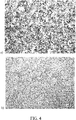
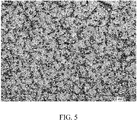
- carbon and boron formed cuboidal high strengths carbides and borides respectively with Nb, Mo and Cr in the relatively ductile Ni and Fe matrix as shown in FIG. 3b , 4b and 5 that significantly increase ultimate (UTS) and yield strengths, microhardness as well as rupture properties of the welds as shown in Tables 2 - 6.
- Microstructure of welds produced using standard Inconel 625 comprised almost homogeneous low strength gamma grains as shown in FIG. 3a .
- the weld metal with this structure demonstrated extremely low rupture and insufficient tensile properties as shown in Tables 3 and 2 respectively.
- Welds produced using the invented nickel based alloy had a unique combination of required ductility, high strength and good rupture properties at a temperature of 982° C (1800°F) that significantly exceeds properties of welds produced using base line Inconel 625 and more superior Haynes 230 alloy due to a formation of cuboidal borides and carbides. Similar strengthening effect was found in welds produced using iron based welds comprised boron and carbon. Standard 347SS and 349SS welds had low mechanical properties at 872° C (1600° F) and microhardness at a room temperature as shown in Tables 5 and 6 respectively. Precipitation cuboidal borides and carbides in ductile austenitic Fe-Ni based matrix as shown if FIG. 4b significantly increased mechanical properties of welds. Despite on strengthening, these welds maintained high ductility and produced crack free welds on iron based A286 alloy.
- Nickel based Weld Metal comprised 0.4-0.5 wt. % B and 0.2 - 0.4 wt. % C demonstrated good ductility as shown in Table 4 that allowed reshaping of engine components by planishing at an ambient temperature or preheating.
- the invented alloy can be also used for a manufacturing of engine components by casting and forging followed by annealing that forms high strength equiaxed structure with precipitation of cuboidal carbides and borides in the ductile Ni based matrix shown in FIG. 5 .
- the weld repair of engine components using the invented alloy in a form of welding wire, rods or powder is made in accordance with AMS 2694, AMS 2685 or relevant OEM specifications and includes removing of defective area or cracks, cleaning of engine components, welding, post weld heat treatment (PWHT), that for a repair of engine components manufactured of precipitation hardening superalloys, might constitute annealing and aging or just stress relief, machining and polishing to restore the original geometry of engine components followed by non-destructive testing of welds (NDT) and dimensional inspection.
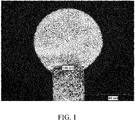
- Standard repair processes are well known in the art. However, the example of a turbine blade repair manufactured of GTD 111 superalloy and welded at an ambient temperature is shown in FIG. 9 .
- the tip weld 1 shown in FIG. 9 with a chemical composition corresponded to Weld Metal 3, which comprised of 0.4 wt. % B and 0.25 wt. % C, ensured high thermal fatigue properties, while the angel wing weld 2 with boron and carbon content of 0.6 wt.% and 0.8 wt. % respectively, had better resistance to wear.
- Welds were free of weld defects exceeding of 0.002 inch in size in as welded condition and after PWHT that included annealing at a temperature of 1200° C (2192° F) and standard two stage aging at temperature of 1120° C (2048° F) for two hours followed by soaking for twenty four (24) hours at a temperature of 845° C (1553° F).
- IN738 and GTD111 nickel based precipitation hardening superalloys were selected for welding examples.
- Multi pass clad welds of 2 - 4 inch in length, 0.35 - 0.40 inch in width and 0.4 - 0.5 inch height were produced using GTAW-MA welding and argon shielding gas on samples manufactured of nickel based Inconel 738 and GTD 111 superalloys using Ni based welding wire and on sample manufactured of high temperature iron based alloy A289 using iron based welding wire.
- IN738 and GTD111 superalloys have been used for a manufacturing of buckets (blades) of Industrial Gas Turbine (IGT) engines for decades and exercise tip thermal fatigue cracking, oxidation and wear of angel wings shown in FIG. 9 .
- Welding parameters were selected by experiment to produce clad welds with a dilution of 10 - 15%.
- Weld current varied form 60 - 75A
- arc voltage was within the range of 12 - 14
- V and welding speed varied from 1.8 to 2.2 inch per minute.
- samples manufacture of IN738 and GDT111 were subjected to a pre-weld annealing heat treatment at a temperature of 1200° C (2192° F) for two (2) hours followed by an argon quench. Welding on samples manufactured of A286 iron based alloy was made without pre-weld heat treatment.
- Clad welds on Inconel 738 and GTD 111 nickel based superalloys were produced using standard Inconel 625 and Haynes 230 welding wires to evaluate HAZ cracking of standard and invented welding materials.
- Standard 347SS and 349SS and invented iron based welding wires were used to produce clad welds on A286 alloys for evaluation of mechanical properties and susceptibility of welds to cracking.
- Inconel 625 samples of 6 x 3 x 0.060 inch in dimensions were butt welded using GTAW-MA with standard Inconel 625 (IN625) solution hardening welding wire and invented welding alloys in a form of welding rods of 0.035 inch in diameter.
- Clad welds produced using nickel based welding materials were subjected to tensile and rupture testing at a temperature of 982° C (1800° F) as per ASTM E21 and E139 respectively.
- Clad welds produced using iron based welding materials were subjected to tensile testing at a temperature of 872° C (1600° F) as per ASTM E21 and microhardness testing at a room temperature as per ASTM E384 with loading of 300 g.
- Inconel 625 butt joints were subjected to a tensile testing at a room temperature as per ASTM E8 and bend test as per ASTM E190-92.
- Acceptable compositions for nickel based welding materials included those that produced crack free welds, interdendritic shrinkage with a length less than 0.004 (0.1 mm) inch and tensile and rupture properties exceeding Inconel 625 and Haynes 230 respectively at a temperature of 982° C (1800°F) on various substrates manufactured of precipitation hardening nickel based superalloys.
- Acceptable compositions for iron based welding materials included those that produce crack free welds on A286 alloy with mechanical properties exceeding properties of base line weld produced using standard 347 and 349 welding materials at least by 15% at a temperature of 872° C (1600°F)
- Acceptable compositions for nickel and iron based welding materials included those that produced cracks, inter-dendritic shrinkage and other linear indication with a size exceeding 0.004 inch.
- Microhardness of clad welds produced using standard stainless steel 347 and 349 iron based welding materials as well as invented iron based welding materials at a a room temperature is summarised in Table 6.
- Welds produced on Inconel 738 and GTD 111 alloy using standard welding wire Inconel 625, Haynes 230 and welding wire with a chemical composition corresponding to the Weld Metal 1 exhibited unacceptable HAZ micro cracking as shown in Table 2.
- the HAZ of Weld Metal 2A that comprised 0.25 wt. % B and 0.45 wt. % C exhibited HAZ cracking in as welded and heat treated conditions.
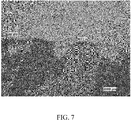
- elevated content of carbon in Weld Metal 2A resulted in a propagation of cracks from HAZ into welds as shown in FIG. 7 due to reduced ductility of these welds.
- welding wire with a chemical composition corresponding to Weld Metal 1 and 2A with content of boron below of 0.25 - 0.3 wt. % wt. % should not be used for a repair of critical engine components manufacturing of nickel based superalloys with high content of gamma prime phase such as GTD 111 and IN738.
- invented welding alloy that comprised from about 0.3 wt. % to 0.8 wt. % B and from about 0.2 wt. % C to 0.8 wt. % C produced crack free welds on nickel based Inconel 738 and GTD 111 superalloys and iron based A286 alloy. These welds had superior mechanical properties due to a formation of cuboidal borides and carbides in respectively nickel and iron based matrix allowing manufacturing and repair of turbine engine components manufacturing of various nickel and iron based superalloys.
Landscapes
- Chemical & Material Sciences (AREA)
- Engineering & Computer Science (AREA)
- Mechanical Engineering (AREA)
- Materials Engineering (AREA)
- Metallurgy (AREA)
- Organic Chemistry (AREA)
- Arc Welding In General (AREA)
- Butt Welding And Welding Of Specific Article (AREA)
Applications Claiming Priority (2)
| Application Number | Priority Date | Filing Date | Title |
|---|---|---|---|
| US201361884169P | 2013-09-30 | 2013-09-30 | |
| US14/263,120 US10414003B2 (en) | 2013-09-30 | 2014-04-28 | Welding material for welding of superalloys |
Publications (3)
| Publication Number | Publication Date |
|---|---|
| EP2853339A2 true EP2853339A2 (de) | 2015-04-01 |
| EP2853339A3 EP2853339A3 (de) | 2015-08-12 |
| EP2853339B1 EP2853339B1 (de) | 2017-09-20 |
Family
ID=51225372
Family Applications (1)
| Application Number | Title | Priority Date | Filing Date |
|---|---|---|---|
| EP14178744.0A Active EP2853339B1 (de) | 2013-09-30 | 2014-07-28 | Schweißmittel zum Schweißen von Superlegierungen |
Country Status (4)
| Country | Link |
|---|---|
| US (1) | US10414003B2 (de) |
| EP (1) | EP2853339B1 (de) |
| CN (1) | CN104511702B (de) |
| ES (1) | ES2653438T3 (de) |
Cited By (1)
| Publication number | Priority date | Publication date | Assignee | Title |
|---|---|---|---|---|
| EP3167978B2 (de) † | 2015-11-15 | 2022-12-28 | General Electric Company | Giessverfahren und artikel |
Families Citing this family (6)
| Publication number | Priority date | Publication date | Assignee | Title |
|---|---|---|---|---|
| CN106563929B (zh) | 2015-10-08 | 2019-09-17 | 利宝地工程有限公司 | 修复和制造涡轮发动机部件的方法及涡轮发动机部件 |
| US20190030657A1 (en) * | 2017-07-25 | 2019-01-31 | Siemens Energy, Inc. | Method for depositing a desired superalloy composition |
| CN111429423B (zh) * | 2020-03-19 | 2022-04-08 | 南通大学 | 基于四元数多自由度神经元的多光谱焊接图像识别方法 |
| CN111318835B (zh) * | 2020-04-03 | 2022-03-15 | 中国科学院金属研究所 | 一种高温合金熔化焊用镍基合金焊丝及其制备方法和应用 |
| CN114002082B (zh) * | 2020-07-27 | 2023-11-14 | 宝山钢铁股份有限公司 | 一种焊接热影响区微区力学性能检测方法 |
| CN117182311B (zh) * | 2023-10-23 | 2026-03-06 | 哈尔滨工业大学 | 一种TiAl合金与TC4异种材料的激光焊接方法 |
Citations (5)
| Publication number | Priority date | Publication date | Assignee | Title |
|---|---|---|---|---|
| US3428442A (en) | 1966-09-22 | 1969-02-18 | Eutectic Welding Alloys | Coated spray-weld alloy powders |
| US3918964A (en) | 1973-12-21 | 1975-11-11 | Sorcery Metals Inc | Nickel-base alloys having a low coefficient of thermal expansion |
| USRE28681E (en) | 1973-04-02 | 1976-01-13 | High temperature alloys | |
| USRE29920E (en) | 1975-07-29 | 1979-02-27 | High temperature alloys | |
| US4363659A (en) | 1979-06-04 | 1982-12-14 | Cabot Corporation | Nickel-base alloy resistant to wear |
Family Cites Families (10)
| Publication number | Priority date | Publication date | Assignee | Title |
|---|---|---|---|---|
| GB909948A (en) * | 1960-04-13 | 1962-11-07 | Rolls Royce | Method of making turbine blades |
| US3632319A (en) * | 1969-07-11 | 1972-01-04 | Gen Electric | Diffusion bonding of superalloy members |
| US3798075A (en) * | 1970-03-10 | 1974-03-19 | Carpenter Technology Corp | Method of making stainless steel containing borides |
| JPS5274509A (en) * | 1975-12-18 | 1977-06-22 | Mitsubishi Metal Corp | Ni-base sintered alloy |
| GB2039950B (en) * | 1979-01-11 | 1983-06-15 | Boc Ltd | Hard alloys |
| JPH08337850A (ja) * | 1995-06-12 | 1996-12-24 | Nkk Corp | 溶接構造高温機器用オーステナイト系ステンレス鋼 |
| JP4212553B2 (ja) * | 2002-05-08 | 2009-01-21 | 新日鐵住金ステンレス株式会社 | 捻回値・剛性率に優れる高強度ステンレス鋼線およびその製造方法 |
| FR2845098B1 (fr) * | 2002-09-26 | 2004-12-24 | Framatome Anp | Alliage a base de nickel pour la soudure electrique d'alliages de nickel et d'aciers fil de soudage et utilisation |
| JP4835771B1 (ja) * | 2010-06-14 | 2011-12-14 | 住友金属工業株式会社 | Ni基耐熱合金用溶接材料ならびにそれを用いてなる溶接金属および溶接継手 |
| CN102672368A (zh) * | 2012-05-25 | 2012-09-19 | 天津市北方涂层材料有限公司 | 一种新型耐磨镍基堆焊合金粉末 |
-
2014
- 2014-04-28 US US14/263,120 patent/US10414003B2/en active Active
- 2014-07-28 EP EP14178744.0A patent/EP2853339B1/de active Active
- 2014-07-28 ES ES14178744.0T patent/ES2653438T3/es active Active
- 2014-07-31 CN CN201410374128.4A patent/CN104511702B/zh active Active
Patent Citations (5)
| Publication number | Priority date | Publication date | Assignee | Title |
|---|---|---|---|---|
| US3428442A (en) | 1966-09-22 | 1969-02-18 | Eutectic Welding Alloys | Coated spray-weld alloy powders |
| USRE28681E (en) | 1973-04-02 | 1976-01-13 | High temperature alloys | |
| US3918964A (en) | 1973-12-21 | 1975-11-11 | Sorcery Metals Inc | Nickel-base alloys having a low coefficient of thermal expansion |
| USRE29920E (en) | 1975-07-29 | 1979-02-27 | High temperature alloys | |
| US4363659A (en) | 1979-06-04 | 1982-12-14 | Cabot Corporation | Nickel-base alloy resistant to wear |
Non-Patent Citations (1)
| Title |
|---|
| BANERJEE K.; RICHARDS N.L.; CHATURVEDI M.C.: "Effect of Filler Alloys on Heat Affected Zone Cracking in Pre-weld Heat Treated IN-738 LC Gas-Tungsten-Arc Welds", METALLURGICAL AND MATERIALS TRANSACTIONS, vol. 36A, July 2005 (2005-07-01), pages 1881 - 1890 |
Cited By (1)
| Publication number | Priority date | Publication date | Assignee | Title |
|---|---|---|---|---|
| EP3167978B2 (de) † | 2015-11-15 | 2022-12-28 | General Electric Company | Giessverfahren und artikel |
Also Published As
| Publication number | Publication date |
|---|---|
| US10414003B2 (en) | 2019-09-17 |
| CN104511702A (zh) | 2015-04-15 |
| EP2853339A3 (de) | 2015-08-12 |
| US20150093284A1 (en) | 2015-04-02 |
| EP2853339B1 (de) | 2017-09-20 |
| CN104511702B (zh) | 2018-03-13 |
| ES2653438T3 (es) | 2018-02-07 |
Similar Documents
| Publication | Publication Date | Title |
|---|---|---|
| EP3086899B2 (de) | Präzipitationsgestärktes schweissmaterial auf nickelbasis zum fusionsschweissen von superlegierungen | |
| EP3153271B1 (de) | Verfahren zur reparatur und herstellung von turbinenmotorkomponenten | |
| EP3815816B1 (de) | Superlegierung auf nickelbasis mit hohem anteil an gamma prime phase, ihre verwendung, turbinenkomponenten und verfahren zur deren herstellung | |
| EP3647442B1 (de) | Auf nickel mit hoch-gamma-prime basierende superlegierung, deren verwendung und verfahren zur herstellung von turbinenmotorkomponenten | |
| EP2853339B1 (de) | Schweißmittel zum Schweißen von Superlegierungen | |
| EP3137253B1 (de) | Duktiles schweissmaterial auf nickelbasis mit bor | |
| CA2850698C (en) | Welding material for welding of superalloys | |
| US10493568B2 (en) | Ductile boron bearing nickel based welding material | |
| HK40050043A (en) | High gamma prime nickel based superalloy, its use, turbine components and method of manufacturing thereof | |
| HK40050043B (en) | High gamma prime nickel based superalloy, its use, turbine components and method of manufacturing thereof | |
| HK1231013A1 (en) | Method of repairing and manufacturing of turbine engine components and turbine engine components | |
| HK1231013A (en) | Method of repairing and manufacturing of turbine engine components and turbine engine components | |
| HK1231013B (zh) | 修复和制造涡轮发动机部件的方法及涡轮发动机部件 |
Legal Events
| Date | Code | Title | Description |
|---|---|---|---|
| PUAI | Public reference made under article 153(3) epc to a published international application that has entered the european phase |
Free format text: ORIGINAL CODE: 0009012 |
|
| 17P | Request for examination filed |
Effective date: 20140728 |
|
| AK | Designated contracting states |
Kind code of ref document: A2 Designated state(s): AL AT BE BG CH CY CZ DE DK EE ES FI FR GB GR HR HU IE IS IT LI LT LU LV MC MK MT NL NO PL PT RO RS SE SI SK SM TR |
|
| AX | Request for extension of the european patent |
Extension state: BA ME |
|
| RIC1 | Information provided on ipc code assigned before grant |
Ipc: C22C 38/40 20060101ALI20150227BHEP Ipc: B23K 35/02 20060101AFI20150227BHEP Ipc: C22C 19/05 20060101ALI20150227BHEP Ipc: C22C 38/44 20060101ALI20150227BHEP Ipc: C22C 38/22 20060101ALI20150227BHEP Ipc: B23K 35/30 20060101ALI20150227BHEP Ipc: C22C 38/54 20060101ALI20150227BHEP |
|
| PUAL | Search report despatched |
Free format text: ORIGINAL CODE: 0009013 |
|
| AK | Designated contracting states |
Kind code of ref document: A3 Designated state(s): AL AT BE BG CH CY CZ DE DK EE ES FI FR GB GR HR HU IE IS IT LI LT LU LV MC MK MT NL NO PL PT RO RS SE SI SK SM TR |
|
| AX | Request for extension of the european patent |
Extension state: BA ME |
|
| RIC1 | Information provided on ipc code assigned before grant |
Ipc: C22C 38/22 20060101ALI20150706BHEP Ipc: C22C 38/40 20060101ALI20150706BHEP Ipc: B23K 35/30 20060101ALI20150706BHEP Ipc: C22C 19/05 20060101ALI20150706BHEP Ipc: C22C 38/54 20060101ALI20150706BHEP Ipc: C22C 38/44 20060101ALI20150706BHEP Ipc: B23K 35/02 20060101AFI20150706BHEP |
|
| R17P | Request for examination filed (corrected) |
Effective date: 20160126 |
|
| RBV | Designated contracting states (corrected) |
Designated state(s): AL AT BE BG CH CY CZ DE DK EE ES FI FR GB GR HR HU IE IS IT LI LT LU LV MC MK MT NL NO PL PT RO RS SE SI SK SM TR |
|
| 17Q | First examination report despatched |
Effective date: 20161201 |
|
| REG | Reference to a national code |
Ref country code: DE Ref legal event code: R079 Ref document number: 602014014744 Country of ref document: DE Free format text: PREVIOUS MAIN CLASS: B23K0035020000 Ipc: C22C0038020000 |
|
| GRAP | Despatch of communication of intention to grant a patent |
Free format text: ORIGINAL CODE: EPIDOSNIGR1 |
|
| RIC1 | Information provided on ipc code assigned before grant |
Ipc: C22C 38/02 20060101AFI20170424BHEP Ipc: C22C 19/05 20060101ALI20170424BHEP Ipc: C22C 38/48 20060101ALI20170424BHEP Ipc: C22C 38/04 20060101ALI20170424BHEP Ipc: C22C 38/58 20060101ALI20170424BHEP Ipc: C22C 38/50 20060101ALI20170424BHEP Ipc: B23K 35/30 20060101ALI20170424BHEP Ipc: C22C 38/44 20060101ALI20170424BHEP Ipc: C22C 38/22 20060101ALI20170424BHEP Ipc: C22C 38/54 20060101ALI20170424BHEP Ipc: C22C 38/40 20060101ALI20170424BHEP Ipc: B23K 35/02 20060101ALI20170424BHEP |
|
| INTG | Intention to grant announced |
Effective date: 20170524 |
|
| GRAS | Grant fee paid |
Free format text: ORIGINAL CODE: EPIDOSNIGR3 |
|
| GRAA | (expected) grant |
Free format text: ORIGINAL CODE: 0009210 |
|
| AK | Designated contracting states |
Kind code of ref document: B1 Designated state(s): AL AT BE BG CH CY CZ DE DK EE ES FI FR GB GR HR HU IE IS IT LI LT LU LV MC MK MT NL NO PL PT RO RS SE SI SK SM TR |
|
| REG | Reference to a national code |
Ref country code: GB Ref legal event code: FG4D |
|
| REG | Reference to a national code |
Ref country code: CH Ref legal event code: EP |
|
| REG | Reference to a national code |
Ref country code: AT Ref legal event code: REF Ref document number: 930176 Country of ref document: AT Kind code of ref document: T Effective date: 20171015 |
|
| REG | Reference to a national code |
Ref country code: IE Ref legal event code: FG4D |
|
| REG | Reference to a national code |
Ref country code: DE Ref legal event code: R096 Ref document number: 602014014744 Country of ref document: DE |
|
| REG | Reference to a national code |
Ref country code: NL Ref legal event code: FP |
|
| REG | Reference to a national code |
Ref country code: SE Ref legal event code: TRGR |
|
| PG25 | Lapsed in a contracting state [announced via postgrant information from national office to epo] |
Ref country code: LT Free format text: LAPSE BECAUSE OF FAILURE TO SUBMIT A TRANSLATION OF THE DESCRIPTION OR TO PAY THE FEE WITHIN THE PRESCRIBED TIME-LIMIT Effective date: 20170920 Ref country code: NO Free format text: LAPSE BECAUSE OF FAILURE TO SUBMIT A TRANSLATION OF THE DESCRIPTION OR TO PAY THE FEE WITHIN THE PRESCRIBED TIME-LIMIT Effective date: 20171220 Ref country code: FI Free format text: LAPSE BECAUSE OF FAILURE TO SUBMIT A TRANSLATION OF THE DESCRIPTION OR TO PAY THE FEE WITHIN THE PRESCRIBED TIME-LIMIT Effective date: 20170920 Ref country code: HR Free format text: LAPSE BECAUSE OF FAILURE TO SUBMIT A TRANSLATION OF THE DESCRIPTION OR TO PAY THE FEE WITHIN THE PRESCRIBED TIME-LIMIT Effective date: 20170920 |
|
| REG | Reference to a national code |
Ref country code: ES Ref legal event code: FG2A Ref document number: 2653438 Country of ref document: ES Kind code of ref document: T3 Effective date: 20180207 |
|
| REG | Reference to a national code |
Ref country code: LT Ref legal event code: MG4D |
|
| REG | Reference to a national code |
Ref country code: AT Ref legal event code: MK05 Ref document number: 930176 Country of ref document: AT Kind code of ref document: T Effective date: 20170920 |
|
| PG25 | Lapsed in a contracting state [announced via postgrant information from national office to epo] |
Ref country code: GR Free format text: LAPSE BECAUSE OF FAILURE TO SUBMIT A TRANSLATION OF THE DESCRIPTION OR TO PAY THE FEE WITHIN THE PRESCRIBED TIME-LIMIT Effective date: 20171221 Ref country code: RS Free format text: LAPSE BECAUSE OF FAILURE TO SUBMIT A TRANSLATION OF THE DESCRIPTION OR TO PAY THE FEE WITHIN THE PRESCRIBED TIME-LIMIT Effective date: 20170920 Ref country code: LV Free format text: LAPSE BECAUSE OF FAILURE TO SUBMIT A TRANSLATION OF THE DESCRIPTION OR TO PAY THE FEE WITHIN THE PRESCRIBED TIME-LIMIT Effective date: 20170920 Ref country code: BG Free format text: LAPSE BECAUSE OF FAILURE TO SUBMIT A TRANSLATION OF THE DESCRIPTION OR TO PAY THE FEE WITHIN THE PRESCRIBED TIME-LIMIT Effective date: 20171220 |
|
| PG25 | Lapsed in a contracting state [announced via postgrant information from national office to epo] |
Ref country code: RO Free format text: LAPSE BECAUSE OF FAILURE TO SUBMIT A TRANSLATION OF THE DESCRIPTION OR TO PAY THE FEE WITHIN THE PRESCRIBED TIME-LIMIT Effective date: 20170920 Ref country code: PL Free format text: LAPSE BECAUSE OF FAILURE TO SUBMIT A TRANSLATION OF THE DESCRIPTION OR TO PAY THE FEE WITHIN THE PRESCRIBED TIME-LIMIT Effective date: 20170920 Ref country code: CZ Free format text: LAPSE BECAUSE OF FAILURE TO SUBMIT A TRANSLATION OF THE DESCRIPTION OR TO PAY THE FEE WITHIN THE PRESCRIBED TIME-LIMIT Effective date: 20170920 |
|
| PG25 | Lapsed in a contracting state [announced via postgrant information from national office to epo] |
Ref country code: AT Free format text: LAPSE BECAUSE OF FAILURE TO SUBMIT A TRANSLATION OF THE DESCRIPTION OR TO PAY THE FEE WITHIN THE PRESCRIBED TIME-LIMIT Effective date: 20170920 Ref country code: IS Free format text: LAPSE BECAUSE OF FAILURE TO SUBMIT A TRANSLATION OF THE DESCRIPTION OR TO PAY THE FEE WITHIN THE PRESCRIBED TIME-LIMIT Effective date: 20180120 Ref country code: SM Free format text: LAPSE BECAUSE OF FAILURE TO SUBMIT A TRANSLATION OF THE DESCRIPTION OR TO PAY THE FEE WITHIN THE PRESCRIBED TIME-LIMIT Effective date: 20170920 Ref country code: EE Free format text: LAPSE BECAUSE OF FAILURE TO SUBMIT A TRANSLATION OF THE DESCRIPTION OR TO PAY THE FEE WITHIN THE PRESCRIBED TIME-LIMIT Effective date: 20170920 Ref country code: SK Free format text: LAPSE BECAUSE OF FAILURE TO SUBMIT A TRANSLATION OF THE DESCRIPTION OR TO PAY THE FEE WITHIN THE PRESCRIBED TIME-LIMIT Effective date: 20170920 |
|
| REG | Reference to a national code |
Ref country code: DE Ref legal event code: R097 Ref document number: 602014014744 Country of ref document: DE |
|
| REG | Reference to a national code |
Ref country code: FR Ref legal event code: PLFP Year of fee payment: 5 |
|
| PLBE | No opposition filed within time limit |
Free format text: ORIGINAL CODE: 0009261 |
|
| STAA | Information on the status of an ep patent application or granted ep patent |
Free format text: STATUS: NO OPPOSITION FILED WITHIN TIME LIMIT |
|
| PG25 | Lapsed in a contracting state [announced via postgrant information from national office to epo] |
Ref country code: DK Free format text: LAPSE BECAUSE OF FAILURE TO SUBMIT A TRANSLATION OF THE DESCRIPTION OR TO PAY THE FEE WITHIN THE PRESCRIBED TIME-LIMIT Effective date: 20170920 |
|
| 26N | No opposition filed |
Effective date: 20180621 |
|
| PG25 | Lapsed in a contracting state [announced via postgrant information from national office to epo] |
Ref country code: SI Free format text: LAPSE BECAUSE OF FAILURE TO SUBMIT A TRANSLATION OF THE DESCRIPTION OR TO PAY THE FEE WITHIN THE PRESCRIBED TIME-LIMIT Effective date: 20170920 |
|
| PG25 | Lapsed in a contracting state [announced via postgrant information from national office to epo] |
Ref country code: LU Free format text: LAPSE BECAUSE OF NON-PAYMENT OF DUE FEES Effective date: 20180728 Ref country code: MC Free format text: LAPSE BECAUSE OF FAILURE TO SUBMIT A TRANSLATION OF THE DESCRIPTION OR TO PAY THE FEE WITHIN THE PRESCRIBED TIME-LIMIT Effective date: 20170920 |
|
| REG | Reference to a national code |
Ref country code: BE Ref legal event code: MM Effective date: 20180731 |
|
| PG25 | Lapsed in a contracting state [announced via postgrant information from national office to epo] |
Ref country code: BE Free format text: LAPSE BECAUSE OF NON-PAYMENT OF DUE FEES Effective date: 20180731 |
|
| PG25 | Lapsed in a contracting state [announced via postgrant information from national office to epo] |
Ref country code: MT Free format text: LAPSE BECAUSE OF NON-PAYMENT OF DUE FEES Effective date: 20180728 |
|
| PG25 | Lapsed in a contracting state [announced via postgrant information from national office to epo] |
Ref country code: TR Free format text: LAPSE BECAUSE OF FAILURE TO SUBMIT A TRANSLATION OF THE DESCRIPTION OR TO PAY THE FEE WITHIN THE PRESCRIBED TIME-LIMIT Effective date: 20170920 |
|
| PG25 | Lapsed in a contracting state [announced via postgrant information from national office to epo] |
Ref country code: PT Free format text: LAPSE BECAUSE OF FAILURE TO SUBMIT A TRANSLATION OF THE DESCRIPTION OR TO PAY THE FEE WITHIN THE PRESCRIBED TIME-LIMIT Effective date: 20170920 Ref country code: HU Free format text: LAPSE BECAUSE OF FAILURE TO SUBMIT A TRANSLATION OF THE DESCRIPTION OR TO PAY THE FEE WITHIN THE PRESCRIBED TIME-LIMIT; INVALID AB INITIO Effective date: 20140728 |
|
| PG25 | Lapsed in a contracting state [announced via postgrant information from national office to epo] |
Ref country code: MK Free format text: LAPSE BECAUSE OF NON-PAYMENT OF DUE FEES Effective date: 20170920 Ref country code: CY Free format text: LAPSE BECAUSE OF FAILURE TO SUBMIT A TRANSLATION OF THE DESCRIPTION OR TO PAY THE FEE WITHIN THE PRESCRIBED TIME-LIMIT Effective date: 20170920 |
|
| PG25 | Lapsed in a contracting state [announced via postgrant information from national office to epo] |
Ref country code: AL Free format text: LAPSE BECAUSE OF FAILURE TO SUBMIT A TRANSLATION OF THE DESCRIPTION OR TO PAY THE FEE WITHIN THE PRESCRIBED TIME-LIMIT Effective date: 20170920 |
|
| PGFP | Annual fee paid to national office [announced via postgrant information from national office to epo] |
Ref country code: NL Payment date: 20200727 Year of fee payment: 7 |
|
| PGFP | Annual fee paid to national office [announced via postgrant information from national office to epo] |
Ref country code: ES Payment date: 20200807 Year of fee payment: 7 Ref country code: IE Payment date: 20200721 Year of fee payment: 7 |
|
| PGFP | Annual fee paid to national office [announced via postgrant information from national office to epo] |
Ref country code: IT Payment date: 20200721 Year of fee payment: 7 Ref country code: CH Payment date: 20200723 Year of fee payment: 7 |
|
| REG | Reference to a national code |
Ref country code: CH Ref legal event code: PL |
|
| REG | Reference to a national code |
Ref country code: NL Ref legal event code: MM Effective date: 20210801 |
|
| PG25 | Lapsed in a contracting state [announced via postgrant information from national office to epo] |
Ref country code: LI Free format text: LAPSE BECAUSE OF NON-PAYMENT OF DUE FEES Effective date: 20210731 Ref country code: CH Free format text: LAPSE BECAUSE OF NON-PAYMENT OF DUE FEES Effective date: 20210731 |
|
| PG25 | Lapsed in a contracting state [announced via postgrant information from national office to epo] |
Ref country code: NL Free format text: LAPSE BECAUSE OF NON-PAYMENT OF DUE FEES Effective date: 20210801 |
|
| PG25 | Lapsed in a contracting state [announced via postgrant information from national office to epo] |
Ref country code: IT Free format text: LAPSE BECAUSE OF NON-PAYMENT OF DUE FEES Effective date: 20210728 Ref country code: IE Free format text: LAPSE BECAUSE OF NON-PAYMENT OF DUE FEES Effective date: 20210728 |
|
| REG | Reference to a national code |
Ref country code: ES Ref legal event code: FD2A Effective date: 20220930 |
|
| PG25 | Lapsed in a contracting state [announced via postgrant information from national office to epo] |
Ref country code: ES Free format text: LAPSE BECAUSE OF NON-PAYMENT OF DUE FEES Effective date: 20210729 |
|
| PGFP | Annual fee paid to national office [announced via postgrant information from national office to epo] |
Ref country code: DE Payment date: 20250714 Year of fee payment: 12 |
|
| PGFP | Annual fee paid to national office [announced via postgrant information from national office to epo] |
Ref country code: GB Payment date: 20250722 Year of fee payment: 12 |
|
| PGFP | Annual fee paid to national office [announced via postgrant information from national office to epo] |
Ref country code: FR Payment date: 20250725 Year of fee payment: 12 |
|
| PGFP | Annual fee paid to national office [announced via postgrant information from national office to epo] |
Ref country code: SE Payment date: 20250725 Year of fee payment: 12 |