EP2853524B1 - Système de réaction et procédé de préparation d'éther polyméthoxydiméthylique - Google Patents
Système de réaction et procédé de préparation d'éther polyméthoxydiméthylique Download PDFInfo
- Publication number
- EP2853524B1 EP2853524B1 EP14160886.9A EP14160886A EP2853524B1 EP 2853524 B1 EP2853524 B1 EP 2853524B1 EP 14160886 A EP14160886 A EP 14160886A EP 2853524 B1 EP2853524 B1 EP 2853524B1
- Authority
- EP
- European Patent Office
- Prior art keywords
- formaldehyde
- catalyst
- tower
- reaction
- unit
- Prior art date
- Legal status (The legal status is an assumption and is not a legal conclusion. Google has not performed a legal analysis and makes no representation as to the accuracy of the status listed.)
- Not-in-force
Links
- 238000006243 chemical reaction Methods 0.000 title claims description 77
- LCGLNKUTAGEVQW-UHFFFAOYSA-N Dimethyl ether Chemical compound COC LCGLNKUTAGEVQW-UHFFFAOYSA-N 0.000 title claims description 38
- 238000004519 manufacturing process Methods 0.000 title description 3
- WSFSSNUMVMOOMR-UHFFFAOYSA-N Formaldehyde Chemical compound O=C WSFSSNUMVMOOMR-UHFFFAOYSA-N 0.000 claims description 292
- OKKJLVBELUTLKV-UHFFFAOYSA-N Methanol Chemical compound OC OKKJLVBELUTLKV-UHFFFAOYSA-N 0.000 claims description 129
- 239000003054 catalyst Substances 0.000 claims description 88
- 238000000605 extraction Methods 0.000 claims description 78
- 238000000034 method Methods 0.000 claims description 58
- 230000008569 process Effects 0.000 claims description 54
- 238000006359 acetalization reaction Methods 0.000 claims description 53
- 239000007788 liquid Substances 0.000 claims description 49
- 239000003795 chemical substances by application Substances 0.000 claims description 47
- 229920002866 paraformaldehyde Polymers 0.000 claims description 42
- 229930040373 Paraformaldehyde Natural products 0.000 claims description 41
- 239000008098 formaldehyde solution Substances 0.000 claims description 41
- 239000000047 product Substances 0.000 claims description 38
- XLYOFNOQVPJJNP-UHFFFAOYSA-N water Substances O XLYOFNOQVPJJNP-UHFFFAOYSA-N 0.000 claims description 30
- 239000002994 raw material Substances 0.000 claims description 28
- UHOVQNZJYSORNB-UHFFFAOYSA-N Benzene Chemical compound C1=CC=CC=C1 UHOVQNZJYSORNB-UHFFFAOYSA-N 0.000 claims description 27
- 239000000463 material Substances 0.000 claims description 26
- -1 amine cation Chemical class 0.000 claims description 24
- 239000011831 acidic ionic liquid Substances 0.000 claims description 22
- WSFSSNUMVMOOMR-NJFSPNSNSA-N methanone Chemical compound O=[14CH2] WSFSSNUMVMOOMR-NJFSPNSNSA-N 0.000 claims description 20
- YXFVVABEGXRONW-UHFFFAOYSA-N Toluene Chemical compound CC1=CC=CC=C1 YXFVVABEGXRONW-UHFFFAOYSA-N 0.000 claims description 18
- 238000005406 washing Methods 0.000 claims description 18
- 238000001291 vacuum drying Methods 0.000 claims description 14
- 239000012043 crude product Substances 0.000 claims description 12
- 238000006116 polymerization reaction Methods 0.000 claims description 11
- 239000012530 fluid Substances 0.000 claims description 10
- 239000010409 thin film Substances 0.000 claims description 10
- XEKOWRVHYACXOJ-UHFFFAOYSA-N Ethyl acetate Chemical compound CCOC(C)=O XEKOWRVHYACXOJ-UHFFFAOYSA-N 0.000 claims description 9
- RAXXELZNTBOGNW-UHFFFAOYSA-N imidazole Natural products C1=CNC=N1 RAXXELZNTBOGNW-UHFFFAOYSA-N 0.000 claims description 8
- HEDRZPFGACZZDS-UHFFFAOYSA-N Chloroform Chemical compound ClC(Cl)Cl HEDRZPFGACZZDS-UHFFFAOYSA-N 0.000 claims description 6
- RTZKZFJDLAIYFH-UHFFFAOYSA-N Diethyl ether Chemical compound CCOCC RTZKZFJDLAIYFH-UHFFFAOYSA-N 0.000 claims description 6
- 238000001704 evaporation Methods 0.000 claims description 6
- VLKZOEOYAKHREP-UHFFFAOYSA-N n-Hexane Chemical compound CCCCCC VLKZOEOYAKHREP-UHFFFAOYSA-N 0.000 claims description 6
- XDTMQSROBMDMFD-UHFFFAOYSA-N Cyclohexane Chemical compound C1CCCCC1 XDTMQSROBMDMFD-UHFFFAOYSA-N 0.000 claims description 5
- XYFCBTPGUUZFHI-UHFFFAOYSA-N Phosphine Natural products P XYFCBTPGUUZFHI-UHFFFAOYSA-N 0.000 claims description 4
- 150000001450 anions Chemical group 0.000 claims description 4
- 239000007864 aqueous solution Substances 0.000 claims description 4
- 229910000073 phosphorus hydride Inorganic materials 0.000 claims description 4
- JUJWROOIHBZHMG-UHFFFAOYSA-N pyridine Substances C1=CC=NC=C1 JUJWROOIHBZHMG-UHFFFAOYSA-N 0.000 claims description 4
- UMJSCPRVCHMLSP-UHFFFAOYSA-N pyridine Natural products COC1=CC=CN=C1 UMJSCPRVCHMLSP-UHFFFAOYSA-N 0.000 claims description 4
- AFVFQIVMOAPDHO-UHFFFAOYSA-M Methanesulfonate Chemical compound CS([O-])(=O)=O AFVFQIVMOAPDHO-UHFFFAOYSA-M 0.000 claims description 3
- CTQNGGLPUBDAKN-UHFFFAOYSA-N O-Xylene Chemical compound CC1=CC=CC=C1C CTQNGGLPUBDAKN-UHFFFAOYSA-N 0.000 claims description 3
- DTQVDTLACAAQTR-UHFFFAOYSA-M Trifluoroacetate Chemical compound [O-]C(=O)C(F)(F)F DTQVDTLACAAQTR-UHFFFAOYSA-M 0.000 claims description 3
- 150000001768 cations Chemical group 0.000 claims description 3
- QAOWNCQODCNURD-UHFFFAOYSA-M hydrogensulfate Chemical compound OS([O-])(=O)=O QAOWNCQODCNURD-UHFFFAOYSA-M 0.000 claims description 3
- 239000003208 petroleum Substances 0.000 claims description 3
- 230000000379 polymerizing effect Effects 0.000 claims description 3
- 239000008096 xylene Substances 0.000 claims description 3
- 239000012071 phase Substances 0.000 description 49
- 239000007789 gas Substances 0.000 description 21
- 239000012295 chemical reaction liquid Substances 0.000 description 15
- 238000003860 storage Methods 0.000 description 13
- 239000000243 solution Substances 0.000 description 9
- BGJSXRVXTHVRSN-UHFFFAOYSA-N 1,3,5-trioxane Chemical group C1OCOCO1 BGJSXRVXTHVRSN-UHFFFAOYSA-N 0.000 description 5
- IJGRMHOSHXDMSA-UHFFFAOYSA-N Atomic nitrogen Chemical compound N#N IJGRMHOSHXDMSA-UHFFFAOYSA-N 0.000 description 5
- OKTJSMMVPCPJKN-UHFFFAOYSA-N Carbon Chemical compound [C] OKTJSMMVPCPJKN-UHFFFAOYSA-N 0.000 description 5
- 238000007630 basic procedure Methods 0.000 description 5
- 229910052799 carbon Inorganic materials 0.000 description 5
- 239000002608 ionic liquid Substances 0.000 description 5
- 239000007791 liquid phase Substances 0.000 description 5
- 238000000926 separation method Methods 0.000 description 5
- 229910006069 SO3H Inorganic materials 0.000 description 4
- 239000006227 byproduct Substances 0.000 description 4
- 125000003178 carboxy group Chemical group [H]OC(*)=O 0.000 description 4
- 239000002283 diesel fuel Substances 0.000 description 4
- 238000012360 testing method Methods 0.000 description 4
- 239000012808 vapor phase Substances 0.000 description 4
- QVGXLLKOCUKJST-UHFFFAOYSA-N atomic oxygen Chemical compound [O] QVGXLLKOCUKJST-UHFFFAOYSA-N 0.000 description 3
- 238000010586 diagram Methods 0.000 description 3
- 230000008020 evaporation Effects 0.000 description 3
- 239000010408 film Substances 0.000 description 3
- 125000002496 methyl group Chemical group [H]C([H])([H])* 0.000 description 3
- 239000001301 oxygen Substances 0.000 description 3
- 229910052760 oxygen Inorganic materials 0.000 description 3
- 238000005191 phase separation Methods 0.000 description 3
- VYPSYNLAJGMNEJ-UHFFFAOYSA-N Silicium dioxide Chemical compound O=[Si]=O VYPSYNLAJGMNEJ-UHFFFAOYSA-N 0.000 description 2
- 239000002253 acid Substances 0.000 description 2
- 150000001335 aliphatic alkanes Chemical class 0.000 description 2
- 125000000217 alkyl group Chemical group 0.000 description 2
- 125000003118 aryl group Chemical group 0.000 description 2
- 150000001875 compounds Chemical class 0.000 description 2
- 230000018044 dehydration Effects 0.000 description 2
- 238000006297 dehydration reaction Methods 0.000 description 2
- 238000007599 discharging Methods 0.000 description 2
- 238000009826 distribution Methods 0.000 description 2
- 238000005265 energy consumption Methods 0.000 description 2
- 229910052757 nitrogen Inorganic materials 0.000 description 2
- 125000001997 phenyl group Chemical group [H]C1=C([H])C([H])=C(*)C([H])=C1[H] 0.000 description 2
- 238000010926 purge Methods 0.000 description 2
- 238000004445 quantitative analysis Methods 0.000 description 2
- 238000011084 recovery Methods 0.000 description 2
- 238000005070 sampling Methods 0.000 description 2
- 239000000741 silica gel Substances 0.000 description 2
- 229910002027 silica gel Inorganic materials 0.000 description 2
- 238000001179 sorption measurement Methods 0.000 description 2
- 229910001220 stainless steel Inorganic materials 0.000 description 2
- 239000010935 stainless steel Substances 0.000 description 2
- 239000007858 starting material Substances 0.000 description 2
- 230000002194 synthesizing effect Effects 0.000 description 2
- CIWBSHSKHKDKBQ-JLAZNSOCSA-N Ascorbic acid Chemical compound OC[C@H](O)[C@H]1OC(=O)C(O)=C1O CIWBSHSKHKDKBQ-JLAZNSOCSA-N 0.000 description 1
- QAOWNCQODCNURD-UHFFFAOYSA-N Sulfuric acid Chemical compound OS(O)(=O)=O QAOWNCQODCNURD-UHFFFAOYSA-N 0.000 description 1
- 230000002378 acidificating effect Effects 0.000 description 1
- 239000003463 adsorbent Substances 0.000 description 1
- 239000003957 anion exchange resin Substances 0.000 description 1
- 238000006555 catalytic reaction Methods 0.000 description 1
- 238000002485 combustion reaction Methods 0.000 description 1
- 230000006837 decompression Effects 0.000 description 1
- NKDDWNXOKDWJAK-UHFFFAOYSA-N dimethoxymethane Chemical compound COCOC NKDDWNXOKDWJAK-UHFFFAOYSA-N 0.000 description 1
- 150000005218 dimethyl ethers Chemical class 0.000 description 1
- 229910001873 dinitrogen Inorganic materials 0.000 description 1
- 239000002270 dispersing agent Substances 0.000 description 1
- 238000004821 distillation Methods 0.000 description 1
- 239000011552 falling film Substances 0.000 description 1
- 238000007701 flash-distillation Methods 0.000 description 1
- 229930195733 hydrocarbon Natural products 0.000 description 1
- 150000002430 hydrocarbons Chemical class 0.000 description 1
- 239000004434 industrial solvent Substances 0.000 description 1
- GRVDJDISBSALJP-UHFFFAOYSA-N methyloxidanyl Chemical compound [O]C GRVDJDISBSALJP-UHFFFAOYSA-N 0.000 description 1
- 238000002156 mixing Methods 0.000 description 1
- 239000000203 mixture Substances 0.000 description 1
- 230000004048 modification Effects 0.000 description 1
- 238000012986 modification Methods 0.000 description 1
- 239000003960 organic solvent Substances 0.000 description 1
- 230000035699 permeability Effects 0.000 description 1
- 239000000049 pigment Substances 0.000 description 1
- 238000002360 preparation method Methods 0.000 description 1
- 238000012545 processing Methods 0.000 description 1
- 238000000746 purification Methods 0.000 description 1
- 238000004064 recycling Methods 0.000 description 1
- 238000007670 refining Methods 0.000 description 1
- 239000011347 resin Substances 0.000 description 1
- 229920005989 resin Polymers 0.000 description 1
- 239000011973 solid acid Substances 0.000 description 1
- 239000004071 soot Substances 0.000 description 1
- ITMCEJHCFYSIIV-UHFFFAOYSA-N triflic acid Chemical compound OS(=O)(=O)C(F)(F)F ITMCEJHCFYSIIV-UHFFFAOYSA-N 0.000 description 1
Images

Classifications
-
- C—CHEMISTRY; METALLURGY
- C07—ORGANIC CHEMISTRY
- C07C—ACYCLIC OR CARBOCYCLIC COMPOUNDS
- C07C41/00—Preparation of ethers; Preparation of compounds having groups, groups or groups
- C07C41/48—Preparation of compounds having groups
- C07C41/50—Preparation of compounds having groups by reactions producing groups
- C07C41/56—Preparation of compounds having groups by reactions producing groups by condensation of aldehydes, paraformaldehyde, or ketones
-
- B—PERFORMING OPERATIONS; TRANSPORTING
- B01—PHYSICAL OR CHEMICAL PROCESSES OR APPARATUS IN GENERAL
- B01J—CHEMICAL OR PHYSICAL PROCESSES, e.g. CATALYSIS OR COLLOID CHEMISTRY; THEIR RELEVANT APPARATUS
- B01J14/00—Chemical processes in general for reacting liquids with liquids; Apparatus specially adapted therefor
-
- B—PERFORMING OPERATIONS; TRANSPORTING
- B01—PHYSICAL OR CHEMICAL PROCESSES OR APPARATUS IN GENERAL
- B01D—SEPARATION
- B01D3/00—Distillation or related exchange processes in which liquids are contacted with gaseous media, e.g. stripping
- B01D3/009—Distillation or related exchange processes in which liquids are contacted with gaseous media, e.g. stripping in combination with chemical reactions
-
- B—PERFORMING OPERATIONS; TRANSPORTING
- B01—PHYSICAL OR CHEMICAL PROCESSES OR APPARATUS IN GENERAL
- B01J—CHEMICAL OR PHYSICAL PROCESSES, e.g. CATALYSIS OR COLLOID CHEMISTRY; THEIR RELEVANT APPARATUS
- B01J31/00—Catalysts comprising hydrides, coordination complexes or organic compounds
- B01J31/02—Catalysts comprising hydrides, coordination complexes or organic compounds containing organic compounds or metal hydrides
- B01J31/0277—Catalysts comprising hydrides, coordination complexes or organic compounds containing organic compounds or metal hydrides comprising ionic liquids, as components in catalyst systems or catalysts per se, the ionic liquid compounds being used in the molten state at the respective reaction temperature
- B01J31/0278—Catalysts comprising hydrides, coordination complexes or organic compounds containing organic compounds or metal hydrides comprising ionic liquids, as components in catalyst systems or catalysts per se, the ionic liquid compounds being used in the molten state at the respective reaction temperature containing nitrogen as cationic centre
- B01J31/0285—Catalysts comprising hydrides, coordination complexes or organic compounds containing organic compounds or metal hydrides comprising ionic liquids, as components in catalyst systems or catalysts per se, the ionic liquid compounds being used in the molten state at the respective reaction temperature containing nitrogen as cationic centre also containing elements or functional groups covered by B01J31/0201 - B01J31/0274
-
- B—PERFORMING OPERATIONS; TRANSPORTING
- B01—PHYSICAL OR CHEMICAL PROCESSES OR APPARATUS IN GENERAL
- B01J—CHEMICAL OR PHYSICAL PROCESSES, e.g. CATALYSIS OR COLLOID CHEMISTRY; THEIR RELEVANT APPARATUS
- B01J31/00—Catalysts comprising hydrides, coordination complexes or organic compounds
- B01J31/02—Catalysts comprising hydrides, coordination complexes or organic compounds containing organic compounds or metal hydrides
- B01J31/0277—Catalysts comprising hydrides, coordination complexes or organic compounds containing organic compounds or metal hydrides comprising ionic liquids, as components in catalyst systems or catalysts per se, the ionic liquid compounds being used in the molten state at the respective reaction temperature
- B01J31/0287—Catalysts comprising hydrides, coordination complexes or organic compounds containing organic compounds or metal hydrides comprising ionic liquids, as components in catalyst systems or catalysts per se, the ionic liquid compounds being used in the molten state at the respective reaction temperature containing atoms other than nitrogen as cationic centre
- B01J31/0291—Catalysts comprising hydrides, coordination complexes or organic compounds containing organic compounds or metal hydrides comprising ionic liquids, as components in catalyst systems or catalysts per se, the ionic liquid compounds being used in the molten state at the respective reaction temperature containing atoms other than nitrogen as cationic centre also containing elements or functional groups covered by B01J31/0201 - B01J31/0274
-
- C—CHEMISTRY; METALLURGY
- C07—ORGANIC CHEMISTRY
- C07C—ACYCLIC OR CARBOCYCLIC COMPOUNDS
- C07C41/00—Preparation of ethers; Preparation of compounds having groups, groups or groups
- C07C41/01—Preparation of ethers
-
- C—CHEMISTRY; METALLURGY
- C07—ORGANIC CHEMISTRY
- C07C—ACYCLIC OR CARBOCYCLIC COMPOUNDS
- C07C41/00—Preparation of ethers; Preparation of compounds having groups, groups or groups
- C07C41/48—Preparation of compounds having groups
- C07C41/58—Separation; Purification; Stabilisation; Use of additives
-
- C—CHEMISTRY; METALLURGY
- C08—ORGANIC MACROMOLECULAR COMPOUNDS; THEIR PREPARATION OR CHEMICAL WORKING-UP; COMPOSITIONS BASED THEREON
- C08G—MACROMOLECULAR COMPOUNDS OBTAINED OTHERWISE THAN BY REACTIONS ONLY INVOLVING UNSATURATED CARBON-TO-CARBON BONDS
- C08G2/00—Addition polymers of aldehydes or cyclic oligomers thereof or of ketones; Addition copolymers thereof with less than 50 molar percent of other substances
- C08G2/06—Catalysts
-
- C—CHEMISTRY; METALLURGY
- C08—ORGANIC MACROMOLECULAR COMPOUNDS; THEIR PREPARATION OR CHEMICAL WORKING-UP; COMPOSITIONS BASED THEREON
- C08G—MACROMOLECULAR COMPOUNDS OBTAINED OTHERWISE THAN BY REACTIONS ONLY INVOLVING UNSATURATED CARBON-TO-CARBON BONDS
- C08G2/00—Addition polymers of aldehydes or cyclic oligomers thereof or of ketones; Addition copolymers thereof with less than 50 molar percent of other substances
- C08G2/08—Polymerisation of formaldehyde
-
- C—CHEMISTRY; METALLURGY
- C08—ORGANIC MACROMOLECULAR COMPOUNDS; THEIR PREPARATION OR CHEMICAL WORKING-UP; COMPOSITIONS BASED THEREON
- C08G—MACROMOLECULAR COMPOUNDS OBTAINED OTHERWISE THAN BY REACTIONS ONLY INVOLVING UNSATURATED CARBON-TO-CARBON BONDS
- C08G2/00—Addition polymers of aldehydes or cyclic oligomers thereof or of ketones; Addition copolymers thereof with less than 50 molar percent of other substances
- C08G2/30—Chemical modification by after-treatment
- C08G2/34—Chemical modification by after-treatment by etherification
-
- B—PERFORMING OPERATIONS; TRANSPORTING
- B01—PHYSICAL OR CHEMICAL PROCESSES OR APPARATUS IN GENERAL
- B01J—CHEMICAL OR PHYSICAL PROCESSES, e.g. CATALYSIS OR COLLOID CHEMISTRY; THEIR RELEVANT APPARATUS
- B01J2219/00—Chemical, physical or physico-chemical processes in general; Their relevant apparatus
- B01J2219/00002—Chemical plants
- B01J2219/00004—Scale aspects
- B01J2219/00006—Large-scale industrial plants
-
- Y—GENERAL TAGGING OF NEW TECHNOLOGICAL DEVELOPMENTS; GENERAL TAGGING OF CROSS-SECTIONAL TECHNOLOGIES SPANNING OVER SEVERAL SECTIONS OF THE IPC; TECHNICAL SUBJECTS COVERED BY FORMER USPC CROSS-REFERENCE ART COLLECTIONS [XRACs] AND DIGESTS
- Y02—TECHNOLOGIES OR APPLICATIONS FOR MITIGATION OR ADAPTATION AGAINST CLIMATE CHANGE
- Y02P—CLIMATE CHANGE MITIGATION TECHNOLOGIES IN THE PRODUCTION OR PROCESSING OF GOODS
- Y02P20/00—Technologies relating to chemical industry
- Y02P20/50—Improvements relating to the production of bulk chemicals
- Y02P20/584—Recycling of catalysts
Definitions
- the present invention relates to a novel reaction system and process for continuously preparing polymethoxy dimethyl ether, more particularly, to a novel reaction system and process for continuously preparing polymethoxy dimethyl ether by a continuous acetalization reaction between an aqueous formaldehyde solution or paraformaldehyde and methanol in the presence of a functionalized acidic ionic liquid as a catalyst.
- DMM n wherein n is ⁇ 5, has excellent solubility and very high permeability, is miscible with water and many organic solvents, and can be widely used in industrial solvents, pigment dispersants, or the like.
- DMM n is also an oxygen-containing blending component with great potential for diesel fuel, which has high cetane numbers (DMM 2 : 63, DMM 3 : 78, DMM 4 : 90, DMM 5 : 100) and high oxygen contents (42%-49%).
- Addition of DMM n in a amount of 10-20 v/v% to diesel fuel can improve the combustion characteristics of the diesel fuel significantly, increase the thermal efficiency effectively, and reduce the emission of NO x and carbon soot greatly. It was reported ( US 7235113 ) that the emission of the NO x , particulates and hydrocarbons in the exhaust gas can satisfy the Euro V criteria by adding 15 v/v% of DMM 3-6 to diesel fuel.
- a conventional process for synthesizing DMM n is by the acetalization reaction between a compound providing paraformaldehyde and a compound providing methyl groups for termination in the presence of an acidic catalyst. Since 2001, Snamprogetti S.P.A.
- BASF AG US 20080207954 A1 . investigated a process for preparing DMM 1-5 by the reaction between formaldehyde and methanol in an aqueous solution, in which a liquid acid or a solid acid is used as a catalyst; the reaction liquids (DMM 1-5 , unreacted raw materials and water) are distilled out from the top of the rectification tower by the reaction rectification technique; then the light components (DMM 1-2 and unreacted raw materials), the crude product (DMM 3-4 and water) and the heavy components (DMM n>4 ) are separated by a multi-stage rectification process.
- DMM 3-4 and water are separated by a phase separation technique from the crude product, and the light components and the heavy components are recycled to the reaction unit for reuse.
- methanol, water and DMM n tend to form an azeotrope, so it is difficult to separate methanol from DMM 3-4 , and methanol has good miscibility with water together with DMM 3-4 , which renders the phase separation to be difficult.
- the crude product still contains a small amount of water and the catalyst, which need to be removed by adsorption with silica gel or an anion exchange resin in order to realize the refining of the product DMM 3-8 .
- the recovery rate of the catalyst is relatively low, the cost of the raw materials of the reaction is high, and the process flow is long.
- GB2489534A as another application of the present applicant, disclosed a method for preparing polymethoxy dimethyl ethers, which comprises performing continuous acetalization reaction of trioxymethylene and methanol or methylal by ionic liquid catalysis.
- the recovery rate of the catalyst is relatively low, the cost of the raw materials of the reaction is high, and the process flow is long.
- An object of the invention is to provide a system and process for preparing polymethoxy dimethyl ether DMM 3-8 by a continuous acetalization reaction between an aqueous formaldehyde solution or paraformaldehyde and methanol in the presence of a functionalized acidic ionic liquid as a catalyst.
- reaction system for continuously preparing polymethoxy dimethyl ether with an aqueous formaldehyde solution or paraformaldehyde as raw material, which comprises:
- the formaldehyde-concentrating unit comprises a formaldehyde heater, a formaldehyde concentrator, a dilute-aldehyde condenser, a column washer and a washing liquor tank, wherein the aqueous formaldehyde solution is evaporated in the formaldehyde heater to give a vapor-liquid mixed fluid; the vapor-liquid mixed fluid is fed into the formaldehyde concentrator to give a (liquid) concentrated formaldehyde of 50 ⁇ 80 wt.%; and the gas generated during this process is fed into the dilute-aldehyde condenser to recover formaldehyde, and the non-condensable gases coming out from the dilute-aldehyde condenser are fed into the column washer to be absorbed by the washing liquor and fed into the washing liquor tank.
- the vacuum-drying unit is a continuous vacuum dryer, and under conditions of 60 ⁇ 80°C and a gauge pressure of -0.1 ⁇ -0.05 MPa, the liquid concentrated formaldehyde obtained from step 1) is polymerized to a paraformaldehyde having a polymerization degree of 8 ⁇ 16.
- the acetalization unit comprises a single-stage or multi-stage reactor and a vapor condenser.
- the single-stage or multi-stage reactor is a single-stage or multi-stage shell and tube reactor or an overflow kettle.
- the reaction system further comprises a catalyst-regenerating unit, which comprises a thin film evaporator, and is used to receive the heavy phase separated from the product-separating unit and recycle the catalyst in the heavy phase back to the acetalization reaction unit after the catalyst is dehydrated.
- a catalyst-regenerating unit which comprises a thin film evaporator
- the product-separating unit comprises an extraction tower and a single-stage or multi-stage rectification tower, and the extraction tower and the single-stage or multi-stage rectification tower are connected with each other in series; and the extraction tower separates the crude product DMM 1-8 into a light phase and a heavy phase, wherein the heavy phase comprises the acidic ionic liquid catalyst, formaldehyde and water, and the light phase comprises unreacted methanol and formaldehyde, DMM 1-8 as well as an extraction agent.
- the light phase is continuously flowed into a rectification unit from the top of the extraction tower, so that the recycled material (formaldehyde, methanol and DMM 1-2 ), the extraction agent and the desired product DMM 3-8 are separated; the recycled material is fed back to the acetalization reactor; the extraction agent is fed back to the extraction tower for reuse; the heavy phase is flowed into the catalyst-regenerating unit from the tower bottom.
- the recycled material formaldehyde, methanol and DMM 1-2
- the extraction agent and the desired product DMM 3-8 are separated
- the recycled material is fed back to the acetalization reactor
- the extraction agent is fed back to the extraction tower for reuse
- the heavy phase is flowed into the catalyst-regenerating unit from the tower bottom.
- the rectification tower comprises a light component rectification tower, an extraction agent rectification tower and a product rectification tower.
- the rectification tower is a tray tower or a packed tower, and the number of tower tray is 3 ⁇ 10.
- the process further comprises: in the catalyst-regenerating unit, evaporating the aqueous solution of the catalyst from step 4) so as to separating most of water, and feeding the recovered catalyst back to step 3) for reuse.
- the molar ratio of the concentrated formaldehyde or the paraformaldehyde to methanol is 0.5-3.0.
- the reaction temperature is 100 ⁇ 130°C
- the reaction pressure is 2.0 ⁇ 5.0 MPa
- the reaction resident time is 60 ⁇ 180 min.
- the extraction agent in step 4) is one or more selected from n-hexane, cyclohexane, petroleum ether, chloroform, benzene, toluene, xylene, and ethyl acetate.
- the extraction agent in step 4) is cyclohexane, benzene or toluene.
- the cation moiety of the functionalized acidic ionic liquid catalyst is one selected from an acid-functionalized quaternary amine cation, an acid-functionalized quaternary phosphine cation, an acid-functionalized imidazole cation or an acid-functionalized pyridine cation, and the anion moiety thereof is one selected from p -toluenesulfonate anion, trifluoromethanesulfonate anion, methylsulfonate anion, bisulfate anion, or trifluoroacetate anion.
- the invention includes, but is not limited to, the following advantages:
- the invention can prepare polymethoxy dimethyl ether DMM 3-8 with an aqueous formaldehyde solution of 37 ⁇ 40 wt.% as the starting material via continuous concentration, vacuum drying and acetalization reaction, or the invention prepares polymethoxy dimethyl ether DMM 3-8 by using paraformaldehyde as the starting material directly via acetalization reaction.
- a reaction system of the invention for preparing DMM 3-8 with an aqueous formaldehyde solution as the raw material comprises:
- the formaldehyde-concentrating unit and the vacuum-drying unit are necessary only when the raw material used is an aqueous dilute formaldehyde solution, whereas they are not necessary when a liquid concentrated formaldehyde (e.g. having a concentration of 50 ⁇ 80 wt.%) or paraformaldehyde from the exterior (for example, purchased) is directly used as the raw material.
- a liquid concentrated formaldehyde e.g. having a concentration of 50 ⁇ 80 wt.% or paraformaldehyde from the exterior (for example, purchased) is directly used as the raw material.
- reaction system further comprises:
- the acetalization reactor is a single-stage or multi-stage shell and tube reactor or an overflow kettle.
- the 316L stainless steel can be selected as the material of the acetalization reactor.
- the rectification tower of the product-separating unit is a tray tower or a packed tower, and the number of tower tray is 3 ⁇ 10.
- the thin film evaporator in the catalyst-regenerating unit is selected from a falling film evaporator, a scraper type or a non-scraper type thin film evaporator.
- the formaldehyde-concentrating unit comprises a formaldehyde concentrator, a formaldehyde heater, a dilute-aldehyde condenser, a column washer and a washing liquor tank;
- the formaldehyde concentrator is provided with an inlet, a liquid outlet and a gas outlet, wherein the liquid outlet is provided at the bottom of the formaldehyde concentrator and the gas outlet is provided at the upper portion of the formaldehyde concentrator.
- a feasible configuration mode is that: the outlet of the formaldehyde heater and the inlet of the formaldehyde concentrator are communicated with each other via a pipe; the liquid outlet of the formaldehyde concentrator and the inlet of the vacuum drier or the formaldehyde inlet of the acetalization reactor are communicated with each other via a pipe; the gas outlet of the formaldehyde concentrator and the inlet of the dilute-aldehyde condenser are communicated with each other via a pipe; the gas outlet of the dilute-aldehyde condenser and the gas inlet of the column washer are communicated with each other via a pipe; the liquid outlet of the column washer and the inlet of the washing liquor tank are communicated with each other via a pipe; the outlet of the washing liquor tank and the washing liquor inlet of the column washer are communicated with each other via a pipe.
- the outlet of the single-stage or multi-stage reactor and the inlet of the vapor condenser within the acetalization unit are communicated with each other via a pipe.
- the rectification tower comprises a light component rectification tower, an extraction agent rectification tower and a product rectification tower.
- an feasible configuration mode is that: the reaction liquid inlet of the extraction tower and the outlet of the vapor condenser of the acetalization unit are communicated with each other via a pipeline; the light phase outlet of the extraction tower and the inlet of the light component rectification tower are communicated with each other via a pipeline; the heavy phase outlet of the extraction tower and the inlet of the thin film evaporator are communicated with each other via a pipeline; the liquid phase outlet of light component rectification tower and the inlet of the extraction agent rectification tower are communicated with each other via a pipeline; the liquid phase outlet of the extraction agent rectification tower and the inlet of the product rectification tower are communicated with each other via a pipeline; the gas phase outlets of the light component rectification tower and the product rectification tower and the inlet of the acetalization reactor are communicated
- the configuration mode of the thin film evaporator is that the heavy phase outlet and the inlet of the catalyst storage tank are communicated with each other via a pipeline.
- a process of the invention for preparing polymethoxy dimethyl ether with an aqueous formaldehyde solution or paraformaldehyde as the raw material comprises the following steps:
- the process of the invention further comprises: 5) evaporating the aqueous solution of the catalyst from step 4) so as to separate most of the water, and feeding the recovered catalyst back to step 3) for reuse.
- the cation moiety of the functionalized acidic ionic liquid is one selected form an acid-functionalized quaternary amine cation, an acid-functionalized quaternary phosphine cation, an acid-functionalized imidazole cation or an acid-functionalized pyridine cation, and the anion moiety thereof can be one independently selected from p -toluenesulfonate anion, trifluoromethanesulfonate anion, methylsulfonate anion, bisulfate anion, or trifluoroacetate anion.
- step 3 the molar ratio of formaldehyde to methanol is 0.5-3.0.
- reaction is carried out under nitrogen gas protection.
- the reaction temperature is 100 ⁇ 130°C
- the reaction pressure is 2.0 ⁇ 5.0 MPa
- the reaction resident time is 60 ⁇ 180 min.
- the catalyst accounts for 1 ⁇ 6 wt.% of the total reaction raw materials.
- the extraction agent in step 4) is one or more selected from n-hexane, cyclohexane, petroleum ether, chloroform, benzene, toluene, xylene, and ethyl acetate, preferably, cyclohexane, benzene or toluene.
- the used amount of the extraction agent is 1 ⁇ 3 folds more than the reaction liquid in terms of volume.
- the temperature for the extraction in step 4) is 20 ⁇ 40°C.
- the evaporation temperature is 60 ⁇ 70°C
- the gauge pressure is -0.1 ⁇ -0.05 MPa.
- reaction formulae employed in the process of the invention are as follows:
- n is an integer from 1 to 8
- m is an integer from 8 to 16
- IL represents a functionalized acidic ionic liquid catalyst.
- the functionalized acidic ionic liquid catalyst can be selected with reference to the preferred examples below.
- the structural formula of an example of the acid-functionalized quaternary amine cation of the functionalized acidic ionic liquid catalyst used in the invention can be:
- the structural formula of an example of the acid-functionalized quaternary phosphine cation of the functionalized acidic ionic liquid catalyst used in the invention can be:
- the structural formula of an example of the acid-functionalized imidazole cation of the functionalized acidic ionic liquid catalyst used in the invention can be:
- the structural formula of an example of the acid-functionalized pyridine cation of the functionalized acidic ionic liquid catalyst used in the invention can be:
- Examples of anions of the acidic ionic liquid catalyst used in the invention include: CH 3 (C 6 H 4 )SO 3 - , CF 3 SO 3 - , CH 3 SO 3 - , HSO 4 - , CF 3 COO - etc..
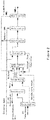
- Fig. 1 Specific preparation examples are provided below. With reference to the configuration in Fig. 1 , the invention will be further explained by means of the Examples. For the direction of the materials during the whole process flow, Fig. 2 may be referred.
- the reactor R1 was a shell and tube reactor.
- the reactor R1 and the reactor heat exchanger were communicated with each other circularly, the reaction liquid was circulated in the reactor and the heat exchanger, and the volume was 500 mL.
- the air in the system was replaced by purging with high-purity nitrogen.
- an aqueous formaldehyde solution having a concentration of 37 wt.% was continuously added at a feeding speed of 135 mL/h.
- the temperature of the concentrator S1 was controlled at 80 ⁇ 90°C, and the vacuum degree thereof was controlled at -0.05 ⁇ -0.06 MPa.
- the vapor phase was fed into the dilute-aldehyde condenser E2 through the pipeline 3, and condensed to form liquid dilute formaldehyde, which was fed into the dilute-aldehyde receiving tank V3 through the pipeline 7 at a flow rate of 65 mL/h.
- the liquid phase was a formaldehyde solution of 60 wt.%, and delivered into the acetalization reactor R1 in C zone through the pipeline 5 at a flow rate of 70 mL/h.
- the ionic liquid catalyst IL1 was added at a feeding speed of 9.8 g/h.
- the feeding was stopped, and the concentration of the catalyst was kept to be not less than 4 wt.%.
- the initial feeding speeds of the concentrated formaldehyde and methanol were 170 mL/h and 68 mL/h, respectively.
- the feeding speed of the formaldehyde was 70 mL/h.
- the operation conditions of the reactor R1 were controlled as 125 ⁇ 130°C and 3.5-4.0 MPa.
- the reactor effluent liquid was fed into the extraction tower C2.
- the feeding speed of the extraction agent, benzene was 250 mL/h (being 1 fold more than the volume of the reaction liquid).
- the heavy phase (the catalyst and aqueous formaldehyde solution) was continuously fed into the film evaporator S2 from the tower bottom, where most of water was removed at 65°C/-0.085 MPa, after that the heavy phase was fed into the reactor for reuse.
- the light phase (the product phase) was continuously fed into the rectification tower C3 from the tower top.
- the light component, DMM 1 , methanol and formaldehyde was continuously distilled from the tower top at 40 ⁇ 65°C, and was fed back into the reaction unit for reuse, while the tower bottom liquid was fed into the rectification tower C4.
- the extraction agent, benzene, distilled from the tower top at 78 ⁇ 80°C was fed back into the storage tank V1 for reuse, while the tower bottom liquid was fed into the rectification tower C5.
- DMM 2 and trioxymethylene (the by-product) distilled from the tower top at 98 ⁇ 110°C were fed back to the reaction unit for reuse, while the product, DMM 3-8 , flowing out from the tower bottom was fed into the product storage tank.
- the reaction effluent liquid (21) comprised 4% of the catalyst.
- the aqueous catalyst solution (24) comprised 8.6% of the catalyst after extraction.
- the catalyst phase (31) comprised 13.7% of the catalyst after dehydration.
- Example 2 The basic procedure and the equipments were same as in Example 1, except that the catalyst was the ionic liquid IL2 and the concentration of the formaldehyde solution is 80 wt.%. After running for 100 h continuously, DMM 3-8 product was obtained at 24.0 mL/h (from the pipeline 30).
- Example 2 The basic procedure and the equipments as well as the parameters thereof were same as in Example 1, except that toluene was used as the extraction agent at a flow rate of 490 mL/h. After running for 100 h continuously, DMM 3-8 product was obtained at 23.0 mL/h (from the pipeline 33).
- the reactor R1 was a shell and tube reactor.
- the reactor R1 and the reboiler were communicated with each other circularly.
- the reaction liquid was circulated in the reactor and the heat exchanger, and the volume was 500 mL.
- the air in the system was replaced by purging with high-purity nitrogen.
- an aqueous formaldehyde solution having a concentration of 37 wt.% was continuously added at a feeding speed of 105 mL/h.
- the temperature of the concentrator S1 was controlled at 80 ⁇ 90°C, and the vacuum degree thereof was controlled at -0.05 ⁇ -0.06 MPa.
- the vapor phase was fed into the dilute-aldehyde condenser E2 through the pipeline 3, and condensed to form liquid dilute formaldehyde, which was fed into the dilute-aldehyde receiving tank V3 through the pipeline 7 at a flow rate of 63 mL/h.
- the liquid phase was a formaldehyde solution of 80 wt.%, delivered into vacuum drier E3 in zone B through the pipeline 4 at a flow rate of 42 mL/h, and vacuum-dried under the conditions of 60 ⁇ 80°C and -0.1 ⁇ -0.05 MPa, so as to obtain paraformaldehyde having a polymerization degree of 8 ⁇ 16.
- the paraformaldehyde may be fed into the acetalization reactor R1 through the pipeline 12 (at 34 g/h).
- the ionic liquid catalyst IL1 was added at a feeding speed of 9.8 g/h.
- the initial feeding speeds of paraformaldehyde and methanol were 72 g/h and 47.5 mL/h, respectively.
- the feeding speeds of the formaldehyde and methanol were 34 g/h and 36 mL/h, respectively.
- the operation conditions of the reactor R1 were controlled as 125 ⁇ 130°C and 3.5 ⁇ 4.0 MPa.
- the reactor effluent liquid was fed into the extraction tower C2.
- the feeding speed of the extraction agent, benzene was 245 mL/h (being 1 fold more than the volume of the reaction liquid).
- the heavy phase (the catalyst, aqueous formaldehyde solution) was continuously fed into the film evaporator S2 from the tower bottom, where most of water was removed at 65°C/-0.085 MPa, was after that the heavy phase was fed into the reactor for reuse.
- the light phase (the product phase) was continuously fed into the rectification tower C3 from the tower top.
- the light components, DMM 1 , formaldehyde and methanol were continuously distilled from the tower top at 40 ⁇ 65°C, and fed back into the reaction unit for reuse, while the tower bottom liquid was fed into the rectification tower C4.
- the extraction agent, benzene, distilled from the tower top at 78 ⁇ 80°C was fed back into the storage tank V1 for reuse, while the tower bottom liquid was fed into the rectification tower C5.
- DMM 2 and trioxymethylene (the by-product) distilled from the tower top at 98 ⁇ 110°C were fed back to the reaction unit for reuse, while the product DMM 3-8 flowing out from the tower bottom was fed into the product storage tank.
- the aqueous catalyst solution (24) comprised 18.5% of the catalyst after extraction.
- Example 4 The basic procedure and the equipments were same as in Example 4, except that the catalyst was IL4 and the used amount thereof is 6 wt.% of the total feeding materials. After running for 100 h continuously, DMM 3-8 product was obtained at 53.5 mL/h (from the pipeline 30).
- Example 4 The basic procedure and the equipments were same as in Example 4, except that the catalyst was IL5 and the used amount thereof is 2 wt.% of the total feeding materials. After running for 100 h continuously, DMM 3-8 product was obtained at 42.5 mL/h (from the pipeline 30).
- Example 4 The basic procedure and the equipments were same as in Example 4, except that the molar ratio between formaldehyde and methanol was 1:1. After running for 100 h continuously, DMM 3-8 product was obtained at 40.5 mL/h (from the pipeline 30).
Landscapes
- Chemical & Material Sciences (AREA)
- Organic Chemistry (AREA)
- Chemical Kinetics & Catalysis (AREA)
- Health & Medical Sciences (AREA)
- Medicinal Chemistry (AREA)
- Polymers & Plastics (AREA)
- Engineering & Computer Science (AREA)
- Materials Engineering (AREA)
- General Chemical & Material Sciences (AREA)
- Organic Low-Molecular-Weight Compounds And Preparation Thereof (AREA)
- Catalysts (AREA)
- Low-Molecular Organic Synthesis Reactions Using Catalysts (AREA)
Claims (15)
- Système réactionnel pour la préparation de manière continue d'éther polyméthoxydiméthylique avec une solution aqueuse de formaldéhyde ou du paraformaldéhyde en tant que matière première, qui comprend :1) une unité de concentration de formaldéhyde, qui est configurée pour concentrer une solution aqueuse de formaldéhyde de 37 à environ 40 % en poids afin d'obtenir un formaldéhyde concentré de 50 à environ 80 % en poids ;2) une unité de séchage sous vide, qui est configurée pour polymériser le formaldéhyde concentré obtenu à partir de l'unité de concentration de formaldéhyde en paraformaldéhyde ;3) une unité de réaction d'acétalisation, qui est configurée pour soumettre le formaldéhyde concentré obtenu à partir de l'unité de concentration de formaldéhyde, le paraformaldéhyde obtenu à partir de l'unité de séchage sous vide ou un paraformaldéhyde ajouté directement depuis l'extérieur à une réaction d'acétalisation avec du méthanol en présence d'un catalyseur liquide ionique acide, de manière à obtenir un produit brut DMM1-8 ; et4) une unité de séparation de produit, qui est configurée pour séparer le produit souhaité, l'éther polyméthoxydiméthylique, DMM3-8, du produit brut obtenu à partir de l'unité de réaction d'acétalisation.
- Système réactionnel selon la revendication 1, caractérisé en ce que l'unité de concentration de formaldéhyde comprend un appareil de chauffage de formaldéhyde, un concentrateur de formaldéhyde, un condensateur d'aldéhyde dilué, un laveur à colonnes et une cuve de liqueur de lavage, dans lequel la solution aqueuse de formaldéhyde est évaporée dans l'appareil de chauffage de formaldéhyde pour donner un fluide mixte vapeur-liquide ; le fluide mixte vapeur-liquide est alimenté dans le concentrateur de formaldéhyde pour donner un formaldéhyde concentré liquide ayant une concentration de 50 à environ 80 % en poids, et le gaz généré pendant cette procédure est introduit dans le condensateur d'aldéhyde dilué pour récupérer le formaldéhyde, le gaz non condensable sortant du condensateur d'aldéhyde dilué est introduit dans le laveur à colonne pour être absorbé par la liqueur de lavage et pénétrer dans la cuve de liqueur de lavage.
- Système réactionnel selon la revendication 1, caractérisé en ce que l'unité de séchage sous vide est un séchoir à vide continu, et dans des conditions de 60 à environ 80 °C et une pression manométrique de - 0,1 à environ -0,05 MPa, le formaldéhyde concentré obtenu à partir de l'unité de concentration de formaldéhyde est polymérisé en paraformaldéhyde ayant un degré de polymérisation de 8 à environ 16.
- Système réactionnel selon l'une quelconque des revendications 1 à 3, caractérisé en ce que l'unité d'acétalisation comprend un réacteur mono-étagé ou multi-étagé et un condensateur à vapeur.
- Système réactionnel selon la revendication 4, caractérisé en ce que le réacteur mono-étagé ou multi-étagé est un réacteur à coque et tube mono-étagé ou multi-étagé ou une bouilloire à débordement.
- Système réactionnel selon l'une quelconque des revendications 1 à 3, caractérisé en ce que le système réactionnel comprend en outre une unité de régénération de catalyseur, qui comprend un évaporateur à film mince et est utilisé pour recevoir la phase lourde séparée de l'unité de séparation de produit et pour recycler le catalyseur de la phase lourde de nouveau vers l'unité de réaction d'acétalisation après la déshydratation du catalyseur.
- Système réactionnel selon la revendication 6, caractérisé en ce que l'unité de séparation de produit comprend une tour d'extraction et une tour de rectification mono-étagée ou multi-étagée, la tour d'extraction et la tour de rectification mono-étagée ou multi-étagée étant reliées l'une à l'autre en série ; et la tour d'extraction sépare le produit brut en une phase légère et une phase lourde, la phase lourde comprenant le catalyseur liquide ionique acide, le formaldéhyde et l'eau, et la phase légère comprenant le méthanol et le formaldéhyde DMM1-8 n'ayant pas réagi ainsi qu'un agent d'extraction ; la phase légère s'écoule de manière continue dans une unité de rectification depuis le haut de la tour d'extraction, de sorte à séparer la substance recyclée comprenant le formaldéhyde, le méthanol et le DMM1-2, l'agent d'extraction et le produit souhaité DMM3-8 ; la substance recyclée étant introduire de nouveau dans l'unité de réaction d'acétalisation ; l'agent d'extraction est introduit de nouveau dans la tour d'extraction pour une réutilisation ; la phase lourde s'écoule dans l'unité de régénération de catalyseur à partir du fond de la tour.
- Système réactionnel selon la revendication 7, caractérisé en ce que la tour de rectification comprend une tour de rectification de composants légers, une tour de rectification d'agent d'extraction et une tour de rectification de produit.
- Système réactionnel selon la revendication 7, caractérisé en ce que la tour de rectification est une tour à plateaux ou une tour remplie, et le nombre de plateaux de la tour est de 3 à environ 10.
- Procédé de préparation de manière continue d'éther polyméthoxydiméthylique avec une solution aqueuse de formaldéhyde ou du paraformaldéhyde en tant que matière première, qui comprend les étapes suivantes consistant à :1) concentrer une solution aqueuse de formaldéhyde de 37 à environ 40 % en poids afin d'obtenir un formaldéhyde concentré ayant une concentration de 50 à environ 80 % en poids dans des conditions de 50 à environ 90 °C et une pression manométrique de -0,1 à environ -0,05 MPa dans un concentrateur de formaldéhyde ;2) introduire le formaldéhyde concentré obtenu à l'étape 1) dans un séchoir sous vide, et obtenir du paraformaldéhyde par polymérisation dans des conditions de 60 à environ 80 °C et une pression manométrique de -0,1 à environ -0,05 MPa ;3) soumettre le formaldéhyde concentré de l'étape 1), le paraformaldéhyde de l'étape 2) ou du paraformaldéhyde ajouté directement depuis l'extérieur à une réaction d'acétalisation continue avec du méthanol en présence d'un liquide ionique acide fonctionnalisé en tant que catalyseur dans un réacteur d'acétalisation, de sorte à former un liquide d'effluent réactionnel comprenant l'éther polyméthoxydiméthylique DMM1-8, de l'eau, des matières premières n'ayant pas réagi et le catalyseur ; et4) extraire le liquide d'effluent réactionnel obtenu à l'étape 3) avec un agent d'extraction pour donner une phase légère et une phase lourde dans une unité de séparation de produit, la phase légère comprenant l'agent d'extraction, DMM1-8, une partie du méthanol et du formaldéhyde, et la phase lourde comprenant le catalyseur et une solution aqueuse de formaldéhyde ; séparer la substance recyclée comprenant du formaldéhyde, du méthanol et DMM1-2, l'agent d'extraction et le produit souhaité DMM3-8 en rectifiant la phase légère ; introduire la substance recyclée de nouveau vers un réacteur d'acétalisation ; introduire l'agent d'extraction de nouveau vers une tour d'extraction pour une réutilisation ; et laisser s'écouler la phase lourde dans une unité de régénération de catalyseur à partir du fond de la tour.
- Procédé selon la revendication 10, caractérisé en ce que le procédé comprend en outre l'étape consistant à : 5) dans une unité de régénération de catalyseur, évaporer la solution aqueuse du catalyseur de l'étape 4) pour séparer une grande partie de l'eau, et introduire le catalyseur récupéré de nouveau dans l'étape 3) pour une réutilisation.
- Procédé selon la revendication 10, caractérisé en ce que le rapport molaire du formaldéhyde concentré ou du paraformaldéhyde au méthanol est de 0,5 à environ 3,0 dans l'étape 3).
- Procédé selon la revendication 10, caractérisé en ce que la température de réaction est de 100 à environ 130 °C, la pression réactionnelle est de 2,0 à environ 5,0 MPa et le temps de séjour réactionnel est de 60 à environ 180 minutes dans l'étape 3).
- Procédé selon la revendication 10, caractérisé en ce que l'agent d'extraction de l'étape 4) est un ou plusieurs agents sélectionnés parmi le n-hexane, le cyclohexane, l'éther de pétrole, le chloroforme, le benzène, le toluène, le xylène et l'acétate d'éthyle.
- Procédé selon la revendication 10, caractérisé en ce que le fragment cationique du catalyseur liquide ionique acide fonctionnalisé est un fragment sélectionné parmi un cation d'amine quaternaire fonctionnalisé par un acide, un cation de phosphine quaternaire fonctionnalisé par un acide, un cation d'imidazole fonctionnalisé par un acide ou un cation de pyridine fonctionnalisé par un acide, et le fragment anionique de celui-ci est un fragment sélectionné parmi un anion de p-toluènesulfonate, un anion de trifluorométhanesulfonate, un anion de méthylsulfonate, un anion de bisulfate ou un anion de trifluoroacétate.
Applications Claiming Priority (1)
| Application Number | Priority Date | Filing Date | Title |
|---|---|---|---|
| CN201310455313.1A CN104513141A (zh) | 2013-09-29 | 2013-09-29 | 一种制备聚甲氧基二甲基醚的反应系统和方法 |
Publications (2)
| Publication Number | Publication Date |
|---|---|
| EP2853524A1 EP2853524A1 (fr) | 2015-04-01 |
| EP2853524B1 true EP2853524B1 (fr) | 2017-08-02 |
Family
ID=50382248
Family Applications (1)
| Application Number | Title | Priority Date | Filing Date |
|---|---|---|---|
| EP14160886.9A Not-in-force EP2853524B1 (fr) | 2013-09-29 | 2014-03-20 | Système de réaction et procédé de préparation d'éther polyméthoxydiméthylique |
Country Status (5)
| Country | Link |
|---|---|
| US (1) | US9168503B2 (fr) |
| EP (1) | EP2853524B1 (fr) |
| JP (1) | JP5959557B2 (fr) |
| CN (1) | CN104513141A (fr) |
| CA (1) | CA2847372C (fr) |
Cited By (1)
| Publication number | Priority date | Publication date | Assignee | Title |
|---|---|---|---|---|
| CN107011130A (zh) * | 2017-04-19 | 2017-08-04 | 天津大学 | 一种合成聚甲氧基甲缩醛的装置及操作方法 |
Families Citing this family (18)
| Publication number | Priority date | Publication date | Assignee | Title |
|---|---|---|---|---|
| CN103772163B (zh) * | 2012-10-18 | 2016-04-13 | 中国科学院兰州化学物理研究所 | 连续制备聚甲氧基二甲基醚的反应系统和工艺方法 |
| CN105399612A (zh) * | 2015-11-19 | 2016-03-16 | 安徽中源化工有限公司 | 37%浓度甲醛生产多聚甲醛的工艺 |
| CN105348084A (zh) * | 2015-11-25 | 2016-02-24 | 华南理工大学 | 一种节能环保型生产双疏含氟原料的装置及方法 |
| CN106278836A (zh) * | 2016-08-16 | 2017-01-04 | 鄂尔多斯市易臻石化科技有限公司 | 中等浓度甲醛与甲缩醛合成聚甲氧基二甲醚的装置和方法 |
| US10377689B2 (en) | 2016-11-17 | 2019-08-13 | OME Technologies GmbH | Process for preparing polyoxymethylene dimethyl ethers from formaldehyde and methanol in aqueous solutions |
| DE102016222657A1 (de) | 2016-11-17 | 2018-05-17 | OME Technologies GmbH | Verfahren zur Herstellung von Polyoxymethylendimethylethern aus Formaldehyd und Methanol in wässrigen Lösungen |
| CN108101756B (zh) * | 2016-11-25 | 2021-12-03 | 中国科学院兰州化学物理研究所 | 一种从含水废料中回收聚甲氧基二甲醚的方法 |
| CN107652169A (zh) * | 2017-11-08 | 2018-02-02 | 江苏道尔顿石化科技有限公司 | 一种聚甲氧基二甲醚生产用甲醛醇溶液的制备工艺 |
| CN107793300B (zh) * | 2017-11-08 | 2020-05-08 | 无锡赫利邦化工科技有限公司 | 一种聚甲氧基二甲醚的反应液分离工艺 |
| DE102018101216A1 (de) * | 2018-01-19 | 2019-07-25 | Rheinisch-Westfälische Technische Hochschule (Rwth) Aachen | Verfahren zur Trennung von Oxymethylenethern |
| CN111454134A (zh) * | 2019-01-21 | 2020-07-28 | 中信国安化工有限公司 | 一种调节聚甲氧基二甲醚目的产品收率的装置和方法 |
| CN109761770A (zh) * | 2019-01-25 | 2019-05-17 | 中石化广州工程有限公司 | 一种聚甲氧基二甲醚制备中减少原料聚合的工艺 |
| CN109761771A (zh) * | 2019-01-25 | 2019-05-17 | 中石化广州工程有限公司 | 一种聚甲氧基二甲醚制备中减少原料聚合的方法 |
| CN109776289B (zh) * | 2019-01-31 | 2022-07-19 | 北洋国家精馏技术工程发展有限公司 | 一种分离精制聚甲氧基二甲醚的方法和装置 |
| CN109884245B (zh) * | 2019-03-28 | 2021-06-08 | 湖北泰盛化工有限公司 | 一种多聚甲醛聚合度的检测方法 |
| CN111440311B (zh) * | 2020-05-06 | 2023-03-14 | 李同军 | 一种生产聚苯醚的工艺方法 |
| CN112898102B (zh) * | 2021-01-21 | 2022-07-29 | 军事科学院系统工程研究院军事新能源技术研究所 | 一种含氧型无毒高能云爆剂 |
| CN115850034B (zh) * | 2022-12-05 | 2023-11-24 | 中国人民解放军军事科学院系统工程研究院 | 一种低聚合度聚甲氧基二烷基醚的制备方法 |
Family Cites Families (15)
| Publication number | Priority date | Publication date | Assignee | Title |
|---|---|---|---|---|
| DE1127339B (de) * | 1960-11-22 | 1962-04-12 | Wacker Chemie Gmbh | Verfahren zur Gewinnung von alkohol- und wasserfreien Acetalen durch extraktive Destillation |
| FR2119600A5 (en) * | 1970-12-23 | 1972-08-04 | Mitsui Toatsu Chemicals | Polyoxymethylenedialkyl ether continuous prodn - from lower alcohols and formaldehyde forming cpds |
| ITMI991614A1 (it) | 1999-07-22 | 2001-01-22 | Snam Progetti | Miscela liquida costituita da gasoli diesel e da composti ossigenati |
| ITMI20022481A1 (it) | 2002-11-22 | 2004-05-23 | Enitecnologie Spa | Utilizzo di prodotto ossigenato come sostituot del gasolio nei motori diesel |
| DE10309289A1 (de) * | 2003-03-04 | 2004-09-16 | Basf Ag | Verfahren zur Erzeugung hochkonzentrierter Formaldehydlösungen |
| JP2008517960A (ja) | 2004-10-25 | 2008-05-29 | ビーエーエスエフ ソシエタス・ヨーロピア | ポリオキシメチレンジメチルエーテルの製造方法 |
| DE102005027701A1 (de) * | 2005-06-15 | 2006-12-21 | Basf Ag | Verfahren zur Herstellung von Polyoxymethylendimethylethern aus Methanol und Formaldehyd |
| CN101182367A (zh) * | 2007-07-31 | 2008-05-21 | 中国科学院兰州化学物理研究所 | 聚甲氧基甲缩醛的制备方法 |
| CN102249868A (zh) * | 2010-05-18 | 2011-11-23 | 中国科学院兰州化学物理研究所 | 甲醛与甲醇缩醛化反应制备聚甲氧基二甲醚的工艺过程 |
| CN102249869A (zh) * | 2010-05-18 | 2011-11-23 | 中国科学院兰州化学物理研究所 | 离子液体催化合成聚甲氧基二甲醚的工艺过程 |
| CN102443121A (zh) * | 2011-10-31 | 2012-05-09 | 江苏恒茂机械制造有限公司 | 一种多聚甲醛生产工艺 |
| CN102701923B (zh) * | 2012-06-11 | 2014-09-24 | 北京科尔帝美工程技术有限公司 | 一种制备聚甲氧基二甲醚的系统装置及工艺 |
| CN102786395B (zh) * | 2012-07-18 | 2014-10-29 | 常州大学 | 一种以吡咯烷酮类离子液体催化制备聚甲醛二甲醚的方法 |
| CN103772164A (zh) * | 2012-10-18 | 2014-05-07 | 中国科学院兰州化学物理研究所 | 连续制备聚甲氧基二烷基醚的反应系统和工艺方法 |
| CN103772163B (zh) * | 2012-10-18 | 2016-04-13 | 中国科学院兰州化学物理研究所 | 连续制备聚甲氧基二甲基醚的反应系统和工艺方法 |
-
2013
- 2013-09-29 CN CN201310455313.1A patent/CN104513141A/zh active Pending
-
2014
- 2014-03-13 JP JP2014050382A patent/JP5959557B2/ja not_active Expired - Fee Related
- 2014-03-18 US US14/218,552 patent/US9168503B2/en not_active Expired - Fee Related
- 2014-03-18 CA CA2847372A patent/CA2847372C/fr not_active Expired - Fee Related
- 2014-03-20 EP EP14160886.9A patent/EP2853524B1/fr not_active Not-in-force
Non-Patent Citations (1)
| Title |
|---|
| None * |
Cited By (1)
| Publication number | Priority date | Publication date | Assignee | Title |
|---|---|---|---|---|
| CN107011130A (zh) * | 2017-04-19 | 2017-08-04 | 天津大学 | 一种合成聚甲氧基甲缩醛的装置及操作方法 |
Also Published As
| Publication number | Publication date |
|---|---|
| CA2847372A1 (fr) | 2015-03-29 |
| JP2015067610A (ja) | 2015-04-13 |
| US20150094497A1 (en) | 2015-04-02 |
| CN104513141A (zh) | 2015-04-15 |
| EP2853524A1 (fr) | 2015-04-01 |
| JP5959557B2 (ja) | 2016-08-02 |
| CA2847372C (fr) | 2016-05-10 |
| US9168503B2 (en) | 2015-10-27 |
Similar Documents
| Publication | Publication Date | Title |
|---|---|---|
| EP2853524A1 (fr) | Système de réaction et procédé de préparation d'éther diméthyl polyméthoxy | |
| CN103772163B (zh) | 连续制备聚甲氧基二甲基醚的反应系统和工艺方法 | |
| US8816131B2 (en) | Method for synthesizing polyoxymethylene dimethyl ethers catalyzed by an ionic liquid | |
| CN103772164A (zh) | 连续制备聚甲氧基二烷基醚的反应系统和工艺方法 | |
| US8987521B2 (en) | Method for preparing polyoxymethylene dimethyl ethers by acetalation reaction of formaldehyde with methanol | |
| CN104098441B (zh) | 工业合成气中高压羰化生产草酸二甲酯并加氢制乙二醇的工艺和装置系统 | |
| CN101633600A (zh) | 膜分离法富集回收氯甲烷的方法及装置 | |
| CN104926655A (zh) | 一种蒸汽渗透脱水过程用于草酸二乙酯合成的工艺及装置 | |
| CN112225650A (zh) | 工业级甲缩醛提纯获得高纯度甲缩醛的精制方法 | |
| CN108947774B (zh) | 一种分离异丙醇的方法及装置 | |
| CN114315546B (zh) | 含水、丙二醇甲醚、环戊酮的废电子溶剂处理方法 | |
| CN102887816B (zh) | 一种化学反应-渗透汽化耦合法制备二氯丙醇的方法 | |
| CN105541553B (zh) | 一种高效液相色谱hplc溶剂制备纯化方法及装置 | |
| CN223439797U (zh) | 高纯甲缩醛生产设备 | |
| CN221433021U (zh) | 烷氧基碱金属化合物制备装置 | |
| CN117339527A (zh) | 烷氧基碱金属化合物制备装置 | |
| CN103483149B (zh) | 一种利用二水氯化镁性质制备无水乙醇的方法 | |
| CN121103067A (zh) | 一种二氧戊环深度脱水除杂的全温程液相变温吸附工艺 | |
| CN109776289A (zh) | 一种分离精制聚甲氧基二甲醚的方法和装置 | |
| CN119425530A (zh) | 高纯甲缩醛制备工艺 | |
| CN118724679A (zh) | 一种分离甲醇和二氯甲烷的方法及装置 | |
| CN1101258C (zh) | 一种制备二元醇所用的催化剂的回收方法 | |
| CN106146269A (zh) | 一种仲丁醇气相脱氢生产甲乙酮的工艺与装置 |
Legal Events
| Date | Code | Title | Description |
|---|---|---|---|
| PUAI | Public reference made under article 153(3) epc to a published international application that has entered the european phase |
Free format text: ORIGINAL CODE: 0009012 |
|
| 17P | Request for examination filed |
Effective date: 20140320 |
|
| AK | Designated contracting states |
Kind code of ref document: A1 Designated state(s): AL AT BE BG CH CY CZ DE DK EE ES FI FR GB GR HR HU IE IS IT LI LT LU LV MC MK MT NL NO PL PT RO RS SE SI SK SM TR |
|
| AX | Request for extension of the european patent |
Extension state: BA ME |
|
| R17P | Request for examination filed (corrected) |
Effective date: 20151001 |
|
| RBV | Designated contracting states (corrected) |
Designated state(s): AL AT BE BG CH CY CZ DE DK EE ES FI FR GB GR HR HU IE IS IT LI LT LU LV MC MK MT NL NO PL PT RO RS SE SI SK SM TR |
|
| GRAP | Despatch of communication of intention to grant a patent |
Free format text: ORIGINAL CODE: EPIDOSNIGR1 |
|
| STAA | Information on the status of an ep patent application or granted ep patent |
Free format text: STATUS: GRANT OF PATENT IS INTENDED |
|
| INTG | Intention to grant announced |
Effective date: 20170308 |
|
| GRAS | Grant fee paid |
Free format text: ORIGINAL CODE: EPIDOSNIGR3 |
|
| GRAA | (expected) grant |
Free format text: ORIGINAL CODE: 0009210 |
|
| STAA | Information on the status of an ep patent application or granted ep patent |
Free format text: STATUS: THE PATENT HAS BEEN GRANTED |
|
| AK | Designated contracting states |
Kind code of ref document: B1 Designated state(s): AL AT BE BG CH CY CZ DE DK EE ES FI FR GB GR HR HU IE IS IT LI LT LU LV MC MK MT NL NO PL PT RO RS SE SI SK SM TR |
|
| REG | Reference to a national code |
Ref country code: CH Ref legal event code: EP Ref country code: AT Ref legal event code: REF Ref document number: 914265 Country of ref document: AT Kind code of ref document: T Effective date: 20170815 |
|
| REG | Reference to a national code |
Ref country code: IE Ref legal event code: FG4D |
|
| REG | Reference to a national code |
Ref country code: DE Ref legal event code: R096 Ref document number: 602014012414 Country of ref document: DE |
|
| REG | Reference to a national code |
Ref country code: NL Ref legal event code: MP Effective date: 20170802 |
|
| REG | Reference to a national code |
Ref country code: AT Ref legal event code: MK05 Ref document number: 914265 Country of ref document: AT Kind code of ref document: T Effective date: 20170802 |
|
| REG | Reference to a national code |
Ref country code: LT Ref legal event code: MG4D |
|
| PG25 | Lapsed in a contracting state [announced via postgrant information from national office to epo] |
Ref country code: NO Free format text: LAPSE BECAUSE OF FAILURE TO SUBMIT A TRANSLATION OF THE DESCRIPTION OR TO PAY THE FEE WITHIN THE PRESCRIBED TIME-LIMIT Effective date: 20171102 Ref country code: SE Free format text: LAPSE BECAUSE OF FAILURE TO SUBMIT A TRANSLATION OF THE DESCRIPTION OR TO PAY THE FEE WITHIN THE PRESCRIBED TIME-LIMIT Effective date: 20170802 Ref country code: LT Free format text: LAPSE BECAUSE OF FAILURE TO SUBMIT A TRANSLATION OF THE DESCRIPTION OR TO PAY THE FEE WITHIN THE PRESCRIBED TIME-LIMIT Effective date: 20170802 Ref country code: FI Free format text: LAPSE BECAUSE OF FAILURE TO SUBMIT A TRANSLATION OF THE DESCRIPTION OR TO PAY THE FEE WITHIN THE PRESCRIBED TIME-LIMIT Effective date: 20170802 Ref country code: AT Free format text: LAPSE BECAUSE OF FAILURE TO SUBMIT A TRANSLATION OF THE DESCRIPTION OR TO PAY THE FEE WITHIN THE PRESCRIBED TIME-LIMIT Effective date: 20170802 Ref country code: HR Free format text: LAPSE BECAUSE OF FAILURE TO SUBMIT A TRANSLATION OF THE DESCRIPTION OR TO PAY THE FEE WITHIN THE PRESCRIBED TIME-LIMIT Effective date: 20170802 Ref country code: NL Free format text: LAPSE BECAUSE OF FAILURE TO SUBMIT A TRANSLATION OF THE DESCRIPTION OR TO PAY THE FEE WITHIN THE PRESCRIBED TIME-LIMIT Effective date: 20170802 |
|
| PG25 | Lapsed in a contracting state [announced via postgrant information from national office to epo] |
Ref country code: RS Free format text: LAPSE BECAUSE OF FAILURE TO SUBMIT A TRANSLATION OF THE DESCRIPTION OR TO PAY THE FEE WITHIN THE PRESCRIBED TIME-LIMIT Effective date: 20170802 Ref country code: GR Free format text: LAPSE BECAUSE OF FAILURE TO SUBMIT A TRANSLATION OF THE DESCRIPTION OR TO PAY THE FEE WITHIN THE PRESCRIBED TIME-LIMIT Effective date: 20171103 Ref country code: LV Free format text: LAPSE BECAUSE OF FAILURE TO SUBMIT A TRANSLATION OF THE DESCRIPTION OR TO PAY THE FEE WITHIN THE PRESCRIBED TIME-LIMIT Effective date: 20170802 Ref country code: ES Free format text: LAPSE BECAUSE OF FAILURE TO SUBMIT A TRANSLATION OF THE DESCRIPTION OR TO PAY THE FEE WITHIN THE PRESCRIBED TIME-LIMIT Effective date: 20170802 Ref country code: IS Free format text: LAPSE BECAUSE OF FAILURE TO SUBMIT A TRANSLATION OF THE DESCRIPTION OR TO PAY THE FEE WITHIN THE PRESCRIBED TIME-LIMIT Effective date: 20171202 Ref country code: BG Free format text: LAPSE BECAUSE OF FAILURE TO SUBMIT A TRANSLATION OF THE DESCRIPTION OR TO PAY THE FEE WITHIN THE PRESCRIBED TIME-LIMIT Effective date: 20171102 Ref country code: PL Free format text: LAPSE BECAUSE OF FAILURE TO SUBMIT A TRANSLATION OF THE DESCRIPTION OR TO PAY THE FEE WITHIN THE PRESCRIBED TIME-LIMIT Effective date: 20170802 |
|
| PG25 | Lapsed in a contracting state [announced via postgrant information from national office to epo] |
Ref country code: DK Free format text: LAPSE BECAUSE OF FAILURE TO SUBMIT A TRANSLATION OF THE DESCRIPTION OR TO PAY THE FEE WITHIN THE PRESCRIBED TIME-LIMIT Effective date: 20170802 Ref country code: CZ Free format text: LAPSE BECAUSE OF FAILURE TO SUBMIT A TRANSLATION OF THE DESCRIPTION OR TO PAY THE FEE WITHIN THE PRESCRIBED TIME-LIMIT Effective date: 20170802 |
|
| REG | Reference to a national code |
Ref country code: DE Ref legal event code: R097 Ref document number: 602014012414 Country of ref document: DE |
|
| PG25 | Lapsed in a contracting state [announced via postgrant information from national office to epo] |
Ref country code: IT Free format text: LAPSE BECAUSE OF FAILURE TO SUBMIT A TRANSLATION OF THE DESCRIPTION OR TO PAY THE FEE WITHIN THE PRESCRIBED TIME-LIMIT Effective date: 20170802 Ref country code: EE Free format text: LAPSE BECAUSE OF FAILURE TO SUBMIT A TRANSLATION OF THE DESCRIPTION OR TO PAY THE FEE WITHIN THE PRESCRIBED TIME-LIMIT Effective date: 20170802 Ref country code: SM Free format text: LAPSE BECAUSE OF FAILURE TO SUBMIT A TRANSLATION OF THE DESCRIPTION OR TO PAY THE FEE WITHIN THE PRESCRIBED TIME-LIMIT Effective date: 20170802 Ref country code: SK Free format text: LAPSE BECAUSE OF FAILURE TO SUBMIT A TRANSLATION OF THE DESCRIPTION OR TO PAY THE FEE WITHIN THE PRESCRIBED TIME-LIMIT Effective date: 20170802 |
|
| PLBE | No opposition filed within time limit |
Free format text: ORIGINAL CODE: 0009261 |
|
| STAA | Information on the status of an ep patent application or granted ep patent |
Free format text: STATUS: NO OPPOSITION FILED WITHIN TIME LIMIT |
|
| 26N | No opposition filed |
Effective date: 20180503 |
|
| PG25 | Lapsed in a contracting state [announced via postgrant information from national office to epo] |
Ref country code: SI Free format text: LAPSE BECAUSE OF FAILURE TO SUBMIT A TRANSLATION OF THE DESCRIPTION OR TO PAY THE FEE WITHIN THE PRESCRIBED TIME-LIMIT Effective date: 20170802 |
|
| REG | Reference to a national code |
Ref country code: DE Ref legal event code: R119 Ref document number: 602014012414 Country of ref document: DE |
|
| REG | Reference to a national code |
Ref country code: CH Ref legal event code: PL |
|
| GBPC | Gb: european patent ceased through non-payment of renewal fee |
Effective date: 20180320 |
|
| PG25 | Lapsed in a contracting state [announced via postgrant information from national office to epo] |
Ref country code: MC Free format text: LAPSE BECAUSE OF FAILURE TO SUBMIT A TRANSLATION OF THE DESCRIPTION OR TO PAY THE FEE WITHIN THE PRESCRIBED TIME-LIMIT Effective date: 20170802 |
|
| REG | Reference to a national code |
Ref country code: BE Ref legal event code: MM Effective date: 20180331 |
|
| REG | Reference to a national code |
Ref country code: IE Ref legal event code: MM4A |
|
| PG25 | Lapsed in a contracting state [announced via postgrant information from national office to epo] |
Ref country code: LU Free format text: LAPSE BECAUSE OF NON-PAYMENT OF DUE FEES Effective date: 20180320 |
|
| PG25 | Lapsed in a contracting state [announced via postgrant information from national office to epo] |
Ref country code: IE Free format text: LAPSE BECAUSE OF NON-PAYMENT OF DUE FEES Effective date: 20180320 Ref country code: DE Free format text: LAPSE BECAUSE OF NON-PAYMENT OF DUE FEES Effective date: 20181002 |
|
| PG25 | Lapsed in a contracting state [announced via postgrant information from national office to epo] |
Ref country code: LI Free format text: LAPSE BECAUSE OF NON-PAYMENT OF DUE FEES Effective date: 20180331 Ref country code: CH Free format text: LAPSE BECAUSE OF NON-PAYMENT OF DUE FEES Effective date: 20180331 Ref country code: GB Free format text: LAPSE BECAUSE OF NON-PAYMENT OF DUE FEES Effective date: 20180320 Ref country code: BE Free format text: LAPSE BECAUSE OF NON-PAYMENT OF DUE FEES Effective date: 20180331 |
|
| PG25 | Lapsed in a contracting state [announced via postgrant information from national office to epo] |
Ref country code: FR Free format text: LAPSE BECAUSE OF NON-PAYMENT OF DUE FEES Effective date: 20180331 |
|
| PG25 | Lapsed in a contracting state [announced via postgrant information from national office to epo] |
Ref country code: MT Free format text: LAPSE BECAUSE OF NON-PAYMENT OF DUE FEES Effective date: 20180320 |
|
| PG25 | Lapsed in a contracting state [announced via postgrant information from national office to epo] |
Ref country code: TR Free format text: LAPSE BECAUSE OF FAILURE TO SUBMIT A TRANSLATION OF THE DESCRIPTION OR TO PAY THE FEE WITHIN THE PRESCRIBED TIME-LIMIT Effective date: 20170802 |
|
| PG25 | Lapsed in a contracting state [announced via postgrant information from national office to epo] |
Ref country code: PT Free format text: LAPSE BECAUSE OF FAILURE TO SUBMIT A TRANSLATION OF THE DESCRIPTION OR TO PAY THE FEE WITHIN THE PRESCRIBED TIME-LIMIT Effective date: 20170802 |
|
| PG25 | Lapsed in a contracting state [announced via postgrant information from national office to epo] |
Ref country code: HU Free format text: LAPSE BECAUSE OF FAILURE TO SUBMIT A TRANSLATION OF THE DESCRIPTION OR TO PAY THE FEE WITHIN THE PRESCRIBED TIME-LIMIT; INVALID AB INITIO Effective date: 20140320 Ref country code: CY Free format text: LAPSE BECAUSE OF FAILURE TO SUBMIT A TRANSLATION OF THE DESCRIPTION OR TO PAY THE FEE WITHIN THE PRESCRIBED TIME-LIMIT Effective date: 20170802 Ref country code: RO Free format text: LAPSE BECAUSE OF FAILURE TO SUBMIT A TRANSLATION OF THE DESCRIPTION OR TO PAY THE FEE WITHIN THE PRESCRIBED TIME-LIMIT Effective date: 20170802 Ref country code: MK Free format text: LAPSE BECAUSE OF NON-PAYMENT OF DUE FEES Effective date: 20170802 |
|
| PG25 | Lapsed in a contracting state [announced via postgrant information from national office to epo] |
Ref country code: AL Free format text: LAPSE BECAUSE OF FAILURE TO SUBMIT A TRANSLATION OF THE DESCRIPTION OR TO PAY THE FEE WITHIN THE PRESCRIBED TIME-LIMIT Effective date: 20170802 |