EP2853832B1 - Systèmes d'optimisation d'énergie basés sur l'occupation - Google Patents
Systèmes d'optimisation d'énergie basés sur l'occupation Download PDFInfo
- Publication number
- EP2853832B1 EP2853832B1 EP14181869.0A EP14181869A EP2853832B1 EP 2853832 B1 EP2853832 B1 EP 2853832B1 EP 14181869 A EP14181869 A EP 14181869A EP 2853832 B1 EP2853832 B1 EP 2853832B1
- Authority
- EP
- European Patent Office
- Prior art keywords
- area
- high frequency
- occupancy
- human occupants
- sensors
- Prior art date
- Legal status (The legal status is an assumption and is not a legal conclusion. Google has not performed a legal analysis and makes no representation as to the accuracy of the status listed.)
- Active
Links
Images
Classifications
-
- F—MECHANICAL ENGINEERING; LIGHTING; HEATING; WEAPONS; BLASTING
- F24—HEATING; RANGES; VENTILATING
- F24F—AIR-CONDITIONING; AIR-HUMIDIFICATION; VENTILATION; USE OF AIR CURRENTS FOR SCREENING
- F24F11/00—Control or safety arrangements
- F24F11/30—Control or safety arrangements for purposes related to the operation of the system, e.g. for safety or monitoring
-
- F—MECHANICAL ENGINEERING; LIGHTING; HEATING; WEAPONS; BLASTING
- F24—HEATING; RANGES; VENTILATING
- F24F—AIR-CONDITIONING; AIR-HUMIDIFICATION; VENTILATION; USE OF AIR CURRENTS FOR SCREENING
- F24F11/00—Control or safety arrangements
- F24F11/30—Control or safety arrangements for purposes related to the operation of the system, e.g. for safety or monitoring
- F24F11/46—Improving electric energy efficiency or saving
-
- F—MECHANICAL ENGINEERING; LIGHTING; HEATING; WEAPONS; BLASTING
- F24—HEATING; RANGES; VENTILATING
- F24F—AIR-CONDITIONING; AIR-HUMIDIFICATION; VENTILATION; USE OF AIR CURRENTS FOR SCREENING
- F24F11/00—Control or safety arrangements
- F24F11/62—Control or safety arrangements characterised by the type of control or by internal processing, e.g. using fuzzy logic, adaptive control or estimation of values
- F24F11/63—Electronic processing
- F24F11/64—Electronic processing using pre-stored data
-
- H—ELECTRICITY
- H04—ELECTRIC COMMUNICATION TECHNIQUE
- H04L—TRANSMISSION OF DIGITAL INFORMATION, e.g. TELEGRAPHIC COMMUNICATION
- H04L12/00—Data switching networks
- H04L12/28—Data switching networks characterised by path configuration, e.g. LAN [Local Area Networks] or WAN [Wide Area Networks]
- H04L12/2803—Home automation networks
- H04L12/2816—Controlling appliance services of a home automation network by calling their functionalities
-
- H—ELECTRICITY
- H04—ELECTRIC COMMUNICATION TECHNIQUE
- H04L—TRANSMISSION OF DIGITAL INFORMATION, e.g. TELEGRAPHIC COMMUNICATION
- H04L67/00—Network arrangements or protocols for supporting network services or applications
- H04L67/01—Protocols
- H04L67/12—Protocols specially adapted for proprietary or special-purpose networking environments, e.g. medical networks, sensor networks, networks in vehicles or remote metering networks
- H04L67/125—Protocols specially adapted for proprietary or special-purpose networking environments, e.g. medical networks, sensor networks, networks in vehicles or remote metering networks involving control of end-device applications over a network
-
- F—MECHANICAL ENGINEERING; LIGHTING; HEATING; WEAPONS; BLASTING
- F24—HEATING; RANGES; VENTILATING
- F24F—AIR-CONDITIONING; AIR-HUMIDIFICATION; VENTILATION; USE OF AIR CURRENTS FOR SCREENING
- F24F2120/00—Control inputs relating to users or occupants
- F24F2120/10—Occupancy
-
- F—MECHANICAL ENGINEERING; LIGHTING; HEATING; WEAPONS; BLASTING
- F24—HEATING; RANGES; VENTILATING
- F24F—AIR-CONDITIONING; AIR-HUMIDIFICATION; VENTILATION; USE OF AIR CURRENTS FOR SCREENING
- F24F2120/00—Control inputs relating to users or occupants
- F24F2120/10—Occupancy
- F24F2120/12—Position of occupants
-
- F—MECHANICAL ENGINEERING; LIGHTING; HEATING; WEAPONS; BLASTING
- F24—HEATING; RANGES; VENTILATING
- F24F—AIR-CONDITIONING; AIR-HUMIDIFICATION; VENTILATION; USE OF AIR CURRENTS FOR SCREENING
- F24F2120/00—Control inputs relating to users or occupants
- F24F2120/10—Occupancy
- F24F2120/14—Activity of occupants
Definitions
- the present disclosure relates to occupancy based energy optimization systems.
- HVAC Heating, ventilation, and air conditioning
- the HVAC system can utilize a schedule that includes "working hours” and "non-working hours” to predict occupancy of an office building.
- the HVAC system can be at a maximum level of operation during the "working hours” and at a lower level of operation during the "non-working hours”.
- the HVAC system makes an assumption that the occupancy of the office building will have a higher occupancy during the "working hours” compared to the "non-working hours” and therefore will require a greater level of operation during "working hours”.
- Patent document number US2008/277486A1 describes an HVAC control system configured to control the environment of a building zone.
- the system includes a means for determining a number of people occupying the building zone and a means for determining properties of other heat transferring objects located within the building zone.
- the HVAC control system may also include a controller, the controller being configured to compute a projected heat gain in a building zone based on the determined number of people occupying the building zone and the determined properties of the other heat transferring objects located within the building zone.
- the controller may use the computed projected heat gain to determine a zone ventilation setpoint for the building zone.
- Patent document number EP2581677A1 describes a data aggregation part which uses, as a data set, setting data for controlling an air-conditioning apparatus and a refrigerating showcase, the amount of electricity consumed by the air-conditioning apparatus and the refrigerating showcase and operation data thereof, and environmental data containing outdoor temperatures, and classifies the data set for each outdoor temperature.
- An environmental condition-specific analyzer obtains optimum setting data for accomplishing energy saving for each outdoor temperature, by using the data set for each outdoor temperature.
- the environmental condition-specific analyzer also corrects the amount of electricity consumption of the data set on the basis of the number of people in a space counted by a people counter.
- a time zone-specific analyzer obtains optimum setting data for accomplishing energy saving for each time zone by using the optimum setting data for each outdoor temperature.
- US2012/072032A1 discloses environmental system controls in which the number and thermal mass of human subjects present within a space and their corresponding impact on an environmental factor are determined, and environmental conditioning equipment controlled based thereon.
- Occupancy based energy optimization high frequency sensors e.g., microwave sensors, etc.
- the high frequency sensors can be utilized to count a number of human occupants within each of the number of areas.
- the high frequency sensors can be utilize to estimate a size and speed of a number of objects to determine if the number of objects include human occupants.
- Occupancy based energy optimization utilizes a number of soft sensors to confirm the human occupants within each of the number of areas.
- the number of soft sensors can include various devices that are not specifically designated to determine occupancy and/or count a number of individuals within an area.
- the number of soft sensors can include, but is not limited to: Wi-Fi access points, calendar software, instant messaging software, time of day software, security systems, among other devices and/or software.
- the high frequency sensors and the number of soft sensors are utilized to determine a quantity of human occupants within each area.
- the quantity of human occupants within each area can be utilized to alter a number of environmental settings for each area.
- a heating, ventilation, and air conditioning (HVAC) system is utilized to control the number of environmental settings for the number of areas.
- HVAC heating, ventilation, and air conditioning
- data relating to the determined quantity of human occupants is utilized to alter settings of HVAC system to optimize energy efficiency of the HVAC system.
- a or "a number of” something can refer to one or more such things.
- a number of soft sensors can refer to one or more soft sensors.
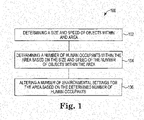
- FIG. 1 illustrates an example of a method 100 for occupancy based energy optimization in accordance with one or more embodiments of the present disclosure.
- Occupancy based energy optimization can include altering a number of settings of an environmental control system (e.g., HVAC system, home thermostat, etc.) based on a current occupancy (e.g., real time occupancy, occupancy data, etc.) of areas within a building.
- occupancy data e.g., data relating to a quantity of human occupants at particular times of day, data relating to a quantity of human occupants at particular outdoor temperatures, etc.
- occupancy data within a number of areas of the building can be determined in real time and be utilized to alter the settings of an HVAC system in real time to accumulate the occupancy within each of the number of areas.
- the method 100 can include determining a size (e.g., area of the object, density of the object, shape of the object, etc.) and speed (e.g., frequency of movement, direction of movement, type of movement, velocity of movement, etc.) of a number of objects within an area. Determining a size and speed of the number of objects within the area can include utilizing a high frequency sensor (e.g., microwave sensor, radar sensor, Doppler sensor, etc.) to scan the number of objects within the area. For example, a high frequency sensor can be utilized to scan a room within a building and determine the size and speed of each of the objects within the room.
- a high frequency sensor e.g., microwave sensor, radar sensor, Doppler sensor, etc.
- the high frequency sensor can send wave pulses through an area and determine changes in the reflection of the wave pulses to determine a size and/or movement speed of the number of objects within the area.
- the high frequency sensor can utilize wave pulses that are similar or the same as microwaves.
- the high frequency sensor can be an active sensor that periodically sends wave pulses (e.g., microwaves, ultrasonic waves, etc.) through the area.
- Each of the number of objects within the area can reflect the wave pulses in a particular way. For example, objects having a relatively larger size can reflect the wave pulses differently than objects having a relatively smaller size. In another example, objects that are moving can reflect wave pulses differently than objects that are not moving. Each of the number of objects can be scanned and analyzed by the high frequency sensor to determine a quantity of human occupants within the area.
- the method 100 can include determining a number of human occupants within the area based on the size and speed of the number of objects within the area. Determining the number of human occupants within the area can include determining if the size and speed of the number of objects are consistent with a size and speed of a human occupant.
- the high frequency sensor can determine a size and/or shape of each of the number of objects within the area. In this example, the size and/or shape of each of the number of objects can be compared to a predetermined size and/or shape of a human occupant.
- the high frequency sensor can determine a speed and/or movement of each of the number of objects.
- the determined speed and/or movement of each of the number of objects can be compared to a predetermined speed and/or movement of a human occupant. That is, a relative size and speed of human occupants can be determined and utilized to compare to a currently detected size and speed of objects within an area to determine a number of human occupants and/or a number of non-human occupants.
- Determining the number of human occupants can also include utilizing a number of soft sensors (e.g., Wi-Fi access points, calendar software, instant messaging software, time of day software, security systems, scheduling programs, etc.).
- the number of soft sensors can be utilized to confirm the number of human occupants within the area that are determined by the high frequency sensors.
- Confirming the number of human occupants can include utilizing the number of soft sensors to determine a schedule of the number of human occupants.
- the number of soft sensors can include calendar software to determine an expected location of the number of human occupants. That is, if it is determined that a particular human occupant is scheduled to be in a particular area at a particular time, it can be confirmed that the particular human occupant is within the particular area when it is determined by the high frequency sensor that the particular human occupant is within the area.
- Confirming the number of human occupants can also include utilizing the number of soft sensors to determine granted access to a particular area.
- the number of soft sensors can include utilizing a security system.
- the security system can include a number of access points (e.g., RFID tag readers, etc.). Data can be collected from the number of access points that grants access to a particular area.
- the data that is collected from the number of access points can include identity information from human occupants that gain access to the area.
- the data that is collected can be compared to the determined number of human occupants to confirm the identity of the determined number of human occupants within the area.
- Confirming the number of human occupants can also include utilizing a number of soft sensors to determine a location of the number of human occupants.
- the number of soft sensors can include a number of Wi-Fi hotspots to collect data from the number of human occupants.
- the data that is collected from the number of human occupants can include connections made between mobile devices (e.g., cell phones, computing devices, wireless communication devices, wireless access devices, etc.) of the number of human occupants and the number of Wi-Fi hotspots placed throughout a building.
- a particular human occupant can be tracked through a number of areas by utilizing a connection between a mobile device on the particular human occupant and the number of Wi-Fi hotspots.
- the data relating to the location of the number of human occupants can be utilized to confirm that the particular human occupant is within the area determined to include the particular human occupant from the high frequency sensor.
- the method 100 can include altering a number of environmental settings for the area based on the determined number of human occupants.
- Altering the number of environmental settings can include altering a number of settings of an HVAC system.
- a performance of the HVAC system can be altered based on the determined quantity of human occupants within an area. That is, the number of settings of the HVAC system can utilized to optimize output and energy conservation based on the determined number of human occupants within a number of areas of a building.
- the determination of the number of human occupants from the high frequency sensor and the number of soft sensors can provide real time occupancy information (e.g., the number of human occupants, a quantity of human occupants, etc.) and identification information for the number of areas.
- the real time occupancy information can include an accurate quantity of the number of human occupants within the area (e.g., the number of areas, etc.).
- the real time occupancy information can be utilized to develop a number of occupancy patterns within the building. For example, the real time occupancy information can be utilized to develop occupancy patterns that include increases and decreases that occur regularly at corresponding dates and times.
- the real time occupancy information can include identity information for each of the determined number of human occupants within the area.
- the real time occupancy information can increase the HVAC system energy conservation by altering the settings of the HVAC system in real time to accommodate for the real time quantity of the number of human occupants within each area of a building.
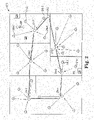
- FIG. 2 illustrates an example of an occupancy based energy optimization system 210 in accordance with one or more embodiments of the present disclosure.
- the occupancy based energy optimization system 210 can be utilized to determine real time occupancy of a number of areas 220, 222 and utilize the real time occupancy to alter a number of HVAC system settings to accommodate the real time occupancy of the number of areas 220, 222. Altering the number of HVAC system settings in real time to accommodate the real time occupancy of the number of areas 220, 222 can increase the efficiency of the HVAC system without sacrificing environment controls within areas that have a number of human occupants.
- the occupancy based energy optimization system 210 can include a number of high frequency sensors (e.g., microwave sensors, etc.) within each of the number of areas 220, 222.
- area 220 can include high frequency sensors 216-1, 216-2, 216-3, 216-4.
- Each of the number of high frequency sensors within each of the number of areas 220, 222 can be communicatively coupled (e.g., connected via a communication path, etc.) to an area router 214-1, 214-2, ..., 214-6.
- the area router 214-1, 214-2, ..., 214-6 can receive occupancy information from the number of high frequency sensors 216-1, 216-2, 216-3, 216-4.
- the occupancy information can include a quantity of human occupants as well as a location of non-human occupants 224, 228 (e.g., chair, desk, table, sofa, etc.).
- the number of high frequency sensors 216-1, 216-2, 216-3, 216-4 can utilize high frequency wave pulses (e.g., microwave pulses, etc.) to determine a size and/or shape of the number of objects within the number of areas 220, 222.
- the number of high frequency sensors 216-1, 216-2, 216-3, 216-4 can utilize high frequency wave pulses to determine a speed and/or movement of the number of objects within the number of areas 220, 222.
- the high frequency sensors 216-1, 216-2, 216-3, 216-4 can determine a quantity of human occupants within each of the number of areas 220, 222.
- the high frequency sensors 216-1, 216-2, 216-3, 216-4 within area 220 can utilize high frequency wave pulses to determine that there is a human occupant 226 within area 220.
- the high frequency sensors 216-1, 216-2, 216-3, 216-4 within area 220 can utilize high frequency wave pulses to determine that there is a non-human occupant 224 within area 220.
- the number of high frequency sensors can send the determined quantity of human occupants 226 and non-human occupants 224 to the area router 214-1.
- the area router 214-1 can send the occupancy information to a central computing device 212 (e.g., computing device, etc.).
- the central computing device 212 can include a computing device 340 as referenced in Figure 3 .
- the central computing device can receive occupancy information from each of the area routers 214-1, 214-2, ..., 214-6.
- the central computing device 212 can receive occupancy information from area router 214-1 that includes information relating to the human occupant 226 within area 220.
- the central computing device 212 can receive occupancy information from area router 214-5 that includes information relating to non-human occupant 228 within area 222. That is, the central computing device 212 can receive occupancy information from area router 214-5 that includes information of no human occupants within area 222.
- the central computing device 212 can receive occupancy information from a number of soft sensors (e.g., Wi-Fi access points, calendar software, instant messaging software, time of day software, security systems, etc.).
- the information can include expected occupancy of a number of human occupants.
- the central computing device 212 can utilize the occupancy information from the number of soft sensors to confirm and/or identify an occupant within an area.
- the central computing device can receive calendar information and/or security information relating to human occupant 226.
- the calendar information can include information from calendar software that is utilized by the human occupant 226.
- the security information can include information relating to the human occupant utilizing a security system to access area 220.
- the central computing device 212 can utilize the received occupancy information from the number of area routers 214-1, 214-2, ..., 214-6 and the received occupancy information from the number of soft sensors to determine a quantity of human occupants within each of the number of areas 220, 222.
- the central computing device 212 can be communicatively coupled to an environmental control system (e.g., HVAC system, etc.).
- the central computing device 212 can alter a number of settings of the HVAC system based on the quantity of human occupants within each of the number of areas 220, 222. For example, the central computing device 212 can increase an efficiency of the HVAC system by applying cooling and/or heating resources to accommodate the determined quantity of human occupants within each of the number of areas 220, 222.
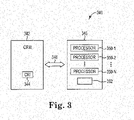
- FIG. 3 illustrates a block diagram of an example of a computing device 340 in accordance with one or more embodiments of the present disclosure.
- the computing device 340 can include a communication interface (e.g., wireless network interface controller, IEEE 802.11 adapters, etc.) for receiving wireless data.
- the communication interface can be integrated in the computing device 340 and/or be an external card.
- the computing device 340 can also include a computer readable medium (CRM) 342 in communication with processing resources 350-1, 350-2, ..., 350-N.
- CRM 342 can be in communication with a device 348 (e.g., a Java ® application server, among others) having processor resources 350-1, 350-2, ..., 350-N.
- the device 348 can be in communication with a tangible non-transitory CRM 342 storing a set of computer-readable instructions (CRI) 344 (e.g., modules) executable by one or more of the processor resources 350-1, 350-2, ..., 350-N, as described herein.
- CRM computer readable medium
- the CRI 344 can also be stored in remote memory managed by a server and represent an installation package that can be downloaded, installed, and executed.
- the device 348 can include memory resources 352, and the processor resources 350-1, 350-2, ..., 350-N can be coupled to the memory resources 352.
- Processor resources 350-1, 350-2, ..., 350-N can execute CRI 344 that can be stored on an internal or external non-transitory CRM 342.
- the processor resources 350-1, 350-2, ..., 350-N can execute CRI 344 to perform various functions.
- the processor resources 350-1, 350-2, ..., 350-N can execute CRI 344 to perform a number of functions (e.g., determine an identity of the quantity of human occupants within the area based on the received quantity of human occupants, the scheduling data, and the security data, etc.).
- a non-transitory CRM e.g., CRM 342
- Volatile memory can include memory that depends upon power to store information, such as various types of dynamic random access memory (DRAM), among others.
- Non-volatile memory can include memory that does not depend upon power to store information.
- Examples of non-volatile memory can include solid state media such as flash memory, electrically erasable programmable read-only memory (EEPROM), phase change random access memory (PCRAM), magnetic memory such as a hard disk, tape drives, floppy disk, and/or tape memory, optical discs, digital versatile discs (DVD), Blu-ray discs (BD), compact discs (CD), and/or a solid state drive (SSD), as well as other types of computer-readable media.
- solid state media such as flash memory, electrically erasable programmable read-only memory (EEPROM), phase change random access memory (PCRAM), magnetic memory such as a hard disk, tape drives, floppy disk, and/or tape memory, optical discs, digital versatile discs (DVD), Blu-ray discs (BD), compact discs (CD
- the non-transitory CRM 342 can also include distributed storage media.
- the CRM 342 can be distributed among various locations.
- the non-transitory CRM 342 can be integral, or communicatively coupled, to a computing device, in a wired and/or a wireless manner.
- the non-transitory CRM 342 can be an internal memory, a portable memory, a portable disk, or a memory associated with another computing resource (e.g., enabling CRIs to be transferred and/or executed across a network such as the Internet).
- the CRM 342 can be in communication with the processor resources 350-1, 350-2, ..., 350-N via a communication path 346.
- the communication path 346 can be local or remote to a machine (e.g., a computer) associated with the processor resources 350-1, 350-2, ..., 350-N.
- Examples of a local communication path 346 can include an electrical bus internal to a machine (e.g., a computer) where the CRM 342 is one of volatile, non-volatile, fixed, and/or removable storage medium in communication with the processor resources 350-1, 350-2, ..., 350-N via the electrical bus.
- Examples of such electrical buses can include Industry Standard Architecture (ISA), Peripheral Component Interconnect (PCI), Advanced Technology Attachment (ATA), Small Computer System Interface (SCSI), Universal Serial Bus (USB), among other types of electrical buses and variants thereof.
- the communication path 346 can be such that the CRM 342 is remote from the processor resources e.g., 350-1, 350-2, ..., 350-N, such as in a network relationship between the CRM 342 and the processor resources (e.g., 350-1, 350-2, ..., 350-N). That is, the communication path 346 can be a network relationship. Examples of such a network relationship can include a local area network (LAN), wide area network (WAN), personal area network (PAN), and the Internet, among others.
- the CRM 342 can be associated with a first computing device and the processor resources 350-1, 350-2, ..., 350-N can be associated with a second computing device (e.g., a Java ® server).
- a “module” can include computer readable instructions (e.g., CRI 344) that can be executed by a processor to perform a particular function.
- a module can also include hardware, firmware, and/or logic that can perform a particular function.
- logic is an alternative or additional processing resource to execute the actions and/or functions, described herein, which includes hardware (e.g., various forms of transistor logic, application specific integrated circuits (ASICs)), as opposed to computer executable instructions (e.g., software, firmware) stored in memory and executable by a processor.
- hardware e.g., various forms of transistor logic, application specific integrated circuits (ASICs)
- computer executable instructions e.g., software, firmware
Landscapes
- Engineering & Computer Science (AREA)
- Signal Processing (AREA)
- Mechanical Engineering (AREA)
- General Engineering & Computer Science (AREA)
- Chemical & Material Sciences (AREA)
- Combustion & Propulsion (AREA)
- Computer Networks & Wireless Communication (AREA)
- Computing Systems (AREA)
- Automation & Control Theory (AREA)
- Health & Medical Sciences (AREA)
- General Health & Medical Sciences (AREA)
- Medical Informatics (AREA)
- Mathematical Physics (AREA)
- Fuzzy Systems (AREA)
- Physics & Mathematics (AREA)
- Air Conditioning Control Device (AREA)
Claims (7)
- Système 210 comprenant :un certain nombre de capteurs 216-1, 216-2, 216-3, 216-4 permettant de déterminer un nombre d'occupants humains 226 à l'intérieur d'une zone 220, 222 et de générer des données d'occupation à l'intérieur de la zone 220, 222,dans lequel le nombre de capteurs comporte au moins un capteur logiciel permettant de confirmer le nombre d'occupants humains détectés par d'autres capteurs de hautes fréquences (HF), l'au moins un capteur logiciel étant sous forme de dispositif à accès sans fil, de dispositif informatique mobile, de dispositif de sécurité ou de dispositif de planification utilisant des données de capteurs logiciels propres à une identité de chacun des occupants humains potentiels et comporte des informations de calendrier et/ou des connexions entre des points d'accès à l'intérieur de la zone et des dispositifs informatiques mobiles associés aux occupants humains potentiels ; etun dispositif informatique 340 couplé au nombre de capteurs 216-1, 216-2, 216-3, 216-4 pour :déterminer une occupation en temps réel de la zone 220, 222 selon les données d'occupation ; etmodifier un certain nombre de réglages d'un système de chauffage, de ventilation et de climatisation (CVC) pour la zone selon l'occupation en temps réel de la zone.
- Système 210 selon la revendication 1, dans lequel le nombre de capteurs 216-1, 216-2, 216-3, 216-4 comporte un capteur de hautes fréquences utilisant des techniques de radar Doppler.
- Système 210 selon la revendication 2, dans lequel le capteur de hautes fréquences est un capteur de micro-ondes.
- Système 210 selon la revendication 2, dans lequel le capteur de hautes fréquences détermine le nombre d'occupants humains 226 par comptage.
- Système 210 selon la revendication 1, dans lequel le capteur de hautes fréquences détermine le nombre d'objets non humains 224, 228 à l'intérieur de la zone 220, 222.
- Système 210 selon la revendication 1, dans lequel le capteur de hautes fréquences détermine une taille et une vitesse d'un certain nombre d'objets à l'intérieur de la zone 220, 222.
- Système 210 selon la revendication 1, dans lequel le dispositif informatique 340 modifie un certain nombre de réglages environnementaux pour la zone 220, 222 selon un modèle d'occupation de la zone 220, 222.
Applications Claiming Priority (1)
| Application Number | Priority Date | Filing Date | Title |
|---|---|---|---|
| US14/023,256 US9689583B2 (en) | 2013-09-10 | 2013-09-10 | Occupancy based energy optimization systems and methods |
Publications (3)
| Publication Number | Publication Date |
|---|---|
| EP2853832A2 EP2853832A2 (fr) | 2015-04-01 |
| EP2853832A3 EP2853832A3 (fr) | 2015-12-02 |
| EP2853832B1 true EP2853832B1 (fr) | 2022-08-10 |
Family
ID=51492161
Family Applications (1)
| Application Number | Title | Priority Date | Filing Date |
|---|---|---|---|
| EP14181869.0A Active EP2853832B1 (fr) | 2013-09-10 | 2014-08-21 | Systèmes d'optimisation d'énergie basés sur l'occupation |
Country Status (2)
| Country | Link |
|---|---|
| US (1) | US9689583B2 (fr) |
| EP (1) | EP2853832B1 (fr) |
Families Citing this family (10)
| Publication number | Priority date | Publication date | Assignee | Title |
|---|---|---|---|---|
| CA2864722C (fr) * | 2013-09-23 | 2019-07-30 | Emerson Electric Co. | Gestion d'energie fondee sur l'occupation et le niveau d'activite des occupants |
| CN106545950B (zh) | 2015-09-17 | 2020-11-17 | 开利公司 | 一种楼宇空调控制系统及其控制方法 |
| WO2017078941A1 (fr) * | 2015-11-04 | 2017-05-11 | Carrier Corporation | Système et procédé de gestion de cvca |
| US10845086B2 (en) * | 2016-05-24 | 2020-11-24 | Mitsubishi Electric Corporation | Air-conditioning control device, air-conditioning apparatus, and air-conditioning system |
| US20180143601A1 (en) * | 2016-11-18 | 2018-05-24 | Johnson Controls Technology Company | Building management system with occupancy tracking using wireless communication |
| CN108344048B (zh) * | 2018-04-02 | 2020-04-21 | 广东美的制冷设备有限公司 | 空调器 |
| EP3621002A1 (fr) * | 2018-09-06 | 2020-03-11 | Koninklijke Philips N.V. | Surveillance des entités mobiles dans une zone prédéterminée |
| CN109708270A (zh) * | 2018-12-27 | 2019-05-03 | 广东美的制冷设备有限公司 | 空调及其控制方法与装置 |
| JP7713413B2 (ja) * | 2022-03-10 | 2025-07-25 | 東芝ライフスタイル株式会社 | 空気調和装置 |
| US20250027669A1 (en) * | 2023-07-18 | 2025-01-23 | Universal Electronics Inc. | Systems and method for providing automated heating, cooling and ventilation control |
Citations (1)
| Publication number | Priority date | Publication date | Assignee | Title |
|---|---|---|---|---|
| US20120072032A1 (en) * | 2010-09-22 | 2012-03-22 | Powell Kevin J | Methods and systems for environmental system control |
Family Cites Families (18)
| Publication number | Priority date | Publication date | Assignee | Title |
|---|---|---|---|---|
| US6222191B1 (en) * | 1997-12-24 | 2001-04-24 | Mytech Corporation | Occupancy sensor |
| AU2595399A (en) * | 1998-02-09 | 1999-08-23 | Stephen Barone | Motion detectors and occupancy sensors based on displacement detection |
| US6645066B2 (en) | 2001-11-19 | 2003-11-11 | Koninklijke Philips Electronics N.V. | Space-conditioning control employing image-based detection of occupancy and use |
| WO2005116950A2 (fr) * | 2004-05-25 | 2005-12-08 | Tac Ab | Detecteur de presence integre radiocommuniquant |
| US20080277486A1 (en) | 2007-05-09 | 2008-11-13 | Johnson Controls Technology Company | HVAC control system and method |
| US20090065596A1 (en) * | 2007-05-09 | 2009-03-12 | Johnson Controls Technology Company | Systems and methods for increasing building space comfort using wireless devices |
| US8232909B2 (en) * | 2008-09-30 | 2012-07-31 | Cooper Technologies Company | Doppler radar motion detector for an outdoor light fixture |
| CA2668812A1 (fr) * | 2009-06-12 | 2010-12-12 | Ibm Canada Limited - Ibm Canada Limitee | Systeme et procede cvca a grille |
| WO2011027452A1 (fr) * | 2009-09-03 | 2011-03-10 | 株式会社 東芝 | Dispositif d'estimation de nombre de personnes présentes |
| US8734578B2 (en) * | 2009-11-12 | 2014-05-27 | Panasonic Corporation | Dust collecting system |
| US9528715B2 (en) * | 2009-12-02 | 2016-12-27 | Thomas David Aiken | Occupancy-based demand controlled ventilation system |
| JP5085670B2 (ja) | 2010-02-24 | 2012-11-28 | 株式会社東芝 | 空調制御システムおよび空調制御方法 |
| JP2011257072A (ja) | 2010-06-09 | 2011-12-22 | Panasonic Electric Works Co Ltd | エネルギー管理装置 |
| US8510255B2 (en) * | 2010-09-14 | 2013-08-13 | Nest Labs, Inc. | Occupancy pattern detection, estimation and prediction |
| US20120085831A1 (en) * | 2010-10-07 | 2012-04-12 | Energy Eye, Inc. | Systems and methods for controlling the temperature of a room based on occupancy |
| JP5647555B2 (ja) | 2011-03-30 | 2014-12-24 | アズビル株式会社 | 施設管理システムおよび方法 |
| US20120248209A1 (en) * | 2011-03-31 | 2012-10-04 | Drew Reid | Hvac setback system |
| EP2741020A4 (fr) * | 2011-05-13 | 2016-08-31 | Toshiba Kk | Système de gestion de l'énergie |
-
2013
- 2013-09-10 US US14/023,256 patent/US9689583B2/en active Active
-
2014
- 2014-08-21 EP EP14181869.0A patent/EP2853832B1/fr active Active
Patent Citations (1)
| Publication number | Priority date | Publication date | Assignee | Title |
|---|---|---|---|---|
| US20120072032A1 (en) * | 2010-09-22 | 2012-03-22 | Powell Kevin J | Methods and systems for environmental system control |
Also Published As
| Publication number | Publication date |
|---|---|
| US20150068721A1 (en) | 2015-03-12 |
| EP2853832A3 (fr) | 2015-12-02 |
| US9689583B2 (en) | 2017-06-27 |
| EP2853832A2 (fr) | 2015-04-01 |
Similar Documents
| Publication | Publication Date | Title |
|---|---|---|
| EP2853832B1 (fr) | Systèmes d'optimisation d'énergie basés sur l'occupation | |
| CN105940584B (zh) | 需求控制装置 | |
| US10935270B2 (en) | Electronic device and air-conditioning control method therefor | |
| US20200386437A1 (en) | Managing energy in a multi-dwelling unit | |
| EP3470749B1 (fr) | Procédé et appareil de commande de chauffage électrique d'un compresseur de climatiseur | |
| US10775067B2 (en) | Method for controlling activation of air conditioning device and apparatus therefor | |
| JP6469231B2 (ja) | 空調運転解析装置およびプログラム | |
| US20150285527A1 (en) | Method and apparatus for controlling energy in hvac system | |
| US20080277486A1 (en) | HVAC control system and method | |
| CN110285536A (zh) | 一种温度调节设备的控制方法及装置 | |
| CN107438742A (zh) | 用于自适应地应用中央hvac系统和独立hvac系统的设备和方法 | |
| US11474869B2 (en) | Central plant control system with subplant rank generator | |
| JP6783599B2 (ja) | 空調制御用演算装置、空調制御用演算方法及び空調制御用演算プログラム | |
| US11448414B2 (en) | Computer-readable recording medium recording torque control program, torque control method, and information processing apparatus | |
| US20170280210A1 (en) | Connected climatic system | |
| US10503192B2 (en) | Energy consumption modeling | |
| CN103471178A (zh) | 供热节能控制系统以及节能控制方法 | |
| CN105066350A (zh) | 温度控制装置、温度调节系统和温度控制方法 | |
| CN106979169B (zh) | 一种风机调速控制方法及设备 | |
| EP4488594A1 (fr) | Système de gestion, procédé de gestion d'équipement de climatisation et programme | |
| US11692729B2 (en) | Single-package air conditioner and methods of operation | |
| Miltiades | Your HVAC system can manage its own energy use: advantages of variable refrigerant flow (VRF) zoning systems | |
| JP2021183885A (ja) | 空調制御システム、空調システム、空調制御方法及びプログラム | |
| Sobih et al. | Computer Vision-Based Approach for Energy Efficiency in Commercial Buildings | |
| US20140351013A1 (en) | Ancillary service bid generation systems and methods |
Legal Events
| Date | Code | Title | Description |
|---|---|---|---|
| PUAI | Public reference made under article 153(3) epc to a published international application that has entered the european phase |
Free format text: ORIGINAL CODE: 0009012 |
|
| 17P | Request for examination filed |
Effective date: 20140821 |
|
| AK | Designated contracting states |
Kind code of ref document: A2 Designated state(s): AL AT BE BG CH CY CZ DE DK EE ES FI FR GB GR HR HU IE IS IT LI LT LU LV MC MK MT NL NO PL PT RO RS SE SI SK SM TR |
|
| AX | Request for extension of the european patent |
Extension state: BA ME |
|
| PUAL | Search report despatched |
Free format text: ORIGINAL CODE: 0009013 |
|
| AK | Designated contracting states |
Kind code of ref document: A3 Designated state(s): AL AT BE BG CH CY CZ DE DK EE ES FI FR GB GR HR HU IE IS IT LI LT LU LV MC MK MT NL NO PL PT RO RS SE SI SK SM TR |
|
| AX | Request for extension of the european patent |
Extension state: BA ME |
|
| RIC1 | Information provided on ipc code assigned before grant |
Ipc: F24F 11/00 20060101AFI20151023BHEP Ipc: G05D 23/19 20060101ALI20151023BHEP Ipc: H04L 29/08 20060101ALI20151023BHEP |
|
| RAP1 | Party data changed (applicant data changed or rights of an application transferred) |
Owner name: HONEYWELL INTERNATIONAL INC. |
|
| STAA | Information on the status of an ep patent application or granted ep patent |
Free format text: STATUS: EXAMINATION IS IN PROGRESS |
|
| 17Q | First examination report despatched |
Effective date: 20180425 |
|
| REG | Reference to a national code |
Ref country code: DE Ref legal event code: R079 Ref document number: 602014084549 Country of ref document: DE Free format text: PREVIOUS MAIN CLASS: F24F0011000000 Ipc: F24F0011300000 |
|
| RIC1 | Information provided on ipc code assigned before grant |
Ipc: F24F 11/30 20180101AFI20220303BHEP |
|
| GRAP | Despatch of communication of intention to grant a patent |
Free format text: ORIGINAL CODE: EPIDOSNIGR1 |
|
| INTG | Intention to grant announced |
Effective date: 20220330 |
|
| INTG | Intention to grant announced |
Effective date: 20220421 |
|
| GRAS | Grant fee paid |
Free format text: ORIGINAL CODE: EPIDOSNIGR3 |
|
| STAA | Information on the status of an ep patent application or granted ep patent |
Free format text: STATUS: GRANT OF PATENT IS INTENDED |
|
| GRAA | (expected) grant |
Free format text: ORIGINAL CODE: 0009210 |
|
| STAA | Information on the status of an ep patent application or granted ep patent |
Free format text: STATUS: THE PATENT HAS BEEN GRANTED |
|
| AK | Designated contracting states |
Kind code of ref document: B1 Designated state(s): AL AT BE BG CH CY CZ DE DK EE ES FI FR GB GR HR HU IE IS IT LI LT LU LV MC MK MT NL NO PL PT RO RS SE SI SK SM TR |
|
| REG | Reference to a national code |
Ref country code: AT Ref legal event code: REF Ref document number: 1510817 Country of ref document: AT Kind code of ref document: T Effective date: 20220815 Ref country code: CH Ref legal event code: EP |
|
| REG | Reference to a national code |
Ref country code: DE Ref legal event code: R096 Ref document number: 602014084549 Country of ref document: DE |
|
| REG | Reference to a national code |
Ref country code: IE Ref legal event code: FG4D |
|
| GRAP | Despatch of communication of intention to grant a patent |
Free format text: ORIGINAL CODE: EPIDOSNIGR1 |
|
| REG | Reference to a national code |
Ref country code: NL Ref legal event code: MP Effective date: 20220810 |
|
| REG | Reference to a national code |
Ref country code: LT Ref legal event code: MG9D |
|
| PG25 | Lapsed in a contracting state [announced via postgrant information from national office to epo] |
Ref country code: SE Free format text: LAPSE BECAUSE OF FAILURE TO SUBMIT A TRANSLATION OF THE DESCRIPTION OR TO PAY THE FEE WITHIN THE PRESCRIBED TIME-LIMIT Effective date: 20220810 Ref country code: RS Free format text: LAPSE BECAUSE OF FAILURE TO SUBMIT A TRANSLATION OF THE DESCRIPTION OR TO PAY THE FEE WITHIN THE PRESCRIBED TIME-LIMIT Effective date: 20220810 Ref country code: PT Free format text: LAPSE BECAUSE OF FAILURE TO SUBMIT A TRANSLATION OF THE DESCRIPTION OR TO PAY THE FEE WITHIN THE PRESCRIBED TIME-LIMIT Effective date: 20221212 Ref country code: NO Free format text: LAPSE BECAUSE OF FAILURE TO SUBMIT A TRANSLATION OF THE DESCRIPTION OR TO PAY THE FEE WITHIN THE PRESCRIBED TIME-LIMIT Effective date: 20221110 Ref country code: NL Free format text: LAPSE BECAUSE OF FAILURE TO SUBMIT A TRANSLATION OF THE DESCRIPTION OR TO PAY THE FEE WITHIN THE PRESCRIBED TIME-LIMIT Effective date: 20220810 Ref country code: LV Free format text: LAPSE BECAUSE OF FAILURE TO SUBMIT A TRANSLATION OF THE DESCRIPTION OR TO PAY THE FEE WITHIN THE PRESCRIBED TIME-LIMIT Effective date: 20220810 Ref country code: LT Free format text: LAPSE BECAUSE OF FAILURE TO SUBMIT A TRANSLATION OF THE DESCRIPTION OR TO PAY THE FEE WITHIN THE PRESCRIBED TIME-LIMIT Effective date: 20220810 Ref country code: FI Free format text: LAPSE BECAUSE OF FAILURE TO SUBMIT A TRANSLATION OF THE DESCRIPTION OR TO PAY THE FEE WITHIN THE PRESCRIBED TIME-LIMIT Effective date: 20220810 Ref country code: ES Free format text: LAPSE BECAUSE OF FAILURE TO SUBMIT A TRANSLATION OF THE DESCRIPTION OR TO PAY THE FEE WITHIN THE PRESCRIBED TIME-LIMIT Effective date: 20220810 |
|
| REG | Reference to a national code |
Ref country code: AT Ref legal event code: MK05 Ref document number: 1510817 Country of ref document: AT Kind code of ref document: T Effective date: 20220810 |
|
| PG25 | Lapsed in a contracting state [announced via postgrant information from national office to epo] |
Ref country code: PL Free format text: LAPSE BECAUSE OF FAILURE TO SUBMIT A TRANSLATION OF THE DESCRIPTION OR TO PAY THE FEE WITHIN THE PRESCRIBED TIME-LIMIT Effective date: 20220810 Ref country code: IS Free format text: LAPSE BECAUSE OF FAILURE TO SUBMIT A TRANSLATION OF THE DESCRIPTION OR TO PAY THE FEE WITHIN THE PRESCRIBED TIME-LIMIT Effective date: 20221210 Ref country code: HR Free format text: LAPSE BECAUSE OF FAILURE TO SUBMIT A TRANSLATION OF THE DESCRIPTION OR TO PAY THE FEE WITHIN THE PRESCRIBED TIME-LIMIT Effective date: 20220810 Ref country code: GR Free format text: LAPSE BECAUSE OF FAILURE TO SUBMIT A TRANSLATION OF THE DESCRIPTION OR TO PAY THE FEE WITHIN THE PRESCRIBED TIME-LIMIT Effective date: 20221111 |
|
| REG | Reference to a national code |
Ref country code: CH Ref legal event code: PL |
|
| PG25 | Lapsed in a contracting state [announced via postgrant information from national office to epo] |
Ref country code: SM Free format text: LAPSE BECAUSE OF FAILURE TO SUBMIT A TRANSLATION OF THE DESCRIPTION OR TO PAY THE FEE WITHIN THE PRESCRIBED TIME-LIMIT Effective date: 20220810 Ref country code: RO Free format text: LAPSE BECAUSE OF FAILURE TO SUBMIT A TRANSLATION OF THE DESCRIPTION OR TO PAY THE FEE WITHIN THE PRESCRIBED TIME-LIMIT Effective date: 20220810 Ref country code: LU Free format text: LAPSE BECAUSE OF NON-PAYMENT OF DUE FEES Effective date: 20220821 Ref country code: LI Free format text: LAPSE BECAUSE OF NON-PAYMENT OF DUE FEES Effective date: 20220831 Ref country code: DK Free format text: LAPSE BECAUSE OF FAILURE TO SUBMIT A TRANSLATION OF THE DESCRIPTION OR TO PAY THE FEE WITHIN THE PRESCRIBED TIME-LIMIT Effective date: 20220810 Ref country code: CZ Free format text: LAPSE BECAUSE OF FAILURE TO SUBMIT A TRANSLATION OF THE DESCRIPTION OR TO PAY THE FEE WITHIN THE PRESCRIBED TIME-LIMIT Effective date: 20220810 Ref country code: CH Free format text: LAPSE BECAUSE OF NON-PAYMENT OF DUE FEES Effective date: 20220831 Ref country code: AT Free format text: LAPSE BECAUSE OF FAILURE TO SUBMIT A TRANSLATION OF THE DESCRIPTION OR TO PAY THE FEE WITHIN THE PRESCRIBED TIME-LIMIT Effective date: 20220810 |
|
| REG | Reference to a national code |
Ref country code: BE Ref legal event code: MM Effective date: 20220831 |
|
| REG | Reference to a national code |
Ref country code: DE Ref legal event code: R097 Ref document number: 602014084549 Country of ref document: DE |
|
| PG25 | Lapsed in a contracting state [announced via postgrant information from national office to epo] |
Ref country code: SK Free format text: LAPSE BECAUSE OF FAILURE TO SUBMIT A TRANSLATION OF THE DESCRIPTION OR TO PAY THE FEE WITHIN THE PRESCRIBED TIME-LIMIT Effective date: 20220810 Ref country code: MC Free format text: LAPSE BECAUSE OF FAILURE TO SUBMIT A TRANSLATION OF THE DESCRIPTION OR TO PAY THE FEE WITHIN THE PRESCRIBED TIME-LIMIT Effective date: 20220810 Ref country code: EE Free format text: LAPSE BECAUSE OF FAILURE TO SUBMIT A TRANSLATION OF THE DESCRIPTION OR TO PAY THE FEE WITHIN THE PRESCRIBED TIME-LIMIT Effective date: 20220810 |
|
| PLBE | No opposition filed within time limit |
Free format text: ORIGINAL CODE: 0009261 |
|
| STAA | Information on the status of an ep patent application or granted ep patent |
Free format text: STATUS: NO OPPOSITION FILED WITHIN TIME LIMIT |
|
| P01 | Opt-out of the competence of the unified patent court (upc) registered |
Effective date: 20230523 |
|
| PG25 | Lapsed in a contracting state [announced via postgrant information from national office to epo] |
Ref country code: AL Free format text: LAPSE BECAUSE OF FAILURE TO SUBMIT A TRANSLATION OF THE DESCRIPTION OR TO PAY THE FEE WITHIN THE PRESCRIBED TIME-LIMIT Effective date: 20220810 |
|
| 26N | No opposition filed |
Effective date: 20230511 |
|
| PG25 | Lapsed in a contracting state [announced via postgrant information from national office to epo] |
Ref country code: IE Free format text: LAPSE BECAUSE OF NON-PAYMENT OF DUE FEES Effective date: 20220821 Ref country code: FR Free format text: LAPSE BECAUSE OF NON-PAYMENT OF DUE FEES Effective date: 20221010 |
|
| PG25 | Lapsed in a contracting state [announced via postgrant information from national office to epo] |
Ref country code: SI Free format text: LAPSE BECAUSE OF FAILURE TO SUBMIT A TRANSLATION OF THE DESCRIPTION OR TO PAY THE FEE WITHIN THE PRESCRIBED TIME-LIMIT Effective date: 20220810 |
|
| PG25 | Lapsed in a contracting state [announced via postgrant information from national office to epo] |
Ref country code: BE Free format text: LAPSE BECAUSE OF NON-PAYMENT OF DUE FEES Effective date: 20220831 |
|
| PG25 | Lapsed in a contracting state [announced via postgrant information from national office to epo] |
Ref country code: HU Free format text: LAPSE BECAUSE OF FAILURE TO SUBMIT A TRANSLATION OF THE DESCRIPTION OR TO PAY THE FEE WITHIN THE PRESCRIBED TIME-LIMIT; INVALID AB INITIO Effective date: 20140821 |
|
| PG25 | Lapsed in a contracting state [announced via postgrant information from national office to epo] |
Ref country code: CY Free format text: LAPSE BECAUSE OF FAILURE TO SUBMIT A TRANSLATION OF THE DESCRIPTION OR TO PAY THE FEE WITHIN THE PRESCRIBED TIME-LIMIT Effective date: 20220810 |
|
| PG25 | Lapsed in a contracting state [announced via postgrant information from national office to epo] |
Ref country code: MK Free format text: LAPSE BECAUSE OF FAILURE TO SUBMIT A TRANSLATION OF THE DESCRIPTION OR TO PAY THE FEE WITHIN THE PRESCRIBED TIME-LIMIT Effective date: 20220810 Ref country code: IT Free format text: LAPSE BECAUSE OF FAILURE TO SUBMIT A TRANSLATION OF THE DESCRIPTION OR TO PAY THE FEE WITHIN THE PRESCRIBED TIME-LIMIT Effective date: 20220810 |
|
| PG25 | Lapsed in a contracting state [announced via postgrant information from national office to epo] |
Ref country code: TR Free format text: LAPSE BECAUSE OF FAILURE TO SUBMIT A TRANSLATION OF THE DESCRIPTION OR TO PAY THE FEE WITHIN THE PRESCRIBED TIME-LIMIT Effective date: 20220810 |
|
| PG25 | Lapsed in a contracting state [announced via postgrant information from national office to epo] |
Ref country code: BG Free format text: LAPSE BECAUSE OF FAILURE TO SUBMIT A TRANSLATION OF THE DESCRIPTION OR TO PAY THE FEE WITHIN THE PRESCRIBED TIME-LIMIT Effective date: 20220810 |
|
| PG25 | Lapsed in a contracting state [announced via postgrant information from national office to epo] |
Ref country code: MT Free format text: LAPSE BECAUSE OF FAILURE TO SUBMIT A TRANSLATION OF THE DESCRIPTION OR TO PAY THE FEE WITHIN THE PRESCRIBED TIME-LIMIT Effective date: 20220810 |
|
| PGFP | Annual fee paid to national office [announced via postgrant information from national office to epo] |
Ref country code: DE Payment date: 20250827 Year of fee payment: 12 |
|
| PGFP | Annual fee paid to national office [announced via postgrant information from national office to epo] |
Ref country code: GB Payment date: 20250826 Year of fee payment: 12 |