EP2853890A1 - Capteur de gaz utilisant un électrolyte liquide ionique - Google Patents
Capteur de gaz utilisant un électrolyte liquide ionique Download PDFInfo
- Publication number
- EP2853890A1 EP2853890A1 EP20140184169 EP14184169A EP2853890A1 EP 2853890 A1 EP2853890 A1 EP 2853890A1 EP 20140184169 EP20140184169 EP 20140184169 EP 14184169 A EP14184169 A EP 14184169A EP 2853890 A1 EP2853890 A1 EP 2853890A1
- Authority
- EP
- European Patent Office
- Prior art keywords
- tfsi
- msa
- chamber
- platinum
- electrodes
- Prior art date
- Legal status (The legal status is an assumption and is not a legal conclusion. Google has not performed a legal analysis and makes no representation as to the accuracy of the status listed.)
- Withdrawn
Links
- 239000003792 electrolyte Substances 0.000 title claims abstract description 54
- 239000002608 ionic liquid Substances 0.000 title claims abstract description 25
- BASFCYQUMIYNBI-UHFFFAOYSA-N platinum Chemical compound [Pt] BASFCYQUMIYNBI-UHFFFAOYSA-N 0.000 claims abstract description 63
- 229910052697 platinum Inorganic materials 0.000 claims abstract description 21
- 238000009792 diffusion process Methods 0.000 claims abstract description 6
- 239000007789 gas Substances 0.000 claims description 37
- RWSOTUBLDIXVET-UHFFFAOYSA-N Dihydrogen sulfide Chemical compound S RWSOTUBLDIXVET-UHFFFAOYSA-N 0.000 claims description 16
- 229910000037 hydrogen sulfide Inorganic materials 0.000 claims description 16
- 230000004044 response Effects 0.000 claims description 11
- 239000002253 acid Substances 0.000 claims description 7
- UGFAIRIUMAVXCW-UHFFFAOYSA-N Carbon monoxide Chemical compound [O+]#[C-] UGFAIRIUMAVXCW-UHFFFAOYSA-N 0.000 claims description 5
- 229910002091 carbon monoxide Inorganic materials 0.000 claims description 5
- UEEJHVSXFDXPFK-UHFFFAOYSA-N N-dimethylaminoethanol Chemical compound CN(C)CCO UEEJHVSXFDXPFK-UHFFFAOYSA-N 0.000 claims 6
- 239000012972 dimethylethanolamine Substances 0.000 claims 6
- AZQZJVVZBGCHSV-UHFFFAOYSA-N 2-(3,5-dimethylpyrazol-1-yl)-n-[2-(3,5-dimethylpyrazol-1-yl)ethyl]ethanamine Chemical compound N1=C(C)C=C(C)N1CCNCCN1C(C)=CC(C)=N1 AZQZJVVZBGCHSV-UHFFFAOYSA-N 0.000 claims 4
- 238000009738 saturating Methods 0.000 claims 1
- QAOWNCQODCNURD-UHFFFAOYSA-N Sulfuric acid Chemical compound OS(O)(=O)=O QAOWNCQODCNURD-UHFFFAOYSA-N 0.000 description 22
- 239000003054 catalyst Substances 0.000 description 10
- AFVFQIVMOAPDHO-UHFFFAOYSA-N Methanesulfonic acid Chemical compound CS(O)(=O)=O AFVFQIVMOAPDHO-UHFFFAOYSA-N 0.000 description 9
- OKTJSMMVPCPJKN-UHFFFAOYSA-N Carbon Chemical compound [C] OKTJSMMVPCPJKN-UHFFFAOYSA-N 0.000 description 6
- 229910052799 carbon Inorganic materials 0.000 description 5
- 230000035945 sensitivity Effects 0.000 description 5
- 230000000694 effects Effects 0.000 description 4
- 238000011068 loading method Methods 0.000 description 4
- 229940098779 methanesulfonic acid Drugs 0.000 description 4
- 238000012360 testing method Methods 0.000 description 4
- KJTLSVCANCCWHF-UHFFFAOYSA-N Ruthenium Chemical compound [Ru] KJTLSVCANCCWHF-UHFFFAOYSA-N 0.000 description 3
- QVGXLLKOCUKJST-UHFFFAOYSA-N atomic oxygen Chemical compound [O] QVGXLLKOCUKJST-UHFFFAOYSA-N 0.000 description 3
- 230000007613 environmental effect Effects 0.000 description 3
- 229910052741 iridium Inorganic materials 0.000 description 3
- 238000004519 manufacturing process Methods 0.000 description 3
- CBKJDTFDVVXSJR-UHFFFAOYSA-M methyl sulfate;1,2,4-trimethylpyrazol-2-ium Chemical compound COS([O-])(=O)=O.CC1=CN(C)[N+](C)=C1 CBKJDTFDVVXSJR-UHFFFAOYSA-M 0.000 description 3
- 229910052760 oxygen Inorganic materials 0.000 description 3
- 239000001301 oxygen Substances 0.000 description 3
- 229910052707 ruthenium Inorganic materials 0.000 description 3
- LFQSCWFLJHTTHZ-UHFFFAOYSA-N Ethanol Chemical compound CCO LFQSCWFLJHTTHZ-UHFFFAOYSA-N 0.000 description 2
- 238000013459 approach Methods 0.000 description 2
- 238000006243 chemical reaction Methods 0.000 description 2
- GKOZUEZYRPOHIO-UHFFFAOYSA-N iridium atom Chemical compound [Ir] GKOZUEZYRPOHIO-UHFFFAOYSA-N 0.000 description 2
- 231100000572 poisoning Toxicity 0.000 description 2
- 230000000607 poisoning effect Effects 0.000 description 2
- 239000010970 precious metal Substances 0.000 description 2
- 239000002341 toxic gas Substances 0.000 description 2
- ZXMGHDIOOHOAAE-UHFFFAOYSA-N 1,1,1-trifluoro-n-(trifluoromethylsulfonyl)methanesulfonamide Chemical compound FC(F)(F)S(=O)(=O)NS(=O)(=O)C(F)(F)F ZXMGHDIOOHOAAE-UHFFFAOYSA-N 0.000 description 1
- HZKDSQCZNUUQIF-UHFFFAOYSA-M 1-ethyl-3-methylimidazol-3-ium;hydrogen sulfate Chemical compound OS([O-])(=O)=O.CCN1C=C[N+](C)=C1 HZKDSQCZNUUQIF-UHFFFAOYSA-M 0.000 description 1
- 101150004367 Il4i1 gene Proteins 0.000 description 1
- 230000002378 acidificating effect Effects 0.000 description 1
- 230000002411 adverse Effects 0.000 description 1
- 239000000956 alloy Substances 0.000 description 1
- 229910045601 alloy Inorganic materials 0.000 description 1
- 238000003491 array Methods 0.000 description 1
- 230000009286 beneficial effect Effects 0.000 description 1
- 238000005513 bias potential Methods 0.000 description 1
- 230000015556 catabolic process Effects 0.000 description 1
- 239000004020 conductor Substances 0.000 description 1
- 238000006731 degradation reaction Methods 0.000 description 1
- 230000002939 deleterious effect Effects 0.000 description 1
- 239000002019 doping agent Substances 0.000 description 1
- 239000007772 electrode material Substances 0.000 description 1
- 238000005516 engineering process Methods 0.000 description 1
- 238000011156 evaluation Methods 0.000 description 1
- 229910002804 graphite Inorganic materials 0.000 description 1
- 239000010439 graphite Substances 0.000 description 1
- 230000002452 interceptive effect Effects 0.000 description 1
- 239000007788 liquid Substances 0.000 description 1
- 239000011244 liquid electrolyte Substances 0.000 description 1
- 230000007774 longterm Effects 0.000 description 1
- 239000000463 material Substances 0.000 description 1
- 238000005259 measurement Methods 0.000 description 1
- 229910052751 metal Inorganic materials 0.000 description 1
- 239000002184 metal Substances 0.000 description 1
- 238000000034 method Methods 0.000 description 1
- 239000000203 mixture Substances 0.000 description 1
- 238000012544 monitoring process Methods 0.000 description 1
- 230000003647 oxidation Effects 0.000 description 1
- 238000007254 oxidation reaction Methods 0.000 description 1
- 230000001590 oxidative effect Effects 0.000 description 1
- 239000004810 polytetrafluoroethylene Substances 0.000 description 1
- 229920001343 polytetrafluoroethylene Polymers 0.000 description 1
- 229920006395 saturated elastomer Polymers 0.000 description 1
- 239000000126 substance Substances 0.000 description 1
- XLYOFNOQVPJJNP-UHFFFAOYSA-N water Substances O XLYOFNOQVPJJNP-UHFFFAOYSA-N 0.000 description 1
Images



Classifications
-
- G—PHYSICS
- G01—MEASURING; TESTING
- G01N—INVESTIGATING OR ANALYSING MATERIALS BY DETERMINING THEIR CHEMICAL OR PHYSICAL PROPERTIES
- G01N27/00—Investigating or analysing materials by the use of electric, electrochemical, or magnetic means
- G01N27/26—Investigating or analysing materials by the use of electric, electrochemical, or magnetic means by investigating electrochemical variables; by using electrolysis or electrophoresis
- G01N27/403—Cells and electrode assemblies
- G01N27/404—Cells with anode, cathode and cell electrolyte on the same side of a permeable membrane which separates them from the sample fluid, e.g. Clark-type oxygen sensors
- G01N27/4045—Cells with anode, cathode and cell electrolyte on the same side of a permeable membrane which separates them from the sample fluid, e.g. Clark-type oxygen sensors for gases other than oxygen
-
- G—PHYSICS
- G01—MEASURING; TESTING
- G01N—INVESTIGATING OR ANALYSING MATERIALS BY DETERMINING THEIR CHEMICAL OR PHYSICAL PROPERTIES
- G01N27/00—Investigating or analysing materials by the use of electric, electrochemical, or magnetic means
- G01N27/26—Investigating or analysing materials by the use of electric, electrochemical, or magnetic means by investigating electrochemical variables; by using electrolysis or electrophoresis
- G01N27/28—Electrolytic cell components
- G01N27/30—Electrodes, e.g. test electrodes; Half-cells
- G01N27/308—Electrodes, e.g. test electrodes; Half-cells at least partially made of carbon
-
- G—PHYSICS
- G01—MEASURING; TESTING
- G01N—INVESTIGATING OR ANALYSING MATERIALS BY DETERMINING THEIR CHEMICAL OR PHYSICAL PROPERTIES
- G01N33/00—Investigating or analysing materials by specific methods not covered by groups G01N1/00 - G01N31/00
- G01N33/0004—Gaseous mixtures, e.g. polluted air
- G01N33/0009—General constructional details of gas analysers, e.g. portable test equipment
- G01N33/0027—General constructional details of gas analysers, e.g. portable test equipment concerning the detector
- G01N33/0036—General constructional details of gas analysers, e.g. portable test equipment concerning the detector specially adapted to detect a particular component
- G01N33/0044—Sulphides, e.g. H2S
Definitions
- the field relates to gas sensors and more particularly to gas sensors using ionic liquids as electrolytes.
- Electrochemical gas sensors traditionally comprise a gas diffusion working or sensing electrode, often based on a metal catalyst dispersed on PTFE tape.
- a target gas reacts at this electrode while a balancing reaction takes place at the counter electrode, which may also be a gas diffusion electrode.
- the electrodes are held within an outer housing which usually contains a liquid electrolyte capable of supporting the relevant reactions (e.g., sulfuric acid).
- the gas under test typically enters the housing through a controlled diffusion access port which regulates the ingress of the target gas into the cell.
- the electrical output of the sensor may be directly related to the ambient target gas concentration.
- a further limitation of some current electrochemical gas sensors is that the available electrode options do not have the required level of specificity toward the target gas. This can require the use of filters to improve the selectivity, which can in turn introduce further operational difficulties.
- Electrodes are also relatively expensive to manufacture, usually due to the presence of comparatively high loadings of precious metal catalysts.
- many conventional supported catalysts (which could be used as a cheaper alternative) are not stable in the aggressive electrolytes currently employed, which further limits the available options.
- a further example relates to oxygen pump sensors where oxygen is reduced at the working electrode and evolved at the counter.
- This system normally employs acidic electrolytes similar to those used in many toxic gas sensors and so the use of carbon-supported Pt catalysts for oxygen reduction is again unfavorable due to their poor stability in this environment.
- major cost savings can be obtained by the reduction of precious metal loading facilitated by the use of carbon-supported catalysts.
- This can in principle be facilitated by the use of an ionic liquid electrolyte, in which the carbon is much more stable.
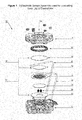
- FIG. 1 depicts an electrochemical gas sensor 10 shown generally in accordance with an illustrated embodiment.
- the gas sensor 10 is incorporated into a housing including a body 12 and top cover14 that may be sealed together via an O-ring 32 and a floor seal 30.
- the body 12 and cover 14 define an internal space.
- the internal space is effectively divided into a first chamber 16 and second chamber 18 by a separator 20.
- sensing electrode 22 Located in the first chamber 16 is a sensing electrode 22. At least a second electrode 24 is located in the second chamber 18. The sensing and second electrodes 22, 24 are electrically coupled to a connector located on the outside of the body 12 via respective conductors 36, 38.
- An aperture 34 extends through the cover 14. The aperture 34 allows a target gas to enter the first chamber 16 and interact with the sensing electrode 22.
- the second chamber 18 is filled with an electrolyte 26.
- the electrolyte 26 saturates the separator 20 thereby causing the separator 20 to form an ionic connection between the sensing and second electrodes 22, 24.
- Another porous member 28 in the second chamber 18 acts as a reservoir of electrolyte 26 that helps to keep the separator 20 between the electrodes 22, 24 saturated with electrolyte 26.
- the sensor 10 may be used to sense a number of different target gases. In one preferred embodiment, the sensor 10 may be used to sense hydrogen sulfide.
- amperometric electrochemical hydrogen sulfide sensors typically use ruthenium/platinum or iridium sensing electrodes with a sulfuric acid electrolyte in either a two-electrode or zero-biased three electrode configuration.
- platinum could not be used in the past because it was found that platinum used with sulfuric acid has an unacceptably high cross sensitivity to carbon monoxide, a common interfering gas in the intended applications.
- platinum electrodes especially in the form of carbon-supported platinum are cheaper and easier to manufacture than ruthenium/platinum or iridium electrodes, but cannot be used with a sulfuric acid electrolyte.
- carbon is thermodynamically unstable at platinum rest potentials in sulfuric acid and will be oxidized, thereby resulting in the degradation and possibly even the eventual failure of the electrode.
- platinum is less susceptible to poisoning by other gases than ruthenium based alloys and is more active and is more commercially available.
- platinum electrodes are often provided in the form of platinum decorated electrodes which are effectively microdot arrays and therefore have more effective mass transport towards the catalyst.
- the senor 10 makes use of an electrolyte that allows platinum to be used without giving a significant CO response. Additionally, the use of a non-oxidizing electrolyte allows platinum/carbon electrodes to be used, again, without giving a significant CO response.
- the senor utilizes an ionic liquid based electrolyte that improves sensor selectivity towards the target gas hydrogen sulfide whilst reducing interference from other gas or vapor species. It also allows highly reactive electrode catalysts such as platinum to be used without the adverse effects of large cross-interferences normally associated with such materials when exposed to other reactive gas species.
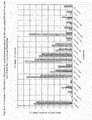
- FIG. 3 shows data for the particular example of the H 2 S responses of sensors.
- the behavior toward each gas is shown for a much wider range of both pure and acid doped ionic liquid electrolyte systems.
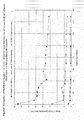
- FIG. 4 shows data for the corresponding CO interference signals of the sensors presented in FIG.3 (which is a key issue in the field). It is clear that in principle, the interference can be reduced by an order of magnitude or more whilst retaining similar absolute H 2 S output levels by judicious choice of electrolyte system, i.e. the selection of ionic liquid and use of an acid dopant if appropriate.
- Room temperature aprotic ionic liquids such as those listed in the attached FIGs. 2-3 are used as electrolytes 26 in sensors of the type shown in Fig1 .
- FIGs. 5-6 compare the longer term performance of sensors using either Pt black or 5% Pt supported on carbon sensing electrodes in combination with the ionic liquid electrolyte 1,2,4-trimethylpyrazolium methylsulfate doped with 1% methanesulfonic acid toward H 2 S and CO.
- the pure Pt electrode is the conventional sensing electrode widely used in existing commercial toxic gas sensors.
- the same figures also compare the behaviour of the Pt black electrodes in combination with the conventional sulfuric acid electrolyte. It is clear that in the TMPMS+1%MSA example electrolyte system, Pt/graphite electrodes offers acceptable H 2 S sensitivity (closely comparable with that from the Pt/H 2 SO 4 system), but with much lower CO cross interference.
- Figs. 5 and 6 illustrate the performance of sensors using 5% platinum on carbon sensing electrodes, it will be recognized that the 5% loading level is illustrated for exemplary purposes and higher or lower platinum loading levels can also be used without departing from the novel scope of the subject invention.
- the approaches to structuring the sensor 10 may include the following considerations: First, liquids and other novel electrolytes have commonly been appraised in the previous art with the intention of improving the environmental operating range of gas sensors. Devices using conventional electrolytes such as sulfuric acid & other traditional aqueous electrolytes operate well in many circumstances but are limited primarily by water management issues when subjected to harsher environmental extremes. Overcoming these limitations has therefore been the main driver for their replacement and much existing IP in the past.
- current work has shown that other valuable performance attributes can be offered by ionic liquid electrolytes in addition to the usual environmental performance improvements. In particular, improved gas specificity can be achieved by selection of the appropriate ionic liquid electrolyte/electrode catalyst combination. Furthermore, the use of alternative electrode catalysts (particularly supported versions) which cannot be used in conjunction with the more aggressive traditional acid electrolyte systems becomes possible. These are the beneficial features that may be emphasized in particular within this description.
Landscapes
- Chemical & Material Sciences (AREA)
- Life Sciences & Earth Sciences (AREA)
- Health & Medical Sciences (AREA)
- Physics & Mathematics (AREA)
- Chemical Kinetics & Catalysis (AREA)
- Electrochemistry (AREA)
- Molecular Biology (AREA)
- Analytical Chemistry (AREA)
- Biochemistry (AREA)
- General Health & Medical Sciences (AREA)
- General Physics & Mathematics (AREA)
- Immunology (AREA)
- Pathology (AREA)
- Measuring Oxygen Concentration In Cells (AREA)
- Electrolytic Production Of Non-Metals, Compounds, Apparatuses Therefor (AREA)
Applications Claiming Priority (1)
| Application Number | Priority Date | Filing Date | Title |
|---|---|---|---|
| US14/037,959 US9835581B2 (en) | 2013-09-26 | 2013-09-26 | Gas sensor using an ionic liquid electrolyte |
Publications (1)
| Publication Number | Publication Date |
|---|---|
| EP2853890A1 true EP2853890A1 (fr) | 2015-04-01 |
Family
ID=51492874
Family Applications (1)
| Application Number | Title | Priority Date | Filing Date |
|---|---|---|---|
| EP20140184169 Withdrawn EP2853890A1 (fr) | 2013-09-26 | 2014-09-09 | Capteur de gaz utilisant un électrolyte liquide ionique |
Country Status (5)
| Country | Link |
|---|---|
| US (1) | US9835581B2 (fr) |
| EP (1) | EP2853890A1 (fr) |
| CN (1) | CN104515795B (fr) |
| AU (2) | AU2014227438B2 (fr) |
| CA (1) | CA2864320C (fr) |
Cited By (2)
| Publication number | Priority date | Publication date | Assignee | Title |
|---|---|---|---|---|
| US9835581B2 (en) | 2013-09-26 | 2017-12-05 | Honeywell International, Inc. | Gas sensor using an ionic liquid electrolyte |
| EP3851180A1 (fr) * | 2020-01-14 | 2021-07-21 | Honeywell International Inc. | Appareil et procédé pour l'élimination d'un gaz cible d'un environnement de stockage à froid |
Families Citing this family (3)
| Publication number | Priority date | Publication date | Assignee | Title |
|---|---|---|---|---|
| CN104914144B (zh) * | 2015-05-26 | 2017-05-24 | 中国核动力研究设计院 | 一种核电站用氢气浓度在线监测装置 |
| US11567031B2 (en) | 2017-09-08 | 2023-01-31 | Oakland University | Selective real-time gas sensing |
| MX2022015810A (es) * | 2020-06-11 | 2023-04-11 | Nanobio Detection Systems Llc | Sistemas y metodos para la deteccion de compuestos organicos volatiles. |
Citations (10)
| Publication number | Priority date | Publication date | Assignee | Title |
|---|---|---|---|---|
| US5746900A (en) * | 1996-03-07 | 1998-05-05 | H.V. Setty Enterprises, Inc. | Non-aqueous amperometric multi-gas sensor |
| US20040033414A1 (en) * | 2002-08-14 | 2004-02-19 | Andreas Rohrl | Electrochemical cells, and gas sensor and fuel cell devices comprising same |
| EP1544614A1 (fr) * | 2003-12-16 | 2005-06-22 | Alphasense Limited | Capteur électrochimique |
| JP2006098269A (ja) * | 2004-09-30 | 2006-04-13 | Figaro Eng Inc | イオン性液体電解質ガスセンサ |
| US20060249382A1 (en) * | 2005-05-04 | 2006-11-09 | Dragerwerk Aktiengesellschaft | Open electrochemical sensor |
| WO2010063624A1 (fr) * | 2008-12-01 | 2010-06-10 | Msa Auer Gmbh | Capteurs de gaz électrochimiques à systèmes d’électrolyte liquide ionique |
| DE102008044238A1 (de) * | 2008-12-01 | 2010-06-10 | Msa Auer Gmbh | Elektrochemischer Gassensor mit einer ionischen Flüssigkeit als Elektrolyt, welche organische und/oder metallorganische und/oder anorganische Zusätze aufweist |
| EP2226627A1 (fr) * | 2009-03-06 | 2010-09-08 | Life Safety Distribution AG | Composition d'électrolyte liquide et son utilisation dans des détecteurs de gaz |
| WO2011151637A1 (fr) * | 2010-06-01 | 2011-12-08 | Isis Innovation Limited | Procédé électrochimique pour la détection du sulfure d'hydrogène |
| WO2013052041A1 (fr) * | 2011-10-05 | 2013-04-11 | Utc Fire & Security Corporation | Capteur de gaz |
Family Cites Families (6)
| Publication number | Priority date | Publication date | Assignee | Title |
|---|---|---|---|---|
| US5173166A (en) * | 1990-04-16 | 1992-12-22 | Minitech Co. | Electrochemical gas sensor cells |
| GB2468360A (en) * | 2009-03-06 | 2010-09-08 | Life Safety Distribution Ag | Ionic liquid electrolyte |
| CN102286760B (zh) * | 2010-05-19 | 2016-10-05 | 诺发系统有限公司 | 用金属电化学填充高纵横比的大型凹入特征的方法、水溶液电镀槽溶液、电镀设备以及系统 |
| US20120125772A1 (en) | 2010-11-24 | 2012-05-24 | Kwj Engineering Inc. | Printed Gas Sensor |
| US9689833B2 (en) * | 2011-10-11 | 2017-06-27 | Life Safety Distribution Ag | Auxiliary micro-electrodes for diagnostics of electrochemical gas sensors |
| US9835581B2 (en) | 2013-09-26 | 2017-12-05 | Honeywell International, Inc. | Gas sensor using an ionic liquid electrolyte |
-
2013
- 2013-09-26 US US14/037,959 patent/US9835581B2/en active Active
-
2014
- 2014-09-09 EP EP20140184169 patent/EP2853890A1/fr not_active Withdrawn
- 2014-09-12 CA CA2864320A patent/CA2864320C/fr not_active Expired - Fee Related
- 2014-09-16 AU AU2014227438A patent/AU2014227438B2/en not_active Ceased
- 2014-09-25 CN CN201410557443.0A patent/CN104515795B/zh active Active
-
2016
- 2016-04-07 AU AU2016202181A patent/AU2016202181B2/en not_active Ceased
Patent Citations (10)
| Publication number | Priority date | Publication date | Assignee | Title |
|---|---|---|---|---|
| US5746900A (en) * | 1996-03-07 | 1998-05-05 | H.V. Setty Enterprises, Inc. | Non-aqueous amperometric multi-gas sensor |
| US20040033414A1 (en) * | 2002-08-14 | 2004-02-19 | Andreas Rohrl | Electrochemical cells, and gas sensor and fuel cell devices comprising same |
| EP1544614A1 (fr) * | 2003-12-16 | 2005-06-22 | Alphasense Limited | Capteur électrochimique |
| JP2006098269A (ja) * | 2004-09-30 | 2006-04-13 | Figaro Eng Inc | イオン性液体電解質ガスセンサ |
| US20060249382A1 (en) * | 2005-05-04 | 2006-11-09 | Dragerwerk Aktiengesellschaft | Open electrochemical sensor |
| WO2010063624A1 (fr) * | 2008-12-01 | 2010-06-10 | Msa Auer Gmbh | Capteurs de gaz électrochimiques à systèmes d’électrolyte liquide ionique |
| DE102008044238A1 (de) * | 2008-12-01 | 2010-06-10 | Msa Auer Gmbh | Elektrochemischer Gassensor mit einer ionischen Flüssigkeit als Elektrolyt, welche organische und/oder metallorganische und/oder anorganische Zusätze aufweist |
| EP2226627A1 (fr) * | 2009-03-06 | 2010-09-08 | Life Safety Distribution AG | Composition d'électrolyte liquide et son utilisation dans des détecteurs de gaz |
| WO2011151637A1 (fr) * | 2010-06-01 | 2011-12-08 | Isis Innovation Limited | Procédé électrochimique pour la détection du sulfure d'hydrogène |
| WO2013052041A1 (fr) * | 2011-10-05 | 2013-04-11 | Utc Fire & Security Corporation | Capteur de gaz |
Non-Patent Citations (3)
| Title |
|---|
| AOIFE M. O'MAHONY ET AL: "The Mediated Detection of Hydrogen Sulfide in Room Temperature Ionic Liquids", ELECTROANALYSIS, vol. 22, no. 20, 3 August 2010 (2010-08-03), pages 2313 - 2322, XP055010785, ISSN: 1040-0397, DOI: 10.1002/elan.201000283 * |
| CHACHULSKI B ET AL: "Influence of aprotic solvent on a signal of an amperometric sensor with Nafion^(R) membrane", SENSORS AND ACTUATORS B: CHEMICAL, ELSEVIER BV, NL, vol. 119, no. 2, 7 December 2006 (2006-12-07), pages 435 - 440, XP027971704, ISSN: 0925-4005, [retrieved on 20061207] * |
| WEI ET AL: "Applications of ionic liquids in electrochemical sensors", ANALYTICA CHIMICA ACTA, ELSEVIER, AMSTERDAM, NL, vol. 607, no. 2, 23 December 2007 (2007-12-23), pages 126 - 135, XP022413502, ISSN: 0003-2670, DOI: 10.1016/J.ACA.2007.12.011 * |
Cited By (3)
| Publication number | Priority date | Publication date | Assignee | Title |
|---|---|---|---|---|
| US9835581B2 (en) | 2013-09-26 | 2017-12-05 | Honeywell International, Inc. | Gas sensor using an ionic liquid electrolyte |
| EP3851180A1 (fr) * | 2020-01-14 | 2021-07-21 | Honeywell International Inc. | Appareil et procédé pour l'élimination d'un gaz cible d'un environnement de stockage à froid |
| US11976371B2 (en) | 2020-01-14 | 2024-05-07 | Honeywell International Inc. | Apparatus and method for removal of a target gas from a cold storage environment |
Also Published As
| Publication number | Publication date |
|---|---|
| AU2014227438A1 (en) | 2015-04-09 |
| CN104515795B (zh) | 2019-09-17 |
| AU2016202181B2 (en) | 2018-01-25 |
| CA2864320A1 (fr) | 2015-03-26 |
| CN104515795A (zh) | 2015-04-15 |
| AU2016202181A1 (en) | 2016-04-28 |
| CA2864320C (fr) | 2018-06-12 |
| AU2014227438B2 (en) | 2016-01-07 |
| US9835581B2 (en) | 2017-12-05 |
| US20150083592A1 (en) | 2015-03-26 |
Similar Documents
| Publication | Publication Date | Title |
|---|---|---|
| US5932079A (en) | Electrochemical multigas sensor | |
| Cao et al. | The properties and applications of amperometric gas sensors | |
| AU2016202181B2 (en) | Gas sensor using an ionic liquid electrolyte | |
| US9347907B2 (en) | Device for providing a means for internal calibration in an electrochemical sensor | |
| US8187437B2 (en) | Electrochemical gas sensor | |
| US11085896B2 (en) | Auxiliary micro-electrodes for diagnostics of electrochemical gas sensors | |
| EP3519803B1 (fr) | Procede et appareil de mesure de la concentration d'un electrolyte dans un capteur electrochimique | |
| Botz et al. | Onset potential determination at gas-evolving catalysts by means of constant-distance mode positioning of nanoelectrodes | |
| US11397161B2 (en) | Calibration electrode | |
| CN111796007B (zh) | 使用电化学气体传感器测量湿度的方法和装置 | |
| CN110114665B (zh) | 电解质浓度测量的方法和设备 | |
| US6808619B2 (en) | Electrode system | |
| US7156968B2 (en) | Electrode comprising material to help stabilize oxide of catalyst for electrochemical sensor | |
| EP0221381B1 (fr) | Capteur électrochimique de gaz | |
| JP5276604B2 (ja) | 電気化学式センサの診断方法及び電気化学式センサ | |
| JP2001289816A (ja) | 定電位電解式ガスセンサ | |
| JP4445275B2 (ja) | ガス検知装置 | |
| Baker et al. | Ionic liquids as electrolytes for the development of a robust amperometric oxygen sensor | |
| UA13790U (en) | Amperometric electrochemical cell for determining content of carbonic acid in air |
Legal Events
| Date | Code | Title | Description |
|---|---|---|---|
| PUAI | Public reference made under article 153(3) epc to a published international application that has entered the european phase |
Free format text: ORIGINAL CODE: 0009012 |
|
| 17P | Request for examination filed |
Effective date: 20140909 |
|
| AK | Designated contracting states |
Kind code of ref document: A1 Designated state(s): AL AT BE BG CH CY CZ DE DK EE ES FI FR GB GR HR HU IE IS IT LI LT LU LV MC MK MT NL NO PL PT RO RS SE SI SK SM TR |
|
| AX | Request for extension of the european patent |
Extension state: BA ME |
|
| RAP1 | Party data changed (applicant data changed or rights of an application transferred) |
Owner name: HONEYWELL INTERNATIONAL INC. |
|
| STAA | Information on the status of an ep patent application or granted ep patent |
Free format text: STATUS: EXAMINATION IS IN PROGRESS |
|
| 17Q | First examination report despatched |
Effective date: 20190722 |
|
| STAA | Information on the status of an ep patent application or granted ep patent |
Free format text: STATUS: THE APPLICATION IS DEEMED TO BE WITHDRAWN |
|
| 18D | Application deemed to be withdrawn |
Effective date: 20191203 |