EP2854448B1 - Procédé, appareil et système pour contrôle de politique - Google Patents
Procédé, appareil et système pour contrôle de politique Download PDFInfo
- Publication number
- EP2854448B1 EP2854448B1 EP13810163.9A EP13810163A EP2854448B1 EP 2854448 B1 EP2854448 B1 EP 2854448B1 EP 13810163 A EP13810163 A EP 13810163A EP 2854448 B1 EP2854448 B1 EP 2854448B1
- Authority
- EP
- European Patent Office
- Prior art keywords
- message
- bng
- establishing
- access gateway
- wlan access
- Prior art date
- Legal status (The legal status is an assumption and is not a legal conclusion. Google has not performed a legal analysis and makes no representation as to the accuracy of the status listed.)
- Not-in-force
Links
- 238000000034 method Methods 0.000 title claims description 42
- 238000013468 resource allocation Methods 0.000 claims description 20
- 230000006870 function Effects 0.000 claims description 18
- 238000012545 processing Methods 0.000 claims description 17
- 230000008569 process Effects 0.000 claims description 13
- 238000012546 transfer Methods 0.000 claims description 9
- 238000005538 encapsulation Methods 0.000 description 9
- 230000004044 response Effects 0.000 description 7
- 238000010586 diagram Methods 0.000 description 6
- 238000013475 authorization Methods 0.000 description 5
- 230000001960 triggered effect Effects 0.000 description 4
- 238000004891 communication Methods 0.000 description 2
- 238000005516 engineering process Methods 0.000 description 2
- 238000007726 management method Methods 0.000 description 2
- 238000011160 research Methods 0.000 description 2
- 230000011664 signaling Effects 0.000 description 2
- 230000005540 biological transmission Effects 0.000 description 1
- 238000001514 detection method Methods 0.000 description 1
- 238000011161 development Methods 0.000 description 1
- 230000009977 dual effect Effects 0.000 description 1
- 238000012986 modification Methods 0.000 description 1
- 230000004048 modification Effects 0.000 description 1
- 230000003287 optical effect Effects 0.000 description 1
- 238000005457 optimization Methods 0.000 description 1
- 230000005641 tunneling Effects 0.000 description 1
Images






Classifications
-
- H—ELECTRICITY
- H04—ELECTRIC COMMUNICATION TECHNIQUE
- H04W—WIRELESS COMMUNICATION NETWORKS
- H04W48/00—Access restriction; Network selection; Access point selection
- H04W48/02—Access restriction performed under specific conditions
-
- H—ELECTRICITY
- H04—ELECTRIC COMMUNICATION TECHNIQUE
- H04L—TRANSMISSION OF DIGITAL INFORMATION, e.g. TELEGRAPHIC COMMUNICATION
- H04L12/00—Data switching networks
- H04L12/66—Arrangements for connecting between networks having differing types of switching systems, e.g. gateways
-
- H—ELECTRICITY
- H04—ELECTRIC COMMUNICATION TECHNIQUE
- H04W—WIRELESS COMMUNICATION NETWORKS
- H04W28/00—Network traffic management; Network resource management
- H04W28/16—Central resource management; Negotiation of resources or communication parameters, e.g. negotiating bandwidth or QoS [Quality of Service]
- H04W28/24—Negotiating SLA [Service Level Agreement]; Negotiating QoS [Quality of Service]
-
- H—ELECTRICITY
- H04—ELECTRIC COMMUNICATION TECHNIQUE
- H04W—WIRELESS COMMUNICATION NETWORKS
- H04W84/00—Network topologies
- H04W84/02—Hierarchically pre-organised networks, e.g. paging networks, cellular networks, WLAN [Wireless Local Area Network] or WLL [Wireless Local Loop]
- H04W84/04—Large scale networks; Deep hierarchical networks
- H04W84/042—Public Land Mobile systems, e.g. cellular systems
-
- H—ELECTRICITY
- H04—ELECTRIC COMMUNICATION TECHNIQUE
- H04W—WIRELESS COMMUNICATION NETWORKS
- H04W84/00—Network topologies
- H04W84/02—Hierarchically pre-organised networks, e.g. paging networks, cellular networks, WLAN [Wireless Local Area Network] or WLL [Wireless Local Loop]
- H04W84/10—Small scale networks; Flat hierarchical networks
- H04W84/12—WLAN [Wireless Local Area Networks]
Definitions
- the present invention relates to the fixed mobile convergence technical field, and particularly to a method, an apparatus and a system for policy control in a fixed mobile convergence scenario.
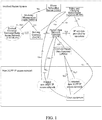
- FIG. 1 is a schematic diagram of a composition framework of EPS (Evolved Packet System) of 3GPP (3 rd Generation Partnership Project).
- EPS Evolved Packet System
- the EPS network framework in a non-roaming scenario includes: E-UTRAN (Evolved Universal Terrestrial Radio Access Network), MME (Mobility Management Entity), S-GW (Serving Gateway), PDN GW (also called as P-GW, Packet Data Network Gateway), HSS (Home Subscriber Server), PCRF (Policy and Charging Rules Function) entities and other supporting nodes.
- E-UTRAN Evolved Universal Terrestrial Radio Access Network
- MME Mobility Management Entity
- S-GW Serving Gateway
- PDN GW Packet Data Network Gateway
- HSS Home Subscriber Server
- PCRF Policy and Charging Rules Function
- the PCRF is a core of the PCC (Policy and Charging Control), and is responsible for formulating policy strategy and charging rules.
- the PCRF provides network controlling rules based on service data stream, and the network controlling includes service data stream detection, gating control, QoS (Quality of Service) control and charging rules based on data stream and so on.
- the PCRF sends the policy and charging rules formulated by itself to the PCEF (Policy and Charging Enforcement Function) for enforcement. Meanwhile, the PCRF is also required to ensure that the rules are coincident with the subscribers' subscription information.
- the basis for the PCRF to formulate policy and charging rules includes: acquiring service-related information from AF (Application Function); acquiring subscribers' subscription information of policy and charging control from SPR (Subscription Profile Repository); and acquiring bearer-related network information from PCEF.
- the EPS supports communication with non-3GPP systems, and the EPS communicates with non-3GPP systems through S2a/b/c interfaces, using a P-GW as an anchor between 3GPP systems and non-3GPP systems.
- non-3GPP systems are classified into trusted non-3GPP IP access and untrusted non-3GPP IP access.
- the trusted non-3GPP IP access can be connected with a P-GW through an S2a interface directly; the untrusted non-3GPP IP access is required to connect with P-GW through ePDG (Evolved Packet Data Gateway), where an interface between an ePDG and a P-GW is an S2B interface, and signaling and data between UE (User Equipment) and ePDG are encrypted for protection with IPSec (Internet Protocol Security).
- ePDG Evolved Packet Data Gateway
- S2c interface provides control and mobility support related to the user side between UE and P-GW, and the mobility management protocol supported by the S2c interface is DSMIPv6 (Mobile IPv6 Support for Dual Stack Hosts and Routers).
- FMC Fixed Mobile Convergence
- FMC Fixed Mobile Convergence
- PCRF Packet Control Function
- BPCF For the resource request message of PCRF, BPCF performs, according to the network policy, subscription information and so on of the BBF access, resource admission control or forwards the resource request message to other network elements of the BBF access network (such as BNG (Broadband Network Gateway)), and then other network elements perform the resource admission control (i.e. other network elements are entrusted to perform resource admission control).
- BNG Broadband Network Gateway
- PCRF needs to interact with BPCF when performing QoS authorization in order to ensure a demand for a total bandwidth for visiting services by all the UEs accessing through WLAN accessing line being not larger than the bandwidth of the line (such as the subscription bandwidth or the largest physical agent supported by the line), thus the BBF access network performs resource admission control.
- WLAN Wireless Local Area Network
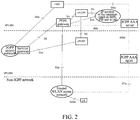
- FIG. 2 is a schematic diagram of the framework for a UE accessing an EPC (Evolved Packet Core) network through WLAN in the related art, wherein, one logic network element of the WLAN interconnects with P-GW of 3GPP through an S2a interface, and the S2a interface supports GTP (Generic Tunneling Protocol)/PMIP (Proxy Mobile IP).
- EPC Evolved Packet Core
- TWAG' Trusted WLAN Access Gateway
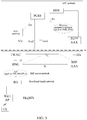
- FIG. 3 a WLAN access network
- TWAG' Trusted WLAN Access Gateway
- FIG. 3 the related critical interfaces and functions thereof are described as follows:
- EP2197163A1 discloses a technology with which a mobile terminal moving in a PMIP domain receives various type of prefixes and selects a type of an address to be configured, and route optimization is performed without adding a signaling load on the PMIP domain.
- This document also discloses that different types of plural interfaces can allow a mobile node to realize advantages of multihoming including load sharing, load balancing, cost down, priority setting to improve QoS, fault tolerance, and reliability.
- Various examples of the present disclosure provide a policy control method, equipment and system, implementing policy control in the fixed mobile convergence scenario.
- Various examples of the present disclosure provide a method for policy control, comprising:
- the step of sending the QoS information to the AC or the BNG comprises:
- the trusted WLAN access gateway is used as a RADIUS proxy, client or server.
- the step of the trusted WLAN access gateway receiving the QoS information from the 3GPP core network comprises:
- the method further comprises:
- the method further comprises: when the PMIP is adopted between the trusted WLAN access gateway and the P-GW, the trusted WLAN access gateway sending the message for requesting for establishing the fixed network policy control session to the BPCF; the trusted WLAN access gateway receiving the acknowledgement message of the message for requesting for establishing the fixed network policy control session sent by the BPCF.
- the method further comprises: when the PMIP is adopted between the trusted WLAN access gateway and the P-GW, the trusted WLAN access gateway sending a gateway control session establishing message to the PCRF; and the trusted WLAN access gateway receiving a gateway control session establishing acknowledgement message sent by the PCRF.
- the step of the trusted WLAN access gateway receiving the message for requesting for establishing the fixed network policy control session sent by the AC or the BNG; or the trusted WLAN access gateway sending the message for requesting for establishing the fixed network policy control session to the AC or the BNG; or the trusted WLAN access gateway sending the triggering message for requesting for establishing the fixed network policy control session to the AC or the BNG comprises:
- the method further comprises:
- the method further comprises:
- the method further comprises: configuring an interface Gxd' between the trusted WLAN access gateway and the PCRF, and using the interface Gxd' to implement policy negotiation and result feedback between the trusted WLAN access gateway and the PCRF.
- An embodiment of the present invention further provides a trusted Wireless Local Area Network (WLAN) access gateway, comprising:
- the method further comprises: configuring an interface Gxd' between the trusted WLAN access gateway and the PCRF, and using the interface Gxd' to implement policy negotiation and result feedback between the trusted WLAN access gateway and the PCRF.
- An example of the present disclosure further provides a trusted Wireless Local Area Network (WLAN) access gateway, comprising:
- the trusted WLAN access gateway further comprises a session establishing module, wherein, the session establishing module is configured to: establish a Remote Authentication Dial In User Service (RADIUS) session with the AC or the BNG during a process of a terminal access authentication, or establish a designated policy control session with the AC or the BNG; the sending module is configured to: send the QoS information by the RADIUS session or the designated policy control session between the trusted WLAN access gateway and the AC or the BNG.
- RADIUS Remote Authentication Dial In User Service
- the trusted WLAN access gateway is used as a RADIUS Proxy, a Client or a Server.
- the receiving module is configured to:
- the first fixed network policy processing module is configured to:
- the trusted WLAN access gateway further comprises: a second fixed network policy processing module, wherein, the second fixed network policy processing module is configured to: when the PMIP is adopted between the trusted WLAN access gateway and the P-GW, send the message for requesting for establishing the fixed network policy control session to the BPCF; receive the acknowledgement message of the message for requesting for establishing the fixed network policy control session sent by the BPCF.
- the second fixed network policy processing module is further configured to: when the PMIP is adopted between the trusted WLAN access gateway and the P-GW, send a gateway control session establishing message to the PCRF; and receive a gateway control session establishing acknowledgement message sent by the PCRF.
- An example of the present disclosure further provides a system for policy control, comprising an Access Controller (AC) or a Broadband Network Gateway (BNG), and the trusted Wireless Local Area Network (WLAN) access gateway described above.
- AC Access Controller
- BNG Broadband Network Gateway
- WLAN Wireless Local Area Network
- the interface configuration and policy configuration are performed for the WLAN access gateway in the fixed mobile convergence scenario, thereby the policy control is implemented in the fixed mobile convergence scenario.
- the network framework as shown in FIG. 3 is related to the BBF access framework. It should be noted that the framework is also suitable to other WLAN access networks, where RG (Residential Gateway) is replaced with AP (Access Point), and BNG is replaced with AC (Access Controller).
- RG Residential Gateway
- AP Access Point
- BNG Access Controller
- the BBF access framework is taken as an example in the following description.
- the solutions according to the embodiments of the present invention that will be introduced in the following are also suitable to other WLAN access networks.
- FIG. 3 Besides the interface configuration as shown in FIG. 3 , there are other interface configurations as shown in FIG. 4 and FIG. 5 , which includes the following interfaces.
- the embodiment of the present invention provides a method for policy control, wherein a trusted WLAN access gateway receives QoS information from a 3GPP core network and sends QoS information for requesting for resource reservation to AC or BNG; when GTP is applied between the trusted WLAN access gateway and the P-GW, the trusted WLAN access gateway receives QoS information from the P-GW; and when PMIP is applied between the trusted WLAN access gateway and the P-GW, the trusted WLAN access gateway receives QoS information from a PCRF entity or from a PCRF entity through BPCF.
- the trusted WLAN access gateway may sends the QoS information by a RADIUS (Remote Authentication Dial In User Service) session between the trusted WLAN and AC or BNG established during the process of the terminal access authentication, or by the specific policy control session between the trusted WLAN and AC or BNG.
- RADIUS Remote Authentication Dial In User Service
- the WLAN access gateway is used as a RADIUS proxy, client or server.
- TWAG' is taken as the trusted WLAN access gateway in the following description.
- the embodiment mainly describes the flow of a 3GPP UE accessing 3GPP EPC (Evolved Packet Core) network through WLAN.
- EAP Extensible Authentication Protocol
- BBF AAA Authentication, Authorization and Accounting
- AC/BNG and TWAG' are used as AAA agents.
- the EAP authentication success message triggers an establishment of a GTP/PMIP tunnel.
- the embodiment comprises the following steps.
- Step 601 the UE and WLAN network elements perform a flow specific to non-3GPP, such as link establishment.
- Step 602 the UE sends an EAPOL-START message to AP/RG to request for authentication.
- Steps 603-604 As the EAP authenticator, AP/PG triggers an EAP authentication flow to UE.
- the UE carries NAI (Network Access Identifier) in the EAP-RES/Identity message.
- AC/BNG may determine whether the terminal is a 3GPP UE or not according to the authentication type, if the authentication type is not the EAP authentication, then the terminal is taken as a WLAN UE, and the flow in techniques related to a WLAN UE accessing WLAN is implemented; if the authentication type is an EAP authentication, then domain name information in NAI is acquired by analyzing message, and the terminal is determined as a 3GPP UE; alternatively, it may determine the terminal as a 3GPP UE just according to the domain name.
- NAI Network Access Identifier
- UE MAC Medium Access Control Address
- domain name information is associated with a corresponding GRE (Generic Routing Encapsulation) tunnel, and the association relationship is saved in the local; afterwards, the message is encapsulated into the GRE tunnel and then is sent to TWAG', or is forwarded to TWAG' according to routing; after receiving the GRE message, TWAG' removes the encapsulation of the head of GRE, and then, acting as the AAA agent, forwards the decapsulated message to BBF AAA, through which the message is forwarded to 3GPP AAA.
- GRE Generic Routing Encapsulation
- BNG may be used as a RADIUS Proxy to forward the AAA message; besides, BNG may also be used as a RADIUS Server to end the AAA message from RG, and BNG may further be used as a RADIUS Client to send the AAA message to the TWAG', where the content of the AAA message is coincident with the received content.
- TWAG' may be used as a RADIUS Proxy to forward the AAA message; besides, TWAG' may also be used as a RADIUS Server to end the AAA message from BNG, and afterwards, TWAG' may further be used as a RADIUS Client to send the AAA message to BBF AAA, where the content of the AAA message is coincident with the received content.
- GRE tunnel described above may be replaced by other types of tunnel, such as MPLS (Multi Protocol Label Switch) and so on; alternatively, the EAP authentication message is transferred by routing directly, not transmitted by tunnel.
- MPLS Multi Protocol Label Switch
- Steps 605-607 the following EAP flow is implemented.
- step 606 When TWAG' receives the EAP authentication success message, step 606 is executed.
- the function of TWAG' is acting as an AAA agent or an AAA relay which is the same as in steps 603-604.
- AC/BNG will acquire the service type of 3GPP AAA authorization, and the service type includes specifically: permitting accessing EPC, and/or seamed service shunting, or refusing accessing EPC.
- the service type is permitting accessing EPC, the information may be bound with the UE MAC address, and the association relationship is saved in the local. In the embodiment, the service type is permitting accessing EPC.
- AC/BNG may save the association relationship between the service type and the UE MAC address in the local, and illustrate explicitly that the service type supported by AC/BNG is permitting accessing EPC; alternatively, it may not save the association relationship in the local, and illustrate implicitly that the service type supported by AC/BNG is permitting accessing EPC.
- Steps 608-612 after receiving a EAP authentication success message, TWAG' requests P-GW for establishing a GIP/PMIP tunnel, and meanwhile, establishes an IP-CAN (IP Connectivity Access Network) session with PCRF, and upgrades P-GW identifier between the TWAG' and HSS. After receiving a session creating response message or agent binding acknowledgement message, TWAG' sends an EAP authentication success message to the UE through AC/BNG and AP/RG. In step 609, PCEF located at P-GW supplies PCRF with a user identifier and an IP address allocated by P-GW for the UE.
- IP-CAN IP Connectivity Access Network
- Step 613 as the service type is permitting accessing EPC, BNG sends a fixed network policy control session establishing message carrying a user identifier to TWAG'.
- Step 614 TWAG' sends a message to BPCF to request for establishing a fixed network policy control session, and carries a user identifier in the message.
- Step 615 BPCF sends a gateway control session establishing message to PCRF, and carries a user identifier in the message.
- PCRF associates the IP-CAN session established by request in step 608 with the gateway control session established by request in step 615 according to the user identifier.
- Step 616 PCRF returns a gateway control session establishing acknowledgement message to BPCF.
- Step 617 BPCF returns a message to TWAG' to acknowledge the establishment of the fixed network policy control session.
- Step 618 TWAG' returns a message to BNG to acknowledge the establishment of the fixed network policy control session.
- Step 619 the UE performs DHCP flow or RS/RA flow to acquire an IP address and related IP configuration parameters.
- the attachment flow completes.
- AC/BNG finds the associated service type thereof is permitting accessing EPC according to the UC MAC address, and then finds the associated GRE tunnel, by which the message is encapsulated into TWAG'; after receiving the GRE message, TWAG' removes the encapsulation of the GRE head, and then deals with the DHCP request message.
- TWAG' encapsulates the DHCP response/router notification message into the GRE head and sends the GRE message to BNG.
- BNG removes the encapsulation of the GRE head for processing. At this moment, BNG may bind the IP address with the MAC address.
- BNG/AC may find the associated service type as permitting accessing EPC according to the UE MAC address or UE IP address in the same way, finds the associated GRE tunnel, and then encapsulates the message into TWAG' by the GRE tunnel; after receiving the GRE message, TWAG' removes the encapsulation of the GRE head, and encapsulates the message by GTP tunnel or PMIP tunnel, and forwards the message to P-GW.
- BNG/AC removes the encapsulation of the GRE head directly, and forwards the message to the UE.
- step 613 and step 618 are optional steps, which are performed when the network uses the separate session between BNG and TWAG' to transfer the QoS information and implementation result.
- the establishment of the separate session between BNG and TWAG' may also triggered by TWAG'. That is:
- the embodiment mainly describes the flow of a 3GPP UE accessing 3GPP EPC network through WLAN.
- the EAP authentication flow is required to forward to BBF AAA by TWAG'
- AP/RG is used as an EAP authenticator
- AC/BNG and TWAG' are used as AAA agents.
- the embodiment is implemented.
- the DHCP request message triggers the establishment of the GTP/PMIP tunnel. As shown in FIG. 7 , the embodiment comprises the following steps.
- Steps 701-707 it is to perform steps 601-606 and step 612.
- Step 708 UE sends the DHCP request message, after receiving the DHCP request message (which specifically is a DHCPv4 message), AC/BNG finds that the associated service type is permitting accessing EPC according to the UE MAC address, finds the associated GRE tunnel, and encapsulates the message into TWAG' according to the GRE tunnel; after receiving the GRE message, TWAG' removes the encapsulation of the GRE head, and deals with the DHCP request message.
- the DHCP request message which specifically is a DHCPv4 message
- AC/BNG finds that the associated service type is permitting accessing EPC according to the UE MAC address
- finds the associated GRE tunnel finds the associated GRE tunnel, and encapsulates the message into TWAG' according to the GRE tunnel
- TWAG' removes the encapsulation of the GRE head, and deals with the DHCP request message.
- Steps 709-718 it is to perform steps 608-611, step 613 and step 618.
- step 713 may be performed before step 709. Therefore, PCRF may receives the gateway control session establishing message from BPCF at first, and then receives the IP-CAN session establishing message.
- Steps 714-717 are performed only when TWAG' determines what is established between TWAG' and P-GW is the PMIP tunnel.
- step 713 and step 718 are optional steps, which are performed when the network uses the separate session between BNG and TWAG' to transfer the QoS information and implementation result.
- the establishment of the separate session between BNG and TWAG' may also be triggered by TWAG'. That is:
- Step 719 the UE performs a DHCP flow or RS/RA (Router Advertisement) flow to acquire the IP address and related IP configuration parameters.
- the attachment flow completes.
- BNG/AC may find that the associated service type is permitting accessing EPC according to the UE MAC address or UE IP address in the same way, finds the associated GRE tunnel, and then encapsulates the message into TWAG' by the GRE tunnel; after receiving the GRE message, TWAG' removes the encapsulation of GRE head, and encapsulates the message by the GTP tunnel or PMIP tunnel, and forwards the message to P-GW.
- BNG/AC removes the encapsulation of GRE head directly, and forwards the message to the UE.
- the embodiment mainly describes the flow of a 3GPP UE accessing 3GPP EPC network through WLAN.
- the EAP authentication flow is required to forward to BBF AAA by TWAG'
- AP/RG is used as an EAP authenticator
- AC/BNG and TWAG' are used as AAA agents.
- the embodiment is implemented.
- the EAP authentication success message triggers the establishment of the GTP/PMIP tunnel. As shown in FIG. 8 , the embodiment comprises the following steps specifically.
- Steps 801-813 it is to perform the flow of steps 601-613.
- TWAG' sends the gateway control session establishing message to PCRF, carrying a user identifier in the message.
- PCRF associates the IP-CAN session established by request in step 808 with the gateway control session established by request in step 814 according to the user identifier.
- Step 815 PCRF returns the fixed network policy control session establishing acknowledgement message to TWAG'.
- Steps 816-817 it is to perform the flow of steps 618-619.
- step 813 and step 816 are optional steps, and are performed when the network transfers the QoS information and implementation result by the separate session between BNG and TWAG'.
- the establishment of the separate session between BNG and TWAG' may also be triggered by TWAG'. That is:
- the embodiment mainly describes the flow of a 3GPP UE accessing 3GPP EPC network through WLAN.
- the EAP authentication flow is required to forward to BBF AAA by TWAG'
- AP/RG is used as an EAP authenticator
- AC/BNG and TWAG' are used as AAA agents.
- the embodiment is implemented.
- the DHCP request message triggers the establishment of the GTP/PMIP tunnel. As shown in FIG. 9 , the embodiment comprises the following steps specifically.
- Steps 901-913 it is to perform steps 701-713.
- TWAG' sends the gateway control session establishing message to PCRF, carrying a user identifier in the message.
- PCRF associates the IP-CAN session established by request in step 910 with the gateway control session established by request in step 914 according to the user identifier.
- Step 915 PCRF returns the fixed network policy control session establishing acknowledgement message to TWAG'.
- Steps 916-917 it is to perform the flow of steps 718-719.
- step 913 and step 916 are optional steps, and are performed when the network transfers the QoS information and implementation result by the separate session between BNG and TWAG'.
- the establishment of the separate session between BNG and TWAG' may also be triggered by TWAG'. That is:
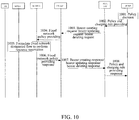
- This embodiment describes a flow that a UE performs service visiting and PCRF formulates corresponding policy to perform resource reservation when the GTP tunnel is established between TWAG' and P-GW after the flow as shown in FIG. 6 , FIG. 7 , FIG. 8 or FIG. 9 is performed.
- the process includes the following steps.
- Step 1001 after receiving triggering, PCRF performs policy decision, including formulating PCC rules, updating PCC rules or deciding to delete the issued PCC rules etc.
- Step 1002 PCRF sends a policy charging rule providing message to P-GW, provides the policy formulated by PCRF, including issuing newly formulated PCC rules, updating PCC rules or deleting the issued PCC rules.
- Step 1003 after performing the policy, P-GW sends a bearer creating request message, a bearer updating request message, or a bearer deleting request message to TWAG', wherein, the bearer creating request message and the bearer updating request message carry the corresponding QoS information, and the QoS information includes QCI (QoS Class Identifier, QoS grade identifier), ARP (Allocation and Reservation Priority), GBR (Guaranteed Bitrates), MBR (Maximum Bitrates) and so on.
- QCI QoS Class Identifier, QoS grade identifier
- ARP Allocation and Reservation Priority
- GBR Guaranteed Bitrates
- MBR Maximum Bitrates
- TWAG' sends a fixed network policy providing message to AC/BNG, and carries the QoS information provided by P-GW to TWAG' in the message, and the information may be QCI, ARP, GBR and MBR, or QoS parameters specific to a fixed network mapped by TWAG' according to the above information.
- the session by which TWAG' sends a fixed network policy providing message to AC/BNG is the session established between BNG and TWAG' in the process of a terminal access authentication; or is the separate session established between BNG and TWAG', such as the session established in steps 613, 618; steps 713, 718; steps 813, 816 and steps 913 and 916.
- Step 1005 AC/BNG or other fixed network access devices execute a fixed network designated flow to perform admission control and/or resource allocation according to the QoS information provided in step 1004.
- Step 1006 AC/BNG returns a fixed network policy providing acknowledgement message to TWAG' to return admission control and/or resource allocation.
- TWAG' returns a bearer creating response message, a bearer updating response message or a bearer deleting response message to P-GW.
- Step 1008 P-GW returns a policy charging rule providing response message to PCRF.
- This embodiment describes the flow that a UE performs service visiting and PCRF formulates corresponding policy to perform resource reservation when the PMIP tunnel is established between TWAG' and P-GW after the flow as shown in FIG. 6 , FIG. 7 is performed.
- the flow includes the following steps.
- Step 1101 after receiving triggering, PCRF performs policy decision, including formulating PCC rules, updating PCC rules or deciding to delete the issued PCC rules etc. PCRF further formulates QoS rules, updates QoS rules or decides to delete the issued QoS rules etc. according to policy.
- PCRF sends a gateway control and QoS rule providing message to BPCF, provides the policy formulated by PCRF, including issuing newly formulated QoS rules, updating QoS rules or deleting the issued QoS rules.
- BPCF sends a fixed network policy providing message to TWAG', carrying the QoS information provided by PCRF to BPCF in the message, and the information may be QCI, ARP, GBR and MBR, or the QoS parameters specific to the fixed network mapped by BPCF according to the above information.
- TWAG' sends a fixed network policy providing message to AC/BNG, carrying the QoS information provided by BPCF to TWAG' in the message, and the information may be QCI, ARP, GBR and MBR, or QoS parameters specific to the fixed network mapped by TWAG' according to the above information.
- the session by which TWAG' sends a message to AC/BNG is the session established between BNG and TWAG' in the process of access authentication as shown in FIG. 6 , FIG. 7 , FIG. 8 or FIG. 9 ; or is the separate session established between BNG and TWAG', such as the session established in steps 613, 618; steps 713, 718; steps 813, 816 and steps 913 and 916.
- Step 1105 AC/BNG or other fixed network access devices execute fixed network designated flow to perform admission control and/or resource allocation according to the QoS information provided in step 1104.
- Step 1106 AC/BNG returns a fixed network policy providing acknowledgement message to TWAG' to return an admission control and/or resource allocation result.
- TWAG' returns the fixed network policy providing acknowledgement message to BPCF to return an admission control and/or resource allocation result.
- Step 1108 BPCF returns a gateway control and QoS rule providing response message to PCRF to return an admission control and/or resource allocation result.
- Step 1109 if admission control and/or resource allocation succeeds, PCRF sends a policy charging rule providing message to P-GW to provide policy formulated by PCRF, including issuing newly formulated PCC rules, updating PCC rules or deleting issued PCC rules.
- Step 1110 P-GW returns an acknowledgement message to PCRF.
- This embodiment describes the flow that a UE performs service visiting and PCRF formulates corresponding policy to perform resource reservation when the PMIP tunnel is established between TWAG' and P-GW after the flow as shown in FIG. 8 and FIG. 9 is performed.
- the flow includes the following steps.
- Step 1201 after receiving triggering, PCRF performs policy decision, including formulating PCC rules, updating PCC rules or deciding to delete the issued PCC rules etc. PCRF further formulates QoS rules, updates QoS rules or decides to delete the issued QoS rules etc. according to the policy.
- PCRF sends a gateway control and QoS rule providing message to TWAG', provides the policy formulated by PCRF, including issuing newly formulated QoS rules, updating QoS rules or deleting the issued QoS rules.
- TWAG sends a fixed network policy providing message to AC/BNG, carrying the QoS information provided by BPCF to TWAG' in the message, and the information may be QCI, ARP, GBR and MBR, or the QoS parameters specific to a fixed network mapped by TWAG' according to the above information.
- the session by which TWAG' sends a message to AC/BNG is the session established between BNG and TWAG' in the process of access authentication as shown in FIG. 6 , FIG. 7 , FIG. 8 or FIG. 9 ; or is the separate session established between BNG and TWAG', such as the session established in steps 613, 618; steps 713, 718; steps 813, 816 and steps 913 and 916.
- Step 1204 AC/BNG or other fixed network access devices execute fixed network designated flow to perform admission control and/or resource allocation according to the QoS information provided in step 1203.
- Step 1205 AC/BNG returns a fixed network policy providing acknowledgement message to TWAG' to return admission control and/or resource allocation.
- TWAG' returns the fixed network policy providing acknowledgement message to PCRF to return admission control and/or resource allocation.
- Step 1207 if admission control and/or resource allocation succeeds, PCRF sends a policy charging rule providing message to P-GW to provide policy formulated by PCRF, including issuing newly formulated PCC rules, updating PCC rules or deleting issued PCC rules.
- Step 1208 P-GW returns an acknowledgement message to PCRF.
- the interface configuration and policy configuration are performed for the trusted WLAN access gateway in the fixed mobile convergence scenario, thereby the policy control in the fixed mobile convergence scenario is implemented.
- an embodiment of the present invention further provides a trusted WLAN access gateway, as shown in FIG. 13 , the trusted WLAN access gateway comprises:
- the trusted WLAN access gateway further comprises a session establishing module 141, and the session establishing module 141 is configured to: establish a Remote Authentication Dial In User Service (RADIUS) session with the AC or the BNG during the process of a terminal access authentication, or, establish a designated policy session with the AC or the BNG; the sending module 131 is configured to: send the QoS information by the RADIUS session or the designated policy control session between the trusted WLAN access gateway and the AC or the BNG.
- RADIUS Remote Authentication Dial In User Service
- the trusted WLAN access gateway is used as a RADIUS Proxy, Client or Server.
- the receiving module 132 is configured to:
- the trusted WLAN access gateway may further comprise: a first fixed network policy processing module 151, the first fixed network policy processing module 151 is configured to: receive a message for requesting for establishing a fixed network policy control session sent by the AC or the BNG; and send an acknowledgement message of the message for requesting for establishing a fixed network policy control session; or, send the message for requesting for establishing a fixed network control session to the AC or the BNG; receive the acknowledgement message of the message for requesting for the fixed network policy control session sent by the AC or the BNG; or, send a triggering message for requesting for establishing a fixed network policy control session to the AC or the BNG, receive a message for requesting for establishing the fixed network policy control session sent by the AC or the BNG, and send the acknowledgement message of the message for requesting for establishing the fixed network policy control session to the AC or the BNG.
- a first fixed network policy processing module 151 is configured to: receive a message for requesting for establishing a fixed network policy control session sent by the AC
- the first fixed network policy processing module 151 is configured to:
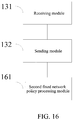
- the trusted WLAN access gateway further comprises: a second fixed network policy processing module 161, the second fixed network policy processing module 161 is configured to: when PMIP is adopted between the trusted WLAN access gateway and the P-GW, send the message for requesting for establishing the fixed network policy control session to the BPCF; receive the acknowledgement message of the message for requesting for establishing the fixed network policy control session sent by the BPCF.
- the second fixed network policy processing module 161 is further configured to: when PMIP is adopted between the trusted WLAN access gateway and the P-GW, send a gateway control session establishing message to the PCRF; and receive a gateway control session establishing acknowledgement message sent by the PCRF.
- an embodiment of the present invention further provides a system for policy control, comprising AC or BNG, and the trusted WLAN access gateway provided by the embodiment described above.
- the interface configuration and policy configuration are performed for the trusted WLAN access gateway in the fixed mobile convergence scenario, thereby the policy control is implemented in the fixed mobile convergence scenario.
- the whole or part of the steps in the above method can be completed by a program instructing relevant hardware
- the program may be stored in computer readable storage medium, such as readable memory, magnet disk or optical disk.
- the whole or part of the steps in the above embodiments can be implemented with one or more integrated circuits.
- the respective module/unit in the above embodiments can be implemented by use of hardware or software function module. In this way, the present invention is not limited to any particular combination of hardware and software.
- the interface configuration and policy configuration are performed for the WLAN access gateway in the fixed mobile convergence scenario, thereby the policy control is implemented in the fixed mobile convergence scenario.
Landscapes
- Engineering & Computer Science (AREA)
- Computer Networks & Wireless Communication (AREA)
- Signal Processing (AREA)
- Quality & Reliability (AREA)
- Computer Security & Cryptography (AREA)
- Mobile Radio Communication Systems (AREA)
Claims (15)
- Procédé de contrôle de politique comprenant les étapes suivantes :une passerelle d'accès au réseau local sans fil ("Wireless Local Area Network" - WLAN) de confiance reçoit des informations de qualité de service ("Quality of Service" - QoS) en provenance d'un réseau central 3GPP (1103, X02), et envoie les informations de QoS à un contrôleur d'accès ("Access Controller" - AC) ou à une passerelle réseau à large bande ("Broadband Network Gateway" - BNG) (1104, X03) ;l'AC ou la BNG ou d'autres dispositifs d'accès au réseau fixe effectuent un contrôle d'admission et / ou une allocation de ressources en fonction des informations de QoS (1105, X04) ;caractérisé en ce quel'étape consistant à envoyer les informations de QoS à l'AC ou à la BNG comprend :l'étape d'envoi des informations de QoS par une session sous protocole RADIUS (Remote Authentication Dial In User Service) entre la passerelle d'accès WLAN de confiance et l'AC ou la BNG établie lors d'une procédure d'authentification d'accès de terminal, ou par une session de contrôle de politique désignée entre le WLAN de confiance et l'AC ou la BNG.
- Procédé selon la revendication 1, dans lequel, lorsque les informations de QoS sont envoyées par la session sous protocole RADIUS, la passerelle d'accès WLAN de confiance est utilisée comme un proxy sous protocole RADIUS, un client ou un serveur.
- Procédé selon la revendication 1, dans lequel, l'étape de réception, par la passerelle d'accès WLAN de confiance, des informations de QoS en provenance du réseau central 3GPP comprend les étapes suivantes :lorsqu'un protocole de tunnel général ("General Tunnel Protocol" - GTP) est appliqué entre la passerelle d'accès WLAN de confiance et une passerelle de réseau à commutation de paquets ("Packet Data Network" - P-GW), la passerelle d'accès WLAN de confiance reçoit les informations de QoS du P-GW ; etlorsqu'un protocole Internet Mobile de Proxy ("Proxy Mobile Internet Protocol" - PMIP) est appliqué entre la passerelle d'accès WLAN de confiance et le P-GW, la passerelle d'accès WLAN de confiance reçoit les informations de QoS en provenance d'une entité de fonction de règle de facturation et de politique ("Policy and Charging Rule Function" - PCRF) ou en provenance de l'entité PCRF au travers d'une fonction de contrôle de politique à large bande ("Broadband Policy Contol Function" - BPCF).
- Procédé selon l'une quelconque des revendications 1 à 3, comprenant en outre les étapes suivantes :la passerelle d'accès WLAN de confiance reçoit un message pour demander l'établissement d'une session de contrôle de réseau fixe envoyé par l'AC ou la BNG, la passerelle d'accès WLAN de confiance envoie un message d'accusé de réception du message pour demander l'établissement de la session de contrôle de réseau fixe à l'AC ou à la BNG ; oula passerelle d'accès WLAN de confiance envoie le message pour demander l'établissement de la session de contrôle de politique de réseau fixe à l'AC ou à la BNG, la passerelle d'accès WLAN de confiance reçoit le message d'accusé de réception du message pour demander l'établissement de la session de contrôle de politique de réseau fixe envoyé par l'AC ou la BNG ; oula passerelle d'accès WLAN de confiance envoie un message de déclenchement pour demander l'établissement de la session de contrôle de politique de réseau fixe à l'AC ou à la BNG, reçoit le message pour demander l'établissement de la session de contrôle de politique de réseau fixe envoyé par l'AC ou la BNG, la passerelle d'accès WLAN de confiance envoie le message d'accusé de réception du message pour demander l'établissement de la session de contrôle de politique de réseau fixe à l'AC ou à la BNG.
- Procédé selon la revendication 4, comprenant en outre les étapes suivantes : lorsque le PMIP est adopté entre la passerelle d'accès WLAN de confiance et le P-GW, la passerelle d'accès WLAN de confiance envoie le message pour demander l'établissement de la session de contrôle de politique de réseau fixe à la BPCF ; la passerelle d'accès WLAN de confiance reçoit le message d'accusé de réception du message pour demander l'établissement de la session de contrôle de politique de réseau fixe envoyé par la BPCF.
- Procédé selon la revendication 4, comprenant en outre les étapes suivantes : lorsque le PMIP est adopté entre la passerelle d'accès WLAN de confiance et le P-GW, la passerelle d'accès WLAN de confiance envoie un message d'établissement de session de contrôle de passerelle à la PCRF ; et la passerelle d'accès WLAN de confiance reçoit un message d'accusé de réception d'établissement de session de contrôle de passerelle envoyé par la PCRF.
- Procédé selon la revendication 4, dans lequel l'étape dans laquelle la passerelle d'accès WLAN de confiance reçoit le message pour demander l'établissement de la session de contrôle de politique de réseau fixe envoyé par l'AC ou la BNG ; ou la passerelle d'accès WLAN de confiance envoie le message pour demander l'établissement de la session de contrôle de politique de réseau fixe à l'AC ou à la BNG ; ou la passerelle d'accès WLAN de confiance envoie le message de déclenchement pour demander l'établissement de la session de contrôle de politique de réseau fixe à l'AC ou à la BNG comprend l'étape suivante :dans le cas où l'authentification d'accès au terminal réussit, la passerelle d'accès WLAN de confiance reçoit le message pour demander l'établissement de la session de contrôle de politique de réseau fixe envoyé par l'AC ou la BNG, ou la passerelle d'accès WLAN de confiance envoie le message pour demander l'établissement de la session de contrôle de politique de réseau fixe à l'AC ou à la BNG, ou la passerelle d'accès WLAN de confiance envoie le message de déclenchement pour demander l'établissement de la session de contrôle de politique fixe à l'AC ou à la BNG ;ouaprès que le terminal a lancé une requête de protocole de configuration d'hôte dynamique (Dynamic Host Configuration Protocol - DHCP), la passerelle d'accès WLAN de confiance reçoit le message pour demander l'établissement de la session de contrôle de politique de réseau fixe envoyé par l'AC ou la BNG, ou la passerelle d'accès WLAN de confiance envoie le message pour demander l'établissement de la session de contrôle de politique de réseau fixe à l'AC ou à la BNG, ou la passerelle d'accès WLAN de confiance envoie le message de déclenchement pour demander l'établissement de la session de contrôle de politique de réseau fixe à l'AC ou à la BNG.
- Procédé selon la revendication 1, comprenant en outre les étapes suivantes consistant à :configurer une interface D' entre la passerelle d'accès WLAN de confiance et l'AC ou la BNG, et utiliser l'interface D' pour mettre en oeuvre l'une des fonctions suivantes : transférer les informations de QoS et le résultat de contrôle d'admission et / ou d'allocation de ressources au moyen d'une session sous protocole RADIUS établie lors de l'authentification d'accès au terminal; établir une session de contrôle de politique distincte pour transférer les informations de QoS et le résultat de contrôle d'admission et / ou d'allocation de ressources,ou,le procédé comprenant en outre les étapes consistant à :configurer une interface R' entre la passerelle d'accès WLAN de confiance et une fonction de contrôle de politique à large bande (BPCF), et utiliser l'interface R' pour mettre en oeuvre la politique qui en découle et le retour d'informations de résultats entre la passerelle d'accès WLAN de confiance et la BPCF,ou,le procédé comprenant en outre : les étapes consistant à configurer une interface Gxd' entre la passerelle d'accès WLAN de confiance et une fonction de règle de facturation et de politique (PCRF), et utiliser l'interface Gxd' pour mettre en oeuvre la négociation de politique et le retour d'informations de résultats entre la passerelle d'accès WLAN de confiance et la PCRF.
- Passerelle d'accès au réseau local sans fil (WLAN) de confiance, comprenant :un module de réception (131), configuré pour: recevoir des informations de qualité de service (QoS) en provenance d'un réseau central 3GPP ;un module d'envoi (132), configuré pour : envoyer les informations de QoS à un contrôleur d'accès (AC) ou à une passerelle réseau à large bande (BNG) ;un module d'établissement de session (141), dans lequel le module d'établissement de session (141) est configuré pour : établir une session sous protocole RADIUS avec l'AC ou la BNG lors d'un processus d'authentification d'accès de terminal, ou établir une session de contrôle de politique désignée avec l'AC ou la BNG ;caractérisé en ce que le module d'envoi (132) est configuré pour :envoyer les informations de QoS par la session sous protocole RADIUS ou la session de contrôle de politique désignée entre la passerelle d'accès WLAN de confiance et l'AC ou la BNG.
- Passerelle d'accès WLAN de confiance selon la revendication 9, dans laquelle, lorsque les informations de QoS sont envoyées par la session sous protocole RADIUS, la passerelle d'accès WLAN de confiance est utilisée comme proxy sous protocole RADIUS, un client ou un serveur.
- Passerelle d'accès WLAN de confiance selon la revendication 9, dans laquelle le module de réception (131) est configuré pour :recevoir les informations de QoS en provenance du P-GW lorsqu'un protocole de tunnel général (GTP) est adopté entre la passerelle d'accès WLAN de confiance et une passerelle de réseau à commutation de paquets (P-GW) ;recevoir les informations de QoS en provenance d'une entité de fonction de règle de facturation et de politique (PCRF) ou en provenance de l'entité PCRF au travers d'une fonction de contrôle de politique à large bande (BPCF) lorsqu'un protocole Internet Mobile de Proxy (PMIP) est adopté entre la passerelle d'accès WLAN de confiance et le P-GW.
- Passerelle d'accès WLAN de confiance selon l'une quelconque des revendications 9 à 11, comprenant en outre : un premier module de traitement de politique de réseau fixe (151), dans lequel,
le premier module de traitement de politique de réseau fixe (151) est configuré pour : recevoir un message pour demander l'établissement d'une session de contrôle de politique de réseau fixe envoyé par l'AC ou la BNG ; et envoyer un message d'accusé de réception du message pour demander l'établissement de la session de contrôle de politique de réseau fixe à l'AC ou à la BNG ;
ou, envoyer le message pour demander l'établissement de la session de contrôle de politique de réseau fixe à l'AC ou à la BNG ; recevoir le message d'accusé de réception du message pour demander la session de contrôle de politique de réseau fixe envoyé par l'AC ou la BNG ;
ou, envoyer un message de déclenchement pour demander l'établissement de la session de contrôle de politique de réseau fixe à l'AC ou à la BNG, recevoir le message pour demander l'établissement de la session de contrôle de politique de réseau fixe envoyé par l'AC ou la BNG, et envoyer le message d'accusé de réception du message pour demander l'établissement de la session de contrôle de politique de réseau fixe à l'AC ou à la BNG. - Passerelle d'accès WLAN de confiance selon la revendication 12, dans laquelle le premier module de traitement de politique de réseau fixe (151) est configuré pour :dans le cas où l'authentification d'accès au terminal réussit, recevoir le message pour demander l'établissement de la session de contrôle de politique de réseau fixe envoyé par l'AC ou la BNG, ou envoyer le message pour demander l'établissement de la session de contrôle de politique de réseau fixe à l'AC ou à la BNG, ou envoyer un message de déclanchement pour demander l'établissement de la session de contrôle de politique fixe à l'AC ou à la BNG ;ouune fois que le terminal a lancé une demande de protocole de configuration d'hôte dynamique (DHCP), recevoir le message pour demander l'établissement de la session de contrôle de politique de réseau fixe envoyé par l'AC ou la BNG, ou envoyer le message pour demander l'établissement de la session de contrôle de politique de réseau fixe à l'AC ou à la BNG, ou envoyer le message de déclenchement pour demander l'établissement de la session de contrôle de politique de réseau fixe à l'AC ou à la BNG.
- Passerelle d'accès WLAN de confiance selon la revendication 12, comprenant en outre : un second module de traitement de politique de réseau fixe (161), dans lequel,
le second module de traitement de politique de réseau fixe (161) est configuré pour : lorsque le PMIP est adopté entre la passerelle d'accès WLAN de confiance et le P-GW, envoyer le message pour demander l'établissement de la session de contrôle de politique de réseau fixe à la BPCF ; recevoir le message d'accusé de réception du message pour demander l'établissement de la session de contrôle de politique de réseau fixe envoyé par la BPCF,
ou,
dans lequel,
le deuxième module de traitement de politique de réseau fixe (161) est en outre configuré pour : lorsqu'un PMIP est adopté entre la passerelle d'accès WLAN de confiance et le P-GW, envoyer un message d'établissement de session de contrôle de passerelle à la PCRF ; et recevoir un message d'accusé de réception d'établissement de session de contrôle de passerelle envoyé par la PCRF. - Système de contrôle des politiques, comprenant un contrôleur d'accès (AC) ou une passerelle de réseau à large bande (BNG), et la passerelle d'accès au réseau local sans fil (WLAN) de confiance selon l'une quelconque des revendications 9 à 14.
Applications Claiming Priority (2)
| Application Number | Priority Date | Filing Date | Title |
|---|---|---|---|
| CN201210222986.8A CN103517249B (zh) | 2012-06-29 | 2012-06-29 | 一种策略控制的方法、装置和系统 |
| PCT/CN2013/075691 WO2014000520A1 (fr) | 2012-06-29 | 2013-05-16 | Procédé, appareil et système pour contrôle de politique |
Publications (3)
| Publication Number | Publication Date |
|---|---|
| EP2854448A1 EP2854448A1 (fr) | 2015-04-01 |
| EP2854448A4 EP2854448A4 (fr) | 2015-12-09 |
| EP2854448B1 true EP2854448B1 (fr) | 2017-07-19 |
Family
ID=49782197
Family Applications (1)
| Application Number | Title | Priority Date | Filing Date |
|---|---|---|---|
| EP13810163.9A Not-in-force EP2854448B1 (fr) | 2012-06-29 | 2013-05-16 | Procédé, appareil et système pour contrôle de politique |
Country Status (4)
| Country | Link |
|---|---|
| US (1) | US9544832B2 (fr) |
| EP (1) | EP2854448B1 (fr) |
| CN (1) | CN103517249B (fr) |
| WO (1) | WO2014000520A1 (fr) |
Families Citing this family (13)
| Publication number | Priority date | Publication date | Assignee | Title |
|---|---|---|---|---|
| CN109921973A (zh) | 2013-07-10 | 2019-06-21 | 华为技术有限公司 | Gre隧道实现方法、接入点和网关 |
| ES2757505T3 (es) * | 2013-07-12 | 2020-04-29 | Huawei Tech Co Ltd | Método para implementar túnel de GRE, dispositivo de acceso y puerta de agregación |
| EP3021532B1 (fr) * | 2013-08-20 | 2020-02-26 | Huawei Technologies Co., Ltd. | Procédé d'exécution de fonction de service de passerelle résidentielle, et serveur |
| EP3032871B1 (fr) * | 2013-09-04 | 2023-01-04 | Huawei Technologies Co., Ltd. | Procédé, dispositif et système de transmission de données |
| US20150163704A1 (en) * | 2013-12-11 | 2015-06-11 | Qualcomm Incorporated | Handover from cellular to wlan in integrated network |
| DE112014002049B4 (de) * | 2014-03-27 | 2017-04-13 | Mitsubishi Electric Corporation | Qualitätsdaten-Verarbeitungsgerät für drahtlose Kommunikation und Kommunikationssystem |
| US10314101B2 (en) | 2014-12-17 | 2019-06-04 | Telefonaktiebolaget Lm Ericsson (Publ) | Controlling wireless local area network access |
| CN108696456B (zh) * | 2017-04-12 | 2022-04-12 | 中兴通讯股份有限公司 | 一种HQoS资源调度方法、设备和系统 |
| CN114642025B (zh) * | 2019-12-18 | 2025-08-19 | 华为技术有限公司 | 一种基于本地分流的通信方法、通信设备及存储介质 |
| EP3917102B1 (fr) * | 2020-05-28 | 2022-07-27 | Deutsche Telekom AG | Procédé pour fournir des capacités de convergence mobile-fixe améliorées et/ou plus efficaces et/ou des capacités de découverte de dispositif dans un réseau de télécommunications, réseau de télécommunications, dispositif de passerelle à domicile, programme et support lisible par ordinateur |
| CN115150743B (zh) * | 2022-06-28 | 2025-01-28 | 隆讯(徐州)智能科技有限公司 | 一种基于5G定制专网自适应调整QoS性能检测系统及方法 |
| CN116076093B (zh) * | 2022-10-20 | 2026-01-02 | 北京小米移动软件有限公司 | 通信方法、装置、电子设备及存储介质 |
| CN119584240B (zh) * | 2024-11-08 | 2025-09-19 | 浪潮通信技术有限公司 | 一种wifi接入核心网跨AC移动性管理的方法及装置 |
Family Cites Families (15)
| Publication number | Priority date | Publication date | Assignee | Title |
|---|---|---|---|---|
| WO2009041006A1 (fr) | 2007-09-27 | 2009-04-02 | Panasonic Corporation | Nœud réseau et terminal mobile |
| US8279807B2 (en) * | 2007-10-05 | 2012-10-02 | Panasonic Corporation | Communication control method, network node, and mobile terminal |
| CN101227415A (zh) * | 2008-02-04 | 2008-07-23 | 华为技术有限公司 | 多业务资源分配方法、系统、网关设备及认证服务器 |
| JPWO2010016241A1 (ja) | 2008-08-06 | 2012-01-19 | パナソニック株式会社 | プレフィックス割り当て管理システム及び移動端末並びにプレフィックス割り当て管理装置 |
| CN101404798A (zh) * | 2008-09-12 | 2009-04-08 | 上海顶竹通讯技术有限公司 | 一种藉由固网接入移动核心网的方法 |
| US8295170B2 (en) * | 2010-06-28 | 2012-10-23 | Alcatel Lucent | PCRF-PCEF-OCS interaction in wireless-wireline convergence |
| CN102316602B (zh) * | 2010-07-09 | 2016-04-13 | 中兴通讯股份有限公司 | 一种用户设备接入移动网络的系统、设备及方法 |
| US8351354B2 (en) | 2010-09-30 | 2013-01-08 | Intel Corporation | Privacy control for wireless devices |
| US8885471B2 (en) | 2010-10-07 | 2014-11-11 | Qualcomm Incorporated | Methods and apparatus for providing uplink traffic differentiation support for ciphered tunnels |
| CN102469531B (zh) | 2010-11-05 | 2015-08-05 | 华为技术有限公司 | QoS控制方法及设备 |
| CN102469433B (zh) * | 2010-11-09 | 2015-10-21 | 中兴通讯股份有限公司 | 一种实现数据流服务质量和计费策略控制的方法及系统 |
| US9392636B2 (en) * | 2011-09-19 | 2016-07-12 | Telefonaktiebolaget Lm Ericsson (Publ) | Methods and apparatuses for setting up a packet data network (PDN) connection |
| US8942088B2 (en) * | 2011-10-07 | 2015-01-27 | Telefonaktiebolaget L M Ericsson (Publ) | BNG to PCRF mediation entity for BBF and 3GPP access interworking |
| US9264898B2 (en) * | 2012-04-26 | 2016-02-16 | Juniper Networks, Inc. | Non-mobile authentication for mobile network gateway connectivity |
| US20130343269A1 (en) * | 2012-06-21 | 2013-12-26 | Telefonaktiebolaget L M Ericsson (Publ) | Routing data over a non-3rd generation partnership project trusted network |
-
2012
- 2012-06-29 CN CN201210222986.8A patent/CN103517249B/zh not_active Expired - Fee Related
-
2013
- 2013-05-16 US US14/411,345 patent/US9544832B2/en not_active Expired - Fee Related
- 2013-05-16 EP EP13810163.9A patent/EP2854448B1/fr not_active Not-in-force
- 2013-05-16 WO PCT/CN2013/075691 patent/WO2014000520A1/fr not_active Ceased
Also Published As
| Publication number | Publication date |
|---|---|
| EP2854448A4 (fr) | 2015-12-09 |
| US20150334633A1 (en) | 2015-11-19 |
| CN103517249A (zh) | 2014-01-15 |
| CN103517249B (zh) | 2018-11-16 |
| US9544832B2 (en) | 2017-01-10 |
| EP2854448A1 (fr) | 2015-04-01 |
| WO2014000520A1 (fr) | 2014-01-03 |
Similar Documents
| Publication | Publication Date | Title |
|---|---|---|
| EP2854448B1 (fr) | Procédé, appareil et système pour contrôle de politique | |
| EP2738982B1 (fr) | Procédé, dispositif et système d'association de sessions | |
| US9717019B2 (en) | Data flow control method, and related device and communications system | |
| US9351325B2 (en) | Policy control method and system for converged network | |
| US8849273B2 (en) | Method and system for reporting fixed network access information | |
| US8594067B2 (en) | Multiple access method and system of terminal in evolved packet system | |
| US20120102174A1 (en) | Policy And Charging Control Method And System For Multi-PDN Connections Of Single APN | |
| US9113436B2 (en) | Method and system for information transmission | |
| CN103444148A (zh) | 控制部署的业务检测功能节点的路由选择或绕过的网络节点和方法 | |
| US20150296445A1 (en) | Method, device and system for managing packet data network type | |
| CN102904856B (zh) | 一种共享会话的控制方法及装置 | |
| CN102378280A (zh) | 一种实现bbf接入的策略控制方法及系统 | |
| CN101577931B (zh) | 一种实现多接入的方法及系统 | |
| WO2012126291A1 (fr) | Procédé et système de routage de données | |
| CN103686671A (zh) | 一种通知接入网位置信息的方法和系统 | |
| CN102958117A (zh) | 一种解决服务质量策略控制冲突的方法和系统 | |
| CN103369501A (zh) | 一种资源管理方法、系统和资源管理网元 | |
| CN102347892A (zh) | 一种网络设备获取用户接入信息的方法及系统 | |
| CN102056144B (zh) | 多接入的处理方法、家乡代理及用户设备 | |
| CN103428684B (zh) | 一种网关地址信息的传递方法及系统 | |
| CN103581865B (zh) | 接纳控制方法及装置 |
Legal Events
| Date | Code | Title | Description |
|---|---|---|---|
| PUAI | Public reference made under article 153(3) epc to a published international application that has entered the european phase |
Free format text: ORIGINAL CODE: 0009012 |
|
| 17P | Request for examination filed |
Effective date: 20141223 |
|
| AK | Designated contracting states |
Kind code of ref document: A1 Designated state(s): AL AT BE BG CH CY CZ DE DK EE ES FI FR GB GR HR HU IE IS IT LI LT LU LV MC MK MT NL NO PL PT RO RS SE SI SK SM TR |
|
| AX | Request for extension of the european patent |
Extension state: BA ME |
|
| DAX | Request for extension of the european patent (deleted) | ||
| REG | Reference to a national code |
Ref country code: DE Ref legal event code: R079 Ref document number: 602013023840 Country of ref document: DE Free format text: PREVIOUS MAIN CLASS: H04W0028240000 Ipc: H04L0012660000 |
|
| RA4 | Supplementary search report drawn up and despatched (corrected) |
Effective date: 20151109 |
|
| RIC1 | Information provided on ipc code assigned before grant |
Ipc: H04L 12/66 20060101AFI20151103BHEP |
|
| 17Q | First examination report despatched |
Effective date: 20160817 |
|
| GRAP | Despatch of communication of intention to grant a patent |
Free format text: ORIGINAL CODE: EPIDOSNIGR1 |
|
| INTG | Intention to grant announced |
Effective date: 20170210 |
|
| GRAS | Grant fee paid |
Free format text: ORIGINAL CODE: EPIDOSNIGR3 |
|
| GRAA | (expected) grant |
Free format text: ORIGINAL CODE: 0009210 |
|
| AK | Designated contracting states |
Kind code of ref document: B1 Designated state(s): AL AT BE BG CH CY CZ DE DK EE ES FI FR GB GR HR HU IE IS IT LI LT LU LV MC MK MT NL NO PL PT RO RS SE SI SK SM TR |
|
| REG | Reference to a national code |
Ref country code: GB Ref legal event code: FG4D |
|
| REG | Reference to a national code |
Ref country code: CH Ref legal event code: EP |
|
| REG | Reference to a national code |
Ref country code: IE Ref legal event code: FG4D |
|
| REG | Reference to a national code |
Ref country code: AT Ref legal event code: REF Ref document number: 911383 Country of ref document: AT Kind code of ref document: T Effective date: 20170815 |
|
| REG | Reference to a national code |
Ref country code: DE Ref legal event code: R096 Ref document number: 602013023840 Country of ref document: DE |
|
| REG | Reference to a national code |
Ref country code: NL Ref legal event code: MP Effective date: 20170719 |
|
| REG | Reference to a national code |
Ref country code: LT Ref legal event code: MG4D |
|
| REG | Reference to a national code |
Ref country code: AT Ref legal event code: MK05 Ref document number: 911383 Country of ref document: AT Kind code of ref document: T Effective date: 20170719 |
|
| PG25 | Lapsed in a contracting state [announced via postgrant information from national office to epo] |
Ref country code: LT Free format text: LAPSE BECAUSE OF FAILURE TO SUBMIT A TRANSLATION OF THE DESCRIPTION OR TO PAY THE FEE WITHIN THE PRESCRIBED TIME-LIMIT Effective date: 20170719 Ref country code: NO Free format text: LAPSE BECAUSE OF FAILURE TO SUBMIT A TRANSLATION OF THE DESCRIPTION OR TO PAY THE FEE WITHIN THE PRESCRIBED TIME-LIMIT Effective date: 20171019 Ref country code: SE Free format text: LAPSE BECAUSE OF FAILURE TO SUBMIT A TRANSLATION OF THE DESCRIPTION OR TO PAY THE FEE WITHIN THE PRESCRIBED TIME-LIMIT Effective date: 20170719 Ref country code: AT Free format text: LAPSE BECAUSE OF FAILURE TO SUBMIT A TRANSLATION OF THE DESCRIPTION OR TO PAY THE FEE WITHIN THE PRESCRIBED TIME-LIMIT Effective date: 20170719 Ref country code: NL Free format text: LAPSE BECAUSE OF FAILURE TO SUBMIT A TRANSLATION OF THE DESCRIPTION OR TO PAY THE FEE WITHIN THE PRESCRIBED TIME-LIMIT Effective date: 20170719 Ref country code: HR Free format text: LAPSE BECAUSE OF FAILURE TO SUBMIT A TRANSLATION OF THE DESCRIPTION OR TO PAY THE FEE WITHIN THE PRESCRIBED TIME-LIMIT Effective date: 20170719 Ref country code: FI Free format text: LAPSE BECAUSE OF FAILURE TO SUBMIT A TRANSLATION OF THE DESCRIPTION OR TO PAY THE FEE WITHIN THE PRESCRIBED TIME-LIMIT Effective date: 20170719 |
|
| PG25 | Lapsed in a contracting state [announced via postgrant information from national office to epo] |
Ref country code: RS Free format text: LAPSE BECAUSE OF FAILURE TO SUBMIT A TRANSLATION OF THE DESCRIPTION OR TO PAY THE FEE WITHIN THE PRESCRIBED TIME-LIMIT Effective date: 20170719 Ref country code: GR Free format text: LAPSE BECAUSE OF FAILURE TO SUBMIT A TRANSLATION OF THE DESCRIPTION OR TO PAY THE FEE WITHIN THE PRESCRIBED TIME-LIMIT Effective date: 20171020 Ref country code: PL Free format text: LAPSE BECAUSE OF FAILURE TO SUBMIT A TRANSLATION OF THE DESCRIPTION OR TO PAY THE FEE WITHIN THE PRESCRIBED TIME-LIMIT Effective date: 20170719 Ref country code: IS Free format text: LAPSE BECAUSE OF FAILURE TO SUBMIT A TRANSLATION OF THE DESCRIPTION OR TO PAY THE FEE WITHIN THE PRESCRIBED TIME-LIMIT Effective date: 20171119 Ref country code: ES Free format text: LAPSE BECAUSE OF FAILURE TO SUBMIT A TRANSLATION OF THE DESCRIPTION OR TO PAY THE FEE WITHIN THE PRESCRIBED TIME-LIMIT Effective date: 20170719 Ref country code: BG Free format text: LAPSE BECAUSE OF FAILURE TO SUBMIT A TRANSLATION OF THE DESCRIPTION OR TO PAY THE FEE WITHIN THE PRESCRIBED TIME-LIMIT Effective date: 20171019 Ref country code: LV Free format text: LAPSE BECAUSE OF FAILURE TO SUBMIT A TRANSLATION OF THE DESCRIPTION OR TO PAY THE FEE WITHIN THE PRESCRIBED TIME-LIMIT Effective date: 20170719 |
|
| REG | Reference to a national code |
Ref country code: DE Ref legal event code: R097 Ref document number: 602013023840 Country of ref document: DE |
|
| PG25 | Lapsed in a contracting state [announced via postgrant information from national office to epo] |
Ref country code: DK Free format text: LAPSE BECAUSE OF FAILURE TO SUBMIT A TRANSLATION OF THE DESCRIPTION OR TO PAY THE FEE WITHIN THE PRESCRIBED TIME-LIMIT Effective date: 20170719 Ref country code: CZ Free format text: LAPSE BECAUSE OF FAILURE TO SUBMIT A TRANSLATION OF THE DESCRIPTION OR TO PAY THE FEE WITHIN THE PRESCRIBED TIME-LIMIT Effective date: 20170719 Ref country code: RO Free format text: LAPSE BECAUSE OF FAILURE TO SUBMIT A TRANSLATION OF THE DESCRIPTION OR TO PAY THE FEE WITHIN THE PRESCRIBED TIME-LIMIT Effective date: 20170719 |
|
| PLBE | No opposition filed within time limit |
Free format text: ORIGINAL CODE: 0009261 |
|
| STAA | Information on the status of an ep patent application or granted ep patent |
Free format text: STATUS: NO OPPOSITION FILED WITHIN TIME LIMIT |
|
| REG | Reference to a national code |
Ref country code: FR Ref legal event code: PLFP Year of fee payment: 6 |
|
| PG25 | Lapsed in a contracting state [announced via postgrant information from national office to epo] |
Ref country code: SK Free format text: LAPSE BECAUSE OF FAILURE TO SUBMIT A TRANSLATION OF THE DESCRIPTION OR TO PAY THE FEE WITHIN THE PRESCRIBED TIME-LIMIT Effective date: 20170719 Ref country code: IT Free format text: LAPSE BECAUSE OF FAILURE TO SUBMIT A TRANSLATION OF THE DESCRIPTION OR TO PAY THE FEE WITHIN THE PRESCRIBED TIME-LIMIT Effective date: 20170719 Ref country code: EE Free format text: LAPSE BECAUSE OF FAILURE TO SUBMIT A TRANSLATION OF THE DESCRIPTION OR TO PAY THE FEE WITHIN THE PRESCRIBED TIME-LIMIT Effective date: 20170719 Ref country code: SM Free format text: LAPSE BECAUSE OF FAILURE TO SUBMIT A TRANSLATION OF THE DESCRIPTION OR TO PAY THE FEE WITHIN THE PRESCRIBED TIME-LIMIT Effective date: 20170719 |
|
| 26N | No opposition filed |
Effective date: 20180420 |
|
| PG25 | Lapsed in a contracting state [announced via postgrant information from national office to epo] |
Ref country code: SI Free format text: LAPSE BECAUSE OF FAILURE TO SUBMIT A TRANSLATION OF THE DESCRIPTION OR TO PAY THE FEE WITHIN THE PRESCRIBED TIME-LIMIT Effective date: 20170719 |
|
| REG | Reference to a national code |
Ref country code: CH Ref legal event code: PL |
|
| GBPC | Gb: european patent ceased through non-payment of renewal fee |
Effective date: 20180516 |
|
| REG | Reference to a national code |
Ref country code: BE Ref legal event code: MM Effective date: 20180531 |
|
| PG25 | Lapsed in a contracting state [announced via postgrant information from national office to epo] |
Ref country code: MC Free format text: LAPSE BECAUSE OF FAILURE TO SUBMIT A TRANSLATION OF THE DESCRIPTION OR TO PAY THE FEE WITHIN THE PRESCRIBED TIME-LIMIT Effective date: 20170719 |
|
| REG | Reference to a national code |
Ref country code: IE Ref legal event code: MM4A |
|
| PG25 | Lapsed in a contracting state [announced via postgrant information from national office to epo] |
Ref country code: LI Free format text: LAPSE BECAUSE OF NON-PAYMENT OF DUE FEES Effective date: 20180531 Ref country code: CH Free format text: LAPSE BECAUSE OF NON-PAYMENT OF DUE FEES Effective date: 20180531 |
|
| PG25 | Lapsed in a contracting state [announced via postgrant information from national office to epo] |
Ref country code: LU Free format text: LAPSE BECAUSE OF NON-PAYMENT OF DUE FEES Effective date: 20180516 |
|
| PG25 | Lapsed in a contracting state [announced via postgrant information from national office to epo] |
Ref country code: IE Free format text: LAPSE BECAUSE OF NON-PAYMENT OF DUE FEES Effective date: 20180516 Ref country code: GB Free format text: LAPSE BECAUSE OF NON-PAYMENT OF DUE FEES Effective date: 20180516 |
|
| PG25 | Lapsed in a contracting state [announced via postgrant information from national office to epo] |
Ref country code: BE Free format text: LAPSE BECAUSE OF NON-PAYMENT OF DUE FEES Effective date: 20180531 |
|
| PGFP | Annual fee paid to national office [announced via postgrant information from national office to epo] |
Ref country code: DE Payment date: 20190510 Year of fee payment: 7 |
|
| PGFP | Annual fee paid to national office [announced via postgrant information from national office to epo] |
Ref country code: FR Payment date: 20190531 Year of fee payment: 7 |
|
| PG25 | Lapsed in a contracting state [announced via postgrant information from national office to epo] |
Ref country code: MT Free format text: LAPSE BECAUSE OF NON-PAYMENT OF DUE FEES Effective date: 20180516 |
|
| PG25 | Lapsed in a contracting state [announced via postgrant information from national office to epo] |
Ref country code: TR Free format text: LAPSE BECAUSE OF FAILURE TO SUBMIT A TRANSLATION OF THE DESCRIPTION OR TO PAY THE FEE WITHIN THE PRESCRIBED TIME-LIMIT Effective date: 20170719 |
|
| PG25 | Lapsed in a contracting state [announced via postgrant information from national office to epo] |
Ref country code: HU Free format text: LAPSE BECAUSE OF FAILURE TO SUBMIT A TRANSLATION OF THE DESCRIPTION OR TO PAY THE FEE WITHIN THE PRESCRIBED TIME-LIMIT; INVALID AB INITIO Effective date: 20130516 Ref country code: PT Free format text: LAPSE BECAUSE OF FAILURE TO SUBMIT A TRANSLATION OF THE DESCRIPTION OR TO PAY THE FEE WITHIN THE PRESCRIBED TIME-LIMIT Effective date: 20170719 |
|
| PG25 | Lapsed in a contracting state [announced via postgrant information from national office to epo] |
Ref country code: CY Free format text: LAPSE BECAUSE OF FAILURE TO SUBMIT A TRANSLATION OF THE DESCRIPTION OR TO PAY THE FEE WITHIN THE PRESCRIBED TIME-LIMIT Effective date: 20170719 Ref country code: MK Free format text: LAPSE BECAUSE OF NON-PAYMENT OF DUE FEES Effective date: 20170719 |
|
| PG25 | Lapsed in a contracting state [announced via postgrant information from national office to epo] |
Ref country code: AL Free format text: LAPSE BECAUSE OF FAILURE TO SUBMIT A TRANSLATION OF THE DESCRIPTION OR TO PAY THE FEE WITHIN THE PRESCRIBED TIME-LIMIT Effective date: 20170719 |
|
| REG | Reference to a national code |
Ref country code: DE Ref legal event code: R119 Ref document number: 602013023840 Country of ref document: DE |
|
| PG25 | Lapsed in a contracting state [announced via postgrant information from national office to epo] |
Ref country code: FR Free format text: LAPSE BECAUSE OF NON-PAYMENT OF DUE FEES Effective date: 20200531 |
|
| PG25 | Lapsed in a contracting state [announced via postgrant information from national office to epo] |
Ref country code: DE Free format text: LAPSE BECAUSE OF NON-PAYMENT OF DUE FEES Effective date: 20201201 |