EP2854473B1 - Datenübertragungsverfahren, netzwerkelementevorrichtung und kommunikationssystem - Google Patents
Datenübertragungsverfahren, netzwerkelementevorrichtung und kommunikationssystem Download PDFInfo
- Publication number
- EP2854473B1 EP2854473B1 EP12879628.1A EP12879628A EP2854473B1 EP 2854473 B1 EP2854473 B1 EP 2854473B1 EP 12879628 A EP12879628 A EP 12879628A EP 2854473 B1 EP2854473 B1 EP 2854473B1
- Authority
- EP
- European Patent Office
- Prior art keywords
- bearer
- udp
- user plane
- plane tunnel
- determination result
- Prior art date
- Legal status (The legal status is an assumption and is not a legal conclusion. Google has not performed a legal analysis and makes no representation as to the accuracy of the status listed.)
- Not-in-force
Links
Images




Classifications
-
- H—ELECTRICITY
- H04—ELECTRIC COMMUNICATION TECHNIQUE
- H04W—WIRELESS COMMUNICATION NETWORKS
- H04W80/00—Wireless network protocols or protocol adaptations to wireless operation
- H04W80/06—Transport layer protocols, e.g. TCP [Transport Control Protocol] over wireless
-
- H—ELECTRICITY
- H04—ELECTRIC COMMUNICATION TECHNIQUE
- H04L—TRANSMISSION OF DIGITAL INFORMATION, e.g. TELEGRAPHIC COMMUNICATION
- H04L47/00—Traffic control in data switching networks
- H04L47/70—Admission control; Resource allocation
- H04L47/78—Architectures of resource allocation
-
- H—ELECTRICITY
- H04—ELECTRIC COMMUNICATION TECHNIQUE
- H04L—TRANSMISSION OF DIGITAL INFORMATION, e.g. TELEGRAPHIC COMMUNICATION
- H04L69/00—Network arrangements, protocols or services independent of the application payload and not provided for in the other groups of this subclass
- H04L69/08—Protocols for interworking; Protocol conversion
-
- H—ELECTRICITY
- H04—ELECTRIC COMMUNICATION TECHNIQUE
- H04L—TRANSMISSION OF DIGITAL INFORMATION, e.g. TELEGRAPHIC COMMUNICATION
- H04L69/00—Network arrangements, protocols or services independent of the application payload and not provided for in the other groups of this subclass
- H04L69/16—Implementation or adaptation of Internet protocol [IP], of transmission control protocol [TCP] or of user datagram protocol [UDP]
- H04L69/164—Adaptation or special uses of UDP protocol
-
- H—ELECTRICITY
- H04—ELECTRIC COMMUNICATION TECHNIQUE
- H04W—WIRELESS COMMUNICATION NETWORKS
- H04W28/00—Network traffic management; Network resource management
- H04W28/02—Traffic management, e.g. flow control or congestion control
- H04W28/0268—Traffic management, e.g. flow control or congestion control using specific QoS parameters for wireless networks, e.g. QoS class identifier [QCI] or guaranteed bit rate [GBR]
-
- H—ELECTRICITY
- H04—ELECTRIC COMMUNICATION TECHNIQUE
- H04W—WIRELESS COMMUNICATION NETWORKS
- H04W76/00—Connection management
- H04W76/10—Connection setup
- H04W76/12—Setup of transport tunnels
-
- H—ELECTRICITY
- H04—ELECTRIC COMMUNICATION TECHNIQUE
- H04W—WIRELESS COMMUNICATION NETWORKS
- H04W76/00—Connection management
- H04W76/20—Manipulation of established connections
- H04W76/22—Manipulation of transport tunnels
Definitions
- the present invention relates to the wireless communication technologies, and in particular, to a data transmission method, a network element device and a communication system.
- IPv6 Internet Protocol Version 6, Internet protocol version 6
- IPv4 Internet Protocol Version 4, Internet protocol version 4 addresses available for allocation are increasingly diminishing, evolution to IPv6 supported by a mobile broadband network is imperative.
- IPv6 Packet Switch, packet switch
- SGSN Serving GPRS Support Node, serving general packet radio service support node
- S-GW Serving Gateway, serving gateway
- MME Mobility Management Entity, mobility management entity
- RNC Radio Network Controller, radio network controller
- eNodeB evolved Node B
- GTP GPRS Tunneling Protocol, general packet radio service tunneling protocol
- UDP User Datagram Protocol, user datagram protocol
- the checksum calculation of the UDP includes checksum calculation of a UDP header and checksum calculation of a UDP load.
- the checksum of the UDP is calculated by a sending end, and then verified by a receiving end, and if the receiving end detects that the checksum has an error, a GTP packet has to be discarded.
- the cost of discarding the packet is very large, especially for services having large packets such as audios or videos.
- Performing the checksum calculation of the UDP on services having a better packet error resilient such as audios or videos significantly reduces data transmission efficiency.
- US 7,778,242 B1 describes a wireless communication system with components for applying unequal error protection to different portions of a packet containing real-time data. The packet is separated into plural portions with different protection techniques applied to the plural portions.
- a decision to change adaptive multi-rate codecs is based on power control measurements, which provide an indication of signal strength.
- a first aspect of the present invention provides a data transmission method, which includes:
- the determining, according to the quality of service parameter, whether the user plane tunnel of the bearer corresponding to the PDP context can be encapsulated through the UDP-Lite protocol includes:
- a second aspect which is an example facilitating the understanding of the present invention provides a data transmission method, which includes:
- the encapsulating the user plane tunnel of the bearer corresponding to the PDP context through the UDP-Lite protocol specifically includes:
- a third aspect which is an example facilitating the understanding of the present invention provides a data transmission method, which includes:
- the determining, according to the quality of service parameter, whether the user plane tunnel of the bearer can be encapsulated through the UDP-Lite protocol includes:
- a fourth aspect which is an example facilitating the understanding of the present invention provides a data transmission method, which includes:
- the encapsulating the bearer through the UDP-Lite protocol specifically includes:
- a fifth aspect of the present invention provides a data transmission method, which includes:
- the determining, according to the quality of service parameter of the bearer, whether the user plane tunnel of the bearer can be encapsulated through the UDP-Lite protocol includes:
- a sixth aspect which is an example facilitating the understanding of the present invention provides a data transmission method, which includes:
- the encapsulating the user plane tunnel of the bearer through the UDP-Lite protocol specifically includes:
- a seventh aspect of the present invention provides a network element device, which includes:
- the determining unit is specifically configured to acquire a first threshold and a second threshold, determine, whether a code error resilient in the quality of service parameter of the PDP context is greater than the first threshold and whether a packet loss tolerance in the quality of service parameter of the PDP context is greater than the second threshold, and if both yes, obtain a determination result that the user plane tunnel of the bearer corresponding to the PDP context can be encapsulated through the UDP-Lite protocol; otherwise, obtain a determination result that the user plane tunnel of the bearer corresponding to the PDP context cannot be encapsulated through the UDP-Lite protocol.
- An eighth aspect which is an example facilitating the understanding of the present invention provides a network element device, which includes:
- the encapsulating unit is specifically configured to encapsulate the user plane tunnel of the bearer corresponding to the PDP context into a data transmission protocol packet through the UDP-Lite protocol, and set a checksum coverage field in a packet header of the data transmission protocol packet to a preset value.
- a ninth aspect which is an example facilitating the understanding of the present invention provides a network element device, which includes:
- the determining unit is specifically configured to acquire a first threshold and a second threshold, determine, whether a code error resilient in the quality of service parameter of the bearer is greater than the first threshold and whether a packet loss tolerance in the quality of service parameter of the bearer is greater than the second threshold, , and if both yes, obtain a determination result that the user plane tunnel of the bearer can be encapsulated through the UDP-Lite protocol; otherwise, obtain a determination result that the user plane tunnel of the bearer cannot be encapsulated through the UDP-Lite protocol.
- a tenth aspect which is an example facilitating the understanding of the present invention provides a network element device, which includes:
- the encapsulating unit is specifically configured to, when the response message carries the determination result information indicating that encapsulation can be performed through the UPD-Lite protocol, encapsulate the user plane tunnel of the bearer into a data transmission protocol packet through the UDP-Lite protocol, and set a checksum coverage field in a packet header of the data transmission protocol packet to a preset value.
- An eleventh aspect of the present invention provides a network element device, which includes:
- the determining unit is specifically configured to acquire a first threshold and a second threshold, determine, whether a code error resilient in the quality of service parameter of the bearer is greater than the first threshold and whether a packet loss tolerance in the quality of service parameter of the bearer is greater than the second threshold, , and if both yes, obtain a determination result that the user plane tunnel of the bearer can be encapsulated through the UDP-Lite protocol; otherwise, obtain a determination result that the user plane tunnel of the bearer cannot be encapsulated through the UDP-Lite protocol.
- a twelfth aspect which is an example facilitating the understanding of the present invention provides a network element device, which includes:
- the encapsulating unit is specifically configured to encapsulate the user plane tunnel of the bearer into a data transmission protocol packet through the UDP-Lite protocol, and set a checksum coverage field in a packet header of the data transmission protocol packet to a preset value.
- a thirteenth aspect which is an example facilitating the understanding of the present invention provides a communication system, which includes at least one group of network element devices configured to transmit data, and the foregoing network element devices are adopted as the network element devices.
- UDP-Lite encapsulation
- UDP User Datagram Protocol, user datagram protocol.
- UDP is a transmission layer protocol, and is generally applied to a packet network, where data of a user is transmitted based on a single UDP packet.
- UDP-Lite User Datagram Protocol Lite, user datagram protocol light.
- a check range of a checksum field of the UDP-Lite protocol is variable, and the protocol is applicable to a service having a code error rate being greater than a threshold, such as an audio or a video.
- GTP GPRS Tunnelling Protocol
- GPRS tunneling protocol which provides a tunnel for transmission of user data and signaling information between GSNs.
- the GTP protocol is defined for a Gn interface and a Gp interface of a GPRS network, and is a GPRS tunneling protocol.
- the GTP protocol includes GTP control plane (GTP-C for short) and data transmission (GTP-U for short) protocols, and allows data packets of multiple protocols to be transmitted between SGSNs on the UMTS or GPRS backbone network, and between the SGSN and a gateway GPRS support node (Gateway GPRS Support Node, GGSN for short).
- GTP-C GTP control plane
- GTP-U gateway GPRS support node
- GTPU user plane of general packet radio service (General Packet Radio Service, GPRS) tunneling protocol (User plane of GPRS Tunneling Protocol, GTPU), capable of implementing user data encapsulation or decapsulation.
- General Packet Radio Service GPRS
- GTPU User plane of GPRS Tunneling Protocol
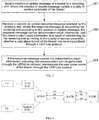
- FIG. 1 it is a schematic flow chart of a first embodiment of a data transmission method according to the present invention.
- the data transmission method in the first embodiment includes:
- a receiving end receives the create or update message of a PDP context sent by the sending end.
- the receiving end may be a network element device, for example, a GGSN, capable of returning a response message according to the received create or update message of the PDP context so as to establish a GTP tunnel.
- the sending end may be a network element device, for example, an SGSN, capable of sending the create or update message of the PDP context so as to establish the GTP tunnel.
- Creation of the PDP context includes primary creation of the PDP context and secondary creation of the PDP context.
- Step 102 Determine, according to the quality of service parameter, whether a user plane tunnel of a bearer corresponding to the PDP context can be encapsulated through a UDP-Lite protocol, and return, to the sending end, a response message carrying determination result information, so that when receiving the determination result information indicating that encapsulation can be performed through the UPD-Lite protocol, the sending end encapsulates the user plane tunnel of the bearer corresponding to the PDP context through the UDP-Lite protocol.
- the receiving end determines, according to the QoS parameter, whether the PDP context is a service having a high packet error resilient, and if yes, determines that the PDP context can be encapsulated through the UDP-Lite protocol.
- the determining whether the PDP context is a service having a high packet error resilient may specifically be: first, acquiring a first threshold and a second threshold; then, determining, whether a code error resilient in the quality of service parameter of the PDP context is greater than the first threshold and whether a packet loss tolerance in the quality of service parameter of the PDP context is greater than the second threshold, and if both yes, determining that the PDP context is a service having a high packet error resilient, and the user plane tunnel of the bearer corresponding to the PDP context can be encapsulated through the UDP-Lite protocol; otherwise, determining that the PDP context is not a service having a high packet error resilient, and the user plane tunnel of the bearer corresponding to the PDP context cannot be encapsulated through the UDP-Lite
- the first threshold and the second threshold may be acquired by inputting in a manual control manner, and may also be stored in a storage area in advance and acquired from the storage area.
- the receiving end returns the response message to the sending end, so as to notify whether the receiving end accepts the create or update request of the PDP context sent by the sending end, and if yes, a GTP tunnel is established between the sending end and the receiving end.
- the sending end and the receiving end may perform information transmission through the GTP tunnel.
- the determination result information carried in the response message is for notifying the sending end whether a user plane tunnel of the GTP tunnel corresponding to the PDP context can be encapsulated through the UDP-Lite protocol, so that the sending end responds correspondingly according to the notified result, that is, encapsulates a user plane tunnel of the service having a high packet error resilient through the UDP-Lite protocol.
- This embodiment is a data transmission method proposed based on an existing 2G (second generation mobile phone communications technology) or 3G (third generation mobile phone communications technology) network.
- 2G second generation mobile phone communications technology
- 3G third generation mobile phone communications technology
- by determining the quality of service parameter of the PDP context it is determined whether to encapsulate the user plane tunnel of the bearer corresponding to the PDP context through UDP-Lite.
- Services, such as audios and videos, having a high packet error resilient can be encapsulated through UDP-Lite by means of the embodiment of the present invention, which, compared with the prior art in which all PDP context activations are encapsulated through the UDP protocol, can significantly improve the data transmission efficiency.
- FIG. 2 it is a schematic flow chart of a second example of a data transmission method.
- the data transmission method of the second example includes:
- a sending end sends the create or update message of the PDP context to the receiving end.
- the sending end may be an SGSN.
- the receiving end may be a GGSN, like the example shown in FIG. 3 .
- Step 202 Receive a create or update response message returned by the receiving end, where the response message is returned by the receiving end according to the create or update message, the response message carries determination result information, and the determination result information is a result of determining, by the receiving end according to the quality of service parameter, whether a user plane tunnel of a bearer corresponding to the PDP context can be encapsulated through a UDP-Lite protocol.
- Step 203 If the determination result information carried in the response message indicates that encapsulation can be performed through the UP D-Lite protocol, encapsulate the user plane tunnel of the bearer corresponding to the PDP context through the UDP-Lite protocol.
- the sending end encapsulates the user plane tunnel of the bearer corresponding to the PDP context into a data transmission protocol packet (GTPU packet for short) through the UDP-Lite protocol, and sets a checksum coverage (Checksum Coverage) field in a packet header of the GTPU packet to a preset value.
- GTPU packet data transmission protocol packet
- Checksum Coverage Checksum Coverage
- the preset value may be set to 8, that is, the value of the Checksum Coverage is 8, and therefore, only the prior 8 bytes of the data packet are checked during checksum calculation, that is to say, only the packet header of the GTPU packet encapsulated through the UDP-Lite protocol is checked, and the load of the GTPU packet is not checked, which avoids a problem in the prior art in which it is required to simultaneously check the packet header and load of the data packet encapsulated through the UDP protocol, thereby improving data transmission efficiency.
- FIG. 3 it is a schematic diagram of implementing data transmission, when a 2G or 3G user side initiates secondary create or update of a PDP context, by applying a data transmission method according to an example.
- This application example is the secondary create or update of the PDP context initiated by the user side, and the GGSN determines, according to a QoS parameter, whether to encapsulate, through UDP-Lite, a user plane tunnel of a bearer corresponding to the secondary created PDP context, and notifies an SGSN device through a Create PDP Context Response or an Update PDP Context Response message.
- a specific implementation process, as the following content, includes the following steps:
- the secondary creation of the PDP context initiated by the user side includes:
- the secondary created PDP context to be created is a service having a high packet error resilient, that is, a code error resilient in the quality of service parameter of the secondary created PDP context is greater than a first threshold and a packet loss tolerance in the quality of service parameter of the secondary created PDP context is greater than a second threshold
- the user plane tunnel of the bearer corresponding to the secondary created PDP context can be encapsulated through the UDP-Lite protocol.
- Step 113 If the determination result carried in the Create PDP Context Response message indicates that encapsulation can be performed through the UPD-Lite protocol, the SGSN encapsulates a user plane tunnel of the secondary PDP context activation through the UDP-Lite protocol.
- the SGSN encapsulates the user plane tunnel corresponding to the secondary created PDP context into a GTPU packet through the UDP-Lite protocol, and sets a checksum coverage field in a packet header of the GTPU packet to 8.
- the sending end SGSN when sending the GTPU packet to the GGSN, only performs checksum calculation on the packet header of the GTPU packet.
- the GGSN after receiving the GTPU packet, only verifies a checksum of the packet header, thereby avoiding verification on the load (Checksum Coverage, checksum coverage) field of the GTPU packet in the prior art.
- the update of the PDP context initiated by the user side includes:
- the GGSN determines, according to the QoS parameter carried in the Create PDP Context Response message, that the secondary PDP context activation to be updated is a service having a high packet error resilient
- the user plane tunnel of the bearer corresponding to the PDP context can be encapsulated through the UDP-Lite protocol.
- the determination of the service having a high packet error resilient can be implemented by means of the foregoing determination process.
- Step 123 If the determination result carried in the Update PDP Context Response message indicates that encapsulation can be performed through UDP-Lite, the SGSN encapsulates a user plane tunnel of the secondary PDP context activation through the UDP-Lite protocol, so that the encapsulated secondary PDP context activation is borne on the established GTP tunnel for transmission.
- FIG. 4 it is a schematic flow chart of a third example of a data transmission method.
- the data transmission method of the third example includes:
- This example is a data transmission method implemented based on a 4G (fourth generation mobile phone communications technology) network, for example, a networking manner that an SGSN accesses an EPC network through an S4 interface (S4 SGSN networking for short) or an EPC network.
- a receiving end receives the create or update message of the bearer sent by the sending end.
- the receiving end may be a network element device capable of sending the create or update message of the bearer to establish a GTP tunnel, for example, an SGSN; or a network element device capable of forwarding the received create or update message of the bearer, for example, an S-GW.
- the receiving end may specifically be a PDN (Public Data Network, public data network) gateway (P-GW for short).
- PDN Public Data Network, public data network gateway
- Step 302 Determine, according to the quality of service parameter, whether a user plane tunnel of the bearer can be encapsulated through a UDP-Lite protocol, and return, to the sending end, a response message carrying determination result information, so that when receiving the response message carrying the determination result information indicating that encapsulation can be performed through the UPD-Lite protocol, the sending end encapsulates the user plane tunnel of the bearer through the UDP-Lite protocol.
- the receiving end determines, according to the QoS parameter, whether the bearer is a service having a high packet error resilient, and if yes, determines that the bearer can be encapsulated through the UDP-Lite protocol.
- the determining whether the bearer is a service having a high packet error resilient may specifically include: acquiring a first threshold and a second threshold, determining, whether a code error resilient in the quality of service parameter of the bearer is greater than the first threshold and whether a packet loss tolerance in the quality of service parameter of the bearer is greater than the second threshold, , and if both yes, determining that the bearer is a service having a high packet error resilient, and the user plane tunnel of the bearer can be encapsulated through the UDP-Lite protocol; otherwise, determining that the bearer is not a service having a high packet error resilient, and the user plane tunnel of the bearer cannot be encapsulated through the UDP-Lite protocol, but can still be encapsulated through the UDP protocol in the prior art.
- the first threshold and the second threshold may be set by a person.
- the receiving end returns the response message to the sending end, so as to notify whether the receiving end accepts the bearer create or update request sent by the sending end, and if yes, a GTP tunnel is established between the sending end and the receiving end.
- the sending end and the receiving end may perform information transmission through the GTP tunnel.
- the determination result information carried in the response message aims to notify the sending end whether the user plane tunnel of the bearer can be encapsulated through the UDP-Lite protocol, so that the sending end responds correspondingly according to the notified result, that is, encapsulates the user plane tunnel of the service having a high packet error resilient through the UDP-Lite protocol.
- FIG. 5 it is a schematic flow chart of a fourth example of a data transmission method.
- the data transmission method of the fourth example includes:
- a sending end sends the create or update message of the bearer to the receiving end.
- the bearer includes a dedicated bearer and a default bearer.
- the receiving end may be a network element device capable of sending the create or update message of the bearer to establish a GTP tunnel, for example, an SGSN; or a network element device capable of forwarding the received create or update message of the bearer, for example, an S-GW.
- the receiving end may specifically be a P-GW.
- Step 402 Receive a create or update response message returned by the receiving end, where the response message is returned by the receiving end according to the create or update message, the response message carries determination result information, and the determination result information is a result of determining, by the receiving end according to the quality of service parameter, whether a user plane tunnel of the bearer can be encapsulated through a UDP-Lite protocol.
- Step 403 If the response message carries the determination result information indicating that encapsulation can be performed through the UPD-Lite protocol, encapsulate the user plane tunnel of the bearer through the UDP-Lite protocol.
- the sending end encapsulates the user plane tunnel of the bearer into a GTPU packet through the UDP-Lite protocol, and sets a checksum coverage (Checksum Coverage) field in a packet header of the GTPU packet to a preset value.
- Checksum Coverage Checksum Coverage
- the third example and the fourth example are data transmission methods proposed based on that a user side in existing 4G initiates a create or update message of a bearer to establish a GTP tunnel.
- determining the quality of service parameter of the bearer it is determined whether to encapsulate the bearer through UDP-Lite.
- UDP-Lite encapsulation can be implemented through the technical solutions provided in the example, which can significantly improve data transmission efficiency as compared with the prior art in which all bearers are encapsulated through the UDP protocol.
- FIG. 6 and FIG. 7 are schematic diagrams of implementing data transmission, when a user side of S4 SGSN networking initiates create or update of a bearer, by applying a data transmission method according to the present invention.
- a P-GW determines, according to a QoS parameter, whether to encapsulate the dedicated bearer through UDP-Lite, and notifies an S-GW and an SGSN device through a Create Bearer Request or Update Bearer Request message.
- a specific implementation process is as the following content:
- FIG. 6 it is a schematic diagram of implementing data transmission when a user side of S4 SGSN networking initiates creation of a dedicated bearer, which includes:
- the SGSN further needs to forward the Create Bearer Request message to a radio network controller (RNC for short).
- RNC determines, according to the determination result carried in the Create Bearer Request message, whether to encapsulate the user plane tunnel of the dedicated bearer through the UDP-Lite protocol. If the determination result carried in the Create Bearer Request message indicates that the encapsulation can be performed through the UPD-Lite protocol, the RNC encapsulates the user plane tunnel of the dedicated bearer through the UDP-Lite protocol.
- Step 316 The S-GW, after receiving the create dedicated bearer response message returned by the SGSN, returns the create dedicated bearer response message to the P-GW as well.
- FIG. 7 it is a schematic diagram of implementing data transmission when a user side of S4 SGSN networking initiates update of a dedicated bearer.
- the update of the dedicated bearer initiated by the user side of the S4 SGSN networking includes:
- the SGSN further needs to forward the Update Bearer Request message to an RNC.
- the RNC determines, according to the determination result carried in the Update Bearer Request message, whether to encapsulate the dedicated bearer through the UDP-Lite protocol. If the determination result carried in the Update Bearer Request message indicates that the encapsulation can be performed through the UPD-Lite protocol, the RNC encapsulates the user plane tunnel of the dedicated bearer through the UDP-Lite protocol.
- Step 326 The S-GW, after receiving a create dedicated bearer response message returned by the SGSN, returns the create dedicated bearer response message to the P-GW as well.
- FIG. 8 it is a schematic flow chart of a fifth embodiment of a data transmission method according to the present invention.
- the data transmission method of the fifth embodiment is also a data transmission method implemented based on an existing 4G network, for example, S4 SGSN networking or EPC networking, and includes:
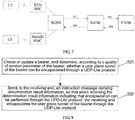
- a sending end initiates the create or update of the bearer.
- the sending end may specifically be a P-GW.
- the bearer includes a dedicated bearer and a default bearer.
- the P-GW determines, whether a code error resilient in the quality of service parameter of the bearer is greater than a first threshold and whether a packet loss tolerance in the quality of service parameter of the bearer is greater than a second threshold, and if both yes, determines that the user plane tunnel of the bearer can be encapsulated through the UDP-Lite protocol; otherwise, determines that the user plane tunnel of the bearer cannot be encapsulated through the UDP-Lite protocol, but can still be encapsulated through the UDP protocol in the prior art.
- the first threshold and the second threshold may be set by a person.
- Step 502 Send, to the receiving end, an instruction message carrying determination result information, so that when receiving the determination result information indicating that encapsulation can be performed through the UPD-Lite protocol, the receiving end encapsulates the user plane tunnel of the bearer through the UDP-Lite protocol.
- the sending end sends, to the receiving end, the instruction message carrying determination result information.
- the receiving end may be an S-GW or SGSN.
- the receiving end may be an S-GW or eNodeB.
- FIG. 9 it is a schematic flow chart of a sixth example of a data transmission method.
- the data transmission method of the sixth example includes:
- a receiving end receives the instruction information sent by the sending end.
- Step 602 If the determination result information carried in the instruction information indicates that encapsulation can be performed through the UPD-Lite protocol, encapsulate the user plane tunnel of the bearer through the UDP-Lite protocol.
- the receiving end encapsulates the user plane tunnel of the bearer into a data transmission protocol packet through the UDP-Lite protocol, and sets a checksum coverage field in a packet header of the data transmission protocol packet to a preset value.
- the fifth embodiment and the sixth example are data transmission methods proposed based on that a network side in existing 4G initiates create or update of a bearer to establish a GTP tunnel.
- by determining the quality of service parameter of the bearer it is determined whether to encapsulate the bearer through UDP-Lite.
- UDP-Lite For some bearers that can be encapsulated through UDP-Lite, especially services having a high packet error resilient, such as audios and videos, UDP-Lite encapsulation can be implemented through the technical solutions provided in the present invention and the example, which can significantly improve data transmission efficiency as compared with the prior art in which all bearers are encapsulated through the UDP protocol. As shown in FIG. 10 and FIG.
- FIG. 11 they are schematic diagrams of implementing data transmission, when a network side of S4 SGSN networking initiates create or update of a bearer, by applying a data transmission method.
- a P-GW determines, according to a QoS parameter of the dedicated bearer, whether to encapsulate the dedicated bearer through the UDP-Lite protocol, and an S-GW and an SGSN device are notified through a Create Bearer Request or Update Bearer Request message.
- the specific implementation is described in the following.
- FIG. 10 it is a schematic diagram of implementing data transmission when a network side of S4 SGSN networking initiates creation of a dedicated bearer, which includes:
- the SGSN further needs to forward the Create Bearer Request message to an RNC.
- the RNC determines, according to the determination result carried in the Create Bearer Request message, whether to encapsulate the dedicated bearer through the UDP-Lite protocol. If the determination result carried in the Create Bearer Request message indicates that encapsulation can be performed through the UPD-Lite protocol, the RNC encapsulates the user plane tunnel of the dedicated bearer through the UDP-Lite protocol.
- Step 514 The S-GW, after receiving the create dedicated bearer response message returned by the SGSN, returns the create dedicated bearer response message to the P-GW as well.
- FIG. 11 it is a schematic diagram of implementing data transmission when a network side of S4 SGSN networking initiates update of a dedicated bearer, which includes:
- the SGSN further needs to forward the Update Bearer Request message to an RNC.
- the RNC determines, according to the determination result carried in the Update Bearer Request message, whether to encapsulate the user plane tunnel of the dedicated bearer through the UDP-Lite protocol. If the determination result carried in the Update Bearer Request message indicates that encapsulation can be performed through the UPD-Lite protocol, the RNC encapsulates the user plane tunnel of the dedicated bearer through the UDP-Lite protocol.
- Step 524 The S-GW, after receiving a dedicated bearer update response message returned by the SGSN, returns the dedicated bearer update response message to the P-GW as well.
- FIG. 12 and FIG. 13 are schematic diagrams of implementing data transmission, when a network side of EPC networking initiates create or update of a bearer, by applying a data transmission method according to an example.
- a P-GW determines, according to a QoS parameter of the dedicated bearer, whether to encapsulate a GTPU packet through a UDP-Lite, and notifies an S-GW, an MME and an eNodeB through a Create Bearer Request or Update Bearer Request message.
- the specific implementation is described in the following.
- FIG. 12 it is a schematic diagram of data transmission when an EPC user side initiates the dedicated bearer creation.
- the data transmission method includes:
- the data transmission method includes:
- the network element device includes: a receiving unit 1, a determining unit 2, and a sending unit 3.
- the receiving unit 1 is configured to receive a create or update message of a PDP context sent by a sending end, where the create or update message carries a quality of service parameter.
- the determining unit 2 is configured to determine, according to the quality of service parameter, whether a user plane tunnel of a bearer corresponding to the PDP context can be encapsulated through a UDP-Lite protocol, so as to obtain a determination result.
- the sending unit 3 is configured to return, to the sending end, a response message carrying the determination result information, so that when receiving the determination result information indicating that encapsulation can be performed through the UPD-Lite protocol, the sending end encapsulates the user plane tunnel of the bearer corresponding to the PDP context through the UDP-Lite protocol.
- the network element device may be a GGSN.
- the determining unit in the embodiment is specifically configured to acquire a first threshold and a second threshold, determine, whether a code error resilient in the quality of service parameter of the PDP context is greater than the first threshold and whether a packet loss tolerance in the quality of service parameter of the PDP context is greater than the second threshold, and if both yes, obtain a determination result that the user plane tunnel of the bearer corresponding to the PDP context can be encapsulated through the UDP-Lite protocol; otherwise, obtain a determination result that the user plane tunnel of the bearer corresponding to the PDP context cannot be encapsulated through the UDP-Lite protocol.
- This embodiment is a network element device proposed based on an existing 2G or 3G network.
- the network element device determines the quality of service parameter of the PDP context, so as to determine whether the user plane tunnel of the bearer corresponding to the PDP context can be encapsulated through UDP-Lite.
- this embodiment may output the determination result of whether the PDP context activation can be encapsulated through UDP-Lite, so that the network element device of the receiving end responds correspondingly according to the determination result, which can significantly improve data transmission efficiency as compared with the prior art in which all PDP contexts are encapsulated through the UDP protocol.
- the network element device includes: a sending unit 6, a receiving unit 4, and an encapsulating unit 5.
- the sending unit 6 is configured to send a create or update message of a PDP context to a receiving end, where the create or update message carries a quality of service parameter of the PDP context.
- the receiving unit 4 is configured to receive a create or update response message returned by the receiving end, where the response message is returned by the receiving end according to the create or update message, the response message carries determination result information, and the determination result information is a result of determining, by the receiving end according to the quality of service parameter, whether to encapsulate a user plane tunnel of a bearer corresponding to the PDP context can be encapsulated through a UDP-Lite protocol.
- the encapsulating unit 5 is configured to, when the response message carries the determination result information indicating that encapsulation can be performed through the UPD-Lite protocol, encapsulate the user plane tunnel of the bearer corresponding to the PDP context through the UDP-Lite protocol.
- the network element device described in the second example may specifically be an SGSN.
- the encapsulating unit may be specifically configured to encapsulate the user plane tunnel of the bearer corresponding to the PDP context into a data transmission protocol packet through the UDP-Lite protocol, and set a checksum coverage field in a packet header of the data transmission protocol packet to a preset value.
- the second example is a network element device proposed based on an existing 2G or 3G network.
- the network element device in this example determines, according to a determination result carried by received response information, whether to encapsulate the user plane tunnel of the bearer corresponding to the PDP context through UDP-Lite.
- the network element device of this example may implement the UDP-Lite protocol encapsulation, which can significantly improve data transmission efficiency as compared with the prior art in which all PDP context activations are encapsulated through the UDP protocol.
- the network element device includes: a receiving unit 12, a determining unit 13, and a sending unit 14.
- the receiving unit 12 is configured to receive a create or update message of a bearer sent by a sending end, where the create or update message carries a quality of service parameter of the bearer.
- the determining unit 13 is configured to determine, according to the quality of service parameter, whether a user plane tunnel of the bearer can be encapsulated through a UDP-Lite protocol, so as to obtain a determination result.
- the sending unit 14 is configured to return, to the sending end, a response message carrying the determination result information, so that when receiving the response message carrying the determination result information indicating that encapsulation can be performed through the UPD-Lite protocol, the sending end encapsulates the user plane tunnel of the bearer through the UDP-Lite protocol.
- the network element device may be a P-GW.
- the determining unit in the foregoing example is specifically configured to acquire a first threshold and a second threshold, determine, whether a code error resilient in the quality of service parameter of the bearer is greater than the first threshold and whether a packet loss tolerance in the quality of service parameter of the bearer is greater than the second threshold, , and if both yes, obtain a determination result that the user plane tunnel of the bearer can be encapsulated through the UDP-Lite protocol; otherwise, obtain a determination result that of the user plane tunnel of the bearer cannot be encapsulated through the UDP-Lite protocol.
- the third example is a network element device proposed based on an existing 4G network, for example, S4 SGSN networking or EPC networking.
- the network element device in this example determines the quality of service parameter of the bearer, so as to determine whether to encapsulate the user plane tunnel of the bearer through UDP-Lite.
- this embodiment may output the determination result of whether the bearer can be encapsulated through UDP-Lite, so that the network element device of the receiving end responds correspondingly according to the determination result, which can significantly improve data transmission efficiency as compared with the prior art in which all bearers are encapsulated through the UDP protocol.
- FIG. 17 it is a schematic structural diagram of a fourth example of a network element device.
- the network element device includes: a sending unit 15, a receiving unit 16, and an encapsulating unit 17.
- the sending unit 15 is configured to send a create or update message of a bearer to a receiving end, where the create or update message carries a quality of service parameter of the bearer.
- the receiving unit 16 is configured to receive a create or update response message returned by the receiving end, where the response message is returned by the receiving end according to the create or update message, the response message carries determination result information, and the determination result information is a result of determining, by the receiving end according to the quality of service parameter, whether a user plane tunnel of the bearer can be encapsulated through a UDP-Lite protocol.
- the encapsulating unit 17 is configured to, when the response message carries determination result information indicating that encapsulation can be performed through the UPD-Lite protocol, encapsulate the user plane tunnel of the bearer through the UDP-Lite protocol.
- the encapsulating unit is specifically configured to, when the response message carries the determination result information indicating that encapsulation can be performed through the UPD-Lite protocol, encapsulate the user plane tunnel of the bearer into a data transmission protocol packet through the UDP-Lite protocol, and set a checksum coverage field in a packet header of the data transmission protocol packet to a preset value.
- the fourth example is a network element device proposed based on an existing 4G network, for example, S4 SGSN networking or EPC networking.
- the network element device in this example determines, according to a determination result carried in received response information, whether to encapsulate the user plane tunnel of the bearer through UDP-Lite.
- the network element device of this example may implement the UDP-Lite encapsulation, which can significantly improve data transmission efficiency as compared with the prior art in which all bearers are encapsulated through the UDP protocol.
- the network element device includes a creating or updating unit 18, a determining unit 19, or a sending unit 20.
- the creating or updating unit 18 is configured to create or update a bearer.
- the determining unit 19 is configured to determine, according to a quality of service parameter of the bearer whether a user plane tunnel of the bearer can be encapsulated through a UDP-Lite protocol, so as to obtain a determination result.
- the sending unit 20 is configured to send, to the receiving end, an instruction message carrying determination result information, so that when receiving the determination result information indicating that encapsulation can be performed through the UPD-Lite protocol, the sending end encapsulates the user plane tunnel of the bearer through the UDP-Lite protocol.
- the determining unit in the embodiment is specifically configured to acquire a first threshold and a second threshold, determine, whether a code error resilient in the quality of service parameter of the bearer is greater than the first threshold and whether a packet loss tolerance in the quality of service parameter of the bearer is greater than the second threshold, , and if both yes, obtain a determination result that the user plane tunnel of the bearer can be encapsulated through the UDP-Lite protocol; otherwise, obtain a determination result that of the user plane tunnel of the bearer cannot be encapsulated through the UDP-Lite protocol.
- the fifth embodiment is a network element device proposed based on an existing 4G network, for example, S4 SGSN networking or EPC networking.
- the network element device in this embodiment determines the quality of service parameter of the bearer when creating or updating the bearer, and determines whether to encapsulate the user plane tunnel of the bearer through UDP-Lite.
- this embodiment may output the determination result of whether the bearer can be encapsulated through UDP-Lite, so that the network element device of the receiving end can respond correspondingly according to the determination result, which can significantly improve data transmission efficiency as compared with the prior art in which all bearers are encapsulated through the UDP protocol.
- the network element device includes: a receiving unit 21 and an encapsulating unit 22.
- the receiving unit 21 is configured to receive instruction information sent by a sending end, where the instruction information carries determination result information, and the determination result information is a result of determining, by the sending end according to a quality of service parameter of a created or updated bearer, whether a user plane tunnel of the bearer can be encapsulated through a UDP-Lite protocol.
- the encapsulating unit 22 is configured to, when the instruction information carries determination result information indicating that encapsulation can be performed through the UPD-Lite protocol, encapsulate the user plane tunnel of the bearer through the UDP-Lite protocol.
- the encapsulating unit in the example is specifically configured to encapsulate the user plane tunnel of the bearer into a data transmission protocol packet through the UDP-Lite protocol, and set a checksum coverage field in a packet header of the data transmission protocol packet to a preset value.
- a preset value For the selection of the preset value, reference may be made to related content involved in the foregoing data transmission embodiments, which is not repeated herein.
- the sixth example is a network element device proposed based on an existing 4G network, for example, S4 SGSN networking or EPC networking.
- the network element device in this example determines, according to the determination result carried in the received instruction message, whether to encapsulate the user plane tunnel of the bearer through UDP-Lite.
- the network element device of this example may implement the UDP-Lite encapsulation, which can significantly improve the data transmission efficiency as compared with the prior art in which all bearers are encapsulated through the UDP protocol.
- the present invention provides an example of a communication system.
- the communication system includes at least one group of network element devices configured to transmit data.
- the group of network element devices includes at least two network element devices.
- the group of network element devices may be the network element devices described in the first embodiment and the second example, as shown in the example of FIG. 3 .
- the group of network element devices may further be the network element devices described in the third embodiment and the fourth embodiment, as shown in the examples of FIG. 6 and FIG. 7 .
- the group of network element devices may further be the network element devices described in the fifth example and the sixth example, as shown in the examples of FIG. 10 , FIG. 11, FIG. 12, and FIG. 13 .
- modules in an apparatus in an embodiment may be distributed in the apparatus of the embodiment according to the description of the embodiment, or be correspondingly changed and located in one or more devices different from this embodiment.
- the modules of the foregoing embodiment may be combined into one module, or further divided into a plurality of sub-modules.
- the program may be stored in a computer readable storage medium.
- the storage medium may be any medium that is capable of storing program codes, such as a ROM, a RAM, a magnetic disk, and an optical disk.
Landscapes
- Engineering & Computer Science (AREA)
- Computer Networks & Wireless Communication (AREA)
- Signal Processing (AREA)
- Computer Security & Cryptography (AREA)
- Mobile Radio Communication Systems (AREA)
- Data Exchanges In Wide-Area Networks (AREA)
- Communication Control (AREA)
Claims (4)
- Datenübertragungsverfahren, umfassend:Empfangen (101, 301) einer Erzeugungs- oder Aktualisierungsnachricht eines PDP-Kontextes oder eines Trägers, die durch ein Sendeende gesendet wird, wobei die Erzeugungs- oder Aktualisierungsnachricht einen Dienstqualitätsparameter führt; undgekennzeichnet durch Folgendes:Bestimmen (102, 302), gemäß dem Dienstqualitätsparameter, ob ein Benutzerebenentunnel eines Trägers, der dem PDP-Kontext entspricht, oder ein Benutzerebenentunnel des Trägers über ein UDP-Lite-Protokoll eingekapselt werden kann, und Zurücksenden einer Antwortnachricht, die Bestimmungsergebnisinformationen führt, zum Sendeende, so dass, wenn die Bestimmungsergebnisinformationen angeben, dass eine Einkapselung über das UDP-Lite-Protokoll durchgeführt werden kann, das Sendeende den Benutzerebenentunnel des Trägers, der dem PDP-Kontext entspricht, einkapselt oder der Benutzerebenentunnel des Trägers durch das Sendeende über das UDP-Lite-Protokoll eingekapselt werden wird;wobei das Bestimmen, gemäß dem Dienstqualitätsparameter, ob der Benutzerebenentunnel des Trägers, der dem PDP-Kontext entspricht, oder der Benutzerebenentunnel des Trägers über das UDP-Lite-Protokoll eingekapselt werden kann, Folgendes umfasst:Erfassen einer ersten Schwelle und einer zweiten Schwelle undBestimmen, ob eine Codefehlerrobustheit im Dienstqualitätsparameter größer als die erste Schwelle ist und ob eine Paketverlusttoleranz im Dienstqualitätsparameter größer als die zweite Schwelle ist, und falls beides ja, Bestimmen, dass der Benutzerebenentunnel des Trägers, der dem PDP-Kontext entspricht, oder der Benutzerebenentunnel des Trägers über das UDP-Lite-Protokoll eingekapselt werden kann.
- Datenübertragungsverfahren, umfassend:Erzeugen oder Aktualisieren eines Trägers (501) und Bestimmen, gemäß einem Dienstqualitätsparameter des Trägers, ob ein Benutzerebenentunnel des Trägers über ein UDP-Lite-Protokoll eingekapselt werden kann; undgekennzeichnet durch Folgendes:Senden (502), einer Anweisungsnachricht, die Bestimmungsergebnisinformationen führt, zum Empfangsende, so dass, wenn das Empfangen der Bestimmungsergebnisinformationen angibt, dass eine Einkapselung über das UDP-Lite-Protokoll durchgeführt werden kann, der Benutzerebenentunnel des Trägers durch das Sendeende über das UDP-Lite-Protokoll eingekapselt werden wird;wobei das Bestimmen, gemäß dem Dienstqualitätsparameter des Trägers, ob der Benutzerebenentunnel des Trägers über das UDP-Lite-Protokoll eingekapselt werden kann, Folgendes umfasst:Erfassen einer ersten Schwelle und einer zweiten Schwelle undBestimmen, ob eine Codefehlerrobustheit im Dienstqualitätsparameter des Trägers größer als die erste Schwelle ist und ob eine Paketverlusttoleranz im Dienstqualitätsparameter des Trägers größer als die zweite Schwelle ist, und falls beides ja, Bestimmen, dass der Benutzerebenentunnel des Trägers über das UDP-Lite-Protokoll eingekapselt werden kann.
- Netzwerkelementeinrichtung, umfassend:eine Empfangseinheit (1), die zum Empfangen einer Erzeugungs- oder Aktualisierungsnachricht eines PDP-Kontextes oder eines Trägers, die durch ein Sendeende gesendet wird, konfiguriert ist, wobei die Erzeugungs- oder Aktualisierungsnachricht einen Dienstqualitätsparameter des PDP-Kontextes führt;und dadurch gekennzeichnet, dass sie ferner Folgendes umfasst:eine Bestimmungseinheit (2), die zum Bestimmen gemäß dem Dienstqualitätsparameter, ob ein Benutzerebenentunnel eines Trägers, der dem PDP-Kontext entspricht, oder ein Benutzerebenentunnel des Trägers über ein UDP-Lite-Protokoll eingekapselt werden kann, konfiguriert ist, so dass ein Bestimmungsergebnis erhalten wird; undeine Sendeeinheit (3), die zum Zurücksenden einer Antwortnachricht, die die Bestimmungsergebnisinformationen führt, zum Sendeende konfiguriert ist, so dass, wenn die Bestimmungsergebnisinformationen angeben, dass eine Einkapselung über das UDP-Lite-Protokoll durchgeführt werden kann, das Sendeende den Benutzerebenentunnel des Trägers, der dem PDP-Kontext entspricht, einkapselt oder der Benutzerebenentunnel des Trägers durch das Sendeende über das UDP-Lite-Protokoll eingekapselt werden wird,wobei die Bestimmungseinheit (2) spezifisch zum Erfassen einer ersten Schwelle und einer zweiten Schwelle, zum Bestimmen, ob eine Codefehlerrobustheit im Dienstqualitätsparameter größer als die erste Schwelle ist und ob eine Paketverlusttoleranz im Dienstqualitätsparameter größer als die zweite Schwelle ist, und falls beides ja, zum Erhalten eines Bestimmungsergebnisses, dass der Benutzerebenentunnel des Trägers, der dem PDP-Kontext entspricht, oder der Benutzerebenentunnel des Trägers über das UDP-Lite-Protokoll eingekapselt werden kann, konfiguriert ist.
- Netzwerkelementeinrichtung, umfassend:eine Erzeugungs- oder Aktualisierungseinheit (18), die zum Erzeugen oder zum Aktualisieren eines Trägers konfiguriert ist;und dadurch gekennzeichnet, dass sie ferner Folgendes umfasst:eine Bestimmungseinheit (19), die zum Bestimmen gemäß einem Dienstqualitätsparameter des Trägers, ob ein Benutzerebenentunnel des Trägers über ein UDP-Lite-Protokoll eingekapselt werden kann, konfiguriert ist, so dass ein Bestimmungsergebnis erhalten wird; undeine Sendeeinheit (20), die zum Senden einer Anweisungsnachricht, die Bestimmungsergebnisinformationen führt, zu einem Empfangsende konfiguriert ist, so dass, wenn die Bestimmungsergebnisinformationen angeben, dass eine Einkapselung über das UDP-Lite-Protokoll durchgeführt werden kann, der Benutzerebenentunnel des Trägers durch das Sendeende über das UDP-Lite-Protokoll eingekapselt wird;wobei die Bestimmungseinheit (19) spezifisch zum Erfassen einer ersten Schwelle und einer zweiten Schwelle, zum Bestimmen, ob eine Codefehlerrobustheit im Dienstqualitätsparameter des Trägers größer als die erste Schwelle ist und ob eine Paketverlusttoleranz im Dienstqualitätsparameter des Trägers größer als die zweite Schwelle ist, und falls beides ja, zum Erhalten eines Bestimmungsergebnisses, dass der Benutzerebenentunnel des Trägers über das UDP-Lite-Protokoll eingekapselt werden kann; andererseits zum Erhalten eines Bestimmungsergebnisses, dass der Benutzerebenentunnel des Trägers nicht über das UDP-Lite-Protokoll eingekapselt werden kann, konfiguriert ist.
Applications Claiming Priority (1)
| Application Number | Priority Date | Filing Date | Title |
|---|---|---|---|
| PCT/CN2012/077998 WO2014000307A1 (zh) | 2012-06-30 | 2012-06-30 | 数据传输方法、网元设备及通信系统 |
Publications (3)
| Publication Number | Publication Date |
|---|---|
| EP2854473A1 EP2854473A1 (de) | 2015-04-01 |
| EP2854473A4 EP2854473A4 (de) | 2015-09-09 |
| EP2854473B1 true EP2854473B1 (de) | 2017-09-27 |
Family
ID=47447787
Family Applications (1)
| Application Number | Title | Priority Date | Filing Date |
|---|---|---|---|
| EP12879628.1A Not-in-force EP2854473B1 (de) | 2012-06-30 | 2012-06-30 | Datenübertragungsverfahren, netzwerkelementevorrichtung und kommunikationssystem |
Country Status (6)
| Country | Link |
|---|---|
| US (1) | US9467535B2 (de) |
| EP (1) | EP2854473B1 (de) |
| JP (1) | JP5965061B2 (de) |
| CN (2) | CN102870490B (de) |
| RU (1) | RU2606063C2 (de) |
| WO (1) | WO2014000307A1 (de) |
Families Citing this family (8)
| Publication number | Priority date | Publication date | Assignee | Title |
|---|---|---|---|---|
| RU2606063C2 (ru) * | 2012-06-30 | 2017-01-10 | Хуавей Текнолоджиз Ко., Лтд. | Способ передачи данных, сетевое устройство и система связи |
| CN105120200A (zh) * | 2015-09-02 | 2015-12-02 | 山东省计算中心(国家超级计算济南中心) | 基于定制light-udp协议的物联网医疗系统的视频通信方法 |
| RU2696950C1 (ru) * | 2015-10-28 | 2019-08-07 | Хуавэй Текнолоджиз Ко., Лтд. | Способ и система обработки канала-носителя и связанное устройство |
| CN110012458A (zh) * | 2018-01-04 | 2019-07-12 | 中兴通讯股份有限公司 | 一种协商ip地址类型的方法及装置 |
| CN110912859B (zh) | 2018-09-17 | 2021-12-14 | 华为技术有限公司 | 发送报文的方法、接收报文的方法及网络设备 |
| CN112073285B (zh) * | 2019-06-10 | 2022-04-22 | 华为技术有限公司 | 一种误码通告的方法及相关设备 |
| CN112953752B (zh) * | 2019-12-11 | 2023-01-13 | 中盈优创资讯科技有限公司 | 一种基于单设备网元的通用控制方法及系统 |
| TWI776270B (zh) * | 2020-11-05 | 2022-09-01 | 財團法人資訊工業策進會 | 基於隧道協定的中繼節點與封包封裝方法 |
Family Cites Families (17)
| Publication number | Priority date | Publication date | Assignee | Title |
|---|---|---|---|---|
| JP4454072B2 (ja) * | 1999-08-03 | 2010-04-21 | 富士通株式会社 | IP通信ネットワークシステム及びQoS保証装置 |
| JP3526032B2 (ja) * | 2000-11-08 | 2004-05-10 | 日本電気株式会社 | モバイルネットワーク及びipパケットの転送方法 |
| JP3873678B2 (ja) * | 2001-07-19 | 2007-01-24 | 日本電気株式会社 | ビデオパケット伝送装置及びビデオパケット伝送方法 |
| US20030099196A1 (en) | 2001-11-23 | 2003-05-29 | Benoist Sebire | Radio bearer service for IMS services |
| US7778242B1 (en) * | 2001-11-27 | 2010-08-17 | Alcatel Lucent | Protecting content of a packet containing speech data using unequal error protection |
| EP1503548A1 (de) * | 2003-08-01 | 2005-02-02 | fg microtec GmbH | Verteiltes Dienstgüte Management System |
| CN1860713A (zh) * | 2003-09-30 | 2006-11-08 | 皇家飞利浦电子股份有限公司 | 用于通过分组交换网络进行实时传输的媒体分组结构 |
| US8804765B2 (en) * | 2005-06-21 | 2014-08-12 | Optis Wireless Technology, Llc | Dynamic robust header compression |
| US20070104224A1 (en) * | 2005-11-04 | 2007-05-10 | Conner Keith F | Differentiated quality of service transport protocols |
| CN100531137C (zh) * | 2006-08-25 | 2009-08-19 | 中兴通讯股份有限公司 | 移动通信系统组播业务中建立控制面隧道的方法 |
| TWI328373B (en) * | 2006-11-08 | 2010-08-01 | Ind Tech Res Inst | Method and system for guaranteeing qos between different radio networks |
| WO2008104099A1 (en) * | 2007-02-28 | 2008-09-04 | Huawei Technologies Co., Ltd. | Transmission of data packets over a wireless telecommunication system |
| US8345604B2 (en) | 2007-06-07 | 2013-01-01 | Qualcomm Incorporated | Effectuating establishment of internet protocol security tunnels for utilization in a wireless communication environment |
| CN101072183B (zh) * | 2007-06-11 | 2011-07-06 | 华为技术有限公司 | 数据流的服务质量保证方法和装置 |
| CN101877915B (zh) | 2009-04-28 | 2014-07-02 | 中兴通讯股份有限公司 | 一种长期演进系统中继站的数据传输方法和系统 |
| CN101877860B (zh) | 2009-04-28 | 2016-01-20 | 中兴通讯股份有限公司 | 中继节点、服务网关、中继数据的传输方法及系统 |
| RU2606063C2 (ru) * | 2012-06-30 | 2017-01-10 | Хуавей Текнолоджиз Ко., Лтд. | Способ передачи данных, сетевое устройство и система связи |
-
2012
- 2012-06-30 RU RU2015102933A patent/RU2606063C2/ru active
- 2012-06-30 CN CN201280000908.1A patent/CN102870490B/zh active Active
- 2012-06-30 CN CN201610035929.7A patent/CN105491686B/zh active Active
- 2012-06-30 WO PCT/CN2012/077998 patent/WO2014000307A1/zh not_active Ceased
- 2012-06-30 JP JP2015518770A patent/JP5965061B2/ja active Active
- 2012-06-30 EP EP12879628.1A patent/EP2854473B1/de not_active Not-in-force
-
2014
- 2014-12-22 US US14/579,519 patent/US9467535B2/en not_active Expired - Fee Related
Non-Patent Citations (1)
| Title |
|---|
| None * |
Also Published As
| Publication number | Publication date |
|---|---|
| WO2014000307A1 (zh) | 2014-01-03 |
| CN105491686A (zh) | 2016-04-13 |
| US20150110133A1 (en) | 2015-04-23 |
| CN102870490B (zh) | 2016-01-13 |
| JP2015526954A (ja) | 2015-09-10 |
| CN105491686B (zh) | 2019-05-28 |
| RU2606063C2 (ru) | 2017-01-10 |
| CN102870490A (zh) | 2013-01-09 |
| RU2015102933A (ru) | 2016-08-20 |
| EP2854473A1 (de) | 2015-04-01 |
| EP2854473A4 (de) | 2015-09-09 |
| JP5965061B2 (ja) | 2016-08-03 |
| US9467535B2 (en) | 2016-10-11 |
Similar Documents
| Publication | Publication Date | Title |
|---|---|---|
| US9467535B2 (en) | Data transmission method, network element device and communication system | |
| KR102654787B1 (ko) | 시간 민감 통신 서비스 품질을 지원하는 방법 및 통신 기기 | |
| US10524173B2 (en) | System and method to facilitate sharing bearer information in a network environment | |
| CN110234083B (zh) | 经由信令无线承载的短分组数据消息的传输 | |
| CN110505714B (zh) | 多链接通信方法、设备和终端 | |
| CN106255148B (zh) | 在多连接性5G网络中促进承载中QoS差异化 | |
| US9479342B2 (en) | Charging method and apparatus for proximity-based service | |
| EP3579613A1 (de) | Maximalbandbreitensteuerungsverfahren und -vorrichtung für benutzergerät, computerspeichermedium | |
| CN108737157A (zh) | 网关系统、设备和通信方法 | |
| EP3267721A1 (de) | Konfigurationsverfahren für funkschnittstellenprotokollstapel und datenübertragungsverfahren sowie vorrichtung | |
| EP3294002B1 (de) | Verfahren zur trägereinrichtung, benutzergerät und basisstation | |
| KR20200116908A (ko) | 데이터 전송 제어 방법 및 관련 제품 | |
| KR20210113332A (ko) | 이더넷 프레임의 전송 방법 및 통신 장치 | |
| CN103503496A (zh) | 一种建立直接隧道的方法及装置 | |
| CN111278060B (zh) | 一种以太帧传输方法和相关设备 | |
| CN112469077B (zh) | 一种业务数据包转发的方法及装置 | |
| CN101296493A (zh) | 资源释放方法和网络设备 | |
| EP3057356B1 (de) | Kapazitätsverhandlungsverfahren, system und vorrichtung | |
| TWI746710B (zh) | 數據處理方法和設備 | |
| US9742528B2 (en) | Method and arrangement for reducing the amount of messages sent in a communication network | |
| CN102448116A (zh) | 鲁棒性头压缩通道配置方法和装置 | |
| KR102156023B1 (ko) | 로컬 브레이크 아웃을 위한 패킷 처리 방법, 이를 위한 장치 및 시스템 | |
| KR101449720B1 (ko) | 베어러 설정 시간을 단축하기 위한 방법 및 장치 | |
| CN120751438A (zh) | 一种物联网专网流量处理方法及相关设备 | |
| KR101421120B1 (ko) | MIL-STD-188-220무선 네트워크 통신 프로토콜의 Qos성능 향상 방법 및 그 데이터 프레임 서비스 노드 |
Legal Events
| Date | Code | Title | Description |
|---|---|---|---|
| PUAI | Public reference made under article 153(3) epc to a published international application that has entered the european phase |
Free format text: ORIGINAL CODE: 0009012 |
|
| 17P | Request for examination filed |
Effective date: 20141222 |
|
| AK | Designated contracting states |
Kind code of ref document: A1 Designated state(s): AL AT BE BG CH CY CZ DE DK EE ES FI FR GB GR HR HU IE IS IT LI LT LU LV MC MK MT NL NO PL PT RO RS SE SI SK SM TR |
|
| AX | Request for extension of the european patent |
Extension state: BA ME |
|
| RA4 | Supplementary search report drawn up and despatched (corrected) |
Effective date: 20150810 |
|
| RIC1 | Information provided on ipc code assigned before grant |
Ipc: H04W 76/02 20090101ALI20150804BHEP Ipc: H04L 29/06 20060101ALI20150804BHEP Ipc: H04W 80/06 20090101AFI20150804BHEP |
|
| DAX | Request for extension of the european patent (deleted) | ||
| REG | Reference to a national code |
Ref country code: DE Ref legal event code: R079 Ref document number: 602012037998 Country of ref document: DE Free format text: PREVIOUS MAIN CLASS: H04W0080060000 Ipc: H04W0076020000 |
|
| GRAP | Despatch of communication of intention to grant a patent |
Free format text: ORIGINAL CODE: EPIDOSNIGR1 |
|
| STAA | Information on the status of an ep patent application or granted ep patent |
Free format text: STATUS: GRANT OF PATENT IS INTENDED |
|
| RIC1 | Information provided on ipc code assigned before grant |
Ipc: H04W 76/04 20090101ALI20170406BHEP Ipc: H04L 29/06 20060101ALI20170406BHEP Ipc: H04L 12/911 20130101ALI20170406BHEP Ipc: H04W 80/06 20090101ALI20170406BHEP Ipc: H04W 76/02 20090101AFI20170406BHEP Ipc: H04W 28/02 20090101ALI20170406BHEP |
|
| INTG | Intention to grant announced |
Effective date: 20170428 |
|
| GRAS | Grant fee paid |
Free format text: ORIGINAL CODE: EPIDOSNIGR3 |
|
| GRAA | (expected) grant |
Free format text: ORIGINAL CODE: 0009210 |
|
| STAA | Information on the status of an ep patent application or granted ep patent |
Free format text: STATUS: THE PATENT HAS BEEN GRANTED |
|
| AK | Designated contracting states |
Kind code of ref document: B1 Designated state(s): AL AT BE BG CH CY CZ DE DK EE ES FI FR GB GR HR HU IE IS IT LI LT LU LV MC MK MT NL NO PL PT RO RS SE SI SK SM TR |
|
| REG | Reference to a national code |
Ref country code: GB Ref legal event code: FG4D |
|
| REG | Reference to a national code |
Ref country code: CH Ref legal event code: EP |
|
| REG | Reference to a national code |
Ref country code: AT Ref legal event code: REF Ref document number: 933101 Country of ref document: AT Kind code of ref document: T Effective date: 20171015 |
|
| REG | Reference to a national code |
Ref country code: IE Ref legal event code: FG4D |
|
| REG | Reference to a national code |
Ref country code: DE Ref legal event code: R096 Ref document number: 602012037998 Country of ref document: DE |
|
| REG | Reference to a national code |
Ref country code: DE Ref legal event code: R079 Ref document number: 602012037998 Country of ref document: DE Free format text: PREVIOUS MAIN CLASS: H04W0076020000 Ipc: H04W0076100000 |
|
| PG25 | Lapsed in a contracting state [announced via postgrant information from national office to epo] |
Ref country code: SE Free format text: LAPSE BECAUSE OF FAILURE TO SUBMIT A TRANSLATION OF THE DESCRIPTION OR TO PAY THE FEE WITHIN THE PRESCRIBED TIME-LIMIT Effective date: 20170927 Ref country code: HR Free format text: LAPSE BECAUSE OF FAILURE TO SUBMIT A TRANSLATION OF THE DESCRIPTION OR TO PAY THE FEE WITHIN THE PRESCRIBED TIME-LIMIT Effective date: 20170927 Ref country code: FI Free format text: LAPSE BECAUSE OF FAILURE TO SUBMIT A TRANSLATION OF THE DESCRIPTION OR TO PAY THE FEE WITHIN THE PRESCRIBED TIME-LIMIT Effective date: 20170927 Ref country code: LT Free format text: LAPSE BECAUSE OF FAILURE TO SUBMIT A TRANSLATION OF THE DESCRIPTION OR TO PAY THE FEE WITHIN THE PRESCRIBED TIME-LIMIT Effective date: 20170927 Ref country code: NO Free format text: LAPSE BECAUSE OF FAILURE TO SUBMIT A TRANSLATION OF THE DESCRIPTION OR TO PAY THE FEE WITHIN THE PRESCRIBED TIME-LIMIT Effective date: 20171227 |
|
| REG | Reference to a national code |
Ref country code: NL Ref legal event code: MP Effective date: 20170927 |
|
| REG | Reference to a national code |
Ref country code: LT Ref legal event code: MG4D |
|
| REG | Reference to a national code |
Ref country code: AT Ref legal event code: MK05 Ref document number: 933101 Country of ref document: AT Kind code of ref document: T Effective date: 20170927 |
|
| PG25 | Lapsed in a contracting state [announced via postgrant information from national office to epo] |
Ref country code: LV Free format text: LAPSE BECAUSE OF FAILURE TO SUBMIT A TRANSLATION OF THE DESCRIPTION OR TO PAY THE FEE WITHIN THE PRESCRIBED TIME-LIMIT Effective date: 20170927 Ref country code: GR Free format text: LAPSE BECAUSE OF FAILURE TO SUBMIT A TRANSLATION OF THE DESCRIPTION OR TO PAY THE FEE WITHIN THE PRESCRIBED TIME-LIMIT Effective date: 20171228 Ref country code: RS Free format text: LAPSE BECAUSE OF FAILURE TO SUBMIT A TRANSLATION OF THE DESCRIPTION OR TO PAY THE FEE WITHIN THE PRESCRIBED TIME-LIMIT Effective date: 20170927 Ref country code: BG Free format text: LAPSE BECAUSE OF FAILURE TO SUBMIT A TRANSLATION OF THE DESCRIPTION OR TO PAY THE FEE WITHIN THE PRESCRIBED TIME-LIMIT Effective date: 20171227 |
|
| PG25 | Lapsed in a contracting state [announced via postgrant information from national office to epo] |
Ref country code: NL Free format text: LAPSE BECAUSE OF FAILURE TO SUBMIT A TRANSLATION OF THE DESCRIPTION OR TO PAY THE FEE WITHIN THE PRESCRIBED TIME-LIMIT Effective date: 20170927 |
|
| PG25 | Lapsed in a contracting state [announced via postgrant information from national office to epo] |
Ref country code: CZ Free format text: LAPSE BECAUSE OF FAILURE TO SUBMIT A TRANSLATION OF THE DESCRIPTION OR TO PAY THE FEE WITHIN THE PRESCRIBED TIME-LIMIT Effective date: 20170927 Ref country code: RO Free format text: LAPSE BECAUSE OF FAILURE TO SUBMIT A TRANSLATION OF THE DESCRIPTION OR TO PAY THE FEE WITHIN THE PRESCRIBED TIME-LIMIT Effective date: 20170927 Ref country code: ES Free format text: LAPSE BECAUSE OF FAILURE TO SUBMIT A TRANSLATION OF THE DESCRIPTION OR TO PAY THE FEE WITHIN THE PRESCRIBED TIME-LIMIT Effective date: 20170927 |
|
| PG25 | Lapsed in a contracting state [announced via postgrant information from national office to epo] |
Ref country code: SM Free format text: LAPSE BECAUSE OF FAILURE TO SUBMIT A TRANSLATION OF THE DESCRIPTION OR TO PAY THE FEE WITHIN THE PRESCRIBED TIME-LIMIT Effective date: 20170927 Ref country code: IT Free format text: LAPSE BECAUSE OF FAILURE TO SUBMIT A TRANSLATION OF THE DESCRIPTION OR TO PAY THE FEE WITHIN THE PRESCRIBED TIME-LIMIT Effective date: 20170927 Ref country code: AT Free format text: LAPSE BECAUSE OF FAILURE TO SUBMIT A TRANSLATION OF THE DESCRIPTION OR TO PAY THE FEE WITHIN THE PRESCRIBED TIME-LIMIT Effective date: 20170927 Ref country code: EE Free format text: LAPSE BECAUSE OF FAILURE TO SUBMIT A TRANSLATION OF THE DESCRIPTION OR TO PAY THE FEE WITHIN THE PRESCRIBED TIME-LIMIT Effective date: 20170927 Ref country code: IS Free format text: LAPSE BECAUSE OF FAILURE TO SUBMIT A TRANSLATION OF THE DESCRIPTION OR TO PAY THE FEE WITHIN THE PRESCRIBED TIME-LIMIT Effective date: 20180127 Ref country code: SK Free format text: LAPSE BECAUSE OF FAILURE TO SUBMIT A TRANSLATION OF THE DESCRIPTION OR TO PAY THE FEE WITHIN THE PRESCRIBED TIME-LIMIT Effective date: 20170927 |
|
| REG | Reference to a national code |
Ref country code: DE Ref legal event code: R097 Ref document number: 602012037998 Country of ref document: DE |
|
| PG25 | Lapsed in a contracting state [announced via postgrant information from national office to epo] |
Ref country code: DK Free format text: LAPSE BECAUSE OF FAILURE TO SUBMIT A TRANSLATION OF THE DESCRIPTION OR TO PAY THE FEE WITHIN THE PRESCRIBED TIME-LIMIT Effective date: 20170927 |
|
| PLBE | No opposition filed within time limit |
Free format text: ORIGINAL CODE: 0009261 |
|
| STAA | Information on the status of an ep patent application or granted ep patent |
Free format text: STATUS: NO OPPOSITION FILED WITHIN TIME LIMIT |
|
| PG25 | Lapsed in a contracting state [announced via postgrant information from national office to epo] |
Ref country code: PL Free format text: LAPSE BECAUSE OF FAILURE TO SUBMIT A TRANSLATION OF THE DESCRIPTION OR TO PAY THE FEE WITHIN THE PRESCRIBED TIME-LIMIT Effective date: 20170927 |
|
| 26N | No opposition filed |
Effective date: 20180628 |
|
| PG25 | Lapsed in a contracting state [announced via postgrant information from national office to epo] |
Ref country code: SI Free format text: LAPSE BECAUSE OF FAILURE TO SUBMIT A TRANSLATION OF THE DESCRIPTION OR TO PAY THE FEE WITHIN THE PRESCRIBED TIME-LIMIT Effective date: 20170927 |
|
| REG | Reference to a national code |
Ref country code: CH Ref legal event code: PL |
|
| GBPC | Gb: european patent ceased through non-payment of renewal fee |
Effective date: 20180630 |
|
| REG | Reference to a national code |
Ref country code: BE Ref legal event code: MM Effective date: 20180630 |
|
| PG25 | Lapsed in a contracting state [announced via postgrant information from national office to epo] |
Ref country code: LU Free format text: LAPSE BECAUSE OF NON-PAYMENT OF DUE FEES Effective date: 20180630 Ref country code: MC Free format text: LAPSE BECAUSE OF FAILURE TO SUBMIT A TRANSLATION OF THE DESCRIPTION OR TO PAY THE FEE WITHIN THE PRESCRIBED TIME-LIMIT Effective date: 20170927 |
|
| REG | Reference to a national code |
Ref country code: IE Ref legal event code: MM4A |
|
| PG25 | Lapsed in a contracting state [announced via postgrant information from national office to epo] |
Ref country code: GB Free format text: LAPSE BECAUSE OF NON-PAYMENT OF DUE FEES Effective date: 20180630 Ref country code: CH Free format text: LAPSE BECAUSE OF NON-PAYMENT OF DUE FEES Effective date: 20180630 Ref country code: LI Free format text: LAPSE BECAUSE OF NON-PAYMENT OF DUE FEES Effective date: 20180630 Ref country code: IE Free format text: LAPSE BECAUSE OF NON-PAYMENT OF DUE FEES Effective date: 20180630 Ref country code: FR Free format text: LAPSE BECAUSE OF NON-PAYMENT OF DUE FEES Effective date: 20180630 |
|
| PG25 | Lapsed in a contracting state [announced via postgrant information from national office to epo] |
Ref country code: BE Free format text: LAPSE BECAUSE OF NON-PAYMENT OF DUE FEES Effective date: 20180630 |
|
| PG25 | Lapsed in a contracting state [announced via postgrant information from national office to epo] |
Ref country code: MT Free format text: LAPSE BECAUSE OF NON-PAYMENT OF DUE FEES Effective date: 20180630 |
|
| PG25 | Lapsed in a contracting state [announced via postgrant information from national office to epo] |
Ref country code: TR Free format text: LAPSE BECAUSE OF FAILURE TO SUBMIT A TRANSLATION OF THE DESCRIPTION OR TO PAY THE FEE WITHIN THE PRESCRIBED TIME-LIMIT Effective date: 20170927 |
|
| PG25 | Lapsed in a contracting state [announced via postgrant information from national office to epo] |
Ref country code: HU Free format text: LAPSE BECAUSE OF FAILURE TO SUBMIT A TRANSLATION OF THE DESCRIPTION OR TO PAY THE FEE WITHIN THE PRESCRIBED TIME-LIMIT; INVALID AB INITIO Effective date: 20120630 Ref country code: PT Free format text: LAPSE BECAUSE OF FAILURE TO SUBMIT A TRANSLATION OF THE DESCRIPTION OR TO PAY THE FEE WITHIN THE PRESCRIBED TIME-LIMIT Effective date: 20170927 |
|
| PG25 | Lapsed in a contracting state [announced via postgrant information from national office to epo] |
Ref country code: CY Free format text: LAPSE BECAUSE OF FAILURE TO SUBMIT A TRANSLATION OF THE DESCRIPTION OR TO PAY THE FEE WITHIN THE PRESCRIBED TIME-LIMIT Effective date: 20170927 Ref country code: MK Free format text: LAPSE BECAUSE OF NON-PAYMENT OF DUE FEES Effective date: 20170927 |
|
| PG25 | Lapsed in a contracting state [announced via postgrant information from national office to epo] |
Ref country code: AL Free format text: LAPSE BECAUSE OF FAILURE TO SUBMIT A TRANSLATION OF THE DESCRIPTION OR TO PAY THE FEE WITHIN THE PRESCRIBED TIME-LIMIT Effective date: 20170927 |
|
| PGFP | Annual fee paid to national office [announced via postgrant information from national office to epo] |
Ref country code: DE Payment date: 20240507 Year of fee payment: 13 |
|
| REG | Reference to a national code |
Ref country code: DE Ref legal event code: R119 Ref document number: 602012037998 Country of ref document: DE |
|
| PG25 | Lapsed in a contracting state [announced via postgrant information from national office to epo] |
Ref country code: DE Free format text: LAPSE BECAUSE OF NON-PAYMENT OF DUE FEES Effective date: 20260101 |