EP2856680B1 - Vorrichtung und verfahren zur nutzdatensegmentierung bei drahtlosen paketdatenübertragungen - Google Patents
Vorrichtung und verfahren zur nutzdatensegmentierung bei drahtlosen paketdatenübertragungen Download PDFInfo
- Publication number
- EP2856680B1 EP2856680B1 EP13728906.2A EP13728906A EP2856680B1 EP 2856680 B1 EP2856680 B1 EP 2856680B1 EP 13728906 A EP13728906 A EP 13728906A EP 2856680 B1 EP2856680 B1 EP 2856680B1
- Authority
- EP
- European Patent Office
- Prior art keywords
- resource blocks
- user equipment
- mcs
- data
- sinr
- Prior art date
- Legal status (The legal status is an assumption and is not a legal conclusion. Google has not performed a legal analysis and makes no representation as to the accuracy of the status listed.)
- Active
Links
Images




Classifications
-
- H—ELECTRICITY
- H04—ELECTRIC COMMUNICATION TECHNIQUE
- H04L—TRANSMISSION OF DIGITAL INFORMATION, e.g. TELEGRAPHIC COMMUNICATION
- H04L1/00—Arrangements for detecting or preventing errors in the information received
-
- H—ELECTRICITY
- H04—ELECTRIC COMMUNICATION TECHNIQUE
- H04L—TRANSMISSION OF DIGITAL INFORMATION, e.g. TELEGRAPHIC COMMUNICATION
- H04L1/00—Arrangements for detecting or preventing errors in the information received
- H04L1/0001—Systems modifying transmission characteristics according to link quality, e.g. power backoff
- H04L1/0002—Systems modifying transmission characteristics according to link quality, e.g. power backoff by adapting the transmission rate
- H04L1/0003—Systems modifying transmission characteristics according to link quality, e.g. power backoff by adapting the transmission rate by switching between different modulation schemes
- H04L1/0005—Systems modifying transmission characteristics according to link quality, e.g. power backoff by adapting the transmission rate by switching between different modulation schemes applied to payload information
-
- H—ELECTRICITY
- H04—ELECTRIC COMMUNICATION TECHNIQUE
- H04L—TRANSMISSION OF DIGITAL INFORMATION, e.g. TELEGRAPHIC COMMUNICATION
- H04L1/00—Arrangements for detecting or preventing errors in the information received
- H04L1/0001—Systems modifying transmission characteristics according to link quality, e.g. power backoff
- H04L1/0009—Systems modifying transmission characteristics according to link quality, e.g. power backoff by adapting the channel coding
- H04L1/0011—Systems modifying transmission characteristics according to link quality, e.g. power backoff by adapting the channel coding applied to payload information
-
- H—ELECTRICITY
- H04—ELECTRIC COMMUNICATION TECHNIQUE
- H04L—TRANSMISSION OF DIGITAL INFORMATION, e.g. TELEGRAPHIC COMMUNICATION
- H04L1/00—Arrangements for detecting or preventing errors in the information received
- H04L1/0001—Systems modifying transmission characteristics according to link quality, e.g. power backoff
- H04L1/0015—Systems modifying transmission characteristics according to link quality, e.g. power backoff characterised by the adaptation strategy
- H04L1/0017—Systems modifying transmission characteristics according to link quality, e.g. power backoff characterised by the adaptation strategy where the mode-switching is based on Quality of Service requirement
- H04L1/0018—Systems modifying transmission characteristics according to link quality, e.g. power backoff characterised by the adaptation strategy where the mode-switching is based on Quality of Service requirement based on latency requirement
-
- H—ELECTRICITY
- H04—ELECTRIC COMMUNICATION TECHNIQUE
- H04L—TRANSMISSION OF DIGITAL INFORMATION, e.g. TELEGRAPHIC COMMUNICATION
- H04L1/00—Arrangements for detecting or preventing errors in the information received
- H04L1/0001—Systems modifying transmission characteristics according to link quality, e.g. power backoff
- H04L1/0023—Systems modifying transmission characteristics according to link quality, e.g. power backoff characterised by the signalling
- H04L1/0025—Transmission of mode-switching indication
-
- H—ELECTRICITY
- H04—ELECTRIC COMMUNICATION TECHNIQUE
- H04L—TRANSMISSION OF DIGITAL INFORMATION, e.g. TELEGRAPHIC COMMUNICATION
- H04L1/00—Arrangements for detecting or preventing errors in the information received
- H04L1/20—Arrangements for detecting or preventing errors in the information received using signal quality detector
-
- H—ELECTRICITY
- H04—ELECTRIC COMMUNICATION TECHNIQUE
- H04L—TRANSMISSION OF DIGITAL INFORMATION, e.g. TELEGRAPHIC COMMUNICATION
- H04L1/00—Arrangements for detecting or preventing errors in the information received
- H04L1/20—Arrangements for detecting or preventing errors in the information received using signal quality detector
- H04L1/203—Details of error rate determination, e.g. BER, FER or WER
-
- H—ELECTRICITY
- H04—ELECTRIC COMMUNICATION TECHNIQUE
- H04L—TRANSMISSION OF DIGITAL INFORMATION, e.g. TELEGRAPHIC COMMUNICATION
- H04L27/00—Modulated-carrier systems
- H04L27/26—Systems using multi-frequency codes
-
- H—ELECTRICITY
- H04—ELECTRIC COMMUNICATION TECHNIQUE
- H04L—TRANSMISSION OF DIGITAL INFORMATION, e.g. TELEGRAPHIC COMMUNICATION
- H04L5/00—Arrangements affording multiple use of the transmission path
- H04L5/003—Arrangements for allocating sub-channels of the transmission path
- H04L5/0044—Allocation of payload; Allocation of data channels, e.g. PDSCH or PUSCH
- H04L5/0046—Determination of the number of bits transmitted on different sub-channels
-
- H—ELECTRICITY
- H04—ELECTRIC COMMUNICATION TECHNIQUE
- H04L—TRANSMISSION OF DIGITAL INFORMATION, e.g. TELEGRAPHIC COMMUNICATION
- H04L5/00—Arrangements affording multiple use of the transmission path
- H04L5/003—Arrangements for allocating sub-channels of the transmission path
- H04L5/0058—Allocation criteria
- H04L5/006—Quality of the received signal, e.g. BER, SNR, water filling
-
- H—ELECTRICITY
- H04—ELECTRIC COMMUNICATION TECHNIQUE
- H04L—TRANSMISSION OF DIGITAL INFORMATION, e.g. TELEGRAPHIC COMMUNICATION
- H04L5/00—Arrangements affording multiple use of the transmission path
- H04L5/0091—Signalling for the administration of the divided path, e.g. signalling of configuration information
- H04L5/0094—Indication of how sub-channels of the path are allocated
-
- Y—GENERAL TAGGING OF NEW TECHNOLOGICAL DEVELOPMENTS; GENERAL TAGGING OF CROSS-SECTIONAL TECHNOLOGIES SPANNING OVER SEVERAL SECTIONS OF THE IPC; TECHNICAL SUBJECTS COVERED BY FORMER USPC CROSS-REFERENCE ART COLLECTIONS [XRACs] AND DIGESTS
- Y02—TECHNOLOGIES OR APPLICATIONS FOR MITIGATION OR ADAPTATION AGAINST CLIMATE CHANGE
- Y02B—CLIMATE CHANGE MITIGATION TECHNOLOGIES RELATED TO BUILDINGS, e.g. HOUSING, HOUSE APPLIANCES OR RELATED END-USER APPLICATIONS
- Y02B90/00—Enabling technologies or technologies with a potential or indirect contribution to GHG emissions mitigation
- Y02B90/20—Smart grids as enabling technology in buildings sector
Definitions
- Embodiments relate to wireless data transmissions. For example, scheduling wireless transmission of segmented voice data.
- constraints e.g., quality
- rBLER residual Block Error Rate
- the packet data scheduler provides for the transmission of VoIP packet data under a constraint that the total amount of power used for the transmission cannot be increased (e.g., current transmissions are at maximum power).
- the typical behavior of the radio interface packet data scheduler is to instruct the user equipment to segment the packets which allows for the use of a more robust Modulation and Coding Scheme (MCS) for the transmission of each individual packet (e.g., less data is transmitted over a time interval which requires less power for transmission).
- MCS Modulation and Coding Scheme
- the number of payload bits per transmission is consequently reduced, thereby increasing the amount of power per transmitted bit. This leads to an improved iBLER performance.
- packet segmentation introduces delay to the transmission of the packet by the user equipment and introduces a bottleneck to the maximum useful bit rate that can be achieved on the radio link (because the number of bits per transmission time interval (TTI) is restricted). Beyond a critical level of segmentation (i.e. below a minimum payload size per TTI) the radio link throughput becomes lower than the service data rate; and the overall packet delay starts to build up (e.g., accumulate) inferring that the support of the service with low packet delay constraint is no longer viable.
- TTI transmission time interval
- This "uncontrolled packet segmentation" by the user equipment requires the user equipment to add an additional header to facilitate the reassembly of the packet at the receiver (e.g., eNodeB).
- eNodeB eNodeB
- Higher levels of segmentation lead to higher ratios of overhead, which degrades the efficiency of the transmission.
- the radio link throughput becomes lower than the service data rate and the overall packet delay start to build up (e.g., accumulate) inferring that support of the service with low packet delay constraint is no longer viable.
- US Patent Application US 2010/271963 A1 discloses a base station in an OFDMA system which determines a modulation and coding scheme to use for a packet of a certain size to be transmitted by a Mobile Station.
- the base station schedules transmissions by mobile stations and transmits packets.
- the base station includes a processing unit which determines a number of time-frequency resources required to transmit the packet for a modulation and coding scheme, determines an SINR based on the number of time-frequency resources used and available power at the mobile station, determines a transmission rate as a ratio of the packet size transmitted to the number of time-frequency resources used, sets a rate to zero if the determined SINR is lower than a threshold SINR required for the modulation and coding scheme, and selects the modulation and coding scheme with a highest transmission rate.
- One embodiment includes a method.
- the method includes determining a minimum number of resource blocks that can be assigned to a user equipment for delay sensitive traffic; determining a maximum number of resource blocks for allocation to data based on a transmit power setting; allocating a number of resource blocks to the uplink data transmission based on the minimum number of resource blocks and the maximum number of resource blocks for segmentation as segmented data; predicting a Signal to Noise + Interference ratio (SINR) based on the allocated number of resource blocks; assigning a modulation and coding scheme (MCS) to a wireless transmission based on the predicted SINR and a threshold MCS; and transmitting scheduling information to the user equipment, the scheduling information including the allocated number of resource blocks and the assigned MCS.
- SINR Signal to Noise + Interference ratio
- the network element includes a memory and a processor communicatively coupled to the memory.
- the processor is configured to determine a minimum number of resource blocks that can be assigned to a user equipment for delay sensitive traffic, determine a maximum number of resource blocks for allocation to data based on a transmit power setting allocate a number of resource blocks to the uplink data transmission based on the minimum number of resource blocks and the maximum number of resource blocks for segmentation as segmented data, predict a Signal to Noise + Interference ratio (SINR) based on the allocated number of resource blocks, assign a modulation and coding scheme (MCS) to a wireless transmission based on the predicted SINR and a threshold MCS, and transmit scheduling information to the user equipment, the scheduling information including the allocated number of resource blocks and the assigned MCS.
- SINR Signal to Noise + Interference ratio
- the user equipment includes a memory and a processor communicatively coupled to the memory.
- the processor is configured to receive a scheduling message, the scheduling message including an allocated number of resource blocks and an assigned modulation and coding scheme (MCS).
- MCS modulation and coding scheme
- the allocated number of resource blocks is based on a minimum number of resource blocks that can be assigned to the user equipment for delay sensitive traffic and a maximum number of resource blocks for allocation to data based on a transmit power setting.
- the MCS is based on a predicted Signal to Noise + Interference ratio (SINR) based on the allocated number of resource blocks and a threshold MCS.
- SINR Signal to Noise + Interference ratio
- the processor is further configured to segment encoded data based on the allocated number of resource blocks and transmit the segmented encoded data over an uplink channel to a network element using the MCS.
- example embodiments are described as processes or methods depicted as flowcharts. Although the flowcharts describe the operations as sequential processes, many of the operations may be performed in parallel, concurrently or simultaneously. In addition, the order of operations may be re-arranged. The processes may be terminated when their operations are completed, but may also have additional steps not included in the figure. The processes may correspond to methods, functions, procedures, subroutines, subprograms, etc.
- mobile unit may be considered synonymous to, and may hereafter be occasionally referred to, as a client, user equipment, mobile station, mobile user, mobile, subscriber, user, remote station, access terminal, receiver, etc., and may describe a remote user of wireless resources in a wireless communication network.
- evolved Node B or “eNodeB” may be considered synonymous to, and may hereafter be occasionally referred to, as a Node B, base station, base transceiver station (BTS), etc., and may describe a transceiver in communication with and providing wireless resources to mobiles in a wireless communication network which may span multiple technology generations.
- base stations may have all functionally associated with conventional, well-known base stations in addition to the capability to perform the methods discussed herein.
- Methods discussed below may be implemented by hardware, software, firmware, middleware, microcode, hardware description languages, or any combination thereof.
- the program code or code segments to perform the necessary tasks may be stored in a machine or computer readable medium such as a storage medium.
- a processor(s) may perform the necessary tasks.
- illustrative embodiments will be described with reference to acts and symbolic representations of operations (e.g., in the form of flowcharts) that may be implemented as program modules or functional processes include routines, programs, objects, components, data structures, etc., that perform particular tasks or implement particular abstract data types and may be implemented using existing hardware at existing network elements.
- Such existing hardware may include one or more Central Processing Units (CPUs), digital signal processors (DSPs), application-specific-integrated-circuits, field programmable gate arrays (FPGAs) computers or the like.
- CPUs Central Processing Units
- DSPs digital signal processors
- FPGAs field programmable gate arrays
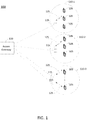
- FIG. 1 illustrates a wireless communication network 100 that includes an access gateway 120 having one or more associated eNodeBs 115.
- the access gateway 120 coverage area may include a plurality of cells 110-1, 110-2, 110-3.
- the wireless communication network 100 may be an Evolved Universal Terrestrial Radio Access Network (E-UTRAN).
- E-UTRAN Long Term Evolution
- LTE Long Term Evolution
- UMTS Universal Mobile Telecommunications System
- 4G fourth generation
- An E-UTRAN may include eNodeBs 115, which provide the Evolved Universal Terrestrial Radio Access (E-UTRA) user plane (PDCP/RLC/MAC/PHY) and control plane (RRC) protocol terminations with a user equipment (UE) 105.
- E-UTRA Evolved Universal Terrestrial Radio Access
- PDCP/RLC/MAC/PHY Evolved Universal Terrestrial Radio Access
- RRC control plane
- the eNodeBs may be interconnected with each other by respective X2 interface.
- eNodeB 115 refers to a base station that provides radio access to UEs 105 within a given coverage area (e.g., 110-1, 110-2, 110-3). This coverage area is referred to as a cell. However, as is known, multiple cells are often associated with a single eNodeB.
- Channel 125 may provide uplink (UL) and downlink (DL) channels for signaling and data transmissions.
- channel 125 may provide a channel for Broadcast Control Channel (BCCH), Physical Uplink Control Channel (PUCCH), Physical Uplink Shared Channel (PUSCH), Physical Downlink Control Channel (PDCCH), Physical Downlink Shared Channel (PDSCH) and the like.
- BCCH Broadcast Control Channel
- PUCCH Physical Uplink Control Channel
- PUSCH Physical Uplink Shared Channel
- PDCCH Physical Downlink Control Channel
- PDSCH Physical Downlink Shared Channel
- peak rates e.g., uplink and down link data rates
- an error rate criterion e.g., block error rates (BLER) are used to determine a possible data rate.
- Selection of data rates is typically called link adaptation.
- the link adaptation chooses the Modulation and Coding Scheme (MCS), based on Signal to Interference and Noise Ratio (SINR) estimates. SINR estimates may be measured on a reference signal as detected by the receiver (e.g., UE 105).
- MCS Modulation and Coding Scheme
- SINR estimates may be measured on a reference signal as detected by the receiver (e.g., UE 105).
- the data rate may be determined by the chosen MCS and the error rate may depend on the MCS and the prevailing channel quality.
- a higher order modulation scheme such as the known 64QAM or 16QAM may allow more bits per modulation symbol (as compared to a lower order modulation scheme), which allows a higher data rate and bandwidth efficiency, while at the same time requiring better SINR at the receiver for relatively error-free demodulation.
- a high code rate may reduce redundancy at the cost of lower error correction capability.
- FIG. 2 illustrates wireless transmission of physical resource blocks (PRB).
- PRB physical resource blocks
- a grouping of the time slots (one set labeled as 0-7) is typically known in the art as a HARQ process index.
- the number of time slots in the HARQ process index is a design choice.
- a time slot may have a fixed time. The fixed time is a design choice. Typically, the time slot is approximately 1 ms.
- the time slot is known in the art as a transmission time interval (TTI).
- TTI transmission time interval
- the time slot is typically assigned/scheduled as a resource block or a PRB over which data packets are transmitted.
- the wireless network e.g., wireless communication network 100
- voice data e.g., VOIP
- the voice data is typically scheduled over fixed time intervals.
- the fixed time interval is a design choice.
- the fixed time interval may be based on a Codec used by the user equipment to encode voice data. Codecs are known in the art and generally refer to a program to encode a data stream or signal (e.g., used in videoconferencing, streaming media and video applications) for transmission, storage or encryption, or decodes data stream or signal for playback or editing.
- FIG.2 illustrates the fixed time interval as 20 ms.
- the typical function of the radio interface packet data scheduler is to instruct the user equipment (e.g., UE 105) to segment the packets to allow the use of more robust modulation and coding scheme (MCS) for the transmission of each individual packet. This segmentation is shown as S1-S5 in FIG.2 .
- MCS modulation and coding scheme
- the number of payload bits per transmission is consequently reduced, thereby increasing the amount of power per transmitted bit which in turns leads to an improved iBLER performance.
- FIG. 2 illustrates an example where the scheduler instructs the user equipment to use five resource blocks.
- the user equipment breaks up a voice packet into 5 segments.
- the segment labeled "s5" requires 3 or more transmissions to get a CRC pass, then a new voice packet (which arrives every 20ms) will experience a delay in transmission.
- the radio interface packet data scheduler may need to accumulate delay (because the user equipment has not satisfactorily transmitted all of the segments associated with a previous transmission) and/or instruct the user equipment to drop segments resulting in reduction in quality.
- FIG. 2 shows re-transmission (by the user equipment) of segments S1-S5.
- Re-transmission may occur if, for example, the data, as received by the receiver (e.g., eNodeB 115) has a decoding error.
- the receiver e.g., eNodeB 115
- the last re-transmission shows segments S1-S4 being re-transmitted.
- segment S5 would need to be re-transmitted after the start of a new voice packet.
- the radio interface packet data scheduler will drop segment S5 (e.g., end the re-transmission process).
- the radio interface packet data scheduler could choose to delay the transmission (by the user equipment) of the new voice packet which is known as accumulating delay.
- Example embodiments may prevent and/or reduce the dropping of packets and the accumulation of delay.
- the range of radio conditions e.g., in poor radio coverage scenarios
- the conversational service e.g., VOIP
- TTI transmission time interval
- This may help prevent packet delay build up that may cause dropping of packets and/or accumulation of delay.
- PRB usage the minimum amount of useful data payload per TTI
- example embodiments may limit the minimum amount of useful data payload per TTI in an LTE network by providing a minimum MCS or minimum number of PRB to a scheduling grant assigned to the UE.
- Limiting the number of segments may degrade the packet error rate to some extent. However, this degradation may be reduced or minimized by providing a minimum number of PRBs. For example, transmitting a packet over 2 PRBs instead of 1 may improve the coding gain for the packet. For user equipment at a cell edge already transmitting at max power, transmitting a packet over 2 PRBs instead of 1 typically requires dividing the power between the 2 PRBs instead of 1. The increased coding gain has been found to be more beneficial than increased power for the cell edge user equipment.
- FIG. 3 illustrates an evolved Node B (eNodeB) according to an example embodiment.
- the eNodeB 115 includes, at least, a processor 310 and a memory 315.
- the processor includes a radio interface packet data scheduler 305 (hereinafter scheduler 305).
- the processor 310 and the memory 315 operate together to run eNodeB functionality.
- the memory 315 may store code segments regarding eNodeB functions (e.g., UE scheduling, control information signaling/handling and the like). The code segments may in-turn be executed by the processor 310. Further, the memory 315 may store process variables and constants for use by the processor 310.
- the software implemented aspects of the example embodiments are typically encoded on some form of program storage medium (e.g., memory 315) or implemented over some type of transmission medium.
- the program storage medium e.g., memory 315) may be magnetic (e.g., a floppy disk or a hard drive) or optical (e.g., a compact disk read only memory, or "CD ROM"), and may be read only or random access.
- the transmission medium may be twisted wire pairs, coaxial cable, optical fiber, or some other suitable transmission medium known to the art. The example embodiments not limited by these aspects of any given implementation.
- processor 310 and the memory 315 are known to those skilled in the art and will not be discussed further for the sake of brevity.
- the scheduler 305 may be configured to schedule transmissions to and from a user equipment (e.g., UE 105) based on pre-defined rules and/or quality targets and the like. Further details regarding the operation of the eNodeB 115, and more specifically the scheduler 305, are discussed below with regard to FIG. 4 .
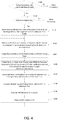
- FIG. 4 illustrates a method for allocating resource blocks to scheduled uplink data transmissions in a wireless communication network according to an example embodiment. While describing the steps of the method associated with FIG. 4 , reference will be made to the network of FIG. 1 and the eNodeB 115 of FIG. 3 . The steps of FIG. 4 may follow the typical steps associated with scheduling voice data by the eNodeB 115.
- the scheduler 305 determines if a scheduled data transmission (e.g., a scheduled data packet) is associated with a low packet delay budget transmission (e.g., VOIP data). For example, the scheduler 305 may read information from a header associated with a data packet containing the data. The information may include a data type. If the data type is voice data, the data transmission may be associated with a low packet delay budget transmission. Alternatively, the scheduler 305 may receive a message over a control channel (e.g., Physical Uplink Control Channel (PUCCH)) indicating the type of data to be transmitted by the user equipment.
- a control channel e.g., Physical Uplink Control Channel (PUCCH)
- the scheduler 305 may read a quality parameter associated with the data packet. If the quality parameter is a packet delay value and the value is less than a threshold, the data transmission may be associated with a low packet delay budget transmission. For example, the scheduler 305 may determine the QoS Identifier (QCI) of a radio bearer associated with the data packet.
- QCI QoS Identifier
- the QCI specifies the treatment of packets received on a specific bearer.
- the Table 1 illustrates QCI are defined in 3GPP.
- the QCI may be signaled from a Core Network (not shown) to the scheduler upon creation of the radio bearer.
- the radio bearer is assigned a logical channel id at radio bearer setup.
- the scheduler 305 may determine the type of data (and QoS requirements associated with the data) the scheduler 305 has to schedule (e.g. based on a buffer status reports sent by UE). These reports may indicate how much data is awaiting transmission for a logical channel ID. If the scheduled data transmission is not associated with a low packet delay budget transmission, processing proceeds to some other processing. Otherwise, processing continues to step S410.
- step S410 the scheduler 305 determines if data is to be segmented (or alternatively is segmented). For example, as discussed above, if the UE (e.g., UE 105) is in a poor radio coverage scenario (e.g., user equipment on cell edges) and transmit power is at a maximum power, the data may be segmented. Poor radio coverage may be determined using, for example, known Channel Quality Indication (CQI) reports sent by the UE. Alternatively, the scheduler 305 may use the UE power headroom reports combined with the uplink SINR information measured at the uplink receiver. If the data is not to be segmented, processing proceeds to some other processing. Otherwise, processing continues to step S415.
- CQI Channel Quality Indication
- the scheduler 305 determines the minimum number of resource blocks that can be assigned to a user equipment (e.g., UE 105) for delay sensitive traffic. For example, the scheduler 305 may determine the minimum number of resource blocks such that if the UE is in poor coverage conditions and data awaiting transmission is voice data (e.g., VoIP), then the minimum number of resource blocks is equal to a minimum threshold value greater than one (1) (e.g., determined as a system variable stored in memory 315). Otherwise, the minimum number of resource blocks is equal to one (1).
- a minimum threshold value greater than one (1) (e.g., determined as a system variable stored in memory 315). Otherwise, the minimum number of resource blocks is equal to one (1).
- the minimum number of resource blocks may be equal to a minimum threshold value greater than 1 if the user equipment is in a condition where the user equipment is transmitting at the user equipment's maximum uplink power to maintain a radio link and the user equipment is transmitting data with conversational quality of service (QoS) requirements.
- QoS conversational quality of service
- step S420 the scheduler 305 determines the maximum number of resource blocks that can be assigned to the UE without exceeding the UE maximum transmit power.
- the maximum number of resource blocks that may be assigned to a UE may be based on the known power headroom reports sent by the UE to the eNodeB. For example, when the UE reports XdB headroom for a grant size of y resource blocks, then the maximum grant size before reaching power saturation may be y * 10 (x/10) .
- step S425 the scheduler 305 assigns resource blocks to the UE based on the minimum number of resource blocks that can be assigned to a user equipment (step S415) and the maximum number of resource blocks that can be assigned to the UE without exceeding the UE maximum transmit power (step S420).
- the scheduler 305 may assign resource blocks to the UE such that the number of resource blocks is greater than the minimum number of resource blocks that can be assigned to a user equipment and less than the maximum number of resource blocks that can be assigned to the UE without exceeding the UE maximum transmit power.
- the scheduler 305 predicts Signal to Noise + Interference ratio (SINR) for resources assigned to UE based on the number of assigned resource blocks. Further, the scheduler 305 assigns a preferred modulation and coding scheme (MCS) index to achieve a target Block Error Rate (BLER) based on the predicted SINR.
- MCS modulation and coding scheme
- the SINR may be predicted based on an SINR observed for previous VoIP transmissions.
- the SINR may be predicted based on recent Sounding Channel Reference Symbol (SRS) observations or Channel Quality Information (CQI) reports from the UE (e.g., UE 105).
- the predicted SINR may be based on the user equipment power headroom reports and uplink SINR information measured at the uplink receiver.
- step S435 the scheduler 305 adapts the link based on the predicted SINR (e.g., an error rate adjustment).
- link adaptation may be based on Adaptive Modulation and Coding (AMC).
- AMC may assign (e.g., adapt) the MCS such that if the predicted SINR is sufficiently high, higher-order modulation schemes with higher spectral efficiency (hence with higher bit rates) like 16QAM or 64QAM are used.
- a lower-order modulation scheme like QPSK which is more robust against transmission errors but has a lower spectral efficiency, is used.
- AMC may adapt code rate such that for a given modulation scheme, an appropriate code rate can be chosen depending on the channel quality. The better the channel quality, the higher the code rate is used and, as a result, the higher the data rate.
- the scheduler 305 compares the modulation and coding scheme (MCS) of the UE to a minimum MCS.
- MCS modulation and coding scheme
- the UE e.g., UE 105
- the wireless network e.g., wireless communication network 100
- the MCS set by the scheduler 305 may be compared to the minimum MCS threshold.
- the MCS threshold may be different depending on the number of PRB assigned to the UE (e.g., UE 105) and the guaranteed bit rate value required for the voice service.
- step S445 the scheduler 305 overrides the MCS of the UE based on the comparison. For example, if the assigned MCS is less than the minimum MCS threshold, scheduler 305 changes the assigned MCS to the minimum MCS threshold.
- step S450 the scheduler 305 transmits information (e.g., scheduling information) to the user equipment (e.g., UE 105).
- the information may include the allocated number of resource blocks and the assigned MCS.
- the information may be transmitted over a control or a signalling channel (e.g., the Physical Downlink Control Channel (PDCCH)).
- a control or a signalling channel e.g., the Physical Downlink Control Channel (PDCCH)
- the steps set out in FIG. 4 may improve the packet error rate for each segment of a voice packet and thereby improves the overall packet error rate and the quality of a voice call.
- the method described in FIG. 4 may result in allocation of four segments (S1-S4). Allocation of four segments may result in voice data transmissions without collisions and/or accumulating delay.
- FIG. 5 illustrates an user equipment (e.g., UE 105) according to an example embodiment.
- the UE 105 includes, at least, a processor 510 and a memory 515.
- the processor 510 and the memory 515 operate together to run user equipment functionality.
- the memory 515 may store code segments regarding user equipment functions (e.g., voice encoding, control information signaling/handling and the like). The code segments may in-turn be executed by the processor 510. Further, the memory 515 may store process variables and constants for use by the processor 510.
- the software implemented aspects of the example embodiments are typically encoded on some form of program storage medium (e.g., memory 515) or implemented over some type of transmission medium.
- the program storage medium e.g., memory 515) may be magnetic (e.g., a floppy disk or a hard drive) or optical (e.g., a compact disk read only memory, or "CD ROM"), and may be read only or random access.
- the transmission medium may be twisted wire pairs, coaxial cable, optical fiber, or some other suitable transmission medium known to the art. The example embodiments not limited by these aspects of any given implementation.
- FIG. 6 illustrates a method for segmenting data in uplink data transmissions in a wireless communication network according to an example embodiment. While describing the steps of the method associated with FIG. 6 , reference will be made to the network of FIG. 1 and the user equipment 105 of FIG. 5 .
- the processor 510 receives a scheduling message.
- the scheduling message may include scheduling information including a number of allocated resource blocks and an assigned MCS. The number of allocated resource blocks and the assigned MCS are discussed in more detail above with regard to FIG.4 .
- the scheduling information may be received via a control or a signalling channel (e.g., the Physical Downlink Control Channel (PDCCH)).
- a control or a signalling channel e.g., the Physical Downlink Control Channel (PDCCH)
- step S605 the processor 510 determines if the scheduling information includes an indication that the number of allocated resource blocks is greater than one (1). If the number of allocated resource blocks is not greater than one (1), processing proceeds to some other processing. Otherwise, processing continues to step S615.
- the processor 510 generates encoded data.
- the data e.g., voice data
- the data may be encoded using a known codec.
- Codecs are used by the user equipment (e.g., UE105) to encode voice data. Codecs are known in the art and generally refer to a program to encode a data stream or signal (e.g., used in videoconferencing, streaming media and video applications) for transmission, storage or encryption, or decodes data stream or signal for playback or editing.
- the processor 510 segments the encoded data based on the allocated number of resource blocks. For example, if the allocated number of resource blocks equals four (4), the processor 510 segments the encoded data into four segments each including a same number of bits.
- step S625 the processor 510 determines an MCS from the scheduling information.
- the MCS is determined by the eNodeB and is discussed in more detail above with regard to FIG.4 .
- step S630 the processor 510 transmits the segmented encoded data over an uplink channel to a network element using the MCS. Transmitting data over an uplink channel to a network element using an MCS is known to those in the art and will not be discussed further for the sake of brevity.
Landscapes
- Engineering & Computer Science (AREA)
- Signal Processing (AREA)
- Computer Networks & Wireless Communication (AREA)
- Quality & Reliability (AREA)
- Mobile Radio Communication Systems (AREA)
- Communication Control (AREA)
- Telephonic Communication Services (AREA)
Claims (10)
- Verfahren für die Zuweisung von Ressourcenblöcken zu ablaufgeplanten Uplink-Datenübertragungen, wobei das Verfahren umfasst:das Bestimmen (S415) einer Mindestanzahl von Ressourcenblöcken, die einer Benutzervorrichtung für verzögerungssensitiven Verkehr zugewiesen werden können;das Bestimmen (S420) einer Maximalanzahl von Ressourcenblöcken zur Zuweisung an die Uplink-Daten auf der Grundlage einer Übertragungsleistungseinstellung;das Zuweisen (S425) einer Anzahl von Ressourcenblöcken an die Uplink-Datenübertragung auf der Grundlage der Mindestanzahl von Ressourcenblöcken und der Maximalanzahl von Ressourcenblöcken zur Datensegmentation;das Vorhersagen (S430) eines Signal-zu-Rausch-und-Störungsverhältnisses (Signal to Interference and Noise Ratio, SINR) auf der Grundlage der zugewiesenen Anzahl von Ressourcenblöcken;das Zuweisen (S435) eines Modulier- und Codiermusters (Modulation and Coding Scheme, MCS) an die Uplink-Datenübertragung auf der Grundlage des vorhergesagten SINR und eines Grenzwert-MCS; unddas Übermitteln (S450) von Ablaufplanungsinformation an die Benutzervorrichtung, wobei die Ablaufplanungsinformation die zugewiesene Anzahl der Ressourcenblöcke und das zugewiesene MCS umfasst.
- Das Verfahren nach Anspruch 1, wobei die Anzahl der zugewiesenen Ressourcenblöcke zwischen der Mindestanzahl von Ressourcenblöcken und der Maximalanzahl von Ressourcenblöcken liegt.
- Das Verfahren nach Anspruch 1, wobei die Anzahl der zugewiesenen Ressourcenblöcke dann die Maximalanzahl von Ressourcenblöcken ist, wenn die Mindestanzahl von Ressourcenblöcken größer ist als die Maximalanzahl von Ressourcenblöcken.
- Das Verfahren nach Anspruch 1, wobei die Mindestanzahl von Ressourcenbläcken dann gleich einem Mindestgrenzwert über 1 ist, wenn die Benutzervorrichtung in einem Zustand ist, in dem die Benutzervorrichtung mit der maximalen Uplinkleistung der Benutzervorrichtung sendet, um eine Funkverbindung aufrechtzuerhalten, und die Benutzervorrichtung Daten gemäß den Anforderungen an eine Sprechverbindungs-Dienstgüte (Quality of Service, QoS) sendet.
- Das Verfahren nach Anspruch 1, wobei das vorhergesagte SINR auf einem SINR beruht, dass für vorangegangene Datenübertragungen über die Anzahl von Ressourcenblöcken beobachtet wurde.
- Das Verfahren nach Anspruch 1, wobei das vorhergesagte SINR auf den Leistungsfreiraum-Berichten der Benutzervorrichtung und der an dem Upünk-Empfänger gemessenen Uplink-SLNR-Information beruht.
- Das Verfahren nach Anspruch 1, wobei das zugewiesene MCS unter Verwendung des vorhergesagten SINR in einer Look-up-Tabelle nachgeschlagen wird.
- Das Verfahren nach Anspruch 1, wobei das zugewiesene MCS dergestalt zugewiesen wird, dass eine gewährte Nutzdatengröße größer ist als das Grundniveau, wobei das Grundniveau dergestalt bestimmt wird, dass keine akkumulierte Verzögerung auftritt.
- Das Verfahren nach Anspruch 1, wobei das vorhergesagte SINR und das zugewiesene MCS eine als Ziel vorgegebene Blockfehlerrate (Block Error Rate, BLER) für die Übermittlung eines jeden Segments der segmentierten Daten erreichen.
- Ein Netzwerkelement (115), umfassend:einen Speicher (515); undeinen Prozessor (510), welcher kommunikativ an besagten Speicher gekoppelt ist, wobei der Prozessor konfiguriert ist für:das Bestimmen einer Mindestanzahl von Ressourcenblöcken, die einer Benutzervorrichtung für verzögerungssensitiven Verkehr zugewiesen werden können;das Bestimmen einer Maximalanzahl von Ressourcenblöcken zur Zuweisung an Uplink-Daten auf der Grundlage einer Übertragungsleistungseinstellung;das Zuweisen einer Anzahl von Ressourcenblöcken an die Uplink-Datenübertragung auf der Grundlage der Mindestanzahl von Ressourcenblöcken und der Maximalanzahl von Ressourcenblöcken zur Datensegmentation;das Vorhersagen eines Signal-zu-Rausch-und-Störungsverhältnisses (SINR) auf der Grundlage der zugewiesenen Anzahl von Ressourcenblöcken;das Zuweisen eines Modulier- und Codiermusters (Modulation and Coding Scheme, MCS) an die Uplink-Datenübertragung auf der Grundlage des vorhergesagten SINR und eines Grenzwert-MCS; unddas Übermitteln von Ablaufplanungsinformation an die Benutzervorrichtung, wobei die Ablaufplanungsinformation die zugewiesene Anzahl der Ressourcenblöcke und das zugewiesene MCS umfasst.
Applications Claiming Priority (2)
| Application Number | Priority Date | Filing Date | Title |
|---|---|---|---|
| US13/487,483 US9300431B2 (en) | 2012-06-04 | 2012-06-04 | Apparatus, method and computer readable medium for payload segmentation of wireless packet data transmissions |
| PCT/US2013/043523 WO2013184492A1 (en) | 2012-06-04 | 2013-05-31 | Apparatus, method and computer readable medium for payload segmentation of wireless packet data transmissions |
Publications (2)
| Publication Number | Publication Date |
|---|---|
| EP2856680A1 EP2856680A1 (de) | 2015-04-08 |
| EP2856680B1 true EP2856680B1 (de) | 2017-02-01 |
Family
ID=48626163
Family Applications (1)
| Application Number | Title | Priority Date | Filing Date |
|---|---|---|---|
| EP13728906.2A Active EP2856680B1 (de) | 2012-06-04 | 2013-05-31 | Vorrichtung und verfahren zur nutzdatensegmentierung bei drahtlosen paketdatenübertragungen |
Country Status (6)
| Country | Link |
|---|---|
| US (1) | US9300431B2 (de) |
| EP (1) | EP2856680B1 (de) |
| JP (1) | JP6074032B2 (de) |
| KR (1) | KR101607097B1 (de) |
| CN (1) | CN104365048B (de) |
| WO (1) | WO2013184492A1 (de) |
Cited By (1)
| Publication number | Priority date | Publication date | Assignee | Title |
|---|---|---|---|---|
| US11076390B2 (en) | 2017-03-14 | 2021-07-27 | Guangdong Oppo Mobile Telecommunications Corp., Ltd. | Aggregation methods, gNodeBs, user equipments and storage medium |
Families Citing this family (32)
| Publication number | Priority date | Publication date | Assignee | Title |
|---|---|---|---|---|
| US10469205B2 (en) * | 2005-07-27 | 2019-11-05 | T-Mobile Usa, Inc. | Application-based multi-band transmission |
| US9655103B2 (en) * | 2012-11-02 | 2017-05-16 | General Dynamics C4 Systems, Inc. | Method and apparatus for communicating in an increased coverage area to a wireless communication unit |
| US9629025B2 (en) | 2013-05-03 | 2017-04-18 | Blackberry Limited | Controlling data offload in response to feedback information |
| US9408206B2 (en) * | 2013-12-08 | 2016-08-02 | Alcatel Lucent | Resource allocation in support of voice over internet protocol (VoIP) in a orthogonal frequency division multiple access (OFDMA) system |
| US10333660B2 (en) * | 2014-05-09 | 2019-06-25 | Telefonaktiebolaget Lm Ericsson (Publ) | Determining a rate at which units of data are received erroneously |
| KR102367885B1 (ko) * | 2014-07-03 | 2022-02-25 | 엘지전자 주식회사 | 밀리미터웨이브를 지원하는 무선접속시스템에서 새로운 상향링크 참조신호 전송 방법 및 장치 |
| US9538489B1 (en) | 2014-08-27 | 2017-01-03 | Sprint Communications Company L.P. | Wireless communication device to synchronize data transfer rates |
| US10212672B2 (en) | 2014-12-22 | 2019-02-19 | Nokia Solution And Networks Oy | Controlling transmission |
| US10348466B2 (en) | 2015-11-03 | 2019-07-09 | Qualcomm Incorporated | Transport block segmentation and signaling |
| GB2546548B (en) * | 2016-01-22 | 2021-08-11 | Tcl Communication Ltd | Communication resource allocation for telecommunications networks |
| KR20170100109A (ko) * | 2016-02-24 | 2017-09-04 | 한국전자통신연구원 | 이동 통신 시스템에서의 버퍼 상태 보고 방법 및 그 장치 |
| US11134487B2 (en) * | 2016-03-31 | 2021-09-28 | Nec Corporation | SDN-based methods and apparatuses for providing TDD radio access network services |
| US11018828B2 (en) * | 2017-02-06 | 2021-05-25 | Qualcomm Incorporated | Uplink MIMO reference signals and data transmission schemes |
| US11212033B2 (en) | 2017-09-05 | 2021-12-28 | Ntt Docomo, Inc. | Transmission apparatus, reception apparatus, and communication method |
| CN109788571B (zh) * | 2017-11-14 | 2021-04-23 | 大唐移动通信设备有限公司 | 一种数据处理方法和装置 |
| KR102095207B1 (ko) * | 2018-03-26 | 2020-03-31 | 한국항공대학교산학협력단 | 영상 처리 장치 및 그 영상 처리 방법 |
| US11956787B2 (en) * | 2018-04-05 | 2024-04-09 | Qualcomm Incorporated | Power headroom reporting in coverage edge |
| WO2019218280A1 (zh) * | 2018-05-16 | 2019-11-21 | 华为技术有限公司 | 数据传输方法及装置 |
| EP3845018A4 (de) * | 2018-08-28 | 2022-04-20 | Nokia Solutions and Networks Oy | Verfahren, vorrichtung und computerlesbares medium zur zuweisung von mini-slots |
| US10917856B2 (en) * | 2018-09-07 | 2021-02-09 | Parallel Wireless, Inc. | Statistical projection for controlling BLER |
| US11382118B2 (en) * | 2018-09-28 | 2022-07-05 | Qualcomm Incorporated | Minimum scheduling delay signaling |
| CN109246810B (zh) * | 2018-10-30 | 2021-03-30 | 广州海格通信集团股份有限公司 | 一种基于lte系统的上行调度修正方法和系统 |
| CN111245534A (zh) * | 2018-11-29 | 2020-06-05 | 普天信息技术有限公司 | 上行资源调度方法及装置 |
| US11936599B2 (en) * | 2020-03-11 | 2024-03-19 | Qualcomm Incorporated | Full-duplex index modulation |
| EP4193507A1 (de) | 2020-08-06 | 2023-06-14 | Nokia Technologies Oy | Vollressourcenzuweisung |
| CN112436922B (zh) * | 2020-11-25 | 2022-05-20 | Oppo(重庆)智能科技有限公司 | Mcs调度方法、终端设备、网络设备及存储介质 |
| US20240049013A1 (en) * | 2020-12-14 | 2024-02-08 | Telefonaktiebolaget Lm Ericsson (Publ) | Methods and devices for base station |
| CN112804707B (zh) * | 2021-01-04 | 2024-07-23 | 腾讯科技(深圳)有限公司 | 数据传输方法、装置、计算机可读介质及电子设备 |
| US12328753B2 (en) * | 2022-07-15 | 2025-06-10 | Qualcomm Incorporated | Logical channel prioritization for data |
| CN116017721A (zh) * | 2022-12-09 | 2023-04-25 | 大连市共进科技有限公司 | 上行rlc分段调度方法、装置、终端设备和存储介质 |
| KR102740683B1 (ko) * | 2022-12-12 | 2024-12-11 | 주식회사 유캐스트 | 5g nr 시스템에서 상향 링크 mcs 및 자원블록 할당 방법 |
| US20250080256A1 (en) * | 2023-08-31 | 2025-03-06 | Nvidia Corporation | Wireless transmission error rate prediction |
Family Cites Families (19)
| Publication number | Priority date | Publication date | Assignee | Title |
|---|---|---|---|---|
| US20090323641A1 (en) * | 2006-11-10 | 2009-12-31 | Panasonic Corporation | Radio communication mobile station device and mcs selection method |
| CN100534067C (zh) * | 2007-01-19 | 2009-08-26 | 北京邮电大学 | 在ofdma系统中保证非实时业务数据包时延稳定性的调度方法 |
| JP2008205869A (ja) * | 2007-02-21 | 2008-09-04 | Nec Corp | データ送信方法及びそれを用いたセルラシステム |
| KR101397135B1 (ko) * | 2007-03-07 | 2014-05-22 | 인터디지탈 테크날러지 코포레이션 | 이동국의 업링크 전력을 제어하기 위한 결합형 개방 루프/폐쇄 루프 방법 |
| US9295003B2 (en) * | 2007-03-19 | 2016-03-22 | Apple Inc. | Resource allocation in a communication system |
| US7933350B2 (en) | 2007-10-30 | 2011-04-26 | Telefonaktiebolaget Lm Ericsson (Publ) | Channel-dependent frequency-domain scheduling in an orthogonal frequency division multiplexing communications system |
| CN101971676B (zh) * | 2007-11-09 | 2015-06-03 | 北方电讯网络有限公司 | 具有干扰比热(IoT)负载控制的上行链路功率控制 |
| RU2470494C2 (ru) * | 2008-04-22 | 2012-12-20 | Нтт Досомо, Инк. | Способ мобильной связи, мобильная станция и базовая станция радиосвязи |
| CN101615974B (zh) * | 2008-06-27 | 2012-11-14 | 富士通株式会社 | 用于通信系统的调制编码集合的设计方法和装置 |
| WO2010035067A2 (en) * | 2008-09-25 | 2010-04-01 | Nokia Corporation | Advanced resource allocation signaling |
| CN101719862B (zh) * | 2008-10-09 | 2012-05-23 | 中兴通讯股份有限公司 | Lte系统的上行/下行无线覆盖距离的获取方法及装置 |
| JP5330843B2 (ja) * | 2009-01-28 | 2013-10-30 | 京セラ株式会社 | 無線基地局および通信制御方法 |
| US8144720B2 (en) | 2009-04-24 | 2012-03-27 | Telefonaktiebolaget L M Ericsson (Publ) | Uplink radio resource allocation in the presence of power limited users |
| JP5297317B2 (ja) * | 2009-09-16 | 2013-09-25 | Kddi株式会社 | 無線リソース割当装置および無線リソース割当方法 |
| CN101711058B (zh) * | 2009-12-15 | 2012-12-05 | 中兴通讯股份有限公司 | 一种资源分配方法和系统 |
| US20120113831A1 (en) * | 2010-04-30 | 2012-05-10 | Interdigital Patent Holdings, Inc. | Determination of Carriers and Multiplexing for Uplink Control Information Transmission |
| WO2011136958A1 (en) * | 2010-04-30 | 2011-11-03 | Motorola Mobility, Inc. | Method and apparatus for allocating resource blocks in a wireless communication network |
| KR101656291B1 (ko) | 2010-05-03 | 2016-09-22 | 삼성전자주식회사 | 무선통신시스템에서 전송 효율을 개선하기 위한 장치 및 방법 |
| CN102469566B (zh) * | 2010-11-12 | 2014-06-11 | 中兴通讯股份有限公司 | 无线资源分配方法及装置 |
-
2012
- 2012-06-04 US US13/487,483 patent/US9300431B2/en active Active
-
2013
- 2013-05-31 JP JP2015516075A patent/JP6074032B2/ja not_active Expired - Fee Related
- 2013-05-31 KR KR1020147033825A patent/KR101607097B1/ko not_active Expired - Fee Related
- 2013-05-31 EP EP13728906.2A patent/EP2856680B1/de active Active
- 2013-05-31 CN CN201380029627.3A patent/CN104365048B/zh active Active
- 2013-05-31 WO PCT/US2013/043523 patent/WO2013184492A1/en not_active Ceased
Non-Patent Citations (1)
| Title |
|---|
| None * |
Cited By (3)
| Publication number | Priority date | Publication date | Assignee | Title |
|---|---|---|---|---|
| US11076390B2 (en) | 2017-03-14 | 2021-07-27 | Guangdong Oppo Mobile Telecommunications Corp., Ltd. | Aggregation methods, gNodeBs, user equipments and storage medium |
| RU2760318C2 (ru) * | 2017-03-14 | 2021-11-23 | Гуандун Оппо Мобайл Телекоммьюникейшнс Корп., Лтд. | Способы агрегирования, базовые станции gnodebs, пользовательские устройства и носитель для хранения |
| US11751201B2 (en) | 2017-03-14 | 2023-09-05 | Guangdong Oppo Mobile Telecommunications Corp., Ltd. | Aggregation methods, gNodeBs, user equipments and storage medium |
Also Published As
| Publication number | Publication date |
|---|---|
| JP6074032B2 (ja) | 2017-02-01 |
| US20130322349A1 (en) | 2013-12-05 |
| KR20150003905A (ko) | 2015-01-09 |
| EP2856680A1 (de) | 2015-04-08 |
| US9300431B2 (en) | 2016-03-29 |
| CN104365048B (zh) | 2018-11-13 |
| CN104365048A (zh) | 2015-02-18 |
| JP2015525521A (ja) | 2015-09-03 |
| WO2013184492A1 (en) | 2013-12-12 |
| KR101607097B1 (ko) | 2016-03-29 |
Similar Documents
| Publication | Publication Date | Title |
|---|---|---|
| EP2856680B1 (de) | Vorrichtung und verfahren zur nutzdatensegmentierung bei drahtlosen paketdatenübertragungen | |
| EP2449707B1 (de) | Erweitertes sendegebiet des physikalischen-abwärtsstrecken-gemeinschaftlich genutzten kanals, pdsch | |
| RU2432696C2 (ru) | Способ эффективного обеспечения информации планирования в беспроводной телекоммуникационной системе | |
| US9178648B2 (en) | Method to improve voice over IP capacity for user equipment employing variable rate vocoders | |
| US10368343B2 (en) | Systems and methods for downlink scheduling that mitigate PDCCH congestion | |
| EP2254383B1 (de) | Signalisierung von Hilfsdaten zur Signalisierungsplanung in einem zellularen Kommunikationssystem | |
| US9693258B2 (en) | Base station, and a method for adapting link adaptation in a wireless communications network | |
| US12238681B2 (en) | Communications device, infrastructure equipment and methods for transmitting transport blocks with selected encoding parameters | |
| EP3398283B1 (de) | Verfahren und vorrichtung zur auswahl des formats von downlink-steuerinformationen | |
| US9813939B1 (en) | Management of channel state information reporting rate in a communication system | |
| US20250240781A1 (en) | Methods, communications devices, and infrastructure equipment | |
| US20250374280A1 (en) | Methods, communications devices, and infrastructure equipment | |
| EP4544861A1 (de) | Steuerinformationen für uplink-übertragungen auf periodischen ressourcen | |
| HK1147630B (en) | Signalling scheduling assitance data in a cellular communication system | |
| HK1147631B (en) | Signalling scheduling assistance data in a cellular communication system | |
| HK1147632B (en) | Signalling scheduling assistance data in a cellular communication system |
Legal Events
| Date | Code | Title | Description |
|---|---|---|---|
| PUAI | Public reference made under article 153(3) epc to a published international application that has entered the european phase |
Free format text: ORIGINAL CODE: 0009012 |
|
| 17P | Request for examination filed |
Effective date: 20150105 |
|
| AK | Designated contracting states |
Kind code of ref document: A1 Designated state(s): AL AT BE BG CH CY CZ DE DK EE ES FI FR GB GR HR HU IE IS IT LI LT LU LV MC MK MT NL NO PL PT RO RS SE SI SK SM TR |
|
| AX | Request for extension of the european patent |
Extension state: BA ME |
|
| DAX | Request for extension of the european patent (deleted) | ||
| REG | Reference to a national code |
Ref country code: DE Ref legal event code: R079 Ref document number: 602013017025 Country of ref document: DE Free format text: PREVIOUS MAIN CLASS: H04L0001000000 Ipc: H04L0005000000 |
|
| GRAP | Despatch of communication of intention to grant a patent |
Free format text: ORIGINAL CODE: EPIDOSNIGR1 |
|
| RIC1 | Information provided on ipc code assigned before grant |
Ipc: H04L 1/20 20060101ALI20160120BHEP Ipc: H04L 5/00 20060101AFI20160120BHEP Ipc: H04L 1/00 20060101ALI20160120BHEP |
|
| INTG | Intention to grant announced |
Effective date: 20160205 |
|
| GRAP | Despatch of communication of intention to grant a patent |
Free format text: ORIGINAL CODE: EPIDOSNIGR1 |
|
| INTG | Intention to grant announced |
Effective date: 20160630 |
|
| GRAJ | Information related to disapproval of communication of intention to grant by the applicant or resumption of examination proceedings by the epo deleted |
Free format text: ORIGINAL CODE: EPIDOSDIGR1 |
|
| GRAP | Despatch of communication of intention to grant a patent |
Free format text: ORIGINAL CODE: EPIDOSNIGR1 |
|
| INTC | Intention to grant announced (deleted) | ||
| INTG | Intention to grant announced |
Effective date: 20160905 |
|
| GRAS | Grant fee paid |
Free format text: ORIGINAL CODE: EPIDOSNIGR3 |
|
| GRAA | (expected) grant |
Free format text: ORIGINAL CODE: 0009210 |
|
| AK | Designated contracting states |
Kind code of ref document: B1 Designated state(s): AL AT BE BG CH CY CZ DE DK EE ES FI FR GB GR HR HU IE IS IT LI LT LU LV MC MK MT NL NO PL PT RO RS SE SI SK SM TR |
|
| REG | Reference to a national code |
Ref country code: GB Ref legal event code: FG4D |
|
| REG | Reference to a national code |
Ref country code: CH Ref legal event code: EP Ref country code: AT Ref legal event code: REF Ref document number: 866341 Country of ref document: AT Kind code of ref document: T Effective date: 20170215 |
|
| REG | Reference to a national code |
Ref country code: IE Ref legal event code: FG4D |
|
| REG | Reference to a national code |
Ref country code: DE Ref legal event code: R096 Ref document number: 602013017025 Country of ref document: DE |
|
| REG | Reference to a national code |
Ref country code: FR Ref legal event code: PLFP Year of fee payment: 5 |
|
| REG | Reference to a national code |
Ref country code: NL Ref legal event code: MP Effective date: 20170201 |
|
| REG | Reference to a national code |
Ref country code: LT Ref legal event code: MG4D |
|
| REG | Reference to a national code |
Ref country code: AT Ref legal event code: MK05 Ref document number: 866341 Country of ref document: AT Kind code of ref document: T Effective date: 20170201 |
|
| PG25 | Lapsed in a contracting state [announced via postgrant information from national office to epo] |
Ref country code: NO Free format text: LAPSE BECAUSE OF FAILURE TO SUBMIT A TRANSLATION OF THE DESCRIPTION OR TO PAY THE FEE WITHIN THE PRESCRIBED TIME-LIMIT Effective date: 20170501 Ref country code: FI Free format text: LAPSE BECAUSE OF FAILURE TO SUBMIT A TRANSLATION OF THE DESCRIPTION OR TO PAY THE FEE WITHIN THE PRESCRIBED TIME-LIMIT Effective date: 20170201 Ref country code: LT Free format text: LAPSE BECAUSE OF FAILURE TO SUBMIT A TRANSLATION OF THE DESCRIPTION OR TO PAY THE FEE WITHIN THE PRESCRIBED TIME-LIMIT Effective date: 20170201 Ref country code: IS Free format text: LAPSE BECAUSE OF FAILURE TO SUBMIT A TRANSLATION OF THE DESCRIPTION OR TO PAY THE FEE WITHIN THE PRESCRIBED TIME-LIMIT Effective date: 20170601 Ref country code: GR Free format text: LAPSE BECAUSE OF FAILURE TO SUBMIT A TRANSLATION OF THE DESCRIPTION OR TO PAY THE FEE WITHIN THE PRESCRIBED TIME-LIMIT Effective date: 20170502 Ref country code: HR Free format text: LAPSE BECAUSE OF FAILURE TO SUBMIT A TRANSLATION OF THE DESCRIPTION OR TO PAY THE FEE WITHIN THE PRESCRIBED TIME-LIMIT Effective date: 20170201 |
|
| PG25 | Lapsed in a contracting state [announced via postgrant information from national office to epo] |
Ref country code: SE Free format text: LAPSE BECAUSE OF FAILURE TO SUBMIT A TRANSLATION OF THE DESCRIPTION OR TO PAY THE FEE WITHIN THE PRESCRIBED TIME-LIMIT Effective date: 20170201 Ref country code: NL Free format text: LAPSE BECAUSE OF FAILURE TO SUBMIT A TRANSLATION OF THE DESCRIPTION OR TO PAY THE FEE WITHIN THE PRESCRIBED TIME-LIMIT Effective date: 20170201 Ref country code: ES Free format text: LAPSE BECAUSE OF FAILURE TO SUBMIT A TRANSLATION OF THE DESCRIPTION OR TO PAY THE FEE WITHIN THE PRESCRIBED TIME-LIMIT Effective date: 20170201 Ref country code: RS Free format text: LAPSE BECAUSE OF FAILURE TO SUBMIT A TRANSLATION OF THE DESCRIPTION OR TO PAY THE FEE WITHIN THE PRESCRIBED TIME-LIMIT Effective date: 20170201 Ref country code: AT Free format text: LAPSE BECAUSE OF FAILURE TO SUBMIT A TRANSLATION OF THE DESCRIPTION OR TO PAY THE FEE WITHIN THE PRESCRIBED TIME-LIMIT Effective date: 20170201 Ref country code: PL Free format text: LAPSE BECAUSE OF FAILURE TO SUBMIT A TRANSLATION OF THE DESCRIPTION OR TO PAY THE FEE WITHIN THE PRESCRIBED TIME-LIMIT Effective date: 20170201 Ref country code: BG Free format text: LAPSE BECAUSE OF FAILURE TO SUBMIT A TRANSLATION OF THE DESCRIPTION OR TO PAY THE FEE WITHIN THE PRESCRIBED TIME-LIMIT Effective date: 20170501 Ref country code: LV Free format text: LAPSE BECAUSE OF FAILURE TO SUBMIT A TRANSLATION OF THE DESCRIPTION OR TO PAY THE FEE WITHIN THE PRESCRIBED TIME-LIMIT Effective date: 20170201 Ref country code: LU Free format text: LAPSE BECAUSE OF NON-PAYMENT OF DUE FEES Effective date: 20170531 Ref country code: PT Free format text: LAPSE BECAUSE OF FAILURE TO SUBMIT A TRANSLATION OF THE DESCRIPTION OR TO PAY THE FEE WITHIN THE PRESCRIBED TIME-LIMIT Effective date: 20170601 |
|
| PG25 | Lapsed in a contracting state [announced via postgrant information from national office to epo] |
Ref country code: RO Free format text: LAPSE BECAUSE OF FAILURE TO SUBMIT A TRANSLATION OF THE DESCRIPTION OR TO PAY THE FEE WITHIN THE PRESCRIBED TIME-LIMIT Effective date: 20170201 Ref country code: CZ Free format text: LAPSE BECAUSE OF FAILURE TO SUBMIT A TRANSLATION OF THE DESCRIPTION OR TO PAY THE FEE WITHIN THE PRESCRIBED TIME-LIMIT Effective date: 20170201 Ref country code: EE Free format text: LAPSE BECAUSE OF FAILURE TO SUBMIT A TRANSLATION OF THE DESCRIPTION OR TO PAY THE FEE WITHIN THE PRESCRIBED TIME-LIMIT Effective date: 20170201 Ref country code: IT Free format text: LAPSE BECAUSE OF FAILURE TO SUBMIT A TRANSLATION OF THE DESCRIPTION OR TO PAY THE FEE WITHIN THE PRESCRIBED TIME-LIMIT Effective date: 20170201 Ref country code: SK Free format text: LAPSE BECAUSE OF FAILURE TO SUBMIT A TRANSLATION OF THE DESCRIPTION OR TO PAY THE FEE WITHIN THE PRESCRIBED TIME-LIMIT Effective date: 20170201 |
|
| REG | Reference to a national code |
Ref country code: DE Ref legal event code: R097 Ref document number: 602013017025 Country of ref document: DE |
|
| PG25 | Lapsed in a contracting state [announced via postgrant information from national office to epo] |
Ref country code: SM Free format text: LAPSE BECAUSE OF FAILURE TO SUBMIT A TRANSLATION OF THE DESCRIPTION OR TO PAY THE FEE WITHIN THE PRESCRIBED TIME-LIMIT Effective date: 20170201 Ref country code: DK Free format text: LAPSE BECAUSE OF FAILURE TO SUBMIT A TRANSLATION OF THE DESCRIPTION OR TO PAY THE FEE WITHIN THE PRESCRIBED TIME-LIMIT Effective date: 20170201 |
|
| PLBE | No opposition filed within time limit |
Free format text: ORIGINAL CODE: 0009261 |
|
| STAA | Information on the status of an ep patent application or granted ep patent |
Free format text: STATUS: NO OPPOSITION FILED WITHIN TIME LIMIT |
|
| REG | Reference to a national code |
Ref country code: CH Ref legal event code: PL |
|
| 26N | No opposition filed |
Effective date: 20171103 |
|
| PG25 | Lapsed in a contracting state [announced via postgrant information from national office to epo] |
Ref country code: MC Free format text: LAPSE BECAUSE OF FAILURE TO SUBMIT A TRANSLATION OF THE DESCRIPTION OR TO PAY THE FEE WITHIN THE PRESCRIBED TIME-LIMIT Effective date: 20170201 |
|
| REG | Reference to a national code |
Ref country code: IE Ref legal event code: MM4A |
|
| PG25 | Lapsed in a contracting state [announced via postgrant information from national office to epo] |
Ref country code: SI Free format text: LAPSE BECAUSE OF FAILURE TO SUBMIT A TRANSLATION OF THE DESCRIPTION OR TO PAY THE FEE WITHIN THE PRESCRIBED TIME-LIMIT Effective date: 20170201 Ref country code: CH Free format text: LAPSE BECAUSE OF NON-PAYMENT OF DUE FEES Effective date: 20170531 Ref country code: LI Free format text: LAPSE BECAUSE OF NON-PAYMENT OF DUE FEES Effective date: 20170531 |
|
| REG | Reference to a national code |
Ref country code: BE Ref legal event code: MM Effective date: 20170531 |
|
| PG25 | Lapsed in a contracting state [announced via postgrant information from national office to epo] |
Ref country code: IE Free format text: LAPSE BECAUSE OF NON-PAYMENT OF DUE FEES Effective date: 20170531 |
|
| REG | Reference to a national code |
Ref country code: FR Ref legal event code: PLFP Year of fee payment: 6 |
|
| PG25 | Lapsed in a contracting state [announced via postgrant information from national office to epo] |
Ref country code: BE Free format text: LAPSE BECAUSE OF NON-PAYMENT OF DUE FEES Effective date: 20170531 |
|
| PG25 | Lapsed in a contracting state [announced via postgrant information from national office to epo] |
Ref country code: MT Free format text: LAPSE BECAUSE OF NON-PAYMENT OF DUE FEES Effective date: 20170531 |
|
| PG25 | Lapsed in a contracting state [announced via postgrant information from national office to epo] |
Ref country code: HU Free format text: LAPSE BECAUSE OF FAILURE TO SUBMIT A TRANSLATION OF THE DESCRIPTION OR TO PAY THE FEE WITHIN THE PRESCRIBED TIME-LIMIT; INVALID AB INITIO Effective date: 20130531 |
|
| PG25 | Lapsed in a contracting state [announced via postgrant information from national office to epo] |
Ref country code: CY Free format text: LAPSE BECAUSE OF FAILURE TO SUBMIT A TRANSLATION OF THE DESCRIPTION OR TO PAY THE FEE WITHIN THE PRESCRIBED TIME-LIMIT Effective date: 20170201 |
|
| PG25 | Lapsed in a contracting state [announced via postgrant information from national office to epo] |
Ref country code: MK Free format text: LAPSE BECAUSE OF FAILURE TO SUBMIT A TRANSLATION OF THE DESCRIPTION OR TO PAY THE FEE WITHIN THE PRESCRIBED TIME-LIMIT Effective date: 20170201 |
|
| PG25 | Lapsed in a contracting state [announced via postgrant information from national office to epo] |
Ref country code: TR Free format text: LAPSE BECAUSE OF FAILURE TO SUBMIT A TRANSLATION OF THE DESCRIPTION OR TO PAY THE FEE WITHIN THE PRESCRIBED TIME-LIMIT Effective date: 20170201 |
|
| PG25 | Lapsed in a contracting state [announced via postgrant information from national office to epo] |
Ref country code: AL Free format text: LAPSE BECAUSE OF FAILURE TO SUBMIT A TRANSLATION OF THE DESCRIPTION OR TO PAY THE FEE WITHIN THE PRESCRIBED TIME-LIMIT Effective date: 20170201 |
|
| REG | Reference to a national code |
Ref country code: FR Ref legal event code: PLFP Year of fee payment: 11 |
|
| PGFP | Annual fee paid to national office [announced via postgrant information from national office to epo] |
Ref country code: DE Payment date: 20250402 Year of fee payment: 13 |
|
| PGFP | Annual fee paid to national office [announced via postgrant information from national office to epo] |
Ref country code: GB Payment date: 20250401 Year of fee payment: 13 |
|
| PGFP | Annual fee paid to national office [announced via postgrant information from national office to epo] |
Ref country code: FR Payment date: 20250401 Year of fee payment: 13 |