EP2856729B1 - Skalierbares authentifizierungssystem - Google Patents
Skalierbares authentifizierungssystem Download PDFInfo
- Publication number
- EP2856729B1 EP2856729B1 EP13708221.0A EP13708221A EP2856729B1 EP 2856729 B1 EP2856729 B1 EP 2856729B1 EP 13708221 A EP13708221 A EP 13708221A EP 2856729 B1 EP2856729 B1 EP 2856729B1
- Authority
- EP
- European Patent Office
- Prior art keywords
- key
- token
- computer system
- stored
- message
- Prior art date
- Legal status (The legal status is an assumption and is not a legal conclusion. Google has not performed a legal analysis and makes no representation as to the accuracy of the status listed.)
- Active
Links
Images



Classifications
-
- H—ELECTRICITY
- H04—ELECTRIC COMMUNICATION TECHNIQUE
- H04L—TRANSMISSION OF DIGITAL INFORMATION, e.g. TELEGRAPHIC COMMUNICATION
- H04L63/00—Network architectures or network communication protocols for network security
- H04L63/08—Network architectures or network communication protocols for network security for authentication of entities
- H04L63/0853—Network architectures or network communication protocols for network security for authentication of entities using an additional device, e.g. smartcard, SIM or a different communication terminal
-
- H—ELECTRICITY
- H04—ELECTRIC COMMUNICATION TECHNIQUE
- H04L—TRANSMISSION OF DIGITAL INFORMATION, e.g. TELEGRAPHIC COMMUNICATION
- H04L63/00—Network architectures or network communication protocols for network security
- H04L63/06—Network architectures or network communication protocols for network security for supporting key management in a packet data network
Definitions
- the present invention relates to a scalable authentication system and related devices and methods, suitable for providing secure remote access wherein the host can authenticate the user and the user can authenticate the host when required.
- the authentication system facilitates an easily scalable maintenance of the authentication system wherein an administrator of the authentication system can update and alter the credentials and parameters of the authentication system with ease.
- an authentication method for authenticating a token with a computer system comprising the steps of: displaying on the token a message to a user in response to the receipt of a data input to the token from a local computer screen; the user entering, into a local keyboard, the message; and allowing access to the computer system if the message entered into the local keyboard matches that expected by the computer system, whereby the token's possession of an encryption key Key 3 used for generating the data input is verified, wherein the data input from the computer system further comprises Key 1b (t) to be used in conjunction with Key 1a (t) stored in the token to derive Key 1 (t) whereby the token decrypts an encryption key Key 2 using Key 1 (t), and Key 2 is used to decrypt Key 3 stored in the token so that the message to the user can be generated using Key 3.
- the data input from the computer system may be communicated to the token through an optical sensor 100.
- the data input from the computer system may be communicated to the token by the local computer screen displaying an image to be sensed by the token's optical sensor 100.
- the displayed image may comprise a pattern.
- the displayed image may comprise a changing pattern overtime.
- the authentication method may further comprise a step of:
- the data input from the computer system may comprise data generated using random data.
- the data input from the computer system may comprise data generated using ID 2, Key 2 or Key 3.
- the authentication method may further comprise the steps of: the user entering, into a local keyboard, a test message; the local computer screen displaying a response message to be communicated to the token; and the token displaying a verification message derived from the response message, whereby the computer system's possession of Key 3 used for generating the response message is verified, wherein the response message from the computer system is generated using Key 3, wherein the response message from the computer system further comprises Key 1b (t) to be used in conjunction with Key 1a (t) stored in the token to derive Key 1 (t) whereby the token decrypts an encryption key Key 2 using Key 1 (t), and Key 2 is used to decrypt Key 3 stored in the token so that the verification message displayed to the user matches the test message user initially entered.
- the test message may be a Hex or Text phrase.
- the response message from the computer system may further comprise information based on ID 2, whereby the token with the correct ID 2 can derive the correct verification message.
- the response message from the computer system may be communicated to the token through an optical sensor 100.
- the response message from the computer system may be communicated to the token by the local computer screen displaying an image to be sensed by the token's optical sensor 100.
- the displayed image may comprise a pattern.
- he displayed image may comprise a changing pattern overtime.
- a method of updating a key in a secure access token comprising the steps of: a computer system requesting the token to transmit an identity proxy ID 2 and generating a new key Key 3'; the token transmitting ID 2; the computer system identifying the correct Key 1b (t), Key 2 or Key 3 associated with that particular ID 2 from a stored token profile comprising the association information among ID 2, Key 1b (t), Key 2, and Key 3, wherein Key 1b (t) is used in conjunction with Key 1a (t) stored in the token to derive Key (1) whereby the token decrypts an encryption key Key 2 using Key 1 (t), and Key 2 is used to decrypt Key 3 stored in the token; the computer system sending a Key 3 update message encrypted with Key 2, wherein the Key 3 update message comprises Key 1b (t) associated with ID 2 so that Key 2 can be decrypted in the token; the token decrypting Key 3 using the decrypted Key 2 and replacing it with Key 3'; and the computer system updating the token profile stored
- the key generation step may comprise a step of using a dynamic system nonce in conjunction with imported random data from a third party source to generate an instantaneous data.
- the Key 3 update message may be communicated to the token periodically.
- the Key 3 update message may be communicated to the token randomly.
- the Key 3 update message may be communicated to the token each time the token establishes a communication with the computer system.
- the Key 3 update message may be communicated to the token through an optical sensor 100.
- the Key 3 update message may be communicated to the token by a local computer screen displaying an image to be sensed by the token's optical sensor 100.
- the displayed image may comprise a pattern.
- the displayed image may comprise a changing pattern overtime.
- the Key 3 update message may comprise random data.
- the Key 3 update message may comprise ID 2.
- the computer system may continue to send the Key 3 update messages with new keys until a valid response is received from the token.
- a method of updating a key in a secure access token comprising the steps of: the token transmitting an identity proxy ID 1 encrypted with an encryption key Key 1 (c) to a computer system wherein Key 1 (c) is stored; the computer system decrypting ID 1 and generating an associated identity proxy ID 2 and a new encryption key Key 1 (t); the computer system generating data Key 1a (t) and Key 1b (t) from Key 1 (t), whereby Key 1a (t) and Key 1b (t) can be used in conjunction to derive Key 1 (t) but not separately; the computer system generating a new encryption key Key 2; the computer system communicating a key set information comprising ID 2, Key 1a (t) and Key 2 to the token; the token updating Key 1a (c) stored therein with Key 1a (t) and storing ID 2 and Key 2, wherein Key 2 is stored encrypted with Key 1 (t);
- the method of updating a key in a secure access token further comprises the steps of: the computer system recording a token profile comprising an association information among ID 2, Key 1b (t) and Key 2; and the computer system communicating the token profile to an authentication server.
- the method of updating a key in a secure access token may further comprise the step of: deleting Key 2 from the computer system.
- the token profile communication may comprise the step of establishing a private secure channel.
- the establishment of the secure channel may be temporary.
- the token profile may be communicated using a secure recorded media form.
- the key set information from the computer system may be communicated to the token using a duplex data interface 140.
- the duplex data interface 140 may comprise an Infra-Red transmitter and an Infra-Red receiver.
- the key generation step may comprise a step of using a dynamic system nonce in conjunction with imported random data from a third party source to generate an instantaneous data.
- a means of batch updating a plurality of secure access tokens comprising: an entrance to accept the tokens; an exit to expel the tokens; a Read/Write cradle to receive a token; a wireless communication device to establish a communication channel with the token; and a computer to communicate with the token wherein the computer is connected to the wireless communication device and the Read/Write cradle, wherein the wireless communication device and the Read/Write cradle are placed in proximity thereto whereby a communication channel between the token and the computer can be established.
- the entrance may further comprise a hopper wherein a token can be placed.
- the entrance hopper releases the token onto a conveyor.
- the communication between the token and the computer may comprise the token broadcasting an identity proxy ID 1 encrypted with an encryption key Key 1.
- the communication between the token and the computer may further comprise the computer requesting for ID 1.
- the communication between the token and the computer may comprise the token transmitting an identity proxy ID 2 upon a request by the computer.
- the communication between the token and the computer may comprise instructions to store, delete or replace the identity proxies or the encryption keys stored in the token.
- the communication between the token and the computer may comprise an authentication communication between the token and the computer, whereby the authenticity or the functioning of the token can be assessed.
- the exit may be connected to the computer whereby it can be informed of the token's authenticity or functioning parameters.
- the exit may further comprise a sorting means whereby the tokens are sorted according to their authenticity or functioning parameters.
- the exit may further comprise two hoppers, one for the properly authenticated or functioning tokens and the other for those that are not.
- an authentication method for administering and authenticating a token with an administrative server and an authentication server comprising the steps of: the token transmitting an identity proxy ID 1 encrypted with an encryption key Key 1; the administrative server generating data Key 1a and Key 1b from Key 1 stored therein, whereby Key 1a and Key 1b can be used in conjunction to derive Key 1 but not separately; the administrative server generating an identity proxy ID 2 and an encryption key Key 2, whereby the administrative server records a token profile comprising an association information among ID 2, Key 1b and Key 2; the administrative server communicating ID 2, Key 1a and Key 2 to the token and the token storing ID 2, Key 1a and Key 2 wherein Key 2 is stored therein encrypted with Key 1; the administrative server communicating the token profile to the authentication server and deleting Key 1b and Key 2 from its records thereafter; the authentication server requesting ID 2 from the token and the token transmitting ID 2 thereto; the authentication server identifying Key 1b and Key 2 associated with the transmitted ID 2 and generating a new encryption key
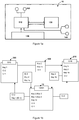
- FIG. 1a shows a token 10 schematic according to an embodiment of the present invention.
- the token comprises a General Micro Controller 110, a Secure Micro Controller 130, sensors 100 and 140, and a Display 120.
- the General Micro Controller 110 controls the sensors 100, 140 and the display 120. It also communicates with the Secure Micro Controller 130.
- the Secure Micro Controller 130 performs all cryptographic functions and stores keys used for the authentication.
- the sensor 140 is a duplex data interface 140.
- the duplex data interface 140 may comprise an Infra-Red transmitter and an Infra-Red receiver.
- the sensor 100 is an optical sensor 100 for detecting a signal or a pattern displayed on a display of an external device- workstation or laptop that the user operates.
- the optical sensor 100 enables a Challenge-Response protocol to be used with the token, wherein a pattern displayed on the display of an external device, for example a computer screen, is received by the optical sensor 100 and used as an incoming data containing a challenge, to which either the General Micro Controller 110 or the Secure Micro Controller 130 (or both) generates a response, which is then displayed on the display 120.
- a user of the token may then type in the response displayed on the display 120 into the computer.
- the generation of the expected response to the challenge can only occur if the correct set of keys is stored in the token. This enables the computer to verify the authenticity of the token, and hence the user's identity.
- FIG. 1b shows a message exchange schematic of an authentication method according to an embodiment of the invention wherein a SAS 200, a CAS 210 and a token 10 each possess a different set of keys.
- the Stand Alone Server (SAS) 200 populates and updates the tokens 10 with keys and IDs.
- a communication channel for carrying out such population and updates may use a contactless interface such as the duplex data interface 140.
- the Authentication Server (CAS) 210 verifies the authenticity of the token 10 in use.
- the CAS 210 produces challenges to be sent to the token 10 using the Challenge-Response protocol whereby the authenticity of the token can be verified and even keys stored in the token updated.
- a communication channel for such verification and updates may comprise that established using the optical sensor 100.
- the authentication method is based on the use of stored data sets which are used in symmetric encryption algorithms (Key) and as identity proxies (ID).
- a dynamic system nonce may be used to generate an instantaneous key.
- Imported random data from a third party source may also be used as a seed for generating a random instantaneous key.
- the SAS 200 possesses ID 1, ID 2 and Key1
- the CAS 210 possesses ID 2, Key 2, Key 1b, and Key3
- the token 10 possess ID 1, ID 2, Key 1a, Key 2 and Key 3.
- Key 2 may be stored in the token encrypted with an encryption key Key 1 represented as Key 1[Key 2] in Figure 1b .
- Key 3 may be stored in the token encrypted with Key 2 (Key 2 [Key 3] in Figure 1b ).
- Key 1a and Key 1b are generated from Key 1 such that Key 1a and Key 1b alone cannot reveal Key 1.
- Key 1a and Key 1b can be used in conjunction to derive Key 1.
- Advanced Encryption Standard (AES) Key Wrap Algorithm according to the AES Key Wrap Specification is used to generate Key 1a and Key 1b from Key 1.
- Key Encryption Key (KEK) used in the AES Key Wrap Algorithm is also stored to enable the wrapping or unwrapping of Key 1 to be carried out wherever required.
- Ciphertext may be Key 1a and the other values produced from the Wrap algorithm may be Key 1b or vice versa. Key 1 is then derived by inputting Key 1a and Key 1b along with KEK to the AES Key Wrap Algorithm.
- Key 2 cannot be decrypted with just the keys stored in the token 10. Only when the token receives Key 1b can it use it together with Key 1a to derive Key 1 and hence decrypt Key 2. This ensures a perpetrator, who may have gained access to the keys in the token 10, cannot access or change Key 2 without gaining access to Key 1 or Key 1b stored in the SAS 200 or the CAS 210 respectively.
- the SAS 200 and the CAS 210 can also initiate a token state change wherein the token state represents a key possession state of the token 10, namely a set of keys stored therein.
- the token state represents a key possession state of the token 10, namely a set of keys stored therein.
- ID 1 or ID 2 may be encrypted with Key 1 and is communicated by the token in this encrypted form (represented as Key 1 [ID 1] in Figure 1b )
- the SAS 200 recognises the token by ID 1 or ID 2 and initiates the key possession state change of the token by embedding, removing or updating a key or ID stored in the token using an appropriate message encrypted with keys available to the Token.
- ID 1 is a static ID and hence is not changed after the token is manufactured.
- the token 100 can communicate ID 1 to the SAS 200 when requested.
- the duplex data interface 140 may be used for this communication. This communication may take the form of a broadcast wherein ID 1 is broadcasted encrypted with Key 1 as shown in Figure 1b .
- the SAS 200 On receiving and decrypting ID 1 using Key 1, the SAS 200 embeds ID 2 into the token 10 thereafter. When requested the token will then only communicate ID 2 to identify itself.
- This communication may take the form of a broadcast using the duplex data interface 140.
- ID 2 initially embedded in the token by the SAS 200 before the token deployment to a user, will only be removed or updated when the token 10 needs to be reset due to security concerns or due to a reassignment requirement in another deployment.
- the SAS 200 generates Key 1a and Key 1b from Key 1.
- the SAS 200 also generates Key 2.
- the SAS 200 then uses the same process described above to embed Key 1a and Key 2 in the token 10, wherein Key 2 may be stored therein encrypted with Key 1.
- the SAS deletes Key 2 from its memory.
- the association of ID 2 with Key 1 also associates ID 2 to Key 1a and Key 1b, and this association of ID 2 with Key 1b is what is in fact communicated to the CAS since the CAS stores Key 1b.
- This association is stored in a form of a token profile 900.
- the token profile 900 may comprise information on associated ID 2, Key 1b and Key 2.
- Advanced Encryption Standard (AES) Key Wrap Algorithm according to the AES Key Wrap Specification is used to generate Key 1a and Key 1b from Key 1.
- Key Encryption Key (KEK) used in the AES Key Wrap Algorithm is also stored to enable the wrapping or unwrapping of Key 1 to be carried out wherever required.
- KEK may also be stored encrypted.
- Key 2 and Key 1 are generated by the SAS 200 before the token 10 deployment to the user.
- Token profiles 900 comprising ID 2, Key 1b and Key 2 are delivered to the CAS 210 by means of a private secure channel or removable recorded media. Then the CAS 210 generates an individual Key 3 when it first communicates with a token 10. Key 3 may be stored in the token 10 encrypted with Key 2. In such a case in order to decrypt Key 3, Key 1 will have to be derived from Key 1a and Key 1b, then Key 2 is decrypted with the derived Key 1, and the decrypted Key 2 is used to decrypt Key 3.
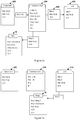
- Figure 2a shows the key possession states at the token's manufacturing stage according to an embodiment of the present invention.
- a Manufacturer 290 produces tokens 10 wherein Key 1a (m) and ID 1 are stored. ID 1 is stored in the token 10. ID 1 is broadcasted by the token 10 encrypted with a key, Key 1 (m), when prompted. The same Key 1 (m) can be used for a batch of manufactured tokens.
- Key 1a only represents a portion of the corresponding Key 1 and hence an infiltrator cannot obtain the full Key 1 from Key 1a.
- Key 1 can be used to generate Key 1a and Key 1b.
- Key 1a and Key 1b can then be used in conjunction to derive the full Key 1.
- the communication message contains Key 1b, which can be used in conjunction with Key 1a stored in the token 10 to reveal the full Key 1.
- the AES Key Wrap Algorithm with KEK may be used to generate Key 1a and Key 1b, and to reveal Key 1 from them.
- Figure 2b shows key possession states at a pre-deployment stage wherein a Vendor SAS 220 prepares the token shown in Figure 2a for a Customer's SAS 230. After receiving key information comprising Key 1 (m) from the Manufacturer 290, the Vendor SAS 220 generates a customer default Key 1, namely Key 1 (c), for a specific customer to be used on a specific batch of tokens to be deployed by that specific customer. The key information is received in a secure recorded media form. The Vendor SAS 220 then replaces Key 1a (m) stored in the token 10 with Key 1a (c). This replacement of the keys may be performed using a secure communication channel established on the duplex data interface 140 using Key 1 (m).
- the duplex data interface 140 may comprise an Infra-Red transmitter and an Infra-Red receiver.
- the parentheses in Figure 2b represent deleted or replaced keys.
- the Token's unique ID 1 may appear in the message data.
- the Vendor SAS 220 sends a "Get ID 1" request to which the token 10 responds with a broadcasting of its ID 1 encrypted with Key 1 (m) or Key 1 (c).
- Figure 2c shows key possession states during a token set-up stage wherein the token 10 shown in Figure 2b is being prepared by the Customer's SAS 230 for use.
- the Customer's SAS 230 After receiving key information comprising Key 1 (c) from the Vendor SAS 220, the Customer's SAS 230 generates individual Key 1 (t) for each token 10, replacing Key 1 (c) with Key 1 (t). Accordingly the Customer's SAS 230 then replaces the token's 10 Key 1a (c) with Key 1a (t).
- the Customer's SAS 230 also generates and adds further individual token keys, namely Key 2 and ID 2 for each token 10.
- a dynamic system nonce may be used in conjunction with imported random data from a third party source to help generate an instantaneous data thereby ensuring that third parties cannot predict the value of the keys generated.
- the parentheses represent deleted or replaced keys.
- Key 1 (t) is not known to either the Manufacturer 290, the Vendor 220 or the token 10, therefore should any one of these entities, namely the Manufacturer 290, the Vendor 220 or the token 10, be compromised the full set of keys in the other entities remain uncompromised. This ensures any compromise on the Manufacturer 290, the Vendor 220 or the token 10 does not affect the security of the token authentication system in use by the customer, for example the authentication system employed for a communication between the Customer's SAS 230 and the token 10.
- the Customer's SAS 230 communicates a token profile 900 to the CAS 210.
- a private secure channel is established for this token profile 900 communication.
- the establishment of the secure channel might be temporary.
- the token profile 900 may be communicated to the CAS 210 using a secure recorded media form.
- the token profile 900 comprises ID 2, Key 1b (t) and Key 2.
- Key 2 may be stored encrypted with Key 1 (t) as represented by Key 1 (t) [Key 2] in Figure 2c .
- the Customer's SAS 230 deletes Key 2 from its memory. This deletion may take place as soon as the token profile 900 is written and recorded.
- Figure 2d shows key possession states during the first communication between the CAS 210 and the token 10 shown in Figure 2c .
- the CAS 210 generates a new key Key 3 and during the first communication adds Key 3 to the token 10.
- the communication thereof may be over a secure channel encrypted with Key 2.
- Key 3 may be stored encrypted with Key 2 as represented by Key 2 [Key 3] in the Figure 2d .
- the message content and responses comprise sufficient information to ensure that the token's 10 integrity is always maintained. For example, use of an increasing counter will ensure no replay of any previous message or communication is possible.
- Key 3 update must be validated correctly or another update Key 3 message with a new different key must be sent until valid acknowledgement is received by the CAS 210.
- both the CAS 210 and the token 10 may also maintain a common "generation" or "counter” number to ensure that the token 10 cannot be returned to an earlier unsynchronised state by preventing the acceptance of a past recorded message to return the token 10 to the unsynchronised state.
- each entity's key possession states is achieved.
- the Vendor SAS 220, the Customer's SAS 230, the CAS 210, and the token 10 each has a different set of keys so compromising one of the entities should not lead to full compromise of the whole system.
- the token 10 does not know the full Key 1 (t)
- the CAS 210 does not know ID 1 or full Key 1 (t)
- the Customer's SAS 230 does not know Key 2 or Key 3
- the Vendor SAS 220 only knows ID 1, Key 1 (c) and Key 1a (c).
- Figure 2e shows key possession states in use when mutual authentication takes place between the token 10 and the CAS 210 shown in Figure 2d .
- the CAS 210 verifies the authenticity of the token 10 by sending a challenge and analysing the response to this challenge.
- This challenge is based on random data and may be received through a communication channel established using the token's optical sensor 100.
- This challenge may also be based on any information stored in both the CAS 210 and the token 10, for example ID 2, Key 2 or Key 3.
- the response from the token 10 to the CAS 210 challenge may be displayed on the token's display.
- the CAS 210 can also echo back a user created Hex or Text phrase which is then read by the token's sensors 100/140 and displayed back to the user on the token's display 120.
- the message may contain ID 2 to allow the token 10 to know that the message is intended for it alone. This enables the user to authenticate the identity of the CAS 210 since only the CAS 210 with the right set of keys would be able to echo back the Hex or Text phrase correctly.
- Figure 2f shows key possession states in use when a key update takes place.
- This key update may take place periodically so that an infiltrator can be identified when the imposter token and the genuine token 10 have a different key possession states due to the key update having been performed on only one of them.
- the key update may take place at each communication between the CAS 210 and the token 10. Alternatively, the key update may take place periodically or randomly.
- the CAS 210 To perform the key update, the CAS 210 generates a new key Key 3' and establishes a secure communication channel with the token 10 using Key 2 to replace the stored Key 3 with Key 3'.
- the message may contain random data and also ID 2 for token verification.
- the CAS 210 deletes Key 3 once the replacement with Key 3' in the token 10 is verified but may continue to send update Key 3 messages with new keys until a valid response is received from the token 10.
- the parentheses represent deleted or replaced keys.
- Figure 2g shows key possession states when the Customer's SAS 230 updates a token profile 900 of a token 10 which has previously been set-up as shown in Figure 2c .
- the Customer's SAS 230 generates a new keys Key 1 (t)', Key 1a (t)' and Key 2', then replaces Key 1a (t) and Key 2 in the token 10 with Key 1a (t)' and Key 2' respectively.
- ID 2 is unchanged and identifies the token 10 as the intended message recipient.
- Similar processes to that described for Figure 2c is used mutatis mutandis.
- the parentheses represent deleted or replaced keys.
- This communication may be performed using a communication channel established on the duplex data interface 140.
- the duplex data interface 140 may comprise an Infra-Red transmitter and an Infra-Red receiver.
- the Customer's SAS 230 communicates a token profile 900 to the CAS 210 as previously described.
- Figure 2h shows key possession states when the Vendor 220 or the Customer's SAS 230 resets a token 10 which has previously been set-up according to the processes described for Figure 2c .
- the Vendor 220 or the Customer's SAS 230 resets the token 10 so that Key 2 and ID 2 are deleted whilst Key 1a (t) is replaced with Key 1a (c).
- Key 1a (c) may be from a secure recorded medium produced by the Vendor SAS 220.
- Key 1a (c) may be derived from Key 1 (c) stored in the secure recorded medium produced by the Vendor SAS 220.
- the parentheses represent deleted or replaced keys.
- the Vendor 220 or the Customer's SAS 230 communicates this resetting of the token 10 to the CAS 210, indicating ID 2 for the reset token is no longer active.
- the CAS 210 removes the token profile with the reset token's ID 2 from its memory.
- the CAS 210 may just record the token profile with the reset token's ID 2 to be inactive and apply this status to the authentication system.
- a secure channel employing an encryption may be established for this communication. The establishment of this secure channel might be temporary. Alternatively this communication may use a secure recorded media form.
- FIG 3 shows a hopper system to set-up, update or reset tokens 10.
- a hopper system comprises an entrance 310, an exit 320, a Read/Write cradle 330, a computer 200, and a wireless communication device 340.
- a token 10 is introduced to the hopper system via the entrance 310, carried through the Read/Write cradle 330 and then collected at the exit 320.
- This computer may refer to that used by the Manufacturer 290, the Vendor 220 or the Customer's SAS 230 in Figures 2a-2c or Figures 2g-2h .
- the entrance 310 comprises a hopper wherein a token 10 is placed.
- the entrance hopper 310 releases a token 10 onto a conveyor 350, wherein the wireless communication device 340 and the Read/Write cradle 330 are placed in proximity thereto so that they can interact with the token 10 thereon.
- the computer is connected to the wireless communication device 340 and the Read/Write cradle 330 to initiate and to receive response from this interaction with the token 10.
- the Token 10 either broadcasts its ID 2 in which case the Vendor 220 or the Customer's SAS 230 can update token profile 900 or reset to customer default as in Figure 2g or 2h .
- the Vendor 220 or the Customer's SAS 230 can issue a "Get ID 1" message and then proceed to initial setup as shown in Figures 2b or 2c .
- This interaction comprises the communication to store, delete or replace the keys stored in the token 10 as described in Figures 2a-2c or 2g-2h .
- This interaction may comprise authentication communication between the token 10 and an entity, such as the Manufacturer 290, the Vendor 220 or the Customer's SAS 230, whereby the authenticity or the functioning of the token 10 is assessed.
- the exit 320 may be connected to the entity such as the SAS 200 whereby it can be informed of the token's authenticity or functioning parameters.
- the exit 320 may further comprise a sorting means whereby the tokens 10 are sorted according to their authenticity or functioning parameters.
- the exit 320 may comprise two hoppers one for the properly authenticated or functioning tokens 321 and the other for those that are not 322.
- Embodiments of the present invention advantageously address problems associated with prior art authentication systems.
- symmetric key based authentication systems will benefit from the reduced administrative overhead in key distribution and key change.
- the embodiments of the present invention reduces the reliance of the whole system on keeping all the keys secret, which can be a weakness in a Public-Private-key based systems, and enables the use of the symmetric key based authentication systems in an industrially viable scale.
- the separation of each entity's key possession states and the possibility of easily updating various keys either periodically or in use also provide additional layers of protection against any potential security breach or attacks.
Landscapes
- Engineering & Computer Science (AREA)
- Computer Hardware Design (AREA)
- Computer Security & Cryptography (AREA)
- Computing Systems (AREA)
- General Engineering & Computer Science (AREA)
- Computer Networks & Wireless Communication (AREA)
- Signal Processing (AREA)
- Storage Device Security (AREA)
- Mobile Radio Communication Systems (AREA)
Claims (15)
- Schlüsselverwaltungsverfahren zum Verwalten eines Tokens mit einem Verwaltungsserver und einem Authentifizierungsserver, wobei sich ein Satz von darin gespeicherten verwendeten Schlüsseln unterscheidet, so dass mindestens ein gegenseitig ausschließender Schlüssel in jedem vom dem Token, dem Verwaltungsserver, oder dem Authentifizierungsserver gespeichert wird, wobei das Verfahren die folgenden Schritte aufweist:das Token überträgt eine Identitätsproxy-ID 1, die mit einem Verschlüsselungsschlüssel Schlüssel 1 verschlüsselt ist;der Verwaltungsserver erzeugt Daten Schlüssel 1a und Schlüssel 1b aus dem darin gespeicherten Schlüssel 1, wobei Schlüssel 1a und Schlüssel 1b zusammen, aber nicht getrennt, verwendet werden können, um Schlüssel 1 abzuleiten;der Verwaltungsserver erzeugt eine Identitätsproxy-ID 2 und einen Verschlüsselungsschlüssel Schlüssel 2, wobei der Verwaltungsserver ein Token-Profil aufzeichnet, das eine Assoziationsinformation zwischen ID 2, Schlüssel 1b und Schlüssel 2 aufweist;der Verwaltungsserver kommuniziert ID 2, Schlüssel 1a und Schlüssel 2 an das Token, und das Token speichert ID 2, Schlüssel 1a und Schlüssel 2, wobei Schlüssel 2, mit Schlüssel 1 verschlüsselt, darin gespeichert wird;der Verwaltungsserver kommuniziert das Token-Profil an den Authentifizierungsserver und löscht danach Schlüssel 1b und Schlüssel 2 aus seinen Datensätzen;der Authentifizierungsserver fordert ID 2 von dem Token an, und das Token überträgt ID 2 zu diesem;der Authentifizierungsserver identifiziert Schlüssel 1b und Schlüssel 2, die mit der übertragenen ID 2 assoziiert sind, und erzeugt einen neuen Verschlüsselungsschlüssel Schlüssel 3;der Authentifizierungsserver zeichnet die Assoziierung von Schlüssel 3 mit ID 2 in dem Token-Profil auf und kommuniziert Schlüssel 3 an das Token; unddas Token speichert Schlüssel 3, mit Schlüssel 2 verschlüsselt, darin, wobei der Verwaltungsserver ID 1, ID 2 und Schlüssel 1 speichert, der Authentifizierungsserver ID 2, Schlüssel 1b, Schlüssel 2 und Schlüssel 3 speichert, und das Token ID 1, ID 2, Schlüssel 1a, Schlüssel 2 und Schlüssel 3 speichert, wobei das Token Schlüssel 2, verschlüsselt mit Schlüssel 1, speichert und Schlüssel 3, verschlüsselt mit Schlüssel 2, speichert.
- Verwaltungsverfahren nach Anspruch 1, ferner aufweisend ein Authentifizierungsverfahren zum Authentifizieren des Tokens mit einem Computersystem, wobei das Authentifizierungsverfahren die folgenden Schritte aufweist:Anzeigen, an dem Token, einer Nachricht an einen Benutzer in Antwort auf den Empfang einer Dateneingabe in das Token von einem lokalen Computerbildschirm;Eingeben, durch den Benutzer, der Nachricht in eine lokale Tastatur; undErlauben des Zugriffs auf das Computersystem, wenn die in die lokale Tastatur eingegebene Nachricht mit der von dem Computersystem erwarteten Nachricht übereinstimmt, wobei der Besitz des Tokens eines Verschlüsselungsschlüssels Schlüssel 3, der für die Erzeugung der Dateneingabe verwendet wird, verifiziert wird, wobei die Dateneingabe von dem Computersystem ferner Schlüssel 1b aufweist, der zusammen mit dem in dem Token gespeicherten Schlüssel 1a zu verwenden ist, um den Schlüssel 1 abzuleiten, wobei das Token einen Verschlüsselungsschlüssel Schlüssel 2 unter Verwendung von Schlüssel 1 entschlüsselt, und Schlüssel 2 verwendet wird, um Schlüssel 3, der in dem Token gespeichert wird, zu entschlüsseln, so dass die Nachricht an den Benutzer unter Verwendung von Schlüssel 3 erzeugt werden kann.
- Verwaltungsverfahren nach Anspruch 2, wobei die Dateneingabe von dem Computersystem Daten, die unter Verwendung von Zufallsdaten, ID 2, Schlüssel 2 oder Schlüssel 3 erzeugt wurden, aufweist.
- Verwaltungsverfahren nach Anspruch 2 oder 3, wobei das Authentifizierungsverfahren ferner die folgenden Schritte aufweist:der Benutzer gibt eine Testnachricht in eine lokale Tastatur ein;der lokale Computerbildschirm zeigt eine Antwortnachricht an, die an das Token zu kommunizieren ist; unddas Token zeigt eine von der Antwortnachricht abgeleitete Verifizierungsnachricht an, wobei der Besitz des Computersystems von Schlüssel 3, der verwendet wird, die Antwortnachricht zu erzeugen, verifiziert wird, wobei die Antwortnachricht von dem Computersystem unter Verwendung von Schlüssel 3 erzeugt wird, wobei die Antwortnachricht von dem Computersystem ferner Schlüssel 1b aufweist, der zusammen mit dem in dem Token gespeicherten Schlüssel 1a zu verwenden ist, um Schlüssel 1 abzuleiten, wobei das Token einen Verschlüsselungsschlüssel Schlüssel 2 unter Verwendung von Schlüssel 1 entschlüsselt, und Schlüssel 2 verwendet wird, um den in dem Token gespeicherten Schlüssel 3 zu entschlüsseln, so dass die dem Benutzer angezeigte Verifizierungsnachricht mit der Testnachricht, die der Benutzer ursprünglich eingegeben hat, übereinstimmt.
- Verwaltungsverfahren nach Anspruch 4, wobei die Antwortnachricht von dem Computersystem ferner Informationen aufweist, die auf ID 2 basieren, wobei das Token mit der korrekten ID 2 die korrekte Bestätigungsnachricht ableiten kann.
- Verwaltungsverfahren nach einem der vorhergehenden Ansprüche, ferner aufweisend ein Verfahren zum Aktualisieren eines Schlüssels in einem sicheren Zugriffstoken, aufweisend die folgenden Schritte:ein Computersystem fordert das Token auf, eine Identitätsproxy-ID 2 zu übertragen, und erzeugt einen neuen Schlüssel Schlüssel 3';das Token überträgt ID 2;das Computersystem identifiziert den korrekten Schlüssel 1b, Schlüssel 2, oder Schlüssel 3, der mit der bestimmten ID 2 assoziiert ist, aus einem gespeicherten Token-Profil, das die Assoziationsinformation zwischen ID 2, Schlüssel 1b, Schlüssel 2, und Schlüssel 3 aufweist, wobei Schlüssel 1b zusammen mit dem in dem Token gespeicherten Schlüssel 1a verwendet wird, um Schlüssel 1 abzuleiten, wobei das Token einen Verschlüsselungsschlüssel Schlüssel 2 unter Verwendung von Schlüssel 1 entschlüsselt, und Schlüssel 2 verwendet wird, um Schlüssel 3, der in dem Token gespeichert wird, zu entschlüsseln;das Computersystem sendet eine Schlüssel 3 Aktualisierungsnachricht, die mit Schlüssel 2 verschlüsselt ist, wobei die Schlüssel 3 Aktualisierungsnachricht Schlüssel 1b aufweist, der mit ID 2 assoziiert ist, so dass Schlüssel 2 in dem Token entschlüsselt werden kann;das Token entschlüsselt Schlüssel 3 unter Verwendung des entschlüsselten Schlüssels 2 und ersetzt ihn mit Schlüssel 3'; unddas Computersystem aktualisiert das darin gespeicherte Token-Profil, um ID 2, Schlüssel 1b, Schlüssel 2, und Schlüssel 3' aufzuweisen.
- Verwaltungsverfahren nach Anspruch 6, wobei das Computersystem damit fortfährt, die Schlüssel 3 Aktualisierungsnachrichten mit neuen Schlüsseln zu senden, bis eine gültige Antwort von dem Token empfangen wird.
- Verwaltungsverfahren nach einem der Ansprüche 2 bis 7, wobei die Dateneingabe in das Token von dem Computersystem, die Antwortnachricht von dem Computersystem oder die Schlüssel 3 Aktualisierungsnachricht über einen optischen Sensor 100 an das Token kommuniziert wird, indem ein lokaler Computerbildschirm ein Bild anzeigt, das von dem optischen Sensor 100 des Tokens erfasst werden soll, wobei das angezeigte Bild ein Muster aufweist.
- Verwaltungsverfahren nach Anspruch 6 oder 7, oder nach Anspruch 8 in Abhängigkeit von Anspruch 6 oder 7, wobei das Verfahren zum Aktualisieren eines Schlüssels in dem sicheren Zugriffstoken ferner die folgenden Schritte aufweist:das Token überträgt eine Identitätsproxy-ID 1, die mit einem Verschlüsselungsschlüssel Schlüssel 1 (c) verschlüsselt ist, an ein Computersystem, in dem Schlüssel 1 (c) gespeichert wird;das Computersystem entschlüsselt ID 1 und erzeugt eine zugehörige Identitätsproxy-ID 2 und einen neuen Verschlüsselungsschlüssel Schlüssel 1;das Computersystem erzeugt Daten Schlüssel 1a und Schlüssel 1b aus Schlüssel 1, wobei Schlüssel 1a und Schlüssel 1b zusammen, aber nicht separat, verwendet werden können, um Schlüssel 1 abzuleiten;das Computersystem erzeugt einen neuen Verschlüsselungsschlüssel Schlüssel 2;das Computersystem kommuniziert eine Schlüsselsatzinformation, die ID 2, Schlüssel 1a und Schlüssel 2 aufweist, an das Token; unddas Token aktualisiert den darin gespeicherten Schlüssel 1a (c) mit Schlüssel 1a und speichert ID 2 und Schlüssel 2, wobei Schlüssel 2, verschlüsselt mit Schlüssel 1, gespeichert wird.
- Verwaltungsverfahren nach Anspruch 9, wobei das Verfahren zum Aktualisieren eines Schlüssels in dem sicheren Zugriffstoken ferner die folgenden Schritte aufweist:das Computersystem zeichnet ein Token-Profil auf, das eine Assoziationsinformation zwischen ID 2, Schlüssel 1b und Schlüssel 2 aufweist; unddas Computersystem kommuniziert das Token-Profil an einen Authentifizierungsserver.
- Verwaltungsverfahren nach Anspruch 10, wobei das Verfahren zum Aktualisieren eines Schlüssels in dem sicheren Zugriffstoken ferner den Schritt des Löschens von Schlüssel 2 aus dem Computersystem aufweist.
- Verwaltungsverfahren nach einem der vorhergehenden Ansprüche, wobei der Schlüsselerzeugungsschritt einen Schritt des Verwendens eines dynamischen Systems für den Moment zusammen mit importierten Zufallsdaten von einer Drittanbieterquelle, um momentane Daten zu erzeugen, aufweist.
- Verwaltungsverfahren nach einem der Ansprüche 9 bis 12, wobei ein Mittel zum stapelweisen Aktualisieren von mehreren sicheren Zugriffstokens vorgesehen ist, wobei das Mittel zum stapelweisen Aktualisieren aufweist:einen Eingang, um das Token zu akzeptieren;einen Ausgang, um das Token auszustoßen;eine Lese-/Schreib-Gabel, um ein Token zu empfangen;eine drahtlose Kommunikationsvorrichtung, um einen Kommunikationskanal mit dem Token herzustellen; undeinen Computer, der mit dem Token kommuniziert, wobei der Computer mit der drahtlosen Kommunikationsvorrichtung und der Lese-/Schreib-Gabel verbunden ist, wobei die drahtlose Kommunikationsvorrichtung und die Lese-/Schreib-Gabel in der Nähe davon angeordnet sind, wodurch ein Kommunikationskanal zwischen dem Token und dem Computer hergestellt werden kann.
- Verfahren nach Anspruch 13, wobei die Kommunikation zwischen dem Token und dem Computer aufweist:das Token verbreitet eine Identitätsproxy-ID 1, die mit einem Verschlüsselungsschlüssel Schlüssel 1 verschlüsselt ist, und der Computer fordert die ID 1 an;das Token überträgt, auf eine Anfrage durch den Computer hin, eine Identitätsproxy-ID 2; oderAnweisungen zum Speichern, Löschen oder Ersetzen der Identitätsproxies oder der Verschlüsselungsschlüssel, die in dem Token gespeichert sind, und eine Authentifizierungskommunikation zwischen dem Token und dem Computer, wobei die Authentizität oder das Funktionieren des Tokens beurteilt werden kann.
- Authentifizierungsverfahren zum Verwalten and Authentifizieren eins Tokens mit einem Verwaltungsserver und einem Authentifizierungsserver, wobei das Verfahren die folgenden Schritte aufweist:das Token überträgt eine Identitätsproxy-ID 1, die mit einem Verschlüsselungsschlüssel Schlüssel 1 verschlüsselt ist;der Verwaltungsserver erzeugt Daten Schlüssel 1a und Schlüssel 1b aus dem darin gespeicherten Schlüssel 1, wobei Schlüssel 1a und Schlüssel 1b zusammen, aber nicht separat, verwendet werden können, um Schlüssel 1 abzuleiten;der Verwaltungsserver erzeugt eine Identitätsproxy-ID 2 und einen Verschlüsselungsschlüssel Schlüssel 2, wobei der Verwaltungsserver ein Token-Profil aufzeichnet, das eine Assoziationsinformation zwischen ID 2, Schlüssel 1b und Schlüssel 2 aufweist;der Verwaltungsserver kommuniziert ID 2, Schlüssel 1a und Schlüssel 2 an das Token, und das Token speichert ID 2, Schlüssel 1a und Schlüssel 2, wobei Schlüssel 2, mit Schlüssel 1 verschlüsselt, darin gespeichert wird;der Verwaltungsserver kommuniziert das Token-Profil an den Authentifizierungsserver und löscht den Schlüssel 1b und den Schlüssel 2 danach aus seinen Datensätzen;der Authentifizierungsserver fordert ID 2 von dem Token an, und das Token überträgt ID 2 zu diesem;der Authentifizierungsserver identifiziert Schlüssel 1b und Schlüssel 2, die mit der übertragenen ID 2 assoziiert sind, und erzeugt einen neuen Verschlüsselungsschlüssel Schlüssel 3;der Authentifizierungsserver zeichnet die Assoziierung von Schlüssel 3 mit ID 2 in dem Token-Profil auf und kommuniziert Schlüssel 3 an das Token; unddas Token speichert Schlüssel 3, mit Schlüssel 2 verschlüsselt, darin.
Applications Claiming Priority (2)
| Application Number | Priority Date | Filing Date | Title |
|---|---|---|---|
| GBGB1204202.4A GB201204202D0 (en) | 2012-03-09 | 2012-03-09 | A scalable authentication system |
| PCT/GB2013/050341 WO2013132224A2 (en) | 2012-03-09 | 2013-02-14 | A scalable authentication system |
Publications (2)
| Publication Number | Publication Date |
|---|---|
| EP2856729A2 EP2856729A2 (de) | 2015-04-08 |
| EP2856729B1 true EP2856729B1 (de) | 2017-11-15 |
Family
ID=46026295
Family Applications (1)
| Application Number | Title | Priority Date | Filing Date |
|---|---|---|---|
| EP13708221.0A Active EP2856729B1 (de) | 2012-03-09 | 2013-02-14 | Skalierbares authentifizierungssystem |
Country Status (4)
| Country | Link |
|---|---|
| US (1) | US9369464B2 (de) |
| EP (1) | EP2856729B1 (de) |
| GB (1) | GB201204202D0 (de) |
| WO (1) | WO2013132224A2 (de) |
Families Citing this family (11)
| Publication number | Priority date | Publication date | Assignee | Title |
|---|---|---|---|---|
| US9853813B2 (en) * | 2016-03-17 | 2017-12-26 | Crater Dog Technologies, LLC | Method for securing a private key |
| US10193895B2 (en) * | 2016-05-18 | 2019-01-29 | Abdulrahman Alhothaily | System and method for remote authentication with dynamic usernames |
| US10291599B2 (en) * | 2016-07-20 | 2019-05-14 | UScontracting, Inc. | Systems, methods and apparatus for keystroke encryption |
| CN108964893B (zh) * | 2018-06-26 | 2021-11-23 | 百度在线网络技术(北京)有限公司 | 一种密钥处理方法、装置、设备和介质 |
| US11632360B1 (en) | 2018-07-24 | 2023-04-18 | Pure Storage, Inc. | Remote access to a storage device |
| CN109194673B (zh) * | 2018-09-20 | 2021-08-03 | 江苏满运软件科技有限公司 | 基于用户授权信息的认证方法、系统、设备及存储介质 |
| US10936191B1 (en) | 2018-12-05 | 2021-03-02 | Pure Storage, Inc. | Access control for a computing system |
| US11652626B2 (en) * | 2020-02-18 | 2023-05-16 | International Business Machines Corporation | Safeguarding cryptographic keys from modification or deletion |
| US20230138763A1 (en) * | 2021-10-29 | 2023-05-04 | Capital One Services, Llc | Systems and methods for modular syntactic generators for synthetic data generation |
| US11973861B2 (en) * | 2022-02-09 | 2024-04-30 | Northrop Grumman Systems Corporation | Secure key generation |
| US20240283642A1 (en) * | 2023-02-22 | 2024-08-22 | Thales Dis Usa, Inc. | System and method for secure transfer of biometric templates between biometric device |
Family Cites Families (10)
| Publication number | Priority date | Publication date | Assignee | Title |
|---|---|---|---|---|
| US20020071567A1 (en) * | 2000-12-12 | 2002-06-13 | Kurn David Michael | Scalable computer system using remote agents to manipulate cryptographic keys |
| JP4562464B2 (ja) | 2004-09-07 | 2010-10-13 | 富士通株式会社 | 情報処理装置 |
| US8194859B2 (en) | 2005-09-01 | 2012-06-05 | Qualcomm Incorporated | Efficient key hierarchy for delivery of multimedia content |
| WO2007130855A2 (en) * | 2006-05-01 | 2007-11-15 | Michael Pomerantsev | Secure sharing of personal information |
| US7792301B2 (en) | 2006-06-29 | 2010-09-07 | Microsoft Corporation | Access control and encryption in multi-user systems |
| JP2009245227A (ja) | 2008-03-31 | 2009-10-22 | Fujitsu Ltd | 情報記憶装置 |
| US8793497B2 (en) * | 2008-05-09 | 2014-07-29 | Qualcomm Incorporated | Puzzle-based authentication between a token and verifiers |
| EP2401838B1 (de) * | 2009-02-19 | 2013-12-11 | SecureKey Technologies Inc. | Online-authentifizierungssystem und -verfahren |
| JPWO2011024298A1 (ja) | 2009-08-28 | 2013-01-24 | リプレックス株式会社 | サービスシステム |
| US8825319B2 (en) | 2012-05-21 | 2014-09-02 | GM Global Technology Operations LLC | Automatic transmission input clutch control |
-
2012
- 2012-03-09 GB GBGB1204202.4A patent/GB201204202D0/en not_active Ceased
-
2013
- 2013-02-14 WO PCT/GB2013/050341 patent/WO2013132224A2/en not_active Ceased
- 2013-02-14 US US14/382,942 patent/US9369464B2/en active Active
- 2013-02-14 EP EP13708221.0A patent/EP2856729B1/de active Active
Non-Patent Citations (1)
| Title |
|---|
| None * |
Also Published As
| Publication number | Publication date |
|---|---|
| WO2013132224A2 (en) | 2013-09-12 |
| GB201204202D0 (en) | 2012-04-25 |
| WO2013132224A3 (en) | 2013-12-05 |
| US20150046695A1 (en) | 2015-02-12 |
| US9369464B2 (en) | 2016-06-14 |
| EP2856729A2 (de) | 2015-04-08 |
Similar Documents
| Publication | Publication Date | Title |
|---|---|---|
| US9369464B2 (en) | Scalable authentication system | |
| KR101478419B1 (ko) | 디바이스들의 임시 등록 | |
| KR100843072B1 (ko) | 무선 네트워크 시스템 및 이를 이용한 통신 방법 | |
| JP4617763B2 (ja) | 機器認証システム、機器認証サーバ、端末機器、機器認証方法、および機器認証プログラム | |
| US8984295B2 (en) | Secure access to electronic devices | |
| KR102177848B1 (ko) | 액세스 요청을 검증하기 위한 방법 및 시스템 | |
| US8171527B2 (en) | Method and apparatus for securing unlock password generation and distribution | |
| US20110213969A1 (en) | Dynamic cryptographic subscriber-device identity binding for subscriber mobility | |
| US8819415B2 (en) | Method and device for authenticating personal network entity | |
| JP2010158030A (ja) | セキュア通信をイニシャライズし、装置を排他的にペアリングする方法、コンピュータ・プログラムおよび装置 | |
| KR101452708B1 (ko) | Ce 장치 관리 서버, ce 장치 관리 서버를 이용한drm 키 발급 방법, 및 그 방법을 실행하기 위한프로그램 기록매체 | |
| KR20200044117A (ko) | 디지털 인증서 관리 방법 및 장치 | |
| CN101189827A (zh) | 综合认证和管理服务提供者、终端和用户身份模块的方法以及使用该方法的系统和终端 | |
| US20170118015A1 (en) | Method for managing smart home environment, method for joining smart home environment and method for connecting communication session with smart device | |
| CN110868294B (zh) | 一种密钥更新方法、装置及设备 | |
| JP5380583B1 (ja) | デバイス認証方法及びシステム | |
| EP2990978B1 (de) | Betrieb einer Vorrichtung zur Weiterleitung von geschütztem Inhalt an eine Client-Einheit | |
| US20090198998A1 (en) | Method and apparatus of ensuring security of communication in home network | |
| CN102882882B (zh) | 一种用户资源授权方法 | |
| CN107317787A (zh) | 服务授信方法、设备及系统 | |
| CN114422266A (zh) | 一种基于双重验证机制的IDaaS系统 | |
| CN118316712B (zh) | 一种基于双链架构的工业设备配置方法 | |
| US9774630B1 (en) | Administration of multiple network system with a single trust module | |
| WO2008004174A2 (en) | Establishing a secure authenticated channel | |
| KR20150005789A (ko) | 인증서를 이용한 사용자 인증 방법 |
Legal Events
| Date | Code | Title | Description |
|---|---|---|---|
| PUAI | Public reference made under article 153(3) epc to a published international application that has entered the european phase |
Free format text: ORIGINAL CODE: 0009012 |
|
| 17P | Request for examination filed |
Effective date: 20141007 |
|
| AK | Designated contracting states |
Kind code of ref document: A2 Designated state(s): AL AT BE BG CH CY CZ DE DK EE ES FI FR GB GR HR HU IE IS IT LI LT LU LV MC MK MT NL NO PL PT RO RS SE SI SK SM TR |
|
| AX | Request for extension of the european patent |
Extension state: BA ME |
|
| DAX | Request for extension of the european patent (deleted) | ||
| GRAP | Despatch of communication of intention to grant a patent |
Free format text: ORIGINAL CODE: EPIDOSNIGR1 |
|
| STAA | Information on the status of an ep patent application or granted ep patent |
Free format text: STATUS: GRANT OF PATENT IS INTENDED |
|
| GRAS | Grant fee paid |
Free format text: ORIGINAL CODE: EPIDOSNIGR3 |
|
| GRAA | (expected) grant |
Free format text: ORIGINAL CODE: 0009210 |
|
| STAA | Information on the status of an ep patent application or granted ep patent |
Free format text: STATUS: THE PATENT HAS BEEN GRANTED |
|
| INTG | Intention to grant announced |
Effective date: 20170920 |
|
| AK | Designated contracting states |
Kind code of ref document: B1 Designated state(s): AL AT BE BG CH CY CZ DE DK EE ES FI FR GB GR HR HU IE IS IT LI LT LU LV MC MK MT NL NO PL PT RO RS SE SI SK SM TR |
|
| REG | Reference to a national code |
Ref country code: CH Ref legal event code: EP Ref country code: GB Ref legal event code: FG4D Ref country code: AT Ref legal event code: REF Ref document number: 947319 Country of ref document: AT Kind code of ref document: T Effective date: 20171115 |
|
| REG | Reference to a national code |
Ref country code: IE Ref legal event code: FG4D |
|
| REG | Reference to a national code |
Ref country code: DE Ref legal event code: R096 Ref document number: 602013029431 Country of ref document: DE |
|
| REG | Reference to a national code |
Ref country code: FR Ref legal event code: PLFP Year of fee payment: 6 |
|
| REG | Reference to a national code |
Ref country code: NL Ref legal event code: MP Effective date: 20171115 |
|
| REG | Reference to a national code |
Ref country code: LT Ref legal event code: MG4D |
|
| REG | Reference to a national code |
Ref country code: AT Ref legal event code: MK05 Ref document number: 947319 Country of ref document: AT Kind code of ref document: T Effective date: 20171115 |
|
| PG25 | Lapsed in a contracting state [announced via postgrant information from national office to epo] |
Ref country code: FI Free format text: LAPSE BECAUSE OF FAILURE TO SUBMIT A TRANSLATION OF THE DESCRIPTION OR TO PAY THE FEE WITHIN THE PRESCRIBED TIME-LIMIT Effective date: 20171115 Ref country code: NO Free format text: LAPSE BECAUSE OF FAILURE TO SUBMIT A TRANSLATION OF THE DESCRIPTION OR TO PAY THE FEE WITHIN THE PRESCRIBED TIME-LIMIT Effective date: 20180215 Ref country code: SE Free format text: LAPSE BECAUSE OF FAILURE TO SUBMIT A TRANSLATION OF THE DESCRIPTION OR TO PAY THE FEE WITHIN THE PRESCRIBED TIME-LIMIT Effective date: 20171115 Ref country code: NL Free format text: LAPSE BECAUSE OF FAILURE TO SUBMIT A TRANSLATION OF THE DESCRIPTION OR TO PAY THE FEE WITHIN THE PRESCRIBED TIME-LIMIT Effective date: 20171115 Ref country code: LT Free format text: LAPSE BECAUSE OF FAILURE TO SUBMIT A TRANSLATION OF THE DESCRIPTION OR TO PAY THE FEE WITHIN THE PRESCRIBED TIME-LIMIT Effective date: 20171115 Ref country code: ES Free format text: LAPSE BECAUSE OF FAILURE TO SUBMIT A TRANSLATION OF THE DESCRIPTION OR TO PAY THE FEE WITHIN THE PRESCRIBED TIME-LIMIT Effective date: 20171115 |
|
| PG25 | Lapsed in a contracting state [announced via postgrant information from national office to epo] |
Ref country code: LV Free format text: LAPSE BECAUSE OF FAILURE TO SUBMIT A TRANSLATION OF THE DESCRIPTION OR TO PAY THE FEE WITHIN THE PRESCRIBED TIME-LIMIT Effective date: 20171115 Ref country code: BG Free format text: LAPSE BECAUSE OF FAILURE TO SUBMIT A TRANSLATION OF THE DESCRIPTION OR TO PAY THE FEE WITHIN THE PRESCRIBED TIME-LIMIT Effective date: 20180215 Ref country code: AT Free format text: LAPSE BECAUSE OF FAILURE TO SUBMIT A TRANSLATION OF THE DESCRIPTION OR TO PAY THE FEE WITHIN THE PRESCRIBED TIME-LIMIT Effective date: 20171115 Ref country code: RS Free format text: LAPSE BECAUSE OF FAILURE TO SUBMIT A TRANSLATION OF THE DESCRIPTION OR TO PAY THE FEE WITHIN THE PRESCRIBED TIME-LIMIT Effective date: 20171115 Ref country code: GR Free format text: LAPSE BECAUSE OF FAILURE TO SUBMIT A TRANSLATION OF THE DESCRIPTION OR TO PAY THE FEE WITHIN THE PRESCRIBED TIME-LIMIT Effective date: 20180216 Ref country code: HR Free format text: LAPSE BECAUSE OF FAILURE TO SUBMIT A TRANSLATION OF THE DESCRIPTION OR TO PAY THE FEE WITHIN THE PRESCRIBED TIME-LIMIT Effective date: 20171115 |
|
| PG25 | Lapsed in a contracting state [announced via postgrant information from national office to epo] |
Ref country code: CY Free format text: LAPSE BECAUSE OF FAILURE TO SUBMIT A TRANSLATION OF THE DESCRIPTION OR TO PAY THE FEE WITHIN THE PRESCRIBED TIME-LIMIT Effective date: 20171115 Ref country code: EE Free format text: LAPSE BECAUSE OF FAILURE TO SUBMIT A TRANSLATION OF THE DESCRIPTION OR TO PAY THE FEE WITHIN THE PRESCRIBED TIME-LIMIT Effective date: 20171115 Ref country code: DK Free format text: LAPSE BECAUSE OF FAILURE TO SUBMIT A TRANSLATION OF THE DESCRIPTION OR TO PAY THE FEE WITHIN THE PRESCRIBED TIME-LIMIT Effective date: 20171115 Ref country code: SK Free format text: LAPSE BECAUSE OF FAILURE TO SUBMIT A TRANSLATION OF THE DESCRIPTION OR TO PAY THE FEE WITHIN THE PRESCRIBED TIME-LIMIT Effective date: 20171115 Ref country code: CZ Free format text: LAPSE BECAUSE OF FAILURE TO SUBMIT A TRANSLATION OF THE DESCRIPTION OR TO PAY THE FEE WITHIN THE PRESCRIBED TIME-LIMIT Effective date: 20171115 |
|
| REG | Reference to a national code |
Ref country code: DE Ref legal event code: R097 Ref document number: 602013029431 Country of ref document: DE |
|
| PG25 | Lapsed in a contracting state [announced via postgrant information from national office to epo] |
Ref country code: PL Free format text: LAPSE BECAUSE OF FAILURE TO SUBMIT A TRANSLATION OF THE DESCRIPTION OR TO PAY THE FEE WITHIN THE PRESCRIBED TIME-LIMIT Effective date: 20171115 Ref country code: SM Free format text: LAPSE BECAUSE OF FAILURE TO SUBMIT A TRANSLATION OF THE DESCRIPTION OR TO PAY THE FEE WITHIN THE PRESCRIBED TIME-LIMIT Effective date: 20171115 Ref country code: IT Free format text: LAPSE BECAUSE OF FAILURE TO SUBMIT A TRANSLATION OF THE DESCRIPTION OR TO PAY THE FEE WITHIN THE PRESCRIBED TIME-LIMIT Effective date: 20171115 Ref country code: RO Free format text: LAPSE BECAUSE OF FAILURE TO SUBMIT A TRANSLATION OF THE DESCRIPTION OR TO PAY THE FEE WITHIN THE PRESCRIBED TIME-LIMIT Effective date: 20171115 |
|
| REG | Reference to a national code |
Ref country code: CH Ref legal event code: PL |
|
| PLBE | No opposition filed within time limit |
Free format text: ORIGINAL CODE: 0009261 |
|
| STAA | Information on the status of an ep patent application or granted ep patent |
Free format text: STATUS: NO OPPOSITION FILED WITHIN TIME LIMIT |
|
| PG25 | Lapsed in a contracting state [announced via postgrant information from national office to epo] |
Ref country code: MC Free format text: LAPSE BECAUSE OF FAILURE TO SUBMIT A TRANSLATION OF THE DESCRIPTION OR TO PAY THE FEE WITHIN THE PRESCRIBED TIME-LIMIT Effective date: 20171115 |
|
| 26N | No opposition filed |
Effective date: 20180817 |
|
| REG | Reference to a national code |
Ref country code: IE Ref legal event code: MM4A |
|
| REG | Reference to a national code |
Ref country code: BE Ref legal event code: MM Effective date: 20180228 |
|
| PG25 | Lapsed in a contracting state [announced via postgrant information from national office to epo] |
Ref country code: LU Free format text: LAPSE BECAUSE OF NON-PAYMENT OF DUE FEES Effective date: 20180214 Ref country code: SI Free format text: LAPSE BECAUSE OF FAILURE TO SUBMIT A TRANSLATION OF THE DESCRIPTION OR TO PAY THE FEE WITHIN THE PRESCRIBED TIME-LIMIT Effective date: 20171115 Ref country code: LI Free format text: LAPSE BECAUSE OF NON-PAYMENT OF DUE FEES Effective date: 20180228 Ref country code: CH Free format text: LAPSE BECAUSE OF NON-PAYMENT OF DUE FEES Effective date: 20180228 |
|
| PG25 | Lapsed in a contracting state [announced via postgrant information from national office to epo] |
Ref country code: IE Free format text: LAPSE BECAUSE OF NON-PAYMENT OF DUE FEES Effective date: 20180214 |
|
| PG25 | Lapsed in a contracting state [announced via postgrant information from national office to epo] |
Ref country code: BE Free format text: LAPSE BECAUSE OF NON-PAYMENT OF DUE FEES Effective date: 20180228 |
|
| PG25 | Lapsed in a contracting state [announced via postgrant information from national office to epo] |
Ref country code: MT Free format text: LAPSE BECAUSE OF NON-PAYMENT OF DUE FEES Effective date: 20180214 |
|
| PG25 | Lapsed in a contracting state [announced via postgrant information from national office to epo] |
Ref country code: TR Free format text: LAPSE BECAUSE OF FAILURE TO SUBMIT A TRANSLATION OF THE DESCRIPTION OR TO PAY THE FEE WITHIN THE PRESCRIBED TIME-LIMIT Effective date: 20171115 |
|
| PG25 | Lapsed in a contracting state [announced via postgrant information from national office to epo] |
Ref country code: PT Free format text: LAPSE BECAUSE OF FAILURE TO SUBMIT A TRANSLATION OF THE DESCRIPTION OR TO PAY THE FEE WITHIN THE PRESCRIBED TIME-LIMIT Effective date: 20171115 |
|
| PG25 | Lapsed in a contracting state [announced via postgrant information from national office to epo] |
Ref country code: MK Free format text: LAPSE BECAUSE OF NON-PAYMENT OF DUE FEES Effective date: 20171115 Ref country code: HU Free format text: LAPSE BECAUSE OF FAILURE TO SUBMIT A TRANSLATION OF THE DESCRIPTION OR TO PAY THE FEE WITHIN THE PRESCRIBED TIME-LIMIT; INVALID AB INITIO Effective date: 20130214 |
|
| PG25 | Lapsed in a contracting state [announced via postgrant information from national office to epo] |
Ref country code: AL Free format text: LAPSE BECAUSE OF FAILURE TO SUBMIT A TRANSLATION OF THE DESCRIPTION OR TO PAY THE FEE WITHIN THE PRESCRIBED TIME-LIMIT Effective date: 20171115 Ref country code: IS Free format text: LAPSE BECAUSE OF FAILURE TO SUBMIT A TRANSLATION OF THE DESCRIPTION OR TO PAY THE FEE WITHIN THE PRESCRIBED TIME-LIMIT Effective date: 20180315 |
|
| REG | Reference to a national code |
Ref country code: DE Ref legal event code: R079 Ref document number: 602013029431 Country of ref document: DE Free format text: PREVIOUS MAIN CLASS: H04L0029060000 Ipc: H04L0065000000 |
|
| PGFP | Annual fee paid to national office [announced via postgrant information from national office to epo] |
Ref country code: GB Payment date: 20260128 Year of fee payment: 14 |
|
| PGFP | Annual fee paid to national office [announced via postgrant information from national office to epo] |
Ref country code: DE Payment date: 20260218 Year of fee payment: 14 |
|
| PGFP | Annual fee paid to national office [announced via postgrant information from national office to epo] |
Ref country code: FR Payment date: 20260218 Year of fee payment: 14 |