EP2859680B1 - Protection de confidentialité pour un système de détection participatif - Google Patents
Protection de confidentialité pour un système de détection participatif Download PDFInfo
- Publication number
- EP2859680B1 EP2859680B1 EP12878615.9A EP12878615A EP2859680B1 EP 2859680 B1 EP2859680 B1 EP 2859680B1 EP 12878615 A EP12878615 A EP 12878615A EP 2859680 B1 EP2859680 B1 EP 2859680B1
- Authority
- EP
- European Patent Office
- Prior art keywords
- algorithm
- sensed data
- certificate
- server
- unique value
- Prior art date
- Legal status (The legal status is an assumption and is not a legal conclusion. Google has not performed a legal analysis and makes no representation as to the accuracy of the status listed.)
- Active
Links
Images


Classifications
-
- G—PHYSICS
- G06—COMPUTING OR CALCULATING; COUNTING
- G06F—ELECTRIC DIGITAL DATA PROCESSING
- G06F21/00—Security arrangements for protecting computers, components thereof, programs or data against unauthorised activity
- G06F21/60—Protecting data
- G06F21/62—Protecting access to data via a platform, e.g. using keys or access control rules
- G06F21/6218—Protecting access to data via a platform, e.g. using keys or access control rules to a system of files or objects, e.g. local or distributed file system or database
- G06F21/6245—Protecting personal data, e.g. for financial or medical purposes
- G06F21/6254—Protecting personal data, e.g. for financial or medical purposes by anonymising data, e.g. decorrelating personal data from the owner's identification
-
- H—ELECTRICITY
- H04—ELECTRIC COMMUNICATION TECHNIQUE
- H04L—TRANSMISSION OF DIGITAL INFORMATION, e.g. TELEGRAPHIC COMMUNICATION
- H04L9/00—Cryptographic mechanisms or cryptographic arrangements for secret or secure communications; Network security protocols
- H04L9/32—Cryptographic mechanisms or cryptographic arrangements for secret or secure communications; Network security protocols including means for verifying the identity or authority of a user of the system or for message authentication, e.g. authorization, entity authentication, data integrity or data verification, non-repudiation, key authentication or verification of credentials
- H04L9/3263—Cryptographic mechanisms or cryptographic arrangements for secret or secure communications; Network security protocols including means for verifying the identity or authority of a user of the system or for message authentication, e.g. authorization, entity authentication, data integrity or data verification, non-repudiation, key authentication or verification of credentials involving certificates, e.g. public key certificate [PKC] or attribute certificate [AC]; Public key infrastructure [PKI] arrangements
- H04L9/3268—Cryptographic mechanisms or cryptographic arrangements for secret or secure communications; Network security protocols including means for verifying the identity or authority of a user of the system or for message authentication, e.g. authorization, entity authentication, data integrity or data verification, non-repudiation, key authentication or verification of credentials involving certificates, e.g. public key certificate [PKC] or attribute certificate [AC]; Public key infrastructure [PKI] arrangements using certificate validation, registration, distribution or revocation, e.g. certificate revocation list [CRL]
-
- H—ELECTRICITY
- H04—ELECTRIC COMMUNICATION TECHNIQUE
- H04L—TRANSMISSION OF DIGITAL INFORMATION, e.g. TELEGRAPHIC COMMUNICATION
- H04L2209/00—Additional information or applications relating to cryptographic mechanisms or cryptographic arrangements for secret or secure communication H04L9/00
- H04L2209/42—Anonymization, e.g. involving pseudonyms
-
- H—ELECTRICITY
- H04—ELECTRIC COMMUNICATION TECHNIQUE
- H04L—TRANSMISSION OF DIGITAL INFORMATION, e.g. TELEGRAPHIC COMMUNICATION
- H04L63/00—Network architectures or network communication protocols for network security
- H04L63/04—Network architectures or network communication protocols for network security for providing a confidential data exchange among entities communicating through data packet networks
- H04L63/0407—Network architectures or network communication protocols for network security for providing a confidential data exchange among entities communicating through data packet networks wherein the identity of one or more communicating identities is hidden
- H04L63/0414—Network architectures or network communication protocols for network security for providing a confidential data exchange among entities communicating through data packet networks wherein the identity of one or more communicating identities is hidden during transmission, i.e. party's identity is protected against eavesdropping, e.g. by using temporary identifiers, but is known to the other party or parties involved in the communication
-
- H—ELECTRICITY
- H04—ELECTRIC COMMUNICATION TECHNIQUE
- H04L—TRANSMISSION OF DIGITAL INFORMATION, e.g. TELEGRAPHIC COMMUNICATION
- H04L63/00—Network architectures or network communication protocols for network security
- H04L63/08—Network architectures or network communication protocols for network security for authentication of entities
- H04L63/0823—Network architectures or network communication protocols for network security for authentication of entities using certificates
Definitions
- Example and non-limiting embodiments of this invention relate generally to a communication network and particularly to a privacy protection technology that may be used for participatory sensing systems in the communication networks.
- Participatory sensing is a concept of communities (or other groups of people) contributing sensory information to form a body of knowledge.
- One key idea of participatory sensing is to empower ordinary persons to collect and share sensed data from surrounding environments using their mobile devices. For example, cameras on mobile phones can be used as video and/or image sensors; embedded Global Positioning System (GPS) receivers on mobile phones can provide location information.
- GPS Global Positioning System
- Idemix library is an implementation of an anonymous digital credential infrastructure. Idemix library provides the bare certification functionality and does not yet provide application-specific functionality, such as mechanisms for balancing anonymity. Implementing an anonymous credential system with anonymity revocation is sketched. Pseydonyms are discussed with issuing credentials.
- the key to the described approach is trusted analysis of derived data, which generates statements comparing the content of a derived data item to its source.
- Experiments with a prototype implementation for Android demonstrate that YouProve is feasible.
- a photo analyzer that is over 99% accurate at identifying regions changed only through meaning-preserving modifications such as cropping, compression, and scaling.
- an audio analyzer that is similarly accurate at detecting which sub-clips of a source audio clip are present in a derived version, even in the face of compression, normalization, splicing, and other modifications.
- Example embodiments of the present invention propose an anonymous dynamic identity (ID) privacy protection method for participatory sensing with incentives.
- ID anonymous dynamic identity
- a pseudonym is used to represent a user.
- the user may generate a pseudonym and use the pseudonym as his or her identity. Consequently, the server and/or an adversary will not be able to track the user since the user's identity information is hidden in the whole process of communication.
- An aspect of the invention relates to a method according to independent claim 1.
- the method comprises: generating a pseudonym, at a user equipment, in association with sensed data; calculating a unique value based upon the pseudonym using a first algorithm; sending the unique value and the sensed data to a server; receiving a certificate from the server, wherein the certificate is calculated based at least in part on the unique value and a grade of the sensed data using a second algorithm; and sending at least the pseudonym and the certificate to a certification center via a secure channel, for obtaining a reward associated with the sensed data, wherein the certification center is internal or external to the server.
- a second aspect of the invention relates to another method according to independent claim 8.
- the method comprises: receiving, at a server, a unique value and sensed data from a user equipment, wherein the unique value is calculated at the user equipment using a first algorithm based upon a pseudonym generated by the user equipment; calculating a certificate based at least in part on the unique value and a grade of the sensed data using a second algorithm; and sending the certificate to the user equipment so that the certificate may be forwarded to a certification center for obtaining a reward associated with the sensed data, wherein the certification center is internal or external to the server.
- a third aspect of the invention also relates to an apparatus according to claim 15, comprising means for performing one of the previous methods.
- a fourth aspect of the invention relates to a computer program according to claim 16, which when executed, causes one of the previous methods to be performed.
- a typical participatory sensing application operates in a centralized way, i.e., sensed data collected by volunteers' mobile phones/devices are reported (for example, using wireless data communications) to a server or a mobile phone/device acting as a server for processing.
- the sensing tasks on the phones can be triggered manually, automatically, or based on context.
- the sensed data may be analyzed and presented in various forms, such as graphical representations or maps showing the sensing results in an individual and/or community scale. Simultaneously, the results may be displayed locally on a user's mobile phone or accessed by the public according to different application scenarios.
- Participatory sensing can be used to retrieve information about the environment, weather, traffic as well as any other sensory information that collectively forms knowledge.
- some sort of reward or payment mechanisms may be established to motivate the user to actively participate in the application.
- the user's information for example, the user's identity information is needed.
- a challenge is how to protect the privacy of a user and meanwhile meet the demand for rewarding the user when the user is involved in a participatory sensing system.
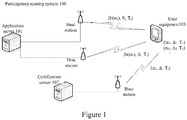
- FIG 1 illustrates a schematic architecture of a participatory sensing system 100 according to an example embodiment of the present invention.
- the participatory sensing system 100 comprises a server, such as an application server 101, a certification center (CC) 102, and a user equipment (UE) 103.
- the application server 101 may also be a user equipment that acts as a server and runs server application(s).
- UE 103 may also be referred to as a user terminal, which comprises a wireless mobile communication device including, but not limited to, a mobile phone, a smart phone, a personal digital assistant (PDA), a handset, and a laptop computer.
- PDA personal digital assistant
- the UE 103 may be provided with one or more sensors and is capable of sensing the surrounding environment and collecting sensed data S i .
- the UE 103 can randomly generate a pseudonym m i and convert it into a value h(m i ) via a one-way hash function h( ⁇ ) when the user wishes or is required to send the sensed data to the application server 101.
- the application server 101 is capable of designing/selecting a suitable one-way hash function h( ⁇ ) and distributing it to all users. Or the one-way hash function h( ⁇ ) may be pre-loaded and agreed between the application server 101 and the UE 103.
- the hash function or a similar function is referred to as a first algorithm.
- the one-way hash function may be, for example, but not limited to, MD5 (Message Digest Algorithm 5) or SHA-1 (Secure Hash Algorithm-1) etc.
- MD5 is a one-way hash algorithm developed by RSA Data Security Inc., in which the input can be a character string with any length and the output is always 128-bit encoded data.
- SHA-1 is a cryptographic hash function designed by the United States National Security Agency and published by the United States NIST as a U.S. Federal Information Processing Standard. SHA-1 can also accept any length of input, and output 160-bit encoded data. SHA-1 is irreversible and has a good avalanche effect (when the input is changed slightly, for example, flipping a single bit, the output changes significantly, for example, half the output bits flip) to avoid collision.
- the application server 101 may also design an encryption function f k ( ⁇ ), which is used to generate a corresponding certificate for the user. In one embodiment, the encryption function or a similar function is referred to as a second algorithm.
- the encryption function f k ( ⁇ ) can be chosen from common symmetric encryption functions, such as AES (Advanced Encryption Standard), Triple DES (Triple Data Encryption Standard) etc.
- the input of encryption function f k ( ⁇ ) can be a long character string obtained by concatenating a key k and other parameters.
- public-key cryptography algorithms can also be used, such as RSA or ECC (Elliptic Curve Cryptography), in which the corresponding character string may be mapped into a certain integer (one-to-one mapping) as the input to the algorithm.
- the application server 101 may further define a data format which is required by the user to send a message comprising the sensed data and the value h(m i ).
- the application server 101 may also define a set of grades for the sensed data and assign the number of the grades according to requirements.
- the certification center (CC) 102 may be internal or external to the application server 101 and functions as a verification agency. In one embodiment, the certification center 102 is independent of the application server 101, and the application server 101 may trust the certification center 102 completely in this situation. In another embodiment, the CC 102 is incorporated into the application server 101. The CC 102 is aware of the application server's master key k, the encryption function f k ( ⁇ ) (i.e., a type of the second algorithm) and the one-way hash function h( ⁇ ) (i.e., a type of the first algorithm) designed/selected by the application server 101. The certification center 102 can communicate with the user equipment 103 via a secure channel.
- the application server 101 sends information associated with the first algorithm and information associated with the second algorithm to the CC 102 so that the CC 102 may perform the first algorithm and the second algorithm when necessary.
- the information associated with the first algorithm may comprise information for identifying or designating the first algorithm and/or one or more parameters of the first algorithm.
- the information associated with the second algorithm may comprise information for identifying or designating the second algorithm and/or one or more parameters of the second algorithm.
- the proposed method according to an example embodiment of the present invention may generally contain, for example, five phases, i.e. system initialization phase, data collection and uploading phase, data processing phase, certificate obtaining phase and reward obtaining phase.
- the application server 101 designs or selects a suitable one-way hash function h( ⁇ ) and distributes/notifies it to all users.
- the application server 101 may also define the data format which is required when the user sends a message to the application server 101.
- the application server 101 may further define a set of grades for the sensed data based on, for example, quality, types or amount of the data, and may set the number of the grades according to application requirements. For example, the number of the grades can be set to R and a set of grades, i.e. G x ⁇ G 1 , G 2 , ⁇ , G R ⁇ is obtained.
- the quality of data may refer to data accuracy.
- the quality of the data provided by the new participant is good and thus a higher grade may be assigned to the data.
- the quality of the data provided by the new participant may be not good and thus a lower grade may be assigned to the data.
- the types of data mainly refer to value of the different types of data which a participant is capable of collecting. For example, if users' smart phones have temperature sensors, the application server 101 may obtain temperature data from the users.
- the grade assigned to humidity data may be higher than the grade assigned to the temperature data .
- PM 2.5 Porate Matter 2.5
- the corresponding grade assigned to the data may be even higher.
- the parameter G x can be flexibly defined according to particular applications.
- the application server 101 designs or selects an encryption function f k (h(m i ),T i ,G i ) which may be used to generate a certificate for a user, where k is the server's master key, m i is user's pseudonym, T i is a timestamp corresponding to the m i and G i is the grade of the sensed data.
- the user operates the UE 103 to launch a participation sensor program embedded in the UE 103 in accordance with requirements of the system. Then, the UE 103 generates corresponding sensed data S i .
- the sensed data S i mainly refers to the content related to the data sensed by the UE 103, which may comprise a data type and a particular value, or an approximate area in which the data is collected (in order to protect user's privacy, maybe only an area conforming to certain accuracy instead of an exact position of the user is provided).
- the UE 103 randomly generates a pseudonym m i .
- the UE 103 has already obtained or has pre-loaded an agreed one-way hash function h( ⁇ ) from the application server 101, and thus it can convert the pseudonym m i using the hash function h( ⁇ ) and generate a unique value, i.e., a hash conversion value h(m i ).
- the UE 103 then generates a message ⁇ h(m i ),S i , T i ⁇ , which includes the hash conversion value h(m i ) of the pseudonym m i , the sensed data S i and a timestamp T i when the data was collected, and then sends this message to the application server 101 in the data format defined by the application server 101 via a common channel.
- the signature is also referred to as a certificate, by which the user equipment may obtain, for example, from the application server 101, or from the CC 102, a reward associated with the sensed data S i .
- the certificate is calculated by the application server 101 based upon the above-described unique value h(m i ) using a second algorithm.
- the certificate is calculated by the application server 101 based upon the unique value h(m i ) and a grade of the sensed data using a second algorithm.
- the certificate is calculated by the application server 101 based upon the unique value h(m i ), a grade of the sensed data, and a timestamp associated with the sensed data using a second algorithm.
- the application server 101 uses the signature to calculate a signature.
- the application server 101 generates a message ⁇ h(m i ), ⁇ i , T i ⁇ , which comprises the hash conversion value h(m i ), the signature ⁇ i and the timestamp T i , and then sends it to the UE 103 via a common channel.
- the UE 103 Upon receiving the message ⁇ h(m i ), ⁇ i , T i ⁇ , the UE 103 extracts the signature ⁇ i and stores it in association with the pseudonym m i and time stamp T i into the UE 103.
- the UE 103 may store a series of certificate-pseudonym pairs in the format of ⁇ m i , ⁇ i , T i ⁇ .
- the certification center 102 has knowledge of the application server's master key k and the encryption function f k ( ⁇ ) as well as the one-way hash function h( ⁇ ) designed/selected by the application server 101.
- the certification center 102 may also have knowledge of the set of grades of the sensed data.
- the user wants to exchange the certificate for a reward, he/she may send a message ⁇ m i , ⁇ i , T i ⁇ , which may comprise the user's pseudonym m i , the signature ⁇ i obtained from the application server 101 and the timestamp T i , to the certification center 102 via a secure channel.
- the certification center 102 compares ⁇ ix * with ⁇ i so as to determine whether the user with the message ⁇ m i , ⁇ i , T i ⁇ is qualified to receive a reward. If there is one ⁇ ix * which matches ⁇ i , the certification center 102 confirms that the signature ⁇ i is a valid certificate and the user who owns ⁇ i can obtain a reward for the sensed data S i that he/she previously provided to the application server 101.
- the certification center 102 calculates ⁇ ix * based upon the unique value h(m i ) using a second algorithm. In a further embodiment, the certification center 102 calculates ⁇ ix * based upon the unique value h(m i ) and a grade of the sensed data using a second algorithm. In a further embodiment, the certification center 102 calculates ⁇ ix * based upon the unique value h(m i ), a grade of the sensed data, and the received timestamp T i using a second algorithm. The certification center 102 compares the calculated ⁇ ix * with the received ⁇ i .
- the certification center 102 confirms that the signature ⁇ i is a valid certificate and the user who owns ⁇ i can obtain a reward for the sensed data S i that he/she previously provided to the application server 101.
- the pseudonym m i itself may contain timestamp information, and thus it may be unnecessary to either transmit a separate timestamp T i or use the timestamp T i in certificate ⁇ i calculating/comparing.
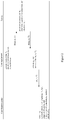
- Figure 2 illustrates interaction between a user equipment and a server (or an application server), and a certification center according to an example embodiment of the present invention.
- the system initiation has been completed; thus, the user equipment has knowledge of the suitable hash function h( ⁇ ) and the predefined data format, and the certification center has knowledge of the encryption function f k ( ⁇ ), the hash function h( ⁇ ), and the server's master key k, as well as the set of grades of the sensed data.
- the user launches a corresponding sensor program embedded in the UE 103 to generate sensed data S i . Then, when the user needs to send the sensed data S i to the server, he/she operates the UE 103 to generate a pseudonym m i and calculate a hash conversion value h(m i ). Subsequently, the user sends a message in the predefined format, which comprises h(m i ), S i and a timestamp T i , to the server.
- the user operates the UE 103 to extract ⁇ i from the received message, generate a tuple ⁇ m i , ⁇ i , T i ⁇ and store the tuple in the UE 103.
- the certification center compares ⁇ ix * with ⁇ i so as to determine whether the user with the message ⁇ m i , ⁇ i , T i ⁇ is qualified to receive a reward. If there is one ⁇ ix * which matches ⁇ i , the user can be successfully authenticated. On the contrary, if none of ⁇ ix * matches ⁇ i , the certification center may reject this process.
- the adversary Since the user sends to the certification center the message ⁇ m i , ⁇ i , T i ⁇ via a secure channel, the adversary cannot impersonate the user, Meanwhile, the user's pseudonym appears in the common channel in the form of a hash conversion value h(m i ). Therefore, the adversary cannot extract the user's original pseudonym m i . Without the pseudonym, the adversary cannot be authenticated by the certification center.
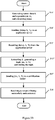
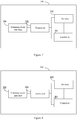
- Figures 3A and 3B show flowcharts illustrating method steps performed on the user equipment 103, according to an example embodiment of the present invention.
- Figure 3A is a simplified flowchart from Figure 3B .
- reference numbers refer to corresponding steps.
- the user equipment 103 first, in block 310, the user equipment 103 generates a pseudonym m i and calculates a hash conversion value h(m i ) of the pseudonym. Then in block 311, the user equipment 103 sends the hash conversion value h(m i ), and sensed data S i to an application server 101.
- the user equipment 103 receives a signature ⁇ i from the server. Thereafter in block 313, the user equipment 103 sends the pseudonym m i and the signature ⁇ i to a certification center 102 via a secure channel.
- the user equipment 103 In block 310', the user equipment 103 generates sensed data S i , a pseudonym m i and calculates a hash conversion value h(m i ) of the pseudonym. Then in block 311', the user equipment 103 sends a message in a predefined format, which includes the hash conversion valueh(m i ), the sensed data S i and a timestamp T i , to an application server 101.
- the user equipment 103 upon receiving a message comprising h(m i ), T i and a signature ⁇ i from the server in block 312', extracts ⁇ i from the received message, generates a tuple ⁇ m i , ⁇ i , T i ⁇ and stores the tuple locally in block 312". Subsequently in block 313', the user equipment 103 sends a message comprising m i , ⁇ i and T i to a certification center 102 via a secure channel. Thereafter, once the user equipment 103 is successfully authenticated, it can receive a reward from the certification center 102 or from the application server 101 in block 314.
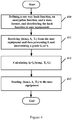
- Figure 4 shows a flowchart illustrating method steps performed on the application server 101 according to an example embodiment of the present invention.
- the application server 101 defines a suitable one-way hash function h( ⁇ ), an encryption function f k (.) and a data format, and distributes or notifies the hash function to user equipment(s) 103.
- the application server 101 receives a message from the user equipment 103, which comprises a hash conversion value h(m i ), sensed data S i and a timestamp T i .
- FIG. 5 shows a flowchart illustrating method steps performed on the certification center 102 according to an example embodiment of the present invention.
- the certification center compares ⁇ ix * with ⁇ i so as to determine whether the user with the message ⁇ m i , ⁇ i, T i ⁇ is qualified to receive a reward. If there is one ⁇ ix * which matches ⁇ i , the user can be successfully authenticated and certify the user equipment. On the contrary, if none of ⁇ ix * matches ⁇ i , the certification center may reject this process.
- the pseudonym m i itself contains timestamp information, then it may be unnecessary to use additional timestamp information such as a separate timestamp; accordingly, there will be no need to transmit a separate timestamp T i and/or use the timestamp T i in certificate ⁇ i calculating/ comparing.
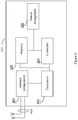
- FIG. 6 shows a schematic structure of the user equipment 103 according to an example embodiment of the present invention, on which the methods as illustrated in Fig. 3A or 3B may be performed.
- the user equipment or UE 103 comprises a controller 601 operationally connected to a memory 602 and a transceiver 603.
- the controller 601 controls the operation of the user equipment 103.
- the memory 602 is configured to store program codes or instructions and data required for implementing the method according to the present invention.
- the transceiver 603 is operationally connected to a set of antenna ports 604 connected to an antenna arrangement 605, and is configured to set up and maintain a wireless connection to other network nodes, such as base stations.
- the user equipment 103 also comprises a sensor arrangement 606, which is operationally connected to the memory 602 and the controller 601 and may obtain sensed data in embodiments of the present invention.
- the sensor arrangement 606 may comprise at least one sensor, which is for example but not limited to a temperature sensor, a humidity sensor, a motion sensor, a GPS receiver and a camera or the like.
- the sensed data comprise one or more of a sensed temperature, a sensed humidity, a sensed motion, a sensed coordinate (longitude, latitude, elevation, etc.), a sensed image, and so on.
- the user equipment 103 may also comprise various other components, such as a user interface, and media player, which are not shown in Figure 6 due to simplicity purposes.
- FIG. 7 shows a schematic structure of the server according to an example embodiment of the present invention, on which the method as illustrated in Fig. 4 may be performed.
- the server such as the application server 101, comprises a controller 701 operationally connected to a memory 702, and a transceiver 703.
- the controller 701 controls the operation of the server.
- the memory 702 is configured to store program codes or instructions and data required for implementing the method according to the present invention.
- the transceiver 703 is operationally connected to a communication interface 704 and is configured to set up and maintain a connection to other network nodes, such as base stations through the communication interface 704.
- FIG 8 shows a schematic structure of the certification center 102 according to an example embodiment of the present invention, on which the method as illustrated in Fig. 5 may be performed.
- the certification center 102 comprises a controller 801 operationally connected to a memory 802, and a transceiver 803.
- the controller 801 controls the operation of the certification center.
- the memory 802 is configured to store program codes or instructions and data required for implementing the method according to the present invention.
- the transceiver 803 is operationally connected to a communication interface 804 and is configured to set up and maintain a connection to other network nodes, such as base stations through the communication interface 804.
- a method for generating a pseudonym in association with sensed data at a user equipment calculating a unique value based upon the pseudonym using a first algorithm; sending the unique value and the sensed data to a server; receiving from the server a certificate, which is calculated based at least in part on the unique value using a second algorithm; and sending at least the pseudonym and the certificate to a certification center via a secure channel, for obtaining a reward associated with the sensed data, wherein the certification center is internal or external to the server.
- the first algorithm comprises a hash function.
- the second algorithm comprises an encryption function.
- the method comprises receiving from the server information associated with the first algorithm prior to calculating the unique value.
- the certificate is calculated at the server using the second algorithm based upon the unique value and at least one of a grade of the sensed data and a timestamp associated with the sensed data.
- the method comprises saving in the user equipment at least the pseudonym, the certificate, and a timestamp associated with the sensed data prior to sending at least the pseudonym and the certificate.
- the certification center is aware of the first algorithm and the second algorithm.
- a computer program product comprising program code instructions adapted to perform steps of any method as described above when the program is run on a computer.
- the method comprises determining a first algorithm and sending information associated with the first algorithm to the user equipment prior to receiving the unique value and the sensed data.
- the first algorithm comprises a hash function.
- the second algorithm comprises an encryption function.
- the method comprises determining a grade of the sensed data prior to calculating the certificate.
- the method comprises calculating the certificate using the second algorithm based upon the unique value and at least one of the grade of the sensed data and a timestamp associated with the sensed data.
- the method comprises defining a data format prior to receiving the unique value and the sensed data.
- the user equipment is aware of the data format.
- a computer program product comprising program code instructions adapted to perform steps of any method as described above when the program is run on a computer.
- a method for receiving, at a certification center, at least a pseudonym and a certificate via a secure channel from a user equipment calculating a unique value using a first algorithm based upon the pseudonym; calculating at least one reference value based at least in part on the unique value using a second algorithm; comparing the at least reference value with the received certificate; and if the at least one reference value matches the received certificate, confirming validity of the received certificate so that the user equipment may obtain a reward associated sensed data; wherein the certification center is internal or external to a server.
- the first algorithm comprises a hash function determined by the server.
- the second algorithm comprises an encryption function determined by the server.
- calculating the at least one reference value comprises calculating a reference value based upon the unique value and at least one of a timestamp associated with the sensed data and one of a plurality of data grades, the plurality of data grades being predefined by the server.
- a computer program product comprising program code instructions adapted to perform steps of any method as described above when the program is run on a computer.
- an apparatus comprising a sensor arrangement comprising at least one sensor for sensing data; at least one processor; and at least one memory including a computer program code, wherein the at least one memory and the computer program code are configured to, with the at least one processor, cause the apparatus to: generate a pseudonym in association with sensed data; calculate a unique value based upon the pseudonym using a first algorithm; send the unique value and the sensed data to a server; receive from the server a certificate, wherein the certificate is calculated at the server based at least in part on the unique value using a second algorithm; and send at least the pseudonym and the certificate to a certification center via a secure channel, for obtaining a reward associated with the sensed data, wherein the certification center is internal or external to the server.
- the first algorithm comprises a hash function.
- the second algorithm comprises an encryption function.
- the at least one memory and the computer program code are further configured to, with the at least one processor, cause the apparatus to receive from the server information associated with the first algorithm prior to calculating the unique value.
- the at least one memory and the computer program code are further configured to, with the at least one processor, cause the apparatus to save at least the pseudonym, the certificate, and a timestamp associated with the sensed data prior to sending at least the pseudonym and the certificate.
- an apparatus comprising at least one processor; and at least one memory including a computer program code, wherein the at least one memory and the computer program code are configured to, with the at least one processor, cause the apparatus to: receive a unique value and sensed data from a user equipment, wherein the unique value is calculated at the user equipment using a first algorithm based upon a pseudonym generated by the user equipment; calculate a certificate based at least in part on the unique value using a second algorithm; and send the certificate to the user equipment so that the certificate may be forwarded to a certification center for obtaining a reward associated with the sensed data, wherein the certification center is internal or external to the apparatus.
- the at least one memory and the computer program code are further configured to, with the at least one processor, cause the apparatus to determine a first algorithm and send information associated with the first algorithm to the user equipment prior to receiving the unique value.
- the first algorithm comprises a hash function.
- the second algorithm comprises an encryption function.
- the at least one memory and the computer program code are further configured to, with the at least one processor, cause the apparatus to determine a grade of the sensed data prior to calculating the certificate.
- the at least one memory and the computer program code are further configured to, with the at least one processor, cause the apparatus to calculate the certificate using the second algorithm based upon the unique value and at least one of the grade of the sensed data and a timestamp associated with the sensed data.
- the at least one memory and the computer program code are further configured to, with the at least one processor, cause the apparatus to: define a data format prior to receiving the unique value and the sensed data.
- an apparatus comprising at least one processor; and at least one memory including a computer program code, wherein the at least one memory and the computer program code are configured to, with the at least one processor, cause the apparatus to: receive at least a pseudonym and a certificate via a secure channel from a user equipment; calculate a unique value using a first algorithm based upon the pseudonym; calculate at least one reference value based at least in part on the unique value using a second algorithm; compare the at least one reference value with the received certificate; and if the at least one reference value matches the received certificate, confirm validity of the received certificate so that the user equipment may obtain a reward associated with sensed data; wherein the apparatus is internal or external to a server.
- the first algorithm comprises a hash function determined by the server.
- the second algorithm comprises an encryption function determined by the server.
- the at least one memory and the computer program code are further configured to, with the at least one processor, cause the apparatus to: calculate a reference value based upon the unique value and at least one of a timestamp associated with the sensed data and one of a plurality of data grades, the plurality of data grades being predefined by the server.
- Example embodiments of the present invention have been described above with reference to block diagrams and flowchart illustrations of methods, apparatuses (i.e., systems). It will be understood that each block of the block diagrams and flowchart illustrations, and combinations of blocks in the block diagrams and flowchart illustrations, respectively, can be implemented by various means including computer program instructions. These computer program instructions may be loaded onto a general purpose computer, special purpose computer, or other programmable data processing apparatus to produce a machine, such that the instructions which execute on the computer or other programmable data processing apparatus create means for implementing the functions specified in the flowchart block or blocks.
- a computer program product in one embodiment of the invention comprises at least one computer readable storage medium, on which the foregoing computer program instructions are stored.
- the computer readable storage medium can be, for example, an optical compact disk or an electronic memory device like a RAM (random access memory) or a ROM (read only memory).
Landscapes
- Engineering & Computer Science (AREA)
- Computer Security & Cryptography (AREA)
- Theoretical Computer Science (AREA)
- Bioethics (AREA)
- General Health & Medical Sciences (AREA)
- Health & Medical Sciences (AREA)
- Signal Processing (AREA)
- Computer Networks & Wireless Communication (AREA)
- Medical Informatics (AREA)
- Physics & Mathematics (AREA)
- General Engineering & Computer Science (AREA)
- General Physics & Mathematics (AREA)
- Software Systems (AREA)
- Computer Hardware Design (AREA)
- Databases & Information Systems (AREA)
- Management, Administration, Business Operations System, And Electronic Commerce (AREA)
- Mobile Radio Communication Systems (AREA)
Claims (16)
- Procédé, comprenant :la génération (310), au niveau d'un équipement utilisateur, d'un pseudonyme en association avec des données captées ;le calcul (310) d'une valeur unique basée sur le pseudonyme à l'aide d'un premier algorithme ;l'envoi (311) de la valeur unique et des données captées à un serveur ;la réception (312) d'un certificat en provenance du serveur, le certificat étant calculé sur la base au moins en partie de la valeur unique et d'une classe des données captées à l'aide d'un deuxième algorithme ; etl'envoi (313) au moins du pseudonyme et du certificat à un centre de certification par le biais d'un canal sécurisé, aux fins d'obtenir une récompense associée aux données captées ;le centre de certification étant interne ou externe au serveur.
- Procédé selon la revendication 1, dans lequel le premier algorithme comprend une fonction de hachage.
- Procédé selon la revendication 1 ou 2, dans lequel le deuxième algorithme comprend une fonction de chiffrement.
- Procédé selon l'une quelconque des revendications 1 à 3, comprenant en outre : préalablement au calcul de la valeur unique, la réception d'informations associées au premier algorithme en provenance du serveur.
- Procédé selon l'une quelconque des revendications 1 à 4, dans lequel le certificat est calculé au niveau du serveur à l'aide du deuxième algorithme sur la base de la valeur unique et de la classe des données captées et d'un horodatage associé aux données captées.
- Procédé selon l'une quelconque des revendications 1 à 5, comprenant en outre : préalablement à l'envoi au moins du pseudonyme et du certificat, la sauvegarde, dans l'équipement utilisateur, au moins du pseudonyme, du certificat et d'un horodatage associé aux données captées.
- Procédé selon l'une quelconque des revendications 1 à 6, dans lequel le centre de certification a connaissance du premier algorithme et du deuxième algorithme.
- Procédé, comprenant :la réception (311), au niveau d'un serveur, d'une valeur unique et de données captées en provenance d'un équipement utilisateur, la valeur unique étant calculée au niveau de l'équipement utilisateur à l'aide d'un premier algorithme sur la base d'un pseudonyme généré par l'équipement utilisateur ;le calcul d'un certificat sur la base au moins en partie de la valeur unique et d'une classe des données captées à l'aide d'un deuxième algorithme ; etl'envoi (312) du certificat à l'équipement utilisateur de façon à permettre la retransmission du certificat à un centre de certification aux fins d'obtenir une récompense associée aux données captées ;le centre de certification étant interne ou externe au serveur.
- Procédé selon la revendication 8, comprenant en outre : préalablement à la réception de la valeur unique et des données captées, la détermination d'un premier algorithme et l'envoi d'informations associées au premier algorithme à l'équipement utilisateur.
- Procédé selon la revendication 8 ou 9, dans lequel le premier algorithme comprend une fonction de hachage.
- Procédé selon l'une quelconque des revendications 8 à 10, dans lequel le deuxième algorithme comprend une fonction de chiffrement.
- Procédé selon l'une quelconque des revendications 8 à 11, comprenant en outre : préalablement au calcul du certificat, la détermination de la classe des données captées.
- Procédé selon l'une quelconque des revendications 8 à 12, dans lequel le calcul du certificat comprend le calcul du certificat à l'aide du deuxième algorithme sur la base de la valeur unique, de la classe des données captées et d'un horodatage associé aux données captées.
- Procédé selon l'une quelconque des revendications 8 à 13, comprenant en outre : préalablement à la réception de la valeur unique et des données captées, la définition d'un format de données.
- Appareil, comprenant des moyens de mise en oeuvre du procédé selon l'une quelconque des revendications 1 à 7 ou 8 à 14.
- Programme d'ordinateur dont l'exécution entraîne la mise en oeuvre du procédé selon au moins une des revendications 1 à 7 ou 8 à 14.
Applications Claiming Priority (1)
| Application Number | Priority Date | Filing Date | Title |
|---|---|---|---|
| PCT/CN2012/076645 WO2013181841A1 (fr) | 2012-06-08 | 2012-06-08 | Protection de confidentialité pour un système de détection participatif |
Publications (3)
| Publication Number | Publication Date |
|---|---|
| EP2859680A1 EP2859680A1 (fr) | 2015-04-15 |
| EP2859680A4 EP2859680A4 (fr) | 2016-02-17 |
| EP2859680B1 true EP2859680B1 (fr) | 2019-09-25 |
Family
ID=49711306
Family Applications (1)
| Application Number | Title | Priority Date | Filing Date |
|---|---|---|---|
| EP12878615.9A Active EP2859680B1 (fr) | 2012-06-08 | 2012-06-08 | Protection de confidentialité pour un système de détection participatif |
Country Status (4)
| Country | Link |
|---|---|
| US (1) | US9530026B2 (fr) |
| EP (1) | EP2859680B1 (fr) |
| CN (1) | CN104380653B (fr) |
| WO (1) | WO2013181841A1 (fr) |
Families Citing this family (6)
| Publication number | Priority date | Publication date | Assignee | Title |
|---|---|---|---|---|
| CN103870990A (zh) * | 2014-03-31 | 2014-06-18 | 上海交通大学 | 移动群智感知系统中覆盖问题的激励机制实现方法 |
| US10237729B2 (en) * | 2015-03-05 | 2019-03-19 | Qualcomm Incorporated | Identity privacy in wireless networks |
| US10945132B2 (en) | 2015-11-03 | 2021-03-09 | Nokia Technologies Oy | Apparatus, method and computer program product for privacy protection |
| WO2018083327A1 (fr) * | 2016-11-07 | 2018-05-11 | Telefonaktiebolaget Lm Ericsson (Publ) | Messagerie vocale instantanée critique |
| CN107135076A (zh) * | 2017-03-30 | 2017-09-05 | 西安电子科技大学 | 一种无可信第三方的参与式感知激励机制实现方法 |
| US11115216B2 (en) * | 2018-03-20 | 2021-09-07 | Micro Focus Llc | Perturbation-based order preserving pseudonymization of data |
Family Cites Families (15)
| Publication number | Priority date | Publication date | Assignee | Title |
|---|---|---|---|---|
| US20070129965A1 (en) | 1996-09-06 | 2007-06-07 | Walker Jay S | Method and system for anonymous communication of information |
| US7630986B1 (en) * | 1999-10-27 | 2009-12-08 | Pinpoint, Incorporated | Secure data interchange |
| WO2001065453A1 (fr) | 2000-02-29 | 2001-09-07 | Expanse Networks, Inc. | Systeme de ciblage a confidentialite protegee |
| US7260837B2 (en) | 2000-03-22 | 2007-08-21 | Comscore Networks, Inc. | Systems and methods for user identification, user demographic reporting and collecting usage data usage biometrics |
| WO2002049311A2 (fr) * | 2000-11-14 | 2002-06-20 | Tritrust.Com, Inc. | Système de légitimation de pseudonymes |
| CN1961270A (zh) | 2004-05-28 | 2007-05-09 | 皇家飞利浦电子股份有限公司 | 保密信息分配系统中的许可证管理 |
| US20070043583A1 (en) | 2005-03-11 | 2007-02-22 | The Arizona Board Of Regents On Behalf Of Arizona State University | Reward driven online system utilizing user-generated tags as a bridge to suggested links |
| CN1937496A (zh) * | 2005-09-21 | 2007-03-28 | 日电(中国)有限公司 | 可延展伪名证书系统和方法 |
| US8793757B2 (en) | 2008-05-27 | 2014-07-29 | Open Invention Network, Llc | User-directed privacy control in a user-centric identity management system |
| FR2932043B1 (fr) | 2008-06-03 | 2010-07-30 | Groupe Ecoles Telecomm | Procede de tracabilite et de resurgence de flux pseudonymises sur des reseaux de communication, et procede d'emission de flux informatif apte a securiser le trafic de donnees et ses destinataires |
| US20100257036A1 (en) | 2009-04-02 | 2010-10-07 | Nec Laboratories America, Inc. | Method and System for Anonymity and Incentives in User-Assisted Mobile Services |
| CN101998377B (zh) | 2009-08-25 | 2013-04-17 | 华为技术有限公司 | 国际移动用户识别码的保护方法、装置和通信系统 |
| US9595039B2 (en) | 2009-12-30 | 2017-03-14 | Motorola Solutions, Inc. | Stimulus/response-based binding of identifiers across information domains while maintaining confidentiality |
| CN101834861A (zh) * | 2010-04-16 | 2010-09-15 | 华中师范大学 | 位置服务中基于邻居节点转发查询的轨迹隐私保护方法 |
| CN101959183B (zh) | 2010-09-21 | 2013-01-23 | 中国科学院软件研究所 | 一种基于假名的移动用户标识码imsi保护方法 |
-
2012
- 2012-06-08 EP EP12878615.9A patent/EP2859680B1/fr active Active
- 2012-06-08 CN CN201280073783.5A patent/CN104380653B/zh active Active
- 2012-06-08 US US14/398,183 patent/US9530026B2/en active Active
- 2012-06-08 WO PCT/CN2012/076645 patent/WO2013181841A1/fr not_active Ceased
Non-Patent Citations (1)
| Title |
|---|
| None * |
Also Published As
| Publication number | Publication date |
|---|---|
| CN104380653B (zh) | 2017-07-11 |
| CN104380653A (zh) | 2015-02-25 |
| EP2859680A4 (fr) | 2016-02-17 |
| US20150128282A1 (en) | 2015-05-07 |
| EP2859680A1 (fr) | 2015-04-15 |
| WO2013181841A1 (fr) | 2013-12-12 |
| US9530026B2 (en) | 2016-12-27 |
Similar Documents
| Publication | Publication Date | Title |
|---|---|---|
| US10785647B1 (en) | Trusted beacon based location determination system and method | |
| Wu et al. | Privacy-aware task allocation and data aggregation in fog-assisted spatial crowdsourcing | |
| CN111386674B (zh) | 通信系统中的终端身份保护方法 | |
| Zhuo et al. | Privacy-preserving verifiable data aggregation and analysis for cloud-assisted mobile crowdsourcing | |
| EP2859680B1 (fr) | Protection de confidentialité pour un système de détection participatif | |
| EP3522056B1 (fr) | Système de calcul distribué pour calcul anonyme | |
| US10484350B2 (en) | Privacy-preserving location corroborations | |
| Esposito et al. | On data sovereignty in cloud-based computation offloading for smart cities applications | |
| Tan et al. | Secure certificateless authentication and road message dissemination protocol in VANETs | |
| Saia et al. | Internet of entities (IoE): A blockchain-based distributed paradigm for data exchange between wireless-based devices | |
| Li et al. | Secure data deduplication protocol for edge-assisted mobile crowdsensing services | |
| Chanal et al. | Preserving data confidentiality in Internet of Things | |
| Naoui et al. | Novel enhanced LoRaWAN framework for smart home remote control security | |
| KR20220088747A (ko) | 정확한 위치 이벤트 측정시의 데이터 조작 방지 및 사용자 프라이버시 보호 | |
| Li et al. | A distributed authentication protocol using identity-based encryption and blockchain for LEO network | |
| Li et al. | An anonymous data reporting strategy with ensuring incentives for mobile crowd-sensing | |
| WO2018213875A1 (fr) | Cryptographie asymétrique et authentification | |
| Zhang et al. | Efficient privacy-preserving anonymous authentication protocol for vehicular ad-hoc networks | |
| CN117675333A (zh) | 一种物联网中基于承诺的数据范围证明方法 | |
| Maia et al. | Cross city: Wi-fi location proofs for smart tourism | |
| Mi et al. | NTRU Implementation of Efficient Privacy‐Preserving Location‐Based Querying in VANET | |
| Wang et al. | Secure content sharing protocol for D2D users based on profile matching in social networks | |
| Mohaisen et al. | Privacy in location based services: Primitives toward the solution | |
| Zhang et al. | An improved scheme for key management of RFID in vehicular Adhoc networks | |
| Khan et al. | An enhanced privacy preserving, secure and efficient authentication protocol for VANET |
Legal Events
| Date | Code | Title | Description |
|---|---|---|---|
| PUAI | Public reference made under article 153(3) epc to a published international application that has entered the european phase |
Free format text: ORIGINAL CODE: 0009012 |
|
| 17P | Request for examination filed |
Effective date: 20141125 |
|
| AK | Designated contracting states |
Kind code of ref document: A1 Designated state(s): AL AT BE BG CH CY CZ DE DK EE ES FI FR GB GR HR HU IE IS IT LI LT LU LV MC MK MT NL NO PL PT RO RS SE SI SK SM TR |
|
| AX | Request for extension of the european patent |
Extension state: BA ME |
|
| RAP1 | Party data changed (applicant data changed or rights of an application transferred) |
Owner name: NOKIA TECHNOLOGIES OY |
|
| DAX | Request for extension of the european patent (deleted) | ||
| REG | Reference to a national code |
Ref country code: DE Ref legal event code: R079 Ref document number: 602012064390 Country of ref document: DE Free format text: PREVIOUS MAIN CLASS: H04L0009140000 Ipc: H04L0009320000 |
|
| RA4 | Supplementary search report drawn up and despatched (corrected) |
Effective date: 20160115 |
|
| RIC1 | Information provided on ipc code assigned before grant |
Ipc: G06F 21/62 20130101ALI20160111BHEP Ipc: H04L 9/32 20060101AFI20160111BHEP Ipc: H04L 29/06 20060101ALI20160111BHEP |
|
| STAA | Information on the status of an ep patent application or granted ep patent |
Free format text: STATUS: EXAMINATION IS IN PROGRESS |
|
| 17Q | First examination report despatched |
Effective date: 20180227 |
|
| GRAP | Despatch of communication of intention to grant a patent |
Free format text: ORIGINAL CODE: EPIDOSNIGR1 |
|
| STAA | Information on the status of an ep patent application or granted ep patent |
Free format text: STATUS: GRANT OF PATENT IS INTENDED |
|
| INTG | Intention to grant announced |
Effective date: 20190426 |
|
| GRAS | Grant fee paid |
Free format text: ORIGINAL CODE: EPIDOSNIGR3 |
|
| GRAA | (expected) grant |
Free format text: ORIGINAL CODE: 0009210 |
|
| STAA | Information on the status of an ep patent application or granted ep patent |
Free format text: STATUS: THE PATENT HAS BEEN GRANTED |
|
| RAP1 | Party data changed (applicant data changed or rights of an application transferred) |
Owner name: NOKIA TECHNOLOGIES OY |
|
| AK | Designated contracting states |
Kind code of ref document: B1 Designated state(s): AL AT BE BG CH CY CZ DE DK EE ES FI FR GB GR HR HU IE IS IT LI LT LU LV MC MK MT NL NO PL PT RO RS SE SI SK SM TR |
|
| REG | Reference to a national code |
Ref country code: GB Ref legal event code: FG4D |
|
| REG | Reference to a national code |
Ref country code: CH Ref legal event code: EP |
|
| REG | Reference to a national code |
Ref country code: DE Ref legal event code: R096 Ref document number: 602012064390 Country of ref document: DE |
|
| REG | Reference to a national code |
Ref country code: AT Ref legal event code: REF Ref document number: 1184884 Country of ref document: AT Kind code of ref document: T Effective date: 20191015 |
|
| REG | Reference to a national code |
Ref country code: IE Ref legal event code: FG4D |
|
| REG | Reference to a national code |
Ref country code: NL Ref legal event code: MP Effective date: 20190925 |
|
| PG25 | Lapsed in a contracting state [announced via postgrant information from national office to epo] |
Ref country code: FI Free format text: LAPSE BECAUSE OF FAILURE TO SUBMIT A TRANSLATION OF THE DESCRIPTION OR TO PAY THE FEE WITHIN THE PRESCRIBED TIME-LIMIT Effective date: 20190925 Ref country code: SE Free format text: LAPSE BECAUSE OF FAILURE TO SUBMIT A TRANSLATION OF THE DESCRIPTION OR TO PAY THE FEE WITHIN THE PRESCRIBED TIME-LIMIT Effective date: 20190925 Ref country code: BG Free format text: LAPSE BECAUSE OF FAILURE TO SUBMIT A TRANSLATION OF THE DESCRIPTION OR TO PAY THE FEE WITHIN THE PRESCRIBED TIME-LIMIT Effective date: 20191225 Ref country code: HR Free format text: LAPSE BECAUSE OF FAILURE TO SUBMIT A TRANSLATION OF THE DESCRIPTION OR TO PAY THE FEE WITHIN THE PRESCRIBED TIME-LIMIT Effective date: 20190925 Ref country code: NO Free format text: LAPSE BECAUSE OF FAILURE TO SUBMIT A TRANSLATION OF THE DESCRIPTION OR TO PAY THE FEE WITHIN THE PRESCRIBED TIME-LIMIT Effective date: 20191225 Ref country code: LT Free format text: LAPSE BECAUSE OF FAILURE TO SUBMIT A TRANSLATION OF THE DESCRIPTION OR TO PAY THE FEE WITHIN THE PRESCRIBED TIME-LIMIT Effective date: 20190925 |
|
| REG | Reference to a national code |
Ref country code: LT Ref legal event code: MG4D |
|
| PG25 | Lapsed in a contracting state [announced via postgrant information from national office to epo] |
Ref country code: LV Free format text: LAPSE BECAUSE OF FAILURE TO SUBMIT A TRANSLATION OF THE DESCRIPTION OR TO PAY THE FEE WITHIN THE PRESCRIBED TIME-LIMIT Effective date: 20190925 Ref country code: GR Free format text: LAPSE BECAUSE OF FAILURE TO SUBMIT A TRANSLATION OF THE DESCRIPTION OR TO PAY THE FEE WITHIN THE PRESCRIBED TIME-LIMIT Effective date: 20191226 Ref country code: RS Free format text: LAPSE BECAUSE OF FAILURE TO SUBMIT A TRANSLATION OF THE DESCRIPTION OR TO PAY THE FEE WITHIN THE PRESCRIBED TIME-LIMIT Effective date: 20190925 |
|
| REG | Reference to a national code |
Ref country code: AT Ref legal event code: MK05 Ref document number: 1184884 Country of ref document: AT Kind code of ref document: T Effective date: 20190925 |
|
| PG25 | Lapsed in a contracting state [announced via postgrant information from national office to epo] |
Ref country code: RO Free format text: LAPSE BECAUSE OF FAILURE TO SUBMIT A TRANSLATION OF THE DESCRIPTION OR TO PAY THE FEE WITHIN THE PRESCRIBED TIME-LIMIT Effective date: 20190925 Ref country code: IT Free format text: LAPSE BECAUSE OF FAILURE TO SUBMIT A TRANSLATION OF THE DESCRIPTION OR TO PAY THE FEE WITHIN THE PRESCRIBED TIME-LIMIT Effective date: 20190925 Ref country code: EE Free format text: LAPSE BECAUSE OF FAILURE TO SUBMIT A TRANSLATION OF THE DESCRIPTION OR TO PAY THE FEE WITHIN THE PRESCRIBED TIME-LIMIT Effective date: 20190925 Ref country code: NL Free format text: LAPSE BECAUSE OF FAILURE TO SUBMIT A TRANSLATION OF THE DESCRIPTION OR TO PAY THE FEE WITHIN THE PRESCRIBED TIME-LIMIT Effective date: 20190925 Ref country code: PL Free format text: LAPSE BECAUSE OF FAILURE TO SUBMIT A TRANSLATION OF THE DESCRIPTION OR TO PAY THE FEE WITHIN THE PRESCRIBED TIME-LIMIT Effective date: 20190925 Ref country code: PT Free format text: LAPSE BECAUSE OF FAILURE TO SUBMIT A TRANSLATION OF THE DESCRIPTION OR TO PAY THE FEE WITHIN THE PRESCRIBED TIME-LIMIT Effective date: 20200127 Ref country code: ES Free format text: LAPSE BECAUSE OF FAILURE TO SUBMIT A TRANSLATION OF THE DESCRIPTION OR TO PAY THE FEE WITHIN THE PRESCRIBED TIME-LIMIT Effective date: 20190925 Ref country code: AL Free format text: LAPSE BECAUSE OF FAILURE TO SUBMIT A TRANSLATION OF THE DESCRIPTION OR TO PAY THE FEE WITHIN THE PRESCRIBED TIME-LIMIT Effective date: 20190925 Ref country code: AT Free format text: LAPSE BECAUSE OF FAILURE TO SUBMIT A TRANSLATION OF THE DESCRIPTION OR TO PAY THE FEE WITHIN THE PRESCRIBED TIME-LIMIT Effective date: 20190925 |
|
| PG25 | Lapsed in a contracting state [announced via postgrant information from national office to epo] |
Ref country code: SK Free format text: LAPSE BECAUSE OF FAILURE TO SUBMIT A TRANSLATION OF THE DESCRIPTION OR TO PAY THE FEE WITHIN THE PRESCRIBED TIME-LIMIT Effective date: 20190925 Ref country code: CZ Free format text: LAPSE BECAUSE OF FAILURE TO SUBMIT A TRANSLATION OF THE DESCRIPTION OR TO PAY THE FEE WITHIN THE PRESCRIBED TIME-LIMIT Effective date: 20190925 Ref country code: SM Free format text: LAPSE BECAUSE OF FAILURE TO SUBMIT A TRANSLATION OF THE DESCRIPTION OR TO PAY THE FEE WITHIN THE PRESCRIBED TIME-LIMIT Effective date: 20190925 Ref country code: IS Free format text: LAPSE BECAUSE OF FAILURE TO SUBMIT A TRANSLATION OF THE DESCRIPTION OR TO PAY THE FEE WITHIN THE PRESCRIBED TIME-LIMIT Effective date: 20200224 |
|
| REG | Reference to a national code |
Ref country code: DE Ref legal event code: R097 Ref document number: 602012064390 Country of ref document: DE |
|
| PG2D | Information on lapse in contracting state deleted |
Ref country code: IS |
|
| PG25 | Lapsed in a contracting state [announced via postgrant information from national office to epo] |
Ref country code: DK Free format text: LAPSE BECAUSE OF FAILURE TO SUBMIT A TRANSLATION OF THE DESCRIPTION OR TO PAY THE FEE WITHIN THE PRESCRIBED TIME-LIMIT Effective date: 20190925 Ref country code: IS Free format text: LAPSE BECAUSE OF FAILURE TO SUBMIT A TRANSLATION OF THE DESCRIPTION OR TO PAY THE FEE WITHIN THE PRESCRIBED TIME-LIMIT Effective date: 20200126 |
|
| PLBE | No opposition filed within time limit |
Free format text: ORIGINAL CODE: 0009261 |
|
| STAA | Information on the status of an ep patent application or granted ep patent |
Free format text: STATUS: NO OPPOSITION FILED WITHIN TIME LIMIT |
|
| 26N | No opposition filed |
Effective date: 20200626 |
|
| PG25 | Lapsed in a contracting state [announced via postgrant information from national office to epo] |
Ref country code: SI Free format text: LAPSE BECAUSE OF FAILURE TO SUBMIT A TRANSLATION OF THE DESCRIPTION OR TO PAY THE FEE WITHIN THE PRESCRIBED TIME-LIMIT Effective date: 20190925 |
|
| PG25 | Lapsed in a contracting state [announced via postgrant information from national office to epo] |
Ref country code: MC Free format text: LAPSE BECAUSE OF FAILURE TO SUBMIT A TRANSLATION OF THE DESCRIPTION OR TO PAY THE FEE WITHIN THE PRESCRIBED TIME-LIMIT Effective date: 20190925 |
|
| REG | Reference to a national code |
Ref country code: CH Ref legal event code: PL |
|
| PG25 | Lapsed in a contracting state [announced via postgrant information from national office to epo] |
Ref country code: LU Free format text: LAPSE BECAUSE OF NON-PAYMENT OF DUE FEES Effective date: 20200608 |
|
| REG | Reference to a national code |
Ref country code: BE Ref legal event code: MM Effective date: 20200630 |
|
| PG25 | Lapsed in a contracting state [announced via postgrant information from national office to epo] |
Ref country code: CH Free format text: LAPSE BECAUSE OF NON-PAYMENT OF DUE FEES Effective date: 20200630 Ref country code: LI Free format text: LAPSE BECAUSE OF NON-PAYMENT OF DUE FEES Effective date: 20200630 Ref country code: IE Free format text: LAPSE BECAUSE OF NON-PAYMENT OF DUE FEES Effective date: 20200608 |
|
| PG25 | Lapsed in a contracting state [announced via postgrant information from national office to epo] |
Ref country code: BE Free format text: LAPSE BECAUSE OF NON-PAYMENT OF DUE FEES Effective date: 20200630 |
|
| PG25 | Lapsed in a contracting state [announced via postgrant information from national office to epo] |
Ref country code: TR Free format text: LAPSE BECAUSE OF FAILURE TO SUBMIT A TRANSLATION OF THE DESCRIPTION OR TO PAY THE FEE WITHIN THE PRESCRIBED TIME-LIMIT Effective date: 20190925 Ref country code: MT Free format text: LAPSE BECAUSE OF FAILURE TO SUBMIT A TRANSLATION OF THE DESCRIPTION OR TO PAY THE FEE WITHIN THE PRESCRIBED TIME-LIMIT Effective date: 20190925 Ref country code: CY Free format text: LAPSE BECAUSE OF FAILURE TO SUBMIT A TRANSLATION OF THE DESCRIPTION OR TO PAY THE FEE WITHIN THE PRESCRIBED TIME-LIMIT Effective date: 20190925 |
|
| PG25 | Lapsed in a contracting state [announced via postgrant information from national office to epo] |
Ref country code: MK Free format text: LAPSE BECAUSE OF FAILURE TO SUBMIT A TRANSLATION OF THE DESCRIPTION OR TO PAY THE FEE WITHIN THE PRESCRIBED TIME-LIMIT Effective date: 20190925 |
|
| PGFP | Annual fee paid to national office [announced via postgrant information from national office to epo] |
Ref country code: DE Payment date: 20250429 Year of fee payment: 14 |
|
| PGFP | Annual fee paid to national office [announced via postgrant information from national office to epo] |
Ref country code: GB Payment date: 20250501 Year of fee payment: 14 |
|
| PGFP | Annual fee paid to national office [announced via postgrant information from national office to epo] |
Ref country code: FR Payment date: 20250508 Year of fee payment: 14 |