EP2862336B1 - Cloud-dienste in mobilen heterogenen netzwerken - Google Patents
Cloud-dienste in mobilen heterogenen netzwerken Download PDFInfo
- Publication number
- EP2862336B1 EP2862336B1 EP12730316.2A EP12730316A EP2862336B1 EP 2862336 B1 EP2862336 B1 EP 2862336B1 EP 12730316 A EP12730316 A EP 12730316A EP 2862336 B1 EP2862336 B1 EP 2862336B1
- Authority
- EP
- European Patent Office
- Prior art keywords
- user equipment
- service
- application
- connection
- middleware
- Prior art date
- Legal status (The legal status is an assumption and is not a legal conclusion. Google has not performed a legal analysis and makes no representation as to the accuracy of the status listed.)
- Not-in-force
Links
- 238000000034 method Methods 0.000 claims description 19
- 230000000977 initiatory effect Effects 0.000 claims description 5
- 230000000737 periodic effect Effects 0.000 claims description 5
- 230000008878 coupling Effects 0.000 claims description 3
- 238000010168 coupling process Methods 0.000 claims description 3
- 238000005859 coupling reaction Methods 0.000 claims description 3
- 238000005516 engineering process Methods 0.000 description 22
- 230000001413 cellular effect Effects 0.000 description 16
- 238000005259 measurement Methods 0.000 description 9
- 230000008569 process Effects 0.000 description 5
- 230000008901 benefit Effects 0.000 description 4
- 238000004590 computer program Methods 0.000 description 4
- 230000007774 longterm Effects 0.000 description 3
- 238000007792 addition Methods 0.000 description 2
- 238000013500 data storage Methods 0.000 description 2
- 238000001514 detection method Methods 0.000 description 2
- 230000007246 mechanism Effects 0.000 description 2
- 230000010363 phase shift Effects 0.000 description 2
- 230000002457 bidirectional effect Effects 0.000 description 1
- 230000005540 biological transmission Effects 0.000 description 1
- 230000008859 change Effects 0.000 description 1
- 238000004891 communication Methods 0.000 description 1
- 238000012937 correction Methods 0.000 description 1
- 238000010586 diagram Methods 0.000 description 1
- 230000006870 function Effects 0.000 description 1
- 238000007726 management method Methods 0.000 description 1
- 238000012986 modification Methods 0.000 description 1
- 230000004048 modification Effects 0.000 description 1
- 230000006855 networking Effects 0.000 description 1
- 230000003287 optical effect Effects 0.000 description 1
- 238000007493 shaping process Methods 0.000 description 1
- 230000001360 synchronised effect Effects 0.000 description 1
Images



Classifications
-
- H—ELECTRICITY
- H04—ELECTRIC COMMUNICATION TECHNIQUE
- H04L—TRANSMISSION OF DIGITAL INFORMATION, e.g. TELEGRAPHIC COMMUNICATION
- H04L67/00—Network arrangements or protocols for supporting network services or applications
- H04L67/01—Protocols
- H04L67/10—Protocols in which an application is distributed across nodes in the network
- H04L67/1095—Replication or mirroring of data, e.g. scheduling or transport for data synchronisation between network nodes
-
- H—ELECTRICITY
- H04—ELECTRIC COMMUNICATION TECHNIQUE
- H04L—TRANSMISSION OF DIGITAL INFORMATION, e.g. TELEGRAPHIC COMMUNICATION
- H04L47/00—Traffic control in data switching networks
- H04L47/70—Admission control; Resource allocation
- H04L47/78—Architectures of resource allocation
- H04L47/788—Autonomous allocation of resources
-
- H—ELECTRICITY
- H04—ELECTRIC COMMUNICATION TECHNIQUE
- H04L—TRANSMISSION OF DIGITAL INFORMATION, e.g. TELEGRAPHIC COMMUNICATION
- H04L47/00—Traffic control in data switching networks
- H04L47/70—Admission control; Resource allocation
- H04L47/83—Admission control; Resource allocation based on usage prediction
-
- H—ELECTRICITY
- H04—ELECTRIC COMMUNICATION TECHNIQUE
- H04L—TRANSMISSION OF DIGITAL INFORMATION, e.g. TELEGRAPHIC COMMUNICATION
- H04L67/00—Network arrangements or protocols for supporting network services or applications
- H04L67/14—Session management
- H04L67/141—Setup of application sessions
-
- H—ELECTRICITY
- H04—ELECTRIC COMMUNICATION TECHNIQUE
- H04L—TRANSMISSION OF DIGITAL INFORMATION, e.g. TELEGRAPHIC COMMUNICATION
- H04L67/00—Network arrangements or protocols for supporting network services or applications
- H04L67/2866—Architectures; Arrangements
- H04L67/30—Profiles
- H04L67/306—User profiles
-
- H—ELECTRICITY
- H04—ELECTRIC COMMUNICATION TECHNIQUE
- H04W—WIRELESS COMMUNICATION NETWORKS
- H04W4/00—Services specially adapted for wireless communication networks; Facilities therefor
-
- H—ELECTRICITY
- H04—ELECTRIC COMMUNICATION TECHNIQUE
- H04W—WIRELESS COMMUNICATION NETWORKS
- H04W4/00—Services specially adapted for wireless communication networks; Facilities therefor
- H04W4/02—Services making use of location information
- H04W4/029—Location-based management or tracking services
-
- H—ELECTRICITY
- H04—ELECTRIC COMMUNICATION TECHNIQUE
- H04W—WIRELESS COMMUNICATION NETWORKS
- H04W48/00—Access restriction; Network selection; Access point selection
- H04W48/18—Selecting a network or a communication service
-
- H—ELECTRICITY
- H04—ELECTRIC COMMUNICATION TECHNIQUE
- H04L—TRANSMISSION OF DIGITAL INFORMATION, e.g. TELEGRAPHIC COMMUNICATION
- H04L67/00—Network arrangements or protocols for supporting network services or applications
- H04L67/01—Protocols
- H04L67/10—Protocols in which an application is distributed across nodes in the network
- H04L67/1097—Protocols in which an application is distributed across nodes in the network for distributed storage of data in networks, e.g. transport arrangements for network file system [NFS], storage area networks [SAN] or network attached storage [NAS]
-
- H—ELECTRICITY
- H04—ELECTRIC COMMUNICATION TECHNIQUE
- H04L—TRANSMISSION OF DIGITAL INFORMATION, e.g. TELEGRAPHIC COMMUNICATION
- H04L67/00—Network arrangements or protocols for supporting network services or applications
- H04L67/50—Network services
- H04L67/60—Scheduling or organising the servicing of application requests, e.g. requests for application data transmissions using the analysis and optimisation of the required network resources
- H04L67/62—Establishing a time schedule for servicing the requests
-
- H—ELECTRICITY
- H04—ELECTRIC COMMUNICATION TECHNIQUE
- H04W—WIRELESS COMMUNICATION NETWORKS
- H04W4/00—Services specially adapted for wireless communication networks; Facilities therefor
- H04W4/02—Services making use of location information
-
- H—ELECTRICITY
- H04—ELECTRIC COMMUNICATION TECHNIQUE
- H04W—WIRELESS COMMUNICATION NETWORKS
- H04W4/00—Services specially adapted for wireless communication networks; Facilities therefor
- H04W4/02—Services making use of location information
- H04W4/025—Services making use of location information using location based information parameters
- H04W4/027—Services making use of location information using location based information parameters using movement velocity, acceleration information
Definitions
- the subject matter described herein relates to wireless communications.
- a femtocell base station is a cellular base station configured for a small cell, or coverage area, examples of which include a residence, a small business, a building, or a small area.
- the femtocell base station such as for example a home base station (HNB) or a home E-UTRAN (e volved U niversal Mobile Telecommunications System T errestrial R adio A ccess N etwork) Node B base station (HeNB), may have functionality similar to a typical base station, such as an E-UTRAN Node B (eNB) base station, but the femtocell base station may have less range and power given its limited intended coverage area.
- the femtocell base station may have power sufficient for a cell serving wireless devices within a limited range of about tens of meters.
- Picocell base stations are another example of a small cell base station, but picocell base stations, especially if deployed outdoors, may have somewhat greater range serving a small area on the order of about 100-200 meters. Accordingly, wireless service providers view the femtocell base station and the picocell base station as a way to extend service coverage into a small cell, as a way to offload traffic to the femtocell/picocell base station, and/or as a way to provide enhanced service, such as higher data rates and the like, within the small cell, when compared to the larger macro cell served by a typical base station, such as the eNB base station.
- Document US2004/131078 discloses a method for supporting multiple wireless technologies within a device, wherein a connection is selected based on a quality of service policy and/or a user preference.
- Document US2011/268000 discloses a method for power management on mobile devices, wherein a connection is selected based on a quality of service requirement and/or a battery level remaining in the mobile device.
- Document US2008/081605 discloses a connection manager with location learning, wherein a connection is selected based on parameters including availability, user preferences, bandwidth, application requirements and device resources.
- the invention is defined in independent claims 1, 5 and 9. Methods and apparatus, including computer program products providing cloud services in mobile heterogeneous networks are disclosed.
- the method may include receiving, at a selector, data representative of at least one of a quality of service requirement and a user preference associated with an application at a user equipment, wherein the selector comprises middleware interfacing the application with at least one connection; selecting, at the selector and based on the received data, the at least one connection to provide the application access to a service; and initiating, at the selector, establishment of the at least one connection to provide the application access to the service to enable a synchronization between the application and the service.
- an apparatus may include at least one processor; and at least one memory including code which when executed by the at least one processor causes operations which may include receiving, at a selector, data representative of at least one of a quality of service requirement and a user preference associated with an application at a user equipment, wherein the selector comprises middleware interfacing the application with at least one connection; selecting, at the selector and based on the received data, the at least one connection to provide the application access to a service; and initiating, at the selector, establishment of the at least one connection to provide the application access to the service to enable a synchronization between the application and the service.
- the selector comprises middleware interfacing the application with at least one connection
- initiating, at the selector, establishment of the at least one connection to provide the application access to the service to enable a synchronization between the application and the service.
- a computer-readable medium may include code which when executed by at least one processor causes operations which may include receiving, at a selector, data representative of at least one of a quality of service requirement and a user preference associated with an application at a user equipment, wherein the selector comprises middleware interfacing the application with at least one connection; selecting, at the selector and based on the received data, the at least one connection to provide the application access to a service; and initiating, at the selector, establishment of the at least one connection to provide the application access to the service to enable a synchronization between the application and the service.
- one of more variations may be made as well as described in the detailed description below and/or as described in the following features.
- the data may further include at least one of a speed of the user equipment, a location of the user equipment, a received signal quality of an access point, and a periodic performance indicator.
- the service may include a remote service accessible coupled to the Internet.
- the at least one connection may be selected from among a plurality of wireless connections each coupling the user equipment to an access point further coupled by at least the Internet to the service.
- the selector may determine, based on the data, a schedule of when to initiate the synchronization.
- the selector may determine, based on the data, a prediction of a future availability of the at least one connection, when the schedule for the synchronization is determined.
- the synchronization may be initiated, based on the prediction of the future availability of the at least one connection, at least one of before or after another application at the user equipment.
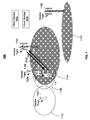
- FIG. 1 depicts an example of a system 100 according to some example embodiments.
- System 100 may include one or more user equipment, such as user equipment 114, one or more access points 110A-D, and cells 112A-D.
- Access point 110A may be configured to serve cell 112A;
- access point 110B may serve a small cell, such as a picocell or a femtocell 112B;
- access point 110C may serve small cell 112C;
- access point 110D may serve macrocell 112D.
- the access points 110A and 110D may be implemented as cellular bases stations, such as evolved Node B (eNB) base stations, serving macrocells, and access points 110B and 110C may be implemented as wireless network access points, such as WiFi network access points, home base stations, and the like, serving small cells.
- the access points 110-D may be further coupled to other networks providing access to a so-called "cloud" including a cloud service 199A and/or a cloud storage 199B.
- user equipment 114 may determine whether to couple to cloud services 199A and/or cloud storage 199B via one or more links to wireless network access points or via one or more links to cellular bases stations, such as evolved Node B (eNB) base stations.
- the user equipment may include middleware.
- the middleware may be configured to determine one or more factors, such as quality of service requirements for the cloud service 199A, quality of service requirements for cloud storage 199B, user preferences, and the like.
- the middleware may, based on the determined factors, select a connection from one or more access points (e.g., selecting to transmit data to the cloud via access point 110B or access point 110A).
- user equipment 114 may be implemented as a user equipment and/or a stationary device.
- the user equipment 114 is often referred to as, for example, a mobile station, a mobile unit, a subscriber station, a wireless terminal, a tablet, a smart phone, or the like.
- a user equipment may be implemented as, for example, a wireless handheld device, a wireless plug-in accessory, or the like.
- user equipment may include a processor, a computer-readable storage medium (e.g., memory, storage, and the like), a radio access mechanism, and/or a user interface.
- the computer-readable storage medium may include instructions which when executed provides one or more applications, such as a browser, a thin client providing access to storage or services 199A-B, middleware (described further below), and the like.
- the user equipment 114 may be implemented as a multi-mode user device configured to operate using a plurality of radio access technologies.
- user equipment 114 may be configured to operate using a plurality of radio access technologies including one or more of the following: Long Term Evolution (LTE), wireless local area network (WLAN) technology, such as 802.11 WiFi, 802.16 WiMAX, Bluetooth, and any other radio access technologies.
- LTE Long Term Evolution
- WLAN wireless local area network
- the user equipment 114 may be configured to have established connections to access points using the plurality of the radio access technologies.
- user equipment 114 may couple to cellular base station 110A based on a cellular standard, such as LTE and couple to wireless access point 110B based on another radio access technology, such as WiFi.
- the access points configured as base stations such as access points 110A and 110D, may, in some example embodiments, be implemented as an evolved Node B
- the base station may be configured in accordance with standards, including the Long Term Evolution (LTE) standards, such as 3GPP TS 36.201, Evolved Universal Terrestrial Radio Access (E-UTRA); Long Term Evolution (LTE) physical layer; General description, 3GPP TS 36.211, Evolved Universal Terrestrial Radio Access (E-UTRA); Physical channels and modulation, 3GPP TS 36.212, Evolved Universal Terrestrial Radio Access (E-UTRA); Multiplexing and channel coding, 3GPP TS 36.213, Evolved Universal Terrestrial Radio Access (E-UTRA); Physical layer procedures, 3GPP TS 36.214, Evolved Universal Terrestrial Radio Access (E-UTRA); Physical layer - Measurements, and any subsequent additions or revisions to these and other 3GPP series of standards (collectively referred to as LTE standards
- LTE Long Term Evolution
- E-UTRA Evolved Universal Terrestrial Radio Access
- LTE Long Term Evolution
- the access points may be configured to serve small cells.
- the access points 110A-D may also be configured to serve a cell using a WLAN technology, such as WiFi (e.g., the IEEE 802.11 series of standards), WiMAX (e.g., the IEEE 802.16) and any other radio access technology capable of serving a cell such as cell 112A or other cell.
- Access point 110B may, in some example embodiments, be implemented to serve a small cell, such as femtocell 112B.
- access point 110B may be configured to operate with a plurality of radio access technologies including LTE, WiFi, Bluetooth, Bluetooth low energy (BT-LE), and/or any other wireless local area network standards.
- the access point 110B may be implemented as a home evolved node B (HeNB) base station serving femtocell 112B, which covers a structure or a predefined area, such as a home, an office building, and the like, although access point 110B may also be implemented as a cellular base station as well.
- HeNB home evolved node B
- system 100 may include access links, such as links 122A-B.
- the access links 122A may include a downlink 116A for transmitting to the user equipment 114 and an uplink 126A for transmitting from user equipment 114 to the access point 110A.
- the downlink 116A may comprise a modulated radio frequency carrying information, such as user data, radio resource control (RRC) messages, location information, and the like, to the user equipment 114
- the uplink 126A may comprise a modulated radio frequency carrying information, such as user data, RRC messages, location information, measurement reports associated with handovers, and the like, from the user equipment 114 to access point 110A.
- Access links 122B may include downlink 116B for transmitting from the access point 110B to user equipment 114, and uplink 126B for transmitting from user equipment 114 to access point 110B.
- the downlink 116A and uplinks 126A may, in some example embodiments, each represent a radio frequency (RF) signal.
- the RF signal may, as noted above, include data, such as voice, video, images, Internet Protocol (IP) packets, control information, and any other type of information and/or messages.
- IP Internet Protocol
- the RF signal may use OFDMA.
- OFDMA is a multi-user version of orthogonal frequency division multiplexing (OFDM). In OFDMA, multiple access is achieved by assigning, to individual users, groups of subcarriers (also referred to as subchannels or tones).
- the subcarriers are modulated using BPSK (binary phase shift keying), QPSK (quadrature phase shift keying), or QAM (quadrature amplitude modulation), and carry symbols (also referred to as OFDMA symbols) including data coded using a forward error-correction code.
- BPSK binary phase shift keying
- QPSK quadrature phase shift keying
- QAM quadrature amplitude modulation
- carry symbols also referred to as OFDMA symbols
- OFDMA symbols carry symbols including data coded using a forward error-correction code.
- FIG. 1 depicts a specific quantity and configuration of cells, access points, and user equipment, other quantities and configurations may be implemented as well.
- FIG. 2 depicts an example of a system 200 according to some example embodiments. The description of system 200 also refers to FIG. 1 .
- system 200 may include user equipment 114 configured to access via connection 212A or 212B one or more wired and/or wireless networks, such as cloud 210, coupled to one or more services. These services may include cloud services 199A and/or 299A-B and one or more storage services, such as cloud storage 199B.
- user equipment 114 may include one or more applications, such as application 205A, and a middleware 205B configured to determine one or more factors and based on the determined factors, select one of the connections 212B via the access point 110B (e.g., WiFi wireless network access point) or connection 212A via access point 110A (e.g., cellular base station).
- application 205A may store data at cloud storage 199B and/or access a cloud service 199A.
- application 205A may correspond to a photo sharing application accessed and/or stored in the cloud (although other types of applications may be used as well).
- application 205A may store a local copy 205C of photos and attempt to synchronize to the cloud storage 199A by obtaining an updated copy 205D of the photos.
- middleware 205B may determine, based on one or more factors, whether to access cloud storage 199B via connection 212B (e.g. a link to a wireless network access point 110B) or connection 212A (e.g. a cellular link to base station 110A), when application 205A synchronizes to (e.g., accesses, obtains data, and the like) a service in the cloud, such as cloud storage 199B and/or service 199A.
- connection 212B e.g. a link to a wireless network access point 110B
- connection 212A e.g. a cellular link to base station 110A
- Middleware 205B may consider one or more factors when determining which connection 110A-B to use to allow applications at user equipment to synchronize to the cloud. For example, middleware 205B may consider data, such as quality of service requirements of the application 205A, cloud storage 199B, and/or cloud service 199A (e.g., delay, data rate, and the like), preferences of a user of user equipment 114 (e.g., battery lifetime, reducing service fees/costs associated with the connections, and the like), default settings at the user equipment, and other context information, such as speed of the user equipment, location of the user equipment, and the like.
- data such as quality of service requirements of the application 205A, cloud storage 199B, and/or cloud service 199A (e.g., delay, data rate, and the like), preferences of a user of user equipment 114 (e.g., battery lifetime, reducing service fees/costs associated with the connections, and the like), default settings at the user equipment, and other context information, such as speed of the user equipment
- Middleware 205B may receive information representative of one or more factors and combine the factors (e.g., scale, weight the factors, and then combine) to determine whether to access cloud storage 199B and/or cloud service 199 via local connection 212B (which in this example may a less costly, higher data rate WiFi connection to access point 110B) or connection 212A. This determination of which connection to use may be performed when application 205A attempts to synchronize to the cloud, such as cloud storage 199B and/or a cloud service 199A.
- middleware 205B may enable application 205A to operate in a heterogeneous network environment in which access to the network is provided by small cells and macrocells, although other types of networks and cells may be used as well.
- middleware 205B may consider data, including the user equipment's speed and location.
- the user equipment's speed and location may be determined by one or a combination of using a global positioning system (GPS) receiver embedded in the user equipment and using signal strength and delay information from multiple cells, or by estimating the user equipment's speed and location based on a number of cell changes within a certain time window sometimes referred to as mobility state estimation.
- GPS global positioning system
- Other mechanisms may also be used to determine speed and location.
- middleware 205A may determine a relative cost to use local connection 212B (which in this example may be a less costly, higher data rate WiFi connection to access point 110B) and a relative cost of using cellular connection 210A, and based on the determined cost, select connection 212A or 212B, when an application attempts to synchronize to the cloud, such as cloud storage 199B and/or a cloud service 199A.
- cost may include a financial cost (e.g., connection charges imposed on the link) and/or a non-monetary cost (e.g., power consumption, data latency, and the like).
- cloud 210 may provide to user equipment 114 services, such as cloud services 199A, 299A-B and cloud storage 199B.
- the cloud services may include social networking, photo sharing, video sharing, email, business applications, texting, data back-up, music, navigation, software updates, cloud computing (e.g., where a task is done in the cloud), and any other service provided at a remote location via a cloud, such as the Internet.
- Data storage 199B may include storage of documents, music files, audio files, photos, video, email, voicemail, database files or any other information.
- cloud 210 may include a load balancer to select from among one or more storage devices, such as storage 199B.
- Cloud copy 205D may include storage at a one or more locations, which may be distributed. Cloud copy 205D may be stored at a server, a client, a computer system, or a dedicated storage device. In some example embodiments, a local copy 205C may be stored in user equipment 114, and the local copy 205C may be synchronized with a copy stored via cloud 210 (e.g., cloud copy 205D).
- cloud 210 e.g., cloud copy 205D
- services 199A and/or 299A-B may comprise web-based services accessible to user equipment 114 via a web browser, a thin-client, and/or other application such as application 205A.
- the services 199A and/or 299A-B may also include commands and/or instructions that may be executed by user equipment 114.
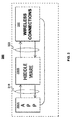
- FIG. 3 depicts an example of application 205A, middleware 205B, and wireless connections 330 (e.g., connections 212A, 212B, and the like), in accordance with some example embodiments.
- the description of FIG. 3 also refers to FIGs. 1 and 2 .
- application 205A may be an application stored in at least one computer-readable medium including code and executed by at least one processor at user equipment 114. Furthermore, application 205A may access cloud 210 for services, such as data storage and the like. Examples of applications include email applications, document applications, file applications, database applications, and the like.
- application 205A may seek to synchronize data from a service, such as cloud storage 199B, and the like. Moreover, application 205A may perform the synchronization with cloud 210 to synchronize data, such as local copy 205C with cloud copy 205D. Synchronization may also include transferring data files from the user equipment 114 to cloud storage 199B or updating data files at cloud storage 199B with data files stored at user equipment 114. Synchronization may also include transferring data files from cloud storage 199B to the user equipment 114 or updating data files at user equipment 114 with data files stored at cloud storage 199B.
- Synchronization may also include data related to programs or applications running on user equipment 114 or data related to a service such as one of services 199A, or 299A-B running on cloud 210.
- user equipment 114 may include multiple applications and/or services that require synchronization.
- the order of synchronization may be determined by middleware 205B based on user preferences, quality of service requirements, characteristics of the available connections, and/or the like. For example, the order of the synchronization of tasks may be different depending upon whether the connection is a low data rate connection or a high data rate connection. For example, large synchronization tasks may be deprioritized when using a low data rate connection.
- middleware 205B and application 205A may couple via an interface 318.
- Interface 318 may support data sent from applications 205A to middleware 205B and support data sent from middleware 205B to applications205A.
- the data exchanged between applications 205-A and middleware 205B may include any type of data (also referred to herein as factors), which may enable middleware 205B to determine which connection 212A or 212B to select for application 205A.
- the data may include quality of service requirements of the application 205A and the like.
- middleware 205B may include other interfaces to other portions of user equipment 114 or the network to obtain other data (also referred to herein as factors), such as delay, data rate, user preferences, battery lifetime, service fees, default settings, context information, and the like.
- user equipment 114 may be configured to access service 299A (e.g., check for new email every 15 minutes).
- application 205A such as an email application
- middleware 205B may communicate over interface 318 to middleware 205B to request email synchronization every 15 minutes.
- Each application at user equipment 114 may also have associated synchronization requirements in the cloud.
- Interface 318 may be an application programming interface (API) including specifications for routines, data structures, object classes, and/or variables.
- API application programming interface
- interface 318 may conform to an international standard, Microsoft Windows API, or the libraries of a programming language such as a C, C++, Java or other programming language.
- Interface 318 may also comprise a hardware interface, such as an industry standard or proprietary interface.
- middleware 320 may couple via interface 322 to wireless connections 330.
- middleware 320 may select, as noted above, from among wireless connections, such as access point 110A, access point 110B, and the like, to provide application 205A access to cloud 210, cloud storage 199B, and/or services 199A, 299A-B.
- middleware 205B at user equipment 114 may select for one or more applications, such as applications 205A, whether to use access point 110B (e.g. a wireless network access point) or access point 110A (e.g. a cellular base station) or a combination thereof.
- middleware 205B may select access point 110B (which may be a high data rate WiFi connection with little, if any, connection fee), while access point 110A may be a cellular connection which may be slower than the WiFi connection and impose higher connection charges.
- middleware 205B may select the WiFi provided via access point 110B, over base station 110A, although other selection schemes may be implemented by middleware 205B as well.
- access point 110B may provide wireless access using WiFi, and access point 110A may provide data services over a cellular network.
- access point 110A may provide data services over a cellular network.
- middleware 205B may select connection 212A to the base station 110A, rather than connection 212B to WiFi access point 110B.
- FIG. 4 depicts a process 400 that may be implemented at user equipment 114, in accordance with some example embodiments.
- the description of process 400 also refers to FIGs. 1 , 2 and 3 .
- one or more applications may be so-called “virtualized” in the cloud.
- the application may need to synchronize with (e.g., access, obtain, etc.) a service in the cloud, such as cloud storage 199B and the like.
- middleware 205B may be used to select a connection for the application based on data related to one or more factors: quality of service requirements, preferences of a user of user equipment 114, default settings at the user equipment, and other context information, such as speed of the user equipment, location of the user equipment, and the like.
- middleware 205B may receive one or more of the following data: user preference information; signal quality and/or signal power information representative of access points/base stations available for connection; quality of service requirements of the application, the cloud service, and/or the cloud storage; the state of the application, the access point; periodic performance indicators, and the like.
- Periodic performance indicators may represent signal quality measurements done by the user equipment from time to time. Quality measurements may include signal strength, signal quality, signal-to-interference ratio, and/or the like.
- middleware 205B may also monitor the trend of the quality measurements to determine (e.g., predict, estimate, and the like) a signal quality at a future time (referred to as future signal quality). For example, if the signal strength of a serving cell has been unchanged for a several minutes, middleware 205B may determine that the connection will be available for some time in the future. This prediction of future availability of the connection by middleware 205B may result in middleware 205B making changes to the synchronization schedule to take advantage of the predicted availability of the connection. For example, middleware 205B may predict the continued availability of a high data rate connection allowing a change to the schedule of a synchronization task requiring a high data rate connection to an earlier time. Furthermore, if the current connection offers unusually high capacity, a large low priority task may be initiated earlier, taking advantage of the opportunity.
- middleware 205B may schedule when the applications synchronize with the service in the cloud, and, when a plurality of applications are at user equipment 114, middleware 205B may prioritize the order in which the applications synchronize with the services and/or storage in the cloud.
- middleware 205B may receive, at 405, data, such as information representative of quality of service information, user preferences, and the like associated with application 205, access points, user equipment 114, cloud service 199A, and/or cloud storage 199B.
- the received information may also include quality service trend information including past and current quality of service measurements representative of signal power and/or signal quality (e.g., reference signal received power (RSRP), reference signal received quality (RSRQ), and the like) of the one or more connections available at wireless connections 330.
- the state such as the load on the access point and the access mode (e.g. closed or open, free or paid and if a paid access mode the associated costs), of the available access points/base stations may also be used in the selection.
- the middleware 205B may select a connection (e.g., select between connection 210A and 210B as described above) and/or determine when (e.g., schedule, prioritize, and the like) the application's access and/or synchronize with the service and/or storage in the cloud.
- a connection e.g., select between connection 210A and 210B as described above
- determine when e.g., schedule, prioritize, and the like
- trends with respect to, for example, quality of service and the like may also be taken into account, when selecting a connection, scheduling/prioritizing, and the like.
- middleware 205B may track quality of service indicators and/or measurements (e.g., RSRP) for both connected cell(s) and candidate cell(s) to determine trends in the quality of service.
- quality of service indicators and/or measurements e.g., RSRP
- the quality of service trend information may include historical information, although a single, current quality of service value may be used to assess a trend.
- the trends may allow middleware 205B to prioritize the order of the synchronization tasks associated with applications at user equipment 114.
- middleware 205B may prioritize the broadband synchronization task to be complete in the current LTE cell.
- middleware 205B may also de-prioritize other synchronization tasks with lower data rate requirements so that these other tasks take place at another time, such as after the handover to the lower capability cell.
- the trend of signal strength may be assessed by middleware 205B based on a currently available data rate.
- the middleware 205B may, based on quality of service trend information, handover history information, location information for the user equipment (e.g., route, movement, and/or speed), and the like, determine whether the user equipment is expected to leave a cell providing a high data rate connection before a broadband task, such as a synchronization by the application 205A, is to be started (or completed).
- the middleware 205B may then prioritize the synchronization task so that it can be started and/or completed before the handover (e.g., by prioritizing the scheduling the synchronization task earlier than originally scheduled).
- middleware 205B may use middleware 205B to predict the availability of future available connections without directly sensing the corresponding access point. For example, if the user has been connected to a Wi-Fi access point sometime earlier, then middleware 205B may predict based on location information about the access point and the user equipment that user equipment 114 may be able to connect to the same Wi-Fi access point at a later time.
- the user equipment including middleware 205B may receive information to enable determining near-by cells and the serving access points (e.g., base stations, home base stations/eNBs, Wi-Fi access points, and the like). This received information may include location information, radio measurement fingerprints, direct detection of cells, and the like. The expected connection time and quality of service performance of a candidate cell (for a connection or a handover) may be estimated based on the stored connection and performance history at the user equipment including middleware 205B, although other information may be used as well (e.g., speed or mobility state of the user equipment).
- the serving access points e.g., base stations, home base stations/eNBs, Wi-Fi access points, and the like.
- This received information may include location information, radio measurement fingerprints, direct detection of cells, and the like.
- the expected connection time and quality of service performance of a candidate cell may be estimated based on the stored connection and performance history at the user equipment including middleware 205B, although other information may be used as well (e.g.
- This received information may also be used to schedule and/or reprioritize the synchronization between the applications at the user equipment and the cloud (which may also take into account defined cloud service requirements, such as low delay, and user preferences, such as a minimal service-fee, minimal battery power consumption, and/or minimal latency).
- defined cloud service requirements such as low delay
- user preferences such as a minimal service-fee, minimal battery power consumption, and/or minimal latency
- Middleware 205B may receive information and/or may track the relative geographic position of target access points (e.g., enhanced node B base stations (eNB), Wi-Fi access points, etc.) near user equipment 114 that are not currently serving the user equipment 114.
- target access points e.g., enhanced node B base stations (eNB), Wi-Fi access points, etc.
- the relative geographic position of these target access points is determined based on known location information about access points in addition to location information from a global positioning system receiver embedded in user equipment 114. Nearby access points may also be determined by measurement of radio fingerprints or by direct detection of cells.
- Whether an access point is a target for a handover may be a function of mobility in some example embodiments. For example, a fast moving user equipment may exit a serving cell faster than a slower moving or stationary user equipment. This mobility information may be used by the middleware 205B to select a target access point, when application 205A needs to synchronization to the cloud.
- middleware 205B may establish a schedule for when one or more applications at the user equipment couple via connections, such as 212A, 212B, and the like, to cloud 210 including a cloud service and/or cloud storage, in accordance with some example embodiments.
- the schedule defining the time and/or order may be adjusted based on the expectations of the user equipment.
- this high data rate synchronization task may be elevated in priority (e.g. prioritized) so that it can be completed before the handover.
- Synchronization tasks with lower data rate requirements may be postponed (or de-prioritized).
- the application's 205A synchronization task may be elevated in priority (e.g., started earlier than previously scheduled in order to complete the task before leaving the cell with the high data rate).
- middleware 205B may evaluate information received at 405, such as quality of service trends, user preferences, and the like, in accordance with some example embodiments. For example, if the quality of service trend in a current cell serving user equipment 114 will support (positive at 410) a quality of service (or user preference, and the like) defined for the application, the cloud service, and/or the cloud storage, then middleware 205B may maintain, at 415, the schedule for the synchronization task with the cloud 210 including a cloud service and/or cloud storage via access point 110A or access point 110B. Middleware 205B may request that application 205A provide data earlier than scheduled if doing so would provide a better quality of service and can be supported by the selected connection.
- information received at 405 such as quality of service trends, user preferences, and the like, in accordance with some example embodiments. For example, if the quality of service trend in a current cell serving user equipment 114 will support (positive at 410) a quality of service (or user preference, and the like) defined for the application, the
- middleware 205B may determine, at 420, if a target wireless access point or target base station can meet the quality of service, user preference, and the like, at a lower cost, such as lower service charge, lower bandwidth, lower data rate, and/or any other metric.
- middleware 205B may reschedule a corresponding synchronization task at 425A (labeled deprioritize) so that the synchronization task for the application 205A is performed via an access point (wireless network access point or cellular base station) having a lower cost but satisfying the required quality of service requirements, user preferences, and the like. If an access point at a lower cost is not available for connection, middleware 205B may reschedule or prioritize a corresponding synchronization task at 425B so that the synchronization task for the application 205A is performed via an access point which may have a higher cost but satisfies the required quality of service requirements, user preferences, and the like.
- user equipment 114 may store the synchronization schedules and associated selected wireless services, quality or service information and trends, and position information and speed in an application database to enable a determination of future connection predictions and selections, in accordance with some example embodiments.
- the connection history information in a database accessible by middleware 205B may be used by middleware 205B to determine trends, such as predictions.
- connection history database includes trend information showing that a certain connection has provided stable service for a certain period (e.g., 5 minutes) with suitable received signal quality
- middleware 205B may predict that the connection may be used in the future, but if the connection history shows that service usually drops after for 5 minutes, middleware 205B may make a prediction that the connection will not be available after 5 minutes.
- the database may thus be used by middleware 205B to determine when to adjust the schedule of a synchronization task to take advantage of immediate opportunity, or to keep the original synchronization schedule.
- FIG. 5 depicts an example implementation of an access point, such as access points 110A-D.
- the access point may include one or more antennas 520 configured to transmit via a downlink and configured to receive uplinks via the antenna(s) 520.
- the access point may further include a plurality of radio interfaces 540 coupled to the antenna 520.
- the radio interfaces may correspond to a plurality of radio access technologies including, LTE or any other cellular technology, WLAN technology, such as WiFi (e.g., the IEEE 802.11 series of standards), WiMAX (e.g., the IEEE 802.16 family of standards), Bluetooth, RFID, UWB, ZigBee, and the like.
- the access point may further include a processor 430 for controlling the wireless service 500 and for accessing and executing program code stored in memory 535.
- the radio interface 540 may further include other components, such as filters, converters (e.g., digital-to-analog converters and the like), mappers, a Fast Fourier Transform (FFT) module, and the like, to generate symbols for a transmission via one or more downlinks and to receive symbols (e.g., via an uplink).
- FFT Fast Fourier Transform
- FIG. 6 depicts a block diagram of a radio 600, such as user equipment 114.
- the user equipment 114 may include an antenna 620 for receiving a downlink and transmitting via an uplink.
- the user equipment 114 may also include a plurality of radio interfaces 640 coupled to the antenna 620.
- the radio interfaces may correspond to a plurality of radio access technologies including, LTE or any other cellular technology, WLAN technology, such as WiFi (e.g., the IEEE 802.11 series of standards), WiMAX (e.g., the IEEE 802.16 family of standards), Bluetooth, RFID, UWB, ZigBee, and the like.
- the radio interfaces 640 may include other components, such as filters, converters (e.g., digital-to-analog converters and the like), symbol demappers, signal shaping components, an Inverse Fast Fourier Transform (IFFT) module, and the like, to process symbols, such as OFDMA symbols, carried by a downlink or an uplink.
- the user equipment 114 may further include at least one processor, such as processor 630, for controlling user equipment 114 and for accessing and executing program code stored in memory 635.
- the memory 635 may include code, which when executed by at least one processor provides middleware 205B.
- the base stations and user equipment (or one or more components therein) and/or the processes described herein can be implemented using one or more of the following: a processor executing program code, an application-specific integrated circuit (ASIC), a digital signal processor (DSP), an embedded processor, a field programmable gate array (FPGA), and/or combinations thereof.
- ASIC application-specific integrated circuit
- DSP digital signal processor
- FPGA field programmable gate array
- These various implementations may include implementation in one or more computer programs that are executable and/or interpretable on a programmable system including at least one programmable processor, which may be special or general purpose, coupled to receive data and instructions from, and to transmit data and instructions to, a storage system, at least one input device, and at least one output device.
- These computer programs also known as programs, software, software applications, applications, components, program code, or code
- machine-readable medium refers to any computer program product, computer-readable medium, computer-readable storage medium, apparatus and/or device (e.g., magnetic discs, optical disks, memory, Programmable Logic Devices (PLDs)) used to provide machine instructions and/or data to a programmable processor, including a machine-readable medium that receives machine instructions.
- PLDs Programmable Logic Devices
- systems are also described herein that may include a processor and a memory coupled to the processor.
- the memory may include one or more programs that cause the processor to perform one or more of the operations described herein.
Landscapes
- Engineering & Computer Science (AREA)
- Computer Networks & Wireless Communication (AREA)
- Signal Processing (AREA)
- Computer Security & Cryptography (AREA)
- Mobile Radio Communication Systems (AREA)
Claims (9)
- Verfahren, umfassend:- Empfangen von Daten bei einer Auswahlvorrichtung (205B), die wenigstens für eine Dienstgüteanforderung einer Anwendung (205A) oder eine Nutzerpräferenz repräsentativ sind, welche mit der Anwendung bei einem Nutzergerät (114) verknüpft sind, wobei die Auswahlvorrichtung eine Middleware (205B) umfasst, die die Anwendung mit wenigstens einer Verbindung (212A, 212B) koppelt;- Auswählen, bei der Auswahlvorrichtung und basierend auf allen empfangenden Daten, der wenigstens einen Verbindung, um den Anwendungszugriff auf einen Dienst (199A, 199B, 299A, 299B) bereitzustellen; und- Einleiten, bei der Auswahlvorrichtung, einer Errichtung der wenigstens einen Verbindung, um den Anwendungszugriff auf den Service bereitzustellen, um eine Synchronisierung zwischen der Anwendung und dem Dienst zu ermöglichen;- wobei das Verfahren dadurch gekennzeichnet ist, dass die empfangenden Daten ferner eine Geschwindigkeit des Nutzergerätes umfassen.
- Verfahren gemäß Anspruch 1, wobei die empfangenden Daten ferner wenigstens einen Standort des Nutzergerätes, eine empfangende Signalqualität eines Zugangspunktes oder eine periodische Leistungskennzahl umfassen.
- Verfahren gemäß einem der Ansprüche 1-2, bei dem der Dienst einen mit dem Internet zugänglich verbundenen Ferndienst umfasst.
- Verfahren gemäß einem der Ansprüche 1-3, wobei die wenigstens eine Verbindung aus einer Vielzahl drahtloser Verbindungen ausgewählt ist, die jeweils das Nutzergerät an eine Zugangsstelle koppeln, die ferner durch wenigstens das Internet mit dem Dienst gekoppelt ist.
- Vorrichtung (600) umfassend:- wenigstens einen Prozessor (630); und- wenigstens einen Speicher (635) mit einem Kode, der, wenn er von dem wenigstens einen Prozessor (630) ausgeführt wird, Operationen verursacht, die umfassen:- Empfangen von Daten in einer Auswahlvorrichtung, die wenigstens für die Dienstgüteanforderung einer Anwendung oder eine Nutzerpräferenz repräsentativ sind, welche mit der Anwendung bei einem Nutzergerät verknüpft sind, wobei die Auswahlvorrichtung eine Middleware umfasst, die die Anwendung mit wenigstens einer Verbindung koppelt, wobei die empfangenden Daten ferner eine Geschwindigkeit des Nutzergerätes umfassen;- Auswählen, in der Auswahlvorrichtung, basierend auf allen empfangenden Daten, der wenigstens einen Verbindung, um den Anwendungszugriff auf einen Dienst bereitzustellen; und- Einleiten, in der Auswahlvorrichtung, einer Errichtung der wenigstens einen Verbindung, um den Anwendungszugriff auf den Dienst bereitzustellen, um eine Synchronisierung zwischen der Anwendung und dem Dienst zu ermöglichen,- wobei das Nutzergerät die Vorrichtung umfasst, wobei die Vorrichtung dadurch gekennzeichnet ist, dass die empfangenden Daten ferner eine Geschwindigkeit des Nutzergerätes umfassen.
- Vorrichtung (600) gemäß Anspruch 5, bei der die Daten ferner wenigstens einen Standort des Nutzergerätes, eine empfangende Signalqualität eines Zugangspunktes oder eine periodische Leistungskennzahl umfassen.
- Vorrichtung (600) gemäß einem der Ansprüche 5-6, wobei der Dienst einen mit dem Internet zugänglich verbundenen Ferndienst umfasst.
- Vorrichtung (600) gemäß einem der Ansprüche 5-7, wobei der Kode, wenn er von dem wenigstens einen Prozessor (630) ausgeführt wird, veranlasst, dass wenigstens eine Verbindung aus einer Anzahl von drahtlosen Verbindungen ausgewählt wird, die jeweils das Nutzergerät mit einer Zugangsstelle koppeln, die ferner durch wenigstens das Internet mit dem Dienst gekoppelt ist.
- Computerlesbares Medium, das mit Anweisungen verschlüsselt ist, die, wenn sie durch den wenigstens einen Prozessor ausgeführt werden, eine Durchführung eines Verfahrens gemäß wenigstens einem der Ansprüche 1-4 verursachen.
Applications Claiming Priority (1)
| Application Number | Priority Date | Filing Date | Title |
|---|---|---|---|
| PCT/US2012/042296 WO2013187892A1 (en) | 2012-06-13 | 2012-06-13 | Cloud services in mobile heterogeneous networks |
Publications (2)
| Publication Number | Publication Date |
|---|---|
| EP2862336A1 EP2862336A1 (de) | 2015-04-22 |
| EP2862336B1 true EP2862336B1 (de) | 2016-09-28 |
Family
ID=46395713
Family Applications (1)
| Application Number | Title | Priority Date | Filing Date |
|---|---|---|---|
| EP12730316.2A Not-in-force EP2862336B1 (de) | 2012-06-13 | 2012-06-13 | Cloud-dienste in mobilen heterogenen netzwerken |
Country Status (3)
| Country | Link |
|---|---|
| US (1) | US20150142983A1 (de) |
| EP (1) | EP2862336B1 (de) |
| WO (1) | WO2013187892A1 (de) |
Families Citing this family (17)
| Publication number | Priority date | Publication date | Assignee | Title |
|---|---|---|---|---|
| US9565609B2 (en) * | 2012-05-22 | 2017-02-07 | Nokia Technologies Oy | Method and apparatus for triggering handover between access points based on gathered history data of series of access points |
| KR101907487B1 (ko) * | 2012-11-16 | 2018-10-12 | 삼성전자주식회사 | 휴대단말기의 ap 연결 방법 및 장치 |
| US10656800B2 (en) | 2013-03-29 | 2020-05-19 | Microsoft Technology Licensing, Llc | Visual configuration and activation |
| US10452222B2 (en) | 2013-05-29 | 2019-10-22 | Microsoft Technology Licensing, Llc | Coordination of system readiness tasks |
| US9710248B2 (en) * | 2013-05-29 | 2017-07-18 | Microsoft Technology Licensing, Llc | Application install and layout syncing |
| EP3032868A4 (de) * | 2013-08-05 | 2017-03-15 | Sharp Kabushiki Kaisha | Funkkommunikationssystem, endgerätevorrichtung, basisstationsvorrichtung, funkkommunikationsverfahren und integrierter schaltkreis |
| US20150052239A1 (en) * | 2013-08-19 | 2015-02-19 | Anthony G. LaMarca | Context based spectrum management system |
| CN104426955B (zh) * | 2013-08-28 | 2018-05-04 | 北大方正集团有限公司 | 共享文件的处理方法及云存储服务器 |
| US9635580B2 (en) * | 2013-10-08 | 2017-04-25 | Alef Mobitech Inc. | Systems and methods for providing mobility aspects to applications in the cloud |
| CN104753860B (zh) * | 2013-12-27 | 2019-06-28 | 上海宝信软件股份有限公司 | 基于中间件的网络服务系统 |
| CN104935619B (zh) * | 2014-03-20 | 2018-07-03 | 上海宝信软件股份有限公司 | 基于中间件的网络服务方法 |
| US9661440B2 (en) * | 2014-07-25 | 2017-05-23 | Qualcomm Incorporated | Methods and systems for triggering efficient application synchronization |
| US20160197837A1 (en) * | 2015-01-05 | 2016-07-07 | L&M Ip | Method for Conveying Media to a Cloud Computing Environment |
| CN106973384B (zh) | 2017-02-20 | 2018-07-06 | 广东欧珀移动通信有限公司 | 一种无线保真Wi-Fi连接方法及移动终端 |
| US10492023B1 (en) * | 2018-03-28 | 2019-11-26 | Michael Gurin | Dynamic resource location coordination control system |
| US11109442B2 (en) * | 2018-07-27 | 2021-08-31 | At&T Intellectual Property I, L.P. | Dynamically adjusting a network inactivity timer during user endpoint mobility states |
| CN109639833B (zh) * | 2019-01-25 | 2021-09-07 | 福建师范大学 | 一种基于无线城域网微云负载均衡的任务调度方法 |
Family Cites Families (22)
| Publication number | Priority date | Publication date | Assignee | Title |
|---|---|---|---|---|
| FI107982B (fi) * | 1997-05-06 | 2001-10-31 | Nokia Mobile Phones Ltd | Solun valinta käyttöprofiilin perusteella solukkoradiojärjestelmässä |
| US20040131078A1 (en) * | 2003-01-03 | 2004-07-08 | Gupta Vivek G. | Apparatus and method for supporting multiple wireless technologies within a device |
| US20060068777A1 (en) * | 2004-06-30 | 2006-03-30 | Sadowsky John S | Air interface cooperation between WWAN and WLAN |
| US8751648B2 (en) * | 2005-06-03 | 2014-06-10 | Wefi, Inc. | Providing and receiving network access |
| US8711765B2 (en) * | 2006-09-27 | 2014-04-29 | Texas Instruments Incorporated | Uplink synchronization management in wireless networks |
| US20080080412A1 (en) * | 2006-09-29 | 2008-04-03 | Advanced Micro Devices, Inc. | Connection manager with communication load monitoring |
| US8032150B2 (en) * | 2006-09-29 | 2011-10-04 | Globalfoundries Inc. | Connection manager with location learning |
| US8473637B2 (en) * | 2007-02-23 | 2013-06-25 | Research In Motion Limited | Method and apparatus for extended ordering over a wireless network of collections using priority and dependency levels |
| EP1968243A1 (de) * | 2007-03-07 | 2008-09-10 | British Telecommunications Public Limited Company | Verfahren zur Datenübertragung auf eine mobile Vorrichtung |
| WO2008113986A2 (en) * | 2007-03-16 | 2008-09-25 | British Telecommunications Public Limited Company | Data transmission scheduler |
| GB0724904D0 (en) * | 2007-12-21 | 2008-01-30 | Nortel Networks Ltd | Improved soft handover for cellular radio systems |
| US8805348B2 (en) * | 2008-07-30 | 2014-08-12 | Qualcomm Incorporated | Diary synchronization for smart phone applications |
| US9336178B2 (en) * | 2008-12-19 | 2016-05-10 | Velocee Ltd. | Optimizing content and communication in multiaccess mobile device exhibiting communication functionalities responsive of tempo spatial parameters |
| US8463280B1 (en) * | 2009-02-25 | 2013-06-11 | Kyutae Lim | Heterogeneous mobile networking |
| EP2424321B1 (de) * | 2009-05-22 | 2016-01-13 | Huawei Technologies Co., Ltd. | Benutzergerät und zugriffsverfahren dafür |
| US8605742B2 (en) * | 2009-11-16 | 2013-12-10 | Verizon Patent And Licensing Inc. | Wireless connection utilization |
| US8437808B2 (en) * | 2010-05-03 | 2013-05-07 | Hewlett-Packard Development Company, L.P. | Apparatus and methods for power management on mobile devices |
| US8645574B2 (en) * | 2010-08-02 | 2014-02-04 | Blackberry Limited | Method and system for management of synchronization of a mobile electronic device |
| JP2012114570A (ja) * | 2010-11-22 | 2012-06-14 | Fujitsu Ltd | 基地局装置、移動局装置、通信システム及び通信方法 |
| US9137842B2 (en) * | 2011-10-03 | 2015-09-15 | Mediatek Inc. | Methods of UE providing speed information to network |
| US20130100819A1 (en) * | 2011-10-19 | 2013-04-25 | Qualcomm Incorporated | Selectively acquiring and advertising a connection between a user equipment and a wireless local area network |
| US9049589B2 (en) * | 2012-01-27 | 2015-06-02 | Microsoft Technology Licensing, Llc | Dynamically adjusting a data usage plan based on data usage statistics |
-
2012
- 2012-06-13 WO PCT/US2012/042296 patent/WO2013187892A1/en not_active Ceased
- 2012-06-13 US US14/406,154 patent/US20150142983A1/en not_active Abandoned
- 2012-06-13 EP EP12730316.2A patent/EP2862336B1/de not_active Not-in-force
Also Published As
| Publication number | Publication date |
|---|---|
| EP2862336A1 (de) | 2015-04-22 |
| WO2013187892A1 (en) | 2013-12-19 |
| US20150142983A1 (en) | 2015-05-21 |
Similar Documents
| Publication | Publication Date | Title |
|---|---|---|
| EP2862336B1 (de) | Cloud-dienste in mobilen heterogenen netzwerken | |
| EP3750335B1 (de) | Systeme und verfahren zur besseren ressourcennutzung in 5g-netzwerken unter verwendung der freigabeschicht | |
| US10588063B2 (en) | Adaptive rate of congestion indicator to enhance intelligent traffic steering | |
| CN105376813B (zh) | 使用地理定位和切换管理来改善网络资源分配的技术 | |
| US9820297B2 (en) | Small cell deployment scheduling | |
| EP3207755B1 (de) | Kommunikationsansammlungsgerät und verfahren zum routing von datenverkehr | |
| US20180167948A1 (en) | Method and apparatus for context aware concurrent data transmission scheduling for pan radio technology | |
| US20170019495A1 (en) | Distribution of popular content between user nodes of a social network community via direct proximity-based communication | |
| WO2019177783A1 (en) | Wireless radio user equipment as local manager for integrating access backhaul and sidelink | |
| KR20130113344A (ko) | 무선 네트워크 오프로딩을 위한 시스템 및 방법 | |
| US12108302B2 (en) | Method and system for network slice-based high priority service handling in radio access technology (RAT) switching | |
| US11606683B2 (en) | First node, second node, third node and methods performed thereby for handling roaming information | |
| CN109479233B (zh) | 用于容忍延迟消息的转发节点选择和路由 | |
| US11849428B2 (en) | System and methods for coverage extension based on carrier aggregation | |
| US20230254775A1 (en) | Uplink power control mechanism for dual connectivity networks | |
| GB2489716A (en) | Multimode base station and method of controlling admission | |
| US20220060956A1 (en) | Systems and methods for single uplink operation (suo) over dual connectivity networks | |
| EP3010295A1 (de) | Standortberechnung | |
| US20250386266A1 (en) | Cell reselection mechanisms interworking | |
| EP3412021B1 (de) | Mobiles endgerät, puffermodul und verfahren darin zum hochladen einer datei in einem kommunikationsnetz | |
| JP7835847B2 (ja) | 第1のノード、第2のノード、および第3のノード、通信システム、ならびにそれによって実行される、デバイスのための1つ以上の進行中の通信セッションのモビリティを処理するための方法 | |
| KR20250043557A (ko) | 이중 연결 | |
| US20250247688A1 (en) | Limited communication capability notifications |
Legal Events
| Date | Code | Title | Description |
|---|---|---|---|
| PUAI | Public reference made under article 153(3) epc to a published international application that has entered the european phase |
Free format text: ORIGINAL CODE: 0009012 |
|
| 17P | Request for examination filed |
Effective date: 20141125 |
|
| AK | Designated contracting states |
Kind code of ref document: A1 Designated state(s): AL AT BE BG CH CY CZ DE DK EE ES FI FR GB GR HR HU IE IS IT LI LT LU LV MC MK MT NL NO PL PT RO RS SE SI SK SM TR |
|
| AX | Request for extension of the european patent |
Extension state: BA ME |
|
| RAP1 | Party data changed (applicant data changed or rights of an application transferred) |
Owner name: NOKIA TECHNOLOGIES OY |
|
| DAX | Request for extension of the european patent (deleted) | ||
| 17Q | First examination report despatched |
Effective date: 20151030 |
|
| GRAP | Despatch of communication of intention to grant a patent |
Free format text: ORIGINAL CODE: EPIDOSNIGR1 |
|
| INTG | Intention to grant announced |
Effective date: 20160614 |
|
| GRAS | Grant fee paid |
Free format text: ORIGINAL CODE: EPIDOSNIGR3 |
|
| GRAA | (expected) grant |
Free format text: ORIGINAL CODE: 0009210 |
|
| AK | Designated contracting states |
Kind code of ref document: B1 Designated state(s): AL AT BE BG CH CY CZ DE DK EE ES FI FR GB GR HR HU IE IS IT LI LT LU LV MC MK MT NL NO PL PT RO RS SE SI SK SM TR |
|
| REG | Reference to a national code |
Ref country code: GB Ref legal event code: FG4D |
|
| REG | Reference to a national code |
Ref country code: CH Ref legal event code: EP |
|
| REG | Reference to a national code |
Ref country code: AT Ref legal event code: REF Ref document number: 833606 Country of ref document: AT Kind code of ref document: T Effective date: 20161015 |
|
| REG | Reference to a national code |
Ref country code: IE Ref legal event code: FG4D |
|
| REG | Reference to a national code |
Ref country code: DE Ref legal event code: R096 Ref document number: 602012023506 Country of ref document: DE |
|
| REG | Reference to a national code |
Ref country code: NL Ref legal event code: FP |
|
| REG | Reference to a national code |
Ref country code: LT Ref legal event code: MG4D |
|
| PG25 | Lapsed in a contracting state [announced via postgrant information from national office to epo] |
Ref country code: FI Free format text: LAPSE BECAUSE OF FAILURE TO SUBMIT A TRANSLATION OF THE DESCRIPTION OR TO PAY THE FEE WITHIN THE PRESCRIBED TIME-LIMIT Effective date: 20160928 Ref country code: RS Free format text: LAPSE BECAUSE OF FAILURE TO SUBMIT A TRANSLATION OF THE DESCRIPTION OR TO PAY THE FEE WITHIN THE PRESCRIBED TIME-LIMIT Effective date: 20160928 Ref country code: HR Free format text: LAPSE BECAUSE OF FAILURE TO SUBMIT A TRANSLATION OF THE DESCRIPTION OR TO PAY THE FEE WITHIN THE PRESCRIBED TIME-LIMIT Effective date: 20160928 Ref country code: LT Free format text: LAPSE BECAUSE OF FAILURE TO SUBMIT A TRANSLATION OF THE DESCRIPTION OR TO PAY THE FEE WITHIN THE PRESCRIBED TIME-LIMIT Effective date: 20160928 Ref country code: NO Free format text: LAPSE BECAUSE OF FAILURE TO SUBMIT A TRANSLATION OF THE DESCRIPTION OR TO PAY THE FEE WITHIN THE PRESCRIBED TIME-LIMIT Effective date: 20161228 |
|
| REG | Reference to a national code |
Ref country code: AT Ref legal event code: MK05 Ref document number: 833606 Country of ref document: AT Kind code of ref document: T Effective date: 20160928 |
|
| PG25 | Lapsed in a contracting state [announced via postgrant information from national office to epo] |
Ref country code: GR Free format text: LAPSE BECAUSE OF FAILURE TO SUBMIT A TRANSLATION OF THE DESCRIPTION OR TO PAY THE FEE WITHIN THE PRESCRIBED TIME-LIMIT Effective date: 20161229 Ref country code: LV Free format text: LAPSE BECAUSE OF FAILURE TO SUBMIT A TRANSLATION OF THE DESCRIPTION OR TO PAY THE FEE WITHIN THE PRESCRIBED TIME-LIMIT Effective date: 20160928 Ref country code: SE Free format text: LAPSE BECAUSE OF FAILURE TO SUBMIT A TRANSLATION OF THE DESCRIPTION OR TO PAY THE FEE WITHIN THE PRESCRIBED TIME-LIMIT Effective date: 20160928 |
|
| PG25 | Lapsed in a contracting state [announced via postgrant information from national office to epo] |
Ref country code: RO Free format text: LAPSE BECAUSE OF FAILURE TO SUBMIT A TRANSLATION OF THE DESCRIPTION OR TO PAY THE FEE WITHIN THE PRESCRIBED TIME-LIMIT Effective date: 20160928 Ref country code: EE Free format text: LAPSE BECAUSE OF FAILURE TO SUBMIT A TRANSLATION OF THE DESCRIPTION OR TO PAY THE FEE WITHIN THE PRESCRIBED TIME-LIMIT Effective date: 20160928 |
|
| PG25 | Lapsed in a contracting state [announced via postgrant information from national office to epo] |
Ref country code: AT Free format text: LAPSE BECAUSE OF FAILURE TO SUBMIT A TRANSLATION OF THE DESCRIPTION OR TO PAY THE FEE WITHIN THE PRESCRIBED TIME-LIMIT Effective date: 20160928 Ref country code: IS Free format text: LAPSE BECAUSE OF FAILURE TO SUBMIT A TRANSLATION OF THE DESCRIPTION OR TO PAY THE FEE WITHIN THE PRESCRIBED TIME-LIMIT Effective date: 20170128 Ref country code: PT Free format text: LAPSE BECAUSE OF FAILURE TO SUBMIT A TRANSLATION OF THE DESCRIPTION OR TO PAY THE FEE WITHIN THE PRESCRIBED TIME-LIMIT Effective date: 20170130 Ref country code: CZ Free format text: LAPSE BECAUSE OF FAILURE TO SUBMIT A TRANSLATION OF THE DESCRIPTION OR TO PAY THE FEE WITHIN THE PRESCRIBED TIME-LIMIT Effective date: 20160928 Ref country code: SK Free format text: LAPSE BECAUSE OF FAILURE TO SUBMIT A TRANSLATION OF THE DESCRIPTION OR TO PAY THE FEE WITHIN THE PRESCRIBED TIME-LIMIT Effective date: 20160928 Ref country code: SM Free format text: LAPSE BECAUSE OF FAILURE TO SUBMIT A TRANSLATION OF THE DESCRIPTION OR TO PAY THE FEE WITHIN THE PRESCRIBED TIME-LIMIT Effective date: 20160928 Ref country code: BE Free format text: LAPSE BECAUSE OF FAILURE TO SUBMIT A TRANSLATION OF THE DESCRIPTION OR TO PAY THE FEE WITHIN THE PRESCRIBED TIME-LIMIT Effective date: 20160928 Ref country code: ES Free format text: LAPSE BECAUSE OF FAILURE TO SUBMIT A TRANSLATION OF THE DESCRIPTION OR TO PAY THE FEE WITHIN THE PRESCRIBED TIME-LIMIT Effective date: 20160928 Ref country code: BG Free format text: LAPSE BECAUSE OF FAILURE TO SUBMIT A TRANSLATION OF THE DESCRIPTION OR TO PAY THE FEE WITHIN THE PRESCRIBED TIME-LIMIT Effective date: 20161228 Ref country code: PL Free format text: LAPSE BECAUSE OF FAILURE TO SUBMIT A TRANSLATION OF THE DESCRIPTION OR TO PAY THE FEE WITHIN THE PRESCRIBED TIME-LIMIT Effective date: 20160928 |
|
| REG | Reference to a national code |
Ref country code: DE Ref legal event code: R097 Ref document number: 602012023506 Country of ref document: DE |
|
| PG25 | Lapsed in a contracting state [announced via postgrant information from national office to epo] |
Ref country code: IT Free format text: LAPSE BECAUSE OF FAILURE TO SUBMIT A TRANSLATION OF THE DESCRIPTION OR TO PAY THE FEE WITHIN THE PRESCRIBED TIME-LIMIT Effective date: 20160928 |
|
| PG25 | Lapsed in a contracting state [announced via postgrant information from national office to epo] |
Ref country code: DK Free format text: LAPSE BECAUSE OF FAILURE TO SUBMIT A TRANSLATION OF THE DESCRIPTION OR TO PAY THE FEE WITHIN THE PRESCRIBED TIME-LIMIT Effective date: 20160928 |
|
| PLBE | No opposition filed within time limit |
Free format text: ORIGINAL CODE: 0009261 |
|
| STAA | Information on the status of an ep patent application or granted ep patent |
Free format text: STATUS: NO OPPOSITION FILED WITHIN TIME LIMIT |
|
| 26N | No opposition filed |
Effective date: 20170629 |
|
| PG25 | Lapsed in a contracting state [announced via postgrant information from national office to epo] |
Ref country code: SI Free format text: LAPSE BECAUSE OF FAILURE TO SUBMIT A TRANSLATION OF THE DESCRIPTION OR TO PAY THE FEE WITHIN THE PRESCRIBED TIME-LIMIT Effective date: 20160928 |
|
| PG25 | Lapsed in a contracting state [announced via postgrant information from national office to epo] |
Ref country code: MC Free format text: LAPSE BECAUSE OF FAILURE TO SUBMIT A TRANSLATION OF THE DESCRIPTION OR TO PAY THE FEE WITHIN THE PRESCRIBED TIME-LIMIT Effective date: 20160928 |
|
| REG | Reference to a national code |
Ref country code: CH Ref legal event code: PL |
|
| GBPC | Gb: european patent ceased through non-payment of renewal fee |
Effective date: 20170613 |
|
| REG | Reference to a national code |
Ref country code: IE Ref legal event code: MM4A |
|
| REG | Reference to a national code |
Ref country code: FR Ref legal event code: ST Effective date: 20180228 |
|
| PG25 | Lapsed in a contracting state [announced via postgrant information from national office to epo] |
Ref country code: LI Free format text: LAPSE BECAUSE OF NON-PAYMENT OF DUE FEES Effective date: 20170630 Ref country code: LU Free format text: LAPSE BECAUSE OF NON-PAYMENT OF DUE FEES Effective date: 20170613 Ref country code: IE Free format text: LAPSE BECAUSE OF NON-PAYMENT OF DUE FEES Effective date: 20170613 Ref country code: GB Free format text: LAPSE BECAUSE OF NON-PAYMENT OF DUE FEES Effective date: 20170613 Ref country code: CH Free format text: LAPSE BECAUSE OF NON-PAYMENT OF DUE FEES Effective date: 20170630 |
|
| PG25 | Lapsed in a contracting state [announced via postgrant information from national office to epo] |
Ref country code: FR Free format text: LAPSE BECAUSE OF NON-PAYMENT OF DUE FEES Effective date: 20170630 |
|
| PG25 | Lapsed in a contracting state [announced via postgrant information from national office to epo] |
Ref country code: MT Free format text: LAPSE BECAUSE OF NON-PAYMENT OF DUE FEES Effective date: 20170613 |
|
| PG25 | Lapsed in a contracting state [announced via postgrant information from national office to epo] |
Ref country code: AL Free format text: LAPSE BECAUSE OF FAILURE TO SUBMIT A TRANSLATION OF THE DESCRIPTION OR TO PAY THE FEE WITHIN THE PRESCRIBED TIME-LIMIT Effective date: 20160928 |
|
| PG25 | Lapsed in a contracting state [announced via postgrant information from national office to epo] |
Ref country code: HU Free format text: LAPSE BECAUSE OF FAILURE TO SUBMIT A TRANSLATION OF THE DESCRIPTION OR TO PAY THE FEE WITHIN THE PRESCRIBED TIME-LIMIT; INVALID AB INITIO Effective date: 20120613 |
|
| PGFP | Annual fee paid to national office [announced via postgrant information from national office to epo] |
Ref country code: DE Payment date: 20190528 Year of fee payment: 8 Ref country code: NL Payment date: 20190612 Year of fee payment: 8 |
|
| PG25 | Lapsed in a contracting state [announced via postgrant information from national office to epo] |
Ref country code: CY Free format text: LAPSE BECAUSE OF FAILURE TO SUBMIT A TRANSLATION OF THE DESCRIPTION OR TO PAY THE FEE WITHIN THE PRESCRIBED TIME-LIMIT Effective date: 20160928 |
|
| PG25 | Lapsed in a contracting state [announced via postgrant information from national office to epo] |
Ref country code: MK Free format text: LAPSE BECAUSE OF FAILURE TO SUBMIT A TRANSLATION OF THE DESCRIPTION OR TO PAY THE FEE WITHIN THE PRESCRIBED TIME-LIMIT Effective date: 20160928 |
|
| PG25 | Lapsed in a contracting state [announced via postgrant information from national office to epo] |
Ref country code: TR Free format text: LAPSE BECAUSE OF FAILURE TO SUBMIT A TRANSLATION OF THE DESCRIPTION OR TO PAY THE FEE WITHIN THE PRESCRIBED TIME-LIMIT Effective date: 20160928 |
|
| REG | Reference to a national code |
Ref country code: DE Ref legal event code: R119 Ref document number: 602012023506 Country of ref document: DE |
|
| REG | Reference to a national code |
Ref country code: NL Ref legal event code: MM Effective date: 20200701 |
|
| PG25 | Lapsed in a contracting state [announced via postgrant information from national office to epo] |
Ref country code: NL Free format text: LAPSE BECAUSE OF NON-PAYMENT OF DUE FEES Effective date: 20200701 |
|
| PG25 | Lapsed in a contracting state [announced via postgrant information from national office to epo] |
Ref country code: DE Free format text: LAPSE BECAUSE OF NON-PAYMENT OF DUE FEES Effective date: 20210101 |