EP2862627A2 - Zéolite EU-2 activée et son utilisation dans des procédés d'hydroisomérisation - Google Patents
Zéolite EU-2 activée et son utilisation dans des procédés d'hydroisomérisation Download PDFInfo
- Publication number
- EP2862627A2 EP2862627A2 EP20140189137 EP14189137A EP2862627A2 EP 2862627 A2 EP2862627 A2 EP 2862627A2 EP 20140189137 EP20140189137 EP 20140189137 EP 14189137 A EP14189137 A EP 14189137A EP 2862627 A2 EP2862627 A2 EP 2862627A2
- Authority
- EP
- European Patent Office
- Prior art keywords
- zeolite
- activated
- pores
- diameter
- hydroisomerization
- Prior art date
- Legal status (The legal status is an assumption and is not a legal conclusion. Google has not performed a legal analysis and makes no representation as to the accuracy of the status listed.)
- Granted
Links
Images

Classifications
-
- C—CHEMISTRY; METALLURGY
- C07—ORGANIC CHEMISTRY
- C07C—ACYCLIC OR CARBOCYCLIC COMPOUNDS
- C07C9/00—Aliphatic saturated hydrocarbons
- C07C9/14—Aliphatic saturated hydrocarbons with five to fifteen carbon atoms
- C07C9/16—Branched-chain hydrocarbons
-
- B—PERFORMING OPERATIONS; TRANSPORTING
- B01—PHYSICAL OR CHEMICAL PROCESSES OR APPARATUS IN GENERAL
- B01J—CHEMICAL OR PHYSICAL PROCESSES, e.g. CATALYSIS OR COLLOID CHEMISTRY; THEIR RELEVANT APPARATUS
- B01J29/00—Catalysts comprising molecular sieves
- B01J29/04—Catalysts comprising molecular sieves having base-exchange properties, e.g. crystalline zeolites
- B01J29/06—Crystalline aluminosilicate zeolites; Isomorphous compounds thereof
- B01J29/70—Crystalline aluminosilicate zeolites; Isomorphous compounds thereof of types characterised by their specific structure not provided for in groups B01J29/08 - B01J29/65
- B01J29/7023—EUO-type, e.g. EU-1, TPZ-3 or ZSM-50
-
- C—CHEMISTRY; METALLURGY
- C01—INORGANIC CHEMISTRY
- C01B—NON-METALLIC ELEMENTS; COMPOUNDS THEREOF; METALLOIDS OR COMPOUNDS THEREOF NOT COVERED BY SUBCLASS C01C
- C01B39/00—Compounds having molecular sieve and base-exchange properties, e.g. crystalline zeolites; Their preparation; After-treatment, e.g. ion-exchange or dealumination
- C01B39/02—Crystalline aluminosilicate zeolites; Isomorphous compounds thereof; Direct preparation thereof; Preparation thereof starting from a reaction mixture containing a crystalline zeolite of another type, or from preformed reactants; After-treatment thereof
- C01B39/46—Other types characterised by their X-ray diffraction pattern and their defined composition
-
- B—PERFORMING OPERATIONS; TRANSPORTING
- B01—PHYSICAL OR CHEMICAL PROCESSES OR APPARATUS IN GENERAL
- B01J—CHEMICAL OR PHYSICAL PROCESSES, e.g. CATALYSIS OR COLLOID CHEMISTRY; THEIR RELEVANT APPARATUS
- B01J29/00—Catalysts comprising molecular sieves
- B01J29/04—Catalysts comprising molecular sieves having base-exchange properties, e.g. crystalline zeolites
- B01J29/041—Mesoporous materials having base exchange properties, e.g. Si/Al-MCM-41
-
- B—PERFORMING OPERATIONS; TRANSPORTING
- B01—PHYSICAL OR CHEMICAL PROCESSES OR APPARATUS IN GENERAL
- B01J—CHEMICAL OR PHYSICAL PROCESSES, e.g. CATALYSIS OR COLLOID CHEMISTRY; THEIR RELEVANT APPARATUS
- B01J29/00—Catalysts comprising molecular sieves
- B01J29/04—Catalysts comprising molecular sieves having base-exchange properties, e.g. crystalline zeolites
- B01J29/041—Mesoporous materials having base exchange properties, e.g. Si/Al-MCM-41
- B01J29/042—Mesoporous materials having base exchange properties, e.g. Si/Al-MCM-41 containing iron group metals, noble metals or copper
- B01J29/043—Noble metals
-
- B—PERFORMING OPERATIONS; TRANSPORTING
- B01—PHYSICAL OR CHEMICAL PROCESSES OR APPARATUS IN GENERAL
- B01J—CHEMICAL OR PHYSICAL PROCESSES, e.g. CATALYSIS OR COLLOID CHEMISTRY; THEIR RELEVANT APPARATUS
- B01J29/00—Catalysts comprising molecular sieves
- B01J29/04—Catalysts comprising molecular sieves having base-exchange properties, e.g. crystalline zeolites
- B01J29/041—Mesoporous materials having base exchange properties, e.g. Si/Al-MCM-41
- B01J29/042—Mesoporous materials having base exchange properties, e.g. Si/Al-MCM-41 containing iron group metals, noble metals or copper
- B01J29/044—Iron group metals or copper
-
- B—PERFORMING OPERATIONS; TRANSPORTING
- B01—PHYSICAL OR CHEMICAL PROCESSES OR APPARATUS IN GENERAL
- B01J—CHEMICAL OR PHYSICAL PROCESSES, e.g. CATALYSIS OR COLLOID CHEMISTRY; THEIR RELEVANT APPARATUS
- B01J29/00—Catalysts comprising molecular sieves
- B01J29/04—Catalysts comprising molecular sieves having base-exchange properties, e.g. crystalline zeolites
- B01J29/041—Mesoporous materials having base exchange properties, e.g. Si/Al-MCM-41
- B01J29/045—Mesoporous materials having base exchange properties, e.g. Si/Al-MCM-41 containing arsenic, antimony, bismuth, vanadium, niobium, tantalum, polonium, chromium, molybdenum, tungsten, manganese, technetium or rhenium
-
- B—PERFORMING OPERATIONS; TRANSPORTING
- B01—PHYSICAL OR CHEMICAL PROCESSES OR APPARATUS IN GENERAL
- B01J—CHEMICAL OR PHYSICAL PROCESSES, e.g. CATALYSIS OR COLLOID CHEMISTRY; THEIR RELEVANT APPARATUS
- B01J29/00—Catalysts comprising molecular sieves
- B01J29/04—Catalysts comprising molecular sieves having base-exchange properties, e.g. crystalline zeolites
- B01J29/06—Crystalline aluminosilicate zeolites; Isomorphous compounds thereof
- B01J29/70—Crystalline aluminosilicate zeolites; Isomorphous compounds thereof of types characterised by their specific structure not provided for in groups B01J29/08 - B01J29/65
- B01J29/703—MRE-type, e.g. ZSM-48
-
- B—PERFORMING OPERATIONS; TRANSPORTING
- B01—PHYSICAL OR CHEMICAL PROCESSES OR APPARATUS IN GENERAL
- B01J—CHEMICAL OR PHYSICAL PROCESSES, e.g. CATALYSIS OR COLLOID CHEMISTRY; THEIR RELEVANT APPARATUS
- B01J29/00—Catalysts comprising molecular sieves
- B01J29/04—Catalysts comprising molecular sieves having base-exchange properties, e.g. crystalline zeolites
- B01J29/06—Crystalline aluminosilicate zeolites; Isomorphous compounds thereof
- B01J29/70—Crystalline aluminosilicate zeolites; Isomorphous compounds thereof of types characterised by their specific structure not provided for in groups B01J29/08 - B01J29/65
- B01J29/72—Crystalline aluminosilicate zeolites; Isomorphous compounds thereof of types characterised by their specific structure not provided for in groups B01J29/08 - B01J29/65 containing iron group metals, noble metals or copper
- B01J29/74—Noble metals
-
- B—PERFORMING OPERATIONS; TRANSPORTING
- B01—PHYSICAL OR CHEMICAL PROCESSES OR APPARATUS IN GENERAL
- B01J—CHEMICAL OR PHYSICAL PROCESSES, e.g. CATALYSIS OR COLLOID CHEMISTRY; THEIR RELEVANT APPARATUS
- B01J29/00—Catalysts comprising molecular sieves
- B01J29/04—Catalysts comprising molecular sieves having base-exchange properties, e.g. crystalline zeolites
- B01J29/06—Crystalline aluminosilicate zeolites; Isomorphous compounds thereof
- B01J29/70—Crystalline aluminosilicate zeolites; Isomorphous compounds thereof of types characterised by their specific structure not provided for in groups B01J29/08 - B01J29/65
- B01J29/72—Crystalline aluminosilicate zeolites; Isomorphous compounds thereof of types characterised by their specific structure not provided for in groups B01J29/08 - B01J29/65 containing iron group metals, noble metals or copper
- B01J29/74—Noble metals
- B01J29/7461—MRE-type, e.g. ZSM-48
-
- B—PERFORMING OPERATIONS; TRANSPORTING
- B01—PHYSICAL OR CHEMICAL PROCESSES OR APPARATUS IN GENERAL
- B01J—CHEMICAL OR PHYSICAL PROCESSES, e.g. CATALYSIS OR COLLOID CHEMISTRY; THEIR RELEVANT APPARATUS
- B01J29/00—Catalysts comprising molecular sieves
- B01J29/04—Catalysts comprising molecular sieves having base-exchange properties, e.g. crystalline zeolites
- B01J29/06—Crystalline aluminosilicate zeolites; Isomorphous compounds thereof
- B01J29/70—Crystalline aluminosilicate zeolites; Isomorphous compounds thereof of types characterised by their specific structure not provided for in groups B01J29/08 - B01J29/65
- B01J29/72—Crystalline aluminosilicate zeolites; Isomorphous compounds thereof of types characterised by their specific structure not provided for in groups B01J29/08 - B01J29/65 containing iron group metals, noble metals or copper
- B01J29/76—Iron group metals or copper
-
- B—PERFORMING OPERATIONS; TRANSPORTING
- B01—PHYSICAL OR CHEMICAL PROCESSES OR APPARATUS IN GENERAL
- B01J—CHEMICAL OR PHYSICAL PROCESSES, e.g. CATALYSIS OR COLLOID CHEMISTRY; THEIR RELEVANT APPARATUS
- B01J29/00—Catalysts comprising molecular sieves
- B01J29/04—Catalysts comprising molecular sieves having base-exchange properties, e.g. crystalline zeolites
- B01J29/06—Crystalline aluminosilicate zeolites; Isomorphous compounds thereof
- B01J29/70—Crystalline aluminosilicate zeolites; Isomorphous compounds thereof of types characterised by their specific structure not provided for in groups B01J29/08 - B01J29/65
- B01J29/72—Crystalline aluminosilicate zeolites; Isomorphous compounds thereof of types characterised by their specific structure not provided for in groups B01J29/08 - B01J29/65 containing iron group metals, noble metals or copper
- B01J29/76—Iron group metals or copper
- B01J29/7661—MRE-type, e.g. ZSM-48
-
- B—PERFORMING OPERATIONS; TRANSPORTING
- B01—PHYSICAL OR CHEMICAL PROCESSES OR APPARATUS IN GENERAL
- B01J—CHEMICAL OR PHYSICAL PROCESSES, e.g. CATALYSIS OR COLLOID CHEMISTRY; THEIR RELEVANT APPARATUS
- B01J29/00—Catalysts comprising molecular sieves
- B01J29/04—Catalysts comprising molecular sieves having base-exchange properties, e.g. crystalline zeolites
- B01J29/06—Crystalline aluminosilicate zeolites; Isomorphous compounds thereof
- B01J29/70—Crystalline aluminosilicate zeolites; Isomorphous compounds thereof of types characterised by their specific structure not provided for in groups B01J29/08 - B01J29/65
- B01J29/78—Crystalline aluminosilicate zeolites; Isomorphous compounds thereof of types characterised by their specific structure not provided for in groups B01J29/08 - B01J29/65 containing arsenic, antimony, bismuth, vanadium, niobium, tantalum, polonium, chromium, molybdenum, tungsten, manganese, technetium or rhenium
-
- B—PERFORMING OPERATIONS; TRANSPORTING
- B01—PHYSICAL OR CHEMICAL PROCESSES OR APPARATUS IN GENERAL
- B01J—CHEMICAL OR PHYSICAL PROCESSES, e.g. CATALYSIS OR COLLOID CHEMISTRY; THEIR RELEVANT APPARATUS
- B01J29/00—Catalysts comprising molecular sieves
- B01J29/04—Catalysts comprising molecular sieves having base-exchange properties, e.g. crystalline zeolites
- B01J29/06—Crystalline aluminosilicate zeolites; Isomorphous compounds thereof
- B01J29/70—Crystalline aluminosilicate zeolites; Isomorphous compounds thereof of types characterised by their specific structure not provided for in groups B01J29/08 - B01J29/65
- B01J29/78—Crystalline aluminosilicate zeolites; Isomorphous compounds thereof of types characterised by their specific structure not provided for in groups B01J29/08 - B01J29/65 containing arsenic, antimony, bismuth, vanadium, niobium, tantalum, polonium, chromium, molybdenum, tungsten, manganese, technetium or rhenium
- B01J29/7846—EUO-type, e.g. EU-1, TPZ-3 or ZSM-50
-
- B—PERFORMING OPERATIONS; TRANSPORTING
- B01—PHYSICAL OR CHEMICAL PROCESSES OR APPARATUS IN GENERAL
- B01J—CHEMICAL OR PHYSICAL PROCESSES, e.g. CATALYSIS OR COLLOID CHEMISTRY; THEIR RELEVANT APPARATUS
- B01J29/00—Catalysts comprising molecular sieves
- B01J29/04—Catalysts comprising molecular sieves having base-exchange properties, e.g. crystalline zeolites
- B01J29/06—Crystalline aluminosilicate zeolites; Isomorphous compounds thereof
- B01J29/70—Crystalline aluminosilicate zeolites; Isomorphous compounds thereof of types characterised by their specific structure not provided for in groups B01J29/08 - B01J29/65
- B01J29/78—Crystalline aluminosilicate zeolites; Isomorphous compounds thereof of types characterised by their specific structure not provided for in groups B01J29/08 - B01J29/65 containing arsenic, antimony, bismuth, vanadium, niobium, tantalum, polonium, chromium, molybdenum, tungsten, manganese, technetium or rhenium
- B01J29/7861—MRE-type, e.g. ZSM-48
-
- B—PERFORMING OPERATIONS; TRANSPORTING
- B01—PHYSICAL OR CHEMICAL PROCESSES OR APPARATUS IN GENERAL
- B01J—CHEMICAL OR PHYSICAL PROCESSES, e.g. CATALYSIS OR COLLOID CHEMISTRY; THEIR RELEVANT APPARATUS
- B01J35/00—Catalysts, in general, characterised by their form or physical properties
- B01J35/60—Catalysts, in general, characterised by their form or physical properties characterised by their surface properties or porosity
- B01J35/61—Surface area
- B01J35/615—100-500 m2/g
-
- B—PERFORMING OPERATIONS; TRANSPORTING
- B01—PHYSICAL OR CHEMICAL PROCESSES OR APPARATUS IN GENERAL
- B01J—CHEMICAL OR PHYSICAL PROCESSES, e.g. CATALYSIS OR COLLOID CHEMISTRY; THEIR RELEVANT APPARATUS
- B01J35/00—Catalysts, in general, characterised by their form or physical properties
- B01J35/60—Catalysts, in general, characterised by their form or physical properties characterised by their surface properties or porosity
- B01J35/63—Pore volume
- B01J35/633—Pore volume less than 0.5 ml/g
-
- C—CHEMISTRY; METALLURGY
- C01—INORGANIC CHEMISTRY
- C01B—NON-METALLIC ELEMENTS; COMPOUNDS THEREOF; METALLOIDS OR COMPOUNDS THEREOF NOT COVERED BY SUBCLASS C01C
- C01B39/00—Compounds having molecular sieve and base-exchange properties, e.g. crystalline zeolites; Their preparation; After-treatment, e.g. ion-exchange or dealumination
- C01B39/02—Crystalline aluminosilicate zeolites; Isomorphous compounds thereof; Direct preparation thereof; Preparation thereof starting from a reaction mixture containing a crystalline zeolite of another type, or from preformed reactants; After-treatment thereof
-
- C—CHEMISTRY; METALLURGY
- C07—ORGANIC CHEMISTRY
- C07C—ACYCLIC OR CARBOCYCLIC COMPOUNDS
- C07C5/00—Preparation of hydrocarbons from hydrocarbons containing the same number of carbon atoms
- C07C5/22—Preparation of hydrocarbons from hydrocarbons containing the same number of carbon atoms by isomerisation
- C07C5/27—Rearrangement of carbon atoms in the hydrocarbon skeleton
- C07C5/2767—Changing the number of side-chains
- C07C5/277—Catalytic processes
- C07C5/2775—Catalytic processes with crystalline alumino-silicates, e.g. molecular sieves
-
- C—CHEMISTRY; METALLURGY
- C10—PETROLEUM, GAS OR COKE INDUSTRIES; TECHNICAL GASES CONTAINING CARBON MONOXIDE; FUELS; LUBRICANTS; PEAT
- C10G—CRACKING HYDROCARBON OILS; PRODUCTION OF LIQUID HYDROCARBON MIXTURES, e.g. BY DESTRUCTIVE HYDROGENATION, OLIGOMERISATION, POLYMERISATION; RECOVERY OF HYDROCARBON OILS FROM OIL-SHALE, OIL-SAND, OR GASES; REFINING MIXTURES MAINLY CONSISTING OF HYDROCARBONS; REFORMING OF NAPHTHA; MINERAL WAXES
- C10G45/00—Refining of hydrocarbon oils using hydrogen or hydrogen-generating compounds
- C10G45/58—Refining of hydrocarbon oils using hydrogen or hydrogen-generating compounds to change the structural skeleton of some of the hydrocarbon content without cracking the other hydrocarbons present, e.g. lowering pour point; Selective hydrocracking of normal paraffins
- C10G45/60—Refining of hydrocarbon oils using hydrogen or hydrogen-generating compounds to change the structural skeleton of some of the hydrocarbon content without cracking the other hydrocarbons present, e.g. lowering pour point; Selective hydrocracking of normal paraffins characterised by the catalyst used
- C10G45/64—Refining of hydrocarbon oils using hydrogen or hydrogen-generating compounds to change the structural skeleton of some of the hydrocarbon content without cracking the other hydrocarbons present, e.g. lowering pour point; Selective hydrocracking of normal paraffins characterised by the catalyst used containing crystalline alumino-silicates, e.g. molecular sieves
-
- B—PERFORMING OPERATIONS; TRANSPORTING
- B01—PHYSICAL OR CHEMICAL PROCESSES OR APPARATUS IN GENERAL
- B01J—CHEMICAL OR PHYSICAL PROCESSES, e.g. CATALYSIS OR COLLOID CHEMISTRY; THEIR RELEVANT APPARATUS
- B01J2229/00—Aspects of molecular sieve catalysts not covered by B01J29/00
- B01J2229/10—After treatment, characterised by the effect to be obtained
-
- B—PERFORMING OPERATIONS; TRANSPORTING
- B01—PHYSICAL OR CHEMICAL PROCESSES OR APPARATUS IN GENERAL
- B01J—CHEMICAL OR PHYSICAL PROCESSES, e.g. CATALYSIS OR COLLOID CHEMISTRY; THEIR RELEVANT APPARATUS
- B01J2229/00—Aspects of molecular sieve catalysts not covered by B01J29/00
- B01J2229/10—After treatment, characterised by the effect to be obtained
- B01J2229/14—After treatment, characterised by the effect to be obtained to alter the inside of the molecular sieve channels
-
- B—PERFORMING OPERATIONS; TRANSPORTING
- B01—PHYSICAL OR CHEMICAL PROCESSES OR APPARATUS IN GENERAL
- B01J—CHEMICAL OR PHYSICAL PROCESSES, e.g. CATALYSIS OR COLLOID CHEMISTRY; THEIR RELEVANT APPARATUS
- B01J2229/00—Aspects of molecular sieve catalysts not covered by B01J29/00
- B01J2229/10—After treatment, characterised by the effect to be obtained
- B01J2229/18—After treatment, characterised by the effect to be obtained to introduce other elements into or onto the molecular sieve itself
- B01J2229/186—After treatment, characterised by the effect to be obtained to introduce other elements into or onto the molecular sieve itself not in framework positions
-
- B—PERFORMING OPERATIONS; TRANSPORTING
- B01—PHYSICAL OR CHEMICAL PROCESSES OR APPARATUS IN GENERAL
- B01J—CHEMICAL OR PHYSICAL PROCESSES, e.g. CATALYSIS OR COLLOID CHEMISTRY; THEIR RELEVANT APPARATUS
- B01J2229/00—Aspects of molecular sieve catalysts not covered by B01J29/00
- B01J2229/10—After treatment, characterised by the effect to be obtained
- B01J2229/20—After treatment, characterised by the effect to be obtained to introduce other elements in the catalyst composition comprising the molecular sieve, but not specially in or on the molecular sieve itself
-
- B—PERFORMING OPERATIONS; TRANSPORTING
- B01—PHYSICAL OR CHEMICAL PROCESSES OR APPARATUS IN GENERAL
- B01J—CHEMICAL OR PHYSICAL PROCESSES, e.g. CATALYSIS OR COLLOID CHEMISTRY; THEIR RELEVANT APPARATUS
- B01J2229/00—Aspects of molecular sieve catalysts not covered by B01J29/00
- B01J2229/10—After treatment, characterised by the effect to be obtained
- B01J2229/26—After treatment, characterised by the effect to be obtained to stabilize the total catalyst structure
-
- B—PERFORMING OPERATIONS; TRANSPORTING
- B01—PHYSICAL OR CHEMICAL PROCESSES OR APPARATUS IN GENERAL
- B01J—CHEMICAL OR PHYSICAL PROCESSES, e.g. CATALYSIS OR COLLOID CHEMISTRY; THEIR RELEVANT APPARATUS
- B01J2229/00—Aspects of molecular sieve catalysts not covered by B01J29/00
- B01J2229/30—After treatment, characterised by the means used
- B01J2229/38—Base treatment
-
- B—PERFORMING OPERATIONS; TRANSPORTING
- B01—PHYSICAL OR CHEMICAL PROCESSES OR APPARATUS IN GENERAL
- B01J—CHEMICAL OR PHYSICAL PROCESSES, e.g. CATALYSIS OR COLLOID CHEMISTRY; THEIR RELEVANT APPARATUS
- B01J2229/00—Aspects of molecular sieve catalysts not covered by B01J29/00
- B01J2229/30—After treatment, characterised by the means used
- B01J2229/42—Addition of matrix or binder particles
-
- B—PERFORMING OPERATIONS; TRANSPORTING
- B01—PHYSICAL OR CHEMICAL PROCESSES OR APPARATUS IN GENERAL
- B01J—CHEMICAL OR PHYSICAL PROCESSES, e.g. CATALYSIS OR COLLOID CHEMISTRY; THEIR RELEVANT APPARATUS
- B01J2523/00—Constitutive chemical elements of heterogeneous catalysts
- B01J2523/60—Constitutive chemical elements of heterogeneous catalysts of Group VI (VIA or VIB) of the Periodic Table
-
- B—PERFORMING OPERATIONS; TRANSPORTING
- B01—PHYSICAL OR CHEMICAL PROCESSES OR APPARATUS IN GENERAL
- B01J—CHEMICAL OR PHYSICAL PROCESSES, e.g. CATALYSIS OR COLLOID CHEMISTRY; THEIR RELEVANT APPARATUS
- B01J2523/00—Constitutive chemical elements of heterogeneous catalysts
- B01J2523/80—Constitutive chemical elements of heterogeneous catalysts of Group VIII of the Periodic Table
-
- B—PERFORMING OPERATIONS; TRANSPORTING
- B01—PHYSICAL OR CHEMICAL PROCESSES OR APPARATUS IN GENERAL
- B01J—CHEMICAL OR PHYSICAL PROCESSES, e.g. CATALYSIS OR COLLOID CHEMISTRY; THEIR RELEVANT APPARATUS
- B01J35/00—Catalysts, in general, characterised by their form or physical properties
- B01J35/60—Catalysts, in general, characterised by their form or physical properties characterised by their surface properties or porosity
- B01J35/63—Pore volume
- B01J35/635—0.5-1.0 ml/g
-
- B—PERFORMING OPERATIONS; TRANSPORTING
- B01—PHYSICAL OR CHEMICAL PROCESSES OR APPARATUS IN GENERAL
- B01J—CHEMICAL OR PHYSICAL PROCESSES, e.g. CATALYSIS OR COLLOID CHEMISTRY; THEIR RELEVANT APPARATUS
- B01J35/00—Catalysts, in general, characterised by their form or physical properties
- B01J35/60—Catalysts, in general, characterised by their form or physical properties characterised by their surface properties or porosity
- B01J35/64—Pore diameter
- B01J35/643—Pore diameter less than 2 nm
-
- B—PERFORMING OPERATIONS; TRANSPORTING
- B01—PHYSICAL OR CHEMICAL PROCESSES OR APPARATUS IN GENERAL
- B01J—CHEMICAL OR PHYSICAL PROCESSES, e.g. CATALYSIS OR COLLOID CHEMISTRY; THEIR RELEVANT APPARATUS
- B01J35/00—Catalysts, in general, characterised by their form or physical properties
- B01J35/60—Catalysts, in general, characterised by their form or physical properties characterised by their surface properties or porosity
- B01J35/64—Pore diameter
- B01J35/647—2-50 nm
-
- B—PERFORMING OPERATIONS; TRANSPORTING
- B01—PHYSICAL OR CHEMICAL PROCESSES OR APPARATUS IN GENERAL
- B01J—CHEMICAL OR PHYSICAL PROCESSES, e.g. CATALYSIS OR COLLOID CHEMISTRY; THEIR RELEVANT APPARATUS
- B01J35/00—Catalysts, in general, characterised by their form or physical properties
- B01J35/60—Catalysts, in general, characterised by their form or physical properties characterised by their surface properties or porosity
- B01J35/66—Pore distribution
-
- B—PERFORMING OPERATIONS; TRANSPORTING
- B01—PHYSICAL OR CHEMICAL PROCESSES OR APPARATUS IN GENERAL
- B01J—CHEMICAL OR PHYSICAL PROCESSES, e.g. CATALYSIS OR COLLOID CHEMISTRY; THEIR RELEVANT APPARATUS
- B01J35/00—Catalysts, in general, characterised by their form or physical properties
- B01J35/60—Catalysts, in general, characterised by their form or physical properties characterised by their surface properties or porosity
- B01J35/66—Pore distribution
- B01J35/69—Pore distribution bimodal
-
- B—PERFORMING OPERATIONS; TRANSPORTING
- B01—PHYSICAL OR CHEMICAL PROCESSES OR APPARATUS IN GENERAL
- B01J—CHEMICAL OR PHYSICAL PROCESSES, e.g. CATALYSIS OR COLLOID CHEMISTRY; THEIR RELEVANT APPARATUS
- B01J35/00—Catalysts, in general, characterised by their form or physical properties
- B01J35/60—Catalysts, in general, characterised by their form or physical properties characterised by their surface properties or porosity
- B01J35/66—Pore distribution
- B01J35/695—Pore distribution polymodal
-
- C—CHEMISTRY; METALLURGY
- C01—INORGANIC CHEMISTRY
- C01P—INDEXING SCHEME RELATING TO STRUCTURAL AND PHYSICAL ASPECTS OF SOLID INORGANIC COMPOUNDS
- C01P2002/00—Crystal-structural characteristics
- C01P2002/70—Crystal-structural characteristics defined by measured X-ray, neutron or electron diffraction data
- C01P2002/72—Crystal-structural characteristics defined by measured X-ray, neutron or electron diffraction data by d-values or two theta-values, e.g. as X-ray diagram
-
- C—CHEMISTRY; METALLURGY
- C01—INORGANIC CHEMISTRY
- C01P—INDEXING SCHEME RELATING TO STRUCTURAL AND PHYSICAL ASPECTS OF SOLID INORGANIC COMPOUNDS
- C01P2006/00—Physical properties of inorganic compounds
- C01P2006/14—Pore volume
-
- C—CHEMISTRY; METALLURGY
- C01—INORGANIC CHEMISTRY
- C01P—INDEXING SCHEME RELATING TO STRUCTURAL AND PHYSICAL ASPECTS OF SOLID INORGANIC COMPOUNDS
- C01P2006/00—Physical properties of inorganic compounds
- C01P2006/16—Pore diameter
- C01P2006/17—Pore diameter distribution
-
- C—CHEMISTRY; METALLURGY
- C07—ORGANIC CHEMISTRY
- C07C—ACYCLIC OR CARBOCYCLIC COMPOUNDS
- C07C2529/00—Catalysts comprising molecular sieves
- C07C2529/04—Catalysts comprising molecular sieves having base-exchange properties, e.g. crystalline zeolites, pillared clays
- C07C2529/06—Crystalline aluminosilicate zeolites; Isomorphous compounds thereof
-
- C—CHEMISTRY; METALLURGY
- C07—ORGANIC CHEMISTRY
- C07C—ACYCLIC OR CARBOCYCLIC COMPOUNDS
- C07C2529/00—Catalysts comprising molecular sieves
- C07C2529/04—Catalysts comprising molecular sieves having base-exchange properties, e.g. crystalline zeolites, pillared clays
- C07C2529/06—Crystalline aluminosilicate zeolites; Isomorphous compounds thereof
- C07C2529/064—Crystalline aluminosilicate zeolites; Isomorphous compounds thereof containing iron group metals, noble metals or copper
- C07C2529/068—Noble metals
-
- C—CHEMISTRY; METALLURGY
- C07—ORGANIC CHEMISTRY
- C07C—ACYCLIC OR CARBOCYCLIC COMPOUNDS
- C07C2529/00—Catalysts comprising molecular sieves
- C07C2529/04—Catalysts comprising molecular sieves having base-exchange properties, e.g. crystalline zeolites, pillared clays
- C07C2529/06—Crystalline aluminosilicate zeolites; Isomorphous compounds thereof
- C07C2529/064—Crystalline aluminosilicate zeolites; Isomorphous compounds thereof containing iron group metals, noble metals or copper
- C07C2529/072—Iron group metals or copper
-
- C—CHEMISTRY; METALLURGY
- C07—ORGANIC CHEMISTRY
- C07C—ACYCLIC OR CARBOCYCLIC COMPOUNDS
- C07C2529/00—Catalysts comprising molecular sieves
- C07C2529/04—Catalysts comprising molecular sieves having base-exchange properties, e.g. crystalline zeolites, pillared clays
- C07C2529/06—Crystalline aluminosilicate zeolites; Isomorphous compounds thereof
- C07C2529/70—Crystalline aluminosilicate zeolites; Isomorphous compounds thereof of types characterised by their specific structure not provided for in groups C07C2529/08 - C07C2529/65
-
- C—CHEMISTRY; METALLURGY
- C07—ORGANIC CHEMISTRY
- C07C—ACYCLIC OR CARBOCYCLIC COMPOUNDS
- C07C2529/00—Catalysts comprising molecular sieves
- C07C2529/04—Catalysts comprising molecular sieves having base-exchange properties, e.g. crystalline zeolites, pillared clays
- C07C2529/06—Crystalline aluminosilicate zeolites; Isomorphous compounds thereof
- C07C2529/70—Crystalline aluminosilicate zeolites; Isomorphous compounds thereof of types characterised by their specific structure not provided for in groups C07C2529/08 - C07C2529/65
- C07C2529/72—Crystalline aluminosilicate zeolites; Isomorphous compounds thereof of types characterised by their specific structure not provided for in groups C07C2529/08 - C07C2529/65 containing iron group metals, noble metals or copper
- C07C2529/74—Noble metals
-
- C—CHEMISTRY; METALLURGY
- C07—ORGANIC CHEMISTRY
- C07C—ACYCLIC OR CARBOCYCLIC COMPOUNDS
- C07C2529/00—Catalysts comprising molecular sieves
- C07C2529/04—Catalysts comprising molecular sieves having base-exchange properties, e.g. crystalline zeolites, pillared clays
- C07C2529/06—Crystalline aluminosilicate zeolites; Isomorphous compounds thereof
- C07C2529/70—Crystalline aluminosilicate zeolites; Isomorphous compounds thereof of types characterised by their specific structure not provided for in groups C07C2529/08 - C07C2529/65
- C07C2529/72—Crystalline aluminosilicate zeolites; Isomorphous compounds thereof of types characterised by their specific structure not provided for in groups C07C2529/08 - C07C2529/65 containing iron group metals, noble metals or copper
- C07C2529/76—Iron group metals or copper
Definitions
- the present invention relates to an activated EU-2 zeolite and use thereof. More particularly, the present invention relates to an EU-2 zeolite, the activity thereof for a hydroisomerization reaction (particularly, a reaction for converting n-paraffin into iso-paraffin) is improved by increasing pores with specific sizes while maintaining the crystal structure thereof, a method of preparing the same, and a method of hydroisomerizing or hydrodewaxing various hydrocarbon fractions using the EU-2 zeolite.
- n-paraffin does not meet the recently required standards of fuel oil and lube oil products because long-chain n-paraffins show the poor cold flow properties.
- the quality of raw materials has been deteriorated by the influence of rise of oil price, but on the other hand, high-quality fuel oil and lube oil products have been required with the advancement of automobile engine technologies.
- the hydroisomerization reaction can be put to practical use in a process of producing gasoline with a high octane number gasoline using hydrocarbons of C4-C7, a process of producing high-quality diesels with high cetane number having improved cold flow properties using hydrocarbons of C7-C15 and a process of producing high-grade lube oil having a high viscosity index using n-paraffin of C15 or more.
- This hydroisomerization reaction is known to be generally performed by a bi-functional catalyst.
- the bi-functional catalyst is composed of a metal composition having functions for hydrogenation/dehydrogenation and a support having acid sites for skeletal isomerization.
- various materials such as silica-alumina, clay and zeolite, are known as a support having acid sites.
- zeolite is suitable for a hydroisomerization reaction because it has a stable structure even under severe reaction conditions and has a large surface area and a large number of acid sites.
- zeolite materials having excellent shape selectivity for maximizing a hydroisomerization reaction and inhibiting the cracking of hydrocarbons (feedstocks) have been made, and, among these zeolite materials, zeolite materials (ZSM-22, ZSM-23, EU-2, ZSM-48 and the like) having a uni-dimensional 10-ring pore structure had excellent selectivity to a hydroisomerization reaction.
- EU-2 belongs to the ZSM-48 family together with ZSM-48, ZBM-30 and EU-11. These zeolites have similar XRD patterns, that is, crystal structures.
- U.S. Patent No. 6,984,309 discloses a technology for improving paraffin properties (particularly, viscosity index, pour point, etc.) of hydrocarbon fractions by performing a hydroisomerization reaction in the presence of a catalyst including EU-2 (or EU-2 and a binder) as a support and supported with a hydrogenated metal.
- EU-2 or EU-2 and a binder
- this technology corresponds to a technology for changing the distribution characteristics of supported precious metal particles rather than changing the properties of EU-2 itself.
- U.S. Patent Nos. 6,923,949 and 7,482,300 disclose a zeolite synthesis method for improving the purity of a crystal structure of ZSM-48 belonging to the same family as EU-2 under the usage of specific seeds or under the absence of seeds. Further, it is disclosed in the Patent documents that the zeolite ZSM-48 manufactured by this method can exhibit improved hydroisomerization effects.
- WO2012/055755 A1 discloses a catalyst, the hydroconversion activity (particularly, dewaxing activity) of which is improved by bringing EU-2 zeolite into contact with a solution containing an organic acid of 2 to 6 carbon atoms, particularly, a fluorine-containing salt.
- a solution containing an organic acid of 2 to 6 carbon atoms, particularly, a fluorine-containing salt is based on EU-2 zeolite having pores of 30 to 40 ⁇ .
- the present invention has been devised to solve the above-mentioned problems, and the present invention intends to provide an activated EU-2 zeolite, the activity thereof for a hydroisomerization reaction is improved by developing pores having a predetermined pore size while maintaining the crystal structure thereof similar to that of conventional EU-2 zeolite, and a method of preparing the same.
- the present invention intends to provide a catalyst containing the activated EU-2 zeolite and a method of hydroisomerizing hydrocarbon fractions using the catalyst.
- a first aspect of the present invention provides an activated EU-2 zeolite, including: pores having a diameter of 30 to 40 ⁇ while maintaining the crystal structure of the EU-2 zeolite; and pores having a diameter of 40 to 200 ⁇ , wherein the volume of the pores having a diameter of 30 to 40 ⁇ is about 0.01 to 0.06 cc/g, and the volume of the pores having a diameter of 40 to 200 ⁇ is about 0.07 to 0.4 cc/g.
- the activated EU-2 zeolite may further include: pores having a diameter of more than 200 ⁇ , wherein the volume of the pores having a diameter of more than 200 ⁇ is about 0.1 cc/g or less.
- the total specific surface area of the activated EU-2 zeolite may be 240 to 330m 2 /g.
- a second aspect of the present invention provides a method of preparing an activated EU-2 zeolite, including the steps of: a) hydrothermally synthesizing an EU-2 zeolite; and b) activating the EU-2 zeolite by bringing the EU-2 zeolite into contact with an aqueous alkali solution before or after calcining the EU-2 zeolite, wherein the activated EU-2 zeolite comprises: pores having a diameter of 30 to 40 ⁇ while maintaining the crystal structure of the EU-2 zeolite; and pores having a diameter of 40 to 200 ⁇ , wherein the volume of the pores having a diameter of 30 to 40 ⁇ is about 0.01 to 0.06 cc/g, and the volume of the pores having a diameter of 40 to 200 ⁇ is about 0.07 to 0.4 cc/g.
- the molar ratio of alkali cation to aluminum (Na + /Al 2 O 3 ) in the EU-2 zeolite may be about 0.1 to 0.3.
- the method may further include the step of: c) substituting alkali cation in the activated EU-2 zeolite with ammonium ion.
- the molar ratio of silica/alumina in the activated EU-2 zeolite may be reduced by about 6 to 59% compared to the EU-2 zeolite before the step b) (that is, ⁇ SAR is 6 to 59).
- a third aspect of the present invention provides a hydroisomerization catalyst, including: the activated EU-2 zeolite; and at least one metal selected from the group consisting of group VI metals and group VIII metals, wherein the at least one metal is included in the activated EU-2 zeolite in an amount of about 0.05 to 5 wt% based on a total weight of the catalyst.
- the hydroisomerization catalyst may further include: a binder composed of clay or inorganic oxide.
- a fourth aspect of the present invention provides a hydroisomerization method, including the step of: hydroisomerizing a hydrocarbon fraction as a feedstock in the presence of the catalyst of claim 14 under the conditions of a temperature of about 200 to 500 °C, a hydrogen pressure of about 1 to 200 atms, a liquid hourly space velocity (LHSV) of about 0.1 to 10 hr -1 and a hydrogen/feedstock ratio of 45 to 1780 Nm 3 /m 3 .
- LHSV liquid hourly space velocity
- EU-2 zeolite is disclosed in Journal of Chemical Research, 192 (1985 ), and U.S. Patent Nos. 4,741,891 , 4,836,996 , 4,876,412 , 5,098,685 and the like. These prior art documents are used as the reference data of the present invention. Here, the present invention is described based on EU-2 zeolite, but other zeolites belonging to ZSM-48 family may also be applied.
- bydroisomerization reaction means a reaction for converting at least one part of n-paraffin into iso-paraffin on a catalyst in the presence of hydrogen.
- the hydroisomerization reaction may be accompanied by a cracking reaction. Therefore, in order to increase the yield of a target product, it is preferable to maximize the conversion of n-paraffin into iso-paraffin by the hydroisomerization reaction while preventing the cracking reaction to the highest degree.
- pour point means the lowest temperature at which liquid hydrocarbons have fluidity under given conditions.
- viscosity index means a scale for measuring the change in viscosity according to temperature. The viscosity index increases with increase in the content of paraffin.
- the specific surface area, pore size and pore volume of zeolite are measured using a BET meter (ASAP 2020, manufactured by Micromeritics Corporation).
- the BET meter measures the amount of gas adsorbed on the surface of solid using the pressure change of a vacuum chamber while changing the pressure of gas at constant temperature based on BET theory. For example, after pretreatment is performed in vacuum at 350°C for 3 hours, nitrogen (N 2 ) gas is adsorbed, and then the amount of the adsorbed nitrogen (N 2 ) gas measured, thus calculating the specific surface area, pore size and pore volume of zeolite from the BET adsorption isothermal line.
- the molar ratio (SAR) of silica/alumina in zeolite can be measured by a general chemical analysis technique, for example, X-ray fluorescence analysis or ICP-AES.
- the activated EU-2 zeolite according to an embodiment of the present invention can be used as a support of a bifunctional catalyst for the hydroisomerization reaction of hydrocarbons by maintaining its intrinsic crystal structure and developing pores of 40 to 200 ⁇ at a predetermined level by alkali treatment. That is, silicon atoms contained in the framework of EU-2 zeolite are eluted (removed), and thus pores of 40 to 200 ⁇ are developed. In this case, when pores having a diameter of 30 to 40 ⁇ and pores having a diameter of 40 to 200 ⁇ are present in the predetermined volume ranges, respectively, the hydroisomerization performance of hydrocarbon fractions can be remarkably improved.
- the reason why the activated EU-2 zeolite has excellent hydroisomerization activity for hydrocarbons can be presumed as follows.
- n-hexadecane (C16) is long-chain hydrocarbon and has a molecular size of about 3 to 21 ⁇ although considering the movement of molecules, when general EU-2 zeolite (not alkali-treated) is applied to a hydroisomerization catalyst, a reaction generally takes place in the pores of 30 to 40 ⁇ .
- the EU-2 zeolite activated by alkali treatment has pores of 40 to 200 ⁇ in addition to pores of 30 to 40 ⁇
- hydrocarbon molecules as a reactant, can be easily permeated into pores compared to pure EU-2 zeolite, and can be effectively moved (diffused) between zeolite crystals, thereby improving reactivity.
- hydrocarbons having a molecular size of 20 ⁇ or more easily move and approach to a catalyst due to the increase in pores of 40 to 200 ⁇ , thereby improving reactivity. Consequently, thy yield of a hydroisomerization product can be increased, or the reaction temperature required to accomplish the same isomerization effect can be lowered.
- lube base oil generally, hydrocarbons of C15 or more
- hydrocarbon (n-paraffin) of C24 has a molecular size of about 3 to 31 ⁇ . Therefore, it can be assume that, considering the movement of molecules, hydrocarbon molecules can be barely introduced into pores having a pore size of 12 ⁇ or more. In this case, pores of 40 to 200 ⁇ effectively act on the reaction of hydrocarbon molecules in EU-2 zeolite.
- the volume of pores having a diameter of 30 to 40 ⁇ in the activated EU-2 zeolite may be present in the range of about 0.01 to 0.06 cc/g, specifically about 0.013 to 0.049 cc/g, and more specifically about 0.016 to 0.028 cc/g.
- the volume of pores having a diameter of 40 to 200 ⁇ in the activated EU-2 zeolite may be present in the range of about 0.07 to 0.4 cc/g, specifically about 0.077 to 0.396 cc/g, and more specifically about 0.173 to 0.368 cc/g.
- the present invention is not limited to specific theory, when the volume of pores having a diameter of 30 to 40 ⁇ decreases at a predetermined level or less, the pores of EU-2 zeolite itself may be destroyed even though the volume of pores having a diameter of 40 to 200 ⁇ increases, thus deteriorating the activity of EU-2 zeolite for a hydroisomerization reaction. Therefore, it is preferred that two size types of pores be adjusted within the above volume range.
- the volume of pores having a diameter of more than 200 ⁇ in the activated EU-2 zeolite may be adjusted in the range of about 0.1 cc/g or less, specifically about 0.085 cc/g or less, and more specifically about 0.05 cc/g or less. That is, as described above, the reason for this is that, when the pores having a diameter of more than 200 ⁇ increase at a predetermined level or more during alkali treatment, the pores of other sizes (30 to 40 ⁇ and 40 to 200 ⁇ ) in the activated EU-2 zeolite are destroyed.
- the total specific surface area of the activated EU-2 zeolite may be present in the range of about 240 to 330 m 2 /g, specifically about 260 to 315 m 2 /g, and more specifically about 270 to 310 m 2 /g. That is, it means that the specific surface area of the activated EU-2 zeolite is increased from the typical specific surface area (about 220 m 2 /g) thereof before alkali treatment.
- the molar ratio of silica/alumina (SAR) in EU-2 zeolite is decreased by alkali treatment.
- the SAR of the activated EU-2 zeolite can be reduced by about 6 to 59%, specifically about 10 to 45%, more specifically about 10 to 43%, and far more specifically about 12 to 35%, compared to the SAR of non-activated EU-2 zeolite.
- the SAR of the activated EU-2 zeolite may be present in the range of about 50 to 160, specifically about 60 to 150, and more specifically about 70 to 130.
- EU-2 zeolite in advance of alkali treatment, can be synthesized by a hydrothermal synthesis method known in the related field, and can be prepared from an aqueous reaction mixture solution including a silica source, an alumna source, a base (alkaline compound) and a template (or a structure directing agent).
- a zeolite material is prepared by mixing an organic template material (or a structure directing agent) with an aqueous alkaline solution containing raw materials such as silica and alumina and then hydrothermally synthesizing the mixture in a batch reactor such as an autoclave.
- the characteristics of the zeolite material depend on various variables, such as relative concentration between raw materials (silica, alumina, base, water, etc.), whether aging is conducted prior to hydrothermal synthesis, hydrothermal synthesis temperature, and whether stirring is conducted during hydrothermal synthesis.
- the hydrothermal synthesis reaction may be performed at about 150 to 180°C (preferably about 155 to 175 °C, and more preferably about 160 to 170 °C) for about 40 to 56 hours (preferably about 44 to 52 hours) until EU-2 zeolite crystals are sufficiently formed such that a reaction mixture can be uniformly reacted by supplying sufficient energy by stirring the reaction mixture using a general stirrer while heating the reaction mixture.
- the crystals formed by this reaction are generally purified (or filtered) and then washed with water (deionized water).
- silica source silicate, silica gel, colloidal silica, fumed silica, tetraalkyl orthosilicate, silicon hydroxide, precipitated silica, clay, etc.
- silica source silicate, silica gel, colloidal silica, fumed silica, tetraalkyl orthosilicate, silicon hydroxide, precipitated silica, clay, etc.
- precipitated silica and silica gel can be obtained as the brand name "ZEOSIL”
- the alumina source can be present in the form of an alumina-soluble salt.
- the alumina source may include sodium aluminate, aluminum chloride, aluminum alcoholate, hydrated alumina (for example, gamma alumina), pseudobohemite and colloidal alumina.
- commercially-available Sodium Aluminate (NaAlO 2 ), manufactured by Junsei Chemical Corporation, may be used.
- the base serves as a mineralizing agent.
- alkali metal hydroxides for example, sodium hydroxide, potassium hydroxide, etc., may be used.
- hexamethonium salts particularly, hexamethonium chloride dehydrate ([(CH 3 )3N(CH 2 )6N(CH 3 ) 3 ]Cl 2 ⁇ 2H 2 O) may be used.
- the reaction mixture for preparing zeolite may have the following composition (molar ratio) given in Table 1 below.
- Table 1 Wide range Specific range More specific range SiO 2 /Al 2 O 3 about 120 to 250 about 130 to 200 about 140 to 170 H 2 O/SiO 2 about 16.0 to 18.0 about 16.5 to 17.5 about 16.8 to 17.2 OH - /SiO 2 about 0.1 to 0.9 about 0.15 to 0.5 about 0.2 to 0.3 R/SiO 2 about 0.01 to 0.1 about 0.015 to 0.5 about 0.02 to 0.1 Na + /SiO 2 about 0.01 to 0.1 about 0.015 to 0.5 about 0.02 to 0.1
- R is a template
- the molar ratio of silica/alumina (SAR) in the EU-2 zeolite prepared as above may have an optimal value such that pores having a diameter of 40 to 200 ⁇ are effectively formed in the procedure of extracting and removing silicon atoms during the subsequent alkali treatment.
- the SAR thereof may be about 80 to 300, specifically about 100 to 250, and more specifically about 120 to 200.
- the volume of pores having a diameter of 30 to 40 ⁇ in the EU-2 zeolite may be about 0.001 to 0.05 cc/g (specifically, about 0.01 to 0.02 cc/g), whereas the volume of pores having a diameter of 40 to 200 ⁇ may be about 0.05 cc/g or less (specifically, about 0.03 cc/g or less). Further, the volume of pores having a diameter of more than 200 ⁇ may also be about 0.05 cc/g or less (specifically, about 0.03 cc/g or less). Therefore, pores having a diameter of 30 to 40 ⁇ are generally distributed in the synthesized EU-2 zeolite.
- the total specific surface area of the synthesized EU-2 zeolite may be about 100 to 400 m 2 /g, specifically about 150 to 300 m 2 /g, and more specifically about 210 to 250 m 2 /g. Preferably, the total specific surface area thereof may be about 220 m 2 /g.
- the alkali treatment of the synthesized EU-2 zeolite is performed. That is, the alkali treatment thereof may be performed before or after calcining. This alkali treatment may be performed by mixing (contacting) the EU-2 zeolite (before or after calcining) with an aqueous alkali solution. The calcining step is performed in order to remove the template or structure direction agent used in the synthesis of the EU-2 zeolite. According to an exemplary embodiment, it may be advantageous that the alkali treatment be performed after synthesizing and then calcining the EU-2 zeolite.
- the step of ion-exchanging the alkali-treated or calcined EU-2 zeolite with cations such as ammonium ions (NH 4 + ) be performed in order to provide acidic characteristics for the alkali-treated or calcined EU-2 zeolite.
- EU-2 zeolite is synthesized in the range of high pH, when alkali treatment is performed, pores having a diameter of 40 to 200 ⁇ , as described above, are formed even before calcining, thus forming activated EU-2 zeolite.
- the conditions of the alkali treatment may be determined in consideration of the influence of the kind of alkaline components and the concentration of an aqueous alkali solution on the structure of EU-2 zeolite.
- the reason for this is that, for example, when the time taken to treat a specific aqueous alkali solution increases, silicon atoms in the crystal structure of the EU-2 zeolite are excessively eluted, thereby deteriorating the hydroisormerizion reactivity of the EU-2 zeolite.
- typical examples of the alkaline components may include alkaline hydroxides and alkaline carbonates, and, particularly, alkaline hydroxides may be used.
- Group I metals such as Li, Na, K, Rb and Cs, may be used as the alkaline components.
- Na and/or K, more preferably Na may be used.
- the concentration of the aqueous alkali solution can be adjusted in the range of about 0.05 to 0.3 M, specifically about 0.1 to 0.2 M.
- the pH of the aqueous alkali solution may be present in the range of about 3 to 13.5, specifically about 13.1 to 13.45.
- the mixing (contact) temperature of the EU-2 zeolite and the aqueous alkali solution may be adjusted in the range of room temperature to 90 °C, specifically about 30 to 70 °C. Further, the mixing (contact) time thereof may be adjusted in the range of about 10 to 120 minutes, specifically about 30 to 90 minutes, and more specifically about 50 to 70 minutes.
- alkaline components are introduced into EU-2 zeolite by alkali treatment.
- the alkali treatment may be performed such that the molar ratio of alkali cation to aluminum (alkali cation/alumina) in the EU-2 zeolite is present in the range of about 0.06 to 0.35, specifically about 0.1 to 0.3, and more specifically about 0.11 to 0.23.
- silicon atoms included in the EU-2 zeolite are removed during the alkali treatment, the SAR of the EU-2 zeolite decreases.
- the alkali treatment of the activated EU-2 zeolite may be controlled such that the SAR of the activated EU-2 zeolite is reduced by about 6 to 59% (that is, ⁇ SAR is 6 to 59), specifically about 8 to 55%, and more specifically about 10 to 45%, compared to the SAR of non-activated EU-2 zeolite.
- the step of ion-exchanging the alkali ions contained in the EU-2 zeolite with ammonium ions may be performed.
- This ion exchange method is well known in the related field. Details of a typical ion exchange reaction are described in many documents including U.S. patent Nos. 3,140,249 and 3,140,251 . These documents are used as the reference data of the present invention.
- ammonium salt as an ammonium salt, ammonium chloride, ammonium sulfate, ammonium nitrate, ammonium phosphate, ammonium acetate and the like may be used, and, generally, ammonium nitrate may be used.
- the ammonium salt is used in the form of an aqueous solution, and the concentration of the ammonium salt in the aqueous solution may be present in the range of about 0.5 to 2 N, specifically, about 0.8 to 1.2 N.
- the ion exchange step may be performed at about 40 to 90 °C, specifically, about 50 to 70 °C for about 1 to 3 hours, specifically, about 1.5 to 2.5 hours.
- This ion exchange step may be performed over one or more steps according to desired degree of ion exchange. That is, during the ion exchange (in the case where the ion exchange is performed two or more times) or after the ion exchange, normal procedures such as filtering, drying (for example, at about 80 to 100°C for about 5 to 20 hours) and/or grinding may be performed.
- the calcining step is generally performed under an oxygen atmosphere (for example, an air atmosphere).
- the calcining temperature may be present in the range of about 400 °C or more, specifically, about 500 to 700 °C, and the calcining time may be present in the range of about 3 to 7 hours, specifically, about 4 to 6 hours.
- a hydroisomerization catalyst can be prepared by using activated EU-2 zeolite as a support of a bifunctional catalyst.
- the metal for hydrogenation (hydrogenation-dehydrogenation) loaded on a catalyst, which is combined with activated EU-2 zeolite may be at least one selected from group VI and VIII metals on the Periodic Table.
- the metal may include Fe, Ni, Mo, Co, W, Mn, Cu, Ru, Pt and Pd. Specifically, Pt and/or Pd may be used as the metal.
- the hydrogenation metal or combination thereof may be included in an amount of about 0.05 to 5 wt%, specifically about 0.1 to 3 wt%, and more specifically about 0.2 to 1 wt% based on the total weight of the catalyst.
- a method for supporting the metal methods well known in the related field, such as impregnation (for example, pore volume impregnation or continuous solution impregnation), ion exchange and the like, may be used.
- a dopant may be added in order to increase the isomerization performance of the EU-2 zeolite and adjust the activity of acid sites of the EU-2 zeolite. Examples of the dopant may include halogen, phosphorus, and rare-earth elements.
- the hydroisomerization catalyst may be used in preparing a matrix using a well known binder together with activated EU-2 zeolite in order to improve the physical/mechanical properties thereof or perform a molding.
- the binder may include clay, inorganic oxides and combinations thereof.
- examples of the inorganic oxides may include silica, alumina, titania, magnesia, germania, thoria, boria, silica-alumina, silica-magnesia, silica-zirconia, silica-thoria, and silica-titania.
- the activated EU-2 zeolite is milled together with the binder, and is then extruded by a general extrusion technique.
- the weight ratio of zeolite: binder may be adjusted in the range of about 90: 10 to 30: 70, specifically, about 70: 30 to 50: 50, but the present invention is not limited thereto.
- the catalyst may be manufactured in the form of a compact (for example, an extruded product) including the activated EU-2 zeolite and the binder and supported with metal components.
- the support may be fabricated using a forming technique well known in the related field.
- the support may be fabricated by extrusion (a screw extruder, a plate extruder, a ram extruder or the like can be used) and pelletization.
- the compact may be formed in various shapes and sizes.
- a drying process for example, at about 60 to 200 °C
- a calcining process for example, at about 300 to 700 °C for about 0.5 to 20 hours, specifically, at about 400 to 600 °C for about 2 to 10 hours
- a drying process for example, at about 60 to 200 °C
- a calcining process for example, at about 300 to 700 °C for about 0.5 to 20 hours, specifically, at about 400 to 600 °C for about 2 to 10 hours
- drying, reduction, pre-sulfidation or the like may be carried out for the purpose of the activation and/or pre-treatment of the catalyst.
- precious metals when used as the hydrogenation metals, they may be reduced at a temperature of about 250 to 350 °C and a pressure of about 1 to 200 atms under a hydrogen atmosphere.
- a process of converting an n-paraffin-containing feedstock including mineralized, synthesized and/or biomass-derived feedstocks
- iso-paraffin by isomerizing the feedstock while supplying hydrogen in the presence of a catalyst containing activated EU-2 zeolite.
- this feedstock may include n-paraffin in an amount of about 15 wt% or more, specifically, about 40 wt% or more.
- the feedstock may include hydrocarbon fractions having a boiling point of about 150 to 580 °C (which can be measured according to ASTM D-86 or ASTM D-2887), middle distillates (including paraffin oil and gas oil) and hydrocarbon fractions having a boiling point within the boiling point of lube base oil.
- the activated EU-2 zeolite included in the hydroisomerization catalyst includes a large number of pores having a diameter of 40 to 200 ⁇ , it can be effectively applied to hydrocarbon fractions of 15 or more carbon atoms (specifically, 16 to 35 carbon atoms) having a boiling point within the boiling point (about 360 to 580 °C) of lube base oil.
- feedstock may include oil derived from a solvent refining process (for example, reffinates), partially-solvent-dewaxed oil, deasphalted oil, distillates, vacuum gas oil, coking gas oil, unconverted oil of a fuel oil hydrocracking process, and gas oil distillates.
- a solvent refining process for example, reffinates
- partially-solvent-dewaxed oil deasphalted oil
- distillates distillates
- vacuum gas oil coking gas oil
- unconverted oil of a fuel oil hydrocracking process unconverted oil of a fuel oil hydrocracking process
- gas oil distillates gas oil distillates.
- the feed stock may include wax derived from Fischer-Tropsch Reaction.
- the feedstock may include n-paraffin (wax component) in an amount of about 15 wt% or more, specifically, about 40 wt% or more. Further, the feedstock may include nitrogen in an amount of about 10 ppm (wt) or less (specifically about 5 ppm (wt) or less) and/or sulfur in an amount of about 10 ppm (wt) or less (specifically about 5 ppm (wt) or less).
- the hydroisomerization process of the feedstock may be performed under the conditions of a temperature of about 200 to 500 °C (specifically about 220 to 450 °C, and more specifically about 240 to 400 °C), a hydrogen pressure of about 1 to 200 atms (specifically about 100 to 180 atms, and more specifically about 130 to 150 atms), a liquid hourly space velocity (LHSV) of about 0.1 to 10 hr -1 (specifically about 0.5 to 5 hr -1 , and more specifically about 1 to 2 hr -1 ) and a hydrogen/feedstock ratio of about 45 to 1780 Nm 3 /m 3 (specifically about 200 to 100 Nm 3 /m 3 , and more specifically about 480 to 530 Nm 3 /m 3 ).
- a temperature of about 200 to 500 °C specifically about 220 to 450 °C, and more specifically about 240 to 400 °C
- a hydrogen pressure of about 1 to 200 atms (specifically about 100 to 180 atms
- the pour point of a hydrocarbon fraction may be lowered by about -12 °C or more, specifically, about -18 °C or more. Further, even when the feedstock is a hydrocarbon fraction having a boiling point within the boiling point of lube base oil, the viscosity index thereof may be present in the range of about 60 or more, specifically about 70 to 160, more specifically about 80 to 150, and most specifically about 120 to 140.
- the process condition may be adjusted such that the amount of 150°C+ distillate converted into 150°C- distillate is 20 wt% or less, specifically about 10 wt%, and more specifically about 5 wt% or less.
- Hexamethonium chloride as a template material, sodium aluminate (Junsei Chemical Co.), as an aluminum source, Ludox-HS40 (Sigma Aldrich; colloidal silica (40 wt% suspension/water)), as a silica source, and sodium hydroxide (NaOH) were dissolved in deionized water (DI water) to prepare a raw material mixture for zeolite synthesis.
- DI water deionized water
- the raw material mixture was introduced into a teflon-coated hydrothermal synthesis reactor, and then reacted at 165°C for 2 days (48 hours) to obtain zeolite crystals.
- the zeolite crystals were sufficiently washed with distilled water, dried at 60°C for 12 hours, and then calcined at 550°C for 5 hours.
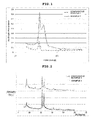
- the characteristics and crystal structure of the obtained zeolite material were analyzed, and the results thereof are given in Table 2 below. From the analysis results, it was ascertained that zeolite having a pure EU-2 crystal structure reported in conventional documents and patents and including pores having a diameter (D1) of 30 to 40 ⁇ was obtained (refer to FIGS. 1 and 2 ).
- the hydrothermally-synthesized EU-2 zeolite was ion-exchanged with ammonium ions (NH 4 + ) using a 1N ammonium nitrate solution.
- the ion-exchanged EU-2 zeolite was mixed with a binder (psuedoboehmite) at a weight ratio of 1: 1, and an aqueous [Pt(NH 3 ) 4 ](NO 3 ) 2 solution was impregnated into the mixture of the EU-2 zeolite and the binder such that the content thereof is 0.6 wt% based on the content of Pt.
- the impregnated mixture was dried at 120°C for 3 hours, and then calcined at 500°C for 3 hours to obtain a catalyst.
- the catalyst obtained in this way was charged into a fixed-bed reactor having an outer diameter of 1/2 inch, activated at 260°C for 1 hour under a hydrogen atmosphere, and then a hydroisomerization reaction experiment was carried out.
- n-hexadecane as a feedstock, was introduced into the reactor by a pump at a flow rate of 1g/hr, the hydroisomerization reaction pressure was adjusted to 30 atms, and the hydrogen feed rate was adjusted to 650cc/hr.
- the conversion ratio of n-hexadecane was also changed depending on reaction temperature, and the maximum yield of a hydroisomerization product was measured according to reaction temperature.
- the conditions of alkali treatment, the properties of activated EU-2 zeolite and the maximum yield of hydroisomerization product are given in Table 3 below.
- the hydrothermal synthesis (prior to ion change) of EU-2 zeolite was carried out in the same manner as in Comparative Example 1. Thereafter, activated EU-2 zeolite was prepared using an aqueous alkali solution as follow.
- the hydrothermally synthesized EU-2 zeolite was mixed with a 0.05M aqueous sodium hydroxide solution, stirred at 50 °C for 1 hour by a rotary evaporator, washed with distilled water, and dried at 60°C for 12 hours to obtain activated EU-2 zeolite.
- the activated EU-2 zeolite was ion-exchanged with ammonium ions in the same manner as in Comparative Example 1 to prepare a catalyst.
- the conversion reaction experiment of n-hexadecane was carried out using the catalyst in the same manner as in Comparative Example 1.
- the conditions of alkali treatment, the properties of activated EU-2 zeolite and the maximum yield of hydroisomerization product are given in Table 3 below.
- Activated EU-2 zeolite was prepared in the same manner as in Comparative Example 2, except that the conditions of alkali treatment were changed. Subsequently, an isomerization catalyst was prepared using the activated EU-2 zeolite, and then an isormerization reaction was performed. In this case, the concentration of an alkali solution used was 0.3 M, and alkali treatment time was 1 hour.
- the hydrothermal synthesis of EU-2 zeolite was carried out in the same manner as in Comparative Example 1. Thereafter, the hydrothermally synthesized EU-2 zeolite was mixed with a 0.1 M aqueous sodium hydroxide (NaOH) solution under the conditions given in Table 4 below, stirred at 50°C for 1 hour by a rotary evaporator, washed with distilled water, and dried at 60°C for 12 hours to obtain activated EU-2 zeolite.
- NaOH sodium hydroxide
- the activated EU-2 zeolite was ion-exchanged with ammonium ions in the same manner as in Comparative Example 1 to prepare an isomerization catalyst.
- the conversion reaction experiment of n-hexadecane was carried out using the catalyst in the same manner as in Comparative Example 1. Further, the maximum yield of an isomerization product according to reaction temperature was measured in the same manner as in Comparative Example 1.
- the conditions of alkali treatment, the properties of activated EU-2 zeolite and the maximum yield of a hydroisomerization product are given in Table 4 below together with the results of Comparative Example 1. [Table 4] Class.
- Activated EU-2 zeolite was prepared in the same manner as in Example 1, except that the pH of an alkali solution and the molar ratio of Na + /Al 2 O 3 and the like were changed in the procedure of alkali treatment of the EU-2 zeolite (before ion exchange) hydrothermally synthesized in the same manner as in Comparative Example 1. Further, an isomerization catalyst was prepared using the activated EU-2 zeolite of Example 1, and the conversion reaction experiment of n-hexadecane was carried out. The conditions of alkali treatment, the properties of activated EU-2 zeolite and the maximum yield of hydroisomerization product are given in Table 5 below together with the results of Comparative Example 1 and Example 1. [Table 5] Class.
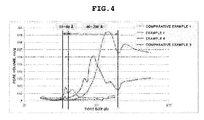
- pores of D2 size were developed by alkali treatment, and pore volume was also changed according to alkali treatment conditions. Particularly, it was ascertained that, as the molar ratio of Na + /Al 2 O 3 and the difference ( ⁇ SAR) in molar ratio of silica-alumina were increased under the same pH condition, pores of D2 size were further developed. Further, as pH was increased, the difference ( ⁇ SAR) in molar ratio of silica-alumina were increased, and the volume of pores of D2 size were increased. However, it is required to notice the fact that maximum yield was not greatly changed when the volume of pores of D2 size was present in the range of 0.07 to 0.4 cc/g.
- the hydrothermal synthesis of EU-2 zeolite was carried out in the same manner as in Comparative Example 1. Thereafter, the hydrothermally synthesized EU-2 zeolite was mixed with a 0.1 M aqueous potassium hydroxide (KOH) solution under the conditions given in Table 7 below, stirred at 50°C for 1 hour by a rotary evaporator, washed with distilled water, and dried at 60°C for 12 hours to obtain activated EU-2 zeolite.
- KOH potassium hydroxide
- the activated EU-2 zeolite was ion-exchanged with ammonium ions in the same manner as in Comparative Example 1 to prepare an isomerization catalyst.
- the conversion reaction experiment of n-hexadecane was carried out using the catalyst in the same manner as in Example 1. Further, the maximum yield of an isomerization product according to reaction temperature was measured in the same manner as in Example 1.
- the conditions of alkali treatment, the properties of activated EU-2 zeolite and the maximum yield of a hydroisomerization product are given in Table 7 below together with the results of Comparative Example 1 and Example 1. [Table 7] Class.
- Example 1 Whether the isomerization catalyst prepared in Example 1 can be used for manufacturing lube base oils from a range of hydrocarbon with high boiling points was evaluated by a pilot test.
- a feedstock having a pour point of 48°C was hydroisomelized (dewaxed) using the prepared isomerization catalyst under the conditions of a hydrogen pressure of 144 atms, a liquid hourly space velocity (LHSV) of 1.3 hr -1 , a hydrogen/feedstock ratio of 505 Nm 3 /m 3 and a reaction temperature of 319°C.
- LHSV liquid hourly space velocity
- the activated EU-2 zeolite of the present invention when the activated EU-2 zeolite of the present invention, wherein pores having a diameter 40 to 200 ⁇ are developed in addition to pores having a diameter of 30 to 40 ⁇ while maintaining its intrinsic crystal structure and the volume of each of the pores is adjusted, is used as a support of a bifunctional catalyst, there is an advantage of improving the activity of hydrocarbon to a hydroisomerization reaction (typically, a reaction for converting n-paraffin into iso-paraffin).
- a hydroisomerization reaction typically, a reaction for converting n-paraffin into iso-paraffin
- the activated EU-2 zeolite of the present invention provides the activity advantageous to the hydroisomerization reaction of hydrocarbon fractions having a boiling point of about 150 to 580 °C (typically, middle distillates and hydrocarbon fractions having a boiling point within the boiling point of lube base oil) and hydrocarbon fractions of about 15 or more carbon atoms having a boiling point within the boiling point (about 360 to 580 °C) of lube base oil. Therefore, the wide application of this activated EU-2 zeolite is expected henceforth.
Landscapes
- Chemical & Material Sciences (AREA)
- Organic Chemistry (AREA)
- Chemical Kinetics & Catalysis (AREA)
- Engineering & Computer Science (AREA)
- Crystallography & Structural Chemistry (AREA)
- Materials Engineering (AREA)
- Dispersion Chemistry (AREA)
- Oil, Petroleum & Natural Gas (AREA)
- Life Sciences & Earth Sciences (AREA)
- Geology (AREA)
- General Life Sciences & Earth Sciences (AREA)
- General Chemical & Material Sciences (AREA)
- Inorganic Chemistry (AREA)
- Catalysts (AREA)
- Production Of Liquid Hydrocarbon Mixture For Refining Petroleum (AREA)
- Low-Molecular Organic Synthesis Reactions Using Catalysts (AREA)
Applications Claiming Priority (1)
| Application Number | Priority Date | Filing Date | Title |
|---|---|---|---|
| KR1020130124678A KR102068312B1 (ko) | 2013-10-18 | 2013-10-18 | 활성화된 eu-2 제올라이트 및 이의 용도 |
Publications (3)
| Publication Number | Publication Date |
|---|---|
| EP2862627A2 true EP2862627A2 (fr) | 2015-04-22 |
| EP2862627A3 EP2862627A3 (fr) | 2015-07-15 |
| EP2862627B1 EP2862627B1 (fr) | 2019-11-27 |
Family
ID=51842347
Family Applications (1)
| Application Number | Title | Priority Date | Filing Date |
|---|---|---|---|
| EP14189137.4A Active EP2862627B1 (fr) | 2013-10-18 | 2014-10-16 | Zéolite eu-2 activée et son utilisation dans des procédés d'hydroisomérisation |
Country Status (6)
| Country | Link |
|---|---|
| US (2) | US9687828B2 (fr) |
| EP (1) | EP2862627B1 (fr) |
| KR (1) | KR102068312B1 (fr) |
| CN (1) | CN104556138B (fr) |
| ES (1) | ES2774960T3 (fr) |
| SG (1) | SG10201406741YA (fr) |
Cited By (3)
| Publication number | Priority date | Publication date | Assignee | Title |
|---|---|---|---|---|
| WO2018167081A1 (fr) * | 2017-03-14 | 2018-09-20 | Haldor Topsøe A/S | Catalyseur d'hydroisomérisation |
| RU2780344C2 (ru) * | 2017-03-14 | 2022-09-21 | Хальдор Топсёэ А/С | Катализатор гидроизомеризации |
| WO2024030892A1 (fr) * | 2022-08-01 | 2024-02-08 | Chevron U.S.A. Inc. | Tamis moléculaire ssz-91 à porosité hiérarchique, méthodes de préparation et utilisations associées |
Families Citing this family (8)
| Publication number | Priority date | Publication date | Assignee | Title |
|---|---|---|---|---|
| KR102503693B1 (ko) | 2017-04-28 | 2023-02-28 | 에스케이이노베이션 주식회사 | 마이크로 세공과 메조 세공을 동시에 갖는 계층화된 eu-2형 제올라이트, 그의 제조 방법 |
| WO2018199714A1 (fr) * | 2017-04-28 | 2018-11-01 | 에스케이이노베이션 주식회사 | Zéolite de type eu-2 hiérarchique ayant à la fois des micropores et des mésopores, et sa méthode de préparation |
| FR3086698B1 (fr) * | 2018-09-28 | 2021-01-22 | Airbus Operations Sas | Procede de fabrication de deux panneaux insonorisants dans un meme moule |
| CN109772447B (zh) * | 2019-01-18 | 2022-04-12 | 太原大成环能化工技术有限公司 | 一种碳八芳烃异构化复合分子筛催化剂及其制备方法 |
| RU2734969C1 (ru) * | 2020-01-24 | 2020-10-26 | Публичное акционерное общество "Нефтяная компания "Роснефть" (ПАО "НК "Роснефть") | Способ получения катализатора для изодепарафинизации дизельных фракций нефти |
| KR20240025192A (ko) | 2022-08-18 | 2024-02-27 | 에스케이이노베이션 주식회사 | 수소화 이성화 반응 활성이 개선된 제올라이트 |
| KR20250031539A (ko) | 2023-08-28 | 2025-03-07 | 에스케이이노베이션 주식회사 | 지속가능한 항공 연료를 제조하는 방법 |
| FI20236142A1 (en) * | 2023-10-13 | 2025-04-14 | Neste Oyj | Process for producing transportation fuels and their components |
Citations (7)
| Publication number | Priority date | Publication date | Assignee | Title |
|---|---|---|---|---|
| US3140251A (en) | 1961-12-21 | 1964-07-07 | Socony Mobil Oil Co Inc | Process for cracking hydrocarbons with a crystalline zeolite |
| US3140249A (en) | 1960-07-12 | 1964-07-07 | Socony Mobil Oil Co Inc | Catalytic cracking of hydrocarbons with a crystalline zeolite catalyst composite |
| US4741891A (en) | 1980-06-12 | 1988-05-03 | Imperial Chemical Industries Plc | Synthesis of zeolite EU-2 |
| US6923949B1 (en) | 2004-03-05 | 2005-08-02 | Exxonmobil Research And Engineering Company | Synthesis of ZSM-48 crystals with heterostructural, non ZSM-48, seeding |
| US6984309B2 (en) | 2000-03-02 | 2006-01-10 | Institut Francais Du Petrole | Zeolite ZSM-48 catalyst and method for improving paraffinic feedstock flow point |
| US7482300B2 (en) | 2005-12-13 | 2009-01-27 | Exxonmobil Research And Engineering Company | High activity ZSM-48 and methods for dewaxing |
| WO2012055755A1 (fr) | 2010-10-25 | 2012-05-03 | Shell Internationale Research Maatschappij B.V. | Composition de catalyseur de conversion d'hydrocarbures |
Family Cites Families (7)
| Publication number | Priority date | Publication date | Assignee | Title |
|---|---|---|---|---|
| US3326797A (en) * | 1964-05-22 | 1967-06-20 | Union Oil Co | Hydrocarbon conversion process and catalyst comprising a crystalline alumino-silicate leached with sodium hydroxide |
| US7077947B2 (en) * | 2002-10-08 | 2006-07-18 | Exxonmobil Research And Engineering Company | Process for preparing basestocks having high VI using oxygenated dewaxing catalyst |
| FR2940265B1 (fr) * | 2008-12-22 | 2011-06-10 | Total Raffinage Marketing | Zeolithes y modifiees, leur procede de fabrication et leur utilisation |
| FR2958297B1 (fr) * | 2010-03-30 | 2013-11-29 | Total Raffinage Marketing | Procede de valorisation d'essence |
| KR101354235B1 (ko) * | 2010-04-14 | 2014-02-13 | 에스케이이노베이션 주식회사 | 수소화 탈왁스 공정을 위한 촉매 및 이의 제조 방법 |
| FR2988717B1 (fr) * | 2012-03-29 | 2014-04-11 | IFP Energies Nouvelles | Procede de deshydratation et d'isomerisation d'alcools utilisant un catalyseur a base d'un materiau mesostructure comprenant du silicium |
| KR101451902B1 (ko) * | 2012-11-26 | 2014-10-22 | 한국과학기술원 | 메조기공을 갖는 mre 구조의 제올라이트 또는 유사 mre 제올라이트 물질 및 그의 제조 방법 |
-
2013
- 2013-10-18 KR KR1020130124678A patent/KR102068312B1/ko active Active
-
2014
- 2014-10-16 ES ES14189137T patent/ES2774960T3/es active Active
- 2014-10-16 EP EP14189137.4A patent/EP2862627B1/fr active Active
- 2014-10-17 US US14/517,583 patent/US9687828B2/en active Active
- 2014-10-17 SG SG10201406741YA patent/SG10201406741YA/en unknown
- 2014-10-20 CN CN201410558807.7A patent/CN104556138B/zh active Active
-
2017
- 2017-05-25 US US15/605,156 patent/US9782760B2/en active Active
Patent Citations (10)
| Publication number | Priority date | Publication date | Assignee | Title |
|---|---|---|---|---|
| US3140249A (en) | 1960-07-12 | 1964-07-07 | Socony Mobil Oil Co Inc | Catalytic cracking of hydrocarbons with a crystalline zeolite catalyst composite |
| US3140251A (en) | 1961-12-21 | 1964-07-07 | Socony Mobil Oil Co Inc | Process for cracking hydrocarbons with a crystalline zeolite |
| US4741891A (en) | 1980-06-12 | 1988-05-03 | Imperial Chemical Industries Plc | Synthesis of zeolite EU-2 |
| US4836996A (en) | 1980-06-12 | 1989-06-06 | Imperial Chemical Industries Plc | Method of making zeolite Eu-2 |
| US4876412A (en) | 1980-06-12 | 1989-10-24 | Imperial Chemical Industries Plc | Zeolite EU-2 |
| US5098685A (en) | 1980-06-12 | 1992-03-24 | Imperial Chemical Industries Plc | Zeolite eu-2 |
| US6984309B2 (en) | 2000-03-02 | 2006-01-10 | Institut Francais Du Petrole | Zeolite ZSM-48 catalyst and method for improving paraffinic feedstock flow point |
| US6923949B1 (en) | 2004-03-05 | 2005-08-02 | Exxonmobil Research And Engineering Company | Synthesis of ZSM-48 crystals with heterostructural, non ZSM-48, seeding |
| US7482300B2 (en) | 2005-12-13 | 2009-01-27 | Exxonmobil Research And Engineering Company | High activity ZSM-48 and methods for dewaxing |
| WO2012055755A1 (fr) | 2010-10-25 | 2012-05-03 | Shell Internationale Research Maatschappij B.V. | Composition de catalyseur de conversion d'hydrocarbures |
Non-Patent Citations (1)
| Title |
|---|
| JOURNAL OF CHEMICAL RESEARCH, 1985, pages 192 |
Cited By (6)
| Publication number | Priority date | Publication date | Assignee | Title |
|---|---|---|---|---|
| WO2018167081A1 (fr) * | 2017-03-14 | 2018-09-20 | Haldor Topsøe A/S | Catalyseur d'hydroisomérisation |
| JP2020514037A (ja) * | 2017-03-14 | 2020-05-21 | ハルドール・トプサー・アクチエゼルスカベット | 水素化異性化触媒 |
| US11384296B2 (en) | 2017-03-14 | 2022-07-12 | Haldor Topsøe A/S | Hydroisomerization catalyst |
| RU2780344C2 (ru) * | 2017-03-14 | 2022-09-21 | Хальдор Топсёэ А/С | Катализатор гидроизомеризации |
| RU2780344C9 (ru) * | 2017-03-14 | 2022-10-05 | Хальдор Топсёэ А/С | Катализатор гидроизомеризации |
| WO2024030892A1 (fr) * | 2022-08-01 | 2024-02-08 | Chevron U.S.A. Inc. | Tamis moléculaire ssz-91 à porosité hiérarchique, méthodes de préparation et utilisations associées |
Also Published As
| Publication number | Publication date |
|---|---|
| KR102068312B1 (ko) | 2020-01-20 |
| ES2774960T3 (es) | 2020-07-23 |
| SG10201406741YA (en) | 2015-05-28 |
| EP2862627B1 (fr) | 2019-11-27 |
| US20170259251A1 (en) | 2017-09-14 |
| US9687828B2 (en) | 2017-06-27 |
| KR20150046398A (ko) | 2015-04-30 |
| CN104556138A (zh) | 2015-04-29 |
| US9782760B2 (en) | 2017-10-10 |
| CN104556138B (zh) | 2018-06-01 |
| EP2862627A3 (fr) | 2015-07-15 |
| US20150112110A1 (en) | 2015-04-23 |
Similar Documents
| Publication | Publication Date | Title |
|---|---|---|
| US9782760B2 (en) | Method of preparing an activated EU-2 zeolite | |
| EP1973654B1 (fr) | Hydrotraitement avec des melanges de catalyseurs zsm-48 | |
| US7625478B2 (en) | Hydroprocessing with blended ZSM-48 catalysts | |
| US9518233B2 (en) | Catalyst for a hydrodgenation dewaxing process and method for manufacturing same | |
| AU2007233022B2 (en) | Hydrocracking catalyst and process for producing fuel substrate | |
| JP6046776B2 (ja) | 水素化分解触媒および燃料基材の製造方法 | |
| CN101720350B (zh) | 液体燃料的制造方法 | |
| WO2019212765A1 (fr) | Composition de catalyseur à métal noble ayant une activité de saturation aromatique améliorée et son utilisation |
Legal Events
| Date | Code | Title | Description |
|---|---|---|---|
| PUAI | Public reference made under article 153(3) epc to a published international application that has entered the european phase |
Free format text: ORIGINAL CODE: 0009012 |
|
| 17P | Request for examination filed |
Effective date: 20141016 |
|
| AK | Designated contracting states |
Kind code of ref document: A2 Designated state(s): AL AT BE BG CH CY CZ DE DK EE ES FI FR GB GR HR HU IE IS IT LI LT LU LV MC MK MT NL NO PL PT RO RS SE SI SK SM TR |
|
| AX | Request for extension of the european patent |
Extension state: BA ME |
|
| PUAL | Search report despatched |
Free format text: ORIGINAL CODE: 0009013 |
|
| AK | Designated contracting states |
Kind code of ref document: A3 Designated state(s): AL AT BE BG CH CY CZ DE DK EE ES FI FR GB GR HR HU IE IS IT LI LT LU LV MC MK MT NL NO PL PT RO RS SE SI SK SM TR |
|
| AX | Request for extension of the european patent |
Extension state: BA ME |
|
| RIC1 | Information provided on ipc code assigned before grant |
Ipc: B01J 29/04 20060101ALI20150610BHEP Ipc: B01J 29/74 20060101AFI20150610BHEP Ipc: C10G 45/64 20060101ALI20150610BHEP Ipc: B01J 29/76 20060101ALI20150610BHEP Ipc: B01J 35/10 20060101ALI20150610BHEP Ipc: B01J 29/70 20060101ALI20150610BHEP |
|
| RIN1 | Information on inventor provided before grant (corrected) |
Inventor name: LIM, SEON JU Inventor name: CHOI, JAE SUK Inventor name: LEE, YOON KYUNG Inventor name: KIM, DO WOAN Inventor name: KIM, TAE JIN Inventor name: LEE, SEUNG WOO |
|
| RBV | Designated contracting states (corrected) |
Designated state(s): AL AT BE BG CH CY CZ DE DK EE ES FI FR GB GR HR HU IE IS IT LI LT LU LV MC MK MT NL NO PL PT RO RS SE SI SK SM TR |
|
| STAA | Information on the status of an ep patent application or granted ep patent |
Free format text: STATUS: EXAMINATION IS IN PROGRESS |
|
| 17Q | First examination report despatched |
Effective date: 20180905 |
|
| GRAP | Despatch of communication of intention to grant a patent |
Free format text: ORIGINAL CODE: EPIDOSNIGR1 |
|
| STAA | Information on the status of an ep patent application or granted ep patent |
Free format text: STATUS: GRANT OF PATENT IS INTENDED |
|
| INTG | Intention to grant announced |
Effective date: 20190619 |
|
| RIN1 | Information on inventor provided before grant (corrected) |
Inventor name: KIM, TAE JIN Inventor name: LIM, SEON JU Inventor name: KIM, DO WOAN Inventor name: CHOI, JAE SUK Inventor name: LEE, SEUNG WOO Inventor name: LEE, YOON KYUNG |
|
| GRAS | Grant fee paid |
Free format text: ORIGINAL CODE: EPIDOSNIGR3 |
|
| GRAA | (expected) grant |
Free format text: ORIGINAL CODE: 0009210 |
|
| STAA | Information on the status of an ep patent application or granted ep patent |
Free format text: STATUS: THE PATENT HAS BEEN GRANTED |
|
| AK | Designated contracting states |
Kind code of ref document: B1 Designated state(s): AL AT BE BG CH CY CZ DE DK EE ES FI FR GB GR HR HU IE IS IT LI LT LU LV MC MK MT NL NO PL PT RO RS SE SI SK SM TR |
|
| REG | Reference to a national code |
Ref country code: GB Ref legal event code: FG4D |
|
| REG | Reference to a national code |
Ref country code: CH Ref legal event code: EP |
|
| REG | Reference to a national code |
Ref country code: AT Ref legal event code: REF Ref document number: 1206079 Country of ref document: AT Kind code of ref document: T Effective date: 20191215 |
|
| REG | Reference to a national code |
Ref country code: DE Ref legal event code: R096 Ref document number: 602014057406 Country of ref document: DE |
|
| REG | Reference to a national code |
Ref country code: IE Ref legal event code: FG4D |
|
| REG | Reference to a national code |
Ref country code: NL Ref legal event code: FP |
|
| REG | Reference to a national code |
Ref country code: LT Ref legal event code: MG4D |
|
| PG25 | Lapsed in a contracting state [announced via postgrant information from national office to epo] |
Ref country code: LV Free format text: LAPSE BECAUSE OF FAILURE TO SUBMIT A TRANSLATION OF THE DESCRIPTION OR TO PAY THE FEE WITHIN THE PRESCRIBED TIME-LIMIT Effective date: 20191127 Ref country code: SE Free format text: LAPSE BECAUSE OF FAILURE TO SUBMIT A TRANSLATION OF THE DESCRIPTION OR TO PAY THE FEE WITHIN THE PRESCRIBED TIME-LIMIT Effective date: 20191127 Ref country code: BG Free format text: LAPSE BECAUSE OF FAILURE TO SUBMIT A TRANSLATION OF THE DESCRIPTION OR TO PAY THE FEE WITHIN THE PRESCRIBED TIME-LIMIT Effective date: 20200227 Ref country code: FI Free format text: LAPSE BECAUSE OF FAILURE TO SUBMIT A TRANSLATION OF THE DESCRIPTION OR TO PAY THE FEE WITHIN THE PRESCRIBED TIME-LIMIT Effective date: 20191127 Ref country code: NO Free format text: LAPSE BECAUSE OF FAILURE TO SUBMIT A TRANSLATION OF THE DESCRIPTION OR TO PAY THE FEE WITHIN THE PRESCRIBED TIME-LIMIT Effective date: 20200227 Ref country code: GR Free format text: LAPSE BECAUSE OF FAILURE TO SUBMIT A TRANSLATION OF THE DESCRIPTION OR TO PAY THE FEE WITHIN THE PRESCRIBED TIME-LIMIT Effective date: 20200228 Ref country code: LT Free format text: LAPSE BECAUSE OF FAILURE TO SUBMIT A TRANSLATION OF THE DESCRIPTION OR TO PAY THE FEE WITHIN THE PRESCRIBED TIME-LIMIT Effective date: 20191127 |
|
| PG25 | Lapsed in a contracting state [announced via postgrant information from national office to epo] |
Ref country code: RS Free format text: LAPSE BECAUSE OF FAILURE TO SUBMIT A TRANSLATION OF THE DESCRIPTION OR TO PAY THE FEE WITHIN THE PRESCRIBED TIME-LIMIT Effective date: 20191127 Ref country code: IS Free format text: LAPSE BECAUSE OF FAILURE TO SUBMIT A TRANSLATION OF THE DESCRIPTION OR TO PAY THE FEE WITHIN THE PRESCRIBED TIME-LIMIT Effective date: 20200327 Ref country code: HR Free format text: LAPSE BECAUSE OF FAILURE TO SUBMIT A TRANSLATION OF THE DESCRIPTION OR TO PAY THE FEE WITHIN THE PRESCRIBED TIME-LIMIT Effective date: 20191127 |
|
| PG25 | Lapsed in a contracting state [announced via postgrant information from national office to epo] |
Ref country code: AL Free format text: LAPSE BECAUSE OF FAILURE TO SUBMIT A TRANSLATION OF THE DESCRIPTION OR TO PAY THE FEE WITHIN THE PRESCRIBED TIME-LIMIT Effective date: 20191127 |
|
| REG | Reference to a national code |
Ref country code: ES Ref legal event code: FG2A Ref document number: 2774960 Country of ref document: ES Kind code of ref document: T3 Effective date: 20200723 |
|
| PG25 | Lapsed in a contracting state [announced via postgrant information from national office to epo] |
Ref country code: RO Free format text: LAPSE BECAUSE OF FAILURE TO SUBMIT A TRANSLATION OF THE DESCRIPTION OR TO PAY THE FEE WITHIN THE PRESCRIBED TIME-LIMIT Effective date: 20191127 Ref country code: CZ Free format text: LAPSE BECAUSE OF FAILURE TO SUBMIT A TRANSLATION OF THE DESCRIPTION OR TO PAY THE FEE WITHIN THE PRESCRIBED TIME-LIMIT Effective date: 20191127 Ref country code: DK Free format text: LAPSE BECAUSE OF FAILURE TO SUBMIT A TRANSLATION OF THE DESCRIPTION OR TO PAY THE FEE WITHIN THE PRESCRIBED TIME-LIMIT Effective date: 20191127 Ref country code: EE Free format text: LAPSE BECAUSE OF FAILURE TO SUBMIT A TRANSLATION OF THE DESCRIPTION OR TO PAY THE FEE WITHIN THE PRESCRIBED TIME-LIMIT Effective date: 20191127 Ref country code: PT Free format text: LAPSE BECAUSE OF FAILURE TO SUBMIT A TRANSLATION OF THE DESCRIPTION OR TO PAY THE FEE WITHIN THE PRESCRIBED TIME-LIMIT Effective date: 20200419 |
|
| REG | Reference to a national code |
Ref country code: DE Ref legal event code: R097 Ref document number: 602014057406 Country of ref document: DE |
|
| PG25 | Lapsed in a contracting state [announced via postgrant information from national office to epo] |
Ref country code: SK Free format text: LAPSE BECAUSE OF FAILURE TO SUBMIT A TRANSLATION OF THE DESCRIPTION OR TO PAY THE FEE WITHIN THE PRESCRIBED TIME-LIMIT Effective date: 20191127 Ref country code: SM Free format text: LAPSE BECAUSE OF FAILURE TO SUBMIT A TRANSLATION OF THE DESCRIPTION OR TO PAY THE FEE WITHIN THE PRESCRIBED TIME-LIMIT Effective date: 20191127 |
|
| REG | Reference to a national code |
Ref country code: AT Ref legal event code: MK05 Ref document number: 1206079 Country of ref document: AT Kind code of ref document: T Effective date: 20191127 |
|
| PLBE | No opposition filed within time limit |
Free format text: ORIGINAL CODE: 0009261 |
|
| STAA | Information on the status of an ep patent application or granted ep patent |
Free format text: STATUS: NO OPPOSITION FILED WITHIN TIME LIMIT |
|
| 26N | No opposition filed |
Effective date: 20200828 |
|
| PG25 | Lapsed in a contracting state [announced via postgrant information from national office to epo] |
Ref country code: SI Free format text: LAPSE BECAUSE OF FAILURE TO SUBMIT A TRANSLATION OF THE DESCRIPTION OR TO PAY THE FEE WITHIN THE PRESCRIBED TIME-LIMIT Effective date: 20191127 Ref country code: AT Free format text: LAPSE BECAUSE OF FAILURE TO SUBMIT A TRANSLATION OF THE DESCRIPTION OR TO PAY THE FEE WITHIN THE PRESCRIBED TIME-LIMIT Effective date: 20191127 Ref country code: PL Free format text: LAPSE BECAUSE OF FAILURE TO SUBMIT A TRANSLATION OF THE DESCRIPTION OR TO PAY THE FEE WITHIN THE PRESCRIBED TIME-LIMIT Effective date: 20191127 |
|
| REG | Reference to a national code |
Ref country code: DE Ref legal event code: R082 Ref document number: 602014057406 Country of ref document: DE Representative=s name: MATHYS & SQUIRE EUROPE PATENTANWAELTE PARTNERS, DE Ref country code: DE Ref legal event code: R082 Ref document number: 602014057406 Country of ref document: DE Representative=s name: MATHYS & SQUIRE GBR, DE |
|
| PG25 | Lapsed in a contracting state [announced via postgrant information from national office to epo] |
Ref country code: IT Free format text: LAPSE BECAUSE OF FAILURE TO SUBMIT A TRANSLATION OF THE DESCRIPTION OR TO PAY THE FEE WITHIN THE PRESCRIBED TIME-LIMIT Effective date: 20191127 |
|
| REG | Reference to a national code |
Ref country code: DE Ref legal event code: R119 Ref document number: 602014057406 Country of ref document: DE |
|
| REG | Reference to a national code |
Ref country code: CH Ref legal event code: PL |
|
| GBPC | Gb: european patent ceased through non-payment of renewal fee |
Effective date: 20201016 |
|
| PG25 | Lapsed in a contracting state [announced via postgrant information from national office to epo] |
Ref country code: MC Free format text: LAPSE BECAUSE OF FAILURE TO SUBMIT A TRANSLATION OF THE DESCRIPTION OR TO PAY THE FEE WITHIN THE PRESCRIBED TIME-LIMIT Effective date: 20191127 Ref country code: LU Free format text: LAPSE BECAUSE OF NON-PAYMENT OF DUE FEES Effective date: 20201016 |
|
| REG | Reference to a national code |
Ref country code: BE Ref legal event code: MM Effective date: 20201031 |
|
| PG25 | Lapsed in a contracting state [announced via postgrant information from national office to epo] |
Ref country code: DE Free format text: LAPSE BECAUSE OF NON-PAYMENT OF DUE FEES Effective date: 20210501 Ref country code: FR Free format text: LAPSE BECAUSE OF NON-PAYMENT OF DUE FEES Effective date: 20201031 |
|
| PG25 | Lapsed in a contracting state [announced via postgrant information from national office to epo] |
Ref country code: BE Free format text: LAPSE BECAUSE OF NON-PAYMENT OF DUE FEES Effective date: 20201031 Ref country code: GB Free format text: LAPSE BECAUSE OF NON-PAYMENT OF DUE FEES Effective date: 20201016 Ref country code: LI Free format text: LAPSE BECAUSE OF NON-PAYMENT OF DUE FEES Effective date: 20201031 Ref country code: CH Free format text: LAPSE BECAUSE OF NON-PAYMENT OF DUE FEES Effective date: 20201031 |
|
| PG25 | Lapsed in a contracting state [announced via postgrant information from national office to epo] |
Ref country code: IE Free format text: LAPSE BECAUSE OF NON-PAYMENT OF DUE FEES Effective date: 20201016 |
|
| PG25 | Lapsed in a contracting state [announced via postgrant information from national office to epo] |
Ref country code: TR Free format text: LAPSE BECAUSE OF FAILURE TO SUBMIT A TRANSLATION OF THE DESCRIPTION OR TO PAY THE FEE WITHIN THE PRESCRIBED TIME-LIMIT Effective date: 20191127 Ref country code: MT Free format text: LAPSE BECAUSE OF FAILURE TO SUBMIT A TRANSLATION OF THE DESCRIPTION OR TO PAY THE FEE WITHIN THE PRESCRIBED TIME-LIMIT Effective date: 20191127 Ref country code: CY Free format text: LAPSE BECAUSE OF FAILURE TO SUBMIT A TRANSLATION OF THE DESCRIPTION OR TO PAY THE FEE WITHIN THE PRESCRIBED TIME-LIMIT Effective date: 20191127 |
|
| PG25 | Lapsed in a contracting state [announced via postgrant information from national office to epo] |
Ref country code: MK Free format text: LAPSE BECAUSE OF FAILURE TO SUBMIT A TRANSLATION OF THE DESCRIPTION OR TO PAY THE FEE WITHIN THE PRESCRIBED TIME-LIMIT Effective date: 20191127 |
|
| REG | Reference to a national code |
Ref country code: NL Ref legal event code: HC Owner name: SK ENMOVE CO., LTD.; KR Free format text: DETAILS ASSIGNMENT: CHANGE OF OWNER(S), CHANGE OF OWNER(S) NAME; FORMER OWNER NAME: SK LUBRICANTS CO., LTD. Effective date: 20230109 |
|
| REG | Reference to a national code |
Ref country code: ES Ref legal event code: PC2A Owner name: SK ENMOVE CO., LTD. Effective date: 20230321 |
|
| P01 | Opt-out of the competence of the unified patent court (upc) registered |
Effective date: 20230622 |
|
| PGFP | Annual fee paid to national office [announced via postgrant information from national office to epo] |
Ref country code: NL Payment date: 20251020 Year of fee payment: 12 |
|
| PGFP | Annual fee paid to national office [announced via postgrant information from national office to epo] |
Ref country code: ES Payment date: 20251117 Year of fee payment: 12 |