EP2863662A2 - Drahtloses Kommunikationsnetzwerk mit mehrschichtigen Diensten - Google Patents
Drahtloses Kommunikationsnetzwerk mit mehrschichtigen Diensten Download PDFInfo
- Publication number
- EP2863662A2 EP2863662A2 EP20140183154 EP14183154A EP2863662A2 EP 2863662 A2 EP2863662 A2 EP 2863662A2 EP 20140183154 EP20140183154 EP 20140183154 EP 14183154 A EP14183154 A EP 14183154A EP 2863662 A2 EP2863662 A2 EP 2863662A2
- Authority
- EP
- European Patent Office
- Prior art keywords
- mobile station
- service
- mobile
- service level
- tier
- Prior art date
- Legal status (The legal status is an assumption and is not a legal conclusion. Google has not performed a legal analysis and makes no representation as to the accuracy of the status listed.)
- Withdrawn
Links
- 238000004891 communication Methods 0.000 title claims abstract description 116
- 238000000034 method Methods 0.000 claims description 84
- 230000005236 sound signal Effects 0.000 claims description 14
- 230000009467 reduction Effects 0.000 claims description 12
- 230000002829 reductive effect Effects 0.000 claims description 7
- 238000012790 confirmation Methods 0.000 claims description 4
- 238000013500 data storage Methods 0.000 claims description 3
- 238000013468 resource allocation Methods 0.000 claims description 3
- 238000003860 storage Methods 0.000 claims description 3
- 230000010267 cellular communication Effects 0.000 abstract description 35
- 230000001413 cellular effect Effects 0.000 abstract description 16
- 230000008859 change Effects 0.000 abstract description 12
- 230000008569 process Effects 0.000 description 35
- 230000015654 memory Effects 0.000 description 26
- 238000010586 diagram Methods 0.000 description 12
- 230000005540 biological transmission Effects 0.000 description 9
- 230000000977 initiatory effect Effects 0.000 description 9
- 230000006835 compression Effects 0.000 description 8
- 238000007906 compression Methods 0.000 description 8
- 230000006872 improvement Effects 0.000 description 8
- 238000010200 validation analysis Methods 0.000 description 6
- 230000006870 function Effects 0.000 description 5
- 230000008901 benefit Effects 0.000 description 4
- 230000007274 generation of a signal involved in cell-cell signaling Effects 0.000 description 4
- 238000012937 correction Methods 0.000 description 3
- 238000010295 mobile communication Methods 0.000 description 3
- 230000002093 peripheral effect Effects 0.000 description 3
- 230000002441 reversible effect Effects 0.000 description 3
- 230000008054 signal transmission Effects 0.000 description 3
- 230000004913 activation Effects 0.000 description 2
- 230000002411 adverse Effects 0.000 description 2
- 230000002776 aggregation Effects 0.000 description 2
- 238000004220 aggregation Methods 0.000 description 2
- 230000007423 decrease Effects 0.000 description 2
- 238000013461 design Methods 0.000 description 2
- 229910003460 diamond Inorganic materials 0.000 description 2
- 239000010432 diamond Substances 0.000 description 2
- 238000005516 engineering process Methods 0.000 description 2
- 230000000670 limiting effect Effects 0.000 description 2
- 238000004519 manufacturing process Methods 0.000 description 2
- 230000004048 modification Effects 0.000 description 2
- 238000012986 modification Methods 0.000 description 2
- 229920001690 polydopamine Polymers 0.000 description 2
- 238000012545 processing Methods 0.000 description 2
- 230000004044 response Effects 0.000 description 2
- 238000001228 spectrum Methods 0.000 description 2
- 230000003044 adaptive effect Effects 0.000 description 1
- 238000013459 approach Methods 0.000 description 1
- 239000000969 carrier Substances 0.000 description 1
- 230000015556 catabolic process Effects 0.000 description 1
- 238000006731 degradation reaction Methods 0.000 description 1
- 230000001419 dependent effect Effects 0.000 description 1
- 238000001514 detection method Methods 0.000 description 1
- 238000011156 evaluation Methods 0.000 description 1
- 238000012854 evaluation process Methods 0.000 description 1
- 238000005562 fading Methods 0.000 description 1
- PCHJSUWPFVWCPO-UHFFFAOYSA-N gold Chemical compound [Au] PCHJSUWPFVWCPO-UHFFFAOYSA-N 0.000 description 1
- 239000010931 gold Substances 0.000 description 1
- 229910052737 gold Inorganic materials 0.000 description 1
- 238000007726 management method Methods 0.000 description 1
- 230000036961 partial effect Effects 0.000 description 1
- 238000005070 sampling Methods 0.000 description 1
- 238000013515 script Methods 0.000 description 1
Images






Classifications
-
- H—ELECTRICITY
- H04—ELECTRIC COMMUNICATION TECHNIQUE
- H04W—WIRELESS COMMUNICATION NETWORKS
- H04W28/00—Network traffic management; Network resource management
- H04W28/02—Traffic management, e.g. flow control or congestion control
- H04W28/0268—Traffic management, e.g. flow control or congestion control using specific QoS parameters for wireless networks, e.g. QoS class identifier [QCI] or guaranteed bit rate [GBR]
-
- H—ELECTRICITY
- H04—ELECTRIC COMMUNICATION TECHNIQUE
- H04L—TRANSMISSION OF DIGITAL INFORMATION, e.g. TELEGRAPHIC COMMUNICATION
- H04L63/00—Network architectures or network communication protocols for network security
- H04L63/12—Applying verification of the received information
-
- H—ELECTRICITY
- H04—ELECTRIC COMMUNICATION TECHNIQUE
- H04M—TELEPHONIC COMMUNICATION
- H04M15/00—Arrangements for metering, time-control or time indication ; Metering, charging or billing arrangements for voice wireline or wireless communications, e.g. VoIP
-
- H—ELECTRICITY
- H04—ELECTRIC COMMUNICATION TECHNIQUE
- H04M—TELEPHONIC COMMUNICATION
- H04M15/00—Arrangements for metering, time-control or time indication ; Metering, charging or billing arrangements for voice wireline or wireless communications, e.g. VoIP
- H04M15/42—Dynamic individual rates per user
-
- H—ELECTRICITY
- H04—ELECTRIC COMMUNICATION TECHNIQUE
- H04M—TELEPHONIC COMMUNICATION
- H04M15/00—Arrangements for metering, time-control or time indication ; Metering, charging or billing arrangements for voice wireline or wireless communications, e.g. VoIP
- H04M15/43—Billing software details
-
- H—ELECTRICITY
- H04—ELECTRIC COMMUNICATION TECHNIQUE
- H04M—TELEPHONIC COMMUNICATION
- H04M15/00—Arrangements for metering, time-control or time indication ; Metering, charging or billing arrangements for voice wireline or wireless communications, e.g. VoIP
- H04M15/80—Rating or billing plans; Tariff determination aspects
-
- H—ELECTRICITY
- H04—ELECTRIC COMMUNICATION TECHNIQUE
- H04M—TELEPHONIC COMMUNICATION
- H04M15/00—Arrangements for metering, time-control or time indication ; Metering, charging or billing arrangements for voice wireline or wireless communications, e.g. VoIP
- H04M15/80—Rating or billing plans; Tariff determination aspects
- H04M15/8011—Rating or billing plans; Tariff determination aspects using class of subscriber
-
- H—ELECTRICITY
- H04—ELECTRIC COMMUNICATION TECHNIQUE
- H04M—TELEPHONIC COMMUNICATION
- H04M15/00—Arrangements for metering, time-control or time indication ; Metering, charging or billing arrangements for voice wireline or wireless communications, e.g. VoIP
- H04M15/80—Rating or billing plans; Tariff determination aspects
- H04M15/8016—Rating or billing plans; Tariff determination aspects based on quality of service [QoS]
-
- H—ELECTRICITY
- H04—ELECTRIC COMMUNICATION TECHNIQUE
- H04W—WIRELESS COMMUNICATION NETWORKS
- H04W12/00—Security arrangements; Authentication; Protecting privacy or anonymity
-
- H—ELECTRICITY
- H04—ELECTRIC COMMUNICATION TECHNIQUE
- H04W—WIRELESS COMMUNICATION NETWORKS
- H04W12/00—Security arrangements; Authentication; Protecting privacy or anonymity
- H04W12/03—Protecting confidentiality, e.g. by encryption
- H04W12/033—Protecting confidentiality, e.g. by encryption of the user plane, e.g. user's traffic
-
- H—ELECTRICITY
- H04—ELECTRIC COMMUNICATION TECHNIQUE
- H04W—WIRELESS COMMUNICATION NETWORKS
- H04W12/00—Security arrangements; Authentication; Protecting privacy or anonymity
- H04W12/06—Authentication
-
- H—ELECTRICITY
- H04—ELECTRIC COMMUNICATION TECHNIQUE
- H04W—WIRELESS COMMUNICATION NETWORKS
- H04W28/00—Network traffic management; Network resource management
- H04W28/16—Central resource management; Negotiation of resources or communication parameters, e.g. negotiating bandwidth or QoS [Quality of Service]
- H04W28/24—Negotiating SLA [Service Level Agreement]; Negotiating QoS [Quality of Service]
-
- H—ELECTRICITY
- H04—ELECTRIC COMMUNICATION TECHNIQUE
- H04W—WIRELESS COMMUNICATION NETWORKS
- H04W4/00—Services specially adapted for wireless communication networks; Facilities therefor
- H04W4/24—Accounting or billing
-
- H—ELECTRICITY
- H04—ELECTRIC COMMUNICATION TECHNIQUE
- H04W—WIRELESS COMMUNICATION NETWORKS
- H04W72/00—Local resource management
- H04W72/50—Allocation or scheduling criteria for wireless resources
- H04W72/54—Allocation or scheduling criteria for wireless resources based on quality criteria
- H04W72/542—Allocation or scheduling criteria for wireless resources based on quality criteria using measured or perceived quality
-
- H—ELECTRICITY
- H04—ELECTRIC COMMUNICATION TECHNIQUE
- H04M—TELEPHONIC COMMUNICATION
- H04M2215/00—Metering arrangements; Time controlling arrangements; Time indicating arrangements
- H04M2215/74—Rating aspects, e.g. rating parameters or tariff determination apects
-
- H—ELECTRICITY
- H04—ELECTRIC COMMUNICATION TECHNIQUE
- H04M—TELEPHONIC COMMUNICATION
- H04M2215/00—Metering arrangements; Time controlling arrangements; Time indicating arrangements
- H04M2215/74—Rating aspects, e.g. rating parameters or tariff determination apects
- H04M2215/7407—Rating aspects, e.g. rating parameters or tariff determination apects class of subscriber
-
- H—ELECTRICITY
- H04—ELECTRIC COMMUNICATION TECHNIQUE
- H04M—TELEPHONIC COMMUNICATION
- H04M2215/00—Metering arrangements; Time controlling arrangements; Time indicating arrangements
- H04M2215/74—Rating aspects, e.g. rating parameters or tariff determination apects
- H04M2215/7414—QoS
-
- H—ELECTRICITY
- H04—ELECTRIC COMMUNICATION TECHNIQUE
- H04W—WIRELESS COMMUNICATION NETWORKS
- H04W12/00—Security arrangements; Authentication; Protecting privacy or anonymity
- H04W12/02—Protecting privacy or anonymity, e.g. protecting personally identifiable information [PII]
-
- H—ELECTRICITY
- H04—ELECTRIC COMMUNICATION TECHNIQUE
- H04W—WIRELESS COMMUNICATION NETWORKS
- H04W28/00—Network traffic management; Network resource management
- H04W28/16—Central resource management; Negotiation of resources or communication parameters, e.g. negotiating bandwidth or QoS [Quality of Service]
- H04W28/18—Negotiating wireless communication parameters
- H04W28/20—Negotiating bandwidth
-
- H—ELECTRICITY
- H04—ELECTRIC COMMUNICATION TECHNIQUE
- H04W—WIRELESS COMMUNICATION NETWORKS
- H04W28/00—Network traffic management; Network resource management
- H04W28/16—Central resource management; Negotiation of resources or communication parameters, e.g. negotiating bandwidth or QoS [Quality of Service]
- H04W28/18—Negotiating wireless communication parameters
- H04W28/22—Negotiating communication rate
-
- H—ELECTRICITY
- H04—ELECTRIC COMMUNICATION TECHNIQUE
- H04W—WIRELESS COMMUNICATION NETWORKS
- H04W52/00—Power management, e.g. Transmission Power Control [TPC] or power classes
- H04W52/04—Transmission power control [TPC]
- H04W52/18—TPC being performed according to specific parameters
- H04W52/26—TPC being performed according to specific parameters using transmission rate or quality of service QoS [Quality of Service]
- H04W52/265—TPC being performed according to specific parameters using transmission rate or quality of service QoS [Quality of Service] taking into account the quality of service QoS
-
- H—ELECTRICITY
- H04—ELECTRIC COMMUNICATION TECHNIQUE
- H04W—WIRELESS COMMUNICATION NETWORKS
- H04W52/00—Power management, e.g. Transmission Power Control [TPC] or power classes
- H04W52/04—Transmission power control [TPC]
- H04W52/18—TPC being performed according to specific parameters
- H04W52/26—TPC being performed according to specific parameters using transmission rate or quality of service QoS [Quality of Service]
- H04W52/267—TPC being performed according to specific parameters using transmission rate or quality of service QoS [Quality of Service] taking into account the information rate
-
- H—ELECTRICITY
- H04—ELECTRIC COMMUNICATION TECHNIQUE
- H04W—WIRELESS COMMUNICATION NETWORKS
- H04W72/00—Local resource management
- H04W72/50—Allocation or scheduling criteria for wireless resources
- H04W72/51—Allocation or scheduling criteria for wireless resources based on terminal or device properties
Definitions
- Speech coding in mobile telephony applications is typically done using a codec (coder/decoder).
- Voice codecs or voice coders having varying levels of compression are often employed to reduce the information (number of bits) transmitted across the wireless interface.
- codec and vocoder are used interchangeably herein.
- a band-limited signal such as a speech signal
- a vocoder can provide a reasonably good representation with as little as 2400 bit/s of data rate.
- CELP code-excited linear prediction
- EVRC enhanced variable rate codec
- SMV selectable mode vocoder
- AMR adaptive multi-rate compression
- the compression rate may be varied. Variable compression can result in reduced transmission overhead, which, in turn, can enable a service provider to accommodate more users on the wireless system.
- the higher the compression level and the fewer bits used to represent the information the less the output sounds like the original input (e.g., the voice of the user).
- the fidelity of the coded voice will decrease as the number of bits used to represent the voice decreases. While the user may not notice some degradation in quality, if the bit rate is reduced enough, or if a less robust vocoder is used, at some point the user may become aware of the reduced quality of the call.
- a vocoder may change the bit rate one or more times during a call, and different calls may use different vocoders.
- a user may experience varying voice quality in the middle of a call or when making or receiving different calls. This can be frustrating to many users.
- the user has no control over which vocoder is used or which level of compression is employed at any given time. Instead, these are typically mandated by standards and/or by the carrier's or service provider's own requirements or specifications.
- a method of providing telecommunication service in a wireless communication network comprises: providing a plurality of service levels, each of the plurality of service levels corresponding to a different quality level of communication between a wireless mobile station and a base station of the wireless communication network, and each of the plurality of service levels also corresponds to a different price in an overall pricing structure; providing an option to a customer to select one of the plurality of service levels for use with the wireless mobile station; storing the selected service level in a customer record associated with the wireless mobile station; and configuring the customer record to bill the customer a predetermined price for the selected service level.
- a method of communicating in a cellular communication network comprising a plurality of base stations, a plurality of mobile stations and a network server, the network server having customer record database associated therewith, the method comprises initiating a call scenario for a first one of the plurality of mobile stations, the first mobile station being registered on the cellular communication network; identifying a service level associated with the first mobile station; selecting at least one of a vocoder and a vocoder bit rate for use by the first mobile station, the selection being determined by the identified service level; and communicating with the cellular communication network using the selected vocoder or the selected vocoder bit rate.
- a method of providing telecommunication service in a wireless communication network comprises providing a plurality of service levels, each of the plurality of service levels corresponding to a different quality level of communication between a wireless mobile station and a base station of the wireless communication network, and each of the plurality of service levels also corresponds to a different price in an overall pricing structure; providing an option to a customer to select one of the plurality of service levels for use with the wireless mobile station; storing the selected service level in a customer record associated with the wireless mobile station; and configuring the customer record to bill the customer a predetermined price for the selected service level.
- each quality level of communication is a quality level of an audio signal sent or received by the wireless mobile station.
- the audio signal quality level corresponds to a vocoder bit rate.
- the audio signal quality level corresponds to a selection of a vocoder used by the wireless mobile station.
- the audio signal quality level corresponds to a minimum guaranteed bandwidth used by the wireless mobile station.
- the audio signal quality level corresponds to a dropped call rate.
- the audio signal quality level corresponds to at least one of a frequency range of an incoming audio signal, a sampling frequency of the incoming audio signal, and a dynamic range of the incoming audio signal.
- the wireless communication network reserves a predetermined bandwidth for at least some of the plurality of service levels.
- the wireless communication network is a cellular communication network.
- each quality level of communication is a quality level of an audio signal to be sent or received by a mobile station of a given customer.
- the audio signal quality level corresponds to a vocoder bit rate.
- the audio signal quality level corresponds to a selection of a vocoder of the user's mobile station.
- the audio signal quality level corresponds to a minimum guaranteed bandwidth of the user's mobile station.
- Another embodiment provides a method of setting a service level in a cellular communication network including a plurality of base stations, a plurality of mobile stations and a network server, the network server having a customer record database associated therewith.
- This method comprises receiving an incoming call indication by a first one of the plurality of mobile stations, the first mobile station being registered with the cellular communication network; determining a service level associated with the first mobile station; and selecting at least one of a vocoder and a vocoder bit rate for use by the first mobile station, the selection being determined by the first mobile station's service level.
- determining the service level includes querying the customer record database to identify the mobile station's service level. In another example, determining the service level includes determining a model number of the mobile station; and accessing a lookup table using the model number to identify the service level associated with the mobile station model number. In a further example, the method further comprises: receiving a service level identifier from the first mobile station by a first one of the plurality of base stations of the cellular communication network; validating the service level identifier; selecting at least one of a vocoder and a vocoder bit rate for use by the first base station, the selection being determined by the validated service level identifier; and transmitting a service level confirmation to the first mobile station.
- the plurality of mobile stations further includes a second mobile station; determining further comprises determining a service level of the second mobile station; and selecting further comprises: identifying a higher tier service level from among the first and second mobile station service levels; and selecting at least one of the vocoder and the vocoder bit rate for use by the first and second mobile stations, the selection being determined by the higher tier service level.
- the plurality of mobile stations further includes a second mobile station; determining further comprises determining a service level of the second mobile station; and selecting further comprises: identifying a lower tier service level from among the first and second mobile station service levels; and selecting at least one of the vocoder and the vocoder bit rate for use by the first and second mobile stations, the selection being determined by the lower tier service level.
- a method of communicating in a cellular communication network comprising a plurality of base stations, a plurality of mobile stations and a network server.
- the network server has customer record database associated therewith.
- the method comprises initiating a call scenario for a first one of the plurality of mobile stations, the first mobile station being registered on the cellular communication network; identifying a service level associated with the first mobile station; selecting at least one of a vocoder and a vocoder bit rate for use by the first mobile station, the selection being determined by the identified service level; and communicating with the cellular communication network using the selected vocoder or the selected vocoder bit rate.
- identifying the service level includes retrieving a predetermined service level stored in a memory of the first mobile station.
- the memory is a nonvolatile memory of the first mobile station.
- the memory is a subscriber identity module of the first mobile station.
- the call scenario is initiated by a user of the first mobile station making an outgoing call.
- selecting the at least one of the vocoder and the vocoder bit rate is done at the first mobile station.
- the call scenario is an incoming call received by the first mobile station.
- the plurality of mobile stations may further comprise a second mobile station; the incoming call may be initiated by the second mobile station; and selecting may further include selecting at least one of a vocoder and a vocoder bit rate for use by the second mobile station for the incoming call.
- Another embodiment provides a method of communicating in a cellular communication network comprising a plurality of base stations and a network server having customer record database.
- the method comprises receiving an incoming call from a first one of a plurality of mobile stations, the first mobile station being registered on the cellular communication network; determining a service level associated with the first mobile station; selecting a predetermined minimum bandwidth for use by the first mobile station, the selection being determined by the service level of the first mobile station; allocating the selected predetermined minimum bandwidth for use by the first mobile station; and communicating with the first mobile station using the selected bandwidth.
- Another embodiment is directed to a method of providing a multi-tier telecommunication service for mobile stations in a cellular communication network including a plurality of base stations.
- the method comprising providing a plurality of communication modes, each of the plurality of communication modes having a different quality level of communication between mobile stations utilizing the cellular communication network and the plurality of base stations of the cellular communication network; and providing a plurality of service tiers, each of the plurality of service tiers corresponding to one of the plurality of communication modes, wherein each of the plurality of service tiers also corresponds to a different price so that a first one of the tiers corresponding to a communication mode with a higher quality level of communication is more expensively priced than a second one of the tiers corresponding to a communication mode with a lower quality level of communication.
- the method further comprises providing a first mobile station for use in the cellular communication network, the first service tier corresponding to the communication mode with the higher quality level of communication being associated with the first mobile station; providing a second mobile station for use in the cellular communication network, the second service tier corresponding to the communication mode with the lower quality level of communication being associated with the second mobile station; and offering the first mobile station for sale or lease at a higher price than the second mobile station.
- the method may further comprise selling or leasing at least one of the first and second mobile stations to a customer; and storing each service tier associated with the at least one of the first and second mobile stations in a customer record associated with the sold or leased at least one of the first and second mobile stations.
- the method may further comprise configuring the customer record to bill the customer a predetermined price for each stored service tier.
- a method of procuring multi-tier cellular telecommunication service in a cellular communication network comprising a plurality of base stations and a mobile station.
- the method comprises identifying a plurality of service tiers, each of the tiers corresponding to a different quality level of communication between the mobile station and the plurality of base stations of the cellular communication network; and selecting one of the service tiers from among the plurality of service tiers.
- each of the plurality of service tiers also corresponds to a different price, so that a premium tier corresponding to a higher quality level of communication is priced higher than a tier corresponding to a lower quality level of communication.
- the method further comprises purchasing by a customer the selected service tier for use with the mobile station.
- the selected service tier may be the premium service tier and the method may further comprise paying a predetermined higher price for the selected premium service tier.
- the plurality of service tiers includes a premium service tier
- the at least one vocoder is operable to code and decode signals corresponding to the premium service tier
- the premium service tier is associated with higher quality of wireless communications.
- the at least one vocoder is programmed to provide a low compression rate for higher quality voice communication.
- the mobile station further comprising memory for storing a quality indicator, the memory being operatively coupled to the transmitter. Upon communication to a base station of the wireless communication network, the quality indicator is retrieved from the memory and passed to the base station, whereby the quality indicator instructs the base station to select an appropriate vocoder for a predetermined quality of communication corresponding to the quality indicator.
- a base station for use in a multi-tier wireless communication network providing a plurality of service tiers corresponding to different levels of quality of wireless communications.
- the base station comprises a tower; an antenna positioned on the tower; a transceiver for transmitting and a receiver for receiving data to and from mobile users in the wireless communication network; and a processor operatively coupled to the transceiver and the receiver and programmed to select a vocoder for premium tier communication in response to a phone call from a wireless mobile station based on the record in a lookup table.
- the lookup table is one of a phone number identifier and a model of the wireless mobile station.
- Another embodiment provides a wireless communication system comprising at least one base station; at least one wireless mobile station capable of communicating with the at least one base station using radio frequency communication; mobile switching center; and a wireless communication network linking the at least one base station and the at least one wireless mobile station with the mobile switching center.
- the wireless communication network provides a plurality of tiers of wireless service corresponding to a different quality level of communication between a wireless mobile station and a base station of the wireless communication network. And each of the plurality of service levels also corresponds to a different price in an overall pricing structure.
- a further embodiment provides a cellular communication network comprising at least one base station; at least one mobile station; at least one network server having customer record database; means for receiving an incoming call from one of the at least one mobile station registered on the cellular communication network; means for determining a service level associated with the one of the at least one mobile station; means for selecting a predetermined minimum bandwidth for use by the one of the at least one of mobile station, the selection being determined by the one of the at least one of mobile station's service level; means for allocating the selected predetermined minimum bandwidth for use by the one of the at least one of mobile station; and means for communicating with the one of the at least one of mobile station using the selected bandwidth.
- a wireless mobile station for communicating in a cellular communication network having at least one base station and at least one network server.
- the network server has customer record database.
- the wireless mobile station comprises a transmitter for transmitting an outgoing call by the mobile station registered on the cellular communication network; means for querying the customer record database to determine a service level associated with the one of the at least one mobile station; means for selecting at least one of a vocoder and a vocoder bit rate for use by the one of the at least one of mobile station, the selection being determined by the one of the at least one of mobile station's service level; and means for communicating with the cellular communication network using the selected vocoder or the selected vocoder bit rate.
- Another embodiment is directed to an improved method for wireless transmission of telecommunication signals, comprising the steps of: providing a plurality of signal generation modes, each the mode corresponding to at least one of a different bandwidth, a different vocoder and a different bit rate, where each the mode yields a different signal quality; providing a pricing structure for use of the method wherein the price for signal transmission using each of the modes is related to the signal quality thereof; and permitting selection of a signal generation mode by users of the method.
- a cellular telecommunication system is directed to an improvement comprising means for providing a plurality of signal generation modes, each the mode corresponding to at least one of a different bandwidth, a different vocoder and a different bit rate, where each the mode yields a different signal quality; means for providing a pricing structure for use of the method wherein the price for signal transmission using each of the modes is related to the signal quality thereof; and means for permitting selection of a signal generation mode by users of the method.
- broadband Internet service can often subscribe through their cable service provider. Here they may share the same bandwidth with other subscribers or may pay for access to a higher bandwidth level. Broadband users may also buy guaranteed bandwidth with various service levels using DSL.
- multi-tiered service offerings are provided for cellular communication systems.
- a customer may choose between different tiers of service which may offer different guaranteed levels of voice quality and/or bandwidth.
- the voice quality level may be associated with a particular bit rate for a codec or vocoder used by the mobile device and the communicating network infrastructure such as a base station or mobile switching center.
- the system may offer a number of bit rates ranging from, e.g., 4.75 kbps up to 12.2 kbps for a given vocoder.
- One or more intermediate rates may be provided between the lowest and highest bit rates.
- the lowest bit rate may correspond to the lowest quality or fidelity of the coded voice signal, while the highest bit rate may correspond to the highest quality or fidelity of the coded voice signal.
- Multiple vocoders may be offered in a given mobile station.
- Each vocoder may support one or more bit rates, such as 4.5 kbps, 5.5 kbps, 6.5 kbps, 7.5 kbps, 8.5 kbps, 9.5 kbps, 10.5 kbps, 11.5 kbps, 12.5 kbps or any increments between these bit rates.
- bit rates such as 4.5 kbps, 5.5 kbps, 6.5 kbps, 7.5 kbps, 8.5 kbps, 9.5 kbps, 10.5 kbps, 11.5 kbps, 12.5 kbps or any increments between these bit rates.
- bit rates such as 4.5 kbps, 5.5 kbps, 6.5 kbps, 7.5 kbps, 8.5 kbps, 9.5 kbps, 10.5 kbps, 11.5 kbps, 12.5 kbps or any increments between these bit rates.
- higher and/or lower bit rates may also be supported.
- the voice quality level may correspond to a value or range of values on a speech quality scale.
- the user may select a first voice quality level of between 4-5, a second quality level of between 3-4, a third voice quality level of between 2-3 and a fourth voice quality level of between 1-2.
- the first voice quality level (e.g., between 4-5) is the most expensive, with the cost dropping for each lower voice quality level.
- these voice quality levels are merely exemplary and other gradations may be employed.
- a middle tier voice quality level may be between 3.5 and 4.0
- an upper tier voice quality level may be between 4.0 and 4.5
- the highest tier voice quality level may be between 4.5 and 5.0.
- the user may be given the option of selecting between any number of predetermined bandwidth amounts.
- the specific bandwidths may be system dependent in view of the amount of spectrum available at a given cell or base station.
- the system may permit the user to use bandwidth that would otherwise be allocated to one or more other users. Thus, as fewer users may be accommodated, the higher bandwidth user may pay a higher fee for access to the additional bandwidth.
- tiers While several tiers have been provided in this example, it should be understood that different tiers and/or ranges of tiers may also be provided. For instance, a series of three or more tiers may each have a set percentage improvement between each tier (e.g., a 5%, 10%, 15%, 20% or 25% improvement). Furthermore, the dropped call rate may be set once to cover all networks the mobile device may operate on, or it may vary from network to network depending on the specific architecture and other design factors of each network.
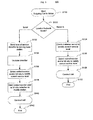
- the user may purchase a given level of service at the time he or she receives the cellular phone, for instance at a kiosk in the mall, at the service provider's store, etc.
- the service level may be purchased upon activation of the phone, such as with over the air activation.
- the service provider sets up the customer's account record, the record will reflect the appropriate level of service associated with his or her mobile device, as shown at step S104 of FIG. 2 .
- the user may run an applet or other program on the phone, or otherwise send a command from the phone to the network via a serving base station in order to request a change in the user's service level.
- the user may press an actuator or select an option in a software menu to request the change.
- the customer's account record is updated to reflect the new service level.
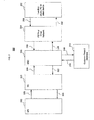
- the user's mobile station initiates a call by sending one or more data packets to the base station as shown by arrow 210.
- At least one of the data packets may include a user device identifier therein.
- the user device identifier may be contained in a header of the data packet.
- the base station may pass the user device identifier to the mobile switching center or other internetworking infrastructure as shown by arrow 212.
- the mobile switching center may then access a customer record database as shown by arrow 214. At this point the system is able to identify an appropriate service level for the user's mobile device in accordance with the user's customer record.
- the customer record database passes information concerning the service level back to the mobile switching center as shown by arrow 216.
- the information may be a value representing the service level.
- the mobile switching center may then pass the service level information back to the base station as indicated by arrow 218.
- the base station can thus select an appropriate vocoder for use (if more than one is available) and/or set a bit rate for the base station's vocoder.
- the base station may then send the mobile device its own identifier which tells the mobile device which vocoder to use (if more than one is available) and/or which bit rate to set for the mobile station's vocoder.
- the base station vocoder and the mobile station vocoder may be set to the same or different bit rates in view of the service level information.
- data packets are sent from the mobile station to the base station as shown by the arrow 210. However, in this example no user device identifier is sent by the mobile station.
- the base station Upon receipt of the data packets identifying a call origination, the base station communicates with the mobile switching center or other internetworking infrastructure as shown by the arrow 212. In turn, the mobile switching center may then access a customer record database as shown by the arrow 214.
- the base station may validate the identifier as shown in step S134, for instance by performing error detection/correction or by comparing the identifier against a stored identifier in a database.
- the validation may be done locally at the base station or remotely by a mobile switching center, interworking function, customer record database or other network entity.
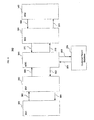
- FIG. 5 This figure presents a functional diagram 240 showing the user's mobile station 202, the serving base station 204, mobile switching center 206 and the customer record database 208. As with FIG. 4 , other network elements are omitted for clarity.
- the user's mobile station initiates a call by sending one or more data packets to the base station as shown by arrow 242.
- At least one of the data packets may include a user device identifier therein, e.g., in a header of the data packet.
- the base station may validate the identifier locally or may pass a validation request to the mobile switching center as shown by dashed arrow 244. If passed, the mobile switching center may process the validation request locally or may pass the request to other network resources such as the customer record database as shown by dashed arrow 246.
- a validation answer may be passed back from the database as shown by dashed arrow 248, and the validation answer may be passed from the mobile switching center to the base station as shown by dashed arrow 250.
- the indicator from the mobile station may specify a particular vocoder, bit rate and/or bandwidth that the base station is to use.
- the specified vocoder, bit rate and/or bandwidth is used for over the over the air communication with the mobile station.
- a more expensive mobile station may instruct a serving base station to select the best available vocoder and/or bit rate to ensure the best sound quality of communication.
- the indicator identifies the make and/or model of the mobile station.
- the base station or other network device may have a lookup table of supported mobile stations.
- An example of such a lookup table is provided in FIG. 6 .
- six different mobile station models from various manufacturers are identified.
- only three tiers of service are provided, specifically a lowest tier, a middle tier and a highest tier. It should be understood that any number of service tiers may be provided. As shown in the figure, three of the models are assigned to the middle tier, one of the models is assigned to the lowest tier, and two of the models are assigned to the highest tier.
- any of the initiation processes explained herein may be employed.
- the system may identify to the new serving base station which tier of service the new serving base station is to accomodate for the mobile station. This may be done via base station to base station communication, or upon direction from the mobile switching center or other network device as it communicates with the new serving base station. Such operation is desirable as it appears seamless to the mobile station.
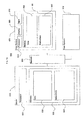
- an incoming call may be received from a landline phone or other communication device 302 and may pass through the PSTN or other network 304 to mobile switching center 306, as shown by arrows 308 and 310, respectively.
- the mobile switching center 306 or other wireless network entity may access customer record database 314 as shown by arrow 316.
- customer record database the mobile station's service level is identified and a result is passed to the mobile switching center as shown by arrow 318.
- the mobile switching center passes the incoming call along with the service level for the call to base station 320 as shown by arrow 322.
- the base station may set its vocoder and/or bit rate in accordance with the identified service level.
- the base station may then send one or more data packets to the mobile station as shown by arrow 324. At least one of these data packets includes a service level identifier that the mobile station uses to set its vocoder and/or bit rate, e.g., as packet header information.
- communication between the mobile station and the landline or other device may take place as shown by arrows 326, 328, 330 and 332.
- the over the air communication between the mobile station and the base station occur using the set vocoder and/or bit rate in accordance with the mobile station's service level.
- the bit rate of the base station's vocoder may be different than the bit rate of the mobile station's vocoder.
- the incoming call is routed from the landline telephone or other device to the mobile station, and once the mobile station receives an indication that a call has been initiated it sends a service level request or identifier to the base station, for instance via a header, flag or other indicator in a data packet.
- the system may then validate the service level identifier by evaluating the customer record database or by examining a lookup table as discussed in regard to FIG. 6 .
- the mobile switching center 346 or other wireless network entity may access customer record database 354 as shown by arrow 356.
- customer record database the user's mobile station's service level is identified and a result is passed to the mobile switching center as shown by arrow 358.
- the mobile switching center passes the incoming call along with the service level for the call to serving base station 360 of the mobile station 352 as shown by arrow 362.
- the base station 360 may set its vocoder and/or bit rate in accordance with the identified service level.
- the base station 360 may then send one or more data packets to the mobile station 352 as shown by arrow 364. At least one of these data packets includes a service level identifier that the mobile station 352 uses to set its vocoder and/or bit rate, e.g., as packet header information.
- communication between the mobile station 352, shown as MS1 in FIG. 8 , and the mobile station 342, shown as MS2 in FIG. 8 may take place as shown by arrows 366, 368, 370 and 372.
- the over the air communication between the mobile station 352 and the base station 360 occur using the set vocoder and/or bit rate in accordance with that mobile station's service level.
- the bit rate of the base station's vocoder may be different than the bit rate of the mobile station's vocoder.
- the incoming call is routed from the mobile station 342 to the mobile station 352, and once the mobile station 352 receives an indication that a call has been initiated it sends a service level request or identifier to the base station 360, for instance via a header, flag or other indicator in a data packet.
- the system may then validate the service level identifier by evaluating the customer record database or by examining a lookup table as discussed in regard to FIG. 6 .
- both mobile stations may have service levels set in accordance with FIG. 2 above. These service levels may be the same or may differ. Should the service levels differ, several options are available.
- the receiving mobile station when the receiving mobile station has a higher service level (e.g., a higher bit rate for its vocoder), then the receiving mobile station issues an instruction to the originating mobile station to have the originating mobile station switch to a matching service level (e.g., the same bit rate as the receiving mobile station). This may be done at the expense of the originating mobile station, the receiving base station or the service provider may bear the expense.
- the originating mobile station may instruct the receiving mobile station (e.g., via a data packet header, flag or other identifier) to operate at the higher service level. And as above, this may be done at the expense of the originating mobile station, the receiving base station or the service provider may bear the expense.
- the serving base stations are set to equivalent or corresponding voice quality or service levels.
- the serving base stations may each be set to the same vocoder bit rate, which may be the same or different than the vocoder bit rate of the mobile stations.
- a single base station may act as the serving base station for both of the mobile stations.
- more than two mobile stations may all be communicating simultaneously as part of a three-way or conference call. In this situation, the mobile station with the highest service level may dictate the service level of one or more of the other communicating mobile stations.
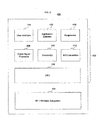
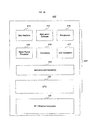
- FIG. 9 illustrates a mobile station 400 for use in accordance with aspects of the present invention.
- the mobile station 400 may include a baseband subsystem 402 and an RF or wireless subsystem 404. Both the baseband and RF subsystems may be controlled by a processor such as CPU 406.
- the term RF encompasses, but is not limited to the frequency range from 300 MHz up to 3 GHz. This range is often referred to as the ultra high frequency band (“UHF").
- UHF ultra high frequency band
- RF may encompass lower frequency ranges such as a very high frequency (“VHF”) from 30 MHz to 300 MHz or even lower, such as in the high frequency (“HF”) band.
- RF may also encompass higher frequency ranges such as super high frequency (“SHF”) from about 3 GHz up to 30 GHz or beyond, such as extremely high frequency (“EHF”) in the range of 30 GHz to 300 GHz or higher.
- VHF very high frequency
- SHF super high frequency
- EHF extremely high frequency
- the RF subsystem preferably includes a receiver and a transmitter (“transceiver”) coupled to an antenna (not shown). Details on RF subsystem architectures may be found in "Transceiver System Design for Digital Communications,” by Scott R. Bullock, copyright 1995 by Noble Publishing, the entire disclosure of which is hereby expressly incorporated by reference herein.
- the baseband subsystem may include a digital signal processor ("DSP") 408, one or more vocoders 410, A/D converters 412, a user interface 414, application software 416 and peripherals 418.
- the DSP may perform various signal processing tasks, and the vocoder(s) may be separate from or part of the DSP.
- the DSP is part of the processor 406 and/or may perform operations of the processor 406.
- Multiple vocoders may be desirable, especially in the situation where the mobile station is configured to operate on different carriers' networks such as a WCDMA network and a GSM network.
- Each vocoder may include multiple bit rates.
- the user interface may include a text interface, a GUI, actuators such as switches, buttons and the like.
- the application software may be configured to run/control various programs on the mobile station, such as a calendar program, a contacts program, games, an Internet browser, etc.
- Different peripherals may also be employed, such as an external audio output, microphone input, a charging connector and connectors for other electronic devices, such as a USB connector.
- the user may press an actuator or "soft button" of the user interface to cause the mobile station to instruct the base station/network to user a particular compression level (e.g., a specific bit rate) and/or to use a particular vocoder or bandwidth.
- a particular compression level e.g., a specific bit rate
- the quality information is used to set the bit rate, vocoder and/or bandwidth during communication with a recipient.
- the caller may use the actuator or soft button to instruct the receiving mobile station and/or the network to switch the receiving mobile station to the same service level as the calling mobile station. This will help to ensure that both parties are sending and receiving at the same quality level.
- the user who is supposed to receive the specified quality level is financially compensated for such a failure. For instance, the customer's billing record may be credited a full or partial amount of what the call or transmission would have been charged to the customer.
- metrics may be provided to customers showing the quality levels for incoming and outgoing calls. Such metrics may be appended to the user's billing records, available through a web-based GUI or the like.
- FIG. 10 illustrates a variation of the mobile station 400, namely mobile station 400'.
- the mobile station 400' includes a baseband subsystem 402' as well as the RF or wireless subsystem 404. Both the baseband and RF subsystems may be controlled by a processor such as CPU 406.
- the mobile station 400' includes one or more service level indicators 420 which may be hard programmed into the mobile station 400'. In one example, this may be done by programming the service level indicators 420 into firmware of the baseband subsystem 402' when the phone is purchased by a customer. In another example, the programming may be accomplished by recording the service level indicators 420' in a nonvolatile memory such as a ROM during manufacture of the mobile station 400'. In a further example, the service level indicator(s) are hard programmed onto a subscriber identity module (“SIM”) card which can be received through one of the peripherals 418.
- SIM subscriber identity module
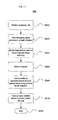
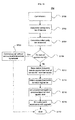
- a given service level indicator may be utilized as follows. As shown in the flow diagram 500 of FIG. 11 , in the case where a user of the mobile station 400' initiates an outgoing call, the user interface 414 may receive a command from the user to begin a call as shown in step S500. Next, as shown at step S502, the user interface 414 may alert the CPU 406 that a call has bee initiated. Then as shown in step S504, the CPU 406 may read the appropriate service level indicator 420 from memory, e.g., from non-volatile or permanent memory. The service level indicator 420 may be selected depending upon the particular network on which the mobile station 400' is currently operating.
- the CPU 406 may select a specific vocoder 410 to use if more than one vocoder is available. And as shown in step S508, the CPU 406 may set the vocoder to a predetermined bit rate or quality level based upon the service level indicator 420 employed.
- the mobile station 400' may communicate with the current service base station and instruct the base station as to what vocoder and/or bit rate the mobile station will employ during the call. The process may conclude at step S512.
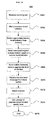
- the user interface 414 may receive a command from the user to begin a call as shown in step S540.
- the user interface 414 may alert the CPU 406 that a call has bee initiated.
- the CPU 406 may read the appropriate service level indicator 420 from memory, e.g., from non-volatile or permanent memory.
- the service level indicator 420 may be selected depending upon the particular network on which the mobile station 400' is currently operating.
- the baseband subsystem 402' (e.g., CPU 406) may select a specific vocoder 410 to use if more than one vocoder is available, as shown at step S552. And as shown in step S554, the CPU 406 may set the vocoder to a predetermined bit rate or quality level based upon the service level indicator 420 employed. The process may conclude at step S556.
- the RF/wireless subsystem 404 may receive notification of an incoming call from a serving base station as shown in step S561.
- the CPU 406 may be alerted that a call has bee initiated.
- the CPU 406 may read the appropriate service level indicator 420 from memory, e.g., from non-volatile or permanent memory.
- the service level indicator 420 may be selected depending upon the particular network on which the mobile station 400' is currently operating.
- the service level indicator may be used to send a command or request to the base station or other network element to select an appropriate level of service.
- the base station or other network element e.g., MSC
- MSC Mobility Management Entity
- the baseband subsystem 402' (e.g., CPU 406) may select a specific vocoder 410 to use if more than one vocoder is available, as shown at step S572. And as shown in step S574, the CPU 406 may set the vocoder to a predetermined bit rate or quality level based upon the service level indicator 420 employed. The process may conclude at step S576.
- the caller's device may have its bit rate/vocoder set commensurate with that of the user device 400'. This may be done, for example, to ensure consistent voice quality between the parties on the call.
- FIG. 15 provides an exemplary system 600 in which a user may view and/or modify service levels over a network.
- the system 600 may include a server 610 containing a processor 620, memory 630 and other components typically present in a computer.
- the server may be associated with a particular wireless communication network, in which case it may be in operative communication with or operatively coupled to the MTSO or MSC.
- the memory 630 stores information accessible by processor 620, including instructions 640 that may be executed by the processor 620 and data 635 that may be retrieved, manipulated or stored by the processor.
- the memory 630 may be of any type capable of storing information accessible by the processor, such as a hard-drive, ROM, RAM, CD-ROM, write-capable or read-only memories.
- the processor 620 may comprise any number of well known processors, such as processors from Intel Corporation. Alternatively, the processor may be a dedicated controller for executing operations, such as an ASIC.
- the instructions 640 may comprise any set of instructions to be executed directly (such as machine code) or indirectly (such as scripts) by the processor. In that regard, the terms “instructions,” “steps” and “programs” may be used interchangeably herein.
- the instructions may be stored in any computer language or format, such as in object code or modules of source code. The functions, methods and routines of instructions in accordance with the present invention are explained in more detail below.
- Data 635 may be retrieved, stored or modified by processor 620 in accordance with the instructions 640.
- the data may be stored as a collection of data.
- the data may be stored in computer registers, in a relational database as a table having a plurality of different fields and records, XML documents, or flat files.
- the data may also be formatted in any computer readable format
- the data may include any information sufficient to identify the relevant information, such as descriptive text, proprietary codes, pointers, references to data stored in other memories (including other network locations) or information which is used by a function to calculate the relevant data.
- processors 620 and memory 630 are functionally illustrated in FIG. 15 as being within the same block, it should be understood that the processor 620 and memory 630 may comprise multiple processors and memories that may or may not be stored within the same physical housing or location. For example, some or all of the instructions and data may be stored on a removable CD-ROM and others within a read-only computer chip. Some or all of the instructions and data may be stored in a location physically remote from, yet still accessible by, the processor. Similarly, the processor may actually comprise a collection of processors which may or may not operate in parallel.
- server 610 communicates with one or more client computers 650 and 652.
- Each client computer may be configured similarly to the server 610, with a processor 654, memory and instructions, as well as a user input device 670 and a user output device, such as display 660.
- Each client computer may be a general purpose computer, intended for use by a person and having all the internal components normally found in a personal computer such as the processor 654 (e.g., a CPU), display 660, CD-ROM, hard-drive, mouse, keyboard, touch-sensitive screen, speakers, microphone, modem and/or router (telephone, cable or otherwise) and all of the components used for connecting these elements to one another.
- the processor 654 e.g., a CPU
- display 660 CD-ROM, hard-drive, mouse, keyboard, touch-sensitive screen, speakers, microphone, modem and/or router (telephone, cable or otherwise) and all of the components used for connecting these elements to one another.
- the system 600 may be an Internet or web-based system.
- the user may set or change the service level (s) of one or more devices using system 600.
- the server 610 may provide a GUI to the user with an option to select from among a plurality of service levels for a given user device.
- the user's customer record may be updated to reflect the selection.
- a customer record database may be part of memory 635, and may be accessible, either directly or indirectly, from the network's base stations, MSC or other network infrastructure.
- the user may access the GUI using his/her own computer or through a computer provided by the service provider, such as at a kiosk or at one of the service provider's stores.
- the other party may receive an upgrade in service for that call to match the premium tier of the other mobile station. This may be done automatically or manually.
- a network device such as a serving base station of the non-premium tier mobile station, may receive an indication that the other mobile station is a premium tier device.
- the serving base station of the non-premium tier mobile station may automatically choose a higher quality vocoder, greater bandwidth, etc. for the non-premium tier mobile station in order to ensure end to end high quality communication between the two mobile stations.
- the non-premium tier mobile station would not normally operate in a premium tier mode, it may be "forced" or "upgraded” into such a tier as long as it is capable of supporting that mode of operation (e.g., supports the premium tier vocoder).
- Another mode of operation may exist where, once a call is initiated, the tier of operation of the calling/called party is identified. This may be done, by way of example, with a network device such as a serving base station querying a customer record database. Alternatively, the calling/called party's device may identify its level of service as set forth above, such as via an identifier that is part of a transmitted data packet. In either case, the premium tier mobile station may be notified about the difference in service levels. At this point, the premium tier mobile station user may elect to upgrade the other party's quality level for the call. For instance, the premium tier party may choose to pay to upgrade the other party's plan/tier for the current call.
- the lower tier party may be notified that the other party operates or is capable of operating at the premium tier.
- the lower tier party may be offered the opportunity to upgrade his/her tier for the duration of the call.
- the lower tier party may initially be offered the upgrade option first and if he/she declines, then the premium tier party may be offered the option to upgrade the other party.
- the premium tier party may initially be offered the upgrade option first and if he/she declines, then the lower tier party may be offered the option to upgrade the other party.
- a party choosing a tier less than the highest tier may be offered as part of the plan an option for an automatic upgrade to a higher tier whenever this party receives a phone call from a second party having a higher tier of serves to match the second party's tier, on a pay-per-call basis or for a fixed monthly surcharge.
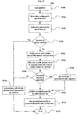
- FIG. 17 illustrates an exemplary call configuration process 750 which may be employed with another mode of operation.
- the process begins with a call initiation at step S750.
- this initiation may be done by either party, and does not require that both users be wireless mobile stations on the same network.
- one of the users may have a mobile station registered on a first network, while the other user may have a mobile station registered on a second network.
- the second user may have a wired or VOIP device which may be communicating through an Internet servers.
- step S756 determinations are made about the calling party and called party tiers of services. This may be done in accordance with any of the embodiments set forth herein.
- step S756 a determination is made as to whether the tiers of service of both parties match. If there is a match, then as shown in step S758 the call may then commence. After the call, the process may terminate at step S760.
- a query may be made at step S766 to see if a user elected to upgrade the service level of the lower tier device. If no upgrade was chosen, then the process may continue at step S758. If an upgrade was chosen, then the user who elected the upgrade may be billed commensurately as shown in step S768.
- a vocoder of the lower tier device may be selected to match the higher tier of the other user's device. This selection may be done by either user or by the network (e.g., serving base station). Alternatively or additionally, additional bandwidth may be selected to match that of the higher tier device. As shown at step S772, the vocoder or bandwidth may be set to a predetermined bit rate or quality level commensurate with the higher tier device. After the call, the process may end at step S760.
- Dynamically varying conditions may affect communications between a given mobile unit and the base station of the cellular radio network.
- the mobile unit may move within the area served by a particular base station.
- the mobile unit is at the edge of the area or in a fading condition, there is a need to transmit at a relatively higher power on the forward and reverse channels in order to maintain a given bandwidth with a given error rate in each direction, as compared to the same unit moving near the base station.
- the transmitted power and/or bandwidth allocated to the unit may adversely affect connections of other mobile units, because the signal transmissions to or from a particular mobile unit are interference for the other mobile units. Control of such interference may be done on the radio access network side (base station and/or base station controller), because the network may obtain the interference and error rate information experienced by the connections between itself and multiple mobile units. Bandwidth and SINR are thus scare resources, and may be allocated based on a number of variables and fairness considerations.
- the fairness considerations may be modified or supplemented by what can be called "service tier considerations.”
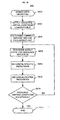
- service tier considerations When a particular base station experiences a need to reduce the total interference created by the mobile units under its reverse channel power control, the manner in which transmit power is reduced for particular mobile units may be modified by the tiers of the specific mobile units involved. For example, one or more of the relatively low service tier mobile units may be subjected to power reduction (in each or either direction) initially, before any of the higher or highest tier mobile units are subjected to power reduction. At some point, the power of the higher service tier units may also be reduced, but to a lesser degree than that of the relatively low service tier units.
- one or more of the higher tiers of mobile units may be unaffected or affected to a comparatively lesser degree, while one or more of the lower tiers of mobile units may experience greater degrees of such adverse consequences of power reduction. Indeed, the higher service tiers of mobile units may experience improvement in quality of service because of the reduction in interference due to power control of the lower tiers of mobile units.
- retransmission parameters may be made to vary as a function of a mobile unit's tier. For example, a higher tier mobile unit may be able or required to retransmit automatically more times than a lower tier unit. Similarly, a base station may retransmit more times to a higher service tier mobile unit than to a lower service tier mobile unit.
- the differentiated retransmission parameters may affect retransmission of whole packets or subpackets, particularly where a receiver accumulates the energy of the retransmitted information and attempts decoding of the accumulated energy until decoding is successful.
- parameters affecting redundant encoding may be made to vary as a function of a mobile unit's service tier.
- redundant or convolutional encoding parameters may vary with the mobile unit's service tier in both forward (radio access network to mobile unit) and reverse (mobile unit to radio access network) directions.
- Redundant or convolutional encoding is generally used for forward error correction.
- the type of code (including its level of redundancy) used for forward error correction may be made to vary with the tier. Under the same dynamic conditions, for example, a mobile unit with a relatively high service tier may use a stronger convolutional code than another mobile unit with a relatively lower tier.
- the mobile unit with the higher service tier may consume more of the network resources and provide more reliable service than the mobile unit with the lower service tier.
- Convolutional encoding may be performed with Reed-Solomon and Hamming codes, for example.
- the network determines the specific reductions for each mobile unit that will be subjected to resource reductions, if any. This may also be based at least in part on the service tiers of the mobile units. Additionally, step S810 may also be based at least in part on dynamic channel conditions to/from each of the units, and/or fairness considerations.
Landscapes
- Engineering & Computer Science (AREA)
- Signal Processing (AREA)
- Computer Networks & Wireless Communication (AREA)
- Computer Security & Cryptography (AREA)
- Quality & Reliability (AREA)
- Business, Economics & Management (AREA)
- Accounting & Taxation (AREA)
- Computer Hardware Design (AREA)
- Computing Systems (AREA)
- General Engineering & Computer Science (AREA)
- Mobile Radio Communication Systems (AREA)
- Meter Arrangements (AREA)
- Telephonic Communication Services (AREA)
Applications Claiming Priority (4)
| Application Number | Priority Date | Filing Date | Title |
|---|---|---|---|
| US12597108P | 2008-04-30 | 2008-04-30 | |
| US16634409P | 2009-04-03 | 2009-04-03 | |
| US16758009P | 2009-04-08 | 2009-04-08 | |
| EP09816543.4A EP2286550B1 (de) | 2008-04-30 | 2009-04-29 | Drahtloses kommunikationsnetzwerk mit mehrschichtigen diensten |
Related Parent Applications (1)
| Application Number | Title | Priority Date | Filing Date |
|---|---|---|---|
| EP09816543.4A Division EP2286550B1 (de) | 2008-04-30 | 2009-04-29 | Drahtloses kommunikationsnetzwerk mit mehrschichtigen diensten |
Publications (2)
| Publication Number | Publication Date |
|---|---|
| EP2863662A2 true EP2863662A2 (de) | 2015-04-22 |
| EP2863662A3 EP2863662A3 (de) | 2015-08-12 |
Family
ID=41026873
Family Applications (6)
| Application Number | Title | Priority Date | Filing Date |
|---|---|---|---|
| EP09739220.3A Active EP2292028B1 (de) | 2008-04-30 | 2009-04-29 | Drahtlose kommunikationsnetze mit mehrstufiger dienstgüte |
| EP15168000.6A Withdrawn EP2947902A1 (de) | 2008-04-30 | 2009-04-29 | Drahtloses kommunikationsnetzwerk mit mehrschichtigen diensten |
| EP09816543.4A Active EP2286550B1 (de) | 2008-04-30 | 2009-04-29 | Drahtloses kommunikationsnetzwerk mit mehrschichtigen diensten |
| EP14183154.5A Withdrawn EP2863662A3 (de) | 2008-04-30 | 2009-04-29 | Drahtloses Kommunikationsnetzwerk mit mehrschichtigen Diensten |
| EP09739218.7A Active EP2283674B1 (de) | 2008-04-30 | 2009-04-29 | Drahtlose kommunikationsnetze mit mehreren stufen und sicherem dienst |
| EP15185287.8A Active EP2983389B1 (de) | 2008-04-30 | 2009-04-29 | Drahtloskommunikationsnetzwerk mit mehrschichtigen und sicheren diensten |
Family Applications Before (3)
| Application Number | Title | Priority Date | Filing Date |
|---|---|---|---|
| EP09739220.3A Active EP2292028B1 (de) | 2008-04-30 | 2009-04-29 | Drahtlose kommunikationsnetze mit mehrstufiger dienstgüte |
| EP15168000.6A Withdrawn EP2947902A1 (de) | 2008-04-30 | 2009-04-29 | Drahtloses kommunikationsnetzwerk mit mehrschichtigen diensten |
| EP09816543.4A Active EP2286550B1 (de) | 2008-04-30 | 2009-04-29 | Drahtloses kommunikationsnetzwerk mit mehrschichtigen diensten |
Family Applications After (2)
| Application Number | Title | Priority Date | Filing Date |
|---|---|---|---|
| EP09739218.7A Active EP2283674B1 (de) | 2008-04-30 | 2009-04-29 | Drahtlose kommunikationsnetze mit mehreren stufen und sicherem dienst |
| EP15185287.8A Active EP2983389B1 (de) | 2008-04-30 | 2009-04-29 | Drahtloskommunikationsnetzwerk mit mehrschichtigen und sicheren diensten |
Country Status (4)
| Country | Link |
|---|---|
| US (12) | US8725129B2 (de) |
| EP (6) | EP2292028B1 (de) |
| CA (1) | CA2723168C (de) |
| WO (3) | WO2009134417A2 (de) |
Families Citing this family (135)
| Publication number | Priority date | Publication date | Assignee | Title |
|---|---|---|---|---|
| US8200736B2 (en) | 2007-12-24 | 2012-06-12 | Qualcomm Incorporated | Virtual SIM card for mobile handsets |
| US20090191846A1 (en) * | 2008-01-25 | 2009-07-30 | Guangming Shi | Biometric smart card for mobile devices |
| CN101971664B (zh) * | 2008-03-11 | 2015-07-22 | 汤姆森特许公司 | 无线多跳网状网络中的联合的关联、路由和速率分配 |
| US8332528B2 (en) * | 2008-11-18 | 2012-12-11 | Agere Systems Llc | Personal broadcast and content delivery engine |
| WO2010071962A1 (en) * | 2008-12-23 | 2010-07-01 | Bce Inc. | Service level selection method and system |
| US8477733B1 (en) * | 2009-01-21 | 2013-07-02 | Sprint Spectrum L.P. | Method and system for providing multiple reverse activity bits |
| US8526468B1 (en) | 2009-03-16 | 2013-09-03 | Sprint Spectrum L.P. | Method and system for quality-of-service-differentiated reverse activity bit |
| US8649789B2 (en) * | 2009-06-08 | 2014-02-11 | Qualcomm Incorporated | Method and apparatus for switching virtual SIM service contracts when roaming |
| US20100311402A1 (en) * | 2009-06-08 | 2010-12-09 | Prasanna Srinivasan | Method and apparatus for performing soft switch of virtual sim service contracts |
| US8811969B2 (en) | 2009-06-08 | 2014-08-19 | Qualcomm Incorporated | Virtual SIM card for mobile handsets |
| US8634828B2 (en) * | 2009-06-08 | 2014-01-21 | Qualcomm Incorporated | Method and apparatus for switching virtual SIM service contracts based upon a user profile |
| US8639245B2 (en) * | 2009-06-08 | 2014-01-28 | Qualcomm Incorporated | Method and apparatus for updating rules governing the switching of virtual SIM service contracts |
| US8433325B2 (en) * | 2009-07-24 | 2013-04-30 | Cisco Technology, Inc. | Access class based picocell |
| US8676180B2 (en) * | 2009-07-29 | 2014-03-18 | Qualcomm Incorporated | Virtual SIM monitoring mode for mobile handsets |
| US8270357B1 (en) | 2009-10-13 | 2012-09-18 | Sprint Spectrum L.P. | Methods and systems for EV-DO femtocells to use proximity to prioritize service to access terminals |
| US8289874B1 (en) | 2009-11-17 | 2012-10-16 | Sprint Spectrum L.P. | Using mobile-station revision ratio to improve reverse-link performance |
| US8259606B1 (en) | 2009-11-17 | 2012-09-04 | Sprint Spectrum L.P. | Using differentiated reverse activity bits (RABs) based on mobile-station revision |
| EP2365665A1 (de) * | 2010-03-09 | 2011-09-14 | British Telecommunications PLC | Kapazitätenanpassung zwischen Dienstklassen in einem Paketnetzwerk |
| US8315630B2 (en) * | 2010-03-10 | 2012-11-20 | General Electric Company | Handoff metric for multiple transmission technologies |
| WO2012015874A2 (en) * | 2010-07-28 | 2012-02-02 | Rivermine Software, Inc. | System and method for capturing real time telecommunications usage data from mobile devices and comparing that data to life cycle telecommunications expense management (tem) data |
| KR101710400B1 (ko) * | 2010-10-29 | 2017-02-28 | 엘지전자 주식회사 | 무선 통신 시스템에서 최저 보장 비트 레이트 설정 방법 및 이를 위한 장치 |
| US8863256B1 (en) | 2011-01-14 | 2014-10-14 | Cisco Technology, Inc. | System and method for enabling secure transactions using flexible identity management in a vehicular environment |
| US20140051387A1 (en) * | 2011-04-27 | 2014-02-20 | Telefonaktiebolaget L M Ericsson (Publ) | Method and arrangement for supporting charging in a communications network |
| EP2712223A4 (de) * | 2011-05-19 | 2015-11-18 | Nec Corp | Spektrumssteuerungssystem, spektrumssteuerungsverfahren, drahtloses kommunikationssystem und computerlesbare medien |
| US8767576B2 (en) * | 2011-08-17 | 2014-07-01 | Verizon Patent And Licensing Inc. | Accessing an application based on a level of service quality |
| JP2013046336A (ja) * | 2011-08-26 | 2013-03-04 | Sony Corp | 情報処理装置、通信システムおよび情報処理方法 |
| US9071818B2 (en) * | 2011-08-30 | 2015-06-30 | Organizational Strategies International Pte. Ltd. | Video compression system and method using differencing and clustering |
| CN103827847A (zh) * | 2011-10-21 | 2014-05-28 | 国际组织战略私人有限公司 | 与利用差分和群集的视频压缩系统和方法一起使用的接口 |
| US8712389B2 (en) | 2011-11-22 | 2014-04-29 | T-Mobile Usa, Inc. | User-initiated quality of service modification in a mobile device |
| US9173134B2 (en) * | 2011-11-29 | 2015-10-27 | Motorola Solutions, Inc. | Method and apparatus for managing quality of service settings for group communications |
| US8699962B2 (en) | 2011-12-15 | 2014-04-15 | Proximetry, Inc. | Systems and methods for preparing a telecommunication network for providing services |
| US8872880B1 (en) * | 2011-12-30 | 2014-10-28 | Juniper Networks, Inc. | Video conference service with multiple service tiers |
| US9762634B2 (en) * | 2012-04-06 | 2017-09-12 | At&T Intellectual Property I, L.P. | System and method to transmit digital broadcast grade video via a cellular data network |
| US9027102B2 (en) | 2012-05-11 | 2015-05-05 | Sprint Communications Company L.P. | Web server bypass of backend process on near field communications and secure element chips |
| BR112014028594B1 (pt) | 2012-05-24 | 2021-11-30 | Takeda As | Aparelho para prover um carregador de colágeno enrolado e processo para enrolar um carregador de colágeno |
| EP2859760A1 (de) * | 2012-06-12 | 2015-04-15 | Qualcomm Incorporated | Dynamische multibetreiberauswahl bei einem multi-sims-benutzergerät |
| US9282898B2 (en) | 2012-06-25 | 2016-03-15 | Sprint Communications Company L.P. | End-to-end trusted communications infrastructure |
| US9066230B1 (en) | 2012-06-27 | 2015-06-23 | Sprint Communications Company L.P. | Trusted policy and charging enforcement function |
| US8649770B1 (en) | 2012-07-02 | 2014-02-11 | Sprint Communications Company, L.P. | Extended trusted security zone radio modem |
| US8667607B2 (en) | 2012-07-24 | 2014-03-04 | Sprint Communications Company L.P. | Trusted security zone access to peripheral devices |
| US9183412B2 (en) | 2012-08-10 | 2015-11-10 | Sprint Communications Company L.P. | Systems and methods for provisioning and using multiple trusted security zones on an electronic device |
| US9215180B1 (en) | 2012-08-25 | 2015-12-15 | Sprint Communications Company L.P. | File retrieval in real-time brokering of digital content |
| US9015068B1 (en) | 2012-08-25 | 2015-04-21 | Sprint Communications Company L.P. | Framework for real-time brokering of digital content delivery |
| US9137740B2 (en) * | 2012-09-10 | 2015-09-15 | Spectrum Bridge, Inc. | System and method for providing network access to electronic devices using bandwidth provisioning |
| US8805323B2 (en) | 2012-11-06 | 2014-08-12 | Tracfone Wireless, Inc. | Hybrid network based metering server and tracking client for wireless services |
| US9578664B1 (en) | 2013-02-07 | 2017-02-21 | Sprint Communications Company L.P. | Trusted signaling in 3GPP interfaces in a network function virtualization wireless communication system |
| US9161227B1 (en) | 2013-02-07 | 2015-10-13 | Sprint Communications Company L.P. | Trusted signaling in long term evolution (LTE) 4G wireless communication |
| US9104840B1 (en) | 2013-03-05 | 2015-08-11 | Sprint Communications Company L.P. | Trusted security zone watermark |
| US9613208B1 (en) | 2013-03-13 | 2017-04-04 | Sprint Communications Company L.P. | Trusted security zone enhanced with trusted hardware drivers |
| US9049013B2 (en) | 2013-03-14 | 2015-06-02 | Sprint Communications Company L.P. | Trusted security zone containers for the protection and confidentiality of trusted service manager data |
| US9374363B1 (en) | 2013-03-15 | 2016-06-21 | Sprint Communications Company L.P. | Restricting access of a portable communication device to confidential data or applications via a remote network based on event triggers generated by the portable communication device |
| US9191388B1 (en) | 2013-03-15 | 2015-11-17 | Sprint Communications Company L.P. | Trusted security zone communication addressing on an electronic device |
| US9021585B1 (en) | 2013-03-15 | 2015-04-28 | Sprint Communications Company L.P. | JTAG fuse vulnerability determination and protection using a trusted execution environment |
| US9948789B2 (en) * | 2013-04-02 | 2018-04-17 | Sierra Wireless, Inc. | Method and system for providing differentiated wireless network access and billing to subscribers |
| US9454723B1 (en) | 2013-04-04 | 2016-09-27 | Sprint Communications Company L.P. | Radio frequency identity (RFID) chip electrically and communicatively coupled to motherboard of mobile communication device |
| US9171243B1 (en) | 2013-04-04 | 2015-10-27 | Sprint Communications Company L.P. | System for managing a digest of biographical information stored in a radio frequency identity chip coupled to a mobile communication device |
| US9324016B1 (en) | 2013-04-04 | 2016-04-26 | Sprint Communications Company L.P. | Digest of biographical information for an electronic device with static and dynamic portions |
| US9838869B1 (en) | 2013-04-10 | 2017-12-05 | Sprint Communications Company L.P. | Delivering digital content to a mobile device via a digital rights clearing house |
| US9443088B1 (en) | 2013-04-15 | 2016-09-13 | Sprint Communications Company L.P. | Protection for multimedia files pre-downloaded to a mobile device |
| US9069952B1 (en) | 2013-05-20 | 2015-06-30 | Sprint Communications Company L.P. | Method for enabling hardware assisted operating system region for safe execution of untrusted code using trusted transitional memory |
| US9560519B1 (en) | 2013-06-06 | 2017-01-31 | Sprint Communications Company L.P. | Mobile communication device profound identity brokering framework |
| US9183606B1 (en) | 2013-07-10 | 2015-11-10 | Sprint Communications Company L.P. | Trusted processing location within a graphics processing unit |
| US9208339B1 (en) | 2013-08-12 | 2015-12-08 | Sprint Communications Company L.P. | Verifying Applications in Virtual Environments Using a Trusted Security Zone |
| US9185626B1 (en) | 2013-10-29 | 2015-11-10 | Sprint Communications Company L.P. | Secure peer-to-peer call forking facilitated by trusted 3rd party voice server provisioning |
| US9191522B1 (en) * | 2013-11-08 | 2015-11-17 | Sprint Communications Company L.P. | Billing varied service based on tier |
| US9161325B1 (en) | 2013-11-20 | 2015-10-13 | Sprint Communications Company L.P. | Subscriber identity module virtualization |
| WO2015084959A1 (en) * | 2013-12-04 | 2015-06-11 | MITOLA, Joseph III | Computerized methods and apparatus for spectrum access |
| US9118655B1 (en) | 2014-01-24 | 2015-08-25 | Sprint Communications Company L.P. | Trusted display and transmission of digital ticket documentation |
| US9226145B1 (en) | 2014-03-28 | 2015-12-29 | Sprint Communications Company L.P. | Verification of mobile device integrity during activation |
| WO2015157295A1 (en) * | 2014-04-08 | 2015-10-15 | Capital One Financial Corporation | Systems and methods for transacting at an atm using a mobile device |
| US9614724B2 (en) * | 2014-04-21 | 2017-04-04 | Microsoft Technology Licensing, Llc | Session-based device configuration |
| US9367490B2 (en) | 2014-06-13 | 2016-06-14 | Microsoft Technology Licensing, Llc | Reversible connector for accessory devices |
| US9717006B2 (en) | 2014-06-23 | 2017-07-25 | Microsoft Technology Licensing, Llc | Device quarantine in a wireless network |
| US9479949B1 (en) * | 2014-06-25 | 2016-10-25 | Sprint Spectrum L.P. | Customized display banner indicating call quality |
| US9230085B1 (en) | 2014-07-29 | 2016-01-05 | Sprint Communications Company L.P. | Network based temporary trust extension to a remote or mobile device enabled via specialized cloud services |
| US20160065453A1 (en) * | 2014-08-26 | 2016-03-03 | International Business Machines Corporation | Cooperatively managing role based quality of service |
| US10373403B2 (en) | 2014-10-31 | 2019-08-06 | Aeris Communications, Inc. | Automatic connected vehicle subsequent owner enrollment process |
| US20160127373A1 (en) * | 2014-10-31 | 2016-05-05 | Aeris Communications, Inc. | Automatic connected vehicle demonstration process |
| US10586207B2 (en) * | 2014-10-31 | 2020-03-10 | Aeris Communications, Inc. | Automatic connected vehicle demonstration process |
| US11687947B2 (en) | 2014-10-31 | 2023-06-27 | Aeris Communications, Inc. | Automatic connected vehicle enrollment |
| RU2598337C2 (ru) * | 2014-12-19 | 2016-09-20 | Закрытое акционерное общество "Лаборатория Касперского" | Система и способ выбора средств перехвата данных, передаваемых по сети |
| US9779232B1 (en) | 2015-01-14 | 2017-10-03 | Sprint Communications Company L.P. | Trusted code generation and verification to prevent fraud from maleficent external devices that capture data |
| US9838868B1 (en) | 2015-01-26 | 2017-12-05 | Sprint Communications Company L.P. | Mated universal serial bus (USB) wireless dongles configured with destination addresses |
| US9959152B2 (en) | 2015-02-27 | 2018-05-01 | Matrixx Software, Inc. | Adaptive quota management system |
| CN105936588A (zh) | 2015-02-28 | 2016-09-14 | 肖特玻璃科技(苏州)有限公司 | 一种可机械加工的可化学钢化的玻璃陶瓷 |
| US10153966B1 (en) * | 2015-03-12 | 2018-12-11 | Alarm.Com Incorporated | Hybrid mesh network monitoring signaling environment |
| US9473945B1 (en) | 2015-04-07 | 2016-10-18 | Sprint Communications Company L.P. | Infrastructure for secure short message transmission |
| US10484391B2 (en) * | 2015-08-17 | 2019-11-19 | Rohde & Schwarz Gmbh & Co. Kg | Method and system for providing secure point-to-point communication |
| JP2017050603A (ja) * | 2015-08-31 | 2017-03-09 | 株式会社リコー | 管理システム、制御装置、管理方法、及びプログラム |
| US9819679B1 (en) | 2015-09-14 | 2017-11-14 | Sprint Communications Company L.P. | Hardware assisted provenance proof of named data networking associated to device data, addresses, services, and servers |
| US9924392B2 (en) * | 2015-09-21 | 2018-03-20 | Cienna Corporation | SDN orchestration and optimization of antennas and frequencies in radio access networks |
| US9900162B2 (en) | 2015-11-11 | 2018-02-20 | At&T Mobility Ii Llc | System and method for wireless network management |
| US10282719B1 (en) | 2015-11-12 | 2019-05-07 | Sprint Communications Company L.P. | Secure and trusted device-based billing and charging process using privilege for network proxy authentication and audit |
| US9817992B1 (en) | 2015-11-20 | 2017-11-14 | Sprint Communications Company Lp. | System and method for secure USIM wireless network access |
| US10116667B2 (en) | 2016-01-26 | 2018-10-30 | Bank Of America Corporation | System for conversion of an instrument from a non-secured instrument to a secured instrument in a process data network |
| US10129238B2 (en) | 2016-02-10 | 2018-11-13 | Bank Of America Corporation | System for control of secure access and communication with different process data networks with separate security features |
| US10438209B2 (en) | 2016-02-10 | 2019-10-08 | Bank Of America Corporation | System for secure routing of data to various networks from a process data network |
| US10142347B2 (en) | 2016-02-10 | 2018-11-27 | Bank Of America Corporation | System for centralized control of secure access to process data network |
| US11374935B2 (en) | 2016-02-11 | 2022-06-28 | Bank Of America Corporation | Block chain alias person-to-person resource allocation |
| US10496989B2 (en) | 2016-02-22 | 2019-12-03 | Bank Of America Corporation | System to enable contactless access to a transaction terminal using a process data network |
| US10178105B2 (en) | 2016-02-22 | 2019-01-08 | Bank Of America Corporation | System for providing levels of security access to a process data network |
| US10142312B2 (en) | 2016-02-22 | 2018-11-27 | Bank Of America Corporation | System for establishing secure access for users in a process data network |
| US10140470B2 (en) | 2016-02-22 | 2018-11-27 | Bank Of America Corporation | System for external validation of distributed resource status |
| US10636033B2 (en) | 2016-02-22 | 2020-04-28 | Bank Of America Corporation | System for routing of process authorizations and settlement to a user in a process data network |
| US10135870B2 (en) | 2016-02-22 | 2018-11-20 | Bank Of America Corporation | System for external validation of secure process transactions |
| US10026118B2 (en) | 2016-02-22 | 2018-07-17 | Bank Of America Corporation | System for allowing external validation of data in a process data network |
| US10679215B2 (en) | 2016-02-22 | 2020-06-09 | Bank Of America Corporation | System for control of device identity and usage in a process data network |
| US10387878B2 (en) | 2016-02-22 | 2019-08-20 | Bank Of America Corporation | System for tracking transfer of resources in a process data network |
| US10318938B2 (en) | 2016-02-22 | 2019-06-11 | Bank Of America Corporation | System for routing of process authorization and settlement to a user in process data network based on specified parameters |
| US10762504B2 (en) | 2016-02-22 | 2020-09-01 | Bank Of America Corporation | System for external secure access to process data network |
| US10607285B2 (en) | 2016-02-22 | 2020-03-31 | Bank Of America Corporation | System for managing serializability of resource transfers in a process data network |
| US10440101B2 (en) | 2016-02-22 | 2019-10-08 | Bank Of America Corporation | System for external validation of private-to-public transition protocols |
| US10475030B2 (en) | 2016-02-22 | 2019-11-12 | Bank Of America Corporation | System for implementing a distributed ledger across multiple network nodes |
| US10671419B2 (en) * | 2016-02-29 | 2020-06-02 | Red Hat Israel, Ltd. | Multiple input-output memory management units with fine grained device scopes for virtual machines |
| US10402796B2 (en) | 2016-08-29 | 2019-09-03 | Bank Of America Corporation | Application life-cycle transition record recreation system |
| US10285215B2 (en) | 2016-10-21 | 2019-05-07 | International Business Machines Corporation | Dynamic quality of service (QoS) based channel in wireless network |
| CN106792922B (zh) | 2016-12-20 | 2021-01-01 | 北京小米移动软件有限公司 | 通信方法及装置 |
| US11631077B2 (en) | 2017-01-17 | 2023-04-18 | HashLynx Inc. | System for facilitating secure electronic communications between entities and processing resource transfers |
| US10499249B1 (en) | 2017-07-11 | 2019-12-03 | Sprint Communications Company L.P. | Data link layer trust signaling in communication network |
| US10601877B2 (en) | 2017-12-21 | 2020-03-24 | At&T Intellectual Property I, L.P. | High-definition voice for fixed mobile convergence on mobile and wireline networks |
| EP3766277B1 (de) * | 2018-03-12 | 2024-06-26 | Privilege Wireless Llc | Verfahren zur messung der dienstgüte in einem drahtloskommunikationsnetzwerk |
| US10432798B1 (en) | 2018-05-25 | 2019-10-01 | At&T Intellectual Property I, L.P. | System, method, and apparatus for service grouping of users to different speed tiers for wireless communication |
| US10419943B1 (en) | 2018-06-15 | 2019-09-17 | At&T Intellectual Property I, L.P. | Overlay of millimeter wave (mmWave) on citizens broadband radio service (CBRS) for next generation fixed wireless (NGFW) deployment |
| US10798537B2 (en) | 2018-07-09 | 2020-10-06 | At&T Intellectual Property I, L.P. | Next generation fixed wireless qualification tool for speed-tier based subscription |
| US10929545B2 (en) | 2018-07-31 | 2021-02-23 | Bank Of America Corporation | System for providing access to data stored in a distributed trust computing network |
| CN111263408B (zh) * | 2018-12-03 | 2021-12-14 | 华为技术有限公司 | 速率协商方法及其装置 |
| US10841399B2 (en) * | 2019-01-24 | 2020-11-17 | Tambora Systems Singapore Pte. Ltd. | System and method for guaranteeing quality of experience of a user in an online environment by implementing a required change in the mobile network based on quality of experience requirements and received quality of experience parameters |
| WO2021004607A1 (en) * | 2019-07-05 | 2021-01-14 | Telefonaktiebolaget Lm Ericsson (Publ) | Wake-up signal, and corresponding transmitter and receiver |
| US11350306B2 (en) * | 2019-10-15 | 2022-05-31 | Verizon Patent And Licensing Inc. | Dynamically prioritizing users during network congestion |
| US11234178B2 (en) * | 2020-06-16 | 2022-01-25 | Apple Inc. | High data mode for enhanced user experience in cellular networks |
| US11770584B1 (en) * | 2021-05-23 | 2023-09-26 | Damaka, Inc. | System and method for optimizing video communications based on device capabilities |
| TW202318903A (zh) * | 2021-10-29 | 2023-05-01 | 財團法人資訊工業策進會 | 無線通訊裝置以及方法 |
| US12205356B2 (en) * | 2022-03-07 | 2025-01-21 | Nec Corporation | Semantic image capture fault detection |
| US12118749B2 (en) * | 2022-05-19 | 2024-10-15 | Eys3D Microelectronics, Co. | Calibration system and calibration method for multi-camera system |
| US12386641B2 (en) | 2023-04-28 | 2025-08-12 | T-Mobile Usa, Inc. | Virtual assistant for facilitating actions in omnichannel telecommunications environment |
Citations (2)
| Publication number | Priority date | Publication date | Assignee | Title |
|---|---|---|---|---|
| EP0715431A2 (de) * | 1994-11-28 | 1996-06-05 | AT&T Corp. | Asymmetrische Sprachkodierung für ein zellulares digitales Kommunikationssystem |
| WO2002037823A2 (en) * | 2000-11-01 | 2002-05-10 | Genista Corporation | Method and apparatus for quality billing |
Family Cites Families (49)
| Publication number | Priority date | Publication date | Assignee | Title |
|---|---|---|---|---|
| US6389010B1 (en) * | 1995-10-05 | 2002-05-14 | Intermec Ip Corp. | Hierarchical data collection network supporting packetized voice communications among wireless terminals and telephones |
| US5467343A (en) | 1994-07-27 | 1995-11-14 | Motorola, Inc. | Method and device for consolidation of preferential resource constraints |
| CN1169400C (zh) | 1999-01-04 | 2004-09-29 | 艾利森电话股份有限公司 | 承载业务协商 |
| AU5920000A (en) | 1999-07-09 | 2001-02-13 | Malibu Networks, Inc. | Method for transmission control protocol (tcp) rate control with link-layer acknowledgements in a wireless point to multi-point (ptmp) transmission system |
| US6463274B1 (en) * | 1999-10-26 | 2002-10-08 | Denso Corporation | Multiple class of service determination for digital cellular telephones |
| US7444669B1 (en) | 2000-05-05 | 2008-10-28 | Microsoft Corporation | Methods and systems for providing variable rates of service for accessing networks, methods and systems for accessing the internet |
| US7032241B1 (en) * | 2000-02-22 | 2006-04-18 | Microsoft Corporation | Methods and systems for accessing networks, methods and systems for accessing the internet |
| US6751477B1 (en) | 2000-05-17 | 2004-06-15 | Telefonaktiebolaget Lm Ericsson (Publ) | Systems and methods for dynamically optimizing the fidelity of a speech signal received from a wireless telephony device and transmitted through a packet-switched network |
| US6944166B1 (en) | 2000-08-09 | 2005-09-13 | Nortel Networks Limited | Method for controlling service levels over packet based networks |
| AU2001294242A1 (en) * | 2000-10-13 | 2002-04-22 | Genista Corporation | System, method, and apparatus for quality features for mobile and internet terminals |
| US6721554B2 (en) | 2000-12-08 | 2004-04-13 | Lucent Technologies Inc. | Method and apparatus for policy-based charging for telecommunications services |
| US7003264B2 (en) | 2001-02-27 | 2006-02-21 | Agilent Technologies, Inc. | System and methods for comparing data quality for multiple wireless communication networks |
| US7171216B1 (en) | 2001-04-19 | 2007-01-30 | Cisco Technology, Inc. | Method and system for detecting a preferred wireless network for a mobile device |
| WO2003049353A1 (en) * | 2001-12-05 | 2003-06-12 | Qualcomm, Incorporated | System and method for adjusting quality of service in a communication system |
| US20030117950A1 (en) * | 2001-12-26 | 2003-06-26 | Huang Gail G | Link redial for mesh protection |
| US7269260B2 (en) * | 2001-12-26 | 2007-09-11 | Kabushiki Kaisha Toshiba | Communication system, wireless communication apparatus, and communication method |
| US6965775B2 (en) | 2002-05-15 | 2005-11-15 | Nokia Corporation | Service-oriented protection scheme for a radio access network |
| CA2392574A1 (en) * | 2002-07-08 | 2004-01-08 | Anthony Gerkis | System, apparatus and method for uplink resource allocation |
| EP1556765A1 (de) * | 2002-10-29 | 2005-07-27 | STMicroelectronics S.A. | Übertragung von generischen digitalnachrichten durch eine überwachungsschaltung eines mikroprozessors |
| US7120447B1 (en) * | 2003-02-24 | 2006-10-10 | Nortel Networks Limited | Selectable mode vocoder management algorithm for CDMA based networks |
| US7400877B2 (en) | 2003-07-10 | 2008-07-15 | Lucent Technologies Inc. | Method of supporting multiple service levels in a wireless data network |
| US7742586B1 (en) * | 2004-06-14 | 2010-06-22 | Callwave, Inc. | Enhanced service levels for call-processing services |
| US7613171B2 (en) * | 2004-08-31 | 2009-11-03 | Ephraim Zehavi | Cellular network service over WLAN |
| US7916691B2 (en) * | 2004-10-05 | 2011-03-29 | Telefonaktiebolaget L M Ericsson (Publ) | Arrangement and method relating to service provisioning control |
| JP4635613B2 (ja) * | 2005-01-17 | 2011-02-23 | 株式会社日立製作所 | 無線システム、無線基地局、パケット制御装置、ノード装置および課金サーバ |
| WO2006077696A1 (ja) | 2005-01-18 | 2006-07-27 | Sharp Kabushiki Kaisha | 無線通信装置、携帯端末および無線通信方法 |
| JP4622627B2 (ja) | 2005-03-30 | 2011-02-02 | ブラザー工業株式会社 | 通信装置、通信システム及びプログラム |
| US7756024B1 (en) * | 2005-04-22 | 2010-07-13 | At&T Intellectual Property Ii, L.P. | Method and apparatus for dynamically providing different call service levels |
| EP1878295A1 (de) * | 2005-05-03 | 2008-01-16 | Nokia Corporation | Parameter der signalisierungs-dienstgüte (qos) für eine multimedia-sitzung |
| US20060268764A1 (en) * | 2005-05-26 | 2006-11-30 | Harris John M | Method, apparatus and system for use in allocating reverse channel resources |
| US20070167175A1 (en) | 2006-01-17 | 2007-07-19 | Tony Wong | Wireless virtual-network systems and methods to operate the same |
| JP2007235353A (ja) * | 2006-02-28 | 2007-09-13 | Fujitsu Ltd | 移動無線端末および無線制御システム |
| US20070213010A1 (en) | 2006-03-13 | 2007-09-13 | Alon Konchitsky | System, device, database and method for increasing the capacity and call volume of a communications network |
| US8280982B2 (en) * | 2006-05-24 | 2012-10-02 | Time Warner Cable Inc. | Personal content server apparatus and methods |
| US20080046266A1 (en) | 2006-07-07 | 2008-02-21 | Chandu Gudipalley | Service level agreement management |
| KR101297754B1 (ko) * | 2006-07-11 | 2013-08-26 | 삼성전자주식회사 | 메모리 컴파일링 시스템 및 컴파일링 방법 |
| JP2008022143A (ja) * | 2006-07-11 | 2008-01-31 | Konica Minolta Business Technologies Inc | 画像形成装置及び画像処理方法 |
| KR100715318B1 (ko) * | 2006-07-27 | 2007-05-08 | 삼성전자주식회사 | 이동통신 단말기의 데이터 처리 장치 및 그 방법 |
| US8204502B2 (en) * | 2006-09-22 | 2012-06-19 | Kineto Wireless, Inc. | Method and apparatus for user equipment registration |
| US20080076419A1 (en) | 2006-09-22 | 2008-03-27 | Amit Khetawat | Method and apparatus for discovery |
| US8156536B2 (en) * | 2006-12-01 | 2012-04-10 | Cisco Technology, Inc. | Establishing secure communication sessions in a communication network |
| US8254551B2 (en) * | 2006-12-07 | 2012-08-28 | Tekelec, Inc. | Methods, systems, and computer program products for providing quality of service using E.164 number mapping (ENUM) data in a communications network |
| US8971887B2 (en) * | 2007-07-20 | 2015-03-03 | General Motors Llc | Service provider initiated access network selection |
| US20090068984A1 (en) * | 2007-09-06 | 2009-03-12 | Burnett R Alan | Method, apparatus, and system for controlling mobile device use |
| US7986935B1 (en) * | 2007-10-26 | 2011-07-26 | Sprint Communications Company L.P. | Service plan optimizer |
| US8019683B1 (en) * | 2007-11-02 | 2011-09-13 | At&T Mobility Ii Llc | Intelligent charging for services |
| US8942636B2 (en) * | 2008-01-28 | 2015-01-27 | Qualcomm Incorporated | Adaptive transmission of resource utilization messages based on throughput |
| US8185127B1 (en) | 2008-02-12 | 2012-05-22 | Sprint Communications Company L. P. | Method and system for allocating network resources for a single user operating multiple devices |
| EP2308478A1 (de) | 2009-10-06 | 2011-04-13 | Abbott GmbH & Co. KG | Abgabesystem zur verzögerten Freisetzung von Calciumkanalblocker Arzneistoffen |
-
2009
- 2009-04-29 WO PCT/US2009/002676 patent/WO2009134417A2/en not_active Ceased
- 2009-04-29 EP EP09739220.3A patent/EP2292028B1/de active Active
- 2009-04-29 US US12/990,053 patent/US8725129B2/en active Active
- 2009-04-29 WO PCT/US2009/002674 patent/WO2009134415A2/en not_active Ceased
- 2009-04-29 US US12/811,740 patent/US8224289B2/en active Active
- 2009-04-29 EP EP15168000.6A patent/EP2947902A1/de not_active Withdrawn
- 2009-04-29 EP EP09816543.4A patent/EP2286550B1/de active Active
- 2009-04-29 EP EP14183154.5A patent/EP2863662A3/de not_active Withdrawn
- 2009-04-29 US US12/989,859 patent/US8868096B2/en active Active
- 2009-04-29 EP EP09739218.7A patent/EP2283674B1/de active Active
- 2009-04-29 CA CA2723168A patent/CA2723168C/en active Active
- 2009-04-29 WO PCT/US2009/002673 patent/WO2010036288A2/en not_active Ceased
- 2009-04-29 EP EP15185287.8A patent/EP2983389B1/de active Active
-
2012
- 2012-06-08 US US13/492,379 patent/US8774762B2/en active Active
-
2013
- 2013-09-04 US US14/017,994 patent/US9743311B2/en not_active Expired - Fee Related
-
2014
- 2014-03-28 US US14/228,600 patent/US8989717B2/en active Active
- 2014-05-27 US US14/287,657 patent/US9161213B2/en active Active
- 2014-05-27 US US14/287,911 patent/US9253680B2/en active Active - Reinstated
- 2014-10-17 US US14/517,282 patent/US9763132B2/en not_active Expired - Fee Related
-
2017
- 2017-07-06 US US15/642,793 patent/US10064089B2/en active Active
-
2018
- 2018-06-29 US US16/023,081 patent/US10382999B2/en active Active
-
2019
- 2019-06-27 US US16/454,214 patent/US10708809B2/en active Active
Patent Citations (2)
| Publication number | Priority date | Publication date | Assignee | Title |
|---|---|---|---|---|
| EP0715431A2 (de) * | 1994-11-28 | 1996-06-05 | AT&T Corp. | Asymmetrische Sprachkodierung für ein zellulares digitales Kommunikationssystem |
| WO2002037823A2 (en) * | 2000-11-01 | 2002-05-10 | Genista Corporation | Method and apparatus for quality billing |
Non-Patent Citations (3)
| Title |
|---|
| "WCDMA for UMTS: Radio Access for Third Generation Mobile Communications", 2000, JOHN WILEY & SONS, LTD. |
| ANDREW VITERBI: "CDMA: Principles of Spread Spectrum Communication", 1995, ADDISON-WESLEY PUBLISHING CO. |
| PARSONS; GARDINER: "Mobile Communication Systems", 1989, BLACKIE AND SON LTD. |
Also Published As
Similar Documents
| Publication | Publication Date | Title |
|---|---|---|
| EP2286550B1 (de) | Drahtloses kommunikationsnetzwerk mit mehrschichtigen diensten | |
| EP1483931B1 (de) | Zuteilung zusätzlicher bandbreite an ein mobilgerät basierend auf einer vom nutzer bereitgestellten indikation | |
| WO2010053871A1 (en) | Cell notification | |
| US9185575B2 (en) | Systems and methods for promoting use of wireless services exclusively | |
| JP2020511032A (ja) | コーデックレートアダプテーションのためのビットレート要求の無線状態トリガ | |
| KR101136787B1 (ko) | 무선 브로드캐스팅에서 유니캐스트-멀티캐스트 중첩을 위한 동적 전력 할당 | |
| US8355722B1 (en) | Service initiation based on alternative resources and QoS | |
| US7574240B1 (en) | Power estimation for mobile devices | |
| EP1386498A2 (de) | Vorrichtung und verfahren um die fähigkeiten in einem kommunikationsnetzwerk zu verwalten | |
| US7634279B1 (en) | System and method for partially time-based allocation of vocoder resources |
Legal Events
| Date | Code | Title | Description |
|---|---|---|---|
| PUAI | Public reference made under article 153(3) epc to a published international application that has entered the european phase |
Free format text: ORIGINAL CODE: 0009012 |
|
| 17P | Request for examination filed |
Effective date: 20140902 |
|
| AC | Divisional application: reference to earlier application |
Ref document number: 2286550 Country of ref document: EP Kind code of ref document: P |
|
| AK | Designated contracting states |
Kind code of ref document: A2 Designated state(s): AT BE BG CH CY CZ DE DK EE ES FI FR GB GR HR HU IE IS IT LI LT LU LV MC MK MT NL NO PL PT RO SE SI SK TR |
|
| PUAL | Search report despatched |
Free format text: ORIGINAL CODE: 0009013 |
|
| AK | Designated contracting states |
Kind code of ref document: A3 Designated state(s): AT BE BG CH CY CZ DE DK EE ES FI FR GB GR HR HU IE IS IT LI LT LU LV MC MK MT NL NO PL PT RO SE SI SK TR |
|
| RIC1 | Information provided on ipc code assigned before grant |
Ipc: H04W 4/24 20090101AFI20150707BHEP Ipc: H04W 72/04 20090101ALI20150707BHEP |
|
| R17P | Request for examination filed (corrected) |
Effective date: 20160212 |
|
| RBV | Designated contracting states (corrected) |
Designated state(s): AT BE BG CH CY CZ DE DK EE ES FI FR GB GR HR HU IE IS IT LI LT LU LV MC MK MT NL NO PL PT RO SE SI SK TR |
|
| 17Q | First examination report despatched |
Effective date: 20160707 |
|
| STAA | Information on the status of an ep patent application or granted ep patent |
Free format text: STATUS: EXAMINATION IS IN PROGRESS |
|
| STAA | Information on the status of an ep patent application or granted ep patent |
Free format text: STATUS: THE APPLICATION IS DEEMED TO BE WITHDRAWN |
|
| 18D | Application deemed to be withdrawn |
Effective date: 20161118 |