EP2865162B1 - Entretien de données audio à distance pour un dispositif d'affichage sans fil - Google Patents
Entretien de données audio à distance pour un dispositif d'affichage sans fil Download PDFInfo
- Publication number
- EP2865162B1 EP2865162B1 EP13807836.5A EP13807836A EP2865162B1 EP 2865162 B1 EP2865162 B1 EP 2865162B1 EP 13807836 A EP13807836 A EP 13807836A EP 2865162 B1 EP2865162 B1 EP 2865162B1
- Authority
- EP
- European Patent Office
- Prior art keywords
- display
- data stream
- audio
- transmitter
- receiver
- Prior art date
- Legal status (The legal status is an assumption and is not a legal conclusion. Google has not performed a legal analysis and makes no representation as to the accuracy of the status listed.)
- Active
Links
Images


Classifications
-
- H—ELECTRICITY
- H04—ELECTRIC COMMUNICATION TECHNIQUE
- H04L—TRANSMISSION OF DIGITAL INFORMATION, e.g. TELEGRAPHIC COMMUNICATION
- H04L67/00—Network arrangements or protocols for supporting network services or applications
- H04L67/01—Protocols
- H04L67/10—Protocols in which an application is distributed across nodes in the network
- H04L67/1095—Replication or mirroring of data, e.g. scheduling or transport for data synchronisation between network nodes
-
- H—ELECTRICITY
- H04—ELECTRIC COMMUNICATION TECHNIQUE
- H04L—TRANSMISSION OF DIGITAL INFORMATION, e.g. TELEGRAPHIC COMMUNICATION
- H04L65/00—Network arrangements, protocols or services for supporting real-time applications in data packet communication
- H04L65/60—Network streaming of media packets
- H04L65/75—Media network packet handling
- H04L65/765—Media network packet handling intermediate
-
- H—ELECTRICITY
- H04—ELECTRIC COMMUNICATION TECHNIQUE
- H04L—TRANSMISSION OF DIGITAL INFORMATION, e.g. TELEGRAPHIC COMMUNICATION
- H04L65/00—Network arrangements, protocols or services for supporting real-time applications in data packet communication
- H04L65/80—Responding to QoS
-
- H—ELECTRICITY
- H04—ELECTRIC COMMUNICATION TECHNIQUE
- H04W—WIRELESS COMMUNICATION NETWORKS
- H04W56/00—Synchronisation arrangements
-
- H—ELECTRICITY
- H04—ELECTRIC COMMUNICATION TECHNIQUE
- H04W—WIRELESS COMMUNICATION NETWORKS
- H04W76/00—Connection management
- H04W76/20—Manipulation of established connections
- H04W76/25—Maintenance of established connections
Definitions
- the present invention relates generally to computing processing and, more particularly, to a method and system for improving initialization and synchronization of display devices to audio data.
- a data stream transmitted on interfaces for display receivers such as High-Definition Multimedia Interface (HDMI), DiplayPort, S/PDIF, etc., embeds audio format metadata.
- HDMI High-Definition Multimedia Interface
- DiplayPort DiplayPort
- S/PDIF S/PDIF
- the audio format metadata such as sample rate
- the audio data is discarded, which can produce clipping of audio sounds. This can be especially notable for short system event sounds.
- a wireless transmitter is employed to send the data stream over a wireless link to the wireless receiver.
- the wireless receiver is connected to the display receiver to direct the data stream to the display receiver.
- the use of the silent audio data stream sent over the wireless link is both bandwidth and power inefficient. For example, depending on the audio format, a regular audio silent stream would take several or tens of Mbits/s of valuable wireless network bandwidth for no actual data content. Also, especially for mobile wireless audio or audio/video transmitters and receivers, the encoder of the transmitter would have to spend the power to generate regular but zeroed audio packets in the last format and send them to the radio transmit ter.
- the radio transmitter would have to wake up and spend the radio power to send them, and the radio receiver would have to spend the power to send them to the interface encoder.
- EP 1883072 teaches generating silent audio frames in accordance with a recorded audio sampling frequency and a compression format.
- a method for receiving information associated with an audio data and storing the information associated with the audio data further includes transmitting a silent data stream to a display such that the silent data stream is output from the display based on the stored information.
- an apparatus includes a radio receiver, a display decoder, and a display transmitter.
- the radio receiver is configured to receive information associated with an audio data.
- the display decoder is configured to store the information associated with the audio data.
- the display transmitter is configured to transmit a silent data stream based on the stored information associated with the audio data to a display.
- Another embodiment of the present invention includes an article of manufacture including a computer-readable storage medium having instructions stored thereon, execution of which by a computing device causes the computing device to perform operations including receiving information associated with an audio data and storing the information associated with the audio data.
- the operations further include transmitting the silent data stream to a display such that the silent data stream is output from the display based on the stored information.
- a method comprising transmitting audio data including infomlation associated with the audio data to a receiver, transmitting a request for transmitting silent data stream that causes the receiver to transmit the silent data stream based on the information associated with the audio data to a display in response to the request.
- an apparatus including a radio transmitter and an audio driver.
- the radio transmitter is configured to transmit audio data including information associated with the audio data to a receiver and to transmit a request for transmitting silent data stream.
- the audio driver is configured to cause the wireless receiver to transmit the silent data stream based on the information associated with the audio data to a display in response to the request.
- an article of manufacture including a computer-readable storage medium having instructions stored thereon, execution of which by a computing device causes the computing device to perform operations.
- the operations can include transmitting audio data including information associated with the audio data to a receiver, transmitting a request for transmitting silent data stream that causes the receiver to transmit the silent data stream based on the information associated with the audio data to a display in response to the request.
- simulation, synthesis and/or manufacture of the various embodiments of this invention may be accomplished, in part, through the use of computer readable code (as noted above), including general programming languages (such as C or C++), hardware description languages (HDL) including Verilog HDL, VHDL, Altera HDL (AHDL) and so on, or other available programming and/or schematic capture tools (such as circuit capture tools).
- general programming languages such as C or C++
- HDL hardware description languages
- AHDL Altera HDL
- circuit capture tools such as circuit capture tools
- This computer readable code can be disposed in any known computer usable medium including semiconductor, magnetic disk, optical disk (such as CD-ROM, DVD-ROM) and as a computer data signal embodied in a computer usable (e.g., readable) transmission medium (such as a carrier wave or any other medium including digital, optical, or analog-based medium).
- a computer usable (e.g., readable) transmission medium such as a carrier wave or any other medium including digital, optical, or analog-based medium.
- the code can be transmitted over communication networks including the Internet and internets.
- a core such as a graphics processing unit (GPU) core
- GPU graphics processing unit
- processing units can provide the functions and/or structure embodying aspects of the present invention.
- processing units may include, for example, central processing units (CPUs), the aforementioned graphics processing units, digital signal processors, application processors and the like.
- modules in this specification and the claims means any combination of hardware or software components for performing the indicated function.
- a module need not be a rigidly defined entity, such that several modules may overlap hardware and software components in functionality.
- a software module may refer to a single line of code within a procedure, the procedure itself being a separate software module.
- One skilled in the relevant arts will understand that the functionality of modules may be defined in accordance with a number of stylistic or performance-optimizing techniques, for example.
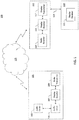
- FIG. 1 illustrates a system 100, according to an embodiment of the present invention.
- system 100 can efficiently retain audio synchronization for display receivers.
- system 100 comprises a wireless transmitter 101 that communicates with a wireless receiver 111 over a communication network 125.
- the wireless receiver 111 is communicatively connected to a display 119 using an output device 123.
- transmitter 101 includes an audio driver 103, an audio codec 105, a display encoder 107, and a radio transmitter 109.
- receiver 111 includes a radio receiver 113, a display decoder 115, and a display transmitter.
- display 119 includes a display receiver 121 and an output device 123.
- wireless transmitter 101 is configured to transmit audio, video, or other data, e.g., as data streams, to the wireless receiver 111 over communication network 125.
- Wireless receiver 111 is configured to receive the data stream via output device 123 and prepare the received data for presentation on, for example, on display 119.
- Output device 123 can be a wireless or wired interface, for example, but not limited to, a High-Definition Multimedia Interface (HDMI), DiplayPort, S/PDIF, etc..
- HDMI High-Definition Multimedia Interface
- DiplayPort DiplayPort
- S/PDIF etc.
- communication network 125 can include, but is not limited to, personal area networks, local area network, mesh network, metropolitan area network, wide area network, mobile network (such as global system for mobile communications, personal communications service, digital advance mobile phone service, etc.), or the like.
- the Keep Alive procedure has been implemented so that a transmitter of the data stream can transmit silent audio data stream during the periods where no data stream is available. Therefore, the display 119 does not need to initialize and synchronize each time a data stream is transmitted.
- the current implementation of Keep Alive is applied to a system such as those including wireless transmitters and receivers, transmitting silent audio data stream by the wireless transmitter results in inefficient use of the wireless bandwidth and the power of the wireless transmitter. Similar power inefficiencies and use of bandwidth may also exist in wired embodiments.
- system 100 is configured to shift generation of the silent audio data stream from the transmitter (e.g., wireless transmitter 101), as was previously done, to the receiver (e.g., wireless receiver 111).
- the wireless transmitter 101 is configured to transmit data stream to the wireless receiver 111.
- wireless transmitter 101 is configured to send a request to the wireless receiver 111 to start a remote Keep Alive process on the wireless received 111 when the wireless transmitter 101 detects that no more data stream is to be transmitted.
- the wireless receiver 111 can start a remote Keep Alive process when the wireless receiver 111 has received an enable bit from the wireless transmitter 101 for remote audio keep alive and detects that no more audio and/or video data is received from transmitter 101.
- the wireless receiver 111 is configured to store information associated with the received data stream, such as metadata associated with the data stream.
- the metadata can include, but is not limited to, information regarding the communication network 125, information regarding the data stream, etc.
- the wireless receiver 111 transmits silent audio data stream to the display 119.
- the silent audio data stream includes the stored metadata. Additionally or alternatively, the silent audio data stream is sent to the display 119 based on the stored metadata. Therefore, display 119 still receives a data stream based on the latest information although no data stream is sent from the wireless transmitter 101.
- information associated with the data stream can be communicated from the wireless transmitter 101 to the wireless receiver 111 during an initialization phase between two devices.
- the wireless receiver 111 can start the remote Keep Alive process as soon as the wireless receiver 111 receives an enable bit from the transmitter 101 based on the information received in the initialization phase.
- any change in the information associated with data stream can be communicated from the wireless transmitter 101 to the wireless receiver 111 before the data stream is sent by the wireless transmitter 101.
- audio codec 105 can include hardware, software, or a combination thereof capable of coding or decoding a digital data stream or signal.
- audio codec 105 can implement an algorithm to compress and/or decompress digital audio data according to a format.
- the audio codec 105 can encode analog audio as a digital signal and decode the digital signal to the analog signal.
- the audio codec 105 can include an Analog-to-Digital converter (ADC) and/or a Digital-to-Analog converter (DAC).
- ADC Analog-to-Digital converter
- DAC Digital-to-Analog converter
- audio codec 105 can be used to perform additional processes on the data stream generated by the audio driver 103.
- the audio codec 105 can be communicatively connected to display encoder 107.
- Display encoder 107 can be configured to capture, compress, and/or convert audio/video data.
- the display encoder 107 is configured to receive the data stream from, for example, the audio codec 105, and further process the data stream such that the data stream is ready for transmission over the communication network 125.
- the encoded audio/video data stream is received by radio transmitter 109 from display encoder 107 before transmission to wireless receiver 111.
- Radio transmitter 109 can be connected to an antenna system (not shown) to transmit the data stream.
- radio transmitter 109 can be configured to transmit audio and/or video data, e.g., as a data stream, including information associated with the data stream to wireless receiver 111 and also, radio transmitter 109 can be configured to transmit a request for remote Keep Alive.
- radio transmitter 109 can transmit an initialization request to wireless receiver 111 and can receive an acknowledgement from wireless receive 111. The acknowledge can indicate an ability of wireless receiver 111 to transmit the silent data stream.
- radio transmitter 109 can be configured to transmit a request to stop the remote Keep Alive process.
- audio driver 103 can detect, using, for example, the initialization process, whether wireless receiver 111 is capable of performing remote Keep Alive.
- audio driver 103 and wireless receiver 111 can use query message to determine whether the receiver is capable of performing remote Keep Alive process.
- the capability query bits can also be used during format change messages. For example, in response to an initialization message from audio driver 103, wireless receiver 111 sends a capability query bit (or bits) indicating capability of performing remote Keep Alive process.
- audio driver 103 knowing wireless receiver 111 is capable of performing Keep Alive process, can cause wireless receiver 111 to transmit the silent data stream based on the information associated with the audio data stream to display 119 in response to a request for Keep Alive process. Also, audio driver 103 can cause wireless receiver 111 to discontinue transmitting the silent data stream to display 119, when audio driver 103 determines that additional data stream is to be sent to wireless receiver 111, and therefore, there is no need for silent audio data.
- wireless receiver 111 can include a radio receiver 113 configured to receive the transmitted data stream.
- Radio receiver 113 can be connected to and/or include an antenna system (not shown) to receive the data stream.
- Wireless receiver 111 can further include a display decoder 115 and/or an audio codec (not shown) to convert the received data stream to a format compatible for display on display 119.
- the reformatted data stream is further sent to display transmitter 117.
- Display transmitter 117 is configured to transmit the data stream to display 119 over output device 123.
- a display receiver 121 in display 119 is configured receive the data stream and prepare the data stream for display through output 123.
- wireless transmitter 101 is configured to send an initialization request to wireless receiver 111 when transmitter 101 first initiates transmission of data stream to receiver 111.
- transmitter 101 and receiver 111 can communicate whether a remote Keep Alive capability exits.
- wireless receiver 111 using for example radio receiver 113 can transmit capability query bit (or bits) to wireless transmitter 101 indicating that wireless receiver 111 can perform remote Keep Alive.
- wireless transmitter 101 can send an enable bit to receiver 111 to enable this capability.
- wireless transmitter 101 starts transmitting audio and/or video data stream to wireless receiver 111 for display on display 119.
- Wireless receiver 111 receives the data stream, reconfigures the data stream to a configuration suitable for transmission to display 119 (using for example display decoder 115), and transmits the reconfigured data stream to display 119 (using for example display transmitter 117).
- wireless receiver 111 (using, e.g., display decoder 115) is capable of detecting additional information related to and/or included in the audio and/or video data stream, such as, but not limited to, channel information, audio metadata, etc.
- Wireless receiver 111 using for example display decoder 115, can store the additional information such that when the data stream stops, wireless receiver 111 can transmit silent audio data stream, using for example display transmitter 117, to display 119 based on the stored additional information.
- wireless transmitter 101 can send a request to wireless receiver 111, using for example radio transmitter 109, to start the remote Keep Alive procedure.
- wireless receiver 111 uses the stored additional information related to the latest received audio and/or video data stream to transmit silent audio data to display 119. Therefore, from the point of view of display 119, display 119 continuously receives audio data (whether from transmitter 101 or silent data), which eliminates the need for additional synchronization when the data stream from transmitter 101 re-starts.
- transmitter 101 when wireless transmitter 101, using for example audio driver 103, detects that more audio and/or video data stream is available for transmission, transmitter 101 can send a request to wireless receiver 111 to stop the remote Keep Alive procedure. Transmitter 101 can further continue transmission of the data stream. Additionally or alternatively, transmitter 101 can start transmission of the data stream without sending a request to stop remote Keep Alive. In one example, receiver 111 can stop remote Keep Alive procedure and continue transmitting the data stream received from transmitter 101. Receiver 111 can determine whether the additional information associated with the restarted data stream is similar to the stored additional information.
- receiver 111 is configured to determine the similarity based on, for example, the source of the data stream, the transmitter of the data stream, the channel information, metadata associated with the data stream, etc. If the information is similar, receiver 111 can send the data stream to display 119. If the information is not similar, receive 111 can store the new additional information associated with the new data stream that can be used for later remote Keep Alive procedure.
- FIG. 2 illustrates a timing diagram 200, according to an embodiment of the present invention.
- timing diagram 200 can represent generation and transmission of a silent audio data stream for efficiently retaining audio synchronization for display receivers.
- Description of Figure 2 will be made with respect to system 100 in Figure 1 , merely as an example system for implementing this timing sequence.
- wireless transmitter 101 transmits an initialization request 201 to wireless receiver 111.
- Initialization request 201 can be generated and transmitted when transmitter 101 and receiver 111 first communicate.
- receiver 111 sends a response to request 201, which includes capability query bit (or bits) 203 indicating to transmitter 101 that receiver 111 has the capability to perform remote Keep Alive procedure.
- Transmitter 101 can send a request 205 enabling remote Keep Alive in receiver 111.
- transmitter 101 requests that receiver 111 start the remote Keep Alive procedure when transmitter 101 requests and/or when receiver 111 detects that audio and/or video data stream from transmitter 101 has stopped.
- transmitter 101 starts transmitting audio and/or video data stream to receiver 111.
- the audio and/or video data stream 207 includes and/or accompanied by additional information such as channel information, audio metadata, etc.
- Receiver 111 receives the audio and/or video data stream 207, stores information associated with the data stream 207, reconfigures the data stream to a configuration suitable for display 119, and transmits the reconfigured data stream 209 to display 119.
- receiver 111 detects that no more audio and/or video data stream is available and receiver 111 begins transmitting silent audio data stream 213 to display 119.
- receiver 111 has previously received request 205 enabling remote Keep Alive and therefore, detecting that no more audio and/or video data stream is available enables receiver 111 to begin transmitting silent audio data stream 213 to display 119.
- transmitter 101 sends a request for remote Keep Alive 211 to receiver 111.
- receiver 111 When receiver 111 receives request 211, receiver 111 begins transmitting silent audio data stream 213 to display 119.
- Silent audio data 213 is audio data generated based on the stored information associated with the latest audio and/or video data stream 207, which will not produce any sound in display 119. However, silent audio data 213 eliminates the need for additional synchronization between display 119 and receiver 111 and/or between display 119 and transmitter 101 when the data stream resumes.
- receiver 111 can send reconfigured audio and/or video data stream 217 to display 119.
- data stream 215 can be the same or similar as the data stream 207, In this example receiver 111 can transmit data stream 217 to display 119 without storing additional information associated with data stream 215.
- the data stream 215 can be different from data stream 207.
- receiver 111 stores additional information associated with data stream 215 for the remote Keep Alive procedure.
- receiver 111 can detect the difference between the data streams 207 and 215 by inspecting the additional information associated with them. Additionally or alternatively, the transmitter 101 can inform receiver 111 that the data streams are different. According to another example, receiver 101 can send a request to stop the remote Keep Alive procedure before the data stream 215 restarts.
- FIG. 3 is a flowchart depicting a method 300, according to an embodiment of the present invention.
- method 300 can efficiently retain audio synchronization for display receivers performed in a wireless receiver.
- method 300 is performed by system 100. It is to be appreciated not all steps may be needed or performed in the order shown in Figure 3 . Reference is made to system 100 in Figure 1 merely for convenience of discussion. Other system may be used to perform the method.
- a receiver 111 receives an initialization request.
- the receiver 111 is requested to indicate whether receiver 111 has capability for remote Keep Alive procedure.
- a capability query bit (or bits) is sent indicating the capability for remote Keep Alive.
- an enable bit (or bits) is received by, for example, receiver 111 requesting the receiver to perform remote Keep Alive procedure, when needed.
- the enable bit can be part of any communication between, for example, transmitter 101 and receiver 111.
- step 307 audio and/or video data stream is received.
- step 309 information associated with the data stream is stored such that this information can be further used for silent audio data stream.
- receiver 111 can transmit the received data stream to display 119.
- receiver 111 is capable of transforming the received data stream from the configuration sent by, for example, transmitter 101 to a configuration suitable for display 119.
- a request for remote Keep Alive is received.
- receiver 111 can detect that the data stream received in step 307 has stopped and therefore, receiver 111 can initiate the remote Keep Alive process.
- receiver 111 has previously received request enable bit in step 305, and therefore, detecting that no more audio and/or video data stream is available enables receiver 111 to begin transmitting silent audio data stream.
- step 315 silent audio data is transmitted to, for example, display 119.
- step 317 additional audio and/or video data stream is received.
- step 319 it is determined whether the data stream received in step 317 has different format than the data stream received in step 307. If different, the process can continue on step 309. If similar data format is detected for both data streams, the process can continue at step 311.
- FIG. 4 illustrates a flowchart depicting a method 400, according to an embodiment of the present invention.
- method 400 can efficiently retain audio synchronization for display receivers performed in a wireless transmitter.
- method 400 is performed by system 100. It is to be appreciated not all steps may be needed or performed in the order shown in Figure 4 . Reference is made to system 100 in Figure 1 merely for convenience of discussion. Other system may be used to perform the method.
- step 401 an initialization request is sent from a transmitter 101 to receiver 111 to detect whether the receiver is capable of performing remote Keep Alive process.
- step 403 a capability query bit (or bits) is received, indicating whether the receiver is capable of remote Keep Alive.
- step 405 an enable bit is transmitted if the receiver indicates its capability.
- step 407 the audio and/or video data stream is transmitted.
- step 409 when transmitter 101 determines no more audio and/or video data stream is present for transmission to the receive 111, transmitter 101 transmits a request for Keep Alive process to receiver 111.
- step 411 no more audio and/or video data stream is transmitted.
- step 413 when additional audio and/or video data stream is presented in step 413, the additional data stream is transmitted in step 415.
- Embodiments of the present invention yield several advantages over conventional methods of transferring processing outputs to memory.
- embodiments of the present invention better utilize the entire communication bandwidth available from the processing units to the memory in order to yield substantially faster transfers of the output data to memory.
- Embodiments of the present invention yield several advantages over conventional methods of transferring processing outputs to memory.
- embodiments of the present invention better utilize the entire communication bandwidth available from the processing units to the memory in order to yield substantially faster transfers of the output data to memory.
Landscapes
- Engineering & Computer Science (AREA)
- Computer Networks & Wireless Communication (AREA)
- Signal Processing (AREA)
- Multimedia (AREA)
- Two-Way Televisions, Distribution Of Moving Picture Or The Like (AREA)
- Telephonic Communication Services (AREA)
- Mobile Radio Communication Systems (AREA)
- Synchronisation In Digital Transmission Systems (AREA)
Claims (12)
- Procédé (300), comprenant :la réception (307), par une unité de traitement d'un récepteur (111), d'informations associées à des données audio depuis un émetteur (101) ;le stockage (309), par l'unité de traitement, des informations associées aux données audio ;le fait de déterminer (313, 211) qu'une demande pour l'entretien de données audio a été reçue de l'émetteur et qu'aucune donnée audio ou vidéo n'est reçue de l'émetteur ; eten réponse à la détermination, la transmission (315), par l'unité de traitement, d'un flux de données silencieuses, comprenant un entretien de données audio, à un dispositif d'affichage (119), de sorte que le flux de données silencieuses est délivré en sortie du dispositif d'affichage (119) sur la base des informations stockées.
- Procédé (300) selon la revendication 1, comprenant en outre :la réception (301) d'une demande d'initialisation depuis l'émetteur (101) ; etla transmission, à l'émetteur (101), de données indiquant une aptitude à transmettre le flux de données silencieuses au dispositif d'affichage (119).
- Procédé (300) selon la revendication 1, comprenant en outre :la réception (317) de données audio supplémentaires incluant des secondes informations associées aux données audio supplémentaires ;le fait de déterminer (319) si les secondes informations sont similaires aux informations stockées ; etsi les secondes informations et les informations stockées sont similaires :la transmission des données audio supplémentaires reçues au dispositif d'affichage (119) ;la transmission des informations stockées au dispositif d'affichage (119) ; et (319, 311)si les secondes informations et les informations stockées ne sont pas similaires, la transmission des données audio supplémentaires reçues incluant les secondes informations au dispositif d'affichage. (319, 309)
- Procédé selon la revendication 1, comprenant en outre :la réception d'une demande pour arrêter la transmission du flux de données silencieuses depuis l'émetteur ; etl'interruption de la transmission du flux de données silencieuses au dispositif d'affichage.
- Procédé (400), comprenant :la transmission (407), par une unité de traitement d'un émetteur (101), de données audio incluant des informations associées aux données audio à un récepteur (111) pour amener le récepteur à stocker les informations associées aux données audio ; etla transmission d'aucune donnée audio ou vidéo ni d'une demande d'entretien de données audio (409,411), pour amener le récepteur, en réponse à la non-réception des données audio ou vidéo ou de la demande d'entretien de données audio, à transmettre un flux de données silencieuses, comprenant un entretien de données audio, à un dispositif d'affichage de sorte que le flux de données silencieuses est délivré en sortie du dispositif d'affichage sur la base des informations stockées.
- Procédé (400) selon la revendication 5, comprenant en outre :la transmission (401) d'une demande d'initialisation au récepteur (111) ; etla réception (403), depuis le récepteur (111), de données de capacité indiquant une aptitude du récepteur (111) à transmettre le flux de données silencieuses.
- Procédé (400) selon la revendication 5, comprenant en outre :
la transmission, depuis l'émetteur (101), d'une demande pour arrêter la transmission du flux de données silencieuses pour amener le récepteur sans fil (111) à interrompre la transmission du flux de données silencieuses au dispositif d'affichage (121). - Appareil (111), comprenant :un récepteur (113) configuré pour recevoir des informations associées à des données audio depuis un émetteur (101) ;un décodeur de dispositif d'affichage (115) configuré pour stocker les informations associées aux données audio et pour déterminer que ni une demande d'entretien de données audio n'a été reçue de l'émetteur (101) et ni des données audio ou vidéo n'ont été reçues de l'émetteur (101) ; etun émetteur de dispositif d'affichage (117) configuré pour, en réponse à la détermination, transmettre un flux de données silencieuses, comprenant un entretien de données audio, généré sur la base des informations stockées associées aux données audio, à un dispositif d'affichage (119).
- Appareil (111) selon la revendication 8, dans lequel le récepteur radio (111) est en outre configuré pour :recevoir de l'émetteur (101) une demande d'initialisation ; ettransmettre, à l'émetteur (101), des données indiquant l'aptitude à transmettre le flux de données silencieuses au dispositif d'affichage (119).
- Appareil (111) selon la revendication 8, dans lequel le décodeur de dispositif d'affichage (115) est en outre configuré pour récupérer les informations associées aux données audio avant que le flux de données silencieuses soit transmis au dispositif d'affichage (119).
- Appareil (111) selon la revendication 8, dans lequel :le récepteur (113) est en outre configuré pour recevoir des données audio supplémentaires incluant des secondes informations associées aux données audio supplémentaires ;le décodeur de dispositif d'affichage (115) est en outre configuré pour déterminer si les secondes informations sont similaires aux informations stockées ; etsi les secondes informations et les informations stockées sont similaires, l'émetteur de dispositif d'affichage (117) est configuré pour :transmettre les données audio supplémentaires reçues au dispositif d'affichage ;transmettre les informations stockées au dispositif d'affichage ; etsi les secondes informations et les informations stockées ne sont pas similaires, l'émetteur de dispositif d'affichage (117) est configuré pour transmettre les données audio supplémentaires reçues incluant les secondes informations au dispositif d'affichage (119).
- Appareil (111) selon la revendication 10, dans lequel :le récepteur (113) est configuré pour recevoir une demande pour arrêter la transmission du flux de données silencieuses de l'émetteur (101) ; etl'émetteur de dispositif d'affichage (117) est configuré pour interrompre la transmission du flux de données silencieuses au dispositif d'affichage (119).
Applications Claiming Priority (2)
| Application Number | Priority Date | Filing Date | Title |
|---|---|---|---|
| US13/530,361 US9008591B2 (en) | 2012-06-22 | 2012-06-22 | Remote audio keep alive for wireless display |
| PCT/IB2013/001750 WO2013190383A1 (fr) | 2012-06-22 | 2013-06-20 | Entretien de données audio à distance pour un dispositif d'affichage sans fil |
Publications (3)
| Publication Number | Publication Date |
|---|---|
| EP2865162A1 EP2865162A1 (fr) | 2015-04-29 |
| EP2865162A4 EP2865162A4 (fr) | 2016-02-10 |
| EP2865162B1 true EP2865162B1 (fr) | 2019-12-25 |
Family
ID=49768191
Family Applications (1)
| Application Number | Title | Priority Date | Filing Date |
|---|---|---|---|
| EP13807836.5A Active EP2865162B1 (fr) | 2012-06-22 | 2013-06-20 | Entretien de données audio à distance pour un dispositif d'affichage sans fil |
Country Status (6)
| Country | Link |
|---|---|
| US (1) | US9008591B2 (fr) |
| EP (1) | EP2865162B1 (fr) |
| JP (1) | JP6364001B2 (fr) |
| KR (1) | KR102152996B1 (fr) |
| IN (1) | IN2014DN10883A (fr) |
| WO (1) | WO2013190383A1 (fr) |
Families Citing this family (4)
| Publication number | Priority date | Publication date | Assignee | Title |
|---|---|---|---|---|
| GB8927903D0 (en) | 1989-12-09 | 1990-02-14 | Carello Lighting Plc | Lamp assembly |
| WO2017015759A1 (fr) * | 2015-07-30 | 2017-02-02 | Amp Me Inc. | Lecture synchronisée de contenu audio diffusé en continu par de multiples dispositifs portables ayant accès à l'internet |
| WO2018126487A1 (fr) | 2017-01-09 | 2018-07-12 | 华为技术有限公司 | Procédé de commande de transmission multimédia de liaison descendante, et dispositif associé |
| CN116614150B (zh) * | 2023-03-15 | 2025-11-25 | 北京允芯微电子有限公司 | 音频收发同步方法、音频接收芯片和无线传声系统 |
Family Cites Families (18)
| Publication number | Priority date | Publication date | Assignee | Title |
|---|---|---|---|---|
| JPH0965303A (ja) * | 1995-08-28 | 1997-03-07 | Canon Inc | 映像音声同期方法及び装置 |
| JPH10135863A (ja) * | 1996-10-31 | 1998-05-22 | Canon Inc | 無線通信装置 |
| JPH10164556A (ja) * | 1996-12-02 | 1998-06-19 | Matsushita Electric Ind Co Ltd | デコーダ、エンコーダ、およびビデオ・オン・デマンドシステム |
| US20060245729A1 (en) * | 2003-08-08 | 2006-11-02 | Masanori Itoh | Data processing device and data processing method |
| JP3937177B2 (ja) * | 2004-06-25 | 2007-06-27 | 船井電機株式会社 | Av装置 |
| US7624021B2 (en) | 2004-07-02 | 2009-11-24 | Apple Inc. | Universal container for audio data |
| JP4707713B2 (ja) | 2005-08-11 | 2011-06-22 | 三菱電機株式会社 | 映像記録装置及びシーンチェンジ抽出方法 |
| US20080040759A1 (en) | 2006-03-06 | 2008-02-14 | George Geeyaw She | System And Method For Establishing And Maintaining Synchronization Of Isochronous Audio And Video Information Streams in Wireless Multimedia Applications |
| US8090235B2 (en) * | 2006-03-07 | 2012-01-03 | Kabushiki Kaisha Kenwood | Relay apparatus, and reproduction system |
| JP4704972B2 (ja) * | 2006-07-24 | 2011-06-22 | ルネサスエレクトロニクス株式会社 | ストリーム編集方法及びストリーム編集装置 |
| KR20090000164A (ko) * | 2007-01-22 | 2009-01-07 | 삼성전자주식회사 | 휴대단말기에 광고를 제공하기 위한 방법 및 장치, 그리고그에 따른 시스템 |
| US7873064B1 (en) | 2007-02-12 | 2011-01-18 | Marvell International Ltd. | Adaptive jitter buffer-packet loss concealment |
| WO2010111261A1 (fr) | 2009-03-23 | 2010-09-30 | Azuki Systems, Inc. | Procédé et système d'adaptation dynamique de débit de lecture vidéo en transit |
| JP2011077860A (ja) * | 2009-09-30 | 2011-04-14 | Brother Industries Ltd | 通信端末装置、情報制御方法及び制御プログラム |
| US20120047526A1 (en) | 2010-08-20 | 2012-02-23 | Ati Technologies Ulc | System and Method for Mapping Audio and Video Streams from Audio/Video Source to Multiple Audio/Video Sinks |
| WO2012061430A2 (fr) * | 2010-11-01 | 2012-05-10 | Michael Luna | Gestion distribuée de signalisation de messages de maintien en vie pour conserver et optimiser des ressources de réseau mobile |
| US20130141643A1 (en) | 2011-12-06 | 2013-06-06 | Doug Carson & Associates, Inc. | Audio-Video Frame Synchronization in a Multimedia Stream |
| US20130166052A1 (en) | 2011-12-27 | 2013-06-27 | Vamshi Kadiyala | Techniques for improving playback of an audio stream |
-
2012
- 2012-06-22 US US13/530,361 patent/US9008591B2/en active Active
-
2013
- 2013-06-20 KR KR1020157001519A patent/KR102152996B1/ko active Active
- 2013-06-20 IN IN10883DEN2014 patent/IN2014DN10883A/en unknown
- 2013-06-20 WO PCT/IB2013/001750 patent/WO2013190383A1/fr not_active Ceased
- 2013-06-20 JP JP2015517871A patent/JP6364001B2/ja not_active Expired - Fee Related
- 2013-06-20 EP EP13807836.5A patent/EP2865162B1/fr active Active
Non-Patent Citations (1)
| Title |
|---|
| None * |
Also Published As
| Publication number | Publication date |
|---|---|
| EP2865162A4 (fr) | 2016-02-10 |
| JP2015523808A (ja) | 2015-08-13 |
| JP6364001B2 (ja) | 2018-07-25 |
| WO2013190383A1 (fr) | 2013-12-27 |
| IN2014DN10883A (fr) | 2015-09-11 |
| US20130344822A1 (en) | 2013-12-26 |
| CN104429044A (zh) | 2015-03-18 |
| EP2865162A1 (fr) | 2015-04-29 |
| US9008591B2 (en) | 2015-04-14 |
| KR102152996B1 (ko) | 2020-09-07 |
| KR20150033664A (ko) | 2015-04-01 |
Similar Documents
| Publication | Publication Date | Title |
|---|---|---|
| JP7302006B2 (ja) | Bluetoothデバイスを操作するための方法 | |
| JP6425720B2 (ja) | コンテンツ配信のための方法及び装置 | |
| JP6502380B2 (ja) | Mmt及びdashを使用するブロードキャスト及びブロードバンドハイブリッドサービス | |
| TWI426740B (zh) | 無線對等網路及其省電系統與方法 | |
| CN109564761B (zh) | 将经编码的音频帧分组化成经压缩-脉冲编码调制(pcm)(cop)分组以供在pcm接口上传输 | |
| EP2865162B1 (fr) | Entretien de données audio à distance pour un dispositif d'affichage sans fil | |
| WO2021179931A1 (fr) | Procédé et appareil de projection d'écran d'url | |
| TW201737719A (zh) | 用於在音頻串流中處理靜音的系統及方法 | |
| TW200926145A (en) | Power efficient batch-frame audio decoding apparatus, system and method | |
| CN104320699B (zh) | 蓝牙发声装置的动态调整方法 | |
| CN101951512B (zh) | 一种直播视频和实时视频的分片转码方法和系统 | |
| CN107438990B (zh) | 用于递送定时信息的方法和设备 | |
| CN118450182A (zh) | 用于优化车载互连投屏功能的针对视频流实现帧同步校准处理的方法、装置、处理器及介质 | |
| WO2012163059A1 (fr) | Procédé, dispositif et système pour transmettre des données de redirection de dispositif | |
| CN102256128B (zh) | 同步解码方法及其装置 | |
| CN104429044B (zh) | 无线显示器的远程音频保持连接 | |
| CN105933313A (zh) | 一种多媒体数据的显示方法、系统及控制设备 | |
| TW201921954A (zh) | 使用聲線(SoundWire)擴展匯流排之同步選通極性提供零開銷訊框同步 | |
| CN117201894A (zh) | 一种媒体流切片方法、装置、系统、设备和存储介质 | |
| CN112153322B (zh) | 数据分发方法、装置、设备及存储介质 | |
| CN114189727A (zh) | 同步播放方法、装置、系统、电子设备及可读存储介质 | |
| US9838456B2 (en) | Media file synchronization | |
| JP2015041800A (ja) | 受信装置及び受信方法 | |
| JP5231533B2 (ja) | モバイル・ディスプレイ・ディジタル・インターフェース用パケット構造 | |
| CN121691287A (zh) | 多媒体信号的基于云的信号处理的连接丢失检测 |
Legal Events
| Date | Code | Title | Description |
|---|---|---|---|
| PUAI | Public reference made under article 153(3) epc to a published international application that has entered the european phase |
Free format text: ORIGINAL CODE: 0009012 |
|
| 17P | Request for examination filed |
Effective date: 20150102 |
|
| AK | Designated contracting states |
Kind code of ref document: A1 Designated state(s): AL AT BE BG CH CY CZ DE DK EE ES FI FR GB GR HR HU IE IS IT LI LT LU LV MC MK MT NL NO PL PT RO RS SE SI SK SM TR |
|
| AX | Request for extension of the european patent |
Extension state: BA ME |
|
| DAX | Request for extension of the european patent (deleted) | ||
| RA4 | Supplementary search report drawn up and despatched (corrected) |
Effective date: 20160112 |
|
| RIC1 | Information provided on ipc code assigned before grant |
Ipc: H04L 12/24 20060101ALI20160106BHEP Ipc: H04W 76/04 20090101ALI20160106BHEP Ipc: H04L 29/06 20060101AFI20160106BHEP Ipc: H04L 29/08 20060101ALI20160106BHEP |
|
| STAA | Information on the status of an ep patent application or granted ep patent |
Free format text: STATUS: EXAMINATION IS IN PROGRESS |
|
| 17Q | First examination report despatched |
Effective date: 20180530 |
|
| GRAP | Despatch of communication of intention to grant a patent |
Free format text: ORIGINAL CODE: EPIDOSNIGR1 |
|
| STAA | Information on the status of an ep patent application or granted ep patent |
Free format text: STATUS: GRANT OF PATENT IS INTENDED |
|
| RIC1 | Information provided on ipc code assigned before grant |
Ipc: H04W 76/25 20180101ALI20190820BHEP Ipc: H04L 12/24 20060101ALI20190820BHEP Ipc: H04L 29/08 20060101ALI20190820BHEP Ipc: H04L 29/06 20060101AFI20190820BHEP |
|
| INTG | Intention to grant announced |
Effective date: 20190902 |
|
| GRAS | Grant fee paid |
Free format text: ORIGINAL CODE: EPIDOSNIGR3 |
|
| GRAA | (expected) grant |
Free format text: ORIGINAL CODE: 0009210 |
|
| STAA | Information on the status of an ep patent application or granted ep patent |
Free format text: STATUS: THE PATENT HAS BEEN GRANTED |
|
| AK | Designated contracting states |
Kind code of ref document: B1 Designated state(s): AL AT BE BG CH CY CZ DE DK EE ES FI FR GB GR HR HU IE IS IT LI LT LU LV MC MK MT NL NO PL PT RO RS SE SI SK SM TR |
|
| REG | Reference to a national code |
Ref country code: GB Ref legal event code: FG4D |
|
| REG | Reference to a national code |
Ref country code: CH Ref legal event code: EP |
|
| REG | Reference to a national code |
Ref country code: AT Ref legal event code: REF Ref document number: 1218389 Country of ref document: AT Kind code of ref document: T Effective date: 20200115 |
|
| REG | Reference to a national code |
Ref country code: DE Ref legal event code: R096 Ref document number: 602013064418 Country of ref document: DE |
|
| REG | Reference to a national code |
Ref country code: IE Ref legal event code: FG4D |
|
| REG | Reference to a national code |
Ref country code: NL Ref legal event code: MP Effective date: 20191225 |
|
| PG25 | Lapsed in a contracting state [announced via postgrant information from national office to epo] |
Ref country code: BG Free format text: LAPSE BECAUSE OF FAILURE TO SUBMIT A TRANSLATION OF THE DESCRIPTION OR TO PAY THE FEE WITHIN THE PRESCRIBED TIME-LIMIT Effective date: 20200325 Ref country code: GR Free format text: LAPSE BECAUSE OF FAILURE TO SUBMIT A TRANSLATION OF THE DESCRIPTION OR TO PAY THE FEE WITHIN THE PRESCRIBED TIME-LIMIT Effective date: 20200326 Ref country code: NO Free format text: LAPSE BECAUSE OF FAILURE TO SUBMIT A TRANSLATION OF THE DESCRIPTION OR TO PAY THE FEE WITHIN THE PRESCRIBED TIME-LIMIT Effective date: 20200325 Ref country code: LT Free format text: LAPSE BECAUSE OF FAILURE TO SUBMIT A TRANSLATION OF THE DESCRIPTION OR TO PAY THE FEE WITHIN THE PRESCRIBED TIME-LIMIT Effective date: 20191225 Ref country code: LV Free format text: LAPSE BECAUSE OF FAILURE TO SUBMIT A TRANSLATION OF THE DESCRIPTION OR TO PAY THE FEE WITHIN THE PRESCRIBED TIME-LIMIT Effective date: 20191225 Ref country code: SE Free format text: LAPSE BECAUSE OF FAILURE TO SUBMIT A TRANSLATION OF THE DESCRIPTION OR TO PAY THE FEE WITHIN THE PRESCRIBED TIME-LIMIT Effective date: 20191225 Ref country code: FI Free format text: LAPSE BECAUSE OF FAILURE TO SUBMIT A TRANSLATION OF THE DESCRIPTION OR TO PAY THE FEE WITHIN THE PRESCRIBED TIME-LIMIT Effective date: 20191225 |
|
| REG | Reference to a national code |
Ref country code: LT Ref legal event code: MG4D |
|
| PG25 | Lapsed in a contracting state [announced via postgrant information from national office to epo] |
Ref country code: RS Free format text: LAPSE BECAUSE OF FAILURE TO SUBMIT A TRANSLATION OF THE DESCRIPTION OR TO PAY THE FEE WITHIN THE PRESCRIBED TIME-LIMIT Effective date: 20191225 Ref country code: HR Free format text: LAPSE BECAUSE OF FAILURE TO SUBMIT A TRANSLATION OF THE DESCRIPTION OR TO PAY THE FEE WITHIN THE PRESCRIBED TIME-LIMIT Effective date: 20191225 |
|
| PG25 | Lapsed in a contracting state [announced via postgrant information from national office to epo] |
Ref country code: AL Free format text: LAPSE BECAUSE OF FAILURE TO SUBMIT A TRANSLATION OF THE DESCRIPTION OR TO PAY THE FEE WITHIN THE PRESCRIBED TIME-LIMIT Effective date: 20191225 |
|
| PG25 | Lapsed in a contracting state [announced via postgrant information from national office to epo] |
Ref country code: EE Free format text: LAPSE BECAUSE OF FAILURE TO SUBMIT A TRANSLATION OF THE DESCRIPTION OR TO PAY THE FEE WITHIN THE PRESCRIBED TIME-LIMIT Effective date: 20191225 Ref country code: CZ Free format text: LAPSE BECAUSE OF FAILURE TO SUBMIT A TRANSLATION OF THE DESCRIPTION OR TO PAY THE FEE WITHIN THE PRESCRIBED TIME-LIMIT Effective date: 20191225 Ref country code: PT Free format text: LAPSE BECAUSE OF FAILURE TO SUBMIT A TRANSLATION OF THE DESCRIPTION OR TO PAY THE FEE WITHIN THE PRESCRIBED TIME-LIMIT Effective date: 20200520 Ref country code: NL Free format text: LAPSE BECAUSE OF FAILURE TO SUBMIT A TRANSLATION OF THE DESCRIPTION OR TO PAY THE FEE WITHIN THE PRESCRIBED TIME-LIMIT Effective date: 20191225 Ref country code: RO Free format text: LAPSE BECAUSE OF FAILURE TO SUBMIT A TRANSLATION OF THE DESCRIPTION OR TO PAY THE FEE WITHIN THE PRESCRIBED TIME-LIMIT Effective date: 20191225 |
|
| PG25 | Lapsed in a contracting state [announced via postgrant information from national office to epo] |
Ref country code: IS Free format text: LAPSE BECAUSE OF FAILURE TO SUBMIT A TRANSLATION OF THE DESCRIPTION OR TO PAY THE FEE WITHIN THE PRESCRIBED TIME-LIMIT Effective date: 20200425 Ref country code: SK Free format text: LAPSE BECAUSE OF FAILURE TO SUBMIT A TRANSLATION OF THE DESCRIPTION OR TO PAY THE FEE WITHIN THE PRESCRIBED TIME-LIMIT Effective date: 20191225 Ref country code: SM Free format text: LAPSE BECAUSE OF FAILURE TO SUBMIT A TRANSLATION OF THE DESCRIPTION OR TO PAY THE FEE WITHIN THE PRESCRIBED TIME-LIMIT Effective date: 20191225 |
|
| REG | Reference to a national code |
Ref country code: DE Ref legal event code: R097 Ref document number: 602013064418 Country of ref document: DE |
|
| PG25 | Lapsed in a contracting state [announced via postgrant information from national office to epo] |
Ref country code: ES Free format text: LAPSE BECAUSE OF FAILURE TO SUBMIT A TRANSLATION OF THE DESCRIPTION OR TO PAY THE FEE WITHIN THE PRESCRIBED TIME-LIMIT Effective date: 20191225 Ref country code: DK Free format text: LAPSE BECAUSE OF FAILURE TO SUBMIT A TRANSLATION OF THE DESCRIPTION OR TO PAY THE FEE WITHIN THE PRESCRIBED TIME-LIMIT Effective date: 20191225 |
|
| PLBE | No opposition filed within time limit |
Free format text: ORIGINAL CODE: 0009261 |
|
| STAA | Information on the status of an ep patent application or granted ep patent |
Free format text: STATUS: NO OPPOSITION FILED WITHIN TIME LIMIT |
|
| REG | Reference to a national code |
Ref country code: AT Ref legal event code: MK05 Ref document number: 1218389 Country of ref document: AT Kind code of ref document: T Effective date: 20191225 |
|
| PG25 | Lapsed in a contracting state [announced via postgrant information from national office to epo] |
Ref country code: SI Free format text: LAPSE BECAUSE OF FAILURE TO SUBMIT A TRANSLATION OF THE DESCRIPTION OR TO PAY THE FEE WITHIN THE PRESCRIBED TIME-LIMIT Effective date: 20191225 |
|
| 26N | No opposition filed |
Effective date: 20200928 |
|
| PG25 | Lapsed in a contracting state [announced via postgrant information from national office to epo] |
Ref country code: MC Free format text: LAPSE BECAUSE OF FAILURE TO SUBMIT A TRANSLATION OF THE DESCRIPTION OR TO PAY THE FEE WITHIN THE PRESCRIBED TIME-LIMIT Effective date: 20191225 Ref country code: AT Free format text: LAPSE BECAUSE OF FAILURE TO SUBMIT A TRANSLATION OF THE DESCRIPTION OR TO PAY THE FEE WITHIN THE PRESCRIBED TIME-LIMIT Effective date: 20191225 Ref country code: IT Free format text: LAPSE BECAUSE OF FAILURE TO SUBMIT A TRANSLATION OF THE DESCRIPTION OR TO PAY THE FEE WITHIN THE PRESCRIBED TIME-LIMIT Effective date: 20191225 |
|
| REG | Reference to a national code |
Ref country code: CH Ref legal event code: PL |
|
| PG25 | Lapsed in a contracting state [announced via postgrant information from national office to epo] |
Ref country code: PL Free format text: LAPSE BECAUSE OF FAILURE TO SUBMIT A TRANSLATION OF THE DESCRIPTION OR TO PAY THE FEE WITHIN THE PRESCRIBED TIME-LIMIT Effective date: 20191225 |
|
| PG25 | Lapsed in a contracting state [announced via postgrant information from national office to epo] |
Ref country code: LU Free format text: LAPSE BECAUSE OF NON-PAYMENT OF DUE FEES Effective date: 20200620 |
|
| REG | Reference to a national code |
Ref country code: BE Ref legal event code: MM Effective date: 20200630 |
|
| PG25 | Lapsed in a contracting state [announced via postgrant information from national office to epo] |
Ref country code: FR Free format text: LAPSE BECAUSE OF NON-PAYMENT OF DUE FEES Effective date: 20200630 Ref country code: CH Free format text: LAPSE BECAUSE OF NON-PAYMENT OF DUE FEES Effective date: 20200630 Ref country code: IE Free format text: LAPSE BECAUSE OF NON-PAYMENT OF DUE FEES Effective date: 20200620 Ref country code: LI Free format text: LAPSE BECAUSE OF NON-PAYMENT OF DUE FEES Effective date: 20200630 |
|
| PG25 | Lapsed in a contracting state [announced via postgrant information from national office to epo] |
Ref country code: BE Free format text: LAPSE BECAUSE OF NON-PAYMENT OF DUE FEES Effective date: 20200630 |
|
| REG | Reference to a national code |
Ref country code: DE Ref legal event code: R079 Ref document number: 602013064418 Country of ref document: DE Free format text: PREVIOUS MAIN CLASS: H04L0029060000 Ipc: H04L0065000000 |
|
| PG25 | Lapsed in a contracting state [announced via postgrant information from national office to epo] |
Ref country code: TR Free format text: LAPSE BECAUSE OF FAILURE TO SUBMIT A TRANSLATION OF THE DESCRIPTION OR TO PAY THE FEE WITHIN THE PRESCRIBED TIME-LIMIT Effective date: 20191225 Ref country code: MT Free format text: LAPSE BECAUSE OF FAILURE TO SUBMIT A TRANSLATION OF THE DESCRIPTION OR TO PAY THE FEE WITHIN THE PRESCRIBED TIME-LIMIT Effective date: 20191225 Ref country code: CY Free format text: LAPSE BECAUSE OF FAILURE TO SUBMIT A TRANSLATION OF THE DESCRIPTION OR TO PAY THE FEE WITHIN THE PRESCRIBED TIME-LIMIT Effective date: 20191225 |
|
| PG25 | Lapsed in a contracting state [announced via postgrant information from national office to epo] |
Ref country code: MK Free format text: LAPSE BECAUSE OF FAILURE TO SUBMIT A TRANSLATION OF THE DESCRIPTION OR TO PAY THE FEE WITHIN THE PRESCRIBED TIME-LIMIT Effective date: 20191225 |
|
| P01 | Opt-out of the competence of the unified patent court (upc) registered |
Effective date: 20230530 |
|
| PGFP | Annual fee paid to national office [announced via postgrant information from national office to epo] |
Ref country code: DE Payment date: 20250519 Year of fee payment: 13 |
|
| PGFP | Annual fee paid to national office [announced via postgrant information from national office to epo] |
Ref country code: GB Payment date: 20250603 Year of fee payment: 13 |