EP2866099B1 - Suivi et caractérisation de particules avec une vidéo-microscopie holographique - Google Patents
Suivi et caractérisation de particules avec une vidéo-microscopie holographique Download PDFInfo
- Publication number
- EP2866099B1 EP2866099B1 EP15152531.8A EP15152531A EP2866099B1 EP 2866099 B1 EP2866099 B1 EP 2866099B1 EP 15152531 A EP15152531 A EP 15152531A EP 2866099 B1 EP2866099 B1 EP 2866099B1
- Authority
- EP
- European Patent Office
- Prior art keywords
- specimen
- particles
- particle
- computer software
- programmed
- Prior art date
- Legal status (The legal status is an assumption and is not a legal conclusion. Google has not performed a legal analysis and makes no representation as to the accuracy of the status listed.)
- Active
Links
Images




Classifications
-
- G—PHYSICS
- G02—OPTICS
- G02B—OPTICAL ELEMENTS, SYSTEMS OR APPARATUS
- G02B21/00—Microscopes
- G02B21/36—Microscopes arranged for photographic purposes or projection purposes or digital imaging or video purposes including associated control and data processing arrangements
- G02B21/361—Optical details, e.g. image relay to the camera or image sensor
-
- G—PHYSICS
- G01—MEASURING; TESTING
- G01N—INVESTIGATING OR ANALYSING MATERIALS BY DETERMINING THEIR CHEMICAL OR PHYSICAL PROPERTIES
- G01N15/00—Investigating characteristics of particles; Investigating permeability, pore-volume or surface-area of porous materials
- G01N15/10—Investigating individual particles
- G01N15/14—Optical investigation techniques, e.g. flow cytometry
- G01N15/1429—Signal processing
- G01N15/1433—Signal processing using image recognition
-
- G—PHYSICS
- G01—MEASURING; TESTING
- G01B—MEASURING LENGTH, THICKNESS OR SIMILAR LINEAR DIMENSIONS; MEASURING ANGLES; MEASURING AREAS; MEASURING IRREGULARITIES OF SURFACES OR CONTOURS
- G01B9/00—Measuring instruments characterised by the use of optical techniques
- G01B9/02—Interferometers
- G01B9/02001—Interferometers characterised by controlling or generating intrinsic radiation properties
-
- G—PHYSICS
- G01—MEASURING; TESTING
- G01N—INVESTIGATING OR ANALYSING MATERIALS BY DETERMINING THEIR CHEMICAL OR PHYSICAL PROPERTIES
- G01N15/00—Investigating characteristics of particles; Investigating permeability, pore-volume or surface-area of porous materials
- G01N15/02—Investigating particle size or size distribution
- G01N15/0205—Investigating particle size or size distribution by optical means
- G01N15/0227—Investigating particle size or size distribution by optical means using imaging; using holography
-
- G—PHYSICS
- G01—MEASURING; TESTING
- G01N—INVESTIGATING OR ANALYSING MATERIALS BY DETERMINING THEIR CHEMICAL OR PHYSICAL PROPERTIES
- G01N15/00—Investigating characteristics of particles; Investigating permeability, pore-volume or surface-area of porous materials
- G01N15/10—Investigating individual particles
-
- G—PHYSICS
- G01—MEASURING; TESTING
- G01P—MEASURING LINEAR OR ANGULAR SPEED, ACCELERATION, DECELERATION, OR SHOCK; INDICATING PRESENCE, ABSENCE, OR DIRECTION, OF MOVEMENT
- G01P5/00—Measuring speed of fluids, e.g. of air stream; Measuring speed of bodies relative to fluids, e.g. of ship, of aircraft
- G01P5/001—Full-field flow measurement, e.g. determining flow velocity and direction in a whole region at the same time, flow visualisation
-
- G—PHYSICS
- G01—MEASURING; TESTING
- G01P—MEASURING LINEAR OR ANGULAR SPEED, ACCELERATION, DECELERATION, OR SHOCK; INDICATING PRESENCE, ABSENCE, OR DIRECTION, OF MOVEMENT
- G01P5/00—Measuring speed of fluids, e.g. of air stream; Measuring speed of bodies relative to fluids, e.g. of ship, of aircraft
- G01P5/18—Measuring speed of fluids, e.g. of air stream; Measuring speed of bodies relative to fluids, e.g. of ship, of aircraft by measuring the time taken to traverse a fixed distance
- G01P5/20—Measuring speed of fluids, e.g. of air stream; Measuring speed of bodies relative to fluids, e.g. of ship, of aircraft by measuring the time taken to traverse a fixed distance using particles entrained by a fluid stream
-
- G—PHYSICS
- G03—PHOTOGRAPHY; CINEMATOGRAPHY; ANALOGOUS TECHNIQUES USING WAVES OTHER THAN OPTICAL WAVES; ELECTROGRAPHY; HOLOGRAPHY
- G03H—HOLOGRAPHIC PROCESSES OR APPARATUS
- G03H1/00—Holographic processes or apparatus using light, infrared or ultraviolet waves for obtaining holograms or for obtaining an image from them; Details peculiar thereto
- G03H1/0005—Adaptation of holography to specific applications
-
- G—PHYSICS
- G01—MEASURING; TESTING
- G01N—INVESTIGATING OR ANALYSING MATERIALS BY DETERMINING THEIR CHEMICAL OR PHYSICAL PROPERTIES
- G01N15/00—Investigating characteristics of particles; Investigating permeability, pore-volume or surface-area of porous materials
- G01N2015/0038—Investigating nanoparticles
-
- G—PHYSICS
- G01—MEASURING; TESTING
- G01N—INVESTIGATING OR ANALYSING MATERIALS BY DETERMINING THEIR CHEMICAL OR PHYSICAL PROPERTIES
- G01N15/00—Investigating characteristics of particles; Investigating permeability, pore-volume or surface-area of porous materials
- G01N15/02—Investigating particle size or size distribution
- G01N15/0205—Investigating particle size or size distribution by optical means
- G01N2015/025—Methods for single or grouped particles
-
- G—PHYSICS
- G01—MEASURING; TESTING
- G01N—INVESTIGATING OR ANALYSING MATERIALS BY DETERMINING THEIR CHEMICAL OR PHYSICAL PROPERTIES
- G01N15/00—Investigating characteristics of particles; Investigating permeability, pore-volume or surface-area of porous materials
- G01N15/10—Investigating individual particles
- G01N2015/1027—Determining speed or velocity of a particle
-
- G—PHYSICS
- G03—PHOTOGRAPHY; CINEMATOGRAPHY; ANALOGOUS TECHNIQUES USING WAVES OTHER THAN OPTICAL WAVES; ELECTROGRAPHY; HOLOGRAPHY
- G03H—HOLOGRAPHIC PROCESSES OR APPARATUS
- G03H1/00—Holographic processes or apparatus using light, infrared or ultraviolet waves for obtaining holograms or for obtaining an image from them; Details peculiar thereto
- G03H1/04—Processes or apparatus for producing holograms
- G03H1/08—Synthesising holograms, i.e. holograms synthesized from objects or objects from holograms
- G03H1/0866—Digital holographic imaging, i.e. synthesizing holobjects from holograms
-
- G—PHYSICS
- G03—PHOTOGRAPHY; CINEMATOGRAPHY; ANALOGOUS TECHNIQUES USING WAVES OTHER THAN OPTICAL WAVES; ELECTROGRAPHY; HOLOGRAPHY
- G03H—HOLOGRAPHIC PROCESSES OR APPARATUS
- G03H1/00—Holographic processes or apparatus using light, infrared or ultraviolet waves for obtaining holograms or for obtaining an image from them; Details peculiar thereto
- G03H1/0005—Adaptation of holography to specific applications
- G03H2001/0033—Adaptation of holography to specific applications in hologrammetry for measuring or analysing
-
- G—PHYSICS
- G03—PHOTOGRAPHY; CINEMATOGRAPHY; ANALOGOUS TECHNIQUES USING WAVES OTHER THAN OPTICAL WAVES; ELECTROGRAPHY; HOLOGRAPHY
- G03H—HOLOGRAPHIC PROCESSES OR APPARATUS
- G03H1/00—Holographic processes or apparatus using light, infrared or ultraviolet waves for obtaining holograms or for obtaining an image from them; Details peculiar thereto
- G03H1/0005—Adaptation of holography to specific applications
- G03H2001/005—Adaptation of holography to specific applications in microscopy, e.g. digital holographic microscope [DHM]
-
- G—PHYSICS
- G03—PHOTOGRAPHY; CINEMATOGRAPHY; ANALOGOUS TECHNIQUES USING WAVES OTHER THAN OPTICAL WAVES; ELECTROGRAPHY; HOLOGRAPHY
- G03H—HOLOGRAPHIC PROCESSES OR APPARATUS
- G03H1/00—Holographic processes or apparatus using light, infrared or ultraviolet waves for obtaining holograms or for obtaining an image from them; Details peculiar thereto
- G03H1/04—Processes or apparatus for producing holograms
- G03H1/0443—Digital holography, i.e. recording holograms with digital recording means
- G03H2001/0447—In-line recording arrangement
-
- G—PHYSICS
- G03—PHOTOGRAPHY; CINEMATOGRAPHY; ANALOGOUS TECHNIQUES USING WAVES OTHER THAN OPTICAL WAVES; ELECTROGRAPHY; HOLOGRAPHY
- G03H—HOLOGRAPHIC PROCESSES OR APPARATUS
- G03H1/00—Holographic processes or apparatus using light, infrared or ultraviolet waves for obtaining holograms or for obtaining an image from them; Details peculiar thereto
- G03H1/04—Processes or apparatus for producing holograms
- G03H1/08—Synthesising holograms, i.e. holograms synthesized from objects or objects from holograms
- G03H1/0808—Methods of numerical synthesis, e.g. coherent ray tracing [CRT], diffraction specific
- G03H2001/0825—Numerical processing in hologram space, e.g. combination of the CGH [computer generated hologram] with a numerical optical element
-
- G—PHYSICS
- G03—PHOTOGRAPHY; CINEMATOGRAPHY; ANALOGOUS TECHNIQUES USING WAVES OTHER THAN OPTICAL WAVES; ELECTROGRAPHY; HOLOGRAPHY
- G03H—HOLOGRAPHIC PROCESSES OR APPARATUS
- G03H2240/00—Hologram nature or properties
- G03H2240/50—Parameters or numerical values associated with holography, e.g. peel strength
- G03H2240/56—Resolution
Definitions
- the present system and method are directed to measuring the three-dimensional position of colloidal particles within colloidal dispersions, and furthermore to characterizing each particle's shape, size, and optical properties, by quantitative analysis of holograms recorded through holographic video microscopy. Information obtained from this analysis can be used to characterize the colloidal particles themselves. This information also can be used to measure and assay the properties of the medium within which the particles are dispersed. In all such applications, quantitative holographic video microscopy offers substantial advantages over methods and analysis systems that have been previously described and practiced.
- Particle-image velocimetry is widely applied for measuring the trajectories of colloidal particles dispersed in transparent media.
- Conventional implementations of particle-imaging velocimetry involve forming images of the particles using standard light microscopy and then analyzing those images through methods of computer image analysis. Such measurements and analyses typically provide information on individual particles' positions in the microscope's focal plane, but not on the particles' axial displacements relative to the focal plane. In cases where axial tracking information is extracted, the results typically have substantially poorer spatial resolution than the in-plane positions. Measurements of axial positions, furthermore, require separate calibration measurements for each particle.
- Such conventional particle-imaging methods generally provide little information on the particles' sizes, shapes, or compositions. The range of axial displacements over which conventional particle-imaging methods can be applied is limited by the depth of focus of the microscope because images of particles that move too far from the focal plane become too dim and diffuse to analyze.
- image-based particle tracking include measuring streamlines in flowing fluids, assessing the thermodynamic stability of colloidal dispersions against aggregation and flocculation, measuring interactions among colloidal particles, measuring colloidal particles' interactions with surfaces, assessing particles' responses to external fields and forces, characterizing the particles' viscous drag characteristics, and using the particles' motions as probes of the viscoelastic and rheological properties of the embedding medium.
- the latter class of measurements, in which colloidal particles are used as microscopic probes of the medium's rheology is commonly termed particle-tracking microrheology. All such applications benefit from particle-tracking techniques that offer better spatial resolution, three-dimensional tracking, and a wider axial range. Some of these applications, such as microrheology, also require information on the probe particles' characteristics, such as their radii. Typically, such particle characterization data are obtained in separate measurements.
- colloidal particles typically are characterized by their shape, their size, their bulk composition, and their surface properties. Colloidal dispersions are characterized by the distributions of these quantities as well as by the overall concentration of particles. Size and shape can be assessed through electron microscopy on dried and otherwise prepared samples. Preparation can change the particles' properties, however, so that the results of such measurements might not accurately reflect the particles' characteristics in situ. Light scattering methods generally are used for in situ analysis of colloidal particles' sizes. Such measurements, however, provide a sample-averaged view of the particles in a dispersion, and generally require careful interpretation with approximate or phenomenological models for the the particles' size distribution, shapes, and refractive indexes. Commonly used commercial particle sizing instruments are based on these methods and share their limitations.
- Quantitative analysis of images obtained through holographic video microscopy provides the information required to simultaneously track and characterize large numbers of colloidal particles, and yields information on each particle individually.
- this method offers nanometer-scale position measurements in three dimensions over an exceedingly large range of axial positions.
- Such high-resolution wide-range three-dimensional tracking data is ideal for applications in microrheology, and similarly can be used beneficially in any application where conventional particle tracking currently is applied.
- Holographic particle tracking works for particles ranging in size from a few nanometers up to at least a few micrometers. It offers the full time resolution of the video camera used to acquire the holograms.
- holographic analysis yields the radius with nanometer resolution and the complex refractive index with a relative error no worse than one part in a thousand. It covers the full range of refractive indexes from low-index bubbles in high-index media to particles whose refractive indexes are too high to be assessed by other means. These specifications surpass those of many methods devoted to particle characterization alone.
- the combination of high-resolution particle tracking with precise in situ particle characterization makes possible measurements that cannot be performed by other means.
- the subject holographic microscope 10, depicted schematically in FIG. 1A is based on a commercial inverted light microscope (Zeiss Axiovert TV 100 S).
- a specimen, such as an individual particle 12 or different phase 30 within a medium 35 disposed on a specimen stage or holder 38 at position r p scatters a small portion of the plane-wave illumination light 40.
- Scattered light 50 then propagates to the focal plane 60 of the microscope 10, where the light 50 interferes with the unscattered portion of the laser beam light 40.
- the resulting interference pattern is magnified by the microscope's objective lens 70 (such as, an S Plan Apo, 100x, NA 1.4, oil immersion) and projected by a video eyepiece 80 (0.63x) onto a CCD camera 15 (such as, NEC TI-324AII) before being recorded as uncompressed digital video with a digital video recorder 18 (for example, Panasonic DVR-H110, not shown) and accumulated data is processed by a computer 100 executing various computer software embedded in module 120.
- the computer software on the module 120 includes a set of instructions for operating on data characteristic of the specimen.
- the data characteristic of the specimen 12, 30 relates to an interference pattern arising from interaction of the laser light 50 scattered from the specimen 12, 30 and an unscattered portion of the laser light 40.
- the set of instructions further include a scattering function which upon execution provides a convergent solution descriptive of properties of the specimen 12, 30, thereby enabling characterization of at least one of a mechanical property, an optical property, and a chemical property of the specimen 12, 30.
- Each holographic image in the video stream provided by the recorder 18 is a time-resolved snapshot of the three-dimensional distribution of scatterers in the microscope's field of view.
- a plurality of time snapshots allow tracking particle trajectory and obtaining characteristic properties.
- the specimen data output from the recorder 18 and processed by the computer 100 can be output to a control system 150 for generating quality control or manufacturing control signals 100 for the specimen 12, 30.
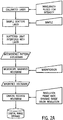
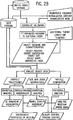
- the microscope 10 is operated in accordance with the flow diagram shown in FIGS. 2A and 2B .
- Acquisition of holographic images begins with the choice of the laser 20 used to illuminate the specimen 12, 30.
- Characteristics of the laser 20 that may be selected for a particular application include the wavelength of the light 40, the number of distinct wavelengths of the light 40, the coherence length, the intensity of the light 40 at each wavelength, and whether the laser 20 is continuous or pulsed. If the laser 20 is pulsed, the shape and timing of the pulses may be optimized for different application. These choices typically would be made in consideration of the intended application and of the other hardware and software components in the microscope 10. For example, a pulsed form of the laser 20 might be preferable for time-resolved imaging of rapidly moving objects.
- the pulses might then be synchronized with the shutter of the video recorder 18 or other camera used to record images.
- the wavelength similarly might be selected to take advantage of optical properties of the specimen 12, 30.
- a plurality of wavelengths of the laser 20 might be selected to acquire spectroscopic information through analysis of holograms recorded in different wavelengths.
- Holograms at different wavelengths might be recorded simultaneously with a camera (such as the video recorder 18) capable of recording color information. They might be recorded with multiple cameras, each selected for a particular wavelength. Or, they might be recorded sequentially with one or more cameras.
- the specimen 12, 30 is most preferably sufficiently transparent for a sufficient fraction of the illuminating laser 20 to pass through undistorted so as to form an interference pattern.
- the specimen 12, 30 thus has to be mounted in a transparent form of the sample holder 38; and the sample holder 38 mounted rigidly in the laser beam 20, disposed so that the resulting interference pattern is visible to the microscope 10. If these conditions are met, the light 40 scattered by the specimen 12, 30 to provide the light 50 which will interfere with the unscattered portion of the laser beam 20 to form an interference pattern, or hologram.
- the role of the microscope 10 is to magnify the hologram and project the magnified hologram onto the camera 18.
- the microscope's objective lens 70 and eyepiece 80 thus is preferably selected to optimize collection, magnification and projection of the light 40, at the wavelength of choice.
- the video recorder or camera 18 perhaps coupled with a separate digitization system, records the hologram, digitizes it, and transfers the digitized image to a digital image storage system (shown, for example, as 25 in FIG. 1A ).
- the camera's pixel count, spatial resolution and frame rate establishes the spatial range, spatial resolution and temporal bandwidth of measurements that can be performed with holographic microscopy methods.
- its dynamic range establishes the intensity of the laser 20 required to acquire useful images and the amount of information that can be acquired from each image. Its ability to record color information determines what role the camera 18 can play in acquiring holograms at multiple wavelengths. Images acquired by the camera 18 can be recorded for later analysis, or transfered directly to image analysis routines for real-time analysis.
- Images acquired by the camera 18 and, perhaps, data stored in the digital image storage system 25, consist of arrays of pixels, each of which records the local intensity value as a number. Before these numbers can be analyzed with light scattering theory, they are most preferably appropriately normalized. Normalization may consist of dividing the image by a previously recorded background image, as described herein. This has the benefit of eliminating intensity variations in the image due to spurious interference fringes. Alternatively, it may consist of dividing the entire image by a normalization constant, or normalizing the image by a numerical model for a background illumination pattern.
- Light scattering theory comprises several different mathematical formulations, including Lorenz-Mie theory, T-matrix theory, and other approaches to predicting the electric and magnetic waves scattered by an illuminated object. Any such formulation may be used to analyze a normalized image.
- Lorenz-Mie theory is particularly well suited.
- T-matrix theory may be preferable.
- the normalized image may be fit to the theory by manipulating the adjustable parameters.
- the adjustable parameters include the sphere's three-dimensional position, its radius, and its complex refractive index.
- additional fitting parameters may be required.
- the necessary fit involves a highly nonlinear optimization of the adjustable parameters.
- Levenberg-Marquardt nonlinear least-squares optimization algorithm we adopted the Levenberg-Marquardt nonlinear least-squares optimization algorithm. Other algorithms may be preferable for some applications.
- the fits may be performed on a pixel-by-pixel basis using the CPU of the computer 100. Alternatively, the computations may be accelerated though the use of a graphics processing unit (GPU), or another such parallel-processing system (also represented as "computer 100" in FIG. 1A ).
- GPU graphics processing unit
- Fits may be performed for the specimen 12, 30 in each recorded holographic image. Alternatively, some particular specimen 12, 30 may be selected in each image for further consideration.
- the object data may be analyzed either in isolation or in conjunction with data from other images. The object data may be the desired final product for use thereof. This could be the case for verifying a three-dimensional configuration of the specimen 12, 30, or assessing the optical characteristics of a sample of the specimen 12, 30.
- a sequence of holographic images of an individual one of the specimen 12, 30 may be combined to develop a time-resolved measurement of that specimen's three-dimensional trajectory.
- Such trajectories themselves may be used as inputs for further analysis.
- statistical analysis of trajectory data may be used to develop measurements of the velocity field in a flowing fluid.
- particle-image velocimetry Such measurements are conventionally known by the term particle-image velocimetry.
- the variation based on holographic particle tracking might therefore be termed holographic particle-image velocimetry.
- trajectory data may be analyzed to obtain information about the viscoelastic properties of the medium 35 within which a plurality of the specimen particles 18 is dispersed, which can be termed as holographic microrheology (this will be described in more detail hereinafter in Section A).
- the specimen's size and refractive index data and an individual particle's size and refractive index may be monitored over time. These values should remain constant in a stable system. Variations in these values provide information about the changing conditions within the system. Such information may be useful in such applications as holographic microrheology.
- the size and refractive index of a statistical ensemble of the particles 18 or the phase 30 may be obtained from a plurality of holographic images. Such ensembles may be analyzed to estimate the statistical distribution of sizes and refractive indexes within a bulk specimen 12, 30. Such information is useful in monitoring processes and products for quality and consistency. In the case of non-spherical specimens 12, 30, additional information such as shape and orientation also may be obtained, and statistical analyses performed.
- the chemical composition of the specimen 12, 30 may be assessed by measuring its refractive index at a plurality of wavelengths.
- composition analysis can detect the presence or composition of coatings on the surface of the specimen 12, 30.
- Composition analysis is useful for process control and product quality assurance, for instance as a means of detecting adulterants in emulsions or particle-based products. Detection of molecular scale coatings is useful for label-free molecular binding assays.
- Other applications of the geometric and compositional data also should be apparent, including applications that also make use of tracking data.
- this methodology was applied to analysis of numerous different types of the particles and phases 12, 30.
- the approach can monitor a probe particle's mean-square positional fluctuations, ⁇ r 2 ( t )) ⁇ , and uses a generalized Stokes-Einstein relation to extract the medium's frequency-dependent storage modulus, G '( ⁇ ). This is related by the Kramer-Kronig relation to the frequency-dependent loss modulus, G "( ⁇ ), which completes the micromechanical description.
- Holographic images are recorded as an uncompressed digital video stream at 30 frames per second on a digital video recorder (Panasonic DMR-E100H). Each image then is analyzed to measure the probe particle's three-dimensional location relative to the center of the microscope's focal plane.
- the distribution of scattered light is described by the conventional Lorenz-Mie scattering function, f m ( r-r p ) , which depends on the particle's position r p , its radius, a , and its refractive index, n p .
- 2 to obtain, I r I 0 r 1 + 2 ⁇ R f s r ⁇ r p ⁇ ⁇ ⁇ e ⁇ ikz p + ⁇ 2 f s r ⁇ r p 2 , where ⁇ ⁇ 1 accounts for variations in I 0 ( r p ). Equation (1) can be fit to normalized images such as the example shown in FIG. 1B , with the particle's position, radius, and refractive index as free parameters.
- holographic particle tracking performs at least one order of magnitude better. Unlike conventional particle tracking, moreover, holographic tracking does not require separate calibrations for axial measurements.
- G' ( ⁇ ) measures the medium's elastic response to shear forces
- G "( ⁇ ) measures its viscosity. They are natural probes of biofilms' responses to potential therapeutic agents.
- the dynamic viscosity, ⁇ ⁇ 1 ⁇ G ⁇ 2 ⁇ + G ⁇ 2 ⁇ , provides an overall impression of a biofilm's ability to exchange material with its surroundings.
- FIG. 4C shows G' ( ⁇ ) and G "( ⁇ ) obtained from a single sphere dispersed in a 17 wt % solution of 200 kDa PEO in deionized water.
- the Newtonian fluid consistent results are obtained in all three coordinates, so that combined results are presented in FIGS. 4C and 4D .
- the viscoelastic moduli plotted in FIG. 4C , agree quantitatively with results reported for similar samples under comparable conditions.
- the associated dynamic viscosity, plotted in FIG. 4D decreases monotonically with increasing frequency, which is the signature of a shear-thinning fluid.
- FIG. 5 show comparable results for biofilm polysaccharides.
- Prior studies of biofilm's structure using other methods have revealed a degree of heterogeneity at the sub-millimeter scale that might seem unamenable to systematic physical analysis. Indeed, measurements of model biofilms' macroscopic rheological properties have yielded viscoelastic moduli differing by more than three orders of magnitude, even for nominally similar samples. These differences have been attributed to loading, strain rate, total strain and sample preparation.
- Microrheology addresses many of these concerns by probing the local-scale properties of unloaded samples in equilibrium. Although particle-tracking microrheology has been applied to a wide range of industrially and biologically relevant materials, its application to biofilms appears to be novel. Model biofilms can be prepared without the complication of swimming bacteria, and so lend themselves to this kind of analysis.
- Streptococcus mutans polysaccharide samples which were extracted from 5-day-old biofilms of S . mutans UA159 (ATCC 700610) that were grown on glass slides in the presence of 10% sucrose.
- Water-soluble (S) polysaccharides were extracted with MilliQ water at room temperature.
- the insoluble (N) polysaccharide fraction then was extracted in 1N NaOH. Both extracts were neutralized to pH 7.0 ⁇ 0.5 and precipitated with cold ethanol (75% v/v) at -18°C for at least 24 h.
- the resulting polysaccharide samples have a mean molecular weight of about 10 kDa with a polydispersity of at least 50 percent, and contain trace amounts of protein.
- the biofilm's water-soluble polysaccharides form a shear-thinning fluid roughly ten times more viscous than water.
- the data in FIG. 5C show that the N-type fraction forms an elastic gel with a typical storage modulus of 10 Pa. This is several hundred times smaller than the mean value reported for bulk samples of S. mutans polysaccharides in other conventional prior art. It is consistent, however, with values reported at the lowest loadings when the substantial measurement error is taken into account. Accurate measurements at low loading arc one of the strengths of microrheology, so that the results in FIGS. 5C and 5D are more likely to reflect the biofilm's properties in vivo. Even at low loading, the N-type gel is strongly shear-thinning, as indicated by its dynamic viscosity in FIG. 5D . This is a desirable trait for dental biofilms because it facilitates removal by brushing.
- the sample was diluted by 1000:1 with deionized water before being sealed between a microscope slide and a glass cover slip and mounted on the stage of the microscope.
- a typical 640 x 480 pixel image, I ( r ) captures roughly 10 resolvable globules.
- Unprocessed holograms suffer from large intensity variations due to speckle, interference effects in the microscope's optics and scattering by dust and other imperfections. We correct for these by normalizing I ( r ) with a background hologram I 0 ( r ) obtained with no sample in the field of view.
- the illuminating beam is not perfectly uniform, and the factor ⁇ ⁇ 1 can be used to account for variations in I 0 (r p ), such as position-dependent variations.
- Equation (10) P n l cos ⁇ is the associated Legendre polynomial of the first kind, and j n ( kr ) is the spherical Bessel function of the first kind of order n .
- m n p / n m is the expansion coefficients in Equation
- the only challenge in this computation is to calculate the Bessel functions and their ratios both accurately and efficiently.
- the radius of the fat globules increases with increasing fat content, as does the dispersion of the radius.
- holographic particle characterization is sensitive to surface properties, and, in particular, to surface coverage by surfactants.
- holographic microscopy is sensitive to the milk fat globule membrane (MFGM). This sensitivity is noteworthy because, at just 10 to 20 nm thickness, the MFGM is much thinner than the wavelength of light and constitutes a very small proportion of the droplets' volume.
- Smaller milk fat droplets also display systematically larger refractive indexes than larger droplets. This may reflect size-dependent variation in the fatty acid composition of the MFGM and triglyceride core. Even the simplest implementation of holographic characterization therefore can be useful for assessing milk fat droplet composition.
- holographic characterization to milk demonstrates that it is possible to determine both the type (cow, goat, etc.) and quality (fat-free, whole, fresh, old, etc.) of milk samples based on holographic analysis. This observation suggests particular applications of holographic characterization to quality assurance and process control in dairy industries. More generally, the broader use of holographic characterization for other emulsion-based systems, such as paint, other foods, and cosmetics is clearly applicable based on this disclosure herein.
- holographic characterization is sensitive to the surface properties of emulsion droplets, as well as to their bulk properties.
- Surface characterization can include identifying the existence of a surface coating, measurement of surface coverage, and characterization of the nature of surface coating. Fitting to a more sophisticated form of the theory can provide quantitative information on the thickness and composition of surface coatings. This is useful for milk characterization, and it also should be useful in other contexts (indicated above) where the surface of a particle can differ from its bulk.
- a polystyrene sulfate sphere dispersed in water was analyzed and characterized.
- digitized holograms yield a particle's three-dimensional position, r p , its radius, a , and its index of refraction, n p .
- z 0 , is dominated by long-wavelength variations in
- Eq. (18) can be fit to measured holograms by treating the particle's three-dimensional position, its radius and its refractive index as free parameters.
- Previous studies fit non-normalized holograms to phenomenological models or Mie scattering theory for some of these quantities, but never all five. Because errors in the adjustable parameters are strongly correlated, failing to optimize them all simultaneously yields inaccurate results. Fitting instead to the full Lorenz-Mie theory provides more information with greater precision.
- the only instrumental calibration is the overall magnification. This contrasts with other three-dimensional particle tracking techniques, which require independent calibrations for each type of particle, particularly to track particles in depth.
- the camera's electronic shutter was set for an exposure time of 0.25 msec to minimize blurring due to Brownian motion.
- each pixel contains roughly 5 significant bits of information.
- the numerical fit to B ( ⁇ ) faithfully reproduces not just the position of the interference fringes, but also their magnitudes.
- the quality of the fit may be judged from the azimuthal average; the solid curve is an angular average about the center of B ( ⁇ ), the dashed curves indicate the standard deviations of the average, and the discrete points are obtained from the fit.
- the fit value for the radius, a 0.73 ⁇ 0.01 ⁇ m , ( see FIG. 8A(2) ) falls in the sample's specified range, which reflected a lower bound of 0.69 ⁇ 0.07 ⁇ m obtained with a Beckman Z2 Coulter Counter and an upper bound of 0.76 ⁇ 0.08 ⁇ m obtained by analytical centrifugation. Agreement between the quoted and measured particle size suggests that the present measurement's accuracy is comparable to its precision. In that case, both precision and accuracy surpass results previously obtained through analysis of I ( ⁇ ).
- the trajectory-averaged value for the refractive index, n p 1.55 ⁇ 0.03, also is consistent with the properties of polystyrene colloid inferred from light scattering measurements on bulk dispersions.
- fitting to the exact Lorenz-Mie scattering theory is robust and reliable over a far wider range of particle sizes, provided that care is taken to maintain numerical stability in calculating f s ( r ) .
- FIGS. 9A(1) through 9B(2) demonstrate for a colloidal silica sphere (Bangs Labs, Lot SS04N / 5252) dispersed in water. This particle was lifted 30 ⁇ m above the focal plane with an optical tweezer, and then released and allowed to sediment.
- the images in FIGS. 9A(1) and 9B(1) show the particle near the beginning of its trajectory and near the end. Fits to Eq. 18 are shown in FIGS. 9A(2) and 9B(2) .
- the particle's measured trajectory in 1/30 s intervals during 15 s of its descent is plotted in FIG. 10 .
- the offsets obtained from linear fits to ⁇ r j 2 t also are consistent with no worse than 1 nm accuracy for in-plane positions and 10 nm for axial positions throughout the trajectory.
- the optical characterization of the particle's properties thus is consistent with the particle's measured dynamics.
- a video stream of such images therefore constitutes a powerful six-dimensional microscopy for soft-matter and biological systems.
- Holographic particle tracking is ideal for three-dimensional microrheology, for measuring colloidal interactions and as force probes for biophysics.
- the methods we have described can be applied to tracking large numbers of particles in the field of view simultaneously for highly parallel measurements.
- Real-time single-particle characterization and tracking of large particle ensembles will be invaluable in such applications as holographic assembly of photonic devices.
- Applied to more highly structured samples such as biological cells and colloidal heterostructures, they could be used as a basis for cytometric analysis or combinatorial synthesis.
- multi-wavelength holographic characterization can be applied to obtain spectroscopic information, such as the dependence of refractive index on wavelength. This can be useful for quantifying nutrient concentration in milk and related systems. It can be useful for distinguishing adulterants from pure products.
- Multiwavelength characterization also provides an opportunity for calibration-free measurements. The concept is that the particle's measured size should be independent of laser wavelength. If the wavelengths of the lasers used to illuminate the sample are known, then the overall length-scale calibration can be obtained form the condition that the particle's apparent radius should be the same at all wavelengths.
Landscapes
- Physics & Mathematics (AREA)
- General Physics & Mathematics (AREA)
- Chemical & Material Sciences (AREA)
- Engineering & Computer Science (AREA)
- Analytical Chemistry (AREA)
- Pathology (AREA)
- Biochemistry (AREA)
- General Health & Medical Sciences (AREA)
- Life Sciences & Earth Sciences (AREA)
- Immunology (AREA)
- Health & Medical Sciences (AREA)
- Dispersion Chemistry (AREA)
- Aviation & Aerospace Engineering (AREA)
- Signal Processing (AREA)
- Multimedia (AREA)
- Optics & Photonics (AREA)
- Investigating Or Analysing Materials By Optical Means (AREA)
- Holo Graphy (AREA)
- Microscoopes, Condenser (AREA)
- Computer Vision & Pattern Recognition (AREA)
Claims (14)
- Un système de caractérisation optique d'un spécimen (12, 30) possédant des particules, comprenant :un microscope holographique (10),une source de lumière collimatée (20) en communication optique avec le microscope holographique (10), le microscope holographique (10) possédant une lentille de focalisation et un oculaire vidéo (80) configuré de façon à diffuser une lumière collimatée provenant de de la source de lumière collimatée à partir du spécimen de façon à générer une partie diffusée,une caméra (15) en communication avec le microscope holographique (10) adaptée de façon à recevoir un diagramme d'interférence agrandi généré à partir d'une partie non diffusée de la lumière collimatée et de la partie diffusée,un support à mémoire tangible lisible par un ordinateur et adapté de façon à enregistrer le diagramme d'interférence agrandi de façon à fournir une image hologramme pour une analyse subséquente,un ordinateur (100) et un module logiciel informatique (120) comprenant un logiciel informatique possédant un ensemble d'instructions destinées à une utilisation sur le support à mémoire tangible, où le module logiciel informatique (120) est programmé de façon à normaliser l'image hologramme avant analyse par la division de l'image hologramme par une image d'arrière-plan enregistrée antérieurement, à analyzer l'image hologramme normalisée et à utiliser l'analyse de l'image hologramme normalisée de façon à déterminer au moins un élément parmi un emplacement spatial, une propriété mécanique, une propriété optique et une propriété chimique du spécimen (12, 30).
- Le système selon la Revendication selon la Revendication 1, comprenant en outre la programmation du module logiciel informatique (120) de façon à appliquer une fonction de diffusion destinée à l'analyse du diagramme d'interférence enregistré.
- Le système selon la Revendication 1 ou 2, où la lumière collimatée comprend une pluralité de longueurs d'onde de lumière.
- Le système selon la Revendication 3, où la caméra (15) est configurée de façon à enregistrer chaque longueur d'onde de la pluralité de longueurs d'onde de lumière.
- Le système selon la Revendication 3, où la caméra (15) comprend une pluralité de caméras, chacune d'elles étant configurée de façon à enregistrer une longueur d'onde de la pluralité de longueurs d'onde de lumière.
- Le système selon l'une quelconque des Revendications précédentes où le microscope holographique (10) comprend un plan focal et le spécimen (12, 30) est déplacé axialement par rapport au plan focal, où le spécimen (12, 30) comprend une particule disposée à l'intérieur d'un milieu (35).
- Le système selon l'une quelconque des Revendications précédentes comprenant en outre la programmation du module logiciel informatique (120) de façon à analyser au moins un élément parmi une interaction entre une particule et une surface, une interaction entre au moins deux des particules, un champ de vitesse d'un fluide du spécimen et des propriétés viscoélastiques d'un milieu de ce spécimen.
- Le système selon l'une quelconque des Revendications précédentes où le spécimen comprend un milieu (35) contenant une suspension colloïdale de particules (12) et comprenant en outre la programmation du module logiciel informatique (120) de façon à analyser au moins un élément parmi le milieu (35) et une interaction entre les particules (12) de la suspension.
- Le système selon l'une quelconque des Revendications précédentes comprenant en outre la programmation du module logiciel informatique (120) de sorte que l'opération de détermination comprenne au moins une opération parmi la mesure de lignes de flux dans des fluides en écoulement du spécimen (12, 30), l'évaluation de la stabilité thermodynamique de dispersions colloïdales du spécimen (12, 30) vis-à-vis d'une agrégation et d'une floculation, la mesure d'interactions parmi des particules colloïdales du spécimen (12, 30), la mesure d'interactions de particules colloïdales avec des surfaces du spécimen (12, 30), l'évaluation de réponses de particules à des champs et des forces externes du spécimen (12, 30), la caractérisation des caractéristique de traînée de viscosité des particules du spécimen (12, 30), l'utilisation de mouvements des particules en tant que sondes des propriétés viscoélastiques et rhéologiques d'un milieu (35), la détermination d'au moins un élément parmi un indice de réfraction et un rayon d'une particule (12) comprenant le spécimen (12, 30) et mesuré sous la forme d'une fonction d'au moins un élément parmi une température, une composition chimique et une concentration chimique, permettant ainsi une caractérisation d'au moins un élément parmi la stabilité du spécimen (12, 30), des modifications chimiques du spécimen et des états chimiques différents pour une famille de matériaux sélectionnables du spécimen (12, 30).
- Le système selon l'une quelconque des Revendications précédentes comprenant en outre la programmation du module logiciel informatique (120) de façon à déterminer simultanément la taille du spécimen (12, 30) et l'emplacement spatial du spécimen (12, 30).
- Le système selon l'une quelconque des Revendications précédentes comprenant en outre la programmation du module logiciel informatique (120) de façon à analyser une propriété d'une particule sonde et à évaluer des fluctuations entraînées thermiquement d'une propriété du spécimen, déterminant ainsi des propriétés viscoélastiques d'un milieu contenant le spécimen (12, 30).
- Le système selon l'une quelconque des Revendications précédentes où le module logiciel informatique (120) est programmé de façon à obtenir des informations spectroscopiques concernant le spécimen (12, 30).
- Le système selon l'une quelconque des Revendications précédentes comprenant en outre la programmation du module logiciel informatique (120) de façon à adapter l'image hologramme normalisée à une analyse de diffusion de la lumière sélectionnée dans le groupe se composant d'un procédé de Lorenz-Mie et d'un procédé à matrice en T.
- Le système selon la Revendication 13 comprenant en outre la programmation du module logiciel informatique (120) de façon à adapter l'image hologramme normalisée au procédé d'analyse de diffusion de la lumière par la manipulation de paramètres ajustables de l'échantillon de façon à optimiser une caractérisation des particules échantillons, comprenant le traitement en tant que paramètres ajustables des particules d'au moins un élément parmi une taille de particule, un indice de réfraction et une position.
Priority Applications (2)
| Application Number | Priority Date | Filing Date | Title |
|---|---|---|---|
| EP16169799.0A EP3079023B1 (fr) | 2007-10-30 | 2008-10-30 | Suivi et caractérisation de particules par microscopie vidéo holographique |
| DK16169799T DK3079023T3 (da) | 2007-10-30 | 2008-10-30 | Sporing og karakteriseing af partikler med holografisk videomikroskop |
Applications Claiming Priority (3)
| Application Number | Priority Date | Filing Date | Title |
|---|---|---|---|
| US102307P | 2007-10-30 | 2007-10-30 | |
| US7395908P | 2008-06-19 | 2008-06-19 | |
| EP08844591.1A EP2206021B1 (fr) | 2007-10-30 | 2008-10-30 | Suivi et caractérisation de particules avec une vidéo-microscopie holographique |
Related Parent Applications (1)
| Application Number | Title | Priority Date | Filing Date |
|---|---|---|---|
| EP08844591.1A Division EP2206021B1 (fr) | 2007-10-30 | 2008-10-30 | Suivi et caractérisation de particules avec une vidéo-microscopie holographique |
Related Child Applications (1)
| Application Number | Title | Priority Date | Filing Date |
|---|---|---|---|
| EP16169799.0A Division EP3079023B1 (fr) | 2007-10-30 | 2008-10-30 | Suivi et caractérisation de particules par microscopie vidéo holographique |
Publications (2)
| Publication Number | Publication Date |
|---|---|
| EP2866099A1 EP2866099A1 (fr) | 2015-04-29 |
| EP2866099B1 true EP2866099B1 (fr) | 2016-05-25 |
Family
ID=40591463
Family Applications (3)
| Application Number | Title | Priority Date | Filing Date |
|---|---|---|---|
| EP15152531.8A Active EP2866099B1 (fr) | 2007-10-30 | 2008-10-30 | Suivi et caractérisation de particules avec une vidéo-microscopie holographique |
| EP16169799.0A Active EP3079023B1 (fr) | 2007-10-30 | 2008-10-30 | Suivi et caractérisation de particules par microscopie vidéo holographique |
| EP08844591.1A Active EP2206021B1 (fr) | 2007-10-30 | 2008-10-30 | Suivi et caractérisation de particules avec une vidéo-microscopie holographique |
Family Applications After (2)
| Application Number | Title | Priority Date | Filing Date |
|---|---|---|---|
| EP16169799.0A Active EP3079023B1 (fr) | 2007-10-30 | 2008-10-30 | Suivi et caractérisation de particules par microscopie vidéo holographique |
| EP08844591.1A Active EP2206021B1 (fr) | 2007-10-30 | 2008-10-30 | Suivi et caractérisation de particules avec une vidéo-microscopie holographique |
Country Status (6)
| Country | Link |
|---|---|
| US (2) | US8791985B2 (fr) |
| EP (3) | EP2866099B1 (fr) |
| JP (1) | JP5331120B2 (fr) |
| CN (2) | CN104237081B (fr) |
| DK (1) | DK3079023T3 (fr) |
| WO (1) | WO2009059008A1 (fr) |
Families Citing this family (92)
| Publication number | Priority date | Publication date | Assignee | Title |
|---|---|---|---|---|
| EP2866099B1 (fr) | 2007-10-30 | 2016-05-25 | New York University | Suivi et caractérisation de particules avec une vidéo-microscopie holographique |
| US8049814B2 (en) * | 2008-03-27 | 2011-11-01 | The Rockefeller University | Holographic microscope |
| US8315821B2 (en) | 2009-01-13 | 2012-11-20 | New York University | Packing properties of particulate compositions |
| CN102365543A (zh) * | 2009-01-16 | 2012-02-29 | 纽约大学 | 用全息视频显微术的自动实时粒子表征和三维速度计量 |
| WO2011021032A1 (fr) | 2009-08-17 | 2011-02-24 | Malvern Instruments Limited | Microrhéologie basée sur la diffusion dynamique de la lumière de fluides complexes, avec détection en mode diffusion simple améliorée |
| WO2011149526A2 (fr) * | 2010-05-25 | 2011-12-01 | Arryx, Inc. | Procédés et appareils permettant la détection de la liberté de position de particules dans le cadre d'analyses biologiques et chimiques et application dans des immunodiagnostics |
| KR101829947B1 (ko) * | 2010-11-12 | 2018-02-19 | 유니베르시테 리브레 드 브룩크젤즈 | 투명 입자를 특성화 하기 위한 광학적 방법 |
| WO2012098287A1 (fr) * | 2011-01-19 | 2012-07-26 | Teknologian Tutkimuskeskus Vtt | Procédé et système pour déterminer une information de taille de particules |
| US10359361B2 (en) * | 2011-02-18 | 2019-07-23 | The General Hospital Corporation | Laser speckle micro-rheology in characterization of biomechanical properties of tissues |
| CN102207443B (zh) * | 2011-03-17 | 2012-12-12 | 上海理工大学 | 一种颗粒粒度测量仪 |
| EP2503376B1 (fr) * | 2011-03-24 | 2020-02-19 | Fisba Ag | Procédé et dispositif destinés à la capture d'images |
| CA2842377C (fr) * | 2011-07-19 | 2019-08-27 | Ovizio Imaging Systems N.V. | Procede et systeme de detection de cellules cancereuses et/ou de classification de cellules dans un echantillon de cellules |
| US20140160236A1 (en) * | 2011-07-29 | 2014-06-12 | The Regents Of The University Of California | Lensfree holographic microscopy using wetting films |
| CN102519848B (zh) * | 2011-11-16 | 2014-03-05 | 华中科技大学 | 一种水中微小颗粒三维体散射函数的测量系统及方法 |
| EP2786212A1 (fr) * | 2011-12-02 | 2014-10-08 | Csir | Procédé et système de traitement d'hologramme |
| WO2013126554A1 (fr) * | 2012-02-24 | 2013-08-29 | New York University | Microréfractomètre holographique |
| US9120111B2 (en) | 2012-02-24 | 2015-09-01 | Rain Bird Corporation | Arc adjustable rotary sprinkler having full-circle operation and automatic matched precipitation |
| US20130310270A1 (en) * | 2012-05-21 | 2013-11-21 | Vib | Holographic Imaging for Analyzing Molecules |
| US20150153558A1 (en) * | 2012-06-07 | 2015-06-04 | The Regents Of The University Of California | Wide-field microscopy using self-assembled liquid lenses |
| US9156043B2 (en) | 2012-07-13 | 2015-10-13 | Rain Bird Corporation | Arc adjustable rotary sprinkler with automatic matched precipitation |
| US20170227750A9 (en) * | 2013-08-17 | 2017-08-10 | Clearview Subsea Llc | System and method for measuring oil content in water using laser-induced fluorescent imaging |
| JP6176054B2 (ja) * | 2013-10-19 | 2017-08-09 | ウシオ電機株式会社 | 液滴内流動観察方法及び液滴内流動観察装置 |
| CN103698197B (zh) * | 2013-12-16 | 2016-03-16 | 中国科学院合肥物质科学研究院 | 一种单离子束辐照光镊操作装置 |
| CN103776802B (zh) * | 2014-01-10 | 2016-06-08 | 上海理工大学 | 测量粘弹性流体的微流变测量装置及方法 |
| CN104808325B (zh) * | 2014-01-25 | 2017-10-24 | 清华大学 | 一种通过光学显微镜观测纳米结构的方法 |
| CN104808326B (zh) * | 2014-01-25 | 2017-10-24 | 清华大学 | 一种光学显微镜的辅助装置 |
| EP3105638B1 (fr) * | 2014-02-12 | 2020-07-22 | New York University | Identification rapide de caractéristiques pour suivi holographique et caractérisation de particules colloïdales |
| CN103839266B (zh) * | 2014-02-27 | 2017-06-20 | 德克萨斯州农工大学 | 一种基于信息融合的纳米图像识别方法 |
| US10119900B2 (en) | 2014-06-25 | 2018-11-06 | New York University | In-line particle characterization |
| US10466156B2 (en) * | 2014-08-20 | 2019-11-05 | Bio-Rad Laboratories, Inc. | Optofluidic sorter |
| US10222315B2 (en) * | 2014-10-13 | 2019-03-05 | New York University | Machine-learning approach to holographic particle characterization |
| EP3218690B1 (fr) | 2014-11-12 | 2022-03-09 | New York University | Empreintes colloïdales pour matériaux mous à l'aide d'une caractérisation holographique totale |
| CN104567682B (zh) * | 2015-01-14 | 2017-08-08 | 天津大学 | 液态环境下微粒三维位置纳米级分辨力测量方法 |
| CN104634793A (zh) * | 2015-02-04 | 2015-05-20 | 南京理工大学 | 共轴数字全息显微成像装置及检测玻璃亚表面缺陷的方法 |
| FR3034196B1 (fr) * | 2015-03-24 | 2019-05-31 | Commissariat A L'energie Atomique Et Aux Energies Alternatives | Procede d'analyse de particules |
| AT516846B1 (de) | 2015-05-12 | 2016-09-15 | Avl List Gmbh | Vorrichtung und Verfahren zur Zählung und/oder Messung von Partikeln in einem Fluidstrom |
| WO2017006370A1 (fr) | 2015-07-07 | 2017-01-12 | オリンパス株式会社 | Dispositif de projection holographique numérique |
| CN108351288B (zh) | 2015-09-18 | 2021-04-27 | 纽约大学 | 精密浆料中大杂质颗粒的全息检测和表征 |
| US10794816B2 (en) | 2015-12-02 | 2020-10-06 | Gothenburg Sensor Devices Ab | Method for determining a hydrodynamic size of an object |
| CN105372165B (zh) * | 2015-12-22 | 2018-07-17 | 东南大学 | 一种基于疏水材料的液滴直径分布测量方法 |
| CN105547944B (zh) * | 2016-01-11 | 2018-04-10 | 河北工程大学 | 一种基于层叠衍射的可吸入颗粒物检测方法 |
| DK3414517T3 (da) * | 2016-02-08 | 2021-12-13 | Univ New York | Holografisk karakterisering af proteinaggregater |
| WO2017139774A1 (fr) | 2016-02-12 | 2017-08-17 | The General Hospital Corporation | Micro-rhéologie par granularité laser pour caractérisation de propriétés biomécaniques de tissus |
| FR3049348B1 (fr) * | 2016-03-23 | 2023-08-11 | Commissariat Energie Atomique | Procede de caracterisation d’une particule dans un echantillon |
| KR20170116272A (ko) * | 2016-04-08 | 2017-10-19 | 삼성디스플레이 주식회사 | 구조 조명 현미경 및 이를 이용한 영상 처리 방법 |
| US10670677B2 (en) | 2016-04-22 | 2020-06-02 | New York University | Multi-slice acceleration for magnetic resonance fingerprinting |
| EP3252455A1 (fr) * | 2016-05-30 | 2017-12-06 | Biomérieux | Dispositif et procede d'acquisition d'une particule presente dans un echantillon |
| RU174054U1 (ru) * | 2016-10-24 | 2017-09-27 | Общество с ограниченной ответственностью Фотокор | Инвертированный анализатор траекторий наночастиц |
| JP6596636B2 (ja) * | 2016-12-06 | 2019-10-30 | 国立研究開発法人産業技術総合研究所 | 流速分布計測方法及び粒径計測方法 |
| CN110869738A (zh) * | 2017-03-10 | 2020-03-06 | 加利福尼亚大学董事会 | 用于空气质量监测的移动显微镜系统 |
| CN107024454B (zh) * | 2017-05-26 | 2019-11-26 | 武汉理工大学 | 一种便携型聚氨酯泡沫材料孔结构表征装置 |
| US11033006B2 (en) | 2017-06-28 | 2021-06-15 | The Board Of Trustees Of The Leland Stanford Junior University | Hydrodynamic treadmill: a tracking device to study biotic/abiotic systems in gravitational and hydrodynamic fields |
| EP3655809B1 (fr) * | 2017-07-20 | 2025-01-08 | Viventis Microscopy Sàrl | Microscope, procédé de fonctionnement d'un microscope et procédé d'imagerie d'un échantillon |
| CN109387460A (zh) * | 2017-08-14 | 2019-02-26 | 阅美测量系统(上海)有限公司 | 一种污染颗粒观察及测试装置及分析方法 |
| US10733419B2 (en) | 2017-08-29 | 2020-08-04 | Georgia Tech Research Corporation | Systems and methods for cell membrane identification and tracking, and technique automation using the same |
| US11380438B2 (en) | 2017-09-27 | 2022-07-05 | Honeywell International Inc. | Respiration-vocalization data collection system for air quality determination |
| FR3075370B1 (fr) * | 2017-12-15 | 2021-03-05 | Biomerieux Sa | Procede de calibration d'un dispositif d'analyse et dispositif associe |
| JP6971842B2 (ja) * | 2017-12-28 | 2021-11-24 | キオクシア株式会社 | 計測装置および計測方法 |
| CN108455733A (zh) * | 2018-01-22 | 2018-08-28 | 太原理工大学 | 一种膜生物污水处理的生物膜模型构建方法 |
| CN108570409B (zh) * | 2018-03-07 | 2020-04-24 | 广州博冠光电科技股份有限公司 | 基于光纤数字同轴全息显微的细胞活性检测装置及方法 |
| CN109190558B (zh) * | 2018-08-31 | 2022-03-29 | 华南理工大学 | 一种微粒实时三维动态行为的监测方法 |
| JP7116419B2 (ja) * | 2018-10-04 | 2022-08-10 | 国立研究開発法人産業技術総合研究所 | 粒子測定装置、較正方法、および測定装置 |
| FR3087009B1 (fr) * | 2018-10-09 | 2020-10-09 | Commissariat Energie Atomique | Procede de determination de parametres d'une particule |
| CN109470654B (zh) * | 2018-12-06 | 2022-03-15 | 大连海事大学 | 基于光流控式无透镜全息术的石油成分检测装置及评估方法 |
| CN109781594B (zh) * | 2019-01-18 | 2023-06-09 | 云南师范大学 | 球形金属纳米粒子消光、散射和吸收特性检测方法及系统 |
| CN109752293A (zh) * | 2019-01-24 | 2019-05-14 | 合肥国轩高科动力能源有限公司 | 一种检测锂离子电池浆料稳定性的装置 |
| US10876949B2 (en) | 2019-04-26 | 2020-12-29 | Honeywell International Inc. | Flow device and associated method and system |
| PL237684B1 (pl) * | 2019-05-21 | 2021-05-17 | Politechnika Warszawska | Wzorzec rozkładu współczynnika załamania |
| EP3745442A1 (fr) * | 2019-05-29 | 2020-12-02 | FEI Company | Procédé d'examen d'un échantillon à l'aide d'un microscope à particules chargées |
| US10816784B1 (en) * | 2019-06-19 | 2020-10-27 | Refeyn Ltd | Interferometric scattering microscopy methods and systems |
| US10794810B1 (en) * | 2019-08-02 | 2020-10-06 | Honeywell International Inc. | Fluid composition sensor device and method of using the same |
| US10620104B1 (en) * | 2019-10-17 | 2020-04-14 | Horiba Instruments Incorporated | Apparatus and method for observation of microscopic movements and counting of particles in colloids |
| US11543338B2 (en) | 2019-10-25 | 2023-01-03 | New York University | Holographic characterization of irregular particles |
| US11221288B2 (en) | 2020-01-21 | 2022-01-11 | Honeywell International Inc. | Fluid composition sensor device and method of using the same |
| US11391613B2 (en) | 2020-02-14 | 2022-07-19 | Honeywell International Inc. | Fluid composition sensor device and method of using the same |
| US11333593B2 (en) | 2020-02-14 | 2022-05-17 | Honeywell International Inc. | Fluid composition sensor device and method of using the same |
| US11948302B2 (en) | 2020-03-09 | 2024-04-02 | New York University | Automated holographic video microscopy assay |
| EP3922977B1 (fr) * | 2020-06-08 | 2024-08-07 | Universität für Bodenkultur Wien | Procédé pour déterminer une propriété d'une particule dans un milieu |
| CN116157844A (zh) * | 2020-07-22 | 2023-05-23 | 巴斯夫植物科学有限公司 | 用于基于事件成像的方法和系统 |
| US12111257B2 (en) | 2020-08-26 | 2024-10-08 | Honeywell International Inc. | Fluid composition sensor device and method of using the same |
| US11835432B2 (en) | 2020-10-26 | 2023-12-05 | Honeywell International Inc. | Fluid composition sensor device and method of using the same |
| CN112595634B (zh) * | 2020-12-14 | 2021-09-24 | 青岛理工大学 | 一种三维颗粒材料的内部变形分析实验装置及方法 |
| US12343748B2 (en) | 2021-03-16 | 2025-07-01 | Rain Bird Corporation | Multi-mode rotor sprinkler apparatus and method |
| US12281976B2 (en) | 2021-05-13 | 2025-04-22 | Honeywell International Inc. | In situ fluid sampling device and method of using the same |
| JP2023045523A (ja) * | 2021-09-22 | 2023-04-03 | 国立大学法人島根大学 | 屈折率計測装置 |
| CN113985593A (zh) * | 2021-10-21 | 2022-01-28 | 华南理工大学 | 基于3d打印技术的便携式共轴数字全息显微镜及成像方法 |
| JP2024541300A (ja) * | 2021-11-09 | 2024-11-08 | マックス-プランク-ゲゼルシャフト ツール フェルデルンク デル ヴィッセンシャフテン エー.ファウ. | 試料中のナノ粒子のナノ粒子特性を決定するための方法及び装置 |
| US12434252B2 (en) | 2022-04-20 | 2025-10-07 | Rain Bird Corporation | Full-circle and part-circle rotor sprinkler |
| WO2024050321A1 (fr) * | 2022-08-29 | 2024-03-07 | The Regents Of The University Of California | Détection de matière particulaire sans étiquette basée sur un impacteur virtuel à l'aide d'une holographie et d'un apprentissage profond |
| JP2025532911A (ja) * | 2022-09-30 | 2025-10-03 | ラジオメーター・メディカル・アー・ペー・エス | 体液の成分と関連する情報を決定するための装置及びその情報を決定する方法 |
| US12440855B2 (en) | 2022-10-27 | 2025-10-14 | Rain Bird Corporation | Multi-mode rotor sprinkler apparatus and method |
| CN118730921A (zh) | 2023-03-28 | 2024-10-01 | 香港大学 | 基于偏振数字全息术进行微塑料识别的方法和装置 |
Family Cites Families (29)
| Publication number | Priority date | Publication date | Assignee | Title |
|---|---|---|---|---|
| JPS5596976A (en) | 1979-01-17 | 1980-07-23 | Ricoh Co Ltd | Hologram recorder |
| FR2476839A1 (fr) | 1980-02-25 | 1981-08-28 | Anvar | Procede de determination du diametre d'une particule en suspension dans un fluide par utilisation d'un rayonnement electromagnetique coherent |
| JPS58155636A (ja) * | 1982-03-12 | 1983-09-16 | Hitachi Ltd | ホログラフイ電子顕微鏡 |
| DE3303876A1 (de) * | 1983-02-05 | 1984-08-09 | M.A.N. Maschinenfabrik Augsburg-Nürnberg AG, 8000 München | Holografisches differenzverfahren |
| US4740079A (en) * | 1984-10-29 | 1988-04-26 | Hitachi, Ltd. | Method of and apparatus for detecting foreign substances |
| GB8703228D0 (en) | 1987-02-12 | 1987-03-18 | Hugle W B | Positional detection of objects |
| US4986659A (en) * | 1988-02-29 | 1991-01-22 | Aerometrics, Inc. | Method for measuring the size and velocity of spherical particles using the phase and intensity of scattered light |
| JP2776862B2 (ja) * | 1989-01-13 | 1998-07-16 | 株式会社日立製作所 | 反射電子線ホログラフイー装置 |
| JPH03251888A (ja) * | 1990-02-28 | 1991-11-11 | Shimadzu Corp | ホログラフイカメラ |
| JPH03251388A (ja) | 1990-02-28 | 1991-11-08 | Sony Corp | ロボット |
| US5095207A (en) * | 1991-01-07 | 1992-03-10 | University Of Wisconsin - Milwaukee | Method of three-dimensional atomic imaging |
| GB9203239D0 (en) * | 1992-02-14 | 1992-04-01 | Imperial College | Holographic imaging |
| US20040004717A1 (en) * | 1996-11-13 | 2004-01-08 | Reed Wayne F. | Automatic mixing and dilution methods and apparatus for online characterization of equilibrium and non-equilibrium properties of solutions containing polymers and/or colloids |
| US5880841A (en) * | 1997-09-08 | 1999-03-09 | Erim International, Inc. | Method and apparatus for three-dimensional imaging using laser illumination interferometry |
| US6097488A (en) * | 1998-06-22 | 2000-08-01 | Princeton University | Method and apparatus for measuring micro structures, anisotropy and birefringence in polymers using laser scattered light |
| JP2001034148A (ja) * | 1999-07-26 | 2001-02-09 | Nippon Telegr & Teleph Corp <Ntt> | 立体映像表示方法および装置 |
| US6281994B1 (en) * | 1998-12-22 | 2001-08-28 | Nippon Telegraph And Telephone Corporation | Method and apparatus for three-dimensional holographic display suitable for video image display |
| US7186985B2 (en) * | 2001-07-30 | 2007-03-06 | Dxray, Inc. | Method and apparatus for fabricating mercuric iodide polycrystalline films for digital radiography |
| WO2003048868A1 (fr) | 2001-12-04 | 2003-06-12 | Ecole Polytechnique Federale De Lausanne (Epfl) | Appareil et procede d'imagerie holographique numerique |
| GB2385481B (en) * | 2002-02-13 | 2004-01-07 | Fairfield Imaging Ltd | Microscopy imaging system and method |
| US6710874B2 (en) * | 2002-07-05 | 2004-03-23 | Rashid Mavliev | Method and apparatus for detecting individual particles in a flowable sample |
| CN1249425C (zh) * | 2004-02-23 | 2006-04-05 | 中国科学院上海光学精密机械研究所 | 测试散射体光学特性的飞秒干涉仪及其使用方法 |
| US20070242269A1 (en) * | 2004-03-06 | 2007-10-18 | Michael Trainer | Methods and apparatus for determining characteristics of particles |
| JP4581946B2 (ja) * | 2005-09-29 | 2010-11-17 | セイコーエプソン株式会社 | 画像表示装置 |
| JP2007279475A (ja) * | 2006-04-10 | 2007-10-25 | Pulstec Industrial Co Ltd | ホログラム記録装置及びホログラム記録方法 |
| US7847238B2 (en) | 2006-11-07 | 2010-12-07 | New York University | Holographic microfabrication and characterization system for soft matter and biological systems |
| CN101632134A (zh) | 2007-01-26 | 2010-01-20 | 纽约大学 | 用于光学捕获和材料检查的全息显微系统和方法 |
| JP2009002276A (ja) * | 2007-06-22 | 2009-01-08 | Nippon Soken Inc | 粒子状物質の捕集量検出方法及び捕集量検出装置と排ガス浄化装置 |
| EP2866099B1 (fr) | 2007-10-30 | 2016-05-25 | New York University | Suivi et caractérisation de particules avec une vidéo-microscopie holographique |
-
2008
- 2008-10-30 EP EP15152531.8A patent/EP2866099B1/fr active Active
- 2008-10-30 WO PCT/US2008/081794 patent/WO2009059008A1/fr not_active Ceased
- 2008-10-30 CN CN201410471610.XA patent/CN104237081B/zh active Active
- 2008-10-30 CN CN200880114008.3A patent/CN101842751B/zh not_active Expired - Fee Related
- 2008-10-30 JP JP2010531335A patent/JP5331120B2/ja active Active
- 2008-10-30 EP EP16169799.0A patent/EP3079023B1/fr active Active
- 2008-10-30 EP EP08844591.1A patent/EP2206021B1/fr active Active
- 2008-10-30 DK DK16169799T patent/DK3079023T3/da active
- 2008-10-30 US US12/740,628 patent/US8791985B2/en active Active
-
2014
- 2014-07-29 US US14/446,306 patent/US9810894B2/en active Active
Also Published As
| Publication number | Publication date |
|---|---|
| DK3079023T3 (da) | 2019-12-09 |
| EP2206021A4 (fr) | 2010-12-08 |
| CN101842751A (zh) | 2010-09-22 |
| CN104237081A (zh) | 2014-12-24 |
| HK1148079A1 (en) | 2011-08-26 |
| EP2866099A1 (fr) | 2015-04-29 |
| EP3079023B1 (fr) | 2019-10-16 |
| US20140333935A1 (en) | 2014-11-13 |
| US9810894B2 (en) | 2017-11-07 |
| CN104237081B (zh) | 2018-10-19 |
| EP2206021B1 (fr) | 2015-01-28 |
| CN101842751B (zh) | 2014-10-22 |
| EP2206021A1 (fr) | 2010-07-14 |
| US20110043607A1 (en) | 2011-02-24 |
| US8791985B2 (en) | 2014-07-29 |
| EP3079023A1 (fr) | 2016-10-12 |
| WO2009059008A1 (fr) | 2009-05-07 |
| JP5331120B2 (ja) | 2013-10-30 |
| JP2011502256A (ja) | 2011-01-20 |
Similar Documents
| Publication | Publication Date | Title |
|---|---|---|
| EP2866099B1 (fr) | Suivi et caractérisation de particules avec une vidéo-microscopie holographique | |
| US8520213B2 (en) | Spatial light interference microscopy and fourier transform light scattering for cell and tissue characterization | |
| Gardel et al. | Microrheology | |
| CN102539382B (zh) | 用于希耳伯特相位成像的系统和方法 | |
| US8331019B2 (en) | Holographic microscopy of holographically trapped three-dimensional nanorod structures | |
| US20240418627A1 (en) | Method and apparatus for determining nanoparticle properties of nanoparticles in a sample | |
| US11747258B2 (en) | Holographic characterization of protein aggregates | |
| CN102365543A (zh) | 用全息视频显微术的自动实时粒子表征和三维速度计量 | |
| Cheong et al. | Holographic microrheology of polysaccharides from Streptococcus mutans biofilms | |
| Cheong et al. | Characterizing individual milk fat globules with holographic video microscopy | |
| Pal et al. | Advancing the science of dynamic airborne nanosized particles using Nano-DIHM | |
| Khanam et al. | Measurement of two-dimensional crystal shape using digital holography | |
| Nikitin et al. | Study of laser beam scattering by inhomogeneous ensemble of red blood cells in a shear flow | |
| HK1148079B (en) | Tracking and characterizing particles with holographic video microscopy | |
| Matsuura et al. | Novel Approach for Reliable Determination of the Refractive Index of Particles in the Liquid Phase Using a Hybrid Flow Particle Tracking Method | |
| Jarujareet | Rheological measurement of biological fluids by a portable differential dynamic microscopy-based device | |
| Martin | Precision Measurements of Colloidal Dynamics with Holographic Microscopy | |
| Martinez et al. | Convolutional neural networks applied to differential dynamic microscopy reduces noise when quantifying heterogeneous dynamics | |
| Balijepalli et al. | Methods to directly measure the trapping potential in optical tweezers | |
| Grier | Characterizing and tracking single colloidal particles with video holographic microscopy | |
| Khanam | On-line monitoring of particulate processes using digital holography | |
| Yamauchi et al. | Conference 9336: Quantitative Phase Imaging | |
| Beamer | MINIMALLY INVASIVE OPTICAL SENSING OF GOLD AND SILVER NANOPARTICLE AGGREGATION: A PRELIMINARY INVESTIGATION |
Legal Events
| Date | Code | Title | Description |
|---|---|---|---|
| PUAI | Public reference made under article 153(3) epc to a published international application that has entered the european phase |
Free format text: ORIGINAL CODE: 0009012 |
|
| 17P | Request for examination filed |
Effective date: 20150126 |
|
| AC | Divisional application: reference to earlier application |
Ref document number: 2206021 Country of ref document: EP Kind code of ref document: P |
|
| AK | Designated contracting states |
Kind code of ref document: A1 Designated state(s): AT BE BG CH CY CZ DE DK EE ES FI FR GB GR HR HU IE IS IT LI LT LU LV MC MT NL NO PL PT RO SE SI SK TR |
|
| R17P | Request for examination filed (corrected) |
Effective date: 20151028 |
|
| RBV | Designated contracting states (corrected) |
Designated state(s): AT BE BG CH CY CZ DE DK EE ES FI FR GB GR HR HU IE IS IT LI LT LU LV MC MT NL NO PL PT RO SE SI SK TR |
|
| GRAP | Despatch of communication of intention to grant a patent |
Free format text: ORIGINAL CODE: EPIDOSNIGR1 |
|
| RIC1 | Information provided on ipc code assigned before grant |
Ipc: G01N 15/00 20060101ALI20151123BHEP Ipc: G01N 15/02 20060101ALN20151123BHEP Ipc: G01P 5/00 20060101ALI20151123BHEP Ipc: G03H 1/04 20060101AFI20151123BHEP Ipc: G03H 1/00 20060101ALI20151123BHEP Ipc: G03H 1/08 20060101ALI20151123BHEP Ipc: G01B 9/02 20060101ALI20151123BHEP Ipc: G01N 15/10 20060101ALI20151123BHEP Ipc: G02B 21/36 20060101ALN20151123BHEP Ipc: G01N 15/14 20060101ALN20151123BHEP Ipc: G01P 5/20 20060101ALI20151123BHEP |
|
| INTG | Intention to grant announced |
Effective date: 20151215 |
|
| RIN1 | Information on inventor provided before grant (corrected) |
Inventor name: GRIER, DAVID G. Inventor name: CHEONG, FOOK CHIONG Inventor name: LEE, SANG-HYUK |
|
| GRAS | Grant fee paid |
Free format text: ORIGINAL CODE: EPIDOSNIGR3 |
|
| GRAA | (expected) grant |
Free format text: ORIGINAL CODE: 0009210 |
|
| AC | Divisional application: reference to earlier application |
Ref document number: 2206021 Country of ref document: EP Kind code of ref document: P |
|
| AK | Designated contracting states |
Kind code of ref document: B1 Designated state(s): AT BE BG CH CY CZ DE DK EE ES FI FR GB GR HR HU IE IS IT LI LT LU LV MC MT NL NO PL PT RO SE SI SK TR |
|
| REG | Reference to a national code |
Ref country code: GB Ref legal event code: FG4D |
|
| REG | Reference to a national code |
Ref country code: CH Ref legal event code: EP |
|
| REG | Reference to a national code |
Ref country code: IE Ref legal event code: FG4D Ref country code: AT Ref legal event code: REF Ref document number: 802790 Country of ref document: AT Kind code of ref document: T Effective date: 20160615 |
|
| REG | Reference to a national code |
Ref country code: DE Ref legal event code: R096 Ref document number: 602008044489 Country of ref document: DE |
|
| REG | Reference to a national code |
Ref country code: NL Ref legal event code: FP |
|
| REG | Reference to a national code |
Ref country code: FR Ref legal event code: PLFP Year of fee payment: 9 |
|
| REG | Reference to a national code |
Ref country code: LT Ref legal event code: MG4D |
|
| PG25 | Lapsed in a contracting state [announced via postgrant information from national office to epo] |
Ref country code: NO Free format text: LAPSE BECAUSE OF FAILURE TO SUBMIT A TRANSLATION OF THE DESCRIPTION OR TO PAY THE FEE WITHIN THE PRESCRIBED TIME-LIMIT Effective date: 20160825 Ref country code: LT Free format text: LAPSE BECAUSE OF FAILURE TO SUBMIT A TRANSLATION OF THE DESCRIPTION OR TO PAY THE FEE WITHIN THE PRESCRIBED TIME-LIMIT Effective date: 20160525 Ref country code: FI Free format text: LAPSE BECAUSE OF FAILURE TO SUBMIT A TRANSLATION OF THE DESCRIPTION OR TO PAY THE FEE WITHIN THE PRESCRIBED TIME-LIMIT Effective date: 20160525 |
|
| REG | Reference to a national code |
Ref country code: AT Ref legal event code: MK05 Ref document number: 802790 Country of ref document: AT Kind code of ref document: T Effective date: 20160525 |
|
| PG25 | Lapsed in a contracting state [announced via postgrant information from national office to epo] |
Ref country code: ES Free format text: LAPSE BECAUSE OF FAILURE TO SUBMIT A TRANSLATION OF THE DESCRIPTION OR TO PAY THE FEE WITHIN THE PRESCRIBED TIME-LIMIT Effective date: 20160525 Ref country code: SE Free format text: LAPSE BECAUSE OF FAILURE TO SUBMIT A TRANSLATION OF THE DESCRIPTION OR TO PAY THE FEE WITHIN THE PRESCRIBED TIME-LIMIT Effective date: 20160525 Ref country code: GR Free format text: LAPSE BECAUSE OF FAILURE TO SUBMIT A TRANSLATION OF THE DESCRIPTION OR TO PAY THE FEE WITHIN THE PRESCRIBED TIME-LIMIT Effective date: 20160826 Ref country code: HR Free format text: LAPSE BECAUSE OF FAILURE TO SUBMIT A TRANSLATION OF THE DESCRIPTION OR TO PAY THE FEE WITHIN THE PRESCRIBED TIME-LIMIT Effective date: 20160525 Ref country code: PT Free format text: LAPSE BECAUSE OF FAILURE TO SUBMIT A TRANSLATION OF THE DESCRIPTION OR TO PAY THE FEE WITHIN THE PRESCRIBED TIME-LIMIT Effective date: 20160926 Ref country code: LV Free format text: LAPSE BECAUSE OF FAILURE TO SUBMIT A TRANSLATION OF THE DESCRIPTION OR TO PAY THE FEE WITHIN THE PRESCRIBED TIME-LIMIT Effective date: 20160525 |
|
| PG25 | Lapsed in a contracting state [announced via postgrant information from national office to epo] |
Ref country code: IT Free format text: LAPSE BECAUSE OF FAILURE TO SUBMIT A TRANSLATION OF THE DESCRIPTION OR TO PAY THE FEE WITHIN THE PRESCRIBED TIME-LIMIT Effective date: 20160525 |
|
| REG | Reference to a national code |
Ref country code: CH Ref legal event code: NV Representative=s name: BOVARD AG PATENT- UND MARKENANWAELTE, CH |
|
| PG25 | Lapsed in a contracting state [announced via postgrant information from national office to epo] |
Ref country code: SK Free format text: LAPSE BECAUSE OF FAILURE TO SUBMIT A TRANSLATION OF THE DESCRIPTION OR TO PAY THE FEE WITHIN THE PRESCRIBED TIME-LIMIT Effective date: 20160525 Ref country code: RO Free format text: LAPSE BECAUSE OF FAILURE TO SUBMIT A TRANSLATION OF THE DESCRIPTION OR TO PAY THE FEE WITHIN THE PRESCRIBED TIME-LIMIT Effective date: 20160525 Ref country code: CZ Free format text: LAPSE BECAUSE OF FAILURE TO SUBMIT A TRANSLATION OF THE DESCRIPTION OR TO PAY THE FEE WITHIN THE PRESCRIBED TIME-LIMIT Effective date: 20160525 Ref country code: DK Free format text: LAPSE BECAUSE OF FAILURE TO SUBMIT A TRANSLATION OF THE DESCRIPTION OR TO PAY THE FEE WITHIN THE PRESCRIBED TIME-LIMIT Effective date: 20160525 Ref country code: EE Free format text: LAPSE BECAUSE OF FAILURE TO SUBMIT A TRANSLATION OF THE DESCRIPTION OR TO PAY THE FEE WITHIN THE PRESCRIBED TIME-LIMIT Effective date: 20160525 |
|
| PG25 | Lapsed in a contracting state [announced via postgrant information from national office to epo] |
Ref country code: AT Free format text: LAPSE BECAUSE OF FAILURE TO SUBMIT A TRANSLATION OF THE DESCRIPTION OR TO PAY THE FEE WITHIN THE PRESCRIBED TIME-LIMIT Effective date: 20160525 Ref country code: BE Free format text: LAPSE BECAUSE OF FAILURE TO SUBMIT A TRANSLATION OF THE DESCRIPTION OR TO PAY THE FEE WITHIN THE PRESCRIBED TIME-LIMIT Effective date: 20160525 Ref country code: PL Free format text: LAPSE BECAUSE OF FAILURE TO SUBMIT A TRANSLATION OF THE DESCRIPTION OR TO PAY THE FEE WITHIN THE PRESCRIBED TIME-LIMIT Effective date: 20160525 |
|
| REG | Reference to a national code |
Ref country code: DE Ref legal event code: R097 Ref document number: 602008044489 Country of ref document: DE |
|
| PLBE | No opposition filed within time limit |
Free format text: ORIGINAL CODE: 0009261 |
|
| STAA | Information on the status of an ep patent application or granted ep patent |
Free format text: STATUS: NO OPPOSITION FILED WITHIN TIME LIMIT |
|
| 26N | No opposition filed |
Effective date: 20170228 |
|
| PG25 | Lapsed in a contracting state [announced via postgrant information from national office to epo] |
Ref country code: SI Free format text: LAPSE BECAUSE OF FAILURE TO SUBMIT A TRANSLATION OF THE DESCRIPTION OR TO PAY THE FEE WITHIN THE PRESCRIBED TIME-LIMIT Effective date: 20160525 |
|
| REG | Reference to a national code |
Ref country code: IE Ref legal event code: MM4A |
|
| PG25 | Lapsed in a contracting state [announced via postgrant information from national office to epo] |
Ref country code: LU Free format text: LAPSE BECAUSE OF NON-PAYMENT OF DUE FEES Effective date: 20161030 |
|
| REG | Reference to a national code |
Ref country code: FR Ref legal event code: PLFP Year of fee payment: 10 |
|
| PG25 | Lapsed in a contracting state [announced via postgrant information from national office to epo] |
Ref country code: IE Free format text: LAPSE BECAUSE OF NON-PAYMENT OF DUE FEES Effective date: 20161030 |
|
| PG25 | Lapsed in a contracting state [announced via postgrant information from national office to epo] |
Ref country code: HU Free format text: LAPSE BECAUSE OF FAILURE TO SUBMIT A TRANSLATION OF THE DESCRIPTION OR TO PAY THE FEE WITHIN THE PRESCRIBED TIME-LIMIT; INVALID AB INITIO Effective date: 20081030 |
|
| PG25 | Lapsed in a contracting state [announced via postgrant information from national office to epo] |
Ref country code: MC Free format text: LAPSE BECAUSE OF FAILURE TO SUBMIT A TRANSLATION OF THE DESCRIPTION OR TO PAY THE FEE WITHIN THE PRESCRIBED TIME-LIMIT Effective date: 20160525 Ref country code: CY Free format text: LAPSE BECAUSE OF FAILURE TO SUBMIT A TRANSLATION OF THE DESCRIPTION OR TO PAY THE FEE WITHIN THE PRESCRIBED TIME-LIMIT Effective date: 20160525 Ref country code: MT Free format text: LAPSE BECAUSE OF NON-PAYMENT OF DUE FEES Effective date: 20161031 Ref country code: IS Free format text: LAPSE BECAUSE OF FAILURE TO SUBMIT A TRANSLATION OF THE DESCRIPTION OR TO PAY THE FEE WITHIN THE PRESCRIBED TIME-LIMIT Effective date: 20160525 |
|
| PG25 | Lapsed in a contracting state [announced via postgrant information from national office to epo] |
Ref country code: BG Free format text: LAPSE BECAUSE OF FAILURE TO SUBMIT A TRANSLATION OF THE DESCRIPTION OR TO PAY THE FEE WITHIN THE PRESCRIBED TIME-LIMIT Effective date: 20160525 |
|
| REG | Reference to a national code |
Ref country code: FR Ref legal event code: PLFP Year of fee payment: 11 |
|
| PG25 | Lapsed in a contracting state [announced via postgrant information from national office to epo] |
Ref country code: TR Free format text: LAPSE BECAUSE OF FAILURE TO SUBMIT A TRANSLATION OF THE DESCRIPTION OR TO PAY THE FEE WITHIN THE PRESCRIBED TIME-LIMIT Effective date: 20160525 |
|
| PGFP | Annual fee paid to national office [announced via postgrant information from national office to epo] |
Ref country code: NL Payment date: 20220916 Year of fee payment: 15 Ref country code: GB Payment date: 20220908 Year of fee payment: 15 |
|
| PGFP | Annual fee paid to national office [announced via postgrant information from national office to epo] |
Ref country code: FR Payment date: 20220908 Year of fee payment: 15 |
|
| PGFP | Annual fee paid to national office [announced via postgrant information from national office to epo] |
Ref country code: DE Payment date: 20220906 Year of fee payment: 15 |
|
| P01 | Opt-out of the competence of the unified patent court (upc) registered |
Effective date: 20230601 |
|
| REG | Reference to a national code |
Ref country code: DE Ref legal event code: R119 Ref document number: 602008044489 Country of ref document: DE |
|
| REG | Reference to a national code |
Ref country code: NL Ref legal event code: MM Effective date: 20231101 |
|
| GBPC | Gb: european patent ceased through non-payment of renewal fee |
Effective date: 20231030 |
|
| PG25 | Lapsed in a contracting state [announced via postgrant information from national office to epo] |
Ref country code: GB Free format text: LAPSE BECAUSE OF NON-PAYMENT OF DUE FEES Effective date: 20231030 |
|
| PG25 | Lapsed in a contracting state [announced via postgrant information from national office to epo] |
Ref country code: NL Free format text: LAPSE BECAUSE OF NON-PAYMENT OF DUE FEES Effective date: 20231101 |
|
| PG25 | Lapsed in a contracting state [announced via postgrant information from national office to epo] |
Ref country code: NL Free format text: LAPSE BECAUSE OF NON-PAYMENT OF DUE FEES Effective date: 20231101 Ref country code: GB Free format text: LAPSE BECAUSE OF NON-PAYMENT OF DUE FEES Effective date: 20231030 Ref country code: FR Free format text: LAPSE BECAUSE OF NON-PAYMENT OF DUE FEES Effective date: 20231031 Ref country code: DE Free format text: LAPSE BECAUSE OF NON-PAYMENT OF DUE FEES Effective date: 20240501 |
|
| REG | Reference to a national code |
Ref country code: CH Ref legal event code: U11 Free format text: ST27 STATUS EVENT CODE: U-0-0-U10-U11 (AS PROVIDED BY THE NATIONAL OFFICE) Effective date: 20251101 |
|
| PGFP | Annual fee paid to national office [announced via postgrant information from national office to epo] |
Ref country code: CH Payment date: 20251101 Year of fee payment: 18 |