EP2869193A1 - Verfahren zur Bereitstellung eines Auto-Run-Dienstes und elektronische Vorrichtung dafür - Google Patents
Verfahren zur Bereitstellung eines Auto-Run-Dienstes und elektronische Vorrichtung dafür Download PDFInfo
- Publication number
- EP2869193A1 EP2869193A1 EP14191839.1A EP14191839A EP2869193A1 EP 2869193 A1 EP2869193 A1 EP 2869193A1 EP 14191839 A EP14191839 A EP 14191839A EP 2869193 A1 EP2869193 A1 EP 2869193A1
- Authority
- EP
- European Patent Office
- Prior art keywords
- auto
- electronic device
- run
- function
- information
- Prior art date
- Legal status (The legal status is an assumption and is not a legal conclusion. Google has not performed a legal analysis and makes no representation as to the accuracy of the status listed.)
- Withdrawn
Links
Images





Classifications
-
- G—PHYSICS
- G06—COMPUTING OR CALCULATING; COUNTING
- G06F—ELECTRIC DIGITAL DATA PROCESSING
- G06F8/00—Arrangements for software engineering
- G06F8/60—Software deployment
- G06F8/65—Updates
- G06F8/656—Updates while running
-
- G—PHYSICS
- G06—COMPUTING OR CALCULATING; COUNTING
- G06F—ELECTRIC DIGITAL DATA PROCESSING
- G06F9/00—Arrangements for program control, e.g. control units
- G06F9/06—Arrangements for program control, e.g. control units using stored programs, i.e. using an internal store of processing equipment to receive or retain programs
- G06F9/44—Arrangements for executing specific programs
-
- G—PHYSICS
- G06—COMPUTING OR CALCULATING; COUNTING
- G06F—ELECTRIC DIGITAL DATA PROCESSING
- G06F9/00—Arrangements for program control, e.g. control units
- G06F9/06—Arrangements for program control, e.g. control units using stored programs, i.e. using an internal store of processing equipment to receive or retain programs
- G06F9/44—Arrangements for executing specific programs
- G06F9/445—Program loading or initiating
- G06F9/44505—Configuring for program initiating, e.g. using registry, configuration files
-
- G—PHYSICS
- G06—COMPUTING OR CALCULATING; COUNTING
- G06F—ELECTRIC DIGITAL DATA PROCESSING
- G06F8/00—Arrangements for software engineering
- G06F8/60—Software deployment
- G06F8/61—Installation
-
- G—PHYSICS
- G06—COMPUTING OR CALCULATING; COUNTING
- G06F—ELECTRIC DIGITAL DATA PROCESSING
- G06F9/00—Arrangements for program control, e.g. control units
- G06F9/06—Arrangements for program control, e.g. control units using stored programs, i.e. using an internal store of processing equipment to receive or retain programs
- G06F9/44—Arrangements for executing specific programs
- G06F9/448—Execution paradigms, e.g. implementations of programming paradigms
- G06F9/4498—Finite state machines
-
- G—PHYSICS
- G06—COMPUTING OR CALCULATING; COUNTING
- G06F—ELECTRIC DIGITAL DATA PROCESSING
- G06F9/00—Arrangements for program control, e.g. control units
- G06F9/06—Arrangements for program control, e.g. control units using stored programs, i.e. using an internal store of processing equipment to receive or retain programs
- G06F9/46—Multiprogramming arrangements
- G06F9/54—Interprogram communication
- G06F9/542—Event management; Broadcasting; Multicasting; Notifications
Definitions
- Various embodiments of the present disclosure relates generally to a method and an electronic device for providing an auto-run service.
- electronic devices may provide various multimedia services such as broadcasting services, wireless internet services, camera services and music play services.
- a user of an electronic device needs more various services because the electronic device provides multimedia services. Accordingly, the electronic device needs services for satisfying user's various desires.
- Another aspect of the present disclosure is to provide a device and method for setting a condition for an auto-run service on an electronic device.
- Another aspect of the present disclosure is to provide a device and method for setting a condition for an auto-run service based on the number of times performing services on an electronic device.
- Another aspect of the present disclosure is to provide a device and method for providing an auto-run service based on a plurality of conditions on an electronic device.
- Another aspect of the present disclosure is to provide a device and method for automatically generating additional setting information on an auto-run service based on setting information on a preset auto-run service on an electronic device.
- a method of operating an electronic device includes identifying state information of the electronic device, performing a first function mapped to the identified state information, generating an event characteristic for the first function; and re-performing the first function when an event corresponding to the generated event characteristic is occurred.
- an electronic device includes a memory; and a processor configured to identify state information of the electronic device, to perform a first function mapped to the identified state information, to generate an event characteristic for the first function, and to re-perform the first function when an event corresponding to the generated event characteristic is occurred.
- FIGURES 1 through 14B discussed below, and the various embodiments used to describe the principles of the present disclosure in this patent document are by way of illustration only and should not be construed in any way to limit the scope of the disclosure. Those skilled in the art will understand that the principles of the present disclosure may be implemented in any suitably arranged system or device disclosure.
- the following description with reference to the accompanying drawings is provided to assist in a comprehensive understanding of exemplary embodiments of the disclosure as defined by the claims and their equivalents. It includes various specific details to assist in that understanding but these are to be regarded as merely exemplary. Accordingly, those of ordinary skill in the art will recognize that various changes and modifications of the embodiments described herein can be made without departing from the scope and spirit of the disclosure. In addition, descriptions of well-known functions and constructions may be omitted for clarity and conciseness.
- An auto-run service can be a software program for a virtual assistant that provides various advices to a user depending on the circumstances or situations, including a time, a place, and weather.
- the electronic device may be one or a combination of various devices, such as a smart phone, a tablet personal computer (tablet PC), a mobile phone, a video phone, an e-book reader, a desktop PC, a laptop PC, a netbook computer, a personal digital assistant (PDA), a portable multimedia player (PMP), an MP3 player, a mobile medical device, an accessory, an electronic appcessory, a camera, a wearable device, an electronic clock, a wrist watch, a refrigerator, an air conditioner, a cleaner, an artificial intelligence robot, a TV, a digital video disk (DVD) player, an audio, an oven, a microwave, a washing machine, an electronic bracelet, an electronic necklace, an air cleaner, an electronic frame, a medical device (for example, an magnetic resonance angiography (MRA) device, an magnetic resonance imaging (MRI) device, a computed tomography (CT) device, an imaging device, or an ultrasonicator), a navigation device, a global positioning system (GP)
- An auto-run service may include a service that automatically performs one or more of the function of setting the control function of an electronic device, the function of executing an application program and the function of displaying state information based on state information on the electronic device and setting information on the auto-run service.
- the state information on the electronic device may include one or more of motion information on the electronic device, location information on the electronic device, information on the weather around the electronic device, information on an access of the electronic device to a communication network, and signal reception information on the electronic device.
- the setting information on the auto-run service may include event information and state information for performing the auto-run service.
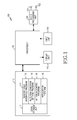
- FIG. 1 is a block diagram of an electronic device according to an embodiment of the present disclosure.
- an electronic device 100 may include a memory 110, a processor unit 120, an audio processing unit 130, a display unit 140, and an input device 150.
- a memory 110 may include a central processing unit 110, a graphics processing unit 110, and a graphics processing unit 110, and a graphics processing unit 110.
- the memory 110 may include a data storage unit 111 that stores data generated by the operation of the electronic device 100, and a program storage unit 112 that stores one or more programs for controlling the operations of the electronic device 100.
- the data storage unit 111 may store setting information for an auto-run service set through an auto-run condition setting program 114, information on the state of the electronic device 100 collected through the processor 120, setting information for an auto-run service and information on the state of the electronic device 100. For example, when storing information on the state of the electronic device 100, the data storage unit 111 may divide the information on the state of the electronic device 100 into event information for an autorun service and state information for an auto-run service and store it. For example, the data storage unit 111 may differently set the storage periods of the event information for the autorun service for the auto-run service and the state information for the auto-run service based on a period utilized to perform the auto-run service by an auto-run control program 115. In this example, the event information may represent information on the state change of the electronic device 100.
- the program storage unit 112 may include a graphic user interface (GUI) program 113, the auto-run condition setting program 114, the auto-run control program 115, and at least one application program 116.
- GUI graphic user interface
- the GUI program 113 may include at least one software component for providing the display unit 140 with a graphic user interface.
- the GUI program 113 may control the display unit 140 so that information on an application program executed by the processor 120 is displayed on the display unit 150.
- the GUI program 113 may display, on the display unit 140, a service screen for creating a setting condition for an auto-run service through the auto-run condition setting program 114.
- the GUI program 113 may display, on the display unit, information on an auto-run service executed through the auto-run control program 115.
- the auto-run condition setting program 114 may include at least one software component for generating setting information that may provide an auto-run service through the auto-run control program 115.
- the auto-run condition setting program 114 may generate setting information for an auto-run service based on input information sensed through the input unit 150. For example, when it is sensed that an auto-run setting event has occurred, the auto-run condition setting program 114 may display, on the display unit 140, an auto-run condition setting screen through the GUI program 113. Then, the auto-run condition setting program 114 may use the input unit 150 to sense input information input through the auto-run condition setting screen and generate setting information for an auto-run service.
- the auto-run condition setting program 114 may select setting information for an auto-run service from a list of functions, a list of events and a list of states that may be set as the auto-run service, based on input information sensed through the input unit 150. For example, when it is sensed that an auto-run setting event has occurred, the auto-run condition setting program 114 may display, on the display unit 140, a list of functions, a list of events and a list of states that may be set as the auto-run service through the GUI program 113. Then, the auto-run condition setting program 114 may select setting information for the autorun service from the list of functions, the list of events and the list of states that are displayed on the display unit 140, based on input information sensed through the input unit 150.
- the autorun condition setting program 114 may generate setting information for an autorun service corresponding to the state change of the electronic device 100 based on setting information for a preset auto-run service. For example, when a continuous run menu for a first automated function service performed through the autorun control program 115 is set, the auto-run condition setting program 114 may generate additional setting information on the first automated function service based on setting information on the first automated function service.
- the auto-run condition setting program 114 may generate setting information for providing an auto-run service for the first function based on state information on the electronic device 100 on which the first function is performed. For example, when a first function is repetitively performed a reference number of times or more on the electronic device 100 having the same state, the auto-run condition setting program 114 may set, state information on the electronic device 100 on which the first function is performed, as reference state information for automatically performing the first function.
- the auto-run condition setting program 114 may use auto-run condition information provided from a server or an opposite electronic device to generate setting information on an auto-run service.
- the auto-run condition setting program 114 may receive, from the server or the opposite electronic device, the auto-run condition information in the form of a message including an auto-run condition package or one or more pieces of auto-run condition information that includes pieces of auto-run condition information.
- the auto-run condition setting program 114 may also update setting information for a preset auto-run service based on input information sensed through the input unit 150.
- the auto-run control program 115 may include at least one software component that uses state information on the electronic device 100 to provide an auto-run service. For example, when the state change of the electronic device 100 set as an event for an auto-run service is sensed, the auto-run control program 115 may compare the current state of the electronic device 100 with state information on the auto-run service. If the current state of the electronic device 100 is included in state information for the auto-run service, the autorun control program 115 may enable a function set in the auto-run service to be performed.
- the application program 116 may include a software component for at least one application program that is installed in the electronic apparatus 100.
- the processor 120 may use at least one program stored in the memory 110 to enable the electronic device 100 to provide various multimedia services. For example, the processor 120 may execute the auto-run condition setting program 114 stored in the program storage unit 112 to generate or update setting information that may provide an auto-run service. Also, the processor 120 may execute the auto-run control program 115 stored in the program storage unit 112 to provide the auto-run service.
- the audio processing unit 130 may provide an audio interface between a user and the electronic device 100 through a speaker 131 and a microphone 132.
- the display unit 140 may display state information on the electronic device 100, user-input texts, moving pictures or still pictures. For example, the display unit 140 displays information on an application program executed by the processor 120. For example, the display unit 140 may display a service screen for creating a setting condition for an auto-run service according to the control of the processor 120 that executes the GUI program 113. Also, the display unit 140 may display information on the auto-run service executed by the processor 120.
- the input unit may provide the processor 120 with input data generated by user's selection.
- the input device 150 may include one or more of a key pad including at least one hardware button and a touch pad sensing touch information.
- the electronic device 100 may further include one or more of a communication system, a location estimating unit and a sensor unit.
- the communication system may perform at least one of the voice and data communication functions of the electronic device 100.
- the communication system may support a short-range communication protocol (such as wireless fidelity (WiFi), Bluetooth, or near field communication (NFC)) or network communication (such as Internet, a local area network (LAN), a wire area network (WAN), a telecommunication network, a cellular network, a satellite network or a plain old telephone service (POTS).
- a short-range communication protocol such as wireless fidelity (WiFi), Bluetooth, or near field communication (NFC)
- network communication such as Internet, a local area network (LAN), a wire area network (WAN), a telecommunication network, a cellular network, a satellite network or a plain old telephone service (POTS).
- LAN local area network
- WAN wire area network
- POTS plain old telephone service
- the sensor unit may measure a physical quantity, sense the operation state of the electronic device 100 and convert measured or sensed information into an electrical signal.
- the sensor unit may include one or more of a gesture sensor, a gyro sensor, an atmospheric sensor, a magnetic sensor, an acceleration sensor, a grip sensor, a proximity sensor, a red/green/blue (RGB) sensor, a bio sensor, a temperature/humidity sensor, an illumination sensor, an ultraviolet (UV) sensor, an E-nose sensor, an electromyography (EMG) sensor, an electroencephalogram (EEG) sensor, an electrocardiogram (ECG) sensor, and a fingerprint sensor.
- the sensor unit may further include a control circuit for controlling one or more sensors that are included in the sensor unit.
- the location estimating unit may estimate the location of the electronic device 100. For example, the location estimating unit may estimate, the location of the electronic device 100 through a satellite signal provided from a satellite, based on a global navigation satellite system (GNSS). As another example, the location estimating unit may also estimate the location of the electronic device 100 by using at least one neighboring base station.
- GNSS global navigation satellite system
- the processor 120 may execute software components stored in the program storage unit 112 in one module to set and perform an auto-run service.
- the processor 120 may be configured to include components for setting and performing the auto-run service as separate modules, as shown in FIG. 2 to be described below.
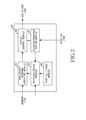
- FIG. 2 is a detailed block diagram of a processor according to an embodiment of the present disclosure.
- the processor 120 may include an auto-run condition setting module 201, a state collecting module 203, an auto-run control module 205, an application program executing module 207, and a display control module 209.
- the auto-run condition setting module 201 may generate setting information for determining a time to perform the auto-run service by the auto-run control module 205.
- the auto-run condition setting module 201 may execute the auto-run condition setting program 114 stored in the program storage unit 112 to generate setting information for determining a time to perform the auto-run service by the auto-run control module 205.
- the auto-run condition setting module 201 may generate setting information for an auto-run service based on input information sensed through the input unit 150. For example, when it is sensed that an auto-run setting event has occurred, the auto-run condition setting module 201 may display, on the display unit 140, an auto-run condition setting screen through the display control module 209. Then, the auto-run condition setting module 201 may use the input unit 150 to sense input information input through the autorun condition setting screen and generate setting information for an auto-run service.
- the auto-run condition setting module 201 may select setting information for an auto-run service from a list of functions, a list of events and a list of states that may be set as the auto-run service, based on input information sensed through the input unit 150. For example, when it is sensed that an auto-run setting event has occurred, the auto-run condition setting program 114 may display, on the display unit 140, a list of functions, a list of events and a list of states that may be set as the auto-run service through the display control module 209. Then, the auto-run condition setting module 201 may select setting information for the auto-run service from the list of functions, the list of events and the list of states that are displayed on the display unit 140, based on input information sensed through the input unit 150.
- the auto-run condition setting module 201 may generate setting information for an auto-run service corresponding to the state change of the electronic device 100 based on setting information for a preset auto-run service. For example, when a continuous run menu for a first automated function service performed through the auto-run control module 205 is set, the auto-run condition setting module 201 may generate additional setting information on the first automated function service based on setting information on the first automated function service. As still another example, when a first function is repetitively performed on the electronic device 100 having the same state, the auto-run condition setting module 201 may generate setting information for providing an auto-run service for the first function based on state information on the electronic device 100 on which the first function is performed.
- the auto-run condition setting module 201 may set, state information on the electronic device 100 on which the first function is performed, as reference state information for automatically performing the first function.
- the auto-run condition setting module 201 may use auto-run condition information provided from a server or an opposite electronic device to generate setting information on an auto-run service.
- the auto-run condition setting module 201 may receive, from the server or the opposite electronic device, the auto-run condition information in the form of a message including an auto-run condition package or one or more pieces of auto-run condition information that include pieces of auto-run condition information.
- the auto-run condition setting module 201 may also update setting information for a preset auto-run service based on input information sensed through the input unit 150.
- the state collecting module 203 may collect state information on the electronic device 100.
- the state collecting module 203 may collect state information on the electronic device 100 through the hardware system, software system and web-based system of the electronic device 100.
- the state collecting module 203 may collect one or more of motion information on the electronic device 100 and information on the weather around the electronic device 100 through the sensor unit.
- the state collecting module 203 may collect location information on the electronic device 100 through a location estimating unit.
- the state collecting module 203 may also collect one or more of information on the weather around the electronic device, information on an access of the electronic device to a communication network, and signal reception information on the electronic device through a communication system.
- the auto-run control module 205 may use the state information on the electronic device 100 collected through the state collecting module 203 to provide an auto-run service.
- the auto-run control module 205 may execute the auto-run control program 115 stored in the program storage unit 112 to provide the auto-run service.
- the auto-run control module 205 may compare the current state of the electronic device 100 with the state information on the auto-run service. If the current state of the electronic device 100 is included in state information on the auto-run service, the auto-run control module 205 may enable a function set in the auto-run service to be performed.
- the application program executing module 207 may execute at least one application program 116 stored in the program storage unit 112 to provide a service corresponding to that application.
- the application program executing module 207 may execute an application program corresponding to a function to be automatically performed according to the control of the auto-run control module 205.
- the above various functional modules can be implemented into a processor, or a processing circuitry.
- the display control module 209 may provide the display unit 140 with a graphic user interface.
- the display control module 209 may execute the GUI program 113 stored in the program storage unit 112 to provide the display unit 140 with a graphic user interface.
- the display control unit 220 may display, on the display unit 140, a service screen for creating a setting condition for an auto-run service through the auto-run condition setting module 201.
- the display control module 209 may display, on the display unit, information on an auto-run service executed through the auto-run control module 205.
- FIG. 3 shows a procedure for generating setting information on an auto-run service by an electronic device according to an embodiment of the present disclosure.
- the electronic device can determine whether an auto-run condition setting event occurs in step 301. For example, when an auto-run condition setting is in an inactivated state, the electronic device 150 can determine whether an event for activating the auto-run condition setting occurs, based on user-input information provided through the input unit 150. For example, the electronic device can determine whether selecting an auto-run condition setting menu is sensed. As another example, the electronic device can determine whether selecting an auto-run condition setting icon is sensed. As still another example, the electronic device can also determine whether the motion of an electronic device to which an auto-run condition setting event is mapped is sensed.
- the electronic device can display, on the display unit 140, a list of functions, a list of events and a list of states that can be set as an auto-run service in step 303.
- the electronic device can display a list of functions such as a hardware setting 1210, a sound setting 1212, a screen setting 1214, a path setting 1216 and a schedule setting 1218 that can be set as an auto-run service, as shown in FIG. 12B .
- the electronic device can determine function, event and state information for the auto-run service based on input information sensed through the input unit 150 in step 305. For example, the electronic device can determine, as setting information for the auto-run service, a function, an event and a state selected based on input information sensed through the input unit 150 from the list of functions, the list of events and the list of states that can be set as the auto-run service displayed on the display unit 140.
- the electronic device can store setting information for the auto-run service in the data storage unit 111 in step 307.
- FIG. 4 shows a procedure for updating setting information on an auto-run service by an electronic device according to an embodiment of the present disclosure.
- the electronic device can determine whether an auto-run condition setting event occurs in step 401. For example, when an auto-run condition setting is in an inactivated state, the electronic device 150 can determine whether an event for activating the auto-run condition setting occurs, based on user-input information provided through the input unit 150. For example, the electronic device can determine whether selecting an auto-run condition setting menu is sensed. As another example, the electronic device can determine whether selecting an auto-run condition setting icon is sensed. As still another example, the electronic device can also determine whether the motion of an electronic device to which an auto-run condition setting event is mapped is sensed.
- the electronic device can display, on the display unit 140, information on one or more preset auto-run services in step 403.For example, the electronic device can display, on the display unit 140, first auto-run service information that interrupts call reception while driving, and second auto-run service information 1202 that sets a notification mode to a silent mode indoors, as shown in FIG. 12A .
- the electronic device can determine whether an auto-run condition change event occurs in step 405. For example, the electronic device can determine whether any one among at least one of preset auto-run service information displayed on the display unit 140 is selected.
- the electronic device can continue to display one or more pieces of preset auto-run service information in step 403. If the auto-run condition change event does not occur during a reference time period, the electronic device can end this algorithm.
- the electronic device 407 can display, on the display unit 140, setting information on an auto-run service for changing an auto-run condition among one or more pieces of preset auto-run service information in step 407.
- the electronic device can display, on the display unit 140, detailed setting information on the auto-run service information selected in step 405.
- the electronic device can update setting information on an auto-run service based on input information sensed through the input unit 150 in step 409.
- the electronic device can store updated setting information on the auto-run service in the data storage unit 111.
- FIG. 5 shows a procedure for automatically generating setting information on an auto-run service by an electronic device according to an embodiment of the present disclosure.
- the electronic device can determine whether there is a function that is repetitively performed under the same condition in step 501. For example, when a first function is performed, the electronic device can identify state information on the electronic device at the time when the first function is performed. In this case, the electronic device can determine whether the first function is repetitively performed on the electronic device having the same state information.
- the electronic device can determine whether the number of times performing the function repetitively to determine whether to generate setting information on an auto-run service by using the function repetitively performed is equal to or larger than a reference number of times, in step 503.
- the electronic device does not use the function repetitively performed for generating setting information on the auto-run service. Accordingly, the electronic device can determine whether there is a function that is repetitively performed under the same condition in step 501.
- the electronic device uses the function repetitively performed for generating setting information on the auto-run service. Accordingly, the electronic device can generate setting information on the auto-run service based on a repetitive function performing condition in step 505. For example, when the notification mode of the electronic device is set to be in a bell mode before a user's home at quitting time, the electronic device can set location information on the electronic device moving to the user's home as event information on the auto-run service and set the quitting time as state information on the auto-run service. Also, the electronic device can set the operation of setting the notification mode to the bell mode, as a function performed through the auto-run service.
- the electronic device can display, on the display unit 140, setting information on the auto-run service in step 507.
- the electronic device can determine whether a user approves setting information on the auto-run service displayed on the display unit 140, based on input information sensed through the input unit 150 in step 509. For example, the electronic device can determine whether selecting an approval menu or an approval icon is sensed, based on input information sensed through the input unit 150.
- the electronic device ends this algorithm. In this case, the electronic device can also continue to determine whether there is the function that is repetitively performed under the same condition in step 501.
- the electronic device can store, the setting information on the auto-run service approved by the user, in the data storage unit 111 in step 511.
- FIG. 6 shows a procedure for generating setting information on an auto-run service by an electronic device according to an embodiment of the present disclosure.
- the electronic device can identify an auto-run condition package in step 601. For example, when an auto-run condition setting is in an inactivated state, the electronic device can determine whether an event for activating the auto-run condition setting occurs, based on user-input information provided through the input unit 150. If an auto-run condition setting event occurs, the electronic device can transmit a message requesting for the auto-run condition package to a server or an opposite electronic device. The electronic device can identify a plurality of auto-run conditions that are included in the auto-run condition package provided from the server or the opposite electronic device.
- the electronic device can determine whether an event for activating the autorun condition setting occurs, based on user-input information provided through the input unit 150. If the auto-run condition setting event occurs, the electronic device can also identify the plurality of autorun conditions in the auto-run condition package that is provided from the server or the opposite electronic device and stored in the memory 110.
- the electronic device can identify a list of executable functions corresponding to the autorun service in step 603.
- the electronic device can determine whether it is possible to support functions corresponding to the plurality of auto-run conditions included in the auto-run condition package in step 605.
- the electronic device can store, the auto-run conditions included in the auto-run condition package, as setting information on the auto-run service in step 607.
- the electronic device can determine whether to install an application program for auto-run in step 609. For example, when it is impossible to support functions corresponding to the plurality of autorun conditions included in the auto-run condition package, the electronic device can display, on the display unit 140, a message inquiring whether to install an application program for an unsupported function. In this case, the electronic device can determine whether a user approves the installation of an application program for the unsupported function, based on input information sensed through the input unit 150.
- the electronic device can display, on the display unit 140, application program information related to the unsupported function.
- the electronic device can determine whether a user approves the installation of an application program displayed on the display unit 140, based on input information sensed through the input unit 150.
- the electronic device can install the application program related to the function unsupported by the electronic device for the auto-run in step 611.
- the electronic device can store, the auto-run conditions included in the auto-run condition package, as setting information on the auto-run service.
- the electronic device can store, one or more auto-run conditions for a function supported by the electronic device among the plurality of auto-run conditions included in the auto-run condition package, as setting information on the auto-run service in step 613.
- the electronic device can determine, only some of the auto-run conditions included in the auto-run condition package, as setting information for the auto-run service.
- the electronic device can also determine the auto-run conditions included in the auto-run condition package, not to be setting information for the auto-run service.
- the electronic device can also add new auto-run conditions to the auto-run condition package based on input information sensed through the input unit 150 and update the auto-run condition package.
- the electronic device can also transmit an updated auto-run condition package to a server or another electronic device and share the updated auto-run condition package with them.
- FIG. 7 shows a procedure for generating setting information on an auto-run service by an electronic device according to another embodiment of the present disclosure.
- the electronic device can determine whether a message is received from an opposite electronic device in step 701.
- the electronic device can determine whether the message provided from the opposite electronic device includes auto-run condition information in step 703.
- the electronic device can end this algorithm.
- the electronic device can authenticate the message in step 705. For example, the electronic device can determine whether it is possible to authenticate the message in consideration of one or both of an authentication certificate and a password included in the structured form of the message.
- the electronic device can consider the autorun condition included in the message as being unreliable and end this algorithm.
- the electronic device can store, the autorun condition included in the message, as setting information on the auto-run service in step 707.
- FIG. 8 shows a procedure for providing an auto-run service by an electronic device according to an embodiment of the present disclosure.
- the electronic device can determine whether a first event for the auto-run service occurs in step 801. For example, the electronic device can determine whether the state change of the electronic device set as run information of event information of the auto-run service is sensed.
- the electronic device can identify the current state of the electronic device in step 803.
- the electronic device can determine whether the current state of the electronic device is included in state information for the auto-run service in step 805. For example, the electronic device can determine whether the current state of the electronic device is included in a list of reference states for the auto-run service in step 803.
- the electronic device can re-identify the current state of the electronic device in step 803. In this case, the electronic device can regularly re-identify the current state of the electronic device.
- the electronic device can perform a function for the auto-run service corresponding to the current state of the electronic device in step 807. For example, when setting information on the auto-run service, such as "set to a silent mode when a call is received at work is stored, the electronic device can identify the current location of the electronic device if an incoming call is received from one or more opposite electronic devices 1310 in operation 1300 as shown in FIG. 13A . If the electronic device is placed in a company, the electronic device can set a notification mode to a silent mode 1320 as shown in FIG. 13B . If the electronic device is not placed in the company when the call is received, the electronic device can regularly identify the location of the electronic device while the call is received.
- a function for the auto-run service corresponding to the current state of the electronic device in step 807. For example, when setting information on the auto-run service, such as "set to a silent mode when a call is received at work is stored, the electronic device can identify the current location of the electronic device if an incoming call is received from one or
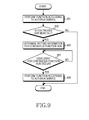
- FIG. 9 shows a procedure for further providing an auto-run service by an electronic device according to an embodiment of the present disclosure.
- the electronic device can perform a function set to the auto-run service based on setting information on the auto-run service in step 901. For example, when setting information for the auto-run service is configured to recommend an umbrella when it is expected to rain at 6 AM, the electronic device can identify the weather at 6 AM. If it is expected to rain, the electronic device can display a message 1400 such as "Please carry an umbrella" on the display unit 140 as shown in FIG. 14A .
- the electronic device can determine whether a continuous run menu is set in step 903. If the continuous run menu is not set, the electronic can end this algorithm.
- the electronic device can determine event information for continuous function run in step 905.
- the electronic device can store a plurality of conditions for the continuous function run. Accordingly, the electronic device can select one or more conditions related to a function performed through the autorun service in step 901 among the plurality of conditions for the continuous function run and determine determined conditions as setting information for the continuous function run. For example, when an auto-run service for recommending an umbrella is performed in step 901, the electronic device can select the location change of the electronic device related to the "An umbrella is recommended" and determine it as setting information for the continuous function run.
- the electronic device can determine whether an event for the continuous function run occurs in step 907. For example, when the "location change" is set as setting information for the continuous function run, the electronic device can determine whether a movement from an indoor location to an outdoor location is sensed.
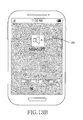
- the electronic device can perform a function set to the auto-run service in step 909. For example, the electronic device can display, on the display unit, "An umbrella is recommended" information corresponding to an event characteristic for the continuous function run as shown in FIG. 10 or 11 .
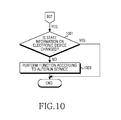
- FIG. 10 shows a detailed procedure for providing an additional auto-run service by an electronic device according to an embodiment of the present disclosure.
- the electronic device can determine whether state information on the electronic device is changed in step 1001. For example, when an auto-run service for recommending an umbrella corresponding to a weather condition provided in step 901, the electronic device can determine whether weather condition has been changed.
- the electronic device can end this algorithm without performing a function set to the auto-run service even if the event for the continuous function run occurs.
- the electronic device can perform the function set to the auto-run service based on setting information on the event for the continuous function run in step 1003. For example, when setting information involves a location change for the continuous function run set in step 905, if the electronic device moves from an indoor location to an outdoor location, the electronic device can display, on the display unit 140, a guide message 1400 such as "Please carry an umbrella" as shown in FIG. 14A .
- FIG. 11 shows a detailed procedure for providing an additional auto-run service by an electronic device according to another embodiment of the present disclosure.
- the electronic device can determine whether state information on the electronic device is changed in step 1101. For example, when an auto-run service for recommending carrying an umbrella according to weather condition that is provided in step 901, the electronic device can determine whether weather condition is changed.
- the electronic device can update a function corresponding to the auto-run service based on changed state information on the electronic device in step 1103. For example, when the autorun service for recommending carrying an umbrella corresponding to weather condition that is the state information on the electronic device is provided in step 901, the electronic device can change a message of "An umbrella is recommended" according to the updated weather condition.
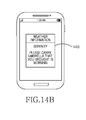
- the electronic device can perform a changed function corresponding to an updated auto-run service in step 1105. For example, when a weather change is sensed in step 1101, the electronic device can display, on the display unit 140, a guide message 1410 such as "Please carry an umbrella that you brought in the morning" as shown in FIG. 14B .
- the electronic device can end this algorithm.
- the electronic device can also perform a function set to the auto-run service according to setting information on an event for continuous function run.
- a computer readable storage medium storing one or more programs (software modules) can be provided.
- the one or more programs stored in the computer readable storage medium are configured to be able to be executed by one or more processors in the electronic device.
- the one or more programs include instructions that perform the methods according to the embodiments described in the following claims and/or the specification.
- Such a program can be stored in a random access memory, a non-volatile memory including a flash memory, a read only memory (ROM), an electrically erasable programmable read only memory (EEPROM), a magnetic disc storage device, a compact disc-ROM (CD-ROM), a digital versatile disc (DVD), other types of optical storage devices, or a magnetic cassette.
- a program can be stored in memories including combinations of some or all of these memories.
- each memory can also be in plural forms.
- such a program may be stored in an attachable storage device that may access the electronic device through a communication network such as an internet, an intranet, a local area network (LAN), a wide LAN (WLAN), or a storage area network (SAN), or a communication network including combinations thereof.
- a storage device may access the electronic device through an external port.
- a separate storage device on the communication network may access a portable electronic device.
- the electronic device may automatically generate additional setting information on the auto-run service based on setting information on a preset auto-run service and thus provide a user with various auto-run services corresponding to a user environment.
Landscapes
- Engineering & Computer Science (AREA)
- Software Systems (AREA)
- Theoretical Computer Science (AREA)
- General Engineering & Computer Science (AREA)
- Physics & Mathematics (AREA)
- General Physics & Mathematics (AREA)
- Multimedia (AREA)
- Computer Security & Cryptography (AREA)
- Telephone Function (AREA)
Applications Claiming Priority (1)
| Application Number | Priority Date | Filing Date | Title |
|---|---|---|---|
| KR1020130133779A KR20150051809A (ko) | 2013-11-05 | 2013-11-05 | 자동 실행 서비스를 제공하기 위한 전자 장치 및 방법 |
Publications (1)
| Publication Number | Publication Date |
|---|---|
| EP2869193A1 true EP2869193A1 (de) | 2015-05-06 |
Family
ID=52015809
Family Applications (1)
| Application Number | Title | Priority Date | Filing Date |
|---|---|---|---|
| EP14191839.1A Withdrawn EP2869193A1 (de) | 2013-11-05 | 2014-11-05 | Verfahren zur Bereitstellung eines Auto-Run-Dienstes und elektronische Vorrichtung dafür |
Country Status (3)
| Country | Link |
|---|---|
| US (1) | US20150128120A1 (de) |
| EP (1) | EP2869193A1 (de) |
| KR (1) | KR20150051809A (de) |
Cited By (1)
| Publication number | Priority date | Publication date | Assignee | Title |
|---|---|---|---|---|
| CN106028131A (zh) * | 2016-06-24 | 2016-10-12 | 联想(北京)有限公司 | 一种控制方法、装置及系统 |
Families Citing this family (6)
| Publication number | Priority date | Publication date | Assignee | Title |
|---|---|---|---|---|
| KR20150063832A (ko) * | 2013-12-02 | 2015-06-10 | 엘지전자 주식회사 | 이동 단말기 및 이의 제어방법 |
| CN105081565A (zh) * | 2015-08-10 | 2015-11-25 | 武汉华工激光工程有限责任公司 | 一种用整形光束进行材料加工的系统及方法 |
| CN105425957A (zh) * | 2015-11-06 | 2016-03-23 | 百度在线网络技术(北京)有限公司 | 终端设备控制方法和装置 |
| CN105528171A (zh) * | 2015-12-03 | 2016-04-27 | 惠州Tcl移动通信有限公司 | 一种智能终端快速启动应用的方法、系统及智能终端 |
| US9864431B2 (en) * | 2016-05-11 | 2018-01-09 | Microsoft Technology Licensing, Llc | Changing an application state using neurological data |
| KR102878189B1 (ko) * | 2022-04-15 | 2025-10-28 | 한국기술교육대학교 산학협력단 | 시간기록 자동생성 방법 |
Citations (4)
| Publication number | Priority date | Publication date | Assignee | Title |
|---|---|---|---|---|
| WO2006094123A2 (en) * | 2005-03-02 | 2006-09-08 | In-Store Broadcasting Network, Llc | Systems and methods for event triggered advertising |
| US20090133041A1 (en) * | 2007-11-15 | 2009-05-21 | Shahriar Rahman | Method and apparatus for automatic debugging technique |
| WO2010051001A1 (en) * | 2008-10-31 | 2010-05-06 | Qualcomm Incorporated | Wake-up trigger for implementation of target actions |
| US20100231383A1 (en) * | 2009-03-16 | 2010-09-16 | Uri Levine | Condition-based activation, shut-down and management of applications of mobile devices |
Family Cites Families (7)
| Publication number | Priority date | Publication date | Assignee | Title |
|---|---|---|---|---|
| US7084758B1 (en) * | 2004-03-19 | 2006-08-01 | Advanced Micro Devices, Inc. | Location-based reminders |
| US8326267B2 (en) * | 2006-12-28 | 2012-12-04 | United States Cellular Corporation | Application access control in a mobile environment |
| US20100015992A1 (en) * | 2008-07-15 | 2010-01-21 | Sony Ericsson Mobile Communications Ab | Method and apparatus for automatic physical configuration of mobile communication devices |
| US8301132B1 (en) * | 2009-03-31 | 2012-10-30 | Sprint Communications Company L.P. | Push registry application programming interface for capturing events |
| US8792934B2 (en) * | 2010-08-18 | 2014-07-29 | Microsoft Corporation | Selective update of core mobile device user interface through application marketplace |
| US9052896B2 (en) * | 2012-07-20 | 2015-06-09 | Facebook, Inc. | Adjusting mobile device state based on user intentions and/or identity |
| US10019888B2 (en) * | 2013-01-24 | 2018-07-10 | Apple Inc. | Weather-based reminders |
-
2013
- 2013-11-05 KR KR1020130133779A patent/KR20150051809A/ko not_active Ceased
-
2014
- 2014-11-05 US US14/534,117 patent/US20150128120A1/en not_active Abandoned
- 2014-11-05 EP EP14191839.1A patent/EP2869193A1/de not_active Withdrawn
Patent Citations (4)
| Publication number | Priority date | Publication date | Assignee | Title |
|---|---|---|---|---|
| WO2006094123A2 (en) * | 2005-03-02 | 2006-09-08 | In-Store Broadcasting Network, Llc | Systems and methods for event triggered advertising |
| US20090133041A1 (en) * | 2007-11-15 | 2009-05-21 | Shahriar Rahman | Method and apparatus for automatic debugging technique |
| WO2010051001A1 (en) * | 2008-10-31 | 2010-05-06 | Qualcomm Incorporated | Wake-up trigger for implementation of target actions |
| US20100231383A1 (en) * | 2009-03-16 | 2010-09-16 | Uri Levine | Condition-based activation, shut-down and management of applications of mobile devices |
Non-Patent Citations (3)
| Title |
|---|
| ANONYMOUS: "Moore machine - Wikipedia, the free encyclopedia", 16 April 2010 (2010-04-16), XP055311638, Retrieved from the Internet <URL:https://web.archive.org/web/20100416030628/http://en.wikipedia.org/wiki/Moore_machine> [retrieved on 20161018] * |
| LESSON: "Introducing, Installing, and Upgrading Windows 7", 10 December 2011 (2011-12-10), XP055235720, Retrieved from the Internet <URL:http://achs.amherst.k12.va.us/sites/default/files/lesson07.pdf> [retrieved on 20151211] * |
| STEPHEN A EDWARDS: "Fundamentals of Computer Systems Finite State Machines", 30 April 2012 (2012-04-30), XP055311644, Retrieved from the Internet <URL:http://www.cs.columbia.edu/~sedwards/classes/2012/3827-spring/fsms.pdf> [retrieved on 20161018] * |
Cited By (1)
| Publication number | Priority date | Publication date | Assignee | Title |
|---|---|---|---|---|
| CN106028131A (zh) * | 2016-06-24 | 2016-10-12 | 联想(北京)有限公司 | 一种控制方法、装置及系统 |
Also Published As
| Publication number | Publication date |
|---|---|
| US20150128120A1 (en) | 2015-05-07 |
| KR20150051809A (ko) | 2015-05-13 |
Similar Documents
| Publication | Publication Date | Title |
|---|---|---|
| US20150128120A1 (en) | Method for providing auto-run service and electronic device thereof | |
| EP3335097B1 (de) | Verfahren zur messung von winkeln zwischen anzeigen elektronische vorrichtung damit | |
| CN107533422B (zh) | 服务器和服务器的控制群组行为的方法 | |
| KR102302437B1 (ko) | 모션 센싱 방법 및 그 사용자 기기 | |
| EP2854013B1 (de) | Verfahren zur Anzeige in einer elektronischen Vorrichtung und elektronische Vorrichtung dafür | |
| CN107491177B (zh) | 用于识别旋转体的旋转的方法及用于处理该方法的电子设备 | |
| KR102169091B1 (ko) | 전자 장치의 비콘 처리 방법 및 그 전자 장치 | |
| US10845220B2 (en) | Method of sensing rotation of rotation member and electronic device performing same | |
| US10921438B2 (en) | Position determination method and device | |
| CN106886385A (zh) | 用于提供电子设备的用户接口的方法和装置 | |
| CN108353105A (zh) | 电子设备和电子设备的内容输出方法 | |
| KR20150054413A (ko) | 시선 데이터에 따라 컨텐츠의 위치를 결정하는 전자 장치 및 방법 | |
| AU2015202698B2 (en) | Method and apparatus for processing input using display | |
| EP3200058A1 (de) | Elektronische vorrichtung und verfahren zur verarbeitung eingaben in betrachtungsschichten | |
| JP2013206274A (ja) | 携帯型電子機器および表示制御方法 | |
| US10080108B2 (en) | Electronic device and method for updating point of interest | |
| CN107085462A (zh) | 用于管理电力的电子设备及控制其的方法 | |
| KR102356450B1 (ko) | 연결부를 갖는 전자 장치 및 그 동작 방법 | |
| KR20150135837A (ko) | 디스플레이 운용 전자장치 및 방법 | |
| KR20150133989A (ko) | 홈 스크린 페이지를 추가하는 전자 장치 및 방법 | |
| KR102157858B1 (ko) | 전력 소모를 줄일 수 있는 전자 장치 및 방법 | |
| CN105446619B (zh) | 用于识别物体的装置和方法 | |
| KR20150099284A (ko) | 전자 장치의 전원 관리 방법 및 그 전자 장치 | |
| US20150103222A1 (en) | Method for adjusting preview area and electronic device thereof | |
| US20170248424A1 (en) | Electronic device for determining position and method for operating the same |
Legal Events
| Date | Code | Title | Description |
|---|---|---|---|
| PUAI | Public reference made under article 153(3) epc to a published international application that has entered the european phase |
Free format text: ORIGINAL CODE: 0009012 |
|
| 17P | Request for examination filed |
Effective date: 20141105 |
|
| AK | Designated contracting states |
Kind code of ref document: A1 Designated state(s): AL AT BE BG CH CY CZ DE DK EE ES FI FR GB GR HR HU IE IS IT LI LT LU LV MC MK MT NL NO PL PT RO RS SE SI SK SM TR |
|
| AX | Request for extension of the european patent |
Extension state: BA ME |
|
| R17P | Request for examination filed (corrected) |
Effective date: 20151106 |
|
| RBV | Designated contracting states (corrected) |
Designated state(s): AL AT BE BG CH CY CZ DE DK EE ES FI FR GB GR HR HU IE IS IT LI LT LU LV MC MK MT NL NO PL PT RO RS SE SI SK SM TR |
|
| 17Q | First examination report despatched |
Effective date: 20151218 |
|
| STAA | Information on the status of an ep patent application or granted ep patent |
Free format text: STATUS: EXAMINATION IS IN PROGRESS |
|
| STAA | Information on the status of an ep patent application or granted ep patent |
Free format text: STATUS: THE APPLICATION IS DEEMED TO BE WITHDRAWN |
|
| 18D | Application deemed to be withdrawn |
Effective date: 20190424 |