EP2869655B1 - Procédés de gestion d'un accès aléatoire dans un système de communication sans fil, dispositif correspondant et serveur - Google Patents
Procédés de gestion d'un accès aléatoire dans un système de communication sans fil, dispositif correspondant et serveur Download PDFInfo
- Publication number
- EP2869655B1 EP2869655B1 EP14191258.4A EP14191258A EP2869655B1 EP 2869655 B1 EP2869655 B1 EP 2869655B1 EP 14191258 A EP14191258 A EP 14191258A EP 2869655 B1 EP2869655 B1 EP 2869655B1
- Authority
- EP
- European Patent Office
- Prior art keywords
- random access
- rnti
- repetitions
- access preamble
- repetition window
- Prior art date
- Legal status (The legal status is an assumption and is not a legal conclusion. Google has not performed a legal analysis and makes no representation as to the accuracy of the status listed.)
- Active
Links
Images




Classifications
-
- H—ELECTRICITY
- H04—ELECTRIC COMMUNICATION TECHNIQUE
- H04W—WIRELESS COMMUNICATION NETWORKS
- H04W74/00—Wireless channel access
- H04W74/002—Transmission of channel access control information
-
- H—ELECTRICITY
- H04—ELECTRIC COMMUNICATION TECHNIQUE
- H04W—WIRELESS COMMUNICATION NETWORKS
- H04W74/00—Wireless channel access
- H04W74/08—Non-scheduled access, e.g. ALOHA
- H04W74/0833—Random access procedures, e.g. with 4-step access
-
- H—ELECTRICITY
- H04—ELECTRIC COMMUNICATION TECHNIQUE
- H04W—WIRELESS COMMUNICATION NETWORKS
- H04W72/00—Local resource management
- H04W72/20—Control channels or signalling for resource management
- H04W72/23—Control channels or signalling for resource management in the downlink direction of a wireless link, i.e. towards a terminal
Definitions
- the present invention relates to a method utilized in a wireless communication system, and more particularly, to a method of handling random access for a user equipment with coverage enhancement in a wireless communication system.
- LTE long-term evolution
- 3GPP 3rd Generation Partnership Project
- 3GPP Rel-8 3rd Generation Partnership Project
- 3GPP Rel-9 3rd Generation Partnership Project
- UMTS universal mobile telecommunication system
- the LTE system includes a new radio interface and a new radio network architecture that provides high data rate, low latency, packet optimization, and improved system capacity and coverage.
- a radio access network known as an evolved universal terrestrial radio access network (E-UTRAN) includes multiple evolved Node-Bs (eNBs) for communicating with multiple user equipments (UEs), and communicating with a core network including a mobility management entity (MME), a serving gateway, etc., for Non-Access Stratum (NAS) control.
- E-UTRAN evolved universal terrestrial radio access network
- eNBs evolved Node-Bs
- MME mobility management entity
- serving gateway etc.
- NAS Non-Access Stratum
- LTE-advanced (LTE-A) system is an evolution of the LTE system.
- the LTE-A system targets faster switching between power states, improves performance at the coverage edge of an eNB, and includes advanced techniques such as carrier aggregation (CA), coordinated multipoint (CoMP) transmission/reception, uplink (UL) multiple-input multiple-output (MIMO), etc.
- CA carrier aggregation
- CoMP coordinated multipoint
- UL multiple-input multiple-output
- MIMO multiple-input multiple-output
- the UE and the eNB must support standards developed for the LTE-A system, such as the 3GPP Rel-10 standard or later versions.
- a machine type communication (MTC) device which can automatically perform predefined jobs and report corresponding results to other devices, a server, a Node-B (NB) or an eNB can be used in various areas, such as security, tracking and tracing, payment, healthcare, metering, etc. Further, the MTC device preferably reports the corresponding results via a wireless link such that limitation caused by environment can be removed. However, the wireless link used by the MTC device is needed to be established, and radio resources required by the wireless link is needed to be allocated (i.e., assigned). Reuse of existing infrastructures and wireless communication systems becomes a viable choice for operations of the MTC device. Therefore, the UMTS, the LTE system and the LTE-A system, etc., developed by the 3GPP which are widely deployed are suitable for the operations of the MTC device.
- MTC devices may be installed in the basements of residential buildings or locations shielded by foil-backed insulation, metalized windows or traditional thick-walled building construction, and these devices would experience more significant penetration losses on the radio interface than normal LTE devices.
- the MTC devices in the extreme coverage scenario might have characteristics such as very low data rate, greater delay tolerance and no mobility, and therefore some messages/channels may not be required.
- TTI bundling and hybrid automatic repeat request (HARQ) retransmission in data channel can be helpful.
- HARQ hybrid automatic repeat request
- TTI bundling with a larger TTI bundle size may be considered and the maximum number of HARQ retransmissions may be extended to achieve better performances.
- repetition can be applied by repeating the same or different redundancy versions (RV) multiple times.
- code spreading in the time domain can also be considered to improve coverage.
- MTC traffic packets could be radio link control (RLC) transmission segmented into smaller packets; very low rate coding, lower modulation order (e.g., BPSK) and shorter length cyclic redundancy check (CRC) may also be used.
- RLC radio link control
- New decoding techniques e.g., correlation or reduced search space decoding
- the UE When a UE initiates a random access procedure to get uplink synchronization with an eNB, the UE transmits a random access preamble. Once the random access preamble is transmitted, the UE shall monitor the physical downlink control channel (PDCCH) for random access response(s) identified by the random access radio network temporary identifier (RA-RNTI) defined below, in the random access response window which starts at the subframe that contains the end of the preamble transmission plus 3 subframes and has a length equal to ra-ResponseWindowSize (i.e. 10) subframes.
- PDCCH physical downlink control channel
- RA-RNTI random access radio network temporary identifier
- the UE may stop monitoring for random access response(s) after successful reception of a random access response containing random access preamble identifiers that match the transmitted random access preamble.
- the UE When a UE initiates a random access procedure in the enhanced coverage mode, the UE transmits repetitions of a random access preamble to an eNB.
- the UE determines the RA-RNTI and transmit the random access response(s) accordingly when repetitions of the random access preamble are incorporated in the random access procedure.
- the present invention discloses a method of handling random access for a user equipment (UE) of a wireless communication system.
- the method comprises transmitting a plurality of repetitions of a random access preamble in a repetition window; and monitoring a physical downlink control channel (PDCCH) for at least one random access response identified by a random access radio network temporary identifier (RA-RNTI); wherein the RA-RNTI is determined based on a specific subframe within the repetition window.
- PDCCH physical downlink control channel
- RA-RNTI random access radio network temporary identifier
- the present invention further discloses a method of handling random access for a UE of a wireless communication system.
- the method comprises transmitting a plurality of repetitions of a random access preamble in a repetition window; and monitoring a PDCCH for at least one random access response identified by a RA-RNTI; wherein each of the plurality of repetitions in a specific subframe of at least one radio frame within the repetition window has a same order of a frequency domain location.
- the present invention further discloses a method of handling random access for a UE of a wireless communication system.
- the method comprises performing a first random access procedure by transmitting a plurality of repetitions of a first random access preamble when the UE fails to perform a second random access procedure without repetitions of a second random access preamble.
- the present invention further discloses a method of handling random access for a network of a wireless communication system.
- the method comprises receiving a plurality of repetitions of a random access preamble transmitted in a repetition window of a UE of the wireless communication system; and determining a RA-RNTI based on a specific subframe within the repetition window; and allowing the UE to monitor a PDCCH for at least one random access response identified by the RA-RNTI.
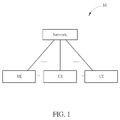
- FIG. 1 is a schematic diagram of a wireless communication system 10 according to an embodiment of the present invention.
- the wireless communication system 10 is briefly composed of a network and a plurality of user equipments (UEs).
- UEs user equipments
- the network and the UEs are simply utilized for illustrating the structure of the wireless communication system 10.
- the network can be a universal terrestrial radio access network (UTRAN) comprising a plurality of Node-Bs (NBs) in a universal mobile telecommunications system (UMTS).
- UTRAN universal terrestrial radio access network
- NBs Node-Bs
- UMTS universal mobile telecommunications system
- the network can be an evolved UTRAN (E-UTRAN) comprising a plurality of evolved NBs (eNBs) and/or relays in a long term evolution (LTE) system, a LTE-Advanced (LTE-A) system or an evolution of the LTE-A system.
- E-UTRAN evolved UTRAN
- eNBs evolved NBs
- LTE-A LTE-Advanced
- LTE-A evolution of the LTE-A system.
- the network can also include both the UTRAN/E-UTRAN and a core network, wherein the core network includes network entities such as Mobility Management Entity (MME), Serving Gateway (S-GW), Packet Data Network (PDN) Gateway (P-GW), Self-Organizing Networks (SON) server and/or Radio Network Controller (RNC), etc.
- MME Mobility Management Entity
- S-GW Serving Gateway
- PDN Packet Data Network
- P-GW Packet Data Network Gateway
- SON Self-Organizing Networks
- RNC Radio Network Controller
- a UE can be a machine type communication (MTC) device, a mobile phone, a laptop, a tablet computer, an electronic book or a portable computer system but is not limited.
- MTC machine type communication
- the network and the UE can be seen as a transmitter or a receiver according to direction, e.g., for an uplink (UL), the UE is the transmitter and the network is the receiver, and for a downlink (DL), the network is the transmitter and the UE is the receiver. More specifically, for the network, the direction of the transmission is DL, and the direction of the reception is UL. For the UE, the direction of the transmission is UL, and the direction of the reception is DL.
- UL uplink
- DL downlink
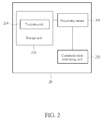
- FIG. 2 is a schematic diagram of a communication device 20 according to an embodiment of the present invention.
- the communication device 20 can be a UE or the network shown in FIG. 1 , but is not limited herein.
- the communication device 20 may include a processing means 200 such as a microprocessor or Application Specific Integrated Circuit (ASIC), a storage unit 210 and a communication interfacing unit 220.
- the storage unit 210 may be any data storage device that can store a program code 214, accessed and executed by the processing means 200. Examples of the storage unit 210 include but are not limited to a subscriber identity module (SIM), read-only memory (ROM), flash memory, random-access memory (RAM), CD-ROM/DVD-ROM, magnetic tape, hard disk and optical data storage device.
- SIM subscriber identity module
- ROM read-only memory
- flash memory random-access memory
- CD-ROM/DVD-ROM magnetic tape
- hard disk and optical data storage device optical data storage device.
- the communication interfacing unit 220 is preferably a
- FIG. 3 is a flowchart of a process 30 according to an embodiment of the present invention.
- the process 30 may be utilized in a UE of the wireless communication system 10 shown in FIG. 1 , for handling random access with coverage enhancement.
- the process 30 may be compiled into the program code 214 and includes the following steps:
- the UE in an enhanced coverage mode first transmits a plurality of repetitions of a random access preamble in a repetition window, in order to initiate a random access procedure to get uplink synchronization with an eNB.
- the UE then monitors the PDCCH for random access response(s) identified by a RA-RNTI.
- the RA-RNTI is determined based on a specific subframe within the repetition window.
- the embodiment of the present invention utilizes the repetition window to determine the RA-RNTI since multiple repetitions of the random access preamble are transmitted in the repetition window for coverage enhancement. More specifically, the RA-RNTI may be determined based on any subframe within the repetition window. For example, please refer to FIG. 4 , which is a schematic diagram of determination of the RA-RNTI based on the specific subframe. As shown in FIG. 4 , the repetition window includes radio frames N, N+1, N+2 and N+3, each of which includes 10 subframes assigned with numbers 0-9.
- PRACH physical random access channel
- the specific subframe may be determined to be any subframe in the repetition window.
- the specific subframe may be the subframe 3 of the radio frame N since the subframe 3 of the radio frame N is the first subframe for the UE to transmit a repetition of the random access preamble.
- the specific subframe may be determined to be the first subframe of the repetition window; this is not limited herein.
- the repetition window spreads across four radio frames as shown in FIG. 4 , but in another embodiment, the repetition window may be within a radio frame; this is determined according to how many repetitions the random access preamble has and/or how the UE transmits these repetitions.
- PRB physical resource block
- the t_id in this embodiment is the index of the specific subframe selected for determination of RA-RNTI in the repetition window, and is different from the t_id in the prior art which is the index of the first subframe of the specified PRACH.
- the t_id ranges from 0 to 9 since each radio frame includes 10 subframes.
- the f_id in this embodiment is the index of the PRB pair for the UE to transmit a repetition of the random access preamble within the PRACH within the selected subframe, wherein the f_id is arranged in an ascending order of the frequency domain and ranges from 0 to 5.
- the number of PRACHs in maximum within each subframe may be 6; hence, the maximum of 6 indices (e.g. 0-5) are applied to stagger the specific PRB pairs for PRACHs in the frequency domain.
- the UE may transmit a repetition of the random access preamble in other pairs, but the maximum number of specific PRB pairs for PRACHs is 6 PRB pairs. If only one repetition of the random access preamble for the UE is transmitted within the specific subframe, the index of the PRB pair transmitting this repetition is applied for the UE. If there are more than two repetitions of the random access preamble for the UE transmitted within the specific subframe, one of the PRB pairs transmitting one of these repetitions may be considered for the determination of f_id.
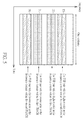
- FIG. 5 is a schematic diagram of an allocation of PRACHs in PRB pairs within a subframe according to an embodiment of the present invention.
- PRB pairs P0-P3 there are PRB pairs P0-P3 within this specific subframe and the PRB pairs P0-P3 are allocated in an ascending order of P0, P1, P2 and P3 in the frequency domain.
- a UE transmits two repetitions of a random access preamble within a first PRACH by using the PRB pairs P1 and P2 in this subframe.
- Another UE also transmits two repetitions of a random access preamble within a second PRACH by using the PRB pairs P0 and P3 in this subframe.
- the index of the PRB pair is determined based on comparison with other PRB pairs of all PRACHs within the any subframe in the ascending order of the frequency domain.
- a PRB pair with the lowest order in the frequency domain among the PRB pairs transmitting the repetitions of the random access preamble within the PRACH for a UE within the specific subframe may be applied for the determination of f_id for the UE.
- the PRB pair P1 may be selected for the determination of f_id since the PRB pair P1 has the lowest frequency among the PRB pairs P1 and P2.
- the PRB pair P0 may be selected for the determination of f_id since the PRB pair P0 has the lowest frequency among the PRB pairs P0 and P3.
- the index f_id should be determined according to comparison between the frequencies of the PRB pairs P0 and P1 and configured in an ascending order of the frequency domain.
- the index f_id for the RA-RNTI associated with the second PRACH may be 0 and the index f_id for the RA-RNTI associated with the first PRACH may be 1, since the PRB pair P0 within the second PRACH has a lower order than the PRB pair P1 within the first PRACH with the ascending order of frequency.
- the determination of f_id may also be performed by using a PRB pair with the highest order in the frequency domain among the PRB pairs transmitting the repetitions of the random access preamble within the PRACH for a UE within the specific subframe.
- the PRB pair P2 may be selected for the determination of f_id since the PRB pair P2 has the highest frequency among the PRB pairs P1 and P2.
- the PRB pair P3 may be selected for the determination of f_id since the PRB pair P0 has the highest frequency among the PRB pairs P0 and P3.
- the index f_id should be determined according to comparison between the frequencies of the PRB pairs P2 and P3 and configured in an ascending order of the frequency domain.
- the index f_id for the RA-RNTI associated with the first PRACH may be 0 and the index f_id for the RA-RNTI associated with the second PRACH may be 1, since the PRB pair P2 within the first PRACH has a lower order than the PRB pair P3 within the second PRACH with the ascending order of frequency.
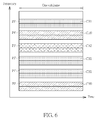
- FIG. 6 is a schematic diagram of an allocation of PRACHs in PRB pairs within another subframe according to an embodiment of the present invention.
- the PRB pairs P0'-P5' within this subframe are allocated in an ascending order of P0', P1', P2', P3', P4', and P5' in the frequency domain, which transmit the random access preambles in the PRACHs CH0, CH1, CH1, CH2, CH0 and CH1, respectively.
- the PRACH CH0 one of the PRB pair P0' and P4' may be selected to perform determination of the index f_id for the RA-RNTI.
- one of the PRB pair P1', P2' and P5' may be selected to perform determination of the index f_id for the RA-RNTI.
- the PRB pair P3' may be utilized to perform determination of the index f_id for the RA-RNTI.
- the index f_id may be determined according to comparison between the selected PRB pairs. For example, if the PRB pair with the lowest order in the frequency domain among the PRB pairs transmitting the repetitions of the random access preamble within a specific PRACH is selected, the PRB pair P0' may be selected for the PRACH CH0, and the PRB pair P1' may be selected for the PRACH CH1.
- the index f_id should be determined according to comparison between the frequencies of the PRB pairs P0', P1' and P3' for the PRACHs CH0-CH2 and configured in an ascending order of the frequency domain. That is, the indices f_id for the RA-RNTIs associated with the PRACHs CH0, CH1 and CH2 are 0, 1 and 2, respectively, according to the comparison result of the PRB pairs P0', P1' and P3' with the ascending order of frequency.
- the RA-RNTIs associated with the PRACHs in which repetitions of a random access preamble is transmitted may be distinguished from those associated with other PRACHs without transmissions of repetitions.
- the eNB may differentiate a UE in the enhanced coverage mode (i.e. the UE which transmits repetitions of a random access preamble) from a UE in the normal mode without coverage enhancement (i.e. the UE which transmits a random access preamble without repetitions) by using the RA-RNTI.
- the RA-RNTIs 0-60 are used for a PRACH without transmissions of repetitions of a random access preamble, and the RA-RNTIs for a PRACH in which repetitions of a random access preamble are transmitted may start from 61.
- the delta_shift may be determined by other methods.
- the parameter f_id may be fixed to 0 because there is only one PRACH source transmitted in each subframe in the FDD system.
- the delta_shift may be configured to 1, and this allows the eNB to differentiate a UE in the enhanced coverage mode and a UE without coverage enhancement to some extent.
- FIG. 7 is a flowchart of a process 70 according to an embodiment of the present invention.
- the process 70 may be utilized in an eNB in the network of the wireless communication system 10 shown in FIG. 1 , for handling random access with coverage enhancement.
- the process 70 may be compiled into the program code 214 and includes the following steps:
- the eNB first receives a plurality of repetitions of a random access preamble transmitted in a repetition window by a UE of the wireless communication system 10 when the UE initiates a random access procedure to get uplink synchronization with the eNB.
- the eNB determines a RA-RNTI for the random access preamble based on a specific subframe within the repetition window, and transmits random access response(s) identified by the RA-RNTI on the PDCCH when the eNB successfully decodes the random access preamble.
- the UE monitors the PDCCH for the random access response(s) identified by the RA-RNTI.
- the process 70 includes the behavior of an eNB in response to a UE performing the process 30. Based on the above descriptions, those skilled in the art should be able to apply the above embodiments and related variations for the process 30 to the behavior of eNB as the variations and alternations of the process 70; this will not be narrated herein.
- the eNB may transmit downlink control information (DCI) scrambled by the RA-RNTI on the PDCCH when the eNB successfully decodes the random access preamble.
- DCI downlink control information
- the eNB may transmit to the UE a configuration for the repetition window, which indicates a start position and a length of the repetition window via broadcast (e.g., system information) or a dedicated signaling (e.g., the RRCConnectionReconfiguration message or handover command).
- the eNB may predefine the start position and the length of the repetition window for the UE according to signal strength of the UE when the eNB determines that the UE is in the enhanced coverage mode.
- the eNB may determine that the repetition window may start at the subframe 3 of the system frame No. 50, and that the length of the repetition window may be equal to 10 radio frames. If there are more repetitions of the random access preamble transmitted by the UE, the corresponding repetition window may be longer.
- the UE may monitor the PDCCH for random access response(s) identified by the RA-RNTI in a random access response window, which may be determined according to the characteristics of the repetition window.
- the position and length of the random access response window in which the UE expects to receive the random access response(s) may be determined according to the repetition window.
- the random access response window may start at the first subframe that contains the end of a repetition among the plurality of repetitions of the random access preamble within the repetition window plus three subframes, and have a length equal to the repetition window plus ra-ResponseWindowSize subframes.
- the random access response window may be long enough to cover receptions of any possible random access response(s) in response to any repetitions in the repetition window successfully received and decoded by the eNB.
- FIG. 8 is a flowchart of a process 80 according to an embodiment of the present invention.
- the process 80 may be utilized in a UE of the wireless communication system 10 shown in FIG. 1 , for handling random access with coverage enhancement.
- the process 80 may be compiled into the program code 214 and includes the following steps:
- the UE in an enhanced coverage mode first transmits a plurality of repetitions of a random access preamble in a repetition window, in order to initiate a random access procedure to get uplink synchronization with an eNB.
- the UE then monitors the PDCCH for random access response(s) identified by a RA-RNTI.
- Each of the plurality of repetitions in a specific subframe of at least one radio frame within the repetition window has the same order of a frequency domain location.
- the repetition window includes radio frames N, N+1, N+2 and N+3.
- the repetitions of the random access preamble may have the same order of the frequency domain location in the subframe 3 of the radio frames N, N+1, N+2 and N+3.
- the index f_id for the PRACH transmitting the repetitions of the random access preamble in the frequency domain is 0 within the subframe 3 of the radio frame N
- the index f_id may also be determined to 0 within the subframe 3 of the radio frames N+1, N+2 and N+3.
- the eNB may successfully decode the random access preamble after receiving any numbers of repetitions. For example, the eNB may successfully decode the random access preamble when receiving the first repetition, so that the eNB may configure the RA-RNTI based on the parameters obtained within the first radio frame of the repetition window (e.g., the subframe 3 and the order of frequency domain location in the subframe 3 within the radio frame N of the repetition window shown in FIG. 4 ). However, the eNB may not successfully decode the random access preamble after receiving all repetitions transmitted within the first radio frame of the repetition window.
- the parameters obtained within the first radio frame of the repetition window e.g., the subframe 3 and the order of frequency domain location in the subframe 3 within the radio frame N of the repetition window shown in FIG. 4 .
- the eNB may not successfully decode the random access preamble after receiving all repetitions transmitted within the first radio frame of the repetition window.
- the eNB may successfully decode the random access preamble by receiving the repetitions transmitted within the second radio frame of the repetition window without combining with any repetitions transmitted within the first radio frame.
- the eNB can only configure the RA-RNTI based on the parameters obtained within the second radio frame of the repetition window (e.g., the subframe 3 and the order of frequency domain location in the subframe 3 within the radio frame N+1 of the repetition window shown in FIG. 4 ).
- the UE may still expect to receive a random access response identified by the RA-RNTI based on the parameters obtained within the first radio frame of the repetition window. Therefore, the indices for computing the RA-RNTI obtained from the first radio frame and the second radio frame should be the same, in order to allow the UE to successfully decode the random access response and subsequent DCI scrambled by the RA-RNTI.
- the process 80 may be combined with the process 30 to deal with this issue.
- the specific subframe may be configured in advance for the determination of the RA-RNTI (e.g., the subframe 3); hence, the index t_id should be the same in each radio frame within the repetition window.
- each of the repetitions in the specific subframe (e.g., the subframe 3) of all of the at least one radio frame within the repetition window may have the same order of the frequency domain location.
- the index f_id determined based on the specific subframe in each of the radio frames within the repetition window should be the same. This allows the UE to successfully receive the random access response identified the RA-RNTI no matter how the eNB decodes the random access preamble (e.g., by receiving any repetitions transmitted in any radio frames of the repetition window).
- the repetition window of the process 80 may also be within a radio frame or spread across a plurality of radio frames.
- FIG. 9 is a flowchart of a process 90 according to an embodiment of the present invention.
- the process 90 may be utilized in a UE of the wireless communication system 10 shown in FIG. 1 , for handling random access with coverage enhancement.
- the process 90 may be compiled into the program code 214 and includes the following steps:
- the UE may attempt to perform a random access procedure by transmitting a random access preamble without repetitions. If this attempt fails, the UE may determine that it is in an enhanced coverage mode, and then perform another random access procedure by transmitting a plurality of repetitions of another random access preamble.
- the UE may still fail to perform the random access procedure by transmitting the plurality of repetitions of the random access preamble, which means that the random access procedure may fail even if coverage enhancement is applied.
- the UE may indicate a random access problem from the media access control (MAC) layer of the UE to the radio resource control (RRC) layer of the UE.
- the process 90 may also be combined with the embodiments realized according to the process 30, in order to make the random access procedure in the coverage enhanced mode feasible.
- the present invention provides a method, a server, and a communication device for handling random access with coverage enhancement in a wireless communication system.
- the UE in the enhanced coverage mode may transmit a plurality of repetitions of a random access preamble in a repetition window when initiating a random access procedure to get uplink synchronization with an eNB.
- the RA-RNTI for identifying the corresponding random access response may be determined based on a specific subframe within the repetition window. Therefore, the random access procedure in the coverage enhanced mode will become feasible.
Landscapes
- Engineering & Computer Science (AREA)
- Computer Networks & Wireless Communication (AREA)
- Signal Processing (AREA)
- Mobile Radio Communication Systems (AREA)
Claims (15)
- Une méthode de gestion d'accès aléatoire pour un équipement utilisateur, UE, d'un système de communication sans fil, la méthode comprenant :la transmission d'une pluralité de répétitions d'un préambule d'accès aléatoire dans une fenêtre de répétition ; etla surveillance d'un canal de commande de liaison descendante physique, PDCCH, pour au moins une réponse d'accès aléatoire identifiée par un identificateur temporaire de réseau radio d'accès aléatoire, RA-RNTI ;dans laquelle le RA-RNTI est déterminé sur la base d'une sous-trame spécifique qui est l'une quelconque des sous-trames au sein de la fenêtre de répétition et dans laquelle le RA-RNTI est calculé en tant que :

- Une méthode de gestion d'accès aléatoire pour un réseau d'un système de communication sans fil, la méthode comprenant :la réception d'une pluralité de répétitions d'un préambule d'accès aléatoire transmis dans une fenêtre de répétition par un équipement utilisateur, UE, du système de communication sans fil ; etla détermination d'un identificateur temporaire de réseau radio d'accès aléatoire, RA-RNTI, sur la base d'une sous-trame spécifique qui est l'une quelconque des sous-trames au sein de la fenêtre de répétition ; etle fait de permettre à l'UE de surveiller un canal de commande de liaison descendante physique, PDCCH, pour au moins une réponse d'accès aléatoire identifiée par le RA-RNTI ;dans laquelle le RA-RNTI est déterminé sur la base d'une sous-trame spécifique qui est l'une quelconque des sous-trames au sein de la fenêtre de répétition et dans laquelle le RA-RNTI est calculé en tant que :

- La méthode de la revendication 1 ou de la revendication 2, dans laquelle le paramètre de décalage sert à empêcher un chevauchement du RA-RNTI avec un RA-RNTI pour un autre PRACH dans lequel le préambule d'accès aléatoire sans répétition est transmis par le RA-RNTI pour le PRACH dans lequel des répétitions du préambule d'accès aléatoire sont transmises n'entrera pas en collision avec le RA-RNTI pour le PRACH dans lequel le préambule d'accès aléatoire sans répétition est transmis.
- La méthode de la revendication 1, dans laquelle l'indice de la paire de PRB spécifique est déterminé sur la base d'une comparaison avec d'autres paires de PRB d'autres PRACH au sein de la sous-trame spécifique selon l'ordre ascendant du domaine fréquentiel.
- La méthode de la revendication 1, dans laquelle le delta_shift est un RA-RNTI maximum utilisé par un autre UE qui ne transmet pas de répétitions d'un autre préambule d'accès aléatoire.
- La méthode de la revendication 1, dans laquelle le delta_shift est de 1 pour un système duplex par répartition en fréquence.
- La méthode de la revendication 1, dans laquelle la paire de PRB au sein du PRACH au sein de la sous-trame spécifique est une paire de PRB avec l'ordre le plus petit dans le domaine fréquentiel au sein du PRACH au sein de la sous-trame spécifique.
- La méthode de la revendication 1 ou de la revendication 2, dans laquelle la sous-trame spécifique est la première sous-trame de la fenêtre de répétition.
- La méthode de la revendication 1 ou de la revendication 2, dans laquelle une station de base recevant le préambule d'accès aléatoire transmet des informations de commande de liaison descendante embrouillées par le RA-RNTI sur le PDCCH lorsque la station de base réussit à décoder le préambule d'accès aléatoire.
- La méthode de la revendication 1 ou de la revendication 2, dans laquelle une station de base recevant le préambule d'accès aléatoire transmet à l'UE une configuration pour la fenêtre de répétition indiquant une position de début et une longueur de la fenêtre de répétition via une diffusion ou une signalisation dédiée.
- La méthode de la revendication 1 ou de la revendication 2, dans laquelle l'étape consistant à surveiller le PDCCH pour l'au moins une réponse d'accès aléatoire identifiée par le RA-RNTI est effectuée dans une fenêtre de réponse d'accès aléatoire ; dans laquelle la fenêtre de réponse d'accès aléatoire débute au niveau de la première sous-trame qui contient une fin d'une répétition parmi la pluralité de répétitions du préambule d'accès aléatoire au sein de la fenêtre de répétition plus trois sous-trames, et a une longueur égale à la fenêtre de répétition plus des sous-trames ra-ResponseWindowSize.
- La méthode de la revendication 1 ou de la revendication 2, dans laquelle chaque répétition de la pluralité de répétitions dans une sous-trame spécifique qui est l'une quelconque des sous-trames d'au moins une trame radio au sein de la fenêtre de répétition a un même ordre d'un emplacement de domaine fréquentiel.
- La méthode de la revendication 1 ou de la revendication 2, dans laquelle l'étape consistant à transmettre la pluralité de répétitions du préambule d'accès aléatoire dans la fenêtre de répétition est effectuée après que l'UE échoue à effectuer une procédure d'accès aléatoire sans répétition d'un autre préambule d'accès aléatoire.
- Un dispositif de communication d'un système de communication sans fil, 10, comprenant un moyen de traitement, 200, une unité de stockage, 210, une unité d'interface de communication, 220 et une logique informatique configurée pour effectuer toutes les étapes de la méthode de n'importe laquelle des revendications 1 et 3 à 13, lorsque ladite logique informatique est exécutée sur le moyen de traitement.
- Un serveur d'un réseau, comprenant un moyen de traitement, 200, une unité de stockage, 210, une unité d'interface de communication, 220 et une logique informatique configurée pour effectuer toutes les étapes de la méthode de n'importe laquelle des revendications 2 à 3 et 8 à 13, lorsque ladite logique informatique est exécutée sur le serveur.
Applications Claiming Priority (1)
| Application Number | Priority Date | Filing Date | Title |
|---|---|---|---|
| US201361898492P | 2013-11-01 | 2013-11-01 |
Publications (2)
| Publication Number | Publication Date |
|---|---|
| EP2869655A1 EP2869655A1 (fr) | 2015-05-06 |
| EP2869655B1 true EP2869655B1 (fr) | 2016-06-29 |
Family
ID=51862149
Family Applications (1)
| Application Number | Title | Priority Date | Filing Date |
|---|---|---|---|
| EP14191258.4A Active EP2869655B1 (fr) | 2013-11-01 | 2014-10-31 | Procédés de gestion d'un accès aléatoire dans un système de communication sans fil, dispositif correspondant et serveur |
Country Status (3)
| Country | Link |
|---|---|
| US (1) | US9668280B2 (fr) |
| EP (1) | EP2869655B1 (fr) |
| CN (1) | CN104619037B (fr) |
Cited By (1)
| Publication number | Priority date | Publication date | Assignee | Title |
|---|---|---|---|---|
| US10383150B2 (en) * | 2016-05-11 | 2019-08-13 | Ofinno, Llc | Random access process in a wireless device and wireeless network |
Families Citing this family (34)
| Publication number | Priority date | Publication date | Assignee | Title |
|---|---|---|---|---|
| CN104581925B (zh) * | 2013-10-29 | 2019-01-08 | 电信科学技术研究院 | 一种覆盖增强机制下的定时维护方法及装置 |
| US9794961B2 (en) * | 2013-10-31 | 2017-10-17 | Htc Corporation | Method of handling random access in wireless communication system |
| EP3078234B1 (fr) * | 2013-12-04 | 2019-03-13 | LG Electronics Inc. | Procédé et appareil pour réaliser une procédure d'accès aléatoire pour des équipements utilisateur d'amélioration de couverture dans un système de communication sans fil |
| EP3309985B1 (fr) * | 2014-01-26 | 2022-06-01 | Huawei Device Co., Ltd. | Procédé de transmission et équipement utilisateur |
| WO2015114693A1 (fr) | 2014-01-30 | 2015-08-06 | 日本電気株式会社 | Terminal de machine à machine (m2m), station de base, procédé et support lisible par ordinateur |
| CN105611646B (zh) * | 2014-11-07 | 2021-11-02 | 夏普株式会社 | 基站、用户设备及其方法 |
| WO2016144082A1 (fr) * | 2015-03-09 | 2016-09-15 | Lg Electronics Inc. | Procédé d'exploitation de procédure d'accès aléatoire dans un système de communication sans fil, et dispositif à cet effet |
| US9918344B2 (en) * | 2015-04-09 | 2018-03-13 | Intel IP Corporation | Random access procedure for enhanced coverage support |
| CN106162840B (zh) * | 2015-04-10 | 2019-11-01 | 联想(北京)有限公司 | 信息处理方法、基站及终端 |
| CN106455112B (zh) * | 2015-08-11 | 2019-12-13 | 电信科学技术研究院 | 一种ra-rnti的确定方法和设备 |
| WO2017038337A1 (fr) * | 2015-08-31 | 2017-03-09 | 京セラ株式会社 | Terminal radio et station de base |
| KR101934160B1 (ko) * | 2015-09-24 | 2019-01-02 | 주식회사 케이티 | Mtc 단말을 위한 랜덤 액세스 응답 수신 방법 및 장치 |
| CN106559905B (zh) * | 2015-09-24 | 2020-04-21 | 株式会社Kt | 用于mtc ue接收随机接入响应的方法和装置 |
| WO2017131430A1 (fr) | 2016-01-26 | 2017-08-03 | Lg Electronics Inc. | Procédé d'exécution d'une procédure d'accès aléatoire dans un système de communication sans fil et dispositif associé |
| JP2019054311A (ja) * | 2016-01-29 | 2019-04-04 | シャープ株式会社 | 端末装置、基地局装置および通信方法 |
| WO2017059720A2 (fr) * | 2016-07-20 | 2017-04-13 | Telefonaktiebolaget Lm Ericsson (Publ) | Procédé pour permettre l'accès aléatoire, noeud de réseau de dispositif de terminal |
| CN108289338B (zh) * | 2017-01-09 | 2023-07-04 | 北京三星通信技术研究有限公司 | 随机接入信道选择的方法及用户设备 |
| CN108366395B (zh) * | 2017-01-26 | 2023-04-28 | 中兴通讯股份有限公司 | 一种配置无线发送接收参数的方法、装置及系统 |
| JP2020065094A (ja) * | 2017-02-03 | 2020-04-23 | 株式会社Nttドコモ | 基地局及びユーザ装置 |
| US10484151B2 (en) * | 2017-03-02 | 2019-11-19 | Qualcomm Incorporated | Controlling random-access channel (RACH) retransmissions for wireless communication |
| CN108633009B (zh) * | 2017-03-20 | 2020-12-01 | 华为技术有限公司 | 一种通信方法、终端及网络设备 |
| CN110547015A (zh) | 2017-04-13 | 2019-12-06 | 华为技术有限公司 | 用于确定供用户设备使用的网络标识符的方法和装置 |
| CN108811173B (zh) * | 2017-05-05 | 2021-09-03 | 北京三星通信技术研究有限公司 | 随机接入方法、基站设备及用户设备 |
| US10917894B2 (en) * | 2017-05-10 | 2021-02-09 | Qualcomm Incorporated | Signal modification via phase or frequency shifting |
| PL3591887T3 (pl) * | 2017-11-09 | 2022-04-25 | Beijing Xiaomi Mobile Software Co., Ltd. | Sposoby i urządzenia do prowadzenia łączności na podstawie możliwości urządzenia bezprzewodowego |
| CN109803276B (zh) * | 2017-11-17 | 2022-03-08 | 中兴通讯股份有限公司 | 一种系统信息的传输方法、基站、终端和系统 |
| WO2020191716A1 (fr) * | 2019-03-28 | 2020-10-01 | Qualcomm Incorporated | Formule de ra-rnti pour fenêtres de réponse d'accès aléatoire étendues |
| WO2021012137A1 (fr) * | 2019-07-22 | 2021-01-28 | Qualcomm Incorporated | Répétition de la transmission de séquences d'accès aléatoire |
| EP4039027B1 (fr) | 2019-10-03 | 2025-02-26 | Qualcomm Incorporated | Commande de puissance pour signal de rétroaction de demande de répétition automatique hybride dans un accès aléatoire |
| WO2021072601A1 (fr) | 2019-10-14 | 2021-04-22 | Oppo广东移动通信有限公司 | Procédé et appareil de détermination d'informations et dispositif terminal et dispositif de réseau |
| US11653384B2 (en) | 2021-03-29 | 2023-05-16 | Qualcomm Incorporated | Techniques for indicating coverage enhancement for random access procedures in wireless communications systems |
| US12028895B2 (en) * | 2021-03-29 | 2024-07-02 | Qualcomm Incorporated | Techniques for requesting coverage enhancement for random access procedures in wireless communications systems |
| CN115150967A (zh) * | 2021-03-31 | 2022-10-04 | 华为技术有限公司 | 一种随机接入方法及装置 |
| US12550200B2 (en) * | 2022-02-04 | 2026-02-10 | Intel Corporation | Multiple physical random access channel (PRACH) transmissions for coverage enhancement |
Family Cites Families (6)
| Publication number | Priority date | Publication date | Assignee | Title |
|---|---|---|---|---|
| KR101388351B1 (ko) * | 2007-06-19 | 2014-04-22 | 엘지전자 주식회사 | 제어 정보를 이용하여, 빠르게 랜덤 액세스 프리앰블의전송을 재시도 하는 방법 |
| KR100949972B1 (ko) * | 2009-01-02 | 2010-03-29 | 엘지전자 주식회사 | 단말의 임의접속 수행 기법 |
| WO2012071681A1 (fr) | 2010-11-30 | 2012-06-07 | 富士通株式会社 | Terminal de communication sans fil, station de base de communication sans fil et procédé de communication sans fil correspondant; programme de mise en œuvre dudit procédé de communication sans fil et support de stockage de ce programme |
| WO2013151651A1 (fr) * | 2012-04-01 | 2013-10-10 | Dinan Esmael Hejazi | Configuration de groupe de cellules dans un dispositif sans fil et station de base à groupes d'avance temporelle |
| US9451639B2 (en) | 2013-07-10 | 2016-09-20 | Samsung Electronics Co., Ltd. | Method and apparatus for coverage enhancement for a random access process |
| US9794961B2 (en) * | 2013-10-31 | 2017-10-17 | Htc Corporation | Method of handling random access in wireless communication system |
-
2014
- 2014-10-31 EP EP14191258.4A patent/EP2869655B1/fr active Active
- 2014-10-31 US US14/529,159 patent/US9668280B2/en active Active
- 2014-11-03 CN CN201410613076.1A patent/CN104619037B/zh active Active
Cited By (2)
| Publication number | Priority date | Publication date | Assignee | Title |
|---|---|---|---|---|
| US10383150B2 (en) * | 2016-05-11 | 2019-08-13 | Ofinno, Llc | Random access process in a wireless device and wireeless network |
| US12207306B2 (en) | 2016-05-11 | 2025-01-21 | Ofinno, Llc | Consecutive transmissions of a plurality of preambles by a wireless device |
Also Published As
| Publication number | Publication date |
|---|---|
| CN104619037B (zh) | 2018-05-15 |
| EP2869655A1 (fr) | 2015-05-06 |
| US20150124746A1 (en) | 2015-05-07 |
| US9668280B2 (en) | 2017-05-30 |
| CN104619037A (zh) | 2015-05-13 |
Similar Documents
| Publication | Publication Date | Title |
|---|---|---|
| US9668280B2 (en) | Method of handling random access in wireless communication system | |
| US9794961B2 (en) | Method of handling random access in wireless communication system | |
| EP3098994B1 (fr) | Procédé de gestion d'amélioration de couverture dans un système de communication sans fil | |
| KR102793038B1 (ko) | 2 단계 랜덤 액세스 절차에 대한 다수의 메시지 a(msga) 크기 및 ul 커버리지를 지원하는 시스템 및 방법 | |
| EP3446424B1 (fr) | Techniques de réduction de latence dans un système de communication sans fil | |
| US10673592B2 (en) | Method for changing coverage enhanced mode in wireless communication system and an apparatus therefor | |
| US10912076B2 (en) | Physical downlink control channel transmission method and apparatus | |
| US11825514B2 (en) | Repetitive random access transmissions | |
| US20180227904A1 (en) | Methods and apparatus for user equipment capability exchange | |
| US9936518B2 (en) | Method for transport block transmission and blind reception | |
| US20180103419A1 (en) | Method and apparatus for changing a coverage enhancement mode | |
| EP3214790B1 (fr) | Dispositif et procédé de gestion d'un processus de demande de répétition automatique hybride dans une cellule secondaire à accès sous licence | |
| US20180376375A1 (en) | Use of wait period to obtain on-demand system information for wireless networks | |
| KR20180071271A (ko) | 스케줄링 요청을 송수신하는 방법 및 장치 | |
| EP2983303A1 (fr) | Procédé et dispositif de transmission d'informations de commande de liaison descendante | |
| CN103199969B (zh) | 处理混合式自动重发请求确认收讫响应的方法及通讯装置 | |
| US9320057B2 (en) | Method and apparatus for performing machine-type communication device access in wireless communication system | |
| US20170135132A1 (en) | Method, system and apparatus | |
| WO2013107036A1 (fr) | Gestion d'un échec d'accès aléatoire | |
| US20180279373A1 (en) | Method and apparatus for performing random access procedure | |
| EP4120602B1 (fr) | Dispositif de gestion de transmissions pusch | |
| EP3089392B1 (fr) | Dispositif et procédé de manipulation d'opération harq pour bande sans licence | |
| KR20210104570A (ko) | 물리적 업링크 제어 채널 충돌을 처리하기 위한 디바이스 및 방법 |
Legal Events
| Date | Code | Title | Description |
|---|---|---|---|
| PUAI | Public reference made under article 153(3) epc to a published international application that has entered the european phase |
Free format text: ORIGINAL CODE: 0009012 |
|
| 17P | Request for examination filed |
Effective date: 20141031 |
|
| AK | Designated contracting states |
Kind code of ref document: A1 Designated state(s): AL AT BE BG CH CY CZ DE DK EE ES FI FR GB GR HR HU IE IS IT LI LT LU LV MC MK MT NL NO PL PT RO RS SE SI SK SM TR |
|
| AX | Request for extension of the european patent |
Extension state: BA ME |
|
| RBV | Designated contracting states (corrected) |
Designated state(s): AL AT BE BG CH CY CZ DE DK EE ES FI FR GB GR HR HU IE IS IT LI LT LU LV MC MK MT NL NO PL PT RO RS SE SI SK SM TR |
|
| GRAP | Despatch of communication of intention to grant a patent |
Free format text: ORIGINAL CODE: EPIDOSNIGR1 |
|
| INTG | Intention to grant announced |
Effective date: 20151218 |
|
| RIC1 | Information provided on ipc code assigned before grant |
Ipc: H04W 72/12 20090101ALN20151209BHEP Ipc: H04W 74/00 20090101AFI20151209BHEP Ipc: H04W 74/08 20090101ALI20151209BHEP |
|
| REG | Reference to a national code |
Ref country code: DE Ref legal event code: R079 Ref document number: 602014002485 Country of ref document: DE Free format text: PREVIOUS MAIN CLASS: H04W0074080000 Ipc: H04W0074000000 |
|
| GRAS | Grant fee paid |
Free format text: ORIGINAL CODE: EPIDOSNIGR3 |
|
| GRAP | Despatch of communication of intention to grant a patent |
Free format text: ORIGINAL CODE: EPIDOSNIGR1 |
|
| RIC1 | Information provided on ipc code assigned before grant |
Ipc: H04W 74/08 20090101ALI20160419BHEP Ipc: H04W 74/00 20090101AFI20160419BHEP Ipc: H04W 72/12 20090101ALN20160419BHEP |
|
| GRAA | (expected) grant |
Free format text: ORIGINAL CODE: 0009210 |
|
| INTG | Intention to grant announced |
Effective date: 20160506 |
|
| AK | Designated contracting states |
Kind code of ref document: B1 Designated state(s): AL AT BE BG CH CY CZ DE DK EE ES FI FR GB GR HR HU IE IS IT LI LT LU LV MC MK MT NL NO PL PT RO RS SE SI SK SM TR |
|
| REG | Reference to a national code |
Ref country code: GB Ref legal event code: FG4D |
|
| REG | Reference to a national code |
Ref country code: CH Ref legal event code: EP |
|
| REG | Reference to a national code |
Ref country code: AT Ref legal event code: REF Ref document number: 809976 Country of ref document: AT Kind code of ref document: T Effective date: 20160715 |
|
| REG | Reference to a national code |
Ref country code: IE Ref legal event code: FG4D |
|
| REG | Reference to a national code |
Ref country code: DE Ref legal event code: R096 Ref document number: 602014002485 Country of ref document: DE |
|
| REG | Reference to a national code |
Ref country code: NL Ref legal event code: FP |
|
| REG | Reference to a national code |
Ref country code: LT Ref legal event code: MG4D Ref country code: FR Ref legal event code: PLFP Year of fee payment: 3 |
|
| PG25 | Lapsed in a contracting state [announced via postgrant information from national office to epo] |
Ref country code: LT Free format text: LAPSE BECAUSE OF FAILURE TO SUBMIT A TRANSLATION OF THE DESCRIPTION OR TO PAY THE FEE WITHIN THE PRESCRIBED TIME-LIMIT Effective date: 20160629 Ref country code: FI Free format text: LAPSE BECAUSE OF FAILURE TO SUBMIT A TRANSLATION OF THE DESCRIPTION OR TO PAY THE FEE WITHIN THE PRESCRIBED TIME-LIMIT Effective date: 20160629 Ref country code: NO Free format text: LAPSE BECAUSE OF FAILURE TO SUBMIT A TRANSLATION OF THE DESCRIPTION OR TO PAY THE FEE WITHIN THE PRESCRIBED TIME-LIMIT Effective date: 20160929 |
|
| PG25 | Lapsed in a contracting state [announced via postgrant information from national office to epo] |
Ref country code: LV Free format text: LAPSE BECAUSE OF FAILURE TO SUBMIT A TRANSLATION OF THE DESCRIPTION OR TO PAY THE FEE WITHIN THE PRESCRIBED TIME-LIMIT Effective date: 20160629 Ref country code: SE Free format text: LAPSE BECAUSE OF FAILURE TO SUBMIT A TRANSLATION OF THE DESCRIPTION OR TO PAY THE FEE WITHIN THE PRESCRIBED TIME-LIMIT Effective date: 20160629 Ref country code: RS Free format text: LAPSE BECAUSE OF FAILURE TO SUBMIT A TRANSLATION OF THE DESCRIPTION OR TO PAY THE FEE WITHIN THE PRESCRIBED TIME-LIMIT Effective date: 20160629 Ref country code: HR Free format text: LAPSE BECAUSE OF FAILURE TO SUBMIT A TRANSLATION OF THE DESCRIPTION OR TO PAY THE FEE WITHIN THE PRESCRIBED TIME-LIMIT Effective date: 20160629 Ref country code: GR Free format text: LAPSE BECAUSE OF FAILURE TO SUBMIT A TRANSLATION OF THE DESCRIPTION OR TO PAY THE FEE WITHIN THE PRESCRIBED TIME-LIMIT Effective date: 20160930 |
|
| REG | Reference to a national code |
Ref country code: AT Ref legal event code: MK05 Ref document number: 809976 Country of ref document: AT Kind code of ref document: T Effective date: 20160629 |
|
| PG25 | Lapsed in a contracting state [announced via postgrant information from national office to epo] |
Ref country code: IS Free format text: LAPSE BECAUSE OF FAILURE TO SUBMIT A TRANSLATION OF THE DESCRIPTION OR TO PAY THE FEE WITHIN THE PRESCRIBED TIME-LIMIT Effective date: 20161029 Ref country code: RO Free format text: LAPSE BECAUSE OF FAILURE TO SUBMIT A TRANSLATION OF THE DESCRIPTION OR TO PAY THE FEE WITHIN THE PRESCRIBED TIME-LIMIT Effective date: 20160629 Ref country code: EE Free format text: LAPSE BECAUSE OF FAILURE TO SUBMIT A TRANSLATION OF THE DESCRIPTION OR TO PAY THE FEE WITHIN THE PRESCRIBED TIME-LIMIT Effective date: 20160629 Ref country code: CZ Free format text: LAPSE BECAUSE OF FAILURE TO SUBMIT A TRANSLATION OF THE DESCRIPTION OR TO PAY THE FEE WITHIN THE PRESCRIBED TIME-LIMIT Effective date: 20160629 Ref country code: IT Free format text: LAPSE BECAUSE OF FAILURE TO SUBMIT A TRANSLATION OF THE DESCRIPTION OR TO PAY THE FEE WITHIN THE PRESCRIBED TIME-LIMIT Effective date: 20160629 Ref country code: SK Free format text: LAPSE BECAUSE OF FAILURE TO SUBMIT A TRANSLATION OF THE DESCRIPTION OR TO PAY THE FEE WITHIN THE PRESCRIBED TIME-LIMIT Effective date: 20160629 |
|
| PG25 | Lapsed in a contracting state [announced via postgrant information from national office to epo] |
Ref country code: SM Free format text: LAPSE BECAUSE OF FAILURE TO SUBMIT A TRANSLATION OF THE DESCRIPTION OR TO PAY THE FEE WITHIN THE PRESCRIBED TIME-LIMIT Effective date: 20160629 Ref country code: PT Free format text: LAPSE BECAUSE OF FAILURE TO SUBMIT A TRANSLATION OF THE DESCRIPTION OR TO PAY THE FEE WITHIN THE PRESCRIBED TIME-LIMIT Effective date: 20161031 Ref country code: AT Free format text: LAPSE BECAUSE OF FAILURE TO SUBMIT A TRANSLATION OF THE DESCRIPTION OR TO PAY THE FEE WITHIN THE PRESCRIBED TIME-LIMIT Effective date: 20160629 Ref country code: BE Free format text: LAPSE BECAUSE OF NON-PAYMENT OF DUE FEES Effective date: 20160629 Ref country code: PL Free format text: LAPSE BECAUSE OF FAILURE TO SUBMIT A TRANSLATION OF THE DESCRIPTION OR TO PAY THE FEE WITHIN THE PRESCRIBED TIME-LIMIT Effective date: 20160629 Ref country code: ES Free format text: LAPSE BECAUSE OF FAILURE TO SUBMIT A TRANSLATION OF THE DESCRIPTION OR TO PAY THE FEE WITHIN THE PRESCRIBED TIME-LIMIT Effective date: 20160629 |
|
| REG | Reference to a national code |
Ref country code: DE Ref legal event code: R097 Ref document number: 602014002485 Country of ref document: DE |
|
| PG25 | Lapsed in a contracting state [announced via postgrant information from national office to epo] |
Ref country code: DK Free format text: LAPSE BECAUSE OF FAILURE TO SUBMIT A TRANSLATION OF THE DESCRIPTION OR TO PAY THE FEE WITHIN THE PRESCRIBED TIME-LIMIT Effective date: 20160629 |
|
| 26N | No opposition filed |
Effective date: 20170330 |
|
| PLBE | No opposition filed within time limit |
Free format text: ORIGINAL CODE: 0009261 |
|
| STAA | Information on the status of an ep patent application or granted ep patent |
Free format text: STATUS: NO OPPOSITION FILED WITHIN TIME LIMIT |
|
| REG | Reference to a national code |
Ref country code: IE Ref legal event code: MM4A |
|
| PG25 | Lapsed in a contracting state [announced via postgrant information from national office to epo] |
Ref country code: LU Free format text: LAPSE BECAUSE OF NON-PAYMENT OF DUE FEES Effective date: 20161031 Ref country code: BG Free format text: LAPSE BECAUSE OF FAILURE TO SUBMIT A TRANSLATION OF THE DESCRIPTION OR TO PAY THE FEE WITHIN THE PRESCRIBED TIME-LIMIT Effective date: 20160929 Ref country code: SI Free format text: LAPSE BECAUSE OF FAILURE TO SUBMIT A TRANSLATION OF THE DESCRIPTION OR TO PAY THE FEE WITHIN THE PRESCRIBED TIME-LIMIT Effective date: 20160629 |
|
| REG | Reference to a national code |
Ref country code: FR Ref legal event code: PLFP Year of fee payment: 4 |
|
| PG25 | Lapsed in a contracting state [announced via postgrant information from national office to epo] |
Ref country code: IE Free format text: LAPSE BECAUSE OF NON-PAYMENT OF DUE FEES Effective date: 20161031 |
|
| PG25 | Lapsed in a contracting state [announced via postgrant information from national office to epo] |
Ref country code: HU Free format text: LAPSE BECAUSE OF FAILURE TO SUBMIT A TRANSLATION OF THE DESCRIPTION OR TO PAY THE FEE WITHIN THE PRESCRIBED TIME-LIMIT; INVALID AB INITIO Effective date: 20141031 |
|
| REG | Reference to a national code |
Ref country code: CH Ref legal event code: PL |
|
| PG25 | Lapsed in a contracting state [announced via postgrant information from national office to epo] |
Ref country code: MC Free format text: LAPSE BECAUSE OF FAILURE TO SUBMIT A TRANSLATION OF THE DESCRIPTION OR TO PAY THE FEE WITHIN THE PRESCRIBED TIME-LIMIT Effective date: 20160629 Ref country code: MT Free format text: LAPSE BECAUSE OF NON-PAYMENT OF DUE FEES Effective date: 20161031 Ref country code: MK Free format text: LAPSE BECAUSE OF FAILURE TO SUBMIT A TRANSLATION OF THE DESCRIPTION OR TO PAY THE FEE WITHIN THE PRESCRIBED TIME-LIMIT Effective date: 20160629 Ref country code: CY Free format text: LAPSE BECAUSE OF FAILURE TO SUBMIT A TRANSLATION OF THE DESCRIPTION OR TO PAY THE FEE WITHIN THE PRESCRIBED TIME-LIMIT Effective date: 20160629 |
|
| PG25 | Lapsed in a contracting state [announced via postgrant information from national office to epo] |
Ref country code: LI Free format text: LAPSE BECAUSE OF NON-PAYMENT OF DUE FEES Effective date: 20171031 Ref country code: CH Free format text: LAPSE BECAUSE OF NON-PAYMENT OF DUE FEES Effective date: 20171031 |
|
| REG | Reference to a national code |
Ref country code: FR Ref legal event code: PLFP Year of fee payment: 5 |
|
| PG25 | Lapsed in a contracting state [announced via postgrant information from national office to epo] |
Ref country code: AL Free format text: LAPSE BECAUSE OF FAILURE TO SUBMIT A TRANSLATION OF THE DESCRIPTION OR TO PAY THE FEE WITHIN THE PRESCRIBED TIME-LIMIT Effective date: 20160629 Ref country code: TR Free format text: LAPSE BECAUSE OF FAILURE TO SUBMIT A TRANSLATION OF THE DESCRIPTION OR TO PAY THE FEE WITHIN THE PRESCRIBED TIME-LIMIT Effective date: 20160629 |
|
| REG | Reference to a national code |
Ref country code: DE Ref legal event code: R082 Ref document number: 602014002485 Country of ref document: DE Representative=s name: WAGNER & GEYER PARTNERSCHAFT MBB PATENT- UND R, DE |
|
| P01 | Opt-out of the competence of the unified patent court (upc) registered |
Effective date: 20230602 |
|
| PGFP | Annual fee paid to national office [announced via postgrant information from national office to epo] |
Ref country code: NL Payment date: 20250912 Year of fee payment: 12 |
|
| PGFP | Annual fee paid to national office [announced via postgrant information from national office to epo] |
Ref country code: GB Payment date: 20250911 Year of fee payment: 12 |
|
| PGFP | Annual fee paid to national office [announced via postgrant information from national office to epo] |
Ref country code: FR Payment date: 20250908 Year of fee payment: 12 |
|
| PGFP | Annual fee paid to national office [announced via postgrant information from national office to epo] |
Ref country code: DE Payment date: 20250902 Year of fee payment: 12 |