EP2871855B1 - Procédé et appareil d'enregistrement, et terminal - Google Patents
Procédé et appareil d'enregistrement, et terminal Download PDFInfo
- Publication number
- EP2871855B1 EP2871855B1 EP14814668.1A EP14814668A EP2871855B1 EP 2871855 B1 EP2871855 B1 EP 2871855B1 EP 14814668 A EP14814668 A EP 14814668A EP 2871855 B1 EP2871855 B1 EP 2871855B1
- Authority
- EP
- European Patent Office
- Prior art keywords
- unit
- audio sensor
- terminal
- photographing unit
- placement status
- Prior art date
- Legal status (The legal status is an assumption and is not a legal conclusion. Google has not performed a legal analysis and makes no representation as to the accuracy of the status listed.)
- Active
Links
Images



Classifications
-
- H—ELECTRICITY
- H04—ELECTRIC COMMUNICATION TECHNIQUE
- H04N—PICTORIAL COMMUNICATION, e.g. TELEVISION
- H04N5/00—Details of television systems
- H04N5/76—Television signal recording
- H04N5/7605—Television signal recording on discs or drums
-
- H—ELECTRICITY
- H04—ELECTRIC COMMUNICATION TECHNIQUE
- H04S—STEREOPHONIC SYSTEMS
- H04S1/00—Two-channel systems
- H04S1/002—Non-adaptive circuits, e.g. manually adjustable or static, for enhancing the sound image or the spatial distribution
-
- G—PHYSICS
- G11—INFORMATION STORAGE
- G11B—INFORMATION STORAGE BASED ON RELATIVE MOVEMENT BETWEEN RECORD CARRIER AND TRANSDUCER
- G11B31/00—Arrangements for the associated working of recording or reproducing apparatus with related apparatus
- G11B31/006—Arrangements for the associated working of recording or reproducing apparatus with related apparatus with video camera or receiver
-
- H—ELECTRICITY
- H04—ELECTRIC COMMUNICATION TECHNIQUE
- H04M—TELEPHONIC COMMUNICATION
- H04M1/00—Substation equipment, e.g. for use by subscribers
- H04M1/60—Substation equipment, e.g. for use by subscribers including speech amplifiers
- H04M1/6008—Substation equipment, e.g. for use by subscribers including speech amplifiers in the transmitter circuit
-
- H—ELECTRICITY
- H04—ELECTRIC COMMUNICATION TECHNIQUE
- H04N—PICTORIAL COMMUNICATION, e.g. TELEVISION
- H04N5/00—Details of television systems
- H04N5/76—Television signal recording
- H04N5/765—Interface circuits between an apparatus for recording and another apparatus
- H04N5/77—Interface circuits between an apparatus for recording and another apparatus between a recording apparatus and a television camera
- H04N5/772—Interface circuits between an apparatus for recording and another apparatus between a recording apparatus and a television camera the recording apparatus and the television camera being placed in the same enclosure
-
- H—ELECTRICITY
- H04—ELECTRIC COMMUNICATION TECHNIQUE
- H04N—PICTORIAL COMMUNICATION, e.g. TELEVISION
- H04N5/00—Details of television systems
- H04N5/76—Television signal recording
- H04N5/78—Television signal recording using magnetic recording
- H04N5/781—Television signal recording using magnetic recording on disks or drums
-
- H—ELECTRICITY
- H04—ELECTRIC COMMUNICATION TECHNIQUE
- H04R—LOUDSPEAKERS, MICROPHONES, GRAMOPHONE PICK-UPS OR LIKE ACOUSTIC ELECTROMECHANICAL TRANSDUCERS; ELECTRIC HEARING AIDS; PUBLIC ADDRESS SYSTEMS
- H04R5/00—Stereophonic arrangements
- H04R5/04—Circuit arrangements, e.g. for selective connection of amplifier inputs/outputs to loudspeakers, for loudspeaker detection, or for adaptation of settings to personal preferences or hearing impairments
-
- G—PHYSICS
- G10—MUSICAL INSTRUMENTS; ACOUSTICS
- G10L—SPEECH ANALYSIS TECHNIQUES OR SPEECH SYNTHESIS; SPEECH RECOGNITION; SPEECH OR VOICE PROCESSING TECHNIQUES; SPEECH OR AUDIO CODING OR DECODING
- G10L21/00—Speech or voice signal processing techniques to produce another audible or non-audible signal, e.g. visual or tactile, in order to modify its quality or its intelligibility
- G10L21/02—Speech enhancement, e.g. noise reduction or echo cancellation
- G10L21/0316—Speech enhancement, e.g. noise reduction or echo cancellation by changing the amplitude
- G10L21/0324—Details of processing therefor
- G10L21/034—Automatic adjustment
-
- H—ELECTRICITY
- H04—ELECTRIC COMMUNICATION TECHNIQUE
- H04M—TELEPHONIC COMMUNICATION
- H04M1/00—Substation equipment, e.g. for use by subscribers
- H04M1/72—Mobile telephones; Cordless telephones, i.e. devices for establishing wireless links to base stations without route selection
- H04M1/724—User interfaces specially adapted for cordless or mobile telephones
- H04M1/72448—User interfaces specially adapted for cordless or mobile telephones with means for adapting the functionality of the device according to specific conditions
- H04M1/72454—User interfaces specially adapted for cordless or mobile telephones with means for adapting the functionality of the device according to specific conditions according to context-related or environment-related conditions
-
- H—ELECTRICITY
- H04—ELECTRIC COMMUNICATION TECHNIQUE
- H04M—TELEPHONIC COMMUNICATION
- H04M2250/00—Details of telephonic subscriber devices
- H04M2250/52—Details of telephonic subscriber devices including functional features of a camera
-
- H—ELECTRICITY
- H04—ELECTRIC COMMUNICATION TECHNIQUE
- H04S—STEREOPHONIC SYSTEMS
- H04S2400/00—Details of stereophonic systems covered by H04S but not provided for in its groups
- H04S2400/11—Positioning of individual sound objects, e.g. moving airplane, within a sound field
-
- H—ELECTRICITY
- H04—ELECTRIC COMMUNICATION TECHNIQUE
- H04S—STEREOPHONIC SYSTEMS
- H04S2400/00—Details of stereophonic systems covered by H04S but not provided for in its groups
- H04S2400/15—Aspects of sound capture and related signal processing for recording or reproduction
Definitions
- the present invention relates to the audio and video recording and playing field, and in particular, to a recording method, apparatus, and terminal.
- a video that has a sound and is played on a video device may have a stereophonic effect.
- a video having a stereophonic effect can create an immersive atmosphere for a listener. This immersive experience includes real reproduction concerning where a sound in the video is produced, how the sound changes, and the like.
- a placement location of the terminal may not be fixed, and therefore, it is likely to cause a problem, which is caused as a result of a change in location status of the terminal, that a stereophonic effect of a recorded video is poor or even no stereophonic effect is produced.
- US 20060045294 A1 provides that a listener can experience the sound of virtual loudspeakers over headphones with a level of realism that is difficult to distinguish from the real loudspeaker experience.
- Sets of personalized room impulse responses (PRIRs) are acquired for the loudspeaker sound sources over a limited number of listener head positions.
- the PRIRs are then used to transform an audio signal for the loudspeakers into a virtualized output for the headphones. Basing the transformation on the listener's head position, the system can adjust the transformation so that the virtual loudspeakers appear not to move as the listener moves the head.
- US 20100128892 A1 provides a device that includes a microphone array fixed to the device.
- a signal processor produces an audio output using audio beamforming with input from the microphone array.
- the signal processor aims the beamforming in a selected direction.
- An orientation sensor such as a compass, an accelerometer, or an inertial sensor-is coupled to the signal processor.
- the orientation sensor detects a change in the orientation of the microphone array and provides an orientation signal to the signal processor for adjusting the aim of the beamforming to maintain the selected direction.
- the device may include a camera that captures an image.
- An image processor may identify an audio source in the image and provide a signal adjusting the selected direction to follow the audio source.
- the image processor may receive the orientation signal and adjust the image for changes in the orientation of the camera before tracking movement of the audio source.
- Embodiments of the present invention provide a recording method, apparatus, and terminal, which can prevent a problem that a stereophonic effect of a recorded video is poor as a result of a change in location status of a terminal, thereby improving recording quality and therefore improving user experience.
- a recording method is provided, where the method is applied to a terminal that includes two sound channels, at least two audio sensor units, and at least one photographing unit, and the method includes:
- the at least one photographing unit includes a front-facing photographing unit and/or a rear-facing photographing unit; and the determining that one photographing unit of the at least one photographing unit is in a started state is specifically: determining that the front-facing photographing unit or the rear-facing photographing unit is in a started state.
- the at least two audio sensor units include a first audio sensor unit and a second audio sensor unit, where the first audio sensor unit and the second audio sensor unit are arranged symmetrically, with a vertical axis of the terminal being a central line.
- the method includes:
- the method includes:
- the at least two audio sensor units include a first audio sensor unit and a second audio sensor unit, where the first audio sensor unit and the second audio sensor unit are arranged symmetrically, with a transverse axis of the terminal being a central line.
- the method includes:
- the method includes: when the at least one photographing unit is the rear-facing photographing unit,
- the adjusting volume of the at least two audio sensor units according to the recording correspondence between the at least two audio sensor units and the two sound channels, so that a difference between volume that passes through the two sound channels is less than a preset threshold includes:
- the at least one photographing unit includes the front-facing photographing unit and the rear-facing photographing unit;
- the at least two audio sensor units are three audio sensor units; and the determining a recording correspondence between the at least two audio sensor units and the two sound channels according to the acquired placement status parameter and the determined photographing unit in the started state includes:
- the adjusting volume of the at least two audio sensor units according to the recording correspondence between the at least two audio sensor units and the two sound channels, so that a difference between volume that passes through the two sound channels is less than a preset threshold includes:
- a recording apparatus is provided, where the apparatus is applied to a terminal that includes two sound channels, at least two audio sensor units, and at least one photographing unit, and the apparatus includes:
- the at least one photographing unit includes a front-facing photographing unit and/or a rear-facing photographing unit;
- the at least two audio sensor units include a first audio sensor unit and a second audio sensor unit, where the first audio sensor unit and the second audio sensor unit are arranged symmetrically, with a vertical axis of the terminal being a central line.
- the placement parameter acquiring unit acquires a current placement status parameter of the terminal
- the photographing starting determining unit determines that the front-facing photographing unit is in the started state
- the recording relationship determining unit is specifically configured to: determine, according to the placement status parameter acquired by the placement parameter acquiring unit, and the front-facing photographing unit, determined by the photographing starting determining unit, in the started state, that the first audio sensor unit records a right sound channel and the second audio sensor unit records a left sound channel; or if the current placement status of the terminal is a vertical-direction and upside-down state, the placement parameter acquiring unit acquires a current placement status parameter of the terminal, and the photographing starting determining unit determines that the front-facing photographing unit is in
- the at least two audio sensor units include a first audio sensor unit and a second audio sensor unit, where the first audio sensor unit and the second audio sensor unit are arranged symmetrically, with a transverse axis of the terminal being a central line.
- the volume adjusting unit is specifically configured to:
- the at least one photographing unit includes the front-facing photographing unit and the rear-facing photographing unit; the apparatus further includes:
- the at least two audio sensor units are three audio sensor units.
- the volume adjusting unit is specifically configured to:
- a recording terminal includes two sound channels, at least two audio sensor units, at least one photographing unit, and the recording apparatus according to the second aspect or any implementation manner of the possible implementation manners of the second aspect.
- a current placement status parameter of a terminal is acquired according to current placement status of the terminal, and it is determined that one photographing unit of at least one photographing unit is in a started state; a recording correspondence between at least two audio sensor units and two sound channels is determined according to the acquired placement status parameter and the determined photographing unit in the started state; volume of the at least two audio sensor units is adjusted according to the recording correspondence, so that a difference between volume that passes through the two sound channels is less than a preset threshold.
- This manner of determining the recording correspondence between the at least two audio sensor units and the two sound channels according to the current placement status parameter of the terminal and the photographing unit in the started state, and then adjusting the volume of the at least two audio sensor units according to the recording correspondence, enables the volume that passes through the two sound channels to be almost the same, thereby producing a stereophonic effect corresponding to placement status of the terminal. Therefore, a problem that a stereophonic effect of a recorded video is poor as a result of a change in location status of the terminal is solved, thereby improving quality of video recording and improving user experience.
- Embodiment 1 of the present invention provides a recording method.
- This embodiment of the present invention is described by using an example in which this method is applied to a terminal.
- the terminal includes two sound channels, at least two audio sensor units, and at least one photographing unit.
- the photographing unit needs to present a picture to a user after acquiring the picture; therefore, the terminal further includes a screen.
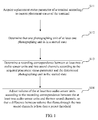
- the method includes the following steps:
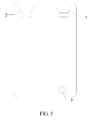
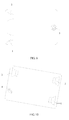
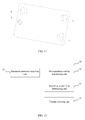
- placement status in which a user usually holds a terminal is used as a vertical-direction and upside-up state; as shown in FIG. 3 , if the terminal in the vertical-direction and upside-up state is rotated by 180 degrees on a plane on which the terminal is located, the current placement status of the terminal may be considered as a vertical-direction and upside-down state; if the terminal in the vertical-direction and upside-up state is rotated by 90 degrees in a clockwise direction on the plane on which the terminal is located, the current placement status of the terminal may be considered as a transverse-direction and upside-up state; and if the terminal in this state is rotated by 300 degrees in a clockwise direction on the plane on which the terminal is located, the current placement status of the terminal may be considered as an inclined placement state.
- the placement status of the terminal may be classified into the vertical-direction and upside-up state, the vertical-direction and upside-down state, the transverse-direction and upside-up state, the transverse-direction and upside-down state, and the inclined placement state.
- one placement state of the terminal is set as standard placement status, so that comparison may be performed on the terminal according to a deviation angle between the current placement status and the standard placement status, where an error is allowed for the deviation angle.
- standard status of the terminal is set to the vertical-direction and upside-up state
- the current placement status of the terminal may be considered as a transverse-direction and upside-up state
- the current placement status of the terminal may be considered as an inclined placement state
- a clockwise deviation angle between the current placement status of the terminal and the standard placement status is greater than 170 degrees and less than 190 degrees
- the current placement status of the terminal may be considered as a vertical-direction and upside-down state.
- an apparatus for acquiring the placement status parameter according to the current placement status of the terminal may be any one of apparatuses such as a gravitational acceleration sensor and a gyro sensor.
- the placement status parameter may be specifically a gravity sensing parameter (X, Y, Z) of the terminal, where X, Y, and Z indicate component values of gravitational accelerations generated by the terminal in an X-axis direction, a Y-axis direction, and a Z-axis direction, respectively.
- X, Y, Z indicate component values of gravitational accelerations generated by the terminal in an X-axis direction, a Y-axis direction, and a Z-axis direction, respectively.
- the gravity sensing parameter (X, Y, Z) when the terminal is currently in a vertical-direction and upside-up state, the gravity sensing parameter (X, Y, Z) may be (0, -10, 0); when the terminal is currently in a vertical-direction and upside-down state, the gravity sensing parameter (X, Y, Z) may be (0, 10, 0); when the terminal is currently in a transverse-direction and upside-up state, the gravity sensing parameter (X, Y, Z) may be (-10, 0, 0). It should be noted that, if an error is allowed for the deviation angle between the current placement status of the terminal and the specified standard placement status, a plurality of gravity sensing parameters may correspond to one placement state.
- an acquired gravity sensing parameter is (-1, -9, 1)
- a correspondence between a gravity sensing parameter and a placement state of a terminal may be set based on experience by a person skilled in the art, which is not limited in the present invention.
- the number of photographing units arranged on the terminal may be more than one, and positions of the photographing units may be arranged randomly.
- a surface having a screen of the terminal is referred to as a front surface of the terminal
- a surface opposite to the front surface of the terminal is referred to as a rear surface of the terminal
- a plane perpendicular to the front surface of the terminal is referred to as a side surface of the terminal.
- a photographing unit may be arranged on the front surface of the terminal (a front-facing photographing unit); the photographing unit may also be arranged on the rear surface of the terminal (a rear-facing photographing unit); and certainly, the photographing unit may be further arranged on the side surface of the terminal.
- the number and positions of photographing units of the terminal are not specifically limited in the present invention.
- that at least one photographing unit is arranged on the terminal may be that only one photographing unit is arranged on the terminal.
- a front-facing photographing unit or a rear-facing photographing unit is arranged on the terminal.
- That at least one photographing unit is arranged on the terminal may also be that two or more photographing units are arranged on the terminal.
- a front-facing photographing unit and a rear-facing photographing unit are both arranged on the terminal.
- the photographing unit may be a camera or an apparatus that provides a photographing function.
- the terminal includes a front-facing photographing unit and a rear-facing photographing unit
- location information of a recording object needs to be acquired first. Then, it is determined, according to the acquired location information of the recording object, that the front-facing photographing unit or the rear-facing photographing unit is in the started state.
- the front surface of the terminal and the rear surface of the terminal that are described above are complied, when the recording object is on a same side as the front surface of the terminal, it is determined that the front-facing photographing unit is in the started state; when the recording object is on a same side as the rear surface of the terminal, it is determined that the rear-facing photographing unit is in the started state.
- At least two audio sensor units are arranged on the terminal, where two audio sensor units or three or more audio sensor units may be arranged on the terminal. Generally, three or more audio sensor units are arranged on the terminal. If a cost is considered, two audio sensor units may also be arranged on the terminal; however, this arrangement is applicable to a situation where the current placement status of the terminal is the vertical-direction and upside-up state, the vertical-direction and upside-down state, the transverse-direction and upside-up state, and the transverse-direction and upside-down state, but a recording effect is not obvious when the current placement status of the terminal is the inclined placement state. It should be noted that, the number of audio sensor units arranged on the terminal is not limited in the present invention. In the present invention, the audio sensor unit may be a microphone or an apparatus that provides an audio transmission function.
- the following describes in detail how the terminal determines the recording correspondence between the audio sensor units and the two sound channels according to the placement status parameter and the photographing unit in the started state in two cases in which two audio sensor units and three audio sensor units are arranged on the terminal.
- a first audio sensor unit is arranged on the terminal: a first audio sensor unit and a second audio sensor unit separately.
- the first scenario may be specifically classified into the following eight cases according to different placement states of the terminal and the photographing unit in the started state.
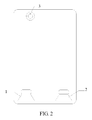
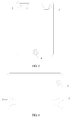
- Case 1 As shown in FIG. 2 , a first audio sensor unit 1 and a second audio sensor unit 2 are arranged symmetrically, with a vertical axis of the terminal being a central line; a front-facing photographing unit 3 arranged on the terminal is in a started state; and the current placement status of the terminal is the vertical-direction and upside-up state.
- a current placement status parameter of the terminal is acquired; then, according to the acquired placement status parameter and the determined front-facing photographing unit 3 in the started state, determining the recording correspondence between the audio sensor units and the two sound channels is specifically determining that the first audio sensor unit 1 records a right sound channel and the second audio sensor unit 2 records a left sound channel.
- the placement status parameter is a gravity sensing parameter (X, Y, Z) is used as an example.
- a gravity sensing parameter X, Y, Z
- the current placement status of the terminal is the vertical-direction and upside-up state.
- Case 2 As shown in FIG.
- a first audio sensor unit 1 and a second audio sensor unit 2 are arranged symmetrically, with a vertical axis of the terminal being a central line; a front-facing photographing unit 3 arranged on the terminal is in a started state; and the current placement status of the terminal is the vertical-direction and upside-down state.
- a current placement status parameter of the terminal is acquired; then, according to the acquired placement status parameter and the determined front-facing photographing unit 3 in the started state, determining the recording correspondence between the audio sensor units and the two sound channels is specifically determining that the first audio sensor unit 1 records a left sound channel and the second audio sensor unit 2 records a right sound channel.
- the placement status parameter is a gravity sensing parameter (X, Y, Z) is used as an example.
- a gravity sensing parameter X, Y, Z
- the current placement status of the terminal is the vertical-direction and upside-down state.
- Case 3 As shown in FIG.
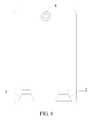
- a first audio sensor unit 1 and a second audio sensor unit 2 are arranged symmetrically, with a vertical axis of the terminal being a central line; a rear-facing photographing unit 4 arranged on the terminal is in a started state; and the current placement status of the terminal is the vertical-direction and upside-up state.
- a current placement status parameter of the terminal is acquired; then, according to the acquired placement status parameter and the determined rear-facing photographing unit 4 in the started state, determining the recording correspondence between the audio sensor units and the two sound channels is specifically determining that the first audio sensor unit 1 records a left sound channel and the second audio sensor unit 2 records a right sound channel.
- the placement status parameter is a gravity sensing parameter (X, Y, Z) is used as an example.
- a gravity sensing parameter X, Y, Z
- the current placement status of the terminal is the vertical-direction and upside-up state.
- Case 4 As shown in FIG.
- a first audio sensor unit 1 and a second audio sensor unit 2 are arranged symmetrically, with a vertical axis of the terminal being a central line; a rear-facing photographing unit 4 arranged on the terminal is in a started state; and the current placement status of the terminal is the vertical-direction and upside-down state.
- a current placement status parameter of the terminal is acquired; then, according to the acquired placement status parameter and the determined rear-facing photographing unit 4 in the started state, determining the recording correspondence between the audio sensor units and the two sound channels is specifically determining that the first audio sensor unit 1 records a right sound channel and the second audio sensor unit 2 records a left sound channel.
- the placement status parameter is a gravity sensing parameter (X, Y, Z) is used as an example.
- a gravity sensing parameter X, Y, Z
- the current placement state of the terminal is the vertical-direction and upside-down state.
- Case 5 As shown in FIG.
- a first audio sensor unit 1 and a second audio sensor unit 2 are arranged symmetrically, with a transverse axis of the terminal being a central line; a front-facing photographing unit 3 arranged on the terminal is in a started state; and the current placement status of the terminal is the transverse-direction and upside-up state.
- a current placement status parameter of the terminal is acquired; then, according to the acquired placement status parameter and the determined front-facing photographing unit 3 in the started state, determining the recording correspondence between the audio sensor units and the two sound channels is specifically determining that the first audio sensor unit 1 records a right sound channel and the second audio sensor unit 2 records a left sound channel.
- the placement status parameter is a gravity sensing parameter (X, Y, Z) is used as an example.
- a gravity sensing parameter of the terminal when an acquired current gravity sensing parameter of the terminal is (-10, 0, 0), correspondingly, the current placement status of the terminal is the transverse-direction and upside-up state.
- Case 6 As shown in FIG.
- a first audio sensor unit 1 and a second audio sensor unit 2 are arranged symmetrically, with a transverse axis of the terminal being a central line; a front-facing photographing unit 3 arranged on the terminal is in a started state; and the current placement status of the terminal is the transverse-direction and upside-down state.
- a current placement status parameter of the terminal is acquired; then, according to the acquired placement status parameter and the determined front-facing photographing unit 3 in the started state, determining the recording correspondence between the audio sensor units and the two sound channels is specifically determining that the first audio sensor unit 1 records a left sound channel and the second audio sensor unit 2 records a right sound channel.
- the placement status parameter is a gravity sensing parameter (X, Y, Z) is used as an example.
- a gravity sensing parameter 10, 0, 0
- the current placement status of the terminal is the transverse-direction and upside-down state.
- it may be determined, according to the acquired gravity sensing parameter (10, 0, 0) and the front-facing photographing unit 3 in the started state, that the first audio sensor unit 1 records the left sound channel and the second audio sensor unit 2 records the right sound channel.
- Case 7 As shown in FIG.
- a first audio sensor unit 1 and a second audio sensor unit 2 are arranged symmetrically, with a transverse axis of the terminal being a central line; a rear-facing photographing unit 4 arranged on the terminal is in a started state; and the current placement status of the terminal is the transverse-direction and upside-up state.
- the recording correspondence between the audio sensor units and the two sound channels is specifically determining that the first audio sensor unit 1 records a left sound channel and the second audio sensor unit 2 records a right sound channel.
- the placement status parameter is a gravity sensing parameter (X, Y, Z) is used as an example.
- a gravity sensing parameter of the terminal when an acquired current gravity sensing parameter of the terminal is (-10, 0, 0), correspondingly, the current placement status of the terminal is the transverse-direction and upside-up state.
- Case 8 As shown in FIG.
- a first audio sensor unit 1 and a second audio sensor unit 2 are arranged symmetrically, with a transverse axis of the terminal being a central line; a rear-facing photographing unit 4 arranged on the terminal is in a started state; and the current placement state of the terminal is the transverse-direction and upside-down state.
- a current placement status parameter of the terminal is acquired; then, according to the acquired placement status parameter and the determined rear-facing photographing unit 3 in the started state, determining the recording correspondence between the audio sensor units and the two sound channels is specifically determining that the first audio sensor unit 1 records a right sound channel and the second audio sensor unit 2 records a left sound channel.
- the placement status parameter is a gravity sensing parameter (X, Y, Z) is used as an example.
- a gravity sensing parameter 10, 0, 0
- the current placement status of the terminal is the transverse-direction and upside-down state.
- it may be determined, according to the acquired gravity sensing parameter (10, 0, 0) and the rear-facing photographing unit 4 in the started state, that the first audio sensor unit 1 records the right sound channel and the second audio sensor unit 2 records the left sound channel.
- a first audio sensor unit 1 and a second audio sensor unit 2 are arranged symmetrically, with a vertical axis of the terminal being a central line, and the second audio sensor unit 2 and a third audio sensor unit 3 are arranged symmetrically, with a transverse axis of the terminal being a central line.
- Determining the recording correspondence between the audio sensor units and the two sound channels is determined according to the placement status of the terminal and the determined photographing unit in the started state specifically includes the following two cases:
- the placement status parameter is a gravity sensing parameter (X, Y, Z) is used as an example.
- a gravity sensing parameter of the terminal when an acquired current gravity sensing parameter of the terminal is (-7, -1, 0), correspondingly, the current placement status of the terminal is the inclined placement state.
- a difference may be allowed between the volume that passes through the two sound channels; however, in order to ensure a better stereophonic effect, the difference needs to be within the preset threshold.
- the threshold may be set to 1 decibel, 5 decibels, or the like, and may be set by a person skilled in the art according to experience, which is not limited in the present invention. Specially, when the difference between the volume that passes through the two sound channels is zero, it means that the volume that passes through the two sound channels is equal.
- two audio sensor units are arranged on the terminal; and after the recording correspondence between the audio sensor units and the sound channels is determined, volume of a first audio sensor unit and a second audio sensor unit may be adjusted to gradually increase simultaneously, gradually decrease simultaneously, or increase to maximum simultaneously, so that a difference between volume that passes through the two sound channels is less than the preset threshold.
- three or more audio sensor units are arranged on the terminal; and after the recording correspondence between the audio sensor units and the sound channels is determined, volume of the audio sensor units is adjusted so that a difference between volume combined on the left sound channel and volume combined on the right sound channel by the audio sensor units is less than the preset threshold.
- a current placement status parameter of a terminal is acquired according to current placement status of the terminal, and it is determined that one photographing unit of at least one photographing unit of the terminal is in a started state; next, a recording correspondence between at least two audio sensor units and two sound channels is determined according to the acquired placement status parameter and the determined photographing unit in the started state; then, volume of the at least two audio sensor units is adjusted according to the recording correspondence, so that a difference between volume that passes through the two sound channels is less than a preset threshold.
- a manner of determining the recording correspondence between the at least two audio sensor units and the two sound channels according to the current placement status parameter of the terminal and the photographing unit in the started state, and then adjusting the volume of the at least two audio sensor units according to the recording correspondence enables the volume that passes through the two sound channels to be almost the same, thereby producing a stereophonic effect corresponding to the placement status of the terminal.
- a problem that a stereophonic effect of a recorded video is poor as a result of a change in location status of the terminal is solved, thereby improving quality of video recording and improving user experience.
- a recording correspondence between audio sensor units and the sound channels is determined according to the acquired placement status parameter and a camera in a started state, and the placement status parameter is determined according to the placement status of the terminal; therefore, a recording policy concerning the placement status of the terminal, the photographing unit in the started state, and the recording correspondence between the audio sensor units and the sound channels may be further configured and stored in the terminal. Accordingly, step 13 is specifically as follows: query the recording policy according to the acquired placement status parameter and the determined photographing unit in the started state, so as to determine a recording correspondence between the at least two audio sensor units and the two sound channels.
- the recording policy in this embodiment of the present invention may be stored in a form of a recording correspondence table, as exemplified in Table 1.
- Table 1 is an example in this embodiment of the present invention.
- Table 1 the recording policy concerning the placement status of the terminal, the photographing unit in the started state, and the recording correspondence between the audio sensor units and the sound channels is described by using an example in which the audio sensor units have a first audio sensor unit and a second audio sensor unit.
- Table 1 Placement status of a terminal Photographing unit in a started state Recording correspondence between audio sensor units and sound channels Vertical-direction and upside-up state Front-facing photographing unit A first audio sensor unit records a right sound channel, and a second audio sensor unit records a left sound channel Vertical-direction and upside-down state Front-facing photographing unit A first audio sensor unit records a left sound channel, and a second audio sensor unit records a right sound channel Transverse-direction and upside-up state Front-facing photographing unit A first audio sensor unit records a right sound channel, and a second audio sensor unit records a left sound channel Transverse-direction and upside-down state Front-facing photographing unit A first audio sensor unit records a left sound channel, and a second audio sensor unit records a right sound channel Vertical-direction and upside-up state Rear-facing photographing unit A first audio sensor unit records a left sound channel, and a second audio sensor unit records a right sound channel Vertical-direction and upside-up state Rear-facing photographing unit A first audio sensor unit records a
- the placement status of the terminal is the vertical-direction and upside-up state
- the recording correspondence between the audio sensor units and the sound channels may be directly acquired from a recording policy stored in the terminal, so that the terminal adjusts volume of the audio sensor units according to the acquired recording correspondence, so that a difference between volume that passes through the left and right sound channels is less than the preset threshold.
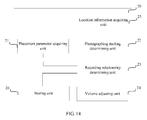
- Embodiment 2 of the present invention further provides a recording apparatus 20.
- This embodiment of the present invention is described by using an example in which this apparatus is applied to a terminal.
- the terminal includes two sound channels, at least two audio sensor units, and at least one photographing unit.
- the apparatus includes:
- a recording relationship determining unit 23 determines a recording correspondence between at least two audio sensor units and two sound channels according to a placement status parameter acquired by a placement parameter acquiring unit 21, and a photographing unit, determined by a photographing starting determining unit 22, in the started state, and an adjusting unit 24 adjusts volume of the at least two audio sensor units according to the recording correspondence, so that a difference between the volume that passes through the two sound channels is less than a preset threshold.
- This apparatus that determines the recording correspondence between the at least two audio sensor units and the two sound channels according to the current placement status parameter of the terminal and the photographing unit in the started state, and then adjusts the volume of the at least two audio sensor units according to the recording correspondence, enables the volume that passes through the two sound channels to be almost the same, thereby producing a stereophonic effect corresponding to placement status of the terminal.
- a problem that a stereophonic effect of a recorded video is poor as a result of a change in location status of the terminal is solved, thereby improving quality of video recording and improving user experience.
- the at least one photographing unit includes a front-facing photographing unit and/or a rear-facing photographing unit.
- the photographing starting determining unit 22 is specifically configured to: determine that the front-facing photographing unit or the rear-facing photographing unit is in a started state.
- the at least two audio sensor units include a first audio sensor unit and a second audio sensor unit, where the first audio sensor unit and the second audio sensor unit are arranged symmetrically, with a vertical axis of the terminal being a central line.
- the placement parameter acquiring unit 21 acquires a current placement status parameter of the terminal
- the photographing starting determining unit 22 determines that the front-facing photographing unit is in the started state.
- the recording relationship determining unit 23 is specifically configured to: determine, according to the placement status parameter acquired by the placement parameter acquiring unit 21, and the front-facing photographing unit, determined by the photographing starting determining unit 22, in the started state, that the first audio sensor unit records a right sound channel and the second audio sensor unit records a left sound channel.
- the placement parameter acquiring unit 21 acquires a current placement status parameter of the terminal
- the photographing starting determining unit 22 determines that the front-facing photographing unit is in the started state.
- the recording relationship determining unit 23 is specifically configured to: determine, according to the placement status parameter acquired by the placement parameter acquiring unit 21, and the front-facing photographing unit, determined by the photographing starting determining unit 22, in the started state, that the first audio sensor unit records a left sound channel and the second audio sensor unit records a right sound channel.
- the placement parameter acquiring unit 21 acquires a current placement status parameter of the terminal
- the photographing starting determining unit 22 determines that the rear-facing photographing unit is in the started state.
- the recording relationship determining unit 23 is specifically configured to: determine, according to the placement status parameter acquired by the placement parameter acquiring unit 21, and the rear-facing photographing unit, determined by the photographing starting determining unit 22, in the started state, that the first audio sensor unit records a left sound channel and the second audio sensor unit records a right sound channel.
- the placement parameter acquiring unit 21 acquires a current placement status parameter of the terminal
- the photographing starting determining unit 22 determines that the rear-facing photographing unit is in the started state.
- the recording relationship determining unit 23 is specifically configured to: determine, according to the placement status parameter acquired by the placement parameter acquiring unit 21, and the rear-facing photographing unit, determined by the photographing starting determining unit 22, in the started state, that the first audio sensor unit records a right sound channel and the second audio sensor unit records a left sound channel.
- the at least two audio sensor units include a first audio sensor unit and a second audio sensor unit, where the first audio sensor unit and the second audio sensor unit are arranged symmetrically, with a transverse axis of the terminal being a central line.
- the placement parameter acquiring unit 21 acquires a current placement status parameter of the terminal
- the photographing starting determining unit 22 determines that the front-facing photographing unit is in the started state.
- the recording relationship determining unit 23 is specifically configured to: determine, according to the placement status parameter acquired by the placement parameter acquiring unit 21, and the front-facing photographing unit, determined by the photographing starting determining unit 22, in the started state, that the first audio sensor unit records a right sound channel and the second audio sensor unit records a left sound channel.
- the placement parameter acquiring unit 21 acquires a current placement status parameter of the terminal
- the photographing starting determining unit 22 determines that the front-facing photographing unit is in the started state.
- the recording relationship determining unit 23 is specifically configured to: determine, according to the placement status parameter acquired by the placement parameter acquiring unit 21, and the front-facing photographing unit, determined by the photographing starting determining unit 22, in the started state, that the first audio sensor unit records a left sound channel and the second audio sensor unit records a right sound channel.
- the at least one photographing unit is the rear-facing photographing unit; if the current placement status of the terminal is a transverse-direction and upside-up state, the placement parameter acquiring unit 21 acquires a current placement status parameter of the terminal, and the photographing starting determining unit 22 determines that the rear-facing photographing unit is in the started state.
- the recording relationship determining unit 23 is specifically configured to: determine, according to the placement status parameter acquired by the placement parameter acquiring unit 21, and the rear-facing photographing unit, determined by the photographing starting determining unit 22, in the started state, that the first audio sensor unit records a left sound channel and the second audio sensor unit records a right sound channel.
- the at least one photographing unit is the rear-facing photographing unit; if the current placement status of the terminal is a transverse-direction and upside-down state, the placement parameter acquiring unit 21 acquires a current placement status parameter of the terminal, and the photographing starting determining unit 22 determines that the rear-facing photographing unit is in the started state.
- the recording relationship determining unit 23 is specifically configured to: determine, according to the placement status parameter acquired by the placement parameter acquiring unit 21, and the rear-facing photographing unit, determined by the photographing starting determining unit 22, in the started state, that the first audio sensor unit records a right sound channel and the second audio sensor unit records a left sound channel.
- the volume adjusting unit 24 is specifically configured to:
- a difference may be allowed between the volume that passes through the two sound channels; however, in order to ensure a better stereophonic effect, the difference needs to be within the preset threshold.
- the threshold may be set to 1 decibel, 5 decibels, or the like, and may be set by a person skilled in the art according to experience, which is not limited in the present invention.
- the at least one photographing unit includes the front-facing photographing unit and the rear-facing photographing unit.
- the apparatus 20 further includes:
- a surface having a screen of the terminal is referred to as a front surface of the terminal
- a surface opposite to the front surface of the terminal is referred to as a rear surface of the terminal
- a plane perpendicular to the front surface of the terminal is referred to as a side surface of the terminal
- the at least two audio sensor units are three audio sensor units.
- the recording relationship determining unit 23 is specifically configured to:
- the volume adjusting unit 24 is specifically configured to:
- the apparatus 20 further includes:
- the recording correspondence between the audio sensor units and the sound channels is determined according to the placement status parameter acquired by the placement parameter acquiring unit 21, and a camera, determined by the photographing starting determining unit 22, in the started state, and the placement status parameter is also determined according to the placement status of the terminal; therefore, a recording policy concerning the current placement status of the terminal, the photographing unit in the started state, and the recording correspondence between the audio sensor units and the sound channels may be further configured and stored in the storing unit 25 in advance.
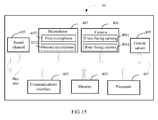
- FIG. 15 shows another embodiment of a recording apparatus provided in the present invention.
- a recording apparatus 40 shown in the figure is merely an example of the recording apparatus, and the recording apparatus 40 may have more or fewer parts than parts shown in the figure, may combine two or more parts, or may have different part configurations.
- the parts shown in figure may be implemented in hardware, software, or a combination of hardware and software, including one or more signal processing circuits and/or application specific integrated circuits.
- the recording apparatus 40 includes a processor 401, a memory 402, a communications interface 403, a bus 404, a gravity sensor 405, a camera 406, a microphone 407, and a sound channel 408.
- the processor 401, the memory 402, the communications interface 403, the sensor 405, the camera 406, and the microphone 407 are connected and communicate with each other by using the bus 404.
- the bus 404 may be an Industry Standard Architecture (Industry Standard Architecture, ISA for short) bus, a Peripheral Component Interconnect (Peripheral Component, PCI for short) bus, an Extended Industry Standard Architecture (Extended Industry Standard Architecture, EISA for short) bus, or the like.
- the bus 404 may be classified into an address bus, a data bus, a control bus, and the like.
- the bus is represented by using only one thick line in FIG. 15 ; however, it does not indicate that there is only one bus or only one type of bus.
- the gravity sensor 405 is configured to acquire a gravity sensing parameter of the apparatus according to current placement status of the apparatus.
- the camera 406 includes but is not limited to a front-facing camera 4061 and/or a rear-facing camera 4062.
- the memory 402 is configured to store executable program code, where the program code includes a computer operation instruction.
- the memory 402 may include a high-speed RAM memory, or may include a non-volatile memory (non-volatile memory), such as at least one disk memory.
- the memory 402 may be accessed by the processor 401, the communications interface 403, and the like.
- the processor 401 runs, by reading the executable program code stored in the memory 402, a program corresponding to the executable program code, so as to:
- the memory 402 may be further configured to store a recording policy concerning placement status of the apparatus, the camera in the started state, and a recording correspondence between microphones and sound channels, where the placement status of the apparatus may be specifically obtained by using the gravity sensing parameter detected by the gravity sensor.
- the recording policy is stored in the memory 402
- the gravity sensing parameter acquired by the gravity sensor 405 is (-1, -9, 1)
- the current placement status of the apparatus is a vertical-direction and upside-up state. If it is determined that a front-facing camera is in the started state, it may be queried from the memory 402 that a first microphone 4071 records a right sound channel and a second microphone 4072 records a left sound channel.
- the processor 401 may be further configured to query the recording policy according to the placement status parameter of the apparatus and the determined camera 406 in the started state, so as to determine the recording correspondence between the at least two microphones 407 and the two sound channels 408.
- the number of cameras 406 may be more than one, and positions of the cameras 406 may be arranged randomly.
- a surface having a screen of the apparatus is referred to as a front surface of the apparatus
- a surface opposite to the front surface of the apparatus is referred to as a rear surface of the apparatus
- a plane perpendicular to the front surface of the apparatus is referred to as a side surface of the apparatus.
- the camera 406 may be arranged on the front surface of the apparatus (the front-facing camera 4061); the camera 406 may also be arranged on the rear surface of the apparatus (the rear-facing camera 4062); and certainly, the camera 406 may be further arranged on the side surface of the apparatus.
- the camera 406 is specifically configured to determine that the front-facing camera 4061 or the rear-facing camera 4062 is in a started state.
- the microphone 407 includes a first microphone 4071 and a second microphone 4072, where the first microphone 4071 and the second microphone 4072 are arranged symmetrically, with a vertical axis of the apparatus being a central line.
- the gravity sensor 405 acquires a current gravity sensing parameter of the apparatus, and it is determined that the front-facing camera 4061 is in the started state.
- the processor 401 is specifically configured to: determine, according to the gravity sensing parameter acquired by the gravity sensor 405, and the front-facing camera, that the first microphone 4071 records a right sound channel and the second microphone 4072 records a left sound channel.
- the gravity sensor 405 acquires a current gravity sensing parameter of the apparatus, and it is determined that the front-facing camera 4061 is in the started state.
- the processor 401 is specifically configured to: determine, according to the gravity sensing parameter acquired by the gravity sensor 405, and the front-facing camera 4061 in the started state, that the first microphone 4071 records a right sound channel and the second microphone 4072 records a left sound channel.
- the gravity sensor 405 acquires a current gravity sensing parameter of the apparatus, and it is determined that the front-facing camera 4061 is in the started state.
- the processor 401 is specifically configured to: determine, according to the gravity sensing parameter acquired by the gravity sensor 405, and the front-facing camera 4061 in the started state, that the first microphone 4071 records a left sound channel and the second microphone 4072 records a right sound channel.
- the gravity sensor 405 acquires a current gravity sensing parameter of the apparatus, and it is determined that the rear-facing camera 4062 is in the started state.
- the processor 401 is specifically configured to: determine, according to the gravity sensing parameter acquired by the gravity sensor 405, and the rear-facing camera 4062 in the started state, that the first microphone 4071 records a left sound channel and the second microphone 4072 records a right sound channel.
- the gravity sensor 405 acquires a current gravity sensing parameter of the apparatus, and it is determined that the rear-facing camera 4062 is in the started state.
- the processor 401 is specifically configured to: determine, according to the gravity sensing parameter acquired by the gravity sensor 405, and the determined rear-facing camera 4062 in the started state, that the first microphone 4071 records the right sound channel and the second microphone 4072 records a left sound channel.
- the microphone 407 includes a first microphone 4071 and a second microphone 4072, where the first microphone 4071 and the second microphone 4072 are arranged symmetrically, with a transverse axis of the apparatus being a central line.
- the gravity sensor 405 acquires a current gravity sensing parameter of the apparatus, and it is determined that the front-facing camera 4061 is in the started state.
- the processor 401 is specifically configured to: determine, according to the gravity sensing parameter acquired by the gravity sensor 405, and the determined front-facing camera 4061 in the started state, that the first microphone 4071 records a right sound channel and the second microphone 4072 records a left sound channel.
- the gravity sensor 405 acquires a current gravity sensing parameter of the apparatus, and it is determined that the front-facing camera 4061 is in the started state.
- the processor 401 is specifically configured to: determine, according to the gravity sensing parameters acquired by the gravity sensor 405, and the determined front-facing camera 4061 in the started state, that the first microphone 4071 records a left sound channel and the second microphone 4072 records a right sound channel.
- the gravity sensor 405 acquires a current gravity sensing parameter of the apparatus, and it is determined that the rear-facing camera 4062 is in the started state.
- the processor 401 is specifically configured to: determine, according to the gravity sensing parameter acquired by the gravity sensor 405, and the determined rear-facing camera 4062 in the started state, that the first microphone 4071 records a left sound channel and the second microphone 4072 records a right sound channel.
- the gravity sensor 405 acquires a current gravity sensing parameter of the apparatus, and it is determined that the rear-facing camera 4062 is in the started state.
- the processor 401 is specifically configured to: determine, according to the gravity sensing parameter acquired by the gravity sensor 405, and the determined rear-facing camera 4062 in the started state, that the first microphone 4071 records a right sound channel and the second microphone 4072 records a left sound channel.
- the processor 401 is specifically configured to:
- a difference may be allowed between the volume that passes through the two sound channels; however, in order to ensure a better stereophonic effect, the difference needs to be within the preset threshold.
- the threshold may be set to 1 decibel, 5 decibels, or the like, and may be set by a person skilled in the art according to experience, which is not limited in the present invention.
- the camera 406 may include a front-facing camera 4061 and a rear-facing camera 4062.
- the processor 401 is further configured to acquire location information of a recording object.
- the camera 406 is specifically configured to determine, according to the location information that is acquired by the processor 401 and of the recording object, that the front-facing camera 4061 or the rear-facing camera 4062 is in the started state.
- a surface having a screen of the apparatus is referred to as a front surface of the apparatus
- a surface opposite to the front surface of the apparatus is referred to as a rear surface of the apparatus
- a plane perpendicular to the front surface of the apparatus is referred to as a side surface of the apparatus
- the microphone 407 has three microphones.
- the processor 401 is specifically configured to:
- the processor 401 is specifically configured to:
- the processor 401 may be a central processing unit (Central Processing Unit, CPU for short), or an application specific integrated circuit (Application Specific Integrated Circuit, ASIC for short), or be configured as one or more integrated circuits implementing the embodiments of the present invention.
- CPU Central Processing Unit
- ASIC Application Specific Integrated Circuit
- processor 401 in addition to providing the foregoing functions, may be further configured to implement other procedures in the method embodiments, and details are not described repeatedly herein.
- Embodiment 4 of the present invention provides a terminal 60.
- the terminal includes two sound channels 61, at least two audio sensor units 62, at least one photographing unit 63, and the recording apparatus 64 according to any embodiment of the embodiments of the recording apparatus.
- the terminal may be specifically a mobile phone, a tablet computer, a camera device, a video camera, a personal digital assistant, or the like.
- FIG. 17 shows a block diagram of a partial structure of a mobile phone 70 related to the terminal provided in this embodiment of the present invention.
- the mobile phone 70 includes modules such as a sensor 71, a camera 72, a microphone 73, a sound channel 74, and a recording apparatus 75.
- the sensor 71 acquires a placement parameter according to current placement status of the terminal, and sends the parameter to the recording apparatus 75.
- the camera 72 also sends information about a determined camera in a started state to the recording apparatus 75.
- the recording apparatus 75 acquires, according to the received placement parameter and the camera 72 in a started state, a recording correspondence between the microphone 73 and the sound channel 74 from a recording policy that is stored inside, so that one sound channel corresponds to at least one microphone. Moreover, the recording apparatus 75 records volume that is of the microphones 73 and adjusted according to the recording policy, so that a difference between volume that passes through two sound channels 74 is less than a preset threshold.
- FIG. 17 does not constitute any limitation to the mobile phone, and instead the mobile phone may include parts fewer or more than those shown in the figure, or combine some parts, or have different part configurations.
- the mobile phone 70 may further include an audio circuit, a speaker, a power supply module, and the like, which is not described herein.
- connection relationships between modules indicate that the modules have communication connections with each other, which may be specifically implemented as one or more communications buses or signal cables.
- the present invention may be implemented by software in addition to necessary universal hardware or by dedicated hardware only, including an application specific integrated circuit, a dedicated CPU, a dedicated memory, a dedicated component and the like.
- any functions that can be performed by a computer program can be easily implemented by using corresponding hardware.
- a specific hardware structure used to achieve a same function may be of various forms, for example, in a form of an analog circuit, a digital circuit, a dedicated circuit, or the like.
- software program implementation is a better implementation manner in most cases.
- the technical solutions of the present invention essentially or the part contributing to the prior art may be implemented in a form of a software product.
- the software product is stored in a readable storage medium, such as a floppy disk, a USB flash drive, a removable hard disk, a read-only memory (ROM, Read-Only Memory), a random access memory (RAM, Random Access Memory), a magnetic disk, or an optical disc of a computer, and includes several instructions for instructing a computer device (which may be a personal computer, a server, a network device, and the like) to perform the methods described in the embodiments of the present invention.
- a computer device which may be a personal computer, a server, a network device, and the like
Landscapes
- Engineering & Computer Science (AREA)
- Signal Processing (AREA)
- Multimedia (AREA)
- Physics & Mathematics (AREA)
- Acoustics & Sound (AREA)
- Studio Devices (AREA)
- Stereophonic System (AREA)
- Television Signal Processing For Recording (AREA)
Claims (25)
- Procédé d'enregistrement, le procédé étant appliqué à un terminal qui comprend deux canaux sonores, au moins deux unités de détection audio et au moins une unité photographique, et le procédé comprenant les opérations suivantes :acquérir un paramètre d'état de positionnement du terminal en fonction d'un état de positionnement en cours du terminal, le paramètre d'état de positionnement comportant un état dans la direction verticale et à l'endroit, un état dans la direction verticale et à l'envers, un état dans la direction transversale et à l'endroit, un état dans la direction transversale et à l'envers, ou un état de positionnement incliné ;déterminer qu'une unité photographique de l'au moins une unité photographique est dans un état démarré ;déterminer une correspondance d'enregistrement entre les au moins deux unités de détection audio et les deux canaux sonores en fonction du paramètre d'état de positionnement acquis et de l'unité photographique déterminée dans l'état démarré ; etajuster le volume des au moins deux unités de détection audio en fonction de la correspondance d'enregistrement entre les au moins deux unités de détection audio et les deux canaux sonores, de telle sorte qu'une différence entre le volume qui passe par les deux canaux sonores soit inférieure à un seuil préréglé ;le procédé comprenant en outre l'opération suivante :stocker une politique d'enregistrement visant à déterminer, en fonction de l'état de positionnement du terminal et de l'unité photographique dans l'état démarré, la correspondance d'enregistrement entre les unités de détection audio et les canaux sonores ; etl'opération consistant à déterminer une correspondance d'enregistrement entre les au moins deux unités de détection audio et les deux canaux sonores en fonction du paramètre d'état de positionnement acquis et de l'unité photographique déterminée dans l'état démarré étant spécifiquement : l'opération consistant à interroger la politique d'enregistrement en fonction du paramètre d'état de positionnement acquis et de l'unité photographique déterminée dans l'état démarré, de manière à déterminer la correspondance d'enregistrement entre les au moins deux unités de détection audio et les deux canaux sonores.
- Procédé selon la revendication 1, dans lequel :l'au moins une unité photographique comprend une unité photographique avant et/ou une unité photographique arrière ; etl'opération consistant à déterminer qu'une unité photographique de l'au moins une unité photographique est dans un état démarré étant spécifiquement : l'opération consistant à déterminer que l'unité photographique avant ou l'unité photographique arrière est dans un état démarré.
- Procédé selon la revendication 2, dans lequel :les au moins deux unités de détection audio comprennent une première unité de détection audio et une deuxième unité de détection audio, la première unité de détection audio et la deuxième unité de détection audio étant agencées symétriquement, avec un axe vertical du terminal étant une ligne centrale.
- Procédé selon la revendication 2 ou 3, le procédé comprenant les opérations suivantes :quand l'au moins une unité photographique est l'unité photographique avant,
si l'état de positionnement en cours du terminal est un état dans la direction verticale et à l'endroit, acquérir un paramètre d'état de positionnement en cours du terminal, et déterminer que l'unité photographique avant est dans l'état démarré, l'opération consistant à déterminer une correspondance d'enregistrement entre les au moins deux unités de détection audio et les deux canaux sonores en fonction du paramètre d'état de positionnement acquis et de l'unité photographique déterminée dans l'état démarré étant spécifiquement : l'opération consistant à déterminer, en fonction du paramètre d'état de positionnement acquis et de l'unité photographique avant déterminée dans l'état démarré, que la première unité de détection audio enregistre un canal sonore droit et la deuxième unité de détection audio enregistre un canal sonore gauche ; ou
si l'état de positionnement en cours du terminal est un état dans la direction verticale et à l'envers, acquérir un paramètre d'état de positionnement en cours du terminal, et déterminer que l'unité photographique avant est dans l'état démarré, l'opération consistant à déterminer une correspondance d'enregistrement entre les au moins deux unités de détection audio et les deux canaux sonores en fonction du paramètre d'état de positionnement acquis et de l'unité photographique déterminée dans l'état démarré étant spécifiquement : l'opération consistant à déterminer, en fonction du paramètre d'état de positionnement acquis et de l'unité photographique avant déterminée dans l'état démarré, que la première unité de détection audio enregistre un canal sonore gauche et la deuxième unité de détection audio enregistre un canal sonore droit. - Procédé selon la revendication 2 ou 3, le procédé comprenant les opérations suivantes :quand l'au moins une unité photographique est l'unité photographique arrière,
si l'état de positionnement en cours du terminal est un état dans la direction verticale et à l'endroit, acquérir un paramètre d'état de positionnement en cours du terminal, et déterminer que l'unité photographique arrière est dans l'état démarré, l'opération consistant à déterminer une correspondance d'enregistrement entre les au moins deux unités de détection audio et les deux canaux sonores en fonction du paramètre d'état de positionnement acquis et de l'unité photographique déterminée dans l'état démarré étant spécifiquement : l'opération consistant à déterminer, en fonction du paramètre d'état de positionnement acquis et de l'unité photographique arrière déterminée dans l'état démarré, que la première unité de détection audio enregistre un canal sonore gauche et la deuxième unité de détection audio enregistre un canal sonore droit ; ousi l'état de positionnement en cours du terminal est un état dans la direction verticale et à l'envers, acquérir un paramètre d'état de positionnement en cours du terminal, et déterminer que l'unité photographique arrière est dans l'état démarré, l'opération consistant à déterminer une correspondance d'enregistrement entre les au moins deux unités de détection audio et les deux canaux sonores en fonction du paramètre d'état de positionnement acquis et de l'unité photographique déterminée dans l'état démarré étant spécifiquement : l'opération consistant à déterminer, en fonction du paramètre d'état de positionnement acquis et de l'unité photographique arrière déterminée dans l'état démarré, que la première unité de détection audio enregistre un canal sonore droit et la deuxième unité de détection audio enregistre un canal sonore gauche. - Procédé selon la revendication 2, dans lequel :les au moins deux unités de détection audio comprennent une première unité de détection audio et une deuxième unité de détection audio, la première unité de détection audio et la deuxième unité de détection audio étant agencées symétriquement, avec un axe transversal du terminal étant une ligne centrale.
- Procédé selon la revendication 2 ou 6, le procédé comprenant les opérations suivantes :quand l'au moins une unité photographique est l'unité photographique avant,
si l'état de positionnement en cours du terminal est un état dans la direction transversale et à l'endroit, acquérir un paramètre d'état de positionnement en cours du terminal, et déterminer que l'unité photographique avant est dans l'état démarré, l'opération consistant à déterminer une correspondance d'enregistrement entre les au moins deux unités de détection audio et les deux canaux sonores en fonction du paramètre d'état de positionnement acquis et de l'unité photographique déterminée dans l'état démarré étant spécifiquement : l'opération consistant à déterminer, en fonction du paramètre d'état de positionnement acquis et de l'unité photographique avant déterminée dans l'état démarré, que la première unité de détection audio enregistre un canal sonore droit et la deuxième unité de détection audio enregistre un canal sonore gauche ; ousi l'état de positionnement en cours du terminal est un état dans la direction transversale et à l'envers, acquérir un paramètre d'état de positionnement en cours du terminal, et déterminer que l'unité photographique avant est dans l'état démarré, l'opération consistant à déterminer une correspondance d'enregistrement entre les au moins deux unités de détection audio et les deux canaux sonores en fonction du paramètre d'état de positionnement acquis et de l'unité photographique déterminée dans l'état démarré étant spécifiquement : l'opération consistant à déterminer, en fonction du paramètre d'état de positionnement acquis et de l'unité photographique avant déterminée dans l'état démarré, que la première unité de détection audio enregistre un canal sonore gauche et la deuxième unité de détection audio enregistre un canal sonore droit. - Procédé selon la revendication 2 ou 6, le procédé comprenant les opérations suivantes :quand l'au moins une unité photographique est l'unité photographique arrière,
si l'état de positionnement en cours du terminal est un état dans la direction transversale et à l'endroit, acquérir un paramètre d'état de positionnement en cours du terminal, et déterminer que l'unité photographique arrière est dans l'état démarré, l'opération consistant à déterminer une correspondance d'enregistrement entre les au moins deux unités de détection audio et les deux canaux sonores en fonction du paramètre d'état de positionnement acquis et de l'unité photographique déterminée dans l'état démarré étant spécifiquement : l'opération consistant à déterminer, en fonction du paramètre d'état de positionnement acquis et de l'unité photographique arrière déterminée dans l'état démarré, que la première unité de détection audio enregistre un canal sonore gauche et la deuxième unité de détection audio enregistre un canal sonore droit ; ousi l'état de positionnement en cours du terminal est un état dans la direction transversale et à l'envers, acquérir un paramètre d'état de positionnement en cours du terminal, et déterminer que l'unité photographique arrière est dans l'état démarré, l'opération consistant à déterminer une correspondance d'enregistrement entre les au moins deux unités de détection audio et les deux canaux sonores en fonction du paramètre d'état de positionnement acquis et de l'unité photographique déterminée dans l'état démarré étant spécifiquement : l'opération consistant à déterminer, en fonction du paramètre d'état de positionnement acquis et de l'unité photographique arrière dans l'état démarré, que la première unité de détection audio enregistre un canal sonore droit et la deuxième unité de détection audio enregistre un canal sonore gauche. - Procédé selon l'une quelconque des revendications 3 à 8, dans lequel l'ajustement du volume des au moins deux unités de détection audio en fonction de la correspondance d'enregistrement entre les au moins deux unités de détection audio et les deux canaux sonores, de telle sorte qu'une différence entre le volume qui passe par les deux canaux sonores soit inférieure à un seuil préréglé comprend les opérations suivantes :ajuster, en fonction d'une correspondance d'enregistrement entre la première unité de détection audio, la deuxième unité de détection audio, et les deux canaux sonores, le volume de la première unité de détection audio et de la deuxième unité de détection audio pour augmenter progressivement les deux simultanément, diminuer progressivement les deux simultanément, ou augmenter les deux jusqu'à un maximum simultanément, de telle sorte que la différence entre le volume qui passe par les deux canaux sonores soit inférieure au seuil préréglé.
- Procédé selon la revendication 2, dans lequel : l'au moins une unité photographique comprend l'unité photographique avant et l'unité photographique arrière ;
avant l'opération consistant à déterminer qu'une unité photographique de l'au moins une unité photographique est dans un état démarré, le procédé comprenant en outre l'opération suivante :acquérir des informations d'emplacement d'un objet d'enregistrement ;l'opération consistant à déterminer qu'une unité photographique de l'au moins une unité photographique est dans un état démarré étant spécifiquement : l'opération consistant à déterminer, en fonction des informations d'emplacement de l'objet d'enregistrement acquises, que l'unité photographique avant ou l'unité photographique arrière est dans l'état démarré ; dans lequelquand l'objet d'enregistrement est sur un même côté qu'une surface avant du terminal, il est déterminé que l'unité photographique avant est dans l'état démarré ; etquand l'objet d'enregistrement est sur un même côté qu'une surface arrière du terminal, il est déterminé que l'unité photographique arrière est dans l'état démarré. - Procédé selon la revendication 10, dans lequel :les au moins deux unités de détection audio sont trois unités de détection audio ; etl'opération consistant à déterminer une correspondance d'enregistrement entre les au moins deux unités de détection audio et les deux canaux sonores en fonction du paramètre d'état de positionnement acquis et de l'unité photographique déterminée dans l'état démarré comprend les opérations suivantes :déterminer, en fonction du paramètre d'état de positionnement acquis, que les trois unités de détection audio sont dans un état démarré ; etdéterminer, en fonction de l'unité photographique déterminée dans l'état démarré, que deux unités de détection audio sur les trois unités de détection audio enregistrent un canal sonore droit et une unité de détection audio enregistre un canal sonore gauche, ou que deux unités de détection audio sur les trois unités de détection audio enregistrent un canal sonore gauche et une unité de détection audio enregistre un canal sonore droit.
- Procédé selon la revendication 11, dans lequel l'ajustement du volume des au moins deux unités de détection audio en fonction de la correspondance d'enregistrement entre les au moins deux unités de détection audio et les deux canaux sonores, de telle sorte qu'une différence entre le volume qui passe par les deux canaux sonores soit inférieure à un seuil préréglé comprend les opérations suivantes :quand il est déterminé que deux unités de détection audio sur les trois unités de détection audio enregistrent le canal sonore droit et une unité de détection audio enregistre le canal sonore gauche, ajuster le volume combiné des deux unités de détection audio qui enregistrent le canal sonore droit pour diminuer progressivement le volume combiné, et ajuster le volume de l'unité de détection audio qui enregistre le canal sonore gauche au maximum ou pour augmenter progressivement le volume, de telle sorte que la différence entre le volume qui passe par les deux canaux sonores soit inférieure au seuil préréglé ; ouquand il est déterminé que deux unités de détection audio sur les trois unités de détection audio enregistrent le canal sonore gauche et une unité de détection audio enregistre le canal sonore droit, ajuster le volume combiné des deux unités de détection audio qui enregistrent le canal sonore gauche pour diminuer progressivement le volume combiné, et ajuster le volume de l'unité de détection audio qui enregistre le canal sonore droit au maximum ou pour augmenter progressivement le volume, de telle sorte que la différence entre le volume qui passe par les deux canaux sonores soit inférieure au seuil préréglé.
- Appareil d'enregistrement, l'appareil étant appliqué à un terminal qui comprend deux canaux sonores, au moins deux unités de détection audio et au moins une unité photographique, et l'appareil comprenant :une unité d'acquisition de paramètre de positionnement, configurée pour acquérir un paramètre d'état de positionnement du terminal en fonction d'un état de positionnement en cours du terminal, le paramètre d'état de positionnement comportant un état dans la direction verticale et à l'endroit, un état dans la direction verticale et à l'envers, un état dans la direction transversale et à l'endroit, un état dans la direction transversale et à l'envers, ou un état de positionnement incliné ;une unité de détermination de démarrage de photographie, configurée pour déterminer qu'une unité photographique de l'au moins une unité photographique est dans un état démarré ;une unité de détermination de relation d'enregistrement, configurée pour déterminer une correspondance d'enregistrement entre les au moins deux unités de détection audio et les deux canaux sonores en fonction du paramètre d'état de positionnement acquis par l'unité d'acquisition de paramètre de positionnement, et de l'unité photographique, déterminée par l'unité de détermination de démarrage de photographie, dans l'état démarré ; etune unité d'ajustement du volume, configurée pour ajuster le volume des au moins deux unités de détection audio en fonction de la correspondance d'enregistrement qui est déterminée par l'unité de détermination de relation d'enregistrement et entre les au moins deux unités de détection audio et les deux canaux sonores, de telle sorte qu'une différence entre le volume qui passe par les deux canaux sonores soit inférieure à un seuil préréglé ;l'appareil comprenant en outre :une unité de stockage, configurée pour stocker, dans le terminal à l'avance, une politique d'enregistrement visant à déterminer, en fonction de l'état de positionnement en cours du terminal et de l'unité photographique déterminée dans l'état démarré, la correspondance d'enregistrement entre les unités de détection audio et les canaux sonores ; etl'unité de détermination de relation d'enregistrement étant également configurée pour interroger la politique d'enregistrement en fonction du paramètre d'état de positionnement acquis par l'unité d'acquisition de paramètre de positionnement, et de l'unité photographique, déterminée par l'unité de détermination de démarrage de photographie, dans l'état démarré, de manière à déterminer la correspondance d'enregistrement entre les au moins deux unités de détection audio et les deux canaux sonores.
- Appareil selon la revendication 13, dans lequel :l'au moins une unité photographique comprend une unité photographique avant et/ou une unité photographique arrière ; etl'unité de détermination de démarrage de photographie est spécifiquement configurée pour : déterminer que l'unité photographique avant ou l'unité photographique arrière est dans un état démarré.
- Appareil selon la revendication 14, dans lequel :les au moins deux unités de détection audio comprennent une première unité de détection audio et une deuxième unité de détection audio, la première unité de détection audio et la deuxième unité de détection audio étant agencées symétriquement, avec un axe vertical du terminal étant une ligne centrale.
- Appareil selon la revendication 14 ou 15, dans lequel :quand l'au moins une unité photographique est l'unité photographique avant,
si l'état de positionnement en cours du terminal est un état dans la direction verticale et à l'endroit, l'unité d'acquisition de paramètre de positionnement acquiert un paramètre d'état de positionnement en cours du terminal, et l'unité de détermination de démarrage de photographie détermine que l'unité photographique avant est dans l'état démarré, l'unité de détermination de relation d'enregistrement étant spécifiquement configurée pour : déterminer, en fonction du paramètre d'état de positionnement acquis par l'unité d'acquisition de paramètre de positionnement, et de l'unité photographique avant, déterminée par l'unité de détermination de démarrage de photographie, dans l'état démarré, que la première unité de détection audio enregistre un canal sonore droit et la deuxième unité de détection audio enregistre un canal sonore gauche ; ousi l'état de positionnement en cours du terminal est un état dans la direction verticale et à l'envers, l'unité d'acquisition de paramètre de positionnement acquiert un paramètre d'état de positionnement en cours du terminal, et l'unité de détermination de démarrage de photographie détermine que l'unité photographique avant est dans l'état démarré, l'unité de détermination de relation d'enregistrement étant spécifiquement configurée pour : déterminer, en fonction du paramètre d'état de positionnement acquis par l'unité d'acquisition de paramètre de positionnement, et de l'unité photographique avant, déterminée par l'unité de détermination de démarrage de photographie, dans l'état démarré, que la première unité de détection audio enregistre un canal sonore gauche et la deuxième unité de détection audio enregistre un canal sonore droit. - Appareil selon la revendication 14 ou 15, dans lequel :quand l'au moins une unité photographique est l'unité photographique arrière,
si l'état de positionnement en cours du terminal est un état dans la direction verticale et à l'endroit, l'unité d'acquisition de paramètre de positionnement acquiert un paramètre d'état de positionnement en cours du terminal, et l'unité de détermination de démarrage de photographie détermine que l'unité photographique arrière est dans l'état démarré, l'unité de détermination de relation d'enregistrement étant spécifiquement configurée pour : déterminer, en fonction du paramètre d'état de positionnement acquis par l'unité d'acquisition de paramètre de positionnement, et de l'unité photographique arrière, déterminée par l'unité de détermination de démarrage de photographie, dans l'état démarré, que la première unité de détection audio enregistre un canal sonore gauche et la deuxième unité de détection audio enregistre un canal sonore droit ; ousi l'état de positionnement en cours du terminal est un état dans la direction verticale et à l'envers, l'unité d'acquisition de paramètre de positionnement acquiert un paramètre d'état de positionnement en cours du terminal, et l'unité de détermination de démarrage de photographie détermine que l'unité photographique arrière est dans l'état démarré, l'unité de détermination de relation d'enregistrement étant spécifiquement configurée pour : déterminer, en fonction du paramètre d'état de positionnement acquis par l'unité d'acquisition de paramètre de positionnement, et de l'unité photographique arrière, déterminée par l'unité de détermination de démarrage de photographie, dans l'état démarré, que la première unité de détection audio enregistre un canal sonore droit et la deuxième unité de détection audio enregistre un canal sonore gauche. - Appareil selon la revendication 14, dans lequel :les au moins deux unités de détection audio comprennent une première unité de détection audio et une deuxième unité de détection audio, la première unité de détection audio et la deuxième unité de détection audio étant agencées symétriquement, avec un axe transversal du terminal étant une ligne centrale.
- Appareil selon la revendication 14 ou 18, dans lequel :quand l'au moins une unité photographique est l'unité photographique avant,
si l'état de positionnement en cours du terminal est un état dans la direction transversale et à l'endroit, l'unité d'acquisition de paramètre de positionnement acquiert un paramètre d'état de positionnement en cours du terminal, et l'unité de détermination de démarrage de photographie détermine que l'unité photographique avant est dans l'état démarré, l'unité de détermination de relation d'enregistrement étant spécifiquement configurée pour : déterminer, en fonction du paramètre d'état de positionnement acquis par l'unité d'acquisition de paramètre de positionnement, et de l'unité photographique avant, déterminée par l'unité de détermination de démarrage de photographie, dans l'état démarré, que la première unité de détection audio enregistre un canal sonore droit et la deuxième unité de détection audio enregistre un canal sonore gauche ; ousi l'état de positionnement en cours du terminal est un état dans la direction transversale et à l'envers, l'unité d'acquisition de paramètre de positionnement acquiert un paramètre d'état de positionnement en cours du terminal, et l'unité de détermination de démarrage de photographie détermine que l'unité photographique avant est dans l'état démarré, l'unité de détermination de relation d'enregistrement étant spécifiquement configurée pour : déterminer, en fonction du paramètre d'état de positionnement acquis par l'unité d'acquisition de paramètre de positionnement, et de l'unité photographique avant, déterminée par l'unité de détermination de démarrage de photographie, dans l'état démarré, que la première unité de détection audio enregistre un canal sonore gauche et la deuxième unité de détection audio enregistre un canal sonore droit. - Appareil selon la revendication 14 ou 18, dans lequel :quand l'au moins une unité photographique est l'unité photographique arrière,
si l'état de positionnement en cours du terminal est un état dans la direction transversale et à l'endroit, l'unité d'acquisition de paramètre de positionnement acquiert un paramètre d'état de positionnement en cours du terminal, et l'unité de détermination de démarrage de photographie détermine que l'unité photographique arrière est dans l'état démarré, l'unité de détermination de relation d'enregistrement étant spécifiquement configurée pour : déterminer, en fonction du paramètre d'état de positionnement acquis par l'unité d'acquisition de paramètre de positionnement, et de l'unité photographique arrière, déterminée par l'unité de détermination de démarrage de photographie, dans l'état démarré, que la première unité de détection audio enregistre un canal sonore gauche et la deuxième unité de détection audio enregistre un canal sonore droit ; ousi l'état de positionnement en cours du terminal est un état dans la direction transversale et à l'envers, l'unité d'acquisition de paramètre de positionnement acquiert un paramètre d'état de positionnement en cours du terminal, et l'unité de détermination de démarrage de photographie détermine que l'unité photographique arrière est dans l'état démarré, l'unité de détermination de relation d'enregistrement étant spécifiquement configurée pour : déterminer, en fonction du paramètre d'état de positionnement acquis par l'unité d'acquisition de paramètre de positionnement, et de l'unité photographique arrière, déterminée par l'unité de détermination de démarrage de photographie, dans l'état démarré, que la première unité de détection audio enregistre un canal sonore droit et la deuxième unité de détection audio enregistre un canal sonore gauche. - Appareil selon l'une quelconque des revendications 15 à 20, dans lequel l'unité d'ajustement du volume est spécifiquement configurée pour :ajuster, en fonction d'une correspondance d'enregistrement entre la première unité de détection audio, la deuxième unité de détection audio, et les deux canaux sonores, le volume de la première unité de détection audio et de la deuxième unité de détection audio pour augmenter progressivement les deux simultanément, diminuer progressivement les deux simultanément, ou augmenter les deux jusqu'à un maximum simultanément, de telle sorte que la différence entre le volume qui passe par les deux canaux sonores soit inférieure au seuil préréglé.
- Appareil selon la revendication 14, dans lequel l'au moins une unité photographique comprend l'unité photographique avant et l'unité photographique arrière ; l'appareil comprenant en outre :une unité d'acquisition d'informations d'emplacement, configurée pour acquérir des informations d'emplacement d'un objet d'enregistrement ;l'unité de détermination de démarrage de photographie étant spécifiquement configurée pour : déterminer, en fonction des informations d'emplacement concernant l'objet d'enregistrement et acquises par l'unité d'acquisition d'informations d'emplacement, que l'unité photographique avant ou l'unité photographique arrière est dans l'état démarré, dans lequel :quand l'objet d'enregistrement est sur un même côté qu'une surface avant du terminal, l'unité de détermination de démarrage de photographie détermine que l'unité photographique avant est dans l'état démarré ; et quand l'objet d'enregistrement est sur un même côté qu'une surface arrière du terminal, l'unité de détermination de démarrage de photographie détermine que l'unité photographique arrière est dans l'état démarré.
- Appareil selon la revendication 22, dans lequel :les au moins deux unités de détection audio sont trois unités de détection audio ; et l'unité de détermination de relation d'enregistrement est spécifiquement configurée pour :déterminer, en fonction du paramètre d'état de positionnement acquis, que les trois unités de détection audio sont dans un état démarré ; etdéterminer, en fonction de l'unité photographique déterminée dans l'état démarré, que deux unités de détection audio sur les trois unités de détection audio enregistrent un canal sonore droit et une unité de détection audio enregistre un canal sonore gauche, ou que deux unités de détection audio sur les trois unités de détection audio enregistrent un canal sonore gauche et une unité de détection audio enregistre un canal sonore droit.
- Appareil selon la revendication 23, dans lequel l'unité d'ajustement du volume est spécifiquement configurée pour :quand il est déterminé que deux unités de détection audio sur les trois unités de détection audio enregistrent le canal sonore droit et une unité de détection audio enregistre le canal sonore gauche, ajuster le volume combiné des deux unités de détection audio qui enregistrent le canal sonore droit pour diminuer progressivement le volume combiné, et ajuster le volume de l'unité de détection audio qui enregistre le canal sonore gauche au maximum ou pour augmenter progressivement le volume, de telle sorte que la différence entre le volume qui passe par les deux canaux sonores soit inférieure au seuil préréglé ; ouquand il est déterminé que deux unités de détection audio sur les trois unités de détection audio enregistrent le canal sonore gauche et une unité de détection audio enregistre le canal sonore droit, ajuster le volume combiné des deux unités de détection audio qui enregistrent le canal sonore gauche pour diminuer progressivement le volume combiné, et ajuster le volume de l'unité de détection audio qui enregistre le canal sonore droit au maximum ou pour augmenter progressivement le volume, de telle sorte que la différence entre le volume qui passe par les deux canaux sonores soit inférieure au seuil préréglé.
- Terminal d'enregistrement, le terminal comprenant deux canaux sonores, au moins deux unités de détection audio, au moins une unité photographique, et l'appareil d'enregistrement selon l'une quelconque des revendications 13 à 24.
Priority Applications (1)
| Application Number | Priority Date | Filing Date | Title |
|---|---|---|---|
| EP16183997.2A EP3190810B1 (fr) | 2013-09-03 | 2014-08-06 | Procédé d'enregistrement, appareil et terminal |
Applications Claiming Priority (2)
| Application Number | Priority Date | Filing Date | Title |
|---|---|---|---|
| CN201310395351.2A CN103458210B (zh) | 2013-09-03 | 2013-09-03 | 一种录制方法、装置及终端 |
| PCT/CN2014/083789 WO2015032254A1 (fr) | 2013-09-03 | 2014-08-06 | Procédé et appareil d'enregistrement, et terminal |
Related Child Applications (2)
| Application Number | Title | Priority Date | Filing Date |
|---|---|---|---|
| EP16183997.2A Division EP3190810B1 (fr) | 2013-09-03 | 2014-08-06 | Procédé d'enregistrement, appareil et terminal |
| EP16183997.2A Division-Into EP3190810B1 (fr) | 2013-09-03 | 2014-08-06 | Procédé d'enregistrement, appareil et terminal |
Publications (3)
| Publication Number | Publication Date |
|---|---|
| EP2871855A1 EP2871855A1 (fr) | 2015-05-13 |
| EP2871855A4 EP2871855A4 (fr) | 2015-07-22 |
| EP2871855B1 true EP2871855B1 (fr) | 2016-10-26 |
Family
ID=49740115
Family Applications (2)
| Application Number | Title | Priority Date | Filing Date |
|---|---|---|---|
| EP16183997.2A Active EP3190810B1 (fr) | 2013-09-03 | 2014-08-06 | Procédé d'enregistrement, appareil et terminal |
| EP14814668.1A Active EP2871855B1 (fr) | 2013-09-03 | 2014-08-06 | Procédé et appareil d'enregistrement, et terminal |
Family Applications Before (1)
| Application Number | Title | Priority Date | Filing Date |
|---|---|---|---|
| EP16183997.2A Active EP3190810B1 (fr) | 2013-09-03 | 2014-08-06 | Procédé d'enregistrement, appareil et terminal |
Country Status (5)
| Country | Link |
|---|---|
| US (1) | US20150117833A1 (fr) |
| EP (2) | EP3190810B1 (fr) |
| CN (1) | CN103458210B (fr) |
| ES (2) | ES2704755T3 (fr) |
| WO (1) | WO2015032254A1 (fr) |
Families Citing this family (13)
| Publication number | Priority date | Publication date | Assignee | Title |
|---|---|---|---|---|
| CN103458210B (zh) * | 2013-09-03 | 2017-02-22 | 华为技术有限公司 | 一种录制方法、装置及终端 |
| CN103841348B (zh) * | 2014-03-31 | 2017-03-08 | 华为技术有限公司 | 视音频录制效果的调节方法、装置和系统 |
| US20150326617A1 (en) * | 2014-05-06 | 2015-11-12 | DoNotGeoTrack, Inc. | Privacy Control Processes for Mobile Devices, Wearable Devices, other Networked Devices, and the Internet of Things |
| CN104320544B (zh) * | 2014-11-10 | 2017-10-24 | 广东欧珀移动通信有限公司 | 移动终端的麦克风控制方法及移动终端 |
| CN106027933B (zh) * | 2016-06-21 | 2019-02-15 | 维沃移动通信有限公司 | 一种视频的录制、播放方法及移动终端 |
| CN107920310A (zh) * | 2017-11-14 | 2018-04-17 | 维沃移动通信有限公司 | 一种多麦克风录音的方法及移动终端 |
| CN108134903B (zh) * | 2017-12-25 | 2020-01-14 | Oppo广东移动通信有限公司 | 拍摄方法及相关产品 |
| AU2019271499B2 (en) * | 2018-05-18 | 2021-10-07 | Gentex Corporation | Headset communication system |
| CN111050269B (zh) * | 2018-10-15 | 2021-11-19 | 华为技术有限公司 | 音频处理方法和电子设备 |
| CN110351629B (zh) * | 2019-07-16 | 2021-01-19 | 广州国音智能科技有限公司 | 一种收音方法、收音装置及终端 |
| KR102944612B1 (ko) * | 2020-01-13 | 2026-03-26 | 삼성전자주식회사 | 전자 장치 및 그 제어 방법 |
| CN111405416B (zh) * | 2020-03-20 | 2022-06-24 | 北京达佳互联信息技术有限公司 | 立体声录制方法、电子设备及存储介质 |
| WO2025115843A1 (fr) * | 2023-11-29 | 2025-06-05 | 富士フイルム株式会社 | Dispositif d'imagerie |
Family Cites Families (21)
| Publication number | Priority date | Publication date | Assignee | Title |
|---|---|---|---|---|
| DE2950156A1 (de) * | 1979-12-13 | 1981-06-19 | Gustav Ing Grad Flier | Automatische stereo-balance regelung |
| KR19990026651A (ko) * | 1997-09-25 | 1999-04-15 | 윤종용 | 입체 음향 기록기능을 갖는 음향 기록장치 및그에 따른 입체 음향 기록방법 |
| CN2406435Y (zh) * | 1999-11-30 | 2000-11-15 | 林智文 | 无线环绕音频处理电路 |
| JP3636057B2 (ja) * | 2000-10-13 | 2005-04-06 | ソニー株式会社 | 携帯型情報処理装置、携帯型情報処理装置における情報処理方法及び携帯型情報処理装置におけるプログラム格納媒体 |
| US7110558B1 (en) * | 2000-10-30 | 2006-09-19 | Verizon Corporate Services Group Inc. | Systems and methods for automatically adjusting the volume of an audio source |
| JP4288971B2 (ja) * | 2003-03-20 | 2009-07-01 | カシオ計算機株式会社 | 携帯電子機器及びその表示制御方法 |
| KR20060098366A (ko) * | 2003-09-22 | 2006-09-18 | 코닌클리케 필립스 일렉트로닉스 엔.브이. | 전기 장치, 시스템 및 방법 |
| GB0419346D0 (en) * | 2004-09-01 | 2004-09-29 | Smyth Stephen M F | Method and apparatus for improved headphone virtualisation |
| JP2006295313A (ja) * | 2005-04-06 | 2006-10-26 | Sony Corp | 情報処理装置および方法、記録媒体、並びにプログラム |
| JP2012509038A (ja) * | 2008-11-14 | 2012-04-12 | ザット コーポレーション | 動的音量制御及び複数空間処理防止 |
| US8150063B2 (en) * | 2008-11-25 | 2012-04-03 | Apple Inc. | Stabilizing directional audio input from a moving microphone array |
| JP2011071962A (ja) * | 2009-08-28 | 2011-04-07 | Sanyo Electric Co Ltd | 撮像装置及び再生装置 |
| US20110316768A1 (en) * | 2010-06-28 | 2011-12-29 | Vizio, Inc. | System, method and apparatus for speaker configuration |
| US9031256B2 (en) * | 2010-10-25 | 2015-05-12 | Qualcomm Incorporated | Systems, methods, apparatus, and computer-readable media for orientation-sensitive recording control |
| CN201839330U (zh) * | 2010-11-09 | 2011-05-18 | 深圳市嘉兰图设计有限公司 | 一种双屏手机 |
| CN201967106U (zh) * | 2010-12-07 | 2011-09-07 | 北京乐投科技有限公司 | 平板电脑立体双声道音响系统 |
| CN102130992B (zh) * | 2011-01-21 | 2014-05-07 | 宇龙计算机通信科技(深圳)有限公司 | 一种音效处理方法及终端 |
| CN202068572U (zh) * | 2011-02-16 | 2011-12-07 | 上海弘广电子科技有限公司 | 网络音效处理器 |
| US20130028446A1 (en) * | 2011-07-29 | 2013-01-31 | Openpeak Inc. | Orientation adjusting stereo audio output system and method for electrical devices |
| CN202889423U (zh) * | 2012-10-31 | 2013-04-17 | 广东欧珀移动通信有限公司 | 一种具有对称功能的手机 |
| CN103458210B (zh) * | 2013-09-03 | 2017-02-22 | 华为技术有限公司 | 一种录制方法、装置及终端 |
-
2013
- 2013-09-03 CN CN201310395351.2A patent/CN103458210B/zh active Active
-
2014
- 2014-08-06 WO PCT/CN2014/083789 patent/WO2015032254A1/fr not_active Ceased
- 2014-08-06 EP EP16183997.2A patent/EP3190810B1/fr active Active
- 2014-08-06 ES ES16183997T patent/ES2704755T3/es active Active
- 2014-08-06 EP EP14814668.1A patent/EP2871855B1/fr active Active
- 2014-08-06 ES ES14814668.1T patent/ES2613635T3/es active Active
- 2014-12-31 US US14/587,336 patent/US20150117833A1/en not_active Abandoned
Also Published As
| Publication number | Publication date |
|---|---|
| CN103458210B (zh) | 2017-02-22 |
| CN103458210A (zh) | 2013-12-18 |
| ES2704755T3 (es) | 2019-03-19 |
| EP3190810A1 (fr) | 2017-07-12 |
| EP2871855A1 (fr) | 2015-05-13 |
| ES2613635T3 (es) | 2017-05-25 |
| US20150117833A1 (en) | 2015-04-30 |
| WO2015032254A1 (fr) | 2015-03-12 |
| EP3190810B1 (fr) | 2018-10-03 |
| EP2871855A4 (fr) | 2015-07-22 |
Similar Documents
| Publication | Publication Date | Title |
|---|---|---|
| EP2871855B1 (fr) | Procédé et appareil d'enregistrement, et terminal | |
| CN110771182B (zh) | 用于音频渲染的音频处理器、系统、方法和计算机程序 | |
| US8472653B2 (en) | Sound processing apparatus, sound image localized position adjustment method, video processing apparatus, and video processing method | |
| EP3785452B1 (fr) | Appareil et procédé de restitution d'un signal audio à un utilisateur pour lecture | |
| US9521497B2 (en) | Systems and methods for equalizing audio for playback on an electronic device | |
| US20160353223A1 (en) | System and method for dynamic control of audio playback based on the position of a listener | |
| CN108028999B (zh) | 用于提供声音再现的装置、方法和计算机程序 | |
| JP2019186929A (ja) | カメラ撮影制御方法、装置、インテリジェント装置および記憶媒体 | |
| US20200177993A1 (en) | Recording and Rendering Sound Spaces | |
| CN114866950A (zh) | 音频处理方法、装置、电子设备以及耳机 | |
| US11546687B1 (en) | Head-tracked spatial audio | |
| US11399254B2 (en) | Apparatus and associated methods for telecommunications | |
| CN107404587B (zh) | 音频播放控制方法、音频播放控制装置及移动终端 | |
| US20230077689A1 (en) | Speaker driver arrangement for implementing cross-talk cancellation | |
| CN112153527B (zh) | 语音播放控制方法及相关装置 | |
| CN110661916A (zh) | 音频播放方法、装置、终端和计算机可读存储介质 | |
| CN112740326A (zh) | 用于控制带限音频对象的装置、方法和计算机程序 | |
| US11546715B2 (en) | Systems and methods for generating video-adapted surround-sound | |
| WO2017215158A1 (fr) | Procédé de commande de traitement du son d'un terminal de communication, dispositif, et terminal de communication | |
| CN121509699A (zh) | 一种基于摄像头的音频播放方法及系统、电子设备、介质 | |
| US12614555B2 (en) | Method and system for producing an augmented ambisonic format | |
| US20250113158A1 (en) | Method and System for Estimating Parameters | |
| WO2025111240A1 (fr) | Génération de contenu audio interactif | |
| WO2025166300A1 (fr) | Procédé de génération d'un flux multimédia audiovisuel | |
| EP4087263A1 (fr) | Appareil et procédé d'image et d'audio |
Legal Events
| Date | Code | Title | Description |
|---|---|---|---|
| PUAI | Public reference made under article 153(3) epc to a published international application that has entered the european phase |
Free format text: ORIGINAL CODE: 0009012 |
|
| 17P | Request for examination filed |
Effective date: 20141230 |
|
| AK | Designated contracting states |
Kind code of ref document: A1 Designated state(s): AL AT BE BG CH CY CZ DE DK EE ES FI FR GB GR HR HU IE IS IT LI LT LU LV MC MK MT NL NO PL PT RO RS SE SI SK SM TR |
|
| AX | Request for extension of the european patent |
Extension state: BA ME |
|
| RA4 | Supplementary search report drawn up and despatched (corrected) |
Effective date: 20150619 |
|
| RIC1 | Information provided on ipc code assigned before grant |
Ipc: H04S 1/00 20060101ALI20150615BHEP Ipc: H04M 1/60 20060101ALI20150615BHEP Ipc: G11B 31/00 20060101ALI20150615BHEP Ipc: H04N 5/781 20060101ALI20150615BHEP Ipc: H04N 5/77 20060101ALI20150615BHEP Ipc: H04M 1/725 20060101ALI20150615BHEP Ipc: H04R 5/00 20060101AFI20150615BHEP Ipc: H04R 5/04 20060101ALI20150615BHEP Ipc: H04N 5/76 20060101ALI20150615BHEP |
|
| GRAP | Despatch of communication of intention to grant a patent |
Free format text: ORIGINAL CODE: EPIDOSNIGR1 |
|
| RIC1 | Information provided on ipc code assigned before grant |
Ipc: H04N 5/77 20060101ALI20160405BHEP Ipc: H04M 1/725 20060101ALI20160405BHEP Ipc: H04M 1/60 20060101ALI20160405BHEP Ipc: H04R 5/04 20060101ALI20160405BHEP Ipc: H04S 1/00 20060101ALI20160405BHEP Ipc: H04N 5/76 20060101ALI20160405BHEP Ipc: H04N 5/781 20060101ALI20160405BHEP Ipc: H04R 5/00 20060101AFI20160405BHEP Ipc: G11B 31/00 20060101ALI20160405BHEP |
|
| DAX | Request for extension of the european patent (deleted) | ||
| INTG | Intention to grant announced |
Effective date: 20160504 |
|
| GRAS | Grant fee paid |
Free format text: ORIGINAL CODE: EPIDOSNIGR3 |
|
| GRAA | (expected) grant |
Free format text: ORIGINAL CODE: 0009210 |
|
| AK | Designated contracting states |
Kind code of ref document: B1 Designated state(s): AL AT BE BG CH CY CZ DE DK EE ES FI FR GB GR HR HU IE IS IT LI LT LU LV MC MK MT NL NO PL PT RO RS SE SI SK SM TR |
|
| REG | Reference to a national code |
Ref country code: GB Ref legal event code: FG4D |
|
| REG | Reference to a national code |
Ref country code: CH Ref legal event code: EP |
|
| REG | Reference to a national code |
Ref country code: AT Ref legal event code: REF Ref document number: 840745 Country of ref document: AT Kind code of ref document: T Effective date: 20161115 |
|
| REG | Reference to a national code |
Ref country code: IE Ref legal event code: FG4D |
|
| REG | Reference to a national code |
Ref country code: DE Ref legal event code: R096 Ref document number: 602014004511 Country of ref document: DE |
|
| RAP2 | Party data changed (patent owner data changed or rights of a patent transferred) |
Owner name: HUAWEI TECHNOLOGIES CO., LTD. |
|
| REG | Reference to a national code |
Ref country code: LT Ref legal event code: MG4D |
|
| PG25 | Lapsed in a contracting state [announced via postgrant information from national office to epo] |
Ref country code: LV Free format text: LAPSE BECAUSE OF FAILURE TO SUBMIT A TRANSLATION OF THE DESCRIPTION OR TO PAY THE FEE WITHIN THE PRESCRIBED TIME-LIMIT Effective date: 20161026 |
|
| REG | Reference to a national code |
Ref country code: NL Ref legal event code: MP Effective date: 20161026 |
|
| REG | Reference to a national code |
Ref country code: AT Ref legal event code: MK05 Ref document number: 840745 Country of ref document: AT Kind code of ref document: T Effective date: 20161026 |
|
| PG25 | Lapsed in a contracting state [announced via postgrant information from national office to epo] |
Ref country code: LT Free format text: LAPSE BECAUSE OF FAILURE TO SUBMIT A TRANSLATION OF THE DESCRIPTION OR TO PAY THE FEE WITHIN THE PRESCRIBED TIME-LIMIT Effective date: 20161026 Ref country code: NO Free format text: LAPSE BECAUSE OF FAILURE TO SUBMIT A TRANSLATION OF THE DESCRIPTION OR TO PAY THE FEE WITHIN THE PRESCRIBED TIME-LIMIT Effective date: 20170126 Ref country code: GR Free format text: LAPSE BECAUSE OF FAILURE TO SUBMIT A TRANSLATION OF THE DESCRIPTION OR TO PAY THE FEE WITHIN THE PRESCRIBED TIME-LIMIT Effective date: 20170127 Ref country code: SE Free format text: LAPSE BECAUSE OF FAILURE TO SUBMIT A TRANSLATION OF THE DESCRIPTION OR TO PAY THE FEE WITHIN THE PRESCRIBED TIME-LIMIT Effective date: 20161026 |
|
| REG | Reference to a national code |
Ref country code: ES Ref legal event code: FG2A Ref document number: 2613635 Country of ref document: ES Kind code of ref document: T3 Effective date: 20170525 |
|
| PG25 | Lapsed in a contracting state [announced via postgrant information from national office to epo] |
Ref country code: HR Free format text: LAPSE BECAUSE OF FAILURE TO SUBMIT A TRANSLATION OF THE DESCRIPTION OR TO PAY THE FEE WITHIN THE PRESCRIBED TIME-LIMIT Effective date: 20161026 Ref country code: AT Free format text: LAPSE BECAUSE OF FAILURE TO SUBMIT A TRANSLATION OF THE DESCRIPTION OR TO PAY THE FEE WITHIN THE PRESCRIBED TIME-LIMIT Effective date: 20161026 Ref country code: IS Free format text: LAPSE BECAUSE OF FAILURE TO SUBMIT A TRANSLATION OF THE DESCRIPTION OR TO PAY THE FEE WITHIN THE PRESCRIBED TIME-LIMIT Effective date: 20170226 Ref country code: BE Free format text: LAPSE BECAUSE OF FAILURE TO SUBMIT A TRANSLATION OF THE DESCRIPTION OR TO PAY THE FEE WITHIN THE PRESCRIBED TIME-LIMIT Effective date: 20161026 Ref country code: PL Free format text: LAPSE BECAUSE OF FAILURE TO SUBMIT A TRANSLATION OF THE DESCRIPTION OR TO PAY THE FEE WITHIN THE PRESCRIBED TIME-LIMIT Effective date: 20161026 Ref country code: PT Free format text: LAPSE BECAUSE OF FAILURE TO SUBMIT A TRANSLATION OF THE DESCRIPTION OR TO PAY THE FEE WITHIN THE PRESCRIBED TIME-LIMIT Effective date: 20170227 Ref country code: NL Free format text: LAPSE BECAUSE OF FAILURE TO SUBMIT A TRANSLATION OF THE DESCRIPTION OR TO PAY THE FEE WITHIN THE PRESCRIBED TIME-LIMIT Effective date: 20161026 Ref country code: FI Free format text: LAPSE BECAUSE OF FAILURE TO SUBMIT A TRANSLATION OF THE DESCRIPTION OR TO PAY THE FEE WITHIN THE PRESCRIBED TIME-LIMIT Effective date: 20161026 Ref country code: RS Free format text: LAPSE BECAUSE OF FAILURE TO SUBMIT A TRANSLATION OF THE DESCRIPTION OR TO PAY THE FEE WITHIN THE PRESCRIBED TIME-LIMIT Effective date: 20161026 |
|
| REG | Reference to a national code |
Ref country code: FR Ref legal event code: PLFP Year of fee payment: 4 |
|
| REG | Reference to a national code |
Ref country code: DE Ref legal event code: R097 Ref document number: 602014004511 Country of ref document: DE |
|
| PG25 | Lapsed in a contracting state [announced via postgrant information from national office to epo] |
Ref country code: RO Free format text: LAPSE BECAUSE OF FAILURE TO SUBMIT A TRANSLATION OF THE DESCRIPTION OR TO PAY THE FEE WITHIN THE PRESCRIBED TIME-LIMIT Effective date: 20161026 Ref country code: EE Free format text: LAPSE BECAUSE OF FAILURE TO SUBMIT A TRANSLATION OF THE DESCRIPTION OR TO PAY THE FEE WITHIN THE PRESCRIBED TIME-LIMIT Effective date: 20161026 Ref country code: SK Free format text: LAPSE BECAUSE OF FAILURE TO SUBMIT A TRANSLATION OF THE DESCRIPTION OR TO PAY THE FEE WITHIN THE PRESCRIBED TIME-LIMIT Effective date: 20161026 Ref country code: CZ Free format text: LAPSE BECAUSE OF FAILURE TO SUBMIT A TRANSLATION OF THE DESCRIPTION OR TO PAY THE FEE WITHIN THE PRESCRIBED TIME-LIMIT Effective date: 20161026 Ref country code: DK Free format text: LAPSE BECAUSE OF FAILURE TO SUBMIT A TRANSLATION OF THE DESCRIPTION OR TO PAY THE FEE WITHIN THE PRESCRIBED TIME-LIMIT Effective date: 20161026 |
|
| PG25 | Lapsed in a contracting state [announced via postgrant information from national office to epo] |
Ref country code: SM Free format text: LAPSE BECAUSE OF FAILURE TO SUBMIT A TRANSLATION OF THE DESCRIPTION OR TO PAY THE FEE WITHIN THE PRESCRIBED TIME-LIMIT Effective date: 20161026 Ref country code: BG Free format text: LAPSE BECAUSE OF FAILURE TO SUBMIT A TRANSLATION OF THE DESCRIPTION OR TO PAY THE FEE WITHIN THE PRESCRIBED TIME-LIMIT Effective date: 20170126 Ref country code: IT Free format text: LAPSE BECAUSE OF FAILURE TO SUBMIT A TRANSLATION OF THE DESCRIPTION OR TO PAY THE FEE WITHIN THE PRESCRIBED TIME-LIMIT Effective date: 20161026 |
|
| PLBE | No opposition filed within time limit |
Free format text: ORIGINAL CODE: 0009261 |
|
| STAA | Information on the status of an ep patent application or granted ep patent |
Free format text: STATUS: NO OPPOSITION FILED WITHIN TIME LIMIT |
|
| 26N | No opposition filed |
Effective date: 20170727 |
|
| PG25 | Lapsed in a contracting state [announced via postgrant information from national office to epo] |
Ref country code: SI Free format text: LAPSE BECAUSE OF FAILURE TO SUBMIT A TRANSLATION OF THE DESCRIPTION OR TO PAY THE FEE WITHIN THE PRESCRIBED TIME-LIMIT Effective date: 20161026 |
|
| REG | Reference to a national code |
Ref country code: CH Ref legal event code: PL |
|
| PG25 | Lapsed in a contracting state [announced via postgrant information from national office to epo] |
Ref country code: MC Free format text: LAPSE BECAUSE OF FAILURE TO SUBMIT A TRANSLATION OF THE DESCRIPTION OR TO PAY THE FEE WITHIN THE PRESCRIBED TIME-LIMIT Effective date: 20161026 |
|
| PG25 | Lapsed in a contracting state [announced via postgrant information from national office to epo] |
Ref country code: LI Free format text: LAPSE BECAUSE OF NON-PAYMENT OF DUE FEES Effective date: 20170831 Ref country code: CH Free format text: LAPSE BECAUSE OF NON-PAYMENT OF DUE FEES Effective date: 20170831 |
|
| REG | Reference to a national code |
Ref country code: IE Ref legal event code: MM4A |
|
| PG25 | Lapsed in a contracting state [announced via postgrant information from national office to epo] |
Ref country code: LU Free format text: LAPSE BECAUSE OF NON-PAYMENT OF DUE FEES Effective date: 20170806 |
|
| REG | Reference to a national code |
Ref country code: FR Ref legal event code: PLFP Year of fee payment: 5 |
|
| PG25 | Lapsed in a contracting state [announced via postgrant information from national office to epo] |
Ref country code: IE Free format text: LAPSE BECAUSE OF NON-PAYMENT OF DUE FEES Effective date: 20170806 |
|
| PG25 | Lapsed in a contracting state [announced via postgrant information from national office to epo] |
Ref country code: MT Free format text: LAPSE BECAUSE OF NON-PAYMENT OF DUE FEES Effective date: 20170806 |
|
| PG25 | Lapsed in a contracting state [announced via postgrant information from national office to epo] |
Ref country code: HU Free format text: LAPSE BECAUSE OF FAILURE TO SUBMIT A TRANSLATION OF THE DESCRIPTION OR TO PAY THE FEE WITHIN THE PRESCRIBED TIME-LIMIT; INVALID AB INITIO Effective date: 20140806 |
|
| PG25 | Lapsed in a contracting state [announced via postgrant information from national office to epo] |
Ref country code: CY Free format text: LAPSE BECAUSE OF FAILURE TO SUBMIT A TRANSLATION OF THE DESCRIPTION OR TO PAY THE FEE WITHIN THE PRESCRIBED TIME-LIMIT Effective date: 20161026 |
|
| PG25 | Lapsed in a contracting state [announced via postgrant information from national office to epo] |
Ref country code: MK Free format text: LAPSE BECAUSE OF FAILURE TO SUBMIT A TRANSLATION OF THE DESCRIPTION OR TO PAY THE FEE WITHIN THE PRESCRIBED TIME-LIMIT Effective date: 20161026 |
|
| PG25 | Lapsed in a contracting state [announced via postgrant information from national office to epo] |
Ref country code: TR Free format text: LAPSE BECAUSE OF FAILURE TO SUBMIT A TRANSLATION OF THE DESCRIPTION OR TO PAY THE FEE WITHIN THE PRESCRIBED TIME-LIMIT Effective date: 20161026 |
|
| PG25 | Lapsed in a contracting state [announced via postgrant information from national office to epo] |
Ref country code: AL Free format text: LAPSE BECAUSE OF FAILURE TO SUBMIT A TRANSLATION OF THE DESCRIPTION OR TO PAY THE FEE WITHIN THE PRESCRIBED TIME-LIMIT Effective date: 20161026 |
|
| P01 | Opt-out of the competence of the unified patent court (upc) registered |
Effective date: 20230510 |
|
| PGFP | Annual fee paid to national office [announced via postgrant information from national office to epo] |
Ref country code: ES Payment date: 20240909 Year of fee payment: 11 |
|
| PGFP | Annual fee paid to national office [announced via postgrant information from national office to epo] |
Ref country code: DE Payment date: 20250702 Year of fee payment: 12 |
|
| PGFP | Annual fee paid to national office [announced via postgrant information from national office to epo] |
Ref country code: GB Payment date: 20250703 Year of fee payment: 12 |
|
| PGFP | Annual fee paid to national office [announced via postgrant information from national office to epo] |
Ref country code: FR Payment date: 20250703 Year of fee payment: 12 |