EP2871875B1 - Sicherheitsverfahren zur überprüfung einer anfrage zur informationsabfrage - Google Patents
Sicherheitsverfahren zur überprüfung einer anfrage zur informationsabfrage Download PDFInfo
- Publication number
- EP2871875B1 EP2871875B1 EP13191793.2A EP13191793A EP2871875B1 EP 2871875 B1 EP2871875 B1 EP 2871875B1 EP 13191793 A EP13191793 A EP 13191793A EP 2871875 B1 EP2871875 B1 EP 2871875B1
- Authority
- EP
- European Patent Office
- Prior art keywords
- sending entity
- retrieval request
- information retrieval
- location register
- information
- Prior art date
- Legal status (The legal status is an assumption and is not a legal conclusion. Google has not performed a legal analysis and makes no representation as to the accuracy of the status listed.)
- Active
Links
Images


Classifications
-
- H—ELECTRICITY
- H04—ELECTRIC COMMUNICATION TECHNIQUE
- H04L—TRANSMISSION OF DIGITAL INFORMATION, e.g. TELEGRAPHIC COMMUNICATION
- H04L63/00—Network architectures or network communication protocols for network security
- H04L63/10—Network architectures or network communication protocols for network security for controlling access to devices or network resources
- H04L63/101—Access control lists [ACL]
-
- H—ELECTRICITY
- H04—ELECTRIC COMMUNICATION TECHNIQUE
- H04W—WIRELESS COMMUNICATION NETWORKS
- H04W12/00—Security arrangements; Authentication; Protecting privacy or anonymity
- H04W12/06—Authentication
-
- H—ELECTRICITY
- H04—ELECTRIC COMMUNICATION TECHNIQUE
- H04W—WIRELESS COMMUNICATION NETWORKS
- H04W12/00—Security arrangements; Authentication; Protecting privacy or anonymity
- H04W12/08—Access security
-
- H—ELECTRICITY
- H04—ELECTRIC COMMUNICATION TECHNIQUE
- H04W—WIRELESS COMMUNICATION NETWORKS
- H04W8/00—Network data management
- H04W8/02—Processing of mobility data, e.g. registration information at HLR [Home Location Register] or VLR [Visitor Location Register]; Transfer of mobility data, e.g. between HLR, VLR or external networks
- H04W8/08—Mobility data transfer
Definitions
- the present invention is related to a security method for the verification of an Information Retrieval Request, a computer program product being stored in a computer-readable medium to carry out such a security method, a Security Device for the verification of an Information Retrieval Request as well as a Mobile Communication Network comprising such a Security Device.
- VLR Visited Location Register Server
- HLR Home Location Register Server
- the VLR is integrated or stored in the Mobile Switching Center (MSC) and therefore subscriber information is stored in the MSC/VLR or in the Mobile Switching Center Server (MSCS) and therefore in the so-called MSCS/VLR.
- MSCS Mobile Switching Center Server
- the SGSN is at the same hierarchical level in the General Packet Radio Service (GPRS) core network as a MSC in a circuit switched core network, e.g. a GSM network.
- GPRS General Packet Radio Service
- the SGSN contains a register that is called SGSN Location register (SLR), which stores subscriber information similar to the information stored in the VLR in the MSC, i.e. the MSC/VLR pair is comparable to the SGSN/SLR pair.
- SLR SGSN Location register
- an Information Retrieval Request may be directed to any of such kinds of Location Registers.
- a Location Register may be, for example, the VLR, the MSC/VLR, the MSCS/VLR, the SGSN or the SGSN/SLR or any similar equipment in a Mobile Communication Network.
- the Information Retrieval Request may be performed to retrieve certain subscriber information from the Location Register respectively Location Register Server.
- Such information can, for example, be basic information stored in the HLR and passed to the Location Register, e.g.
- data which is stored on the Location Register can also be transmitted to the HLR, for example, to give the HLR notice where the different mobile subscribers are located in the respective cell or in the respective area coordinated by the respective VLR or SGSN.
- the data stored in the Location Register e.g. the VLR or the SGSN can, for example, comprise information about the location, the usage or the movement of the mobile subscriber.
- US 2008/0220740 A1 discloses a method for excluding certain mobile entities from being able to send a request to a home location register server by means of a blacklist.
- US 7130630 B1 discloses a method wherein a requestor sending an information retrieval request to a location server is compared to a list of authorized requestors.
- a Location Register e.g. VLR or SGSN.
- One aspect of the present invention is related to a security method for the verification of an Information Retrieval Request which requests a transmission of data from a Location Register Server (LR) to a Sending Entity in a Mobile Communication Network.
- the inventive security method comprises the following steps.
- An inventive security method can be carried out, for example, by a software module in a VLR, MSCS/VLR respectively MSC/VLR, SGSN, SGSN/SLR, a respective Signal Transfer Point (STP).
- the inventive security method can be understood as a verification method for an entitlement of a sending entity to send a specific Information Retrieval Request or a consistency check method.
- the inventive security method starts with the receipt of an Information Retrieval Request from a Sending Entity.
- Such an Information Retrieval Request comprises on first hand information about the data which is asked to be retrieved and information of the Mobile Subscriber whose data is retrieved, e.g. his IMSI.
- Such data which is asked by an Information Retrieval Request can comprise, for example, location information of a mobile subscriber, the usage or the movement of the mobile subscriber, subscriber state information, the IMEI (International Mobile Equipment Identity) of his appliance. Beside this information about the requested data and the Mobile Subscriber, specification information about the Sending Entity is part of the Information Retrieval Request.
- the inventive security method extracts at least one Specification Code from this specification information, which characterizes at least partly the Sending Entity and/or the Mobile Subscriber and/or the retrieved data.
- the extracted at least one Specification Code is compared to a Verification List, which can be in particular stored a LR, e.g. a VLR and/or a SGSN or a respective STP.
- a Verification List can be in particular stored a LR, e.g. a VLR and/or a SGSN or a respective STP.
- the Information Retrieval Request comprises also information about the addressed Mobile Subscriber, i.e. it contains information or at least one Mobile Subscriber Specification Code.
- Such an information in the Information Retrieval Request can be, for example, the International Mobile Subscriber Identity (IMSI), or a piece of the IMSI.
- the IMSI is used to identify a Mobile Subscriber of a mobile communication network, wherein the IMSI is a unique identification associated with all cellular networks.
- the IMSI comprises a couple of pieces - a Mobile Country Code (MCC), a Mobile Network Code (MNC) and a Mobile Subscriber Identification Number (MSIN) of Specification Code.
- MCC Mobile Country Code
- MNC Mobile Network Code
- MSIN Mobile Subscriber Identification Number
- Each single piece of Specification Code of the IMSI (MCC, MNC or MSIN) can be extracted alone or in combination and can be used for the step of comparison with the Verification List.
- the step of comparison can be performed in combination with the at least one Specification Code for specifying the Sending Entity, e.g. the SCCP calling party to the Verification List.
- the IMSI can be a at least one second piece of Specification Code which is used in combination with the at least one Specification Code that characterizes at least partly the Sending Entity for a comparison with the Verification List.
- a security method is able to carry out a consistency check. Besides starting a work routine for preparing and transmitting the requested data, the security method is in particular carried out before starting such a work routine. Therefore, the Sending Entity and/or the Mobile Subscriber is checked against the Verification List and therefore consistency and correctness of the Sending Entity is proved.
- the Verification List can be stored, for example, in a respective VLR, a STP, a serving GPRS support node (SGSN), SGSN/SLR, a Mobile Switching Center Server (MSS, MSC) operated by the network administrator and therefore an adaption or updating process of this Verification List can be of advantage during the use of an inventive security method.
- the Verification List can, for example, comprise at least two columns. In the first column, information about different kinds of Specification Codes can be given. In the second column and correlated to the Signal Specification Codes, the prohibition information or allowance information can be stored. It has to be noted that the Verification List can comprise only allowance information, only prohibition information or both, allowance and prohibition information.
- the different kinds of list sorts of the Verification List can be called positive, negative, or combined lists.
- a Verification List according to the present information can comprise different sub-lists for handling combinations of different kinds of Specification Codes. In particular, a sub-list for Mobile-Subscriber Specification Codes and a correlated sub-list for Sending Entity Specification Codes can be provided within the Verification List.
- the security method can be carried out with different situations.
- a Sending Entity sends an Information Retrieval Request to a LR.
- the Information Retrieval Request is received by the LR and in a next step a Specification Code specifying the Sending Entity is extracted.
- a verifying Verification List two different solutions are possible.
- the first solution is that on a positive list in form of a Verification List, the Specification Code is correlated with an allowance of the transmission of data. Therefore, the Sending Entity is labeled trustworthy and the transmission of data is carried out.
- a second result of the comparison step can be that there is no correlation between the extracted at least one Specification Code and the Verification List.
- a third possible result after the comparison step could be that there is direct information that the Specification Code extracted by the inventive security method is correlated with prohibition information. Therefore, also prohibition of the transmission of data can take place.
- a Specification Code in the meaning of the present invention can comprise different kinds of information of the Sending Entity and/or the Mobile Subscriber.
- a Specification Code can comprise a Country Code, which gives information about the geographical location of the Sending Entity and/or the Mobile Subscriber, e.g. an IMSI indicating the network belonging of a Mobile Subscriber.
- a Country Code can of course also be of more limited regional structure, for example a Regional Code or a City Code.
- a Specification Code can comprise a Network Code.
- the Specification Code with a Network Code gives information about the kind of network in which the Sending Entity has carried out the Information Retrieval Request and which network is the Mobile Subscriber's Home-Network or respectively in which network the Mobile Subscriber is registered with his mobile device.
- the Specification Code can comprise, for example, a physical machine address of the requesting entity and/or subscriber specific information about the network operator or the service provider in which the Sending Entity has carried out the Information Retrieval Request, IMSI.
- the Specification Code can comprise information about a specific Mobile Subscriber or a specific server or Sending Entity identification number from which such Information Retrieval Request can be started or triggered.
- the Specification Code can comprise information of a worldwide unique address of a Signaling System 7 (SS#7) node.
- SS#7 Signaling System 7
- the unique address can be a Global Tittle in an E.164 Format. All E.164 machine addresses can worldwide be routed and uniquely identify the network belonging.
- the Specification code can comprise the unique physical machine address of the requesting entity, the so-called Signalling Connection Control Part (SCCP) calling party. SCCP and IMSI are applied in different OSI-layers. Of course, an inventive Specification Code is not limited to the examples discussed above.
- an inventive security method By an inventive security method, unauthorized Information Retrieval Requests coming from untrustworthy Sending Entities is blocked as to the transmission of the requested data. Without changing anything about the communication protocols between the LR, the HLR or other parts of the Mobile Communication Network, the security of this whole Mobile Communication Network is increased. Therefore, without amending the structure of complex Mobile Communication Networks, an inventive security method can be understood as an add-on module to existing systems. Therefore, without amending the complexity or structure of already existing Mobile Communication Networks, the inventive functionality can be added to such systems.
- the inventive security method is characterized in that at least one Specification Code for specifying the Sending Entity and at least one Specification Code for specifying the Mobile Subscriber is extracted, wherein all extracted Specification Codes or combinations of the extracted Specification Code are compared to a Verification List.
- a Verification List This can be understood in particular as a combined Verification List, comprising columns and/or lines for the Sending Entity Specification Code as well as for the Mobile Subscriber Specification Code.
- This combination is able to form a more specific security situation.
- the combination of information as to the entity requesting information and the entity being the base for such information leads to further security relevant information.
- a Mobile Subscriber Specification Code can in particular comprise the IMSI (International Mobile Subscriber Information).
- IMSI International Mobile Subscriber Information
- the Information Retrieval Request comprises a so-called Provide Subscriber Information Request (PSI) which requests a transmission of data in form of Subscriber Information (SI) stored in the LR.
- PSI Provide Subscriber Information Request
- SI Subscriber Information
- Data stored in the LR can be separated in particular in more crucial and less crucial data.
- Information with respect to the mobile subscriber so-called Subscriber Information
- Subscriber Information is to be labeled crucial or high security information in that data.
- PSI Provide Subscriber Information Request
- This PSI can be understood as one option of an Information Retrieval Request.
- an Information Retrieval Request comprising a PSI for requesting the transmission of data in form of a SI is to be understood as a crucial request.
- the inventive security method now increases the security that the transmission of such crucial data is only carried out when the Sending Entity is verified as a trustworthy entity.
- the SI can, for example, be the respective position or a history of position tracking of the mobile subscriber, e.g. the Location Area Identification (LAI) information of a subscriber. Also information as to the mobile phone used by the subscriber or data concerning the service profile of a subscriber, in particular the IMEI number, the International Mobile Subscriber Identity (IMSI), the Mobile Subscriber ISDN Number (MSISDN), the Mobile Station Roaming Number (MSRN), the Temporary Mobile Subscriber Identity (TMSI), traffic data of the subscriber, traffic data and services for billing the subscriber, the Mobile Subscriber class mark can be part of the SI.
- IMSI International Mobile Subscriber Identity
- MSISDN Mobile Subscriber ISDN Number
- MSRN Mobile Station Roaming Number
- TMSI Temporary Mobile Subscriber Identity
- an inventive security method is characterized in that after receiving the Information Retrieval Request the Information Retrieval Request is decoded as to the at least one Specification Code.
- the security method according to the present invention does not need to understand the full Information Retrieval Request. Therefore, a decoding and/or parsing step can take place to carry out the extraction step. Therefore, also different kinds of Specification Codes can be extracted and decoded and correlated with respective information.
- the decoding of a Specification Code can, for example, correlate the decoded digits with a Country Code or a Network Code.
- the Verification List comprises allowed Specification Codes and/or prohibited Specification Codes.
- These two different possible Verification Lists can be understood as so-called positive or negative Verification Lists.
- a positive Verification List comprises only allowed Specification Codes.
- a negative Verification List comprises Specification Codes in correlation with prohibiting information as to the respective Specification Code. Therefore, Specification Codes which are on the list lead directly to a prohibition of the transmission of data.
- a combination of a positive and a negative Verification List is possible in the meaning of the present invention. Therefore, an active storage of prohibiting information can take place in the Verification List. Also in combination allowance information can be part of the Verification List.
- a work routine for handling the Information Retrieval Request can, for example, comprise the preparation and the start of the transmission of data. Due to the fact that such work routine needs capacity of the respective server, namely the LR, the positioning of the inventive security method before such work routine is started saves such workload in case of the prohibition of the transmission of data. In particular, an overflow of the respective LR by an overflow of fake Sending Entities is blocked by such an aspect of the present invention.
- At least two Specification Codes are extracted, in particular all available Specification Codes are extracted.
- the core of the present invention is already achieved by at least one Specification Code and the respective extraction and comparison steps.
- a combination of two or more Specification Codes is used. For example, an extraction can take place for a Specification Code comprising a Network Code as well as for a Specification Code comprising a Country Code. If there are more than these two Specification Codes, in particular all Specification Codes are extracted.
- These two kinds of Specification Codes can also be labeled as so-called global titles.
- this further information can also be decoded and be part of Specification Codes being extracted by the inventive security method.
- the possibility that a Sending Entity is able to fake its Network Code as well as its Country Code, for example providing a server located in Germany as well as being located in the correct Network in Germany is much harder to achieve than to overcome only one of these bars.
- fraudulent requests are archived or logged in a logfile.
- the Verification List is adapted.
- the Verification List is a negative Verification List as well as a positive Verification List and the extracted Specification Code is neither part of the positive part of the Verification List nor of the negative part of the Verification List, the transmission of data can be prohibited.
- the Specification Code being basis for such prohibition is added to the Verification List in the negative part. This can be understood as an automatic updating process for the Verification List.
- a transmission of the updated Verification List to the HLR is possible for example as a part of the Warning Message discussed in the aspect above.
- Also part of the present invention is a computer program product according to claim 10.
- the computer program product comprises computer readable program means, configured to, when run on a computer, to initiate the computer to carry out the steps of the inventive method. Therefore, the inventive computer program product comes up with the same advantages which have already been discussed in detail with respect to the inventive security method.
- a further part of the present invention is a Security Device according to claim 12.
- the Security Device in particular comprises a Receiving Module and/or the Extraction Module and/or the Comparison Module and/or the Verification Module in a configuration to carry out the inventive method. Therefore, the inventive Security Device comes up with the same functionality and the same advantages which have been discussed in detail with respect to the inventive method. It is further possible that according to the present invention the Comparison Module or any other part of the Security Device can write a log-file comprising all handled Information Retrieval Requests in particular including the prohibition and/or allowance of the transmission of data.
- an inventive Security Device can be configured to be placed in a LR and/or in a STP in the communication line between the Sending Entity and the LR. Therefore, the inventive functionality of increasing security to block or prohibit the transmission of data can be implemented by a Security Device as a software product as well as a hardware product in the respective server (LR) or the STP.
- a further aspect of the present invention is a Mobile Communication Network for communication between mobile stations comprising a Home Location Register Server (HLR) and multiple Location Register Servers (LR).
- HLR Home Location Register Server
- LR Location Register Server
- An inventive Mobile Communication Network is characterized in that the VLR and all Signaling Transfer Points (STP) to the LR comprise a Security Device according to the present invention.
- STP Signaling Transfer Points
- all STPs and/or all LRs comprise such a respective Security Device. Therefore, an inventive Mobile Communication Network brings up the same functionality and the same advantages discussed in detail with respect to the respective Security Device as well as with respect to the inventive security method.
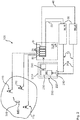
- Fig. 1 shows a first embodiment of an inventive Mobile Communication Network.
- the Mobile Communication Network comprises multiple antennas 110 being able to connect wireless with a mobile station 300, for example in form of a mobile telephone.
- Several antennas 110 are in communication contact with a Location Register Server LR, in this case a Visited Location Register Server VLR, which is configured to be able to coordinate the different antennas 110 in the respective communication.
- a Location Register Server LR in this case a Visited Location Register Server VLR, which is configured to be able to coordinate the different antennas 110 in the respective communication.
- a regular and trustworthy Home Location Register Server (HLR) is able to communicate with the LR/VLR, for example with an Information Retrieval Request 10.
- the Information Retrieval Request can be configured to comprise a so-called Provide Subscriber Information Request (PSI).
- PSI Request Message is sent from the HLR to the LR/VLR, it is received by a Receiving Module 210 of an inventive Security Device 200.
- the received PSI is extracted by an Extraction Module 220 and passed on to a Comparison Module 230 which is able to compare the PSI or the extracted Specification Code of the PSI with the Verification List 14.
- a Verification Module 240 can allow the transmission of data 20 from the LR/VLR to the trustworthy HLR.
- Data 20 can comprise Subscriber Information (SI) that is stored in a data storage 60.
- SI Subscriber Information
- the data 20 may be sent to the HLR as a PSI response.
- the data sent back to the HLR respectively in this case the PSI response may comprise a Subscriber Information (SI), e.g. a subscriber state and/or location data of a subscriber.
- SI Subscriber Information
- a Sending Entity 30 in form of a fraud HLR can also send an Information Retrieval Request 10 in form of a PSI or PSI Request Message to the LR/VLR.
- the PSI respectively the Information Retrieval Request 10 goes through the same security method in the same Security Device 200, but leads to a result after comparison with the Verification List 14 comprising the prohibition of transmission of data 20. As can be seen in Fig. 1 , the transmission of data to the fHLR is blocked by the Security Device 200.
- Fig. 2 shows a different approach of an inventive Mobile Communication Network 100.
- the Security Device 200 is not part of the LR/VLR, but part of a separate Signaling Transfer Point (STP).
- STP Signaling Transfer Point
- the functionality of the security method in the Security Device 200 is identical to that discussed as to Fig. 1 .
- a fraudulent Information Retrieval Request can be blocked already in the STP and is not forwarded to the LR/VLR, as it is schematically shown in Fig. 2 .
- a Warning Message 50 can be sent to the trustworthy HLR informing about the fraud and misuse try.
- a Prohibition Message 40 to the fHLR to give information about the prohibition of the transmission of data 20.
- the fHLR is a trustworthy Sending Entity 30, it can pass on that information for a more detailed verification to the HLR and therefore the Verification List 14 can be updated in the Security Device and in the LR/VLR, respectively.
- Fig. 3 shows one possibility of different Specification Codes 12 comprising the Information Retrieval Request.
- different digits in particular three digits for a Country Code and two digits for a Network Code, can each form a Specification Code 12.
- the Specification Codes 12 can specify the Sending Entity 30 and/or the Mobile Subscriber MS for example by using the IMSI for the Mobile Subscriber MS.
- Fig. 4 shows a possibility of a combined positive and negative Verification List 14.
- Different Specification Codes 12 are correlated in the respective lines as to the columns whether YES or NO as to allowance or prohibition of the transmission of data 20.
- a PSI consistency check methodology is applied. Whenever a mobile subscriber attaches into a mobile network, the Location Register stores / maintains / updates the Location information: The Cell-ID (2G) / Service Area ID (3G) of the radio cell, in which the Mobile Station has currently radio contact or in which the Mobile Station was last in radio contact is part of the information.
- PSI Provide Subscriber Information message
- subscriber state information and/or IMEI International Mobile Equipment Identity
- LR Location Register
- the Visited Location Register or the SGSN Location Register I.e. the requesting node must be part of the subscriber's Home Network whose location information is queried. Any node not belonging to subscriber's Home Network is according to some embodiments of the invention not allowed to receive data upon PSIs querying other networks subscriber's location information unless this is explicitly allowed.
- Appropriate misuse messages can be blocked, according to embodiments of the invention. PSI / PSLI misuse can be identified, for example, by the following consistency check method: Validate affiliation of IMSI's vs. networks.
- E.164 Format comprises the Country Code (CC), the network code (NDC) and the Subscriber Number (SN).
- E.212 Format comprises the Mobile Country Code (MCC), the Mobile Network Code (MNC) and the Mobile Subscription Identification Number (MSIN).
- MSISDN comprises the Country Code (CC), the network code (NDC) and the Subscriber Number (SN).
- IMSI comprises the Mobile Country Code (MCC), the Mobile Network Code (MNC) and the Mobile Subscription Identification Number (MSIN).
- MSISDN comprises the Country Code (CC), the network code (NDC) and the Subscriber Number (SN).
- IMSI comprises the Mobile Country Code (MCC), the Mobile Network Code (MNC) and the Mobile Subscription Identification Number (MSIN).
- MNC Mobile Country Code
- MSIN Mobile Subscription Identification Number
- MCT Mobile Subscription Identification Number
- the inventive consistency check can be performed, for example, on the MSC/VLR, MSS /VLR or SGSN/SLR, so that all PSI/PSLI messages are blocked which are not received from the Home-PLMN of the subscriber about which the information is requested.
- the consistency check feature can be requested from MSC, MSS / SGSN.
- the inventive consistency check may be also performed in the STPs at the network border towards national interconnect Partners blocking all PSI/PSLI messages which are not received from the Home-PLMN of the subscriber about which the information is requested.
- the inventive PSI consistency check can be based on the following information:
- the Provide Subscriber Information contains the IMSI (International Mobile Subscriber Identity) which uniquely identifies the network belonging.
- the IMSI of the subscriber can be derived from the Application layer of the PSI message.
- Worldwide unique addresses of SS#7 nodes can be found in the SCCP (Signalling Connection Control Part) layer.
- the unique addresses are Global Titles in an E.164 format. All E.164 machine addresses can worldwide be routed and uniquely identify the network belonging.
- SGSN/SLR a comparison is performed correlating, the IMSIs with SCCP Calling Global Titles of PSI request messages. In case the network affiliation of IMSI and SCCP Calling Global Title deviates from each other, the message is blocked, discarded or prohibited.
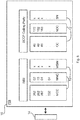
- Fig. 5 shows a more complex structure of an Information Retrieval Request 10 which is here a PSI.
- Different Specification Codes 12 are part of this PSI.
- the IMSI in particular MCC (mobile country code), MNC (mobile network code) and MSIN are used.
- MCC mobile country code
- MNC mobile network code
- MSIN mobile network code
- SCCP Calling Party namely CC (country code), NDC (network code) and SN are used.
- CC country code
- NDC network code
- SN network code
- a Specification Code may characterize at least partly the Sending Entity and/or the Mobile Subscriber and/or the retrieved data.
- different combinations of extracted Specification Code which may characterize at least partly the Sending Entity and/or the Mobile Subscriber and/or the retrieved data can be used for the comparison with the Verification List depending on the exact requirements of an Allowance or Prohibition for a transmission of data requested in an Information Retrieval Request.
Landscapes
- Engineering & Computer Science (AREA)
- Computer Security & Cryptography (AREA)
- Computer Networks & Wireless Communication (AREA)
- Signal Processing (AREA)
- Computer Hardware Design (AREA)
- Computing Systems (AREA)
- General Engineering & Computer Science (AREA)
- Databases & Information Systems (AREA)
- Mobile Radio Communication Systems (AREA)
Claims (15)
- Sicherheitsverfahren für die Überprüfung einer Anfrage zur Informationsabfrage (10), die eine Übertragung von Daten (20) von einem Standortregisterserver (LR) an eine Sendeeinheit (30) in einem mobilen Kommunikationsnetz (100) anfordert, umfassend die folgenden Schritte:- Empfangen einer Anfrage zur Informationsabfrage (10) von der Sendeeinheit (30) durch ein Empfangsmodul (210) einer Sicherheitsvorrichtung (200), wobei die Sendeeinheit (30) ein Heimstandortregisterserver (HLR, fHLR) ist,- Extrahieren mindestens eines Spezifikationscodes (12) zur Spezifizierung der Sendeeinheit (30) und/oder eines Mobilfunkteilnehmers (MS) aus der Anfrage zur Informationsabfrage (10),- Vergleichen des extrahierten mindestens einen Spezifikationscodes (12) mit einer Verifizierungsliste (14),- Erlauben oder Verbieten der in der Anfrage zur Informationsabfrage (10) angeforderten Übertragung von Daten (20) basierend auf dem Ergebnis des Vergleichs mit der Verifizierungsliste (14).
- Sicherheitsverfahren nach Anspruch 1, dadurch gekennzeichnet, dass mindestens ein Spezifikationscode (12) zur Spezifizierung der Sendeeinheit (30) und mindestens ein Spezifikationscode (12) zur Spezifizierung des Mobilfunkteilnehmers (MS) extrahiert wird, wobei alle extrahierten Spezifikationscodes (12) mit einer Verifizierungsliste (14) verglichen werden.
- Sicherheitsverfahren nach einem der vorhergehenden Ansprüche, dadurch gekennzeichnet, dass die Anfrage zur Informationsabfrage (10) eine Anfrage zur Bereitstellung von Teilnehmerinformationen (PSI) umfasst, die eine Übertragung von Daten (20) in Form von Teilnehmerinformationen (SI) anfordert, die im Besucherstandortregisterserver (VLR) gespeichert sind.
- Sicherheitsverfahren nach einem der vorhergehenden Ansprüche, dadurch gekennzeichnet, dass nach dem Empfangen der Anfrage zur Informationsabfrage (10) die Anfrage zur Informationsabfrage (10) in Bezug auf den mindestens einen Spezifikationscode (12) dekodiert wird.
- Sicherheitsverfahren nach einem der vorhergehenden Ansprüche, dadurch gekennzeichnet, dass die Verifizierungsliste (14) erlaubte Spezifikationscodes (12) und/oder verbotene Spezifikationscodes (12) umfasst.
- Sicherheitsverfahren nach einem der vorhergehenden Ansprüche, dadurch gekennzeichnet, dass die Schritte des Extrahierens, des Vergleichens und des Erlaubens/Verbietens durchgeführt werden, bevor eine Arbeitsroutine zur Bearbeitung der Anfrage zur Informationsabfrage (10) gestartet wird.
- Sicherheitsverfahren nach einem der vorhergehenden Ansprüche, dadurch gekennzeichnet, dass mindestens zwei Spezifikationscodes (12) extrahiert werden.
- Sicherheitsverfahren nach einem der vorhergehenden Ansprüche, dadurch gekennzeichnet, dass im Falle eines Verbots der Übertragung der von der Sendeeinheit (30) angeforderten Daten (20) mindestens einer der folgenden weiteren Schritte durchgeführt wird:- Senden einer Verbotsmeldung (40) an die Sendeeinheit (30)- Senden einer Warnmeldung (50) an einen anderen Heimstandortregisterserver (HLR)
- Sicherheitsverfahren nach einem der vorhergehenden Ansprüche, dadurch gekennzeichnet, dass im Falle eines Verbots der Übertragung der von der Sendeeinheit (30) angeforderten Daten (20) die Verifizierungsliste (14) angepasst wird.
- Computerprogrammprodukt, das auf einem computerlesbaren Medium gespeichert ist, das Folgendes umfasst:- Computerlesbare Programmmittel, die so konfiguriert sind, dass sie, wenn sie auf einem Computer ausgeführt werden, den Computer veranlassen, von einer Sendeeinheit (30) eine Anfrage zur Informationsabfrage (10) zu empfangen, die eine Übertragung von Daten (20) von einem Standortregisterserver (LR) zu einer Sendeeinheit (30) anfordert, wobei der Computer eine Sicherheitsvorrichtung (200) ist und die Sendeeinheit (30) ein Heimstandortregisterserver (HLR) ist,- Computerlesbare Programmmittel, die so konfiguriert sind, dass sie, wenn sie auf dem Computer ausgeführt werden, den Computer veranlassen, mindestens einen Spezifikationscode (12) für die Sendeeinheit (30) und/oder einen Mobilfunkteilnehmers (MS) aus der Anfrage zur Informationsabfrage (10) zu extrahieren,- Computerlesbare Programmmittel, die so konfiguriert sind, dass sie, wenn sie auf dem Computer ausgeführt werden, den Computer veranlassen, den extrahierten mindestens einen Spezifikationscode (12) mit einer Verifizierungsliste (14) zu vergleichen,- Computerlesbare Programmmittel, die so konfiguriert sind, dass sie, wenn sie auf dem Computer ausgeführt werden, den Computer veranlassen, basierend auf dem Ergebnis des Vergleichs mit der Verifizierungsliste (14) die in der Anfrage zur Informationsabfrage (10) angeforderte Übertragung von Daten (20) zu erlauben oder zu verbieten.
- Computerprogrammprodukt nach Anspruch 10, dadurch gekennzeichnet, dass es computerlesbare Programmmittel umfasst, die so konfiguriert sind, dass sie, wenn sie auf dem Computer ausgeführt werden, den Computer veranlassen, die Schritte des Verfahrens nach einem der Ansprüche 1 bis 9 auszuführen.
- Sicherheitsvorrichtung (200) für die Überprüfung einer Anfrage zur Informationsabfrage (10), die eine Übertragung von Daten (20) von einem Standortregisterserver (LR) an eine Sendeeinheit (30) anfordert, wobei die Sendeeinheit (30) ein Heimstandortregisterserver (HLR) ist, wobei die Sicherheitsvorrichtung ein Empfangsmodul (210), das zum Empfangen einer Anfrage zur Informationsabfrage (10) von einer Sendeeinheit (30) konfiguriert ist, ein Extraktionsmodul (220), das so konfiguriert ist, dass es mindestens einen Spezifikationscode (12) für die Sendeeinheit (20) und/oder einen Mobilfunkteilnehmer (MS) aus der Anfrage zur Informationsabfrage (10) extrahiert, ein Vergleichsmodul (230), das so konfiguriert ist, dass es den extrahierten mindestens einen Spezifikationscode (12) mit einer Verifizierungsliste (14) vergleicht, und ein Verifizierungsmodul (240) umfasst, das so konfiguriert ist, dass es die Übertragung der in der Anfrage zur Informationsabfrage (10) angeforderten Daten (20) basierend auf dem Ergebnis des Vergleichs verbietet oder erlaubt.
- Sicherheitsvorrichtung (200) nach Anspruch 12, dadurch gekennzeichnet, dass das Empfangsmodul (210) und/oder das Extraktionsmodul (220) und/oder das Vergleichsmodul (230) und/oder das Verifizierungsmodul (240) konfiguriert sind, um ein Verfahren nach den Ansprüchen 1 bis 8 durchzuführen.
- Sicherheitsvorrichtung (200) nach Anspruch 12 oder 13, dadurch gekennzeichnet, dass sie so konfiguriert ist, dass sie in einem Standortregisterserver (LR) und/oder in einem Signalübertragungspunkt (STP) in der Kommunikationsleitung zwischen der Sendeeinheit (20) und dem Standortregisterserver (LR) angeordnet werden kann.
- Mobiles Kommunikationsnetzwerk (100) zur Kommunikation zwischen Mobilstationen (300) mit einem Heimstandortregisterserver (HLR) und mehreren Standortregisterservern (LR), dadurch gekennzeichnet, dass die Standortregisterserver (LR) und/oder die Signalübertragungspunkte (STP) zu den Standortregisterservern (LR) eine Sicherheitsvorrichtung (200) nach einem der Ansprüche 12 bis 14 umfassen.
Priority Applications (4)
| Application Number | Priority Date | Filing Date | Title |
|---|---|---|---|
| ES13191793T ES2842894T3 (es) | 2013-11-06 | 2013-11-06 | Método de seguridad para la verificación de una solicitud de recuperación de información |
| EP13191793.2A EP2871875B1 (de) | 2013-11-06 | 2013-11-06 | Sicherheitsverfahren zur überprüfung einer anfrage zur informationsabfrage |
| US14/532,945 US9191819B2 (en) | 2013-11-06 | 2014-11-04 | Security method for the verification of an information retrieval request |
| CN201410637074.6A CN104640113B (zh) | 2013-11-06 | 2014-11-06 | 用于验证信息检索请求的安全方法 |
Applications Claiming Priority (1)
| Application Number | Priority Date | Filing Date | Title |
|---|---|---|---|
| EP13191793.2A EP2871875B1 (de) | 2013-11-06 | 2013-11-06 | Sicherheitsverfahren zur überprüfung einer anfrage zur informationsabfrage |
Publications (2)
| Publication Number | Publication Date |
|---|---|
| EP2871875A1 EP2871875A1 (de) | 2015-05-13 |
| EP2871875B1 true EP2871875B1 (de) | 2020-10-14 |
Family
ID=49578100
Family Applications (1)
| Application Number | Title | Priority Date | Filing Date |
|---|---|---|---|
| EP13191793.2A Active EP2871875B1 (de) | 2013-11-06 | 2013-11-06 | Sicherheitsverfahren zur überprüfung einer anfrage zur informationsabfrage |
Country Status (4)
| Country | Link |
|---|---|
| US (1) | US9191819B2 (de) |
| EP (1) | EP2871875B1 (de) |
| CN (1) | CN104640113B (de) |
| ES (1) | ES2842894T3 (de) |
Families Citing this family (2)
| Publication number | Priority date | Publication date | Assignee | Title |
|---|---|---|---|---|
| WO2019153428A1 (zh) * | 2018-02-09 | 2019-08-15 | Oppo广东移动通信有限公司 | 无线通信的方法、网络设备和终端设备 |
| US10411705B1 (en) * | 2018-09-28 | 2019-09-10 | Arm Limited | System, method and apparatus for electronic circuit |
Family Cites Families (15)
| Publication number | Priority date | Publication date | Assignee | Title |
|---|---|---|---|---|
| US6360102B1 (en) * | 1998-09-10 | 2002-03-19 | Ericsson Inc. | System and method for defining a subscriber location privacy profile |
| US6615041B2 (en) * | 1998-11-05 | 2003-09-02 | Bellsouth Intellectual Property Corporation | Methods and systems for providing information to a home system regarding a wireless unit roaming in a visited system |
| US7130630B1 (en) * | 2000-12-19 | 2006-10-31 | Bellsouth Intellectual Property Corporation | Location query service for wireless networks |
| GB0124956D0 (en) * | 2001-10-17 | 2001-12-05 | Nokia Corp | Provision of location information |
| US7383035B2 (en) * | 2002-07-04 | 2008-06-03 | Lg Electronics Inc. | Method of furnishing illegal mobile equipment user information |
| US20060045124A1 (en) * | 2004-08-31 | 2006-03-02 | Kidsnet, Inc. | Method and apparatus for providing access controls to communication services |
| US7725550B2 (en) * | 2004-12-17 | 2010-05-25 | Nhn Corporation | System and method for filtering message |
| US8983446B2 (en) * | 2005-07-14 | 2015-03-17 | Binj Laboratories, Inc. | Systems and methods for the detection and allowance of transmission facilities |
| US20070140145A1 (en) * | 2005-12-21 | 2007-06-21 | Surender Kumar | System, method and apparatus for authentication of nodes in an Ad Hoc network |
| US8077708B2 (en) * | 2006-02-16 | 2011-12-13 | Techguard Security, Llc | Systems and methods for determining a flow of data |
| US8064882B2 (en) * | 2007-03-09 | 2011-11-22 | Cisco Technology, Inc. | Blacklisting of unlicensed mobile access (UMA) users via AAA policy database |
| US8626162B2 (en) * | 2008-06-06 | 2014-01-07 | Qualcomm Incorporated | Registration and access control in femto cell deployments |
| US8995998B2 (en) * | 2008-11-07 | 2015-03-31 | Qualcomm Incorporated | Optimized signaling of primary scrambling codes and frequency lists in wireless communications |
| US8285291B2 (en) * | 2010-02-02 | 2012-10-09 | Clearwire Ip Holdings Llc | System and method for multimode device handover |
| US9264241B2 (en) * | 2013-01-09 | 2016-02-16 | Tabletop Media Llc | Secure wireless network-based activation for table-side information and point-of-sale devices |
-
2013
- 2013-11-06 EP EP13191793.2A patent/EP2871875B1/de active Active
- 2013-11-06 ES ES13191793T patent/ES2842894T3/es active Active
-
2014
- 2014-11-04 US US14/532,945 patent/US9191819B2/en active Active
- 2014-11-06 CN CN201410637074.6A patent/CN104640113B/zh active Active
Non-Patent Citations (1)
| Title |
|---|
| None * |
Also Published As
| Publication number | Publication date |
|---|---|
| US9191819B2 (en) | 2015-11-17 |
| EP2871875A1 (de) | 2015-05-13 |
| CN104640113B (zh) | 2019-07-09 |
| US20150126156A1 (en) | 2015-05-07 |
| CN104640113A (zh) | 2015-05-20 |
| ES2842894T3 (es) | 2021-07-15 |
Similar Documents
| Publication | Publication Date | Title |
|---|---|---|
| AU2004239926B2 (en) | Apparatus and method for providing location information | |
| KR100941554B1 (ko) | 위치 측정 기술 및 장치 식별자를 이용한 분실 및 도난 이동 장치의 추적 | |
| US20070238455A1 (en) | Mobile based area event handling when currently visited network doe not cover area | |
| CN101227710B (zh) | 定位触发信息的同步方法和设备 | |
| US20080233931A1 (en) | Location Service Method and System | |
| US9867111B2 (en) | Methods, network control nodes and communication devices for routing signalling requests in a communication system | |
| CN101180896B (zh) | 入境漫游用户呼叫控制系统 | |
| EP3269084B1 (de) | Teilnehmeridentitätsmuster | |
| WO2011083096A1 (en) | Method, network entity, telecommunications network and computer program product for handling subscription data in a telecommunications network | |
| EP2871875B1 (de) | Sicherheitsverfahren zur überprüfung einer anfrage zur informationsabfrage | |
| WO2003037026A1 (en) | System and method for the positioning of a subscriber during an emergency call performed by a mobile phone without a valid sim card | |
| EP1538860A1 (de) | Verfahren und Telekommunikationssystem zur Positionsbestimmung einer Ziel-Teilnehmereinrichtung unter Nutzung einer "Mobile Originating-Location Request (MO-LR)"-Prozedur | |
| EP3241374B1 (de) | Verfahren zum zugriff auf eine roaming-vorrichtung und entsprechendes proxy-netzwerk | |
| EP2537381B1 (de) | Verwaltungseinheit für netzwerkstandorte | |
| EP3011771B1 (de) | Verwaltung eines teilnehmerendgerätes mit einem proxy eir | |
| EP2547125A1 (de) | Suchverfahren und System für standortbasierte Dienstleistungen | |
| EP2547167A1 (de) | Verfahren und System für standortbasierte Dienstleistungen mit Parametrisierung | |
| EP1745666B1 (de) | Verfahren und vorrichtung zur durchführung einer zulassungsstatusprüfung eines mobilen geräts | |
| WO2013120506A1 (en) | Apparatus, method, system and computer program product for handling request | |
| EP2884787A1 (de) | Verfahren und Vorrichtung zur Verwaltung einer Teilnehmervorrichtung | |
| HK1165926B (en) | Alert system with controlled load of network | |
| HK1165926A1 (en) | Alert system with controlled load of network |
Legal Events
| Date | Code | Title | Description |
|---|---|---|---|
| PUAI | Public reference made under article 153(3) epc to a published international application that has entered the european phase |
Free format text: ORIGINAL CODE: 0009012 |
|
| 17P | Request for examination filed |
Effective date: 20131106 |
|
| AK | Designated contracting states |
Kind code of ref document: A1 Designated state(s): AL AT BE BG CH CY CZ DE DK EE ES FI FR GB GR HR HU IE IS IT LI LT LU LV MC MK MT NL NO PL PT RO RS SE SI SK SM TR |
|
| AX | Request for extension of the european patent |
Extension state: BA ME |
|
| R17P | Request for examination filed (corrected) |
Effective date: 20151106 |
|
| RBV | Designated contracting states (corrected) |
Designated state(s): AL AT BE BG CH CY CZ DE DK EE ES FI FR GB GR HR HU IE IS IT LI LT LU LV MC MK MT NL NO PL PT RO RS SE SI SK SM TR |
|
| STAA | Information on the status of an ep patent application or granted ep patent |
Free format text: STATUS: EXAMINATION IS IN PROGRESS |
|
| 17Q | First examination report despatched |
Effective date: 20180326 |
|
| REG | Reference to a national code |
Ref country code: DE Ref legal event code: R079 Ref document number: 602013073238 Country of ref document: DE Free format text: PREVIOUS MAIN CLASS: H04W0008080000 Ipc: H04L0029060000 |
|
| GRAP | Despatch of communication of intention to grant a patent |
Free format text: ORIGINAL CODE: EPIDOSNIGR1 |
|
| STAA | Information on the status of an ep patent application or granted ep patent |
Free format text: STATUS: GRANT OF PATENT IS INTENDED |
|
| RIC1 | Information provided on ipc code assigned before grant |
Ipc: H04L 29/06 20060101AFI20200515BHEP Ipc: H04W 12/08 20090101ALI20200515BHEP Ipc: H04W 12/06 20090101ALI20200515BHEP |
|
| INTG | Intention to grant announced |
Effective date: 20200616 |
|
| GRAS | Grant fee paid |
Free format text: ORIGINAL CODE: EPIDOSNIGR3 |
|
| GRAA | (expected) grant |
Free format text: ORIGINAL CODE: 0009210 |
|
| STAA | Information on the status of an ep patent application or granted ep patent |
Free format text: STATUS: THE PATENT HAS BEEN GRANTED |
|
| AK | Designated contracting states |
Kind code of ref document: B1 Designated state(s): AL AT BE BG CH CY CZ DE DK EE ES FI FR GB GR HR HU IE IS IT LI LT LU LV MC MK MT NL NO PL PT RO RS SE SI SK SM TR |
|
| REG | Reference to a national code |
Ref country code: GB Ref legal event code: FG4D |
|
| REG | Reference to a national code |
Ref country code: AT Ref legal event code: REF Ref document number: 1324661 Country of ref document: AT Kind code of ref document: T Effective date: 20201015 Ref country code: CH Ref legal event code: EP |
|
| REG | Reference to a national code |
Ref country code: DE Ref legal event code: R096 Ref document number: 602013073238 Country of ref document: DE |
|
| REG | Reference to a national code |
Ref country code: IE Ref legal event code: FG4D |
|
| REG | Reference to a national code |
Ref country code: AT Ref legal event code: MK05 Ref document number: 1324661 Country of ref document: AT Kind code of ref document: T Effective date: 20201014 |
|
| REG | Reference to a national code |
Ref country code: NL Ref legal event code: MP Effective date: 20201014 |
|
| PG25 | Lapsed in a contracting state [announced via postgrant information from national office to epo] |
Ref country code: RS Free format text: LAPSE BECAUSE OF FAILURE TO SUBMIT A TRANSLATION OF THE DESCRIPTION OR TO PAY THE FEE WITHIN THE PRESCRIBED TIME-LIMIT Effective date: 20201014 Ref country code: FI Free format text: LAPSE BECAUSE OF FAILURE TO SUBMIT A TRANSLATION OF THE DESCRIPTION OR TO PAY THE FEE WITHIN THE PRESCRIBED TIME-LIMIT Effective date: 20201014 Ref country code: NO Free format text: LAPSE BECAUSE OF FAILURE TO SUBMIT A TRANSLATION OF THE DESCRIPTION OR TO PAY THE FEE WITHIN THE PRESCRIBED TIME-LIMIT Effective date: 20210114 Ref country code: NL Free format text: LAPSE BECAUSE OF FAILURE TO SUBMIT A TRANSLATION OF THE DESCRIPTION OR TO PAY THE FEE WITHIN THE PRESCRIBED TIME-LIMIT Effective date: 20201014 Ref country code: PT Free format text: LAPSE BECAUSE OF FAILURE TO SUBMIT A TRANSLATION OF THE DESCRIPTION OR TO PAY THE FEE WITHIN THE PRESCRIBED TIME-LIMIT Effective date: 20210215 Ref country code: GR Free format text: LAPSE BECAUSE OF FAILURE TO SUBMIT A TRANSLATION OF THE DESCRIPTION OR TO PAY THE FEE WITHIN THE PRESCRIBED TIME-LIMIT Effective date: 20210115 |
|
| REG | Reference to a national code |
Ref country code: LT Ref legal event code: MG4D |
|
| PG25 | Lapsed in a contracting state [announced via postgrant information from national office to epo] |
Ref country code: LV Free format text: LAPSE BECAUSE OF FAILURE TO SUBMIT A TRANSLATION OF THE DESCRIPTION OR TO PAY THE FEE WITHIN THE PRESCRIBED TIME-LIMIT Effective date: 20201014 Ref country code: SE Free format text: LAPSE BECAUSE OF FAILURE TO SUBMIT A TRANSLATION OF THE DESCRIPTION OR TO PAY THE FEE WITHIN THE PRESCRIBED TIME-LIMIT Effective date: 20201014 Ref country code: PL Free format text: LAPSE BECAUSE OF FAILURE TO SUBMIT A TRANSLATION OF THE DESCRIPTION OR TO PAY THE FEE WITHIN THE PRESCRIBED TIME-LIMIT Effective date: 20201014 Ref country code: IS Free format text: LAPSE BECAUSE OF FAILURE TO SUBMIT A TRANSLATION OF THE DESCRIPTION OR TO PAY THE FEE WITHIN THE PRESCRIBED TIME-LIMIT Effective date: 20210214 Ref country code: BG Free format text: LAPSE BECAUSE OF FAILURE TO SUBMIT A TRANSLATION OF THE DESCRIPTION OR TO PAY THE FEE WITHIN THE PRESCRIBED TIME-LIMIT Effective date: 20210114 Ref country code: AT Free format text: LAPSE BECAUSE OF FAILURE TO SUBMIT A TRANSLATION OF THE DESCRIPTION OR TO PAY THE FEE WITHIN THE PRESCRIBED TIME-LIMIT Effective date: 20201014 |
|
| PG25 | Lapsed in a contracting state [announced via postgrant information from national office to epo] |
Ref country code: HR Free format text: LAPSE BECAUSE OF FAILURE TO SUBMIT A TRANSLATION OF THE DESCRIPTION OR TO PAY THE FEE WITHIN THE PRESCRIBED TIME-LIMIT Effective date: 20201014 |
|
| REG | Reference to a national code |
Ref country code: CH Ref legal event code: PL |
|
| REG | Reference to a national code |
Ref country code: DE Ref legal event code: R081 Ref document number: 602013073238 Country of ref document: DE Owner name: VODAFONE HOLDING GMBH, DE Free format text: FORMER OWNER: VODAFONE HOLDING GMBH, 40213 DUESSELDORF, DE |
|
| REG | Reference to a national code |
Ref country code: DE Ref legal event code: R097 Ref document number: 602013073238 Country of ref document: DE Ref country code: ES Ref legal event code: FG2A Ref document number: 2842894 Country of ref document: ES Kind code of ref document: T3 Effective date: 20210715 |
|
| PG25 | Lapsed in a contracting state [announced via postgrant information from national office to epo] |
Ref country code: EE Free format text: LAPSE BECAUSE OF FAILURE TO SUBMIT A TRANSLATION OF THE DESCRIPTION OR TO PAY THE FEE WITHIN THE PRESCRIBED TIME-LIMIT Effective date: 20201014 Ref country code: CZ Free format text: LAPSE BECAUSE OF FAILURE TO SUBMIT A TRANSLATION OF THE DESCRIPTION OR TO PAY THE FEE WITHIN THE PRESCRIBED TIME-LIMIT Effective date: 20201014 Ref country code: SM Free format text: LAPSE BECAUSE OF FAILURE TO SUBMIT A TRANSLATION OF THE DESCRIPTION OR TO PAY THE FEE WITHIN THE PRESCRIBED TIME-LIMIT Effective date: 20201014 Ref country code: MC Free format text: LAPSE BECAUSE OF FAILURE TO SUBMIT A TRANSLATION OF THE DESCRIPTION OR TO PAY THE FEE WITHIN THE PRESCRIBED TIME-LIMIT Effective date: 20201014 Ref country code: LT Free format text: LAPSE BECAUSE OF FAILURE TO SUBMIT A TRANSLATION OF THE DESCRIPTION OR TO PAY THE FEE WITHIN THE PRESCRIBED TIME-LIMIT Effective date: 20201014 Ref country code: LU Free format text: LAPSE BECAUSE OF NON-PAYMENT OF DUE FEES Effective date: 20201106 Ref country code: RO Free format text: LAPSE BECAUSE OF FAILURE TO SUBMIT A TRANSLATION OF THE DESCRIPTION OR TO PAY THE FEE WITHIN THE PRESCRIBED TIME-LIMIT Effective date: 20201014 Ref country code: SK Free format text: LAPSE BECAUSE OF FAILURE TO SUBMIT A TRANSLATION OF THE DESCRIPTION OR TO PAY THE FEE WITHIN THE PRESCRIBED TIME-LIMIT Effective date: 20201014 |
|
| REG | Reference to a national code |
Ref country code: BE Ref legal event code: MM Effective date: 20201130 |
|
| PLBE | No opposition filed within time limit |
Free format text: ORIGINAL CODE: 0009261 |
|
| STAA | Information on the status of an ep patent application or granted ep patent |
Free format text: STATUS: NO OPPOSITION FILED WITHIN TIME LIMIT |
|
| PG25 | Lapsed in a contracting state [announced via postgrant information from national office to epo] |
Ref country code: LI Free format text: LAPSE BECAUSE OF NON-PAYMENT OF DUE FEES Effective date: 20201130 Ref country code: CH Free format text: LAPSE BECAUSE OF NON-PAYMENT OF DUE FEES Effective date: 20201130 Ref country code: DK Free format text: LAPSE BECAUSE OF FAILURE TO SUBMIT A TRANSLATION OF THE DESCRIPTION OR TO PAY THE FEE WITHIN THE PRESCRIBED TIME-LIMIT Effective date: 20201014 |
|
| 26N | No opposition filed |
Effective date: 20210715 |
|
| PG25 | Lapsed in a contracting state [announced via postgrant information from national office to epo] |
Ref country code: AL Free format text: LAPSE BECAUSE OF FAILURE TO SUBMIT A TRANSLATION OF THE DESCRIPTION OR TO PAY THE FEE WITHIN THE PRESCRIBED TIME-LIMIT Effective date: 20201014 Ref country code: IE Free format text: LAPSE BECAUSE OF NON-PAYMENT OF DUE FEES Effective date: 20201106 |
|
| REG | Reference to a national code |
Ref country code: DE Ref legal event code: R079 Ref document number: 602013073238 Country of ref document: DE Free format text: PREVIOUS MAIN CLASS: H04L0029060000 Ipc: H04L0065000000 |
|
| PG25 | Lapsed in a contracting state [announced via postgrant information from national office to epo] |
Ref country code: SI Free format text: LAPSE BECAUSE OF FAILURE TO SUBMIT A TRANSLATION OF THE DESCRIPTION OR TO PAY THE FEE WITHIN THE PRESCRIBED TIME-LIMIT Effective date: 20201014 |
|
| PG25 | Lapsed in a contracting state [announced via postgrant information from national office to epo] |
Ref country code: IS Free format text: LAPSE BECAUSE OF FAILURE TO SUBMIT A TRANSLATION OF THE DESCRIPTION OR TO PAY THE FEE WITHIN THE PRESCRIBED TIME-LIMIT Effective date: 20210214 Ref country code: TR Free format text: LAPSE BECAUSE OF FAILURE TO SUBMIT A TRANSLATION OF THE DESCRIPTION OR TO PAY THE FEE WITHIN THE PRESCRIBED TIME-LIMIT Effective date: 20201014 Ref country code: MT Free format text: LAPSE BECAUSE OF FAILURE TO SUBMIT A TRANSLATION OF THE DESCRIPTION OR TO PAY THE FEE WITHIN THE PRESCRIBED TIME-LIMIT Effective date: 20201014 Ref country code: CY Free format text: LAPSE BECAUSE OF FAILURE TO SUBMIT A TRANSLATION OF THE DESCRIPTION OR TO PAY THE FEE WITHIN THE PRESCRIBED TIME-LIMIT Effective date: 20201014 |
|
| PG25 | Lapsed in a contracting state [announced via postgrant information from national office to epo] |
Ref country code: MK Free format text: LAPSE BECAUSE OF FAILURE TO SUBMIT A TRANSLATION OF THE DESCRIPTION OR TO PAY THE FEE WITHIN THE PRESCRIBED TIME-LIMIT Effective date: 20201014 |
|
| PG25 | Lapsed in a contracting state [announced via postgrant information from national office to epo] |
Ref country code: BE Free format text: LAPSE BECAUSE OF NON-PAYMENT OF DUE FEES Effective date: 20201130 |
|
| P01 | Opt-out of the competence of the unified patent court (upc) registered |
Effective date: 20230725 |
|
| PGFP | Annual fee paid to national office [announced via postgrant information from national office to epo] |
Ref country code: DE Payment date: 20251119 Year of fee payment: 13 |
|
| PGFP | Annual fee paid to national office [announced via postgrant information from national office to epo] |
Ref country code: GB Payment date: 20251121 Year of fee payment: 13 |
|
| PGFP | Annual fee paid to national office [announced via postgrant information from national office to epo] |
Ref country code: IT Payment date: 20251125 Year of fee payment: 13 |
|
| PGFP | Annual fee paid to national office [announced via postgrant information from national office to epo] |
Ref country code: FR Payment date: 20251125 Year of fee payment: 13 |
|
| PGFP | Annual fee paid to national office [announced via postgrant information from national office to epo] |
Ref country code: ES Payment date: 20251229 Year of fee payment: 13 |