EP2871902B1 - Procédé d'établissement d'association dans un réseau local sans fil, point d'accès et station - Google Patents
Procédé d'établissement d'association dans un réseau local sans fil, point d'accès et station Download PDFInfo
- Publication number
- EP2871902B1 EP2871902B1 EP13831218.6A EP13831218A EP2871902B1 EP 2871902 B1 EP2871902 B1 EP 2871902B1 EP 13831218 A EP13831218 A EP 13831218A EP 2871902 B1 EP2871902 B1 EP 2871902B1
- Authority
- EP
- European Patent Office
- Prior art keywords
- sta
- stas
- notification
- scheduling sequence
- response
- Prior art date
- Legal status (The legal status is an assumption and is not a legal conclusion. Google has not performed a legal analysis and makes no representation as to the accuracy of the status listed.)
- Active
Links
Images



Classifications
-
- H—ELECTRICITY
- H04—ELECTRIC COMMUNICATION TECHNIQUE
- H04W—WIRELESS COMMUNICATION NETWORKS
- H04W72/00—Local resource management
- H04W72/12—Wireless traffic scheduling
- H04W72/121—Wireless traffic scheduling for groups of terminals or users
-
- H—ELECTRICITY
- H04—ELECTRIC COMMUNICATION TECHNIQUE
- H04W—WIRELESS COMMUNICATION NETWORKS
- H04W74/00—Wireless channel access
- H04W74/04—Scheduled access
-
- H—ELECTRICITY
- H04—ELECTRIC COMMUNICATION TECHNIQUE
- H04W—WIRELESS COMMUNICATION NETWORKS
- H04W68/00—User notification, e.g. alerting and paging, for incoming communication, change of service or the like
- H04W68/02—Arrangements for increasing efficiency of notification or paging channel
-
- H—ELECTRICITY
- H04—ELECTRIC COMMUNICATION TECHNIQUE
- H04W—WIRELESS COMMUNICATION NETWORKS
- H04W72/00—Local resource management
- H04W72/30—Resource management for broadcast services
-
- H—ELECTRICITY
- H04—ELECTRIC COMMUNICATION TECHNIQUE
- H04W—WIRELESS COMMUNICATION NETWORKS
- H04W8/00—Network data management
- H04W8/005—Discovery of network devices, e.g. terminals
-
- H—ELECTRICITY
- H04—ELECTRIC COMMUNICATION TECHNIQUE
- H04W—WIRELESS COMMUNICATION NETWORKS
- H04W84/00—Network topologies
- H04W84/02—Hierarchically pre-organised networks, e.g. paging networks, cellular networks, WLAN [Wireless Local Area Network] or WLL [Wireless Local Loop]
- H04W84/10—Small scale networks; Flat hierarchical networks
- H04W84/12—WLAN [Wireless Local Area Networks]
-
- H—ELECTRICITY
- H04—ELECTRIC COMMUNICATION TECHNIQUE
- H04W—WIRELESS COMMUNICATION NETWORKS
- H04W88/00—Devices specially adapted for wireless communication networks, e.g. terminals, base stations or access point devices
- H04W88/02—Terminal devices
-
- H—ELECTRICITY
- H04—ELECTRIC COMMUNICATION TECHNIQUE
- H04W—WIRELESS COMMUNICATION NETWORKS
- H04W88/00—Devices specially adapted for wireless communication networks, e.g. terminals, base stations or access point devices
- H04W88/08—Access point devices
Definitions
- Embodiments of the present invention relate to the field of wireless communications, and in particular, to a method, an access point, and a station for establishing an association in a wireless local area network (Wireless Local Area Network, WLAN for short).
- WLAN Wireless Local Area Network
- a large number of stations may exist in a basic service set (Basic Service Set, BSS for short).
- BSS Basic Service Set
- a BSS may support as many as 6000 STAs.
- AP Access Point
- a severe collision problem causes congestion in the system, and it may take a very long time to complete the association processes for all the STAs. For example, when the following cases occur, the AP may encounter the scenario where a large number of STAs need to be associated:
- Certain aspects of this document provide methods and apparatus for utilizing a physical layer (PHY) header comprising an identifier for an access point (AP) or a Basic Service Set (BSS).
- PHY physical layer
- a station (STA) that is assigned an order in a sequential response sequence may count only frames with PHY headers that contain the correct identifier.
- a STA may terminate its sequential access procedure when it receives a frame with a PHY header that specifies a different identifier for the AP or BSS that assigned the sequence. In this manner, the STA may prevent partly synchronizing to an overlapping network and avoid accessing the wireless medium at the wrong time.
- Embodiments of the present invention provide a method for establishing an association in a WLAN, which can reduce the number of channel contentions, effectively increase an association speed in an association process, and implement quick association.
- a method for establishing an association in a wireless local area network includes:
- the first notification carries frame length information Tf of the response messages; and according to the scheduling sequence, adjacent STAs send the response messages at an interval of a short interframe space SIFS.
- the method further includes: sending a second notification to the group of STAs after a delay of a preset duration, where the second notification is used to instruct the group of STAs to start to send the response messages; and the receiving response messages sequentially sent, according to the scheduling sequence in the first notification, in response to the association message by the group of STAs specifically includes:
- the receiving response messages sequentially sent, according to the scheduling sequence in the first notification, in response to the association message by the group of STAs specifically includes:
- the receiving response messages sequentially sent, according to the scheduling sequence in the first notification, in response to the association message by the group of STAs specifically includes:
- a method for establishing an association in a wireless local area network includes:
- the first notification carries frame length information Tf of the response message, and adjacent STAs in the scheduling sequence send the response messages at an interval of a short interframe space SIFS.
- the method further includes: receiving a second notification sent by the AP, where the second notification is used to instruct the STA to start to send the response message according to the scheduling sequence.
- the STA in a third possible implementation manner, if the STA is the k th in the scheduling sequence, the STA sends the response message to the AP at a time T0+SIFS+(Tf+SIFS)(k-1), where T0 is a time when the STA receives the second notification.
- the sending, according to the information about the scheduling sequence for the STA, a response message in response to the association message to the AP specifically includes:
- an access point in a third aspect, includes:
- the first notification carries frame length information Tf of the response messages, and adjacent STAs in the scheduling sequence send the response messages at an interval of a short interframe space SIFS.
- the sending unit is further configured to send a second notification to the group of STAs after a delay of a preset duration, where the second notification is used to instruct the group of STAs to start to send the response messages; and if the STA is the k th in the scheduling sequence, the receiving unit is configured to receive the response message that is sent by the STA at a time T0+SIFS+(Tf+SIFS)(k-1), where T0 is a time when the STA receives the second notification.
- the receiving unit is configured to receive the response message sent, by contending for a channel, by the STA that is the first in the scheduling sequence; the sending unit is configured to send a second notification to the group of STAs after the SIFS, where the second notification is used to instruct remaining STAs in the group of STAs to start to send the response messages; and the receiving unit is configured to receive the response messages sequentially sent, according to the scheduling sequence in the first notification, in response to the association message by the remaining STAs in the group of STAs.
- a station in a fourth aspect, includes:
- the first notification carries frame length information Tf of the response message, and adjacent stations in the scheduling sequence send the response messages at an interval of a short interframe space SIFS.
- the receiving unit is further configured to receive a second notification sent by the AP, where the second notification is used to instruct the station to start to send the response message according to the scheduling sequence.
- the station in a third possible implementation manner, if the station is the k th in the scheduling sequence, the station sends the response message to the AP at a time T0+SIFS+(Tf+SIFS)(k-1), where T0 is a time when the station receives the second notification.
- the AP may arrange a scheduling sequence for a selected group of STAs, so that the group of STAs may sequentially send response messages to the AP without having to contend for a channel, thereby reducing the number of channel contentions, accelerating the process of associating the STAs with the AP, and ensuring that a STA used for a key application can establish an association with the AP quickly.
- association identifiers Association Identifiers, AIDs for short
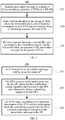
- FIG. 1 is a schematic flow chart of a method 100 for establishing an association in a WLAN according to an embodiment of the present invention. As shown in FIG. 1 , the method 100 includes the following:
- the group of STAs described herein may by a type or group of STAs which have high requirements for a time delay, such as a health monitoring sensor and an alarm sensor.
- a time delay such as a health monitoring sensor and an alarm sensor.
- the AP sends the first notification to the group of STAs in a broadcast mode.
- the identifier information of the STAs in the first notification is, for example, an AID of each STA in the group of STAs, and the information about the scheduling sequence for each STA may be a sequence number corresponding to each AID, or a position in which the AID of each STA in the first notification is arranged in the notification.
- the first notification herein is used to arrange a sequence of sending the response messages for the STAs, so that the STAs do not need to contend for a channel but send the response messages according to the scheduling sequence.
- the first notification may further include a frame length Tf of the response message, which is preset by the AP for each STA.
- the AP actively instructs the group of STAs to start to send corresponding messages according to the scheduling sequence.
- the group of STAs need a period of time for corresponding processing, a delay of a preset duration, for example, 100 ms, 200 ms, 500 ms or even 1s, is required before the AP instructs the STAs to start to send the response messages.
- the method 100 may further include:
- the STAs in this group start to sequentially send the response messages according to the scheduling sequence. Furthermore, according to an optional solution, according to the scheduling sequence, adjacent STAs send the response messages at an interval of a short interframe space (Short Interframe Space, SIFS for short).
- SIFS Short Interframe Space
- each STA in the group of STAs can listen for uplink messages sent by other STAs to the AP, the AP may not need to send the second notification.
- the STA that is the first (briefly referred to as STA1 hereinafter) as indicated by the information about the scheduling sequence carried in the first notification sends, by contending for a channel, the response message in response to the association message to the AP.
- a next STA as indicated by the information about the scheduling sequence listens for the response message sent by STA1 to the AP.
- the next STA sends, according to the information about the scheduling sequence carried in the first notification, the response message to the AP.
- the interval at which adjacent STAs in the scheduling sequence send the response messages to the AP is a SIFS. It should be noted that the next STA does not have to listen for the response message sent by STA1 to the AP, and may listen for the response message sent by any STA that is previous to the STA.
- STA1 sends, by contending for a channel, the response message in response to the association message to the AP.
- the AP After receiving the response message sent by STA1, the AP sends, after a delay of a SIFS, a second notification to the group of STAs, where the second notification is used to instruct remaining STAs in the group of STAs to start to send the response messages.
- the AP sequentially receives the response messages sequentially sent, according to the scheduling sequence in the first notification, in response to the association message by the remaining STAs in the group of STAs.
- FIG. 2 is a schematic flow chart of a method for establishing an association in a WLAN according to an embodiment of the present invention. As shown in FIG. 2 , the method 200 includes the following:
- the STA is one in the group of STAs in the embodiment shown in FIG. 2 .
- the first notification carries frame length information Tf of the response message, and adjacent STAs in the scheduling sequence send the response messages at an interval of a SIFS.
- the STA starts to send the response message according to the scheduling sequence.
- the method 200 includes: receiving, by the STA, a second notification sent by the AP, where the second notification is used to instruct the STA to start to send the response message according to the scheduling sequence.
- the STA sends the response message to the AP at a time T0+SIFS+(Tf+SIFS)(k-1), where T0 is a time when the STA receives the second notification.
- the AP arranges a scheduling sequence for a selected group of STAs, so that the group of STAs may sequentially send response messages to the AP without having to contend for a channel, thereby reducing the number of channel contentions, accelerating the process of associating the STAs with the AP, and ensuring that a STA used for a key application can establish an association with the AP quickly.
- the embodiments of the present invention further provide an AP and a STA for implementing the methods in the embodiments of the present invention.
- FIG. 3 is a schematic structural diagram of an AP according to an embodiment of the present invention. As shown in FIG. 3 , the AP 300 includes:
- the first notification carries frame length information Tf of the response messages, and adjacent STAs in the scheduling sequence send the response messages at an interval of a short interframe space SIFS.
- the sending unit 310 is further configured to send a second notification to the group of STAs after a delay of a preset duration, where the second notification is used to instruct the group of STAs to start to send the response messages; and if the STA is the k th in the scheduling sequence, the receiving unit 320 is configured to receive the response message that is sent by the STA at a time T0+SIFS+(Tf+SIFS)(k-1), where T0 is a time when the STA receives the second notification.
- the receiving unit 320 is configured to receive the response message sent, by contending for a channel, by the STA that is the first in the scheduling sequence; the sending unit 310 is configured to send a second notification to the group of STAs after the SIFS, where the second notification is used to instruct remaining STAs in the group of STAs to start to send the response messages; and the receiving unit 320 is configured to receive the response messages sequentially sent, according to the scheduling sequence in the first notification, in response to the association message by the remaining STAs in the group of STAs.
- FIG. 4 is a schematic structural diagram of a STA according to an embodiment of the present invention. As shown in FIG. 4 , the STA 400 includes:
- the first notification carries frame length information Tf of the response message, and adjacent STAs in the scheduling sequence send the response messages at an interval of a short interframe space SIFS.
- the receiving unit 410 is further configured to receive a second notification sent by the AP, where the second notification is used to instruct the STA to start to send the response message according to the scheduling sequence.
- the STA 400 if the STA 400 is the k th in the scheduling sequence, the STA 400 sends the response message to the AP at a time T0+SIFS+(Tf+SIFS)(k-1), where T0 is a time when the STA 400 receives the second notification.
- Extensible Authentication Protocol over LAN Extensible Authentication Protocol over LAN, EAPOL for short
- EAPOL Extensible Authentication Protocol over LAN
- FIG. 5 is a diagram of signaling interaction of a specific application scenario according to an embodiment of the present invention.
- STAs and an AP use the solutions in the embodiments of the present invention to implement the EAPOL sub-process.
- the STAs can listen for uplink messages sent by other STAs to the AP.
- a specific process of signaling interaction is as follows:
- FIG. 6 is a diagram of signaling interaction of another specific application scenario according to an embodiment of the present invention.
- a part of STAs in the group of STAs cannot listen for uplink messages sent by other STAs to the AP.
- a specific process of signaling interaction is as follows:
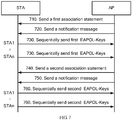
- FIG. 7 is a diagram of signaling interaction of another specific application scenario according to an embodiment of the present invention.
- a specific process of signaling interaction is as follows:
- FIG. 8 is a schematic structural diagram of an AP provided in an embodiment of the present invention.
- the AP generally includes at least one processor 810 such as a CPU, at least one port 820, at least one memory 830, and at least one communication bus 840.
- the communication bus 840 is configured to implement connection and communication between these components.
- the processor 810 is configured to implement an executable module, for example, a computer program, stored in the memory 830.
- the AP optionally includes a user interface 850, which includes, but is not limited to, a display, a keyboard, and a pointing device such as a mouse, a trackball (trackball), a touchpad, or a touchscreen.
- the memory 830 may include a high-speed RAM memory, and may further include a non-volatile memory (non-volatile memory), for example, at least one disk memory. Communication and connection between the AP and at least one STA are implemented through at least one port 820, and communication and connection between the AP and at least one network node are implemented through at least another port 820.
- the memory 830 stores the following elements, executable modules or data structures, or a subset of thereof, or a superset thereof:
- the application module 834 includes, but is not limited to, a sending unit 310 and a receiving unit 320.
- FIG. 9 is a schematic structural diagram of a STA provided in an embodiment of the present invention.
- the STA generally includes at least one processor 910 such as a CPU, at least one port 920, at least one memory 930, and at least one communication bus 940.
- the communication bus 940 is configured to implement connection and communication between these components.
- the processor 910 is configured to implement an executable module, for example, a computer program, stored in the memory 930.
- the STA optionally includes a user interface 950, which includes, but is not limited to, a display, a keyboard, and a pointing device such as a mouse, a trackball (trackball), a touchpad, or a touchscreen.
- a user interface 950 includes, but is not limited to, a display, a keyboard, and a pointing device such as a mouse, a trackball (trackball), a touchpad, or a touchscreen.
- the memory 930 may include a high-speed RAM memory, and may further include a non-volatile memory (non-volatile memory), for example, at least one disk memory. Communication and connection between the STA and at least one AP are implemented through at least one port 920, and communication and connection between the STA and at least one STA node are implemented through at least another port 920.
- the memory 930 stores the following elements, executable modules or data structures, or a subset thereof, or a superset thereof:
- the application module 934 includes, but is not limited to, a receiving unit 410 and a sending unit 420.
- the disclosed system, apparatus, and method may be implemented in other manners.
- the described apparatus embodiments are merely exemplary.
- the unit division is merely logical function division and may be other division in actual implementation.
- a plurality of units or components may be combined or integrated into another system, or some features may be ignored or not performed.
- the displayed or discussed mutual couplings or direct couplings or communication connections may be implemented through some interfaces.
- the indirect couplings or communication connections between the apparatuses or units may be implemented in electronic, mechanical, or other forms.
- the units described as separate parts may or may not be physically separate, and the parts displayed as units may or may not be physical units, may be located in one position, or may be distributed on a plurality of network units. Some or all of the units may be selected to achieve the objectives of the solution of the embodiment according to actual needs.
- the functions When the functions are implemented in a form of a software functional module and sold or used as an independent product, the functions may be stored in a computer-readable storage medium. Based on such an understanding, the technical solutions of the present invention essentially, or the part contributing to the prior art, or a part of the technical solutions may be implemented in a form of a software product.
- the computer software product is stored in a storage medium and includes several instructions for instructing a computer device (which may be a personal computer, a server, or a network device) to perform all or a part of the steps of the methods described in the embodiments of the present invention.
- the foregoing storage medium includes: any mediums that can store program code, such as a USB flash drive, a removable hard disk, a read-only memory (Read-Only Memory, ROM), a random access memory (Random Access Memory, RAM), a magnetic disk, or an optical disc.
- program code such as a USB flash drive, a removable hard disk, a read-only memory (Read-Only Memory, ROM), a random access memory (Random Access Memory, RAM), a magnetic disk, or an optical disc.
Landscapes
- Engineering & Computer Science (AREA)
- Computer Networks & Wireless Communication (AREA)
- Signal Processing (AREA)
- Databases & Information Systems (AREA)
- Mobile Radio Communication Systems (AREA)
Claims (4)
- Procédé (100) permettant d'établir une association dans un réseau local sans fil, WLAN, comprenant :l'envoi (110), par un point d'accès AP, d'un message d'association à un groupe de stations STA comprenant une pluralité de stations STA dans le réseau WLAN,l'envoi (120), par le point AP, d'une première notification au groupe de stations STA, la première notification transportant des informations d'identificateur de chaque station STA et des informations concernant une séquence de programmation de chaque station STA, les informations d'identificateur de chaque station STA représentant un identificateur d'association, AID, de chaque station STA dans le groupe de stations STA et les informations concernant la séquence de programmation pour chaque station STA représentant un numéro de séquence correspondant à chaque identificateur AID ou une position dans laquelle est agencé l'identificateur AID de chaque station STA dans la première notification, etla réception (130), par le point AP, de messages de réponse envoyés séquentiellement, en fonction de la séquence de programmation dans la première notification, en réponse au message d'association par le groupe de stations STA, où la première notification transporte des informations de longueur de trame Tf des messages de réponse préréglés par le point AP pour chaque station STA, eten fonction de la séquence de programmation, des stations STA adjacentes dans la séquence de programmation envoient les messages de réponse à un intervalle constitué d'un espace court entre trames, SIFS,le procédé comprenant en outre :l'envoi d'une seconde notification au groupe de stations STA après un délai de durée préréglée, la seconde notification étant utilisée pour ordonner au groupe de stations STA de débuter l'envoi des messages de réponse, etla réception de messages de réponse envoyés séquentiellement, en fonction de la séquence de programmation dans la première notification, en réponse au message d'association par le groupe de stations STA comprend :ou le procédé comprenant en outre :si la station STA représente la kième station dans la séquence de programmation, la réception du message de réponse qui est envoyé par la station STA à un instant T0 + SIFS + (Tf + SIFS) (k-1), où T0 représente un instant auquel la station STA reçoit la seconde notification,la réception (130) de messages de réponse envoyés séquentiellement, en fonction de la séquence de programmation dans la première notification, en réponse au message d'association par le groupe de stations STA comprend :ou le procédé comprenant en outre :la réception du message de réponse envoyé, en entrant en concurrence pour un canal, par la station STA qui est la première dans la séquence de programmation,l'envoi d'une seconde notification au groupe de stations STA après un intervalle valant un espace SIFS, la seconde notification étant utilisée pour ordonner aux stations STA restantes, différentes de la station STA qui est la première dans la séquence de programmation dans le groupe de stations STA, de débuter l'envoi des messages de réponse, etla réception des messages de réponse envoyés séquentiellement, en fonction de la séquence de programmation dans la première notification, en réponse au message d'association par les stations STA restantes dans le groupe de stations STA,la réception (130) de messages de réponse envoyés séquentiellement, en fonction de la séquence de programmation par la première notification, en réponse au message d'association par le groupe de stations STA comprend :si la station STA représente la kième station dans la séquence de programmation et que k = 1, la réception du message de réponse envoyé par la station STA, en entrant en concurrence pour un canal, etsi la station STA représente la kième station dans la séquence de programmation et que k > 1, la réception du message de réponse qui est envoyé par la station STA à un instant Tm + SIFS + (Tf + SIFS) (k-m), où Tm représente l'instant auquel une mième station STA dans la séquence de programmation achève l'envoi du message de réponse, et où 1 =< m < k.
- Procédé (200) permettant d'établir une association dans un réseau local sans fil, comprenant :la réception (210), par une station STA, d'un message d'association envoyé par un point d'accès, AP,la réception (220), par la station STA, d'une première notification envoyée par le point AP, la première notification transportant des informations d'identificateur de la station STA et des informations concernant une séquence de programmation pour la station STA, les informations d'identificateur de chaque station STA représentant un identificateur d'association, AID, de chaque station STA dans le groupe de stations STA et les informations concernant la séquence de programmation pour chaque station STA représentant un numéro de séquence correspondant à chaque identificateur AID ou une position dans laquelle est agencé l'identificateur AID de chaque station STA dans la première notification, etl'envoi (230), par la station STA, en fonction des informations d'identificateur de la station STA et des informations concernant la séquence de programmation pour la station STA, d'un message de réponse en réponse au message d'association vers le point AP, oùla première notification transporte des informations de longueur de trame Tf du message de réponse préréglé par le point AP pour chaque station STA, etdes stations STA adjacentes dans la séquence de programmation envoient les messages de réponse à un intervalle constitué d'un espace court entre trames, SIFS,le procédé comprenant en outre :la réception d'une seconde notification envoyée par le point AP, la seconde notification étant utilisée pour ordonner à la station STA de débuter l'envoi du message de réponse en fonction de la séquence de programmation, et
oùsi la station STA représente la kième station dans la séquence de programmation, la station STA envoie le message de réponse au point AP à un instant T0+SIFS+(Tf+SIFS)(k-1), où T0 représente un instant auquel la station STA reçoit la seconde notification,ou le procédé comprenant en outre :l'envoi (230), en fonction des informations concernant la séquence de programmation pour la station STA, d'un message de réponse en réponse au message d'association vers le point AP comprend en particulier :si la station STA représente la kième station dans la séquence de programmation et que k = 1, l'envoi, par la station STA, en entrant en concurrence pour un canal, du message de réponse en réponse au message d'association au point AP, etsi la station STA représente la kième station dans la séquence de programmation et que k > 1, l'envoi, par la station STA du message de réponse au point AP à un instant Tm + SIFS + (Tf + SIFS) (k-m), où Tm représente un instant auquel une mième station STA dans la séquence de programmation achève l'envoi du message de réponse, et où 1 =< m < k. - Point d'accès (300) comprenant :une unité d'envoi (310) configurée pour envoyer un message d'association à un groupe de stations STA comprenant une pluralité de stations STA dans un réseau local sans fil, WLAN, et pour envoyer une première notification au groupe de stations STA, la première notification transportant des informations d'identificateur de chaque station STA et des informations concernant une séquence de programmation de chaque station STA, les informations d'identificateur de chaque station STA représentant un identificateur d'association, AID, de chaque station STA dans le groupe de stations STA et les informations concernant la séquence de programmation pour chaque station STA représentant un numéro de séquence correspondant à chaque identificateur AID ou une position dans laquelle est agencé l'identificateur AID de chaque station STA dans la première notification, etune unité de réception (320) configurée pour recevoir des messages de réponse envoyés séquentiellement, en fonction de la séquence de programmation dans la première notification, en réponse au message d'association par le groupe de stations STA, oùla première notification envoyée par l'unité d'envoi (310) transporte des informations de longueur de trame Tf des messages de réponse préréglés par le point AP pour chaque station STA, et, en fonction de la séquence de programmation, le point d'accès est configuré pour recevoir les messages de réponse de stations STA adjacentes dans la séquence de programmation à un intervalle constitué d'un espace court entre trames, SIFS,
oùl'unité d'envoi (310) est en outre configurée pour envoyer une seconde notification au groupe de stations STA après un délai de durée préréglée, la seconde notification étant utilisée pour ordonner au groupe de stations STA de débuter l'envoi des messages de réponse ; et si la station STA représente la kième station dans la séquence de programmation, l'unité de réception (320) est configurée pour recevoir le message de réponse qui est envoyé par la station STA à un instant T0 + SIFS + (Tf + SIFS) (k-1), où T0 représente un instant auquel la station STA reçoit la seconde notification,
oul'unité de réception (320) est configurée pour recevoir le message de réponse envoyé, en entrant en concurrence pour un canal, par la station STA qui est la première dans la séquence de programmation ; l'unité d'envoi (310) est configurée pour envoyer une seconde notification au groupe de stations STA après un intervalle valant un espace SIFS, la seconde notification étant utilisée pour ordonner aux stations STA restantes, dans le groupe de stations STA, de débuter l'envoi des messages de réponse ; et l'unité de réception (320) est configurée pour recevoir les messages de réponse envoyés séquentiellement en fonction de la séquence de programmation dans la première notification, en réponse au message d'association par les stations STA restantes dans le groupe de stations STA,
oul'unité de réception (320) est configurée en particulier pour recevoir : si la station STA représente la kième station dans la séquence de programmation et que k = 1, le message de réponse envoyé, en entrant en concurrence pour un canal, par la station STA etl'unité de réception (320) est configurée pour recevoir : si la station STA représente la kième station dans la séquence de programmation et que k > 1, le message de réponse qui est envoyé par la station STA à un instant Tm + SIFS + (Tf + SIFS) (k-m), où Tm représente un instant auquel une mième station STA dans la séquence de programmation achève l'envoi du message de réponse, et où 1 =< m < k. - Station (400) comprenant :une unité de réception (410) configurée pour recevoir un message d'association envoyé par un point d'accès, AP, oùl'unité de réception (410) est en outre configurée pour recevoir une première notification envoyée par le point AP, la première notification transportant des informations d'identificateur de la station STA et des informations concernant une séquence de programmation pour la station, les informations d'identificateur de chaque station STA représentant un identificateur d'association, AID, de chaque station STA dans le groupe de stations STA et les informations concernant la séquence de programmation pour chaque station STA représentant un numéro de séquence correspondant à chaque identificateur AID ou une position dans laquelle est agencé l'identificateur AID de chaque station STA dans la première notification, etune unité d'envoi (420) configurée pour envoyer, en fonction des informations d'identificateur de la station et des informations concernant la séquence de programmation pour la station STA, un message de réponse en réponse au message d'association vers le point AP, oùla première notification transporte des informations de longueur de trame Tf des messages de réponse préréglés par le point AP pour chaque station STA, et les stations STA adjacentes dans la séquence de programmation sont configurées pour envoyer le message de réponse à un intervalle constitué d'un espace court entre trames, SIFS,
oùl'unité de réception (410) est en outre configurée pour recevoir une seconde notification envoyée par le point AP, la seconde notification étant utilisée pour ordonner à la station de débuter l'envoi du message de réponse en fonction de la séquence de programmation, et
oùsi la station représente la kième station dans la séquence de programmation, la station envoie le message de réponse au point AP à un instant T0+SIFS+(Tf+SIFS)(k-1), où T0 représente un instant auquel la station reçoit la seconde notification,
ousi la station représente la kième station dans la séquence de programmation et que k = 1, la station envoie le message de réponse en réponse au message d'association au point AP, en entrant en concurrence pour un canal, etsi la station représente la kième station dans la séquence de programmation et que k > 1, la station envoie le message de réponse au point AP à un instant Tm+SIFS+(Tf+SIFS)(k-m), où Tm représente un instant auquel une mième station dans la séquence de programmation achève l'envoi du message de réponse, et où 1 =<m<k.
Applications Claiming Priority (2)
| Application Number | Priority Date | Filing Date | Title |
|---|---|---|---|
| CN201210305293.5A CN103634925B (zh) | 2012-08-24 | 2012-08-24 | 无线局域网中建立关联的方法和接入点、站点 |
| PCT/CN2013/082127 WO2014029353A1 (fr) | 2012-08-24 | 2013-08-23 | Procédé d'établissement d'association dans un réseau local sans fil, point d'accès et station |
Publications (3)
| Publication Number | Publication Date |
|---|---|
| EP2871902A1 EP2871902A1 (fr) | 2015-05-13 |
| EP2871902A4 EP2871902A4 (fr) | 2015-07-08 |
| EP2871902B1 true EP2871902B1 (fr) | 2018-01-03 |
Family
ID=50149463
Family Applications (1)
| Application Number | Title | Priority Date | Filing Date |
|---|---|---|---|
| EP13831218.6A Active EP2871902B1 (fr) | 2012-08-24 | 2013-08-23 | Procédé d'établissement d'association dans un réseau local sans fil, point d'accès et station |
Country Status (4)
| Country | Link |
|---|---|
| US (1) | US9788340B2 (fr) |
| EP (1) | EP2871902B1 (fr) |
| CN (1) | CN103634925B (fr) |
| WO (1) | WO2014029353A1 (fr) |
Families Citing this family (4)
| Publication number | Priority date | Publication date | Assignee | Title |
|---|---|---|---|---|
| CN107635269B (zh) | 2016-07-19 | 2020-04-14 | 华为技术有限公司 | 调度方法、接入点和站点 |
| CN110381601B (zh) * | 2019-07-12 | 2022-12-27 | 腾讯科技(深圳)有限公司 | 通信方法、装置、计算机可读介质及电子设备 |
| WO2023092499A1 (fr) * | 2021-11-26 | 2023-06-01 | 北京小米移动软件有限公司 | Procédé et appareil de détection de wlan, dispositif électronique et support de stockage |
| CN121842857A (zh) * | 2024-10-10 | 2026-04-10 | 华为技术有限公司 | 一种调度方法、系统及装置 |
Citations (1)
| Publication number | Priority date | Publication date | Assignee | Title |
|---|---|---|---|---|
| WO2007080513A2 (fr) * | 2006-01-13 | 2007-07-19 | Nokia Corporation | Paramètres de commande d’agrégation de trame |
Family Cites Families (8)
| Publication number | Priority date | Publication date | Assignee | Title |
|---|---|---|---|---|
| US7508781B2 (en) * | 2003-03-25 | 2009-03-24 | Texas Instruments Incorporated | Power saving mechanism for wireless LANs via schedule information vector |
| US8300567B2 (en) * | 2009-12-21 | 2012-10-30 | Intel Corporation | Method and apparatus for downlink multiple-user multiple output scheduling |
| US8675575B2 (en) * | 2009-12-23 | 2014-03-18 | Intel Corporation | Scheduling mechanisms for media access control protection and channel sounding |
| CN102196565B (zh) * | 2010-03-18 | 2013-07-24 | 杭州华三通信技术有限公司 | 一种分配信道资源的方法和接入点 |
| US8989213B2 (en) * | 2010-09-15 | 2015-03-24 | Qualcomm Incorporated | Physical layer header with access point identifier |
| US8619786B2 (en) * | 2010-10-20 | 2013-12-31 | Qualcomm Incorporated | Facilitating distributed channel access for transmissions in a wireless communication environment |
| US9036652B2 (en) * | 2012-03-16 | 2015-05-19 | Fujitsu Limited | Communication transmission system |
| US20130301625A1 (en) * | 2012-05-11 | 2013-11-14 | Cambridge Silicon Radio Limited | Aggregation of information units in a wireless network |
-
2012
- 2012-08-24 CN CN201210305293.5A patent/CN103634925B/zh active Active
-
2013
- 2013-08-23 WO PCT/CN2013/082127 patent/WO2014029353A1/fr not_active Ceased
- 2013-08-23 EP EP13831218.6A patent/EP2871902B1/fr active Active
-
2015
- 2015-02-09 US US14/617,113 patent/US9788340B2/en active Active
Patent Citations (1)
| Publication number | Priority date | Publication date | Assignee | Title |
|---|---|---|---|---|
| WO2007080513A2 (fr) * | 2006-01-13 | 2007-07-19 | Nokia Corporation | Paramètres de commande d’agrégation de trame |
Also Published As
| Publication number | Publication date |
|---|---|
| CN103634925A (zh) | 2014-03-12 |
| EP2871902A4 (fr) | 2015-07-08 |
| US9788340B2 (en) | 2017-10-10 |
| EP2871902A1 (fr) | 2015-05-13 |
| US20150156791A1 (en) | 2015-06-04 |
| CN103634925B (zh) | 2017-10-03 |
| WO2014029353A1 (fr) | 2014-02-27 |
Similar Documents
| Publication | Publication Date | Title |
|---|---|---|
| US10785608B2 (en) | Wireless access points providing hybrid 802.11 and scheduled priority access communications | |
| ES2833536T3 (es) | Método y dispositivo de acceso de canal | |
| US10645724B2 (en) | Parallel data transmission method and apparatus | |
| US9635583B2 (en) | Method, apparatus and network system for controlling network congestion | |
| EP3089541B1 (fr) | Procédé d'attribution de ressources de canal, et dispositif de communication | |
| EP2731392B1 (fr) | Procédé et dispositif de transmission de données de communication de liaison montante à faible latence | |
| US20140192694A1 (en) | Triggering downlink traffic with timing indication | |
| US11363586B2 (en) | Resource configuration method, apparatus, and system | |
| US9788340B2 (en) | Method, access point, and station for establishing association in wireless local area network | |
| WO2018121154A1 (fr) | Configuration de mini-fente, procédé d'utilisation et terminal intelligent | |
| JP7196105B2 (ja) | ダウンリンク制御チャネルリソース特定方法、装置、ユーザ機器および基地局 | |
| WO2014090006A1 (fr) | Procédé de traitement d'informations, point d'accès, et station | |
| CN106576375B (zh) | 一种数据传输方法及终端 | |
| JP5472836B2 (ja) | チャネル占有方法、モバイルap及び、外部sta | |
| EP4376472A1 (fr) | Procédé et appareil de communication | |
| CN109962761B (zh) | 一种通信方法及装置 | |
| US20130184021A1 (en) | Method and apparatus for system access | |
| WO2014000165A1 (fr) | Procédé de transmission d'informations, nœud de réseau, équipement utilisateur et système | |
| WO2017114033A1 (fr) | Procédé permettant de déterminer une opportunité de transmission et point d'accès | |
| CN106332283B (zh) | 一种laa系统上行传输的方法、装置和设备 | |
| CN105188153B (zh) | 通信控制方法、无线接入点及终端 | |
| WO2017004796A1 (fr) | Procédé et système d'accès aléatoire et terminal | |
| CN113922922A (zh) | 通信方法、装置及系统 | |
| CN105101445A (zh) | 一种时间调度方法及电子设备 | |
| CN103686983B (zh) | 一种数据发送提前处理的方法及装置 |
Legal Events
| Date | Code | Title | Description |
|---|---|---|---|
| PUAI | Public reference made under article 153(3) epc to a published international application that has entered the european phase |
Free format text: ORIGINAL CODE: 0009012 |
|
| 17P | Request for examination filed |
Effective date: 20150209 |
|
| AK | Designated contracting states |
Kind code of ref document: A1 Designated state(s): AL AT BE BG CH CY CZ DE DK EE ES FI FR GB GR HR HU IE IS IT LI LT LU LV MC MK MT NL NO PL PT RO RS SE SI SK SM TR |
|
| AX | Request for extension of the european patent |
Extension state: BA ME |
|
| RA4 | Supplementary search report drawn up and despatched (corrected) |
Effective date: 20150608 |
|
| RIC1 | Information provided on ipc code assigned before grant |
Ipc: H04W 74/04 20090101AFI20150601BHEP |
|
| DAX | Request for extension of the european patent (deleted) | ||
| 17Q | First examination report despatched |
Effective date: 20160303 |
|
| GRAP | Despatch of communication of intention to grant a patent |
Free format text: ORIGINAL CODE: EPIDOSNIGR1 |
|
| INTG | Intention to grant announced |
Effective date: 20170726 |
|
| GRAS | Grant fee paid |
Free format text: ORIGINAL CODE: EPIDOSNIGR3 |
|
| GRAA | (expected) grant |
Free format text: ORIGINAL CODE: 0009210 |
|
| AK | Designated contracting states |
Kind code of ref document: B1 Designated state(s): AL AT BE BG CH CY CZ DE DK EE ES FI FR GB GR HR HU IE IS IT LI LT LU LV MC MK MT NL NO PL PT RO RS SE SI SK SM TR |
|
| REG | Reference to a national code |
Ref country code: GB Ref legal event code: FG4D |
|
| REG | Reference to a national code |
Ref country code: CH Ref legal event code: EP Ref country code: AT Ref legal event code: REF Ref document number: 961357 Country of ref document: AT Kind code of ref document: T Effective date: 20180115 |
|
| REG | Reference to a national code |
Ref country code: IE Ref legal event code: FG4D |
|
| REG | Reference to a national code |
Ref country code: DE Ref legal event code: R096 Ref document number: 602013031769 Country of ref document: DE |
|
| REG | Reference to a national code |
Ref country code: NL Ref legal event code: MP Effective date: 20180103 |
|
| REG | Reference to a national code |
Ref country code: LT Ref legal event code: MG4D |
|
| REG | Reference to a national code |
Ref country code: AT Ref legal event code: MK05 Ref document number: 961357 Country of ref document: AT Kind code of ref document: T Effective date: 20180103 |
|
| PG25 | Lapsed in a contracting state [announced via postgrant information from national office to epo] |
Ref country code: NL Free format text: LAPSE BECAUSE OF FAILURE TO SUBMIT A TRANSLATION OF THE DESCRIPTION OR TO PAY THE FEE WITHIN THE PRESCRIBED TIME-LIMIT Effective date: 20180103 |
|
| PG25 | Lapsed in a contracting state [announced via postgrant information from national office to epo] |
Ref country code: ES Free format text: LAPSE BECAUSE OF FAILURE TO SUBMIT A TRANSLATION OF THE DESCRIPTION OR TO PAY THE FEE WITHIN THE PRESCRIBED TIME-LIMIT Effective date: 20180103 Ref country code: NO Free format text: LAPSE BECAUSE OF FAILURE TO SUBMIT A TRANSLATION OF THE DESCRIPTION OR TO PAY THE FEE WITHIN THE PRESCRIBED TIME-LIMIT Effective date: 20180403 Ref country code: CY Free format text: LAPSE BECAUSE OF FAILURE TO SUBMIT A TRANSLATION OF THE DESCRIPTION OR TO PAY THE FEE WITHIN THE PRESCRIBED TIME-LIMIT Effective date: 20180103 Ref country code: LT Free format text: LAPSE BECAUSE OF FAILURE TO SUBMIT A TRANSLATION OF THE DESCRIPTION OR TO PAY THE FEE WITHIN THE PRESCRIBED TIME-LIMIT Effective date: 20180103 Ref country code: HR Free format text: LAPSE BECAUSE OF FAILURE TO SUBMIT A TRANSLATION OF THE DESCRIPTION OR TO PAY THE FEE WITHIN THE PRESCRIBED TIME-LIMIT Effective date: 20180103 Ref country code: FI Free format text: LAPSE BECAUSE OF FAILURE TO SUBMIT A TRANSLATION OF THE DESCRIPTION OR TO PAY THE FEE WITHIN THE PRESCRIBED TIME-LIMIT Effective date: 20180103 |
|
| PG25 | Lapsed in a contracting state [announced via postgrant information from national office to epo] |
Ref country code: BG Free format text: LAPSE BECAUSE OF FAILURE TO SUBMIT A TRANSLATION OF THE DESCRIPTION OR TO PAY THE FEE WITHIN THE PRESCRIBED TIME-LIMIT Effective date: 20180403 Ref country code: GR Free format text: LAPSE BECAUSE OF FAILURE TO SUBMIT A TRANSLATION OF THE DESCRIPTION OR TO PAY THE FEE WITHIN THE PRESCRIBED TIME-LIMIT Effective date: 20180404 Ref country code: SE Free format text: LAPSE BECAUSE OF FAILURE TO SUBMIT A TRANSLATION OF THE DESCRIPTION OR TO PAY THE FEE WITHIN THE PRESCRIBED TIME-LIMIT Effective date: 20180103 Ref country code: IS Free format text: LAPSE BECAUSE OF FAILURE TO SUBMIT A TRANSLATION OF THE DESCRIPTION OR TO PAY THE FEE WITHIN THE PRESCRIBED TIME-LIMIT Effective date: 20180503 Ref country code: LV Free format text: LAPSE BECAUSE OF FAILURE TO SUBMIT A TRANSLATION OF THE DESCRIPTION OR TO PAY THE FEE WITHIN THE PRESCRIBED TIME-LIMIT Effective date: 20180103 Ref country code: RS Free format text: LAPSE BECAUSE OF FAILURE TO SUBMIT A TRANSLATION OF THE DESCRIPTION OR TO PAY THE FEE WITHIN THE PRESCRIBED TIME-LIMIT Effective date: 20180103 Ref country code: PL Free format text: LAPSE BECAUSE OF FAILURE TO SUBMIT A TRANSLATION OF THE DESCRIPTION OR TO PAY THE FEE WITHIN THE PRESCRIBED TIME-LIMIT Effective date: 20180103 Ref country code: AT Free format text: LAPSE BECAUSE OF FAILURE TO SUBMIT A TRANSLATION OF THE DESCRIPTION OR TO PAY THE FEE WITHIN THE PRESCRIBED TIME-LIMIT Effective date: 20180103 |
|
| REG | Reference to a national code |
Ref country code: DE Ref legal event code: R097 Ref document number: 602013031769 Country of ref document: DE |
|
| PG25 | Lapsed in a contracting state [announced via postgrant information from national office to epo] |
Ref country code: RO Free format text: LAPSE BECAUSE OF FAILURE TO SUBMIT A TRANSLATION OF THE DESCRIPTION OR TO PAY THE FEE WITHIN THE PRESCRIBED TIME-LIMIT Effective date: 20180103 Ref country code: EE Free format text: LAPSE BECAUSE OF FAILURE TO SUBMIT A TRANSLATION OF THE DESCRIPTION OR TO PAY THE FEE WITHIN THE PRESCRIBED TIME-LIMIT Effective date: 20180103 Ref country code: IT Free format text: LAPSE BECAUSE OF FAILURE TO SUBMIT A TRANSLATION OF THE DESCRIPTION OR TO PAY THE FEE WITHIN THE PRESCRIBED TIME-LIMIT Effective date: 20180103 Ref country code: AL Free format text: LAPSE BECAUSE OF FAILURE TO SUBMIT A TRANSLATION OF THE DESCRIPTION OR TO PAY THE FEE WITHIN THE PRESCRIBED TIME-LIMIT Effective date: 20180103 |
|
| PLBE | No opposition filed within time limit |
Free format text: ORIGINAL CODE: 0009261 |
|
| STAA | Information on the status of an ep patent application or granted ep patent |
Free format text: STATUS: NO OPPOSITION FILED WITHIN TIME LIMIT |
|
| PG25 | Lapsed in a contracting state [announced via postgrant information from national office to epo] |
Ref country code: CZ Free format text: LAPSE BECAUSE OF FAILURE TO SUBMIT A TRANSLATION OF THE DESCRIPTION OR TO PAY THE FEE WITHIN THE PRESCRIBED TIME-LIMIT Effective date: 20180103 Ref country code: SK Free format text: LAPSE BECAUSE OF FAILURE TO SUBMIT A TRANSLATION OF THE DESCRIPTION OR TO PAY THE FEE WITHIN THE PRESCRIBED TIME-LIMIT Effective date: 20180103 Ref country code: SM Free format text: LAPSE BECAUSE OF FAILURE TO SUBMIT A TRANSLATION OF THE DESCRIPTION OR TO PAY THE FEE WITHIN THE PRESCRIBED TIME-LIMIT Effective date: 20180103 Ref country code: DK Free format text: LAPSE BECAUSE OF FAILURE TO SUBMIT A TRANSLATION OF THE DESCRIPTION OR TO PAY THE FEE WITHIN THE PRESCRIBED TIME-LIMIT Effective date: 20180103 |
|
| 26N | No opposition filed |
Effective date: 20181005 |
|
| PG25 | Lapsed in a contracting state [announced via postgrant information from national office to epo] |
Ref country code: SI Free format text: LAPSE BECAUSE OF FAILURE TO SUBMIT A TRANSLATION OF THE DESCRIPTION OR TO PAY THE FEE WITHIN THE PRESCRIBED TIME-LIMIT Effective date: 20180103 |
|
| PG25 | Lapsed in a contracting state [announced via postgrant information from national office to epo] |
Ref country code: MC Free format text: LAPSE BECAUSE OF FAILURE TO SUBMIT A TRANSLATION OF THE DESCRIPTION OR TO PAY THE FEE WITHIN THE PRESCRIBED TIME-LIMIT Effective date: 20180103 |
|
| REG | Reference to a national code |
Ref country code: CH Ref legal event code: PL |
|
| GBPC | Gb: european patent ceased through non-payment of renewal fee |
Effective date: 20180823 |
|
| PG25 | Lapsed in a contracting state [announced via postgrant information from national office to epo] |
Ref country code: CH Free format text: LAPSE BECAUSE OF NON-PAYMENT OF DUE FEES Effective date: 20180831 Ref country code: LU Free format text: LAPSE BECAUSE OF NON-PAYMENT OF DUE FEES Effective date: 20180823 Ref country code: LI Free format text: LAPSE BECAUSE OF NON-PAYMENT OF DUE FEES Effective date: 20180831 |
|
| REG | Reference to a national code |
Ref country code: BE Ref legal event code: MM Effective date: 20180831 |
|
| PG25 | Lapsed in a contracting state [announced via postgrant information from national office to epo] |
Ref country code: FR Free format text: LAPSE BECAUSE OF NON-PAYMENT OF DUE FEES Effective date: 20180831 Ref country code: BE Free format text: LAPSE BECAUSE OF NON-PAYMENT OF DUE FEES Effective date: 20180831 |
|
| PG25 | Lapsed in a contracting state [announced via postgrant information from national office to epo] |
Ref country code: GB Free format text: LAPSE BECAUSE OF NON-PAYMENT OF DUE FEES Effective date: 20180823 |
|
| PG25 | Lapsed in a contracting state [announced via postgrant information from national office to epo] |
Ref country code: MT Free format text: LAPSE BECAUSE OF NON-PAYMENT OF DUE FEES Effective date: 20180823 |
|
| PG25 | Lapsed in a contracting state [announced via postgrant information from national office to epo] |
Ref country code: TR Free format text: LAPSE BECAUSE OF FAILURE TO SUBMIT A TRANSLATION OF THE DESCRIPTION OR TO PAY THE FEE WITHIN THE PRESCRIBED TIME-LIMIT Effective date: 20180103 |
|
| PG25 | Lapsed in a contracting state [announced via postgrant information from national office to epo] |
Ref country code: PT Free format text: LAPSE BECAUSE OF FAILURE TO SUBMIT A TRANSLATION OF THE DESCRIPTION OR TO PAY THE FEE WITHIN THE PRESCRIBED TIME-LIMIT Effective date: 20180103 Ref country code: HU Free format text: LAPSE BECAUSE OF FAILURE TO SUBMIT A TRANSLATION OF THE DESCRIPTION OR TO PAY THE FEE WITHIN THE PRESCRIBED TIME-LIMIT; INVALID AB INITIO Effective date: 20130823 |
|
| PG25 | Lapsed in a contracting state [announced via postgrant information from national office to epo] |
Ref country code: IE Free format text: LAPSE BECAUSE OF NON-PAYMENT OF DUE FEES Effective date: 20180823 Ref country code: MK Free format text: LAPSE BECAUSE OF NON-PAYMENT OF DUE FEES Effective date: 20180103 |
|
| PGFP | Annual fee paid to national office [announced via postgrant information from national office to epo] |
Ref country code: DE Payment date: 20250702 Year of fee payment: 13 |