EP2873169B1 - Schema zur vorrichtungserkennung und p2p-gruppenbildung - Google Patents
Schema zur vorrichtungserkennung und p2p-gruppenbildung Download PDFInfo
- Publication number
- EP2873169B1 EP2873169B1 EP13816126.0A EP13816126A EP2873169B1 EP 2873169 B1 EP2873169 B1 EP 2873169B1 EP 13816126 A EP13816126 A EP 13816126A EP 2873169 B1 EP2873169 B1 EP 2873169B1
- Authority
- EP
- European Patent Office
- Prior art keywords
- invitation
- group
- request
- response
- invitation request
- Prior art date
- Legal status (The legal status is an assumption and is not a legal conclusion. Google has not performed a legal analysis and makes no representation as to the accuracy of the status listed.)
- Not-in-force
Links
Images


Classifications
-
- H—ELECTRICITY
- H04—ELECTRIC COMMUNICATION TECHNIQUE
- H04W—WIRELESS COMMUNICATION NETWORKS
- H04W48/00—Access restriction; Network selection; Access point selection
- H04W48/16—Discovering, processing access restriction or access information
-
- H—ELECTRICITY
- H04—ELECTRIC COMMUNICATION TECHNIQUE
- H04L—TRANSMISSION OF DIGITAL INFORMATION, e.g. TELEGRAPHIC COMMUNICATION
- H04L67/00—Network arrangements or protocols for supporting network services or applications
- H04L67/01—Protocols
- H04L67/10—Protocols in which an application is distributed across nodes in the network
- H04L67/104—Peer-to-peer [P2P] networks
- H04L67/1087—Peer-to-peer [P2P] networks using cross-functional networking aspects
- H04L67/1093—Some peer nodes performing special functions
-
- H—ELECTRICITY
- H04—ELECTRIC COMMUNICATION TECHNIQUE
- H04L—TRANSMISSION OF DIGITAL INFORMATION, e.g. TELEGRAPHIC COMMUNICATION
- H04L67/00—Network arrangements or protocols for supporting network services or applications
- H04L67/01—Protocols
- H04L67/10—Protocols in which an application is distributed across nodes in the network
- H04L67/104—Peer-to-peer [P2P] networks
-
- H—ELECTRICITY
- H04—ELECTRIC COMMUNICATION TECHNIQUE
- H04L—TRANSMISSION OF DIGITAL INFORMATION, e.g. TELEGRAPHIC COMMUNICATION
- H04L67/00—Network arrangements or protocols for supporting network services or applications
- H04L67/01—Protocols
- H04L67/10—Protocols in which an application is distributed across nodes in the network
- H04L67/104—Peer-to-peer [P2P] networks
- H04L67/1044—Group management mechanisms
-
- H—ELECTRICITY
- H04—ELECTRIC COMMUNICATION TECHNIQUE
- H04L—TRANSMISSION OF DIGITAL INFORMATION, e.g. TELEGRAPHIC COMMUNICATION
- H04L67/00—Network arrangements or protocols for supporting network services or applications
- H04L67/01—Protocols
- H04L67/10—Protocols in which an application is distributed across nodes in the network
- H04L67/104—Peer-to-peer [P2P] networks
- H04L67/1044—Group management mechanisms
- H04L67/1046—Joining mechanisms
-
- H—ELECTRICITY
- H04—ELECTRIC COMMUNICATION TECHNIQUE
- H04L—TRANSMISSION OF DIGITAL INFORMATION, e.g. TELEGRAPHIC COMMUNICATION
- H04L67/00—Network arrangements or protocols for supporting network services or applications
- H04L67/01—Protocols
- H04L67/10—Protocols in which an application is distributed across nodes in the network
- H04L67/104—Peer-to-peer [P2P] networks
- H04L67/1044—Group management mechanisms
- H04L67/1051—Group master selection mechanisms
-
- H—ELECTRICITY
- H04—ELECTRIC COMMUNICATION TECHNIQUE
- H04L—TRANSMISSION OF DIGITAL INFORMATION, e.g. TELEGRAPHIC COMMUNICATION
- H04L67/00—Network arrangements or protocols for supporting network services or applications
- H04L67/01—Protocols
- H04L67/10—Protocols in which an application is distributed across nodes in the network
- H04L67/104—Peer-to-peer [P2P] networks
- H04L67/1061—Peer-to-peer [P2P] networks using node-based peer discovery mechanisms
-
- H—ELECTRICITY
- H04—ELECTRIC COMMUNICATION TECHNIQUE
- H04L—TRANSMISSION OF DIGITAL INFORMATION, e.g. TELEGRAPHIC COMMUNICATION
- H04L67/00—Network arrangements or protocols for supporting network services or applications
- H04L67/01—Protocols
- H04L67/10—Protocols in which an application is distributed across nodes in the network
- H04L67/104—Peer-to-peer [P2P] networks
- H04L67/1061—Peer-to-peer [P2P] networks using node-based peer discovery mechanisms
- H04L67/1063—Discovery through centralising entities
-
- H—ELECTRICITY
- H04—ELECTRIC COMMUNICATION TECHNIQUE
- H04L—TRANSMISSION OF DIGITAL INFORMATION, e.g. TELEGRAPHIC COMMUNICATION
- H04L67/00—Network arrangements or protocols for supporting network services or applications
- H04L67/01—Protocols
- H04L67/10—Protocols in which an application is distributed across nodes in the network
- H04L67/104—Peer-to-peer [P2P] networks
- H04L67/1061—Peer-to-peer [P2P] networks using node-based peer discovery mechanisms
- H04L67/1068—Discovery involving direct consultation or announcement among potential requesting and potential source peers
-
- H—ELECTRICITY
- H04—ELECTRIC COMMUNICATION TECHNIQUE
- H04L—TRANSMISSION OF DIGITAL INFORMATION, e.g. TELEGRAPHIC COMMUNICATION
- H04L69/00—Network arrangements, protocols or services independent of the application payload and not provided for in the other groups of this subclass
- H04L69/24—Negotiation of communication capabilities
-
- H—ELECTRICITY
- H04—ELECTRIC COMMUNICATION TECHNIQUE
- H04W—WIRELESS COMMUNICATION NETWORKS
- H04W4/00—Services specially adapted for wireless communication networks; Facilities therefor
- H04W4/06—Selective distribution of broadcast services, e.g. multimedia broadcast multicast service [MBMS]; Services to user groups; One-way selective calling services
- H04W4/08—User group management
Definitions
- the present invention generally relates to schemes for device discovery and peer to peer (P2P) group formation, and more particularly, to a scheme for device discovery and P2P group formation based on an open service request.
- P2P peer to peer
- Recent Wireless Fidelity (Wi-Fi) technologies allow users to discover Access Points (APs) and/or other Wi-Fi device(s). With other devices discovered, the user, more specifically a terminal of the user, is connected to an AP and may communicate with the other devices through the AP.
- Wi-Fi Direct e.g., the Wi-Fi peer to peer (P2P) standard technology
- P2P the Wi-Fi peer to peer
- the Wi-Fi Direct enables different P2P services to communicate with each other (e.g., file sharing, media sharing, etc.).
- a device seeking to perform the Wi-Fi P2P communication has to form a P2P group session with any other device(s).
- EP-2448366-A2 discloses a method for a device to determine a group owner that functions as an access point in a wireless network.
- a first device acquires first intention information indicating the first device's intention to become a group owner and receives, from a second device, second intention information indicating the second device's intention to become a group owner, and compares the first intention information and the second intention information to determine that one of the first and second devices is a group owner.
- This method enables smooth communication between devices in a wireless network since a device which has more available power or can operate for a longer time can become a group owner.
- US-2012/134349-A1 discloses a device discovery method and apparatus of a Wi-Fi Peer-to-Peer (P2P) device for improving connection compatibility with legacy devices.
- the method includes receiving a command for executing a modified P2P device discovery mode, configuring the Wi-Fi P2P device as a group owner autonomously, entering a group owner receive mode in which a probe request can be received, and discovering an external device which transmits the probe request.
- WO-2011/047115-A1 discloses a method of operating an apparatus in which a first request message is sent to a second apparatus.
- the first request message is associated with first information.
- a second request message is received from the second apparatus.
- the second request message is associated with second information.
- the first information and the second information are compared.
- whether to send a response to the second apparatus in response to the second request message is determined based on the comparison of the first information and the second information.
- Certain embodiments of the present invention provide new group formations between a P2P device and a device already joining a P2P group.
- Certain embodiments of the present invention also provide a scheme for minimizing signaling occurrences in a process of forming a new P2P group and minimizing user efforts for an invitation mechanism used to form a group.
- Certain embodiments of the present invention also provide a scheme for allowing a device already joining an existing P2P group to receive a request from another device to join a new P2P group.
- a method in which a first device forms a peer to peer (P2P) group with a second device including sending an invitation request to the second device; and performing a negotiation process to form the P2P group with the second device if an invitation response to the invitation request is received from the second device, wherein the invitation response includes device information identifying the second device, and wherein the negotiation process is performed using the device information, and wherein the invitation request comprises an invitation flag bitmap, a first bit of which indicates that the invitation request is an open invitation request which is transmitted to unspecified devices.
- P2P peer to peer
- a first device configured to form a peer to peer (P2P) group with a second device
- the first device including a controller configured to control an invitation request to be sent to the second device and to perform a negotiation process to form the P2P group with the second device if an invitation response to the invitation request is received from the second device; and a transceiver configured to transmit or receive wireless signals under control of the controller, wherein the invitation response includes device information identifying the second device, and wherein the controller performs the negotiation process using the device information, and wherein the invitation request comprises an invitation flag bitmap, a first bit of which indicates that the invitation request is an open invitation request which is transmitted to unspecified devices.
- P2P peer to peer
- a device is an entity configured to perform peer to peer (P2P) communications with another device, and may also be called a P2P device, a terminal, a user equipment (UE), a mobile station (MS), a mobile equipment (ME), a terminal, etc.
- P2P peer to peer
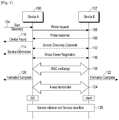
- FIG. 1 illustrates a process of device discovery and P2P group formation between devices, according to an embodiment of the present invention.
- a device A 100 starts discovery.
- the device A 100 sends a device B 102 a probe request.
- the device B 102 sends a probe response to the device A 100 in response to the probe.
- the device A 100 finds the device B 102 based on the probe response.
- the device A 100 and device B 102 may further exchange signals for service discovery in step 112. By doing this, the device A 100 may exchange or share service information with the device B 102 in step 114.
- the device A 100 and device B 102 After exchange of the probe signals in steps 106 and 108, the device A 100 and device B 102 perform group owner negotiation in step 116.
- the device A 100 is a group owner (GO) and the device B 102 is a client. It should be noted, however, that the device A 100 may be the client and the device B 102 may be the GO.
- step 118 the device A 100 and the device B 102 perform a Wi-Fi Simple Configuration (WSC) Exchange and complete connection formation in steps 120 and 122, respectively.
- WSC Wi-Fi Simple Configuration
- a new P2P group is formed between the device A 100 and the device B 102. Then, in step 126, service initiation is performed and service data flow is transferred between the device A 100 and the device B 102.
- a P2P group may include a device which is a GO that serves as an access point (AP).
- a device may discover another device that has already joined an existing P2P group. The device may attempt to connect to the other device that has already joined the existing P2P group by sending the other device a discoverability request and an invitation request.
- a process of forming a new P2P group with the another device will now be described in connection with FIG. 2 .
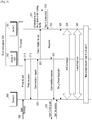
- FIG. 2 illustrates a process of device discovery and P2P group formation between devices, some of which belong to an existing group, according to an embodiment of the present invention.
- the device A 200 which starts discovery in step 206, sends the device B 202, which is a GO of the existing P2P group 208, a probe request in step 210.
- the device B 202 sends the device A 200 a probe response.
- the device A 200 finds the device B 202 and the device C 204 in step 214 based on the probe response from the device B 202.
- the device A 200 that wants to connect to the device C 204 may employ a discoverability mechanism and an invitation mechanism.
- the discoverability mechanism may include transmission, by the device A 200, of a discoverability request (or a device discoverability request) to the device C 204 through the device B 202 in step 216 and receiving a response to the discoverability request, also through the device B 202, from the device C 204 in step 218.
- the invitation mechanism may include transmission, by the device A 200, to the device C 204, of an invitation request for joining a new P2P group in step 220 and receiving an invitation response from the device C 204 in step 222.
- a message of the invitation request includes information to specify the device C 204 (e.g., the device ID: c) as a destination.
- the device A 200 forms the new P2P group by performing group owner negotiation in step 224, WSC exchange in step 226, and four-way handshake in step 228.
- the device C 204 may terminate the existing P2P group 208 with the device B 202 and join the new P2P group, or may instead join both groups, i.e., the existing P2P group with the device B 202 and the new P2P group with the device A 200.
- a device that has already joined a P2P group may not recognize a new group unless (1) the device is explicitly disconnected from the existing P2P group or (2) an owner of another P2P group explicitly invites the device.
- An open service request is a service request that does not specify a party to be requested, i.e., a requestee.
- the open service request is a service request that a device sends to any devices that may possibly be the device's clients by forming a P2P group together.
- the open service request may include an open invitation request, for example, as described below.
- Operations for a device to form a new P2P group by sending requests to devices that are joining another P2P group requires many signalings. This is because the device sends discoverability and invitation requests to all candidate clients. In other words, it is a time- and power-consuming process.
- a generic mechanism enables a user (i.e., a device of the user) to send the open service request to a nearby peer device, which may in turn respond to the open service request to join in, thus forming a P2P group session with these devices.
- a mechanism enables a P2P device that is joining an existing P2P group to receive notification of a newly formed P2P group session.
- the P2P device may join the new P2P group.
- the invitation request message to be sent from a device to another device to form a P2P group together, is expanded to be used to send the open invitation request.
- an invitation flag bitmap included in the invitation request message is expanded, as shown in Table 1 below, to be used as the open invitation request.
- Bit Sequence Bit Value/Description 0 '0' indicates whether it is a request for invitation to a new group 1 '1': indicates whether it is an open invitation request
- the invitation flag bitmap may include, e.g., 2 bits.
- the first bit (bit 0) of the invitation flag bitmap may be used to indicate whether the invitation request is a request for invitation to a new group. For example, if the bit 0 is set to be '0', it may indicate that the invitation request is a new group invitation request.
- the second bit (bit 1) of the invitation flag bitmap may be used to indicate whether the invitation request is the open invitation request. For example, if the bit 1 is set to be '1', it may indicate that the invitation request is the open invitation request.
- a message of the invitation response may be expanded to include a device info attribute of a P2P device.
- the device info attribute includes information regarding a device (e.g., a device ID) which is interested in the open invitation request.
- a device e.g., a device ID
- the device that sent the invitation request may know which device is interested in its invitation request.
- FIG. 3 illustrates a process of device discovery and P2P group formation between devices, some of which belong to an existing group, according to another embodiment of the present invention.
- the device A 300 which starts discovery in step 306, sends the device B 302, which is a GO of the existing P2P group 308, a probe request in step 310.
- the device B 302 sends a probe response to the device A 300.
- the device A 300 finds the device B 302 and the device C 304 based on the probe response from the device B 202.
- the device A 300 which wants to connect to any other device, only performs the invitation mechanism and not the discoverability mechanism (i.e., without sending the discoverability request to the other device and receiving a response to the discoverability request). In other words, the device A 300 sends the open invitation request to the discovered other unspecified devices to join its P2P group in step 320 without sending the discoverability request, and then waits for reception of an open invitation response to the open invitation request.
- the open invitation request to the other devices may be passed through the device B 302, which is the GO of the existing P2P group 308.
- the device A 300 to form a group with another device, does not have to send the discoverability request, but needs to send the open invitation request only once without sending as many invitation requests as there are other devices, thus reducing signaling overhead and minimizing the user effort to send the invitation request (i.e., the number of invitation requests does not need to be equal to the number of other devices). Since the open invitation request is sent to all neighboring (or nearby) devices found by the device with probe operations, some devices that have already joined an existing group session may also receive the invitation to form a new group. This openness of invitation allows various users to join in without restriction, which leads to revitalization of P2P communication.
- the invitation flag bitmap included in the open invitation request, may include two bits: one bit indicating whether the invitation request is a request for invitation to a new group and the other bit indicating whether the invitation request is the open invitation request.
- the device A 300 may send the open invitation request by setting the second bit of the invitation flag bitmap to be '1'.
- the other devices that receive the open invitation request may provide indications about a service (or a file) provided by the device that transmitted the open invitation request using their user interfaces (UIs) i to let their users know of the service (or the file). If one of the users of the other devices enters an input communicating the user's interest in the service (or the file) with its UI in step 316, the device of the user (e.g., the device C 304) sends an open invitation response to the open invitation request to the device A 300, in step 322. The open invitation response may be sent to the device A 300 through the device B 302, the GO of the existing P2P group 308.
- UIs user interfaces
- a message of the open invitation response may include a device info attribute of the P2P device, and the device C 304 may indicate that it is interested in the open invitation request by including its device ID in the device info attribute.
- the device A 300 may check for a joining intention of the device C 304 in step 324.
- the device A 300 and the device C 304 may further perform a negotiation process to form a P2P group session.
- the negotiation process to form a P2P group session may include operations, such as group owner negotiation in step 326, WSC exchange in step 328, and four-way handshake in step 330. By performing these operations, a new P2P group session is formed and a service (or a file) data flow may be transferred.
- FIG. 4 is a flowchart illustrating a method of a P2P device performing an invitation mechanism to form a P2P group with another P2P device according to an embodiment of the present invention.
- the P2P device sends an invitation request to neighboring unspecified P2P devices.
- the invitation request may include an invitation flag bitmap that has, for example, two bits: one bit indicating whether the invitation request is the open invitation request and the other bit indicating whether the invitation request is a request for invitation to a new group.
- the P2P device may perform a negotiation process to form the P2P group with the at least one neighboring P2P device in step 404.
- the at least one neighboring P2P device that receives the invitation response may have already joined another existing P2P group.
- the invitation response may include device information to identify the device that sent the invitation response, such as a device ID.
- the device ID may be inserted into the invitation response as a P2P device info attribute.
- the negotiation process to form the P2P group may include one or more of e.g., group owner negotiation, WSC exchange, and four-way handshake.
- the P2P device may further perform, in step 406, operations of sending the probe request to any neighboring P2P device and receiving the probe response in return. With the probe response, the P2P device may discover neighboring devices.
- FIG. 5 is a block diagram of a P2P device, according to an embodiment of the present invention.
- a P2P device 500 may include a controller 520, which is configured to control general operations for P2P group formation including the device's invitation mechanism, and a transceiver 510, which is configured to communicate wireless signals with neighboring devices under control of the controller 520.
- the controller 520 controls operations of the P2P device 500 as described above. Specifically, the controller controls an invitation request to be sent to neighboring P2P devices, and performs a negotiation process to form a P2P group with at least one neighboring P2P device if an invitation response to the invitation request is received from the at least one neighboring P2P device.
- operations of a device may be understood to be performed by the device's controller.
- the transceiver 510 and the controller 520 may be implemented separately as a Radio Frequency (RF) module and a processor, respectively, or may be incorporated in a single module.
- RF Radio Frequency
- a method of a first peer to peer (P2P) device performing an invitation mechanism to form a P2P group with at least one second P2P device among neighboring P2P devices including: sending an invitation request toward the neighboring P2P devices; and performing a negotiation process to form the P2P group with the at least one second P2P device if an invitation response to the invitation request is received from the at least one second P2P device, wherein the invitation response includes device information to identify a device that transmits the invitation response, and wherein the negotiation process is performed using the device information.
- a first peer to peer (P2P) device for performing an invitation mechanism to form a P2P group with at least one second P2P device among neighboring P2P devices
- the first P2P device including: a controller for controlling an invitation request toward the neighboring P2P devices and performing a negotiation process to form the P2P group with the at least one second P2P device if an invitation response to the invitation request is received from the at least one second P2P device; and a transceiver for transmitting or receiving wireless signals under control of the controller, wherein the invitation response includes device information to identify a device that transmits the invitation response, and wherein the controller performs the negotiation process using the device information.
- student 1 is taking an art class where students share information through Wi-Fi direct connection.
- the student 1 may want to share a small part of his/her picture in the classroom.
- the student 1 may send a file sharing request around the classroom in the form of the open invitation request.
- Students 2 and 3 are interested in viewing pictures and want to join a file sharing group of the student 1.
- Devices of the students 2 and 3 each send a response (i.e., an open invitation response) to the file sharing request.
- the student 1 gets notification from his/her device that students 2 and 3 are interested in his/her file.
- the student 1 initiates or forms the file sharing group and sends the file to students 2 and 3.
- This example relates to online shopping.
- a shop in a shopping mall sends the open invitation request to a user (i.e., user's device) who is looking around the shopping mall online, and the user may respond that he/she wants to join. Then the shop may send advertisements in the form of video podcasts or audio/visual streams to users who join a WiFi P2P group of interest.
- signaling overhead in connection between two peer devices to form a new group, may be reduced while one of the peer devices is joining an existing group.
- the user may send an open service request to all neighboring devices with one-time action, thereby increasing user convenience.
- all users may receive new group information without limitation even while they are joining a different group session, thus offering a communication environment in which it is easy to collect new information.
- FIGS. 1 to 5 illustrates embodiments of the present invention and should not be used to intend to limit the scope of the present invention.
- all the signal flows, operations, or units illustrated in FIGS. 1 to 5 should not be interpreted as essential elements to implement the present invention, and more or fewer of them may be used to implement the present invention within the scope of the present invention.
- the aforementioned device operations may be implemented by program codes stored in a storage medium equipped in the device.
- the controller of the device may perform the aforementioned operations by reading out and executing the program codes with a processor or a Central Processing Unit (CPU).
- CPU Central Processing Unit
- CMOS Complementary Metal Oxide Semiconductor
- ASIC Application Specific Integrated Circuit
Landscapes
- Engineering & Computer Science (AREA)
- Computer Networks & Wireless Communication (AREA)
- Signal Processing (AREA)
- Computing Systems (AREA)
- Physics & Mathematics (AREA)
- Mathematical Physics (AREA)
- Theoretical Computer Science (AREA)
- Computer Security & Cryptography (AREA)
- Multimedia (AREA)
- Mobile Radio Communication Systems (AREA)
Claims (10)
- Verfahren, das durch eine erste Vorrichtung (300) durchgeführt wird, in dem die erste Vorrichtung (300) eine Peer-to-Peer-Gruppe (P2P-Gruppe) mit einer zweiten Vorrichtung (302) bildet, das Verfahren umfassend:Senden (320) einer Einladungsanfrage zu der zweiten Vorrichtung; undDurchführen (326) eines Aushandlungsprozesses zum Bilden der P2P-Gruppe mit der zweiten Vorrichtung, wenn eine Einladungsantwort auf die Einladungsanfrage von der zweiten Vorrichtung empfangen wird, wobei die Einladungsantwort Vorrichtungsinformationen einschließt, die die zweite Vorrichtung identifizieren, wobei der Aushandlungsprozess unter Verwendung der Vorrichtungsinformationen durchgeführt wird, und dadurch gekennzeichnet, dass die Einladungsanfrage eine Einladungs-Flag-Bitmap umfasst, von der ein erstes Bit anzeigt, dass die Einladungsanfrage eine offene Einladungsanfrage ist, die zu nicht spezifizierten Vorrichtungen übertragen wird.
- Verfahren nach Anspruch 1, wobei die zweite Vorrichtung bereits einer anderen vorhandenen P2P-Gruppe beigetreten ist.
- Verfahren nach Anspruch 1, wobei die Vorrichtungsinformationen ein in der Einladungsantwort enthaltenes P2P-Vorrichtungsinformationsattribut umfassen.
- Verfahren nach Anspruch 1, ferner umfassend: vor dem Senden der Einladungsanfrage, Senden (310) einer Testanfrage zu mindestens einem von einer Vielzahl von benachbarten Vorrichtungen und Empfangen (312) einer Testantwort von der mindestens einen von der Vielzahl von benachbarten Vorrichtungen und Erkennen der zweiten Vorrichtung basierend auf in der Testantwort enthaltenen Informationen.
- Verfahren nach Anspruch 1, wobei der Aushandlungsprozess mindestens eines von Gruppenbesitzeraushandlung, Wi-Fi Simple Configuration(WSC)-Austausch und Vier-Wege-Handshake umfasst.
- Erste Vorrichtung (300), die dazu ausgelegt ist, eine Peer-to-Peer-Gruppe (P2P-Gruppe) mit einer zweiten Vorrichtung (302) zu bilden, die erste Vorrichtung umfassend:eine Steuerung (520), die dazu ausgelegt ist, eine Einladungsanfrage zu steuern, die zu der zweiten Vorrichtung zu senden ist, und einen Aushandlungsprozess durchzuführen, um die P2P-Gruppe mit der zweiten Vorrichtung zu bilden, wenn eine Einladungsantwort auf die Einladungsanfrage von der zweiten Vorrichtung empfangen wird; undeinen Transceiver (510), der dazu ausgelegt ist, drahtlose Signale unter der Kontrolle der Steuerung zu übertragen oder zu empfangen, wobei die Einladungsantwort Vorrichtungsinformationen einschließt, die die zweite Vorrichtung identifizieren, und wobei die Steuerung den Aushandlungsprozess unter Verwendung der Vorrichtungsinformationen durchführt, und dadurch gekennzeichnet, dass die Einladungsanfrage eine Einladungs-Flag-Bitmap umfasst, von der ein erstes Bit anzeigt, dass die Einladungsanfrage eine offene Einladungsanfrage ist, die zu nicht spezifizierten Vorrichtungen übertragen wird.
- Erste Vorrichtung nach Anspruch 6, wobei die zweite Vorrichtung bereits einer anderen vorhandenen P2P-Gruppe beigetreten ist.
- Erste Vorrichtung nach Anspruch 6, wobei die Vorrichtungsinformationen ein in der Einladungsantwort enthaltenes P2P-Vorrichtungsinformationsattribut umfassen.
- Erste Vorrichtung nach Anspruch 6, wobei die Steuerung, vor dem Senden der Einladungsanfrage, eine Testanfrage zu mindestens einem von einer Vielzahl von benachbarten Vorrichtungen sendet und eine Testantwort von der mindestens einen von der Vielzahl von benachbarten Vorrichtungen empfängt und die zweite Vorrichtung basierend auf in der Testantwort enthaltenen Informationen erkennt.
- Erste Vorrichtung nach Anspruch 6, wobei der Aushandlungsprozess mindestens eines von Gruppenbesitzeraushandlung, Wi-Fi Simple Configuration(WSC)-Austausch und Vier-Wege-Handshake umfasst.
Applications Claiming Priority (2)
| Application Number | Priority Date | Filing Date | Title |
|---|---|---|---|
| US201261670378P | 2012-07-11 | 2012-07-11 | |
| PCT/KR2013/006198 WO2014010962A1 (en) | 2012-07-11 | 2013-07-11 | Scheme for device discovery and p2p group formation |
Publications (3)
| Publication Number | Publication Date |
|---|---|
| EP2873169A1 EP2873169A1 (de) | 2015-05-20 |
| EP2873169A4 EP2873169A4 (de) | 2016-03-09 |
| EP2873169B1 true EP2873169B1 (de) | 2018-09-05 |
Family
ID=49914920
Family Applications (1)
| Application Number | Title | Priority Date | Filing Date |
|---|---|---|---|
| EP13816126.0A Not-in-force EP2873169B1 (de) | 2012-07-11 | 2013-07-11 | Schema zur vorrichtungserkennung und p2p-gruppenbildung |
Country Status (5)
| Country | Link |
|---|---|
| US (1) | US9479386B2 (de) |
| EP (1) | EP2873169B1 (de) |
| KR (1) | KR20140008268A (de) |
| CN (1) | CN104428999B (de) |
| WO (1) | WO2014010962A1 (de) |
Families Citing this family (6)
| Publication number | Priority date | Publication date | Assignee | Title |
|---|---|---|---|---|
| US9614641B2 (en) | 2010-05-12 | 2017-04-04 | Qualcomm Incorporated | Resource coordination for peer-to-peer groups through distributed negotiation |
| TWI533741B (zh) * | 2014-01-23 | 2016-05-11 | 瑞昱半導體股份有限公司 | 支援點對點連線之無線通訊裝置與方法 |
| KR102429661B1 (ko) * | 2014-03-06 | 2022-08-05 | 삼성전자주식회사 | 검색자 디바이스 및 광고자 디바이스간의 서비스 세션을 성립하는 방법 및 시스템 |
| WO2015133859A1 (en) * | 2014-03-06 | 2015-09-11 | Samsung Electronics Co., Ltd. | Method and system for establishing a connection between a seeker device and a target device |
| US9532193B2 (en) | 2014-03-14 | 2016-12-27 | Blackberry Limited | Changing topology of wireless peer-to-peer group |
| WO2023225122A1 (en) * | 2022-05-17 | 2023-11-23 | Apple Inc. | Systems and methods for remote interaction between electronic devices |
Family Cites Families (31)
| Publication number | Priority date | Publication date | Assignee | Title |
|---|---|---|---|---|
| GB2430582B (en) * | 2005-09-26 | 2008-04-09 | Nec Technologies | Method of managing connectivity status for a mobile radio communications device, and such a device |
| US8170481B2 (en) | 2008-03-24 | 2012-05-01 | Intel Corporation | Techniques for discovering services provided in a wireless network |
| US9077727B2 (en) | 2008-12-30 | 2015-07-07 | Telecom Italia S.P.A. | Method and system for data management in peer-to-peer network |
| US8233495B2 (en) * | 2009-04-22 | 2012-07-31 | Intel Corporation | Discovery channel and discovery beacon for peer-to-peer devices in wireless communications network |
| US8768323B2 (en) * | 2009-06-23 | 2014-07-01 | Intel Corporation | Service discovery in a wireless network |
| US8965283B2 (en) * | 2009-08-10 | 2015-02-24 | Qualcomm Incorporated | Setting up a direct link in a peer to peer wireless network |
| US20110082939A1 (en) * | 2009-10-02 | 2011-04-07 | Michael Peter Montemurro | Methods and apparatus to proxy discovery and negotiations between network entities to establish peer-to-peer communications |
| US9420631B2 (en) * | 2009-10-02 | 2016-08-16 | Qualcomm Incorporated | WLAN peer-to-peer group owner negotiation |
| KR101598886B1 (ko) * | 2009-10-13 | 2016-03-03 | 삼성전자주식회사 | 이동통신 단말기에서 무선랜을 이용한 피어투피어 연결 방법 및 장치 |
| US8700780B2 (en) | 2009-10-15 | 2014-04-15 | Qualcomm Incorporated | Group owner selection with crossing requests |
| WO2011062404A2 (ko) * | 2009-11-17 | 2011-05-26 | 삼성전자 주식회사 | Wifi direct 네트워크에서의 wifi 디스플레이 서비스 탐색 방법 및 장치 |
| US8559340B2 (en) * | 2009-12-22 | 2013-10-15 | Samsung Electronics Co., Ltd. | Method and apparatus for service discovery in Wi-Fi direct network |
| US8335937B2 (en) * | 2009-12-24 | 2012-12-18 | Intel Corporation | Method and system for discoverability of power saving P2P devices |
| CN102223287A (zh) * | 2010-04-16 | 2011-10-19 | 国基电子(上海)有限公司 | 网络装置及其动态分配系统资源的方法 |
| US10517098B2 (en) * | 2010-07-30 | 2019-12-24 | Qualcomm Incorporated | Interference coordination for peer-to-peer (P2P) communication and wide area network (WAN) communication |
| US8553605B2 (en) | 2010-09-10 | 2013-10-08 | Qualcomm Incorporated | Packet identification for power saving in wireless communication networks |
| KR101742985B1 (ko) | 2010-11-02 | 2017-06-02 | 엘지전자 주식회사 | 무선 네트워크에서 그룹 오너 결정 방법 및 그 디바이스 |
| KR101735334B1 (ko) | 2010-11-25 | 2017-05-15 | 삼성전자 주식회사 | 와이파이 P2P 디바이스(Wi-Fi Peer to Peer Device)의 디스커버리(Discovery) 방법 및 장치 |
| US20120173620A1 (en) * | 2010-12-29 | 2012-07-05 | Microsoft Corporation | Creation and management of resilient wireless groups |
| EP2519071B1 (de) * | 2011-04-30 | 2019-01-30 | Samsung Electronics Co., Ltd. | Verfahren und System zur Delegierung der Eigentümerschaft einer Gruppe in einem Wi-Fi-P2P-Netzwerk |
| WO2012173423A2 (ko) * | 2011-06-15 | 2012-12-20 | 엘지전자 주식회사 | 무선데이터통신장치 및 무선데이터통신방법 |
| KR101826327B1 (ko) * | 2011-08-02 | 2018-02-07 | 삼성전자주식회사 | 와이파이 피투피 그룹의 생성 방법 |
| KR101867089B1 (ko) * | 2011-09-14 | 2018-06-15 | 삼성전자주식회사 | 레거시 와이파이와 와이파이 p2p의 동시 사용 방법 |
| US9681476B2 (en) * | 2011-12-20 | 2017-06-13 | Intel Corporation | Wireless communication devices and methods for forming peer-to-peer (P2P) wireless connections between devices |
| US8848559B2 (en) * | 2012-01-26 | 2014-09-30 | Qualcomm Incorporated | Methods and apparatuses for device discovery |
| US9565622B2 (en) * | 2012-07-05 | 2017-02-07 | Qualcomm Incorporated | Detecting services provided by a wireless node before device discovery and connection establishment |
| US9137621B2 (en) * | 2012-07-13 | 2015-09-15 | Blackberry Limited | Wireless network service transaction protocol |
| EP2873290A4 (de) * | 2012-07-16 | 2016-04-13 | Samsung Electronics Co Ltd | Verfahren und vorrichtung zur topologiehandhabung in einem drahtlosen kommunikationssystem |
| US9167615B2 (en) * | 2012-08-08 | 2015-10-20 | Samsung Electronics Co., Ltd | Apparatus and method of connecting service, according to user intention |
| US9306902B2 (en) * | 2012-08-29 | 2016-04-05 | Qualcomm Incorporated | Embedded thin DHCP for wi-fi direct to provide an IP address during connection establishment |
| JP6093026B2 (ja) * | 2013-03-12 | 2017-03-08 | エルジー エレクトロニクス インコーポレイティド | ダイレクト通信システムにおけるp2pグループ形成方法およびそのための装置 |
-
2013
- 2013-07-11 US US13/939,610 patent/US9479386B2/en not_active Expired - Fee Related
- 2013-07-11 CN CN201380036503.8A patent/CN104428999B/zh not_active Expired - Fee Related
- 2013-07-11 EP EP13816126.0A patent/EP2873169B1/de not_active Not-in-force
- 2013-07-11 WO PCT/KR2013/006198 patent/WO2014010962A1/en not_active Ceased
- 2013-07-11 KR KR1020130081552A patent/KR20140008268A/ko not_active Ceased
Non-Patent Citations (1)
| Title |
|---|
| None * |
Also Published As
| Publication number | Publication date |
|---|---|
| US20140019513A1 (en) | 2014-01-16 |
| EP2873169A1 (de) | 2015-05-20 |
| EP2873169A4 (de) | 2016-03-09 |
| US9479386B2 (en) | 2016-10-25 |
| CN104428999B (zh) | 2017-12-12 |
| WO2014010962A1 (en) | 2014-01-16 |
| KR20140008268A (ko) | 2014-01-21 |
| CN104428999A (zh) | 2015-03-18 |
Similar Documents
| Publication | Publication Date | Title |
|---|---|---|
| JP6445549B2 (ja) | 直接通信システムにおけるデバイス探索方法及びそのための装置 | |
| CN106454822B (zh) | 通信设备及其控制方法 | |
| US9699715B2 (en) | Discovery method and device in a wireless communication system | |
| KR102070246B1 (ko) | 와이파이 다이렉트 서비스를 위한 피투피 그룹 생성 방법 및 장치 | |
| US9699819B2 (en) | Method and apparatus for establishing session in wireless communication system | |
| US10264038B2 (en) | Discovery and management of synchronous audio or video streaming service to multiple sinks in wireless display system | |
| CN107431921B (zh) | 信息处理设备、信息处理方法和程序 | |
| EP2873169B1 (de) | Schema zur vorrichtungserkennung und p2p-gruppenbildung | |
| EP2931002A1 (de) | Verfahren und vorrichtung für eine sitzungsinitialisierung in einem drahtlosen kommunikationssystem | |
| JP7037358B2 (ja) | 情報処理装置、情報処理方法およびプログラム | |
| JP2016509398A (ja) | 無線通信システムにおけるサービス転換方法及び装置 | |
| US11611604B2 (en) | Method and apparatus for receiving streaming via transport protocol in wireless communication system | |
| US9980121B2 (en) | Method and apparatus for performing discovery in wireless communication system | |
| US10470225B2 (en) | System and method for enhance the user experience of applications for proximity-based peer-to-peer mobile computing | |
| WO2020085019A1 (ja) | 通信装置、通信装置の制御方法、およびプログラム | |
| US10506501B2 (en) | Service discovery method and device in wireless communication system | |
| KR20160119809A (ko) | 무선 통신 시스템에서 세션을 초기화하는 방법 및 장치 | |
| US9980122B2 (en) | Method and device for conducting discovery in wireless communication system | |
| US20180020498A1 (en) | Wireless lan station having platform capable of changing wireless lan connection technique | |
| KR20170006204A (ko) | 통신 장치, 통신 방법 및 통신 시스템 | |
| US20170251354A1 (en) | Method and apparatus for performing discovery by device supporting wi-fi direct in wireless communication system | |
| KR102047258B1 (ko) | 무선랜에서의 통신 방법 및 이를 위한 무선 장치 |
Legal Events
| Date | Code | Title | Description |
|---|---|---|---|
| PUAI | Public reference made under article 153(3) epc to a published international application that has entered the european phase |
Free format text: ORIGINAL CODE: 0009012 |
|
| 17P | Request for examination filed |
Effective date: 20141210 |
|
| AK | Designated contracting states |
Kind code of ref document: A1 Designated state(s): AL AT BE BG CH CY CZ DE DK EE ES FI FR GB GR HR HU IE IS IT LI LT LU LV MC MK MT NL NO PL PT RO RS SE SI SK SM TR |
|
| AX | Request for extension of the european patent |
Extension state: BA ME |
|
| DAX | Request for extension of the european patent (deleted) | ||
| RA4 | Supplementary search report drawn up and despatched (corrected) |
Effective date: 20160205 |
|
| RIC1 | Information provided on ipc code assigned before grant |
Ipc: H04B 7/24 20060101AFI20160201BHEP Ipc: H04L 29/08 20060101ALI20160201BHEP Ipc: H04L 29/06 20060101ALI20160201BHEP |
|
| STAA | Information on the status of an ep patent application or granted ep patent |
Free format text: STATUS: EXAMINATION IS IN PROGRESS |
|
| 17Q | First examination report despatched |
Effective date: 20170210 |
|
| GRAP | Despatch of communication of intention to grant a patent |
Free format text: ORIGINAL CODE: EPIDOSNIGR1 |
|
| STAA | Information on the status of an ep patent application or granted ep patent |
Free format text: STATUS: GRANT OF PATENT IS INTENDED |
|
| INTG | Intention to grant announced |
Effective date: 20180309 |
|
| GRAS | Grant fee paid |
Free format text: ORIGINAL CODE: EPIDOSNIGR3 |
|
| GRAA | (expected) grant |
Free format text: ORIGINAL CODE: 0009210 |
|
| STAA | Information on the status of an ep patent application or granted ep patent |
Free format text: STATUS: THE PATENT HAS BEEN GRANTED |
|
| AK | Designated contracting states |
Kind code of ref document: B1 Designated state(s): AL AT BE BG CH CY CZ DE DK EE ES FI FR GB GR HR HU IE IS IT LI LT LU LV MC MK MT NL NO PL PT RO RS SE SI SK SM TR |
|
| REG | Reference to a national code |
Ref country code: GB Ref legal event code: FG4D |
|
| REG | Reference to a national code |
Ref country code: CH Ref legal event code: EP |
|
| REG | Reference to a national code |
Ref country code: AT Ref legal event code: REF Ref document number: 1039082 Country of ref document: AT Kind code of ref document: T Effective date: 20180915 |
|
| REG | Reference to a national code |
Ref country code: IE Ref legal event code: FG4D |
|
| REG | Reference to a national code |
Ref country code: DE Ref legal event code: R096 Ref document number: 602013043274 Country of ref document: DE |
|
| REG | Reference to a national code |
Ref country code: NL Ref legal event code: FP |
|
| REG | Reference to a national code |
Ref country code: LT Ref legal event code: MG4D |
|
| PG25 | Lapsed in a contracting state [announced via postgrant information from national office to epo] |
Ref country code: BG Free format text: LAPSE BECAUSE OF FAILURE TO SUBMIT A TRANSLATION OF THE DESCRIPTION OR TO PAY THE FEE WITHIN THE PRESCRIBED TIME-LIMIT Effective date: 20181205 Ref country code: GR Free format text: LAPSE BECAUSE OF FAILURE TO SUBMIT A TRANSLATION OF THE DESCRIPTION OR TO PAY THE FEE WITHIN THE PRESCRIBED TIME-LIMIT Effective date: 20181206 Ref country code: SE Free format text: LAPSE BECAUSE OF FAILURE TO SUBMIT A TRANSLATION OF THE DESCRIPTION OR TO PAY THE FEE WITHIN THE PRESCRIBED TIME-LIMIT Effective date: 20180905 Ref country code: RS Free format text: LAPSE BECAUSE OF FAILURE TO SUBMIT A TRANSLATION OF THE DESCRIPTION OR TO PAY THE FEE WITHIN THE PRESCRIBED TIME-LIMIT Effective date: 20180905 Ref country code: NO Free format text: LAPSE BECAUSE OF FAILURE TO SUBMIT A TRANSLATION OF THE DESCRIPTION OR TO PAY THE FEE WITHIN THE PRESCRIBED TIME-LIMIT Effective date: 20181205 Ref country code: FI Free format text: LAPSE BECAUSE OF FAILURE TO SUBMIT A TRANSLATION OF THE DESCRIPTION OR TO PAY THE FEE WITHIN THE PRESCRIBED TIME-LIMIT Effective date: 20180905 Ref country code: LT Free format text: LAPSE BECAUSE OF FAILURE TO SUBMIT A TRANSLATION OF THE DESCRIPTION OR TO PAY THE FEE WITHIN THE PRESCRIBED TIME-LIMIT Effective date: 20180905 |
|
| REG | Reference to a national code |
Ref country code: AT Ref legal event code: MK05 Ref document number: 1039082 Country of ref document: AT Kind code of ref document: T Effective date: 20180905 |
|
| PG25 | Lapsed in a contracting state [announced via postgrant information from national office to epo] |
Ref country code: LV Free format text: LAPSE BECAUSE OF FAILURE TO SUBMIT A TRANSLATION OF THE DESCRIPTION OR TO PAY THE FEE WITHIN THE PRESCRIBED TIME-LIMIT Effective date: 20180905 Ref country code: HR Free format text: LAPSE BECAUSE OF FAILURE TO SUBMIT A TRANSLATION OF THE DESCRIPTION OR TO PAY THE FEE WITHIN THE PRESCRIBED TIME-LIMIT Effective date: 20180905 Ref country code: AL Free format text: LAPSE BECAUSE OF FAILURE TO SUBMIT A TRANSLATION OF THE DESCRIPTION OR TO PAY THE FEE WITHIN THE PRESCRIBED TIME-LIMIT Effective date: 20180905 |
|
| PG25 | Lapsed in a contracting state [announced via postgrant information from national office to epo] |
Ref country code: RO Free format text: LAPSE BECAUSE OF FAILURE TO SUBMIT A TRANSLATION OF THE DESCRIPTION OR TO PAY THE FEE WITHIN THE PRESCRIBED TIME-LIMIT Effective date: 20180905 Ref country code: CZ Free format text: LAPSE BECAUSE OF FAILURE TO SUBMIT A TRANSLATION OF THE DESCRIPTION OR TO PAY THE FEE WITHIN THE PRESCRIBED TIME-LIMIT Effective date: 20180905 Ref country code: IS Free format text: LAPSE BECAUSE OF FAILURE TO SUBMIT A TRANSLATION OF THE DESCRIPTION OR TO PAY THE FEE WITHIN THE PRESCRIBED TIME-LIMIT Effective date: 20190105 Ref country code: PL Free format text: LAPSE BECAUSE OF FAILURE TO SUBMIT A TRANSLATION OF THE DESCRIPTION OR TO PAY THE FEE WITHIN THE PRESCRIBED TIME-LIMIT Effective date: 20180905 Ref country code: ES Free format text: LAPSE BECAUSE OF FAILURE TO SUBMIT A TRANSLATION OF THE DESCRIPTION OR TO PAY THE FEE WITHIN THE PRESCRIBED TIME-LIMIT Effective date: 20180905 Ref country code: EE Free format text: LAPSE BECAUSE OF FAILURE TO SUBMIT A TRANSLATION OF THE DESCRIPTION OR TO PAY THE FEE WITHIN THE PRESCRIBED TIME-LIMIT Effective date: 20180905 Ref country code: AT Free format text: LAPSE BECAUSE OF FAILURE TO SUBMIT A TRANSLATION OF THE DESCRIPTION OR TO PAY THE FEE WITHIN THE PRESCRIBED TIME-LIMIT Effective date: 20180905 Ref country code: IT Free format text: LAPSE BECAUSE OF FAILURE TO SUBMIT A TRANSLATION OF THE DESCRIPTION OR TO PAY THE FEE WITHIN THE PRESCRIBED TIME-LIMIT Effective date: 20180905 |
|
| PG25 | Lapsed in a contracting state [announced via postgrant information from national office to epo] |
Ref country code: SK Free format text: LAPSE BECAUSE OF FAILURE TO SUBMIT A TRANSLATION OF THE DESCRIPTION OR TO PAY THE FEE WITHIN THE PRESCRIBED TIME-LIMIT Effective date: 20180905 Ref country code: SM Free format text: LAPSE BECAUSE OF FAILURE TO SUBMIT A TRANSLATION OF THE DESCRIPTION OR TO PAY THE FEE WITHIN THE PRESCRIBED TIME-LIMIT Effective date: 20180905 Ref country code: PT Free format text: LAPSE BECAUSE OF FAILURE TO SUBMIT A TRANSLATION OF THE DESCRIPTION OR TO PAY THE FEE WITHIN THE PRESCRIBED TIME-LIMIT Effective date: 20190105 |
|
| REG | Reference to a national code |
Ref country code: DE Ref legal event code: R097 Ref document number: 602013043274 Country of ref document: DE |
|
| PLBE | No opposition filed within time limit |
Free format text: ORIGINAL CODE: 0009261 |
|
| STAA | Information on the status of an ep patent application or granted ep patent |
Free format text: STATUS: NO OPPOSITION FILED WITHIN TIME LIMIT |
|
| PG25 | Lapsed in a contracting state [announced via postgrant information from national office to epo] |
Ref country code: DK Free format text: LAPSE BECAUSE OF FAILURE TO SUBMIT A TRANSLATION OF THE DESCRIPTION OR TO PAY THE FEE WITHIN THE PRESCRIBED TIME-LIMIT Effective date: 20180905 |
|
| PGFP | Annual fee paid to national office [announced via postgrant information from national office to epo] |
Ref country code: NL Payment date: 20190621 Year of fee payment: 7 |
|
| 26N | No opposition filed |
Effective date: 20190606 |
|
| PG25 | Lapsed in a contracting state [announced via postgrant information from national office to epo] |
Ref country code: SI Free format text: LAPSE BECAUSE OF FAILURE TO SUBMIT A TRANSLATION OF THE DESCRIPTION OR TO PAY THE FEE WITHIN THE PRESCRIBED TIME-LIMIT Effective date: 20180905 |
|
| PGFP | Annual fee paid to national office [announced via postgrant information from national office to epo] |
Ref country code: FR Payment date: 20190624 Year of fee payment: 7 |
|
| PGFP | Annual fee paid to national office [announced via postgrant information from national office to epo] |
Ref country code: DE Payment date: 20190620 Year of fee payment: 7 |
|
| PG25 | Lapsed in a contracting state [announced via postgrant information from national office to epo] |
Ref country code: MC Free format text: LAPSE BECAUSE OF FAILURE TO SUBMIT A TRANSLATION OF THE DESCRIPTION OR TO PAY THE FEE WITHIN THE PRESCRIBED TIME-LIMIT Effective date: 20180905 |
|
| REG | Reference to a national code |
Ref country code: CH Ref legal event code: PL |
|
| GBPC | Gb: european patent ceased through non-payment of renewal fee |
Effective date: 20190711 |
|
| PG25 | Lapsed in a contracting state [announced via postgrant information from national office to epo] |
Ref country code: TR Free format text: LAPSE BECAUSE OF FAILURE TO SUBMIT A TRANSLATION OF THE DESCRIPTION OR TO PAY THE FEE WITHIN THE PRESCRIBED TIME-LIMIT Effective date: 20180905 |
|
| REG | Reference to a national code |
Ref country code: BE Ref legal event code: MM Effective date: 20190731 |
|
| PG25 | Lapsed in a contracting state [announced via postgrant information from national office to epo] |
Ref country code: GB Free format text: LAPSE BECAUSE OF NON-PAYMENT OF DUE FEES Effective date: 20190711 |
|
| PG25 | Lapsed in a contracting state [announced via postgrant information from national office to epo] |
Ref country code: CH Free format text: LAPSE BECAUSE OF NON-PAYMENT OF DUE FEES Effective date: 20190731 Ref country code: LI Free format text: LAPSE BECAUSE OF NON-PAYMENT OF DUE FEES Effective date: 20190731 Ref country code: LU Free format text: LAPSE BECAUSE OF NON-PAYMENT OF DUE FEES Effective date: 20190711 Ref country code: BE Free format text: LAPSE BECAUSE OF NON-PAYMENT OF DUE FEES Effective date: 20190731 |
|
| PG25 | Lapsed in a contracting state [announced via postgrant information from national office to epo] |
Ref country code: IE Free format text: LAPSE BECAUSE OF NON-PAYMENT OF DUE FEES Effective date: 20190711 |
|
| REG | Reference to a national code |
Ref country code: DE Ref legal event code: R119 Ref document number: 602013043274 Country of ref document: DE |
|
| REG | Reference to a national code |
Ref country code: NL Ref legal event code: MM Effective date: 20200801 |
|
| PG25 | Lapsed in a contracting state [announced via postgrant information from national office to epo] |
Ref country code: NL Free format text: LAPSE BECAUSE OF NON-PAYMENT OF DUE FEES Effective date: 20200801 Ref country code: FR Free format text: LAPSE BECAUSE OF NON-PAYMENT OF DUE FEES Effective date: 20200731 |
|
| PG25 | Lapsed in a contracting state [announced via postgrant information from national office to epo] |
Ref country code: CY Free format text: LAPSE BECAUSE OF FAILURE TO SUBMIT A TRANSLATION OF THE DESCRIPTION OR TO PAY THE FEE WITHIN THE PRESCRIBED TIME-LIMIT Effective date: 20180905 Ref country code: DE Free format text: LAPSE BECAUSE OF NON-PAYMENT OF DUE FEES Effective date: 20210202 |
|
| PG25 | Lapsed in a contracting state [announced via postgrant information from national office to epo] |
Ref country code: HU Free format text: LAPSE BECAUSE OF FAILURE TO SUBMIT A TRANSLATION OF THE DESCRIPTION OR TO PAY THE FEE WITHIN THE PRESCRIBED TIME-LIMIT; INVALID AB INITIO Effective date: 20130711 Ref country code: MT Free format text: LAPSE BECAUSE OF FAILURE TO SUBMIT A TRANSLATION OF THE DESCRIPTION OR TO PAY THE FEE WITHIN THE PRESCRIBED TIME-LIMIT Effective date: 20180905 |
|
| PG25 | Lapsed in a contracting state [announced via postgrant information from national office to epo] |
Ref country code: MK Free format text: LAPSE BECAUSE OF FAILURE TO SUBMIT A TRANSLATION OF THE DESCRIPTION OR TO PAY THE FEE WITHIN THE PRESCRIBED TIME-LIMIT Effective date: 20180905 |