EP2874227B1 - Lithiumsekundärbatterie - Google Patents
Lithiumsekundärbatterie Download PDFInfo
- Publication number
- EP2874227B1 EP2874227B1 EP13857167.4A EP13857167A EP2874227B1 EP 2874227 B1 EP2874227 B1 EP 2874227B1 EP 13857167 A EP13857167 A EP 13857167A EP 2874227 B1 EP2874227 B1 EP 2874227B1
- Authority
- EP
- European Patent Office
- Prior art keywords
- carbon
- active material
- particles
- secondary battery
- lithium secondary
- Prior art date
- Legal status (The legal status is an assumption and is not a legal conclusion. Google has not performed a legal analysis and makes no representation as to the accuracy of the status listed.)
- Active
Links
Images

Classifications
-
- H—ELECTRICITY
- H01—ELECTRIC ELEMENTS
- H01M—PROCESSES OR MEANS, e.g. BATTERIES, FOR THE DIRECT CONVERSION OF CHEMICAL ENERGY INTO ELECTRICAL ENERGY
- H01M4/00—Electrodes
- H01M4/02—Electrodes composed of, or comprising, active material
- H01M4/36—Selection of substances as active materials, active masses, active liquids
- H01M4/58—Selection of substances as active materials, active masses, active liquids of inorganic compounds other than oxides or hydroxides, e.g. sulfides, selenides, tellurides, halogenides or LiCoFy; of polyanionic structures, e.g. phosphates, silicates or borates
- H01M4/5825—Oxygenated metallic salts or polyanionic structures, e.g. borates, phosphates, silicates, olivines
-
- H—ELECTRICITY
- H01—ELECTRIC ELEMENTS
- H01M—PROCESSES OR MEANS, e.g. BATTERIES, FOR THE DIRECT CONVERSION OF CHEMICAL ENERGY INTO ELECTRICAL ENERGY
- H01M10/00—Secondary cells; Manufacture thereof
- H01M10/05—Accumulators with non-aqueous electrolyte
- H01M10/052—Li-accumulators
-
- H—ELECTRICITY
- H01—ELECTRIC ELEMENTS
- H01M—PROCESSES OR MEANS, e.g. BATTERIES, FOR THE DIRECT CONVERSION OF CHEMICAL ENERGY INTO ELECTRICAL ENERGY
- H01M10/00—Secondary cells; Manufacture thereof
- H01M10/05—Accumulators with non-aqueous electrolyte
- H01M10/052—Li-accumulators
- H01M10/0525—Rocking-chair batteries, i.e. batteries with lithium insertion or intercalation in both electrodes; Lithium-ion batteries
-
- H—ELECTRICITY
- H01—ELECTRIC ELEMENTS
- H01M—PROCESSES OR MEANS, e.g. BATTERIES, FOR THE DIRECT CONVERSION OF CHEMICAL ENERGY INTO ELECTRICAL ENERGY
- H01M4/00—Electrodes
- H01M4/02—Electrodes composed of, or comprising, active material
- H01M4/13—Electrodes for accumulators with non-aqueous electrolyte, e.g. for lithium-accumulators; Processes of manufacture thereof
- H01M4/136—Electrodes based on inorganic compounds other than oxides or hydroxides, e.g. sulfides, selenides, tellurides, halogenides or LiCoFy
-
- H—ELECTRICITY
- H01—ELECTRIC ELEMENTS
- H01M—PROCESSES OR MEANS, e.g. BATTERIES, FOR THE DIRECT CONVERSION OF CHEMICAL ENERGY INTO ELECTRICAL ENERGY
- H01M4/00—Electrodes
- H01M4/02—Electrodes composed of, or comprising, active material
- H01M4/36—Selection of substances as active materials, active masses, active liquids
- H01M4/362—Composites
- H01M4/366—Composites as layered products
-
- H—ELECTRICITY
- H01—ELECTRIC ELEMENTS
- H01M—PROCESSES OR MEANS, e.g. BATTERIES, FOR THE DIRECT CONVERSION OF CHEMICAL ENERGY INTO ELECTRICAL ENERGY
- H01M4/00—Electrodes
- H01M4/02—Electrodes composed of, or comprising, active material
- H01M4/36—Selection of substances as active materials, active masses, active liquids
- H01M4/38—Selection of substances as active materials, active masses, active liquids of elements or alloys
-
- H—ELECTRICITY
- H01—ELECTRIC ELEMENTS
- H01M—PROCESSES OR MEANS, e.g. BATTERIES, FOR THE DIRECT CONVERSION OF CHEMICAL ENERGY INTO ELECTRICAL ENERGY
- H01M4/00—Electrodes
- H01M4/02—Electrodes composed of, or comprising, active material
- H01M4/36—Selection of substances as active materials, active masses, active liquids
- H01M4/58—Selection of substances as active materials, active masses, active liquids of inorganic compounds other than oxides or hydroxides, e.g. sulfides, selenides, tellurides, halogenides or LiCoFy; of polyanionic structures, e.g. phosphates, silicates or borates
- H01M4/583—Carbonaceous material, e.g. graphite-intercalation compounds or CFx
-
- H—ELECTRICITY
- H01—ELECTRIC ELEMENTS
- H01M—PROCESSES OR MEANS, e.g. BATTERIES, FOR THE DIRECT CONVERSION OF CHEMICAL ENERGY INTO ELECTRICAL ENERGY
- H01M4/00—Electrodes
- H01M4/02—Electrodes composed of, or comprising, active material
- H01M4/36—Selection of substances as active materials, active masses, active liquids
- H01M4/58—Selection of substances as active materials, active masses, active liquids of inorganic compounds other than oxides or hydroxides, e.g. sulfides, selenides, tellurides, halogenides or LiCoFy; of polyanionic structures, e.g. phosphates, silicates or borates
- H01M4/583—Carbonaceous material, e.g. graphite-intercalation compounds or CFx
- H01M4/587—Carbonaceous material, e.g. graphite-intercalation compounds or CFx for inserting or intercalating light metals
-
- H—ELECTRICITY
- H01—ELECTRIC ELEMENTS
- H01M—PROCESSES OR MEANS, e.g. BATTERIES, FOR THE DIRECT CONVERSION OF CHEMICAL ENERGY INTO ELECTRICAL ENERGY
- H01M4/00—Electrodes
- H01M4/02—Electrodes composed of, or comprising, active material
- H01M4/62—Selection of inactive substances as ingredients for active masses, e.g. binders, fillers
- H01M4/624—Electric conductive fillers
- H01M4/625—Carbon or graphite
-
- H—ELECTRICITY
- H01—ELECTRIC ELEMENTS
- H01M—PROCESSES OR MEANS, e.g. BATTERIES, FOR THE DIRECT CONVERSION OF CHEMICAL ENERGY INTO ELECTRICAL ENERGY
- H01M50/00—Constructional details or processes of manufacture of the non-active parts of electrochemical cells other than fuel cells, e.g. hybrid cells
- H01M50/20—Mountings; Secondary casings or frames; Racks, modules or packs; Suspension devices; Shock absorbers; Transport or carrying devices; Holders
-
- H—ELECTRICITY
- H01—ELECTRIC ELEMENTS
- H01M—PROCESSES OR MEANS, e.g. BATTERIES, FOR THE DIRECT CONVERSION OF CHEMICAL ENERGY INTO ELECTRICAL ENERGY
- H01M4/00—Electrodes
- H01M4/02—Electrodes composed of, or comprising, active material
- H01M2004/021—Physical characteristics, e.g. porosity, surface area
-
- H—ELECTRICITY
- H01—ELECTRIC ELEMENTS
- H01M—PROCESSES OR MEANS, e.g. BATTERIES, FOR THE DIRECT CONVERSION OF CHEMICAL ENERGY INTO ELECTRICAL ENERGY
- H01M2220/00—Batteries for particular applications
- H01M2220/10—Batteries in stationary systems, e.g. emergency power source in plant
-
- H—ELECTRICITY
- H01—ELECTRIC ELEMENTS
- H01M—PROCESSES OR MEANS, e.g. BATTERIES, FOR THE DIRECT CONVERSION OF CHEMICAL ENERGY INTO ELECTRICAL ENERGY
- H01M2220/00—Batteries for particular applications
- H01M2220/20—Batteries in motive systems, e.g. vehicle, ship, plane
-
- Y—GENERAL TAGGING OF NEW TECHNOLOGICAL DEVELOPMENTS; GENERAL TAGGING OF CROSS-SECTIONAL TECHNOLOGIES SPANNING OVER SEVERAL SECTIONS OF THE IPC; TECHNICAL SUBJECTS COVERED BY FORMER USPC CROSS-REFERENCE ART COLLECTIONS [XRACs] AND DIGESTS
- Y02—TECHNOLOGIES OR APPLICATIONS FOR MITIGATION OR ADAPTATION AGAINST CLIMATE CHANGE
- Y02E—REDUCTION OF GREENHOUSE GAS [GHG] EMISSIONS, RELATED TO ENERGY GENERATION, TRANSMISSION OR DISTRIBUTION
- Y02E60/00—Enabling technologies; Technologies with a potential or indirect contribution to GHG emissions mitigation
- Y02E60/10—Energy storage using batteries
-
- Y—GENERAL TAGGING OF NEW TECHNOLOGICAL DEVELOPMENTS; GENERAL TAGGING OF CROSS-SECTIONAL TECHNOLOGIES SPANNING OVER SEVERAL SECTIONS OF THE IPC; TECHNICAL SUBJECTS COVERED BY FORMER USPC CROSS-REFERENCE ART COLLECTIONS [XRACs] AND DIGESTS
- Y02—TECHNOLOGIES OR APPLICATIONS FOR MITIGATION OR ADAPTATION AGAINST CLIMATE CHANGE
- Y02T—CLIMATE CHANGE MITIGATION TECHNOLOGIES RELATED TO TRANSPORTATION
- Y02T10/00—Road transport of goods or passengers
- Y02T10/60—Other road transportation technologies with climate change mitigation effect
- Y02T10/70—Energy storage systems for electromobility, e.g. batteries
Definitions
- the present invention relates to a lithium secondary battery including a cathode active material and an anode active material. More particularly, the present invention relates to a lithium secondary battery including (i) a cathode active material including a lithium metal phosphate according to Formula 1 below; and (ii) an anode active material including amorphous carbon, Li 1+a M(PO 4-b )X b (1) wherein M is at least one selected from metals of Groups II to XII, X is at least one selected from F, S and N, -0.5 ⁇ a ⁇ 0.5, and 0 ⁇ b ⁇ 0.1.
- lithium secondary batteries As energy sources is rapidly increasing as mobile device technology continues to develop and demand therefor continues to increase. Recently, use of lithium secondary batteries as a power source of electric vehicles (EVs) and hybrid electric vehicles (HEVs) has been realized. Accordingly, research into secondary batteries, which may meet a variety of requirements, is being actively performed. In particular, there is high demand for lithium secondary batteries having high energy density, high discharge voltage, and output stability.
- EVs electric vehicles
- HEVs hybrid electric vehicles
- lithium secondary batteries used in hybrid electric vehicles must exhibit great output in short time and be used for 10 years or more under harsh conditions of repeated charge and discharge on a daily basis. Therefore, there are inevitable requirements for a lithium secondary battery exhibiting superior stability and output characteristics to existing small-sized lithium secondary batteries.
- LiCoO 2 has advantages such as superior energy density and high-temperature characteristics while having disadvantages such as poor output characteristics. Due to such disadvantages, high output temporarily required at abrupt driving and rapid accelerating is provided from a battery and thus LiCoO 2 is not suitable for use in hybrid electric vehicles (HEVs) which require high output.
- HEVs hybrid electric vehicles
- lithium manganese oxides such as LiMnO 2 , LiMn 2 O 4 , and the like exhibit drawbacks such as poor cycle characteristics and the like.
- the lithium transition metal phosphate is broadly classified into LixM 2 (PO 4 ) 3 having a NaSICON structure and LiMPO 4 having an olivine structure, and considered as a material having superior stability, when compared with existing LiCoO 2 .
- Li 3 V 2 (PO 4 ) 3 having a NaSICON structure is known and as compounds having an olivine structure, LiFePO 4 and Li(Mn, Fe)PO 4 are the most broadly researched.
- US 2011/0027651 A1 discloses further problems associated with LiFePO 4 , namely that it is difficult to control the particle size and shape of LiFePO 4 synthesized using solid phase reaction and wet reaction methods. New methods for producing LiFePO 4 are provided therein, which enable production of LiFePO 4 with better electrochemical characteristics.
- a carbon-based active material is mainly used as an anode active material.
- the carbon-based active material has a very low discharge potential of approximately -3 V, and exhibits extremely reversible charge/discharge behavior due to uniaxial orientation of a graphene layer, thereby exhibiting superior electrode cycle life.
- An electrode potential of the carbon-based active material is 0 V (Li/Li+) during charging of Li ions and thus may exhibit a potential similar to pure lithium metal. Accordingly, greater energy may be obtained when a cathode and a battery including a lithium transition metal oxide are formed.
- Examples of the carbon-based active material include crystalline graphite such as natural graphite, synthetic graphite and the like, and amorphous carbon such as soft carbon, hard carbon and the like.
- the crystalline graphite has high energy density but relatively poor output characteristics, thereby being unsuitable for energy sources for hybrid electric vehicles (HEVs) requiring high output.
- HEVs hybrid electric vehicles
- a lithium secondary battery meeting all of the characteristics such as high output, long cycle life and conservation lifespan, high stability, and the like is preferred as a secondary battery for hybrid electric vehicles (HEVs).
- HEVs hybrid electric vehicles
- the present invention aims to address the aforementioned problems of the related art and to achieve technical goals that have long been sought.
- the inventors of the present invention confirmed that, when a lithium secondary battery including a predetermined lithium metal phosphate as a cathode active material and amorphous carbon as an anode active material is used, desired effects may be accomplished, thus completing the present invention.
- a lithium secondary battery according to claim 1.
- Inventors of the present invention confirmed that, in the case of the lithium secondary battery using the predetermined lithium metal phosphate and the amorphous carbon, low resistance and superior output characteristics are exhibited and thus may be suitably used particularly in hybrid electric vehicles.
- the lithium metal phosphate may be lithium iron phosphate, which has an olivine crystal structure, according to Formula 2 below: Li 1-a Fe 1-x M' x (PO 4-b )X b (2) wherein M' is at least one selected from Al, Mg, Ni, Co, Mn, Ti, Ga, Cu, V, Nb, Zr, Ce, In, Zn, and Y, X is at least one selected from F, S, and N, -0.5 ⁇ a ⁇ +0.5, 0 ⁇ x ⁇ 0.5, and 0 ⁇ b ⁇ 0.1.
- M' is at least one selected from Al, Mg, Ni, Co, Mn, Ti, Ga, Cu, V, Nb, Zr, Ce, In, Zn, and Y
- X is at least one selected from F, S, and N, -0.5 ⁇ a ⁇ +0.5, 0 ⁇ x ⁇ 0.5, and 0 ⁇ b ⁇ 0.1.
- the lithium metal phosphate having the olivine crystal structure may be LiFePO 4 , Li(Fe, Mn)PO 4 , Li(Fe, Co)PO 4 , Li(Fe, Ni)PO 4 , or the like, more particularly LiFePO 4 .
- the lithium secondary battery according to the present invention uses LiFePO 4 as a cathode active material and amorphous carbon as an anode active material, and thus internal resistance increase, which causes low electrical conductivity of LiFePO 4 , may be resolved, and superior high-temperature stability and output characteristics may be exhibited.
- the lithium-containing phosphate is composed of second particles in which first particles are physically aggregated.
- An average particle diameter of the first particles is 1 to 300 nm and an average particle diameter of the second particles is 1 to 30 micrometers.
- an average particle diameter of the first particles may be 10 to 100 nm and an average particle diameter of the second particles may be 2 and 30 micrometers. More particularly, an average particle diameter of the second particles may be 3 to 15 micrometers.
- an average particle diameter of the first particles When an average particle diameter of the first particles is excessively large, desired improvement of ionic conductivity may not be exhibited. On the other hand when an average particle diameter of the first particles is excessively small, it is not easy to manufacture a battery. In addition, when an average particle diameter of the second particles is excessively large, bulk density is reduced. On the other hand when an average particle diameter of the second particles is excessively small, a process may not be effectively performed.
- a specific surface area (BET) of the second particles may be 3 to 40 m 2 /g.
- the lithium metal phosphate may be coated with a conductive material to increase electrical conductivity and the conductive material may be at least one selected from conductive carbon, precious metal, metal, and conductive polymers.
- the lithium metal phosphate may be coated with conductive carbon since conductivity may be effectively improved without dramatic increase in preparation costs and weights.
- the amount of the conductive carbon is 2.5 to 5 wt%, based on a total weight of the cathode active material.
- the amount of the conductive carbon is excessively large, the amount of the lithium metal phosphate is relatively reduced, thereby deteriorating total characteristics of a battery.
- excessively small amount of the conductive carbon is undesirable since it is difficult to improve electrical conductivity.
- the conductive carbon may be coated over a surface of each of the first particles and the second particles.
- the conductive carbon may be coated to a thickness of 0.1 to 10 nanometers over surfaces of the first particles and to a thickness of 0.1 to 20 nanometers over surfaces of the second particles.
- a thickness of the carbon coating layer maybe approximately 0.1 to 2.0 nanometers.
- the amorphous carbon is a carbon-based compound except for crystalline graphite and for example, may be hard carbon and/or soft carbon.
- the amorphous carbon may be prepared through a process including thermal-treatment at 1800 °C or less.
- the hard carbon may be prepared through thermal decomposition of a phenolic resin or a furan resin and the soft carbon may be prepared through carbonization of coke, needle coke, or pitch.
- FIG. 1 An X-ray diffraction (XRD) spectrum of an anode, in which the amorphous carbon was used, is illustrated in FIG. 1 .
- the hard carbon, the soft carbon, or a mixture thereof may be used as an anode active material.
- the hard carbon and the soft carbon for example, may be mixed in a weight ratio of 5:95 to 95:5 based on a total weight of the anode active material.
- An average particle diameter of the amorphous carbon may be 5 to 20 micrometers and a specific surface area with respect to a capacity thereof may be 0.001 to 0.055 m 2 /mAh.
- the average particle diameter and the specific surface area with respect to capacity of the amorphous carbon are an optimal range to exhibit effects in accordance with the present invention. Accordingly, average particle diameters and specific surface areas with respect to capacity, which are greater or smaller than the range, are not desirable.
- the lithium secondary battery according to the present invention includes a cathode, which is prepared by coating a mixture of the cathode active material, a conductive material, and a binder on a cathode current collector and drying and pressing the coated cathode current collector, and an anode prepared using the same method as that used to manufacture the cathode.
- the mixture may further include a filler as desired.
- the cathode current collector is generally fabricated to a thickness of 3 to 500 micrometers.
- the cathode current collector is not particularly limited so long as it does not cause chemical changes in the fabricated secondary battery and has high conductivity.
- the cathode current collector may be made of stainless steel, aluminum, nickel, titanium, sintered carbon, or aluminum or stainless steel surface-treated with carbon, nickel, titanium, silver, or the like.
- the cathode current collector may have fine irregularities at a surface thereof to increase adhesion between the cathode active material and the cathode current collector.
- the cathode current collector may be used in any of various forms including films, sheets, foils, nets, porous structures, foams, and non-woven fabrics.
- the conductive material is typically added in an amount of 1 to 50 wt% based on a total weight of a mixture including a cathode active material.
- the conductive material there is no particular limit as to the conductive material, so long as it does not cause chemical changes in the fabricated battery and has conductivity.
- Examples of conductive materials include, but are not limited to, graphite such as natural or artificial graphite; carbon black such as carbon black, acetylene black, Ketjen black, channel black, furnace black, lamp black, and thermal black; conductive fibers such as carbon fibers and metallic fibers; metallic powders such as carbon fluoride powder, aluminum powder, and nickel powder; conductive whiskers such as zinc oxide and potassium titanate; conductive metal oxides such as titanium oxide; and polyphenylene derivatives.
- the binder is a component assisting in binding between an active material and a conductive material and in binding of the active material to a current collector.
- the binder may be typically added in an amount of 1 to 50 wt% based on a total weight of a mixture including a cathode active material.
- binder examples include, but are not limited to, polyvinylidene fluoride, polyvinyl alcohols, carboxymethylcellulose (CMC), starch, hydroxypropylcellulose, regenerated cellulose, polyvinyl pyrrolidone, tetrafluoroethylene, polyethylene, polypropylene, ethylene-propylene-diene terpolymer (EPDM), sulfonated EPDM, styrene-butadiene rubber, fluorine rubber, and various copolymers.
- CMC carboxymethylcellulose
- EPDM ethylene-propylene-diene terpolymer
- EPDM ethylene-propylene-diene terpolymer
- EPDM ethylene-propylene-diene terpolymer
- sulfonated EPDM styrene-butadiene rubber
- fluorine rubber fluorine rubber
- the filler is optionally used as a component to inhibit cathode expansion.
- the filler is not particularly limited so long as it is a fibrous material that does not cause chemical changes in the fabricated secondary battery.
- Examples of the filler include olefin-based polymers such as polyethylene and polypropylene; and fibrous materials such as glass fiber and carbon fiber.
- An anode current collector is typically fabricated to a thickness of 3 to 500 micrometers.
- the anode current collector is not particularly limited so long as it does not cause chemical changes in the fabricated secondary battery and has conductivity.
- the anode current collector may be made of copper, stainless steel, aluminum, nickel, titanium, sintered carbon, copper or stainless steel surface-treated with carbon, nickel, titanium, or silver, and aluminum-cadmium alloys. Similar to the cathode current collector, the anode current collector may also have fine irregularities at a surface thereof to enhance adhesion between the anode current collector and the anode active material.
- the anode current collector may be used in various forms including films, sheets, foils, nets, porous structures, foams, and non-woven fabrics.
- the lithium secondary battery may have a structure in which an electrode assembly, which includes a cathode, an anode, and a separator disposed between the cathode and the anode, is impregnated with the electrolyte.
- the separator is disposed between the cathode and the anode and an insulating thin film having high ion permeability and mechanical strength is used as the separator.
- the separator typically has a pore diameter of 0.01 to 10 micrometers and a thickness of 5 to 300 micrometers.
- sheets or non-woven fabrics made of an olefin polymer such as polypropylene, glass fibers or polyethylene, which have chemical resistance and hydrophobicity are used.
- a solid electrolyte such as a polymer
- the solid electrolyte may also serve as a separator.
- the lithium salt-containing electrolyte is composed of an electrolyte and a lithium salt.
- a non-aqueous organic solvent, an organic solid electrolyte, an inorganic solid electrolyte, and the like may be used, but the present invention is not limited thereto.
- the non-aqueous organic solvent may be at least one solvent selected from the group consisting of carbonate-based solvents, ester-based solvents, ether-based solvents, and ketone-based solvents.
- the non-aqueous organic solvent may be an aprotic organic solvent such as N-methyl-2-pyrrolidone, propylene carbonate, ethylene carbonate, butylene carbonate, dimethyl carbonate, diethyl carbonate, gamma-butyrolactone, 1,2-dimethoxy ethane, tetrahydrofuran, 2-methyl tetrahydrofuran, dimethylsulfoxide, 1,3-dioxolane, formamide, dimethylformamide, dioxolane, acetonitrile, nitromethane, methyl formate, methyl acetate, phosphoric acid triester, trimethoxy methane, dioxolane derivatives, sulfolane, methyl sulfolane, 1,3-di
- organic solid electrolyte examples include polyethylene derivatives, polyethylene oxide derivatives, polypropylene oxide derivatives, phosphoric acid ester polymers, agitation lysine, polyester sulfide, polyvinyl alcohols, polyvinylidene fluoride, and polymers containing ionic dissociation groups.
- Examples of the inorganic solid electrolyte include nitrides, halides and sulfates of lithium (Li) such as Li 3 N, LiI, Li 5 NI 2 , Li 3 N-LiI-LiOH, LiSiO 4 , LiSiO 4 -LiI-LiOH, Li 2 SiS 3 , Li 4 SiO 4 , Li 4 SiO 4 -LiI-LiOH, and Li 3 PO 4 -Li 2 S-SiS 2 .
- Li lithium
- the lithium salt is a material that is readily soluble in the non-aqueous electrolyte.
- examples thereof include, but are not limited to, LiCl, LiBr, LiI, LiClO 4 , LiBF 4 , LiB 10 Cl 10 , LiPF 6 , LiCF 3 SO 3 , LiCF 3 CO 2 , LiAsF 6 , LiSbF 6 , LiAlCl 4 , CH,SO 3 Li, (CF 3 SO 2 ) 2 NLi, chloroborane lithium, lower aliphatic carboxylic acid lithium, lithium tetraphenyl borate, and imides.
- Concentration of the lithium salt in an electrolyte may be 0.5 to 3 M.
- pyridine triethylphosphite, triethanolamine, cyclic ether, ethylenediamine, n-glyme, hexaphosphoric triamide, nitrobenzene derivatives, sulfur, quinone imine dyes, N-substituted oxazolidinone, N,N-substituted imidazolidine, ethylene glycol dialkyl ether, ammonium salts, pyrrole, 2-methoxy ethanol, aluminum trichloride, or the like may be added to the electrolyte.
- the electrolyte may further include a halogen-containing solvent such as carbon tetrachloride and ethylene trifluoride.
- the electrolyte may further include carbon dioxide gas, fluoro-ethylene carbonate (FEC), propene sultone (PRS), or the like.
- the battery pack including one or more lithium secondary batteries described above may be used as a power source for devices that require stability at high temperature, long cycle life, and high rate characteristics.
- Examples of the devices include electric vehicles, hybrid electric vehicles (HEVs), plug-in hybrid electric vehicles (PHEVs), and the like, and the secondary battery according to the present invention may be desirably used in hybrid electric vehicles due to superior output characteristics thereof.
- HEVs hybrid electric vehicles
- PHEVs plug-in hybrid electric vehicles
- LiFePO 4 having a first particle size of approximately 100 to 200 nanometers and composed of second particles including 4 wt% of carbon based on the total weight of the cathode active material was used.
- 86 wt% of the LiFePO 4 as a cathode active material, 8 wt% Super-P as a conductive material, and 6 wt% PVdF as a binder were added to NMP to prepare a cathode mixture slurry.
- the resulting cathode mixture slurry was coated, dried, and pressed over one side of aluminum foil to prepare a cathode.
- soft carbon having a particle size of approximately 15 micrometers was used as an anode active material.
- the cathode and the anode were laminated using Celgard TM as a separator to prepare an electrode assembly. Subsequently, a lithium non-aqueous electrolyte including 1 M LiPF 6 was added to a mixture of circular and linear carbonates, to prepare a lithium secondary battery.
- a lithium secondary battery was manufactured in the same manner as in Example 1, except that LiFePO 4 having a first particle size of approximately 100 to 200 nanometers and composed of second particles including 3 wt% of carbon based on the total weight of the cathode active material was used as a cathode active material.
- a lithium secondary battery was manufactured in the same manner as in Example 1, except that soft carbon having a particle size of approximately 8 micrometers was used as an anode active material.
- a lithium secondary battery was manufactured in the same manner as in Example 1, except that LiFePO 4 having a first particle size of approximately 100 to 200 nanometers and composed of second particles including 2 wt% of carbon based on the total weight of the cathode active material was used as a cathode active material.
- a lithium secondary battery was manufactured in the same manner as in Example 1, except that LiFePO 4 having a first particle size of approximately 100 to 200 nanometers and composed of only first particles including 4 wt% of carbon based on the total weight of the cathode active material was used as a cathode active material.
- a lithium secondary battery was manufactured in the same manner as in Example 1, except that LiFePO 4 having a second particle size of approximately 3 micrometers and identical properties to Example 1 was used as a cathode active material.
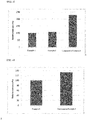
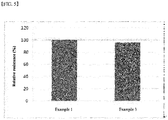
- Relative resistances of the batteries prepared according to Examples 1 and 2, and Comparative Example 1 were measured under a condition of 3 cycles x(CC discharge ⁇ rest for 20 min ⁇ CC/CV charge) ⁇ rest for 30 min ⁇ 9 cycles x(CC discharge at 10% SOC ⁇ rest for 1 hr ⁇ 10 C discharge for 10 s ⁇ rest for 30 min ⁇ 10 C charge for 10 s ⁇ rest for 30 min). Results are illustrated in FIG. 2 below.
- the amount of carbon coating is preferably greater than 2 wt%.
- a battery may be realized by increasing the amount of an additional conductive material when the amount does not exceed 2 wt%, but is not desirable with respect to energy density and output density.
- a relative resistance of the battery using LiFePO 4 composed of second particles is lower than a resistance of the battery using LiFePO 4 composed of first particles.
- LiFePO 4 composed of first particles it can be confirmed that LiFePO 4 composed of the second particles contacts the current collector when a binder layer is formed between LiFePO 4 and the current collector and increased contact resistance is thus observed through SEM analysis.
- resistance of a battery decreases with decreasing particle size of the anode.
- the particle size directly relates to lifespan and it thus is not desirable to unconditionally reduce the particle sizes.
- a secondary battery according to the present invention uses a predetermined lithium metal phosphate as a cathode active material, thereby increasing high-temperature stability.
- amorphous carbon is used as an anode active material, thereby decreasing resistance. Accordingly, superior rate characteristics and output characteristics are exhibited and thus the secondary battery may be suitably used in hybrid electric vehicles.
Landscapes
- Chemical & Material Sciences (AREA)
- Chemical Kinetics & Catalysis (AREA)
- Electrochemistry (AREA)
- General Chemical & Material Sciences (AREA)
- Inorganic Chemistry (AREA)
- Engineering & Computer Science (AREA)
- Composite Materials (AREA)
- Manufacturing & Machinery (AREA)
- Materials Engineering (AREA)
- Crystallography & Structural Chemistry (AREA)
- Battery Electrode And Active Subsutance (AREA)
- Secondary Cells (AREA)
Claims (7)
- Lithiumsekundärbatterie, umfassend:ein Kathodenaktivmaterial umfassend ein Lithiumeisenphosphat mit einer Olivinkristallstruktur nach Formel 2 unten; undein Anodenaktivmaterial umfassend amorphen Kohlenstoff,
Li1+aFe1-xM'x(PO4-b)Xb (2)
wobei M' wenigstens eines ausgewählt aus Al, Mg, Ni, Co, Mn, Ti, Ga, Cu, Nb, Zr, Ce, In, Zn und Y, ist,X wenigstens eines ausgewählt aus F, S und N ist, und-0.5≤a≤+0.5, 0≤x≤0.5 und 0≤b≤0.1 ist,wobei das Lithiumeisenphosphat zweite Teilchen umfasst, bei denen erste Teilchen physikalisch aggregiert sind,wobei eine Oberfläche des Lithiumeisenphosphats mit leitfähigem Kohlenstoff beschichtet ist,wobei eine Menge des leitfähigen Kohlenstoffs 2,5 Gew.-% bis 5 Gew.-%, basierend auf einem Gesamtgewicht des Kathodenaktivmaterials ist,wobei die ersten Teilchen eine durchschnittliche Teilchengröße von 1 nm bis 300 nm aufweisen und die zweiten Teilchen eine durchschnittliche Teilchengröße von 4 µm bis 30 µm aufweisen,wobei der amorphe Kohlenstoff weicher Kohlenstoff ist, undwobei der amorphe Kohlenstoff eine durchschnittliche Teilchengröße von 5 µm bis 20 µm aufweist. - Lithiumsekundärbatterie nach Anspruch 1, wobei das Lithiumeisenphosphat mit der Olivinkristallstruktur LiFePO4 ist.
- Lithiumsekundärbatterie nach Anspruch 1, wobei Oberflächen der ersten Teilchen mit einer Dicke von 0,1 nm bis 10 nm mit dem leitfähigen Kohlenstoff beschichtet sind, und wobei Oberflächen der zweiten Teilchen mit einer Dicke von 0,1 nm bis 20 nm mit dem leitfähigen Kohlenstoff beschichtet sind.
- Batteriemodul umfassend die Lithiumsekundärbattrie nach Anspruch 1 als eine Einheitszelle.
- Batteriepack umfassend das Batteriemodul nach Anspruch 4.
- Vorrichtung umfassend den Batteriepack nach Anspruch 5.
- Vorrichutung nach Anspruch 6, wobei die Vorrichtung ein elektrisches Hybridfahrzeug, ein elektrisches Plug-in-Hybrid-Fahrzeug oder ein System zum Speichern von Energie ist.
Applications Claiming Priority (2)
| Application Number | Priority Date | Filing Date | Title |
|---|---|---|---|
| KR20120132413 | 2012-11-21 | ||
| PCT/KR2013/010625 WO2014081221A1 (ko) | 2012-11-21 | 2013-11-21 | 리튬 이차전지 |
Publications (3)
| Publication Number | Publication Date |
|---|---|
| EP2874227A1 EP2874227A1 (de) | 2015-05-20 |
| EP2874227A4 EP2874227A4 (de) | 2016-03-30 |
| EP2874227B1 true EP2874227B1 (de) | 2017-09-06 |
Family
ID=50892291
Family Applications (1)
| Application Number | Title | Priority Date | Filing Date |
|---|---|---|---|
| EP13857167.4A Active EP2874227B1 (de) | 2012-11-21 | 2013-11-21 | Lithiumsekundärbatterie |
Country Status (6)
| Country | Link |
|---|---|
| US (1) | US9853288B2 (de) |
| EP (1) | EP2874227B1 (de) |
| JP (2) | JP2015526872A (de) |
| KR (1) | KR101570975B1 (de) |
| CN (1) | CN104718657B (de) |
| WO (1) | WO2014081221A1 (de) |
Families Citing this family (8)
| Publication number | Priority date | Publication date | Assignee | Title |
|---|---|---|---|---|
| FR2978137A1 (fr) * | 2011-07-21 | 2013-01-25 | Saint Gobain Ct Recherches | Produit fondu a base de lithium |
| WO2017024409A1 (en) | 2015-08-11 | 2017-02-16 | Genesis Robotics Llp | Electric machine |
| US11139707B2 (en) | 2015-08-11 | 2021-10-05 | Genesis Robotics And Motion Technologies Canada, Ulc | Axial gap electric machine with permanent magnets arranged between posts |
| EP3358652B1 (de) * | 2015-09-30 | 2020-11-18 | Envision AESC Energy Devices Ltd. | Positivelektrode für lithium-ionen-sekundärbatterie sowie lithium-ionen-sekundärbatterie |
| US11043885B2 (en) | 2016-07-15 | 2021-06-22 | Genesis Robotics And Motion Technologies Canada, Ulc | Rotary actuator |
| US11424445B1 (en) * | 2021-05-30 | 2022-08-23 | Marvin S Keshner | Solid-state rechargeable lithium battery with solid-state electrolyte |
| TWI762404B (zh) * | 2021-08-17 | 2022-04-21 | 台灣立凱電能科技股份有限公司 | 二次電池正極材料的製造方法 |
| WO2025206618A1 (ko) * | 2024-03-26 | 2025-10-02 | 주식회사 엘지화학 | 양극 활물질, 및 이를 포함하는 양극 및 리튬 이차전지 |
Family Cites Families (54)
| Publication number | Priority date | Publication date | Assignee | Title |
|---|---|---|---|---|
| JP3429561B2 (ja) | 1994-05-30 | 2003-07-22 | 本田技研工業株式会社 | リチウム二次電池用電極材料 |
| CA2283670C (fr) | 1998-02-03 | 2011-06-07 | Acep Inc. | Materiaux utiles en tant que solutes electrolytiques |
| JP2002117908A (ja) | 2000-10-06 | 2002-04-19 | Sony Corp | 非水電解液電池 |
| US9466837B1 (en) * | 2005-07-05 | 2016-10-11 | Quallion Llc | Battery having negative electrode including amorphous carbon |
| US7960057B2 (en) | 2004-05-17 | 2011-06-14 | Toyota Motor Engineering & Manufacturing North America, Inc. | Battery with molten salt electrolyte and phosphorus-containing cathode |
| JP4527605B2 (ja) | 2004-06-21 | 2010-08-18 | 三星エスディアイ株式会社 | リチウムイオン二次電池用電解液及びこれを含むリチウムイオン二次電池 |
| JP2006120485A (ja) | 2004-10-22 | 2006-05-11 | Yazaki Corp | バッテリ用電圧検出端子の固定構造 |
| KR100796097B1 (ko) | 2004-10-26 | 2008-01-21 | 닛산 지도우샤 가부시키가이샤 | 배터리 모듈 |
| US7781100B2 (en) | 2005-05-10 | 2010-08-24 | Advanced Lithium Electrochemistry Co., Ltd | Cathode material for manufacturing rechargeable battery |
| US7700236B2 (en) | 2005-09-09 | 2010-04-20 | Aquire Energy Co., Ltd. | Cathode material for manufacturing a rechargeable battery |
| JP5671775B2 (ja) * | 2006-01-27 | 2015-02-18 | 三菱化学株式会社 | リチウムイオン二次電池 |
| CN101506094B (zh) * | 2006-08-21 | 2011-12-28 | 株式会社Lg化学 | 制备锂金属磷酸盐的方法 |
| KR100982325B1 (ko) | 2006-12-12 | 2010-09-15 | 삼성에스디아이 주식회사 | 리튬 이차 전지 |
| JP4906538B2 (ja) | 2007-02-28 | 2012-03-28 | 日立ビークルエナジー株式会社 | リチウム二次電池 |
| JP4420123B2 (ja) | 2007-06-18 | 2010-02-24 | 東洋インキ製造株式会社 | 電池用組成物 |
| KR100863887B1 (ko) | 2007-06-21 | 2008-10-15 | 성균관대학교산학협력단 | 리튬이온전지용 유기전해액 및 이를 포함하는 리튬이온전지 |
| JP5286001B2 (ja) | 2007-09-13 | 2013-09-11 | 日東電工株式会社 | 電池用セパレータとこれを用いてなる非水リチウムイオン二次電池 |
| JP5157365B2 (ja) | 2007-10-25 | 2013-03-06 | 株式会社豊田中央研究所 | リチウムイオン二次電池及びそれを用いた電気自動車用電源 |
| KR101071336B1 (ko) * | 2008-03-25 | 2011-10-07 | 주식회사 에너세라믹 | 리튬 전지용 올리빈형 양극 활물질 전구체, 및 이의 제조 방법 |
| JP2009252497A (ja) * | 2008-04-04 | 2009-10-29 | Nissan Motor Co Ltd | 電池用電極および電池 |
| CN101599557B (zh) * | 2008-06-06 | 2011-08-17 | 比亚迪股份有限公司 | 一种聚合物锂离子电池的制备方法 |
| JP5262318B2 (ja) * | 2008-06-09 | 2013-08-14 | 株式会社Gsユアサ | リチウム二次電池用正極活物質およびリチウム二次電池。 |
| KR101148747B1 (ko) | 2008-07-16 | 2012-05-22 | 파나소닉 주식회사 | 전지 팩 |
| KR100995413B1 (ko) | 2008-08-01 | 2010-11-18 | 삼성에스디아이 주식회사 | 리튬 이온 이차 전지용 전해액 및 이를 포함하는 리튬 이온이차 전지 |
| US8283074B2 (en) | 2008-08-15 | 2012-10-09 | Uchicago Argonne, Llc | Electrolyte salts for nonaqueous electrolytes |
| JP4968225B2 (ja) | 2008-09-30 | 2012-07-04 | ソニー株式会社 | 非水電解質電池 |
| KR101089089B1 (ko) | 2008-10-22 | 2011-12-06 | 주식회사 엘지화학 | 올리빈 구조의 리튬 철인산화물 및 이의 분석 방법 |
| JP5957728B2 (ja) | 2008-10-22 | 2016-07-27 | エルジー・ケム・リミテッド | オリビン構造を有するリン酸リチウム鉄の製造方法 |
| KR101029837B1 (ko) | 2009-01-06 | 2011-04-15 | 주식회사 엘지화학 | 신규한 구조의 전지모듈 및 이를 포함하는 중대형 전지팩 |
| KR101023921B1 (ko) | 2009-04-01 | 2011-03-22 | 주식회사 엘지화학 | 전압 검출부재 및 이를 포함하는 전지모듈 |
| CN104253250B (zh) | 2009-05-04 | 2016-09-07 | 株式会社Lg化学 | 电池模块和包括该电池模块的电池组 |
| KR101237563B1 (ko) * | 2009-08-13 | 2013-02-26 | 서울대학교산학협력단 | 비정질상 음극활물질 및 이를 이용한 전극의 제조방법 및 이를 포함하는 리튬이차전지 |
| TW201124337A (en) | 2009-09-09 | 2011-07-16 | Toda Kogyo Corp | Ferric phosphate hydrate particle powder and process for production thereof, olivine-type lithium iron phosphate particle powder and process for production thereof, and non-aqueous electrolyte secondary battery |
| JP2011076820A (ja) * | 2009-09-30 | 2011-04-14 | Hitachi Vehicle Energy Ltd | リチウム二次電池及びリチウム二次電池用正極 |
| WO2011052533A1 (ja) * | 2009-10-30 | 2011-05-05 | 第一工業製薬株式会社 | リチウム二次電池 |
| WO2011115211A1 (ja) | 2010-03-19 | 2011-09-22 | 戸田工業株式会社 | リン酸マンガン鉄リチウム粒子粉末の製造方法、リン酸マンガン鉄リチウム粒子粉末、及び該粒子粉末を用いた非水電解質二次電池 |
| KR101377139B1 (ko) | 2010-04-21 | 2014-03-21 | 주식회사 엘지화학 | 올리빈 결정구조의 리튬 철인산화물을 제조하는 방법 |
| KR101392816B1 (ko) * | 2010-04-21 | 2014-05-08 | 주식회사 엘지화학 | 이차전지용 양극 활물질 및 이를 포함하는 리튬 이차전지 |
| EP2562857A4 (de) * | 2010-04-21 | 2015-08-05 | Lg Chemical Ltd | Lithiumeisenphosphat mit einer kohlenstoffbeschichteten olivinkristallstruktur sowie lithiumsekundärbatterie damit |
| CN102237526A (zh) * | 2010-04-29 | 2011-11-09 | 上海比亚迪有限公司 | 一种锂离子电池负极浆料、负极及电池 |
| JP5636786B2 (ja) * | 2010-07-26 | 2014-12-10 | 日立化成株式会社 | リチウム二次電池用負極材、これを用いたリチウム二次電池用負極、及びリチウム二次電池。 |
| US9437866B2 (en) * | 2010-09-27 | 2016-09-06 | Nippon Chemical Industrial Co., Ltd. | Process for producing lithium vanadium phosphate-carbon composite |
| JP5657348B2 (ja) | 2010-11-04 | 2015-01-21 | Jx日鉱日石エネルギー株式会社 | リチウムイオン二次電池負極用炭素材料およびそれを使用した非水系二次電池 |
| JP5634372B2 (ja) * | 2010-11-04 | 2014-12-03 | 三菱電機株式会社 | 電力貯蔵デバイスセル |
| CN103229338B (zh) | 2010-11-26 | 2016-04-27 | 丰田自动车株式会社 | 用于锂离子二次电池的负极活性物质 |
| CN103250295B (zh) | 2010-12-07 | 2016-09-14 | 日本电气株式会社 | 锂二次电池 |
| CN102593518A (zh) | 2011-01-13 | 2012-07-18 | 苏州能斯特新能源有限公司 | 一种锂离子电池的制备方法 |
| CN102332579B (zh) | 2011-02-21 | 2014-10-08 | 东莞新能源科技有限公司 | 一种锂离子电池及其负极活性材料 |
| JP5844983B2 (ja) * | 2011-02-24 | 2016-01-20 | テルモ株式会社 | シリンジポンプ |
| KR20120117234A (ko) * | 2011-04-14 | 2012-10-24 | 주식회사 동진쎄미켐 | 양극활물질, 그 제조방법 및 이를 채용한 양극 및 리튬전지 |
| CN102290571A (zh) | 2011-08-01 | 2011-12-21 | 邹平铭波电源有限公司 | 磷酸铁锂电池正极制备方法及其磷酸铁锂电池 |
| JP6260279B2 (ja) * | 2011-12-07 | 2018-01-17 | 株式会社Gsユアサ | 非水電解質二次電池および非水電解質二次電池の製造方法 |
| JP2013120736A (ja) * | 2011-12-08 | 2013-06-17 | Sony Corp | 電極、電池、電池パック、電子機器、電動車両、蓄電装置および電力システム |
| US20130224117A1 (en) | 2012-02-24 | 2013-08-29 | The Board Of Regents Of The University Of Texas System | Latent variable approach to the identification and/or diagnosis of cognitive disorders and/or behaviors and their endophenotypes |
-
2013
- 2013-11-21 WO PCT/KR2013/010625 patent/WO2014081221A1/ko not_active Ceased
- 2013-11-21 JP JP2015529703A patent/JP2015526872A/ja active Pending
- 2013-11-21 KR KR1020130142114A patent/KR101570975B1/ko active Active
- 2013-11-21 EP EP13857167.4A patent/EP2874227B1/de active Active
- 2013-11-21 CN CN201380048065.7A patent/CN104718657B/zh active Active
- 2013-11-21 US US14/423,748 patent/US9853288B2/en active Active
-
2017
- 2017-02-17 JP JP2017027655A patent/JP6749692B2/ja active Active
Non-Patent Citations (1)
| Title |
|---|
| None * |
Also Published As
| Publication number | Publication date |
|---|---|
| JP2017092046A (ja) | 2017-05-25 |
| EP2874227A4 (de) | 2016-03-30 |
| US9853288B2 (en) | 2017-12-26 |
| US20150255794A1 (en) | 2015-09-10 |
| JP6749692B2 (ja) | 2020-09-02 |
| EP2874227A1 (de) | 2015-05-20 |
| KR101570975B1 (ko) | 2015-11-23 |
| KR20140065362A (ko) | 2014-05-29 |
| CN104718657B (zh) | 2018-01-12 |
| WO2014081221A1 (ko) | 2014-05-30 |
| CN104718657A (zh) | 2015-06-17 |
| JP2015526872A (ja) | 2015-09-10 |
Similar Documents
| Publication | Publication Date | Title |
|---|---|---|
| US9601756B2 (en) | Lithium secondary battery of high energy density with improved energy property | |
| US9666897B2 (en) | Electrolyte for lithium secondary batteries and lithium secondary battery including the same | |
| US10074850B2 (en) | High-capacity negative electrode active material and lithium secondary battery including the same | |
| EP2874227B1 (de) | Lithiumsekundärbatterie | |
| EP2876722B1 (de) | Lithium sekundarbatterie | |
| US9853328B2 (en) | Electrolyte for lithium secondary batteries and lithium secondary battery including the same | |
| US20140080002A1 (en) | Lithium secondary battery of high power property with improved high power density | |
| KR20150015086A (ko) | 젖음성이 향상된 이차전지용 음극 활물질 및 이를 포함하는 리튬 이차전지 | |
| US9985278B2 (en) | Lithium secondary battery of high energy density with improved energy property | |
| US9595738B2 (en) | Electrolyte for lithium secondary batteries and lithium secondary battery including the same | |
| US10128540B2 (en) | Lithium secondary battery | |
| US20150288032A1 (en) | Electrolyte for lithium secondary batteries and lithium secondary battery including the same | |
| US9660266B2 (en) | Lithium secondary battery | |
| KR20150014898A (ko) | 젖음성이 향상된 이차전지용 음극 및 이를 포함하는 리튬 이차전지 | |
| KR20150014329A (ko) | 젖음성이 향상된 이차전지용 음극 활물질 및 이를 포함하는 리튬 이차전지 |
Legal Events
| Date | Code | Title | Description |
|---|---|---|---|
| PUAI | Public reference made under article 153(3) epc to a published international application that has entered the european phase |
Free format text: ORIGINAL CODE: 0009012 |
|
| 17P | Request for examination filed |
Effective date: 20150211 |
|
| AK | Designated contracting states |
Kind code of ref document: A1 Designated state(s): AL AT BE BG CH CY CZ DE DK EE ES FI FR GB GR HR HU IE IS IT LI LT LU LV MC MK MT NL NO PL PT RO RS SE SI SK SM TR |
|
| AX | Request for extension of the european patent |
Extension state: BA ME |
|
| DAX | Request for extension of the european patent (deleted) | ||
| REG | Reference to a national code |
Ref country code: DE Ref legal event code: R079 Ref document number: 602013026397 Country of ref document: DE Free format text: PREVIOUS MAIN CLASS: H01M0010052000 Ipc: H01M0004580000 |
|
| RA4 | Supplementary search report drawn up and despatched (corrected) |
Effective date: 20160302 |
|
| RIC1 | Information provided on ipc code assigned before grant |
Ipc: H01M 4/58 20060101AFI20160225BHEP Ipc: H01M 4/36 20060101ALI20160225BHEP Ipc: H01M 4/587 20100101ALI20160225BHEP Ipc: H01M 4/62 20060101ALI20160225BHEP Ipc: H01M 2/10 20060101ALI20160225BHEP Ipc: H01M 4/583 20100101ALI20160225BHEP Ipc: H01M 10/0525 20100101ALI20160225BHEP |
|
| 17Q | First examination report despatched |
Effective date: 20161014 |
|
| GRAP | Despatch of communication of intention to grant a patent |
Free format text: ORIGINAL CODE: EPIDOSNIGR1 |
|
| INTG | Intention to grant announced |
Effective date: 20170623 |
|
| GRAS | Grant fee paid |
Free format text: ORIGINAL CODE: EPIDOSNIGR3 |
|
| GRAA | (expected) grant |
Free format text: ORIGINAL CODE: 0009210 |
|
| AK | Designated contracting states |
Kind code of ref document: B1 Designated state(s): AL AT BE BG CH CY CZ DE DK EE ES FI FR GB GR HR HU IE IS IT LI LT LU LV MC MK MT NL NO PL PT RO RS SE SI SK SM TR |
|
| REG | Reference to a national code |
Ref country code: GB Ref legal event code: FG4D |
|
| REG | Reference to a national code |
Ref country code: CH Ref legal event code: EP Ref country code: AT Ref legal event code: REF Ref document number: 926786 Country of ref document: AT Kind code of ref document: T Effective date: 20170915 |
|
| REG | Reference to a national code |
Ref country code: IE Ref legal event code: FG4D |
|
| REG | Reference to a national code |
Ref country code: DE Ref legal event code: R096 Ref document number: 602013026397 Country of ref document: DE |
|
| REG | Reference to a national code |
Ref country code: FR Ref legal event code: PLFP Year of fee payment: 5 |
|
| REG | Reference to a national code |
Ref country code: NL Ref legal event code: MP Effective date: 20170906 |
|
| REG | Reference to a national code |
Ref country code: LT Ref legal event code: MG4D |
|
| PG25 | Lapsed in a contracting state [announced via postgrant information from national office to epo] |
Ref country code: LT Free format text: LAPSE BECAUSE OF FAILURE TO SUBMIT A TRANSLATION OF THE DESCRIPTION OR TO PAY THE FEE WITHIN THE PRESCRIBED TIME-LIMIT Effective date: 20170906 Ref country code: FI Free format text: LAPSE BECAUSE OF FAILURE TO SUBMIT A TRANSLATION OF THE DESCRIPTION OR TO PAY THE FEE WITHIN THE PRESCRIBED TIME-LIMIT Effective date: 20170906 Ref country code: NO Free format text: LAPSE BECAUSE OF FAILURE TO SUBMIT A TRANSLATION OF THE DESCRIPTION OR TO PAY THE FEE WITHIN THE PRESCRIBED TIME-LIMIT Effective date: 20171206 Ref country code: HR Free format text: LAPSE BECAUSE OF FAILURE TO SUBMIT A TRANSLATION OF THE DESCRIPTION OR TO PAY THE FEE WITHIN THE PRESCRIBED TIME-LIMIT Effective date: 20170906 Ref country code: SE Free format text: LAPSE BECAUSE OF FAILURE TO SUBMIT A TRANSLATION OF THE DESCRIPTION OR TO PAY THE FEE WITHIN THE PRESCRIBED TIME-LIMIT Effective date: 20170906 |
|
| REG | Reference to a national code |
Ref country code: AT Ref legal event code: MK05 Ref document number: 926786 Country of ref document: AT Kind code of ref document: T Effective date: 20170906 |
|
| PG25 | Lapsed in a contracting state [announced via postgrant information from national office to epo] |
Ref country code: LV Free format text: LAPSE BECAUSE OF FAILURE TO SUBMIT A TRANSLATION OF THE DESCRIPTION OR TO PAY THE FEE WITHIN THE PRESCRIBED TIME-LIMIT Effective date: 20170906 Ref country code: GR Free format text: LAPSE BECAUSE OF FAILURE TO SUBMIT A TRANSLATION OF THE DESCRIPTION OR TO PAY THE FEE WITHIN THE PRESCRIBED TIME-LIMIT Effective date: 20171207 Ref country code: BG Free format text: LAPSE BECAUSE OF FAILURE TO SUBMIT A TRANSLATION OF THE DESCRIPTION OR TO PAY THE FEE WITHIN THE PRESCRIBED TIME-LIMIT Effective date: 20171206 Ref country code: ES Free format text: LAPSE BECAUSE OF FAILURE TO SUBMIT A TRANSLATION OF THE DESCRIPTION OR TO PAY THE FEE WITHIN THE PRESCRIBED TIME-LIMIT Effective date: 20170906 Ref country code: RS Free format text: LAPSE BECAUSE OF FAILURE TO SUBMIT A TRANSLATION OF THE DESCRIPTION OR TO PAY THE FEE WITHIN THE PRESCRIBED TIME-LIMIT Effective date: 20170906 |
|
| PG25 | Lapsed in a contracting state [announced via postgrant information from national office to epo] |
Ref country code: NL Free format text: LAPSE BECAUSE OF FAILURE TO SUBMIT A TRANSLATION OF THE DESCRIPTION OR TO PAY THE FEE WITHIN THE PRESCRIBED TIME-LIMIT Effective date: 20170906 |
|
| PG25 | Lapsed in a contracting state [announced via postgrant information from national office to epo] |
Ref country code: CZ Free format text: LAPSE BECAUSE OF FAILURE TO SUBMIT A TRANSLATION OF THE DESCRIPTION OR TO PAY THE FEE WITHIN THE PRESCRIBED TIME-LIMIT Effective date: 20170906 Ref country code: RO Free format text: LAPSE BECAUSE OF FAILURE TO SUBMIT A TRANSLATION OF THE DESCRIPTION OR TO PAY THE FEE WITHIN THE PRESCRIBED TIME-LIMIT Effective date: 20170906 Ref country code: PL Free format text: LAPSE BECAUSE OF FAILURE TO SUBMIT A TRANSLATION OF THE DESCRIPTION OR TO PAY THE FEE WITHIN THE PRESCRIBED TIME-LIMIT Effective date: 20170906 |
|
| PG25 | Lapsed in a contracting state [announced via postgrant information from national office to epo] |
Ref country code: IS Free format text: LAPSE BECAUSE OF FAILURE TO SUBMIT A TRANSLATION OF THE DESCRIPTION OR TO PAY THE FEE WITHIN THE PRESCRIBED TIME-LIMIT Effective date: 20180106 Ref country code: SK Free format text: LAPSE BECAUSE OF FAILURE TO SUBMIT A TRANSLATION OF THE DESCRIPTION OR TO PAY THE FEE WITHIN THE PRESCRIBED TIME-LIMIT Effective date: 20170906 Ref country code: EE Free format text: LAPSE BECAUSE OF FAILURE TO SUBMIT A TRANSLATION OF THE DESCRIPTION OR TO PAY THE FEE WITHIN THE PRESCRIBED TIME-LIMIT Effective date: 20170906 Ref country code: IT Free format text: LAPSE BECAUSE OF FAILURE TO SUBMIT A TRANSLATION OF THE DESCRIPTION OR TO PAY THE FEE WITHIN THE PRESCRIBED TIME-LIMIT Effective date: 20170906 Ref country code: SM Free format text: LAPSE BECAUSE OF FAILURE TO SUBMIT A TRANSLATION OF THE DESCRIPTION OR TO PAY THE FEE WITHIN THE PRESCRIBED TIME-LIMIT Effective date: 20170906 Ref country code: AT Free format text: LAPSE BECAUSE OF FAILURE TO SUBMIT A TRANSLATION OF THE DESCRIPTION OR TO PAY THE FEE WITHIN THE PRESCRIBED TIME-LIMIT Effective date: 20170906 |
|
| REG | Reference to a national code |
Ref country code: DE Ref legal event code: R097 Ref document number: 602013026397 Country of ref document: DE |
|
| PG25 | Lapsed in a contracting state [announced via postgrant information from national office to epo] |
Ref country code: MC Free format text: LAPSE BECAUSE OF FAILURE TO SUBMIT A TRANSLATION OF THE DESCRIPTION OR TO PAY THE FEE WITHIN THE PRESCRIBED TIME-LIMIT Effective date: 20170906 |
|
| PLBE | No opposition filed within time limit |
Free format text: ORIGINAL CODE: 0009261 |
|
| STAA | Information on the status of an ep patent application or granted ep patent |
Free format text: STATUS: NO OPPOSITION FILED WITHIN TIME LIMIT |
|
| PG25 | Lapsed in a contracting state [announced via postgrant information from national office to epo] |
Ref country code: LI Free format text: LAPSE BECAUSE OF NON-PAYMENT OF DUE FEES Effective date: 20171130 Ref country code: DK Free format text: LAPSE BECAUSE OF FAILURE TO SUBMIT A TRANSLATION OF THE DESCRIPTION OR TO PAY THE FEE WITHIN THE PRESCRIBED TIME-LIMIT Effective date: 20170906 Ref country code: CH Free format text: LAPSE BECAUSE OF NON-PAYMENT OF DUE FEES Effective date: 20171130 |
|
| 26N | No opposition filed |
Effective date: 20180607 |
|
| PG25 | Lapsed in a contracting state [announced via postgrant information from national office to epo] |
Ref country code: SI Free format text: LAPSE BECAUSE OF FAILURE TO SUBMIT A TRANSLATION OF THE DESCRIPTION OR TO PAY THE FEE WITHIN THE PRESCRIBED TIME-LIMIT Effective date: 20170906 Ref country code: LU Free format text: LAPSE BECAUSE OF NON-PAYMENT OF DUE FEES Effective date: 20171121 |
|
| REG | Reference to a national code |
Ref country code: BE Ref legal event code: MM Effective date: 20171130 |
|
| REG | Reference to a national code |
Ref country code: IE Ref legal event code: MM4A |
|
| PG25 | Lapsed in a contracting state [announced via postgrant information from national office to epo] |
Ref country code: MT Free format text: LAPSE BECAUSE OF NON-PAYMENT OF DUE FEES Effective date: 20171121 |
|
| REG | Reference to a national code |
Ref country code: FR Ref legal event code: PLFP Year of fee payment: 6 |
|
| PG25 | Lapsed in a contracting state [announced via postgrant information from national office to epo] |
Ref country code: IE Free format text: LAPSE BECAUSE OF NON-PAYMENT OF DUE FEES Effective date: 20171121 |
|
| PG25 | Lapsed in a contracting state [announced via postgrant information from national office to epo] |
Ref country code: BE Free format text: LAPSE BECAUSE OF NON-PAYMENT OF DUE FEES Effective date: 20171130 |
|
| PG25 | Lapsed in a contracting state [announced via postgrant information from national office to epo] |
Ref country code: HU Free format text: LAPSE BECAUSE OF FAILURE TO SUBMIT A TRANSLATION OF THE DESCRIPTION OR TO PAY THE FEE WITHIN THE PRESCRIBED TIME-LIMIT; INVALID AB INITIO Effective date: 20131121 |
|
| PG25 | Lapsed in a contracting state [announced via postgrant information from national office to epo] |
Ref country code: CY Free format text: LAPSE BECAUSE OF FAILURE TO SUBMIT A TRANSLATION OF THE DESCRIPTION OR TO PAY THE FEE WITHIN THE PRESCRIBED TIME-LIMIT Effective date: 20170906 |
|
| PG25 | Lapsed in a contracting state [announced via postgrant information from national office to epo] |
Ref country code: MK Free format text: LAPSE BECAUSE OF FAILURE TO SUBMIT A TRANSLATION OF THE DESCRIPTION OR TO PAY THE FEE WITHIN THE PRESCRIBED TIME-LIMIT Effective date: 20170906 |
|
| PG25 | Lapsed in a contracting state [announced via postgrant information from national office to epo] |
Ref country code: TR Free format text: LAPSE BECAUSE OF FAILURE TO SUBMIT A TRANSLATION OF THE DESCRIPTION OR TO PAY THE FEE WITHIN THE PRESCRIBED TIME-LIMIT Effective date: 20170906 |
|
| PG25 | Lapsed in a contracting state [announced via postgrant information from national office to epo] |
Ref country code: PT Free format text: LAPSE BECAUSE OF FAILURE TO SUBMIT A TRANSLATION OF THE DESCRIPTION OR TO PAY THE FEE WITHIN THE PRESCRIBED TIME-LIMIT Effective date: 20170906 |
|
| PG25 | Lapsed in a contracting state [announced via postgrant information from national office to epo] |
Ref country code: AL Free format text: LAPSE BECAUSE OF FAILURE TO SUBMIT A TRANSLATION OF THE DESCRIPTION OR TO PAY THE FEE WITHIN THE PRESCRIBED TIME-LIMIT Effective date: 20170906 |
|
| P01 | Opt-out of the competence of the unified patent court (upc) registered |
Effective date: 20230323 |
|
| P02 | Opt-out of the competence of the unified patent court (upc) changed |
Effective date: 20230411 |
|
| REG | Reference to a national code |
Ref country code: GB Ref legal event code: 732E Free format text: REGISTERED BETWEEN 20230824 AND 20230831 |
|
| REG | Reference to a national code |
Ref country code: DE Ref legal event code: R081 Ref document number: 602013026397 Country of ref document: DE Owner name: LG ENERGY SOLUTION, LTD., KR Free format text: FORMER OWNER: LG CHEM, LTD., SEOUL, KR |
|
| PGFP | Annual fee paid to national office [announced via postgrant information from national office to epo] |
Ref country code: DE Payment date: 20251020 Year of fee payment: 13 |
|
| PGFP | Annual fee paid to national office [announced via postgrant information from national office to epo] |
Ref country code: GB Payment date: 20251023 Year of fee payment: 13 |
|
| PGFP | Annual fee paid to national office [announced via postgrant information from national office to epo] |
Ref country code: FR Payment date: 20251021 Year of fee payment: 13 |