EP2874893B1 - Sac refermable et procédés de formation et d'utilisation dudit sac - Google Patents
Sac refermable et procédés de formation et d'utilisation dudit sac Download PDFInfo
- Publication number
- EP2874893B1 EP2874893B1 EP13790746.5A EP13790746A EP2874893B1 EP 2874893 B1 EP2874893 B1 EP 2874893B1 EP 13790746 A EP13790746 A EP 13790746A EP 2874893 B1 EP2874893 B1 EP 2874893B1
- Authority
- EP
- European Patent Office
- Prior art keywords
- reclosing
- bag
- product
- flap
- ply
- Prior art date
- Legal status (The legal status is an assumption and is not a legal conclusion. Google has not performed a legal analysis and makes no representation as to the accuracy of the status listed.)
- Active
Links
Images








Classifications
-
- B—PERFORMING OPERATIONS; TRANSPORTING
- B65—CONVEYING; PACKING; STORING; HANDLING THIN OR FILAMENTARY MATERIAL
- B65D—CONTAINERS FOR STORAGE OR TRANSPORT OF ARTICLES OR MATERIALS, e.g. BAGS, BARRELS, BOTTLES, BOXES, CANS, CARTONS, CRATES, DRUMS, JARS, TANKS, HOPPERS, FORWARDING CONTAINERS; ACCESSORIES, CLOSURES, OR FITTINGS THEREFOR; PACKAGING ELEMENTS; PACKAGES
- B65D75/00—Packages comprising articles or materials partially or wholly enclosed in strips, sheets, blanks, tubes or webs of flexible sheet material, e.g. in folded wrappers
- B65D75/26—Articles or materials wholly enclosed in laminated sheets or wrapper blanks
-
- B—PERFORMING OPERATIONS; TRANSPORTING
- B65—CONVEYING; PACKING; STORING; HANDLING THIN OR FILAMENTARY MATERIAL
- B65D—CONTAINERS FOR STORAGE OR TRANSPORT OF ARTICLES OR MATERIALS, e.g. BAGS, BARRELS, BOTTLES, BOXES, CANS, CARTONS, CRATES, DRUMS, JARS, TANKS, HOPPERS, FORWARDING CONTAINERS; ACCESSORIES, CLOSURES, OR FITTINGS THEREFOR; PACKAGING ELEMENTS; PACKAGES
- B65D33/00—Details of, or accessories for, sacks or bags
- B65D33/16—End- or aperture-closing arrangements or devices
- B65D33/18—End- or aperture-closing arrangements or devices using adhesive applied to integral parts, e.g. to flaps
- B65D33/20—End- or aperture-closing arrangements or devices using adhesive applied to integral parts, e.g. to flaps using pressure-sensitive adhesive
-
- B—PERFORMING OPERATIONS; TRANSPORTING
- B65—CONVEYING; PACKING; STORING; HANDLING THIN OR FILAMENTARY MATERIAL
- B65D—CONTAINERS FOR STORAGE OR TRANSPORT OF ARTICLES OR MATERIALS, e.g. BAGS, BARRELS, BOTTLES, BOXES, CANS, CARTONS, CRATES, DRUMS, JARS, TANKS, HOPPERS, FORWARDING CONTAINERS; ACCESSORIES, CLOSURES, OR FITTINGS THEREFOR; PACKAGING ELEMENTS; PACKAGES
- B65D65/00—Wrappers or flexible covers; Packaging materials of special type or form
- B65D65/02—Wrappers or flexible covers
- B65D65/14—Wrappers or flexible covers with areas coated with adhesive
-
- B—PERFORMING OPERATIONS; TRANSPORTING
- B65—CONVEYING; PACKING; STORING; HANDLING THIN OR FILAMENTARY MATERIAL
- B65D—CONTAINERS FOR STORAGE OR TRANSPORT OF ARTICLES OR MATERIALS, e.g. BAGS, BARRELS, BOTTLES, BOXES, CANS, CARTONS, CRATES, DRUMS, JARS, TANKS, HOPPERS, FORWARDING CONTAINERS; ACCESSORIES, CLOSURES, OR FITTINGS THEREFOR; PACKAGING ELEMENTS; PACKAGES
- B65D75/00—Packages comprising articles or materials partially or wholly enclosed in strips, sheets, blanks, tubes or webs of flexible sheet material, e.g. in folded wrappers
- B65D75/52—Details
- B65D75/58—Opening or contents-removing devices added or incorporated during package manufacture
-
- B—PERFORMING OPERATIONS; TRANSPORTING
- B65—CONVEYING; PACKING; STORING; HANDLING THIN OR FILAMENTARY MATERIAL
- B65D—CONTAINERS FOR STORAGE OR TRANSPORT OF ARTICLES OR MATERIALS, e.g. BAGS, BARRELS, BOTTLES, BOXES, CANS, CARTONS, CRATES, DRUMS, JARS, TANKS, HOPPERS, FORWARDING CONTAINERS; ACCESSORIES, CLOSURES, OR FITTINGS THEREFOR; PACKAGING ELEMENTS; PACKAGES
- B65D75/00—Packages comprising articles or materials partially or wholly enclosed in strips, sheets, blanks, tubes or webs of flexible sheet material, e.g. in folded wrappers
- B65D75/52—Details
- B65D75/58—Opening or contents-removing devices added or incorporated during package manufacture
- B65D75/5827—Tear-lines provided in a wall portion
-
- B—PERFORMING OPERATIONS; TRANSPORTING
- B31—MAKING ARTICLES OF PAPER, CARDBOARD OR MATERIAL WORKED IN A MANNER ANALOGOUS TO PAPER; WORKING PAPER, CARDBOARD OR MATERIAL WORKED IN A MANNER ANALOGOUS TO PAPER
- B31B—MAKING CONTAINERS OF PAPER, CARDBOARD OR MATERIAL WORKED IN A MANNER ANALOGOUS TO PAPER
- B31B2155/00—Flexible containers made from webs
-
- B—PERFORMING OPERATIONS; TRANSPORTING
- B31—MAKING ARTICLES OF PAPER, CARDBOARD OR MATERIAL WORKED IN A MANNER ANALOGOUS TO PAPER; WORKING PAPER, CARDBOARD OR MATERIAL WORKED IN A MANNER ANALOGOUS TO PAPER
- B31B—MAKING CONTAINERS OF PAPER, CARDBOARD OR MATERIAL WORKED IN A MANNER ANALOGOUS TO PAPER
- B31B2155/00—Flexible containers made from webs
- B31B2155/001—Flexible containers made from webs by folding webs longitudinally
- B31B2155/0014—Flexible containers made from webs by folding webs longitudinally having their openings facing transversally to the direction of movement
-
- B—PERFORMING OPERATIONS; TRANSPORTING
- B31—MAKING ARTICLES OF PAPER, CARDBOARD OR MATERIAL WORKED IN A MANNER ANALOGOUS TO PAPER; WORKING PAPER, CARDBOARD OR MATERIAL WORKED IN A MANNER ANALOGOUS TO PAPER
- B31B—MAKING CONTAINERS OF PAPER, CARDBOARD OR MATERIAL WORKED IN A MANNER ANALOGOUS TO PAPER
- B31B2160/00—Shape of flexible containers
- B31B2160/10—Shape of flexible containers rectangular and flat, i.e. without structural provision for thickness of contents
-
- B—PERFORMING OPERATIONS; TRANSPORTING
- B31—MAKING ARTICLES OF PAPER, CARDBOARD OR MATERIAL WORKED IN A MANNER ANALOGOUS TO PAPER; WORKING PAPER, CARDBOARD OR MATERIAL WORKED IN A MANNER ANALOGOUS TO PAPER
- B31B—MAKING CONTAINERS OF PAPER, CARDBOARD OR MATERIAL WORKED IN A MANNER ANALOGOUS TO PAPER
- B31B70/00—Making flexible containers, e.g. envelopes or bags
- B31B70/60—Uniting opposed surfaces or edges; Taping
- B31B70/62—Uniting opposed surfaces or edges; Taping by adhesives
-
- B—PERFORMING OPERATIONS; TRANSPORTING
- B31—MAKING ARTICLES OF PAPER, CARDBOARD OR MATERIAL WORKED IN A MANNER ANALOGOUS TO PAPER; WORKING PAPER, CARDBOARD OR MATERIAL WORKED IN A MANNER ANALOGOUS TO PAPER
- B31B—MAKING CONTAINERS OF PAPER, CARDBOARD OR MATERIAL WORKED IN A MANNER ANALOGOUS TO PAPER
- B31B70/00—Making flexible containers, e.g. envelopes or bags
- B31B70/74—Auxiliary operations
- B31B70/81—Forming or attaching accessories, e.g. opening devices, closures or tear strings
- B31B70/813—Applying closures
-
- B—PERFORMING OPERATIONS; TRANSPORTING
- B65—CONVEYING; PACKING; STORING; HANDLING THIN OR FILAMENTARY MATERIAL
- B65D—CONTAINERS FOR STORAGE OR TRANSPORT OF ARTICLES OR MATERIALS, e.g. BAGS, BARRELS, BOTTLES, BOXES, CANS, CARTONS, CRATES, DRUMS, JARS, TANKS, HOPPERS, FORWARDING CONTAINERS; ACCESSORIES, CLOSURES, OR FITTINGS THEREFOR; PACKAGING ELEMENTS; PACKAGES
- B65D2575/00—Packages comprising articles or materials partially or wholly enclosed in strips, sheets, blanks, tubes or webs of flexible sheet material, e.g. in folded wrappers
- B65D2575/52—Details
- B65D2575/58—Opening or contents-removing devices added or incorporated during package manufacture
- B65D2575/586—Opening or contents-removing devices added or incorporated during package manufacture with means for reclosing
Definitions
- the present disclosure relates generally to packaging and in particular to a reclosable bag and methods for forming a reclosable bag and reclosing a product in a reclosable bag.
- the sealed bag may be a one-time use bag, which the consumer will tear open to gain access to the product and then dispose of the torn bag.
- the sealed bag may be configured as a multi-use bag that permits the consumer to access the product and then, if the consumer is dissatisfied with the product, the consumer may place the product back into the bag, reseal the bag, and return the product to the seller by mail or courier service.
- Current multi-use bags as disclosed in US 4,410,130 , generally have an opening for loading and retrieving a product and a lip or tab to close the opening.
- the lip or tab generally includes two spaced apart lines of adhesive that are covered by a separate release strip.
- a pair of lines of perforations are provided through the lip or tab between the lines of adhesive.
- the pair of lines of perforations define an opening strip.
- a product may be loaded into the opening of the bag and one release strip may be removed to expose a line of adhesive.
- the lip or tab is folded over the opening and pressed against the bag to adhere the lip or tab to the bag and thereby close the opening.
- the consumer may open the bag and retrieve the product by pulling on the opening strip to break the lines of perforation.
- the consumer may decide that they want to return the product to the seller. If the consumer wants to return the product to the seller, the consumer may insert the product into the bag through the opening. Next, the consumer may remove the remaining release strip to expose the remaining line of adhesive.
- the consumer may then fold a portion of the lip or tab over the opening and press the lip or tab against the bag to adhere the lip or tab to the bag and thereby cover the opening.
- the consumer may then return the package to the seller by mail or courier service.
- the present application discloses a reclosable bag according to independent claim 1 and a method of forming a reclosable bag containing a product according to independent claim 7.
- the reclosable bag also includes a bag opening zone formed in or on the main bag portion proximate the reclosing flap.
- the bag opening zone can take a wide variety of different forms.
- the bag opening zone may be defined by one or more lines or areas of weakness, an indicia that indicates where the bag should be cut to open the bag, an adhesive, an openable connection, etc.
- the bag opening zone is configured to create a product retrieval opening to permit retrieval of a product from the compartment.
- the product retrieval opening is configured to allow the product to be returned to the compartment through the product retrieval opening.
- the present application relates to a reclosable bag 10 and methods for forming a reclosable bag 10 and reclosing a product 50 in a reclosable bag 10.
- the reclosable bag 10 is particularly useful as a shipping package for a product 50 that is shipped to a consumer.
- the reclosable bag 10 functions as a "multi-use" bag in that the consumer may use the reclosable bag 10 as a return shipping package to return an unwanted or defective product 50 to the seller.
- a reclosable bag 10 includes a first ply 12 and a second ply 14.
- the first and second plies 12, 14 may be two separate plies, or a single ply that is folded.
- the first ply 12 is joined to the second ply 14 to define a main bag portion 31 having a compartment 20 including a first side 22, a second side 24, a third side 26 that extends between the first side 22 and the second side 24, and a product receiving opening 28 that is configured to be hermetically sealed.
- the first ply 12 may be hermetically joined to the second ply 14 by various techniques including, but not limited to, heat sealing, ultrasonic welding, gluing, etc.
- Figures 1 and 1A illustrate the main bag portion 31 as having a single compartment 20, the main bag portion 31 may have any number of compartments.
- the first ply 12 and the second ply 14 may be formed of any suitable material.
- suitable materials include, but are not limited to, plastic materials, polyethylene, cellophane, vinyl films, pliofilms, cellulose acetate film, polystyrene, polypropylene, and virtually any type of heat sealable or ultrasonic weldable material.
- the reclosable bag 10 also includes a reclosing flap 30.
- the reclosing flap 30 may be connected to one or more of the first ply 12 and the second ply 14.
- the reclosing flap 30 may be a separate piece of material that is connected to the first ply 12 or the second ply 14, or both the first ply 12 and the second ply 14, such as the third side 26 of the compartment 20.
- the reclosing flap 30 may be integral with the first ply 12 or the second ply 14.
- the first ply 12 may be formed with a longer dimension (e.g., length or width) than the second ply 14 such that when the first ply 12 and the second ply 14 are joined, the longer dimension of the first ply 12 may form the reclosing flap 30.
- the reclosing flap 30 is connected to or on the main bag portion 31 and is spaced apart from the product receiving opening 28. As seen in Figure 1A , the reclosing flap 30 is spaced apart from the product receiving opening 28, and the reclosing flap 30 extends from the third side 26 (also seen well in Figure 6A ).
- the reclosable bag 10 includes a reclosing material 32.
- the reclosing material 32 may be applied to the bag 10 in a variety of different ways.
- the reclosing material 32 may be applied to a portion of the reclosing flap 30 and/or to the main bag portion 31.
- the reclosing material 32 is applied to a surface of the reclosing flap 30.
- the reclosing material 32 may take a wide variety of different forms.
- the reclosing material 32 may be an adhesive.
- the reclosing material 32 is a pressure sensitive adhesive.
- the reclosing material 32 may be a pressure sensitive adhesive selected from the group consisting of an acrylic based adhesive, a methacrylate based adhesive, a polyurethane based adhesive, a rubber based adhesive, a styrene copolymer based adhesive, a silicone based adhesive, and combinations thereof.
- a pressure sensitive adhesive selected from the group consisting of an acrylic based adhesive, a methacrylate based adhesive, a polyurethane based adhesive, a rubber based adhesive, a styrene copolymer based adhesive, a silicone based adhesive, and combinations thereof.
- various types of adhesives may be utilized so long as the reclosing material 32 permits the reclosing flap 30 to adhere to an outer surface of a portion of the bag 10, such as one of the first ply 12 or the second ply 14.
- the reclosable bag 10 includes a release material 34.
- the release material 34 may be applied to the bag 10 in a variety of different ways.
- the release material may be applied to the main bag portion 31 and/or the reclosing flap 30.
- the release material 34 may be printed, laminated, sprayed, or otherwise deposited and/or adhered to the main bag portion 31 and/or the reclosing flap 30.
- the release material 34 is applied to a surface of the main bag portion 31.
- the release material 34 is applied to a surface of the reclosing flap 30.
- the release material 34 may take a variety of different forms.
- the release material 34 may be a chemical release material selected from the group consisting of polyacrylates, carbamates, polyolefins, fluorocarbons, chromium stearate complexes, silicones, and combinations thereof.
- the reclosing flap 30 is configured to move between a passive position where the reclosing material 32 is releasably adhered to the release material 34, and an active position where the reclosing material 32 is adhered to a portion of the bag 10 to reclose the bag 10.
- the reclosing material 32 may adhere to the main bag portion 31 and/or the reclosing material 32 may adhere to the reclosing flap 30.
- the reclosing material 32 is adhered to the main bag portion 31 at the outer surface of the first ply 12.
- the selection of the reclosing material 32 and the release material 34 is such that the adhesion between the reclosing material 32 and the release material 34 is strong enough to prevent unintentional separation during transit.
- the adhesion may be characterized as having a peel strength of 1 N/cm to 5 N/cm to separate the reclosing material 32 from the release material 34.
- the reclosable bag 10 further includes a bag opening zone 40 formed in or on the main bag portion 31 proximate the reclosing flap 30.
- the bag opening zone 40 can take a wide variety of different forms.
- the bag opening zone 40 may be defined by one or more lines or areas of weakness, an indicia that indicates where the bag 10 should be cut to open the bag 10, an adhesive, an openable connection, etc. Any arrangement that secures the product 50 in the bag 10 during transit, but allows the consumer to easily open the bag 10 can be employed.
- a line or area of weakness may be a line or lines of perforations through a portion of the main bag portion 31, a score line or lines that weaken a portion of the main bag portion 31 along a line or area, or other processing known in the art that weakens a portion of the main bag portion 31 to allow the bag 10 to be opened.
- a reclosable bag 10 containing a product 50 is illustrated.
- the product 50 is loaded into the compartment 20 through the product receiving opening 28, seen in Figure 1A , and then the product receiving opening 28 is sealed, as shown by seal 42, to retain the product 50.
- the seal 42 extends from the first side 22 to the second side 24 to seal the compartment 20.
- the seal 42 may not extend all the way from the first side 22 to the second side 24 or may be intermittent to allow communication between the compartment 20 and external air or the compartment 20 and another optional compartment of the reclosable bag 10.
- the seal 42 may be formed by various techniques including, but not limited to, heat sealing, ultrasonic welding, gluing, etc.
- Virtually any type of product 50 may be loaded into the reclosable bag 10 for delivery to a consumer.
- Examples of packaging machines that may be used to form the seal 42 are disclosed by U.S. Patent Nos. 7,654,064 ; 8,069,635 ; and 5,743,070 , as is described in more detail below.
- the consumer may open the reclosable bag 10 to retrieve the product 50.
- access to the product 50 is provided by the bag opening zone 40, which is configured to be broken or otherwise opened to create a product retrieval opening 44 to permit retrieval of the product 50 from the compartment 20, as indicated by the directional arrow.
- the bag opening zone 40 may extend from the first side 22 to the second side 24 to provide a larger opening, while in other embodiments the bag opening zone 40 may be intermittent to provide a plurality of openings that provide access to a plurality of compartments.
- the consumer may inspect the product 50. Upon inspection, the consumer may determine that the product 50 is defective, or the consumer may decide that they do not want or do not need the product 50.
- the reclosable bag 10 allows the consumer to return the product 50 to the seller without having to utilize any additional packaging materials (e.g., packaging tape) and without generating any waste.
- the product retrieval opening 44 is configured to allow the product 50 to be returned to the compartment 20 through the product retrieval opening 44, as indicated by the directional arrow. In the illustrated embodiment, the product 50 is returned to the compartment 20 at an opening ( i.e., the product retrieval opening 44) that is different from the opening ( i.e., the product receiving opening 28) through which the product 50 was originally loaded into the compartment 20.
- the reclosable bag 10 may be reclosed to return the product 50 to the seller.
- the reclosing flap 30 is in the passive position where the reclosing material 32 is releasably adhered to the release material 34.
- the reclosing flap 30 is movable from the passive position by pulling on the reclosing flap 30 to separate the reclosing material 32 from the release material 34.
- the reclosing flap 30 is moved from the passive position, the reclosing material 32 is exposed.
- the reclosing flap 30 may be moved to the active position such that the reclosing material 32 is brought into contact with and adheres to a portion of the bag 10, such as an outer surface of the main bag portion 31, as illustrated in Figure 7A .
- the product retrieval opening 44 is covered to reclose the compartment 20 with the product 50 retained therein, as seen in Figures 7 and 7A .
- the consumer may return the product 50 to the seller by mail or courier service.
- the reclosable bag 10 includes a reclosing flap 30 that is connected to the first ply 12 and/or the second ply 14.
- the reclosing flap 30 can be connected to the first ply 12 and/or the second ply 14 by a reclosing flap seal 36.
- a portion of the reclosing flap 30 may be sealed to another portion of the reclosing flap 30.
- the reclosing flap seal 36 prevents the reclosing flap 30 from moving from the passive position during transit so that the reclosing material 32 is not unintentionally exposed.
- the reclosing flap 30 is sealed to the first ply 12.
- the reclosing flap 30 is sealed to both the first ply 12 and the second ply 14.
- various sealing techniques known to those of skill in the art may be utilized to form the reclosing flap seal 36 including, but not limited to, heat sealing, ultrasonic welding, gluing, etc.
- reclosing flap seal 36 is illustrated as extending from the first side 22 to the second side 24, in another embodiment, the reclosing flap seal 36 may not extend all the way from the first side 22 to the second side 24 or may be intermittent so long as the reclosing flap seal 36 prevents the reclosing flap 30 from moving from the passive position and unintentionally exposing the reclosing material 32.
- the reclosing flap 30 is formed with a line or area of reduced strength 38 to permit separation of the reclosing flap 30 from the main bag portion 31.
- the line or area of reduced strength 38 may be a line or lines of perforations, a score line or lines, or other configurations that promote separation that are known to those of skill in the art.
- the product 50 may be removed from the compartment 20 by opening the bag opening zone 40 to create the product retrieval opening 44 to permit retrieval of the product 50 from the compartment 20. After retrieving and inspecting the product 50, the consumer may return the product 50 to the compartment 20 through the product retrieval opening 44.
- the reclosing flap 30 is in the passive position where the reclosing material 32 is releasably adhered to the release material 34.
- Figures 8C and 8D illustrate another exemplary embodiment where the reclosing material 32 is not adhered to the release material 34.
- the reclosing material 32 is adjacent to, but spaced apart from the release material 34.
- the release material 34 is configured to prevent the reclosing material 32 from permanently adhering to another portion of the bag 10 when the reclosing flap 30 is in the passive position in the Figure 8C and 8D embodiments.
- the spaced apart configuration of the reclosing material 32 and the release material 34 of Figures 8C and 8D can be applied to any of the embodiments where the reclosing flap 30 is connected to another portion of the bag 10 in the passive position (See for example, Figures 14A and 21A ).
- the reclosing material 32 may come into contact and releasably adhere to the release material 34 during use or the reclosing material 32 and the release material 34 may be configured such that reclosing material 32 does not adhere to the release material 34 when they come into contact.
- the reclosing flap 30 is movable from the passive position by: first, breaking the line of reduced strength 38 to separate the reclosing flap 30 from the main bag portion 31; and next, pulling on the reclosing flap 30 to separate the reclosing material 32 from the release material 34.
- the reclosing flap 30 is moved from the passive position, the reclosing material 32 is exposed. Then the reclosing flap 30 may be moved to the active position where the reclosing material 32 is brought into contact with and adheres to an outer surface of the main bag portion 31, as illustrated in Figure 10A .
- the product retrieval opening 44 is covered to reclose the compartment 20 with the product 50 retained therein, as seen in Figures 10 and 10A .
- the consumer may return the product to the seller by mail or courier service.
- an additional reclosable bag 10 is illustrated.
- the reclosing material 32 and the release material 34 are both applied to a surface of the reclosing flap 30.
- the reclosing flap 30 is in the passive position with the reclosing material 32 releasably adhered to the release material 34.
- the product 50 may be removed from the compartment 20 by opening the bag opening zone 40 to create the product retrieval opening 44 to permit retrieval of the product 50 from the compartment 20. After retrieving and inspecting the product 50, the consumer may return the product 50 to the compartment 20 through the product retrieval opening 44.
- the reclosing flap 30 is movable from the passive position by pulling on the reclosing flap 30 to separate the reclosing material 32 from the release material 34.
- the reclosing flap 30 When the reclosing flap 30 is moved from the passive position, the reclosing material 32 is exposed. Then the reclosing flap 30 may be moved to the active position where the reclosing material 32 is brought into contact with and adheres to an outer surface of the main bag portion 31, as illustrated in Figure 13A .
- the product retrieval opening 44 is covered to reclose the compartment 20 with the product 50 retained therein, as seen in Figures 13 and 13A .
- the consumer may return the product to the seller by mail or courier service.
- reclosable bag 10 An additional reclosable bag 10 is illustrated in Figures 14-16A .
- the reclosing material 32 and the release material 34 are both applied to a surface of the reclosing flap 30, and a portion of the reclosing flap 30 is sealed to another portion of the reclosing flap 30, as indicated by reclosing flap seal 36.
- the reclosing flap seal 36 prevents the reclosing flap 30 from moving from the passive position during transit so that the reclosing material 32 is not unintentionally exposed.
- the reclosing flap seal 36 may be formed by various techniques known to those skilled in the art including, but not limited to, heat sealing, ultrasonic welding, gluing, etc.
- the reclosing flap seal 36 is illustrated as extending from the first side 22 to the second side 24, in certain other embodiments, the reclosing flap seal 36 may not extend all the way from the first side 22 to the second side 24 or may be intermittent so long as the reclosing flap seal 36 prevents the reclosing flap 30 from moving from the passive position and unintentionally exposing the reclosing material 32.
- the reclosing flap 30 is formed with a line or area of reduced strength 38 to permit separation of a portion of the reclosing flap 30 from another portion of the reclosing flap 30.
- the line or area of reduced strength 38 may be a line or lines of perforations, a score line or lines, or other configurations that promote separation that are known to those of skill in the art.
- the product 50 may be removed from the compartment 20 by opening the bag opening zone 40 to create the product retrieval opening 44 to permit retrieval of the product 50 from the compartment 20. After retrieving and inspecting the product 50, the consumer may return the product 50 to the compartment 20 through the product retrieval opening 44.
- the reclosing flap 30 is in the passive position where the reclosing material 32 is releasably adhered to the release material 34.
- the reclosing flap 30 is movable from the passive position by: first, breaking the line of reduced strength 38 to separate a portion of the reclosing flap 30 from another portion of the reclosing flap 30; and next, pulling on the reclosing flap 30 to separate the reclosing material 32 from the release material 34.
- the reclosing flap 30 is moved from the passive position, the reclosing material 32 is exposed.
- the reclosing flap 30 may be moved to the active position where the reclosing material 32 is brought into contact with and adheres to an outer surface of the main bag portion 31, as illustrated in Figure 16A .
- the product retrieval opening 44 is covered to reclose the compartment 20 with the product 50 retained therein, as seen in Figures 16 and 16A .
- the consumer may return the product to the seller by mail or courier service.
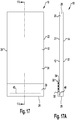
- the bag opening zone 40 is formed in or on the main bag portion 31 proximate the reclosing flap 30 and further proximate the third side 26.
- the bag opening zone 40 is formed in or on the main bag portion 31 proximate the reclosing flap 30 and further proximate the third side 26.
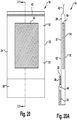
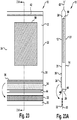
- the exemplary reclosable bag 10 illustrated in Figures 17-20A is used and functions in a manner similar to the previously described exemplary reclosable bags 10.
- the product 50 is loaded into the compartment 20 through the product receiving opening 28, seen in Figure 17A , and then the product receiving opening 28 is sealed, as shown by seal 42 in Figures 18 and 18A , to retain the product 50.
- the reclosing flap 30 is in the passive position with the reclosing material 32 releasably adhered to the release material 34.
- the reclosing flap 30 is movable from the passive position by pulling on the reclosing flap 30 to separate the reclosing material 32 from the release material 34.
- the reclosing flap 30 is moved from the passive position, the reclosing material 32 is exposed and the consumer can access the bag opening zone 40.
- the product 50 may be removed from the compartment 20 by opening the bag opening zone 40 to create the product retrieval opening 44 to permit retrieval of the product 50 from the compartment 20. After retrieving and inspecting the product 50, the consumer may return the product 50 to the compartment 20 through the product retrieval opening 44.
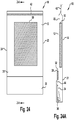
- the reclosing flap 30 When the product 50 is returned to the compartment 20 the reclosing flap 30 may be moved to the active position where the reclosing material 32 is brought into contact with and adheres to an outer surface of the main bag portion 31, as illustrated in Figure 20A . After the reclosing flap 30 is moved to the active position, the product retrieval opening 44 is covered to reclose the compartment 20 with the product 50 retained therein, as seen in Figures 20 and 20A . When the product 50 is within the compartment 20 and the compartment 20 has been reclosed, the consumer may return the product to the seller by mail or courier service.
- the bag opening zone 40 is formed in or on the main bag portion 31 proximate the reclosing flap 30 and further proximate the third side 26.
- a portion of the reclosing flap 30 may be sealed to the first ply 12, as seen in Figure 21A , and/or the second ply 14, as indicated by reclosing flap seal 36.
- a portion of the reclosing flap 30 may be sealed to another portion of the reclosing flap 30.
- the reclosing flap 30 is prevented from unintentionally moving from the passive position during transit so that the reclosing material 32 is not unintentionally exposed.
- the reclosing flap 30 is formed with a line or area of reduced strength 38 to permit separation of a portion of the reclosing flap 30 from the main bag portion 31, such as the first ply 12 and/or the second ply 14.
- the line or area of reduced strength 38 may be a line or lines of perforations, a score line or lines, or other configurations that promote separation that are known to those of skill in the art.
- the exemplary reclosable bag 10 illustrated in Figures 21-24A is used and functions in a manner similar to the previously described exemplary reclosable bags 10.
- the product 50 is loaded into the compartment 20 through the product receiving opening 28, seen in Figure 21A , and then the product receiving opening 28 is sealed, as shown by seal 42 in Figures 22 and 22A , to retain the product 50.
- the reclosing flap 30 is in the passive position with the reclosing material 32 releasably adhered to the release material 34.
- the reclosing flap 30 is movable from the passive position by: first, breaking the line of reduced strength 38 to separate the reclosing flap 30 from the main bag portion 31; and next, pulling on the reclosing flap 30 to separate the reclosing material 32 from the release material 34.
- the reclosing flap 30 is moved from the passive position, the reclosing material 32 is exposed and the consumer can access the bag opening zone 40.
- the product 50 may be removed from the compartment 20 by opening the bag opening zone 40 to create the product retrieval opening 44 to permit retrieval of the product 50 from the compartment 20. After retrieving and inspecting the product 50, the consumer may return the product 50 to the compartment 20 through the product retrieval opening 44.
- the reclosing flap 30 When the product 50 is returned to the compartment 20 the reclosing flap 30 may be moved to the active position where the reclosing material 32 is brought into contact with and adheres to an outer surface of the main bag portion 31, as illustrated in Figure 24A . After the reclosing flap 30 is moved to the active position, the product retrieval opening 44 is covered to reclose the compartment 20 with the product 50 retained therein, as seen in Figures 24 and 24A . When the product 50 is within the compartment 20 and the compartment 20 has been reclosed, the consumer may return the product to the seller by mail or courier service.
- FIG. 25-28A An additional exemplary reclosable bag 10 is illustrated in Figures 25-28A .
- the bag opening zone 40 is formed in or on the main bag portion 31 proximate the reclosing flap 30 and further proximate the third side 26.
- the reclosing material 32 is applied to the main bag portion 31 and the release material 34 is applied to the reclosing flap 30, as seen in Figure 25A .
- the reclosing flap 30 covers the bag opening zone 40 and protects the bag opening zone 40 from being unintentionally opened during transit, thereby preventing loss of the product 50.
- the exemplary reclosable bag 10 illustrated in Figures 25-28A is used and functions in a manner similar to the previously described exemplary reclosable bags 10.
- the product 50 is loaded into the compartment 20 through the product receiving opening 28, seen in Figure 25A , and then the product receiving opening 28 is sealed, as shown by seal 42 in Figures 26 and 26A , to retain the product 50.
- the reclosing flap 30 is in the passive position with the reclosing material 32 releasably adhered to the release material 34.
- the reclosing flap 30 is movable from the passive position by pulling on the reclosing flap 30 to separate the reclosing material 32 and the release material 34.
- the reclosing flap 30 is moved from the passive position, the reclosing material 32 is exposed and the consumer can access the bag opening zone 40.
- the product 50 may be removed from the compartment 20 by opening the bag opening zone 40 to create the product retrieval opening 44 to permit retrieval of the product 50 from the compartment 20. After retrieving and inspecting the product 50, the consumer may return the product 50 to the compartment 20 through the product retrieval opening 44.
- the reclosing flap 30 When the product 50 is returned to the compartment 20 the reclosing flap 30 may be moved to the active position where the reclosing material 32 is brought into contact with and adheres to another portion of the bag 10, such as the main bag portion 31 and/or the reclosing flap 30, as illustrated in Figure 28A . After the reclosing flap 30 is moved to the active position, the product retrieval opening 44 is covered to reclose the compartment 20 with the product 50 retained therein, as seen in Figures 28 and 28A . When the product 50 is within the compartment 20 and the compartment 20 has been reclosed, the consumer may return the product to the seller by mail or courier service.
- FIGS. 29 and 30 exemplary embodiments of a web 60, 70 of preformed reclosable bags 10 are shown.
- the reclosable bags 10 illustrated by Figures 29 and 30 may be made in accordance with any of the embodiments disclosed above. Further, the reclosable bags 10 illustrated by Figures 29 and 30 may include any combination or subcombination of the features of the bags 10 disclosed above.
- the web 60 of preformed reclosable bags 10 is configured such that the reclosing flap 30 of a first reclosable bag 10 is adjacent to the product receiving opening 28 of a second reclosable bag 10 ( i.e., the preformed reclosable bags 10 are connected top-to-bottom).
- the preformed reclosable bags 10 are connected to one another by, and are configured to be separated from one another along, a line of weakness 62, such as a line of perforations.
- the web 60 may be supplied on a roll or in a folded state for use with a packaging machine that loads a product 50 into each preformed reclosable bag 10, seals the product 50 in the bag 10, and optionally separates the loaded bag 10 from the remainder of the web 60.
- An exemplary packaging machine for loading a product 50 into each preformed reclosable bag 10 of the web 60 is disclosed in U.S. Patent Numbers 7,654,064 and 8,069,635 to Riccardi et al. .
- the web 70 of preformed reclosable bags 10 is configured such that the first side 22 of a first reclosable bag 10 is adjacent to the second side of a second reclosable bag 10 ( i.e., the preformed reclosable bags 10 are connected side-to-side).
- the web 70 of preformed reclosable bags 10 are connected to one another by, and are configured to be separated from one another along, a line of weakness 72, such as a line of perforations.
- each line of weakness 72 extends the entire width of the web 70 to promote complete separation of each preformed reclosable bag 10.
- the web 70 may be supplied on a roll or in a folded state for use with a packaging machine that loads a product 50 into each preformed reclosable bag 10.
- the sealed first side 22 and sealed second side 24 do not extend the entire width of the web 70.
- the plies 12,14 may be sealed or otherwise connected at a top portion 71 of the web 70.
- a packaging machine may include a slitter that splits the top portion 71 of the web 70 to create a product receiving opening 28 to facilitate the loading of a product 50.
- An exemplary packaging machine for loading a product 50 into each preformed reclosable bag 10 of the web 70 is disclosed in U.S. Patent Number 5,743,070 to Lerner et al. .
- a method of forming a reclosable bag 10 containing a product 50 includes joining a first ply 12 to a second ply 14.
- the first and second plies 12,14 may be two separate plies, or a single ply that is folded.
- the joined first ply 12 and second ply 14 define a main bag portion 31 having a compartment 20 including a first side 22, a second side 24, a third side 26 that extends between the first side 22 and the second side 24, and a product receiving opening 28.
- a reclosing flap 30 is connected to or on the main bag portion 31, such as at or on the third side 26, and is spaced apart from the product receiving opening 28.
- first ply 12 and the second ply 14 may be joined utilizing various techniques known to those of skill in the art including, but not limited to, heat sealing, ultrasonic welding, gluing with adhesives, etc.
- a flattened tube of material may be utilized instead of a first ply 12 and a second ply 14, wherein one of the open ends of the flattened tube may be sealed prior to loading a product 50 therein.
- a bag opening zone 40 is formed in or on the main bag portion 31 proximate the reclosing flap 30.
- the bag opening zone 40 may be defined by one or more lines or areas of weakness, an indicia that indicates where the bag 10 should be cut to open the bag 10, an adhesive, an openable connection, etc.
- a reclosing material 32 is applied to the bag 10.
- the reclosing material 32 may be printed directly onto a surface of the bag 10, such as a surface of the main bag portion 31 or a surface of the reclosing flap 30.
- the reclosing material 32 may be configured as a double-sided adhesive that is automatically or manually pressed onto a surface of the bag 10, such as a surface of the main bag portion 31 or a surface of the reclosing flap 30.
- a release material 34 is applied to the bag 10.
- the release material 34 may be printed directly onto a surface of the bag 10, such as a surface of the main bag portion 31 or a surface of the reclosing flap 30.
- a product 50 is loaded into the compartment 20 through the product receiving opening 28.
- the product receiving opening 28 is sealed to retain the product 50 therein.
- the product receiving opening 28 may be sealed utilizing various techniques known to those of skill in the art including, but not limited to, heat sealing, ultrasonic welding, gluing with an adhesive, etc.
- the arrangement of the reclosing material 32 and the release material 34 on the bag 10 eliminate the need for the relatively costly release strips utilized in conventional reclosable bags. Moreover, there is no waste material generated when the compartment 20 is accessed to retrieve the product 50 or when the consumer returns the product 50 to the compartment 20 and recloses the compartment 20 to return the product 50 to the seller.
- the exemplary method of forming a reclosable bag 10 containing a product 50 may include the additional steps of: forming a line or area of reduced strength 38 in the reclosing flap 30, and sealing a portion of the reclosing flap 30 to the first ply 12 and/or the second ply 14, or another portion of the reclosing flap 30.
- the line or area of reduced strength 38 may be a line or lines of perforations, a score line or lines, or other configurations that promote separation that are known to those of skill in the art.
- the reclosing flap 30 is prevented from moving from the passive position during transit so that the reclosing material 32 is not unintentionally exposed.
- the seal may be achieved via various techniques including, but not limited to, heat sealing, ultrasonic welding, gluing, etc.
- a method of reclosing a product 50 in a bag includes providing a bag for reclosing a product 50 therein.
- the bag includes a first ply 12 joined to a second ply 14.
- the first and second plies 12,14 may be two separate plies, or a single ply that is folded.
- the joined first ply 12 and second ply 14 define a main bag portion 31 having a compartment 20 including a first side 22, a second side 24, a third side 26 that extends between the first side 22 and the second side 24, and a product receiving opening 28.
- a reclosing flap 30 is connected to or on the main bag portion 31, such as at or on the third side 26, and is spaced apart from the product receiving opening 28.
- a reclosing material 32 is applied to the bag 10 and a release material 34 is applied to the bag 10.
- the reclosing material 32 and the release material 34 are arranged such that the reclosing material 32 releasably adheres to the release material 34.
- the bag also includes a bag opening zone 40 formed in or on the main bag portion 31 proximate the reclosing flap 30.
- a next step in the exemplary method includes loading a product 50 into the compartment 20 through the product receiving opening 28.
- the loading step may be performed manually or via an automated process.
- the next step in the method includes sealing the first ply 12 to the second ply 14 to close the product receiving opening 28.
- the sealing step may be performed utilizing various techniques known to those of skill in the art including, but not limited to, heat sealing, ultrasonic welding, gluing, etc.
- the bag opening zone 40 is broken or otherwise opened to create a product retrieval opening 44 to permit retrieval of the product 50 from the compartment 20.
- the consumer may inspect the product 50 and may decide to return the product 50 to the seller for a variety of reasons.
- the product 50 is returned to the compartment 20 through the product retrieval opening 44.
- the reclosing flap 30 may be moved to separate the reclosing material 32 from the release material 34 to expose the reclosing material 32.
- the reclosing flap 30 may be moved such that the reclosing material 32 adheres to a portion of the bag 10 and the product retrieval opening 44 is covered to reclose the product 50 within the compartment 20.
- any one or more of the steps may be omitted and/or the order of the steps may be changed without departing from the scope of the appended claims. Moreover, any one or more of the steps may be carried out manually or via an automated process utilizing various packaging machines and equipment known to those of skill in the art.
Landscapes
- Engineering & Computer Science (AREA)
- Mechanical Engineering (AREA)
- Bag Frames (AREA)
- Packages (AREA)
- Absorbent Articles And Supports Therefor (AREA)
Claims (15)
- Un sac refermable (10), comprenant :une première couche (12) et une seconde couche (14), la première couche (12) étant jointe à la seconde couche (14) afin de définir une portion de sac principale (31) présentant un compartiment (20) comprenant un premier côté (22), un deuxième côté (24), un troisième côté (26) qui s'étend entre le premier côté (22) et le deuxième côté (24), et une ouverture de réception de produit (28) qui est configurée de manière à être hermétiquement scellée ;un rabat de refermeture (30) connecté à la portion de sac principale (31) en un premier endroit et espacé de l'ouverture de réception de produit (28), dans lequel le rabat de refermeture (30) est configuré de manière à se déplacer entre une position passive et une position active ;un matériau de refermeture (32) et un matériau de libération (34), dans lequel le matériau de refermeture (32) et le matériau de libération (34) sont appliqués au sac de telle sorte que lorsque le rabat de refermeture (30) se trouve dans la position passive, le matériau de refermeture (32) soit collé de façon décollable au matériau de libération (34) et que, lorsque le rabat de refermeture (30) se trouve dans la position active, le matériau de refermeture (32) soit collé à une portion du sac où un matériau de libération (34) n'est pas appliqué ; etune zone d'ouverture de sac (40) formée dans la portion de sac principale (31) en un endroit qui est situé entre l'ouverture de réception de produit (28) et le premier endroit, dans lequel la zone d'ouverture de sac (40) est configurée de manière à être ouverte afin de créer une ouverture de récupération de produit (44) pour permettre la récupération d'un produit (50) du compartiment (20) ;dans lequel l'ouverture de récupération de produit (44) est configurée de manière à permettre que le produit (50) soit replacé dans le compartiment (20) à travers l'ouverture de récupération de produit (44), dans lequel le rabat de refermeture (30) est déplaçable depuis la position passive jusqu'à la position active de telle sorte que le matériau de refermeture (32) adhère à une portion du sac et que l'ouverture de récupération de produit (44) soit couverte par le rabat de refermeture (30) de manière à refermer le compartiment (20),caractérisé en ce que la zone d'ouverture de sac (40) est couverte par le rabat de refermeture (30) dans la position passive.
- Le sac refermable (10) selon la revendication 1, dans lequel une portion du rabat de refermeture (30) est scellée à une parmi la première couche (12), la seconde couche (14) ou une autre portion du rabat de refermeture (30), et le rabat de refermeture (30) présente une ligne de résistance réduite (38) pour permettre la séparation du rabat de refermeture (30) de l'une parmi la première couche (12), la seconde couche (14) ou une autre portion du rabat de refermeture (30).
- Le sac refermable (10) selon la revendication 2, dans lequel le rabat de refermeture (30) est scellé à la fois à la première couche (12) et à la seconde couche (14).
- Le sac refermable (10) selon la revendication 1, dans lequel le matériau de refermeture (32) est un adhésif sensible à la pression sélectionné dans le groupe consistant d'un adhésif à base d'acrylique, un adhésif à base de méthacrylate, un adhésif à base de polyuréthane, un adhésif à base de caoutchouc, un adhésif à base de copolymère de styrène, un adhésif à base de silicone, et de combinaisons de ceux-ci.
- Le sac refermable (10) selon la revendication 1, dans lequel le matériau de libération (34) est un matériau de libération chimique sélectionné dans le groupe consistant de polyacrylates, de carbamates, de polyoléfines, de fluorocarbones, de complexes de stéarate de chrome, de silicones, et de combinaisons de ceux-ci.
- Le sac refermable (10) selon la revendication 1, dans lequel la première couche (12) et la seconde couche (14) comprennent un matériau sélectionné dans le groupe consistant de polyéthylène, de cellophane, de films de vinyle, de pliofilms, d'un film d'acétate de cellulose, de polystyrène, de polypropylène, et de combinaisons de ceux-ci.
- Un procédé de formation d'un sac refermable (10) contenant un produit (50), comprenant les étapes suivantes :joindre une première couche (12) à une seconde couche (14) afin de définir une portion de sac principale (31) présentant un compartiment (20) comprenant un premier côté (22), un deuxième côté (24), un troisième côté (26) qui s'étend entre le premier côté (22) et le deuxième côté (24), une ouverture de réception de produit (28) et un rabat de refermeture (30) qui est connecté au troisième côté (26) en un premier endroit qui est espacé de l'ouverture de réception de produit (28) ;appliquer un matériau de refermeture (32) au sac ;appliquer un matériau de libération (34) au sac ;former une zone d'ouverture de sac (40) dans la portion de sac principale (31) entre l'ouverture de réception de produit (28) et le premier endroit ;déplacer le rabat de refermeture (30) afin d'amener le matériau de refermeture (32) en contact avec le matériau de libération (34) de telle sorte que la zone d'ouverture de sac (40) soit couverte par le rabat de refermeture (30) ;charger un produit (50) dans le compartiment (20) à travers l'ouverture de réception de produit (28) ; etsceller l'ouverture de réception de produit (28) une fois que le produit (50) a été chargé dans le compartiment (20).
- Le procédé selon la revendication 7, comprenant en outre le scellage d'une portion du rabat de refermeture (30) à une parmi la première couche (12), la seconde couche (14) ou une autre portion du rabat de refermeture (30), et la formation d'une ligne de résistance réduite (38) dans le rabat de refermeture (30) .
- Le procédé selon la revendication 8, comprenant en outre le scellage du rabat de refermeture (30) à la fois à la première couche (12) et à la seconde couche (14).
- Le procédé selon la revendication 7, dans lequel au moins une de l'étape d'application du matériau de refermeture (32) et de l'étape d'application du matériau de libération (34) est exécutée en imprimant le matériau de refermeture (32) ou le matériau de libération (34) sur le sac.
- Le sac refermable (10) selon la revendication 1, dans lequel le matériau de libération (34) est appliqué au rabat de refermeture (30) et le matériau de refermeture (32) est appliqué à la portion de sac principale (31) en un deuxième endroit, et dans lequel quand le rabat de refermeture (30) est déplacé dans la position active, le matériau de refermeture (32) adhère à la portion de sac principale (31) en un troisième endroit qui est différent du second endroit.
- Le sac refermable (10) selon la revendication 1, dans lequel une portion du rabat de refermeture (30) est scellée à une autre portion du rabat de refermeture (30) .
- Le procédé selon la revendication 8, dans lequel le scellage d'une portion du rabat de refermeture (30) comprend le scellage d'une portion du rabat de refermeture (30) à une autre portion du rabat de refermeture (30).
- Le sac refermable (10) selon la revendication 1, dans lequel la zone d'ouverture de sac (40) comprend une ligne de faiblesse qui est configurée de manière à se rompre afin de créer l'ouverture de récupération de produit (44).
- Procédé selon la revendication 7, comprenant en outre la formation d'une ligne de faiblesse dans la zone d'ouverture de sac (40).
Priority Applications (2)
| Application Number | Priority Date | Filing Date | Title |
|---|---|---|---|
| PL13790746T PL2874893T3 (pl) | 2012-05-15 | 2013-05-14 | Torba wielokrotnego zamykania i sposoby formowania i używania jej |
| EP19152720.9A EP3539892B1 (fr) | 2012-05-15 | 2013-05-14 | Sac refermable et procédés de formation et d'utilisation dudit sac refermable |
Applications Claiming Priority (4)
| Application Number | Priority Date | Filing Date | Title |
|---|---|---|---|
| US201261646947P | 2012-05-15 | 2012-05-15 | |
| US201261677685P | 2012-07-31 | 2012-07-31 | |
| US13/832,813 US9302821B2 (en) | 2012-05-15 | 2013-03-15 | Reclosable bag and methods of forming and using same |
| PCT/US2013/040834 WO2013173259A1 (fr) | 2012-05-15 | 2013-05-14 | Sac refermable et procédés de formation et d'utilisation dudit sac |
Related Child Applications (1)
| Application Number | Title | Priority Date | Filing Date |
|---|---|---|---|
| EP19152720.9A Division EP3539892B1 (fr) | 2012-05-15 | 2013-05-14 | Sac refermable et procédés de formation et d'utilisation dudit sac refermable |
Publications (3)
| Publication Number | Publication Date |
|---|---|
| EP2874893A1 EP2874893A1 (fr) | 2015-05-27 |
| EP2874893A4 EP2874893A4 (fr) | 2016-04-20 |
| EP2874893B1 true EP2874893B1 (fr) | 2019-01-23 |
Family
ID=49581360
Family Applications (2)
| Application Number | Title | Priority Date | Filing Date |
|---|---|---|---|
| EP19152720.9A Active EP3539892B1 (fr) | 2012-05-15 | 2013-05-14 | Sac refermable et procédés de formation et d'utilisation dudit sac refermable |
| EP13790746.5A Active EP2874893B1 (fr) | 2012-05-15 | 2013-05-14 | Sac refermable et procédés de formation et d'utilisation dudit sac |
Family Applications Before (1)
| Application Number | Title | Priority Date | Filing Date |
|---|---|---|---|
| EP19152720.9A Active EP3539892B1 (fr) | 2012-05-15 | 2013-05-14 | Sac refermable et procédés de formation et d'utilisation dudit sac refermable |
Country Status (16)
| Country | Link |
|---|---|
| US (2) | US9302821B2 (fr) |
| EP (2) | EP3539892B1 (fr) |
| JP (1) | JP6266600B2 (fr) |
| KR (1) | KR20150012294A (fr) |
| AU (1) | AU2013263019B2 (fr) |
| BR (1) | BR112014028234A2 (fr) |
| CA (1) | CA2873400A1 (fr) |
| CL (1) | CL2014003060A1 (fr) |
| CO (1) | CO7151537A2 (fr) |
| DO (1) | DOP2014000281A (fr) |
| ES (2) | ES2716001T3 (fr) |
| HU (1) | HUE042502T2 (fr) |
| MX (1) | MX347455B (fr) |
| NZ (1) | NZ702027A (fr) |
| PL (1) | PL2874893T3 (fr) |
| WO (1) | WO2013173259A1 (fr) |
Families Citing this family (4)
| Publication number | Priority date | Publication date | Assignee | Title |
|---|---|---|---|---|
| GB2559734A (en) * | 2017-02-08 | 2018-08-22 | Coveris Flexibles Uk Ltd | A method of producing a bag |
| EP3917850A1 (fr) | 2019-01-31 | 2021-12-08 | Automated Packaging Systems, LLC. | Sac refermable et ses procédés de formation et d'utilisation |
| EP4501806A1 (fr) * | 2023-08-04 | 2025-02-05 | The Procter & Gamble Company | Emballages d'articles absorbants |
| PL448245A1 (pl) * | 2024-04-09 | 2025-10-13 | Plast-Farb Spółka Z Ograniczoną Odpowiedzialnością | Koperta |
Family Cites Families (60)
| Publication number | Priority date | Publication date | Assignee | Title |
|---|---|---|---|---|
| US2777631A (en) | 1953-10-14 | 1957-01-15 | Zalkind Joseph | Statement sheet and envelope |
| US3184149A (en) * | 1962-10-24 | 1965-05-18 | Dow Chemical Co | Re-sealable bag |
| US3276669A (en) * | 1965-07-30 | 1966-10-04 | Leonard J Vilutis | Package and method of making same |
| US3387640A (en) * | 1965-08-02 | 1968-06-11 | Dow Chemical Co | Tobacco pouch |
| US3388789A (en) * | 1967-05-05 | 1968-06-18 | Milprint Inc | Compartmented package |
| US3420433A (en) * | 1967-08-07 | 1969-01-07 | Union Carbide Corp | Flat bag and overflapped adhesive tape closure therefor |
| US3942713A (en) * | 1974-02-25 | 1976-03-09 | Mobil Oil Corporation | Pressure sensitive adhesive closure for bags incorporating an adhesive cuff-lock design |
| US4192420A (en) * | 1978-11-30 | 1980-03-11 | Scott Paper Company | Flexible and pliable moisture-impervious package |
| US4483018A (en) | 1981-02-09 | 1984-11-13 | Impakt Products, Inc. | High integrity tamper resistant container |
| US4410130A (en) * | 1981-12-30 | 1983-10-18 | Mobil Oil Corporation | Protective strip for Z-fold bag closure |
| US4428477A (en) * | 1982-01-08 | 1984-01-31 | Johnson & Johnson Baby Products Company | Resealable package for premoistened towellettes |
| US4581007A (en) * | 1982-12-27 | 1986-04-08 | Union Carbide Corporation | Adhesive closure bags and method for producing same |
| US4650079A (en) * | 1983-02-08 | 1987-03-17 | Kazuhiro Itoh | Easy-to-open synthetic resin bag and apparatus for the manufacture thereof |
| GB2140774A (en) * | 1983-05-31 | 1984-12-05 | Mardon Wrappings Ltd | A re-sealable container |
| GB8322885D0 (en) * | 1983-08-25 | 1983-09-28 | Sanders B | Containers |
| US4629071A (en) * | 1985-08-29 | 1986-12-16 | Kanari Tani | Easy-to-open bag |
| US4824261A (en) * | 1985-10-24 | 1989-04-25 | Velcro Industries B.V. | Reclosable bag and hook and loop sealing strips for use therein |
| US4679693A (en) * | 1986-05-14 | 1987-07-14 | Harold Forman | Label resealing container |
| US4786190A (en) * | 1986-08-11 | 1988-11-22 | Minigrip, Inc. | Reclosable package having outer reclosable closure and inner non-reclosable closure |
| US4785940A (en) * | 1987-07-02 | 1988-11-22 | Minnesota Mining And Manufacturing Company | Flexible bag with a pressure sensitive adhesive closure strip |
| US5047103A (en) * | 1987-08-24 | 1991-09-10 | High Voltage Graphics, Inc. | Method for making flock applique and transfers |
| US4871265A (en) * | 1988-05-18 | 1989-10-03 | Minnesota Mining & Manufacturing Company | Resealable bag |
| GB8921108D0 (en) | 1989-09-18 | 1989-11-01 | Interpoly Ltd | Tamper indicating package |
| GB9207173D0 (en) | 1992-04-01 | 1992-05-13 | Infinite Vibrations Limited | Re-usable envelopes |
| US5400957A (en) | 1992-04-23 | 1995-03-28 | Stude; Michael | Reusable envelope |
| USD363018S (en) | 1994-02-09 | 1995-10-10 | Craig Stokes | Top portion for a flexible bag with sealed end and recloseable seal |
| IT1273180B (it) * | 1994-05-05 | 1997-07-07 | Sales Spa | Dispositivo di apertura e richiusura per contenitori flessibili e contenitore dotato di tale dispositivo |
| US5466734A (en) * | 1994-09-13 | 1995-11-14 | Sun Chemical Corporation | Aqueous cold seal release lacquer |
| EP0739293B1 (fr) | 1994-11-14 | 1998-02-11 | Heinrich Lindenbeck | Pochette d'expedition reutilisable |
| JPH0999953A (ja) * | 1995-10-03 | 1997-04-15 | Oji Seitai Kk | 閉鎖用舌片付袋体 |
| US5743070A (en) | 1996-08-16 | 1998-04-28 | Automated Packaging Systems, Inc. | Packaging machine, material and method |
| US5897210A (en) * | 1997-05-01 | 1999-04-27 | Lever Brothers Company, Inc. | Reclosable container |
| US5954907A (en) * | 1997-10-07 | 1999-09-21 | Avery Dennison Corporation | Process using electrostatic spraying for coating substrates with release coating compositions, pressure sensitive adhesives, and combinations thereof |
| US6691913B1 (en) | 1997-12-08 | 2004-02-17 | Luis J. Rodriguez | Self sealing containers |
| US5908243A (en) * | 1997-12-15 | 1999-06-01 | Asb Aquisition Corp. | Linerless security bag |
| US6032854A (en) | 1998-03-05 | 2000-03-07 | International Envelope Company | Multiple-use sealable packages |
| US20010032872A1 (en) | 1998-05-06 | 2001-10-25 | 940981 Ontario Inc. C.O.B. As Pep | Closure system |
| US6290120B1 (en) * | 1998-05-06 | 2001-09-18 | Ontario Inc. Cob As Pep | Closure system |
| US5941641A (en) * | 1998-05-07 | 1999-08-24 | Kraft Foods, Inc. | Wrap-around recloseable pouch |
| US6070792A (en) | 1998-09-22 | 2000-06-06 | Rock-Tenn Company | Reusable envelope |
| US6343736B1 (en) | 2000-06-09 | 2002-02-05 | Myun Ho Kim | Reusable mailing envelope with tear-strip opening device |
| JP2003238918A (ja) * | 2002-02-21 | 2003-08-27 | Yamagata Gravure Co Ltd | 感圧性接着剤テープ |
| ITPD20020141A1 (it) * | 2002-05-28 | 2003-11-28 | Bp Europack Spa | Contenitore flessibile ad apertura agevolata e richiudibile |
| JP2004034990A (ja) * | 2002-06-28 | 2004-02-05 | Shooei Corporation:Kk | 包装用袋 |
| US7033077B2 (en) * | 2002-07-16 | 2006-04-25 | Peter Taylor | Sealable bags made of plastics or other materials and method of making plastic sheeting for manufacturing sealable bags |
| WO2005014406A2 (fr) * | 2003-08-06 | 2005-02-17 | Avery Dennison Corporation | Systemes refermables par adherence et contenants dotes de ces systemes |
| US20050036716A1 (en) | 2003-08-11 | 2005-02-17 | Ampac Plastics Llc | Tamper indicating security bag |
| US7726550B2 (en) | 2004-04-26 | 2010-06-01 | Wilen Press, Lc | Insert with a return mailer |
| US7780069B2 (en) | 2004-05-03 | 2010-08-24 | Wilen Press, Lc | Insert with a return envelope |
| DE102005013585A1 (de) * | 2005-03-23 | 2006-09-28 | Huhtamaki Ronsberg, Zweigniederlassung Der Huhtamaki Deutschland Gmbh & Co. Kg | Wiederverschließbare Folien-Verpackung, insbesondere flow-wrap-Verpackung |
| JP2008013190A (ja) | 2006-07-04 | 2008-01-24 | Seiko Bisou:Kk | 送返信併用式の郵送方法とその使用封筒 |
| US20080050055A1 (en) * | 2006-08-18 | 2008-02-28 | Andrew Austreng | Resealable Package with Tamper-Evident Structure and Method for Making Same |
| CN101541642A (zh) | 2006-08-18 | 2009-09-23 | 生态包袋有限责任公司 | 可再用信封 |
| US20080152264A1 (en) * | 2006-12-22 | 2008-06-26 | Kenneth Charles Pokusa | Flexible easy-open package with reclosable feature |
| JP2008280081A (ja) * | 2007-05-14 | 2008-11-20 | Yamagata Gravure Co Ltd | 商品包装袋及びその製造方法 |
| US7654064B2 (en) | 2007-09-12 | 2010-02-02 | Automated Packaging Systems, Inc. | Packaging machine |
| JP2009292494A (ja) | 2008-06-04 | 2009-12-17 | Kc:Kk | 往復封筒 |
| JP5216605B2 (ja) | 2009-01-20 | 2013-06-19 | トッパン・フォームズ株式会社 | 封筒 |
| PL2391556T3 (pl) * | 2009-02-02 | 2016-03-31 | Intercontinental Great Brands Llc | Wielokrotnie otwierane i szczelnie zamykane opakowanie dla wyrobów cukierniczych |
| CN102448846B (zh) * | 2009-03-31 | 2015-11-25 | 艾利丹尼森公司 | 用于热密封包装的可再密封层压材料 |
-
2013
- 2013-03-15 US US13/832,813 patent/US9302821B2/en active Active
- 2013-05-14 JP JP2015512728A patent/JP6266600B2/ja active Active
- 2013-05-14 WO PCT/US2013/040834 patent/WO2013173259A1/fr not_active Ceased
- 2013-05-14 EP EP19152720.9A patent/EP3539892B1/fr active Active
- 2013-05-14 HU HUE13790746A patent/HUE042502T2/hu unknown
- 2013-05-14 NZ NZ702027A patent/NZ702027A/en not_active IP Right Cessation
- 2013-05-14 BR BR112014028234A patent/BR112014028234A2/pt not_active Application Discontinuation
- 2013-05-14 AU AU2013263019A patent/AU2013263019B2/en active Active
- 2013-05-14 ES ES13790746T patent/ES2716001T3/es active Active
- 2013-05-14 EP EP13790746.5A patent/EP2874893B1/fr active Active
- 2013-05-14 ES ES19152720T patent/ES2905728T3/es active Active
- 2013-05-14 PL PL13790746T patent/PL2874893T3/pl unknown
- 2013-05-14 KR KR1020147035152A patent/KR20150012294A/ko not_active Ceased
- 2013-05-14 CA CA2873400A patent/CA2873400A1/fr not_active Abandoned
- 2013-05-14 MX MX2014013814A patent/MX347455B/es active IP Right Grant
-
2014
- 2014-11-11 CL CL2014003060A patent/CL2014003060A1/es unknown
- 2014-12-15 DO DO2014000281A patent/DOP2014000281A/es unknown
- 2014-12-15 CO CO14274951A patent/CO7151537A2/es unknown
-
2016
- 2016-03-02 US US15/058,399 patent/US20160200492A1/en not_active Abandoned
Non-Patent Citations (1)
| Title |
|---|
| None * |
Also Published As
| Publication number | Publication date |
|---|---|
| DOP2014000281A (es) | 2015-05-31 |
| HUE042502T2 (hu) | 2019-07-29 |
| EP2874893A4 (fr) | 2016-04-20 |
| NZ702027A (en) | 2017-01-27 |
| AU2013263019A1 (en) | 2014-12-04 |
| US9302821B2 (en) | 2016-04-05 |
| EP3539892B1 (fr) | 2021-11-10 |
| BR112014028234A2 (pt) | 2017-06-27 |
| MX347455B (es) | 2017-04-27 |
| JP2015517445A (ja) | 2015-06-22 |
| CA2873400A1 (fr) | 2013-11-21 |
| AU2013263019B2 (en) | 2017-04-20 |
| US20160200492A1 (en) | 2016-07-14 |
| CO7151537A2 (es) | 2014-12-29 |
| PL2874893T3 (pl) | 2019-07-31 |
| MX2014013814A (es) | 2015-02-04 |
| ES2716001T3 (es) | 2019-06-07 |
| JP6266600B2 (ja) | 2018-01-24 |
| US20130308883A1 (en) | 2013-11-21 |
| CL2014003060A1 (es) | 2015-06-12 |
| EP3539892A1 (fr) | 2019-09-18 |
| EP2874893A1 (fr) | 2015-05-27 |
| ES2905728T3 (es) | 2022-04-11 |
| WO2013173259A1 (fr) | 2013-11-21 |
| KR20150012294A (ko) | 2015-02-03 |
Similar Documents
| Publication | Publication Date | Title |
|---|---|---|
| US7963413B2 (en) | Tamper evident resealable closure | |
| RU2381969C2 (ru) | Гибкая упаковка с внутренним средством повторного закрывания | |
| AU760569B2 (en) | Bags of easy open construction | |
| US20100002964A1 (en) | Recloseable package with protective patch | |
| US20130089280A1 (en) | Sealable Bag | |
| US10308412B2 (en) | Packaging film and method of manufacturing same | |
| EP2874893B1 (fr) | Sac refermable et procédés de formation et d'utilisation dudit sac | |
| US11827419B2 (en) | Reclosable bag and methods of forming and using the same | |
| CA3004905C (fr) | Emballage alimentaire ayant un element d'ouverture refermable et procede d'ouverture, de retrait d'un produit alimentaire et de refermeture d'un emballage alimentaire refermable | |
| US20170203901A1 (en) | Easy-open and reclosable flow wrap package | |
| JP2020172298A (ja) | 包装袋 | |
| JP3165005U (ja) | 包装袋 | |
| US20250296741A1 (en) | Disposable bags with integral tie strips | |
| EP3017710B1 (fr) | Poche à languette adhésive intégrée | |
| JP3637023B2 (ja) | 商品包装袋 |
Legal Events
| Date | Code | Title | Description |
|---|---|---|---|
| PUAI | Public reference made under article 153(3) epc to a published international application that has entered the european phase |
Free format text: ORIGINAL CODE: 0009012 |
|
| 17P | Request for examination filed |
Effective date: 20150310 |
|
| AK | Designated contracting states |
Kind code of ref document: A1 Designated state(s): AL AT BE BG CH CY CZ DE DK EE ES FI FR GB GR HR HU IE IS IT LI LT LU LV MC MK MT NL NO PL PT RO RS SE SI SK SM TR |
|
| AX | Request for extension of the european patent |
Extension state: BA ME |
|
| DAX | Request for extension of the european patent (deleted) | ||
| RA4 | Supplementary search report drawn up and despatched (corrected) |
Effective date: 20160323 |
|
| RIC1 | Information provided on ipc code assigned before grant |
Ipc: B65D 33/24 20060101AFI20160317BHEP |
|
| STAA | Information on the status of an ep patent application or granted ep patent |
Free format text: STATUS: EXAMINATION IS IN PROGRESS |
|
| 17Q | First examination report despatched |
Effective date: 20170203 |
|
| GRAP | Despatch of communication of intention to grant a patent |
Free format text: ORIGINAL CODE: EPIDOSNIGR1 |
|
| STAA | Information on the status of an ep patent application or granted ep patent |
Free format text: STATUS: GRANT OF PATENT IS INTENDED |
|
| INTG | Intention to grant announced |
Effective date: 20180815 |
|
| GRAS | Grant fee paid |
Free format text: ORIGINAL CODE: EPIDOSNIGR3 |
|
| GRAA | (expected) grant |
Free format text: ORIGINAL CODE: 0009210 |
|
| STAA | Information on the status of an ep patent application or granted ep patent |
Free format text: STATUS: THE PATENT HAS BEEN GRANTED |
|
| AK | Designated contracting states |
Kind code of ref document: B1 Designated state(s): AL AT BE BG CH CY CZ DE DK EE ES FI FR GB GR HR HU IE IS IT LI LT LU LV MC MK MT NL NO PL PT RO RS SE SI SK SM TR |
|
| REG | Reference to a national code |
Ref country code: GB Ref legal event code: FG4D |
|
| REG | Reference to a national code |
Ref country code: CH Ref legal event code: EP |
|
| REG | Reference to a national code |
Ref country code: AT Ref legal event code: REF Ref document number: 1091265 Country of ref document: AT Kind code of ref document: T Effective date: 20190215 |
|
| REG | Reference to a national code |
Ref country code: IE Ref legal event code: FG4D |
|
| REG | Reference to a national code |
Ref country code: DE Ref legal event code: R096 Ref document number: 602013050260 Country of ref document: DE |
|
| REG | Reference to a national code |
Ref country code: CH Ref legal event code: NV Representative=s name: ABREMA AGENCE BREVET ET MARQUES, GANGUILLET, CH |
|
| REG | Reference to a national code |
Ref country code: SE Ref legal event code: TRGR |
|
| REG | Reference to a national code |
Ref country code: NL Ref legal event code: FP |
|
| REG | Reference to a national code |
Ref country code: ES Ref legal event code: FG2A Ref document number: 2716001 Country of ref document: ES Kind code of ref document: T3 Effective date: 20190607 |
|
| PGFP | Annual fee paid to national office [announced via postgrant information from national office to epo] |
Ref country code: NL Payment date: 20190521 Year of fee payment: 7 |
|
| REG | Reference to a national code |
Ref country code: HU Ref legal event code: AG4A Ref document number: E042502 Country of ref document: HU |
|
| PG25 | Lapsed in a contracting state [announced via postgrant information from national office to epo] |
Ref country code: LT Free format text: LAPSE BECAUSE OF FAILURE TO SUBMIT A TRANSLATION OF THE DESCRIPTION OR TO PAY THE FEE WITHIN THE PRESCRIBED TIME-LIMIT Effective date: 20190123 Ref country code: FI Free format text: LAPSE BECAUSE OF FAILURE TO SUBMIT A TRANSLATION OF THE DESCRIPTION OR TO PAY THE FEE WITHIN THE PRESCRIBED TIME-LIMIT Effective date: 20190123 Ref country code: NO Free format text: LAPSE BECAUSE OF FAILURE TO SUBMIT A TRANSLATION OF THE DESCRIPTION OR TO PAY THE FEE WITHIN THE PRESCRIBED TIME-LIMIT Effective date: 20190423 Ref country code: PT Free format text: LAPSE BECAUSE OF FAILURE TO SUBMIT A TRANSLATION OF THE DESCRIPTION OR TO PAY THE FEE WITHIN THE PRESCRIBED TIME-LIMIT Effective date: 20190523 |
|
| PGFP | Annual fee paid to national office [announced via postgrant information from national office to epo] |
Ref country code: CZ Payment date: 20190527 Year of fee payment: 7 |
|
| PG25 | Lapsed in a contracting state [announced via postgrant information from national office to epo] |
Ref country code: LV Free format text: LAPSE BECAUSE OF FAILURE TO SUBMIT A TRANSLATION OF THE DESCRIPTION OR TO PAY THE FEE WITHIN THE PRESCRIBED TIME-LIMIT Effective date: 20190123 Ref country code: RS Free format text: LAPSE BECAUSE OF FAILURE TO SUBMIT A TRANSLATION OF THE DESCRIPTION OR TO PAY THE FEE WITHIN THE PRESCRIBED TIME-LIMIT Effective date: 20190123 Ref country code: GR Free format text: LAPSE BECAUSE OF FAILURE TO SUBMIT A TRANSLATION OF THE DESCRIPTION OR TO PAY THE FEE WITHIN THE PRESCRIBED TIME-LIMIT Effective date: 20190424 Ref country code: BG Free format text: LAPSE BECAUSE OF FAILURE TO SUBMIT A TRANSLATION OF THE DESCRIPTION OR TO PAY THE FEE WITHIN THE PRESCRIBED TIME-LIMIT Effective date: 20190423 Ref country code: IS Free format text: LAPSE BECAUSE OF FAILURE TO SUBMIT A TRANSLATION OF THE DESCRIPTION OR TO PAY THE FEE WITHIN THE PRESCRIBED TIME-LIMIT Effective date: 20190523 Ref country code: HR Free format text: LAPSE BECAUSE OF FAILURE TO SUBMIT A TRANSLATION OF THE DESCRIPTION OR TO PAY THE FEE WITHIN THE PRESCRIBED TIME-LIMIT Effective date: 20190123 |
|
| PGFP | Annual fee paid to national office [announced via postgrant information from national office to epo] |
Ref country code: TR Payment date: 20190403 Year of fee payment: 7 Ref country code: SE Payment date: 20190521 Year of fee payment: 7 Ref country code: BE Payment date: 20190521 Year of fee payment: 7 Ref country code: HU Payment date: 20190528 Year of fee payment: 7 |
|
| PGFP | Annual fee paid to national office [announced via postgrant information from national office to epo] |
Ref country code: CH Payment date: 20190527 Year of fee payment: 7 |
|
| REG | Reference to a national code |
Ref country code: DE Ref legal event code: R097 Ref document number: 602013050260 Country of ref document: DE |
|
| PG25 | Lapsed in a contracting state [announced via postgrant information from national office to epo] |
Ref country code: DK Free format text: LAPSE BECAUSE OF FAILURE TO SUBMIT A TRANSLATION OF THE DESCRIPTION OR TO PAY THE FEE WITHIN THE PRESCRIBED TIME-LIMIT Effective date: 20190123 Ref country code: AL Free format text: LAPSE BECAUSE OF FAILURE TO SUBMIT A TRANSLATION OF THE DESCRIPTION OR TO PAY THE FEE WITHIN THE PRESCRIBED TIME-LIMIT Effective date: 20190123 Ref country code: SK Free format text: LAPSE BECAUSE OF FAILURE TO SUBMIT A TRANSLATION OF THE DESCRIPTION OR TO PAY THE FEE WITHIN THE PRESCRIBED TIME-LIMIT Effective date: 20190123 Ref country code: EE Free format text: LAPSE BECAUSE OF FAILURE TO SUBMIT A TRANSLATION OF THE DESCRIPTION OR TO PAY THE FEE WITHIN THE PRESCRIBED TIME-LIMIT Effective date: 20190123 Ref country code: RO Free format text: LAPSE BECAUSE OF FAILURE TO SUBMIT A TRANSLATION OF THE DESCRIPTION OR TO PAY THE FEE WITHIN THE PRESCRIBED TIME-LIMIT Effective date: 20190123 |
|
| PGFP | Annual fee paid to national office [announced via postgrant information from national office to epo] |
Ref country code: AT Payment date: 20190522 Year of fee payment: 7 |
|
| PG25 | Lapsed in a contracting state [announced via postgrant information from national office to epo] |
Ref country code: SM Free format text: LAPSE BECAUSE OF FAILURE TO SUBMIT A TRANSLATION OF THE DESCRIPTION OR TO PAY THE FEE WITHIN THE PRESCRIBED TIME-LIMIT Effective date: 20190123 |
|
| PLBE | No opposition filed within time limit |
Free format text: ORIGINAL CODE: 0009261 |
|
| STAA | Information on the status of an ep patent application or granted ep patent |
Free format text: STATUS: NO OPPOSITION FILED WITHIN TIME LIMIT |
|
| 26N | No opposition filed |
Effective date: 20191024 |
|
| PG25 | Lapsed in a contracting state [announced via postgrant information from national office to epo] |
Ref country code: MC Free format text: LAPSE BECAUSE OF FAILURE TO SUBMIT A TRANSLATION OF THE DESCRIPTION OR TO PAY THE FEE WITHIN THE PRESCRIBED TIME-LIMIT Effective date: 20190123 |
|
| PG25 | Lapsed in a contracting state [announced via postgrant information from national office to epo] |
Ref country code: SI Free format text: LAPSE BECAUSE OF FAILURE TO SUBMIT A TRANSLATION OF THE DESCRIPTION OR TO PAY THE FEE WITHIN THE PRESCRIBED TIME-LIMIT Effective date: 20190123 Ref country code: LU Free format text: LAPSE BECAUSE OF NON-PAYMENT OF DUE FEES Effective date: 20190514 |
|
| PG25 | Lapsed in a contracting state [announced via postgrant information from national office to epo] |
Ref country code: IE Free format text: LAPSE BECAUSE OF NON-PAYMENT OF DUE FEES Effective date: 20190514 |
|
| REG | Reference to a national code |
Ref country code: CH Ref legal event code: PFUS Owner name: AUTOMATED PACKAGING SYSTEMS, INC., US Free format text: FORMER OWNER: AUTOMATED PACKAGING SYSTEMS, INC., US |
|
| REG | Reference to a national code |
Ref country code: NL Ref legal event code: MM Effective date: 20200601 |
|
| REG | Reference to a national code |
Ref country code: AT Ref legal event code: MM01 Ref document number: 1091265 Country of ref document: AT Kind code of ref document: T Effective date: 20200514 |
|
| PG25 | Lapsed in a contracting state [announced via postgrant information from national office to epo] |
Ref country code: CZ Free format text: LAPSE BECAUSE OF NON-PAYMENT OF DUE FEES Effective date: 20200514 Ref country code: LI Free format text: LAPSE BECAUSE OF NON-PAYMENT OF DUE FEES Effective date: 20200531 Ref country code: CH Free format text: LAPSE BECAUSE OF NON-PAYMENT OF DUE FEES Effective date: 20200531 Ref country code: HU Free format text: LAPSE BECAUSE OF NON-PAYMENT OF DUE FEES Effective date: 20200515 Ref country code: AT Free format text: LAPSE BECAUSE OF NON-PAYMENT OF DUE FEES Effective date: 20200514 Ref country code: SE Free format text: LAPSE BECAUSE OF NON-PAYMENT OF DUE FEES Effective date: 20200515 |
|
| PG25 | Lapsed in a contracting state [announced via postgrant information from national office to epo] |
Ref country code: NL Free format text: LAPSE BECAUSE OF NON-PAYMENT OF DUE FEES Effective date: 20200601 |
|
| REG | Reference to a national code |
Ref country code: BE Ref legal event code: MM Effective date: 20200531 |
|
| REG | Reference to a national code |
Ref country code: AT Ref legal event code: UEP Ref document number: 1091265 Country of ref document: AT Kind code of ref document: T Effective date: 20190123 |
|
| PG25 | Lapsed in a contracting state [announced via postgrant information from national office to epo] |
Ref country code: BE Free format text: LAPSE BECAUSE OF NON-PAYMENT OF DUE FEES Effective date: 20200531 Ref country code: CY Free format text: LAPSE BECAUSE OF FAILURE TO SUBMIT A TRANSLATION OF THE DESCRIPTION OR TO PAY THE FEE WITHIN THE PRESCRIBED TIME-LIMIT Effective date: 20190123 |
|
| PG25 | Lapsed in a contracting state [announced via postgrant information from national office to epo] |
Ref country code: MT Free format text: LAPSE BECAUSE OF FAILURE TO SUBMIT A TRANSLATION OF THE DESCRIPTION OR TO PAY THE FEE WITHIN THE PRESCRIBED TIME-LIMIT Effective date: 20190123 |
|
| PG25 | Lapsed in a contracting state [announced via postgrant information from national office to epo] |
Ref country code: TR Free format text: LAPSE BECAUSE OF NON-PAYMENT OF DUE FEES Effective date: 20200514 Ref country code: MK Free format text: LAPSE BECAUSE OF FAILURE TO SUBMIT A TRANSLATION OF THE DESCRIPTION OR TO PAY THE FEE WITHIN THE PRESCRIBED TIME-LIMIT Effective date: 20190123 |
|
| PG25 | Lapsed in a contracting state [announced via postgrant information from national office to epo] |
Ref country code: PL Free format text: LAPSE BECAUSE OF NON-PAYMENT OF DUE FEES Effective date: 20200514 |
|
| REG | Reference to a national code |
Ref country code: DE Ref legal event code: R082 Ref document number: 602013050260 Country of ref document: DE Representative=s name: KARAKATSANIS, GEORGIOS, DR., DE |
|
| P01 | Opt-out of the competence of the unified patent court (upc) registered |
Effective date: 20230424 |
|
| PGFP | Annual fee paid to national office [announced via postgrant information from national office to epo] |
Ref country code: DE Payment date: 20250528 Year of fee payment: 13 |
|
| PGFP | Annual fee paid to national office [announced via postgrant information from national office to epo] |
Ref country code: ES Payment date: 20250611 Year of fee payment: 13 |
|
| PGFP | Annual fee paid to national office [announced via postgrant information from national office to epo] |
Ref country code: IT Payment date: 20250522 Year of fee payment: 13 |
|
| PGFP | Annual fee paid to national office [announced via postgrant information from national office to epo] |
Ref country code: FR Payment date: 20250526 Year of fee payment: 13 |
|
| PGFP | Annual fee paid to national office [announced via postgrant information from national office to epo] |
Ref country code: GB Payment date: 20260304 Year of fee payment: 14 |