EP2875659B1 - Procédés et appareils de mise en oeuvre d'un contrôle de politique et de facturation - Google Patents
Procédés et appareils de mise en oeuvre d'un contrôle de politique et de facturation Download PDFInfo
- Publication number
- EP2875659B1 EP2875659B1 EP12737289.4A EP12737289A EP2875659B1 EP 2875659 B1 EP2875659 B1 EP 2875659B1 EP 12737289 A EP12737289 A EP 12737289A EP 2875659 B1 EP2875659 B1 EP 2875659B1
- Authority
- EP
- European Patent Office
- Prior art keywords
- pcrf
- adc
- application
- session
- rule
- Prior art date
- Legal status (The legal status is an assumption and is not a legal conclusion. Google has not performed a legal analysis and makes no representation as to the accuracy of the status listed.)
- Not-in-force
Links
Images



Classifications
-
- H—ELECTRICITY
- H04—ELECTRIC COMMUNICATION TECHNIQUE
- H04M—TELEPHONIC COMMUNICATION
- H04M15/00—Arrangements for metering, time-control or time indication ; Metering, charging or billing arrangements for voice wireline or wireless communications, e.g. VoIP
- H04M15/66—Policy and charging system
-
- H—ELECTRICITY
- H04—ELECTRIC COMMUNICATION TECHNIQUE
- H04L—TRANSMISSION OF DIGITAL INFORMATION, e.g. TELEGRAPHIC COMMUNICATION
- H04L65/00—Network arrangements, protocols or services for supporting real-time applications in data packet communication
- H04L65/1066—Session management
- H04L65/1101—Session protocols
- H04L65/1104—Session initiation protocol [SIP]
-
- H—ELECTRICITY
- H04—ELECTRIC COMMUNICATION TECHNIQUE
- H04L—TRANSMISSION OF DIGITAL INFORMATION, e.g. TELEGRAPHIC COMMUNICATION
- H04L67/00—Network arrangements or protocols for supporting network services or applications
- H04L67/01—Protocols
- H04L67/10—Protocols in which an application is distributed across nodes in the network
- H04L67/1001—Protocols in which an application is distributed across nodes in the network for accessing one among a plurality of replicated servers
- H04L67/1036—Load balancing of requests to servers for services different from user content provisioning, e.g. load balancing across domain name servers
-
- H—ELECTRICITY
- H04—ELECTRIC COMMUNICATION TECHNIQUE
- H04W—WIRELESS COMMUNICATION NETWORKS
- H04W76/00—Connection management
- H04W76/10—Connection setup
-
- H—ELECTRICITY
- H04—ELECTRIC COMMUNICATION TECHNIQUE
- H04L—TRANSMISSION OF DIGITAL INFORMATION, e.g. TELEGRAPHIC COMMUNICATION
- H04L12/00—Data switching networks
- H04L12/02—Details
- H04L12/14—Charging, metering or billing arrangements specially adapted for data communications, e.g. authentication, authorisation and accounting [AAA] framework
- H04L12/1403—Architecture for metering, charging or billing
- H04L12/1407—Policy-and-charging control [PCC] architecture
-
- H—ELECTRICITY
- H04—ELECTRIC COMMUNICATION TECHNIQUE
- H04L—TRANSMISSION OF DIGITAL INFORMATION, e.g. TELEGRAPHIC COMMUNICATION
- H04L43/00—Arrangements for monitoring or testing data switching networks
- H04L43/02—Capturing of monitoring data
- H04L43/028—Capturing of monitoring data by filtering
-
- H—ELECTRICITY
- H04—ELECTRIC COMMUNICATION TECHNIQUE
- H04W—WIRELESS COMMUNICATION NETWORKS
- H04W76/00—Connection management
- H04W76/10—Connection setup
- H04W76/12—Setup of transport tunnels
Definitions
- the present invention relates to methods and apparatus for implementing policy and charging control. More particularly, the invention relates to methods and apparatus for ensuring that all Application Function sessions for an IP-CAN session reach the same Policy and Charging Rules Function when more than one Policy and Charging Rules Function is deployed in an operator network.
- IP-CAN IP Connectivity Access Network
- QoS Quality of Service
- PCC Policy and Charging Control
- 3GPP TS 23.203 describes such a PCC architecture in respect of packet flows in an IP-CAN session established by a user equipment (UE) through an Evolved 3GPP telecommunications system, including both 3GPP accesses (GERAN/UTRAN/E-UTRAN) and Non-3GPP accesses.
- FIG. 1 illustrates schematically an example of the PCC architecture described in 3GPP TS 23.203 that comprises a Policy and Charging Enforcement Function (PCEF), a Traffic Detection Function (TDF), a Bearer Binding and Event Reporting Function (BBERF), a Policy and Charging Rules Function (PCRF), an Application Function (AF), an Online Charging System (OCS), an Offline Charging System (OFCS) and the Subscription Profile Repository (SPR).
- PCEF Policy and Charging Enforcement Function
- TDF Traffic Detection Function
- BBERF Bearer Binding and Event Reporting Function
- PCRF Policy and Charging Rules Function
- AF Application Function
- OCS Online Charging System
- OFFCS Offline Charging System
- SPR Subscription Profile Repository
- the PCRF is a functional element that encompasses policy control decision and flow based charging control functionalities.
- the PCRF provides policy and charging control for the media components negotiated between the user terminal and the AF.
- the PCRF receives session and media related information from the AF and informs the AF of traffic plane events.
- the PCRF also provides network control regarding service data flow detection, gating, QoS and flow based charging (except credit management) towards the PCEF.
- the PCRF can provision PCC rules and PCC decisions to the PCEF via the Gx reference point, and may provision QoS Rules to the BBERF via the Gxx reference point (for deployments based on PMIP/DSMIP protocol in the core network).
- Criteria such as the QoS subscription information may be used together with policy rules such as, service-based, subscription-based, or pre-defined PCRF internal policies to derive the authorized QoS to be enforced for a service data flow.
- policy rules such as, service-based, subscription-based, or pre-defined PCRF internal policies to derive the authorized QoS to be enforced for a service data flow.
- the PCRF PCC decisions may be based on one or more of the following:
- the PCEF is a functional entity that behaves as a Policy Enforcing Point (PEP) for enforcing decisions instructed by the PCRF and the OCS.
- PEP Policy Enforcing Point
- the PCEF provides service data flow detection (based on the service data flow filter filters defined in the PCC rules) to capture and analyse any user and signalling traffic, to identify the user and to capture details of the service(s) being used.
- the PCEF can then communicate this information to the PCRF over the Gx interface, to the OCS over the Gy interface and to the OFCS over the Gz interface.
- the PCEF enforces QoS control according to the QoS authorised by the PCRF.
- the PCEF is preferably co-located within the gateway node implementing the IP access to the Packet Data Network (PDN).
- PDN Packet Data Network
- the PCEF in a GPRS core network the PCEF is located within the GPRS Gateway Support Node (GGSN), whilst in the case of a CDMA2000 network the PCEF may be located in a Packet Data Serving Node (PDSN), and in a WLAN network the PCEF may be located in a Packet Data Gateway (PDG).
- GGSN GPRS Gateway Support Node
- PDSN Packet Data Serving Node
- PGW Packet Data Gateway
- the BBERF functionality includes bearer binding, uplink bearer binding verification and event reporting to the PCRF.
- the bearer binding mechanism associates the PCC rule with the PDP context that is to carry the service data flow.
- GTP GPRS Tunnelling Protocol
- PMIP Proxy Mobile IP
- the OCS provides authorization for the usage of network resources based on the provisioned data and the user activity information it receives from PCEF. This authorization must be granted by the OCS prior to the actual resource usage.
- the network When receiving a network resource usage request, the network assembles the relevant charging information and generates a charging event towards the OCS in real-time.
- the OCS then returns an appropriate resource usage authorization over the Gy interface.
- the resource usage authorization may be limited in its scope (e.g. volume of data or duration) therefore this authorization may have to be renewed from time to time as long as the user's resource usage persists.
- the OCS can support time, volume and event-based charging.
- the SPR contains all subscriber/subscription related information needed for subscription-based policies and IP-CAN bearer level PCC rules by the PCRF.
- the Sp interface allows the PCRF to request subscription information related to the IP-CAN transport level policies from the SPR based on a subscriber ID and other IP-CAN session attributes.
- the Application Function is an element offering applications in which service is delivered in a different layer (i.e. transport layer) from the one the service has been requested (i.e. signaling layer). These applications require policy and/or charging control of the IP-CAN user plane behaviour.
- the AF therefore communicates with the PCRF over the Rx interface to transfer dynamic session information (e.g. a description of the media to be delivered in the transport layer) required for PCRF decisions, as well as to receive IP-CAN specific information and notifications about IP-CAN bearer level events.
- dynamic session information e.g. a description of the media to be delivered in the transport layer
- IP-CAN specific information and notifications about IP-CAN bearer level events e.g. a description of the media to be delivered in the transport layer
- IP-CAN specific information e.g. a description of the media to be delivered in the transport layer
- the information communicated over the Rx interface is derived from the P-CSCF session information (e.g. SDP when SIP is used for signalling) and it mainly includes media components.
- a media component comprises a set of IP flows, each of which is described by a 5-tuple, the media type and required bandwidth.
- ADC Application Detection Control
- this ADC functionality requires Deep Packet Inspection (DPI) of packets in order to monitor the payload of packets and to detect when an application is initiated/terminated etc.
- This ADC functionality can be provided by the PCEF, in which case the PCEF is referred to as PCEF enhanced with Application Detection Control (ADC) functionality, or by the separate TDF entity.
- ADC Application Detection Control
- the PCRF instructs the ADC node (i.e. the TDF, or the PCEF enhanced with ADC) as to which applications to detect and report to the PCRF by provisioning the appropriate ADC rules.
- the PCRF may also, in a dynamic ADC rule, instruct the ADC node as to what enforcement actions to apply for the detected application traffic.
- unsolicited application reporting the ADC node is pre-configured as to which applications to detect and report.
- the PCRF can provision an ADC node with ADC rules by activating an ADC rule that is configured at the ADC node (i.e. using the ADC-Rule-Name AVP), or by installing a PCRF-provisioned ADC rule (i.e. using a ADC-Rule-Definition AVP within an ADC-Rule-Install AVP).
- the ADC-Rule-Definition AVP includes the TDF Application Identifier AVP that references the application (e.g. its value may represent an application such as a list of URLs, etc.) for which the ADC rule applies.
- the PCRF can subscribe to the APPLICATION_START/APPLICATION_STOP Event-Triggers.
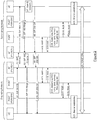
- FIG. 2 is a signalling flow diagram illustrating an example of the establishment of an application session in which the service is a voice call over an IP Multimedia Subsystem (IMS).
- IMS IP Multimedia Subsystem
- UE User Equipment
- SIP Session Initiation Protocol
- SDP Session Description Protocol
- A3 P-CSCF (i.e. an AF) in the originating network
- P-CSCF i.e. an AF
- UE B Upon receiving the SIP INVITE at UE B, UE B generates and sends a SIP 180 Ringing provisional response to UE A (A4).
- the SIP 180 Ringing response is routed to UE A via the P-CSCF in the terminating network (A5), and then via the P-CSCF the originating network (A6), before being received at UE A.
- UE B When user B then answers the call (A7), UE B generates and sends a SIP 200 OK response, and includes an SDP answer in the SIP 200 OK response that indicates which of the offered codes are preferred (A8).
- the SIP 200 OK response is routed to UE A via the P-CSCF in the terminating network (A9), and then the P-CSCF the originating network (A10), before being received at UE A.
- the P-CSCF in the originating network therefore initiates establishment of an AF session by sending a Diameter Authentication-Authorization-Request (AAR) message to a PCRF in the originating network over an Rx interface (A11).
- AAR Diameter Authentication-Authorization-Request
- the P-CSCF in the terminating network also initiates establishment of an AF session by sending an AAR message to a PCRF in the terminating network over an Rx interface (A12).
- These AAR messages include service information such as an application identifier (i.e. in an AF-Application-Identifier AVP), the codecs negotiated by UE A and UE B (i.e. taken from the SDP answer), and the flow information (i.e. in a Flow-Description AVP
- both the originating PCRF (A13) and the terminating PCRF (A14) Upon receipt of an AAR message, both the originating PCRF (A13) and the terminating PCRF (A14) respond to the respective AAR messages by generating and sending an Authenticate and Authorize Answer (AAA) message. Both the originating PCRF (A15) and the terminating PCRF (A16) then perform session binding, associate the described service IP flows within the AF session information to an existing IP-CAN session, and perform the PCC rule authorization. Both the originating PCRF (A17) and the terminating PCRF (A18) then generate and send a Re-Authorization Request (RAR) message to request that the corresponding PCEF (i.e. implemented at the PDN GW) installs, modifies or removes PCC rules in accordance with the PCC rules authorized by the PCRF.
- RAR Re-Authorization Request
- Both the originating PCEF (A19) and the terminating PCEF (A20) therefore install the PCC rules received from the respective PCRF and generate and send a Re-Authorization Answer (RAA) message to the corresponding PCRF to acknowledge the RAR message.
- Both the originating PCEF (A21) and the terminating PCEF (A22) then initiate the establishment of a dedicated IP-CAN bearer for the service over the access network currently used by the corresponding UE. As a result, the voice call between UE A and UE B is provided over the established bearers.
- the AF must be able to discover which of the multiple PCRFs is responsible for the IP-CAN session that is to be modified as a result of the AF session, such that the service information is sent to the appropriate PCRF (as required in steps A11 and A12 of Figure 2 ).
- the 3GPP standards propose introducing a Diameter Routing Agent (DRA) entity that ensures that all Diameter sessions for a certain IP-CAN session reach the same PCRF, as illustrated in Figure 3 . To do so, the DRA needs to maintain the status of the PCRF assigned for a certain UE and IP-CAN session.
- DRA Diameter Routing Agent
- This status must at least include an index key and the address of the PCRF, wherein the index key must unambiguously identify a single IP-CAN session.
- this index key will comprise the UE IP address that is conveyed over both Gx and Rx interfaces.
- the index key is based exclusively on the IP address, then it is not possible to support overlapping IP addresses, which are commonly used in Virtual Private Network (VPN) scenarios or multi-tenancy networks.
- VPN Virtual Private Network
- the DRA can also make use of information such as the user identity (i.e. the UE Network Access Identifier) and the Access Point Name (APN), this information is not provided over the Rx interface from an IMS network, such that even this solution is not sufficient.
- the access network will be aware of the IMSI/MSISDN and can provide this to the PCRF over the Gx interface.
- an AF such as an IMS P-CSCF will only be aware of the IMPU/IMPI and can therefore only provide this to the PCRF over the Rx interface.
- the publication US-2011/302289 A1 discloses a scenario with more than one PCRF.
- a PCRF may be selected by consulting a database wherein UE identifications are mapped with PCRF addresses for the more than one PCRF.
- a method according to independent claim 1 of ensuring that all AF sessions for an IP-CAN session reach the same PCRF when more than one PCRF is deployed in an operator network.
- the method comprises, at a PCRF:
- the step of notifying a node that implements application detection and control of the ADC rule can comprises any one of installing the ADC rule at the node that implements application detection and control, and activating the ADC rule at the node that implements application detection and control.
- the node that implements application detection and control can be any one of a Policy and Charging Enforcement Function (PCEF) enhanced with ADC, and a Traffic Detection Function, (TDF).
- PCEF Policy and Charging Enforcement Function
- TDF Traffic Detection Function
- a method of ensuring that all Application Function, AF, sessions for an IP Connectivity Access Network, IP-CAN, session reach the same Policy and Charging Rules Function, PCRF, when more than one PCRF is deployed in an operator network comprises, at a node that implements application detection and control:
- the method may further comprise storing the address of the PCRF for the AF session.
- the application message may be received from a User Equipment of a user that has established an IP-CAN session.
- the AF may be a Proxy Call Session Control Function (P-CSCF) of an IP Multimedia Subsystem (IMS).
- the method may then further comprise receiving a Session Initiation Protocol (SIP) message from a UE for which the IP-CAN session has been established, and retrieving the address of the PCRF from a header of the SIP message.
- the address of the PCRF may be retrieved from a P-Access-Network-Info header of the SIP message.
- the address of the PCRF may be retrieved from an extension-access-info header field of the P-Access-Network-Info header.
- the address of the PCRF may be included within a header of the SIP Register message that is defined as specifying the address of the PCRF.
- an apparatus configured to operate as a Policy and Charging Rules Function (PCRF).
- PCRF Policy and Charging Rules Function
- an apparatus configured to operate as a node that implements application detection and control.
- the apparatus comprises:
- the apparatus may be configured to operate as any one of a Policy and Charging Enforcement Function (PCEF) enhanced with ADC, and a Traffic Detection Function, TDF.
- PCEF Policy and Charging Enforcement Function
- TDF Traffic Detection Function
- the processor may be configured to obtain the address of the PCRF from the ADC rule.
- the receiver may be further configured to receive application messages.
- the transmitter may be configured to forward the application message to a Proxy Call Session Control Function (P-CSCF) of an IP Multimedia Subsystem (IMS).
- P-CSCF Proxy Call Session Control Function
- IMS IP Multimedia Subsystem
- the receiver may be configured to receive a Session Initiation Protocol (SIP) message from a User Equipment (UE) for which the IP-CAN session has been established, the processor may then be configured to insert the address of the PCRF into a header of the SIP message, and the transmitter may be configured to forward the SIP message to the P-CSCF.
- SIP Session Initiation Protocol
- UE User Equipment
- the processor may be configured to include the address of the PCRF within a P-Access-Network-Info header of the SIP Register message.
- the processor may be configured to include the address of the PCRF as a value of an extension-access-info header field of the P-Access-Network-Info header.
- the processor may be configured to include the address of the PCRF within a header of the SIP Register message that is defined as specifying the address of the PCRF.
- an apparatus configured to operate as an Application Function (AF) of a Policy and Charging Control (PCC) architecture.
- the apparatus comprises:
- the receiver may be configured to receive the application message from a User Equipment (UE) of a user that has established an IP Connectivity Access Network, (IP-CAN) session.
- UE User Equipment
- IP-CAN IP Connectivity Access Network
- the apparatus may further comprise a memory configured to store the address of the PCRF for the AF session.
- the apparatus may be configured to operate as a Proxy Call Session Control Function (P-CSCF) of an IP Multimedia Subsystem (IMS).
- P-CSCF Proxy Call Session Control Function
- IMS IP Multimedia Subsystem
- the receiver may be configured to receive a Session Initiation Protocol (SIP) message from a UE for which an IP Connectivity Access Network (IP-CAN) session has been established; and the processor may be configured to retrieve the address of the PCRF from a header of the SIP message.
- SIP Session Initiation Protocol
- IP-CAN IP Connectivity Access Network
- the processor may be configured to retrieve the address of the PCRF from a P-Access-Network-Info header of the SIP message.
- the processor may be configured to retrieve the address of the PCRF from an extension-access-info header field of the P-Access-Network-Info header.
- the processor may be configured to retrieve the address of the PCRF from within a header of the SIP message that is defined as specifying the address of the PCRF.
- the method involves configuring a PCRF such that, upon receipt of a request relating to the establishment or modification of the IP-CAN session, the PCRF determines one or more Application Detection and Control (ADC) rules for identifying application messages associated with the IP-CAN session and that require that an address of the PCRF must be included in the identified AF session messages.
- ADC Application Detection and Control
- the PCRF is further configured to provision the one or more ADC rules at an ADC node (i.e. either a PCEF enhanced with ADC or a TDF).
- the ADC node is then configured to enforce the provisioned ADC rule(s) by identifying application messages in accordance with the ADC rule(s) and inserting the address of the PCRF into the identified application messages.
- An AF that receives such an application message is then configured to send service information for the AF session to the address of the PCRF that is included in the received application message.
- An application message is a message that relates to the application/service offered by an AF, and typically originates at the UE and addresses the AF.
- the definition of an ADC rule requires extension in order to include an indication that the insertion of the address of PCRF is required for an application message identified by the ADC rule.
- the ADC-Rule-Definition AVP that defines an ADC rule sent by the PCRF could be extended to include a PCRF-Insertion AVP that contains the address of a PCRF as the value. The inclusion of the PCRF-Insertion AVP would then serve as an indication that this ADC rule requires the insertion of the PCRF address into application messages identified by the rule.
- the ADC-Rule-Definition AVP could then have the format:
- the ADC-Rule-Definition AVP is part of the ADC-Rule-Install AVP that is included in either a Credit-Control-Answer (CCA) message sent to a PCEF enhanced with ADC or a TDF-Session-Request (TSR) message sent to a TDF. It is also possible to use such an AVP as part of a grouped AVP that is intended to be used for a more generic purpose of adding content in the application protocols.
- CCA Credit-Control-Answer
- TSR TDF-Session-Request
- the application layer protocol used by the AF will typically require extension in order to allow the ADC node to include the address of the PCRF in application messages that traverse the ADC node en route to the AF.
- the SIP protocol will require extension in order to allow the SIP messages that traverse the ADC node to convey the PCRF address to the P-CSCF.
- the PCRF address be included in the P-Access-Network-Info header. More specifically, it is proposed herein that the PCRF address be included in the extension-access-info parameter/element of the P-Access-Network-Info header that can be used to include a string or IP address.
- the SIP protocol could be extended to include a new header field that is specifically intended to carry the PCRF address.
- a P-PCRF-Address-Header could specifically defined for this purpose.
- the methods described herein are equally applicable to other applications that make use of other application layer protocols.
- the AF could be a HTTP streaming server and the application layer protocol would then be HTTP.
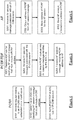
- Figure 4 is a flow diagram illustrating an example of the procedure implemented by a PCRF in order to ensure that all AF sessions for an IP-CAN session reach the same PCRF when more than one PCRF is deployed in an operator network. The steps performed are as follows:
- Figure 5 is a flow diagram illustrating an example of the procedure implemented by an ADC node in order to ensure that all AF sessions for an IP-CAN session reach the same PCRF when more than one PCRF is deployed in an operator network. The steps performed are as follows:
- Figure 6 is a flow diagram illustrating an example of the procedure implemented by an AF in order to ensure that all AF sessions for an IP-CAN session reach the same PCRF when more than one PCRF is deployed in an operator network. The steps performed are as follows:
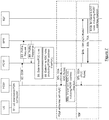
- Figure 7 illustrates an example signalling flow diagram of an IP-CAN session establishment for a UE in which one or more ADC rules are used to ensure that all AF sessions for an IP-CAN session reach the same PCRF in accordance with the methods described above. The steps performed are as follows:
- Figure 8 illustrates an example signalling flow diagram of an application detection and control procedure in which an ADC node is provisioned with one or more ADC rules that are used to ensure that all AF sessions for an IP-CAN session reach the same PCRF in accordance with the methods described above.
- the application message detected by the ADC rules is an IMS message. The steps performed are as follows:
- figure 8 illustrates the ADC node only inserting a PCRF address into the first/initial application message for the application (e.g. the SIP Register message) that traverses the ADC node.
- the AF e.g. the P-CSCF
- the AF obtains the PCRF address from the first application message it receives from the UE and stores this for use on each occasion that the AF provides service information to the PCRF.
- the AF is stateless, and therefore will not store the PCRF address provided in the first application.
- the ADC node will be provided/configured with an ADC rule that requires the PCRF address be inserted into all application messages received from the UE that are intended for the AF.
- the AF can then use the PCRF address received in each application message in order to provide service information to the PCRF, without having to store the PCRF address.
- any ADC nodes providing ADC functionality for any of the multiple concurrent IP-CAN sessions will ensure that the address of the PCRF that is handling that IP-CAN session is included in application messages sent to the AF, and the AF will use the received PCRF address when providing AF session information to the PCRF.
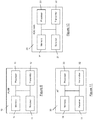
- FIG. 9 illustrates schematically an embodiment of a PCRF 10 configured to implement the methods described above.
- the PCRF 10 can be implemented as a combination of computer hardware and software and comprises a receiver 11, transmitter 12, a processor 13, and a memory 14.
- the memory 14 stores the various programs/executable files that are implemented by the processor 13, and also provides a storage unit for any required data.
- the memory 13 can store user subscription information, PCC rules, ADC rules and any received service information.
- the programs/executable files stored in the memory 13, and implemented by the processor 14, include but are not limited to an ADC rule determination unit that is configured to determine ADC rules in accordance with the method described above.
- FIG 10 illustrates schematically an embodiment of an ADC node 20 configured to implement the methods described above.
- the ADC node 20 can be implemented as a combination of computer hardware and software and comprises a receiver 21, transmitter 22, a processor 23, and a memory 24.
- the memory 24 stores the various programs/executable files that are implemented by the processor 23, and also provides a storage unit for any required data.
- the memory 23 can store ADC rules received from a PCRF and/or ADC rules configured at the ADC node.
- the programs/executable files stored in the memory 23, and implemented by the processor 24, include but are not limited to a Deep Packet Inspection unit, and an ADC rule implementation unit that is configured to implement/enforce ADC rules in accordance with the method described above.
- FIG 11 illustrates schematically an embodiment of an AF 30 configured to implement the methods described above.
- the AF 30 can be implemented as a combination of computer hardware and software and comprises a receiver 31, transmitter 32, a processor 33, and a memory 34.
- the memory 34 stores the various programs/executable files that are implemented by the processor 33, and also provides a storage unit for any required data.
- the memory 33 can store a PCRF address received in any application messages.
- the programs/executable files stored in the memory 33, and implemented by the processor 34 include but are not limited to an PCRF addressing unit configured to use a PCRF address received in any application messages when providing service information to a PCRF for an AF session in accordance with the method described above.
- the methods and apparatus described above provide that all AF sessions for an IP-CAN session reach the same PCRF when more than one PCRF is deployed in an operator network, without the need for specific configuration in the network to ensure that the same PCRF is always found. In doing so, these methods and apparatus also allow for the re-use of an IP address in VPN scenarios or multi-tenancy networks without the risk that this will prevent selection of the appropriate PCRF. Furthermore, these methods and apparatus do not require network operators to deploy DRAs, reducing the signalling required to resolve a PCRF address, and thereby reducing operating and capital expenditures for network operators.
- the PCRF could also be configured to determine the ADC rules and provisions these ADC rules to the ADC node at any other point, as required by the network operator's policies.
- the above described embodiments are concerned with an IMS application in which SIP is used as the application layer protocol, the methods and apparatus described above are equally application to other types of applications that make use of other application layer protocols.
Landscapes
- Engineering & Computer Science (AREA)
- Computer Networks & Wireless Communication (AREA)
- Signal Processing (AREA)
- Business, Economics & Management (AREA)
- General Business, Economics & Management (AREA)
- Multimedia (AREA)
- Telephonic Communication Services (AREA)
Claims (17)
- Procédé garantissant que toutes les sessions de fonction d'application, AF, pour une session de réseau d'accès à connectivité IP, IP-CAN, atteignent la même fonction de règles de politique et facturation, PCR, lorsque plus d'une PCRF est déployée dans un réseau d'opérateur, le procédé comprenant de, au niveau d'une fonction de règles de politique et facturation, PCRF :lors de la réception (S101) d'une demande relative à l'établissement ou la modification de la session IP-CAN, déterminer (S102) une règle de détection d'application et de commande, ADC, pour identifier les messages d'application associés à la session IP-CAN dans laquelle l'adresse de la PCRF doit être incluse, dans lequel la règle ADC inclut l'adresse de la PCRF qui doit être incluse dans un message d'application identifié par la règle ADC ; etnotifier (S103) la règle ADC à un noeud qui implémente une détection d'application et une commande.
- Procédé selon la revendication 1, dans lequel l'étape de notification à un noeud qui implémente la détection d'application et la commande de la règle ADC comprend importe lequel de :installer (B7a,B7b) la règle ADC au niveau du noeud qui implémente de la détection d'application et la commande ; etactiver (B7a,B7b) la règle ADC au niveau du noeud qui implémente de la détection d'application et la commande.
- Procédé selon une quelconque des revendications 1 à 2, dans lequel le noeud qui implémente la détection d'application et la commande est d'importe lequel de :une fonction de mise en oeuvre de politique et facturations, PCEF, améliorée avec ADC ; etune fonction de détection de trafic, TDF.
- Procédé garantissant que toutes les sessions de fonction d'application, AF, pour une session de réseau d'accès à connectivité IP, Ip-CAN, Athènes la même fonction de règles de politique et facturation, PCR, lorsque plus d'une PCRF est déployée dans un réseau d'opérateur, le procédé comprenant de, au niveau d'une fonction de règles de politique et facturation, PCRF :recevoir (S201), depuis un PCRF, une notification d'une règle de détection d'application et de commande, ADC, qui doit être appliquée à la session IP-CAN, dans lequel la règle ADC identifient les messages d'application associée à la session IP-CAN dans laquelle l'adresse de la PCRF doit être incluse ; eten utilisant la règle ADC pour identifier (S202) un message d'application associée à l'IP-CAN, insérer (S203) l'adresse de la PCRF dans le veulent application identifier et acheminer (S204) le message d'application identifiée vers l'AF.
- Procédé selon la revendication 4, dans lequel l'étape de réception, depuis une PCRF, du noeud notification d'une règle ADC comprend importe laquelle de :recevoir (B7a,B7b) la règle ADC de la PCRF en vue d'une installation au niveau du noeud ; etrecevoir (B7a,B7b) de la PCRF une instruction pour activer la règle ADC, dans lequel la règle ADC est configurée au niveau du noeud.
- Procédé selon la revendication 4 ou 5, dans lequel le noeud qui implémente une détection d'application et commande est n'importe lequel de :une fonction de mise en oeuvre de politique et facturations, PCEF, améliorée avec ADC ; etune fonction de détection de trafic, TDF.
- Procédé selon une quelconque des revendications 4 à 6, dans lequel la règle ADC inclut l'adresse de la PCRF qui doit être incluse dans un message d'application identifiée par la règle ADC.
- Procédé selon une quelconque des revendications 4 à 7, dans lequel la règle ADC identifient un message de protocole d'amorce de session, SIP.
- Procédé selon la revendication 8, dans lequel le procédé comprend de :
utiliser la règle ADC pour identifier (C1) un message SIP associé à IP-CAN, insérer (C2) l'adresse de la PCRF dans le message SIP et acheminer (C3) le message SIP vers une fonction de commande de session d'appel de serveur mandataire, P-CSCF. - Dispositif (10) configuré pour fonctionner comme une fonction de règles de politique et facturation, PCRF, le dispositif comprenant :un récepteur (11) configuré pour recevoir une demande relative à l'établissement ou la modification d'une session IP-CAN ;un processeur (13) configuré pour déterminer une règle de détection d'application et de commande, ADC pour identifier les messages d'application associés à la session IP-CAN dans laquelle l'adresse de la PCRF doit être incluse, dans lequel la règle ADC inclut l'adresse de la PCRF qui doit être incluse dans un message d'application identifiée par la règle ADC ; etun émetteur (12) configuré pour notifier la règle ADC à un noeud qui implémente une détection d'application et une commande.
- Dispositif selon la revendication 10, dans lequel le dispositif est configuré pour notifier la règle ADC à un noeud qui implémente la détection d'application et la commande en implémentant n'importe lequel de :installation de la règle ADC au niveau du noeud qui implémente la détection d'application et la commande ; etactivation de la règle ADC au niveau du noeud qui implémente de la détection d'application et la commande, dans lequel la règle ADC est configurée au niveau du noeud.
- Dispositif selon une quelconque des revendications 10 ou 11, dans lequel l'émetteur (12) est configuré pour notifier n'importe lequel de :une fonction de mise en oeuvre de politique et facturations, PCEF, améliorée avec ADC ; etune fonction de détection de trafic, TDF.
- Dispositif (20) configurée pour fonctionner comme un noeud qui implémente une détection d'application et une commande, le dispositif comprenant :un récepteur (21) configuré pour recevoir, une notification d'une règle de détection d'application et de commande, ADC, qui doit être appliquée à la session IP-CAN, dans lequel la règle ADC identifient les messages d'application associée à la session IP-CAN dans laquelle l'adresse de la PCRF doit être incluse ; un processeur (23) configuré pour utiliser la règle ADC pour identifier un message d'application associée à la session IP-CAN et insérer l'adresse de la PCRF dans le message d'application identifiée ; etun émetteur (22) configuré pour acheminer le message d'application identifiée vers une fonction d'application, AF.
- Dispositif selon la revendication 13, dans lequel le processeur (23) est configuré pour obtenir l'adresse de la PCRF d'après la règle ADC.
- Dispositif selon une quelconque des revendications 13 ou 14, dans lequel le dispositif est configuré pour fonctionner comme n'importe lequel de :une fonction de mise en oeuvre de politique et facturations, PCEF, améliorée avec ADC ; etune fonction de détection de trafic, TDF.
- Dispositif selon une quelconque des revendications 13 à 15, dans lequel l'émetteur (22) est configuré pour acheminer le message d'application vers une fonction de commande de session d'appel de serveur mandataire, P-CSCF, ou un sous-système multimédia IP.
- Dispositif selon la revendication 16, dans lequel le récepteur (21) est configuré pour recevoir un message de protocole d'amorce de session, SIP, provenant d'un équipement d'utilisateur UE pour lequel la session IP-CAN a été établie, le processeur (23) est configuré pour insérer l'adresse de la PCRF dans un en-tête du message SIP, et l'émetteur (22) est configuré pour acheminer le message SIP vers le P-CSCF.
Applications Claiming Priority (1)
| Application Number | Priority Date | Filing Date | Title |
|---|---|---|---|
| PCT/EP2012/064218 WO2014012594A1 (fr) | 2012-07-19 | 2012-07-19 | Procédés et appareils de mise en œuvre d'un contrôle de politique et de facturation |
Publications (2)
| Publication Number | Publication Date |
|---|---|
| EP2875659A1 EP2875659A1 (fr) | 2015-05-27 |
| EP2875659B1 true EP2875659B1 (fr) | 2018-10-31 |
Family
ID=46545392
Family Applications (1)
| Application Number | Title | Priority Date | Filing Date |
|---|---|---|---|
| EP12737289.4A Not-in-force EP2875659B1 (fr) | 2012-07-19 | 2012-07-19 | Procédés et appareils de mise en oeuvre d'un contrôle de politique et de facturation |
Country Status (3)
| Country | Link |
|---|---|
| US (1) | US10154151B2 (fr) |
| EP (1) | EP2875659B1 (fr) |
| WO (1) | WO2014012594A1 (fr) |
Cited By (1)
| Publication number | Priority date | Publication date | Assignee | Title |
|---|---|---|---|---|
| US20190109819A1 (en) * | 2015-07-05 | 2019-04-11 | M2MD Technologies, Inc. | Method and system for internetwork communication with machine devices |
Families Citing this family (26)
| Publication number | Priority date | Publication date | Assignee | Title |
|---|---|---|---|---|
| CN103227981B (zh) * | 2012-01-30 | 2018-05-22 | 中兴通讯股份有限公司 | 一种应用检测控制功能模式的识别方法及系统 |
| FR2996394A1 (fr) * | 2012-10-01 | 2014-04-04 | France Telecom | Technique de communication entre une entite cliente et un reseau de donnees en mode paquet |
| EP3138246A1 (fr) * | 2014-04-30 | 2017-03-08 | Nokia Solutions and Networks Oy | Liaison et sélection de fonction dans un réseau |
| US10225698B2 (en) | 2014-07-03 | 2019-03-05 | Cisco Technology, Inc. | System and method for providing message delivery and paging to a group of users in a network environment |
| US10462699B2 (en) | 2014-09-08 | 2019-10-29 | Cisco Technology, Inc. | System and method for internet protocol version-based multiple access point name support in a network environment |
| US9717068B2 (en) | 2014-09-09 | 2017-07-25 | Cisco Technology, Inc. | System and method for supporting cell updates within a small cell cluster for idle mobility in cell paging channel mode |
| CN105516953A (zh) * | 2014-10-20 | 2016-04-20 | 中兴通讯股份有限公司 | 一种策略和计费规则功能的选择方法及装置 |
| US9730156B1 (en) | 2014-11-07 | 2017-08-08 | Cisco Technology, Inc. | System and method for providing power saving mode enhancements in a network environment |
| US9699725B1 (en) | 2014-11-07 | 2017-07-04 | Cisco Technology, Inc. | System and method for providing power saving mode enhancements in a network environment |
| US9843687B2 (en) | 2014-11-09 | 2017-12-12 | Cisco Technology, Inc. | System and method for radio aware traffic management based wireless authorization |
| US9629042B2 (en) | 2014-12-05 | 2017-04-18 | Cisco Technology, Inc. | System and method for providing collaborative neighbor management in a network environment |
| EP3231167B1 (fr) * | 2014-12-12 | 2020-09-09 | Convida Wireless, LLC | Facturation dans le cadre des réseaux intégrés à petites cellules et wi-fi (iswn) |
| US20160192365A1 (en) * | 2014-12-29 | 2016-06-30 | Mediatek Inc. | Network control devices and methods of performing wireless communications between two communications apparatuses via multi-level signaling entities |
| US9686798B1 (en) | 2015-01-14 | 2017-06-20 | Cisco Technology, Inc. | System and method for providing collision-avoided physical downlink control channel resource allocation in a network environment |
| US9621362B2 (en) * | 2015-02-03 | 2017-04-11 | Cisco Technology, Inc. | System and method for providing policy charging and rules function discovery in a network environment |
| CN106162592A (zh) * | 2015-03-23 | 2016-11-23 | 中兴通讯股份有限公司 | 策略控制和计费控制会话的关联方法和装置 |
| WO2016176862A1 (fr) * | 2015-05-07 | 2016-11-10 | 华为技术有限公司 | Procédé de traitement de service et équipement utilisateur |
| CN106332034A (zh) * | 2015-06-18 | 2017-01-11 | 中兴通讯股份有限公司 | 一种第三方应用的计费方法、装置及应用功能设备 |
| CN106455065A (zh) * | 2015-08-06 | 2017-02-22 | 阿尔卡特朗讯 | 一种用于控制未授权频段的使用的方法与设备 |
| CN107395374B (zh) * | 2016-05-16 | 2021-01-26 | 中兴通讯股份有限公司 | 传输策略的控制方法、装置及系统 |
| WO2018082559A1 (fr) * | 2016-11-07 | 2018-05-11 | Telefonaktiebolaget Lm Ericsson (Publ) | Différenciation de service pour dispositifs connectés à un ue en tant que routeur |
| CN109391914B (zh) * | 2017-08-09 | 2021-03-23 | 中国移动通信有限公司研究院 | 一种进行会话寻址的方法和设备 |
| CN109936672B (zh) * | 2017-12-15 | 2021-03-02 | 华为技术有限公司 | 一种在线计费方法及装置 |
| WO2020098706A1 (fr) | 2018-11-13 | 2020-05-22 | Telefonaktiebolaget Lm Ericsson (Publ) | Procédé et appareil de gestion d'informations de liaison |
| US12022545B2 (en) * | 2020-07-27 | 2024-06-25 | T-Mobile Usa, Inc. | Dynamic PCRF/PCF selection |
| WO2023212853A1 (fr) * | 2022-05-05 | 2023-11-09 | Qualcomm Incorporated | Commande de politique et cartographie pour canaux de données dans des réseaux de sous-système multimédia de protocole internet |
Family Cites Families (11)
| Publication number | Priority date | Publication date | Assignee | Title |
|---|---|---|---|---|
| CN100586071C (zh) * | 2007-09-30 | 2010-01-27 | 华为技术有限公司 | 获取策略和计费执行功能实体能力的方法及设备 |
| US20090270098A1 (en) * | 2008-04-29 | 2009-10-29 | Gallagher Michael D | Method and Apparatus for User Equipment Registration in a Voice over Long Term Evolution via Generic Access |
| US8521858B2 (en) * | 2010-06-07 | 2013-08-27 | Verizon Patent Licensing Inc. | Selection of a policy and charging rules function device |
| US9716629B2 (en) * | 2010-10-06 | 2017-07-25 | Nokia Solutions And Networks Oy | Capability negotiation and control |
| US9065936B2 (en) * | 2010-12-09 | 2015-06-23 | Allot Communications Ltd. | Cellular traffic monitoring and charging using application detection rules |
| US8743684B2 (en) * | 2011-02-24 | 2014-06-03 | Alcatel Lucent | GPRS default bearer tracking |
| EP2689567B1 (fr) * | 2011-03-22 | 2015-06-24 | Telefonaktiebolaget L M Ericsson (publ) | Noeud de réseau et méthode de routage de traffic à travers ou autour de noeuds de détection de traffic |
| US9356975B2 (en) * | 2011-09-16 | 2016-05-31 | Telefonaktiebolaget Lm Ericsson (Publ) | Method and apparatuses for TDF session establishment |
| US20130097326A1 (en) * | 2011-10-18 | 2013-04-18 | Alcatel-Lucent Canada Inc. | Visited pcrf s9 session id generation |
| WO2013123467A1 (fr) * | 2012-02-17 | 2013-08-22 | Vid Scale, Inc. | Différenciation de trafic hiérarchique pour gérer un encombrement et/ou gérer la qualité de l'expérience d'utilisateur |
| US9107062B2 (en) * | 2012-03-02 | 2015-08-11 | Alcatel Lucent | QoS control in PCRF based on usage and time of day |
-
2012
- 2012-07-19 WO PCT/EP2012/064218 patent/WO2014012594A1/fr not_active Ceased
- 2012-07-19 EP EP12737289.4A patent/EP2875659B1/fr not_active Not-in-force
- 2012-07-19 US US14/414,484 patent/US10154151B2/en active Active
Non-Patent Citations (1)
| Title |
|---|
| None * |
Cited By (1)
| Publication number | Priority date | Publication date | Assignee | Title |
|---|---|---|---|---|
| US20190109819A1 (en) * | 2015-07-05 | 2019-04-11 | M2MD Technologies, Inc. | Method and system for internetwork communication with machine devices |
Also Published As
| Publication number | Publication date |
|---|---|
| EP2875659A1 (fr) | 2015-05-27 |
| US20150172471A1 (en) | 2015-06-18 |
| US10154151B2 (en) | 2018-12-11 |
| WO2014012594A1 (fr) | 2014-01-23 |
Similar Documents
| Publication | Publication Date | Title |
|---|---|---|
| EP2875659B1 (fr) | Procédés et appareils de mise en oeuvre d'un contrôle de politique et de facturation | |
| US9503483B2 (en) | Method and apparatuses for identifying and reporting quality of service rules applicable to a communication session | |
| US7961706B2 (en) | Control method, system and function entity for reporting bearer event of signaling IP flow | |
| US20100186064A1 (en) | Method and device for obtaining capabilities of policy and charging enforcement function | |
| EP2709338B1 (fr) | Commande d'installation de filtrage de paquet dans un équipement utilisateur | |
| JP5481563B2 (ja) | サービスイベントトリガ | |
| US9369291B2 (en) | Handling communication sessions in a communications network | |
| US9191960B2 (en) | Methods and apparatus for mitigating service interruption | |
| EP2898653B1 (fr) | Procédé et noeud pour controler des ressources pour un service multimédia, ainsi que système et programme informatique correspondants | |
| EP2596660B1 (fr) | Commande de portillonnage dans un réseau de télécommunications | |
| CN101572954B (zh) | 释放会话的方法、装置和系统 | |
| CN103686654A (zh) | Pcc会话关联方法、以及pcef单元和pa单元 | |
| EP2866414A1 (fr) | Découverte de noeud proxy | |
| EP3763079B1 (fr) | Procédé d'activation d'une fonction de détection de trafic autonome, tdf, noeud dans un réseau de télécommunication destiné à agir sur une attribution de ressource non réussie pour une application ott excessive | |
| WO2013060356A1 (fr) | Procédé et appareil relatifs à une commande de politique dans un réseau de télécommunications |
Legal Events
| Date | Code | Title | Description |
|---|---|---|---|
| PUAI | Public reference made under article 153(3) epc to a published international application that has entered the european phase |
Free format text: ORIGINAL CODE: 0009012 |
|
| 17P | Request for examination filed |
Effective date: 20150211 |
|
| AK | Designated contracting states |
Kind code of ref document: A1 Designated state(s): AL AT BE BG CH CY CZ DE DK EE ES FI FR GB GR HR HU IE IS IT LI LT LU LV MC MK MT NL NO PL PT RO RS SE SI SK SM TR |
|
| AX | Request for extension of the european patent |
Extension state: BA ME |
|
| DAX | Request for extension of the european patent (deleted) | ||
| GRAP | Despatch of communication of intention to grant a patent |
Free format text: ORIGINAL CODE: EPIDOSNIGR1 |
|
| STAA | Information on the status of an ep patent application or granted ep patent |
Free format text: STATUS: GRANT OF PATENT IS INTENDED |
|
| RIC1 | Information provided on ipc code assigned before grant |
Ipc: H04L 29/06 20060101ALI20180629BHEP Ipc: H04L 12/14 20060101ALI20180629BHEP Ipc: H04L 29/08 20060101ALI20180629BHEP Ipc: H04W 76/10 20180101ALI20180629BHEP Ipc: H04L 12/26 20060101ALN20180629BHEP Ipc: H04W 4/24 20090101AFI20180629BHEP Ipc: H04M 15/00 20060101ALI20180629BHEP |
|
| INTG | Intention to grant announced |
Effective date: 20180723 |
|
| GRAS | Grant fee paid |
Free format text: ORIGINAL CODE: EPIDOSNIGR3 |
|
| GRAA | (expected) grant |
Free format text: ORIGINAL CODE: 0009210 |
|
| STAA | Information on the status of an ep patent application or granted ep patent |
Free format text: STATUS: THE PATENT HAS BEEN GRANTED |
|
| AK | Designated contracting states |
Kind code of ref document: B1 Designated state(s): AL AT BE BG CH CY CZ DE DK EE ES FI FR GB GR HR HU IE IS IT LI LT LU LV MC MK MT NL NO PL PT RO RS SE SI SK SM TR |
|
| REG | Reference to a national code |
Ref country code: CH Ref legal event code: EP Ref country code: GB Ref legal event code: FG4D |
|
| RIN1 | Information on inventor provided before grant (corrected) |
Inventor name: CASTRO CASTRO, FABIAN Inventor name: FERNANDEZ ALONSO, SUSANA |
|
| REG | Reference to a national code |
Ref country code: AT Ref legal event code: REF Ref document number: 1060860 Country of ref document: AT Kind code of ref document: T Effective date: 20181115 |
|
| REG | Reference to a national code |
Ref country code: DE Ref legal event code: R096 Ref document number: 602012052884 Country of ref document: DE |
|
| REG | Reference to a national code |
Ref country code: IE Ref legal event code: FG4D |
|
| REG | Reference to a national code |
Ref country code: NL Ref legal event code: FP |
|
| REG | Reference to a national code |
Ref country code: LT Ref legal event code: MG4D |
|
| REG | Reference to a national code |
Ref country code: AT Ref legal event code: MK05 Ref document number: 1060860 Country of ref document: AT Kind code of ref document: T Effective date: 20181031 |
|
| PG25 | Lapsed in a contracting state [announced via postgrant information from national office to epo] |
Ref country code: FI Free format text: LAPSE BECAUSE OF FAILURE TO SUBMIT A TRANSLATION OF THE DESCRIPTION OR TO PAY THE FEE WITHIN THE PRESCRIBED TIME-LIMIT Effective date: 20181031 Ref country code: LV Free format text: LAPSE BECAUSE OF FAILURE TO SUBMIT A TRANSLATION OF THE DESCRIPTION OR TO PAY THE FEE WITHIN THE PRESCRIBED TIME-LIMIT Effective date: 20181031 Ref country code: AT Free format text: LAPSE BECAUSE OF FAILURE TO SUBMIT A TRANSLATION OF THE DESCRIPTION OR TO PAY THE FEE WITHIN THE PRESCRIBED TIME-LIMIT Effective date: 20181031 Ref country code: HR Free format text: LAPSE BECAUSE OF FAILURE TO SUBMIT A TRANSLATION OF THE DESCRIPTION OR TO PAY THE FEE WITHIN THE PRESCRIBED TIME-LIMIT Effective date: 20181031 Ref country code: IS Free format text: LAPSE BECAUSE OF FAILURE TO SUBMIT A TRANSLATION OF THE DESCRIPTION OR TO PAY THE FEE WITHIN THE PRESCRIBED TIME-LIMIT Effective date: 20190228 Ref country code: PL Free format text: LAPSE BECAUSE OF FAILURE TO SUBMIT A TRANSLATION OF THE DESCRIPTION OR TO PAY THE FEE WITHIN THE PRESCRIBED TIME-LIMIT Effective date: 20181031 Ref country code: BG Free format text: LAPSE BECAUSE OF FAILURE TO SUBMIT A TRANSLATION OF THE DESCRIPTION OR TO PAY THE FEE WITHIN THE PRESCRIBED TIME-LIMIT Effective date: 20190131 Ref country code: NO Free format text: LAPSE BECAUSE OF FAILURE TO SUBMIT A TRANSLATION OF THE DESCRIPTION OR TO PAY THE FEE WITHIN THE PRESCRIBED TIME-LIMIT Effective date: 20190131 Ref country code: LT Free format text: LAPSE BECAUSE OF FAILURE TO SUBMIT A TRANSLATION OF THE DESCRIPTION OR TO PAY THE FEE WITHIN THE PRESCRIBED TIME-LIMIT Effective date: 20181031 Ref country code: ES Free format text: LAPSE BECAUSE OF FAILURE TO SUBMIT A TRANSLATION OF THE DESCRIPTION OR TO PAY THE FEE WITHIN THE PRESCRIBED TIME-LIMIT Effective date: 20181031 |
|
| PG25 | Lapsed in a contracting state [announced via postgrant information from national office to epo] |
Ref country code: PT Free format text: LAPSE BECAUSE OF FAILURE TO SUBMIT A TRANSLATION OF THE DESCRIPTION OR TO PAY THE FEE WITHIN THE PRESCRIBED TIME-LIMIT Effective date: 20190301 Ref country code: RS Free format text: LAPSE BECAUSE OF FAILURE TO SUBMIT A TRANSLATION OF THE DESCRIPTION OR TO PAY THE FEE WITHIN THE PRESCRIBED TIME-LIMIT Effective date: 20181031 Ref country code: SE Free format text: LAPSE BECAUSE OF FAILURE TO SUBMIT A TRANSLATION OF THE DESCRIPTION OR TO PAY THE FEE WITHIN THE PRESCRIBED TIME-LIMIT Effective date: 20181031 Ref country code: GR Free format text: LAPSE BECAUSE OF FAILURE TO SUBMIT A TRANSLATION OF THE DESCRIPTION OR TO PAY THE FEE WITHIN THE PRESCRIBED TIME-LIMIT Effective date: 20190201 Ref country code: AL Free format text: LAPSE BECAUSE OF FAILURE TO SUBMIT A TRANSLATION OF THE DESCRIPTION OR TO PAY THE FEE WITHIN THE PRESCRIBED TIME-LIMIT Effective date: 20181031 |
|
| PG25 | Lapsed in a contracting state [announced via postgrant information from national office to epo] |
Ref country code: IT Free format text: LAPSE BECAUSE OF FAILURE TO SUBMIT A TRANSLATION OF THE DESCRIPTION OR TO PAY THE FEE WITHIN THE PRESCRIBED TIME-LIMIT Effective date: 20181031 Ref country code: CZ Free format text: LAPSE BECAUSE OF FAILURE TO SUBMIT A TRANSLATION OF THE DESCRIPTION OR TO PAY THE FEE WITHIN THE PRESCRIBED TIME-LIMIT Effective date: 20181031 Ref country code: DK Free format text: LAPSE BECAUSE OF FAILURE TO SUBMIT A TRANSLATION OF THE DESCRIPTION OR TO PAY THE FEE WITHIN THE PRESCRIBED TIME-LIMIT Effective date: 20181031 |
|
| REG | Reference to a national code |
Ref country code: DE Ref legal event code: R097 Ref document number: 602012052884 Country of ref document: DE |
|
| PG25 | Lapsed in a contracting state [announced via postgrant information from national office to epo] |
Ref country code: SM Free format text: LAPSE BECAUSE OF FAILURE TO SUBMIT A TRANSLATION OF THE DESCRIPTION OR TO PAY THE FEE WITHIN THE PRESCRIBED TIME-LIMIT Effective date: 20181031 Ref country code: EE Free format text: LAPSE BECAUSE OF FAILURE TO SUBMIT A TRANSLATION OF THE DESCRIPTION OR TO PAY THE FEE WITHIN THE PRESCRIBED TIME-LIMIT Effective date: 20181031 Ref country code: SK Free format text: LAPSE BECAUSE OF FAILURE TO SUBMIT A TRANSLATION OF THE DESCRIPTION OR TO PAY THE FEE WITHIN THE PRESCRIBED TIME-LIMIT Effective date: 20181031 Ref country code: RO Free format text: LAPSE BECAUSE OF FAILURE TO SUBMIT A TRANSLATION OF THE DESCRIPTION OR TO PAY THE FEE WITHIN THE PRESCRIBED TIME-LIMIT Effective date: 20181031 |
|
| PLBE | No opposition filed within time limit |
Free format text: ORIGINAL CODE: 0009261 |
|
| STAA | Information on the status of an ep patent application or granted ep patent |
Free format text: STATUS: NO OPPOSITION FILED WITHIN TIME LIMIT |
|
| 26N | No opposition filed |
Effective date: 20190801 |
|
| PG25 | Lapsed in a contracting state [announced via postgrant information from national office to epo] |
Ref country code: SI Free format text: LAPSE BECAUSE OF FAILURE TO SUBMIT A TRANSLATION OF THE DESCRIPTION OR TO PAY THE FEE WITHIN THE PRESCRIBED TIME-LIMIT Effective date: 20181031 |
|
| PG25 | Lapsed in a contracting state [announced via postgrant information from national office to epo] |
Ref country code: MC Free format text: LAPSE BECAUSE OF FAILURE TO SUBMIT A TRANSLATION OF THE DESCRIPTION OR TO PAY THE FEE WITHIN THE PRESCRIBED TIME-LIMIT Effective date: 20181031 |
|
| REG | Reference to a national code |
Ref country code: CH Ref legal event code: PL |
|
| PG25 | Lapsed in a contracting state [announced via postgrant information from national office to epo] |
Ref country code: TR Free format text: LAPSE BECAUSE OF FAILURE TO SUBMIT A TRANSLATION OF THE DESCRIPTION OR TO PAY THE FEE WITHIN THE PRESCRIBED TIME-LIMIT Effective date: 20181031 |
|
| REG | Reference to a national code |
Ref country code: BE Ref legal event code: MM Effective date: 20190731 |
|
| PG25 | Lapsed in a contracting state [announced via postgrant information from national office to epo] |
Ref country code: LI Free format text: LAPSE BECAUSE OF NON-PAYMENT OF DUE FEES Effective date: 20190731 Ref country code: CH Free format text: LAPSE BECAUSE OF NON-PAYMENT OF DUE FEES Effective date: 20190731 Ref country code: LU Free format text: LAPSE BECAUSE OF NON-PAYMENT OF DUE FEES Effective date: 20190719 Ref country code: BE Free format text: LAPSE BECAUSE OF NON-PAYMENT OF DUE FEES Effective date: 20190731 |
|
| PG25 | Lapsed in a contracting state [announced via postgrant information from national office to epo] |
Ref country code: FR Free format text: LAPSE BECAUSE OF NON-PAYMENT OF DUE FEES Effective date: 20190731 |
|
| PG25 | Lapsed in a contracting state [announced via postgrant information from national office to epo] |
Ref country code: IE Free format text: LAPSE BECAUSE OF NON-PAYMENT OF DUE FEES Effective date: 20190719 |
|
| PG25 | Lapsed in a contracting state [announced via postgrant information from national office to epo] |
Ref country code: CY Free format text: LAPSE BECAUSE OF FAILURE TO SUBMIT A TRANSLATION OF THE DESCRIPTION OR TO PAY THE FEE WITHIN THE PRESCRIBED TIME-LIMIT Effective date: 20181031 |
|
| PG25 | Lapsed in a contracting state [announced via postgrant information from national office to epo] |
Ref country code: HU Free format text: LAPSE BECAUSE OF FAILURE TO SUBMIT A TRANSLATION OF THE DESCRIPTION OR TO PAY THE FEE WITHIN THE PRESCRIBED TIME-LIMIT; INVALID AB INITIO Effective date: 20120719 Ref country code: MT Free format text: LAPSE BECAUSE OF FAILURE TO SUBMIT A TRANSLATION OF THE DESCRIPTION OR TO PAY THE FEE WITHIN THE PRESCRIBED TIME-LIMIT Effective date: 20181031 |
|
| PG25 | Lapsed in a contracting state [announced via postgrant information from national office to epo] |
Ref country code: MK Free format text: LAPSE BECAUSE OF FAILURE TO SUBMIT A TRANSLATION OF THE DESCRIPTION OR TO PAY THE FEE WITHIN THE PRESCRIBED TIME-LIMIT Effective date: 20181031 |
|
| PGFP | Annual fee paid to national office [announced via postgrant information from national office to epo] |
Ref country code: NL Payment date: 20220726 Year of fee payment: 11 |
|
| PGFP | Annual fee paid to national office [announced via postgrant information from national office to epo] |
Ref country code: GB Payment date: 20220727 Year of fee payment: 11 Ref country code: DE Payment date: 20220629 Year of fee payment: 11 |
|
| REG | Reference to a national code |
Ref country code: DE Ref legal event code: R119 Ref document number: 602012052884 Country of ref document: DE |
|
| REG | Reference to a national code |
Ref country code: NL Ref legal event code: MM Effective date: 20230801 |
|
| GBPC | Gb: european patent ceased through non-payment of renewal fee |
Effective date: 20230719 |
|
| PG25 | Lapsed in a contracting state [announced via postgrant information from national office to epo] |
Ref country code: NL Free format text: LAPSE BECAUSE OF NON-PAYMENT OF DUE FEES Effective date: 20230801 |
|
| PG25 | Lapsed in a contracting state [announced via postgrant information from national office to epo] |
Ref country code: NL Free format text: LAPSE BECAUSE OF NON-PAYMENT OF DUE FEES Effective date: 20230801 Ref country code: DE Free format text: LAPSE BECAUSE OF NON-PAYMENT OF DUE FEES Effective date: 20240201 Ref country code: GB Free format text: LAPSE BECAUSE OF NON-PAYMENT OF DUE FEES Effective date: 20230719 |