EP2878105B1 - System und verfahren mit rsvp-hello-unterdrückung für zu einem langsamen neustart fähige nachbargeräte - Google Patents
System und verfahren mit rsvp-hello-unterdrückung für zu einem langsamen neustart fähige nachbargeräte Download PDFInfo
- Publication number
- EP2878105B1 EP2878105B1 EP13742112.9A EP13742112A EP2878105B1 EP 2878105 B1 EP2878105 B1 EP 2878105B1 EP 13742112 A EP13742112 A EP 13742112A EP 2878105 B1 EP2878105 B1 EP 2878105B1
- Authority
- EP
- European Patent Office
- Prior art keywords
- neighboring node
- hello
- node
- mode
- neighboring
- Prior art date
- Legal status (The legal status is an assumption and is not a legal conclusion. Google has not performed a legal analysis and makes no representation as to the accuracy of the status listed.)
- Active
Links
Images


Classifications
-
- H—ELECTRICITY
- H04—ELECTRIC COMMUNICATION TECHNIQUE
- H04L—TRANSMISSION OF DIGITAL INFORMATION, e.g. TELEGRAPHIC COMMUNICATION
- H04L41/00—Arrangements for maintenance, administration or management of data switching networks, e.g. of packet switching networks
- H04L41/06—Management of faults, events, alarms or notifications
- H04L41/0686—Additional information in the notification, e.g. enhancement of specific meta-data
-
- H—ELECTRICITY
- H04—ELECTRIC COMMUNICATION TECHNIQUE
- H04L—TRANSMISSION OF DIGITAL INFORMATION, e.g. TELEGRAPHIC COMMUNICATION
- H04L41/00—Arrangements for maintenance, administration or management of data switching networks, e.g. of packet switching networks
- H04L41/06—Management of faults, events, alarms or notifications
- H04L41/0654—Management of faults, events, alarms or notifications using network fault recovery
-
- H—ELECTRICITY
- H04—ELECTRIC COMMUNICATION TECHNIQUE
- H04L—TRANSMISSION OF DIGITAL INFORMATION, e.g. TELEGRAPHIC COMMUNICATION
- H04L41/00—Arrangements for maintenance, administration or management of data switching networks, e.g. of packet switching networks
- H04L41/06—Management of faults, events, alarms or notifications
- H04L41/0654—Management of faults, events, alarms or notifications using network fault recovery
- H04L41/0659—Management of faults, events, alarms or notifications using network fault recovery by isolating or reconfiguring faulty entities
-
- H—ELECTRICITY
- H04—ELECTRIC COMMUNICATION TECHNIQUE
- H04L—TRANSMISSION OF DIGITAL INFORMATION, e.g. TELEGRAPHIC COMMUNICATION
- H04L41/00—Arrangements for maintenance, administration or management of data switching networks, e.g. of packet switching networks
- H04L41/06—Management of faults, events, alarms or notifications
- H04L41/0654—Management of faults, events, alarms or notifications using network fault recovery
- H04L41/0668—Management of faults, events, alarms or notifications using network fault recovery by dynamic selection of recovery network elements, e.g. replacement by the most appropriate element after failure
-
- H—ELECTRICITY
- H04—ELECTRIC COMMUNICATION TECHNIQUE
- H04L—TRANSMISSION OF DIGITAL INFORMATION, e.g. TELEGRAPHIC COMMUNICATION
- H04L45/00—Routing or path finding of packets in data switching networks
- H04L45/02—Topology update or discovery
- H04L45/026—Details of "hello" or keep-alive messages
-
- H—ELECTRICITY
- H04—ELECTRIC COMMUNICATION TECHNIQUE
- H04L—TRANSMISSION OF DIGITAL INFORMATION, e.g. TELEGRAPHIC COMMUNICATION
- H04L45/00—Routing or path finding of packets in data switching networks
- H04L45/22—Alternate routing
-
- H—ELECTRICITY
- H04—ELECTRIC COMMUNICATION TECHNIQUE
- H04L—TRANSMISSION OF DIGITAL INFORMATION, e.g. TELEGRAPHIC COMMUNICATION
- H04L45/00—Routing or path finding of packets in data switching networks
- H04L45/28—Routing or path finding of packets in data switching networks using route fault recovery
-
- H—ELECTRICITY
- H04—ELECTRIC COMMUNICATION TECHNIQUE
- H04L—TRANSMISSION OF DIGITAL INFORMATION, e.g. TELEGRAPHIC COMMUNICATION
- H04L45/00—Routing or path finding of packets in data switching networks
- H04L45/50—Routing or path finding of packets in data switching networks using label swapping, e.g. multi-protocol label switch [MPLS]
-
- H—ELECTRICITY
- H04—ELECTRIC COMMUNICATION TECHNIQUE
- H04L—TRANSMISSION OF DIGITAL INFORMATION, e.g. TELEGRAPHIC COMMUNICATION
- H04L47/00—Traffic control in data switching networks
- H04L47/10—Flow control; Congestion control
- H04L47/12—Avoiding congestion; Recovering from congestion
- H04L47/125—Avoiding congestion; Recovering from congestion by balancing the load, e.g. traffic engineering
-
- H—ELECTRICITY
- H04—ELECTRIC COMMUNICATION TECHNIQUE
- H04L—TRANSMISSION OF DIGITAL INFORMATION, e.g. TELEGRAPHIC COMMUNICATION
- H04L47/00—Traffic control in data switching networks
- H04L47/70—Admission control; Resource allocation
- H04L47/72—Admission control; Resource allocation using reservation actions during connection setup
- H04L47/724—Admission control; Resource allocation using reservation actions during connection setup at intermediate nodes, e.g. resource reservation protocol [RSVP]
Definitions
- the invention relates generally to communication networks and, more specifically but not exclusively, to efficient detection and processing of neighbor node status information in communication networks.
- Multiprotocol Label Switching enables efficient delivery of a wide variety of differentiated, end to end services.
- Multiprotocol Label Switching (MPLS) traffic engineering (TE) provides a mechanism for selecting efficient paths across an MPLS network based on bandwidth considerations and administrative rules. Each label switching router maintains a TE link state database with a current network topology. Once a path is computed, TE is used to maintain a forwarding state along that path.
- RSVP HELLO messages are initially exchanged between RSVP-capable routers such that an RSVP neighbor relationship is established.
- the HELLO messages are exchanged at a fairly regular interval on a per-neighbor basis. Having multiple interfaces/neighbors increases the number of HELLO messages that need to be exchanged, resulting in a significant control plane overhead. This control plane overhead is reduced by reducing the interval between HELLO message exchanges. However, this increased interval may result in a delayed failover (resulting in dropped traffic) or a delay in recognizing that an apparently failed node is back in operation (resulting in inefficient use of the restored node).
- BGP Border Gateway Protocol
- BFD Bidirectional Forwarding Detection
- BFD Bidirectional Forwarding Detection
- a method comprises establishing a neighboring node relationship with one or more neighboring nodes using Resource Reservation Protocol (RSVP) HELLO message exchange; in a first mode of operation with respect to a neighboring node, using HELLO messages to determine that the neighboring node is in a failed state; and in a second mode of operation with respect to a neighboring node, using a Bi-directional Forwarding Detection (BFD) mechanism to determine that the neighboring node is in a failed state, the second mode of operation entered in response to HELLO suppression active indicia received from the neighboring node.
- RSVP Resource Reservation Protocol
- BFD Bi-directional Forwarding Detection
- HELLO suppression active indicia are transmitted toward one or more upstream neighboring nodes.
- a communication network including a plurality of routers or nodes operating in a first mode to exchange hello messages with neighboring nodes to indicate thereby active or live status, and in a second mode to avoid the use of hello messages by opportunistically relying upon service or management protocols to convey active or live status.
- the various embodiments provide a very low latency mechanism or protocol adapted to detect faults in a bidirectional path between two forwarding engines, including interfaces, data link(s) and/or forwarding engines.
- the mechanism or protocol is generally operable independent of media, data protocols and routing protocols.
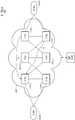
- FIG. 1 depicts a high level block diagram of a communication network architecture benefiting from various embodiments.
- the architecture 100 of FIG. 1 provides a Multi-Protocol Label Switching (MPLS) network supporting Resource Reservation Protocol (RSVP) Inter Domain Traffic Engineering Label Switched Paths (TE LSPs) of type Contiguous LSP.
- MPLS Multi-Protocol Label Switching
- RSVP Resource Reservation Protocol
- TE LSPs Inter Domain Traffic Engineering Label Switched Paths
- the network may be modified by those skilled in the art to use other MPLS related protocols rather that the exemplary protocol discussed herein.
- the architecture 100 includes an IP/MPLS communication network (CN) 105 and at least one network management system (NMS) 120.
- NMS 120 is operative to control a plurality of routers 110 forming the CN 105.
- the CN 105 comprises a plurality of Provider Edge (PE) routers 110-1 through 110-4, and a plurality of core routers 110-X1 and 110-X2.
- PE Provider Edge
- the CN 105 may include many more PE routers.
- the CN 105 may include many more core routers.
- the representation of the CN 105 is simplified for purposes of this discussion.
- the NMS 120 is a network management system adapted for performing the various management functions described herein.
- the NMS 120 is adapted to communicate with nodes of CN 105.
- the NMS 120 may also be adapted to communicate with other operations support systems (e.g., Element Management Systems (EMSs), Topology Management Systems (TMSs), and the like, as well as various combinations thereof).
- EMSs Element Management Systems
- TMSs Topology Management Systems
- the NMS 120 may be implemented at a network node, network operations center (NOC) or any other location capable of communication with the CN 105 and various elements related thereto.
- the NMS 120 may support user interface capabilities to enable one or more users to perform various network management, configuration, provisioning or control related functions (e.g., enter information, review information, initiate execution of various methods as described herein and the like).
- Various embodiments of the NMS 120 are adapted to perform functions as discussed herein with respect to the various embodiments.
- the NMS 120 may be implemented as a general purpose computing device or specific purpose computing device, such as described below with respect to FIG. 3 .
- the NMS 120 and the various routers 110 operate to support Resource Reservation Protocol (RSVP) Inter Domain Traffic Engineering Label Switched Paths (TE LSPs) of type Contiguous LSP, such as defined in in IETF Standards RFC4726 and RFC5151.
- RSVP Resource Reservation Protocol
- TE LSPs Inter Domain Traffic Engineering Label Switched Paths
- each directly connected router 110 establishes a neighboring node relationship with each other router 110 to which it is directly connected.
- each of the various routers 110 has associated with it a respective plurality of neighbor nodes.
- each of the core routers 110-X1 and 110-X2 is depicted as being connected to each other as well as each of the PE routers 110-1 through 110-4.
- PE routers 110-1 and 110-2 are depicted as being connected to each other as well as core routers 110-X1 and 110-X2.
- the HELLO messages are exchanged between neighboring nodes at predetermined intervals. Failure to receive such a message within the predetermined interval is an indication of a failure of the neighboring node that should have sent the message.
- a point to multipoint (P2MP) traffic stream (e.g., a video or other data stream) is communicated from a source Customer Edge (CE) router 130-S to a destination CE router 130-D via one or both of primary and secondary label switched paths (LSPs); namely, primary path P and secondary path S.
- Primary path P originates at PE 110-1, traverses the core of CN 105 and terminates at PE 110-3.
- Secondary path S originates at PE 110-2, traverses the core of CN 105 and terminates at PE 110-3.
- PE 110-3 operates as a dual homed leaf node sourcing traffic from two independent P2MP trees; namely, a primary LSP tree originating at Root Node PE 110-1 and a secondary LSP tree originating at Root Node PE 110-2.
- the P2MP channels utilize Bidirectional Forwarding Detection (BFD) or similar mechanisms, such as provided in the various Border Gateway Protocol (BGP) and other extensions and procedures. In this manner, fast detection and failover for upstream faults such as neighboring node failure is provided.
- BFD Bidirectional Forwarding Detection
- BGP Border Gateway Protocol
- one or more of the routers 110 are adapted to operate in a first (unsuppressed) mode of operation to establish neighboring node relationships and periodically exchange hello messages with neighboring nodes to indicate thereby active or live status.
- one or more routers 110 are adapted to operate in a second (suppressed) mode of operation wherein active/live status of downstream neighboring nodes is determined using the BFD mechanism and the hello message exchange function is partially or fully suppressed.
- the various embodiments discussed herein contemplate neighbor nodes opportunistically moving between the first and second mode of operation in response to network management requirements, BFD mechanism activation/inactivation and the like.
- FIG. 2 depicts a flow diagram of a method according to one embodiment. Specifically, FIG. 2 depicts a method 200 for suppressing hello messages between neighboring nodes supporting a common LSP including a BFD mechanism. The method 200 is adapted for use some or all of a plurality of nodes within a communications network. As such, while the functionality of the method 200 will be described from the perspective of a single network node, it will be appreciated that each of a plurality of network nodes of the network may operate according to this functionality to achieve an opportunistically adaptive hello message suppression mechanism.
- the network node or router establishes a neighboring node relationship with other directly connected nodes or routers. That is, each of the nodes within the network interacts with directly connected nodes to establish mutual neighboring node relationships. Referring to box 215, this relationship may be established using RSVP message exchanges and/or other message exchanges.
- the network node enters a first or normal mode of operation in which hello message suppression is not used.
- hello messages continue to be exchanged with neighbor nodes to determine neighbor node state and/or other information. Further, the network node monitors the various paths it supports to determine if a BFD mechanism is utilized therein. As noted herein, neighboring network nodes supporting a common path using BFD may rely upon the BFD mechanism to identify node or link failures such that hello message exchanges may be avoided.
- the network node enters a second or suppressed mode of operation with upstream or downstream neighboring nodes as conditions allow. These conditions include an active BFD mechanism on a commonly supported path between the neighboring nodes, as well as a capability and desire of both nodes to operate in a hello suppression mode.
- hello messages are no longer exchanged between the neighboring nodes and node failure is no longer determined according to hello messages (i.e., whether a message was received within a predetermined time period).
- a second (suppressed) mode of operation is exited with those upstream or downstream neighboring nodes when conditions do not allow this mode of operation.
- the second or suppressed mode of operation is exited in response to any of (1) detection of a node control plane failure; (2) link failure; (3) neighboring node graceful restart; (4) Restart_Cap Object Change; (5) a Hello Suppression disable message; and/or other criteria/events.
- the network node After exiting the second mode of operation, the network node returns to the first mode of operation upon restoration/restart of the neighboring node or link.
- PE router 110-1 may enter into a suppressed mode of operation with respect to core router 110-X2 due to the BFD mechanism associated with the primary multicast path P. Similarly, PE router 110-1 may not enter into a suppressed mode of operation with respect to core router 110-X1 since a path associated with the BFD mechanism is not depicted as common to both routers.
- a node receiving HELLO suppression active indicia from a downstream neighboring node transmits corresponding HELLO suppression active indicia toward one or more upstream neighboring nodes associated with said downstream neighboring node.
- Associated upstream nodes may comprise nodes sharing a LSP with the downstream node.
- Various embodiments adapt node operation to accommodate additional situations such as the neighbor node undergoing a Graceful Restart. Specifically, while having BFD enabled between neighbor nodes is sufficient to detect control plane failure, various embodiments provide additional interaction between upstream/downstream neighboring nodes to address the circumstances associated with neighboring node graceful restart and other situations. This additional interaction is provided using a hello suppression mechanism in which a Hello_Suppress object is included within or associated with HELLO messages communicated between neighbor nodes.
- a hello suppression mechanism is invoked between neighbor nodes after a session including a BFD mechanism is established (e.g., a RSVP BFD session).
- the hello suppression mechanism utilizes the Hello_Suppress object to communicate hello suppression enable/active, hello suppression disable/in active, hello suppression restore/modify and/or other information between neighboring nodes.
- a Hello_Suppress Object is carried in the HELLO messages only when Hello Suppression is enabled.
- the format of the Hello_Suppress Object is provided as follows. However, those skilled in the art will readily appreciate that other and different formats may also be used to communicate the relevant information between neighboring nodes.
- an exemplary Hello Suppress REQUEST has a length of 16 bits. If Hello Suppression is enabled on a node, the Hello Suppress REQUEST field will be set to (1). If Hello Suppression is enabled on a node but the RSVP BFD is down, the Hello Suppress REQUEST field will be set to (0).
- an exemplary Hello Suppress ACK as a length of 16 bits. If Hello Suppression is enabled on a node and a neighbor sends a Hello Suppress REQUEST, then the Hello Suppress ACK field will be set to (1). It is noted that the Hello Suppress ACK field will be set to (0) if the BFD session is down.
- FIG. 3 depicts a flow diagram of a method according to one embodiment. Specifically, FIG. 3 depicts a method 300 for entering a hello message suppressing mode of operation with respect to neighboring nodes supporting a common LSP including a BFD mechanism. The method 300 is adapted for use some or all of a plurality of nodes within a communications network to provide thereby an adaptive hello message suppression mechanism.
- first node R1 is upstream from a second and neighboring node R2.
- Each of the nodes R1 and R2 comprise MPLS capable routers within an IP-MPLS cloud, with RSVP BFD and HELLO messages enabled.
- first and second nodes R1 and R2 may respectively comprise, illustratively, PE router 110-1 and core router 110-X2.
- the RSVP neighboring node status is active and the nodes start exchanging HELLO messages.
- entering a Hello Suppression mode of operation involves a 3-way handshaking procedure between the two neighbors, such as described below with respect to the various steps.
- a network element such as upstream node R1 determines if RSVP BFD is up/active and if Hello Suppression is enabled. If both conditions are true, then upstream node R1 transmits toward downstream node R2 a HELLO suppression Request (REQ) message.
- the hello suppression REQ message includes a Hello_Suppress Object with a REQUEST field set to (1) and a ACK field set to (0).
- Other bit settings or states may also be used to indicate that a hello suppression mode is requested between the two neighboring nodes.
- a network element such as downstream node R2 receives the hello suppression R EQ message from upstream node R1 and determines if RSVP BFD is up/active and Hello Suppression is enabled. If both conditions are true, then node R2 responds to the message received from node R1 by transmitting toward node R1 a HELLO suppression acknowledgment (ACK) message.
- the hello suppression ACK message includes a Hello_Suppress Object with the REQUEST and ACK fields both set to (1). Other bit settings or states may also be used to indicate that a requested hello suppression mode between the two neighboring nodes is acknowledged.
- node R1 responds to the ACK message received from node R2 by transmitting toward node R2 a HELLO message adapted to establish or confirm hello suppression mode between the two nodes.
- the hello suppression establishment or confirmation message includes a Hello_Suppress Object with the REQUEST and ACK fields both set to (1). Other bit settings or states may also be used to indicate that hello suppression mode between the two neighboring nodes is established or confirmed.
- both nodes R1 and R2 enter a Hello Suppression mode of operation with respect to each other.
- each of the nodes stopped transmitting hello messages to the other node, each of the nodes stops determining node failure conditions in response to the absence of otherwise expected hello messages. Other actions may also be taken as discussed herein.
- the BFD mechanism is exclusively used to determine corresponding node or link failures.
- the methods 200/300 described above with respect to FIGS. 2 and 3 contemplate opportunistically entering and exiting a hello suppression mode at one or more of a plurality of network elements.
- the nodes will exit the Hello Suppression mode in response to (1) detection of a node control plane failure; (2) link failure; (3) neighboring node graceful restart; (4) Restart_Cap Object Change; (5) and/or a Hello Suppression disable message, illustratively as follows.
- Revised time interval embodiments advantageously provide a mechanism for identifying neighboring node failure where failure of a relied upon BFD mechanism has occurred.
- the existing time interval is multiplied or increased by some factor to provide a revised time interval.
- the revised time interval is specified directly. Data indicative of the revised time interval may be included within the various HELLO suppression indicia described herein.
- Revised time interval embodiments operate in substantially the same manner as described above with respect to the various figures.
- One difference is that the method 200 of figure 2 is modified in that the second (suppressed) mode of operation is also exited at 240 (referring to box 245) in response to a failure to receive a HELLO message within a revised time interval.
- the method 300 of figure 3 is modified in that the HELLO suppression mode of operation at step 340 further contemplates transmitting HELLO messages according to a revised interval schedule.
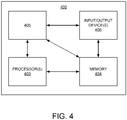
- FIG. 4 depicts a high level block diagram of a computer suitable for use in performing functions described herein.
- computer 400 includes a processor element 403 (e.g., a central processing unit (CPU) and/or other suitable processor(s)), a memory 404 (e.g., random access memory (RAM), read only memory (ROM), and the like), a cooperating module/process 405, and various input/output devices 406 (e.g., a user input device (such as a keyboard, a keypad, a mouse, and the like), a user output device (such as a display, a speaker, and the like), an input port, an output port, a receiver, a transmitter, and storage devices (e.g., a tape drive, a floppy drive, a hard disk drive, a compact disk drive, and the like)).
- processor element 403 e.g., a central processing unit (CPU) and/or other suitable processor(s)
- memory 404 e.g., random access memory (RAM), read only memory (ROM), and the like
- cooperating module/process 405 e.g.
- cooperating process 405 can be loaded into memory 404 and executed by processor 403 to implement the functions as discussed herein.
- cooperating process 405 (including associated data structures) can be stored on a computer readable storage medium, e.g., RAM memory, magnetic or optical drive or diskette, and the like.
- computer 400 depicted in FIG. 4 provides a general architecture and functionality suitable for implementing functional elements described herein or portions network of the functional elements described herein.
Landscapes
- Engineering & Computer Science (AREA)
- Computer Networks & Wireless Communication (AREA)
- Signal Processing (AREA)
- Data Exchanges In Wide-Area Networks (AREA)
Claims (14)
- Verfahren zum Verwenden an einem Netzwerkknoten (110), wobei das Verfahren umfasst:Aufbau einer Beziehung zwischen benachbarten Knoten mit einem oder mehreren benachbarten Knoten (210) unter Verwenden von RSVP-HELLO-Nachrichtenverkehr (Resource Reservation Protocol) (215);in einem ersten Betriebsmodus hinsichtlich eines benachbarten Knotens, Verwenden von HELLO-Nachrichten zum Bestimmen, ob sich der benachbarte Knoten in einem fehlerhaften Zustand (225) befindet;als Antwort auf das Empfangen von Indizien auf eine aktive HELLO-Unterdrückung von besagtem benachbarten Knoten, wobei besagter Knoten und besagter benachbarter Knoten einen gemeinsamen Pfad unterstützen unter Verwenden eines BFD-Mechanismus (Bi-directional Forwarding Detection), Eingehen in einen zweiten Betriebsmodus hinsichtlich besagten benachbarten Knotens (230);in besagtem zweiten Betriebsmodus hinsichtlich besagten benachbarten Knotens, Unterdrücken der Übertragung von HELLO-Nachrichten auf besagten benachbarten Knoten (235) und Verwenden besagten BFD-Mechanismus zum Bestimmen, ob sich der benachbarte Knoten in einem fehlerhaften Zustand befindet.
- Verfahren nach Anspruch 1, weiterhin umfassend:
als Antwort auf das Verwenden des BFD-Mechanismus (Bi-directional Forwarding Detection), Übertragen besagter Indizien auf eine aktive HELLO-Unterdrückung auf einen oder mehrere benachbarte Upstream-Knoten. - Verfahren nach Anspruch 2, weiterhin umfassend:
als Antwort auf das Empfangen von Indizien auf eine aktive HELLO-Unterdrückung von einem benachbarten Downstream-Knoten, Übertragen besagter Indizien auf eine aktive HELLO-Unterdrückung auf einen oder mehrere benachbarte Upstream-Knoten, die mit besagtem benachbarten Downstream-Knoten verbunden sind. - Verfahren nach Anspruch 1, wobei besagte Indizien auf eine aktive HELLO-Unterdrückung umfassen den Einschluss eines Objekts Hello_Suppress in eine HELLO-Nachricht, wobei besagtes Objekt Hello_Suppress eingestellt ist auf einen ersten Zustand zum Anzeigen eines normalen Betriebsmodus und auf einen zweiten Zustand zum Anzeigen eines unterdrückten Betriebsmodus.
- Verfahren nach Anspruch 4, wobei besagtes Objekt Hello_Suppress-Daten einschließt, die indikativ sind für ein geändertes Zeitintervall innerhalb dessen das Scheitern des Empfangens einer HELLO-Nachricht indikativ ist für einen fehlerhaften benachbarten Knoten.
- Verfahren nach Anspruch 5, wobei besagte Daten, die indikativ sind für ein geändertes Zeitintervall einen aus einem existierenden Zeitintervallmultiplizierer und einem spezifischen Zeitintervall umfassen.
- Verfahren nach Anspruch 1, weiterhin umfassend das Eingehen in einen normalen Betriebsmodus hinsichtlich besagten benachbarten Knotens als Antwort auf ein Einstellen der Verwendung besagten BFD-Mechanismus durch besagten benachbarten Knoten und die Indizien auf eine inaktive HELLO-Unterdrückung, die von dem benachbarten Knoten empfangen worden sind.
- Vorrichtung, umfassend einen Prozessor, der konfiguriert ist zum:Aufbauen einer Beziehung zwischen benachbarten Knoten mit einem oder mehreren benachbarten Knoten (210) unter Verwenden von RSVP-HELLO-Nachrichtenverkehr (Resource Reservation Protocol) (215);in einem ersten Betriebsmodus hinsichtlich eines benachbarten Knotens, Verwenden von HELLO-Nachrichten zum Bestimmen, ob sich der benachbarte Knoten in einem fehlerhaften Zustand (225) befindet;als Antwort auf das Empfangen von Indizien auf eine aktive HELLO-Unterdrückung von besagtem benachbarten Knoten, wobei besagter Knoten und besagter benachbarter Knoten einen gemeinsamen Pfad unterstützen unter Verwenden eines BFD-Mechanismus (Bi-directional Forwarding Detection), Eingehen in einen zweiten Betriebsmodus hinsichtlich besagten benachbarten Knotens (230);in besagtem zweiten Betriebsmodus hinsichtlich besagten benachbarten Knotens, Unterdrücken der Übertragung von HELLO-Nachrichten auf besagten benachbarten Knoten (235) und Verwenden besagten BFD-Mechanismus zum Bestimmen, ob sich der benachbarte Knoten in einem fehlerhaften Zustand befindet.
- Nicht transitorisches computerlesbares Speichermedium zum Speichern von Befehlen, die, wenn sie auf einem Computer ausgeführt werden, den Betrieb des Computers anpassen zum Bereitstellen eines Verfahrens, umfassend:Aufbauen einer Beziehung zwischen benachbarten Knoten mit einem oder mehreren benachbarten Knoten (210) unter Verwenden von RSVP-HELLO-Nachrichtenverkehr (Resource Reservation Protocol) (215);in einem ersten Betriebsmodus hinsichtlich eines benachbarten Knotens, Verwenden von HELLO-Nachrichten zum Bestimmen, ob sich der benachbarte Knoten in einem fehlerhaften Zustand (225) befindet;als Antwort auf das Empfangen von Indizien auf eine aktive HELLO-Unterdrückung von besagtem benachbarten Knoten, wobei besagter Knoten und besagter benachbarter Knoten einen gemeinsamen Pfad unterstützen unter Verwenden eines BFD-Mechanismus (Bi-directional Forwarding Detection), Eingehen in einen zweiten Betriebsmodus hinsichtlich besagten benachbarten Knotens (230);in besagtem zweiten Betriebsmodus hinsichtlich besagten benachbarten Knotens, Unterdrücken der Übertragung von HELLO-Nachrichten auf besagten benachbarten Knoten (235) und Verwenden besagten BFD-Mechanismus zum Bestimmen, ob sich der benachbarte Knoten in einem fehlerhaften Zustand befindet.
- Computerprogramm-Produkt, wobei die Computerbefehle in einem nicht transitorischen computerlesbaren Speicher gespeichert werden, wenn sie von einem Computer verarbeitet werden, Anpassen des Betriebs des Computers zum Bereitstellen eines Verfahrens, umfassend:Aufbauen einer Beziehung zwischen benachbarten Knoten mit einem oder mehreren benachbarten Knoten (210) unter Verwenden von RSVP-HELLO-Nachrichtenverkehr (Resource Reservation Protocol) (215);in einem ersten Betriebsmodus hinsichtlich eines benachbarten Knotens, Verwenden von HELLO-Nachrichten zum Bestimmen, ob sich der benachbarte Knoten in einem fehlerhaften Zustand (225) befindet;als Antwort auf das Empfangen von Indizien auf eine aktive HELLO-Unterdrückung von besagtem benachbarten Knoten, wobei besagter Knoten und besagter benachbarter Knoten einen gemeinsamen Pfad unterstützen unter Verwenden eines BFD-Mechanismus (Bi-directional Forwarding Detection), Eingehen in einen zweiten Betriebsmodus hinsichtlich besagten benachbarten Knotens (230);in besagtem zweiten Betriebsmodus hinsichtlich besagten benachbarten Knotens, Unterdrücken der Übertragung von HELLO-Nachrichten auf besagten benachbarten Knoten (235) und Verwenden besagten BFD-Mechanismus zum Bestimmen, ob sich der benachbarte Knoten in einem fehlerhaften Zustand befindet.
- Verfahren nach Anspruch 1, wobei in besagten zweiten Betriebsmodus eingegangen wird als Antwort auf die Indizien auf eine aktive HELLO-Unterdrückung, die empfangen wurden von dem benachbarten Knoten unter Verwenden eines Three-Way-Handshake zwischen besagtem Netzwerkknoten und besagtem benachbarten Knoten.
- Vorrichtung nach Anspruch 8, wobei in besagten zweiten Betriebsmodus eingegangen wurde als Antwort auf die Indizien auf eine aktive HELLO-Unterdrückung, die empfangen wurden von dem benachbarten Knoten unter Verwenden eines Three-Way-Handshake zwischen besagtem Netzwerkknoten und besagtem benachbarten Knoten, wobei besagter BFD-Mechanismus in besagtem zweiten Modus nicht unterbrochen wird.
- Nicht transitorisches computerlesbares Speichermedium nach Anspruch 9, wobei in besagten zweiten Betriebsmodus eingegangen wird als Antwort auf die Indizien auf eine aktive HELLO-Unterdrückung, die empfangen wurden von dem benachbarten Knoten unter Verwenden eines Three-Way-Handshake zwischen besagtem Netzwerkknoten und besagtem benachbarten Knoten.
- Computerprogramm-Produkt nach Anspruch 10, wobei in besagten zweiten Betriebsmodus eingegangen wird als Antwort auf die Indizien auf eine aktive HELLO-Unterdrückung, die empfangen wurden von dem benachbarten Knoten unter Verwenden eines Three-Way-Handshake zwischen besagtem Netzwerkknoten und besagtem benachbarten Knoten.
Applications Claiming Priority (3)
| Application Number | Priority Date | Filing Date | Title |
|---|---|---|---|
| US201261676796P | 2012-07-27 | 2012-07-27 | |
| US13/722,152 US9294343B2 (en) | 2012-07-27 | 2012-12-20 | System and method using RSVP hello suppression for graceful restart capable neighbors |
| PCT/US2013/050536 WO2014018297A1 (en) | 2012-07-27 | 2013-07-15 | System and method using rsvp hello suppression for graceful restart capable neighbors |
Publications (2)
| Publication Number | Publication Date |
|---|---|
| EP2878105A1 EP2878105A1 (de) | 2015-06-03 |
| EP2878105B1 true EP2878105B1 (de) | 2018-10-03 |
Family
ID=49994799
Family Applications (4)
| Application Number | Title | Priority Date | Filing Date |
|---|---|---|---|
| EP13742112.9A Active EP2878105B1 (de) | 2012-07-27 | 2013-07-15 | System und verfahren mit rsvp-hello-unterdrückung für zu einem langsamen neustart fähige nachbargeräte |
| EP13742111.1A Active EP2878100B1 (de) | 2012-07-27 | 2013-07-15 | System, verfahren und vorrichtung zur signalisierung von ero-erweiterungsfehlern in domänenübergreifendem te-lsp und zur reaktion darauf |
| EP13748392.1A Withdrawn EP2878107A1 (de) | 2012-07-27 | 2013-07-23 | System, verfahren und vorrichtung zur harmonisierung von wegkostenkriterien über mehrere abrs |
| EP13747910.1A Active EP2878106B1 (de) | 2012-07-27 | 2013-07-24 | System und verfahren zum schalten von verkehr von suboptimalem primärem p2mp auf standby-p2mp |
Family Applications After (3)
| Application Number | Title | Priority Date | Filing Date |
|---|---|---|---|
| EP13742111.1A Active EP2878100B1 (de) | 2012-07-27 | 2013-07-15 | System, verfahren und vorrichtung zur signalisierung von ero-erweiterungsfehlern in domänenübergreifendem te-lsp und zur reaktion darauf |
| EP13748392.1A Withdrawn EP2878107A1 (de) | 2012-07-27 | 2013-07-23 | System, verfahren und vorrichtung zur harmonisierung von wegkostenkriterien über mehrere abrs |
| EP13747910.1A Active EP2878106B1 (de) | 2012-07-27 | 2013-07-24 | System und verfahren zum schalten von verkehr von suboptimalem primärem p2mp auf standby-p2mp |
Country Status (6)
| Country | Link |
|---|---|
| US (6) | US9001672B2 (de) |
| EP (4) | EP2878105B1 (de) |
| JP (2) | JP2015527830A (de) |
| KR (4) | KR101652649B1 (de) |
| CN (4) | CN104541477B (de) |
| WO (4) | WO2014018297A1 (de) |
Families Citing this family (78)
| Publication number | Priority date | Publication date | Assignee | Title |
|---|---|---|---|---|
| US9716672B2 (en) | 2010-05-28 | 2017-07-25 | Brocade Communications Systems, Inc. | Distributed configuration management for virtual cluster switching |
| US8867552B2 (en) | 2010-05-03 | 2014-10-21 | Brocade Communications Systems, Inc. | Virtual cluster switching |
| US9769016B2 (en) | 2010-06-07 | 2017-09-19 | Brocade Communications Systems, Inc. | Advanced link tracking for virtual cluster switching |
| US9807031B2 (en) | 2010-07-16 | 2017-10-31 | Brocade Communications Systems, Inc. | System and method for network configuration |
| US9450870B2 (en) | 2011-11-10 | 2016-09-20 | Brocade Communications Systems, Inc. | System and method for flow management in software-defined networks |
| US9374301B2 (en) | 2012-05-18 | 2016-06-21 | Brocade Communications Systems, Inc. | Network feedback in software-defined networks |
| US8948051B2 (en) * | 2012-05-30 | 2015-02-03 | Alcatel Lucent | System and method for efficient MVPN source redundancy with S-PMSI |
| US9160652B2 (en) * | 2012-08-31 | 2015-10-13 | Cisco Technology, Inc. | Fast reroute for bidirectional co-routed traffic engineering tunnels |
| US9401872B2 (en) | 2012-11-16 | 2016-07-26 | Brocade Communications Systems, Inc. | Virtual link aggregations across multiple fabric switches |
| CN103067220B (zh) * | 2012-12-19 | 2016-02-10 | 中兴通讯股份有限公司 | 参数更新情况下双向链路转发检测方法及装置 |
| US9565099B2 (en) | 2013-03-01 | 2017-02-07 | Brocade Communications Systems, Inc. | Spanning tree in fabric switches |
| US8953500B1 (en) * | 2013-03-29 | 2015-02-10 | Juniper Networks, Inc. | Branch node-initiated point to multi-point label switched path signaling with centralized path computation |
| US9769058B2 (en) | 2013-05-17 | 2017-09-19 | Ciena Corporation | Resilient dual-homed data network hand-off |
| US9178812B2 (en) | 2013-06-05 | 2015-11-03 | Cisco Technology, Inc. | Stacking metadata contexts for service chains |
| US9444675B2 (en) | 2013-06-07 | 2016-09-13 | Cisco Technology, Inc. | Determining the operations performed along a service path/service chain |
| US10708182B2 (en) * | 2013-07-26 | 2020-07-07 | Cisco Technology, Inc. | MPLS LSP connectivity test when the initiator address is unknown |
| US9019814B1 (en) * | 2013-08-05 | 2015-04-28 | Juniper Networks, Inc. | Fast failover in multi-homed ethernet virtual private networks |
| US9397931B1 (en) | 2013-08-16 | 2016-07-19 | Juniper Networks, Inc. | Fast convergence in singly-homed ethernet virtual private networks |
| US9391885B1 (en) | 2013-09-05 | 2016-07-12 | Juniper Networks, Inc. | MPLS label usage in Ethernet virtual private networks |
| US9178816B1 (en) | 2013-09-27 | 2015-11-03 | Juniper Networks, Inc. | Control plane messaging in all-active multi-homed ethernet virtual private networks |
| US9912612B2 (en) | 2013-10-28 | 2018-03-06 | Brocade Communications Systems LLC | Extended ethernet fabric switches |
| JP6253956B2 (ja) * | 2013-11-15 | 2017-12-27 | 株式会社日立製作所 | ネットワーク管理サーバおよび復旧方法 |
| US10020984B1 (en) | 2014-01-10 | 2018-07-10 | Juniper Networks, Inc. | RSVP local protection signaling reduction |
| US9548873B2 (en) | 2014-02-10 | 2017-01-17 | Brocade Communications Systems, Inc. | Virtual extensible LAN tunnel keepalives |
| US10581758B2 (en) | 2014-03-19 | 2020-03-03 | Avago Technologies International Sales Pte. Limited | Distributed hot standby links for vLAG |
| US10476698B2 (en) | 2014-03-20 | 2019-11-12 | Avago Technologies International Sales Pte. Limited | Redundent virtual link aggregation group |
| CN104980295A (zh) * | 2014-04-09 | 2015-10-14 | 中兴通讯股份有限公司 | 防止网络节点老化的方法、装置及系统 |
| US10063473B2 (en) | 2014-04-30 | 2018-08-28 | Brocade Communications Systems LLC | Method and system for facilitating switch virtualization in a network of interconnected switches |
| US9800471B2 (en) | 2014-05-13 | 2017-10-24 | Brocade Communications Systems, Inc. | Network extension groups of global VLANs in a fabric switch |
| US10616108B2 (en) | 2014-07-29 | 2020-04-07 | Avago Technologies International Sales Pte. Limited | Scalable MAC address virtualization |
| US9807007B2 (en) | 2014-08-11 | 2017-10-31 | Brocade Communications Systems, Inc. | Progressive MAC address learning |
| JP2016048850A (ja) * | 2014-08-27 | 2016-04-07 | 富士通株式会社 | パケット転送装置、パケット転送システム、及びパケット転送方法 |
| TW201728124A (zh) | 2014-09-16 | 2017-08-01 | 科勞簡尼克斯股份有限公司 | 以彈性地定義之通信網路控制器為基礎之網路控制、操作及管理 |
| US10200293B2 (en) * | 2014-10-20 | 2019-02-05 | Futurewei Technologies, Inc. | Dynamically offloading flows from a service chain |
| CN105681190A (zh) * | 2014-11-21 | 2016-06-15 | 中兴通讯股份有限公司 | 一种隧道约束信息的发送、接收方法及装置 |
| US9942097B2 (en) | 2015-01-05 | 2018-04-10 | Brocade Communications Systems LLC | Power management in a network of interconnected switches |
| US10003552B2 (en) * | 2015-01-05 | 2018-06-19 | Brocade Communications Systems, Llc. | Distributed bidirectional forwarding detection protocol (D-BFD) for cluster of interconnected switches |
| US10038592B2 (en) | 2015-03-17 | 2018-07-31 | Brocade Communications Systems LLC | Identifier assignment to a new switch in a switch group |
| US10579406B2 (en) | 2015-04-08 | 2020-03-03 | Avago Technologies International Sales Pte. Limited | Dynamic orchestration of overlay tunnels |
| CN106205628B (zh) * | 2015-05-06 | 2018-11-02 | 小米科技有限责任公司 | 声音信号优化方法及装置 |
| CN106375353B (zh) * | 2015-07-20 | 2020-05-19 | 中兴通讯股份有限公司 | 建链处理方法及装置 |
| US10439929B2 (en) | 2015-07-31 | 2019-10-08 | Avago Technologies International Sales Pte. Limited | Graceful recovery of a multicast-enabled switch |
| US10171303B2 (en) | 2015-09-16 | 2019-01-01 | Avago Technologies International Sales Pte. Limited | IP-based interconnection of switches with a logical chassis |
| US10257074B1 (en) * | 2015-09-30 | 2019-04-09 | Juniper Networks, Inc. | Avoiding multicast traffic loss in networks having multi-homing designated routers |
| US9860150B2 (en) * | 2015-10-01 | 2018-01-02 | Juniper Networks, Inc. | Fast convergence of EVPN networks for multi homing topologies |
| WO2017064929A1 (ja) * | 2015-10-16 | 2017-04-20 | ソニー株式会社 | 情報処理装置及び情報処理システム |
| US9853915B2 (en) * | 2015-11-04 | 2017-12-26 | Cisco Technology, Inc. | Fast fail-over using tunnels |
| US9912614B2 (en) | 2015-12-07 | 2018-03-06 | Brocade Communications Systems LLC | Interconnection of switches based on hierarchical overlay tunneling |
| US10104139B2 (en) | 2016-03-31 | 2018-10-16 | Juniper Networks, Inc. | Selectively signaling selective tunnels in multicast VPNs |
| CN107306197A (zh) * | 2016-04-20 | 2017-10-31 | 中兴通讯股份有限公司 | 一种隧道保护的方法及装置 |
| CN106357541B (zh) * | 2016-09-09 | 2019-12-17 | 新华三技术有限公司 | 一种信息传递方法和装置 |
| US10367758B2 (en) * | 2016-09-12 | 2019-07-30 | Marvell World Trade Ltd. | Merging read requests in network device architecture |
| US10237090B2 (en) | 2016-10-28 | 2019-03-19 | Avago Technologies International Sales Pte. Limited | Rule-based network identifier mapping |
| US10129127B2 (en) * | 2017-02-08 | 2018-11-13 | Nanning Fugui Precision Industrial Co., Ltd. | Software defined network controller, service function chaining system and trace tracking method |
| CN111726286A (zh) * | 2017-03-14 | 2020-09-29 | 华为技术有限公司 | Evpn报文处理方法、设备及系统 |
| US11115323B2 (en) * | 2017-05-10 | 2021-09-07 | Saudi Arabian Oil Company | Securing Layer-3 virtual private network |
| EP3724761B1 (de) | 2017-12-14 | 2021-04-28 | Telefonaktiebolaget LM Ericsson (publ) | Fehlerhandhabung in einer cloud-umgebung |
| US11283672B2 (en) * | 2018-05-25 | 2022-03-22 | Juniper Networks, Inc. | Forwarding detection of an aggregated interface |
| US20190379596A1 (en) * | 2018-06-08 | 2019-12-12 | Ciena Corporation | Methods and Systems preventing Make Before Break failures during soft preemption in MPLS |
| CN109218107A (zh) * | 2018-10-15 | 2019-01-15 | 迈普通信技术股份有限公司 | 链路切换方法、装置、网络设备及网络系统 |
| US10771317B1 (en) * | 2018-11-13 | 2020-09-08 | Juniper Networks, Inc. | Reducing traffic loss during link failure in an ethernet virtual private network multihoming topology |
| MY201551A (en) * | 2018-12-18 | 2024-02-28 | Mimos Berhad | Method and node for network traffic management |
| CN109698781B (zh) * | 2018-12-20 | 2021-10-29 | 新华三技术有限公司 | 报文转发路径的管理方法和pe设备 |
| US10833973B1 (en) * | 2019-02-15 | 2020-11-10 | Juniper Networks, Inc. | Enabling selection of a bypass path from available paths in an open shortest path first (OSPF) domain and an intermediate system to intermediate system (ISIS) domain |
| US11411948B2 (en) | 2019-04-04 | 2022-08-09 | Cisco Technology, Inc. | Systems and methods for applying attestation tokens to LISP messages |
| US11595441B2 (en) | 2019-04-04 | 2023-02-28 | Cisco Technology, Inc. | Systems and methods for securing network paths |
| US11785053B2 (en) * | 2019-04-04 | 2023-10-10 | Cisco Technology, Inc. | Systems and methods for determining secure network paths |
| US11863522B2 (en) | 2019-04-04 | 2024-01-02 | Cisco Technology, Inc. | Applying attestation to the border gateway protocol (BGP) |
| US11356361B2 (en) | 2019-04-04 | 2022-06-07 | Cisco Technology, Inc. | Systems and methods for steering traffic into SR-TE policies |
| US12149626B1 (en) | 2019-04-04 | 2024-11-19 | Cisco Technology, Inc. | Applying attestation to BGP-LS |
| US11646956B2 (en) * | 2019-07-24 | 2023-05-09 | Cisco Technology, Inc. | Systems and methods for providing bidirectional forwarding detection with performance routing measurements |
| CN110460520B (zh) * | 2019-08-26 | 2021-05-18 | 北京经纬恒润科技股份有限公司 | 一种数据报文传输方法及整车网络系统 |
| CN112558504B (zh) * | 2019-09-10 | 2021-11-02 | 中国电信股份有限公司 | 基于ospf协议的关键路径信息转发方法、装置和系统 |
| CN113037622B (zh) * | 2019-12-24 | 2024-01-05 | 华为数字技术(苏州)有限公司 | 一种防止bfd震荡的系统及方法 |
| CN111565149B (zh) * | 2020-04-03 | 2022-04-08 | 烽火通信科技股份有限公司 | 一种在ldp rlfa frr场景下远端会话保活的方法及装置 |
| CN112039770B (zh) * | 2020-08-28 | 2022-08-05 | 北京世纪互联宽带数据中心有限公司 | 一种路由选择方法及装置 |
| US12058026B2 (en) * | 2020-09-11 | 2024-08-06 | Ciena Corporation | Segment routing traffic engineering (SR-TE) with awareness of local protection |
| CN114785732B (zh) * | 2022-05-05 | 2023-08-11 | 烽火通信科技股份有限公司 | 用于p2mp组播隧道路径保护的方法与系统 |
Family Cites Families (47)
| Publication number | Priority date | Publication date | Assignee | Title |
|---|---|---|---|---|
| US7319700B1 (en) * | 2000-12-29 | 2008-01-15 | Juniper Networks, Inc. | Communicating constraint information for determining a path subject to such constraints |
| US7436855B2 (en) * | 2003-02-21 | 2008-10-14 | Alcatel Lucent | Prohibit or avoid route mechanism for path setup |
| US7899934B2 (en) | 2003-03-31 | 2011-03-01 | Symantec Corporation | Handling un-partitioning of a computer network |
| CN100349406C (zh) * | 2003-06-22 | 2007-11-14 | 华为技术有限公司 | 一种基于资源预留协议控制建立标签交换路径的方法 |
| US7680028B1 (en) * | 2003-11-21 | 2010-03-16 | Cisco Technology, Inc. | Method and apparatus for restarting RSVP processes in multiple network devices |
| CN100372337C (zh) * | 2004-05-31 | 2008-02-27 | 华为技术有限公司 | 一种实现跨域约束路由的选路方法 |
| US8717899B2 (en) | 2004-10-13 | 2014-05-06 | Cisco Technology, Inc. | System and method for reporting out-of-resources (OOR) conditions in a data network |
| US7496105B2 (en) * | 2004-11-05 | 2009-02-24 | Cisco Technology, Inc. | System and method for retrieving computed paths from a path computation element using encrypted objects |
| JP4421458B2 (ja) | 2004-11-30 | 2010-02-24 | 三菱電機株式会社 | ネットワークノード装置およびその経路情報更新方法 |
| US8068411B2 (en) * | 2004-12-29 | 2011-11-29 | Cisco Technology, Inc. | Method and apparatus to compute local repair paths taking into account link resources and attributes |
| CN1801802B (zh) * | 2004-12-31 | 2010-06-02 | 华为技术有限公司 | 通用多协议标签交换路径上节点重启恢复的方法 |
| US7602702B1 (en) | 2005-02-10 | 2009-10-13 | Juniper Networks, Inc | Fast reroute of traffic associated with a point to multi-point network tunnel |
| US7616574B2 (en) | 2005-03-15 | 2009-11-10 | Cisco Technology, Inc. | Dynamic retrieval of routing information for inter-AS TE-LSPs |
| CN100512287C (zh) * | 2005-07-21 | 2009-07-08 | 上海交通大学 | 基于通用多协议标签交换协议的无源光网络系统 |
| US7995461B2 (en) | 2005-08-24 | 2011-08-09 | Cisco Technology, Inc. | Efficient constrained shortest path first optimization technique |
| US7889669B2 (en) | 2005-09-26 | 2011-02-15 | Alcatel Lucent | Equalized network latency for multi-player gaming |
| US7710872B2 (en) | 2005-12-14 | 2010-05-04 | Cisco Technology, Inc. | Technique for enabling traffic engineering on CE-CE paths across a provider network |
| US7852778B1 (en) * | 2006-01-30 | 2010-12-14 | Juniper Networks, Inc. | Verification of network paths using two or more connectivity protocols |
| CN100403735C (zh) * | 2006-02-24 | 2008-07-16 | 华为技术有限公司 | 一种实现捆绑接口边到边伪线仿真服务的方法及系统 |
| JP2007312091A (ja) | 2006-05-18 | 2007-11-29 | Central Res Inst Of Electric Power Ind | ルーチング装置および障害復旧方法 |
| CN101087221B (zh) * | 2006-06-07 | 2010-12-08 | 华为技术有限公司 | 资源预留协议节点及其交互方法 |
| US8199642B2 (en) * | 2006-09-14 | 2012-06-12 | Cisco Technology, Inc. | Dynamically and efficiently forming hierarchical tunnels |
| JP5135748B2 (ja) * | 2006-09-27 | 2013-02-06 | 富士通株式会社 | 伝送装置及びパス設定方法 |
| CN101212400B (zh) | 2006-12-25 | 2011-06-15 | 华为技术有限公司 | 一种协商伪线的双向转发检测会话区分符的方法及系统 |
| CN101212456A (zh) | 2006-12-27 | 2008-07-02 | 华为技术有限公司 | 一种在gmpls控制pbt中避免标签冲突的方法和装置 |
| US8488444B2 (en) | 2007-07-03 | 2013-07-16 | Cisco Technology, Inc. | Fast remote failure notification |
| CN101350761B (zh) * | 2007-07-18 | 2011-12-28 | 华为技术有限公司 | 实现路径建立、计算的方法、装置及系统 |
| US8437272B2 (en) | 2007-08-16 | 2013-05-07 | Cisco Technology, Inc. | Distinguishing between connectivity verification availability and forwarding protocol functionality in a computer network |
| WO2009078395A1 (ja) | 2007-12-17 | 2009-06-25 | Nec Corporation | ネットワークシステム、ノード、制御方法、及びプログラム |
| US8531976B2 (en) | 2008-03-07 | 2013-09-10 | Cisco Technology, Inc. | Locating tunnel failure based on next-next hop connectivity in a computer network |
| US7808919B2 (en) | 2008-03-18 | 2010-10-05 | Cisco Technology, Inc. | Network monitoring using a proxy |
| US20100142531A1 (en) * | 2008-12-01 | 2010-06-10 | Samsung Electrics Co., Ltd. | Method and system for enhancing routing in multiprotocol label switching (mpls) |
| US8014275B1 (en) | 2008-12-15 | 2011-09-06 | At&T Intellectual Property L, L.P. | Devices, systems, and/or methods for monitoring IP network equipment |
| US8583832B2 (en) | 2008-12-31 | 2013-11-12 | Verizon Patent And Licensing Inc. | Network interface device management using management transport channel |
| EP2476224B1 (de) * | 2009-09-11 | 2014-10-08 | Telefonaktiebolaget L M Ericsson (publ) | Verfahren und vorrichtung für die kooperation zwischen einem wegberechnungselement und einer routensteuerung |
| CN102598588B (zh) | 2009-10-15 | 2014-12-10 | 瑞典爱立信有限公司 | 网络连接分段监控 |
| US8339942B2 (en) | 2009-10-15 | 2012-12-25 | Telefonaktiebolaget L M Ericsson (Publ) | RSVP-TE graceful restart under fast re-route conditions |
| US8243587B2 (en) * | 2009-10-22 | 2012-08-14 | Verizon Business Global Llc | Label distribution protocol synchronization in multi-protocol label switching environments |
| US8693339B2 (en) * | 2009-12-10 | 2014-04-08 | Verizon Patent And Licensing Inc. | LDP extension for forwarding path congestion notification |
| US8705530B2 (en) | 2010-07-29 | 2014-04-22 | At&T Intellectual Property I, L.P. | Methods and apparatus to implement multipoint and replicated communication paths using upstream and recursive downstream label mappings |
| US8451717B2 (en) | 2010-07-30 | 2013-05-28 | Alcatel Lucent | Method and apparatus for rapid switchover from primary to standby multicast trees |
| US9231851B2 (en) | 2011-01-31 | 2016-01-05 | Futurewei Technologies, Inc. | System and method for computing point-to-point label switched path crossing multiple domains |
| US8953590B1 (en) | 2011-03-23 | 2015-02-10 | Juniper Networks, Inc. | Layer two virtual private network having control plane address learning supporting multi-homed customer networks |
| US20130232193A1 (en) | 2012-03-04 | 2013-09-05 | Zafar Ali | Control-Plane Interface Between Layers in a Multilayer Network |
| US8997094B2 (en) | 2012-06-29 | 2015-03-31 | Pulse Secure, Llc | Migrating virtual machines between computing devices |
| US8750310B2 (en) | 2012-07-03 | 2014-06-10 | Cisco Technology, Inc. | Signaling co-routed and non co-routed LSPs of a bidirectional packet TE tunnel |
| US8902780B1 (en) | 2012-09-26 | 2014-12-02 | Juniper Networks, Inc. | Forwarding detection for point-to-multipoint label switched paths |
-
2012
- 2012-11-20 US US13/681,672 patent/US9001672B2/en active Active
- 2012-12-20 US US13/722,152 patent/US9294343B2/en active Active
- 2012-12-20 US US13/722,642 patent/US9088485B2/en active Active
- 2012-12-31 US US13/731,285 patent/US9491046B2/en active Active
-
2013
- 2013-02-14 US US13/767,519 patent/US9344325B2/en active Active
- 2013-07-15 WO PCT/US2013/050536 patent/WO2014018297A1/en not_active Ceased
- 2013-07-15 EP EP13742112.9A patent/EP2878105B1/de active Active
- 2013-07-15 EP EP13742111.1A patent/EP2878100B1/de active Active
- 2013-07-15 CN CN201380038974.2A patent/CN104541477B/zh active Active
- 2013-07-15 WO PCT/US2013/050510 patent/WO2014018293A1/en not_active Ceased
- 2013-07-15 KR KR1020157002103A patent/KR101652649B1/ko not_active Expired - Fee Related
- 2013-07-15 KR KR1020157002106A patent/KR101685855B1/ko not_active Expired - Fee Related
- 2013-07-15 CN CN201380039529.8A patent/CN104541482B/zh active Active
- 2013-07-23 JP JP2015524394A patent/JP2015527830A/ja active Pending
- 2013-07-23 CN CN201380038800.6A patent/CN104737506B/zh active Active
- 2013-07-23 EP EP13748392.1A patent/EP2878107A1/de not_active Withdrawn
- 2013-07-23 WO PCT/US2013/051697 patent/WO2014018541A1/en not_active Ceased
- 2013-07-23 KR KR1020157002006A patent/KR101628640B1/ko not_active Expired - Fee Related
- 2013-07-24 WO PCT/US2013/051793 patent/WO2014018608A1/en not_active Ceased
- 2013-07-24 EP EP13747910.1A patent/EP2878106B1/de active Active
- 2013-07-24 JP JP2015524412A patent/JP5980427B2/ja not_active Expired - Fee Related
- 2013-07-24 KR KR20157002057A patent/KR20150036206A/ko not_active Ceased
- 2013-07-24 CN CN201380039587.0A patent/CN104737502B/zh active Active
-
2016
- 2016-02-09 US US15/019,575 patent/US9705735B2/en active Active
Non-Patent Citations (1)
| Title |
|---|
| None * |
Also Published As
Similar Documents
| Publication | Publication Date | Title |
|---|---|---|
| EP2878105B1 (de) | System und verfahren mit rsvp-hello-unterdrückung für zu einem langsamen neustart fähige nachbargeräte | |
| CN101170459B (zh) | 基于双向转发链路进行故障检测与链路恢复的方法 | |
| US9059902B2 (en) | Procedures, apparatuses, systems, and computer-readable media for operating primary and backup network elements | |
| EP2667548B1 (de) | Verfahren zur verteilung eines netzwerkverkehrsvolumens, netzwerkknoten und system | |
| US9385944B2 (en) | Communication system, path switching method and communication device | |
| US9954773B2 (en) | Label switching path establishment method, data forwarding method, and device | |
| CN103368843A (zh) | 受保护标签交换路径快速重路由的oam标签交换路径 | |
| EP2996287A1 (de) | Verfahren zur meldung von informationen einer pe-vorrichtung und pe-vorrichtung | |
| CN100512292C (zh) | 一种实时恢复业务的装置及方法 | |
| WO2008098451A1 (en) | Tunnel establishing method, network node device and network system | |
| EP2604001B1 (de) | Verteilte konnektivitätsprüfprotokollredundanz | |
| CN108206759A (zh) | 一种转发报文的方法、设备及系统 | |
| EP3029883B1 (de) | Netzwerkschutzverfahren und vorrichtung, next-ring-knoten und system | |
| CN103457817B (zh) | 一种pw+l3vpn的保护方法和系统 | |
| EP2658177B1 (de) | Verfahren zur erkennung von tunnelfehlern und verkehrsmanipulationsknoten | |
| CN102239670B (zh) | 一种负载分担方法和装置 | |
| CN102271045B (zh) | 一种基于vpn实例的设备间备份的方法、设备和系统 | |
| CN101645840B (zh) | 一种转发报文的方法、系统及路由设备 | |
| CN102891798A (zh) | 心跳报文传输方法及装置 | |
| JP6017037B6 (ja) | グレースフルリスタート対応のネイバのためにrsvp hello抑制を使用するシステムおよび方法 | |
| EP4277230A1 (de) | Verzögerung von ressourcenreservierungsprotokoll-etikettvermittelter pfadsignalisierung durch eine neu startende netzwerkvorrichtung | |
| CN101296153A (zh) | 一种组播保护方法、系统和设备 | |
| Elbaabaa et al. | Evaluating Redundancy and Failure Detection |
Legal Events
| Date | Code | Title | Description |
|---|---|---|---|
| PUAI | Public reference made under article 153(3) epc to a published international application that has entered the european phase |
Free format text: ORIGINAL CODE: 0009012 |
|
| 17P | Request for examination filed |
Effective date: 20150227 |
|
| AK | Designated contracting states |
Kind code of ref document: A1 Designated state(s): AL AT BE BG CH CY CZ DE DK EE ES FI FR GB GR HR HU IE IS IT LI LT LU LV MC MK MT NL NO PL PT RO RS SE SI SK SM TR |
|
| AX | Request for extension of the european patent |
Extension state: BA ME |
|
| DAX | Request for extension of the european patent (deleted) | ||
| RAP1 | Party data changed (applicant data changed or rights of an application transferred) |
Owner name: ALCATEL LUCENT |
|
| GRAP | Despatch of communication of intention to grant a patent |
Free format text: ORIGINAL CODE: EPIDOSNIGR1 |
|
| STAA | Information on the status of an ep patent application or granted ep patent |
Free format text: STATUS: GRANT OF PATENT IS INTENDED |
|
| INTG | Intention to grant announced |
Effective date: 20180423 |
|
| GRAS | Grant fee paid |
Free format text: ORIGINAL CODE: EPIDOSNIGR3 |
|
| GRAA | (expected) grant |
Free format text: ORIGINAL CODE: 0009210 |
|
| STAA | Information on the status of an ep patent application or granted ep patent |
Free format text: STATUS: THE PATENT HAS BEEN GRANTED |
|
| AK | Designated contracting states |
Kind code of ref document: B1 Designated state(s): AL AT BE BG CH CY CZ DE DK EE ES FI FR GB GR HR HU IE IS IT LI LT LU LV MC MK MT NL NO PL PT RO RS SE SI SK SM TR |
|
| REG | Reference to a national code |
Ref country code: GB Ref legal event code: FG4D |
|
| REG | Reference to a national code |
Ref country code: CH Ref legal event code: EP Ref country code: AT Ref legal event code: REF Ref document number: 1049843 Country of ref document: AT Kind code of ref document: T Effective date: 20181015 |
|
| REG | Reference to a national code |
Ref country code: DE Ref legal event code: R096 Ref document number: 602013044480 Country of ref document: DE Ref country code: IE Ref legal event code: FG4D |
|
| REG | Reference to a national code |
Ref country code: NL Ref legal event code: MP Effective date: 20181003 |
|
| REG | Reference to a national code |
Ref country code: LT Ref legal event code: MG4D |
|
| REG | Reference to a national code |
Ref country code: AT Ref legal event code: MK05 Ref document number: 1049843 Country of ref document: AT Kind code of ref document: T Effective date: 20181003 |
|
| PG25 | Lapsed in a contracting state [announced via postgrant information from national office to epo] |
Ref country code: NL Free format text: LAPSE BECAUSE OF FAILURE TO SUBMIT A TRANSLATION OF THE DESCRIPTION OR TO PAY THE FEE WITHIN THE PRESCRIBED TIME-LIMIT Effective date: 20181003 |
|
| PG25 | Lapsed in a contracting state [announced via postgrant information from national office to epo] |
Ref country code: FI Free format text: LAPSE BECAUSE OF FAILURE TO SUBMIT A TRANSLATION OF THE DESCRIPTION OR TO PAY THE FEE WITHIN THE PRESCRIBED TIME-LIMIT Effective date: 20181003 Ref country code: NO Free format text: LAPSE BECAUSE OF FAILURE TO SUBMIT A TRANSLATION OF THE DESCRIPTION OR TO PAY THE FEE WITHIN THE PRESCRIBED TIME-LIMIT Effective date: 20190103 Ref country code: IS Free format text: LAPSE BECAUSE OF FAILURE TO SUBMIT A TRANSLATION OF THE DESCRIPTION OR TO PAY THE FEE WITHIN THE PRESCRIBED TIME-LIMIT Effective date: 20190203 Ref country code: CZ Free format text: LAPSE BECAUSE OF FAILURE TO SUBMIT A TRANSLATION OF THE DESCRIPTION OR TO PAY THE FEE WITHIN THE PRESCRIBED TIME-LIMIT Effective date: 20181003 Ref country code: HR Free format text: LAPSE BECAUSE OF FAILURE TO SUBMIT A TRANSLATION OF THE DESCRIPTION OR TO PAY THE FEE WITHIN THE PRESCRIBED TIME-LIMIT Effective date: 20181003 Ref country code: LT Free format text: LAPSE BECAUSE OF FAILURE TO SUBMIT A TRANSLATION OF THE DESCRIPTION OR TO PAY THE FEE WITHIN THE PRESCRIBED TIME-LIMIT Effective date: 20181003 Ref country code: PL Free format text: LAPSE BECAUSE OF FAILURE TO SUBMIT A TRANSLATION OF THE DESCRIPTION OR TO PAY THE FEE WITHIN THE PRESCRIBED TIME-LIMIT Effective date: 20181003 Ref country code: BG Free format text: LAPSE BECAUSE OF FAILURE TO SUBMIT A TRANSLATION OF THE DESCRIPTION OR TO PAY THE FEE WITHIN THE PRESCRIBED TIME-LIMIT Effective date: 20190103 Ref country code: ES Free format text: LAPSE BECAUSE OF FAILURE TO SUBMIT A TRANSLATION OF THE DESCRIPTION OR TO PAY THE FEE WITHIN THE PRESCRIBED TIME-LIMIT Effective date: 20181003 Ref country code: LV Free format text: LAPSE BECAUSE OF FAILURE TO SUBMIT A TRANSLATION OF THE DESCRIPTION OR TO PAY THE FEE WITHIN THE PRESCRIBED TIME-LIMIT Effective date: 20181003 Ref country code: AT Free format text: LAPSE BECAUSE OF FAILURE TO SUBMIT A TRANSLATION OF THE DESCRIPTION OR TO PAY THE FEE WITHIN THE PRESCRIBED TIME-LIMIT Effective date: 20181003 |
|
| PG25 | Lapsed in a contracting state [announced via postgrant information from national office to epo] |
Ref country code: PT Free format text: LAPSE BECAUSE OF FAILURE TO SUBMIT A TRANSLATION OF THE DESCRIPTION OR TO PAY THE FEE WITHIN THE PRESCRIBED TIME-LIMIT Effective date: 20190203 Ref country code: AL Free format text: LAPSE BECAUSE OF FAILURE TO SUBMIT A TRANSLATION OF THE DESCRIPTION OR TO PAY THE FEE WITHIN THE PRESCRIBED TIME-LIMIT Effective date: 20181003 Ref country code: RS Free format text: LAPSE BECAUSE OF FAILURE TO SUBMIT A TRANSLATION OF THE DESCRIPTION OR TO PAY THE FEE WITHIN THE PRESCRIBED TIME-LIMIT Effective date: 20181003 Ref country code: GR Free format text: LAPSE BECAUSE OF FAILURE TO SUBMIT A TRANSLATION OF THE DESCRIPTION OR TO PAY THE FEE WITHIN THE PRESCRIBED TIME-LIMIT Effective date: 20190104 Ref country code: SE Free format text: LAPSE BECAUSE OF FAILURE TO SUBMIT A TRANSLATION OF THE DESCRIPTION OR TO PAY THE FEE WITHIN THE PRESCRIBED TIME-LIMIT Effective date: 20181003 |
|
| REG | Reference to a national code |
Ref country code: DE Ref legal event code: R097 Ref document number: 602013044480 Country of ref document: DE |
|
| PG25 | Lapsed in a contracting state [announced via postgrant information from national office to epo] |
Ref country code: IT Free format text: LAPSE BECAUSE OF FAILURE TO SUBMIT A TRANSLATION OF THE DESCRIPTION OR TO PAY THE FEE WITHIN THE PRESCRIBED TIME-LIMIT Effective date: 20181003 Ref country code: DK Free format text: LAPSE BECAUSE OF FAILURE TO SUBMIT A TRANSLATION OF THE DESCRIPTION OR TO PAY THE FEE WITHIN THE PRESCRIBED TIME-LIMIT Effective date: 20181003 |
|
| PLBE | No opposition filed within time limit |
Free format text: ORIGINAL CODE: 0009261 |
|
| STAA | Information on the status of an ep patent application or granted ep patent |
Free format text: STATUS: NO OPPOSITION FILED WITHIN TIME LIMIT |
|
| PG25 | Lapsed in a contracting state [announced via postgrant information from national office to epo] |
Ref country code: SK Free format text: LAPSE BECAUSE OF FAILURE TO SUBMIT A TRANSLATION OF THE DESCRIPTION OR TO PAY THE FEE WITHIN THE PRESCRIBED TIME-LIMIT Effective date: 20181003 Ref country code: RO Free format text: LAPSE BECAUSE OF FAILURE TO SUBMIT A TRANSLATION OF THE DESCRIPTION OR TO PAY THE FEE WITHIN THE PRESCRIBED TIME-LIMIT Effective date: 20181003 Ref country code: EE Free format text: LAPSE BECAUSE OF FAILURE TO SUBMIT A TRANSLATION OF THE DESCRIPTION OR TO PAY THE FEE WITHIN THE PRESCRIBED TIME-LIMIT Effective date: 20181003 Ref country code: SM Free format text: LAPSE BECAUSE OF FAILURE TO SUBMIT A TRANSLATION OF THE DESCRIPTION OR TO PAY THE FEE WITHIN THE PRESCRIBED TIME-LIMIT Effective date: 20181003 |
|
| 26N | No opposition filed |
Effective date: 20190704 |
|
| PG25 | Lapsed in a contracting state [announced via postgrant information from national office to epo] |
Ref country code: SI Free format text: LAPSE BECAUSE OF FAILURE TO SUBMIT A TRANSLATION OF THE DESCRIPTION OR TO PAY THE FEE WITHIN THE PRESCRIBED TIME-LIMIT Effective date: 20181003 |
|
| PG25 | Lapsed in a contracting state [announced via postgrant information from national office to epo] |
Ref country code: MC Free format text: LAPSE BECAUSE OF FAILURE TO SUBMIT A TRANSLATION OF THE DESCRIPTION OR TO PAY THE FEE WITHIN THE PRESCRIBED TIME-LIMIT Effective date: 20181003 |
|
| REG | Reference to a national code |
Ref country code: CH Ref legal event code: PL |
|
| PG25 | Lapsed in a contracting state [announced via postgrant information from national office to epo] |
Ref country code: TR Free format text: LAPSE BECAUSE OF FAILURE TO SUBMIT A TRANSLATION OF THE DESCRIPTION OR TO PAY THE FEE WITHIN THE PRESCRIBED TIME-LIMIT Effective date: 20181003 |
|
| REG | Reference to a national code |
Ref country code: BE Ref legal event code: MM Effective date: 20190731 |
|
| PG25 | Lapsed in a contracting state [announced via postgrant information from national office to epo] |
Ref country code: LI Free format text: LAPSE BECAUSE OF NON-PAYMENT OF DUE FEES Effective date: 20190731 Ref country code: LU Free format text: LAPSE BECAUSE OF NON-PAYMENT OF DUE FEES Effective date: 20190715 Ref country code: BE Free format text: LAPSE BECAUSE OF NON-PAYMENT OF DUE FEES Effective date: 20190731 Ref country code: CH Free format text: LAPSE BECAUSE OF NON-PAYMENT OF DUE FEES Effective date: 20190731 |
|
| PG25 | Lapsed in a contracting state [announced via postgrant information from national office to epo] |
Ref country code: IE Free format text: LAPSE BECAUSE OF NON-PAYMENT OF DUE FEES Effective date: 20190715 |
|
| PG25 | Lapsed in a contracting state [announced via postgrant information from national office to epo] |
Ref country code: CY Free format text: LAPSE BECAUSE OF FAILURE TO SUBMIT A TRANSLATION OF THE DESCRIPTION OR TO PAY THE FEE WITHIN THE PRESCRIBED TIME-LIMIT Effective date: 20181003 |
|
| PG25 | Lapsed in a contracting state [announced via postgrant information from national office to epo] |
Ref country code: HU Free format text: LAPSE BECAUSE OF FAILURE TO SUBMIT A TRANSLATION OF THE DESCRIPTION OR TO PAY THE FEE WITHIN THE PRESCRIBED TIME-LIMIT; INVALID AB INITIO Effective date: 20130715 Ref country code: MT Free format text: LAPSE BECAUSE OF FAILURE TO SUBMIT A TRANSLATION OF THE DESCRIPTION OR TO PAY THE FEE WITHIN THE PRESCRIBED TIME-LIMIT Effective date: 20181003 |
|
| REG | Reference to a national code |
Ref country code: DE Ref legal event code: R079 Ref document number: 602013044480 Country of ref document: DE Free format text: PREVIOUS MAIN CLASS: H04L0012703000 Ipc: H04L0045280000 |
|
| PG25 | Lapsed in a contracting state [announced via postgrant information from national office to epo] |
Ref country code: MK Free format text: LAPSE BECAUSE OF FAILURE TO SUBMIT A TRANSLATION OF THE DESCRIPTION OR TO PAY THE FEE WITHIN THE PRESCRIBED TIME-LIMIT Effective date: 20181003 |
|
| PGFP | Annual fee paid to national office [announced via postgrant information from national office to epo] |
Ref country code: GB Payment date: 20250529 Year of fee payment: 13 |
|
| PGFP | Annual fee paid to national office [announced via postgrant information from national office to epo] |
Ref country code: FR Payment date: 20250610 Year of fee payment: 13 |
|
| PGFP | Annual fee paid to national office [announced via postgrant information from national office to epo] |
Ref country code: DE Payment date: 20250604 Year of fee payment: 13 |