EP2882155B1 - Procédé de configuration et procédé d'envoi de séquence pilote ainsi que dispositif - Google Patents
Procédé de configuration et procédé d'envoi de séquence pilote ainsi que dispositif Download PDFInfo
- Publication number
- EP2882155B1 EP2882155B1 EP12882146.9A EP12882146A EP2882155B1 EP 2882155 B1 EP2882155 B1 EP 2882155B1 EP 12882146 A EP12882146 A EP 12882146A EP 2882155 B1 EP2882155 B1 EP 2882155B1
- Authority
- EP
- European Patent Office
- Prior art keywords
- pilot sequence
- demodulation pilot
- physical resource
- resource element
- initial
- Prior art date
- Legal status (The legal status is an assumption and is not a legal conclusion. Google has not performed a legal analysis and makes no representation as to the accuracy of the status listed.)
- Active
Links
Images



Classifications
-
- H—ELECTRICITY
- H04—ELECTRIC COMMUNICATION TECHNIQUE
- H04L—TRANSMISSION OF DIGITAL INFORMATION, e.g. TELEGRAPHIC COMMUNICATION
- H04L27/00—Modulated-carrier systems
- H04L27/26—Systems using multi-frequency codes
- H04L27/2601—Multicarrier modulation systems
- H04L27/2602—Signal structure
- H04L27/261—Details of reference signals
- H04L27/2613—Structure of the reference signals
-
- H—ELECTRICITY
- H04—ELECTRIC COMMUNICATION TECHNIQUE
- H04L—TRANSMISSION OF DIGITAL INFORMATION, e.g. TELEGRAPHIC COMMUNICATION
- H04L5/00—Arrangements affording multiple use of the transmission path
- H04L5/003—Arrangements for allocating sub-channels of the transmission path
- H04L5/0032—Distributed allocation, i.e. involving a plurality of allocating devices, each making partial allocation
- H04L5/0035—Resource allocation in a cooperative multipoint environment
-
- H—ELECTRICITY
- H04—ELECTRIC COMMUNICATION TECHNIQUE
- H04L—TRANSMISSION OF DIGITAL INFORMATION, e.g. TELEGRAPHIC COMMUNICATION
- H04L5/00—Arrangements affording multiple use of the transmission path
- H04L5/003—Arrangements for allocating sub-channels of the transmission path
- H04L5/0048—Allocation of pilot signals, i.e. of signals known to the receiver
- H04L5/0051—Allocation of pilot signals, i.e. of signals known to the receiver of dedicated pilots, i.e. pilots destined for a single user or terminal
-
- H—ELECTRICITY
- H04—ELECTRIC COMMUNICATION TECHNIQUE
- H04L—TRANSMISSION OF DIGITAL INFORMATION, e.g. TELEGRAPHIC COMMUNICATION
- H04L5/00—Arrangements affording multiple use of the transmission path
- H04L5/003—Arrangements for allocating sub-channels of the transmission path
- H04L5/0058—Allocation criteria
- H04L5/0069—Allocation based on distance or geographical location
-
- H—ELECTRICITY
- H04—ELECTRIC COMMUNICATION TECHNIQUE
- H04L—TRANSMISSION OF DIGITAL INFORMATION, e.g. TELEGRAPHIC COMMUNICATION
- H04L5/00—Arrangements affording multiple use of the transmission path
- H04L5/0001—Arrangements for dividing the transmission path
- H04L5/0003—Two-dimensional division
- H04L5/0005—Time-frequency
- H04L5/0007—Time-frequency the frequencies being orthogonal, e.g. OFDM(A) or DMT
Definitions
- the present invention relates to the field of communication technologies, and particularly to a method and an apparatus for configuring and transmitting a pilot.
- a coordinated multi-point (Coordinated Multi-Point, CoMP) transmission technology is introduced in a long term evolution (Long Term Evolution, LTE) communication system, so as to improve the spectral efficiency of the system and the performance of a cell edge user.
- LTE Long Term Evolution
- PDCCH Physical Downlink Control Channel
- an enhanced-physical downlink control channel (Enhanced-Physical Downlink Control Channel, E-PDCCH) resource is further defined on the time-frequency resource, the E-PDCCH resource occupies a part of the existing physical downlink shared channel (Physical Downlink Shared Channel, PDSCH) resource, and frequency division multiplexing (Frequency Division Multiplexing, FDM) is adopted between the E-PDCCH resource and the PDSCH resource to share the time-frequency resources.
- PDCCH Physical Downlink Control Channel
- E-PDCCH Enhanced-Physical Downlink Control Channel
- FDM Frequency Division Multiplexing
- the user equipment adopts a same demodulation manner with the PDSCH, namely, demodulating the E-PDCCH with a demodulation reference signal (Demodulation Reference Signal, DMRS).
- DMRS Demodulation Reference Signal
- the UE needs to generate an initial value of DMRS when obtaining the DMRS in each time slot, and the generation of the initial value of DMRS relates to three parameters, including a time slot number, a scrambling code ID notified by a base station, and an initial ID of DMRS which is selected by a network side from a candidate ID set and used for transmitting in the present time slot.
- the scrambling code ID and the initial ID of DMRS need to be transmitted via the E-PDCCH, however, the parameter for calculating the DMRS is obtained by demodulating the E-PDCCH, and demodulating the E-PDCCH also needs the DMRS, therefore, according to the existing manner, it is difficult for the UE to obtain the DMRS for the control channel E-PDCCH, and thus it is not possible to demodulate the E-PDCCH for obtaining scheduling indication information.
- DMRS Scrambling for Enhanced Control Channels (SAMSUNG, 3GPP DRAFT; R1-122251 DMRS SCRAMBLING EPDCCH, 3RD GENERATION PARTNERSHIP PROJECT (3GPP), MOBILE COMPETENCE CENTRE; 650, ROUTE DES LUCIOLES; F-06921 SOPHIA-ANTIPOLIS CEDEX; FRANCE, vol. RAN WG1, no. Prague, Czech Republic;12 May 2012 ) discusses working assumption on PDSCH DMRS enhancement and reaches the agreement that the same scrambling sequence generator is used for ePDCCH DM-RS as PDSCH DM-RS.
- embodiments of the present invention provide a method and an apparatus for configuring and transmitting a pilot, so as to solve the problem in the prior art that it is difficult to obtain a DMRS for demodulating the control channel E-PDCCH.
- a first aspect of the present invention provides a pilot configuration method for an enhanced physical downlink control channel, E-PDCCH, including:
- each of the first physical resource element set and the second physical resource element set includes: at least one enhanced resource element group, eREG, or a resource element set corresponding to at least one enhanced control channel element, eCCE, or at least one physical resource block, PRB, or at least one physical resource block pair, PRB pair.
- the scrambling code ID configured by the network side includes: a scrambling code ID configured by the network side for a physical downlink shared channel (PDSCH); or a scrambling code ID configured by the network side for an enhanced physical downlink control channel (E-PDCCH);
- the initial ID of the second demodulation pilot sequence configured by the network side includes: an initial ID of the demodulation pilot sequence configured by the network side for the PDSCH; or an initial ID of the demodulation pilot sequence configured by the network side for the E-PDCCH.
- a second aspect of the present invention provides a pilot transmitting method for an enhanced physical downlink control channel, E-PDCCH, including:
- each of the first physical resource element set and the second physical resource element set includes: at least one enhanced resource element group (eREG), or a resource element set corresponding to at least one enhanced control channel element (eCCE), or at least one physical resource block (PRB), or at least one physical resource block pair (PRB pair), where the scrambling code ID configured by the network side includes: a scrambling code ID configured by the network side for a physical downlink shared channel (PDSCH); or a scrambling code ID configured by the network side for an enhanced physical downlink control channel (E-PDCCH); the initial ID of the second demodulation pilot sequence configured by the network side includes: an initial ID of the demodulation pilot sequence configured by the network side for the PDSCH; or an initial ID of the demodulation pilot sequence configured by the network side to the E-PDCCH.
- eREG enhanced resource element group
- eCCE enhanced control channel element
- PRB physical resource block pair
- PRB pair physical resource block pair
- the scrambling code ID configured by the network side includes
- a third aspect of the present invention provides a pilot configuration apparatus for an enhanced physical downlink control channel, E-PDCCH, including:
- a fourth aspect of the present invention provides a pilot transmitting apparatus for an enhanced physical downlink control channel, E-PDCCH, including:
- the UE determines, according to a resource set, a parameter for generating an initial value of a demodulation pilot sequence, where the resource set includes a first resource set and a second resource set, and the parameter includes a first parameter and a second parameter; generates an initial value of a first demodulation pilot sequence on the first resource set according to the first parameter, and generates an initial value of a second demodulation pilot sequence on the second resource set according to the second parameter; and obtains the demodulation pilot sequence respectively by using the initial value of the first demodulation pilot sequence and the initial value of the second demodulation pilot sequence.
- the initial value of the demodulation pilot sequence can be calculated according to the resource set to which the E-PDCCH belongs and the set parameter, thus obtaining the demodulation pilot sequence for demodulating the E-PDCCH, so as to improve demodulation performance of the E-PDCCH.
- embodiments of the present invention provide a method and an apparatus for configuring and transmitting a pilot.
- FIG. 1 is a flow chart of a method for configuring a pilot according to an embodiment of the present invention, and this embodiment describes the process for configuring a pilot from the UE side: Step 101: the UE determines, according to a resource set, a parameter for generating an initial value of a demodulation pilot sequence, where the resource set includes a first resource set and a second resource set, and the parameter includes a first parameter and a second parameter.
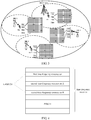
- FIG. 2 is a schematic diagram of time-frequency resource allocation in an R11 system.
- the R11 system not only defines the existing PDCCH resource for transmitting user scheduling indication information, but also defines the E-PDCCH resource on the time-frequency resource, as shown in FIG. 2 , the E-PDCCH resource occupies a part of the existing PDSCH resource, and FDM is adopted between the E-PDCCH resource and the PDSCH resource to share the time-frequency resources.
- embodiments of the present invention are to configure the demodulation pilot sequence for demodulating the E-PDCCH, where the time-frequency resource in the resource set is the E-PDCCH resource, and the demodulation pilot sequence is a pilot sequence for demodulating the E-PDCCH.
- the first resource set and the second resource set obtained after partitioning the resource set respectively includes a part of the E-PDCCH resource in the original resource set.
- the resource set can be partitioned in the following manners:
- the physical resource element set can include: at least one enhanced resource element group (enhanced Resource Element Group, eREG), or a resource element set corresponding to at least one enhanced control channel element (enhanced Control Channel Element, eCCE), or at least one physical resource block (Physical Resource Block, PRB), or at least one physical resource block pair (Physical Resource Block pair, PRB pair).
- eREG enhanced Resource Element Group
- eCCE enhanced Control Channel Element
- PRB Physical Resource Block
- PRB pair Physical Resource Block pair
- Step 102 generate an initial value of a first demodulation pilot sequence on the first resource set according to the first parameter, and generate an initial value of a second demodulation pilot sequence on the second resource set according to the second parameter.
- the formula for calculating the initial value of the demodulation pilot sequence is consistent with that in the prior art, and three parameters are needed, which respectively are a time slot number, a scrambling code ID, and an initial ID of the demodulation pilot sequence.
- C init indicates an initial value of a demodulation pilot sequence
- n s indicates a time slot number
- n SCID is a scrambling code ID
- X is an initial ID of a demodulation pilot sequence
- the value of X can be selected from a candidate ID set
- ⁇ indicates rounding to an integer.
- n s can be obtained by a UE through downlink synchronization, and the initial value of the demodulation pilot sequence can be calculated through the formula above only when n SCID and X are configured in advance.
- the first parameter is a parameter for calculating the initial value of the demodulation pilot sequence of the E-PDCCH in the first resource set
- the second parameter is a parameter for calculating the initial value of the demodulation pilot sequence of the E-PDCCH in the second resource set.
- the first parameter and second parameter above respectively need to include n SCID and X .
- the first parameter can include a scrambling code ID ( n SCID ) which is set to 0 or 1, and an initial ID ( X ) of the first demodulation pilot sequence which is set to the cell ID of the cell where the UE is located.
- the second parameter can include a scrambling code ID ( n SCID ) configured by the network side, and an initial ID ( X ) of the second demodulation pilot sequence configured by the network side; or a scrambling code ID ( n SCID ) which is set to 0 or 1, and an initial ID ( X ) of the second demodulation pilot sequence configured by the network side; or a scrambling code ID ( n SCID ) configured by the network side, and an initial ID ( X ) of the second demodulation pilot sequence which is set to the cell ID of the cell where the UE is located.
- the scrambling code ID configured by the network side in the second parameter can specifically be: a scrambling code ID configured by the network side for the PDSCH; or a scrambling code ID configured by the network side for the E-PDCCH;
- the initial ID of the second demodulation pilot sequence configured by the network side in the second parameter can specifically be: an initial ID of the demodulation pilot sequence configured by the network side for the PDSCH, or an initial ID of the demodulation pilot sequence configured by the network side for the E-PDCCH.
- the UE can obtain the second parameter from the network side and save it.
- the resource set including the E-PDCCH is partitioned, as for different resource sets after partitioning, the initial value of the demodulation pilot sequence of the different resource sets are calculated according to pre-configured different parameters, thus the demodulation pilot sequence for demodulating different E-PDCCHs can be obtained according to the initial value of the demodulation pilot sequence.
- Step 103 obtain the demodulation pilot sequence respectively by using the initial value of the first demodulation pilot sequence and the initial value of the second demodulation pilot sequence.
- the resource set when the partitioning of the resource set is described in embodiments of the present invention, only the manner of partitioning the resource set into two sets which are the first resource set and the second resource set is illustrated, in practical application, the resource set also can be partitioned into two more resource sets as required, as long as for the E-PDCCH in the partitioned resource set, the initial value of the demodulation pilot sequence can be calculated according to the resource set, and the E-PDCCH does not need to carry parameters for calculating the initial value of the demodulation pilot sequence, and embodiments of the invention are not limited in this respect.
- the initial value of the demodulation pilot sequence can be calculated according to the resource set to which the E-PDCCH belongs and the set parameter, thus obtaining the demodulation pilot sequence for demodulating the E-PDCCH, so as to improve demodulation performance of the E-PDCCH.
- the method for configuring a pilot according to an embodiment of the present invention can be applied in a communication system using the CoMP technology, and FIG. 3 is a possible scenario in the communication system.
- FIG. 3 there are three RRH (Remote Radio Head, remote radio head) units within a macro site (macro site), UEs under the macro site and the three RRH units can use the same PRB on the time-frequency resource to transmit the E-PDCCH, for example, in FIG. 3 , they all use PRBs2 to transmit the E-PDCCH.
- RRH Remote Radio Head, remote radio head
- the E-PDCCH multiplexes a part of the PDSCH resource, it is difficult to demodulate the E-PDCCH according to the manner of demodulating the PDSCH; further, if both the scrambling code ID and the initial ID of the demodulation pilot sequence adopt pre-configured fixed values when calculating the initial value of the demodulation pilot sequence, although the deficiency that it is not possible to demodulate the E-PDCCH has been overcome, since the macro site and the RRH units in FIG.
- the initial values of the demodulation pilot sequences calculated according to the fixed values are all the same, and positions of the corresponding demodulation pilot sequences on the time-frequency resource are also the same (gray squares in FIG. 3 ), and therefore, a collision may occur on the demodulation pilot sequences of the E-PDCCH of the macro site and the RRH units which are transmitted on PRB2 of the same time-frequency resource, which may cause the channel estimation performance to degrade and the demodulation performance of the E-PDCCH to decrease.
- the initial values of the demodulation pilot sequences for different resource sets are calculated according to different parameters, so that no collision occurs among the demodulation pilot sequences of the E-PDCCH transmitted on the same time-frequency resource, and the demodulation performance of the E-PDCCH is further improved.
- the first resource set can include a physical resource element set corresponding to a first pilot port set
- the second resource set can include a physical resource element set corresponding to a second pilot port set.
- the first port set can be a port within a first code division multiplexing (Code Division Multiplexing, CDM) group
- the second port set can be a port within a second CDM group.
- CDM Code Division Multiplexing
- the port numbers of the ports within the first CDM group are 7, 8, 11, 13, and the port numbers of the ports within the second CDM group are 9, 10, 12, 14.
- FIG. 6 is a schematic diagram of a resource set partitioned upon a port according to an embodiment of the present invention.
- the RE marked with a letter "A” indicates a physical resource block corresponding to a port in the first port set
- the RE marked with a letter "B” indicates a physical resource block corresponding to a port in the second port set.
- the initial value of the demodulation pilot sequence is usually calculated with a set fixed parameter, namely a scrambling code ID which is set to 0 or 1, and an initial ID of the demodulation pilot sequence which is set to the cell ID of the cell where the UE is located.
- the initial value of the demodulation pilot sequence is usually calculated with a parameter configured by the network side, namely a scrambling code ID configured by the network side, and an initial ID of the demodulation pilot sequence configured by the network side; or the initial value of the demodulation pilot sequence is calculated with a combination of the set fixed parameter and the parameter configured by the network side, namely a scrambling code ID which is set to 0 or 1, and an initial ID of the demodulation pilot sequence configured by the network side; or a scrambling code ID configured by the network side, and an initial ID of the demodulation pilot sequence which is set to the cell ID of the cell where the UE is located.
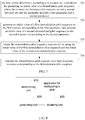
- FIG. 7 is a flow chart of a method for transmitting a pilot according to an embodiment of the present invention, and this embodiment describes the process for transmitting a pilot from the base station side: Step 701: the base station determines, according to a resource set, a parameter for generating an initial value of a demodulation pilot sequence, where the resource set includes a first resource set and a second resource set, and the parameter includes a first parameter and a second parameter.
- the resource set includes a transmission resource for transmitting the E-PDCCH
- the demodulation pilot sequence is a pilot sequence for demodulating the E-PDCCH.
- the resource set can be partitioned in the following manners:
- the physical resource element set can include: at least one eREG, or a resource element set corresponding to at least one eCCE, or at least one PRB, or at least one PRB pair.
- Step 702 generate an initial value of a first demodulation pilot sequence on the first resource set according to the first parameter, and generate an initial value of a second demodulation pilot sequence on the second resource set according to the second parameter.
- the formula for calculating the initial value of the demodulation pilot sequence is consistent with that in the prior art, and three parameters are needed, which respectively are a time slot number, a scrambling code ID, and an initial ID of the demodulation pilot sequence.
- the first parameter can include a scrambling code ID which is set to 0 or 1, and an initial ID of the first demodulation pilot sequence which is set to the cell ID of the cell where the UE is located; and the second parameter can include: a scrambling code ID configured by a network side, and an initial ID of the second demodulation pilot sequence configured by the network side; or a scrambling code ID which is set to 0 or 1, and an initial ID of the second demodulation pilot sequence configured by the network side; or a scrambling code ID configured by the network side, and an initial ID of the second demodulation pilot sequence which is set to the cell ID of the cell where the UE is located.
- the scrambling code ID configured by the network side can include: a scrambling code ID configured by the network side for a physical downlink shared channel (PDSCH); or a scrambling code ID configured by the network side for an enhanced physical downlink control channel (E-PDCCH);
- the initial ID of the second demodulation pilot sequence configured by the network side can include: an initial ID of the demodulation pilot sequence configured by the network side for the PDSCH; or an initial ID of the demodulation pilot sequence configured by the network side for the E-PDCCH.
- Step 703 obtain the demodulation pilot sequence respectively by using the initial value of the first demodulation pilot sequence and the initial value of the second demodulation pilot sequence.
- Step 704 transmit the demodulation pilot sequence on a time-frequency resource corresponding to the demodulation pilot sequence.
- the initial value of the demodulation pilot sequence can be calculated according to the resource set to which the E-PDCCH belongs and the set parameter, thus obtaining the demodulation pilot sequence for demodulating the E-PDCCH, so as to improve demodulation performance of the E-PDCCH.
- an apparatus for configuring a pilot and an apparatus for transmitting a pilot are also provided.
- FIG. 8 is a block diagram of an apparatus for configuring a pilot according to an embodiment of the present invention, and the apparatus is usually provided at a UE side, so as to obtain a demodulation pilot sequence for demodulating the E-PDCCH received by the UE.
- the apparatus for configuring the pilot includes: a determining unit 810, a generating unit 820 and an obtaining unit 830.
- the determining unit 810 is configured to determine, according to a resource set, a parameter for generating an initial value of a demodulation pilot sequence, where the resource set includes a first resource set and a second resource set, and the parameter includes a first parameter and a second parameter;
- the generating element 820 is configured to generate an initial value of a first demodulation pilot sequence on the first resource set according to the first parameter, and generate an initial value of a second demodulation pilot sequence on the second resource set according to the second parameter;
- the obtaining element 830 is configured to obtain the demodulation pilot sequence respectively by using the initial value of the first demodulation pilot sequence and the initial value of the second demodulation pilot sequence.
- the resource set can be partitioned in the following manners:
- the physical resource element set can include: at least one eREG, or a resource element set corresponding to at least one eCCE, or at least one PRB, or at least one PRB pair.
- the first parameter can include a scrambling code ID which is set to 0, and an initial ID of the demodulation pilot sequence which is set to the cell ID of the cell where the UE is located; and the second parameter can include: a scrambling code ID configured by a network side, and an initial ID of the demodulation pilot sequence configured by the network side; or a scrambling code ID which is set to 0 or 1, and an initial ID of the demodulation pilot sequence configured by the network side; or a scrambling code ID configured by the network side, and an initial ID of the demodulation pilot sequence which is set to the cell ID of the cell where the UE is located.
- the scrambling code ID configured by the network side can include: a scrambling code ID configured by the network side for a PDSCH; or a scrambling code ID configured by the network side for an E-PDCCH;
- the initial ID of the second demodulation pilot sequence configured by the network side can include: an initial ID of the demodulation pilot sequence configured by the network side for the PDSCH; or an initial ID of the demodulation pilot sequence configured by the network side for the E-PDCCH.
- FIG. 9 is a block diagram of an apparatus for transmitting a pilot according to an embodiment of the present invention, and the apparatus is usually provided at a base station side.
- the apparatus for transmitting a pilot includes: a determining unit 910, a generating unit 920, an obtaining unit 930 and a transmitting unit 940.
- the determining unit 910 is configured to determine, according to a resource set, a parameter for generating an initial value of a demodulation pilot sequence, where the resource set includes a first resource set and a second resource set, and the parameter includes a first parameter and a second parameter;
- the generating element 920 is configured to generate an initial value of a first demodulation pilot sequence on the first resource set according to the first parameter, and generate an initial value of a second demodulation pilot sequence on the second resource set according to the second parameter;
- the obtaining element 930 is configured to obtain the demodulation pilot sequence respectively by using the initial value of the first demodulation pilot sequence and the initial value of the second demodulation pilot sequence;
- the transmitting element 940 is configured to transmit the demodulation pilot sequence on a time-frequency resource corresponding to the demodulation pilot sequence.
- the resource set can be partitioned in the following manners:
- the physical resource element set can include: at least one eREG, or a resource element set corresponding to at least one eCCE, or at least one PRB, or at least one PRB pair.
- the first parameter can include a scrambling code ID which is set to 0, and an initial ID of the demodulation pilot sequence which is set to the cell ID of the cell where the UE is located; and the second parameter can include: a scrambling code ID configured by a network side, and an initial ID of the demodulation pilot sequence configured by the network side; or a scrambling code ID which is set to 0 or 1, and an initial ID of the demodulation pilot sequence configured by the network side; or a scrambling code ID configured by the network side, and an initial ID of the demodulation pilot sequence which is set to the cell ID of the cell where the UE is located.
- the scrambling code ID configured by the network side can include: a scrambling code ID configured by the network side for a PDSCH; or a scrambling code ID configured by the network side for an E-PDCCH;
- the initial ID of the second demodulation pilot sequence configured by the network side can include: an initial ID of the demodulation pilot sequence configured by the network side for the PDSCH; or an initial ID of the demodulation pilot sequence configured by the network side for the E-PDCCH.
- the UE determines, according to a resource set, a parameter for generating an initial value of a demodulation pilot sequence, where the resource set includes a first resource set and a second resource set, and the parameter includes a first parameter and a second parameter; generates an initial value of a first demodulation pilot sequence on the first resource set according to the first parameter, and generates an initial value of a second demodulation pilot sequence on the second resource set according to the second parameter; and obtains the demodulation pilot sequence respectively by using the initial value of the first demodulation pilot sequence and the initial value of the second demodulation pilot sequence.
- the initial value of the demodulation pilot sequence can be calculated according to the resource set to which the E-PDCCH belongs and the set parameter, thus obtaining the demodulation pilot sequence for demodulating the E-PDCCH, so as to improve demodulation performance of the E-PDCCH.
- the computer software product can be stored in a storage medium, such as a read only memory (ROM)/random access memory (RAM), a floppy disk, or an optical disk, and includes several instructions adapted to enable a computer device (such as a personal computer, a server, or a network device, etc.) to execute the method according to each embodiment or certain parts of the embodiments of the present invention.
- ROM read only memory
- RAM random access memory
- floppy disk or an optical disk
Landscapes
- Engineering & Computer Science (AREA)
- Signal Processing (AREA)
- Computer Networks & Wireless Communication (AREA)
- Mobile Radio Communication Systems (AREA)
Claims (7)
- Procédé de configuration de pilote pour un canal de commande de liaison descendante physique amélioré, E-PDCCH, comprenant les étapes suivantes :déterminer (101), par un équipement d'utilisateur, UE, d'après un premier ensemble de ressources et un second ensemble de ressources pour transmettre l'E-PDCCH, un premier paramètre et un second paramètre, respectivement, pour générer une première valeur initiale d'une première séquence pilote de démodulation et une seconde valeur initiale d'une seconde séquence pilote de démodulation, dans lequel chacun du premier paramètre et du second paramètre comprend un identifiant, ID, de code de brouillage et un ID initial de la séquence pilote de démodulation ;générer (102) la première valeur initiale de la première séquence pilote de démodulation qui est transmise sur le premier ensemble de ressources d'après le premier paramètre, etgénérer la seconde valeur initiale de la seconde séquence pilote de démodulation qui est transmise sur le second ensemble de ressources d'après le second paramètre ; etobtenir (103) la première séquence pilote de démodulation et la seconde séquence pilote de démodulation en utilisant la première valeur initiale de la première séquence pilote de démodulation et la seconde valeur initiale de la seconde séquence pilote de démodulation ;dans lequel,le premier paramètre comprend un ID de code de brouillage qui est réglé sur 0 ou 1, et un ID initial de la première séquence pilote de démodulation qui est réglé sur un ID de cellule d'une cellule où l'UE est situé ;le second paramètre comprend : un ID de code de brouillage configuré par un côté de réseau, et un ID initial de la seconde séquence pilote de démodulation configuré par le côté de réseau ; ou un ID de code de brouillage qui est réglé sur 0 ou 1, et un ID initial de la seconde séquence pilote de démodulation configuré par le côté de réseau ; ou un ID de code de brouillage configuré par le côté de réseau, et un ID initial de la seconde séquence pilote de démodulation qui est réglé sur l'ID de cellule de la cellule où l'UE est situé ; etdans lequel,le premier ensemble de ressources comprend un premier ensemble d'éléments de ressources physiques prévu sur une largeur de bande de système, et le second ensemble de ressources comprend un second ensemble d'éléments de ressources physiques sur la largeur de bande de système à l'exception du premier ensemble d'éléments de ressources physiques prévu sur la largeur de bande de système ;le second ensemble d'éléments de ressources physiques est un ensemble d'éléments de ressources physiques configuré sur l'UE ; le premier ensemble d'éléments de ressources physiques est un ensemble d'éléments de ressources physiques à l'exception de l'ensemble d'éléments de ressources physiques configuré sur l'UE.
- Procédé selon la revendication 1, dans lequel chacun du premier ensemble d'éléments de ressources physiques et du second ensemble d'éléments de ressources physiques comprend :
au moins un groupe d'éléments de ressources amélioré, eREG, ou un ensemble d'éléments de ressources qui correspond à au moins un élément de canal de commande amélioré, eCCE, ou au moins un bloc de ressources physiques, PRB, ou au moins une paire de blocs de ressources physiques, paire de PRB. - Procédé selon la revendication 1, dans lequel :l'ID de code de brouillage configuré par le côté de réseau comprend :un ID de code de brouillage configuré par le côté de réseau pour un canal partagé de liaison descendante physique, PDSCH ; ouun ID de code de brouillage configuré par le côté de réseau pour un canal de commande de liaison descendante physique amélioré, E-PDCCH ;l'ID initial de la seconde séquence pilote de démodulation configuré par le côté de réseau comprend :un ID initial de la séquence pilote de démodulation configuré par le côté de réseau pour le PDSCH ; ouun ID initial de la séquence pilote de démodulation configuré par le côté de réseau pour l'E-PDCCH.
- Procédé de transmission de pilote pour un canal de commande de liaison descendante physique amélioré, E-PDCCH, comprenant les étapes suivantes :déterminer (701), par une station de base, d'après un premier ensemble de ressources et un second ensemble de ressources pour transmettre l'E-PDCCH, un premier paramètre et un second paramètre, respectivement, pour générer une première valeur initiale d'une première séquence pilote de démodulation, et une seconde valeur initiale d'une seconde séquence pilote de démodulation, dans lequel chacun du premier paramètre et du second paramètre comprend un identifiant, ID, de code de brouillage et un ID initial de la séquence pilote de démodulation ;générer (702) la première valeur initiale de la première séquence pilote de démodulation qui est transmise sur le premier ensemble de ressources d'après le premier paramètre, etgénérer la seconde valeur initiale de la seconde séquence pilote de démodulation qui est transmise sur le second ensemble de ressources d'après le second paramètre ;obtenir (703) la première séquence pilote de démodulation et la seconde séquence pilote de démodulation en utilisant la première valeur initiale de la première séquence pilote de démodulation et la seconde valeur initiale de la seconde séquence pilote de démodulation ; ettransmettre (704) la première séquence pilote de démodulation sur une ressource de temps-fréquence qui correspond à la première séquence pilote de démodulation, ettransmettre la seconde séquence pilote de démodulation sur une ressource de temps-fréquence qui correspond à la seconde séquence pilote de démodulation ;dans lequel,le premier paramètre comprend un ID de code de brouillage qui est réglé sur 0 ou 1, et un ID initial de la première séquence pilote de démodulation qui est réglé sur un ID de cellule d'une cellule où un UE est situé ;le second paramètre comprend : un ID de code de brouillage configuré par un côté de réseau, et un ID initial de la seconde séquence pilote de démodulation configuré par le côté de réseau ; ou un ID de code de brouillage qui est réglé sur 0 ou 1, et un ID initial de la seconde séquence pilote de démodulation configuré par le côté de réseau ; ou un ID de code de brouillage configuré par le côté de réseau, et un ID initial de la seconde séquence pilote de démodulation qui est réglé sur l'ID de cellule de la cellule où l'UE est situé ; etdans lequel,le premier ensemble de ressources comprend un premier ensemble d'éléments de ressources physiques prévu sur une largeur de bande de système, et le second ensemble de ressources comprend un second ensemble d'éléments de ressources physiques sur la largeur de bande de système à l'exception du premier ensemble d'éléments de ressources physiques prévu sur la largeur de bande de système ;le second ensemble d'éléments de ressources physiques est un ensemble d'éléments de ressources physiques configuré sur l'UE ; le premier ensemble d'éléments de ressources physiques est un ensemble d'éléments de ressources physiques à l'exception de l'ensemble d'éléments de ressources physiques configuré sur l'UE.
- Procédé selon la revendication 4, dans lequel chacun du premier ensemble d'éléments de ressources physiques et du second ensemble d'éléments de ressources physiques comprend :au moins un groupe d'éléments de ressources amélioré, eREG, ou un ensemble d'éléments de ressources qui correspond à au moins un élément de canal de commande amélioré, eCCE, ou au moins un bloc de ressources physiques, PRB, ou au moins une paire de blocs de ressources physiques, paire de PRB ;dans lequel l'ID de code de brouillage configuré par le côté de réseau comprend :un ID de code de brouillage configuré par le côté de réseau pour un canal partagé de liaison descendante physique, PDSCH ; ouun ID de code de brouillage configuré par le côté de réseau pour un canal de commande de liaison descendante physique amélioré, E-PDCCH ;l'ID initial de la seconde séquence pilote de démodulation configuré par le côté de réseau comprend :un ID initial de la séquence pilote de démodulation configuré par le côté de réseau pour le PDSCH ; ouun ID initial de la séquence pilote de démodulation configuré par le côté de réseau pour l'E-PDCCH.
- Appareil de configuration de pilote prévu au niveau d'un UE pour un canal de commande de liaison descendante physique amélioré, E-PDCCH, comprenant :une unité de détermination (810), configurée de manière à déterminer, d'après un premier ensemble de ressources et un second ensemble de ressources pour transmettre l'E-PDCCH, un premier paramètre et un second paramètre, respectivement, pour générer une première valeur initiale d'une première séquence pilote de démodulation, et une seconde valeur initiale d'une seconde séquence pilote de démodulation, dans lequel chacun du premier paramètre et du second paramètre comprend un identifiant, ID, de code de brouillage et un ID initial de la séquence pilote de démodulation ;une unité de génération (820), configurée de manière à générer la première valeur initiale de la première séquence pilote de démodulation qui est transmise sur le premier ensemble de ressources d'après le premier paramètre, et à générer la seconde valeur initiale de la seconde séquence pilote de démodulation qui est transmise sur le second ensemble de ressources d'après le second paramètre ; etune unité d'obtention (830), configurée de manière à obtenir la première séquence pilote de démodulation et la seconde séquence pilote de démodulation en utilisant la première valeur initiale de la première séquence pilote de démodulation et la seconde valeur initiale de la seconde séquence pilote de démodulation ;dans lequel,le premier paramètre comprend un ID de code de brouillage qui est réglé sur 0 ou 1, et un ID initial de la première séquence pilote de démodulation qui est réglé sur un ID de cellule d'une cellule où l'UE est situé ;le second paramètre comprend : un ID de code de brouillage configuré par un côté de réseau, et un ID initial de la seconde séquence pilote de démodulation configuré par le côté de réseau ; ou un ID de code de brouillage qui est réglé sur 0 ou 1, et un ID initial de la seconde séquence pilote de démodulation configuré par le côté de réseau ; ou un ID de code de brouillage configuré par le côté de réseau, et un ID initial de la seconde séquence pilote de démodulation qui est réglé sur l'ID de cellule de la cellule où l'UE est situé ; etdans lequel,le premier ensemble de ressources comprend un premier ensemble d'éléments de ressources physiques prévu sur une largeur de bande de système, et le second ensemble de ressources comprend un second ensemble d'éléments de ressources physiques sur la largeur de bande de système à l'exception du premier ensemble d'éléments de ressources physiques prévu sur la largeur de bande de système ;le second ensemble d'éléments de ressources physiques est un ensemble d'éléments de ressources physiques configuré sur l'UE ; le premier ensemble d'éléments de ressources physiques est un ensemble d'éléments de ressources physiques à l'exception de l'ensemble d'éléments de ressources physiques configuré sur l'UE.
- Appareil de transmission de pilote pour un canal de commande de liaison descendante physique amélioré, E-PDCCH, comprenant :une unité de détermination (910), configurée de manière à déterminer, d'après un premier ensemble de ressources et un second ensemble de ressources pour transmettre l'E-PDCCH, un premier paramètre et un second paramètre, respectivement, pour générer une première valeur initiale d'une première séquence pilote de démodulation, et une seconde valeur initiale d'une seconde séquence pilote de démodulation, dans lequel chacun du premier paramètre et du second paramètre comprend un identifiant, ID, de code de brouillage et un ID initial de la séquence pilote de démodulation ;une unité de génération (920), configurée de manière à générer la première valeur initiale de la première séquence pilote de démodulation qui est transmise sur le premier ensemble de ressources d'après le premier paramètre, et à générer la seconde valeur initiale de la seconde séquence pilote de démodulation qui est transmise sur le second ensemble de ressources d'après le second paramètre ;une unité d'obtention (930), configurée de manière à obtenir la première séquence pilote de démodulation et la seconde séquence pilote de démodulation en utilisant la première valeur initiale de la première séquence pilote de démodulation et la seconde valeur initiale de la seconde séquence pilote de démodulation ; etune unité de transmission (940), configurée de manière à transmettre la première séquence pilote de démodulation sur une ressource de temps-fréquence qui correspond à la première séquence pilote de démodulation, et la seconde séquence pilote de démodulation sur une ressource de temps-fréquence qui correspond à la seconde séquence pilote de démodulation ;dans lequel,le premier paramètre comprend un ID de code de brouillage qui est réglé sur 0 ou 1, et un ID initial de la première séquence pilote de démodulation qui est réglé sur un ID de cellule d'une cellule où un UE est situé ;le second paramètre comprend : un ID de code de brouillage configuré par un côté de réseau, et un ID initial de la seconde séquence pilote de démodulation configuré par le côté de réseau ; ou un ID de code de brouillage qui est réglé sur 0 ou 1, et un ID initial de la seconde séquence pilote de démodulation configuré par le côté de réseau ; ou un ID de code de brouillage configuré par le côté de réseau, et un ID initial de la seconde séquence pilote de démodulation qui est réglé sur l'ID de cellule de la cellule où l'UE est situé ; etdans lequel,le premier ensemble de ressources comprend un premier ensemble d'éléments de ressources physiques prévu sur une largeur de bande de système, et le second ensemble de ressources comprend un second ensemble d'éléments de ressources physiques sur la largeur de bande de système à l'exception du premier ensemble d'éléments de ressources physiques prévu sur la largeur de bande de système ;le second ensemble d'éléments de ressources physiques est un ensemble d'éléments de ressources physiques configuré sur l'UE ; le premier ensemble d'éléments de ressources physiques est un ensemble d'éléments de ressources physiques à l'exception de l'ensemble d'éléments de ressources physiques configuré sur l'UE.
Applications Claiming Priority (1)
| Application Number | Priority Date | Filing Date | Title |
|---|---|---|---|
| PCT/CN2012/079586 WO2014019194A1 (fr) | 2012-08-02 | 2012-08-02 | Procédé de configuration et procédé d'envoi de séquence pilote ainsi que dispositif |
Publications (3)
| Publication Number | Publication Date |
|---|---|
| EP2882155A1 EP2882155A1 (fr) | 2015-06-10 |
| EP2882155A4 EP2882155A4 (fr) | 2015-07-15 |
| EP2882155B1 true EP2882155B1 (fr) | 2020-02-05 |
Family
ID=50027118
Family Applications (1)
| Application Number | Title | Priority Date | Filing Date |
|---|---|---|---|
| EP12882146.9A Active EP2882155B1 (fr) | 2012-08-02 | 2012-08-02 | Procédé de configuration et procédé d'envoi de séquence pilote ainsi que dispositif |
Country Status (5)
| Country | Link |
|---|---|
| US (2) | US10256951B2 (fr) |
| EP (1) | EP2882155B1 (fr) |
| CN (1) | CN103718526B (fr) |
| ES (1) | ES2785301T3 (fr) |
| WO (1) | WO2014019194A1 (fr) |
Families Citing this family (10)
| Publication number | Priority date | Publication date | Assignee | Title |
|---|---|---|---|---|
| EP3236593B1 (fr) * | 2016-04-21 | 2019-05-08 | LG Electronics Inc. -1- | Procédé et appareil de transmission de données de liaison montante dans un système de communication sans fil |
| US10778387B2 (en) * | 2016-11-23 | 2020-09-15 | Huawei Technologies Co., Ltd. | System and method for group-assisted downlink transmission |
| EP4124137B1 (fr) * | 2017-05-15 | 2026-08-05 | Samsung Electronics Co., Ltd. | Procédé et appareil de configuration d'un ensemble de ressources de commande et de surveillance de canal de commande de liaison descendante dans un système de communication sans fil |
| CN109391342B (zh) * | 2017-08-04 | 2020-10-23 | 华为技术有限公司 | 一种数据传输方法、相关设备及系统 |
| AU2017443191A1 (en) | 2017-12-15 | 2020-01-16 | Guangdong Oppo Mobile Telecommunications Corp., Ltd. | Channel resource set indication method and device, and computer storage medium |
| US11197324B2 (en) * | 2018-02-23 | 2021-12-07 | Qualcomm Incorporated | NR RACH MSG3 and MSG4 resource configuration for CV2X |
| WO2020092760A1 (fr) * | 2018-11-02 | 2020-05-07 | Intel Corporation | Génération de séquence de dmrs aléatoire dans une liaison montante nr |
| CN111698788B (zh) | 2019-03-14 | 2021-10-29 | 上海朗帛通信技术有限公司 | 一种被用于无线通信的用户设备、基站中的方法和装置 |
| CN111757432B (zh) * | 2019-03-29 | 2024-04-26 | 华为技术有限公司 | 一种唤醒方法以及相关装置 |
| US11444733B2 (en) * | 2020-07-29 | 2022-09-13 | Qualcomm Incorporated | Pilot signaling supporting digital post-distortion (DPoD) techniques |
Citations (1)
| Publication number | Priority date | Publication date | Assignee | Title |
|---|---|---|---|---|
| EP2804355A1 (fr) * | 2012-02-01 | 2014-11-19 | Huawei Technologies Co., Ltd | Procédé de traitement de signal pilote de démodulation, station de base et équipement d'utilisateur |
Family Cites Families (9)
| Publication number | Priority date | Publication date | Assignee | Title |
|---|---|---|---|---|
| CN101305529B (zh) * | 2005-10-07 | 2013-04-03 | 诺基亚公司 | 为软频率重用提供公共导频信道的装置和方法 |
| CN101938296B (zh) * | 2009-06-29 | 2014-05-07 | 华为技术有限公司 | 一种导频序列的生成方法、用户设备、基站 |
| WO2011121925A1 (fr) * | 2010-03-29 | 2011-10-06 | パナソニック株式会社 | Appareil terminal, appareil de station de base, procédé de transmission pilote et procédé d'estimation de voie de propagation |
| US9084238B2 (en) * | 2011-09-12 | 2015-07-14 | Blackberry Limited | Searching space and operation for enhanced PDCCH in LTE systems |
| EP2789141A1 (fr) * | 2011-12-09 | 2014-10-15 | Telefonaktiebolaget LM Ericsson (PUBL) | Initialisation de la génération d'un signal de référence dans des réseaux sans fil |
| KR20130091280A (ko) * | 2012-02-07 | 2013-08-16 | 삼성전자주식회사 | 협력 전송을 지원하는 네트워크에서 데이터 전송을 위한 방법 및 장치 |
| US9167561B2 (en) * | 2012-03-12 | 2015-10-20 | Zte (Usa) Inc. | Sequence initialization for demodulation reference signal |
| EP3737029B1 (fr) * | 2012-05-03 | 2024-07-17 | Samsung Electronics Co., Ltd. | Signaux de référence et espace de recherche commun pour des canaux de commande améliorée |
| US20130301562A1 (en) * | 2012-05-09 | 2013-11-14 | Mediatek, Inc. | Methods for Resource Multiplexing of Distributed and Localized transmission in Enhanced Physical Downlink Control Channel |
-
2012
- 2012-08-02 CN CN201280004109.1A patent/CN103718526B/zh active Active
- 2012-08-02 EP EP12882146.9A patent/EP2882155B1/fr active Active
- 2012-08-02 ES ES12882146T patent/ES2785301T3/es active Active
- 2012-08-02 WO PCT/CN2012/079586 patent/WO2014019194A1/fr not_active Ceased
-
2015
- 2015-02-02 US US14/611,743 patent/US10256951B2/en active Active
-
2019
- 2019-02-28 US US16/289,142 patent/US10848282B2/en active Active
Patent Citations (1)
| Publication number | Priority date | Publication date | Assignee | Title |
|---|---|---|---|---|
| EP2804355A1 (fr) * | 2012-02-01 | 2014-11-19 | Huawei Technologies Co., Ltd | Procédé de traitement de signal pilote de démodulation, station de base et équipement d'utilisateur |
Also Published As
| Publication number | Publication date |
|---|---|
| US20190199490A1 (en) | 2019-06-27 |
| EP2882155A4 (fr) | 2015-07-15 |
| US20150146668A1 (en) | 2015-05-28 |
| US10256951B2 (en) | 2019-04-09 |
| EP2882155A1 (fr) | 2015-06-10 |
| US10848282B2 (en) | 2020-11-24 |
| CN103718526B (zh) | 2017-06-20 |
| CN103718526A (zh) | 2014-04-09 |
| WO2014019194A1 (fr) | 2014-02-06 |
| ES2785301T3 (es) | 2020-10-06 |
Similar Documents
| Publication | Publication Date | Title |
|---|---|---|
| US10848282B2 (en) | Method and apparatus for configuring and transmitting pilot | |
| EP2804355B1 (fr) | Procédé de traitement de signal pilote de démodulation, station de base et équipement d'utilisateur | |
| EP3955501B1 (fr) | Procédé, dispositif et système de réception de données de liaison descendante et de transmission harq-ack dans un système de communication sans fil | |
| US10912080B2 (en) | Signal scrambling method and apparatus, and signal descrambling method and apparatus | |
| EP3829127B1 (fr) | Procédé et dispositif pour la génération d'une séquence de signal de référence via une réduction d'un papr dans un système de communications mobiles | |
| EP2918028B1 (fr) | Procédé et appareil de détection aveugle d'un espace de recherche commun et d'un espace de recherche spécifique à un ue | |
| EP4044541B1 (fr) | Appareil et procédé pour la transmission de données | |
| EP3282614B1 (fr) | Procédé de transmission destiné à un canal de commande de liaison descendante physique, station de base et équipement utilisateur | |
| KR101542816B1 (ko) | 제어 채널을 수신 및 송신하기 위한 방법 및 장치 | |
| EP2660994B1 (fr) | Procédé et dispositif d'attribution de ressource de référence | |
| EP2879450B1 (fr) | Procédé de transmission et de réception de canal de commande, station de base et équipement utilisateur | |
| EP3621408A1 (fr) | Procédé de configuration de séquence de signal de référence et dispositif de réseau | |
| EP3337081B1 (fr) | Appareil et procédé de surveillance d'un canal de commande de liaison descendante dans un système de communication sans fil | |
| EP2712254B1 (fr) | Procédé et dispositif de transmission d'un canal de commande | |
| EP2797356B1 (fr) | Procédé et appareil de mappage de ressource pour canal de commande de liaison descendante | |
| CN107294689A (zh) | 导频配置信息的传输方法、装置及系统 | |
| EP2765802B1 (fr) | Procédé et appareil d'envoi de canal de contrôle | |
| CN103391626A (zh) | E-pdcch的传输方法、时频资源确定方法及装置 |
Legal Events
| Date | Code | Title | Description |
|---|---|---|---|
| PUAI | Public reference made under article 153(3) epc to a published international application that has entered the european phase |
Free format text: ORIGINAL CODE: 0009012 |
|
| REG | Reference to a national code |
Ref country code: DE Ref legal event code: R079 Ref document number: 602012067621 Country of ref document: DE Free format text: PREVIOUS MAIN CLASS: H04L0027320000 Ipc: H04L0005000000 |
|
| 17P | Request for examination filed |
Effective date: 20150203 |
|
| AK | Designated contracting states |
Kind code of ref document: A1 Designated state(s): AL AT BE BG CH CY CZ DE DK EE ES FI FR GB GR HR HU IE IS IT LI LT LU LV MC MK MT NL NO PL PT RO RS SE SI SK SM TR |
|
| AX | Request for extension of the european patent |
Extension state: BA ME |
|
| RA4 | Supplementary search report drawn up and despatched (corrected) |
Effective date: 20150612 |
|
| RIC1 | Information provided on ipc code assigned before grant |
Ipc: H04L 5/00 20060101AFI20150608BHEP Ipc: H04L 27/26 20060101ALI20150608BHEP |
|
| DAX | Request for extension of the european patent (deleted) | ||
| 17Q | First examination report despatched |
Effective date: 20160819 |
|
| STAA | Information on the status of an ep patent application or granted ep patent |
Free format text: STATUS: EXAMINATION IS IN PROGRESS |
|
| GRAP | Despatch of communication of intention to grant a patent |
Free format text: ORIGINAL CODE: EPIDOSNIGR1 |
|
| STAA | Information on the status of an ep patent application or granted ep patent |
Free format text: STATUS: GRANT OF PATENT IS INTENDED |
|
| INTG | Intention to grant announced |
Effective date: 20190919 |
|
| GRAS | Grant fee paid |
Free format text: ORIGINAL CODE: EPIDOSNIGR3 |
|
| GRAA | (expected) grant |
Free format text: ORIGINAL CODE: 0009210 |
|
| STAA | Information on the status of an ep patent application or granted ep patent |
Free format text: STATUS: THE PATENT HAS BEEN GRANTED |
|
| AK | Designated contracting states |
Kind code of ref document: B1 Designated state(s): AL AT BE BG CH CY CZ DE DK EE ES FI FR GB GR HR HU IE IS IT LI LT LU LV MC MK MT NL NO PL PT RO RS SE SI SK SM TR |
|
| REG | Reference to a national code |
Ref country code: GB Ref legal event code: FG4D |
|
| REG | Reference to a national code |
Ref country code: AT Ref legal event code: REF Ref document number: 1230624 Country of ref document: AT Kind code of ref document: T Effective date: 20200215 |
|
| REG | Reference to a national code |
Ref country code: DE Ref legal event code: R096 Ref document number: 602012067621 Country of ref document: DE |
|
| REG | Reference to a national code |
Ref country code: IE Ref legal event code: FG4D |
|
| REG | Reference to a national code |
Ref country code: CH Ref legal event code: EP |
|
| REG | Reference to a national code |
Ref country code: NL Ref legal event code: MP Effective date: 20200205 |
|
| PG25 | Lapsed in a contracting state [announced via postgrant information from national office to epo] |
Ref country code: RS Free format text: LAPSE BECAUSE OF FAILURE TO SUBMIT A TRANSLATION OF THE DESCRIPTION OR TO PAY THE FEE WITHIN THE PRESCRIBED TIME-LIMIT Effective date: 20200205 Ref country code: NO Free format text: LAPSE BECAUSE OF FAILURE TO SUBMIT A TRANSLATION OF THE DESCRIPTION OR TO PAY THE FEE WITHIN THE PRESCRIBED TIME-LIMIT Effective date: 20200505 Ref country code: PT Free format text: LAPSE BECAUSE OF FAILURE TO SUBMIT A TRANSLATION OF THE DESCRIPTION OR TO PAY THE FEE WITHIN THE PRESCRIBED TIME-LIMIT Effective date: 20200628 Ref country code: FI Free format text: LAPSE BECAUSE OF FAILURE TO SUBMIT A TRANSLATION OF THE DESCRIPTION OR TO PAY THE FEE WITHIN THE PRESCRIBED TIME-LIMIT Effective date: 20200205 |
|
| REG | Reference to a national code |
Ref country code: LT Ref legal event code: MG4D |
|
| PG25 | Lapsed in a contracting state [announced via postgrant information from national office to epo] |
Ref country code: HR Free format text: LAPSE BECAUSE OF FAILURE TO SUBMIT A TRANSLATION OF THE DESCRIPTION OR TO PAY THE FEE WITHIN THE PRESCRIBED TIME-LIMIT Effective date: 20200205 Ref country code: SE Free format text: LAPSE BECAUSE OF FAILURE TO SUBMIT A TRANSLATION OF THE DESCRIPTION OR TO PAY THE FEE WITHIN THE PRESCRIBED TIME-LIMIT Effective date: 20200205 Ref country code: LV Free format text: LAPSE BECAUSE OF FAILURE TO SUBMIT A TRANSLATION OF THE DESCRIPTION OR TO PAY THE FEE WITHIN THE PRESCRIBED TIME-LIMIT Effective date: 20200205 Ref country code: GR Free format text: LAPSE BECAUSE OF FAILURE TO SUBMIT A TRANSLATION OF THE DESCRIPTION OR TO PAY THE FEE WITHIN THE PRESCRIBED TIME-LIMIT Effective date: 20200506 Ref country code: BG Free format text: LAPSE BECAUSE OF FAILURE TO SUBMIT A TRANSLATION OF THE DESCRIPTION OR TO PAY THE FEE WITHIN THE PRESCRIBED TIME-LIMIT Effective date: 20200505 Ref country code: IS Free format text: LAPSE BECAUSE OF FAILURE TO SUBMIT A TRANSLATION OF THE DESCRIPTION OR TO PAY THE FEE WITHIN THE PRESCRIBED TIME-LIMIT Effective date: 20200605 |
|
| PG25 | Lapsed in a contracting state [announced via postgrant information from national office to epo] |
Ref country code: NL Free format text: LAPSE BECAUSE OF FAILURE TO SUBMIT A TRANSLATION OF THE DESCRIPTION OR TO PAY THE FEE WITHIN THE PRESCRIBED TIME-LIMIT Effective date: 20200205 |
|
| REG | Reference to a national code |
Ref country code: ES Ref legal event code: FG2A Ref document number: 2785301 Country of ref document: ES Kind code of ref document: T3 Effective date: 20201006 |
|
| PG25 | Lapsed in a contracting state [announced via postgrant information from national office to epo] |
Ref country code: DK Free format text: LAPSE BECAUSE OF FAILURE TO SUBMIT A TRANSLATION OF THE DESCRIPTION OR TO PAY THE FEE WITHIN THE PRESCRIBED TIME-LIMIT Effective date: 20200205 Ref country code: EE Free format text: LAPSE BECAUSE OF FAILURE TO SUBMIT A TRANSLATION OF THE DESCRIPTION OR TO PAY THE FEE WITHIN THE PRESCRIBED TIME-LIMIT Effective date: 20200205 Ref country code: SM Free format text: LAPSE BECAUSE OF FAILURE TO SUBMIT A TRANSLATION OF THE DESCRIPTION OR TO PAY THE FEE WITHIN THE PRESCRIBED TIME-LIMIT Effective date: 20200205 Ref country code: SK Free format text: LAPSE BECAUSE OF FAILURE TO SUBMIT A TRANSLATION OF THE DESCRIPTION OR TO PAY THE FEE WITHIN THE PRESCRIBED TIME-LIMIT Effective date: 20200205 Ref country code: CZ Free format text: LAPSE BECAUSE OF FAILURE TO SUBMIT A TRANSLATION OF THE DESCRIPTION OR TO PAY THE FEE WITHIN THE PRESCRIBED TIME-LIMIT Effective date: 20200205 Ref country code: RO Free format text: LAPSE BECAUSE OF FAILURE TO SUBMIT A TRANSLATION OF THE DESCRIPTION OR TO PAY THE FEE WITHIN THE PRESCRIBED TIME-LIMIT Effective date: 20200205 Ref country code: LT Free format text: LAPSE BECAUSE OF FAILURE TO SUBMIT A TRANSLATION OF THE DESCRIPTION OR TO PAY THE FEE WITHIN THE PRESCRIBED TIME-LIMIT Effective date: 20200205 |
|
| REG | Reference to a national code |
Ref country code: DE Ref legal event code: R097 Ref document number: 602012067621 Country of ref document: DE |
|
| REG | Reference to a national code |
Ref country code: AT Ref legal event code: MK05 Ref document number: 1230624 Country of ref document: AT Kind code of ref document: T Effective date: 20200205 |
|
| PLBE | No opposition filed within time limit |
Free format text: ORIGINAL CODE: 0009261 |
|
| STAA | Information on the status of an ep patent application or granted ep patent |
Free format text: STATUS: NO OPPOSITION FILED WITHIN TIME LIMIT |
|
| 26N | No opposition filed |
Effective date: 20201106 |
|
| PG25 | Lapsed in a contracting state [announced via postgrant information from national office to epo] |
Ref country code: AT Free format text: LAPSE BECAUSE OF FAILURE TO SUBMIT A TRANSLATION OF THE DESCRIPTION OR TO PAY THE FEE WITHIN THE PRESCRIBED TIME-LIMIT Effective date: 20200205 |
|
| PG25 | Lapsed in a contracting state [announced via postgrant information from national office to epo] |
Ref country code: PL Free format text: LAPSE BECAUSE OF FAILURE TO SUBMIT A TRANSLATION OF THE DESCRIPTION OR TO PAY THE FEE WITHIN THE PRESCRIBED TIME-LIMIT Effective date: 20200205 Ref country code: SI Free format text: LAPSE BECAUSE OF FAILURE TO SUBMIT A TRANSLATION OF THE DESCRIPTION OR TO PAY THE FEE WITHIN THE PRESCRIBED TIME-LIMIT Effective date: 20200205 |
|
| PG25 | Lapsed in a contracting state [announced via postgrant information from national office to epo] |
Ref country code: MC Free format text: LAPSE BECAUSE OF FAILURE TO SUBMIT A TRANSLATION OF THE DESCRIPTION OR TO PAY THE FEE WITHIN THE PRESCRIBED TIME-LIMIT Effective date: 20200205 |
|
| REG | Reference to a national code |
Ref country code: CH Ref legal event code: PL |
|
| GBPC | Gb: european patent ceased through non-payment of renewal fee |
Effective date: 20200802 |
|
| PG25 | Lapsed in a contracting state [announced via postgrant information from national office to epo] |
Ref country code: LU Free format text: LAPSE BECAUSE OF NON-PAYMENT OF DUE FEES Effective date: 20200802 Ref country code: CH Free format text: LAPSE BECAUSE OF NON-PAYMENT OF DUE FEES Effective date: 20200831 Ref country code: LI Free format text: LAPSE BECAUSE OF NON-PAYMENT OF DUE FEES Effective date: 20200831 |
|
| REG | Reference to a national code |
Ref country code: BE Ref legal event code: MM Effective date: 20200831 |
|
| PG25 | Lapsed in a contracting state [announced via postgrant information from national office to epo] |
Ref country code: FR Free format text: LAPSE BECAUSE OF NON-PAYMENT OF DUE FEES Effective date: 20200831 |
|
| PG25 | Lapsed in a contracting state [announced via postgrant information from national office to epo] |
Ref country code: BE Free format text: LAPSE BECAUSE OF NON-PAYMENT OF DUE FEES Effective date: 20200831 Ref country code: GB Free format text: LAPSE BECAUSE OF NON-PAYMENT OF DUE FEES Effective date: 20200802 Ref country code: IE Free format text: LAPSE BECAUSE OF NON-PAYMENT OF DUE FEES Effective date: 20200802 |
|
| PG25 | Lapsed in a contracting state [announced via postgrant information from national office to epo] |
Ref country code: TR Free format text: LAPSE BECAUSE OF FAILURE TO SUBMIT A TRANSLATION OF THE DESCRIPTION OR TO PAY THE FEE WITHIN THE PRESCRIBED TIME-LIMIT Effective date: 20200205 Ref country code: MT Free format text: LAPSE BECAUSE OF FAILURE TO SUBMIT A TRANSLATION OF THE DESCRIPTION OR TO PAY THE FEE WITHIN THE PRESCRIBED TIME-LIMIT Effective date: 20200205 Ref country code: CY Free format text: LAPSE BECAUSE OF FAILURE TO SUBMIT A TRANSLATION OF THE DESCRIPTION OR TO PAY THE FEE WITHIN THE PRESCRIBED TIME-LIMIT Effective date: 20200205 |
|
| PG25 | Lapsed in a contracting state [announced via postgrant information from national office to epo] |
Ref country code: MK Free format text: LAPSE BECAUSE OF FAILURE TO SUBMIT A TRANSLATION OF THE DESCRIPTION OR TO PAY THE FEE WITHIN THE PRESCRIBED TIME-LIMIT Effective date: 20200205 Ref country code: AL Free format text: LAPSE BECAUSE OF FAILURE TO SUBMIT A TRANSLATION OF THE DESCRIPTION OR TO PAY THE FEE WITHIN THE PRESCRIBED TIME-LIMIT Effective date: 20200205 |
|
| PGFP | Annual fee paid to national office [announced via postgrant information from national office to epo] |
Ref country code: ES Payment date: 20250903 Year of fee payment: 14 |
|
| PGFP | Annual fee paid to national office [announced via postgrant information from national office to epo] |
Ref country code: DE Payment date: 20250702 Year of fee payment: 14 |
|
| PGFP | Annual fee paid to national office [announced via postgrant information from national office to epo] |
Ref country code: IT Payment date: 20250722 Year of fee payment: 14 |