EP2895006B1 - Utilisation d'hydrolysats de protéines et de nucléotides pour améliorer la sapidité d'aliments pour poissons - Google Patents
Utilisation d'hydrolysats de protéines et de nucléotides pour améliorer la sapidité d'aliments pour poissons Download PDFInfo
- Publication number
- EP2895006B1 EP2895006B1 EP13789509.0A EP13789509A EP2895006B1 EP 2895006 B1 EP2895006 B1 EP 2895006B1 EP 13789509 A EP13789509 A EP 13789509A EP 2895006 B1 EP2895006 B1 EP 2895006B1
- Authority
- EP
- European Patent Office
- Prior art keywords
- palatability
- fish
- feed
- amino acids
- nucleotides
- Prior art date
- Legal status (The legal status is an assumption and is not a legal conclusion. Google has not performed a legal analysis and makes no representation as to the accuracy of the status listed.)
- Active
Links
Images



Classifications
-
- A—HUMAN NECESSITIES
- A23—FOODS OR FOODSTUFFS; TREATMENT THEREOF, NOT COVERED BY OTHER CLASSES
- A23K—FODDER
- A23K50/00—Feeding-stuffs specially adapted for particular animals
- A23K50/80—Feeding-stuffs specially adapted for particular animals for aquatic animals, e.g. fish, crustaceans or molluscs
-
- A—HUMAN NECESSITIES
- A23—FOODS OR FOODSTUFFS; TREATMENT THEREOF, NOT COVERED BY OTHER CLASSES
- A23K—FODDER
- A23K20/00—Accessory food factors for animal feeding-stuffs
- A23K20/10—Organic substances
- A23K20/142—Amino acids; Derivatives thereof
- A23K20/147—Polymeric derivatives, e.g. peptides or proteins
-
- A—HUMAN NECESSITIES
- A23—FOODS OR FOODSTUFFS; TREATMENT THEREOF, NOT COVERED BY OTHER CLASSES
- A23K—FODDER
- A23K20/00—Accessory food factors for animal feeding-stuffs
- A23K20/10—Organic substances
- A23K20/153—Nucleic acids; Hydrolysis products or derivatives thereof
-
- A—HUMAN NECESSITIES
- A23—FOODS OR FOODSTUFFS; TREATMENT THEREOF, NOT COVERED BY OTHER CLASSES
- A23K—FODDER
- A23K40/00—Shaping or working-up of animal feeding-stuffs
- A23K40/30—Shaping or working-up of animal feeding-stuffs by encapsulating; by coating
Definitions
- the present invention relates to the field of aquaculture, more particularly fish feed in aquaculture.
- the invention concerns a method for preparing carnivorous fish feed pellets having enhanced palatability, wherein a protein hydrolysate having a degree of hydrolysis (DH) from 14.5 to 100% is combined to one or more nucleotides, and applied to carnivorous fish feed pellets.
- a protein hydrolysate having a degree of hydrolysis (DH) from 14.5 to 100% is combined to one or more nucleotides, and applied to carnivorous fish feed pellets.
- the fish feed industry has become more and more interested in finding satisfying alternatives to fish meal and fish oil to be used for preparing feed for fish farming.
- the dietary level of fish meal remains crucial for achieving feed performance, affecting both feed palatability and feed utilization.
- the level of fish meal in feed designed for carnivorous fish species tends to decrease and is close to reach a critical threshold for fish growth and feed utilization.
- Plant- and land-based feedstuffs are now commonly proposed in fish feed formulations as an alternative to fish meal.
- balancing the dietary amino acid profile of plant-rich diets to meet the fish amino acid requirements is not efficient enough to get satisfying fish and feed performances.
- Feed palatability is firstly affected when substituting fish meal by plant- and land-based meals.
- the feeding behaviour of fish is characterized by no feed nibbling and fast pellet ingestion.
- the transit time of pellets in the water is very short as they are eaten very fast by the fish when distributed.
- Pellets are not (or rarely) broken in the mouth of fish.
- a satisfying palatability enhancer needs thus to have a high contact with water to stimulate olfactory and gustatory fish receptors and to be easily sensed by the fish.
- fish are different from other animal by some specificity.
- physiology if in mammals, most of the taste buds are located into the mouth and the digestive tract, in fishes, the taste buds are distributed in the lips, gill rakers, pharynx, oral cavity, and also on the body surface with some variations depending on the species (Ishimaru et al. 2005).
- Fish species respond to water-soluble chemical compounds, such as amino acids, organic acids, sugars, nucleotides, and bile acids, with higher sensitivity than mammals do (Hara, 1994).
- T1 Rs the taste receptors to amino acids and sweetness
- fish are characterized by having multiple T1 R2s, all of which act as receptors to amino acids, although this receptor is specialized in sweet perception in most of other vertebrates.
- Vertebrate T1 R2s have probably evolved to adapt themselves to necessary nutrients depending on the species: fish to amino acids and mammals to sugars (Oike et al. 2007).
- T2R receptor sensible to bitterness Dong et al. (2009) suggested a major divergence between the intact T2R genes of teleosts fishes and tetrapods. These taste genes were classed as the 'tetrapod group' and other genes in teleosts fishes as the 'fish group' (Dong et al. 2009). These are evidences for difference in bitter taste sensitivity between terrestrial vertebrates and fishes. A good illustration is the response to arginine which is considered as bitter in human and taste stimulant in fish (Grosvenor et al., 1998).
- fish are considered as different from terrestrial vertebrates such as mammals for their taste perception.
- PEs palatability enhancers
- the present invention concerns a method for preparing carnivorous fish feed pellets having enhanced palatability.
- the present invention also relates to a method for enhancing the palatability of carnivorous fish feed pellets.
- the present invention further provides a method for enhancing the palatability of carnivorous fish feed pellets containing a protein hydrolysate.
- the invention further concerns a method for enhancing the palatability effect of a protein hydrolysate to be applied to carnivorous fish feed pellets.
- the present invention is related to a method for feeding carnivorous fish.
- the present invention also relates to the use of one or more nucleotides for enhancing the palatability effect of a protein hydrolysate contained in carnivorous fish feed pellets.
- the present invention further provides the use of one or more nucleotides for enhancing the palatability effect of a protein hydrolysate contained in a PEC intended to be applied to carnivorous fish feed pellets.
- ranges are stated in shorthand, so as to avoid having to set out at length and describe each and every value within the range. Any appropriate value within the range can be selected, where appropriate, as the upper value, lower value, or the terminus of the range.
- a range of 0.1-1.0 represents the terminal values of 0.1 and 1.0, as well as the intermediate values of 0.2, 0.3, 0.4, 0.5, 0.6, 0.7, 0.8, 0.9, and all intermediate ranges encompassed within 0.1-1.0, such as 0.2-0.5, 0.2-0.8, 0.7-1.0, etc.
- pen will be used below to refer to anyone of a pen, a pond, a tank, and a cage.
- fish refers to any fish species that can be reared for the purposes of supplying dietary fish to the population (humans and animals, in particular, companion animals).
- group of fish that are defined by the nutritional requirements and feeding habits of the fish: the group of carnivorous fish, the group of omnivorous fish, and the group of herbivorous fish.
- the fish according to the invention is a carnivorous fish or an omnivorous fish, more particularly a carnivorous fish.
- barb species Puntius spp.
- black carp Mylopharyngodon piceus
- Chinese mud carp Cirrhinus molitorella
- climbing perch Alignudineus
- common carp Cyprinus carpio
- crucian carp Carassius carassius
- pirapatinga Pieroactus brachypomus
- Silver or Java barb Barbonymus gonionotus
- Indian mrigal carp Cirrhinus mrigala
- Pacu Pieractus mesopotamicus
- Tilapia species [Oreochromis spp.
- herbivorous fish species As examples of herbivorous fish species, one can cite Chinese silver carp ( Hypophtalmichthys molitrix ) , Indian catla carp ( Catla catla ) , Indian rohu carp ( Labeo rohita ) , milkfish ( Chanos chanos ) , mullet ( Mugil cephalus ) , Chinese grass carp ( Ctenopharyngodon idella ) , Chinese "Wuchang” bream ( Megalobrama amblycephala ) , large gourami ( Osphronemus goramy ) , snakeskin gourami ( Trichigaster pectoralis ) , some Tilapia species ( Tilapia rendalli and Tilapia zillii ) , giant gourami (Osphronemus goramy), bighead carp ( Hypophthalmichthys nobilis (filter feeder)).
- Chinese silver carp Hypoph
- feed means a product or composition that is intended for ingestion by a fish and provides at least one nutrient to the fish.
- the composition of the feed depends on the group of fish that will be fed with said feed.
- a feed for carnivorous fish is different from a feed for omnivorous fish and from a feed for herbivorous fish, the two latter feeds being also different from each other.
- fish, especially carnivorous fish need protein, fat, minerals and vitamins in order to grow and to be in good health.
- feed according to the present invention excludes "baits" that are only used to attract fish.
- extrusion means to create an object having a fixed cross-sectional profile. This is done by pulling or forcing a formable material through a die opening having the desired cross-section.
- extruders of the single screw or double screw type are used.
- the extruded material is a mixture of protein raw materials, starch containing raw materials, fat, and water.
- the water may be added to the mixture in the form of water or steam.
- the mixture may comprise minerals and vitamins and possibly pigment.
- the mixture may be preheated in a preconditioner where the heating takes place by addition of steam to the mixture.
- extrusion is also termed "cooking extrusion”.
- extrusion is meant herein cooking extrusion either by means of a single screw extruder or a double screw extruder.
- extruded feed is meant a feed produced by cooking extrusion either by means of a single screw extruder or a double screw extruder.
- Extruded fish feed is typically in the form of pellets. Most of, if not all, currently-available "extruded feed” contain less than about 10% water and are oil-coated.
- a “pressed feed” is meant a feed produced by means of a feed press. This process differs from extrusion in several ways. There is used less water and steam in the process. The feed mixture is forced through a die ring from the inside out by means of rollers rotating on the inside of the die ring. Temperature and pressure are lower than in extrusion, and the product is not porous. The process entails that the starch is not as digestive as after extrusion.
- a “pressed feed” will normally contain less than about 10% water after pressing and any oil coating. It is not necessary to dry a pressed feed. The feed is cooled prior to optional packaging.
- a “formulated fish feed” is meant a feed composed of one or more protein sources such as, but not limited to, marine protein including, inter alia, fish meal and krill meal, vegetable protein (e.g., soy meal, rapeseed meal, wheat gluten, corn gluten, lupine meal, pea meal, sunflower seed meal, and rice meal), and slaughterhouse waste such as blood meal, bone meal, feather meal, and poultry meal.
- protein sources such as, but not limited to, marine protein including, inter alia, fish meal and krill meal, vegetable protein (e.g., soy meal, rapeseed meal, wheat gluten, corn gluten, lupine meal, pea meal, sunflower seed meal, and rice meal), and slaughterhouse waste such as blood meal, bone meal, feather meal, and poultry meal.
- a "formulated feed” further contains fats such as fish oil and/or plant-based oils (e.g., rapeseed oil and soy oil), and/or land-based fats (in particular, poultry fat) as energy sources.
- a formulated feed also contains a binder, usually in the form of a starch-containing raw material, such as wheat or wheat flour, potato flour, rice, rice flour, pea flour, beans or tapioca flour, to give the feed the desired strength and form stability.
- a typical "formulated feed” further contains minerals and vitamins for taking care of good growth and good health of the fish.
- the feed may also contain further additives such as pigments.
- a “formulated fish feed” is thus a composite feed wherein the relative amounts between proteins, fats, carbohydrates, vitamins, minerals and any other additives are calculated to be optimally adapted to the nutritional needs of the group of fish and of the fish species based on the age of the fish, the rearing method and the environmental conditions. It is common that feeding is done with only one type of feed at once and with that every piece of feed is nutritionally adequate. Thus, a “formulated fish feed” commonly has an approximate composition of 25-60 wt% protein, 5-40 wt% lipid, and 3-15 wt% moisture.
- dry, formulated feed a feed of the pressed or extruded type.
- pellet used herein refers to particulate chunks or pieces formed by either a press or extrusion process.
- the pieces can vary in sizes and/or shapes, depending on the process or the equipment.
- Most fish feed pellets have a cylindrical shape. Since the fish is farmed using a fish feed product, starting with fingerlings (having the weight of about 1 g) up to large fish having a weight of several kilograms (e.g. 4 to 5 kg), various pellet sizes are required and used in the feeding at different stages of the growth of the fish. Size and/or shape of the pellets have indeed to be adapted to the size of the fish. Thus, during one cycle of fish rearing, pellets of increasing sizes are used as the fish is growing.
- pellets of 5 different sizes are commonly used to comply with the fish growth.
- the size of the pellet to be used is determined by the size of the fish in accordance with prior practice.
- feed pellets fulfil both definitions of “feed” and “pellets” above.
- feed pellets refer not only to the composition and formulation of the feed but also to the physical structure, the shape, the size, and the density of the pellets.
- palatability means a preference of a fish for one feed to another. Palatability refers to the overall willingness of a fish to eat a certain feed. Advantageously but not necessarily, palatability further refers to the capacity of the eaten feed to satisfy the fish. Whenever a fish shows a preference, for example, for one of two or more feeds, the preferred feed is more "palatable” and has “enhanced palatability".
- the palatability of one feed compared to one or more other feeds can be determined, for example, by testing consumption of the feeds by fish. Such preference can arise from any of the fish senses, but typically is related to, interalia, taste, smell, aroma, flavour, texture, and/or mouth feel.
- a fish feed stated herein to have "enhanced palatability" is one for which a fish exhibits preference compared to a control feed composition.
- palatability enhancers mean any material that enhances the palatability of a feed composition to a fish.
- a PE may be a single material or a blend of materials, and it may be natural, processed or unprocessed, synthetic, or part of natural and part of synthetic materials.
- a PE useful in fish feed is an edible composition that provides a taste, smell, aroma, flavour, texture, mouth feel, and/or organoleptic sensation that is appealing or pleasing to the fish.
- PEs useful in fish feed belong to the ACTIPALTM product line (Aquativ, SPF, France).
- a "palatability-enhancing composition ingredient” is any compound, composition or material that is suitable for fish consumption.
- palatability-enhancing composition ingredients are protein hydrolysates (including animal meals and/or hydrolysates, fish meals and/or hydrolysates, krill meals and/or hydrolysates, crustacean meals and/or hydrolysates, mollusk meals and/or hydrolysates (including worms), feather meals and/or hydrolysates, yeasts and/or hydrolysates and/or extracts, plant hydrolysates, algae meals and/or hydrolysates and/or extracts), nitrogen compounds [e.g., proteins, protein hydrolysates, peptides, and amino acids (in particular, free amino acids), amino acid derivatives (betaine, taurine)], nucleosides, nucleotides, carbohydrates, lipids or fats, organic acids, and the like.
- palatability-enhancing composition ingredient any functional, active or bioactive edible
- Protein hydrolysates can be obtained by conventional techniques, directly or indirectly (from protein extracts that can be pretreated or not), from raw materials which can be whole or part of one or more of animals, plants, algae, and microorganisms, and which may have been frozen or not.
- protein hydrolysis can be achieved by one or more of physical means (e.g., heat and/or shear), chemical means (using acids or bases), enzymatic means (using endogenous enzymes, particularly proteases - thereby obtaining autolysates or ensilages -, and/or exogenous enzymes, particularly proteases).
- amino acid means a molecule containing both an amino group and a carboxyl group.
- the amino acids are ⁇ -, ⁇ -, ⁇ - or ⁇ -amino acids, including their stereoisomers and racemates.
- peptide By the term “peptide”, it is meant herein a short chain of amino acids. By “short chain of amino acids”, it is typically referred to a chain having from 2 to about 6 amino acids. In particular, a “peptide” in the present context has a molecular weight (MW) equal to or less than about 1000 Da.
- free amino acids refers to amino acids in non-peptidic form (i.e., not forming part of a molecule comprising two or more amino acid residues bound via a peptide bond).
- natural amino acids refers to amino acids found in vivo and which are produced by at least one naturally occurring organism, although they can also be produced by various chemical and/or biochemical means.
- the natural amino acids share a common stereochemistry, being all L-amino acids.
- natural amino-acids one can cite histidine, isoleucine, leucine, lysine, methionine, phenylalanine, threonine, tryptophan, valine, alanine, arginine, asparagine, aspartic acid, cysteine, cystine, glutamic acid, glutamine, glycine, ornithine, proline, selenocysteine, serine and tyrosine.
- non-natural amino acids relates to amino acids, which are not produced in vivo.
- reducing sugars means any monosaccharide or disaccharide that either has an aldehyde group or a ketone group or is capable of forming one in solution through isomerism.
- the functional group allows the sugar to act as a reducing agent for example in the Tollens' test or Benedict's test, or the Maillard reaction.
- Non-limiting examples include ribose, xylose, arabinose, mannose, glucose, fructose, rhamnose, lactose, maltose, fucose, galactose, and the like.
- DH degree of hydrolysis
- methods used in the food and feed industries, and more specifically in the fish feed industry, for quantifying the DH are typically based on one of the following principles: (1) determination of soluble nitrogen in the presence of a precipitating agent such as trichloroacetic acid (TCA); or (2) determination of free alpha amino groups by colorometric methods (e.g., titration with trinitrobenzenesulfonic acid, TNBS), or pH titration of the released protons (“pH stat").
- TCA trichloroacetic acid
- DH may advantageously be determined by an OPA (o-phthaldialdehyde)-based method as described in Nielsen (2001).
- OPA o-phthaldialdehyde
- TCA-soluble nitrogen may be determined by the Kjeldhal assay (A.O.A.C. 1995) or the Biuret reaction (Hung et al. 1984). Such methods are described in detail in Silvestre (1997).
- a “nucleoside” is a compound containing a purine or pyrimidine base linked to a sugar (usually, ribose or deoxyribose), such as adenosine, inosine, uridine, guanosine, cytidine, ribothymidine, deoxyadenosine, deoxyinosine, deoxythymidine, deoxyuridine, deoxyguanosine, deoxycytidine, and the like.
- ribose or deoxyribose such as adenosine, inosine, uridine, guanosine, cytidine, ribothymidine, deoxyadenosine, deoxyinosine, deoxythymidine, deoxyuridine, deoxyguanosine, deoxycytidine, and the like.
- a “nucleotide” is any compound consisting of a nucleoside combined with a phosphate group such as adenosine monophosphate, inosine monophosphate, thymidine monophosphate, uridine monophosphate, guanosine monophosphate, cytidine monophosphate, adenosine diphosphate, inosine diphosphate, thymidine diphosphate, uridine diphosphate, guanosine diphosphate, cytidine diphosphate, adenosine triphosphate, inosine triphosphate, thymidine triphosphate, uridine triphosphate, guanosine triphosphate, cytidine triphosphate, deoxyadenosine monophosphate, deoxyinosine monophosphate, deoxythymidine monophosphate, deoxyuridine monophosphate, deoxyguanosine monophosphate, deoxycytidine monophosphate, deoxyadenosine diphosphat
- lipids examples include tallow, oils, fats from any origin such as animal, plant (including vegetable), dairy or marine oils, all of these being indifferently herein referred to as "lipids", “fats” or “oils”.
- Plant oils which are available in large quantities are typically canola oil, soybean oil, corn oil, olive oil, sunflower oil, rapeseed oil, linseed oil, palm oil, safflower oil, and the like, as well as by-products thereof.
- Typical animal fats are tallow, lard, poultry fat, beef fat, and the like, as well as by-products thereof.
- Marine oils are typically tuna oil, sardine oil, salmon oil, anchovy oil, other pelagic fish oil, and the like, as well as by-products thereof. Also are encompassed herein the fats that are derived from animal, plant, marine sources, or that are produced by fish, animals and plants. Preferably, fish feed contains marine oils.
- palatability-enhancing composition ingredients include more particularly "nutrients” or “macronutrients”, and “micronutrients”.
- nutrients are, without limitation, fish-, plant- and land-based raw materials, nitrogen compounds (e.g., proteins, peptides, amino acids, especially free amino acids, amino acid derivatives), carbohydrates, fats, and the like.
- micronutrients include, without limitation, vitamins, minerals and oligoelements, such as vitamins A, C, E, B12, D3, folic acid, D-biotin, cyanocobalamin, niacinamide, thiamine, riboflavin, pyridoxine, menadione, beta-carotene, calcium pantothenate, choline, inositol, calcium, phosphorus, potassium, sodium, zinc, iron, manganese, copper, iodine, and the like.
- vitamins, minerals and oligoelements such as vitamins A, C, E, B12, D3, folic acid, D-biotin, cyanocobalamin, niacinamide, thiamine, riboflavin, pyridoxine, menadione, beta-carotene, calcium pantothenate, choline, inositol, calcium, phosphorus, potassium, sodium, zinc, iron, manganese, copper,
- the term "nutrients” may be used to refer to nutrients or to micronutrients or to both. Of course, the exact meaning of this term will be made clear by the context to the skilled artisan.
- Preservatives are in particular used for ensuring a long shelf life of feed, in particular of fish feed.
- Preservatives comprise natural or synthetic anti-oxidants (such as ethoxyquine, BHA, BHT, propyl gallate, octyl gallate, tocopherols, rosemary extracts, and the like); chelatants (e.g., citric acid); as well as sorbic acid or sorbic salts (e.g., potassium sorbate), and other acids like phosphoric acid, and the like.
- a “pigment” means herein any substance of natural origin or any synthetic colour that is suitable (preferably, approved or certified) for use in fish feed. Pigments are useful to, inter alia, give an appetizing colour to a fish feed and/or give an appetizing colour to the fish intended for consumption by animals and/or humans. Examples of commonly used pigments in aquaculture are carotenoids (such as canthaxanthin, astaxanthin, etc.), and the like.
- a “thermal reaction” is, according to the present invention, a reaction obtained by combining at an elevated temperature, at least one carbohydrate, preferably a reducing sugar, and at least one nitrogen compound. Such a reaction may actually include various concomitant and/or successive reactions, including, e.g., Maillard reaction(s).
- Maillard reaction means a heating reaction occurring between ingredients including a nitrogen source, preferably amino nitrogen, and a carbohydrate source, preferably a reducing sugar, this reaction being one of the most important routes to flavour compounds in cooked foods. This reaction is complex and provides a large number of compounds which contribute to flavor.
- Maillard reaction product means herein any compound produced by a Maillard reaction.
- a Maillard reaction product is a compound that provides flavour and/or color and/or odor and/or taste and/or aftertaste.
- zootechnical parameters which include survival rate, feed intake or feed consumption (Fc), specific growth rate (SGR), and feed conversion ratio (FCR). These parameters are commonly used in aquaculture to assess, e.g., how/what fish eat or prefer to eat, how fish grow, how fish utilize the feed ingested, etc. They are determined using conventional experimental measures and mathematical equations that are well-known in the art (see, e.g., the handbook by Bryan et al. published in September 2001).
- the "survival rate” parameter can be defined as the ratio of the initial fish number (i.e., the total number of fish that are initially contained in a pen) to the final fish number (i.e., the total number of living fish that are finally contained in the pen).
- SGR specific growth rate parameter
- SGR is expressed as percentage increase in fish biomass from day to day. SGR (expressed, e.g., in %/day) does not take into account the amount of feed fed to obtain growth. It is a measure of growth rate only. SGR depends on the digestibility of the fish feed and its profile in terms of protein and fat ratio, as well as of amino acid and fatty acid compositions.
- the "feed conversion ratio” parameter is an economic parameter indicating how efficiently the fish grows on the feed. Fish growth actually corresponds to protein, fat and water deposition in the muscle. FCR thus reflects the "feed utilization" by the fish, or the "feed efficiency". FCR varies between fish species and also with the size of the fish. As an example, in Atlantic salmon, FCR may typically be from about 0.7 to about 2. Industrial fish feed in the form of pressed feed and extruded feed contains low amounts of water, typically from about 5 to about 10%. The fish body has a higher water content. This is the reason why the FCR of different feeds should theoretically take into account the water content of the feeds as water does not contribute to growth. More precisely, the FCR should theoretically be calculated on a dry matter basis. However, as the water content is within a narrow range and as it is cumbersome for the fish farmer to calculate dry matter FCR, FCR is usually calculated on the feed including water content.
- zootechnical parameter determination is important in aquaculture, at least for the following reasons.
- some feed is commonly lost because feed pellets break apart in the feeding system and the broken pieces are too small to be eaten or are so small that they are recognized as dust.
- some feed pellets are not eaten by the fish but just sink through the water column.
- some feed is lost because the fish are fed to satiation, while feeding continues (known as “overfeeding" or feeding "in excess”).
- underfeeding may occur, in which case the FCR increases because a higher proportion of the feed nutrients (fish-, plant- or land-based raw materials, nitrogen compounds, fat, carbohydrates, and the like) will be used for metabolic purposes instead of being used for muscle deposition.
- feed nutrients fish-, plant- or land-based raw materials, nitrogen compounds, fat, carbohydrates, and the like
- weights are herein expressed in grams.
- Coating or “top-coating”, as used herein, refers to topical deposition of a palatability-enhancing composition onto the surface of a fish feed, such as by spraying, dusting, and the like.
- inclusion refers to addition of a palatability-enhancing composition internally to a fish feed preparation, by mixing it with the fish feed preparation, before further processing steps for obtaining the final fish feed.
- single package means that the components of said kit are physically associated in or with one or more containers and considered as a unit for manufacture, distribution, sale, or use.
- Containers include, but are not limited to bags boxes, cartons, bottles, pouches, packages of any type or design or material, over-wrap, skrink-wrap, stapled or otherwise affixed components, or combinations thereof.
- a single package may be containers of individual components physically associated such that they are considered as forming a unit for manufacture, distribution, sale, or use.
- a "means for communicating information or instructions” is a kit component under any form suitable for providing information instructions, recommendations, and/or warranties, etc.
- Such a means can comprise a document, digital storage media, optical storage media, audio presentation, visual display containing information.
- the means of communication can be a displayed web site, brochure, product label, package insert, advertisement, visual display, etc.
- nucleotides make it possible to improve the palatability-enhancing properties of protein hydrolysates in carnivorous fish feed pellets.
- nucléotides alone are not as efficient palatability enhancers as protein hydrolysates alone.
- nucleotides make it possible to significantly and efficiently increase or improve or enhance the palatability of carnivorous fish food polloto.
- a first aspect of the present invention concerns a method for preparing carnivorous fish feed pellets having enhanced palatability, comprising:
- Said protein hydrolysate contain at least 17 different free amino acids; in particular, said amino acids being natural amino acids.
- said protein hydrolysate contains 17 different free natural amino acids.
- Said protein hydrolysate can contain at least 14.5 %, at least 20 %, at least 25 %, at least 29 %, at least 35 %, at least 40 %, at least 45 %, at least 50 %, at least 60 %, at least 70 %, at least 80 %, at least 90 %, at least 95 %, at least 98 %, particularly 100 % of free amino acids relative to the total amount of amino acids of said protein hydrolysate.
- all DH values disclosed herein are determined using an absolute method, more preferably the OPA method described in the Definitions above and recalled in the Examples below.
- said PEC preferably has a DH from 14.5 to 100%.
- the DH value(s) of the protein hydrolysate and/or of the PEC is (are) from about 20 to 100%, more preferably from about 30 to 100%, and even more preferably from about 40 to 100%.
- the DH value of the protein hydrolysate can be the same as, or different from, that of the resulting PEC, but both DH values lie in the ranges set forth above.
- the protein hydrolysate is present in an amount from 14.5 to 100% by weight in said PEC. Yet preferably, said protein hydrolysate amount is from about 20 to 100%, yet more preferably from about 30 to 100%, and even more preferably from about 40 to 100%, by weight in said PEC.
- Protein hydrolysates can be obtained by conventional techniques. For example, protein hydrolysis can be achieved by one or more of physical means (e.g., heat and/or shear), chemical means (using acids or bases), enzymatic means (using endogenous enzymes - thereby obtaining autolysates or ensilages -, and/or exogenous enzymes).
- physical means e.g., heat and/or shear
- chemical means using acids or bases
- enzymatic means using endogenous enzymes - thereby obtaining autolysates or ensilages -, and/or exogenous enzymes.
- said protein hydrolysate has an in vitro digestibility, determined according to M150 (Boisen, 1991) of at least 90%, more particularly of at least 92%, at least 94%, at least 96% and more particularly of at least 98% of Nitrogen.
- Said one or more nucleotides are preferably present in an amount ranging from about 0.1 to about 25% by weight of the palatability-enhancing composition (PEC).
- the lower limit of said nucleotide amount range is preferably of about 0.5% by weight, yet preferably of about 1% by weight of the PEC.
- the upper limit of said nucleotide amount range is preferably of about 20% by weight, yet preferably of about 15% by weight, even more preferably of about 10% by weight, and yet even more preferably of about 5% by weight of the PEC.
- the nucleotide amount can range from about 0.1 to about 1% by weight of the PEC. Preferably, it will range from about 1 to about 5% by weight of the PEC.
- nucleotides are selected from inosine monophosphate (IMP), guanosine monophosphate (GMP), cytidine monophosphate (CMP), and combinations thereof.
- nucleotides according to the invention do not encompass adenosine monophosphate (AMP) and uridine monophosphate (UMP).
- IMP when IMP is present among the one or more nucleotides that are used in combination with the protein hydrolysate, it is present in an amount ranging from about 0.1 to about 25% by weight in said PEC.
- the lower limit of said IMP amount range is preferably of about 0.5% by weight, yet preferably of about 1% by weight.
- the upper limit of said IMP amount range is preferably of about 20% by weight, yet preferably of about 15% by weight, even more preferably of about 10% by weight, and yet even more preferably of about 5% by weight.
- the IMP amount can range from about 0.1 to about 1% by weight. Preferably, it will range from about 1 to about 5% by weight.
- GMP when GMP is present among the one or more nucleotides that are used in combination with the protein hydrolysate, it is present in an amount ranging from about 0.1 to about 25% by weight in said PEC.
- the lower limit of said GMP amount range is preferably of about 0.5% by weight, yet preferably of about 1% by weight.
- the upper limit of said GMP amount range is preferably of about 20% by weight, yet preferably of about 15% by weight, even more preferably of about 10% by weight, and yet even more preferably of about 5% by weight.
- the GMP amount can range from about 0.1 to about 1 % by weight. Preferably, it will range from about 1 to about 5% by weight.
- CMP when CMP is present among the one or more nucleotides that are used in combination with the protein hydrolysate, it is present in an amount ranging from about 0.1 to about 25% by weight in said PEC.
- the lower limit of said CMP amount range is preferably of about 0.5% by weight, yet preferably of about 1% by weight.
- the upper limit of said CMP amount range is preferably of about 20% by weight, yet preferably of about 15% by weight, even more preferably of about 10% by weight, and yet even more preferably of about 5% by weight.
- the CMP amount can range from about 0.1 to about 1 % by weight. Preferably, it will range from about 1 to about 5% by weight.
- the total amount of GMP + IMP ranges from about 0.1 to about 25% by weight in said PEC.
- the lower limit of said amount range is preferably of about 0.5% by weight, yet preferably of about 1% by weight.
- the upper limit of said amount range is preferably of about 20% by weight, yet preferably of about 15% by weight, even more preferably of about 10% by weight, and yet even more preferably of about 5% by weight.
- the GMP + IMP amount can range from about 0.1 to about 1% by weight. Preferably, it will range from about 1 to about 5% by weight.
- said one or more nucleotides contained in the PEC are naturally provided with said protein hydrolysate.
- a protein hydrolysate that is naturally rich in nucleotides.
- such a protein hydrolysate can be selected from hydrolysates of krill, shrimp, squid, sardine, and tuna.
- said one or more nucleotides are added to said protein hydrolysate.
- said method according to the invention does not aim at producing Maillard reaction products or at performing Maillard reactions.
- Maillard reactions are known to reduce the nutritional quality of fish feeds by destruction of essential amino acids, by decreasing digestibility, by eventually producing antinutritional and/or toxic components (Friedman, 1989). For that reason, reduction in weight gain and feed efficiency, as well as perturbation of protein metabolism may be observed (Plakas et al., 1985).
- said method is performed in the presence of reducing sugars in an amount less than 5 %, particularly less than 3 %, less than 2 %, less than 1.5 % by weight based on the total weight of the palatability-enhancing composition
- said method is performed in the presence of reducing sugars in the palatability-enhancing composition at a weight ratio of reducing sugars to free amino acids from 0.001 to 0.75, particularly from 0.008 to 0.5 and more particularly from 0.01 to 0.25 and even more particularly 0.015 to 0.18.
- the PEC may contain additional palatability-enhancing composition ingredients as defined above.
- additional palatability-enhancing composition ingredients are selected from amino acid derivatives (such as taurine and betaine), organic acids (e.g., lactic acid, malic acid, formic acid), fats (including butyric acid), aromas, hormones, etc.
- the PEC is applied to carnivorous fish feed pellets by inclusion or by coating.
- carnivorous fish feed pellets are coated with an amount of said PEC from about 0.1% to about 20% by weight.
- K e coefficient of enhancement
- said PEC amount is from about 0.3 to about 15% by weight. More preferably, this amount is from about 0.3 to about 10% by weight. Yet more preferably, this amount is from about 0.3 to about 5% by weight.
- the present invention relates to a method for enhancing the palatability of carnivorous fish feed pellets, comprising:
- Yet another aspect of the present invention is directed to a method for enhancing the palatability of carnivorous fish feed pellets containing a protein hydrolysate, comprising:
- Said protein hydrolysate contain at least 17 different free amino acids; in particular, said amino acids being natural amino acids.
- said protein hydrolysate contains 17 different free natural amino acids.
- Said protein hydrolysate can contain at least 14.5 %, at least 20 %, at least 25 %, at least 29 %, at least 35 %, at least 40 %, at least 45 %, at least 50 %, at least 60 %, at least 70 %, at least 80 %, at least 90 %, at least 95 %, at least 98 %, particularly 100 % of free amino acids relative to the total amount of amino acids of said protein hydrolysate.
- said protein hydrolysate has an in vitro digestibility, determined according to M150 (Boisen, 1991) of at least 90%, more particularly of at least 92%, at least 94%, at least 96% and more particularly of at least 98% of Nitrogen.
- nucleotides selected from inosine monophosphate (IMP), guanosine monophosaphate (CMP), cytidine monophosphate (CMP), and combinations thereof are applied to carnivorous fish feed pellets already containing a protein hydrolysate.
- the carnivorous fish feed pellets can contain the protein hydrolysate by inclusion or by coating.
- the protein hydrolysate is included in the carnivorous fish feed pellets or the pellets are coated with the protein hydrolysate.
- the nucleotides can be applied to the carnivorous fish feed pellets by inclusion or by coating.
- the nucleotides are included in the carnivorous fish feed pellets or the pellets are coated with the nucleotides.
- a further aspect of the present invention concerns a method for enhancing the palatability effect of a protein hydrolysate to be applied to carnivorous fish feed pellets, comprising:
- Said protein hydrolysate contain at least 17 different free amino acids; in particular, said amino acids being natural amino acids.
- said protein hydrolysate contains 17 different free natural amino acids.
- Said protein hydrolysate can contain at least 14.5 %, at least 20 %, at least 25 %, at least 29 %, at least 35 %, at least 40 %, at least 45 %, at least 50 %, at least 60 %, at least 70 %, at least 80 %, at least 90 %, at least 95 %, at least 98 %, particularly 100 % of free amino acids relative to the total amount of amino acids of said protein hydrolysate.
- said protein hydrolysate has an in vitro digestibility, determined according to M150 (Boisen, 1991) of at least 90%, more particularly of at least 92%, at least 94%, at least 96% and more particularly of at least 98% of Nitrogen.
- Said protein hydrolysate can be combined to said nucleotides before application to carnivorous fish feed pellets. If so, the combination of the protein hydrolysate and of the nucleotides is applied to carnivorous fish feed pellets by inclusion or by coating. By doing so, the protein hydrolysate and the nucleotides are applied to the carnivorous fish feed pellets concomitantly.
- said protein hydrolysate and said nucleotides can be combined in situ by sequential application to said carnivorous fish feed pellets.
- a "sequential application” encompasses an (application of the protein hydrolysate followed by an application of the nucleotides, or an application of the nucleotides, followed by an application of the protein hydrolysate.
- Each of the protein hydrolysate and the nucleotides can be applied to said carnivorous fish feed pellets by inclusion or by coating.
- both the protein hydrolysate and nucleotide contents of the pellets obtained after sequential (application of said protein hydrolysate and nucleotides are similar to those of pellets obtained when the protein hydrolysate and the nucleotides are applied concomitantly.
- the present invention is related to a method for feeding carnivorous fish, comprising:
- Said protein hydrolysate contain at least 17 different free amino acids; in particular, said amino acids being natural amino acids.
- said protein hydrolysate contains 17 different free natural amino acids.
- Said protein hydrolysate can contain at least 14.5 %, at least 20 %, at least 25 %, at least 29 %, at least 35 %, at least 40 %, at least 45 %, at least 50 %, at least 60 %, at least 70 %, at least 80 %, at least 90 %, at least 95 %, at least 98 %, particularly 100 % of free amino acids relative to the total amount of amino acids of said protein hydrolysate.
- said protein hydrolysate has an in vitro digestibility, determined according to M150 (Boisen, 1991) of at least 90%, more particularly of at least 92%, at least 94%, at least 96% and more particularly of at least 98% of Nitrogen.
- a PEC to be applied to fish feed pellets comprising:
- Said PEC can be liquid or dry.
- Said PEC can be applied to fish feed pellets by inclusion or by coating.
- the present invention relates to the use of one or more nucleotides selected from inosine monophosphate (IMP), guanosine monophosphate (GMP), cytidine monophosphate (CMP), and combinations thereof inosine monophosphate, (IMP), guanosine monophosphate (GMP), cytidine monophosphate (CMP), and combinations thereof for enhancing the palatability effect of a protein hydrolysate contained in carnivorous fish feed pellets, wherein said protein hydrolysate has a DH from 14.5 to 100%.
- IMP inosine monophosphate
- GMP guanosine monophosphate
- CMP cytidine monophosphate
- Said protein hydrolysate contain at least 17 different free amino acids; in particular, said amino acids being natural amino acids.
- said protein hydrolysate contains 17 different free natural amino acids.
- Said protein hydrolysate can contain at least 14.5 %, at least 20 %, at least 25 %, at least 29 %, at least 35 %, at least 40 %, at least 45 %, at least 50 %, at least 60 %, at least 70 %, at least 80 %, at least 90 %, at least 95 %, at least 98 %, particularly 100 % of free amino acids relative to the total amount of amino acids of said protein hydrolysate.
- said protein hydrolysate has an in vitro digestibility, determined according to M150 (Boisen, 1991) of at least 90%, more particularly of at least 92%, at least 94%, at least 96% and more particularly of at least 98% of Nitrogen.
- said carnivorous fish feed pellets contain said protein hydrolysate by inclusion or by coating.
- nucleotides are used by inclusion into said carnivorous fish feed pellets or by coating said carnivorous fish feed pellets.
- a further aspect of the present invention is directed to the use of one or more nucleotides selected from inosine monophosphate (IMP), guanosine monophosphate (GMP), cytidine monophosphate (GMP), and combinations thereofinosine monophosphate (IMP), guanosine monophosaphate (GMP), cytidine monophosphate (CMP), and combinations thereof for enhancing the palatability- effect of a protein hydrolysate contained in a PEC intended to be applied to carnivorous fish feed pellets, wherein said protein hydrolysate has a DH from 14.5 to 100%.
- IMP inosine monophosphate
- GMP cytidine monophosphate
- Said protein hydrolysate contain at least 17 different free amino acids; in particular, said amino acids being natural amino acids.
- said protein hydrolysate contains 17 different free natural amino acids.
- Said protein hydrolysate can contain at least 14.5 %, at least 20 %, at least 25 %, at least 29 %, at least 35 %, at least 40 %, at least 45 %, at least 50 %, at least 60 %, at least 70 %, at least 80 %, at least 90 %, at least 95 %, at least 98 %, particularly 100 % of free amino acids relative to the total amount of amino acids of said protein hydrolysate.
- said protein hydrolysate has an in vitro digestibility, determined according to M150 (Boisen, 1991) of at least 90%, more particularly of at least 92%, at least 94%, at least 96% and more particularly of at least 98% of Nitrogen.
- said PEC has a DH from 14.5 to 100%.
- the DH value(s) of the protein hydrolysate and/or of the PEC is (are) from about 20 to 100%, more preferably from about 30 to 100%, and even more preferably from about 40 to 100%.
- the DH value of the protein hydrolysate can be the same as, or different from, that of the resulting PEC, but both DH values lie in the ranges set forth above.
- Said PEC can be applied to carnivorous fish feed pellets by inclusion or by coating.
- kit for enhancing the palatability of fish feed pellets comprising, in one or more containers in a single package:
- Said protein hydrolysate can contain at least 10, particularly at least 11, at least 12, at least, 13, at least 14, at least 15, at least 16 and more particularly at least 17 different free amino acids; in particular, said amino acids being natural amino acids.
- said protein hydrolysate contains 17 different free natural amino acids.
- Said protein hydrolysate can contain at least 14.5 %, at least 20 %, at least 25 %, at least 29 %, at least 35 %, at least 40 %, at least 45 %, at least 50 %, at least 60 %, at least 70 %, at least 80 %, at least 90 %, at least 95 %, at least 98 %, particularly 100 % of free amino acids relative to the total amount of amino acids of said protein hydrolysate.
- said protein hydrolysate has an in vitro digestibility, determined according to M150 (Boisen, 1991) of at least 90%, more particularly of at least 92%, at least 94%, at least 96% and more particularly of at least 98% of Nitrogen.
- said kit further comprises a means for communicating information or instructions to the user for appropriate use of the components of the kit.
- fish feed typically comprises one or more of:
- Fish feed pellets are commonly obtained by a cooking extrusion process.
- Cooking extrusion of material containing starch causes the starch granules to swell such that the crystalline starch in the granules is released and may unfold. This is referred to as gelatinization of the starch.
- the starch molecules will form a network contributing to bind the extrudate together.
- starch-containing raw materials are added due to their binding ability in the final fish feed.
- the natural prey for carnivorous fish does not contain starch.
- Carnivorous fish thus have small amounts of enzymes able to change starch to digestible sugar. Cooking of the starch makes it more digestible.
- this feed After extrusion, this feed usually goes through a drying step and, advantageously, a following step of oil coating.
- the end product generally contains about 10% of water or less and will thus have a long shelf life as the water activity is so low in such feeds, that growth of fungus and mould is prevented and also that bacterial decay is avoided.
- the feed is cooled and can be packaged.
- European seabass Dicentrarchus labrax
- Altan et al., 2011 was selected as being considered as an appropriate model carnivorous fish having high requirement in feed palatability (Altan et al., 2011).
- tilapia Oreochromis niloticus
- tilapia Oreochromis niloticus
- the formulated feed met the theoretical nutritional requirements of European seabass and tilapia excepted for palatability.
- the nutritional composition of the feed was as follows: crude protein: 45%, crude fat: 16%, ash: 7%, crude energy: 4950Kcal/kg. Size of the pellets was 2mm. Table 1. Composition of the plant-based feed used in the trials Raw materials and ingredients Plant-based feed (PF) Mixture of plant-based meals 80.07 DL-Methionine 0.69 Lysine-HCl 1.78 Arginine-HCl 0.00 MonoSodiumPhosphate 2.62 Fish oil 12.55 Premix (vitamins, minerals, antioxidants, etc.) 2.31
- the feeds were distributed in excess to the fish for 15 days, by automatic feeder (Arvotech, Finland), 10 feed distributions per day.
- Uneaten feed was collected every day by home-made feed waste collectors, pooled and kept frozen till the end of the trial. At the end, the frozen uneaten feed was dried by evaporation and weighed.
- Feed were distributed in excess to the fish for 105 days using automatic belt feeders. Uneaten feed was collected every day by home-made feed waste collectors, pooled and kept frozen till the end of the trial. At the end, the frozen uneaten feed was dried by evaporation and weighed.
- PEs were prepared (e.g., mixing of free amino acids, and mixing of nucleotides and hydrolysates) using the classical laboratory mixing methods for liquid and powder, that will be clear for the skilled artisan.
- top-coating All the PEs evaluated in the trials reported herein were applied by top-coating at 2%. Top-coating (or coating) was performed in a 2-kg Forberg mixer (Forberg International, Larvik, Norway) with a speed of about 50 rpm. Fish oil was first applied at a level of 1% (duration of the application: about 30 s). Then the dry PE was dusted (powder PE) or sprayed (liquid PE) for about 60 s while mixing, and then the mixer was kept switch on for about 60s for retention.
- Forberg mixer Forberg International, Larvik, Norway
- DH degree of hydrolysis
- Each hydrolysed peptide bond lead to a free amino group.
- Those amino groups react with OPA to form a yellow complex that will then be measured in spectrophotometry at 340 nm.
- the optical density is a function of the complex numbers.
- the method consists then of measuring the h value, then the serine equivalent value of the hydrolysate and of comparing the coloring complex formed in the hydrolysates reported to the level of complex formed in a serine standard (with the correction of a blank).
- the OPA reagent was prepared as follows in a 200 ml flask: 7.620 g di-Na-tetraborate decahydrate and 200 mg Na-dodecyl-sulfate (SDS) were dissolved in 150 mL deionized water. The reagents have to be completely dissolved before continuing. 160 mg OPA 97% was dissolved in 4 mL ethanol. The OPA solution was then transferred quantitatively to the above-mentioned solution by rinsing with deionized water. 176 mg dithiothreitol 99% (DTT) was added to the solution by rinsing with deionized water. The solution was made up to 200 mL with deionized water.
- SDS Na-dodecyl-sulfate
- the serine standard was prepared by dissolving 50 mg serine in 500 mL deionized water (0.9516 meqv/L).
- the sample solution was prepared by dissolving 200 mg in 100 mL deionized water.
- Serine ⁇ NH 2 OD sample ⁇ OD blank / OD standard ⁇ OD blank ⁇ 0.9516 meqv / L ⁇ 0.1 ⁇ 100 / X xP
- serine-NH 2 meqv serine NH 2 /g protein
- X g sample
- P protein % in sample
- 0.1 is the sample volume in liter (L).
- h (serine-NH 2 - P) / ⁇ meqv/g protein, where ⁇ and ⁇ are given above.
- nucleotides IMP/GMP 50/50 The effect of the hydrolysate on feed palatability was significantly improved by the addition of nucleotides IMP/GMP 50/50, an IMP/GMP inclusion level of 2.5% into the hydrolysate allowing to record the best result.
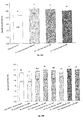
- the "boosting" effect of nucleotides IMP/GMP (same commercial mixture IMP/GMP 50/50 as described above) was confirmed when added to a tuna-based hydrolysate at different level (1%, 2% and 3% into the hydrolysate) ( Fig. 6 ).
- addition of IMP/GMP to a source of hydrolyzed protein is efficient to enhance the palatability of a fish feed.
- a source of hydrolyzed protein is indispensable to get feed palatability enhancement when nucleotides are applied
- the objective of this trial was to evaluate the palatability-enhancing effect of nucleotides (IMP/GMP 50/50) when applied by top-coating mixed with either a non-hydrolyzed raw material (yeast meal), or a hydrolyzed raw material (yeast hydrolysate), or a mixture of both.
- the degree of hydrolysis of the different products is indicated in table 7.
- the level of nucleotides (IMP/GMP 50/50) in the palatability enhancer was 2.5% in all the products. Table 7.
- nucleotide supplementation of a yeast meal having a low level of protein hydrolysis, did not increase feed palatability.
- the PE formula contained a hydrolysate, the fish feed palatability was significantly improved by the supplementation of nucleotides IMP/GMP.
- Fig. 10a The results illustrated in Fig. 10a showed that the inclusion of IMP alone or a mixture IMP/GMP significantly improved the plant-based feed palatability. This improvement is lower with GMP but not significantly different from that of the other sources of nucleotides.
- IMP, GMP and CMP are the preferred nucleotides for improving ("boosting") the palatability-enhancing effect of hydrolysates.
- these three nucleotides could be combined so that an additive palatability-enhancement effect could be expected.
Landscapes
- Life Sciences & Earth Sciences (AREA)
- Chemical & Material Sciences (AREA)
- Polymers & Plastics (AREA)
- Zoology (AREA)
- Engineering & Computer Science (AREA)
- Food Science & Technology (AREA)
- Animal Husbandry (AREA)
- Proteomics, Peptides & Aminoacids (AREA)
- Health & Medical Sciences (AREA)
- Biochemistry (AREA)
- Molecular Biology (AREA)
- Insects & Arthropods (AREA)
- Marine Sciences & Fisheries (AREA)
- Birds (AREA)
- Fodder In General (AREA)
- Feed For Specific Animals (AREA)
Claims (14)
- Méthode de préparation de granulés alimentaires pour poisson carnivore présentant une appétence améliorée, comprenant :a) la fourniture d'une composition améliorant l'appétence comprenant :- un hydrolysat de protéine présentant un degré d'hydrolyse (DH) de 14,5 à 100 % et contenant au moins 17 acides aminés libres différents, combiné avec- un ou plusieurs nucléotides sélectionnés parmi le monophosphate d'inosine, le monophosphate de guanosine, le monophosphate de cytidine et leurs combinaisons, et- facultativement, en présence d'un ou plusieurs ingrédients supplémentaires de composition améliorant l'appétence ;b) l'application de ladite composition améliorant l'appétence sur des granulés alimentaires pour poisson carnivore ; etc) la récupération desdits granulés alimentaires pour poisson carnivore présentant une appétence améliorée.
- Méthode d'amélioration de l'appétence de granulés alimentaires pour poisson carnivore, comprenant :a) l'application sur lesdits granulés alimentaires pour poisson carnivore d'une composition améliorant l'appétence comprenant :- un hydrolysat de protéine présentant un degré d'hydrolyse (DH) de 14,5 à 100 % et contenant au moins 17 acides aminés libres différents, combiné avec- un ou plusieurs nucléotides sélectionnés parmi le monophosphate d'inosine, le monophosphate de guanosine, le monophosphate de cytidine et leurs combinaisons, et- facultativement, en présence d'un ou plusieurs ingrédients supplémentaires de composition améliorant l'appétence.
- Méthode selon la revendication 1 ou 2, dans laquelle ladite composition améliorant l'appétence présente un degré d'hydrolyse (DH) de 14,5 à 100 %.
- Méthode selon l'une quelconque des revendications 1 à 3, dans laquelle lesdits au moins 17 acides aminés libres différents sont des acides aminés naturels.
- Méthode selon l'une quelconque des revendications 1 à 4, dans laquelle ledit hydrolysat de protéine est présent en une quantité de 14,5 à 100 % en poids dans ladite composition améliorant l'appétence.
- Méthode selon l'une quelconque des revendications 1 à 5, dans laquelle lesdits un ou plusieurs nucléotides sont présents en une quantité d'environ 0,1 à environ 25 % en poids dans ladite composition améliorant l'appétence.
- Méthode selon l'une quelconque des revendications 1 à 6, dans laquelle ladite composition améliorant l'appétence est appliquée sur les granulés alimentaires pour poisson carnivore par inclusion ou par revêtement.
- Méthode d'amélioration de l'appétence de granulés alimentaires pour poisson carnivore contenant un hydrolysat de protéine, comprenant :a) l'application d'un ou de plusieurs nucléotides sélectionnés parmi le monophosphate d'inosine, le monophosphate de guanosine, le monophosphate de cytidine et leurs combinaisons, sur lesdits granulés alimentaires pour poisson carnivore contenant ledit hydrolysat de protéine, dans laquelle ledit hydrolysat de protéine présente un degré d'hydrolyse (DH) de 14,5 à 100 % et contient au moins 17 acides aminés libres différents.
- Méthode d'amélioration de l'effet l'appétence d'un hydrolysat de protéine à appliquer sur des granulés alimentaires pour poisson carnivore, comprenant :a) la combinaison dudit hydrolysat de protéine avec un ou plusieurs nucléotides sélectionnés parmi le monophosphate d'inosine, le monophosphate de guanosine, le monophosphate de cytidine et leurs combinaisons, dans laquelle ledit hydrolysat de protéine présente un degré d'hydrolyse (DH) de 14,5 à 100 % et contient au moins 17 acides aminés libres différents.
- Méthode d'alimentation d'un poisson carnivore, comprenant :a) le fait de nourrir le poisson carnivore avec des granulés alimentaires pour poisson carnivore, dans laquelle lesdits granulés comprennent un hydrolysat de protéine combiné avec un ou plusieurs nucléotides sélectionnés parmi le monophosphate d'inosine, le monophosphate de guanosine, le monophosphate de cytidine et leurs combinaisons, dans laquelle ledit hydrolysat de protéine présente un degré d'hydrolyse (DH) de 14,5 à 100 % et contient au moins 17 acides aminés libres différents.
- Utilisation d'un ou de plusieurs nucléotides sélectionnés parmi le monophosphate d'inosine, le monophosphate de guanosine, le monophosphate de cytidine et leurs combinaisons, pour améliorer l'effet d'appétence d'un hydrolysat de protéine contenu dans des granulés alimentaires pour poisson carnivore, dans laquelle ledit hydrolysat de protéine présente un degré d'hydrolyse (DH) de 14,5 à 100 % et contient au moins 17 acides aminés libres différents.
- Utilisation d'un ou de plusieurs nucléotides sélectionnés parmi le monophosphate d'inosine, le monophosphate de guanosine, le monophosphate de cytidine et leurs combinaisons, pour améliorer l'effet d'appétence d'un hydrolysat de protéine contenu dans une composition améliorant l'appétence de granulés alimentaires pour poisson carnivore, dans laquelle ledit hydrolysat de protéine présente un degré d'hydrolyse (DH) de 14,5 à 100 % et contient au moins 17 acides aminés libres différents.
- Utilisation selon la revendication 12, dans laquelle ladite composition améliorant l'appétence présente un degré d'hydrolyse (DH) de 14,5 à 100 %.
- Méthode de préparation d'une composition améliorant l'appétence de granulés alimentaires pour poisson carnivore, comprenant :a) la fourniture d'un ou de plusieurs hydrolysats de protéine présentant un degré d'hydrolyse (DH) de 14,5 à 100 % et contenant au moins 17 acides aminés libres différents ;b) la fourniture d'un ou de plusieurs nucléotides sélectionnés parmi le monophosphate d'inosine, le monophosphate de guanosine, le monophosphate de cytidine et leurs combinaisons ;c) facultativement, la fourniture d'un ou de plusieurs ingrédients supplémentaires de composition améliorant l'appétence de granulés alimentaires pour poisson carnivore ;d) la combinaison desdits un ou plusieurs hydrolysats de protéines et desdits un ou plusieurs nucléotides et, facultativement, desdits un ou plusieurs ingrédients supplémentaires ; ete) l'obtention de ladite composition améliorant l'appétence de granulés alimentaires pour poisson carnivore.
Priority Applications (1)
| Application Number | Priority Date | Filing Date | Title |
|---|---|---|---|
| EP13789509.0A EP2895006B1 (fr) | 2012-10-31 | 2013-10-29 | Utilisation d'hydrolysats de protéines et de nucléotides pour améliorer la sapidité d'aliments pour poissons |
Applications Claiming Priority (3)
| Application Number | Priority Date | Filing Date | Title |
|---|---|---|---|
| EP12306363 | 2012-10-31 | ||
| PCT/EP2013/072617 WO2014067950A1 (fr) | 2012-10-31 | 2013-10-29 | Utilisation d'hydrolysats protéiques et de nucléotides pour améliorer la sapidité d'aliments pour poissons |
| EP13789509.0A EP2895006B1 (fr) | 2012-10-31 | 2013-10-29 | Utilisation d'hydrolysats de protéines et de nucléotides pour améliorer la sapidité d'aliments pour poissons |
Publications (2)
| Publication Number | Publication Date |
|---|---|
| EP2895006A1 EP2895006A1 (fr) | 2015-07-22 |
| EP2895006B1 true EP2895006B1 (fr) | 2016-07-06 |
Family
ID=47172561
Family Applications (1)
| Application Number | Title | Priority Date | Filing Date |
|---|---|---|---|
| EP13789509.0A Active EP2895006B1 (fr) | 2012-10-31 | 2013-10-29 | Utilisation d'hydrolysats de protéines et de nucléotides pour améliorer la sapidité d'aliments pour poissons |
Country Status (7)
| Country | Link |
|---|---|
| EP (1) | EP2895006B1 (fr) |
| AU (1) | AU2013341073B2 (fr) |
| CA (1) | CA2890364C (fr) |
| CL (1) | CL2015001134A1 (fr) |
| ES (1) | ES2595050T3 (fr) |
| PT (1) | PT2895006T (fr) |
| WO (1) | WO2014067950A1 (fr) |
Cited By (1)
| Publication number | Priority date | Publication date | Assignee | Title |
|---|---|---|---|---|
| WO2025109564A1 (fr) * | 2023-11-24 | 2025-05-30 | Sebol - Comércio E Indústria Do Sebo, S.A. | Procédé de production de protéine hydrolysée |
Families Citing this family (10)
| Publication number | Priority date | Publication date | Assignee | Title |
|---|---|---|---|---|
| NO339988B1 (en) * | 2015-05-29 | 2017-02-27 | Calanus As | Novel marine protein hydrolysates and uses thereof |
| CN108697120A (zh) * | 2016-02-26 | 2018-10-23 | 帝斯曼知识产权资产管理有限公司 | 新颖的包衣体系(ii) |
| WO2018224035A1 (fr) | 2017-06-09 | 2018-12-13 | Novozymes A/S | Polypeptide, utilisation et procédé d'hydrolyse de protéine |
| WO2019148062A1 (fr) * | 2018-01-29 | 2019-08-01 | Mitchell Gregory | Attractifs pour poissons |
| EP3590355A1 (fr) * | 2018-07-05 | 2020-01-08 | Spécialités Pet Food | Peptides myotropes et leurs utilisations |
| JP7471648B2 (ja) * | 2020-10-27 | 2024-04-22 | 獣医医療開発株式会社 | 魚類用薬剤組成物および魚類用薬用飼料 |
| CN113862379B (zh) * | 2021-10-22 | 2022-06-17 | 中国水产科学研究院长江水产研究所 | 一种长吻鮠雄性性别特异性分子标记及其扩增引物和遗传性别鉴定方法 |
| KR102750392B1 (ko) * | 2022-12-01 | 2025-01-03 | 경상국립대학교산학협력단 | 반려동물 사료의 항산화능 향상을 위한 참치 프레임육 유래 유산균 발효 사료첨가제의 제조방법 및 이를 이용하여 제조된 참치 프레임육 유래 유산균 발효 사료첨가제 |
| CN118120665A (zh) * | 2024-03-01 | 2024-06-04 | 清华大学深圳国际研究生院 | 一种促进生长和增强免疫力的珊瑚养殖方法 |
| WO2026008873A1 (fr) | 2024-07-04 | 2026-01-08 | Microharvest Gmbh | Compositions alimentaires contenant une biomasse microbienne pour poissons, crustacés et/ou céphalopodes |
Family Cites Families (3)
| Publication number | Priority date | Publication date | Assignee | Title |
|---|---|---|---|---|
| GB1131937A (en) * | 1964-12-15 | 1968-10-30 | Kikkoman Shoyu Co Ltd | A process for improving and enhancing the palatability of foods, seasonings or beverages |
| US3716379A (en) * | 1970-10-06 | 1973-02-13 | Nestle Sa Soc Ass Tech Prod | Preparation of beef and chicken flavoring agents |
| GB0203306D0 (en) * | 2002-02-12 | 2002-03-27 | Norferm Da | Method |
-
2013
- 2013-10-29 EP EP13789509.0A patent/EP2895006B1/fr active Active
- 2013-10-29 WO PCT/EP2013/072617 patent/WO2014067950A1/fr not_active Ceased
- 2013-10-29 PT PT137895090T patent/PT2895006T/pt unknown
- 2013-10-29 CA CA2890364A patent/CA2890364C/fr active Active
- 2013-10-29 ES ES13789509.0T patent/ES2595050T3/es active Active
- 2013-10-29 AU AU2013341073A patent/AU2013341073B2/en active Active
-
2015
- 2015-04-29 CL CL2015001134A patent/CL2015001134A1/es unknown
Cited By (1)
| Publication number | Priority date | Publication date | Assignee | Title |
|---|---|---|---|---|
| WO2025109564A1 (fr) * | 2023-11-24 | 2025-05-30 | Sebol - Comércio E Indústria Do Sebo, S.A. | Procédé de production de protéine hydrolysée |
Also Published As
| Publication number | Publication date |
|---|---|
| EP2895006A1 (fr) | 2015-07-22 |
| CA2890364A1 (fr) | 2014-05-08 |
| AU2013341073B2 (en) | 2016-11-10 |
| WO2014067950A1 (fr) | 2014-05-08 |
| ES2595050T3 (es) | 2016-12-27 |
| CA2890364C (fr) | 2015-11-17 |
| PT2895006T (pt) | 2016-10-17 |
| CL2015001134A1 (es) | 2016-03-04 |
| AU2013341073A1 (en) | 2015-05-07 |
Similar Documents
| Publication | Publication Date | Title |
|---|---|---|
| EP2895006B1 (fr) | Utilisation d'hydrolysats de protéines et de nucléotides pour améliorer la sapidité d'aliments pour poissons | |
| DK2763548T3 (en) | Kødvævsekstrakter with improved palatability for use in pet food | |
| CN105682473B (zh) | 包含可口性增强包衣的干宠物食品 | |
| EP2731449B1 (fr) | Activateurs de la sapidité comprenant des acides aminés libres pour une utilisation dans les aliments pour animaux domestiques | |
| KR20170007795A (ko) | 고양이 사료에 사용하기 위한 아미노 반응물 및 카르보닐 화합물을 포함하는 기호도 개선제 | |
| KR102744264B1 (ko) | 수용성 비타민의 보존 | |
| EP4161284B1 (fr) | Procédé à base de microbe pour obtenir un concentré de protéine de qualité améliorée | |
| CN111935990A (zh) | 胍乙酸和/或肌酸在水产养殖中的用途 | |
| JP2020114228A (ja) | 特定脂肪画分含有嗜好性キャットキブル | |
| AU2014209844B2 (en) | Crustacean protein hydrolysates for maintaining and/or promoting bowel health of cultured fish | |
| Nguyen et al. | The effects of fish protein hydrolysate as supplementation on growth performance, feed utilization and immunological response in fish: A review | |
| Chamberlain | Frontiers in shrimp nutrition research | |
| WO2013068484A1 (fr) | Procédés de préparation d'aliments pour poissons enrobés avec des agents améliorant l'appétissance | |
| EP3590355A1 (fr) | Peptides myotropes et leurs utilisations | |
| CN119173154A (zh) | 改进水生动物中的肉类色素沉着的方法和动物饲料组合物 | |
| Leal | Artigo 4: Utilization of shrimp protein hydrolysate in Nile tilapia (Oreochromis | |
| HK1225577B (zh) | 包含可口性增强包衣的干宠物食品 |
Legal Events
| Date | Code | Title | Description |
|---|---|---|---|
| PUAI | Public reference made under article 153(3) epc to a published international application that has entered the european phase |
Free format text: ORIGINAL CODE: 0009012 |
|
| 17P | Request for examination filed |
Effective date: 20150416 |
|
| AK | Designated contracting states |
Kind code of ref document: A1 Designated state(s): AL AT BE BG CH CY CZ DE DK EE ES FI FR GB GR HR HU IE IS IT LI LT LU LV MC MK MT NL NO PL PT RO RS SE SI SK SM TR |
|
| AX | Request for extension of the european patent |
Extension state: BA ME |
|
| REG | Reference to a national code |
Ref country code: DE Ref legal event code: R079 Ref document number: 602013009227 Country of ref document: DE Free format text: PREVIOUS MAIN CLASS: A23K0001000000 Ipc: A23K0010000000 |
|
| GRAP | Despatch of communication of intention to grant a patent |
Free format text: ORIGINAL CODE: EPIDOSNIGR1 |
|
| DAX | Request for extension of the european patent (deleted) | ||
| RIC1 | Information provided on ipc code assigned before grant |
Ipc: A23K 10/00 20160101AFI20160107BHEP Ipc: A23K 10/18 20160101ALI20160107BHEP Ipc: A23K 10/16 20160101ALI20160107BHEP |
|
| RIN1 | Information on inventor provided before grant (corrected) |
Inventor name: FOURNIER, VINCENT Inventor name: HERAULT, MIKAEL |
|
| INTG | Intention to grant announced |
Effective date: 20160128 |
|
| GRAS | Grant fee paid |
Free format text: ORIGINAL CODE: EPIDOSNIGR3 |
|
| GRAA | (expected) grant |
Free format text: ORIGINAL CODE: 0009210 |
|
| AK | Designated contracting states |
Kind code of ref document: B1 Designated state(s): AL AT BE BG CH CY CZ DE DK EE ES FI FR GB GR HR HU IE IS IT LI LT LU LV MC MK MT NL NO PL PT RO RS SE SI SK SM TR |
|
| REG | Reference to a national code |
Ref country code: GB Ref legal event code: FG4D |
|
| REG | Reference to a national code |
Ref country code: AT Ref legal event code: REF Ref document number: 810036 Country of ref document: AT Kind code of ref document: T Effective date: 20160715 Ref country code: CH Ref legal event code: EP |
|
| REG | Reference to a national code |
Ref country code: IE Ref legal event code: FG4D |
|
| REG | Reference to a national code |
Ref country code: DE Ref legal event code: R096 Ref document number: 602013009227 Country of ref document: DE |
|
| REG | Reference to a national code |
Ref country code: FR Ref legal event code: PLFP Year of fee payment: 4 |
|
| REG | Reference to a national code |
Ref country code: PT Ref legal event code: SC4A Ref document number: 2895006 Country of ref document: PT Date of ref document: 20161017 Kind code of ref document: T Free format text: AVAILABILITY OF NATIONAL TRANSLATION Effective date: 20161003 |
|
| REG | Reference to a national code |
Ref country code: NL Ref legal event code: MP Effective date: 20160706 |
|
| REG | Reference to a national code |
Ref country code: LT Ref legal event code: MG4D |
|
| REG | Reference to a national code |
Ref country code: NO Ref legal event code: T2 Effective date: 20160706 |
|
| REG | Reference to a national code |
Ref country code: AT Ref legal event code: MK05 Ref document number: 810036 Country of ref document: AT Kind code of ref document: T Effective date: 20160706 |
|
| REG | Reference to a national code |
Ref country code: ES Ref legal event code: FG2A Ref document number: 2595050 Country of ref document: ES Kind code of ref document: T3 Effective date: 20161227 |
|
| PG25 | Lapsed in a contracting state [announced via postgrant information from national office to epo] |
Ref country code: NL Free format text: LAPSE BECAUSE OF FAILURE TO SUBMIT A TRANSLATION OF THE DESCRIPTION OR TO PAY THE FEE WITHIN THE PRESCRIBED TIME-LIMIT Effective date: 20160706 Ref country code: RS Free format text: LAPSE BECAUSE OF FAILURE TO SUBMIT A TRANSLATION OF THE DESCRIPTION OR TO PAY THE FEE WITHIN THE PRESCRIBED TIME-LIMIT Effective date: 20160706 Ref country code: IS Free format text: LAPSE BECAUSE OF FAILURE TO SUBMIT A TRANSLATION OF THE DESCRIPTION OR TO PAY THE FEE WITHIN THE PRESCRIBED TIME-LIMIT Effective date: 20161106 Ref country code: FI Free format text: LAPSE BECAUSE OF FAILURE TO SUBMIT A TRANSLATION OF THE DESCRIPTION OR TO PAY THE FEE WITHIN THE PRESCRIBED TIME-LIMIT Effective date: 20160706 Ref country code: LT Free format text: LAPSE BECAUSE OF FAILURE TO SUBMIT A TRANSLATION OF THE DESCRIPTION OR TO PAY THE FEE WITHIN THE PRESCRIBED TIME-LIMIT Effective date: 20160706 Ref country code: HR Free format text: LAPSE BECAUSE OF FAILURE TO SUBMIT A TRANSLATION OF THE DESCRIPTION OR TO PAY THE FEE WITHIN THE PRESCRIBED TIME-LIMIT Effective date: 20160706 |
|
| PG25 | Lapsed in a contracting state [announced via postgrant information from national office to epo] |
Ref country code: AT Free format text: LAPSE BECAUSE OF FAILURE TO SUBMIT A TRANSLATION OF THE DESCRIPTION OR TO PAY THE FEE WITHIN THE PRESCRIBED TIME-LIMIT Effective date: 20160706 Ref country code: PL Free format text: LAPSE BECAUSE OF FAILURE TO SUBMIT A TRANSLATION OF THE DESCRIPTION OR TO PAY THE FEE WITHIN THE PRESCRIBED TIME-LIMIT Effective date: 20160706 Ref country code: GR Free format text: LAPSE BECAUSE OF FAILURE TO SUBMIT A TRANSLATION OF THE DESCRIPTION OR TO PAY THE FEE WITHIN THE PRESCRIBED TIME-LIMIT Effective date: 20161007 Ref country code: LV Free format text: LAPSE BECAUSE OF FAILURE TO SUBMIT A TRANSLATION OF THE DESCRIPTION OR TO PAY THE FEE WITHIN THE PRESCRIBED TIME-LIMIT Effective date: 20160706 Ref country code: BE Free format text: LAPSE BECAUSE OF NON-PAYMENT OF DUE FEES Effective date: 20160706 Ref country code: SE Free format text: LAPSE BECAUSE OF FAILURE TO SUBMIT A TRANSLATION OF THE DESCRIPTION OR TO PAY THE FEE WITHIN THE PRESCRIBED TIME-LIMIT Effective date: 20160706 |
|
| REG | Reference to a national code |
Ref country code: DE Ref legal event code: R097 Ref document number: 602013009227 Country of ref document: DE |
|
| PG25 | Lapsed in a contracting state [announced via postgrant information from national office to epo] |
Ref country code: EE Free format text: LAPSE BECAUSE OF FAILURE TO SUBMIT A TRANSLATION OF THE DESCRIPTION OR TO PAY THE FEE WITHIN THE PRESCRIBED TIME-LIMIT Effective date: 20160706 Ref country code: RO Free format text: LAPSE BECAUSE OF FAILURE TO SUBMIT A TRANSLATION OF THE DESCRIPTION OR TO PAY THE FEE WITHIN THE PRESCRIBED TIME-LIMIT Effective date: 20160706 |
|
| REG | Reference to a national code |
Ref country code: DE Ref legal event code: R119 Ref document number: 602013009227 Country of ref document: DE |
|
| PLBE | No opposition filed within time limit |
Free format text: ORIGINAL CODE: 0009261 |
|
| STAA | Information on the status of an ep patent application or granted ep patent |
Free format text: STATUS: NO OPPOSITION FILED WITHIN TIME LIMIT |
|
| PG25 | Lapsed in a contracting state [announced via postgrant information from national office to epo] |
Ref country code: SM Free format text: LAPSE BECAUSE OF FAILURE TO SUBMIT A TRANSLATION OF THE DESCRIPTION OR TO PAY THE FEE WITHIN THE PRESCRIBED TIME-LIMIT Effective date: 20160706 Ref country code: SK Free format text: LAPSE BECAUSE OF FAILURE TO SUBMIT A TRANSLATION OF THE DESCRIPTION OR TO PAY THE FEE WITHIN THE PRESCRIBED TIME-LIMIT Effective date: 20160706 Ref country code: DK Free format text: LAPSE BECAUSE OF FAILURE TO SUBMIT A TRANSLATION OF THE DESCRIPTION OR TO PAY THE FEE WITHIN THE PRESCRIBED TIME-LIMIT Effective date: 20160706 Ref country code: BG Free format text: LAPSE BECAUSE OF FAILURE TO SUBMIT A TRANSLATION OF THE DESCRIPTION OR TO PAY THE FEE WITHIN THE PRESCRIBED TIME-LIMIT Effective date: 20161006 Ref country code: CZ Free format text: LAPSE BECAUSE OF FAILURE TO SUBMIT A TRANSLATION OF THE DESCRIPTION OR TO PAY THE FEE WITHIN THE PRESCRIBED TIME-LIMIT Effective date: 20160706 |
|
| REG | Reference to a national code |
Ref country code: CH Ref legal event code: PL |
|
| 26N | No opposition filed |
Effective date: 20170407 |
|
| REG | Reference to a national code |
Ref country code: IE Ref legal event code: MM4A |
|
| PG25 | Lapsed in a contracting state [announced via postgrant information from national office to epo] |
Ref country code: CH Free format text: LAPSE BECAUSE OF NON-PAYMENT OF DUE FEES Effective date: 20161031 Ref country code: LI Free format text: LAPSE BECAUSE OF NON-PAYMENT OF DUE FEES Effective date: 20161031 Ref country code: DE Free format text: LAPSE BECAUSE OF NON-PAYMENT OF DUE FEES Effective date: 20170503 |
|
| PG25 | Lapsed in a contracting state [announced via postgrant information from national office to epo] |
Ref country code: LU Free format text: LAPSE BECAUSE OF NON-PAYMENT OF DUE FEES Effective date: 20161029 Ref country code: SI Free format text: LAPSE BECAUSE OF FAILURE TO SUBMIT A TRANSLATION OF THE DESCRIPTION OR TO PAY THE FEE WITHIN THE PRESCRIBED TIME-LIMIT Effective date: 20160706 |
|
| REG | Reference to a national code |
Ref country code: FR Ref legal event code: PLFP Year of fee payment: 5 |
|
| PG25 | Lapsed in a contracting state [announced via postgrant information from national office to epo] |
Ref country code: IE Free format text: LAPSE BECAUSE OF NON-PAYMENT OF DUE FEES Effective date: 20161029 |
|
| PG25 | Lapsed in a contracting state [announced via postgrant information from national office to epo] |
Ref country code: HU Free format text: LAPSE BECAUSE OF FAILURE TO SUBMIT A TRANSLATION OF THE DESCRIPTION OR TO PAY THE FEE WITHIN THE PRESCRIBED TIME-LIMIT; INVALID AB INITIO Effective date: 20131029 |
|
| PG25 | Lapsed in a contracting state [announced via postgrant information from national office to epo] |
Ref country code: MC Free format text: LAPSE BECAUSE OF FAILURE TO SUBMIT A TRANSLATION OF THE DESCRIPTION OR TO PAY THE FEE WITHIN THE PRESCRIBED TIME-LIMIT Effective date: 20160706 Ref country code: MK Free format text: LAPSE BECAUSE OF FAILURE TO SUBMIT A TRANSLATION OF THE DESCRIPTION OR TO PAY THE FEE WITHIN THE PRESCRIBED TIME-LIMIT Effective date: 20160706 Ref country code: MT Free format text: LAPSE BECAUSE OF NON-PAYMENT OF DUE FEES Effective date: 20161031 Ref country code: CY Free format text: LAPSE BECAUSE OF FAILURE TO SUBMIT A TRANSLATION OF THE DESCRIPTION OR TO PAY THE FEE WITHIN THE PRESCRIBED TIME-LIMIT Effective date: 20160706 |
|
| REG | Reference to a national code |
Ref country code: FR Ref legal event code: PLFP Year of fee payment: 6 |
|
| PG25 | Lapsed in a contracting state [announced via postgrant information from national office to epo] |
Ref country code: AL Free format text: LAPSE BECAUSE OF FAILURE TO SUBMIT A TRANSLATION OF THE DESCRIPTION OR TO PAY THE FEE WITHIN THE PRESCRIBED TIME-LIMIT Effective date: 20160706 |
|
| P01 | Opt-out of the competence of the unified patent court (upc) registered |
Effective date: 20230428 |
|
| PGFP | Annual fee paid to national office [announced via postgrant information from national office to epo] |
Ref country code: PT Payment date: 20250919 Year of fee payment: 13 |
|
| PGFP | Annual fee paid to national office [announced via postgrant information from national office to epo] |
Ref country code: FR Payment date: 20250925 Year of fee payment: 13 |
|
| PGFP | Annual fee paid to national office [announced via postgrant information from national office to epo] |
Ref country code: GB Payment date: 20251023 Year of fee payment: 13 |
|
| PGFP | Annual fee paid to national office [announced via postgrant information from national office to epo] |
Ref country code: NO Payment date: 20250930 Year of fee payment: 13 |
|
| PGFP | Annual fee paid to national office [announced via postgrant information from national office to epo] |
Ref country code: IT Payment date: 20251008 Year of fee payment: 13 |
|
| PGFP | Annual fee paid to national office [announced via postgrant information from national office to epo] |
Ref country code: TR Payment date: 20251017 Year of fee payment: 13 |
|
| PGFP | Annual fee paid to national office [announced via postgrant information from national office to epo] |
Ref country code: ES Payment date: 20251110 Year of fee payment: 13 |