EP2897419B1 - Abtastverfahren und -vorrichtung in einem wlan - Google Patents
Abtastverfahren und -vorrichtung in einem wlan Download PDFInfo
- Publication number
- EP2897419B1 EP2897419B1 EP13836917.8A EP13836917A EP2897419B1 EP 2897419 B1 EP2897419 B1 EP 2897419B1 EP 13836917 A EP13836917 A EP 13836917A EP 2897419 B1 EP2897419 B1 EP 2897419B1
- Authority
- EP
- European Patent Office
- Prior art keywords
- sta
- ack
- request frame
- probe request
- channel
- Prior art date
- Legal status (The legal status is an assumption and is not a legal conclusion. Google has not performed a legal analysis and makes no representation as to the accuracy of the status listed.)
- Not-in-force
Links
- 238000000034 method Methods 0.000 title claims description 135
- 239000000523 sample Substances 0.000 claims description 236
- 230000004044 response Effects 0.000 claims description 83
- 230000005540 biological transmission Effects 0.000 claims description 63
- 238000012544 monitoring process Methods 0.000 claims description 7
- 238000012545 processing Methods 0.000 claims description 6
- 238000010586 diagram Methods 0.000 description 30
- 230000008569 process Effects 0.000 description 23
- 230000011664 signaling Effects 0.000 description 8
- 230000006870 function Effects 0.000 description 7
- 238000005259 measurement Methods 0.000 description 5
- 230000000694 effects Effects 0.000 description 4
- 108700026140 MAC combination Proteins 0.000 description 2
- VYLDEYYOISNGST-UHFFFAOYSA-N bissulfosuccinimidyl suberate Chemical compound O=C1C(S(=O)(=O)O)CC(=O)N1OC(=O)CCCCCCC(=O)ON1C(=O)C(S(O)(=O)=O)CC1=O VYLDEYYOISNGST-UHFFFAOYSA-N 0.000 description 2
- 238000004891 communication Methods 0.000 description 2
- 238000001514 detection method Methods 0.000 description 2
- 238000005516 engineering process Methods 0.000 description 2
- 230000009467 reduction Effects 0.000 description 2
- 238000000060 site-specific infrared dichroism spectroscopy Methods 0.000 description 2
- 101100161473 Arabidopsis thaliana ABCB25 gene Proteins 0.000 description 1
- 101100172132 Mus musculus Eif3a gene Proteins 0.000 description 1
- 101100096893 Mus musculus Sult2a1 gene Proteins 0.000 description 1
- 101150081243 STA1 gene Proteins 0.000 description 1
- 230000004931 aggregating effect Effects 0.000 description 1
- 230000008901 benefit Effects 0.000 description 1
- 238000006243 chemical reaction Methods 0.000 description 1
- 230000003247 decreasing effect Effects 0.000 description 1
- 230000001419 dependent effect Effects 0.000 description 1
- 238000005457 optimization Methods 0.000 description 1
Images





Classifications
-
- H—ELECTRICITY
- H04—ELECTRIC COMMUNICATION TECHNIQUE
- H04W—WIRELESS COMMUNICATION NETWORKS
- H04W48/00—Access restriction; Network selection; Access point selection
- H04W48/16—Discovering, processing access restriction or access information
-
- H—ELECTRICITY
- H04—ELECTRIC COMMUNICATION TECHNIQUE
- H04L—TRANSMISSION OF DIGITAL INFORMATION, e.g. TELEGRAPHIC COMMUNICATION
- H04L5/00—Arrangements affording multiple use of the transmission path
- H04L5/003—Arrangements for allocating sub-channels of the transmission path
- H04L5/0053—Allocation of signalling, i.e. of overhead other than pilot signals
- H04L5/0055—Physical resource allocation for ACK/NACK
-
- H—ELECTRICITY
- H04—ELECTRIC COMMUNICATION TECHNIQUE
- H04W—WIRELESS COMMUNICATION NETWORKS
- H04W84/00—Network topologies
- H04W84/02—Hierarchically pre-organised networks, e.g. paging networks, cellular networks, WLAN [Wireless Local Area Network] or WLL [Wireless Local Loop]
- H04W84/10—Small scale networks; Flat hierarchical networks
- H04W84/12—WLAN [Wireless Local Area Networks]
-
- H—ELECTRICITY
- H04—ELECTRIC COMMUNICATION TECHNIQUE
- H04W—WIRELESS COMMUNICATION NETWORKS
- H04W88/00—Devices specially adapted for wireless communication networks, e.g. terminals, base stations or access point devices
- H04W88/08—Access point devices
Definitions
- the present invention relates to a method and an apparatus for scanning, and more particularly, to a method and an apparatus for scanning by a station (STA).
- STA station
- IEEE 802.11ac and IEEE 802.11ad are provided.
- the IEEE 802.11ad is a wireless LAN technique using a 60 GHz band.
- a wideband wireless LAN using a frequency band less than 1 GHz to enable wideband transmission distantatively rather than the wireless LAN in the related art has been come to the fore in recent years and includes IEEE 802.11af using a TV white space (TVWS) band and IEEE 802.11ah using a 900 MHz band.
- TVWS TV white space
- the wideband LANs mainly aim at extension of an extended range Wi-Fi service in addition to a smart grid and a wideband sensor network. Further, a wireless LAN medium access control (MAC) technique in the related art has a problem that an initial link setup time is significantly lengthened in some cases.
- An IEEE 802.11ai standardization activity has been recently in active progress in order for an STA to rapidly access an AP by solving the problem.
- the standardization activity of the IEEE 802.11ai as an MAC technique that handles a rapid authentication procedure in order to epochally save an initial set-up and association time of the wireless LAN has been started as a legal task group in January 2011.
- the IEEE 802.11ai has discussed procedure simplification in regions such as AP discovery, network discovery, time synchronization function (TSF) synchronization, authentication and association, procedure merge with a higher layer, and the like.
- TSF time synchronization function
- ideas including procedure merge using piggyback of a dynamic host configuration protocol (DHCP), optimization of a full extensible authentication protocol (EAP) using a concurrent IP, efficient selective access point (AP) scanning, and the like have been actively discussed.
- IEEE 802.11-12/0726r0 and IEEE 802.11-12/1040r0 refer to an active scanning procedure.
- the present invention provides a scanning method according to the independent claim 1.
- the present invention also provides a scanning apparatus according to the independent claim 7.
- a method for scanning by a station includes: the STA unicasting a probe request frame to a target access point (AP) from a first channel, the target AP having been determined in accordance with a basic service identifier (BSSID) comprised in an MLME.SCAN.request.primitive; the STA processing an acknowledgment (ACK) transmitted via the first channel within a first ACK transmission time, and determining whether the first ACK for the probe request frame is received; if the first ACK is received within the first ACK transmission time, then the STA monitoring a probe response frame, which is a response to the probe request frame from the first channel; and if the first ACK is not received within the first ACK transmission time, then regardless of a clear channel assessment (CCA) level detected during the first ACK transmission time, the STA switching the scanning channel from the first charmel to a second channel when a timer for the first ACK transmission time expires.
- BSSID basic service identifier
- CCA clear channel assessment
- a station that operates in a wireless LAN.
- the STA includes: a radio frequency (RF) unit receiving a radio signal; and a processor selectively connected with the RF unit, wherein the processor may be implemented to unicast a probe request frame to a target access point (AP) which is an AP determined in accordance with a basic service identifier (BSSID) comprised in an MLME.SCAN.request.primitive from a first channel, process an acknowledgment (ACK) transmitted via the first channel within a first ACK transmission time, and determine whether the first ACK for the probe request frame is received, monitor a probe response frame, which is a response to the probe request frame from the first channel if the first ACK is received within the first ACK transmission time, and switch the scanning channel from the first channel to a second channel when a timer for the first ACK transmission time expires regardless of a clear channel assessment (CCA) level detected during the first ACK transmission time if the first ACK is not received
- CCA clear channel assessment
- a scanning procedure can be rapidly performed.
- Fig. 1 is a concept view illustrating the structure of a wireless local area network (WLAN).
- WLAN wireless local area network
- Fig. 1 shows the structure of the IEEE (institute of electrical and electronic engineers) 802.11 infrastructure network.
- the WLAN system may include one or more basic service sets (BSSs, 100 and 105).
- the BSS 100 or 105 is a set of an AP such as AP (access point) 125 and an STA such as STA1 (station) 100-1 that may successfully sync with each other to communicate with each other and is not the concept to indicate a particular area.
- the BSS 105 may include one AP 130 and one or more STAs 105-1 and 105-2 connectable to the AP 130.
- the infrastructure BSS may include at least one STA, APs 125 and 130 providing a distribution service, and a distribution system (DS) 110 connecting multiple APs.
- STA station-to-live
- APs 125 and 130 providing a distribution service
- DS distribution system
- the distribution system 110 may implement an extended service set (ESS) 140 by connecting a number of BSSs 100 and 105.
- ESS 140 may be used as a term to denote one network configured of one or more APs 125 and 230 connected via the distribution system 110.
- the APs included in one ESS 140 may have the same SSID (service set identification).
- the portal 120 may function as a bridge that performs connection of the WLAN network (IEEE 802.11) with other network (for example, 802.X).
- IEEE 802.11 IEEE 802.11
- a network between the APs 125 and 130 and a network between the APs 125 and 130 and the STAs 100-1, 105-1, and 105-2 may be implemented.
- a network may be established between the STAs to perform communication.
- the network that is established between the STAs without the APs 125 and 130 to perform communication is defined as an ad-hoc network or an independent BSS (basic service set).
- Fig. 1 The lower part of Fig. 1 is a concept view illustrating an independent BSS.
- the independent BSS is a BSS operating in ad-hoc mode.
- the IBSS does not include an AP, so that it lacks a centralized management entity.
- the STAs 150-1, 150-2, 150-3, 155-4, and 155-5 are managed in a distributed manner.
- all of the STAs 150-1, 150-2, 150-3, 155-4, and 155-5 may be mobile STAs, and access to the distribution system is not allowed so that the IBSS forms a self-contained network.
- the STA is some functional medium that includes a medium access control (MAC) following the IEEE (Institute of Electrical and Electronics Engineers) 802.11 standards and that includes a physical layer interface for radio media, and the term "STA” may, in its definition, include both an AP and a non-AP STA (station).
- MAC medium access control
- the STA may be referred to by various terms such as mobile terminal, wireless device, wireless transmit/receive unit (WTRU), user equipment (UE), mobile station (MS), mobile subscriber unit, or simply referred to as a user.
- WTRU wireless transmit/receive unit
- UE user equipment
- MS mobile station
- a user or simply referred to as a user.
- Fig. 2 is a view illustrating a layer architecture of a WLAN system supported by IEEE 802.11.
- Fig. 2 conceptually illustrates a layer architecture (PHY architecture) of a WLAN system.
- the WLAN system layer architecture may include an MAC (medium access control) sub-layer 220, a PLCP (Physical Layer Convergence Procedure) sub-layer 210, and a PMD (Physical Medium Dependent) sub-layer 200.
- the PLCP sub-layer 210 is implemented so that the MAC sub-layer 220 is operated with the minimum dependency upon the PMD sub-layer 200.
- the PMD sub-layer 200 may serve as a transmission interface to communicate data between a plurality of STAs.
- the MAC sub-layer 220, the PLCP sub-layer 210, and the PMD sub-layer 200 may conceptually include management entities.
- the management entity of the MAC sub-layer 220 is denoted an MLME (MAC layer management entity, 225), and the management entity of the physical layer is denoted a PLME (PHY layer management entity, 215).
- Such management entities may offer an interface where a layer management operation is conducted.
- the PLME 215 is connected with the MLME 225 to be able to perform a management operation on the PLCP sub-layer 210 and the PMD sub-layer 200, and the MLME 225 is also connected with the PLME 215 to be able to perform a management operation on the MAC sub-layer 220.
- SME STA management entity, 250
- SME 250 STA management entity
- the SME 250 may be operated as a layer independent component.
- the MLME, PLME, and SME may communicate information between the mutual components based on primitive.
- the PLCP sub-layer 110 delivers an MPDU (MAC protocol data unit) received from the MAC sub-layer 220 according to an instruction from the MAC layer between the MAC sub-layer 220 and the PMD sub-layer 200 to the PMD sub-layer 200 or delivers a frame from the PMD sub-layer 200 to the MAC sub-layer 220.
- the PMD sub-layer 200 is a PLCP sub-layer and the PMD sub-layer 200 may communicate data between a plurality of STAs by way of a radio medium.
- the MPDU (MAC protocol data unit) delivered from the MAC sub-layer 220 is denoted a PSDU (Physical Service Data Unit) on the side of the PLCP sub-layer 210.
- the MPDU is similar to the PSDU, but in case an A-MPDU (aggregated MPDU), which is obtained by aggregating a plurality of MPDUs, has been delivered, each MPDUs may differ from the PSDU.
- the PLCP sub-layer 210 adds an additional field including information required by the physical layer transceiver while receiving the PSDU from the MAC sub-layer 220 and delivering the same to the PMD sub-layer 200.
- the added field may include a PLCP preamble to the PSDU, a PLCP header, and tail bits necessary to return the convolution encoder to zero state.
- the PLCP preamble may play a role to allow the receiver to prepare for syncing and antenna diversity before the PSDU is transmitted.
- the data field may include padding bits to the PSDU, a service field including a bit sequence to initialize the scrambler, and a coded sequence in which a bit sequence added with tail bits has been encoded.
- one of BCC (Binary Convolutional Coding) encoding or LDPC (Low Density Parity Check) encoding may be selected depending on the encoding scheme supported by the STA receiving the PPDU.
- the PLCP header may include a field containing information on the PPDU (PLCP Protocol Data Unit) to be transmitted.
- the PLCP sub-layer 210 adds the above-described fields to the PSDU to generate the PPDU (PLCP Protocol Data Unit) and transmits the same to a receiving station via the PMD sub-layer 200, and the receiving station receives the PPDU and obtains information necessary for data restoration from the PLCP preamble and PLCP header to thus restore the same.
- PPDU PLCP Protocol Data Unit
- Fig. 3 is a concept view illustrating a scanning method in a WLAN.
- the scanning method may be divided into passive scanning 300 and active scanning 350.
- the passive scanning 300 may be performed by a beacon frame 330 that is periodically broadcast from the AP 300.
- the AP 300 in the WLAN broadcasts the beacon frame 330 to the non-AP STA 340 at a particular period (e.g., per 100msec).
- the beacon frame 330 may contain information on the current network.
- the non-AP STA 340 may perform scanning on the channel with the AP 310 to perform the authentication/association process by obtaining the network information from the beacon frame 330 periodically broadcast.
- the passive scanning method 300 only receives the beacon frame 330 transmitted from the AP 310 without the need for the non-AP STA 340 to transmit a frame. Accordingly, the passive scanning 300 is advantageous of a reduction in the overall overhead that is created upon data transmission/reception over the network. However, since the scanning is obliged to be passively performed in proportion to the period of the beacon frame 330, the time taken to perform scanning may be increased.
- beacon frame The details of the beacon frame are set forth in IEEE Draft P802.11-REVmbTM/D12, November 2011 'IEEE Standard for Information Technology Telecommunications and information exchange between systems-Local and metropolitan area networks-Specific requirements Part 11: Wireless LAN Medium Access Control (MAC) and Physical Layer (PHY) Specifications(hereinafter, IEEE 802.11)' 8.3.3.2 beacon frame disclosed on November, 2011.
- IEEE 802.11ai may additionally use other format of a beacon frame, and such beacon frame may be referred to as a FILS (fast initial link setup) beacon frame.
- the measurement pilot frame is a frame containing only some information of the beacon frame, and the measurement pilot frame may be used in the scanning procedure.
- the measurement pilot frame is set forth in IEEE 802.11 8.5.8.3 measurement pilot format.
- a fast initial link setup (FILS) discovery frame may be defined.
- the FILS discovery frame is a frame transmitted between each of the transmission periods in each AP, may be a frame transmitted with a shorter period than the beacon frame. That is, the FILS discovery frame is a frame transmitted with a shorter period than a transmission period of the beacon frame.
- the FILS discovery frame may include identification information (SSID, BSSID) of an AP that transmits the FILS discovery frame. It may be implemented that the FILS discovery frame is transmitted to an STA before the beacon frame is transmitted, and thus, the STA may search that an AP is existed in the corresponding channel beforehand. An interval of which the FILS discovery frame is transmitted in one AP is referred to as an FILS discovery frame transmission interval.
- the FILS discovery frame may be transmitted with a part of information included in the beacon frame being included.
- the FILS discovery frame may also include information for a transmission time of the beacon frame of neighbor AP.
- the active scanning 350 refers to a method in which the non-AP STA 390 leads scanning by transmitting a probe request frame 370 to the AP 360.
- the AP 360 may wait a random time to prevent frame collision, and the AP 360 then includes network information in a frame response frame 380, then sending the same to the non-AP STA 390.
- the non-AP STA 390 may obtain the network information based on the received probe response frame 380 to stop the scanning process.
- the active scanning 350 allows the non-AP STA 390 to lead the scanning process, and the active scanning 350 has the advantage of a short scanning time. However, the non-AP STA 390 should transmit the probe request frame 37, resulting in an increase in the network overhead for frame transmission and reception.
- the probe request frame 370 is set forth in IEEE 802.11 Ch. 8.3.3.9
- the probe response frame 380 is set forth in IEEE 802.11 Ch. 8.3.3.10.
- the AP and the STA may conduct an authentication and association procedure.
- Fig. 4 is a concept view illustrating an authentication and association process after scanning between an AP and an STA.
- the authentication and association may be conducted with one of the scanned APs.
- the authentication and association process may be carried out by way of, e.g., 2-way handshaking.
- the left part of Fig. 4 is a concept view illustrating an authentication and association process after passive scanning, and the right part of Fig. 4 is a concept view illustrating an authentication and association after active scanning.
- the authentication and association process may be equally performed by exchanging an authentication request frame 410/authentication response frame 420 and an association request frame 330/association response frame 440 between the AP 400 or 450 and the non-AP STA 405 or 455 regardless of which one of the active scanning method and the passive scanning method has been used.
- the authentication process may be conducted by transmitting the authentication request frame 410 from the non-AP STA 405 or 455 to the AP 400 or 450.
- the authentication response frame 420 may be transmitted from the AP 400 or 450 to the non-AP STA 405 or 455.
- the authentication frame format is set forth in IEEE 802.11 Ch. 8.3.3.11.
- the association process may be conducted by transmitting the association request frame 430 from the non-AP STA 405 or 455 to the AP 400 or 405.
- the association response frame 440 may be transmitted from the AP 405 or 455 to the non-AP STA 400 or 450.
- the transmitted association request frame 430 contains information on the capability of the non-AP STA 405 or 455. Based on the information on the capability of the non-AP STA 405 or 455, the AP 400 or 350 may determine whether the non-AP STA 405 or 355 may be supported.
- the AP 300 or 450 may include in the association response frame 440 whether to accept the association request frame 440 and a reason therefore, and its supportable capability information, and the AP 300 or 450 may send the same to the non-AP STA 405 or 455.
- the association frame format is set forth in IEEE 802.11 Chs. 8.3.3.5/8.3.3.6.
- association step After the association step is done, normal data transmission and reception is carried out.
- the association unless done, is re-conducted based on the reason for which the association is not performed, or association with other AP may be performed.
- Fig. 5 is a concept view illustrating an active scanning procedure.
- the active scanning procedure may be performed in the following steps.
- the STA 500 should perform monitoring to determine whether the parameter of PHY-CCA.indication is busy until the probe timer reaches the minimum channel time.
- the MLME may receive MLME-SCAN.request primitive.
- MLME-SCAN.request primitive is a primitive created by the SME.
- MLME-SCAN.request primitive may be used to determine whether there is other BSS to which the STA is to be connected.
- MLME-SCAN.request primitive may contain information specifically such as BSSType, BSSID, SSID, ScanType, ProbeDelay, ChannelList, MinChannelTime, MaxChannelTime, RequestInformation, SSID List, ChannelUsage, AccessNetworkType, HESSID, MeshID, VendorSpecificInfo.
- the details of MLME-SCAN.request primitive are set forth in IEEE Draft P802.11-REVmbTM/D12, November 2011 'IEEE Standard for Information Technology Telecommunications and information exchange between systems-Local and metropolitan area networks-Specific requirements Part 11: Wireless LAN Medium Access Control (MAC) and Physical Layer (PHY) Specifications' 6.3.3.2 MLME-SCAN.request disclosed on November, 2011.
- Table 1 briefly represents example information included in MLME-SCAN.request primitive.
- name description BSSType Determines whether infrastructure BSS, IBSS, MBSS (Mesh basic service set), or all, are included in the scan BSSID Identifies a specific or wildcard BSSID SSID Specifies the desired SSID or the wildcard SSID ScanType Indicates either active or passive scanning ProbeDelay Delay(in microseconds) to be used prior to transmitting a probe frame during active scanning ChannelList Specifies a list of channels that are examined when scanning for a BSS MinChannelTime The minimum time(in TU) to spend on each channel when scanning MaxChannelTime The maximum tine(in TU) to spend on each channel when scanning RequirementInformation This element is optionally present if dot11RadioMeasurementActivated is true and is placed in a Probe Request frame to request that the responding STA include the requested information in the Probe Response frame SSID List One or more SSID elements that are
- the request parameter included in MLME-SCAN.request primitive may be used to determine whether the responding STA is to transmit a probe response frame.
- the request parameter may contain information for requesting that other BSS's information be included in the probe response frame.
- the request parameter may include a report request field, a delay reference field, and a maximum delay limit field.
- the report request field contains information to request that other BSS's information be included in the probe response frame
- the delay reference field contains information on the delay type applied as a response to the probe request frame
- the maximum delay limit field may contain the maximum access delay information on the delay type indicated by the delay reference field.
- the request parameter may include a minimum data rate field and/or a received signal strength limit field.
- the minimum data rate field contains information on the lowest overall data rate in transmitting an MSDU or A-MSDU.
- the received signal strength limit field may further contain information on the limit value of the signal necessary for a recipient of the probe request frame to respond.
- Fig. 6 is a concept view illustrating a probe request frame transmission method.
- Fig. 6 discloses methods of broadcasting, multicasting, and unicasting probe request frames from an STA.
- Fig. 6 shows a method in which the STA 600 broadcasts the probe request frame 610.
- the STA 600 may include a wildcard SSID and a wildcard BSSID in the probe request frame 610 and broadcast the probe request frame 610.
- the wildcard SSID and the wildcard BSSID may be used as identifiers to indicate all of the APs 606-1, 606-2, 606-3, 606-4, and 606-6 included in the transmission range of the STA 600.
- the APs 606-1, 606-2, 606-3, 606-4, and 606-6 that have received the probe request frame 610 from the STA 600 may send probe response frames to the STA 600 in response to the received probe request frame.
- the problem may occur that the STA 600 should simultaneously receive and process too many probe response frames.
- the middle part of Fig. 6 shows a method in which the STA 620 unicasts the probe request frame 630.
- the STA 620 may transmit the probe request frame 630 containing particular SSID/BSSID information of the AP.
- the STA 620 may transmit a probe response frame to the STA 620.
- Fig. 6 shows a method in which the STA 640 multicasts the probe request frame 660.
- the STA 640 may include an SSID list and a wildcard BSSID in the probe request frame 660 and transmit the same.
- the APs 660-1 and 660-2 corresponding to the SSIDs included in the SSID list contained in the probe request frame may transmit a probe response frame to the STA 640.
- the STA sequentially unicasts, multicasts, or broadcasts the probe request frame to the respective channels and the AP waits for the probe request frame.
- a scanning delay occurs until the scanning channel moves to a next channel.
- the STA transmits the probe request frame to the AP and waits for the probe response frame for a minimum channel time (minchanneltime) (for example, 5 ms).
- minchanneltime minimum channel time
- the STA may find the AP by scanning the next channel.
- the scanning delay may have approximately a value given by Equation 1 below.
- Scan delay number of channel * probe delay + probe request transmission time + minchanneltime
- the STA When the STA performs the channel access, the STA needs to rapidly perform the channel access by decreasing the scanning delay.
- FIG. 7 is a conceptual diagram illustrating a scanning procedure.
- an STA 700 may scan APs 710 and 720 through an advance AP discovery procedure 703 and an existing active scanning procedure 706.
- the advance AP discovery procedure 703 may be a procedure for discovering whether the APs 710 and 720 exist around the STA 700 before performing the existing active scanning procedure 706.
- the STA 700 may broadcast a rapid scan request frame 750 to all channels.
- the APs 710 and 720 that receive the rapid scan request frame 750 which exists in the channel may transmit ACKs 715 and 725 as a response to the rapid scan request frame 750.
- the STA 700 may determined only whether a frame received from the outside exists based on clear channel assessment (CCA) without decoding the ACKs 715 and 725 transmitted by the APs 710 and 720.
- CCA clear channel assessment
- the CCA when the CCA is performed with respect to the ACKs 715 and 725 transmitted by the APs 710 and 720 to determine that the ACKs 715 and 725 are busy in a PHY-CCA.indication primitive, it is determined that the AP exists around the STA and the existing active scanning procedure is performed.
- the AP discovery procedure is performed before performing the existing active scanning procedure to perform the existing active scanning procedure only when the AP is discovered by the advance AP discovery procedure. By using such a method, a total scan delay may be reduced. However, the following problems may occur in the scanning procedure.
- an effect of the reduction of the scanning delay due to a signaling storm may be reduced. It may be assumed that the APs are scattered around the STA. In this case, all APs that receive the rapid scanning request frame transmit the ACK because the STA broadcasts the rapid scanning request frame and when the ACK transmits a signaling of the STA which was coupled in the related art, the signaling storm may occur. In this case, the AP performs a back-off procedure in order to transmit the ACK and when multiple APs transmit the ACK and further, a transmission time of the transmitted ACK overlaps with the signaling transmitted to the STA which was coupled in the related art, the delay of the ACK transmission increases. Accordingly, the effect of reducing the scanning delay may be reduced.
- the STA recognizes the reception of the ACK transmitted by the AP through the PHY-CCA.indication. Accordingly, even when the STA actually detects that not the ACK of the rapid scan request frame but a signal transmitted by another STA is busy through the PHY-CCA.indication, it may be determined that the ACK is the ACK for the rapid scan request frame and the existing active scanning procedure may be performed.
- FIG. 8 is a conceptual diagram illustrating a scanning method according to an embodiment of the present invention.
- the scanning procedure according to the embodiment of the present invention may be performed through a first scanning procedure 810 and a second scanning procedure 820.
- an STA 800 may transmit a short probe request frame 830 including identifier information (a target BSSID and a target SSID) of a target AP 850 to each channel.
- the STA 800 may transmit the short probe request frame 830 to the target AP 850 by a multicast or unicast method.
- FIG. 8 discloses a case in which the STA 800 unicasts the short probe request frame 830 for easy description.
- the target SSID may be included in the short probe request frame 830, but only the target BSSID may be included in the short probe request frame 830.
- the STA 800 may find that the target AP 850 exists.
- the STA 800 may access the target AP 850 through the second scanning procedure 820.
- the STA 800 may unicast a probe request frame 860 to the target AP 850.
- an ACK 870 may be transmitted to the STA 800 in order to indicate that the target AP 850 receives the unicasted probe request frame.
- the target AP 850 may transmit a probe response frame 880 to the STA 800 as a response to the probe request frame 860.
- the STA 800 may not receive the ACK 840 from the target AP 850 through the first scanning procedure 810. In this case, the STA 800 may stop the scanning procedure and switch the scanning procedure to another channel.
- the ACK is unicasted to prevent the signaling storm. Further, it is determined whether the ACK is received as the response to the unicasted short probe request frame, not the procedure that detects the CCA to prevent false determination of the existence of the neighboring APs.
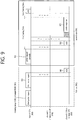
- FIG. 9 is a conceptual diagram illustrating a scanning method according to an embodiment of the present invention.
- FIG. 9 discloses an AP scanning method of an STA 900 when an ACK 940 is not received until a specific time expires after the STA 900 transmits a short probe request frame 905.
- a specific time set for determining whether to receive the ACK may be shorter than the minimum channel time (minchanneltime) used in the existing active scanning procedure.
- the ACK may not be received until the specific time expires after the short probe request frame 905 is transmitted through a first channel 910.
- the STA 900 may perform scanning by moving the scanning channel to a second channel 920.
- the STA 900 may transmit a short probe request frame 930 by specifying the target AP in the second channel 920.
- An AP that operates in the second channel may transmit the ACK to the STA 900 as a response to receive the short probe request frame.
- the STA 900 that receives the ACK 940 may transmit a probe request frame 950 through the second channel 920 by specifying the target AP.
- the target AP may SIFS and thereafter, transmit an ACK 960 that responds to receiving the probe request frame 950 transmitted by the STA 900.
- the target AP may transmit a probe response frame 970 to the STA 900 by performing the channel access after a predetermined time elapses.
- FIG. 10 is a conceptual diagram illustrating a short probe request frame according to an embodiment of the present invention.
- FIG. 10 discloses a format of a short probe request frame which the STA unicasts to a specific AP in the first scanning procedure.
- the short probe request frame may include only an MAC header and an FCS.
- Address 1 field 1000 of the MAC header may include the BSSID of the target AP.
- the STA may unicast the short probe request frame to the specific AP corresponding to the BSSID.
- the short probe request frame for rapid scanning may be transmitted by multicast as well as unicast.
- FIG. 11 is a conceptual diagram illustrating a short probe request frame according to an embodiment of the present invention.
- FIG. 11 discloses a format of the short probe request frame which the STA multicasts to the specific AP in the first scanning procedure.
- the short probe request frame may include only the MAC header, a frame body, and the FCS.
- Address 1 field 1100 of the MAC header of the multicasted short probe request frame may include a broadcast (wildcard) BSSID.
- the frame body 1150 may information on a target SSID or SSID list.
- the STA may broadcast the short probe request frame to an AP corresponding to the SSID.
- the short probe request frame is transmitted based on the unicast or multicast to prevent the signaling storm and false ACK detection. That is, only the specific AP transmits the ACK to prevent the signaling storm and it is determined whether the ACK is received as the response to the unicasted or multicasted short probe request frame, not the procedure to detect the CCA to prevent the false determination of the existence of the neighboring APs, which occurs due to the detection of only the CCA.
- the short probe request frame is generated based on not a management frame format including the MAC header and the frame body but a control frame format to perform the rapid scanning procedure.
- the control frame format may include the MAC header and the FCS.
- FIG. 12 is a conceptual diagram illustrating a control frame based short probe request frame according to an embodiment of the present invention.
- the short probe request frame may include a frame control 1200, a duration 1210, an RA 1230, and a frame check sequence (FCS) 1240.
- FCS frame check sequence
- the frame control 1200 may include information associated with a frame, such as a protocol version, a type a sub type, retry, power management, and the like.
- a sub field of the frame control 1200 is disclosed in 8.2.4.1 Frame Control field of "IEEE Standard for Information Technology-Telecommunications and information exchange between systems-Local and metropolitan area networks-Specific requirements Part 11: Wireless LAN Medium Access Control (MAC) and Physical Layer (PHY) Specifications" in a document of IEEE Draft P802.11-REVmbTM/D12, November 2011 disclosed in November 2011.
- FCS of the document is disclosed in 8.2.4.8 FCS of the document.
- the receiver address (RA) 1230 field may include only identifier information of the specific AP, which is indicated in an MLME.SCAN-request primitive. That is, the RA 1230 field may include a specific BSSID for unicasting or multicasting the short probe request frame.
- the specific BSSID included in the RA of the short probe request frame that proposes the specific BSSID may be transmitted.
- APs that receive the short probe request frame transmitted by the STA transmit the ACK only when the BSSID of the AP and the BSSID of the short probe request frame coincide with each other.
- the STA determines that the ACK transmitted by the AP is busy through the PHY-CCA.indication based on the CCA to determine that an AP transmitting the ACK exists.
- an MAC address of the STA as a transmitter transmitting the short probe request frame, which is included in the RA field of the ACK frame may be transferred.
- a transmit address (TA) field does not exist in the short probe request frame of FIG. 12 . Accordingly, the RA field of the ACK frame may not include an address of the STA.
- a broadcast address is included in the RA field of the ACK frame to transmit a broadcast ACK.
- FIG. 13 is a conceptual diagram illustrating an ACK frame format according to an embodiment of the present invention.
- the AP that receives the control frame based short probe request frame disclosed in FIG. 12 may transmit the broadcast ACK with the broadcast address being included in the RA 1300 of the ACK.
- the identifier information of the STA that transmits the short probe request frame proposed in FIG. 12 may be included in the ACK in order to transmit the ACK frame by the unicast. That is, the AP specifies the RA 1300 based on the identifier information of the STA that transmits the short probe request frame to transmit the specified RA 1300 to the STA.
- FIG. 14 is a conceptual diagram illustrating a short probe request frame according to an embodiment of the present invention.
- the short probe request frame may include a transmitter address (TA) 1400.
- An address of the STA that transmits the short probe request frame may be included in the TA 1400.
- the AP that receives the short probe request frame including the TA 1400 unicasts the ACK with the address included in the TA field 1400 of the short probe request frame being included in the RA field of the ACK at the time of transmitting the ACK. That is, the AP may perform a unicast based ACK procedure based on the short probe request frame disclosed in FIG. 14 .
- FIG. 15 is a conceptual diagram illustrating a scanning procedure by an STA according to an embodiment of the present invention.
- FIG. 15 discloses the case in which the STA transmits control frame based short probe request frames 1503 and 1506 including the TA.
- the STA 1500 may transmit the short probe request frame 1503 to a first channel 1510.
- the STA 1500 may not receive an ACK as a response to the short probe request frame 1503.
- the STA 1500 may transmit the short probe request frame 1506 to the second channel 1520.
- the STA 1500 may not receive an ACK 1550 as the response to the short probe request frame 1506 from the second channel 1520.
- the AP may unicast the ACK 1550 to the STA 1500 that transmits the short probe request frame 1506 based on the TA included in the short probe request frame 1506.
- the AP may decide an RA field to be included in the ACK 1550 based on the TA of the received short probe request frame 1506 and unicast the ACK 1550 as the response to the short probe request frame 1506 to the specified STA 1500.
- FIG. 16 is a conceptual diagram illustrating a scanning method by an STA according to an embodiment of the present invention.
- FIG. 16 discloses a method in which the STA detects whether to transmit the ACK from the AP to decide whether to switch the scanning channel at the time of performing the scanning procedure.
- the timing when the STA switches the scanning channel may vary depending on whether to receive the ACK as a response to a probe request frame 1630 transmitted in the second scanning procedure. For example, when the STA receives the ACK as the response to the transmitted probe request frame 1630, the STA may receive the probe response frame by waiting until a maximum channel time and process the received probe response frame similarly to the existing scanning procedure.
- the STA may rapidly perform the channel switching through a scanning procedure other than the existing scanning procedure.
- the existing scanning procedure it is determined whether the transmitted frame exists by monitoring the channel through the CCA until the minimum channel time (MinChannelTime) and when the frame is not detected through the CCA until the minimum channel time, the STA moves to another channel.
- the STA may switch the scanning channel without waiting until the minimum channel time unlike the existing scanning procedure.
- the STA may unicast the probe request frame 1630 to an access point (AP) in the first channel 1610.
- the target AP may be an AP decided based on the basic service set identifier (BSSID) included in the MLME.SCAN-request primitive.
- BSSID basic service set identifier
- the STA processes the ACK transmitted through the first channel 1610 within an acknowledgement (ACK) transmission time to determine whether to receive the ACK for the probe request frame.
- the STA may decode the ACK and determine whether the receiver address (RA) field of the ACK acquired by decoding the ACK and an identifier of the STA correspond to each other in order to determine whether the received ACK is the ACK for the probe request frame by processing the received ACK.
- RA receiver address
- the ACK transmission time may be a time corresponding to the (short interframe space (SIFS). As yet another embodiment, the ACK transmission time may be set to a value shorter than the minimum channel time. It may be determined whether The ACK transmission time expires based on a timer.
- SIFS short interframe space
- the STA may monitor the probe response frame as the response to the probe request frame in the first channel 1610. Whereas, when the ACK for the probe request frame is not received within the ACK transmission time, the STA may set a network allocation vector (NAV) to 0. Further, when the ACK for the probe request frame is not received within the ACK transmission time, the STA may switch the scanning channel from the first channel to the second channel at the time when the timer for the ACK transmission time expires regardless of a clear channel assessment (CCA) level detected for the ACK transmission time.
- CCA clear channel assessment
- a value acquired by adding a channel switching time and a probe delay time may be required until the STA unicasts the probe request frame 1650 in the second channel 1620.
- the scanning method by the STA disclosed in FIG. 16 may also be performed in combination with the first scanning procedure described in FIGS. 8 , 9 , and 10 .
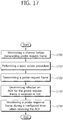
- FIG. 17 is a conceptual diagram illustrating a scanning procedure by an STA according to an embodiment of the present invention.
- the STA monitors a channel before transmitting the probe request frame (step S1700).
- the STA may transmit the probe request frame.
- the STA may discover whether a frame transmitted around the STA exists by monitoring the channel for the probe delay time and transmit the probe request frame only when the transmitted frame exists.
- a basic access procedure is performed (step S1710).
- a resource to transmit the probe request frame is acquired through the basic access procedure.
- the probe request frame is transmitted (step S1720).
- the STA may broadcast the probe request frame or transmit the probe request frame to individual target addresses.
- the STA may transmit one or more probe request frames.
- the STA may set the probe request frame based on the SSID and the BSSID based on the MLME-SCAN.request primitive.
- the STA determines whether the ACK is transmitted as the response to the probe request frame (step S1730).
- the NAV may be set to 0 and a next channel may be scanned.
- the ACK transmission time may be a time to wait for the ACK indicating whether to receive the probe request frame after transmitting the probe request frame.
- the STA may wait for the ACK as the response to the probe request frame until the timer for the ACK transmission time expires.
- the STA may receive the probe response frame as the response to the probe request frame by waiting until the minimum channel time or the maximum channel time.
- the STA may monitor the probe response frame as the response to the probe request frame. Whereas, when the ACK for the probe request frame is not received within the ACK transmission time, the STA may set the network allocation vector (NAV) to 0. Further, when the ACK for the probe request frame is not received within the ACK transmission time, the STA may switch the scanning channel from the first channel to the second channel at the time when the timer for the ACK transmission time expires regardless of the clear channel assessment (CCA) level detected for the ACK transmission time. By using such a method, the STA may not unnecessarily wait until the minimum channel time and rapidly perform the scanning procedure.
- NAV network allocation vector
- the STA monitors and receives the probe response frame for a set time (step S1740).
- the STA may receive the probe response frame by monitoring the probe response frame transmitted by the AP until the minimum channel time or the maximum channel time without switching the scanning channel to another channel. The STA processes the received probe response frame.
- the STA may process a received beacon frame, a measurement pilot, and an FILS discovery frame. Further, the STA transmits a MLME-SCAN.confirm primitive when the dot11FILSActiveated has the value of true, ReportingOption is IMMEDIATE, and a new AP or new information on the AP is detected.
- the MLME-SCAN.confirm primitive may include Result-Code which is INTERMEDIATE_SCAN_RESULT and BSSDescriptionSet including the detected information on the AP.
- the MLME-SCAN.confirm primitive may be a primitive for terminating the scanning procedure.
- the STA transmits the MLME-SCAN.confirm primitive when the probe timer reaches the MaxChannelTime.
- the MLME-SCAN.confirm primitive may include the Result-Code which is INTERMEDIATE_SCAN_RESULT and BSSDescriptionSet including the information on the AP detected in the scanned channel.
- Fig. 18 is a block diagram illustrating a wireless device to which an embodiment of the present invention may apply.
- the wireless device 1800 may be an STA that may implement the above-described embodiments, and the wireless device 1800 may be an AP or a non-AP STA (station).
- the wireless device 1800 includes a processor 1820, a memory 1840, and an RF (Radio Frequency) unit 1860.
- the RF unit 1860 may be connected with the processor 1820 to transmit/receive radio signals.
- the processor 1820 implements functions, processes, and/or methods as proposed herein.
- the processor 1820 may be implemented to perform the operation of the above-described wireless device according to an embodiment of the present invention.
- the processor 1820 may be implemented to transmit the short probe request frame unicasted by the STA and/or the ACK and the probe response frame as the response to the probe request frame.
- the processor 1820 may be implemented to unicast the probe request frame to the target access point (AP) which is the AP decided based on the basic service set identifier (BSSID) included in the MLME.SCAN-request primitive in the first channel and processes the ACK transmitted through the first channel within the acknowledgement (ACK) transmission time to determine whether to receive the ACK for the probe request frame and when the ACK for the probe request frame is received within the ACK transmission time, monitor the probe response frame as the response to the probe request frame in the first channel.
- AP target access point
- BSSID basic service set identifier
- ACK acknowledgement
- the processor 1820 may be implemented to switch the scanning channel from the first channel to the second channel at the time when the timer for the ACK transmission time expires regardless of the clear channel assessment (CCA) level detected for the ACK transmission time.
- CCA clear channel assessment
- the processor 1820 may be implemented to decode the received ACK and determine whether the receiver address (RA) field of the ACK acquired by the ACK and the identifier of the STA correspond to each other.
- RA receiver address
- the processor 1820 may include an ASIC (Application-Specific Integrated Circuit), other chipset, a logic circuit, a data processing device, and/or a converter that performs conversion between a baseband signal and a radio signal.
- the memory 1840 may include a ROM (Read-Only Memory), a RAM (Random Access Memory), a flash memory, a memory card, a storage medium, and/or other storage device.
- the RF unit 1860 may include one or more antennas that transmit and/or receive radio signals.
- the above-described schemes may be embodied in modules (processes, or functions, etc.) performing the above-described functions.
- the modules may be stored in the memory 1840 and may be executed by the processor 1820.
- the memory 1840 may be positioned in or outside the processor 1820 and may be connected with the processor 1820 via various well-known means.
Landscapes
- Engineering & Computer Science (AREA)
- Signal Processing (AREA)
- Computer Networks & Wireless Communication (AREA)
- Computer Security & Cryptography (AREA)
- Mobile Radio Communication Systems (AREA)
Claims (12)
- Verfahren zum Abtasten durch eine Station, STA, wobei das Verfahren umfasst:Senden eines ersten kurzen Sondierungsanforderungsrahmens (905) über einen ersten Kanal (910) durch die STA, um zu bestimmen, ob ein Zielzugangspunkt, AP, in dem ersten Kanal existiert;Senden eines zweiten kurzen Sondierungsanforderungsrahmens (930) an den Ziel-AP über einen zweiten Kanal (920) durch die STA, wenn eine erste Bestätigung, ACK, als eine Antwort auf den ersten kurzen Sondierungsanforderungsrahmen nicht über den ersten Kanal empfangen wird;Empfangen einer zweiten ACK (940) durch die STA als eine Antwort auf den zweiten kurzen Sondierungsanforderungsrahmen, wenn der Ziel-AP, der in dem zweiten Kanal betrieben wird, existiert;Unicast-Senden eines Sondierungsanforderungsrahmens (950) an den Ziel-AP über den zweiten Kanal durch die STA, wobei der erste kurze Sondierungsanforderungsrahmen und der zweite kurze Sondierungsanforderungsrahmen gesendet werden, bevor der Sondierungsanforderungsrahmen gesendet wird;Bestimmen durch die STA, ob eine dritte ACK (960) für den Sondierungsanforderungsrahmen empfangen wird, indem eine innerhalb einer ACK-Sendezeit über den zweiten Kanal gesendete ACK verarbeitet wird;Überwachen eines Sondierungsantwortrahmens durch die STA als eine Antwort auf den Sondierungsanforderungsrahmen auf dem zweiten Kanal, wenn die dritte ACK innerhalb der ACK-Sendezeit empfangen wird; undUmschalten eines Abtastkanals von dem zweiten Kanal auf einen dritten Kanal (1620) durch die STA unabhängig von einem Freikanalanalyse-, CCA, Pegel, der während der ACK-Sendezeit erfasst wird, wenn ein Zeitgeber für die ACK-Sendezeit abläuft, wenn die dritte ACK nicht innerhalb der ACK-Sendezeit empfangen wird.
- Verfahren nach Anspruch 1, ferner umfassend:Konfigurieren eines Netzbelegungsvektors, NAV, auf 0 durch die STA, wenn die dritte ACK nicht innerhalb der ACK-Sendezeit empfangen wird.
- Verfahren nach Anspruch 1,
wobei die ACK-Sendezeit ein kurzer Zwischenrahmenraum, SIFS, ist. - Verfahren nach Anspruch 1, wobei das Bestimmen durch die STA, ob die dritte ACK (960) für den Sondierungsanforderungsrahmen empfangen wird, indem die über den zweiten Kanal innerhalb der ACK-Sendezeit gesendete ACK verarbeitet wird, umfasst:Decodieren der ACK, undBestimmen, ob ein Empfängeradress-, RA, Feld (1300) der durch Decodieren der ACK erfassten ACK einer Kennung der STA entspricht.
- Verfahren nach Anspruch 1,
wobei der kurze Sondierungsanforderungsrahmen nur eine Medienzugriffssteuerungs-, MAC, Kopfzeile und eine Rahmenprüfzeichenfolge, FCS, umfasst,
wobei die MAC-Kopfzeile ein Adressfeld umfasst und
wobei das Adressfeld eine Grunddienstsatzkennung (1000), BSSID, des AP umfasst. - Verfahren nach Anspruch 1,
wobei der kurze Sondierungsanforderungsrahmen ein Senderadress-, TA, Feld (1400) umfasst,
wobei das TA-Feld Kennungsinformation der STA umfasst, die den kurzen Sondierungsanforderungsrahmen sendet, und
wobei die erste ACK ein Empfängeradress-, RA, Feld umfasst, das auf der Grundlage der Kennungsinformation der STA bestimmt wird. - Station, STA, die in einem drahtlosen LAN betrieben wird, wobei die STA umfasst:eine Hochfrequenz-, RF, Einheit, die konfiguriert ist, um ein Funksignal zu empfangen; undeinen Prozessor, der betriebsmäßig mit der RF-Einheit verbunden ist und ausgebildet ist zum:Senden eines ersten kurzen Sondierungsanforderungsrahmens (905) über einen ersten Kanal (910), um zu bestimmen, ob ein Zielzugangspunkt, AP, in dem ersten Kanal existiert;Senden eines zweiten kurzen Sondierungsanforderungsrahmens (930) an den Ziel-AP über einen zweiten Kanal (920), wenn eine erste Bestätigung, ACK, als eine Antwort auf den ersten kurzen Sondierungsanforderungsrahmen nicht über den ersten Kanal empfangen wird;Empfangen einer zweiten ACK (940) als eine Antwort auf den zweiten kurzen Sondierungsanforderungsrahmen, wenn der Ziel-AP, der in dem zweiten Kanal betrieben wird, existiert;Unicast-Senden eines Sondierungsanforderungsrahmens (950) an den Ziel-AP über den zweiten Kanal, wobei der erste kurze Sondierungsanforderungsrahmen und der zweite kurze Sondierungsanforderungsrahmen gesendet werden, bevor der Sondierungsanforderungsrahmen gesendet wird;Bestimmen, ob eine dritte ACK (960) für den Sondierungsanforderungsrahmen empfangen wird, indem eine innerhalb einer ACK-Sendezeit über den zweiten Kanal gesendete ACK verarbeitet wird;Überwachen eines Sondierungsantwortrahmens als eine Antwort auf den Sondierungsanforderungsrahmen auf dem zweiten Kanal, wenn die dritte ACK innerhalb der ACK-Sendezeit empfangen wird; undUmschalten eines Abtastkanals von dem zweiten Kanal auf einen dritten Kanal (1620) unabhängig von einem Freikanalanalyse-, CCA, Pegel, der während der ACK-Sendezeit erfasst wird, wenn ein Zeitgeber für die ACK-Sendezeit abläuft, wenn die dritte ACK nicht innerhalb der ACK-Sendezeit empfangen wird.
- STA nach Anspruch 7,
wobei der Prozessor konfiguriert ist, um einen Netzbelegungsvektor, NAV, auf 0 zu setzen, wenn die dritte ACK nicht innerhalb der ACK-Sendezeit empfangen wird. - STA nach Anspruch 7,
wobei die ACK-Sendezeit ein kurzer Zwischenrahmenraum, SIFS, ist. - STA nach Anspruch 7,
wobei der Prozessor konfiguriert ist zum:Decodieren der ACK, undBestimmen, ob ein Empfängeradress-, RA, Feld (1300) des durch Decodieren der ACK erfassten ACK einer Kennung der STA entspricht. - STA nach Anspruch 7,
wobei der kurze Sondierungsanforderungsrahmen nur eine Medienzugriffssteuerungs-, MAC, Kopfzeile und eine Rahmenprüfzeichenfolge, FCS, umfasst,
wobei die MAC-Kopfzeile ein Adressfeld umfasst und
wobei das Adressfeld eine Grunddienstsatzkennung (1000), BSSID, des AP umfasst. - STA nach Anspruch 7,
wobei der kurze Sondierungsanforderungsrahmen ein Senderadress-, TA, Feld (1400) umfasst,
wobei das TA-Feld Kennungsinformation der STA umfasst, die den kurzen Sondierungsanforderungsrahmen sendet, und
wobei die erste ACK ein Empfängeradress-, RA, Feld umfasst, das auf der Grundlage der Kennungsinformation der STA bestimmt wird.
Applications Claiming Priority (3)
| Application Number | Priority Date | Filing Date | Title |
|---|---|---|---|
| US201261699786P | 2012-09-11 | 2012-09-11 | |
| US201261702236P | 2012-09-17 | 2012-09-17 | |
| PCT/KR2013/008230 WO2014042434A1 (ko) | 2012-09-11 | 2013-09-11 | 무선랜에서 스캐닝 방법 및 장치 |
Publications (3)
| Publication Number | Publication Date |
|---|---|
| EP2897419A1 EP2897419A1 (de) | 2015-07-22 |
| EP2897419A4 EP2897419A4 (de) | 2016-05-11 |
| EP2897419B1 true EP2897419B1 (de) | 2017-08-30 |
Family
ID=50278465
Family Applications (1)
| Application Number | Title | Priority Date | Filing Date |
|---|---|---|---|
| EP13836917.8A Not-in-force EP2897419B1 (de) | 2012-09-11 | 2013-09-11 | Abtastverfahren und -vorrichtung in einem wlan |
Country Status (4)
| Country | Link |
|---|---|
| US (1) | US9503967B2 (de) |
| EP (1) | EP2897419B1 (de) |
| KR (1) | KR101682840B1 (de) |
| WO (1) | WO2014042434A1 (de) |
Families Citing this family (14)
| Publication number | Priority date | Publication date | Assignee | Title |
|---|---|---|---|---|
| US9807790B2 (en) * | 2013-10-31 | 2017-10-31 | Qualcomm Incorporated | Maximum away duration |
| US9635687B2 (en) * | 2013-11-20 | 2017-04-25 | Electronics & Telecommunications Research Institute | Method for transmitting and receiving frame in wireless local area network system and apparatus for the same |
| RU2641228C1 (ru) * | 2014-05-01 | 2018-01-16 | ЭлДжи ЭЛЕКТРОНИКС ИНК. | Способ повышения частоты повторного использования пространства в системе беспроводной lan и аппарат для этого |
| KR102249762B1 (ko) * | 2014-06-27 | 2021-05-10 | 주식회사 윌러스표준기술연구소 | 광대역에서의 클리어 채널 할당을 위한 무선 통신 방법 및 이를 이용한 무선 통신 단말 |
| KR102814666B1 (ko) | 2014-12-02 | 2025-05-30 | 주식회사 윌러스표준기술연구소 | 클리어 채널 할당을 위한 무선 통신 단말 및 무선 통신 방법 |
| WO2016122086A1 (ko) * | 2015-01-27 | 2016-08-04 | 엘지전자(주) | 무선 통신 시스템의 송수신 장치 및 방법 |
| US10609730B2 (en) | 2015-08-12 | 2020-03-31 | Lg Electronics Inc. | NAV operation method in wireless Lan system and station apparatus for same |
| CN105933899B (zh) * | 2016-04-14 | 2019-07-09 | 北京小米移动软件有限公司 | 无线接入点的接入方法和装置 |
| CN113692757B (zh) * | 2019-02-28 | 2025-08-12 | 交互数字专利控股公司 | 用于wur扫描的方法及wtru |
| US11234174B2 (en) * | 2019-12-27 | 2022-01-25 | Intel Corporation | Zero latency BSS transition with on-channel tunneling (OCT) |
| JP7371775B2 (ja) * | 2020-05-20 | 2023-10-31 | 日本電信電話株式会社 | 無線lanフレームキャプチャ方法、無線lanフレームキャプチャ端末、及び無線lanフレームキャプチャプログラム |
| CN113473573B (zh) * | 2021-06-08 | 2024-03-12 | 北京小米移动软件有限公司 | 信息处理方法、装置、无线接入设备及智能家居设备 |
| CN114786165B (zh) * | 2022-03-22 | 2023-07-14 | 杭州迪普科技股份有限公司 | 探测请求处理方法及系统 |
| WO2025199994A1 (zh) * | 2024-03-29 | 2025-10-02 | 广州视源电子科技股份有限公司 | 数据传输方法、装置、设备以及介质 |
Family Cites Families (16)
| Publication number | Priority date | Publication date | Assignee | Title |
|---|---|---|---|---|
| US7876704B1 (en) * | 2002-01-11 | 2011-01-25 | Broadcom Corporation | Tunneling protocols for wireless communications |
| US7698550B2 (en) * | 2002-11-27 | 2010-04-13 | Microsoft Corporation | Native wi-fi architecture for 802.11 networks |
| WO2004098214A1 (en) * | 2003-04-29 | 2004-11-11 | Docomo Communications Laboratories Usa, Inc. | Fast active scanning wireless network apparatus and method |
| US7675878B2 (en) * | 2003-09-30 | 2010-03-09 | Motorola, Inc. | Enhanced passive scanning |
| US8483105B2 (en) * | 2003-10-15 | 2013-07-09 | Qualcomm Incorporated | High speed media access control |
| US7805140B2 (en) * | 2005-02-18 | 2010-09-28 | Cisco Technology, Inc. | Pre-emptive roaming mechanism allowing for enhanced QoS in wireless network environments |
| US20060215601A1 (en) * | 2005-03-14 | 2006-09-28 | H-Stream Wireless, Inc. | Method and apparatus for coordinating a wireless PAN network and a wireless LAN network |
| US20070248058A1 (en) | 2006-04-20 | 2007-10-25 | Victor Fajardo | Fast link-down detection systems and methods |
| US7716379B2 (en) * | 2007-04-26 | 2010-05-11 | Microsoft Corporation | Hardware control interface for IEEE standard 802.11 including transmission control interface component and a transmission status interface component |
| JP5418496B2 (ja) * | 2008-04-23 | 2014-02-19 | 日本電気株式会社 | 基地局及び端末、並びにこれらの制御方法 |
| US8243623B2 (en) * | 2009-03-31 | 2012-08-14 | Intel Corporation | Combined device and service discovery technique in stations supporting tunneled direct link setup (TDLS) |
| KR101689608B1 (ko) * | 2010-01-20 | 2016-12-27 | 엘지전자 주식회사 | 무선랜에서 능동 스캐닝 방법 및 장치 |
| JP5269925B2 (ja) * | 2011-01-31 | 2013-08-21 | 株式会社東芝 | 無線通信装置及び無線通信方法 |
| US9185725B2 (en) * | 2011-12-15 | 2015-11-10 | Nokia Technologies Oy | Request-response procedure for wireless network |
| US9294883B2 (en) * | 2012-03-01 | 2016-03-22 | Nokia Technologies Oy | Method, apparatus, and computer program product for probe request and response exchange |
| US9042324B2 (en) * | 2012-05-03 | 2015-05-26 | Interdigital Patent Holdings, Inc. | Enhanced active scanning in wireless local area networks |
-
2013
- 2013-09-11 WO PCT/KR2013/008230 patent/WO2014042434A1/ko not_active Ceased
- 2013-09-11 US US14/424,921 patent/US9503967B2/en not_active Expired - Fee Related
- 2013-09-11 KR KR1020157006985A patent/KR101682840B1/ko not_active Expired - Fee Related
- 2013-09-11 EP EP13836917.8A patent/EP2897419B1/de not_active Not-in-force
Non-Patent Citations (1)
| Title |
|---|
| None * |
Also Published As
| Publication number | Publication date |
|---|---|
| WO2014042434A1 (ko) | 2014-03-20 |
| US20150230162A1 (en) | 2015-08-13 |
| KR101682840B1 (ko) | 2016-12-05 |
| KR20150060706A (ko) | 2015-06-03 |
| EP2897419A4 (de) | 2016-05-11 |
| US9503967B2 (en) | 2016-11-22 |
| EP2897419A1 (de) | 2015-07-22 |
Similar Documents
| Publication | Publication Date | Title |
|---|---|---|
| US10015726B2 (en) | Method and apparatus for active scanning in wireless LAN | |
| EP2897419B1 (de) | Abtastverfahren und -vorrichtung in einem wlan | |
| US9572092B2 (en) | Method and apparatus for active scanning in wireless LAN | |
| US9794864B2 (en) | Method and apparatus for scanning in a wireless LAN | |
| US9439136B2 (en) | Method and apparatus for scanning in wireless LAN | |
| JP6426082B2 (ja) | アクティブスキャニング方法及び装置 | |
| US9544161B2 (en) | Method and apparatus for scanning in wireless LAN | |
| US9609580B2 (en) | Method and apparatus for transmitting backhaul link information | |
| US9451537B2 (en) | Scanning method and scanning apparatus in wireless LAN | |
| EP2945431B1 (de) | Verfahren und vorrichtung zur durchführung einer aktiven abtastung |
Legal Events
| Date | Code | Title | Description |
|---|---|---|---|
| PUAI | Public reference made under article 153(3) epc to a published international application that has entered the european phase |
Free format text: ORIGINAL CODE: 0009012 |
|
| 17P | Request for examination filed |
Effective date: 20150311 |
|
| AK | Designated contracting states |
Kind code of ref document: A1 Designated state(s): AL AT BE BG CH CY CZ DE DK EE ES FI FR GB GR HR HU IE IS IT LI LT LU LV MC MK MT NL NO PL PT RO RS SE SI SK SM TR |
|
| AX | Request for extension of the european patent |
Extension state: BA ME |
|
| DAX | Request for extension of the european patent (deleted) | ||
| RA4 | Supplementary search report drawn up and despatched (corrected) |
Effective date: 20160413 |
|
| RIC1 | Information provided on ipc code assigned before grant |
Ipc: H04W 48/16 20090101AFI20160407BHEP |
|
| GRAP | Despatch of communication of intention to grant a patent |
Free format text: ORIGINAL CODE: EPIDOSNIGR1 |
|
| INTG | Intention to grant announced |
Effective date: 20170322 |
|
| GRAS | Grant fee paid |
Free format text: ORIGINAL CODE: EPIDOSNIGR3 |
|
| GRAA | (expected) grant |
Free format text: ORIGINAL CODE: 0009210 |
|
| AK | Designated contracting states |
Kind code of ref document: B1 Designated state(s): AL AT BE BG CH CY CZ DE DK EE ES FI FR GB GR HR HU IE IS IT LI LT LU LV MC MK MT NL NO PL PT RO RS SE SI SK SM TR |
|
| REG | Reference to a national code |
Ref country code: GB Ref legal event code: FG4D |
|
| REG | Reference to a national code |
Ref country code: CH Ref legal event code: EP |
|
| REG | Reference to a national code |
Ref country code: AT Ref legal event code: REF Ref document number: 924759 Country of ref document: AT Kind code of ref document: T Effective date: 20170915 |
|
| REG | Reference to a national code |
Ref country code: IE Ref legal event code: FG4D |
|
| REG | Reference to a national code |
Ref country code: DE Ref legal event code: R096 Ref document number: 602013025942 Country of ref document: DE |
|
| REG | Reference to a national code |
Ref country code: NL Ref legal event code: MP Effective date: 20170830 |
|
| REG | Reference to a national code |
Ref country code: LT Ref legal event code: MG4D |
|
| REG | Reference to a national code |
Ref country code: AT Ref legal event code: MK05 Ref document number: 924759 Country of ref document: AT Kind code of ref document: T Effective date: 20170830 |
|
| PG25 | Lapsed in a contracting state [announced via postgrant information from national office to epo] |
Ref country code: FI Free format text: LAPSE BECAUSE OF FAILURE TO SUBMIT A TRANSLATION OF THE DESCRIPTION OR TO PAY THE FEE WITHIN THE PRESCRIBED TIME-LIMIT Effective date: 20170830 Ref country code: SE Free format text: LAPSE BECAUSE OF FAILURE TO SUBMIT A TRANSLATION OF THE DESCRIPTION OR TO PAY THE FEE WITHIN THE PRESCRIBED TIME-LIMIT Effective date: 20170830 Ref country code: HR Free format text: LAPSE BECAUSE OF FAILURE TO SUBMIT A TRANSLATION OF THE DESCRIPTION OR TO PAY THE FEE WITHIN THE PRESCRIBED TIME-LIMIT Effective date: 20170830 Ref country code: NO Free format text: LAPSE BECAUSE OF FAILURE TO SUBMIT A TRANSLATION OF THE DESCRIPTION OR TO PAY THE FEE WITHIN THE PRESCRIBED TIME-LIMIT Effective date: 20171130 Ref country code: LT Free format text: LAPSE BECAUSE OF FAILURE TO SUBMIT A TRANSLATION OF THE DESCRIPTION OR TO PAY THE FEE WITHIN THE PRESCRIBED TIME-LIMIT Effective date: 20170830 Ref country code: AT Free format text: LAPSE BECAUSE OF FAILURE TO SUBMIT A TRANSLATION OF THE DESCRIPTION OR TO PAY THE FEE WITHIN THE PRESCRIBED TIME-LIMIT Effective date: 20170830 |
|
| PG25 | Lapsed in a contracting state [announced via postgrant information from national office to epo] |
Ref country code: RS Free format text: LAPSE BECAUSE OF FAILURE TO SUBMIT A TRANSLATION OF THE DESCRIPTION OR TO PAY THE FEE WITHIN THE PRESCRIBED TIME-LIMIT Effective date: 20170830 Ref country code: IS Free format text: LAPSE BECAUSE OF FAILURE TO SUBMIT A TRANSLATION OF THE DESCRIPTION OR TO PAY THE FEE WITHIN THE PRESCRIBED TIME-LIMIT Effective date: 20171230 Ref country code: LV Free format text: LAPSE BECAUSE OF FAILURE TO SUBMIT A TRANSLATION OF THE DESCRIPTION OR TO PAY THE FEE WITHIN THE PRESCRIBED TIME-LIMIT Effective date: 20170830 Ref country code: BG Free format text: LAPSE BECAUSE OF FAILURE TO SUBMIT A TRANSLATION OF THE DESCRIPTION OR TO PAY THE FEE WITHIN THE PRESCRIBED TIME-LIMIT Effective date: 20171130 Ref country code: ES Free format text: LAPSE BECAUSE OF FAILURE TO SUBMIT A TRANSLATION OF THE DESCRIPTION OR TO PAY THE FEE WITHIN THE PRESCRIBED TIME-LIMIT Effective date: 20170830 Ref country code: GR Free format text: LAPSE BECAUSE OF FAILURE TO SUBMIT A TRANSLATION OF THE DESCRIPTION OR TO PAY THE FEE WITHIN THE PRESCRIBED TIME-LIMIT Effective date: 20171201 |
|
| PG25 | Lapsed in a contracting state [announced via postgrant information from national office to epo] |
Ref country code: NL Free format text: LAPSE BECAUSE OF FAILURE TO SUBMIT A TRANSLATION OF THE DESCRIPTION OR TO PAY THE FEE WITHIN THE PRESCRIBED TIME-LIMIT Effective date: 20170830 |
|
| PG25 | Lapsed in a contracting state [announced via postgrant information from national office to epo] |
Ref country code: PL Free format text: LAPSE BECAUSE OF FAILURE TO SUBMIT A TRANSLATION OF THE DESCRIPTION OR TO PAY THE FEE WITHIN THE PRESCRIBED TIME-LIMIT Effective date: 20170830 Ref country code: RO Free format text: LAPSE BECAUSE OF FAILURE TO SUBMIT A TRANSLATION OF THE DESCRIPTION OR TO PAY THE FEE WITHIN THE PRESCRIBED TIME-LIMIT Effective date: 20170830 Ref country code: DK Free format text: LAPSE BECAUSE OF FAILURE TO SUBMIT A TRANSLATION OF THE DESCRIPTION OR TO PAY THE FEE WITHIN THE PRESCRIBED TIME-LIMIT Effective date: 20170830 Ref country code: CZ Free format text: LAPSE BECAUSE OF FAILURE TO SUBMIT A TRANSLATION OF THE DESCRIPTION OR TO PAY THE FEE WITHIN THE PRESCRIBED TIME-LIMIT Effective date: 20170830 |
|
| REG | Reference to a national code |
Ref country code: CH Ref legal event code: PL |
|
| PG25 | Lapsed in a contracting state [announced via postgrant information from national office to epo] |
Ref country code: IT Free format text: LAPSE BECAUSE OF FAILURE TO SUBMIT A TRANSLATION OF THE DESCRIPTION OR TO PAY THE FEE WITHIN THE PRESCRIBED TIME-LIMIT Effective date: 20170830 Ref country code: EE Free format text: LAPSE BECAUSE OF FAILURE TO SUBMIT A TRANSLATION OF THE DESCRIPTION OR TO PAY THE FEE WITHIN THE PRESCRIBED TIME-LIMIT Effective date: 20170830 Ref country code: SK Free format text: LAPSE BECAUSE OF FAILURE TO SUBMIT A TRANSLATION OF THE DESCRIPTION OR TO PAY THE FEE WITHIN THE PRESCRIBED TIME-LIMIT Effective date: 20170830 Ref country code: SM Free format text: LAPSE BECAUSE OF FAILURE TO SUBMIT A TRANSLATION OF THE DESCRIPTION OR TO PAY THE FEE WITHIN THE PRESCRIBED TIME-LIMIT Effective date: 20170830 Ref country code: MC Free format text: LAPSE BECAUSE OF FAILURE TO SUBMIT A TRANSLATION OF THE DESCRIPTION OR TO PAY THE FEE WITHIN THE PRESCRIBED TIME-LIMIT Effective date: 20170830 |
|
| REG | Reference to a national code |
Ref country code: DE Ref legal event code: R097 Ref document number: 602013025942 Country of ref document: DE |
|
| REG | Reference to a national code |
Ref country code: IE Ref legal event code: MM4A |
|
| REG | Reference to a national code |
Ref country code: BE Ref legal event code: MM Effective date: 20170930 |
|
| PG25 | Lapsed in a contracting state [announced via postgrant information from national office to epo] |
Ref country code: LU Free format text: LAPSE BECAUSE OF NON-PAYMENT OF DUE FEES Effective date: 20170911 |
|
| PLBE | No opposition filed within time limit |
Free format text: ORIGINAL CODE: 0009261 |
|
| STAA | Information on the status of an ep patent application or granted ep patent |
Free format text: STATUS: NO OPPOSITION FILED WITHIN TIME LIMIT |
|
| GBPC | Gb: european patent ceased through non-payment of renewal fee |
Effective date: 20171130 |
|
| PG25 | Lapsed in a contracting state [announced via postgrant information from national office to epo] |
Ref country code: LI Free format text: LAPSE BECAUSE OF NON-PAYMENT OF DUE FEES Effective date: 20170930 Ref country code: IE Free format text: LAPSE BECAUSE OF NON-PAYMENT OF DUE FEES Effective date: 20170911 Ref country code: CH Free format text: LAPSE BECAUSE OF NON-PAYMENT OF DUE FEES Effective date: 20170930 |
|
| 26N | No opposition filed |
Effective date: 20180531 |
|
| REG | Reference to a national code |
Ref country code: FR Ref legal event code: ST Effective date: 20180706 |
|
| PG25 | Lapsed in a contracting state [announced via postgrant information from national office to epo] |
Ref country code: SI Free format text: LAPSE BECAUSE OF FAILURE TO SUBMIT A TRANSLATION OF THE DESCRIPTION OR TO PAY THE FEE WITHIN THE PRESCRIBED TIME-LIMIT Effective date: 20170830 Ref country code: BE Free format text: LAPSE BECAUSE OF NON-PAYMENT OF DUE FEES Effective date: 20170930 |
|
| PG25 | Lapsed in a contracting state [announced via postgrant information from national office to epo] |
Ref country code: MT Free format text: LAPSE BECAUSE OF NON-PAYMENT OF DUE FEES Effective date: 20170911 |
|
| PG25 | Lapsed in a contracting state [announced via postgrant information from national office to epo] |
Ref country code: FR Free format text: LAPSE BECAUSE OF NON-PAYMENT OF DUE FEES Effective date: 20171030 |
|
| PG25 | Lapsed in a contracting state [announced via postgrant information from national office to epo] |
Ref country code: GB Free format text: LAPSE BECAUSE OF NON-PAYMENT OF DUE FEES Effective date: 20171130 |
|
| PG25 | Lapsed in a contracting state [announced via postgrant information from national office to epo] |
Ref country code: HU Free format text: LAPSE BECAUSE OF FAILURE TO SUBMIT A TRANSLATION OF THE DESCRIPTION OR TO PAY THE FEE WITHIN THE PRESCRIBED TIME-LIMIT; INVALID AB INITIO Effective date: 20130911 |
|
| PG25 | Lapsed in a contracting state [announced via postgrant information from national office to epo] |
Ref country code: CY Free format text: LAPSE BECAUSE OF FAILURE TO SUBMIT A TRANSLATION OF THE DESCRIPTION OR TO PAY THE FEE WITHIN THE PRESCRIBED TIME-LIMIT Effective date: 20170830 |
|
| PG25 | Lapsed in a contracting state [announced via postgrant information from national office to epo] |
Ref country code: MK Free format text: LAPSE BECAUSE OF FAILURE TO SUBMIT A TRANSLATION OF THE DESCRIPTION OR TO PAY THE FEE WITHIN THE PRESCRIBED TIME-LIMIT Effective date: 20170830 |
|
| PG25 | Lapsed in a contracting state [announced via postgrant information from national office to epo] |
Ref country code: TR Free format text: LAPSE BECAUSE OF FAILURE TO SUBMIT A TRANSLATION OF THE DESCRIPTION OR TO PAY THE FEE WITHIN THE PRESCRIBED TIME-LIMIT Effective date: 20170830 |
|
| PG25 | Lapsed in a contracting state [announced via postgrant information from national office to epo] |
Ref country code: PT Free format text: LAPSE BECAUSE OF FAILURE TO SUBMIT A TRANSLATION OF THE DESCRIPTION OR TO PAY THE FEE WITHIN THE PRESCRIBED TIME-LIMIT Effective date: 20170830 |
|
| PG25 | Lapsed in a contracting state [announced via postgrant information from national office to epo] |
Ref country code: AL Free format text: LAPSE BECAUSE OF FAILURE TO SUBMIT A TRANSLATION OF THE DESCRIPTION OR TO PAY THE FEE WITHIN THE PRESCRIBED TIME-LIMIT Effective date: 20170830 |
|
| PGFP | Annual fee paid to national office [announced via postgrant information from national office to epo] |
Ref country code: DE Payment date: 20200806 Year of fee payment: 8 |
|
| REG | Reference to a national code |
Ref country code: DE Ref legal event code: R119 Ref document number: 602013025942 Country of ref document: DE |
|
| PG25 | Lapsed in a contracting state [announced via postgrant information from national office to epo] |
Ref country code: DE Free format text: LAPSE BECAUSE OF NON-PAYMENT OF DUE FEES Effective date: 20220401 |