EP2898710B1 - Filtrage automatique des données de localisation - Google Patents
Filtrage automatique des données de localisation Download PDFInfo
- Publication number
- EP2898710B1 EP2898710B1 EP12761626.6A EP12761626A EP2898710B1 EP 2898710 B1 EP2898710 B1 EP 2898710B1 EP 12761626 A EP12761626 A EP 12761626A EP 2898710 B1 EP2898710 B1 EP 2898710B1
- Authority
- EP
- European Patent Office
- Prior art keywords
- devices
- group
- location data
- belong
- analysis
- Prior art date
- Legal status (The legal status is an assumption and is not a legal conclusion. Google has not performed a legal analysis and makes no representation as to the accuracy of the status listed.)
- Active
Links
Images


Classifications
-
- H—ELECTRICITY
- H04—ELECTRIC COMMUNICATION TECHNIQUE
- H04W—WIRELESS COMMUNICATION NETWORKS
- H04W4/00—Services specially adapted for wireless communication networks; Facilities therefor
- H04W4/02—Services making use of location information
-
- H—ELECTRICITY
- H04—ELECTRIC COMMUNICATION TECHNIQUE
- H04W—WIRELESS COMMUNICATION NETWORKS
- H04W64/00—Locating users or terminals or network equipment for network management purposes, e.g. mobility management
- H04W64/006—Locating users or terminals or network equipment for network management purposes, e.g. mobility management with additional information processing, e.g. for direction or speed determination
-
- G—PHYSICS
- G06—COMPUTING OR CALCULATING; COUNTING
- G06F—ELECTRIC DIGITAL DATA PROCESSING
- G06F16/00—Information retrieval; Database structures therefor; File system structures therefor
- G06F16/90—Details of database functions independent of the retrieved data types
- G06F16/95—Retrieval from the web
- G06F16/953—Querying, e.g. by the use of web search engines
- G06F16/9535—Search customisation based on user profiles and personalisation
-
- G—PHYSICS
- G06—COMPUTING OR CALCULATING; COUNTING
- G06F—ELECTRIC DIGITAL DATA PROCESSING
- G06F16/00—Information retrieval; Database structures therefor; File system structures therefor
- G06F16/90—Details of database functions independent of the retrieved data types
- G06F16/95—Retrieval from the web
- G06F16/953—Querying, e.g. by the use of web search engines
- G06F16/9537—Spatial or temporal dependent retrieval, e.g. spatiotemporal queries
-
- G—PHYSICS
- G08—SIGNALLING
- G08G—TRAFFIC CONTROL SYSTEMS
- G08G1/00—Traffic control systems for road vehicles
- G08G1/01—Detecting movement of traffic to be counted or controlled
- G08G1/0104—Measuring and analyzing of parameters relative to traffic conditions
- G08G1/0108—Measuring and analyzing of parameters relative to traffic conditions based on the source of data
- G08G1/0112—Measuring and analyzing of parameters relative to traffic conditions based on the source of data from the vehicle, e.g. floating car data [FCD]
-
- G—PHYSICS
- G08—SIGNALLING
- G08G—TRAFFIC CONTROL SYSTEMS
- G08G1/00—Traffic control systems for road vehicles
- G08G1/01—Detecting movement of traffic to be counted or controlled
- G08G1/0104—Measuring and analyzing of parameters relative to traffic conditions
- G08G1/0108—Measuring and analyzing of parameters relative to traffic conditions based on the source of data
- G08G1/012—Measuring and analyzing of parameters relative to traffic conditions based on the source of data from other sources than vehicle or roadside beacons, e.g. mobile networks
-
- G—PHYSICS
- G08—SIGNALLING
- G08G—TRAFFIC CONTROL SYSTEMS
- G08G1/00—Traffic control systems for road vehicles
- G08G1/01—Detecting movement of traffic to be counted or controlled
- G08G1/0104—Measuring and analyzing of parameters relative to traffic conditions
- G08G1/0125—Traffic data processing
- G08G1/0129—Traffic data processing for creating historical data or processing based on historical data
-
- G—PHYSICS
- G08—SIGNALLING
- G08G—TRAFFIC CONTROL SYSTEMS
- G08G1/00—Traffic control systems for road vehicles
- G08G1/20—Monitoring the location of vehicles belonging to a group, e.g. fleet of vehicles, countable or determined number of vehicles
- G08G1/202—Dispatching vehicles on the basis of a location, e.g. taxi dispatching
-
- H—ELECTRICITY
- H04—ELECTRIC COMMUNICATION TECHNIQUE
- H04L—TRANSMISSION OF DIGITAL INFORMATION, e.g. TELEGRAPHIC COMMUNICATION
- H04L43/00—Arrangements for monitoring or testing data switching networks
- H04L43/06—Generation of reports
- H04L43/062—Generation of reports related to network traffic
-
- H—ELECTRICITY
- H04—ELECTRIC COMMUNICATION TECHNIQUE
- H04L—TRANSMISSION OF DIGITAL INFORMATION, e.g. TELEGRAPHIC COMMUNICATION
- H04L67/00—Network arrangements or protocols for supporting network services or applications
- H04L67/50—Network services
- H04L67/52—Network services specially adapted for the location of the user terminal
-
- H—ELECTRICITY
- H04—ELECTRIC COMMUNICATION TECHNIQUE
- H04W—WIRELESS COMMUNICATION NETWORKS
- H04W4/00—Services specially adapted for wireless communication networks; Facilities therefor
- H04W4/02—Services making use of location information
- H04W4/029—Location-based management or tracking services
-
- H—ELECTRICITY
- H04—ELECTRIC COMMUNICATION TECHNIQUE
- H04W—WIRELESS COMMUNICATION NETWORKS
- H04W8/00—Network data management
- H04W8/02—Processing of mobility data, e.g. registration information at HLR [Home Location Register] or VLR [Visitor Location Register]; Transfer of mobility data, e.g. between HLR, VLR or external networks
Definitions
- the present invention relates to methods and apparatus for filtering, collecting and analysing location data received for a plurality of devices in a wireless network.
- the invention relates to methods and apparatus for filtering location data for a plurality of devices in the wireless network and analysing location data for devices belonging to a group of devices that are relevant to the analysis.
- All wireless network connected devices create a lot of data related to mobility of the devices, which data can be used in many application areas. It is understood that more connected “things” become the more data related to mobility of the device will be available.
- models of how devices are being moved around which can be used in many application areas, examples of which may include:
- One potential source of data related to mobility is location tagged data from mobile networks.
- Devices connected through cellular technology are a rich source of mobility data as these devices are known to leave a lot of tracks throughout a mobile network and the network nodes of the mobile network.
- Mobile networks generate a very large amount of data. It is possible to build a system for collecting location data from mobile networks, analyse the location data, and expose it for use by different applications and services.
- Wireless communication networks may comprise or represent any wireless network used for wireless communications with devices connected to the wireless network.
- wireless networks include, but are not limited to, wireless networks such as the Worldwide Interoperability for Microwave Access (WiMAX), wireless local area networks (WLAN) based on the Institute of Electrical and Electronics Engineers' (IEEE) 802.11 standards e.g. Wi-Fi networks, or wireless networks based on cellular or satellite technologies such as mobile networks, Global System for Mobile Communications (GSM), Wideband Code Division Multiple Access (W-CDMA), CDMA2000 or Long Term Evolution (LTE)/LTE Advanced mobile networks or any 2 nd , 3 rd or 4 th Generation and beyond wireless networks.
- GSM Global System for Mobile Communications
- W-CDMA Wideband Code Division Multiple Access
- LTE Long Term Evolution
- LTE Advanced mobile networks any 2 nd , 3 rd or 4 th Generation and beyond wireless networks.
- the device(s) or connected device(s) may comprise or represent any device that is capable of connecting to or communicating over a wireless communication network.
- devices as described herein include, but are not limited to, wireless devices such as mobile phones, terminals, smart phones, satellite phones, portable computing devices such as lap tops, handheld devices, tablets, netbooks, computers, personal digital assistants, Global Positioning System (GPS) personal navigators, augmented reality glasses, credit card terminals, security devices, in-vehicle devices such as vehicle tracking systems or any other wireless communication device that is mobile and/or wireless devices such as sensors, smart meters or utility meters or any other wireless communication device that typically has a fixed location.
- wireless devices such as mobile phones, terminals, smart phones, satellite phones, portable computing devices such as lap tops, handheld devices, tablets, netbooks, computers, personal digital assistants, Global Positioning System (GPS) personal navigators, augmented reality glasses, credit card terminals, security devices, in-vehicle devices such as vehicle tracking systems or any other wireless communication device that is mobile and/or wireless devices
- Figure 1 illustrates an example data collection and analysis system 100 used for collecting location data of devices from a mobile network 101, analyses the location data and creates models of device mobility.
- the mobile network 101 collects data about the locations of all connected devices from one or more nodes or different sources in the mobile network 101.
- the data about the locations of all connected devices are sent from the mobile network 101 to a data collector apparatus 102.
- This location data from each device may include data representative of the device location, a timestamp, and a device identifier.
- the data collector apparatus 102 collects this location data from the different data sources and converts it into a uniform format suitable for analysis.
- the data collector apparatus 102 sends all of the uniformly formatted location data to a data analyzer apparatus 103 for mobility processing (e.g. mobility analysis).
- the analyzer apparatus 103 processes the location data and creates models of device mobility, which are sent to a data exposer 104 for storage and/or distribution for further processing or integration with other applications and services.
- the captured location data should only be associated with devices that are carried by humans (e.g. mobile phones, tablets, laptops, music players, cameras, GPS personal navigators, augmented reality glasses etc.)
- the location data generated by devices that are not carried by humans do not represent human movements and should not be used as a data source when building models of human mobility.
- the non-human devices When collecting location data from mobile networks the non-human devices generate a lot of data that if used will both risk making the mobility models in relation to devices carried by humans inaccurate and consume a lot of extra bandwidth and storage space.
- the captured location data should only be associated with devices that are carried by vehicles of only a fleet of vehicles.
- the location data generated by devices that are not carried by vehicles or by the fleet of vehicles do not represent the relevant vehicle movements and should not be used as data sources when building models of vehicle mobility.
- the human devices When collecting location data from mobile networks the human devices generate a lot of data that if used will both risk making the mobility models for vehicles inaccurate and consume a lot of extra bandwidth and storage space.
- System 100 could be designed to track the movement of any group of devices such as credit card terminals, security devices, specific types of vehicles, or any other type of connected device or object with a connected device attached to it. In all of these cases it is only interesting to follow a group of devices of a certain type. However, in many cases, information about the device type will not be provided by the data source. When collecting data from devices that are connected to a communication network (e.g. a mobile network 100) it is generally not possible to know what type of device the data comes from. The location data may come from the mobile phone of a subscriber, a smart meter in a house, a credit card reader, or any type of device that is connected to a mobile network 100.
- a communication network e.g. a mobile network 100
- the location data may come from the mobile phone of a subscriber, a smart meter in a house, a credit card reader, or any type of device that is connected to a mobile network 100.
- US2012/0108261 A1 discloses a method for estimating travel behaviour in a mobile network.
- the present invention provides the advantages of reducing the location information transmitted within the system, reducing the storage requirements to that of only the location information that is relevant to the mobility analysis, and to improve the accuracy of the mobility models generated from the relevant location information.
- a method for filtering location data from a plurality of devices in a wireless network for use in a mobility analysis of a group of the devices includes receiving location data from the devices, the location data from each device including a unique identifier. Determining the devices that belong to the group of devices based on the unique identifier. Forwarding the location data for those devices determined to belong to the group of devices to an analyser module for use in the mobility analysis.
- determining the devices that belong to the group of devices further includes determining whether the devices are relevant to the mobility analysis based on the unique identifier.
- the method further includes maintaining a device database including a plurality of device records, wherein each device record indicates whether the device associated with the device record belongs to the group of devices. Additionally or alternatively, determining the devices that belong to the group of devices further includes querying the device database using the unique identifiers to determine the devices that belong to the group of devices.
- maintaining the device database further includes receiving, from the analyser module, device information associated with one or more devices determined not to belong to the group of devices and/or is not relevant to the mobility analysis, and updating each device record associated with the device information to indicate the device associated with the device record does not belong to the group of devices and/or is not relevant to the mobility analysis.
- maintaining the device database further includes receiving, from the analyser module, device information associated with one or more devices determined to belong to the group of devices and/or are relevant to the mobility analysis, and updating each device record associated with the device information to indicate the device associated with the device record belongs to the group of devices and/or is relevant to the mobility analysis.
- maintaining the device database further includes receiving, from the analyser module, device information associated with one or more devices indicating whether the one or more devices are relevant to the mobility analysis of the group of devices, and updating each device record associated with the device information to indicate whether the device associated with the device record is relevant to the mobility analysis.
- the step of determining includes identifying a device record associated with the unique identifier of the location data for the at least one device, and checking the identified device record indicates whether the associated device belongs to the group of devices and/or indicates whether the device is relevant to the analysis. Additionally or alternatively, determining includes identifying a device record associated with the unique identifier of the location data from each device, and checking the identified device record indicates whether the associated device is relevant to the mobility analysis of the group of devices.
- the method further includes analysing the received location data for each device to determine whether said each device can be associated with the group of devices, and updating the device database device records to indicate whether each device belongs to the group of devices and/or is relevant to the mobility analysis. This may further include updating the device record to indicate said each device does not belong to the group of devices when the analysis indicates said each device is not associated with the group of devices and/or is not relevant to the mobility analysis.
- analysing the received location data includes analysing the device speed for each device to determine whether it is associated with the group of devices' device speeds.
- the method includes storing the received location data for devices found to belong in the group of devices and/or found to be relevant to the mobility analysis.
- the method may further include performing a statistical analysis on the stored received location data to further determine whether the corresponding devices belong to the group of devices and/or are relevant to the analysis. Additionally, maintaining device records associated with devices determined not to belong to the group of devices and/or not relevant to the mobility analysis based on the statistical analysis.
- updating each device record indicating an associated device belongs to the group of devices and/or is relevant to the mobility analysis is performed when it is determined the associated device has moved.
- a method for analysing collected location data for a plurality of devices in a wireless network for use in a mobility analysis of a group of the devices includes maintaining a location database including a plurality of device location records, where each device location record includes location data of a device belonging to the group of devices. Receiving and storing location data for devices determined to belong to the group of devices in the location database. Performing, according to a first schedule, the mobility analysis based on the location data stored in the location database to generate mobility analysis results for the devices found to be relevant to the group of devices.
- the method includes performing, according to a second schedule, a calculation of the distance each device has moved based on the location data stored in the location database, and comparing the calculated distance for each device with a distance threshold to determine whether each device belongs to the group of devices and/or is relevant to the mobility analysis. Transmitting, to a data collection device maintaining a device database, device information associated with one or more devices determined not to belong to the group of devices and/or not relevant to the mobility analysis.
- the device database includes a plurality of device records, each device record indicates whether the device associated with the device record belongs to the group of devices and/or is relevant to the mobility analysis, where the device information is for use in updating device records associated with the device information.
- performing the mobility analysis to generate mobility analysis results includes creating mobility models based on the location data stored in the location database.
- the mobility models created include a plurality of origination/destination matrices derived from the stored location data.
- the method includes forwarding the mobility analysis results for further distribution or use by applications and/or services.
- the group of devices includes devices relating to one or more specific device types that are relevant to the mobility analysis.
- the specific device type may include at least one of a device carried by humans, and a device carried by non-stationary vehicles, and stationary devices.
- a method for collecting and analysing location data for a plurality of devices in a wireless network for use in a mobility analysis of a group of the devices includes receiving location data for one or more of the devices, where the location data for each device includes a unique identifier. Determining the devices that belong to the group of device based on the unique identifier, performing the mobility analysis based on the location data of devices determined to belong to the group of devices to generate mobility analysis results, and forwarding the mobility analysis results for further distribution.
- the method further includes maintaining a device database including a plurality of device records, where each device record indicates whether the device associated with the device record belongs to the group of devices. Maintaining a location database including a plurality of device location records, where each device location record includes location data of a device determined to belong to the group of devices for use in the mobility analysis.
- the step of determining further includes determining from the device database the devices that belong to group of devices based on the device identifier.
- the step of performing the mobility analysis further comprises performing the mobility analysis based on the location data stored in the location database.
- the method includes performing a relevancy analysis on the plurality of device location records to determine whether the associated devices belong to the group of devices.
- the step of maintaining the location database further includes removing each device location record associated with a device determined not to belong to the group of devices.
- the step of maintaining the device database further includes updating each device record associated with a device determined not to belong to the group of devices.
- the step of performing a relevancy analysis further includes periodically performing a calculation of the distance each device has moved based on the location data stored in the location database, and comparing the calculated distance for each device with a distance threshold to determine whether the one or more devices belong to the group of devices.
- an apparatus for filtering location data for a plurality of devices in a wireless network for use in a mobility analysis of a group of the devices including a receiver, a transmitter, a processor and memory, the processor being connected to the receiver, transmitter and memory.
- the receiver is configured to receive location data for one or more of the devices, where the location data for each device includes a unique identifier.
- the processor is further configured to determine the devices that belong to the group of devices based on the unique identifiers.
- the transmitter is configured to forward the location data for devices that are determined to belong to the group of devices to an analysis apparatus for performing the mobility analysis.
- the receiver is further configured to receive, from the analyser apparatus device information associated with one or more devices determined not to belong to the group of devices.
- the processor is further configured to use the device information in determining whether the devices belong to the group of devices based on the unique identifiers.
- the processor is further configured to maintain a device database including a plurality of device records, wherein each device record indicates whether the device associated with the device record belongs to the group of devices.
- the processor is further configured to query the device database using the unique identifiers to determine the devices that belong to the group of devices.
- the receiver is further configured to receive, from the analyser module, device information associated with whether one or more devices belong to the group of devices.
- the processor is further configured to update each device record associated with the device information to indicate whether the device associated with the device record belongs to the group of devices.
- an apparatus for analysing collected location data for a plurality of devices in a wireless network for use in a mobility analysis of a group of the devices including a receiver, a transmitter, a processor and memory, the processor being connected to the receiver, transmitter and memory.
- the receiver is configured to receive and store location data for devices determined to belong to the group of devices.
- the processor is configured to perform the mobility analysis based on the stored location data to generate mobility analysis results for the devices found to belong to the group of devices.
- the transmitter is configured to forward the mobility analysis results for further distribution or use by applications or services.
- the processor is further configured to perform a relevancy analysis on the stored location data for devices determined to belong to the group of devices, and the transmitter is further configured to transmit device information associate with one or more devices determined not to belong to the group of devices.
- the processor is further configured to maintain a location database including a plurality of device location records, wherein each device location record includes location data of a device that belongs to the group of devices.
- the receiver is further configured to store the location data for devices determined to belong to the group of devices in the location database.
- the processor is further configured to perform the mobility analysis based on the stored location data in the location database to generate mobility analysis results for the devices found to belong to the group of devices.
- the processor is further configured to perform a calculation of the distance each device has moved based on the location data stored in the location database and compare the calculated distance for each device with a distance threshold to determine whether one or more devices belong to the group of devices.
- the transmitter is further configured to transmit, to the apparatus for filtering, device information associated with whether one or more devices are determined not to belong to the group of devices, the device information for use by the apparatus in determining the devices that belong to the group of devices based on the unique identifier.
- an apparatus for filtering and analysing location data for a plurality of devices in a wireless network for use in a mobility analysis of a group of the devices including a receiver, a transmitter, a processor and memory, the processor being connected to the receiver, transmitter and memory.
- the receiver is configured to receive location data for one or more of the devices, where the location data for each device includes a unique identifier.
- the processor is further configured to determine the devices that belong to the group of devices based on the unique identifier, store the location data for devices that belong to the group of devices, perform the mobility analysis based on the stored location data to generate mobility analysis results for the group of devices.
- the transmitter is configured to forward the mobility analysis results for further distribution.
- the processor is further configured to maintain a device database including a plurality of device records, wherein each device record indicates whether the device associated with the device record belongs to the group of devices. Determine from the device database the devices that belong to the group of devices based on the unique identifier. Maintain a location database including a plurality of device location records, where each device location record includes location data of a device determined to belong to the group of devices for use in the mobility analysis. Perform the mobility analysis based on the location data stored in the location database. Perform a relevancy analysis on the plurality of device location records to determine whether the associated devices belong to the group of devices. Remove from the location database each device location record associated with a device determined not to belong to the group of devices. Update each device record to indicate whether the associated devices belong to the group of devices.
- the invention provides the advantage of allowing location data from a wireless network to be selected or filtered for groups of devices for use in a mobility analysis of the location data relevant for each group of devices.
- the invention reduces the amount of location information that needs to be transmitted from the data collector apparatus (or wireless network), which consumes less bandwidth in the network.
- the invention also reduces the storage requirements of the location information for data filtering, collection and analysis.
- the invention reduces the amount of analysis required and minimizes processing time as only the location data relevant to the group of devices is analysed.
- the results output by the mobility analysis such as mobility models generated use less input location data from non-relevant sources resulting more accurate mobility models and/or results.
- the basic concept of the invention is to provide a mechanism for only collecting data from devices or group(s) of devices that are of interest for a mobility analysis that is to be performed. For example, this may be achieved by receiving device data from the wireless network from a plurality of devices and discarding all data that is from a device(s) that are determined not to belong to a group(s) of devices to be analysed and/or the device(s) are not of interest or not relevant to the mobility analysis.
- the movement pattern of the device from which location data has been collected is analysed to determine whether the device is of interest (e.g. by looking at which devices have been moved between many different locations).
- Each device that has been detected not to belong to the group of devices and/or not to be of interest or relevant to the mobility analysis is recorded or stored for use in the determination when data relating to that device is received again.
- FIG. 2 is a schematic illustration of the basic components of an example data collection and analysis system 200 according to the invention.
- the system 200 filters and collects location data from mobile networks 201 and creates models of device mobility based on a mobility analysis on a group(s) of devices.
- Mobile network 201 is used, by way of example only, and it is to be appreciated that any suitable wireless network may be used for collecting and analysing location data.
- the group of devices may include all devices of a particular device type - e.g. devices carried by humans such as mobile phones or devices carried by vehicles e.g. GPS tracking systems or in vehicle mobile systems.
- the system 200 includes a data collector 202a for receiving data from the mobile network 201, where the data collector 202a is in communication with a device database 202b.
- the data collector 202a is in communication with a data analyser 203, which performs the mobility analysis on the received collected data.
- the analyser 203 is also in communication with a data exposer 204, which receives the results of the mobility analysis (e.g. mobility models etc) for use by third parties or various applications.
- mobile network 201 collects data about the locations of all connected devices from one or more nodes in the network 201 and sends this data to the data collector 202a.
- All the connected devices may include all non-stationary and/or stationary devices that connect with the mobile network 201 such that location data is generated.
- Location data is generally generated by the mobile network 201 based on messages received from the connected devices.
- the location data for each device includes data representative of the device locations, a timestamp, and a unique identifier (e.g. this may be any data that can be used to identify the location data for a particular device).
- Data collector 202a collects the location data from the different data sources (or devices) and converts it into a uniform format.
- the Data collector 202a processes the location data to determine which portions of the location data are the most relevant for further analysis of each of the groups of devices.
- the data collector 202a determines for each group of devices whether the devices belong to the group of devices based on the unique identifier. If the device belongs to a group of devices, then the location data for that device is relevant for the mobility analysis.
- the data collector 202a queries a list of devices or a device database 202b using the unique identifier to determine whether the device associated with the location data belongs to a group of devices and whether the location data for the device is relevant for the mobility analysis.
- the list of devices or device database may include a relevancy indicator or a group identifier indicating whether the device belongs to the group and/or whether any location data for the device is relevant to the mobility analysis.
- the data collector 202a sends the location data for only those devices found to belong to the group of devices and/or location data relevant for the mobility analysis to a data analyzer for processing (e.g. mobility analysis).
- This location data may be in a uniform format and includes data representative of device locations, timestamps and unique identifiers.
- Data analyzer 203 processes the location data received from the data collector 202a and creates models of device mobility. It is apparent that the received location data only includes location data for devices that the data collector 202a determined belong to the group of devices and are relevant for the mobility analysis. In addition, based on the received location data from the data collector 202a, the data analyzer 203 also detects devices of unwanted type that do not belong to a group of devices for the mobility analysis, and/or that are no longer considered relevant for the mobility analysis. The data analyzer 203 feeds back to the data collector 202b device information associated with the devices of unwanted device type or non-relevant devices to the data collector 202a for use in updating the list of devices or device database 202b.
- the data analyzer 203 sends the result of the mobility analysis (e.g. mobility models) based on location data of devices that belong to the group of devices and the location data is relevant to the analysis to the data exposer 204.
- Data exposer 204 stores the mobility models for distribution and/or integrates them with third parties such as other applications and/or services.
- FIG 3 is another schematic illustration of a mobile network 300 including another example data collection and analysis system 308a-310a according to the invention.
- mobile network 300 may include several different mobile networks, for example a 2G mobile network such as a Global System for Mobile Communications (GSM) based mobile network and a 3G mobile network Universal Mobile Telecommunications System (UMTS) based mobile network.
- GSM Global System for Mobile Communications
- UMTS Universal Mobile Telecommunications System
- mobile network 300 may include other wireless networks such as WiFi, WiMAX or other legacy mobile networks, and 4G and beyond mobile networks such as Long Term Evolution (LTE)/LTE Advanced mobile networks or any future mobile network.
- LTE Long Term Evolution
- LTE Advanced mobile networks any future mobile network.
- the data collection and analysis system is illustrated by central nodes 308a-310b and receive location data from the mobile network(s) 300 to create mobility analysis results such as origin-destination matrices that describe subscriber travel patterns while at the same time filtering out data from devices of subscribers that do not belong to a group of devices and/or are not relevant to the mobility analysis of the group of devices.
- the mobile network 300 includes a first group of devices 302a such as mobile or non-stationary devices 301a-301c (e.g. mobile phones held by humans), a stationary device 301d (e.g. a remote sensor or utility meter), and a second group of mobile or non stationary devices 301e-301g (e.g. mobile devices held by vehicles).
- the devices 301a-301g are in communication with the mobile network 300 via base station 303a, which is illustrated as a base transceiver station (BTS) of a GSM based mobile network, and base station 303b, which is illustrated as a Node B of a UMTS based mobile network.
- BTS base transceiver station
- the base stations 303a and 303b are in communication with a mobile switching center (MSC) 305 via a base station controller (BSC) node 304a and a radio network center node 304b, where MSC 305 receives data from devices 301a-301g.
- MSC 305 is in communication with a gateway mobile positioning center server (GMPC) 306, which receives the data from devices 301a-301g and generates, using location database 307a, location data for each of the devices 301a-301g.
- the location data is forwarded to the central nodes 308a-310a of the data collection and analysis system for processing in accordance with the invention.
- the system 308a-310b as described in Figure 3 will operate on data received from the first group of devices 302a, which are non-stationary devices typically held by humans, to produce mobility models of human mobility.
- the system 308a-310b may also operate on data from the second group of devices 302b, which are non-stationary devices typically held by vehicles such as a fleet of vehicles, or even a combination of these types of devices (not shown).
- events generated from devices 301a-301g in the mobile network 300 are captured by the BSC and RNC nodes 304a and 304b and forwarded to the MSC 305.
- the events carry information about which cells of the mobile networks 300 the events were generated in and also may include a unique identifier (e.g. a subscriber id) for the device that generated the event.
- the events can also contain a timing advance (TA) value that can be used to estimate a location of the device.
- TA timing advance
- the events contain no information about the type of device that has generated the event.
- the events may include any message received from the devices 301a-301g, which are later converted into location data for each of the devices 301a-301g.
- network events generated by devices 301a-301g may include, but are not limited to, events based on:
- the events collected by the MSC node 305 are forwarded to the GMPC server 306, which uses the information in the events and the location database 307 containing cell tower locations to estimate the geographical location of the devices 301a-301g that generate the events.
- the GMPC server 306 sends location data of the estimated devices locations to the data collector node 308a (DataC).
- the location data includes a unique identifier such as a subscriber-id, user identifier or user-id (e.g. an MSISDN) and data representing the estimated location e.g. longitude and latitude (LON and LAT).
- the data collector node 308a receives the location data and for each device the data collector node 308a uses the unique identifier (e.g.
- MSISDN MSISDN in a query to a device database 308b to check if the associated device belongs to a group of devices 302a or 302b and has been marked as relevant or non-relevant to the mobility analysis of the group of devices 302a or 302b. If it has not been marked as non-relevant and the device belongs to a group of the devices 302a or 302b the location data for only those devices considered, by data collection node 308a, to belong to a group of devices 302a or 302b and are relevant to the mobility analysis is forwarded to the data analyser node 309a.
- the data analyzer node 309a receives the location data for only those devices determined to belong to a group of devices 302a or 302b and is relevant to the mobility analysis from the data collector node 308a and stores all the received location data as location trace information in a location trace database (Loc. Tr. DB) 309b.
- the data analyser node 309a performs a mobility analysis on the stored location data associated with a group of the devices 302a or 302b according to a mobility analysis schedule.
- the mobility analysis schedule may be a periodic schedule (e.g. the analysis is performed every X hours (e.g. X may be set to 24 hours)), an aperiodic schedule, a dynamic schedule depending on the load on the data analyser node 309a, or any other schedule or combination thereof.
- the mobility analysis may also be scheduled to calculate a mobility model associated with the group of devices 302a or 302b for various analysis intervals since the last analysis.
- the data analyzer node 309a retrieves the location trace information associated with a group of devices 302a or 302b and performs the mobility analysis.
- the mobility analysis calculates mobility models associated with retrieved location data of the group of devices 302a or 302b.
- the mobility analysis schedule may schedule the mobility analysis to be performed periodically every 24 hours and for the mobility analysis to calculate mobility models associated with the groups of devices 302a or 302b for an analysis interval of each hour in the past 24 hours.
- the mobility models are Origin-destination matrices (O/D matrices), which are output to the data exposer node (DataE) 310a.
- Data exposer node 310a stores the O/D matrices in an O/D matrix database (O/D Mx DB) 310b and makes them available for access by or distribution to third parties, users or applications and services.
- O/D Mx DB O/D matrix database
- the data analyser node 309a may perform a device relevancy analysis according to a relevancy analysis schedule.
- the relevancy analysis schedule may be a periodic schedule (e.g. the analysis is performed every Y hours (e.g. Y may be set to 72 hours)), an aperiodic schedule, a dynamic schedule depending on the load on the data analyser node 309a, or any other schedule or combination thereof.
- the data analyser node 309a performs a relevancy analysis process that determines whether the devices associated with the stored location trace data still belong to the group(s) of devices 302a or 302b and/or are still relevant for use in the corresponding mobility analysis.
- the data analyser node 309a may use a distance calculation to determine whether the devices move according to the expectations of the group of devices 302a or 302b. For example, the data analyser node 309a may calculate the total distance that each device has been moved since the last relevancy analysis or according to the relevancy analysis schedule (e.g. the total distance that each device has been moved during 72 hours). Each device that has moved less than a predetermined threshold distance since the last relevancy analysis is determined to be a device not relevant to the corresponding mobility analysis or does not belong to the group of devices 302a or 302b under analysis.
- each device in the first group of devices 302a are non-stationary devices that are carried by humans, so the predetermined threshold distance for this group of devices 302a may be set to a distance that typically indicates human movement e.g. 1000m.
- each device in the second group of devices 302b are non-stationary devices that are carried by vehicles, so the predetermined threshold distance for this group of devices 302b may be set to a distance that typically indicates vehicular movement e.g. 3km.
- the mobility analysis may be scheduled to occur more frequently than the relevancy analysis.
- the data analyser node 309a sends device information of all the devices that are determined as not belonging to the group of devices 302a or 302b and/or are not relevant to the corresponding mobility analysis.
- the device information may include the unique identifiers (e.g. MSISDNs) of these devices.
- the devices may be considered not to belong in the first group of devices 302a, which are devices carried by humans or the devices may be considered not to belong in the second group of devices 302b, which are devices carried by vehicles.
- the device information is sent to the data collector node 308a, which uses the device information to update the list of devices or device database 308b and stores these devices as not belonging to a group of devices 302a or 302b and/or are not relevant to the corresponding mobility analysis. Although these devices may send further location events that generate location data, the location data associated with these devices that is received by the data collection node 308a will now be discarded (i.e. filtered out) by the data collection node 308a.
- the data collection and analysis system as described above produces O/D matrices that can be used by public transportation operators to plan their operations with increased understanding of human or vehicle mobility.
- the present invention provides the advantages of mote accurate mobility analysis results such as more accurate O/D matrices because the location data from non-relevant devices are discarded prior to the data analyser node 309a performing the mobility analysis.
- there is a reduction in storage of location information as less information needs to be stored in the location trace database 309b, and less storage space and bandwidth is also required for sending location information between nodes 308a, 309a and 310a and the corresponding databases 308b, 309b and 310b.
- Figure 4a is a flow diagram illustrating an example process 400 for filtering and collecting location data from a plurality of devices in a wireless network (e.g. a mobile network) for use in a mobility analysis of a group of the devices.
- the process 400 is a method of operating a data collection apparatus such as, for example, data collection node 308a or 601 when collecting location data from the plurality of devices, the steps performed are as follows:
- Step 402 and 403 may further include identifying a device record associated with the unique identifier of the location data from each device, and checking the identified device record indicates whether the associated device belongs to the group of devices.
- steps 402 and 403 may include identifying a device record associated with the unique identifier of the location data from each device, and checking the identified device record indicates whether the associated device is relevant to the mobility analysis of the group of devices.
- Figure 4b is a flow diagram illustrating an example process 410 for use in maintaining a device database that may be used process 400.
- the process 400 is a method of operating a data collection apparatus such as, for example, data collection node 308a or 601 in maintaining or updating a device database when collecting location data according to process 400, the steps performed are as follows:
- Figure 4c is a flow diagram illustrating another example process 420 for use in filtering and collecting location data from a plurality of devices in a wireless network for use in a mobility analysis of a group of the devices.
- the process 420 is a method of operating a data collection apparatus such as, for example, data collection node 308a or 601 when filtering and collecting location data from the plurality of devices, the steps performed are as follows:
- each device record associated with a device that does not belong to the group of devices may include a timestamp indicating when the device record indicated the associated device does not belong to the group of devices.
- the steps 402, 403, 411 and 426 may then include updating each device record to indicate the associated device belongs to the group of devices after a predetermined period of time has elapsed. The updating may be performed when it is determined the associated device has moved, and/or the updating may be performed if the device has moved and whether it is determined that the amount of movement etc is associated with the group of devices.
- Figure 4d is a flow diagram illustrating an example process 430 for use in analysing collected location data for a plurality of devices in a wireless network for use in a mobility analysis of a group of the devices.
- the process 430 is a method of operating a data analysis apparatus such as, for example, data analysis node 309a or 611 when analysing collected location data from the plurality of devices, the steps performed are as follows:
- Step 433 may be performed according to a first schedule.
- the process 430 may include a relevancy analysis step that may be performed according to a second schedule.
- the first and second schedules may be arranged such that the step of performing the relevancy analysis is less frequent than the step 433 of performing the mobility analysis.
- the relevancy analysis determines whether the devices associated with the stored received location data still belong to the group of devices and/or are relevant to the mobility analysis for the group of devices.
- device information is generated associated with one or more devices determined not to belong to the group of devices.
- the device information may include a list of the unique identifiers of devices determined not to belong to the group of devices and/or not relevant to the mobility analysis.
- the device information may be sent to processes 400 or 420 for use in updating the device lists, device databases, or for use in determining, based on the unique identifiers, whether the devices associated with the received location data belong to the group of devices.
- Step 433 may further include creating mobility models based on the location data stored in the location database.
- the mobility models created may include a plurality of origination/destination matrices derived from the stored location data.
- Figure 4e provides an example process 440 for use with process 430, in which a location database including a plurality of device location records including location data of devices determined to belong to the group of devices.
- the process 440 includes the steps of:
- Figure 4f is a flow diagram illustrating an example process 450 for use in filtering, collecting and analysing collected location data for a plurality of devices in a wireless network for use in a mobility analysis of a group of the devices.
- the process 450 is a method of operating an apparatus such as, for example, data collection and analysis node 700, the steps performed are as follows:
- the process 450 may include the steps of maintaining a device database including a plurality of device records, where each device record indicates whether the device associated with the device record belongs to the group of devices. Maintaining a location database including a plurality of device location records, where each device location record includes location data of a device determined to belong to the group of devices for use in the mobility analysis.
- the step 452 of determining may further include determining from the device database the devices that belong to group of devices based on the device identifier.
- the step 453 of performing the mobility analysis further includes performing the mobility analysis based on the location data stored in the location database.
- the process 450 may include the steps of performing a relevancy analysis on the plurality of device location records to determine whether the associated devices belong to the group of devices.
- the step of maintaining the location database further includes removing each device location record associated with a device determined not to belong to the group of devices.
- the step of maintaining the device database further includes updating each device record associated with a device determined not to belong to the group of devices.
- the group of devices may include devices relating to one or more specific device types that are relevant to the mobility analysis.
- the specific device types may include, but are not limited to, devices based on one or more of a non-stationary device(s), a stationary device(s), a device(s) carried by humans, and a device(s) carried by non-stationary vehicles.
- devices having non-human device features or behaviour are devices that are not carried by humans e.g. devices carried by vehicles that communicate with the wireless network or stationary devices such as sensors or utility meters that may communicate with the wireless network (e.g. a mobile network).
- devices having human device features or behaviour are devices that are carried by humans, e.g. any portable device capable of communicating with the wireless network e.g. mobile phones, net-books, laptops, portable digital assistants and the like.
- Algorithms that can user location data for devices to check locations and calculate speed of movement of the devices can be used for determining whether a device has non-human device features or behaviour or human features or behaviour.
- Some devices that spend a long time being in a static state or have regular or constant speed characteristics are typically devices not carried by humans and so have non-human device behaviour.
- Some mobile monitoring equipment for transportation in cities, mobile equipment for engineering measurement in vehicles can spend the whole day in a static status or at a relatively constant speed.
- Devices with human device mobility features or behaviour typically do not have these characteristics.
- Devices that typically show human movement characteristics or behaviour also referred to as human device features) typically generate complex speed patterns and also places visited.
- an algorithm using location data to detect devices having non-human device features or behaviour may include the following:
- Devices having non-human device features or behaviour may be classified into two main types, 1) relative static devices, and 2) non-static devices.
- Relative static devices can have two primary features, a) the device can stay for a long time in one place, e.g. over 24 hours or longer, and b) may keep constant speed once moving.
- the other device type is non-static devices, which may have several features.
- the first feature is that the device may have different speed profiles or places, but still can be found based on analysis over longer time periods, e.g. a month or even year(s), to exhibit behaviour showing these devices have the same start place and end place during the period of time indicating a regular movement that is non-human, e.g. the device is fixed to a bus, train or other public transportation.
- the second feature is whether the device exhibits properties that are non-human e.g. moving is more than a threshold value (e.g. 20 hours) in the long run in one area.
- the third feature may be that the device enters or is in a location that a human should not access e.g. dangerous areas such as factories or other hazardous area, which can be set to determine whether a device exhibits non-human behaviour or features based on the location data.
- FIG. 5 is a schematic illustration of another example data collection and analysis node 500 for use in a wireless network (e.g. a mobile network) according to the invention for use in a mobility analysis of one or more group(s) of devices.
- a wireless network e.g. a mobile network
- the data collection and analysis node 500 may collect location data for more than one group of devices for a mobility analysis.
- This example performs an online detection of devices that do not belong to the group of devices for the mobility analysis, these devices are non-relevant devices to the mobility analysis.
- the online process to detect non-relevant devices may be performed in real-time.
- the data collection node 500 includes a direct verification method(s) module (DVM) 501, which is in communication with a device database 502 and the data collection/storage 503.
- DVM direct verification method(s) module
- AAM action analysis method(s) module 504
- the data collection and analysis node 500 receives in step 510 location data for the plurality of devices from the wireless network via the DVM 501. All the received location data is filtered first by the DVM 501.
- the DVM 501 includes fast algorithms that can quickly analyse the location data and determine whether the location data for each device corresponds to a device that belongs to the group of devices for the mobility analysis.
- the DVM 501 also maintains the device database 502 for use in recording and querying whether a device belongs to the group of devices for the analysis. For example, if the group of devices are devices that exhibit human movement characteristics or behaviour, then the fast algorithms are configured to detect whether the received location data for a device exhibits human movement characteristics or behaviour such as a mobile phone (also referred to as a human device) or whether the location data is for a device that exhibits non-human movement characteristics or behaviour such as a fixed sensor or vehicle GPS system (also referred to as a non-human device). The DVM 501 can query the device database 502 to check whether the location data for the device corresponds to a non-human device, if this is the case, then the location data for this device is discarded.
- the fast algorithms are configured to detect whether the received location data for a device exhibits human movement characteristics or behaviour such as a mobile phone (also referred to as a human device) or whether the location data is for a device that exhibits non-human movement characteristics or behaviour such as a fixed sensor
- the DVM 501 can also compute and check whether the device speed is always the same, or use the above-mentioned algorithms to determine whether the device has non-human/human movement characteristics or behaviour.
- the DVM 501 finds a device having non-human movement characteristics or behaviour that is not in the device database 502, it tags the device and includes a device record in the device database 502 indicating the device does not belong to the group of devices.
- the DVM 501 will always keep running in data collection/filtering mode, during DVM computation, it can find some device related data, then save the device related data into the device database 502 to record the device features, e.g. this device has been at the same place for a long period of time, or has constant speed.
- the device database 502 can include device data and also device activity features in order to provide separate device data and in convenient to query device. The remaining location data that is not filtered out by the DVM 501 can be assumed, at this stage, to be for devices belonging to the group of devices.
- step 512 the remaining location data is passed to data collection/storage 503 and saved.
- the location data may be saved in a data collector location database (not shown).
- This location data is the location data for devices that the DVM 501 has determined to belong to the group of devices and may be retrieved and used for a mobility analysis. However, the location data for these devices may be further analysed and filtered so the device database 502 can be regularly updated.
- the stored location data for devices assumed to belong to the group of devices is passed to the AMM 504 for further analysis in updating the stored location data and the device database 502.
- the AAM 504 further filters the stored location data to detect any possible devices that should not belong to the group of devices, e.g. are non-human devices.
- the AAM includes analysis algorithms that generate data statistics (e.g. long term data statistics), which are analysed to verify whether the stored location data for each device exhibits the correct device movement characteristic or behaviour that is expected of devices belonging to the group of devices. The analysis may be performed over long term location data or data that has been collected over a long period of time.
- the AAM 504 may perform some of the following:
- the AAM 504 sends device data related to devices that are found to not belong in the group of devices for updating or entering into the device database 502.
- the device information about non-interesting devices or devices not belonging to the group of devices may be recorded somewhere (in another node) within the wireless network such that the wireless network does not report any location data from these devices to the data collection and analysis node 500.
- the DVM 501 and AAM 504 may report the devices that are of interest or not of interest to the wireless network such that only location data from devices belonging to the group of devices is received from the wireless network.
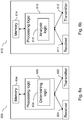
- Figure 6a illustrates an example apparatus 600 (e.g. a data collection node) for use in filtering location data for a plurality of devices 301a-301g in a wireless network (e.g. a mobile network 300) for use in a mobility analysis of a group of the devices 302a or 302b.
- a wireless network e.g. a mobile network 300
- the apparatus 600 includes a receiver 601, a transmitter 602, a processor 603 and memory 604.
- the processor 603 being connected to the receiver 601, transmitter 602 and memory 604.
- the receiver 601 is configured to receive location data for one or more of the devices 301a-301g, where the location data for each device includes a unique identifier.
- the processor 603 is further configured to determine 605 the devices that belong to the group of devices 302a or 302b based on the unique identifiers.
- the transmitter 602 is configured to forward the location data for devices that are determined to belong to the group of devices 302a or 302b to an analysis apparatus 309a or 610 for performing the mobility analysis.
- the processor 603 When the processor 603 is configured to maintain a device database 308b including a plurality of device records, where each device record indicates whether the device associated with the device record belongs to the group of devices 302a or 302b, the processor 603 is further configured to query 605 the device database 308b using the unique identifiers to determine the devices that belong to the group of devices 302a or 302b.
- the receiver 601 is also further configured to receive, from the analyser apparatus 309a or 610, device information associated with whether one or more devices belong to the group of devices 302a or 302b.
- the processor 603 is further configured to update each device record associated with the device information to indicate whether the device associated with the device record belongs to the group of devices 302a or 302b.
- Figure 6b illustrates an example apparatus 610 or 309a for analysing location data for the plurality of devices 301a-301g in the wireless network (e.g. a mobile network 300) for use in a mobility analysis of a group of the devices 302a or 302b.
- the apparatus 610 includes a receiver 611, a transmitter 612, a processor 613 and memory 614.
- the processor 613 being connected to the receiver 611, transmitter 612 and memory 614.
- the receiver 611 is configured to receive and store location data for devices determined to belong to the group of devices 302a or 302b.
- the processor 613 is further configured to perform the mobility analysis 615 based on the stored location data to generate mobility analysis results for the devices found to belong to the group of devices 302a or 302b.
- the transmitter 612 is configured to forward the mobility analysis results for further distribution.
- the processor 613 is further configured to maintain a location database 309b including a plurality of device location records, where each device location record includes location data of a device that belongs to the group of devices 302a or 302b
- the receiver 611 is further configured to store the location data for devices determined to belong to the group of devices 302a or 302b in the location database 309b.
- the processor 613 is further configured to perform the mobility analysis 615 based on the stored location data in the location database 309b to generate mobility analysis results for the devices found to belong to the group of devices 302a or 302b.
- the processor 613 may also be further configured to perform a calculation of the distance each device has moved based on the location data stored in the location database 309b. Based on the calculation, the processor 613 can be configured to compare the calculated distance for each device with a distance threshold to determine whether one or more devices belong to the group of devices 302a or 302b.
- the transmitter 612 is further configured to transmit, to the apparatus 600 or 308a for filtering as described with reference to Figure 6a , device information associated with whether one or more devices are determined not to belong to the group of devices 302a or 302b, the device information for use by the apparatus 600 or 308a in determining the devices that belong to the group of devices based on the unique identifier.
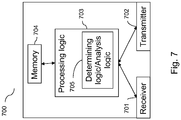
- Figure 7 illustrates an example apparatus 700 for filtering and analysing location data for a plurality of devices 301a-301g in a wireless network (e.g. a mobile network 300) for use in a mobility analysis of a group of the devices 302a or 302b.
- the apparatus 700 includes a receiver 701, a transmitter 702, a processor 703 and memory 704, the processor 703 being connected to the receiver 701, transmitter 702 and memory 704.
- the receiver 701 is configured to receive location data for one or more of the devices 301a-301g, where the location data for each device includes a unique identifier.
- the processor 703 is further configured to determine 705 the devices that belong to the group of devices 302a or 302b based on the unique identifier.
- the processor 703 is also configured to store the location data for devices that belong to the group of devices 302a or 302b.
- the processor 703 is also configured to perform the mobility analysis 705 based on the stored location data to generate mobility analysis results for the group of devices 302a or 302b.
- the transmitter 702 is configured to forward the mobility analysis results for further distribution.
- the processor 703 is further configured to maintain a device database 308b including a plurality of device records, where each device record indicates whether the device associated with the device record belongs to the group of devices 302a or 302b, the processor is configured to determine 705 from the device database 308b the devices that belong to the group of devices 302a or 302b based on the unique identifier.
- each device location record includes location data of a device determined to belong to the group of devices 302a or 302b for use in the mobility analysis.
- the processor is configured to perform the mobility analysis 705 based on the location data stored in the location database 309b.
- the processor is also configured to perform a relevancy analysis 705 on the plurality of device location records to determine whether the associated devices belong to the group of devices 302a or 302b.
- the processor 703 is configured to remove from the location database 309b each device location record associated with a device determined not to belong to the group of devices 302a or 302b, and update each device record to indicate whether the associated devices belong to the group of devices 302a or 302b.
- the apparatus for filtering location data 600, apparatus for analysing collected location data 610, and apparatus for filtering and analysing location data 700 as herein described can include memory units 604, 614 and 704 and processors 603, 613 and 703, which can be used for storing and executing a computer program, comprising computer readable code which, when executed by the processors 603, 613 and 703, respectively, causes the apparatus 600, 610 and 700 to perform the relevant methods, procedures, or processes of the invention as described herein.
- Such computer programs as described herein can be incorporated within one or more computer program products, each comprising a computer readable medium and one or more of the computer programs, where one or more of the computer programs are stored on the computer readable medium.
Landscapes
- Engineering & Computer Science (AREA)
- Physics & Mathematics (AREA)
- General Physics & Mathematics (AREA)
- Databases & Information Systems (AREA)
- Chemical & Material Sciences (AREA)
- Analytical Chemistry (AREA)
- Computer Networks & Wireless Communication (AREA)
- Signal Processing (AREA)
- Theoretical Computer Science (AREA)
- Data Mining & Analysis (AREA)
- General Engineering & Computer Science (AREA)
- Mobile Radio Communication Systems (AREA)
Claims (15)
- Procédé (400) de filtrage de données de localisation, d'une pluralité de dispositifs dans un réseau sans fil, pour leur utilisation dans une analyse de mobilité d'un groupe de dispositifs, le procédé (400) étant réalisé par un nœud de collecte et d'analyse de données (500), le procédé (400) comprenant les étapes de :réception (401) des données de localisation de la pluralité de dispositifs, les données de localisation de chaque dispositif comportant un identifiant utilisateur unique ;détermination (402, 403) de dispositifs qui appartiennent au groupe de dispositifs d'après l'identifiant utilisateur unique reçu de chaque dispositif ;réacheminement (404) des données de localisation pour les dispositifs déterminés comme appartenant au groupe de dispositifs à un module analyseur (309a, 610) pour leur utilisation dans l'analyse de mobilité ; caractérisé par la conservation (411) d'une base de données de dispositifs (502) comportant une pluralité d'enregistrements de dispositif, dans lequel chaque enregistrement de dispositif indique si un dispositif associé à un enregistrement de dispositif appartient au groupe de dispositifs,dans lequel l'étape de détermination (402, 403) des dispositifs qui appartiennent au groupe de dispositifs comprend en outre l'interrogation de la base de données de dispositifs (502) à l'aide des identifiants utilisateurs uniques pour déterminer les dispositifs qui appartiennent au groupe de dispositifs etdans lequel chaque enregistrement de dispositif associé à un dispositif qui n'appartient pas au groupe de dispositifs comporte une estampille temporelle indiquant quand l'enregistrement de dispositif a indiqué que le dispositif associé n'appartient pas au groupe de dispositifs, et dans lequel l'étape de conservation (411) de la base de données de dispositifs (502) comporte en outre la mise à jour de chaque enregistrement de dispositif pour indiquer que le dispositif associé appartient au groupe de dispositifs après qu'une période prédéterminée s'est écoulée.
- Procédé (400) selon la revendication 1, dans lequel l'étape de détermination (402, 403) des dispositifs qui appartiennent au groupe de dispositifs comprend en outre la détermination permettant de savoir si les dispositifs sont pertinents pour l'analyse de mobilité d'après l'identifiant unique.
- Procédé (400) selon la revendication 1, dans lequel l'étape de conservation (411) de la base de données de dispositifs (502) comprend en outre :la réception (412), en provenance du module analyseur (309a, 610), d'informations de dispositif associées à un ou plusieurs dispositifs déterminés comme n'appartenant pas au groupe de dispositifs ; etla mise à jour (413) de chaque enregistrement de dispositif associé aux informations de dispositif pour indiquer si le dispositif associé à l'enregistrement de dispositif n'appartient pas au groupe de dispositifs.
- Procédé (400) selon les revendications 1 ou 3, dans lequel l'étape de conservation (411) de la base de données de dispositifs (502) comprend en outre :la réception (412), en provenance du module analyseur (309a, 610), d'informations de dispositif associées à un ou plusieurs dispositifs déterminés comme appartenant au groupe de dispositifs ; etla mise à jour (413) de chaque enregistrement de dispositif associé aux informations de dispositif pour indiquer si le dispositif associé à l'enregistrement de dispositif appartient au groupe de dispositifs.
- Procédé (400) selon l'une quelconque des revendications 1 et 3 et 4, dans lequel l'étape de conservation (411) de la base de données de dispositifs (502) comprend en outre :la réception (412), en provenance du module analyseur (309a, 610), d'informations de dispositif associées à un ou plusieurs dispositifs indiquant si les un ou plusieurs dispositifs sont pertinents pour l'analyse de mobilité du groupe de dispositifs ; etla mise à jour (413) de chaque enregistrement de dispositif associé aux informations de dispositif pour indiquer si le dispositif associé à l'enregistrement de dispositif est pertinent pour l'analyse de mobilité.
- Procédé (400) selon l'une quelconque des revendications 1 et 3 à 5, dans lequel l'étape de détermination (402, 403) comprend :l'identification d'un enregistrement de dispositif associé à l'identifiant unique des données de localisation de chaque dispositif ; etla vérification permettant de savoir si l'enregistrement de dispositif identifié indique que le dispositif associé appartient au groupe de dispositifs.
- Procédé (400) selon l'une quelconque des revendications 1 et 3 à 6, dans lequel l'étape de détermination (402, 403) comprend :l'identification d'un enregistrement de dispositif associé à l'identifiant unique des données de localisation de chaque dispositif ; etla vérification permettant de savoir si l'enregistrement de dispositif identifié indique que le dispositif associé est pertinent pour l'analyse de mobilité du groupe de dispositifs.
- Procédé (400) selon une quelconque revendication précédente, comprenant en outre :l'analyse (422) des données de localisation reçues de chaque dispositif pour déterminer si chaque dispositif peut être associé au groupe de dispositifs ;la mise à jour (423) des enregistrements de dispositif de base de données de dispositifs pour indiquer si chaque dispositif appartient au groupe de dispositifs.
- Procédé (400) selon la revendication 8, dans lequel l'étape d'analyse (422) des données de localisation reçues comporte l'analyse de la vitesse de dispositif pour chaque dispositif pour déterminer si elle est associée aux vitesses de dispositif du groupe de dispositifs.
- Procédé (400) selon la revendication 8 ou 9, comprenant en outre l'étape de stockage (424) des données de localisation reçues pour des dispositifs qui s'avèrent appartenir au groupe de dispositifs.
- Procédé (400) selon la revendication 10, comprenant en outre :la réalisation (425) d'une analyse statistique sur les données de localisation reçues et stockées pour déterminer en outre si les dispositifs correspondants appartiennent au groupe de dispositifs ;le maintien (426) d'enregistrements de dispositif associés à des dispositifs déterminés comme n'appartenant pas au groupe de dispositifs d'après l'analyse statistique.
- Procédé (400) selon la revendication 1, dans lequel l'étape de mise à jour (423) de chaque enregistrement de dispositif pour indiquer que le dispositif associé appartient au groupe de dispositifs est réalisée lorsqu'il est déterminé que le dispositif associé s'est déplacé.
- Procédé (400) selon une quelconque revendication précédente, dans lequel le groupe de dispositifs comporte des dispositifs concernant un ou plusieurs types de dispositifs spécifiques qui sont pertinents pour l'analyse de mobilité.
- Appareil (700) de filtrage de données de localisation pour une pluralité de dispositifs dans un réseau sans fil pour leur utilisation dans une analyse de mobilité d'un groupe de dispositifs, l'appareil (700) comprenant un récepteur (701), un émetteur (702), un processeur (703) et une mémoire (704), le processeur (703) étant connecté au récepteur (701), à l'émetteur (702) et à la mémoire (704), dans lequel :le récepteur (701) est conçu pour recevoir les données de localisation des un ou plusieurs de la pluralité de dispositifs, dans lequel les données de localisation pour chaque dispositif comportent un identifiant utilisateur unique ;le processeur (703) est en outre conçu pour déterminer des dispositifs qui appartiennent au groupe de dispositifs d'après l'identifiant utilisateur unique reçu de chaque dispositif ; et l'émetteur (702) est conçu pour réacheminer les données de localisation pour les dispositifs déterminés comme appartenant au groupe de dispositifs à un appareil d'analyse (309a ; 610) pour réaliser l'analyse de mobilité,caractérisé en ce que le processeur (703) est en outre conçu pour conserver une base de données de dispositifs (502) comportant une pluralité d'enregistrements de dispositif, dans lequel chaque enregistrement de dispositif indique si un dispositif associé à l'enregistrement de dispositif appartient au groupe de dispositifs, et le processeur (703) est en outre conçu pour interroger la base de données de dispositifs (502) à l'aide des identifiants utilisateurs uniques pour déterminer les dispositifs qui appartiennent au groupe de dispositifs et dans lequel chaque enregistrement de dispositif associé à un dispositif qui n'appartient pas au groupe de dispositifs comporte une estampille temporelle indiquant quand l'enregistrement de dispositif a indiqué que le dispositif associé n'appartient pas au groupe de dispositifs, et dans lequel le processeur (703) est en outre conçu pour mettre à jour chaque enregistrement de dispositif pour indiquer que le dispositif associé appartient au groupe de dispositifs après qu'une période prédéterminée s'est écoulée.
- Appareil (700) selon la revendication 14, dans lequel :le récepteur (701) est en outre conçu pour recevoir, en provenance du module analyseur (309a ; 610), des informations de dispositif associées au fait qu'un ou plusieurs dispositifs appartiennent ou non au groupe de dispositifs ; etle processeur (703) est en outre conçu pour mettre à jour chaque enregistrement de dispositif associé aux informations de dispositif pour indiquer si le dispositif associé à l'enregistrement de dispositif appartient au groupe de dispositifs.
Applications Claiming Priority (1)
| Application Number | Priority Date | Filing Date | Title |
|---|---|---|---|
| PCT/EP2012/068706 WO2014044323A1 (fr) | 2012-09-21 | 2012-09-21 | Détection automatique de type de dispositif pour filtrage de données |
Publications (2)
| Publication Number | Publication Date |
|---|---|
| EP2898710A1 EP2898710A1 (fr) | 2015-07-29 |
| EP2898710B1 true EP2898710B1 (fr) | 2020-04-22 |
Family
ID=46880728
Family Applications (1)
| Application Number | Title | Priority Date | Filing Date |
|---|---|---|---|
| EP12761626.6A Active EP2898710B1 (fr) | 2012-09-21 | 2012-09-21 | Filtrage automatique des données de localisation |
Country Status (4)
| Country | Link |
|---|---|
| US (1) | US9445391B2 (fr) |
| EP (1) | EP2898710B1 (fr) |
| CN (1) | CN104823465A (fr) |
| WO (1) | WO2014044323A1 (fr) |
Families Citing this family (44)
| Publication number | Priority date | Publication date | Assignee | Title |
|---|---|---|---|---|
| US9713013B2 (en) * | 2013-03-15 | 2017-07-18 | Elwha Llc | Protocols for providing wireless communications connectivity maps |
| US9876762B2 (en) | 2012-12-31 | 2018-01-23 | Elwha Llc | Cost-effective mobile connectivity protocols |
| US9635605B2 (en) | 2013-03-15 | 2017-04-25 | Elwha Llc | Protocols for facilitating broader access in wireless communications |
| US9980114B2 (en) | 2013-03-15 | 2018-05-22 | Elwha Llc | Systems and methods for communication management |
| US9781664B2 (en) | 2012-12-31 | 2017-10-03 | Elwha Llc | Cost-effective mobile connectivity protocols |
| US9451394B2 (en) | 2012-12-31 | 2016-09-20 | Elwha Llc | Cost-effective mobile connectivity protocols |
| US9693214B2 (en) | 2013-03-15 | 2017-06-27 | Elwha Llc | Protocols for facilitating broader access in wireless communications |
| US9813887B2 (en) | 2013-03-15 | 2017-11-07 | Elwha Llc | Protocols for facilitating broader access in wireless communications responsive to charge authorization statuses |
| US9843917B2 (en) | 2013-03-15 | 2017-12-12 | Elwha, Llc | Protocols for facilitating charge-authorized connectivity in wireless communications |
| US9706060B2 (en) | 2013-03-15 | 2017-07-11 | Elwha Llc | Protocols for facilitating broader access in wireless communications |
| US9807582B2 (en) | 2013-03-15 | 2017-10-31 | Elwha Llc | Protocols for facilitating broader access in wireless communications |
| US9706382B2 (en) | 2013-03-15 | 2017-07-11 | Elwha Llc | Protocols for allocating communication services cost in wireless communications |
| US9781554B2 (en) | 2013-03-15 | 2017-10-03 | Elwha Llc | Protocols for facilitating third party authorization for a rooted communication device in wireless communications |
| US9596584B2 (en) | 2013-03-15 | 2017-03-14 | Elwha Llc | Protocols for facilitating broader access in wireless communications by conditionally authorizing a charge to an account of a third party |
| US9866706B2 (en) | 2013-03-15 | 2018-01-09 | Elwha Llc | Protocols for facilitating broader access in wireless communications |
| CN104079525B (zh) * | 2013-03-25 | 2015-11-11 | 腾讯科技(深圳)有限公司 | 一种防止外挂的方法和服务器 |
| CA2926413A1 (fr) | 2013-10-09 | 2015-04-16 | Mobile Technology Corporation, LLC | Systemes et procedes permettant d'utiliser une analyse spatiale et temporelle pour associer des sources de donnees a des dispositifs mobiles |
| US11392987B2 (en) | 2013-10-09 | 2022-07-19 | Mobile Technology Corporation | Systems and methods for using spatial and temporal analysis to associate data sources with mobile devices |
| US10506053B2 (en) | 2014-03-07 | 2019-12-10 | Comcast Cable Communications, Llc | Location aware security system |
| EP2986069A1 (fr) * | 2014-08-15 | 2016-02-17 | Alcatel Lucent | Procédé d'analyse d'informations dans un réseau de communication et dispositif correspondant |
| US10588000B2 (en) * | 2015-06-19 | 2020-03-10 | Lenovo (Singapore) Pte. Ltd. | Determination of device at which to present audio of telephonic communication |
| CN105183885A (zh) * | 2015-09-24 | 2015-12-23 | 上海车音网络科技有限公司 | 一种车载终端应用匹配方法及装置、车载终端 |
| US10390172B2 (en) * | 2016-03-28 | 2019-08-20 | Intel IP Corporation | Localization in machine-to-machine systems |
| US9967732B2 (en) | 2016-08-15 | 2018-05-08 | At&T Intellectual Property I, L.P. | Method and apparatus for managing mobile subscriber identification information according to registration errors |
| US9838991B1 (en) | 2016-08-15 | 2017-12-05 | At&T Intellectual Property I, L.P. | Method and apparatus for managing mobile subscriber identification information according to registration requests |
| US9794905B1 (en) | 2016-09-14 | 2017-10-17 | At&T Mobility Ii Llc | Method and apparatus for assigning mobile subscriber identification information to multiple devices according to location |
| US9814010B1 (en) | 2016-09-14 | 2017-11-07 | At&T Intellectual Property I, L.P. | Method and apparatus for utilizing mobile subscriber identification information with multiple devices based on registration requests |
| US9924347B1 (en) | 2016-09-14 | 2018-03-20 | At&T Intellectual Property I, L.P. | Method and apparatus for reassigning mobile subscriber identification information |
| US9843922B1 (en) | 2016-09-14 | 2017-12-12 | At&T Intellectual Property I, L.P. | Method and apparatus for utilizing mobile subscriber identification information with multiple devices based on registration errors |
| US10015764B2 (en) | 2016-09-14 | 2018-07-03 | At&T Intellectual Property I, L.P. | Method and apparatus for assigning mobile subscriber identification information to multiple devices |
| US9906943B1 (en) | 2016-09-29 | 2018-02-27 | At&T Intellectual Property I, L.P. | Method and apparatus for provisioning mobile subscriber identification information to multiple devices and provisioning network elements |
| US9918220B1 (en) | 2016-10-17 | 2018-03-13 | At&T Intellectual Property I, L.P. | Method and apparatus for managing and reusing mobile subscriber identification information to multiple devices |
| US10070303B2 (en) | 2016-11-11 | 2018-09-04 | At&T Intellectual Property I, L.P. | Method and apparatus for provisioning of multiple devices with mobile subscriber identification information |
| US10136305B2 (en) | 2016-12-01 | 2018-11-20 | At&T Intellectual Property I, L.P. | Method and apparatus for using mobile subscriber identification information for multiple device profiles for a device |
| US10341842B2 (en) | 2016-12-01 | 2019-07-02 | At&T Intellectual Property I, L.P. | Method and apparatus for using temporary mobile subscriber identification information in a device to provide services for a limited time period |
| US10070407B2 (en) | 2016-12-01 | 2018-09-04 | At&T Intellectual Property I, L.P. | Method and apparatus for using active and inactive mobile subscriber identification information in a device to provide services for a limited time period |
| US10231204B2 (en) | 2016-12-05 | 2019-03-12 | At&T Intellectual Property I, L.P. | Methods, systems, and devices for registering a communication device utilizing a virtual network |
| WO2018150228A1 (fr) * | 2017-02-17 | 2018-08-23 | Dataspark Pte, Ltd | Gène de mobilité pour données de visite |
| JP6927800B2 (ja) * | 2017-08-28 | 2021-09-01 | シャープ株式会社 | ネットワークシステム、情報処理方法、サーバ、通信端末、およびプログラム |
| KR102489729B1 (ko) * | 2018-02-07 | 2023-01-18 | 삼성전자주식회사 | 연결 정보에 기반하여 외부 장치들과 연결하는 전자 장치 및 그 동작 방법 |
| US11381984B2 (en) * | 2018-03-27 | 2022-07-05 | Forescout Technologies, Inc. | Device classification based on rank |
| CN109358351B (zh) * | 2018-09-30 | 2019-08-09 | 南京联创北斗技术应用研究院有限公司 | 基于北斗定位的曲线路径动态车距测算方法 |
| US10687174B1 (en) | 2019-09-25 | 2020-06-16 | Mobile Technology, LLC | Systems and methods for using spatial and temporal analysis to associate data sources with mobile devices |
| US12445162B1 (en) | 2024-11-12 | 2025-10-14 | Wesley Lydell Cason | Orbitron with inspector |
Family Cites Families (4)
| Publication number | Priority date | Publication date | Assignee | Title |
|---|---|---|---|---|
| JP4199475B2 (ja) * | 2002-04-11 | 2008-12-17 | 日本電気株式会社 | 測位ゲートウェイ装置、端末位置情報要求処理方法およびプログラム |
| ATE475958T1 (de) * | 2007-06-26 | 2010-08-15 | Siemens Ag | VERFAHREN UND VORRICHTUNG ZUM ERMITTELN EINER AUF EINE STRECKE EINES STRAßENNETZES BEZOGENEN VERKEHRSGRÖßE |
| US20110239011A1 (en) * | 2010-03-26 | 2011-09-29 | Nokia Corporation | Method and apparatus for synchronizing wake-ups of offline mobile devices |
| US8843157B2 (en) * | 2010-10-27 | 2014-09-23 | Ntt Docomo, Inc. | Dynamic travel behavior estimation in mobile network |
-
2012
- 2012-09-21 EP EP12761626.6A patent/EP2898710B1/fr active Active
- 2012-09-21 CN CN201280077215.2A patent/CN104823465A/zh active Pending
- 2012-09-21 WO PCT/EP2012/068706 patent/WO2014044323A1/fr not_active Ceased
- 2012-09-21 US US14/430,129 patent/US9445391B2/en active Active
Non-Patent Citations (1)
| Title |
|---|
| None * |
Also Published As
| Publication number | Publication date |
|---|---|
| EP2898710A1 (fr) | 2015-07-29 |
| WO2014044323A1 (fr) | 2014-03-27 |
| CN104823465A (zh) | 2015-08-05 |
| US9445391B2 (en) | 2016-09-13 |
| US20150237596A1 (en) | 2015-08-20 |
Similar Documents
| Publication | Publication Date | Title |
|---|---|---|
| EP2898710B1 (fr) | Filtrage automatique des données de localisation | |
| KR101385928B1 (ko) | 교통 관리를 위한 방법 및 장치 | |
| Caceres et al. | Deriving origin–destination data from a mobile phone network | |
| CN102217356B (zh) | 无线通信网络中的质量监控系统、质量监控装置和质量监控方法 | |
| US8180365B2 (en) | Method and apparatus for identifying a geographic area having undesirable wireless service | |
| EP3590275B1 (fr) | Technique de génération de statistiques de modalité de transport en temps quasi réel | |
| Erkan et al. | Bluetooth as a traffic sensor for stream travel time estimation under Bogazici Bosporus conditions in Turkey | |
| US11765549B2 (en) | Contact tracing involving an index case, based on comparing geo-temporal patterns that include mobility profiles | |
| US9271175B2 (en) | Wireless quality collecting device, wireless quality collecting method, and computer-readable recording medium | |
| CN1852353B (zh) | 一种处理用户数据的方法、装置以及系统 | |
| CN107734540B (zh) | 无线网络信号范围侦测与展示的系统与方法 | |
| Dong et al. | Urban traffic commuting analysis based on mobile phone data | |
| Valerio et al. | Road traffic estimation from cellular network monitoring: a hands-on investigation | |
| Cheng et al. | The optimal sampling period of a fingerprint positioning algorithm for vehicle speed estimation | |
| US20120064915A1 (en) | Mobile station, communication system, and communication method | |
| KR20200061666A (ko) | 인구 안내 서비스 제공방법 및 장치 | |
| GB2612623A (en) | Network analytics on relative proximity of UEs | |
| JP6223302B2 (ja) | 携帯端末を所持したユーザの滞在判定が可能な装置、プログラム及び方法 | |
| US20120077517A1 (en) | Mobile device, communication system and communication method | |
| KR100911478B1 (ko) | 위치 등록 메시지를 이용한 도로 통행 속도 분석 방법 및장치 | |
| US10225726B2 (en) | Generating and analyzing mobility vectors to determine subscriber behavior | |
| Chang et al. | Traffic information estimation using periodic location update events | |
| US20150163638A1 (en) | Method and system for tracking the whereabouts of people in urban settings | |
| Lin et al. | A traffic information estimation model using periodic location update events from cellular network | |
| JP2012034090A (ja) | 情報分析装置および情報分析方法 |
Legal Events
| Date | Code | Title | Description |
|---|---|---|---|
| PUAI | Public reference made under article 153(3) epc to a published international application that has entered the european phase |
Free format text: ORIGINAL CODE: 0009012 |
|
| 17P | Request for examination filed |
Effective date: 20150326 |
|
| AK | Designated contracting states |
Kind code of ref document: A1 Designated state(s): AL AT BE BG CH CY CZ DE DK EE ES FI FR GB GR HR HU IE IS IT LI LT LU LV MC MK MT NL NO PL PT RO RS SE SI SK SM TR |
|
| AX | Request for extension of the european patent |
Extension state: BA ME |
|
| DAX | Request for extension of the european patent (deleted) | ||
| STAA | Information on the status of an ep patent application or granted ep patent |
Free format text: STATUS: EXAMINATION IS IN PROGRESS |
|
| 17Q | First examination report despatched |
Effective date: 20181102 |
|
| GRAP | Despatch of communication of intention to grant a patent |
Free format text: ORIGINAL CODE: EPIDOSNIGR1 |
|
| STAA | Information on the status of an ep patent application or granted ep patent |
Free format text: STATUS: GRANT OF PATENT IS INTENDED |
|
| RIC1 | Information provided on ipc code assigned before grant |
Ipc: G08G 1/01 20060101ALI20200116BHEP Ipc: G08G 1/00 20060101ALI20200116BHEP Ipc: H04W 4/02 20180101AFI20200116BHEP |
|
| INTG | Intention to grant announced |
Effective date: 20200203 |
|
| GRAS | Grant fee paid |
Free format text: ORIGINAL CODE: EPIDOSNIGR3 |
|
| GRAA | (expected) grant |
Free format text: ORIGINAL CODE: 0009210 |
|
| STAA | Information on the status of an ep patent application or granted ep patent |
Free format text: STATUS: THE PATENT HAS BEEN GRANTED |
|
| AK | Designated contracting states |
Kind code of ref document: B1 Designated state(s): AL AT BE BG CH CY CZ DE DK EE ES FI FR GB GR HR HU IE IS IT LI LT LU LV MC MK MT NL NO PL PT RO RS SE SI SK SM TR |
|
| REG | Reference to a national code |
Ref country code: GB Ref legal event code: FG4D |
|
| REG | Reference to a national code |
Ref country code: CH Ref legal event code: EP |
|
| REG | Reference to a national code |
Ref country code: DE Ref legal event code: R096 Ref document number: 602012069480 Country of ref document: DE |
|
| REG | Reference to a national code |
Ref country code: IE Ref legal event code: FG4D |
|
| REG | Reference to a national code |
Ref country code: AT Ref legal event code: REF Ref document number: 1261749 Country of ref document: AT Kind code of ref document: T Effective date: 20200515 |
|
| REG | Reference to a national code |
Ref country code: LT Ref legal event code: MG4D |
|
| REG | Reference to a national code |
Ref country code: NL Ref legal event code: MP Effective date: 20200422 |
|
| PG25 | Lapsed in a contracting state [announced via postgrant information from national office to epo] |
Ref country code: NL Free format text: LAPSE BECAUSE OF FAILURE TO SUBMIT A TRANSLATION OF THE DESCRIPTION OR TO PAY THE FEE WITHIN THE PRESCRIBED TIME-LIMIT Effective date: 20200422 Ref country code: NO Free format text: LAPSE BECAUSE OF FAILURE TO SUBMIT A TRANSLATION OF THE DESCRIPTION OR TO PAY THE FEE WITHIN THE PRESCRIBED TIME-LIMIT Effective date: 20200722 Ref country code: PT Free format text: LAPSE BECAUSE OF FAILURE TO SUBMIT A TRANSLATION OF THE DESCRIPTION OR TO PAY THE FEE WITHIN THE PRESCRIBED TIME-LIMIT Effective date: 20200824 Ref country code: LT Free format text: LAPSE BECAUSE OF FAILURE TO SUBMIT A TRANSLATION OF THE DESCRIPTION OR TO PAY THE FEE WITHIN THE PRESCRIBED TIME-LIMIT Effective date: 20200422 Ref country code: FI Free format text: LAPSE BECAUSE OF FAILURE TO SUBMIT A TRANSLATION OF THE DESCRIPTION OR TO PAY THE FEE WITHIN THE PRESCRIBED TIME-LIMIT Effective date: 20200422 Ref country code: IS Free format text: LAPSE BECAUSE OF FAILURE TO SUBMIT A TRANSLATION OF THE DESCRIPTION OR TO PAY THE FEE WITHIN THE PRESCRIBED TIME-LIMIT Effective date: 20200822 Ref country code: SE Free format text: LAPSE BECAUSE OF FAILURE TO SUBMIT A TRANSLATION OF THE DESCRIPTION OR TO PAY THE FEE WITHIN THE PRESCRIBED TIME-LIMIT Effective date: 20200422 Ref country code: GR Free format text: LAPSE BECAUSE OF FAILURE TO SUBMIT A TRANSLATION OF THE DESCRIPTION OR TO PAY THE FEE WITHIN THE PRESCRIBED TIME-LIMIT Effective date: 20200723 |
|
| REG | Reference to a national code |
Ref country code: AT Ref legal event code: MK05 Ref document number: 1261749 Country of ref document: AT Kind code of ref document: T Effective date: 20200422 |
|
| PG25 | Lapsed in a contracting state [announced via postgrant information from national office to epo] |
Ref country code: BG Free format text: LAPSE BECAUSE OF FAILURE TO SUBMIT A TRANSLATION OF THE DESCRIPTION OR TO PAY THE FEE WITHIN THE PRESCRIBED TIME-LIMIT Effective date: 20200722 Ref country code: RS Free format text: LAPSE BECAUSE OF FAILURE TO SUBMIT A TRANSLATION OF THE DESCRIPTION OR TO PAY THE FEE WITHIN THE PRESCRIBED TIME-LIMIT Effective date: 20200422 Ref country code: LV Free format text: LAPSE BECAUSE OF FAILURE TO SUBMIT A TRANSLATION OF THE DESCRIPTION OR TO PAY THE FEE WITHIN THE PRESCRIBED TIME-LIMIT Effective date: 20200422 Ref country code: HR Free format text: LAPSE BECAUSE OF FAILURE TO SUBMIT A TRANSLATION OF THE DESCRIPTION OR TO PAY THE FEE WITHIN THE PRESCRIBED TIME-LIMIT Effective date: 20200422 |
|
| PG25 | Lapsed in a contracting state [announced via postgrant information from national office to epo] |
Ref country code: AL Free format text: LAPSE BECAUSE OF FAILURE TO SUBMIT A TRANSLATION OF THE DESCRIPTION OR TO PAY THE FEE WITHIN THE PRESCRIBED TIME-LIMIT Effective date: 20200422 |
|
| REG | Reference to a national code |
Ref country code: DE Ref legal event code: R097 Ref document number: 602012069480 Country of ref document: DE |
|
| PG25 | Lapsed in a contracting state [announced via postgrant information from national office to epo] |
Ref country code: SM Free format text: LAPSE BECAUSE OF FAILURE TO SUBMIT A TRANSLATION OF THE DESCRIPTION OR TO PAY THE FEE WITHIN THE PRESCRIBED TIME-LIMIT Effective date: 20200422 Ref country code: AT Free format text: LAPSE BECAUSE OF FAILURE TO SUBMIT A TRANSLATION OF THE DESCRIPTION OR TO PAY THE FEE WITHIN THE PRESCRIBED TIME-LIMIT Effective date: 20200422 Ref country code: DK Free format text: LAPSE BECAUSE OF FAILURE TO SUBMIT A TRANSLATION OF THE DESCRIPTION OR TO PAY THE FEE WITHIN THE PRESCRIBED TIME-LIMIT Effective date: 20200422 Ref country code: CZ Free format text: LAPSE BECAUSE OF FAILURE TO SUBMIT A TRANSLATION OF THE DESCRIPTION OR TO PAY THE FEE WITHIN THE PRESCRIBED TIME-LIMIT Effective date: 20200422 Ref country code: RO Free format text: LAPSE BECAUSE OF FAILURE TO SUBMIT A TRANSLATION OF THE DESCRIPTION OR TO PAY THE FEE WITHIN THE PRESCRIBED TIME-LIMIT Effective date: 20200422 Ref country code: IT Free format text: LAPSE BECAUSE OF FAILURE TO SUBMIT A TRANSLATION OF THE DESCRIPTION OR TO PAY THE FEE WITHIN THE PRESCRIBED TIME-LIMIT Effective date: 20200422 Ref country code: EE Free format text: LAPSE BECAUSE OF FAILURE TO SUBMIT A TRANSLATION OF THE DESCRIPTION OR TO PAY THE FEE WITHIN THE PRESCRIBED TIME-LIMIT Effective date: 20200422 Ref country code: ES Free format text: LAPSE BECAUSE OF FAILURE TO SUBMIT A TRANSLATION OF THE DESCRIPTION OR TO PAY THE FEE WITHIN THE PRESCRIBED TIME-LIMIT Effective date: 20200422 |
|
| PG25 | Lapsed in a contracting state [announced via postgrant information from national office to epo] |
Ref country code: PL Free format text: LAPSE BECAUSE OF FAILURE TO SUBMIT A TRANSLATION OF THE DESCRIPTION OR TO PAY THE FEE WITHIN THE PRESCRIBED TIME-LIMIT Effective date: 20200422 Ref country code: SK Free format text: LAPSE BECAUSE OF FAILURE TO SUBMIT A TRANSLATION OF THE DESCRIPTION OR TO PAY THE FEE WITHIN THE PRESCRIBED TIME-LIMIT Effective date: 20200422 |
|
| PLBE | No opposition filed within time limit |
Free format text: ORIGINAL CODE: 0009261 |
|
| STAA | Information on the status of an ep patent application or granted ep patent |
Free format text: STATUS: NO OPPOSITION FILED WITHIN TIME LIMIT |
|
| 26N | No opposition filed |
Effective date: 20210125 |
|
| PG25 | Lapsed in a contracting state [announced via postgrant information from national office to epo] |
Ref country code: MC Free format text: LAPSE BECAUSE OF FAILURE TO SUBMIT A TRANSLATION OF THE DESCRIPTION OR TO PAY THE FEE WITHIN THE PRESCRIBED TIME-LIMIT Effective date: 20200422 |
|
| REG | Reference to a national code |
Ref country code: CH Ref legal event code: PL |
|
| PG25 | Lapsed in a contracting state [announced via postgrant information from national office to epo] |
Ref country code: SI Free format text: LAPSE BECAUSE OF FAILURE TO SUBMIT A TRANSLATION OF THE DESCRIPTION OR TO PAY THE FEE WITHIN THE PRESCRIBED TIME-LIMIT Effective date: 20200422 |
|
| REG | Reference to a national code |
Ref country code: BE Ref legal event code: MM Effective date: 20200930 |
|
| PG25 | Lapsed in a contracting state [announced via postgrant information from national office to epo] |
Ref country code: LU Free format text: LAPSE BECAUSE OF NON-PAYMENT OF DUE FEES Effective date: 20200921 |
|
| PG25 | Lapsed in a contracting state [announced via postgrant information from national office to epo] |
Ref country code: FR Free format text: LAPSE BECAUSE OF NON-PAYMENT OF DUE FEES Effective date: 20200930 |
|
| PG25 | Lapsed in a contracting state [announced via postgrant information from national office to epo] |
Ref country code: CH Free format text: LAPSE BECAUSE OF NON-PAYMENT OF DUE FEES Effective date: 20200930 Ref country code: BE Free format text: LAPSE BECAUSE OF NON-PAYMENT OF DUE FEES Effective date: 20200930 Ref country code: IE Free format text: LAPSE BECAUSE OF NON-PAYMENT OF DUE FEES Effective date: 20200921 Ref country code: LI Free format text: LAPSE BECAUSE OF NON-PAYMENT OF DUE FEES Effective date: 20200930 |
|
| PG25 | Lapsed in a contracting state [announced via postgrant information from national office to epo] |
Ref country code: TR Free format text: LAPSE BECAUSE OF FAILURE TO SUBMIT A TRANSLATION OF THE DESCRIPTION OR TO PAY THE FEE WITHIN THE PRESCRIBED TIME-LIMIT Effective date: 20200422 Ref country code: MT Free format text: LAPSE BECAUSE OF FAILURE TO SUBMIT A TRANSLATION OF THE DESCRIPTION OR TO PAY THE FEE WITHIN THE PRESCRIBED TIME-LIMIT Effective date: 20200422 Ref country code: CY Free format text: LAPSE BECAUSE OF FAILURE TO SUBMIT A TRANSLATION OF THE DESCRIPTION OR TO PAY THE FEE WITHIN THE PRESCRIBED TIME-LIMIT Effective date: 20200422 |
|
| PG25 | Lapsed in a contracting state [announced via postgrant information from national office to epo] |
Ref country code: MK Free format text: LAPSE BECAUSE OF FAILURE TO SUBMIT A TRANSLATION OF THE DESCRIPTION OR TO PAY THE FEE WITHIN THE PRESCRIBED TIME-LIMIT Effective date: 20200422 |
|
| PGFP | Annual fee paid to national office [announced via postgrant information from national office to epo] |
Ref country code: GB Payment date: 20220927 Year of fee payment: 11 |
|
| GBPC | Gb: european patent ceased through non-payment of renewal fee |
Effective date: 20230921 |
|
| PG25 | Lapsed in a contracting state [announced via postgrant information from national office to epo] |
Ref country code: GB Free format text: LAPSE BECAUSE OF NON-PAYMENT OF DUE FEES Effective date: 20230921 |
|
| PG25 | Lapsed in a contracting state [announced via postgrant information from national office to epo] |
Ref country code: GB Free format text: LAPSE BECAUSE OF NON-PAYMENT OF DUE FEES Effective date: 20230921 |
|
| PGFP | Annual fee paid to national office [announced via postgrant information from national office to epo] |
Ref country code: DE Payment date: 20250929 Year of fee payment: 14 |