EP2899604A1 - Numerisches cloud-steuersystem - Google Patents
Numerisches cloud-steuersystem Download PDFInfo
- Publication number
- EP2899604A1 EP2899604A1 EP13819502.9A EP13819502A EP2899604A1 EP 2899604 A1 EP2899604 A1 EP 2899604A1 EP 13819502 A EP13819502 A EP 13819502A EP 2899604 A1 EP2899604 A1 EP 2899604A1
- Authority
- EP
- European Patent Office
- Prior art keywords
- control
- machining
- software module
- subsystem
- numerical control
- Prior art date
- Legal status (The legal status is an assumption and is not a legal conclusion. Google has not performed a legal analysis and makes no representation as to the accuracy of the status listed.)
- Ceased
Links
Images


Classifications
-
- G—PHYSICS
- G05—CONTROLLING; REGULATING
- G05B—CONTROL OR REGULATING SYSTEMS IN GENERAL; FUNCTIONAL ELEMENTS OF SUCH SYSTEMS; MONITORING OR TESTING ARRANGEMENTS FOR SUCH SYSTEMS OR ELEMENTS
- G05B19/00—Program-control systems
- G05B19/02—Program-control systems electric
- G05B19/418—Total factory control, i.e. centrally controlling a plurality of machines, e.g. direct or distributed numerical control [DNC], flexible manufacturing systems [FMS], integrated manufacturing systems [IMS] or computer integrated manufacturing [CIM]
-
- G—PHYSICS
- G05—CONTROLLING; REGULATING
- G05B—CONTROL OR REGULATING SYSTEMS IN GENERAL; FUNCTIONAL ELEMENTS OF SUCH SYSTEMS; MONITORING OR TESTING ARRANGEMENTS FOR SUCH SYSTEMS OR ELEMENTS
- G05B19/00—Program-control systems
- G05B19/02—Program-control systems electric
- G05B19/418—Total factory control, i.e. centrally controlling a plurality of machines, e.g. direct or distributed numerical control [DNC], flexible manufacturing systems [FMS], integrated manufacturing systems [IMS] or computer integrated manufacturing [CIM]
- G05B19/4185—Total factory control, i.e. centrally controlling a plurality of machines, e.g. direct or distributed numerical control [DNC], flexible manufacturing systems [FMS], integrated manufacturing systems [IMS] or computer integrated manufacturing [CIM] characterised by the network communication
-
- G—PHYSICS
- G05—CONTROLLING; REGULATING
- G05B—CONTROL OR REGULATING SYSTEMS IN GENERAL; FUNCTIONAL ELEMENTS OF SUCH SYSTEMS; MONITORING OR TESTING ARRANGEMENTS FOR SUCH SYSTEMS OR ELEMENTS
- G05B19/00—Program-control systems
- G05B19/02—Program-control systems electric
- G05B19/18—Numerical control [NC], i.e. automatically operating machines, in particular machine tools, e.g. in a manufacturing environment, so as to execute positioning, movement or co-ordinated operations by means of program data in numerical form
- G05B19/414—Structure of the control system, e.g. common controller or multiprocessor systems, interface to servo, programmable interface controller
- G05B19/4148—Structure of the control system, e.g. common controller or multiprocessor systems, interface to servo, programmable interface controller characterised by using several processors for different functions, distributed (real-time) systems
-
- G—PHYSICS
- G05—CONTROLLING; REGULATING
- G05B—CONTROL OR REGULATING SYSTEMS IN GENERAL; FUNCTIONAL ELEMENTS OF SUCH SYSTEMS; MONITORING OR TESTING ARRANGEMENTS FOR SUCH SYSTEMS OR ELEMENTS
- G05B2219/00—Program-control systems
- G05B2219/30—Nc systems
- G05B2219/31—From computer integrated manufacturing till monitoring
- G05B2219/31001—CIM, total factory control
-
- G—PHYSICS
- G05—CONTROLLING; REGULATING
- G05B—CONTROL OR REGULATING SYSTEMS IN GENERAL; FUNCTIONAL ELEMENTS OF SUCH SYSTEMS; MONITORING OR TESTING ARRANGEMENTS FOR SUCH SYSTEMS OR ELEMENTS
- G05B2219/00—Program-control systems
- G05B2219/30—Nc systems
- G05B2219/31—From computer integrated manufacturing till monitoring
- G05B2219/31208—Server node to watch, store message, variable, data between lon, network
-
- G—PHYSICS
- G05—CONTROLLING; REGULATING
- G05B—CONTROL OR REGULATING SYSTEMS IN GENERAL; FUNCTIONAL ELEMENTS OF SUCH SYSTEMS; MONITORING OR TESTING ARRANGEMENTS FOR SUCH SYSTEMS OR ELEMENTS
- G05B2219/00—Program-control systems
- G05B2219/30—Nc systems
- G05B2219/31—From computer integrated manufacturing till monitoring
- G05B2219/31241—Remote control by a proxy or echo server, internet - intranet
-
- G—PHYSICS
- G05—CONTROLLING; REGULATING
- G05B—CONTROL OR REGULATING SYSTEMS IN GENERAL; FUNCTIONAL ELEMENTS OF SUCH SYSTEMS; MONITORING OR TESTING ARRANGEMENTS FOR SUCH SYSTEMS OR ELEMENTS
- G05B2219/00—Program-control systems
- G05B2219/30—Nc systems
- G05B2219/31—From computer integrated manufacturing till monitoring
- G05B2219/31337—Failure information database
-
- G—PHYSICS
- G05—CONTROLLING; REGULATING
- G05B—CONTROL OR REGULATING SYSTEMS IN GENERAL; FUNCTIONAL ELEMENTS OF SUCH SYSTEMS; MONITORING OR TESTING ARRANGEMENTS FOR SUCH SYSTEMS OR ELEMENTS
- G05B2219/00—Program-control systems
- G05B2219/30—Nc systems
- G05B2219/32—Operator till task planning
- G05B2219/32345—Of interconnection of cells, subsystems, distributed simulation
-
- Y—GENERAL TAGGING OF NEW TECHNOLOGICAL DEVELOPMENTS; GENERAL TAGGING OF CROSS-SECTIONAL TECHNOLOGIES SPANNING OVER SEVERAL SECTIONS OF THE IPC; TECHNICAL SUBJECTS COVERED BY FORMER USPC CROSS-REFERENCE ART COLLECTIONS [XRACs] AND DIGESTS
- Y02—TECHNOLOGIES OR APPLICATIONS FOR MITIGATION OR ADAPTATION AGAINST CLIMATE CHANGE
- Y02P—CLIMATE CHANGE MITIGATION TECHNOLOGIES IN THE PRODUCTION OR PROCESSING OF GOODS
- Y02P90/00—Enabling technologies with a potential contribution to greenhouse gas [GHG] emissions mitigation
- Y02P90/02—Total factory control, e.g. smart factories, flexible manufacturing systems [FMS] or integrated manufacturing systems [IMS]
Definitions
- the invention relates to a numerical control method based on a "cloud calculation" mode and parallel processing of discrete network, belongs to fields of numerical control system, parallel information processing, network technology and industrial control, particularly related to numerical control machining, cooperative manufacture management, parallel control, remote measurement and control, troubleshooting treatment, communication network, automatic control and signal processing.
- the first generation of numerical control systems was established in 1952 with evacuated tubes. After that, the second generation was based on transistors, the third generation was based on integrated circuits, the fourth generation was based on small computers and the fifth generation was based on microcomputers.
- the sixth generation of numerical control systems is based on personal computers (PC).
- the PC numerical control is the most important improvement since the numerical control technology was established. In comparison with the fifth generation, the hardware platform and software platform of the PC numerical control are completely general.
- the fifth generation of numerical control systems is also known as "computer numerical control system"
- computers in such a system are of a proprietary type which must be developed and produced by the manufacturers of numerical control systems.
- a primary object of previous numerical control systems is motion control.
- Mainly controlled objects are electrical driving systems with multiple motion axles and a spindle.
- a numerical control system must have multiple functions of various motion control in a single device, combinative control, complex control, integration of CAD/CAPP/CAM, and cooperative control and match control with other devices.
- the invention provides a cloud numerical control system for controlling a single numerical control machining device, characterized in that: the cloud numerical control system comprises a cloud control core node (CCCN), cloud measurement and control subnodes (CMCSNs), fine-tuning driving units (FTDUs), a real-time communication network (RTCN) and an online internet (OLI), wherein:
- CCCN cloud control core node
- CMCSNs cloud measurement and control subnodes
- FTDUs fine-tuning driving units
- RTCN real-time communication network
- OLI online internet
- the first PC subsystem includes a human-machine interface/host processing/redundancy processing software module, a cooperative machining modification information processing software module, a machining path modification control software module, an interpolation control software module and a cloud measurement and control subnode feedback information processing software module, the first PC subsystem is an executor of a primary process of parallel processing of the CCCN and performs parallel processing and data exchange with the other PC subsystems;
- the second PC subsystem includes a real-time machining path modification control software module, a cloud measurement and control subnode feedback information real-time processing software module, a fine-tuning control signal output software module, a real-time interpolation, cutter compensation, acceleration/deceleration processing, control output software and redundancy processing software module, the second PC subsystem is under control and management of the first PC subsystem;
- the third PC subsystem includes a remote production management software module, a remote program design service software module, a remote technical service software module and a remote status monitor and troubleshooting treatment software module
- the CCCN further comprises an expandable fifth PC subsystem, the fifth PC subsystem includes a CAD software module, a CAPP software module and a CAM software for implementing integration of CAD, CAPP, CAM and CNC.
- the fifth PC subsystem includes a CAD software module, a CAPP software module and a CAM software for implementing integration of CAD, CAPP, CAM and CNC.
- the CMCSNs further comprises a core controller and I/O modules with the function of independent measurement and control
- the core controller possesses functions of acquiring detection signals from the I/O modules, retrieving compensation signals through signal processing and data integration processing, accepting feedback signals from other CMCSNs to further process, sending a processed result to the CCCN through a real-time bus communication, and accepting fine-tuning commands from the CCCN to process into a control command to a fine-tuning driving unit in a local numerical control machining device
- each I/O module online acquires signals from the sensors, sends the signal to the core controller and accepts control commands of the core controller to send control output signals to the FTDUs
- the CMCSNs exchange status information data to each other according to substantial connective relations and performs an independent modification control in the CMCSNs according to relative positions of each other and requirements of revised control, such a modification control is performed by sending commands to the FTDUs, and fine-tuning status information is feedbacked to the CCCN and other related C
- the invention further provides a cloud numerical control system for cooperatively controlling multiple numerical control machining devices, characterized in that: the cloud numerical control system comprises a cooperative machining control subsystem (CMCS), a cloud control core node (CCCN), cloud measurement and control subnodes (CMCSNs), fine-tuning driving units (FTDUs), a real-time communication network (RTCN) and an online internet (OLI), wherein:
- CMCS cooperative machining control subsystem
- CCCN cloud control core node
- CMCSNs cloud measurement and control subnodes
- FTDUs fine-tuning driving units
- RTCN real-time communication network
- OLI online internet
- the CMCS adopts an independent industrial PC system whose software module includes a remote communication software module, a data analysis and modification algorithm software module, a serial processing software module and a parallel processing software module
- the remote communication software module is used for data exchange between numerical control systems of numerical control machining devices of serial machining and corresponding assembling machining
- the data analysis and modification algorithm software module is used for analysis of machining path and modification processing according to data from the data exchange between numerical control systems of numerical control machining devices of serial machining and corresponding assembling machining and various machining parameters and status information from the CCCN, the CMCSNs, the FTDUs, the RTCN and the OLI
- the serial processing software module and the parallel processing software module are used for independently processing results of the data analysis and modification algorithm software module to obtain the data format required by serial machining and parallel corresponding assembling machining, first sending to a cooperative machining modification information processing software module of a host subsystem of the CCCN to further execute a next job, sending back to the data analysis and modification algorithm software module to perform
- the first PC subsystem includes a human-machine interface/host processing/redundancy processing software module, a cooperative machining modification information processing software module, a machining path modification control software module, an interpolation control software module and a cloud measurement and control subnode feedback information processing software module, the first PC subsystem is an executor of a primary process of parallel processing of the CCCN and performs parallel processing and data exchange with the other PC subsystems;
- the second PC subsystem includes a real-time machining path modification control software module, a cloud measurement and control subnode feedback information real-time processing software module, a fine-tuning control signal output software module, a real-time interpolation, cutter compensation, acceleration/ deceleration processing, control output software and redundancy processing software module, the second PC subsystem is under control and management of the first PC subsystem;
- the third PC subsystem includes a remote production management software module, a remote program design service software module, a remote technical service software module and a remote status monitor and troubleshooting treatment software module
- the CCCN further comprises an expandable fifth PC subsystem, the fifth PC subsystem includes a CAD software module, a CAPP software module and a CAM software for implementing integration of CAD, CAPP, CAM and CNC.
- the fifth PC subsystem includes a CAD software module, a CAPP software module and a CAM software for implementing integration of CAD, CAPP, CAM and CNC.
- the CMCSNs further comprises a core controller and I/O modules with a function of independent measurement and control
- the core controller possesses functions of acquiring detection signals from the I/O modules, retrieving compensation signals through signal processing and data integration processing, accepting feedback signals from other CMCSNs to further process, sending a processed result to the CCCN through a real-time bus communication, and accepting the fine-tuning commands from the CCCN to process into a control command to a fine-tuning driving unit in a local numerical control machining device
- each I/O module online acquires signals from the sensors, sends the signal to the core controller and accepts control commands of the core controller to send control output signals to the FTDUs
- the CMCSNs exchange status information data to each other according to substantial connective relations and performs an independent modification control in the CMCSNs according to relative positions of each other and requirements of exercise control, such a modification control is performed by sending commands to the FTDUs, and fine-tuning status information is feedbacked to the CCCN and other
- the invention provides a cloud numerical control system.
- a cloud numerical system There are two aspects in a cloud numerical system, the one is inside of a single device, and another one is between multiple cooperative machining devices.
- a single numerical control machining device serves as a subunit, all primary components in a subunit machining device except a numerical control system, such as electrical and mechanical components, machine base and machine table of a numerical control machining tools based on an embedded system, are equipped with a measurement and control unit and a fine-tuning unit to implement a "small cloud node" for obtaining online action status parameters of the independent components and online adjusting operation statuses of components.
- the motion status parameters of the components are feedbacked to a PC-based numerical control system with strong abilities of data processing to perform status analysis and dynamic feedback fine-tuning control for implementing a "small cloud numerical control" in a single device.
- a small cloud numerical control system has functions of integration of CAD/CAPP/CAM, remote communication and production management to improve performance of a single numerical control machining device.
- Second, in a machining process, various status parameters of the small cloud numerical control of a single device and a final size and error of work-piece are online obtained and sent to the next machining device with the small cloud numerical control through the cooperative communication network for optimizing the sequent machining step. Meanwhile, the above information is sent to independent small cloud numerical control of machining devices of other work-pieces to be assembled through the cooperative communication network for online adjusting machining errors of workpieces. This can implement a "large cloud numerical control".
- the small cloud numerical control system is primarily composed of a cloud control core node (CCCN), cloud measurement and control subnodes (CMCS) and fine-tuning driving units (FTDUs), which are connected through a real-time communication network (RTCN), and the small cloud numerical control system uses an online internet (OLI) to connect external devices.
- CCCN cloud control core node
- CMCS cloud measurement and control subnodes
- FTDUs fine-tuning driving units
- RTCN real-time communication network
- OLI online internet
- the CCCN performs a human-machine operation and host function, performs signal processing, combination control and operation of complex control algorithm and controls command output, remote communication, cooperative management operation functions and an integration function of CAD/CAPP/CAM.
- the CMCSNs perform detection of inner operation status signals of components and generation of fine-tuning control signals, and accept adjustment, management and control commands from the CCCN.
- a part of the CMCSNs associate with the CCCN to perform a real-time control function according to actual requirements.
- An organic contact is provided between the CMCSNs to implement a reasonable connection and an interactively cooperative measurement and control function.
- the FTDUs accept commands of the CMCSNs to separately perform fine-tuning control operation to inside components of numerical control machining devices.
- the RTCN performs online data transfer in the CCCN, between the CCCN and the CMCSNs and between the CMCSNs.
- the OLI performs communication between the CCCN and an external device.
- the CCCN is based on an open and softwared PC+I/O structure to perform strong abilities of calculation, communication and expansibility.
- a fundamental structure of the CCCN includes four sets of independent industrial PC subsystem with ability of expanding more independent PC systems.
- the four sets of independent industrial PC subsystems perform a host function, a real-time control function, a remote communication management function and a redundancy control function, respectively, between which a real-time communication bus is connected to from a parallel processing mode to perform functions of multiplex program compiling, multi-axle motion path interpolation, cutter compensation control, acceleration/ deceleration control, integrated compensation control of machining error, complex control and remote machining management.
- An integration function of CAD/CAPP/CAM can be added by expanding a fifth industrial PC subsystem and more functions, such as online detection of size and accuracy and 3D reversing, can be further added by expanding other industrial PC subsystems.
- the first set of industrial PC subsystem (subsystem 1) performs functions of human-machine interface, numerical control machining program compiling, numerical control machining code detection and simulation verification, system software/hardware self-configuring arrangement and external expanding interface, real-time bus communication (with other subsystems in the CCCN), complicated signal processing/combinative control/complex control algorithm operation, and remote system management/adjustment/cooperation. It may adopt the PCI, PCIE, ISA, Compact-PCI, PXI and/or VXI bus to implement various functions with respective add-on cards.
- Software of this subsystem includes a human-machine interface/host processing/redundancy processing software module, a cooperative machining modification information processing software module, a machining path modification control software module, an interpolation control software module and a cloud measurement and control subnode feedback information processing software module.
- This subsystem is an executor of a primary process of parallel processing of the CCCN and performs parallel processing and data exchange with the other PC subsystems.
- the second set of industrial PC subsystem performs functions of multi-axle motion path interpolation, cutter compensation control, acceleration/ deceleration control, integrated compensation control of machining error (associating with the CMCSNs), complex control (associating with the CMCSNs) and real-time bus communication (associating with the other subsystems in the CCCN and the CCCN). It may adopt the PCI, PCIE, ISA, Compact-PCI, PXI and/or VXI bus. To implement functions of control of the direct driving units and the real-time bus driving units, various add-on cards and multi-functional I/O cards corresponding to the respective buses are used.
- Software of this subsystem includes a real-time machining path modification control software module, a CMCSNs feedback information real-time processing software module, a fine-tuning control signal output software module, a real-time interpolation, cutter compensation, acceleration/ deceleration processing and control output software module and a redundancy processing software module.
- This subsystem is under management and control of the subsystem 1 and parallelly works with the subsystem 1.
- the third set of industrial PC subsystem (subsystem 3) performs functions of remote production management, remote status monitor and troubleshooting judgment, remote program design and remote technical support and technical upgrade to implement various services from a remote service center.
- Software of this subsystem includes a remote production management software module, a remote program design service software module, a remote technical service software module and a remote status monitor and troubleshooting treatment software module.
- This subsystem can perform parallel processing with the subsystems 1, 2 and 4 and expanding subsystem 5 to implement the remote service at other subsystems.
- the fourth set of industrial PC subsystem with redundancy control primarily serves as a redundant system of the subsystem 2 for replacing the subsystem 2 through management of the subsystem 1 to avoid machining discontinuation.
- Hardware of this subsystem is the same as that of the subsystem 2.
- the fifth set of industrial PC subsystem executes CAD/CAPP/CAM software and includes a CAD software module, a CAPP software module and a CAM software for implementing integration of CAD, CAPP, CAM and CNC.
- the CMCSNs are installed in a numerical control machining bed and components of a numerical control machining device to perform dynamic online detection of signals including displacement, speed, acceleration, vibration, shock, temperature, voltage, current, torque, deformation and stress.
- the sensors used by the CMCSNs are composed of electricity, magnetism, optics, stress, flow and voltage.
- the compensation signals are fed back to the CCCN to form a large closed-loop compensation control. Fine-tuning driving control between subnodes may also be implemented by cross-coupling control.
- the CMCSNs are installed in a numerical control machining bed and components of a numerical control machining device, they must have features of compact volume, easy installation, high reliability and smart real-time communication and must be implemented by the embedded system with the modularized structure.
- a core controller and I/O modules with an independent measurement and control function are used to implement. And the type and quantity of the I/O modules can be adjusted according to different requirements.
- the core controller of the CMCSNs possesses functions of acquiring detection signals from the I/O modules, retrieving compensation signals through signal processing and data integration processing, accepting feedback signals from other CMCSNs to further process, sending a processed result to the CCCN through a real-time bus communication, and accepting a fine-tuning command from the CCCN to process into a control command to a fine-tuning driving unit in a local numerical control machining device; each I/O module online acquires signals from the sensors, sends the signal to the core controller and accepts control commands of the core controller to send the control output signals to the FTDUs.
- the CMCSNs exchange status information data to each other according to substantial connective relations and performs an independent modification control in the CMCSNs according to relative positions of each other and requirements of exercise control, such the modification control is performed by sending commands to the FTDUs, and fine-tuning status information is fed back to the CCCN and other related CMCSNs for serving as feedback information of further modification.
- the I/O modules of the CMCSNs primarily perform dynamic online detection of signals from sensors of electricity, magnetism, optics, stress, flow and voltage, the signals include displacement, speed, acceleration, vibration, shock, temperature, voltage, current, torque, deformation and stress and are sent to the core controller of the CMCSNs.
- the I/O modules accept control commands of the core controller of the CMCSNs to send a control output signal to the FTDUs.
- Software of the CMCSNs includes a status test software module, a fine-tuning control software module and a cross-coupling control software module.
- the FTDUs of the CMCSNs accept control output signals of the CMCSNs to perform fine-tuning control operation to inside components of numerical control machining devices (for example, automatic bachlash compensation driving, automatic weighting adjustment and temperature adjustment driving), optimization of operation parameters of electrical components and optimization of motion path fine-tuning.
- numerical control machining devices for example, automatic bachlash compensation driving, automatic weighting adjustment and temperature adjustment driving
- Action modes adopted by the FTDUs include a motion driving mode, a temperature adjustment mode, an electric parameter optimization and a motion path fine-tuning driving. They adopt electric components, mechanical components, cooling/heating components and micro components.
- a key to the small cloud numerical control system is to adopt a PC numerical control system of open and softwared industrial PC with parallel processing to serve as a core node. Adding more embedded system subnodes forms a new "cloud calculation” and “cloud control” structure. Furthermore, adding a dynamic detection and fine-tuning unit into a machining device completely change the structure of traditional numerical control systems.
- the large cloud numerical control system focuses on cooperative machining control between independent numerical control machining devices in virtual dynamic united companies with a cloud manufacture mode.
- an integral component needs multiple independent machining and final assembling. Each part is machined according to a size and tolerance demanded by original design. A part passing the demand of size and tolerance will become a qualified matter to be assembled with other parts.
- the tolerance is a range with uncertainty.
- a hole and shaft suppose size tolerances of the shaft and hole are ⁇ ⁇ 100 0 + 0.02 and ⁇ ⁇ 100 0 + 0.01 , respectively , and sizes of a finished shaft and hole are ⁇ 100 and ⁇ 100.01, respectively. Such assembling forms a gap match. However, sizes of another shaft and hole are ⁇ 100.01 and ⁇ 1 00. Such assembling forms an over-size match.
- the invention provides a large cloud numerical control system, which uses the small cloud numerical control system with a dynamic online monitor function to online and real-time send both dynamic machining parameters and errors of a part to another numerical control machining device which is machining another part to be assembled with each other or to a numerical control machining device in a next machining step.
- This implements a new production mode 'interactive cooperative machining', which may be also called 'virtual assembling online machining mode'.
- the large cloud numerical control system must be based on the small cloud numerical control system. Because the small cloud numerical control system adopts an open softwared industrial PC with parallel processing to serve as a core node, it is easy to expand to be an independent industrial PC to perform remote mutually-cooperative machining to implement a cooperative machining control subsystem. Also, such a cooperative machining control subsystem parallelly works and exchanges data with other industrial PCs to further guarantee availability of implement of "interactive cooperative machining".
- Primary functions of the large cloud numerical control system include acquiring data of a finally machining error of a work-piece in a previous machining step and providing the data to the small cloud numerical control system to make modification according to the actual machining accuracy.
- the large cloud numerical control system online acquires various operational status parameters from the small cloud numerical control system, integrates and analyzes data to obtain a real-time machining error of the workpiece which is being machined, predicts a sequent machining error, sends the data to the multiple numerical control machining devices, receives and analyzes corresponding data from the multiple numerical control machining devices to provide to a small cloud numerical control system to make modification, and sends the final errors of the work-piece to a cloud numerical control device of a numerical control machining device in the next machining step to optimize the next machining step after the workpiece has been machined.
- the large cloud numerical control system is based on the small cloud numerical control system and adds an independent industrial PC system (cooperative machining control subsystem 6). And communication of the system is based on the real-time communication network and remote internet.
- Software of the cooperative machining control subsystem includes a remote communication software module, a data analysis and modification algorithm software module, a serial processing software module and a parallel processing software module.
- the remote communication software module is used for data exchange between numerical control systems of numerical control machining devices of serial machining and corresponding assembling machining.
- the data analysis and modification algorithm software module is used for analysis of machining track and modification processing according to data from the data exchange between numerical control systems of numerical control machining devices of serial machining and corresponding assembling machining and various machining parameters and status information from the small cloud numerical control system.
- serial processing software module and the parallel processing software module are used for independently processing results of the data analysis and modification algorithm software module to obtain a data format required by serial machining and parallel corresponding assembling machining, first sending to a cooperative machining modification information processing software module of a host subsystem of the small cloud numerical control system to further execute a next job, sending back to the data analysis and modification algorithm software module to perform data exchange with numerical control systems of numerical control machining devices of serial machining and corresponding assembling machining through the remote communication software module.
- the key to the large cloud numerical control system is to use the small cloud numerical control system to obtain its dynamic machining information to obtain an actual machining error of a part through a method of data integration, and to predict a next possible error of another part machining to immediately adjust the small cloud numerical control system itself and feedback information to the other side to promote the other side to further adjust its machining process.
- the large cloud numerical control system must adopt cross-coupling, self-learning and synchronous control algorithms to implement an interactive control function. This guarantees multiple dynamic optimization and improvement of a machining process to finally achieve a result of "optimization in all aspects”.
- the large cloud numerical control system can overcome the problem of a part match error resulting from various factors and avoid the problems of an assembling accuracy error, long repair period, retuning repair and second machining, which result from "back-to-back machining".
- the large cloud numerical control system exceeds a traditional numerical control system to enter a range of quality assurance system in a "cloud manufacturing" mode. It provides a strong fundament of level of production devices to the cloud manufacturing.
- Such a “cloud numerical control system” not only performs quality control between production devices in a single company, but organically integrates quality control of production devices in a virtual dynamic united company in the modes of intelligent manufacturing and cloud manufacturing. It effectively enhances machining accuracy of machined parts and overall assembling accuracy between different parts through discrete "cloud calculation” and online error delivery. It provides a new and effective solution to the complex error resulting from environmental factors, machining art, accuracy of a single device, installation accuracy and cutter accuracy to avoid the problems of an assembling accuracy error, long repairing period, retuning repair and second machining, which result from "back-to-back machining". It implements an interactive cooperative machining mode between multiple independent machining devices, performs adjustment of production management and improves the quality of completely cooperative machining.
- the cloud numerical control system is divided into a small cloud numerical control system and a large numerical control system, which are introduced as follows.
- the small cloud numerical control system is primarily composed of a cloud control core node (CCCN), cloud measurement and control subnodes (CMCS) and fine-tuning driving units (FTDUs) and primarily performs a control function to a single numerical control machining device.
- the CCCN performs a human-machine operation and host function, performs signal processing, combination control and operation of complex control algorithm and controls command output, remote communication, cooperative management operation functions and an integration function of CAD/CAPP/CAM.
- the CMCSNs perform detection of inner operation status signals of components and generation of fine-tuning control signals, and accept adjustment, management and control commands from the CCCN. A part of the CMCSNs associate with the CCCN to perform a real-time control function according to actual requirements.
- An organic contact is provided between the CMCSNs to implement a reasonable connection and an interactively cooperative measurement and control function.
- the FTDUs accept commands of the CMCSNs to separately perform fine-tuning control operation to inside components of numerical control machining devices.
- the RTCN performs online data transfer in the CCCN, between the CCCN and the CMCSNs and between the CMCSNs.
- the OLI performs communication between the CCCN and an external device.
- the CCCN is based on an open and softwared PC+I/O structure to perform strong abilities of calculation, communication and expansibility.
- a fundamental structure of the CCCN includes four sets of independent industrial PC subsystem with ability of expanding more independent PC systems.
- the four sets of independent industrial PC subsystems perform a host function, a real-time control function, a remote communication management function and a redundancy control function, respectively, between which a real-time communication bus is connected to from a parallel processing mode to perform functions of multiplex program compiling, multi-axle motion path interpolation, cutter compensation control, acceleration/ deceleration control, integrated compensation control of machining error, complex control and remote machining management.
- An integration function of CAD/CAPP/CAM can be added by expanding a fifth industrial PC subsystem and more functions, such as online detection of size and accuracy and 3D reversing, can be further added by expanding other industrial PC subsystems.
- the CCCN of the small cloud numerical control system includes reference numerals 101, 102, 103, 104, 105, 113 and 114.
- Reference numerical 101 is a host function subsystem, whose functions include human-machine interface, numerical control machining program compiling, numerical control machining code detection and simulation verification, system software/hardware self-configuring arrangement and external expanding interface, real-time bus communication (with other subsystems in the CCCN), complicated signal processing/combinative control/complex control algorithm operation, and remote system management/adjustment/cooperation. It may adopt the PCI, PCIE, ISA, Compact-PCI, PXI and/or VXI bus to implement various functions with respective add-on cards.
- Software of this subsystem includes a human-machine interface/host processing/redundancy processing software module, a cooperative machining modification information processing software module, a machining path modification control software module, an interpolation control software module and a cloud measurement and control subnode feedback information processing software module.
- This subsystem is an executor of a primary process of parallel processing of the CCCN and performs parallel processing and data exchange with the other PC subsystems.
- Reference numerical 102 is a real-time control function subsystem, whose functions include multi-axle motion path interpolation, cutter compensation control, acceleration/ deceleration control, integrated compensation control of machining error (with the CMCSNs), complex control (with the CMCSNs) and real-time bus communication (with other subsystems in the CCCN and associating with the CMCSNs). It may adopt the PCI, PCIE, ISA, Compact-PCI, PXI and/or VXI bus. To implement functions of control of the direct driving units 118, 119, 120 and the real-time bus driving units 121, 122, 123, various add-on cards and multi-functional I/O cards corresponding to the respective buses are used.
- Software of this subsystem includes a real-time machining path modification control software module, a CMCSNs feedback information real-time processing software module, a fine-tuning control signal output software module, a real-time interpolation, cutter compensation, acceleration/deceleration processing and control output software module and a redundancy processing software module.
- This subsystem is under management and control of the subsystem 1 and parallelly works with the subsystem 101.
- Reference numerical 103 is a remote system management function subsystem, whose functions include remote production management, remote status monitor and troubleshooting judgment, remote program design and remote technical support and technical upgrade to implement various services from a remote service center.
- Software of this subsystem includes a remote production management software module, a remote program design service software module, a remote technical service software module and a remote status monitor and troubleshooting treatment software module.
- This subsystem can perform parallel processing with the subsystems 101, 102, 104 and expanding subsystem 105 to implement the remote service at other subsystems.
- Reference numerical 104 is a redundancy control function subsystem, which primarily serves as a redundant system of the subsystem 102 for replacing the subsystem 102 through management of the subsystem 101 to avoid machining discontinuation. Hardware of this subsystem is the same as that of the subsystem 102.
- Reference numerical 105 is an industrial PC subsystem performing an integrating function of CAD/CAPP/CAM. It primarily executes CAD/CAPP/CAM software and includes a CAD software module, a CAPP software module and a CAM software for implementing integration of CAD, CAPP, CAM and CNC.
- Reference numerical 113 is a real-time communication data link and adopts the real-time communication bus to connect between the CCCNs 101-105 and between the CMCSNs and cooperative machining control subsystems to implement a real-time communication function.
- Reference numerical 114 is a remote communication data link and adopts a wired or wireless internet to implement a remote communication function between remote service centers 124 (remote production management center), 125 (remote machining program design service center), 126 (remote technical support service center), 127 (remote status monitor and troubleshooting treatment center), and between the cooperative machining control subsystem 106 and other cloud numerical control systems cooperating therewith.
- remote service centers 124 remote production management center
- 125 remote machining program design service center
- 126 remote technical support service center
- 127 remote status monitor and troubleshooting treatment center
- Reference numerical 124 is a remote production management center, which sends management commands to subsystem 103 according to an actual requirement of the management center to implement remote machining management.
- Reference numerical 125 is a remote machining program design service center. It sends a customized machining program according to a user's actual requirements to subsystem 103, then the subsystem 103 transfers to the subsystem 101 to implement a machining program design service to a specific workpiece.
- Reference numerical 126 is a remote technical support service center, which provides various support services and technical upgrade according to the user's requirements.
- Reference numerical 127 is a remote status monitor and troubleshooting treatment center, which performs status monitor and troubleshooting treatment of machining devices according to subsystems 101, 102 and CMCSNs to implement remote status monitor and troubleshooting treatment, analysis and processing.
- the CMCSNs are installed in a numerical control machining bed and components of a numerical control machining device to perform dynamic online detection of signals including displacement, speed, acceleration, vibration, shock, temperature, voltage, current, torque, deformation and stress.
- the sensors used by the CMCSNs are composed of electricity, magnetism, optics, stress, flow and voltage.
- a compensation signal is fed back to the CCCN to form a large closed-loop compensation control. Fine-tuning driving control between subnodes may also be implemented by cross-coupling control.
- reference numerals 107, 108 and 109 separately stand for CMCSNs installed in different numerical control machining devices.
- Reference numerals 115, 116 and 117 stand for sensor sets cooperating with CMCSNs.
- the CMCSNs are composed of a core controller and I/O modules with a function of independent measurement and control.
- the type and quantity of the I/O modules can be adjusted according to different requirements to implement functions of online status monitor and control of the FTDUs.
- Each I/O module online acquires signals from a sensor, sends the signal to the core controller and accepts control commands of the core controller to send a control output signal to the FTDUs, the CMCSNs exchange status information data to each other according to substantial connective relations and performs an independent modification control in the CMCSNs according to relative positions of each other and requirements of exercise control, such a modification control is performed by sending commands to the FTDUs, and fine-tuning status information is feedbacked to the CCCN and other related CMCSNs for serving as feedback information of further modification.
- the FTDUs of the CMCSNs accept control output signals of the CMCSNs to perform fine-tuning control operation to inside components of numerical control machining devices (for example, automatic backlash compensation driving, automatic weighting adjustment and temperature adjustment driving), optimization of operation parameters of electrical components and optimization of action track fine-tuning.
- control output signals of the CMCSNs for example, automatic backlash compensation driving, automatic weighting adjustment and temperature adjustment driving
- optimization of operation parameters of electrical components for example, automatic backlash compensation driving, automatic weighting adjustment and temperature adjustment driving
- optimization of operation parameters of electrical components for example, automatic backlash compensation driving, automatic weighting adjustment and temperature adjustment driving
- the large cloud numerical control system accomplishes a function of interactively cooperative machining between different devices.
- Functions of the large cloud numerical control system include acquiring data of a finally machining error of a workpiece in a previous machining step and providing the data to the small cloud numerical control system to make modification according to an actual machining accuracy, online acquiring various operational status parameters from the samll cloud numerical control system, integrating and analyzing data to obtain a real-time machining error of the workpiece which is being machined, predicting a sequent machining error, sending the data to the multiple numerical control machining devices, receiving and analyzing corresponding data from the multiple numerical control machining devices to provide to a small cloud numerical control system to make modification, and sending the final error of the workpiece to a cloud numerical control device of a numerical control machining device in a next machining step to optimize the next machining step after the workpiece has been machined.
- the large cloud numerical control system is based on the small cloud numerical control system and adds an independent industrial PC system (cooperative machining control subsystem 6). And communication of the system is based on the real-time communication network and remote internet.
- reference numeral 106 stands for the large cloud numerical control system.
- Software of the CMCS includes a remote communication software module, a data analysis and modification algorithm software module, a serial processing software module and a parallel processing software module.
- the remote communication software module is used for data exchange between numerical control systems of numerical control machining devices of serial machining and corresponding assembling machining.
- the data analysis and modification algorithm software module is used for analysis of machining path and modification processing according to data from the data exchange between numerical control systems of numerical control machining devices of serial machining and corresponding assembling machining and various machining parameters and status information from the small cloud numerical control system.
- serial processing software module and the parallel processing software module are used for independently processing results of the data analysis and modification algorithm software module to obtain a data format required by serial machining and parallel corresponding assembling machining, first sending to a cooperative machining modification information processing software module of a host subsystem of the small cloud numerical control system to further execute a next job, sending back to the data analysis and modification algorithm software module to perform data exchange with numerical control systems of numerical control machining devices of serial machining and corresponding assembling machining through the remote communication software module.
- FIG. 2 is a data flowchart of the cloud numerical control system. The operational flow is introduced as follows.
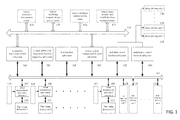
- FIG. 3 is a flowchart of the large cloud numerical control system, in which reference numerals 301-303 stand for cloud numerical control systems equipped in numerical control devices executing serial machining processes for a workpiece, reference numerals 304-306 stand for cloud numerical control systems equipped in numerical control devices executing serial machining processes for another workpiece, and workpieces made by the numerical control machining devices controlled by the systems 302, 305 will be assembled. The detail will be described as follows.
Landscapes
- Engineering & Computer Science (AREA)
- General Engineering & Computer Science (AREA)
- Manufacturing & Machinery (AREA)
- Quality & Reliability (AREA)
- Physics & Mathematics (AREA)
- General Physics & Mathematics (AREA)
- Automation & Control Theory (AREA)
- Numerical Control (AREA)
Applications Claiming Priority (2)
| Application Number | Priority Date | Filing Date | Title |
|---|---|---|---|
| CN201210249423.8A CN102749885B (zh) | 2012-07-18 | 2012-07-18 | 云数控系统 |
| PCT/CN2013/000687 WO2014012348A1 (zh) | 2012-07-18 | 2013-06-08 | 云数控系统 |
Publications (2)
| Publication Number | Publication Date |
|---|---|
| EP2899604A1 true EP2899604A1 (de) | 2015-07-29 |
| EP2899604A4 EP2899604A4 (de) | 2016-10-19 |
Family
ID=47030169
Family Applications (1)
| Application Number | Title | Priority Date | Filing Date |
|---|---|---|---|
| EP13819502.9A Ceased EP2899604A4 (de) | 2012-07-18 | 2013-06-08 | Numerisches cloud-steuersystem |
Country Status (4)
| Country | Link |
|---|---|
| US (1) | US9541918B2 (de) |
| EP (1) | EP2899604A4 (de) |
| CN (1) | CN102749885B (de) |
| WO (1) | WO2014012348A1 (de) |
Cited By (2)
| Publication number | Priority date | Publication date | Assignee | Title |
|---|---|---|---|---|
| WO2017064554A1 (en) * | 2015-10-13 | 2017-04-20 | Schneider Electric Industries Sas | Method for arranging workloads in a software defined automation system |
| EP4528410A1 (de) * | 2023-09-15 | 2025-03-26 | DMG MORI Digital GmbH | Datensystem, datenschnittstellenvorrichtung, fertigungssystem und verfahren zum steuern einer werkzeugmaschine |
Families Citing this family (34)
| Publication number | Priority date | Publication date | Assignee | Title |
|---|---|---|---|---|
| CN102749885B (zh) * | 2012-07-18 | 2014-08-06 | 石毅 | 云数控系统 |
| CN104298175B (zh) * | 2014-09-26 | 2015-09-23 | 华中科技大学 | 一种基于虚拟化技术的数控系统及方法 |
| CN104333593B (zh) * | 2014-11-04 | 2018-04-17 | 成都乐创自动化技术股份有限公司 | 运动控制器远程控制方法、故障诊断方法及远程控制系统 |
| CN104808592B (zh) * | 2015-03-13 | 2016-06-01 | 华中科技大学 | 一种基于虚拟上位机的数控系统 |
| CN104898573B (zh) * | 2015-04-06 | 2016-08-17 | 华中科技大学 | 一种基于云计算的数控系统数据采集及处理方法 |
| DE102015106116A1 (de) * | 2015-04-21 | 2016-10-27 | Phoenix Contact Gmbh & Co. Kg | Verfahren und Steuereinrichtung zur flexiblen Prozesssteuerung |
| EP3101500B1 (de) * | 2015-06-02 | 2024-02-14 | Siemens Aktiengesellschaft | Steuersystem für eine verteilte prozesssteuerung einer technischen anlage und ein verfahren zur steuerung einer technischen anlage |
| CN104881817A (zh) * | 2015-06-11 | 2015-09-02 | 沈阳富创精密设备有限公司 | 一种制造业工艺数据云平台的实现方法 |
| CN107086613B (zh) * | 2016-02-15 | 2024-04-09 | 周锡卫 | 一种分布式多子系统组成的n+m冗余ups系统 |
| DE102017103830A1 (de) * | 2016-02-29 | 2017-08-31 | Fanuc Corporation | Maschinensystem, maschinensteuercomputer, basissoftwareanwendung, computerlesbares speichermedium, und maschinensteuerungsverfahren für die interkommunikation mit maschinen |
| US10642251B2 (en) | 2016-04-14 | 2020-05-05 | David E Platts | Subtractive machining work center |
| CN106814701B (zh) * | 2016-12-26 | 2019-04-23 | 武汉华中数控股份有限公司 | 管控数控平台系统及其构建方法 |
| CN108459557B (zh) * | 2017-07-26 | 2021-11-19 | 华中科技大学 | 零件加工尺寸评测方法 |
| EP3460598A1 (de) * | 2017-09-22 | 2019-03-27 | Siemens Aktiengesellschaft | Speicherprogrammierbare steuerung |
| CN107703895A (zh) * | 2017-10-17 | 2018-02-16 | 佛山伊贝尔科技有限公司 | 智能精密数控加工中心生产线集成系统 |
| CN108259592A (zh) * | 2018-01-11 | 2018-07-06 | 郑州云海信息技术有限公司 | 一种云端工业控制的实现方法和装置 |
| EP3729216B1 (de) * | 2018-01-22 | 2024-04-24 | Siemens Aktiengesellschaft | Fähigkeitsangleichung zur steuerung einer industriellen produktionsmaschine |
| US20200241500A1 (en) * | 2019-01-25 | 2020-07-30 | Taiwan Development Institute | Numerical control machine tool processing program sharing method |
| EP3715978A1 (de) * | 2019-03-26 | 2020-09-30 | Siemens Aktiengesellschaft | Verfahren zum betreiben einer werkzeugmaschine sowie werkzeugmaschine |
| CN109933006A (zh) * | 2019-04-08 | 2019-06-25 | 沈机(上海)智能系统研发设计有限公司 | 数控系统及其控制方法、控制装置及存储介质、终端 |
| CN110285687B (zh) * | 2019-06-26 | 2020-11-06 | 双良节能系统股份有限公司 | 一种基于人工智能技术的空冷控制系统及其控制方法 |
| CN110262403B (zh) * | 2019-07-31 | 2022-02-11 | 北京国联视讯信息技术股份有限公司 | 一种基于动态精度技术的数控系统插补指令生成方法 |
| CN111625978B (zh) * | 2020-05-21 | 2023-04-07 | 河南科技大学 | 一种基于模块化的数控卧式车床设计方法 |
| CN111914472A (zh) * | 2020-06-22 | 2020-11-10 | 中煤北京煤矿机械有限责任公司 | 基于视觉识别及ai深度学习算法下的设备制造工艺智能化方法 |
| CN112114568B (zh) * | 2020-08-06 | 2022-03-08 | 上海吉翔汽车车顶饰件有限责任公司 | 以数据为中心的多工位个性化产品加工程序的设计方法 |
| CN112731867B (zh) * | 2020-12-15 | 2021-12-28 | 四川大学 | 一种薄壁零件残余应力检测在线补偿及振动时效方法 |
| CN113552844A (zh) * | 2021-07-28 | 2021-10-26 | 哈尔滨工业大学(深圳) | 一种隐性数控系统及其实现方法 |
| JP7154514B1 (ja) * | 2021-08-11 | 2022-10-18 | キタムラ機械株式会社 | マシニングセンタの自動運転システム |
| CN114139318B (zh) * | 2021-12-09 | 2024-12-13 | 北京工业大学 | 一种齿轮智能制造方法 |
| CN114055182A (zh) * | 2021-12-17 | 2022-02-18 | 江西洪都航空工业集团有限责任公司 | 一种基于托板螺母自动化生产线的电气系统 |
| CN114598564B (zh) * | 2022-02-23 | 2023-07-04 | 杭州博联智能科技股份有限公司 | 一种设备控制方法、系统、电子设备和存储介质 |
| CN114609969B (zh) * | 2022-03-23 | 2023-08-22 | 哈尔滨工业大学(深圳) | 一种基于云计算的数控机床轨迹误差补偿方法 |
| CN115373350B (zh) * | 2022-07-29 | 2024-09-17 | 西安热工研究院有限公司 | 一种工业设备安全联动控制方法及系统 |
| CN115248572B (zh) * | 2022-09-01 | 2025-10-17 | 深圳市易联软件科技有限公司 | 一种数控设备管理系统 |
Family Cites Families (16)
| Publication number | Priority date | Publication date | Assignee | Title |
|---|---|---|---|---|
| US6834214B2 (en) * | 2001-05-24 | 2004-12-21 | The Boeing Company | System, method and computer-program product for transferring a numerical control program to thereby control a machine tool controller |
| CN1137420C (zh) * | 2001-12-29 | 2004-02-04 | 天津大学 | 一种层次化监控和远程网络诊断功能的开放式数控系统 |
| JP2005018266A (ja) * | 2003-06-24 | 2005-01-20 | Toyota Keeramu:Kk | 並列分散処理システム、ncデータ作成方法及びncデータ作成プログラム |
| JP2008524006A (ja) * | 2004-12-20 | 2008-07-10 | レニショウ パブリック リミテッド カンパニー | 機械及び制御システム |
| US7698001B2 (en) * | 2005-10-27 | 2010-04-13 | Hewlett-Packard Development Company, L.P. | Method and apparatus for improving performance of networking applications |
| JP2008196989A (ja) * | 2007-02-14 | 2008-08-28 | General Electric Co <Ge> | 切削工具のパラメータを抽出するためのシステム及び方法 |
| CN100465838C (zh) * | 2007-09-03 | 2009-03-04 | 石毅 | 一种基于多cpu并行处理技术的开放式数控系统 |
| US9141105B2 (en) * | 2008-07-23 | 2015-09-22 | Hurco Companies, Inc. | Method and apparatus for monitoring or controlling a machine tool system |
| CN101592938A (zh) * | 2009-06-30 | 2009-12-02 | 刘文祥 | 数控网络及其各种系统 |
| EP2293164A1 (de) * | 2009-08-31 | 2011-03-09 | ABB Research Ltd. | Cloud Computing für ein Prozessleitsystem |
| CN101719842B (zh) * | 2009-11-20 | 2011-09-21 | 中国科学院软件研究所 | 一种基于云计算环境的分布式网络安全预警方法 |
| CN101833328A (zh) * | 2010-06-01 | 2010-09-15 | 无锡科尔华电子有限公司 | 无线传感网smt生产制造执行控制系统 |
| CN102375901A (zh) * | 2010-08-20 | 2012-03-14 | 深圳富泰宏精密工业有限公司 | 模具设计工序云处理系统 |
| EP2428307B1 (de) * | 2010-09-10 | 2016-03-16 | ACSYS Lasertechnik GmbH | Verfahren zur Erzeugung von rauen Oberflächenstrukturen |
| CN102455676A (zh) * | 2010-10-18 | 2012-05-16 | 西安扩力机电科技有限公司 | 工业用数控机床综合控制系统 |
| CN102749885B (zh) * | 2012-07-18 | 2014-08-06 | 石毅 | 云数控系统 |
-
2012
- 2012-07-18 CN CN201210249423.8A patent/CN102749885B/zh active Active
-
2013
- 2013-06-08 US US14/414,903 patent/US9541918B2/en active Active
- 2013-06-08 WO PCT/CN2013/000687 patent/WO2014012348A1/zh not_active Ceased
- 2013-06-08 EP EP13819502.9A patent/EP2899604A4/de not_active Ceased
Cited By (9)
| Publication number | Priority date | Publication date | Assignee | Title |
|---|---|---|---|---|
| WO2017064554A1 (en) * | 2015-10-13 | 2017-04-20 | Schneider Electric Industries Sas | Method for arranging workloads in a software defined automation system |
| WO2017064565A1 (en) * | 2015-10-13 | 2017-04-20 | Schneider Electric Industries Sas | Software defined automation system and architecture |
| US10845786B2 (en) | 2015-10-13 | 2020-11-24 | Schneider Electric Industries Sas | Method for arranging workloads in a software defined automation system |
| AU2016339061B2 (en) * | 2015-10-13 | 2022-01-27 | Schneider Electric Industries Sas | Method for arranging workloads in a software defined automation system |
| US11579595B2 (en) | 2015-10-13 | 2023-02-14 | Schneider Electric Industries Sas | Software defined automation system and architecture |
| AU2022201372B2 (en) * | 2015-10-13 | 2023-05-11 | Schneider Electric Industries Sas | Software defined automation system and architecture |
| EP4202681A1 (de) * | 2015-10-13 | 2023-06-28 | Schneider Electric Industries SAS | Softwaredefiniertes automatisierungssystem und architektur |
| US12585256B2 (en) | 2015-10-13 | 2026-03-24 | Schneider Electric Industries Sas | Software defined automation system and architecture |
| EP4528410A1 (de) * | 2023-09-15 | 2025-03-26 | DMG MORI Digital GmbH | Datensystem, datenschnittstellenvorrichtung, fertigungssystem und verfahren zum steuern einer werkzeugmaschine |
Also Published As
| Publication number | Publication date |
|---|---|
| CN102749885B (zh) | 2014-08-06 |
| WO2014012348A1 (zh) | 2014-01-23 |
| CN102749885A (zh) | 2012-10-24 |
| US9541918B2 (en) | 2017-01-10 |
| EP2899604A4 (de) | 2016-10-19 |
| US20150185727A1 (en) | 2015-07-02 |
Similar Documents
| Publication | Publication Date | Title |
|---|---|---|
| US9541918B2 (en) | Cloud numerical control system | |
| Zhang et al. | Application framework of digital twin-driven product smart manufacturing system: A case study of aeroengine blade manufacturing | |
| Latif et al. | A review of G code, STEP, STEP-NC, and open architecture control technologies based embedded CNC systems | |
| Chen et al. | Toward intelligent machine tool | |
| JP6892704B2 (ja) | スマート工場並列制御方法及びシステム | |
| CN105034008B (zh) | 双机器人协同自动装配的智能化柔性生产线及其运行方法 | |
| JP6310076B2 (ja) | 数値制御工作機械の操作を制御するための制御システム、およびそのようなシステムで使用するためのバックエンドとフロントエンド制御装置 | |
| CN113950651B (zh) | 信息处理装置、信息处理方法及信息处理程序 | |
| CN101984376A (zh) | 一种数控机床故障模拟装置 | |
| CN1601418B (zh) | 具有中央数据库的cnc加工装置及测量方法 | |
| CN103135536B (zh) | 一种dcs系统与计算机生产仿真模型信息处理方法 | |
| CN113031461B (zh) | 超精密运动台半实物仿真系统及方法 | |
| Asato et al. | Analysis of open CNC architecture for machine tools | |
| KR20200106455A (ko) | 관리 장치 및 관리 시스템 | |
| Martinov et al. | Modular design of specialized numerical control systems for inclined machining centers | |
| Martinov et al. | Trends in the numerical control of machine-tool systems | |
| He et al. | Synchronization control strategy of multi-motor system based on profibus network | |
| KR20230032675A (ko) | Cnc 공작기계를 이용한 데이터 수집 시스템 | |
| CN102520689A (zh) | 基于龙芯处理器和fpga技术的嵌入式控制器 | |
| JP2012099082A (ja) | 多軸同期動作機械のプログラム変換モジュール及びプログラム変換方法 | |
| CN111615437B (zh) | 用于机器人加工的方法和装置 | |
| WO2017101700A1 (zh) | 与数控系统直接通讯的计算机辅助制造方法及装置和系统 | |
| JP2008269553A (ja) | サーボモータ制御装置およびその方法 | |
| Li et al. | An integration method of design and machining for spiral bevel gears based on universal CNC machine tools | |
| JP4885049B2 (ja) | 加工支援システム、それに適用する統合サーバおよび統合サーバプログラム |
Legal Events
| Date | Code | Title | Description |
|---|---|---|---|
| PUAI | Public reference made under article 153(3) epc to a published international application that has entered the european phase |
Free format text: ORIGINAL CODE: 0009012 |
|
| 17P | Request for examination filed |
Effective date: 20150601 |
|
| AK | Designated contracting states |
Kind code of ref document: A1 Designated state(s): AL AT BE BG CH CY CZ DE DK EE ES FI FR GB GR HR HU IE IS IT LI LT LU LV MC MK MT NL NO PL PT RO RS SE SI SK SM TR |
|
| AX | Request for extension of the european patent |
Extension state: BA ME |
|
| DAX | Request for extension of the european patent (deleted) | ||
| RA4 | Supplementary search report drawn up and despatched (corrected) |
Effective date: 20160916 |
|
| RIC1 | Information provided on ipc code assigned before grant |
Ipc: G05B 19/18 20060101AFI20160912BHEP Ipc: H04L 29/08 20060101ALI20160912BHEP |
|
| 17Q | First examination report despatched |
Effective date: 20170206 |
|
| REG | Reference to a national code |
Ref country code: DE Ref legal event code: R003 |
|
| 18R | Application refused |
Effective date: 20171015 |