EP2899990A1 - Intelligente Datenübermittlung - Google Patents
Intelligente Datenübermittlung Download PDFInfo
- Publication number
- EP2899990A1 EP2899990A1 EP15152171.3A EP15152171A EP2899990A1 EP 2899990 A1 EP2899990 A1 EP 2899990A1 EP 15152171 A EP15152171 A EP 15152171A EP 2899990 A1 EP2899990 A1 EP 2899990A1
- Authority
- EP
- European Patent Office
- Prior art keywords
- data
- noise ratio
- content
- signal
- data blocks
- Prior art date
- Legal status (The legal status is an assumption and is not a legal conclusion. Google has not performed a legal analysis and makes no representation as to the accuracy of the status listed.)
- Ceased
Links
- 238000000034 method Methods 0.000 claims abstract description 95
- 230000015654 memory Effects 0.000 claims description 23
- 239000012634 fragment Substances 0.000 claims description 21
- 238000003860 storage Methods 0.000 description 51
- 238000004891 communication Methods 0.000 description 19
- 238000012545 processing Methods 0.000 description 19
- 238000009826 distribution Methods 0.000 description 18
- 239000000872 buffer Substances 0.000 description 14
- 230000006870 function Effects 0.000 description 14
- 238000010586 diagram Methods 0.000 description 13
- 230000005540 biological transmission Effects 0.000 description 10
- 230000033001 locomotion Effects 0.000 description 10
- 238000004590 computer program Methods 0.000 description 6
- 230000008569 process Effects 0.000 description 6
- 230000000153 supplemental effect Effects 0.000 description 6
- 230000003287 optical effect Effects 0.000 description 4
- 238000012546 transfer Methods 0.000 description 4
- 230000002093 peripheral effect Effects 0.000 description 3
- 238000009877 rendering Methods 0.000 description 3
- 238000013473 artificial intelligence Methods 0.000 description 2
- 238000013528 artificial neural network Methods 0.000 description 2
- 238000005516 engineering process Methods 0.000 description 2
- 238000004519 manufacturing process Methods 0.000 description 2
- 230000008520 organization Effects 0.000 description 2
- 238000011144 upstream manufacturing Methods 0.000 description 2
- 230000000007 visual effect Effects 0.000 description 2
- 230000003044 adaptive effect Effects 0.000 description 1
- 238000013459 approach Methods 0.000 description 1
- 230000006399 behavior Effects 0.000 description 1
- 238000004364 calculation method Methods 0.000 description 1
- 230000008859 change Effects 0.000 description 1
- 230000000052 comparative effect Effects 0.000 description 1
- 230000006835 compression Effects 0.000 description 1
- 238000007906 compression Methods 0.000 description 1
- 230000000694 effects Effects 0.000 description 1
- 230000002068 genetic effect Effects 0.000 description 1
- 230000003993 interaction Effects 0.000 description 1
- 230000002452 interceptive effect Effects 0.000 description 1
- 230000009191 jumping Effects 0.000 description 1
- 239000004973 liquid crystal related substance Substances 0.000 description 1
- 238000010801 machine learning Methods 0.000 description 1
- 230000007246 mechanism Effects 0.000 description 1
- 230000005055 memory storage Effects 0.000 description 1
- 238000012986 modification Methods 0.000 description 1
- 230000004048 modification Effects 0.000 description 1
- 230000006855 networking Effects 0.000 description 1
- 239000013307 optical fiber Substances 0.000 description 1
- 238000004806 packaging method and process Methods 0.000 description 1
- 238000004091 panning Methods 0.000 description 1
- 239000007787 solid Substances 0.000 description 1
- 230000036962 time dependent Effects 0.000 description 1
Images



Classifications
-
- G—PHYSICS
- G10—MUSICAL INSTRUMENTS; ACOUSTICS
- G10L—SPEECH ANALYSIS TECHNIQUES OR SPEECH SYNTHESIS; SPEECH RECOGNITION; SPEECH OR VOICE PROCESSING TECHNIQUES; SPEECH OR AUDIO CODING OR DECODING
- G10L19/00—Speech or audio signals analysis-synthesis techniques for redundancy reduction, e.g. in vocoders; Coding or decoding of speech or audio signals, using source filter models or psychoacoustic analysis
- G10L19/012—Comfort noise or silence coding
-
- H—ELECTRICITY
- H04—ELECTRIC COMMUNICATION TECHNIQUE
- H04L—TRANSMISSION OF DIGITAL INFORMATION, e.g. TELEGRAPHIC COMMUNICATION
- H04L5/00—Arrangements affording multiple use of the transmission path
- H04L5/003—Arrangements for allocating sub-channels of the transmission path
- H04L5/0058—Allocation criteria
-
- H—ELECTRICITY
- H04—ELECTRIC COMMUNICATION TECHNIQUE
- H04L—TRANSMISSION OF DIGITAL INFORMATION, e.g. TELEGRAPHIC COMMUNICATION
- H04L5/00—Arrangements affording multiple use of the transmission path
- H04L5/003—Arrangements for allocating sub-channels of the transmission path
- H04L5/0058—Allocation criteria
- H04L5/006—Quality of the received signal, e.g. BER, SNR, water filling
-
- H—ELECTRICITY
- H04—ELECTRIC COMMUNICATION TECHNIQUE
- H04L—TRANSMISSION OF DIGITAL INFORMATION, e.g. TELEGRAPHIC COMMUNICATION
- H04L5/00—Arrangements affording multiple use of the transmission path
- H04L5/003—Arrangements for allocating sub-channels of the transmission path
- H04L5/0058—Allocation criteria
- H04L5/0064—Rate requirement of the data, e.g. scalable bandwidth, data priority
-
- H—ELECTRICITY
- H04—ELECTRIC COMMUNICATION TECHNIQUE
- H04N—PICTORIAL COMMUNICATION, e.g. TELEVISION
- H04N21/00—Selective content distribution, e.g. interactive television or video on demand [VOD]
- H04N21/40—Client devices specifically adapted for the reception of or interaction with content, e.g. set-top-box [STB]; Operations thereof
- H04N21/43—Processing of content or additional data, e.g. demultiplexing additional data from a digital video stream; Elementary client operations, e.g. monitoring of home network or synchronising decoder's clock; Client middleware
- H04N21/437—Interfacing the upstream path of the transmission network, e.g. for transmitting client requests to a VOD server
-
- H—ELECTRICITY
- H04—ELECTRIC COMMUNICATION TECHNIQUE
- H04N—PICTORIAL COMMUNICATION, e.g. TELEVISION
- H04N21/00—Selective content distribution, e.g. interactive television or video on demand [VOD]
- H04N21/80—Generation or processing of content or additional data by content creator independently of the distribution process; Content per se
- H04N21/83—Generation or processing of protective or descriptive data associated with content; Content structuring
- H04N21/845—Structuring of content, e.g. decomposing content into time segments
- H04N21/8456—Structuring of content, e.g. decomposing content into time segments by decomposing the content in the time domain, e.g. in time segments
Definitions
- Multibitrate (MBR) delivery can be implemented to provide various versions of the same content asset.
- different versions of a content asset can relate to different quality levels.
- MBR may be used for live streaming.
- client applications select which rate they can support based on available bandwidth. However, such rate selection may not be preferred for all types of data reception.
- one or more versions (e.g., bit rates) of a content asset, or portion o the asset can be selected for delivery based upon one or more of the determined data characteristics.
- a user can manually select the preferred bit rate of a content asset.
- a user can provide information such as an available time to allow download.
- the one or more versions (e.g., bit rates) of a content asset can be selected for delivery based upon information provided by the user and/or relating to the user (e.g., location, movement, speed, etc.).
- methods can comprise determining signal-to-noise ratio information relating to one or more data blocks.
- a threshold signal-to-noise ratio can be determined.
- One or more of the data blocks can be identified, requested, and/or transmitted based upon respective signal-to-noise ratio information and the threshold signal-to-noise ratio.
- methods can comprise providing first data having a first characteristic, wherein the first data relates to a content asset and providing second data having a second characteristic, wherein the second data relates to the content asset.
- a time parameter can be determined, the time parameter relating to the receipt of data.
- One or more of the first data and the second data can be selected based on the determined time parameter.
- the selected one or more of the first data and the second data can be transmitted, for example, within the time parameter.
- methods can comprise determining peak signal-to-noise ratio information relating to one or more data blocks.
- Each of the one or more of the data blocks can have an associated bit rate.
- a threshold peak signal-to-noise ratio can be determined.
- One or more of the data blocks can be transmitted based upon respective peak signal-to-noise ratio information and the threshold peak signal-to-noise ratio.
- the methods and systems may take the form of an entirely hardware embodiment, an entirely software embodiment, or an embodiment combining software and hardware aspects.
- the methods and systems may take the form of a computer program product on a computer-readable storage medium having computer-readable program instructions (e.g., computer software) embodied in the storage medium.
- the present methods and systems may take the form of web-implemented computer software. Any suitable computer-readable storage medium may be utilized including hard disks, CD-ROMs, optical storage devices, or magnetic storage devices.
- These computer program instructions may also be stored in a computer-readable memory that can direct a computer or other programmable data processing apparatus to function in a particular manner, such that the instructions stored in the computer-readable memory produce an article of manufacture including computer-readable instructions for implementing the function specified in the flowchart block or blocks.
- the computer program instructions may also be loaded onto a computer or other programmable data processing apparatus to cause a series of operational steps to be performed on the computer or other programmable apparatus to produce a computer-implemented process such that the instructions that execute on the computer or other programmable apparatus provide steps for implementing the functions specified in the flowchart block or blocks.
- blocks of the block diagrams and flowchart illustrations support combinations of means for performing the specified functions, combinations of steps for performing the specified functions and program instruction means for performing the specified functions. It will also be understood that each block of the block diagrams and flowchart illustrations, and combinations of blocks in the block diagrams and flowchart illustrations, can be implemented by special purpose hardware-based computer systems that perform the specified functions or steps, or combinations of special purpose hardware and computer instructions.
- determining data characteristics relating to one or more data assets can be signal-to-noise ratios for at least a portion of a content asset and/or coding information such as scalable video coding.
- Other information can be determined such as information relating to a user or a user's circumstances (e.g., time available for downloading a content asset).
- one or more versions (e.g., bit rates) of a content asset can be selected for delivery based upon one or more of the determined data characteristics.
- a user can manually select the preferred bit rate of a content asset.
- a user can provide information such as an available time to allow download.
- the one or more versions (e.g., bit rates) of a content asset can be selected for delivery based upon information provided by the user.
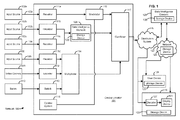
- FIG. 1 illustrates various aspects of an exemplary network environment in which the present methods and systems can operate. Some aspects of the present disclosure relate to methods and systems for content control. Those skilled in the art will appreciate that present methods may be used in systems that employ both digital and analog equipment. One skilled in the art will appreciate that provided herein is a functional description and that the respective functions can be performed by software, hardware, or a combination of software and hardware. Although one or more figures illustrate television content type data, the disclosure can be practiced with any data.
- the network 100 can comprise a central location 101 (e.g., a headend, or processing facility), which can receive content (e.g., data, input programming) from multiple sources.
- the central location 101 can combine the content from the various sources and can distribute the content to user (e.g., subscriber) locations (e.g., location 119 ) via distribution system 116.
- the central location 101 can be a data processing facility configured to receive content from a variety of sources 102a, 102b, 102c.
- the content can be transmitted from the source to the central location 101 via a variety of transmission paths, including wireless (e.g. satellite paths 103a, 103b ) and terrestrial path 104.
- the central location 101 can also receive content from a direct feed source 106 via a direct line 105. Content may also be created at the central location 101.
- Other input sources can comprise capture devices such as a video camera 109 or a server 110.
- the signals provided by the content sources can comprise a single content item or a multiplex that comprises several content items.
- the central location 101 can comprise one or a plurality of receivers 111a , 111b , 111c , 111d that are each associated with an input source.
- MPEG encoders such as encoder 112
- a data packaging device such as a fragmentor
- the encoder 112 and/or fragmentor can repeatedly embed markers, flags, and signals into the content data stream for processing by downstream devices.
- a switch 113 can provide access to server 110, which can be, for example, a pay-per-view server, a data server, an internet router, a network system, and/or a phone system. Some signals may require additional processing, such as signal multiplexing, prior to being modulated. Such multiplexing can be performed by multiplexer (mux) 114.
- multiplexer multiplexer
- the central location 101 can comprise one or a plurality of modulators 115 for interfacing to the distribution system 116.
- the modulators can convert the received content into a modulated output signal suitable for transmission over the distribution system 116.
- the output signals from the modulators can be combined, using equipment such as a combiner 117, for input into the distribution system 116.
- a control system 118 can permit a system operator to control and monitor the functions and performance of network 100.
- the control system 118 can interface, monitor, and/or control a variety of functions, including, but not limited to, the channel lineup for the television system, billing for each user, and/or conditional access for content distributed to users.
- Control system 118 can provide input to the modulators for setting operating parameters, such as system specific MPEG table packet organization or conditional access information.
- the control system 118 can be located at central location 101 or at a remote location.
- the distribution system 116 can distribute signals from the central location 101 to user locations, such as user location 119.
- the distribution system 116 can be an optical fiber network, a coaxial cable network, a hybrid fiber-coaxial network, a wireless network, a satellite system, a direct broadcast system, or any combination thereof.
- a decoder 120 such as a gateway or communications terminal (CT) can decode, if needed, the signals for display on a display device, such as on a display device 121 such as a television set (TV), a mobile device, or a computer monitor.
- a decoder 120 such as a gateway or communications terminal (CT) can decode, if needed, the signals for display on a display device, such as on a display device 121 such as a television set (TV), a mobile device, or a computer monitor.
- TV television set
- mobile device or a computer monitor.
- the signal can be decoded in a variety of equipment, including a CT, a computer, a TV, a monitor, or satellite dish.
- the methods and systems disclosed can be located within, or performed on, one or more CT's, display devices 121, central locations 101, DVR's, home theater PC's, and the like.
- the decoder 120 can receive and process the embedded markers, flags, and signals in the content data stream for controlling a content received by the decoder 120.
- the decoder 120 or communication terminal can comprise a storage device 122.
- the storage device 122 can comprise a memory or other storage medium.
- a number of content assets e.g., video, audio, etc.
- other data, content, and/or information can be stored in the storage device 122 such as advertisements and alternative content, for example.
- the storage device 122 can be separate from the decoder 120.
- the storage device 122 can be located upstream of the decoder 120 and downstream of the distribution system 116.
- the storage device 122 can store information to be transmitted to any number of decoders 120 or other recipient devices. Accordingly, the decoder 120 can retrieve the content assets from the storage device 122 for playback without having to communicate with the distribution system 116, thereby reducing latency in playback.
- the decoder 120 can process a data stream, which can comprise audio, video, or other data from the distribution system 116 with a regular cadence (e.g., every two seconds, four seconds, ten seconds, and the like). Other data and tracks can be received and processed by the user devices.
- user location 119 is not fixed.
- a user can receive content from the distribution system 116 on a mobile device, such as a laptop computer, PDA, smartphone, GPS, vehicle entertainment system, portable media player, and the like.
- a user device 124 can receive signals from the distribution system 116 for rendering content on the user device 124.
- rendering content can comprise providing audio and/or video, displaying images, facilitating an audio or visual feedback, tactile feedback, and the like.
- other content can be rendered via the user device 124.
- the user device 124 can be a CT, a set-top box, a television, a computer, a smartphone, a laptop, a tablet, a multimedia playback device, a portable electronic device, and the like.
- the user device 124 can be an Internet Protocol compatible device for receiving signals via a network such as the Internet or some other communications network for providing content to the user. It is understood that other display devices and networks can be used.
- the user device 124 can be a widget or a virtual device for displaying content in a picture-in-picture environment such as on the display device 121, for example.
- a storage device 125 can be in communication with one or more of the user device 124 and the central location 101 to send/receive content therebetween.
- the storage device 125 can be located remotely from the user device 124, such as network storage medium 126.
- a data intelligence element 128 can be in communication with one or more of the central location 101, the decoder 120, and the user device 124.
- the data intelligence element 128 can be software, hardware (e.g., processor and /or memory), or a combination thereof.
- the data intelligence element 128 can be located in one or more existing elements or it can be standalone.
- the data intelligence element 128 can be configured to receive content such as incoming network programming or a network feed via the central location 101. As an example, while the incoming network programming is received by the data intelligence element 128,
- the data intelligence element 128 can be associated with and/or can comprise a storage device 130.
- the storage device 130 can comprise a memory or other storage medium.
- a number of content assets e.g., video, audio, etc.
- other data, content, and/or information can be stored in the storage device 130 such as advertisements and alternative content, for example.
- the storage device 130 can be separate from the data intelligence element 128 and accessible thereby.
- the data intelligence element 128 can be configured to determine a signal-to-noise ratio relating to one or more content assets or portions of content.
- a peak signal-to-noise ratio PSNR
- PSNR peak signal-to-noise ratio
- the PSNR can be based on the mean squared error.
- a device e.g., user device 124
- the quality setting defines a minimum PSNR setting to be applied throughout the entire video.
- portions of the content e.g., frames, data blocks, scenes
- the receiving device can be received (e.g., downloaded) having a high bitrate to maintain the minimum PSNR associated with the selected quality setting.
- Other portions of the video such as easy to compress video, can be received having a lower bitrate, while maintaining the minimum PSNR.
- the PSNR can be determined continuously or periodically. As the determined PSNR exceeds (or approaches) a threshold PSNR, higher bitrate versions of one or more data blocks can be selected to maintain the minimum PSNR.
- time can be allotted per block or per scene based on PSNR. As an example, more time can be allotted for high PSNR data blocks and less time can be allotted for low PSNR data blocks.
- I-frames can contain the bulk of the data of a content asset (e.g., video stream, downloadable content item) compared to the p-frames and b-frames. Accordingly, scenes (e.g., data blocks representing a scene) having multiple I-frames could be downloaded at a higher bitrate to try and maintain a particular playback quality, while having to process larger amounts of data.
- a content asset e.g., video stream, downloadable content item
- the amount of motion in a scene can be determined by an encoder since the encoder is often configured to perform motion estimation in order to properly encode the video.
- the encoder can track and/or log how much motion was present in each data block (or group of blocks) and the client and/or server can determine a bitrate applied to each block.
- a bitrate can be selected based upon other factors such as time available to complete the download.
- time available to complete the download There are various ways to determine how much time a user or device has to download a content asset such as determining a time of day (e.g., user will be sleeping for hours, during a commute, during lunch, etc.), determining a state of the device (e.g., is the device located near a car/airport/train station?, is the device about the be disconnected from a communication network?).
- a state of the device e.g., is the device located near a car/airport/train station?, is the device about the be disconnected from a communication network?.
- a variability of bitrates (e.g., how much can the bitrate vary from block to block) can also be factored into such calculations in order to maintain a particular viewing experience.
- a selection of variability of bitrate can be based on various parameters such as configurations (e.g., screen size) of the receiving device and user habits and/or preferences. For example, if a user has a habit of jumping from scene to scene or if the user starts watching the content asset before the complete asset is downloaded, the system can start downloading at a first bitrate for a first portion (e.g., 30%) of the content asset and then select a second lower bitrate for the remaining second portion (e.g., 70%) of the content asset. As a further example, the user can begin viewing the first portion and may have time to receive a scalable video coding (SVC) stream to improve quality of certain blocks in the second portion before viewing of the second portion.
- SVC scalable video coding
- the data intelligence element 128 can be configured to determine coding information (e.g., scalable video coding (SVC)) relating to one or more content assets or portions of content.
- SVC scalable video coding
- SVC or similar method can be implemented to facilitate the reception (e.g., download) of coding information having the delta between two different MBR streams.
- a receiving device e.g., user device 124
- the receiving device can then receive or access SVC delta information for the received content asset to improve upon the initial version of the content asset.
- the SVC delta information relating to portions of the content with the lowest PSNR can be received first.
- Other coding information can be received and applied to any portion of the content asset to improve the bitrate of the portion.
- each block or group of blocks of a particular data asset can be assigned a score such as PSNR, number of I-frames, amount of motion, and/or crowd sourced statistic such as the number of users that watched a block multiple times or the number of users that skipped blocks to reach a particular scene (e.g., block of frames).
- a device e.g., data intelligence element 128
- the assigned score can be a relative score based on all the blocks in the content asset. As such, if the content asset was downloaded quickly (e.g., at low bitrates) and now the system needs to determine which blocks should be improved first, the score of each block can be used to determine an order of which blocks are processed first to improve quality.
- the data intelligence element 128 can be configured to facilitate selection of one or more versions (e.g., bit rates) of a content asset.
- a user can manually select the preferred bit rate or quality level of a content asset.
- a user can provide information such as an available time to allow download and the data intelligence element 128 and/or user device 124 can determine the best bit rate that will allow the entire content asset to be downloaded.
- the receiving device when a receiving device is downloading a MBR content asset versus streaming the content asset, the receiving device does not need to maintain a specific throughput to view a specific quality (e.g., bit rate) of the content asset. For example, if a receiving device has a network connection that is consistently 500kbps, and the available MBR streams are 300kbps, 600kbps, 1200kbps and 3000kbps, the receiving device can only ever stream the lowest 300kbps stream (with occasional 600kbps blocks) unless the receiving device buffers for an extended period of time. However, when downloading the content asset, a user can select or it can be determined which portions of the content asset to download at a particular quality (e.g., bit rate).
- a specific quality e.g., bit rate
- information such as an available time for download (e.g., eight minute window to download the content asset before network connectivity is not available) can be provided.
- the receiving device can use the remaining two minutes of available time to download a portion of the content asset (e.g., 3.3 minutes of playback of the content asset) at the higher 600kbps version. Any portion of the content asset can be downloaded at the higher quality bitrate. In a further example, the receiving device can download 1.1 minutes of the 1200kbps version or any other combination of bitrates, anywhere in the content asset.
- the data intelligence element 128 can be configured to determine one or more options for receiving MBR content assets.
- one or more of the following formulas can be used to determine one or more options for providing/receiving one or more content assets or portions thereof:
- the minimum amount of data received in order to download an entire asset at a minimum bit rate (e.g., 300kbps) can be calculated by:
- the user can download a total of 240,000kb, as shown below:
- a 300kbps difference from the minimum 300kbps feed is determined. If the device downloaded 300kbps and 600kbps blocks, 3.33 minutes of content can be downloaded at 600kbps and 1.11 minutes at 1200kbps, as shown below:
- bitrate selection when a device has limited bandwidth, a lower bitrate can be selected to ensure the device receives as much of the data asset as possible in a given amount of time.
- bandwidth changes during download the determination of bitrate selection can be modified based on the change in bandwidth.
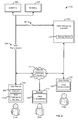
- FIG. 2 is a block diagram of an exemplary content control system 200.
- the system 200 can comprise one or more data sources 202 for accessing, storing, and/or transmitting data, e.g., a transmission of file-based data.
- the sources 202 can be a large area (wide area), such as a national programming source, or a small area (local area) such as a local programming source (e.g., local affiliate).
- one or more of the sources 202 can comprise content delivery networks (CDN).
- CDN content delivery networks
- the data sources 202 can comprise a content provider (e.g., provider of audio content, video content, data services, news and programming, advertisements, alternate content, etc.) configured to transmit the data (e.g., as content assets via a stream, fragments, files, etc.) to various end-users.
- a content provider e.g., provider of audio content, video content, data services, news and programming, advertisements, alternate content, etc.
- one or more data sources 202 can comprise a supplemental content database.
- the supplemental content database can comprise an advertisement or alternate content database (e.g., second screen content) having a plurality of advertisements stored therein or capable of accessing advertisements stored elsewhere.
- the advertisement database can comprise a plurality of video advertisements, which can be interactive or other types of advertisements.
- the plurality of video advertisements can each have a particular time duration associated therewith.
- the time duration associated with the advertisements, alternate, and/or supplemental content can be varied in duration.
- a particular advertisement can have multiple versions, wherein each version of the same advertisement can have a different time duration. Accordingly, an advertisement having a particular time duration can be retrieved to fill a time slot having a substantially equal time duration. Any item of content is sources 202 can be retrieved or transmitted to the end user.
- one or more sources 202 can process and/or transmit data 204 to one or more network devices such as user devices 124 and/or decoders 120.
- a storage medium facilitates storage of at least a portion of the data 204 such as by network storage device 126. Any portion of the data 204 can be stored locally to a receiving device (e.g., user device 124, decoder 120, etc.) or remotely from the receiving device.
- the receiving device can process the data 204 to provide (e.g., present on a display) content 206 to a user.
- content 206 that is provided based on a processing (e.g., rendering or otherwise presenting) of the data 204 can be substantially similar to content provided to other devices and users receiving and/or processing the same data 204 or copies thereof.
- a large area e.g., national programming feed
- the local affiliates can be equipped to control the transmission of data (e.g., data feed 204 ) to one or more devices associated with the local affiliate.
- the local affiliate can provide content 206 based on one or more of the data feed 204, local programming, local advertisements, stored data, national programing, alternative programming, and the like.
- one or more data intelligence elements 128a, 128b can be in communication with one or more of the sources 202, the decoder 120, and the user devices 124.
- data intelligence element 128b can be co-located and/or integrated with one or more of the sources 202, the decoder 120, and the user devices 124.
- One or more data intelligence elements 128a, 128b can be disposed in any location or part of any network architecture.
- the data intelligence element 128 can be configured to receive the data 204, such as incoming network programming or any data feed, via one or more sources 202.
- the data intelligence elements 128a, 128b can determine characteristic information 208 relating to one or more data assets (e.g., data 204 ) and/or the receipt and/or transmission of the data 204.
- Characteristic information 208 can comprise one or more of a signal-to-noise ratio, coding information such as scalable video coding, frame information such as frame type, motion information, video score, mean opinion score (MOS), and the like.
- a storage medium such as storage device 130 can facilitate storage (e.g., in a buffer or more permanent storage) of at least a portion of the data 204 and/or characteristic information 208.
- the data intelligence elements 128a, 128b can be configured to determine a signal-to-noise ratio relating to one or more content assets or portions of content.
- a peak signal-to-noise ratio PSNR
- a device e.g., user device 124
- receive the content can select a quality setting for the received content, wherein the quality setting defines a minimum PSNR setting to be applied throughout the entire video.
- portions of the content e.g., frames, data blocks, scenes
- portions of the content can be received (e.g., downloaded) having a high bitrate to maintain the minimum PSNR associated with the selected quality setting.
- Other portions of the video such as easy to compress video, can be received having a lower bitrate, while maintaining the minimum PSNR.
- the relative difficulty of compressing video can be a function of the movement of images from frame to frame. For example, compressing of video having multiple I-frames of a group of picture (GOP) structure can be more difficult than video with a single I-frame.
- GOP group of picture
- Examples of hard to compress content asset can comprise content including a camera panning an audience watching a sporting event, wherein many of the individuals in the audience are moving along with the camera causing each of them to move within the frame and new people to show up on the leading edge.
- An asset with many scene cuts can also be considered a hard to compress content due to the increased number of I-frames.
- Examples of easy to compress content asset can comprise a news anchor talking in front of a camera, wherein only the anchor's mouth and/or head is moving between frames with the occasional upper right/left graphic that stays on screen for a few seconds.
- Other examples of easy to compress content include credits, scrolling text, and mostly black/white/solid color images.
- Bitrate and quality can depend on the codec used. There may be some MBR feeds available in mpeg4 or HEVC but a portion of clients may not be able to download such codecs. Accordingly, PSNR can provide a comparative mechanism between quality of the different feeds compressed with different codecs.
- a high bitrate feed for HD can be in the range of 12- 18mbps and a low bitrate feed can be in the range of 3-6mbps.
- a high bitrate feed for HD can be in the range of 6-8 mbps and a low bitrate feed can be in the range of 1-2mbps.
- HEVC a high bitrate feed for HD can be in the range of 3-4 mbps and a low bitrate feed can be in the range of .5-1mbps. Other relative ranges for high and low bitrates can be used.
- the data intelligence elements 128a, 128b can be configured to determine coding information (e.g., scalable video coding (SVC)) relating to one or more content assets or portions of content.
- SVC scalable video coding
- SVC or similar method can be implemented to facilitate the reception (e.g., download) of coding information having the delta between two different MBR streams.
- a receiving device e.g., user device 124
- the receiving device can then receive or access SVC delta information for portions of the received content asset to improve upon the initial version or portions of the initial version of the content asset.
- the SVC delta information relating to portions of the content with the lowest PSNR can be received first.
- Other coding information can be received and applied to any portion of the content asset to improve the bitrate of that portion.
- the data intelligence elements 128a, 128b can be configured to facilitate selection of one or more versions (e.g., bit rates) of a content asset.
- a user can manually select the preferred bit rate of a content asset.
- a user can provide information such as an available time to allow download and the data intelligence elements 128a, 128b can determine the best bit rate or rates that will allow the entire content asset to be downloaded. As an example, it could be determined that some of the content be download at each of the 300kbps, 600kbps, and 1200kbps streams, and the high complexity blocks be given more bitrate to maintain a threshold PSNR.
- time can be allotted per block or per scene based on PSNR. As an example, more time can be allotted for high PSNR data blocks and less time can be allotted for low PSNR data blocks.
- FIG. 3 is a block diagram of an example system 300.
- the system 300 can comprise one or more data sources 302 for accessing and/or transmitting data, such as a data stream.
- An encoder 304 can be in signal communication with the data source 302.
- a fragmentor 306 can be in signal communication with the encoder 304.
- the encoder 304 and the fragmentor 306 can be integrated as part of a unitary device. However, the encoder 304 and the fragmentor 306 can be separate and distinct components.
- the data sources 302 can comprise one or more content providers for providing one or more of audio content, video content, data, news feeds, sports programming, social media services, advertisements, and the like.
- the data sources 302 can be configured to transmit the data (e.g., as a stream, fragments, files, etc.) to various end-users.
- one or more data sources 302 can comprise a content database having a plurality of advertisements, supplemental content, alternate content, or the like stored therein or capable of accessing content stored elsewhere.
- the content database can comprise a plurality of video advertisements.
- the plurality of advertisements, supplemental content, and/or alternate content can each have a particular time duration and/or bitrate associated therewith.
- the time duration and/or bitrate associated with the advertisements, supplemental content, and/or alternate content can be varied in duration for application in various time dependent circumstances.
- one or more of the data sources 302 can comprise a network data feed transmitting the data stream to users such as subscribers or clients.
- the one or more data sources 302 can be configured to transmit the data stream in a standard video format, such as, but not limited to, any of the Moving Picture Experts Group standards (e.g., MPEG-2, MPEG-4, a single MPEG-4 video encapsulated in an MPEG-2 transport stream over UDP MCAST, etc.), or any other standard for audio and/or video, such as MP3, Quicktime, and Audio Video Interleave (avi).
- the encoder 304 can be configured to receive the data stream from any source having any format that can be encoded (or transcoded) into a format that is appropriate for streaming or otherwise transmitting.
- the encoder 304 can be any device, system, apparatus, or the like to encode and/or transcode the data stream.
- the encoder 304 converts a single (high) bit rate and resolution to an output of multiple (lower) bitrates and resolutions.
- the encoder 304 can convert the data stream from the input format received from the data source (such as MPEG-2, QAM, etc.) to a transport format for distribution to consumers (such as MPEG-4).
- the encoder 304 can be a device such as a transcoder that conditions streaming data and/or changes it from one format to another.
- the encoder 304 can be configured to receive the data stream, or other type of signal, from one or more of the data sources 302 and encode/transcode information onto the data stream. In an exemplary embodiment, the encoder 304 can be configured to add information to the data stream relating to content fragments 308 or data blocks.
- a buffer or storage medium 309 can be in communication with the encoder 304 or integrated therewith. As an example, data received by the encoder 304 can be buffered or stored in the storage medium 309.
- the fragmentor 306 can be in signal communication with the encoder 304 to receive the data stream therefrom.
- the fragmentor 306 and the encoder 304 are configured as a unitary device.
- the fragmentor 306 and the encoder 304 can be integrated or separate.
- fragmentor 306 conditions the data stream (or other data signal) for downstream distribution by a computing device 310 through a content distribution network 312 to user devices 314 (e.g. the decoder 120 ).
- the computing device 310 can be an origin Hypertext Transfer Protocol (HTTP) computing device.
- HTTP Hypertext Transfer Protocol
- other computing devices can be used, such as a rate adaptive streaming server.
- the fragmentor 306 can communicate with the computing device 310 using the POST method of the HTTP.
- the computing device 310 can implement the functions described relative to the encoder 304 and/or the fragmentor.
- other protocols, configurations, and communication methods can be used.
- the fragmentor 306 separates or fragments the data stream into each of the content fragments 308 represented by the data stream based upon information encoded in the data stream by the encoder 304. In an additional example embodiment, the fragmentor 306 accesses the information encoded/inserted in the data stream by the encoder 304 to define the content fragments 308 based on, among other things, boundaries, grouping, timing, or duration.
- the content fragments 308 can be transmitted to the content distribution network (CDN) 312 for delivery to the user devices 314 for consumption (e.g., playback).
- CDN 312 content distribution network
- the user devices 314 can intercommunicate using the GET method of HTTP. However, other protocols and communication methods can be used.
- one or more of the user devices 314 can comprise a buffer 316.
- the buffer 316 can comprise a memory or a storage device.
- a number of the content fragments 308 can be loaded into the buffer 316 and stored for playback by the associated user device 314. Accordingly, the user device 314 can retrieve the content fragments 308 from the buffer 316 for playback without having to communicate with the CDN 312, thereby reducing the data stream, which can comprise audio, video, or other data from the computing device 310 with a regular cadence (e.g., every two seconds, four seconds, ten seconds).
- Other data, content, and/or information can be stored in the buffer 316 such as advertisements and alternative content, for example.
- a buffer 316' can be separate from the user device 314.
- the buffer 316' can be located upstream of the user device 314 and downstream of the CDN 312.
- the buffer 316' can store information to be transmitted to any number of user devices 314 or other recipient devices. Accordingly, the user device 314 can retrieve the content fragments 308 from the buffer 316' for playback without having to communicate with the CDN 312, thereby reducing latency in playback.
- the content fragments 308 can be retrieved from buffer 316 and 316' simultaneously or in various sequences.
- a data intelligence element 128 can be in communication with one or more of the user devices 314.
- the data intelligence element 128 can be in communication with one or more data sources 302, an origin server, computing device 310, and/or the content distribution network 312.
- the data intelligence element 128 can be configured to control presentation of data, such as content, to one or more of the user devices 314.
- the data intelligence element 128 can be configured to determine a signal-to-noise ratio relating to one or more content assets or portions of content.
- a peak signal-to-noise ratio PSNR
- a device e.g., user device 124
- receive the content can select a quality setting (e.g., minimum quality and/or maximum quality) for the received content, wherein the quality setting includes a definition of a minimum and/or maximum PSNR setting to be applied throughout (e.g., or block-by-block) the entire video.
- the receiving device can receive (e.g., stream or download) data having a higher bitrate to maintain the minimum PSNR associated with the selected quality setting.
- Other portions of the video such as easy to compress video, can be received having a lower bitrate, while maintaining the minimum PSNR.
- the data intelligence element 128 can be configured to determine coding information (e.g., scalable video coding (SVC)) relating to one or more content assets or portions of content assets.
- SVC scalable video coding
- SVC or similar method can be implemented to facilitate the reception (e.g., download) of coding information having the delta between two different MBR streams.
- a receiving device e.g., user device 124
- the receiving device can then receive or access SVC delta information for the received content asset to improve upon the initial version of the content asset.
- the SVC delta information relating to portions of the content with the lowest PSNR can be received first.
- Other coding information can be received and applied to any portion of the content asset to improve the bitrate of the portion.
- the data intelligence element 128 can be configured to facilitate selection of one or more versions (e.g., bit rates) of a content asset.
- a user can manually select the preferred bit rate of a content asset.
- a user can provide information such as an available time to allow download and the data intelligence element 128 can determine the best bit rate that will allow the entire content asset to be downloaded.
- the receiving device when a receiving device is downloading a MBR content asset versus streaming the content asset, the receiving device does not need to maintain a specific throughput to view a specific quality (e.g., bit rate) of the content asset. For example, if a receiving device has a network connection that is consistently 500kbps, and the available MBR streams are 300kbps, 600kbps, 1200kbps and 3000kbps, the receiving device can only ever stream the lowest 300kbps stream (with occasional 600kbps blocks) unless the receiving device buffers for an extended period of time. However, when downloading the content asset, a user can select which portions of the content asset to download at a particular quality (e.g., bit rate).
- a specific quality e.g., bit rate
- the receiving device can download the 300kbps version in about six minutes.
- information such as an available time for download (e.g., eight minute window to download the content asset before network connectivity is not available) can be provided.
- the 300kbps version of the ten minute content asset e.g., 180,000kb
- the receiving device can use the remaining two minutes of available time to download a portion of the content asset (e.g., 3.3 minutes of playback of the content asset) at the higher 600kbps version. Any portion of the content asset can be downloaded at the higher quality bitrate.
- the receiving device can download 1.1 minutes of the 1200kbps version or any other combination of bitrates, anywhere in the content asset.
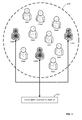
- a data intelligence element 128 can be configured to facilitate selection of one or more versions (e.g., bit rates) of a content asset for transmission to one or more (as shown), or all of the devices or users that have the same location identifier or classifier 410 such as a time zone, address, market, region, or the like.
- a device in communication with a local area network can be associated with a first identifier such as an Internet Protocol address, MAC address, location identifier, user identifier, time zone, market, region, class of service, or the like.
- One or more versions (e.g., bit rates) of a content asset can be selected and transmitted to the device based on the first identifier.
- the same device can connect to another network external to the local area network, wherein the device can be associated with a second identifier (e.g., Internet Protocol address, MAC address, location identifier, user identifier, time zone, market, region, class of service, etc.) different from the first identifier.
- a second identifier e.g., Internet Protocol address, MAC address, location identifier, user identifier, time zone, market, region, class of service, etc.
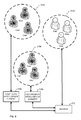
- a first data intelligence element 128a and a second data intelligence element 128b can be configured to selectively provide one or more versions (e.g., bit rates) of a content asset for transmission to one or more devices or groups of users (as shown).
- one or more devices or users can be associated with one or more identifier 510a, 510b, 510c such as a time zone, market, region, class of service, location, service identifier, or the like.
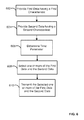
- FIG. 6 illustrates an exemplary method for data delivery.
- first data can be provided having a first characteristic.
- the first data can relate to a content asset.
- the first data can comprise content fragments of the content asset.
- the first characteristic can comprise one or more of a bit rate, a resolution, signal-to-noise ratio, playback time, compression, data size, etc.
- second data can be provided having a second characteristic.
- the second data can relate to a content asset.
- the second data can relate to the same content asset as the first data.
- the first data and the second data can be or comprise different versions of the same content asset.
- the second data can comprise content fragments of the content asset.
- the second characteristic can comprise a bit rate, a resolution, or a combination thereof.
- a time parameter can be determined.
- the time parameter can relate to the transmission and/or receipt of data such as content.
- the time parameter can comprise a total time available to transfer.
- determining a time parameter can comprise receiving a selected time parameter from a user device.
- one or more of the first data and the second data can be selected.
- the one or more of the first data and the second data can be selected based on the determined time parameter.
- selecting one or more of the first data and the second data can comprise selecting one or more of the first data and the second data that can be completely transferred within the time parameter. Each or both of the first data and the second data can be selected.
- the selected one or more of the first data and the second data can be transmitted, for example, to a user device or another network device.
- the selected one or more of the first data and the second data can be transmitted within the time parameter.
- scalable video coding delta information can be transmitted.
- the scalable video coding delta information can relate to content, for example, the same content relating to the one or more of the first data and the second data.
- the scalable video coding delta information can be transmitted within the time parameter.
- FIG. 7 illustrates an exemplary method for data delivery.
- a data characteristic such as signal-to-noise ratio information (e.g., peak signal-to-noise ratio information) can be determined.
- Determining signal-to-noise ratio information can comprise accessing or receiving peak signal-to-noise ratio information associated with a data asset.
- the signal-to-noise ratio information can relate to one or more data blocks such as portions (e.g., segments or fragments) of a content asset, for example.
- each of the one or more of the data blocks can have a bit rate associated therewith, such that versions of the same data block can each have a different bit rate..
- a threshold signal-to-noise ratio can be determined. Determining a threshold (e.g., minimum and/or maximum) signal-to-noise ratio can comprise receiving a selection of a threshold signal-to-noise ratio from a user device or another network element. In an aspect, the threshold signal-to-noise ratio can comprise a peak signal-to-noise ratio.
- one or more of the data blocks can be requested based upon respective signal-to-noise ratio information and the threshold signal-to-noise ratio.
- requesting one or more of the data blocks can comprise requesting one or more data blocks having a bit rate that maintains a signal-to-noise ratio information within the threshold signal-to-noise ratio.
- FIG. 8 illustrates an exemplary method for data delivery.
- a data characteristic such as signal-to-noise ratio information (e.g., peak signal-to-noise ratio information) can be determined.
- Determining signal-to-noise ratio information can comprise accessing or receiving peak signal-to-noise ratio information.
- the signal-to-noise ratio information can relate to one or more data blocks such as portions (e.g., fragments) of a content asset, for example.
- each of the one or more of the data blocks can have an associated bit rate.
- a threshold signal-to-noise ratio can be determined. Determining a threshold signal-to-noise ratio can comprise receiving a selection of a threshold signal-to-noise ratio. In an aspect, the threshold signal-to-noise ratio can comprise a peak signal-to-noise ratio.
- one or more of the data blocks can be transmitted based upon respective signal-to-noise ratio information and the threshold signal-to-noise ratio.
- requesting one or more of the data blocks can comprise requesting one or more data blocks having a bit rate that maintains a signal-to-noise ratio information within the threshold signal-to-noise ratio.
- the methods and systems disclosed can utilize one or more computers to perform one or more functions in one or more locations.
- the methods and systems can be implemented on a computing system 901 as illustrated in FIG. 9 and described below.
- FIG. 9 is a block diagram illustrating an exemplary operating environment for performing the disclosed methods.
- This exemplary operating environment is only an example of an operating environment and is not intended to suggest any limitation as to the scope of use or functionality of operating environment architecture. Neither should the operating environment be interpreted as having any dependency or requirement relating to any one or combination of components illustrated in the exemplary operating environment.
- the present methods and systems can be operational with numerous other general purpose or special purpose computing system environments or configurations.
- Examples of well known computing systems, environments, and/or configurations that can be suitable for use with the systems and methods comprise, but are not limited to, personal computers, server computers, laptop devices, and multiprocessor systems. Additional examples comprise set top boxes, programmable consumer electronics, network PCs, minicomputers, mainframe computers, and/or distributed computing environments that comprise any of the above systems or devices.
- the processing of the disclosed methods and systems can be performed by software components.
- the disclosed systems and methods can be described in the general context of computer-executable instructions, such as program modules, being executed by one or more computers or other devices.
- program modules comprise computer code, routines, programs, objects, components, data structures, etc. that perform particular tasks or implement particular abstract data types.
- the disclosed methods can also be practiced in grid-based and distributed computing environments where tasks are performed by remote processing devices that are linked through a communications network.
- program modules can be located in both local and remote computer storage media including memory storage devices.
- the components of the computing system 901 can comprise, but are not limited to, one or more processors or processing units 903, a system memory 912, and a system bus 913 that couples various system components including the processor 903 to the system memory 912. In the case of multiple processing units 903, the system can utilize parallel computing.
- the system bus 913 represents one or more of several possible types of bus structures, including a memory bus or memory controller, a peripheral bus, an accelerated graphics port, and a processor or local bus using any of a variety of bus architectures.
- bus architectures can comprise an Industry Standard Architecture (ISA) bus, a Micro Channel Architecture (MCA) bus, an Enhanced ISA (EISA) bus, a Video Electronics Standards Association (VESA) local bus, an Accelerated Graphics Port (AGP) bus, and a Peripheral Component Interconnects (PCI), a PCI-Express bus, a Personal Computer Memory Card Industry Association (PCMCIA), Universal Serial Bus (USB) and the like.
- ISA Industry Standard Architecture
- MCA Micro Channel Architecture
- EISA Enhanced ISA
- VESA Video Electronics Standards Association
- AGP Accelerated Graphics Port
- PCI Peripheral Component Interconnects
- PCI-Express PCI-Express
- PCMCIA Personal Computer Memory Card Industry Association
- USB Universal Serial Bus
- the bus 913, and all buses specified in this description can also be implemented over a wired or wireless network connection and each of the subsystems, including the processor 903, a mass storage device 904, an operating system 905, content control software 906, content control data 907, a network adapter 908, system memory 912, an Input/Output Interface 910, a display adapter 909, a display device 911, and a human machine interface 902, can be contained within one or more remote computing devices 914a,b,c at physically separate locations, connected through buses of this form, in effect implementing a fully distributed system.
- the computing system 901 typically comprises a variety of computer readable media. Exemplary readable media can be any available media that is accessible by the computing system 901 and comprises, for example and not meant to be limiting, both volatile and non-volatile media, removable and non-removable media.
- the system memory 912 comprises computer readable media in the form of volatile memory, such as random access memory (RAM), and/or non-volatile memory, such as read only memory (ROM).
- RAM random access memory
- ROM read only memory
- the system memory 912 typically contains data such as content control data 907 and/or program modules such as operating system 905 and content control software 906 that are immediately accessible to and/or are presently operated on by the processing unit 903.
- the computing system 901 can also comprise other removable/non-removable, volatile/non-volatile computer storage media.
- FIG. 9 illustrates a mass storage device 904 which can provide non-volatile storage of computer code, computer readable instructions, data structures, program modules, and other data for the computing system 901.
- a mass storage device 904 can be a hard disk, a removable magnetic disk, a removable optical disk, magnetic cassettes or other magnetic storage devices, flash memory cards, CD-ROM, digital versatile disks (DVD) or other optical storage, random access memories (RAM), read only memories (ROM), electrically erasable programmable read-only memory (EEPROM), and the like.
- any number of program modules can be stored on the mass storage device 904, including by way of example, an operating system 905 and content control software 906.
- Each of the operating system 905 and content control software 906 (or some combination thereof) can comprise elements of the programming and the content control software 906.
- Content control data 907 can also be stored on the mass storage device 904.
- Content control data 907 can be stored in any of one or more databases known in the art. Examples of such databases comprise, DB2®, Microsoft® Access, Microsoft® SQL Server, Oracle®, mySQL, PostgreSQL, and the like. The databases can be centralized or distributed across multiple systems.
- content control data 907 can comprise information relating to events, event notifiers, placement spots, alternate programming, programming blackout, advertisements, and the like.
- the content control data can comprise information relating to a particular programming being transmitted to a user location.
- the content control data can comprise information and instructions related to processing placement signals and updating content being transmitted to a user location.
- other information can be associated with the content control data, such as information about the subscriber consuming the content including location, device type, and subscription information, and information relating the content for blackouts including blackout locations and alternative content associated with the blackout.
- the user can enter commands and information into the computing system 901 via an input device (not shown).
- input devices comprise, but are not limited to, a keyboard, pointing device (e.g., a "mouse"), a microphone, a joystick, a scanner, tactile input devices such as gloves, and other body coverings, and the like
- a human machine interface 902 that is coupled to the system bus 913, but can be connected by other interface and bus structures, such as a parallel port, game port, an IEEE 1394 Port (also known as a Firewire port), a serial port, or a universal serial bus (USB).
- a display device 911 can also be connected to the system bus 913 via an interface, such as a display adapter 909. It is contemplated that the computing system 901 can have more than one display adapter 909 and the computing system 901 can have more than one display device 911.
- a display device can be a monitor, an LCD (Liquid Crystal Display), or a projector.
- other output peripheral devices can comprise components such as speakers (not shown) and a printer (not shown) which can be connected to the computing system 901 via Input/Output Interface 910. Any step and/or result of the methods can be output in any form to an output device. Such output can be any form of visual representation, including, but not limited to, textual, graphical, animation, audio, tactile, and the like.
- the display 911 and computing system 901 can be part of one device, or separate devices.
- the computing system 901 can operate in a networked environment using logical connections to one or more remote computing devices 914a,b,c.
- a remote computing device can be a personal computer, portable computer, smartphone, a server, a router, a network computer, a peer device or other common network node, and so on.
- Logical connections between the computing system 901 and a remote computing device 914a,b,c can be made via a network 915, such as a local area network (LAN) and/or a general wide area network (WAN).
- LAN local area network
- WAN general wide area network
- a network adapter 908 can be implemented in both wired and wireless environments. Such networking environments are conventional and commonplace in dwellings, offices, enterprise-wide computer networks, intranets, and the Internet.
- Computer readable media can be any available media that can be accessed by a computer.
- Computer readable media can comprise "computer storage media" and communications media.
- Computer storage media comprise volatile and non-volatile, removable and non-removable media implemented in any methods or technology for storage of information such as computer readable instructions, data structures, program modules, or other data.
- Exemplary computer storage media comprises, but is not limited to, RAM, ROM, EEPROM, flash memory or other memory technology, CD-ROM, digital versatile disks (DVD) or other optical storage, magnetic cassettes, magnetic tape, magnetic disk storage or other magnetic storage devices, or any other medium which can be used to store the desired information and which can be accessed by a computer.
- the methods and systems can employ artificial intelligence (AI) techniques such as machine learning and iterative learning.
- AI artificial intelligence
- techniques include, but are not limited to, expert systems, case based reasoning, Bayesian networks, behavior based AI, neural networks, fuzzy systems, evolutionary computation (e.g. genetic algorithms), swarm intelligence (e.g. ant algorithms), and hybrid intelligent systems (e.g. expert inference rules generated through a neural network or production rules from statistical learning).
Landscapes
- Engineering & Computer Science (AREA)
- Signal Processing (AREA)
- Multimedia (AREA)
- Computer Networks & Wireless Communication (AREA)
- Physics & Mathematics (AREA)
- Computational Linguistics (AREA)
- Health & Medical Sciences (AREA)
- Audiology, Speech & Language Pathology (AREA)
- Human Computer Interaction (AREA)
- Acoustics & Sound (AREA)
- Quality & Reliability (AREA)
- Two-Way Televisions, Distribution Of Moving Picture Or The Like (AREA)
- Information Transfer Between Computers (AREA)
Applications Claiming Priority (1)
| Application Number | Priority Date | Filing Date | Title |
|---|---|---|---|
| US14/161,198 US9542953B2 (en) | 2014-01-22 | 2014-01-22 | Intelligent data delivery |
Publications (1)
| Publication Number | Publication Date |
|---|---|
| EP2899990A1 true EP2899990A1 (de) | 2015-07-29 |
Family
ID=52394151
Family Applications (1)
| Application Number | Title | Priority Date | Filing Date |
|---|---|---|---|
| EP15152171.3A Ceased EP2899990A1 (de) | 2014-01-22 | 2015-01-22 | Intelligente Datenübermittlung |
Country Status (3)
| Country | Link |
|---|---|
| US (3) | US9542953B2 (de) |
| EP (1) | EP2899990A1 (de) |
| CA (1) | CA2879030A1 (de) |
Families Citing this family (12)
| Publication number | Priority date | Publication date | Assignee | Title |
|---|---|---|---|---|
| US9542953B2 (en) * | 2014-01-22 | 2017-01-10 | Comcast Cable Communications, Llc | Intelligent data delivery |
| US10204635B1 (en) * | 2015-12-01 | 2019-02-12 | Marvell International Ltd. | Device and method for processing media samples |
| US10999614B2 (en) | 2016-03-31 | 2021-05-04 | Rovi Guides, Inc. | Methods and systems for efficiently downloading media assets |
| US10950049B1 (en) | 2016-09-30 | 2021-03-16 | Amazon Technologies, Inc. | Augmenting transmitted video data |
| US11295525B1 (en) | 2016-09-30 | 2022-04-05 | Amazon Technologies, Inc. | Augmenting transmitted video data |
| US10943396B1 (en) | 2016-09-30 | 2021-03-09 | Amazon Technologies, Inc. | Synchronizing transmitted video data and enhancements |
| US10979676B1 (en) * | 2017-02-27 | 2021-04-13 | Amazon Technologies, Inc. | Adjusting the presented field of view in transmitted data |
| US10970545B1 (en) | 2017-08-31 | 2021-04-06 | Amazon Technologies, Inc. | Generating and surfacing augmented reality signals for associated physical items |
| US11429086B1 (en) | 2018-05-31 | 2022-08-30 | Amazon Technologies, Inc. | Modifying functions of computing devices based on environment |
| CN108769681B (zh) * | 2018-06-20 | 2022-06-10 | 腾讯科技(深圳)有限公司 | 视频编码、解码方法、装置、计算机设备和存储介质 |
| US11381855B2 (en) | 2020-11-18 | 2022-07-05 | Roku, Inc. | Content-modification system with multiple video buffers feature |
| CN115843045B (zh) * | 2021-09-18 | 2026-03-06 | 维沃移动通信有限公司 | 数据采集方法及装置 |
Citations (1)
| Publication number | Priority date | Publication date | Assignee | Title |
|---|---|---|---|---|
| US20130042015A1 (en) * | 2011-08-12 | 2013-02-14 | Cisco Technology, Inc. | Constant-Quality Rate-Adaptive Streaming |
Family Cites Families (23)
| Publication number | Priority date | Publication date | Assignee | Title |
|---|---|---|---|---|
| US6125201A (en) * | 1997-06-25 | 2000-09-26 | Andrew Michael Zador | Method, apparatus and system for compressing data |
| JP3873405B2 (ja) * | 1997-10-21 | 2007-01-24 | ソニー株式会社 | データ配信システム及びデータ配信装置 |
| US6018647A (en) * | 1997-11-10 | 2000-01-25 | Electrocom Communication Systems, Inc. | Diversity reception system |
| US6332030B1 (en) * | 1998-01-15 | 2001-12-18 | The Regents Of The University Of California | Method for embedding and extracting digital data in images and video |
| US6396958B1 (en) * | 1998-09-25 | 2002-05-28 | Lockheed Martin Corporation | Image transmission system and method employing compression and error correction |
| GB2364843A (en) * | 2000-07-14 | 2002-02-06 | Sony Uk Ltd | Data encoding based on data quantity and data quality |
| US7599434B2 (en) * | 2001-09-26 | 2009-10-06 | Reynolds Jodie L | System and method for compressing portions of a media signal using different codecs |
| US7689016B2 (en) * | 2005-05-27 | 2010-03-30 | Stoecker & Associates, A Subsidiary Of The Dermatology Center, Llc | Automatic detection of critical dermoscopy features for malignant melanoma diagnosis |
| US7852853B1 (en) * | 2006-02-07 | 2010-12-14 | Nextel Communications Inc. | System and method for transmitting video information |
| US7864898B2 (en) * | 2006-05-17 | 2011-01-04 | Sirf Technology Holdings, Inc. | Systems and methods for signal acquistion in navigational satellite signal receivers |
| FR2931610B1 (fr) * | 2008-05-20 | 2010-12-17 | Canon Kk | Procede et un dispositif de transmission de donnees d'images |
| WO2011050849A1 (en) * | 2009-10-29 | 2011-05-05 | Nokia Siemens Networks Oy | Method and device for allocating resources of a control channel in a wireless communication system |
| EP2375680A1 (de) * | 2010-04-01 | 2011-10-12 | Thomson Licensing | Verfahren zur Rückgewinnung von in einen Block gestreamten Inhalt |
| EP2383999A1 (de) * | 2010-04-29 | 2011-11-02 | Irdeto B.V. | Kontrolle eines adaptiven Streaming digitalen Inhalts |
| US20120113826A1 (en) * | 2010-11-08 | 2012-05-10 | Heng Zhou | Idle Interval Generation in Telecommunication Systems |
| US8990351B2 (en) * | 2011-04-20 | 2015-03-24 | Mobitv, Inc. | Real-time processing capability based quality adaptation |
| US9319453B2 (en) * | 2011-07-15 | 2016-04-19 | Shmuel Ur | User-controlled download duration time |
| US8910229B2 (en) * | 2012-07-05 | 2014-12-09 | Motorola Mobility Llc | Methods and devices for efficient adaptive bitrate streaming |
| US9172737B2 (en) * | 2012-07-30 | 2015-10-27 | New York University | Streamloading content, such as video content for example, by both downloading enhancement layers of the content and streaming a base layer of the content |
| US10708335B2 (en) * | 2012-11-16 | 2020-07-07 | Time Warner Cable Enterprises Llc | Situation-dependent dynamic bit rate encoding and distribution of content |
| US9756102B2 (en) * | 2013-10-07 | 2017-09-05 | Qualcomm Incorporated | Request cancellation method for media streaming |
| KR102064889B1 (ko) * | 2013-10-22 | 2020-01-10 | 삼성전자 주식회사 | 데이터 압축 레벨을 최적화하는 harq 신호 처리 장치 및 그 처리 방법 |
| US9542953B2 (en) * | 2014-01-22 | 2017-01-10 | Comcast Cable Communications, Llc | Intelligent data delivery |
-
2014
- 2014-01-22 US US14/161,198 patent/US9542953B2/en active Active
-
2015
- 2015-01-22 CA CA2879030A patent/CA2879030A1/en active Pending
- 2015-01-22 EP EP15152171.3A patent/EP2899990A1/de not_active Ceased
-
2016
- 2016-11-30 US US15/365,165 patent/US12100405B2/en active Active
-
2024
- 2024-08-21 US US18/811,390 patent/US20250201251A1/en active Pending
Patent Citations (1)
| Publication number | Priority date | Publication date | Assignee | Title |
|---|---|---|---|---|
| US20130042015A1 (en) * | 2011-08-12 | 2013-02-14 | Cisco Technology, Inc. | Constant-Quality Rate-Adaptive Streaming |
Non-Patent Citations (2)
| Title |
|---|
| SHAOBO ZHANG ET AL: "In Band Signalling for Quality Driven Adaptation", 103. MPEG MEETING; 21-1-2013 - 25-1-2013; GENEVA; (MOTION PICTURE EXPERT GROUP OR ISO/IEC JTC1/SC29/WG11),, no. m28168, 17 January 2013 (2013-01-17), XP030056715 * |
| YURIY REZNIK: "Achieving consistent quality of video delivery with MPEG-DASH", 101. MPEG MEETING; 16-7-2012 - 20-7-2012; STOCKHOLM; (MOTION PICTURE EXPERT GROUP OR ISO/IEC JTC1/SC29/WG11),, no. m25996, 12 July 2012 (2012-07-12), XP030054331 * |
Also Published As
| Publication number | Publication date |
|---|---|
| US20180122388A1 (en) | 2018-05-03 |
| US12100405B2 (en) | 2024-09-24 |
| CA2879030A1 (en) | 2015-07-22 |
| US20150206542A1 (en) | 2015-07-23 |
| US9542953B2 (en) | 2017-01-10 |
| US20250201251A1 (en) | 2025-06-19 |
Similar Documents
| Publication | Publication Date | Title |
|---|---|---|
| US20250201251A1 (en) | Intelligent data delivery | |
| US20250358491A1 (en) | Network Video Streaming with Trick Play Based on Separate Trick Play Files | |
| US12477035B2 (en) | Methods and systems for dynamic data management | |
| US8752113B1 (en) | Insertion of graphic overlays into a stream | |
| US20240430511A1 (en) | Methods and systems for content control | |
| US10171887B2 (en) | Methods and systems for intelligent playback | |
| US20140282787A1 (en) | System and method for multiscreen network digital video recording using on-demand transcoding | |
| US12081633B2 (en) | Methods and systems for content delivery using server push | |
| US11451849B2 (en) | Methods and systems for content control | |
| CA2843718C (en) | Methods and systems for processing content |
Legal Events
| Date | Code | Title | Description |
|---|---|---|---|
| PUAI | Public reference made under article 153(3) epc to a published international application that has entered the european phase |
Free format text: ORIGINAL CODE: 0009012 |
|
| 17P | Request for examination filed |
Effective date: 20150122 |
|
| AK | Designated contracting states |
Kind code of ref document: A1 Designated state(s): AL AT BE BG CH CY CZ DE DK EE ES FI FR GB GR HR HU IE IS IT LI LT LU LV MC MK MT NL NO PL PT RO RS SE SI SK SM TR |
|
| AX | Request for extension of the european patent |
Extension state: BA ME |
|
| 17P | Request for examination filed |
Effective date: 20160128 |
|
| RBV | Designated contracting states (corrected) |
Designated state(s): AL AT BE BG CH CY CZ DE DK EE ES FI FR GB GR HR HU IE IS IT LI LT LU LV MC MK MT NL NO PL PT RO RS SE SI SK SM TR |
|
| 17Q | First examination report despatched |
Effective date: 20171106 |
|
| STAA | Information on the status of an ep patent application or granted ep patent |
Free format text: STATUS: THE APPLICATION HAS BEEN REFUSED |
|
| 18R | Application refused |
Effective date: 20200620 |