EP2901867B1 - Verfahren zur Herstellung fermentierter Tafeloliven - Google Patents
Verfahren zur Herstellung fermentierter Tafeloliven Download PDFInfo
- Publication number
- EP2901867B1 EP2901867B1 EP14197402.2A EP14197402A EP2901867B1 EP 2901867 B1 EP2901867 B1 EP 2901867B1 EP 14197402 A EP14197402 A EP 14197402A EP 2901867 B1 EP2901867 B1 EP 2901867B1
- Authority
- EP
- European Patent Office
- Prior art keywords
- fermentation
- olives
- brine
- dsmz
- yeast
- Prior art date
- Legal status (The legal status is an assumption and is not a legal conclusion. Google has not performed a legal analysis and makes no representation as to the accuracy of the status listed.)
- Not-in-force
Links
Images







Classifications
-
- A—HUMAN NECESSITIES
- A23—FOODS OR FOODSTUFFS; TREATMENT THEREOF, NOT COVERED BY OTHER CLASSES
- A23B—PRESERVATION OF FOODS, FOODSTUFFS OR NON-ALCOHOLIC BEVERAGES; CHEMICAL RIPENING OF FRUIT OR VEGETABLES
- A23B7/00—Preservation of fruit or vegetables; Chemical ripening of fruit or vegetables
- A23B7/14—Preserving or ripening with chemicals not covered by group A23B7/08 or A23B7/10
- A23B7/153—Preserving or ripening with chemicals not covered by group A23B7/08 or A23B7/10 in the form of liquids or solids
- A23B7/154—Organic compounds; Microorganisms; Enzymes
- A23B7/155—Microorganisms; Enzymes ; Antibiotics
-
- A—HUMAN NECESSITIES
- A23—FOODS OR FOODSTUFFS; TREATMENT THEREOF, NOT COVERED BY OTHER CLASSES
- A23L—FOODS, FOODSTUFFS OR NON-ALCOHOLIC BEVERAGES, NOT OTHERWISE PROVIDED FOR; PREPARATION OR TREATMENT THEREOF
- A23L19/00—Products from fruits or vegetables; Preparation or treatment thereof
- A23L19/20—Products from fruits or vegetables; Preparation or treatment thereof by pickling, e.g. sauerkraut or pickles
-
- C—CHEMISTRY; METALLURGY
- C12—BIOCHEMISTRY; BEER; SPIRITS; WINE; VINEGAR; MICROBIOLOGY; ENZYMOLOGY; MUTATION OR GENETIC ENGINEERING
- C12N—MICROORGANISMS OR ENZYMES; COMPOSITIONS THEREOF; PROPAGATING, PRESERVING, OR MAINTAINING MICROORGANISMS; MUTATION OR GENETIC ENGINEERING; CULTURE MEDIA
- C12N1/00—Microorganisms; Compositions thereof; Processes of propagating, maintaining or preserving microorganisms or compositions thereof; Processes of preparing or isolating a composition containing a microorganism; Culture media therefor
- C12N1/14—Fungi; Culture media therefor
- C12N1/16—Yeasts; Culture media therefor
- C12N1/18—Baker's yeast; Brewer's yeast
- C12N1/185—Saccharomyces isolates
-
- C—CHEMISTRY; METALLURGY
- C12—BIOCHEMISTRY; BEER; SPIRITS; WINE; VINEGAR; MICROBIOLOGY; ENZYMOLOGY; MUTATION OR GENETIC ENGINEERING
- C12N—MICROORGANISMS OR ENZYMES; COMPOSITIONS THEREOF; PROPAGATING, PRESERVING, OR MAINTAINING MICROORGANISMS; MUTATION OR GENETIC ENGINEERING; CULTURE MEDIA
- C12N1/00—Microorganisms; Compositions thereof; Processes of propagating, maintaining or preserving microorganisms or compositions thereof; Processes of preparing or isolating a composition containing a microorganism; Culture media therefor
- C12N1/20—Bacteria; Culture media therefor
- C12N1/205—Bacterial isolates
-
- C—CHEMISTRY; METALLURGY
- C12—BIOCHEMISTRY; BEER; SPIRITS; WINE; VINEGAR; MICROBIOLOGY; ENZYMOLOGY; MUTATION OR GENETIC ENGINEERING
- C12R—INDEXING SCHEME ASSOCIATED WITH SUBCLASSES C12C - C12Q, RELATING TO MICROORGANISMS
- C12R2001/00—Microorganisms ; Processes using microorganisms
- C12R2001/01—Bacteria or Actinomycetales ; using bacteria or Actinomycetales
-
- C—CHEMISTRY; METALLURGY
- C12—BIOCHEMISTRY; BEER; SPIRITS; WINE; VINEGAR; MICROBIOLOGY; ENZYMOLOGY; MUTATION OR GENETIC ENGINEERING
- C12R—INDEXING SCHEME ASSOCIATED WITH SUBCLASSES C12C - C12Q, RELATING TO MICROORGANISMS
- C12R2001/00—Microorganisms ; Processes using microorganisms
- C12R2001/01—Bacteria or Actinomycetales ; using bacteria or Actinomycetales
- C12R2001/225—Lactobacillus
- C12R2001/25—Lactobacillus plantarum
-
- C—CHEMISTRY; METALLURGY
- C12—BIOCHEMISTRY; BEER; SPIRITS; WINE; VINEGAR; MICROBIOLOGY; ENZYMOLOGY; MUTATION OR GENETIC ENGINEERING
- C12R—INDEXING SCHEME ASSOCIATED WITH SUBCLASSES C12C - C12Q, RELATING TO MICROORGANISMS
- C12R2001/00—Microorganisms ; Processes using microorganisms
- C12R2001/645—Fungi ; Processes using fungi
- C12R2001/85—Saccharomyces
- C12R2001/865—Saccharomyces cerevisiae
-
- Y—GENERAL TAGGING OF NEW TECHNOLOGICAL DEVELOPMENTS; GENERAL TAGGING OF CROSS-SECTIONAL TECHNOLOGIES SPANNING OVER SEVERAL SECTIONS OF THE IPC; TECHNICAL SUBJECTS COVERED BY FORMER USPC CROSS-REFERENCE ART COLLECTIONS [XRACs] AND DIGESTS
- Y02—TECHNOLOGIES OR APPLICATIONS FOR MITIGATION OR ADAPTATION AGAINST CLIMATE CHANGE
- Y02A—TECHNOLOGIES FOR ADAPTATION TO CLIMATE CHANGE
- Y02A40/00—Adaptation technologies in agriculture, forestry, livestock or agroalimentary production
- Y02A40/90—Adaptation technologies in agriculture, forestry, livestock or agroalimentary production in food processing or handling, e.g. food conservation
Definitions
- the invention relates to a process for the fermentation of table olives which has the advantage of allowing to standardize and reduce the time for the whole fermentation process, and to evaluate the process independently from subjective and empirical criteria currently used by manufacturers, thereby increasing quality and safety levels of the final product, compared to traditional methods. Moreover, starter cultures and their use in fermentation of two cultivars of table olives are also described.
- Olive production is a major agricultural practice in Mediterranean countries such as Italy, Greece and Spain.
- Table olives are one of the most important traditional fermented vegetable products of Southern European countries and their production and consumption are constantly increasing.
- Olive production worldwide consists of 2 million tons per year, 38% of which is produced in Spain, Italy and Greece.
- Italian production of table olives is around 70000 tons, and accounts for about 10% of world production and 20% of the production in the European Union.
- Natural Black olives, produced by the Greek method are one of the most important products on the international market, along with green olives produced by the Spanish method and oxidized black olives, well known as olives produced by the Californian method.
- lactic fermentation by lactic acid bacteria is considered the most important step in the process of production of table olives, because it is responsible for: i) debittering of olives; ii) decrease of brine pH, with a reduced risk for possible growth of spoiling or pathogenic microorganisms, ii) formation of organoleptic characteristics and of an optimal consistency of the finished product.
- yeasts in the preparation and storage of table olives has been recently also considered.
- microorganisms can positively influence fermentation through their production of volatile molecules and metabolites capable of improving the organoleptic characteristics of the final product, through the release of nutrients favouring growth of lactic acid bacteria (LAB) and due to their ability to operate bio-reduction of undesired phenolic compounds.
- yeasts may also cause problems during the production process, as they can be responsible for formation of gas pockets, olive softening, package swelling, brine opacity or production of undesirable flavors and odors.
- the yeasts associated with table olives belong to genera such as Aureobasidium, Candida, Cryptococcus, Issatchenkia, Kluyveromyces, Pichia, Rhodotorula, Saccharomyces, Wickerhamomyces and Zygotorulaspora, and in particular the species S. cerevisiae, VV. anomalus, P. membranifaciens, P. galeiformis, C. boidinii, C. diddensiae and K. lactis.
- Bevilacqua A., et al (J Food Sci. 2013 May;78(5):M742-51 ) relates to table olive fermentation, and describes the selection of yeast strains, isolated from the Bella di Cerignola table olives, in relation to different enzymatic traits and to the capacity to grow in different conditions.
- yeast selection is described on the basis of the capacity of the strain to grow at 15°C and with high concentration of NaCl, as well as at alkaline pHs and possessing an interesting ⁇ -glucosidase activity.
- the isolated are Kluyveromyces lactis, Wickerhamomyces anomalus and Candida norvegica.
- the present invention allows to follow the entire fermentation process and proposes specific chemical parameters to determine, respectively, yeast and LAB activity to be used as indicators and descriptors of good or bad fermentation performance and to determine unequivocally the completion of the whole fermentation process.
- the aim of the present invention is to allow to perform the fermentation process for production of fermented olives in a controlled manner and with reduced timing independently from subjective criteria empirically established by an individual producer.
- the inventors have in fact identified for the first time a process for fermentation of table olives involving the sequential use of yeast and subsequently of lactic acid bacteria.
- the invention relates to a method for production of fermented table olives comprising the steps of:
- the invention relates to a starter culture comprising at least one yeast of the strain Saccharomyces cerevisiae (cod. DSMZ 27800) and at least one lactic acid bacterium of the strain Lactobacillus plantarum (cod. DSMZ 27925), and its use for fermentation of an olive sample of the Italian cultivar Leccino.
- the invention therefore relates to a method for production of fermented table olives wherein the sample of olives is sequentially inoculated with a first yeast starter culture followed by a culture of the lactic acid bacterium.
- the inventors have selected isolates of yeasts and lactic acid bacteria, and have developed through their use a manufacturing process capable of: i) increasing organoleptic and nutritional properties of fermented table olives, ii) driving a controlled fermentation process, iii) reducing the time required to obtain the finished product.
- the invention relates to a method for production of fermented table olives comprising the steps of:
- Brine is prepared by dissolving sodium chloride in the appropriate amount of water to obtain a percentage comprised between 6 and 12% (weight/volume).
- the above method also provides the advantage of controlled fermentation processes for production of fermented olives independently from subjective and empirical criteria of producers. By monitoring fermentation-associated chemical parameters serving as indicators of fermentation processes, it allows to follow the progress of such processes and promptly intervene with the necessary corrections.
- the method for production of fermented table olives according to the present invention comprises the steps of:
- the present invention can be applied under ambient conditions in a wide temperature range corresponding to the normal temperatures in the Mediterranean Basin during the months of olive processing (October to May). This possibility makes the present invention exploitable under normal working conditions for Italian and Greek companies that do not use systems for temperature control of the containers where fermentation of table olives takes place, either barrels or silos, and carry out the entire process at the ambient temperature.
- the inoculation is made in a sequential mode: it is initiated with the inoculation of the yeast inoculum capable of producing the first fermentation, followed by inoculation of the lactic acid bacterium responsible for lactic fermentation.
- This procedure allows to mimic the natural spontaneous fermentation process.
- yeasts are capable of performing the first fermentation and, through the release of nutrients and the reduction of antibacterial polyphenolic compounds, determine the ideal conditions for lactic acid bacteria to carry out alcohol-lactic fermentation at best.
- the method according to the present invention is a method allowing the production of fermented table olives, wherein the example of said olives are chosen from the group consisting of Italian olives of Leccino cultivar and Greek olives of Kalamata cultivar.
- Leccino is one of the olive cultivars most widely spread in the Italian territory.
- the Leccino cultivar originates from central and southern Italy (Tuscany, Lazio, Abruzzo, Molise and Puglia) and is currently the most cultivated worldwide and widespread in Argentina, Jordan, Israel, South Africa, California, New Zealand and Australia.
- Drupes have an average size (2-2.5 g), ellipsoidal shape and are slightly asymmetrical with rounded apex and flattened base.
- the cultivar is characterized by an early and simultaneous fruit ripening, and the oil produced from this cultivar is remarkably widespread. At the harvesting, olives are black-violet and oil yield varies between 17-22%.
- This cultivar is resistant to low temperatures, temperature changes, winds, fog, olive knot, dry rot, olive leaf spot.
- This cultivar has found use for production of table olives of shimmering or black type. It is traditionally produced by the Greek method involving natural fermentation in brine from 8-12% sodium chloride (weight/volume), reaching complete debittering after about 8-10 months.
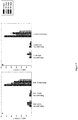
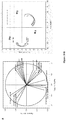
- the method described herein which employs sequentially the selected starter cultures of yeast and lactic acid bacteria, allows to reach complete debittering within maximum 3 months and to enrich the volatile and sensorial profile of olives with notes of fruity, floral, winey, herbaceous, malty, and reduces volatile hydrocarbons and phenols ( Fig. 11 and 12 ) while ensuring the maintenance of the nutritional characteristics represented by phenolic and isoprenoid-type components ( Figures 6-9 ).
- the Greek olive Kalamata originates from Messenia region. This only black olive is produced in southern Peloponnese and in the Agrinion area. It has a high weight and asymmetrical elongated shape with sharp apex and base. In normal seasons, the harvesting of black olives begins in October and ends in February, the color is given only by longer exposure to the sun.
- the method described in the present invention has the advantage of allowing for the production of fermented table olives, wherein in case of Italian olives of Leccino cultivar, the yeast used to supplement the olive sample is a selected Saccharomyces cerevisiae yeast strain (cod. DSMZ 27800) and the strain of lactic acid bacteria used to inoculate the olive sample partially fermented by yeast (first fermented product) is a selected strain of Lactobacillus plantarum (cod. DSMZ 27925).
- the yeast Saccharomyces cerevisiae strain for fermentation of olives of the Italian Leccino cultivar was filed on October 22, 2013 at the Leibniz-Institut DSMZ-Deutsche Sammlung von Mikroorganismen und Zellkulturen GmbH, with the deposit number Saccharomyces cerevisiae Leccino-Y1 (LI-180 -7) (cod. DSMZ 27800).
- the Lactobacillus plantarum bacterial strain for fermentation of olives of the Italian cultivar Leccino was filed on October 22, 2013 at the Leibniz-Institut DSMZ-Deutsche Sammlung von Mikroorganismen und Zellkulturen GmbH with the deposit number (cod. DSMZ 27925).
- the method according to the present invention advantageously allows the production of fermented table olives, wherein in case of olives of the Greek Kalamata cultivar the yeast strain is Saccharomyces cerevisiae Kalamata-Y1 (KI-30-16) (cod. DSMZ 27801) and the strain of lactic acid bacterium is Leuconostoc mesenteroides (cod. DSMZ 27926).
- Saccharomyces cerevisiae yeast strain for fermentation of Greek olives of Kalamata cultivar was filed on October 22, 2013 at the Leibniz-Institut DSMZ-Deutsche Sammlung von Mikroorganismen und Zellkulturen GmbH with the deposit number Saccharomyces cerevisiae Kalamata-Y1 (KI-30 -16) (cod. DSMZ 27801).
- Use of the selected yeasts and bacteria and of the proposed production protocol allow: i) to obtain final products with increased and improved organoleptic and nutritional properties compared to a product obtained by natural fermentation; ii) to carry out the fermentation process in a shorter time than required to complete the process under natural conditions; iii) to carry out a more efficient and controllable fermentation process.
- starter or “starter culture” refers to a preparation containing live and viable microorganisms to be used with the objective of exploiting microbial metabolism to initiate fermentation and ensure the technological result of the production process.
- the concentration of yeasts, required in step b. for inoculation of the product obtained from step a is between 5 x 10 5 and 1 x 10 6 Colony Forming Units (CFU) per milliliter (ml) of brine.
- CFU Colony Forming Units
- the concentration of lactic acid bacteria required in step d for inoculation. of the fermented product obtained from step c is between 5 x 10 5 and 1 x 10 6 Colony Forming Units (CFU) per milliliter (ml) of brine.
- CFU Colony Forming Units
- the yeast strains used to carry out fermentation of olives of Leccino and Kalamata cultivars are prepared by growth in defined medium at pH 5 in presence of increasing salt concentrations from 0 up to 6% (weight/volume) NaCl, in order to adapt them to the conditions of salinity in which they are inoculated.
- the lactic acid bacterial strains used to carry out fermentation of olives of Leccino and Kalamata cultivars are prepared by growth in defined medium in presence of increasing salt concentrations, from 0 up to 6% (weight/volume) NaCl, and decreasing pH, starting from pH 6 to pH 4-4.5, in order to adapt them to the conditions of salinity and acidity in which they are inoculated.
- fermentation is carried out at temperature ranging between 6 and 30°C, following seasonal temperature patterns.
- the pilot scale fermentation carried out for both Leccino and Kalamata olive cultivars, was inoculated with starters according to the procedure described in the present invention, using as control a pilot scale fermentation allowed to occur spontaneously.
- Soluble sugars such as glucose, fructose and sucrose represent the substrate for microbial fermentation during which secondary metabolites are produced that are responsible for the organoleptic properties and the characteristic flavour of the drupe.
- glucose is the predominant sugar in the pulp of both olive cultivars, followed by fructose and sucrose.
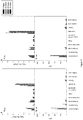
- the total sugar content in the pulp of Leccino olives subjected to fermentation controlled by starters or to spontaneous fermentation varies from an initial content of 71.1 mg/g (dry weight), to 10.8 and 16.7 mg/g (dry weight), respectively ( Fig. 4 ).
- the initial total sugar content (65.5 mg/g dry weight) is metabolized completely after controlled or spontaneous fermentation process ( Fig. 5 ).
- the glucose content shows significant quantitative differences consisting in a total consumption at the end of starter-controlled fermentation and a residual glucose content of 0.69 g/L after spontaneous fermentation.
- the presence of a low sugar amount confirms the good performance of the fermentation process.
- organic acid content shows quantitative variations.
- the following organic acids have been identified in the pulp and in the brine of both cultivars: citric, tartaric, malic, succinic and acetic acid which decrease in the pulp during the fermentation process, while increasing in the brine.
- succinic acid is predominant in the brine of Leccino cultivar
- acetic acid is predominant in the Kalamata cultivar ( Fig. 4 and 5 ).
- lactic acid was measured in pulp and brine after starter-controlled fermentation (12.2 mg/g dry weight in pulp and 2.8 mg/g dry weight in brine) compared to spontaneous fermentation (7.4 mg/g dry weight in pulp and 0.6 mg/g dry weight in brine).
- a higher concentration of lactic acid is present in the brine of Kalamata cultivar at the end of spontaneous fermentation (16.5 mg/g dry weight in pulp and 3.9 mg/g dry weight in brine) compared to controlled fermentation (16,0 mg/g dry weight in the pulp and 2.4 mg/g dry weight in the brine).
- Ethanol and glycerol have been identified in starter-controlled and spontaneous fermentation of brine of Leccino cultivar and both increase during the fermentation process ( Fig. 4 ).
- the variation of ethanol concentration shows the same trend in both spontaneous and starter-controlled fermentation, while glycerol production was observed only in starter-controlled fermentation ( Fig. 5 ).
- Example 1 Selection of yeasts and lactic acid bacteria to be used as starter for fermentation of table olives
- one indigenous yeast strain and one lactic bacterium strain were selected to be used in fermentation.
- Suitable inocula of yeasts and LAB approximately 10 6 CFU/ml of brine, were prepared to perform these tests.
- salinity values were increased and pH values were simultaneously decreased in order to ensure better adaptability of the selected starters to the microsystem brine/olive.
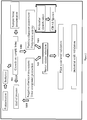
- the fermentation protocol that has been developed consists of the following operational phases:
- Example 3 indigenous yeasts and lactic acid bacteria used
- the Saccharomyces cerevisiae starter culture (cod. DSMZ 27800) was grown in YPD medium (1% yeast extract (weight/volume), 2% Peptone, 2% Glucose) at 28°C under shaking, using a salt concentration for adaptation of 6% of NaCl (weight/volume), and was inoculated at a concentration of 10 6 CFU/ml in the sample of olives and brine.
- YPD medium 1% yeast extract (weight/volume), 2% Peptone, 2% Glucose) at 28°C under shaking, using a salt concentration for adaptation of 6% of NaCl (weight/volume), and was inoculated at a concentration of 10 6 CFU/ml in the sample of olives and brine.
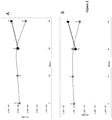
- concentration of yeast cells remained almost constant and subsequently decreased during the last 30 days until about 10 4 CFU/ml ( Fig 2 ).
- the yeast population present in brine has been genetically characterized.
- 40 colonies were isolated, cultured in liquid medium and the genomic DNA was extracted.
- the different isolates were analyzed by RAPD-PCR using oligonucleotide (ATG) 5 .
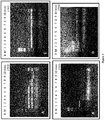
- the amplification products were analyzed by agarose gel electrophoresis, and a comparison with the profile of the inoculated control strain showed that the Saccharomyces cerevisiae (cod DSMZ 27800) strain dominated the fermentation process with 60% capacity compared to other yeasts present ( Fig. 3 A) .
- the Saccharomyces cerevisiae starter culture (cod. DSMZ 27801) was grown in YPD medium (1% yeast extract (weight/volume), 2% Peptone, 2% Glucose) at 28°C under shaking, using a salt concentration for adaptation of 6% of NaCl (weight/volume), and was inoculated at a concentration of 10 6 CFU/ml in the sample of olives and brine.
- concentration of the yeast remained almost constant, and then decreased in the last 30 days until about 8 x 10 4 CFU/ml ( Fig 2 ).
- Inoculation of the starter culture of Leuconostoc mesenteroides was made at the 60th day of fermentation, when GC-MS analysis detected the end of fermentation by the yeast ( Fig. 12 ).
- the LAB was grown in liquid MRS at 28°C and pH 4-4.5, at a salt concentration of 6% NaCl (weight/volume) and was inoculated at a concentration of 10 6 CFU/ml in the sample of olives and brine. An increase of the population up to about 1.3 x 10 7 CFU/ml was recorded over 30 days of lactic fermentation ( Fig. 2 ).
- the yeast population present in brine has been genetically characterized.
- 40 colonies were isolated, cultured in liquid medium and the genomic DNA was extracted.
- the different isolates were analyzed by RAPD-PCR using oligonucleotide (ATG) 5 .
- the amplification products were analyzed by agarose gel electrophoresis, and a comparison with the profile of the inoculated control strain showed that the Saccharomyces cerevisiae (cod. DSMZ 27801) strain dominated the fermentation process with 60% capacity compared to other yeasts present ( Fig. 3 C) .
- polyphenolic compounds have been identified and quantified for both fermentations described in Example 4 of olives of Leccino cultivar respectively inoculated with starters or subjected to spontaneous fermentation: hydroxytyrosol, pyrocatechol, verbascoside, isoverbascoside, rutin, luteolin-7-O-glucoside and quercetin.
- Quercetin, hydroxytyrosol and verbascoside are the compounds present in relevant concentrations, and in particular quercetin increases during both starter-controlled and spontaneous fermentation with a final content of 3,4 and 4.8 mg/g dry weight, respectively, at the end of the fermentation process. Hydroxytyrosol increases during the fermentation processes, with a final content of 1.6 mg/g dry weight at the end of starter-controlled fermentation and of 1.1 mg/g dry weight after spontaneous fermentation. Verbascoside has an almost constant content during the two fermentation processes ( Fig. 6 ).
- hydroxytyrosol hydroxytyrosol
- pyrocatechol verbascoside
- tyrosol vanillic acid
- caffeic acid hydroxytyrosol
- Hydroxytyrosol is the predominant compound with a content of 519.7 and 548.4 ⁇ g/mL at the end of starter-controlled and spontaneous fermentation, respectively.
- all other phenolic compounds show the same trend except for pyrocatechol that was not identified in brine after spontaneous fermentation ( Fig. 6 ).
- the compounds identified and quantified in brine of the Kalamata cultivar were hydroxytyrosol and tyrosol in similar amounts in the two fermentations, whereas pyrocatechol appeared after 60 days of spontaneous fermentation and remained constant at the end of fermentation (44,8 ⁇ g/mL).
- brine from Kalamata cultivar has a higher hydroxytyrosol content than brine from Leccino cultivar, consisting in 898.1 and 884.1 ⁇ g/mL, respectively, at the end of starter-controlled and spontaneous fermentation ( Fig. 7 ).
- Figure 8 shows the content in carotenoids (xanthophylls and carotenes) during starter-controlled and spontaneous fermentation in Leccino and Kalamata cultivars.
- carotenoids xanthophylls and carotenes
- Lutein zeaxanthin and beta carotene carotenoids were identified.
- 9-cis beta-carotene a beta carotene degradation product, was detected only in Leccino cultivar after both starter-controlled and spontaneous fermentation.
- Approximately a three-fold higher total carotenoid content was found in Leccino cultivar compared to the Kalamata cultivar.
- lutein degradation is slower in starter-controlled than spontaneous fermentation, while beta carotene increases during starter-controlled fermentation from 2.2 to 4.8 g/g dry weight and remains almost constant in spontaneous fermentation.
- zeaxanthin and of 9-cis beta-carotene contents are similar and remain constant in both fermentation processes ( Fig. 8A, B ).
- carotenoids show a similar trend except that zeaxanthin is degraded completely in spontaneous fermentation while it remains almost constant in starter-controlled fermentation ( Fig. 8C, D ).
- beta and gamma tocotrienol show a lower level (19.5 ⁇ g/g dry weight) compared to spontaneous fermentation (25.3 ⁇ g/g dry weight); on the contrary, beta and gamma tocopherol show a higher level (13.1 ⁇ g/g dry weight) at the end of starter-controlled fermentation compared to spontaneous fermentation (9.7 ⁇ g dry weight) ( Fig. 9A, B ).
- alpha-tocopherol shows an almost constant profile during both fermentation processes. Beta and gamma tocotrienol decrease during starter-controlled and spontaneous fermentation, reaching values of 79.9 and 57.6 ⁇ g/g dry weight, respectively, at the end of fermentation.
- beta and gamma tocopherol increase during the fermentation process and, at the end of the process, show higher concentrations in starter-controlled fermentation (28.2 ⁇ g dry weight) compared to spontaneous fermentation (15.3 ⁇ g dry weight) ( Fig. 9 C, D).
Landscapes
- Life Sciences & Earth Sciences (AREA)
- Chemical & Material Sciences (AREA)
- Engineering & Computer Science (AREA)
- Health & Medical Sciences (AREA)
- Wood Science & Technology (AREA)
- Zoology (AREA)
- Biotechnology (AREA)
- Organic Chemistry (AREA)
- Genetics & Genomics (AREA)
- Bioinformatics & Cheminformatics (AREA)
- Mycology (AREA)
- Microbiology (AREA)
- Virology (AREA)
- Biochemistry (AREA)
- Food Science & Technology (AREA)
- Medicinal Chemistry (AREA)
- Tropical Medicine & Parasitology (AREA)
- General Health & Medical Sciences (AREA)
- General Engineering & Computer Science (AREA)
- Biomedical Technology (AREA)
- Polymers & Plastics (AREA)
- General Chemical & Material Sciences (AREA)
- Chemical Kinetics & Catalysis (AREA)
- Botany (AREA)
- Nutrition Science (AREA)
- Preparation Of Compounds By Using Micro-Organisms (AREA)
- Micro-Organisms Or Cultivation Processes Thereof (AREA)
- Medicines Containing Plant Substances (AREA)
- Coloring Foods And Improving Nutritive Qualities (AREA)
Claims (7)
- Verfahren zur Herstellung fermentierter Tafeloliven, folgende Schritte aufweisend:a. Einweichen der Oliven in einer Lake;b. Inokulation des in Schritt a. erhaltenen Produkts mit einer Hefekultur;c. Inkubieren des in Schritt b. erhaltenen Produkts zum Durchführen einer alkoholischen Fermentation;d. Inokulation des in Schritt c. erhaltenen, fermentierten Produkts unter Verwendung einer Milchsäurebakterien (LAB) - Kultur;e. Inkubieren des in Schritt d. erhaltenen Produkts zum Durchführen einer Milchsäure - Fermentation.
- Verfahren zur Herstellung fermentierter Tafeloliven gemäß Anspruch 1, folgende Schritte aufweisend:a. Einweichen der Oliven in einer Lake, wobei das Verhältnis von Oliven: Lake von 3 : 1 bei der Verwendung von größeren Oliven bis 2 : 1 bei kleineren Oliven reicht;b. Inokulation des in Schritt a. entstandenen Produkts mit einer Hefekultur, wobei das Volumenverhältnis zwischen Hefekulturvolumen / Lake in Schritt b. 1 / 300 entspricht;c. Inkubieren des in Schritt b. erhaltenen Produkts bei einer Temperatur zwischen 6°C und 30°C über einen Zeitraum von 45 bis 60 Tagen, zum Durchführen einer alkoholischen Fermentation;d. Inokulation des in Schritt c. erhaltenen, fermentierten Produkts mit einem Milchsäurebakterium unter Verwendung eines Verhältnisses von LAB - Kultur / fermentiertem Produkt von 1 / 300;e. Inkubieren des in Schritt d. erhaltenen Produkts zum Durchführen der Milchsäure - Fermentation bei einer Temperatur zwischen 6°C und 30°C über einen Zeitraum von 15 bis 30 Tagen.
- Verfahren gemäß einem der Ansprüche 1 oder 2, wobei die verwendeten Oliven ausgewählt werden aus einer Gruppe bestehend aus der italienischen Sorte Leccino und der griechischen Sorte Kalamàta.
- Verfahren gemäß einem der Ansprüche 1, 2 oder 3, wobei die verwendeten Oliven zur italienischen Sorte Leccino gehören, der Stamm der Hefekultur Saccharomyces cerevisiae (cod. DSMZ 27800) ist und der Stamm der LAB-Kultur Lactobacillus plantarum (cod. DSMZ 27925) ist.
- Verfahren gemäß einem der Ansprüche 1, 2 oder 3, wobei die verwendeten Oliven zur griechischen Sorte Kalamàta gehören, der Stamm der Hefekultur Saccharomyces cerevisiae (cod. DSMZ 27801) ist und der Stamm der LAB-Kultur Leuconostoc mesenteroides (cod. DSMZ 27926) ist.
- Verfahren gemäß einem der Ansprüche 1 bis 5, wobei die Konzentration des Hefestamms, die geeignet ist, im Schritt b. das Inokulieren des in Schritt a. entstandenen Produkts durchzuführen, von 5 x 10⁵ bis 1 x 10⁶ koloniebildende Einheiten (CFU) pro Milliliter Lake reicht.
- Verfahren gemäß einem der Ansprüche 1 bis 6, wobei die Konzentration der Milchsäurebakterien, die geeignet ist, im Schritt d. das Inokulieren des in Schritt c. erhaltenen, fermentierten Produkts durchzuführen, von 5 x 10⁵ bis 1 x 10⁶ koloniebildende Einheiten (CFU) pro Milliliter Lake reicht.
Applications Claiming Priority (1)
| Application Number | Priority Date | Filing Date | Title |
|---|---|---|---|
| IT002063A ITMI20132063A1 (it) | 2013-12-11 | 2013-12-11 | Metodo per la produzione di olive da tavola fermentate |
Publications (3)
| Publication Number | Publication Date |
|---|---|
| EP2901867A1 EP2901867A1 (de) | 2015-08-05 |
| EP2901867B1 true EP2901867B1 (de) | 2017-10-18 |
| EP2901867B8 EP2901867B8 (de) | 2017-12-13 |
Family
ID=50073295
Family Applications (1)
| Application Number | Title | Priority Date | Filing Date |
|---|---|---|---|
| EP14197402.2A Not-in-force EP2901867B8 (de) | 2013-12-11 | 2014-12-11 | Verfahren zur Herstellung fermentierter Tafeloliven |
Country Status (3)
| Country | Link |
|---|---|
| EP (1) | EP2901867B8 (de) |
| ES (1) | ES2653971T3 (de) |
| IT (1) | ITMI20132063A1 (de) |
Families Citing this family (4)
| Publication number | Priority date | Publication date | Assignee | Title |
|---|---|---|---|---|
| JP6360346B2 (ja) * | 2014-04-22 | 2018-07-18 | 夏雄 植田 | 自然発酵システムを利用した発酵製品の製造方法及びその発酵製品並びに菌叢の拡張・利用方法 |
| FR3065149A1 (fr) * | 2017-04-12 | 2018-10-19 | Jerome Modesti | Dispositif et procede automatise, biologique et ecologique de desamerisation et fermentation lactique des olives |
| JP2018164455A (ja) * | 2018-06-22 | 2018-10-25 | 夏雄 植田 | 自然発酵システムを利用した発酵製品を使用して成るその応用製品 |
| CN114540216A (zh) * | 2021-12-20 | 2022-05-27 | 陕西师范大学 | 降解橄榄苦苷的植物乳杆菌及其应用 |
-
2013
- 2013-12-11 IT IT002063A patent/ITMI20132063A1/it unknown
-
2014
- 2014-12-11 EP EP14197402.2A patent/EP2901867B8/de not_active Not-in-force
- 2014-12-11 ES ES14197402.2T patent/ES2653971T3/es active Active
Non-Patent Citations (1)
| Title |
|---|
| None * |
Also Published As
| Publication number | Publication date |
|---|---|
| ITMI20132063A1 (it) | 2015-06-12 |
| EP2901867A1 (de) | 2015-08-05 |
| EP2901867B8 (de) | 2017-12-13 |
| ES2653971T3 (es) | 2018-02-09 |
Similar Documents
| Publication | Publication Date | Title |
|---|---|---|
| de Melo Pereira et al. | Isolation, selection and evaluation of yeasts for use in fermentation of coffee beans by the wet process | |
| Bleve et al. | Physico-chemical characterization of natural fermentation process of Conservolea and Kalamàta table olives and developement of a protocol for the pre-selection of fermentation starters | |
| Arroyo-López et al. | Role of yeasts in table olive production | |
| Sun et al. | Application and validation of autochthonous Lactobacillus plantarum starter cultures for controlled malolactic fermentation and its influence on the aromatic profile of cherry wines | |
| Smit et al. | Biogenic amines in wine: understanding the headache | |
| AU2019321847B2 (en) | Production of alcohol-free fermented vegetable juice with pichia kluyveri yeast | |
| KR101605737B1 (ko) | 내산성이 우수하고 저 산생성능을 갖는 류코노스톡 메센테로이드 dsr8985 균주 및 이를 이용한 김치의 제조 방법 | |
| EP2901867B1 (de) | Verfahren zur Herstellung fermentierter Tafeloliven | |
| Merín et al. | Kinetic and metabolic behaviour of the pectinolytic strain Aureobasidium pullulans GM-R-22 during pre-fermentative cold maceration and its effect on red wine quality | |
| Cravero et al. | Post-harvest control of wine-grape mycobiota using electrolyzed water | |
| Pirrone et al. | Influence of indigenous Hanseniaspora uvarum and Saccharomyces cerevisiae from sugar-rich substrates on the aromatic composition of loquat beer | |
| Bao et al. | Screening and evaluation of suitable non-Saccharomyces yeast for aroma improvement of fermented mango juice | |
| KR101889605B1 (ko) | 사카로마이세스 종과 비-사카로마이세스 종의 혼합균을 이용한 향미가 증진된 참다래 와인의 제조방법 | |
| Palumbo et al. | Impact of different fermentation times on the microbiological, chemical, and sensorial profile of coffees processed by self-induced anaerobiosis fermentation | |
| CN104017740B (zh) | 一株高产甘油的酿酒酵母及其在干白葡萄酒中的应用 | |
| US11525109B2 (en) | Strain of yeast Saccharomyces bayanus subsp. uvarum DBVPG36P, its use in the fermentative production of foods and a method for the selection of the strain | |
| Takaya et al. | Characterization of the yeast Hanseniaspora vineae isolated from the wine grape ‘Yamasachi’and its use for bread making | |
| CN114874926A (zh) | 类胡萝卜素氧化菌株及其应用和用于烟草加香的浸膏 | |
| Morata et al. | Biological acidification by Lachancea thermotolerans | |
| Budić-Leto et al. | Fermentative aroma compounds and sensory descriptors of traditional Croatian dessert wine Prošek from Plavac mali cv. | |
| Reddy et al. | Production of wine from mango fruit: a review | |
| Badotti et al. | Brazilian cachaça: fermentation and production | |
| Romano et al. | Wine microbiology | |
| Phiri et al. | Microbial and chemical dynamics during Marula wine fermentation. Beverages 2022; 8: 50 | |
| KR101780942B1 (ko) | 자당 분해능이 우수한 신규한 효모균 |
Legal Events
| Date | Code | Title | Description |
|---|---|---|---|
| PUAI | Public reference made under article 153(3) epc to a published international application that has entered the european phase |
Free format text: ORIGINAL CODE: 0009012 |
|
| 17P | Request for examination filed |
Effective date: 20141211 |
|
| AK | Designated contracting states |
Kind code of ref document: A1 Designated state(s): AL AT BE BG CH CY CZ DE DK EE ES FI FR GB GR HR HU IE IS IT LI LT LU LV MC MK MT NL NO PL PT RO RS SE SI SK SM TR |
|
| AX | Request for extension of the european patent |
Extension state: BA ME |
|
| 17P | Request for examination filed |
Effective date: 20160129 |
|
| RBV | Designated contracting states (corrected) |
Designated state(s): AL AT BE BG CH CY CZ DE DK EE ES FI FR GB GR HR HU IE IS IT LI LT LU LV MC MK MT NL NO PL PT RO RS SE SI SK SM TR |
|
| 17Q | First examination report despatched |
Effective date: 20160830 |
|
| REG | Reference to a national code |
Ref country code: DE Ref legal event code: R079 Ref document number: 602014015910 Country of ref document: DE Free format text: PREVIOUS MAIN CLASS: A23L0001218000 Ipc: A23L0019200000 |
|
| GRAP | Despatch of communication of intention to grant a patent |
Free format text: ORIGINAL CODE: EPIDOSNIGR1 |
|
| RIC1 | Information provided on ipc code assigned before grant |
Ipc: A23B 7/155 20060101ALI20170407BHEP Ipc: C12R 1/01 20060101ALI20170407BHEP Ipc: A23L 19/20 20160101AFI20170407BHEP |
|
| INTG | Intention to grant announced |
Effective date: 20170511 |
|
| GRAS | Grant fee paid |
Free format text: ORIGINAL CODE: EPIDOSNIGR3 |
|
| GRAA | (expected) grant |
Free format text: ORIGINAL CODE: 0009210 |
|
| AK | Designated contracting states |
Kind code of ref document: B1 Designated state(s): AL AT BE BG CH CY CZ DE DK EE ES FI FR GB GR HR HU IE IS IT LI LT LU LV MC MK MT NL NO PL PT RO RS SE SI SK SM TR |
|
| REG | Reference to a national code |
Ref country code: GB Ref legal event code: FG4D |
|
| REG | Reference to a national code |
Ref country code: CH Ref legal event code: EP |
|
| RAP2 | Party data changed (patent owner data changed or rights of a patent transferred) |
Owner name: CONSIGLIO NAZIONALE DELLE RICERCHE |
|
| REG | Reference to a national code |
Ref country code: AT Ref legal event code: REF Ref document number: 937165 Country of ref document: AT Kind code of ref document: T Effective date: 20171115 Ref country code: IE Ref legal event code: FG4D |
|
| REG | Reference to a national code |
Ref country code: DE Ref legal event code: R096 Ref document number: 602014015910 Country of ref document: DE |
|
| REG | Reference to a national code |
Ref country code: ES Ref legal event code: FG2A Ref document number: 2653971 Country of ref document: ES Kind code of ref document: T3 Effective date: 20180209 |
|
| REG | Reference to a national code |
Ref country code: NL Ref legal event code: MP Effective date: 20171018 |
|
| REG | Reference to a national code |
Ref country code: LT Ref legal event code: MG4D |
|
| REG | Reference to a national code |
Ref country code: AT Ref legal event code: MK05 Ref document number: 937165 Country of ref document: AT Kind code of ref document: T Effective date: 20171018 |
|
| PG25 | Lapsed in a contracting state [announced via postgrant information from national office to epo] |
Ref country code: NL Free format text: LAPSE BECAUSE OF FAILURE TO SUBMIT A TRANSLATION OF THE DESCRIPTION OR TO PAY THE FEE WITHIN THE PRESCRIBED TIME-LIMIT Effective date: 20171018 |
|
| PG25 | Lapsed in a contracting state [announced via postgrant information from national office to epo] |
Ref country code: LT Free format text: LAPSE BECAUSE OF FAILURE TO SUBMIT A TRANSLATION OF THE DESCRIPTION OR TO PAY THE FEE WITHIN THE PRESCRIBED TIME-LIMIT Effective date: 20171018 Ref country code: NO Free format text: LAPSE BECAUSE OF FAILURE TO SUBMIT A TRANSLATION OF THE DESCRIPTION OR TO PAY THE FEE WITHIN THE PRESCRIBED TIME-LIMIT Effective date: 20180118 Ref country code: SE Free format text: LAPSE BECAUSE OF FAILURE TO SUBMIT A TRANSLATION OF THE DESCRIPTION OR TO PAY THE FEE WITHIN THE PRESCRIBED TIME-LIMIT Effective date: 20171018 Ref country code: FI Free format text: LAPSE BECAUSE OF FAILURE TO SUBMIT A TRANSLATION OF THE DESCRIPTION OR TO PAY THE FEE WITHIN THE PRESCRIBED TIME-LIMIT Effective date: 20171018 |
|
| PG25 | Lapsed in a contracting state [announced via postgrant information from national office to epo] |
Ref country code: BG Free format text: LAPSE BECAUSE OF FAILURE TO SUBMIT A TRANSLATION OF THE DESCRIPTION OR TO PAY THE FEE WITHIN THE PRESCRIBED TIME-LIMIT Effective date: 20180118 Ref country code: RS Free format text: LAPSE BECAUSE OF FAILURE TO SUBMIT A TRANSLATION OF THE DESCRIPTION OR TO PAY THE FEE WITHIN THE PRESCRIBED TIME-LIMIT Effective date: 20171018 Ref country code: IS Free format text: LAPSE BECAUSE OF FAILURE TO SUBMIT A TRANSLATION OF THE DESCRIPTION OR TO PAY THE FEE WITHIN THE PRESCRIBED TIME-LIMIT Effective date: 20180218 Ref country code: AT Free format text: LAPSE BECAUSE OF FAILURE TO SUBMIT A TRANSLATION OF THE DESCRIPTION OR TO PAY THE FEE WITHIN THE PRESCRIBED TIME-LIMIT Effective date: 20171018 Ref country code: HR Free format text: LAPSE BECAUSE OF FAILURE TO SUBMIT A TRANSLATION OF THE DESCRIPTION OR TO PAY THE FEE WITHIN THE PRESCRIBED TIME-LIMIT Effective date: 20171018 Ref country code: LV Free format text: LAPSE BECAUSE OF FAILURE TO SUBMIT A TRANSLATION OF THE DESCRIPTION OR TO PAY THE FEE WITHIN THE PRESCRIBED TIME-LIMIT Effective date: 20171018 |
|
| REG | Reference to a national code |
Ref country code: DE Ref legal event code: R119 Ref document number: 602014015910 Country of ref document: DE |
|
| PG25 | Lapsed in a contracting state [announced via postgrant information from national office to epo] |
Ref country code: EE Free format text: LAPSE BECAUSE OF FAILURE TO SUBMIT A TRANSLATION OF THE DESCRIPTION OR TO PAY THE FEE WITHIN THE PRESCRIBED TIME-LIMIT Effective date: 20171018 Ref country code: SK Free format text: LAPSE BECAUSE OF FAILURE TO SUBMIT A TRANSLATION OF THE DESCRIPTION OR TO PAY THE FEE WITHIN THE PRESCRIBED TIME-LIMIT Effective date: 20171018 Ref country code: DK Free format text: LAPSE BECAUSE OF FAILURE TO SUBMIT A TRANSLATION OF THE DESCRIPTION OR TO PAY THE FEE WITHIN THE PRESCRIBED TIME-LIMIT Effective date: 20171018 Ref country code: CZ Free format text: LAPSE BECAUSE OF FAILURE TO SUBMIT A TRANSLATION OF THE DESCRIPTION OR TO PAY THE FEE WITHIN THE PRESCRIBED TIME-LIMIT Effective date: 20171018 |
|
| REG | Reference to a national code |
Ref country code: CH Ref legal event code: PL |
|
| PLBE | No opposition filed within time limit |
Free format text: ORIGINAL CODE: 0009261 |
|
| STAA | Information on the status of an ep patent application or granted ep patent |
Free format text: STATUS: NO OPPOSITION FILED WITHIN TIME LIMIT |
|
| PG25 | Lapsed in a contracting state [announced via postgrant information from national office to epo] |
Ref country code: PL Free format text: LAPSE BECAUSE OF FAILURE TO SUBMIT A TRANSLATION OF THE DESCRIPTION OR TO PAY THE FEE WITHIN THE PRESCRIBED TIME-LIMIT Effective date: 20171018 Ref country code: SM Free format text: LAPSE BECAUSE OF FAILURE TO SUBMIT A TRANSLATION OF THE DESCRIPTION OR TO PAY THE FEE WITHIN THE PRESCRIBED TIME-LIMIT Effective date: 20171018 Ref country code: IT Free format text: LAPSE BECAUSE OF FAILURE TO SUBMIT A TRANSLATION OF THE DESCRIPTION OR TO PAY THE FEE WITHIN THE PRESCRIBED TIME-LIMIT Effective date: 20171018 Ref country code: RO Free format text: LAPSE BECAUSE OF FAILURE TO SUBMIT A TRANSLATION OF THE DESCRIPTION OR TO PAY THE FEE WITHIN THE PRESCRIBED TIME-LIMIT Effective date: 20171018 |
|
| REG | Reference to a national code |
Ref country code: IE Ref legal event code: MM4A |
|
| 26N | No opposition filed |
Effective date: 20180719 |
|
| PG25 | Lapsed in a contracting state [announced via postgrant information from national office to epo] |
Ref country code: LU Free format text: LAPSE BECAUSE OF NON-PAYMENT OF DUE FEES Effective date: 20171211 Ref country code: MT Free format text: LAPSE BECAUSE OF NON-PAYMENT OF DUE FEES Effective date: 20171211 |
|
| REG | Reference to a national code |
Ref country code: FR Ref legal event code: ST Effective date: 20180831 |
|
| REG | Reference to a national code |
Ref country code: BE Ref legal event code: MM Effective date: 20171231 |
|
| PG25 | Lapsed in a contracting state [announced via postgrant information from national office to epo] |
Ref country code: IE Free format text: LAPSE BECAUSE OF NON-PAYMENT OF DUE FEES Effective date: 20171211 Ref country code: DE Free format text: LAPSE BECAUSE OF NON-PAYMENT OF DUE FEES Effective date: 20180703 Ref country code: FR Free format text: LAPSE BECAUSE OF NON-PAYMENT OF DUE FEES Effective date: 20180102 |
|
| PG25 | Lapsed in a contracting state [announced via postgrant information from national office to epo] |
Ref country code: LI Free format text: LAPSE BECAUSE OF NON-PAYMENT OF DUE FEES Effective date: 20171231 Ref country code: SI Free format text: LAPSE BECAUSE OF FAILURE TO SUBMIT A TRANSLATION OF THE DESCRIPTION OR TO PAY THE FEE WITHIN THE PRESCRIBED TIME-LIMIT Effective date: 20171018 Ref country code: CH Free format text: LAPSE BECAUSE OF NON-PAYMENT OF DUE FEES Effective date: 20171231 Ref country code: BE Free format text: LAPSE BECAUSE OF NON-PAYMENT OF DUE FEES Effective date: 20171231 |
|
| PG25 | Lapsed in a contracting state [announced via postgrant information from national office to epo] |
Ref country code: HU Free format text: LAPSE BECAUSE OF FAILURE TO SUBMIT A TRANSLATION OF THE DESCRIPTION OR TO PAY THE FEE WITHIN THE PRESCRIBED TIME-LIMIT; INVALID AB INITIO Effective date: 20141211 Ref country code: MC Free format text: LAPSE BECAUSE OF FAILURE TO SUBMIT A TRANSLATION OF THE DESCRIPTION OR TO PAY THE FEE WITHIN THE PRESCRIBED TIME-LIMIT Effective date: 20171018 |
|
| GBPC | Gb: european patent ceased through non-payment of renewal fee |
Effective date: 20181211 |
|
| PG25 | Lapsed in a contracting state [announced via postgrant information from national office to epo] |
Ref country code: CY Free format text: LAPSE BECAUSE OF FAILURE TO SUBMIT A TRANSLATION OF THE DESCRIPTION OR TO PAY THE FEE WITHIN THE PRESCRIBED TIME-LIMIT Effective date: 20171018 |
|
| PG25 | Lapsed in a contracting state [announced via postgrant information from national office to epo] |
Ref country code: MK Free format text: LAPSE BECAUSE OF FAILURE TO SUBMIT A TRANSLATION OF THE DESCRIPTION OR TO PAY THE FEE WITHIN THE PRESCRIBED TIME-LIMIT Effective date: 20171018 |
|
| PG25 | Lapsed in a contracting state [announced via postgrant information from national office to epo] |
Ref country code: GB Free format text: LAPSE BECAUSE OF NON-PAYMENT OF DUE FEES Effective date: 20181211 |
|
| PG25 | Lapsed in a contracting state [announced via postgrant information from national office to epo] |
Ref country code: TR Free format text: LAPSE BECAUSE OF FAILURE TO SUBMIT A TRANSLATION OF THE DESCRIPTION OR TO PAY THE FEE WITHIN THE PRESCRIBED TIME-LIMIT Effective date: 20171018 |
|
| PG25 | Lapsed in a contracting state [announced via postgrant information from national office to epo] |
Ref country code: PT Free format text: LAPSE BECAUSE OF FAILURE TO SUBMIT A TRANSLATION OF THE DESCRIPTION OR TO PAY THE FEE WITHIN THE PRESCRIBED TIME-LIMIT Effective date: 20171018 |
|
| PG25 | Lapsed in a contracting state [announced via postgrant information from national office to epo] |
Ref country code: GR Free format text: LAPSE BECAUSE OF FAILURE TO SUBMIT A TRANSLATION OF THE DESCRIPTION OR TO PAY THE FEE WITHIN THE PRESCRIBED TIME-LIMIT Effective date: 20171018 |
|
| PG25 | Lapsed in a contracting state [announced via postgrant information from national office to epo] |
Ref country code: AL Free format text: LAPSE BECAUSE OF FAILURE TO SUBMIT A TRANSLATION OF THE DESCRIPTION OR TO PAY THE FEE WITHIN THE PRESCRIBED TIME-LIMIT Effective date: 20171018 |
|
| PGFP | Annual fee paid to national office [announced via postgrant information from national office to epo] |
Ref country code: ES Payment date: 20220104 Year of fee payment: 8 |
|
| REG | Reference to a national code |
Ref country code: ES Ref legal event code: FD2A Effective date: 20240201 |
|
| PG25 | Lapsed in a contracting state [announced via postgrant information from national office to epo] |
Ref country code: ES Free format text: LAPSE BECAUSE OF NON-PAYMENT OF DUE FEES Effective date: 20221212 |
|
| PG25 | Lapsed in a contracting state [announced via postgrant information from national office to epo] |
Ref country code: ES Free format text: LAPSE BECAUSE OF NON-PAYMENT OF DUE FEES Effective date: 20221212 |