EP2903349B1 - Procédé d'accès de réseau de communication sans fil - Google Patents
Procédé d'accès de réseau de communication sans fil Download PDFInfo
- Publication number
- EP2903349B1 EP2903349B1 EP14153559.1A EP14153559A EP2903349B1 EP 2903349 B1 EP2903349 B1 EP 2903349B1 EP 14153559 A EP14153559 A EP 14153559A EP 2903349 B1 EP2903349 B1 EP 2903349B1
- Authority
- EP
- European Patent Office
- Prior art keywords
- access
- base station
- access request
- stored configuration
- system information
- Prior art date
- Legal status (The legal status is an assumption and is not a legal conclusion. Google has not performed a legal analysis and makes no representation as to the accuracy of the status listed.)
- Not-in-force
Links
Images





Classifications
-
- H—ELECTRICITY
- H04—ELECTRIC COMMUNICATION TECHNIQUE
- H04W—WIRELESS COMMUNICATION NETWORKS
- H04W48/00—Access restriction; Network selection; Access point selection
- H04W48/16—Discovering, processing access restriction or access information
-
- H—ELECTRICITY
- H04—ELECTRIC COMMUNICATION TECHNIQUE
- H04W—WIRELESS COMMUNICATION NETWORKS
- H04W48/00—Access restriction; Network selection; Access point selection
- H04W48/08—Access restriction or access information delivery, e.g. discovery data delivery
- H04W48/10—Access restriction or access information delivery, e.g. discovery data delivery using broadcasted information
-
- H—ELECTRICITY
- H04—ELECTRIC COMMUNICATION TECHNIQUE
- H04W—WIRELESS COMMUNICATION NETWORKS
- H04W72/00—Local resource management
- H04W72/04—Wireless resource allocation
- H04W72/044—Wireless resource allocation based on the type of the allocated resource
- H04W72/0446—Resources in time domain, e.g. slots or frames
-
- H—ELECTRICITY
- H04—ELECTRIC COMMUNICATION TECHNIQUE
- H04W—WIRELESS COMMUNICATION NETWORKS
- H04W72/00—Local resource management
- H04W72/04—Wireless resource allocation
- H04W72/044—Wireless resource allocation based on the type of the allocated resource
- H04W72/0453—Resources in frequency domain, e.g. a carrier in FDMA
-
- H—ELECTRICITY
- H04—ELECTRIC COMMUNICATION TECHNIQUE
- H04W—WIRELESS COMMUNICATION NETWORKS
- H04W74/00—Wireless channel access
- H04W74/002—Transmission of channel access control information
- H04W74/006—Transmission of channel access control information in the downlink, i.e. towards the terminal
-
- H—ELECTRICITY
- H04—ELECTRIC COMMUNICATION TECHNIQUE
- H04W—WIRELESS COMMUNICATION NETWORKS
- H04W74/00—Wireless channel access
- H04W74/08—Non-scheduled access, e.g. ALOHA
- H04W74/0833—Random access procedures, e.g. with 4-step access
-
- H—ELECTRICITY
- H04—ELECTRIC COMMUNICATION TECHNIQUE
- H04W—WIRELESS COMMUNICATION NETWORKS
- H04W76/00—Connection management
- H04W76/10—Connection setup
- H04W76/18—Management of setup rejection or failure
-
- H—ELECTRICITY
- H04—ELECTRIC COMMUNICATION TECHNIQUE
- H04W—WIRELESS COMMUNICATION NETWORKS
- H04W74/00—Wireless channel access
- H04W74/08—Non-scheduled access, e.g. ALOHA
- H04W74/0833—Random access procedures, e.g. with 4-step access
- H04W74/0838—Random access procedures, e.g. with 4-step access using contention-free random access [CFRA]
Definitions
- the present invention relates to a method of accessing a wireless communication system comprising a base station and subscriber stations for transmitting transmission data to the base station.
- the present invention further relates to a subscriber station, to a base station and a computer program for use in said method.
- the present invention relates to network access procedures in accordance with the LTE (Long Term Evolution) and LTE-Advanced radio technology standards as, for example, described in the 3GPP TS36 series specifications, Release 9, 10 and subsequent of the 3GPP specification series.
- LTE Long Term Evolution
- LTE-Advanced radio technology standards as, for example, described in the 3GPP TS36 series specifications, Release 9, 10 and subsequent of the 3GPP specification series.
- the present invention is also applicable to UMTS, WiMAX and other communication systems in which a subscriber station (also referred to as "user terminal”, “user equipment” or UE, “mobile terminal” etc.) attempts access using a random access method.
- a subscriber station also referred to as "user terminal”, “user equipment” or UE, “mobile terminal” etc.
- BSs base stations
- eNBs eNode B
- UEs user equipments
- each UE 10 connects over a wireless link via a Uu interface to an eNB 20.
- eNB 20 various types of eNB are possible having differing transmit powers and therefore providing coverage areas (cells) of differing sizes.
- Multiple eNBs deployed in a given geographical area constitute a wireless network called the E-UTRAN (and henceforth generally referred to simply as "the network").
- Each eNB 20 in turn is connected by a (usually) wired link using an interface called S1 to higher-level or "core network” entities, including a Serving Gateway (S-GW) 40, and a Mobility Management Entity (MME) 30 for managing the system and sending control signalling to other nodes, particularly eNBs, in the network.
- S-GW Serving Gateway
- MME Mobility Management Entity
- PDN Packet Data Network
- P-GW Packet Data Network Gateway
- the eNBs 20 communicate among themselves by a (usually) wireless link, using an X2 interface for mutual co-ordination, for example when handing over a UE 10 from one eNB to another.
- each BS divides its available frequency and time resources in a given cell, into individual resource allocations for the user equipments which it serves, in other words those UEs which have a connection with the BS.
- the user equipments are generally mobile and therefore may move among the cells, prompting a need for handovers of radio communication links between the base stations of adjacent cells.
- RRC Radio Resource Control
- a user equipment may be in range of (i.e. able to detect signals from) several cells at the same time, but in the simplest case it communicates with one "serving" cell or "primary" cell.
- a wireless communication system, and the cells within it may be operated in FDD (Frequency Division Duplex) or TDD (Time Division Duplex) mode.
- Figures 2 shows the basic units used for resource allocation in the LTE system.
- Resources in the system have both a time dimension and a frequency dimension.
- Time in the system is divided in units of a symbol time or "slot" (where a "slot” has typically a duration of seven symbol times), as indicated in Figure 2A .
- Two successive slots form a "subframe” and (in this example) ten subframes form a "frame”.
- the frequency bandwidth available in the system is divided into a number of sub-carriers.
- the resources available for use by specific UEs are allocated by a scheduling function at the eNB. Such scheduling is usually determined separately for each subframe; in other words the resource allocation of a UE may vary from one subframe to the next. Resources are allocated to UEs both for downlink (DL) and uplink (UL) transmission. UEs which have established a connection with the eNB are synchronized with the eNB and configured with a suitable timing advance (if necessary), so that their allocated downlink and uplink resources can be fully “orthogonal" (non-interfering) with those of other UEs.
- Figure 3 shows some of the channels defined in LTE at each of a logical level, transport layer level and physical layer level, and the mappings between them.
- each eNB broadcasts a number of channels and signals to all UEs within range, whether or not the UE is currently being served by that cell.
- these include a Physical Broadcast Channel PBCH as shown in Fig. 3 .
- PBCH carries a so-called Master Information Block (MIB), which gives, to any UEs within range of the signal, basic information as described below.
- MIB Master Information Block
- PSS/SSS Primary and Secondary Synchronization Signals
- PSS/SSS are also broadcast to all devices within range; these carry a physical layer identity and physical layer cell identity group for identifying the cell.
- PDSCH Physical Downlink Shared Channel
- SIBs System Information Blocks
- PDSCH Physical Downlink Shared Channel
- PDCCH Physical Downlink Control Channel
- eNB base station
- the PDCCH is located in the first OFDM symbols of a slot.
- Physical Random Access Channel PRACH which is used to gain initial access to the network, as explained in more detail below.
- User data and also some signalling data is carried on the Physical Uplink Shared Channel (PUSCH), and control channels include a Physical Uplink Control Channel, PUCCH, used to carry signalling from UEs including channel quality indication (CQI) reports and scheduling requests.
- PUSCH Physical Uplink Shared Channel
- PUCCH Physical Uplink Control Channel
- the MIB includes some of the basic information which the UE needs to join the network, including system bandwidth, number of transmit antenna ports, and system frame number. Reading the MIB enables the UE to receive and decode the SIBs referred to earlier. With respect to SIBs, the term “receive” henceforth also implies "decode”.
- SIBs differ in their information content and are numbered SIB1, SIB2, and so forth.
- SIB1 contains cell-access related parameters and information on the scheduling of other SIBs.
- SIB2 contains information including random access channel RACH parameters, referred to below.
- RACH random access channel
- SIBs are defined up to SIB14, although not all SIBs need to be received in order for a UE to access the network.
- SIB10 and SIB11 relate to an Earthquake and Tsunami Warning System.
- SIB14 is intended for use with so-called Enhanced Access Barring, EAB, which has application particularly to MTC devices (see below).
- SIB1 and SIB2 are the most important, in other words, at a minimum, a UE must normally decode SIB1 and SIB2, in that order, in order to communicate with the eNB.
- SIB2M a reduced version of SIB2 intended for MTC devices (see below), such that reception of SIB1 and SIB2M may suffice for MTC devices to join the network, although SIB2 will still be transmitted for other devices.
- SIB14 is also important.
- Figure 4 illustrates the timings of MIB and SIBs in LTE.
- the MIB is broadcast relatively frequently, being transmitted four times in each frame.
- the SIBs which unlike MIB are transmitted on PDSCH, occur less frequency.
- the most essential SIB1 is repeated four times in every other frame, whilst SIB2 and further SIBs typically occur less frequently still.
- the SIBs are repeated to increase the chance of their being correctly received by a UE, since otherwise, the UE may have to wait an appreciable length of time for the next transmission. This can be a problem particularly for devices at a cell edge or in a coverage hole where reception is poor.
- PRACH Physical Random Access Channel
- UEs which have obtained timing synchronization with the network will be scheduled with uplink resources which are orthogonal to those assigned to other UEs.
- PRACH is used to carry the Random Access Channel (RACH) for accessing the network if the UE does not have any allocated uplink transmission resource.
- RACH Random Access Channel
- initiation by the UE of the transport channel RACH implies use of the corresponding physical channel PRACH, and henceforth the two terms RACH and PRACH will be used interchangeably to some extent.
- RACH is provided to enable UEs to transmit signals in the uplink without having any dedicated resources available, such that more than one terminal can transmit in the same PRACH resources simultaneously.
- the term "Random Access” is used because (except in the case of contention-free RACH, described below) the identity of the UE (or UEs) using the resources at any given time is not known in advance by the network (incidentally, in this specification the terms “system” and “network” are used interchangeably). So-called “signatures” (see below) are employed by the UEs to allow the eNB to distinguish between different sources of transmission.
- the LTE RACH is not designed to carry any user data, although the choice of signature can indicate other information such as the intended size of a subsequent message (see below).
- RACH can be used by the UEs in either of contention-based and contention-free modes.
- contention-based access UEs select any signature at random, at the risk of "collision" at the eNB if two or more UEs accidentally select the same signature.
- Contention-free access avoids collision, by the eNB informing each UE which signature it may use (and thus implying that the UE is already connected to the network).
- Contention free RACH is only applicable for handover, DL data arrival and positioning.
- the Physical Random Access Channel PRACH typically operates as follows:-
- Figures 5 and 6 show the signalling sequence in a simplified form. There is also signalling between the eNB and MME 30 and the S-GW of Figure 1 .
- Figure 7 is a more comprehensive signalling diagram for the case of contention-free access, including this higher-level signalling.
- the network access procedure in LTE is considerably involved and may occupy a significant amount of time, particularly if the initial steps are delayed by difficulty in receiving the SIBs referred to earlier, and/or if there is a need for contention resolution in contention-based access. Although it is possible to repeat transmission of SIBs to assist reception, this only extends the time taken to complete network access. Moreover, the power consumption involved may be significant for low-power devices.
- M2M machine-to-machine communications
- MTC devices Machine Type Communication devices
- WO 2007/113457 A1 discloses a method, system, base station and device in accordance with the preamble of each independent claim.
- the base station informs the device which of a plurality of pre-stored system information profiles the device should use.
- US2013/051325 A1 discloses UEs storing SIBs and checking that the stored SIBs are up to date before attempting random access, based on a "systemInfoValueTag" broadcast in SIB1.
- a method of accessing a wireless communication system comprising:
- the system (also referred to later as “the network”)includes one or more base stations which provide wireless access to a device within range.
- the device may be a terminal or subscriber station (also called UE in LTE), but more particularly, may be a Machine Type Communication, MTC device.
- SI system information
- MIB Magnetic Ink Character Recognition
- SIBs the SIBs being transmitted in a different way from the MIB.
- a "stored configuration of access parameters” means one or more parameter values held in a memory of the device, which would normally be acquired as part of SI prior to sending an access request.
- the device will attempt to receive the currently-broadcast system information prior to deciding whether to use the stored configuration. Being acquired and stored at some earlier time, there is a risk that the stored configuration of access parameters will be out of data and thus invalid for use in the system. Thus, if the broadcast system information can be received, the device will use it, but if not, the device may attempt to access the system using the stored configuration.
- the "access request” means a message transmitted by the device to the base station in order to gain network access or more particularly to obtain a grant of UL resources for a data transmission.
- the access request includes a random access preamble, "Message 1" referred to in the introduction.
- an access request based on the broadcast information may be expected to be more likely to be accepted.
- “receive the broadcast system information” includes receiving part of the SI.
- the device may be able to receive the MIB and SIB1, even if it cannot receive subsequent SIBs.
- to generate an access request based on the broadcast SI would normally require receiving all of MIB, SIB1 and SIB 2 (or SIB2M).
- the device is able to transmit an access request without necessarily having read all the SI normally required to make such a request.
- This may be a particular advantage in the context of so-called Small Data Transmission, where devices may have a need to access the network (perhaps urgently) but only a small amount of data to send.
- the access request might follow reception by the device of MIB and SIB1, but not necessarily SIB2 (or SIB2M).
- the device may use the access parameters contained in the broadcast SI, which may be either conventional SI (for example MIB, SIB1 and SIB2 in the case of LTE) or modified SI suitable for MTC devices (MIB, SIB1 and SIB2M for example).
- conventional SI for example MIB, SIB1 and SIB2 in the case of LTE
- modified SI suitable for MTC devices MIB, SIB1 and SIB2M for example
- the base station receives the access request and decides whether or not to accept the access request on the basis of information available to it.
- the base station may be more likely to accept the access request if is aware of the use of the stored configuration. That is why the device provides an indication of the use of the stored configuration. In other words, the device notifies the base station that the access request is based on the stored configuration, preferably as part of the access request itself. Such a notification need not be explicit but may for example be implicit in the manner in which the access request is transmitted.
- the indication may be made in various ways, including a flag to denote use of a stored configuration by one value, or use of read SI by another value; or by positive indication of use of read SI implying, in the absence of the positive indication, that a stored configuration used has been used. This indication may alternatively be made by separate signalling, including possibly signalling outside the wireless communication system.
- the device further indicates a failure to receive at least part of the system information, again preferably by means of the access request itself. That is, the access request may contain or imply a combination of indications.
- the indication of failure to receive SI may imply to the system that the device is located in a coverage hole.
- the method may further comprise the device selecting from among the plurality of stored configurations, and indicating the selected stored configuration. Again the indication may be implicit in the characteristics of the access request.
- the selecting may be guided or instructed by the system (for example by signalling during wireless communication prior to the access attempt).
- the access request is a random access request including, selected by the device, any one or more of:
- selection of a preamble from among a set of preambles would imply contention-based access as understood in LTE for example. However, this is not necessarily the case; it would be possible for a device to be configured with a plurality of preambles for contention-free access.
- the system may respond to a random access request with a random access response, and may repeat transmission of the random access response if the device indicates a failure to read system information.
- the system information includes an indication of whether an access request based on a stored configuration will, or will not, be accepted by the system.
- the SI may be broadcast in a plurality of parts, in which case it is preferable to include such an indication in an earlier part of SI (such as SIB1 in LTE), increasing the probability that the device can receive it.
- SIB2 SIB2M
- the base station repeatedly transmits the further system information and the device repeats attempts to receive the further system information until it is successfully received (decoded and read).
- the base station decides whether or not to accept the access request based on one or more of:
- the device may obtain the stored configuration from any of:
- a method as defined above is applied to an LTE-based wireless communication system, the access request including a RA preamble transmission of the device (corresponding to "Message 1" in Figure 5 ).
- the device is a Machine Type Communication, MTC device.
- MTC device Machine Type Communication
- the present invention is also applicable to other classes of UEs particularly those at a cell edge or in a coverage hole.
- Embodiments of the present invention may be applied both to a system broadcasting conventional SI (MIB, SIB1, SIB2 etc), and to systems which broadcast modified SI (such as SIB2M intended for MTC devices).
- MIB conventional SI
- SIB1, SIB2 etc systems which broadcast modified SI
- SIB2M intended for MTC devices
- a wireless communication system comprising:
- a base station for use in a wireless communication system, the base station arranged to:
- a device for use as a terminal in a wireless communication system in which a base station broadcasts system information specifying access parameters for gaining access to the system, the device arranged to:
- the base station receives from the device an indication of the use of the stored configuration for the access request, and the device may be further arranged to provide such an indication either as part of its access request, or separately.
- the device may also (implicitly, by characteristics of the access request) provide the above mentioned indication that a stored configuration of access parameters has been employed.
- embodiments of the present invention involve a new access method of devices to a network (wireless communication system) which allows the transmission of small data packets without the need to read all the System Information normally required to make an initial network access.
- This access method may be particularly beneficial for M2M communication with MTC devices.
- the behaviour goes beyond existing methods specifically including the ability to notify the network that initial access is occurring from a device that was either specifically allowed to use a stored access configuration or is accessing the cell using SI (or modified SI) being broadcast by the cell.
- Embodiments of the present invention enable the configuration of RACH for initial access without the normal broadcast signalling required for pre-configuration of a modified method for initial access of a device to a network, and target low-cost M2M applications that usually require transmission of infrequent small amounts of data.
- embodiments of the present invention are suitable for use in the case of infrequent machine small packet transmissions from a higher layer perspective and the configuration of infrequent small data packet UL transmissions.
- the network is informed of the method being used by the device to access the network and can either reject this access or accept it depending on whether the access was from a stored configuration or read from System Information reading (e.g SIB2M).
- SIB2M System Information reading
- the present invention involves signal transmissions between a terminal and a base station in a wireless communication system.
- the "terminal” referred to here, also referred to as a subscriber station or UE may take any form suitable for transmitting and receiving such signals.
- the terminal may be convenient to imagine the terminal as a mobile handset but no limitation whatsoever is to be implied from this.
- the base station will typically take the form proposed for implementation in the 3GPP LTE and 3GPP LTE-A groups of standards, and may therefore be described as an eNB (eNB) (which term also embraces Home eNB or HeNB) as appropriate in different situations.
- eNB evolved Node B
- the base station may take any other form suitable for transmitting and receiving signals from terminals.
- MTC devices can be regarded as one class of UEs, to which the present invention is particularly relevant, although the present invention is applicable to other classes of UEs.
- key system information means all the SI needed by a set of devices to access the network. For example if devices are not moving, then SIBs related to measurements for coping with mobility are not required for these devices to access the network. As already mentioned, however, this will lead to the situation where initial access by the MTC device can be delayed significantly due to the time taken to read system information from a cell before attempting to access that cell.
- a principle in embodiments of the present invention is to reduce or avoid this delay by allowing the device to use stored access parameters in certain circumstances.
- the use of previously stored access parameters will result in the UE being allowed to transmit using parameters which are potentially not currently allowed by a cell.
- some mechanism should exist for the UE to know whether it can use the stored access parameters or not, and to indicate to the network that a stored access parameters are being used.
- RACH Radio Access
- Message 1 an indication of the amount of data that the UE has available for transmission stored in it's uplink data buffer.
- the initial access using a stored PRACH configuration is indicated to the eNB.
- the eNB would know that the access to the eNB is being performed by a MTC device that has either been allocated a certain stored RACH access parameters as a result of a previous RRC active mode connection or by having read the valid parameters from system information (typically in SIB14) or from SIB2M.
- SIB1, SIB2 and/or SIB2M a modified SIB2 for MTC devices
- the device is configured to read system information contained either in SIB2M, and/or SIB1 and/or SIB14 and then based on an indicator bit or bits stored in SIB2M, SIB1 or SIB14 can either use a previously stored configuration or re-read SIB2 or SIB2M to obtain a valid configuration.
- the main benefit of this scheme is that the indication of the configuration that the device used is signalled quickly to the network so the network (more particularly the eNB) has full knowledge of the method being used by the device to access the network and can either reject this access or accept it depending on whether the access was from a stored configuration or read from System Information reading (e.g. SIB2M).
- SIB2M System Information reading
- the embodiments described below are based on LTE, where the network comprises multiple eNBs and MTC devices are allowed to attach to the network.
- the RACH procedure in LTE was explained in the introduction. Whilst suited to UEs of human users (also called H2H for human-to-human, as opposed to M2M), where the UEs tend to be mobile and data traffic may be high, the procedure is less suited for MTC devices and Small Data Transmission.
- MTC traffic is different as devices are generally static in one location and transmit low data volumes. Some use of this can be made to improve the mechanism for an MTC device to connect to the network to either send or receive data.
- the trigger data for an MTC device to start the connection procedure to a network from IDLE mode are defined as either:
- a modified RACH procedure can be triggered by either MO or MT data.
- SIB2 information which will contain, amongst other information, the RACH configuration to be used in the RACH procedure.
- RACH configuration usually has to be read every time the device accesses the network due to the likelihood of changes in MTC RACH configuration (considering different RACH resources allocated, dependent on different coverage deficit experienced by the device). This assumption holds even if the device is mainly located in the same physical location, since the propagation channel could vary in time due to different factors.
- the proposed scheme preferably involves reading SIB1 which as already mentioned, includes pointers to other SIBs so that they may be read. Then, preferably using a flag (or other indicator) stored in SIB1, to either use a previously stored configuration or re-read SIB2 to obtain a valid configuration.
- the process involves storing the RACH configuration from radio resource configuration (radioResourceConfigCommon) from previous reception of SIB2 or SIB14, and re-using this if allowed by signalling in eNB or in the absence of any alternative.
- radioResourceConfigCommon radio resource configuration
- the scheme then preferably indicates the use of a previously stored configuration using data that can be sent together with the initial RACH access ("Message 1 ").
- This can be information indicating that the stored configuration was obtained from either a previous configuration which was made during an active RRC connection or obtained from modified System Information broadcast by the cell, e.g. a new SIB such as SIB2M (a SIB specifically for machine type communications access).
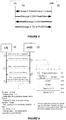
- Figure 8 indicates a possible flow sequence of events where the indicator for the stored configuration can be sent as part of Message 1 (PRACH signature transmission).
- a MTC device has no current access to the network, but may have gained access at some time(s) in the past, and may have stored in its memory some access parameters applicable at that time. For example the most recent access parameters may be held in memory, over-writing any previous stored configuration.
- step S10 the MTC device determines a need for gaining network access, typically due to having some data ready to transmit to the network.
- step S11 the device checks whether it has a stored configuration which might be used for an access request. This step might be conditional on receiving sufficient SI (such as MIB and SIB1) to inform the device that a stored configuration is allowed by the network.
- SI such as MIB and SIB1
- S11, N If there is no stored configuration (S11, N) (or if use of a stored configuration is not allowed), the flow proceeds to S12 where the device is required to read (further) SI in order to obtain the RACH configuration. For example, even if the device has already received MIB and SIB1, it must now receive SIB2 to obtain this information. SIB2M, if it is being transmitted for use of MTC devices, may be received instead.
- the device then sends a PRACH signature in accordance with the received RACH configuration (S14). Assuming the device has no existing connection with the network, this would be by way of contention-based access.
- the network receives the PRACH signature (S16) and sends a RAR (S18), followed by contention resolution if necessary. This would be followed by the remaining steps of the conventional signalling sequence shown in Figure 7 , including the RRC Connection Request, RRC Connection Setup and so forth.
- step S11 the device does have a stored configuration (and preferably, knows that use of a stored configuration is allowed)
- the flow follows the branch indicated by S11, Y according to which the device sends a PRACH signature based on the stored configuration or in other words, using values of access parameters contained in the stored configuration.
- the device indicates use of the stored configuration in some way; usually this will be achieved by implicit signalling as described below.
- the network receives the PRACH signature and checks whether it has a valid configuration.
- the configuration may include for example the choice of signature, time and/or frequency used to transmit it, and so forth.
- the network sends the RAR. If not (S17, N) it rejects the access request. That is, the eNB which receives the request may simply ignore it, or may send a signal to notify the device of rejection of the request. If its request is ignored (or positively rejected) the device may try again, preferably after a renewed attempt to read SI.
- One feature of this embodiment is the use of an UL indication in Message 1 that a stored configuration for PRACH has been used for the 1 st PRACH attempt by the MTC device.
- This indication can be by the choice of a pre-defined specific preamble for Message 1 (signature and/or duration) or frequency/time domain sequence of preambles (as preambles are repeated).
- a pre-defined specific preamble for Message 1 signature and/or duration
- frequency/time domain sequence of preambles as preambles are repeated.
- the RACH preamble is transmitted by the device so as to be received at a pre-defined point in time (with known pre-defined defined timing point that allows the network to distinguish between different types of access (either with the stored configuration or without).
- the number of preamble signatures used for this method can be one or any number of preamble signatures.
- Another way that can be used for the indication of the choice of either SIB2/SIB2M parameters or a stored radio resource configuration can be additional signaling bits in the UL message sent by a device to the network.
- an MTC UE could also have to read SIB2 if there is no other option available for it.
- the principle of the first embodiment can be extended to the case where the device is located in a coverage hole, making it difficult to read SI even after repetition.
- the second embodiment allows the device to indicate this fact to the network.
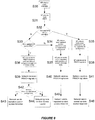
- Figure 9 a more detailed procedure is shown in comparison with Figure 8 , where the UE can either indicate that it has used a stored configuration and/or that the SI was read using the repeated broadcasts of the SI. It is assumed that the device has a need to access the network.
- an initial step S30 is shown of the MTC device receiving a broadcast of PSS/SSS identifying the cell.
- the device reads PBCH, which as already mentioned includes the MIB.
- the device attempts to read SIB1 and SIB2.
- SIB2 it is determined whether or not SIB2 can be read without repetition, in other words without having to receive more than one transmission of SIB2.
- the device can proceed with the conventional RACH procedure as indicated in S35, S38 S41 and S46, that is, by using the broadcast SI without having to resort to a stored configuration.
- the broadcast SI could include SIB2M in place of SIB2, if available.
- SIB2 cannot be read without repetition (or cannot be read at all) (S32, N) the flow process to S33 where the device checks whether it has a stored configuration to use for an access request. If it does (S33, Y) it proceeds to send a PRACH signature based on the stored configuration in S36.
- the characteristics of the PRACH signature transmission indicates not only the use of a stored configuration, but also the fact that the device was unable to read SIB2 without repetition. As indicated in the Figure, this may be equivalent to indicating that the device is in a coverage hole.
- the flow in this case proceeds to the network receiving the PRACH signature (S39) and deciding whether the stored configuration is valid or not. For example if the PRACH signature transmission reflects an out-of-date configuration, the network may reject the access request, in which case (S42, N) the network ignores the access request (S44). Conversely if the stored configuration is valid, this will lead to an acceptable access request to which the network responds with a RAR. Unlike the conventional procedure, this may be a repeated RAR as indicated in S43, to deal with the indication that the device is in a coverage hole and will therefore find it difficult to receive the RAR.
- the device has either no stored configuration at all, or if it knows from SI read so far that the stored configuration would not be allowed (S33, N) this means that the device has to wait for one or more repetitions in order to successfully read the required SI (in particular SIB2).
- the flow thus proceeds to S34 where the device reads SI a sufficient number of times to obtain the RACH configuration, and then (S37) sends a PRACH signature.
- the characteristics of the PRACH signature transmission indicate to the network that the device is in a coverage hole, similarly as in S36, but there is no need to indicate use of a stored configuration. If desired, a positive indication could be made to the effect that a RACH configuration based on read SI was being employed.
- the network receives the PRACH signature and responds with a RAR. As in the case of S43, this may be a repeated RAR to assist reception by the device in a coverage hole.
- the device will try and read normal SI but if this fails then it will use the stored configuration and signal the use of the stored configuration to the network, which can decide, on the basis that the stored configuration is no longer valid and should be renewed, that it can ignore this access attempt. Again, a signal rejecting the access request could be transmitted if desired.
- the response may be different than (or interpreted differently to) a normal RACH response, since the random access response may already include a confirmation of UE RNTI and immediate access to UL radio resources for the sending of a small data packet in the first UL transmission from the device.
- the device may be assumed by the device to be for immediate data transmission. This could reduce the amount of messaging that is sent after initial access by removing the need for the RRC configuration setup messages shown in Figure 7 (e.g. RRC Connection Reconfiguration (measurement configuration) and RRC Connection Reconfiguration (Radio Bearer Setup)).
- the device will read the SI that is being (typically being repeated) broadcast for a device in a coverage hole. This can also be indicated in the UL message, as the response may have to be sent with higher power/and or repetitions to reach the device in the coverage hole.
- a third embodiment is similar to the first and second embodiments, except that an MTC UE may also use the same random access configuration as non-MTC devices.
- the MTC devices may be required to employ the conventional procedure for reading SI, in place of the modified procedure provided by the present invention. It could be determined on the basis of a flag (e.g. in MIB or SIB1) whether the UE must receive SIB2 or not. In the case that the UE uses the PRACH resources indicated in SIB2, following the conventional procedure, no additional bit(s) or special signature is needed to be used.
- Such a flag would of course be received by all devices in the cell, not only MTC devices. This flag might not be needed for UEs located in regular coverage areas; it may be used by any device that requires fast access to the radio resources, i.e. to send one or a small number of packets with reduced control signalling overhead.
- the PRACH resources for MTC UEs may be restricted in the time domain (e.g. only available in certain subframes).
- an MTC UE is configured with a dedicated preamble/signature and uses the contention free RACH procedure (in the designated subframes). Use of designated subframes in this way would allow re-assignment of the limited number of available preambles, such that use of the present invention would be available only in certain subframes with the conventional procedure in force during other subframes.
- a set of preambles would be assigned in common for the MTC devices, some of which preambles could be used to indicate use of a stored configuration, and others possibly indicating a coverage hole. Whilst for contention-free access, each MTC device would be assigned a small number of preambles, such as one for each of a plurality of stored configurations plus a preamble for conventional random access.
- the network receives indication of stored configuration access but requires that a UE has to re-read broadcast parameters and discard the stored configuration, then another signal can tell the UE to re-read SI (e.g. Message 3 or another message sent by the network to the UE).
- SI e.g. Message 3 or another message sent by the network to the UE.
- Use of a timer, or counting a number of access attempts, can prevent the UE from accessing the network with a stored configuration so it has to re-read access parameters from the SIB.
- Stored configuration could come from the application layer (OAM, oneM2M configuration):
- a method needs to be defined where the UE selects which stored configuration to use, perhaps defined as a priority list.
- Stored configuration priority could be controlled by a DL flag (part of PBCH or SIB). For example, if the eNB wishes to notify the UE not to use any default configuration (or a specific default configuration), then the DL indication would control this in the UE.
- a DL flag part of PBCH or SIB. For example, if the eNB wishes to notify the UE not to use any default configuration (or a specific default configuration), then the DL indication would control this in the UE.
- the UL indication could be multi-level, e.g. if a previously read stored configuration expires then the UE could use the default (specification/factory setting)configuration and indicate this with a different UL indicator to the eNB.
- an MTC device may indicate being in a coverage hole with an UL indication, which can be sent as part of the PRACH procedure. This can be used for the basestation to repeat DL transmission to reach the device in the poor coverage area.
- This stored configuration mode of operation could also be an option for handsets intended for operation in coverage deficit areas, not just MTC devices, assuming it is compliant with the new UE category that might be defined for this category of devices.
- an MTC device indicated use of a stored configuration by the characteristics of a PRACH preamble transmission.
- other UL signalling could be used for this purpose, including signalling outside of the LTE network (for example via Wi-Fi or a wired cable connection if available).
- An indication is used to indicate that the device is in poor coverage area, and therefore needs to receive SI in a dedicated way.
- Notification of use of a stored configuration would allow the network to send a massively repeated Message 2 (RAR) in a way which is specifically designed for operation of devices in coverage deficit areas, by allowing the device to increase the probability of decoding Message 2 successfully.
- RAR massively repeated Message 2
- embodiments of the present invention can involve repetition of RAR in addition to repetition of SIBs.
- the UL indication could be a short "ping" type of message, where the use of a certain preconfigured RACH access (in other words an access request having certain preamble/timing/frequency and/or repetition characteristics) is used by the device to indicate a "can you hear me?" message, to which the networks can acknowledge with a "yes I can” message. This would allow the device to return to sleep. If the device does not hear the response, then it would typically repeat the UL message until it gets a response. If no response was available, the device would raise a user alarm (e.g. if the device also is connected to the internet by cable or WiFI connection).
- a user alarm e.g. if the device also is connected to the internet by cable or WiFI connection.
- FIG 8 is a block diagram illustrating an example of a UE 10 to which the present invention may be applied.
- the UE 10 may include any type of device which may be used in a wireless communication system described above and may include cellular (or cell) phones (including smartphones), personal digital assistants (PDAs) with mobile communication capabilities, laptops or computer systems with mobile communication components, and/or any device that is operable to communicate wirelessly.
- the UE 10 includes transmitter/receiver unit(s) 804 connected to at least one antenna 802 (together defining a communication unit) and a controller 806 having access to memory in the form of a storage medium 808.
- the controller 806 may be, for example, Microprocessor, digital signal processor (DSP), application-specific integrated circuit (ASIC), field-programmable gate array (FPGA), or other logic circuitry programmed or otherwise configured to perform the various functions described above, such as determining whether or not to employ a stored configuration of access parameters to construct an access request.
- DSP digital signal processor
- ASIC application-specific integrated circuit
- FPGA field-programmable gate array
- the various functions described above may be embodied in the form of a computer program stored in the storage medium 808 and executed by the controller 806.
- the transmission/reception unit 804 is arranged, under control of the controller 806, to transmit an access request, receive signals from an eNB such as SI or RAR, and so forth as discussed previously.
- FIG. 9 is a block diagram illustrating an example of an eNB 20 to which the present invention may be applied.
- the base station 20 includes transmitter/receiver unit(s) 904 connected to at least one antenna 902 (together defining a communication unit) and a controller 906.
- the controller may be, for example, Microprocessor, DSP, ASIC, FPGA, or other logic circuitry programmed or otherwise configured to perform the various functions described above, such as broadcasting PBCH, transmitting SIBs and receiving an access request from a device.
- the various functions described above may be embodied in the form of a computer program stored in the storage medium 908 and executed by the controller 906.
- the transmission/reception unit 904 is responsible for UE-specific signalling and broadcast messages under control of the controller 906.
- embodiments of the present invention allow, for devices such as MTC devices, the transmission of small data packets without the need to read all the System Information normally required to make an initial network access. Whilst reception of the MIB and preferably SIB1 would normally be required, this is not necessarily essential. The behaviour goes beyond existing methods specifically including the ability to notify the network that initial access is occurring from a device that was either specifically allowed to use a stored access configuration, or is accessing the cell using modified system information (such as SIB2) being broadcast by the cell.
- modified system information such as SIB2
- the invention has been described with reference to LTE/LTE-A but could also be applied to other communications systems such as UMTS and WiMAX.
- the invention also provides a computer program or a computer program product for carrying out any of the methods described herein, and a computer readable medium having stored thereon a program for carrying out any of the methods described herein.
- a computer program embodying the invention may be stored on a computer-readable medium, or it may, for example, be in the form of a signal such as a downloadable data signal provided from an Internet website, or it may be in any other form.
- the invention enables devices, particularly but not exclusively MTC devices, to access a wireless communication system without having to receive all the SI conventionally required in order to obtain the access parameters for an access request. It therefore contributes to efficient use of the system particularly in the Small Data Transmission scenario.
Landscapes
- Engineering & Computer Science (AREA)
- Computer Networks & Wireless Communication (AREA)
- Signal Processing (AREA)
- Computer Security & Cryptography (AREA)
- Mobile Radio Communication Systems (AREA)
Claims (15)
- Procédé d'accès à un système de communication sans fil, comprenant les étapes ci-dessous dans lesquelles :une station de base (20), dans le système, diffuse des informations de système spécifiant des paramètres d'accès permettant d'accéder au système ;un dispositif (10) nécessitant d'accéder au système décide s'il convient d'utiliser une configuration stockée des paramètres d'accès pour une demande d'accès, et le cas échéant, transmet la demande d'accès à la station de base (20), sur la base de la configuration stockée ; caractérisé par les étapes ci-dessous dans lesquelles :le dispositif (10) fournit, à la station de base (20), une indication d'utilisation de la configuration stockée ; etla station de base (20) décide s'il convient ou non d'accepter la demande d'accès en tenant compte de ladite indication.
- Procédé selon la revendication 1, comprenant en outre l'étape dans laquelle le dispositif (10) tente de recevoir les informations de système diffusées et décide s'il convient d'utiliser la configuration stockée ou les paramètres d'accès sur la base d'informations de système reçues, en fonction du résultat.
- Procédé selon l'une quelconque des revendications précédentes, comprenant en outre l'étape dans laquelle le dispositif (10) indique, à la station de base (20), un échec de la réception d'au moins une partie des informations de système.
- Procédé selon l'une quelconque des revendications précédentes dans lequel le dispositif (10) maintint une pluralité de configurations stockées des paramètres d'accès, le procédé comprenant en outre l'étape dans laquelle le dispositif (10) sélectionne une configuration parmi la pluralité de configurations stockées, et indique, à la station de base (20), la configuration stockée sélectionnée.
- Procédé selon l'une quelconque des revendications précédentes, dans lequel au moins l'une des indications d'utilisation de la configuration stockée, indiquant un échec de la réception d'au moins une partie des informations de système et indiquant la configuration stockée sélectionnée, est implicite dans la demande d'accès.
- Procédé selon la revendication 5, dans lequel la demande d'accès est une demande d'accès aléatoire incluant un ou des éléments ci-dessous, sélectionnés par le dispositif (10) :un préambule parmi un ensemble de préambules d'accès aléatoire ; et/ouune temporisation de transmission parmi une pluralité de temporisations possibles ; et/ouune fréquence de transmission parmi une pluralité de fréquences possibles ; et/ouune durée temporelle parmi une pluralité de durées possibles ; et/ouune étendue de la fréquence parmi une pluralité de plages de fréquence possibles ; et/ouune séquence de répétition de signaux tels que des préambules dans le domaine temporel et/ou fréquentiel parmi une pluralité de séquences de répétition ;le dispositif (10) indiquant l'utilisation de la configuration stockée et/ou un échec de la réception d'au moins une partie des informations de système par sa ou ses sélections.
- Procédé selon la revendication 6, comprenant en outre l'étape dans laquelle la station de base (20) répond à la demande d'accès aléatoire par une réponse d'accès aléatoire, et répète la transmission de la réponse d'accès aléatoire si le dispositif (10) indique un échec de la réception d'informations de système.
- Procédé selon l'une quelconque des revendications précédentes, dans lequel les informations de système incluent une indication indiquant si une demande d'accès basée sur une configuration stockée sera ou ne sera pas acceptée par la station de base (20).
- Procédé selon la revendication 8, dans lequel, si les informations de système indiquent qu'une demande d'accès basée sur une configuration stockée ne sera pas acceptée par la station de base (20), le dispositif (10) tente de recevoir une transmission d'informations de système supplémentaires, la station de base (20) transmet à plusieurs reprises les informations de système supplémentaires, et le dispositif (10) répète les tentatives de réception des informations de système supplémentaires jusqu'à ce qu'elles sont correctement reçues.
- Procédé selon l'une quelconque des revendications précédentes, dans lequel la communication sans fil dans le système est mise en oeuvre en unités temporelles de trames, chaque trame est divisée en une pluralité de sous-trames, et la station de base (20) décide s'il convient ou non d'accepter la demande d'accès sur la base d'un(e) ou plusieurs des conditions et éléments ci-dessous :si les paramètres d'accès utilisés pour la demande d'accès sont valides ;la sous-trame dans laquelle la demande d'accès a été reçue ; etsi la demande d'accès contient ou non une signature spécifique affectée au dispositif (10).
- Procédé selon l'une quelconque des revendications précédentes, dans lequel le dispositif (10) obtient la configuration stockée à partir de l'un quelconque des éléments ci-dessous :un réglage d'usine du dispositif (10) ;un réglage de couche d'application ;des informations de système reçues au cours d'un accès antérieur au système ; oudes spécifications de système.
- Système de communication sans fil, comprenant :un dispositif (10) souhaitant accéder au système ; etune station de base (20) agencée de manière à diffuser des informations de système spécifiant des paramètres d'accès permettant d'accéder au système, et à recevoir, en provenance du dispositif (10) souhaitant accéder au système, une demande d'accès ; dans lequelle dispositif (10) est agencé de manière à déterminer une nécessité d'accéder au système, à décider s'il convient d'utiliser une configuration stockée des paramètres d'accès pour une demande d'accès, et le cas échéant, à transmettre la demande d'accès à la station de base (20) sur la base de la configuration stockée ; caractérisé en ce que :le dispositif (10) est en outre agencé de manière à fournir une indication, à la station de base (20), concernant l'utilisation de la configuration stockée ; etla station de base (20) est en outre agencée de manière à recevoir l'indication, et à décider s'il convient ou non d'accepter la demande d'accès en tenant compte de l'indication.
- Station de base (20) destinée à être utilisée dans un système de communication sans fil, la station de base étant agencée de manière à :diffuser des informations de système spécifiant des paramètres d'accès permettant d'accéder au système ; etrecevoir, en provenance d'un dispositif (10) souhaitant accéder au système, une demande d'accès ; caractérisée en ce que :la station de base (20) est en outre agencée de manière à recevoir, en provenance du dispositif (10), une indication indiquant si une configuration stockée des paramètres d'accès a été ou non utilisée pour la demande d'accès ; etdécider s' il convient d'accepter ou non la demande d'accès en tenant compte de l'indication.
- Dispositif (10) destiné à être utilisé en qualité de terminal dans un système de communication sans fil dans lequel une station de base (20) diffuse des informations de système spécifiant des paramètres d'accès permettant d'accéder au système, le dispositif (10) étant agencé de manière à :déterminer une nécessité d'accéder au système, décider s'il convient d'utiliser une configuration stockée des paramètres d'accès pour une demande d'accès, et le cas échéant, transmettre la demande d'accès à la station de base (20) sur la base de la configuration stockée ; caractérisé en ce que :le dispositif (10) est en outre agencé de manière à fournir une indication, à la station de base, concernant l'utilisation de la configuration stockée.
- Instructions lisibles par ordinateur qui, lorsqu' elles sont exécutées par un processeur d'un dispositif émetteur-récepteur dans un système de communication sans fil, amènent le dispositif à fournir la station de base (20) selon la revendication 13 ou le dispositif (10) selon la revendication 14.
Priority Applications (9)
| Application Number | Priority Date | Filing Date | Title |
|---|---|---|---|
| EP17163510.5A EP3226622B1 (fr) | 2014-01-31 | 2014-01-31 | Procédé d'accès de réseau de communication sans fil |
| EP14153559.1A EP2903349B1 (fr) | 2014-01-31 | 2014-01-31 | Procédé d'accès de réseau de communication sans fil |
| KR1020167016303A KR101840155B1 (ko) | 2014-01-31 | 2014-06-06 | 무선 통신 네트워크의 액세스 방법 |
| JP2016549050A JP6361737B2 (ja) | 2014-01-31 | 2014-06-06 | 無線通信ネットワークのアクセス方法 |
| PCT/EP2014/061907 WO2015113653A1 (fr) | 2014-01-31 | 2014-06-06 | Procédé d'accès à un réseau de communication sans fil |
| CN201480074029.2A CN106416375B (zh) | 2014-01-31 | 2014-06-06 | 接入无线通信网络的方法、无线通信网络和基站 |
| US15/182,114 US10616823B2 (en) | 2014-01-31 | 2016-06-14 | Access method of wireless communication network |
| US16/796,176 US11290948B2 (en) | 2014-01-31 | 2020-02-20 | Access method of wireless communication network |
| US17/673,896 US20220174584A1 (en) | 2014-01-31 | 2022-02-17 | Access Method of Wireless Communication Network |
Applications Claiming Priority (1)
| Application Number | Priority Date | Filing Date | Title |
|---|---|---|---|
| EP14153559.1A EP2903349B1 (fr) | 2014-01-31 | 2014-01-31 | Procédé d'accès de réseau de communication sans fil |
Related Child Applications (1)
| Application Number | Title | Priority Date | Filing Date |
|---|---|---|---|
| EP17163510.5A Division EP3226622B1 (fr) | 2014-01-31 | 2014-01-31 | Procédé d'accès de réseau de communication sans fil |
Publications (2)
| Publication Number | Publication Date |
|---|---|
| EP2903349A1 EP2903349A1 (fr) | 2015-08-05 |
| EP2903349B1 true EP2903349B1 (fr) | 2017-04-12 |
Family
ID=50068815
Family Applications (2)
| Application Number | Title | Priority Date | Filing Date |
|---|---|---|---|
| EP14153559.1A Not-in-force EP2903349B1 (fr) | 2014-01-31 | 2014-01-31 | Procédé d'accès de réseau de communication sans fil |
| EP17163510.5A Not-in-force EP3226622B1 (fr) | 2014-01-31 | 2014-01-31 | Procédé d'accès de réseau de communication sans fil |
Family Applications After (1)
| Application Number | Title | Priority Date | Filing Date |
|---|---|---|---|
| EP17163510.5A Not-in-force EP3226622B1 (fr) | 2014-01-31 | 2014-01-31 | Procédé d'accès de réseau de communication sans fil |
Country Status (6)
| Country | Link |
|---|---|
| US (3) | US10616823B2 (fr) |
| EP (2) | EP2903349B1 (fr) |
| JP (1) | JP6361737B2 (fr) |
| KR (1) | KR101840155B1 (fr) |
| CN (1) | CN106416375B (fr) |
| WO (1) | WO2015113653A1 (fr) |
Cited By (2)
| Publication number | Priority date | Publication date | Assignee | Title |
|---|---|---|---|---|
| US10390291B2 (en) * | 2016-08-17 | 2019-08-20 | Telefonaktiebolaget Lm Ericsson (Publ) | Risk aware validity assessment of system information |
| US20220272766A1 (en) * | 2018-04-06 | 2022-08-25 | Sony Group Corporation | Methods, infrastructure equipment and communications device |
Families Citing this family (32)
| Publication number | Priority date | Publication date | Assignee | Title |
|---|---|---|---|---|
| US10700830B2 (en) * | 2014-10-21 | 2020-06-30 | Qualcomm Incorporated | Techniques for conveying identification information in a preamble transmission |
| KR102335645B1 (ko) * | 2015-02-05 | 2021-12-06 | 한국전자통신연구원 | 디바이스 특성에 따른 통신 방법 및 이를 이용한 자원 할당 장치 |
| EP3345432B1 (fr) | 2015-09-04 | 2021-05-05 | Telefonaktiebolaget LM Ericsson (PUBL) | Utilisation à commande d'indicateur d'une configuration périmée définie dans une table d'informations d'accès pour réseau d'accès |
| EP3345433B1 (fr) * | 2015-09-04 | 2020-01-29 | Telefonaktiebolaget LM Ericsson (publ) | Commande d'accès à un réseau de communication sans fil |
| WO2017070888A1 (fr) * | 2015-10-29 | 2017-05-04 | Telefonaktiebolaget Lm Ericsson (Publ) | Procédés et dispositifs permettant de diffuser des informations système sur demande |
| CN107026721B (zh) * | 2016-01-29 | 2019-08-20 | 华为技术有限公司 | 前导序列的发送和接收方法、装置及系统 |
| ES2844424T3 (es) * | 2016-02-29 | 2021-07-22 | Samsung Electronics Co Ltd | Aparato y procedimiento para la información del sistema de señalización |
| WO2017166043A1 (fr) | 2016-03-29 | 2017-10-05 | Telefonaktiebolaget Lm Ericsson (Publ) | Procédé de réalisation d'un accès aléatoire et dispositif terminal associé |
| AU2017302538B2 (en) | 2016-07-27 | 2022-03-03 | FG Innovation Company Limited | On-demand system information for wireless telecommunications |
| EP3510825A1 (fr) * | 2016-09-14 | 2019-07-17 | Huawei Technologies Co., Ltd. | Procédé et appareil d'accès à un réseau sans fil |
| CN110024442B (zh) * | 2016-11-04 | 2021-11-30 | 三星电子株式会社 | 在无线通信系统中提供最小系统信息的方法和用户设备 |
| EP3549370B1 (fr) * | 2016-12-05 | 2021-10-27 | LG Electronics Inc. | Procédé de traitement d'informations de système pour système de communication de type machine et dispositif associé |
| MY197095A (en) | 2017-01-04 | 2023-05-24 | Ericsson Telefon Ab L M | On-demand request for system information |
| KR102327348B1 (ko) | 2017-03-20 | 2021-11-17 | 광동 오포 모바일 텔레커뮤니케이션즈 코포레이션 리미티드 | 시스템 정보를 전송하는 방법, 기지국 및 단말기 |
| US11071149B2 (en) | 2017-05-05 | 2021-07-20 | Apple Inc. | Multefire design of random access channel and random access channel procedure for Internet of Things device operation in unlicensed spectrum |
| EP3619961B1 (fr) * | 2017-05-05 | 2022-02-09 | Telefonaktiebolaget LM Ericsson (Publ) | Demande d'informations système dans un réseau de communication sans fil |
| BR112019026271A2 (pt) * | 2017-06-14 | 2020-06-30 | Motorola Mobility Llc | realizando resolução de contenção para solicitações de informação de sistema |
| US10462706B2 (en) * | 2017-06-23 | 2019-10-29 | Nokia Technologies Oy | Use of wait period to obtain on-demand system information for wireless networks |
| CN109803435B (zh) * | 2017-11-16 | 2023-04-07 | 北京三星通信技术研究有限公司 | 随机接入方法及其设备 |
| KR102530275B1 (ko) | 2017-06-26 | 2023-05-09 | 삼성전자 주식회사 | 프리앰블 생성 방법, 프리앰블 설정 방법 및 장치, 랜덤 액세스 방법, 디바이스, 사용자 장치 및 기지국 |
| CN110945952B (zh) * | 2017-08-09 | 2023-08-11 | 株式会社Ntt都科摩 | 用户装置、基站装置及通信方法 |
| US11259332B2 (en) | 2017-09-19 | 2022-02-22 | Beijing Xiaomi Mobile Software Co., Ltd. | Random access method and apparatus, and electronic device and computer-readable storage medium |
| CN111567122A (zh) * | 2017-10-26 | 2020-08-21 | 瑞典爱立信有限公司 | 用于启用和禁用提早数据传输的方法和系统 |
| ES2998189T3 (en) | 2018-08-10 | 2025-02-19 | Beijing Xiaomi Mobile Software Co Ltd | System information transmission method, apparatus and system, and computer-readable storage medium |
| CN111556446B (zh) * | 2020-05-21 | 2021-11-23 | 无锡碧虎科技有限公司 | 用于车联网的车载移动终端传输车辆位置信息的方法及系统 |
| CN116261915A (zh) * | 2020-07-23 | 2023-06-13 | 苹果公司 | 用于经由ue到网络中继提供系统信息的系统和方法 |
| EP4240099B1 (fr) * | 2020-12-08 | 2026-03-25 | Huawei Technologies Co., Ltd. | Procédé de transmission de bloc d'informations système et appareil de communication |
| US11665529B2 (en) | 2021-05-17 | 2023-05-30 | T-Mobile Usa, Inc. | Modular capability reporting in wireless communications |
| CN113382429B (zh) * | 2021-06-22 | 2022-07-22 | 展讯半导体(成都)有限公司 | 无线通信控制方法、装置、系统、电子设备、存储介质 |
| US12022524B2 (en) * | 2021-08-05 | 2024-06-25 | Qualcomm Incorporated | Random access channel repetition |
| CN115333816B (zh) * | 2022-08-03 | 2024-05-31 | 苏州市职业大学 | 一种ipv6校园网上网流量识别的方法 |
| JP2024100559A (ja) * | 2023-01-16 | 2024-07-26 | Kddi株式会社 | 効率的な接続の確立のための基地局装置、端末装置、制御方法、及び、プログラム |
Family Cites Families (49)
| Publication number | Priority date | Publication date | Assignee | Title |
|---|---|---|---|---|
| FI105741B (fi) * | 1998-02-12 | 2000-09-29 | Nokia Networks Oy | Tiedonsiirtomenetelmä ja radiojärjestelmä |
| US6925068B1 (en) * | 1999-05-21 | 2005-08-02 | Wi-Lan, Inc. | Method and apparatus for allocating bandwidth in a wireless communication system |
| GB2381414A (en) * | 2001-10-18 | 2003-04-30 | Ericsson Telefon Ab L M | Mobile telecommunications networks |
| JP4464138B2 (ja) * | 2002-01-08 | 2010-05-19 | モトローラ・インコーポレイテッド | パケットデータサービングノードによって開始される移動通信システムの更新 |
| US7212809B2 (en) * | 2003-02-06 | 2007-05-01 | Motorola, Inc. | Method and apparatus for service negotiation acceleration |
| ES2287647T3 (es) * | 2004-01-09 | 2007-12-16 | M-Stack Limited | Aparato y metodo para poner en practica la deteccion de cambios de informacion del sistema en sistemas de telecomunicaciones moviles universales (umts). |
| US7636563B2 (en) * | 2004-10-01 | 2009-12-22 | Lg Electronics Inc. | Performing idle mode in a wireless access system |
| US20060234676A1 (en) * | 2005-04-15 | 2006-10-19 | Motorola, Inc. | Method and apparatus for authenticating a mobile station in a wireless communication network |
| GB0606692D0 (en) * | 2006-04-03 | 2006-05-10 | Vodafone Plc | Telecommunications networks |
| JP2010516208A (ja) * | 2007-01-11 | 2010-05-13 | クゥアルコム・インコーポレイテッド | 無線通信システムにおいてdtxおよびdrxを使用すること |
| JP4946610B2 (ja) * | 2007-04-27 | 2012-06-06 | 日本電気株式会社 | 無線通信システムにおける上りアクセス送信電力制御方法および装置 |
| KR101387495B1 (ko) * | 2007-07-30 | 2014-04-21 | 엘지전자 주식회사 | 무선 통신 시스템에서 제어채널을 이용한 긴급 서비스 요청방법 |
| JP5065854B2 (ja) * | 2007-10-29 | 2012-11-07 | 株式会社エヌ・ティ・ティ・ドコモ | 基地局装置、移動局装置、及びシステム情報送信方法 |
| AU2008355488B2 (en) * | 2008-04-28 | 2013-12-19 | Fujitsu Limited | Method for processing connection in wireless communication system, wireless base station, and wireless terminal |
| JP5345618B2 (ja) * | 2008-06-25 | 2013-11-20 | パナソニック株式会社 | 無線基地局装置、無線中継局装置、及び無線端末装置 |
| CN101635911B (zh) * | 2008-07-21 | 2011-12-07 | 中兴通讯股份有限公司 | 一种空闲模式进入方法 |
| JP2011530866A (ja) * | 2008-08-06 | 2011-12-22 | インターデイジタル パテント ホールディングス インコーポレイテッド | Lte待機モードにおいて動作するための手順 |
| KR101485807B1 (ko) * | 2009-04-01 | 2015-01-28 | 삼성전자주식회사 | 무선 통신 시스템의 랜덤 액세스 방법 및 장치 |
| US8489092B2 (en) * | 2009-11-17 | 2013-07-16 | Qualcomm Incorporated | System information collection while camping on a cell |
| KR20110082473A (ko) * | 2010-01-11 | 2011-07-19 | 엘지전자 주식회사 | Mbs 데이터 전송 방법 및 기지국과, mbs 데이터 수신 방법 및 사용자기기 |
| KR101789328B1 (ko) | 2010-01-13 | 2017-11-21 | 엘지전자 주식회사 | 무선통신 시스템에서의 이벤트 발생 알림 방법 및 장치 |
| GB201005312D0 (en) | 2010-03-30 | 2010-05-12 | Vodafone Ip Licensing Ltd | Device and method of operation |
| CN102223729B (zh) | 2010-04-16 | 2016-06-29 | 中兴通讯股份有限公司 | 控制机器类型通信设备接入网络的方法及系统 |
| CN102378306B (zh) * | 2010-08-20 | 2016-04-13 | 中兴通讯股份有限公司 | 一种广播接入控制参数的方法和系统 |
| CN102378211B (zh) * | 2010-08-20 | 2014-03-19 | 电信科学技术研究院 | 一种机器型通信设备的盲检控制处理方法及设备 |
| EP2624613B1 (fr) * | 2010-09-28 | 2020-06-10 | Fujitsu Limited | Procédé, équipement utilisateur et station de base d'activation de mode de coexistence |
| EP2625904B1 (fr) | 2010-10-08 | 2016-06-29 | LG Electronics Inc. | Procédé d'économie d'énergie dans un réseau local sans fil et appareil correspondant |
| CN102111847B (zh) * | 2011-01-10 | 2013-07-24 | 大唐移动通信设备有限公司 | 一种接入控制的方法及装置 |
| US9345048B2 (en) * | 2011-03-30 | 2016-05-17 | Nokia Technologies Oy | Random access data channel for machine type communications |
| US20120254890A1 (en) | 2011-04-01 | 2012-10-04 | Renesas Mobile Corporation | Small Data Transmission For Detached Mobile Devices |
| EP2705709A1 (fr) * | 2011-05-02 | 2014-03-12 | Nokia Solutions and Networks Oy | Améliorations de demandes de programmation |
| US9215645B2 (en) | 2011-05-02 | 2015-12-15 | Telefonaktiebolaget L M Ericsson (Publ) | Controlling network accesses by radio terminals associated with access classes |
| US8971268B2 (en) * | 2011-08-24 | 2015-03-03 | Lg Electronics Inc. | Method and apparatus for transmitting uplink data associated with MTC device trigger function |
| KR101528114B1 (ko) * | 2011-08-30 | 2015-06-11 | 엘지전자 주식회사 | 확장 엑세스 바링과 랜덤 엑세스를 수행하는 방법 및 장치 |
| WO2013066350A1 (fr) * | 2011-11-04 | 2013-05-10 | Panasonic Corporation | Appareil et procédé pour la gestion de réponses différées dans une régulation d'encombrement de communications mobiles |
| CN103220811B (zh) | 2012-01-19 | 2018-04-27 | 中兴通讯股份有限公司 | 信息处理方法、mtc ue随机接入lte系统的方法 |
| WO2013110331A1 (fr) * | 2012-01-25 | 2013-08-01 | Fujitsu Limited | Canal de liaison montante pour communication sans fil |
| EP2621234A1 (fr) * | 2012-01-30 | 2013-07-31 | Alcatel Lucent | Fourniture d'informations dans un terminal mobile vers une entité de gestion de ressource radio d'un réseau de communication sans fil |
| WO2013121892A1 (fr) * | 2012-02-17 | 2013-08-22 | Nec Corporation | Procédé de commande de communications du type machine (mtc) dans un réseau de communication sans fil |
| WO2013137545A1 (fr) * | 2012-03-13 | 2013-09-19 | Lg Electronics Inc. | Programme de commande de puissance d'émission d'ue dans un système de communication sans fil et appareil correspondant |
| US9295095B2 (en) * | 2012-03-27 | 2016-03-22 | Blackberry Limited | UE preference indicator for suspension |
| US9503319B2 (en) * | 2012-04-12 | 2016-11-22 | Lg Electronics Inc. | Method and apparatus for transmitting configuration in wireless communication system |
| US20140003354A1 (en) * | 2012-06-29 | 2014-01-02 | Ozgur Ekici | Providing a system information message having retry parameter values |
| US10334630B2 (en) | 2012-12-10 | 2019-06-25 | Fujitsu Connected Technologies Limited | System and method for user-over-control plane messaging in a wireless network |
| US9265031B2 (en) * | 2012-12-20 | 2016-02-16 | Optis Cellular Technology, Llc | Communication protocol for short data transmissions |
| EP2939480B1 (fr) * | 2012-12-26 | 2018-02-14 | Telefonaktiebolaget LM Ericsson (publ) | Procédés, équipement d'utilisateur, noeud de réseau radio, et produit de programme d'ordinateur pour des procédures d'accès aléatoire |
| JP6284951B2 (ja) * | 2013-01-09 | 2018-02-28 | エルジー エレクトロニクス インコーポレイティド | 信号受信方法及びユーザ機器、並びに信号送信方法及び基地局 |
| EP2970962A4 (fr) * | 2013-03-15 | 2017-03-08 | Pathogenetix, Inc. | Procédés et dispositifs pour la préparation biologique d'échantillon |
| US9942830B2 (en) * | 2013-07-11 | 2018-04-10 | Koninklijke Kpn N.V. | Session setup in an energy-efficient cellular wireless telecommunications system |
-
2014
- 2014-01-31 EP EP14153559.1A patent/EP2903349B1/fr not_active Not-in-force
- 2014-01-31 EP EP17163510.5A patent/EP3226622B1/fr not_active Not-in-force
- 2014-06-06 KR KR1020167016303A patent/KR101840155B1/ko not_active Expired - Fee Related
- 2014-06-06 CN CN201480074029.2A patent/CN106416375B/zh not_active Expired - Fee Related
- 2014-06-06 JP JP2016549050A patent/JP6361737B2/ja active Active
- 2014-06-06 WO PCT/EP2014/061907 patent/WO2015113653A1/fr not_active Ceased
-
2016
- 2016-06-14 US US15/182,114 patent/US10616823B2/en active Active
-
2020
- 2020-02-20 US US16/796,176 patent/US11290948B2/en active Active
-
2022
- 2022-02-17 US US17/673,896 patent/US20220174584A1/en not_active Abandoned
Non-Patent Citations (1)
| Title |
|---|
| None * |
Cited By (3)
| Publication number | Priority date | Publication date | Assignee | Title |
|---|---|---|---|---|
| US10390291B2 (en) * | 2016-08-17 | 2019-08-20 | Telefonaktiebolaget Lm Ericsson (Publ) | Risk aware validity assessment of system information |
| US20220272766A1 (en) * | 2018-04-06 | 2022-08-25 | Sony Group Corporation | Methods, infrastructure equipment and communications device |
| US11743950B2 (en) * | 2018-04-06 | 2023-08-29 | Sony Group Corporation | Methods, infrastructure equipment and communications device |
Also Published As
| Publication number | Publication date |
|---|---|
| WO2015113653A1 (fr) | 2015-08-06 |
| JP2017507574A (ja) | 2017-03-16 |
| US20220174584A1 (en) | 2022-06-02 |
| US20160295503A1 (en) | 2016-10-06 |
| CN106416375A (zh) | 2017-02-15 |
| EP3226622B1 (fr) | 2018-06-13 |
| CN106416375B (zh) | 2019-12-20 |
| JP6361737B2 (ja) | 2018-07-25 |
| US20200196226A1 (en) | 2020-06-18 |
| EP3226622A1 (fr) | 2017-10-04 |
| EP2903349A1 (fr) | 2015-08-05 |
| US10616823B2 (en) | 2020-04-07 |
| US11290948B2 (en) | 2022-03-29 |
| KR101840155B1 (ko) | 2018-03-19 |
| KR20160088395A (ko) | 2016-07-25 |
Similar Documents
| Publication | Publication Date | Title |
|---|---|---|
| US20220174584A1 (en) | Access Method of Wireless Communication Network | |
| US10645627B2 (en) | Methods and apparatuses for exchanging information regarding a determined coverage extension (CE) level | |
| CN110537392B (zh) | 执行随机接入过程的方法及其设备 | |
| US10455622B2 (en) | Performing a random access procedure in a carrier aggregation with at least one SCell operating in an unlicensed spectrum | |
| US20170280484A1 (en) | Communication system | |
| US20170048802A1 (en) | Coverage Extension in Wireless Communication | |
| US10616924B2 (en) | Method and apparatus for controlling backoff procedure for coverage enhancement in wireless communication system | |
| WO2020220311A1 (fr) | Systèmes et procédés de procédure d'accès aléatoire améliorée | |
| US10390198B2 (en) | Coverage extension in wireless communication | |
| US20180270757A1 (en) | Method for drx in unlicensed band, and device using same | |
| CN104754758A (zh) | 随机接入方法、用户设备、基站及系统 | |
| KR20230030650A (ko) | 업링크 신호 송수신 방법 및 장치 | |
| KR20160122666A (ko) | Mtc 네트워크의 랜덤 액세스 방법 및 장치 | |
| US20250071829A1 (en) | Method and apparatus for random access | |
| KR20250105201A (ko) | 무선 통신 시스템에서 앰비언트 iot 디바이스에 대한 구성을 핸들링하기 위한 방법 및 장치 | |
| KR20170031844A (ko) | Mtc 단말을 위한 랜덤 액세스 프리앰블 전송 방법 및 장치 | |
| WO2025201955A1 (fr) | Procédés, dispositfs de communication et équipement d'infrastructure | |
| WO2026073804A1 (fr) | Procédés, dispositifs de communication et équipement d'infrastructure |
Legal Events
| Date | Code | Title | Description |
|---|---|---|---|
| PUAI | Public reference made under article 153(3) epc to a published international application that has entered the european phase |
Free format text: ORIGINAL CODE: 0009012 |
|
| 17P | Request for examination filed |
Effective date: 20141001 |
|
| AK | Designated contracting states |
Kind code of ref document: A1 Designated state(s): AL AT BE BG CH CY CZ DE DK EE ES FI FR GB GR HR HU IE IS IT LI LT LU LV MC MK MT NL NO PL PT RO RS SE SI SK SM TR |
|
| AX | Request for extension of the european patent |
Extension state: BA ME |
|
| GRAP | Despatch of communication of intention to grant a patent |
Free format text: ORIGINAL CODE: EPIDOSNIGR1 |
|
| INTG | Intention to grant announced |
Effective date: 20161026 |
|
| GRAS | Grant fee paid |
Free format text: ORIGINAL CODE: EPIDOSNIGR3 |
|
| GRAA | (expected) grant |
Free format text: ORIGINAL CODE: 0009210 |
|
| AK | Designated contracting states |
Kind code of ref document: B1 Designated state(s): AL AT BE BG CH CY CZ DE DK EE ES FI FR GB GR HR HU IE IS IT LI LT LU LV MC MK MT NL NO PL PT RO RS SE SI SK SM TR |
|
| REG | Reference to a national code |
Ref country code: GB Ref legal event code: FG4D |
|
| REG | Reference to a national code |
Ref country code: CH Ref legal event code: EP |
|
| REG | Reference to a national code |
Ref country code: IE Ref legal event code: FG4D |
|
| REG | Reference to a national code |
Ref country code: AT Ref legal event code: REF Ref document number: 884930 Country of ref document: AT Kind code of ref document: T Effective date: 20170515 |
|
| REG | Reference to a national code |
Ref country code: DE Ref legal event code: R096 Ref document number: 602014008448 Country of ref document: DE |
|
| REG | Reference to a national code |
Ref country code: NL Ref legal event code: MP Effective date: 20170412 |
|
| REG | Reference to a national code |
Ref country code: LT Ref legal event code: MG4D |
|
| REG | Reference to a national code |
Ref country code: AT Ref legal event code: MK05 Ref document number: 884930 Country of ref document: AT Kind code of ref document: T Effective date: 20170412 |
|
| PG25 | Lapsed in a contracting state [announced via postgrant information from national office to epo] |
Ref country code: NL Free format text: LAPSE BECAUSE OF FAILURE TO SUBMIT A TRANSLATION OF THE DESCRIPTION OR TO PAY THE FEE WITHIN THE PRESCRIBED TIME-LIMIT Effective date: 20170412 |
|
| PG25 | Lapsed in a contracting state [announced via postgrant information from national office to epo] |
Ref country code: LT Free format text: LAPSE BECAUSE OF FAILURE TO SUBMIT A TRANSLATION OF THE DESCRIPTION OR TO PAY THE FEE WITHIN THE PRESCRIBED TIME-LIMIT Effective date: 20170412 Ref country code: HR Free format text: LAPSE BECAUSE OF FAILURE TO SUBMIT A TRANSLATION OF THE DESCRIPTION OR TO PAY THE FEE WITHIN THE PRESCRIBED TIME-LIMIT Effective date: 20170412 Ref country code: FI Free format text: LAPSE BECAUSE OF FAILURE TO SUBMIT A TRANSLATION OF THE DESCRIPTION OR TO PAY THE FEE WITHIN THE PRESCRIBED TIME-LIMIT Effective date: 20170412 Ref country code: NO Free format text: LAPSE BECAUSE OF FAILURE TO SUBMIT A TRANSLATION OF THE DESCRIPTION OR TO PAY THE FEE WITHIN THE PRESCRIBED TIME-LIMIT Effective date: 20170712 Ref country code: GR Free format text: LAPSE BECAUSE OF FAILURE TO SUBMIT A TRANSLATION OF THE DESCRIPTION OR TO PAY THE FEE WITHIN THE PRESCRIBED TIME-LIMIT Effective date: 20170713 Ref country code: ES Free format text: LAPSE BECAUSE OF FAILURE TO SUBMIT A TRANSLATION OF THE DESCRIPTION OR TO PAY THE FEE WITHIN THE PRESCRIBED TIME-LIMIT Effective date: 20170412 Ref country code: AT Free format text: LAPSE BECAUSE OF FAILURE TO SUBMIT A TRANSLATION OF THE DESCRIPTION OR TO PAY THE FEE WITHIN THE PRESCRIBED TIME-LIMIT Effective date: 20170412 |
|
| REG | Reference to a national code |
Ref country code: FR Ref legal event code: PLFP Year of fee payment: 5 |
|
| PG25 | Lapsed in a contracting state [announced via postgrant information from national office to epo] |
Ref country code: LV Free format text: LAPSE BECAUSE OF FAILURE TO SUBMIT A TRANSLATION OF THE DESCRIPTION OR TO PAY THE FEE WITHIN THE PRESCRIBED TIME-LIMIT Effective date: 20170412 Ref country code: PL Free format text: LAPSE BECAUSE OF FAILURE TO SUBMIT A TRANSLATION OF THE DESCRIPTION OR TO PAY THE FEE WITHIN THE PRESCRIBED TIME-LIMIT Effective date: 20170412 Ref country code: IS Free format text: LAPSE BECAUSE OF FAILURE TO SUBMIT A TRANSLATION OF THE DESCRIPTION OR TO PAY THE FEE WITHIN THE PRESCRIBED TIME-LIMIT Effective date: 20170812 Ref country code: RS Free format text: LAPSE BECAUSE OF FAILURE TO SUBMIT A TRANSLATION OF THE DESCRIPTION OR TO PAY THE FEE WITHIN THE PRESCRIBED TIME-LIMIT Effective date: 20170412 Ref country code: SE Free format text: LAPSE BECAUSE OF FAILURE TO SUBMIT A TRANSLATION OF THE DESCRIPTION OR TO PAY THE FEE WITHIN THE PRESCRIBED TIME-LIMIT Effective date: 20170412 Ref country code: BG Free format text: LAPSE BECAUSE OF FAILURE TO SUBMIT A TRANSLATION OF THE DESCRIPTION OR TO PAY THE FEE WITHIN THE PRESCRIBED TIME-LIMIT Effective date: 20170712 |
|
| REG | Reference to a national code |
Ref country code: DE Ref legal event code: R097 Ref document number: 602014008448 Country of ref document: DE |
|
| PG25 | Lapsed in a contracting state [announced via postgrant information from national office to epo] |
Ref country code: RO Free format text: LAPSE BECAUSE OF FAILURE TO SUBMIT A TRANSLATION OF THE DESCRIPTION OR TO PAY THE FEE WITHIN THE PRESCRIBED TIME-LIMIT Effective date: 20170412 Ref country code: EE Free format text: LAPSE BECAUSE OF FAILURE TO SUBMIT A TRANSLATION OF THE DESCRIPTION OR TO PAY THE FEE WITHIN THE PRESCRIBED TIME-LIMIT Effective date: 20170412 Ref country code: SK Free format text: LAPSE BECAUSE OF FAILURE TO SUBMIT A TRANSLATION OF THE DESCRIPTION OR TO PAY THE FEE WITHIN THE PRESCRIBED TIME-LIMIT Effective date: 20170412 Ref country code: CZ Free format text: LAPSE BECAUSE OF FAILURE TO SUBMIT A TRANSLATION OF THE DESCRIPTION OR TO PAY THE FEE WITHIN THE PRESCRIBED TIME-LIMIT Effective date: 20170412 Ref country code: DK Free format text: LAPSE BECAUSE OF FAILURE TO SUBMIT A TRANSLATION OF THE DESCRIPTION OR TO PAY THE FEE WITHIN THE PRESCRIBED TIME-LIMIT Effective date: 20170412 |
|
| PLBE | No opposition filed within time limit |
Free format text: ORIGINAL CODE: 0009261 |
|
| STAA | Information on the status of an ep patent application or granted ep patent |
Free format text: STATUS: NO OPPOSITION FILED WITHIN TIME LIMIT |
|
| PG25 | Lapsed in a contracting state [announced via postgrant information from national office to epo] |
Ref country code: IT Free format text: LAPSE BECAUSE OF FAILURE TO SUBMIT A TRANSLATION OF THE DESCRIPTION OR TO PAY THE FEE WITHIN THE PRESCRIBED TIME-LIMIT Effective date: 20170412 Ref country code: SM Free format text: LAPSE BECAUSE OF FAILURE TO SUBMIT A TRANSLATION OF THE DESCRIPTION OR TO PAY THE FEE WITHIN THE PRESCRIBED TIME-LIMIT Effective date: 20170412 |
|
| 26N | No opposition filed |
Effective date: 20180115 |
|
| PG25 | Lapsed in a contracting state [announced via postgrant information from national office to epo] |
Ref country code: SI Free format text: LAPSE BECAUSE OF FAILURE TO SUBMIT A TRANSLATION OF THE DESCRIPTION OR TO PAY THE FEE WITHIN THE PRESCRIBED TIME-LIMIT Effective date: 20170412 |
|
| REG | Reference to a national code |
Ref country code: CH Ref legal event code: PL |
|
| PG25 | Lapsed in a contracting state [announced via postgrant information from national office to epo] |
Ref country code: LU Free format text: LAPSE BECAUSE OF NON-PAYMENT OF DUE FEES Effective date: 20180131 |
|
| REG | Reference to a national code |
Ref country code: IE Ref legal event code: MM4A |
|
| REG | Reference to a national code |
Ref country code: BE Ref legal event code: MM Effective date: 20180131 |
|
| PG25 | Lapsed in a contracting state [announced via postgrant information from national office to epo] |
Ref country code: BE Free format text: LAPSE BECAUSE OF NON-PAYMENT OF DUE FEES Effective date: 20180131 Ref country code: CH Free format text: LAPSE BECAUSE OF NON-PAYMENT OF DUE FEES Effective date: 20180131 Ref country code: LI Free format text: LAPSE BECAUSE OF NON-PAYMENT OF DUE FEES Effective date: 20180131 |
|
| PG25 | Lapsed in a contracting state [announced via postgrant information from national office to epo] |
Ref country code: IE Free format text: LAPSE BECAUSE OF NON-PAYMENT OF DUE FEES Effective date: 20180131 |
|
| PG25 | Lapsed in a contracting state [announced via postgrant information from national office to epo] |
Ref country code: MC Free format text: LAPSE BECAUSE OF FAILURE TO SUBMIT A TRANSLATION OF THE DESCRIPTION OR TO PAY THE FEE WITHIN THE PRESCRIBED TIME-LIMIT Effective date: 20170412 |
|
| PG25 | Lapsed in a contracting state [announced via postgrant information from national office to epo] |
Ref country code: MT Free format text: LAPSE BECAUSE OF NON-PAYMENT OF DUE FEES Effective date: 20180131 |
|
| PGFP | Annual fee paid to national office [announced via postgrant information from national office to epo] |
Ref country code: FR Payment date: 20191216 Year of fee payment: 7 |
|
| PG25 | Lapsed in a contracting state [announced via postgrant information from national office to epo] |
Ref country code: TR Free format text: LAPSE BECAUSE OF FAILURE TO SUBMIT A TRANSLATION OF THE DESCRIPTION OR TO PAY THE FEE WITHIN THE PRESCRIBED TIME-LIMIT Effective date: 20170412 |
|
| PGFP | Annual fee paid to national office [announced via postgrant information from national office to epo] |
Ref country code: DE Payment date: 20200121 Year of fee payment: 7 Ref country code: GB Payment date: 20200122 Year of fee payment: 7 |
|
| PG25 | Lapsed in a contracting state [announced via postgrant information from national office to epo] |
Ref country code: PT Free format text: LAPSE BECAUSE OF FAILURE TO SUBMIT A TRANSLATION OF THE DESCRIPTION OR TO PAY THE FEE WITHIN THE PRESCRIBED TIME-LIMIT Effective date: 20170412 |
|
| PG25 | Lapsed in a contracting state [announced via postgrant information from national office to epo] |
Ref country code: CY Free format text: LAPSE BECAUSE OF FAILURE TO SUBMIT A TRANSLATION OF THE DESCRIPTION OR TO PAY THE FEE WITHIN THE PRESCRIBED TIME-LIMIT Effective date: 20170412 Ref country code: MK Free format text: LAPSE BECAUSE OF NON-PAYMENT OF DUE FEES Effective date: 20170412 Ref country code: HU Free format text: LAPSE BECAUSE OF FAILURE TO SUBMIT A TRANSLATION OF THE DESCRIPTION OR TO PAY THE FEE WITHIN THE PRESCRIBED TIME-LIMIT; INVALID AB INITIO Effective date: 20140131 |
|
| PG25 | Lapsed in a contracting state [announced via postgrant information from national office to epo] |
Ref country code: AL Free format text: LAPSE BECAUSE OF FAILURE TO SUBMIT A TRANSLATION OF THE DESCRIPTION OR TO PAY THE FEE WITHIN THE PRESCRIBED TIME-LIMIT Effective date: 20170412 |
|
| REG | Reference to a national code |
Ref country code: DE Ref legal event code: R082 Ref document number: 602014008448 Country of ref document: DE Representative=s name: HL KEMPNER PATENTANWALT, RECHTSANWALT, SOLICIT, DE |
|
| REG | Reference to a national code |
Ref country code: DE Ref legal event code: R119 Ref document number: 602014008448 Country of ref document: DE |
|
| GBPC | Gb: european patent ceased through non-payment of renewal fee |
Effective date: 20210131 |
|
| PG25 | Lapsed in a contracting state [announced via postgrant information from national office to epo] |
Ref country code: FR Free format text: LAPSE BECAUSE OF NON-PAYMENT OF DUE FEES Effective date: 20210131 |
|
| PG25 | Lapsed in a contracting state [announced via postgrant information from national office to epo] |
Ref country code: GB Free format text: LAPSE BECAUSE OF NON-PAYMENT OF DUE FEES Effective date: 20210131 Ref country code: DE Free format text: LAPSE BECAUSE OF NON-PAYMENT OF DUE FEES Effective date: 20210803 |