EP2903368B1 - Verfahren und vorrichtung zum senden und empfangen eines referenzsignals - Google Patents
Verfahren und vorrichtung zum senden und empfangen eines referenzsignals Download PDFInfo
- Publication number
- EP2903368B1 EP2903368B1 EP12885742.2A EP12885742A EP2903368B1 EP 2903368 B1 EP2903368 B1 EP 2903368B1 EP 12885742 A EP12885742 A EP 12885742A EP 2903368 B1 EP2903368 B1 EP 2903368B1
- Authority
- EP
- European Patent Office
- Prior art keywords
- reference signal
- subframes
- receiving
- sending
- bandwidth
- Prior art date
- Legal status (The legal status is an assumption and is not a legal conclusion. Google has not performed a legal analysis and makes no representation as to the accuracy of the status listed.)
- Active
Links
- 238000000034 method Methods 0.000 title claims description 57
- 230000011664 signaling Effects 0.000 claims description 24
- 230000000694 effects Effects 0.000 claims description 9
- 238000004891 communication Methods 0.000 description 35
- 230000001360 synchronised effect Effects 0.000 description 16
- 238000012545 processing Methods 0.000 description 13
- 238000010586 diagram Methods 0.000 description 6
- 230000007774 longterm Effects 0.000 description 4
- 230000005540 biological transmission Effects 0.000 description 3
- 238000010295 mobile communication Methods 0.000 description 2
- 230000001413 cellular effect Effects 0.000 description 1
- 238000005516 engineering process Methods 0.000 description 1
- 238000005259 measurement Methods 0.000 description 1
- 238000012986 modification Methods 0.000 description 1
- 230000004048 modification Effects 0.000 description 1
- 230000003287 optical effect Effects 0.000 description 1
Images



Classifications
-
- H—ELECTRICITY
- H04—ELECTRIC COMMUNICATION TECHNIQUE
- H04L—TRANSMISSION OF DIGITAL INFORMATION, e.g. TELEGRAPHIC COMMUNICATION
- H04L5/00—Arrangements affording multiple use of the transmission path
- H04L5/003—Arrangements for allocating sub-channels of the transmission path
- H04L5/0048—Allocation of pilot signals, i.e. of signals known to the receiver
-
- H—ELECTRICITY
- H04—ELECTRIC COMMUNICATION TECHNIQUE
- H04L—TRANSMISSION OF DIGITAL INFORMATION, e.g. TELEGRAPHIC COMMUNICATION
- H04L5/00—Arrangements affording multiple use of the transmission path
- H04L5/003—Arrangements for allocating sub-channels of the transmission path
- H04L5/0053—Allocation of signalling, i.e. of overhead other than pilot signals
-
- H—ELECTRICITY
- H04—ELECTRIC COMMUNICATION TECHNIQUE
- H04L—TRANSMISSION OF DIGITAL INFORMATION, e.g. TELEGRAPHIC COMMUNICATION
- H04L5/00—Arrangements affording multiple use of the transmission path
- H04L5/003—Arrangements for allocating sub-channels of the transmission path
- H04L5/0058—Allocation criteria
- H04L5/0064—Rate requirement of the data, e.g. scalable bandwidth, data priority
-
- H—ELECTRICITY
- H04—ELECTRIC COMMUNICATION TECHNIQUE
- H04L—TRANSMISSION OF DIGITAL INFORMATION, e.g. TELEGRAPHIC COMMUNICATION
- H04L5/00—Arrangements affording multiple use of the transmission path
- H04L5/0001—Arrangements for dividing the transmission path
- H04L5/0003—Two-dimensional division
- H04L5/0005—Time-frequency
- H04L5/0007—Time-frequency the frequencies being orthogonal, e.g. OFDM(A) or DMT
Definitions
- the present invention relates to the field of wireless communication technology, and more particularly to a method and an apparatus for sending and receiving a reference signal, and a terminal device.
- Reducing a reference signal of a communication system can reduce overhead of the communication system, so as to improve system capacity. Reducing overhead of the reference signal is an important means to reduce the overhead of the communication system.
- a terminal device needs to use the reference signal to complete timing and synchronous tracking, and performs demodulation and decoding operations only on this basis. While, a certain amount of reference signal symbols are necessary for a timing and synchronous tracking algorithm. If the number of the reference signal symbols is small, the terminal device cannot obtain good timing and synchronous tracking, and thus cannot guarantee good communication quality. Therefore, from the view of guaranteeing the communication quality, the terminal device should be provided with a certain amount of reference signals.
- an LTE (long term evolution) communication system provides six types of bandwidths, i.e., 1.4MHz, 3MHz, 5MHz, 10MHz, 15MHz and 20MHz.
- the timing and synchronous tracking capacity of the terminal device needs to be considered, and a certain amount of reference signals need to be guaranteed. If the bandwidth is small, it is undesirable to reduce the overhead of the reference signal, or it is necessary to reduce the overhead of the reference signal as little as possible.
- EP 2 139 256 A1 discloses a variable transmission bandwidth, i.e., a transmission bandwidth which is dynamically changed according to the results of frequency scheduling by the base station.
- WO 2011/041759 A1 discloses reporting CSI (i.e., a type of reference signal) with different granularity for different cells.
- This application provides a method and an apparatus for sending and receiving a reference signal, so as to solve the technical problem of large reference signal overhead.
- embodiments of the present invention provide a method for sending and receiving a reference signal on the premise of saving reference signal overhead, including:
- embodiments of the present invention provide a method for adjusting a granularity of sending and receiving a reference signal, including:
- the sending device needs to indicate the terminal device whether the granularity of the reference signal changes with the granularity adjustment of reference signal; the terminal device needs to receive the signaling and may report to the sending device after the granularity change of the reference signal has been completed.
- the sending device considers that the granularity change of the reference signal has been completed after the reporting is received or the set timer times out, and enters a normal operation.
- a set of signaling and signaling procedures are given in the present invention.
- embodiments of the present invention provide a sending apparatus for saving reference signal overhead, including:
- embodiments of the present invention provide a terminal device, including:
- the system when a bandwidth is greater than or equal to X, the system can effectively reduce the communication overhead by reducing the granularity of sending the reference signal.
- Reducing a reference signal of a communication system can reduce overhead of the communication system, so as to improve system capacity. Reducing overhead of the reference signal is an important means to reduce the overhead of the communication system.
- a terminal device needs to use the reference signal to complete timing and synchronous tracking, and performs demodulation and decoding operations only on this basis. While, a certain amount of reference signal symbols are necessary for a timing and synchronous tracking algorithm. If the number of the reference signal symbols is small, the terminal device cannot obtain good timing and synchronous tracking, and thus cannot guarantee good communication quality. Therefore, from the view of guaranteeing the communication quality, the terminal device should be provided with a certain amount of reference signals.
- an LTE (long term evolution) communication system provides six types of bandwidths, i.e., 1.4MHz, 3MHz, 5MHz, 10MHz, 15MHz and 20MHz.
- the timing and synchronous tracking capacity of the terminal device needs to be considered, and a certain amount of reference signals need to be guaranteed. If the bandwidth is small, it is undesirable to reduce the overhead of the reference signal, or it is necessary to reduce the overhead of the reference signal as little as possible.
- a granularity of sending the reference signal is to send the reference signal once in every N subframes; however, when the bandwidth is less than X, the granularity of sending the reference signal is to send the reference signal on all the subframes or send the reference signal on M subframes in every N subframes.
- the communication bandwidth is greater than X
- the granularity of sending the reference signal is to send the reference signal once in every N subframes; however, when the bandwidth is less than or equal to X, the granularity of sending the reference signal is to send the reference signal on all the subframes or send the reference signal on M subframes in every N subframes.
- a typical value of X is 5MHz or 25 PRB, and 3MHz or 15 PRB (corresponding to a bandwidth of LTE, the bandwidth of LTE includes 1.4MHz (6PRB), 3MHz (15PRB), 5MHz (25PRB), 10MHz (50PRB), 15MHz (75PRB) and 20MHz (100PRB), and a typical value of N is 5 subframes.
- the communication bandwidth is less than X, the granularity of sending the reference signal cannot be reduced, that is, the reference signal is sent on all the subframes or in every N subframes, wherein the value of M makes its duration less than a period of N subframes.
- this sending method is that, when a bandwidth is greater than or equal to X, the system can effectively reduce the communication overhead by reducing the granularity of sending the reference signal, and meanwhile guarantee a certain amount of the reference signals and thus timing and synchronous tracking performances.
- the bandwidth is less than X, in order to guarantee the timing and synchronous tracking performances, the sending device takes precedence to consider keeping a certain amount of the reference signals, and appropriately reduces the overhead of the reference signal while guaranteeing the performance.
- Such a sending method comes to a good compromise between communication quality and reducing overhead of the reference signal.
- a granularity of receiving the reference signal is adjusted correspondingly according to a change in the reference signal granularity at the sending end.
- a position of receiving the reference signal is to receive the reference signal once in every N subframes; when the communication bandwidth is less than X, the terminal device receives the reference signal on all the subframes for processing or there are M chances to receive the reference signal on M subframes in every N subframes.
- the communication bandwidth is greater than X
- the position of receiving the reference signal is to receive the reference signal once in every N subframes; when the communication bandwidth is less than or equal to X, the terminal device receives the reference signal on all the subframes for processing or there are M chances to receive the reference signal on M subframes in every N subframes.
- the typical value of X is 5MHz or 25 PRB, and 3MHz or 15 PRB, and a typical value of N is 5 subframes.
- the values of N and M are the same with those as described in FIG. 1 .
- this sending method can effectively reduce the communication overhead by reducing the granularity of sending the reference signal, and meanwhile guarantee a certain amount of the reference signals and thus timing and synchronous tracking performances.
- the bandwidth is less than X
- the receiving device can acquire more reference signals for timing and synchronous tracking, so as to achieve robust performance.
- Such a receiving method can make use of the reference signal as much as possible to guarantee the timing and synchronous tracking performances and improve communication quality.
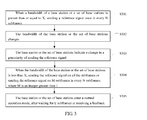
- the sending device may reduce the transmission bandwidth due to energy saving or other reasons, and further, the sending device also reduces the overhead of the reference signal, then the sending device also needs to adjust the granularity of sending the reference signal while adjusting the sending bandwidth.
- a bandwidth of a sending device (a base station or a set of base stations) changes from being greater than or equal to X to being less than X
- a granularity of sending a reference signal needs to be adjusted correspondingly, wherein sending the reference signal once in every N subframes (as shown in S301) is changed into sending the reference signal on all the subframes or sending the reference signal on M subframes in every N subframes (as shown in S304), where M is an integer greater than 1.
- the sending device While changing the bandwidth and changing the granularity of sending the reference signal, the sending device needs to send signaling for indicating a terminal device a change in the granularity of sending the reference signal, or indicating a terminal device a change in the system bandwidth and notifying the bandwidths before and after the change, or whether the bandwidth change exceeds a threshold corresponding to X, as shown in S303.
- the terminal device thus can know or infer that the granularity of sending the reference signal has changed, and thereby adjust the granularity of receiving the reference signal.
- the sending device needs to wait for a certain amount of time after adjusting the bandwidth and the granularity of sending the reference signal, because a certain amount of processing time is necessary for the terminal device to receive the signaling and adjust the granularity of receiving the reference signal. While waiting, the sending device can start its timer, if the timer starts from the change or sending a change instruction and ends at the L subframes, the sending device can consider that the terminal device has completed the granularity change of receiving the reference signal; or, while waiting, the sending device is waiting for feedbacks of the terminal device until all the feedbacks are received, and then the sending device starts to perform a normal operation on a new bandwidth, as shown in S305.
- the sending device While changing the bandwidth and changing the granularity of sending the reference signal, the sending device needs to send signaling for indicating a terminal device a change in the granularity of sending the reference signal, or indicating a terminal device a change in the system bandwidth and notifying the bandwidths before and after the change, or whether the bandwidth change exceeds a threshold corresponding to X, as shown in S403.
- the terminal device thus can know or infer that the granularity of sending the reference signal has changed, and thereby adjust the granularity of receiving the reference signal.
- the sending device needs to wait for a certain amount of time after adjusting the bandwidth and the granularity of sending the reference signal, because a certain amount of processing time is necessary for the terminal device to receive the signaling and adjust the granularity of receiving the reference signal. While waiting, the sending device can start its timer, if the timer starts from the change or sending a change instruction and ends at the L subframes, the sending device can consider that the terminal device has completed the granularity change of receiving the reference signal; or, while waiting, the sending device is waiting for feedbacks of the terminal device until all the feedbacks are received, and then the sending device starts to perform a normal operation on a new bandwidth, as shown in S405.
- Such a sending change procedure can achieve advantageous effects of the sending method shown in FIG. 1 , besides, the granularity of sending the reference signal can be effectively adjusted when the sending device changes the bandwidths. Meanwhile, the signaling indication provided for the terminal device can effectively trigger the terminal device to timely adjust the granularity of receiving the reference signal, so that the sending device and the receiving device can be coordinated consistently, and communication effect can be improved.
- the terminal device needs to adjust the granularity of receiving the reference signal when receiving the reference signal, and may also need to notify the sending device that the granularity of receiving the reference signal has been adjusted completely.
- a bandwidth of a terminal device changes from being greater than or equal to X to being less than X
- a granularity of receiving a reference signal needs to be adjusted correspondingly, wherein receiving the reference signal once in every N subframes (as shown in S501) is changed into receiving the reference signal on all the subframes or receiving the reference signal on M subframes in every N subframes (as shown in S504), where a time length corresponding to M is less than N subframes.
- the terminal device firstly receives an signaling indication of the sending device, that is, indicating the terminal device a change in the granularity of sending the reference signal, or indicating the terminal device a change in the system bandwidth and notifying the bandwidths before and after the change, or whether the bandwidth change exceeds a threshold corresponding to X, as shown in S503.
- the terminal device thus can know or infer that the granularity of sending the reference signal has changed according to the signaling, and thereby adjust the granularity of receiving the reference signal.
- the terminal device may need to feed back to the sending device after the granularity adjustment of receiving the reference signal is completed, that is, notify the sending device that the granularity change of receiving the reference signal has been completed, as shown in S505.
- a bandwidth of the terminal device changes from being less than X to being greater than or equal to X
- a granularity of receiving a reference signal needs to be adjusted, wherein receiving the reference signal on all the subframes or receiving the reference signal on M subframes in every N subframes (as shown in S601) is changed into receiving the reference signal once in every N subframes (as shown in S604), where a time length corresponding to M is less than N subframes.
- the terminal device firstly receives an signaling indication of the sending device, that is, indicating the terminal device a change in the granularity of sending the reference signal, or indicating the terminal device a change in the system bandwidth and notifying the bandwidths before and after the change, or whether the bandwidth change exceeds a threshold corresponding to X, as shown in S603.
- the terminal device thus can know or infer that the granularity of sending the reference signal has changed according to the signaling, and thereby adjust the granularity of receiving the reference signal.
- the terminal device may need to feed back to the sending device after the granularity adjustment of receiving the reference signal is completed, that is, notify the sending device that the granularity change of receiving the reference signal has been completed, as shown in S605.
- Such a granularity change procedure of receiving the reference signal can achieve advantageous effects of the sending method shown in FIG. 2 , besides, the signaling indication provided for the terminal device can effectively trigger the terminal device to timely adjust the granularity of receiving the reference signal, so that the sending device and the receiving device can be coordinated consistently, and communication effect can be improved.
- FIG. 7 shows a structural diagram of an apparatus for sending a reference signal, and the apparatus consists of a first sending module, a second sending module and a first processing module.
- the first sending module is configured to send a reference signal according to the method for sending the reference signal as described above and send the reference signal and other signals within a bandwidth; and adjust a granularity of sending the reference signal according to the change method of sending the reference signal as described above, when the bandwidth changes;
- the second sending module is configured to send an indication signaling for indicating a terminal device a change in the granularity of the reference signal, when the bandwidth changes and the granularity of sending the reference signal also changes;
- the first processing module is configured to wait after the granularity of sending the reference signal changes, and perform subsequent processing when a certain time arrives; or configured to perform subsequent processing after a first acquiring module receives a feedback of an apparatus for receiving the reference signal.
- Such a sending device has advantageous effects that various modules support functions as described above, that is, sending the reference signal and a granularity change procedure of sending the reference signal.
- FIG. 8 shows a structural diagram of a terminal device, and the device consists of a first acquiring module, a second acquiring module and a first sending module.
- the first acquiring module is configured to receive a reference signal according to the method for receiving the reference signal as described above; and configured to adjust a granularity of receiving the reference signal according to the method for adjusting the granularity of receiving the reference signal as described above, when the bandwidth changes;
- the second acquiring module is configured to receive a signaling for indicating a change in the granularity of the reference signal, or configured to receive a signaling for indicating a change in a bandwidth and the bandwidths before and after the change.
- the first sending module is configured to feed back an indication for indicating the terminal device has completed a granularity change of receiving the reference signal.
- Such a receiving device has advantageous effects that various modules support functions as described above, that is, receiving the reference signal and a granularity change procedure of receiving the reference signal.
- the whole system consists of a sending device and a terminal device, when the system bandwidth changes, the sending device completes the granularity change of sending the reference signal according to the method for sending and changing the reference signal, as shown in FIGs. 1 , 3 and 4 , respectively, and sends a notification to the terminal device for indicating a change in the granularity of the reference signal.
- the terminal device After receiving the notification of the granularity of sending the reference signal, the terminal device completes receiving of the reference signal and the granularity change of receiving the reference signal according to the method for receiving of the reference signal and the granularity change method of receiving the reference signal, or completes the granularity change of the reference signal and notifies to the sending device, as shown in FIGs. 2 , 5 and 6 , respectively.
- the method for sending the reference signal, the change procedure of sending the reference signal, the sending device, the method for receiving the reference signal, the change procedure of receiving the reference signal and the terminal device, as described above can effectively reduce the overhead of the reference signal and meanwhile guarantee the communication quality.
- the overhead of the reference signal cannot be reduced without limitation, but this reduction needs to consider performances, such as the timing and synchronous tracking, radio resource management (Radio Resource Management, RRM), demodulation and channel measurement feedback, and so on, and the timing and synchronous tracking needs a certain amount of reference signals. This raises a higher requirement on a system with a smaller bandwidth, that is, when the bandwidth is small, reference signals cannot be reduced greatly.
- the method for sending/receiving the reference signal, and the device for sending/receiving the reference signal as described above can effectively reduce the overhead of the reference signal when the bandwidth is large, and can appropriately reduce the overhead of the reference signal when the bandwidth is small, so as to guarantee the communication quality, when the bandwidth changes, the sending end and receiving end can consistently complete granularity change of the reference signal.
- GSM Global System of Mobile communication
- CDMA code division multiple access
- WCDMA wideband code division multiple access
- GPRS General Packet Radio Service
- LTE Long Term Evolution
- FDD Frequency Division Duplex
- TDD Time Division Duplex
- UMTS Universal Mobile Telecommunication System
- WiMAX worldwide interoperability for microwave access
- a user equipment also can be called a terminal (Terminal), a mobile station (Mobile Station, MS), or a mobile terminal (Mobile Terminal) and so on, and the user equipment can communicate with one or more core networks via a radio access network (Radio Access Network, RAN), for example, the user equipment can be a mobile phone (or a "cellular" phone) and a computer with a mobile terminal, and thus can be, for example, portable, pocket, hand-held, computer-included, or vehicle-mounted mobile apparatuses which communicate voice and/or data with a radio access network.
- RAN Radio Access Network
- the base station can be a base station ( Base Transceiver Station, BTS) in GSM or CDMA, or a base station (NodeB, NB) in WCDMA, or an evolved Node B (Evolutional Node B, ENB or e-NodeB) in LTE, and the present invention is not limited thereto.
- BTS Base Transceiver Station
- NodeB, NB base station
- Evolutional Node B, ENB or e-NodeB evolved Node B
- the disclosed apparatus, method and system may be implemented in other modes.
- the device embodiments above are illustrative in nature, and the units of the device are defined from the perspective of logical functions only and may be defined in a different method in practical application.
- multiple units or modules may be combined or integrated into another system, or some features may be ignored or not executed.
Landscapes
- Engineering & Computer Science (AREA)
- Signal Processing (AREA)
- Computer Networks & Wireless Communication (AREA)
- Mobile Radio Communication Systems (AREA)
Claims (15)
- Verfahren zum Senden eines Referenzsignals, dadurch gekennzeichnet, dass es Folgendes umfasst:wenn eine Systembandbreite größer als oder gleich X ist, Senden (S101) des Referenzsignals auf einem Unterrahmen von N Unterrahmen, wobei N eine Ganzzahl größer als 1 ist; wenn die Systembandbreite kleiner als X ist, Senden des Referenzsignals auf M Unterrahmen von N Unterrahmen, wobei M eine Ganzzahl größer als 1 ist; oderwenn eine Systembandbreite größer als X ist, Senden (S102) des Referenzsignals auf einem Unterrahmen von N Unterrahmen, wobei N eine Ganzzahl größer als 1 ist;wenn die Systembandbreite kleiner als oder gleich X ist, Senden des Referenzsignals auf M Unterrahmen von N Unterrahmen, wobei M eine Ganzzahl größer als 1 ist.
- Verfahren nach Anspruch 1, wobei dann, wenn sich die Bandbreite ändert, eine Granularität zum Senden des Referenzsignals angepasst werden muss,
wenn sich die Bandbreite von kleiner als X zu größer als oder gleich X ändert, Senden des Referenzsignals auf M Unterrahmen von N Unterrahmen zu Senden des Referenzsignals auf einem Unterrahmen von N Unterrahmen geändert wird;
wenn sich die Bandbreite von größer als oder gleich X zu kleiner als X ändert, Senden des Referenzsignals auf einem Unterrahmen von N Unterrahmen zu Senden des Referenzsignals auf M Unterrahmen von N Unterrahmen geändert wird. - Verfahren nach Anspruch 1, wobei dann, wenn sich die Bandbreite ändert, eine Granularität zum Senden des Referenzsignals angepasst werden muss,
wenn sich die Bandbreite von kleiner als oder gleich X zu größer als X ändert, Senden des Referenzsignals auf M Unterrahmen von N Unterrahmen zu Senden des Referenzsignals auf einem Unterrahmen von N Unterrahmen geändert wird;
wenn sich die Bandbreite von größer als X zu kleiner als oder gleich X ändert, Senden des Referenzsignals auf einem Unterrahmen von N Unterrahmen zu Senden des Referenzsignals auf M Unterrahmen von N Unterrahmen geändert wird. - Verfahren nach einem der Ansprüche 1 bis 3, wobei ein Wert von X einer aus den Folgenden ist:X ist 25PRB oder gleich einer Bandbreite von 5 MHz;X ist 15PRB oder gleich einer Bandbreite von 3 MHz;X ist 6PRB oder gleich einer Bandbreite von 1,4 MHz.
- Verfahren nach einem der Ansprüche 1 bis 3, wobei:N = 5 × k, M > 1 und M ≤ N ist, wobei k eine Ganzzahl ist.
- Verfahren nach einem der Ansprüche 1 bis 3, wobei dann, wenn sich die Bandbreite ändert und eine Granularität zum Senden des Referenzsignals angepasst werden muss, eine Signalisierungsangabe gesendet werden muss
zum Angeben einer Änderung einer Granularität des Referenzsignals; oder
zum Angeben einer Änderung einer Bandbreite und der Bandbreiten vor und nach der Änderung. - Verfahren zum Empfangen eines Referenzsignals, dadurch gekennzeichnet, dass es Folgendes umfasst:wenn eine Bandbreite größer als oder gleich X ist, Empfangen (S201) des Referenzsignals einmal in N Unterrahmen; wenn die Bandbreite kleiner als X ist, Empfangen des Referenzsignals auf allen Unterrahmen oder Empfangen des Referenzsignals auf M Unterrahmen von N Unterrahmen, wobei M eine Ganzzahl größer als 1 ist; oderwenn eine Bandbreite größer als X ist, Empfangen (S202) des Referenzsignals einmal in N Unterrahmen; wenn die Bandbreite kleiner als oder gleich X ist, Empfangen des Referenzsignals auf allen Unterrahmen oder Empfangen des Referenzsignals auf M Unterrahmen von N Unterrahmen, wobei M eine Ganzzahl größer als 1 ist.
- Verfahren nach Anspruch 7, wobei dann, wenn sich die Bandbreite ändert, eine Granularität zum Empfangen des Referenzsignals angepasst werden muss,
wenn sich die Bandbreite von kleiner als X zu größer als oder gleich X ändert, sich die Granularität zum Empfangen des Referenzsignals von Empfangen des Referenzsignals auf allen Unterrahmen oder Empfangen des Referenzsignals auf M Unterrahmen von N Unterrahmen zu Empfangen des Referenzsignals einmal in N Unterrahmen ändert;
wenn sich die Bandbreite von größer als oder gleich X zu kleiner als X ändert, sich die Granularität zum Empfangen des Referenzsignals von Empfangen des Referenzsignals einmal in N Unterrahmen zu Empfangen des Referenzsignals auf allen Unterrahmen oder Empfangen des Referenzsignals auf M Unterrahmen von N Unterrahmen ändert. - Verfahren nach Anspruch 7, wobei dann, wenn sich die Bandbreite ändert, eine Granularität zum Empfangen des Referenzsignals angepasst werden muss,
wenn sich die Bandbreite von kleiner als oder gleich X zu größer als X ändert, sich die Granularität zum Empfangen des Referenzsignals von Empfangen des Referenzsignals auf allen Unterrahmen oder Empfangen des Referenzsignals auf M Unterrahmen von N Unterrahmen zu Empfangen des Referenzsignals einmal in N Unterrahmen ändert;
wenn sich die Bandbreite von größer als X zu kleiner als oder gleich X ändert, sich die Granularität zum Empfangen des Referenzsignals von Empfangen des Referenzsignals einmal in N Unterrahmen zu Empfangen des Referenzsignals auf allen Unterrahmen oder Empfangen des Referenzsignals auf M Unterrahmen von N Unterrahmen ändert. - Verfahren nach einem der Ansprüche 7 bis 9, wobei ein Wert von X einer aus den Folgenden ist:X ist 25PRB oder gleich einer Bandbreite von 5 MHz;X ist 15PRB oder gleich einer Bandbreite von 3 MHz;X ist 6PRB oder gleich einer Bandbreite von 1,4 MHz.
- Verfahren nach einem der Ansprüche 7 bis 9, wobei:N = 5 × k, M > 1 und M ≤ N ist, wobei k eine Ganzzahl ist.
- Verfahren nach einem der Ansprüche 7 bis 9, wobei Bestimmen durch ein Empfangsendgerät, ob eine Granularität zum Empfangen des Referenzsignals gemäß einer Angabe angepasst werden muss,
direktes Bestimmen, ob sich die Granularität zum Empfangen des Referenzsignals ändert, gemäß einer empfangenen Signalisierung; oder
Bestimmen, ob sich die Granularität zum Empfangen des Referenzsignals ändert, gemäß empfangenen Bandbreiten vor und nach einer Änderung. - Verfahren nach Anspruch 12, wobei, nachdem das Empfangsendgerät die Angabe empfängt und bestimmt, dass sich die Granularität zum Empfangen des Referenzsignals ändern muss, L Unterrahmen warten müssen, bis eine Granularitätsänderung zum Empfangen des Referenzsignals wirksam wird.
- Vorrichtung zum Senden eines Referenzsignals, dadurch gekennzeichnet, dass sie Folgendes umfasst:ein erstes Sendemodul (71), das konfiguriert ist, das Referenzsignal gemäß dem Verfahren nach einem der Ansprüche 1 bis 5 zu senden; undein zweites Sendemodul (72), das konfiguriert ist, eine Angabesignalisierung zum Angeben einer Änderung der Granularität des Referenzsignals für eine Endgerätevorrichtung zu senden, wenn sich die Bandbreite ändert und sich die Granularität zum Senden des Referenzsignals ebenfalls ändert.
- Endgerätevorrichtung, dadurch gekennzeichnet, dass sie Folgendes umfasst:ein erstes Erfassungsmodul (81), das konfiguriert ist, das Referenzsignal gemäß dem Verfahren nach einem der Ansprüche 7 bis 11 zu empfangen;ein zweites Erfassungsmodul (82), das konfiguriert ist, eine Signalisierung zum Angeben einer Änderung der Granularität des Referenzsignals zu empfangen, oder konfiguriert ist, eine Signalisierung zum Angeben einer Änderung einer Bandbreite und der Bandbreiten vor und nach der Änderung zu empfangen; undein erstes Sendemodul (83), das konfiguriert ist, eine Angabe zum Angeben, dass die Endgerätevorrichtung eine Granularitätsänderung zum Empfangen des Referenzsignals fertiggestellt hat, zurückzumelden.
Applications Claiming Priority (1)
| Application Number | Priority Date | Filing Date | Title |
|---|---|---|---|
| PCT/CN2012/082408 WO2014047915A1 (zh) | 2012-09-29 | 2012-09-29 | 参考信号发送和接收的方法和装置 |
Publications (3)
| Publication Number | Publication Date |
|---|---|
| EP2903368A1 EP2903368A1 (de) | 2015-08-05 |
| EP2903368A4 EP2903368A4 (de) | 2015-09-02 |
| EP2903368B1 true EP2903368B1 (de) | 2016-09-14 |
Family
ID=50386884
Family Applications (1)
| Application Number | Title | Priority Date | Filing Date |
|---|---|---|---|
| EP12885742.2A Active EP2903368B1 (de) | 2012-09-29 | 2012-09-29 | Verfahren und vorrichtung zum senden und empfangen eines referenzsignals |
Country Status (4)
| Country | Link |
|---|---|
| US (1) | US20150200763A1 (de) |
| EP (1) | EP2903368B1 (de) |
| CN (1) | CN104770028B (de) |
| WO (1) | WO2014047915A1 (de) |
Families Citing this family (3)
| Publication number | Priority date | Publication date | Assignee | Title |
|---|---|---|---|---|
| WO2017075809A1 (zh) * | 2015-11-06 | 2017-05-11 | 华为技术有限公司 | 一种参考信号的传输方法、用户设备、基站及系统 |
| KR102645643B1 (ko) * | 2018-05-21 | 2024-03-11 | 삼성전자 주식회사 | 무선 통신 시스템을 위한 기준 신호 송수신 방법 및 장치 |
| CN115255576B (zh) * | 2022-07-27 | 2024-06-04 | 深圳市爱达思技术有限公司 | 焊接工作点设置方法、装置、设备及存储介质 |
Family Cites Families (11)
| Publication number | Priority date | Publication date | Assignee | Title |
|---|---|---|---|---|
| CN101150570A (zh) * | 2006-09-19 | 2008-03-26 | 中兴通讯股份有限公司 | 基于宽带单载波系统的控制信令和参考信号的发送方法 |
| JP4601637B2 (ja) * | 2007-03-20 | 2010-12-22 | 株式会社エヌ・ティ・ティ・ドコモ | 移動局、送信方法及び無線通信システム |
| CN101540633B (zh) * | 2008-03-21 | 2012-10-10 | 电信科学技术研究院 | 一种下行传输的方法、系统及基站 |
| US8938247B2 (en) * | 2009-04-23 | 2015-01-20 | Qualcomm Incorporated | Sounding reference signal for coordinated multi-point operation |
| US8964621B2 (en) * | 2009-05-08 | 2015-02-24 | Qualcomm Incorporated | Transmission and reception of a reference signal supporting positioning in a wireless communication network |
| CN101997809B (zh) * | 2009-08-18 | 2013-09-11 | 中兴通讯股份有限公司 | 信道测量导频发送方法和系统 |
| US9961579B2 (en) * | 2009-10-01 | 2018-05-01 | Qualcomm Incorporated | Scalable channel feedback for wireless communication |
| CN101697535A (zh) * | 2009-10-29 | 2010-04-21 | 中兴通讯股份有限公司 | 定位参考信号发送方法、数据发送方法、数据接收方法 |
| EP2343849B1 (de) * | 2010-01-07 | 2019-05-29 | Samsung Electronics Co., Ltd. | Vorrichtung und Verfahren zur Erweiterung der Merkmale von Uplink-Referenzsignalen |
| CN102480342A (zh) * | 2010-11-25 | 2012-05-30 | 普天信息技术研究院有限公司 | 一种传输参考信号的方法和系统 |
| US9572152B2 (en) * | 2012-03-23 | 2017-02-14 | Telefonaktiebolaget L M Ericsson (Publ) | Bandwidth adaptive reference signals |
-
2012
- 2012-09-29 EP EP12885742.2A patent/EP2903368B1/de active Active
- 2012-09-29 WO PCT/CN2012/082408 patent/WO2014047915A1/zh not_active Ceased
- 2012-09-29 CN CN201280075888.4A patent/CN104770028B/zh active Active
-
2015
- 2015-03-27 US US14/671,556 patent/US20150200763A1/en not_active Abandoned
Also Published As
| Publication number | Publication date |
|---|---|
| US20150200763A1 (en) | 2015-07-16 |
| EP2903368A1 (de) | 2015-08-05 |
| WO2014047915A1 (zh) | 2014-04-03 |
| CN104770028B (zh) | 2018-10-30 |
| CN104770028A (zh) | 2015-07-08 |
| EP2903368A4 (de) | 2015-09-02 |
Similar Documents
| Publication | Publication Date | Title |
|---|---|---|
| EP4236485B1 (de) | Bwp-verwaltungsverfahren und -vorrichtung | |
| EP2908586B1 (de) | Verfahren, benutzergerät und basisstation zur informationsübertragung | |
| US9549397B2 (en) | Method and device for transmitting data | |
| EP3755052B1 (de) | Teilbandschaltverfahren und vorrichtungen | |
| EP3512288B1 (de) | Kommunikationsverfahren, basisstation und endgerätevorrichtung | |
| US9622232B2 (en) | Method, user equipment, and base station for transmitting information | |
| EP2797355A1 (de) | Drahtloses kommunikationsverfahren und vorrichtung | |
| EP2846594A1 (de) | Verfahren und endgerät zum konfigurieren von ressourcen und empfangen von downlink-steuerinformationen | |
| CN105766014B (zh) | 一种物理下行控制信道的传输方法、基站设备及用户设备 | |
| EP2782404A1 (de) | Verfahren zur übertragung von subframeinformationen, benutzergerät und basisstation | |
| EP3637818B1 (de) | Verfahren und vorrichtung zum senden und empfangen von signalen | |
| CN103874085B (zh) | 一种数据传输控制方法及设备 | |
| EP2713669B1 (de) | Mobile Kommunikationsgeräte und Verfahren für eine "Physical Downlink Control Channel"-(PDCCH)-Überwachung | |
| EP2903368A1 (de) | Verfahren und vorrichtung zum senden und empfangen eines referenzsignals | |
| EP3205038B1 (de) | Aktivierung von trägern | |
| CN115087104B (zh) | 通信方法和装置 | |
| EP4694364A1 (de) | Kommunikationsverfahren und -vorrichtung in einem szenario für diskontinuierliche übertragung/empfang in einer zelle | |
| CN104303535B (zh) | 一种信号传输方法及设备 | |
| HK40008911B (en) | Information transmission method, network device and terminal device and computer readable medium | |
| HK40008911A (en) | Information transmission method, network device and terminal device and computer readable medium |
Legal Events
| Date | Code | Title | Description |
|---|---|---|---|
| PUAI | Public reference made under article 153(3) epc to a published international application that has entered the european phase |
Free format text: ORIGINAL CODE: 0009012 |
|
| 17P | Request for examination filed |
Effective date: 20150402 |
|
| AK | Designated contracting states |
Kind code of ref document: A1 Designated state(s): AL AT BE BG CH CY CZ DE DK EE ES FI FR GB GR HR HU IE IS IT LI LT LU LV MC MK MT NL NO PL PT RO RS SE SI SK SM TR |
|
| AX | Request for extension of the european patent |
Extension state: BA ME |
|
| RA4 | Supplementary search report drawn up and despatched (corrected) |
Effective date: 20150803 |
|
| RIC1 | Information provided on ipc code assigned before grant |
Ipc: H04L 5/00 20060101ALI20150728BHEP Ipc: H04W 72/04 20090101AFI20150728BHEP |
|
| DAX | Request for extension of the european patent (deleted) | ||
| GRAP | Despatch of communication of intention to grant a patent |
Free format text: ORIGINAL CODE: EPIDOSNIGR1 |
|
| RIC1 | Information provided on ipc code assigned before grant |
Ipc: H04W 72/04 20090101AFI20160303BHEP Ipc: H04L 5/00 20060101ALI20160303BHEP |
|
| INTG | Intention to grant announced |
Effective date: 20160324 |
|
| GRAS | Grant fee paid |
Free format text: ORIGINAL CODE: EPIDOSNIGR3 |
|
| GRAA | (expected) grant |
Free format text: ORIGINAL CODE: 0009210 |
|
| AK | Designated contracting states |
Kind code of ref document: B1 Designated state(s): AL AT BE BG CH CY CZ DE DK EE ES FI FR GB GR HR HU IE IS IT LI LT LU LV MC MK MT NL NO PL PT RO RS SE SI SK SM TR |
|
| REG | Reference to a national code |
Ref country code: GB Ref legal event code: FG4D |
|
| REG | Reference to a national code |
Ref country code: CH Ref legal event code: EP |
|
| REG | Reference to a national code |
Ref country code: IE Ref legal event code: FG4D |
|
| REG | Reference to a national code |
Ref country code: AT Ref legal event code: REF Ref document number: 830198 Country of ref document: AT Kind code of ref document: T Effective date: 20161015 |
|
| REG | Reference to a national code |
Ref country code: DE Ref legal event code: R096 Ref document number: 602012023202 Country of ref document: DE |
|
| REG | Reference to a national code |
Ref country code: LT Ref legal event code: MG4D |
|
| REG | Reference to a national code |
Ref country code: NL Ref legal event code: MP Effective date: 20160914 |
|
| PG25 | Lapsed in a contracting state [announced via postgrant information from national office to epo] |
Ref country code: FI Free format text: LAPSE BECAUSE OF FAILURE TO SUBMIT A TRANSLATION OF THE DESCRIPTION OR TO PAY THE FEE WITHIN THE PRESCRIBED TIME-LIMIT Effective date: 20160914 Ref country code: LT Free format text: LAPSE BECAUSE OF FAILURE TO SUBMIT A TRANSLATION OF THE DESCRIPTION OR TO PAY THE FEE WITHIN THE PRESCRIBED TIME-LIMIT Effective date: 20160914 Ref country code: RS Free format text: LAPSE BECAUSE OF FAILURE TO SUBMIT A TRANSLATION OF THE DESCRIPTION OR TO PAY THE FEE WITHIN THE PRESCRIBED TIME-LIMIT Effective date: 20160914 Ref country code: HR Free format text: LAPSE BECAUSE OF FAILURE TO SUBMIT A TRANSLATION OF THE DESCRIPTION OR TO PAY THE FEE WITHIN THE PRESCRIBED TIME-LIMIT Effective date: 20160914 Ref country code: NO Free format text: LAPSE BECAUSE OF FAILURE TO SUBMIT A TRANSLATION OF THE DESCRIPTION OR TO PAY THE FEE WITHIN THE PRESCRIBED TIME-LIMIT Effective date: 20161214 |
|
| PG25 | Lapsed in a contracting state [announced via postgrant information from national office to epo] |
Ref country code: BE Free format text: LAPSE BECAUSE OF NON-PAYMENT OF DUE FEES Effective date: 20160930 Ref country code: NL Free format text: LAPSE BECAUSE OF FAILURE TO SUBMIT A TRANSLATION OF THE DESCRIPTION OR TO PAY THE FEE WITHIN THE PRESCRIBED TIME-LIMIT Effective date: 20160914 Ref country code: GR Free format text: LAPSE BECAUSE OF FAILURE TO SUBMIT A TRANSLATION OF THE DESCRIPTION OR TO PAY THE FEE WITHIN THE PRESCRIBED TIME-LIMIT Effective date: 20161215 Ref country code: SE Free format text: LAPSE BECAUSE OF FAILURE TO SUBMIT A TRANSLATION OF THE DESCRIPTION OR TO PAY THE FEE WITHIN THE PRESCRIBED TIME-LIMIT Effective date: 20160914 Ref country code: LV Free format text: LAPSE BECAUSE OF FAILURE TO SUBMIT A TRANSLATION OF THE DESCRIPTION OR TO PAY THE FEE WITHIN THE PRESCRIBED TIME-LIMIT Effective date: 20160914 |
|
| PG25 | Lapsed in a contracting state [announced via postgrant information from national office to epo] |
Ref country code: EE Free format text: LAPSE BECAUSE OF FAILURE TO SUBMIT A TRANSLATION OF THE DESCRIPTION OR TO PAY THE FEE WITHIN THE PRESCRIBED TIME-LIMIT Effective date: 20160914 Ref country code: RO Free format text: LAPSE BECAUSE OF FAILURE TO SUBMIT A TRANSLATION OF THE DESCRIPTION OR TO PAY THE FEE WITHIN THE PRESCRIBED TIME-LIMIT Effective date: 20160914 |
|
| PG25 | Lapsed in a contracting state [announced via postgrant information from national office to epo] |
Ref country code: SM Free format text: LAPSE BECAUSE OF FAILURE TO SUBMIT A TRANSLATION OF THE DESCRIPTION OR TO PAY THE FEE WITHIN THE PRESCRIBED TIME-LIMIT Effective date: 20160914 Ref country code: PT Free format text: LAPSE BECAUSE OF FAILURE TO SUBMIT A TRANSLATION OF THE DESCRIPTION OR TO PAY THE FEE WITHIN THE PRESCRIBED TIME-LIMIT Effective date: 20170116 Ref country code: ES Free format text: LAPSE BECAUSE OF FAILURE TO SUBMIT A TRANSLATION OF THE DESCRIPTION OR TO PAY THE FEE WITHIN THE PRESCRIBED TIME-LIMIT Effective date: 20160914 Ref country code: SK Free format text: LAPSE BECAUSE OF FAILURE TO SUBMIT A TRANSLATION OF THE DESCRIPTION OR TO PAY THE FEE WITHIN THE PRESCRIBED TIME-LIMIT Effective date: 20160914 Ref country code: CZ Free format text: LAPSE BECAUSE OF FAILURE TO SUBMIT A TRANSLATION OF THE DESCRIPTION OR TO PAY THE FEE WITHIN THE PRESCRIBED TIME-LIMIT Effective date: 20160914 Ref country code: BE Free format text: LAPSE BECAUSE OF FAILURE TO SUBMIT A TRANSLATION OF THE DESCRIPTION OR TO PAY THE FEE WITHIN THE PRESCRIBED TIME-LIMIT Effective date: 20160914 Ref country code: IS Free format text: LAPSE BECAUSE OF FAILURE TO SUBMIT A TRANSLATION OF THE DESCRIPTION OR TO PAY THE FEE WITHIN THE PRESCRIBED TIME-LIMIT Effective date: 20170114 Ref country code: PL Free format text: LAPSE BECAUSE OF FAILURE TO SUBMIT A TRANSLATION OF THE DESCRIPTION OR TO PAY THE FEE WITHIN THE PRESCRIBED TIME-LIMIT Effective date: 20160914 Ref country code: BG Free format text: LAPSE BECAUSE OF FAILURE TO SUBMIT A TRANSLATION OF THE DESCRIPTION OR TO PAY THE FEE WITHIN THE PRESCRIBED TIME-LIMIT Effective date: 20161214 |
|
| REG | Reference to a national code |
Ref country code: DE Ref legal event code: R097 Ref document number: 602012023202 Country of ref document: DE |
|
| REG | Reference to a national code |
Ref country code: IE Ref legal event code: MM4A |
|
| PLBE | No opposition filed within time limit |
Free format text: ORIGINAL CODE: 0009261 |
|
| STAA | Information on the status of an ep patent application or granted ep patent |
Free format text: STATUS: NO OPPOSITION FILED WITHIN TIME LIMIT |
|
| PG25 | Lapsed in a contracting state [announced via postgrant information from national office to epo] |
Ref country code: IE Free format text: LAPSE BECAUSE OF NON-PAYMENT OF DUE FEES Effective date: 20160929 Ref country code: DK Free format text: LAPSE BECAUSE OF FAILURE TO SUBMIT A TRANSLATION OF THE DESCRIPTION OR TO PAY THE FEE WITHIN THE PRESCRIBED TIME-LIMIT Effective date: 20160914 |
|
| 26N | No opposition filed |
Effective date: 20170615 |
|
| REG | Reference to a national code |
Ref country code: FR Ref legal event code: ST Effective date: 20170726 |
|
| PG25 | Lapsed in a contracting state [announced via postgrant information from national office to epo] |
Ref country code: LU Free format text: LAPSE BECAUSE OF NON-PAYMENT OF DUE FEES Effective date: 20160929 |
|
| PG25 | Lapsed in a contracting state [announced via postgrant information from national office to epo] |
Ref country code: FR Free format text: LAPSE BECAUSE OF NON-PAYMENT OF DUE FEES Effective date: 20161114 |
|
| PG25 | Lapsed in a contracting state [announced via postgrant information from national office to epo] |
Ref country code: SI Free format text: LAPSE BECAUSE OF FAILURE TO SUBMIT A TRANSLATION OF THE DESCRIPTION OR TO PAY THE FEE WITHIN THE PRESCRIBED TIME-LIMIT Effective date: 20160914 |
|
| PG25 | Lapsed in a contracting state [announced via postgrant information from national office to epo] |
Ref country code: HU Free format text: LAPSE BECAUSE OF FAILURE TO SUBMIT A TRANSLATION OF THE DESCRIPTION OR TO PAY THE FEE WITHIN THE PRESCRIBED TIME-LIMIT; INVALID AB INITIO Effective date: 20120929 |
|
| PG25 | Lapsed in a contracting state [announced via postgrant information from national office to epo] |
Ref country code: MK Free format text: LAPSE BECAUSE OF FAILURE TO SUBMIT A TRANSLATION OF THE DESCRIPTION OR TO PAY THE FEE WITHIN THE PRESCRIBED TIME-LIMIT Effective date: 20160914 Ref country code: CY Free format text: LAPSE BECAUSE OF FAILURE TO SUBMIT A TRANSLATION OF THE DESCRIPTION OR TO PAY THE FEE WITHIN THE PRESCRIBED TIME-LIMIT Effective date: 20160914 Ref country code: MT Free format text: LAPSE BECAUSE OF NON-PAYMENT OF DUE FEES Effective date: 20160930 Ref country code: MC Free format text: LAPSE BECAUSE OF FAILURE TO SUBMIT A TRANSLATION OF THE DESCRIPTION OR TO PAY THE FEE WITHIN THE PRESCRIBED TIME-LIMIT Effective date: 20160914 |
|
| PG25 | Lapsed in a contracting state [announced via postgrant information from national office to epo] |
Ref country code: TR Free format text: LAPSE BECAUSE OF FAILURE TO SUBMIT A TRANSLATION OF THE DESCRIPTION OR TO PAY THE FEE WITHIN THE PRESCRIBED TIME-LIMIT Effective date: 20160914 Ref country code: AL Free format text: LAPSE BECAUSE OF FAILURE TO SUBMIT A TRANSLATION OF THE DESCRIPTION OR TO PAY THE FEE WITHIN THE PRESCRIBED TIME-LIMIT Effective date: 20160914 |
|
| REG | Reference to a national code |
Ref country code: AT Ref legal event code: UEP Ref document number: 830198 Country of ref document: AT Kind code of ref document: T Effective date: 20160914 |
|
| PGFP | Annual fee paid to national office [announced via postgrant information from national office to epo] |
Ref country code: GB Payment date: 20200916 Year of fee payment: 9 |
|
| PGFP | Annual fee paid to national office [announced via postgrant information from national office to epo] |
Ref country code: AT Payment date: 20200825 Year of fee payment: 9 Ref country code: CH Payment date: 20200916 Year of fee payment: 9 Ref country code: IT Payment date: 20200812 Year of fee payment: 9 |
|
| REG | Reference to a national code |
Ref country code: CH Ref legal event code: PL |
|
| REG | Reference to a national code |
Ref country code: AT Ref legal event code: MM01 Ref document number: 830198 Country of ref document: AT Kind code of ref document: T Effective date: 20210929 |
|
| GBPC | Gb: european patent ceased through non-payment of renewal fee |
Effective date: 20210929 |
|
| PG25 | Lapsed in a contracting state [announced via postgrant information from national office to epo] |
Ref country code: GB Free format text: LAPSE BECAUSE OF NON-PAYMENT OF DUE FEES Effective date: 20210929 |
|
| PG25 | Lapsed in a contracting state [announced via postgrant information from national office to epo] |
Ref country code: LI Free format text: LAPSE BECAUSE OF NON-PAYMENT OF DUE FEES Effective date: 20210930 Ref country code: CH Free format text: LAPSE BECAUSE OF NON-PAYMENT OF DUE FEES Effective date: 20210930 Ref country code: AT Free format text: LAPSE BECAUSE OF NON-PAYMENT OF DUE FEES Effective date: 20210929 |
|
| PG25 | Lapsed in a contracting state [announced via postgrant information from national office to epo] |
Ref country code: IT Free format text: LAPSE BECAUSE OF NON-PAYMENT OF DUE FEES Effective date: 20210929 |
|
| PGFP | Annual fee paid to national office [announced via postgrant information from national office to epo] |
Ref country code: DE Payment date: 20240806 Year of fee payment: 13 |