EP2903382A2 - Procédé de traitement de signal de dispositif à dispositif et signal de dispositif à cellulaire et dispositif de communication associé - Google Patents
Procédé de traitement de signal de dispositif à dispositif et signal de dispositif à cellulaire et dispositif de communication associé Download PDFInfo
- Publication number
- EP2903382A2 EP2903382A2 EP15150758.9A EP15150758A EP2903382A2 EP 2903382 A2 EP2903382 A2 EP 2903382A2 EP 15150758 A EP15150758 A EP 15150758A EP 2903382 A2 EP2903382 A2 EP 2903382A2
- Authority
- EP
- European Patent Office
- Prior art keywords
- signal
- subframe
- communication device
- power level
- communication
- Prior art date
- Legal status (The legal status is an assumption and is not a legal conclusion. Google has not performed a legal analysis and makes no representation as to the accuracy of the status listed.)
- Granted
Links
Images



Classifications
-
- H—ELECTRICITY
- H04—ELECTRIC COMMUNICATION TECHNIQUE
- H04L—TRANSMISSION OF DIGITAL INFORMATION, e.g. TELEGRAPHIC COMMUNICATION
- H04L5/00—Arrangements affording multiple use of the transmission path
- H04L5/003—Arrangements for allocating sub-channels of the transmission path
- H04L5/0048—Allocation of pilot signals, i.e. of signals known to the receiver
-
- H—ELECTRICITY
- H04—ELECTRIC COMMUNICATION TECHNIQUE
- H04L—TRANSMISSION OF DIGITAL INFORMATION, e.g. TELEGRAPHIC COMMUNICATION
- H04L5/00—Arrangements affording multiple use of the transmission path
- H04L5/003—Arrangements for allocating sub-channels of the transmission path
- H04L5/0032—Distributed allocation, i.e. involving a plurality of allocating devices, each making partial allocation
-
- H—ELECTRICITY
- H04—ELECTRIC COMMUNICATION TECHNIQUE
- H04L—TRANSMISSION OF DIGITAL INFORMATION, e.g. TELEGRAPHIC COMMUNICATION
- H04L5/00—Arrangements affording multiple use of the transmission path
- H04L5/003—Arrangements for allocating sub-channels of the transmission path
- H04L5/0078—Timing of allocation
- H04L5/0082—Timing of allocation at predetermined intervals
-
- H—ELECTRICITY
- H04—ELECTRIC COMMUNICATION TECHNIQUE
- H04W—WIRELESS COMMUNICATION NETWORKS
- H04W24/00—Supervisory, monitoring or testing arrangements
- H04W24/06—Testing, supervising or monitoring using simulated traffic
-
- H—ELECTRICITY
- H04—ELECTRIC COMMUNICATION TECHNIQUE
- H04W—WIRELESS COMMUNICATION NETWORKS
- H04W52/00—Power management, e.g. Transmission Power Control [TPC] or power classes
- H04W52/04—Transmission power control [TPC]
- H04W52/30—Transmission power control [TPC] using constraints in the total amount of available transmission power
- H04W52/34—TPC management, i.e. sharing limited amount of power among users or channels or data types, e.g. cell loading
- H04W52/346—TPC management, i.e. sharing limited amount of power among users or channels or data types, e.g. cell loading distributing total power among users or channels
-
- H—ELECTRICITY
- H04—ELECTRIC COMMUNICATION TECHNIQUE
- H04W—WIRELESS COMMUNICATION NETWORKS
- H04W52/00—Power management, e.g. Transmission Power Control [TPC] or power classes
- H04W52/04—Transmission power control [TPC]
- H04W52/38—TPC being performed in particular situations
- H04W52/383—TPC being performed in particular situations power control in peer-to-peer links
-
- H—ELECTRICITY
- H04—ELECTRIC COMMUNICATION TECHNIQUE
- H04W—WIRELESS COMMUNICATION NETWORKS
- H04W76/00—Connection management
- H04W76/10—Connection setup
- H04W76/14—Direct-mode setup
-
- H—ELECTRICITY
- H04—ELECTRIC COMMUNICATION TECHNIQUE
- H04L—TRANSMISSION OF DIGITAL INFORMATION, e.g. TELEGRAPHIC COMMUNICATION
- H04L5/00—Arrangements affording multiple use of the transmission path
- H04L5/0001—Arrangements for dividing the transmission path
- H04L5/0003—Two-dimensional division
- H04L5/0005—Time-frequency
- H04L5/0007—Time-frequency the frequencies being orthogonal, e.g. OFDM(A) or DMT
- H04L5/001—Time-frequency the frequencies being orthogonal, e.g. OFDM(A) or DMT the frequencies being arranged in component carriers
-
- H—ELECTRICITY
- H04—ELECTRIC COMMUNICATION TECHNIQUE
- H04L—TRANSMISSION OF DIGITAL INFORMATION, e.g. TELEGRAPHIC COMMUNICATION
- H04L5/00—Arrangements affording multiple use of the transmission path
- H04L5/14—Two-way operation using the same type of signal, i.e. duplex
-
- H—ELECTRICITY
- H04—ELECTRIC COMMUNICATION TECHNIQUE
- H04W—WIRELESS COMMUNICATION NETWORKS
- H04W28/00—Network traffic management; Network resource management
- H04W28/02—Traffic management, e.g. flow control or congestion control
- H04W28/04—Error control
-
- H—ELECTRICITY
- H04—ELECTRIC COMMUNICATION TECHNIQUE
- H04W—WIRELESS COMMUNICATION NETWORKS
- H04W52/00—Power management, e.g. Transmission Power Control [TPC] or power classes
- H04W52/04—Transmission power control [TPC]
- H04W52/06—TPC algorithms
- H04W52/14—Separate analysis of uplink or downlink
- H04W52/146—Uplink power control
-
- H—ELECTRICITY
- H04—ELECTRIC COMMUNICATION TECHNIQUE
- H04W—WIRELESS COMMUNICATION NETWORKS
- H04W72/00—Local resource management
- H04W72/04—Wireless resource allocation
- H04W72/044—Wireless resource allocation based on the type of the allocated resource
- H04W72/0446—Resources in time domain, e.g. slots or frames
-
- H—ELECTRICITY
- H04—ELECTRIC COMMUNICATION TECHNIQUE
- H04W—WIRELESS COMMUNICATION NETWORKS
- H04W76/00—Connection management
- H04W76/10—Connection setup
- H04W76/15—Setup of multiple wireless link connections
-
- H—ELECTRICITY
- H04—ELECTRIC COMMUNICATION TECHNIQUE
- H04W—WIRELESS COMMUNICATION NETWORKS
- H04W88/00—Devices specially adapted for wireless communication networks, e.g. terminals, base stations or access point devices
- H04W88/02—Terminal devices
- H04W88/06—Terminal devices adapted for operation in multiple networks or having at least two operational modes, e.g. multi-mode terminals
Definitions
- the present invention relates to a method of handling a device-to-device signal and a device-to-cellular signal and related communication device.
- LTE long-term evolution
- 3GPP 3rd Generation Partnership Project
- 3GPP Rel-8 3rd Generation Partnership Project
- 3GPP Rel-9 3rd Generation Partnership Project
- UMTS universal mobile telecommunication system
- the LTE system includes a new radio interface and a new radio network architecture that provides high data rate, low latency, packet optimization, and improved system capacity and coverage.
- a radio access network known as an evolved universal terrestrial radio access network (E-UTRAN) includes multiple evolved Node-Bs (eNBs) for communicating with multiple user equipments (UEs), and for communicating with a core network including a mobility management entity (MME), a serving gateway, etc., for Non-Access Stratum (NAS) control.
- E-UTRAN evolved universal terrestrial radio access network
- eNBs evolved Node-Bs
- MME mobility management entity
- serving gateway etc.
- NAS Non-Access Stratum
- LTE-advanced (LTE-A) system is an evolution of the LTE system.
- the LTE-A system targets faster switching between power states, improves performance at the coverage edge of an eNB, and includes advanced techniques, such as carrier aggregation (CA), coordinated multipoint (CoMP) transmissions/reception, uplink (UL) multiple-input multiple-output (UL-MIMO), etc.
- CA carrier aggregation
- CoMP coordinated multipoint
- UL-MIMO uplink
- the UE and the eNB must support standards developed for the LTE-A system, such as the 3GPP Rel-10 standard or later versions.
- Device-to-device (D2D) communication may be realized, after an initialization (e.g., connection establishment and/or peer discovery) is performed (e.g., assisted by an eNB). Then, two UEs may communicate (e.g., transmitting and/or receiving packets) with each other directly according to the D2D communication, and the eNB does not need to forward the packets transmitted between the communication devices. According to the D2D communication, the UEs may communicate with each other via UL resources (e.g., UL subframes configured by the eNB). In general, the D2D communication may also be seen as a D2D service (i.e., proximity service (ProSe)). In addition, a D2D subframe, D2D transmission, D2D communication and D2D discovery can be termed as a sidelink subframe, sidelink transmission, sidelink communication and sidelink discovery, respectively.
- an initialization e.g., connection establishment and/or peer discovery
- eNB e.g
- a UE may transmit a D2D signal and a device-to-cellular (D2C) signal at the same time (e.g., in the same subframe), when the UE supports both D2D communication and D2C communication.
- D2D communication and the D2C communication may be performed according to different timings.
- the D2D communication may be performed according to a DL timing
- the D2C communication may be performed according to a UL timing.
- the DL timing is used for receiving DL signals transmitted by the eNB, and the UE performs alignment of the DL timing by itself.
- the UL timing is used for transmitting UL signals to the eNB, and the UE performs alignment of the UL timing according to an indication (e.g., timing advance command) transmitted by the eNB.
- a subframe i.e., D2D subframe
- a subframe i.e., D2C subframe
- the last few single-carrier frequency-division multiple access (SC-FDMA) symbols of the D2D signal may overlap with the first few SC-FDMA symbols of the D2C signal.
- SC-FDMA single-carrier frequency-division multiple access
- the D2D signal and the D2C signal may not be transmitted and received correctly, and the D2D communication and the D2C communication may not be performed regularly.
- the problem may be even severe when the D2C signal includes a sounding reference signal (SRS).
- SRS sounding reference signal
- a total power level (e.g., total transmit power level) used by a UE may be greater than a power level limit of the UE, when the UE transmits a D2D signal and a D2C signal at the same time (e.g., in the same subframe). Accordingly, the UE may transmit the signals incompletely, i.e., with insufficient power levels, and the receptions of the signals may be affected.
- the present invention therefore provides a method and related communication device for handling a D2D signal and a D2C signal to solve the abovementioned problem.
- a method of handling a device-to-device (D2D) signal and a device-to-cellular (D2C) signal for a first communication device comprises communicating with a second communication device according to a D2D communication; communicating with a network according to a D2C communication; and transmitting one of the D2D signal and the D2C signal in a subframe, wherein the D2D signal and the D2C signal are transmitted to the second communication device and the network, respectively.
- D2D device-to-device
- D2C device-to-cellular
- Fig. 1 is a schematic diagram of a wireless communication system 10 according to an example of the present invention.
- the wireless communication system 10 is briefly composed of a network and a plurality of communication devices.
- the network and the communication devices are simply utilized for illustrating the structure of the wireless communication system 10.
- a communication device may communicate with the network according to a device-to-cellular (D2C) communication defined in a communication standard, e.g., the 3rd Generation Partnership Project (3GPP).
- 3GPP 3rd Generation Partnership Project
- the network can be a universal terrestrial radio access network (UTRAN) comprising a plurality of Node-Bs (NBs) in a universal mobile telecommunications system (UMTS).
- UTRAN universal terrestrial radio access network
- NBs Node-Bs
- UMTS universal mobile telecommunications system
- the network can be an evolved UTRAN (E-UTRAN) comprising a plurality of evolved NBs (eNBs) and/or relays in a long term evolution (LTE) system, a LTE-Advanced (LTE-A) system or an evolution of the LTE-A system.
- E-UTRAN evolved UTRAN
- eNBs evolved NBs
- LTE-A LTE-Advanced
- LTE-A evolution of the LTE-A system.
- the network can also include both the UTRAN/E-UTRAN and a core network, wherein the core network includes network entities such as Mobility Management Entity (MME), Serving Gateway (S-GW), Packet Data Network (PDN) Gateway (P-GW), Self-Organizing Networks (SON) server and/or Radio Network Controller (RNC), etc.
- MME Mobility Management Entity
- S-GW Serving Gateway
- PDN Packet Data Network
- P-GW Packet Data Network Gateway
- SON Self-Organizing Networks
- RNC Radio Network Controller
- the network may be processed only by the UTRAN/E-UTRAN and decisions corresponding to the information are made at the UTRAN/E-UTRAN.
- the UTRAN/E-UTRAN may forward the information to the core network, and the decisions corresponding to the information are made at the core network after the core network processes the information.
- the information can be processed by both the UTRAN/E-UTRAN and the core network, and the decisions are made after coordination and/or cooperation are performed by the
- a communication device can be a user equipment (UE), a low cost device (e.g., machine type communication (MTC) device), a device-to-device (D2D) device, a mobile phone, a laptop, a tablet computer, an electronic book, a portable computer system, or combination thereof.
- the network and the communication device can be seen as a transmitter or a receiver according to direction (i.e., transmission direction), e.g., for an uplink (UL), the communication device is the transmitter and the network is the receiver, and for a downlink (DL), the network is the transmitter and the communication device is the receiver.
- direction i.e., transmission direction
- two communication devices may communicate with each other directly, after an initialization (e.g., connection establishment and/or peer discovery) is performed.
- the initialization may be assisted by the network. That is, the communication devices may communicate (e.g., transmit and/or receive packets) with each other according to a D2D communication defined in a communication standard, e.g., 3GPP standard.
- the communication devices may communicate with each other via UL subframes determined according to frequency-division duplexing (FDD) configurations and/or time-division duplexing (TDD) configurations.
- FDD frequency-division duplexing
- TDD time-division duplexing
- the communication device may communicate with another communication device and the network simultaneously, i.e., both the D2D communication and the D2C communication are realized at the same time.
- Fig. 2 is a schematic diagram of a communication device 20 according to an example of the present invention.
- the communication device 20 may be a communication device or the network shown in Fig. 1 , but is not limited herein.
- the communication device 20 may include a processing means 200 such as a microprocessor or Application Specific Integrated Circuit (ASIC), a storage unit 210 and a communication interfacing unit 220.
- the storage unit 210 may be any data storage device that may store a program code 214, accessed and executed by the processing means 200.
- Examples of the storage unit 210 include but are not limited to a subscriber identity module (SIM), read-only memory (ROM), flash memory, random-access memory (RAM), Compact Disc Read-Only Memory (CD-ROM), digital versatile disc-ROM (DVD-ROM), Blu-ray Disc-ROM (BD-ROM), magnetic tape, hard disk, optical data storage device, non-volatile storage unit, non-transitory computer-readable medium (e.g., tangible media), etc.
- SIM subscriber identity module
- ROM read-only memory
- flash memory random-access memory
- RAM Compact Disc Read-Only Memory
- DVD-ROM digital versatile disc-ROM
- BD-ROM Blu-ray Disc-ROM
- Fig. 3 is a flowchart of a process 30 according to an example of the present invention.
- the process 30 may be utilized in a first communication device for handling (e.g., multiplexing) a D2D signal and a D2C signal, to communicate with a second communication device and the network.
- the process 30 may be compiled into the program code 214 and includes the following steps: Step 300: Start.
- Step 302 Communicate with the second communication device according to a D2D communication.
- Step 304 Communicate with a network according to a D2C communication.
- Step 306 Transmit one of the D2D signal and the D2C signal in a subframe, wherein the D2D signal and the D2C signal are transmitted to the second communication device and the network, respectively.
- Step 308 End.
- the first communication device communicates with the second communication device according to a D2D communication, and communicates with a network according to a D2C communication.
- the first communication device transmits (e.g., only) one of the D2D signal (for D2D communication) and the D2C signal (for D2C communication) in a subframe, wherein the D2D signal and the D2C signal are transmitted to the second communication device and the network, respectively.
- the first communication device does not transmit the D2D signal and the D2C signal in the same subframe, when communicating with the second communication device and the network.
- the D2C signal may be transmitted, while the D2D signal is not (e.g., is dropped).
- the D2D signal may be transmitted, while the D2C signal is not (e.g., is dropped).
- the D2D communication may be a one-way communication, i.e., the first communication device transmits the D2D signal without waiting for a response.
- the D2D communication may be a two-way communication, i.e., the first communication device waits for a response for responding the D2D signal from the second communication device.
- the D2D signal in the process 30 may not include a guard period (GP).
- a GP e.g., with a length of a single-carrier frequency-division multiple access (SC-FDMA) symbol
- SC-FDMA single-carrier frequency-division multiple access
- the transmissions of the D2D signal and the D2C signal do not interfere (e.g., overlap) with each other according to the process 30.
- the process 30 is especially effective when the D2D communication and the D2C communication follow DL timing and UL timing, respectively. As a result, the receptions of the signals will not be affected. Collision of the D2D signal and the D2C signal can be avoided.
- the subframe in the process 30 may be a D2D subframe.
- the D2C signal may include (or simply be) a sounding reference signal (SRS), and a type of the SRS is not limited herein.
- the SRS may be a cell-specific SRS, or may be a communication device-specific SRS (i.e., UE-specific SRS).
- the UE-specific SRS may be a periodic (i.e., Type-0) SRS, or may be an aperiodic (i.e., Type-1) SRS.
- the D2D subframe may not be considered as a SRS subframe (e.g., cell-specific SRS subframe or UE-specific SRS subframe) according to the process 30.
- the first communication device may be in a coverage area of a first cell, and the second communication device may be in a coverage area of a second cell.
- the first cell and the second cell may be the same cell.
- the first cell and the second cell may be different cells.
- the D2D signal may be transmitted in the subframe of a first carrier
- the D2C signal may be transmitted in the subframe of a second carrier.
- the first carrier and the second carrier may be the same carrier.
- the first carrier and the second carrier may be different carriers.
- the first communication device may support carrier aggregation (CA), if the first carrier and the second carrier are different carriers.
- CA carrier aggregation
- Fig. 4 is a flowchart of a process 40 according to an example of the present invention.
- the process 40 may be utilized in a first communication device for handling (e.g., multiplexing) a D2D signal and a D2C signal, to communicate with a second communication device and the network.
- the process 40 may be compiled into the program code 214 and includes the following steps: Step 400: Start.
- Step 402 Transmit the D2D signal in a subframe to the second communication device.
- Step 404 Transmit the D2C signal in the subframe to the network, when the D2C signal comprises a communication device-specific SRS.
- Step 406 Reserve resource in the subframe, when the D2C signal comprises a cell-specific SRS.
- Step 408 End.
- the first communication device transmits the D2D signal in a subframe to the second communication device. Then, the first communication device transmits the D2C signal in the subframe to the network when the D2C signal comprises (or simply is) a communication device-specific SRS (i.e., UE-specific SRS), and reserves resource (e.g., for the D2C signal) in the subframe when the D2C signal comprises (or simply is) a cell-specific SRS. In other words, in one example, the first communication device may transmit the D2D signal and the D2C signal in the same subframe (step 404).
- a communication device-specific SRS i.e., UE-specific SRS
- the first communication device may reserve the resource (e.g., for the D2C signal) in the subframe, even if the first communication device does not transmit the D2C signal in the subframe (step 406).
- the D2C signal may be transmitted in a reserved resource (e.g., time resource and/or frequency resource) of the subframe.
- the D2D signal in the process 40 may not include a GP. That is, a GP may be appended in the subframe after a D2D signal to protect the D2D signal.
- the transmissions of the D2D signal and the D2C signal do not interfere (e.g., overlap) with each other according to the process 40, e.g., when a proper arrangement is made to the transmissions.
- the process 40 is especially effective when the D2D communication and the D2C communication follow DL timing and UL timing, respectively. As a result, the receptions of the signals will not be affected. Collision of the D2D signal and the D2C signal can be avoided.
- the subframe in the process 40 may be a D2D subframe. That is, the D2C signal may be transmitted in the D2D subframe.
- the D2C signal may include (or simply be) a sounding reference signal (SRS), and a type of the SRS is not limited herein.
- the SRS may be a cell-specific SRS, or may be a communication device-specific SRS (i.e., UE-specific SRS).
- the UE-specific SRS may be a periodic (i.e., Type-0) SRS, or may be an aperiodic (i.e., Type-1) SRS.
- the D2D subframe may also be a SRS subframe (e.g., cell-specific SRS subframe or UE-specific SRS subframe).
- the first communication device may be in a coverage area of a first cell
- the second communication device may be in a coverage area of a second cell.
- the first cell and the second cell may be the same cell.
- the first cell and the second cell may be different cells.
- a SRS configuration of the first cell and a SRS configuration of the second cell may be the same. That is, a subframe may be a cell-specific SRS subframe for a group of cells. In other words, configurations of the cell-specific SRS of the cells are aligned.
- the D2D signal (e.g., the number of available SC-FDMA symbols in a D2D subframe) is transmitted according to a configuration (e.g., bitmap) transmitted by the network. That is, whether a subframe can be used for transmitting a cell-specific SRS is indicated in the configuration.
- a configuration e.g., bitmap
- the resource in the process 40 may include a last SC-FDMA symbol of the D2D signal. That is, the last SC-FDMA symbol of the D2D signal is not used for transmitting D2D information, but may be reserved for D2C information.
- a condition according to which the resource is reserved is not limited.
- the resource is reserved according to a configuration (e.g., dynamic configuration) transmitted by the network.
- the configuration is included in a higher layer signaling (e.g., radio resource control (RRC) signaling) transmitted by a serving cell of the network.
- RRC radio resource control
- the resource is reserved according to a predetermined pattern.
- the resource is reserved, when resources (e.g., bandwidth) for transmitting the D2D signal and the D2C signal (e.g., cell-specific SRS) partly overlap.
- the D2D signal may be transmitted in the subframe of a first carrier, and the D2C signal may be transmitted in the subframe of a second carrier.
- the first carrier and the second carrier may be the same carrier.
- the first carrier and the second carrier may be different carriers.
- the first communication device may support CA, if the first carrier and the second carrier are different carriers.
- a D2D signal may be transmitted according to a configuration (e.g., bitmap) transmitted by the network, when the first communication device and the second communication device are in coverage areas of a first cell and a second cell, respectively.
- resource which is originally scheduled for transmitting a D2D signal may be reserved (e.g., for a D2C signal such as a SRS signal) according to a configuration transmitted by the network or according to a predetermined pattern.
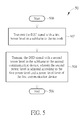
- Fig. 5 is a flowchart of a process 50 according to an example of the present invention.
- the process 50 may be utilized in a first communication device for handling (e.g., multiplexing) a D2D signal and a D2C signal, to communicate with a second communication device and the network.
- the process 50 may be compiled into the program code 214 and includes the following steps: Step 500: Start.
- Step 502 Transmit the D2C signal with a first power level in a subframe to the network.
- Step 504 Transmit the D2D signal with a second power level in the subframe to the second communication device, wherein the second power level is adjusted according to the first power level and a power level limit of the first communication device.
- Step 506 End.
- the first communication device transmits the D2C signal with a first power level in a subframe to the network, and transmits the D2D signal with a second power level in the subframe to the second communication device, wherein the second power level is adjusted according to the first power level and a power level limit of the first communication device (e.g., maximum transmit power level). That is, the first communication device may adjust (e.g., reduce) the second power level for transmitting the D2D signal, such that the total transmit power level used in the subframe is not greater than the power level limit (e.g., defined in a communication standard). In other words, a priority of the D2C signal may be higher than a priority of the D2D signal.
- a power level limit of the first communication device e.g., maximum transmit power level
- the power level for transmitting the D2C signal is maintained, while the power level for transmitting the D2D signal is adjusted (e.g., reduced).
- the first power level may be controlled according to a closed-loop power control mechanism
- the second power level may be controlled according to an open-loop power control mechanism.
- the communication device may transmit the signals completely, i.e., with sufficient power levels, and the receptions of the signals are not affected.
- the D2C signal may be transmitted in the subframe of at least one first carrier, and the D2D signal is transmitted in the subframe of a second carrier.
- the D2C signal and the D2D signal may be transmitted in the subframe of different carriers, i.e., the at least one first carrier does not include the second carrier.
- the D2C signal and the D2D signal may be transmitted in the subframe of the same carrier, i.e., the at least one first carrier may include the second carrier.
- the second power level in the process 50 may be controlled according to a power level limit of the second carrier (e.g., maximum transmit power level).
- the second power level may be controlled according to the first power level of the D2C signal, the power level limit of the first communication device and the power level limit of the second carrier.
- the D2C signal may include UL control information.
- the UL control information may include hybrid automatic repeat request (HARQ) feedback(s), channel status information and/or random access channel. That is, the priority of the D2C signal is higher than the priority of the D2D signal, because the D2C signal includes the UL information.
- the second power level in the process 50 may be adjusted to zero. That is, the D2D signal is not transmitted (e.g., is dropped).
- Fig. 6 is a flowchart of a process 60 according to an example of the present invention.
- the process 60 may be utilized in a first communication device for handling (e.g., multiplexing) a D2D signal and a D2C signal, to communicate with a second communication device and the network.
- the process 60 may be compiled into the program code 214 and includes the following steps: Step 600: Start.
- Step 602 Transmit the D2D signal with a first power level in a subframe to the second communication device.
- Step 604 Transmit the D2C signal with a second power level in the subframe to the network, wherein the second power level is adjusted according to the first power level and a power level limit of the first communication device.
- Step 606 End.
- the first communication device transmits the D2D signal with a first power level in a subframe to the second communication device, and transmits the D2C signal with a second power level in the subframe to the network, wherein the second power level is adjusted according to the first power level and a power level limit of the first communication device (e.g., maximum transmit power level). That is, the first communication device may adjust (e.g., reduce) the second power level for transmitting the D2C signal, such that the total transmit power level used in the subframe is not greater than the power level limit (e.g., defined in a communication standard). In other words, a priority of the D2D signal may be higher than a priority of the D2C signal.
- a power level limit of the first communication device e.g., maximum transmit power level
- the power level for transmitting the D2D signal is maintained, while the power level for transmitting the D2C signal is adjusted (e.g., reduced).
- the first power level may be controlled according to an open-loop power control mechanism
- the second power level may be controlled according to a closed-loop power control mechanism.
- a SRS in the D2C signal (or the D2C signal is simply the SRS) may be dropped to adjust the second power level according to the first power level and a power level limit of the first communication device.
- the communication device may transmit the signals completely, i.e., with sufficient power levels, and the receptions of the signals are not affected.
- the D2C signal may be transmitted in the subframe of at least one first carrier, and the D2D signal is transmitted in the subframe of a second carrier.
- the D2C signal and the D2D signal may be transmitted in the subframe of different carriers, i.e., the at least one first carrier does not include the second carrier.
- the D2C signal and the D2D signal may be transmitted in the subframe of the same carrier, i.e., the at least one first carrier may include the second carrier.
- the second power level in the process 60 may be controlled according to at least one power level limit of the at least one first carrier (e.g., maximum transmit power level(s)). In another example, the second power level may be controlled according to the first power level of the D2D signal, the power level limit of the first communication device and the at least one power level limit of the at least one first carrier. In one example, the second power level in the process 60 may be adjusted to zero. That is, the D2C signal is not transmitted (e.g., is dropped).
- the abovementioned steps of the processes including suggested steps can be realized by means that could be a hardware, a firmware known as a combination of a hardware device and computer instructions and data that reside as read-only software on the hardware device, or an electronic system.
- hardware can include analog, digital and mixed circuits known as microcircuit, microchip, or silicon chip.
- the electronic system can include a system on chip (SOC), system in package (SIP), a computer on module (COM), and the communication device 20.
- SOC system on chip
- SIP system in package
- COM computer on module
- the present invention provides a method of handling (e.g., multiplexing) a D2C signal and a D2D signal.
- the present invention solves that a communication device in the art does not know how to transmit the D2C signal and the D2D signal in the subframe.
- the total power level used by a communication device can be kept within a power level limit of the communication device, when the communication device transmits the D2D signal and the D2C signal in the same subframe.
Landscapes
- Engineering & Computer Science (AREA)
- Signal Processing (AREA)
- Computer Networks & Wireless Communication (AREA)
- Mobile Radio Communication Systems (AREA)
Applications Claiming Priority (2)
| Application Number | Priority Date | Filing Date | Title |
|---|---|---|---|
| US201461925659P | 2014-01-10 | 2014-01-10 | |
| US14/590,009 US9698949B2 (en) | 2014-01-10 | 2015-01-06 | Method of handling device-to-device signal and device-to-cellular signal and related communication device |
Publications (3)
| Publication Number | Publication Date |
|---|---|
| EP2903382A2 true EP2903382A2 (fr) | 2015-08-05 |
| EP2903382A3 EP2903382A3 (fr) | 2016-02-17 |
| EP2903382B1 EP2903382B1 (fr) | 2021-09-08 |
Family
ID=52358615
Family Applications (1)
| Application Number | Title | Priority Date | Filing Date |
|---|---|---|---|
| EP15150758.9A Active EP2903382B1 (fr) | 2014-01-10 | 2015-01-12 | Procédé de traitement de signal de dispositif à dispositif et signal de dispositif à cellulaire |
Country Status (4)
| Country | Link |
|---|---|
| US (1) | US9698949B2 (fr) |
| EP (1) | EP2903382B1 (fr) |
| CN (1) | CN104780498B (fr) |
| TW (1) | TWI599262B (fr) |
Families Citing this family (5)
| Publication number | Priority date | Publication date | Assignee | Title |
|---|---|---|---|---|
| EP3100553A4 (fr) * | 2014-01-28 | 2017-08-16 | Telefonaktiebolaget LM Ericsson (publ) | Procédé et appareil pour coordonner des ressources entre différents types de communications |
| US9668288B2 (en) * | 2014-03-19 | 2017-05-30 | Acer Incorporated | Method of handling device-to-device operation and related communication device |
| KR101828901B1 (ko) * | 2014-05-30 | 2018-03-29 | 후아웨이 테크놀러지 컴퍼니 리미티드 | D2d 통신에서의 송신 전력 제어 방법 및 장치 |
| WO2018058572A1 (fr) * | 2016-09-30 | 2018-04-05 | 华为技术有限公司 | Procédé et appareil de détermination d'une ressource temps-fréquence |
| US11102631B2 (en) * | 2017-03-24 | 2021-08-24 | Samsung Electronics Co., Ltd. | Resource selection method in vehicle to everything communication and apparatus therefore |
Family Cites Families (13)
| Publication number | Priority date | Publication date | Assignee | Title |
|---|---|---|---|---|
| US8359038B2 (en) * | 2010-06-15 | 2013-01-22 | Nokia Corporation | Channel access for local heterogeneous communication in a cellular network |
| WO2012034269A1 (fr) * | 2010-09-14 | 2012-03-22 | Nokia Corporation | Mesure et rapport de brouillage pour des communications de dispositif à dispositif dans un système de communication |
| CN103190196B (zh) | 2010-10-13 | 2015-12-09 | 诺基亚公司 | 通信模式的选择 |
| CN106850166B (zh) * | 2011-03-11 | 2020-11-06 | Lg电子株式会社 | 在无线通信系统中设置动态子帧的方法及其设备 |
| KR20130122562A (ko) | 2012-04-30 | 2013-11-07 | 한국전자통신연구원 | 단말 간 직접 통신을 위한 스케줄링 방법 및 장치 |
| KR20130122572A (ko) | 2012-04-30 | 2013-11-07 | 한국전자통신연구원 | 단말 대 단말 통신을 위한 송수신 방법 |
| CN103384161B (zh) | 2012-05-02 | 2018-02-06 | 华为技术有限公司 | Mimo无线通信系统、传输方法和装置 |
| WO2013165291A1 (fr) * | 2012-05-04 | 2013-11-07 | Telefonaktiebolaget L M Ericsson (Publ) | Procédé et agencement pour découverte d2d |
| CN103517275B (zh) * | 2012-06-27 | 2016-09-28 | 上海贝尔股份有限公司 | 设备到设备通信的方法和装置 |
| US9154267B2 (en) * | 2012-07-02 | 2015-10-06 | Intel Corporation | Sounding reference signal (SRS) mechanism for intracell device-to-device (D2D) communication |
| US10149256B2 (en) | 2012-07-05 | 2018-12-04 | Lg Electronics Inc. | Method for controlling power for device-to-device (D2D) communication in wireless communication system and apparatus for same |
| US9173124B2 (en) * | 2012-09-28 | 2015-10-27 | Intel Corporation | Systems and methods for wireless signal measurement and reporting for device to-device communication |
| US9143291B2 (en) * | 2012-12-27 | 2015-09-22 | Google Technology Holdings LLC | Method and apparatus for device-to-device communication |
-
2015
- 2015-01-06 US US14/590,009 patent/US9698949B2/en active Active
- 2015-01-07 TW TW104100447A patent/TWI599262B/zh active
- 2015-01-09 CN CN201510011452.4A patent/CN104780498B/zh active Active
- 2015-01-12 EP EP15150758.9A patent/EP2903382B1/fr active Active
Non-Patent Citations (1)
| Title |
|---|
| None |
Also Published As
| Publication number | Publication date |
|---|---|
| CN104780498A (zh) | 2015-07-15 |
| CN104780498B (zh) | 2018-07-20 |
| EP2903382B1 (fr) | 2021-09-08 |
| US20150200756A1 (en) | 2015-07-16 |
| TWI599262B (zh) | 2017-09-11 |
| TW201528864A (zh) | 2015-07-16 |
| EP2903382A3 (fr) | 2016-02-17 |
| US9698949B2 (en) | 2017-07-04 |
Similar Documents
| Publication | Publication Date | Title |
|---|---|---|
| EP2922366B1 (fr) | Procédé de gestion de fonctionnement de dispositif à dispositif | |
| EP3236704B1 (fr) | Dispositif et procédé de gestion de communication de dispositif à dispositif | |
| US10477486B2 (en) | Device and method of handling uplink power control | |
| US9774427B2 (en) | Method of handling uplink/downlink configurations for time-division duplexing system and related communication device | |
| US9882698B2 (en) | Device and method of handling resource for device-to-device communication | |
| US11240842B2 (en) | Device and method of handling transmission/reception for serving cell | |
| US9717013B2 (en) | Device and method of handling measurement configuration | |
| US9698949B2 (en) | Method of handling device-to-device signal and device-to-cellular signal and related communication device | |
| US20160043853A1 (en) | Device and Method of Handling Device-to-Device Communication | |
| US9992804B2 (en) | Device and method of handling non-access stratum procedure | |
| EP3211961B1 (fr) | Manipulation d'informations système | |
| US20170094533A1 (en) | Device and Method of Handling Deactivating Timer for Secondary Cell | |
| US10225872B2 (en) | Device and method of handling device-to-device communication | |
| US20160338084A1 (en) | Device and Method of Handling PUCCH Resource for Scheduling Request |
Legal Events
| Date | Code | Title | Description |
|---|---|---|---|
| PUAI | Public reference made under article 153(3) epc to a published international application that has entered the european phase |
Free format text: ORIGINAL CODE: 0009012 |
|
| 17P | Request for examination filed |
Effective date: 20150112 |
|
| AK | Designated contracting states |
Kind code of ref document: A2 Designated state(s): AL AT BE BG CH CY CZ DE DK EE ES FI FR GB GR HR HU IE IS IT LI LT LU LV MC MK MT NL NO PL PT RO RS SE SI SK SM TR |
|
| AX | Request for extension of the european patent |
Extension state: BA ME |
|
| PUAL | Search report despatched |
Free format text: ORIGINAL CODE: 0009013 |
|
| AK | Designated contracting states |
Kind code of ref document: A3 Designated state(s): AL AT BE BG CH CY CZ DE DK EE ES FI FR GB GR HR HU IE IS IT LI LT LU LV MC MK MT NL NO PL PT RO RS SE SI SK SM TR |
|
| AX | Request for extension of the european patent |
Extension state: BA ME |
|
| RIC1 | Information provided on ipc code assigned before grant |
Ipc: H04L 5/00 20060101ALI20160111BHEP Ipc: H04W 52/14 20090101ALN20160111BHEP Ipc: H04W 72/04 20090101ALN20160111BHEP Ipc: H04W 52/34 20090101ALI20160111BHEP Ipc: H04W 76/02 20090101ALI20160111BHEP Ipc: H04W 72/12 20090101AFI20160111BHEP Ipc: H04W 52/38 20090101ALI20160111BHEP Ipc: H04W 88/06 20090101ALN20160111BHEP Ipc: H04L 5/14 20060101ALN20160111BHEP |
|
| 17P | Request for examination filed |
Effective date: 20160808 |
|
| RBV | Designated contracting states (corrected) |
Designated state(s): AL AT BE BG CH CY CZ DE DK EE ES FI FR GB GR HR HU IE IS IT LI LT LU LV MC MK MT NL NO PL PT RO RS SE SI SK SM TR |
|
| STAA | Information on the status of an ep patent application or granted ep patent |
Free format text: STATUS: EXAMINATION IS IN PROGRESS |
|
| 17Q | First examination report despatched |
Effective date: 20180824 |
|
| REG | Reference to a national code |
Ref country code: DE Ref legal event code: R079 Ref document number: 602015073026 Country of ref document: DE Free format text: PREVIOUS MAIN CLASS: H04W0072120000 Ipc: H04W0076140000 |
|
| GRAP | Despatch of communication of intention to grant a patent |
Free format text: ORIGINAL CODE: EPIDOSNIGR1 |
|
| STAA | Information on the status of an ep patent application or granted ep patent |
Free format text: STATUS: GRANT OF PATENT IS INTENDED |
|
| RIC1 | Information provided on ipc code assigned before grant |
Ipc: H04W 76/15 20180101ALN20210415BHEP Ipc: H04W 52/14 20090101ALN20210415BHEP Ipc: H04W 72/04 20090101ALN20210415BHEP Ipc: H04L 5/14 20060101ALN20210415BHEP Ipc: H04W 88/06 20090101ALN20210415BHEP Ipc: H04L 5/00 20060101ALI20210415BHEP Ipc: H04W 52/38 20090101ALI20210415BHEP Ipc: H04W 52/34 20090101ALI20210415BHEP Ipc: H04W 72/12 20090101ALI20210415BHEP Ipc: H04W 76/14 20180101AFI20210415BHEP |
|
| INTG | Intention to grant announced |
Effective date: 20210503 |
|
| RIN1 | Information on inventor provided before grant (corrected) |
Inventor name: LEE, CHIEN-MIN |
|
| GRAS | Grant fee paid |
Free format text: ORIGINAL CODE: EPIDOSNIGR3 |
|
| GRAA | (expected) grant |
Free format text: ORIGINAL CODE: 0009210 |
|
| STAA | Information on the status of an ep patent application or granted ep patent |
Free format text: STATUS: THE PATENT HAS BEEN GRANTED |
|
| AK | Designated contracting states |
Kind code of ref document: B1 Designated state(s): AL AT BE BG CH CY CZ DE DK EE ES FI FR GB GR HR HU IE IS IT LI LT LU LV MC MK MT NL NO PL PT RO RS SE SI SK SM TR |
|
| REG | Reference to a national code |
Ref country code: GB Ref legal event code: FG4D |
|
| REG | Reference to a national code |
Ref country code: AT Ref legal event code: REF Ref document number: 1429743 Country of ref document: AT Kind code of ref document: T Effective date: 20210915 Ref country code: CH Ref legal event code: EP |
|
| REG | Reference to a national code |
Ref country code: IE Ref legal event code: FG4D |
|
| REG | Reference to a national code |
Ref country code: DE Ref legal event code: R096 Ref document number: 602015073026 Country of ref document: DE |
|
| REG | Reference to a national code |
Ref country code: LT Ref legal event code: MG9D |
|
| REG | Reference to a national code |
Ref country code: NL Ref legal event code: FP |
|
| PG25 | Lapsed in a contracting state [announced via postgrant information from national office to epo] |
Ref country code: RS Free format text: LAPSE BECAUSE OF FAILURE TO SUBMIT A TRANSLATION OF THE DESCRIPTION OR TO PAY THE FEE WITHIN THE PRESCRIBED TIME-LIMIT Effective date: 20210908 Ref country code: SE Free format text: LAPSE BECAUSE OF FAILURE TO SUBMIT A TRANSLATION OF THE DESCRIPTION OR TO PAY THE FEE WITHIN THE PRESCRIBED TIME-LIMIT Effective date: 20210908 Ref country code: HR Free format text: LAPSE BECAUSE OF FAILURE TO SUBMIT A TRANSLATION OF THE DESCRIPTION OR TO PAY THE FEE WITHIN THE PRESCRIBED TIME-LIMIT Effective date: 20210908 Ref country code: LT Free format text: LAPSE BECAUSE OF FAILURE TO SUBMIT A TRANSLATION OF THE DESCRIPTION OR TO PAY THE FEE WITHIN THE PRESCRIBED TIME-LIMIT Effective date: 20210908 Ref country code: BG Free format text: LAPSE BECAUSE OF FAILURE TO SUBMIT A TRANSLATION OF THE DESCRIPTION OR TO PAY THE FEE WITHIN THE PRESCRIBED TIME-LIMIT Effective date: 20211208 Ref country code: ES Free format text: LAPSE BECAUSE OF FAILURE TO SUBMIT A TRANSLATION OF THE DESCRIPTION OR TO PAY THE FEE WITHIN THE PRESCRIBED TIME-LIMIT Effective date: 20210908 Ref country code: FI Free format text: LAPSE BECAUSE OF FAILURE TO SUBMIT A TRANSLATION OF THE DESCRIPTION OR TO PAY THE FEE WITHIN THE PRESCRIBED TIME-LIMIT Effective date: 20210908 Ref country code: NO Free format text: LAPSE BECAUSE OF FAILURE TO SUBMIT A TRANSLATION OF THE DESCRIPTION OR TO PAY THE FEE WITHIN THE PRESCRIBED TIME-LIMIT Effective date: 20211208 |
|
| REG | Reference to a national code |
Ref country code: AT Ref legal event code: MK05 Ref document number: 1429743 Country of ref document: AT Kind code of ref document: T Effective date: 20210908 |
|
| PG25 | Lapsed in a contracting state [announced via postgrant information from national office to epo] |
Ref country code: LV Free format text: LAPSE BECAUSE OF FAILURE TO SUBMIT A TRANSLATION OF THE DESCRIPTION OR TO PAY THE FEE WITHIN THE PRESCRIBED TIME-LIMIT Effective date: 20210908 Ref country code: GR Free format text: LAPSE BECAUSE OF FAILURE TO SUBMIT A TRANSLATION OF THE DESCRIPTION OR TO PAY THE FEE WITHIN THE PRESCRIBED TIME-LIMIT Effective date: 20211209 |
|
| PG25 | Lapsed in a contracting state [announced via postgrant information from national office to epo] |
Ref country code: AT Free format text: LAPSE BECAUSE OF FAILURE TO SUBMIT A TRANSLATION OF THE DESCRIPTION OR TO PAY THE FEE WITHIN THE PRESCRIBED TIME-LIMIT Effective date: 20210908 |
|
| PG25 | Lapsed in a contracting state [announced via postgrant information from national office to epo] |
Ref country code: IS Free format text: LAPSE BECAUSE OF FAILURE TO SUBMIT A TRANSLATION OF THE DESCRIPTION OR TO PAY THE FEE WITHIN THE PRESCRIBED TIME-LIMIT Effective date: 20220108 Ref country code: SM Free format text: LAPSE BECAUSE OF FAILURE TO SUBMIT A TRANSLATION OF THE DESCRIPTION OR TO PAY THE FEE WITHIN THE PRESCRIBED TIME-LIMIT Effective date: 20210908 Ref country code: SK Free format text: LAPSE BECAUSE OF FAILURE TO SUBMIT A TRANSLATION OF THE DESCRIPTION OR TO PAY THE FEE WITHIN THE PRESCRIBED TIME-LIMIT Effective date: 20210908 Ref country code: RO Free format text: LAPSE BECAUSE OF FAILURE TO SUBMIT A TRANSLATION OF THE DESCRIPTION OR TO PAY THE FEE WITHIN THE PRESCRIBED TIME-LIMIT Effective date: 20210908 Ref country code: PT Free format text: LAPSE BECAUSE OF FAILURE TO SUBMIT A TRANSLATION OF THE DESCRIPTION OR TO PAY THE FEE WITHIN THE PRESCRIBED TIME-LIMIT Effective date: 20220110 Ref country code: PL Free format text: LAPSE BECAUSE OF FAILURE TO SUBMIT A TRANSLATION OF THE DESCRIPTION OR TO PAY THE FEE WITHIN THE PRESCRIBED TIME-LIMIT Effective date: 20210908 Ref country code: EE Free format text: LAPSE BECAUSE OF FAILURE TO SUBMIT A TRANSLATION OF THE DESCRIPTION OR TO PAY THE FEE WITHIN THE PRESCRIBED TIME-LIMIT Effective date: 20210908 Ref country code: CZ Free format text: LAPSE BECAUSE OF FAILURE TO SUBMIT A TRANSLATION OF THE DESCRIPTION OR TO PAY THE FEE WITHIN THE PRESCRIBED TIME-LIMIT Effective date: 20210908 Ref country code: AL Free format text: LAPSE BECAUSE OF FAILURE TO SUBMIT A TRANSLATION OF THE DESCRIPTION OR TO PAY THE FEE WITHIN THE PRESCRIBED TIME-LIMIT Effective date: 20210908 |
|
| REG | Reference to a national code |
Ref country code: DE Ref legal event code: R097 Ref document number: 602015073026 Country of ref document: DE |
|
| PLBE | No opposition filed within time limit |
Free format text: ORIGINAL CODE: 0009261 |
|
| STAA | Information on the status of an ep patent application or granted ep patent |
Free format text: STATUS: NO OPPOSITION FILED WITHIN TIME LIMIT |
|
| PG25 | Lapsed in a contracting state [announced via postgrant information from national office to epo] |
Ref country code: DK Free format text: LAPSE BECAUSE OF FAILURE TO SUBMIT A TRANSLATION OF THE DESCRIPTION OR TO PAY THE FEE WITHIN THE PRESCRIBED TIME-LIMIT Effective date: 20210908 |
|
| 26N | No opposition filed |
Effective date: 20220609 |
|
| PG25 | Lapsed in a contracting state [announced via postgrant information from national office to epo] |
Ref country code: SI Free format text: LAPSE BECAUSE OF FAILURE TO SUBMIT A TRANSLATION OF THE DESCRIPTION OR TO PAY THE FEE WITHIN THE PRESCRIBED TIME-LIMIT Effective date: 20210908 Ref country code: MC Free format text: LAPSE BECAUSE OF FAILURE TO SUBMIT A TRANSLATION OF THE DESCRIPTION OR TO PAY THE FEE WITHIN THE PRESCRIBED TIME-LIMIT Effective date: 20210908 |
|
| REG | Reference to a national code |
Ref country code: CH Ref legal event code: PL |
|
| REG | Reference to a national code |
Ref country code: BE Ref legal event code: MM Effective date: 20220131 |
|
| PG25 | Lapsed in a contracting state [announced via postgrant information from national office to epo] |
Ref country code: LU Free format text: LAPSE BECAUSE OF NON-PAYMENT OF DUE FEES Effective date: 20220112 |
|
| PG25 | Lapsed in a contracting state [announced via postgrant information from national office to epo] |
Ref country code: BE Free format text: LAPSE BECAUSE OF NON-PAYMENT OF DUE FEES Effective date: 20220131 |
|
| PG25 | Lapsed in a contracting state [announced via postgrant information from national office to epo] |
Ref country code: LI Free format text: LAPSE BECAUSE OF NON-PAYMENT OF DUE FEES Effective date: 20220131 Ref country code: CH Free format text: LAPSE BECAUSE OF NON-PAYMENT OF DUE FEES Effective date: 20220131 |
|
| PG25 | Lapsed in a contracting state [announced via postgrant information from national office to epo] |
Ref country code: IE Free format text: LAPSE BECAUSE OF NON-PAYMENT OF DUE FEES Effective date: 20220112 |
|
| PG25 | Lapsed in a contracting state [announced via postgrant information from national office to epo] |
Ref country code: HU Free format text: LAPSE BECAUSE OF FAILURE TO SUBMIT A TRANSLATION OF THE DESCRIPTION OR TO PAY THE FEE WITHIN THE PRESCRIBED TIME-LIMIT; INVALID AB INITIO Effective date: 20150112 |
|
| PG25 | Lapsed in a contracting state [announced via postgrant information from national office to epo] |
Ref country code: MK Free format text: LAPSE BECAUSE OF FAILURE TO SUBMIT A TRANSLATION OF THE DESCRIPTION OR TO PAY THE FEE WITHIN THE PRESCRIBED TIME-LIMIT Effective date: 20210908 Ref country code: CY Free format text: LAPSE BECAUSE OF FAILURE TO SUBMIT A TRANSLATION OF THE DESCRIPTION OR TO PAY THE FEE WITHIN THE PRESCRIBED TIME-LIMIT Effective date: 20210908 |
|
| REG | Reference to a national code |
Ref country code: DE Ref legal event code: R082 Ref document number: 602015073026 Country of ref document: DE Representative=s name: STRAUS, ALEXANDER, DIPL.-CHEM.UNIV. DR.PHIL., DE |
|
| PG25 | Lapsed in a contracting state [announced via postgrant information from national office to epo] |
Ref country code: MT Free format text: LAPSE BECAUSE OF FAILURE TO SUBMIT A TRANSLATION OF THE DESCRIPTION OR TO PAY THE FEE WITHIN THE PRESCRIBED TIME-LIMIT Effective date: 20210908 |
|
| PG25 | Lapsed in a contracting state [announced via postgrant information from national office to epo] |
Ref country code: TR Free format text: LAPSE BECAUSE OF FAILURE TO SUBMIT A TRANSLATION OF THE DESCRIPTION OR TO PAY THE FEE WITHIN THE PRESCRIBED TIME-LIMIT Effective date: 20210908 |
|
| PGFP | Annual fee paid to national office [announced via postgrant information from national office to epo] |
Ref country code: GB Payment date: 20251211 Year of fee payment: 12 |
|
| PGFP | Annual fee paid to national office [announced via postgrant information from national office to epo] |
Ref country code: NL Payment date: 20251215 Year of fee payment: 12 Ref country code: FR Payment date: 20251222 Year of fee payment: 12 |
|
| PGFP | Annual fee paid to national office [announced via postgrant information from national office to epo] |
Ref country code: DE Payment date: 20251216 Year of fee payment: 12 |
|
| PGFP | Annual fee paid to national office [announced via postgrant information from national office to epo] |
Ref country code: IT Payment date: 20251230 Year of fee payment: 12 |