EP2904609B1 - Codierer, decodierer und verfahren zur rückwärtskompatiblen spatial-audio-object-codierung mit mehreren auflösungen - Google Patents
Codierer, decodierer und verfahren zur rückwärtskompatiblen spatial-audio-object-codierung mit mehreren auflösungen Download PDFInfo
- Publication number
- EP2904609B1 EP2904609B1 EP13773699.7A EP13773699A EP2904609B1 EP 2904609 B1 EP2904609 B1 EP 2904609B1 EP 13773699 A EP13773699 A EP 13773699A EP 2904609 B1 EP2904609 B1 EP 2904609B1
- Authority
- EP
- European Patent Office
- Prior art keywords
- parametric
- information
- side information
- signal
- audio object
- Prior art date
- Legal status (The legal status is an assumption and is not a legal conclusion. Google has not performed a legal analysis and makes no representation as to the accuracy of the status listed.)
- Active
Links
Images










Classifications
-
- G—PHYSICS
- G10—MUSICAL INSTRUMENTS; ACOUSTICS
- G10L—SPEECH ANALYSIS TECHNIQUES OR SPEECH SYNTHESIS; SPEECH RECOGNITION; SPEECH OR VOICE PROCESSING TECHNIQUES; SPEECH OR AUDIO CODING OR DECODING
- G10L19/00—Speech or audio signals analysis-synthesis techniques for redundancy reduction, e.g. in vocoders; Coding or decoding of speech or audio signals, using source filter models or psychoacoustic analysis
- G10L19/008—Multichannel audio signal coding or decoding using interchannel correlation to reduce redundancy, e.g. joint-stereo, intensity-coding or matrixing
-
- G—PHYSICS
- G10—MUSICAL INSTRUMENTS; ACOUSTICS
- G10L—SPEECH ANALYSIS TECHNIQUES OR SPEECH SYNTHESIS; SPEECH RECOGNITION; SPEECH OR VOICE PROCESSING TECHNIQUES; SPEECH OR AUDIO CODING OR DECODING
- G10L19/00—Speech or audio signals analysis-synthesis techniques for redundancy reduction, e.g. in vocoders; Coding or decoding of speech or audio signals, using source filter models or psychoacoustic analysis
- G10L19/02—Speech or audio signals analysis-synthesis techniques for redundancy reduction, e.g. in vocoders; Coding or decoding of speech or audio signals, using source filter models or psychoacoustic analysis using spectral analysis, e.g. transform vocoders or subband vocoders
-
- H—ELECTRICITY
- H03—ELECTRONIC CIRCUITRY
- H03M—CODING; DECODING; CODE CONVERSION IN GENERAL
- H03M7/00—Conversion of a code where information is represented by a given sequence or number of digits to a code where the same, similar or subset of information is represented by a different sequence or number of digits
- H03M7/30—Compression; Expansion; Suppression of unnecessary data, e.g. redundancy reduction
Definitions
- the temporal dimension is represented by the time-block number and the spectral dimension is captured by the spectral coefficient ("bin") number.
- the temporal dimension is represented by the time-slot number and the spectral dimension is captured by the sub-band number. If the spectral resolution of the QMF is improved by subsequent application of a second filter stage, the entire filter bank is termed hybrid QMF and the fine resolution sub-bands are termed hybrid sub-bands.
- a fixed t/f-resolution can be demonstrated on the example of typical object signals in an audio signal mixture.
- the spectra of tonal sounds exhibit a harmonically related structure with a fundamental frequency and several overtones. The energy of such signals is concentrated at certain frequency regions.
- a high frequency resolution of the utilized t/f-representation is beneficial for separating the narrowband tonal spectral regions from a signal mixture.
- transient signals like drum sounds, often have a distinct temporal structure: substantial energy is only present for short periods of time and is spread over a wide range of frequencies.
- a high temporal resolution of the utilized t/f-representation is advantageous for separating the transient signal portion from the signal mixture.
- the frequency resolution obtained from the standard SAOC representation is limited to the number of parametric bands, having the maximum value of 28 in standard SAOC. They are obtained from a hybrid QMF bank consisting of a 64-band QMF-analysis with an additional hybrid filtering stage on the lowest bands further dividing these into up to 4 complex sub-bands.
- the frequency bands obtained are grouped into parametric bands mimicking the critical band resolution of the human auditory system. The grouping allows for reducing the required side information data rate to a size that can be efficiently handled in practical applications.
- the existing system produces a reasonable separation quality given the reasonably low data rate.
- the main problem is the insufficient frequency resolution for a clean separation of tonal sounds. This is exhibited as a "halo" of other objects surrounding the tonal components of an object. Perceptually this is observed as roughness or a vocoder-like artefact. The detrimental effect of this halo can be reduced by increasing the parametric frequency resolution. It was noted, that a resolution equal or higher than 512 bands (at 44.1 kHz sampling rate) is enough to produce perceptually significantly improved separation in the test signals. The problem with such a high parametric resolution is that the amount the side information needed increases considerably, into impractical amounts. Furthermore, the compatibility with the existing standard SAOC systems would be lost.
- embodiments of the present invention provide a spectral parameterization, such that
- the invention here defines a method for delivering the enhanced high-frequency information in a way which is compact and allows a backwards compatible decoding.
- An enhanced SAOC perceptual quality can be obtained, e.g., by dynamically adapting the time/frequency resolution of the filter bank or transform that is employed to estimate or used to synthesize the audio object cues to specific properties of the input audio object. For instance, if the audio object is quasi-stationary during a certain time span, parameter estimation and synthesis is beneficially performed on a coarse time resolution and a fine frequency resolution. If the audio object contains transients or non-stationaries during a certain time span, parameter estimation and synthesis is advantageously done using a fine time resolution and a coarse frequency resolution. Thereby, the dynamic adaptation of the filter bank or transform allows for
- the provided embodiments are not limited to any specific time-frequency transform, but can be applied with any transform providing sufficiently high frequency resolution.
- the document describes the application to a Discrete Fourier Transform (DFT) based filter bank with switched time-frequency resolution.
- DFT Discrete Fourier Transform
- the time domain signals are subdivided into shorter blocks, which also may overlap.
- the signal in each shorter block is weighted by a windowing function (normally having large values in the middle and at both ends tapered into zero).
- the weighted signal is transformed into frequency domain by the selected transform, here, by application of the DFT.
- a decoder for generating an un-mixed audio signal comprising a plurality of un-mixed audio channels comprises an un-mixing-information determiner for determining un-mixing information by receiving first parametric side information on the at least one audio object signal and second parametric side information on the at least one audio object signal, wherein the frequency resolution of the second parametric side information is higher than the frequency resolution of the first parametric side information.
- the decoder comprises an un-mix module for applying the un-mixing information on a downmix signal, indicating a downmix of at least one audio object signal, to obtain an un-mixed audio signal comprising the plurality of un-mixed audio channels.
- the un-mixing-information determiner is configured to determine the un-mixing information by modifying the first parametric information and the second parametric information to obtain modified parametric information, such that the modified parametric information has a frequency resolution which is higher than the first frequency resolution.
- an encoder for encoding one or more input audio object signals comprises a downmix unit for downmixing the one or more input audio object signals to obtain one or more downmix signals. Furthermore, the encoder comprises a parametric-side-information generator for generating first parametric side information on the at least one audio object signal and second parametric side information on the at least one audio object signal, such that the frequency resolution of the second parametric side information is higher than the frequency resolution of the first parametric side information.
- an encoded audio signal comprises a downmix portion, indicating a downmix of one or more input audio object signals, and a parametric side information portion comprising first parametric side information on the at least one audio object signal and second parametric side information on the at least one audio object signal.
- the frequency resolution of the second parametric side information is higher than the frequency resolution of the first parametric side information.
- a system comprising an encoder as described above and a decoder as described above.
- the encoder is configured to encode one or more input audio object signals by obtaining one or more downmix signals indicating a downmix of one or more input audio object signals, by obtaining first parametric side information on the at least one audio object signal, and by obtaining second parametric side information on the at least one audio object signal, wherein the frequency resolution of the second parametric side information is higher than the frequency resolution of the first parametric side information.
- the decoder is configured to generate an un-mixed audio signal based on the one or more downmix signals, and based on the first parametric side information and the second parametric side information.
- the encoder is configured to encode one or more input audio object signals by obtaining one or more downmix signals indicating a downmix of one or more input audio object signals, by obtaining first parametric side information on the at least one audio object signal, and by obtaining second parametric side information on the at least one audio object signal, wherein the frequency resolution of the second parametric side information is higher than the frequency resolution of the first parametric side information.
- the decoder is configured to generate an audio output signal based on the one or more downmix signals, and based on the first parametric side information and the second parametric side information.
- a method for generating an un-mixed audio signal comprising a plurality of un-mixed audio channels comprises:
- Determining the un-mixing information comprises modifying the first parametric information and the second parametric information to obtain modified parametric information, such that the modified parametric information has a frequency resolution which is higher than the first frequency resolution.
- a method for encoding one or more input audio object signals comprises:
- Fig. 4 shows a general arrangement of an SAOC encoder 10 and an SAOC decoder 12.
- the SAOC encoder 10 receives as an input N objects, i.e., audio signals s 1 to s N .
- the encoder 10 comprises a downmixer 16 which receives the audio signals s 1 to s N and downmixes same to a downmix signal 18.
- the downmix may be provided externally ("artistic downmix") and the system estimates additional side information to make the provided downmix match the calculated downmix.
- the downmix signal is shown to be a P -channel signal.
- side-information estimator 17 provides the SAOC decoder 12 with side information including SAOC-parameters.
- SAOC parameters comprise object level differences (OLD), inter-object correlations (IOC) (inter-object cross correlation parameters), downmix gain values (DMG) and downmix channel level differences (DCLD).
- the audio signals s 1 to s N may be input into the encoder 10 in any coding domain, such as, in time or spectral domain.
- encoder 10 may use a filter bank, such as a hybrid QMF bank, in order to transfer the signals into a spectral domain, in which the audio signals are represented in several sub-bands associated with different spectral portions, at a specific filter bank resolution. If the audio signals s 1 to s N are already in the representation expected by encoder 10, same does not have to perform the spectral decomposition.
- the SAOC side information extractor 17 is able to compute a similarity measure of the corresponding time/frequency tiles of pairs of different input objects s 1 to s N .
- the SAOC side information extractor 17 may compute the similarity measure between all the pairs of input objects s 1 to s N
- SAOC side information extractor 17 may also suppress the signaling of the similarity measures or restrict the computation of the similarity measures to audio objects s 1 to s N which form left or right channels of a common stereo channel.
- the similarity measure is called the inter-object cross-correlation parameter IO C i , j l , m .
- a two-channel downmix signal depicted in Fig.
- a gain factor d 1,i is applied to object i and then all such gain amplified objects are summed in order to obtain the left downmix channel L0, and gain factors d 2,i are applied to object i and then the thus gain-amplified objects are summed in order to obtain the right downmix channel R0 .
- a processing that is analogous to the above is to be applied in case of a multi-channel downmix (P>2).
- This downmix prescription is signaled to the decoder side by means of down mix gains DMG i and, in case of a stereo downmix signal, downmix channel level differences DCLD i .
- DCL D i 20 log 10 d 1, i d 2, i + ⁇ .
- parameters OLD and IOC are a function of the audio signals
- parameters DMG and DCLD are functions of the downmix coefficients d.
- d may be varying in time and frequency.
- downmixer 16 mixes all objects s 1 to s N with no preferences, i.e., with handling all objects s 1 to s N equally.
- the matrix E is an estimated covariance matrix of the audio objects s 1 to s N .
- the computation of the estimated covariance matrix E is typically performed in the spectral/temporal resolution of the SAOC parameters, i.e., for each ( l,m ), so that the estimated covariance matrix may be written as E l,m .
- the estimated covariance matrix E has matrix coefficients representing the geometric mean of the object level differences of objects i and j , respectively, weighted with the inter-object cross correlation measure IO C i , j l , m .
- the time/frequency transform is fixed and identical for all audio objects s 1 to s N . Furthermore, the SAOC parameters are determined over SAOC frames which are the same for all audio objects and have the same time/frequency resolution for all audio objects s 1 to s N , thus disregarding the object-specific needs for fine temporal resolution in some cases or fine spectral resolution in other cases.
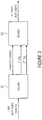
- Fig. 1a illustrates a decoder for generating an un-mixed audio signal comprising a plurality of un-mixed audio channels according to an embodiment.
- the decoder comprises an un-mixing-information determiner 112 for determining un-mixing information by receiving first parametric side information on the at least one audio object signal and second parametric side information on the at least one audio object signal, wherein the frequency resolution of the second parametric side information is higher than the frequency resolution of the first parametric side information.
- the decoder comprises an un-mix module 113 for applying the un-mixing information on a downmix signal, indicating a downmix of at least one audio object signal, to obtain an un-mixed audio signal comprising the plurality of un-mixed audio channels.
- the un-mixing-information determiner 112 is configured to determine the un-mixing information by modifying the first parametric information and the second parametric information to obtain modified parametric information, such that the modified parametric information has a frequency resolution which is higher than the first frequency resolution.
- Fig. 1b illustrates a decoder for generating an un-mixed audio signal comprising a plurality of un-mixed audio channels according to another embodiment.
- the decoder of Fig. 1b furthermore comprises a first transform unit 111 for transforming a downmix input, being represented in a time domain, to obtain the downmix signal, being represented in a time-frequency domain.
- the decoder of Fig. 1b comprises a second transform unit 114 for transforming the un-mixed audio signal from the time-frequency domain to the time domain.
- the encoder comprises a downmix unit 91 for downmixing the one or more input audio object signals to obtain one or more downmix signals.
- the decoder 62 is configured to generate an un-mixed audio signal based on the one or more downmix signals, and based on the first parametric side information and the second parametric side information.
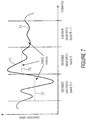
- Fig. 7 illustrates backwards compatible representation according to embodiments.
- the signal property to be represented e.g., the power spectral envelope 71
- the frequency axis is partitioned into parametric bands, and a single set of signal descriptors are assigned for each sub-band. Using them instead of delivering the description for each frequency bin separately allows for savings in the amount of the side information required without a significant loss in the perceptual quality.
- the single descriptor for each band is the mean value 72, 73, 74 of the bin-wise descriptors. As can be understood, this may introduce a loss of information whose magnitude depends on the signal properties.
- the bands k - 1 and k have quite a large error, while in the band k + 1 the error is much smaller.
- Fig. 8 illustrates the difference curve 81 between the true parameter value and the low-resolution mean value according to an embodiment, e.g., the fine structure information lost in the standard SAOC parameterization.
- an enhanced SAOC encoder which produces a bit stream containing a backward compatible side information portion and additional enhancements.
- the added information can be inserted into the standard SAOC bit stream in such a way that the old, standard-compliant decoders simply ignore the added data while the enhanced decoders make use of it.
- the existing standard SAOC decoders can decode the backward compatible portion of the parametric side information (PSI) and produce reconstructions of the objects, while the added information used by the enhanced SAOC decoder improves the perceptual quality of the reconstructions in most of the cases.
- PSI parametric side information
- the encoder comprises a downmix unit 91 for downmixing a plurality of audio object signals to obtain one or more downmix signals.
- the audio object signals e.g., the individual (audio) objects
- a downmix unit 91 to create a downmix signal. This may happen in time domain, frequency domain, or even an externally provided downmix can be used.
- the transform unit 92 is configured to transform one or more input audio object signals from the time domain to the time-frequency domain depending on a window length of a signal transform block comprising signal values of at least one of the one or more input audio object signals.
- the transform unit 92 comprises a transient-detection unit 101 for determining a transient detection result indicating whether a transient is present in one or more of the at least one audio object signals, wherein a transient indicates a signal change in one or more of the at least one audio object signals.
- the transform unit 92 further comprises a window sequence unit 102 for determining the window length depending on the transient detection result.
- the create-window-sequence unit 102 constructs the windowing sequence. At the same time, it also creates parameter sub-frames from one or more analysis windows. Each subset is analyzed as an entity and only one set of PSI-parameters are transmitted for each sub-block. To provide a standard SAOC compatible PSI, the defined parameter block length is used as the main parameter block length, and the possible located transients within that block define parameter subsets.
- the delta-estimation unit 108 is configured to estimate a plurality of correction factors based on a plurality of parametric values depending on the at least one audio object signal to obtain the second parametric side information.
- the delta-estimation unit 108 may be configured to estimate a correction factor, "delta", for example, by dividing the fine-resolution OLD by the rough power spectrum reconstruction. As a result, this provides for each frequency bin a (for example, multiplicative) correction factor that can be used for approximating the fine-resolution OLD given the rough spectra.
- the enhanced SAOC modifications consist of adding the windowing sequence information and the parameters for transmitting the "delta" to the bit stream.
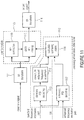
- the input downmix signal is transformed into frequency domain by a t/f-transform unit 111.
- the estimated un-mixing matrix is applied on the transformed downmix signal by an un-mixing unit 110 to generate an un-mixing output.
- a decorrelation unit 119 conducts decorrelation on the transformed downmix signal and the result of the decorrelation is fed into the un-mixing unit 110.
- the un-mixing unit 110 uses the decorrelation result for generating the un-mixing output.
- the parametric processing path can take standard resolution PSI as the input, in which case the decoded PSI, which is generated by a standard-PSI-decoding unit 115, is adapted by a frequency-resolution-conversion unit 116 to the frequency resolution used in the t/f-transforms.
- An alternative input combines the standard frequency resolution part of the PSI with the enhanced frequency resolution part and the calculations include the enhanced frequency resolution information.
- an enhanced PSI-decoding unit 117 generates decoded PSI exhibiting enhanced frequency resolution.
- An un-mixing-matrix generator 118 generates an un-mixing matrix based on the decoded PSI received from the frequency-resolution-conversion unit 116 or from the enhanced PSI-decoding unit 117.
- the un-mixing-matrix generator 118 may also generate the un-mixing matrix based on rendering information, for example, based on a rendering matrix.
- the un-mixing unit 110 is configured to generate the un-mixing output by applying this un-mixing matrix, being generated by the un-mixing-matrix generator 118, on the transformed downmix signal.
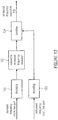
- Fig. 12 illustrates a block diagram illustrating an embodiment of the enhanced PSI-decoding unit 117 of Fig. 11 .
- the enhanced SAOC decoder is designed so that it is capable decoding bit streams from standard SAOC encoders with a good quality.
- the decoding is limited to the parametric reconstruction only, and possible residual streams are ignored.
- Fig. 13 depicts a block diagram of decoding standard SAOC bit streams with the enhanced SAOC decoder illustrating the decoding process according to an embodiment.
- Bold black functional blocks (131, 132, 133, 135) indicate the main part of the inventive processing.
- An un-mixing-matrix calculator 131, a temporal interpolator 132, and a window-frequency-resolution-adaptation unit 133 implement the functionality of the standard-PSI-decoding unit 115, of the frequency-resolution-conversion unit 116, and of the un-mixing-matrix generator 118 of Fig. 11 .
- a window-sequence generator 134 and a t/f-analysis module 135 implement the t/f-transform unit 111 of Fig. 11 .
- the frequency bins of the underlying time/frequency-representation are grouped into parametric bands.
- the spacing of the bands resembles that of the critical bands in the human auditory system.
- multiple t/f-representation frames can be grouped into a parameter frame. Both of these operations provide a reduction in the amount of required side information with the cost of modeling inaccuracies.
- the un-mixing-matrix calculator 131 may be conducted to calculate the un-mixing matrix.
- the parametric band frequency resolution of the un-mixing matrices is expanded to the resolution of the time/frequency-representation in that analysis window by the window-frequency-resolution-adaptation unit 133.
- the interpolated un-mixing matrix for parametric band b in a time-frame is defined as G(b)
- the same un-mixing coefficients are used for all the frequency bins inside that parametric band.
- the window-sequence generator 134 is configured to use the parameter set range information from the PSI to determine an appropriate windowing sequence for analyzing the input downmix audio signal.
- the main requirement is that when there is a parameter set border in the PSI, the cross-over point between consecutive analysis windows should match it.
- the windowing determines also the frequency resolution of the data within each window (used in the un-mixing data expansion, as described earlier).
- the windowed data is then transformed by the t/f-analysis module 135 into a frequency domain representation using an appropriate time-frequency transform, e.g., Discrete Fourier Transform (DFT), Complex Modified Discrete Cosine Transform (CMDCT), or Oddly stacked Discrete Fourier Transform (ODFT).
- DFT Discrete Fourier Transform
- CMDCT Complex Modified Discrete Cosine Transform
- ODFT Oddly stacked Discrete Fourier Transform
- an un-mixing unit 136 applies the per-frame per-frequency bin un-mixing matrices on the spectral representation of the downmix signal X to obtain the parametric renderings Y.
- the decoder of Fig. 14 comprises an un-mixing-information determiner 112.
- the un-mixing-information determiner 112 comprises the delta-function-recovery unit 142 and the delta-application unit 143.
- the first parametric information comprises a plurality of parametric values depending on the at least one audio object signal, for example, object level difference values.
- the second parametric information comprises a correction factor parameterization.
- the delta-function-recovery unit 142 is configured to invert the correction factor parameterization to obtain a delta function.
- the delta-application unit 143 is configured to apply the delta function on the parametric values, e.g., on the object level difference values, to determine the un-mixing information.
- the delta-function-recovery unit 142 inverts the correction factor parameterization to obtain the delta function C i rec f of the same size as the expanded OLD and IOC.
- the time-frequency analysis of the downmix audio is then conducted by a t/f-analysis module 135 using the given windows.
- the delta-modeling unit 109 of Fig. 10 is configured to determine linear prediction coefficients from a plurality of correction factors ( delta ) by conducting a linear prediction.
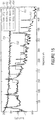
- Fig. 15 illustrates the power spectra of a tonal and a noise signal. Their high-resolution power spectra ("orig") and the corresponding rough reconstructions based on OLDs and NRG ("recon"). In particular, Fig. 15 illustrates the fine and coarse power spectra of both of the signals. More particularly, the power spectra of an original tonal signal 151 and an original noise signal 152, and the reconstructed power spectra of the tonal signal 153 and the noise signal 154 are shown. It should be noted that, in the following figures, for signals 153 and 154 rather the scale factors (reconstructed power spectra parameter) and not the fully reconstructed signals are sketched.
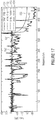
- Fig. 16 illustrates the modification for both example signals, in particular the correction factors for the example signals.
- the correction factors for the tonal signal 151 and the noise signal 152 are shown.
- embodiments of the invention can be implemented in hardware or in software.
- the implementation can be performed using a digital storage medium, for example a floppy disk, a DVD, a CD, a ROM, a PROM, an EPROM, an EEPROM or a FLASH memory, having electronically readable control signals stored thereon, which cooperate (or are capable of cooperating) with a programmable computer system such that the respective method is performed.
- a digital storage medium for example a floppy disk, a DVD, a CD, a ROM, a PROM, an EPROM, an EEPROM or a FLASH memory, having electronically readable control signals stored thereon, which cooperate (or are capable of cooperating) with a programmable computer system such that the respective method is performed.
- inventions comprise the computer program for performing one of the methods described herein, stored on a machine readable carrier.
- an embodiment of the inventive method is, therefore, a computer program having a program code for performing one of the methods described herein, when the computer program runs on a computer.
Landscapes
- Engineering & Computer Science (AREA)
- Physics & Mathematics (AREA)
- Audiology, Speech & Language Pathology (AREA)
- Computational Linguistics (AREA)
- Signal Processing (AREA)
- Health & Medical Sciences (AREA)
- Human Computer Interaction (AREA)
- Acoustics & Sound (AREA)
- Multimedia (AREA)
- Mathematical Physics (AREA)
- Spectroscopy & Molecular Physics (AREA)
- Theoretical Computer Science (AREA)
- Compression, Expansion, Code Conversion, And Decoders (AREA)
- Stereophonic System (AREA)
Claims (17)
- Ein Decodierer zum Erzeugen eines entmischten Audiosignals, das eine Mehrzahl von entmischten Audiokanälen aufweist, wobei der Decodierer folgende Merkmale aufweist:eine Entmischungsinformationsbestimmungseinrichtung (112) zum Bestimmen von Entmischungsinformationen durch Empfangen erster parametrischer Nebeninformationen über das zumindest eine Audioobjektsignal und zweiter parametrischer Nebeninformationen über das zumindest eine Audioobjektsignal, wobei die Frequenzauflösung der zweiten parametrischen Nebeninformationen höher ist als die Frequenzauflösung der ersten parametrischen Nebeninformationen undein Entmischungsmodul (113) zum Anlegen der Entmischungsinformationen an ein Abwärtsmischsignal, das ein Abwärtsmischen von zumindest einem Audioobjektsignal anzeigt, um ein entmischtes Audiosignal zu erhalten, das die Mehrzahl von entmischten Audiokanälen aufweist,wobei die Entmischungsinformationsbestimmungseinrichtung (112) konfiguriert ist, um die Entmischungsinformationen durch Modifizieren der ersten parametrischen Informationen und der zweiten parametrischen Informationen zu bestimmen, um modifizierte parametrische Informationen zu erhalten, so dass die modifizierten parametrischen Informationen eine Frequenzauflösung aufweisen, die höher ist als die erste Frequenzauflösung.
- Ein Decodierer gemäß Anspruch 1,
wobei der Decodierer ferner eine erste Transformationseinheit (111) aufweist zum Transformieren einer Abwärtsmischeingabe, die in einem Zeitbereich dargestellt ist, um das Abwärtsmischsignal zu erhalten, das in einem Zeit-Frequenz-Bereich dargestellt ist und
wobei der Decodierer eine zweite Transformationseinheit (114) aufweist zum Transformieren des entmischten Audiosignals von dem Zeit-Frequenz-Bereich in den Zeitbereich. - Ein Decodierer gemäß Anspruch 1 oder 2,
bei dem die Entmischungsinformationsbestimmungseinrichtung (112) konfiguriert ist, um die Entmischungsinformationen durch Kombinieren der ersten parametrischen Informationen und der zweiten parametrischen Informationen zu bestimmen, um die modifizierten parametrischen Informationen zu erhalten, so dass die modifizierten parametrischen Informationen eine Frequenzauflösung aufweisen, die gleich der zweiten Frequenzauflösung ist. - Ein Decodierer gemäß einem der vorhergehenden Ansprüche,
bei dem die ersten parametrischen Informationen eine Mehrzahl von ersten Parameterwerten aufweisen, wobei die zweiten parametrischen Informationen eine Mehrzahl von zweiten Parameterwerten aufweisen,
wobei die Entmischungsinformationsbestimmungseinrichtung (112) eine Frequenzauflösungsumwandlungsuntereinheit (122) und einen Kombinierer (124) aufweist,
wobei die Frequenzauflösungsumwandlungsuntereinheit (112) konfiguriert ist, um zusätzliche Parameterwerte zu erzeugen, wobei die ersten Parameterwerte und die zusätzlichen Parameterwerte zusammen eine Mehrzahl von ersten verarbeiteten Parameterwerten bilden und
wobei der Kombinierer (124) konfiguriert ist, um die ersten verarbeiteten Parameterwerte und die zweiten Parameterwerte zu kombinieren, um eine Mehrzahl von modifizierten Parameterwerten als die modifizierten parametrischen Informationen zu erhalten. - Ein Decodierer gemäß einem der vorhergehenden Ansprüche,
bei dem die Entmischungsinformationsbestimmungseinrichtung (112) eine Delta-Funktion-Rückgewinnungseinheit (142) und eine Delta-Anwendungseinheit (143) aufweist,
wobei die ersten parametrischen Informationen eine Mehrzahl von parametrischen Werten aufweisen, in Abhängigkeit von dem zumindest einen Audioobjektsignal, und wobei die zweiten parametrischen Informationen eine Korrekturfaktorparametrisierung aufweisen,
wobei die Delta-Funktion-Rückgewinnungseinheit (142) konfiguriert ist, um die Korrekturfaktorparametrisierung zu invertieren, um eine Delta-Funktion zu erhalten, und
wobei die Delta-Anwendungseinheit (143) konfiguriert ist, um die Delta-Funktion an die parametrischen Werte anzulegen, um die Entmischungsinformationen zu bestimmen. - Ein Decodierer gemäß Anspruch 5,
bei dem die Korrekturfaktorparametrisierung eine Mehrzahl von Lineare-Prädiktion-Koeffizienten aufweist,
wobei die Delta-Funktion-Rückgewinnungseinheit (142) konfiguriert ist, um die Korrekturfaktorparametrisierung zu invertieren durch Erzeugen einer Mehrzahl von Korrekturfaktoren in Abhängigkeit von der Mehrzahl von Lineare-Prädiktion-Koeffizienten und
wobei die Delta-Funktion-Rückgewinnungseinheit (142) konfiguriert ist, um die Delta-Funktion basierend auf der Mehrzahl von Korrekturfaktoren zu erzeugen. - Ein Decodierer gemäß einem der vorhergehenden Ansprüche,
wobei der Decodierer ferner einen Entmischungsmatrixgenerator (118) aufweist zum Erzeugen einer Entmischungsmatrix in Abhängigkeit von den ersten parametrischen Nebeninformationen, in Abhängigkeit von den zweiten parametrischen Nebeninformationen und in Abhängigkeit von Aufbereitungsinformationen und wobei das Entmischungsmodul (113) konfiguriert ist, um die Entmischungsmatrix an die transformierte Abwärtsmischung anzulegen, um das entmischte Audiosignal zu erhalten, - Ein Decodierer gemäß einem der vorhergehenden Ansprüche,
bei dem das Entmischungsmodul (113) eine Dekorrelationseinheit (119) und eine Entmischungseinheit (110) aufweist,
wobei die Dekorrelationseinheit (119) konfiguriert ist, um an der transformierten Abwärtsmischung eine Dekorrelation durchzuführen, um ein Dekorrelationsergebnis zu erhalten,
und wobei die Entmischungseinheit (110) konfiguriert ist, um das Dekorrelationsergebnis zu verwenden, um das entmischte Audiosignal zu erhalten. - Ein Codierer zum Codieren eines oder mehrerer Eingabeaudioobjektsignale, der folgende Merkmale aufweist:eine Abwärtsmischeinheit (91) zum Abwärtsmischen des einen oder der mehreren Eingabeaudioobjektsignale, um ein oder mehrere Abwärtsmischsignale zu erhalten undeinen Parametrische-Nebeninformationen-Generator (93) zum Erzeugen erster parametrischer Nebeninformationen über das zumindest eine Audioobjektsignal und zweiter parametrischer Nebeninformationen über das zumindest eine Audioobjektsignal, so dass die Frequenzauflösung der zweiten parametrischen Nebeninformationen höher ist als die Frequenzauflösung der ersten parametrischen Nebeninformationen,wobei der Parametrische-Nebeninformationen-Generator (93) konfiguriert ist, um die ersten parametrischen Nebeninformationen und die zweiten parametrischen Nebeninformationen zu erzeugen, so dass das eine oder die mehreren Eingabeaudioobjektsignale von dem einen oder den mehreren Abwärtsmischsignalen decodierbar sind unter Verwendung der ersten parametrischen Nebeninformationen zusammen mit den zweiten parametrischen Nebeninformationen.
- Ein Codierer gemäß Anspruch 9 ,
wobei der Codierer ferner eine Transformationseinheit (92) aufweist zum Transformieren des einen oder der mehreren Eingabeaudioobjektsignale von einem Zeitbereich in einen Zeit-Frequenz-Bereich, um ein oder mehrere transformierte Audioobjektsignale zu erhalten und
wobei der Parametrische-Nebeninformationen-Generator (93) konfiguriert ist, um die ersten parametrischen Nebeninformationen und die zweiten parametrischen Nebeninformationen basierend auf dem einen oder den mehreren transformierten Audioobjektsignalen zu erzeugen. - Ein Codierer gemäß Anspruch 10,
bei dem die Transformationseinheit (92) konfiguriert ist, um das eine oder die mehreren Eingabeaudioobjektsignale von dem Zeitbereich in den Zeit-Frequenz-Bereich zu transformieren in Abhängigkeit von einer Fensterlänge eines Signaltransformationsblocks, der Signalwerte von zumindest einem des einen oder der mehreren Eingabeaudioobjektsignale aufweist,
wobei die Transformationseinheit (92) eine Transientenerfassungseinheit (101) zum Bestimmen eines Transientenerfassungsergebnisses aufweist, das anzeigt, ob in einem oder mehreren des zumindest einem Audioobjektsignals eine Transiente vorliegt, wobei eine Transiente eine Signaländerung in einem oder mehreren des zumindest einen Audioobjektsignals anzeigt und
wobei die Transformationseinheit (92) ferner eine Fenstersequenzeinheit (102) aufweist zum Bestimmen der Fensterlänge in Abhängigkeit von dem Transientenerfassungsergebnis. - Ein Codierer gemäß einem der Ansprüche 9 bis 11, wobei der Codierer ferner eine Delta-Schätzeinheit (108) aufweist zum Schätzen einer Mehrzahl von Korrekturfaktoren basierend auf einer Mehrzahl von parametrischen Werten in Abhängigkeit von dem zumindest einen Audioobjektsignal, um die zweiten parametrischen-Nebeninformationen zu erhalten.
- Ein Codierer gemäß Anspruch 12, wobei der Codierer ferner eine Delta-Modellierungseinheit (109) aufweist zum Bestimmen von Lineare-Prädiktion-Koeffizienten von der Mehrzahl von Korrekturfaktoren durch Durchführen einer linearen Prädiktion.
- Ein System, das folgende Merkmale aufweist:einen Codierer (61) gemäß einem der Ansprüche 9 bis 13 zum Codieren eines oder mehrerer Eingabeaudioobjektsignale durch Erhalten eines oder mehrerer Abwärtsmischsignale, die ein Abwärtsmischen von einem oder mehreren Eingabeaudioobjektsignalen anzeigen, durch Erhalten erster parametrischer Nebeninformationen über das zumindest eine Audioobjektsignal und durch Erhalten zweiter parametrischer Nebeninformationen über das zumindest eine Audioobjektsignal, wobei die Frequenzauflösung der zweiten parametrischen Nebeninformationen höher ist als die Frequenzauflösung der ersten parametrischen Nebeninformationen undeinen Decodierer (62) gemäß einem der Ansprüche 1 bis 8 zum Erzeugen eines entmischten Audiosignals basierend auf dem einen oder den mehreren Abwärtsmischsignalen und basierend auf den ersten parametrischen Nebeninformationen und den zweiten parametrischen Nebeninformationen.
- Ein Verfahren zum Erzeugen eines entmischten Audiosignals, das eine Mehrzahl von entmischten Audiokanälen aufweist, wobei das Verfahren folgende Schritte aufweist:Bestimmen von Entmischungsinformationen durch Empfangen erster parametrischer Nebeninformationen über das zumindest eine Audioobjektsignal und zweiter parametrischer Nebeninformationen über das zumindest eine Audioobjektsignal, wobei die Frequenzauflösung der zweiten parametrischen Nebeninformationen höher ist als die Frequenzauflösung der ersten parametrischen Nebeninformationen undAnlegen der Entmischungsinformationen an ein Abwärtsmischsignal, das ein Abwärtsmischen von zumindest einem Audioobjektsignal anzeigt, um ein entmischtes Audiosignal zu erhalten, das die Mehrzahl von entmischten Audiokanälen aufweist,wobei das Bestimmen der Entmischungsinformationen ein Modifizieren der ersten parametrischen Informationen und der zweiten parametrischen Informationen aufweist, um modifizierte parametrische Informationen zu erhalten, so dass die modifizierten parametrischen Informationen eine Frequenzauflösung aufweisen, die höher ist die erste Frequenzauflösung.
- Ein Verfahren zum Codieren eines oder mehrerer Eingabeaudioobjektsignale, das folgende Schritte aufweist:Abwärtsmischen der einen oder der mehreren Eingabeaudioobjektsignale, um ein oder mehrere Abwärtsmischsignale zu erhalten undErzeugen erster parametrischer Nebeninformationen über das zumindest eine Audioobjektsignal und zweiter parametrischer Nebeninformationen über das zumindest eine Audioobjektsignal, so dass die Frequenzauflösung der zweiten parametrischen Nebeninformationen höher ist als die Frequenzauflösung der ersten parametrischen Nebeninformationen,wobei die ersten parametrischen Nebeninformationen und die zweiten parametrischen Nebeninformationen erzeugt werden, so dass das eine oder die mehreren Eingabeaudioobjektsignale von dem einen oder den mehreren Abwärtsmischsignalen decodierbar sind unter Verwendung der ersten parametrischen Nebeninformationen zusammen mit den zweiten parametrischen Nebeninformationen.
- Ein Computerprogramm zum Implementieren des Verfahrens gemäß Anspruch 15 oder 16, wenn dasselbe auf einem Computer oder Signalprozessor ausgeführt wird.
Priority Applications (2)
| Application Number | Priority Date | Filing Date | Title |
|---|---|---|---|
| PL13773699T PL2904609T3 (pl) | 2012-10-05 | 2013-10-02 | Koder, dekoder i sposoby kompatybilnego wstecznie kodowania przestrzennych obiektów audio w wielu rozdzielczościach |
| EP13773699.7A EP2904609B1 (de) | 2012-10-05 | 2013-10-02 | Codierer, decodierer und verfahren zur rückwärtskompatiblen spatial-audio-object-codierung mit mehreren auflösungen |
Applications Claiming Priority (4)
| Application Number | Priority Date | Filing Date | Title |
|---|---|---|---|
| US201261710128P | 2012-10-05 | 2012-10-05 | |
| EP13167485.5A EP2717261A1 (de) | 2012-10-05 | 2013-05-13 | Codierer, Decodierer und Verfahren für rückwärtskompatibles Spatial-Audio-Object-Coding mit mehreren Auflösungen |
| EP13773699.7A EP2904609B1 (de) | 2012-10-05 | 2013-10-02 | Codierer, decodierer und verfahren zur rückwärtskompatiblen spatial-audio-object-codierung mit mehreren auflösungen |
| PCT/EP2013/070533 WO2014053537A1 (en) | 2012-10-05 | 2013-10-02 | Encoder, decoder and methods for backward compatible multi-resolution spatial-audio-object-coding |
Publications (2)
| Publication Number | Publication Date |
|---|---|
| EP2904609A1 EP2904609A1 (de) | 2015-08-12 |
| EP2904609B1 true EP2904609B1 (de) | 2018-10-31 |
Family
ID=48325510
Family Applications (2)
| Application Number | Title | Priority Date | Filing Date |
|---|---|---|---|
| EP13167485.5A Withdrawn EP2717261A1 (de) | 2012-10-05 | 2013-05-13 | Codierer, Decodierer und Verfahren für rückwärtskompatibles Spatial-Audio-Object-Coding mit mehreren Auflösungen |
| EP13773699.7A Active EP2904609B1 (de) | 2012-10-05 | 2013-10-02 | Codierer, decodierer und verfahren zur rückwärtskompatiblen spatial-audio-object-codierung mit mehreren auflösungen |
Family Applications Before (1)
| Application Number | Title | Priority Date | Filing Date |
|---|---|---|---|
| EP13167485.5A Withdrawn EP2717261A1 (de) | 2012-10-05 | 2013-05-13 | Codierer, Decodierer und Verfahren für rückwärtskompatibles Spatial-Audio-Object-Coding mit mehreren Auflösungen |
Country Status (20)
| Country | Link |
|---|---|
| US (1) | US11074920B2 (de) |
| EP (2) | EP2717261A1 (de) |
| JP (1) | JP6285939B2 (de) |
| KR (1) | KR101798117B1 (de) |
| CN (1) | CN104838442B (de) |
| AR (1) | AR092927A1 (de) |
| AU (1) | AU2013326516B2 (de) |
| BR (1) | BR112015007532B1 (de) |
| CA (1) | CA2887228C (de) |
| ES (1) | ES2703327T3 (de) |
| MX (1) | MX345497B (de) |
| MY (1) | MY191498A (de) |
| PL (1) | PL2904609T3 (de) |
| PT (1) | PT2904609T (de) |
| RU (1) | RU2669079C2 (de) |
| SG (1) | SG11201502608XA (de) |
| TR (1) | TR201900436T4 (de) |
| TW (1) | TWI545559B (de) |
| WO (1) | WO2014053537A1 (de) |
| ZA (1) | ZA201503024B (de) |
Families Citing this family (16)
| Publication number | Priority date | Publication date | Assignee | Title |
|---|---|---|---|---|
| EP3573056B1 (de) * | 2008-07-11 | 2022-08-17 | Fraunhofer-Gesellschaft zur Förderung der angewandten Forschung e.V. | Audiocodierer und audiodecodierer |
| EP2804176A1 (de) * | 2013-05-13 | 2014-11-19 | Fraunhofer-Gesellschaft zur Förderung der angewandten Forschung e.V. | Trennung von Audio-Objekt aus einem Mischsignal mit objektspezifischen Zeit- und Frequenzauflösungen |
| EP2980801A1 (de) * | 2014-07-28 | 2016-02-03 | Fraunhofer-Gesellschaft zur Förderung der angewandten Forschung e.V. | Verfahren zur Schätzung des Rauschens in einem Audiosignal, Rauschschätzer, Audiocodierer, Audiodecodierer und System zur Übertragung von Audiosignalen |
| US10134412B2 (en) * | 2015-09-03 | 2018-11-20 | Shure Acquisition Holdings, Inc. | Multiresolution coding and modulation system |
| US11152014B2 (en) | 2016-04-08 | 2021-10-19 | Dolby Laboratories Licensing Corporation | Audio source parameterization |
| US10362423B2 (en) * | 2016-10-13 | 2019-07-23 | Qualcomm Incorporated | Parametric audio decoding |
| EP3382701A1 (de) * | 2017-03-31 | 2018-10-03 | Fraunhofer-Gesellschaft zur Förderung der angewandten Forschung e.V. | Vorrichtung und verfahren zur nachbearbeitung eines audiosignals mit prädiktionsbasierter formung |
| EP3616197B1 (de) * | 2017-04-28 | 2025-06-18 | DTS, Inc. | Audiocodiererfenstergrössen und zeit-frequenz-transformationen |
| WO2019105575A1 (en) * | 2017-12-01 | 2019-06-06 | Nokia Technologies Oy | Determination of spatial audio parameter encoding and associated decoding |
| TWI760593B (zh) * | 2018-02-01 | 2022-04-11 | 弗勞恩霍夫爾協會 | 使用混成式編碼器/解碼器空間分析之音訊場景編碼器、音訊場景解碼器及相關方法 |
| CN110660401B (zh) * | 2019-09-02 | 2021-09-24 | 武汉大学 | 一种基于高低频域分辨率切换的音频对象编解码方法 |
| FR3101741A1 (fr) * | 2019-10-02 | 2021-04-09 | Orange | Détermination de corrections à appliquer à un signal audio multicanal, codage et décodage associés |
| GB2598932A (en) * | 2020-09-18 | 2022-03-23 | Nokia Technologies Oy | Spatial audio parameter encoding and associated decoding |
| CN113314130B (zh) * | 2021-05-07 | 2022-05-13 | 武汉大学 | 一种基于频谱搬移的音频对象编解码方法 |
| CN115881139B (zh) * | 2021-09-29 | 2026-04-28 | 华为技术有限公司 | 编解码方法、装置、设备、存储介质及计算机程序 |
| TWI909680B (zh) * | 2024-09-11 | 2025-12-21 | 驊訊電子企業股份有限公司 | 音訊處理系統及具有音訊處理機制的虛擬實境穿戴式裝置 |
Family Cites Families (20)
| Publication number | Priority date | Publication date | Assignee | Title |
|---|---|---|---|---|
| US6978236B1 (en) * | 1999-10-01 | 2005-12-20 | Coding Technologies Ab | Efficient spectral envelope coding using variable time/frequency resolution and time/frequency switching |
| US7610205B2 (en) * | 2002-02-12 | 2009-10-27 | Dolby Laboratories Licensing Corporation | High quality time-scaling and pitch-scaling of audio signals |
| DE102004042819A1 (de) * | 2004-09-03 | 2006-03-23 | Fraunhofer-Gesellschaft zur Förderung der angewandten Forschung e.V. | Vorrichtung und Verfahren zum Erzeugen eines codierten Multikanalsignals und Vorrichtung und Verfahren zum Decodieren eines codierten Multikanalsignals |
| KR100682904B1 (ko) | 2004-12-01 | 2007-02-15 | 삼성전자주식회사 | 공간 정보를 이용한 다채널 오디오 신호 처리 장치 및 방법 |
| EP2410523B1 (de) | 2006-07-04 | 2013-01-30 | Electronics and Telecommunications Research Institute | Vorrichtung zur Wiederherstellung eines mehrkanaligen Audiosignals unter Verwendung eines MPEG-Surround-Dekodierers |
| JP2010518452A (ja) * | 2007-02-13 | 2010-05-27 | エルジー エレクトロニクス インコーポレイティド | オーディオ信号の処理方法及び装置 |
| US20100106271A1 (en) * | 2007-03-16 | 2010-04-29 | Lg Electronics Inc. | Method and an apparatus for processing an audio signal |
| US8295494B2 (en) * | 2007-08-13 | 2012-10-23 | Lg Electronics Inc. | Enhancing audio with remixing capability |
| RU2452043C2 (ru) * | 2007-10-17 | 2012-05-27 | Фраунхофер-Гезелльшафт цур Фёрдерунг дер ангевандтен Форшунг Е.Ф. | Аудиокодирование с использованием понижающего микширования |
| EP2144230A1 (de) * | 2008-07-11 | 2010-01-13 | Fraunhofer-Gesellschaft zur Förderung der angewandten Forschung e.V. | Audiokodierungs-/Audiodekodierungsschema geringer Bitrate mit kaskadierten Schaltvorrichtungen |
| EP2175670A1 (de) | 2008-10-07 | 2010-04-14 | Fraunhofer-Gesellschaft zur Förderung der angewandten Forschung e.V. | Binaurale Aufbereitung eines Mehrkanal-Audiosignals |
| AU2010264736B2 (en) * | 2009-06-24 | 2014-03-27 | Fraunhofer-Gesellschaft Zur Foerderung Der Angewandten Forschung E.V. | Audio signal decoder, method for decoding an audio signal and computer program using cascaded audio object processing stages |
| KR20110018107A (ko) * | 2009-08-17 | 2011-02-23 | 삼성전자주식회사 | 레지듀얼 신호 인코딩 및 디코딩 방법 및 장치 |
| CN102640213B (zh) * | 2009-10-20 | 2014-07-09 | 弗兰霍菲尔运输应用研究公司 | 失真控制装置及方法、位流提供装置及方法 |
| EP3998606B8 (de) * | 2009-10-21 | 2022-12-07 | Dolby International AB | Überabtastung in einer kombinierten umsetzer-filterbank |
| EP2323130A1 (de) * | 2009-11-12 | 2011-05-18 | Koninklijke Philips Electronics N.V. | Parametrische Kodierung- und Dekodierung |
| WO2011083979A2 (en) | 2010-01-06 | 2011-07-14 | Lg Electronics Inc. | An apparatus for processing an audio signal and method thereof |
| HUE028738T2 (en) * | 2010-06-09 | 2017-01-30 | Panasonic Ip Corp America | Bandwidth Extension Procedure, Bandwidth Extension Device, Program, Integrated Circuit, and Audio Decoder |
| US9008811B2 (en) * | 2010-09-17 | 2015-04-14 | Xiph.org Foundation | Methods and systems for adaptive time-frequency resolution in digital data coding |
| US10497381B2 (en) * | 2012-05-04 | 2019-12-03 | Xmos Inc. | Methods and systems for improved measurement, entity and parameter estimation, and path propagation effect measurement and mitigation in source signal separation |
-
2013
- 2013-05-13 EP EP13167485.5A patent/EP2717261A1/de not_active Withdrawn
- 2013-10-02 BR BR112015007532-0A patent/BR112015007532B1/pt active IP Right Grant
- 2013-10-02 AU AU2013326516A patent/AU2013326516B2/en active Active
- 2013-10-02 SG SG11201502608XA patent/SG11201502608XA/en unknown
- 2013-10-02 TR TR2019/00436T patent/TR201900436T4/tr unknown
- 2013-10-02 CA CA2887228A patent/CA2887228C/en active Active
- 2013-10-02 CN CN201380063932.4A patent/CN104838442B/zh active Active
- 2013-10-02 EP EP13773699.7A patent/EP2904609B1/de active Active
- 2013-10-02 ES ES13773699T patent/ES2703327T3/es active Active
- 2013-10-02 WO PCT/EP2013/070533 patent/WO2014053537A1/en not_active Ceased
- 2013-10-02 KR KR1020157010956A patent/KR101798117B1/ko active Active
- 2013-10-02 MX MX2015004205A patent/MX345497B/es active IP Right Grant
- 2013-10-02 PL PL13773699T patent/PL2904609T3/pl unknown
- 2013-10-02 PT PT13773699T patent/PT2904609T/pt unknown
- 2013-10-02 MY MYPI2015000808A patent/MY191498A/en unknown
- 2013-10-02 RU RU2015116434A patent/RU2669079C2/ru active
- 2013-10-02 JP JP2015535004A patent/JP6285939B2/ja active Active
- 2013-10-04 TW TW102136011A patent/TWI545559B/zh active
- 2013-10-07 AR ARP130103629A patent/AR092927A1/es active IP Right Grant
-
2015
- 2015-04-03 US US14/678,643 patent/US11074920B2/en active Active
- 2015-05-04 ZA ZA2015/03024A patent/ZA201503024B/en unknown
Non-Patent Citations (1)
| Title |
|---|
| None * |
Also Published As
Similar Documents
| Publication | Publication Date | Title |
|---|---|---|
| US11074920B2 (en) | Encoder, decoder and methods for backward compatible multi-resolution spatial-audio-object-coding | |
| EP2904611B1 (de) | Codierer, decodierer und verfahren zur rückwärtskompatiblen dynamischen anpassung von zeit/frequenz-auflösung bei spatial-audio-object-coding | |
| EP2997572B1 (de) | Trennung von audio-objekt aus einem mischsignal mit objektspezifischen zeit- und frequenzauflösungen | |
| US10497375B2 (en) | Apparatus and methods for adapting audio information in spatial audio object coding | |
| HK1213360B (en) | Encoder, decoder and methods for backward compatible multi-resolution spatial-audio-object-coding | |
| HK1213361B (en) | Encoder, decoder and methods for signal-dependent zoom-transform in spatial audio object coding |
Legal Events
| Date | Code | Title | Description |
|---|---|---|---|
| PUAI | Public reference made under article 153(3) epc to a published international application that has entered the european phase |
Free format text: ORIGINAL CODE: 0009012 |
|
| 17P | Request for examination filed |
Effective date: 20150327 |
|
| AK | Designated contracting states |
Kind code of ref document: A1 Designated state(s): AL AT BE BG CH CY CZ DE DK EE ES FI FR GB GR HR HU IE IS IT LI LT LU LV MC MK MT NL NO PL PT RO RS SE SI SK SM TR |
|
| AX | Request for extension of the european patent |
Extension state: BA ME |
|
| DAX | Request for extension of the european patent (deleted) | ||
| 17Q | First examination report despatched |
Effective date: 20160520 |
|
| REG | Reference to a national code |
Ref country code: HK Ref legal event code: DE Ref document number: 1213360 Country of ref document: HK |
|
| STAA | Information on the status of an ep patent application or granted ep patent |
Free format text: STATUS: EXAMINATION IS IN PROGRESS |
|
| GRAP | Despatch of communication of intention to grant a patent |
Free format text: ORIGINAL CODE: EPIDOSNIGR1 |
|
| STAA | Information on the status of an ep patent application or granted ep patent |
Free format text: STATUS: GRANT OF PATENT IS INTENDED |
|
| INTG | Intention to grant announced |
Effective date: 20180509 |
|
| RIN1 | Information on inventor provided before grant (corrected) |
Inventor name: DISCH, SASCHA Inventor name: HELLMUTH, OLIVER Inventor name: TERENTIV, LEON Inventor name: HERRE, JUERGEN Inventor name: PAULUS, JOUNI Inventor name: FUCHS, HARALD |
|
| GRAS | Grant fee paid |
Free format text: ORIGINAL CODE: EPIDOSNIGR3 |
|
| GRAA | (expected) grant |
Free format text: ORIGINAL CODE: 0009210 |
|
| STAA | Information on the status of an ep patent application or granted ep patent |
Free format text: STATUS: THE PATENT HAS BEEN GRANTED |
|
| AK | Designated contracting states |
Kind code of ref document: B1 Designated state(s): AL AT BE BG CH CY CZ DE DK EE ES FI FR GB GR HR HU IE IS IT LI LT LU LV MC MK MT NL NO PL PT RO RS SE SI SK SM TR |
|
| REG | Reference to a national code |
Ref country code: CH Ref legal event code: EP Ref country code: GB Ref legal event code: FG4D |
|
| REG | Reference to a national code |
Ref country code: AT Ref legal event code: REF Ref document number: 1060355 Country of ref document: AT Kind code of ref document: T Effective date: 20181115 |
|
| REG | Reference to a national code |
Ref country code: IE Ref legal event code: FG4D |
|
| REG | Reference to a national code |
Ref country code: DE Ref legal event code: R096 Ref document number: 602013046007 Country of ref document: DE |
|
| REG | Reference to a national code |
Ref country code: PT Ref legal event code: SC4A Ref document number: 2904609 Country of ref document: PT Date of ref document: 20190130 Kind code of ref document: T Free format text: AVAILABILITY OF NATIONAL TRANSLATION Effective date: 20190121 |
|
| REG | Reference to a national code |
Ref country code: NL Ref legal event code: FP |
|
| REG | Reference to a national code |
Ref country code: ES Ref legal event code: FG2A Ref document number: 2703327 Country of ref document: ES Kind code of ref document: T3 Effective date: 20190308 |
|
| REG | Reference to a national code |
Ref country code: LT Ref legal event code: MG4D Ref country code: SE Ref legal event code: TRGR |
|
| REG | Reference to a national code |
Ref country code: AT Ref legal event code: MK05 Ref document number: 1060355 Country of ref document: AT Kind code of ref document: T Effective date: 20181031 |
|
| PG25 | Lapsed in a contracting state [announced via postgrant information from national office to epo] |
Ref country code: IS Free format text: LAPSE BECAUSE OF FAILURE TO SUBMIT A TRANSLATION OF THE DESCRIPTION OR TO PAY THE FEE WITHIN THE PRESCRIBED TIME-LIMIT Effective date: 20190228 Ref country code: AT Free format text: LAPSE BECAUSE OF FAILURE TO SUBMIT A TRANSLATION OF THE DESCRIPTION OR TO PAY THE FEE WITHIN THE PRESCRIBED TIME-LIMIT Effective date: 20181031 Ref country code: HR Free format text: LAPSE BECAUSE OF FAILURE TO SUBMIT A TRANSLATION OF THE DESCRIPTION OR TO PAY THE FEE WITHIN THE PRESCRIBED TIME-LIMIT Effective date: 20181031 Ref country code: NO Free format text: LAPSE BECAUSE OF FAILURE TO SUBMIT A TRANSLATION OF THE DESCRIPTION OR TO PAY THE FEE WITHIN THE PRESCRIBED TIME-LIMIT Effective date: 20190131 Ref country code: LV Free format text: LAPSE BECAUSE OF FAILURE TO SUBMIT A TRANSLATION OF THE DESCRIPTION OR TO PAY THE FEE WITHIN THE PRESCRIBED TIME-LIMIT Effective date: 20181031 Ref country code: LT Free format text: LAPSE BECAUSE OF FAILURE TO SUBMIT A TRANSLATION OF THE DESCRIPTION OR TO PAY THE FEE WITHIN THE PRESCRIBED TIME-LIMIT Effective date: 20181031 Ref country code: BG Free format text: LAPSE BECAUSE OF FAILURE TO SUBMIT A TRANSLATION OF THE DESCRIPTION OR TO PAY THE FEE WITHIN THE PRESCRIBED TIME-LIMIT Effective date: 20190131 |
|
| PG25 | Lapsed in a contracting state [announced via postgrant information from national office to epo] |
Ref country code: AL Free format text: LAPSE BECAUSE OF FAILURE TO SUBMIT A TRANSLATION OF THE DESCRIPTION OR TO PAY THE FEE WITHIN THE PRESCRIBED TIME-LIMIT Effective date: 20181031 Ref country code: GR Free format text: LAPSE BECAUSE OF FAILURE TO SUBMIT A TRANSLATION OF THE DESCRIPTION OR TO PAY THE FEE WITHIN THE PRESCRIBED TIME-LIMIT Effective date: 20190201 Ref country code: SE Free format text: LAPSE BECAUSE OF FAILURE TO SUBMIT A TRANSLATION OF THE DESCRIPTION OR TO PAY THE FEE WITHIN THE PRESCRIBED TIME-LIMIT Effective date: 20181031 Ref country code: RS Free format text: LAPSE BECAUSE OF FAILURE TO SUBMIT A TRANSLATION OF THE DESCRIPTION OR TO PAY THE FEE WITHIN THE PRESCRIBED TIME-LIMIT Effective date: 20181031 |
|
| PG25 | Lapsed in a contracting state [announced via postgrant information from national office to epo] |
Ref country code: CZ Free format text: LAPSE BECAUSE OF FAILURE TO SUBMIT A TRANSLATION OF THE DESCRIPTION OR TO PAY THE FEE WITHIN THE PRESCRIBED TIME-LIMIT Effective date: 20181031 Ref country code: DK Free format text: LAPSE BECAUSE OF FAILURE TO SUBMIT A TRANSLATION OF THE DESCRIPTION OR TO PAY THE FEE WITHIN THE PRESCRIBED TIME-LIMIT Effective date: 20181031 |
|
| REG | Reference to a national code |
Ref country code: DE Ref legal event code: R097 Ref document number: 602013046007 Country of ref document: DE |
|
| PG25 | Lapsed in a contracting state [announced via postgrant information from national office to epo] |
Ref country code: EE Free format text: LAPSE BECAUSE OF FAILURE TO SUBMIT A TRANSLATION OF THE DESCRIPTION OR TO PAY THE FEE WITHIN THE PRESCRIBED TIME-LIMIT Effective date: 20181031 Ref country code: SM Free format text: LAPSE BECAUSE OF FAILURE TO SUBMIT A TRANSLATION OF THE DESCRIPTION OR TO PAY THE FEE WITHIN THE PRESCRIBED TIME-LIMIT Effective date: 20181031 Ref country code: SK Free format text: LAPSE BECAUSE OF FAILURE TO SUBMIT A TRANSLATION OF THE DESCRIPTION OR TO PAY THE FEE WITHIN THE PRESCRIBED TIME-LIMIT Effective date: 20181031 Ref country code: RO Free format text: LAPSE BECAUSE OF FAILURE TO SUBMIT A TRANSLATION OF THE DESCRIPTION OR TO PAY THE FEE WITHIN THE PRESCRIBED TIME-LIMIT Effective date: 20181031 |
|
| PLBE | No opposition filed within time limit |
Free format text: ORIGINAL CODE: 0009261 |
|
| STAA | Information on the status of an ep patent application or granted ep patent |
Free format text: STATUS: NO OPPOSITION FILED WITHIN TIME LIMIT |
|
| 26N | No opposition filed |
Effective date: 20190801 |
|
| PG25 | Lapsed in a contracting state [announced via postgrant information from national office to epo] |
Ref country code: SI Free format text: LAPSE BECAUSE OF FAILURE TO SUBMIT A TRANSLATION OF THE DESCRIPTION OR TO PAY THE FEE WITHIN THE PRESCRIBED TIME-LIMIT Effective date: 20181031 |
|
| PG25 | Lapsed in a contracting state [announced via postgrant information from national office to epo] |
Ref country code: MC Free format text: LAPSE BECAUSE OF FAILURE TO SUBMIT A TRANSLATION OF THE DESCRIPTION OR TO PAY THE FEE WITHIN THE PRESCRIBED TIME-LIMIT Effective date: 20181031 |
|
| REG | Reference to a national code |
Ref country code: CH Ref legal event code: PL |
|
| PG25 | Lapsed in a contracting state [announced via postgrant information from national office to epo] |
Ref country code: LI Free format text: LAPSE BECAUSE OF NON-PAYMENT OF DUE FEES Effective date: 20191031 Ref country code: LU Free format text: LAPSE BECAUSE OF NON-PAYMENT OF DUE FEES Effective date: 20191002 Ref country code: CH Free format text: LAPSE BECAUSE OF NON-PAYMENT OF DUE FEES Effective date: 20191031 |
|
| PG25 | Lapsed in a contracting state [announced via postgrant information from national office to epo] |
Ref country code: IE Free format text: LAPSE BECAUSE OF NON-PAYMENT OF DUE FEES Effective date: 20191002 |
|
| PG25 | Lapsed in a contracting state [announced via postgrant information from national office to epo] |
Ref country code: CY Free format text: LAPSE BECAUSE OF FAILURE TO SUBMIT A TRANSLATION OF THE DESCRIPTION OR TO PAY THE FEE WITHIN THE PRESCRIBED TIME-LIMIT Effective date: 20181031 |
|
| PG25 | Lapsed in a contracting state [announced via postgrant information from national office to epo] |
Ref country code: HU Free format text: LAPSE BECAUSE OF FAILURE TO SUBMIT A TRANSLATION OF THE DESCRIPTION OR TO PAY THE FEE WITHIN THE PRESCRIBED TIME-LIMIT; INVALID AB INITIO Effective date: 20131002 Ref country code: MT Free format text: LAPSE BECAUSE OF FAILURE TO SUBMIT A TRANSLATION OF THE DESCRIPTION OR TO PAY THE FEE WITHIN THE PRESCRIBED TIME-LIMIT Effective date: 20181031 |
|
| PG25 | Lapsed in a contracting state [announced via postgrant information from national office to epo] |
Ref country code: MK Free format text: LAPSE BECAUSE OF FAILURE TO SUBMIT A TRANSLATION OF THE DESCRIPTION OR TO PAY THE FEE WITHIN THE PRESCRIBED TIME-LIMIT Effective date: 20181031 |
|
| P01 | Opt-out of the competence of the unified patent court (upc) registered |
Effective date: 20230526 |
|
| PGFP | Annual fee paid to national office [announced via postgrant information from national office to epo] |
Ref country code: PT Payment date: 20250924 Year of fee payment: 13 |
|
| PGFP | Annual fee paid to national office [announced via postgrant information from national office to epo] |
Ref country code: PL Payment date: 20250922 Year of fee payment: 13 Ref country code: TR Payment date: 20250925 Year of fee payment: 13 |
|
| PGFP | Annual fee paid to national office [announced via postgrant information from national office to epo] |
Ref country code: NL Payment date: 20251023 Year of fee payment: 13 |
|
| PGFP | Annual fee paid to national office [announced via postgrant information from national office to epo] |
Ref country code: DE Payment date: 20251020 Year of fee payment: 13 |
|
| PGFP | Annual fee paid to national office [announced via postgrant information from national office to epo] |
Ref country code: GB Payment date: 20251024 Year of fee payment: 13 |
|
| PGFP | Annual fee paid to national office [announced via postgrant information from national office to epo] |
Ref country code: IT Payment date: 20251031 Year of fee payment: 13 Ref country code: FI Payment date: 20251022 Year of fee payment: 13 |
|
| PGFP | Annual fee paid to national office [announced via postgrant information from national office to epo] |
Ref country code: FR Payment date: 20251024 Year of fee payment: 13 |
|
| PGFP | Annual fee paid to national office [announced via postgrant information from national office to epo] |
Ref country code: BE Payment date: 20251022 Year of fee payment: 13 |
|
| PGFP | Annual fee paid to national office [announced via postgrant information from national office to epo] |
Ref country code: SE Payment date: 20251023 Year of fee payment: 13 |
|
| PGFP | Annual fee paid to national office [announced via postgrant information from national office to epo] |
Ref country code: ES Payment date: 20251114 Year of fee payment: 13 |