EP2904964B1 - Kit aus einer medizinischen Vorrichtung mit kinästhetischer Stimulation für die nicht-invasive Beurteilung des sympathovagalen Gleichgewichts eines Patienten - Google Patents
Kit aus einer medizinischen Vorrichtung mit kinästhetischer Stimulation für die nicht-invasive Beurteilung des sympathovagalen Gleichgewichts eines Patienten Download PDFInfo
- Publication number
- EP2904964B1 EP2904964B1 EP15152441.0A EP15152441A EP2904964B1 EP 2904964 B1 EP2904964 B1 EP 2904964B1 EP 15152441 A EP15152441 A EP 15152441A EP 2904964 B1 EP2904964 B1 EP 2904964B1
- Authority
- EP
- European Patent Office
- Prior art keywords
- stimulation
- patient
- kinesthetic
- control parameter
- ans
- Prior art date
- Legal status (The legal status is an assumption and is not a legal conclusion. Google has not performed a legal analysis and makes no representation as to the accuracy of the status listed.)
- Active
Links
Images

Classifications
-
- A—HUMAN NECESSITIES
- A61—MEDICAL OR VETERINARY SCIENCE; HYGIENE
- A61B—DIAGNOSIS; SURGERY; IDENTIFICATION
- A61B5/00—Measuring for diagnostic purposes; Identification of persons
- A61B5/40—Detecting, measuring or recording for evaluating the nervous system
- A61B5/4076—Diagnosing or monitoring particular conditions of the nervous system
-
- A—HUMAN NECESSITIES
- A61—MEDICAL OR VETERINARY SCIENCE; HYGIENE
- A61B—DIAGNOSIS; SURGERY; IDENTIFICATION
- A61B5/00—Measuring for diagnostic purposes; Identification of persons
- A61B5/0048—Detecting, measuring or recording by applying mechanical forces or stimuli
- A61B5/0051—Detecting, measuring or recording by applying mechanical forces or stimuli by applying vibrations
-
- A—HUMAN NECESSITIES
- A61—MEDICAL OR VETERINARY SCIENCE; HYGIENE
- A61B—DIAGNOSIS; SURGERY; IDENTIFICATION
- A61B5/00—Measuring for diagnostic purposes; Identification of persons
- A61B5/02—Detecting, measuring or recording for evaluating the cardiovascular system, e.g. pulse, heart rate, blood pressure or blood flow
- A61B5/0205—Simultaneously evaluating both cardiovascular conditions and different types of body conditions, e.g. heart and respiratory condition
-
- A—HUMAN NECESSITIES
- A61—MEDICAL OR VETERINARY SCIENCE; HYGIENE
- A61B—DIAGNOSIS; SURGERY; IDENTIFICATION
- A61B5/00—Measuring for diagnostic purposes; Identification of persons
- A61B5/02—Detecting, measuring or recording for evaluating the cardiovascular system, e.g. pulse, heart rate, blood pressure or blood flow
- A61B5/024—Measuring pulse rate or heart rate
- A61B5/02405—Determining heart rate variability
-
- A—HUMAN NECESSITIES
- A61—MEDICAL OR VETERINARY SCIENCE; HYGIENE
- A61B—DIAGNOSIS; SURGERY; IDENTIFICATION
- A61B5/00—Measuring for diagnostic purposes; Identification of persons
- A61B5/24—Detecting, measuring or recording bioelectric or biomagnetic signals of the body or parts thereof
- A61B5/316—Modalities, i.e. specific diagnostic methods
- A61B5/318—Heart-related electrical modalities, e.g. electrocardiography [ECG]
- A61B5/33—Heart-related electrical modalities, e.g. electrocardiography [ECG] specially adapted for cooperation with other devices
-
- A—HUMAN NECESSITIES
- A61—MEDICAL OR VETERINARY SCIENCE; HYGIENE
- A61B—DIAGNOSIS; SURGERY; IDENTIFICATION
- A61B5/00—Measuring for diagnostic purposes; Identification of persons
- A61B5/24—Detecting, measuring or recording bioelectric or biomagnetic signals of the body or parts thereof
- A61B5/316—Modalities, i.e. specific diagnostic methods
- A61B5/318—Heart-related electrical modalities, e.g. electrocardiography [ECG]
- A61B5/346—Analysis of electrocardiograms
- A61B5/349—Detecting specific parameters of the electrocardiograph cycle
-
- A—HUMAN NECESSITIES
- A61—MEDICAL OR VETERINARY SCIENCE; HYGIENE
- A61B—DIAGNOSIS; SURGERY; IDENTIFICATION
- A61B5/00—Measuring for diagnostic purposes; Identification of persons
- A61B5/24—Detecting, measuring or recording bioelectric or biomagnetic signals of the body or parts thereof
- A61B5/316—Modalities, i.e. specific diagnostic methods
- A61B5/318—Heart-related electrical modalities, e.g. electrocardiography [ECG]
- A61B5/346—Analysis of electrocardiograms
- A61B5/349—Detecting specific parameters of the electrocardiograph cycle
- A61B5/36—Detecting PQ interval, PR interval or QT interval
-
- A—HUMAN NECESSITIES
- A61—MEDICAL OR VETERINARY SCIENCE; HYGIENE
- A61B—DIAGNOSIS; SURGERY; IDENTIFICATION
- A61B5/00—Measuring for diagnostic purposes; Identification of persons
- A61B5/40—Detecting, measuring or recording for evaluating the nervous system
- A61B5/4029—Detecting, measuring or recording for evaluating the nervous system for evaluating the peripheral nervous systems
- A61B5/4035—Evaluating the autonomic nervous system
-
- A—HUMAN NECESSITIES
- A61—MEDICAL OR VETERINARY SCIENCE; HYGIENE
- A61B—DIAGNOSIS; SURGERY; IDENTIFICATION
- A61B5/00—Measuring for diagnostic purposes; Identification of persons
- A61B5/72—Signal processing specially adapted for physiological signals or for diagnostic purposes
- A61B5/7271—Specific aspects of physiological measurement analysis
- A61B5/7275—Determining trends in physiological measurement data; Predicting development of a medical condition based on physiological measurements, e.g. determining a risk factor
-
- G—PHYSICS
- G16—INFORMATION AND COMMUNICATION TECHNOLOGY [ICT] SPECIALLY ADAPTED FOR SPECIFIC APPLICATION FIELDS
- G16H—HEALTHCARE INFORMATICS, i.e. INFORMATION AND COMMUNICATION TECHNOLOGY [ICT] SPECIALLY ADAPTED FOR THE HANDLING OR PROCESSING OF MEDICAL OR HEALTHCARE DATA
- G16H20/00—ICT specially adapted for therapies or health-improving plans, e.g. for handling prescriptions, for steering therapy or for monitoring patient compliance
- G16H20/30—ICT specially adapted for therapies or health-improving plans, e.g. for handling prescriptions, for steering therapy or for monitoring patient compliance relating to physical therapies or activities, e.g. physiotherapy, acupressure or exercising
-
- G—PHYSICS
- G16—INFORMATION AND COMMUNICATION TECHNOLOGY [ICT] SPECIALLY ADAPTED FOR SPECIFIC APPLICATION FIELDS
- G16H—HEALTHCARE INFORMATICS, i.e. INFORMATION AND COMMUNICATION TECHNOLOGY [ICT] SPECIALLY ADAPTED FOR THE HANDLING OR PROCESSING OF MEDICAL OR HEALTHCARE DATA
- G16H40/00—ICT specially adapted for the management or administration of healthcare resources or facilities; ICT specially adapted for the management or operation of medical equipment or devices
- G16H40/60—ICT specially adapted for the management or administration of healthcare resources or facilities; ICT specially adapted for the management or operation of medical equipment or devices for the operation of medical equipment or devices
- G16H40/63—ICT specially adapted for the management or administration of healthcare resources or facilities; ICT specially adapted for the management or operation of medical equipment or devices for the operation of medical equipment or devices for local operation
-
- G—PHYSICS
- G16—INFORMATION AND COMMUNICATION TECHNOLOGY [ICT] SPECIALLY ADAPTED FOR SPECIFIC APPLICATION FIELDS
- G16H—HEALTHCARE INFORMATICS, i.e. INFORMATION AND COMMUNICATION TECHNOLOGY [ICT] SPECIALLY ADAPTED FOR THE HANDLING OR PROCESSING OF MEDICAL OR HEALTHCARE DATA
- G16H50/00—ICT specially adapted for medical diagnosis, medical simulation or medical data mining; ICT specially adapted for detecting, monitoring or modelling epidemics or pandemics
- G16H50/20—ICT specially adapted for medical diagnosis, medical simulation or medical data mining; ICT specially adapted for detecting, monitoring or modelling epidemics or pandemics for computer-aided diagnosis, e.g. based on medical expert systems
-
- G—PHYSICS
- G16—INFORMATION AND COMMUNICATION TECHNOLOGY [ICT] SPECIALLY ADAPTED FOR SPECIFIC APPLICATION FIELDS
- G16H—HEALTHCARE INFORMATICS, i.e. INFORMATION AND COMMUNICATION TECHNOLOGY [ICT] SPECIALLY ADAPTED FOR THE HANDLING OR PROCESSING OF MEDICAL OR HEALTHCARE DATA
- G16H50/00—ICT specially adapted for medical diagnosis, medical simulation or medical data mining; ICT specially adapted for detecting, monitoring or modelling epidemics or pandemics
- G16H50/30—ICT specially adapted for medical diagnosis, medical simulation or medical data mining; ICT specially adapted for detecting, monitoring or modelling epidemics or pandemics for calculating health indices; for individual health risk assessment
-
- A—HUMAN NECESSITIES
- A61—MEDICAL OR VETERINARY SCIENCE; HYGIENE
- A61B—DIAGNOSIS; SURGERY; IDENTIFICATION
- A61B5/00—Measuring for diagnostic purposes; Identification of persons
- A61B5/02—Detecting, measuring or recording for evaluating the cardiovascular system, e.g. pulse, heart rate, blood pressure or blood flow
- A61B5/024—Measuring pulse rate or heart rate
-
- A—HUMAN NECESSITIES
- A61—MEDICAL OR VETERINARY SCIENCE; HYGIENE
- A61B—DIAGNOSIS; SURGERY; IDENTIFICATION
- A61B5/00—Measuring for diagnostic purposes; Identification of persons
- A61B5/08—Measuring devices for evaluating the respiratory organs
-
- A—HUMAN NECESSITIES
- A61—MEDICAL OR VETERINARY SCIENCE; HYGIENE
- A61B—DIAGNOSIS; SURGERY; IDENTIFICATION
- A61B5/00—Measuring for diagnostic purposes; Identification of persons
- A61B5/145—Measuring characteristics of blood in vivo, e.g. gas concentration or pH-value ; Measuring characteristics of body fluids or tissues, e.g. interstitial fluid or cerebral tissue
- A61B5/1455—Measuring characteristics of blood in vivo, e.g. gas concentration or pH-value ; Measuring characteristics of body fluids or tissues, e.g. interstitial fluid or cerebral tissue using optical sensors, e.g. spectral photometrical oximeters
- A61B5/14551—Measuring characteristics of blood in vivo, e.g. gas concentration or pH-value ; Measuring characteristics of body fluids or tissues, e.g. interstitial fluid or cerebral tissue using optical sensors, e.g. spectral photometrical oximeters for measuring blood gases
- A61B5/14552—Details of sensors specially adapted therefor
-
- A—HUMAN NECESSITIES
- A61—MEDICAL OR VETERINARY SCIENCE; HYGIENE
- A61B—DIAGNOSIS; SURGERY; IDENTIFICATION
- A61B7/00—Instruments for auscultation
- A61B7/02—Stethoscopes
- A61B7/04—Electric stethoscopes
Definitions
- the invention relates to the evaluation of sympathovagal balance in a patient.
- Sympatho -Vagal Balance is the balance between the sympathetic and parasympathetic branches of the autonomic nervous system. This balance can play an important role in a number of pathologies such as heart failure, myocardial infarction or cardio-respiratory syndromes, so that its evaluation can be an important tool for diagnosis, monitoring and control. choice of a therapy for pathologies of this type.
- the cardiovascular system is under the control of both the sympathetic system and the parasympathetic system. In a normal patient, these two systems are balanced, which results in particular in a heart rate well adapted to the patient's current activity (chronotropic effect), a satisfactory cardiac contractility (inotropic effect), etc.
- the activity of the sympathetic system is excessive (hypertonic sympathetic state), with the opposite a depressed parasympathetic system, which leads to a faster heart rate than the normal.
- the sympathovagal equilibrium is, however, difficult to determine, especially in acute crisis situations or in the presence of a pathology of chronic evolution, and / or if it is desired to evaluate this equilibrium at regular intervals, for example daily by means of an external or implanted device ensuring continuous monitoring of the patient.
- the most common autonomic maneuvers use pharmacological means or mechanical manipulations (Valsalva maneuver, tilt test or tilt test ) to create a modification controlled cardiovascular system intended to cause an autonomic nervous system response, which is collected and analyzed.
- pharmacological means or mechanical manipulations Valsalva maneuver, tilt test or tilt test
- a direct evaluation of the activity of the autonomic nervous system is also possible in a direct way at the cerebral level, but by highly invasive techniques.
- these techniques presuppose the existence of a device implanted in the patient (pacemaker or the like), which greatly reduces the patient population to which they can be applied.
- a device that is compatible with long-term monitoring or clinical monitoring, for example by delivering daily an index or indicator representative of the patient's sympathovagal equilibrium from cardiovascular signals. collected by the device in response to a controlled, reproducible and non-deleterious modification of the autonomic nervous system of the patient.
- the US 2010/0268104 A1 discloses such a device, which stimulates the auditory system of the patient by an acoustic transducer emitting in the ear of the latter higher or lower tones and more or less strong, and which simultaneously collects an electrocardiogram which is analyzed to assess the variability HRV .
- the invention proposes a device of another nature, based on the use of a kinesthetic effector, that is to say a vibrator placed against the patient's epidermis and producing on the skin a mechanical vibrational stimulation. which is detected by sensory or mechanoreceptor receptors in the body and transmitted to the autonomic central nervous system via the sensory nerves.
- a kinesthetic effector that is to say a vibrator placed against the patient's epidermis and producing on the skin a mechanical vibrational stimulation.
- the invention proposes for this purpose an assembly according to claim 1.
- the assembly may also comprise means capable of inhibiting the means of controlled activation of the generator in the event of detection by the device of the occurrence of at least one of: heart rate lower than a predetermined threshold, presence of a physical activity of the patient, delivery of cardiac stimulation, presence of an episode of apnea or hypopnea, presence of an arrhythmia episode.
- the control parameter of the patient's current autonomic activity may be at least one of: the RR interval as a chronotropic parameter; the PR interval as a dromotropic parameter; and an endocardial acceleration parameter EA as an inotropic parameter.
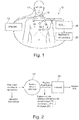
- reference 10 generally denotes the assembly according to the invention for evaluating the SVB sympathovagal balance of a patient.
- the system comprises a stimulation device with a generator box 12 producing pulses applied to one (or more) effector (s) 14, consisting for example of a vibrator placed in a sensitive region of the epidermis, typically (in the adult) in the region of the mastoid bone near the ear.
- effector consisting for example of a vibrator placed in a sensitive region of the epidermis, typically (in the adult) in the region of the mastoid bone near the ear.
- the vibrotactile stimulation applied to the skin by the effector 14, detected by the sensory or mechanoreceptor receptors of the body, will be transmitted to the autonomic central nervous system via the sensory nerves.
- This type of stimulation vibrotactile operated cutaneous will generate a controlled disruption of the autonomic system, and here will be referred to as "kinesthetic stimulation” or “stimulation ANS” ( Autonomic Nervous Stimulation ).
- Effector 14 is for example a transducer of C10-100 type Precision Microdrives or C2 Tactor Engineering Acoustics. It is a transducer of a few grams capable of emitting vibrations thanks to an integrated vibrator excited by pulse trains of variable amplitude and duration, typically at a frequency of 250 Hz which is the nominal frequency of resonance of this particular effector and which is also the frequency at which the mechanoreceptors of the skin are the most sensitive. Other types of effector can of course be effectively used.
- the generator 12 is controlled by a microcontroller and has means for adjusting the intensity (that is to say the energy) of the kinesthetic stimulation, by controlled variation of the amplitude and / or the number, the duration and / or the stimulation frequency of the pulse trains forming the signal applied to the effector 14.
- the system 10 further comprises a Holter type recorder with a signal acquisition module 16 connected to various sensors or electrodes 18 for measuring physiological signals such as ECG, heart rate, respiration, oxygen saturation , pulse wave, phonocardiogram, etc.
- a Holter type recorder with a signal acquisition module 16 connected to various sensors or electrodes 18 for measuring physiological signals such as ECG, heart rate, respiration, oxygen saturation , pulse wave, phonocardiogram, etc.
- physiological signals directly related to cardiac activity including the heart rate which is a simple parameter to obtain from an ECG signal. But this choice is not limiting, and the invention may be implemented from other physiological signals collected non-invasively on the body of the patient.
- the endocardial acceleration (EA) of the myocardium is a signal capable of providing various significant parameters reflecting the activity of the heart.
- This EA signal can be obtained externally by means of an accelerometer sensing a phonocardiographic signal.
- EP 1 741 387 A1 ESA Medical
- EA Medical describes an apparatus for collecting and treating such signals in a patient, noninvasively, with in particular the manner of extracting various representative parameters such as the peak amplitude of the peak of endocardial acceleration (PEA), the time interval separating the two peaks PEA1 and PEA2 corresponding to the two main sounds of the heart, etc.
- Still other signals can be collected, notably by acquisition of surface biopotentials such as ECG, ENG, EEG and EMG (potentials respectively cardiac, nervous, encephalographic and muscular).
- the acquisition module 16 includes all the components necessary for the amplification and filtering of the physiological signals collected, which are then applied to a signal processing module 20 intended to extract, as will be explained later, a set specific parameters carrying information representative of the SVB equilibrium, in particular providing information on the effect produced on the cardiovascular system by the autonomic disturbance resulting from kinesthetic stimulation.
- the module 20 is also coupled to the kinesthetic generator 12 so as to adjust a certain number of operating parameters thereof, particularly the moment of delivery of a burst of pulses.
- the ECG signals collected by the module 16 thus make it possible to drive the generator 12 so that it can deliver to the kinesthetic effector 14 ANS pulse bursts at the most appropriate time of the cardiac depolarization wave.
- the Holter device may also comprise coupling means, wired or wireless, to an external device, for example a programmer for collecting data from a recording, or a home monitoring system for collecting at regular intervals the patient data and transmit this data to a remote center for offline analysis.
- an external device for example a programmer for collecting data from a recording, or a home monitoring system for collecting at regular intervals the patient data and transmit this data to a remote center for offline analysis.
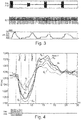
- the Figure 2 illustrates the principle of the invention which, to evaluate the sympathovagal balance of the patient, provides controlled and reproducible changes to the autonomic nervous system by predominantly sympathetic stimuli such as kinesthetic stimulation (ANS).
- ANS kinesthetic stimulation
- a stimulation algorithm is initiated, which produces an ANS pulse sequence, described in more detail with reference to the Figures 3 and 4 below.
- ANS stimulation also has an effect on the vascular system by modulating vasoconstriction, with changes in arterial diameters and peripheral resistance resulting in general vasoconstriction of the vascular system. Inverse effects are usually produced by parasympathetic (vagal) stimulation.
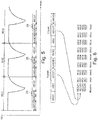
- the Figure 3 illustrates an example of heart activity signals (electrocardiogram ECG and HR heart rate) recorded in a patient paired with equipment such as Figure 1 during the delivery of ANS stimulus bursts (chronogram referenced "Stim ANS").
- ECG and HR heart rate electrocardiogram ECG and HR heart rate
- the ANS stimulation consists of a sequence of four bursts of different amplitudes, each with stimulation lasting 5 s at a fixed frequency of 250 Hz and "white" periods of 30 s separating each. of these bursts.
- the stimulation is therefore performed asynchronously with respect to the rhythm heart.
- the positive chronotropic effect generated by the vibrotactile stimulation is clearly visible on the HR signal, each stimulation each time causing an increase in the heart rate of several beats / minute (bpm).
- the chronotropic response to sympathetic ANS stimulation typically results in four successive phases.
- This figure also shows a "dose-response" effect: the greater the amplitude of stimulation, the higher the peak-to-peak amplitude and therefore the slopes of the response are high (the responses S 1 ... S 5 corresponding to respective increasing amplitude stimulations). Note also that the phase shift between the onset of ANS stimulation and the beginning of the chronotropic response is variable between individuals.
- the four phases 1 to 4 above can also be observed on the inotropic response (cardiac contractility variation) as well as on the other types of response, but with a slower dynamic due to larger time constants.
- the heart rate (RR intervals) will preferably be selected, but in a non-limiting manner, in order to evaluate the patient's sympatho-vagal equilibrium according to the invention.
- ANS stimulation includes asynchronous stimulations with a stimulation frequency of 250 Hz (close to the optimal mechanoreceptor response rate), a duration of 5 s, an inter-temporal duration of 30 s and variable amplitude.
- the Figure 5 illustrates the succession of sequences of analysis of heart rhythm variations (evaluated by measurement of the RR interval) in response to successive ANS bursts 28.
- the heart rate (RR intervals) is measured during baseline (BASE), controlled pacing (ANS), and recovery (RECUP) periods.
- BASE baseline
- ANS controlled pacing
- RECUP recovery
- the signals measured during the different periods can be processed in an integrated or independent way.
- the heart rate (RR intervals) is measured at each recovery period RECUP1, RECUP2 ... during eight cardiac cycles, thus giving each cycle eight samples which are stored as a vector ⁇ RR11, RR12 ... RR18 ⁇ of eight ordered values for the measurements made during the recovery phase RECUP1 of the first sequence SEQ1, and so on for the following sequences SEQ2, SEQ3 ...
- the device seeks an adjustment of this characteristic by a curve, for example an exponential model 32, or well a polynomial model, etc.
- the treatment is operated from indicators derived from an analysis covering both the period of delivery of the controlled stimulation (ANS) and the recovery period (RECUP).
- these two periods can be described, as indicated above, by a succession of four phases n ° 1 to 4, with consecutively: rapid decrease of the cardiac cycle (RR interval) or increase of another parameter notably derived from the measurement of endocardial acceleration (phase 1), pseudo-plateau (phase 2), rapid increase of the cardiac cycle at the end of the ANS period (phase 3), and recovery proper (phase no. 4).
Landscapes
- Health & Medical Sciences (AREA)
- Life Sciences & Earth Sciences (AREA)
- Engineering & Computer Science (AREA)
- Medical Informatics (AREA)
- Public Health (AREA)
- Biomedical Technology (AREA)
- General Health & Medical Sciences (AREA)
- Cardiology (AREA)
- Pathology (AREA)
- Physics & Mathematics (AREA)
- Biophysics (AREA)
- Molecular Biology (AREA)
- Heart & Thoracic Surgery (AREA)
- Surgery (AREA)
- Animal Behavior & Ethology (AREA)
- Veterinary Medicine (AREA)
- Physiology (AREA)
- Neurology (AREA)
- Primary Health Care (AREA)
- Epidemiology (AREA)
- Neurosurgery (AREA)
- Data Mining & Analysis (AREA)
- Databases & Information Systems (AREA)
- Pulmonology (AREA)
- Artificial Intelligence (AREA)
- Computer Vision & Pattern Recognition (AREA)
- Psychiatry (AREA)
- Signal Processing (AREA)
- Physical Education & Sports Medicine (AREA)
- Business, Economics & Management (AREA)
- General Business, Economics & Management (AREA)
- Electrotherapy Devices (AREA)
- Acoustics & Sound (AREA)
- Spectroscopy & Molecular Physics (AREA)
- Optics & Photonics (AREA)
- Measurement And Recording Of Electrical Phenomena And Electrical Characteristics Of The Living Body (AREA)
Claims (4)
- Kit zur Bewertung des sympathovagalen Gleichgewichts, SVB, eines Patienten, wobei das Kit eine aktive medizinische Vorrichtung folgendes umfasst:- einen Generator (12), der in der Lage ist, Ausbrüche von gesteuerten kinästhetischen Stimulationsimpulsen zu erzeugen;- mindestens einen kinästhetischen Effektor (14), der konfiguriert ist, um auf eine externe Hautstelle des Patienten aufgebracht zu werden, und der einen schwingenden elektromechanischen Wandler umfasst, der konfiguriert ist, um die vom Generator erzeugten Impulse zu empfangen und eine gegebene kinästhetische Stimulationsenergie bei einer Stimulationsfrequenz von 250 Hz abzugeben;
wobei der kinästhetische Effektor (14) konfiguriert ist, um an der äußeren Hautstelle des Patienten eine vibrierende mechanische Stimulation zu erzeugen, die durch die sensorischen oder mechanorezeptorischen Hautrezeptoren des Patienten nachweisbar ist; und- Mittel (16) zum Sammeln mindestens eines physiologischen Signals, das für die Herzaktivität repräsentativ ist, wobei das Kit so konfiguriert ist, dass das mindestens eine physiologische Signal, das von den Sammelmitteln (16) gesammelt wird, es ermöglicht, den Generator (12) so zu steuern, dass er Ausbrüche von ANS-Impulsen an den kinästhetischen Effektor (14) abgeben kann;- Mittel zur gesteuerten Aktivierung des Generators in programmierten Intervallen zur Erzeugung von kinästhetischen Stimulationsausbrüchen (28) während einer vorbestimmten Testzeit;- Mittel zum Messen mindestens eines Steuerungsparameters der aktuellen autonomen Aktivität des Patienten, der sich aus dem mindestens einen gesammelten physiologischen Signal ableitet, für jeden Impuls der kinästhetischen Stimulation;- Mittel zum Berechnen der Variation des mindestens einen Steuerungsparameters, der sich aus der kinästhetischen Stimulation ergibt, wobei diese Variation aus den Werten des mindestens einen Steuerungsparameters berechnet wird, der mindestens zwei Werte umfasst unter:(i) einem Basiswert, der über einen Zeitraum (BASE) im stationären Zustand vor der Erzeugung des Ausbruchs von kinästhetischen Stimulationsimpulsen gemessen wurde;(ii) einem Stromwert, der während eines Zeitraums (ANS) der Erzeugung des Ausbruchs von kinästhetischen Stimulationsimpulsen gemessen wurde; und(iii) einem Stromwert, der während einer Erholungsperiode (RECOVERY) nach der Erzeugung des Ausbruchs von kinästhetischen Stimulationsimpulsen gemessen wird; und- Auswertemittel, die in der Lage sind, einen SVB-Index als Funktion der Variationen des mindestens einen Steuerparameters zu bestimmen, der sich aus der kinästhetischen Stimulation ergibt, die während der vorbestimmten Testzeit berechnet werden. - Das Kit von Anspruch 1, worin:- während der Testphase ist der Generator konfiguriert, um eine Vielzahl von N Ausbrüchen von kinästhetischen Stimulationsimpulsen zu erzeugen;- während eines Zeitraums, der die Erholungsperiode einschließt, die Messmittel in der Lage sind, den aktuellen Wert des mindestens einen Steuerparameters synchron mit der Herzfrequenz (26) des Patienten über eine Vielzahl von aufeinanderfolgenden Herzzyklen zu messen, wobei für jeden Ausbruch n separate Proben des mindestens einen Steuerparameters des jeweiligen Ranges i mit i = 1...n gegeben werden; und- die Auswertemittel in der Lage sind, einen Mittelwert aus den N Proben des gleichen Ranges i des mindestens einen Steuerparameters für den gleichen Prüfzeitraum zu berechnen, wodurch n Durchschnittswerte des Steuerparameters erhalten werden, wobei alle diese n Durchschnittswerte der SVB-Index für den Prüfzeitraum sind.
- Das Kit nach Anspruch 1, ferner umfassend:- Mittel, die in der Lage sind, die Mittel zur kontrollierten Aktivierung des Generators zu hemmen, falls die Vorrichtung das Auftreten mindestens eines der folgenden Ereignisse erkennt: Herzfrequenz unterhalb eines vorbestimmten Schwellenwerts, Vorhandensein einer körperlichen Aktivität des Patienten, Abgabe einer Herzstimulation, Vorhandensein einer Apnoe oder Hypopnoe-Episode, Vorhandensein einer Arrhythmie-Episode.
- Das Kit nach Anspruch 1, worin der Steuerungsparameter der aktuellen autonomen Aktivität des Patienten mindestens einer von folgenden ist: das RR-Intervall als chronotroper Parameter; das PR-Intervall als dromotroper Parameter; und ein endokardialer Beschleunigungsparameter EA als inotroper Parameter.
Applications Claiming Priority (1)
| Application Number | Priority Date | Filing Date | Title |
|---|---|---|---|
| FR1400374 | 2014-02-11 |
Publications (2)
| Publication Number | Publication Date |
|---|---|
| EP2904964A1 EP2904964A1 (de) | 2015-08-12 |
| EP2904964B1 true EP2904964B1 (de) | 2019-10-02 |
Family
ID=50424551
Family Applications (1)
| Application Number | Title | Priority Date | Filing Date |
|---|---|---|---|
| EP15152441.0A Active EP2904964B1 (de) | 2014-02-11 | 2015-01-26 | Kit aus einer medizinischen Vorrichtung mit kinästhetischer Stimulation für die nicht-invasive Beurteilung des sympathovagalen Gleichgewichts eines Patienten |
Country Status (2)
| Country | Link |
|---|---|
| US (1) | US9782117B2 (de) |
| EP (1) | EP2904964B1 (de) |
Families Citing this family (5)
| Publication number | Priority date | Publication date | Assignee | Title |
|---|---|---|---|---|
| WO2017217598A1 (en) * | 2016-06-15 | 2017-12-21 | Samsung Electronics Co., Ltd. | Stress detection based on sympathovagal balance |
| US10456088B2 (en) | 2015-07-16 | 2019-10-29 | Samsung Electronics Company, Ltd. | Performance of biological measurements in the presence of noise |
| ES2910203T3 (es) * | 2016-08-26 | 2022-05-11 | Univ California | Tratamiento de disfunción cardiaca |
| WO2018147850A1 (en) * | 2017-02-09 | 2018-08-16 | Sony Mobile Communications Inc. | System and method for controlling notifications in an electronic device according to user status |
| US11357573B2 (en) * | 2019-04-25 | 2022-06-14 | International Business Machines Corporation | Optimum treatment planning during coronary intervention by simultaneous simulation of a continuum of outcomes |
Family Cites Families (6)
| Publication number | Priority date | Publication date | Assignee | Title |
|---|---|---|---|---|
| US7783349B2 (en) * | 2006-04-10 | 2010-08-24 | Cardiac Pacemakers, Inc. | System and method for closed-loop neural stimulation |
| FR2888123A1 (fr) * | 2005-07-05 | 2007-01-12 | Ela Medical Soc Par Actions Si | Appareillage pour la detection non invasive de la survenue d'apnees ou d'hypopnees chez un patient |
| US8005543B2 (en) * | 2006-05-08 | 2011-08-23 | Cardiac Pacemakers, Inc. | Heart failure management system |
| US8050765B2 (en) * | 2006-08-30 | 2011-11-01 | Cardiac Pacemakers, Inc. | Method and apparatus for controlling neural stimulation during disordered breathing |
| US20080281372A1 (en) | 2007-05-09 | 2008-11-13 | Cardiac Pacemakers, Inc. | Neural stimulation system analyzer |
| TW201036592A (en) | 2009-04-15 | 2010-10-16 | Univ Nat Yang Ming | A method and system of auditory evoked heart rate variability analysis |
-
2015
- 2015-01-26 EP EP15152441.0A patent/EP2904964B1/de active Active
- 2015-02-09 US US14/617,555 patent/US9782117B2/en not_active Expired - Fee Related
Non-Patent Citations (1)
| Title |
|---|
| None * |
Also Published As
| Publication number | Publication date |
|---|---|
| EP2904964A1 (de) | 2015-08-12 |
| US9782117B2 (en) | 2017-10-10 |
| US20150223746A1 (en) | 2015-08-13 |
Similar Documents
| Publication | Publication Date | Title |
|---|---|---|
| CN113164744B (zh) | 预测性的疗法神经刺激系统 | |
| US8764676B2 (en) | Signal processing in physiological noise | |
| US11458308B2 (en) | Electrical stimulation device for improving fluidity of motion | |
| JP5619728B2 (ja) | 生理学的状態を決定するシステム | |
| EP2904964B1 (de) | Kit aus einer medizinischen Vorrichtung mit kinästhetischer Stimulation für die nicht-invasive Beurteilung des sympathovagalen Gleichgewichts eines Patienten | |
| JP4464995B2 (ja) | 心電図波形を監視する方法及びシステム | |
| US20140051945A1 (en) | Expanded frequency electroencephalography/electrocardiography light apparatus and method of use | |
| EP3110321A1 (de) | Verfahren, vorrichtung, system und computerprogramm zum filtern einer rr-serie aus einem herzsignal mit automatischer überprüfung der qualität der rr-serie | |
| FR2862543A1 (fr) | Dispositif medical implantable actif comprenant une fonction de suivi de l'activite sympathico-vagale par analyse de l'acceleration endocardiaque | |
| WO2003101291A1 (fr) | Traitement frequentiel d'une serie rr dans un signal cardiaque analogique | |
| CA2580758C (fr) | Procede de traitement d'une serie rr et son application a l'analyse de la variabilite du rythme cardiaque, et en particulier a l'evaluation de la douleur ou du stress chez un etre vivant | |
| FR2821460A1 (fr) | Procede et dispositif de filtrage d'une serie rr issue d'un signal cardiaque, et plus particulierement d'un signal ecg | |
| EP3110322B1 (de) | Verfahren und vorrichtung zur automatischen überprüfung der qualität einer aus einem herzsignal ermittelten rr-intervallserie | |
| EP3331435A1 (de) | Verfahren und system zur akustischen stimulation der gehirnwellen einer person | |
| Abe et al. | Evaluation of baroreflex function using green light photoplethysmogram in consideration of resistance to artifacts | |
| EP2997996B1 (de) | Implantierbare vorrichtung, die eine stimulationssonde zur messung der bioimpedanz in einem blutstrom umfasst | |
| EP4216810B1 (de) | Elektrodermales gerät | |
| KR101526144B1 (ko) | 휴대용 자율신경계 반응 모니터링 장치 | |
| Pyko et al. | Phase synchronization in a double-loop feedback model of blood pressure regulation | |
| EP3009166B1 (de) | Aktive implantierbare medizinische vorrichtung zur behandlung einer herzinsuffizienz durch stimulation des vagusnervs | |
| Jurczyk et al. | Past strong experiences determine acute cardiovascular autonomic responses to acoustic stress | |
| FR3151970A1 (fr) | Procede et dispositif de calcul d’au moins un indice de variabilite de la frequence cardiaque a partir d’une serie rr | |
| WO2022013263A1 (en) | Devices and methods for collecting interoception data | |
| GB2520027A (en) | Expanded frequency electroencephalography/electrocardiography light apparatus and method of use |
Legal Events
| Date | Code | Title | Description |
|---|---|---|---|
| PUAI | Public reference made under article 153(3) epc to a published international application that has entered the european phase |
Free format text: ORIGINAL CODE: 0009012 |
|
| AK | Designated contracting states |
Kind code of ref document: A1 Designated state(s): AL AT BE BG CH CY CZ DE DK EE ES FI FR GB GR HR HU IE IS IT LI LT LU LV MC MK MT NL NO PL PT RO RS SE SI SK SM TR |
|
| AX | Request for extension of the european patent |
Extension state: BA ME |
|
| 17P | Request for examination filed |
Effective date: 20160208 |
|
| RBV | Designated contracting states (corrected) |
Designated state(s): AL AT BE BG CH CY CZ DE DK EE ES FI FR GB GR HR HU IE IS IT LI LT LU LV MC MK MT NL NO PL PT RO RS SE SI SK SM TR |
|
| STAA | Information on the status of an ep patent application or granted ep patent |
Free format text: STATUS: EXAMINATION IS IN PROGRESS |
|
| 17Q | First examination report despatched |
Effective date: 20161222 |
|
| REG | Reference to a national code |
Ref country code: DE Ref legal event code: R079 Ref document number: 602015038915 Country of ref document: DE Free format text: PREVIOUS MAIN CLASS: A61B0005000000 Ipc: A61B0005020500 |
|
| GRAP | Despatch of communication of intention to grant a patent |
Free format text: ORIGINAL CODE: EPIDOSNIGR1 |
|
| STAA | Information on the status of an ep patent application or granted ep patent |
Free format text: STATUS: GRANT OF PATENT IS INTENDED |
|
| RIC1 | Information provided on ipc code assigned before grant |
Ipc: G16H 50/30 20180101ALI20190326BHEP Ipc: A61B 5/1455 20060101ALN20190326BHEP Ipc: A61B 5/0402 20060101ALI20190326BHEP Ipc: A61B 5/024 20060101ALN20190326BHEP Ipc: A61B 5/00 20060101ALI20190326BHEP Ipc: A61B 5/0452 20060101ALI20190326BHEP Ipc: A61B 7/04 20060101ALN20190326BHEP Ipc: G16H 40/63 20180101ALI20190326BHEP Ipc: A61B 5/0205 20060101AFI20190326BHEP Ipc: G16H 20/30 20180101ALI20190326BHEP Ipc: G16H 50/20 20180101ALI20190326BHEP Ipc: A61B 5/08 20060101ALN20190326BHEP |
|
| RIC1 | Information provided on ipc code assigned before grant |
Ipc: A61B 5/0402 20060101ALI20190404BHEP Ipc: A61B 5/08 20060101ALN20190404BHEP Ipc: G16H 40/63 20180101ALI20190404BHEP Ipc: A61B 5/0205 20060101AFI20190404BHEP Ipc: A61B 5/0452 20060101ALI20190404BHEP Ipc: A61B 5/00 20060101ALI20190404BHEP Ipc: A61B 5/024 20060101ALN20190404BHEP Ipc: G16H 50/20 20180101ALI20190404BHEP Ipc: G16H 20/30 20180101ALI20190404BHEP Ipc: A61B 5/1455 20060101ALN20190404BHEP Ipc: A61B 7/04 20060101ALN20190404BHEP Ipc: G16H 50/30 20180101ALI20190404BHEP |
|
| INTG | Intention to grant announced |
Effective date: 20190425 |
|
| GRAS | Grant fee paid |
Free format text: ORIGINAL CODE: EPIDOSNIGR3 |
|
| GRAA | (expected) grant |
Free format text: ORIGINAL CODE: 0009210 |
|
| STAA | Information on the status of an ep patent application or granted ep patent |
Free format text: STATUS: THE PATENT HAS BEEN GRANTED |
|
| AK | Designated contracting states |
Kind code of ref document: B1 Designated state(s): AL AT BE BG CH CY CZ DE DK EE ES FI FR GB GR HR HU IE IS IT LI LT LU LV MC MK MT NL NO PL PT RO RS SE SI SK SM TR |
|
| REG | Reference to a national code |
Ref country code: GB Ref legal event code: FG4D Free format text: NOT ENGLISH |
|
| REG | Reference to a national code |
Ref country code: CH Ref legal event code: EP Ref country code: AT Ref legal event code: REF Ref document number: 1185281 Country of ref document: AT Kind code of ref document: T Effective date: 20191015 |
|
| REG | Reference to a national code |
Ref country code: DE Ref legal event code: R096 Ref document number: 602015038915 Country of ref document: DE |
|
| REG | Reference to a national code |
Ref country code: IE Ref legal event code: FG4D Free format text: LANGUAGE OF EP DOCUMENT: FRENCH |
|
| REG | Reference to a national code |
Ref country code: NL Ref legal event code: MP Effective date: 20191002 |
|
| REG | Reference to a national code |
Ref country code: LT Ref legal event code: MG4D |
|
| REG | Reference to a national code |
Ref country code: AT Ref legal event code: MK05 Ref document number: 1185281 Country of ref document: AT Kind code of ref document: T Effective date: 20191002 |
|
| PG25 | Lapsed in a contracting state [announced via postgrant information from national office to epo] |
Ref country code: ES Free format text: LAPSE BECAUSE OF FAILURE TO SUBMIT A TRANSLATION OF THE DESCRIPTION OR TO PAY THE FEE WITHIN THE PRESCRIBED TIME-LIMIT Effective date: 20191002 Ref country code: GR Free format text: LAPSE BECAUSE OF FAILURE TO SUBMIT A TRANSLATION OF THE DESCRIPTION OR TO PAY THE FEE WITHIN THE PRESCRIBED TIME-LIMIT Effective date: 20200103 Ref country code: LT Free format text: LAPSE BECAUSE OF FAILURE TO SUBMIT A TRANSLATION OF THE DESCRIPTION OR TO PAY THE FEE WITHIN THE PRESCRIBED TIME-LIMIT Effective date: 20191002 Ref country code: NL Free format text: LAPSE BECAUSE OF FAILURE TO SUBMIT A TRANSLATION OF THE DESCRIPTION OR TO PAY THE FEE WITHIN THE PRESCRIBED TIME-LIMIT Effective date: 20191002 Ref country code: PL Free format text: LAPSE BECAUSE OF FAILURE TO SUBMIT A TRANSLATION OF THE DESCRIPTION OR TO PAY THE FEE WITHIN THE PRESCRIBED TIME-LIMIT Effective date: 20191002 Ref country code: SE Free format text: LAPSE BECAUSE OF FAILURE TO SUBMIT A TRANSLATION OF THE DESCRIPTION OR TO PAY THE FEE WITHIN THE PRESCRIBED TIME-LIMIT Effective date: 20191002 Ref country code: NO Free format text: LAPSE BECAUSE OF FAILURE TO SUBMIT A TRANSLATION OF THE DESCRIPTION OR TO PAY THE FEE WITHIN THE PRESCRIBED TIME-LIMIT Effective date: 20200102 Ref country code: AT Free format text: LAPSE BECAUSE OF FAILURE TO SUBMIT A TRANSLATION OF THE DESCRIPTION OR TO PAY THE FEE WITHIN THE PRESCRIBED TIME-LIMIT Effective date: 20191002 Ref country code: LV Free format text: LAPSE BECAUSE OF FAILURE TO SUBMIT A TRANSLATION OF THE DESCRIPTION OR TO PAY THE FEE WITHIN THE PRESCRIBED TIME-LIMIT Effective date: 20191002 Ref country code: FI Free format text: LAPSE BECAUSE OF FAILURE TO SUBMIT A TRANSLATION OF THE DESCRIPTION OR TO PAY THE FEE WITHIN THE PRESCRIBED TIME-LIMIT Effective date: 20191002 Ref country code: BG Free format text: LAPSE BECAUSE OF FAILURE TO SUBMIT A TRANSLATION OF THE DESCRIPTION OR TO PAY THE FEE WITHIN THE PRESCRIBED TIME-LIMIT Effective date: 20200102 Ref country code: PT Free format text: LAPSE BECAUSE OF FAILURE TO SUBMIT A TRANSLATION OF THE DESCRIPTION OR TO PAY THE FEE WITHIN THE PRESCRIBED TIME-LIMIT Effective date: 20200203 |
|
| PG25 | Lapsed in a contracting state [announced via postgrant information from national office to epo] |
Ref country code: CZ Free format text: LAPSE BECAUSE OF FAILURE TO SUBMIT A TRANSLATION OF THE DESCRIPTION OR TO PAY THE FEE WITHIN THE PRESCRIBED TIME-LIMIT Effective date: 20191002 Ref country code: RS Free format text: LAPSE BECAUSE OF FAILURE TO SUBMIT A TRANSLATION OF THE DESCRIPTION OR TO PAY THE FEE WITHIN THE PRESCRIBED TIME-LIMIT Effective date: 20191002 Ref country code: IS Free format text: LAPSE BECAUSE OF FAILURE TO SUBMIT A TRANSLATION OF THE DESCRIPTION OR TO PAY THE FEE WITHIN THE PRESCRIBED TIME-LIMIT Effective date: 20200224 Ref country code: HR Free format text: LAPSE BECAUSE OF FAILURE TO SUBMIT A TRANSLATION OF THE DESCRIPTION OR TO PAY THE FEE WITHIN THE PRESCRIBED TIME-LIMIT Effective date: 20191002 |
|
| PG25 | Lapsed in a contracting state [announced via postgrant information from national office to epo] |
Ref country code: AL Free format text: LAPSE BECAUSE OF FAILURE TO SUBMIT A TRANSLATION OF THE DESCRIPTION OR TO PAY THE FEE WITHIN THE PRESCRIBED TIME-LIMIT Effective date: 20191002 |
|
| REG | Reference to a national code |
Ref country code: DE Ref legal event code: R097 Ref document number: 602015038915 Country of ref document: DE |
|
| PG2D | Information on lapse in contracting state deleted |
Ref country code: IS |
|
| PG25 | Lapsed in a contracting state [announced via postgrant information from national office to epo] |
Ref country code: EE Free format text: LAPSE BECAUSE OF FAILURE TO SUBMIT A TRANSLATION OF THE DESCRIPTION OR TO PAY THE FEE WITHIN THE PRESCRIBED TIME-LIMIT Effective date: 20191002 Ref country code: DK Free format text: LAPSE BECAUSE OF FAILURE TO SUBMIT A TRANSLATION OF THE DESCRIPTION OR TO PAY THE FEE WITHIN THE PRESCRIBED TIME-LIMIT Effective date: 20191002 Ref country code: RO Free format text: LAPSE BECAUSE OF FAILURE TO SUBMIT A TRANSLATION OF THE DESCRIPTION OR TO PAY THE FEE WITHIN THE PRESCRIBED TIME-LIMIT Effective date: 20191002 Ref country code: IS Free format text: LAPSE BECAUSE OF FAILURE TO SUBMIT A TRANSLATION OF THE DESCRIPTION OR TO PAY THE FEE WITHIN THE PRESCRIBED TIME-LIMIT Effective date: 20200202 |
|
| PLBE | No opposition filed within time limit |
Free format text: ORIGINAL CODE: 0009261 |
|
| STAA | Information on the status of an ep patent application or granted ep patent |
Free format text: STATUS: NO OPPOSITION FILED WITHIN TIME LIMIT |
|
| PG25 | Lapsed in a contracting state [announced via postgrant information from national office to epo] |
Ref country code: SM Free format text: LAPSE BECAUSE OF FAILURE TO SUBMIT A TRANSLATION OF THE DESCRIPTION OR TO PAY THE FEE WITHIN THE PRESCRIBED TIME-LIMIT Effective date: 20191002 Ref country code: MC Free format text: LAPSE BECAUSE OF FAILURE TO SUBMIT A TRANSLATION OF THE DESCRIPTION OR TO PAY THE FEE WITHIN THE PRESCRIBED TIME-LIMIT Effective date: 20191002 Ref country code: SK Free format text: LAPSE BECAUSE OF FAILURE TO SUBMIT A TRANSLATION OF THE DESCRIPTION OR TO PAY THE FEE WITHIN THE PRESCRIBED TIME-LIMIT Effective date: 20191002 |
|
| REG | Reference to a national code |
Ref country code: CH Ref legal event code: PL |
|
| 26N | No opposition filed |
Effective date: 20200703 |
|
| REG | Reference to a national code |
Ref country code: BE Ref legal event code: MM Effective date: 20200131 |
|
| PG25 | Lapsed in a contracting state [announced via postgrant information from national office to epo] |
Ref country code: LU Free format text: LAPSE BECAUSE OF NON-PAYMENT OF DUE FEES Effective date: 20200126 |
|
| PG25 | Lapsed in a contracting state [announced via postgrant information from national office to epo] |
Ref country code: SI Free format text: LAPSE BECAUSE OF FAILURE TO SUBMIT A TRANSLATION OF THE DESCRIPTION OR TO PAY THE FEE WITHIN THE PRESCRIBED TIME-LIMIT Effective date: 20191002 Ref country code: CH Free format text: LAPSE BECAUSE OF NON-PAYMENT OF DUE FEES Effective date: 20200131 Ref country code: LI Free format text: LAPSE BECAUSE OF NON-PAYMENT OF DUE FEES Effective date: 20200131 Ref country code: BE Free format text: LAPSE BECAUSE OF NON-PAYMENT OF DUE FEES Effective date: 20200131 |
|
| PG25 | Lapsed in a contracting state [announced via postgrant information from national office to epo] |
Ref country code: IE Free format text: LAPSE BECAUSE OF NON-PAYMENT OF DUE FEES Effective date: 20200126 |
|
| REG | Reference to a national code |
Ref country code: DE Ref legal event code: R082 Ref document number: 602015038915 Country of ref document: DE Representative=s name: PAGE, WHITE & FARRER GERMANY LLP, DE Ref country code: DE Ref legal event code: R082 Ref document number: 602015038915 Country of ref document: DE Representative=s name: GULDE & PARTNER PATENT- UND RECHTSANWALTSKANZL, DE |
|
| PG25 | Lapsed in a contracting state [announced via postgrant information from national office to epo] |
Ref country code: TR Free format text: LAPSE BECAUSE OF FAILURE TO SUBMIT A TRANSLATION OF THE DESCRIPTION OR TO PAY THE FEE WITHIN THE PRESCRIBED TIME-LIMIT Effective date: 20191002 Ref country code: MT Free format text: LAPSE BECAUSE OF FAILURE TO SUBMIT A TRANSLATION OF THE DESCRIPTION OR TO PAY THE FEE WITHIN THE PRESCRIBED TIME-LIMIT Effective date: 20191002 Ref country code: CY Free format text: LAPSE BECAUSE OF FAILURE TO SUBMIT A TRANSLATION OF THE DESCRIPTION OR TO PAY THE FEE WITHIN THE PRESCRIBED TIME-LIMIT Effective date: 20191002 |
|
| PG25 | Lapsed in a contracting state [announced via postgrant information from national office to epo] |
Ref country code: MK Free format text: LAPSE BECAUSE OF FAILURE TO SUBMIT A TRANSLATION OF THE DESCRIPTION OR TO PAY THE FEE WITHIN THE PRESCRIBED TIME-LIMIT Effective date: 20191002 |
|
| P01 | Opt-out of the competence of the unified patent court (upc) registered |
Effective date: 20230527 |
|
| REG | Reference to a national code |
Ref country code: DE Ref legal event code: R082 Ref document number: 602015038915 Country of ref document: DE Representative=s name: GULDE & PARTNER PATENT- UND RECHTSANWALTSKANZL, DE |
|
| PGFP | Annual fee paid to national office [announced via postgrant information from national office to epo] |
Ref country code: GB Payment date: 20260219 Year of fee payment: 12 |
|
| PGFP | Annual fee paid to national office [announced via postgrant information from national office to epo] |
Ref country code: DE Payment date: 20260206 Year of fee payment: 12 |
|
| PGFP | Annual fee paid to national office [announced via postgrant information from national office to epo] |
Ref country code: IT Payment date: 20260115 Year of fee payment: 12 |
|
| PGFP | Annual fee paid to national office [announced via postgrant information from national office to epo] |
Ref country code: FR Payment date: 20260130 Year of fee payment: 12 |