EP2905832A1 - Negatives aktives elektrodenmaterial für eine lithiumsekundärbatterie und verfahren zur herstellung davon - Google Patents
Negatives aktives elektrodenmaterial für eine lithiumsekundärbatterie und verfahren zur herstellung davon Download PDFInfo
- Publication number
- EP2905832A1 EP2905832A1 EP14853184.1A EP14853184A EP2905832A1 EP 2905832 A1 EP2905832 A1 EP 2905832A1 EP 14853184 A EP14853184 A EP 14853184A EP 2905832 A1 EP2905832 A1 EP 2905832A1
- Authority
- EP
- European Patent Office
- Prior art keywords
- active material
- anode active
- silicon
- sio
- crystalline
- Prior art date
- Legal status (The legal status is an assumption and is not a legal conclusion. Google has not performed a legal analysis and makes no representation as to the accuracy of the status listed.)
- Granted
Links
Images
Classifications
-
- H—ELECTRICITY
- H01—ELECTRIC ELEMENTS
- H01M—PROCESSES OR MEANS, e.g. BATTERIES, FOR THE DIRECT CONVERSION OF CHEMICAL ENERGY INTO ELECTRICAL ENERGY
- H01M4/00—Electrodes
- H01M4/02—Electrodes composed of, or comprising, active material
- H01M4/36—Selection of substances as active materials, active masses, active liquids
- H01M4/38—Selection of substances as active materials, active masses, active liquids of elements or alloys
-
- H—ELECTRICITY
- H01—ELECTRIC ELEMENTS
- H01M—PROCESSES OR MEANS, e.g. BATTERIES, FOR THE DIRECT CONVERSION OF CHEMICAL ENERGY INTO ELECTRICAL ENERGY
- H01M4/00—Electrodes
- H01M4/02—Electrodes composed of, or comprising, active material
- H01M4/36—Selection of substances as active materials, active masses, active liquids
- H01M4/48—Selection of substances as active materials, active masses, active liquids of inorganic oxides or hydroxides
-
- C—CHEMISTRY; METALLURGY
- C01—INORGANIC CHEMISTRY
- C01B—NON-METALLIC ELEMENTS; COMPOUNDS THEREOF; METALLOIDS OR COMPOUNDS THEREOF NOT COVERED BY SUBCLASS C01C
- C01B33/00—Silicon; Compounds thereof
- C01B33/02—Silicon
-
- C—CHEMISTRY; METALLURGY
- C01—INORGANIC CHEMISTRY
- C01B—NON-METALLIC ELEMENTS; COMPOUNDS THEREOF; METALLOIDS OR COMPOUNDS THEREOF NOT COVERED BY SUBCLASS C01C
- C01B33/00—Silicon; Compounds thereof
- C01B33/02—Silicon
- C01B33/021—Preparation
- C01B33/023—Preparation by reduction of silica or free silica-containing material
-
- C—CHEMISTRY; METALLURGY
- C01—INORGANIC CHEMISTRY
- C01B—NON-METALLIC ELEMENTS; COMPOUNDS THEREOF; METALLOIDS OR COMPOUNDS THEREOF NOT COVERED BY SUBCLASS C01C
- C01B33/00—Silicon; Compounds thereof
- C01B33/113—Silicon oxides; Hydrates thereof
-
- H—ELECTRICITY
- H01—ELECTRIC ELEMENTS
- H01M—PROCESSES OR MEANS, e.g. BATTERIES, FOR THE DIRECT CONVERSION OF CHEMICAL ENERGY INTO ELECTRICAL ENERGY
- H01M10/00—Secondary cells; Manufacture thereof
- H01M10/05—Accumulators with non-aqueous electrolyte
- H01M10/052—Li-accumulators
- H01M10/0525—Rocking-chair batteries, i.e. batteries with lithium insertion or intercalation in both electrodes; Lithium-ion batteries
-
- H—ELECTRICITY
- H01—ELECTRIC ELEMENTS
- H01M—PROCESSES OR MEANS, e.g. BATTERIES, FOR THE DIRECT CONVERSION OF CHEMICAL ENERGY INTO ELECTRICAL ENERGY
- H01M4/00—Electrodes
- H01M4/02—Electrodes composed of, or comprising, active material
- H01M4/13—Electrodes for accumulators with non-aqueous electrolyte, e.g. for lithium-accumulators; Processes of manufacture thereof
-
- H—ELECTRICITY
- H01—ELECTRIC ELEMENTS
- H01M—PROCESSES OR MEANS, e.g. BATTERIES, FOR THE DIRECT CONVERSION OF CHEMICAL ENERGY INTO ELECTRICAL ENERGY
- H01M4/00—Electrodes
- H01M4/02—Electrodes composed of, or comprising, active material
- H01M4/13—Electrodes for accumulators with non-aqueous electrolyte, e.g. for lithium-accumulators; Processes of manufacture thereof
- H01M4/134—Electrodes based on metals, Si or alloys
-
- H—ELECTRICITY
- H01—ELECTRIC ELEMENTS
- H01M—PROCESSES OR MEANS, e.g. BATTERIES, FOR THE DIRECT CONVERSION OF CHEMICAL ENERGY INTO ELECTRICAL ENERGY
- H01M4/00—Electrodes
- H01M4/02—Electrodes composed of, or comprising, active material
- H01M4/13—Electrodes for accumulators with non-aqueous electrolyte, e.g. for lithium-accumulators; Processes of manufacture thereof
- H01M4/139—Processes of manufacture
- H01M4/1395—Processes of manufacture of electrodes based on metals, Si or alloys
-
- H—ELECTRICITY
- H01—ELECTRIC ELEMENTS
- H01M—PROCESSES OR MEANS, e.g. BATTERIES, FOR THE DIRECT CONVERSION OF CHEMICAL ENERGY INTO ELECTRICAL ENERGY
- H01M4/00—Electrodes
- H01M4/02—Electrodes composed of, or comprising, active material
- H01M4/36—Selection of substances as active materials, active masses, active liquids
- H01M4/362—Composites
- H01M4/364—Composites as mixtures
-
- H—ELECTRICITY
- H01—ELECTRIC ELEMENTS
- H01M—PROCESSES OR MEANS, e.g. BATTERIES, FOR THE DIRECT CONVERSION OF CHEMICAL ENERGY INTO ELECTRICAL ENERGY
- H01M4/00—Electrodes
- H01M4/02—Electrodes composed of, or comprising, active material
- H01M4/36—Selection of substances as active materials, active masses, active liquids
- H01M4/38—Selection of substances as active materials, active masses, active liquids of elements or alloys
- H01M4/386—Silicon or alloys based on silicon
-
- H—ELECTRICITY
- H01—ELECTRIC ELEMENTS
- H01M—PROCESSES OR MEANS, e.g. BATTERIES, FOR THE DIRECT CONVERSION OF CHEMICAL ENERGY INTO ELECTRICAL ENERGY
- H01M4/00—Electrodes
- H01M4/02—Electrodes composed of, or comprising, active material
- H01M4/36—Selection of substances as active materials, active masses, active liquids
- H01M4/48—Selection of substances as active materials, active masses, active liquids of inorganic oxides or hydroxides
- H01M4/483—Selection of substances as active materials, active masses, active liquids of inorganic oxides or hydroxides for non-aqueous cells
-
- H—ELECTRICITY
- H01—ELECTRIC ELEMENTS
- H01M—PROCESSES OR MEANS, e.g. BATTERIES, FOR THE DIRECT CONVERSION OF CHEMICAL ENERGY INTO ELECTRICAL ENERGY
- H01M10/00—Secondary cells; Manufacture thereof
- H01M10/05—Accumulators with non-aqueous electrolyte
- H01M10/052—Li-accumulators
-
- H—ELECTRICITY
- H01—ELECTRIC ELEMENTS
- H01M—PROCESSES OR MEANS, e.g. BATTERIES, FOR THE DIRECT CONVERSION OF CHEMICAL ENERGY INTO ELECTRICAL ENERGY
- H01M2220/00—Batteries for particular applications
- H01M2220/30—Batteries in portable systems, e.g. mobile phone, laptop
-
- Y—GENERAL TAGGING OF NEW TECHNOLOGICAL DEVELOPMENTS; GENERAL TAGGING OF CROSS-SECTIONAL TECHNOLOGIES SPANNING OVER SEVERAL SECTIONS OF THE IPC; TECHNICAL SUBJECTS COVERED BY FORMER USPC CROSS-REFERENCE ART COLLECTIONS [XRACs] AND DIGESTS
- Y02—TECHNOLOGIES OR APPLICATIONS FOR MITIGATION OR ADAPTATION AGAINST CLIMATE CHANGE
- Y02E—REDUCTION OF GREENHOUSE GAS [GHG] EMISSIONS, RELATED TO ENERGY GENERATION, TRANSMISSION OR DISTRIBUTION
- Y02E60/00—Enabling technologies; Technologies with a potential or indirect contribution to GHG emissions mitigation
- Y02E60/10—Energy storage using batteries
Definitions
- the present invention relates to an anode active material for a lithium secondary battery, a method of preparing the same, and a lithium secondary battery including the anode active material.
- Lithium secondary batteries which are recently in the spotlight as a power source of portable and small electronic devices, may exhibit high discharge voltages that are two times or more than those of batteries using a typical alkaline aqueous solution by using an organic electrolyte solution. Thus, the lithium secondary batteries exhibit high energy density.
- Graphite is mainly used as an anode material of the lithium secondary battery.
- graphite has a low capacity per unit mass of 372 mAh/g and a high-capacity lithium secondary battery may be difficult to be prepared by using graphite.
- a material forming an intermetallic compound with lithium such as silicon, tin, and an oxide thereof, may be promising.
- volumes of the above materials may expand because crystal structures thereof may be changed when absorbing and storing lithium.
- silicon absorbs and stores the maximum amount of lithium, the silicon may be transformed into Li 4.4 Si and the volume of Li 4.4 Si may expand due to charging. With respect to the rate of increase in volume due to the charging, the volume may expand up to about 4.12 times the volume of the silicon before the volume expansion.
- Korean Patent Application Laid-Open Publication No. 2012-7011002 discloses an anode active material for a lithium ion secondary battery using SiO x .
- charge and discharge cycle characteristics may not be sufficiently improved and an x value in SiO x may be difficult to be controlled by a conventional synthesis method.
- the present invention provides an anode active material for a lithium secondary battery which may improve initial efficiency and life characteristics of a lithium secondary battery, and a method of preparing the same.
- an anode active material including a silicon-based composite formed of silicon (Si) and crystalline SiO 2 , wherein the SiO 2 is in the form of grains.
- a method of preparing an anode active material including preparing a silicon-based composite by reducing crystalline SiO 2 .
- a lithium secondary battery including the anode active material prepared by the above preparation method.
- an anode active material includes a silicon-based composite including Si and SiO 2 in a grain state and the SiO 2 is crystalline SiO 2 , the reaction between amorphous SiO 2 and lithium in an electrolyte may be excluded.
- the crystalline SiO 2 is included in the silicon-based composite, excellent capacity characteristics of a secondary battery may be maintained and initial efficiency and life characteristics may be improved when the silicon-based composite is used as an anode active material.
- a carbon-based material has been mainly used as an anode active material of a lithium secondary battery, but the carbon-based material has limitations in capacity characteristics such as discharge capacity. Accordingly, high-capacity materials using a silicon-based anode active material have recently been studied as a material of an anode active material of a lithium secondary battery. Since the silicon-based anode active material has a capacity (3,600 mAh/g) about 10 times or more higher than a theoretical capacity (372 mAh/g) of a carbon-based anode active material, the silicon-based anode active material is in the spotlight as a material for a high-capacity lithium secondary battery.
- a silicon-based composite In order to address the above limitations, different from a silicon-based anode active material including only silicon (Si), a silicon-based composite has been developed in which Si and SiO 2 are present in a separated state in a particle.
- a typical silicon-based composite includes Si grains and amorphous SiO 2 grains, there have been limitations, for example, the formation of by-products, such as Li 2 O, due to the reaction between amorphous SiO 2 and lithium included in an electrolyte, and furthermore, the reduction of initial discharge capacity and initial efficiency due to the by-products.
- an embodiment of the present invention provides a silicon-based composite comprising Si and crystalline SiO 2 in a grain state and an anode active material comprising the silicon-based composite.
- the crystalline SiO 2 may be quartz, cristobalite, or tridymite. This, as the same component as SiO 2 before thermal reduction using a metal reducing agent to be later described, corresponds to SiO 2 that is not reduced by thermal reduction.
- the silicon-based composite may include Si grains and crystalline SiO 2 grains in a ratio of 1-(x/2):(x/2), and in this case, an overall composition of the silicon-based composite may be represented by SiO x (0 ⁇ x ⁇ 2). That is, x is the number ratio of oxygen (O) atoms to Si atoms included in the silicon-based composite, wherein x may satisfy 0 ⁇ x ⁇ 2.
- SiO x prepared according to an embodiment of the present invention may minimize changes in initial efficiency according to the number ratio of oxygen atoms. However, in the case that x is greater than 2, the swelling phenomenon of the anode active material may be decreased to some extent, but initial discharge capacity of the lithium secondary battery may be reduced.
- the number ratio may satisfy 0 ⁇ x ⁇ 1.
- the silicon-based composite according to the embodiment of the present invention may include Si and crystalline SiO 2 grains.
- the silicon-based composite is used as an anode active material
- lithium ions deintercalated from a cathode active material are stored and released so that the Si may substantially cause an electrochemical reaction.
- the Si may be crystalline or amorphous. The reason for this is that, in the case that crystalline SiO 2 is reduced by thermal reduction using metallic gas to be described later, the Si may be reduced to grains of crystalline Si or may be reduced to gains of amorphous Si.
- amorphous may be construed as a meaning including the case of no crystallinity as well as all cases excluding the meaning of theoretical "crystallinity".
- an average particle size of the crystalline Si is 500 nm or less, may be 300 nm or less, and for example, may be in a range of 0.05 nm to 100 nm.
- the crystal size may be measured by X-ray diffraction (XRD) analysis or an electron microscope (e.g., scanning electron microscope (SEM) and transmission electron microscope (TEM)).
- Si particles generally used may accompany very complex crystal changes in reactions which electrochemically absorb, store, and release lithium atoms.
- Composition and crystal structure of the silicon particles change to Si (crystal structure: Fd3m), LiSi (crystal structure: I41/a), Li 2 Si (crystal structure: C2/m), Li 7 Si 2 (Pbam), and Li 22 Si 5 (F23) as the reactions, which electrochemically absorb, store, and release lithium atoms, proceed.
- a volume of the silicon particle expands to about 4 times according to the complex changes in the crystal structure.
- the reaction between the silicon-based composite according to the embodiment of the present invention and lithium atoms may be performed while maintaining the structure of the silicon-based composite.
- An average particle diameter of the anode active material may be in a range of 0.1 ⁇ m to 20 ⁇ m, and for example, may be in a range of 0.5 ⁇ m to 10 ⁇ m.
- an electrode plate density may decrease, and in the case in which the particle diameter of the anode active material is greater than 20 ⁇ m, rate capability may be reduced or life characteristics may be decreased due to volume expansion.
- the present invention also provides a method of preparing the above-described anode active material.
- the preparation method according to an embodiment of the present invention may include preparing a silicon-based composite by reducing crystalline SiO 2 . Since the silicon-based composite formed of Si and crystalline SiO 2 is prepared by reducing the crystalline SiO 2 , reaction by-products, such as Li 2 O are not formed by preventing the reaction between amorphous SiO 2 and lithium. Thus, initial discharge capacity, initial efficiency, and life characteristics may be improved.
- a type of the metal reducing agent is not particularly limited as long as it has sufficient reducing power for separating/extracting oxygen from the above-described SiO 2 , and for example, the metal reducing agent may be one selected from the group consisting of titanium (Ti), aluminum (Al), magnesium (Mg), and calcium (Ca), or a mixture of two or more thereof.
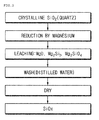
- the reducing of the crystalline SiO 2 may be performed by including a process of thermally reducing the crystalline SiO 2 using metallic powder or metallic gas including a metal reducing agent in an inert atmosphere. Since oxygen of the crystalline SiO 2 is locally removed by the thermal reduction, local reduction may occur. That is, a portion of the crystalline SiO 2 from which oxygen is removed is reduced to Si, and as a result, a silicon-based composite may be prepared in which Si and unreduced remaining crystalline SiO 2 grains are included in the form of a composite. As described above, the Si may be crystalline, may be amorphous, or may be a mixture in which crystalline and amorphous Si are included.
- the preparation method according to the embodiment of the present invention may include thermally reducing the crystalline SiO 2 with metallic powder including the metal reducing agent. That is, the thermal reduction may be performed by reducing a mixture, in which crystalline SiO 2 and metallic powder including a metal reducing agent, e.g., Mg, are mixed, in a reaction furnace, for example, a rotary kiln, in order to minimize contact between the crystalline SiO 2 and Mg as the metal reducing agent and maintain a uniform reaction.
- a reaction furnace for example, a rotary kiln
- SiO 2 as a raw material, may be quartz, cristobalite, or tridymite.
- an amount of the metal reducing agent included in the metallic powder may be in a range of 100:0.1 to 100:100 as a molar ratio based on the SiO 2 as a raw material.
- the ratio of Si to crystalline SiO 2 grains included in the prepared silicon-based composite may be easily controlled by controlling the amount of the metallic powder used in the thermal reduction.
- the metallic gas may include Mg as the metal reducing agent. Accordingly, a stoichiometric reaction between the crystalline SiO 2 and Mg as the metal reducing agent is as follows: [2Mg + SiO 2 ⁇ Si + 2MgO]
- the thermal reduction may be performed in a temperature range of 400°C to 1,000°C for 1 hour to 24 hours.
- the temperature of the thermal reduction is less than 400°C, the reduction reaction may be difficult to occur, and in the case in which the temperature of the thermal reduction is greater than 1,000°C, crystallinity of the crystalline SiO 2 may be changed.
- the time of the thermal reduction is less than 1 hour, the reduction reaction may not be completely finished, and in the case in which the time of the thermal reduction is greater than 24 hour, the efficiency of the preparation process may be reduced.
- the thermal reduction may be performed while flowing inert gas
- the inert gas usable in this case may be one selected from the group consisting of argon (Ar), nitrogen (N 2 ), neon (Ne), helium (He), and krypton (Kr), or mixed gas of two or more thereof.
- leaching by-products generated during the thermal reduction process may be further performed.
- by-products which may be generated when the metal reducing agent is magnesium, may include MgO, Mg 2 Si, or Mg 2 SiO 4 .
- the silicon-based composite is prepared and reduced impurities may then be removed using an HCl aqueous solution.
- An amount of HCl used in the removal of the impurities may be in a range of 0.1 N to 10 N. In the case that the amount of HCl used is less than 0.1 N, the impurities may not be completely removed, and in the case in which the amount of HCl used is greater than 10 N, problems may occur in the manufacturing process.
- a product having the by-products removed therefrom is collected, and a silicon-based composite including desired Si and crystalline SiO 2 may then be obtained by washing and drying.
- the thermal reduction may be performed in such a manner that the metallic reducing agent is formed in a gas state and the crystalline SiO 2 may be reduced with the metallic gas that is mixed with the inert gas.
- an anode including a current collector and an anode active material that is prepared by the above preparation method and formed on at least one surface of the current collector.
- the anode for example, is prepared by coating the anode collector with a mixture of the anode active material, a conductive agent, and a binder, and then drying the anode collector.
- the anode may also be prepared by a preparation method typically used in the art.
- the anode active material according to the embodiment of the present invention is mixed with a binder, a solvent, and a conductive agent and a dispersant if necessary, and stirred to prepare a slurry. Then, a current collector may be coated with the slurry and pressed to prepare the anode.
- a lithium secondary battery including the anode active material prepared by the above preparation method is provided.
- the lithium secondary battery includes a cathode including a cathode active material; a separator; an anode including the anode active material; and an electrolyte, and the anode active material may be prepared as the anode.
- the anode active material according to the embodiment of the present invention is mixed with a binder, a solvent, and a conductive agent and a dispersant if necessary, and stirred to prepare a slurry. Then, a current collector may be coated with the slurry and pressed to prepare the anode.
- binder may be a vinylidene fluoride-hexafluoropropylene copolymer (PVDF-co-HEP), polyvinylidene fluoride, polyacrylonitrile, polymethylmethacrylate, polyvinyl alcohol, carboxymethyl cellulose (CMC), starch, hydroxypropyl cellulose, regenerated cellulose, polyvinylpyrrolidone, tetrafluoroethylene, polyethylene, polypropylene, polyacrylate, an ethylene-propylene-diene monomer (EPDM), a sulfonated EPDM, a styrene-butadiene rubber (SBR), a fluoro rubber, or various copolymers.
- PVDF-co-HEP vinylidene fluoride-hexafluoropropylene copolymer
- PVDF-co-HEP vinylidene fluoride-hexafluoropropylene copolymer
- PVDF-co-HEP polyviny
- N-methyl-2-pyrrolidone, acetone, or water may be used as the solvent.
- the conductive agent is not particularly limited so long as it does not generate chemical changes in the battery as well as having conductivity.
- Examples of the conductive agent may be graphite such as natural graphite and artificial graphite; carbon black such as acetylene black, Ketjen black, channel black, furnace black, lamp black, and thermal black; conductive fibers such as carbon fibers and metal fibers; metal powder such as fluorocarbon powder, aluminum powder, and nickel powder; conductive whiskers such as zinc oxide whiskers and potassium titanate whiskers; conductive metal oxide such as titanium oxide; and a conductive material such as a polyphenylene derivative.
- An aqueous-based dispersant or an organic dispersant, such as N-methyl-2-pyrrolidone, may be used as the dispersant.
- a cathode active material, a conductive agent, a binder, and a solvent are mixed to prepare a slurry, and then a cathode may be prepared by directly coating a metal current collector with the slurry or by casting the slurry on a separate support and laminating a cathode active material film separated from the support on a metal current collector.
- the cathode active material may be a layered compound, such as lithium cobalt oxide (LiCoO 2 ) or lithium nickel oxide (LiNiO 2 or a compound substituted with at least one transition metal; lithium manganese oxides such as the chemical formula Li i+y Mn 2-y O 4 (where y ranges from 0 to 0.33), LiMnO 3 , LiMn 2 O 3 , and LiMnO 2 ; lithium copper oxide (Li 2 CuO 2 ) ; vanadium oxides such as LiV 3 O 8 , LiFe 3 O 4 , V 2 O 5 , and Cu 2 V 2 O 7 ; nickel (Ni)-site type lithium nickel oxide expressed by the chemical formula of LiNi 1-x M y O 2 (where M is cobalt (Co), manganese (Mn), Al, copper (Cu), iron (Fe), Mg, boron (B), or gallium (Ga), and y ranges from 0.01 to 0.3); lithium manganese complex oxide
- a typical porous polymer film used as a typical separator for example, a porous polymer film prepared from a polyolefin-based polymer, such as an ethylene homopolymer, a propylene homopolymer, an ethylene/butene copolymer, an ethylene/hexene copolymer, and an ethylene/methacrylate copolymer, may be used alone or by being laminated as the separator.
- a typical porous nonwoven fabric for example, a nonwoven fabric formed of high melting point glass fibers or polyethylene terephthalate fibers may be used.
- the separator is not limited thereto.
- a lithium salt which may be included as the electrolyte, may be used without limitation so long as it is typically used in an electrolyte for a secondary battery.
- a lithium salt which may be included as the electrolyte, may be used without limitation so long as it is typically used in an electrolyte for a secondary battery.
- an organic solvent included in the electrolyte may be used without limitation so long as it is typically used, and typically, at least one selected from the group consisting of propylene carbonate, ethylene carbonate, diethyl carbonate, dimethyl carbonate, ethylmethyl carbonate, methylpropyl carbonate, dipropyl carbonate, dimethyl sulfoxide, acetonitrile, dimethoxyethane, diethoxyethane, vinylene carbonate, sulfolane, ⁇ -butyrolactone, propylene sulfite, and tetrahydrofuran may be used.
- ethylene carbonate and propylene carbonate, ring-type carbonates among the carbonate-based organic solvents, well dissociate the lithium salt in the electrolyte due to high dielectric constants as high-viscosity organic solvents, and thus, the ring-type carbonate may be used. Since an electrolyte having high electrical conductivity may be prepared when the ring-type carbonate is mixed with low-viscosity, low-dielectric constant linear carbonate, such as dimethyl carbonate and diethyl carbonate, in an appropriate ratio, the ring-type carbonate, for example, may be used.
- the electrolyte stored according to an embodiment of the present invention may further include an additive, such as an overcharge inhibitor, included in a typical electrolyte.
- an additive such as an overcharge inhibitor
- a separator is disposed between the cathode and the anode to form a battery structure, the battery structure is wound or folded to put in a cylindrical battery case or prismatic battery case, and then a secondary battery is completed when the electrolyte is injected thereinto. Also, the battery structure is stacked in a bi-cell structure, impregnated with the electrolyte, and a secondary battery is then completed when the product thus obtained is put in a pouch and sealed.
- a silicon-based composite was prepared in the same manner as in Example 1 except that amorphous SiO 2 was thermally reduced.
- the silicon-based composite prepared in Example 1 as an anode active material, acetylene black as a conductive agent, and polyvinylidene fluoride as a binder were mixed at a weight ratio of 95:1:4 and the mixture was mixed with a N-methyl-2-pyrrolidone solvent to prepare a slurry.
- One surface of a copper current collector was coated with the prepared slurry to a thickness of 30 ⁇ m, dried and rolled. Then, an anode was prepared by punching into a predetermined size.
- a mixed solvent which includes 1.0 M LiPF 6 and an organic solvent prepared by mixing ethylene carbonate and diethyl carbonate at a weight ratio of 30:70, to prepare an non-aqueous electrolyte solution.
- a lithium foil was used as a counter electrode, a polyolefin separator was disposed between both electrodes, and a coin-type half cell was then prepared by injecting the electrolyte solution.
- a coin-type half cell was prepared in the same manner as in Example 2 except that the silicon-based composite prepared in Comparative Example 1 was used as an anode active material.
- the coin-type half cells were charged at 0.1 C to a voltage of 4.2 V under constant current/constant voltage (CC/CV) conditions and charged to a current of 0.005 C under a constant current (CC) condition at 25°C in the first cycle. After the coin-type half cells were left standing for 30 minutes, initial discharge capacities were measured by discharging the cells at 0.1 C to a voltage of 3 V.
- CC/CV constant current/constant voltage
- the coin-type half cells prepared in Example 2 and Comparative Example 2 were charged at 0.1 C to a voltage of 5 mV and charged to a current of 0.005 C at 5 mV under constant current/constant voltage (CC/CV) conditions at 23°C, and then discharged at 0.1 C to a voltage of 1.5 V under a constant current (CC) condition to measure initial efficiencies.
- CC/CV constant current/constant voltage
- the initial efficiency of the example in which the silicon-based composite was prepared by reducing crystalline SiO 2 , was significantly improved, and it was confirmed that since the silicon-based composite formed of Si and crystalline SiO 2 was prepared by reducing crystalline SiO 2 , the initial efficiency was improved by preventing the reaction between amorphous SiO 2 and lithium as well as the formation of by-products such as Li 2 O.
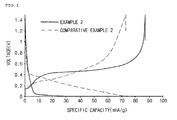
- FIG. 1 The results of measuring voltage profiles of the coin-type half cells prepared in Example 2 and Comparative Example 2 in a range of 0 V to 1.4 V are presented in FIG. 1 .
- the half cell of Example 2 not only had a more uniform voltage profile than the half cell of Comparative Example 2, but also had higher initial capacity.
- the discharge capacity of the battery which may be utilized near 0.4 V, was increased by about 2 times.
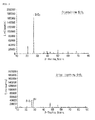
- X-ay diffraction peaks were obtained from crystalline SiO 2 and the silicon-based composite of Example 1, and the structures thereof were analyzed. The results thereof are presented in FIG. 3 . Referring to FIG. 3 , it may be confirmed that a Si peak was observed in the XDR graph of the silicon-based composite of Example 1 prepared by the preparation method according to the embodiment of the present invention.
Landscapes
- Chemical & Material Sciences (AREA)
- Chemical Kinetics & Catalysis (AREA)
- Electrochemistry (AREA)
- General Chemical & Material Sciences (AREA)
- Engineering & Computer Science (AREA)
- Inorganic Chemistry (AREA)
- Organic Chemistry (AREA)
- Materials Engineering (AREA)
- Composite Materials (AREA)
- Manufacturing & Machinery (AREA)
- Battery Electrode And Active Subsutance (AREA)
- Silicon Compounds (AREA)
Priority Applications (1)
| Application Number | Priority Date | Filing Date | Title |
|---|---|---|---|
| PL14853184T PL2905832T3 (pl) | 2013-10-31 | 2014-10-31 | Masa czynna elektrody ujemnej do litowej baterii akumulatorowej i sposób jej otrzymywania |
Applications Claiming Priority (2)
| Application Number | Priority Date | Filing Date | Title |
|---|---|---|---|
| KR20130131827 | 2013-10-31 | ||
| PCT/KR2014/010352 WO2015065095A1 (ko) | 2013-10-31 | 2014-10-31 | 리튬 이차전지용 음극활물질 및 그 제조방법 |
Publications (3)
| Publication Number | Publication Date |
|---|---|
| EP2905832A1 true EP2905832A1 (de) | 2015-08-12 |
| EP2905832A4 EP2905832A4 (de) | 2015-08-12 |
| EP2905832B1 EP2905832B1 (de) | 2018-09-19 |
Family
ID=53388273
Family Applications (1)
| Application Number | Title | Priority Date | Filing Date |
|---|---|---|---|
| EP14853184.1A Active EP2905832B1 (de) | 2013-10-31 | 2014-10-31 | Negatives aktives elektrodenmaterial für eine lithiumsekundärbatterie und verfahren zur herstellung davon |
Country Status (8)
| Country | Link |
|---|---|
| US (1) | US10355272B2 (de) |
| EP (1) | EP2905832B1 (de) |
| JP (1) | JP6177345B2 (de) |
| KR (1) | KR101685765B1 (de) |
| CN (1) | CN104813522B (de) |
| PL (1) | PL2905832T3 (de) |
| TW (1) | TWI627785B (de) |
| WO (1) | WO2015065095A1 (de) |
Families Citing this family (21)
| Publication number | Priority date | Publication date | Assignee | Title |
|---|---|---|---|---|
| JP6082355B2 (ja) * | 2014-02-07 | 2017-02-15 | 信越化学工業株式会社 | 非水電解質二次電池の負極材用の負極活物質、及び非水電解質二次電池用負極電極、並びに非水電解質二次電池 |
| KR102367610B1 (ko) | 2014-07-15 | 2022-02-28 | 신에쓰 가가꾸 고교 가부시끼가이샤 | 비수전해질 이차 전지용 부극재 및 부극 활물질 입자의 제조 방법 |
| KR101586816B1 (ko) * | 2015-06-15 | 2016-01-20 | 대주전자재료 주식회사 | 비수전해질 이차전지용 음극재, 이의 제조방법, 및 이를 포함하는 비수전해질 이차전지 |
| KR101981609B1 (ko) | 2015-09-24 | 2019-05-24 | 주식회사 엘지화학 | 리튬 이차전지용 음극활물질 및 그 제조방법 |
| CN107735888B (zh) * | 2015-09-24 | 2020-12-29 | 株式会社Lg化学 | 锂二次电池用负极活性材料及其制备方法 |
| US10680355B2 (en) | 2016-01-27 | 2020-06-09 | Aptiv Technologies Limited | Terminal assembly for shielded cable |
| CN106450322A (zh) * | 2016-11-22 | 2017-02-22 | 东南大学 | 一种多孔硅电极材料及其制备方法和应用 |
| KR102245121B1 (ko) | 2017-03-10 | 2021-04-28 | 주식회사 엘지화학 | 음극 활물질의 제조 방법 |
| WO2018179111A1 (ja) * | 2017-03-28 | 2018-10-04 | 日立化成株式会社 | リチウムイオン二次電池用負極活物質、リチウムイオン二次電池用負極及びリチウムイオン二次電池 |
| GB201803983D0 (en) | 2017-09-13 | 2018-04-25 | Unifrax I Llc | Materials |
| KR102236365B1 (ko) * | 2017-12-05 | 2021-04-06 | 대주전자재료 주식회사 | 비수전해질 이차전지용 음극활물질 및 이의 제조 방법 |
| JP6451916B1 (ja) * | 2018-01-31 | 2019-01-16 | 日立化成株式会社 | リチウムイオン二次電池用負極活物質、リチウムイオン二次電池用負極及びリチウムイオン二次電池 |
| CN111656584A (zh) | 2018-01-31 | 2020-09-11 | 日立化成株式会社 | 锂离子二次电池用负极活性物质、锂离子二次电池用负极和锂离子二次电池 |
| WO2019150511A1 (ja) * | 2018-01-31 | 2019-08-08 | 日立化成株式会社 | リチウムイオン二次電池用負極活物質、リチウムイオン二次電池用負極及びリチウムイオン二次電池 |
| JP7098144B2 (ja) * | 2018-06-20 | 2022-07-11 | 株式会社ダイネンマテリアル | リチウムイオン電池用負極材料、リチウムイオン電池用負極及びリチウムイオン電池 |
| JP7159840B2 (ja) * | 2018-12-13 | 2022-10-25 | 昭和電工マテリアルズ株式会社 | リチウムイオン二次電池用負極活物質、リチウムイオン二次電池用負極及びリチウムイオン二次電池 |
| JP7159838B2 (ja) * | 2018-12-13 | 2022-10-25 | 昭和電工マテリアルズ株式会社 | リチウムイオン二次電池用負極活物質、リチウムイオン二次電池用負極及びリチウムイオン二次電池 |
| JP7159839B2 (ja) * | 2018-12-13 | 2022-10-25 | 昭和電工マテリアルズ株式会社 | リチウムイオン二次電池用負極活物質、リチウムイオン二次電池用負極及びリチウムイオン二次電池 |
| KR102682363B1 (ko) * | 2019-01-18 | 2024-07-04 | 주식회사 엘지에너지솔루션 | 리튬이차전지용 음극 활물질 및 이를 포함한 리튬이차전지 |
| TWI719667B (zh) * | 2019-10-08 | 2021-02-21 | 達興材料股份有限公司 | 鋰離子電池負極活性材料、鋰離子電池負極以及鋰離子電池 |
| JP7191410B1 (ja) | 2021-09-21 | 2022-12-19 | 株式会社ファイマテック | ナノシリコンの製造方法 |
Family Cites Families (29)
| Publication number | Priority date | Publication date | Assignee | Title |
|---|---|---|---|---|
| TWI278429B (en) | 2002-05-17 | 2007-04-11 | Shinetsu Chemical Co | Conductive silicon composite, preparation thereof, and negative electrode material for non-aqueous electrolyte secondary cell |
| US20040011553A1 (en) * | 2002-07-18 | 2004-01-22 | Parlex Corporation | Extruded flat cable |
| JP2004119176A (ja) * | 2002-09-26 | 2004-04-15 | Toshiba Corp | 非水電解質二次電池用負極活物質及び非水電解質二次電池 |
| KR100493960B1 (ko) | 2003-03-20 | 2005-06-10 | 주식회사 엘지화학 | 다공성 실리콘 및 나노크기 실리콘 입자의 제조 방법과리튬 이차 전지용 음극 재료로의 응용 |
| JP4519592B2 (ja) | 2004-09-24 | 2010-08-04 | 株式会社東芝 | 非水電解質二次電池用負極活物質及び非水電解質二次電池 |
| JP4824394B2 (ja) * | 2004-12-16 | 2011-11-30 | パナソニック株式会社 | リチウムイオン二次電池用負極、その製造方法、およびそれを用いたリチウムイオン二次電池 |
| WO2008067391A2 (en) * | 2006-11-28 | 2008-06-05 | Cima Nano Tech Israel Ltd. | Process for producing ultra-fine powder of crystalline silicon |
| KR101375328B1 (ko) | 2007-07-27 | 2014-03-19 | 삼성에스디아이 주식회사 | Si/C 복합물, 이를 포함하는 음극활물질 및 리튬전지 |
| JP2009164104A (ja) | 2007-09-06 | 2009-07-23 | Canon Inc | 負極用電極材料、その製造方法ならびに該材料を用いた電極構造体及び蓄電デバイス |
| KR100898293B1 (ko) | 2007-11-27 | 2009-05-18 | 삼성에스디아이 주식회사 | 리튬 이차 전지용 음극 활물질 및 이의 제조 방법 |
| FR2933714B1 (fr) * | 2008-07-11 | 2011-05-06 | Air Liquide | Procede de recyclage de silane (sih4) |
| JP5298609B2 (ja) | 2008-04-08 | 2013-09-25 | ソニー株式会社 | 二次電池用負極および二次電池 |
| JP5369708B2 (ja) | 2009-01-26 | 2013-12-18 | 旭硝子株式会社 | 二次電池用負極材料およびその製造方法 |
| JP4749502B2 (ja) | 2009-10-09 | 2011-08-17 | 株式会社大阪チタニウムテクノロジーズ | SiOxならびにこれを用いたバリアフィルム用蒸着材およびリチウムイオン二次電池用負極活物質 |
| KR20120128125A (ko) * | 2009-11-03 | 2012-11-26 | 엔비아 시스템즈 인코포레이티드 | 리튬 이온 전지용 고용량 아노드 물질 |
| JP5411780B2 (ja) * | 2010-04-05 | 2014-02-12 | 信越化学工業株式会社 | 非水電解質二次電池用負極材及び非水電解質二次電池用負極材の製造方法並びにリチウムイオン二次電池 |
| US9318741B2 (en) * | 2010-04-28 | 2016-04-19 | Semiconductor Energy Laboratory Co., Ltd. | Positive electrode active material of power storage device, power storage device, electrically propelled vehicle, and method for manufacturing power storage device |
| KR101191625B1 (ko) | 2010-12-01 | 2012-10-17 | 삼성에스디아이 주식회사 | 리튬 이차 전지용 음극 활물질을 포함하는 리튬 이차 전지 |
| JP2012172526A (ja) * | 2011-02-17 | 2012-09-10 | Denso Corp | 車両用の燃料貯留装置 |
| KR101358867B1 (ko) | 2011-04-20 | 2014-02-06 | 한양대학교 산학협력단 | SiOx계 복합 분말, 이의 제조방법, 및 용도 |
| JP2014528893A (ja) | 2011-08-15 | 2014-10-30 | ダウ コーニング コーポレーションDow Corning Corporation | ケイ素粉末を含む組成物及びケイ素粉末の結晶化度を制御する方法 |
| US9139441B2 (en) | 2012-01-19 | 2015-09-22 | Envia Systems, Inc. | Porous silicon based anode material formed using metal reduction |
| US9780357B2 (en) | 2012-04-19 | 2017-10-03 | Lg Chem, Ltd. | Silicon-based anode active material and secondary battery comprising the same |
| KR101501804B1 (ko) | 2012-04-19 | 2015-03-12 | 주식회사 엘지화학 | 규소계 음극 활물질 및 이를 포함하는 이차전지 |
| JP2014014995A (ja) * | 2012-07-10 | 2014-01-30 | Seiko Epson Corp | 印刷装置 |
| KR101578262B1 (ko) | 2012-07-24 | 2015-12-28 | 주식회사 엘지화학 | 다공성 규소계 전극 활물질 및 이를 포함하는 이차전지 |
| CN102983313B (zh) | 2012-12-05 | 2016-01-27 | 奇瑞汽车股份有限公司 | 硅碳复合材料及其制备方法、锂离子电池 |
| US8987706B2 (en) * | 2012-12-10 | 2015-03-24 | The Hong Kong Polytechnic University | Highly conductive nano-structures incorporated in semiconductor nanocomposites |
| WO2014095811A1 (en) * | 2012-12-20 | 2014-06-26 | Umicore | Negative electrode material for a rechargeable battery and method for producing the same |
-
2014
- 2014-10-31 CN CN201480003052.2A patent/CN104813522B/zh active Active
- 2014-10-31 KR KR1020140149928A patent/KR101685765B1/ko active Active
- 2014-10-31 JP JP2015545404A patent/JP6177345B2/ja active Active
- 2014-10-31 EP EP14853184.1A patent/EP2905832B1/de active Active
- 2014-10-31 WO PCT/KR2014/010352 patent/WO2015065095A1/ko not_active Ceased
- 2014-10-31 TW TW103138022A patent/TWI627785B/zh active
- 2014-10-31 US US14/437,127 patent/US10355272B2/en active Active
- 2014-10-31 PL PL14853184T patent/PL2905832T3/pl unknown
Also Published As
| Publication number | Publication date |
|---|---|
| PL2905832T3 (pl) | 2018-12-31 |
| KR101685765B1 (ko) | 2016-12-12 |
| JP2016506029A (ja) | 2016-02-25 |
| TWI627785B (zh) | 2018-06-21 |
| CN104813522B (zh) | 2018-12-04 |
| JP6177345B2 (ja) | 2017-08-09 |
| US10355272B2 (en) | 2019-07-16 |
| WO2015065095A1 (ko) | 2015-05-07 |
| TW201530872A (zh) | 2015-08-01 |
| EP2905832B1 (de) | 2018-09-19 |
| EP2905832A4 (de) | 2015-08-12 |
| KR20150050504A (ko) | 2015-05-08 |
| CN104813522A (zh) | 2015-07-29 |
| US20160028085A1 (en) | 2016-01-28 |
Similar Documents
| Publication | Publication Date | Title |
|---|---|---|
| EP2905832B1 (de) | Negatives aktives elektrodenmaterial für eine lithiumsekundärbatterie und verfahren zur herstellung davon | |
| US12603277B2 (en) | Negative electrode active material for lithium secondary battery and method of preparing the same | |
| US20210313557A1 (en) | Negative electrode active material for lithium secondary battery and method of preparing the same | |
| KR101673719B1 (ko) | 리튬 이차전지용 음극활물질 및 그 제조방법 | |
| EP2712842B1 (de) | Kohlenstoff-silizium-verbundstoff, verfahren zu seiner herstellung und kathodenaktivmaterial mit dem kohlenstoff-silizium-verbundstoff | |
| US9196896B2 (en) | Porous silicon-based electrode active material and secondary battery comprising the same | |
| US9831500B2 (en) | Porous electrode active material and secondary battery including the same | |
| US9780357B2 (en) | Silicon-based anode active material and secondary battery comprising the same | |
| US9997781B2 (en) | Transition metal-metaphosphate anode active material, method of preparing the same, and lithium secondary battery or hybrid capacitor including the anode active material | |
| EP2762448B1 (de) | Verfahren zur herstellung von siliziumoxid |
Legal Events
| Date | Code | Title | Description |
|---|---|---|---|
| PUAI | Public reference made under article 153(3) epc to a published international application that has entered the european phase |
Free format text: ORIGINAL CODE: 0009012 |
|
| 17P | Request for examination filed |
Effective date: 20150422 |
|
| A4 | Supplementary search report drawn up and despatched |
Effective date: 20150702 |
|
| AK | Designated contracting states |
Kind code of ref document: A1 Designated state(s): AL AT BE BG CH CY CZ DE DK EE ES FI FR GB GR HR HU IE IS IT LI LT LU LV MC MK MT NL NO PL PT RO RS SE SI SK SM TR |
|
| AX | Request for extension of the european patent |
Extension state: BA ME |
|
| 17Q | First examination report despatched |
Effective date: 20160530 |
|
| DAX | Request for extension of the european patent (deleted) | ||
| REG | Reference to a national code |
Ref country code: DE Ref legal event code: R079 Ref document number: 602014032744 Country of ref document: DE Free format text: PREVIOUS MAIN CLASS: H01M0004480000 Ipc: H01M0004360000 |
|
| GRAP | Despatch of communication of intention to grant a patent |
Free format text: ORIGINAL CODE: EPIDOSNIGR1 |
|
| RIC1 | Information provided on ipc code assigned before grant |
Ipc: H01M 10/052 20100101ALI20180425BHEP Ipc: C01B 33/023 20060101ALI20180425BHEP Ipc: H01M 4/36 20060101ALI20180425BHEP Ipc: H01M 4/38 20060101AFI20180425BHEP Ipc: H01M 4/134 20100101ALI20180425BHEP |
|
| RIC1 | Information provided on ipc code assigned before grant |
Ipc: H01M 10/052 20100101ALN20180503BHEP Ipc: C01B 33/023 20060101ALI20180503BHEP Ipc: H01M 4/48 20100101ALI20180503BHEP Ipc: H01M 4/38 20060101ALI20180503BHEP Ipc: H01M 4/13 20100101ALI20180503BHEP Ipc: H01M 4/36 20060101AFI20180503BHEP |
|
| INTG | Intention to grant announced |
Effective date: 20180530 |
|
| RIN1 | Information on inventor provided before grant (corrected) |
Inventor name: KIM, HYUN CHUL Inventor name: LEE, YONG JU Inventor name: KIM, EUN KYUNG |
|
| GRAS | Grant fee paid |
Free format text: ORIGINAL CODE: EPIDOSNIGR3 |
|
| GRAA | (expected) grant |
Free format text: ORIGINAL CODE: 0009210 |
|
| AK | Designated contracting states |
Kind code of ref document: B1 Designated state(s): AL AT BE BG CH CY CZ DE DK EE ES FI FR GB GR HR HU IE IS IT LI LT LU LV MC MK MT NL NO PL PT RO RS SE SI SK SM TR |
|
| REG | Reference to a national code |
Ref country code: GB Ref legal event code: FG4D |
|
| REG | Reference to a national code |
Ref country code: CH Ref legal event code: EP |
|
| REG | Reference to a national code |
Ref country code: AT Ref legal event code: REF Ref document number: 1044288 Country of ref document: AT Kind code of ref document: T Effective date: 20181015 |
|
| REG | Reference to a national code |
Ref country code: IE Ref legal event code: FG4D |
|
| REG | Reference to a national code |
Ref country code: DE Ref legal event code: R096 Ref document number: 602014032744 Country of ref document: DE |
|
| REG | Reference to a national code |
Ref country code: FR Ref legal event code: PLFP Year of fee payment: 5 |
|
| REG | Reference to a national code |
Ref country code: NL Ref legal event code: MP Effective date: 20180919 |
|
| PG25 | Lapsed in a contracting state [announced via postgrant information from national office to epo] |
Ref country code: LT Free format text: LAPSE BECAUSE OF FAILURE TO SUBMIT A TRANSLATION OF THE DESCRIPTION OR TO PAY THE FEE WITHIN THE PRESCRIBED TIME-LIMIT Effective date: 20180919 Ref country code: RS Free format text: LAPSE BECAUSE OF FAILURE TO SUBMIT A TRANSLATION OF THE DESCRIPTION OR TO PAY THE FEE WITHIN THE PRESCRIBED TIME-LIMIT Effective date: 20180919 Ref country code: GR Free format text: LAPSE BECAUSE OF FAILURE TO SUBMIT A TRANSLATION OF THE DESCRIPTION OR TO PAY THE FEE WITHIN THE PRESCRIBED TIME-LIMIT Effective date: 20181220 Ref country code: FI Free format text: LAPSE BECAUSE OF FAILURE TO SUBMIT A TRANSLATION OF THE DESCRIPTION OR TO PAY THE FEE WITHIN THE PRESCRIBED TIME-LIMIT Effective date: 20180919 Ref country code: SE Free format text: LAPSE BECAUSE OF FAILURE TO SUBMIT A TRANSLATION OF THE DESCRIPTION OR TO PAY THE FEE WITHIN THE PRESCRIBED TIME-LIMIT Effective date: 20180919 Ref country code: BG Free format text: LAPSE BECAUSE OF FAILURE TO SUBMIT A TRANSLATION OF THE DESCRIPTION OR TO PAY THE FEE WITHIN THE PRESCRIBED TIME-LIMIT Effective date: 20181219 Ref country code: NO Free format text: LAPSE BECAUSE OF FAILURE TO SUBMIT A TRANSLATION OF THE DESCRIPTION OR TO PAY THE FEE WITHIN THE PRESCRIBED TIME-LIMIT Effective date: 20181219 |
|
| REG | Reference to a national code |
Ref country code: LT Ref legal event code: MG4D |
|
| PG25 | Lapsed in a contracting state [announced via postgrant information from national office to epo] |
Ref country code: HR Free format text: LAPSE BECAUSE OF FAILURE TO SUBMIT A TRANSLATION OF THE DESCRIPTION OR TO PAY THE FEE WITHIN THE PRESCRIBED TIME-LIMIT Effective date: 20180919 Ref country code: LV Free format text: LAPSE BECAUSE OF FAILURE TO SUBMIT A TRANSLATION OF THE DESCRIPTION OR TO PAY THE FEE WITHIN THE PRESCRIBED TIME-LIMIT Effective date: 20180919 Ref country code: AL Free format text: LAPSE BECAUSE OF FAILURE TO SUBMIT A TRANSLATION OF THE DESCRIPTION OR TO PAY THE FEE WITHIN THE PRESCRIBED TIME-LIMIT Effective date: 20180919 |
|
| REG | Reference to a national code |
Ref country code: AT Ref legal event code: MK05 Ref document number: 1044288 Country of ref document: AT Kind code of ref document: T Effective date: 20180919 |
|
| PG25 | Lapsed in a contracting state [announced via postgrant information from national office to epo] |
Ref country code: CZ Free format text: LAPSE BECAUSE OF FAILURE TO SUBMIT A TRANSLATION OF THE DESCRIPTION OR TO PAY THE FEE WITHIN THE PRESCRIBED TIME-LIMIT Effective date: 20180919 Ref country code: IT Free format text: LAPSE BECAUSE OF FAILURE TO SUBMIT A TRANSLATION OF THE DESCRIPTION OR TO PAY THE FEE WITHIN THE PRESCRIBED TIME-LIMIT Effective date: 20180919 Ref country code: RO Free format text: LAPSE BECAUSE OF FAILURE TO SUBMIT A TRANSLATION OF THE DESCRIPTION OR TO PAY THE FEE WITHIN THE PRESCRIBED TIME-LIMIT Effective date: 20180919 Ref country code: EE Free format text: LAPSE BECAUSE OF FAILURE TO SUBMIT A TRANSLATION OF THE DESCRIPTION OR TO PAY THE FEE WITHIN THE PRESCRIBED TIME-LIMIT Effective date: 20180919 Ref country code: AT Free format text: LAPSE BECAUSE OF FAILURE TO SUBMIT A TRANSLATION OF THE DESCRIPTION OR TO PAY THE FEE WITHIN THE PRESCRIBED TIME-LIMIT Effective date: 20180919 Ref country code: NL Free format text: LAPSE BECAUSE OF FAILURE TO SUBMIT A TRANSLATION OF THE DESCRIPTION OR TO PAY THE FEE WITHIN THE PRESCRIBED TIME-LIMIT Effective date: 20180919 Ref country code: ES Free format text: LAPSE BECAUSE OF FAILURE TO SUBMIT A TRANSLATION OF THE DESCRIPTION OR TO PAY THE FEE WITHIN THE PRESCRIBED TIME-LIMIT Effective date: 20180919 Ref country code: IS Free format text: LAPSE BECAUSE OF FAILURE TO SUBMIT A TRANSLATION OF THE DESCRIPTION OR TO PAY THE FEE WITHIN THE PRESCRIBED TIME-LIMIT Effective date: 20190119 |
|
| PG25 | Lapsed in a contracting state [announced via postgrant information from national office to epo] |
Ref country code: PT Free format text: LAPSE BECAUSE OF FAILURE TO SUBMIT A TRANSLATION OF THE DESCRIPTION OR TO PAY THE FEE WITHIN THE PRESCRIBED TIME-LIMIT Effective date: 20190119 Ref country code: SK Free format text: LAPSE BECAUSE OF FAILURE TO SUBMIT A TRANSLATION OF THE DESCRIPTION OR TO PAY THE FEE WITHIN THE PRESCRIBED TIME-LIMIT Effective date: 20180919 Ref country code: SM Free format text: LAPSE BECAUSE OF FAILURE TO SUBMIT A TRANSLATION OF THE DESCRIPTION OR TO PAY THE FEE WITHIN THE PRESCRIBED TIME-LIMIT Effective date: 20180919 |
|
| REG | Reference to a national code |
Ref country code: CH Ref legal event code: PL |
|
| REG | Reference to a national code |
Ref country code: DE Ref legal event code: R097 Ref document number: 602014032744 Country of ref document: DE |
|
| REG | Reference to a national code |
Ref country code: BE Ref legal event code: MM Effective date: 20181031 |
|
| PG25 | Lapsed in a contracting state [announced via postgrant information from national office to epo] |
Ref country code: LU Free format text: LAPSE BECAUSE OF NON-PAYMENT OF DUE FEES Effective date: 20181031 |
|
| REG | Reference to a national code |
Ref country code: IE Ref legal event code: MM4A |
|
| PLBE | No opposition filed within time limit |
Free format text: ORIGINAL CODE: 0009261 |
|
| STAA | Information on the status of an ep patent application or granted ep patent |
Free format text: STATUS: NO OPPOSITION FILED WITHIN TIME LIMIT |
|
| PG25 | Lapsed in a contracting state [announced via postgrant information from national office to epo] |
Ref country code: MC Free format text: LAPSE BECAUSE OF FAILURE TO SUBMIT A TRANSLATION OF THE DESCRIPTION OR TO PAY THE FEE WITHIN THE PRESCRIBED TIME-LIMIT Effective date: 20180919 Ref country code: DK Free format text: LAPSE BECAUSE OF FAILURE TO SUBMIT A TRANSLATION OF THE DESCRIPTION OR TO PAY THE FEE WITHIN THE PRESCRIBED TIME-LIMIT Effective date: 20180919 |
|
| 26N | No opposition filed |
Effective date: 20190620 |
|
| PG25 | Lapsed in a contracting state [announced via postgrant information from national office to epo] |
Ref country code: LI Free format text: LAPSE BECAUSE OF NON-PAYMENT OF DUE FEES Effective date: 20181031 Ref country code: CH Free format text: LAPSE BECAUSE OF NON-PAYMENT OF DUE FEES Effective date: 20181031 Ref country code: BE Free format text: LAPSE BECAUSE OF NON-PAYMENT OF DUE FEES Effective date: 20181031 |
|
| PG25 | Lapsed in a contracting state [announced via postgrant information from national office to epo] |
Ref country code: IE Free format text: LAPSE BECAUSE OF NON-PAYMENT OF DUE FEES Effective date: 20181031 Ref country code: SI Free format text: LAPSE BECAUSE OF FAILURE TO SUBMIT A TRANSLATION OF THE DESCRIPTION OR TO PAY THE FEE WITHIN THE PRESCRIBED TIME-LIMIT Effective date: 20180919 |
|
| PG25 | Lapsed in a contracting state [announced via postgrant information from national office to epo] |
Ref country code: MT Free format text: LAPSE BECAUSE OF NON-PAYMENT OF DUE FEES Effective date: 20181031 |
|
| PG25 | Lapsed in a contracting state [announced via postgrant information from national office to epo] |
Ref country code: TR Free format text: LAPSE BECAUSE OF FAILURE TO SUBMIT A TRANSLATION OF THE DESCRIPTION OR TO PAY THE FEE WITHIN THE PRESCRIBED TIME-LIMIT Effective date: 20180919 |
|
| PG25 | Lapsed in a contracting state [announced via postgrant information from national office to epo] |
Ref country code: MK Free format text: LAPSE BECAUSE OF NON-PAYMENT OF DUE FEES Effective date: 20180919 Ref country code: HU Free format text: LAPSE BECAUSE OF FAILURE TO SUBMIT A TRANSLATION OF THE DESCRIPTION OR TO PAY THE FEE WITHIN THE PRESCRIBED TIME-LIMIT; INVALID AB INITIO Effective date: 20141031 Ref country code: CY Free format text: LAPSE BECAUSE OF FAILURE TO SUBMIT A TRANSLATION OF THE DESCRIPTION OR TO PAY THE FEE WITHIN THE PRESCRIBED TIME-LIMIT Effective date: 20180919 |
|
| P01 | Opt-out of the competence of the unified patent court (upc) registered |
Effective date: 20230408 |
|
| REG | Reference to a national code |
Ref country code: DE Ref legal event code: R081 Ref document number: 602014032744 Country of ref document: DE Owner name: LG ENERGY SOLUTION, LTD., KR Free format text: FORMER OWNER: LG CHEM. LTD., SEOUL, KR |
|
| REG | Reference to a national code |
Ref country code: GB Ref legal event code: 732E Free format text: REGISTERED BETWEEN 20230824 AND 20230831 |
|
| PGFP | Annual fee paid to national office [announced via postgrant information from national office to epo] |
Ref country code: PL Payment date: 20250923 Year of fee payment: 12 |
|
| PGFP | Annual fee paid to national office [announced via postgrant information from national office to epo] |
Ref country code: GB Payment date: 20250922 Year of fee payment: 12 |
|
| PGFP | Annual fee paid to national office [announced via postgrant information from national office to epo] |
Ref country code: FR Payment date: 20250925 Year of fee payment: 12 |
|
| PGFP | Annual fee paid to national office [announced via postgrant information from national office to epo] |
Ref country code: DE Payment date: 20250922 Year of fee payment: 12 |