EP2905992B1 - Procédés de transmission et de réception de rapport d'état de mémoire tampon, équipements utilisateur et stations de base - Google Patents
Procédés de transmission et de réception de rapport d'état de mémoire tampon, équipements utilisateur et stations de base Download PDFInfo
- Publication number
- EP2905992B1 EP2905992B1 EP13849878.7A EP13849878A EP2905992B1 EP 2905992 B1 EP2905992 B1 EP 2905992B1 EP 13849878 A EP13849878 A EP 13849878A EP 2905992 B1 EP2905992 B1 EP 2905992B1
- Authority
- EP
- European Patent Office
- Prior art keywords
- base station
- small cell
- macro base
- data amount
- logical channel
- Prior art date
- Legal status (The legal status is an assumption and is not a legal conclusion. Google has not performed a legal analysis and makes no representation as to the accuracy of the status listed.)
- Active
Links
Images

Classifications
-
- H—ELECTRICITY
- H04—ELECTRIC COMMUNICATION TECHNIQUE
- H04W—WIRELESS COMMUNICATION NETWORKS
- H04W8/00—Network data management
- H04W8/22—Processing or transfer of terminal data, e.g. status or physical capabilities
- H04W8/24—Transfer of terminal data
-
- H—ELECTRICITY
- H04—ELECTRIC COMMUNICATION TECHNIQUE
- H04B—TRANSMISSION
- H04B7/00—Radio transmission systems, i.e. using radiation field
- H04B7/02—Diversity systems; Multi-antenna system, i.e. transmission or reception using multiple antennas
- H04B7/022—Site diversity; Macro-diversity
- H04B7/024—Co-operative use of antennas of several sites, e.g. in co-ordinated multipoint or co-operative multiple-input multiple-output [MIMO] systems
-
- H—ELECTRICITY
- H04—ELECTRIC COMMUNICATION TECHNIQUE
- H04W—WIRELESS COMMUNICATION NETWORKS
- H04W24/00—Supervisory, monitoring or testing arrangements
- H04W24/08—Testing, supervising or monitoring using real traffic
-
- H—ELECTRICITY
- H04—ELECTRIC COMMUNICATION TECHNIQUE
- H04W—WIRELESS COMMUNICATION NETWORKS
- H04W28/00—Network traffic management; Network resource management
- H04W28/02—Traffic management, e.g. flow control or congestion control
- H04W28/0252—Traffic management, e.g. flow control or congestion control per individual bearer or channel
-
- H—ELECTRICITY
- H04—ELECTRIC COMMUNICATION TECHNIQUE
- H04W—WIRELESS COMMUNICATION NETWORKS
- H04W28/00—Network traffic management; Network resource management
- H04W28/02—Traffic management, e.g. flow control or congestion control
- H04W28/0278—Traffic management, e.g. flow control or congestion control using buffer status reports
-
- H—ELECTRICITY
- H04—ELECTRIC COMMUNICATION TECHNIQUE
- H04W—WIRELESS COMMUNICATION NETWORKS
- H04W72/00—Local resource management
- H04W72/12—Wireless traffic scheduling
- H04W72/1221—Wireless traffic scheduling based on age of data to be sent
-
- H—ELECTRICITY
- H04—ELECTRIC COMMUNICATION TECHNIQUE
- H04W—WIRELESS COMMUNICATION NETWORKS
- H04W72/00—Local resource management
- H04W72/20—Control channels or signalling for resource management
- H04W72/21—Control channels or signalling for resource management in the uplink direction of a wireless link, i.e. towards the network
-
- H—ELECTRICITY
- H04—ELECTRIC COMMUNICATION TECHNIQUE
- H04W—WIRELESS COMMUNICATION NETWORKS
- H04W24/00—Supervisory, monitoring or testing arrangements
- H04W24/10—Scheduling measurement reports ; Arrangements for measurement reports
Definitions
- Embodiments of the present invention relate to the field of communications technologies, and in particular, to a method for sending and receiving a buffer status report, a user equipment, and a base station.
- Carrier Aggregation Carrier Aggregation, CA for short
- 3rd Generation Partnership Project the 3rd Generation Partnership Project, 3GPP for short
- multiple base stations may be used to provide a service for a same UE.
- a small cell Small cell for short
- a macro base station macro for short
- the small cell may be, for example, a home eNodeB (home eNB, HeNB for short), a pico base station (pico for short), or a radio remote head (radio remote head, RRH for short).
- a coverage area and transmit power of the small cell are relatively small, and a coverage area of the macro base station is wide and transmit power of the macro base station is relatively large.
- the macro base station can provide wide coverage and is responsible for controlling signaling, and the small cell can enhance user data and is responsible for all or some user service data.
- a user equipment (User Equipment, UE for short) needs to send uplink data to the small cell and the macro base station separately.
- the small cell and the macro base station cannot accurately learn a buffer status report (Buffer Status Report, hereinafter referred to as BSR) reported by the UE. Because data of the UE is sent to the small cell and the macro base station separately, and BSRs of all data in a buffer of the UE cannot be applied to a scenario in which multiple base stations serve the UE. As a result, the small cell and the macro base station cannot perform scheduling in a timely manner.
- BSR Buffer Status Report
- US 2012/0140743A discloses a method of managing carrier aggregation for a multi-radio access technology (RAT) wireless transmitter/receiver unit (WTRU).
- the method include: receiving, by the WRTU over a primary channel associated with a RAT of a first type, provisioning information for provisioning a supplementary channel associated with a RAT of a second type; and establishing the supplementary channel associated with the RAT of the second type based on the received provisioning information for communication via the first type and the second type RAT.
- the WTRU may report one or more RAT-specific buffer status reports.
- Embodiments of the present invention provide a method for sending and receiving a buffer status report, a user equipment, and a base station, so that a small cell and a macro base station can accurately learn buffer status reports reported by a UE in a scenario in which the small cell and the macro base station jointly bear transmission of a same data service of a user, and therefore the small cell and the macro base station can perform scheduling in a timely manner.
- a first aspect of the embodiments of the present invention provides a method for sending a buffer status report, including:
- the indication information includes information that indicates data amount separately transmitted to the macro base station and the at least one small cell in each service.
- the indication information further includes: information that is sent by the macro base station and that is used to indicate a receiving base station of the BSR, where the receiving base station of the BSR includes the macro base station and/or the at least one small cell.
- the method further includes: receiving update information that is sent by the macro base station or the small cell and that is used for substituting for a receiving base station of the BSR, where a substitute receiving base station includes a macro base station and/or at least one small cell.
- the indication information or the update information includes: Radio Resource Control signaling RRC signaling, a broadcast message, Media Access Control layer MAC control signaling, or physical layer control signaling.
- the receiving indication information sent by a macro base station includes:
- the determining, according to the traffic distribution ratio information, a first buffered data amount of each logical channel group corresponding to the macro base station and/or a buffered data amount of each logical channel group corresponding to the at least one small cell includes:
- the receiving indication information sent by a macro base station includes:
- the determining a traffic distribution ratio according to the parameter information about the logical channel priority, and determining, according to the traffic distribution ratio, a first buffered data amount of each logical channel group corresponding to the macro base station and a buffered data amount of each logical channel group corresponding to the at least one small cell includes:
- the BSR further includes: an LCID or a base station index, where the LCID is used to identify a BSR that needs to be forwarded, and the base station index is used to identify a destination base station to which a BSR needs to be forwarded.
- a second aspect of the embodiments of the present invention provides a method for receiving a buffer status report, including:
- the indication information includes information that indicates data amount separately transmitted to the macro base station and the at least one small cell in each service.
- the indication information further includes: information that indicates a receiving base station of the BSR, where the receiving base station of the BSR includes the macro base station and/or the at least one small cell.
- the method further includes: sending, to the UE, update information that is used for substituting for a receiving base station of the BSR, where a substitute receiving base station includes a macro base station and/or at least one small cell.
- the indication information or the update information includes: RRC signaling, a broadcast message, MAC control signaling, or physical layer control signaling.
- the sending indication information to a UE includes:
- the sending indication information to a UE includes:
- the BSR further includes: an LCID or a base station index, where the LCID is used to identify a BSR that needs to be forwarded, and the base station index is used to identify a destination base station to which a BSR needs to be forwarded.
- a third aspect of the embodiments of the present invention provides a user equipment, including:
- the indication information includes information that indicates data amount separately transmitted to the macro base station and the at least one small cell in each service.
- the indication information further includes: information that is sent by the macro base station and that is used to indicate a receiving base station of the BSR, where the receiving base station of the BSR includes the macro base station and/or the at least one small cell.
- the receiving module is further configured to receive update information that is sent by the macro base station or the small cell and that is used for substituting for a receiving base station of the BSR; and the processing module is further configured to send the BSR to a substitute receiving base station, where the substitute receiving base station includes a macro base station and/or at least one small cell.
- the indication information or the update information includes: Radio Resource Control signaling RRC signaling, a broadcast message, Media Access Control layer MAC control signaling, or physical layer control signaling.
- the receiving module is specifically configured to receive traffic distribution ratio information, sent by the macro base station, of each service, where the traffic distribution ratio information is used to indicate the data amount that is separately transmitted to the macro base station and the at least one small cell; and the processing module includes a first determining unit and a first sending unit, where the first determining unit is configured to determine, according to the traffic distribution ratio information of each service, a first buffered data amount of each logical channel group corresponding to the macro base station and/or a buffered data amount of each logical channel group corresponding to the at least one small cell; and the first sending unit is configured to send, to the macro base station, a BSR corresponding to the first buffered data amount and/or send, to the at least one small cell, a BSR corresponding to the buffered data amount of each
- the receiving module is specifically configured to receive parameter information, sent by the macro base station, about a logical channel priority corresponding to each service, where the parameter information about the logical channel priority is used to indicate the data amount that is separately transmitted to the macro base station and the at least one small cell; and the processing module includes a second determining unit and a second sending unit, where the second determining unit is configured to determine a traffic distribution ratio according to the parameter information about the logical channel priority, and determine, according to the traffic distribution ratio, a first buffered data amount of each logical channel group corresponding to the macro base station and/or a buffered data amount of each logical channel group corresponding to the at least one small cell; and the second sending unit is configured to send, to the macro base station, a BSR corresponding to the first buffered data amount and/or
- the BSR further includes: an LCID or a base station index, where the LCID is used to identify a BSR that needs to be forwarded, and the base station index is used to identify a destination base station to which a BSR needs to be forwarded.
- a fourth aspect of the embodiments of the present invention provides a base station, including:
- the indication information includes information that indicates data amount separately transmitted to the macro base station and the at least one small cell in each service.
- the indication information further includes: information that indicates a receiving base station of the BSR, where the receiving base station of the BSR includes the macro base station and/or the at least one small cell.
- the sending module is further configured to send, to the UE, update information that is used for substituting for a receiving base station of the BSR, where a substitute receiving base station includes a macro base station and/or at least one small cell.
- the indication information or the update information includes: Radio Resource Control RRC signaling, a broadcast message, Media Access Control layer MAC control signaling, or physical layer control signaling.
- the sending module is specifically configured to send traffic distribution ratio information corresponding to each service to the user equipment UE, where the traffic distribution ratio information is used to indicate the data amount that is separately transmitted to the macro base station and the at least one small cell; and the receiving module is specifically configured to receive a BSR that is sent by the UE and that is corresponding to a first buffered data amount; or, receive a BSR that is sent by the UE and that is corresponding to a first buffered data amount and/or a BSR that is sent by the UE and that is corresponding to a buffered data amount of each logical channel group of the at least one small cell, where the first buffered data amount and the buffered data amount of each logical channel group of the small cell are determined by the UE according to the traffic distribution ratio information corresponding to each
- the sending module is specifically configured to send parameter information about a logical channel priority corresponding to each service to the user equipment UE, where the parameter information about the logical channel priority is used to indicate data amount separately transmitted to the macro base station and the small cell; and the receiving module is specifically configured to receive a BSR that is sent by the UE and that is corresponding to a first buffered data amount; or, receive a BSR that is sent by the UE and that is corresponding to a first buffered data amount and/or a BSR that is sent by the UE and that is corresponding to a buffered data amount of each logical channel group of the at least one small cell, where the first buffered data amount and the buffered data amount of each logical channel group of the small cell are determined by the UE according to a traffic distribution ratio, and the traffic distribution ratio is determined by the UE according to the parameter information about the logical channel priority corresponding to each service.
- the BSR further includes: an LCID or a base station index, where the LCID is used to identify a BSR that needs to be forwarded, and the base station index is used to identify a destination base station to which a BSR needs to be forwarded.
- a macro base station sends indication information to the UE, and the UE sends a buffer status report BSR to the macro base station and/or at least one small cell according to the indication information, so that the small cell and the macro base station can accurately learn the buffer status reports reported by the UE in a scenario in which the small cell and the macro base station jointly bear transmission of a same data service of a user, and therefore, the small cell and the macro base station can perform scheduling in a timely manner.
- FIG. 1 is a diagram of an application scenario of a macro base station and small cells according to the present invention.
- An area A is a coverage area of the macro base station
- an area B, an area C, and an area D are coverage areas of a small cell 1, a small cell 2, and a small cell 3, respectively.
- the small cells and the macro base station jointly bear transmission of a same data service of the user equipment, and the user equipment needs to send uplink data to the small cells and the macro base station separately.
- the following introduces in detail how the small cells and the macro base station accurately learn buffer status reports reported by the UE.
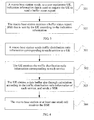
- FIG. 2 is a flowchart of Embodiment 1 of a method for sending a buffer status report according to the present invention. As shown in FIG. 2 , the method of this embodiment may include:
- the indication information includes information that indicates data amount separately transmitted to the macro base station and the at least one small cell in each service, and the indication information further includes information that is sent by the macro base station and that is used to indicate a receiving base station of the BSR.
- the UE sends a BSR to the receiving base station according to the receiving base station, indicated by the indication information, of the BSR.
- the UE may further receive update information that is sent by the macro base station or the small cell and that is used for substituting for the receiving base station of the BSR.
- the UE sends a BSR to these base stations according to a substitute receiving base station, indicated by the update information, of the BSR.
- the indication information or the update information may be one type of Radio Resource Control signaling RRC signaling, a broadcast message, Media Access Control layer MAC control signaling, and physical layer control signaling, and the indication information and the update information may be a piece of RRC signaling, a broadcast message, a piece of MAC control signaling, or a piece of physical layer control signaling.
- RRC signaling Radio Resource Control signaling
- a broadcast message Media Access Control layer MAC control signaling
- physical layer control signaling and the indication information and the update information may be a piece of RRC signaling, a broadcast message, a piece of MAC control signaling, or a piece of physical layer control signaling.
- the UE receives the indication information sent by the macro base station, where the indication information includes the information that indicates the data amount that is separately transmitted to the macro base station and the at least one small cell in each service.
- the UE receives traffic distribution ratio information, sent by the macro base station, of each service, where the traffic distribution ratio information is used to indicate the data amount that is separately transmitted to the macro base station and the at least one small cell. After receiving the traffic distribution ratio information, the UE determines, according to the traffic distribution ratio information of each service, a first buffered data amount of each logical channel group corresponding to the macro base station and/or a buffered data amount of each logical channel group corresponding to the at least one small cell.
- Mi is a data transmission ratio, in the traffic distribution ratio information, corresponding to the macro base station
- Si is a data transmission ratio, in the traffic distribution ratio information, corresponding to the small cell
- N is a quantity of services in a logical channel group LCG
- Bi is a current buffered data amount corresponding to each service. If there are multiple small cells, Si of each small cell may be unique, and during calculation, the buffered data amount is calculated according to Si of each small cell.
- the UE sends, to the macro base station, a BSR corresponding to the first buffered data amount and/or sends, to the at least one small cell, a BSR corresponding to the buffered data amount of each logical channel group corresponding to the small cell, or, sends, to the macro base station, a BSR corresponding to the first buffered data amount, and/or a BSR corresponding to the buffered data amount of each logical channel group of the at least one small cell, or, sends, to the at least one small cell, a BSR corresponding to the first buffered data amount and/or a BSR corresponding to the buffered data amount of each logical channel group of the at least one small cell.
- the macro base station may forward the BSR corresponding to the buffered data amount of each logical channel group of the at least one small cell to the corresponding small cell; and if the UE sends, to the at least one small cell, the BSR corresponding to the first buffered data amount and/or the BSR corresponding to the buffered data amount of each logical channel group of the at least one small cell, after receiving the BSRs or the BSR, the small cell may forward the BSR corresponding to the first buffered data amount to the macro base station, and forward a BSR corresponding to a buffered data amount of each logical channel group corresponding to another small cell to each corresponding small cell.
- the BSR further includes an LCID or a base station index, where the LCID is used to identify a BSR that needs to be forwarded, and the base station index is used to identify a destination base station to which a BSR needs to be forwarded.
- the UE needs to use a new LCID to identify the BSR, to distinguish from an LCID corresponding to an original BSR.
- the macro base station or the small cell needs to forward the BSR to the corresponding macro base station or small cell.
- a new identifier such as a base station index (index)
- index a base station index
- BSR information sent at a time may carry multiple pieces of BSR information that need to be forwarded, which are separately identified by using indexes of destination base stations to which BSRs need to be forwarded.
- a macro base station or a small cell receives a BSR carrying the base station index, the macro base station or the small cell needs to forward the BSR to the corresponding macro base station or another small cell, where the base station index is configured by the macro base station.
- time when the UE triggers a BSR of the macro base station and that of the at least one small cell may be different, and time when the UE sends a BSR to the macro base station and the at least one small cell may also be different.
- the UE needs to send a BSR to the corresponding macro base station or the at least one small cell separately, when the UE needs to send a BSR corresponding to the macro base station, the UE only needs to calculate the first buffered data amount of each logical channel group corresponding to the macro base station, and sends a BSR corresponding to the first buffered data amount to the macro base station; and when the UE needs to send a BSR of a small cell, the UE only needs to calculate a buffered data amount of each logical channel group corresponding to the small cell, and sends a BSR corresponding to the buffered data amount to the small cell.
- the UE needs to send BSRs or a BSR corresponding to the macro base station and/or the at least one small cell to one site of the macro base station and the at least one small cell in a centralized manner
- the UE needs to calculate a buffered data amount corresponding to each logical channel group corresponding to the macro base station and/or the at least one small cell that trigger the BSRs/triggers the BSR, and sends, to the macro base station or the small cell, the BSRs or the BSR of the macro base station and/or the at least one small cell that trigger the BSRs/triggers the BSR.
- BSRs corresponding to multiple sites may be sent in a combined manner, or may be sent separately.
- the UE receives parameter information, sent by the macro base station, about a logical channel priority corresponding to each service, where the parameter information about the logical channel priority is used to indicate the data amount that is separately transmitted to the macro base station and the at least one small cell; after receiving the parameter information about the logical channel priority corresponding to each service, the UE determines a traffic distribution ratio according to the parameter information about the logical channel priority, and determines, according to the traffic distribution ratio, a first buffered data amount of each logical channel group corresponding to the macro base station and/or a buffered data amount of each logical channel group corresponding to the at least one small cell.
- the UE sends, to the macro base station, a BSR corresponding to the first buffered data amount and/or sends, to the at least one small cell, a BSR corresponding to the buffered data amount of each logical channel group corresponding to the small cell, or, sends, to the macro base station, a BSR corresponding to the first buffered data amount and/or a BSR corresponding to the buffered data amount of each logical channel group of the at least one small cell, or, sends, to the at least one small cell, a BSR corresponding to the first buffered data amount and/or a BSR corresponding to the buffered data amount of each logical channel group of the at least one small cell.
- the macro base station may forward the BSR corresponding to the buffered data amount of each logical channel group of the at least one small cell to the small cell; and if the UE sends, to the at least one small cell, the BSR corresponding to the first buffered data amount and the BSR corresponding to the buffered data amount of each logical channel group of the at least one small cell, after receiving the BSRs, the small cell may forward the BSR corresponding to the first buffered data amount of each logical channel group corresponding to the macro base station to the macro base station.
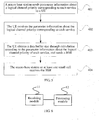
- FIG. 3 is a flowchart of Embodiment 1 of a method for receiving a buffer status report according to the present invention. As shown in FIG. 3 , the method of this embodiment may include:
- the indication information sent by the macro base station to the user equipment UE includes information that indicates data amount separately transmitted to the macro base station and the at least one small cell in each service.
- the indication information further includes information that indicates a receiving base station of the BSR, where the receiving base station of the BSR includes the macro base station and/or the at least one small cell.
- the method may further include: sending, to the UE, update information that is used for substituting for the receiving base station of the BSR, where a substitute receiving base station includes a macro base station and/or at least one small cell.
- the indication information or the update information may be one type of RRC signaling, a broadcast message, MAC control signaling, and physical layer control signaling, and the indication information and the update information may also be a piece of RRC signaling, a broadcast message, a piece of MAC control signaling, or a piece of physical layer control signaling.
- the macro base station sends the indication information to the user equipment UE.
- the macro base station sends traffic distribution ratio information corresponding to each service to the UE, where the traffic distribution ratio information is used to indicate the data amount that is separately transmitted to the macro base station and the at least one small cell.
- the macro base station configures the traffic distribution ratio information of each service for the UE, and the macro base station may configure traffic distribution ratio information of multiple services at a time, or may configure traffic distribution ratio information of one service at a time and perform configuration for several times.
- the macro base station receives a BSR that is sent by the UE and that is corresponding to a first buffered data amount of each logical channel group corresponding to the macro base station, or, receives a BSR that is sent by the UE and that is corresponding to a first buffered data amount of each logical channel group corresponding to the macro base station and/or a BSR that is sent by the UE and that is corresponding to a buffered data amount of each logical channel group of the at least one small cell.
- the macro base station may forward the BSR corresponding to the buffered data amount of each logical channel group of the at least one small cell to the small cell.
- the first buffered data amount and the buffered data amount of each logical channel group of the small cell are determined by the UE according to the traffic distribution ratio information corresponding to each service.
- the BSR further includes an LCID or a base station index, where the LCID is used to identify a BSR that needs to be forwarded, and the base station index is used to identify a destination base station to which a BSR needs to be forwarded.
- a macro base station sends traffic distribution ratio information corresponding to each service to a UE; and then, the macro base station receives a BSR that is sent by the UE and that is corresponding to a first buffered data amount of each logical channel group corresponding to the macro base station or receives a BSR that is sent by the UE and that is corresponding to a first buffered data amount of each logical channel group corresponding to the macro base station and/or a BSR that is sent by the UE and that is corresponding to a buffered data amount of each logical channel group of at least one small cell, where the first buffered data amount and the buffered data amount of each logical channel group of the small cell are determined by the UE according to the traffic distribution ratio information corresponding to each service, so that the small cell and the macro base station can accurately learn the buffer status reports reported by the UE, and therefore the small cell and the macro base station can perform scheduling in a timely manner.
- the macro base station sends parameter information about a logical channel priority corresponding to each service to the UE, where the parameter information about the logical channel priority is used to indicate the data amount that is separately transmitted to the macro base station and the small cell, and then, the macro base station receives a BSR that is sent by the UE and that is corresponding to a first buffered data amount of each logical channel group corresponding to the macro base station, or, receives a BSR that is sent by the UE and that is corresponding to a first buffered data amount of each logical channel group corresponding to the macro base station and/or a BSR that is sent by the UE and that is corresponding to a buffered data amount of each logical channel group of the at least one small cell, where the first buffered data amount is determined by the UE according to a traffic distribution ratio, and the traffic distribution ratio is determined by the UE according to the parameter information about the logical channel priority corresponding to each service.
- a macro base station sends parameter information about a logical channel priority corresponding to each service to a UE, and then, the macro base station receives a BSR that is sent by the UE and that is corresponding to a first buffered data amount of each logical channel group corresponding to the macro base station or receives a BSR that is sent by the UE and that is corresponding to a first buffered data amount of each logical channel group corresponding to the macro base station and/or a BSR that is sent by the UE and that is corresponding to a buffered data amount of each logical channel group of at least one small cell, where the first buffered data amount is determined by the UE according to a traffic distribution ratio, and the traffic distribution ratio is determined by the UE according to the parameter information about the logical channel priority corresponding to each service, so that the small cell and the macro base station can accurately learn the buffer status reports reported by the UE, and therefore the small cell and the macro base station can perform
- FIG. 4 is a flowchart of Embodiment 1 of a method for sending and receiving a buffer status report according to the present invention. As shown in FIG. 4 , the method may include:
- Step 304 The macro base station or the small cell receives the BSR that is sent by the UE and that is corresponding to the first buffered data amount of each logical channel group corresponding to the macro base station, or receives the BSR that is sent by the UE and that is corresponding to the first buffered data amount of each logical channel group corresponding to the macro base station and/or the BSR corresponding to the buffered data amount of each logical channel group of the at least one small cell.
- the BSR further includes an LCID or a base station index, where the LCID is used to identify a BSR that needs to be forwarded, and the base station index is used to identify a destination base station to which a BSR needs to be forwarded.
- the base station index is configured by the macro base station, and the macro base station or the small cell forwards, to the corresponding macro base station or small cell, the received BSR that needs to be forwarded.
- a macro base station sends traffic distribution ratio information corresponding to each service to a UE, and the UE receives the traffic distribution ratio information corresponding to each service. After the UE receives the traffic distribution ratio information, the UE obtains a buffered data amount through calculation, and sends a BSR corresponding to the buffered data amount to the macro base station or a small cell.
- the macro base station or the small cell receives the BSR that is sent by the UE and that is corresponding to the buffered data amount, so that the UE can accurately learn, according to the traffic distribution ratio information of each service, the buffer status report to be reported by the UE, and therefore the small cell and the macro base station can perform scheduling in a timely manner.
- FIG. 5 is a flowchart of Embodiment 2 of a method for sending and receiving a buffer status report according to the present invention. As shown in FIG. 5 , the method may include:
- a macro base station sends parameter information about a logical channel priority corresponding to each service to a UE, and the UE receives the parameter information about the logical channel priority corresponding to each service. After receiving the parameter information, about the logical channel priority, the UE obtains a buffered data amount through calculation, and sends a BSR corresponding to the buffered data amount to the macro base station or a small cell.
- the macro base station or the small cell receives the BSR that is sent by the UE and that is corresponding to the buffered data amount, so that the UE can accurately learn, according to the parameter information about the logical channel priority of each service, the buffer status report to be reported by the UE, and therefore the small cell and the macro base station can perform scheduling in a timely manner.
- the program may be stored in a computer readable storage medium.
- the foregoing storage medium includes: any medium that can store program code, such as a ROM, a RAM, a magnetic disk, or an optical disc.
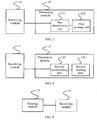
- FIG. 6 is a schematic structural diagram of Embodiment 1 of a user equipment according to the present invention.
- an apparatus of this embodiment may include: a receiving module 11 and a processing module 12.
- the receiving module 11 is configured to receive indication information that is sent by a macro base station and that is used to request the user equipment UE to send a buffer status report, where the indication information includes information that indicates data amount separately transmitted to the macro base station and at least one small cell in each service.
- the indication information further includes information that is sent by the macro base station and that is used to indicate a receiving base station of the BSR, and the receiving module 11 is further configured to receive update information that is sent by the macro base station or the small cell and that is used for substituting for the receiving base station of the BSR, where a substitute receiving base station includes a macro base station and/or at least one small cell.
- the processing module 12 is configured to send a buffer status report BSR to the macro base station and/or the at least one small cell according to the indication information, where the macro base station and the at least one small cell jointly serve the UE, and a service area of the macro base station is larger than a service area of each small cell of the at least one small cell.
- the processing module 12 is specifically configured to send the BSR to the receiving base station indicated in the indication information; and the processing module 12 is further configured to send the BSR to the substitute receiving base station, where the substitute receiving base station includes a macro base station and/or at least one small cell.
- the indication information or the update information includes: RRC signaling, a broadcast message, MAC control signaling, or physical layer control signaling.
- the BSR further includes an LCID or a base station index, where the LCID is used to identify a BSR that needs to be forwarded, and the base station index is used to identify a destination base station to which a BSR needs to be forwarded.
- the base station index is configured by the macro base station.
- FIG. 7 is a schematic structural diagram of Embodiment 2 of a user equipment according to the present invention.
- an apparatus in this embodiment is based on the structure of the apparatus shown in FIG. 6 .
- the receiving module 11 is specifically configured to receive traffic distribution ratio information, sent by the macro base station, of each service, where the traffic distribution ratio information is used to indicate the data amount that is separately transmitted to the macro base station and the at least one small cell.
- the processing module 12 may further include: a first determining unit 121 and a first sending unit 122, where the first determining unit 121 is configured to determine, according to the traffic distribution ratio information of each service, a first buffered data amount of each logical channel group corresponding to the macro base station and/or a buffered data amount of each logical channel group corresponding to the at least one small cell.
- the first sending unit 122 is configured to send, to the macro base station, a BSR corresponding to the first buffered data amount and/or send, to the at least one small cell, a BSR corresponding to the buffered data amount of each logical channel group corresponding to the small cell; or, send, to the macro base station, a BSR corresponding to the first buffered data amount and/or a BSR corresponding to the buffered data amount of each logical channel group of the at least one small cell, or, send, to the at least one small cell, a BSR corresponding to the first buffered data amount and/or a BSR corresponding to the buffered data amount of each logical channel group of the at least one small cell.
- FIG. 8 is a schematic structural diagram of Embodiment 3 of a user equipment according to the present invention.
- an apparatus in this embodiment is based on the structure of the apparatus shown in FIG. 6 .
- the receiving module 11 is specifically configured to receive parameter information, sent by the macro base station, about a logical channel priority corresponding to each service, where the parameter information about the logical channel priority is used to indicate the data amount that is separately transmitted to the macro base station and the at least one small cell.
- the processing module 12 may further include: a second determining unit 123 and a second sending unit 124, where the second determining unit 123 is configured to determine a traffic distribution ratio according to the parameter information about the logical channel priority, and determine, according to the traffic distribution ratio, a first buffered data amount of each logical channel group corresponding to the macro base station and/or a buffered data amount of each logical channel group corresponding to the at least one small cell.
- the second sending unit 124 is configured to send, to the macro base station, a BSR corresponding to the first buffered data amount and/or send, to the at least one small cell, a BSR corresponding to the buffered data amount of each logical channel group corresponding to the small cell; or, send, to the macro base station, a BSR corresponding to the first buffered data amount and/or a BSR corresponding to the buffered data amount of each logical channel group of the at least one small cell, or, send, to the at least one small cell, a BSR corresponding to the first buffered data amount and/or a BSR corresponding to the buffered data amount of each logical channel group of the at least one small cell.
- the user equipments shown in FIG. 6 , FIG. 7, and FIG. 8 may be configured to execute the technical solutions of the method embodiment shown in FIG. 2 , implementation principles and technical effects thereof are similar, and details are not described herein again.
- FIG. 9 is a schematic structural diagram of Embodiment 1 of a base station according to the present invention.
- the base station in this embodiment may include: a sending module 13 and a receiving module 14.
- the sending module 13 is configured to send, to a user equipment UE, indication information that is used to request the UE to send a buffer status report, where the indication information includes information that indicates data amount separately transmitted to a macro base station and at least one small cell in each service.
- the indication information further includes information that indicates a receiving base station of the BSR, where the receiving base station of the BSR includes the macro base station and/or the at least one small cell.
- the sending module 13 is further configured to send, to the UE, update information that is used for substituting for the receiving base station of the BSR, where a substitute receiving base station includes a macro base station and/or at least one small cell.
- the sending module 13 is specifically configured to send traffic distribution ratio information corresponding to each service to the user equipment UE, where the traffic distribution ratio information is used to indicate the data amount that is separately transmitted to the macro base station and the at least one small cell.
- the sending module 13 is specifically configured to send parameter information about a logical channel priority corresponding to each service to the user equipment UE, where the parameter information about the logical channel priority is used to indicate the data amount that is separately transmitted to the macro base station and the small cell.
- the receiving module 14 is configured to receive a buffer status report BSR that is sent by the UE according to the indication information, where the macro base station and the at least one small cell jointly serve the UE, and a service area of the macro base station is larger than a service area of each small cell of the at least one small cell.
- the indication information or the update information includes: RRC signaling, a broadcast message, MAC control signaling, or physical layer control signaling.
- the BSR further includes an LCID or a base station index, where the LCID is used to identify a BSR that needs to be forwarded, and the base station index is used to identify a destination base station to which a BSR needs to be forwarded.
- the base station index is configured by the macro base station.
- the receiving module 14 is specifically configured to receive a BSR that is sent by the UE and that is corresponding to a first buffered data amount of each logical channel group corresponding to the macro base station; or, receive a BSR that is sent by the UE and that is corresponding to a first buffered data amount of each logical channel group corresponding to the macro base station and/or a BSR that is sent by the UE and that is corresponding to a buffered data amount of each logical channel group of the at least one small cell.
- the first buffered data amount and the buffered data amount of each logical channel group of the small cell are determined by the UE according to the traffic distribution ratio information corresponding to each service.
- the receiving module 14 is specifically configured to receive a BSR that is sent by the UE and that is corresponding to a first buffered data amount of each logical channel group corresponding to the macro base station, or, receive a BSR that is sent by the UE and that is corresponding to a first buffered data amount of each logical channel group corresponding to the macro base station and/or a BSR that is sent by the UE and that is corresponding to a buffered data amount of each logical channel group of the at least one small cell.
- the first buffered data amount and the buffered data amount of each logical channel group of the small cell are determined by the UE according to a traffic distribution ratio, and the traffic distribution ratio is determined by the UE according to the parameter information about the logical channel priority corresponding to each service.
- the base station in this embodiment may be configured to execute the technical solutions of the method embodiment shown in FIG. 3 , implementation principles and technical effects thereof are similar, and details are not described herein again.
Landscapes
- Engineering & Computer Science (AREA)
- Computer Networks & Wireless Communication (AREA)
- Signal Processing (AREA)
- Databases & Information Systems (AREA)
- Mobile Radio Communication Systems (AREA)
Claims (8)
- Procédé d'envoi d'un rapport d'état de mémoire tampon, BSR, exécuté par un équipement utilisateur, UE, comprenant :la réception au niveau de l'UE d'informations d'indication qui sont envoyées par une macro station de base et qui sont utilisées pour demander à l'UE d'envoyer le BSR ;dans lequel les informations d'indication comprennent des informations qui indiquent une quantité de données transmise séparément à la macro station de base et à au moins une petite cellule pour chaque service ; etl'envoi par l'UE du BSR à la macro station de base et/ou à au moins une petite cellule en fonction des informations d'indication, dans lequel la macro station de base et l'au moins une petite cellule desservent conjointement l'UE, et une zone de desserte de la macro station de base est plus grande qu'une zone de desserte de chaque petite cellule de l'au moins une petite cellule ;dans lequel la réception au niveau de l'UE d'informations d'indication envoyées par la macro station de base comprend :la réception d'informations de rapport de distribution de trafic, pour chaque service, dans lequel les informations de rapport de distribution de trafic sont utilisées pour indiquer la quantité de données qui est transmise séparément à la macro station de base et à l'au moins une petite cellule ; etl'envoi du BSR à la macro station de base et/ou à l'au moins une petite cellule en fonction des informations d'indication comprend :la détermination, en fonction des informations de rapport de distribution de trafic pour chaque service de chaque groupe de canaux logiques, d'une première quantité de données mise en mémoire tampon de chaque groupe de canaux logiques correspondant à la macro station de base et d'une quantité de données mise en mémoire tampon de chaque groupe de canaux logiques correspondant à l'au moins une petite cellule ; etl'envoi, à la macro station de base, du BSR correspondant à la première quantité de données mise en mémoire tampon et l'envoi, à l'au moins une petite cellule, du BSR correspondant à la quantité de données mise en mémoire tampon de chaque groupe de canaux logiques correspondant à la petite cellule ;dans lequel la détermination, en fonction des informations de rapport de distribution de trafic, d'une première quantité de données mise en mémoire tampon de chaque groupe de canaux logiques correspondant à la macro station de base et d'une quantité de données mise en mémoire tampon de chaque groupe de canaux logiques correspondant à l'au moins une petite cellule comprend :l'obtention de la première quantité de données mise en mémoire tampon par calcul à l'aide de

 Mi est un rapport de transmission de données, dans les informations de rapport de distribution de trafic, correspondant à la macro station de base, Si est un rapport de transmission de données, dans les informations de rapport de distribution de trafic, correspondant à la petite cellule, N est une quantité de services dans un groupe de canaux logiques LCG, et Bi est une quantité de données mise en mémoire tampon courante correspondant à chaque service.
 - Procédé d'envoi d'un rapport d'état de mémoire tampon, BSR, exécuté par un équipement utilisateur, UE, comprenant :la réception au niveau de l'UE d'informations d'indication qui sont envoyées par une macro station de base et qui sont utilisées pour demander à l'UE d'envoyer le BSR ;dans lequel les informations d'indication comprennent des informations qui indiquent une quantité de données transmise séparément à la macro station de base et à au moins une petite cellule pour chaque service ; etl'envoi par l'UE du BSR à la macro station de base et/ou à l'au moins une petite cellule en fonction des informations d'indication, dans lequel la macro station de base et l'au moins une petite cellule desservent conjointement l'UE, et une zone de desserte de la macro station de base est plus grande qu'une zone de desserte de chaque petite cellule de l'au moins une petite cellule ;dans lequel la réception au niveau de l'UE des informations d'indication envoyées par la macro station de base comprend :la réception d'informations paramétriques, envoyées par la macro station de base, relatives à une priorité de canal logique correspondant à chaque service, dans lequel les informations paramétriques relatives à la priorité de canal logique sont utilisées pour indiquer la quantité de données qui est transmise séparément à la macro station de base et à l'au moins une petite cellule ; etl'envoi du BSR à la macro station de base et/ou à au moins une petite cellule en fonction des informations d'indication comprend en outre :la détermination d'un rapport de distribution de trafic en fonction des informations paramétriques relatives à la priorité de canal logique, et la détermination, en fonction du rapport de distribution de trafic, d'une première quantité de données mise en mémoire tampon de chaque groupe de canaux logiques correspondant à la macro station de base et d'une quantité de données mise en mémoire tampon de chaque groupe de canaux logiques correspondant à l'au moins une petite cellule ; etl'envoi, à la macro station de base, d'un BSR correspondant à la première quantité de données mise en mémoire tampon et l'envoi, à l'au moins une petite cellule, d'un BSR correspondant à la quantité de données mise en mémoire tampon de chaque groupe de canaux logiques correspondant à la petite cellule,dans lequel la détermination d'un rapport de distribution de trafic en fonction des d'informations paramétriques relatives à la priorité de canal logique, et la détermination, en fonction du rapport de distribution de trafic, de la première quantité de données mise en mémoire tampon de chaque groupe de canaux logiques correspondant à la macro station de base et/ou de la quantité de données mise en mémoire tampon de chaque groupe de canaux logiques correspondant à l'au moins une petite cellule comprend :l'obtention de la première quantité de données mise en mémoire tampon par calcul à l'aide de

 PBRmi et BSDmi sont, respectivement, un débit binaire prioritisé et une durée de taille de compartiment, dans les informations paramétriques relatives à la priorité de canal logique, de la transmission de l'UE à la macro station de base, PBRsi et BSDsi sont, respectivement, un débit binaire prioritisé et une durée de taille de compartiment, dans les informations paramétriques relatives à la priorité de canal logique, de la transmission de l'UE à la petite cellule, N est une quantité de services dans le groupe de canaux logiques LCG, et Bi est une quantité de données mise en mémoire tampon courante correspondant à chaque service.
 - Procédé de réception d'un rapport d'état de mémoire tampon, BSR, exécuté par une macro station de base, comprenant :l'envoi, par la macro station de base à un équipement utilisateur UE, d'informations d'indication qui sont utilisées pour demander à l'UE d'envoyer un rapport d'état de mémoire tampon ; dans lequel les informations d'indication comprennent des informations qui indiquent une quantité de données transmise séparément à la macro station de base et à au moins une petite cellule dans chaque service ; etla réception, par la macro station de base, du BSR qui est envoyé par l'UE en fonction des informations d'indication, dans lequel la macro station de base et au moins une petite cellule desservent conjointement l'UE, et une zone de desserte de la macro station de base est plus grande qu'une zone de desserte de chaque petite cellule de l'au moins une petite cellule ;dans lequel l'envoi des informations d'indication à l'UE comprend :l'envoi d'informations de rapport de distribution de trafic correspondant à chaque service à l'UE, dans lequel les informations de rapport de distribution de trafic sont utilisées pour indiquer la quantité de données qui est transmise séparément à la macro station de base et à l'au moins une petite cellule ; etla réception d'un BSR qui est envoyé par l'UE en fonction des informations d'indication comprend :la réception d'un BSR qui est envoyé par l'UE et qui correspond à une première quantité de données mise en mémoire tampon de chaque groupe de canaux logiques correspondant à la macro station de base ; dans lequel la première quantité de données mise en mémoire tampon de chaque groupe de canaux logiques correspondant à la macro station de base est déterminée par l'UE en fonction des informations de rapport de distribution de trafic correspondant à chaque service à l'aide de

 Mi est un rapport de transmission de données, dans les informations de rapport de distribution de trafic, correspondant à la macro station de base, Si est un rapport de transmission de données, dans les informations de rapport de distribution de trafic, correspondant à la petite cellule, N est une quantité de services dans un groupe de canaux logiques LCG, et Bi est une quantité de données mise en mémoire tampon courante correspondant à chaque service.
 - Procédé de réception d'un rapport d'état de mémoire, BSR, exécuté par une macro station de base, comprenant :l'envoi, par la macro station de base d'informations d'indication qui sont utilisées pour demander à l'UE d'envoyer le rapport d'état de mémoire tampon ; dans lequel les informations d'indication comprennent des informations qui indiquent une quantité de données transmise séparément à la macro station de base et à au moins une petite cellule dans chaque service ; etla réception, par la macro station de base, du BSR qui est envoyé par l'UE en fonction des informations d'indication ;dans lequel la macro station de base et au moins une petite cellule desservent conjointement l'UE, et une zone de desserte de la macro station de base est plus grande qu'une zone de desserte de chaque petite cellule de l'au moins une petite cellule ;dans lequel l'envoi des informations d'indication à un UE comprend en outre :l'envoi d'informations paramétriques relatives à une priorité de canal logique correspondant à chaque service à l'UE, dans lequel les informations paramétriques relatives à la priorité de canal logique sont utilisées pour indiquer la quantité de données qui est transmise séparément à la macro station de base et à la petite cellule; etla réception du BSR qui est envoyé par l'UE en fonction des informations d'indication comprend :la réception du BSR qui est envoyé par l'UE et qui correspond à la première quantité de données mise en mémoire tampon de chaque groupe de canaux logiques correspondant à la macro station de base et d'un BSR qui est envoyé par l'UE et qui correspond à une quantité de données mise en mémoire tampon de chaque groupe de canaux logiques de l'au moins une petite cellule, dans lequel la première quantité de données mise en mémoire tampon et la quantité de données mise en mémoire tampon de chaque groupe de canaux logiques de la petite cellule sont déterminées par l'UE en fonction d'un rapport de distribution de trafic, et le rapport de distribution de trafic est déterminé par l'UE en fonction des informations paramétriques relatives à la priorité de canal logique correspondant à chaque service,dans lequel la détermination d'un rapport de distribution de trafic en fonction des informations paramétriques relatives à la priorité de canal logique, et la détermination, en fonction du rapport de distribution de trafic, d'une première quantité de données mise en mémoire tampon de chaque groupe de canaux logiques correspondant à la macro station de base et/ou d'une quantité de données mise en mémoire tampon de chaque groupe de canaux logiques correspondant à l'au moins une petite cellule comprennent : l'obtention de la première quantité de données mise en mémoire tampon par calcul à l'aide de

 dans lequel PBRmi et BSDmi sont, respectivement, un débit binaire prioritisé et une durée de taille de compartiment, dans les informations paramétriques relatives à la priorité de canal logique, de la transmission de l'UE à la macro station de base, PBRsi et BSDsi sont, respectivement, un débit binaire prioritisé et une durée de taille de compartiment, dans les informations paramétriques relatives à la priorité de canal logique, de la transmission de l'UE à la petite cellule, N est une quantité de services dans le groupe de canaux logiques LCG, et Bi est une quantité de données mise en mémoire tampon courante correspondant à chaque service.
 - Equipement utilisateur, comprenant :un module de réception (11), configuré pour recevoir des informations d'indication qui sont envoyées par une macro station de base et qui sont utilisées pour demander à un équipement utilisateur UE d'envoyer un rapport d'état de mémoire tampon, BSR ; dans lequel les informations d'indication comprennent des informations qui indiquent une quantité de données transmise séparément à la macro station de base et à au moins une petite cellule dans chaque service ; etun module de traitement (12), configuré pour envoyer le BSR à la macro station de base et/ou à au moins une petite cellule en fonction des informations d'indication, dans lequel la macro station de base et l'au moins une petite cellule desservent conjointement l'UE, et une zone de desserte de la macro station de base est plus grande qu'une zone de desserte de chaque petite cellule de l'au moins une petite cellule ;dans lequel le module de réception est configuré spécifiquement pour recevoir des informations de rapport de distribution de trafic, envoyées par la macro station de base, de chaque service, dans lequel les informations de rapport de distribution de trafic sont utilisées pour indiquer la quantité de données qui est transmise séparément à la macro station de base et à l'au moins une petite cellule ; etle module de traitement comprend une première unité de détermination (121) et une première unité d'envoi (122), dans lequel la première unité de détermination est configurée pour déterminer, en fonction des informations de rapport de distribution de trafic de chaque service, une première quantité de données mise en mémoire tampon de chaque groupe de canaux logiques correspondant à la macro station de base et une quantité de données mise en mémoire tampon de chaque groupe de canaux logiques correspondant à l'au moins une petite cellule ; etla première unité d'envoi est configurée pour envoyer, à la macro station de base, un BSR correspondant à la première quantité de données mise en mémoire tampon et/ou envoyer, à l'au moins une petite cellule, un BSR correspondant à la quantité de données mise en mémoire tampon de chaque groupe de canaux logiques correspondant à la petite cellule ;dans lequel la première unité de détermination est configurée spécifiquement pour obtenir la première quantité de données mise en mémoire tampon de chaque groupe de canaux logiques correspondant à la macro station de base par calcul à l'aide de

 Mi est un rapport de transmission de données, dans les informations de rapport de distribution de trafic, correspondant à la macro station de base, Si est un rapport de transmission de données, dans les informations de rapport de distribution de trafic, correspondant à la petite cellule, N est une quantité de services dans un groupe de canaux logiques LCG, et Bi est une quantité de données mise en mémoire tampon courante correspondant à chaque service.
 - Equipement utilisateur, comprenant : un module de réception (11), configuré pour recevoir des informations d'indication qui sont envoyées par une macro station de base et qui sont utilisées pour demander à un équipement utilisateur UE d'envoyer un rapport d'état de mémoire tampon, BSR ; dans lequel les informations d'indication comprennent des informations qui indiquent une quantité de données transmise séparément à la macro station de base et à au moins une petite cellule dans chaque service ; et un module de traitement (12), configuré pour envoyer le BSR à la macro station de base et/ou à au moins une petite cellule en fonction des informations d'indication, dans lequel la macro station de base et l'au moins une petite cellule desservent conjointement l'UE, et une zone de desserte de la macro station de base est plus grande qu'une zone de desserte de chaque petite cellule de l'au moins une petite cellule ;
dans lequel le module de réception est configuré spécifiquement pour recevoir des informations paramétriques incluses dans les informations d'indication envoyées par la macro station de base, relatives à une priorité de canal logique correspondant à chaque service, dans lequel les informations paramétriques relatives à la priorité de canal logique sont utilisées pour indiquer la quantité de données qui est transmise séparément à la macro station de base et à l'au moins une petite cellule ; et
le module de traitement comprend une première unité de détermination (123) et une première unité d'envoi (124), dans lequel la première unité de détermination est configurée pour déterminer le rapport de distribution de trafic en fonction des informations paramétriques relatives à la priorité de canal logique, et déterminer, en fonction du rapport de distribution de trafic, une première quantité de données mise en mémoire tampon de chaque groupe de canaux logiques correspondant à la macro station de base et/ou une quantité de données mise en mémoire tampon de chaque groupe de canaux logiques correspondant à l'au moins une petite cellule ; et
la première unité d'envoi est configurée pour envoyer, à la macro station de base, un BSR correspondant à la première quantité de données mise en mémoire tampon et envoyer, à l'au moins une petite cellule, un BSR correspondant à la quantité de données mise en mémoire tampon de chaque groupe de canaux logiques correspondant à la petite cellule ;
dans lequel la première unité de détermination est configurée spécifiquement pour obtenir la première quantité de données mise en mémoire tampon par calcul à l'aide de

PBRmi et BSDmi sont, respectivement, un débit binaire prioritisé et une durée de taille de compartiment, dans les informations paramétriques relatives à la priorité de canal logique, de la transmission de l'UE à la macro station de base, PBRsi et BSDsi sont, respectivement, un débit binaire prioritisé et une durée de taille de compartiment, dans les informations paramétriques relatives à la priorité de canal logique, de la transmission de l'UE à la petite cellule, N est une quantité de services dans le groupe de canaux logiques LCG, et Bi est une quantité de données mise en mémoire tampon courante correspondant à chaque service. - Station de base, comprenant :un module d'envoi (13), configuré pour envoyer à un équipement utilisateur des informations d'indication qui sont utilisées pour demander à l'UE d'envoyer un rapport d'état de mémoire tampon, BSR ; dans laquelle les informations d'indication comprennent des information qui indiquent une quantité de données transmise séparément à la macro station de base et à au moins une petite cellule dans chaque service ; etun module de réception (14), configuré pour recevoir le BSR qui est envoyé par l'UE en fonction des informations d'indication, dans laquelle une macro station de base et au moins une petite cellule desservent conjointement l'UE, et une zone de desserte de la macro station de base est plus grande qu'une zone de desserte de chaque petite cellule de l'au moins une petite cellule ;dans laquelle le module d'envoi est configuré spécifiquement pour envoyer les informations de rapport de distribution de trafic correspondant à chaque service à l'équipement utilisateur UE, dans laquelle les informations de rapport de distribution de trafic sont utilisées pour indiquer la quantité de données qui est transmise séparément à la macro station de base et à l'au moins une petite cellule ; etle module de réception est configuré spécifiquement pour recevoir le BSR qui est envoyé par l'UE et qui correspond à une première quantité de données mise en mémoire tampon de chaque groupe de canaux logiques correspondant à la macro station de base ; ou, recevoir un BSR qui est envoyé par l'UE et qui correspond à une première quantité de données mise en mémoire tampon de chaque groupe de canaux logiques correspondant à la macro station de base et un BSR qui est envoyé par l'UE et qui correspond à une quantité de données mise en mémoire tampon de chaque groupe de canaux logiques de l'au moins une petite cellule, dans laquelle la première quantité de données mise en mémoire tampon et la quantité de données mise en mémoire tampon de chaque groupe de canaux logiques de la petite cellule sont déterminées par l'UE en fonction des informations de rapport de distribution de trafic correspondant à chaque service ;dans laquelle la première quantité de données mise en mémoire tampon de chaque groupe de canaux logiques correspondant à la macro station de base est déterminée en fonction des informations de rapport de distribution de trafic pour chaque service à l'aide de
 dans laquelle la quantité de données mise en mémoire tampon de chaque groupe de canaux logiques correspondant à l'au moins une petite cellule est déterminée par calcul à l'aide de
 Mi est un rapport de transmission de données, dans les informations de rapport de distribution de trafic, correspondant à la macro station de base, Si est un rapport de transmission de données, dans les informations de rapport de distribution de trafic, correspondant à la petite cellule, N est une quantité de services dans un groupe de canaux logiques LCG, et Bi est une quantité de données mise en mémoire tampon courante correspondant à chaque service.
 - Station de base, comprenant un module d'envoi (13), configuré pour envoyer à un équipement utilisateur des informations d'indication qui sont utilisées pour demander à l'UE d'envoyer un rapport d'état de mémoire tampon, BSR ; dans laquelle les informations d'indication comprennent des informations qui indiquent une quantité de données transmise séparément à la macro station de base et à au moins une petite cellule dans chaque service ; et un module de réception (14), configuré pour recevoir le BSR qui est envoyé par l'UE en fonction des informations d'indication, dans laquelle une macro station de base et au moins une petite cellule desservent conjointement l'UE, et une zone de desserte de la macro station de base est plus grande qu'une zone de desserte de chaque petite cellule de l'au moins une petite cellule ;
dans laquelle le module d'envoi est configuré spécifiquement pour envoyer des informations paramétriques relatives à une priorité de canal logique correspondant à chaque service à l'équipement utilisateur UE, dans laquelle les informations paramétriques relatives à la priorité de canal logique sont incluses dans les informations paramétriques et utilisées pour indiquer une quantité de données transmise séparément à la macro station de base et à la petite cellule ; et
le module de réception est configuré spécifiquement pour
recevoir le BSR qui est envoyé par l'UE et qui correspond à une première quantité de données mise en mémoire tampon de chaque groupe de canaux logiques correspondant à la macro station de base et le BSR qui est envoyé par l'UE et qui correspond à une quantité de données mise en mémoire tampon de chaque groupe de canaux logiques de l'au moins une petite cellule, dans laquelle la première quantité de données mise en mémoire tampon et la quantité de données mise en mémoire tampon de chaque groupe de canaux logiques de la petite cellule sont déterminées par l'UE en fonction du rapport de distribution de trafic, et le rapport de distribution de trafic est déterminé par l'UE en fonction des informations paramétriques relatives à la priorité de canal logique correspondant à chaque service ;
dans laquelle la détermination d'un rapport de distribution de trafic en fonction des informations paramétriques relatives à la priorité de canal logique, et la détermination, en fonction du rapport de distribution de trafic, d'une première quantité de données mise en mémoire tampon de chaque groupe de canaux logiques correspondant à la macro station de base et/ou d'une quantité de données mise en mémoire tampon de chaque groupe de canaux logiques correspondant à l'au moins une petite cellule comprennent : l'obtention de la première quantité de données mise en mémoire tampon par calcul à l'aide de

Applications Claiming Priority (2)
| Application Number | Priority Date | Filing Date | Title |
|---|---|---|---|
| CN201210412885.7A CN103781123B (zh) | 2012-10-25 | 2012-10-25 | 缓存状态报告发送与接收方法、用户设备和基站 |
| PCT/CN2013/084897 WO2014063568A1 (fr) | 2012-10-25 | 2013-10-09 | Procédé de transmission et de réception de rapport d'état de mémoire tampon, équipement utilisateur et station de base |
Publications (3)
| Publication Number | Publication Date |
|---|---|
| EP2905992A1 EP2905992A1 (fr) | 2015-08-12 |
| EP2905992A4 EP2905992A4 (fr) | 2015-08-19 |
| EP2905992B1 true EP2905992B1 (fr) | 2018-08-29 |
Family
ID=50543992
Family Applications (1)
| Application Number | Title | Priority Date | Filing Date |
|---|---|---|---|
| EP13849878.7A Active EP2905992B1 (fr) | 2012-10-25 | 2013-10-09 | Procédés de transmission et de réception de rapport d'état de mémoire tampon, équipements utilisateur et stations de base |
Country Status (4)
| Country | Link |
|---|---|
| US (1) | US9794779B2 (fr) |
| EP (1) | EP2905992B1 (fr) |
| CN (2) | CN103781123B (fr) |
| WO (1) | WO2014063568A1 (fr) |
Families Citing this family (17)
| Publication number | Priority date | Publication date | Assignee | Title |
|---|---|---|---|---|
| CN103139918B (zh) | 2011-11-30 | 2016-05-18 | 华为技术有限公司 | 一种实现数据调度的方法、装置和系统 |
| CN103781123B (zh) * | 2012-10-25 | 2017-04-12 | 华为技术有限公司 | 缓存状态报告发送与接收方法、用户设备和基站 |
| CN104349461B (zh) * | 2013-07-26 | 2019-02-22 | 电信科学技术研究院 | 一种上行资源分配方法及其设备 |
| US9924405B2 (en) * | 2013-10-04 | 2018-03-20 | Industrial Technology Research Institute | Method for buffer status report in dual connectivity |
| US10075381B2 (en) | 2014-01-28 | 2018-09-11 | Mediatek Inc. | Buffer status report and logical channel prioritization for dual connectivity |
| CN105610757B (zh) * | 2015-12-21 | 2019-02-22 | 魅族科技(中国)有限公司 | 无线局域网的通信方法及通信装置、站点和接入点 |
| CN107889144B (zh) * | 2016-09-29 | 2020-04-21 | 华为技术有限公司 | 一种缓冲状态报告的处理方法及装置 |
| US10945155B2 (en) | 2016-10-19 | 2021-03-09 | Huawei Technologies Co., Ltd. | Method and apparatus for transmitting buffer status report |
| CN106550039B (zh) * | 2016-11-08 | 2017-08-11 | 华中科技大学 | 一种基于sd‑ran的跨层协作内容缓存方法及系统 |
| CN108631918B (zh) | 2017-03-24 | 2021-02-26 | 华为技术有限公司 | 数据传输的方法和装置 |
| EP3641463A4 (fr) * | 2017-04-28 | 2020-04-22 | Beijing Xiaomi Mobile Software Co., Ltd. | Procédé et appareil de transmission d'un état de mémoire cache |
| CN109565897B (zh) * | 2017-06-16 | 2020-12-04 | Oppo广东移动通信有限公司 | 传输信息的方法和设备 |
| CN110035449B (zh) * | 2018-01-12 | 2021-06-22 | 华为技术有限公司 | 一种数据量报告的发送方法和装置 |
| US11503495B2 (en) * | 2018-06-20 | 2022-11-15 | Ipla Holdings Inc. | Quality of service realization in multi-hop data forwarding |
| CN110830182B (zh) * | 2018-08-09 | 2023-08-01 | 北京三星通信技术研究有限公司 | 数据重传的方法和装置 |
| CN116961847A (zh) * | 2018-08-09 | 2023-10-27 | 北京三星通信技术研究有限公司 | 数据重传的方法和装置 |
| CN111566985B (zh) * | 2020-04-16 | 2023-09-19 | 北京小米移动软件有限公司 | 传输处理方法、装置、用户设备、基站及存储介质 |
Citations (1)
| Publication number | Priority date | Publication date | Assignee | Title |
|---|---|---|---|---|
| US20120099452A1 (en) * | 2009-06-19 | 2012-04-26 | Zte Corporation | Method, Terminal and Network System for Reporting Buffer Status Report |
Family Cites Families (13)
| Publication number | Priority date | Publication date | Assignee | Title |
|---|---|---|---|---|
| US8873474B2 (en) * | 2008-10-17 | 2014-10-28 | Telefonaktiebolaget L M Ericsson (Publ) | Method and mobile terminal providing priority-based uplink scheduling information |
| US20100272091A1 (en) * | 2009-04-27 | 2010-10-28 | Motorola, Inc. | Uplink Scheduling Supoort in Multi-Carrier Wireless Communication Systems |
| CN102291760B (zh) * | 2010-06-21 | 2014-04-02 | 电信科学技术研究院 | 一种上报和确认缓存状态信息的方法、系统及设备 |
| EP2429249B1 (fr) * | 2010-09-14 | 2012-10-17 | Alcatel Lucent | Procédé de coordination d'interférence entre cellules dans un réseau de communication cellulaire, élément de réseau d'un réseau de communication cellulaire et réseau de communication cellulaire |
| WO2012044227A1 (fr) * | 2010-10-01 | 2012-04-05 | Telefonaktiebolaget L M Ericsson (Publ) | Procédés mettant en œuvre une synchronisation de signal assistée et nœuds de réseau et dispositifs correspondants |
| FI3319395T3 (fi) * | 2010-12-03 | 2023-08-01 | Interdigital Patent Holdings Inc | Menetelmä ja laite moniradioliityntätekniikan kantoaaltojen yhdistämisen suorittamiseksi |
| US8867463B2 (en) * | 2010-12-28 | 2014-10-21 | Telefonaktiebolaget L M Ericsson (Publ) | Weighted soft buffer handling in radiocommunication systems |
| CN102083206B (zh) * | 2011-01-24 | 2013-04-17 | 华为技术有限公司 | 一种分配空口资源的方法、设备及系统 |
| CN102387508B (zh) * | 2011-11-01 | 2019-05-24 | 中兴通讯股份有限公司 | 一种lte-a系统中载波聚合的方法和装置 |
| EP2813118A4 (fr) * | 2012-02-07 | 2015-09-30 | Nokia Technologies Oy | Procédé et appareil destinés à la remise d'un compte rendu sur l'état d'un tampon et à la gestion de l'état de ce tampon pour un équipement utilisateur fonctionnant en mode d'agrégation de porteuses inter-site |
| CN102638840B (zh) * | 2012-03-21 | 2016-03-02 | 新邮通信设备有限公司 | 长期演进中针对协作多点的无线资源管理测量方法和系统 |
| CN103781123B (zh) * | 2012-10-25 | 2017-04-12 | 华为技术有限公司 | 缓存状态报告发送与接收方法、用户设备和基站 |
| US9924405B2 (en) * | 2013-10-04 | 2018-03-20 | Industrial Technology Research Institute | Method for buffer status report in dual connectivity |
-
2012
- 2012-10-25 CN CN201210412885.7A patent/CN103781123B/zh active Active
- 2012-10-25 CN CN201710153646.7A patent/CN106888481B/zh active Active
-
2013
- 2013-10-09 WO PCT/CN2013/084897 patent/WO2014063568A1/fr not_active Ceased
- 2013-10-09 EP EP13849878.7A patent/EP2905992B1/fr active Active
-
2015
- 2015-04-24 US US14/695,862 patent/US9794779B2/en active Active
Patent Citations (1)
| Publication number | Priority date | Publication date | Assignee | Title |
|---|---|---|---|---|
| US20120099452A1 (en) * | 2009-06-19 | 2012-04-26 | Zte Corporation | Method, Terminal and Network System for Reporting Buffer Status Report |
Non-Patent Citations (1)
| Title |
|---|
| 3GPP: "3rd Generation Partnership Project; Technical Specification Group Radio Access Network; Evolved Universal Terrestrial Radio Access (E-UTRA); Medium Access Control (MAC) protocol specification (Release 11), TS36321 V11.0.0", 24 September 2012 (2012-09-24), pages 1 - 55, XP055387914, Retrieved from the Internet <URL:http://www.qtc.jp/3GPP/Specs/36321-b00.pdf> [retrieved on 20170704] * |
Also Published As
| Publication number | Publication date |
|---|---|
| CN103781123B (zh) | 2017-04-12 |
| EP2905992A4 (fr) | 2015-08-19 |
| CN106888481B (zh) | 2020-03-31 |
| CN103781123A (zh) | 2014-05-07 |
| CN106888481A (zh) | 2017-06-23 |
| WO2014063568A1 (fr) | 2014-05-01 |
| US20150230082A1 (en) | 2015-08-13 |
| EP2905992A1 (fr) | 2015-08-12 |
| US9794779B2 (en) | 2017-10-17 |
Similar Documents
| Publication | Publication Date | Title |
|---|---|---|
| EP2905992B1 (fr) | Procédés de transmission et de réception de rapport d'état de mémoire tampon, équipements utilisateur et stations de base | |
| US20210058901A1 (en) | Channel measurement and measurement result reporting method and device | |
| US10827501B2 (en) | Techniques for providing proximity services (ProSe) priority-related information to a base station in a wireless network | |
| EP3244680B1 (fr) | Procédé et dispositif de transmission de données | |
| CN105322990B (zh) | 通过协作通信在基站收发信台之间提供反馈的方法和设备 | |
| EP3863314B1 (fr) | Procédé et appareil pour déterminer un mode de protection de sécurité | |
| US10237750B2 (en) | Method and apparatus for transmitting pattern information | |
| US9756676B2 (en) | Base station, device to device user equipment, transmission method, report method and resource adjustment method for wireless communication system | |
| EP3890389A1 (fr) | Procédé de communication de réseau sans fil, station de base, terminal et procédé de communication | |
| US11949499B2 (en) | Methods, apparatus and systems for time mapping in a wireless communication | |
| EP3550733A1 (fr) | Procédé de communication, dispositif de réseau et dispositif terminal | |
| CN112997456A (zh) | 用于满足无线通信中时间控制要求的方法、装置和系统 | |
| US20120231782A1 (en) | Methods and devices for inter frequency measurements | |
| EP2940956B1 (fr) | Procédé de transmission en liaison montante, station de base et équipement d'utilisateur | |
| CN117714015A (zh) | 系统消息传输方法、装置、网络侧设备及终端 | |
| Prasad et al. | Enabling group communication for public safety in LTE-Advanced networks | |
| EP3346784B1 (fr) | Procédé et appareil de sélection de porteuse dans une technique d'agrégation de porteuses | |
| JPWO2017126497A1 (ja) | ユーザ装置及び通信方法 | |
| EP3493637B1 (fr) | Procédé et appareil de planification de ressources destinés à un canal logique | |
| US9781651B2 (en) | Method, device and system for controlling UE to take measurements | |
| EP3099134B1 (fr) | Système, dispositif et procédé d'accès | |
| EP3419355A1 (fr) | Procédé et appareil de planification de ressources | |
| CN116916350A (zh) | 体验质量QoE配置方法、装置及存储介质 | |
| US9706042B2 (en) | Method and apparatus for indicating time zone changes in a wireless access system | |
| US20250351101A1 (en) | Clock synchronization method and communication apparatus |
Legal Events
| Date | Code | Title | Description |
|---|---|---|---|
| PUAI | Public reference made under article 153(3) epc to a published international application that has entered the european phase |
Free format text: ORIGINAL CODE: 0009012 |
|
| 17P | Request for examination filed |
Effective date: 20150504 |
|
| AK | Designated contracting states |
Kind code of ref document: A1 Designated state(s): AL AT BE BG CH CY CZ DE DK EE ES FI FR GB GR HR HU IE IS IT LI LT LU LV MC MK MT NL NO PL PT RO RS SE SI SK SM TR |
|
| AX | Request for extension of the european patent |
Extension state: BA ME |
|
| RA4 | Supplementary search report drawn up and despatched (corrected) |
Effective date: 20150722 |
|
| RIC1 | Information provided on ipc code assigned before grant |
Ipc: H04W 72/12 20090101ALI20150716BHEP Ipc: H04W 28/08 20090101ALI20150716BHEP Ipc: H04W 28/02 20090101AFI20150716BHEP |
|
| DAX | Request for extension of the european patent (deleted) | ||
| 17Q | First examination report despatched |
Effective date: 20170711 |
|
| GRAP | Despatch of communication of intention to grant a patent |
Free format text: ORIGINAL CODE: EPIDOSNIGR1 |
|
| INTG | Intention to grant announced |
Effective date: 20180312 |
|
| GRAS | Grant fee paid |
Free format text: ORIGINAL CODE: EPIDOSNIGR3 |
|
| GRAA | (expected) grant |
Free format text: ORIGINAL CODE: 0009210 |
|
| AK | Designated contracting states |
Kind code of ref document: B1 Designated state(s): AL AT BE BG CH CY CZ DE DK EE ES FI FR GB GR HR HU IE IS IT LI LT LU LV MC MK MT NL NO PL PT RO RS SE SI SK SM TR |
|
| REG | Reference to a national code |
Ref country code: GB Ref legal event code: FG4D |
|
| REG | Reference to a national code |
Ref country code: CH Ref legal event code: EP |
|
| REG | Reference to a national code |
Ref country code: AT Ref legal event code: REF Ref document number: 1036666 Country of ref document: AT Kind code of ref document: T Effective date: 20180915 |
|
| REG | Reference to a national code |
Ref country code: IE Ref legal event code: FG4D |
|
| REG | Reference to a national code |
Ref country code: DE Ref legal event code: R096 Ref document number: 602013042894 Country of ref document: DE |
|
| REG | Reference to a national code |
Ref country code: NL Ref legal event code: MP Effective date: 20180829 |
|
| REG | Reference to a national code |
Ref country code: LT Ref legal event code: MG4D |
|
| PG25 | Lapsed in a contracting state [announced via postgrant information from national office to epo] |
Ref country code: SE Free format text: LAPSE BECAUSE OF FAILURE TO SUBMIT A TRANSLATION OF THE DESCRIPTION OR TO PAY THE FEE WITHIN THE PRESCRIBED TIME-LIMIT Effective date: 20180829 Ref country code: IS Free format text: LAPSE BECAUSE OF FAILURE TO SUBMIT A TRANSLATION OF THE DESCRIPTION OR TO PAY THE FEE WITHIN THE PRESCRIBED TIME-LIMIT Effective date: 20181229 Ref country code: GR Free format text: LAPSE BECAUSE OF FAILURE TO SUBMIT A TRANSLATION OF THE DESCRIPTION OR TO PAY THE FEE WITHIN THE PRESCRIBED TIME-LIMIT Effective date: 20181130 Ref country code: NL Free format text: LAPSE BECAUSE OF FAILURE TO SUBMIT A TRANSLATION OF THE DESCRIPTION OR TO PAY THE FEE WITHIN THE PRESCRIBED TIME-LIMIT Effective date: 20180829 Ref country code: RS Free format text: LAPSE BECAUSE OF FAILURE TO SUBMIT A TRANSLATION OF THE DESCRIPTION OR TO PAY THE FEE WITHIN THE PRESCRIBED TIME-LIMIT Effective date: 20180829 Ref country code: FI Free format text: LAPSE BECAUSE OF FAILURE TO SUBMIT A TRANSLATION OF THE DESCRIPTION OR TO PAY THE FEE WITHIN THE PRESCRIBED TIME-LIMIT Effective date: 20180829 Ref country code: LT Free format text: LAPSE BECAUSE OF FAILURE TO SUBMIT A TRANSLATION OF THE DESCRIPTION OR TO PAY THE FEE WITHIN THE PRESCRIBED TIME-LIMIT Effective date: 20180829 Ref country code: BG Free format text: LAPSE BECAUSE OF FAILURE TO SUBMIT A TRANSLATION OF THE DESCRIPTION OR TO PAY THE FEE WITHIN THE PRESCRIBED TIME-LIMIT Effective date: 20181129 Ref country code: NO Free format text: LAPSE BECAUSE OF FAILURE TO SUBMIT A TRANSLATION OF THE DESCRIPTION OR TO PAY THE FEE WITHIN THE PRESCRIBED TIME-LIMIT Effective date: 20181129 |
|
| REG | Reference to a national code |
Ref country code: AT Ref legal event code: MK05 Ref document number: 1036666 Country of ref document: AT Kind code of ref document: T Effective date: 20180829 |
|
| PG25 | Lapsed in a contracting state [announced via postgrant information from national office to epo] |
Ref country code: AL Free format text: LAPSE BECAUSE OF FAILURE TO SUBMIT A TRANSLATION OF THE DESCRIPTION OR TO PAY THE FEE WITHIN THE PRESCRIBED TIME-LIMIT Effective date: 20180829 Ref country code: HR Free format text: LAPSE BECAUSE OF FAILURE TO SUBMIT A TRANSLATION OF THE DESCRIPTION OR TO PAY THE FEE WITHIN THE PRESCRIBED TIME-LIMIT Effective date: 20180829 Ref country code: LV Free format text: LAPSE BECAUSE OF FAILURE TO SUBMIT A TRANSLATION OF THE DESCRIPTION OR TO PAY THE FEE WITHIN THE PRESCRIBED TIME-LIMIT Effective date: 20180829 |
|
| PG25 | Lapsed in a contracting state [announced via postgrant information from national office to epo] |
Ref country code: EE Free format text: LAPSE BECAUSE OF FAILURE TO SUBMIT A TRANSLATION OF THE DESCRIPTION OR TO PAY THE FEE WITHIN THE PRESCRIBED TIME-LIMIT Effective date: 20180829 Ref country code: AT Free format text: LAPSE BECAUSE OF FAILURE TO SUBMIT A TRANSLATION OF THE DESCRIPTION OR TO PAY THE FEE WITHIN THE PRESCRIBED TIME-LIMIT Effective date: 20180829 Ref country code: PL Free format text: LAPSE BECAUSE OF FAILURE TO SUBMIT A TRANSLATION OF THE DESCRIPTION OR TO PAY THE FEE WITHIN THE PRESCRIBED TIME-LIMIT Effective date: 20180829 Ref country code: ES Free format text: LAPSE BECAUSE OF FAILURE TO SUBMIT A TRANSLATION OF THE DESCRIPTION OR TO PAY THE FEE WITHIN THE PRESCRIBED TIME-LIMIT Effective date: 20180829 Ref country code: RO Free format text: LAPSE BECAUSE OF FAILURE TO SUBMIT A TRANSLATION OF THE DESCRIPTION OR TO PAY THE FEE WITHIN THE PRESCRIBED TIME-LIMIT Effective date: 20180829 Ref country code: CZ Free format text: LAPSE BECAUSE OF FAILURE TO SUBMIT A TRANSLATION OF THE DESCRIPTION OR TO PAY THE FEE WITHIN THE PRESCRIBED TIME-LIMIT Effective date: 20180829 Ref country code: IT Free format text: LAPSE BECAUSE OF FAILURE TO SUBMIT A TRANSLATION OF THE DESCRIPTION OR TO PAY THE FEE WITHIN THE PRESCRIBED TIME-LIMIT Effective date: 20180829 |
|
| REG | Reference to a national code |
Ref country code: DE Ref legal event code: R119 Ref document number: 602013042894 Country of ref document: DE |
|
| PG25 | Lapsed in a contracting state [announced via postgrant information from national office to epo] |
Ref country code: SM Free format text: LAPSE BECAUSE OF FAILURE TO SUBMIT A TRANSLATION OF THE DESCRIPTION OR TO PAY THE FEE WITHIN THE PRESCRIBED TIME-LIMIT Effective date: 20180829 Ref country code: SK Free format text: LAPSE BECAUSE OF FAILURE TO SUBMIT A TRANSLATION OF THE DESCRIPTION OR TO PAY THE FEE WITHIN THE PRESCRIBED TIME-LIMIT Effective date: 20180829 Ref country code: DK Free format text: LAPSE BECAUSE OF FAILURE TO SUBMIT A TRANSLATION OF THE DESCRIPTION OR TO PAY THE FEE WITHIN THE PRESCRIBED TIME-LIMIT Effective date: 20180829 |
|
| REG | Reference to a national code |
Ref country code: CH Ref legal event code: PL |
|
| REG | Reference to a national code |
Ref country code: BE Ref legal event code: MM Effective date: 20181031 |
|
| PG25 | Lapsed in a contracting state [announced via postgrant information from national office to epo] |
Ref country code: LU Free format text: LAPSE BECAUSE OF NON-PAYMENT OF DUE FEES Effective date: 20181009 Ref country code: MC Free format text: LAPSE BECAUSE OF FAILURE TO SUBMIT A TRANSLATION OF THE DESCRIPTION OR TO PAY THE FEE WITHIN THE PRESCRIBED TIME-LIMIT Effective date: 20180829 |
|
| PLBE | No opposition filed within time limit |
Free format text: ORIGINAL CODE: 0009261 |
|
| STAA | Information on the status of an ep patent application or granted ep patent |
Free format text: STATUS: NO OPPOSITION FILED WITHIN TIME LIMIT |
|
| REG | Reference to a national code |
Ref country code: IE Ref legal event code: MM4A |
|
| PG25 | Lapsed in a contracting state [announced via postgrant information from national office to epo] |
Ref country code: DE Free format text: LAPSE BECAUSE OF NON-PAYMENT OF DUE FEES Effective date: 20190501 |
|
| 26N | No opposition filed |
Effective date: 20190531 |
|
| PG25 | Lapsed in a contracting state [announced via postgrant information from national office to epo] |
Ref country code: SI Free format text: LAPSE BECAUSE OF FAILURE TO SUBMIT A TRANSLATION OF THE DESCRIPTION OR TO PAY THE FEE WITHIN THE PRESCRIBED TIME-LIMIT Effective date: 20180829 Ref country code: LI Free format text: LAPSE BECAUSE OF NON-PAYMENT OF DUE FEES Effective date: 20181031 Ref country code: FR Free format text: LAPSE BECAUSE OF NON-PAYMENT OF DUE FEES Effective date: 20181029 Ref country code: BE Free format text: LAPSE BECAUSE OF NON-PAYMENT OF DUE FEES Effective date: 20181031 Ref country code: CH Free format text: LAPSE BECAUSE OF NON-PAYMENT OF DUE FEES Effective date: 20181031 |
|
| PG25 | Lapsed in a contracting state [announced via postgrant information from national office to epo] |
Ref country code: IE Free format text: LAPSE BECAUSE OF NON-PAYMENT OF DUE FEES Effective date: 20181009 |
|
| PG25 | Lapsed in a contracting state [announced via postgrant information from national office to epo] |
Ref country code: MT Free format text: LAPSE BECAUSE OF NON-PAYMENT OF DUE FEES Effective date: 20181009 |
|
| PG25 | Lapsed in a contracting state [announced via postgrant information from national office to epo] |
Ref country code: TR Free format text: LAPSE BECAUSE OF FAILURE TO SUBMIT A TRANSLATION OF THE DESCRIPTION OR TO PAY THE FEE WITHIN THE PRESCRIBED TIME-LIMIT Effective date: 20180829 |
|
| PG25 | Lapsed in a contracting state [announced via postgrant information from national office to epo] |
Ref country code: PT Free format text: LAPSE BECAUSE OF FAILURE TO SUBMIT A TRANSLATION OF THE DESCRIPTION OR TO PAY THE FEE WITHIN THE PRESCRIBED TIME-LIMIT Effective date: 20180829 |
|
| PG25 | Lapsed in a contracting state [announced via postgrant information from national office to epo] |
Ref country code: HU Free format text: LAPSE BECAUSE OF FAILURE TO SUBMIT A TRANSLATION OF THE DESCRIPTION OR TO PAY THE FEE WITHIN THE PRESCRIBED TIME-LIMIT; INVALID AB INITIO Effective date: 20131009 Ref country code: CY Free format text: LAPSE BECAUSE OF FAILURE TO SUBMIT A TRANSLATION OF THE DESCRIPTION OR TO PAY THE FEE WITHIN THE PRESCRIBED TIME-LIMIT Effective date: 20180829 Ref country code: MK Free format text: LAPSE BECAUSE OF NON-PAYMENT OF DUE FEES Effective date: 20180829 |
|
| REG | Reference to a national code |
Ref country code: GB Ref legal event code: 732E Free format text: REGISTERED BETWEEN 20210812 AND 20210818 |
|
| PGFP | Annual fee paid to national office [announced via postgrant information from national office to epo] |
Ref country code: GB Payment date: 20250904 Year of fee payment: 13 |