EP2907866B1 - Carburant pour moteurs à allumage par compression à base de polyoxyméthylènedialkyléther - Google Patents
Carburant pour moteurs à allumage par compression à base de polyoxyméthylènedialkyléther Download PDFInfo
- Publication number
- EP2907866B1 EP2907866B1 EP15154477.2A EP15154477A EP2907866B1 EP 2907866 B1 EP2907866 B1 EP 2907866B1 EP 15154477 A EP15154477 A EP 15154477A EP 2907866 B1 EP2907866 B1 EP 2907866B1
- Authority
- EP
- European Patent Office
- Prior art keywords
- fuel
- weight
- self
- ignition engines
- ether
- Prior art date
- Legal status (The legal status is an assumption and is not a legal conclusion. Google has not performed a legal analysis and makes no representation as to the accuracy of the status listed.)
- Active
Links
Images
Classifications
-
- C—CHEMISTRY; METALLURGY
- C10—PETROLEUM, GAS OR COKE INDUSTRIES; TECHNICAL GASES CONTAINING CARBON MONOXIDE; FUELS; LUBRICANTS; PEAT
- C10L—FUELS NOT OTHERWISE PROVIDED FOR; NATURAL GAS; SYNTHETIC NATURAL GAS OBTAINED BY PROCESSES NOT COVERED BY SUBCLASSES C10G OR C10K; LIQUIFIED PETROLEUM GAS; USE OF ADDITIVES TO FUELS OR FIRES; FIRE-LIGHTERS
- C10L1/00—Liquid carbonaceous fuels
- C10L1/02—Liquid carbonaceous fuels essentially based on components consisting of carbon, hydrogen, and oxygen only
- C10L1/026—Liquid carbonaceous fuels essentially based on components consisting of carbon, hydrogen, and oxygen only for compression ignition
-
- C—CHEMISTRY; METALLURGY
- C10—PETROLEUM, GAS OR COKE INDUSTRIES; TECHNICAL GASES CONTAINING CARBON MONOXIDE; FUELS; LUBRICANTS; PEAT
- C10L—FUELS NOT OTHERWISE PROVIDED FOR; NATURAL GAS; SYNTHETIC NATURAL GAS OBTAINED BY PROCESSES NOT COVERED BY SUBCLASSES C10G OR C10K; LIQUIFIED PETROLEUM GAS; USE OF ADDITIVES TO FUELS OR FIRES; FIRE-LIGHTERS
- C10L1/00—Liquid carbonaceous fuels
- C10L1/10—Liquid carbonaceous fuels containing additives
- C10L1/14—Organic compounds
- C10L1/18—Organic compounds containing oxygen
- C10L1/1811—Organic compounds containing oxygen peroxides; ozonides
-
- C—CHEMISTRY; METALLURGY
- C10—PETROLEUM, GAS OR COKE INDUSTRIES; TECHNICAL GASES CONTAINING CARBON MONOXIDE; FUELS; LUBRICANTS; PEAT
- C10L—FUELS NOT OTHERWISE PROVIDED FOR; NATURAL GAS; SYNTHETIC NATURAL GAS OBTAINED BY PROCESSES NOT COVERED BY SUBCLASSES C10G OR C10K; LIQUIFIED PETROLEUM GAS; USE OF ADDITIVES TO FUELS OR FIRES; FIRE-LIGHTERS
- C10L1/00—Liquid carbonaceous fuels
- C10L1/10—Liquid carbonaceous fuels containing additives
- C10L1/14—Organic compounds
- C10L1/18—Organic compounds containing oxygen
- C10L1/185—Ethers; Acetals; Ketals; Aldehydes; Ketones
- C10L1/1852—Ethers; Acetals; Ketals; Orthoesters
-
- C—CHEMISTRY; METALLURGY
- C10—PETROLEUM, GAS OR COKE INDUSTRIES; TECHNICAL GASES CONTAINING CARBON MONOXIDE; FUELS; LUBRICANTS; PEAT
- C10L—FUELS NOT OTHERWISE PROVIDED FOR; NATURAL GAS; SYNTHETIC NATURAL GAS OBTAINED BY PROCESSES NOT COVERED BY SUBCLASSES C10G OR C10K; LIQUIFIED PETROLEUM GAS; USE OF ADDITIVES TO FUELS OR FIRES; FIRE-LIGHTERS
- C10L1/00—Liquid carbonaceous fuels
- C10L1/10—Liquid carbonaceous fuels containing additives
- C10L1/14—Organic compounds
- C10L1/18—Organic compounds containing oxygen
- C10L1/188—Carboxylic acids; metal salts thereof
- C10L1/1881—Carboxylic acids; metal salts thereof carboxylic group attached to an aliphatic carbon atom
-
- C—CHEMISTRY; METALLURGY
- C10—PETROLEUM, GAS OR COKE INDUSTRIES; TECHNICAL GASES CONTAINING CARBON MONOXIDE; FUELS; LUBRICANTS; PEAT
- C10L—FUELS NOT OTHERWISE PROVIDED FOR; NATURAL GAS; SYNTHETIC NATURAL GAS OBTAINED BY PROCESSES NOT COVERED BY SUBCLASSES C10G OR C10K; LIQUIFIED PETROLEUM GAS; USE OF ADDITIVES TO FUELS OR FIRES; FIRE-LIGHTERS
- C10L1/00—Liquid carbonaceous fuels
- C10L1/10—Liquid carbonaceous fuels containing additives
- C10L1/14—Organic compounds
- C10L1/18—Organic compounds containing oxygen
- C10L1/192—Macromolecular compounds
- C10L1/198—Macromolecular compounds obtained otherwise than by reactions involving only carbon-to-carbon unsaturated bonds homo- or copolymers of compounds having one or more unsaturated aliphatic radicals, each having only one carbon to carbon double bond, and at least one being terminated by an acyloxy radical of a saturated carboxylic acid, of carbonic acid
- C10L1/1985—Macromolecular compounds obtained otherwise than by reactions involving only carbon-to-carbon unsaturated bonds homo- or copolymers of compounds having one or more unsaturated aliphatic radicals, each having only one carbon to carbon double bond, and at least one being terminated by an acyloxy radical of a saturated carboxylic acid, of carbonic acid polyethers, e.g. di- polygylcols and derivatives; ethers - esters
-
- C—CHEMISTRY; METALLURGY
- C10—PETROLEUM, GAS OR COKE INDUSTRIES; TECHNICAL GASES CONTAINING CARBON MONOXIDE; FUELS; LUBRICANTS; PEAT
- C10L—FUELS NOT OTHERWISE PROVIDED FOR; NATURAL GAS; SYNTHETIC NATURAL GAS OBTAINED BY PROCESSES NOT COVERED BY SUBCLASSES C10G OR C10K; LIQUIFIED PETROLEUM GAS; USE OF ADDITIVES TO FUELS OR FIRES; FIRE-LIGHTERS
- C10L10/00—Use of additives to fuels or fires for particular purposes
- C10L10/02—Use of additives to fuels or fires for particular purposes for reducing smoke development
-
- C—CHEMISTRY; METALLURGY
- C10—PETROLEUM, GAS OR COKE INDUSTRIES; TECHNICAL GASES CONTAINING CARBON MONOXIDE; FUELS; LUBRICANTS; PEAT
- C10L—FUELS NOT OTHERWISE PROVIDED FOR; NATURAL GAS; SYNTHETIC NATURAL GAS OBTAINED BY PROCESSES NOT COVERED BY SUBCLASSES C10G OR C10K; LIQUIFIED PETROLEUM GAS; USE OF ADDITIVES TO FUELS OR FIRES; FIRE-LIGHTERS
- C10L2270/00—Specifically adapted fuels
- C10L2270/02—Specifically adapted fuels for internal combustion engines
- C10L2270/026—Specifically adapted fuels for internal combustion engines for diesel engines, e.g. automobiles, stationary, marine
-
- C—CHEMISTRY; METALLURGY
- C10—PETROLEUM, GAS OR COKE INDUSTRIES; TECHNICAL GASES CONTAINING CARBON MONOXIDE; FUELS; LUBRICANTS; PEAT
- C10L—FUELS NOT OTHERWISE PROVIDED FOR; NATURAL GAS; SYNTHETIC NATURAL GAS OBTAINED BY PROCESSES NOT COVERED BY SUBCLASSES C10G OR C10K; LIQUIFIED PETROLEUM GAS; USE OF ADDITIVES TO FUELS OR FIRES; FIRE-LIGHTERS
- C10L2300/00—Mixture of two or more additives covered by the same group of C10L1/00 - C10L1/308
- C10L2300/20—Mixture of two components
-
- C—CHEMISTRY; METALLURGY
- C10—PETROLEUM, GAS OR COKE INDUSTRIES; TECHNICAL GASES CONTAINING CARBON MONOXIDE; FUELS; LUBRICANTS; PEAT
- C10L—FUELS NOT OTHERWISE PROVIDED FOR; NATURAL GAS; SYNTHETIC NATURAL GAS OBTAINED BY PROCESSES NOT COVERED BY SUBCLASSES C10G OR C10K; LIQUIFIED PETROLEUM GAS; USE OF ADDITIVES TO FUELS OR FIRES; FIRE-LIGHTERS
- C10L2300/00—Mixture of two or more additives covered by the same group of C10L1/00 - C10L1/308
- C10L2300/30—Mixture of three components
-
- Y—GENERAL TAGGING OF NEW TECHNOLOGICAL DEVELOPMENTS; GENERAL TAGGING OF CROSS-SECTIONAL TECHNOLOGIES SPANNING OVER SEVERAL SECTIONS OF THE IPC; TECHNICAL SUBJECTS COVERED BY FORMER USPC CROSS-REFERENCE ART COLLECTIONS [XRACs] AND DIGESTS
- Y02—TECHNOLOGIES OR APPLICATIONS FOR MITIGATION OR ADAPTATION AGAINST CLIMATE CHANGE
- Y02E—REDUCTION OF GREENHOUSE GAS [GHG] EMISSIONS, RELATED TO ENERGY GENERATION, TRANSMISSION OR DISTRIBUTION
- Y02E50/00—Technologies for the production of fuel of non-fossil origin
- Y02E50/10—Biofuels, e.g. bio-diesel
Definitions
- the invention relates to a fuel for compression ignition engines, d. H. a diesel fuel.
- the invention has for its object to overcome the above disadvantages.
- the object of the invention is to meet the existing legal requirements for reducing CO 2 emission and the emission of pollutants, in particular particulate matter (PM) and nanoparticles (PN).
- PM particulate matter
- PN nanoparticles
- PN particulate matter
- RDE Real Drive Emissions
- the present invention seeks to remedy this situation.
- the aim of the invention is therefore also to achieve a largely nanoparticle-free combustion of the fuel in the diesel engine, so as to create the basis for low to lowest exhaust emissions.
- nanoparticle-free combustion is understood to mean that the number of particles in the engine exhaust gas is at most one order of magnitude above the number of particles in the ambient air and a wall-flow particle filter can be dispensed with.
- the object of the invention is a high exhaust gas recirculation (EGR) compatibility for internal engine NO x reduction achieve.
- EGR exhaust gas recirculation
- the exhaust aftertreatment may be limited to an oxidation catalyst in order to undercut the currently applicable legal limits for hydrocarbons HC and CO and non-limited emissions, eg. B. of CH 2 O, to avoid.
- an SCR catalyst should be possible.
- DPF wall-flow particulate filters
- Diesel particulate filter can in their regeneration pollutants such.
- sulfuric acid polyaromatic hydrocarbons and nitrogen-containing polyaromatic hydrocarbons, emit and increase the CO 2 emissions (exhaust back pressure, additional fuel for regeneration).
- the present invention is based on the object to reduce the CO 2 emission.
- a further object of the present invention is to approximate the physical and chemical properties, in particular with regard to cetane number, viscosity and lubricity, of a diesel fuel according to EN590.
- the inventive fuel for compression ignition engines comprises, as mentioned, at least one low molecular weight Polyoxymethylendialkylether the formula RO (-CH 2 O) n R, wherein R is a C 1 - to C 4 alkyl radical and n 1 to 5.
- R in the at least one low molecular weight polyoxymethlene dialkyl ether is a methyl, an ethyl, an n-propyl and / or an n-butyl radical. Most preferably, R is a methyl and ethyl radical. Most preferably, R in the low molecular weight polyoxymethylene dialky ether is a methyl radical because it is inexpensive and readily available commercially.
- Also essential to the invention is the use of at least one relatively high molecular weight polyalkylene glycol alkyl ether of the formula R 1 O (-CH 2 -CHR 2 -O-) n H and copolymers thereof and / or of the formula H (-O-CHR 2 -CH 2 -) n -O -CH 2 -CH 2 -O - (- CH 2 -CHR 2 -O-) n H and copolymers thereof, wherein R 1 is a C 1 - to C 4 alkyl and R 2 is a hydrogen or methyl radical and n is 10 to 200, preferably 10 to 55, and mixtures of these polyalkylene glycol alkyl ethers.
- the use of these polyalkylene glycol alkyl ethers leads to an increase in the viscosity, lubricity and surface tension of the fuel according to the invention for compression ignition engines. Furthermore, these serve as ignition accelerator (to increase the cetane number).
- n in the at least one higher molecular weight polyalkylene glycol alkyl ether is 30 to 55, particularly preferably 35 to 55 and very particularly preferably 40 to 55.
- R 1 in the at least one higher molecular weight polyalkylene glycol alkyl ether is an n-butyl radical, as this is inexpensive and commercially readily available.
- the average molecular weight of the at least one relatively high molecular weight polyalkylene glycol alkyl ether and its copolymers is preferably in the range from 4000 to 6000 daltons, preferably in the range from 5000 to 5500 daltons.
- the at least one higher molecular weight polyalkylene glycol alkyl ether of the formula R 1 O (-CH 2 -CHR 2 -O-) n H is a copolymer thereof.
- interpolymers is meant that there are polymers in which R 2 is once a hydrogen radical and once a methyl radical.
- Particularly preferred relatively high molecular weight polyalkylene glycol alkyl ethers are polyethylene glycol alkyl ethers, polypropylene glycol alkyl ethers and copolymers of polyethylene glycol alkyl ethers and polypropylene glycol alkyl ethers, where the alkyl radical is preferably an n-butyl radical (Synalox B series).
- the Synalox D products are the bifunctional alkyl radical (alkylene radical, -CH 2 CH 2 -) as a link between the polyalkylene glycol ether chains.
- copolymers of from about 50 to 90% by weight, preferably from about 50 to 70% by weight, particularly preferably from about 60% by weight, of polyethylene glycol alkyl ether and from about 10 to 50% by weight, preferably about 30 to 50 wt .-%, more preferably about 40 wt .-% Polypropylenglykolalkylether.
- the Synalox products of Dow Chemical have proven.
- the Synalox B and especially the Synalox D products are preferred.
- D-series Synalox products with 10-15% by weight of polypropylene glycol alkyl ether having molecular weights of up to about 15,000 daltons (average molecular weight).
- polypropylene glycol alkyl ether having molecular weights of up to about 15,000 daltons (average molecular weight).
- the at least one higher molecular weight polyalkylene glycol alkyl ether is used in an amount of 0.05 to 5% by weight. Particular preference is given to amounts of from 1 to 4% by weight, very particularly from 2 to 3.5% by weight.
- the at least one higher molecular weight polyoxymethylene dialkyl ether and / or polyethylene glycol dialkyl ether is a polyoxymethylene dialkyl ether of the formula RO (-CH 2 O-) n R, where R is a C 1 - to C 4 -alkyl radical and n 6 to 10, preferably 7 to 8 and / or a Polyethylenglykoldialkylether of the formula RO (-CH 2 CH 2 O-) n R, wherein R is a C 1 - to C 4 alkyl radical and n is 11 to 23, preferably 20 to 23 is.
- R is a C 1 to C 4 alkyl radical.
- R is a methyl radical, as such compounds are inexpensive and readily available commercially.
- the molecular weight of the at least one higher molecular weight polyoxymethylene dialkyl ether and / or polyethylene glycol dialkyl ether is 200 to 1200 daltons. If it is the higher molecular weight Polyoxymethylendialkylether, then the molecular weight is preferably 100 to 500 daltons, more preferably 150 to 400 daltons. On the other hand, if the polyethylene glycol dialkyl ether is involved, the molecular weight is preferably greater than 300 daltons, more preferably greater than 400 daltons.
- Suitable higher molecular weight Polyoxymethylendialkylether are, for example, polyglycol DME 500, polyglycol DME 750 and polyglycol DME 1000, all available from the Fima Clariant.
- the at least one relatively high molecular weight polyoxymethylene dialkyl ether of the formula RO (-CH 2 O-) n R is preferably present in an amount of from 1 to 10% by weight, more preferably in an amount of from 1 to 5% by weight.
- the at least one relatively high molecular weight polyethylene glycol dialkyl ether of the formula RO (-CH 2 CH 2 O-) n R is present in an amount of from 1 to 5% by weight.
- the organic peroxide compound is preferably di-tert-butyl peroxide (DTBP).
- DTBP di-tert-butyl peroxide
- Di-tert-butyl peroxide also leads to an increase in the cetane number.
- the organic peroxide compound is preferably added in an amount of 0.01 to 0.5% by weight, and more preferably in an amount of 0.01 to 0.3% by weight. Very particular preference is given to an amount of from 0.01 to 0.05% by weight. Too low an amount will not result in the desired cetane number increase, while too much will be avoided for cost reasons.
- di-tert-butyl peroxide also has the advantage of burning it without the formation of fuel NO x , unlike nitrate-based cetane number enhancers such as 2-ethylhexyl nitrate.
- Di-tert-butyl peroxide is particularly well suited as a cetane number improver for fuels for compression ignition engines with low molecular weight Polyoxymethylendialkylethern the formula RO (-CH 2 O) n R as a base fuel.
- the organic peroxide bond can be used in addition to the present ingredients. However, it is also possible with their use to reduce the amount of the at least one relatively high molecular weight polyoxymethylene dialkyl ether and / or of the at least one relatively high molecular weight polyethylene glycol dialky ether or it can thereby completely dispense with the at least one higher molecular weight polyoxymethylene dialkyl ether and / or the at least one polyethylene glycol dialkyl ether.
- stearic acid since this is relatively inexpensive and chemically stable.
- the longer-chain fatty acid may be present in the fuel of the invention for compression ignition engines in addition to the respective constituents. But it is also possible to reduce the use of these the amount of at least one Polyalklenglykolalkylethers.
- the longer-chain fatty acid is preferably used in an amount of 0.01 to 0.1, particularly preferably 0.01 to 0.05.
- the use of dimethoxymethane as low molecular weight Polyoxymethylendialkylether is particularly preferred. It is also preferred that the copolymer contains about 50 to 90 wt .-% polyethylene glycol and about 10 to 50 wt .-% Polypropylenglykolalkylether. Preferably, the molecular weight of the copolymer is greater than about 7500 daltons, preferably greater than about 9500 daltons, and more preferably greater than about 11,500 daltons. Preferably, the molecular weight should not exceed 15,000 daltons.
- the oxygen content of the fuel for compression ignition engines according to the invention is more than 40 wt .-%. This has the advantage that even at high EGR rates, the particle emission is within the desired target range.
- the fuel according to the invention contains not more than 5000 ppm, preferably not more than 500 ppm and more preferably not more than 100 ppm of higher hydrocarbons and derivatives thereof.
- Higher hydrocarbons and derivatives thereof are understood to mean hydrocarbons having more than three carbon atoms.
- the sulfur content is not more than 1 ppm, preferably not more than 0.1 ppm (measured after R. Hearn, M. Berglund, M. Ostermann, N. Pusticek, P. Taylor, Analytica Chimica Acta 532 (2005) 55-60 ). This allows the use of inexpensive non-noble metal catalysts for the post-oxidation of unburned oxygenates and carbon monoxide.
- the content of ash is not more than 20 ppm, preferably not more than 2 ppm (measured according to DIN EN ISO 6245).
- the fuel has a cetane number ⁇ 45, preferably ⁇ 47 and particularly preferably ⁇ 51.
- the determination of the cetane number is described in the examples.
- the fuel according to the invention for compression-ignition engines has a kinematic viscosity of ⁇ 0.4 mm 2 / s and preferably of ⁇ 0.5 mm 2 / s.
- the kinematic viscosity was determined according to DIN ISO 3104 at 20 ° C.
- the lubricity (HFRR (High Frequency Reciprocating Rig) ⁇ 400 ppm, preferably ⁇ 310 ppm and particularly preferably ⁇ 300 ppm
- HFRR High Frequency Reciprocating Rig
- up to about 12% by weight, preferably up to about 10% by weight, of the at least one low molecular weight polyoxymethylene dialkyl ether may be replaced by dimethyl ether.
- dimethyl ether serves as a substitute for the low molecular weight Polyoxymethylendialkylether, especially dimethoxymethane.
- Dimethyl ether has a vapor pressure of 504 kPa at 20 ° C and dissolves well in the low molecular weight Polyoxymethylendialkylether, especially the dimethoxymethane.
- the fuel for compression ignition engines according to the invention allows the indirect use of methanol as a fuel for engines.
- the approval of the release of methanol as a fuel at public service stations in the European Union and the United States appears to be excluded in the future due to its pronounced toxic properties.
- methanol can be converted on an industrial scale into monooxymethylene dimethyl ether.
- the fuel of the invention for compression ignition engines allows the indirect use of methanol as fuel for compression ignition engines, since methanol is suitable only for the operation of spark-ignition engines.
- the fuel according to the invention for compression ignition engines thus allows the indirect use of methanol and dimethyl ether as a liquid fuel for diesel engines.
- Dimethyl ether is an excellent diesel fuel which burns soot-free like monooxymethylene dimethyl ether.
- the main disadvantage of dimethyl ether is its low boiling point of -25 ° C. It must therefore be handled as a liquefied gas and thus has the disadvantage that the existing infrastructure for liquid fuels can not be used.
- the invention also relates to the use of the fuel according to the invention in a compression-ignition engine.
- the fuel according to the invention for compression-ignition engines is preferably used together with a motor oil based on polyalkylene glycol ethers.
- Particularly preferred base oils are motor oils based on polypropylene alkyl ethers, particularly preferably based on polypropylene glycol butyl ethers. That is, the fuel for compression ignition engines of the present invention can be used in engines lubricated with the chemically related polyalkylene glycol ether based engine oils.
- the usual entry of small amount of fuel into the engine oil and smaller engine oil content in the fuel remains due to the chemical relationship of the two fuels without negative impact.
- the use of the fuel according to the invention makes it possible to fall below the legally stipulated particle number limit values and NO x limit values according to the Euro VI standard without exhaust aftertreatment. This applies in the event that the compression ignition engine is operated with correspondingly high (up to 40%) exhaust gas recirculation rates.
- the fuels according to the invention can also be used as reducing agents when using an SCR catalyst.
- the combustion of the fuel according to the invention for compression ignition engines in lean-running compression ignition engines takes place in analogy to the combustion of gaseous dimethyl ether even at high EGR rates soot and particle free.
- This allows very low NO x and particle number emissions to be achieved with internal engine measures.
- the exhaust aftertreatment requires no particulate filter, but only an oxidation catalyst, which prevents the emission of unburned and partially burned fuel according to the invention for compression ignition engines.
- Advantages include the reduction of calorific fuel consumption due to low exhaust back pressure of the exhaust system and significant reduction in the cost, space requirements and weight of the exhaust aftertreatment system.
- the basic fuel according to the invention underlying basic fuel, that is, the low molecular weight Polyoxymethylendialkylether the formula RO (-CH 2 O) n R can be prepared from natural gas over methanol and formaldehyde CH 2 O (recovery from methanol).
- the also possible as starting material dimethyl ether (DME) is obtained by gasification of biomass via synthesis gas.
- the starting material methanol can also be obtained by recycling CO 2 from industrial waste gases (steelworks, cement plants), power plant exhaust gases or biogas plants with hydrogen from the methane decomposition or the Water electrolysis are produced.
- electrolysis hydrogen for CO 2 hydrogenation of the fuel of the invention is available in any amount sustainable. Therefore, it is possible with the fuel according to the invention to improve the CO 2 balance of emissions from diesel engines.
- the calorific-related production costs of the fuel according to the invention also lie in the range of synthetic diesel.
- the soot- and particle-free combustion of the fuel according to the invention allows the use of low-pressure EGR without cleaning / filtering the recirculated exhaust gas.
- the efficiency of the engine can be increased.
- a low pressure EGR has advantages in terms of efficiency, since for fuels with an oxygen content above 40%, the air requirement for engine combustion is significantly reduced and thus the additional compression work of the air compressor for the recirculated exhaust gas is reduced.
- the fuel of the invention is colorless, non-toxic and virtually free of foreign substances. He also belongs to the water hazard class 1.
- Test vehicle was a one-cylinder research engine. Displacement, crank geometry and cylinder head design are derived from the MAN model D20 in this test vehicle.
- the engine has an external, temperature-controlled charge, variable adjustment of the exhaust backpressure and cooled external exhaust gas recirculation (high-pressure EGR).
- the fuel is introduced via a common rail system, with fuel feed, injectors and nozzles coming from the MAN D20 series.
- the motor oil used was a polypropylene glycol monobutyl ether with about 4% of ashless additives from Dow Chemical, Horgen.
- Table 1 Description of the single-cylinder engine number of revolutions 1200 1 / min Indexed medium pressure 13 bar Boost pressure (abs.) 1.93 bar Exhaust pressure (abs.) 1.58 bar ATL overall efficiency (sim.) 60% Charge air temperature 40 ° C Combustion center 8 ° KW to ZOT Injection pressure 1800 bar injection Pre and main injection
- the fuel used was dimethoxymethane (OME1) with additions of 3% by weight of polyethylene glycol dimethyl ether 1000 (Clariant) and 3% by weight of Synalox 40 D700 (copolymer of poly (ethylene / propylene) glycol alkyl ether, Dow Chemical). This fuel is referred to as OME1a.
- OME1a dimethoxymethane
- the oxygen content is 41.6% (compared to OME1: 42.0%)
- CO is reduced by 99% to 0.1 g / kWh and THC by 98% to 0.03 g / kWh lowered.
- concentrations of CH 2 O, CH 3 OH and OME1 were below the detection limit of the FTIR instrument.
- the fuel used was OME1 with 3% by weight of polyethylene glycol dimethyl ether 1000 (Clariant) and 3% Synalox 40D.
- the residual content of diesel fuel was about 5 wt .-%.
- the oxygen content of the fuel is 39.5%.
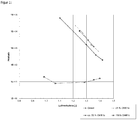
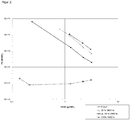
- FIGS. 1 and 2 Due to the residual content of diesel fuel (about 5%), the target values for the Euro VI emission level were clearly missed.
- the soot / NO X and PN / NO X grades can also be used FIGS. 1 and 2 be removed.
- Table 5 The three fuel compositions listed in Table 5 were investigated. Table 5 also shows their properties. Table 5: Properties of fuel compositions according to the invention samples cetane Kin. Viscosity (20 ° C) HFRR (Lubricity) (20 ° C) CFPP Calorific value, lower [-] [mm 2 / s] [.Mu.m] [° C] [J / g] AFIDA DIN EN ISO 3104 DIN EN ISO 12156-1 DIN EN 116 DIN 51900-2 mod.
- Table 6 The three fuel compositions listed in Table 6 were investigated. Table 6 also shows their properties. Table 6: Properties of fuel compositions according to the invention samples cetane Kin. Viscosity (20 ° C) HFRR (Lubricity) (20 ° C) CFPP Calorific value, lower [-] [mm 2 / s] [.Mu.m] [° C] [J / g] AFIDA DIN EN ISO 3104 DIN EN ISO 12156-1 DIN EN 116 DIN 51900-2 mod.
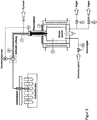
- the cetane number of dimethoxymethane (OME1) based fuels was determined as follows: To calculate the cetane numbers of fuels based on DMM, the so-called AFIDA device (Advanced Fuel Ignition Delay Analyzer) is used. It is a constant volume combustion chamber, which with modern injectors at high temperatures, combustion chamber and injection pressures can be operated. A simplified structure is shown in the following graphic: After calibration of the instrument using primary standard fuels (n-hexadecane, 1-methylnaphthalene), the cetane number can be calculated from the measured ignition delay time of an unknown fuel based on a mathematical function. The device is used because it has an advantage over standard test methods due to the small sample volumes required and the physical properties of the test fuels.
- AFIDA device Advanced Fuel Ignition Delay Analyzer
- Table 7 shows some characteristics of different fuels. Table 7: Properties of different fuels POMDME formula MG density Mp. Kp. Flp. Züp. CZ OG.
Landscapes
- Chemical & Material Sciences (AREA)
- Oil, Petroleum & Natural Gas (AREA)
- Engineering & Computer Science (AREA)
- Organic Chemistry (AREA)
- Chemical Kinetics & Catalysis (AREA)
- General Chemical & Material Sciences (AREA)
- Health & Medical Sciences (AREA)
- Emergency Medicine (AREA)
- Combustion & Propulsion (AREA)
- Liquid Carbonaceous Fuels (AREA)
Claims (18)
- Carburant pour moteurs à allumage par compression, comprenant les composants suivantsa) au moins un polyoxyméthylène-dialkyléther de faible poids moléculaire de formule RO(-CH2O-)nR, dans laquelle R est un résidu alkyle en C1 à C4 et n vaut 1 à 5,b) 0,05 à 5 % en poids d'au moins un polyalkylèneglycol-alkyléther de formule R1O(-CH2-CHR2-O-)nH et des polymères mixtes de celui-ci et/ou de formule H(-O-CHR2-CH2-)n-O-CH2-CH2-O-(-CH2-CHR2-O-)nH et des polymères mixtes de celui-ci, dans lesquelles R1 est un résidu alkyle en C1 à C4, R2 est un résidu hydrogène ou méthyle et n vaut 10 à 200, ainsi que des mélanges de ces polyalkylèneglycol-alkyléthers,c) 0 à 20 % en poids d'au moins un polyoxyméthylène-dialkyléther de poids moléculaire élevé de formule RO(-CH2O-)nR, dans laquelle R est un résidu alkyle en C1 à C4 et n vaut 6 à 10,d) 1 à 5 % en poids d'au moins un polyéthylèneglycol-dialkyléther de poids moléculaire élevé de formule RO(-CH2CH2O-)nR, dans laquelle R est un résidu alkyle en C1 à C4 et n vaut 11 à 23,e) 0 à 0,5 % en poids d'au moins un composé peroxyde organique,f) 0 à 0,1 % en poids d'au moins un acide gras à longue chaîne etg) 0 à 12 % en poids de diméthyléther, où la proportion manquante jusqu'à 100 % en poids revient à l'au moins un polyoxyméthylène-dialkyléther de faible poids moléculaire.
- Carburant selon la revendication 1, dans lequel R est un résidu méthyle ou éthyle, de manière particulièrement préférée un résidu méthyle, dans l'au moins un polyoxyméthylène-dialkyléther de faible poids moléculaire.
- Carburant pour moteurs à allumage par compression selon la revendication 1 ou 2, dans lequel n = 1, et/ou 2, ou 3, 4 et/ou 5, de préférence 1, dans l'au moins un polyoxyméthylène-dialkyléther de faible poids moléculaire.
- Carburant pour moteurs à allumage par compression selon l'une des revendications précédentes, dans lequel R1 est un résidu n-butyle dans l'au moins un polyalkylèneglycol-alkyléther.
- Carburant pour moteurs à allumage par compression selon l'une des revendications précédentes, dans lequel l'au moins un polyalkylèneglycol-alkyléther est un polymère mixte, dans lequel R2 est un résidu méthyle dans environ 10 à 40 % en poids, de préférence dans environ 40 % en poids du polymère mixte, et R2 est un résidu hydrogène dans environ 60 à 90 % en poids, de préférence dans environ 60 % en poids du polymère mixte.
- Carburant pour moteurs à allumage par compression selon l'une des revendications précédentes, dans lequel l'au moins un polyalkylèneglycol-alkyléther consiste en le polyalkylèneglycol-alkyléther de formule R1O(-CH2-CHR2-O-)nH et des polymères mixtes de celui-ci.
- Carburant pour moteurs à allumage par compression selon l'une des revendications précédentes, dans lequel l'au moins un polyalkylèneglycol-alkyléther se présente en une quantité de 2 à 4 % en poids.
- Carburant pour moteurs à allumage par compression selon l'une des revendications précédentes, dans lequel R est un résidu méthyle dans l'au moins un polyoxyméthylène-dialkyléther de poids moléculaire élevé et/ou dans l'au moins un polyéthylèneglycol-dialkyléther de poids moléculaire élevé.
- Carburant pour moteurs à allumage par compression selon l'une des revendications précédentes, dans lequel n vaut 6 à 9, de préférence 6 à 7 dans l'au moins un polyoxyméthylène-dialkyléther de poids moléculaire élevé et/ou n = 15 à 30, de préférence n = 25 à 30 dans l'au moins un polyéthylèneglycol-dialkyléther de poids moléculaire élevé.
- Carburant pour moteurs à allumage par compression selon l'une des revendications précédentes, dans lequel l'au moins un polyoxyméthylène-dialkyléther de poids moléculaire élevé est présent en une quantité de 2 à 4 % en poids et/ou l'au moins un polyéthylèneglycol-dialkyléther est présent en une quantité de 2 à 4 % en poids.
- Carburant pour moteurs à allumage par compression selon l'une des revendications précédentes, dans lequel le composé de peroxyde organique, de préférence le peroxyde de di-tert-butyle, est présent en une quantité de 0,01 à 0,3 % en poids.
- Carburant pour moteurs à allumage par compression selon l'une des revendications précédentes, dans lequel l'au moins un acide gras à longue chaîne est présent en une quantité de 0,01 à 0,3 % en poids.
- Carburant pour moteurs à allumage par compression selon l'une des revendications précédentes, dans lequel le diméthyléther est présent en une quantité de 1 à 8 % en poids.
- Carburant pour moteurs à allumage par compression selon l'une des revendications précédentes, où le carburant présente une teneur en oxygène de plus de 40 % en poids.
- Carburant pour moteurs à allumage par compression selon l'une des revendications précédentes, où le carburant ne contient pas plus de 1 ppm de soufre, pas plus de 20 ppm de cendre et/ou pas plus de 5000 ppm, de préférence pas plus de 500 ppm et de manière particulièrement préférée pas plus de 100 ppm d'hydrocarbures de poids élevés et de leurs dérivés.
- Carburant pour moteurs à allumage par compression selon l'une des revendications précédentes, comprenant 0,05 à 5 % en poids d'au moins un polyalkylèneglycol-alkyléther de formule R1O(-CH2-CHR2-O-)nH et des polymères mixtes de celui-ci et/ou de formule H(-O-CHR2-CH2-)n-O-CH2-CH2-O-(-CH2-CHR2-O-)nH et des polymères mixtes de celui-ci, dans lesquelles R1 est un résidu alkyle en C1 à C4, R2 est un résidu hydrogène ou méthyle et n vaut 10 à 55, ainsi que des mélanges de ces polyalkylèneglycol-alkyléthers.
- Carburant pour moteurs à allumage par compression selon l'une des revendications précédentes, comprenant et/ou se composant dea) diméthoxyméthane,b) 0,05 à 5 % en poids, de préférence 2 à 4 % en poids du polymère mixte de polyalkylèneglycol-alkyléther de formule H(-O-CHR2-CH2-)n-O-CH2-CH2-O-(-CH2-CHR2-O-)nH, etd) 1 à 5 % en poids d'au moins un polyéthylèneglycol-dialkyléther de poids moléculaire élevé de formule RO(-CH2CH2O-)nR, dans laquelle R est un résidu alkyle en C1 à C4 et n vaut 11 à 23.
- Utilisation du carburant pour des moteurs à allumage par compression selon l'une des revendications précédentes dans des moteurs à allumage par compression avec et/ou sans RGE ainsi que comme agents réducteurs sur un catalyseur SCR.
Applications Claiming Priority (1)
| Application Number | Priority Date | Filing Date | Title |
|---|---|---|---|
| DE102014101947.4A DE102014101947A1 (de) | 2014-02-17 | 2014-02-17 | Kraftstoff für Selbstzündungsmotoren auf Basis von Polyoxymethylendialkylethern |
Publications (2)
| Publication Number | Publication Date |
|---|---|
| EP2907866A1 EP2907866A1 (fr) | 2015-08-19 |
| EP2907866B1 true EP2907866B1 (fr) | 2019-05-29 |
Family
ID=52462236
Family Applications (1)
| Application Number | Title | Priority Date | Filing Date |
|---|---|---|---|
| EP15154477.2A Active EP2907866B1 (fr) | 2014-02-17 | 2015-02-10 | Carburant pour moteurs à allumage par compression à base de polyoxyméthylènedialkyléther |
Country Status (5)
| Country | Link |
|---|---|
| EP (1) | EP2907866B1 (fr) |
| CN (1) | CN104845679B (fr) |
| BR (1) | BR102015003069B1 (fr) |
| DE (1) | DE102014101947A1 (fr) |
| RU (1) | RU2678594C2 (fr) |
Families Citing this family (4)
| Publication number | Priority date | Publication date | Assignee | Title |
|---|---|---|---|---|
| DE102017128853A1 (de) * | 2017-12-05 | 2019-06-06 | Volkswagen Aktiengesellschaft | Abgasnachbehandlungssystem für einen Verbrennungsmotor und Verfahren zum Betreiben eines Verbrennungsmotors |
| DE102017129047A1 (de) | 2017-12-06 | 2019-06-06 | Man Truck & Bus Ag | Kraftstoff für Selbstzündungsmotoren auf Basis von Polyoxyalkylendialkylethern |
| MY205559A (en) | 2018-12-11 | 2024-10-25 | Shell Int Research | Use to reduce deposits in compression ignition internal combustion engines |
| CN114015484A (zh) * | 2021-10-29 | 2022-02-08 | 成都前成科技有限公司 | 一种含有dmm1-3组分的汽油掺烧料及其清洁汽油 |
Family Cites Families (10)
| Publication number | Priority date | Publication date | Assignee | Title |
|---|---|---|---|---|
| US6270541B1 (en) * | 1994-08-12 | 2001-08-07 | Bp Corporation North America Inc. | Diesel fuel composition |
| AT1018U1 (de) * | 1995-08-23 | 1996-09-25 | Avl Verbrennungskraft Messtech | Verfahren zur aufbereitung von selbstzündendem kraftstoff |
| EP1137743A1 (fr) * | 1998-11-23 | 2001-10-04 | Pure Energy Corporation | Composition a base de gazole |
| US20020020107A1 (en) * | 1999-07-02 | 2002-02-21 | Bailey Brent K. | Low molecular weight compression ignition fuel |
| CN100487089C (zh) * | 2004-07-06 | 2009-05-13 | 王强 | 柴油多效添加剂组合物 |
| CR7573A (es) * | 2004-11-11 | 2005-06-08 | Araya Brenes Mario | Composicion de un combustible y/o biocombustible a base de alcohol para sustituir gasolina, diesel o aceites combustibles en motores convencionales de combustion interna y metodo para su empleo |
| DE102005030282A1 (de) * | 2005-06-29 | 2007-01-04 | Basf Ag | Biodieselkraftstoffgemisch enthaltend Polyoxymethylendialkylether |
| DE102008032254B4 (de) * | 2008-07-09 | 2010-10-21 | Man Nutzfahrzeuge Ag | Rußarme Dieselkraftstoffe, enthaltend einen Kraftstoffzusatz, deren Verwendung sowie die Verwendung des Kraftstoffzusatzes zur Herstellung von rußarmen Dieselkraftstoffen |
| DE102009035503B4 (de) * | 2009-07-31 | 2025-01-02 | Man Truck & Bus Se | Verwendung von Polyoxymethylendi(alkylpolyglykol)ethern als Zusatz zu Dieselkraftstoffen zur Verminderung der Rußemission in Selbstzündungsmotoren |
| DE102013001490A1 (de) * | 2013-01-28 | 2014-08-14 | Man Truck & Bus Ag | Kraftstoff für Selbstzündungsmotoren basierend auf Monooxymethylendimethylether |
-
2014
- 2014-02-17 DE DE102014101947.4A patent/DE102014101947A1/de not_active Ceased
-
2015
- 2015-02-10 EP EP15154477.2A patent/EP2907866B1/fr active Active
- 2015-02-11 BR BR102015003069-0A patent/BR102015003069B1/pt active IP Right Grant
- 2015-02-16 CN CN201510181969.8A patent/CN104845679B/zh active Active
- 2015-02-16 RU RU2015105151A patent/RU2678594C2/ru active
Non-Patent Citations (1)
| Title |
|---|
| None * |
Also Published As
| Publication number | Publication date |
|---|---|
| BR102015003069A2 (pt) | 2018-02-27 |
| BR102015003069A8 (pt) | 2020-12-22 |
| DE102014101947A1 (de) | 2015-08-20 |
| BR102015003069B1 (pt) | 2021-11-16 |
| RU2015105151A3 (fr) | 2018-08-22 |
| RU2015105151A (ru) | 2016-09-10 |
| CN104845679A (zh) | 2015-08-19 |
| CN104845679B (zh) | 2018-07-17 |
| EP2907866A1 (fr) | 2015-08-19 |
| RU2678594C2 (ru) | 2019-01-30 |
Similar Documents
| Publication | Publication Date | Title |
|---|---|---|
| DE69805561T2 (de) | Brennölzusammensetzung für Dieselmotoren | |
| DE3880047T2 (de) | Zusammensetzung eines zusatzes. | |
| EP2233552B1 (fr) | Carburant diesel à base d'éthanol | |
| DE102009035503B4 (de) | Verwendung von Polyoxymethylendi(alkylpolyglykol)ethern als Zusatz zu Dieselkraftstoffen zur Verminderung der Rußemission in Selbstzündungsmotoren | |
| DE2129461A1 (de) | Kraft- und Brennstoffe | |
| DE102008032254B4 (de) | Rußarme Dieselkraftstoffe, enthaltend einen Kraftstoffzusatz, deren Verwendung sowie die Verwendung des Kraftstoffzusatzes zur Herstellung von rußarmen Dieselkraftstoffen | |
| DE69410801T2 (de) | Auf ethanol basierter brennstoff und anwendung eines zündverbesserers | |
| EP2907866A1 (fr) | Carburant pour moteurs à allumage par compression à base de polyoxyméthylènedialkyléther | |
| EP2759588B1 (fr) | Carburant pour moteurs à allumage par compression à base de monooxyméthylènediméthyléther | |
| DE69931014T2 (de) | Grundöl für Dieselbrennstoff und dieses enthaltende Zusammensetzungen | |
| Arora et al. | Particulate emissions and soot characterisation of diesel engine exhaust for steady-state operating condition using dioctyl phthalate blends with diesel | |
| EP2780435B1 (fr) | Hydroperoxyde de tertiobutyle (tbhp) comme additif diesel | |
| EP2803846B1 (fr) | Dispositif d'entraînement et procédé de fonctionnement de celui-ci en utilisant un carburant diesel partiellement oxydé | |
| EP3495456B1 (fr) | Carburant pour moteurs à auto-allumage à base d'éthers dialkyliques de polyoxyalkylène | |
| DE69008176T2 (de) | Kraftstoffzusätze. | |
| CH689981A5 (de) | Schwefelarmer, additivierter Diesel Kraftstoff mit verbesserter Schmierwirkung und erhöhter Dichte. | |
| DE69822655T2 (de) | Brennstoffzusätze | |
| Zhang et al. | Characteristics of particulates and exhaust gases emissions of DI diesel engine employing common rail fuel system fueled with bio-diesel blends | |
| DE2064681A1 (de) | Kraftstoffzusatz zur Reduzierung von Rückstandsbildungen in Verbrennungskraftmaschinen, insbesondere Fahrzeugmotoren und Reduzierung von Schadstoffen in deren Abgasen | |
| DE2065049C (de) | Kraftstoffzusatz zur Reduzierung von Ruckstandsbildungen in Verbrennungs kraftmaschinen, insbesondere Fahrzeug motoren und Reduzierung von Schadstoffen in deren Abgasen Ausscheidung aus 2064681 | |
| DE202022107265U1 (de) | System zur Herstellung von Diesel, dotiert mit Nano-Additiven aus Areca-Nussschalen für C-Motoren | |
| WO2020233768A1 (fr) | Réduction des émissions de substances polluantes de moteurs à combustion interne | |
| Trapel et al. | Pollutant reduction of a DI diesel engine using fatty acid methyl ester | |
| EP2157157A1 (fr) | Procédé de réduction des émissions de polluants | |
| DE102016223056A1 (de) | Kraftstoffadditiv |
Legal Events
| Date | Code | Title | Description |
|---|---|---|---|
| PUAI | Public reference made under article 153(3) epc to a published international application that has entered the european phase |
Free format text: ORIGINAL CODE: 0009012 |
|
| AK | Designated contracting states |
Kind code of ref document: A1 Designated state(s): AL AT BE BG CH CY CZ DE DK EE ES FI FR GB GR HR HU IE IS IT LI LT LU LV MC MK MT NL NO PL PT RO RS SE SI SK SM TR |
|
| AX | Request for extension of the european patent |
Extension state: BA ME |
|
| 17P | Request for examination filed |
Effective date: 20160111 |
|
| RBV | Designated contracting states (corrected) |
Designated state(s): AL AT BE BG CH CY CZ DE DK EE ES FI FR GB GR HR HU IE IS IT LI LT LU LV MC MK MT NL NO PL PT RO RS SE SI SK SM TR |
|
| RAP1 | Party data changed (applicant data changed or rights of an application transferred) |
Owner name: MAN TRUCK & BUS AG Owner name: TECHNISCHE UNIVERSITAET MUENCHEN |
|
| RIN1 | Information on inventor provided before grant (corrected) |
Inventor name: HAERTL, MARTIN Inventor name: SEIDENSPINNER, PHILIPP Inventor name: PASTOETTER, CHRISTIAN Inventor name: ROTHE, DIETER Inventor name: JACOB, EBERHARD |
|
| RIN1 | Information on inventor provided before grant (corrected) |
Inventor name: HAERTL, MARTIN Inventor name: PASTOETTER, CHRISTIAN Inventor name: JACOB, EBERHARD Inventor name: ROTHE, DIETER Inventor name: SEIDENSPINNER, PHILIPP |
|
| STAA | Information on the status of an ep patent application or granted ep patent |
Free format text: STATUS: EXAMINATION IS IN PROGRESS |
|
| 17Q | First examination report despatched |
Effective date: 20170628 |
|
| REG | Reference to a national code |
Ref country code: DE Ref legal event code: R079 Ref document number: 502015009162 Country of ref document: DE Free format text: PREVIOUS MAIN CLASS: C10L0001020000 Ipc: C10L0010020000 |
|
| GRAP | Despatch of communication of intention to grant a patent |
Free format text: ORIGINAL CODE: EPIDOSNIGR1 |
|
| STAA | Information on the status of an ep patent application or granted ep patent |
Free format text: STATUS: GRANT OF PATENT IS INTENDED |
|
| RIC1 | Information provided on ipc code assigned before grant |
Ipc: C10L 10/02 20060101AFI20181120BHEP Ipc: C10L 1/185 20060101ALI20181120BHEP Ipc: C10L 1/02 20060101ALI20181120BHEP Ipc: C10L 1/18 20060101ALI20181120BHEP Ipc: C10L 1/188 20060101ALI20181120BHEP Ipc: C10L 1/198 20060101ALI20181120BHEP |
|
| INTG | Intention to grant announced |
Effective date: 20181212 |
|
| GRAS | Grant fee paid |
Free format text: ORIGINAL CODE: EPIDOSNIGR3 |
|
| GRAA | (expected) grant |
Free format text: ORIGINAL CODE: 0009210 |
|
| STAA | Information on the status of an ep patent application or granted ep patent |
Free format text: STATUS: THE PATENT HAS BEEN GRANTED |
|
| AK | Designated contracting states |
Kind code of ref document: B1 Designated state(s): AL AT BE BG CH CY CZ DE DK EE ES FI FR GB GR HR HU IE IS IT LI LT LU LV MC MK MT NL NO PL PT RO RS SE SI SK SM TR |
|
| REG | Reference to a national code |
Ref country code: GB Ref legal event code: FG4D Free format text: NOT ENGLISH |
|
| REG | Reference to a national code |
Ref country code: CH Ref legal event code: EP |
|
| REG | Reference to a national code |
Ref country code: AT Ref legal event code: REF Ref document number: 1138250 Country of ref document: AT Kind code of ref document: T Effective date: 20190615 |
|
| REG | Reference to a national code |
Ref country code: DE Ref legal event code: R096 Ref document number: 502015009162 Country of ref document: DE |
|
| REG | Reference to a national code |
Ref country code: IE Ref legal event code: FG4D Free format text: LANGUAGE OF EP DOCUMENT: GERMAN |
|
| RAP2 | Party data changed (patent owner data changed or rights of a patent transferred) |
Owner name: MAN TRUCK & BUS SE Owner name: TECHNISCHE UNIVERSITAET MUENCHEN |
|
| REG | Reference to a national code |
Ref country code: SE Ref legal event code: TRGR |
|
| REG | Reference to a national code |
Ref country code: NL Ref legal event code: FP |
|
| REG | Reference to a national code |
Ref country code: LT Ref legal event code: MG4D |
|
| PG25 | Lapsed in a contracting state [announced via postgrant information from national office to epo] |
Ref country code: ES Free format text: LAPSE BECAUSE OF FAILURE TO SUBMIT A TRANSLATION OF THE DESCRIPTION OR TO PAY THE FEE WITHIN THE PRESCRIBED TIME-LIMIT Effective date: 20190529 Ref country code: PT Free format text: LAPSE BECAUSE OF FAILURE TO SUBMIT A TRANSLATION OF THE DESCRIPTION OR TO PAY THE FEE WITHIN THE PRESCRIBED TIME-LIMIT Effective date: 20190930 Ref country code: AL Free format text: LAPSE BECAUSE OF FAILURE TO SUBMIT A TRANSLATION OF THE DESCRIPTION OR TO PAY THE FEE WITHIN THE PRESCRIBED TIME-LIMIT Effective date: 20190529 Ref country code: FI Free format text: LAPSE BECAUSE OF FAILURE TO SUBMIT A TRANSLATION OF THE DESCRIPTION OR TO PAY THE FEE WITHIN THE PRESCRIBED TIME-LIMIT Effective date: 20190529 Ref country code: NO Free format text: LAPSE BECAUSE OF FAILURE TO SUBMIT A TRANSLATION OF THE DESCRIPTION OR TO PAY THE FEE WITHIN THE PRESCRIBED TIME-LIMIT Effective date: 20190829 Ref country code: HR Free format text: LAPSE BECAUSE OF FAILURE TO SUBMIT A TRANSLATION OF THE DESCRIPTION OR TO PAY THE FEE WITHIN THE PRESCRIBED TIME-LIMIT Effective date: 20190529 Ref country code: LT Free format text: LAPSE BECAUSE OF FAILURE TO SUBMIT A TRANSLATION OF THE DESCRIPTION OR TO PAY THE FEE WITHIN THE PRESCRIBED TIME-LIMIT Effective date: 20190529 |
|
| PG25 | Lapsed in a contracting state [announced via postgrant information from national office to epo] |
Ref country code: RS Free format text: LAPSE BECAUSE OF FAILURE TO SUBMIT A TRANSLATION OF THE DESCRIPTION OR TO PAY THE FEE WITHIN THE PRESCRIBED TIME-LIMIT Effective date: 20190529 Ref country code: BG Free format text: LAPSE BECAUSE OF FAILURE TO SUBMIT A TRANSLATION OF THE DESCRIPTION OR TO PAY THE FEE WITHIN THE PRESCRIBED TIME-LIMIT Effective date: 20190829 Ref country code: GR Free format text: LAPSE BECAUSE OF FAILURE TO SUBMIT A TRANSLATION OF THE DESCRIPTION OR TO PAY THE FEE WITHIN THE PRESCRIBED TIME-LIMIT Effective date: 20190830 Ref country code: LV Free format text: LAPSE BECAUSE OF FAILURE TO SUBMIT A TRANSLATION OF THE DESCRIPTION OR TO PAY THE FEE WITHIN THE PRESCRIBED TIME-LIMIT Effective date: 20190529 |
|
| PG25 | Lapsed in a contracting state [announced via postgrant information from national office to epo] |
Ref country code: EE Free format text: LAPSE BECAUSE OF FAILURE TO SUBMIT A TRANSLATION OF THE DESCRIPTION OR TO PAY THE FEE WITHIN THE PRESCRIBED TIME-LIMIT Effective date: 20190529 Ref country code: DK Free format text: LAPSE BECAUSE OF FAILURE TO SUBMIT A TRANSLATION OF THE DESCRIPTION OR TO PAY THE FEE WITHIN THE PRESCRIBED TIME-LIMIT Effective date: 20190529 Ref country code: SK Free format text: LAPSE BECAUSE OF FAILURE TO SUBMIT A TRANSLATION OF THE DESCRIPTION OR TO PAY THE FEE WITHIN THE PRESCRIBED TIME-LIMIT Effective date: 20190529 Ref country code: CZ Free format text: LAPSE BECAUSE OF FAILURE TO SUBMIT A TRANSLATION OF THE DESCRIPTION OR TO PAY THE FEE WITHIN THE PRESCRIBED TIME-LIMIT Effective date: 20190529 Ref country code: RO Free format text: LAPSE BECAUSE OF FAILURE TO SUBMIT A TRANSLATION OF THE DESCRIPTION OR TO PAY THE FEE WITHIN THE PRESCRIBED TIME-LIMIT Effective date: 20190529 |
|
| PG25 | Lapsed in a contracting state [announced via postgrant information from national office to epo] |
Ref country code: SM Free format text: LAPSE BECAUSE OF FAILURE TO SUBMIT A TRANSLATION OF THE DESCRIPTION OR TO PAY THE FEE WITHIN THE PRESCRIBED TIME-LIMIT Effective date: 20190529 |
|
| REG | Reference to a national code |
Ref country code: DE Ref legal event code: R097 Ref document number: 502015009162 Country of ref document: DE |
|
| REG | Reference to a national code |
Ref country code: DE Ref legal event code: R082 Ref document number: 502015009162 Country of ref document: DE Representative=s name: MEISSNER BOLTE PATENTANWAELTE RECHTSANWAELTE P, DE |
|
| PG25 | Lapsed in a contracting state [announced via postgrant information from national office to epo] |
Ref country code: TR Free format text: LAPSE BECAUSE OF FAILURE TO SUBMIT A TRANSLATION OF THE DESCRIPTION OR TO PAY THE FEE WITHIN THE PRESCRIBED TIME-LIMIT Effective date: 20190529 |
|
| PLBE | No opposition filed within time limit |
Free format text: ORIGINAL CODE: 0009261 |
|
| STAA | Information on the status of an ep patent application or granted ep patent |
Free format text: STATUS: NO OPPOSITION FILED WITHIN TIME LIMIT |
|
| PG25 | Lapsed in a contracting state [announced via postgrant information from national office to epo] |
Ref country code: PL Free format text: LAPSE BECAUSE OF FAILURE TO SUBMIT A TRANSLATION OF THE DESCRIPTION OR TO PAY THE FEE WITHIN THE PRESCRIBED TIME-LIMIT Effective date: 20190529 |
|
| 26N | No opposition filed |
Effective date: 20200303 |
|
| PG25 | Lapsed in a contracting state [announced via postgrant information from national office to epo] |
Ref country code: SI Free format text: LAPSE BECAUSE OF FAILURE TO SUBMIT A TRANSLATION OF THE DESCRIPTION OR TO PAY THE FEE WITHIN THE PRESCRIBED TIME-LIMIT Effective date: 20190529 |
|
| REG | Reference to a national code |
Ref country code: CH Ref legal event code: PL |
|
| GBPC | Gb: european patent ceased through non-payment of renewal fee |
Effective date: 20200210 |
|
| REG | Reference to a national code |
Ref country code: BE Ref legal event code: MM Effective date: 20200229 |
|
| PG25 | Lapsed in a contracting state [announced via postgrant information from national office to epo] |
Ref country code: LU Free format text: LAPSE BECAUSE OF NON-PAYMENT OF DUE FEES Effective date: 20200210 Ref country code: MC Free format text: LAPSE BECAUSE OF FAILURE TO SUBMIT A TRANSLATION OF THE DESCRIPTION OR TO PAY THE FEE WITHIN THE PRESCRIBED TIME-LIMIT Effective date: 20190529 |
|
| PG25 | Lapsed in a contracting state [announced via postgrant information from national office to epo] |
Ref country code: LI Free format text: LAPSE BECAUSE OF NON-PAYMENT OF DUE FEES Effective date: 20200229 Ref country code: CH Free format text: LAPSE BECAUSE OF NON-PAYMENT OF DUE FEES Effective date: 20200229 |
|
| PG25 | Lapsed in a contracting state [announced via postgrant information from national office to epo] |
Ref country code: IE Free format text: LAPSE BECAUSE OF NON-PAYMENT OF DUE FEES Effective date: 20200210 Ref country code: GB Free format text: LAPSE BECAUSE OF NON-PAYMENT OF DUE FEES Effective date: 20200210 |
|
| PG25 | Lapsed in a contracting state [announced via postgrant information from national office to epo] |
Ref country code: BE Free format text: LAPSE BECAUSE OF NON-PAYMENT OF DUE FEES Effective date: 20200229 |
|
| REG | Reference to a national code |
Ref country code: AT Ref legal event code: MM01 Ref document number: 1138250 Country of ref document: AT Kind code of ref document: T Effective date: 20200210 |
|
| PG25 | Lapsed in a contracting state [announced via postgrant information from national office to epo] |
Ref country code: AT Free format text: LAPSE BECAUSE OF NON-PAYMENT OF DUE FEES Effective date: 20200210 |
|
| PG25 | Lapsed in a contracting state [announced via postgrant information from national office to epo] |
Ref country code: MT Free format text: LAPSE BECAUSE OF FAILURE TO SUBMIT A TRANSLATION OF THE DESCRIPTION OR TO PAY THE FEE WITHIN THE PRESCRIBED TIME-LIMIT Effective date: 20190529 Ref country code: CY Free format text: LAPSE BECAUSE OF FAILURE TO SUBMIT A TRANSLATION OF THE DESCRIPTION OR TO PAY THE FEE WITHIN THE PRESCRIBED TIME-LIMIT Effective date: 20190529 |
|
| PG25 | Lapsed in a contracting state [announced via postgrant information from national office to epo] |
Ref country code: MK Free format text: LAPSE BECAUSE OF FAILURE TO SUBMIT A TRANSLATION OF THE DESCRIPTION OR TO PAY THE FEE WITHIN THE PRESCRIBED TIME-LIMIT Effective date: 20190529 Ref country code: IS Free format text: LAPSE BECAUSE OF FAILURE TO SUBMIT A TRANSLATION OF THE DESCRIPTION OR TO PAY THE FEE WITHIN THE PRESCRIBED TIME-LIMIT Effective date: 20190929 |
|
| PGFP | Annual fee paid to national office [announced via postgrant information from national office to epo] |
Ref country code: NL Payment date: 20260220 Year of fee payment: 12 |
|
| PGFP | Annual fee paid to national office [announced via postgrant information from national office to epo] |
Ref country code: SE Payment date: 20260223 Year of fee payment: 12 |
|
| PGFP | Annual fee paid to national office [announced via postgrant information from national office to epo] |
Ref country code: DE Payment date: 20260220 Year of fee payment: 12 |
|
| PGFP | Annual fee paid to national office [announced via postgrant information from national office to epo] |
Ref country code: IT Payment date: 20260220 Year of fee payment: 12 |
|
| PGFP | Annual fee paid to national office [announced via postgrant information from national office to epo] |
Ref country code: FR Payment date: 20260224 Year of fee payment: 12 |