EP2908574A1 - Verfahren zum informationsaustausch zwischen kommunikationsendgeräten und kommunikationsendgerät - Google Patents
Verfahren zum informationsaustausch zwischen kommunikationsendgeräten und kommunikationsendgerät Download PDFInfo
- Publication number
- EP2908574A1 EP2908574A1 EP13844998.8A EP13844998A EP2908574A1 EP 2908574 A1 EP2908574 A1 EP 2908574A1 EP 13844998 A EP13844998 A EP 13844998A EP 2908574 A1 EP2908574 A1 EP 2908574A1
- Authority
- EP
- European Patent Office
- Prior art keywords
- communication terminal
- information
- node
- routing information
- entry
- Prior art date
- Legal status (The legal status is an assumption and is not a legal conclusion. Google has not performed a legal analysis and makes no representation as to the accuracy of the status listed.)
- Withdrawn
Links
- 238000004891 communication Methods 0.000 title claims abstract description 928
- 238000000034 method Methods 0.000 title claims description 60
- 238000001514 detection method Methods 0.000 claims description 3
- 238000003860 storage Methods 0.000 abstract description 147
- 238000010586 diagram Methods 0.000 description 49
- 230000008569 process Effects 0.000 description 15
- 230000004044 response Effects 0.000 description 9
- 238000012217 deletion Methods 0.000 description 7
- 230000037430 deletion Effects 0.000 description 7
- 230000007246 mechanism Effects 0.000 description 6
- 230000000694 effects Effects 0.000 description 4
- 230000005540 biological transmission Effects 0.000 description 3
- 239000000284 extract Substances 0.000 description 3
- 230000000737 periodic effect Effects 0.000 description 3
- 238000012545 processing Methods 0.000 description 3
- 238000012546 transfer Methods 0.000 description 3
- 238000013461 design Methods 0.000 description 2
- VJYFKVYYMZPMAB-UHFFFAOYSA-N ethoprophos Chemical compound CCCSP(=O)(OCC)SCCC VJYFKVYYMZPMAB-UHFFFAOYSA-N 0.000 description 2
- 238000012544 monitoring process Methods 0.000 description 2
- 230000006855 networking Effects 0.000 description 2
- NRNCYVBFPDDJNE-UHFFFAOYSA-N pemoline Chemical compound O1C(N)=NC(=O)C1C1=CC=CC=C1 NRNCYVBFPDDJNE-UHFFFAOYSA-N 0.000 description 2
- 238000012552 review Methods 0.000 description 2
- 230000006978 adaptation Effects 0.000 description 1
- 230000008901 benefit Effects 0.000 description 1
- 230000015572 biosynthetic process Effects 0.000 description 1
- 230000003111 delayed effect Effects 0.000 description 1
- 230000005684 electric field Effects 0.000 description 1
- 230000014759 maintenance of location Effects 0.000 description 1
- 238000012986 modification Methods 0.000 description 1
- 230000004048 modification Effects 0.000 description 1
- 230000009467 reduction Effects 0.000 description 1
- 230000001360 synchronised effect Effects 0.000 description 1
Images




Classifications
-
- H—ELECTRICITY
- H04—ELECTRIC COMMUNICATION TECHNIQUE
- H04W—WIRELESS COMMUNICATION NETWORKS
- H04W72/00—Local resource management
- H04W72/20—Control channels or signalling for resource management
-
- H—ELECTRICITY
- H04—ELECTRIC COMMUNICATION TECHNIQUE
- H04W—WIRELESS COMMUNICATION NETWORKS
- H04W40/00—Communication routing or communication path finding
- H04W40/24—Connectivity information management, e.g. connectivity discovery or connectivity update
-
- H—ELECTRICITY
- H04—ELECTRIC COMMUNICATION TECHNIQUE
- H04W—WIRELESS COMMUNICATION NETWORKS
- H04W48/00—Access restriction; Network selection; Access point selection
- H04W48/08—Access restriction or access information delivery, e.g. discovery data delivery
- H04W48/10—Access restriction or access information delivery, e.g. discovery data delivery using broadcasted information
-
- H—ELECTRICITY
- H04—ELECTRIC COMMUNICATION TECHNIQUE
- H04W—WIRELESS COMMUNICATION NETWORKS
- H04W76/00—Connection management
- H04W76/10—Connection setup
- H04W76/15—Setup of multiple wireless link connections
-
- H—ELECTRICITY
- H04—ELECTRIC COMMUNICATION TECHNIQUE
- H04W—WIRELESS COMMUNICATION NETWORKS
- H04W84/00—Network topologies
- H04W84/18—Self-organising networks, e.g. ad-hoc networks or sensor networks
Definitions
- the present invention relates to a method for exchanging information between communication terminals and a communication terminal and, in particular, to a method for exchanging information such as node information and routing information between communication terminals on the basis of whether or not mutually corresponding node information and routing information entries exist, and such communication terminal.
- MANET autonomous distributed (self-configuring) mobile ad-hoc networks
- Node information i.e. node IDs, node IP addresses, and information about contents held by nodes
- Routing information i.e. next-hop (forwarding destination) node information for reaching a destination node, the probability of reaching the destination node, and the routing address of the destination node.
- each communication terminal identifies an "information sharing terminal” with which the communication terminal is to communicate by "(1) node information” and identifies a “communication (data transfer) route” to the aforementioned "information sharing terminal” by "(2) routing information”.
- each communication terminal needs to be in a state where they manage "(1) node information” relating to each of other communication terminals in a network and "(2) routing information" in association with each other or hold both kinds of information.
- the amount of information exchanged between communication terminals needs to be reduced because communication bandwidth available between communication terminals in a mobile ad-hoc network (MANET) is limited.
- MANET mobile ad-hoc network
- communication terminals in the mobile ad-hoc network (MANET) directly communicate with each other by wireless communication, interference occurs between radio waves from communication terminals that participate in the network, thus limiting available communication bandwidth.
- communication radio waves can fail to reach communication terminals due to movement of the communication terminals or interruption of radio waves by obstacles, the communication link between communication terminals can often disconnected or network disruption can occur.
- each communication terminal holds for some time node information and routing information relating to a correspondent communication terminal with which the communication terminal was once connected in order to enable "(1) node information" and "(2) routing information" to be exchange between many communication terminals.
- a communication terminal exchanges node information and routing information relating to every other communication terminal that the terminal has met or neighbored and stores the information for a certain period of time in methods for managing information in a delay/disruption tolerant network (DTN) described in NPL 1, " Probabilistic routing in intermittently connected networks” by Anders Lindgren et al. (ACM SIGMOBILE Mobile Computing and Communications Review, Volume 7, Issue 3, July 2003, Pages 19-20 and NPL 2, " ROUTING IN INTERMITTENTLY CONNECTED MOBILE AD-HOC NETWORKS AND DELAY TOLERANT NETWORKS: OVERVIEW AND CHALLENGES" by ZHENSHENG ZHANG et al.
- DTN delay/disruption tolerant network
- the amount of information to be exchanged between communication terminals increases in proportion to the number of communication terminals participating in the network.
- MANET mobile ad-hoc network
- DTN delay/disruption tolerant network
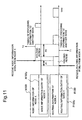
- Fig. 11 is a diagram for illustrating the messaging timings of providing node information and routing information held by a communication terminal (node) and periods during which the communication terminal is holding the node information and routing information in an existing technique.
- 11 focuses on a node Y entry relating to node Y received from node X, i.e. a node information entry N100y, and a routing information entry R100y out of the node information N100 held by node A and the routing information R100 held by node A and illustrates a situation where there are differences in the messaging timing of providing information to another node and in period in which the received information is held.
- node information non-holding period P1 in Fig. 11 there is a period, depicted as node information non-holding period P1 in Fig. 11 , between receipt of the routing information entry R100y from node X and receipt of the node information entry N100y from node X during which node A does not hold the node information entry N100y relating to node Y and the routing information entry R100y in pairs because of a difference between the periodicity of exchange of node information N100 and the periodicity of exchange of routing information R100.
- the holding period of the routing information entry R100y of node Y may expire and the routing information entry R100y may be deleted, which may result in a period during which node A holds only the node information entry N100y of node Y out of the two kinds of information relating to node Y that are to be held by node A, as depicted as a routing information non-holding period P2 in Fig. 11 .
- node A When node A provides information to the other node at messaging timing T1 and messaging timing T2 in Fig. 11 , node A does not provide the routing information entry R100y relating to node Y and provides only the node information entry N100y relating to node Y. As a result, communication bandwidth and storage of the communication terminals are wasted.
- a first problem is that when a communication terminal meets another communication terminal, the communication terminal can possibly provide only one of the node information and routing information relating to a particular communication terminal. This is because the function of exchanging node information and the function of exchanging routing information operate independently of each other in different network layers and the timings of exchanging the two kinds of information are not synchronized. As a result, the node information and the routing information relating to the particular communication terminal cannot be provided to the other communication terminal in pairs and communication bandwidth and resources of the communication terminals are wasted.
- a second problem is that a communication terminal can possibly keep holding only one of node information and routing information relating to a particular communication terminal. This is because the function of managing node information or the function of managing routing information is not capable of determining whether a routing information entry or a node information entry that corresponds to a node information entry or a routing information entry exists or not to identify information that does not need to be held. Consequently, node information and routing information for a particular communication terminal cannot be managed in pairs and communication bandwidth and resources of the communication terminals are wasted.
- the present invention has been made in light of these problems and a first object of the present invention is to provide a method for exchanging information between communication terminals and a communication terminal that include a mechanism for acquiring both of a node information entry and a routing information entry that relate to a particular communication terminal at substantially the same time.
- a second object of the present invention is to provide a method for exchanging information between communication terminals and a communication terminal that include a mechanism for avoiding uselessly holding only one of a pair of a node information entry and a routing information entry that relate to a particular communication terminal.
- a method for exchanging information between communication terminals and a communication terminal according to the present invention primarily employ the following characteristic configurations.
- the method for exchanging information between communication terminals and a communication terminal according to the present invention have the following advantageous effects.
- a first advantageous effect is that a node information entry and a routing information entry that relate to a particular communication terminal can be provided together to one or more communication terminals. This is because the method and the communication terminal have a mechanism that, when node information or routing information is exchanged, checks correspondences between node information entries and routing information entries held by the communication terminal and, if any of the node information entries or routing information entries is missing, acquires the missing information from another communication terminal.
- a second advantageous effect is that the communication terminal can hold entries of both of node information and routing information relating to a particular communication terminal in pairs. This is because the method and the communication terminal have a mechanism that checks correspondences between node information entries and routing information entries held by the communication terminal and, if any of the node information entries and the routing information entries is missing, deletes a node information entry or routing information entry that does not have a corresponding entry.
- a primary feature of the present invention is that both of node information and routing information that are held by a communication terminal (node) are checked and information exchange with another communication terminal (node) and managing information in the communication terminal (node) are performed on the basis of whether or not both of an entry of node information and an entry of routing information that correspond to each other exist.
- a primary feature of a communication terminal is that the communication terminal includes information exchange coordination means which, upon reception of node information or routing information from another communication terminal (another node), checks whether or not an entry of routing information or node information corresponding to the node information or routing information is missing and, if missing, performs exchange of the missing routing information or node information, and held information coordination means which checks node information and routing information held by the communication terminal to determine whether or not an entry of routing information or node information corresponding to the node information or the routing information is missing and, if missing, deletes the node information or the routing information whose corresponding entry is missing.
- the present invention primarily includes a method for exchanging information between communication terminals and a communication terminal in the following modes.
- a method for exchanging information between communication terminals in a first mode is a method for exchanging node information used for identifying each of a plurality of communication terminals constituting a network among the plurality of communication terminals and routing information indicating a communication route to each of the communication terminals which is a destination between communication terminals.
- the method is primarily characterized in that when each of the plurality of communication terminals constituting the network detects update of the routing information, for example, held by the communication terminal, the communication terminal references the node information entry corresponding to the updated routing information entry in the node information held by the communication terminal and, if a corresponding entry of the node information does not exists, acquires the node information entry from another communication terminal.
- a communication terminal in a second mode is a communication terminal which constitutes a network with one or more other communication terminals and exchange node information used for identifying each of the communication terminals and routing information indicating a communication route to each of the communication terminal which is a destination with another communication terminal.
- Each of the plurality of communication terminals is primarily characterized in that when the communication terminal detects update of the routing information, for example, held by the communication terminal, the communication terminal references the node information entry corresponding to the updated routing information entry in the node information held by the communication terminal and, if a corresponding entry of the node information does not exists, acquires the node information entry from another communication terminal.
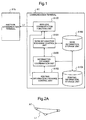
- FIG. 1 is a block diagram illustrating an exemplary block configuration of the first embodiment of a communication terminal according to the present invention.
- a communication terminal A1 includes at least a wireless communication function unit A100, a node information exchange control unit A101, a node information storage unit A102, a routing information exchange control unit A103, a routing information storage unit A104 and information exchange coordination unit A105.
- the wireless communication function unit A100 is a component that performs wireless communication with another communication terminal A1b through a wireless communication link L1;
- the node information exchange control unit A101 is a component that controls exchange of node information with another communication terminal Alb; and the node information storage unit A102 is a component that stores node information held by the communication terminal A1.
- the routing information exchange control unit A103 is a component that controls exchange of routing information with another communication terminal Alb; and the routing information storage unit A104 is a component that stores routing information held by the communication terminal A1.
- the information exchange coordination unit A105 is a component that monitors the timings of exchanging node information and routing information.
- the other communication terminal A1b has exactly the same block configuration as the communication terminal A1 in Fig. 1 .
- wireless communication is performed by means of the wireless communication function unit A100 through a wireless communication link L1 to interconnect the communication terminals, therefore a mobile ad-hoc network (MANET) or a delay/disruption tolerant network (DTN) can be constructed.
- the communication terminals A1 in the network may be moving or stationary.
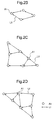
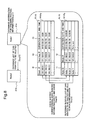
- Fig. 2 are network configuration diagrams illustrating examples of network environment of a mobile ad-hoc network (MANET) or a delay/disruption tolerant network (DTN) made up of communication terminals A1 each of which is as illustrated in Fig. 1.
- Fig. 2A illustrates a network configuration made up of three communication terminals A1 which are interconnected through wireless communication links L1;
- Fig. 2B illustrates a network configuration made up of four communication terminals A1 each of which is connected with two neighboring communication terminals A1 through wireless communication links L1.
- Figs. 2C and 2D illustrate network configurations each being made up of seven communication terminals A1; Fig.
- FIG. 2C illustrates a network configuration where there are communication terminals A1 each of which is connected with other communication terminals A1 through up to three wireless communication links L1 and Fig. 2D illustrates a network configuration where there are communication terminals A1 each of which is connected with other communication terminals A1 through up to four wireless communication links L1.
- the wireless communication function unit A100 includes the function of transmitting node information and routing information received from the node information exchange control unit A101 and the routing information exchange control unit A103 to another communication terminal A1b through a wireless communication link L1.
- the wireless communication function unit A100 includes the function of, when receiving node information and routing information from the other communication terminal A1b through the wireless communication link L1, passing the node information and the routing information to the node information exchange control unit A101 and the routing information exchange control unit A103, respectively.
- the wireless communication function unit A100 when the wireless communication function unit A100 receives node information from another communication terminal Alb, the wireless communication function unit A100 passes the received node information to the node information exchange control unit A101; when the wireless communication function unit A100 receives routing information, the wireless communication function unit A100 passes the received routing information to the routing information exchange control unit A103.
- the node information exchange control unit A101 includes the function of exchanging node information that the communication terminal A1 holds in the node information storage unit A102 with another communication terminal Alb through the wireless communication function unit A100 at predetermined regular intervals, the function of exchanging node information with another communication terminal A1b through the wireless communication function unit A100 in response to an exchange start instruction from the information exchange coordination unit A105, and the function of managing updates of node information that the local communication terminal A1 holds in the node information storage unit A102.
- Figs. 3A to 3C are tables for illustrating examples of kinds of node information managed by the communication terminal A1 illustrated in Fig. 1 .
- node information N110 illustrated in Fig. 3A in which a node ID 11 and a node IP address 12 relating to each communication terminal A1 are paired to form an entry and an expiration date and time 13 is provided for the entry
- node information N120 illustrated in Fig. 3B in which a node ID 21 and a routing address 22 (a special address that serves as a substitute for an IP address in layered routing or a special address used in routing) relating to each communication terminal A1 are paired to form an entry and an expiration date and time 23 is provided for the entry
- a node ID 31 and a node IP address 32 relating to each communication terminal A1, and a contents list 33 indicating a list of contents held by the communication terminal A1 are associated to form an entry and an expiration date and time 34 is provided for the entry, for example.
- node information N110 illustrated in Fig. 3A i.e. the node information in which a node ID 11 and a node IP address 12 relating to each communication terminal A1 are paired to form an entry and an expiration date and time 13 for the entry of each communication terminal A1 is provided will be used in the following description.
- the node information exchange control unit A101 also manages updates of node information stored in the node information storage unit A102. For the management of updates of the node information, when the node information exchange control unit A101 receives node information from the wireless communication function unit A100, for example, the node information exchange control unit A101 reads node information stored in the node information storage unit A102 and compares the read node information with the received node information to determine whether or not the information needs to be updated.
- the node information exchange control unit A101 adds the new node information entry to the existing node information; if the node information is new information relating to a known node information entry stored in the node information storage unit A102, the node information exchange control unit A101 overwrites the node information in the node information storage unit A102 with the received new node information entry to update the node information held by the communication terminal A1. In doing so, the node information exchange control unit A101 also updates the expiration date and time in accordance with the addition or update of the node information entry. Then the node information exchange control unit A101 passes the node information added or updated to the node information storage unit A102 for storage.
- the node information exchange control unit A101 monitors the expiration dates and times of the node information stored in the node information storage unit A102 at predetermined regular intervals. When the node information exchange control unit A101 detects that an expiration date and time has passed with the passage of time, the node information exchange control unit A101 performs processing for deleting the node information entry that has the passed expiration date and time (i.e. an entry whose expiration date and time is earlier than the current time or an entry for which an invalid-entry flag is set indicating that the entry is a node information entry that is not used in information exchange) for node information update management.
- the node information exchange control unit A101 performs processing for deleting the node information entry that has the passed expiration date and time (i.e. an entry whose expiration date and time is earlier than the current time or an entry for which an invalid-entry flag is set indicating that the entry is a node information entry that is not used in information exchange) for node information update management.
- the node information exchange control unit A101 retrieves node information managed by the communication terminal A1 from the node information storage unit A102 and passes the node information to the wireless communication function unit A100 to transmit the node information to another communication terminal A1b through the wireless communication link L1.
- the node information exchange control unit A101 receives a node information exchange start instruction from the information exchange coordination unit A105, the node information exchange control unit A101 retrieves node information managed by the communication terminal A1 from the node information storage unit A102 and passes the node information to the wireless communication function unit A100 to transmit the node information to the other communication terminal A1b through the wireless communication link L1.
- the node information storage unit A102 includes the function of storing node information managed by the local communication terminal A1. Specifically, when the node information storage unit A102 receives node information from the node information exchange control unit A101, the node information storage unit A102 stores the node information. Furthermore, the node information storage unit A102 also includes the function of, in response to a node information read request from the node information exchange control unit A101 or the information exchange coordination unit A105, sending currently stored node information to the requesting node information exchange control unit A101 or information exchange coordination unit A105.
- the routing information exchange control unit A103 includes the function of exchanging routing information held by the communication terminal A1 in the routing information storage unit A104 with another communication terminal A1b through the wireless communication function unit A100 at predetermined regular intervals, the function of exchanging routing information with another communication terminal A1b through the wireless communication function unit A100 in response to an exchange start instruction from the information exchange coordination unit A105, and the function of managing updates of routing information held by the communication terminal A1 in the routing information storage unit A104.
- Figs. 4A to 4C are tables for illustrating examples of kinds of routing information managed by the communication terminal A1 illustrated in Fig. 1 .
- routing information R110 illustrated in Fig. 4A in which a destination IP address 41 indicating the IP address (Dest. IP address) of each destination communication terminal A1 and a next-hop IP address 42 indicating the IP address (Next hop IP address) of a next-hop communication terminal are paired to form an entry and an expiration date and time 43 is provided for the entry
- routing information R120 illustrated in Fig. 4B in which a destination IP address 51 indicating the IP address of each destination communication terminal A1 and a next-hop IP address 52 indicating the IP address of a next-hop communication terminal are paired to form an entry and a receipt time 53 or a creation date and time or update time is provided for the entry
- a destination IP address 61 indicating the IP address of each destination communication terminal A1 and a next-hop IP address 62 indicating the IP address of a next-hop communication terminal are paired to form an entry and a route score 63 which is a value indicating the reachability of the destination communication terminal A1 in the entry is provided, for example.
- the route score 63 is also used for determining whether or not the entry has expired and, when the route score 63 becomes less than or equal to a predetermined threshold value, the entry is considered to be equivalent to an expired entry and is deleted as invalid routing information.
- routing information R110 illustrated in Fig. 4A i.e. the routing information in which a destination IP address 41 and a next-hop IP address 42 relating to each destination communication terminal A1 are paired to form an entry and an expiration date and time 43 of the entry of each communication terminal A1 is provided will be used in the following description.
- the routing information exchange control unit A103 also manages updates of routing information stored in the routing information storage unit A104. For the management of updates of the routing information, when the routing information exchange control unit A103 receives routing information from the wireless communication function unit A100, for example, the routing information exchange control unit A103 reads routing information stored in the routing information storage unit A104 and compares the read routing information with the received routing information to determine whether or not the information needs to be updated.
- the routing information exchange control unit A103 adds the new routing information entry to the existing routing information; if the routing information is new information relating to a known routing information entry stored in the routing information storage unit A104, the routing information exchange control unit A103 overwrites the routing information in the routing information storage unit A104 with the received new routing information entry to update the routing information held by the communication terminal A1. In doing so, the routing information exchange control unit A103 also updates the expiration date and time in accordance with the addition or update of the routing information entry. Then the routing information exchange control unit A103 passes the routing information added or updated to the routing information storage unit A104 for storage.
- the routing information exchange control unit A103 monitors the expiration dates and times of the routing information stored in the routing information storage unit A104 at predetermined regular intervals.
- the routing information exchange control unit A103 detects that an expiration date and time has passed with the passage of time
- the routing information exchange control unit A103 performs processing for deleting the routing information entry that has the passed expiration date and time (i.e. an entry whose expiration date and time is earlier than the current time, or an entry for which an invalid-entry flag is set indicating that the entry is a routing information entry that is not used in information exchange, or an entry whose route score becomes less than or equal to a predetermined threshold) for routing information update management.
- the routing information exchange control unit A103 retrieves routing information managed by the communication terminal A1 from the routing information storage unit A104 and passes the routing information to the wireless communication function unit A100 to transmit the routing information to another communication terminal A1b through the wireless communication link L1. Moreover, when the routing information exchange control unit A103 receives a routing information exchange start instruction from the information exchange coordination unit A105, the routing information exchange control unit A103 retrieves routing information managed by the communication terminal A1 from the routing information storage unit A104 and passes the routing information to the wireless communication function unit A100 to transmit the routing information to the other communication terminal A1b through the wireless communication link L1.
- the routing information storage unit A104 includes the function of storing routing information managed by the communication terminal A1. When the routing information storage unit A104 receives routing information from the routing information exchange control unit A103, the routing information storage unit A104 stores the routing information. Furthermore, the routing information storage unit A104 also includes the function of, in response to a routing information read request from the routing information exchange control unit A103 or the information exchange coordination unit A105, sending currently stored routing information to the requesting routing information exchange control unit A103 or information exchange coordination unit A105.
- the information exchange coordination unit A105 includes the function of monitoring node information stored in the node information storage unit A102 and routing information stored in the routing information storage unit A104 at predetermined regular intervals to detect whether or not addition of new information to or update of both of the node information and routing information has occurred as a result of information exchange with another communication terminal A1b.
- the information exchange coordination unit A105 detects addition to or update of only one of the node information and the routing information
- the information exchange coordination unit A105 sends an exchange start instruction to the node information exchange control unit A101 or the routing information exchange control unit A103 to instruct to start exchange of the other information (node information or routing information) to which addition of new information or update has not occurred.
- Fig. 5 is a diagram for illustrating an example of an operation of the communication terminal A1 illustrated in Fig. 1 as the first embodiment.
- the diagram of Fig. 5 illustrates an example of an operation in which the communication terminal A1a (node 1) receives a routing information entry R110y relating to another communication terminal Y from another, neighboring communication terminal A1b (node 2) connected to the communication terminal A1a and, when the routing information entry R110y relating to the communication terminal Y is updated but a node information entry N110y corresponding to the routing information entry R110y relating to the communication terminal Y does not exist, the communication terminal A1a starts exchanging the node information entry N110y relating to the communication terminal Y with the connected neighboring communication terminal A1b (node 2).
- the communication terminal A1a (node 1) holds node information N110 and routing information R110 in the node information storage unit A102 and the routing information storage unit A104, respectively.
- a situation will be described below in which the routing information R110 is updated first.
- the routing information exchange control unit A103 updates the routing information R110 stored in the routing information storage unit A104 to add the routing information entry R110y relating to the new communication terminal Y (sequence Seq2).
- the information exchange coordination unit A105 monitors the routing information R110 stored in the routing information storage unit A104 at predetermined regular intervals as stated above.
- the information exchange coordination unit A105 detects update of the routing information entry R110y relating to the communication terminal Y (sequence Seq3)
- the information exchange coordination unit A105 performs an operation for determining whether or not a node information entry N110y that corresponds to the routing information entry R110y relating to the communication terminal Y exists in the node information storage unit A102 (sequence Seq4).
- the information exchange coordination unit A105 sends an exchange start instruction for the node information entry N110y relating to the communication terminal Y to the node information exchange control unit A101 to cause the node information exchange control unit A101 to start an operation for exchanging the node information entry N110y relating to the communication terminal Y with the other communication terminal A1b (sequence Seq5).
- the communication terminal A1a (node 1) is located within a range in which the communication terminal A1a (node 1) can communication with the neighboring other communication terminal A1b (node 2) and is connected with the neighboring communication terminal A1b (node 2) through a wireless communication link L1.
- the communication terminal A1a (node 1) has received a new routing information entry R110y for routing to the communication terminal Y from the connected other communication terminal Alb (node 2) as indicated by sequence Seq1.
- the information exchange coordination unit A105 detects that addition or update of the routing information entry R110y for routing to the other communication terminal Y has occurred in the routing information R110 held in the routing information storage unit A104 of the communication terminal A1a (node 1) as indicated by sequence Seq3, the information exchange coordination unit A105 performs an operation for determining whether or not a node information entry N110y relating to the other communication terminal Y that corresponds to for which the routing information entry R110y has been newly added or updated is recorded in the node information storage unit A102, as indicated by sequence Seq4.
- the determination as to whether or not a node information entry N110y that corresponds to the routing information entry R110y relating to the other communication terminal Y is recorded in the node information storage unit A102 may be made by comparing the destination IP address in the routing information entry R110y recorded in the destination IP address 41 in the routing information storage unit A104 with each of the node IP addresses recorded in the node IP address 12 in the node information storage unit A102.
- common items IP addresses, i.e. node IP addresses 12 and destination IP addresses 41 in the first embodiment
- the common items of information may be used to identify corresponding entries between the node information and the routing information.
- the information exchange coordination unit A105 sends a node information exchange start instruction to the node information exchange control unit A101.
- the node information exchange control unit A101 receives the node information exchange start instruction and performs an operation for exchanging node information with the communication terminal A1b through the wireless communication function unit A100 in order to acquire the node information entry N100y relating to the other communication terminal Y as indicated by sequence Seq5.
- the information exchange coordination unit A105 determines that the node information entry N110y has been expired, deletes the node information entry N110y and may send a node information exchange start instruction to the node information exchange control unit A101 in order to acquire the node information entry N110y relating to the communication terminal Y anew from the communication terminal A1b.
- the information exchange coordination unit A105 determines that the operation for exchanging the routing information entry R110y relating to the other communication terminal Y does not need to be performed and therefore does not perform the subsequent process.
- the communication terminal A1a (node 1) can add or update both of the routing information entry R100y and the node information entry N110y relating to the other communication terminal Y at substantially the same time, instead of adding or updating only one of the routing information entry R110y and the node information entry N110y relating to the other communication terminal Y, by performing the operation illustrated in Fig. 5 .
- the communication terminal A1a (node 1) is allowed to provide both of node information and routing information relating to a particular communication terminal together to another communication terminal (for example the communication terminal A1b (node 2)) during information exchange with the other communication terminal.
- node information or routing information may be detected at the information exchange coordination unit A105 by performing the following process.
- the information exchange coordination unit A105 may read and store node information or routing information relating to each communication terminal.
- the information exchange coordination unit A105 may check whether there is a difference between the node information or the routing information and the previously stored node information or routing information relating to each communication terminal to determine whether or not node information or routing information relating to each communication terminal has been added or updated.
- the node information exchange control unit A101 or the routing information exchange control unit A103 may notify the information exchange coordination unit A105 of the addition or the update.
- the timing of performing detection of addition of new information to or update of node information or routing information at the information exchange coordination unit A105 may be as follows: when the node information exchange control unit A101 or the routing information exchange control unit A103 receives node information or routing information from the wireless communication function unit A100, the node information exchange control unit A101 or the routing information exchange control unit A103 may send a notification of the receipt to the information exchange coordination unit A105 and, in response to the notification, the information exchange coordination unit A105 may check the information in the node information storage unit A102 or the routing information storage unit A104 for addition or update, instead of checking at predetermined regular intervals. It is assumed in the following description that the information exchange coordination unit A105 monitors for addition or update of node information and routing information at predetermined regular intervals.
- FIG. 5 illustrates an example of an operation for starting exchange of a node information entry N110y relating to another communication terminal Y between a communication terminal A1a (node 1) and another communication terminal A1b (node 2) as described above.
- Fig. 6 is a flowchart illustrating an example of an operation of the communication terminal A1 illustrated in Fig. 1 as the first embodiment.
- Fig. 6 illustrates an example of a process flow in which the information exchange coordination unit A105 in the communication terminal A1a (node 1) in the diagram of Fig. 5 monitors for addition of new information to or update or expiration of node information or routing information at predetermined regular intervals and starts the operation for exchanging required node information or routing information with another communication terminal (the communication terminal A1b in Fig. 5 ) connected to the communication terminal A1a as needed.
- Fig. 6 illustrates an example of an operation that enables both of node information and routing information, rather than only one of the node information and the routing information, to be passed at substantially the same time.
- Fig. 6 illustrates the operation that is performed at predetermined regular intervals as described above. While the operation illustrated in Figs. 5 and 6 is actually performed at each of the communication terminals that constitute a network as illustrated in any of Figs. 2A to 2D , the following description will focus only on a communication terminal A1a (node 1) and another communication terminal A1b (node 2) illustrated in Fig. 5 among the communication terminals constituting the network, and be given on a case where an operation for exchanging node information and routing information between the two communication terminals is performed for simplicity.
- A1a node 1
- A1b node 2
- the communication terminal A1a (node 1) and the other communication terminal A1b (node 2) illustrated in Fig. 5 are within a range in which the two communication terminals can communicate with each other and are interconnected through a wireless communication link L1, as described above. While node information may be received first or routing information may be received first in information exchange between the communication terminal A1a (node 1) and the other communication terminal A1b (node 2), only a pattern in which routing information is received first will be described below in detail since the same operation is performed for exchange of different kinds of information as noted previously.
- the communication terminal A1b transmits routing information that the communication terminal A1b currently holds to the communication terminal A1a as periodic transmission of routing information.
- the communication terminal Ala receives the routing information from the communication terminal A1b through the wireless communication function unit A100 and passes the received routing information to the routing information exchange control unit A103.
- the routing information exchange control unit A103 receives the received routing information (routing information including a routing information entry R110y relating to the communication terminal Y (node Y) in the example in Fig. 5 ) from the wireless communication function unit A100, generates a new entry with a destination IP address 41 (Dest.
- the routing information storage unit A104 receives the routing information from the routing information exchange control unit A103 and stores the routing information as the latest routing information at the local communication terminal Ala as described with respect to sequence Seq2 in Fig. 5 .
- the communication terminal A1a is periodically monitoring node information in the node information storage unit A102 and routing information in the routing information storage unit A104 of the local communication terminal A1a for an update by using the information exchange coordination unit A105 all the while.
- the information exchange coordination unit A105 reads routing information stored in the routing information storage unit A104 at predetermined regular intervals and uses the read routing information and the routing information stored by the information exchange coordination unit A105 at the previous checking to determine whether or not the routing information has been updated, as described above.
- the information exchange coordination unit A105 When the information exchange coordination unit A105 detects update of the routing information entry R110y relating to the communication terminal Y (node Y) as a result of the checking as described previously with respect to sequence Seq3 in Fig. 5 , the information exchange coordination unit A105 activates a determination process for exchange of node information and routing information with other communication terminals illustrated in the flowchart of Fig. 6 .
- the information exchange coordination unit A105 reads node information held by the local communication terminal Ala from the node information storage unit A102 in order to check information corresponding to the information found to be updated, i.e.
- step S100 a node information entry N110y relating to the communication terminal Y (node Y) that corresponds to the routing information entry R110y relating to the communication terminal Y (node Y) in this embodiment (step S100), and uses the updated routing information entry R110y relating to the communication terminal Y (node Y) to check whether or not a node information entry N110y corresponding to the routing information entry R110y exists in the node information held by the communication terminal A1a (step S101).
- checking is performed to determine whether or not a node information entry N110y in which the same node IP address as the IP address of the destination communication terminal Y, '192.168.0.1', written in the destination IP address 41 (Dest. IP address) in the updated routing information entry R110y in Fig. 5 is written in the node IP address 11 in Fig. 5 exists in the node information storage unit A102 as described above.
- the information exchange coordination unit A105 determines that the updated routing information entry R110y relating to the communication terminal Y (node Y) is a newly added piece of information and the node information entry N110y corresponding to the routing information entry R110y relating to the communication terminal Y (node Y) needs to be newly acquired. The process therefore proceeds to step S103, where an operation for exchanging the corresponding information with a neighboring other communication terminal A1b connected to the communication terminal A1a is performed to acquire the corresponding information (step S103).
- the corresponding information exchanged at step S103 is the node information entry N110y relating to the communication terminal Y (node Y) as described above and the information exchange coordination unit A105 sends an exchange start instruction to the node information exchange control unit A101 to instruct the node information exchange control unit A101 to perform an operation to exchange node information including the node information entry N110y relating to the communication terminal Y (node Y) with the other communication terminal A1b.
- the node information entry N110y relating to the communication terminal Y (node Y) can be received from the other communication terminal A1b and the node information can be updated with the received node information entry R110y relating to the communication terminal Y (node Y) at the node information exchange control unit A101, the updated node information can be passed to the node information storage unit A102 and can be stored in the node information storage unit A102 (step S103).
- the communication terminal A1a (node 1) can update not only the routing information entry R110y relating to the communication terminal Y (node Y) but also the corresponding node information entry N110y relating to the communication terminal Y (node Y) at substantially the same time.
- the information exchange coordination unit A105 determines that the updated routing information entry R110y relating to the communication terminal Y (node Y) has not been newly added but already held routing information has been updated.
- step S102 in order to check whether or not the node information entry N110y relating to the communication terminal Y (node Y) that is stored in the node information storage unit A102 correspondingly to the routing information entry R110y has become old and can no longer be used.
- the information exchange coordination unit A105 references the node information entry N110y relating to the communication terminal Y (node Y) that corresponds to the updated routing information entry R110y relating to the communication terminal Y (node Y) to determine whether or not the date written in the expiration date and time 13 in Fig. 5 is earlier than the current date, indicating that the node information entry N110y has expired (step S102).
- the information exchange coordination unit A105 determines that the information is expired old information (Yes at step S102), the information exchange coordination unit A105 deletes the node information entry N110y relating to the communication terminal Y (node Y) from the node information storage unite A102, then proceeds to step S103 and instructs the node information exchange control unit A101 to start an operation for exchanging information corresponding to the updated routing information entry R110y relating to the communication terminal Y (node Y), i.e. the node information including the node information entry N110y relating to the communication terminal Y (node Y).
- the node information exchange control unit A101 performs the operation for exchanging the node information including the node information entry N110y relating to the communication terminal Y (node Y) with the other communication terminal A1b to acquire the node information entry N110y relating to the communication terminal Y (node Y) (step S103).
- step S102 if the information exchange coordination unit A105 determines that the node information in the node information entry N110y relating to the communication terminal Y (node Y) that is stored in the node information storage unit A102 has not expired and is not obsolete (No at step S102), then the information exchange coordination unit A105 ends the process without performing further processing.
- the information exchange coordination unit A105 performs the process from step S100 through step S103 in Fig. 6 to enable the communication terminal A1a to be placed in a "state where both of node information and routing information are managed in association with each other or a state where both of the two kinds of information are held".
- the communication terminal A1a exchanges routing information relating to a particular communication terminal, for example the communication terminal Y (node Y), with another communication terminal, for example the communication terminal A1b, connected to the communication terminal A1a
- the communication terminal A1a can exchange not only the routing information relating to the particular communication terminal, for example the communication terminal Y (node Y), but also the corresponding node information, i.e. both of the routing information and the node information relating to the particular communication terminal, for example the communication terminal Y (node Y), at substantially the same time.
- routing information entries not only a routing information entry that has expired but also a routing information entry whose route score is less than or equal to a predetermined threshold value is considered to be equivalent to a missing entry, as noted above.
- Fig. 7 is a block diagram illustrating an exemplary block configuration of the second embodiment of a communication terminal according to the present invention.
- the communication terminal A1 in Fig. 1 described as the first embodiment exchanges node information or routing information on the basis of whether or not both of an entry of node information and an entry of routing information that correspond to each other exist to acquire both of the node information and the routing information at substantially the same time and updates the information in the node information storage unit A102 and the routing information storage unit A104.
- the communication terminal 7 determines whether or not an entry of node information or routing information is to be held by the communication terminal A1 on the basis of whether or not there is a corresponding entry of the other kind of information out of the node information and the routing information held by the communication terminal A1 and, if the communication terminal A1 determines that the information entry is not to be held by the communication terminal A1, the communication terminal deletes the relevant information stored in the node information storage unit A102 or the routing information storage unit A104.
- the communication terminal A1 of the second embodiment illustrated in Fig. 7 newly includes a held information coordination unit A106 instead of the information exchange coordination unit A105 of the communication terminal A1 of the first embodiment illustrated in Fig. 1 .
- the other components are the same as those of the communication terminal A1 of the first embodiment illustrated in Fig. 1 . Therefore only the function of the new, held information coordination unit A106 will be described below and the repeated description of the other components will be omitted.
- the held information coordination unit A106 includes the function of checking routing information entries that correspond to node information entries stored in a node information storage unit A102 and node information entries that correspond to routing information entries stored in a routing information storage unit A104 at predetermined regular intervals and, if an entry of one of the node information and the routing information that corresponds to an entry of the other kind of information does not exist, or if a corresponding information entry exists but the entry has expired, deleting the information entry.
- the held information coordination unit A106 determines whether or not a node information entry held by the communication terminal A1 that corresponds to a routing information entry held by the communication terminal A1 in the routing information storage unit A104 exists in the node information storage unit A102, or whether or not such an existing corresponding entry has expired. If the corresponding node information entry does not exists in the node information storage unit A102 or if the corresponding node information exists in the node information storage unit A102 but has expired, the held information coordination unit A106 determines that the routing information entry is unnecessary and deletes the routing information entry from the routing information storage unit A104.
- the held information coordination unit A106 determines whether or not a routing information entry held by the communication terminal A1 that corresponds to a node information entry held by the communication terminal A1 in the node information storage unit A102 exists in the routing information storage unit A104, or whether or not such an existing corresponding entry has expired. If the corresponding routing information entry does not exists in the routing information storage unit A104 or if the corresponding routing information exists in the routing information storage unit A104 but has expired, the held information coordination unit A106 determines that the node information entry is unnecessary and deletes the node information entry from the node information storage unit A102.
- a routing information entry corresponding to a node information entry or a node information entry corresponding to a routing information entry is checked to manage information to be locally held by the communication terminal A1.
- checking of the predetermined expiration dates and times of information entries is performed and an information entry whose expiration date and time has passed may be determined to be obsolete information that can no longer be used at the current time and may be deleted like an information entry that does not has a corresponding information entry.
- the node information entry when the predetermined expiration date and time of a node information has passed, the node information entry may be determined to be invalid information that cannot be used and may be removed from the node information storage unit A102.
- routing information entries when the route score value of a routing information entry becomes less than or equal to a predetermined threshold value, the routing information entry may be treated like an expired entry, may be considered to be invalid information that cannot be used and may be deleted from the routing information storage unit A104.
- the held information coordination unit A106 may check the node information and the routing information held by the local communication terminal A1 at any of various set timings.
- the node information exchange control unit A101 or the routing information exchange control unit A103 may send a notification of the exchange to the held information coordination unit A106.
- the held information coordination unit A106 may check node information in the node information storage unit A102 or routing information in the routing information storage unit A104 of the local communication terminal A1. In this case, before performing the operation for exchanging node information or routing information, unnecessary information entries can be deleted and therefore the amount of information required to be exchanged with the other communication terminal A1b can be reduced.
- the node information exchange control unit A101 or the routing information exchange control unit A103 may send the received notification of checking to the held information coordination unit A106, and in response to the notification, the held information coordination unit A106 may check node information in the node information storage unit A102 or routing information in the routing information storage unit A104 of the local communication terminal A1.
- the held information coordination unit A160 may send information about the detected routing information entry or node information entry as information indicating a candidate information entry to be deleted back to the neighboring communication terminal A1b that has sent the notification of checking.
- the neighboring communication terminal Alb which has received the sent back information can reference the information in determining whether or not there is an information entry to be deleted as will be described later.
- the held information coordination unit A106 may also reference information at another communication terminal A1b located near the local communication terminal A1 instead of referencing only the information at the local communication terminal A1 as described above.
- the held information coordination unit A106 may perform an operation illustrated in the diagram of Fig. 8.
- Fig. 8 is a diagram for illustrating an example of an operation of the communication terminal A1 illustrated in Fig. 7 as the second embodiment.
- the diagram of Fig. 8 illustrates both of an example of an operation in which the held information coordination unit A106 of the communication terminal A1a (node 1) uses information at the local communication terminal A1a (node 1) alone to determine which information is to be held and which formation is to be deleted out of the node information and the routing information held at the communication terminal A1a (node 1) and an example of an operation in which the held information coordination unit A106 also references information at a neighboring other communication terminal A1b (node 2) connected to the communication terminal A1 to determine information to be held and information to be deleted.
- the communication terminal A1a (node 1) holds node information N110 and routing information R110 in the node information storage unit A102 and the routing information storage unit A104, respectively.
- the routing information R110 is checked first.
- the held information coordination unit A106 of the communication terminal A1a first reads routing the information R110 held at the local communication terminal A1a (node 1) from the routing information storage unit A104.
- the held information coordination unit A106 determines whether or not node information entries exist in the node information N110 stored in the node information storage unit A102 that correspond to routing information entries in the routing information R110, or whether or not corresponding node information entries in the node information N110 have expired (sequence Seq10)
- the determination as to whether or not an entry of a node information N110 that corresponds to each entry of a routing information R110 relating to each communication terminal exists in the node information storage unit A102 may be made by comparing the destination IP address in the entry of the routing information R110 recorded in the destination IP address 41 (Dest. IP address) in the routing information storage unit A104 with each of the node IP addresses of each entry of the node information N110 recorded in the node IP address 12 in the node information storage unit A102, as described in the first embodiment.
- the diagram of figure 8 illustrates a situation in which node information entries that have the same node IP addresses as the destination IP addresses of routing information entries in the routing information R110 relating to the communication terminals exist in the node information N110 and node information entries that correspond to the routing information entries relating to the communication terminals exist in the node information storage unit A102.
- the node information entry N110y relating to a communication terminal Y has expired as 'Time Out' is written in the expiration date and time 13 of the node information entry N110y (with a node IP address of '192.168.0.3') that corresponds to the routing information entry R110y relating to the communication terminal Y (node Y) (with a destination IP address of '192.168.0.3').
- the held information coordination unit A106 determines that the node information entry N110y relating to the communication terminal Y (node Y) is equivalent to information that does not exist and that the routing information entry R110y and the node information entry N110y relating to the communication terminal Y (node Y) is information to be deleted, and immediately deletes the routing information entry R110y and the node information entry N110y. Note that since the routing information is checked at this point, the node information entry N110y that has expired may be deleted when checking the node information rather than deleting at this point.
- the held information coordination unit A106 may check the expiration date and time written in the expiration date and time 13 of the node information entry N110y corresponding to the routing information entry R110y relating to the communication terminal Y (node Y) to be checked. If the node information entry N110y has expired, the held information coordination unit A160 may simply overwrite the expiration date and time 13 with 'Time Out' as illustrated in Fig. 8 and may leave the deletion of the node information entry N110y from the node information storage unit A102 to the node information exchange control unit A101.
- the held information coordination unit A106 may simply overwrite the expiration date and time 43 of the routing information entry R110y relating to the communication terminal Y (node Y) to be checked with 'Time Out' and may leave the deletion of the routing information entry R110y from the routing information storage unit A104 to the routing information exchange control unit A103.
- the held information coordination unit A106 of the communication terminal A1a determines whether or not routing information entries corresponding to the node information entries exist on the basis of the node information N110 held by the communication terminal A1a (node 1), or whether or not the corresponding routing information entries have expired (sequence Seq10). If a routing information entry that corresponds to a node information entry does not exist or if the expiration date and time of a routing information entry that is written in the expiration date and time 43 has passed, the held information coordination unit A106 determines that the node information entry or the node information entry and its corresponding routing information entry are information to be deleted.
- the held information coordination unit A106 references node information N110 stored in the node information storage unit A102 of the communication terminal A1a (node 1) and the routing information R110 stored in the routing information storage unit A104 to check whether or not there are node information entries that correspond to the entries of the routing information R110 and routing information entries that correspond to the entries of the node information N110, and whether or not there are entries that have expired, thereby checking whether information is to be deleted or to be held.
- the held information coordination unit A106 determines that the information entry is invalid information that does not need to be held and immediately deletes the information entry as information to be deleted or leave the deletion of the information entry to the node information exchange control unit A101 or the routing information exchange control unit A103, thereby preventing the information entry from being uselessly held.
- the held information coordination unit A106 may set an 'invalid-entry flag' indicating that the information entry is invalid information in the expiration date and time 13 or the expiration date and time 43 instead of overwriting with 'Time Out' as illustrated in Fig. 8 , to leave the deletion of the information entry to the node information exchange control unit A101 or the routing information exchange control unit A103.
- 'Time Out' or the 'invalid-entry flag' When 'Time Out' or the 'invalid-entry flag' is set in the expiration date and time 13 or the expiration date and time 43, 'Time Out' or the 'invalid-entry flag' may be forcibly set in the expiration date and time 43 or the expiration date and time 13 of an information entry that corresponds to the information entry, as described above.
- the held information coordination unit A106 of the local communication terminal A1a (node 1) first performs an operation for exchanging a notification of checking of routing information with the held information coordination unit A106 of the neighboring communication terminal A1b (node 2) through the routing information exchange control unit A103 and the wireless communication function unit A100 as illustrated in the diagram of Fig. 8 (sequence Seq11).
- the held information coordination unit A106 of the communication terminal A1a receives the notification of routing information checking from the correspondent communication terminal A1b (node 2) and performs the checking operation described above as sequence Seq10, extracts routing information entries that do not have corresponding node information entries or routing information entries that have expired from the routing information entries of communication terminals at the local communication terminal A1a (node 1) as candidate information to be deleted, places the routing information entries on a list of candidates to be deleted (at the local communication terminal), stores the list, and sends the list of candidates to be deleted (at the local communication terminal) back to the correspondent communication terminal A1b (node 2) that has sent the checking notification as a list of candidates to be deleted (at the correspondent communication terminal) (sequence Seq12).
- the held information coordination unit A106 of the correspondent communication terminal A1b (node 2) which has received the routing information checking notification from the communication terminal A1a (node 1), performs the same operation to extract candidate information to be deleted at the communication terminal A1b (node 2), places the candidate information on a list of candidates to be deleted (at the local communication terminal), stores the list, and sends the list of candidates to be deleted (at the local communication terminal) to the communication terminal A1a (node 1) that has sent the checking notification as a list of candidates to be deleted (at the correspondent communication terminal) (sequence Seq12).
- the lists of candidates to be deleted that are exchanged between the communication terminal A1a (node 1) and the correspondent communication terminal A1b (node 2) need only to list common information for cross-referencing node information and routing information, i.e. information that identifies candidate information entries to be deleted and need to contain at least the IP addresses indicating the candidate communication terminals (nodes) to be deleted (i.e. node IP addresses in the node information and destination IP addresses in the routing information), as described above.
- IP addresses indicating the candidate communication terminals (nodes) to be deleted i.e. node IP addresses in the node information and destination IP addresses in the routing information
- the node IP address '191.168.0.3' of the communication terminal Y (node Y) for which 'Time Out' is set in the expiration date and time 13 in the node information needs only to be listed as candidate routing information to be deleted (since the node information entry has been expired, the node information entry itself is candidate node information to be deleted, of course).
- the held information coordination unit A106 of the communication terminal A1a receives the list of candidates to be deleted from the communication terminal A1b (node 2) and uses the combination of the received list of candidates to be deleted (at the correspondent communication terminal) and the list of candidates to be deleted (at the local communication terminal) created and stored at the local communication terminal (node 1) through the checking operation described above as sequence Seq10 to determine invalid information that does not need to be held at the communication terminal A1a (node 1).
- the local communication terminal A1a (node 1) sends a list of candidates to be deleted (at the local communication terminal) to each of the plurality of other communication terminals and receives lists of candidates to be deleted (at the correspondent communication terminals) from the plurality of other communication terminals.
- Determination as to whether or not information is invalid information that does not need to be held may be made using various methods. For example, a method may be used in which if the IP address of the same communication terminal (for example the communication terminal Y (node Y) depicted in Fig. 8 ) is placed on all of the list of candidates to be deleted (at the local communication terminal) and the lists of candidates to be deleted (at the correspondent communication terminals) (i.e. if the IP address is in the product set of the list of candidates to be deleted at local communication terminal A1a and the lists of candidates to be deleted at all of the neighboring other communication terminals), it is determined that the node information and the routing information relating to the communication terminal identified by the IP address are invalid pieces of information that do not need to be held.
- the IP address of the same communication terminal for example the communication terminal Y (node Y) depicted in Fig. 8
- the lists of candidates to be deleted at the correspondent communication terminals
- a method may be used in which if the IP address of a communication terminal (for example the communication terminal Y (node Y) depicted in Fig. 8 ) is placed on at least one of the list of candidates to be deleted (at the local communication terminal) and the lists of candidates to be deleted (at the correspondent communication terminals) (i.e. the IP address is in the union of the list of candidates to be deleted at the local communication terminal A1a and lists of candidates to be deleted at all of the neighboring other communication terminals), it is determined that the node information and the routing information relating to the communication terminal identified by the IP address are invalid pieces of information that do not need to be held.
- a communication terminal for example the communication terminal Y (node Y) depicted in Fig. 8
- the IP address is placed on at least one of the list of candidates to be deleted (at the local communication terminal) and the lists of candidates to be deleted (at the correspondent communication terminals) (i.e. the IP address is in the union of the list of candidates to be deleted at the
- weights may be assigned to all of the other communication terminals using the intensity of electrical field between the local communication terminal A1a and each of the other communication terminals, communication terminals that have weights greater than or equal to a predetermined threshold value may be extracted from among the other communication terminals, and the lists of candidates to be deleted of the extracted communication terminals (the lists at the correspondent communication terminals) may be used together with the list of candidate to be deleted of the local communication terminal A1a (the list at the local communication terminal).
- the held information coordination unit A106 of the communication terminal A1a (node 1) identifies invalid information that does not need to be held and immediately deletes the invalid node information entries and routing information entries from the node information storage unit A102 and the routing information storage unit A104 to avoid uselessly holding the unnecessary node information entries and routing information entries of the communication terminals (sequence Seq13).
- the held information coordination unit A106 may set 'Time Out' or an 'invalid-entry flag' in the expiration date and time 13 or the expiration date and time 43 of the invalid node information entries or routing information entries to control the node information exchange control unit A101 or the routing information exchange control unit A103 to delete the node information entries or rouging information entries in which 'Time Out' or the 'invalid-entry flag' is set from the node information storage unit A102 or the routing information storage unit A104 (sequence Seq13).
- Fig. 8 While an operation has been described in the description of Fig. 8 that also uses information from another communication terminal A1b (node 2) neighboring the communication terminal A1a (node 1) and starts with exchange of a notification of checking routing information, the same process may be performed when exchanging a notification of checking node information, in which case the term routing information and the term node information in the foregoing description are interchanged.
- a communication terminal at which receipt of a checking notification has been delayed for example a communication terminal A1a (node 1) that has not received a checking notification from a neighboring other communication terminal A1b (node 2) within predetermined time
- the communication terminal upon receipt of a checking notification from the other correspondent communication terminal A1b (node 2) within predetermined time, the communication terminal sends the stored list of candidates to be deleted (at the local communication terminal) back to the other communication terminal A1b (node 2) as a list of candidates to be deleted (at the correspondent communication terminal). Then, upon receipt of a list of candidates to be deleted (at the correspondent communication terminal) from the correspondent communication terminal A1b (node 2), the communication terminal may perform an operation for deleting invalid information that does not need to be held on the basis of the received list of candidates to be deleted.
- FIG. 8 illustrates an example of the operation for deleting invalid information that does not need to be held on the basis of only the information at the communication terminal A1a (node 1) and an example of the operation for deleting invalid information that does not need to be held on the basis of a combination of a list of candidates to be deleted (at the local communication terminal) generated by the communication terminal A1a (node 1) and a list of candidates to be deleted (at the correspondent communication terminal) generated by another communication terminal A1b (node 2).
- Fig. 9 is a flowchart for illustrating an example of the operation of the communication terminal A1 illustrated in Fig. 7 as the second embodiment and illustrates an example of the operation for deleting invalid information by using only the information in the local communication terminal A1a (node 1) in Fig. 8 for the sake of simplicity.
- the flowchart of Fig. 9 illustrates an example of the operation in which the held information coordination unit A106 in the communication terminal A1a (node 1) in the diagram of Fig.
- the held information coordination unit A106 deletes the information entry.
- the process in the flowchart of Fig. 9 illustrates an example in which the held information coordination unit A106 checks node information and routing information at predetermined regular intervals. While, as in the first embodiment, the operation illustrated in the diagram of Fig. 8 and the flowchart of Fig. 9 is actually performed at each of the communication terminals that constitute a network as illustrated in any of Figs. 2A to 2D , the following description will focus only on a communication terminal A1a (node 1) and another communication terminal A1b (node 2) illustrated in Fig. 8 among the communication terminals constituting the network, and be given on a case where an operation for exchanging node information and routing information between the two communication terminals is performed for simplicity.
- the communication terminal A1a (node 1) and the other communication terminal A1b (node 2) illustrated in Fig. 8 are within a range in which the two communication terminals can communicate with each other and are interconnected through a wireless communication link L1, as described above. While a notification of checking node information may be received first or a notification of checking routing information may be received first in exchange of notification of checking information between the communication terminal A1a (node 1) and the other communication terminal A1b (node 2), only a pattern in which a notification of checking routing information is received first will be described below in detail since the same operation is performed for exchange of notifications of checking different kinds of information as described previously with respect to sequence Seq11 in Fig. 8 .
- the held information coordination unit A106 references node information N110 stored in the node information storage unit A102 of the communication terminal A1a (node 1) and routing information R110 stored in the routing information storage unit A104 to check whether or not node information entries corresponding to the entries of the routing information R110 and routing information entries corresponding to the entries of the node information N110 exist and check whether or not an entry that has expired exists, thereby determining whether or not information is to be deleted or kept held.
- the held information coordination unit A106 determines that the information entry is invalid information and immediately deletes the information entry as information to be deleted to avoid uselessly holding or sets 'Time Out' or an 'invalid-entry flag' indicating that the information entry is invalid to leave the deletion of the invalid information to the node information exchange control unit A101 or the routing information exchange control unit A103.
- the held information coordination unit A106 of the communication terminal A1a exchanges checking notifications for checking whether invalid node information or invalid routing information exists with the other communication terminal A1b (node 2) as described previously with respect to sequence Seq11 in Fig. 8 (the notification for checking routing information in the example in Fig. 8 ).
- the held information coordination unit A106 of the communication terminal A1a receives the checking notification from the correspondent other communication terminal A1b (node 2), performs an operation similar to the checking operation in sequence Seq10 described previously with respect to sequence Seq12 in Fig. 8 , extracts invalid information that does not need to be held, generates and stores a list of candidates to be deleted (at the local communication terminal), and sends the list of candidates to be deleted (at the local communication terminal) as a list of candidates to be deleted (at the correspondent communication terminal) back to the correspondent other communication terminal A1b (node 2) that has sent the checking notification.
- the held information coordination unit A106 of the communication terminal A1a determines, on the basis of the combination of the received list of candidates to be deleted (at the correspondent communication terminal) and the stored list of candidates to be deleted (at the local communication terminal), whether or not information is invalid, and immediately deletes information determined to be invalid to avoid uselessly holding or sets 'Time Out' or an 'invalid-entry flag' indicating that the information is invalid in the node information storage unit A102 or the routing information storage unit A104 to leave the deletion of the invalid information to the node information exchange control unit A101 or the routing information exchange control unit A103 as described previously with respect to sequence Seq13 in Fig. 8 .
- the held information coordination unit A106 of the communication terminal A1a (node 1) uses only the information in the communication terminal A1a (node 1) to determine whether information is information to be held by the communication terminal A1a (node 1) or invalid information that does not need to be held and to be deleted, and immediately deletes a node information entry or routing information entry that is determined to be invalid information that does not need to be held and to be deleted from the node information storage unit A102 or the routing information storage unit A104 as described previously.
- the held information coordination unit A106 of the communication terminal A1a (node 1) is activated to determine whether or not a node information entry that corresponds to a routing information stored in the routing information storage unit A104 exists in the node information storage unit A102, or routing information entry that corresponds to a node information stored in the node information storage unit A102 exists in the routing information storage unit A104, or whether or not an existing corresponding information entry has expired (step S200).
- the expiration date and time 13 of the node information entry N110y in the node information storage unit A102 that relates to the communication terminal Y (node Y) with the same node IP address 12 as the destination IP address 41 (Dest. IP address) '192.168.0.3' of the routing information entry R110y in the routing information R110 stored in the routing information storage unit A104 is 'Time Out', indicating expiration. Accordingly, it is determined that the routing information entry R110y that has a destination IP address (Dest.
- IP address 41 of '192.168.0.3' and corresponds to the node information entry N110y relating to the communication terminal Y (node Y) is invalid information that does not need to be held, and the routing information entry R110y is placed on the list of candidates to be deleted and stored.
- step S201 The checking operation described above is performed for all of the node information entries stored in the node information storage unit A102 and all of the routing information entries stored in the routing information storage unit A104 and, when checking as to whether or not corresponding entries exist and whether or not entries have expired has been completed and a list of candidates to be deleted has been generated, the process proceeds to step S201.
- the held information coordination unit A106 references the list of candidates to be deleted which has been generated at step S200 to identify a node information entry or routing information entry that does not have a corresponding information entry or an existing corresponding node information entry or routing information entry that has expired as invalid information that does not need to be held and deletes the information from the node information storage unit A102 or the routing information storage unit A104 (step S201).
- the routing information entry R110y (the routing information entry with a destination IP address 41 (Dest. IP address) of '192.168.0.3') corresponding to the node information entry N110y relating to the communication terminal Y (node Y) that has expired is deleted.
- the held information coordination unit A106 may set 'Time Out' or an "invalid-entry flag' in the expiration date and time 43 of the routing information entry R110y at this point and may leave deletion of the routing information entry R110y to the routing information exchange control unit A103, instead of immediately deleting the routing information entry R110y.
- each communication terminal can "reduce the transfer information amount of node information and routing information exchanged with another communication terminal". Specifically, each communication terminal (each node) periodically discriminates between routing information, for example, to be held and invalid routing information that does not need to be held, deletes routing information determined to be invalid routing information that does not need to be held, and thus can avoid exchanging useless information with another communication terminal.
- neighboring communication terminals for example the communication terminal A1a (node 1) and another communication terminal A1b (node 2) illustrated in Fig. 8
- the communication terminals can exchange valid routing information alone, excluding routing information entries whose corresponding node information entries have expired and which cannot be used in information sharing, thereby avoiding useless information exchange.
- expiration of a node information entry is considered to be equivalent to absence of the entry as noted above.
- a routing information entries not only a routing information entry that has expired but also a routing information entry whose route score is less than or equal to a predetermined threshold value is considered to be equivalent to a missing entry as noted above.
- FIG. 10 is a block diagram illustrating an exemplary block configuration of the third embodiment of a communication terminal according to the present invention.
- node information or routing information is exchanged on the basis of whether or not corresponding information entries between node information and routing information exist to acquire both of the node information and routing information at substantially the same time and information in the node information storage unit A102 and information in the routing information storage unit A104 are updated.
- node information or routing information is exchanged on the basis of whether or not corresponding information entries between node information and routing information exist to acquire both of the node information and routing information at substantially the same time and information in the node information storage unit A102 and information in the routing information storage unit A104 are updated.
- the communication terminal A1 of the third embodiment illustrated in Fig. 10 is characterized by having the capability of performing the operation of the first embodiment and the operation of the second embodiment in combination.
- the communication terminal A1 of the third embodiment illustrated in Fig. 10 includes both of the information exchange coordination unit A105 of the communication terminal A1 of the first embodiment illustrated in Fig. 1 and the held information coordination unit A106 of the communication terminal A1 of the second embodiment illustrated in Fig. 7 .
- the functions of the information exchange coordination unit A105 and the held information coordination unit A106 are the same as the functions described in the first embodiment and the second embodiment, respectively, and the repeated description of those functions will be omitted here.
- the communication terminal A1 of the third embodiment illustrated in Fig. 10 uses an information exchange coordination unit A105 to monitor node information and routing information at predetermined regular intervals to determine the timings of exchanging node information and routing information.
- the information exchange coordination unit A105 upon detecting update of only one of a pair of a node information entry and a routing information entry that correspond to each other, the information exchange coordination unit A105 immediately performs an operation for acquiring the corresponding other information entry from a neighboring other communication terminal A1b to control to acquire both of the node information entry and the routing information entry that correspond to each other at substantially the same time and update the node information and the routing information, as illustrated in the diagram of Fig. 5 and the flowchart of Fig. 6 as the first embodiment.
- the communication terminal A1 illustrated in Fig. 10 uses a held information coordination unit A106 to check node information entries and routing information entries that correspond with each other at predetermined regular intervals to determine whether an information entry is an information entry to be held or an invalid information entry that does not need to be held.
- the held information coordination unit A106 uses only information in the local communication terminal to determine whether or not an information entry is to be held, the held information coordination unit A106 checks node information entries and routing information entries that are stored in the communication terminal and correspond to each other and, if a corresponding information entry does not exist or an existing corresponding information entry has expired, the held information coordination unit A106 determines that the information entry is an invalid information entry that does not need to be held and deletes the information entry from the node information storage unit A102 or the routing information entry A104.
- the held information coordination unit A106 when the held information coordination unit A106 also uses information in other communication terminals to determine whether or not an information entry is to be held, the held information coordination unit A106 exchange a notification of checking node information and routing information with all neighboring other communication terminals.
- the held information coordination unit A106 Upon receipt of the checking notification, the held information coordination unit A106 extracts an information entry that does not have a corresponding information entry at the local communication terminal or an information entry that has expired as an invalid information entry that does not need to be held, places the information entry on a list of candidates to be deleted (at the local communication terminal), stores the list, and sends the list of candidates to be deleted (at the local communication terminal) as a list of candidates to be deleted (at a correspondent communication terminal) back to the other communication terminal that has sent the checking notification.
- the held information coordination unit A106 uses the combination of the received list of candidates to be deleted (at the correspondent communication terminal) and the stored list of candidates to be deleted (at the local communication terminal) to identify an invalid information entry that does not need to be held and deletes the information entry from the node information storage unit A102 or the routing information storage unit A104.
- the provision of both of the information exchange coordination unit A105 and the held information coordination unit A106 not only enables the communication terminal to be placed in a "state where both of node information and routing information are managed in association with each other or a state where both of the two kinds of information are held" but also enables "reduction in the transfer information amount of node information and routing information exchanged with other communication terminals".
Landscapes
- Engineering & Computer Science (AREA)
- Computer Networks & Wireless Communication (AREA)
- Signal Processing (AREA)
- Computer Security & Cryptography (AREA)
- Mobile Radio Communication Systems (AREA)
- Data Exchanges In Wide-Area Networks (AREA)
Applications Claiming Priority (2)
| Application Number | Priority Date | Filing Date | Title |
|---|---|---|---|
| JP2012224131 | 2012-10-09 | ||
| PCT/JP2013/003721 WO2014057595A1 (ja) | 2012-10-09 | 2013-06-13 | 通信端末間情報交換方法および通信端末 |
Publications (2)
| Publication Number | Publication Date |
|---|---|
| EP2908574A1 true EP2908574A1 (de) | 2015-08-19 |
| EP2908574A4 EP2908574A4 (de) | 2016-07-06 |
Family
ID=50477079
Family Applications (1)
| Application Number | Title | Priority Date | Filing Date |
|---|---|---|---|
| EP13844998.8A Withdrawn EP2908574A4 (de) | 2012-10-09 | 2013-06-13 | Verfahren zum informationsaustausch zwischen kommunikationsendgeräten und kommunikationsendgerät |
Country Status (5)
| Country | Link |
|---|---|
| US (1) | US9504020B2 (de) |
| EP (1) | EP2908574A4 (de) |
| JP (1) | JP6197795B2 (de) |
| CN (1) | CN104704882B (de) |
| WO (1) | WO2014057595A1 (de) |
Families Citing this family (6)
| Publication number | Priority date | Publication date | Assignee | Title |
|---|---|---|---|---|
| US10424034B1 (en) * | 2014-09-08 | 2019-09-24 | Google Llc | Systems and methods for protecting user identity within online content providing environments |
| US9456024B1 (en) * | 2015-11-24 | 2016-09-27 | International Business Machines Corporation | Content sharing in mobile ad hoc networks |
| CN109041154B (zh) * | 2018-07-11 | 2021-05-11 | 国网重庆市电力公司电力科学研究院 | 深空通信中基于随机线性网络编码的接触图路由方法 |
| JP7047660B2 (ja) * | 2018-08-08 | 2022-04-05 | 日本電信電話株式会社 | 通知装置および通知方法 |
| CN110943928B (zh) * | 2018-09-25 | 2022-01-07 | 中兴通讯股份有限公司 | 转发信息状态同步方法、控制器、网络转发设备及存储介质 |
| CN113115397A (zh) * | 2021-05-13 | 2021-07-13 | 郑州轻工业大学 | 一种深空光通信网中定向路由方法 |
Family Cites Families (24)
| Publication number | Priority date | Publication date | Assignee | Title |
|---|---|---|---|---|
| US549139A (en) * | 1895-11-05 | Brake for sleighs | ||
| US5412654A (en) * | 1994-01-10 | 1995-05-02 | International Business Machines Corporation | Highly dynamic destination-sequenced destination vector routing for mobile computers |
| CN1065712C (zh) * | 1994-12-12 | 2001-05-16 | 陈建三 | 水稻无融合生殖固定杂种优势的育种方法 |
| WO2001058237A2 (en) * | 2000-02-12 | 2001-08-16 | Hrl Laboratories, Llc | Scalable unidirectional routing for mobile ad-hoc networks |
| US7333482B2 (en) * | 2000-12-22 | 2008-02-19 | Interactive People Unplugged Ab | Route optimization technique for mobile IP |
| JP4425502B2 (ja) * | 2001-09-05 | 2010-03-03 | 三菱電機株式会社 | ネットワークシステム |
| KR100465208B1 (ko) * | 2002-04-02 | 2005-01-13 | 조광선 | Ad-hoc 네트워크 병용 무선이동통신 시스템,통신장치, 및 통신방법 |
| US8072979B2 (en) * | 2002-06-07 | 2011-12-06 | The Distribution Systems Research Institute | Terminal-to-terminal communication control system for IP full service |
| US7082117B2 (en) * | 2002-08-12 | 2006-07-25 | Harris Corporation | Mobile ad-hoc network with intrusion detection features and related methods |
| US7269174B2 (en) * | 2003-03-28 | 2007-09-11 | Modular Mining Systems, Inc. | Dynamic wireless network |
| WO2006000239A1 (en) * | 2004-06-24 | 2006-01-05 | Telecom Italia S.P.A. | Method and system for controlling access to communication networks, related network and computer program therefor |
| US7899027B2 (en) * | 2005-03-23 | 2011-03-01 | Cisco Technology, Inc. | Automatic route configuration in hierarchical wireless mesh networks |
| KR100694105B1 (ko) * | 2005-04-25 | 2007-03-12 | 삼성전자주식회사 | 무선 메시 망에서 이동 스테이션 정보를 배포하는 방법 및장치 |
| JP4708111B2 (ja) | 2005-07-22 | 2011-06-22 | 三菱電機株式会社 | アドホック・ネットワーク・システムおよびそのノード装置 |
| JP4561585B2 (ja) * | 2005-10-18 | 2010-10-13 | ソニー株式会社 | 無線通信装置及び無線通信方法、並びにコンピュータ・プログラム |
| JP4668823B2 (ja) * | 2006-03-28 | 2011-04-13 | 株式会社日立国際電気 | 無線通信装置 |
| JP4427567B2 (ja) * | 2007-07-03 | 2010-03-10 | 株式会社東芝 | 無線通信装置及び無線通信方法 |
| US20110004913A1 (en) * | 2007-07-31 | 2011-01-06 | Symbol Technologies, Inc. | Architecture for seamless enforcement of security policies when roaming across ip subnets in ieee 802.11 wireless networks |
| EP2201729A1 (de) * | 2007-10-16 | 2010-06-30 | Telefonaktiebolaget LM Ericsson (PUBL) | Funktelekommunikations-netzknoten und verfahren zum justieren des routing-tabellenaktualisierungsintervalls |
| JP4517060B2 (ja) * | 2007-10-25 | 2010-08-04 | 日本電気通信システム株式会社 | 無線装置およびそれを備えたメッシュ型ネットワーク |
| WO2009078427A1 (ja) * | 2007-12-17 | 2009-06-25 | Nec Corporation | 経路制御方法およびノード |
| US20100142445A1 (en) * | 2008-09-04 | 2010-06-10 | Ludger Schlicht | Environments for a mobile, broadband, routable internet |
| US20100265955A1 (en) * | 2009-04-17 | 2010-10-21 | Park Sung I | Cross layer routing (xrp) protocol |
| JP2013005043A (ja) * | 2011-06-13 | 2013-01-07 | Mitsubishi Electric Corp | アドホックネットワークシステム |
-
2013
- 2013-06-13 EP EP13844998.8A patent/EP2908574A4/de not_active Withdrawn
- 2013-06-13 US US14/434,029 patent/US9504020B2/en not_active Expired - Fee Related
- 2013-06-13 CN CN201380052709.XA patent/CN104704882B/zh not_active Expired - Fee Related
- 2013-06-13 WO PCT/JP2013/003721 patent/WO2014057595A1/ja not_active Ceased
- 2013-06-13 JP JP2014540718A patent/JP6197795B2/ja not_active Expired - Fee Related
Also Published As
| Publication number | Publication date |
|---|---|
| EP2908574A4 (de) | 2016-07-06 |
| WO2014057595A1 (ja) | 2014-04-17 |
| JP6197795B2 (ja) | 2017-09-20 |
| CN104704882B (zh) | 2019-04-16 |
| JPWO2014057595A1 (ja) | 2016-08-25 |
| CN104704882A (zh) | 2015-06-10 |
| US20150257142A1 (en) | 2015-09-10 |
| US9504020B2 (en) | 2016-11-22 |
Similar Documents
| Publication | Publication Date | Title |
|---|---|---|
| EP2908574A1 (de) | Verfahren zum informationsaustausch zwischen kommunikationsendgeräten und kommunikationsendgerät | |
| US9648662B2 (en) | Bluetooth networking | |
| CN112789873B (zh) | 具有子网的蓝牙网状路由 | |
| EP2425608B1 (de) | Verfahren und System zur Ermöglichung eines hybriden routing Protokolls | |
| JP2003516031A (ja) | アドホックネットワークにおけるルート更新 | |
| JP6238037B2 (ja) | 無線ピアツーピアネットワークにおいて停止時間を短縮するためのグループ再形成メカニズム | |
| US11337136B2 (en) | Automatic routing in a mesh network of wireless messaging devices | |
| JP4805646B2 (ja) | センサ端末、センサ端末の制御方法 | |
| EP3785467B1 (de) | Automatisiertes routing in einem mesh-netzwerk von drahtlosen nachrichtenübermittlungsvorrichtungen | |
| JP2011061569A (ja) | 通信システム、ノード、通信制御方法、およびプログラム | |
| US20080008201A1 (en) | Communication terminal, a method for communication, and a program strorage medium storing a program thereof | |
| CN114585041A (zh) | 路由协议方法、移动自组织网络、站点及存储介质 | |
| US20120163289A1 (en) | Node apparatus, node management apparatus and method, and communication system based on continuous network connectivity-lacking network | |
| JP2009165070A (ja) | アドホックネットワーク通信システムと、その方法及び通信端末 | |
| US11356950B1 (en) | Systems and methods for stunning network nodes | |
| EP3010305B1 (de) | Verfahren zur ermöglichung der kommunikation zwischen knoten, die zu verschiedenen drahtlosen netzwerken gehören | |
| JP2011142456A (ja) | 通信装置、通信方法及び通信システム | |
| WO2016103567A1 (ja) | 通信端末、コンテンツ配信システム、コンテンツ配信方法および通信端末制御プログラム | |
| JP6668834B2 (ja) | 通信装置 | |
| CN117335839A (zh) | 一种通信方法及相关设备 | |
| Wei et al. | Autonomous fault tolerance technology of emergency community in wireless sensor network | |
| WO2023164789A1 (zh) | 路由协议方法、移动自组织网络、站点及存储介质 | |
| CN121753317A (zh) | 管理对离线设备的更新的方法 | |
| Phoummavong et al. | Prolonging Network Lifetime by using Greedy Two-hop Information over MANET |
Legal Events
| Date | Code | Title | Description |
|---|---|---|---|
| PUAI | Public reference made under article 153(3) epc to a published international application that has entered the european phase |
Free format text: ORIGINAL CODE: 0009012 |
|
| 17P | Request for examination filed |
Effective date: 20150430 |
|
| AK | Designated contracting states |
Kind code of ref document: A1 Designated state(s): AL AT BE BG CH CY CZ DE DK EE ES FI FR GB GR HR HU IE IS IT LI LT LU LV MC MK MT NL NO PL PT RO RS SE SI SK SM TR |
|
| AX | Request for extension of the european patent |
Extension state: BA ME |
|
| DAX | Request for extension of the european patent (deleted) | ||
| RA4 | Supplementary search report drawn up and despatched (corrected) |
Effective date: 20160608 |
|
| RIC1 | Information provided on ipc code assigned before grant |
Ipc: H04W 84/18 20090101ALI20160602BHEP Ipc: H04W 40/24 20090101AFI20160602BHEP |
|
| 17Q | First examination report despatched |
Effective date: 20171214 |
|
| STAA | Information on the status of an ep patent application or granted ep patent |
Free format text: STATUS: THE APPLICATION HAS BEEN WITHDRAWN |
|
| 18W | Application withdrawn |
Effective date: 20190621 |