EP2909256B1 - Matériau composite de matières premières régénérantes et le procédé de son fabrication - Google Patents
Matériau composite de matières premières régénérantes et le procédé de son fabrication Download PDFInfo
- Publication number
- EP2909256B1 EP2909256B1 EP13791894.2A EP13791894A EP2909256B1 EP 2909256 B1 EP2909256 B1 EP 2909256B1 EP 13791894 A EP13791894 A EP 13791894A EP 2909256 B1 EP2909256 B1 EP 2909256B1
- Authority
- EP
- European Patent Office
- Prior art keywords
- fibers
- wetting agent
- composite material
- particles
- raw materials
- Prior art date
- Legal status (The legal status is an assumption and is not a legal conclusion. Google has not performed a legal analysis and makes no representation as to the accuracy of the status listed.)
- Active
Links
Images

Classifications
-
- C—CHEMISTRY; METALLURGY
- C08—ORGANIC MACROMOLECULAR COMPOUNDS; THEIR PREPARATION OR CHEMICAL WORKING-UP; COMPOSITIONS BASED THEREON
- C08L—COMPOSITIONS OF MACROMOLECULAR COMPOUNDS
- C08L23/00—Compositions of homopolymers or copolymers of unsaturated aliphatic hydrocarbons having only one carbon-to-carbon double bond; Compositions of derivatives of such polymers
- C08L23/02—Compositions of homopolymers or copolymers of unsaturated aliphatic hydrocarbons having only one carbon-to-carbon double bond; Compositions of derivatives of such polymers not modified by chemical after-treatment
- C08L23/10—Homopolymers or copolymers of propene
- C08L23/12—Polypropene
-
- C—CHEMISTRY; METALLURGY
- C08—ORGANIC MACROMOLECULAR COMPOUNDS; THEIR PREPARATION OR CHEMICAL WORKING-UP; COMPOSITIONS BASED THEREON
- C08K—Use of inorganic or non-macromolecular organic substances as compounding ingredients
- C08K5/00—Use of organic ingredients
- C08K5/04—Oxygen-containing compounds
- C08K5/05—Alcohols; Metal alcoholates
- C08K5/053—Polyhydroxylic alcohols
-
- C—CHEMISTRY; METALLURGY
- C08—ORGANIC MACROMOLECULAR COMPOUNDS; THEIR PREPARATION OR CHEMICAL WORKING-UP; COMPOSITIONS BASED THEREON
- C08J—WORKING-UP; GENERAL PROCESSES OF COMPOUNDING; AFTER-TREATMENT NOT COVERED BY SUBCLASSES C08B, C08C, C08F, C08G or C08H
- C08J5/00—Manufacture of articles or shaped materials containing macromolecular substances
- C08J5/04—Reinforcing macromolecular compounds with loose or coherent fibrous material
- C08J5/045—Reinforcing macromolecular compounds with loose or coherent fibrous material with vegetable or animal fibrous material
-
- C—CHEMISTRY; METALLURGY
- C08—ORGANIC MACROMOLECULAR COMPOUNDS; THEIR PREPARATION OR CHEMICAL WORKING-UP; COMPOSITIONS BASED THEREON
- C08J—WORKING-UP; GENERAL PROCESSES OF COMPOUNDING; AFTER-TREATMENT NOT COVERED BY SUBCLASSES C08B, C08C, C08F, C08G or C08H
- C08J5/00—Manufacture of articles or shaped materials containing macromolecular substances
- C08J5/04—Reinforcing macromolecular compounds with loose or coherent fibrous material
- C08J5/06—Reinforcing macromolecular compounds with loose or coherent fibrous material using pretreated fibrous materials
-
- C—CHEMISTRY; METALLURGY
- C08—ORGANIC MACROMOLECULAR COMPOUNDS; THEIR PREPARATION OR CHEMICAL WORKING-UP; COMPOSITIONS BASED THEREON
- C08J—WORKING-UP; GENERAL PROCESSES OF COMPOUNDING; AFTER-TREATMENT NOT COVERED BY SUBCLASSES C08B, C08C, C08F, C08G or C08H
- C08J5/00—Manufacture of articles or shaped materials containing macromolecular substances
- C08J5/04—Reinforcing macromolecular compounds with loose or coherent fibrous material
- C08J5/10—Reinforcing macromolecular compounds with loose or coherent fibrous material characterised by the additives used in the polymer mixture
-
- C—CHEMISTRY; METALLURGY
- C08—ORGANIC MACROMOLECULAR COMPOUNDS; THEIR PREPARATION OR CHEMICAL WORKING-UP; COMPOSITIONS BASED THEREON
- C08K—Use of inorganic or non-macromolecular organic substances as compounding ingredients
- C08K7/00—Use of ingredients characterised by shape
- C08K7/02—Fibres or whiskers
-
- C—CHEMISTRY; METALLURGY
- C08—ORGANIC MACROMOLECULAR COMPOUNDS; THEIR PREPARATION OR CHEMICAL WORKING-UP; COMPOSITIONS BASED THEREON
- C08J—WORKING-UP; GENERAL PROCESSES OF COMPOUNDING; AFTER-TREATMENT NOT COVERED BY SUBCLASSES C08B, C08C, C08F, C08G or C08H
- C08J2323/00—Characterised by the use of homopolymers or copolymers of unsaturated aliphatic hydrocarbons having only one carbon-to-carbon double bond; Derivatives of such polymers
- C08J2323/02—Characterised by the use of homopolymers or copolymers of unsaturated aliphatic hydrocarbons having only one carbon-to-carbon double bond; Derivatives of such polymers not modified by chemical after treatment
- C08J2323/10—Homopolymers or copolymers of propene
- C08J2323/12—Polypropene
Definitions
- the present invention relates to a composite material consisting of a plastic base material selected from polypropylene, polylactic acid (PLA), polymethyl methacrylate, ABS polycarbonate, polyoxymethylene (POM), polyethylene, and particles or fibers of renewable resources embedded therein, such as abaca, cellulose fibers , Pulp fibers, viscose fibers, hemp fibers or flax fibers and optionally an adhesion promoter, and to a process for producing a composite material in which in a mixing device natural fibers, such as cellulose fibers, regenerated cellulose fibers, pulp fibers, hemp fibers or flax fibers with a plastic base material selected from polypropylene, polylactic acid ( PLA), polymethyl methacrylate, ABS polycarbonate, polyoxymethylene (POM), polyethylene, and optionally additives are mixed and pressed in a molding press or extruder to form a composite material.
- a plastic base material selected from polypropylene, polylactic acid (PLA), polymethyl methacrylate
- Plastics such as polyolefins, polymethylmethacrylate (PMMA), acrylonitrile-butadiene-styrene copolymers (ABS, etc.), which contain particles or fibers of renewable raw materials, such as pulp, viscose, hemp, wood, flax, etc.
- PMMA polymethylmethacrylate
- ABS acrylonitrile-butadiene-styrene copolymers
- Adhesion promoters are grafted onto polypropylene or polyethylene, for example in the case of polyolefins, maleic anhydride groups, in order to be able to achieve sufficient connectivity between the plastics and the particles or fibers from renewable raw materials.
- WO 03/035393 A1 is a composite material consisting of PVC and wood fibers removable, in which additional aggregates, such as polyester and a lubricant can be complied with.
- additional aggregates such as polyester and a lubricant can be complied with.
- PVC polyvinyl chloride
- composite structures comprising a fibrous material and a matrix-resin composition, which composite structure contains, in addition to a fibrous material, a matrix-resin composition consisting of polyamide compositions.
- the polyamide compositions themselves according to this document are composed of polyamide resin and polyhydric alcohols having more than two hydroxyl groups.
- the WO 02/083824 A1 describes composite compositions for creped articles comprising a cellulosic fiber, a thermoplastic binder, a coupling agent containing maleic anhydride and maleic anhydride functionalities, as well as a lubricant containing the alkyl ester of a carboxylic acid.
- the present invention therefore aims to provide a composite material which, on the one hand, has an increased impact strength or notched impact strength compared to conventional composite materials consisting of base polymers and additives based on particles or fibers of renewable raw materials and, on the other hand, a composite material which is conventional with respect to these at least as good material composite and material properties can provide.
- the composite material according to the invention is essentially characterized in that it further contains a wetting agent selected from a polyethylene glycol having an average molecular weight of 90 to 40,000 and / or a polyhydric alcohol and that he 30 to 95 wt .-% plastic base material , 5 to 70 wt .-% of particles or fibers from renewable resources, 0.5 to 21 Wt .-% wetting agent and up to 20 wt .-% additives.
- a wetting agent selected from a polyethylene glycol having an average molecular weight of 90 to 40,000 and / or a polyhydric alcohol and that he 30 to 95 wt .-% plastic base material , 5 to 70 wt .-% of particles or fibers from renewable resources, 0.5 to 21 Wt .-% wetting agent and up to 20 wt .-% additives.
- a higher elongation or extensibility of the fiber has the further consequence that it comes to a facilitated fiber pullout from the composite at break and thus at the same time an improved lubricating or wetting effect at the interface between fiber and plastic is achieved, which in the episode an increased impact strength of the entire composite compared to conventional composite materials in which the fibers have not been subjected to impregnation leads.
- plastic base material selected from polypropylene, polylactic acid (PLA), polymethyl methacrylate, ABS polycarbonate, polyoxymethylene (POM), polyethylene
- PLM polyoxymethylene
- polyethylene 5 to 70 wt. % Of particles or fibers of renewable raw materials selected from cellulose, wood, regenerated cellulose, hemp, flax, 0.5 to 21 wt .-% wetting agent, selected from polyethylene glycol, glycerol, sorbitol, diethylene glycol, 1,3-propanedial and other additives, selected from odor absorbers, processing aids, UV stabilizers, colorants or adhesion promoters.
- polyethylene glycol having an average molecular weight of 90 to 40,000 is used as the wetting agent.
- polyethylene glycol having a molecular weight of between 90 and 40,000, in particular 120 to 2,000 the lubricating effect at the fiber-plastic interface is in particular markedly increased, as a result of which the overall impact strength of the composite material is also lower than that of conventional composites without the addition of low-molecular weight materials
- Polyethylene glycols having an average molecular weight of 90 to 40,000 is significantly improved.
- wetting agent in the present context various alcohols, polyhydric alcohols or polyethylene glycol having an average molecular weight of 90 to 40,000, which attach to and / or penetrate the surface of the fibers, thus wetting or moistening the fibers and thereby the fibers in a softer state compared to the unwetted state .
- the composite material is preferably designed so that the polyhydric alcohol used as wetting agent is selected from sorbitol, glycerol, diethylene glycol, ethylene glycol, propylene glycol, butylene glycol, tetramethylene glycol, pentamethylene glycol or propanediol.
- polyhydric alcohols from the above-mentioned group are characterized by the fact that they are on the one hand sufficiently low in volatility and thus inadvertent evaporation from the composite during processing and thus a disturbance of the internal structure can be avoided with certainty and on the other hand, a sufficient wetting or humidification allow the fibers and thus achieve the desired effect of maintaining the impact resistance.
- Particularly high impact strengths or notched impact strengths are obtained with composite materials in which the constituents are present in the following ratios: 30 to 95% by weight of plastic base material, 5 to 70% by weight of particles and fibers from renewable raw materials, 0.5 to 21 wt .-% wetting agent and up to 20 wt .-% additives.
- a composite material which receives about twice as much to four times as much plastic base material, such as particles or fibers from renewable raw materials and about 1 to 30%, in particular 10 to 20 wt .-% wetting agent with respect to the particles or fibers used contains renewable raw materials, It is possible to further increase the impact strength of the plastic or composite material filled with particles or fibers from renewable raw materials.
- the composite material according to the invention is developed such that the additives consist of an adhesion promoter selected from maleic anhydride grafted polypropylene or with maleic anhydride grafted polyethylene or chemically modified polyolefins.
- adhesion promoters selected from maleic anhydride grafted polypropylene or with maleic anhydride grafted polyethylene or chemically modified polyolefins.
- the invention further aims at a method for the production of the composite materials according to the invention, with which it is possible to quickly and reliably produce composite materials containing particles and fibers from renewable raw materials, which are characterized by an increased notched impact strength compared to conventional materials.
- a plastic base material selected from polypropylene, polylactic acid (PLA), polymethyl methacrylate, ABS polycarbonate, polyoxymethylene (POM), polyethylene, and optionally up to 20 wt .-% aggregates are mixed and pressed in a molding press or an extruder to form a composite material wherein at least the particles or fibers of renewable resources are impregnated with 0.5 to 21% by weight of a wetting agent.
- the method is performed so that the plastic base material is impregnated with the particles or fibers of renewable resources and at least a portion of the wetting agent in an internal mixer, it succeeds easily and quickly, all contacting and intimately mixing components necessary to form the composite, both to ensure adequate wetting of the particles or fibers from renewable resources with the wetting agent, and to ensure separation and inadvertent separation of the individual composite forming constituents Security is being withheld.
- the process is performed so that the particles or fibers of renewable resources with a portion of the wetting agent impregnated and then the impregnated particles and fibers from renewable resources in the internal mixer with the plastic base material and the remainder of the wetting agent and optionally additives are mixed, it is possible on the one hand to ensure that a sufficient and uniform wetting of the particles or fibers from renewable resources the wetting agent is achieved and thus moistening and softening of the particles or fibers is obtained from renewable resources, and on the other hand it is ensured that all materials are intimately mixed together and so a homogeneous and solid composite of all materials can be achieved, which after its completion Compared to conventional materials has significantly increased impact strength or notched impact strength.
- the process is conducted in such a way that the additives are selected from a coupling agent selected from polypropylene grafted with maleic anhydride or polyethylene grafted with maleic anhydride or chemically modified polyolefins.
- this is performed so that the material mixture from the internal mixer is fed to a molding press or an extruder and is compressed with an atmosphere increased pressure, in particular 5 to 40 bar, which not only products are obtained can, which have completely homogeneous properties, but in particular a variety of any shapes or objects are produced with the composite material according to the invention.
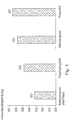
- Example 1 To produce a composite material according to the invention, the starting materials of a composite material, namely 80% by weight of polypropylene and 20% by weight of cellulose fibers are kneaded at 180 ° C. for 4 minutes in an internal mixer and pressed into a composite material. The notched impact strength of this composite material thus produced was determined to be 3.27 kJ / m 2 . The starting material was subsequently changed so that 2% by weight of the polypropylene was replaced by a wetting agent and composites were made by the same procedure.
- Example 2 The procedure of Example 1 is repeated except that the amount of the wetting agent used is varied to recognize the influence of the amount of a wetting agent on the impact value.
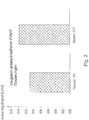
- Example 2 Into the starting material of Example 1, 2% by weight of glycerol was mixed as a wetting agent, whereupon an impact value of 10.55 kJ / m 2 was achieved. With addition to the same starting mixture of 4% by weight of glycerol results in an increase in the notched impact strength to 13.82 kJ / m 2 , as this Fig. 2 is removable. From this comparison it can be seen that an increase in the notched impact strength can be achieved by increasing the amount added.
- Example 3 A base composite material was prepared as described in Example 1, without the addition of a wetting agent. This base composite material thus prepared was compared to a composite material containing 20% fiber content and 2% wetting agent, the process being chosen once as described in Example 1, in which process a notched impact strength of 5.85 kJ / m 2 was achieved , compared to a notched impact strength of 4.75 kJ / m 2 in a composite material without addition of wetting agent.
- the wetting agent here was selected to be a polyethylene glycol having an average molecular weight of 150.
- the polyethylene glycol was used prior to introduction into the internal mixer for impregnating the cellulose fibers and the cellulose fibers impregnated in this way were subsequently introduced into the internal mixer and mixed with the plastic base material as described in Example 1 and pressed into a composite material.
- a composite material produced in this way showed, compared to that in FIG Fig. 1
- Example 4 the procedure of Example 1 was followed and the development of impact strength of composite materials with different particles or fibers from renewable raw materials and with different wetting agents was examined.
- Notched impact values were measured at 23 ° C as in the previous examples.
- Example 4 A composite material of 45% by weight of polypropylene, 50% by weight of wood fibers and 5% by weight of polyethylene glycol was processed into a composite material as described in Example 1.
- the notched impact strength measured at room temperature (23 ° C.) was 6.46 kJ / m 2 in the composition used in Example 4, with a comparable Composite material without addition of wetting agent, ie without addition of polyethylene glycol 3.4 kJ / m 2 .
- Example 5 A composite material of 67% by weight of polypropylene, 30% by weight of hemp fibers and 3% by weight of propanediol was processed into a composite material as described in Example 1. The notched impact strength measured at room temperature (23 ° C) was. In the case of the composition used in Example 5, 5.5 kJ / m 2 for a comparable composite material without addition of wetting agent, ie without the addition of propanediol 2.2 kJ / m 2 .
- Example 6 A composite material of 67% by weight of polypropylene, 30% by weight of rice husks and 3% by weight of glycerol was processed into a composite material as described in Example 1.
- the notched impact strength measured at room temperature (23 ° C.) was 3.2 kJ / m 2 for the composition used in Example 6, and 2.1 kJ / m 2 for a comparable composite material without addition of wetting agent, ie without the addition of glycerol.
- Example 7 A composite material of 67% by weight of polypropylene, 30% by weight of flax fibers and 3% by weight of glycerol was processed into a composite material as described in Example 1.
- the notched impact strength measured at room temperature (23 ° C.) was 6.1 kJ / m 2 for the composition used in Example 7, 3.2 kJ / m 2 for a comparable composite material without addition of wetting agent, ie without the addition of glycerol.
- Example 8 A composite of 67% by weight polypropylene, 30% by weight viscose fibers and 3% by weight polyethylene glycol was made into a composite as described in Example 1.
- the notched impact strength measured at room temperature (23 ° C.) was 6.2 kJ / m 2 in the composition used in Example 8, with a comparable composite material without addition of wetting agent, ie without the addition of polyethylene glycol 4 kJ / m 2 .
Landscapes
- Chemical & Material Sciences (AREA)
- Health & Medical Sciences (AREA)
- Chemical Kinetics & Catalysis (AREA)
- Medicinal Chemistry (AREA)
- Polymers & Plastics (AREA)
- Organic Chemistry (AREA)
- Engineering & Computer Science (AREA)
- Materials Engineering (AREA)
- Manufacturing & Machinery (AREA)
- Compositions Of Macromolecular Compounds (AREA)
- Reinforced Plastic Materials (AREA)
- Laminated Bodies (AREA)
Claims (13)
- Matériau composite constitué d'une matière de base en plastique choisie parmi le polypropylène, l'acide polylactique (PLA), le polyméthacrylate de méthyle, l'ABS-polycarbonate, le polyoxyméthylène (POM), le polyéthylène, et de particules ou fibres incorporées dans celles-ci en matières premières renouvelables comme les fibres de bois, l'abaca, les fibres de cellulose, les fibres de matière cellulosique, les fibres de cellulose recyclée, les fibres de chanvre ou les fibres de lin, ainsi qu'éventuellement d'un promoteur d'adhérence, caractérisé en ce qu'un agent mouillant choisi parmi un polyéthylène glycol ayant un poids moléculaire moyen de 90 à 40 000 et/ou un alcool polyvalent est en outre présent, et en ce qu'il comprend 30 à 95 % en poids de matière de base en plastique, 5 à 70 % en poids de particules ou de fibres en matières premières renouvelables, 0,5 à 21 % en poids d'agent mouillant et jusqu'à 20 % en poids d'additifs.
- Matériau composite selon la revendication 1, caractérisé en ce que l'alcool polyvalent est choisi parmi le sorbitol, la glycérine, le diéthylène glycol, l'éthylène glycol, le propylène glycol, le butylène glycol, le tétraméthylène glycol, le pentaméthylène glycol ou le propanediol.
- Matériau composite selon la revendication 1 ou 2, caractérisé en ce que 0,1 % en poids à 21 % en poids d'agent mouillant sont présents.
- Matériau composite selon la revendication 1, 2 ou 3, caractérisé en ce que les additifs sont choisis parmi un promoteur d'adhérence choisi parmi le polypropylène greffé par un anhydride d'acide maléique ou le polyéthylène greffé par un anhydride d'acide maléique ou des polyoléfines modifiées chimiquement.
- Matériau composite selon l'une des revendications 1 à 4, caractérisé en ce que le matériau composite présente une résistance aux chocs sur éprouvette entaillée de 2 à 30 kJ/m2.
- Matériau composite selon l'une des revendications 1 à 5, caractérisé en ce que l'agent mouillant est présent en une quantité de 1 à 30 % en poids, en particulier 10 à 20 % en poids par rapport à la quantité de particules ou de fibres en matières premières renouvelables.
- Procédé de fabrication d'un matériau composite, selon lequel on mélange, dans un dispositif de mélange, 5 à 70 % en poids de particules ou de fibres incorporées en matières premières renouvelables choisies parmi les fibres de bois, l'abaca, les fibres de cellulose, les fibres de matière cellulosique, les fibres de cellulose recyclée, les fibres de chanvre ou les fibres de lin avec 30 à 95 % en poids d'une matière de base en plastique choisie parmi le polypropylène, l'acide polylactique (PLA), le polyméthacrylate de méthyle, l'ABS-polycarbonate, le polyoxyméthylène (POM), le polyéthylène, ainsi qu'éventuellement jusqu'à 20 % en poids d'additifs et on les compresse dans une presse de formage ou dans une extrudeuse pour donner un matériau composite, dans lequel au moins les particules ou les fibres en matières premières renouvelables sont imprégnées avec 0,5 à 21 % en poids d'un agent mouillant.
- Procédé selon la revendication 7, caractérisé en ce que le matériau de base en plastique est imprégné dans un mélangeur interne avec les particules ou les fibres en matières premières renouvelables et au moins une partie de l'agent mouillant.
- Procédé selon la revendication 7 ou 8, caractérisé en ce que les particules ou les fibres en matières premières renouvelables sont imprégnées avec une partie de l'agent mouillant, en ce que les particules ou fibres en matières premières renouvelables imprégnées sont mélangées dans le mélangeur interne avec la matière de base en plastique et le reste de l'agent mouillant et éventuellement des additifs.
- Procédé selon la revendication 7, 8 ou 9, caractérisé en ce que les particules ou les fibres en matières premières renouvelables sont imprégnées avec 0,5 à 30 % en poids d'agent mouillant avant l'incorporation dans le mélangeur interne.
- Procédé selon l'une des revendications 7 à 10, caractérisé en ce que les fibres de matière cellulosique humides extraites d'une presse par voie humide sont imprégnées avec l'agent mouillant.
- Procédé selon l'une des revendications 7 à 11, caractérisé en ce que le mélange de matières provenant du mélangeur interne est amené à une presse de formage ou une extrudeuse et compressé.
- Procédé selon l'une des revendications 7 à 12, caractérisé en ce que les additifs sont choisis parmi un promoteur d'adhérence choisi parmi le polypropylène greffé par un anhydride d'acide maléique ou le polyéthylène greffé par un anhydride d'acide maléique ou des polyoléfines modifiées chimiquement.
Applications Claiming Priority (2)
| Application Number | Priority Date | Filing Date | Title |
|---|---|---|---|
| ATA1136/2012A AT513561B1 (de) | 2012-10-22 | 2012-10-22 | Nachwachsende Rohstoffe enthaltender Verbundwerkstoff sowie Verfahren zu seiner Herstellung |
| PCT/AT2013/000176 WO2014063175A1 (fr) | 2012-10-22 | 2013-10-18 | Matériau composite contenant des matières premières renouvelables et procédés de fabrication correspondants |
Publications (2)
| Publication Number | Publication Date |
|---|---|
| EP2909256A1 EP2909256A1 (fr) | 2015-08-26 |
| EP2909256B1 true EP2909256B1 (fr) | 2017-07-12 |
Family
ID=49585223
Family Applications (1)
| Application Number | Title | Priority Date | Filing Date |
|---|---|---|---|
| EP13791894.2A Active EP2909256B1 (fr) | 2012-10-22 | 2013-10-18 | Matériau composite de matières premières régénérantes et le procédé de son fabrication |
Country Status (10)
| Country | Link |
|---|---|
| US (1) | US20150291784A1 (fr) |
| EP (1) | EP2909256B1 (fr) |
| JP (1) | JP2015532344A (fr) |
| KR (1) | KR102152976B1 (fr) |
| CN (1) | CN104755537A (fr) |
| AR (1) | AR093083A1 (fr) |
| AT (1) | AT513561B1 (fr) |
| ES (1) | ES2642880T3 (fr) |
| HU (1) | HUE036480T2 (fr) |
| WO (1) | WO2014063175A1 (fr) |
Families Citing this family (9)
| Publication number | Priority date | Publication date | Assignee | Title |
|---|---|---|---|---|
| CN106195466B (zh) * | 2016-06-29 | 2019-09-27 | 巢湖鹏远金属焊管有限公司 | 耐腐蚀铝塑复合管 |
| JP7117181B2 (ja) * | 2018-07-11 | 2022-08-12 | 旭化成株式会社 | セルロース含有樹脂組成物 |
| WO2020127209A1 (fr) | 2018-12-18 | 2020-06-25 | Societe Bic | Gaine de mine pour crayon, et crayon associé pour l'écriture, le dessin, le marquage, le traçage et la mise en couleur |
| BR112021010571B1 (pt) * | 2018-12-18 | 2023-10-03 | Societe Bic | Invólucro de núcleo para lápis, e lápis do mesmo para escrever, desenhar, marcar, traçar e colorir |
| WO2020127203A1 (fr) | 2018-12-18 | 2020-06-25 | Societe Bic | Gaine de mine pour crayon, et crayon associé pour l'écriture, le dessin, le marquage, le traçage et la mise en couleur |
| BR112021009459B1 (pt) * | 2018-12-18 | 2023-10-03 | Societe Bic | Invólucro de núcleo para lápis, e lápis do mesmo para escrever, desenhar, marcar, traçar e colorir |
| US10557105B1 (en) | 2019-08-09 | 2020-02-11 | Bao Tran | Extraction systems and methods |
| KR102153308B1 (ko) * | 2019-12-24 | 2020-09-08 | 재단법인 한국섬유기계융합연구원 | 나노셀룰로오스 복합시트 및 이의 제조방법 |
| CN120792272B (zh) * | 2025-09-11 | 2025-12-05 | 浙江凯利新材料股份有限公司 | 一种可再生bopp薄膜、制备工艺及其应用 |
Family Cites Families (23)
| Publication number | Priority date | Publication date | Assignee | Title |
|---|---|---|---|---|
| DE3064216D1 (en) * | 1979-05-04 | 1983-08-25 | Rockwool Ab | Carrier material |
| JPS644652A (en) * | 1987-06-26 | 1989-01-09 | Nanba Press Kogyo Kk | Sisal-hemp-reinforced composite thermoplastic composition |
| US5498478A (en) * | 1989-03-20 | 1996-03-12 | Weyerhaeuser Company | Polyethylene glycol as a binder material for fibers |
| US5051150A (en) * | 1989-03-20 | 1991-09-24 | Hercules Incorporated | Stabilized synthetic pulp-cellulose blends |
| IT1256914B (it) * | 1992-08-03 | 1995-12-27 | Novamont Spa | Composizione polimerica biodegradabile. |
| US6340411B1 (en) * | 1992-08-17 | 2002-01-22 | Weyerhaeuser Company | Fibrous product containing densifying agent |
| CA2122168A1 (fr) * | 1993-12-16 | 1995-06-17 | David P. Hultman | Papier renforce de polymere a resistance amelioree a la dechirure dans le sens travers |
| US6344109B1 (en) * | 1998-12-18 | 2002-02-05 | Bki Holding Corporation | Softened comminution pulp |
| US6495225B1 (en) * | 1998-12-25 | 2002-12-17 | Konica Corporation | Molding material |
| US20020161072A1 (en) * | 2001-01-22 | 2002-10-31 | Philip Jacoby | Wood fiber-filled polypropylene |
| WO2002083824A1 (fr) * | 2001-04-16 | 2002-10-24 | Honeywell International, Inc. | Elements structurels composites |
| JP2003073539A (ja) * | 2001-09-06 | 2003-03-12 | Chisso Corp | 高強度生分解性樹脂組成物及び成形品 |
| US20030096132A1 (en) * | 2001-10-25 | 2003-05-22 | Richardson Mark P. | PVC/wood fiber composite |
| KR20020048353A (ko) * | 2002-05-24 | 2002-06-22 | 김휘주 | 목질분 고함량의 생분해성 블록·그래프트 혼성중합매트릭스 컴파운드와 컴파운드 제조방법 |
| WO2006053001A2 (fr) * | 2004-11-05 | 2006-05-18 | Osmose, Inc. | Compositions comprenant un polymere et une substance hydrophobe destinees a ameliorer la stabilite dimensionnelle d'un produit ligneux |
| JP2008019355A (ja) * | 2006-07-13 | 2008-01-31 | Chisso Corp | 熱可塑性樹脂組成物とその成形品 |
| US20080015285A1 (en) * | 2006-07-14 | 2008-01-17 | Steven Richard Oriani | Process aid for extruded wood composites |
| CN101386702B (zh) * | 2007-09-11 | 2011-03-02 | 比亚迪股份有限公司 | 一种聚乳酸复合材料及其制备方法 |
| CN101735581A (zh) * | 2008-11-12 | 2010-06-16 | 王世和 | 一种全生物质基复合材料及其制备方法和用途 |
| US20110028060A1 (en) * | 2009-07-30 | 2011-02-03 | E .I. Du Pont De Nemours And Company | Heat resistant semi-aromatic polyamide composite structures and processes for their preparation |
| JP5589435B2 (ja) * | 2010-02-24 | 2014-09-17 | 住友ベークライト株式会社 | 複合体組成物および複合体 |
| JP2011201196A (ja) * | 2010-03-26 | 2011-10-13 | Dow Corning Toray Co Ltd | リグノセルロース材料用処理剤 |
| DE102010031892B4 (de) * | 2010-07-21 | 2019-01-03 | Fraunhofer-Gesellschaft zur Förderung der angewandten Forschung e.V. | Faserverstärkte Verbundstoffe, Verfahren zu deren Herstellung sowie deren Verwendung |
-
2012
- 2012-10-22 AT ATA1136/2012A patent/AT513561B1/de not_active IP Right Cessation
-
2013
- 2013-10-18 EP EP13791894.2A patent/EP2909256B1/fr active Active
- 2013-10-18 HU HUE13791894A patent/HUE036480T2/hu unknown
- 2013-10-18 JP JP2015537078A patent/JP2015532344A/ja active Pending
- 2013-10-18 CN CN201380055081.9A patent/CN104755537A/zh active Pending
- 2013-10-18 ES ES13791894.2T patent/ES2642880T3/es active Active
- 2013-10-18 WO PCT/AT2013/000176 patent/WO2014063175A1/fr not_active Ceased
- 2013-10-18 KR KR1020157013246A patent/KR102152976B1/ko not_active Expired - Fee Related
- 2013-10-18 US US14/437,654 patent/US20150291784A1/en not_active Abandoned
- 2013-10-21 AR ARP130103811A patent/AR093083A1/es active IP Right Grant
Also Published As
| Publication number | Publication date |
|---|---|
| KR20150094608A (ko) | 2015-08-19 |
| EP2909256A1 (fr) | 2015-08-26 |
| WO2014063175A1 (fr) | 2014-05-01 |
| ES2642880T3 (es) | 2017-11-20 |
| HUE036480T2 (hu) | 2018-07-30 |
| AT513561A1 (de) | 2014-05-15 |
| US20150291784A1 (en) | 2015-10-15 |
| CN104755537A (zh) | 2015-07-01 |
| AR093083A1 (es) | 2015-05-20 |
| KR102152976B1 (ko) | 2020-09-08 |
| JP2015532344A (ja) | 2015-11-09 |
| AT513561B1 (de) | 2016-02-15 |
Similar Documents
| Publication | Publication Date | Title |
|---|---|---|
| AT513561B1 (de) | Nachwachsende Rohstoffe enthaltender Verbundwerkstoff sowie Verfahren zu seiner Herstellung | |
| EP0773972B1 (fr) | Corps moule constitue d'un materiau composite a base d'acetate de cellulose et de fibres cellulosiques naturelles d'armature, son procede de fabrication et son utilisation | |
| EP2953997A1 (fr) | Matériau composite microstructuré, son procédé de fabrication, corps façonné réalisé dans ce matériau et applications correspondantes | |
| EP2539396B1 (fr) | Objets composites, pièces moulées, leur fabrication et utilisation | |
| WO2011047804A1 (fr) | Matériau en matière plastique hautement résistant au feu, son procédé de production, et particules de matière plastique en un tel matériau en matière plastique | |
| EP1799414B1 (fr) | Pastilles coulantes a base de fibres textiles cellulosiques, leur procede de production et leur utilisation | |
| DE69838452T2 (de) | Stift aus regeneriertem kautschuk | |
| DE102010031892B4 (de) | Faserverstärkte Verbundstoffe, Verfahren zu deren Herstellung sowie deren Verwendung | |
| WO2008058924A1 (fr) | Procédé de production de matériaux composites à fibres ignifugés ou pré-imprégnés | |
| DE102011122560B4 (de) | Textilverstärkter Formkörper, ein Verfahren zu dessen Herstellung sowie seine Verwendung | |
| EP4229126A1 (fr) | Matériau composite | |
| DE202023102317U1 (de) | Stift und Schaft | |
| DE102013108102A1 (de) | Verfahren zur Herstellung einer Mischung aus Biomassefasern und wenigstens einem Kunststoff für die Herstellung eines Verbundwerkstoffs, Mischung aus Biomassefasern und wenigstens einem Kunststoff hergestellt nach dem Verfahren und Verbundwerkstoff hergestellt aus der Mischung | |
| DE10349110B3 (de) | Faserstrang enthaltend Naturfasern und Kompositwerkstoff verstärkt mit Naturfasern sowie Verwendung von beiden | |
| DE10228714B4 (de) | Verfahren zur Herstellung von spitzbaren Stiften und spitzbarer Stift | |
| WO2005012399A1 (fr) | Procede pour produire des pieces legeres, et profiles legers produits grace a ce procede | |
| DE102021005049A1 (de) | Verfahren zur Herstellung eines Schaums sowie Schaumteil | |
| DE1927844A1 (de) | Verfahren zur Herstellung von flexiblen und rueckfedernden Schaumstoffen | |
| WO2005039844A1 (fr) | Procede de production d'elements de construction legers avec des fibres de bois, et profiles de construction legers pouvant etre produits selon ledit procede | |
| DE102013219960A1 (de) | Co-Extrusion, Pultrusion von Profilen mit Carbonabfällen | |
| DE29522229U1 (de) | Formkörper aus Verbundmaterial auf der Basis von Celluloseacetat und verstärkenden natürlichen Cellulosefasern | |
| DE1694796A1 (de) | Faserige Formmassen | |
| EP1304348B1 (fr) | Article moulé contenant des fibres et procédé pour sa préparation | |
| EP2670896B1 (fr) | Procédé d'obtention et de préparation de fibres naturelles | |
| DE102022132743A1 (de) | Thermoplastisches Material |
Legal Events
| Date | Code | Title | Description |
|---|---|---|---|
| PUAI | Public reference made under article 153(3) epc to a published international application that has entered the european phase |
Free format text: ORIGINAL CODE: 0009012 |
|
| 17P | Request for examination filed |
Effective date: 20150409 |
|
| AK | Designated contracting states |
Kind code of ref document: A1 Designated state(s): AL AT BE BG CH CY CZ DE DK EE ES FI FR GB GR HR HU IE IS IT LI LT LU LV MC MK MT NL NO PL PT RO RS SE SI SK SM TR |
|
| AX | Request for extension of the european patent |
Extension state: BA ME |
|
| DAX | Request for extension of the european patent (deleted) | ||
| 17Q | First examination report despatched |
Effective date: 20160530 |
|
| GRAP | Despatch of communication of intention to grant a patent |
Free format text: ORIGINAL CODE: EPIDOSNIGR1 |
|
| STAA | Information on the status of an ep patent application or granted ep patent |
Free format text: STATUS: GRANT OF PATENT IS INTENDED |
|
| RIC1 | Information provided on ipc code assigned before grant |
Ipc: C08J 5/04 20060101AFI20170116BHEP Ipc: C08L 23/12 20060101ALI20170116BHEP Ipc: C08J 5/10 20060101ALI20170116BHEP Ipc: C08J 5/06 20060101ALI20170116BHEP |
|
| INTG | Intention to grant announced |
Effective date: 20170207 |
|
| GRAS | Grant fee paid |
Free format text: ORIGINAL CODE: EPIDOSNIGR3 |
|
| GRAA | (expected) grant |
Free format text: ORIGINAL CODE: 0009210 |
|
| STAA | Information on the status of an ep patent application or granted ep patent |
Free format text: STATUS: THE PATENT HAS BEEN GRANTED |
|
| AK | Designated contracting states |
Kind code of ref document: B1 Designated state(s): AL AT BE BG CH CY CZ DE DK EE ES FI FR GB GR HR HU IE IS IT LI LT LU LV MC MK MT NL NO PL PT RO RS SE SI SK SM TR |
|
| REG | Reference to a national code |
Ref country code: GB Ref legal event code: FG4D Free format text: NOT ENGLISH |
|
| REG | Reference to a national code |
Ref country code: CH Ref legal event code: EP |
|
| REG | Reference to a national code |
Ref country code: AT Ref legal event code: REF Ref document number: 908266 Country of ref document: AT Kind code of ref document: T Effective date: 20170715 |
|
| REG | Reference to a national code |
Ref country code: IE Ref legal event code: FG4D Free format text: LANGUAGE OF EP DOCUMENT: GERMAN |
|
| REG | Reference to a national code |
Ref country code: DE Ref legal event code: R096 Ref document number: 502013007763 Country of ref document: DE |
|
| RAP2 | Party data changed (patent owner data changed or rights of a patent transferred) |
Owner name: MONDI AG |
|
| REG | Reference to a national code |
Ref country code: RO Ref legal event code: EPE |
|
| REG | Reference to a national code |
Ref country code: FR Ref legal event code: PLFP Year of fee payment: 5 |
|
| REG | Reference to a national code |
Ref country code: SE Ref legal event code: TRGR |
|
| REG | Reference to a national code |
Ref country code: NL Ref legal event code: MP Effective date: 20170712 |
|
| REG | Reference to a national code |
Ref country code: ES Ref legal event code: FG2A Ref document number: 2642880 Country of ref document: ES Kind code of ref document: T3 Effective date: 20171120 |
|
| REG | Reference to a national code |
Ref country code: LT Ref legal event code: MG4D |
|
| PG25 | Lapsed in a contracting state [announced via postgrant information from national office to epo] |
Ref country code: NL Free format text: LAPSE BECAUSE OF FAILURE TO SUBMIT A TRANSLATION OF THE DESCRIPTION OR TO PAY THE FEE WITHIN THE PRESCRIBED TIME-LIMIT Effective date: 20170712 Ref country code: NO Free format text: LAPSE BECAUSE OF FAILURE TO SUBMIT A TRANSLATION OF THE DESCRIPTION OR TO PAY THE FEE WITHIN THE PRESCRIBED TIME-LIMIT Effective date: 20171012 Ref country code: FI Free format text: LAPSE BECAUSE OF FAILURE TO SUBMIT A TRANSLATION OF THE DESCRIPTION OR TO PAY THE FEE WITHIN THE PRESCRIBED TIME-LIMIT Effective date: 20170712 Ref country code: LT Free format text: LAPSE BECAUSE OF FAILURE TO SUBMIT A TRANSLATION OF THE DESCRIPTION OR TO PAY THE FEE WITHIN THE PRESCRIBED TIME-LIMIT Effective date: 20170712 Ref country code: HR Free format text: LAPSE BECAUSE OF FAILURE TO SUBMIT A TRANSLATION OF THE DESCRIPTION OR TO PAY THE FEE WITHIN THE PRESCRIBED TIME-LIMIT Effective date: 20170712 |
|
| PG25 | Lapsed in a contracting state [announced via postgrant information from national office to epo] |
Ref country code: LV Free format text: LAPSE BECAUSE OF FAILURE TO SUBMIT A TRANSLATION OF THE DESCRIPTION OR TO PAY THE FEE WITHIN THE PRESCRIBED TIME-LIMIT Effective date: 20170712 Ref country code: BG Free format text: LAPSE BECAUSE OF FAILURE TO SUBMIT A TRANSLATION OF THE DESCRIPTION OR TO PAY THE FEE WITHIN THE PRESCRIBED TIME-LIMIT Effective date: 20171012 Ref country code: GR Free format text: LAPSE BECAUSE OF FAILURE TO SUBMIT A TRANSLATION OF THE DESCRIPTION OR TO PAY THE FEE WITHIN THE PRESCRIBED TIME-LIMIT Effective date: 20171013 Ref country code: PL Free format text: LAPSE BECAUSE OF FAILURE TO SUBMIT A TRANSLATION OF THE DESCRIPTION OR TO PAY THE FEE WITHIN THE PRESCRIBED TIME-LIMIT Effective date: 20170712 Ref country code: RS Free format text: LAPSE BECAUSE OF FAILURE TO SUBMIT A TRANSLATION OF THE DESCRIPTION OR TO PAY THE FEE WITHIN THE PRESCRIBED TIME-LIMIT Effective date: 20170712 Ref country code: IS Free format text: LAPSE BECAUSE OF FAILURE TO SUBMIT A TRANSLATION OF THE DESCRIPTION OR TO PAY THE FEE WITHIN THE PRESCRIBED TIME-LIMIT Effective date: 20171112 |
|
| REG | Reference to a national code |
Ref country code: DE Ref legal event code: R097 Ref document number: 502013007763 Country of ref document: DE |
|
| PG25 | Lapsed in a contracting state [announced via postgrant information from national office to epo] |
Ref country code: DK Free format text: LAPSE BECAUSE OF FAILURE TO SUBMIT A TRANSLATION OF THE DESCRIPTION OR TO PAY THE FEE WITHIN THE PRESCRIBED TIME-LIMIT Effective date: 20170712 Ref country code: CZ Free format text: LAPSE BECAUSE OF FAILURE TO SUBMIT A TRANSLATION OF THE DESCRIPTION OR TO PAY THE FEE WITHIN THE PRESCRIBED TIME-LIMIT Effective date: 20170712 |
|
| PLBE | No opposition filed within time limit |
Free format text: ORIGINAL CODE: 0009261 |
|
| STAA | Information on the status of an ep patent application or granted ep patent |
Free format text: STATUS: NO OPPOSITION FILED WITHIN TIME LIMIT |
|
| PG25 | Lapsed in a contracting state [announced via postgrant information from national office to epo] |
Ref country code: MC Free format text: LAPSE BECAUSE OF FAILURE TO SUBMIT A TRANSLATION OF THE DESCRIPTION OR TO PAY THE FEE WITHIN THE PRESCRIBED TIME-LIMIT Effective date: 20170712 Ref country code: SM Free format text: LAPSE BECAUSE OF FAILURE TO SUBMIT A TRANSLATION OF THE DESCRIPTION OR TO PAY THE FEE WITHIN THE PRESCRIBED TIME-LIMIT Effective date: 20170712 Ref country code: EE Free format text: LAPSE BECAUSE OF FAILURE TO SUBMIT A TRANSLATION OF THE DESCRIPTION OR TO PAY THE FEE WITHIN THE PRESCRIBED TIME-LIMIT Effective date: 20170712 |
|
| REG | Reference to a national code |
Ref country code: CH Ref legal event code: PL |
|
| 26N | No opposition filed |
Effective date: 20180413 |
|
| GBPC | Gb: european patent ceased through non-payment of renewal fee |
Effective date: 20171018 |
|
| REG | Reference to a national code |
Ref country code: SK Ref legal event code: MM4A Ref document number: E 26369 Country of ref document: SK Effective date: 20171018 |
|
| REG | Reference to a national code |
Ref country code: IE Ref legal event code: MM4A |
|
| REG | Reference to a national code |
Ref country code: HU Ref legal event code: AG4A Ref document number: E036480 Country of ref document: HU |
|
| PG25 | Lapsed in a contracting state [announced via postgrant information from national office to epo] |
Ref country code: SK Free format text: LAPSE BECAUSE OF NON-PAYMENT OF DUE FEES Effective date: 20171018 Ref country code: LU Free format text: LAPSE BECAUSE OF NON-PAYMENT OF DUE FEES Effective date: 20171018 Ref country code: GB Free format text: LAPSE BECAUSE OF NON-PAYMENT OF DUE FEES Effective date: 20171018 Ref country code: CH Free format text: LAPSE BECAUSE OF NON-PAYMENT OF DUE FEES Effective date: 20171031 Ref country code: LI Free format text: LAPSE BECAUSE OF NON-PAYMENT OF DUE FEES Effective date: 20171031 |
|
| REG | Reference to a national code |
Ref country code: BE Ref legal event code: MM Effective date: 20171031 |
|
| PG25 | Lapsed in a contracting state [announced via postgrant information from national office to epo] |
Ref country code: SI Free format text: LAPSE BECAUSE OF FAILURE TO SUBMIT A TRANSLATION OF THE DESCRIPTION OR TO PAY THE FEE WITHIN THE PRESCRIBED TIME-LIMIT Effective date: 20170712 Ref country code: BE Free format text: LAPSE BECAUSE OF NON-PAYMENT OF DUE FEES Effective date: 20171031 |
|
| REG | Reference to a national code |
Ref country code: FR Ref legal event code: PLFP Year of fee payment: 6 |
|
| PG25 | Lapsed in a contracting state [announced via postgrant information from national office to epo] |
Ref country code: MT Free format text: LAPSE BECAUSE OF FAILURE TO SUBMIT A TRANSLATION OF THE DESCRIPTION OR TO PAY THE FEE WITHIN THE PRESCRIBED TIME-LIMIT Effective date: 20170712 |
|
| PG25 | Lapsed in a contracting state [announced via postgrant information from national office to epo] |
Ref country code: IE Free format text: LAPSE BECAUSE OF NON-PAYMENT OF DUE FEES Effective date: 20171018 |
|
| PGRI | Patent reinstated in contracting state [announced from national office to epo] |
Ref country code: SK Effective date: 20190501 |
|
| PG25 | Lapsed in a contracting state [announced via postgrant information from national office to epo] |
Ref country code: CY Free format text: LAPSE BECAUSE OF FAILURE TO SUBMIT A TRANSLATION OF THE DESCRIPTION OR TO PAY THE FEE WITHIN THE PRESCRIBED TIME-LIMIT Effective date: 20170712 |
|
| PG25 | Lapsed in a contracting state [announced via postgrant information from national office to epo] |
Ref country code: MK Free format text: LAPSE BECAUSE OF FAILURE TO SUBMIT A TRANSLATION OF THE DESCRIPTION OR TO PAY THE FEE WITHIN THE PRESCRIBED TIME-LIMIT Effective date: 20170712 |
|
| PG25 | Lapsed in a contracting state [announced via postgrant information from national office to epo] |
Ref country code: TR Free format text: LAPSE BECAUSE OF FAILURE TO SUBMIT A TRANSLATION OF THE DESCRIPTION OR TO PAY THE FEE WITHIN THE PRESCRIBED TIME-LIMIT Effective date: 20170712 |
|
| PG25 | Lapsed in a contracting state [announced via postgrant information from national office to epo] |
Ref country code: PT Free format text: LAPSE BECAUSE OF FAILURE TO SUBMIT A TRANSLATION OF THE DESCRIPTION OR TO PAY THE FEE WITHIN THE PRESCRIBED TIME-LIMIT Effective date: 20170712 |
|
| PG25 | Lapsed in a contracting state [announced via postgrant information from national office to epo] |
Ref country code: AL Free format text: LAPSE BECAUSE OF FAILURE TO SUBMIT A TRANSLATION OF THE DESCRIPTION OR TO PAY THE FEE WITHIN THE PRESCRIBED TIME-LIMIT Effective date: 20170712 |
|
| P01 | Opt-out of the competence of the unified patent court (upc) registered |
Effective date: 20230531 |
|
| PGFP | Annual fee paid to national office [announced via postgrant information from national office to epo] |
Ref country code: HU Payment date: 20241024 Year of fee payment: 12 |
|
| PGFP | Annual fee paid to national office [announced via postgrant information from national office to epo] |
Ref country code: DE Payment date: 20241001 Year of fee payment: 12 |
|
| PGFP | Annual fee paid to national office [announced via postgrant information from national office to epo] |
Ref country code: FR Payment date: 20241001 Year of fee payment: 12 Ref country code: AT Payment date: 20241024 Year of fee payment: 12 |
|
| PGFP | Annual fee paid to national office [announced via postgrant information from national office to epo] |
Ref country code: RO Payment date: 20241016 Year of fee payment: 12 Ref country code: SK Payment date: 20241014 Year of fee payment: 12 |
|
| PGFP | Annual fee paid to national office [announced via postgrant information from national office to epo] |
Ref country code: IT Payment date: 20241010 Year of fee payment: 12 Ref country code: ES Payment date: 20241108 Year of fee payment: 12 |
|
| PGFP | Annual fee paid to national office [announced via postgrant information from national office to epo] |
Ref country code: SE Payment date: 20241001 Year of fee payment: 12 |
|
| REG | Reference to a national code |
Ref country code: DE Ref legal event code: R119 Ref document number: 502013007763 Country of ref document: DE |
|
| REG | Reference to a national code |
Ref country code: SK Ref legal event code: MM4A Ref document number: E 26369 Country of ref document: SK Effective date: 20251018 |
|
| REG | Reference to a national code |
Ref country code: AT Ref legal event code: MM01 Ref document number: 908266 Country of ref document: AT Kind code of ref document: T Effective date: 20251018 |
|
| PG25 | Lapsed in a contracting state [announced via postgrant information from national office to epo] |
Ref country code: HU Free format text: LAPSE BECAUSE OF NON-PAYMENT OF DUE FEES Effective date: 20251019 |
|
| PG25 | Lapsed in a contracting state [announced via postgrant information from national office to epo] |
Ref country code: DE Free format text: LAPSE BECAUSE OF NON-PAYMENT OF DUE FEES Effective date: 20260501 |
|
| PG25 | Lapsed in a contracting state [announced via postgrant information from national office to epo] |
Ref country code: AT Free format text: LAPSE BECAUSE OF NON-PAYMENT OF DUE FEES Effective date: 20251018 Ref country code: SE Free format text: LAPSE BECAUSE OF NON-PAYMENT OF DUE FEES Effective date: 20251019 |
|
| PG25 | Lapsed in a contracting state [announced via postgrant information from national office to epo] |
Ref country code: RO Free format text: LAPSE BECAUSE OF NON-PAYMENT OF DUE FEES Effective date: 20251018 |
|
| PG25 | Lapsed in a contracting state [announced via postgrant information from national office to epo] |
Ref country code: FR Free format text: LAPSE BECAUSE OF NON-PAYMENT OF DUE FEES Effective date: 20251031 |
|
| PG25 | Lapsed in a contracting state [announced via postgrant information from national office to epo] |
Ref country code: SK Free format text: LAPSE BECAUSE OF NON-PAYMENT OF DUE FEES Effective date: 20251018 |