EP2909311B1 - Amélioration de la fiabilité des dosages à l'aide d'une plateforme multi-divot et d'amas de type multi-source, multi-cellule - Google Patents
Amélioration de la fiabilité des dosages à l'aide d'une plateforme multi-divot et d'amas de type multi-source, multi-cellule Download PDFInfo
- Publication number
- EP2909311B1 EP2909311B1 EP13846713.9A EP13846713A EP2909311B1 EP 2909311 B1 EP2909311 B1 EP 2909311B1 EP 13846713 A EP13846713 A EP 13846713A EP 2909311 B1 EP2909311 B1 EP 2909311B1
- Authority
- EP
- European Patent Office
- Prior art keywords
- cells
- cell
- cluster
- single cells
- islets
- Prior art date
- Legal status (The legal status is an assumption and is not a legal conclusion. Google has not performed a legal analysis and makes no representation as to the accuracy of the status listed.)
- Active
Links
- 238000003556 assay Methods 0.000 title description 4
- 210000004027 cell Anatomy 0.000 claims description 324
- 210000001519 tissue Anatomy 0.000 claims description 69
- 238000000034 method Methods 0.000 claims description 64
- 210000004153 islets of langerhan Anatomy 0.000 claims description 47
- 210000000130 stem cell Anatomy 0.000 claims description 40
- 230000004044 response Effects 0.000 claims description 28
- 239000000203 mixture Substances 0.000 claims description 26
- 230000008014 freezing Effects 0.000 claims description 16
- 238000007710 freezing Methods 0.000 claims description 16
- 238000010257 thawing Methods 0.000 claims description 16
- 150000001875 compounds Chemical class 0.000 claims description 15
- 238000012360 testing method Methods 0.000 claims description 15
- 239000012595 freezing medium Substances 0.000 claims description 14
- 201000010099 disease Diseases 0.000 claims description 13
- 208000037265 diseases, disorders, signs and symptoms Diseases 0.000 claims description 13
- 206010028980 Neoplasm Diseases 0.000 claims description 10
- 238000004113 cell culture Methods 0.000 claims description 9
- 239000000758 substrate Substances 0.000 claims description 8
- 238000002156 mixing Methods 0.000 claims description 7
- 239000002676 xenobiotic agent Substances 0.000 claims description 7
- 230000002034 xenobiotic effect Effects 0.000 claims description 7
- 210000002950 fibroblast Anatomy 0.000 claims description 6
- 239000002577 cryoprotective agent Substances 0.000 claims description 5
- 230000036541 health Effects 0.000 claims description 5
- 238000011068 loading method Methods 0.000 claims description 5
- 210000000056 organ Anatomy 0.000 claims description 5
- 238000012216 screening Methods 0.000 claims description 5
- 230000001464 adherent effect Effects 0.000 claims description 3
- 201000011510 cancer Diseases 0.000 claims description 3
- 239000006143 cell culture medium Substances 0.000 claims description 3
- 210000001612 chondrocyte Anatomy 0.000 claims description 2
- 210000002889 endothelial cell Anatomy 0.000 claims description 2
- 230000002255 enzymatic effect Effects 0.000 claims description 2
- 210000002919 epithelial cell Anatomy 0.000 claims description 2
- 210000003494 hepatocyte Anatomy 0.000 claims description 2
- 230000002503 metabolic effect Effects 0.000 claims description 2
- 210000000963 osteoblast Anatomy 0.000 claims description 2
- 210000004923 pancreatic tissue Anatomy 0.000 claims description 2
- 210000000329 smooth muscle myocyte Anatomy 0.000 claims description 2
- 230000002107 myocardial effect Effects 0.000 claims 1
- 210000004409 osteocyte Anatomy 0.000 claims 1
- 210000005167 vascular cell Anatomy 0.000 claims 1
- 238000005138 cryopreservation Methods 0.000 description 32
- WQZGKKKJIJFFOK-GASJEMHNSA-N Glucose Natural products OC[C@H]1OC(O)[C@H](O)[C@@H](O)[C@@H]1O WQZGKKKJIJFFOK-GASJEMHNSA-N 0.000 description 30
- 239000008103 glucose Substances 0.000 description 30
- NOESYZHRGYRDHS-UHFFFAOYSA-N insulin Chemical compound N1C(=O)C(NC(=O)C(CCC(N)=O)NC(=O)C(CCC(O)=O)NC(=O)C(C(C)C)NC(=O)C(NC(=O)CN)C(C)CC)CSSCC(C(NC(CO)C(=O)NC(CC(C)C)C(=O)NC(CC=2C=CC(O)=CC=2)C(=O)NC(CCC(N)=O)C(=O)NC(CC(C)C)C(=O)NC(CCC(O)=O)C(=O)NC(CC(N)=O)C(=O)NC(CC=2C=CC(O)=CC=2)C(=O)NC(CSSCC(NC(=O)C(C(C)C)NC(=O)C(CC(C)C)NC(=O)C(CC=2C=CC(O)=CC=2)NC(=O)C(CC(C)C)NC(=O)C(C)NC(=O)C(CCC(O)=O)NC(=O)C(C(C)C)NC(=O)C(CC(C)C)NC(=O)C(CC=2NC=NC=2)NC(=O)C(CO)NC(=O)CNC2=O)C(=O)NCC(=O)NC(CCC(O)=O)C(=O)NC(CCCNC(N)=N)C(=O)NCC(=O)NC(CC=3C=CC=CC=3)C(=O)NC(CC=3C=CC=CC=3)C(=O)NC(CC=3C=CC(O)=CC=3)C(=O)NC(C(C)O)C(=O)N3C(CCC3)C(=O)NC(CCCCN)C(=O)NC(C)C(O)=O)C(=O)NC(CC(N)=O)C(O)=O)=O)NC(=O)C(C(C)CC)NC(=O)C(CO)NC(=O)C(C(C)O)NC(=O)C1CSSCC2NC(=O)C(CC(C)C)NC(=O)C(NC(=O)C(CCC(N)=O)NC(=O)C(CC(N)=O)NC(=O)C(NC(=O)C(N)CC=1C=CC=CC=1)C(C)C)CC1=CN=CN1 NOESYZHRGYRDHS-UHFFFAOYSA-N 0.000 description 27
- 230000035899 viability Effects 0.000 description 23
- 241000894007 species Species 0.000 description 19
- 239000000243 solution Substances 0.000 description 16
- 241001465754 Metazoa Species 0.000 description 14
- 230000015572 biosynthetic process Effects 0.000 description 14
- 102000004877 Insulin Human genes 0.000 description 13
- 108090001061 Insulin Proteins 0.000 description 13
- 229940125396 insulin Drugs 0.000 description 13
- IJGRMHOSHXDMSA-UHFFFAOYSA-N Atomic nitrogen Chemical compound N#N IJGRMHOSHXDMSA-UHFFFAOYSA-N 0.000 description 12
- 108091003079 Bovine Serum Albumin Proteins 0.000 description 12
- VFLDPWHFBUODDF-FCXRPNKRSA-N curcumin Chemical compound C1=C(O)C(OC)=CC(\C=C\C(=O)CC(=O)\C=C\C=2C=C(OC)C(O)=CC=2)=C1 VFLDPWHFBUODDF-FCXRPNKRSA-N 0.000 description 12
- 239000012091 fetal bovine serum Substances 0.000 description 12
- 230000004888 barrier function Effects 0.000 description 10
- 238000009792 diffusion process Methods 0.000 description 10
- IAZDPXIOMUYVGZ-UHFFFAOYSA-N Dimethylsulphoxide Chemical compound CS(C)=O IAZDPXIOMUYVGZ-UHFFFAOYSA-N 0.000 description 9
- 206010012601 diabetes mellitus Diseases 0.000 description 9
- 239000003814 drug Substances 0.000 description 9
- 230000008569 process Effects 0.000 description 9
- 229930006000 Sucrose Natural products 0.000 description 8
- CZMRCDWAGMRECN-UGDNZRGBSA-N Sucrose Chemical compound O[C@H]1[C@H](O)[C@@H](CO)O[C@@]1(CO)O[C@@H]1[C@H](O)[C@@H](O)[C@H](O)[C@@H](CO)O1 CZMRCDWAGMRECN-UGDNZRGBSA-N 0.000 description 8
- 210000000227 basophil cell of anterior lobe of hypophysis Anatomy 0.000 description 8
- 239000000463 material Substances 0.000 description 8
- 210000000496 pancreas Anatomy 0.000 description 8
- 239000005720 sucrose Substances 0.000 description 8
- 230000001857 anti-mycotic effect Effects 0.000 description 7
- 239000002543 antimycotic Substances 0.000 description 7
- 230000003115 biocidal effect Effects 0.000 description 7
- 239000011521 glass Substances 0.000 description 7
- 230000003914 insulin secretion Effects 0.000 description 7
- 238000004519 manufacturing process Methods 0.000 description 7
- 238000002054 transplantation Methods 0.000 description 7
- XLYOFNOQVPJJNP-UHFFFAOYSA-N water Substances O XLYOFNOQVPJJNP-UHFFFAOYSA-N 0.000 description 7
- ZDXPYRJPNDTMRX-VKHMYHEASA-N L-glutamine Chemical compound OC(=O)[C@@H](N)CCC(N)=O ZDXPYRJPNDTMRX-VKHMYHEASA-N 0.000 description 6
- 229930182816 L-glutamine Natural products 0.000 description 6
- 210000001185 bone marrow Anatomy 0.000 description 6
- 239000004148 curcumin Substances 0.000 description 6
- 229940109262 curcumin Drugs 0.000 description 6
- 235000012754 curcumin Nutrition 0.000 description 6
- VFLDPWHFBUODDF-UHFFFAOYSA-N diferuloylmethane Natural products C1=C(O)C(OC)=CC(C=CC(=O)CC(=O)C=CC=2C=C(OC)C(O)=CC=2)=C1 VFLDPWHFBUODDF-UHFFFAOYSA-N 0.000 description 6
- 229940079593 drug Drugs 0.000 description 6
- 238000005516 engineering process Methods 0.000 description 6
- 238000002474 experimental method Methods 0.000 description 6
- 229910052757 nitrogen Inorganic materials 0.000 description 6
- JKMHFZQWWAIEOD-UHFFFAOYSA-N 2-[4-(2-hydroxyethyl)piperazin-1-yl]ethanesulfonic acid Chemical compound OCC[NH+]1CCN(CCS([O-])(=O)=O)CC1 JKMHFZQWWAIEOD-UHFFFAOYSA-N 0.000 description 5
- VYZAMTAEIAYCRO-UHFFFAOYSA-N Chromium Chemical compound [Cr] VYZAMTAEIAYCRO-UHFFFAOYSA-N 0.000 description 5
- 239000007995 HEPES buffer Substances 0.000 description 5
- 239000012980 RPMI-1640 medium Substances 0.000 description 5
- 241000700159 Rattus Species 0.000 description 5
- 230000030833 cell death Effects 0.000 description 5
- 229910052804 chromium Inorganic materials 0.000 description 5
- 239000011651 chromium Substances 0.000 description 5
- 230000006058 immune tolerance Effects 0.000 description 5
- 238000000338 in vitro Methods 0.000 description 5
- 239000007788 liquid Substances 0.000 description 5
- 210000002901 mesenchymal stem cell Anatomy 0.000 description 5
- 229920002120 photoresistant polymer Polymers 0.000 description 5
- 210000002325 somatostatin-secreting cell Anatomy 0.000 description 5
- 239000007858 starting material Substances 0.000 description 5
- 241000282472 Canis lupus familiaris Species 0.000 description 4
- 238000013459 approach Methods 0.000 description 4
- 230000003833 cell viability Effects 0.000 description 4
- 239000003795 chemical substances by application Substances 0.000 description 4
- 239000008150 cryoprotective solution Substances 0.000 description 4
- 238000013461 design Methods 0.000 description 4
- 238000007877 drug screening Methods 0.000 description 4
- 238000003255 drug test Methods 0.000 description 4
- 229940088597 hormone Drugs 0.000 description 4
- 239000005556 hormone Substances 0.000 description 4
- 239000002609 medium Substances 0.000 description 4
- 238000010899 nucleation Methods 0.000 description 4
- 239000000047 product Substances 0.000 description 4
- 238000011160 research Methods 0.000 description 4
- 239000006228 supernatant Substances 0.000 description 4
- NWONKYPBYAMBJT-UHFFFAOYSA-L zinc sulfate Chemical compound [Zn+2].[O-]S([O-])(=O)=O NWONKYPBYAMBJT-UHFFFAOYSA-L 0.000 description 4
- 241000283690 Bos taurus Species 0.000 description 3
- 239000006144 Dulbecco’s modified Eagle's medium Substances 0.000 description 3
- 241000282326 Felis catus Species 0.000 description 3
- 208000034578 Multiple myelomas Diseases 0.000 description 3
- 206010035226 Plasma cell myeloma Diseases 0.000 description 3
- 230000001640 apoptogenic effect Effects 0.000 description 3
- 230000006907 apoptotic process Effects 0.000 description 3
- 238000001574 biopsy Methods 0.000 description 3
- 210000004271 bone marrow stromal cell Anatomy 0.000 description 3
- 239000006285 cell suspension Substances 0.000 description 3
- 238000007876 drug discovery Methods 0.000 description 3
- 230000006870 function Effects 0.000 description 3
- 239000001963 growth medium Substances 0.000 description 3
- 210000004754 hybrid cell Anatomy 0.000 description 3
- 230000001506 immunosuppresive effect Effects 0.000 description 3
- 239000002547 new drug Substances 0.000 description 3
- 230000037361 pathway Effects 0.000 description 3
- 239000008188 pellet Substances 0.000 description 3
- 238000010186 staining Methods 0.000 description 3
- 102000008186 Collagen Human genes 0.000 description 2
- 108010035532 Collagen Proteins 0.000 description 2
- 208000017701 Endocrine disease Diseases 0.000 description 2
- 241000282412 Homo Species 0.000 description 2
- 108090000526 Papain Proteins 0.000 description 2
- 239000004365 Protease Substances 0.000 description 2
- 239000003242 anti bacterial agent Substances 0.000 description 2
- 229940088710 antibiotic agent Drugs 0.000 description 2
- QVGXLLKOCUKJST-UHFFFAOYSA-N atomic oxygen Chemical compound [O] QVGXLLKOCUKJST-UHFFFAOYSA-N 0.000 description 2
- 230000008901 benefit Effects 0.000 description 2
- 239000012620 biological material Substances 0.000 description 2
- 230000005540 biological transmission Effects 0.000 description 2
- 210000004369 blood Anatomy 0.000 description 2
- 239000008280 blood Substances 0.000 description 2
- 210000000845 cartilage Anatomy 0.000 description 2
- 230000001413 cellular effect Effects 0.000 description 2
- 229920001436 collagen Polymers 0.000 description 2
- 239000013078 crystal Substances 0.000 description 2
- 238000012258 culturing Methods 0.000 description 2
- 230000006378 damage Effects 0.000 description 2
- 238000011037 discontinuous sequential dilution Methods 0.000 description 2
- 230000000694 effects Effects 0.000 description 2
- 239000003102 growth factor Substances 0.000 description 2
- 208000019622 heart disease Diseases 0.000 description 2
- 230000006872 improvement Effects 0.000 description 2
- 238000002955 isolation Methods 0.000 description 2
- 235000015110 jellies Nutrition 0.000 description 2
- 239000008274 jelly Substances 0.000 description 2
- 230000001338 necrotic effect Effects 0.000 description 2
- 235000015097 nutrients Nutrition 0.000 description 2
- 239000001301 oxygen Substances 0.000 description 2
- 229910052760 oxygen Inorganic materials 0.000 description 2
- 229940055729 papain Drugs 0.000 description 2
- 235000019834 papain Nutrition 0.000 description 2
- 238000007747 plating Methods 0.000 description 2
- 229920001606 poly(lactic acid-co-glycolic acid) Polymers 0.000 description 2
- 230000003068 static effect Effects 0.000 description 2
- 239000000021 stimulant Substances 0.000 description 2
- 238000000427 thin-film deposition Methods 0.000 description 2
- 210000003556 vascular endothelial cell Anatomy 0.000 description 2
- 230000007998 vessel formation Effects 0.000 description 2
- 229960001763 zinc sulfate Drugs 0.000 description 2
- 229910000368 zinc sulfate Inorganic materials 0.000 description 2
- 235000009529 zinc sulphate Nutrition 0.000 description 2
- 239000011686 zinc sulphate Substances 0.000 description 2
- QDZOEBFLNHCSSF-PFFBOGFISA-N (2S)-2-[[(2R)-2-[[(2S)-1-[(2S)-6-amino-2-[[(2S)-1-[(2R)-2-amino-5-carbamimidamidopentanoyl]pyrrolidine-2-carbonyl]amino]hexanoyl]pyrrolidine-2-carbonyl]amino]-3-(1H-indol-3-yl)propanoyl]amino]-N-[(2R)-1-[[(2S)-1-[[(2R)-1-[[(2S)-1-[[(2S)-1-amino-4-methyl-1-oxopentan-2-yl]amino]-4-methyl-1-oxopentan-2-yl]amino]-3-(1H-indol-3-yl)-1-oxopropan-2-yl]amino]-1-oxo-3-phenylpropan-2-yl]amino]-3-(1H-indol-3-yl)-1-oxopropan-2-yl]pentanediamide Chemical compound C([C@@H](C(=O)N[C@H](CC=1C2=CC=CC=C2NC=1)C(=O)N[C@@H](CC(C)C)C(=O)N[C@@H](CC(C)C)C(N)=O)NC(=O)[C@@H](CC=1C2=CC=CC=C2NC=1)NC(=O)[C@H](CCC(N)=O)NC(=O)[C@@H](CC=1C2=CC=CC=C2NC=1)NC(=O)[C@H]1N(CCC1)C(=O)[C@H](CCCCN)NC(=O)[C@H]1N(CCC1)C(=O)[C@H](N)CCCNC(N)=N)C1=CC=CC=C1 QDZOEBFLNHCSSF-PFFBOGFISA-N 0.000 description 1
- LVRVABPNVHYXRT-BQWXUCBYSA-N 52906-92-0 Chemical compound C([C@H](N)C(=O)N[C@H](C(=O)N1CCC[C@H]1C(=O)N[C@@H]([C@@H](C)CC)C(=O)N[C@@H](CC=1C=CC=CC=1)C(=O)N[C@@H]([C@@H](C)O)C(=O)N[C@@H](CC=1C=CC(O)=CC=1)C(=O)NCC(=O)N[C@@H](CCC(O)=O)C(=O)N[C@@H](CC(C)C)C(=O)N[C@@H](CCC(N)=O)C(=O)N[C@@H](CCCNC(N)=N)C(=O)N[C@@H](CCSC)C(=O)N[C@@H](CCC(N)=O)C(=O)N[C@@H](CCC(O)=O)C(=O)N[C@@H](CCCCN)C(=O)N[C@@H](CCC(O)=O)C(=O)N[C@@H](CCCNC(N)=N)C(=O)N[C@@H](CC(N)=O)C(=O)N[C@@H](CCCCN)C(=O)NCC(=O)N[C@@H](CCC(N)=O)C(O)=O)C(C)C)C1=CC=CC=C1 LVRVABPNVHYXRT-BQWXUCBYSA-N 0.000 description 1
- 241000282465 Canis Species 0.000 description 1
- 102100021753 Cardiolipin synthase (CMP-forming) Human genes 0.000 description 1
- 241000252506 Characiformes Species 0.000 description 1
- 208000032544 Cicatrix Diseases 0.000 description 1
- 102000029816 Collagenase Human genes 0.000 description 1
- 108060005980 Collagenase Proteins 0.000 description 1
- 108090000790 Enzymes Proteins 0.000 description 1
- 102000004190 Enzymes Human genes 0.000 description 1
- 241000283086 Equidae Species 0.000 description 1
- 241000283073 Equus caballus Species 0.000 description 1
- 102000010834 Extracellular Matrix Proteins Human genes 0.000 description 1
- 108010037362 Extracellular Matrix Proteins Proteins 0.000 description 1
- 241000282324 Felis Species 0.000 description 1
- 102000051325 Glucagon Human genes 0.000 description 1
- 108060003199 Glucagon Proteins 0.000 description 1
- 108060003393 Granulin Proteins 0.000 description 1
- 108010043121 Green Fluorescent Proteins Proteins 0.000 description 1
- 239000012981 Hank's balanced salt solution Substances 0.000 description 1
- 101000895518 Homo sapiens Cardiolipin synthase (CMP-forming) Proteins 0.000 description 1
- 208000026350 Inborn Genetic disease Diseases 0.000 description 1
- 206010061218 Inflammation Diseases 0.000 description 1
- YQEZLKZALYSWHR-UHFFFAOYSA-N Ketamine Chemical compound C=1C=CC=C(Cl)C=1C1(NC)CCCCC1=O YQEZLKZALYSWHR-UHFFFAOYSA-N 0.000 description 1
- 102000007547 Laminin Human genes 0.000 description 1
- 108010085895 Laminin Proteins 0.000 description 1
- 101800002372 Motilin Proteins 0.000 description 1
- 102400001357 Motilin Human genes 0.000 description 1
- 241001529936 Murinae Species 0.000 description 1
- 102100037369 Nidogen-1 Human genes 0.000 description 1
- GRYLNZFGIOXLOG-UHFFFAOYSA-N Nitric acid Chemical compound O[N+]([O-])=O GRYLNZFGIOXLOG-UHFFFAOYSA-N 0.000 description 1
- 102000029797 Prion Human genes 0.000 description 1
- 108091000054 Prion Proteins 0.000 description 1
- 208000037323 Rare tumor Diseases 0.000 description 1
- 108010086019 Secretin Proteins 0.000 description 1
- 102100037505 Secretin Human genes 0.000 description 1
- 102000005157 Somatostatin Human genes 0.000 description 1
- 108010056088 Somatostatin Proteins 0.000 description 1
- 101800003906 Substance P Proteins 0.000 description 1
- 102400000096 Substance P Human genes 0.000 description 1
- AUYYCJSJGJYCDS-LBPRGKRZSA-N Thyrolar Chemical class IC1=CC(C[C@H](N)C(O)=O)=CC(I)=C1OC1=CC=C(O)C(I)=C1 AUYYCJSJGJYCDS-LBPRGKRZSA-N 0.000 description 1
- 206010067584 Type 1 diabetes mellitus Diseases 0.000 description 1
- 102000055135 Vasoactive Intestinal Peptide Human genes 0.000 description 1
- 108010003205 Vasoactive Intestinal Peptide Proteins 0.000 description 1
- 230000002159 abnormal effect Effects 0.000 description 1
- 239000002253 acid Substances 0.000 description 1
- 230000004075 alteration Effects 0.000 description 1
- 150000001413 amino acids Chemical class 0.000 description 1
- WQZGKKKJIJFFOK-VFUOTHLCSA-N beta-D-glucose Chemical compound OC[C@H]1O[C@@H](O)[C@H](O)[C@@H](O)[C@@H]1O WQZGKKKJIJFFOK-VFUOTHLCSA-N 0.000 description 1
- 229920001222 biopolymer Polymers 0.000 description 1
- 230000036770 blood supply Effects 0.000 description 1
- 210000004204 blood vessel Anatomy 0.000 description 1
- 230000000747 cardiac effect Effects 0.000 description 1
- 210000004413 cardiac myocyte Anatomy 0.000 description 1
- 230000021164 cell adhesion Effects 0.000 description 1
- 230000003915 cell function Effects 0.000 description 1
- 230000006727 cell loss Effects 0.000 description 1
- 230000005754 cellular signaling Effects 0.000 description 1
- 210000003850 cellular structure Anatomy 0.000 description 1
- 229940044683 chemotherapy drug Drugs 0.000 description 1
- 229960002424 collagenase Drugs 0.000 description 1
- 239000003086 colorant Substances 0.000 description 1
- 210000001953 common bile duct Anatomy 0.000 description 1
- 239000003636 conditioned culture medium Substances 0.000 description 1
- 238000002425 crystallisation Methods 0.000 description 1
- 230000008025 crystallization Effects 0.000 description 1
- 210000004748 cultured cell Anatomy 0.000 description 1
- 230000003247 decreasing effect Effects 0.000 description 1
- 230000007547 defect Effects 0.000 description 1
- 230000003111 delayed effect Effects 0.000 description 1
- 230000001419 dependent effect Effects 0.000 description 1
- 238000011161 development Methods 0.000 description 1
- 230000018109 developmental process Effects 0.000 description 1
- 238000002405 diagnostic procedure Methods 0.000 description 1
- 230000029087 digestion Effects 0.000 description 1
- 230000003292 diminished effect Effects 0.000 description 1
- 239000006185 dispersion Substances 0.000 description 1
- 210000001198 duodenum Anatomy 0.000 description 1
- 229940088598 enzyme Drugs 0.000 description 1
- 238000011067 equilibration Methods 0.000 description 1
- 210000002744 extracellular matrix Anatomy 0.000 description 1
- 239000000945 filler Substances 0.000 description 1
- 238000000684 flow cytometry Methods 0.000 description 1
- 239000007850 fluorescent dye Substances 0.000 description 1
- 235000013305 food Nutrition 0.000 description 1
- 239000012737 fresh medium Substances 0.000 description 1
- 208000016361 genetic disease Diseases 0.000 description 1
- MASNOZXLGMXCHN-ZLPAWPGGSA-N glucagon Chemical compound C([C@@H](C(=O)N[C@H](C(=O)N[C@@H](CCC(N)=O)C(=O)N[C@@H](CC=1C2=CC=CC=C2NC=1)C(=O)N[C@@H](CC(C)C)C(=O)N[C@@H](CCSC)C(=O)N[C@@H](CC(N)=O)C(=O)N[C@@H]([C@@H](C)O)C(O)=O)C(C)C)NC(=O)[C@H](CC(O)=O)NC(=O)[C@H](CCC(N)=O)NC(=O)[C@H](C)NC(=O)[C@H](CCCNC(N)=N)NC(=O)[C@H](CCCNC(N)=N)NC(=O)[C@H](CO)NC(=O)[C@H](CC(O)=O)NC(=O)[C@H](CC(C)C)NC(=O)[C@H](CC=1C=CC(O)=CC=1)NC(=O)[C@H](CCCCN)NC(=O)[C@H](CO)NC(=O)[C@H](CC=1C=CC(O)=CC=1)NC(=O)[C@H](CC(O)=O)NC(=O)[C@H](CO)NC(=O)[C@@H](NC(=O)[C@H](CC=1C=CC=CC=1)NC(=O)[C@@H](NC(=O)CNC(=O)[C@H](CCC(N)=O)NC(=O)[C@H](CO)NC(=O)[C@@H](N)CC=1NC=NC=1)[C@@H](C)O)[C@@H](C)O)C1=CC=CC=C1 MASNOZXLGMXCHN-ZLPAWPGGSA-N 0.000 description 1
- 229960004666 glucagon Drugs 0.000 description 1
- 239000006481 glucose medium Substances 0.000 description 1
- 230000005484 gravity Effects 0.000 description 1
- 238000012835 hanging drop method Methods 0.000 description 1
- 230000035876 healing Effects 0.000 description 1
- 238000007654 immersion Methods 0.000 description 1
- 230000028993 immune response Effects 0.000 description 1
- 210000000987 immune system Anatomy 0.000 description 1
- 238000010166 immunofluorescence Methods 0.000 description 1
- 238000001727 in vivo Methods 0.000 description 1
- 238000011065 in-situ storage Methods 0.000 description 1
- 238000011534 incubation Methods 0.000 description 1
- 230000004054 inflammatory process Effects 0.000 description 1
- 239000007924 injection Substances 0.000 description 1
- 238000002347 injection Methods 0.000 description 1
- 238000012528 insulin ELISA Methods 0.000 description 1
- 230000010354 integration Effects 0.000 description 1
- 239000007928 intraperitoneal injection Substances 0.000 description 1
- VBUWHHLIZKOSMS-RIWXPGAOSA-N invicorp Chemical compound C([C@@H](C(=O)N[C@@H](CC(C)C)C(=O)N[C@@H](CC(N)=O)C(=O)N[C@@H](CO)C(=O)N[C@@H]([C@@H](C)CC)C(=O)N[C@@H](CC(C)C)C(=O)N[C@@H](CC(N)=O)C(O)=O)NC(=O)[C@H](CCCCN)NC(=O)[C@H](CCCCN)NC(=O)[C@@H](NC(=O)[C@H](C)NC(=O)[C@H](CCSC)NC(=O)[C@H](CCC(N)=O)NC(=O)[C@H](CCCCN)NC(=O)[C@H](CCCNC(N)=N)NC(=O)[C@H](CC(C)C)NC(=O)[C@H](CCCNC(N)=N)NC(=O)[C@@H](NC(=O)[C@H](CC=1C=CC(O)=CC=1)NC(=O)[C@H](CC(N)=O)NC(=O)[C@H](CC(O)=O)NC(=O)[C@@H](NC(=O)[C@H](CC=1C=CC=CC=1)NC(=O)[C@@H](NC(=O)[C@H](C)NC(=O)[C@H](CC(O)=O)NC(=O)[C@H](CO)NC(=O)[C@@H](N)CC=1NC=NC=1)C(C)C)[C@@H](C)O)[C@@H](C)O)C(C)C)C1=CC=C(O)C=C1 VBUWHHLIZKOSMS-RIWXPGAOSA-N 0.000 description 1
- 229960003299 ketamine Drugs 0.000 description 1
- 210000004185 liver Anatomy 0.000 description 1
- 230000007774 longterm Effects 0.000 description 1
- 210000004072 lung Anatomy 0.000 description 1
- 210000004698 lymphocyte Anatomy 0.000 description 1
- 238000012423 maintenance Methods 0.000 description 1
- 239000011159 matrix material Substances 0.000 description 1
- 230000007246 mechanism Effects 0.000 description 1
- 239000012092 media component Substances 0.000 description 1
- 108010008217 nidogen Proteins 0.000 description 1
- 229910017604 nitric acid Inorganic materials 0.000 description 1
- 230000009996 pancreatic endocrine effect Effects 0.000 description 1
- 230000007170 pathology Effects 0.000 description 1
- 230000035515 penetration Effects 0.000 description 1
- 210000003200 peritoneal cavity Anatomy 0.000 description 1
- 238000000206 photolithography Methods 0.000 description 1
- 239000004626 polylactic acid Substances 0.000 description 1
- 239000011148 porous material Substances 0.000 description 1
- 238000002360 preparation method Methods 0.000 description 1
- 108090000765 processed proteins & peptides Proteins 0.000 description 1
- 230000002035 prolonged effect Effects 0.000 description 1
- 102000004169 proteins and genes Human genes 0.000 description 1
- 108090000623 proteins and genes Proteins 0.000 description 1
- 230000001172 regenerating effect Effects 0.000 description 1
- 238000002271 resection Methods 0.000 description 1
- 230000000241 respiratory effect Effects 0.000 description 1
- 238000012552 review Methods 0.000 description 1
- 238000013341 scale-up Methods 0.000 description 1
- 231100000241 scar Toxicity 0.000 description 1
- 230000037387 scars Effects 0.000 description 1
- 229960002101 secretin Drugs 0.000 description 1
- OWMZNFCDEHGFEP-NFBCVYDUSA-N secretin human Chemical compound C([C@@H](C(=O)N[C@H](C(=O)N[C@@H](CO)C(=O)N[C@@H](CCC(O)=O)C(=O)N[C@@H](CC(C)C)C(=O)N[C@@H](CO)C(=O)N[C@@H](CCCNC(N)=N)C(=O)N[C@@H](CC(C)C)C(=O)N[C@@H](CCCNC(N)=N)C(=O)N[C@@H](CCC(O)=O)C(=O)NCC(=O)N[C@@H](C)C(=O)N[C@@H](CCCNC(N)=N)C(=O)N[C@@H](CC(C)C)C(=O)N[C@@H](CCC(N)=O)C(=O)N[C@@H](CCCNC(N)=N)C(=O)N[C@@H](CC(C)C)C(=O)N[C@@H](CC(C)C)C(=O)N[C@@H](CCC(N)=O)C(=O)NCC(=O)N[C@@H](CC(C)C)C(=O)N[C@@H](C(C)C)C(N)=O)[C@@H](C)O)NC(=O)[C@@H](NC(=O)CNC(=O)[C@H](CC(O)=O)NC(=O)[C@H](CO)NC(=O)[C@@H](N)CC=1NC=NC=1)[C@@H](C)O)C1=CC=CC=C1 OWMZNFCDEHGFEP-NFBCVYDUSA-N 0.000 description 1
- NHXLMOGPVYXJNR-ATOGVRKGSA-N somatostatin Chemical compound C([C@H]1C(=O)N[C@H](C(N[C@@H](CO)C(=O)N[C@@H](CSSC[C@@H](C(=O)N[C@@H](CCCCN)C(=O)N[C@@H](CC(N)=O)C(=O)N[C@@H](CC=2C=CC=CC=2)C(=O)N[C@@H](CC=2C=CC=CC=2)C(=O)N[C@@H](CC=2C3=CC=CC=C3NC=2)C(=O)N[C@@H](CCCCN)C(=O)N[C@H](C(=O)N1)[C@@H](C)O)NC(=O)CNC(=O)[C@H](C)N)C(O)=O)=O)[C@H](O)C)C1=CC=CC=C1 NHXLMOGPVYXJNR-ATOGVRKGSA-N 0.000 description 1
- 229960000553 somatostatin Drugs 0.000 description 1
- 238000010561 standard procedure Methods 0.000 description 1
- 238000007619 statistical method Methods 0.000 description 1
- 238000003860 storage Methods 0.000 description 1
- 239000000126 substance Substances 0.000 description 1
- 230000004083 survival effect Effects 0.000 description 1
- 239000000725 suspension Substances 0.000 description 1
- 230000001225 therapeutic effect Effects 0.000 description 1
- 238000002560 therapeutic procedure Methods 0.000 description 1
- 239000005495 thyroid hormone Substances 0.000 description 1
- 229940036555 thyroid hormone Drugs 0.000 description 1
- 230000032258 transport Effects 0.000 description 1
- 238000001665 trituration Methods 0.000 description 1
- 208000001072 type 2 diabetes mellitus Diseases 0.000 description 1
- 210000003954 umbilical cord Anatomy 0.000 description 1
- 208000019553 vascular disease Diseases 0.000 description 1
- 239000011800 void material Substances 0.000 description 1
- 238000005406 washing Methods 0.000 description 1
- 238000001039 wet etching Methods 0.000 description 1
- BPICBUSOMSTKRF-UHFFFAOYSA-N xylazine Chemical compound CC1=CC=CC(C)=C1NC1=NCCCS1 BPICBUSOMSTKRF-UHFFFAOYSA-N 0.000 description 1
- 229960001600 xylazine Drugs 0.000 description 1
Images





Classifications
-
- C—CHEMISTRY; METALLURGY
- C12—BIOCHEMISTRY; BEER; SPIRITS; WINE; VINEGAR; MICROBIOLOGY; ENZYMOLOGY; MUTATION OR GENETIC ENGINEERING
- C12N—MICROORGANISMS OR ENZYMES; COMPOSITIONS THEREOF; PROPAGATING, PRESERVING, OR MAINTAINING MICROORGANISMS; MUTATION OR GENETIC ENGINEERING; CULTURE MEDIA
- C12N5/00—Undifferentiated human, animal or plant cells, e.g. cell lines; Tissues; Cultivation or maintenance thereof; Culture media therefor
- C12N5/06—Animal cells or tissues; Human cells or tissues
- C12N5/0602—Vertebrate cells
- C12N5/0676—Pancreatic cells
- C12N5/0677—Three-dimensional culture, tissue culture or organ culture; Encapsulated cells
-
- A—HUMAN NECESSITIES
- A01—AGRICULTURE; FORESTRY; ANIMAL HUSBANDRY; HUNTING; TRAPPING; FISHING
- A01N—PRESERVATION OF BODIES OF HUMANS OR ANIMALS OR PLANTS OR PARTS THEREOF; BIOCIDES, e.g. AS DISINFECTANTS, AS PESTICIDES OR AS HERBICIDES; PEST REPELLANTS OR ATTRACTANTS; PLANT GROWTH REGULATORS
- A01N1/00—Preservation of bodies of humans or animals, or parts thereof
- A01N1/10—Preservation of living parts
- A01N1/12—Chemical aspects of preservation
- A01N1/122—Preservation or perfusion media
- A01N1/125—Freeze protecting agents, e.g. cryoprotectants or osmolarity regulators
-
- A—HUMAN NECESSITIES
- A01—AGRICULTURE; FORESTRY; ANIMAL HUSBANDRY; HUNTING; TRAPPING; FISHING
- A01N—PRESERVATION OF BODIES OF HUMANS OR ANIMALS OR PLANTS OR PARTS THEREOF; BIOCIDES, e.g. AS DISINFECTANTS, AS PESTICIDES OR AS HERBICIDES; PEST REPELLANTS OR ATTRACTANTS; PLANT GROWTH REGULATORS
- A01N1/00—Preservation of bodies of humans or animals, or parts thereof
- A01N1/10—Preservation of living parts
- A01N1/16—Physical preservation processes
- A01N1/162—Temperature processes, e.g. following predefined temperature changes over time
-
- A—HUMAN NECESSITIES
- A61—MEDICAL OR VETERINARY SCIENCE; HYGIENE
- A61K—PREPARATIONS FOR MEDICAL, DENTAL OR TOILETRY PURPOSES
- A61K35/00—Medicinal preparations containing materials or reaction products thereof with undetermined constitution
- A61K35/12—Materials from mammals; Compositions comprising non-specified tissues or cells; Compositions comprising non-embryonic stem cells; Genetically modified cells
- A61K35/28—Bone marrow; Haematopoietic stem cells; Mesenchymal stem cells of any origin, e.g. adipose-derived stem cells
-
- A—HUMAN NECESSITIES
- A61—MEDICAL OR VETERINARY SCIENCE; HYGIENE
- A61K—PREPARATIONS FOR MEDICAL, DENTAL OR TOILETRY PURPOSES
- A61K35/00—Medicinal preparations containing materials or reaction products thereof with undetermined constitution
- A61K35/12—Materials from mammals; Compositions comprising non-specified tissues or cells; Compositions comprising non-embryonic stem cells; Genetically modified cells
- A61K35/37—Digestive system
- A61K35/39—Pancreas; Islets of Langerhans
-
- A—HUMAN NECESSITIES
- A61—MEDICAL OR VETERINARY SCIENCE; HYGIENE
- A61P—SPECIFIC THERAPEUTIC ACTIVITY OF CHEMICAL COMPOUNDS OR MEDICINAL PREPARATIONS
- A61P37/00—Drugs for immunological or allergic disorders
- A61P37/02—Immunomodulators
- A61P37/06—Immunosuppressants, e.g. drugs for graft rejection
-
- G—PHYSICS
- G01—MEASURING; TESTING
- G01N—INVESTIGATING OR ANALYSING MATERIALS BY DETERMINING THEIR CHEMICAL OR PHYSICAL PROPERTIES
- G01N33/00—Investigating or analysing materials by specific methods not covered by groups G01N1/00 - G01N31/00
- G01N33/48—Biological material, e.g. blood, urine; Haemocytometers
- G01N33/50—Chemical analysis of biological material, e.g. blood, urine; Testing involving biospecific ligand binding methods; Immunological testing
- G01N33/5005—Chemical analysis of biological material, e.g. blood, urine; Testing involving biospecific ligand binding methods; Immunological testing involving human or animal cells
- G01N33/5008—Chemical analysis of biological material, e.g. blood, urine; Testing involving biospecific ligand binding methods; Immunological testing involving human or animal cells for testing or evaluating the effect of chemical or biological compounds, e.g. drugs, cosmetics
- G01N33/5044—Chemical analysis of biological material, e.g. blood, urine; Testing involving biospecific ligand binding methods; Immunological testing involving human or animal cells for testing or evaluating the effect of chemical or biological compounds, e.g. drugs, cosmetics involving specific cell types
-
- G—PHYSICS
- G01—MEASURING; TESTING
- G01N—INVESTIGATING OR ANALYSING MATERIALS BY DETERMINING THEIR CHEMICAL OR PHYSICAL PROPERTIES
- G01N33/00—Investigating or analysing materials by specific methods not covered by groups G01N1/00 - G01N31/00
- G01N33/48—Biological material, e.g. blood, urine; Haemocytometers
- G01N33/50—Chemical analysis of biological material, e.g. blood, urine; Testing involving biospecific ligand binding methods; Immunological testing
- G01N33/53—Immunoassay; Biospecific binding assay; Materials therefor
- G01N33/543—Immunoassay; Biospecific binding assay; Materials therefor with an insoluble carrier for immobilising immunochemicals
- G01N33/54393—Improving reaction conditions or stability, e.g. by coating or irradiation of surface, by reduction of non-specific binding, by promotion of specific binding
-
- G—PHYSICS
- G01—MEASURING; TESTING
- G01N—INVESTIGATING OR ANALYSING MATERIALS BY DETERMINING THEIR CHEMICAL OR PHYSICAL PROPERTIES
- G01N33/00—Investigating or analysing materials by specific methods not covered by groups G01N1/00 - G01N31/00
- G01N33/48—Biological material, e.g. blood, urine; Haemocytometers
- G01N33/50—Chemical analysis of biological material, e.g. blood, urine; Testing involving biospecific ligand binding methods; Immunological testing
- G01N33/74—Chemical analysis of biological material, e.g. blood, urine; Testing involving biospecific ligand binding methods; Immunological testing involving hormones or other non-cytokine intercellular protein regulatory factors such as growth factors, including receptors to hormones and growth factors
-
- A—HUMAN NECESSITIES
- A61—MEDICAL OR VETERINARY SCIENCE; HYGIENE
- A61K—PREPARATIONS FOR MEDICAL, DENTAL OR TOILETRY PURPOSES
- A61K35/00—Medicinal preparations containing materials or reaction products thereof with undetermined constitution
- A61K35/12—Materials from mammals; Compositions comprising non-specified tissues or cells; Compositions comprising non-embryonic stem cells; Genetically modified cells
- A61K2035/124—Materials from mammals; Compositions comprising non-specified tissues or cells; Compositions comprising non-embryonic stem cells; Genetically modified cells the cells being hematopoietic, bone marrow derived or blood cells
-
- C—CHEMISTRY; METALLURGY
- C12—BIOCHEMISTRY; BEER; SPIRITS; WINE; VINEGAR; MICROBIOLOGY; ENZYMOLOGY; MUTATION OR GENETIC ENGINEERING
- C12N—MICROORGANISMS OR ENZYMES; COMPOSITIONS THEREOF; PROPAGATING, PRESERVING, OR MAINTAINING MICROORGANISMS; MUTATION OR GENETIC ENGINEERING; CULTURE MEDIA
- C12N2502/00—Coculture with; Conditioned medium produced by
- C12N2502/13—Coculture with; Conditioned medium produced by connective tissue cells; generic mesenchyme cells, e.g. so-called "embryonic fibroblasts"
- C12N2502/1352—Mesenchymal stem cells
- C12N2502/1358—Bone marrow mesenchymal stem cells (BM-MSC)
-
- C—CHEMISTRY; METALLURGY
- C12—BIOCHEMISTRY; BEER; SPIRITS; WINE; VINEGAR; MICROBIOLOGY; ENZYMOLOGY; MUTATION OR GENETIC ENGINEERING
- C12N—MICROORGANISMS OR ENZYMES; COMPOSITIONS THEREOF; PROPAGATING, PRESERVING, OR MAINTAINING MICROORGANISMS; MUTATION OR GENETIC ENGINEERING; CULTURE MEDIA
- C12N2502/00—Coculture with; Conditioned medium produced by
- C12N2502/22—Coculture with; Conditioned medium produced by pancreatic cells
-
- C—CHEMISTRY; METALLURGY
- C12—BIOCHEMISTRY; BEER; SPIRITS; WINE; VINEGAR; MICROBIOLOGY; ENZYMOLOGY; MUTATION OR GENETIC ENGINEERING
- C12N—MICROORGANISMS OR ENZYMES; COMPOSITIONS THEREOF; PROPAGATING, PRESERVING, OR MAINTAINING MICROORGANISMS; MUTATION OR GENETIC ENGINEERING; CULTURE MEDIA
- C12N2533/00—Supports or coatings for cell culture, characterised by material
- C12N2533/10—Mineral substrates
- C12N2533/12—Glass
-
- C—CHEMISTRY; METALLURGY
- C12—BIOCHEMISTRY; BEER; SPIRITS; WINE; VINEGAR; MICROBIOLOGY; ENZYMOLOGY; MUTATION OR GENETIC ENGINEERING
- C12N—MICROORGANISMS OR ENZYMES; COMPOSITIONS THEREOF; PROPAGATING, PRESERVING, OR MAINTAINING MICROORGANISMS; MUTATION OR GENETIC ENGINEERING; CULTURE MEDIA
- C12N2535/00—Supports or coatings for cell culture characterised by topography
-
- G—PHYSICS
- G01—MEASURING; TESTING
- G01N—INVESTIGATING OR ANALYSING MATERIALS BY DETERMINING THEIR CHEMICAL OR PHYSICAL PROPERTIES
- G01N2333/00—Assays involving biological materials from specific organisms or of a specific nature
- G01N2333/435—Assays involving biological materials from specific organisms or of a specific nature from animals; from humans
- G01N2333/575—Hormones
- G01N2333/62—Insulins
Definitions
- the present invention relates to multi-source, multi-cell clusters and methods of making, using, and cryopreserving the same.
- Three-dimensional (“3-D”) cell clusters exhibit properties not seen in conventional two-dimensional cell culture.
- Islets of Langerhans are cell clusters within the pancreas composed of a variety of cell types including alpha-, beta-, and delta-cells, and are responsible for the maintenance of blood glucose level. Lymphocyte destruction of beta-cells (insulin-producing cells) or failure to utilize insulin are the hallmark events that result in type 1 and type 2 diabetes, respectively.
- Isolating islets from the pancreas of donors provides tissue that can be used for research, transplantation and drug discovery in order to develop therapies for diabetes. Once isolated from their natural location within the pancreas, islets exhibit diminished survival and function, both in vitro studies and soon after transplantation.
- islets are immersed with their native blood supply. After isolation, diffusion becomes the primary means of oxygen, glucose, and nutrient transport into the core of isolated native islets.
- Empirical modeling of diffusion barriers in native, isolated islets has demonstrated that only the outermost layers of cells are exposed to glucose and sufficient oxygen levels, resulting in core cell death.
- Engineering optimal islets provides a means to overcome the diffusion barriers affected by islet size limitations.
- 3-D cell clusters such as islets
- 3-D cell clusters can be engineered using a variety of techniques, they still have many problems when used in different applications. For example:
- the present invention is broadly concerned with 3-dimensional clusters of reaggregated cells comprising cells reaggregated from at least two different cell sources, such as different cell types, different donors, and combinations thereof.
- the methods generally comprise providing a micro-mold as described in US 2010/0233239 or US 2013/0029875 , and single cells from at least two different sources. All references to "MicroMold,” “micromold,” “micro-mold,” or “micro mold” refer to the same general micro-molds, as described in US 2010/0233239 ; US 2013/0029875 , and described herein.
- the micro-molds comprise a non-adherent, divoted substrate comprising a substantially planar top surface, wherein the substantially planar top surface comprises a plurality of divots formed therein.
- the single cells are introduced into the divots, wherein each divot contains a mixture of single cells from at least two different sources.
- the single cells are dispersed from the selected tissue and then loaded, plated, or seeded onto the micro-mold wherein they settle into the recesses of the divots.
- the micro-mold is incubated under cell culture conditions, wherein the single cells in each divot reaggregate into a 3-dimensional cell cluster comprising cells reaggregated from at least two different cell sources.
- the methods generally comprise providing stem cells from a donor, and injecting the donor stem cells into the recipient.
- a 3-dimensional cluster of reaggregated cells as described herein comprising stem cells from the donor and tissue cells to be transplanted is then transplanted (e.g., injected) into the recipient.
- the recipient requires lower amounts of immunosuppressing agents, if any, after this procedure.
- the methods generally comprise providing a 3-dimensional cluster of reaggregated cells from at least two different cell sources, wherein at least one cell source comprises stem cells from the recipient and at least one cell source comprises donor tissue to be transplanted.
- the 3-dimensional cluster of reaggregated cells is transplanted into the recipient.
- the recipient requires lower amounts of immunosuppressing agents, if any, after this procedure.
- the methods generally comprise providing a multi-source, 3-dimensional cluster of reaggregated cells as described herein.
- the 3-dimensional cluster is exposed to a xenobiotic test compound, and the response of the 3-dimensional cluster to the xenobiotic test compound is analyzed.
- the 3-dimensional cluster provides an averaged response in one step as opposed to analyzing each cell source individually and calculating an averaged response.
- the methods generally comprise suspending a 3-dimensional cluster in freezing media, and cryopreserving the 3-dimensional cluster under controlled rate freezing at a rate of -1°C/min to yield a cryopreserved 3-dimensional cell cluster.
- the freezing media comprises cell culture media, curcumin, and a cryoprotectant.
- the 3-dimensional cluster of reaggregated cells is an engineered islet.
- these islets have increased viability as compared to a native cryopreserved and thawed islets.
- the methods generally comprise dispersing cells from a tissue (e.g., pancreatic tissue) into single cells, and suspending those single cells in freezing media.
- the freezing media comprises cell culture media, curcumin, and a cryoprotectant.
- the single cells are then cryopreserved under controlled rate freezing at a rate of -1°C/min to yield cryopreserved single cells.
- cryopreserved single cells are then thawed and transferred to a micro-mold, each containing a plurality of the thawed single cells; and incubated under cell culture conditions, wherein the single cells in each divot reaggregate into a 3-dimensional cell cluster comprising cells reaggregated from the cryopreserved and thawed single cells.
- these islets have increased viability as compared to native cryopreserved and thawed islets.
- the present invention is concerned with improved 3-D cell clusters and methods of making, using, and storing the same.
- Embodiments of the invention are particularly useful in forming reaggregated clusters of islet cells that approximate native 3-dimensional tissues, such as islets.
- the term "islet” refers to a group of specialized cells in the pancreas that make and secrete hormones.
- An islet generally contains one or more of the following cell types: (1) alpha cells that make glucagon, which raises the level of glucose (sugar) in the blood; (2) beta cells that make insulin; (3) delta cells that make somatostatin which inhibits the release of numerous other hormones in the body; (4) pancreatic peptide producing PP cells; (5) D1 cells, which secrete vasoactive intestinal peptide; and (6) EC cells which secrete secretin, motilin, and substance P.
- the term “islet cell” refers to any individual cell found in an islet.
- the islet cells used in embodiments of the present invention are preferably a combination of insulin-producing beta cells with other islet cell types.
- native islet refers to intact islets isolated from a mammalian pancreas.
- Other types of primary cells are also contemplated for use herein, wherein the term “primary cell” refers to cells isolated directly from living tissue, as contrasted with established cell lines.
- reaggregated islet is used synonymously with “engineered islet” and refers to a 3-D cluster of islet cells formed in vitro through self-directed assembly. These reaggregated islets are also referred to as KansletsTM. Preferably, the reaggregation of individual islet cells into engineered islets is influenced by the physical dimensions of the divots in the micro-mold. Likewise, references to “reaggregated” cell clusters refer to 3-D clusters of cells formed in vitro through self-directed assembly. The term “spheroid” is also used herein due to the generally spherical shape of the clusters. Reaggregating tissue in an optimized manner using the engineered micro-mold approach has immense impact for three-dimensional tissue production and its subsequent use in research, drug discovery, and the clinic.
- the small islets had a significantly higher release of insulin at normal and high glucose (20 mM) concentrations compared to the large islets.
- islets from the same donor demonstrate variations in their response to standard stimulants.
- this variability can be reduced when the islets from a single individual are dispersed into single cells and reaggregated into Kanslets that contain a mixture of both large and small islets, as shown in Figure IB.
- This reduced variability can be identified by the smaller standard error bars.
- the standard deviation is greater than 2 times smaller in the mixed Kanslets than combining the response of large and small islets.
- Fig. 2 illustrates the glucose response of large and small islets from two different human donors. These two donors were well matched: neither was diabetic and both had a body mass index (BMI) that indicated they were in the normal weight category. Donor 1 showed a typical response to high glucose with an increase in insulin secretion from small islets, and no response in large islets.
- BMI body mass index
- donor 2 showed a different result with no insulin secretion from small islets, but a delayed response in large islets ( Fig. 2 ).
- This simple example shows one of the major complications of using human tissue for drug screening or diagnostic assays that hampers the entire pharmaceutical industry and the biomedical field.
- the response variability of islets hampers the discovery of new diabetes drugs, but the same is true for drug discovery for other diseases including (but not limited to): cancer, heart disease, vascular disease, and other endocrine disorders.
- diseases including (but not limited to): cancer, heart disease, vascular disease, and other endocrine disorders.
- the inherent variability from person-to-person could be accounted for mathematically by calculating average responses from many donors. However, this process can become time consuming and costly due to the high number of trials necessary to determine significant results for each test compound. When a single screen might consist of 100,000 compounds, the barrier to using human tissue becomes apparent.
- the donor-to-donor variability and the natural variability to stimulants of cells from the same donor makes it difficult, if not impossible, to use human tissues to screen large numbers of compounds as potential new drugs for diabetes or other pancreatic endocrine disorders.
- Donor-to-donor variability poses difficulties when searching for new therapeutics or conducting research, whether the tissue donor is human or other species. As noted above, it is possible to solve this problem by conducting a large number of runs of a single experiment to produce significant results. This can be coupled with complex statistical analysis aimed at finding the true "average” response. These studies are costly and lengthy, and this complication increases exponentially in a high-throughput settings.
- Our technology proposes the use of multi-donor 3-D spheroids, formed by mixing cells from a variety of donors together to produce 3-D islet cell clusters that represent a more "averaged" response.
- Embodiments of the present invention are concerned with new solutions for drug testing using 3-D cell spheroids, which can be organotypic or form a completely new (non-naturally-occurring) cell cluster.
- These multi-source cell clusters provide a more "averaged" or representative response to xenobiotic test compounds.
- the invention uses newly designed micro-molds that allow more clusters per drug testing well.
- These new multi-source cell clusters can also be produced using any technology that enhances spheroid production including, but not limited to, the hanging drop method, rotation or gravity assisted methods, or other suitable techniques.
- the micro-mold technology allows the creation of multiple sources of starting material including (but not limited to) cell culture lines, fresh human tissue, cryopreserved human tissue, fresh animal tissue, cryopreserved animal tissue, and genetically engineered cells from any source.
- the 3-D cell clusters can comprise cells from different sources.
- a "source,” as used herein, refers to obtaining cells or tissues from various donors, biopsies, tissue resections from different tissue samples or different tissue sources, different animals harboring cells (species or strains), or primary, secondary, immortalized, or transformed/engineered cells.
- the cells may be derived (directly or indirectly) from any suitable human or animal donor, including human, porcine, simian, canine, feline, bovine, equine, ovine, leporine, or murine sources, among others.
- tissues would include (but not be limited to) organs, and/or stem cells (embryonic and adult).
- Cells or tissue that are considered to be obtained from "different" sources include those obtained from donors of different genders, genotypes, ages, races (e.g., Caucasian, etc.), enzymatic or metabolic activities, species, or disease or health states (e.g., tissue from a diabetic donor, tissue from a donor with normal insulin production, tissue from a donor with heart disease, cancerous tissue, etc.).
- "Different" sources also includes different cell types and functions. For example, multi-functional clusters can also be prepared which secrete more than one hormone (e.g., insulin-producing and thyroid hormone-producing clusters).
- 3-D cell clusters could be formed from starting material from a single organ, or could comprise starting material from multiple tissue types.
- islet clusters could be formed with vascular endothelial cells again with the goal of speeding vessel formation into the transplanted islets.
- multiple cell types can be harvested from a single organ, and would be considered multi-sourced.
- the multi-cell type clusters could be formed from human tissues or from any animal species, or a mixture of species.
- 3-D cell clusters can be made with cancer cells.
- protocol #2 includes the combining of organ tissue with stem cells.
- individual islet cells could be mixed with undifferentiated cells (i.e., stem cells) prior to loading in the micro-mold. This procedure would result in a hybrid islet/stem cell 3-D cluster.
- the stem cells may differentiate into another cell based on the chemical and physical signals from the differentiated cells in the cluster.
- the stem cells could be mixed into the hybrid 3-D cell cluster as a way to confer immunotolerance into the recipient of a transplant with said hybrid clusters.
- ratios of islet cells to stem cells of 2:1, 1:1 and 1:2, all with successful resulting engineered islets.
- ratios of the starting cell types could be varied by the end-user with endless combinations.
- other ratios include islet to stem cell ratios of 1:6, 1:3 and up to 100:1. It will be appreciated that the ratio will also depend somewhat on the number of cells used in each cluster.
- there are at least 7 cells in the hybrid cluster (6 islet cells and 1 stem cell).
- this cluster could consist (essentially) of 3 beta cells, 2 alpha cells, 1 delta cell, and 1 stem cell.
- the reengineered islets will comprise about 50-100 islet cells and appropriate ratios of stem cells.
- stems cells account for about 10% or even about 25% of the total cells in the 3-D cluster.
- the hybrid could also be formed with native cells and engineered cells, according to any of the ratios mentioned above.
- stem cell/differentiated cell mixtures would be to build immunotolerance in a transplant recipient.
- stem cells from the donor would first be injected into the recipient to prime the recipient's immune system. Subsequently the hybrid stem cell/differentiated cell cluster would be transplanted into the recipient. If immunotolerance is obtained, the recipient would require no, or lower amounts of, immunosuppressing agents post-transplant.
- the recipients own stem cells could be mixed with transplant cells from a donor and reaggregated into a 3-D cluster for transplantation. The recipient's own stem cells can help decrease the chance of rejection of the transplanted cells in the 3-D cluster. This embodiment is described more particularly below with respect to bone marrow stem cells and donor islet cells.
- genetically- or chemically-engineered cells could be mixed with the same cell type or different tissues using native or other genetically-engineered cells.
- native cancerous multiple myeloma cells generally do not adhere to each other strongly enough to produce 3-D clusters that can be removed from the mold.
- the multiple myeloma cells could be mixed with other cells types such as fibroblasts or stem cells, which would enhance cell-to-cell binding.
- a 3-D cluster of stem cells could be first formed, and then the multiple myeloma cells (or other cell type) could be mixed with the 3-D cluster, or cells could be added at different time points rather than at the exact same time.
- This alternative technique would build a multi-layer cluster or cause the cells to merge on their own. It will be appreciated that the cell isolation procedure, cluster formation media, conditions and time can all be optimized to the cell types being used.
- stem cell/adult cell Rather than mixing stem cells with differentiated cells to create a hybrid cell cluster, one could also begin with stem cells and differentiate them into a single cell type or multiple cell types. For example human stem cells could be formed into cartilage-producing chondrocytes and bone-forming osteoblasts. The 3-D cell clusters from these different products could then be mixed and placed in a joint to build an improved bony surface and increase cartilage.
- Epithelial cell clusters or stem cell clusters could be used as fillers to fill defects, scars, or void spaces.
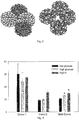
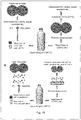
- the first pathway would produce the cell clusters using tissue from a single donor, then after the clusters were produced, they would be combined with the clusters from a number of other donors and used as a mixed experiment ( Fig. 8 , left).
- the second pathway entails dispersing cells from a variety of individuals into single cells, mixing the cells together, and then producing individual cell clusters that represent mixed cells from several donors ( Fig. 8 , right). This would result in individual cell clusters composed of several cell types from several donors.
- the ratio of cells can preferentially be mixed at a 1:1:1 ratio or any other specified ratio. Cells could be counted before mixing them to ensure appropriate mixtures.
- 1 million cells from donor A can be mixed with 1 million cells from donor B.
- the mixed cell population would then be seeded onto the micro-mold ( Figs. 3-7 ) or any other suitable mold or scaffold. Seeding could take place by mixing the cells first and seeding once onto the scaffold or mold, or could occur with sequential seeding, as a tissue printing instrument or cell dispensing unit would do.
- experimentation could occur providing an averaged result in one step as opposed to running each donor individually and then having to statistically determine the commonalities between results.
- One application of the mixed bone marrow stem cells/islet cluster would be in the field of tissue transplantation.
- Bone marrow stem cells could be harvested from the recipient of a transplant prior to the transplant itself or from the donor of the transplant. Those stem cells would be mixed with the donor islet cells (or other cells types depending on the pathology to be treated) using the micro-mold. The resulting hybrid spheroid would be a combination of the recipient's own stem cells and the islet cells from another donor.
- the donor tissue may be from non-human sources.
- multi-donor cell clusters could be used to make species-specific clusters.
- bovine lung clusters could be formed for drug screening.
- the clusters could also be made to be strain-specific. It also allows the screening of large numbers of drugs for a subpopulation.
- a subpopulation could be a specific ethnic group, a strain of animal, or it could be a subpopulation with a specific disease.
- biopsy material from a rare solid tumor from one person, but with the procedure described here, biopsy material from many people with the same sub-type of tumor could be mixed. This would provide enough material for a small or rare tumor to be able to screen 1000's of potential drug compounds at one time.
- people with rare genetic disorders could be grouped and their tissues combined to provide enough non-cultured tissue for screening.
- Species-specific donor populations are important in addressing animal health and the human food chain. Specific species and strains of animals require health treatment options that are unique for their subpopulation. For example, Burmese cats contract diabetes at a higher rate than other cat strains. Thus, one would want to study and test islet cell clusters specific to that strain of animal. Multi-donor Burmese cat engineered islets could be useful in testing new drugs to treat the high degree of diabetes in these animals. This can provide a simplified approach to answering questions about drug responses or diagnostic tests within population subgroups.
- 3-D cell clusters there may be times when multi-species 3-D cell clusters are required. For example, when one is studying the transmission of disease from one species to another, having cell clusters from multiple species in the same experimental aliquot would be useful. This would be done following the procedures described above and illustrated in Fig. 8 (left). Alternatively, if close contact between cells is required to transmit the disease, then 3-D cell clusters with multiple species within the same cluster would be needed ( Fig. 8 , right image).
- Bio-based or cell-produced scaffolds can be created by adding fibroblasts or other cells responsible for producing extracellular matrix to the mold at the time of seeding with the cells of interest. These fibroblasts would produce collagen creating a natural scaffold for the 3-D cell cluster. In addition, growth factors or matrix proteins could be added to the media while the 3-D cell clusters were forming.
- BD MatrigelTM Matrix (Bedford, MA), which contains collagen, laminin, entactin, and growth factors, is a suitable bio-based scaffolding material that could be used in such embodiments. In this example, cells would normally be seeded into the micro-mold. On certain days during the cluster formation process hormones or other proteins or scaffold-enhancing products would be added to the media to enhance cluster formation and scaffold development.
- One example would be the mixture of cardiac myocytes with fibroblasts and vascular endothelial cells and extra media amino acids. This iteration would increase vessel formation, along with scaffolds that would penetrate the cardiac cluster to increase the penetration of the vessel into the core of the cluster where blood vessel exchange is critical.
- Another example comprises adding all the cells together on day one with a media component to initiate cell cluster formation, but then exclude those components from fresh media added on future dates, where that initial addition of components was sufficient for cluster formation. This could also help speed up cluster formation by assistance.
- multi-source spheroids could be created within or attached to a scaffold material.
- scaffold material could be added to the micro-molds and overlaid on the cell clusters. Suction would draw the cell clusters to the scaffold, where they would stick on the bottom surface.
- This scaffold could be formed of a biodegradable biomaterial.
- biodegradable biomaterials include poly(DL-lactide-co-glycolide) (PLO), polylactic acid (PLA), or poly(lactic-co-glycolic acid) (PLGA).
- the scaffold could be coated or impregnated with a number of molecules to enhance cell adhesion, cell viability, cell function or alter the immune response to the scaffold material.
- the size of the pore within a biopolymer may be suitable for natural formation of uniform cells spheroids.
- Multi-donor human islets are generally only possible when multiple tissue donations are available within days of each other, and thus can be mixed when producing the multi-donor islets ( Fig. 8 ).
- cryopreservation or quick deep freezing presents itself as an ideal solution to storing tissue from donors until enough donors are collected for a particular experiment, transplant or other need.
- cell viability refers to a measure of the amount of cells that are living or dead, based on a total cell sample.
- High cell viability refers to a cell population in which greater than 85% of all cells are viable, preferably greater than 90-95%, and more preferably a population characterized by high cell viability contains more than 99% viable cells.
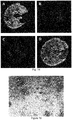
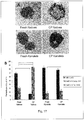
- Fig. 10A illustrates the dramatic cell loss that occurs when intact, native islets are subjected to current cryopreservation techniques. Upon thawing, a majority of the cell have died (green and yellow staining of Fig. 10A ). This is not only true in our laboratory, but has been published by other labs (Taylor and Baicu, 2009).
- One explanation for the poor viability after freezing is the diffusion barrier that 3-D tissues inherently possess. Thus, most standard cell cryopreservation protocols work poorly with 3-D cell clusters.
- the inventive 3-D clusters of reaggregated cells can be cryopreserved intact and with increased viability over native cryopreserved and thawed islets.
- the self-directed assembly of the clusters in which the cells communicate through cell signaling to arrange in the structure according to their respective cellular requirements, increases the overall chances of success for each cell in the structure.
- the reaggregated clusters have substantially improved (lower) diffusion barriers allowing all cells in the structure substantially equal access to nutrients and cell culture conditions.
- the 3-D cell clusters not only have improved viability generally, but through modified cryopreservation techniques also have improved viability during cryopreservation, storage, and thawing of intact 3-D clusters. That is, the inventive 3-D cell clusters can be cryopreserved under controlled rate freezing, as described in the working examples, to yield a cryopreserved 3-D cell cluster. These 3-D cell clusters can be stored under liquid nitrogen, and then thawed according to the protocols described herein.
- these islets have increased viability as compared to native cryopreserved and thawed 3-D tissues, such as islets.
- the cells in the 3-D clusters have substantially equal access to the cryoprotectant and thawing media, and undergo a more uniform freezing and thawing process throughout the entirety of the 3-D structure of the reaggregated cells. This substantially improves viability outcomes.
- cryopreservation of engineered tissues and other small 3-D cell clusters offers an improvement over standard tissue cryopreservation techniques, we can further improve the process with our micro-mold technology. Cryopreserving the single dispersed cells from any tissue results in improved outcomes compared to freezing larger sections of tissue.
- the tissue is dispersed into single cells, which are cryopreserve, and upon thawing, loaded into our micro-molds for 3-D formation as shown schematically in Fig. 11 .
- cryopreservation cells may adhere to the surface of a culture flask or plate and then non-viable cells are washed away 24-48 hours later. Cell cultures are proliferated and expanded to increase the amount of available cells.
- engineered islets can be produced with viability over 99%. With an appropriate cryopreservation protocol to freeze single islet cells, we are able to produce high viability tissues, especially after cryopreservation of the single cell components. Furthermore, we have shown that native islets that do survive cryopreservation have a very short life span, with nearly 100% cell death 72 hours after thawing. Engineered tissues, in contrast, are able to be maintained after thawing for several days without noticeable drops in viability.
- This method could also be used for collecting tissue matches for regenerative medicine such as cell clusters for transplantations. For instance, if ideal donor tissue is made available, but no suitable match can be found, the tissue could be saved back as single cells for future engineering and use for an islet transplantation for a diabetic patient later.
- This method also allows for drug screening on human islets to be completed in a more efficient manner.
- the phrase "and/or," when used in a list of two or more items, means that any one of the listed items can be employed by itself or any combination of two or more of the listed items can be employed.
- the composition can contain or exclude A alone; B alone; C alone; A and B in combination; A and C in combination; B and C in combination; or A, B, and C in combination.
- the present description also uses numerical ranges to quantify certain parameters relating to various embodiments of the invention. It should be understood that when numerical ranges are provided, such ranges are to be construed as providing literal support for claim limitations that only recite the lower value of the range as well as claim limitations that only recite the upper value of the range. For example, a disclosed numerical range of about 10 to about 100 provides literal support for a claim reciting "greater than about 10" (with no upper bounds) and a claim reciting "less than about 100" (with no lower bounds).
- BMSCs Bone marrow mesenchymal stem cells
- pancreatic main duct to the duodenum was clamped, cannulated in situ via the common bile duct, and distended with cold collagenase (CLS1, 450 units/ml; Worthington, Lakewood, NJ).
- CLS1, 450 units/ml cold collagenase
- the pancreas was incubated for 20-30 minutes with gentle tumbling in a 37°C incubator.
- the contents of the tube were washed, passed through a 100 ⁇ m mesh screen, and sedimented in a refrigerated centrifuge.
- the islets, collected from the gradient, were sedimented and washed over a sterile 40 ⁇ m mesh cell strainer. Islets were placed into a modified DMEM/F-12 medium supplemented with 10% fetal bovine serum (FBS), 1% antibiotic/antimycotic and allowed to recover overnight in an incubator at 37°C and
- the isolated islets were dispersed into single cell suspensions. Islets were washed twice with calcium- and magnesium-free HBSS (cmf-HBSS) before addition of digestion medium consisting of cmf-HBSS supplemented with 4.8 mM HEPES and papain (5 units/ml; Worthington, Lakewood, NJ). Suspensions were incubated on a rotator at 37°C for 20 minutes. Islets were dispersed by trituration using a pipette until the cell suspension primarily contained single cells. The cells were then washed to remove residual papain and transferred to a customized DMEM:F12-based, serum-free islet aggregate culture medium. Occasionally, a sample was taken and cell counts and yield were determined using a hemocytometer.
- the isolated islets and BMSCs were mixed in the desired ratios.
- the variations in the ratios and number of donor sources from which cells are derived is limitless. This ratio can be determined based on the needs of the experiment/product.
- the media for production of the mixed cell clusters consisted of:
- the cell mixture was cultured on the micro-molds until cluster formation occurred. Clusters were also created using only BMSCs as a control. Media was changed every 24-48 hours while incubating at 37°C and 5% CO 2 . Viability was measured. There was approximately 50% viability in cell clusters created only from MSC with the majority of cell death due to apoptosis ( Fig. 13 ). However, when BMSCs were combined with islet cells prior to loading into the micro-mold, then the viability of all of the cells, including the BMSCs, improved to approximately 97% ( Fig. 13 ). It is believed that this self-directed assembly that leads to cluster formation also increases the ability of the cells to arrange according to their respective needs and avoid apoptosis.
- the BMSCs were stained red so that they could be distinguished from other cells in the hybrid clusters.
- the BMSCs stained red
- the BMSCs were found distributed throughout the hybrid cluster.
- Single cell clusters composed of cells from multiple donors were produced by plating cell mixtures containing cells from 2 or more donors at desired ratios onto the micro-molds. Using the aforementioned techniques, we have created 3-D cell clusters in the shape of spheroids from cells from two different donors. The hybrid spheroids had extremely high viability (over 95% viable cells). In addition, there was no sign of inflammation or cellular rejection of the cells from different donors.
- the multi-donor engineered islets provide an averaged response to drug testing.
- Fig. 9 shows the glucose-stimulated release of insulin in native islets from 2 different donors. The data was gathered using a Static Insulin Secretion study. The reaggregated islets were equilibrated overnight in DMEM/F-12 medium containing 5 mM glucose and 10% FBS (low glucose medium). Native islets were used for comparison, and handpicked using a micropipette and a known quantity of islet equivalents were distributed in 24-well plates. The multi-donor engineered islets and native islets were subject to low glucose (5 mM), high glucose (17.5 mM) or high glucose with KCl (20 mM).
- multi-source or multi-donor spheroids could be created by plating the cell mixtures within or attached to a scaffold material. For example, we have created multi-cell type spheroids within decellularlized Wharton's Jelly ( Fig. 15 ).
- CMRL-1066 media Sigma
- 1% antibiotic and antimycotic solution 1% L-glutamine
- 16.8 ⁇ M/L Zinc Sulfate 10% Fetal Bovine Serum (FBS); 10 ⁇ M Curcumin.
- the media was buffered with 25 mM HEPES to a final pH of 7.3-7.5.
- the engineered islets were maintained overnight at 37°C in the incubator at 95% air and 5% CO 2 in RPMI-1640 (Sigma) medium supplemented with 5 mM/L glucose, 10% fetal bovine serum, 1% antibiotic and antimycotic solution, 1% L-glutamine, 16.8 ⁇ M/L zinc sulphate, buffered with 25 Mm/L HEPES. After culturing the engineered islets overnight, they were centrifuged at 2,500 rpm for 5 minutes at 22°C.
- the centrifuged pellet was then re-suspended in 200 ⁇ L of the Engineered Freezing Media and transferred into a 1.8 mL cryotube, which was kept on ice. Over the next 6 minutes, 100 ⁇ L of the Engineered Cryoprotective Solution was added to the cryotube every 1 min.
- the Engineered Cryoprotective Solution contains 10% DMSO with 10 ⁇ M curcumin in CMRL-1066 media.
- the cryotube was then transferred to a cool cell and kept in the cell in a -80°C freezer, with controlled freezing at a rate of -1°C /minute. After 8 hours the cryotube was transferred into liquid nitrogen where it is stored until thawing.
- the cryotube was removed from the liquid nitrogen and the engineered islets were allowed to thaw rapidly to 0°C. As soon as the last ice crystal had disappeared, the tube was centrifuged at 2,500 rpm for 5 min at 4°C. The supernatant was removed and 200 ⁇ L of 0.75 M Engineered Sucrose Solution was added every 5 minutes for a period of 30 minutes at 4°C.
- the Engineered Sucrose Solution contained: CMRL-1066 media; 1% antibiotic and antimycotic solution; 1% L-glutamine; 10% FBS; and 0.75 M sucrose.
- Sequential dilution of the Engineered Sucrose Solution was completed by adding 2.5, 2.5, 5.0, and 10.0 mL of Engineered Freezing Media in a stepwise manner over the next 20 minutes. Subsequently, the thawed islets were centrifuged at 2,500 rpm for 5 minutes and the supernatant removed. The engineered islets were resuspended in Engineered Freezing Media and transferred to culture plates where they were maintained at 37°C in an atmosphere of 95% air and 5% CO 2 .
- the tissue is first dispersed into single cells for cryopreservation, instead of cryopreserving the intact islet.
- This procedure is shown schematically in Fig. 11 , and contrasted with the process of cryopreserved whole islets.
- Native islet tissue is dispersed into single islet cells using the protocols described above.
- the single islet cells are maintained overnight in RPMI-1640 medium supplemented with 5 mM/L glucose, 10% FBS, 1% antibiotic and antimycotic solution, 1% L-glutamine, 16.8 ⁇ M/L zinc sulphate buffered with 25 Mm/L HEPES at 37°C in the incubator at 95% air and 5% CO 2 . After culturing the islet cells overnight, they were centrifuged at 2,500 rpm for 5 minutes at 22°C.
- the centrifuged pellet was then re-suspended in 200 ⁇ L of Cell Freezing Media and transferred into a 1.8 mL cryotube, which was kept on ice.
- the Cell Freezing Media contained: RPMI-1640 media; 1% antibiotic and antimycotic solution; 1% L-glutamine; 16.8 ⁇ M/L Zinc Sulfate; 10% FBS; 10 ⁇ M Curcumin; and 5 mM/L glucose.
- the media was buffered with HEPES to a final pH of 7.3-7.5. Over the next 6 minutes, 100 ⁇ L of the Cell Cryoprotective Solution was added to the cryotube every 1 min.
- the Cell Cryoprotective Solution contained 10% DMSO with 10 ⁇ M curcumin in RPMI-1640 media.
- the cryotube was then transferred to a cool cell and kept in the cell in a -80°C freezer, with controlled freezing at a rate of -1°C /minute. After 8 hours, the cryotube was transferred to liquid nitrogen, where it was stored until thawing.
- the cryotubes were removed from the liquid nitrogen and the islet cells were allowed to thaw rapidly to 0°C. As soon as the last ice crystal had disappeared, the tube was centrifuged at 2,500 rpm for 5 min at 4°C. The supernatant was removed and 200 ⁇ L of 0.75 M sucrose solution was added every 5 minutes for a period of 30 minutes at 4°C.
- the Islet Cell Sucrose Solution contained: RPMI-1640 media; 1% antibiotic and antimycotic solution; 1% L-glutamine; 10% FBS; 5 mM glucose; and 0.75 M sucrose.
- Breaking the islets into single cells for freezing removes the diffusion barrier that islets possess that can prevent cryoprotectants from reaching the core of the islet, latent heat of ice crystallization from escaping the core, or a number of other possible issues during the freezing or thawing process.
- the reaggregation of the islet cells post-cryopreservation allows the viable cells to reaggregate, while any dead cells are left behind.
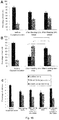
- Fig. 16 illustrates some of the different protocols and medias tested to finally produce the optimal cryopreservation protocol that resulted in adequate viability.
- the described cryopreservation techniques are so improved that there is no statistically significant difference in the percentage of live cells from fresh engineered islets and islets engineered from cryopreserved islet cells ( Fig. 17B ).
- FIG. 17 A direct comparison of the changes measured in viability after cryopreservation of native islets versus cryopreservation of engineered islets using the method described here is shown in Fig. 17 .
- Fig. 18 shows that the islet cells respond to a midrange concentration of islets, but fail to respond further when the glucose concentration is too high (hyperphysiological). This is normal in fresh tissue ( Fig. 18 , open bars), and is maintained after cryopreservation.
Landscapes
- Health & Medical Sciences (AREA)
- Life Sciences & Earth Sciences (AREA)
- Engineering & Computer Science (AREA)
- Immunology (AREA)
- Biomedical Technology (AREA)
- Chemical & Material Sciences (AREA)
- Cell Biology (AREA)
- Biotechnology (AREA)
- General Health & Medical Sciences (AREA)
- Hematology (AREA)
- Molecular Biology (AREA)
- Zoology (AREA)
- Urology & Nephrology (AREA)
- Medicinal Chemistry (AREA)
- Bioinformatics & Cheminformatics (AREA)
- Biochemistry (AREA)
- Microbiology (AREA)
- Wood Science & Technology (AREA)
- Developmental Biology & Embryology (AREA)
- Organic Chemistry (AREA)
- Food Science & Technology (AREA)
- Physics & Mathematics (AREA)
- Analytical Chemistry (AREA)
- General Physics & Mathematics (AREA)
- Pathology (AREA)
- Pharmacology & Pharmacy (AREA)
- Genetics & Genomics (AREA)
- Veterinary Medicine (AREA)
- Public Health (AREA)
- Animal Behavior & Ethology (AREA)
- Epidemiology (AREA)
- Virology (AREA)
- Chemical Kinetics & Catalysis (AREA)
- Dentistry (AREA)
- Environmental Sciences (AREA)
- General Engineering & Computer Science (AREA)
- Toxicology (AREA)
- Tropical Medicine & Parasitology (AREA)
- Gastroenterology & Hepatology (AREA)
- Nutrition Science (AREA)
Claims (15)
- Amas tridimensionnel de cellules ré-agrégées comprenant des cellules d'îlots ré-agrégées provenant d'au moins deux donneurs.
- Amas tridimensionnel selon la revendication 1, dans lequel ledit amas comprend des cellules ré-agrégées à partir de cellules souches et de cellules de tissus d'organes différenciées.
- Amas tridimensionnel selon la revendication 1, dans lequel ledit amas comprend des cellules ré-agrégées à partir de cellules souches et de cellules d'îlots.
- Amas tridimensionnel selon la revendication 1, dans lequel ledit amas de cellules individuelles comprend en outre au moins deux types cellulaires différents.
- Amas tridimensionnel selon la revendication 4, dans lequel lesdits types cellulaires différents sont choisis dans l'ensemble constitué par les cellules d'îlots, les cellules souches, les chondrocytes, les ostéocytes, les ostéoblastes, les cellules myocardiques, les cellules vasculaires, les cellules épithéliales, les hépatocytes, les fibroblastes, les cellules musculaires lisses, les cellules cancéreuses, les cellules endothéliales et des associations de ces types cellulaires.
- Amas tridimensionnel selon la revendication 1, dans lequel lesdits donneurs ont des sexes, génotypes, âges, races, groupes ethniques, activités enzymatiques ou métaboliques, espèces, ou états de santé ou pathologiques différentee)s.
- Amas tridimensionnel selon la revendication 1, dans lequel lesdits donneurs ont chacun le/la même espèce, sous-espèce, sexe, race, groupe ethnique, âge, région géographique, état pathologique, ou indice de masse corporelle.
- Amas tridimensionnel selon la revendication 1, dans lequel lesdites cellules d'îlots sont des cellules d'îlots primaires ou des cellules d'îlots qui ont été différenciées à partir de cellules souches.
- Procédé de formation d'un amas tridimensionnel de cellules ré-agrégées selon l'une quelconque des revendications 1 à 8, ledit procédé comprenant les étapes consistant à :fournir un micro-moule comprenant un support non adhérent muni de cavités, comprenant une surface supérieure essentiellement plane, la surface supérieure essentiellement plane comprenant une pluralité de cavités formées dans celle-ci ;introduire dans lesdites cavités des cellules individuelles fournies, provenant d'au moins deux donneurs différents, chaque cavité contenant un mélange de cellules individuelles provenant d'au moins deux donneurs différents ; etmettre à incuber ledit micro-moule dans des conditions de culture cellulaire, dans lequel lesdites cellules individuelles dans chaque cavité se ré-agrègent en un amas tridimensionnel de cellules comprenant des cellules ré-agrégées provenant desdits au moins deux donneurs de cellules différents.
- Procédé selon la revendication 9, dans lequel lesdites cellules individuelles fournies, provenant d'au moins deux donneurs de cellules différents, comprennent des cellules dispersées, provenant d'au moins deux donneurs différents, en cellules individuelles.
- Procédé selon la revendication 9, dans lequel ledit fait d'introduire comprend :mélanger lesdites cellules individuelles provenant d'au moins deux donneurs différents, pour créer un mélange de cellules individuelles provenant d'au moins deux donneurs différents ; etcharger ledit mélange de cellules individuelles sur ledit micro-moule en tant qu'une partie aliquote, ledit mélange de cellules individuelles se déposant dans des cavités respectives, chaque cavité contenant un mélange de cellules individuelles provenant d'au moins deux donneurs différents.
- Procédé selon la revendication 9, dans lequel ledit fait d'introduire comprend introduire séquentiellement dans lesdites cavités lesdites cellules individuelles provenant d'un premier donneur ; et introduire dans lesdites cavités lesdites cellules individuelles provenant d'un second donneur différent du premier donneur, chaque cavité contenant un mélange de cellules individuelles provenant d'au moins deux donneurs différents.
- Procédé de criblage de composés d'essai xénobiotiques, comprenant les étapes consistant à :fournir un amas tridimensionnel de cellules ré-agrégées selon l'une quelconque des revendications 1 à 8 ;exposer ledit amas tridimensionnel à un composé d'essai xénobiotique ; etanalyser la réponse dudit amas tridimensionnel audit composé d'essai xénobiotique, dans lequel ledit amas tridimensionnel fournit une réponse moyennée en une étape par opposition à analyser chaque source de cellules individuellement et calculer une réponse moyennée.
- Procédé de cryoconservation de cellules pour des amas tridimensionnels de cellules, ledit procédé comprenant les étapes consistant à :disperser les cellules d'un tissu en cellules individuelles, lesdites cellules individuelles provenant d'au moins deux donneurs ;mettre lesdites cellules individuelles en suspension dans un milieu de congélation comprenant un milieu de culture cellulaire, et un cryoprotecteur,cryoconserver lesdites cellules individuelles sous congélation à vitesse réglée, à une vitesse de -1 °C/min pour obtenir des cellules individuelles cryoconservées ;décongeler lesdites cellules individuelles cryoconservées ;transférer lesdites cellules individuelles décongelées dans un micro-moule comprenant un support non adhérent muni de cavités, comprenant une surface supérieure essentiellement plane, la surface supérieure essentiellement plane comprenant une pluralité de cavités formées dans celle-ci, lesdites cavités contenant chacune une pluralité desdites cellules individuelles décongelées ; etmettre à incuber ledit micro-moule dans des conditions de culture cellulaire, dans lequel lesdites cellules individuelles dans chaque cavité se ré-agrègent en un amas tridimensionnel de cellules comprenant des cellules ré-agrégées provenant desdites cellules individuelles cryoconservées et décongelées.
- Procédé selon la revendication 14, dans lequel ledit tissu est du tissu pancréatique.
Applications Claiming Priority (2)
| Application Number | Priority Date | Filing Date | Title |
|---|---|---|---|
| US201261715570P | 2012-10-18 | 2012-10-18 | |
| PCT/US2013/064583 WO2014062505A1 (fr) | 2012-10-18 | 2013-10-11 | Amélioration de la fiabilité des dosages à l'aide d'une plateforme multi-divot et d'amas de type multi-source, multi-cellule |
Publications (3)
| Publication Number | Publication Date |
|---|---|
| EP2909311A1 EP2909311A1 (fr) | 2015-08-26 |
| EP2909311A4 EP2909311A4 (fr) | 2016-05-25 |
| EP2909311B1 true EP2909311B1 (fr) | 2020-10-07 |
Family
ID=50488659
Family Applications (1)
| Application Number | Title | Priority Date | Filing Date |
|---|---|---|---|
| EP13846713.9A Active EP2909311B1 (fr) | 2012-10-18 | 2013-10-11 | Amélioration de la fiabilité des dosages à l'aide d'une plateforme multi-divot et d'amas de type multi-source, multi-cellule |
Country Status (5)
| Country | Link |
|---|---|
| US (2) | US9567570B2 (fr) |
| EP (1) | EP2909311B1 (fr) |
| CA (1) | CA2887532C (fr) |
| DK (1) | DK2909311T3 (fr) |
| WO (1) | WO2014062505A1 (fr) |
Families Citing this family (2)
| Publication number | Priority date | Publication date | Assignee | Title |
|---|---|---|---|---|
| WO2016063208A1 (fr) * | 2014-10-20 | 2016-04-28 | Stempeutics Research Pvt. Ltd. | Composition de cryoconservation et procédés associés |
| USD851276S1 (en) * | 2015-06-11 | 2019-06-11 | Yamaha Hatsudoki Kabushiki Kaisha | Placement and cluster sifting cell plate |
Family Cites Families (10)
| Publication number | Priority date | Publication date | Assignee | Title |
|---|---|---|---|---|
| CA2467819A1 (fr) * | 2001-11-19 | 2003-05-30 | University Of Miami | Amelioration de la viabilite et de la fonction des ilots pancreatiques |
| WO2003054171A1 (fr) * | 2001-12-06 | 2003-07-03 | The Regents Of The University Of California | Procede de differenciation de precurseurs d'ilots dans des cellules beta |
| US8735154B2 (en) * | 2006-10-30 | 2014-05-27 | The University Of Kansas | Templated islet cells and small islet cell clusters for diabetes treatment |
| US20080103606A1 (en) | 2006-10-30 | 2008-05-01 | Cory Berkland | Templated islet cells and small islet cell clusters for diabetes treatment |
| WO2008111064A1 (fr) * | 2007-03-12 | 2008-09-18 | Technion Research & Development Foundation Ltd. | Ilots vascularisés et leurs procédés de fabrication |
| US8603819B2 (en) * | 2008-05-23 | 2013-12-10 | The Regents Of The University Of California | Compositions and methods for generating musculoskeletal tissue |
| EP2221362A1 (fr) * | 2009-02-19 | 2010-08-25 | Naturin GmbH & Co | Procédé de cryoconservation de cellules, constructions cellulaires artificielles ou ensembles de tissus complexes tridimensionnels |
| RU100516U1 (ru) * | 2009-03-03 | 2010-12-20 | Федеральное государственное образовательное учреждение высшего профессионального образования "Институт Федеральной службы безопасности Российской Федерации (г. Нижний Новгород)" - Институт ФСБ России (г. Нижний Новгород) | Комплекс для формирования органа для трансплантации |
| US8895048B2 (en) | 2010-04-06 | 2014-11-25 | The University Of Kansas | Templated islet cells and small islet cell clusters for diabetes treatment |
| GB201104511D0 (en) * | 2011-03-17 | 2011-05-04 | Univ Cardiff | Cell based screening assay |
-
2013
- 2013-10-11 CA CA2887532A patent/CA2887532C/fr active Active
- 2013-10-11 EP EP13846713.9A patent/EP2909311B1/fr active Active
- 2013-10-11 DK DK13846713.9T patent/DK2909311T3/da active
- 2013-10-11 WO PCT/US2013/064583 patent/WO2014062505A1/fr not_active Ceased
- 2013-10-11 US US14/436,041 patent/US9567570B2/en not_active Expired - Fee Related
-
2016
- 2016-12-28 US US15/392,087 patent/US10155928B2/en active Active
Non-Patent Citations (1)
| Title |
|---|
| None * |
Also Published As
| Publication number | Publication date |
|---|---|
| CA2887532C (fr) | 2022-07-26 |
| CA2887532A1 (fr) | 2014-04-24 |
| WO2014062505A1 (fr) | 2014-04-24 |
| US20150259650A1 (en) | 2015-09-17 |
| DK2909311T3 (da) | 2020-10-12 |
| US20170107497A1 (en) | 2017-04-20 |
| EP2909311A1 (fr) | 2015-08-26 |
| EP2909311A4 (fr) | 2016-05-25 |
| US9567570B2 (en) | 2017-02-14 |
| US10155928B2 (en) | 2018-12-18 |
Similar Documents
| Publication | Publication Date | Title |
|---|---|---|
| US20240360408A1 (en) | Methods of generating tissue using devitalized, acellular scaffold matrices derived from micro-organs | |
| Shimizu et al. | Bioengineering of a functional sheet of islet cells for the treatment of diabetes mellitus | |
| Sosef et al. | Cryopreservation of isolated primary rat hepatocytes: enhanced survival and long-term hepatospecific function | |
| Kadam et al. | Generation of functional islets from human umbilical cord and placenta derived mesenchymal stem cells | |
| KR20200140836A (ko) | 십이지장 브루너샘으로부터의 줄기/전구 세포 및 이들의 단리 및 사용 방법 | |
| KR20150036059A (ko) | 인슐린 의존성 당뇨병의 치료에 유용한 줄기 세포 및 췌장 세포 | |
| Feng et al. | From stem cells to pancreatic β-cells: strategies, applications, and potential treatments for diabetes | |
| US10155928B2 (en) | Assays using a multi-divot platform and multi-source, multi-cell type clusters | |
| US20070086986A1 (en) | Preparation of three-dimensional mammalian ovarian follicular cell and ovarin follicle culture systems in a biocompatible matrix | |
| JP5263756B2 (ja) | 細胞の培養方法および細胞培養物 | |
| Stukenborg | The use of testicular organoids in advancing future treatments for male factor infertility | |
| Weizman et al. | The effect of endothelial cells on hESC-derived pancreatic progenitors in a 3D environment | |
| US12600953B2 (en) | Compositions and method for establishing organoid cultures from cryogenically preserved tissue | |
| Müller et al. | Serum-free cryopreservation of porcine hepatocytes | |
| Nakayama‐Iwatsuki et al. | Fabrication of functional rat pseudo‐islets after cryopreservation of pancreatic islets or dispersed islet cells | |
| Muthyala et al. | The reversal of diabetes in rat model using mouse insulin producing cells–A combination approach of tissue engineering and macroencapsulation | |
| US20100143306A1 (en) | Use of bone marrow cells for long term culture of pancreatic islet cells | |
| EP2546334A1 (fr) | Procédé pour la prolifération "in vitro" de cellules issues de tissus d'origine endodermique | |
| WO2010068728A2 (fr) | Production de tissu fonctionnel à partir de cellules de culture | |
| RU2417090C2 (ru) | Макрогранулы агарозы seakem gold, содержащие секреторные клетки, и их применение | |
| WO2025119299A1 (fr) | Procédé de différenciation de cellules bêta pancréatiques | |
| Song et al. | Generation and long-term expansion of human pancreatic islet organoids in vitro | |
| Harb et al. | Stem cell-derived insulin-producing β cells to treat diabetes | |
| Peng et al. | Bioengineering and omics approaches for Type 1 diabetes practical research: advancements and constraints | |
| KR20250137080A (ko) | 특발성 폐섬유증 환자 유래 일차 세포 기반 폐 오가노이드 제조 방법 및 활용 |
Legal Events
| Date | Code | Title | Description |
|---|---|---|---|
| PUAI | Public reference made under article 153(3) epc to a published international application that has entered the european phase |
Free format text: ORIGINAL CODE: 0009012 |
|
| 17P | Request for examination filed |
Effective date: 20150505 |
|
| AK | Designated contracting states |
Kind code of ref document: A1 Designated state(s): AL AT BE BG CH CY CZ DE DK EE ES FI FR GB GR HR HU IE IS IT LI LT LU LV MC MK MT NL NO PL PT RO RS SE SI SK SM TR |
|
| AX | Request for extension of the european patent |
Extension state: BA ME |
|
| DAX | Request for extension of the european patent (deleted) | ||
| RA4 | Supplementary search report drawn up and despatched (corrected) |
Effective date: 20160422 |
|
| RIC1 | Information provided on ipc code assigned before grant |
Ipc: A61K 48/00 20060101ALI20160418BHEP Ipc: A61K 35/28 20060101ALI20160418BHEP Ipc: C12Q 1/00 20060101ALI20160418BHEP Ipc: G01N 33/543 20060101ALI20160418BHEP Ipc: C12N 5/00 20060101AFI20160418BHEP Ipc: G01N 33/50 20060101ALI20160418BHEP Ipc: A01N 1/02 20060101ALI20160418BHEP Ipc: C12N 5/071 20100101ALI20160418BHEP Ipc: A61P 37/06 20060101ALI20160418BHEP Ipc: A61K 35/39 20150101ALI20160418BHEP Ipc: G01N 33/74 20060101ALI20160418BHEP |
|
| STAA | Information on the status of an ep patent application or granted ep patent |
Free format text: STATUS: EXAMINATION IS IN PROGRESS |
|
| 17Q | First examination report despatched |
Effective date: 20170613 |
|
| GRAP | Despatch of communication of intention to grant a patent |
Free format text: ORIGINAL CODE: EPIDOSNIGR1 |
|
| STAA | Information on the status of an ep patent application or granted ep patent |
Free format text: STATUS: GRANT OF PATENT IS INTENDED |
|
| INTG | Intention to grant announced |
Effective date: 20191212 |
|
| GRAS | Grant fee paid |
Free format text: ORIGINAL CODE: EPIDOSNIGR3 |
|
| GRAJ | Information related to disapproval of communication of intention to grant by the applicant or resumption of examination proceedings by the epo deleted |
Free format text: ORIGINAL CODE: EPIDOSDIGR1 |
|
| GRAL | Information related to payment of fee for publishing/printing deleted |
Free format text: ORIGINAL CODE: EPIDOSDIGR3 |
|
| STAA | Information on the status of an ep patent application or granted ep patent |
Free format text: STATUS: EXAMINATION IS IN PROGRESS |
|
| INTC | Intention to grant announced (deleted) | ||
| GRAP | Despatch of communication of intention to grant a patent |
Free format text: ORIGINAL CODE: EPIDOSNIGR1 |
|
| STAA | Information on the status of an ep patent application or granted ep patent |
Free format text: STATUS: GRANT OF PATENT IS INTENDED |
|
| INTG | Intention to grant announced |
Effective date: 20200619 |
|
| GRAS | Grant fee paid |
Free format text: ORIGINAL CODE: EPIDOSNIGR3 |
|
| GRAA | (expected) grant |
Free format text: ORIGINAL CODE: 0009210 |
|
| STAA | Information on the status of an ep patent application or granted ep patent |
Free format text: STATUS: THE PATENT HAS BEEN GRANTED |
|
| AK | Designated contracting states |
Kind code of ref document: B1 Designated state(s): AL AT BE BG CH CY CZ DE DK EE ES FI FR GB GR HR HU IE IS IT LI LT LU LV MC MK MT NL NO PL PT RO RS SE SI SK SM TR |
|
| REG | Reference to a national code |
Ref country code: GB Ref legal event code: FG4D |
|
| REG | Reference to a national code |
Ref country code: DK Ref legal event code: T3 Effective date: 20201009 |
|
| REG | Reference to a national code |
Ref country code: CH Ref legal event code: EP Ref country code: CH Ref legal event code: NV Representative=s name: E. BLUM AND CO. AG PATENT- UND MARKENANWAELTE , CH Ref country code: AT Ref legal event code: REF Ref document number: 1321172 Country of ref document: AT Kind code of ref document: T Effective date: 20201015 |
|
| REG | Reference to a national code |
Ref country code: IE Ref legal event code: FG4D |
|
| REG | Reference to a national code |
Ref country code: DE Ref legal event code: R096 Ref document number: 602013073169 Country of ref document: DE |
|
| REG | Reference to a national code |
Ref country code: NL Ref legal event code: MP Effective date: 20201007 |
|
| REG | Reference to a national code |
Ref country code: AT Ref legal event code: MK05 Ref document number: 1321172 Country of ref document: AT Kind code of ref document: T Effective date: 20201007 |
|
| PG25 | Lapsed in a contracting state [announced via postgrant information from national office to epo] |
Ref country code: GR Free format text: LAPSE BECAUSE OF FAILURE TO SUBMIT A TRANSLATION OF THE DESCRIPTION OR TO PAY THE FEE WITHIN THE PRESCRIBED TIME-LIMIT Effective date: 20210108 Ref country code: RS Free format text: LAPSE BECAUSE OF FAILURE TO SUBMIT A TRANSLATION OF THE DESCRIPTION OR TO PAY THE FEE WITHIN THE PRESCRIBED TIME-LIMIT Effective date: 20201007 Ref country code: FI Free format text: LAPSE BECAUSE OF FAILURE TO SUBMIT A TRANSLATION OF THE DESCRIPTION OR TO PAY THE FEE WITHIN THE PRESCRIBED TIME-LIMIT Effective date: 20201007 Ref country code: NL Free format text: LAPSE BECAUSE OF FAILURE TO SUBMIT A TRANSLATION OF THE DESCRIPTION OR TO PAY THE FEE WITHIN THE PRESCRIBED TIME-LIMIT Effective date: 20201007 Ref country code: NO Free format text: LAPSE BECAUSE OF FAILURE TO SUBMIT A TRANSLATION OF THE DESCRIPTION OR TO PAY THE FEE WITHIN THE PRESCRIBED TIME-LIMIT Effective date: 20210107 Ref country code: PT Free format text: LAPSE BECAUSE OF FAILURE TO SUBMIT A TRANSLATION OF THE DESCRIPTION OR TO PAY THE FEE WITHIN THE PRESCRIBED TIME-LIMIT Effective date: 20210208 |
|
| REG | Reference to a national code |
Ref country code: LT Ref legal event code: MG4D |
|
| PG25 | Lapsed in a contracting state [announced via postgrant information from national office to epo] |
Ref country code: BG Free format text: LAPSE BECAUSE OF FAILURE TO SUBMIT A TRANSLATION OF THE DESCRIPTION OR TO PAY THE FEE WITHIN THE PRESCRIBED TIME-LIMIT Effective date: 20210107 Ref country code: ES Free format text: LAPSE BECAUSE OF FAILURE TO SUBMIT A TRANSLATION OF THE DESCRIPTION OR TO PAY THE FEE WITHIN THE PRESCRIBED TIME-LIMIT Effective date: 20201007 Ref country code: AT Free format text: LAPSE BECAUSE OF FAILURE TO SUBMIT A TRANSLATION OF THE DESCRIPTION OR TO PAY THE FEE WITHIN THE PRESCRIBED TIME-LIMIT Effective date: 20201007 Ref country code: SE Free format text: LAPSE BECAUSE OF FAILURE TO SUBMIT A TRANSLATION OF THE DESCRIPTION OR TO PAY THE FEE WITHIN THE PRESCRIBED TIME-LIMIT Effective date: 20201007 Ref country code: IS Free format text: LAPSE BECAUSE OF FAILURE TO SUBMIT A TRANSLATION OF THE DESCRIPTION OR TO PAY THE FEE WITHIN THE PRESCRIBED TIME-LIMIT Effective date: 20210207 Ref country code: PL Free format text: LAPSE BECAUSE OF FAILURE TO SUBMIT A TRANSLATION OF THE DESCRIPTION OR TO PAY THE FEE WITHIN THE PRESCRIBED TIME-LIMIT Effective date: 20201007 Ref country code: LV Free format text: LAPSE BECAUSE OF FAILURE TO SUBMIT A TRANSLATION OF THE DESCRIPTION OR TO PAY THE FEE WITHIN THE PRESCRIBED TIME-LIMIT Effective date: 20201007 |
|
| PG25 | Lapsed in a contracting state [announced via postgrant information from national office to epo] |
Ref country code: LU Free format text: LAPSE BECAUSE OF NON-PAYMENT OF DUE FEES Effective date: 20201011 Ref country code: HR Free format text: LAPSE BECAUSE OF FAILURE TO SUBMIT A TRANSLATION OF THE DESCRIPTION OR TO PAY THE FEE WITHIN THE PRESCRIBED TIME-LIMIT Effective date: 20201007 |
|
| REG | Reference to a national code |
Ref country code: DE Ref legal event code: R097 Ref document number: 602013073169 Country of ref document: DE |
|
| REG | Reference to a national code |
Ref country code: BE Ref legal event code: MM Effective date: 20201031 |
|
| PG25 | Lapsed in a contracting state [announced via postgrant information from national office to epo] |
Ref country code: CZ Free format text: LAPSE BECAUSE OF FAILURE TO SUBMIT A TRANSLATION OF THE DESCRIPTION OR TO PAY THE FEE WITHIN THE PRESCRIBED TIME-LIMIT Effective date: 20201007 Ref country code: EE Free format text: LAPSE BECAUSE OF FAILURE TO SUBMIT A TRANSLATION OF THE DESCRIPTION OR TO PAY THE FEE WITHIN THE PRESCRIBED TIME-LIMIT Effective date: 20201007 Ref country code: SM Free format text: LAPSE BECAUSE OF FAILURE TO SUBMIT A TRANSLATION OF THE DESCRIPTION OR TO PAY THE FEE WITHIN THE PRESCRIBED TIME-LIMIT Effective date: 20201007 Ref country code: RO Free format text: LAPSE BECAUSE OF FAILURE TO SUBMIT A TRANSLATION OF THE DESCRIPTION OR TO PAY THE FEE WITHIN THE PRESCRIBED TIME-LIMIT Effective date: 20201007 Ref country code: SK Free format text: LAPSE BECAUSE OF FAILURE TO SUBMIT A TRANSLATION OF THE DESCRIPTION OR TO PAY THE FEE WITHIN THE PRESCRIBED TIME-LIMIT Effective date: 20201007 Ref country code: MC Free format text: LAPSE BECAUSE OF FAILURE TO SUBMIT A TRANSLATION OF THE DESCRIPTION OR TO PAY THE FEE WITHIN THE PRESCRIBED TIME-LIMIT Effective date: 20201007 Ref country code: LT Free format text: LAPSE BECAUSE OF FAILURE TO SUBMIT A TRANSLATION OF THE DESCRIPTION OR TO PAY THE FEE WITHIN THE PRESCRIBED TIME-LIMIT Effective date: 20201007 |
|
| PLBE | No opposition filed within time limit |
Free format text: ORIGINAL CODE: 0009261 |
|
| STAA | Information on the status of an ep patent application or granted ep patent |
Free format text: STATUS: NO OPPOSITION FILED WITHIN TIME LIMIT |
|
| PG25 | Lapsed in a contracting state [announced via postgrant information from national office to epo] |
Ref country code: BE Free format text: LAPSE BECAUSE OF NON-PAYMENT OF DUE FEES Effective date: 20201031 |
|
| 26N | No opposition filed |
Effective date: 20210708 |
|
| PG25 | Lapsed in a contracting state [announced via postgrant information from national office to epo] |
Ref country code: IT Free format text: LAPSE BECAUSE OF FAILURE TO SUBMIT A TRANSLATION OF THE DESCRIPTION OR TO PAY THE FEE WITHIN THE PRESCRIBED TIME-LIMIT Effective date: 20201007 Ref country code: IE Free format text: LAPSE BECAUSE OF NON-PAYMENT OF DUE FEES Effective date: 20201011 Ref country code: AL Free format text: LAPSE BECAUSE OF FAILURE TO SUBMIT A TRANSLATION OF THE DESCRIPTION OR TO PAY THE FEE WITHIN THE PRESCRIBED TIME-LIMIT Effective date: 20201007 |
|
| PG25 | Lapsed in a contracting state [announced via postgrant information from national office to epo] |
Ref country code: SI Free format text: LAPSE BECAUSE OF FAILURE TO SUBMIT A TRANSLATION OF THE DESCRIPTION OR TO PAY THE FEE WITHIN THE PRESCRIBED TIME-LIMIT Effective date: 20201007 |
|
| PG25 | Lapsed in a contracting state [announced via postgrant information from national office to epo] |
Ref country code: IS Free format text: LAPSE BECAUSE OF FAILURE TO SUBMIT A TRANSLATION OF THE DESCRIPTION OR TO PAY THE FEE WITHIN THE PRESCRIBED TIME-LIMIT Effective date: 20210207 Ref country code: TR Free format text: LAPSE BECAUSE OF FAILURE TO SUBMIT A TRANSLATION OF THE DESCRIPTION OR TO PAY THE FEE WITHIN THE PRESCRIBED TIME-LIMIT Effective date: 20201007 Ref country code: MT Free format text: LAPSE BECAUSE OF FAILURE TO SUBMIT A TRANSLATION OF THE DESCRIPTION OR TO PAY THE FEE WITHIN THE PRESCRIBED TIME-LIMIT Effective date: 20201007 Ref country code: CY Free format text: LAPSE BECAUSE OF FAILURE TO SUBMIT A TRANSLATION OF THE DESCRIPTION OR TO PAY THE FEE WITHIN THE PRESCRIBED TIME-LIMIT Effective date: 20201007 |
|
| PG25 | Lapsed in a contracting state [announced via postgrant information from national office to epo] |
Ref country code: MK Free format text: LAPSE BECAUSE OF FAILURE TO SUBMIT A TRANSLATION OF THE DESCRIPTION OR TO PAY THE FEE WITHIN THE PRESCRIBED TIME-LIMIT Effective date: 20201007 |
|
| PGFP | Annual fee paid to national office [announced via postgrant information from national office to epo] |
Ref country code: FR Payment date: 20221025 Year of fee payment: 10 |
|
| PGFP | Annual fee paid to national office [announced via postgrant information from national office to epo] |
Ref country code: GB Payment date: 20221027 Year of fee payment: 10 Ref country code: DK Payment date: 20221027 Year of fee payment: 10 Ref country code: DE Payment date: 20221027 Year of fee payment: 10 |
|
| PGFP | Annual fee paid to national office [announced via postgrant information from national office to epo] |
Ref country code: CH Payment date: 20221116 Year of fee payment: 10 |
|
| REG | Reference to a national code |
Ref country code: DE Ref legal event code: R119 Ref document number: 602013073169 Country of ref document: DE |
|
| REG | Reference to a national code |
Ref country code: CH Ref legal event code: PL |
|
| REG | Reference to a national code |
Ref country code: DK Ref legal event code: EBP Effective date: 20231031 |
|
| GBPC | Gb: european patent ceased through non-payment of renewal fee |
Effective date: 20231011 |
|
| PG25 | Lapsed in a contracting state [announced via postgrant information from national office to epo] |
Ref country code: GB Free format text: LAPSE BECAUSE OF NON-PAYMENT OF DUE FEES Effective date: 20231011 |
|
| PG25 | Lapsed in a contracting state [announced via postgrant information from national office to epo] |
Ref country code: CH Free format text: LAPSE BECAUSE OF NON-PAYMENT OF DUE FEES Effective date: 20231031 |
|
| PG25 | Lapsed in a contracting state [announced via postgrant information from national office to epo] |
Ref country code: GB Free format text: LAPSE BECAUSE OF NON-PAYMENT OF DUE FEES Effective date: 20231011 Ref country code: FR Free format text: LAPSE BECAUSE OF NON-PAYMENT OF DUE FEES Effective date: 20231031 Ref country code: DE Free format text: LAPSE BECAUSE OF NON-PAYMENT OF DUE FEES Effective date: 20240501 Ref country code: CH Free format text: LAPSE BECAUSE OF NON-PAYMENT OF DUE FEES Effective date: 20231031 |
|
| PG25 | Lapsed in a contracting state [announced via postgrant information from national office to epo] |
Ref country code: DK Free format text: LAPSE BECAUSE OF NON-PAYMENT OF DUE FEES Effective date: 20231031 |
|
| PG25 | Lapsed in a contracting state [announced via postgrant information from national office to epo] |
Ref country code: DK Free format text: LAPSE BECAUSE OF NON-PAYMENT OF DUE FEES Effective date: 20231031 |