EP2910064B1 - Attributs communs dans hessid et les interrogations associées - Google Patents
Attributs communs dans hessid et les interrogations associées Download PDFInfo
- Publication number
- EP2910064B1 EP2910064B1 EP13853305.4A EP13853305A EP2910064B1 EP 2910064 B1 EP2910064 B1 EP 2910064B1 EP 13853305 A EP13853305 A EP 13853305A EP 2910064 B1 EP2910064 B1 EP 2910064B1
- Authority
- EP
- European Patent Office
- Prior art keywords
- bss
- anqp
- parameters
- dependent
- sta
- Prior art date
- Legal status (The legal status is an assumption and is not a legal conclusion. Google has not performed a legal analysis and makes no representation as to the accuracy of the status listed.)
- Active
Links
Images



Classifications
-
- H—ELECTRICITY
- H04—ELECTRIC COMMUNICATION TECHNIQUE
- H04W—WIRELESS COMMUNICATION NETWORKS
- H04W48/00—Access restriction; Network selection; Access point selection
- H04W48/16—Discovering, processing access restriction or access information
-
- H—ELECTRICITY
- H04—ELECTRIC COMMUNICATION TECHNIQUE
- H04W—WIRELESS COMMUNICATION NETWORKS
- H04W48/00—Access restriction; Network selection; Access point selection
- H04W48/08—Access restriction or access information delivery, e.g. discovery data delivery
- H04W48/14—Access restriction or access information delivery, e.g. discovery data delivery using user query or user detection
-
- H—ELECTRICITY
- H04—ELECTRIC COMMUNICATION TECHNIQUE
- H04W—WIRELESS COMMUNICATION NETWORKS
- H04W48/00—Access restriction; Network selection; Access point selection
- H04W48/20—Selecting an access point
-
- H—ELECTRICITY
- H04—ELECTRIC COMMUNICATION TECHNIQUE
- H04W—WIRELESS COMMUNICATION NETWORKS
- H04W84/00—Network topologies
- H04W84/02—Hierarchically pre-organised networks, e.g. paging networks, cellular networks, WLAN [Wireless Local Area Network] or WLL [Wireless Local Loop]
- H04W84/10—Small scale networks; Flat hierarchical networks
- H04W84/12—WLAN [Wireless Local Area Networks]
-
- H—ELECTRICITY
- H04—ELECTRIC COMMUNICATION TECHNIQUE
- H04W—WIRELESS COMMUNICATION NETWORKS
- H04W88/00—Devices specially adapted for wireless communication networks, e.g. terminals, base stations or access point devices
- H04W88/08—Access point devices
Definitions
- the present invention relates to a system and method for wireless communications, and, in particular embodiments, to a system and method for providing common attributes in homogeneous extended service set identification (HESSID) and the associated queries.
- HESSID homogeneous extended service set identification
- STAs may attach to Wi-Fi access points (APs) in order to connect to wireless local area networks (WLANs).
- APs Wi-Fi access points
- WLANs wireless local area networks
- ANQP Access Network Query Protocol
- Conventional ANQP discovery techniques allow STAs to retrieve discovery information that is specific to a responding AP.
- Wi-Fi hotspots may include multiple APs that share at least some similar capabilities/attributes. Accordingly, techniques for allowing STAs to efficiently determine discovery information that is common to multiple APs in a Wi-Fi hotspot are desired.
- US 2012/0076117A1 refers to methods and apparatus to discover network capabilities available via wireless networks.
- the method involves discovering first network capabilities by performing an exchange between a wireless terminal and an access point of a wireless local area network. The method also involves comparing the first network capabilities with cached network capabilities and joining the wireless terminal with the access point based on at least a portion of the first network capabilities matching at least a portion of the cached network capabilities.
- IEEE 802.11u-2011 refers to a wireless LAN medium access control (MAC) and physical layer (PHY) specificition.
- MAC wireless LAN medium access control
- PHY physical layer
- this document specifies enhancements to the IEEE 802.11 medium access control (MAC) that support wireless local area network (WLAN) interworking with external networks. It enables higher layer functionalities to provide overall end-to-end solutions. This document aims at aiding network discovery and selection, enabling information transfer from external networks, enabling emergency services, and interfacing subscription service provider networks to IEEE 802.11 networks that support interworking with external networks.
- a method for wireless local area network, WLAN, discovery comprising:
- the PAME-BI bit is set to a second value if the ANQP request is querying the dependent BSS parameters without querying the independent BSS parameters.
- the dependent BSS parameters describe attributes that are uniquely associated with the BSSID, and wherein the independent BSS parameters describe attributes that are commonly associated with a group of BSSIDs.
- the responding STA is a first wireless access point,AP, in a group of wireless APs, wherein the dependent BSS parameters describe attributes associated with the first wireless AP, and wherein the independent BSS parameters describe attributes commonly associated with each wireless AP in the group of wireless APs.
- a requesting station,STA comprising:
- the requesting STA is configured to set the PAME-BI bit to a second value if the ANQP request is querying the dependent BSS parameters without querying the independent BSS parameters.
- a method for wireless local area network, WLAN, discovery comprising:
- the PAME-BI bit of the ANQP request is set to a second value if the ANQP request is querying the dependent BSS parameters without querying the independent BSS parameters.
- the sending the ANQP request to the responding STA comprises:
- the dependent BSS parameters describe attributes that are uniquely associated with the BSSID, and wherein the independent BSS parameters describe attributes that are commonly associated with a group of BSSIDs.
- the responding STA is a first wireless access point,AP, in a group of wireless APs; wherein the dependent BSS parameters describe attributes specifically associated with the first wireless AP, and wherein the independent BSS parameters describe attributes commonly associated with each wireless AP in the group of wireless APs.
- WLANs are networks operating in accordance with the institute of Electrical and Electronics Engineers (IEEE) standard 802.11-2012. Hotspot 2.0 Release 2 Technical Specs may also include information related to this disclosure.
- IEEE institute of Electrical and Electronics Engineers
- each Wi-Fi AP is assigned a basic service set (BSS) identifier (BSSID), which is used to uniquely identify the Wi-Fi AP during, inter alia, ANQP discovery.
- BSS basic service set
- ANQP discovery techniques return dependent BSS parameters that are specifically associated with a BSSID of a single candidate AP. More specifically, a roaming STA may detect a beacon specifying a BSSID of a candidate AP, and thereafter send an ANQP query specifying the BSSID to the candidate AP.
- the ANQP query is typically encapsulated within a Generic Advertisement Service (GAS) request frame, which is a generic container used to transport higher-layer advertisements prior to mobile station authentication.
- GAS Generic Advertisement Service
- the ANQP query may be forwarded to an ANQP server, which may return an ANQP response listing a set of dependent BSS parameters specifically associated with the BSSID of the candidate AP.
- the ANQP response may be forwarded to the STA via a GAS response message, thereby notifying the STA of the dependent BSS parameters.
- Some Wi-Fi hotspots include multiple APs that share common BSS parameters, which are referred to as independent BSS parameters.
- two or more APs may be interconnected to form an extended service set (ESS), and consequently may have the same security/network capabilities and/or attributes.
- two or more neighboring APs may share one or more common attributes when they are operated by the same network access provider (NAP) or manufactured by the same vendor.
- NWAP network access provider
- Conventional ANQP allows STAs to query dependent BSS parameters associated with a single BSSID, but does not allow STAs to specifically request/identify independent BSS parameters that are common to multiple APs to more efficiently discover common AP attributes as well as to reduce overhead in subsequent ANQP discovery exchanges.
- a STA that learns of independent BSS parameters during an earlier ANQP exchange may be able to query fewer BSS parameters in subsequent ANQP exchanges, or to otherwise avoid one or more subsequent ANQP exchanges altogether (e.g., if the STA is only concerned with verifying that the neighboring APs have a BSS parameter included in or excluded from the list of independent BSS parameters. Accordingly, mechanisms for querying independent BSS parameters during ANQP discovery are desired.
- a requesting STA may set the PAME-BI bit in a GAS request message to a first value (e.g., zero) to indicate that the accompanying ANQP query is requesting both independent and dependent BSS parameters.
- the PAME-BI bit can be set to a second value (e.g., one) to indicate that the ANQP query is requesting only dependent BSS parameters.
- the PAME-BI bit is included as a field in the ANQP query, rather than the GAS request message.
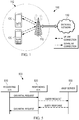
- FIG. 1 illustrates a network 100 for communicating data.
- the network 100 comprises an access point (AP) 110 having a coverage area 112, a plurality of stations (STAs) 120, and a backhaul network 130.
- the AP 110 may comprise any component capable of providing wireless access by, inter alia, establishing uplink (dashed line) and/or downlink (dotted line) connections with the STAs 120, such as a base station, an enhanced base station (eNB), a femtocell, and other wirelessly enabled devices.
- the STAs 120 may comprise any component capable of establishing a wireless connection with the AP 110.
- the backhaul network 130 may be any component or collection of components that allow data to be exchanged between the AP 110 and a remote end (not shown).
- the network 100 may comprise various other wireless devices, such as relays, femtocells, etc.
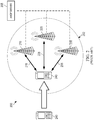
- FIG. 2 illustrates a network 200 comprising APs 210-230 configured to provide wireless access in a coverage area 202.
- the APs 210, 220, 230 are assigned BSSID_1, BSSID_2, and BSSID_3.
- the APs 210, 220, 230 share at least some common attributes/capabilities, and as a result, one or more independent BSS parameters may be collectively associated with the BSSID_1, the BSSID_2, and the BSSID_3.
- a unique set of dependent BSS parameters are associated with each of the BSSID_1, BSSID_2, and BSSID_3.
- the STA 240 is configured to perform conventional ANQP discovery, and therefore must execute separate ANQP discovery exchanges 215, 225, 235 with each of the APs 210, 220, 230 (respectively) in order to determine their respective dependent BSS parameters. Performing multiple ANQP discovery exchanges may be duplicative and/or unnecessary in situations where the APs 210-230 share large numbers of independent BSS parameters.
- the independent BSS parameters may be separate from the dependent BSS parameters.
- the dependent BSS parameters may describe those attributes that are associated with a specific BSSID, but that are not associated with the other BSSIDs.
- independent BSS parameters may be a subset of dependent BSS parameters in the sense that a subset of the BSS dependent parameters have the same values for multiple BSS.
- a set of dependent BSS attributes may define all attributes associated with a given BSSID, and the independent BSS attributes may indicate which of the dependent BSS attributes are commonly associated with all BSSIDs in the group.
- FIG. 3 illustrates a network 300 in which a STA 340 is configured to perform an embodiment ANQP discovery technique upon roaming into a coverage area 302.
- the network 300 includes APs 310-330 configured to provide wireless access in a coverage area 302.
- the APs 310, 320, 330 are assigned BSSID_1, BSSID_2, and BSSID_3, respectively.
- the APs 310, 320, 330 share at least some common attributes/capabilities, and consequently the BSSID_1, the BSSID_2, and the BSSID_3 are collectively associated with one or more independent BSS parameters describing those common attributes/capabilities.
- the STA 340 is configured to perform an embodiment ANQP discovery exchange 345 to obtain independent BSS parameters describing common attributes/capabilities shared between the APs 310, 320, 330.
- the ANQP discovery exchange 345 is achieved by encapsulating an ANQP query specifying BSSID_2 within a GAS initial request message.
- a PAME-BI bit of the GAS message is set to a value (e.g., zero) to indicate that the accompanying ANQP query is requesting independent BSS parameters in addition to dependent BSS parameters.
- the AP 320 relays the ANQP query to the ANQP server 305, which provides dependent and independent BSS parameters in an ANQP response message.
- the ANQP response message is forwarded to the requesting STA 340 via a GAS response message.
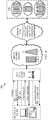
- FIG. 4 illustrates a network architecture 400 for performing an Access Network Query Protocol (ANQP) operation.
- ANQP Access Network Query Protocol
- STAs wanting to connect to a Wi-Fi network may scan an area for available Wi-Fi APs by, inter alia, detecting beacons and/or exchanging probe request/response messages. Once identified, the STA and Wi-Fi APs may exchange ANQP query requests and responses so that the STA may discover different features of the Wi-Fi APs.
- STAs may include any wirelessly enabled device, such as a cell phone, laptop, tablet, smart sensor, handheld or consumer electronic device, and other user devices.
- STAs may comprise a Wi-Fi interface for accessing Wi-Fi networks, as well as other interfaces for interacting with other types of communication networks, such as a cellular network.
- An access point (AP) and one or more STAs can form a basic service set (BSS), which is the basic building block of an IEEE 802.11 wireless local area network (WLAN).
- An AP may communicate with an AP controller or an ANQP server, which can be collocated or not with the AP.
- a BSS generally can be identified by a service set identifier (SSID), which is configured and may be broadcasted by the AP.
- a BSS also is identified by the BSSID, which is the MAC address of the AP.
- a SSID could be shared by several BSS, but the BSSID is unique for a BSS.
- FIG. 5 illustrates an embodiment GAS message exchange 500 between a requesting STA 510, a responding STA 520, and an ANQP server 530.
- the requesting STA sends a GAS initial request to the responding STA 520.
- the GAS initial request may include an ANQP query that specifies a BSSID and a PAM-BI bit that may indicate whether the ANQP query is requesting independent.
- the ANQP query may be forwarded from the responding STA 520 to the ANQP server 530 via another transport protocol.
- the ANQP server 530 may respond with an ANQP response message that lists dependent BSS parameters associated with the BSS ID specified by the ANQP query.
- the ANQP response message may also include independent BSS parameters when the PAM-BI bit indicates that independent BSS parameters are being queried.
- the ANQP response may be relayed from the responding STA 520 to the requesting STA 510 using a GAS response message.
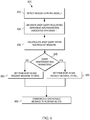
- FIG. 6 illustrates a method 600 for querying BSS parameters, as might be performed by a requesting STA.
- the method 600 begins with step 610, where the requesting STA detects a beacon carrying a BSSID (BSSID_1) assigned to a Wi-Fi AP.
- the method 600 proceeds to step 620, where the requesting STA generates an ANQP query specifying the BSSID_1 in order to request dependent BSS parameters associated with BSSID_1.
- the method 600 proceeds to step 630, where the requesting STA encapsulates the ANQP query within a GAS request message.
- the method 600 proceeds to step 640, where the requesting STA elects whether to query independent BSS parameters.
- step 650 the STA sets a PAME-BI bit of the GAS request message to zero.
- step 655 the STA sets the PAME-BI bit of the GAS request message to one. While the PAME-BI bit is described as being set to zero or one in this example, the PAME-BI bit can be set to any value(s) to indicate whether or not independent BSS parameters are being requested.
- step 660 the requesting STA communicates the GAS request message to a responding STA.
- PAME-BI Pre-Association Message Exchange BSSID Independent
- AP access point
- GAS Generic Advertisement Service
- the actual queries do not allow open ended query formulation such as "return only the common attributes for this BSSID”.
- GAS may be used to enable network selection for stations (STAs) when the parameter dot11InterworkingServiceActivated is set to true.
- GAS provides transport mechanisms for advertisement services while STAs are in the unassociated state as well as the associated state. This is accomplished via the use of Public Action management frames, which are Class-1 frames.
- GAS messages are transmitted using individually addressed Public Action frames.
- a GAS message exchange may take place between two STAs, with one STA transmitting a GAS Query Request and the other STA transmitting the GAS Query Response.
- STAs may refer to mobile devices, APs, or any other device that communicates wirelessly in a Wi-Fi network.
- the GAS Initial Request frame is a Public Action frame. It is transmitted by a requesting STA to request information from another STA.
- FIG. 7 illustrates a GAS Initial Request frame body format.
- the GAS Initial Response frame is a Public Action frame. It is transmitted by a STA responding to a GAS Initial Request frame.
- FIG. 8 illustrates a GAS Initial Response frame body format.
- Advertisement Protocol elements contain information identifying a particular advertisement protocol and its corresponding Advertisement Control.
- FIG. 9 illustrates an Advertisement Protocol element format that includes an element ID field, a length field, and one or more advertisement protocol tuple fields.
- FIG. 10 illustrates an advertisement protocol tuple field format that includes query response information field and an advertisement protocol ID field.
- FIG. 11 illustrates a Query Response Information field format that includes a query response length limit field and a PAME-BI field.
- the PAME-BI field may be set to zero or one depending on whether independent BSS parameters are being queried.
- the Pre-Association Message Exchange BSSID Independent (PAME-BI) bit is used by an AP to indicate whether the Advertisement Server, which is the non-AP STA's peer for this Advertisement Protocol, returns a Query Response that is independent of the BSSID used for the GAS frame exchange. This bit is set to 1 to indicate the Query Response is independent of the BSSID; it is set to 0 to indicate that the Query Response may be dependent on the BSSID.
- the Advertisement Protocol ID field may be set to zero to indicate that the GAS message carries an ANQP query/response.
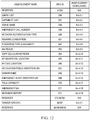
- FIG. 12 illustrates a table of ANQP elements that may be queried using an ANQP request message protocol.
- ANQP query request may use the Query List ANQP-element comprising ANQP-elements Info IDs that have an ANQP-element type of S.
- the ANQP query request is transported in the Query Request field of GAS Request frames.
- the ANQP query response is transported in the Query Response field of GAS Response frames.
- This disclosure proposes a new method to indicate the common ANQP attributes in a homogeneous extended service set identification (HESSID) and a query method to request the common attributes.
- a new type of query is proposed, where the query sender specifies if the sender wants to query only the dependent basic service set (BSS) parameters or both the dependent and the independent BSS parameters.
- the query request format proposed is the initial GAS request with Advertisement Protocol element (e.g., code 3) having an Advertisement Protocol ID set to zero and a PAME-BI bit set to either zero or one depending on whether independent BSS parameters are desired.
- Advertisement Protocol element e.g., code 3
- the responding STA (e.g., the AP) notifies the ANQP server that independent BSS parameters are being queried in addition to the dependent BSS parameters.
- This notification can be executed in a variety of ways.
- the responding STA may modify the ANQP query prior to forwarding the ANQP query to the ANQP server, e.g., append or embed the PAMI-BI bit in the ANQP query, etc.
- the responding STA may include an indication in a priority protocol message used to transport the ANQP query from the responding STA to the ANQP server.
- the PAME-BI bit may be embedded in the ANQP query by the requesting server prior to the ANQP query being encapsulated within the GAS message.
- Requesting STAs may adjust subsequent queries to other APs when independent BSS parameters are obtained via an ANQP/GAS exchange, thereby reducing the overhead of those subsequent queries.
- the BSSID dependent and independent parameters are located in the ANQP server.
- the server record keeps additional information for each ANQP attribute to specify if the attribute is BSSID dependent or not.
- the server distinguishes the BSS dependent from the BSS independent attributes by keeping additional information on each attribute, storing the information in separate data structure or other methods.
- the filtering based on the BSSID independent or not value may be done at the ANQP server level based on the GAS request format and BSSID value.
- Dependent and independent BSS attributes can be distinguished from one another in a variety of ways.
- the dependent and independent BSS attributes are listed in a single group of attribute fields, with each attribute field having an indicator (e.g., a PAME-BI indicator or otherwise) that specifies whether the corresponding BSS attribute is independent or dependent.
- dependent BSS attributes are listed in first group of attribute fields and independent BSS attributes are listed in a second group of attribute fields.
- the first and second groups of attribute fields may be differentiated using an indicator bit (e.g., PAM-BI bit or otherwise).
- dependent BSS attributes may be provided by the corresponding AP, and independent BSS attributes may be provided by the ANQP server.
- APs may only provide their own dependent BSS attributes.
- the dependent BSS attributes may be stored locally in the AP or remotely in the ANQP server.
- the ANQP may create a new entry for each BSSID.
- the ANQP server matches the AP address to a BSSID and then returns the corresponding attributes to the corresponding AP.
- the BSSID entry for an AP in the ANQP records may be manually specified by the operator or dynamically updated by the AP during an initialization of the ANQP records.
- dependent and independent BSS attributes may be provided in separate ANQP response messages.
- the messages may have a different PAME-BI indicator value to indicate whether the message carries independent or dependent BSS parameters.
- multiple ANQP servers may be distributed at AP locations.
- the ANQP servers may communicate and/or manage independent/dependent BSS parameters in a distributed manner.
- the distributed ANQP servers may collectively determine which BSS parameters are dependent/independent. For instance, a distributed ANQP server at a first AP may decide that an independent BSS parameter should be changed to a dependent BSS parameter, and may inform other ANQP servers located at APs in the same homogeneous extended service set (HESS) as the first AP.
- sets of independent and/or dependent BSS parameters may be associated with a life time duration, in which case a STA may utilize a remaining lifetime (e.g., identified via ANQP protocol) to determine when to query updated BSS parameters.
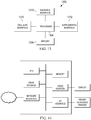
- FIG. 13 illustrates a block diagram of an embodiment of a communications device 1300, which may be equivalent to one or more devices (e.g., UEs, NBs, etc.) discussed above.
- the communications device 1300 may include a processor 1304, a memory 1306, a cellular interface 1310, a supplemental interface 1312, and a backhaul interface 1314, which may (or may not) be arranged as shown in FIG. 13 .
- the processor 1304 may be any component capable of performing computations and/or other processing related tasks
- the memory 1306 may be any component capable of storing programming and/or instructions for the processor 1304.
- the cellular interface 1310 may be any component or collection of components that allows the communications device 1300 to communicate using a cellular signal, and may be used to receive and/or transmit information over a cellular connection of a cellular network.
- the supplemental interface 1312 may be any component or collection of components that allows the communications device 1300 to communicate data or control information via a supplemental protocol.
- the supplemental interface 1312 may be a non-cellular wireless interface for communicating in accordance with a Wireless-Fidelity (Wi-Fi) or Bluetooth protocol.
- Wi-Fi Wireless-Fidelity
- the supplemental interface 1312 may be a wireline interface.
- the backhaul interface 1314 may be optionally included in the communications device 1300, and may comprise any component or collection of components that allows the communications device 1300 to communicate with another device via a backhaul network.
- FIG. 14 is a block diagram of a processing system that may be used for implementing the devices and methods disclosed herein. Specific devices may utilize all of the components shown, or only a subset of the components, and levels of integration may vary from device to device. Furthermore, a device may contain multiple instances of a component, such as multiple processing units, processors, memories, transmitters, receivers, etc.
- the processing system may comprise a processing unit equipped with one or more input/output devices, such as a speaker, microphone, mouse, touchscreen, keypad, keyboard, printer, display, and the like.
- the processing unit may include a central processing unit (CPU), memory, a mass storage device, a video adapter, and an I/O interface connected to a bus.
- CPU central processing unit
- the bus may be one or more of any type of several bus architectures including a memory bus or memory controller, a peripheral bus, video bus, or the like.
- the CPU may comprise any type of electronic data processor.
- the memory may comprise any type of system memory such as static random access memory (SRAM), dynamic random access memory (DRAM), synchronous DRAM (SDRAM), read-only memory (ROM), a combination thereof, or the like.
- SRAM static random access memory
- DRAM dynamic random access memory
- SDRAM synchronous DRAM
- ROM read-only memory
- the memory may include ROM for use at boot-up, and DRAM for program and data storage for use while executing programs.
- the mass storage device may comprise any type of storage device configured to store data, programs, and other information and to make the data, programs, and other information accessible via the bus.
- the mass storage device may comprise, for example, one or more of a solid state drive, hard disk drive, a magnetic disk drive, an optical disk drive, or the like.
- the video adapter and the I/O interface provide interfaces to couple external input and output devices to the processing unit.
- input and output devices include the display coupled to the video adapter and the mouse/keyboard/printer coupled to the I/O interface.
- Other devices may be coupled to the processing unit, and additional or fewer interface cards may be utilized.
- a serial interface card (not shown) may be used to provide a serial interface for a printer.
- the processing unit also includes one or more network interfaces, which may comprise wired links, such as an Ethernet cable or the like, and/or wireless links to access nodes or different networks.
- the network interface allows the processing unit to communicate with remote units via the networks.
- the network interface may provide wireless communication via one or more transmitters/transmit antennas and one or more receivers/receive antennas.
- the processing unit is coupled to a local-area network or a wide-area network for data processing and communications with remote devices, such as other processing units, the Internet, remote storage facilities, or the like.
Landscapes
- Engineering & Computer Science (AREA)
- Computer Networks & Wireless Communication (AREA)
- Signal Processing (AREA)
- Computer Security & Cryptography (AREA)
- Mobile Radio Communication Systems (AREA)
Claims (11)
- Procédé pour une découverte de réseau local sans fil (WLAN), le procédé consistant :à détecter, au moyen d'une station (STA) demanderesse, un identifiant d'ensemble de services de base (BSS) (BSSID) d'une station répondante (S610) ;à générer, au moyen de la station demanderesse, une demande de service d'annonce générique (GAS) comprenant une demande de protocole d'interrogation de réseau d'accès (ANQP) et un bit indépendant d'identification d'ensemble BSS (BSSID) d'échange de messages d'association (PAME-BI), dans lequel la demande de protocole ANQP comporte l'identifiant BSSID et est configurée pour demander des paramètres d'ensemble BSS dépendants de la station répondante, dans lequel le bit PAME-BI est fixé à une première valeur si la demande de protocole ANQP demande des paramètres d'ensemble BSS indépendants en plus des paramètres d'ensemble BSS dépendants (S620, S630, S640, S655) ; età envoyer, au moyen de la station demanderesse, la demande de service GAS à la station répondante (S660),consistant en outre :à recevoir, au moyen de la station demanderesse, un message de réponse de service GAS en provenance de la station répondante, dans lequel un message de réponse de protocole ANQP est encapsulé dans le message de réponse de service GAS et dans lequel le message de réponse de protocole ANQP identifie à la fois les paramètres d'ensemble BSS dépendants et les paramètres d'ensemble BSS indépendants,dans lequel le message de réponse de protocole ANQP comprend un seul groupe de champs d'attribut d'ensemble BSS identifiant les paramètres d'ensemble BSS dépendants et les paramètres d'ensemble BSS indépendants, etdans lequel chaque champ d'attribut d'ensemble BSS dans le groupe de champs d'attribut d'ensemble BSS comprend un bit PAME-BI individuel indiquant si un paramètre d'ensemble BSS correspondant au champ d'attribut d'ensemble BSS est un paramètre d'ensemble BSS dépendant ou un paramètre d'ensemble BSS indépendant.
- Procédé selon la revendication 1, dans lequel le bit PAME-BI est fixé à une seconde valeur si la demande de protocole ANQP demande les paramètres d'ensemble BSS dépendants sans demander les paramètres d'ensemble BSS indépendants (S650).
- Procédé selon l'une quelconque des revendications 1 et 2, dans lequel les paramètres d'ensemble BSS dépendants décrivent des attributs qui sont associés uniquement à l'identifiant BSSID, et dans lequel les paramètres d'ensemble BSS indépendants décrivent des attributs qui sont associés communément à un groupe d'identifiants BSSID.
- Procédé selon l'une quelconque des revendications 1 à 3, dans lequel la station répondante est un premier point d'accès (AP) sans fil dans un groupe de points d'accès sans fil, dans lequel les paramètres d'ensemble BSS dépendants décrivent des attributs associés au premier point d'accès sans fil et dans lequel les paramètres d'ensemble BSS indépendants décrivent des attributs associés communément à chaque point d'accès sans fil dans le groupe de points d'accès sans fil.
- Station (STA) demanderesse, comprenant :un processeur (1304) ; etun support de stockage lisible par ordinateur (1306) stockant une programmation pour une exécution par le processeur, la programmation comprenant des instructions configurées :pour détecter un identifiant d'ensemble de services de base (BSS) (BSSID) d'une station répondante ;pour générer une demande de service d'annonce générique (GAS) comprenant une demande de protocole d'interrogation de réseau d'accès (ANQP) et un bit indépendant d'identification d'ensemble BSS (BSSID) d'échange de messages d'association (PAME-BI), dans laquelle la demande de protocole ANQP comporte l'identifiant BSSID, et est configurée pour demander, des paramètres d'identification BSSID dépendants de la station répondante,dans laquelle le bit PAME-BI de la demande de service GAS est fixé à une première valeur si des paramètres d'ensemble BSS indépendants doivent être demandés en plus des paramètres d'ensemble BSS dépendants ; etpour envoyer la demande de service GAS à la station répondante ;pour recevoir, au moyen de la station demanderesse, un message de réponse de service GAS en provenance de la station répondante, dans laquelle un message de réponse de protocole ANQP est encapsulé dans le message de réponse de service GAS et dans laquelle le message de réponse de protocole ANQP identifie à la fois les paramètres d'ensemble BSS dépendants et les paramètres d'ensemble BSS indépendants,dans laquelle le message de réponse de protocole ANQP comprend un seul groupe de champs d'attribut d'ensemble BSS identifiant les paramètres d'ensemble BSS dépendants et les paramètres d'ensemble BSS indépendants, etdans laquelle chaque champ d'attribut d'ensemble BSS dans le groupe de champs d'attribut d'ensemble BSS comprend un bit PAME-BI individuel indiquant si un paramètre d'ensemble BSS correspondant au champ d'attribut d'ensemble BSS est un paramètre d'ensemble BSS dépendant ou un paramètre d'ensemble BSS indépendant.
- Station demanderesse selon la revendication 5, dans laquelle la station demanderesse est configurée pour fixer le bit PAME-BI à une seconde valeur si la demande de protocole ANQP demande les paramètres d'ensemble BSS dépendants sans demander les paramètres d'ensemble BSS indépendants.
- Procédé pour une découverte de réseau local sans fil (WLAN), le procédé consistant :à détecter, au moyen d'une station (STA) demanderesse, un identifiant d'ensemble de services de base (BSS) (BSSID) d'une station répondante ;à générer, au moyen de la station demanderesse, une demande de protocole d'interrogation de réseau d'accès (ANQP) qui est configurée pour demander des paramètres d'identifiant BSSID dépendants de la station répondante, dans lequel la demande de protocole ANQP comprend un bit indépendant d'identification d'ensemble BSS (BSSID) d'échange de messages de pré-association (PAME-BI), dans lequel le bit PAME-BI de la demande de protocole ANQP est fixé à une première valeur si la demande de protocole ANQP demande des paramètres d'ensemble BSS indépendants en plus des paramètres d'ensemble BSS dépendants ; età envoyer, au moyen de la station demanderesse, la demande de protocole ANQP à la station répondante,consistant en outre :à recevoir, au moyen de la station demanderesse, un message de réponse de service GAS en provenance de la station répondante, dans lequel un message de réponse de protocole ANQP est encapsulé dans le message de réponse de service GAS et dans lequel le message de réponse de protocole ANQP identifie à la fois les paramètres d'ensemble BSS dépendants et les paramètres d'ensemble BSS indépendants,dans lequel le message de réponse de protocole ANQP comprend un seul groupe de champs d'attribut d'ensemble BSS identifiant les paramètres d'ensemble BSS dépendants et les paramètres d'ensemble BSS indépendants, etdans lequel chaque champ d'attribut d'ensemble BSS dans le groupe de champs d'attribut d'ensemble BSS comprend un bit PAME-BI individuel indiquant si un paramètre d'ensemble BSS correspondant au champ d'attribut d'ensemble BSS est un paramètre d'ensemble BSS dépendant ou un paramètre d'ensemble BSS indépendant.
- Procédé selon la revendication 7, dans lequel
le bit PAME-BI de la demande de protocole ANQP est fixé à une seconde valeur si la demande de protocole ANQP demande les paramètres d'ensemble BSS dépendants sans demander les paramètres d'ensemble BSS indépendants. - Procédé selon la revendication 6 ou 8, dans lequel l'envoi de la demande de protocole ANQP à la station répondante consiste :à envoyer la demande de protocole ANQP à la station répondante par le biais d'une demande de service d'annonce générique (GAS).
- Procédé selon l'une quelconque des revendications 6 à 9, dans lequel les paramètres d'ensemble BSS dépendants décrivent des attributs qui sont associés uniquement à l'identifiant BSSID, et dans lequel les paramètres d'ensemble BSS indépendants décrivent des attributs qui sont associés communément à un groupe d'identifiants BSSID.
- Procédé selon l'une quelconque des revendications 6 à 9, dans lequel la station répondante est un premier point d'accès (AP) sans fil dans un groupe de points d'accès sans fil, dans lequel les paramètres d'ensemble BSS dépendants décrivent des attributs associés spécialement au premier point d'accès sans fil et dans lequel les paramètres d'ensemble BSS indépendants décrivent des attributs associés communément à chaque point d'accès sans fil dans le groupe de points d'accès sans fil.
Applications Claiming Priority (3)
| Application Number | Priority Date | Filing Date | Title |
|---|---|---|---|
| US201261723269P | 2012-11-06 | 2012-11-06 | |
| US14/072,551 US9480005B2 (en) | 2012-11-06 | 2013-11-05 | System and method for common attributes in HESSID and the associated queries |
| PCT/CN2013/086636 WO2014071845A1 (fr) | 2012-11-06 | 2013-11-06 | Système et procédé pour des attributs communs dans hessid et les interrogations associées |
Publications (3)
| Publication Number | Publication Date |
|---|---|
| EP2910064A1 EP2910064A1 (fr) | 2015-08-26 |
| EP2910064A4 EP2910064A4 (fr) | 2015-12-16 |
| EP2910064B1 true EP2910064B1 (fr) | 2019-01-09 |
Family
ID=50622342
Family Applications (1)
| Application Number | Title | Priority Date | Filing Date |
|---|---|---|---|
| EP13853305.4A Active EP2910064B1 (fr) | 2012-11-06 | 2013-11-06 | Attributs communs dans hessid et les interrogations associées |
Country Status (6)
| Country | Link |
|---|---|
| US (4) | US9480005B2 (fr) |
| EP (1) | EP2910064B1 (fr) |
| JP (1) | JP6055107B2 (fr) |
| KR (1) | KR101688446B1 (fr) |
| CN (1) | CN104770020B (fr) |
| WO (1) | WO2014071845A1 (fr) |
Families Citing this family (18)
| Publication number | Priority date | Publication date | Assignee | Title |
|---|---|---|---|---|
| US9277495B2 (en) * | 2013-03-05 | 2016-03-01 | Futurewei Technologies, Inc. | System and method for adaptive access network query protocol (ANQP) element provisioning |
| US9742775B2 (en) * | 2014-07-01 | 2017-08-22 | Google Inc. | Wireless local area network access |
| JP2017532924A (ja) * | 2014-09-15 | 2017-11-02 | ノキア ソリューションズ アンド ネットワークス オサケユキチュア | Wi−Fiシグナリングネットワークインサイトの配信 |
| WO2016043839A1 (fr) | 2014-09-15 | 2016-03-24 | Nokia Solutions And Networks Oy | Distribution d'analyses de réseau cellulaire à des dispositifs d'abonnés au moyen d'un ssid par l'intermédiaire d'un bloc d'informations de système cellulaire |
| US10021644B2 (en) * | 2014-10-30 | 2018-07-10 | Qualcomm Incorporated | Network discovery |
| US10264515B2 (en) * | 2014-12-22 | 2019-04-16 | Qualcomm Incorporated | Enhanced access network query protocol (ANQP) signaling to scale to support large numbers of service providers at an access point (AP) |
| US9998982B2 (en) * | 2014-12-22 | 2018-06-12 | Qualcomm Incorporated | Enhanced access network query protocol (ANQP) signaling for radio access network (RAN) sharing |
| EP3253127A4 (fr) * | 2015-02-27 | 2018-07-25 | Huawei Technologies Co., Ltd. | Appareil et procédé de recherche de point d'accès (ap) |
| US20160302144A1 (en) * | 2015-04-08 | 2016-10-13 | Nokia Technologies Oy | Method, apparatus, and computer program product for efficient use of frequency bands and channels in wireless environment |
| US10638408B2 (en) * | 2015-07-16 | 2020-04-28 | Avago Technologies International Sales Pte. Limited | Specifying service combinations in pre-association discovery |
| US10148769B2 (en) | 2015-09-11 | 2018-12-04 | Blackberry Limited | Pre-association discovery of services |
| US10320766B2 (en) | 2015-11-17 | 2019-06-11 | Google Llc | Wireless network access |
| WO2017188712A2 (fr) * | 2016-04-26 | 2017-11-02 | 엘지전자 주식회사 | Procédé de réglage de nav considérant l'inactivation des couleurs de bss dans un système lan sans fil et appareil associé |
| US10985915B2 (en) | 2017-04-12 | 2021-04-20 | Blackberry Limited | Encrypting data in a pre-associated state |
| JP2021145156A (ja) * | 2018-06-11 | 2021-09-24 | ソニーグループ株式会社 | 通信装置、及び通信方法 |
| US11588785B2 (en) * | 2018-07-05 | 2023-02-21 | Interdigital Patent Holdings, Inc. | Methods and procedures for the dynamic mac address distribution in IEEE 802.11 networks |
| US11622234B2 (en) * | 2019-09-13 | 2023-04-04 | Troverlo, Inc. | Passive asset tracking using observations of Wi-Fi access points |
| US10848934B1 (en) * | 2019-09-13 | 2020-11-24 | Troverlo, Llc | Passive sensor tracking with existing infrastructure |
Family Cites Families (15)
| Publication number | Priority date | Publication date | Assignee | Title |
|---|---|---|---|---|
| CN1910942A (zh) * | 2004-01-06 | 2007-02-07 | 诺基亚公司 | 用于指示要探测的服务集标识符的方法和设备 |
| US20070064660A1 (en) | 2005-09-16 | 2007-03-22 | Qi Emily H | Techniques for enhanced transition from access point to access point by a mobile wireless device |
| US7974249B2 (en) | 2006-03-01 | 2011-07-05 | Dell Products L.P. | Virtual access point for configuration of a LAN |
| KR101092822B1 (ko) * | 2007-07-04 | 2011-12-12 | 엘지전자 주식회사 | 무선 랜에서 외부 네트워크와의 인터워킹 절차 및 이를 위한 메시지 포맷 |
| CN101668290B (zh) | 2008-09-04 | 2013-10-09 | 华为终端有限公司 | 一种wlan网络配置方法及装置 |
| JP5305453B2 (ja) | 2009-06-19 | 2013-10-02 | Necインフロンティア株式会社 | 無線lanの高速ローミングシステム、高速ローミング方法及び高速ローミングプログラム |
| WO2011115449A2 (fr) * | 2010-03-19 | 2011-09-22 | Lg Electronics Inc. | Procédé et appareil permettant d'acquérir des informations sur le canal disponible dans un système de réseau local sans fil |
| AU2011262720B2 (en) * | 2010-06-07 | 2013-11-21 | Lg Electronics Inc. | Method and apparatus for a station to operate within WLAN system |
| US8923257B2 (en) | 2010-09-29 | 2014-12-30 | Blackberry Limited | Methods and apparatus to discover network capabilities available via wireless networks |
| JP5664273B2 (ja) | 2011-01-21 | 2015-02-04 | ソニー株式会社 | 無線通信装置、プログラム、および無線通信システム |
| US8520583B2 (en) * | 2011-05-03 | 2013-08-27 | Nokia Corporation | Method, apparatus, and computer program product for roaming partner discovery |
| US8750180B2 (en) * | 2011-09-16 | 2014-06-10 | Blackberry Limited | Discovering network information available via wireless networks |
| US8463175B2 (en) * | 2011-09-16 | 2013-06-11 | Nokia Corporation | Method, apparatus, and computer program product for wireless network discovery through passive and active scanning |
| US20130316705A1 (en) * | 2012-05-25 | 2013-11-28 | Nokia Corporation | Method, apparatus, and computer program product for efficient network discovery |
| US9872230B2 (en) | 2012-10-19 | 2018-01-16 | Futurewei Technologies, Inc. | System and method for efficient communications system scanning |
-
2013
- 2013-11-05 US US14/072,551 patent/US9480005B2/en active Active
- 2013-11-06 CN CN201380056557.0A patent/CN104770020B/zh active Active
- 2013-11-06 JP JP2015540041A patent/JP6055107B2/ja active Active
- 2013-11-06 EP EP13853305.4A patent/EP2910064B1/fr active Active
- 2013-11-06 WO PCT/CN2013/086636 patent/WO2014071845A1/fr not_active Ceased
- 2013-11-06 KR KR1020157014338A patent/KR101688446B1/ko active Active
-
2016
- 2016-10-20 US US15/298,468 patent/US9872238B2/en active Active
-
2017
- 2017-12-06 US US15/833,888 patent/US10129819B2/en active Active
-
2018
- 2018-11-09 US US16/186,183 patent/US10757641B2/en active Active
Non-Patent Citations (1)
| Title |
|---|
| None * |
Also Published As
| Publication number | Publication date |
|---|---|
| US20190082383A1 (en) | 2019-03-14 |
| EP2910064A1 (fr) | 2015-08-26 |
| US9872238B2 (en) | 2018-01-16 |
| WO2014071845A1 (fr) | 2014-05-15 |
| US9480005B2 (en) | 2016-10-25 |
| US20170041862A1 (en) | 2017-02-09 |
| JP2015535155A (ja) | 2015-12-07 |
| US20140126563A1 (en) | 2014-05-08 |
| CN104770020B (zh) | 2018-10-02 |
| KR101688446B1 (ko) | 2016-12-22 |
| US20180098275A1 (en) | 2018-04-05 |
| US10757641B2 (en) | 2020-08-25 |
| US10129819B2 (en) | 2018-11-13 |
| CN104770020A (zh) | 2015-07-08 |
| JP6055107B2 (ja) | 2016-12-27 |
| KR20150082393A (ko) | 2015-07-15 |
| EP2910064A4 (fr) | 2015-12-16 |
Similar Documents
| Publication | Publication Date | Title |
|---|---|---|
| US10757641B2 (en) | System and method for common attributes in HESSID and the associated queries | |
| US9622156B2 (en) | System and method for efficient access network query protocol (ANQP) discovery of multiple access points (APs) | |
| US7313111B2 (en) | Method and apparatus for indicating service set identifiers to probe for | |
| US9872230B2 (en) | System and method for efficient communications system scanning | |
| EP3111701B1 (fr) | Demande de rapport de voisin déclenché par un point d'accès | |
| TWI729984B (zh) | 終端裝置及藉由屬於不同蜂巢式系統的終端裝置來控制裝置間通信的方法 | |
| KR102167933B1 (ko) | 무선랜 시스템에서 액세스 포인트 탐색 방법 및 장치 | |
| US9609664B2 (en) | Layered channel access method and apparatus in wireless local area network system | |
| WO2014106434A1 (fr) | Système et procédé de découverte efficace de protocole de demande de réseau d'accès (anqp) de multiples points d'accès (ap) | |
| US20180302783A1 (en) | Access Point Supporting at Least Two Virtual Networks and Method Performed Thereby for Communicating with Wireless Device | |
| WO2015092114A1 (fr) | Établissement d'un nouveau réseau d'accès | |
| US9380401B1 (en) | Signaling schemes allowing discovery of network devices capable of operating in multiple network modes | |
| CN118870403A (zh) | 使用接入交递在网络中进行通信的系统及方法 | |
| US20170105168A1 (en) | Techniques for identifying wi-fi device collocated with a cellular cell | |
| KR102047258B1 (ko) | 무선랜에서의 통신 방법 및 이를 위한 무선 장치 |
Legal Events
| Date | Code | Title | Description |
|---|---|---|---|
| PUAI | Public reference made under article 153(3) epc to a published international application that has entered the european phase |
Free format text: ORIGINAL CODE: 0009012 |
|
| 17P | Request for examination filed |
Effective date: 20150513 |
|
| AK | Designated contracting states |
Kind code of ref document: A1 Designated state(s): AL AT BE BG CH CY CZ DE DK EE ES FI FR GB GR HR HU IE IS IT LI LT LU LV MC MK MT NL NO PL PT RO RS SE SI SK SM TR |
|
| AX | Request for extension of the european patent |
Extension state: BA ME |
|
| RIN1 | Information on inventor provided before grant (corrected) |
Inventor name: CHEN, BIN Inventor name: HUANG, KAIDI Inventor name: CALCEV, GEORGE Inventor name: AHMED, HANAN |
|
| RA4 | Supplementary search report drawn up and despatched (corrected) |
Effective date: 20151116 |
|
| RIC1 | Information provided on ipc code assigned before grant |
Ipc: H04W 48/14 20090101AFI20151110BHEP |
|
| DAX | Request for extension of the european patent (deleted) | ||
| STAA | Information on the status of an ep patent application or granted ep patent |
Free format text: STATUS: EXAMINATION IS IN PROGRESS |
|
| 17Q | First examination report despatched |
Effective date: 20170608 |
|
| GRAP | Despatch of communication of intention to grant a patent |
Free format text: ORIGINAL CODE: EPIDOSNIGR1 |
|
| STAA | Information on the status of an ep patent application or granted ep patent |
Free format text: STATUS: GRANT OF PATENT IS INTENDED |
|
| RIC1 | Information provided on ipc code assigned before grant |
Ipc: H04W 88/08 20090101ALN20180425BHEP Ipc: H04W 48/20 20090101ALN20180425BHEP Ipc: H04W 48/16 20090101ALN20180425BHEP Ipc: H04W 84/12 20090101ALN20180425BHEP Ipc: H04W 48/14 20090101AFI20180425BHEP |
|
| INTG | Intention to grant announced |
Effective date: 20180509 |
|
| GRAS | Grant fee paid |
Free format text: ORIGINAL CODE: EPIDOSNIGR3 |
|
| GRAJ | Information related to disapproval of communication of intention to grant by the applicant or resumption of examination proceedings by the epo deleted |
Free format text: ORIGINAL CODE: EPIDOSDIGR1 |
|
| GRAL | Information related to payment of fee for publishing/printing deleted |
Free format text: ORIGINAL CODE: EPIDOSDIGR3 |
|
| STAA | Information on the status of an ep patent application or granted ep patent |
Free format text: STATUS: EXAMINATION IS IN PROGRESS |
|
| REG | Reference to a national code |
Ref country code: DE Ref legal event code: R079 Ref document number: 602013049709 Country of ref document: DE Free format text: PREVIOUS MAIN CLASS: H04W0048160000 Ipc: H04W0048140000 |
|
| GRAP | Despatch of communication of intention to grant a patent |
Free format text: ORIGINAL CODE: EPIDOSNIGR1 |
|
| STAA | Information on the status of an ep patent application or granted ep patent |
Free format text: STATUS: GRANT OF PATENT IS INTENDED |
|
| INTC | Intention to grant announced (deleted) | ||
| RIC1 | Information provided on ipc code assigned before grant |
Ipc: H04W 84/12 20090101ALN20180926BHEP Ipc: H04W 88/08 20090101ALN20180926BHEP Ipc: H04W 48/16 20090101ALN20180926BHEP Ipc: H04W 48/20 20090101ALN20180926BHEP Ipc: H04W 48/14 20090101AFI20180926BHEP |
|
| INTG | Intention to grant announced |
Effective date: 20181018 |
|
| GRAA | (expected) grant |
Free format text: ORIGINAL CODE: 0009210 |
|
| STAA | Information on the status of an ep patent application or granted ep patent |
Free format text: STATUS: THE PATENT HAS BEEN GRANTED |
|
| AK | Designated contracting states |
Kind code of ref document: B1 Designated state(s): AL AT BE BG CH CY CZ DE DK EE ES FI FR GB GR HR HU IE IS IT LI LT LU LV MC MK MT NL NO PL PT RO RS SE SI SK SM TR |
|
| REG | Reference to a national code |
Ref country code: GB Ref legal event code: FG4D |
|
| REG | Reference to a national code |
Ref country code: CH Ref legal event code: EP Ref country code: AT Ref legal event code: REF Ref document number: 1088887 Country of ref document: AT Kind code of ref document: T Effective date: 20190115 |
|
| REG | Reference to a national code |
Ref country code: IE Ref legal event code: FG4D |
|
| REG | Reference to a national code |
Ref country code: DE Ref legal event code: R096 Ref document number: 602013049709 Country of ref document: DE |
|
| REG | Reference to a national code |
Ref country code: NL Ref legal event code: MP Effective date: 20190109 |
|
| REG | Reference to a national code |
Ref country code: LT Ref legal event code: MG4D |
|
| PG25 | Lapsed in a contracting state [announced via postgrant information from national office to epo] |
Ref country code: NL Free format text: LAPSE BECAUSE OF FAILURE TO SUBMIT A TRANSLATION OF THE DESCRIPTION OR TO PAY THE FEE WITHIN THE PRESCRIBED TIME-LIMIT Effective date: 20190109 |
|
| REG | Reference to a national code |
Ref country code: AT Ref legal event code: MK05 Ref document number: 1088887 Country of ref document: AT Kind code of ref document: T Effective date: 20190109 |
|
| PG25 | Lapsed in a contracting state [announced via postgrant information from national office to epo] |
Ref country code: FI Free format text: LAPSE BECAUSE OF FAILURE TO SUBMIT A TRANSLATION OF THE DESCRIPTION OR TO PAY THE FEE WITHIN THE PRESCRIBED TIME-LIMIT Effective date: 20190109 Ref country code: NO Free format text: LAPSE BECAUSE OF FAILURE TO SUBMIT A TRANSLATION OF THE DESCRIPTION OR TO PAY THE FEE WITHIN THE PRESCRIBED TIME-LIMIT Effective date: 20190409 Ref country code: PL Free format text: LAPSE BECAUSE OF FAILURE TO SUBMIT A TRANSLATION OF THE DESCRIPTION OR TO PAY THE FEE WITHIN THE PRESCRIBED TIME-LIMIT Effective date: 20190109 Ref country code: SE Free format text: LAPSE BECAUSE OF FAILURE TO SUBMIT A TRANSLATION OF THE DESCRIPTION OR TO PAY THE FEE WITHIN THE PRESCRIBED TIME-LIMIT Effective date: 20190109 Ref country code: ES Free format text: LAPSE BECAUSE OF FAILURE TO SUBMIT A TRANSLATION OF THE DESCRIPTION OR TO PAY THE FEE WITHIN THE PRESCRIBED TIME-LIMIT Effective date: 20190109 Ref country code: PT Free format text: LAPSE BECAUSE OF FAILURE TO SUBMIT A TRANSLATION OF THE DESCRIPTION OR TO PAY THE FEE WITHIN THE PRESCRIBED TIME-LIMIT Effective date: 20190509 Ref country code: LT Free format text: LAPSE BECAUSE OF FAILURE TO SUBMIT A TRANSLATION OF THE DESCRIPTION OR TO PAY THE FEE WITHIN THE PRESCRIBED TIME-LIMIT Effective date: 20190109 |
|
| PG25 | Lapsed in a contracting state [announced via postgrant information from national office to epo] |
Ref country code: RS Free format text: LAPSE BECAUSE OF FAILURE TO SUBMIT A TRANSLATION OF THE DESCRIPTION OR TO PAY THE FEE WITHIN THE PRESCRIBED TIME-LIMIT Effective date: 20190109 Ref country code: LV Free format text: LAPSE BECAUSE OF FAILURE TO SUBMIT A TRANSLATION OF THE DESCRIPTION OR TO PAY THE FEE WITHIN THE PRESCRIBED TIME-LIMIT Effective date: 20190109 Ref country code: BG Free format text: LAPSE BECAUSE OF FAILURE TO SUBMIT A TRANSLATION OF THE DESCRIPTION OR TO PAY THE FEE WITHIN THE PRESCRIBED TIME-LIMIT Effective date: 20190409 Ref country code: GR Free format text: LAPSE BECAUSE OF FAILURE TO SUBMIT A TRANSLATION OF THE DESCRIPTION OR TO PAY THE FEE WITHIN THE PRESCRIBED TIME-LIMIT Effective date: 20190410 Ref country code: IS Free format text: LAPSE BECAUSE OF FAILURE TO SUBMIT A TRANSLATION OF THE DESCRIPTION OR TO PAY THE FEE WITHIN THE PRESCRIBED TIME-LIMIT Effective date: 20190509 Ref country code: HR Free format text: LAPSE BECAUSE OF FAILURE TO SUBMIT A TRANSLATION OF THE DESCRIPTION OR TO PAY THE FEE WITHIN THE PRESCRIBED TIME-LIMIT Effective date: 20190109 |
|
| REG | Reference to a national code |
Ref country code: DE Ref legal event code: R097 Ref document number: 602013049709 Country of ref document: DE |
|
| PG25 | Lapsed in a contracting state [announced via postgrant information from national office to epo] |
Ref country code: EE Free format text: LAPSE BECAUSE OF FAILURE TO SUBMIT A TRANSLATION OF THE DESCRIPTION OR TO PAY THE FEE WITHIN THE PRESCRIBED TIME-LIMIT Effective date: 20190109 Ref country code: DK Free format text: LAPSE BECAUSE OF FAILURE TO SUBMIT A TRANSLATION OF THE DESCRIPTION OR TO PAY THE FEE WITHIN THE PRESCRIBED TIME-LIMIT Effective date: 20190109 Ref country code: AT Free format text: LAPSE BECAUSE OF FAILURE TO SUBMIT A TRANSLATION OF THE DESCRIPTION OR TO PAY THE FEE WITHIN THE PRESCRIBED TIME-LIMIT Effective date: 20190109 Ref country code: SK Free format text: LAPSE BECAUSE OF FAILURE TO SUBMIT A TRANSLATION OF THE DESCRIPTION OR TO PAY THE FEE WITHIN THE PRESCRIBED TIME-LIMIT Effective date: 20190109 Ref country code: AL Free format text: LAPSE BECAUSE OF FAILURE TO SUBMIT A TRANSLATION OF THE DESCRIPTION OR TO PAY THE FEE WITHIN THE PRESCRIBED TIME-LIMIT Effective date: 20190109 Ref country code: IT Free format text: LAPSE BECAUSE OF FAILURE TO SUBMIT A TRANSLATION OF THE DESCRIPTION OR TO PAY THE FEE WITHIN THE PRESCRIBED TIME-LIMIT Effective date: 20190109 Ref country code: RO Free format text: LAPSE BECAUSE OF FAILURE TO SUBMIT A TRANSLATION OF THE DESCRIPTION OR TO PAY THE FEE WITHIN THE PRESCRIBED TIME-LIMIT Effective date: 20190109 Ref country code: CZ Free format text: LAPSE BECAUSE OF FAILURE TO SUBMIT A TRANSLATION OF THE DESCRIPTION OR TO PAY THE FEE WITHIN THE PRESCRIBED TIME-LIMIT Effective date: 20190109 |
|
| PLBE | No opposition filed within time limit |
Free format text: ORIGINAL CODE: 0009261 |
|
| STAA | Information on the status of an ep patent application or granted ep patent |
Free format text: STATUS: NO OPPOSITION FILED WITHIN TIME LIMIT |
|
| PG25 | Lapsed in a contracting state [announced via postgrant information from national office to epo] |
Ref country code: SM Free format text: LAPSE BECAUSE OF FAILURE TO SUBMIT A TRANSLATION OF THE DESCRIPTION OR TO PAY THE FEE WITHIN THE PRESCRIBED TIME-LIMIT Effective date: 20190109 |
|
| 26N | No opposition filed |
Effective date: 20191010 |
|
| PG25 | Lapsed in a contracting state [announced via postgrant information from national office to epo] |
Ref country code: SI Free format text: LAPSE BECAUSE OF FAILURE TO SUBMIT A TRANSLATION OF THE DESCRIPTION OR TO PAY THE FEE WITHIN THE PRESCRIBED TIME-LIMIT Effective date: 20190109 |
|
| PG25 | Lapsed in a contracting state [announced via postgrant information from national office to epo] |
Ref country code: TR Free format text: LAPSE BECAUSE OF FAILURE TO SUBMIT A TRANSLATION OF THE DESCRIPTION OR TO PAY THE FEE WITHIN THE PRESCRIBED TIME-LIMIT Effective date: 20190109 |
|
| REG | Reference to a national code |
Ref country code: DE Ref legal event code: R119 Ref document number: 602013049709 Country of ref document: DE |
|
| REG | Reference to a national code |
Ref country code: CH Ref legal event code: PL |
|
| PG25 | Lapsed in a contracting state [announced via postgrant information from national office to epo] |
Ref country code: LI Free format text: LAPSE BECAUSE OF NON-PAYMENT OF DUE FEES Effective date: 20191130 Ref country code: CH Free format text: LAPSE BECAUSE OF NON-PAYMENT OF DUE FEES Effective date: 20191130 Ref country code: LU Free format text: LAPSE BECAUSE OF NON-PAYMENT OF DUE FEES Effective date: 20191106 Ref country code: MC Free format text: LAPSE BECAUSE OF FAILURE TO SUBMIT A TRANSLATION OF THE DESCRIPTION OR TO PAY THE FEE WITHIN THE PRESCRIBED TIME-LIMIT Effective date: 20190109 |
|
| REG | Reference to a national code |
Ref country code: BE Ref legal event code: MM Effective date: 20191130 |
|
| PG25 | Lapsed in a contracting state [announced via postgrant information from national office to epo] |
Ref country code: IE Free format text: LAPSE BECAUSE OF NON-PAYMENT OF DUE FEES Effective date: 20191106 Ref country code: FR Free format text: LAPSE BECAUSE OF NON-PAYMENT OF DUE FEES Effective date: 20191130 Ref country code: DE Free format text: LAPSE BECAUSE OF NON-PAYMENT OF DUE FEES Effective date: 20200603 |
|
| PG25 | Lapsed in a contracting state [announced via postgrant information from national office to epo] |
Ref country code: BE Free format text: LAPSE BECAUSE OF NON-PAYMENT OF DUE FEES Effective date: 20191130 |
|
| PG25 | Lapsed in a contracting state [announced via postgrant information from national office to epo] |
Ref country code: CY Free format text: LAPSE BECAUSE OF FAILURE TO SUBMIT A TRANSLATION OF THE DESCRIPTION OR TO PAY THE FEE WITHIN THE PRESCRIBED TIME-LIMIT Effective date: 20190109 |
|
| PG25 | Lapsed in a contracting state [announced via postgrant information from national office to epo] |
Ref country code: MT Free format text: LAPSE BECAUSE OF FAILURE TO SUBMIT A TRANSLATION OF THE DESCRIPTION OR TO PAY THE FEE WITHIN THE PRESCRIBED TIME-LIMIT Effective date: 20190109 Ref country code: HU Free format text: LAPSE BECAUSE OF FAILURE TO SUBMIT A TRANSLATION OF THE DESCRIPTION OR TO PAY THE FEE WITHIN THE PRESCRIBED TIME-LIMIT; INVALID AB INITIO Effective date: 20131106 |
|
| PG25 | Lapsed in a contracting state [announced via postgrant information from national office to epo] |
Ref country code: MK Free format text: LAPSE BECAUSE OF FAILURE TO SUBMIT A TRANSLATION OF THE DESCRIPTION OR TO PAY THE FEE WITHIN THE PRESCRIBED TIME-LIMIT Effective date: 20190109 |
|
| PGFP | Annual fee paid to national office [announced via postgrant information from national office to epo] |
Ref country code: GB Payment date: 20250930 Year of fee payment: 13 |