EP2910655B1 - Nassschmelzverrfahren für nickeloxiderz - Google Patents
Nassschmelzverrfahren für nickeloxiderz Download PDFInfo
- Publication number
- EP2910655B1 EP2910655B1 EP13875045.0A EP13875045A EP2910655B1 EP 2910655 B1 EP2910655 B1 EP 2910655B1 EP 13875045 A EP13875045 A EP 13875045A EP 2910655 B1 EP2910655 B1 EP 2910655B1
- Authority
- EP
- European Patent Office
- Prior art keywords
- slurry
- ore
- nickel oxide
- nickel
- leaching
- Prior art date
- Legal status (The legal status is an assumption and is not a legal conclusion. Google has not performed a legal analysis and makes no representation as to the accuracy of the status listed.)
- Not-in-force
Links
- 229910000480 nickel oxide Inorganic materials 0.000 title claims description 55
- GNRSAWUEBMWBQH-UHFFFAOYSA-N oxonickel Chemical compound [Ni]=O GNRSAWUEBMWBQH-UHFFFAOYSA-N 0.000 title claims description 55
- 238000000034 method Methods 0.000 title claims description 43
- 238000003723 Smelting Methods 0.000 title description 16
- 239000002002 slurry Substances 0.000 claims description 195
- PXHVJJICTQNCMI-UHFFFAOYSA-N Nickel Chemical compound [Ni] PXHVJJICTQNCMI-UHFFFAOYSA-N 0.000 claims description 127
- 238000000926 separation method Methods 0.000 claims description 88
- 238000002386 leaching Methods 0.000 claims description 87
- QDOXWKRWXJOMAK-UHFFFAOYSA-N dichromium trioxide Chemical compound O=[Cr]O[Cr]=O QDOXWKRWXJOMAK-UHFFFAOYSA-N 0.000 claims description 78
- XEEYBQQBJWHFJM-UHFFFAOYSA-N Iron Chemical compound [Fe] XEEYBQQBJWHFJM-UHFFFAOYSA-N 0.000 claims description 74
- 238000006386 neutralization reaction Methods 0.000 claims description 71
- 239000002245 particle Substances 0.000 claims description 67
- 229910052759 nickel Inorganic materials 0.000 claims description 64
- 239000007788 liquid Substances 0.000 claims description 59
- QAOWNCQODCNURD-UHFFFAOYSA-N Sulfuric acid Chemical compound OS(O)(=O)=O QAOWNCQODCNURD-UHFFFAOYSA-N 0.000 claims description 45
- 238000009854 hydrometallurgy Methods 0.000 claims description 40
- 238000012545 processing Methods 0.000 claims description 40
- 229910017052 cobalt Inorganic materials 0.000 claims description 37
- 239000010941 cobalt Substances 0.000 claims description 37
- GUTLYIVDDKVIGB-UHFFFAOYSA-N cobalt atom Chemical compound [Co] GUTLYIVDDKVIGB-UHFFFAOYSA-N 0.000 claims description 37
- 229910052742 iron Inorganic materials 0.000 claims description 36
- 230000003472 neutralizing effect Effects 0.000 claims description 31
- 238000011084 recovery Methods 0.000 claims description 31
- 239000012452 mother liquor Substances 0.000 claims description 30
- 239000002244 precipitate Substances 0.000 claims description 30
- 239000003795 chemical substances by application Substances 0.000 claims description 28
- 239000011019 hematite Substances 0.000 claims description 26
- 229910052595 hematite Inorganic materials 0.000 claims description 26
- LIKBJVNGSGBSGK-UHFFFAOYSA-N iron(3+);oxygen(2-) Chemical compound [O-2].[O-2].[O-2].[Fe+3].[Fe+3] LIKBJVNGSGBSGK-UHFFFAOYSA-N 0.000 claims description 26
- 239000011701 zinc Substances 0.000 claims description 24
- 229910052725 zinc Inorganic materials 0.000 claims description 24
- 239000002253 acid Substances 0.000 claims description 23
- 230000005484 gravity Effects 0.000 claims description 23
- XLYOFNOQVPJJNP-UHFFFAOYSA-N water Substances O XLYOFNOQVPJJNP-UHFFFAOYSA-N 0.000 claims description 23
- HCHKCACWOHOZIP-UHFFFAOYSA-N Zinc Chemical compound [Zn] HCHKCACWOHOZIP-UHFFFAOYSA-N 0.000 claims description 22
- 238000005987 sulfurization reaction Methods 0.000 claims description 22
- 239000000463 material Substances 0.000 claims description 21
- 239000011777 magnesium Substances 0.000 claims description 19
- 239000000203 mixture Substances 0.000 claims description 19
- 239000011651 chromium Substances 0.000 claims description 18
- 239000012141 concentrate Substances 0.000 claims description 15
- 229910052804 chromium Inorganic materials 0.000 claims description 13
- VYZAMTAEIAYCRO-UHFFFAOYSA-N Chromium Chemical compound [Cr] VYZAMTAEIAYCRO-UHFFFAOYSA-N 0.000 claims description 12
- 239000007787 solid Substances 0.000 claims description 12
- 238000005406 washing Methods 0.000 claims description 12
- 239000005083 Zinc sulfide Substances 0.000 claims description 11
- 229910052984 zinc sulfide Inorganic materials 0.000 claims description 11
- DRDVZXDWVBGGMH-UHFFFAOYSA-N zinc;sulfide Chemical compound [S-2].[Zn+2] DRDVZXDWVBGGMH-UHFFFAOYSA-N 0.000 claims description 11
- 239000003513 alkali Substances 0.000 claims description 10
- 229910052749 magnesium Inorganic materials 0.000 claims description 10
- FYYHWMGAXLPEAU-UHFFFAOYSA-N Magnesium Chemical compound [Mg] FYYHWMGAXLPEAU-UHFFFAOYSA-N 0.000 claims description 9
- 230000003247 decreasing effect Effects 0.000 claims description 8
- SZVJSHCCFOBDDC-UHFFFAOYSA-N iron(II,III) oxide Inorganic materials O=[Fe]O[Fe]O[Fe]=O SZVJSHCCFOBDDC-UHFFFAOYSA-N 0.000 claims description 8
- RWSOTUBLDIXVET-UHFFFAOYSA-N Dihydrogen sulfide Chemical compound S RWSOTUBLDIXVET-UHFFFAOYSA-N 0.000 claims description 7
- 229910000037 hydrogen sulfide Inorganic materials 0.000 claims description 7
- 239000010419 fine particle Substances 0.000 claims description 6
- 235000014413 iron hydroxide Nutrition 0.000 claims description 6
- NCNCGGDMXMBVIA-UHFFFAOYSA-L iron(ii) hydroxide Chemical compound [OH-].[OH-].[Fe+2] NCNCGGDMXMBVIA-UHFFFAOYSA-L 0.000 claims description 6
- 239000002994 raw material Substances 0.000 claims description 6
- UCKMPCXJQFINFW-UHFFFAOYSA-N Sulphide Chemical compound [S-2] UCKMPCXJQFINFW-UHFFFAOYSA-N 0.000 claims description 5
- 238000007664 blowing Methods 0.000 claims description 5
- 239000007789 gas Substances 0.000 claims description 4
- 238000007885 magnetic separation Methods 0.000 claims description 4
- 238000012216 screening Methods 0.000 claims description 4
- 238000003756 stirring Methods 0.000 claims description 3
- 238000007865 diluting Methods 0.000 claims description 2
- VYPSYNLAJGMNEJ-UHFFFAOYSA-N Silicium dioxide Chemical compound O=[Si]=O VYPSYNLAJGMNEJ-UHFFFAOYSA-N 0.000 description 32
- CPLXHLVBOLITMK-UHFFFAOYSA-N magnesium oxide Inorganic materials [Mg]=O CPLXHLVBOLITMK-UHFFFAOYSA-N 0.000 description 19
- 239000000395 magnesium oxide Substances 0.000 description 15
- 239000011362 coarse particle Substances 0.000 description 14
- 239000000243 solution Substances 0.000 description 14
- 238000006243 chemical reaction Methods 0.000 description 13
- 229910052500 inorganic mineral Inorganic materials 0.000 description 13
- 239000011707 mineral Substances 0.000 description 13
- 235000010755 mineral Nutrition 0.000 description 13
- 229910052906 cristobalite Inorganic materials 0.000 description 12
- 229910052681 coesite Inorganic materials 0.000 description 11
- 239000000377 silicon dioxide Substances 0.000 description 11
- 229910052682 stishovite Inorganic materials 0.000 description 11
- 229910052905 tridymite Inorganic materials 0.000 description 11
- 229910052602 gypsum Inorganic materials 0.000 description 9
- 239000010440 gypsum Substances 0.000 description 9
- 239000012535 impurity Substances 0.000 description 9
- CSNNHWWHGAXBCP-UHFFFAOYSA-L Magnesium sulfate Chemical compound [Mg+2].[O-][S+2]([O-])([O-])[O-] CSNNHWWHGAXBCP-UHFFFAOYSA-L 0.000 description 8
- NINIDFKCEFEMDL-UHFFFAOYSA-N Sulfur Chemical compound [S] NINIDFKCEFEMDL-UHFFFAOYSA-N 0.000 description 8
- 238000005299 abrasion Methods 0.000 description 8
- 150000004763 sulfides Chemical class 0.000 description 8
- 239000011593 sulfur Substances 0.000 description 8
- 229910052717 sulfur Inorganic materials 0.000 description 8
- 238000004458 analytical method Methods 0.000 description 7
- VTHJTEIRLNZDEV-UHFFFAOYSA-L magnesium dihydroxide Chemical compound [OH-].[OH-].[Mg+2] VTHJTEIRLNZDEV-UHFFFAOYSA-L 0.000 description 7
- 239000000347 magnesium hydroxide Substances 0.000 description 7
- 229910001862 magnesium hydroxide Inorganic materials 0.000 description 7
- VTYYLEPIZMXCLO-UHFFFAOYSA-L Calcium carbonate Chemical compound [Ca+2].[O-]C([O-])=O VTYYLEPIZMXCLO-UHFFFAOYSA-L 0.000 description 6
- 229910052751 metal Inorganic materials 0.000 description 6
- 239000002184 metal Substances 0.000 description 6
- 238000012360 testing method Methods 0.000 description 6
- 239000011575 calcium Substances 0.000 description 5
- -1 goethite Chemical compound 0.000 description 5
- 229910052598 goethite Inorganic materials 0.000 description 5
- AEIXRCIKZIZYPM-UHFFFAOYSA-M hydroxy(oxo)iron Chemical compound [O][Fe]O AEIXRCIKZIZYPM-UHFFFAOYSA-M 0.000 description 5
- 239000000047 product Substances 0.000 description 5
- 238000009283 thermal hydrolysis Methods 0.000 description 5
- AXCZMVOFGPJBDE-UHFFFAOYSA-L calcium dihydroxide Chemical compound [OH-].[OH-].[Ca+2] AXCZMVOFGPJBDE-UHFFFAOYSA-L 0.000 description 4
- 239000000920 calcium hydroxide Substances 0.000 description 4
- 235000011116 calcium hydroxide Nutrition 0.000 description 4
- 229910001861 calcium hydroxide Inorganic materials 0.000 description 4
- 230000000052 comparative effect Effects 0.000 description 4
- 238000010586 diagram Methods 0.000 description 4
- 238000005516 engineering process Methods 0.000 description 4
- 230000007613 environmental effect Effects 0.000 description 4
- 229910052943 magnesium sulfate Inorganic materials 0.000 description 4
- 150000002739 metals Chemical class 0.000 description 4
- 229910052710 silicon Inorganic materials 0.000 description 4
- 239000010703 silicon Substances 0.000 description 4
- 239000000126 substance Substances 0.000 description 4
- 229910017709 Ni Co Inorganic materials 0.000 description 3
- 229910003267 Ni-Co Inorganic materials 0.000 description 3
- 229910003262 Ni‐Co Inorganic materials 0.000 description 3
- 229910000019 calcium carbonate Inorganic materials 0.000 description 3
- OSGAYBCDTDRGGQ-UHFFFAOYSA-L calcium sulfate Chemical compound [Ca+2].[O-]S([O-])(=O)=O OSGAYBCDTDRGGQ-UHFFFAOYSA-L 0.000 description 3
- 150000001875 compounds Chemical class 0.000 description 3
- 238000010790 dilution Methods 0.000 description 3
- 239000012895 dilution Substances 0.000 description 3
- 229910000360 iron(III) sulfate Inorganic materials 0.000 description 3
- 238000012423 maintenance Methods 0.000 description 3
- 238000004064 recycling Methods 0.000 description 3
- 235000019738 Limestone Nutrition 0.000 description 2
- 230000006835 compression Effects 0.000 description 2
- 238000007906 compression Methods 0.000 description 2
- 229910052802 copper Inorganic materials 0.000 description 2
- 239000010949 copper Substances 0.000 description 2
- 238000001035 drying Methods 0.000 description 2
- 230000000694 effects Effects 0.000 description 2
- XLYOFNOQVPJJNP-UHFFFAOYSA-M hydroxide Chemical compound [OH-] XLYOFNOQVPJJNP-UHFFFAOYSA-M 0.000 description 2
- 238000011835 investigation Methods 0.000 description 2
- BAUYGSIQEAFULO-UHFFFAOYSA-L iron(2+) sulfate (anhydrous) Chemical compound [Fe+2].[O-]S([O-])(=O)=O BAUYGSIQEAFULO-UHFFFAOYSA-L 0.000 description 2
- 239000006028 limestone Substances 0.000 description 2
- 229910052748 manganese Inorganic materials 0.000 description 2
- 239000011572 manganese Substances 0.000 description 2
- WPBNNNQJVZRUHP-UHFFFAOYSA-L manganese(2+);methyl n-[[2-(methoxycarbonylcarbamothioylamino)phenyl]carbamothioyl]carbamate;n-[2-(sulfidocarbothioylamino)ethyl]carbamodithioate Chemical compound [Mn+2].[S-]C(=S)NCCNC([S-])=S.COC(=O)NC(=S)NC1=CC=CC=C1NC(=S)NC(=O)OC WPBNNNQJVZRUHP-UHFFFAOYSA-L 0.000 description 2
- 229910021645 metal ion Inorganic materials 0.000 description 2
- 230000003647 oxidation Effects 0.000 description 2
- 238000007254 oxidation reaction Methods 0.000 description 2
- 238000005192 partition Methods 0.000 description 2
- 238000000746 purification Methods 0.000 description 2
- 239000002562 thickening agent Substances 0.000 description 2
- RYGMFSIKBFXOCR-UHFFFAOYSA-N Copper Chemical compound [Cu] RYGMFSIKBFXOCR-UHFFFAOYSA-N 0.000 description 1
- CWYNVVGOOAEACU-UHFFFAOYSA-N Fe2+ Chemical compound [Fe+2] CWYNVVGOOAEACU-UHFFFAOYSA-N 0.000 description 1
- 229910015853 MSO4 Inorganic materials 0.000 description 1
- PWHULOQIROXLJO-UHFFFAOYSA-N Manganese Chemical compound [Mn] PWHULOQIROXLJO-UHFFFAOYSA-N 0.000 description 1
- 229910000805 Pig iron Inorganic materials 0.000 description 1
- XUIMIQQOPSSXEZ-UHFFFAOYSA-N Silicon Chemical compound [Si] XUIMIQQOPSSXEZ-UHFFFAOYSA-N 0.000 description 1
- 229910000831 Steel Inorganic materials 0.000 description 1
- 238000002441 X-ray diffraction Methods 0.000 description 1
- LZNZMLIXMJLLPJ-UHFFFAOYSA-N [Cr+3].[Cr+3].[O-][Cr]([O-])=O.[O-][Cr]([O-])=O.[O-][Cr]([O-])=O Chemical compound [Cr+3].[Cr+3].[O-][Cr]([O-])=O.[O-][Cr]([O-])=O.[O-][Cr]([O-])=O LZNZMLIXMJLLPJ-UHFFFAOYSA-N 0.000 description 1
- 229910052925 anhydrite Inorganic materials 0.000 description 1
- 229910052791 calcium Inorganic materials 0.000 description 1
- 238000000975 co-precipitation Methods 0.000 description 1
- 239000003245 coal Substances 0.000 description 1
- 238000010276 construction Methods 0.000 description 1
- 238000005260 corrosion Methods 0.000 description 1
- 230000007797 corrosion Effects 0.000 description 1
- 230000018044 dehydration Effects 0.000 description 1
- 238000006297 dehydration reaction Methods 0.000 description 1
- 238000011161 development Methods 0.000 description 1
- 238000004453 electron probe microanalysis Methods 0.000 description 1
- 230000008030 elimination Effects 0.000 description 1
- 238000003379 elimination reaction Methods 0.000 description 1
- 238000007667 floating Methods 0.000 description 1
- 238000010348 incorporation Methods 0.000 description 1
- 239000000543 intermediate Substances 0.000 description 1
- UQSXHKLRYXJYBZ-UHFFFAOYSA-N iron oxide Inorganic materials [Fe]=O UQSXHKLRYXJYBZ-UHFFFAOYSA-N 0.000 description 1
- 229910000358 iron sulfate Inorganic materials 0.000 description 1
- 229910000359 iron(II) sulfate Inorganic materials 0.000 description 1
- JEIPFZHSYJVQDO-UHFFFAOYSA-N iron(III) oxide Inorganic materials O=[Fe]O[Fe]=O JEIPFZHSYJVQDO-UHFFFAOYSA-N 0.000 description 1
- 238000004989 laser desorption mass spectroscopy Methods 0.000 description 1
- 229910001710 laterite Inorganic materials 0.000 description 1
- 239000011504 laterite Substances 0.000 description 1
- HCWCAKKEBCNQJP-UHFFFAOYSA-N magnesium orthosilicate Chemical compound [Mg+2].[Mg+2].[O-][Si]([O-])([O-])[O-] HCWCAKKEBCNQJP-UHFFFAOYSA-N 0.000 description 1
- 239000000391 magnesium silicate Substances 0.000 description 1
- 229910052919 magnesium silicate Inorganic materials 0.000 description 1
- 235000019792 magnesium silicate Nutrition 0.000 description 1
- 238000005065 mining Methods 0.000 description 1
- 238000002156 mixing Methods 0.000 description 1
- BFDHFSHZJLFAMC-UHFFFAOYSA-L nickel(ii) hydroxide Chemical compound [OH-].[OH-].[Ni+2] BFDHFSHZJLFAMC-UHFFFAOYSA-L 0.000 description 1
- 230000001590 oxidative effect Effects 0.000 description 1
- 239000003002 pH adjusting agent Substances 0.000 description 1
- 230000001376 precipitating effect Effects 0.000 description 1
- 238000010298 pulverizing process Methods 0.000 description 1
- 238000011946 reduction process Methods 0.000 description 1
- 230000000717 retained effect Effects 0.000 description 1
- RMAQACBXLXPBSY-UHFFFAOYSA-N silicic acid Chemical compound O[Si](O)(O)O RMAQACBXLXPBSY-UHFFFAOYSA-N 0.000 description 1
- 235000012239 silicon dioxide Nutrition 0.000 description 1
- 239000010959 steel Substances 0.000 description 1
- 150000003467 sulfuric acid derivatives Chemical class 0.000 description 1
- 239000006228 supernatant Substances 0.000 description 1
- 239000008400 supply water Substances 0.000 description 1
- 230000001629 suppression Effects 0.000 description 1
- 150000003751 zinc Chemical class 0.000 description 1
Images
Classifications
-
- C—CHEMISTRY; METALLURGY
- C22—METALLURGY; FERROUS OR NON-FERROUS ALLOYS; TREATMENT OF ALLOYS OR NON-FERROUS METALS
- C22B—PRODUCTION AND REFINING OF METALS; PRETREATMENT OF RAW MATERIALS
- C22B23/00—Obtaining nickel or cobalt
- C22B23/04—Obtaining nickel or cobalt by wet processes
- C22B23/0407—Leaching processes
- C22B23/0415—Leaching processes with acids or salt solutions except ammonium salts solutions
- C22B23/043—Sulfurated acids or salts thereof
-
- C—CHEMISTRY; METALLURGY
- C22—METALLURGY; FERROUS OR NON-FERROUS ALLOYS; TREATMENT OF ALLOYS OR NON-FERROUS METALS
- C22B—PRODUCTION AND REFINING OF METALS; PRETREATMENT OF RAW MATERIALS
- C22B23/00—Obtaining nickel or cobalt
- C22B23/005—Preliminary treatment of ores, e.g. by roasting or by the Krupp-Renn process
-
- C—CHEMISTRY; METALLURGY
- C22—METALLURGY; FERROUS OR NON-FERROUS ALLOYS; TREATMENT OF ALLOYS OR NON-FERROUS METALS
- C22B—PRODUCTION AND REFINING OF METALS; PRETREATMENT OF RAW MATERIALS
- C22B23/00—Obtaining nickel or cobalt
- C22B23/04—Obtaining nickel or cobalt by wet processes
- C22B23/0407—Leaching processes
- C22B23/0415—Leaching processes with acids or salt solutions except ammonium salts solutions
-
- C—CHEMISTRY; METALLURGY
- C22—METALLURGY; FERROUS OR NON-FERROUS ALLOYS; TREATMENT OF ALLOYS OR NON-FERROUS METALS
- C22B—PRODUCTION AND REFINING OF METALS; PRETREATMENT OF RAW MATERIALS
- C22B23/00—Obtaining nickel or cobalt
- C22B23/04—Obtaining nickel or cobalt by wet processes
- C22B23/0453—Treatment or purification of solutions, e.g. obtained by leaching
- C22B23/0461—Treatment or purification of solutions, e.g. obtained by leaching by chemical methods
-
- C—CHEMISTRY; METALLURGY
- C22—METALLURGY; FERROUS OR NON-FERROUS ALLOYS; TREATMENT OF ALLOYS OR NON-FERROUS METALS
- C22B—PRODUCTION AND REFINING OF METALS; PRETREATMENT OF RAW MATERIALS
- C22B3/00—Extraction of metal compounds from ores or concentrates by wet processes
- C22B3/04—Extraction of metal compounds from ores or concentrates by wet processes by leaching
- C22B3/06—Extraction of metal compounds from ores or concentrates by wet processes by leaching in inorganic acid solutions, e.g. with acids generated in situ; in inorganic salt solutions other than ammonium salt solutions
- C22B3/08—Sulfuric acid, other sulfurated acids or salts thereof
-
- C—CHEMISTRY; METALLURGY
- C22—METALLURGY; FERROUS OR NON-FERROUS ALLOYS; TREATMENT OF ALLOYS OR NON-FERROUS METALS
- C22B—PRODUCTION AND REFINING OF METALS; PRETREATMENT OF RAW MATERIALS
- C22B3/00—Extraction of metal compounds from ores or concentrates by wet processes
- C22B3/20—Treatment or purification of solutions, e.g. obtained by leaching
- C22B3/22—Treatment or purification of solutions, e.g. obtained by leaching by physical processes, e.g. by filtration, by magnetic means, or by thermal decomposition
-
- C—CHEMISTRY; METALLURGY
- C22—METALLURGY; FERROUS OR NON-FERROUS ALLOYS; TREATMENT OF ALLOYS OR NON-FERROUS METALS
- C22B—PRODUCTION AND REFINING OF METALS; PRETREATMENT OF RAW MATERIALS
- C22B3/00—Extraction of metal compounds from ores or concentrates by wet processes
- C22B3/20—Treatment or purification of solutions, e.g. obtained by leaching
- C22B3/44—Treatment or purification of solutions, e.g. obtained by leaching by chemical processes
-
- Y—GENERAL TAGGING OF NEW TECHNOLOGICAL DEVELOPMENTS; GENERAL TAGGING OF CROSS-SECTIONAL TECHNOLOGIES SPANNING OVER SEVERAL SECTIONS OF THE IPC; TECHNICAL SUBJECTS COVERED BY FORMER USPC CROSS-REFERENCE ART COLLECTIONS [XRACs] AND DIGESTS
- Y02—TECHNOLOGIES OR APPLICATIONS FOR MITIGATION OR ADAPTATION AGAINST CLIMATE CHANGE
- Y02P—CLIMATE CHANGE MITIGATION TECHNOLOGIES IN THE PRODUCTION OR PROCESSING OF GOODS
- Y02P10/00—Technologies related to metal processing
- Y02P10/20—Recycling
Definitions
- the present invention relates to a hydrometallurgical process for nickel oxide ore.
- the present invention relates to a hydrometallurgical process for nickel oxide ore of recovering nickel and cobalt from nickel oxide ore by a high pressure acid leaching that included an ore processing step, a leaching step, a solid-liquid separation step, a neutralization step, a zinc removal step, a sulfurization step and a final neutralization step; and which hydrometallurgical process can achieve the tasks of suppressing the abrasion of facilities such as piping and pumps caused by the ore slurry produced from the ore processing step, increasing durability, reducing the amount of a final neutralized residue produced from the final neutralization step, and suppressing the cost and environmental risks by compressing the volume of the tailing dam that stores the leaching residue that will be disposed of, neutralized precipitate, and the like, and also enables separation and recovery of impurity components that can be effectively utilized by recycling.
- the high pressure acid leaching does not include dry processes such as a reduction process and a drying process, unlike a pyrometallurgical method which is a conventional common smelting method for nickel oxide ore, and is advantageous in terms of energy and cost. Therefore, the high pressure acid leaching will be continuously considered as a promising technology as a smelting method for low grade nickel oxide ore. Accordingly, in order to increase the level of performance as a smelting process, various suggestions have been made mainly on the leaching process at a high temperature under pressure, in connection with an increase in the leaching ratios of nickel and cobalt, solution purification of the leachate, a decrease in the amount of use of the operation materials, and the like.
- Step (b) The normal-pressure leach residue obtained in the step (a) is allowed to react with sulfuric acid in an oxidizing atmosphere at a high temperature and a high pressure, and thus a pressurized acid leachate is obtained.
- the leach rate of nickel from ore is increased by performing two-stage leaching of subjecting an ore slurry to normal-pressure leaching (step (a)), and then the normal-pressure leach residue is subjected to acid leaching under pressure (step (b)). At the same time, the excess acid contained in the leachate of pressurized acid leaching is neutralized by the alkali component contained in the normal-pressure leach residue, and the burden of the neutralization step (step (c)) is reduced.
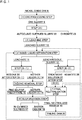
- Fig. 2 is a smelting process diagram illustrating an exemplary practical plant based on the hydrometallurgical process for nickel oxide ore (Patent Document 2).
- nickel oxide ore 8 is first mixed with water in (1) ore processing step, subsequently the removal of foreign materials and the adjustment of ore particle size are carried out, and an ore slurry 9 is formed.
- the ore slurry 9 is subjected to high-temperature pressure leaching using sulfuric acid in (2) leaching step, and thus a leached slurry 10 is formed.
- the leached slurry 10 thus formed is subjected to (3) solid-liquid separation step to be washed in multiple stages, and then the leached slurry is separated into a leachate 11 containing nickel and cobalt, and a leach residue slurry 12.
- the leachate 11 is subjected to (4) neutralization step, and is separated into a neutralized precipitate slurry 13 containing trivalent iron hydroxide, and a mother liquor (1) for nickel recovery 14.
- the mother liquor (1) 14 is subjected to (5) zinc removal step of adding a sulfurizing agent, and the mother liquor is separated into a zinc sulfide precipitate 15 containing zinc sulfide, and a mother liquor (2) 16 for nickel recovery.
- the mother liquor (2) 16 is subjected to (6) sulfurization step, and is separated into a mixed sulfide 17 containing nickel and cobalt, and a barren liquor 18 having nickel and the like removed therefrom.
- the barren liquor 18 is used as washing water for the leach residue in (3) solid-liquid separation step.
- the leach residue slurry 12 is subjected to (7) final neutralization step together with an excess amount of the barren liquor 18, and the leach residue slurry is neutralized.
- a final neutralized residue 19 is stored in a tailing dam 20.
- a feature of this method lies in that by washing the leached slurry in multiple stages in the solid-liquid separation step, the amount of neutralizing agent consumption and the amount of precipitate in the neutralization step can be reduced; since the true density of the leach residue can be increased, the solid-liquid separation characteristics can be improved; and the process is simplified by performing the leaching step simply by high-temperature pressure leaching.
- this method is considered to be advantageous against the method suggested in Patent Document 1.
- the loss of nickel can be reduced, and therefore, it is believed to be more advantageous.
- the leach residue obtained in the solid-liquid separation step is combined with excess barren liquor produced from the sulfurization step, and the mixture is made harmless by a neutralization treatment of adding a limestone slurry or a slaked lime slurry thereto.
- the final neutralized residue produced from this final neutralization treatment step (hereinafter, may be referred to as final neutralization step) is stored in the tailing dam.
- the final neutralized residue contains, in addition to impurity components such as hematite and chromite in the leach residue, gypsum that is formed by the neutralization treatment so that the final neutralized residue cannot be recycled, and there is a heavy burden of expenses for the construction and maintenance management of the tailing dam.
- Patent Document 3 (and also in patent application CA 2 891 140 A1 ) a hydrometallurgical process for nickel oxide ore, which includes a step of physically separating and recovering particles containing at least one selected from silica mineral, chromite or silica-magnesia mineral from ore slurry, and a step of physically separating and recovering hematite particles in the leach residue slurry, in a hydrometallurgical process based on a high pressure acid leaching.
- further improvements have been needed for efficient separation and recovery of impurity components contained in ore or leach residue, and recycling of these impurity components that have been separated and recovered.
- CA 2 891 140 A1 discloses a hydrometallurgical process for a nickel laterite ore to recover nickel and cobalt high pressure acid leach comprising an ore treatment step, a leaching step, a solid-liquid separation step, a neutralization step, a zinc removal step, a sulfurization-step, and a final neutralization step, which comprises at least one step selected from the following steps (B) and (C): (B) separation and recovery, by a physical separation method, of hematite particles in a leaching residue slurry produced from the solid-liquid separation step; or (C) subjecting a neutralization precipitate slurry produced from the neutralization step to the final neutralization step separately from a leaching residue produced from the solid-liquid separation step.
- the present invention was achieved in view of the problems of the conventional technologies, and it is an object of the present invention to provide a hydrometallurgical process for nickel oxide ore of recovering nickel and cobalt from nickel oxide ore by a high-pressure acid leaching that includes an ore processing step, a leaching step, a solid-liquid separation step, a neutralization step, a zinc removal step, a sulfurization step, and a final neutralization step; and which hydrometallurgical process can achieve the tasks of suppressing the abrasion of facilities such as piping and pumps caused by the ore slurry produced from the ore processing step, increasing durability, increasing the solid content ratio of the ore slurry, simplifying the facilities of the ore processing step, reducing the amount of a final neutralized residue produced from the final neutralization step, and suppressing the cost and environmental risks by compressing the volume of the tailing dam that stores the leaching residue that will be disposed of, neutralized precipitate, and the like, and also enables separation and recovery of impurity components that can be
- the inventors of the present invention conducted extensive investigations on the solution for the problems described above, in connection with a hydrometallurgical process for recovering nickel and cobalt from nickel oxide ore by a high pressure acid leaching that includes an ore processing step, a leaching step, a solid-liquid separation step, a neutralization step, a zinc removal step, a sulfurization step, and a final neutralization step.
- a hydrometallurgical process for nickel oxide ore of recovering nickel and cobalt from nickel oxide ore using a high pressure acid leaching that includes an ore processing step, a leaching step, a solid-liquid separation step, a neutralization step, a zinc removal step, a sulfurization step, and a final neutralization step, the process comprising the following step (A) in combination with the following step (B-1), and/or the following step (B-2):
- a second aspect of the present invention is a hydrometallurgical process for nickel oxide ore of recovering nickel and cobalt from nickel oxide ore using a high pressure acid leaching that includes an ore processing step, a leaching step, a solid-liquid separation step, a neutralization step, a zinc removal step, a sulfurization step, and a final neutralization step, the process including the step (A), the step (B-1), and the step (B-2) described in accordance with the first aspect of the invention, wherein the residue after the step (B-1) is supplied to at least the solid-liquid separation step.
- the recovery process of the step (A) may involve subjecting the ore slurry to cyclone classification using a cyclone, decreasing the amount of fine iron hydroxide particles, and then recovering chromite particles in the ore slurry as a concentrate of chromite, from the ore slurry using a specific gravity separation.
- the recovery process of the step (A) may perform cyclone classification without diluting the slurry concentration of the ore slurry.
- step (A) collection of chromite into an underflow in the cyclone classification is achieved in the entire amount except for unavoidable losses.
- the specific gravity separation may include at least one step selected from a step of using a floatex density separator, a step of using a spiral concentrator, and a step of using a shaking table.
- a pulp content of a slurry supplied to the spiral concentrator may be 15% to 35% solid, and preferably 20% to 30% solid.
- An amount of teeter water supplied to the floatex density separator may be 0.5 to 7.0 [m 3 ⁇ h -1 /m 2 ].
- the slurry may be subjected to physical separation based on magnetic separation to remove magnetite, and non-magnetized materials may then be recovered as a chromite concentrate.
- the ore processing step may be a step of performing the removal of foreign materials in the mined raw material ore and the adjustment of the ore particle size to form an ore slurry;
- the leaching step may be a step of adding sulfuric acid to the ore slurry, and stirring the mixture at a high temperature and a high pressure to form a leached slurry formed from a leach residue and the leachate;
- the solid-liquid separation step may be a step of washing the leached slurry in multiple stages to obtain the leachate containing nickel and cobalt, and the leach residue slurry;
- the neutralization step may be a step of adding an alkali to the leachate to form a neutralized precipitate slurry containing trivalent iron, and the mother liquor for nickel recovery;
- the zinc removal step may be a step of blowing in hydrogen sulfide gas into the mother liquor for nickel and cobalt recovery;
- the sulfurization step may be a step of blowing in hydrogen sulfide
- the adjustment of the ore particle size in the ore processing step may be carried out by a screening treatment to a particle size of 2 mm or less.
- the level of chromium(III) oxide in the concentrated chromite may be 45% or more.
- the pH after neutralization may be adjusted to 4 to 7, and thereafter, final neutralization may be carried out using an alkali other than a magnesium-based neutralizing agent.
- the leach residue slurry or the neutralized residue slurry including the leach residue slurry may be subjected to cyclone classification, and in this regard, a fine particle portion thus classified is recovered as a concentrate of hematite.
- step (A) and step (B) are adopted in a hydrometallurgical process of recovering nickel and cobalt from nickel oxide ore by a high pressure acid leaching that includes an ore processing step, a leaching step, a solid-liquid separation step, a neutralization step, a zinc removal step, a sulfurization step, and a final neutralization step, the problems described above are solved as follows. Therefore, the industrial value of the hydrometallurgical process is enormous.
- step (A) particles containing chromite in the ore slurry produced from the ore processing step are separated and recovered, so that abrasion of facilities such as piping and pumps at the time of transportation of the ore slurry can be suppressed.
- chromite is separated before wet smelting, reduction of the amount of leach residue can be expected, and the amount of a final neutralized residue can be reduced. Furthermore, if the chromite thus separated can be concentrated, the concentrated chromite can also be effectively utilized as a resource.
- step (B) since hematite in the leach residue produced from the solid-liquid separation step is separated and recovered, reduction of the amount of a final neutralized residue produced from the final neutralization step can be promoted, the cost and environmental risks caused by compression of the volume of the tailing dam that stores the leach residue that will be disposed of, a neutralized precipitate, and the like, can be suppressed, and also, the hematite that has been separated and recovered can be effectively utilized as a resource for iron.
- the hydrometallurgical process for nickel oxide ore of the present invention is a hydrometallurgical process of recovering nickel and cobalt from nickel oxide ore by a high pressure acid leaching that includes an ore processing step, a leaching step, a solid-liquid separation step, a neutralization step, a zinc removal step, a sulfurization step, and a final neutralization step, the hydrometallurgical process including at least one step selected from the following step (A), step (B-1), and step (B-2).
- This is a step of separating and recovering chromite particles in the ore slurry produced from the ore processing step, by a recovery process including a specific gravity separation.
- This is a step of subjecting the ore slurry having its Cr-level lowered through the step (A), to a leaching step and a solid-liquid separation step, and performing neutralization of the leachate obtained after the solid-liquid separation step using a Mg-based neutralizing agent such as Mg(OH) 2 or MgO.
- a Mg-based neutralizing agent such as Mg(OH) 2 or MgO.
- This is a step of subjecting the ore slurry having its Cr-level lowered through the step (A), to a leaching step and a solid-liquid separation step, performing neutralization of the leach residue slurry obtained after the solid-liquid separation step using a Mg-based neutralizing agent such as Mg(OH) 2 or MgO, and recovering hematite particles.
- a Mg-based neutralizing agent such as Mg(OH) 2 or MgO
- the method of the present invention includes at least one step selected from the step (A), step (B-1), and step (B-2), in view of solving the problems.
- Adoption of the step (A) is intended to suppress the abrasion of facilities such as piping and pumps at the time of transportation of the ore slurry, by separating and recovering particles containing chromite in the ore slurry produced from the previous ore processing step.
- abrasion is suppressed by separating chromite that is generally contained in nickel oxide ore and has a very high hardness value.
- step (B) since adoption of step (B) enables separation and recovery of hematite in the leach residue produced from the solid-liquid separation step, the amount of the final neutralized residue produced from the final neutralization step is reduced, and the expenses and environmental risks caused by compression of the volume of the tailing dam for storing the leach residue to be disposed of, a neutralized precipitate and the like, can be suppressed. At the same time, the hematite thus separated and recovered can also be effectively utilized as a resource for iron.
- iron in the nickel oxide ore is hydrolyzed at a high temperature in the leaching step, and therefore, iron is contained in the form of hematite in the final neutralized residue.
- the final neutralized residue contains gypsum that is formed by a neutralization treatment using a neutralizing agent containing Ca, in addition to chromite in the leach residue, the iron-level is as low as 30% to 40% by mass, and it is not feasible to effectively utilize the final neutralized residue directly as a raw material for iron making or the like.
- sulfur gypsum; calcium sulfate
- chromium chromite
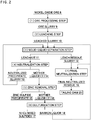
- Fig. 1 is a smelting process diagram illustrating an exemplary embodiment according to the hydrometallurgical process for nickel oxide ore related to the present invention.
- nickel oxide ore 8 is mixed with water in [1] ore processing step, and then the removal of foreign materials and the adjustment of the ore particle size are carried out to form an ore slurry 9.
- step (A) Thereafter, the ore slurry 9 is subjected to step (A), which is newly provided, to separate and recover chromite 23.
- An autoclave-supplied slurry 22 on one side is supplied to [2] leaching step.
- the autoclave-supplied slurry 22 is converted to a leached slurry 10 by leaching valuable components such as nickel and cobalt with sulfuric acid using an autoclave or the like.
- the leached slurry 10 thus formed is supplied to [3] solid-liquid separation step that uses multi-stage thickeners or the like, and is separated into a leachate 11 containing nickel and cobalt, and a leach residue slurry 12.
- the leachate 11 is supplied to the step (B-1), and is separated into a residue 26 after the step (B-1) containing trivalent iron hydroxide as a main component, and a mother liquor (1) 14 containing nickel.
- the mother liquor (1) 14 is subjected to [5] zinc removal step in which a sulfurizing agent is added, and is then separated into a zinc sulfide precipitate 15 containing zinc sulfide, and a mother liquor (2) 16 for nickel recovery.
- the mother liquor (2) 16 is subjected to [6] sulfurization step in which a sulfurizing agent is added, and is separated into a mixed sulfide 17 containing nickel and cobalt, and a barren liquor 18.
- the barren liquor 18 may be used as washing water for the leach residue in the [3] solid-liquid separation step, and the barren liquor 18 may also be supplied to the final neutralization step.
- a treatment solution 27 after the step (B-2), and the other portion of the leach residue slurry 12 that was not supplied to the step (B-2) are supplied to [7] final neutralization step, and the leach residue slurry is neutralized to about pH 8 to 9.
- the final neutralized residue 19 thus obtained is stored in the tailing dam 20.
- the ore processing step is a step of forming an ore slurry by performing the removal of foreign materials and the adjustment of the ore particle size.
- nickel oxide ore is classified using a wet sieve or the like to separate any foreign material that cannot be leached in a leaching step, ore particles having a particle size that is difficult to be transported by a pump, and the like.
- the screened particle size is about 2 mm, and ore particles having particle sizes greater than that are subjected to a pulverization treatment.
- a slurry is formed by the ore that has undergone pulverization-screening treatment, and then the slurry is settled and concentrated, so that an autoclave-supplied slurry having an adjusted solid concentration in the slurry (hereinafter, referred to as slurry concentration) is prepared.
- slurry concentration an autoclave-supplied slurry having an adjusted solid concentration in the slurry.
- the nickel oxide ore that serves as the raw material to be treated by the hydrometallurgical process of the present invention is composed mainly of so-called lateritic ore, such as limonite and saprolite.
- the nickel content of this lateritic ore is usually 0.8% to 2.5% by mass, and nickel is contained in the form of hydroxide or hydrous silica-magnesia (magnesium silicate) mineral.
- iron is 10% to 50% by mass, and iron is mainly in the form of trivalent hydroxide (goethite); however, some divalent iron is contained in hydrous silica-magnesia mineral or the like.
- Silicic acid components are contained in silica mineral such as cristobalite (amorphous silica), and hydrous silica-magnesia mineral.
- chromium components are contained as chromite mineral containing iron or magnesium.
- magnesia components are contained in silica-magnesia mineral that almost do not contain nickel, which is unweathered and has a high hardness value, in addition to the hydrous silica-magnesia mineral.
- silica mineral, chromite mineral, and silica-magnesia mineral are so-called gangue components that almost do not contain nickel, in regard to lateritic ore.
- chromium content has a high proportion of chromium existing as a single phase independent of a major portion of the iron content, and there are many particles having a particle size of 20 ⁇ m to 1000 ⁇ m.
- minerals including chromium are contained in large amounts in particles having a particle size of about 20 ⁇ m or more, and minerals including nickel and iron are contained in large amounts in particles having a particle size of about 20 ⁇ m or less.
- the crushed particle size at this time can be determined in consideration of the original purpose of forming the ore slurry; however, the crushed particle size is preferably about 2 mm or less.
- Table 1 shows an example of the ore particle size distribution of the ore slurry obtained by crushing the ore to a particle size of about 2 mm or less, and the grades of various components at various particle size scales.
- step (A) is a step of separating and recovering chromite in the ore slurry produced from the ore processing step. It is also possible to separate and remove mineral particles of silica mineral, silica-magnesia, or the like as process intermediates.
- step (A) may be carried out as a process included in the ore processing step, or may be carried out subsequently to the ore processing step.
- the method for step (A) is not particularly limited, and methods using various physical separation means that separate chromite from the ore slurry can be applied.
- methods using various physical separation means that separate chromite from the ore slurry can be applied.
- wet physical separation methods including a specific gravity separation is essential.
- the classification particle size in this classification may be any particle size as long as the goethite containing nickel of the fine particle portion can be efficiently separated, and it is preferable that the classification particle size be selected preferably in the range of 20 ⁇ m to 150 ⁇ m, and more preferably in the range of 45 ⁇ m to 75 ⁇ m.
- the lower limit of the classification point that can be industrially implemented is 20 ⁇ m in most cases, and if this classification particle size is less than 20 ⁇ m, concentration of chromite in the coarse particle portion is insufficiently achieved, and also, nickel in the ore slurry used in the leaching step is lost. On the other hand, if the classification particle size is more than 150 ⁇ m, removal of silica mineral, chromite, and silica-magnesia in the fine particle portion is insufficiently achieved.
- the technique for this classification is not particularly limited, but it is desirable to select cyclone classification that is capable of processing of large quantities with high performance.
- the specific gravity of chromite is known to be larger than that of iron hydroxide such as goethite, and thus, coarse chromite having a large specific gravity and fine goethite having a small specific gravity can be separated efficiently by a cyclone.
- the operation pressure of the cyclone is desirably 0.1 MPa to 0.3 MPa when the separation performance and the processing speed are taken into consideration.
- the shape of the cyclone it is desirable to adjust the shape such that the pulp content of the underflow would be 50 wt% or more.
- the pulp content of the ore slurry supplied to the cyclone is preferably 10 wt% to 30 wt%, and more preferably 15 wt% to 20 wt%.
- Separation using a cyclone can be achieved even at a pulp content of 10 wt% or less; however, a large amount of water is needed, and it is also disadvantageous in precipitate concentration in the subsequent steps. Also, if the pulp content is more than 30 wt%, the viscosity of the slurry increases, and separation may become difficult.
- the pulp content after the ore processing step is set to 10 wt% to 30 wt% of the range described above, it is not necessary to supply water afresh, and a tank for dilution is also not necessary, which is preferable.
- the specific gravity separation apparatus used is not particularly limited; however, it is preferable to select at least one of a shaking table, a floatex density separator and a spiral concentrator, and it is more preferable to select at least one of a floatex density separator and a spiral concentrator, which are adequate for processing of large quantities.
- the pulp content of the slurry supplied to this is preferably more than 15 wt% but less than 35 wt%, and more preferably more than 20 wt% but less than 30 wt%.
- the separation performance may be deteriorated, and if the pulp content is 35 wt% or more, the flow of particles on the chromite concentration side (inner side) is retained during the separation with a spiral concentrator, and build-up occurs, so that separation may not be achieved sufficiently.
- concentration can be achieved to obtain a Cr 2 O 3 -level in chromite of 45 wt% to 48 wt% or more; however, in order to achieve further concentration, it is desirable to separate and remove magnetite that is contained in a trace amount.
- the magnetic field strength is not particularly limited, and may vary depending on the belt speed, belt thickness, or other apparatuses; however, the magnetic field strength is preferably in the range of 200 [Oe] to 2000 [Oe].
- the magnetic field strength is less than 200 [Oe]
- the magnetic field is so weak that separation and elimination of magnetite may be achieved insufficiently.
- the magnetic field strength is more than 2000 [Oe]
- the leaching step is a step of forming a leached slurry composed of a leach residue and a leachate, by adding sulfuric acid to the ore slurry obtained through the ore processing step and step (A), and then stirring the mixture at a temperature of 220°C to 280°C.
- a preheater, an autoclave, and a flash tank are used as main facilities.
- leaching of nickel, cobalt and the like as sulfates, and fixation of the leached iron sulfate as hematite are achieved by a leaching reaction represented by the following reaction formulae (1) to (3), and a high temperature thermal hydrolysis reaction represented by reaction formulae (4) and (5).
- the liquid portion of the leached slurry thus obtainable usually contains divalent and trivalent iron ions in addition to nickel, cobalt and the like.
- the reaction temperature for the leaching step is 220°C to 280°C, and preferably 240°C to 270°C.
- reaction temperature is lower than 220°C, since the rate of the high temperature thermal hydrolysis reaction is slow, iron remains dissolved in the reaction solution. Therefore, the solution purification load for removing iron is increased, and it may be very difficult to separate iron from nickel.
- the temperature exceeds 280°C, the high temperature thermal hydrolysis reaction itself is accelerated; however, it is difficult to select the material for the vessel used in high-temperature pressure leaching, and the cost for steam applied to the temperature rise is increased, which is therefore inappropriate.
- the amount of use of sulfuric acid used in the leaching step is not particularly limited, and an amount slightly excessive compared to the stoichiometric amount required for the iron in the ore to be leached and converted to hematite, for example, 300 kg to 400 kg per ton of the ore, is used. Particularly, if the amount of addition of sulfuric acid per ton of the ore is more than 400 kg, the cost for sulfuric acid and the cost for the neutralizing agent in the subsequent steps are increased, which is not preferable.
- the concentration of free sulfuric acid at the time of completion of leaching is aimed to be 25 g/L to 50 g/L, and preferably, an amount of use of sulfuric acid of 35 g/L to 45 g/L is used.
- the concentration is more than 50 g/L, it is necessary to enhance durability of the leaching facilities, and since the amount of use of the neutralizing agent required for the neutralization of acid is markedly increased, it is disadvantageous in view of cost.
- the solid-liquid separation step is a step of washing in multiple stages the leached slurry formed in the previous leaching step, and obtaining a leachate containing nickel and cobalt, and a leach residue. Thereby, nickel and the like that adhere to the leach residue and are disposed of are recovered into the leachate.
- This step (B-1) is a step in which a neutralizing agent (pH adjusting agent) is added to adjust the pH to 4 or less, and preferably to the range of 3.2 to 3.8, while oxidation of a leachate 11 obtained in the leaching step is suppressed by neutralizing the leachate 11 that has been separated in the previous solid-liquid separation step, and a residue 26 after the step (B-1) as a neutralized precipitate slurry containing trivalent iron, and a mother liquor (1) 14 for nickel recovery are formed.
- a neutralizing agent pH adjusting agent
- a Mg-based alkali such as Mg(OH) 2 , which does not contain Ca, or a Mg-based neutralizing agent such as MgO, which dissolves in the leachate and thereby exhibits alkalinity, is used as the neutralizing agent.
- This zinc removal step is a step in which, prior to the step of separating nickel and cobalt as sulfides, hydrogen sulfide gas is blown into the mother liquor obtained in the previous step, sulfides containing zinc are produced, and a zinc sulfide precipitate slurry and a mother liquor for nickel and cobalt recovery are formed.
- This zinc sulfide precipitate slurry thus obtained can be sent to the final neutralization step (7) and treated, similarly to the neutralized precipitate slurry obtainable in the neutralization step.
- This sulfurization step is a step of blowing hydrogen sulfide into the mother liquor (2) for nickel and cobalt recovery obtained in the zinc removal step, and producing a mixed sulfide 17 containing nickel and cobalt, and a barren liquor 18.
- the barren liquor 18 thus obtained is at a pH of about 1 to 3, and contains impurities such as iron, magnesium and manganese that are contained without being sulfurized, as well as slight amounts of nickel and cobalt as a recovery loss. Therefore, the barren liquor 18 is used as washing water for the leach residue in the solid-liquid separation step, and as the washing water for the neutralized residue produced in the neutralization step.
- This step (B-2) is a step of neutralizing a portion of the leach residue (leach residue slurry 12) produced in the solid-liquid separation step, using a Mg-based alkali such as Mg(OH) 2 or a Mg-based neutralizing agent such as MgO, and recovering hematite particles.
- a Mg-based alkali such as Mg(OH) 2
- a Mg-based neutralizing agent such as MgO
- the method for step (B-2) is not particularly limited, but a Ca-based alkali is not used as the neutralizing agent.
- a Ca-based alkali is not used as the neutralizing agent.
- CaCO 3 is used as the neutralizing agent, this compound reacts with adhering sulfuric acid, and gypsum is produced. Since this gypsum has low solubility, gypsum is precipitated as a solid and increases the sulfur level in the residue.
- MgSO 4 has high solubility, this compound is not easily precipitated as a solid, and is effective for the decrease of sulfur.
- the neutralizing agent is preferably Mg(OH) 2 , which is a Mg-based alkali; however, a Mg-based neutralizing agent such as MgO 2 may be used.
- Table 2 shows an example of the ore particle size distribution of the leach residue obtained by leaching the ore slurry obtained by crushing the ore to a particle size of about 2 mm or less, and the levels of various components at various particle size scales.
- Particle size [ ⁇ m] Partition ratio [mass%] Chemical composition [mass%] Fe Cr Si Mg -2000+1400 0 - - - - +850 0 - - - - +355 0.1 28 2 24 0 +75 0.7 26 7 25 1 -75 99.1 45 2 8 1 Average 100 44.6 2.5 7.8 1
- the particles containing iron at a high content are finer particles than those particles containing chromium, silicon and the like at high contents
- the particles containing iron can be separated from the coarse particle portion containing chromium, silicon and the like at high contents, by means of screening means such as a classification method, and driven away out of the system, and hematite can be recovered as a resource.
- the classification method is preferably a treatment using a cyclone or the like, which is capable of processing of large quantities.
- This final neutralization step is a step of precipitating metal ions in the liquid as neutralized precipitate and obtaining a final neutralized residue 19, by adding a treatment solution 27 after the step (B-2), which liquid is obtained in the step (B-2), the portion of the slurry that has not been treated in the step (B-2) in the leach residue slurry 12 obtained after the solid-liquid separation step, and the residue 26 after the step (B-1), or optionally, a product obtained by slurrifying the zinc sulfide precipitate 15 obtainable in the zinc removal step; further adding a limestone slurry and a slaked lime slurry; and adjusting the pH to about 8 or 9. Meanwhile, the final neutralized residue 19 thus obtained is stored in the tailing dam 20.
- analyses are carried out using a fluorescent X-ray analysis method or an ICP emission analysis method for the analysis of metals.
- Classification of an ore slurry having a composition as indicated in Table 3 was carried out using a hydrocyclone (manufactured by Daiki Ataka Engineering Co., Ltd., Model MD-9) as the classification apparatus used in the step (A).
- Example 1 classification was carried out under the conditions of a slurry concentration of 15% by mass, a slurry temperature at normal temperature, and an operation pressure of 0.2 MPa.
- the level of Cr 2 O 3 increased to 8.1% by mass relative to 2.9% by mass in the supplied ore, and the level of SiO 2 increased to 5.5% by mass relative to 4.1% by mass in the supplied ore; however, the level of Fe decreased to 45.8% by mass relative to the iron level 50.8% by mass in the supplied ore.
- silica mineral and chromite are concentrated and separated in the coarse particle portion by classification of the ore slurry.
- the supply rate was set to 56.7 [kg/Hr], and the slurry temperature was set to normal temperature.
- the process was carried out by setting the amount of teeter water at this time to 5.5 [m 3 ⁇ h -1 /m 2 ], and the set point (set value of the densitometer) to 21.
- silica mineral and chromite are concentrated and separated in the coarse particle portion by the floatex density separator treatment.
- the underflow of the floatex density separator (FDS-UF: slurry concentration: 50% by mass) was diluted with water to adjust the slurry concentration to 25% by mass, and the diluted slurry was subjected to a table test of treating the underflow in a shaking table (manufactured by Outotec, Inc., "WILFLEY (trademark) concentrating table 13A").
- the amount of water supplied was set to 7.57 [liters/min].
- the "Concentrate” obtained in the table test was screened with a 30-mesh sieve, and then what had passed through the sieve was supplied to a low-magnetic field magnetic concentrator (manufactured by Outotec, Inc., "MOS(10) 111-15"). Thus, a magnetized material (Mag) and a non-magnetized material (Non-mag) were obtained.
- the level of Cr 2 O 3 (non-magnetized material/Non-mag) obtainable by low-magnetic field magnetic concentration was increased to 48.1% by mass relative to 43.7% by mass in the supplied ore.
- the level of Fe decreased to 20.8% by mass from 26.2% by mass.
- the Fe-level of Cr 2 O 3 (magnetized material/Mag) was 37.8% by mass, and also from the fact that the Fe-level was high, it can be seen that magnetite was separated and removed by magnetic concentration, and the Cr 2 O 3 -level of chromite increased.
- Classification of the ore slurry described in Table 7 was carried out using a hydrocyclone (manufactured by Daiki Ataka Engineering Co., Ltd., Model MD-9) as a classification apparatus.
- the slurry concentration was adjusted to 15% by mass
- the temperature of the slurry was set to normal temperature
- the operation pressure was set to 0.2 MPa.
- the Cr 2 O 3 -level increased to 9.2% by mass relative to 3.4% by mass in the supplied ore
- the SiO 2 -level increased to 6.0% by mass relative to 4.4% by mass in the supplied ore
- the iron-level decreased to 45.2% by mass relative to the iron-level of 51.5% by mass in the supplied ore.
- silica mineral and chromite are concentrated and separated in the coarse particle portion by classification of the ore slurry.
- HC-UF slurry concentration: 33% by mass
- TANKSIZER TS-LAB floatex density separator
- the amount of teeter water at this time was set to 6.9 [m 3 ⁇ h -1 /m 2 ], and the Set Point (set value of the densitometer) was set to 20.
- the Cr 2 O 3 -level increased to 35.0% by mass relative to 9.2% by mass in the supplied ore; however, on the other hand, the iron-level decreased to 25.7% by mass relative to 45.2% by mass in the supplied ore.
- the underflow of the floatex density separator (FDS-UF: slurry concentration: 50% by mass) was diluted with water to obtain a slurry concentration of 25% by mass, and the underflow was subjected to a spiral test by treating the underflow using a spiral concentrator (manufactured by Outotec, Inc., "MC7000").
- the Cr 2 O 3 -level increased to 48.8% by mass relative to 35.0% by mass in the supplied ore.
- the Cr 2 O 3 -level was 45.0% by mass in the "Middling”, 14.1% by mass in the “Tailing”, and 9.4% by mass in the "Slimes".
- the "Concentrate” obtained by this spiral test was diluted to a slurry concentration of 20%, and the dilution was supplied to a low-magnetic field magnetic concentrator (manufactured by Outotec, Inc., "INPROSYS BENCHTOP LIMS") at a supply rate of 45.4 [kg/Hr].
- a magnetized material (Mag) and a non-magnetized material (Non-mag) were obtained.
- the Cr 2 O 3 -level obtainable by the low-magnetic field magnetic concentration increased to 50.0% by mass relative to 48.8% by mass in the supplied ore.
- the Fe-level decreased to 19.5% by mass from 21.3% by mass.
- classification was carried out under the conditions of a slurry concentration of 9.8% by mass, a slurry temperature at normal temperature, and an operation pressure of 0.22 MPa.
- the underflow of the hydrocyclone (slurry concentration: 33% by mass) was diluted to a slurry concentration of 4.9% by mass, and the dilution was charged into a high-mesh separator (manufactured by Kikosha Co., Ltd., "KUC-612S").
- the supply rate to the high-mesh separator was 0.98 [m 3 /hour], the speed of rotation of the bucket was 0.8 rpm, the bucket length was 75 mm, and the bucket had holes having a diameter of 4 mm opened at a pitch of 6 mm, while the ratio of hole area was 40%.
- the amount of washing water was set to 6 m 3 /hour.
- concentration was achieved from the Cr 2 O 3 -level of the ore slurry of 4.1% to 13.0% in the coarse particle portion of the hydrocyclone (HC-UF), and to 19.1% in the coarse particle portion of the high-mesh separator (HMS-UF); however, the intended composition level of commercially available products was not achieved.
- the high-mesh separator performed only the operation of slime removal, and did not perform the operation of specific gravity separation.
- the leached slurry thus produced was separated into a leachate 11 and a leach residue slurry 12 by a solid-liquid separation step.
- a Mg(OH) 2 slurry as a neutralizing agent at a concentration of 20% by mass was added to the leach residue slurry 12, and the leach residue slurry was neutralized at 70°C to obtain a pH of 2.5.
- this slurry was subjected to solid-liquid separation using a 5C filter paper.
- a Mg(OH) 2 slurry was further added thereto until the slurry reached pH 6, and then the slurry was further subjected to solid-liquid separation using a 5C filter paper.
- the Cr 2 O 3 -level of the final neutralized residue thus obtained was 2.4%. Since the solubility of MgSO 4 thus produced was high, the sulfur-level of the residue was 0.13%.
- Example 2 The ore slurry of Example 2 was treated in the same manner as in Example 3, except that the ore slurry was introduced into an autoclave without treating the slurry with a hydrocyclone and a floatex density separator.
- the Cr 2 O 3 -level of the final neutralized residue thus obtained was 4.1%.
- Example 3 As is obvious from a comparison between Example 3 and Comparative Example 2, when an ore slurry was first classified with a hydrocyclone and then treated with a floatex density separator, which is one of specific gravity separation apparatuses, chromite in the ore slurry could be separated and removed, and the Cr 2 O 3 -level in the residue could be halved.
- a floatex density separator which is one of specific gravity separation apparatuses
- a leach residue slurry 12 was produced in the same manner as in Example 3, a slaked lime slurry at a concentration of 25% by mass was added as a neutralizing agent to the entire amount of the leach residue slurry, and the slurry was neutralized to pH 8.5 at 60°C. Metal ions were precipitated as precipitate, and a neutralized residue and a treatment solution after neutralization were obtained by solid-liquid separation.
- This neutralized residue was subjected to cyclone classification, and thus hematite 28 was separated.
- a mixed liquid was prepared by mixing the remaining neutralized residue from which hematite 28 had been separated, with the treatment solution after neutralization, and a slaked lime slurry at a concentration of 25% by mass was added thereto. Thereafter, solid-liquid separation was repeated using a 5C filter paper, and thus a final neutralized residue was obtained.
- the Cr 2 O 3 -level of the final neutralized residue thus obtained was 2.3%. Since the solubility of CaSO 4 thus produced was small, the sulfur-level of the residue was 5.72%, and the Ca-level was 8.49%.
- the hydrometallurgical process for nickel oxide ore of the present invention is suitable as a smelting method based on high pressure leaching that is used in the field of wet smelting of nickel oxide ore.
- FIG. 1 A first figure.
Landscapes
- Chemical & Material Sciences (AREA)
- Engineering & Computer Science (AREA)
- Organic Chemistry (AREA)
- Metallurgy (AREA)
- Mechanical Engineering (AREA)
- Materials Engineering (AREA)
- Manufacturing & Machinery (AREA)
- Geology (AREA)
- Life Sciences & Earth Sciences (AREA)
- Geochemistry & Mineralogy (AREA)
- General Life Sciences & Earth Sciences (AREA)
- Environmental & Geological Engineering (AREA)
- Chemical Kinetics & Catalysis (AREA)
- General Chemical & Material Sciences (AREA)
- Inorganic Chemistry (AREA)
- Manufacture And Refinement Of Metals (AREA)
Claims (14)
- Hydrometallurgisches Verfahren für Nickeloxiderz zum Gewinnen von Nickel und Kobalt aus Nickeloxiderz unter Verwendung einer Hochdruck-Säurelaugung, umfassend einen Erzverarbeitungsschritt, einen Laugungsschritt, einen Fest-Flüssig-Trennschritt, einen Neutralisationsschritt, einen Zinkentfernungsschritt, einen Sulfurierungsschritt und einen Endneutralisationsschritt, wobei das Verfahren den folgenden Schritt (A) in Kombination mit dem folgenden Schritt (B-1) und/oder dem folgenden Schritt (B-2) umfasst:Schritt (A): Abtrennen und Gewinnen von Chromitpartikeln aus einer bei dem Erzverarbeitungsschritt hergestellten Erzaufschlämmung durch ein Gewinnungsverfahren, das eine Trennung über das spezifische Gewicht umfasst;Schritt (B-1): Neutralisieren einer durch Unterwerfen der Erzaufschlämmung, bei der der Chromgehalt durch Schritt (A) gesenkt ist, an den Laugungsschritt und den Fest-Flüssig-Trennschritt erhaltenen Laugungslösung, um einen Rückstand nach dem Schritt (B-1) und eine Mutterlauge zu bilden, wobei die Neutralisation unter Verwendung eines Neutralisationsmittels auf Magnesiumbasis durchgeführt wird; undSchritt (B-2): Neutralisieren einer durch Unterwerfen der Erzaufschlämmung, bei der der Chromgehalt durch Schritt (A) gesenkt ist, an den Laugungsschritt und den Fest-Flüssig-Trennschritt erhaltenen Laugungsrückstand-Aufschlämmung, wobei die Neutralisation unter Verwendung eines Neutralisationsmittels auf Magnesiumbasis durchgeführt wird und anschließend Hämatitpartikel gewonnen werden.
- Hydrometallurgisches Verfahren für Nickeloxiderz zum Gewinnen von Nickel und Kobalt aus Nickeloxiderz gemäß Anspruch 1 unter Verwendung einer Hochdruck-Säurelaugung, umfassend einen Erzverarbeitungsschritt, einen Laugungsschritt, einen Fest-Flüssig-Trennschritt, einen Neutralisationsschritt, einen Zinkentfernungsschritt, einen Sulfurierungsschritt und einen Endneutralisationsschritt, wobei das Verfahren den Schritt (A), den Schritt (B-1) und den Schritt (B-2), die in Anspruch 1 beschrieben werden, umfasst, wobei der Rückstand nach dem Schritt (B-1) wenigstens dem Fest-Flüssig-Trennschritt zugeführt wird.
- Hydrometallurgisches Verfahren für Nickeloxiderz gemäß Anspruch 1 oder 2, wobei das Gewinnungsverfahren von Schritt (A) Unterwerfen der Erzaufschlämmung an Zyklonklassierung unter Verwendung eines Zyklons, Verringern der Menge von feinen Eisenhydroxidpartikeln und dann Gewinnen von Chromitpartikeln in der Erzaufschlämmung als Konzentrat von Chromit aus der Erzaufschlämmung unter Verwendung einer Trennung über das spezifische Gewicht umfasst.
- Hydrometallurgisches Verfahren für Nickeloxiderz gemäß Anspruch 3, wobei das Gewinnungsverfahren von Schritt (A) Zyklonklassierung ohne Verdünnen der Aufschlämmungskonzentration der Erzaufschlämmung durchführt.
- Hydrometallurgisches Verfahren für Nickeloxiderz gemäß einem der Ansprüche 1 bis 4, wobei bei dem Gewinnungsverfahren von Schritt (A) das Sammeln von Chromit in einem Unterlauf bei der Zyklonklassierung in der gesamten Menge, mit der Ausnahme von unvermeidbaren Verlusten, erzielt wird.
- Hydrometallurgisches Verfahren für Nickeloxiderz gemäß einem der Ansprüche 1 bis 5, wobei die Trennung über das spezifische Gewicht wenigstens einen Schritt ausgewählt aus einem Schritt der Verwendung einer Floatex-Dichtetrennvorrichtung, einem Schritt der Verwendung eines Spiralkonzentrators und einem Schritt der Verwendung eines Rütteltischs umfasst.
- Hydrometallurgisches Verfahren für Nickeloxiderz gemäß Anspruch 6, wobei der Schlammgehalt einer Aufschlämmung, die dem Spiralkonzentrator zugeführt wird, 15 % bis 35 % Feststoff beträgt, vorzugsweise 20 % bis 30 % Feststoff.
- Hydrometallurgisches Verfahren für Nickeloxiderz gemäß Anspruch 6, wobei die Menge an Wippwasser, die der Floatex-Dichtetrennvorrichtung zugeführt wird, 0,5 bis 7,0 [m3·h-1/m2] beträgt.
- Hydrometallurgisches Verfahren für Nickeloxiderz gemäß einem der Ansprüche 1 bis 8, wobei nach der Trennung über das spezifische Gewicht die Aufschlämmung einer physikalischen Trennung auf der Grundlage von magnetischer Trennung unterzogen wird, um Magnetit zu entfernen, und anschließend nichtmagnetisierte Materialien als Chromitkonzentrat gewonnen werden.
- Hydrometallurgisches Verfahren für Nickeloxiderz gemäß einem der Ansprüche 1 bis 9, wobei der Erzverarbeitungsschritt ein Schritt des Durchführens des Entfernens von Fremdmaterialien in dem abgebauten Roherzmaterial und des Einstellens der Erzpartikelgröße ist, um eine Erzaufschlämmung zu bilden; der Laugungsschritt ein Schritt des Zugebens von Schwefelsäure zu der Erzaufschlämmung und des Rührens des Gemischs bei einer hohen Temperatur und einem hohen Druck ist, um eine gelaugte Aufschlämmung zu bilden, die aus einem Laugungsrückstand und der Laugungslösung besteht; der Fest-Flüssig-Trennschritt ein Schritt des Waschens der gelaugten Aufschlämmung in mehreren Stufen ist, um die Laugungslösung, die Nickel und Kobalt enthält, und die Laugungsrückstand-Aufschlämmung zu erhalten; der Neutralisationsschritt ein Schritt des Zugebens eines Alkalis zu der Laugungslösung ist, um eine neutralisierte Präzipitat-Aufschlämmung, die dreiwertiges Eisen enthält, und die Mutterlauge zur Nickelgewinnung zu bilden; der Zinkentfernungsschritt ein Schritt des Einblasens von Schwefelwasserstoffgas in die Mutterlauge ist, um eine Zinksulfidpräzipitat-Aufschlämmung und eine Mutterlauge zur Gewinnung von Nickel und Kobalt zu bilden; der Sulfurierungsschritt ein Schritt des Einblasens von Schwefelwasserstoff in die Mutterlauge zur Gewinnung von Nickel und Kobalt ist, um ein Mischsulfid, das Nickel und Kobalt enthält, und eine magere Lauge zu erhalten; und der Endneutralisationsschritt ein Schritt des Zugebens von überschüssiger magerer Lauge zu der Laugungsrückstand-Aufschlämmung ist, wobei der pH-Wert auf etwa 8 bis 9 eingestellt wird, um einen endneutralisierten Rückstand zu erhalten, ist.
- Hydrometallurgisches Verfahren für Nickeloxiderz gemäß einem der Ansprüche 1 bis 10, wobei das Einstellen der Erzpartikelgröße bei dem Erzverarbeitungsschritt durch eine Siebbehandlung auf eine Partikelgröße von 2 mm oder weniger durchgeführt wird.
- Hydrometallurgisches Verfahren für Nickeloxiderz gemäß einem der Ansprüche 1 bis 11, wobei der Gehalt an Chrom(III)-oxid in dem konzentrierten Chromit 45 % oder mehr beträgt.
- Hydrometallurgisches Verfahren für Nickeloxiderz gemäß einem der Ansprüche 1 bis 12, wobei bei dem Schritt (B-2) der pH-Wert nach der Neutralisation auf 4 bis 7 eingestellt ist und anschließend Endneutralisation unter Verwendung eines Alkalis durchgeführt wird, das von einem Neutralisationsmittel auf Magnesiumbasis verschieden ist.
- Hydrometallurgisches Verfahren für Nickeloxiderz gemäß einem der Ansprüche 1 bis 13, wobei bei dem Schritt (B-2) die Laugungsrückstand-Aufschlämmung oder die neutralisierte Rückstand-Aufschlämmung, einschließlich der Laugungsrückstand-Aufschlämmung, Zyklonklassierung unterzogen wird und in diesem Zusammenhang ein so klassierter Feinpartikelteil als Konzentrat von Hämatit gewonnen wird.
Applications Claiming Priority (1)
| Application Number | Priority Date | Filing Date | Title |
|---|---|---|---|
| PCT/JP2013/053206 WO2014125558A1 (ja) | 2013-02-12 | 2013-02-12 | ニッケル酸化鉱石の湿式製錬方法 |
Publications (3)
| Publication Number | Publication Date |
|---|---|
| EP2910655A1 EP2910655A1 (de) | 2015-08-26 |
| EP2910655A4 EP2910655A4 (de) | 2016-10-12 |
| EP2910655B1 true EP2910655B1 (de) | 2018-07-18 |
Family
ID=51353594
Family Applications (1)
| Application Number | Title | Priority Date | Filing Date |
|---|---|---|---|
| EP13875045.0A Not-in-force EP2910655B1 (de) | 2013-02-12 | 2013-02-12 | Nassschmelzverrfahren für nickeloxiderz |
Country Status (7)
| Country | Link |
|---|---|
| US (1) | US9783869B2 (de) |
| EP (1) | EP2910655B1 (de) |
| CN (1) | CN104718301B (de) |
| AU (1) | AU2013378469B2 (de) |
| CA (1) | CA2879600C (de) |
| PH (1) | PH12015501750B1 (de) |
| WO (1) | WO2014125558A1 (de) |
Families Citing this family (10)
| Publication number | Priority date | Publication date | Assignee | Title |
|---|---|---|---|---|
| JP5757442B2 (ja) * | 2013-04-23 | 2015-07-29 | 住友金属鉱山株式会社 | ニッケル酸化鉱石の湿式製錬方法 |
| JP5772869B2 (ja) * | 2013-04-24 | 2015-09-02 | 住友金属鉱山株式会社 | 製鉄用ヘマタイトの製造方法 |
| JP5679372B2 (ja) | 2013-07-03 | 2015-03-04 | 住友金属鉱山株式会社 | 製鉄用ヘマタイトの製造方法 |
| JP5776913B2 (ja) | 2014-01-17 | 2015-09-09 | 住友金属鉱山株式会社 | 製鉄用ヘマタイトの製造方法 |
| JP6183788B2 (ja) * | 2014-04-18 | 2017-08-23 | 住友金属鉱山株式会社 | ニッケル酸化鉱石の湿式製錬方法 |
| JP5971364B1 (ja) | 2015-02-25 | 2016-08-17 | 住友金属鉱山株式会社 | 鉱石スラリーの前処理方法、鉱石スラリーの製造方法 |
| JP6020651B1 (ja) | 2015-05-12 | 2016-11-02 | 住友金属鉱山株式会社 | 鉱石スラリーの前処理方法、鉱石スラリーの製造方法 |
| JP6661926B2 (ja) * | 2015-09-08 | 2020-03-11 | 住友金属鉱山株式会社 | 鉱石スラリーの処理方法、ニッケル酸化鉱石の湿式製錬方法 |
| WO2021075136A1 (ja) * | 2019-10-18 | 2021-04-22 | Jfeスチール株式会社 | 廃乾電池からのマンガン回収方法および回収設備 |
| CN115216644A (zh) * | 2022-07-29 | 2022-10-21 | 广东邦普循环科技有限公司 | 一种红土镍矿冶炼镍铁除铬的方法 |
Family Cites Families (11)
| Publication number | Priority date | Publication date | Assignee | Title |
|---|---|---|---|---|
| US4548794A (en) | 1983-07-22 | 1985-10-22 | California Nickel Corporation | Method of recovering nickel from laterite ores |
| JPH04276033A (ja) * | 1991-02-28 | 1992-10-01 | Nisshin Steel Co Ltd | ケイ酸苦土ニッケル鉱石の処理方法 |
| JP3203707B2 (ja) | 1991-10-09 | 2001-08-27 | 大平洋金属株式会社 | 酸化鉱石から有価金属を回収する方法 |
| JP4525428B2 (ja) | 2004-05-13 | 2010-08-18 | 住友金属鉱山株式会社 | ニッケル酸化鉱石の湿式製錬方法 |
| EA200701085A1 (ru) | 2004-11-17 | 2007-12-28 | БиЭйчПи БИЛЛИТОН ЭсЭсЭм ТЕКНОЛОДЖИ ПТИ ЛТД. | Последовательное или одновременное выщелачивание никель- и кобальтсодержащих руд |
| US7387767B2 (en) * | 2005-04-07 | 2008-06-17 | Dynatec Corporation | Recovery of nickel, cobalt, iron, silica, zinc and copper from laterite ore by sulfuric acid leaching |
| JP5060033B2 (ja) | 2005-09-15 | 2012-10-31 | 大平洋金属株式会社 | ニッケルまたはコバルトの回収方法 |
| CN101638730B (zh) * | 2008-07-31 | 2015-03-25 | 塔塔钢铁有限公司 | 用于从冶金级铬铁矿精矿细粉生产海绵铬的方法 |
| JP5446226B2 (ja) | 2008-09-19 | 2014-03-19 | 住友金属鉱山株式会社 | ニッケル酸化鉱石の湿式製錬方法 |
| AU2009212947B2 (en) * | 2008-09-19 | 2014-06-05 | Sumitomo Metal Mining Co., Ltd. | Hydrometallurgical process of nickel laterite ore |
| JP5556608B2 (ja) | 2010-11-17 | 2014-07-23 | 住友金属鉱山株式会社 | クロマイト回収方法、並びにニッケル酸化鉱石の湿式製錬方法 |
-
2013
- 2013-02-12 WO PCT/JP2013/053206 patent/WO2014125558A1/ja not_active Ceased
- 2013-02-12 AU AU2013378469A patent/AU2013378469B2/en active Active
- 2013-02-12 EP EP13875045.0A patent/EP2910655B1/de not_active Not-in-force
- 2013-02-12 CA CA2879600A patent/CA2879600C/en not_active Expired - Fee Related
- 2013-02-12 CN CN201380053730.1A patent/CN104718301B/zh active Active
- 2013-02-12 US US14/436,970 patent/US9783869B2/en not_active Expired - Fee Related
-
2015
- 2015-08-10 PH PH12015501750A patent/PH12015501750B1/en unknown
Non-Patent Citations (1)
| Title |
|---|
| None * |
Also Published As
| Publication number | Publication date |
|---|---|
| CA2879600C (en) | 2016-04-19 |
| AU2013378469B2 (en) | 2016-07-07 |
| CN104718301A (zh) | 2015-06-17 |
| PH12015501750A1 (en) | 2015-10-19 |
| WO2014125558A1 (ja) | 2014-08-21 |
| PH12015501750B1 (en) | 2022-04-22 |
| CA2879600A1 (en) | 2014-08-21 |
| CN104718301B (zh) | 2017-06-30 |
| AU2013378469A1 (en) | 2015-04-16 |
| US20150284820A1 (en) | 2015-10-08 |
| US9783869B2 (en) | 2017-10-10 |
| EP2910655A1 (de) | 2015-08-26 |
| EP2910655A4 (de) | 2016-10-12 |
Similar Documents
| Publication | Publication Date | Title |
|---|---|---|
| EP2910655B1 (de) | Nassschmelzverrfahren für nickeloxiderz | |
| EP2990495A1 (de) | Hydrometallurgisches verfahren für nickeloxiderz | |
| EP3133177B1 (de) | Nassschmelzverrfahren für nickeloxiderz | |
| JP5446226B2 (ja) | ニッケル酸化鉱石の湿式製錬方法 | |
| JP5403033B2 (ja) | ニッケル酸化鉱石の湿式製錬方法 | |
| JP2015206068A5 (de) | ||
| JP2013095971A5 (de) | ||
| EP3296410B1 (de) | Vorbehandlungsverfahren für mineralerzaufschlämmung und verfahren zur herstellung einer mineralerzaufschlämmung | |
| EP3252176B1 (de) | Erzschlammvorbehandlungsverfahren und erzschlammherstellungsverfahren | |
| JP6565511B2 (ja) | 鉱石スラリーの処理方法、ニッケル酸化鉱石の湿式製錬方法 | |
| JP6969262B2 (ja) | ニッケル酸化鉱石の湿式製錬方法 | |
| JP6977458B2 (ja) | ニッケル酸化鉱石の湿式製錬方法 |
Legal Events
| Date | Code | Title | Description |
|---|---|---|---|
| PUAI | Public reference made under article 153(3) epc to a published international application that has entered the european phase |
Free format text: ORIGINAL CODE: 0009012 |
|
| 17P | Request for examination filed |
Effective date: 20150417 |
|
| AK | Designated contracting states |
Kind code of ref document: A1 Designated state(s): AL AT BE BG CH CY CZ DE DK EE ES FI FR GB GR HR HU IE IS IT LI LT LU LV MC MK MT NL NO PL PT RO RS SE SI SK SM TR |
|
| AX | Request for extension of the european patent |
Extension state: BA ME |
|
| DAX | Request for extension of the european patent (deleted) | ||
| RA4 | Supplementary search report drawn up and despatched (corrected) |
Effective date: 20160909 |
|
| RIC1 | Information provided on ipc code assigned before grant |
Ipc: C22B 3/04 20060101ALI20160905BHEP Ipc: C22B 3/44 20060101ALI20160905BHEP Ipc: C22B 23/00 20060101AFI20160905BHEP |
|
| STAA | Information on the status of an ep patent application or granted ep patent |
Free format text: STATUS: EXAMINATION IS IN PROGRESS |
|
| 17Q | First examination report despatched |
Effective date: 20170706 |
|
| GRAP | Despatch of communication of intention to grant a patent |
Free format text: ORIGINAL CODE: EPIDOSNIGR1 |
|
| STAA | Information on the status of an ep patent application or granted ep patent |
Free format text: STATUS: GRANT OF PATENT IS INTENDED |
|
| INTG | Intention to grant announced |
Effective date: 20180307 |
|
| GRAS | Grant fee paid |
Free format text: ORIGINAL CODE: EPIDOSNIGR3 |
|
| GRAA | (expected) grant |
Free format text: ORIGINAL CODE: 0009210 |
|
| STAA | Information on the status of an ep patent application or granted ep patent |
Free format text: STATUS: THE PATENT HAS BEEN GRANTED |
|
| AK | Designated contracting states |
Kind code of ref document: B1 Designated state(s): AL AT BE BG CH CY CZ DE DK EE ES FI FR GB GR HR HU IE IS IT LI LT LU LV MC MK MT NL NO PL PT RO RS SE SI SK SM TR |
|
| REG | Reference to a national code |
Ref country code: GB Ref legal event code: FG4D |
|
| REG | Reference to a national code |
Ref country code: CH Ref legal event code: EP |
|
| REG | Reference to a national code |
Ref country code: IE Ref legal event code: FG4D |
|
| REG | Reference to a national code |
Ref country code: AT Ref legal event code: REF Ref document number: 1019433 Country of ref document: AT Kind code of ref document: T Effective date: 20180815 |
|
| REG | Reference to a national code |
Ref country code: DE Ref legal event code: R096 Ref document number: 602013040652 Country of ref document: DE |
|
| REG | Reference to a national code |
Ref country code: NL Ref legal event code: MP Effective date: 20180718 |
|
| REG | Reference to a national code |
Ref country code: LT Ref legal event code: MG4D |
|
| REG | Reference to a national code |
Ref country code: AT Ref legal event code: MK05 Ref document number: 1019433 Country of ref document: AT Kind code of ref document: T Effective date: 20180718 |
|
| PG25 | Lapsed in a contracting state [announced via postgrant information from national office to epo] |
Ref country code: NL Free format text: LAPSE BECAUSE OF FAILURE TO SUBMIT A TRANSLATION OF THE DESCRIPTION OR TO PAY THE FEE WITHIN THE PRESCRIBED TIME-LIMIT Effective date: 20180718 |
|
| PG25 | Lapsed in a contracting state [announced via postgrant information from national office to epo] |
Ref country code: LT Free format text: LAPSE BECAUSE OF FAILURE TO SUBMIT A TRANSLATION OF THE DESCRIPTION OR TO PAY THE FEE WITHIN THE PRESCRIBED TIME-LIMIT Effective date: 20180718 Ref country code: PL Free format text: LAPSE BECAUSE OF FAILURE TO SUBMIT A TRANSLATION OF THE DESCRIPTION OR TO PAY THE FEE WITHIN THE PRESCRIBED TIME-LIMIT Effective date: 20180718 Ref country code: RS Free format text: LAPSE BECAUSE OF FAILURE TO SUBMIT A TRANSLATION OF THE DESCRIPTION OR TO PAY THE FEE WITHIN THE PRESCRIBED TIME-LIMIT Effective date: 20180718 Ref country code: BG Free format text: LAPSE BECAUSE OF FAILURE TO SUBMIT A TRANSLATION OF THE DESCRIPTION OR TO PAY THE FEE WITHIN THE PRESCRIBED TIME-LIMIT Effective date: 20181018 Ref country code: FI Free format text: LAPSE BECAUSE OF FAILURE TO SUBMIT A TRANSLATION OF THE DESCRIPTION OR TO PAY THE FEE WITHIN THE PRESCRIBED TIME-LIMIT Effective date: 20180718 Ref country code: SE Free format text: LAPSE BECAUSE OF FAILURE TO SUBMIT A TRANSLATION OF THE DESCRIPTION OR TO PAY THE FEE WITHIN THE PRESCRIBED TIME-LIMIT Effective date: 20180718 Ref country code: GR Free format text: LAPSE BECAUSE OF FAILURE TO SUBMIT A TRANSLATION OF THE DESCRIPTION OR TO PAY THE FEE WITHIN THE PRESCRIBED TIME-LIMIT Effective date: 20181019 Ref country code: NO Free format text: LAPSE BECAUSE OF FAILURE TO SUBMIT A TRANSLATION OF THE DESCRIPTION OR TO PAY THE FEE WITHIN THE PRESCRIBED TIME-LIMIT Effective date: 20181018 Ref country code: IS Free format text: LAPSE BECAUSE OF FAILURE TO SUBMIT A TRANSLATION OF THE DESCRIPTION OR TO PAY THE FEE WITHIN THE PRESCRIBED TIME-LIMIT Effective date: 20181118 Ref country code: AT Free format text: LAPSE BECAUSE OF FAILURE TO SUBMIT A TRANSLATION OF THE DESCRIPTION OR TO PAY THE FEE WITHIN THE PRESCRIBED TIME-LIMIT Effective date: 20180718 |
|
| PG25 | Lapsed in a contracting state [announced via postgrant information from national office to epo] |
Ref country code: HR Free format text: LAPSE BECAUSE OF FAILURE TO SUBMIT A TRANSLATION OF THE DESCRIPTION OR TO PAY THE FEE WITHIN THE PRESCRIBED TIME-LIMIT Effective date: 20180718 Ref country code: LV Free format text: LAPSE BECAUSE OF FAILURE TO SUBMIT A TRANSLATION OF THE DESCRIPTION OR TO PAY THE FEE WITHIN THE PRESCRIBED TIME-LIMIT Effective date: 20180718 Ref country code: AL Free format text: LAPSE BECAUSE OF FAILURE TO SUBMIT A TRANSLATION OF THE DESCRIPTION OR TO PAY THE FEE WITHIN THE PRESCRIBED TIME-LIMIT Effective date: 20180718 |
|
| REG | Reference to a national code |
Ref country code: DE Ref legal event code: R097 Ref document number: 602013040652 Country of ref document: DE |
|
| PG25 | Lapsed in a contracting state [announced via postgrant information from national office to epo] |
Ref country code: CZ Free format text: LAPSE BECAUSE OF FAILURE TO SUBMIT A TRANSLATION OF THE DESCRIPTION OR TO PAY THE FEE WITHIN THE PRESCRIBED TIME-LIMIT Effective date: 20180718 Ref country code: IT Free format text: LAPSE BECAUSE OF FAILURE TO SUBMIT A TRANSLATION OF THE DESCRIPTION OR TO PAY THE FEE WITHIN THE PRESCRIBED TIME-LIMIT Effective date: 20180718 Ref country code: RO Free format text: LAPSE BECAUSE OF FAILURE TO SUBMIT A TRANSLATION OF THE DESCRIPTION OR TO PAY THE FEE WITHIN THE PRESCRIBED TIME-LIMIT Effective date: 20180718 Ref country code: EE Free format text: LAPSE BECAUSE OF FAILURE TO SUBMIT A TRANSLATION OF THE DESCRIPTION OR TO PAY THE FEE WITHIN THE PRESCRIBED TIME-LIMIT Effective date: 20180718 Ref country code: ES Free format text: LAPSE BECAUSE OF FAILURE TO SUBMIT A TRANSLATION OF THE DESCRIPTION OR TO PAY THE FEE WITHIN THE PRESCRIBED TIME-LIMIT Effective date: 20180718 |
|
| PLBE | No opposition filed within time limit |
Free format text: ORIGINAL CODE: 0009261 |
|
| STAA | Information on the status of an ep patent application or granted ep patent |
Free format text: STATUS: NO OPPOSITION FILED WITHIN TIME LIMIT |
|
| PG25 | Lapsed in a contracting state [announced via postgrant information from national office to epo] |
Ref country code: SK Free format text: LAPSE BECAUSE OF FAILURE TO SUBMIT A TRANSLATION OF THE DESCRIPTION OR TO PAY THE FEE WITHIN THE PRESCRIBED TIME-LIMIT Effective date: 20180718 Ref country code: SM Free format text: LAPSE BECAUSE OF FAILURE TO SUBMIT A TRANSLATION OF THE DESCRIPTION OR TO PAY THE FEE WITHIN THE PRESCRIBED TIME-LIMIT Effective date: 20180718 Ref country code: DK Free format text: LAPSE BECAUSE OF FAILURE TO SUBMIT A TRANSLATION OF THE DESCRIPTION OR TO PAY THE FEE WITHIN THE PRESCRIBED TIME-LIMIT Effective date: 20180718 |
|
| 26N | No opposition filed |
Effective date: 20190423 |
|
| PG25 | Lapsed in a contracting state [announced via postgrant information from national office to epo] |
Ref country code: SI Free format text: LAPSE BECAUSE OF FAILURE TO SUBMIT A TRANSLATION OF THE DESCRIPTION OR TO PAY THE FEE WITHIN THE PRESCRIBED TIME-LIMIT Effective date: 20180718 |
|
| REG | Reference to a national code |
Ref country code: DE Ref legal event code: R119 Ref document number: 602013040652 Country of ref document: DE |
|
| REG | Reference to a national code |
Ref country code: CH Ref legal event code: PL |
|
| PG25 | Lapsed in a contracting state [announced via postgrant information from national office to epo] |
Ref country code: MC Free format text: LAPSE BECAUSE OF FAILURE TO SUBMIT A TRANSLATION OF THE DESCRIPTION OR TO PAY THE FEE WITHIN THE PRESCRIBED TIME-LIMIT Effective date: 20180718 Ref country code: LU Free format text: LAPSE BECAUSE OF NON-PAYMENT OF DUE FEES Effective date: 20190212 |
|
| REG | Reference to a national code |
Ref country code: BE Ref legal event code: MM Effective date: 20190228 |
|
| REG | Reference to a national code |
Ref country code: IE Ref legal event code: MM4A |
|
| PG25 | Lapsed in a contracting state [announced via postgrant information from national office to epo] |
Ref country code: LI Free format text: LAPSE BECAUSE OF NON-PAYMENT OF DUE FEES Effective date: 20190228 Ref country code: CH Free format text: LAPSE BECAUSE OF NON-PAYMENT OF DUE FEES Effective date: 20190228 |
|
| PG25 | Lapsed in a contracting state [announced via postgrant information from national office to epo] |
Ref country code: DE Free format text: LAPSE BECAUSE OF NON-PAYMENT OF DUE FEES Effective date: 20190903 Ref country code: IE Free format text: LAPSE BECAUSE OF NON-PAYMENT OF DUE FEES Effective date: 20190212 |
|
| PG25 | Lapsed in a contracting state [announced via postgrant information from national office to epo] |
Ref country code: BE Free format text: LAPSE BECAUSE OF NON-PAYMENT OF DUE FEES Effective date: 20190228 |
|
| PG25 | Lapsed in a contracting state [announced via postgrant information from national office to epo] |
Ref country code: TR Free format text: LAPSE BECAUSE OF FAILURE TO SUBMIT A TRANSLATION OF THE DESCRIPTION OR TO PAY THE FEE WITHIN THE PRESCRIBED TIME-LIMIT Effective date: 20180718 |
|
| PGFP | Annual fee paid to national office [announced via postgrant information from national office to epo] |
Ref country code: GB Payment date: 20200206 Year of fee payment: 8 |
|
| PG25 | Lapsed in a contracting state [announced via postgrant information from national office to epo] |
Ref country code: PT Free format text: LAPSE BECAUSE OF FAILURE TO SUBMIT A TRANSLATION OF THE DESCRIPTION OR TO PAY THE FEE WITHIN THE PRESCRIBED TIME-LIMIT Effective date: 20181118 Ref country code: MT Free format text: LAPSE BECAUSE OF NON-PAYMENT OF DUE FEES Effective date: 20190212 |
|
| PGFP | Annual fee paid to national office [announced via postgrant information from national office to epo] |
Ref country code: FR Payment date: 20210113 Year of fee payment: 9 |
|
| PG25 | Lapsed in a contracting state [announced via postgrant information from national office to epo] |
Ref country code: CY Free format text: LAPSE BECAUSE OF FAILURE TO SUBMIT A TRANSLATION OF THE DESCRIPTION OR TO PAY THE FEE WITHIN THE PRESCRIBED TIME-LIMIT Effective date: 20180718 |
|
| PG25 | Lapsed in a contracting state [announced via postgrant information from national office to epo] |
Ref country code: HU Free format text: LAPSE BECAUSE OF FAILURE TO SUBMIT A TRANSLATION OF THE DESCRIPTION OR TO PAY THE FEE WITHIN THE PRESCRIBED TIME-LIMIT; INVALID AB INITIO Effective date: 20130212 |
|
| GBPC | Gb: european patent ceased through non-payment of renewal fee |
Effective date: 20210212 |
|
| PG25 | Lapsed in a contracting state [announced via postgrant information from national office to epo] |
Ref country code: GB Free format text: LAPSE BECAUSE OF NON-PAYMENT OF DUE FEES Effective date: 20210212 |
|
| PG25 | Lapsed in a contracting state [announced via postgrant information from national office to epo] |
Ref country code: MK Free format text: LAPSE BECAUSE OF FAILURE TO SUBMIT A TRANSLATION OF THE DESCRIPTION OR TO PAY THE FEE WITHIN THE PRESCRIBED TIME-LIMIT Effective date: 20180718 |
|
| PG25 | Lapsed in a contracting state [announced via postgrant information from national office to epo] |
Ref country code: FR Free format text: LAPSE BECAUSE OF NON-PAYMENT OF DUE FEES Effective date: 20220228 |