EP2910871B1 - Dispositif de réfrigération - Google Patents
Dispositif de réfrigération Download PDFInfo
- Publication number
- EP2910871B1 EP2910871B1 EP12884974.2A EP12884974A EP2910871B1 EP 2910871 B1 EP2910871 B1 EP 2910871B1 EP 12884974 A EP12884974 A EP 12884974A EP 2910871 B1 EP2910871 B1 EP 2910871B1
- Authority
- EP
- European Patent Office
- Prior art keywords
- refrigerant
- refrigerant circuit
- pressure
- compressor
- tank
- Prior art date
- Legal status (The legal status is an assumption and is not a legal conclusion. Google has not performed a legal analysis and makes no representation as to the accuracy of the status listed.)
- Active
Links
Images


Classifications
-
- F—MECHANICAL ENGINEERING; LIGHTING; HEATING; WEAPONS; BLASTING
- F25—REFRIGERATION OR COOLING; COMBINED HEATING AND REFRIGERATION SYSTEMS; HEAT PUMP SYSTEMS; MANUFACTURE OR STORAGE OF ICE; LIQUEFACTION SOLIDIFICATION OF GASES
- F25B—REFRIGERATION MACHINES, PLANTS OR SYSTEMS; COMBINED HEATING AND REFRIGERATION SYSTEMS; HEAT PUMP SYSTEMS
- F25B43/00—Arrangements for separating or purifying gases or liquids; Arrangements for vaporising the residuum of liquid refrigerant, e.g. by heat
- F25B43/02—Arrangements for separating or purifying gases or liquids; Arrangements for vaporising the residuum of liquid refrigerant, e.g. by heat for separating lubricants from the refrigerant
-
- F—MECHANICAL ENGINEERING; LIGHTING; HEATING; WEAPONS; BLASTING
- F25—REFRIGERATION OR COOLING; COMBINED HEATING AND REFRIGERATION SYSTEMS; HEAT PUMP SYSTEMS; MANUFACTURE OR STORAGE OF ICE; LIQUEFACTION SOLIDIFICATION OF GASES
- F25B—REFRIGERATION MACHINES, PLANTS OR SYSTEMS; COMBINED HEATING AND REFRIGERATION SYSTEMS; HEAT PUMP SYSTEMS
- F25B31/00—Compressor arrangements
- F25B31/002—Lubrication
- F25B31/004—Lubrication oil recirculating arrangements
-
- F—MECHANICAL ENGINEERING; LIGHTING; HEATING; WEAPONS; BLASTING
- F25—REFRIGERATION OR COOLING; COMBINED HEATING AND REFRIGERATION SYSTEMS; HEAT PUMP SYSTEMS; MANUFACTURE OR STORAGE OF ICE; LIQUEFACTION SOLIDIFICATION OF GASES
- F25B—REFRIGERATION MACHINES, PLANTS OR SYSTEMS; COMBINED HEATING AND REFRIGERATION SYSTEMS; HEAT PUMP SYSTEMS
- F25B7/00—Compression machines, plants or systems, with cascade operation, i.e. with two or more circuits, the heat from the condenser of one circuit being absorbed by the evaporator of the next circuit
-
- F—MECHANICAL ENGINEERING; LIGHTING; HEATING; WEAPONS; BLASTING
- F25—REFRIGERATION OR COOLING; COMBINED HEATING AND REFRIGERATION SYSTEMS; HEAT PUMP SYSTEMS; MANUFACTURE OR STORAGE OF ICE; LIQUEFACTION SOLIDIFICATION OF GASES
- F25B—REFRIGERATION MACHINES, PLANTS OR SYSTEMS; COMBINED HEATING AND REFRIGERATION SYSTEMS; HEAT PUMP SYSTEMS
- F25B2400/00—General features or devices for refrigeration machines, plants or systems, combined heating and refrigeration systems or heat-pump systems, i.e. not limited to a particular subgroup of F25B
- F25B2400/13—Economisers
-
- F—MECHANICAL ENGINEERING; LIGHTING; HEATING; WEAPONS; BLASTING
- F25—REFRIGERATION OR COOLING; COMBINED HEATING AND REFRIGERATION SYSTEMS; HEAT PUMP SYSTEMS; MANUFACTURE OR STORAGE OF ICE; LIQUEFACTION SOLIDIFICATION OF GASES
- F25B—REFRIGERATION MACHINES, PLANTS OR SYSTEMS; COMBINED HEATING AND REFRIGERATION SYSTEMS; HEAT PUMP SYSTEMS
- F25B2400/00—General features or devices for refrigeration machines, plants or systems, combined heating and refrigeration systems or heat-pump systems, i.e. not limited to a particular subgroup of F25B
- F25B2400/16—Receivers
-
- F—MECHANICAL ENGINEERING; LIGHTING; HEATING; WEAPONS; BLASTING
- F25—REFRIGERATION OR COOLING; COMBINED HEATING AND REFRIGERATION SYSTEMS; HEAT PUMP SYSTEMS; MANUFACTURE OR STORAGE OF ICE; LIQUEFACTION SOLIDIFICATION OF GASES
- F25B—REFRIGERATION MACHINES, PLANTS OR SYSTEMS; COMBINED HEATING AND REFRIGERATION SYSTEMS; HEAT PUMP SYSTEMS
- F25B2500/00—Problems to be solved
- F25B2500/27—Problems to be solved characterised by the stop of the refrigeration cycle
-
- F—MECHANICAL ENGINEERING; LIGHTING; HEATING; WEAPONS; BLASTING
- F25—REFRIGERATION OR COOLING; COMBINED HEATING AND REFRIGERATION SYSTEMS; HEAT PUMP SYSTEMS; MANUFACTURE OR STORAGE OF ICE; LIQUEFACTION SOLIDIFICATION OF GASES
- F25B—REFRIGERATION MACHINES, PLANTS OR SYSTEMS; COMBINED HEATING AND REFRIGERATION SYSTEMS; HEAT PUMP SYSTEMS
- F25B2600/00—Control issues
- F25B2600/25—Control of valves
- F25B2600/2509—Economiser valves
-
- F—MECHANICAL ENGINEERING; LIGHTING; HEATING; WEAPONS; BLASTING
- F25—REFRIGERATION OR COOLING; COMBINED HEATING AND REFRIGERATION SYSTEMS; HEAT PUMP SYSTEMS; MANUFACTURE OR STORAGE OF ICE; LIQUEFACTION SOLIDIFICATION OF GASES
- F25B—REFRIGERATION MACHINES, PLANTS OR SYSTEMS; COMBINED HEATING AND REFRIGERATION SYSTEMS; HEAT PUMP SYSTEMS
- F25B2700/00—Sensing or detecting of parameters; Sensors therefor
- F25B2700/03—Oil level
Definitions
- the present invention relates to a refrigeration apparatus and, more particularly, to a binary refrigeration apparatus including a first refrigerant circuit having an evaporator, a second refrigerant circuit having a condenser, and a cascade condenser formed by the evaporator and the condenser.
- WO 2008/150289 A1 discloses a refrigerant system according to the preamble of claim 1, which incorporates at least two circuits arranged in a cascaded relationship.
- the upper circuit utilizes a hydrocarbon refrigerant and preferably the lower circuit utilizes CO2 refrigerant.
- the CO2 cascaded circuit mainly operates in a subcritical region.
- performance enhancement features such as, for example, an economized function provided by a flash tank or economizer heat exchanger. Additional enhancement features can also include a liquid-suction heat exchanger and bypass function.
- a binary refrigeration apparatus As a typical refrigeration apparatus, a binary refrigeration apparatus has conventionally been proposed.
- This refrigeration apparatus includes a first refrigerant circuit having an evaporator, a second refrigerant circuit having a condenser, and a cascade condenser formed by the evaporator and the condenser.
- Another binary refrigeration apparatus of this type has also been proposed in which the second refrigerant circuit is configured so that "an expansion tank 65 is connected to a pipe 20S of the compressor 20 on the suction side via a capillary tube 66, the capillary tube 66 is connected in parallel with a check valve 67, and the direction of the expansion tank 65 is defined as the forward direction of the check valve" (see Patent Literature 1).
- Such a refrigeration apparatus generally quickly collects the refrigerant in the second refrigerant circuit through a check valve during the stop of a compressor of the second refrigerant circuit in order to prevent an increase in pressure of the refrigerant in the second refrigerant circuit.
- the refrigerant gradually returns from the expansion tank to the second refrigerant circuit through a pressure reducing unit after the start of the compressor of the second refrigerant circuit in order to reduce the start load of the compressor of the second refrigerant circuit.
- Patent Literature 1 Japanese Unexamined Patent Application Publication 2007-303792 (Abstract, Fig. 6 )
- a typical binary refrigeration apparatus assume that the ambient temperature of a second refrigerant circuit is higher than the saturation temperature of the refrigerant (the saturation temperature of the refrigerant flowing through a circuit portion of the second refrigerant circuit on the high-pressure side) on the high-pressure side of the second refrigerant circuit during the operation of the refrigeration apparatus.
- the typical binary refrigeration apparatus recovers the refrigerant from the second refrigerant circuit to the expansion tank in order to prevent an increase in pressure of the refrigerant in the second refrigerant circuit, as described above.
- the refrigerant density in a circuit portion on the high-pressure side (a circuit portion from the discharge port of the compressor to the pressure reducing unit) is higher than that in a circuit portion on the low-pressure side (a circuit portion from the pressure reducing unit to the suction port of the compressor).
- the pressure in the circuit portion of the second refrigerant circuit on the high-pressure side is higher than that in the circuit portion of the second refrigerant circuit on the low-pressure side.
- the expansion tank is connected to a pipe on the suction side of the compressor of the second refrigerant circuit, that is, the circuit portion of the second refrigerant circuit on the low-pressure side. Accordingly, the typical binary refrigeration apparatus has a problem that an abnormal increase in pressure cannot be avoided in the circuit portion of the second refrigerant circuit on the high-pressure side when the compressor of the second refrigerant circuit stops.
- an on-off valve (an on-off valve that blocks traffic between the circuit portion of the second refrigerant circuit on the high-pressure side and the circuit portion of the second refrigerant circuit on the low-pressure side) for preventing the refrigerant from flowing into the evaporator at the stop of the compressor of the second refrigerant circuit is provided upstream of the evaporator of the second refrigerant circuit.
- Such an on-off valve further reduces the area of the passage through which the refrigerant flows from the circuit portion of the second refrigerant circuit on the high-pressure side into the circuit portion of the second refrigerant circuit on the low-pressure side. This often makes it impossible to avoid an abnormal increase in pressure of the refrigerant in the circuit portion of the second refrigerant circuit on the high-pressure side, so the above-described problem becomes more serious.
- the binary refrigeration apparatus even when the compressor of the second refrigerant circuit stops, operating the first refrigerant circuit to cool the second refrigerant circuit makes it possible to avoid an abnormal increase in pressure of the refrigerant in the second refrigerant circuit.
- the function of the expansion tank is disabled except for the case where the first refrigerant circuit cannot operate because of, for example, power failures.
- the typical binary refrigeration apparatus includes the expansion tank which may not be used, the cost of the binary refrigeration apparatus increases disadvantageously.
- the present invention has been made to solve at least one of the above-described problems, and has as its object to provide a refrigeration apparatus that can prevent an abnormal increase in pressure of a refrigerant in a circuit portion of a second refrigerant circuit on the high-pressure side when a compressor of the second refrigerant circuit stops.
- a refrigeration apparatus includes a first refrigerant circuit, a second refrigerant circuit, a cascade condenser, a receiver, a tank, a bypass, and a first on-off valve.
- the first refrigerant circuit includes a first compressor, a first condenser, a first pressure reducing unit, and a first evaporator that are sequentially connected to each other by pipes.
- the second refrigerant circuit includes a second compressor, a second condenser, a second pressure reducing unit, and a second evaporator that are sequentially connected to each other by pipes.
- the cascade condenser is formed by the first evaporator of the first refrigerant circuit and the second condenser of the second refrigerant circuit.
- the receiver is connected between the second condenser and the second pressure reducing unit of the second refrigerant circuit and stores an excess refrigerant.
- the tank is connected to the second compressor of the second refrigerant circuit and stores excess refrigerating machine oil in the second compressor so as to adjust an amount of refrigerating machine oil in the second compressor.
- the bypass connects the receiver and the tank to each other.
- the first on-off valve is disposed in the bypass, opens the bypass when a high-side pressure in the second refrigerant circuit increases to not less than a predetermined pressure, and closes the bypass when the high-side pressure in the second refrigerant circuit decreases to not more than the predetermined pressure.
- the refrigerant in the second refrigerant circuit flows from the receiver disposed in the circuit portion of the second refrigerant circuit on the high-pressure side through the bypass and the first on-off valve and is stored in the tank.
- the second compressor of the second refrigerant circuit stops so that the high-side pressure in the second refrigerant circuit increases to the predetermined pressure or more
- the refrigerant in the second refrigerant circuit flows from the receiver disposed in the circuit portion of the second refrigerant circuit on the high-pressure side through the bypass and the first on-off valve and is stored in the tank.
- the tank serving as an expansion tank of a typical refrigeration apparatus also serves as an oil tank of the second compressor during the operation of the second refrigerant circuit.
- the refrigeration apparatus can prevent failure of the second compressor caused by shortage of refrigerating machine oil.
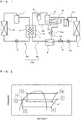
- Fig. 1 illustrates an exemplary configuration of a refrigerant circuit in a refrigeration apparatus according to Embodiment 1 of the present invention.
- a refrigeration apparatus 100 of Embodiment 1 is implemented in a binary refrigeration apparatus and includes a first refrigerant circuit 50 and a second refrigerant circuit 60.
- the first refrigerant circuit 50 serves as a refrigerant circuit in which a first refrigerant circulates, and includes a first compressor 1, a first condenser 2, a first expansion valve 3, and a first evaporator 4 that are sequentially connected to each other by pipes.
- the first compressor 1 draws by suction a low-pressure gas first refrigerant, and compresses the first refrigerant into a high-pressure gas refrigerant.
- the first condenser 2 exchanges heat between the first refrigerant compressed into a high-pressure gas refrigerant by the first compressor 1 and a heat exchange object such as air, and compresses the first refrigerant into a high-pressure liquid refrigerant.
- the first expansion valve 3 expands the first refrigerant condensed into a high-pressure liquid refrigerant in the first condenser 2 and reduces its pressure to obtain a low-pressure, two-phase gas-liquid refrigerant.
- the first evaporator 4 exchanges heat between the first refrigerant expanded and reduced in pressure into a low-pressure, two-phase gas-liquid refrigerant in the first expansion valve 3, and a second refrigerant flowing through the second condenser 7 of the second refrigerant circuit 60, and evaporates the first refrigerant into a low-pressure gas refrigerant. That is, in the refrigeration apparatus 100 of Embodiment 1, the first evaporator 4 of the first refrigerant circuit 50 and the second condenser 7 of the second refrigerant circuit 60 constitute a cascade condenser 15.
- the first expansion valve 3 corresponds to a first pressure reducing unit of the present invention.
- the first pressure reducing unit may be implemented using, for example, a capillary tube.
- the "high pressure” and “low pressure” used for the first refrigerant circuit 50 in the above description, and the “high pressure” and “low pressure” to be used for the first refrigerant circuit 50 in the following description refer to relative pressures of the first refrigerant in the first refrigerant circuit 50, and do not refer to absolute pressures of the first refrigerant.
- the second refrigerant circuit 60 serves as a refrigerant circuit in which a second refrigerant circulates, and includes a second compressor 5, a second condenser 7, a second expansion valve 10, and a second evaporator 11 that are sequentially connected to each other by pipes.
- the second compressor 5 draws by suction a low-pressure gas second refrigerant, and compresses the second refrigerant into a high-pressure gas refrigerant.
- the second condenser 7 exchanges heat between the second refrigerant compressed into a high-pressure gas refrigerant in the second compressor 5, and the first refrigerant flowing through the first evaporator 4 of the first refrigerant circuit 50, and condenses the second refrigerant into a high-pressure liquid refrigerant or a high-pressure, two-phase gas-liquid refrigerant.
- the second expansion valve 10 expands the second refrigerant condensed into a high-pressure liquid refrigerant or a high-pressure, two-phase gas-liquid refrigerant in the second condenser 7, and reduces its pressure to obtain a low-pressure, two-phase gas-liquid refrigerant.
- the second evaporator 11 exchanges heat between the second refrigerant expanded and reduced in pressure into a low-pressure, two-phase gas-liquid refrigerant in the second expansion valve 10, and a heat exchange object such as air, and evaporates the second refrigerant into a low-pressure gas refrigerant.
- the second expansion valve 10 corresponds to a second pressure reducing unit of the present invention.
- the second pressure reducing unit may be implemented using, for example, a capillary tube.
- the "high pressure” and “low pressure” used for the second refrigerant circuit 60 in the above description, and the “high pressure” and “low pressure” to be used for the second refrigerant circuit 60 in the following description refer to relative pressures of a second refrigerant in the second refrigerant circuit 60, and do not refer to absolute pressures of the second refrigerant.
- the second refrigerant circuit 60 of Embodiment 1 also includes an oil separator 6, a receiver 8, an on-off valve 9, an accumulator 12, a bypass 13, a bypass valve 13a, and a tank 14.
- the oil separator 6 is disposed between the second compressor 5 and the second condenser 7, and separates refrigerating machine oil from the second refrigerant discharged from the second compressor 5.
- the oil separator 6 includes an oil return pipe 6a.
- the oil return pipe 6a is connected to the suction port of the second compressor 5, and the refrigerating machine oil separated by the oil separator 6 returns to the suction side of the second compressor 5.
- the receiver 8 is disposed between the second condenser 7 and the second expansion valve 10, and stores an excess second refrigerant. When the two-phase gas-liquid second refrigerant flows out of the second condenser 7, the receiver 8 separates the second refrigerant into gas and liquid second refrigerants, and supplies the liquid second refrigerant to the second expansion valve 10.
- the on-off valve 9 is disposed between the receiver 8 and the second expansion valve 10, and opens and closes a circuit portion between the receiver 8 and the second expansion valve 10. That is, the on-off valve 9 prevents the second refrigerant from flowing into the second evaporator 11. More specifically, the on-off valve 9 blocks traffic between a circuit portion (a circuit portion from the discharge port of the second compressor 5 to the second expansion valve 10) of the second refrigerant circuit 60 on the high-pressure side, and a circuit portion (a circuit portion from the second expansion valve 10 to the suction port of the second compressor 5) of the second refrigerant circuit 60 on the low-pressure side.
- the on-off valve 9 corresponds to a second on-off valve of the present invention.
- the accumulator 12 is disposed between the second evaporator 11 and the second compressor 5.
- the accumulator 12 separates the second refrigerant that has flowed out of the second evaporator 11 into gas and liquid second refrigerants, and draws the gas second refrigerant by suction into the second compressor 5, thereby preventing liquid back in the second compressor 5.
- the accumulator 12 stores an excess second refrigerant.
- the second refrigerant circuit 60 of Embodiment 1 also includes the receiver 8 to store the excess second refrigerant. Thus, if there is no possibility of occurrence of liquid back in the second compressor 5, the accumulator 12 need not be provided.
- the tank 14 has the same function as that of an expansion tank of a typical refrigeration apparatus (more specifically a binary refrigeration apparatus).
- the tank 14 is connected to the receiver 8 by the bypass 13. More specifically, in the refrigeration apparatus 100 of Embodiment 1, the circuit portion of the second refrigerant circuit 60 on the high-pressure side is connected to the tank 14 serving as an expansion tank.
- the bypass 13 includes the bypass valve 13a that opens and closes the bypass 13.
- the bypass valve 13a is kept closed (the bypass 13 is kept closed) during normal operation.
- the bypass valve 13a is opened (the bypass 13 is opened).
- the bypass valve 13a corresponds to a first on-off valve of the present invention.
- the predetermined pressure refers to a pressure higher than a high-side pressure (the pressure of the refrigerant in the circuit portion of the second refrigerant circuit 60 on the high-pressure side) expected in normal operation, and a pressure lower than an allowable pressure set to prevent a failure of the second refrigerant circuit 60.
- the high-side pressure of the refrigerant in the second refrigerant circuit 60 is detected by, for example, a pressure sensor (not shown) provided in the circuit portion of the second refrigerant circuit 60 on the high-pressure side.
- the refrigeration apparatus 100 with the aforementioned configuration operates in the following manner.
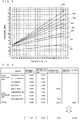
- Fig. 2 is a Mollier chart showing the operating state of a refrigeration apparatus according to Embodiment 1 of the present invention.
- a low-pressure gas first refrigerant (point A) in the first refrigerant circuit 50 is drawn by suction into and compressed in the first compressor 1, transforms into a high-pressure gas refrigerant (point B) in the first refrigerant circuit 50, and is discharged from the first compressor 1.
- the first refrigerant (point B) discharged from the first compressor 1 flows into the first condenser 2, is cooled and condensed by heat exchange with an object such as air (by heating the heat exchange object such as air), and transforms into a high-pressure liquid first refrigerant (point C) in the first refrigerant circuit 50.
- the first refrigerant circuit 50 repeats the above-mentioned series of operations.
- a low-pressure gas second refrigerant (point E) in the second refrigerant circuit 60 is drawn by suction into and compressed in the second compressor 5, transforms into a high-pressure gas refrigerant (point F) in the second refrigerant circuit 60, and is discharged from the second compressor 5.
- Refrigerating machine oil is separated by the oil separator 6 from the second refrigerant (point F) discharged from the second compressor 5, and the resulting second refrigerant flows into the second condenser 7 (the cascade condenser 15), is cooled and condensed by the first refrigerant flowing through the first evaporator 4 of the first refrigerant circuit 50 (by heating the first refrigerant flowing through the first evaporator 4 of the first refrigerant circuit 50) and transforms into a high-pressure liquid second refrigerant (point G) in the second refrigerant circuit 60.
- the second refrigerant Upon flowing out of the second condenser 7, the second refrigerant flows into the second expansion valve 10 through the receiver 8 and the on-off valve 9, is expanded and reduced in pressure, and transforms into a low-pressure, two-phase gas-liquid refrigerant (point H) in the second refrigerant circuit 60. Then, the second refrigerant that has flowed out of the second expansion valve 10 is heated and evaporated by a heat exchange object such as air (by cooling the heat exchange object such as air) and transforms into a low-pressure gas first refrigerant (point E) in the second refrigerant circuit 60. Thereafter, the second refrigerant passes through the accumulator 12, and is drawn by suction into the second compressor 5 again. The second refrigerant circuit 60 repeats the above-mentioned series of operations.
- a heat exchange object such as air
- the refrigeration apparatus 100 that performs the foregoing operation uses the second evaporator 11 of the second refrigerant circuit 60 as a use-side heat exchanger, that is, the second evaporator 11 cools air in a storage space where an object to be cooled is stored, the capacity of the second evaporator 11 is the product of the enthalpy difference between points H and E and the amount of second refrigerant flowing through the second evaporator 11.
- the on-off valve 9 is opened so that the second refrigerant flows into the second evaporator 11 and the second compressor 5 is operated.
- the first refrigerant circuit is operated.
- the on-off valve 9 is closed so that the flow of second refrigerant stops, the second compressor 5 is stopped, and the first refrigerant circuit is also stopped.
- the ambient temperature of the second refrigerant circuit 60 is higher than the saturation temperature of the refrigerant (the saturation temperature of the second refrigerant flowing through the circuit portion of the second refrigerant circuit 60 on the high-pressure side) on the high-pressure side of the second refrigerant circuit 60 during operation, when the second compressor 5 of the second refrigerant circuit 60 stops, the pressure in the second refrigerant circuit 60 increases to a pressure corresponding to the ambient temperature.
- the refrigeration apparatus 100 of Embodiment 1 is assumed to use, for example, a CO 2 refrigerant as the second refrigerant. It is also assumed that the saturation temperature of the refrigerant on the high-pressure side during the operation of the second refrigerant circuit 60 is lower than a critical temperature (31.1 [degrees C]) of the CO 2 refrigerant. In such a case, the pressure of the refrigerant in the second refrigerant circuit 60 in an OFF state is illustrated in Fig. 3 .
- Fig. 3 illustrates the relationship among the refrigerant density, the refrigerant temperature, and the refrigerant pressure of the second refrigerant of Embodiment 1 of the present invention.
- the abscissa indicates the temperature of the second refrigerant
- the ordinate indicates the pressure of the second refrigerant.
- the refrigerant temperature and the pressure when the refrigerant density (amount of refrigerant [kg]/volume [m 3 ]) of the second refrigerant is 150 [kg/m 3 ], 230 [kg/m 3 ], 260 [kg/m 3 ], 350 [kg/m 3 ], 400 [kg/m 3 ], 450 [kg/m 3 ], 500 [kg/m 3 ], and 550 [kg/m 3 ], respectively.
- the pressure of the second refrigerant also increases. As the refrigerant density of the second refrigerant increases, the pressure of the second refrigerant also increases. If, for example, the refrigerant density of the second refrigerant is about 350 [kg/m 3 ] and its temperature is 60 [degrees C], the pressure of the second refrigerant is 10.894 [MPa].
- the internal volume of the tank 14 is determined such that the pressure of the refrigerant in the second refrigerant circuit 60 falls within an allowable range even when the second refrigerant circuit 60 stops so that the ambient temperature of the second refrigerant circuit 60 increases and the pressure of the refrigerant in the second refrigerant circuit 60 increases.
- Fig. 4 illustrates the relationship among the internal volume of each component of the second refrigeration circuit, the amount of refrigerant (the amount of second refrigerant) stored in the component, the refrigerant density in the second refrigerant circuit, and the refrigerant pressure in the refrigeration apparatus of Embodiment 1 of the present invention.
- the amount of refrigerant stored in the component of the second refrigerant circuit 60 shown in Fig. 4 refers to the amount of refrigerant stored in the component during the operation of a second refrigerant circuit 60 exhibiting 10 horsepower.
- the "discharge pipe” illustrated in Fig. 4 refers to a pipe extending from the discharge port of the second compressor 5 to the second condenser.
- the "liquid pipe” refers to a pipe extending from the second condenser 7 to the second expansion valve 10.
- the "suction pipe” refers to a pipe extending from the second evaporator 11 to the suction port of the second compressor 5.
- the pipe extending from the second expansion valve 10 to the second evaporator 11 is short and has an internal volume and a refrigerant storage capacity, which are small and ignored in Fig. 4 .
- the total internal volume of the second refrigerant circuit 60 is 0.084 [m 3 ] and the amount of refrigerant is 19.36 [kg], and thus the refrigerant density is 230.6 [kg/m 3 ].
- the pressure of the refrigerant in the second refrigerant circuit 60 is about 7.696 [MPa], as illustrated in Fig. 2 .
- the internal volume of the expansion tank of the typical refrigeration apparatus is similarly determined.
- the refrigerant density in a circuit portion on the high-pressure side is higher than that in a circuit portion on the low-pressure side.
- the second compressor 5 of the second refrigerant circuit 60 stops so that the second refrigerant in the second refrigerant circuit 60 increases to almost the ambient temperature
- the pressure of the refrigerant in the circuit portion of the second refrigerant circuit 60 on the high-pressure side becomes higher than that in the circuit portion of the second refrigerant circuit 60 on the low-pressure side.
- the pressure of the refrigerant in the circuit portion of the second refrigerant circuit 60 on the high-pressure side is often higher than the allowable pressure of the refrigerant in the second refrigerant circuit.
- the on-off valve 9 for opening and closing a circuit portion between the receiver 8 and the second expansion valve 10 is provided, the aforementioned problem is more serious.
- the area of the passage through which the second refrigerant flows from the circuit portion of the second refrigerant circuit 60 on the high-pressure side to the circuit portion of the second refrigerant circuit 60 on the low-pressure side further decreases. This often makes it impossible to avoid an abnormal increase in pressure of the refrigerant in the circuit portion of the second refrigerant circuit 60 on the high-pressure side.
- the second refrigerant circuit 60 of Embodiment 1 has a configuration in which the tank 14 serving as an expansion tank is connected through the bypass 13 and the bypass valve 13a to the receiver 8 disposed in the circuit portion of the second refrigerant circuit 60 on the high-pressure side.
- the bypass valve 13a opens, and the second refrigerant on the high-pressure side flows into the tank 14 on the low-pressure side so that the pressure of the refrigerant on the high-pressure side decreases.
- the pressure of the refrigerant on the high-pressure side can be reduced by opening the on-off valve 9 so that the refrigerant on the high-pressure side flows to the low-pressure side and the pressure of the refrigerant on the high-pressure side is reduced, or the refrigerant on the high-pressure side of the second refrigerant circuit 60 can be cooled so that the pressure of the refrigerant is reduced by operating the first refrigerant circuit 50.
- the bypass valve 13a is preferably operable even in a situation, including a power failure, where the on-off valve 9 and the first refrigerant circuit 50 cannot operate.
- the bypass valve 13a is preferably implemented using an on-off valve that mechanically opens and closes in accordance with the high-side pressure of the refrigerant in the second refrigerant circuit 60.
- the tank 14 serves as an expansion tank. That is, the tank 14 is used to keep as low as an allowable pressure or less the pressure of the refrigerant in the second refrigerant circuit 60 when the operation of the second refrigerant circuit 60 stops. However, the tank 14 is rarely used to reduce the pressure of the refrigerant in the refrigerant circuit when the second refrigerant circuit 60 stops because of, for example, a power failure.
- the tank 14 serving as an expansion tank is used as an oil tank in normal operation.
- Fig. 5 is a refrigerant circuit diagram showing a portion near the tank of the second refrigerant circuit of Embodiment 1 of the present invention.
- the second compressor 5 and the tank 14 are disposed on, for example, the same bottom surface, the bottoms of the second compressor 5 and the tank 14 are flush with each other.
- the tank 14 stores refrigerating machine oil 18.
- the second compressor 5 and the tank 14 are connected to each other by two pipes 17. More specifically, one pipe 17 is set closer to the bottom surface shared between the second compressor 5 and the tank 14, and connects the second compressor 5 to the tank 14 at the position where the refrigerating machine oil 18 is present (e.g., at the position near their bottom surface).
- the other pipe 17 connects the second compressor 5 to the tank 14 at the position where the refrigerating machine oil 18 is absent (e.g., at the position, including the upper part of the tank 14, where a gas second refrigerant fills a vacant space).
- the tank 14 is also connected to the oil return pipe 6a of the oil separator 6, and the refrigerating machine oil 18 separated in the oil separator 6 returns into the tank 14.
- the oil surface (the upper surface of the refrigerating machine oil 18) in the second compressor 5 can be made equal in level to the oil surface in the tank 14.
- the refrigerating machine oil in the second compressor 5 decreases, the refrigerating machine oil is supplied from the tank 14, whereas when the amount of refrigerating machine oil 18 in the second compressor 5 increases (when excess refrigerating machine oil 18 is generated), the refrigerating machine oil 18 is discharged to the tank 14 so that variations in amount of refrigerating machine oil 18 can be adjusted. Accordingly, oil shortage and oil compression due to an increase in amount of oil in the second compressor 5 can be avoided.
- the maximum amount of refrigerating machine oil 18 stored in components other than the second compressor 5, that is, the maximum amount of refrigerating machine oil 18 stored in pipes (e.g., the discharge pipe, the liquid pipe, and the suction pipe), the oil separator 6, the second condenser 7, the receiver 8, the second evaporator 11, and the accumulator 12 may be approximately equal to the amount of refrigerating machine oil that can be stored in the second compressor 5 during the operation of the second refrigerant circuit 60.
- a second refrigerant circuit 60 exhibiting 10 horsepower ([Hp] ⁇ 745.7 [W]) shown in Fig.
- the amount of refrigerating machine oil that can be stored in the second compressor 5 is about 3 [L].
- the maximum amount of refrigerating machine oil 18 stored in components other than the second compressor 5 may be about 3 [L].
- the amount of refrigerating machine oil 18 that can be stored in the tank 14 is preferably two or more times that of refrigerating machine oil 18 that can be stored in the second compressor 5.
- Fig. 1 illustrates a circuit that returns to the tank 14 the refrigerating machine oil separated by the oil separator 6 of the second refrigerant circuit 60
- the destination to which the oil return pipe 6a of the oil separator 6 is connected is not limited to the tank 14 as long as the oil return pipe 6a is connected to a member on the suction side of the second compressor 5.
- the second compressor 5 of the second refrigerant circuit 60 stops so that the high-side pressure of the refrigerant in the second refrigerant circuit 60 increases to a predetermined pressure or more
- the second refrigerant in the second refrigerant circuit 60 flows from the receiver 8 in the circuit portion of the second refrigerant circuit 60 on the high-pressure side through the bypass 13 and the bypass valve 13a and is stored in the tank 14.
- an abnormal increase in pressure can be prevented in the circuit portion of the second refrigerant circuit 60 on the high-pressure side.
- the tank 14 serving as an expansion tank of a typical refrigeration apparatus also serves as an oil tank of the second compressor 5 during the operation of the second refrigerant circuit 60.
- a failure of the second compressor 5 due, for example, to shortage of refrigerating machine oil 18 can be prevented.
- Embodiment 1 assumes a refrigeration apparatus 100 in which the second refrigerant circuit 60 includes only one second compressor 5.
- the second refrigerant circuit 60 may include a plurality of second compressors 5.
- the tank 14 may have the following configuration to suppress an increase in cost of the refrigeration apparatus 100. Details which are not particularly referred to in Embodiment 2 are the same as in Embodiment 1, and the same reference numerals denote components having the same functions and configurations.
- Fig. 6 is a refrigerant circuit diagram illustrating an exemplary configuration of a refrigeration apparatus according to Embodiment 2 of the present invention.
- a refrigeration apparatus 100 of Embodiment 2 includes a second refrigerant circuit 60 including two second compressors 5.
- the two second compressors 5 are connected to a tank 14 through pipes 17.
- the configuration of the refrigeration apparatus 100 of Embodiment 2 has the same advantages as those of Embodiment 1.
- the configuration of the refrigeration apparatus 100 of Embodiment 2 implements a refrigeration apparatus equipped with tanks 14 fewer than the number of second compressors 5. Thus, an increase in cost of the refrigeration apparatus 100 can be suppressed.
- the refrigeration apparatus 100 includes the two second compressors 5.
- the refrigeration apparatus 100 may include three or more second compressors 5, as a matter of course.
- all the second compressors 5 may be connected to one tank 14, or a plurality of tanks 14 may be provided and connected to the respective second compressors 5.
- some of them may be connected to one second compressor 5, as a matter of course.
- the tank 14 as described in Embodiments 1 and 2 may be replaced with a tank 16, which will be described below. Details which are not particularly referred to in Embodiment 3 are the same as in Embodiment 1 or 2, and the same reference numerals denote components having the same functions and configurations.
- Fig. 7 is a refrigerant circuit diagram illustrating an exemplary configuration of a refrigeration apparatus according to Embodiment 3 of the present invention.
- a tank 16 of Embodiment 3 is connected to a second compressor 5 through pipes 17, and is connected to a receiver 8 through a bypass 13 and a bypass valve 13a.
- the tank 16 of Embodiment 3 is also connected to a second evaporator 11 and the suction port of the second compressor 5 through refrigerant pipes. With this arrangement, the tank 16 of Embodiment 3 separates a second refrigerant, upon flowing out of the second evaporator 11, into gas and liquid second refrigerants, and draws the gas second refrigerant by suction into the second compressor 5, thereby preventing liquid back in the second compressor 5.
- the tank 16 of Embodiment 3 implements the functions of both the accumulator 12 as described in Embodiments 1 and 2 and the tank 14 as described in Embodiments 1 and 2.
- the configuration of the refrigeration apparatus 100 of Embodiment 3 can have the same advantages as those of Embodiments 1 and 2.
- the configuration of the refrigeration apparatus 100 of Embodiment 3 allows the tank 16 to serve as an accumulator. This obviates the need to separately provide an accumulator to suppress an increase in cost of the refrigeration apparatus 100.
Landscapes
- Engineering & Computer Science (AREA)
- Physics & Mathematics (AREA)
- Mechanical Engineering (AREA)
- Thermal Sciences (AREA)
- General Engineering & Computer Science (AREA)
- Chemical & Material Sciences (AREA)
- Analytical Chemistry (AREA)
- Power Engineering (AREA)
- Air Conditioning Control Device (AREA)
Claims (6)
- Appareil frigorifique (100) comprenant :un premier circuit de fluide frigorigène (50) comprenant un premier compresseur (1), un premier condenseur (2), une première unité de réduction de pression (3), et un premier évaporateur (4) qui sont reliés séquentiellement les uns aux autres par des tuyaux ;un deuxième circuit de fluide frigorigène (60) comprenant un deuxième compresseur (5), un deuxième condenseur (7), une deuxième unité de réduction de pression (10), et un deuxième évaporateur (11) qui sont reliés séquentiellement les uns aux autres par des tuyaux ;un condenseur cascade (15) formé par le premier évaporateur (4) du premier circuit de fluide frigorigène (50) et le deuxième condenseur (7) du deuxième circuit de fluide frigorigène (60) ; etun récepteur (8) qui est relié entre le deuxième condenseur (7) et la deuxième unité de réduction de pression (10) du deuxième circuit de fluide frigorigène (60) et qui stocke un fluide frigorigène en excès ;caractérisé en ce quel'appareil frigorifique (100) comprend en outre :un réservoir (14, 16) qui est relié au deuxième compresseur (5) du deuxième circuit de fluide frigorigène (60) et qui stocke une huile de machine de réfrigération en excès (18) dans le deuxième compresseur (5) de manière à ajuster une quantité d'huile de machine de réfrigération (18) dans le deuxième compresseur (5) ;une dérivation (13) reliant le récepteur (8) et le réservoir (14, 16) l'un à l'autre ; etune première vanne tout ou rien (13a) qui est disposée dans la dérivation (13) et qui est configurée pour ouvrir la dérivation (13) lorsqu'une pression côté haut dans le deuxième circuit de fluide frigorigène (60) augmente à des valeurs supérieures ou égales à une pression prédéterminée, et pour fermer la dérivation (13) lorsque la pression côté haut dans le deuxième circuit de fluide frigorigène (60) diminue à des valeurs inférieures ou égales à la pression prédéterminée.
- Appareil frigorifique (100) selon la revendication 1, dans lequel
le deuxième compresseur (5) comprend une pluralité de deuxièmes compresseurs (5), et
le réservoir (14, 16) est relié à au moins deux deuxièmes compresseurs (5) de la pluralité de deuxièmes compresseurs (5) et est utilisé pour ajuster une quantité d'huile de machine de réfrigération (18) dans lesdits au moins deux deuxièmes compresseurs (5) de la pluralité de deuxièmes compresseurs (5). - Appareil frigorifique (100) selon la revendication 1 ou 2, dans lequel
une sortie du deuxième évaporateur (11) est relié au réservoir (16),
une partie du réservoir (16) située au-dessus de l'huile de machine de réfrigération (18) est reliée à un orifice d'aspiration du deuxième compresseur (5), et
le réservoir (16) sert également en tant qu'accumulateur. - Appareil frigorifique (100) selon l'une quelconque des revendications 1 à 3, comprenant en outre :un séparateur d'huile (6) disposé entre le deuxième compresseur (5) et le deuxième condenseur (7) ; etun tuyau de retour d'huile (6a) qui est relié au séparateur d'huile (6) et un tuyau s'étendant de l'un du réservoir (14, 16) et d'un orifice d'aspiration du deuxième compresseur (5).
- Appareil frigorifique (100) selon l'une quelconque des revendications 1 à 4, dans lequel
la première vanne tout ou rien (13a) comprend une vanne tout ou rien qui s'ouvre et se ferme mécaniquement conformément à la pression côté haut dans le deuxième circuit de fluide frigorigène (60). - Appareil frigorifique (100) selon l'une quelconque des revendications 1 à 5, comprenant en outre :
une deuxième vanne tout ou rien (9) qui est disposée entre le récepteur (8) et la deuxième unité de réduction de pression (10), et qui est configurée pour ouvrir et fermer une partie de circuit entre le récepteur (8) et la deuxième unité de réduction de pression (10).
Applications Claiming Priority (1)
| Application Number | Priority Date | Filing Date | Title |
|---|---|---|---|
| PCT/JP2012/074197 WO2014045394A1 (fr) | 2012-09-21 | 2012-09-21 | Dispositif de réfrigération |
Publications (3)
| Publication Number | Publication Date |
|---|---|
| EP2910871A1 EP2910871A1 (fr) | 2015-08-26 |
| EP2910871A4 EP2910871A4 (fr) | 2017-04-19 |
| EP2910871B1 true EP2910871B1 (fr) | 2019-12-04 |
Family
ID=50340747
Family Applications (1)
| Application Number | Title | Priority Date | Filing Date |
|---|---|---|---|
| EP12884974.2A Active EP2910871B1 (fr) | 2012-09-21 | 2012-09-21 | Dispositif de réfrigération |
Country Status (3)
| Country | Link |
|---|---|
| EP (1) | EP2910871B1 (fr) |
| JP (1) | JP5819000B2 (fr) |
| WO (1) | WO2014045394A1 (fr) |
Families Citing this family (11)
| Publication number | Priority date | Publication date | Assignee | Title |
|---|---|---|---|---|
| WO2017175299A1 (fr) * | 2016-04-05 | 2017-10-12 | 三菱電機株式会社 | Dispositif à cycle frigorifique |
| CN109791009B (zh) * | 2016-09-30 | 2020-07-07 | 大金工业株式会社 | 制冷装置 |
| ES2905756T3 (es) * | 2017-04-17 | 2022-04-12 | Mitsubishi Electric Corp | Dispositivo de ciclo de refrigeración |
| GB2581720C (en) * | 2017-11-29 | 2021-10-20 | Mitsubishi Electric Corp | Refrigeration Apparatus and Outdoor unit |
| GB2585594B (en) * | 2018-03-26 | 2021-11-24 | Mitsubishi Electric Corp | Refrigeration device |
| JP6813786B2 (ja) * | 2019-09-13 | 2021-01-13 | 三菱重工冷熱株式会社 | 冷媒漏洩検知方法及び冷媒漏洩検知手段 |
| JP7559394B2 (ja) | 2020-07-17 | 2024-10-02 | Smc株式会社 | チラー |
| WO2023223559A1 (fr) * | 2022-05-20 | 2023-11-23 | 三菱電機株式会社 | Unité extérieure de dispositif de réfrigération double et dispositif de réfrigération double |
| WO2023223558A1 (fr) * | 2022-05-20 | 2023-11-23 | 三菱電機株式会社 | Dispositif de réfrigération double |
| JPWO2025062532A1 (fr) * | 2023-09-20 | 2025-03-27 | ||
| CN117469822B (zh) * | 2023-12-27 | 2024-03-19 | 珠海格力电器股份有限公司 | 空调机组、控制方法以及存储介质 |
Family Cites Families (9)
| Publication number | Priority date | Publication date | Assignee | Title |
|---|---|---|---|---|
| JPH0439574A (ja) * | 1990-06-05 | 1992-02-10 | Mitsubishi Heavy Ind Ltd | 冷凍装置 |
| JP3166334B2 (ja) * | 1992-07-15 | 2001-05-14 | ダイキン工業株式会社 | 二元冷凍機 |
| JPH0814673A (ja) * | 1994-07-01 | 1996-01-19 | Daikin Ind Ltd | 冷凍装置 |
| CN100344915C (zh) * | 2003-02-27 | 2007-10-24 | 东芝开利株式会社 | 致冷循环设备 |
| JP2004301461A (ja) * | 2003-04-01 | 2004-10-28 | Hitachi Ltd | 空気調和装置 |
| JP4422570B2 (ja) * | 2004-07-23 | 2010-02-24 | 中部電力株式会社 | 空気調和装置 |
| JP4537242B2 (ja) * | 2005-03-30 | 2010-09-01 | 三菱電機株式会社 | 冷凍装置 |
| JP2007303792A (ja) | 2006-05-15 | 2007-11-22 | Sanyo Electric Co Ltd | 冷凍装置 |
| EP2162686A4 (fr) * | 2007-06-04 | 2013-05-22 | Carrier Corp | Système réfrigérant avec circuits en cascade et caractéristiques d'amélioration de performance |
-
2012
- 2012-09-21 JP JP2014536495A patent/JP5819000B2/ja not_active Expired - Fee Related
- 2012-09-21 WO PCT/JP2012/074197 patent/WO2014045394A1/fr not_active Ceased
- 2012-09-21 EP EP12884974.2A patent/EP2910871B1/fr active Active
Non-Patent Citations (1)
| Title |
|---|
| None * |
Also Published As
| Publication number | Publication date |
|---|---|
| JP5819000B2 (ja) | 2015-11-18 |
| WO2014045394A1 (fr) | 2014-03-27 |
| JPWO2014045394A1 (ja) | 2016-08-18 |
| EP2910871A4 (fr) | 2017-04-19 |
| EP2910871A1 (fr) | 2015-08-26 |
Similar Documents
| Publication | Publication Date | Title |
|---|---|---|
| EP2910871B1 (fr) | Dispositif de réfrigération | |
| EP2995885B1 (fr) | Dispositif de réfrigération binaire | |
| KR101214310B1 (ko) | 냉동 장치 | |
| EP1862749A2 (fr) | Cycle frigorifique à compression de vapeur | |
| US20100024470A1 (en) | Refrigerant injection above critical point in a transcritical refrigerant system | |
| KR20100121672A (ko) | 냉동 장치 | |
| KR20100135923A (ko) | 냉동 장치 | |
| JP2009103452A (ja) | 冷凍装置 | |
| JP5323023B2 (ja) | 冷凍装置 | |
| JP2009133585A (ja) | 冷凍装置 | |
| JP5186949B2 (ja) | 冷凍装置 | |
| AU2005278347B2 (en) | Refrigeration system | |
| EP3106779A1 (fr) | Dispositif de réfrigération | |
| CN101965488B (zh) | 制冷装置 | |
| CN108139123A (zh) | 用于切换压缩机容量的方法 | |
| JP2022177312A (ja) | 室外ユニットおよび冷凍サイクル装置 | |
| EP2896911B1 (fr) | Appareil de climatisation | |
| EP2565562B1 (fr) | Système de circuit réfrigérant | |
| EP2525168B1 (fr) | Pompe à chaleur à compression de vapeur supercritique et unité d'alimentation en eau chaude | |
| KR20210096521A (ko) | 공기 조화 장치 | |
| JP2007263390A (ja) | 冷凍サイクル装置 | |
| US12416430B2 (en) | Refrigeration cycle apparatus | |
| JPWO2013073070A1 (ja) | 冷凍サイクル装置 | |
| WO2024014027A1 (fr) | Système de réfrigération | |
| HK1147310A1 (en) | Refrigerant system with bypass line and dedicated economized flow compression chamber |
Legal Events
| Date | Code | Title | Description |
|---|---|---|---|
| PUAI | Public reference made under article 153(3) epc to a published international application that has entered the european phase |
Free format text: ORIGINAL CODE: 0009012 |
|
| 17P | Request for examination filed |
Effective date: 20150203 |
|
| AK | Designated contracting states |
Kind code of ref document: A1 Designated state(s): AL AT BE BG CH CY CZ DE DK EE ES FI FR GB GR HR HU IE IS IT LI LT LU LV MC MK MT NL NO PL PT RO RS SE SI SK SM TR |
|
| AX | Request for extension of the european patent |
Extension state: BA ME |
|
| DAX | Request for extension of the european patent (deleted) | ||
| RA4 | Supplementary search report drawn up and despatched (corrected) |
Effective date: 20170317 |
|
| RIC1 | Information provided on ipc code assigned before grant |
Ipc: F25B 1/00 20060101ALI20170313BHEP Ipc: F25B 7/00 20060101AFI20170313BHEP |
|
| GRAP | Despatch of communication of intention to grant a patent |
Free format text: ORIGINAL CODE: EPIDOSNIGR1 |
|
| STAA | Information on the status of an ep patent application or granted ep patent |
Free format text: STATUS: GRANT OF PATENT IS INTENDED |
|
| INTG | Intention to grant announced |
Effective date: 20190621 |
|
| GRAS | Grant fee paid |
Free format text: ORIGINAL CODE: EPIDOSNIGR3 |
|
| GRAA | (expected) grant |
Free format text: ORIGINAL CODE: 0009210 |
|
| STAA | Information on the status of an ep patent application or granted ep patent |
Free format text: STATUS: THE PATENT HAS BEEN GRANTED |
|
| AK | Designated contracting states |
Kind code of ref document: B1 Designated state(s): AL AT BE BG CH CY CZ DE DK EE ES FI FR GB GR HR HU IE IS IT LI LT LU LV MC MK MT NL NO PL PT RO RS SE SI SK SM TR |
|
| REG | Reference to a national code |
Ref country code: GB Ref legal event code: FG4D |
|
| REG | Reference to a national code |
Ref country code: CH Ref legal event code: EP |
|
| REG | Reference to a national code |
Ref country code: AT Ref legal event code: REF Ref document number: 1209901 Country of ref document: AT Kind code of ref document: T Effective date: 20191215 |
|
| REG | Reference to a national code |
Ref country code: DE Ref legal event code: R096 Ref document number: 602012066304 Country of ref document: DE |
|
| REG | Reference to a national code |
Ref country code: IE Ref legal event code: FG4D |
|
| REG | Reference to a national code |
Ref country code: NL Ref legal event code: MP Effective date: 20191204 |
|
| REG | Reference to a national code |
Ref country code: LT Ref legal event code: MG4D |
|
| PG25 | Lapsed in a contracting state [announced via postgrant information from national office to epo] |
Ref country code: LV Free format text: LAPSE BECAUSE OF FAILURE TO SUBMIT A TRANSLATION OF THE DESCRIPTION OR TO PAY THE FEE WITHIN THE PRESCRIBED TIME-LIMIT Effective date: 20191204 Ref country code: SE Free format text: LAPSE BECAUSE OF FAILURE TO SUBMIT A TRANSLATION OF THE DESCRIPTION OR TO PAY THE FEE WITHIN THE PRESCRIBED TIME-LIMIT Effective date: 20191204 Ref country code: FI Free format text: LAPSE BECAUSE OF FAILURE TO SUBMIT A TRANSLATION OF THE DESCRIPTION OR TO PAY THE FEE WITHIN THE PRESCRIBED TIME-LIMIT Effective date: 20191204 Ref country code: BG Free format text: LAPSE BECAUSE OF FAILURE TO SUBMIT A TRANSLATION OF THE DESCRIPTION OR TO PAY THE FEE WITHIN THE PRESCRIBED TIME-LIMIT Effective date: 20200304 Ref country code: LT Free format text: LAPSE BECAUSE OF FAILURE TO SUBMIT A TRANSLATION OF THE DESCRIPTION OR TO PAY THE FEE WITHIN THE PRESCRIBED TIME-LIMIT Effective date: 20191204 Ref country code: NO Free format text: LAPSE BECAUSE OF FAILURE TO SUBMIT A TRANSLATION OF THE DESCRIPTION OR TO PAY THE FEE WITHIN THE PRESCRIBED TIME-LIMIT Effective date: 20200304 Ref country code: GR Free format text: LAPSE BECAUSE OF FAILURE TO SUBMIT A TRANSLATION OF THE DESCRIPTION OR TO PAY THE FEE WITHIN THE PRESCRIBED TIME-LIMIT Effective date: 20200305 |
|
| PG25 | Lapsed in a contracting state [announced via postgrant information from national office to epo] |
Ref country code: RS Free format text: LAPSE BECAUSE OF FAILURE TO SUBMIT A TRANSLATION OF THE DESCRIPTION OR TO PAY THE FEE WITHIN THE PRESCRIBED TIME-LIMIT Effective date: 20191204 Ref country code: HR Free format text: LAPSE BECAUSE OF FAILURE TO SUBMIT A TRANSLATION OF THE DESCRIPTION OR TO PAY THE FEE WITHIN THE PRESCRIBED TIME-LIMIT Effective date: 20191204 |
|
| PG25 | Lapsed in a contracting state [announced via postgrant information from national office to epo] |
Ref country code: AL Free format text: LAPSE BECAUSE OF FAILURE TO SUBMIT A TRANSLATION OF THE DESCRIPTION OR TO PAY THE FEE WITHIN THE PRESCRIBED TIME-LIMIT Effective date: 20191204 |
|
| PG25 | Lapsed in a contracting state [announced via postgrant information from national office to epo] |
Ref country code: RO Free format text: LAPSE BECAUSE OF FAILURE TO SUBMIT A TRANSLATION OF THE DESCRIPTION OR TO PAY THE FEE WITHIN THE PRESCRIBED TIME-LIMIT Effective date: 20191204 Ref country code: NL Free format text: LAPSE BECAUSE OF FAILURE TO SUBMIT A TRANSLATION OF THE DESCRIPTION OR TO PAY THE FEE WITHIN THE PRESCRIBED TIME-LIMIT Effective date: 20191204 Ref country code: CZ Free format text: LAPSE BECAUSE OF FAILURE TO SUBMIT A TRANSLATION OF THE DESCRIPTION OR TO PAY THE FEE WITHIN THE PRESCRIBED TIME-LIMIT Effective date: 20191204 Ref country code: ES Free format text: LAPSE BECAUSE OF FAILURE TO SUBMIT A TRANSLATION OF THE DESCRIPTION OR TO PAY THE FEE WITHIN THE PRESCRIBED TIME-LIMIT Effective date: 20191204 Ref country code: EE Free format text: LAPSE BECAUSE OF FAILURE TO SUBMIT A TRANSLATION OF THE DESCRIPTION OR TO PAY THE FEE WITHIN THE PRESCRIBED TIME-LIMIT Effective date: 20191204 Ref country code: PT Free format text: LAPSE BECAUSE OF FAILURE TO SUBMIT A TRANSLATION OF THE DESCRIPTION OR TO PAY THE FEE WITHIN THE PRESCRIBED TIME-LIMIT Effective date: 20200429 |
|
| PG25 | Lapsed in a contracting state [announced via postgrant information from national office to epo] |
Ref country code: SM Free format text: LAPSE BECAUSE OF FAILURE TO SUBMIT A TRANSLATION OF THE DESCRIPTION OR TO PAY THE FEE WITHIN THE PRESCRIBED TIME-LIMIT Effective date: 20191204 Ref country code: IS Free format text: LAPSE BECAUSE OF FAILURE TO SUBMIT A TRANSLATION OF THE DESCRIPTION OR TO PAY THE FEE WITHIN THE PRESCRIBED TIME-LIMIT Effective date: 20200404 Ref country code: SK Free format text: LAPSE BECAUSE OF FAILURE TO SUBMIT A TRANSLATION OF THE DESCRIPTION OR TO PAY THE FEE WITHIN THE PRESCRIBED TIME-LIMIT Effective date: 20191204 |
|
| REG | Reference to a national code |
Ref country code: DE Ref legal event code: R097 Ref document number: 602012066304 Country of ref document: DE |
|
| REG | Reference to a national code |
Ref country code: AT Ref legal event code: MK05 Ref document number: 1209901 Country of ref document: AT Kind code of ref document: T Effective date: 20191204 |
|
| PLBE | No opposition filed within time limit |
Free format text: ORIGINAL CODE: 0009261 |
|
| STAA | Information on the status of an ep patent application or granted ep patent |
Free format text: STATUS: NO OPPOSITION FILED WITHIN TIME LIMIT |
|
| PG25 | Lapsed in a contracting state [announced via postgrant information from national office to epo] |
Ref country code: DK Free format text: LAPSE BECAUSE OF FAILURE TO SUBMIT A TRANSLATION OF THE DESCRIPTION OR TO PAY THE FEE WITHIN THE PRESCRIBED TIME-LIMIT Effective date: 20191204 |
|
| 26N | No opposition filed |
Effective date: 20200907 |
|
| PG25 | Lapsed in a contracting state [announced via postgrant information from national office to epo] |
Ref country code: SI Free format text: LAPSE BECAUSE OF FAILURE TO SUBMIT A TRANSLATION OF THE DESCRIPTION OR TO PAY THE FEE WITHIN THE PRESCRIBED TIME-LIMIT Effective date: 20191204 Ref country code: AT Free format text: LAPSE BECAUSE OF FAILURE TO SUBMIT A TRANSLATION OF THE DESCRIPTION OR TO PAY THE FEE WITHIN THE PRESCRIBED TIME-LIMIT Effective date: 20191204 Ref country code: PL Free format text: LAPSE BECAUSE OF FAILURE TO SUBMIT A TRANSLATION OF THE DESCRIPTION OR TO PAY THE FEE WITHIN THE PRESCRIBED TIME-LIMIT Effective date: 20191204 |
|
| PG25 | Lapsed in a contracting state [announced via postgrant information from national office to epo] |
Ref country code: IT Free format text: LAPSE BECAUSE OF FAILURE TO SUBMIT A TRANSLATION OF THE DESCRIPTION OR TO PAY THE FEE WITHIN THE PRESCRIBED TIME-LIMIT Effective date: 20191204 |
|
| PG25 | Lapsed in a contracting state [announced via postgrant information from national office to epo] |
Ref country code: MC Free format text: LAPSE BECAUSE OF FAILURE TO SUBMIT A TRANSLATION OF THE DESCRIPTION OR TO PAY THE FEE WITHIN THE PRESCRIBED TIME-LIMIT Effective date: 20191204 |
|
| REG | Reference to a national code |
Ref country code: CH Ref legal event code: PL |
|
| REG | Reference to a national code |
Ref country code: BE Ref legal event code: MM Effective date: 20200930 |
|
| PG25 | Lapsed in a contracting state [announced via postgrant information from national office to epo] |
Ref country code: LU Free format text: LAPSE BECAUSE OF NON-PAYMENT OF DUE FEES Effective date: 20200921 |
|
| PG25 | Lapsed in a contracting state [announced via postgrant information from national office to epo] |
Ref country code: FR Free format text: LAPSE BECAUSE OF NON-PAYMENT OF DUE FEES Effective date: 20200930 |
|
| PG25 | Lapsed in a contracting state [announced via postgrant information from national office to epo] |
Ref country code: CH Free format text: LAPSE BECAUSE OF NON-PAYMENT OF DUE FEES Effective date: 20200930 Ref country code: BE Free format text: LAPSE BECAUSE OF NON-PAYMENT OF DUE FEES Effective date: 20200930 Ref country code: IE Free format text: LAPSE BECAUSE OF NON-PAYMENT OF DUE FEES Effective date: 20200921 Ref country code: LI Free format text: LAPSE BECAUSE OF NON-PAYMENT OF DUE FEES Effective date: 20200930 |
|
| PG25 | Lapsed in a contracting state [announced via postgrant information from national office to epo] |
Ref country code: TR Free format text: LAPSE BECAUSE OF FAILURE TO SUBMIT A TRANSLATION OF THE DESCRIPTION OR TO PAY THE FEE WITHIN THE PRESCRIBED TIME-LIMIT Effective date: 20191204 Ref country code: MT Free format text: LAPSE BECAUSE OF FAILURE TO SUBMIT A TRANSLATION OF THE DESCRIPTION OR TO PAY THE FEE WITHIN THE PRESCRIBED TIME-LIMIT Effective date: 20191204 Ref country code: CY Free format text: LAPSE BECAUSE OF FAILURE TO SUBMIT A TRANSLATION OF THE DESCRIPTION OR TO PAY THE FEE WITHIN THE PRESCRIBED TIME-LIMIT Effective date: 20191204 |
|
| PG25 | Lapsed in a contracting state [announced via postgrant information from national office to epo] |
Ref country code: MK Free format text: LAPSE BECAUSE OF FAILURE TO SUBMIT A TRANSLATION OF THE DESCRIPTION OR TO PAY THE FEE WITHIN THE PRESCRIBED TIME-LIMIT Effective date: 20191204 |
|
| REG | Reference to a national code |
Ref country code: DE Ref legal event code: R084 Ref document number: 602012066304 Country of ref document: DE |
|
| P01 | Opt-out of the competence of the unified patent court (upc) registered |
Effective date: 20230512 |
|
| PGFP | Annual fee paid to national office [announced via postgrant information from national office to epo] |
Ref country code: GB Payment date: 20230803 Year of fee payment: 12 |
|
| PGFP | Annual fee paid to national office [announced via postgrant information from national office to epo] |
Ref country code: DE Payment date: 20230802 Year of fee payment: 12 |
|
| REG | Reference to a national code |
Ref country code: GB Ref legal event code: 746 Effective date: 20240828 |
|
| REG | Reference to a national code |
Ref country code: DE Ref legal event code: R119 Ref document number: 602012066304 Country of ref document: DE |
|
| GBPC | Gb: european patent ceased through non-payment of renewal fee |
Effective date: 20240921 |
|
| PG25 | Lapsed in a contracting state [announced via postgrant information from national office to epo] |
Ref country code: DE Free format text: LAPSE BECAUSE OF NON-PAYMENT OF DUE FEES Effective date: 20250401 |
|
| PG25 | Lapsed in a contracting state [announced via postgrant information from national office to epo] |
Ref country code: GB Free format text: LAPSE BECAUSE OF NON-PAYMENT OF DUE FEES Effective date: 20240921 |