EP2912640B1 - Procédé de gestion d'identifiants dans une carte a circuit integré et carte a circuit integré correspondante - Google Patents
Procédé de gestion d'identifiants dans une carte a circuit integré et carte a circuit integré correspondante Download PDFInfo
- Publication number
- EP2912640B1 EP2912640B1 EP13774689.7A EP13774689A EP2912640B1 EP 2912640 B1 EP2912640 B1 EP 2912640B1 EP 13774689 A EP13774689 A EP 13774689A EP 2912640 B1 EP2912640 B1 EP 2912640B1
- Authority
- EP
- European Patent Office
- Prior art keywords
- identifier
- file
- identifiers
- terminal
- application
- Prior art date
- Legal status (The legal status is an assumption and is not a legal conclusion. Google has not performed a legal analysis and makes no representation as to the accuracy of the status listed.)
- Active
Links
Images




Classifications
-
- H—ELECTRICITY
- H04—ELECTRIC COMMUNICATION TECHNIQUE
- H04L—TRANSMISSION OF DIGITAL INFORMATION, e.g. TELEGRAPHIC COMMUNICATION
- H04L63/00—Network architectures or network communication protocols for network security
- H04L63/08—Network architectures or network communication protocols for network security for authentication of entities
- H04L63/0853—Network architectures or network communication protocols for network security for authentication of entities using an additional device, e.g. smartcard, SIM or a different communication terminal
-
- G—PHYSICS
- G06—COMPUTING OR CALCULATING; COUNTING
- G06Q—INFORMATION AND COMMUNICATION TECHNOLOGY [ICT] SPECIALLY ADAPTED FOR ADMINISTRATIVE, COMMERCIAL, FINANCIAL, MANAGERIAL OR SUPERVISORY PURPOSES; SYSTEMS OR METHODS SPECIALLY ADAPTED FOR ADMINISTRATIVE, COMMERCIAL, FINANCIAL, MANAGERIAL OR SUPERVISORY PURPOSES, NOT OTHERWISE PROVIDED FOR
- G06Q20/00—Payment architectures, schemes or protocols
- G06Q20/30—Payment architectures, schemes or protocols characterised by the use of specific devices or networks
- G06Q20/34—Payment architectures, schemes or protocols characterised by the use of specific devices or networks using cards, e.g. integrated circuit [IC] cards or magnetic cards
- G06Q20/341—Active cards, i.e. cards including their own processing means, e.g. including an IC or chip
-
- G—PHYSICS
- G06—COMPUTING OR CALCULATING; COUNTING
- G06Q—INFORMATION AND COMMUNICATION TECHNOLOGY [ICT] SPECIALLY ADAPTED FOR ADMINISTRATIVE, COMMERCIAL, FINANCIAL, MANAGERIAL OR SUPERVISORY PURPOSES; SYSTEMS OR METHODS SPECIALLY ADAPTED FOR ADMINISTRATIVE, COMMERCIAL, FINANCIAL, MANAGERIAL OR SUPERVISORY PURPOSES, NOT OTHERWISE PROVIDED FOR
- G06Q20/00—Payment architectures, schemes or protocols
- G06Q20/30—Payment architectures, schemes or protocols characterised by the use of specific devices or networks
- G06Q20/34—Payment architectures, schemes or protocols characterised by the use of specific devices or networks using cards, e.g. integrated circuit [IC] cards or magnetic cards
- G06Q20/352—Contactless payments by cards
-
- G—PHYSICS
- G06—COMPUTING OR CALCULATING; COUNTING
- G06Q—INFORMATION AND COMMUNICATION TECHNOLOGY [ICT] SPECIALLY ADAPTED FOR ADMINISTRATIVE, COMMERCIAL, FINANCIAL, MANAGERIAL OR SUPERVISORY PURPOSES; SYSTEMS OR METHODS SPECIALLY ADAPTED FOR ADMINISTRATIVE, COMMERCIAL, FINANCIAL, MANAGERIAL OR SUPERVISORY PURPOSES, NOT OTHERWISE PROVIDED FOR
- G06Q20/00—Payment architectures, schemes or protocols
- G06Q20/30—Payment architectures, schemes or protocols characterised by the use of specific devices or networks
- G06Q20/34—Payment architectures, schemes or protocols characterised by the use of specific devices or networks using cards, e.g. integrated circuit [IC] cards or magnetic cards
- G06Q20/357—Cards having a plurality of specified features
- G06Q20/3576—Multiple memory zones on card
-
- H—ELECTRICITY
- H04—ELECTRIC COMMUNICATION TECHNIQUE
- H04L—TRANSMISSION OF DIGITAL INFORMATION, e.g. TELEGRAPHIC COMMUNICATION
- H04L63/00—Network architectures or network communication protocols for network security
- H04L63/08—Network architectures or network communication protocols for network security for authentication of entities
- H04L63/0876—Network architectures or network communication protocols for network security for authentication of entities based on the identity of the terminal or configuration, e.g. MAC address, hardware or software configuration or device fingerprint
Definitions
- the present invention relates to the management of the identifiers of an application within a card comprising an integrated circuit.
- the invention also relates to a portable integrated circuit data medium, such as an integrated circuit card, implementing such a method.
- Integrated circuit cards, or smart cards typically comprise a processor or microcontroller as well as volatile memory of the RAM type, of the rewritable memory, such as, for example, EEPROM or Flash type memory and the non-rewritable memory of ROM type, these types of memory may contain applications and programs as well as configuration data or application data including application identifiers.
- These cards are intended to exchange secure data with computer terminals and implement for this purpose communication protocols with different types of computer terminals, means of connection with or without contact therewith (respectively contact pads or an antenna connected to the integrated circuit) and have a file organization of type "Master file", "Elementary File” and "Dedicated File” according to the ISO 7816-4 standard.
- the memory of these cards includes an application, to which the card gives access, such as a payment application (debit card), an access control (access badge to certain areas of a building) , a ticket (subscription) or an identifier on a telephone network (SIM card).
- a payment application debit card
- an access control access badge to certain areas of a building
- a ticket subscription
- SIM card telephone network
- the heterogeneous evolution of the terminals makes it necessary for these maps to comply with several standards, particularly as regards the naming of the applications they contain (compatibility and backward compatibility concerns). This is due to the need for the same card to operate on terminals with different communications protocols, or different versions of the same computer program interacting with the content of the card.
- the terminals may use different identifiers for the same application contained in the card depending on whether the communication is established via the contact areas or via the antenna of the card.
- This operation by substituting a new identifier for the original identifier, can create conflicts when this application is called under its original identifier by another system. It also requires the repetition of all the cards in circulation, which is a heavy and expensive operation in the case of large volumes of cards in circulation.
- Another solution is to update the entire fleet of terminals calling the application under a given identifier by reusing this identifier in the new version. In practice, this achievement is impossible because it would require an instant update so as not to penalize the user. Similarly, the evolution of standards sometimes imposes different naming rules.
- the most commonly used solution consists in recording, on the same card, several copies of the same application each under a different identifier specific to a communication protocol or to a version of the call program contained in a type of terminal.
- US 2003/189092 A1 discloses a method of managing identifiers in an integrated circuit card communicating with a terminal, the integrated circuit being arranged to execute at the request of the terminal at least one file designated by the main identifier and at least one secondary identifier.
- the identifier table is consulted each time a terminal calls the secondary identifier.
- An object of the invention is to provide a simple and memory-efficient means for managing the different identifiers of the same application contained in the memory of a portable integrated circuit data medium.
- the subject of the invention is a method and a portable support as defined in the claims.
- the identifier table makes it possible to maintain the use of several identifiers to designate the same record of the application without having to keep in memory as many records of the application as there are different identifiers for this application. .
- the reference to which is associated the identifier in the table can be a pointer to the memory area that contains the application. This makes it possible to reduce the access time of the terminal to the application, in particular by avoiding a thorough search in memory.
- the invention also relates to an integrated circuit card arranged to implement this method.
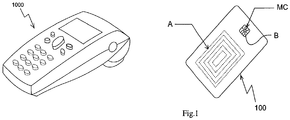
- the figure 1 represents an integrated circuit card communicating with a terminal.
- An integrated circuit card such as a smart card 100 comprises a card body to which is fixed an integrated circuit comprising a microcontroller MC connected to a read-only memory, a random access memory and an input / output module.
- the input / output module is connected to contact pads B extending on the surface of the card body and to an antenna A having electrically conductive turns embedded in the card body.
- the card 100 is intended to communicate with a terminal 1000.
- the communication between the smart card 100 and the terminal 1000 can be done by contact with the pads B by introducing it into a suitable reader or by exchange without contact with the card.
- the terminal 1000 selects applications present on the card and exchanges data therewith.
- Some terminals may, subject to the card's authorization, modify the applications it contains or create new applications.
- the memory of the card can contain several applications 1 and 2 designated by a main identifier IP1, IP2. It will be considered, in the context of the implementation example described here, that at least one of these applications must respect two naming rules and can thus be called indifferently by its main identifier IP1 or a secondary identifier IS 10 .
- the architecture of the memory of the smart card 100 involves several types of files including the files “Master file” (root file), “Dedicated file DF” (directory containing other files and possibly data) and “Elementary file EF “(data files).
- the figure 2 represents the file tree in the memory of the smart card 100. It comprises an MF file, an identifier table 4 in the form of an EF file, at least one file DF 1 named "application 1" containing a file. EF file 3 application-specific data and named “Data 1" and an EF 5 file of identifiers named "identifiers 1".
- the file EF 5 of identifiers contains the following records: file 9 of the main identifier IP 1 of the application 1 as well as its secondary identifiers IS 10 , IS 11 , IS 12 ... in the form of identifier records 9, 10, 11, 12. It will be noted that, in the case of the existence of several applications on the same card, the directories of each application 1 and 2 also contain a data file EF and an identifier EF file.
- the figure 3 represents the identifier table 4 of this smart card 100.
- This associates with each IPx or secondary ISx primary identifier of an application on the card 100 a reference to this application.
- the identifier IP 1 registered in the column AID ("Application Identifier"), has as associated reference "Application 1" which refers to the file DF 1 which contains, among others, the file EF 3 of data of the application 1 "Data 1" and the file EF 5 of identifiers.
- the secondary identifier IS 10 of the application 1 has the same reference "Application 1" as IP 1 , that is to say the file DF 1.
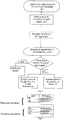
- the figures 4 , 5 , 7 and 8 describe the operations performed by the card during exchanges between a terminal 1000 and a smart card 100 according to the invention, according to various requests from the terminal.
- the oblong shapes designate the operations performed by the terminal 1000
- the rectangular shapes designate the elementary operations performed by the card 100
- the diamonds are the logical operations performed by the card 100.
- the figure 4 describes the operations performed by the card 100 in the case of the call, by the terminal 1000, an application via its secondary identifier IS 10 .
- the terminal 1000 calls the application 1 by the secondary identifier IS 10 .
- the card 100 stores the value IS 10 by assigning it to a memory variable (or call identifier) I call and then consults the table of identifiers 4. This consultation consists of a search, in the "AID" column, of the value used by the terminal 1000 to call the application 1 -IS 10 -. If this value is not in the table, an alternative selection mode is used. This mode can consist of for example in a request for direct activation of the application with which the terminal seeks to communicate. In the case where the value used by the terminal 1000 to call the application 1 -IS 10 - is included in the identifier table 4, the card 100 reads, in the identifier table 4, the reference associated with IS 10 .
- the reference associated with IS 10 is "Application 1".
- This reference refers, in a manner known per se, to the application 1 and allows the microcontroller to load the data relating to the application 1 which are contained in the file EF 3 "data 1".
- a single file 1 in memory corresponds to two IP 1 and IS 10 application identifiers.
- the invention therefore makes it possible to substitute a single application file 1 and a table of identifiers 4 for two application files identical to that of application 1 and which would have been named "Application IP 1 " and "Application IS 10". » .
- the saving of memory significantly increases with the number of secondary identifiers of the application 1 and the number of applications present in the card.
- the value used by the terminal 1000 to call the application -IS 10 - is kept and used by the card 100 to communicate with the terminal 1000.
- the terminal 1000 sees no difference between a card 100 using a identifier table 4 and a card using a "classic" configuration comprising two identical applications registered under different identifiers.
- the terminal therefore receives the information it expects. This makes it possible to avoid any inconsistency during the exchanges that use the name of the application as part of an encryption key or as input data from a cryptographic calculation making it possible to check that there is no hacking of the exchange flow between the terminal. 1000 and the card 100.
- the figure 5 describes the operations performed by the card 100 in the case of a request by the terminal 1000 to change the identifier of an application.
- the terminal 1000 calls an application under the identifier IS 10 .
- the value used by the terminal 1000 to call the application -IS 10 - is stored in the Iappel memory box and the corresponding application -Application 1- is selected.
- the terminal 1000 requests to change the identifier IS 10 to IS 1A .
- the smart card 100 compares the identifier whose terminal requests the modification -IS 10 - with the identifier initially used by the terminal 1000 to call the application. To do this, the card reads the value stored in the I call memory box: here IS 10 .
- the identifier to be modified corresponds to the value of the memory box call, so the modification is authorized and the identifier IS 10 is modified in IS 1A in the table of identifiers 4 and in the identifier record contained in the file EF 5 of identifiers. If the identifier to be changed had been different from the one under which the application was called, the change would have been refused.
- the terminal 1000 calls the application 1 under the identifier IS 11 .
- the storage by the card 100 thereof is done by assigning the value IS 11 to the Iappel memory box.
- the card 100 compares the identifier whose terminal requests the modification -IS 10 - with the identifier used by the terminal 1000 to call the application. To do this, the card 100 reads the value stored in the I call memory box. This value is here equal to IS 11 . The call identifier IS 11 different from the identifier whose terminal requests the modification -IS 10 -, the card 100 returns a message of refusal of the requested modification by the terminal 1000.
- FIG. figure 6 The table of identifiers corresponding to this card is represented in FIG. figure 6 .
- the application 1 has a main identifier IP 1 and three secondary identifiers IS 10 , IS 11 , IS 12 .
- the application 2 has only one main identifier IP 2 .
- the figure 7 illustrates the operations performed by the card 100 in the case of a request, by the terminal 1000, to create an identifier secondary to the application 2. This modification can, for example, intervene when it is desired to add to a card of payment to a company canteen, the possibility of paying for purchases from the vending machines of the same company, type coffee machine.
- the communication protocol of these vending machines does not use the same identifier as the payment terminals of the company canteen.
- the smart card has in memory the identity of the user and a credit amount available.
- the application 2 debits and credits the amount recorded on the card for the settlement of the company canteen via an application named IP2, and it is desired to create an application IS 20 which will charge, on the same amount, purchases made from vending machines. It is then necessary that both applications intervene on the same data.
- the creation of a new identifier for this application is done according to the following procedure: after the terminal 1000 has selected the application 2, it asks to create a secondary identifier IS 20 for the application 2.
- the card 100 checks the effective presence of the application 2 on the map.
- the application 2 If the application 2 is actually present on the card, it adds to the identifier table 4 the identifier IS 20 which is then associated with the same reference as the application 2. At the end of this operation, the card verifies that the identifier IS 20 has been correctly written in the table of identifiers. If this is the case, the identifier file IS 20 is then created in the dedicated file EF 5 of identifiers. The identifier table 4 then becomes the table represented in figure 9 . The write check performed by the card 100 makes it possible for the card to not look in the table for the identifiers, a secondary identifier whose storage is defective even though the identifier file is created. In case of incorrect writing, the creation of the IS 20 secondary identifier is refused.
- the figure 8 describes the operations performed by the card 100 in the case where the terminal 1000 requests the creation of a new application "Application 3" whose main identifier is IP3.
- the microcontroller of the card After verifying that this identifier is not already present in the identifier table 4 (that is to say, already allocated to an application), the microcontroller of the card then adds the main identifier IP3 in the table d identifiers 4 and associates it with Application 3 to create.
- the card verifies that the identifier IP3 is actually in the identifier table 4. If it is not there, the creation of the application 3 is denied. If the identifier IP3 is in the identifier table 4, the file "Application 3" is then created.
- This file encloses at least one EF 8 file of identifiers containing the identifier record 13 of the IP3 identifier of the application 3 and an EF 7 file "Data 3".
- the correct creation of the "Application 3" file is verified by known means of checking file integrity.
- the identifier table 4 becomes the one represented in figure 10 and the tree of the figure 2 then becomes that of the figure 11 .
- this procedure aims to make the operation of the card 100 more reliable by preventing an application 3 from being created on the card 100 and not appearing in the identifier table 4.
- the associated reference in the identifier table 4 may comprise a memory pointer which directs the system of the card 100 directly to the memory location of the application data file rather than to passing by an address table associating a reference to a location in the memory.
- the access time to the application is reduced since the search time in memory is saved.
- the MF file includes a parameter file DF 14 named "Parameters" which contains the parameter files P1, P10, P11, P12, P2 relating to the main and secondary identifiers of the application 1: IP1, IS 10 , IS 11 , IS 12 , and to the main identifier IP2 of the application 2.
- the identifier table 4 represented in FIG. figure 13 also associates with each identifier IP1, IS 10 , IS 11 , IS 12 , and IP2 of the applications present on the card, a reference to a parameter file P1, P10, P11, P12 and P2.
- Such a file includes information related to the behavior to be adopted by the application according to the selected identifier to call it.
Landscapes
- Engineering & Computer Science (AREA)
- Business, Economics & Management (AREA)
- Computer Networks & Wireless Communication (AREA)
- General Physics & Mathematics (AREA)
- Accounting & Taxation (AREA)
- Strategic Management (AREA)
- Physics & Mathematics (AREA)
- General Business, Economics & Management (AREA)
- Microelectronics & Electronic Packaging (AREA)
- Theoretical Computer Science (AREA)
- Computer Hardware Design (AREA)
- Computer Security & Cryptography (AREA)
- Computing Systems (AREA)
- General Engineering & Computer Science (AREA)
- Signal Processing (AREA)
- Power Engineering (AREA)
- Information Retrieval, Db Structures And Fs Structures Therefor (AREA)
- Storage Device Security (AREA)
Description
- La présente invention concerne la gestion des identifiants d'une application au sein d'une carte comportant un circuit intégré.
- L'invention a également pour objet un support portable de données à circuit intégré, tel qu'une carte à circuit intégré, mettant en oeuvre un tel procédé.
- Les cartes à circuit intégré, ou cartes à puce, comprennent typiquement un processeur ou microcontrôleur ainsi que de la mémoire volatile de type RAM, de la mémoire réinscriptible, comme par exemple de la mémoire de type EEPROM ou Flash et de la mémoire non réinscriptible de type ROM, ces types de mémoire pouvant contenir les applications et programmes ainsi que des données de configuration ou des données applicatives dont des identifiants d'application. Ces cartes sont destinées à échanger des données sécurisées avec des terminaux informatiques et mettent en oeuvre à cette fin des protocoles de communication avec différents types de terminaux informatiques, des moyens de connexion avec ou sans contact avec ceux-ci (respectivement des plages de contact ou une antenne reliées au circuit intégré) et disposent d'une organisation par fichiers de type « Master file », « Elementary File » et « Dedicated File » selon la norme ISO 7816-4. Classiquement, la mémoire de ces cartes renferme notamment une application, à laquelle la carte donne accès, telle qu'une application de paiement (carte de débit), un contrôle d'accès (badge d'accès à certaines zones d'un bâtiment), un titre de transport (abonnement) ou encore un identifiant sur un réseau téléphonique (carte SIM) .
- L'évolution hétérogène des terminaux, entre deux zones géographiques par exemple, rend nécessaire le respect par ces cartes de plusieurs normes, particulièrement en ce qui concerne le nommage des applications qu'elles renferment (souci de compatibilité et de rétrocompatibilité). Ceci est dû à la nécessité pour une même carte de pouvoir fonctionner sur des terminaux comportant des protocoles de communications différents, ou des versions différentes d'un même programme informatique interagissant avec le contenu de la carte. Par exemple les terminaux peuvent utiliser des identifiants différents pour une même application contenue dans la carte selon que la communication est établie via les plages de contact ou via l'antenne de la carte.
- Egalement, la convergence des supports voit l'émergence de cartes à circuit intégré multi-applications. Ces cartes renferment plusieurs fichiers d'applications qui permettent à une même carte de pouvoir réaliser, par exemple, une fonction de paiement classique par débit d'un compte bancaire et une fonction de porte-monnaie électronique. Certaines cartes SIM pour téléphone portable contiennent des applications de porte-monnaie électronique sans contact. On voit également des cartes de paiement disposer d'applications du type « cartes de fidélité » enregistrant les données personnelles des clients, et étant communes à plusieurs enseignes différentes.
- Lorsque l'on réalise la migration d'un parc de terminaux d'un système vers un autre système utilisant un identifiant nouveau pour une même application, il est nécessaire de :
- reprendre l'intégralité des cartes en circulation ;
- sauvegarder les données particulières à l'utilisateur contenues dans la carte pour l'ancienne application ;
- effacer l'ancienne application ;
- réinstaller la nouvelle version de cette application avec son nouvel identifiant, après intégration des données particulières de l'utilisateur.
- Cette opération, en substituant un nouvel identifiant à l'identifiant original, peut créer des conflits lors de l'appel de cette application sous son identifiant original par un autre système. Elle oblige également à reprendre l'intégralité des cartes en circulation, ce qui représente une opération lourde et coûteuse dans le cas d'importants volumes de cartes en circulation. Une autre solution consiste à mettre à jour l'intégralité du parc des terminaux appelant l'application sous un identifiant donné en réutilisant cet identifiant dans la nouvelle version. Dans la pratique, cette réalisation est impossible car elle demanderait une mise à jour instantanée afin de ne pas pénaliser l'utilisateur. De même, l'évolution des normes impose parfois des règles de nommage différentes.
- La solution la plus couramment retenue consiste à enregistrer, sur une même carte, plusieurs copies de la même application chacune sous un identifiant différent spécifique à un protocole de communication ou à une version du programme d'appel contenu dans un type de terminal.
- Cette solution est extrêmement consommatrice de mémoire sur la carte, alors que cette ressource est limitée, et complique la gestion des mises à jour des données de l'utilisateur utilisées par chaque application. En effet, le changement d'une des données relatives à l'utilisateur (extension ou restriction de droit d'accès, changement d'adresse,...) oblige la mise à jour de chacune des différentes copies de l'application et peut parfois rendre nécessaire la synchronisation des données entre plusieurs applications. Une telle opération requiert une programmation complexe, elle aussi consommatrice de mémoire.
- Le document "Card Payments Roadmap in the United States:
- How Will EMV Impact the Future Payments Infrastructure?", XP055065063 (1 septembre 2012) est une publication relative à la norme EMV et dévoile un procédé de gestion d'identifiants dans une carte de paiement dans laquelle deux identifiants désignent la même application. Chaque identifiant renvoie directement à l'application désignée.
- R. Thomas: "Betriebssysteme", XP055065065 (1 janvier 2010) explicite la notion de lien matériel ("hardlink").
-
US 2003/189092 A1 décrit un procédé de gestion d'identifiants dans une carte à circuit intégré communiquant avec un terminal, le circuit intégré étant agencé pour exécuter à la demande du terminal au moins un fichier désigné par l'identifiant principal et au moins un identifiant secondaire. La table d'identifiants est consultée à chaque fois qu'un terminal appelle l'identifiant secondaire. - Un but de l'invention est de fournir un moyen simple et économe en mémoire pour gérer les différents identifiants d'une même application contenue dans la mémoire d'un support portable de données à circuit intégré.
- L'invention a comme objet un procédé et un support portable tels que définis dans les revendications.
- A cet effet, on prévoit, selon l'invention, un procédé de gestion d'identifiants dans un support portable de données à circuit intégré, tel qu'une carte à circuit intégré, communiquant avec un terminal, le circuit intégré étant agencé pour exécuter à la demande du terminal au moins un fichier désigné par un identifiant principal et au moins un identifiant secondaire. Ledit procédé comprend les étapes :
- d'associer dans une table d'identifiants une même référence à tous les identifiants du fichier ;
- de consulter la table d'identifiants à chaque fois qu'un identifiant est appelé par un terminal connecté au circuit intégré et sélectionner dans la table d'identifiants le fichier dont la référence est associée à l'identifiant appelé ;
- de mémoriser l'identifiant utilisé par le terminal pour appeler le fichier et utiliser exclusivement celui-ci dans les échanges entre le circuit intégré et le terminal.
- Ainsi, la table d'identifiants permet de maintenir l'usage de plusieurs identifiants pour désigner un même enregistrement de l'application sans avoir à conserver en mémoire autant d'enregistrements de l'application qu'il existe d'identifiants différents pour cette application. Ceci permet de limiter la quantité de mémoire nécessaire et en facilite une exploitation rapide. Dans un mode de réalisation particulier, la référence à laquelle est associée l'identifiant dans la table peut être un pointeur vers la zone mémoire qui contient l'application. Ceci permet de réduire le temps d'accès du terminal à l'application notamment en évitant une recherche approfondie en mémoire.
- L'invention a également pour objet une carte à circuit intégré agencé pour mettre en oeuvre ce procédé.
- D'autres caractéristiques et avantages de l'invention ressortiront à la lecture de la description qui suit de modes de réalisation particuliers non limitatifs de l'invention.
- Il sera fait référence aux figures annexées, parmi lesquelles :
- la
figure 1 est une représentation schématique d'une carte à circuit intégré et d'un terminal ; - La
figure 2 est une représentation schématique de l'arborescence des fichiers contenus dans la carte ; - la
figure 3 est une représentation schématique d'une table d'identifiants dans le cas d'une carte mono-application; - la
figure 4 est un logigramme des événements déclenchés par l'appel d'une application par un terminal ; - la
figure 5 est un logigramme des événements déclenchés par la demande d'un terminal de modifier l'identifiant d'une application ; - la
figure 6 est une représentation schématique d'une table d'identifiants dans le cas d'une carte multi-application ; - la
figure 7 est un logigramme des événements déclenchés par la demande d'un terminal d'ajouter un identifiant secondaire à une application ; - la
figure 8 est un logigramme des événements déclenchés par la demande d'un terminal de créer une application dans une carte à circuit intégré ; - la
figure 9 est une représentation schématique d'une table d'identifiants après création d'un nouvel identifiant secondaire ; - la
figure 10 est une représentation schématique d'une table d'identifiants après création d'une nouvelle application ; - la
figure 11 est une représentation schématique de l'arborescence des fichiers contenus dans la carte après création d'une nouvelle application ; - la
figure 12 est une représentation schématique de l'arborescence des fichiers contenus dans la carte selon un second mode de réalisation de l'invention; - la
figure 13 est une représentation schématique de la table d'identifiants du mode de la réalisation de lafigure 12 ; - la
figure 14 est un logigramme des événements déclenchés par l'appel d'une application par un terminal selon le mode de réalisation de lafigure 12 . - La
figure 1 représente une carte à circuit intégré communiquant avec un terminal. - Une carte à circuit intégré telle qu'une carte à puce 100 comprend un corps de carte auquel est fixé un circuit intégré comportant un microcontrôleur MC relié à une mémoire morte, une mémoire vive et un module d'entrée / sortie. Le module d'entrée / sortie est relié à des plages de contact B s'étendant en surface du corps de carte et à une antenne A comportant des spires électriquement conductrices noyées dans le corps de carte. La carte 100 est destinée à communiquer avec un terminal 1000. La communication entre la carte à puce 100 et le terminal 1000 peut se faire par contact avec les plages B par introduction de celle-ci dans un lecteur adapté ou par échange sans contact avec l'antenne A dans le cadre d'une communication de type NFC par exemple. Le terminal 1000 sélectionne des applications présentes sur la carte et échange des données avec celles-ci. Certains terminaux peuvent, sous réserve d'y être autorisés par la carte, modifier les applications qu'elle contient ou créer de nouvelles applications. La mémoire de la carte peut contenir plusieurs applications 1 et 2 désignées par un identifiant principal IP1, IP2. On considérera, dans le cadre de l'exemple de mise en oeuvre ici décrit, qu'au moins l'une de ces applications doit respecter deux règles de nommage et peut être ainsi appelée indifféremment par son identifiant principal IP1 ou un identifiant secondaire IS10.
- L'architecture de la mémoire de la carte à puce 100 fait intervenir plusieurs types de fichiers dont les fichiers « Master file » (fichier racine), « Dedicated file DF » (répertoire contenant d'autres fichiers et éventuellement des données) et « Elementary file EF » (fichiers de données).
- La
figure 2 représente l'arborescence de fichiers dans la mémoire de la carte à puce 100. Elle comprend un fichier MF, une table d'identifiants 4 sous la forme d'un fichier EF, au moins un fichier DF 1 nommé « application 1 » contenant un fichier EF 3 des données spécifiques à l'application et nommé « Données 1 » et un fichier EF 5 d'identifiants nommé « identifiants 1 ». Le fichier EF 5 d'identifiants contient les enregistrements suivants : fichier 9 d'identifiant principal IP1 de l'application 1 ainsi que ses identifiants secondaires IS10, IS11, IS12 ... sous la forme d'enregistrements d'identifiant 9, 10, 11, 12. On remarquera que, dans le cas de l'existence de plusieurs applications sur la même carte, les répertoires de chaque application 1 et 2 contiennent également un fichier EF de données et un fichier EF d'identifiants. - On se place, ici, dans le cadre d'une carte à puce 100 ne gérant qu'une seule application 1. La
figure 3 représente la table d'identifiants 4 de cette carte à puce 100. Celle-ci associe à chaque identifiant principal IPx ou secondaire ISx d'une application présente sur la carte 100 une référence vers cette application. Par exemple, l'identifiant IP1, enregistré dans la colonne AID (« Application Identifier »), a comme référence associée « Application 1 » qui renvoie au fichier DF 1 qui contient, entre autres, le fichier EF 3 de données de l'application 1 « Données 1 » et le fichier EF 5 d'identifiants. L'identifiant secondaire IS10 de l'application 1 possède la même référence « Application 1 » que IP1, c'est-à-dire le fichier DF 1. - Les
figures 4 ,5 ,7 et8 décrivent les opérations effectuées par la carte lors d'échanges entre un terminal 1000 et une carte à puce 100 conforme à l'invention, selon diverses demandes du terminal. Dans tous ces logigrammes, les formes oblongues désignent les opérations réalisées par le terminal 1000, les formes rectangulaires désignent les opérations élémentaires réalisées par la carte 100, les losanges sont les opérations logiques réalisées par la carte 100. - La
figure 4 décrit les opérations effectuées par la carte 100 dans le cas de l'appel, par le terminal 1000, d'une application via son identifiant secondaire IS10. - Le terminal 1000 appelle l'application 1 par l'identifiant secondaire IS10. La carte 100 mémorise la valeur IS10 en l'attribuant à une variable mémoire (ou identifiant d'appel) Iappel puis consulte la table d'identifiants 4. Cette consultation consiste en une recherche, dans la colonne « AID », de la valeur utilisée par le terminal 1000 pour appeler l'application 1 -IS10-. Si cette valeur ne figure pas dans la table, un mode de sélection alternatif est utilisé. Ce mode peut consister, par exemple en une requête d'activation directe de l'application avec laquelle le terminal cherche à communiquer. Dans le cas où la valeur utilisée par le terminal 1000 pour appeler l'application 1 -IS10- figure dans la table d'identifiants 4, la carte 100 lit, dans la table d'identifiants 4, la référence associée à IS10. Ici, la référence associée à IS10 est « Application 1 ». Cette référence renvoie, de manière connue en elle-même, à l'application 1 et permet au microcontrôleur de charger les données relatives à l'application 1 qui sont contenues dans le fichier EF 3 « données 1 ». Ainsi, un seul fichier 1 en mémoire correspond à deux identifiants d'application IP1 et IS10. L'invention permet donc de substituer un unique fichier d'application 1 et une table d'identifiants 4 à deux fichiers d'application identiques à celui de l'application 1 et qui auraient été nommés « Application IP1 » et « Application IS10 ». L'économie de mémoire croit significativement avec le nombre d'identifiants secondaires de l'application 1 et le nombre d'applications présentes dans la carte. La valeur utilisée par le terminal 1000 pour appeler l'application -IS10- est conservée et utilisée par la carte 100 pour communiquer avec le terminal 1000. De cette manière, le terminal 1000 ne voit aucune différence entre une carte 100 faisant appel à une table d'identifiants 4 et une carte utilisant une configuration « classique » comprenant deux applications identiques enregistrées sous des identifiants différents. Le terminal reçoit donc les informations auxquelles il s'attend. Ceci permet d'éviter toute incohérence lors des échanges qui utilisent le nom de l'application comme partie d'une clé de chiffrement ou comme donnée entrante d'un calcul cryptographique permettant de vérifier une absence de piratage du flux d'échange entre le terminal 1000 et la carte 100.
- La
figure 5 décrit les opérations effectuées par la carte 100 dans le cas d'une demande, par le terminal 1000, de modification de l'identifiant d'une application. Le terminal 1000 appelle une application sous l'identifiant IS10. Selon la procédure précédemment décrite, la valeur utilisée par le terminal 1000 pour appeler l'application -IS10- est mémorisée dans la case mémoire Iappel et l'application correspondante -Application 1- est sélectionnée. Le terminal 1000 demande alors à modifier l'identifiant IS10 en IS1A. La carte à puce 100 compare l'identifiant dont le terminal demande la modification -IS10- avec l'identifiant initialement utilisé par le terminal 1000 pour appeler l'application. Pour ce faire la carte lit la valeur mémorisée dans la case mémoire Iappel : ici IS10. Comme c'est le cas dans notre exemple, l'identifiant à modifier correspond à la valeur de la case mémoire Iappel, ainsi la modification est autorisée et l'identifiant IS10 est modifié en IS1A dans la table d'identifiants 4 et dans l'enregistrement d'identifiant contenu dans le fichier EF 5 d'identifiants. Si l'identifiant à modifier avait été différent de celui sous lequel l'application a été appelée, la modification aurait été refusée. Un tel cas de figure peut être illustré comme suit. Le terminal 1000 appelle l'application 1 sous l'identifiant IS11. La mémorisation par la carte 100 de celui-ci se fait en attribuant la valeur IS11 à la case mémoire Iappel. Lorsque le terminal 1000 demande à modifier l'identifiant IS10 en IS1A, la carte 100 compare l'identifiant dont le terminal demande la modification -IS10- avec l'identifiant utilisé par le terminal 1000 pour appeler l'application. Pour ce faire la carte 100 lit la valeur mémorisée dans la case mémoire Iappel. Cette valeur est ici égale à IS11. L'identifiant d'appel IS11 différant de l'identifiant dont le terminal demande la modification -IS10-, la carte 100 retourne un message de refus de la modification demandée par le terminal 1000. - On se place, maintenant, dans le cadre d'une carte à puce 100 gérant plusieurs applications, ici deux, à savoir l'application 1 et l'application 2. La table d'identifiants correspondant à cette carte est représentée en
figure 6 . L'application 1 possède un identifiant principal IP1 et trois identifiants secondaires IS10, IS11, IS12. L'application 2 possède un seul identifiant principal IP2. Lafigure 7 illustre les opérations effectuées par la carte 100 dans le cas d'une demande, par le terminal 1000, de créer un identifiant secondaire à l'application 2. Cette modification peut, par exemple, intervenir lorsque l'on souhaite ajouter à une carte de paiement à une cantine d'entreprise, la possibilité de régler ses achats auprès des distributeurs automatiques de cette même entreprise, type machine à café. Le protocole de communication de ces distributeurs automatiques n'utilise pas le même identifiant que les terminaux de paiement de la cantine de l'entreprise. La carte à puce a en mémoire l'identité de l'utilisateur ainsi qu'un montant de crédit disponible. L'application 2 débite et crédite le montant enregistré sur la carte pour le règlement de la cantine d'entreprise via une application nommée IP2, et l'on souhaite créer une application IS20 qui prélèvera, sur cette même somme, les achats réalisés auprès des distributeurs automatiques. Il est alors nécessaire que les deux applications interviennent sur les mêmes données. La création d'un nouvel identifiant pour cette application se fait selon la procédure suivante : après que le terminal 1000 ait sélectionné l'application 2, il demande à créer un identifiant secondaire IS20 pour l'application 2. La carte 100 vérifie alors la présence effective de l'application 2 sur la carte. Si l'application 2 est effectivement présente sur la carte, celle-ci ajoute à la table d'identifiants 4 l'identifiant IS20 qui est alors associé à la même référence que l'application 2. A l'issue de cette opération, la carte vérifie que l'identifiant IS20 a été correctement écrit dans la table d'identifiants. Si tel est le cas, le fichier d'identifiant IS20 est alors créé dans le fichier dédié EF 5 d'identifiants. La table d'identifiants 4 devient alors la table représentée enfigure 9 . La vérification d'écriture effectuée par la carte 100 permet d'éviter que la carte recherche dans la table l'identifiants, un identifiant secondaire dont le stockage est défectueux alors même que le fichier d'identifiant est créé. En cas d'écriture incorrecte, la création de l'identifiant secondaire IS20 est refusée. En effet, la recherche de l'application sous cet identifiant par d'autres moyens serait infructueuse, la carte ne comprenant pas d'application nommée « Application 2 ». Cette procédure permet de fiabiliser le fonctionnement à l'aide d'une table d'identifiants. Si l'application 2 n'avait pas été présente sur la carte, celle-ci aurait retourné un message au terminal 1000 indiquant son refus de créer un identifiant secondaire - La
figure 8 décrit les opérations effectuées par la carte 100 dans le cas où le terminal 1000 demande la création d'une nouvelle application « Application 3 » dont l'identifiant principal est IP3. Après avoir vérifié que cet identifiant n'est pas déjà présent dans la table d'identifiants 4 (c'est-à-dire déjà attribué à une application), le microcontrôleur de la carte ajoute alors l'identifiant principal IP3 dans la table d'identifiants 4 et l'associe à l'Application 3 à créer. La carte vérifie ensuite que l'identifiant IP3 figure effectivement dans la table d'identifiants 4. Si celui-ci n'y figure pas, la création de l'application 3 est refusée. Si l'identifiant IP3 figure dans la table d'identifiants 4, le fichier « Application 3 » est alors créé. Ce fichier renferme au moins un fichier EF 8 d'identifiants contenant l'enregistrement d'identifiant 13 de l'identifiant IP3 de l'application 3 et un fichier EF 7 « Données 3 ». La création correcte du fichier « Application 3 » est vérifiée par des moyens connus de vérification d'intégrité de fichiers. La table d'identifiants 4 devient celle représentée enfigure 10 et l'arborescence de lafigure 2 devient alors celle de lafigure 11 . Là encore, cette procédure vise à fiabiliser le fonctionnement de la carte 100 en évitant qu'une application 3 ne soit créée sur la carte 100 et ne figure pas dans la table d'identifiants 4. - Selon un mode de réalisation particulier de l'invention, la référence associée dans la table d'identifiants 4 peut comprendre un pointeur mémoire qui dirige le système de la carte 100 directement vers l'emplacement mémoire du fichier données d'application plutôt que de passer par une table d'adressage associant une référence à un emplacement dans la mémoire. Le temps d'accès à l'application est réduit puisque le temps de recherche en mémoire est économisé.
- Selon un autre mode de réalisation et en référence aux
figures 12 à 14 , le fichier MF comprend un fichier DF 14 de paramétrage nommé « Paramètres » qui contient les fichiers de paramétrage P1, P10, P11, P12, P2, relatifs aux identifiants principaux et secondaires de l'application 1 : IP1, IS10, IS11, IS12, et à l'identifiant principal IP2 de l'application 2. La table d'identifiants 4 représentée enfigure 13 associe également à chaque identifiant IP1, IS10, IS11, IS12 , et IP2 des applications présentes sur la carte, une référence à un fichier de paramétrage P1, P10, P11, P12 et P2. Un tel fichier comprend des informations attachées au comportement à adopter par l'application en fonction de l'identifiant sélectionné pour l'appeler. Ces fichiers peuvent contenir des identifiants et/ou mots de passe qu'il ne serait alors plus utile de ressaisir ou encore des fichiers « cookies » enregistrant les préférences de l'utilisateur relatives à des options d'utilisation de l'application. En référence à lafigure 14 , la sélection de l'identifiant d'une application présente sur la carte 100 par le terminal 1000 - ici IS11 - se fait suivant le procédé préalablement décrit enfigure 4 . Parallèlement à la lecture de la référence, associée dans la colonne « Référence » de la table d'identifiants 4, à l'identifiant utilisé pour appeler l'application, le terminal 1000 lit, dans la colonne « Paramètres » de la table d'identifiants 4, la référence à l'emplacement mémoire du fichier de paramétrage P11 associé à l'identifiant utilisé -IS11- pour appeler l'application. Lors des échanges avec le terminal 1000, la carte 100 utilise l'identifiant IS11 et les préférences d'utilisation contenues dans le fichier P11. - Bien entendu, l'invention n'est pas limitée aux modes de réalisation décrits mais englobe toute variante entrant dans le champ de l'invention telle que définie par les revendications.
- En particulier,
- bien que des modes de réalisations soient décrits en rapport avec une carte à une application, l'invention s'applique également dans le cas de cartes multi-applications ;
- bien que l'arborescence des fichiers contenus dans la carte soit ici une arborescence par applications, l'invention s'applique également à d'autres répartitions des fichiers, comme par exemple une répartition fonctionnelle, un fichier regroupant alors tous les fichiers DF et un autre regroupant tous les fichiers « programmes » ;
- bien que la description traite, ici, des identifiants d'une application, l'invention s'applique également à d'autres types de fichiers ou répertoires pouvant comprendre plusieurs identifiants tels que par exemple des fichiers EF, DF ou ADF ;
- bien que la carte à puce dispose ici d'une antenne et de plages de contact lui permettant de communiquer avec le terminal, l'invention s'applique également à d'autres types de cartes telles que, par exemple, des cartes à contacts seulement, des cartes à contacts purs ou des cartes duales mettant en oeuvre une communication par contacts et par antenne ou tout autre type de support de données utilisant une puce telle que celle utilisée dans les cartes à circuit intégré.
Claims (10)
- Procédé de gestion d'identifiants dans un support portable de données à circuit intégré (100), tel qu'une carte à circuit intégré, communiquant avec un terminal (1000), le circuit intégré étant agencé pour exécuter à la demande du terminal (1000) au moins un fichier désigné par un identifiant principal et au moins un identifiant secondaire, comprenant les étapes :- d'associer dans une table d'identifiants (4) une même référence à tous les identifiants du fichier ;- de consulter la table d'identifiants (4) à chaque fois qu'un identifiant est appelé par un terminal (1000) dialoguant avec le circuit intégré (100) et sélectionner dans la table d'identifiants (4) le fichier dont la référence est associée à l'identifiant appelé ;le procédé étant caractérisé en une étape de mémorisation de l'identifiant utilisé par le terminal pour appeler le fichier et l'utilisation exclusive de ce dernier dans les échanges entre le circuit intégré (100) et ledit terminal (1000),
et dans lequel lorsqu'un terminal (1000) souhaite créer dans le circuit intégré (100) un nouveau répertoire d'application (6) dédié à un fichier dudit circuit intégré, celui-ci vérifie préalablement à la création dudit répertoire si l'identifiant principal de ce fichier a bien été correctement stocké dans la table d'identifiants (4), la création du répertoire de fichier étant refusée en cas de stockage incorrect de l'identifiant principal du fichier dans la table d'identifiants (4) ou si l'identifiant existe déjà dans la table d'identifiants (4). - Procédé selon la revendication 1, dans lequel une modification d'un des identifiants d'un fichier par un terminal (1000) n'est possible que si celui-ci a été appelé par le terminal (1000) en utilisant ledit identifiant.
- Procédé selon la revendication 1, dans lequel lorsqu'un terminal (1000) souhaite créer un nouvel identifiant secondaire dans le circuit intégré (100), celui-ci vérifie si le fichier désigné par ledit identifiant secondaire a bien été préalablement créé, l'identifiant secondaire n'étant créé dans la table d'identifiants (4) que si l'existence du fichier est confirmée.
- Procédé selon la revendication 1, dans lequel l'identifiant principal ou secondaire d'un fichier est contenu dans un espace mémoire dédié (5, 8).
- Procédé selon la revendication 4, dans lequel, lorsqu'un terminal (1000) souhaite créer un identifiant secondaire (12) dans un répertoire dédié (5) du circuit intégré (100), celui-ci vérifie, préalablement à la création dudit identifiant secondaire si celui-ci est correctement stocké dans la table d'identifiants (4), la création de l'identifiant secondaire étant refusée en cas d'écriture incorrecte de l'identifiant secondaire dans la table d'identifiants (4).
- Procédé selon la revendication 1, dans lequel la référence à laquelle sont associés les identifiants du fichier comprend un pointeur vers une zone mémoire qui contient l'application.
- Procédé selon la revendication 1, dans lequel, lorsque le fichier appelé par le terminal (1000) ne figure pas dans la table d'identifiants (4), celui-ci est sélectionné selon une procédure alternative.
- Procédé selon la revendication 1, dans lequel la table d'identifiants (4) associe également à l'identifiant utilisé pour appeler le fichier une référence à un emplacement mémoire particulier comprenant des paramètres d'utilisation spécifiques audit identifiant utilisé pour appeler le fichier.
- Support portable de données à circuit intégré agencé pour la mise en oeuvre du procédé selon l'une quelconque des revendications précédentes.
- Support selon la revendication 9, sous la forme d'une carte à circuit intégré.
Applications Claiming Priority (2)
| Application Number | Priority Date | Filing Date | Title |
|---|---|---|---|
| FR1260098A FR2997205B1 (fr) | 2012-10-23 | 2012-10-23 | Procede de gestion d'identifiants dans une carte a circuit integre et carte a circuit integre correspondante |
| PCT/EP2013/071363 WO2014063940A1 (fr) | 2012-10-23 | 2013-10-11 | Procede de gestion d'identifiants dans une carte a circuit integre et carte a circuit integre correspondante |
Publications (2)
| Publication Number | Publication Date |
|---|---|
| EP2912640A1 EP2912640A1 (fr) | 2015-09-02 |
| EP2912640B1 true EP2912640B1 (fr) | 2017-08-16 |
Family
ID=47714232
Family Applications (1)
| Application Number | Title | Priority Date | Filing Date |
|---|---|---|---|
| EP13774689.7A Active EP2912640B1 (fr) | 2012-10-23 | 2013-10-11 | Procédé de gestion d'identifiants dans une carte a circuit integré et carte a circuit integré correspondante |
Country Status (5)
| Country | Link |
|---|---|
| US (1) | US9413755B2 (fr) |
| EP (1) | EP2912640B1 (fr) |
| KR (1) | KR102084200B1 (fr) |
| FR (1) | FR2997205B1 (fr) |
| WO (1) | WO2014063940A1 (fr) |
Families Citing this family (7)
| Publication number | Priority date | Publication date | Assignee | Title |
|---|---|---|---|---|
| DE102016007189A1 (de) * | 2016-06-14 | 2017-12-14 | Giesecke+Devrient Mobile Security Gmbh | Ressourcenbeschränktes Java Card Device |
| DE102017002151A1 (de) | 2017-03-06 | 2018-09-06 | Giesecke+Devrient Mobile Security Gmbh | Card Device mit Applets und Weitergabe von APDUs an Applets |
| US10958640B2 (en) * | 2018-02-08 | 2021-03-23 | Citrix Systems, Inc. | Fast smart card login |
| US12216769B2 (en) | 2022-04-29 | 2025-02-04 | Oracle International Corporation | Secure element enforcing a security policy for device peripherals |
| US12197974B2 (en) | 2022-06-08 | 2025-01-14 | Oracle International Corporation | Logical java card runtime environment |
| US12538130B2 (en) * | 2022-09-20 | 2026-01-27 | Oracle International Corporation | Systems and methods for running multiple logical secure elements on the same secure hardware |
| US12608185B2 (en) | 2022-12-12 | 2026-04-21 | Oracle International Corporation | Systems and methods for creating an extended smart card application file from multiple smart card application files |
Citations (1)
| Publication number | Priority date | Publication date | Assignee | Title |
|---|---|---|---|---|
| US20030189092A1 (en) * | 2001-08-03 | 2003-10-09 | Tomoharu Takano | Multi-application ic card |
Family Cites Families (7)
| Publication number | Priority date | Publication date | Assignee | Title |
|---|---|---|---|---|
| DE19522527A1 (de) * | 1995-06-23 | 1997-01-02 | Ibm | Verfahren zur Vereinfachung der Kommunikation mit Chipkarten |
| US8108307B1 (en) * | 1998-03-30 | 2012-01-31 | Citicorp Development Center, Inc. | System, method and apparatus for value exchange utilizing value-storing applications |
| US6424975B1 (en) * | 2000-01-07 | 2002-07-23 | Trg Products, Inc. | FAT file system in palm OS computer |
| EP1872564B1 (fr) * | 2005-04-19 | 2010-05-05 | Nokia Corporation | Procede, dispositif et systeme de commande de l'introduction d'une application dans un dispositif de terminal mobile |
| EP1791055A1 (fr) * | 2005-11-23 | 2007-05-30 | Incard SA | Système de fichier pour carte à circuit intégré |
| US8615502B2 (en) * | 2008-04-18 | 2013-12-24 | Mcafee, Inc. | Method of and system for reverse mapping vnode pointers |
| US20100240413A1 (en) * | 2009-03-21 | 2010-09-23 | Microsoft Corporation | Smart Card File System |
-
2012
- 2012-10-23 FR FR1260098A patent/FR2997205B1/fr active Active
-
2013
- 2013-10-11 WO PCT/EP2013/071363 patent/WO2014063940A1/fr not_active Ceased
- 2013-10-11 EP EP13774689.7A patent/EP2912640B1/fr active Active
- 2013-10-11 US US14/437,442 patent/US9413755B2/en active Active
- 2013-10-11 KR KR1020157012488A patent/KR102084200B1/ko active Active
Patent Citations (1)
| Publication number | Priority date | Publication date | Assignee | Title |
|---|---|---|---|---|
| US20030189092A1 (en) * | 2001-08-03 | 2003-10-09 | Tomoharu Takano | Multi-application ic card |
Also Published As
| Publication number | Publication date |
|---|---|
| EP2912640A1 (fr) | 2015-09-02 |
| WO2014063940A1 (fr) | 2014-05-01 |
| US9413755B2 (en) | 2016-08-09 |
| US20150288686A1 (en) | 2015-10-08 |
| KR102084200B1 (ko) | 2020-03-03 |
| FR2997205B1 (fr) | 2014-10-31 |
| FR2997205A1 (fr) | 2014-04-25 |
| KR20150074041A (ko) | 2015-07-01 |
Similar Documents
| Publication | Publication Date | Title |
|---|---|---|
| EP0906603B1 (fr) | Systeme de communication permettant une gestion securisee et independante d'une pluralite d'applications par chaque carte utilisateur, carte utilisateur et procede de gestion correspondants | |
| EP3243178B1 (fr) | Procédé de traitement d'une transaction à partir d'un terminal de communication | |
| EP2912640A1 (fr) | Procede de gestion d'identifiants dans une carte a circuit integre et carte a circuit integre correspondante | |
| CA2757390A1 (fr) | Serveur de transaction nfc | |
| WO2001084512A1 (fr) | Carte a puce multi-applicatives | |
| CA2946143C (fr) | Procede de traitement de donnees transactionnelles, dispositif et programme correspondant | |
| FR2757661A1 (fr) | Procede de transfert securise de donnees par un reseau de communication | |
| FR2833374A1 (fr) | Procede et dispositif de controle d'acces dans un systeme embarque | |
| EP3648491B1 (fr) | Element securise multi-configurations et procede associe | |
| FR2823330A1 (fr) | Procede et systeme de gestion de donnees destinees a etre stockees dans une memoire, par exemple du code d'une application charge dans une carte a puce programmable | |
| WO2020128240A1 (fr) | Traitement d'un service de tickets electroniques | |
| US20250016113A1 (en) | Method and system for determining transferability of resources | |
| EP4390739A1 (fr) | Protection d'un dispositif électronique | |
| EP4390738A1 (fr) | Protection d'un dispositif électronique | |
| EP0829831B1 (fr) | Méthode d'authentification de cartes | |
| FR2923041A1 (fr) | Procede d'ouverture securisee a des tiers d'une carte a microcircuit. | |
| EP0974131B1 (fr) | Procede d'interpretation dynamique de donnees pour une carte a puce | |
| FR2765362A1 (fr) | Module de securite comportant des moyens de creation de liens entre des fichiers principaux et des fichiers auxiliaires | |
| FR3031610A1 (fr) | Procede de traitement d'une transaction a partir d'un terminal de communication | |
| FR3031609A1 (fr) | Procede de traitement d'une transaction a partir d'un terminal de communication | |
| EP3179400B1 (fr) | Procédé de chargement d'une ressource informatique au sein d'un dispositif électronique, module électronique et programme d'ordinateur correspondant | |
| EP2812864B1 (fr) | Système de paiement, terminal de paiement de ce système, et procédé de paiement associé | |
| FR2882835A1 (fr) | Procede de transfert securise par carte multimedia securisee | |
| EP1233383A1 (fr) | Procédé et dispositif de gestion d'applications de cartes à puce | |
| FR2864294A1 (fr) | Carte a microcircuit multi-compte permettant la restriction d'une fonctionnalite a un compte et procede de communication correspondant |
Legal Events
| Date | Code | Title | Description |
|---|---|---|---|
| PUAI | Public reference made under article 153(3) epc to a published international application that has entered the european phase |
Free format text: ORIGINAL CODE: 0009012 |
|
| 17P | Request for examination filed |
Effective date: 20150408 |
|
| AK | Designated contracting states |
Kind code of ref document: A1 Designated state(s): AL AT BE BG CH CY CZ DE DK EE ES FI FR GB GR HR HU IE IS IT LI LT LU LV MC MK MT NL NO PL PT RO RS SE SI SK SM TR |
|
| AX | Request for extension of the european patent |
Extension state: BA ME |
|
| DAX | Request for extension of the european patent (deleted) | ||
| 17Q | First examination report despatched |
Effective date: 20160311 |
|
| REG | Reference to a national code |
Ref country code: DE Ref legal event code: R079 Ref document number: 602013025164 Country of ref document: DE Free format text: PREVIOUS MAIN CLASS: G07F0007100000 Ipc: G06Q0020340000 |
|
| GRAJ | Information related to disapproval of communication of intention to grant by the applicant or resumption of examination proceedings by the epo deleted |
Free format text: ORIGINAL CODE: EPIDOSDIGR1 |
|
| GRAP | Despatch of communication of intention to grant a patent |
Free format text: ORIGINAL CODE: EPIDOSNIGR1 |
|
| STAA | Information on the status of an ep patent application or granted ep patent |
Free format text: STATUS: EXAMINATION IS IN PROGRESS |
|
| GRAP | Despatch of communication of intention to grant a patent |
Free format text: ORIGINAL CODE: EPIDOSNIGR1 |
|
| STAA | Information on the status of an ep patent application or granted ep patent |
Free format text: STATUS: GRANT OF PATENT IS INTENDED |
|
| GRAJ | Information related to disapproval of communication of intention to grant by the applicant or resumption of examination proceedings by the epo deleted |
Free format text: ORIGINAL CODE: EPIDOSDIGR1 |
|
| RIC1 | Information provided on ipc code assigned before grant |
Ipc: G06Q 20/34 20120101AFI20161025BHEP Ipc: H04L 29/06 20060101ALI20161025BHEP |
|
| GRAP | Despatch of communication of intention to grant a patent |
Free format text: ORIGINAL CODE: EPIDOSNIGR1 |
|
| INTG | Intention to grant announced |
Effective date: 20161115 |
|
| INTG | Intention to grant announced |
Effective date: 20161125 |
|
| INTG | Intention to grant announced |
Effective date: 20161207 |
|
| GRAJ | Information related to disapproval of communication of intention to grant by the applicant or resumption of examination proceedings by the epo deleted |
Free format text: ORIGINAL CODE: EPIDOSDIGR1 |
|
| STAA | Information on the status of an ep patent application or granted ep patent |
Free format text: STATUS: EXAMINATION IS IN PROGRESS |
|
| GRAJ | Information related to disapproval of communication of intention to grant by the applicant or resumption of examination proceedings by the epo deleted |
Free format text: ORIGINAL CODE: EPIDOSDIGR1 |
|
| STAA | Information on the status of an ep patent application or granted ep patent |
Free format text: STATUS: GRANT OF PATENT IS INTENDED |
|
| GRAP | Despatch of communication of intention to grant a patent |
Free format text: ORIGINAL CODE: EPIDOSNIGR1 |
|
| INTC | Intention to grant announced (deleted) | ||
| INTG | Intention to grant announced |
Effective date: 20170413 |
|
| GRAS | Grant fee paid |
Free format text: ORIGINAL CODE: EPIDOSNIGR3 |
|
| GRAA | (expected) grant |
Free format text: ORIGINAL CODE: 0009210 |
|
| STAA | Information on the status of an ep patent application or granted ep patent |
Free format text: STATUS: THE PATENT HAS BEEN GRANTED |
|
| AK | Designated contracting states |
Kind code of ref document: B1 Designated state(s): AL AT BE BG CH CY CZ DE DK EE ES FI FR GB GR HR HU IE IS IT LI LT LU LV MC MK MT NL NO PL PT RO RS SE SI SK SM TR |
|
| REG | Reference to a national code |
Ref country code: GB Ref legal event code: FG4D Free format text: NOT ENGLISH |
|
| REG | Reference to a national code |
Ref country code: CH Ref legal event code: EP |
|
| REG | Reference to a national code |
Ref country code: IE Ref legal event code: FG4D Free format text: LANGUAGE OF EP DOCUMENT: FRENCH |
|
| REG | Reference to a national code |
Ref country code: AT Ref legal event code: REF Ref document number: 919755 Country of ref document: AT Kind code of ref document: T Effective date: 20170915 |
|
| REG | Reference to a national code |
Ref country code: DE Ref legal event code: R096 Ref document number: 602013025164 Country of ref document: DE |
|
| REG | Reference to a national code |
Ref country code: NL Ref legal event code: FP |
|
| RAP2 | Party data changed (patent owner data changed or rights of a patent transferred) |
Owner name: IDEMIA IDENTITY & SECURITY FRANCE |
|
| REG | Reference to a national code |
Ref country code: LT Ref legal event code: MG4D |
|
| REG | Reference to a national code |
Ref country code: AT Ref legal event code: MK05 Ref document number: 919755 Country of ref document: AT Kind code of ref document: T Effective date: 20170816 |
|
| REG | Reference to a national code |
Ref country code: FR Ref legal event code: PLFP Year of fee payment: 5 |
|
| PG25 | Lapsed in a contracting state [announced via postgrant information from national office to epo] |
Ref country code: LT Free format text: LAPSE BECAUSE OF FAILURE TO SUBMIT A TRANSLATION OF THE DESCRIPTION OR TO PAY THE FEE WITHIN THE PRESCRIBED TIME-LIMIT Effective date: 20170816 Ref country code: HR Free format text: LAPSE BECAUSE OF FAILURE TO SUBMIT A TRANSLATION OF THE DESCRIPTION OR TO PAY THE FEE WITHIN THE PRESCRIBED TIME-LIMIT Effective date: 20170816 Ref country code: NO Free format text: LAPSE BECAUSE OF FAILURE TO SUBMIT A TRANSLATION OF THE DESCRIPTION OR TO PAY THE FEE WITHIN THE PRESCRIBED TIME-LIMIT Effective date: 20171116 Ref country code: FI Free format text: LAPSE BECAUSE OF FAILURE TO SUBMIT A TRANSLATION OF THE DESCRIPTION OR TO PAY THE FEE WITHIN THE PRESCRIBED TIME-LIMIT Effective date: 20170816 Ref country code: SE Free format text: LAPSE BECAUSE OF FAILURE TO SUBMIT A TRANSLATION OF THE DESCRIPTION OR TO PAY THE FEE WITHIN THE PRESCRIBED TIME-LIMIT Effective date: 20170816 Ref country code: AT Free format text: LAPSE BECAUSE OF FAILURE TO SUBMIT A TRANSLATION OF THE DESCRIPTION OR TO PAY THE FEE WITHIN THE PRESCRIBED TIME-LIMIT Effective date: 20170816 |
|
| PG25 | Lapsed in a contracting state [announced via postgrant information from national office to epo] |
Ref country code: RS Free format text: LAPSE BECAUSE OF FAILURE TO SUBMIT A TRANSLATION OF THE DESCRIPTION OR TO PAY THE FEE WITHIN THE PRESCRIBED TIME-LIMIT Effective date: 20170816 Ref country code: LV Free format text: LAPSE BECAUSE OF FAILURE TO SUBMIT A TRANSLATION OF THE DESCRIPTION OR TO PAY THE FEE WITHIN THE PRESCRIBED TIME-LIMIT Effective date: 20170816 Ref country code: BG Free format text: LAPSE BECAUSE OF FAILURE TO SUBMIT A TRANSLATION OF THE DESCRIPTION OR TO PAY THE FEE WITHIN THE PRESCRIBED TIME-LIMIT Effective date: 20171116 Ref country code: IS Free format text: LAPSE BECAUSE OF FAILURE TO SUBMIT A TRANSLATION OF THE DESCRIPTION OR TO PAY THE FEE WITHIN THE PRESCRIBED TIME-LIMIT Effective date: 20171216 Ref country code: GR Free format text: LAPSE BECAUSE OF FAILURE TO SUBMIT A TRANSLATION OF THE DESCRIPTION OR TO PAY THE FEE WITHIN THE PRESCRIBED TIME-LIMIT Effective date: 20171117 Ref country code: ES Free format text: LAPSE BECAUSE OF FAILURE TO SUBMIT A TRANSLATION OF THE DESCRIPTION OR TO PAY THE FEE WITHIN THE PRESCRIBED TIME-LIMIT Effective date: 20170816 Ref country code: PL Free format text: LAPSE BECAUSE OF FAILURE TO SUBMIT A TRANSLATION OF THE DESCRIPTION OR TO PAY THE FEE WITHIN THE PRESCRIBED TIME-LIMIT Effective date: 20170816 |
|
| PG25 | Lapsed in a contracting state [announced via postgrant information from national office to epo] |
Ref country code: RO Free format text: LAPSE BECAUSE OF FAILURE TO SUBMIT A TRANSLATION OF THE DESCRIPTION OR TO PAY THE FEE WITHIN THE PRESCRIBED TIME-LIMIT Effective date: 20170816 Ref country code: DK Free format text: LAPSE BECAUSE OF FAILURE TO SUBMIT A TRANSLATION OF THE DESCRIPTION OR TO PAY THE FEE WITHIN THE PRESCRIBED TIME-LIMIT Effective date: 20170816 Ref country code: CZ Free format text: LAPSE BECAUSE OF FAILURE TO SUBMIT A TRANSLATION OF THE DESCRIPTION OR TO PAY THE FEE WITHIN THE PRESCRIBED TIME-LIMIT Effective date: 20170816 |
|
| REG | Reference to a national code |
Ref country code: DE Ref legal event code: R097 Ref document number: 602013025164 Country of ref document: DE |
|
| PG25 | Lapsed in a contracting state [announced via postgrant information from national office to epo] |
Ref country code: SM Free format text: LAPSE BECAUSE OF FAILURE TO SUBMIT A TRANSLATION OF THE DESCRIPTION OR TO PAY THE FEE WITHIN THE PRESCRIBED TIME-LIMIT Effective date: 20170816 Ref country code: IT Free format text: LAPSE BECAUSE OF FAILURE TO SUBMIT A TRANSLATION OF THE DESCRIPTION OR TO PAY THE FEE WITHIN THE PRESCRIBED TIME-LIMIT Effective date: 20170816 Ref country code: MC Free format text: LAPSE BECAUSE OF FAILURE TO SUBMIT A TRANSLATION OF THE DESCRIPTION OR TO PAY THE FEE WITHIN THE PRESCRIBED TIME-LIMIT Effective date: 20170816 Ref country code: SK Free format text: LAPSE BECAUSE OF FAILURE TO SUBMIT A TRANSLATION OF THE DESCRIPTION OR TO PAY THE FEE WITHIN THE PRESCRIBED TIME-LIMIT Effective date: 20170816 Ref country code: EE Free format text: LAPSE BECAUSE OF FAILURE TO SUBMIT A TRANSLATION OF THE DESCRIPTION OR TO PAY THE FEE WITHIN THE PRESCRIBED TIME-LIMIT Effective date: 20170816 |
|
| REG | Reference to a national code |
Ref country code: CH Ref legal event code: PL |
|
| REG | Reference to a national code |
Ref country code: NL Ref legal event code: MM Effective date: 20171101 |
|
| PLBE | No opposition filed within time limit |
Free format text: ORIGINAL CODE: 0009261 |
|
| STAA | Information on the status of an ep patent application or granted ep patent |
Free format text: STATUS: NO OPPOSITION FILED WITHIN TIME LIMIT |
|
| 26N | No opposition filed |
Effective date: 20180517 |
|
| REG | Reference to a national code |
Ref country code: IE Ref legal event code: MM4A |
|
| PG25 | Lapsed in a contracting state [announced via postgrant information from national office to epo] |
Ref country code: LI Free format text: LAPSE BECAUSE OF NON-PAYMENT OF DUE FEES Effective date: 20171031 Ref country code: LU Free format text: LAPSE BECAUSE OF NON-PAYMENT OF DUE FEES Effective date: 20171011 Ref country code: CH Free format text: LAPSE BECAUSE OF NON-PAYMENT OF DUE FEES Effective date: 20171031 Ref country code: NL Free format text: LAPSE BECAUSE OF NON-PAYMENT OF DUE FEES Effective date: 20171101 |
|
| REG | Reference to a national code |
Ref country code: BE Ref legal event code: MM Effective date: 20171031 |
|
| PG25 | Lapsed in a contracting state [announced via postgrant information from national office to epo] |
Ref country code: SI Free format text: LAPSE BECAUSE OF FAILURE TO SUBMIT A TRANSLATION OF THE DESCRIPTION OR TO PAY THE FEE WITHIN THE PRESCRIBED TIME-LIMIT Effective date: 20170816 Ref country code: BE Free format text: LAPSE BECAUSE OF NON-PAYMENT OF DUE FEES Effective date: 20171031 |
|
| REG | Reference to a national code |
Ref country code: FR Ref legal event code: PLFP Year of fee payment: 6 |
|
| PG25 | Lapsed in a contracting state [announced via postgrant information from national office to epo] |
Ref country code: MT Free format text: LAPSE BECAUSE OF FAILURE TO SUBMIT A TRANSLATION OF THE DESCRIPTION OR TO PAY THE FEE WITHIN THE PRESCRIBED TIME-LIMIT Effective date: 20170816 |
|
| PG25 | Lapsed in a contracting state [announced via postgrant information from national office to epo] |
Ref country code: IE Free format text: LAPSE BECAUSE OF NON-PAYMENT OF DUE FEES Effective date: 20171011 |
|
| PG25 | Lapsed in a contracting state [announced via postgrant information from national office to epo] |
Ref country code: HU Free format text: LAPSE BECAUSE OF FAILURE TO SUBMIT A TRANSLATION OF THE DESCRIPTION OR TO PAY THE FEE WITHIN THE PRESCRIBED TIME-LIMIT; INVALID AB INITIO Effective date: 20131011 |
|
| PG25 | Lapsed in a contracting state [announced via postgrant information from national office to epo] |
Ref country code: CY Free format text: LAPSE BECAUSE OF FAILURE TO SUBMIT A TRANSLATION OF THE DESCRIPTION OR TO PAY THE FEE WITHIN THE PRESCRIBED TIME-LIMIT Effective date: 20170816 |
|
| PG25 | Lapsed in a contracting state [announced via postgrant information from national office to epo] |
Ref country code: MK Free format text: LAPSE BECAUSE OF FAILURE TO SUBMIT A TRANSLATION OF THE DESCRIPTION OR TO PAY THE FEE WITHIN THE PRESCRIBED TIME-LIMIT Effective date: 20170816 |
|
| PG25 | Lapsed in a contracting state [announced via postgrant information from national office to epo] |
Ref country code: TR Free format text: LAPSE BECAUSE OF FAILURE TO SUBMIT A TRANSLATION OF THE DESCRIPTION OR TO PAY THE FEE WITHIN THE PRESCRIBED TIME-LIMIT Effective date: 20170816 |
|
| PG25 | Lapsed in a contracting state [announced via postgrant information from national office to epo] |
Ref country code: PT Free format text: LAPSE BECAUSE OF FAILURE TO SUBMIT A TRANSLATION OF THE DESCRIPTION OR TO PAY THE FEE WITHIN THE PRESCRIBED TIME-LIMIT Effective date: 20170816 |
|
| PG25 | Lapsed in a contracting state [announced via postgrant information from national office to epo] |
Ref country code: AL Free format text: LAPSE BECAUSE OF FAILURE TO SUBMIT A TRANSLATION OF THE DESCRIPTION OR TO PAY THE FEE WITHIN THE PRESCRIBED TIME-LIMIT Effective date: 20170816 |
|
| REG | Reference to a national code |
Ref country code: DE Ref legal event code: R081 Ref document number: 602013025164 Country of ref document: DE Owner name: IDEMIA IDENTITY & SECURITY FRANCE, FR Free format text: FORMER OWNER: MORPHO, ISSY-LES-MOULINEAUX, FR Ref country code: DE Ref legal event code: R081 Ref document number: 602013025164 Country of ref document: DE Owner name: IDEMIA FRANCE, FR Free format text: FORMER OWNER: MORPHO, ISSY-LES-MOULINEAUX, FR |
|
| P01 | Opt-out of the competence of the unified patent court (upc) registered |
Effective date: 20230428 |
|
| REG | Reference to a national code |
Ref country code: DE Ref legal event code: R081 Ref document number: 602013025164 Country of ref document: DE Owner name: IDEMIA FRANCE, FR Free format text: FORMER OWNER: IDEMIA IDENTITY & SECURITY FRANCE, COURBEVOIE, FR |
|
| REG | Reference to a national code |
Ref country code: GB Ref legal event code: 732E Free format text: REGISTERED BETWEEN 20250515 AND 20250521 |
|
| PGFP | Annual fee paid to national office [announced via postgrant information from national office to epo] |
Ref country code: GB Payment date: 20250923 Year of fee payment: 13 |
|
| PGFP | Annual fee paid to national office [announced via postgrant information from national office to epo] |
Ref country code: FR Payment date: 20250923 Year of fee payment: 13 |
|
| PGFP | Annual fee paid to national office [announced via postgrant information from national office to epo] |
Ref country code: DE Payment date: 20250923 Year of fee payment: 13 |