EP2914496B2 - Methode zur verteilung von reisegepäck im flughafen - Google Patents
Methode zur verteilung von reisegepäck im flughafen Download PDFInfo
- Publication number
- EP2914496B2 EP2914496B2 EP13786158.9A EP13786158A EP2914496B2 EP 2914496 B2 EP2914496 B2 EP 2914496B2 EP 13786158 A EP13786158 A EP 13786158A EP 2914496 B2 EP2914496 B2 EP 2914496B2
- Authority
- EP
- European Patent Office
- Prior art keywords
- tote
- empty
- totes
- support members
- baggage
- Prior art date
- Legal status (The legal status is an assumption and is not a legal conclusion. Google has not performed a legal analysis and makes no representation as to the accuracy of the status listed.)
- Active
Links
Images






Classifications
-
- B—PERFORMING OPERATIONS; TRANSPORTING
- B65—CONVEYING; PACKING; STORING; HANDLING THIN OR FILAMENTARY MATERIAL
- B65G—TRANSPORT OR STORAGE DEVICES, e.g. CONVEYORS FOR LOADING OR TIPPING, SHOP CONVEYOR SYSTEMS OR PNEUMATIC TUBE CONVEYORS
- B65G57/00—Stacking of articles
- B65G57/30—Stacking of articles by adding to the bottom of the stack
- B65G57/301—Stacking of articles by adding to the bottom of the stack by means of reciprocatory or oscillatory lifting and holding or gripping devices
- B65G57/303—Stacking of articles by adding to the bottom of the stack by means of reciprocatory or oscillatory lifting and holding or gripping devices the stack being lowered by mobile grippers or holders onto added articles
-
- B—PERFORMING OPERATIONS; TRANSPORTING
- B64—AIRCRAFT; AVIATION; COSMONAUTICS
- B64F—GROUND OR AIRCRAFT-CARRIER-DECK INSTALLATIONS SPECIALLY ADAPTED FOR USE IN CONNECTION WITH AIRCRAFT; DESIGNING, MANUFACTURING, ASSEMBLING, CLEANING, MAINTAINING OR REPAIRING AIRCRAFT, NOT OTHERWISE PROVIDED FOR; HANDLING, TRANSPORTING, TESTING OR INSPECTING AIRCRAFT COMPONENTS, NOT OTHERWISE PROVIDED FOR
- B64F1/00—Ground or aircraft-carrier-deck installations
- B64F1/36—Other airport installations
- B64F1/368—Arrangements or installations for routing, distributing or loading baggage
-
- B—PERFORMING OPERATIONS; TRANSPORTING
- B65—CONVEYING; PACKING; STORING; HANDLING THIN OR FILAMENTARY MATERIAL
- B65G—TRANSPORT OR STORAGE DEVICES, e.g. CONVEYORS FOR LOADING OR TIPPING, SHOP CONVEYOR SYSTEMS OR PNEUMATIC TUBE CONVEYORS
- B65G43/00—Control devices, e.g. for safety, warning or fault-correcting
-
- B—PERFORMING OPERATIONS; TRANSPORTING
- B65—CONVEYING; PACKING; STORING; HANDLING THIN OR FILAMENTARY MATERIAL
- B65G—TRANSPORT OR STORAGE DEVICES, e.g. CONVEYORS FOR LOADING OR TIPPING, SHOP CONVEYOR SYSTEMS OR PNEUMATIC TUBE CONVEYORS
- B65G47/00—Article or material-handling devices associated with conveyors; Methods employing such devices
- B65G47/02—Devices for feeding articles or materials to conveyors
- B65G47/04—Devices for feeding articles or materials to conveyors for feeding articles
- B65G47/06—Devices for feeding articles or materials to conveyors for feeding articles from a single group of articles arranged in orderly pattern, e.g. workpieces in magazines
-
- B—PERFORMING OPERATIONS; TRANSPORTING
- B65—CONVEYING; PACKING; STORING; HANDLING THIN OR FILAMENTARY MATERIAL
- B65G—TRANSPORT OR STORAGE DEVICES, e.g. CONVEYORS FOR LOADING OR TIPPING, SHOP CONVEYOR SYSTEMS OR PNEUMATIC TUBE CONVEYORS
- B65G47/00—Article or material-handling devices associated with conveyors; Methods employing such devices
- B65G47/34—Devices for discharging articles or materials from conveyor
- B65G47/36—Devices for discharging articles or materials from conveyor by detaching suspended articles
-
- B—PERFORMING OPERATIONS; TRANSPORTING
- B65—CONVEYING; PACKING; STORING; HANDLING THIN OR FILAMENTARY MATERIAL
- B65G—TRANSPORT OR STORAGE DEVICES, e.g. CONVEYORS FOR LOADING OR TIPPING, SHOP CONVEYOR SYSTEMS OR PNEUMATIC TUBE CONVEYORS
- B65G59/00—De-stacking of articles
- B65G59/06—De-stacking from the bottom of the stack
- B65G59/061—De-stacking from the bottom of the stack articles being separated substantially along the axis of the stack
- B65G59/062—De-stacking from the bottom of the stack articles being separated substantially along the axis of the stack by means of reciprocating or oscillating escapement-like mechanisms
- B65G59/063—De-stacking from the bottom of the stack articles being separated substantially along the axis of the stack by means of reciprocating or oscillating escapement-like mechanisms comprising lifting means
-
- B—PERFORMING OPERATIONS; TRANSPORTING
- B65—CONVEYING; PACKING; STORING; HANDLING THIN OR FILAMENTARY MATERIAL
- B65G—TRANSPORT OR STORAGE DEVICES, e.g. CONVEYORS FOR LOADING OR TIPPING, SHOP CONVEYOR SYSTEMS OR PNEUMATIC TUBE CONVEYORS
- B65G2201/00—Indexing codes relating to handling devices, e.g. conveyors, characterised by the type of product or load being conveyed or handled
- B65G2201/02—Articles
- B65G2201/0235—Containers
-
- B—PERFORMING OPERATIONS; TRANSPORTING
- B65—CONVEYING; PACKING; STORING; HANDLING THIN OR FILAMENTARY MATERIAL
- B65G—TRANSPORT OR STORAGE DEVICES, e.g. CONVEYORS FOR LOADING OR TIPPING, SHOP CONVEYOR SYSTEMS OR PNEUMATIC TUBE CONVEYORS
- B65G2203/00—Indexing code relating to control or detection of the articles or the load carriers during conveying
- B65G2203/02—Control or detection
- B65G2203/0208—Control or detection relating to the transported articles
-
- B—PERFORMING OPERATIONS; TRANSPORTING
- B65—CONVEYING; PACKING; STORING; HANDLING THIN OR FILAMENTARY MATERIAL
- B65G—TRANSPORT OR STORAGE DEVICES, e.g. CONVEYORS FOR LOADING OR TIPPING, SHOP CONVEYOR SYSTEMS OR PNEUMATIC TUBE CONVEYORS
- B65G2814/00—Indexing codes relating to loading or unloading articles or bulk materials
- B65G2814/03—Loading or unloading means
- B65G2814/0301—General arrangements
- B65G2814/0304—Stacking devices
-
- B—PERFORMING OPERATIONS; TRANSPORTING
- B65—CONVEYING; PACKING; STORING; HANDLING THIN OR FILAMENTARY MATERIAL
- B65G—TRANSPORT OR STORAGE DEVICES, e.g. CONVEYORS FOR LOADING OR TIPPING, SHOP CONVEYOR SYSTEMS OR PNEUMATIC TUBE CONVEYORS
- B65G2814/00—Indexing codes relating to loading or unloading articles or bulk materials
- B65G2814/03—Loading or unloading means
- B65G2814/0301—General arrangements
- B65G2814/0308—Destacking devices
Definitions
- the invention relates to distribution of airport baggage in an airport, and in particular to a method of distributing airport baggage in totes in an automated airport baggage distribution system.
- Automated airport baggage distribution systems can be used for distribution of airport baggage between an airport terminal and one or more areas, possibly close to where aircrafts take off and land. Often, the baggage is checked in at an airport baggage counter in the terminal and distributed by the automated airport baggage distribution system from the terminal to a position where baggage for the same destination can be collected and transported to an aircraft at a gate of the airport.
- airports have more than one terminal, e.g. an old and a new or a domestic and an international or comprise 5-15 or more terminals.
- Such terminals, each with their gates, are often spread across several thousands of square meters.
- Distribution of airport baggage between a terminal and a gate at that terminal, or between terminals, or from an aircraft and to a baggage claim carousel at a terminal often needs to be carried out over distance of several hundreds of meters, or even 5-10 kilometres, within a short period of time, such as e.g. 10-30-45 minutes.
- the distribution of baggage is often provided at elevated speeds, such as 1-10 m/s or 2-10 m/s, in order to distribute the baggage within a short period of time.
- the baggage is often positioned in dedicated transport units, often referred to as totes.
- Such automated airport baggage distribution systems often comprise a number of consecutive belt conveyor sections capable of running independently and placed in a part of the distribution system, e.g. between check-in stations and a baggage destination. At the baggage destination, the piece of baggage is to be discharged from the automated airport baggage distribution system.
- new, as well as existing, systems experience disadvantages related to their capacity, cost and/or a transit time and/or a transport period for a piece of baggage.
- improving one of these factors often has a too high and non-beneficial impact on one or more of the other factors.
- the invention alleviates, mitigates or eliminates one or more of the above or other disadvantages singly or in any combination.
- an improved method of distributing airport baggage, in airport baggage totes, in an automated baggage distribution system in an airport is provided. It may be seen that the improvement lies in the way the baggage and the empty totes are handled as described in one or more of the method steps a) - j).
- the method includes that the tote station is configured to carry out both the method steps e) and g).
- the tote station is provided for positioning two or more empty totes above each other, and so that the two or more empty totes above each other are supported by the tote station, and also, and in dependence of the determination in method step f), to release single empty totes in method step g).
- method step e) also includes that the tote station, in itself, can be used as a buffer or store for empty totes.
- the totes may be released singly as described in method step g) or as two or more on top of each other as described in method step h) and j).
- the tote station may serve so as to release two or more empty totes on top of each other prior to a storage for storing such empty totes on top of each other, and/or carrying out method step h) prior to transporting the two or more empty totes on top of each other to a section of the baggage distribution system where the totes on top of each other can be released singly, by the same or another tote station, prior to the empty totes being refilled again.
- a unique method and unique automated baggage distribution system is provided, which has been found to decrease the cost of providing a certain transport time between certain locations, possibly and especially during certain peak performance periods. This is found to be due to an improvement of the manner in which the empty totes can be stored, transported and/or retrieved in and from the automated baggage distribution system, using the method and system as described herein.
- the totes may be positioned above each other or on top of each other as long as they are supported by the tote station in method step e), but that two or more totes to be released together in method step h), at the latest, will be supported on top of each other when released.
- totes supported on top of each other are positioned relatively to each other so that both sides and both ends of each of the totes are flush or substantially flush with each other.
- the determination of which totes are empty totes in method step d) is a determination of which totes are single empty totes. Further, the determination is preferably a determination of which totes at or near the tote station are empty. Such determination can be provided by equipment, such as photocells, cameras and/or, e.g., just by the control system knowing that certain totes after emptying are conveyed to certain conveyor lines.
- the tote station only enables a limited number of empty totes to be positioned above each other in method step e). Alternatively or additionally only a limited number of totes are released and moved on top of each other in method step h) and j).
- An embodiment of the invention of carrying out method step e) includes that a first empty tote is supported by the support members of the tote station at a level so that a second empty tote is able to be positioned below the first empty tote, and method step e) includes that the first empty tote is then lowered and released from being supported by the support members and so as to be supported by the second empty tote, and so that the first and second totes are then supported by the support conveyor of the automated baggage distribution system.
- a particularly simple method and corresponding equipment is provided.
- the method and equipment can be provided so that the movement of the first and second empty totes comprises lifting the second empty tote, in order to simplify the system while increasing the capacity and preventing use of additional footprint due to the tote station, in that hereby the empty totes can be positioned above each other and above the area used by the support conveyor.
- the solution can possibly be further improved when the movement of the first and second empty totes consists of lifting the second empty tote. If, e.g., three, four, five, six or more totes were to be positioned at or in the tote station, the lowermost of these totes would be the one to lift, in order to lift the one, two, three, four, five or more totes on top of it, i.e. the tote to be lifted would be the third or the fourth tote or any number of tote in dependence of the number of totes.
- lifting the totes is carried out with two or more, such as four, support members, which are each engaged at an engagement surface of the second empty tote.
- the engagement surface is a surface which is accessible for the support member when the tote is supported by a conveyor or supported by another tote and/or when the tote to be engaged with is positioned in between totes on top of each other.
- engagement of the two or more support members with the tote comprises the support members moving into engagement with the tote in a second direction, the first and second directions being different.
- the second direction is comprised in a plane which plane is perpendicular to gravity or substantially perpendicular to gravity.
- the second direction is also transverse or substantially transverse to a forward or backward moving direction of the tote in the distribution system.
- engagement with the tote may possibly be provided by only rotating a support member, e.g. 5-60 or 10-45 or even only 5-15 degrees, whereas engagement with the tote in a direction from an end of the tote, thus substantially parallel with the forward and backward moving direction of the tote, may possibly require larger angular rotations of the support members.
- the two or more support members are provided for engaging an engagement surface provided towards a corner of the tote.
- the support members engage with a slanted part of the tote.
- the slanted part is in accordance with embodiments of the solution provided towards the corner of the tote and towards a bottom of the tote.
- the slanted part of the tote towards each corner of the tote is included in the tote, in that hereby also improved conveyance of the tote is provided in the automated baggage distribution system, and particularly when the tote moves from one conveyor section to another.
- the tote station includes two or more support members for supporting or releasing at least one empty tote at the tote station and method step(s) e) and/or g) include(s) moving the two or more support members in a first direction parallel with gravity or substantially parallel with gravity and moving the two or more support members in a second direction, which second direction is perpendicular to the first direction or substantially perpendicular to the first direction.
- method step g) and/or h) further include(s) disengagement of each of two or more support members with a surface of the single empty tote or a surface of a lowermost of the two or more empty totes when the single empty tote or the lowermost of the two or more empty totes is supported by the support conveyor of the automated baggage distribution system.
- the support conveyor of the automated baggage distribution system maintains its horizontal level and is used as support for one tote or for more totes on top of each other, in the method step(s) e) and/or g).
- the support conveyor can be used as support for one single tote or two or more empty totes on top of each other, during a period when a plurality of support members or catch elements moves in a first direction parallel with gravity or substantially parallel with gravity.
- the movement of the support members in the first direction correlates to, is equal to or substantially equal to a height of one empty tote when empty totes are supported on top of each other.
- the support conveyor maintains its horizontal level during all method steps.
- An embodiment of the solution comprises that the tote station only has one group or one set of two or more support members having the same, but moveable, level in a first direction, which first direction is parallel to gravity or substantially parallel to gravity, and that the method comprises moving the two or more support members in the first direction and engaging or disengaging the two or more support members with an empty tote, and using the support conveyor for support of one single empty tote or for support of two or more empty totes on top of each other when the support members are not engaged with a tote and when moving the group of support members between different levels in vertical direction.
- This is found a cost efficient and still fast solution, when e.g. compared to providing several individual controllable groups or sets of support members at different levels in the vertical direction.
- the tote station is configured for being fitted onto an existing conveyor section and the support conveyor is the existing conveyor section.
- FIG. 1 is a simplified illustration of an automated baggage distribution system 102 in an airport for distributing airport baggage in airport baggage totes.
- a piece of baggage is checked in at an airport counter 103 and from here moved by the automated baggage distribution system 102 in order hereby to be loaded into an aircraft 107.
- the system may handle or distribute baggage from the aircraft 107 and to a baggage claim carousel 109.
- the illustrated system comprises a number of conveyors, such as belt and/or roller conveyors.
- the belt conveyors may be split belt conveyors.
- the system 102 also includes conveyor elements such as inductions 104, discharges 106 and a control system (not illustrated). Such systems may be positioned in one airport terminal or may serve to connect multiple terminals and be installed at each of such terminals. Further such systems may comprise any number of conveyors for multiple check-in counters, multiple baggage claim carousels, multiple inductions, discharges etc.
- each configuration may include one tote station, as will be described for the side view A-A, but each configuration may also include any other number of tote stations 108 and possibly one or more conveyors leading to and/or from the station, as illustrated in figures 19-22 .
- each configuration may include equipment, such as a number of conveyors for storing totes.
- the configurations with one or more tote stations 108 is as illustrated provided in, at or on, or operably connected to parts of the automated distribution system 102 where totes, with or without baggage, are handled.
- a configuration 105 possibly with only one single tote station 108, can be used for carrying out the method step e) for empty totes arriving to the tote station 108 from two or more discharges 106, from one or more storages or from anywhere else in the system, and thus positioning totes above each other, and/or for carrying out the method step g) for totes on top of each other, and thus releasing single empty totes from the tote station, where these single released totes, e.g., are transported to two or more inductions 104, to one or more storages or anywhere else in the system.
- FIG. 2 is the side view A-A as indicated in figure 1 . It is illustrated that the tote station 108 comprises a support structure, which is illustrated as a number of elongate support structures 209 positioned at a support conveyor 204, which support conveyor is included in the automated distribution system 102. An empty tote 202 is shown moving from right to left towards an area of the support conveyor where the support structure is provided.
- the elongate structures are supported to the floor, but they may additionally or alternatively be fixed to any other support structure, such as, e.g., fixed to side guides (not shown) of the support conveyor 204.
- the elongate support structures 209 include support members 206. The support members 206 can be moved up or down along the elongate support structure 209 as well as moved so as to engage or disengage with one or more totes on the support conveyor 204 or in the tote station 108. This will be further explained with reference to the following figures.
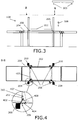
- FIG. 3 is the view in figure 2 , but the empty tote has now been stopped at the tote station on the support conveyor 204, and stopped in a position so that the support members 206 can be moved in a first direction 308 to a level of a lower surface of the empty tote at corners of the tote, as illustrated, for subsequent engagement with the tote, as further illustrated and explained in figure 4 .
- the support members 206 are engaging an engagement surface provided towards a corner of the tote 202. It follows from the figure that the tote is provided with a slanted part 303. The slanted part 303 is provided towards a front end and a rear end of the tote and towards corners of the tote. The slanted part is provided at a bottom of the tote. It follows that the support members are engaged with the tote at such slanted engagement surface of the tote. Using a surface of the slanted part as an engagement surface has proven particularly of benefit. This solution has been chosen over other possible solutions, such as engagement with an alternative engagement surface, possible at a void open space suitable for engagement with the tote. Such alternative engagement surface could, e.g., be a cavity or opening in the surface of the tote along the side and/or ends of the tote.
- FIG. 4 is a top view of the tote station as illustrated in figure 3 . From the figure it follows that four elongate support structures 209 are provided, two elongated support structures on each side of the support conveyor 204. It is illustrated that the support members 206, of which four are shown, can be moved, in a second direction 408, between an engaged position 402, where the support member 206 is engaged with the tote, and a disengaged position 404. As shown the movement of the support members comprises pivoting or rotating the support member between engaged and disengaged positions of the support member. The illustrated rotation is about 40 degrees. Borders towards the slanted part of the tote are illustrated by the dashed lines 407.
- the system could, e.g., work with only two support members, e.g., one at each end of the tote, or two at one side of the tote, e.g. one towards or at each end of the tote.
- two at one side such support members would possibly have to be moved linearly from the side and under the tote, so as to be able to support the tote from the side, which may be unwanted and possibly less preferred than the illustrated solution. It follows that the movement of the support members is a movement in the horizontal plane.
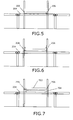
- FIG. 5 the support members 206 have been moved into the engaged position under the empty tote, and thus to a position where the support members extend over a surface of the support conveyor 204, but where the support members are able to engage an engagement surface of the tote and thus to support the tote.
- Other solutions for engagement with the tote are possible, such as pressing support members towards the tote from both sides of the tote, suction etc.
- the support members 206 are lifting the empty tote so that it is no longer supported by the support conveyor 204, but by the support members of the tote station 108.
- a plurality i.e. at least two, three, four or more empty totes on top of each other may be lifted at once from the support conveyor 204 by the support members 206, and hereby be inserted and positioned at once in the tote station 108.
- the plurality of empty totes which may be inserted at once may as an example, have been released as a stack from another tote station. Still further, the plurality of empty totes to be inserted at once, may e.g. be all of the plurality of empty totes stopped at the tote station, or may e.g. be the topmost two totes of e.g. a stack of three, four or five empty totes on top of each other that have been stopped at the tote station 108.
- FIG. 7 illustrates that a first empty tote 702 is supported by the tote station at a level so that a second empty tote 704 is able to be positioned below the first empty tote 702. It can be seen that the support members only move in the first direction so that an additional and single empty tote is just able to pass or be positioned below. If one or more filled totes or even two or more totes on top of each other, were to pass the tote station, it would be possible to lift one or more totes in the tote station in order for letting such filled tote, or two or more totes on top of each other, pass the tote station via the support conveyor.
- one or two empty totes may even be positioned below a tote filled with a, preferably small and/or light, piece of baggage. Then the filled tote on top of the one or more totes would preferably have to be released from a tote station as a single tote prior to discharging its contents.
- FIG. 8 illustrates a situation after the first empty tote 702 has been lowered and is about to be released from being supported by the support members 206 of the tote station and so as hereafter to be supported by the second empty tote 704.
- the support conveyor 204 of the automated baggage distribution system maintains its horizontal level 802 and is used as support for the one or more empty totes during this operation.
- the support conveyor maintains its horizontal level during all operations. It may be possible to provide lifting arrangements, such as between split belts of the support conveyor and below the support conveyor, for lifting a lowermost tote and for cooperating with the support members, but such solution is found less preferred than the described examples.
- FIG. 9 illustrates a height 904 of one empty tote in a situation when two totes are supported on top of each other, and in the illustration when supported on top of each other by the support conveyor 204.
- FIG. 10 illustrates a situation where the support members have just been engaged with the second tote 704. This is just prior to lifting the second empty tote 704 with the four support members 206 (of which two are seen in this figure).
- the support members are each engaged at an engagement surface 1002 at each of four corners 1004 of the second empty tote 704. It is furthermore illustrated that the four support members 206 engage with the engagement surface of the second empty tote by moving into an open space at the corner 1004 of the second empty tote 704 and engaging with a surface in this open space. This follows by a movement of the support members in the second direction 408, illustrated in figure 4 .
- the second direction is comprised in a plane which plane is perpendicular with gravity or substantially perpendicular with gravity.
- the open space is between the corner of the tote and the support conveyor 204.
- the open space is provided at the slanted part of the tote, possibly refer to figure 3 .
- FIG. 11 illustrates that after the situation in figure 10 , the second empty tote 704 is then lifted and so that now both the first and second empty totes are supported by the support members of the tote station.
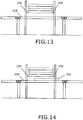
- the steps illustrated in the previous figures are carried out until, e.g., a situation as shown in FIG. 13 is reached, where four empty totes are supported on top of each other in the tote station.
- FIG. 12 is a perspective view of the tote station in the situation illustrated in figure 11 . It can be seen that the tote station is fitted onto a conveyor section of the automated baggage distribution system. It follows that the conveyor section is of a kind with split belts, one in each side of the conveyor section. The split belts thus form the supporting conveyor 204. Although some equipment is shown between the belts in the figure, a possible advantage of the solution described herein is that no particular equipment, such as lifting equipment, is necessarily needed between the split belts and/or below the split belts. Even though the tote section is shown fitted onto a straight section, the tote station may additionally or alternatively be positioned along a section of the automated distribution system having an incline and/or decline or a section having a left or right curve in the horizontal plane.
- FIG. 14 illustrates an example from where it follows that with the illustrated height of the used totes, when on top of each other in the tote station, not much more than four totes can be positioned in the tote station when an empty tote 202 is able to pass below the totes in the tote station.
- the totes and the tote station are provided so that only a limited number of totes, such as two, three, four, five, six, seven, eight, nine, ten or possibly maximum 15 or 20, can be positioned above each other at the tote station. Possibly, a further empty or filled tote is, or is not, prevented from passing the tote station, using the support conveyor, when the tote station comprises such number of totes. Still further, a reason for a certain maximum may alternatively or additionally be due to the size and/or weight and/or stability of such number of totes.
- a limited number of empty totes on top of each other such as two, three, four, five, six, seven, eight, nine, ten or possibly maximum 15 or 20, can be released at once and together from the tote station. This may have various reasons, such as handling speed, simplicity, reliability and/or ability to convey the totes on top of each other and/or due to space requirements.
- FIG. 15 illustrates the situation where two or more empty totes, and in the shown example four totes, are lowered by the support members 206, so that the lowermost tote can be supported by the support conveyor 204, and so that either two or more totes on top of each other can be released, refer to figure 16 , or one single tote can be released, see figure 17 .
- a determination of what to do is provided by a control system (not illustrated), e.g. in dependence of where in the automated distribution system one or more empty totes are needed, or in dependence of if a single tote is needed, e.g. close by the tote station, or if totes on top of each other should be stored as such close to the tote station, or if totes on top of each other can or should be transported, e.g., rather far in the automated distribution system and singled out or stored there. These choices may e.g. depend on which mode the automated distribution system, or parts thereof, are operated.
- FIG. 16 illustrates method step j), thus, moving two or more empty totes in the baggage distribution system on top of each other, in the shown example four, when released from the tote station, and so that, when released, a lowermost 1604 of the two or more empty totes on top of each other 1602, supports one or more empty totes 1606, in the shown example three, on top of it and so that the lowermost 1604 of the two or more empty totes on top of each other 1602 is then supported by the support conveyor 204.
- FIG. 17 a single empty tote 202 has been released from the tote station. It is illustrated that it leaves the tote station in the same direction it entered the tote station at first, see figure 2 , but these directions may or may not be the same. This also applies for two or more totes on top of each other. Still further, it may vary in which direction totes leaves and/or enters the tote station.
- FIG. 18 illustrates that the automated baggage distribution system is of a type where both single empty totes 202 and totes 1806 filled with airport baggage 1801 travel in or on the same conveyors of the baggage distribution system and where the conveyors both convey single totes 1806, 202, with or without baggage and also two or more totes on top of each other 1804.
- the totes 202 and the tote station 108 are provided so that either step e), g) or h) can be carried out at a rate of at least 750 totes/hour, preferably with a rate of at least 1000 totes/hour, more preferred at least 1200 totes/hour. Further, one, two or three of the method steps a), b) and c) is/are carried out while moving the empty or filled tote at a speed of at least 0.75 m/s, preferably at least 1 m/s, more preferred at least 1.25 m/s.
- the solution may include a tote and any baggage on the tote is X-ray scanned in an X-ray scanning station while any baggage on the tote is carried by the tote through the X-ray station by the automated baggage distribution system.
- FIGS. 19-22 illustrate various configurations 105 of how tote stations 108 can be positioned, implemented and used in the automated baggage distribution system.
- two tote stations are positioned in-line and following each other and then on the same conveyor line, two additional positioned tote stations are placed in the same way.
- the arrows next to the conveyor line illustrate the direction in which single totes and/or two or more totes may or may not enter or leave one or more of the tote stations. This applies for all the configurations 105 including one or more tote stations herein.
- FIG. 20 illustrates a configuration of a part of the automated distribution system where a single conveyor line splits out into three parallel conveyor lines. This is illustrated with the two-way arrow crossing the three conveyor lines.
- Each of the three conveyor lines is equipped with a tote station 108 at each end of the conveyor line.
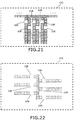
- FIG. 21 illustrates a plurality of storage conveyor lines, six are shown, each storage line being provided with a tote station 108.
- the storage lines have a dead-end and each tote station is provided for positioning a number of totes above each other and for releasing totes on top of each other in the direction of the storage line, so that such stacks of totes can be stored after each other on the storage lane, and possibly can be released singly from the tote station in an opposite direction towards the conveyor line connecting the storage lines.
- the configuration may comprise a connecting conveyor, also in the other end of the storage lines. It can be noticed that in the shown examples of configuration in figure 21 and 22 , the totes travel sideways in the storage lines, when compared to the connecting conveyor line.
- FIG. 22 illustrates a configuration where storage conveyor lanes or conveyor lines are provided both to a left and a right side of the connecting conveyor line.
- the same or similar remarks about transport directions etc. as submitted for figure 21 applies for the example of a configuration 105 illustrated in figure 22 .
- Each of the configurations 105 described herein, may be seen as examples of how to use the tote station 108 as a storage and/or for storing totes on top of each other in conveyor lines and/or for singling out single empty totes.
- the disclosure regards a solution for distributing the baggage in baggage totes in an automated baggage distribution system 102.
- the solution comprises positioning two or more empty totes above each other, so that the two or more empty totes are supported by the tote station by support members 206, determining, by a control system, when either a single empty tote should be released from the tote station or two or more empty totes should be released from the tote station together and at once, and in response to the determination releasing single empty totes from the tote station 108 or releasing two or more empty totes on top of each other from the tote station.
- a lowermost 1604 of the two or more empty totes on top of each other supports one or more empty totes 1606 on top of it and the lowermost empty tote is, when released, supported by a support conveyor 204.
Landscapes
- Engineering & Computer Science (AREA)
- Mechanical Engineering (AREA)
- Aviation & Aerospace Engineering (AREA)
- Warehouses Or Storage Devices (AREA)
- Specific Conveyance Elements (AREA)
- Branching, Merging, And Special Transfer Between Conveyors (AREA)
- Control Of Conveyors (AREA)
- Intermediate Stations On Conveyors (AREA)
Claims (12)
- Verfahren zum Verteilen von Fluggepäck in Fluggepäckbehältern in einem automatischen Gepäckverteilungssystem (102) an einem Flughafen, wobei das Verfahren umfassta) Befüllen eines Behälters (202) mit einem Gepäckstück an einem Einführung (104),b) Bewegen des Behälters (202) mit Gepäck in dem Gepäckverteilungssystem,c) Entfernen von Gepäck aus dem Behälter an einem Ausgabeeinrichtung (106),d) Bestimmen mithilfe eines Steuersystems, welche Behälter des Gepäckverteilungssystems leere Behälter sind,e) Positionieren von zwei oder mehr leeren Behältern übereinander, sodass die zwei oder mehr leeren Behälter übereinander von einer Behälterstation (108) durch Trageelemente (206) getragen werden, wobei das Verfahren weiterhin umfasstf) Bestimmen mithilfe des Steuersystems, wann entweder ein einzelner leerer Behälter aus der Behälterstation freigegeben werden sollen oder zwei oder mehr leere Behälter gemeinsam und sofort aus der Behälterstation freigegeben werden sollen und Ausführen der Verfahrensschritte g) und i) oder der Verfahrensschritte h) und j) als Reaktion auf eine Bestimmung in Schritt f), wobei g), h), i) und j) umfassen:g) Freigeben des einzelnen leeren Behälters aus der Behälterstation, sodass der einzelne leere Behälter nach der Freigabe von einem Trageförderer (204) des automatischen Gepäckverteilungssystems getragen wird,h) Freigegeben von zwei oder mehr leeren Behältern aus der Behälterstation, sodass die zwei oder mehr leeren Behälter nach der Freigabe von dem Trageförderer (204) getragen werden,i) Bewegen des einzelnen leeren Behälters in dem Gepäckverteilungssystem (102),j) Bewegen der zwei oder mehr leeren Behälter in dem Gepäckverteilungssystem, wobei die zwei oder mehr leeren Behälter nach der Freigabe aus der Behälterstation übereinander angeordnet sind, sodass der Unterste (1604) der zwei oder mehr leeren Behälter übereinander (1602) nach der Freigabe einen oder mehr leere Behälter (1606) darüber trägt und sodass der Unterste (1604) der zwei oder mehr leeren Behälter übereinander (1602) dann von dem Trageförderer (204) getragen wird,wobei das automatische Gepäckverteilungssystem von einem Typ ist, bei dem sowohl leere (202) als auch gefüllte Behälter (1806) in oder auf denselben Förderern des Gepäckverteilungssystems transportiert werden und bei dem dieselben Förderer sowohl einzelne leere Behälter (202), zwei oder mehr Behälter übereinander (1804) als auch einzelne gefüllte Behälter (1806) befördern.
- Verfahren nach Anspruch 1, wobei ein Unterverfahrensschritt bei der Bereitstellung von e) enthält, dass ein erster leerer Behälter (702) von den Trageelementen der Behälterstation auf einer solchen Höhe getragen wird, dass ein zweiter leerer Behälter (704) unterhalb des ersten leeren Behälters (702) positioniert werden kann.
- Verfahren nach Anspruch 2, wobei e) weiterhin enthält, dass der erste leere Behälter (702) dann abgesenkt und vom Tragen durch die Trageelemente (206) freigegeben wird und so von dem zweiten leeren Behälter (704) getragen wird und dass der erste und der zweite Behälter (702, 704) dann von dem Trageförderer des automatischen Gepäckverteilungssystems getragen werden.
- Verfahren nach Anspruch 3, wobei e) weiterhin enthält, dass der zweite leere Behälter (704) dann so bewegt wird, dass sowohl der erste als auch der zweite leere Behälter von der Behälterstation getragen werden.
- Verfahren nach Anspruch 4, wobei die Bewegung des ersten und des zweiten leeren Behälters das Anheben des zweiten leeren Behälters (704) umfasst.
- Verfahren nach Anspruch 5, wobei das Anheben des zweiten leeren Behälters das Anheben des zweiten leeren Behälters mit zwei oder mehr Trageelementen (206), wie vier Trageelementen, umfasst, die an einer Eingriffsfläche des zweiten leeren Behälters (704) eingreifen.
- Verfahren nach Anspruch 6, wobei das Eingreifen der zwei oder mehr Trageelemente (206)an dem zweiten leeren Behälter das Bewegen der Trageelemente in den Eingriff mit dem zweiten leeren Behälter (704) in einer zweiten Richtung (408) umfasst, wobei die zweite Richtung in einer Ebene liegt, die senkrecht zur Schwerkraft oder im Wesentlichen senkrecht zur Schwerkraft ist.
- Verfahren nach einem der vorhergehenden Ansprüche 1-5, wobei die Behälterstation zwei oder mehr Trageelemente (206) zum Tragen oder Freigeben von mindestens einem leeren Behälter an der Behälterstation umfasst und wobei e) und/oder g) das Bewegen der zwei oder mehr Trageelemente (206) in einer ersten Richtung (308) parallel zur Schwerkraft oder im Wesentlichen parallel zur Schwerkraft und das Bewegen der zwei oder mehr Trageelemente (206) in einer zweiten Richtung (408) enthält, wobei die zweite Richtung (408) senkrecht zu der ersten Richtung (308) oder im Wesentlichen senkrecht zu der ersten Richtung (308) ist.
- Verfahren nach Anspruch 1, wobei g) und/oder h) weiterhin das Trennen jedes der zwei oder mehr Trageelemente (206) von einer Fläche des einzelnen leeren Behälters oder einer Fläche eines Untersten der zwei oder mehr leeren Behälter enthält, wenn der einzelne leere Behälter oder der Unterste der zwei oder mehr leeren Behälter von dem Trageförderer des automatischen Gepäckverteilungssystems getragen wird.
- Verfahren nach einem der vorhergehenden Ansprüche 1-5, wobei der Trageförderer (204) in e) und/oder in g) eine waagerechte Ausrichtung (802) aufrechterhält.
- Verfahren nach einem der vorhergehenden Ansprüche 1-5 oder 10, wobei der Trageförderer (204) als Träger für einen einzelnen Behälter oder zwei oder mehr leere Behälter übereinander in einem Zeitraum verwendet wird, in dem sich eine Mehrzahl der Trageelemente in eine erste Richtung (308) bewegen, wobei die erste Richtung parallel zur Schwerkraft oder im Wesentlichen parallel zur Schwerkraft ist.
- Verfahren nach einem der vorhergehenden Ansprüche 1-5, wobei die Behälterstation nur eine Gruppe oder nur einen Satz aus zwei oder mehr Trageelementen (206) mit derselben, aber beweglichen Höhe in einer ersten Richtung (308) umfasst, wobei die erste Richtung parallel zur Schwerkraft oder im Wesentlichen parallel zur Schwerkraft ist, und wobei das Verfahren weiterhin umfasst- Bewegen der zwei oder mehr Trageelemente in der ersten Richtung (308) und Eingreifen oder Trennen der zwei oder mehr Trageelemente (206) an bzw. von einem leeren Behälter und- Verwenden des Trageförderers zum Tragen eines einzelnen leeren Behälters oder zum Tragen von zwei oder mehr leeren Behältern übereinander, wenn die Trageelemente nicht mit einem Behälter in Eingriff sind und wenn sich die Gruppe oder der Satz der Trageelemente zwischen horizontalen Ebenen bewegt.
Applications Claiming Priority (2)
| Application Number | Priority Date | Filing Date | Title |
|---|---|---|---|
| DKPA201270667 | 2012-10-31 | ||
| PCT/DK2013/050351 WO2014067530A2 (en) | 2012-10-31 | 2013-10-31 | Method of distributing airport baggage |
Publications (3)
| Publication Number | Publication Date |
|---|---|
| EP2914496A2 EP2914496A2 (de) | 2015-09-09 |
| EP2914496B1 EP2914496B1 (de) | 2016-12-21 |
| EP2914496B2 true EP2914496B2 (de) | 2020-04-15 |
Family
ID=59035280
Family Applications (1)
| Application Number | Title | Priority Date | Filing Date |
|---|---|---|---|
| EP13786158.9A Active EP2914496B2 (de) | 2012-10-31 | 2013-10-31 | Methode zur verteilung von reisegepäck im flughafen |
Country Status (5)
| Country | Link |
|---|---|
| US (1) | US10358301B2 (de) |
| EP (1) | EP2914496B2 (de) |
| CN (1) | CN104755376B (de) |
| ES (1) | ES2617435T5 (de) |
| WO (1) | WO2014067530A2 (de) |
Families Citing this family (15)
| Publication number | Priority date | Publication date | Assignee | Title |
|---|---|---|---|---|
| KR102219731B1 (ko) * | 2014-01-15 | 2021-02-24 | 한국전자통신연구원 | 공항 수하물 수취 제어장치 및 제어방법 |
| KR101599275B1 (ko) * | 2015-01-22 | 2016-03-07 | 주식회사 루키스 | 공항 수하물 분배 시스템 및 방법 |
| CN105353279B (zh) * | 2015-11-12 | 2021-04-30 | 中国电力科学研究院 | 一种自立快装式冲击电压发生器及其安装方法 |
| DE202015008328U1 (de) * | 2015-12-04 | 2016-03-16 | Siemens Aktiengesellschaft | Speichervorrichtung für stapelbare Güter |
| US20170233199A1 (en) * | 2016-01-20 | 2017-08-17 | Rehrig Pacific Company | Bakery tray stacker |
| GB201608205D0 (en) * | 2016-05-10 | 2016-06-22 | Sita Ypenburg Bv And Bluebotics Sa | Item handling system, method and apparatus therefor |
| DE102016109017B4 (de) * | 2016-05-17 | 2018-06-14 | Wincor Nixdorf International Gmbh | Kistenstapelsystem und Kistenstapelvorrichtung |
| US11111089B2 (en) * | 2017-06-27 | 2021-09-07 | Paul W. Redman | Pallet blocking apparatus and related method and system |
| DE102018204018A1 (de) * | 2018-03-16 | 2019-09-19 | Multivac Sepp Haggenmüller Se & Co. Kg | Verfahren und vorrichtung zum sanften absetzen von schalen |
| US11167423B1 (en) * | 2019-02-18 | 2021-11-09 | Amazon Technologies, Inc. | End of arm tool capable of ejecting totes |
| US10773900B1 (en) | 2019-03-15 | 2020-09-15 | International Business Machines Corporation | Optimized assignment of multiple conveyor belts |
| EP3782930B1 (de) * | 2019-08-23 | 2022-07-06 | Jungheinrich Aktiengesellschaft | Stapellageranordnung |
| CA3060919A1 (en) * | 2019-11-05 | 2021-05-05 | Stephen Simmons | A crate transporter |
| CN113460588B (zh) * | 2021-05-31 | 2022-08-16 | 济南领驭节能工程有限公司 | 一种隐藏重叠于通道库中的桥式库结构 |
| CN115303813B (zh) * | 2022-10-12 | 2023-03-14 | 民航成都物流技术有限公司 | 空筐堆拆设备 |
Citations (7)
| Publication number | Priority date | Publication date | Assignee | Title |
|---|---|---|---|---|
| DE2107489A1 (de) † | 1971-02-17 | 1972-09-07 | Mannesmann AG, 4000 Düsseldorf | Palettenförderanlage, insbesondere für Flughafenhandgepäck |
| US3765546A (en) † | 1971-10-06 | 1973-10-16 | D Westerling | Apparatus for stacking or unstacking containers |
| US7353955B2 (en) † | 2003-07-16 | 2008-04-08 | Siemens Energy & Automation, Inc. | Baggage screening system and method |
| WO2011028136A1 (en) † | 2009-09-04 | 2011-03-10 | Sodium Limited | Container storage and retrieval system and method |
| DE102009040792A1 (de) † | 2009-09-09 | 2011-03-31 | Schaefer Förderanlagen- und Maschinenbau GmbH | Palettenentstapler |
| DE202012103138U1 (de) † | 2012-08-20 | 2012-08-31 | Konrad Reich | Kistenstapelvorrichtung |
| WO2013075714A1 (en) † | 2011-11-21 | 2013-05-30 | Crisplant A/S | Sorting mechanism with dynamic discharge |
Family Cites Families (42)
| Publication number | Priority date | Publication date | Assignee | Title |
|---|---|---|---|---|
| US3190466A (en) * | 1963-09-18 | 1965-06-22 | Fruit Equipment Service | Bin stacker and de-stacker mechanism |
| US3424488A (en) * | 1967-07-26 | 1969-01-28 | Renfroe & Sons J C | Modified x-frame lifting apparatus |
| US3559371A (en) * | 1968-09-23 | 1971-02-02 | Charles A Borrowman | Device for loading stacked eggs into an egg carton |
| US3558178A (en) * | 1968-12-12 | 1971-01-26 | Glenn E Taylor | Hydraulic rail lifter |
| US3695462A (en) * | 1970-08-28 | 1972-10-03 | Rapistan Inc | Baggage handling system |
| US4043460A (en) * | 1976-01-09 | 1977-08-23 | Eastman Kodak Company | Tray stacking and unstacking apparatus |
| US4234281A (en) * | 1977-09-08 | 1980-11-18 | Lanham Machinery Company, Inc. | Automatic bread pan control system |
| US4249661A (en) * | 1978-06-09 | 1981-02-10 | Lem Hans J | Conveyor sortation system |
| DE3612202A1 (de) | 1986-04-11 | 1987-10-15 | Franz Biggel | Magazinier-system |
| US4809881A (en) * | 1987-04-16 | 1989-03-07 | Total Tote, Inc. | Bin dispensing machine |
| US4865515A (en) | 1987-06-24 | 1989-09-12 | Dorner Mfg. Corp. | Apparatus for unstacking and stacking containers |
| US4979870A (en) * | 1988-05-18 | 1990-12-25 | Fleetwood Systems, Inc. | Automatic tray loading, unloading and storage system |
| GB2224147B (en) | 1988-10-21 | 1992-08-05 | Francesco Canziani | Process and apparatus for sorting items |
| US5281080A (en) * | 1992-07-13 | 1994-01-25 | Slave Lake Pulp Corporation | Pulp slab stacker |
| US5793639A (en) | 1995-10-24 | 1998-08-11 | Toyota Jidosha Kabushiki Kaisha | Baggage receiving and handling method in airport, baggage receiving and handling system in airport, and baggage automatic handling apparatus |
| US5934444A (en) | 1996-02-02 | 1999-08-10 | Jervis B. Webb Company | Tote transport system |
| US5842555A (en) * | 1996-12-16 | 1998-12-01 | Gannon; Donald N. | Automated baggage tracking system and method for use in a baggage conveyor system |
| EP1091895B1 (de) | 1998-06-23 | 2004-05-06 | Crisplant A/S | Transportverfahren und -system mit stauvorrichtung |
| DE29812106U1 (de) * | 1998-07-09 | 1998-10-15 | Grässlin KG, 78112 St Georgen | Vorrichtung zur maschinellen Handhabung von Paletten |
| US6276515B1 (en) | 1998-08-17 | 2001-08-21 | Harald M. Wayer | Steady-flow conveyor |
| DE19836951C2 (de) | 1998-08-17 | 2001-04-12 | Harald M Wayer | Stetigförderer |
| US6185272B1 (en) * | 1999-03-15 | 2001-02-06 | Analogic Corporation | Architecture for CT scanning system |
| NO311928B1 (no) * | 2000-07-06 | 2002-02-18 | Ulf Oestroem | Bagasjehåndteringssystem for flyplasser, og fremgangsmåte for transport av bagasje |
| ITPN20020014A1 (it) * | 2002-03-11 | 2003-09-11 | Snaidero R Spa | Mobile composito da cucina a struttura perfezionata. |
| AU2003231430B8 (en) * | 2002-05-13 | 2009-07-30 | Bakvertisi Limited | Apparatus for transporting containers |
| DE10320963A1 (de) | 2003-05-09 | 2004-12-16 | Siemens Ag | Fördersystem, inbesondere eine Flughafen-Gepäckförderanlage, und eine Entladeeinrichtung eines Fördersystems für Behälter zum Transportieren von Gütern, insbesondere von Gepäckstücken |
| NL1023788C2 (nl) | 2003-07-01 | 2005-01-04 | Vanderlande Ind Nederland | Systeem voor het tijdelijk opslaan van goederen. |
| DE10332359A1 (de) | 2003-07-17 | 2005-03-17 | Abb Patent Gmbh | Verfahren und Vorrichtung zur Frühgepäckspeicherung |
| GB0321090D0 (en) | 2003-09-10 | 2003-10-08 | Abs Systems Inc | Baggage screening system |
| US20050193648A1 (en) * | 2004-02-27 | 2005-09-08 | Klein Christian P. | Security screening system |
| EP1942769B1 (de) | 2005-10-06 | 2013-11-20 | TouchSensor Technologies, L.L.C. | Intelligentes regalsystem |
| US7544038B2 (en) * | 2006-04-27 | 2009-06-09 | National Optronics, Inc. | Tray stacking and unstacking corner grippers and handler |
| DE102007052012A1 (de) | 2007-10-31 | 2009-05-07 | Grenzebach Maschinenbau Gmbh | Verfahren und Vorrichtung zum Erfassen und Umladen von Gepäckstücken |
| GB2471964B (en) | 2008-02-05 | 2012-02-08 | Baa Ip Holdco Ltd | Handling |
| DE102008010259B4 (de) * | 2008-02-20 | 2010-07-29 | Khs Ag | Vorrichtung zum Stapeln von Produktgruppen oder Gebinden |
| GB2468667A (en) | 2009-03-17 | 2010-09-22 | Herbert R J Eng Ltd | Tray lift comprising elevator screws |
| DE102009017343A1 (de) | 2009-04-14 | 2010-10-28 | Siemens Aktiengesellschaft | Sortierförderer innerhalb einer Förderanlage zum automatisierten Transport von Stückgütern |
| DE102010020146A1 (de) | 2010-05-11 | 2011-11-17 | Siemens Aktiengesellschaft | Stückgutbehandlungsanlage |
| JP5617037B2 (ja) | 2010-08-19 | 2014-10-29 | アーケラ スマート テック オサケユキチュアAhkera Smarttech Oy | 空輸ユニットへの自動積込み方法及び装置 |
| NL2005893C2 (nl) | 2010-12-22 | 2012-06-25 | Vanderlande Ind Bv | Systeem en werkwijze voor het bufferen van bagagestukken. |
| US9129167B2 (en) * | 2012-01-21 | 2015-09-08 | Pinger Technologies, Inc. | Methods and systems for GPS-enabled baggage tags |
| DE102013216823A1 (de) * | 2013-08-23 | 2015-02-26 | Siemens Aktiengesellschaft | Speichervorrichtung für stapelbare Behälter |
-
2013
- 2013-10-31 EP EP13786158.9A patent/EP2914496B2/de active Active
- 2013-10-31 CN CN201380056761.2A patent/CN104755376B/zh active Active
- 2013-10-31 ES ES13786158T patent/ES2617435T5/es active Active
- 2013-10-31 US US14/435,562 patent/US10358301B2/en active Active
- 2013-10-31 WO PCT/DK2013/050351 patent/WO2014067530A2/en not_active Ceased
Patent Citations (7)
| Publication number | Priority date | Publication date | Assignee | Title |
|---|---|---|---|---|
| DE2107489A1 (de) † | 1971-02-17 | 1972-09-07 | Mannesmann AG, 4000 Düsseldorf | Palettenförderanlage, insbesondere für Flughafenhandgepäck |
| US3765546A (en) † | 1971-10-06 | 1973-10-16 | D Westerling | Apparatus for stacking or unstacking containers |
| US7353955B2 (en) † | 2003-07-16 | 2008-04-08 | Siemens Energy & Automation, Inc. | Baggage screening system and method |
| WO2011028136A1 (en) † | 2009-09-04 | 2011-03-10 | Sodium Limited | Container storage and retrieval system and method |
| DE102009040792A1 (de) † | 2009-09-09 | 2011-03-31 | Schaefer Förderanlagen- und Maschinenbau GmbH | Palettenentstapler |
| WO2013075714A1 (en) † | 2011-11-21 | 2013-05-30 | Crisplant A/S | Sorting mechanism with dynamic discharge |
| DE202012103138U1 (de) † | 2012-08-20 | 2012-08-31 | Konrad Reich | Kistenstapelvorrichtung |
Also Published As
| Publication number | Publication date |
|---|---|
| CN104755376B (zh) | 2016-12-07 |
| ES2617435T5 (es) | 2020-11-30 |
| CN104755376A (zh) | 2015-07-01 |
| US10358301B2 (en) | 2019-07-23 |
| EP2914496A2 (de) | 2015-09-09 |
| EP2914496B1 (de) | 2016-12-21 |
| WO2014067530A3 (en) | 2014-08-28 |
| WO2014067530A2 (en) | 2014-05-08 |
| ES2617435T3 (es) | 2017-06-19 |
| US20150336753A1 (en) | 2015-11-26 |
Similar Documents
| Publication | Publication Date | Title |
|---|---|---|
| EP2914496B2 (de) | Methode zur verteilung von reisegepäck im flughafen | |
| JP6679678B2 (ja) | 保管設備からの運搬ユニットを提供するための方法 | |
| US11673712B2 (en) | Storage container for automated storage and retrieval system | |
| US9751701B2 (en) | Storage device for stackable containers | |
| CN111470242A (zh) | 搬运机器人、搬运系统及其搬运方法 | |
| US9254930B2 (en) | Method of storing and picking | |
| US8801358B2 (en) | Method and loading system for order-picking articles onto destination load carriers | |
| CA2973384C (en) | Method and container transfer installation for placing containers into and removing containers from container storage areas | |
| CN211392592U (zh) | 一种配送中转站 | |
| WO2012122982A1 (en) | Method of transporting and sorting and system for exercising the method | |
| CN204979977U (zh) | 一种基于agv小车的自动装货设备 | |
| CN104925444A (zh) | 一种移动堆垛式自动立库 | |
| CN105151613A (zh) | 一种升降堆垛式自动立库 | |
| CN105059813A (zh) | 一种自动装货设备 | |
| US20150274325A1 (en) | Method of and system for handling early baggage in an airport | |
| US20140356111A1 (en) | Method of handling objects in an airport and handling system | |
| EP3157814B1 (de) | Beladen von flugzeuggepäckbehältern | |
| RU2381976C2 (ru) | Система для временного хранения вещей, в частности предметов багажа | |
| CN204737285U (zh) | 一种穿梭式物流配送库 | |
| CN104960827A (zh) | 一种穿梭式立库 | |
| CN216612598U (zh) | 立体仓库出入库系统 | |
| CN204979960U (zh) | 一种升降堆垛式自动立库 | |
| CN216888422U (zh) | 货架组件及仓库 | |
| TW202237509A (zh) | 貨物運輸方法、裝置、中轉裝置、倉儲系統及儲存媒體 | |
| CN220164838U (zh) | 一种堆垛系统 |
Legal Events
| Date | Code | Title | Description |
|---|---|---|---|
| PUAI | Public reference made under article 153(3) epc to a published international application that has entered the european phase |
Free format text: ORIGINAL CODE: 0009012 |
|
| 17P | Request for examination filed |
Effective date: 20150527 |
|
| AK | Designated contracting states |
Kind code of ref document: A2 Designated state(s): AL AT BE BG CH CY CZ DE DK EE ES FI FR GB GR HR HU IE IS IT LI LT LU LV MC MK MT NL NO PL PT RO RS SE SI SK SM TR |
|
| AX | Request for extension of the european patent |
Extension state: BA ME |
|
| DAX | Request for extension of the european patent (deleted) | ||
| GRAP | Despatch of communication of intention to grant a patent |
Free format text: ORIGINAL CODE: EPIDOSNIGR1 |
|
| INTG | Intention to grant announced |
Effective date: 20160607 |
|
| GRAS | Grant fee paid |
Free format text: ORIGINAL CODE: EPIDOSNIGR3 |
|
| GRAA | (expected) grant |
Free format text: ORIGINAL CODE: 0009210 |
|
| STAA | Information on the status of an ep patent application or granted ep patent |
Free format text: STATUS: THE PATENT HAS BEEN GRANTED |
|
| AK | Designated contracting states |
Kind code of ref document: B1 Designated state(s): AL AT BE BG CH CY CZ DE DK EE ES FI FR GB GR HR HU IE IS IT LI LT LU LV MC MK MT NL NO PL PT RO RS SE SI SK SM TR |
|
| RAP1 | Party data changed (applicant data changed or rights of an application transferred) |
Owner name: BEUMER GROUP A/S |
|
| REG | Reference to a national code |
Ref country code: GB Ref legal event code: FG4D |
|
| REG | Reference to a national code |
Ref country code: CH Ref legal event code: EP |
|
| REG | Reference to a national code |
Ref country code: IE Ref legal event code: FG4D |
|
| REG | Reference to a national code |
Ref country code: AT Ref legal event code: REF Ref document number: 855230 Country of ref document: AT Kind code of ref document: T Effective date: 20170115 |
|
| REG | Reference to a national code |
Ref country code: DE Ref legal event code: R096 Ref document number: 602013015681 Country of ref document: DE |
|
| PG25 | Lapsed in a contracting state [announced via postgrant information from national office to epo] |
Ref country code: LV Free format text: LAPSE BECAUSE OF FAILURE TO SUBMIT A TRANSLATION OF THE DESCRIPTION OR TO PAY THE FEE WITHIN THE PRESCRIBED TIME-LIMIT Effective date: 20161221 |
|
| REG | Reference to a national code |
Ref country code: NL Ref legal event code: FP |
|
| REG | Reference to a national code |
Ref country code: LT Ref legal event code: MG4D |
|
| PG25 | Lapsed in a contracting state [announced via postgrant information from national office to epo] |
Ref country code: GR Free format text: LAPSE BECAUSE OF FAILURE TO SUBMIT A TRANSLATION OF THE DESCRIPTION OR TO PAY THE FEE WITHIN THE PRESCRIBED TIME-LIMIT Effective date: 20170322 Ref country code: SE Free format text: LAPSE BECAUSE OF FAILURE TO SUBMIT A TRANSLATION OF THE DESCRIPTION OR TO PAY THE FEE WITHIN THE PRESCRIBED TIME-LIMIT Effective date: 20161221 Ref country code: LT Free format text: LAPSE BECAUSE OF FAILURE TO SUBMIT A TRANSLATION OF THE DESCRIPTION OR TO PAY THE FEE WITHIN THE PRESCRIBED TIME-LIMIT Effective date: 20161221 Ref country code: NO Free format text: LAPSE BECAUSE OF FAILURE TO SUBMIT A TRANSLATION OF THE DESCRIPTION OR TO PAY THE FEE WITHIN THE PRESCRIBED TIME-LIMIT Effective date: 20170321 |
|
| REG | Reference to a national code |
Ref country code: AT Ref legal event code: MK05 Ref document number: 855230 Country of ref document: AT Kind code of ref document: T Effective date: 20161221 |
|
| PG25 | Lapsed in a contracting state [announced via postgrant information from national office to epo] |
Ref country code: FI Free format text: LAPSE BECAUSE OF FAILURE TO SUBMIT A TRANSLATION OF THE DESCRIPTION OR TO PAY THE FEE WITHIN THE PRESCRIBED TIME-LIMIT Effective date: 20161221 Ref country code: RS Free format text: LAPSE BECAUSE OF FAILURE TO SUBMIT A TRANSLATION OF THE DESCRIPTION OR TO PAY THE FEE WITHIN THE PRESCRIBED TIME-LIMIT Effective date: 20161221 Ref country code: HR Free format text: LAPSE BECAUSE OF FAILURE TO SUBMIT A TRANSLATION OF THE DESCRIPTION OR TO PAY THE FEE WITHIN THE PRESCRIBED TIME-LIMIT Effective date: 20161221 |
|
| REG | Reference to a national code |
Ref country code: ES Ref legal event code: FG2A Ref document number: 2617435 Country of ref document: ES Kind code of ref document: T3 Effective date: 20170619 |
|
| PG25 | Lapsed in a contracting state [announced via postgrant information from national office to epo] |
Ref country code: SK Free format text: LAPSE BECAUSE OF FAILURE TO SUBMIT A TRANSLATION OF THE DESCRIPTION OR TO PAY THE FEE WITHIN THE PRESCRIBED TIME-LIMIT Effective date: 20161221 Ref country code: IS Free format text: LAPSE BECAUSE OF FAILURE TO SUBMIT A TRANSLATION OF THE DESCRIPTION OR TO PAY THE FEE WITHIN THE PRESCRIBED TIME-LIMIT Effective date: 20170421 Ref country code: CZ Free format text: LAPSE BECAUSE OF FAILURE TO SUBMIT A TRANSLATION OF THE DESCRIPTION OR TO PAY THE FEE WITHIN THE PRESCRIBED TIME-LIMIT Effective date: 20161221 Ref country code: RO Free format text: LAPSE BECAUSE OF FAILURE TO SUBMIT A TRANSLATION OF THE DESCRIPTION OR TO PAY THE FEE WITHIN THE PRESCRIBED TIME-LIMIT Effective date: 20161221 Ref country code: EE Free format text: LAPSE BECAUSE OF FAILURE TO SUBMIT A TRANSLATION OF THE DESCRIPTION OR TO PAY THE FEE WITHIN THE PRESCRIBED TIME-LIMIT Effective date: 20161221 |
|
| PG25 | Lapsed in a contracting state [announced via postgrant information from national office to epo] |
Ref country code: IT Free format text: LAPSE BECAUSE OF FAILURE TO SUBMIT A TRANSLATION OF THE DESCRIPTION OR TO PAY THE FEE WITHIN THE PRESCRIBED TIME-LIMIT Effective date: 20161221 Ref country code: SM Free format text: LAPSE BECAUSE OF FAILURE TO SUBMIT A TRANSLATION OF THE DESCRIPTION OR TO PAY THE FEE WITHIN THE PRESCRIBED TIME-LIMIT Effective date: 20161221 Ref country code: PT Free format text: LAPSE BECAUSE OF FAILURE TO SUBMIT A TRANSLATION OF THE DESCRIPTION OR TO PAY THE FEE WITHIN THE PRESCRIBED TIME-LIMIT Effective date: 20170421 Ref country code: BG Free format text: LAPSE BECAUSE OF FAILURE TO SUBMIT A TRANSLATION OF THE DESCRIPTION OR TO PAY THE FEE WITHIN THE PRESCRIBED TIME-LIMIT Effective date: 20170321 Ref country code: BE Free format text: LAPSE BECAUSE OF FAILURE TO SUBMIT A TRANSLATION OF THE DESCRIPTION OR TO PAY THE FEE WITHIN THE PRESCRIBED TIME-LIMIT Effective date: 20161221 Ref country code: PL Free format text: LAPSE BECAUSE OF FAILURE TO SUBMIT A TRANSLATION OF THE DESCRIPTION OR TO PAY THE FEE WITHIN THE PRESCRIBED TIME-LIMIT Effective date: 20161221 Ref country code: AT Free format text: LAPSE BECAUSE OF FAILURE TO SUBMIT A TRANSLATION OF THE DESCRIPTION OR TO PAY THE FEE WITHIN THE PRESCRIBED TIME-LIMIT Effective date: 20161221 |
|
| REG | Reference to a national code |
Ref country code: DE Ref legal event code: R026 Ref document number: 602013015681 Country of ref document: DE |
|
| PLBI | Opposition filed |
Free format text: ORIGINAL CODE: 0009260 |
|
| REG | Reference to a national code |
Ref country code: FR Ref legal event code: PLFP Year of fee payment: 5 |
|
| 26 | Opposition filed |
Opponent name: SIEMENS AKTIENGESELLSCHAFT Effective date: 20170920 |
|
| PLAF | Information modified related to communication of a notice of opposition and request to file observations + time limit |
Free format text: ORIGINAL CODE: EPIDOSCOBS2 |
|
| PLAX | Notice of opposition and request to file observation + time limit sent |
Free format text: ORIGINAL CODE: EPIDOSNOBS2 |
|
| PG25 | Lapsed in a contracting state [announced via postgrant information from national office to epo] |
Ref country code: DK Free format text: LAPSE BECAUSE OF FAILURE TO SUBMIT A TRANSLATION OF THE DESCRIPTION OR TO PAY THE FEE WITHIN THE PRESCRIBED TIME-LIMIT Effective date: 20161221 |
|
| PG25 | Lapsed in a contracting state [announced via postgrant information from national office to epo] |
Ref country code: SI Free format text: LAPSE BECAUSE OF FAILURE TO SUBMIT A TRANSLATION OF THE DESCRIPTION OR TO PAY THE FEE WITHIN THE PRESCRIBED TIME-LIMIT Effective date: 20161221 |
|
| PLBB | Reply of patent proprietor to notice(s) of opposition received |
Free format text: ORIGINAL CODE: EPIDOSNOBS3 |
|
| PG25 | Lapsed in a contracting state [announced via postgrant information from national office to epo] |
Ref country code: MC Free format text: LAPSE BECAUSE OF FAILURE TO SUBMIT A TRANSLATION OF THE DESCRIPTION OR TO PAY THE FEE WITHIN THE PRESCRIBED TIME-LIMIT Effective date: 20161221 |
|
| REG | Reference to a national code |
Ref country code: CH Ref legal event code: PL |
|
| REG | Reference to a national code |
Ref country code: IE Ref legal event code: MM4A |
|
| PLAY | Examination report in opposition despatched + time limit |
Free format text: ORIGINAL CODE: EPIDOSNORE2 |
|
| PG25 | Lapsed in a contracting state [announced via postgrant information from national office to epo] |
Ref country code: CH Free format text: LAPSE BECAUSE OF NON-PAYMENT OF DUE FEES Effective date: 20171031 Ref country code: LI Free format text: LAPSE BECAUSE OF NON-PAYMENT OF DUE FEES Effective date: 20171031 Ref country code: LU Free format text: LAPSE BECAUSE OF NON-PAYMENT OF DUE FEES Effective date: 20171031 |
|
| PG25 | Lapsed in a contracting state [announced via postgrant information from national office to epo] |
Ref country code: MT Free format text: LAPSE BECAUSE OF NON-PAYMENT OF DUE FEES Effective date: 20171031 |
|
| REG | Reference to a national code |
Ref country code: FR Ref legal event code: PLFP Year of fee payment: 6 |
|
| PG25 | Lapsed in a contracting state [announced via postgrant information from national office to epo] |
Ref country code: IE Free format text: LAPSE BECAUSE OF NON-PAYMENT OF DUE FEES Effective date: 20171031 |
|
| PLBC | Reply to examination report in opposition received |
Free format text: ORIGINAL CODE: EPIDOSNORE3 |
|
| PLAY | Examination report in opposition despatched + time limit |
Free format text: ORIGINAL CODE: EPIDOSNORE2 |
|
| PLBC | Reply to examination report in opposition received |
Free format text: ORIGINAL CODE: EPIDOSNORE3 |
|
| PG25 | Lapsed in a contracting state [announced via postgrant information from national office to epo] |
Ref country code: HU Free format text: LAPSE BECAUSE OF FAILURE TO SUBMIT A TRANSLATION OF THE DESCRIPTION OR TO PAY THE FEE WITHIN THE PRESCRIBED TIME-LIMIT; INVALID AB INITIO Effective date: 20131031 |
|
| PG25 | Lapsed in a contracting state [announced via postgrant information from national office to epo] |
Ref country code: CY Free format text: LAPSE BECAUSE OF FAILURE TO SUBMIT A TRANSLATION OF THE DESCRIPTION OR TO PAY THE FEE WITHIN THE PRESCRIBED TIME-LIMIT Effective date: 20161221 |
|
| PG25 | Lapsed in a contracting state [announced via postgrant information from national office to epo] |
Ref country code: MK Free format text: LAPSE BECAUSE OF FAILURE TO SUBMIT A TRANSLATION OF THE DESCRIPTION OR TO PAY THE FEE WITHIN THE PRESCRIBED TIME-LIMIT Effective date: 20161221 |
|
| PUAH | Patent maintained in amended form |
Free format text: ORIGINAL CODE: 0009272 |
|
| STAA | Information on the status of an ep patent application or granted ep patent |
Free format text: STATUS: PATENT MAINTAINED AS AMENDED |
|
| PG25 | Lapsed in a contracting state [announced via postgrant information from national office to epo] |
Ref country code: TR Free format text: LAPSE BECAUSE OF FAILURE TO SUBMIT A TRANSLATION OF THE DESCRIPTION OR TO PAY THE FEE WITHIN THE PRESCRIBED TIME-LIMIT Effective date: 20161221 |
|
| 27A | Patent maintained in amended form |
Effective date: 20200415 |
|
| AK | Designated contracting states |
Kind code of ref document: B2 Designated state(s): AL AT BE BG CH CY CZ DE DK EE ES FI FR GB GR HR HU IE IS IT LI LT LU LV MC MK MT NL NO PL PT RO RS SE SI SK SM TR |
|
| REG | Reference to a national code |
Ref country code: DE Ref legal event code: R102 Ref document number: 602013015681 Country of ref document: DE |
|
| REG | Reference to a national code |
Ref country code: NL Ref legal event code: FP |
|
| PG25 | Lapsed in a contracting state [announced via postgrant information from national office to epo] |
Ref country code: AL Free format text: LAPSE BECAUSE OF FAILURE TO SUBMIT A TRANSLATION OF THE DESCRIPTION OR TO PAY THE FEE WITHIN THE PRESCRIBED TIME-LIMIT Effective date: 20161221 |
|
| REG | Reference to a national code |
Ref country code: ES Ref legal event code: DC2A Ref document number: 2617435 Country of ref document: ES Kind code of ref document: T5 Effective date: 20201130 |
|
| P01 | Opt-out of the competence of the unified patent court (upc) registered |
Effective date: 20230514 |
|
| PGFP | Annual fee paid to national office [announced via postgrant information from national office to epo] |
Ref country code: NL Payment date: 20251021 Year of fee payment: 13 |
|
| PGFP | Annual fee paid to national office [announced via postgrant information from national office to epo] |
Ref country code: DE Payment date: 20251021 Year of fee payment: 13 |
|
| PGFP | Annual fee paid to national office [announced via postgrant information from national office to epo] |
Ref country code: GB Payment date: 20251022 Year of fee payment: 13 |
|
| PGFP | Annual fee paid to national office [announced via postgrant information from national office to epo] |
Ref country code: FR Payment date: 20251030 Year of fee payment: 13 |
|
| PGFP | Annual fee paid to national office [announced via postgrant information from national office to epo] |
Ref country code: ES Payment date: 20251210 Year of fee payment: 13 |