EP2915423B1 - Verfahren zur Bestimmung des Pollenlebensfähigkeits- und -reifungsgrads einer Pollenpopulation - Google Patents
Verfahren zur Bestimmung des Pollenlebensfähigkeits- und -reifungsgrads einer Pollenpopulation Download PDFInfo
- Publication number
- EP2915423B1 EP2915423B1 EP14158150.4A EP14158150A EP2915423B1 EP 2915423 B1 EP2915423 B1 EP 2915423B1 EP 14158150 A EP14158150 A EP 14158150A EP 2915423 B1 EP2915423 B1 EP 2915423B1
- Authority
- EP
- European Patent Office
- Prior art keywords
- pollen
- impedance
- viability
- plant
- values
- Prior art date
- Legal status (The legal status is an assumption and is not a legal conclusion. Google has not performed a legal analysis and makes no representation as to the accuracy of the status listed.)
- Active
Links
Images




Classifications
-
- G—PHYSICS
- G01—MEASURING; TESTING
- G01N—INVESTIGATING OR ANALYSING MATERIALS BY DETERMINING THEIR CHEMICAL OR PHYSICAL PROPERTIES
- G01N27/00—Investigating or analysing materials by the use of electric, electrochemical, or magnetic means
- G01N27/02—Investigating or analysing materials by the use of electric, electrochemical, or magnetic means by investigating impedance
- G01N27/04—Investigating or analysing materials by the use of electric, electrochemical, or magnetic means by investigating impedance by investigating resistance
- G01N27/20—Investigating the presence of flaws
-
- G—PHYSICS
- G01—MEASURING; TESTING
- G01N—INVESTIGATING OR ANALYSING MATERIALS BY DETERMINING THEIR CHEMICAL OR PHYSICAL PROPERTIES
- G01N33/00—Investigating or analysing materials by specific methods not covered by groups G01N1/00 - G01N31/00
- G01N33/48—Biological material, e.g. blood, urine; Haemocytometers
- G01N33/483—Physical analysis of biological material
- G01N33/4833—Physical analysis of biological material of solid biological material, e.g. tissue samples, cell cultures
-
- A—HUMAN NECESSITIES
- A01—AGRICULTURE; FORESTRY; ANIMAL HUSBANDRY; HUNTING; TRAPPING; FISHING
- A01H—NEW PLANTS OR NON-TRANSGENIC PROCESSES FOR OBTAINING THEM; PLANT REPRODUCTION BY TISSUE CULTURE TECHNIQUES
- A01H1/00—Processes for modifying genotypes ; Plants characterised by associated natural traits
- A01H1/02—Methods or apparatus for hybridisation; Artificial pollination ; Fertility
- A01H1/027—Apparatus for pollination
-
- B—PERFORMING OPERATIONS; TRANSPORTING
- B01—PHYSICAL OR CHEMICAL PROCESSES OR APPARATUS IN GENERAL
- B01L—CHEMICAL OR PHYSICAL LABORATORY APPARATUS FOR GENERAL USE
- B01L3/00—Containers or dishes for laboratory use, e.g. laboratory glassware; Droppers
- B01L3/50—Containers for the purpose of retaining a material to be analysed, e.g. test tubes
- B01L3/502—Containers for the purpose of retaining a material to be analysed, e.g. test tubes with fluid transport, e.g. in multi-compartment structures
- B01L3/5027—Containers for the purpose of retaining a material to be analysed, e.g. test tubes with fluid transport, e.g. in multi-compartment structures by integrated microfluidic structures, i.e. dimensions of channels and chambers are such that surface tension forces are important, e.g. lab-on-a-chip
- B01L3/502761—Containers for the purpose of retaining a material to be analysed, e.g. test tubes with fluid transport, e.g. in multi-compartment structures by integrated microfluidic structures, i.e. dimensions of channels and chambers are such that surface tension forces are important, e.g. lab-on-a-chip specially adapted for handling suspended solids or molecules independently from the bulk fluid flow, e.g. for trapping or sorting beads or physically stretching molecules
-
- B—PERFORMING OPERATIONS; TRANSPORTING
- B01—PHYSICAL OR CHEMICAL PROCESSES OR APPARATUS IN GENERAL
- B01L—CHEMICAL OR PHYSICAL LABORATORY APPARATUS FOR GENERAL USE
- B01L2200/00—Solutions for specific problems relating to chemical or physical laboratory apparatus
- B01L2200/06—Fluid handling related problems
- B01L2200/0647—Handling flowable solids, e.g. microscopic beads, cells, particles
- B01L2200/0652—Sorting or classification of particles or molecules
-
- B—PERFORMING OPERATIONS; TRANSPORTING
- B01—PHYSICAL OR CHEMICAL PROCESSES OR APPARATUS IN GENERAL
- B01L—CHEMICAL OR PHYSICAL LABORATORY APPARATUS FOR GENERAL USE
- B01L2300/00—Additional constructional details
- B01L2300/06—Auxiliary integrated devices, integrated components
- B01L2300/0627—Sensor or part of a sensor is integrated
- B01L2300/0645—Electrodes
-
- B—PERFORMING OPERATIONS; TRANSPORTING
- B01—PHYSICAL OR CHEMICAL PROCESSES OR APPARATUS IN GENERAL
- B01L—CHEMICAL OR PHYSICAL LABORATORY APPARATUS FOR GENERAL USE
- B01L2300/00—Additional constructional details
- B01L2300/08—Geometry, shape and general structure
- B01L2300/0861—Configuration of multiple channels and/or chambers in a single devices
- B01L2300/0877—Flow chambers
Definitions
- the present invention concerns a method for the determination of pollen viability and maturation grade of a pollen population and the use of a microfluidic device comprising at least one specific microfluidic chip and being adapted to perform impedance flow cytometry (IFC) with alternate current (AC).
- IFC impedance flow cytometry
- AC alternate current
- male-sterile mother lines The use of male-sterile maternal lines, based on cytoplasmic male sterility, which is only inherited by the female, are preferred not only in insect and wind pollinated species but also in hand-pollinated ones. Because of the missing pollen, male sterile maternal lines are unable to self-pollinate, which prevents the contamination of F1 seeds with maternal material, and have the advantage that labour-intensive emasculation steps can be omitted.
- High quality pollen is essential for an efficient F1 hybrid seed production. High pollen quality will give maximum seed set whereas lower qualities will result in a lower yield and therefore lead to higher production costs per seed. Pollen quality is affected by its genetic constitutions, growth conditions of the plants but also by pesticides. It is common practise to apply pesticides before and during production processes to keep the fruit-bearing plants healthy as it can take to up to 2 months before fruits and seeds, respectively, can be harvested. Therefore, the viability of pollen should be monitored continuously during seed production, to indicate/predict and control the production, to estimate the optimal time point of pollination, e.g. after pesticide application or to test, which pesticides are not suitable, or to check the effect of other chemicals (e.g. fertilizers), or growth conditions, respectively.
- other chemicals e.g. fertilizers
- Pollen viability is generally determined by various classical methods like staining techniques or in vitro germination assays. However, the results from various staining techniques do not always correlate with the in vitro germination and it cannot be applied to all species.
- the staining techniques are based on enzymatic reactions that might not be present in the pollen of all plant species, and in vitro pollen germination depends highly on the correct conditions, which need to be adjusted individually. Both, the current methods analysing pollen viability and germination are limited in the number of cells that can be analysed in a certain time frame and they are time consuming in preparation and analysis.
- WO 2012/129199 A2 discloses such methods for the discrimination and sorting of pollen and the determination of pollen viability. For these analyses either conventional fluorescence-based flow cytometers or optical density measurements are required. For fluorescence-based analyses the presence/absence of genetic markers are mandatory in order to permit discrimination when specific dyes bind to the respective cells. Even though this technique provides statistical data, it is not suitable for on-site analyses and works only if such genetic markers are available.
- the optical density measurements provides a means for discriminating lysing pollen, but could deliver confusing data if pollen cells are in different developmental stages with potentially varying optical densities but still viable characteristics. In this regard, WO 2012/129199 A2 refrains from disclosing supporting data.
- ASHISH V JAGTIANI ET AL "Detection and counting of micro-scale particles and pollen using a multi-aperture Coulter counter; Micro particle and pollen counting using a multi-aperture Coulter counter", MEASUREMENT SCIENCE AND TECHNOLOGY, IOP, BRISTOL, GB, vol. 17, no. 7, 1 July 2006 (2006-07-01), pages 1706-1714, XP020103585, ISSN: 0957-0233, DOI: 10.1088/0957-0233/17/7/008 discloses a well-known Coulter counter which is only used for counting and which uses direct current and therefore does not allow the application of high frequency. Thus a detailed analysis of pollen is not possible.
- KAREN C. CHEUNG ET AL "Microfluidic impedance-based flow cytometry", CYTOMETRY PART A, vol. 77A, no. 7, 1 July 2010 (2010-07-01), pages 648-666, XP055048826, ISSN: 1552-4922, DOI: 10.1002/cyto.a.20910 discloses general aspects of the advantages of impedance flow cytometry as a single cell analysis tool, and describes various examples of cell models (human and animal cells, bacteria, and yeasts), on which this technology has been successfully used for different applications but not for any kind of plant cells.
- One reason is the fact that normally plant cells are difficult to obtain as single cells and therefore not suitable for flow cytometric analyses, which demand singularized cells.
- pollen grains are not at all single cells, but undertake in their maturation process several phases, in which they adopt even a tri-cellular (trinuclear) stage (see also figure 3a after mitosis, in the proposed method).
- a flow-through impedance sensor may use two in-line electrodes driven in counter phase.
- a common sensor electrode may be used to, for example, detect impedance and determine trajectories through the sensor area.
- the sensor may be used in a wide variety of applications, including but not limited to use with microfluidic devices for determining particle characteristics such as position, velocity, size, and concentration as well as detection of bacterial spores and other biological agents of potential use in warfare and bio-terrorism.
- This document also refers to pollen counting and sorting with regard to the viability.
- the dielectric membrane in this document is not a filter with an appropriated mesh size i.e.
- An "on-site” analysis of e.g. pollen cells that are going to be used in F1 hybrid seed production is of huge commercial interest with respect to saving production and subsequent costs.
- low quality (low viability) pollen it can be decided not to use it for pollination, reducing the subsequent efforts of pollen storage procedures, mass hand pollinations, growing the material until fruit harvest, seed extraction and further processing.
- An "on-site” analysis of pollen of breeding material would allow the easy and direct selection on male-fertile/male sterile, heat- and/or salt-tolerant plants making the selection process more efficient as well as reducing the labour of growing and maintaining the selected individual plants.
- the problem to be solved of the present invention is to overcome the drawbacks of the prior art and to propose a simple and fast method for analysing plant cells in an efficient and reliable manner within a plant breeding and/or seed production process. Further, the analysis should allow standardization within a specific process and applicable at various locations, being it at the same research/production sites (greenhouse, open field, laboratory) or in different geographical regions, as seed manufacturers are usually operating globally.
- the method for the determination of pollen viability and maturation grade of a pollen population comprises:
- the current invention describes the resuspension of harvested pollen grains in an electrically conductive, specific and well-defined buffer for keeping the plant cells to remain viable and the use of radiofrequency impedance analysis for on-site pollen quality determination and its integration into the plant breeding and seed production processes (not part of the invention) of relevant vegetable and fruit plants.
- a conductive, specific and well-defined buffer must have the capability to keep the cells alive during the preparation and measurement as well as to provide sufficient conductivity for the measurement by using radiofrequency impedance analyses. Thus, the buffer must be adapted to the cell types of the analysed species.
- This analytical method can be applied during plant breeding processes (not part of the invention) as well as seed production and will contribute to plant breeding by selecting male sterile lines, improving doubled haploid production by health analysis via monitoring pollen viability, and optimising F1 hybrid seed production by pollen analysis of both parental lines. Furthermore, this method can be applied to select breeding lines under stress conditions, and help to control the quality of pollen that is used for germplasm conservation. This method can also be applied during plant development to control the fitness of the plant to adjust the optimal growth conditions for either fruit or seed production.
- the described technique also allows the detection of plant pathogens and their viability providing a new monitoring system for plant pathogens. Because of the cellular differences to plants cells, cells of plant pathogens have different impedance values. Impedance analysis of single cells can be generally applied to all plant species and is not restricted to the species described in this disclosure.
- the present invention is based on the fact that cells of any origin are surrounded by cellular membranes and/or cell walls, and that this cell membranes and/or cell walls exhibits specific capacities when exposed to an electric field. These capacities can be measured giving values of capacitance that reflect the physiological state of the cellular membrane, cell wall, and cytoplasm.
- plant cell capacitance is analysed by an impedance flow cytometer.
- Conventional Coulter counters measure the impedance using direct current (DC) or low frequency alternate current (AC, max. 1 kHz), allowing for reliable cell counting and cell size discrimination.
- EP 1 335 198 B1 discloses a micro fluidic approach with an electrode arrangement that permits impedance analysis of cells over a broad frequency range (100 kHz - 20 MHz).
- High frequency analyses go beyond simple cell counting and sizing and interrogate the dielectric properties of cells, which allow for cell discrimination in various applications, such as cell differentiation, or animal, fungal, and bacterial cell viability, respectively ( Schade-Kampmann et al., titled: ON-CHIP NON-INVASIVE AND LABEL-FREE CELL DISCRIMINATION BY IMPEDANCE SPECTROSCOPY, Cell Prolif. (2008), 41(5), p. 830-840 ).
- high-frequency analyses provide information about the cell membrane capacitance and the cytoplasmic conductivity, which are important indicators of the physiological state of the cells.
- Impedance analysis on single cells in a frequency range up to 0.1 MHz allows splitting the amplitude and phase angle components and permits the discrimination of cells from non-cellular particles as well as discrimination of live/dead cells ( Conrad et al., titled: IMPEDIMETRIC AND OPTICAL INTERROGATION OF SINGLE CELLS IN A MICROFLUIDIC DEVICE FOR REAL-TIME VIABILITY AND CHEMICAL RESPONSE ASSESSMENT, Biosensors and Bioelectronics (2008), 23, 845-851 ).
- the device used by Conrad et al. for this analysis is trapping single cells prior to measuring the impedance signal and is therefore not suitable for the quick analysis of thousands of cells in a short time, which provides a reasonable base for statistical analyses.
- the suitability or applicability of the method depends on the plant cell size, cell type, analysis buffer, and impedance flow cytometer.
- the microfluidic device has to be calibrated for the respective pollen type with regards to its channel width through which the pollen grains in the suspension move, and the used buffer.
- the present invention provides a method that allows viability analysis that is independent of staining technologies, the analysis is reproducible and reliable, it does not require very specific equipment, can be applied at any location, and can be performed by any person after a short training period.
- a cell or organism is physiologically active.
- Physiologically active means that this cell or organism is able to divide, propagate, germinate, fuse or melt with another cell and/or to develop further.
- the analysed plant cell can be surrounded by a plant cell wall, a membrane, or exine.
- This cell wall, membrane or exine encloses the typical cellular content of plants comprising the cytoplasm, one or more vacuoles, one or more nuclei, plastids, endoplasmic reticulum, Golgi apparatus, etc.
- a plant cell with an exine is a plant cell which is a very specific type of cell wall. Plant cell with exine are called pollen grains and they belong to the class of reproductive plant cells deriving from a mature plant. Reproductive plant cells develop via different developmental steps into egg cells or pollen grains.
- Pollen the plant equivalent of the mammalian sperm cell, which is also known as germ cell or spore, is essential for the sexual reproduction of all plant species. Pollen develops within the anther of a floral bud from a microsporocyte via two cell divisions, a dyad (two diploid cells) and tetrad (four haploid cells form), into haploid unripe pollen grains or microspores. After release from the tetrad microspores develop via distinct stages into mature pollen grains that can be used for pollination.
- “Mature plant” herein means a plant, which has reached an advanced stage of development such that the plant produces at least one reproductive organ, preferably more of such organs, wherein from such reproductive organ viable progeny can be obtained.
- a reproductive organ can be a sexual reproductive organ, such as a flower, or vegetative reproductive organ, such as a tuber, stolon, rhizome, corm, bulbil or a bulb.
- a flower can be unisexual, i.e. having either at least a male reproductive organ (androecium) or at least a female reproductive organ (gynoecium); or herein a flower can be bisexual, i.e. having at least one male reproductive organ and at least one female reproductive organ.
- a flower herein can be fertile or sterile.
- a fertile flower such a flower bears functional pollen and one or more functional egg cells, which can subsequently give rise to viable progeny.
- a flower with functional pollen and one or more functional egg-cells can produce one or more seeds by self-fertilization but also by cross-fertilization.
- a sterile flower such a flower does not produce seed(s) by self-fertilization due to the absence of any pollen or presence of non-functional pollen, respectively, but can produce seed(s) by cross-fertilization.
- Such a flower can be male-sterile or female-sterile.
- a male sterile flower however, can be fertilized by functional pollen from another flower.
- Pollen of a female-sterile flower can be used to fertilize another flower.
- the male sterility of such flower can be a result of cytoplasmic male sterility (CMS), sporophytic self-incompatibility, gametophytic self-incompatibility or any other sterility system.
- CMS cytoplasmic male sterility
- sporophytic self-incompatibility gametophytic self-incompatibility or any other sterility system.
- plant cell refers to any cell, which is derived from a plant or plant material, including algae. Also meant is a protoplast or any cell from a liquid suspension or the like.
- plant material herein refers to any explant, piece or cutting derived from any structure, tissue or organ from a plant. Plant material herein can also refer to any tissue or organ of a plant.
- Said plant tissue or organ from which said explant, piece or cutting is derived comprises a cotyledon, hypocotyl, epicotyl, seed, callus, leaf, root, shoot, flower, anther, pollen, ovule, egg cell, fruit, meristem, primordium, inflorescence, petiole, protoplast, sink tissue, source tissue, seedling, sink organ, source organ, tuber, zygotic embryo, somatic embryo or embryos deriving from doubled haploids of haploids.
- cell cultures such as single cell cultures, suspensions, androgenic culture, gynogenic cultures.
- the term plant material refers to flower- or flower bud-derived tissue, cells in culture, and ground embryo and seed tissues.
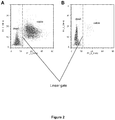
- the method comprises arranging the stored impedance values with the amplitude value and the phase angle value in an x-y-matrix; determining a gate between an array of values having a lower and a higher phase angle; counting the pollen grain impedance values in both clouds; calculating a ratio between the amount of pollen having an impedance value with a phase angle below that gate and the amount of pollen having an impedance value with a phase angle above that gate; comparing the ratio with a respective ratio of a database comprising data of respective pollen for determining whether the viability of the pollen is sufficient for a given certain purpose; and displaying the result for that analysed population.
- the method further comprises identifying the maturation grade by determining the amplitude values and /or the angle values as a function of the measurement frequencies; comparing the amplitude values and /or the angle values with the respective values of a database comprising data of respective pollen; identifying the plant cells as belonging to a specific developmental stage; and displaying the result for that analysed population.
- the analysed plant cells are separated according to their different impedance signals and can be used for downstream processes, such as for breeding, seed, and/or fruit production purposes which are not part of the method of the invention.
- the result is used to control a plant cell production process, to detect the state of the cell culture as well as bacterial or other contaminations in a plant cell production process which is not part of this method.
- the result is used for the selection of plant breeding material for male fertility/sterility, heat-, salt-, and/or stress-tolerance.
- the result is used for the optimization of plant growth conditions (for example illumination and humidity parameters in a greenhouse) required to obtain pollen with maximal viability.
- plant growth conditions for example illumination and humidity parameters in a greenhouse
- determining the viability or maturation grade of the analysed pollen population is performed in real-time.
- a microfluidic device comprising at least one specific microfluidic chip and being adapted to perform impedance flow cytometry (IFC) with an alternate current (AC) field with frequencies in the range between 0.1 to 600MHz, preferably from 0.1 to 200MHz, most preferably from 0.25 to 30MHz, is used in the method according to the invention.
- IFC impedance flow cytometry
- AC alternate current
- An advantage of the present invention is that a plant cell does not have to be stained for viability analysis, the method is non-invasive, non-destructive and a high number of cells can be analysed in a short time frame.
- Another advantage of the present invention includes the possibility to follow developmental processes of plant cells and that it is applicable to all plant species.
- the plant cell can be of somatic or reproductive origin.
- a further advantage of the present invention is that by analysing cells of a plant the physiological fitness or viability of a plant is indicated.
- a further advantage of the present invention is that the device, which performs the analysis, can be used right next to the plant delivering direct results.
- a further advantage of the present invention is that the device, which performs the analysis, can be optimised depending on the specifications of the various plants.
- An important advantage of the present invention is that the analysis can be standardized and therefore applied at different locations, providing comparable and reproducible results by using buffers optimized for and a microfluidic device specifically calibrated on the respective pollen type. It is possible, that one buffer and one calibration can be used for several different pollen types.
- the method envisages that harvested pollen grains are re-suspended in liquid standard IFC buffers, filtered through sieves with appropriate mesh size and loaded onto the machine.
- Figure 1 gives an example of the flow chart of sample preparation for IFC measurements.
- Standard IFC comprises any conductive and liquid buffer that allows the plant cells to remain viable.
- the received values are stored according to the required result of the measurement in a respective format as shown in Figure 2 and Figure 3 for the following comparison with the respective data of the same plant species of a database.
- the result either displays directly the measured values or only the outcome of the comparison with the database, e.g. only the information that the pollen are suitable for the defined purpose or not.
- FIG. 2 shows two dot plots of a pollen viability analysis by IFC performed at 0.5 MHz.
- x-axis phase angle
- y-axis signal amplitude
- the determination of the pollen quality by IFC is reproducible and highly sensitive. For example, a significant correlation between expected and measured viabilities was obtained with defined mixtures of dead and viable pollen for both Brassica oleracea (cauliflower) and Solanum lycopersicum (tomato) pollen.
- FIG 3a shows a schematic representation of the various stages that a pollen grain encounters during its development. Changes in cell dimension and cell content (size of the vacuoles) can influence both the amplitude and phase angle of the impedance signal, respectively. This is demonstrated in figure 3b , where phase angle changes result from varying vacuole sizes, and in figure 3c , where the amplitudes change as a result of varying cell sizes.
- the analyses were performed with pollen grains of Brassica oleracea obtained from buds of the indicated sizes (4-7 mm).
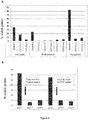
- FIG 4 illustrates the viability of pollen collected from Raphanus flower buds of cytoplasmic male sterile lines (CMS 1-6) along with a fully fertile line (Control 1-3).
- CMS 1-6 cytoplasmic male sterile lines
- Control 1-3 The analysis shows that younger plants (4 weeks, control 3) have a higher pollen viability than older plants (12 weeks, control 1 and 2), a phenomenon described by breeders but that has not been analysed before.
- Infection by pollen eating insects like Thrips that also affect the overall fitness of the plants plus application of pesticides (“old plants” and "Thrips-infected") also dramatically decrease pollen viability in both control and CMS lines.
- Figures 5a and 5b show the correlation of pollen viability analysed by IFC at 12 MHz and the seed production.
- Tomato flowers were pollinated with different pollen qualtities (% viable pollen) and the relative amount of viable seeds (seeds containing an embryo) was analysed to generate data of successful pollination ( Figure 5a ).
- Flowers pollinated with a pollen viability higher than 25% show a seed setting above 50% of the maximal amount of seeds that can be obtained per fruit, as estimated by the number viable seeds obtained by natural selfing per fruit.
- Pollen of very low viability or inactivated pollen lead to minimal amounts of seeds or to no seeds at all, respectively, as demonstrated in Figure 5b . Only seeds that contain an embryo will give rise to a new plant.
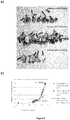
- Figures 6a and 6b show the influence of pollen quality on fruit development.
- Figure 6a shows an image of tomato fruits harvested 3 weeks after pollination prior to embryo analysis. The diameter of each harvested fruit was measured and the number of embryos per fruit was counted. Flowers that had been pollinated with the highest pollen quality (31%) had significantly bigger fruits and a higher number of embryo per fruits ( Figure 6a , upper row; 6b, black line) compared to a lower quality ( Figure 6a mid row; 6b, grey line). Flowers pollinated with a viablity of 0.2% did not produce any fruits and consequently no seeds. Thus, the use of IFC can also be an important tool during the fruit production process.
- the use of a standardized procedure allows a location- and operator-independent analysis and therefore leads to comparable results.
- this pollen analysis method meets for the first time the requirements of globally acting seed manufacturers.
Landscapes
- Health & Medical Sciences (AREA)
- Life Sciences & Earth Sciences (AREA)
- Chemical & Material Sciences (AREA)
- Engineering & Computer Science (AREA)
- Physics & Mathematics (AREA)
- Biomedical Technology (AREA)
- General Health & Medical Sciences (AREA)
- Analytical Chemistry (AREA)
- Biochemistry (AREA)
- Pathology (AREA)
- Immunology (AREA)
- General Physics & Mathematics (AREA)
- Hematology (AREA)
- Urology & Nephrology (AREA)
- Chemical Kinetics & Catalysis (AREA)
- Genetics & Genomics (AREA)
- Medicinal Chemistry (AREA)
- Food Science & Technology (AREA)
- Optics & Photonics (AREA)
- Biophysics (AREA)
- Molecular Biology (AREA)
- Botany (AREA)
- Developmental Biology & Embryology (AREA)
- Environmental Sciences (AREA)
- Electrochemistry (AREA)
- Fluid Mechanics (AREA)
- Dispersion Chemistry (AREA)
- Clinical Laboratory Science (AREA)
- Breeding Of Plants And Reproduction By Means Of Culturing (AREA)
- Measuring Or Testing Involving Enzymes Or Micro-Organisms (AREA)
Claims (9)
- Verfahren zur Bestimmung des Pollenlebensfähigkeits- und -reifungsgrads von Pollenpopulationen:Mechanisches Entnehmen unreifer oder reifer Pollenkörner aus Blumen;Resuspendieren der Pollenkörner in einer elektrisch leitenden, speziellen und klar definierten Pufferlösung, um diese Pflanzenzellen lebensfähig zu halten;Leiten der Zellsuspension durch ein geeignetes Filter mit einer zum Durchführen von Impedanz-Durchflusszytometrie (Impedance Flow Cytometry, IFC) passenden Porengröße, indem ein Wechselstrom-(AC-)feld mit Frequenzen im Bereich von 0,1 bis 600 MHz, vorzugsweise von 0,1 bis 200 MHz und besonders bevorzugt von 0,25 bis 30 MHz angelegt wird, um eine gefilterte Suspension zu bilden;Leiten der gefilterten Suspension durch die für den betreffenden Pollentyp kalibrierte Mikrofluid-Einheit und Messen einer Impedanz der Pollenkörner bei vorgegebenen Frequenzen;Speichern der gemessenen Impedanzwerte jedes Pollenkorns zusammen mit dem Amplitudenwert und dem ihm korrelierenden Phasenwinkel sowie den Messfrequenzen;Zählen der Pollenkörner in der gefilterten Suspension; undSelektieren der Pollenkörner nach den Amplituden- und/oder Phasenwerten durch manuelles oder automatisches Einstellen eines entsprechenden Durchlassgatters und Ermitteln des Verhältnisses lebensfähig/nicht lebensfähig und des Reifungsgrades der analysierten Pollenpopulation.
- Verfahren nach Anspruch 1, das ferner umfasst: Feststellen, ob die Pflanzenzellen lebensfähig (lebend) oder nicht lebensfähig (tot) sind, durch Anordnen der gespeicherten Impedanzwerte zusammen mit dem Amplitudenwert und dem Phasenwert in einer x-y-Matrix;
Einstellen eines Durchlassgatters zwischen Datengruppen mit einem kleineren und einem größeren Phasenwinkel:Zählen der Pollenkorn-Impedanzwerte verschiedener Datengruppen;Berechnen eines Verhältnisses zwischen der Menge der Pollen mit einem Impedanzwert mit einem Phasenwinkel kleiner als das Durchlassgatter undder Menge der Pollen mit einem Impedanzwert mit einem Phasenwinkel größer als das Durchlassgatter;Vergleichen des Verhältnisses mit einem entsprechenden Verhältnis einer Datenbank, die Daten entsprechender Pollen enthält, um zu ermitteln, ob die Lebensfähigkeit der Pollen für einen bestimmten vorgegebenen Zweck ausreicht; undAnzeigen des Ergebnisses für die analysierte Population. - Verfahren nach Anspruch 1, das ferner umfasst:Ermitteln des Reifungsgrades durch Ermitteln der Amplitudenwerte und/oder der Winkelwerte als Funktion der Messfrequenzen;Vergleichen der Amplitudenwerte und/oder der Winkelwerte mit den entsprechenden Werten einer Datenbank, die Daten entsprechender Pollen enthält;Identifizieren der Pflanzenzellen, die zu einer bestimmten Entwicklungsstufe gehören; undAnzeigen des Ergebnisses für die analysierte Population.
- Verfahren nach einem der vorhergehenden Ansprüche 2 oder 3, wobei das Resultat dazu verwendet wird, den Zustand der Zellkultur zu detektieren sowie bakterielle, Pilz- oder andere Verunreinigungen in einem Saat-Produktionsprozess zu detektieren, der nicht Bestandteil dieses Verfahrens ist.
- Verfahren nach einem der vorhergehenden Ansprüche 2 oder 3, wobei das Ergebnis zum Selektieren von Pflanzenzuchtmaterial nach männlicher Fruchtbarkeit/Unfruchtbarkeit, Hitze-, Salz- und/oder Stresstoleranz verwendet wird.
- Verfahren nach einem der vorhergehenden Ansprüche 2 oder 3, wobei das Ergebnis zum Optimieren von Bedingungen des Pflanzenwachstums verwendet wird, um Pollen mit größtmöglicher Lebensfähigkeit zu gewinnen.
- Verfahren nach einem der vorhergehenden Ansprüche, das ferner Festlegen eines Trigger-Parameters zum Erkennen der Eigenschaft des Pollens umfasst.
- Verfahren nach einem der vorhergehenden Ansprüche, wobei das Ermitteln des Lebensfähigkeits- und Reifungsgrades der analysierten Pollenpopulation in Echtzeit erfolgt.
- Verwenden einer Mikrofluid-Einheit in dem Verfahren nach einem der Ansprüche 1 bis 8, wobei die Mikrofluid-Einheit mindestens einen spezialisierten Mikrofluid-Chip aufweist und dazu eingerichtet ist, Impedanz-Durchflusszytometrie (IFC) mit einem Wechselstrom-(AC-)feld mit Frequenzen im Bereich zwischen 0,1 bis 600 MHz, vorzugsweise von 0,1 bis 200 MHz, besonders bevorzugt von 0,25 bis 30 MHz, während des Selektierens von Pflanzenzuchtmaterial nach männlicher Fruchtbarkeit/Unfruchtbarkeit, Hitze-, Salz- und/oder Stress-Toleranz während Saatgut-Produktionsprozessen durchzuführen, die nicht Bestandteil dieses Verfahrens sind, um Pflanzenzellen-Produktionsprozesse zu steuern, die nicht Bestandteil des Verfahrens sind, oder um bakterielle, Pilz- oder andere Verunreinigungen in Pflanzen-Produktionsprozessen, die nicht Bestandteil des Verfahrens sind, durch Feststellen, ob die Pflanzenzellen lebensfähig (lebend) oder nicht lebensfähig (tot) sind, und durch Identifizieren von Pflanzenzellen, die zu einer bestimmten Entwicklungsstufe gehören.
Priority Applications (3)
| Application Number | Priority Date | Filing Date | Title |
|---|---|---|---|
| EP14158150.4A EP2915423B1 (de) | 2014-03-06 | 2014-03-06 | Verfahren zur Bestimmung des Pollenlebensfähigkeits- und -reifungsgrads einer Pollenpopulation |
| US14/611,203 US9797855B2 (en) | 2014-03-06 | 2015-01-31 | Method for determination of pollen viability and/or maturation grade of a pollen population |
| CN201510368787.1A CN105181560B (zh) | 2014-03-06 | 2015-03-05 | 用于确定花粉群的花粉活力和/或成熟度的方法 |
Applications Claiming Priority (1)
| Application Number | Priority Date | Filing Date | Title |
|---|---|---|---|
| EP14158150.4A EP2915423B1 (de) | 2014-03-06 | 2014-03-06 | Verfahren zur Bestimmung des Pollenlebensfähigkeits- und -reifungsgrads einer Pollenpopulation |
Publications (2)
| Publication Number | Publication Date |
|---|---|
| EP2915423A1 EP2915423A1 (de) | 2015-09-09 |
| EP2915423B1 true EP2915423B1 (de) | 2021-08-11 |
Family
ID=50236014
Family Applications (1)
| Application Number | Title | Priority Date | Filing Date |
|---|---|---|---|
| EP14158150.4A Active EP2915423B1 (de) | 2014-03-06 | 2014-03-06 | Verfahren zur Bestimmung des Pollenlebensfähigkeits- und -reifungsgrads einer Pollenpopulation |
Country Status (3)
| Country | Link |
|---|---|
| US (1) | US9797855B2 (de) |
| EP (1) | EP2915423B1 (de) |
| CN (1) | CN105181560B (de) |
Families Citing this family (15)
| Publication number | Priority date | Publication date | Assignee | Title |
|---|---|---|---|---|
| PL4169375T3 (pl) | 2015-06-25 | 2025-04-28 | Powerpollen, Inc. | Produkcja materiału siewnego |
| US10575517B2 (en) | 2015-06-25 | 2020-03-03 | Accelerated Ag Technologies, Llc | Pollen field conditioning and preservation method |
| CN109142657B (zh) * | 2017-06-28 | 2020-08-07 | 中国科学院宁波工业技术研究院慈溪生物医学工程研究所 | 一种检测分析仪 |
| WO2019000902A1 (zh) | 2017-06-28 | 2019-01-03 | 中国科学院宁波工业技术研究院慈溪生物医学工程研究所 | 一种检测分析仪 |
| EP4371402A3 (de) * | 2017-07-06 | 2024-09-25 | Accelerated AG Technologies, LLC | Pollenkonservierungsverfahren |
| CN111316084B (zh) * | 2017-10-09 | 2023-09-15 | 皇家飞利浦有限公司 | 粒子或花粉传感器以及感测方法 |
| EP3820613A4 (de) * | 2018-07-12 | 2022-04-20 | Berkeley Lights, Inc. | Screening von pflanzenprotoplasten auf krankheitsresistente merkmale |
| CN109142234A (zh) * | 2018-08-28 | 2019-01-04 | 内蒙古农业大学 | 一种野外鉴别克氏针茅根系活力的方法 |
| CA3152771A1 (en) | 2019-08-30 | 2021-03-04 | Accelerated Ag Technologies, Llc | Method and system for time of pollinating cereal crops |
| CN110542641B (zh) * | 2019-09-26 | 2020-11-06 | 华南农业大学 | 从花粉中分选2n花粉的方法 |
| CN110999655A (zh) * | 2019-12-04 | 2020-04-14 | 河南省农业科学院粮食作物研究所 | 一种用于高温胁迫下玉米花粉活力高通量测定的标准化样本制备方法及其应用 |
| EP3896438B1 (de) | 2020-04-16 | 2025-09-17 | Transtech Systems, Inc. | Verfahren und system zum charakterisieren eines antwortsignals zur detektion physikalischer eigenschaften eines zu prüfenden materials |
| US11680912B2 (en) | 2020-05-14 | 2023-06-20 | Transtech Systems, Inc. | Sensor system to apply electromagnetic fields for electromagnetic impedance spectroscopy in-process monitoring of fluids |
| US20220277453A1 (en) * | 2021-02-26 | 2022-09-01 | Monsanto Technology Llc | Methods for evaluating pollen germination, and related systems |
| CN114018919B (zh) * | 2021-10-27 | 2023-06-16 | 中国热带农业科学院海口实验站 | 一种二倍体香蕉花粉活力的检测方法 |
Citations (1)
| Publication number | Priority date | Publication date | Assignee | Title |
|---|---|---|---|---|
| US20030102854A1 (en) * | 2001-12-03 | 2003-06-05 | Board Of Regents, The University Of Texas System | Particle impedance sensor |
Family Cites Families (4)
| Publication number | Priority date | Publication date | Assignee | Title |
|---|---|---|---|---|
| ES2217208T3 (es) | 2002-02-01 | 2004-11-01 | Leister Process Technologies | Componente microfluido y procedimiento para la clasificacion de particulas en un fluido. |
| CN101129128B (zh) * | 2007-09-27 | 2011-03-23 | 上海交通大学 | 朱顶红的杂交育种方法 |
| CN101477000B (zh) * | 2009-01-05 | 2011-11-23 | 南京农业大学 | 棉花花粉管微丝骨架的荧光标记方法 |
| WO2012129199A2 (en) | 2011-03-22 | 2012-09-27 | Pioneer Hi-Bred International, Inc. | Apparatuses and methods for evaluating and sorting pollen and plants |
-
2014
- 2014-03-06 EP EP14158150.4A patent/EP2915423B1/de active Active
-
2015
- 2015-01-31 US US14/611,203 patent/US9797855B2/en active Active
- 2015-03-05 CN CN201510368787.1A patent/CN105181560B/zh active Active
Patent Citations (1)
| Publication number | Priority date | Publication date | Assignee | Title |
|---|---|---|---|---|
| US20030102854A1 (en) * | 2001-12-03 | 2003-06-05 | Board Of Regents, The University Of Texas System | Particle impedance sensor |
Also Published As
| Publication number | Publication date |
|---|---|
| US20150253273A1 (en) | 2015-09-10 |
| US9797855B2 (en) | 2017-10-24 |
| CN105181560B (zh) | 2018-09-25 |
| EP2915423A1 (de) | 2015-09-09 |
| CN105181560A (zh) | 2015-12-23 |
Similar Documents
| Publication | Publication Date | Title |
|---|---|---|
| US9797855B2 (en) | Method for determination of pollen viability and/or maturation grade of a pollen population | |
| Sliwinska | Flow cytometry–a modern method for exploring genome size and nuclear DNA synthesis in horticultural and medicinal plant species | |
| Dogterom et al. | Effect of pollen load size and source (self, outcross) on seed and fruit production in highbush blueberry cv.‘Bluecrop’(Vaccinium corymbosum; Ericaceae) | |
| EP2859101B1 (de) | Verfahren zur analyse von maternalem dna in grossen pflanzenbeständen | |
| Kenrick et al. | Self-incompatibility in the nitrogen-fixing tree, Acacia retinodes: quantitative cytology of pollen tube growth | |
| Vrána et al. | Flow cytometry in plant research: a success story | |
| Naumova et al. | Quantitative analysis of aposporous parthenogenesis in Poa pratensis genotypes | |
| Wang et al. | Morphological, cytological and fertility consequences of a spontaneous tetraploid of the diploid pear (Pyrus pyrifolia Nakai) cultivar ‘Cuiguan’ | |
| Elias | Seed quality testing | |
| Radunić et al. | Pollen-pistil interaction influence on the fruit set of sweet cherry | |
| MX2013010850A (es) | Aparatos y metodos para evaluar y clasificar polen y plantas. | |
| Silva et al. | Vertical heterogeneity of DNA ploidy level assessed by flow cytometry in calli of Passiflora cincinnata | |
| Heidmann et al. | Impedance flow cytometry as a tool to analyze microspore and pollen quality | |
| Ordoñez et al. | Technical manual potato reproductive and cytological biology | |
| Canonge et al. | Impedance flow cytometry allows the early prediction of embryo yields in wheat (Triticum aestivum L.) microspore cultures | |
| Huang et al. | Abnormal megagametogenesis results in seedlessness of a polyembryonic ‘Meiguicheng’orange (Citrus sinensis) mutant created with gamma-rays | |
| Gupta et al. | Pollen quantity, viability and in vitro pollen germination of longan (Dimocarpus longan Lour.) | |
| Van Laere et al. | Evidence for the occurrence of unreduced gametes in interspecific hybrids of Hibiscus | |
| Caporali et al. | Effects of tetraploidy on olive floral and fruit biology | |
| Montaner et al. | Geitonogamy: a mechanism responsible for high selfing rates in borage (Borago officinalis L.) | |
| CN105993929A (zh) | 一种母本起源的烟草单倍体及其育种方法 | |
| US20250110096A1 (en) | Method of quantifying pollination efficiency | |
| Heidmann et al. | Applications of Impedance Flow Cytometry in Doubled Haploid Technology | |
| Wood et al. | Determination of intra-specific variation in orchid seed viability using fluorescein diacetate | |
| Stokes | Effect of heat stress on pollen performance in early maturing soybean varieties |
Legal Events
| Date | Code | Title | Description |
|---|---|---|---|
| PUAI | Public reference made under article 153(3) epc to a published international application that has entered the european phase |
Free format text: ORIGINAL CODE: 0009012 |
|
| AK | Designated contracting states |
Kind code of ref document: A1 Designated state(s): AL AT BE BG CH CY CZ DE DK EE ES FI FR GB GR HR HU IE IS IT LI LT LU LV MC MK MT NL NO PL PT RO RS SE SI SK SM TR |
|
| AX | Request for extension of the european patent |
Extension state: BA ME |
|
| 17P | Request for examination filed |
Effective date: 20160303 |
|
| RBV | Designated contracting states (corrected) |
Designated state(s): AL AT BE BG CH CY CZ DE DK EE ES FI FR GB GR HR HU IE IS IT LI LT LU LV MC MK MT NL NO PL PT RO RS SE SI SK SM TR |
|
| STAA | Information on the status of an ep patent application or granted ep patent |
Free format text: STATUS: EXAMINATION IS IN PROGRESS |
|
| 17Q | First examination report despatched |
Effective date: 20170612 |
|
| REG | Reference to a national code |
Ref country code: DE Ref legal event code: R079 Ref document number: 602014079326 Country of ref document: DE Free format text: PREVIOUS MAIN CLASS: A01H0001020000 Ipc: B01L0003000000 |
|
| RIC1 | Information provided on ipc code assigned before grant |
Ipc: G01N 33/483 20060101ALI20200709BHEP Ipc: B01L 3/00 20060101AFI20200709BHEP Ipc: A01H 1/02 20060101ALI20200709BHEP Ipc: A01H 1/04 20060101ALI20200709BHEP |
|
| GRAP | Despatch of communication of intention to grant a patent |
Free format text: ORIGINAL CODE: EPIDOSNIGR1 |
|
| STAA | Information on the status of an ep patent application or granted ep patent |
Free format text: STATUS: GRANT OF PATENT IS INTENDED |
|
| INTG | Intention to grant announced |
Effective date: 20200924 |
|
| GRAS | Grant fee paid |
Free format text: ORIGINAL CODE: EPIDOSNIGR3 |
|
| GRAJ | Information related to disapproval of communication of intention to grant by the applicant or resumption of examination proceedings by the epo deleted |
Free format text: ORIGINAL CODE: EPIDOSDIGR1 |
|
| GRAL | Information related to payment of fee for publishing/printing deleted |
Free format text: ORIGINAL CODE: EPIDOSDIGR3 |
|
| STAA | Information on the status of an ep patent application or granted ep patent |
Free format text: STATUS: EXAMINATION IS IN PROGRESS |
|
| INTC | Intention to grant announced (deleted) | ||
| GRAP | Despatch of communication of intention to grant a patent |
Free format text: ORIGINAL CODE: EPIDOSNIGR1 |
|
| STAA | Information on the status of an ep patent application or granted ep patent |
Free format text: STATUS: GRANT OF PATENT IS INTENDED |
|
| GRAJ | Information related to disapproval of communication of intention to grant by the applicant or resumption of examination proceedings by the epo deleted |
Free format text: ORIGINAL CODE: EPIDOSDIGR1 |
|
| GRAL | Information related to payment of fee for publishing/printing deleted |
Free format text: ORIGINAL CODE: EPIDOSDIGR3 |
|
| STAA | Information on the status of an ep patent application or granted ep patent |
Free format text: STATUS: EXAMINATION IS IN PROGRESS |
|
| INTG | Intention to grant announced |
Effective date: 20210315 |
|
| INTC | Intention to grant announced (deleted) | ||
| GRAP | Despatch of communication of intention to grant a patent |
Free format text: ORIGINAL CODE: EPIDOSNIGR1 |
|
| STAA | Information on the status of an ep patent application or granted ep patent |
Free format text: STATUS: GRANT OF PATENT IS INTENDED |
|
| GRAA | (expected) grant |
Free format text: ORIGINAL CODE: 0009210 |
|
| STAA | Information on the status of an ep patent application or granted ep patent |
Free format text: STATUS: THE PATENT HAS BEEN GRANTED |
|
| INTG | Intention to grant announced |
Effective date: 20210623 |
|
| AK | Designated contracting states |
Kind code of ref document: B1 Designated state(s): AL AT BE BG CH CY CZ DE DK EE ES FI FR GB GR HR HU IE IS IT LI LT LU LV MC MK MT NL NO PL PT RO RS SE SI SK SM TR |
|
| REG | Reference to a national code |
Ref country code: GB Ref legal event code: FG4D |
|
| REG | Reference to a national code |
Ref country code: CH Ref legal event code: EP |
|
| REG | Reference to a national code |
Ref country code: DE Ref legal event code: R096 Ref document number: 602014079326 Country of ref document: DE |
|
| REG | Reference to a national code |
Ref country code: IE Ref legal event code: FG4D Ref country code: AT Ref legal event code: REF Ref document number: 1418826 Country of ref document: AT Kind code of ref document: T Effective date: 20210915 |
|
| REG | Reference to a national code |
Ref country code: NL Ref legal event code: FP |
|
| REG | Reference to a national code |
Ref country code: LT Ref legal event code: MG9D |
|
| REG | Reference to a national code |
Ref country code: AT Ref legal event code: MK05 Ref document number: 1418826 Country of ref document: AT Kind code of ref document: T Effective date: 20210811 |
|
| PG25 | Lapsed in a contracting state [announced via postgrant information from national office to epo] |
Ref country code: RS Free format text: LAPSE BECAUSE OF FAILURE TO SUBMIT A TRANSLATION OF THE DESCRIPTION OR TO PAY THE FEE WITHIN THE PRESCRIBED TIME-LIMIT Effective date: 20210811 Ref country code: SE Free format text: LAPSE BECAUSE OF FAILURE TO SUBMIT A TRANSLATION OF THE DESCRIPTION OR TO PAY THE FEE WITHIN THE PRESCRIBED TIME-LIMIT Effective date: 20210811 Ref country code: HR Free format text: LAPSE BECAUSE OF FAILURE TO SUBMIT A TRANSLATION OF THE DESCRIPTION OR TO PAY THE FEE WITHIN THE PRESCRIBED TIME-LIMIT Effective date: 20210811 Ref country code: ES Free format text: LAPSE BECAUSE OF FAILURE TO SUBMIT A TRANSLATION OF THE DESCRIPTION OR TO PAY THE FEE WITHIN THE PRESCRIBED TIME-LIMIT Effective date: 20210811 Ref country code: FI Free format text: LAPSE BECAUSE OF FAILURE TO SUBMIT A TRANSLATION OF THE DESCRIPTION OR TO PAY THE FEE WITHIN THE PRESCRIBED TIME-LIMIT Effective date: 20210811 Ref country code: NO Free format text: LAPSE BECAUSE OF FAILURE TO SUBMIT A TRANSLATION OF THE DESCRIPTION OR TO PAY THE FEE WITHIN THE PRESCRIBED TIME-LIMIT Effective date: 20211111 Ref country code: PT Free format text: LAPSE BECAUSE OF FAILURE TO SUBMIT A TRANSLATION OF THE DESCRIPTION OR TO PAY THE FEE WITHIN THE PRESCRIBED TIME-LIMIT Effective date: 20211213 Ref country code: LT Free format text: LAPSE BECAUSE OF FAILURE TO SUBMIT A TRANSLATION OF THE DESCRIPTION OR TO PAY THE FEE WITHIN THE PRESCRIBED TIME-LIMIT Effective date: 20210811 Ref country code: AT Free format text: LAPSE BECAUSE OF FAILURE TO SUBMIT A TRANSLATION OF THE DESCRIPTION OR TO PAY THE FEE WITHIN THE PRESCRIBED TIME-LIMIT Effective date: 20210811 Ref country code: BG Free format text: LAPSE BECAUSE OF FAILURE TO SUBMIT A TRANSLATION OF THE DESCRIPTION OR TO PAY THE FEE WITHIN THE PRESCRIBED TIME-LIMIT Effective date: 20211111 |
|
| REG | Reference to a national code |
Ref country code: DE Ref legal event code: R082 Ref document number: 602014079326 Country of ref document: DE Representative=s name: WITTE, WELLER & PARTNER PATENTANWAELTE MBB, DE |
|
| PG25 | Lapsed in a contracting state [announced via postgrant information from national office to epo] |
Ref country code: PL Free format text: LAPSE BECAUSE OF FAILURE TO SUBMIT A TRANSLATION OF THE DESCRIPTION OR TO PAY THE FEE WITHIN THE PRESCRIBED TIME-LIMIT Effective date: 20210811 Ref country code: LV Free format text: LAPSE BECAUSE OF FAILURE TO SUBMIT A TRANSLATION OF THE DESCRIPTION OR TO PAY THE FEE WITHIN THE PRESCRIBED TIME-LIMIT Effective date: 20210811 Ref country code: GR Free format text: LAPSE BECAUSE OF FAILURE TO SUBMIT A TRANSLATION OF THE DESCRIPTION OR TO PAY THE FEE WITHIN THE PRESCRIBED TIME-LIMIT Effective date: 20211112 |
|
| PG25 | Lapsed in a contracting state [announced via postgrant information from national office to epo] |
Ref country code: DK Free format text: LAPSE BECAUSE OF FAILURE TO SUBMIT A TRANSLATION OF THE DESCRIPTION OR TO PAY THE FEE WITHIN THE PRESCRIBED TIME-LIMIT Effective date: 20210811 |
|
| REG | Reference to a national code |
Ref country code: DE Ref legal event code: R097 Ref document number: 602014079326 Country of ref document: DE |
|
| PG25 | Lapsed in a contracting state [announced via postgrant information from national office to epo] |
Ref country code: SM Free format text: LAPSE BECAUSE OF FAILURE TO SUBMIT A TRANSLATION OF THE DESCRIPTION OR TO PAY THE FEE WITHIN THE PRESCRIBED TIME-LIMIT Effective date: 20210811 Ref country code: SK Free format text: LAPSE BECAUSE OF FAILURE TO SUBMIT A TRANSLATION OF THE DESCRIPTION OR TO PAY THE FEE WITHIN THE PRESCRIBED TIME-LIMIT Effective date: 20210811 Ref country code: RO Free format text: LAPSE BECAUSE OF FAILURE TO SUBMIT A TRANSLATION OF THE DESCRIPTION OR TO PAY THE FEE WITHIN THE PRESCRIBED TIME-LIMIT Effective date: 20210811 Ref country code: EE Free format text: LAPSE BECAUSE OF FAILURE TO SUBMIT A TRANSLATION OF THE DESCRIPTION OR TO PAY THE FEE WITHIN THE PRESCRIBED TIME-LIMIT Effective date: 20210811 Ref country code: CZ Free format text: LAPSE BECAUSE OF FAILURE TO SUBMIT A TRANSLATION OF THE DESCRIPTION OR TO PAY THE FEE WITHIN THE PRESCRIBED TIME-LIMIT Effective date: 20210811 Ref country code: AL Free format text: LAPSE BECAUSE OF FAILURE TO SUBMIT A TRANSLATION OF THE DESCRIPTION OR TO PAY THE FEE WITHIN THE PRESCRIBED TIME-LIMIT Effective date: 20210811 |
|
| PLBE | No opposition filed within time limit |
Free format text: ORIGINAL CODE: 0009261 |
|
| STAA | Information on the status of an ep patent application or granted ep patent |
Free format text: STATUS: NO OPPOSITION FILED WITHIN TIME LIMIT |
|
| 26N | No opposition filed |
Effective date: 20220512 |
|
| PG25 | Lapsed in a contracting state [announced via postgrant information from national office to epo] |
Ref country code: IT Free format text: LAPSE BECAUSE OF FAILURE TO SUBMIT A TRANSLATION OF THE DESCRIPTION OR TO PAY THE FEE WITHIN THE PRESCRIBED TIME-LIMIT Effective date: 20210811 |
|
| PG25 | Lapsed in a contracting state [announced via postgrant information from national office to epo] |
Ref country code: SI Free format text: LAPSE BECAUSE OF FAILURE TO SUBMIT A TRANSLATION OF THE DESCRIPTION OR TO PAY THE FEE WITHIN THE PRESCRIBED TIME-LIMIT Effective date: 20210811 |
|
| PG25 | Lapsed in a contracting state [announced via postgrant information from national office to epo] |
Ref country code: MC Free format text: LAPSE BECAUSE OF FAILURE TO SUBMIT A TRANSLATION OF THE DESCRIPTION OR TO PAY THE FEE WITHIN THE PRESCRIBED TIME-LIMIT Effective date: 20210811 |
|
| REG | Reference to a national code |
Ref country code: BE Ref legal event code: MM Effective date: 20220331 |
|
| PG25 | Lapsed in a contracting state [announced via postgrant information from national office to epo] |
Ref country code: LU Free format text: LAPSE BECAUSE OF NON-PAYMENT OF DUE FEES Effective date: 20220306 Ref country code: IE Free format text: LAPSE BECAUSE OF NON-PAYMENT OF DUE FEES Effective date: 20220306 |
|
| PG25 | Lapsed in a contracting state [announced via postgrant information from national office to epo] |
Ref country code: BE Free format text: LAPSE BECAUSE OF NON-PAYMENT OF DUE FEES Effective date: 20220331 |
|
| PG25 | Lapsed in a contracting state [announced via postgrant information from national office to epo] |
Ref country code: HU Free format text: LAPSE BECAUSE OF FAILURE TO SUBMIT A TRANSLATION OF THE DESCRIPTION OR TO PAY THE FEE WITHIN THE PRESCRIBED TIME-LIMIT; INVALID AB INITIO Effective date: 20140306 |
|
| PG25 | Lapsed in a contracting state [announced via postgrant information from national office to epo] |
Ref country code: MK Free format text: LAPSE BECAUSE OF FAILURE TO SUBMIT A TRANSLATION OF THE DESCRIPTION OR TO PAY THE FEE WITHIN THE PRESCRIBED TIME-LIMIT Effective date: 20210811 Ref country code: CY Free format text: LAPSE BECAUSE OF FAILURE TO SUBMIT A TRANSLATION OF THE DESCRIPTION OR TO PAY THE FEE WITHIN THE PRESCRIBED TIME-LIMIT Effective date: 20210811 |
|
| PG25 | Lapsed in a contracting state [announced via postgrant information from national office to epo] |
Ref country code: MT Free format text: LAPSE BECAUSE OF FAILURE TO SUBMIT A TRANSLATION OF THE DESCRIPTION OR TO PAY THE FEE WITHIN THE PRESCRIBED TIME-LIMIT Effective date: 20210811 |
|
| PGFP | Annual fee paid to national office [announced via postgrant information from national office to epo] |
Ref country code: CH Payment date: 20250401 Year of fee payment: 12 |
|
| PG25 | Lapsed in a contracting state [announced via postgrant information from national office to epo] |
Ref country code: TR Free format text: LAPSE BECAUSE OF FAILURE TO SUBMIT A TRANSLATION OF THE DESCRIPTION OR TO PAY THE FEE WITHIN THE PRESCRIBED TIME-LIMIT Effective date: 20210811 |
|
| REG | Reference to a national code |
Ref country code: CH Ref legal event code: U11 Free format text: ST27 STATUS EVENT CODE: U-0-0-U10-U11 (AS PROVIDED BY THE NATIONAL OFFICE) Effective date: 20260401 |
|
| PGFP | Annual fee paid to national office [announced via postgrant information from national office to epo] |
Ref country code: GB Payment date: 20260324 Year of fee payment: 13 |
|
| PGFP | Annual fee paid to national office [announced via postgrant information from national office to epo] |
Ref country code: DE Payment date: 20260324 Year of fee payment: 13 |
|
| PGFP | Annual fee paid to national office [announced via postgrant information from national office to epo] |
Ref country code: NL Payment date: 20260319 Year of fee payment: 13 |
|
| PGFP | Annual fee paid to national office [announced via postgrant information from national office to epo] |
Ref country code: FR Payment date: 20260320 Year of fee payment: 13 |