EP2915580B1 - Préparations aux propriétés physiques améliorées - Google Patents
Préparations aux propriétés physiques améliorées Download PDFInfo
- Publication number
- EP2915580B1 EP2915580B1 EP14158336.9A EP14158336A EP2915580B1 EP 2915580 B1 EP2915580 B1 EP 2915580B1 EP 14158336 A EP14158336 A EP 14158336A EP 2915580 B1 EP2915580 B1 EP 2915580B1
- Authority
- EP
- European Patent Office
- Prior art keywords
- formula
- hydroxyester
- preparation
- emulsion
- moiety
- Prior art date
- Legal status (The legal status is an assumption and is not a legal conclusion. Google has not performed a legal analysis and makes no representation as to the accuracy of the status listed.)
- Active
Links
- UBDRBIAIXGJJJS-UHFFFAOYSA-N CC(C)(C)[NH+](C)[O-] Chemical compound CC(C)(C)[NH+](C)[O-] UBDRBIAIXGJJJS-UHFFFAOYSA-N 0.000 description 1
Classifications
-
- A—HUMAN NECESSITIES
- A61—MEDICAL OR VETERINARY SCIENCE; HYGIENE
- A61K—PREPARATIONS FOR MEDICAL, DENTAL OR TOILETRY PURPOSES
- A61K8/00—Cosmetics or similar toiletry preparations
- A61K8/18—Cosmetics or similar toiletry preparations characterised by the composition
- A61K8/30—Cosmetics or similar toiletry preparations characterised by the composition containing organic compounds
- A61K8/33—Cosmetics or similar toiletry preparations characterised by the composition containing organic compounds containing oxygen
- A61K8/37—Esters of carboxylic acids
-
- A—HUMAN NECESSITIES
- A61—MEDICAL OR VETERINARY SCIENCE; HYGIENE
- A61K—PREPARATIONS FOR MEDICAL, DENTAL OR TOILETRY PURPOSES
- A61K8/00—Cosmetics or similar toiletry preparations
- A61K8/02—Cosmetics or similar toiletry preparations characterised by special physical form
- A61K8/04—Dispersions; Emulsions
- A61K8/06—Emulsions
- A61K8/062—Oil-in-water emulsions
-
- A—HUMAN NECESSITIES
- A61—MEDICAL OR VETERINARY SCIENCE; HYGIENE
- A61K—PREPARATIONS FOR MEDICAL, DENTAL OR TOILETRY PURPOSES
- A61K8/00—Cosmetics or similar toiletry preparations
- A61K8/18—Cosmetics or similar toiletry preparations characterised by the composition
- A61K8/30—Cosmetics or similar toiletry preparations characterised by the composition containing organic compounds
- A61K8/33—Cosmetics or similar toiletry preparations characterised by the composition containing organic compounds containing oxygen
- A61K8/34—Alcohols
-
- A—HUMAN NECESSITIES
- A61—MEDICAL OR VETERINARY SCIENCE; HYGIENE
- A61Q—SPECIFIC USE OF COSMETICS OR SIMILAR TOILETRY PREPARATIONS
- A61Q19/00—Preparations for care of the skin
- A61Q19/10—Washing or bathing preparations
-
- A—HUMAN NECESSITIES
- A61—MEDICAL OR VETERINARY SCIENCE; HYGIENE
- A61Q—SPECIFIC USE OF COSMETICS OR SIMILAR TOILETRY PREPARATIONS
- A61Q5/00—Preparations for care of the hair
- A61Q5/02—Preparations for cleaning the hair
-
- C—CHEMISTRY; METALLURGY
- C09—DYES; PAINTS; POLISHES; NATURAL RESINS; ADHESIVES; COMPOSITIONS NOT OTHERWISE PROVIDED FOR; APPLICATIONS OF MATERIALS NOT OTHERWISE PROVIDED FOR
- C09K—MATERIALS FOR MISCELLANEOUS APPLICATIONS, NOT PROVIDED FOR ELSEWHERE
- C09K23/00—Use of substances as emulsifying, wetting, dispersing, or foam-producing agents
- C09K23/04—Sulfonates or sulfuric acid ester salts derived from polyhydric alcohols or amino alcohols or derivatives thereof
-
- C—CHEMISTRY; METALLURGY
- C09—DYES; PAINTS; POLISHES; NATURAL RESINS; ADHESIVES; COMPOSITIONS NOT OTHERWISE PROVIDED FOR; APPLICATIONS OF MATERIALS NOT OTHERWISE PROVIDED FOR
- C09K—MATERIALS FOR MISCELLANEOUS APPLICATIONS, NOT PROVIDED FOR ELSEWHERE
- C09K23/00—Use of substances as emulsifying, wetting, dispersing, or foam-producing agents
- C09K23/38—Alcohols, e.g. oxidation products of paraffins
-
- A—HUMAN NECESSITIES
- A61—MEDICAL OR VETERINARY SCIENCE; HYGIENE
- A61K—PREPARATIONS FOR MEDICAL, DENTAL OR TOILETRY PURPOSES
- A61K2800/00—Properties of cosmetic compositions or active ingredients thereof or formulation aids used therein and process related aspects
- A61K2800/40—Chemical, physico-chemical or functional or structural properties of particular ingredients
- A61K2800/52—Stabilizers
Definitions
- the present invention relates to a preparation with improved physical properties.
- the droplet size is preferably in a range up to 40 ⁇ m, preferably in a range up to 30 ⁇ m.
- the preparation is due to the presence of one or more hydroxy esters of the formula (I) (For the meaning of the substituents R b and R a see below) set so that the O / W emulsion has an increased emulsion stability in comparison with a comparison emulsion which, with an otherwise identical composition, does not comprise a hydroxy ester of the formula (I).
- the preparation according to the invention is a (preferably single-phase) surfactant-containing preparation
- the total amount of one or more hydroxy esters of the formula (I) is in the preparation containing one or more anionic ones Surfactants selected so that the surfactant-containing preparation has an increased viscosity at 22.7 ° C. in comparison with a comparison preparation which, with an otherwise identical composition, does not comprise a hydroxyester of the formula (I).
- the preparation according to the invention can be a surfactant-containing O / W emulsion. If it is such a surfactant-containing O / W emulsion, due to the presence of hydroxy esters of the formula (I) mentioned, the emulsion stability is increased in the stated sense and / or the viscosity is increased.
- the present invention also relates to an O / W emulsion comprising, as emulsifier, one or more hydroxy esters of the above formula (I), the stability of the emulsion being adjusted such that after storage of this emulsion for 3 weeks (21 days) at 25 ° C and a pressure of 1013 HPa with exclusion of air for the particle size distribution: D (v, 0.9) (t 21d ): D (v, 0.9) (t 0d ) ⁇ 2, preferably ⁇ 1.5, particularly preferably ⁇ 1.2 (Ie the quotient of D (v, 0.9) after 21 days (numerator) and D (v, 0.9) at the start of storage (denominator) is ⁇ 2, preferably ⁇ 1.5, particularly preferably ⁇ 1.2).
- the present invention also relates to a (preferably single-phase) surfactant-containing preparation comprising, as an agent for increasing the viscosity at 22.7 ° C., one or more hydroxy esters of the formula (I) above, and also one or more anionic surfactants, which are preferably selected from the group consisting of sulfates and sulfonates, particularly preferably comprising sodium lauryl ether sulfate and optionally one or more further surfactants.
- a surfactant-containing preparation comprising, as an agent for increasing the viscosity at 22.7 ° C., one or more hydroxy esters of the formula (I) above, and also one or more anionic surfactants, which are preferably selected from the group consisting of sulfates and sulfonates, particularly preferably comprising sodium lauryl ether sulfate and optionally one or more further surfactants.
- the invention also relates to the use (a) of a single hydroxy ester of the formula (I) or (b) of a mixture comprising or consisting of two or more different hydroxy esters of the above formula (I), as an agent for modifying one or more physical properties of a preparation , the physical properties being selected from the group consisting of emulsion stability and viscosity.
- preparations in particular include medical and cosmetic formulations, including in particular personal care products (for example cosmetic preparations such as hair coloring, hair shaping or depilatory agents), and household and (surfactant-containing) cleaning products.
- the present invention also relates to a method for producing and / or stabilizing an O / W emulsion, with the following steps: Mixing two (not completely miscible under the given conditions) liquids in the presence of an emulsifying amount of one, two or more hydroxy esters of the above formula (I).
- the present invention also relates to a method for producing a surfactant-containing preparation with increased viscosity, comprising one or more anionic surfactants, with the following steps: Mixing a surfactant-containing liquid containing one or more anionic surfactants with a viscosity-increasing amount of one, two or more hydroxy esters of the above formula (I).
- O / W emulsions for example, there is a constant need for new O / W emulsions and surfactant-containing preparations with tailored physical properties.
- O / W emulsions in particular those O / W emulsions which are intended as cosmetic or medicinal preparations, it is often important that these emulsions appear particularly white.
- surfactant-containing preparations there is often a desire that these should have a comparatively high viscosity, particularly if it is a (cleaning) preparation containing surfactants for cosmetic purposes.
- the droplet size is preferably in a range up to 40 ⁇ m, preferably in the range up to 30 ⁇ m.
- preparations namely O / W emulsions and surfactant-containing preparations, the physical properties of which are particularly favorable.
- the aim in accordance with one aspect of the present invention was to provide a particularly stable emulsion with a high degree of whiteness.
- the surfactant-containing preparations according to a further aspect of the present invention, the aim was to achieve a comparatively high viscosity at 22.7 ° C.
- the droplet size (in an O / W emulsion as otherwise defined above) is particularly preferably in a range up to 40 ⁇ m, preferably in a range up to 30 ⁇ m.
- a preparation (as defined above) is particularly preferred, where R a of one hydroxy ester of the formula (I) is hydrogen, or where R a (i) of a single hydroxy ester of the formula (I) (of a total of several hydroxy esters of the formula (I )) or (ii) in the case of two, three or more than three hydroxy esters of this total of a plurality of hydroxy esters of the formula (I) or (iii) for all of these total of a number of hydroxy esters of the formula (I) is hydrogen.
- a preparation (as defined above, in particular as defined above as preferred) comprising at least one hydroxyester of the formula (I) is very particularly preferred, where R a is hydrogen, preferably R a is hydrogen and R b is a straight-chain or branched acyl radical having 3 to 6 carbon atoms means (the abovementioned and preferred meanings for R a and R b apply very particularly preferably to preparations which are O / W emulsions).
- Compounds of formula (I) are monoesters of 2,2,4-trimethylpentane-1,3-diol. Such compounds of the formula (I) have in some cases been commercially available for some time (cf. US 3,329,713 ) or can be obtained in a known manner by esterification of 2,2,4-trimethylpentane-1,3-diol, as for example in Liebigs Ann. 1972, 756, 162-169 or US 3,408,388 described.
- hydroxy esters of the formula (I) are able to influence the physical properties of chemical preparations (in particular cosmetic and medical preparations) in the desired manner described above.
- compounds of the formula (I) regularly increase the viscosity of surfactant-containing preparations (unless stated otherwise below, the viscosity is determined at 22.7 ° C.).
- Preparations according to the invention can additionally comprise, for example, auxiliaries, such as, for example, dipropylene glycol (DPG), diethyl phthalate (DEP), triethyl citrate (TEC), isopropyl myristate (IPM) and benzyl benzoate (BB).
- auxiliaries such as, for example, dipropylene glycol (DPG), diethyl phthalate (DEP), triethyl citrate (TEC), isopropyl myristate (IPM) and benzyl benzoate (BB).
- the particle size distribution was determined using the principle of laser diffraction.
- Corresponding devices for determining the particle size or the particle size distribution are from Malvern Instruments GmbH and Malvern Instruments Ltd. expelled. Unless otherwise stated below, particle size distributions are determined using a Malvern Mastersizer Micro MAF 5000 device.
- the intensity of the scattered light of a laser beam is measured while it is penetrating a sample of an O / W emulsion to be examined. From the data obtained, the size of the particles and the associated particle size distribution are calculated from the diffraction pattern generated.
- the viscosity of a surfactant-containing (preferably single-phase) preparation according to the invention depends on the temperature. Unless stated otherwise below, viscosities of different surfactant-containing preparations are determined at a temperature of 22.7 ° C. in the context of the present invention in order to be able to compare them. Unless otherwise stated, the viscosity at the defined temperature is determined in the context of the present invention by means of a viscometer which works according to the rotation principle. For example, a person skilled in the art uses a viscometer from Haake (Haake Viscotester 7 plus) to determine the viscosity.
- a preparation according to the invention is particularly preferred, the acyl radical of one, two, more or all of the hydroxy esters of the formula (I) being selected from the group consisting of acetyl, propionyl, n-butyryl, isobutyryl, crotonyl, n- Pentanoyl, isopentanoyl, n-hexanoyl and isohexanoyl, preferably selected from the group consisting of n-butyryl, isobutyryl and crotonyl.
- Preferred acyl radicals as radical R b or R a of one, two, more or all (preferably used) hydroxy esters of the formula (I) are the acyl radicals also specified in the following list by means of formula images, the dashed line in the respective structural formula being a covalent bond means between the drawn acyl residue (Structural formula) and the adjacent oxygen atom of the hydroxy ester of the formula (I).
- a preparation according to the invention is often preferred if it comprises a first hydroxyester of the formula (I) as defined above (in particular as defined above as preferred), the radical R a being hydrogen and the radical R b being a straight-chain or branched acyl radical (preferably a radical R b as listed above) means.
- the preparation according to the invention comprises a first hydroxyester of the formula (I) (as defined above, preferably as defined above as preferred), the radical R a being hydrogen and the radical R b represents a straight-chain or branched acyl radical and comprises a second hydroxy ester, the radical R b being hydrogen and the radical R a being a straight-chain or branched acyl radical, this acyl radical R a of the second hydroxy ester having the same structure as the acyl radical R b of the first Hydroxyesters has preferred if the respective acyl radical has two to six carbon atoms (the acyl radical is preferably selected again from the list above).
- the acyl radical of one, two, more or all of the hydroxy esters of the formula (I) in which the radical R a is hydrogen and the radical R b is a straight-chain or branched acyl radical is already selected from the above mentioned group consisting of acetyl, propionyl, n-butyryl, isobutyryl, crotonyl, n-pentanoyl, isopentanoyl, n-hexanoyl and isohexanoyl, preferably selected from the group consisting of n-butyryl, isobutyryl and crotonyl.
- preparations according to the invention are preferred, one, two, more or all of the hydroxy esters of the formula (I) (as described above, preferably as defined above as preferred) have a branched acyl radical.
- a preparation according to the invention is alternatively preferred, one, two, more or all of the hydroxy esters of the formula (I) (as described above, preferably as defined above as preferred) having an unbranched acyl radical.
- a preparation according to the invention (as defined above, preferably as defined above as preferred) is particularly preferred, the first hydroxyester of the formula (I) being the formula owns and the optionally present second hydroxyester of formula (I) the formula owns.
- the compound of the formula (Ia) (CAS number 18491-15-1) and the compound of the formula (Ib) (CAS number 77-68-9) are in each case already known per se. Mixtures of compound (Ia) and compound (Ib) are also known (CAS number 25265-77-4). Mixtures of this type are commercially available, for example from BASF, DSM, Eastman or Perstorp.
- JP 11222574 describes the use of certain compounds also to be used according to the invention as a constituent in a water-based sealant for porous building materials.
- JP 2003171635 describes the use of certain compounds to be used according to the invention as a constituent in an adhesive for building materials.
- the present invention does not relate to any of these uses and mixtures disclosed.
- the use of the compounds of the formula (I) to be used according to the invention as a constituent of an adhesive or a sealing agent for (porous) building materials is generally not preferred in the context of the present invention, in particular the use as a constituent in a water-based sealing agent for porous building materials JP 11222574 or as part of an adhesive for building materials JP 2003171635 .
- FR 2867972 describes the use of certain compounds to be used according to the invention in nail polish. Such a nail polish is not the subject of the present invention.
- lacquers in particular in nail lacquers, is generally not preferred in the context of the present invention.
- WO 2004/062363 describes the use of 2-methylpropionic acid-3-hydroxy-2,2,4-trimethylpentyl ester of formula (Ib) above in a mixture to form a biocidal film on a surface.
- This mixture can optionally contain a perfume oil ("fragrance"), which is not specified in more detail there.
- perfume oil fragment
- hydroxy esters of the formula (I), in particular of the formula (Ib), to be used according to the invention in a mixture to form a biocidal film on a surface, in particular in such a mixture comprising a film-forming agent generally not preferred in the context of the present invention.
- R b isobutyryl
- R a H (3-hydroxy-2,2,4-trimethylpentyl isobutyrate) as a starting material for the preparation of the unsaturated 2,2,4-trimethylpent-3-en-1 -yl isobutyrate mentioned by dehydration.
- certain 2,2,4-trimethylpenten-1-yl esters such as the unsaturated isobutyrate mentioned, can be used as fragrance and flavoring substances.
- the designated butyrate has a citrus-fruity, green, flowery smell.
- the substance 2-methylpropionic acid 3-hydroxy-2,2,4-trimethylpentyl ester of the above formula (Ib) is proposed as a component of drilling fluids.
- the present invention does not relate to the use of hydroxy esters of the formula (I) to be used according to the invention as a constituent of drilling fluids, in particular not as a constituent of drilling fluids US 5,942,467 .
- the mixtures disclosed there are not the subject of the present invention.
- fragrances can comprise fragrances.
- fragrances which can advantageously be used as a constituent of a preparation according to the invention can be found, for example, in S. Arctander, Perfume and Flavor Chemicals, Vol. I and II, Montclair, NJ, 1969 , Disverlag or H. Surburg, J. Panten, Common Fragrance and Flavor Materials, 5th Ed., Wiley-VCH, Weinheim 2006 .
- the fragrances mentioned there are particularly advantageous for use in a preferred preparation according to the invention; the fragrances mentioned there are part of the present technical disclosure by reference.
- the preparations according to the invention can also be those which, in the absence of hydroxy esters of the formula (I) (as defined above) have an unpleasant odor.
- the presence of one or more hydroxy esters of formula (I) (as defined above) can reduce said unpleasant odor.
- the existing effect of the modification or adjustment of physical properties according to the present invention namely the emulsion stability and / or the viscosity.
- the present invention also relates to preparations which do not include one or more fragrances as described in the document EP 2 33 102 A1 are specified, still include one or more substances that are responsible for an unpleasant smell in the sense of the disclosure there.
- Particle size distributions of the emulsified oil particles in which a comparatively large number of the particles have a particularly small particle diameter are therefore particularly preferred in an O / W emulsion according to the invention.
- Such O / W emulsions regularly have a particularly high degree of whiteness.
- hydroxy esters of the formula (I) With regard to preferred hydroxy esters of the formula (I), what has been said above in connection with a preparation according to the invention applies correspondingly to O / W emulsions according to the invention.
- the use of a hydroxy ester of the formula (Ib) is again very particularly preferred.
- Preferred O / W emulsions according to the invention comprise as emulsifier one or more hydroxy esters of the formula (I) as defined above in connection with preparations according to the invention (wherein such a preferred O / W emulsion is preferably also a preparation according to the invention as defined above), the The stability of the emulsion is set such that after storage of this emulsion for 3 weeks (21 days) at 25 ° C and a pressure of 1013 HPa with exclusion of air, the following applies for the particle size distribution: D (v, 0.9) (t 21d ): D ( v, 0.9) (t 0d ) ⁇ 2, preferably ⁇ 1.5, particularly preferably ⁇ 1.2 or where the instability index of the O / W emulsion, determined by means of a Lumisizer from LUM, 75% or less, preferably 65% or less, particularly preferably 55% or less, compared to the instability index of a comparative O / W emulsion which, for an otherwise identical composition,
- a sample of a corresponding O / W emulsion is stored at 25 ° C. and a pressure of 1013 HPa in the absence of air for three weeks (21 days).
- the particle size distribution is determined immediately before storage and immediately after storage (for the method of determining the particle size distribution see above and the examples below).
- the quotient is then formed from the measured values D (v, 0.9) (t 21d ) and D (v, 0.9) (t 0d ). If the quotient is less than 2 (preferably ⁇ 1.5, particularly preferably ⁇ 1.2), the emulsion under investigation has the appropriate stability.
- Suitable anionic surfactants are, for example, alkyl sulfates, alkyl ether sulfates, alkyl sulfonates, alkyl aryl sulfonates, alkyl succinates, alkyl sulfosuccinates, N-alkoyl sarcosinates, acyl taurates, acyl isothionates, alkyl phosphates, alkyl ether phosphates, alkyl ether carboxylates, alpha-olefin sulfonates, especially alkali metal sulfonates, in particular the alkali metal sulfonates, especially alkali metal sulfonates, in particular the alkali metal sulfonates, in particular the alkali metal sulfonates, in particular the alkali metal sulfonates, in particular the alkali metal sulfonates, in particular the alkali metal sulf
- These include e.g. B. sodium lauryl sulfate, ammonium lauryl sulfate, sodium lauryl ether sulfate, ammonium lauryl ether sulfate, sodium lauryl sarcosinate, sodium oleyl succinate, ammonium lauryl sulfosuccinate, sodium dodecylbenzenesulfonate, triethanolamine dodecylbenzenesulfonate.
- B sodium lauryl sulfate, ammonium lauryl sulfate, sodium lauryl ether sulfate, ammonium lauryl ether sulfate, sodium lauryl sarcosinate, sodium oleyl succinate, ammonium lauryl sulfosuccinate, sodium dodecylbenzenesulfonate, triethanolamine dodecylbenzenesulfonate.
- the other surfactants can be nonionic, amphoteric and cationic surfactants.
- Suitable nonionic surfactants are, for example, the reaction products of aliphatic hydroxy esters or alkylphenols with 6 to 20 carbon atoms in the alkyl chain, which can be linear or branched, with ethylene oxide and / or propylene oxide.
- the amount of alkylene oxide is about 6 to 60 moles per mole of alcohol.
- alkylamine oxides, mono- or dialkylalkanolamides, fatty acid esters of polyethylene glycols, ethoxylated fatty acid amides, alkyl polyglycosides or sorbitan ether esters are, for example, the reaction products of aliphatic hydroxy esters or alkylphenols with 6 to 20 carbon atoms in the alkyl chain, which can be linear or branched, with ethylene oxide and / or propylene oxide.
- the amount of alkylene oxide is about 6 to 60 moles per mole of alcohol.
- Suitable amphoteric surfactants are e.g. B. alkylbetaines, alkylamidopropylbetaines, alkylsulfobetaines, alkylglycinates, alkylcarboxyglycinates, alkylamphoacetates or propionates, alkylamphodiacetates or dipropionates.
- cocodimethylsulfopropylbetaine laurylbetaine, cocamidopropylbetaine or sodium cocamphopropionate can be used.
- Quaternary ammonium compounds for example cetyltrimethylammonium chloride, are suitable as cationic surfactants.
- an O / W emulsion according to the invention as well as a (preferably single-phase) surfactant-containing preparation according to the invention always in addition to the hydroxyester of the formula (I) or the hydroxyesters of the formula (I) (as defined above, preferably as defined above as preferred) ) includes other connections.
- the person skilled in the art can determine the total amount of the hydroxy ester of the formula (I) or the hydroxy esters of the formula (I) he has to choose on the basis of a few preliminary tests so that the O / W emulsion according to the invention or the (preferably single-phase) surfactant-containing preparation according to the invention has the desired physical properties Receives properties. If necessary, he will test different total amounts of hydroxy esters of formula (I) and determine (i) from which total amount and (ii) up to which total amount the desired results can be achieved. To this end, the person skilled in the art will carry out comparative tests under analogous conditions.
- the one or more hydroxy esters of the formula (I) (as defined above, preferably as defined above as preferred) was used as an agent for increasing the viscosity (the comparative increase in viscosity for surfactant-containing preparations according to the invention determined at 22.7 ° C), they are used in a suitable total amount.
- the above statements apply accordingly to a procedure suitable for the person skilled in the art.
- Preferred agents for modifying the physical property "emulsion stability" are emulsifiers; they stabilize an emulsion.
- hydroxy esters of the formula (I) to be used according to the invention are able to improve the emulsion stability of O / W emulsions and the viscosity of preparations containing surfactants in particular to influence the way the industry desires, ie usually increase.
- hydroxy esters of formula (I) where one of the two radicals R a or R b is hydrogen and the other radical R a or R b is a straight-chain or branched acyl radical having 2 to 6 carbon atoms.
- the acyl radical of one, two, more or all of the hydroxy esters of the formula (I) is selected from the group consisting of acetyl, propionyl, n-butyryl, isobutyryl, crotonyl, n-pentanoyl, isopentanoyl, n-hexanoyl and isohexanoyl, preferably selected from the group consisting of n-butyryl, isobutyryl and crotonyl.
- a use according to the invention is very particularly preferred (as defined above, preferably as referred to above as preferred) a hydroxy ester of the formula (Ib) or a mixture comprising or consisting of a first and a second hydroxyester of the formula (I) as defined above (preferably as designated above as preferred), the first hydroxyester of the formula (I) having the formula owns and the second hydroxy ester of formula (I) preferably the formula owns.
- the particle size distribution was determined on seven samples with sample numbers 1 to 7 (seven O / W emulsions).
- the composition of each of these seven samples is shown in Table 1.
- the formulation components were summarized in two groups (phases) A and B.
- the abbreviation INCI means "International Nomenclature of Cosmetic Ingredients" and refers to the individual formulation components of the seven samples.
- phase A the formulation constituents of phase A were provided in the proportions given in Table 1, mixed with one another and heated to a temperature of approx. 80 ° C. to produce each sample.
- the formulation components of phase B were prepared accordingly, likewise mixed with one another and likewise heated to approximately 80 ° C.
- the heated phase B was added to the heated phase A, mixed with it and emulsified (Ultra Turrax stirrer: 2 minutes, 5000 rpm).
- sample 1 was a reference sample which did not comprise any compound of the formula (I).
- a first portion of each of the samples 1 to 7 produced was used to determine the particle size distribution.
- a second portion of the samples 1 to 7 produced in each case was used to determine the stability (see below 2.).
- sample 4 (comprising 2% of a hydroxy ester of the formula (I)), for which the following applies: D (v, 0.5) 7.91 and D (v, 0.9) 4.48.
- Sample 1 (comprising no hydroxyester of the formula 1) has a particle size distribution for which: D (v, 0.5) 17.44 and D (v, 0.9) 45.84 apply.
- sample 4 thus has a particle size distribution which comprises a large amount of smaller particles (in particular based on D (v, 0.5)).
- the particle size distribution curves for D (v, 0.5) of samples 1 and 4 are shown graphically in FIG. 1.
- the curve drawn throughout means the particle size distribution in sample 1
- the dashed curve means the particle size distribution in sample 4.
- the particle diameters are plotted in ⁇ m on the X axis.
- the particle size distribution curve of the particles in sample 4 is clearly shifted towards smaller particles compared to the particle size distribution curve of the particles in sample 1.
- the stability of O / W emulsions was determined on corresponding portions of the seven samples with sample numbers 1 to 7.
- the composition of these seven samples corresponds to the composition as shown in Table 1.
- the samples were prepared as described under 1.1.
- the proportions of samples 1 to 7 were examined using a LUMisizer from LUM (LUM GmbH).
- the Lumisizer examines separation processes (separation of oil and aqueous phases) from several samples simultaneously by means of centrifugation and the measurement of transmission changes.
- the portions of the samples are filled into separate cuvettes and centrifuged; the transmission profile in the longitudinal direction of the cuvette was continuously determined.
- the duration of the analysis was 1.25 hours (this corresponds to a storage of approximately one month); the analysis was carried out at a rotation speed of 2000 rpm and a temperature of 25 ° C.
- the width of the cuvette area, in which the aqueous phase is completely segregated, increased steadily in the analysis period, since centrifugation led to progressive segregation. This can be seen immediately in the transmission profile, cf. 3a and 3b (details below in the text).
- the total amount of emulsion of each sample in the cuvette is homogeneous; the transmission profile shows that the transmission is uniformly low in the entire filled area of the cuvette (due to a homogeneous distribution of oil particles with low light transmission).
- the width of the separate aqueous phase in the cuvette increases with increasing centrifugation time.
- the width of the area with low light transmission decreases accordingly. This is expressed numerically using the so-called instability index.
- the instability index of each sample is zero (no area of the filled cell has high transmission).
- the instability index value increases, like that Width of the aqueous phase in the cuvette and thus the width of the area with high transmission in the transmission profile increases.
- sample 4 (comprising 2% by weight of a hydroxy ester of the formula (I)) achieved an instability index of 0.2 and thus the lowest value among the samples examined. Sample 4 thus has the lowest instability (the lowest segregation of oil and aqueous phase) and thus the highest stability in the group of samples 1 to 7.
- the curve of sample 4 follows a linear course, whereas the curve of sample 1 already experiences exponential saturation after approximately 1000 to 1500 seconds.
- FIGS. 3a and 3b show the transmission profiles for sample 1 (FIG. 3a) and sample 4 (FIG. 3b).
- the transmission profile of sample 1 shown in FIG. 3a shows the (irradiated) aqueous phase (approx. 70% transmission, right in FIG. 3a) in the range from approx. 120 to approx. 130 mm .
- the area larger than 130 mm already corresponds to the bottom of the cuvette and thus the cuvette material.
- the oil phase of sample 1 is dispersed or separately (approx. 5% transmission, left in FIG. 3a).
- the area smaller than 105 mm corresponds to the gas-filled space outside the sample inside the cuvette.
- the transmission profile of sample 4 shown in FIG. 3b shows the (irradiated) aqueous phase (approx. 90% transmission, right in FIG. 3b) in the range of approx. 125 up to approx. 130 mm.
- the oil phase of sample 4 is dispersed or separately (approx. 5% transmission, on the left in FIG. 3b).
- the transmission profile of sample 4 (FIG. 3b) thus shows a less broad (irradiated) aqueous phase (in the range from approx. 125 to approx. 130 mm) compared to the transmission profile of sample 1 (FIG. 3a, in the range from approx. 120 to approx. 130 mm).
- Sample 4 thus has a lower degree of segregation than Sample 1.
- the viscosity was determined on four samples with sample numbers V1 to V4. The composition of each of these four samples is shown in Table 4. The formulation components were summarized in 4 groups (phases) A to D.
- the abbreviation INCI means "international nomenclature for cosmetic Ingredients "(International Nomenclature of Cosmetic Ingredients) and refers to the individual formulation components of the four samples.
- phase A In a first step, the formulation components of phase A were provided and gently stirred together until a first foaming was observed (the stirring process was stopped as soon as a first foaming was observed).
- the polyquaternium-10 Ucare Polymer JR-400
- the formulation constituents of phases B, C and D were added to phase A with continuous stirring. The pH of the resulting mixtures was then adjusted to approximately 5.4 to 5.8. The samples V1 to V4 resulted.
- the viscosity of samples V1 to V4 was determined at a temperature of 22.7 ° C. using a rotary viscometer (HAAKE Viscotester 7 with a type 3 spindle).
- Sample V3 (comprising 1% by weight of a hydroxy ester of the formula (I)) had the comparatively highest viscosity (1324 mPas).
- Sample V1 (comprising no hydroxyester of the formula (I)) had a viscosity of 480 mPas and thus had a comparatively significantly reduced viscosity compared to sample V3.
Landscapes
- Health & Medical Sciences (AREA)
- Life Sciences & Earth Sciences (AREA)
- Chemical & Material Sciences (AREA)
- Animal Behavior & Ethology (AREA)
- General Health & Medical Sciences (AREA)
- Public Health (AREA)
- Veterinary Medicine (AREA)
- Birds (AREA)
- Epidemiology (AREA)
- Emergency Medicine (AREA)
- Engineering & Computer Science (AREA)
- Materials Engineering (AREA)
- Organic Chemistry (AREA)
- Dermatology (AREA)
- Oil, Petroleum & Natural Gas (AREA)
- Dispersion Chemistry (AREA)
- Cosmetics (AREA)
- Medicinal Preparation (AREA)
Claims (15)
- Préparation comprenant- un ou plusieurs hydroxyesters de formule (I)
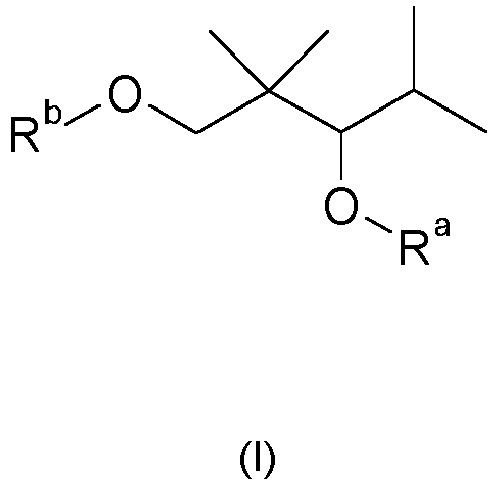
ainsi que- un ou plusieurs autres composés,
la préparation étant une émulsion H/E pour la distribution granulométrique de laquelle s'applique: D(v, 0.9) = 40 µm ou moins, la quantité totale du ou des hydroxyester(s) de formule (I) dans la préparation étant choisie de telle sorte que l'émulsion H/E présente une stabilité d'émulsion accrue par rapport à une émulsion de comparaison qui, avec une composition par ailleurs identique, ne comprend pas d'hydroxyester de formule (I)
et/ou
la préparation étant une préparation contenant un tensioactif, qui contient un ou plusieurs tensioactif(s) anionique(s), et la quantité totale du ou des hydroxyester(s) de formule (I) dans la préparation étant choisie de telle sorte que la préparation présente une viscosité accrue à 22,7 °C par rapport à une préparation de comparaison qui, avec une composition par ailleurs identique, ne comprend pas d'hydroxyester de formule (I). - Préparation selon la revendication 1, comprenant- un ou plusieurs hydroxyesters de formule (I)

la préparation étant de préférence une telle émulsion H/E pour la distribution granulométrique de laquelle s'applique: D(v, 0.9) = 40 µm ou moins, et dans laquelle la quantité totale de ce ou ces hydroxyester(s) de formule (I) avec un radical acyle ayant de 2 à 6 atomes de carbone dans la préparation est choisie de telle sorte que l'émulsion H/E présente une stabilité d'émulsion accrue par rapport à une émulsion de comparaison qui, avec une composition par ailleurs identique, ne comprend pas un tel hydroxyester de formule (I) avec un radical acyle ayant de 2 à 6 atomes de carbone
et/ou
la préparation étant de préférence une telle préparation contenant un tensioactif dans laquelle la quantité totale de ce ou ces hydroxyester(s) de formule (I) avec un radical acyle ayant de 2 à 6 atomes de carbone dans la préparation est choisie de telle sorte que la préparation présente une viscosité accrue à 22,7 °C par rapport à une préparation de comparaison qui, avec une composition par ailleurs identique, ne comprend pas un tel hydroxyester de formule (I) avec un radical acyle ayant de 2 à 6 atomes de carbone. - Préparation selon l'une quelconque des revendications précédentes, dans laquelle le radical acyle d'un, de deux, de plusieurs ou de tous les hydroxyesters de formule (I) est choisi dans le groupe constitué par l'acétyle, le propionyle, le n-butyryle, l'isobutyryle, le crotonyle, le n-pentanoyle, l'isopentanoyle, le n-hexanoyle et l'isohexanoyle,
de préférence choisi dans le groupe constitué par le n-butyryle, l'isobutyryle et le crotonyle. - Préparation selon l'une quelconque des revendications précédentes, comprenant- un premier hydroxyester de formule (I) tel que défini dans la revendication 1, 2 ou 3, dans lequel le radical Ra est l'hydrogène et le radical Rb signifie un radical acyle à chaîne droite ou ramifié
ainsi que, le cas échéant, en sus- un deuxième hydroxyester de formule (I) tel que défini dans la revendication 1, 2 ou 3, dans lequel le radical Rb est l'hydrogène et le radical Ra est un radical acyle à chaîne droite ou ramifié, ce radical acyle Ra du deuxième hydroxyester présentant la même structure que le radical acyle Rb du premier hydroxyester,
la préparation étant de préférence une émulsion H/E pour la distribution granulométrique de laquelle s'applique: D(v, 0.9) = 40 µm ou moins, la quantité totale des premier et deuxième hydroxyesters de formule (I) dans la préparation étant choisie de préférence de telle sorte que l'émulsion H/E présente une stabilité d'émulsion accrue par rapport à une émulsion de comparaison qui, avec une composition par ailleurs identique, ne comprend pas de tels premier et deuxième hydroxyesters de formule (I)
et/ou
la quantité totale des premier et deuxième hydroxyesters de formule (I) dans la préparation étant de préférence choisie de telle sorte que la préparation présente une viscosité accrue à 22,7 °C par rapport à une préparation de comparaison qui, avec une composition par ailleurs identique, ne comprend pas de tels premier et deuxième hydroxyesters de formule (I). - Préparation selon la revendication 4, dans laquelle le premier hydroxyester de formule (I) présente la formule

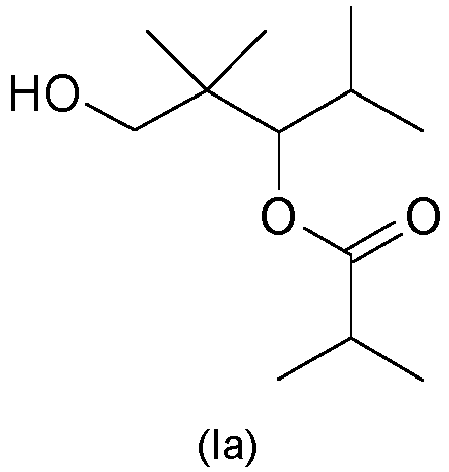
- Emulsion H/E, de préférence selon l'une quelconque des revendications 1 à 5, comprenant comme émulsifiant un ou plusieurs hydroxyester(s) de formule (I) tel(s) que défini(s) dans l'une quelconque des revendications 1 à 5, avec une distribution granulométrique pour laquelle s'applique:D(v, 0.9) = 40 µm ou moins, de préférence D(v, 0.9) = 30 µm ou moins,D(v, 0.5) = 20 µm ou moins, de préférence D(v, 0.5) = 15 µm ou moins,et, de préférence, en sus:
D(v, 0.1) = 2,5 µm ou moins, de préférence D(v, 0.1) = 2,0 µm ou moins. - Emulsion H/E, de préférence selon l'une quelconque des revendications 1 à 6, comprenant comme émulsifiant un ou plusieurs hydroxyester(s) de formule (I) tel(s) que défini(s) dans l'une quelconque des revendications 1 à 5,
la stabilité de l'émulsion étant réglée de telle sorte que, après un stockage de la préparation pendant 3 semaines (21 jours) à 25 °C et à une pression de 1013 HPa à l'exclusion de l'air, il en est comme suit pour la distribution granulométrique: D(v, 0.9) (t21d) : D(v, 0.9) (t0d) < 2, de préférence < 1,5, de manière particulièrement préférée < 1,2,
ou
l'indice d'instabilité de l'émulsion H/E étant de 75 % ou moins, de préférence de 65 % ou moins, de manière particulièrement préférée de 55 % ou moins, par rapport à l'indice d'instabilité d'une émulsion H/E de comparaison qui, avec une composition par ailleurs identique, ne comprend pas d'hydroxyester de formule (I). - Préparation contenant un tensioactif, de préférence selon l'une quelconque des revendications 1 à 5, comprenant- un ou plusieurs hydroxyester(s) de formule (I) tel(s) que défini(s) dans l'une quelconque des revendications 1 à 5, en tant qu'agent d'augmentation de la viscosité à 22,7 °C,- un ou plusieurs tensioactif(s) anionique(s), de préférence choisi(s) dans le groupe constitué par les sulfates et les sulfonates, de manière particulièrement préférée comprenant le lauryl éther sulfate de sodium,
ainsi que, le cas échéant,- un ou plusieurs autres tensioactif(s). - Utilisation(a) d'un seul hydroxyester de formule (I) ou(b) d'un mélange comprenant ou se composant de deux ou plusieurs hydroxyesters différents de formule (I),

en tant qu'agent de modification d'une ou de plusieurs propriétés physiques d'une formulation, les propriétés physiques étant choisies dans le groupe constitué par la stabilité d'émulsion et la viscosité, de préférence en tant qu'agent d'augmentation de la stabilité d'émulsion et/ou de la viscosité d'une telle formulation. - Utilisation selon la revendication 9,
dans laquelle- dans la variante (a) ledit un hydroxyester ou bien- dans la variante (b) un, deux ou plusieurs des hydroxyesterssont des hydroxyesters de formule (I)
- Utilisation selon la revendication 10, dans laquelle le radical acyle d'un, de deux, de plusieurs ou de tous les hydroxyesters de formule (I) est choisi dans le groupe constitué par l'acétyle, le propionyle, le n-butyryle, l'isobutyryle, le crotonyle, le n-pentanoyle, l'iso-pentanoyle, le n-hexanoyle et l'isohexanoyle,
de préférence choisi dans le groupe constitué par le n-butyryle, l'isobutyryle et le crotonyle. - Utilisation selon l'une quelconque des revendications précédentes 9 à 11,- d'un hydroxyester de formule (I) tel que défini dans la revendication 1, 2 ou 3, dans lequel le radical Ra est l'hydrogène et le radical Rb signifie un radical acyle à chaîne droite ou ramifié
ou- d'un mélange comprenant ou se composant- d'un premier hydroxyester de formule (I) tel que défini dans la revendication 1, 2 ou 3, dans lequel le radical Ra est l'hydrogène et le radical Rb signifie un radical acyle à chaîne droite ou ramifié
ainsi que, en sus,- d'un deuxième hydroxyester de formule (I) tel que défini dans la revendication 1, 2 ou 3. - Utilisation selon l'une quelconque des revendications précédentes 9 à 12,- d'un mélange comprenant ou se composant- d'un premier hydroxyester de formule (I) tel que défini dans la revendication 1, 2 ou 3, dans lequel le radical Ra est l'hydrogène et le radical Rb signifie un radical acyle à chaîne droite ou ramifié
et- d'un deuxième hydroxyester de formule (I) tel que défini dans la revendication 1, 2 ou 3, dans lequel le radical Rb est l'hydrogène et le radical Ra signifie un radical acyle à chaîne droite ou ramifié,dans lequel le radical Ra du premier hydroxyester a la signification de Rb du deuxième hydroxyester et le radical Rb du premier hydroxyester a la signification de Ra du deuxième hydroxyester. - Utilisation selon la revendication 12 ou 13,
d'un hydroxyester de formule (Ib)
d'un mélange comprenant ou se composant d'un premier et d'un deuxième hydroxyester de formule (I) tels que définis dans la revendication 1, 2 ou 3,
dans lequel le premier hydroxyester de formule (I) a la formule

- Procédé(a) de production et/ou de stabilisation d'une émulsion H/E, comprenant les étapes suivantes consistant à:- mélanger deux liquides en présence d'une quantité à effet émulsifiant d'un, de deux ou de plusieurs hydroxyester(s) de formule (I) tel(s) que défini(s) dans l'une quelconque des revendications 1 à 5et/ou(b) de production d'une préparation contenant un tensioactif et ayant une viscosité accrue, contenant un ou plusieurs tensioactif(s) anionique(s), comprenant les étapes suivantes consistant à:- mélanger un liquide contenant un tensioactif, qui contient un ou plusieurs tensioactif(s) anionique(s), avec une quantité augmentant la viscosité, d'un, de deux ou de plusieurs hydroxyesters de formule (I) tel(s) que défini(s) dans l'une quelconque des revendications 1 à 5.
Priority Applications (4)
| Application Number | Priority Date | Filing Date | Title |
|---|---|---|---|
| EP14158336.9A EP2915580B1 (fr) | 2014-03-07 | 2014-03-07 | Préparations aux propriétés physiques améliorées |
| US14/638,367 US9675534B2 (en) | 2014-03-07 | 2015-03-04 | Preparations with improved physical properties |
| JP2015044726A JP6873594B2 (ja) | 2014-03-07 | 2015-03-06 | 改善された物理的特性を有する製剤 |
| CN201510102761.2A CN104887537B (zh) | 2014-03-07 | 2015-03-09 | 具有改进的物理特性的制剂 |
Applications Claiming Priority (1)
| Application Number | Priority Date | Filing Date | Title |
|---|---|---|---|
| EP14158336.9A EP2915580B1 (fr) | 2014-03-07 | 2014-03-07 | Préparations aux propriétés physiques améliorées |
Publications (2)
| Publication Number | Publication Date |
|---|---|
| EP2915580A1 EP2915580A1 (fr) | 2015-09-09 |
| EP2915580B1 true EP2915580B1 (fr) | 2020-04-29 |
Family
ID=50231061
Family Applications (1)
| Application Number | Title | Priority Date | Filing Date |
|---|---|---|---|
| EP14158336.9A Active EP2915580B1 (fr) | 2014-03-07 | 2014-03-07 | Préparations aux propriétés physiques améliorées |
Country Status (4)
| Country | Link |
|---|---|
| US (1) | US9675534B2 (fr) |
| EP (1) | EP2915580B1 (fr) |
| JP (1) | JP6873594B2 (fr) |
| CN (1) | CN104887537B (fr) |
Family Cites Families (18)
| Publication number | Priority date | Publication date | Assignee | Title |
|---|---|---|---|---|
| US3091632A (en) | 1961-07-06 | 1963-05-28 | Eastman Kodak Co | Process for the production of glycol monoesters from aldehydes |
| US3408388A (en) | 1961-07-10 | 1968-10-29 | Eastman Kodak Co | Process for preparing esters of unsaturated alcohols from monoesters of saturated 2, 2, 4-trisubstituted-1, 3-diols |
| US3329713A (en) | 1965-06-14 | 1967-07-04 | Eastman Kodak Co | Pyrolysis of 2, 2, 4-trimethyl-1, 3-pentanediol monoisobutyrate |
| DE3403696C2 (de) | 1984-02-03 | 1987-04-02 | Ruhrchemie Ag, 4200 Oberhausen | Verfahren zur gleichzeitigen Herstellung von 2,2,4-Trimethyl-1,3-pentandiol sowie dessen Monoisobutyrat |
| FR2600524B1 (fr) | 1986-01-13 | 1991-10-18 | Galtier Claude | Oesophage artificiel. |
| US5166413A (en) | 1988-11-02 | 1992-11-24 | Neste Oxo Aktiebolag | Process for preparation of branched 1,3-glycols and their monoesters |
| WO1995021606A1 (fr) | 1994-02-08 | 1995-08-17 | Union Camp Corporation | Composes de 2,2,4-trimethylpentene-1-yle, et compositions d'aromes et de parfums |
| FI104819B (fi) | 1996-12-03 | 2000-04-14 | Neste Chemicals Oy | Menetelmä 2,2,4-trimetyyli-1,3-pentaanidioli-isobutyraatin valmistamiseksi |
| US5942467A (en) | 1997-12-08 | 1999-08-24 | Sun Drilling Products Corporation | Drilling fluid system containing a combination of hydrophilic carbon black/asphaltite and a refined fish oil/glycol mixture and related methods |
| JPH11222574A (ja) | 1998-02-06 | 1999-08-17 | Clariant Polymer Kk | 建築塗装用水性エマルジョン型シーラー組成物およびこの組成物の製造方法 |
| BR0107351B1 (pt) * | 2000-10-20 | 2014-12-02 | Firmenich S.A. | Composição perfumante sem álcool |
| DE10207747A1 (de) | 2001-02-22 | 2002-09-05 | Basf Ag | Verfahren zur Herstellung von 2,2,4,-Trimethyl-1,3-pentandiolmonoisobutyrat oder 2,2,4,-Trimethyl-1,3-pentandiolmonoisobutyrat-haltigen Gemischen |
| JP3797924B2 (ja) | 2001-12-07 | 2006-07-19 | 電気化学工業株式会社 | 接着剤組成物 |
| GB0300364D0 (en) | 2003-01-08 | 2003-02-05 | Envirotech Uk Ltd | Improvements in and relating to biocides |
| FR2867972B1 (fr) | 2004-03-23 | 2006-06-02 | Oreal | Composition de vernis a ongles comprenant un polymere sequence et un agent plastifiant |
| EP2133102B1 (fr) * | 2008-03-19 | 2014-12-03 | Symrise AG | Substances réduisant l'odeur |
| EP2316408B1 (fr) * | 2010-10-25 | 2013-07-03 | Symrise AG | Microémulsion de parfum sans éthanol |
| US8513180B2 (en) * | 2010-10-25 | 2013-08-20 | Symrise Ag | Ethanol-free perfume oil microemulsion |
-
2014
- 2014-03-07 EP EP14158336.9A patent/EP2915580B1/fr active Active
-
2015
- 2015-03-04 US US14/638,367 patent/US9675534B2/en active Active
- 2015-03-06 JP JP2015044726A patent/JP6873594B2/ja active Active
- 2015-03-09 CN CN201510102761.2A patent/CN104887537B/zh active Active
Non-Patent Citations (1)
| Title |
|---|
| None * |
Also Published As
| Publication number | Publication date |
|---|---|
| JP6873594B2 (ja) | 2021-05-19 |
| US9675534B2 (en) | 2017-06-13 |
| CN104887537A (zh) | 2015-09-09 |
| CN104887537B (zh) | 2019-09-10 |
| US20150250693A1 (en) | 2015-09-10 |
| JP2015180617A (ja) | 2015-10-15 |
| EP2915580A1 (fr) | 2015-09-09 |
Similar Documents
| Publication | Publication Date | Title |
|---|---|---|
| EP0582246B1 (fr) | Mélange d'esters d'acides gras et de polyglycérine | |
| EP2717845B1 (fr) | Agent de mise en forme à tenue maximale | |
| DE3586436T2 (de) | Kosmetische emulsion und verfahren zu deren herstellung. | |
| EP2902010B1 (fr) | Compositions de tensioactifs aqueuses | |
| EP2410979A2 (fr) | Compositions contenant des esters d'acide carboxylique de sorbitane | |
| DE19641274C1 (de) | Sonnenschutzmittel in Form von O/W-Mikroemulsionen | |
| WO1997047282A1 (fr) | Preparations cosmetiques et/ou pharmaceutiques | |
| DE102007017851A1 (de) | Zusammensetzung auf Basis von Glycerinether/Polyol-Gemischen | |
| DE19623763A1 (de) | Kosmetische Zubereitungen | |
| WO1997018033A1 (fr) | Emulsifiants | |
| DE60126303T2 (de) | Sonnenschutzmilch | |
| DE102010044787A1 (de) | Makroemulsionen mit verbesserter Deodorantwirksamkeit | |
| DE19624455C2 (de) | Sonnenschutzmittel in Form von O/W-Mikroemulsionen | |
| DE102010044785A1 (de) | Octenidindihydrochlorid als Co-Emulgator in Mikroemulsionen | |
| EP3727278A1 (fr) | Émulsion cosmétique comprenant du 1,2-décanediol | |
| DE19632043A1 (de) | Sonnenschutzmittel | |
| EP3744310B1 (fr) | Compositions contenant des esters carboniques de sorbitan et des esters carboniques de glycérine | |
| EP2915580A1 (fr) | Préparations aux propriétés physiques améliorées | |
| DE102014224216A1 (de) | Kosmetische Stückseifen enthaltend Seife und Mikroemulsionen | |
| EP1593370A1 (fr) | Mélange d'éthers de glycérine, une composition contenant celui-ci et un procédé pour la fabriquer | |
| DE19615777A1 (de) | Verwendung von Milschsäureestern | |
| DE19542572A1 (de) | Emulgatoren | |
| DE60203229T2 (de) | Das Vitamin A oder dessen Derivat enthaltende kosmetische Zusammensetzung | |
| EP3458024B1 (fr) | Compositions de tensioactifs aqueux | |
| DE202015005287U1 (de) | Zusammensetzung zur Pflege der Haut |
Legal Events
| Date | Code | Title | Description |
|---|---|---|---|
| PUAI | Public reference made under article 153(3) epc to a published international application that has entered the european phase |
Free format text: ORIGINAL CODE: 0009012 |
|
| AK | Designated contracting states |
Kind code of ref document: A1 Designated state(s): AL AT BE BG CH CY CZ DE DK EE ES FI FR GB GR HR HU IE IS IT LI LT LU LV MC MK MT NL NO PL PT RO RS SE SI SK SM TR |
|
| AX | Request for extension of the european patent |
Extension state: BA ME |
|
| 17P | Request for examination filed |
Effective date: 20160309 |
|
| RBV | Designated contracting states (corrected) |
Designated state(s): AL AT BE BG CH CY CZ DE DK EE ES FI FR GB GR HR HU IE IS IT LI LT LU LV MC MK MT NL NO PL PT RO RS SE SI SK SM TR |
|
| STAA | Information on the status of an ep patent application or granted ep patent |
Free format text: STATUS: EXAMINATION IS IN PROGRESS |
|
| 17Q | First examination report despatched |
Effective date: 20180405 |
|
| GRAP | Despatch of communication of intention to grant a patent |
Free format text: ORIGINAL CODE: EPIDOSNIGR1 |
|
| STAA | Information on the status of an ep patent application or granted ep patent |
Free format text: STATUS: GRANT OF PATENT IS INTENDED |
|
| INTG | Intention to grant announced |
Effective date: 20191024 |
|
| GRAS | Grant fee paid |
Free format text: ORIGINAL CODE: EPIDOSNIGR3 |
|
| GRAA | (expected) grant |
Free format text: ORIGINAL CODE: 0009210 |
|
| STAA | Information on the status of an ep patent application or granted ep patent |
Free format text: STATUS: THE PATENT HAS BEEN GRANTED |
|
| AK | Designated contracting states |
Kind code of ref document: B1 Designated state(s): AL AT BE BG CH CY CZ DE DK EE ES FI FR GB GR HR HU IE IS IT LI LT LU LV MC MK MT NL NO PL PT RO RS SE SI SK SM TR |
|
| REG | Reference to a national code |
Ref country code: GB Ref legal event code: FG4D Free format text: NOT ENGLISH |
|
| REG | Reference to a national code |
Ref country code: CH Ref legal event code: EP |
|
| REG | Reference to a national code |
Ref country code: AT Ref legal event code: REF Ref document number: 1262463 Country of ref document: AT Kind code of ref document: T Effective date: 20200515 |
|
| REG | Reference to a national code |
Ref country code: DE Ref legal event code: R096 Ref document number: 502014014059 Country of ref document: DE |
|
| REG | Reference to a national code |
Ref country code: IE Ref legal event code: FG4D Free format text: LANGUAGE OF EP DOCUMENT: GERMAN |
|
| REG | Reference to a national code |
Ref country code: NL Ref legal event code: MP Effective date: 20200429 |
|
| REG | Reference to a national code |
Ref country code: LT Ref legal event code: MG4D |
|
| PG25 | Lapsed in a contracting state [announced via postgrant information from national office to epo] |
Ref country code: FI Free format text: LAPSE BECAUSE OF FAILURE TO SUBMIT A TRANSLATION OF THE DESCRIPTION OR TO PAY THE FEE WITHIN THE PRESCRIBED TIME-LIMIT Effective date: 20200429 Ref country code: PT Free format text: LAPSE BECAUSE OF FAILURE TO SUBMIT A TRANSLATION OF THE DESCRIPTION OR TO PAY THE FEE WITHIN THE PRESCRIBED TIME-LIMIT Effective date: 20200831 Ref country code: IS Free format text: LAPSE BECAUSE OF FAILURE TO SUBMIT A TRANSLATION OF THE DESCRIPTION OR TO PAY THE FEE WITHIN THE PRESCRIBED TIME-LIMIT Effective date: 20200829 Ref country code: NO Free format text: LAPSE BECAUSE OF FAILURE TO SUBMIT A TRANSLATION OF THE DESCRIPTION OR TO PAY THE FEE WITHIN THE PRESCRIBED TIME-LIMIT Effective date: 20200729 Ref country code: SE Free format text: LAPSE BECAUSE OF FAILURE TO SUBMIT A TRANSLATION OF THE DESCRIPTION OR TO PAY THE FEE WITHIN THE PRESCRIBED TIME-LIMIT Effective date: 20200429 Ref country code: LT Free format text: LAPSE BECAUSE OF FAILURE TO SUBMIT A TRANSLATION OF THE DESCRIPTION OR TO PAY THE FEE WITHIN THE PRESCRIBED TIME-LIMIT Effective date: 20200429 Ref country code: GR Free format text: LAPSE BECAUSE OF FAILURE TO SUBMIT A TRANSLATION OF THE DESCRIPTION OR TO PAY THE FEE WITHIN THE PRESCRIBED TIME-LIMIT Effective date: 20200730 |
|
| PG25 | Lapsed in a contracting state [announced via postgrant information from national office to epo] |
Ref country code: BG Free format text: LAPSE BECAUSE OF FAILURE TO SUBMIT A TRANSLATION OF THE DESCRIPTION OR TO PAY THE FEE WITHIN THE PRESCRIBED TIME-LIMIT Effective date: 20200729 Ref country code: RS Free format text: LAPSE BECAUSE OF FAILURE TO SUBMIT A TRANSLATION OF THE DESCRIPTION OR TO PAY THE FEE WITHIN THE PRESCRIBED TIME-LIMIT Effective date: 20200429 Ref country code: HR Free format text: LAPSE BECAUSE OF FAILURE TO SUBMIT A TRANSLATION OF THE DESCRIPTION OR TO PAY THE FEE WITHIN THE PRESCRIBED TIME-LIMIT Effective date: 20200429 Ref country code: LV Free format text: LAPSE BECAUSE OF FAILURE TO SUBMIT A TRANSLATION OF THE DESCRIPTION OR TO PAY THE FEE WITHIN THE PRESCRIBED TIME-LIMIT Effective date: 20200429 |
|
| PG25 | Lapsed in a contracting state [announced via postgrant information from national office to epo] |
Ref country code: NL Free format text: LAPSE BECAUSE OF FAILURE TO SUBMIT A TRANSLATION OF THE DESCRIPTION OR TO PAY THE FEE WITHIN THE PRESCRIBED TIME-LIMIT Effective date: 20200429 Ref country code: AL Free format text: LAPSE BECAUSE OF FAILURE TO SUBMIT A TRANSLATION OF THE DESCRIPTION OR TO PAY THE FEE WITHIN THE PRESCRIBED TIME-LIMIT Effective date: 20200429 |
|
| PG25 | Lapsed in a contracting state [announced via postgrant information from national office to epo] |
Ref country code: DK Free format text: LAPSE BECAUSE OF FAILURE TO SUBMIT A TRANSLATION OF THE DESCRIPTION OR TO PAY THE FEE WITHIN THE PRESCRIBED TIME-LIMIT Effective date: 20200429 Ref country code: EE Free format text: LAPSE BECAUSE OF FAILURE TO SUBMIT A TRANSLATION OF THE DESCRIPTION OR TO PAY THE FEE WITHIN THE PRESCRIBED TIME-LIMIT Effective date: 20200429 Ref country code: RO Free format text: LAPSE BECAUSE OF FAILURE TO SUBMIT A TRANSLATION OF THE DESCRIPTION OR TO PAY THE FEE WITHIN THE PRESCRIBED TIME-LIMIT Effective date: 20200429 Ref country code: SM Free format text: LAPSE BECAUSE OF FAILURE TO SUBMIT A TRANSLATION OF THE DESCRIPTION OR TO PAY THE FEE WITHIN THE PRESCRIBED TIME-LIMIT Effective date: 20200429 Ref country code: ES Free format text: LAPSE BECAUSE OF FAILURE TO SUBMIT A TRANSLATION OF THE DESCRIPTION OR TO PAY THE FEE WITHIN THE PRESCRIBED TIME-LIMIT Effective date: 20200429 Ref country code: CZ Free format text: LAPSE BECAUSE OF FAILURE TO SUBMIT A TRANSLATION OF THE DESCRIPTION OR TO PAY THE FEE WITHIN THE PRESCRIBED TIME-LIMIT Effective date: 20200429 |
|
| REG | Reference to a national code |
Ref country code: DE Ref legal event code: R097 Ref document number: 502014014059 Country of ref document: DE |
|
| PG25 | Lapsed in a contracting state [announced via postgrant information from national office to epo] |
Ref country code: PL Free format text: LAPSE BECAUSE OF FAILURE TO SUBMIT A TRANSLATION OF THE DESCRIPTION OR TO PAY THE FEE WITHIN THE PRESCRIBED TIME-LIMIT Effective date: 20200429 Ref country code: SK Free format text: LAPSE BECAUSE OF FAILURE TO SUBMIT A TRANSLATION OF THE DESCRIPTION OR TO PAY THE FEE WITHIN THE PRESCRIBED TIME-LIMIT Effective date: 20200429 |
|
| PLBE | No opposition filed within time limit |
Free format text: ORIGINAL CODE: 0009261 |
|
| STAA | Information on the status of an ep patent application or granted ep patent |
Free format text: STATUS: NO OPPOSITION FILED WITHIN TIME LIMIT |
|
| 26N | No opposition filed |
Effective date: 20210201 |
|
| PG25 | Lapsed in a contracting state [announced via postgrant information from national office to epo] |
Ref country code: SI Free format text: LAPSE BECAUSE OF FAILURE TO SUBMIT A TRANSLATION OF THE DESCRIPTION OR TO PAY THE FEE WITHIN THE PRESCRIBED TIME-LIMIT Effective date: 20200429 |
|
| PG25 | Lapsed in a contracting state [announced via postgrant information from national office to epo] |
Ref country code: MC Free format text: LAPSE BECAUSE OF FAILURE TO SUBMIT A TRANSLATION OF THE DESCRIPTION OR TO PAY THE FEE WITHIN THE PRESCRIBED TIME-LIMIT Effective date: 20200429 |
|
| REG | Reference to a national code |
Ref country code: CH Ref legal event code: PL |
|
| REG | Reference to a national code |
Ref country code: DE Ref legal event code: R079 Ref document number: 502014014059 Country of ref document: DE Free format text: PREVIOUS MAIN CLASS: B01F0017000000 Ipc: C09K0023000000 |
|
| REG | Reference to a national code |
Ref country code: BE Ref legal event code: MM Effective date: 20210331 |
|
| PG25 | Lapsed in a contracting state [announced via postgrant information from national office to epo] |
Ref country code: LU Free format text: LAPSE BECAUSE OF NON-PAYMENT OF DUE FEES Effective date: 20210307 Ref country code: LI Free format text: LAPSE BECAUSE OF NON-PAYMENT OF DUE FEES Effective date: 20210331 Ref country code: CH Free format text: LAPSE BECAUSE OF NON-PAYMENT OF DUE FEES Effective date: 20210331 Ref country code: IE Free format text: LAPSE BECAUSE OF NON-PAYMENT OF DUE FEES Effective date: 20210307 |
|
| REG | Reference to a national code |
Ref country code: AT Ref legal event code: MM01 Ref document number: 1262463 Country of ref document: AT Kind code of ref document: T Effective date: 20210307 |
|
| PG25 | Lapsed in a contracting state [announced via postgrant information from national office to epo] |
Ref country code: BE Free format text: LAPSE BECAUSE OF NON-PAYMENT OF DUE FEES Effective date: 20210331 |
|
| PG25 | Lapsed in a contracting state [announced via postgrant information from national office to epo] |
Ref country code: AT Free format text: LAPSE BECAUSE OF NON-PAYMENT OF DUE FEES Effective date: 20210307 |
|
| PG25 | Lapsed in a contracting state [announced via postgrant information from national office to epo] |
Ref country code: HU Free format text: LAPSE BECAUSE OF FAILURE TO SUBMIT A TRANSLATION OF THE DESCRIPTION OR TO PAY THE FEE WITHIN THE PRESCRIBED TIME-LIMIT; INVALID AB INITIO Effective date: 20140307 |
|
| PG25 | Lapsed in a contracting state [announced via postgrant information from national office to epo] |
Ref country code: CY Free format text: LAPSE BECAUSE OF FAILURE TO SUBMIT A TRANSLATION OF THE DESCRIPTION OR TO PAY THE FEE WITHIN THE PRESCRIBED TIME-LIMIT Effective date: 20200429 |
|
| PG25 | Lapsed in a contracting state [announced via postgrant information from national office to epo] |
Ref country code: MK Free format text: LAPSE BECAUSE OF FAILURE TO SUBMIT A TRANSLATION OF THE DESCRIPTION OR TO PAY THE FEE WITHIN THE PRESCRIBED TIME-LIMIT Effective date: 20200429 |
|
| PG25 | Lapsed in a contracting state [announced via postgrant information from national office to epo] |
Ref country code: MT Free format text: LAPSE BECAUSE OF FAILURE TO SUBMIT A TRANSLATION OF THE DESCRIPTION OR TO PAY THE FEE WITHIN THE PRESCRIBED TIME-LIMIT Effective date: 20200429 |
|
| PGFP | Annual fee paid to national office [announced via postgrant information from national office to epo] |
Ref country code: IT Payment date: 20250331 Year of fee payment: 12 |
|
| PG25 | Lapsed in a contracting state [announced via postgrant information from national office to epo] |
Ref country code: TR Free format text: LAPSE BECAUSE OF FAILURE TO SUBMIT A TRANSLATION OF THE DESCRIPTION OR TO PAY THE FEE WITHIN THE PRESCRIBED TIME-LIMIT Effective date: 20200429 |
|
| PGFP | Annual fee paid to national office [announced via postgrant information from national office to epo] |
Ref country code: GB Payment date: 20260324 Year of fee payment: 13 |
|
| PGFP | Annual fee paid to national office [announced via postgrant information from national office to epo] |
Ref country code: DE Payment date: 20260320 Year of fee payment: 13 |
|
| PGFP | Annual fee paid to national office [announced via postgrant information from national office to epo] |
Ref country code: FR Payment date: 20260324 Year of fee payment: 13 |